The Historic Pullman House Tour

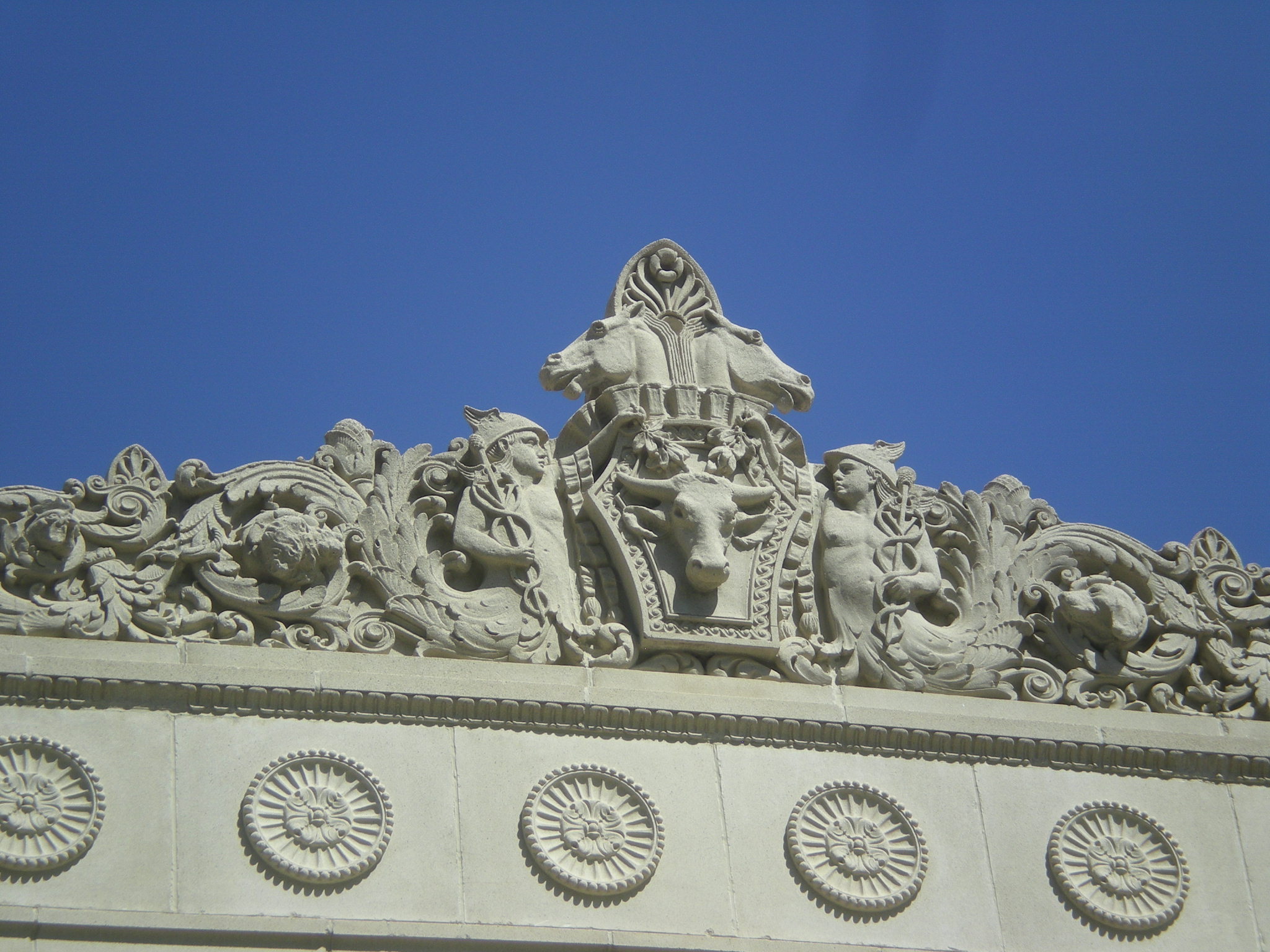
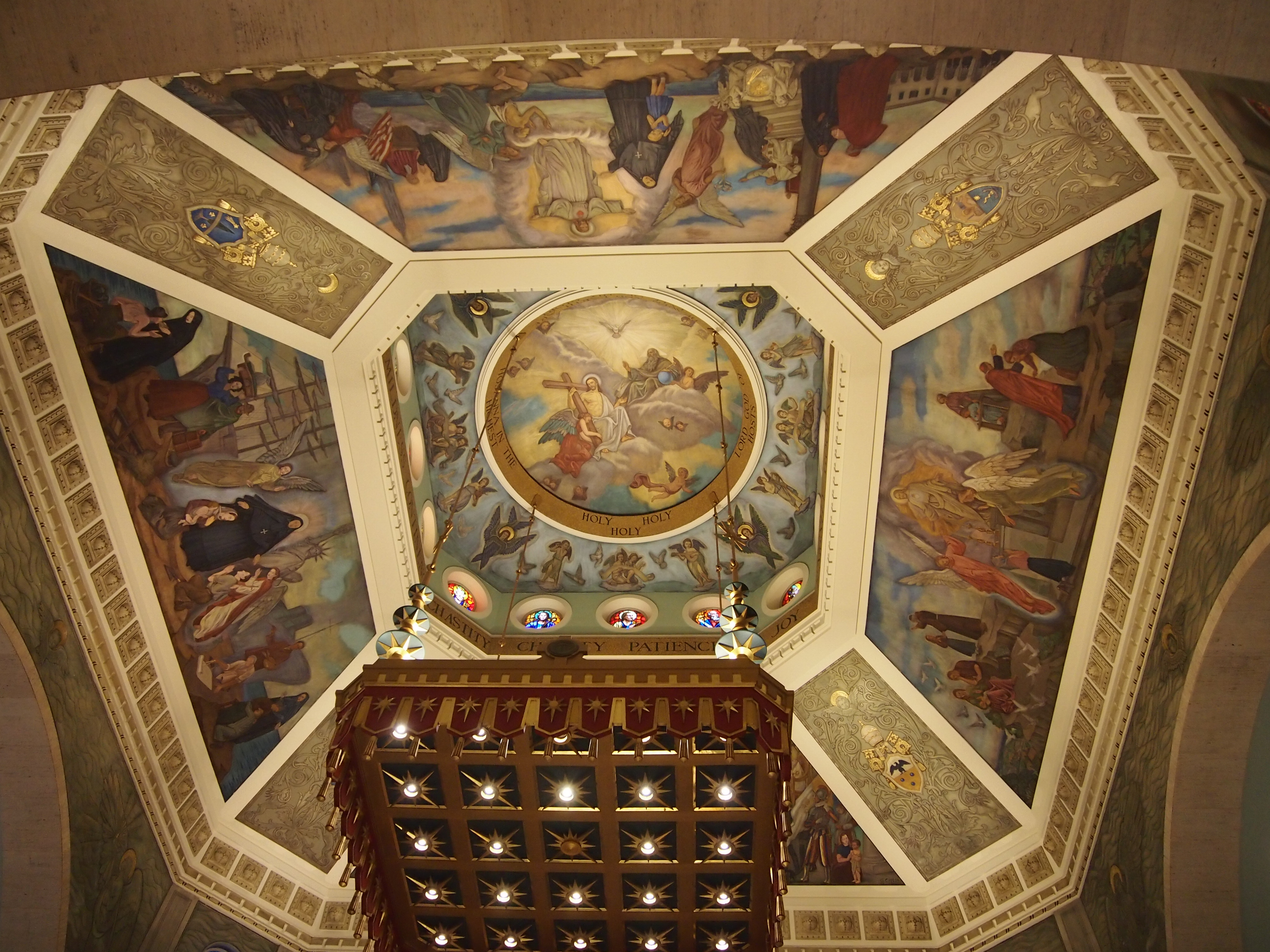
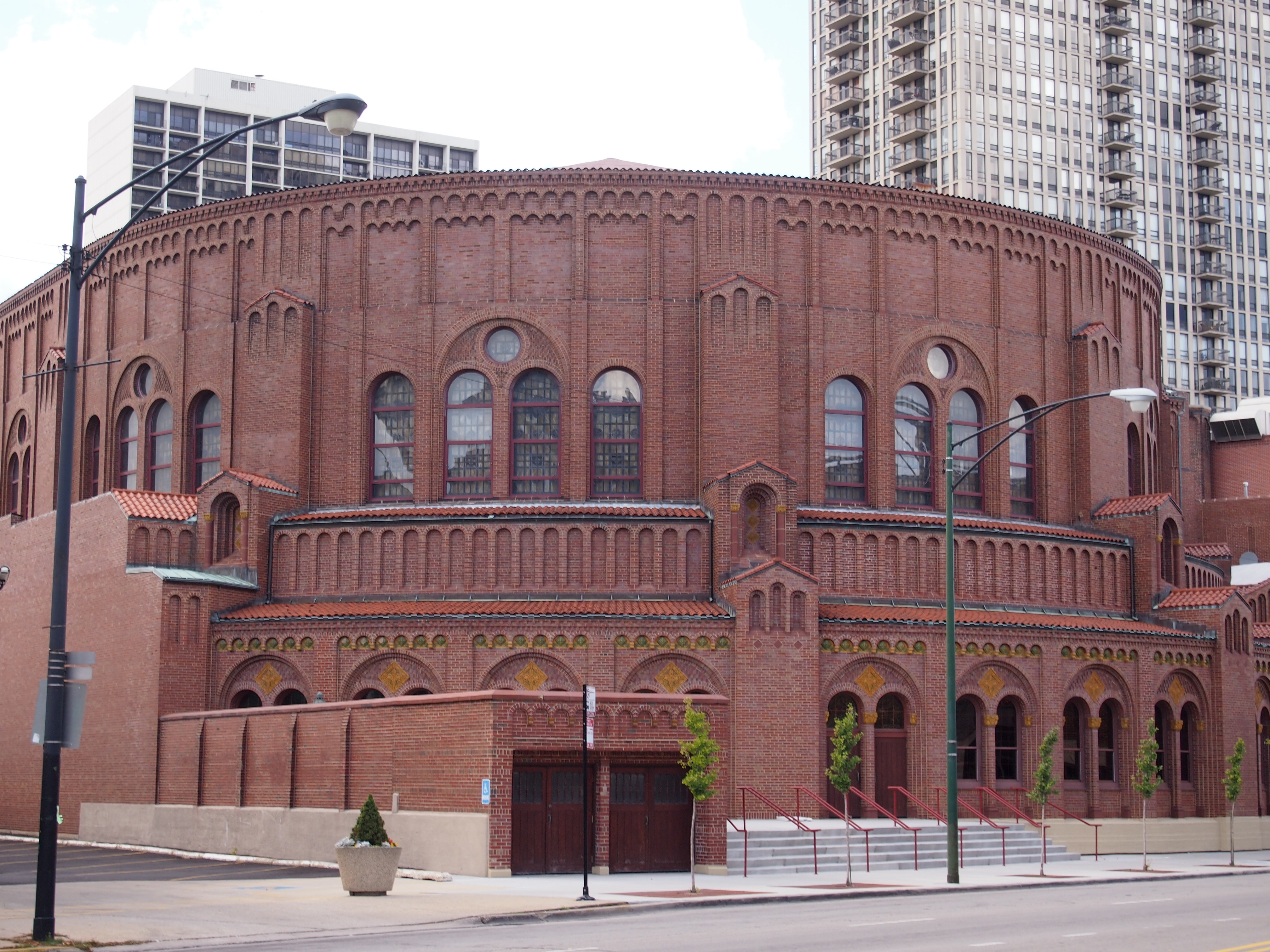
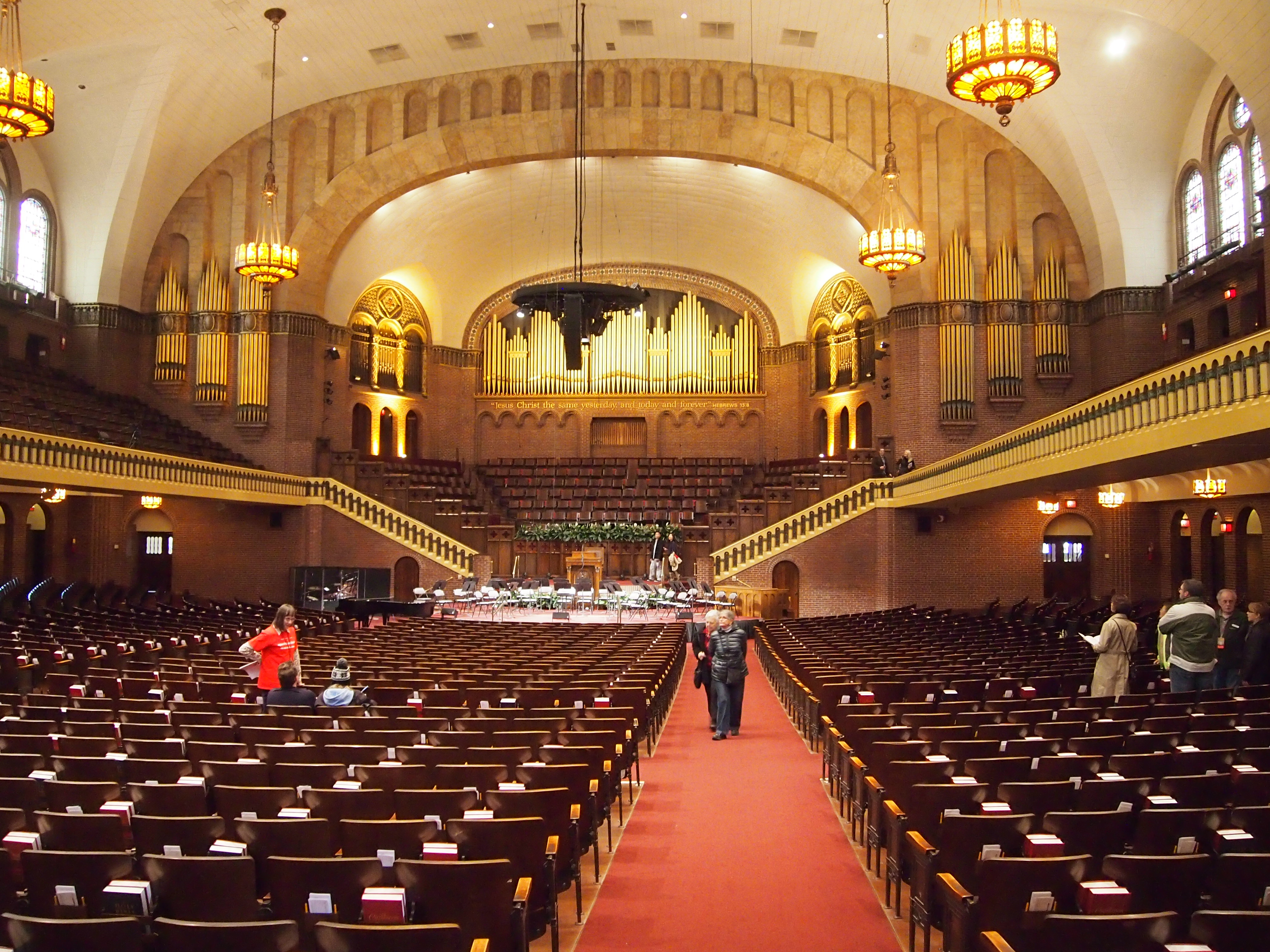
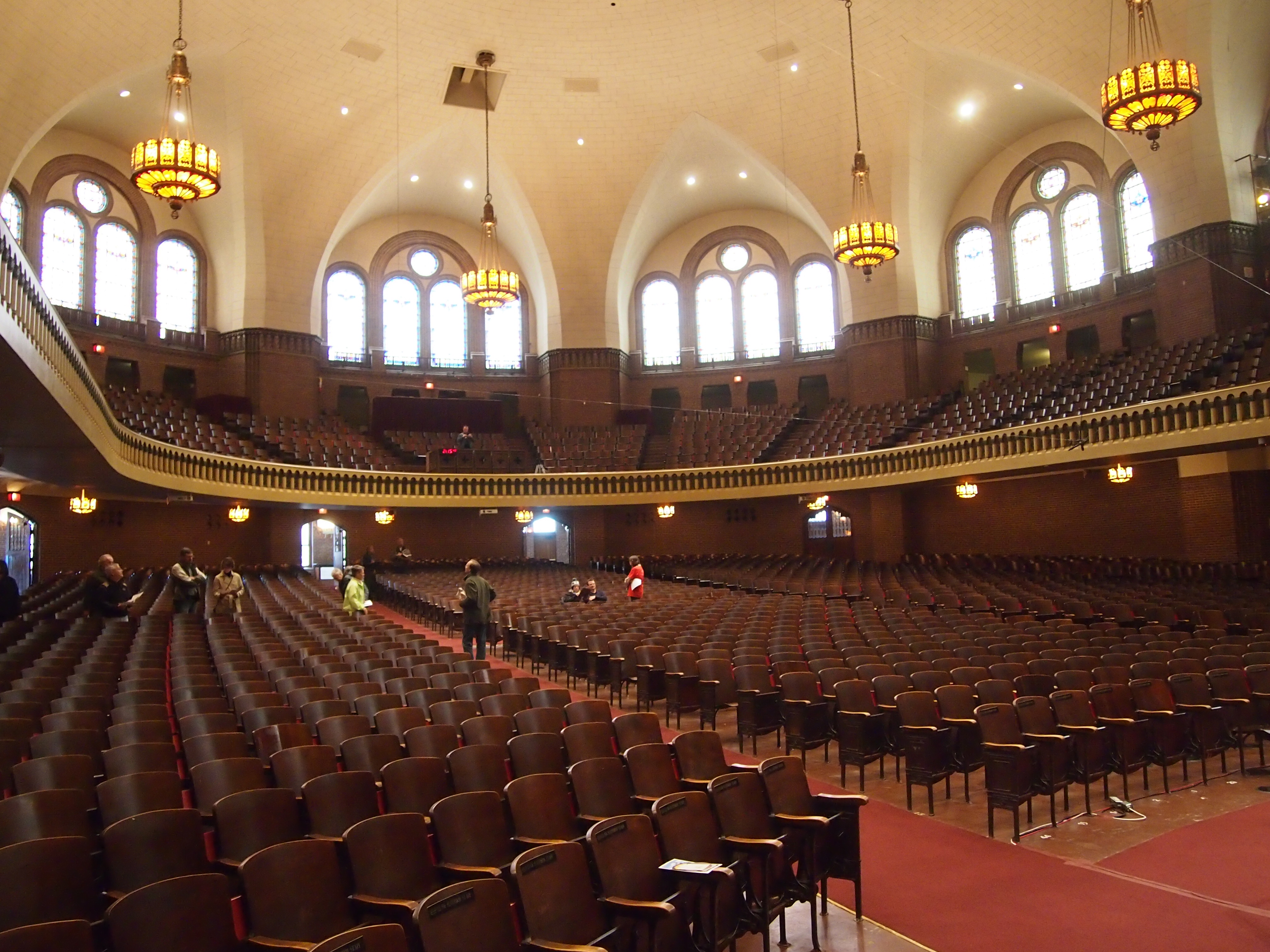
On Saturday, Yuriko and I went to Pullman to participate in the 40th annual Historic Pullman House Tour. For a fairly modest fee, you can walk around the Pullman neighborhood and go into seven privately owned houses, one church, one community center, and the visitor center – which would be accessible anyway and isn’t historic, though it’s a good little museum about Pullman.

You can also take a look at the outside of the Hotel Florence, which has been closed and under renovation for years, and wander around the Pullman factory ruins, which were ruined less by the neglect over the decades than a fire set by a lunatic in 1998. We did all those things over the course of the afternoon, and also squeezed in lunch at the diner-like Cal-Harbor restaurant at the edge of the district.

In the early 1880s, industrialist George Pullman established a company town just to the south of Chicago to build his famed railroad cars. The place has a long and storied history, easy to find described elsewhere. Enough to say that the legacy neighborhood, now in the city and way down on the South Side, features about 900 row houses either two or three stories high, made of brick with limestone foundations, with a lot of late Victorian detail. It is, I’ve read, one of the largest collections of 19th-century residences in Chicago.

The entire neighborhood was nearly Eisenhowered around 1960 to make way for an industrial park. The neighborhood successfully fought its destruction and it lives on, though parts are still dilapidated. Pullman clearly includes some enthusiastic residents.

You might call that a Pullman car.

Atlanta ’10

About three years ago on the way to Springfield, we stopped in Atlanta, Illinois, which isn’t far from I-55 but which used to be right on U.S. 66. These days that means there’s enough nostalgia traffic – and probably local regulars – to support the revived Palms Grill Café. We ate there three years ago, only a short time after it re-opened. Some years before that an artist named Steve Estes painted a mural dedicated to the original joint across the street.

A helpful sign under the mural says: “In its early days, weekly dances and bingo nights accompanied the blue-plate specials served at the Palms Grill Café. The “Grill” was also Atlanta’s Greyhound bus-stop. You just turned the light on above the door if you wanted the bus to pick you up. Located directly across Rt. 66 from this mural, the Palms Grill Café served Atlanta’s citizens, as well as a steady stream of Rt. 66 travelers, from 1936 until the late 1960s.

In his design of the “Palms Grill Café” mural, Steve Estes of Possum Trot, Kentucky, captured the intent of the “Grill’s” first owner, Robert Adams, an Atlanta native, who named it after a restaurant he frequented during trips to California. The mural was completed in June 2003 during the “LetterRip on Rt. 66” gathering of approximately 100 Letterheads in Atlanta.

The Letterheads are a group of generous and free-spirited sign painters from across the United States and Canada who are interested in preserving the art of painting outdoor signs and murals.

Just down the street from the mural is a small park with a handful of memorials. This stone caught my eye.

The modern sign says:

Knights of Pythias “Memorial Tree” Stone

This stone was dedicated by the Atlanta, Illinois Knights of Pythias organization as a memorial to veterans of World War I. The stone was placed under a Memorial Tree on November 11, 1921. At some unknown date, the stone was removed from its original location. It then rested behind the Atlanta Library for many years. Research continues to identify the exact location of the memorial tree. Atlanta’s Acme Lodge #332 of the Knights of Pythias was organized in 1892. No longer active in Atlanta, the Knights of Pythias, is an international fraternity founded in 1864, whose motto is Friendship, Charity and Benevolence.

Can’t remember which tree was planted by the Knights of Pythias, eh? Just goes to show you that no matter how fervently one generation wants later ones to remember something, they probably won’t. Or if they do, it’s a matter of chance as much as anything else. Then again, you can also make a reasonable argument along the lines of, Who cares which tree a long-gone fraternal order planted in an obscure town in the heart of North America in the early 20th century? Really important things will be remembered. (Except that they usually aren’t. Except by historically minded eccentrics.)

The Atlanta Library is an octagon dating from 1908. That’s a fine shape for a building. There need to be more of them. The exact reasons for choosing that shape for this library are probably lost, but I’d think it made for better lighting in an era when electric lighting, though available, wouldn’t have been as bright as later.

According to the library web site: “Near the turn of the 20th century, the Atlanta Women’s Club established a committee with the purpose of erecting a Library building. Land located next to the tracks of the Chicago and Mississippi railroad, was donated to the City of Atlanta by Seward Fields, a descendant of William Leonard. Leonard was one of the contractors responsible for helping build the Chicago and Mississippi railroad… A beautiful bookcase dedicated to Seward Fields is still in use at the Library.

Mrs. Martha Harness Tuttle… helped fund the erection of the Atlanta Library building.  In 1908, she donated $4,000 – over half the funds needed for the new structure. The Library Board adopted plans for erecting an octagonal-shaped structure as prepared by architect Paul Moratz, of Bloomington, Illinois… The new building was dedicated on Saturday, March 28, 1908.

The Amber Room

Ed tells me that the inside of Church of the Savior on the Spilled Blood  “is… seriously over the top. I like the Russian Orthodox for its restraint, and there is none whatsoever in that church.”

Must be all those mosaics. Maybe the Russians were trying to outdo Byzantine churches – taking that whole Third Rome idea seriously, at least when it comes to adorning sacred spaces. On the other hand, I’ve read that there might be more square feet of mosaics decorating the Cathedral of St. Louis than even the Church of the Savior on the Spilled Blood, and as far as I know no one’s claiming St. Louis as a new iteration of Rome.

The inside of Spilled Blood is just another thing I missed, not because I didn’t visit a certain place, but because I didn’t visit a certain place at the right time. That happens a lot; it has to, if you go anywhere at all. Some things, you want to miss – far better to visit St. Petersburg in 1994 than 1944, for instance. But I’m not thinking of anything quite so dramatic. Not long ago, I read about the reconstruction of the Amber Room, which is near St. Petersburg, and which wasn’t finished until 2003, meaning I missed that too.

It’s quite a story, the Amber Room. The Smithsonian says that the original room, whose construction started in 1701, ultimately “covered about 180 square feet and glowed with six tons of amber and other semi-precious stones. The amber panels were backed with gold leaf, and historians estimate that, at the time, the room was worth $142 million in today’s dollars. Over time, the Amber Room was used as a private meditation chamber for Czarina Elizabeth, a gathering room for Catherine the Great and a trophy space for amber connoisseur Alexander II.

“A gift to Peter the Great in 1716 celebrating peace between Russia and Prussia, the room’s fate became anything but peaceful: Nazis looted it during World War II, and in the final months of the war, the amber panels, which had been packed away in crates, disappeared.” (The whole article is here.)

Burned in a bombing? Buried in an unrecoverable place? Put at the bottom of the Baltic Sea by torpedoes? There are a number of ideas about what happened to the original, but nothing conclusive. Nothing like a good mystery involving treasure.

Two Texas Churches

Just before getting back on the train and leaving downtown Dallas, I took a look at the Cathedral Shrine of the Virgin of Guadalupe — Cathedral Santuario de Guadalupe.

The cathedral’s web site tells me that “the Cathedral is the mother church of the 630,000 Roman Catholics in the nine-county Diocese of Dallas. Today, the Cathedral serves the largest cathedral congregation in the United States — as well as the largest Latino parish congregation — with 25,000 registered households.”

I had the place all to myself, as far as other human beings were concerned, for a few minutes on that Wednesday afternoon. Light was pouring in through the stained-glass windows on the west side of the church. It’s a lovely church inside, an example of High Victorian Gothic Architecture, finished in 1902.

Nicholas J. Clayton designed it. He’s another bit of Texas history – a prolific Irish-born architect who seems to have designed everything important in Galveston before the Hurricane of 1900 – that I had to look up (but not the hurricane; I read about that as a lad, and remained fascinated by it). One of these days, I need to go back to Galveston and look around, since I can’t remember much from my last visit, 40-odd years ago.

Not far from the cathedral are these small brick constructions.

As near as I can tell, they mark the site of the social center for a neighboring parish, Our Lady of Guadalupe, which eventually merged into Cathedral of the Sacred Heart – the former name for the cathedral pictured above, which was then renamed to honor Our Lady of Guadalupe. Whatever the case, below Mary are the words “Guadalupe Social Center, Dallas, Tex. 1946.”

On the smaller plaque is an inscription in Latin. I have to like that. How much more public Latin is there in downtown Dallas?

ANNO DOMINI MCMXLVII HUNC LAPIDEM ANGULAREM CENTRI SOCIALIS PAROECIAE B.V.M. DE GUADALUPE EM. MUS ac ILL.MUS SAMUELIS CARDINALIS STRITCH SOLEMNITER BENEDIXIT.

Not too hard to figure out. Samuel Cardinal Stritch blessed the social center’s cornerstone on this site in 1947. At the time he was the Archbishop of Chicago.

During this visit to Texas, but in San Antonio, I also visited St. Paul’s Episcopal Church, a much smaller house of worship near Ft. Sam Houston. Once upon a time, in the misty lost past, ordinary civilians could drive right through Ft. Sam – as everyone called it – no stops, no questions asked. Now all the entrances are barricaded. So you have to drive a long way around the fort to get to St. Paul’s.

I mention the fort because the church was originally established in the late 19th century to serve Episcopalians posted at Ft. Sam. It’s a church of beautiful simplicity inside, with some fine pews and stained glass.

There are also a few plaques on the wall that harken back to other times. Such as this dark one.

In Memory of T.J.C. MADDOX Assist: Surgeon U.S. Army BORN Dec. 12, 1852 Killed in action with Indians Dec. 19, 1885.

TJC Maddox seems to be this fellow. Remarkably, I’ve found found the story of his death on line, which was around the time the U.S. Army was busy chasing down Geronimo.

It’s possible, though I don’t know this for a fact, that relatives of Dr. Maddox who were members of St. Paul’s in its early years memorialized him with this plaque on the wall at the back of the church, where it remains into the 21st century.

The Rookery

Also during my most recent visit downtown, I swung by the Rookery. Because it had been a long time since I’ve been in the Rookery. The last time might have been the Halloween parties that the concierge service down the hall at the Civic Opera building used to have, when I had an office at the Civic Opera building. The early ’00s, that is.

As always, the Rookery is cool on the outside.

And stunning on the inside.

As you can see, I wasn’t the only person paying photographic attention to the Burnham & Root creation, with its Frank Lloyd Wright filling.

Electric Jellyfish

Not long ago I visited the J.W. Marriott hotel at 151 W. Adams. It hasn’t had that flag very long — only about three years — and the building itself is the former Continental & Commercial National Bank, designed by no other than Daniel Burnham in 1914. I read that to turn the structure into a 610-room hotel — an upmarket one, since J.W. Marriott is described as the “black label” of Marriotts — and restore the ornate lobby, the hotelier spent $396 milllion.

I didn’t have a lot of time in the lobby, but ornate is a good adjective for it. Mostly I was in one of the larger meeting rooms, which was more interesting than most hotel meeting rooms.

There must be a reason, maybe in the original design of the property, that the ceiling sports arched beams, but I’m not in a position to say why.

Nice lights, too. A bloom of electric jellyfish

The (Glass) House That Jens Jensen Built

“In 1905, Chicago’s West Park Commission’s general superintendent and chief landscape architect, Jens Jensen, demolished the three smaller greenhouses in Humboldt, Douglas and Garfield Parks to create what was intended as ‘the largest publicly owned conservatory under one roof in the world’ in Garfield Park,” according to the Garfield Park Conservatory Alliance. “Many of the original plantings came from the three smaller West Side conservatories.

“Constructed between 1906 and 1907, the Garfield Park Conservatory was designed by Jensen in collaboration with Prairie School architects Schmidt, Garden and Martin and the New York engineering firm of Hitchings and Co. It represents a unique collaboration of architects, engineers, landscape architects, sculptors and artisans. Jensen conceived the Conservatory as a series of naturalistic landscapes under glass, a revolutionary idea at the time.”

It’s a fine place to stroll, even if you don’t spent a lot of time absorbing botanical facts. Plenty of leafy vistas.

Jens Jenson ought to be better remembered, and not just for the conservatory. The Jens Jenson Legacy Project tells us that he “created Columbus Park on the western edge of Chicago, and extensively redesigned three other large west-side parks (Humboldt, Garfield, and Douglas) as well as 15 small ones. He designed parks in smaller cities – among them Racine and Madison, Wisconsin; Dubuque, Iowa; and Springfield, Illinois. He landscaped dozens of estates belonging to wealthy Midwesterners along the North Shore (Rosenwalds, Florsheims, Ryersons, Beckers) and elsewhere (Henry and Edsel Ford).

“Jensen organized and inspired the early conservation movements that led to the creation of the Cook County Forest Preserve District, the Illinois state park system, the Indiana Dunes State Park and National Lakeshore.”

The Garfield Park Conservatory

Last week I was visited the Garfield Park Conservatory on the West Side of Chicago, one of the great conservatories (just ask anyone). Been some years since I’ve been there, but I remember taking younger versions of Lilly and Ann at least once, and pointing out the cocoa trees. “See? That’s the plant chocolate comes from.”

The cocoa trees are still there, of course. So are the banana trees.

Plus a welter of plants I’ve never heard of. Or forgotten. No matter how many conservatories or gardens I visit – and I try to take in a few every year – I always run across something new.  I don’t have it in me to be a botanist, just someone who says, wow, that’s interesting.

Take a look at the Hanging Lobster Claw, Heloconia rostrata cultivar, Heliconiaceae, native to South America (someone added the little glass eyeballs on the top petal). It’s like something Dale Chihuly might hang at the conservatory. He had a show at the Garfield Park Conservatory a few years ago for which he did hang his glass art in the conservatory, but I missed it.

Or the Shrimp Plant, Pachystachys lutae, Acanthaceae, which grows in Peru.

I liked this plant, but it also shows that my note-taking isn’t always very thorough.

The Opera House and the Box It Came In

I’ve said it before, and I’ll say it again: acknowledge the famous, or at least the noteworthy, but don’t ignore the obscure. Never know what you’ll find in obscurity. Besides, odds are you yourself are obscure. It’s the human condition, or rather the condition of most humans.

That’s an over-long intro for the Sandwich Opera House, which we chanced on after seeing the Farnsworth. Sandwich, Illinois, is a town on U.S. 34 in southeastern DeKalb County. The Opera House dates from the golden age of opera house construction in small-town America, the late 19th century. It’s apparently also the City Hall. It was closed, but you could admire it from across the street.

It’s still in use for entertainment. For a little contrast, I took a picture of this brutalist box of a building across the street.

Maybe it isn’t beyond saving. What it needs is a lick of paint – some DayGlo green, say. It could be the Green Cube of Sandwich.

More on the Farnsworth

Our tour of the Farnsworth House on Saturday took us inside its floor-to-ceiling glass walls, where photography isn’t permitted on weekends. We heard about the mechanical aspects of the house — all those pesky practical items like electricity and water — the guest bathroom, Dr. Farnsworth’s bathroom, the kitchen zone with its long stainless steel prep area, the history of the curtains, the placement of the few lights, and the back-and-forth between client and architect about whether there ought to be at least one closet. Architect said no, client said yes, so ultimately a freestanding wardrobe was fashioned by one of Mies’ employees for the house.

Previously I hadn’t bothered to find out much about how the house came to be. Not to worry, a video at the visitor center and the guide filled us in on some details, such as initially warm (maybe very warm) relations between the unmarried Dr. Farnsworth and the free-with-his-affections Mies, which eventually grew acrimonious. Especially when Mies presented her with a bill she considered inflated. Less might be more, but not when it came to his fee.

Outside again we went to the “back” of the house, that is, the side facing away from the river.

This is a fuller view.

The row of kitchen-counter-like shapes under the brown interior structure are in fact kitchen counters, with the “bedroom” off to the left. The black cylinder-like thing under the main level — the other columns are white — is where water goes in and out, and electricity comes in.

Got a good look under the house, too.

Another bit of the house’s history involves the land to the west. Lord Palumbo built a boathouse there, and just beyond it is a road: Fox River Dr., which crosses the river within sight of the house. In the late 1940s, the road and bridge were small. In the late ’60s, Kendall County took two acres by eminent domain to widen the road and build a bigger bridge. Dr. Farnsworth fought it, but lost. With the increase in population over the decades since then in this part of the state, the road’s now pretty busy, at least on a Saturday afternoon. Quiet isn’t something you get on the Farnsworth grounds these days.

From the back of the house, the property slopes upward to a small hill, which would have been the rational place to build a dwelling, considering its location above the flood plain. But as suggested about some of Frank Lloyd Wright’s works, perhaps it’s best to think of this Miesian creation as a work of sculpture rather than a house. And a right interesting sculpture it is.