The Balloon-Blowing Couple on Their Way to Ústí nad Labem, Tokyo Banana World & Three Major Train Stations

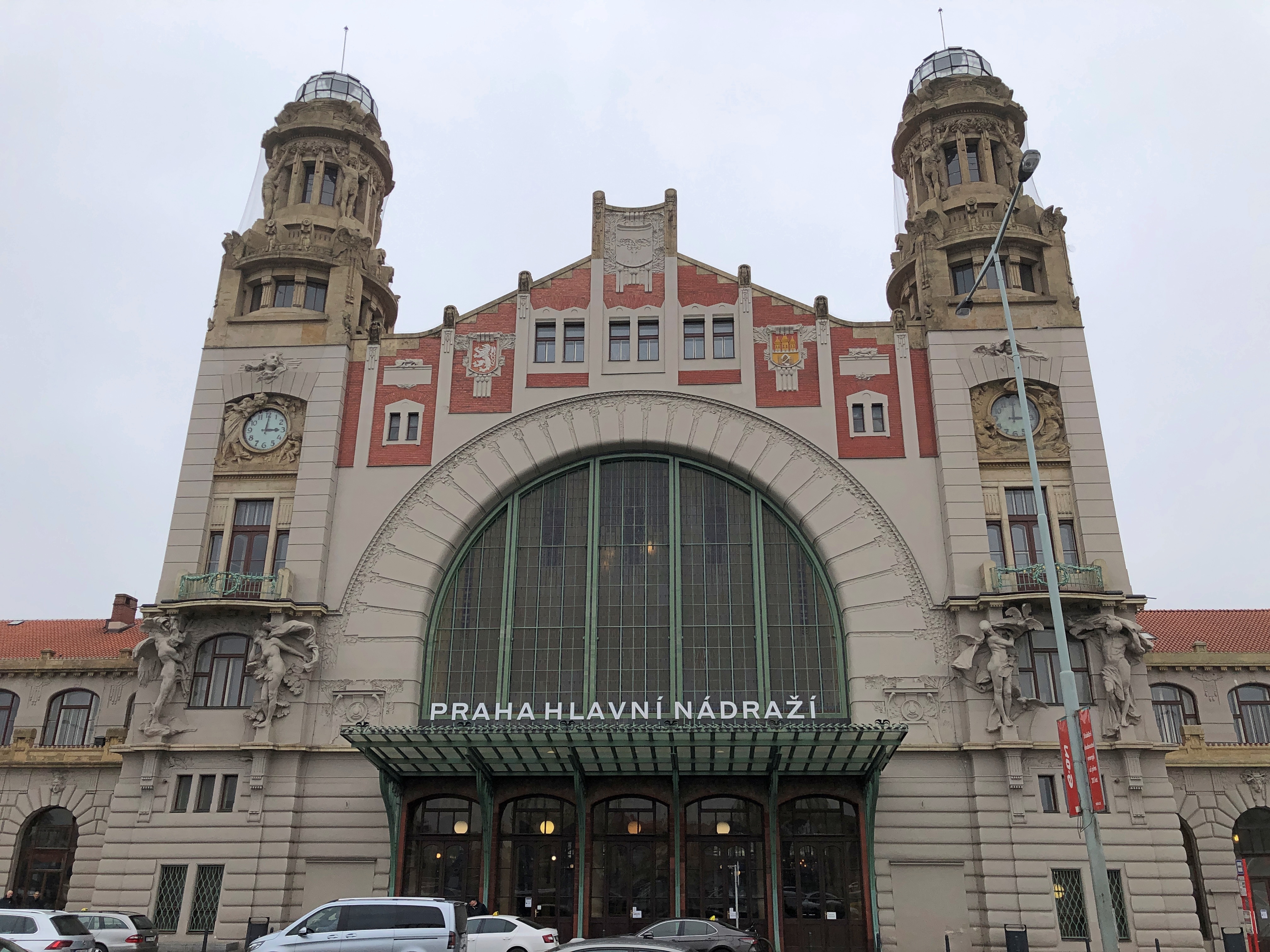
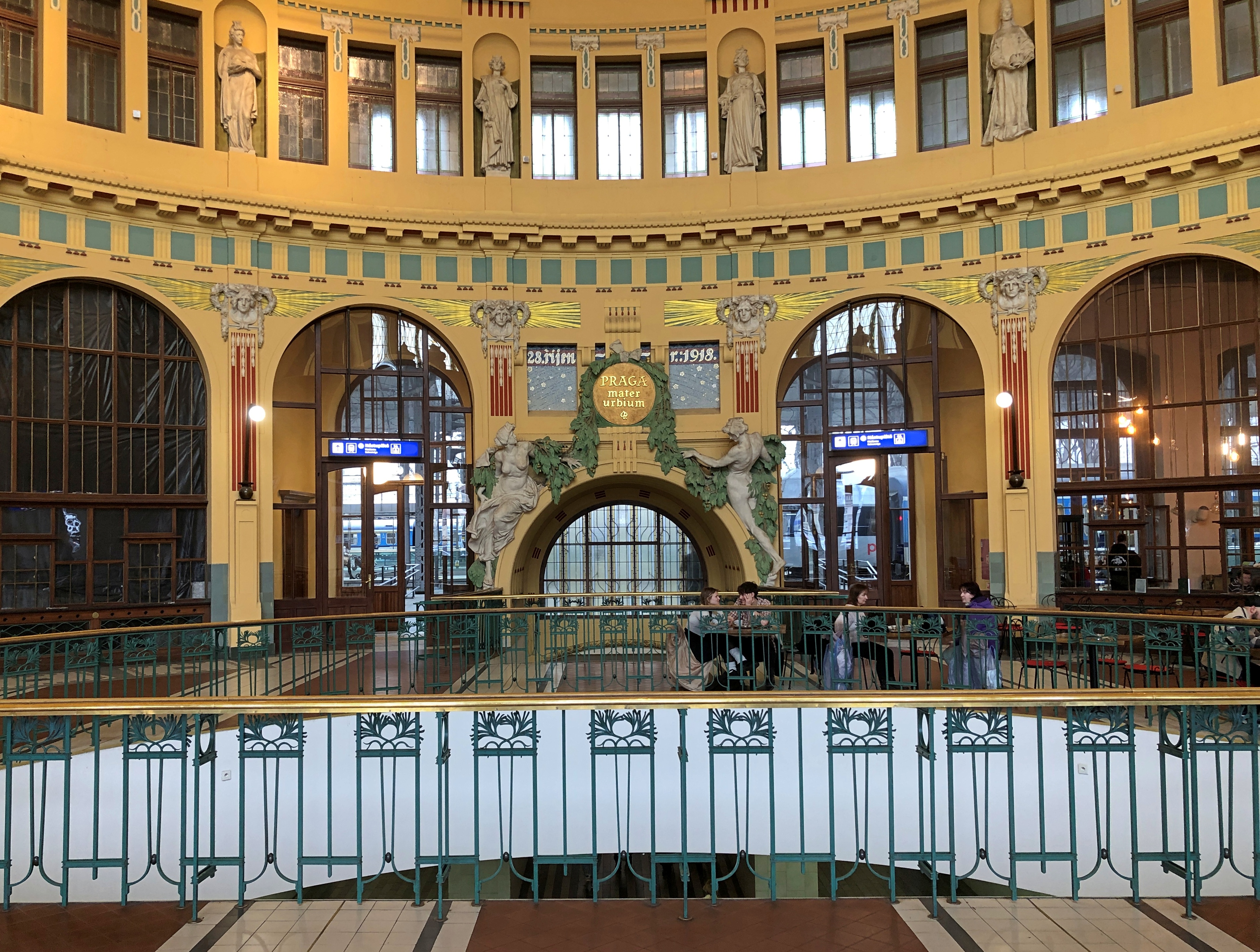
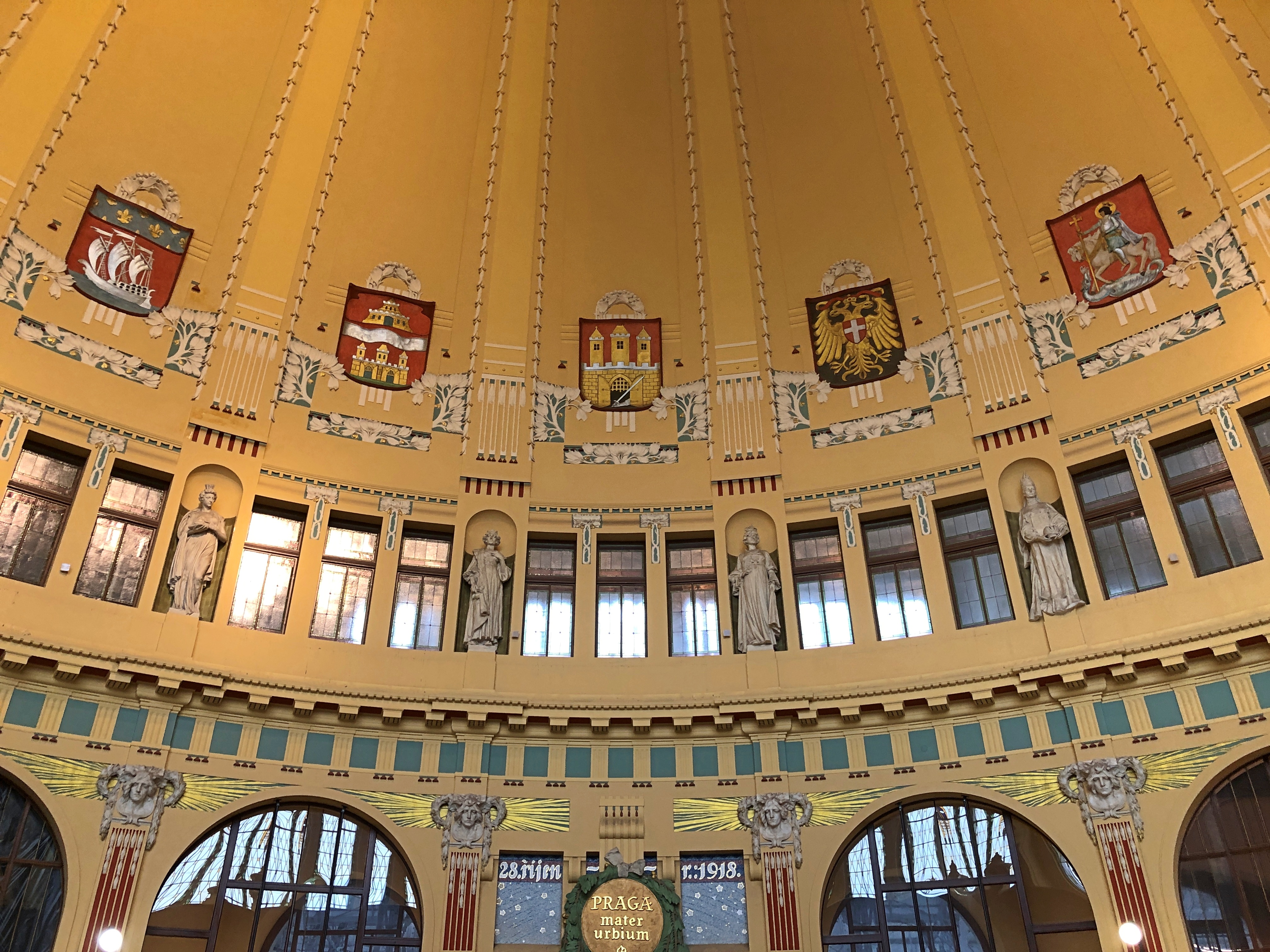
On the afternoon of March 12, a gray, chilly day, Jay and I arrived at the Main Railway Station in Prague (Praha hlavní nádraží) to catch the EC 170 back to Berlin, leaving at 4:28 pm. We were early, and had time to look around the station.Praha hlavní nádraží

A grand edifice. “One of the final glories of the dying empire,” notes the 2002 Rough Guide to the Czech & Slovak Republics, though perhaps “ramshackle empire” might have been more apt, since who knew the catastrophe of WWI would play out quite the way it did.

“It was designed by Joseph Fanta and officially opened in 1909 as the Franz Josef Station,” the guide book continues. “Arriving in the subterranean modern section, it’s easy to miss the station’s surviving Art Nouveau parts. The original entrance on the Wilsonova still exudes imperial confidence, with its wrought iron canopy and naked figurines clinging to the sides of the towers.”

The grand hall interior is grand indeed.Praha hlavní nádraží Praha hlavní nádraží

But largely empty. The crowds were at the more modern lower level, where a long tunnel connects all the train platforms, ticket offices and a fair amount of retail. We boarded our train without any problem and found that our car was nearly empty too. Not many people were headed for Berlin that Wednesday evening.

At one of the suburban stations, however, a young man and young woman got on and sat across the aisle in our car. They had that contemporary Euro-look: casually dressed, visible tattoos here and there, a few studs and earrings for both, and the mandatory beard for the man. They were in a merry mood. Not obnoxiously loud, but making happy-sounding conversations in what I assume was Czech, complete with the universal language of giggling; clearly a couple headed somewhere for some fun. Someone’s wedding, or maybe just a few days off work.

None of that was unusual. Then the woman removed a small air cylinder from her backpack and started using it to blow up balloons, which she and the man proceeded to swat around the car. I’ve been on a lot of trains in a lot of places, but I have to say, that was a first.

That didn’t last long. Soon they got off the train at the last station before the border with Germany, Ústí nad Labem, and the car got quiet again. I hope they continued to have a good time in that town.

On the trip down to Prague on the 10th, in a mostly full car, we had passed the same way going the opposite direction, and it was still daytime. So we got a good look at the hilly territory of the Elbe River Valley south of Dresden, where the train mostly follows the river. A picturesque spot, even in winter.

As for the German-Czech frontier, crossing was perfunctory. Hardly worth calling it a border. No officious or menacing border guards roamed the cars demanding Papers! (Reisepass?) Not in the 21st-century Schengen Area. We were on an Evening Train to Berlin, not a Night Train to Munich. The only indication of entering a new country (either way) was that after crossing each time, our tickets were checked again, electronically, by fairly laid-back workers of the respective railway companies on either side of the line.

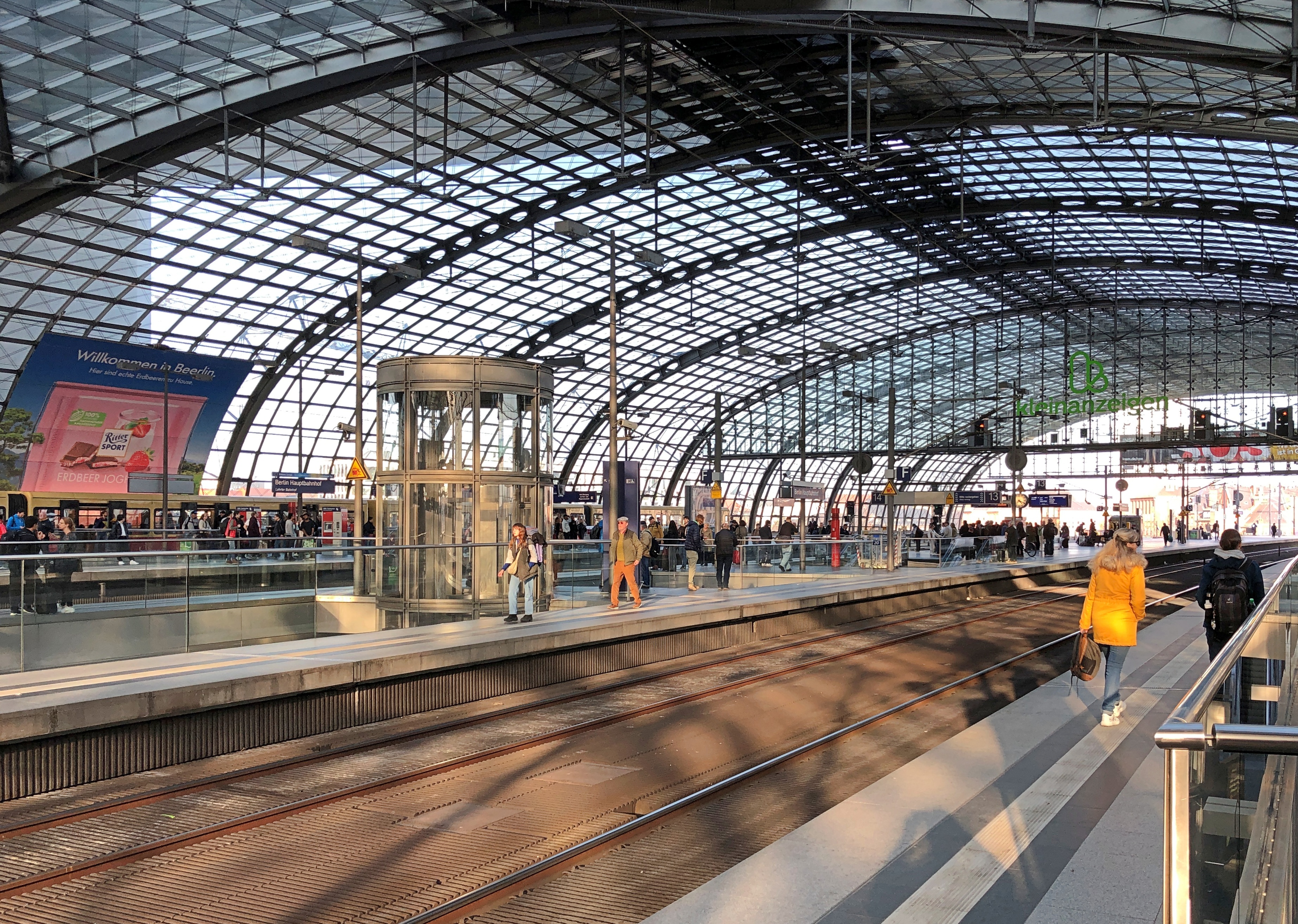
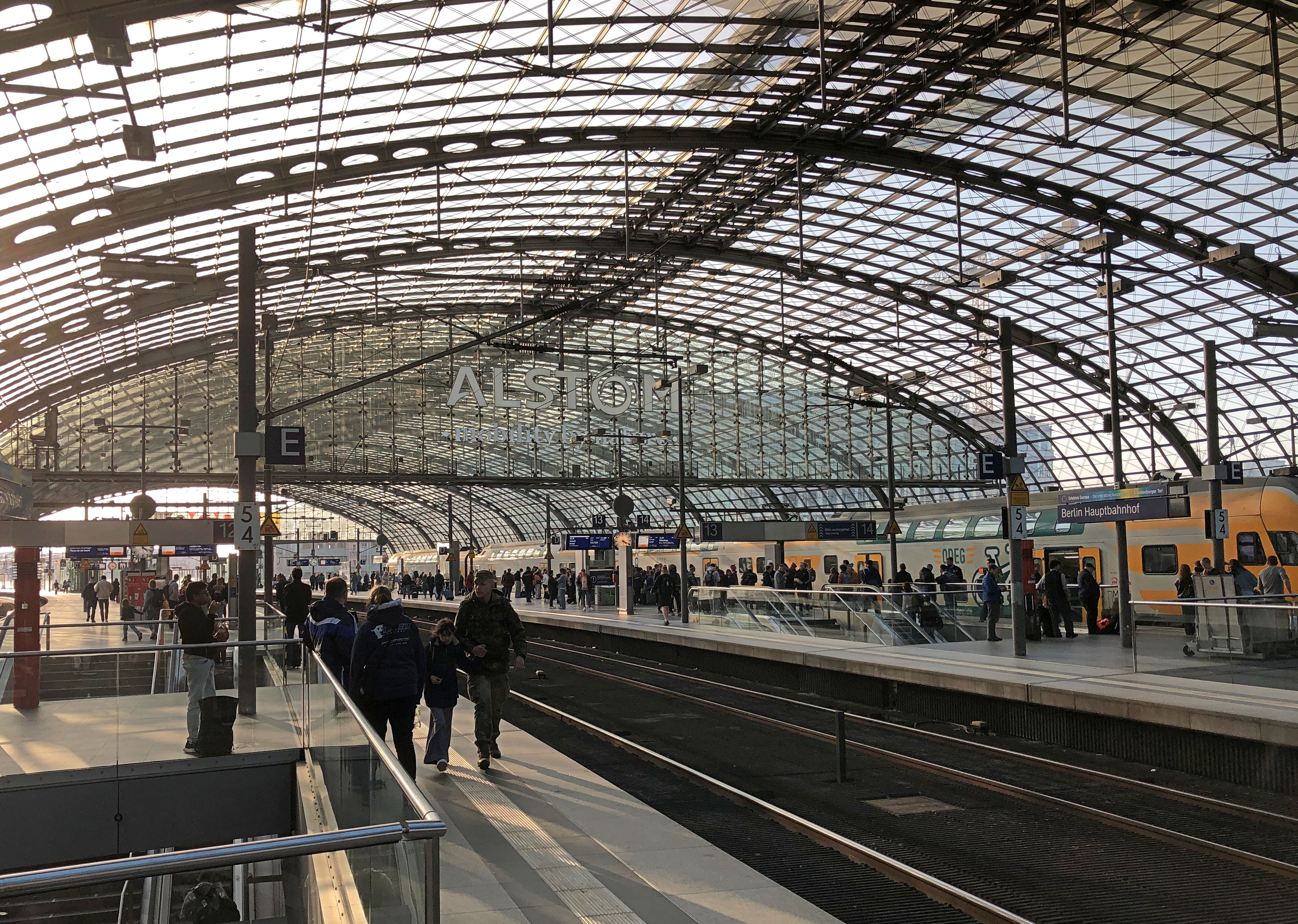
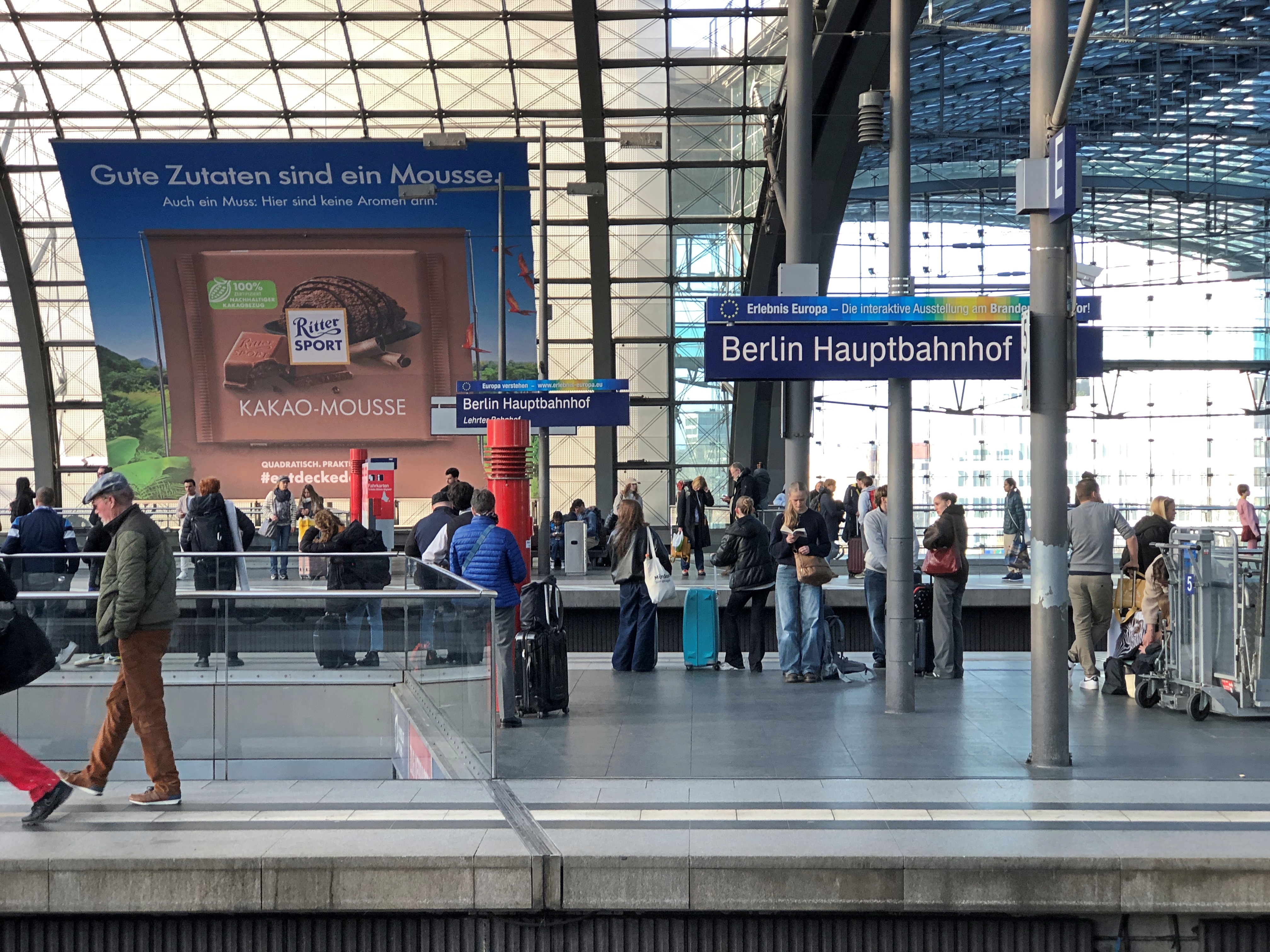
The 175-mile trip to Prague began and ended at the Berlin Hauptbahnhof, a massive station that didn’t exist the first time I went to Berlin. A predecessor station on the site had been badly damaged during the war, and the new station wasn’t developed until the 2000s, as Berlin’s fancy new main multi-modal transit center. Besides intercity trains, Berlin S-bahn and U-bahn trains go there, along with a lot of buses. There is also enough retail at the station to qualify as its own mall.

Berlin Hauptbahnhof isn’t an old style, but it is impressive.Berlin Hauptbahnhof Berlin Hauptbahnhof Berlin Hauptbahnhof

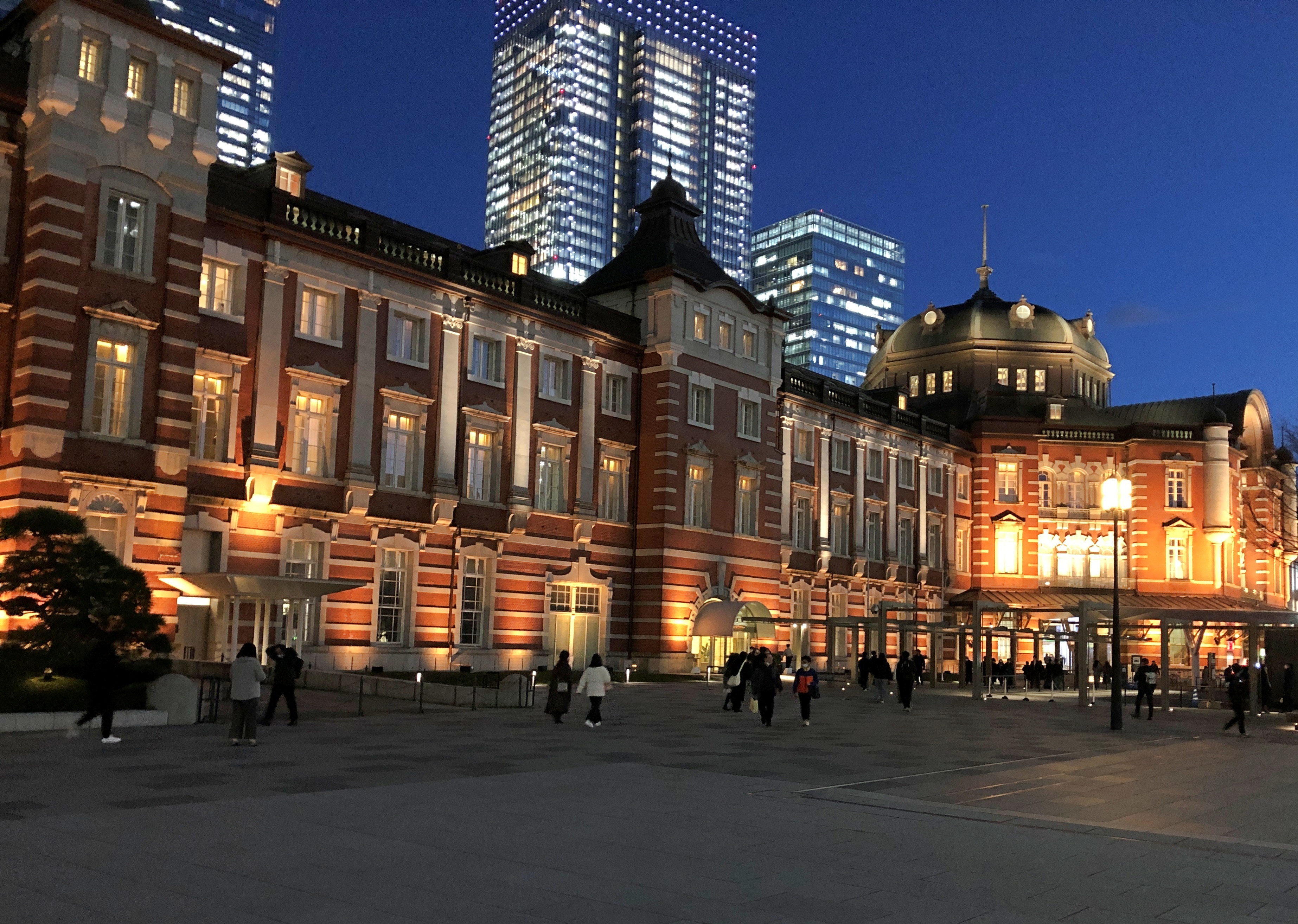
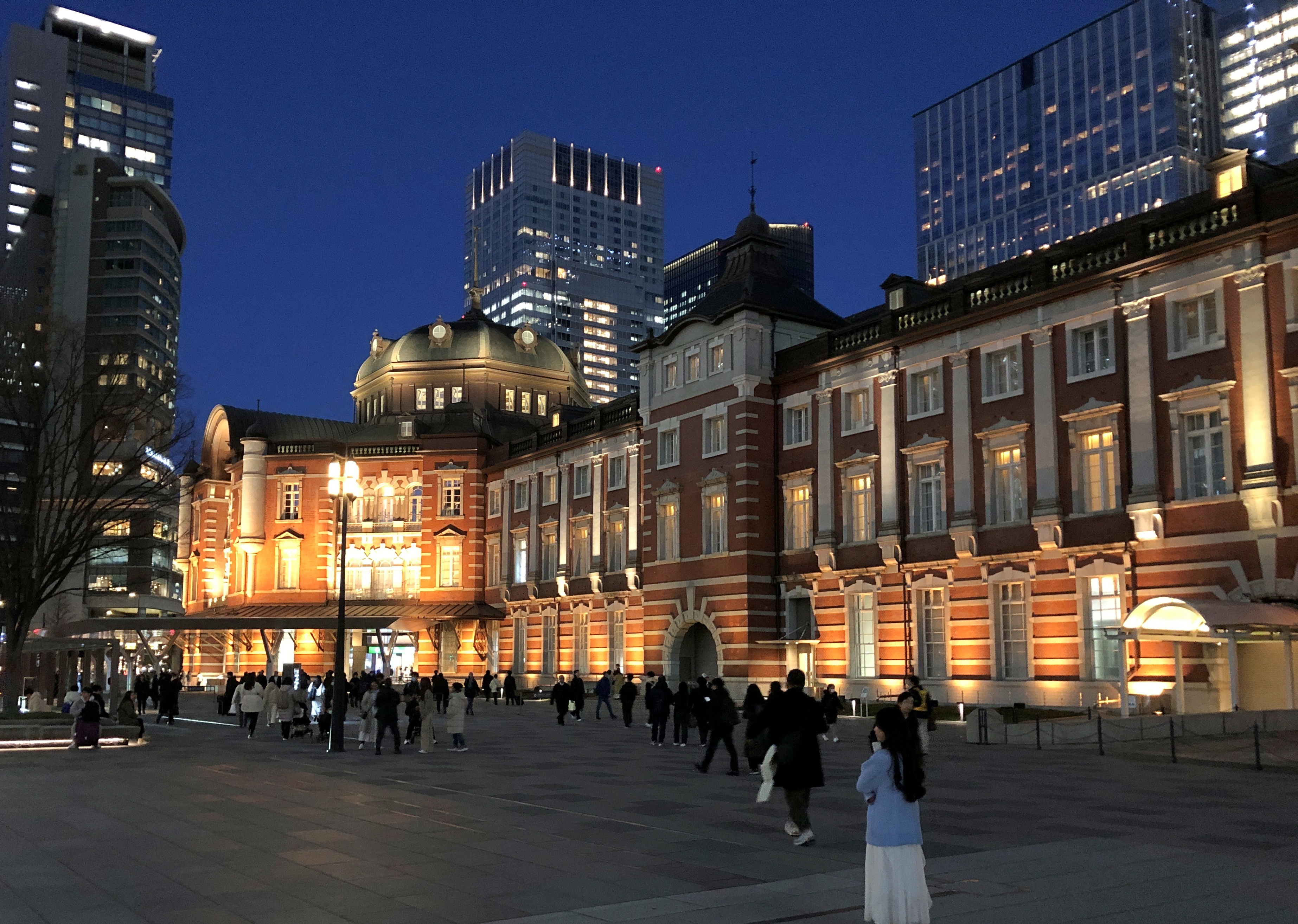
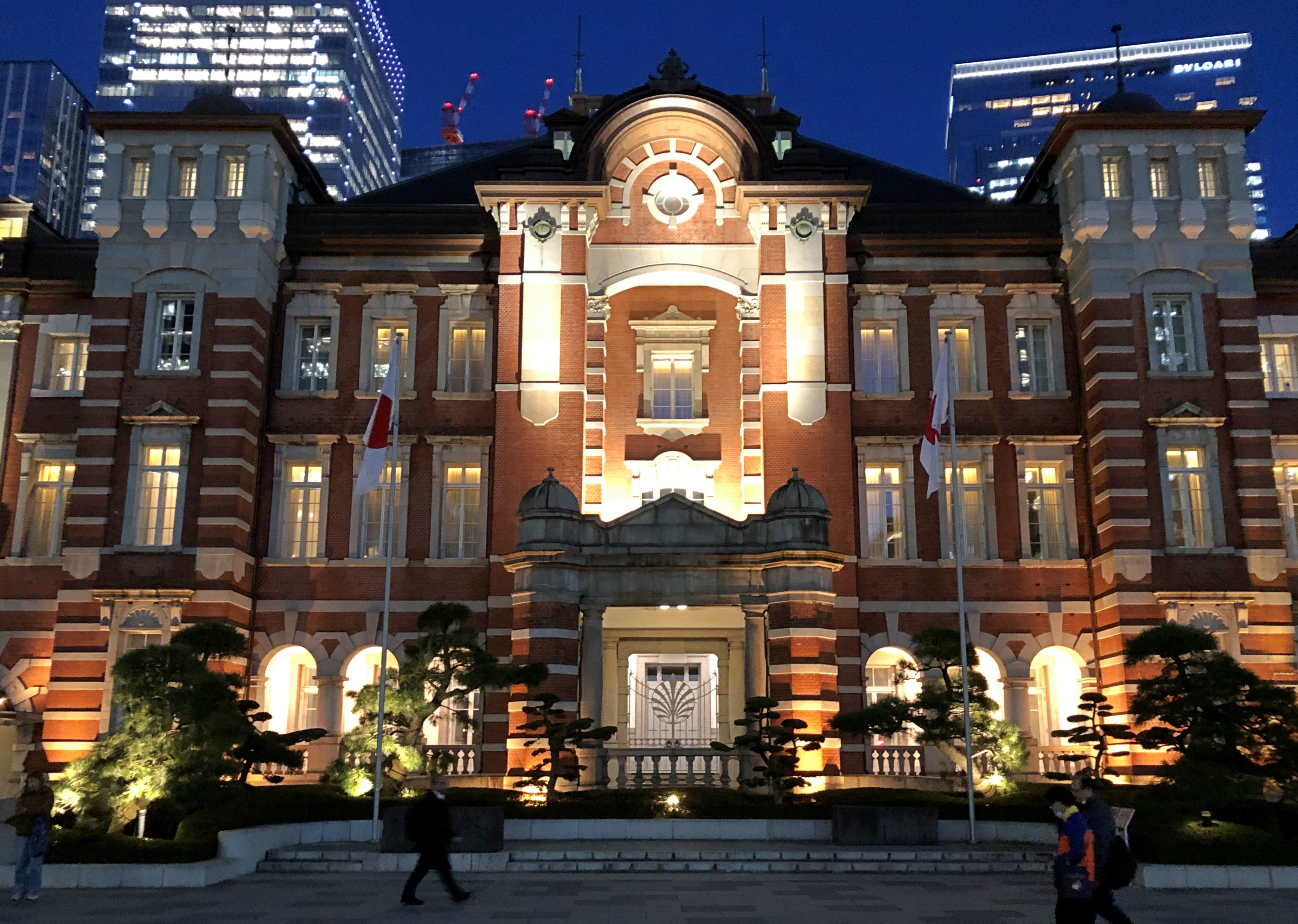
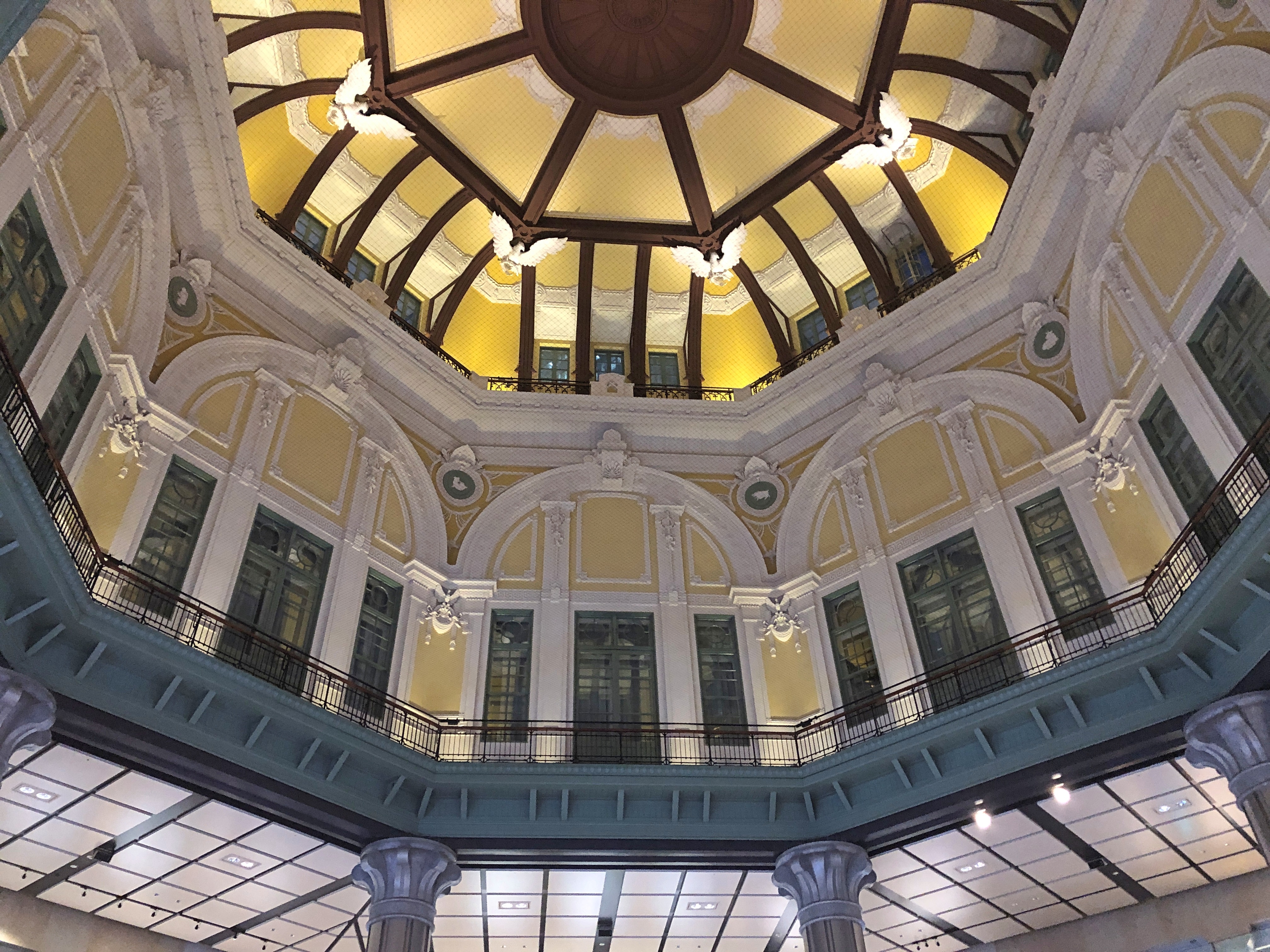
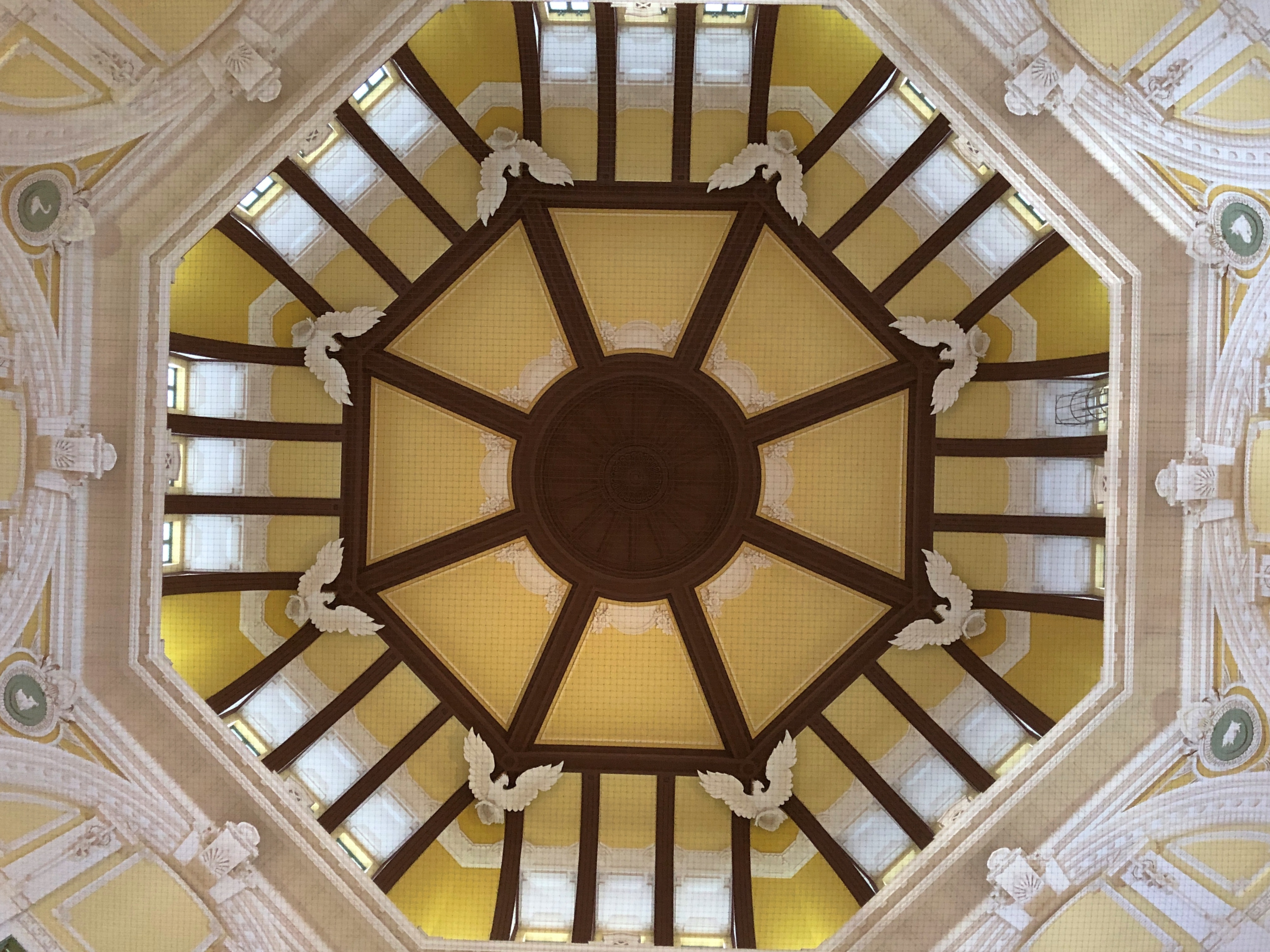
One more impressive rail hub on this trip was a continent away: Tokyo Station, the busiest one in passenger numbers in that urban agglomeration, which is saying something. It too is a multi-modal facility, with various intercity rail lines meeting there, along with subways and buses. The Shinkansen from Osaka goes there, which is how we arrived. The structure dates from 1914 and amazingly survived war in the 1940s – and just as threatening – urban renewal in the 1960s. In more recent years, the station was restored to close to its original design.Tokyo Station Tokyo Station Tokyo Station

Under the main dome.Tokyo Station Tokyo Station

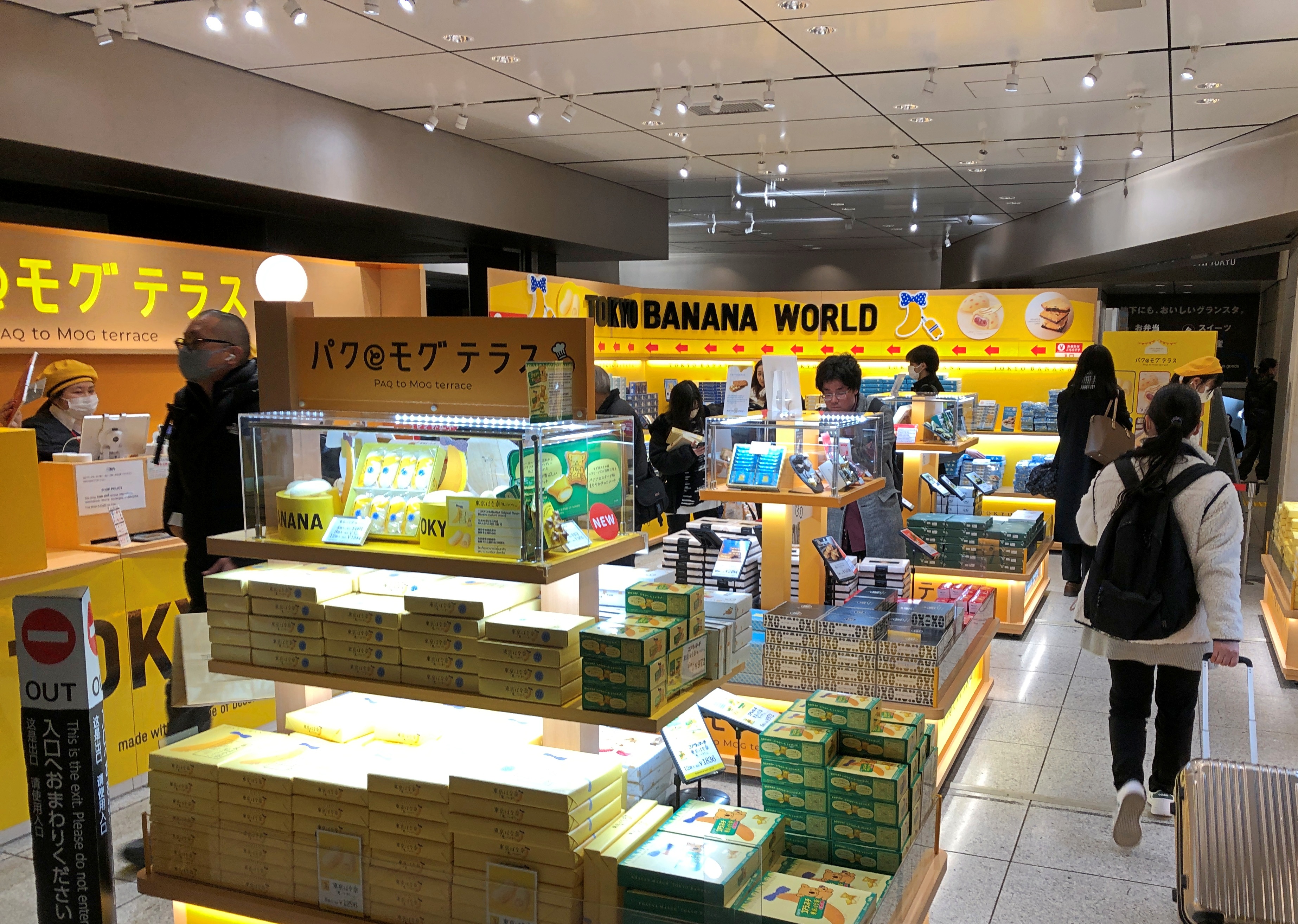
Plenty of retail at Tokyo Station as well. Including some places I’d never seen before. We should have stopped to get something from Tokyo Banana World.Tokyo Banana World

Per Time Out: “Tokyo Banana opened its flagship store called Tokyo Bananas inside Tokyo Station on December 8 [2022], and it’s stocked with exclusive goods. Two of the exclusive products are the Legendary Curry Bread and Cream and Red Bean Paste Doughnut — and yes, banana is the hidden ingredient for both.”

Ex Nippon semper aliquid novi, eh?

Jewish Museum in Prague

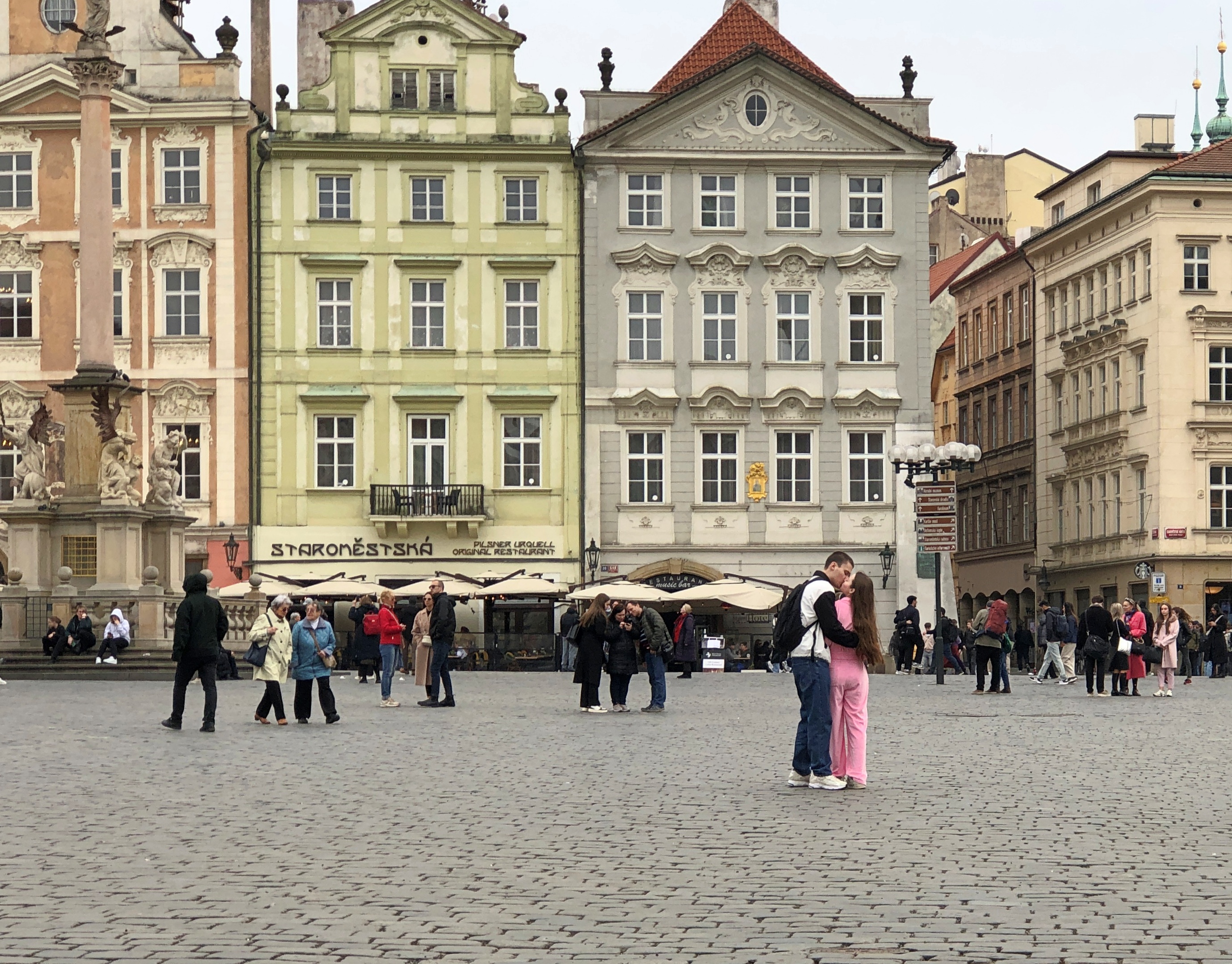
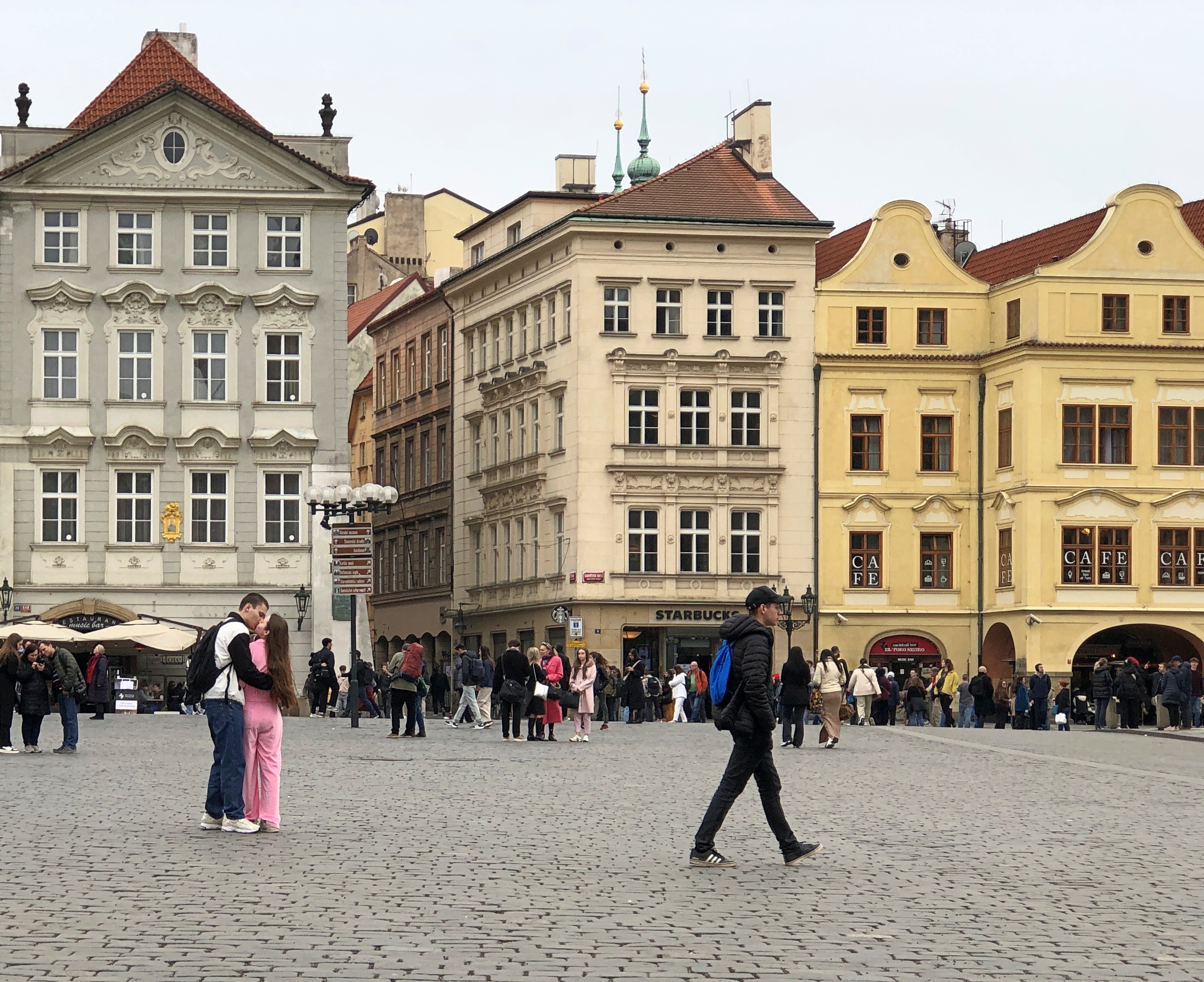
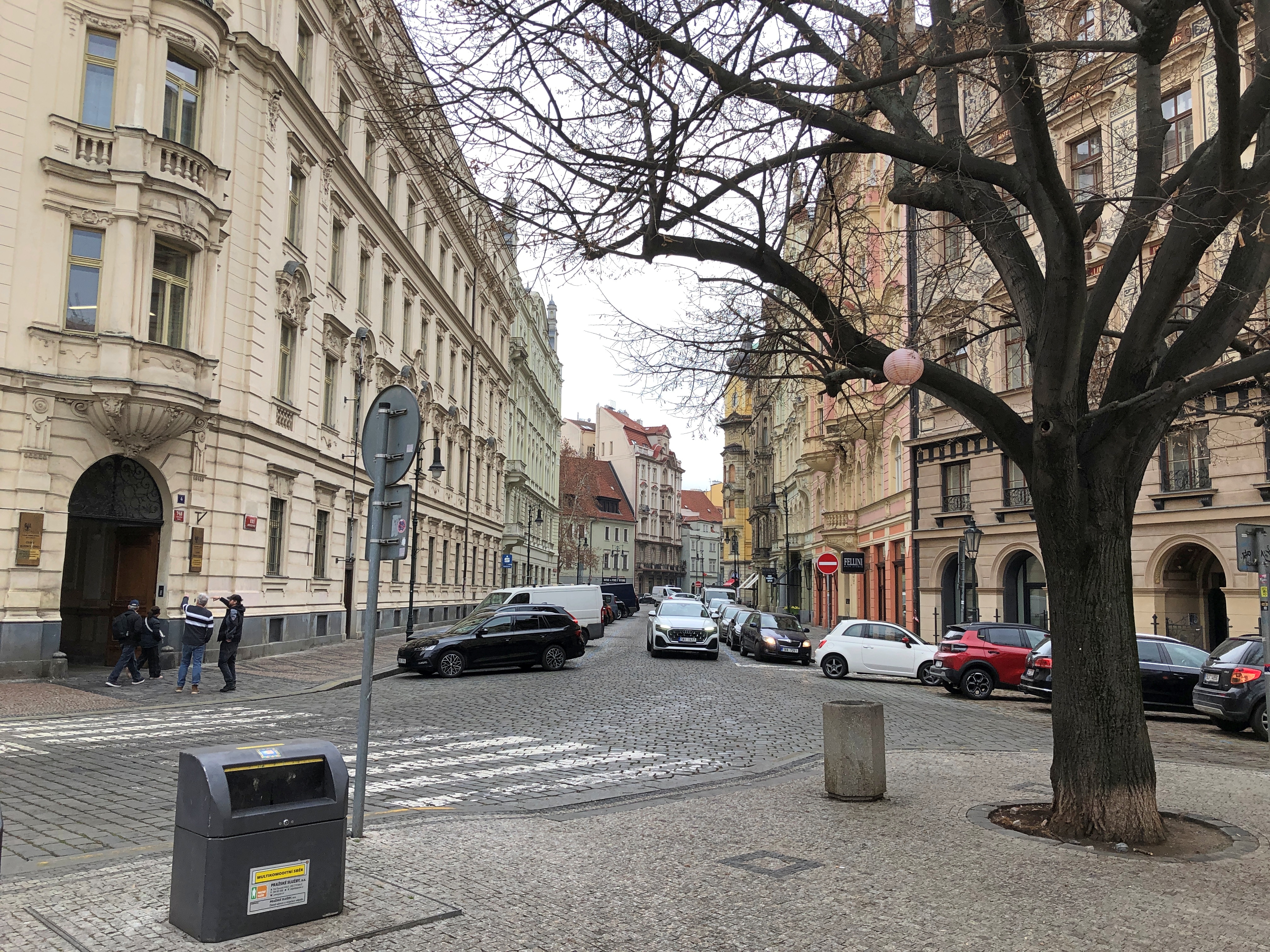
One good thing about the historic core of Prague, at least for old visitors, are the small squares (náměstí?) with benches and sometimes trees. Walkability doesn’t mean much if you can’t sit down at regular intervals, and old Prague provides that, unlike some other pedestrian-intense places on this trip (and I mean you, Osaka).

We stopped often at this one, often as our first rest out from the hotel. Once Jay waited here for a few minutes while I wisely went back to the hotel to fetch a cap to wear.

We stopped here more than once as well.

Of course, in early March, the air was distinctly cool, and the squares weren’t so green. Or quite so busy. The views from the first small square looked more like this.Prague 2025

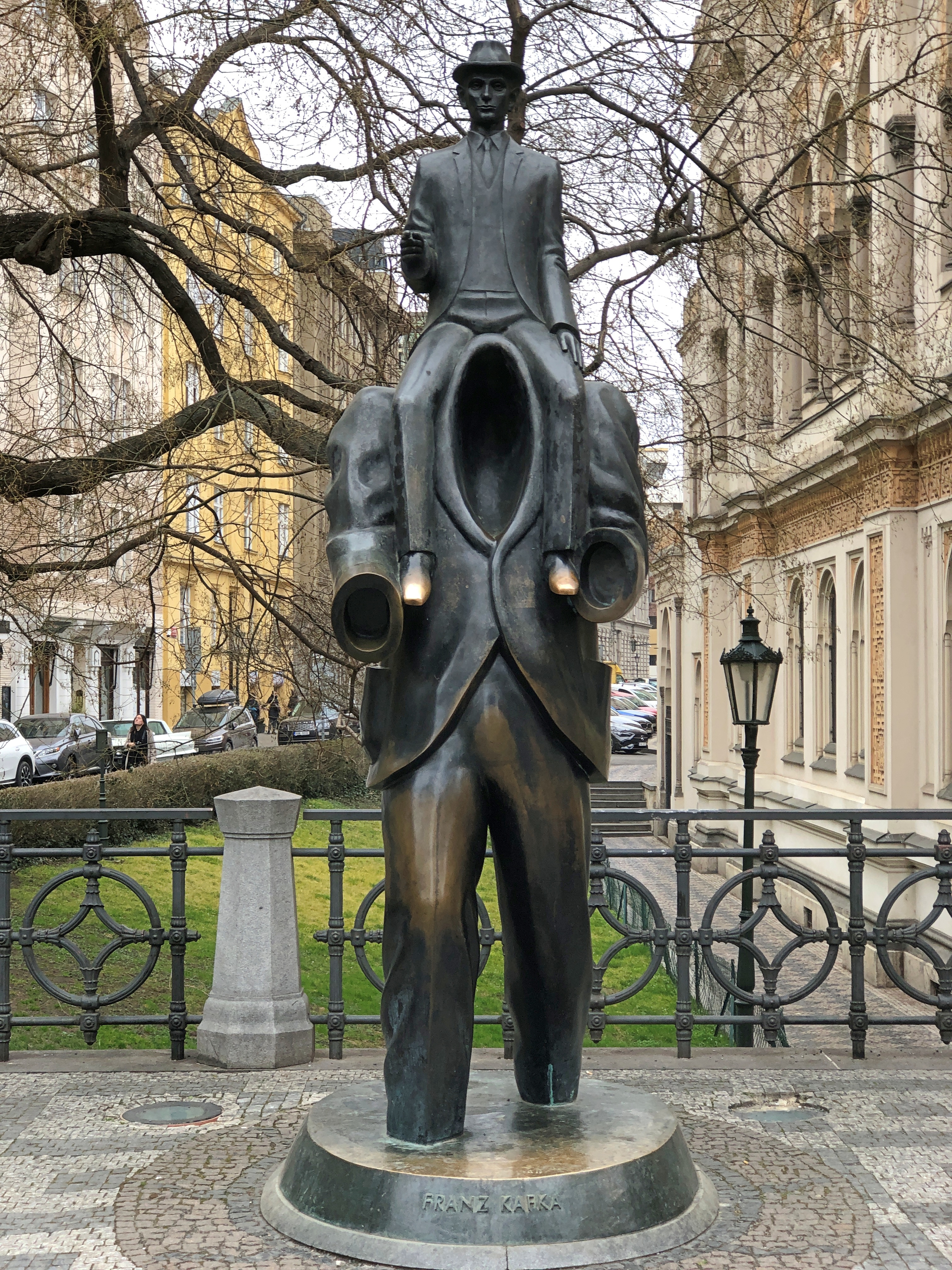
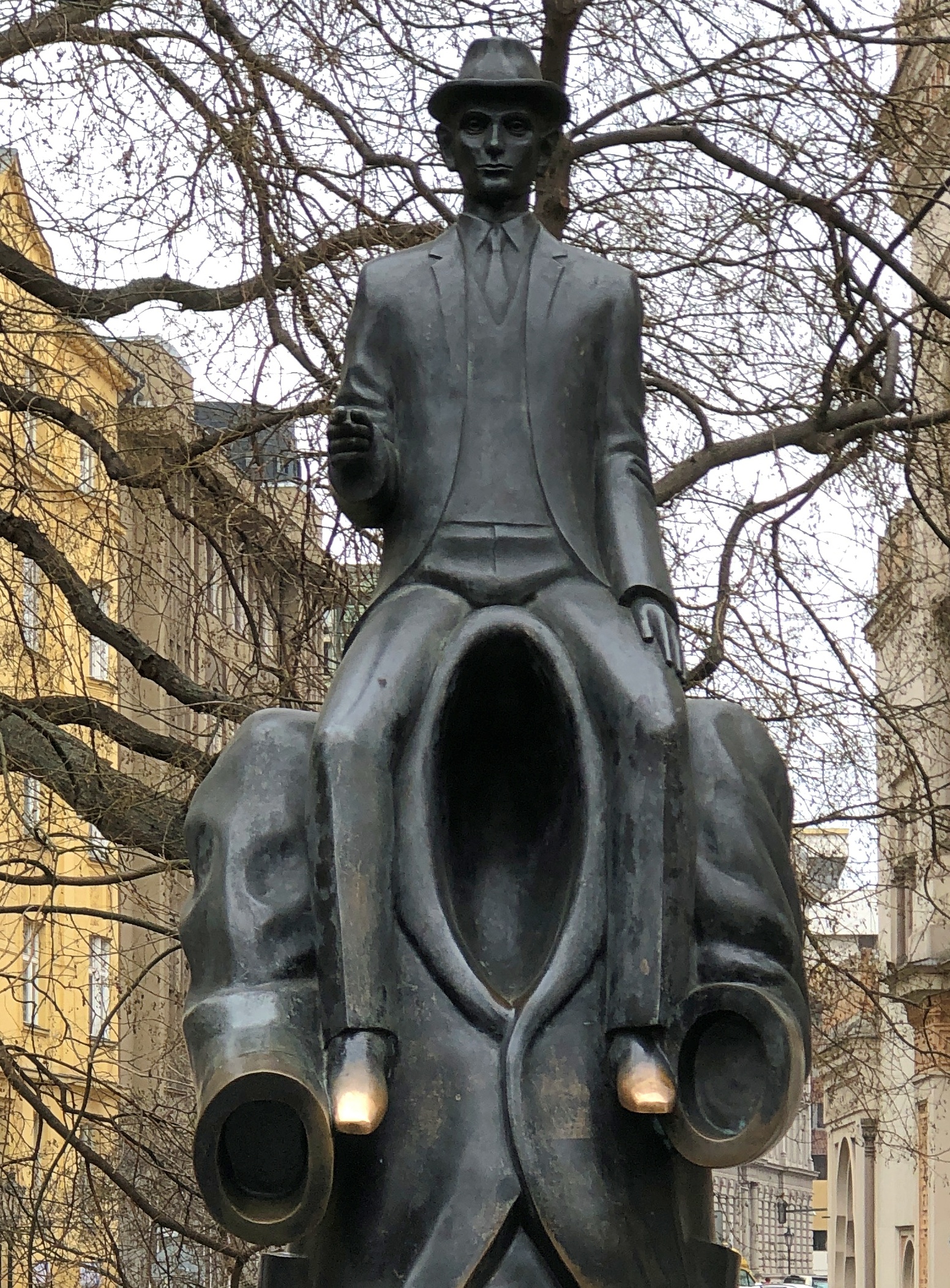
During our first ramble through the old city on March 11, we came across this unnerving figure.Prague 2025 Kafka Prague 2025 Kafka

Kafka. Of course. Rub the shoes for luck? Isn’t there only one kind of luck for Kafka, and it isn’t good? The bronze dates from 2003 and inspired by one of his lesser-known stories, “Description of a Struggle,” which I haven’t read, but which sounds Kafkaesque all right.

I had to look up the sculptor, Jaroslav Róna, a resident of Prague and a member of its small but enduring Jewish community. Looks like he specializes in unsettling figures, so Kafka would be right up his alley.

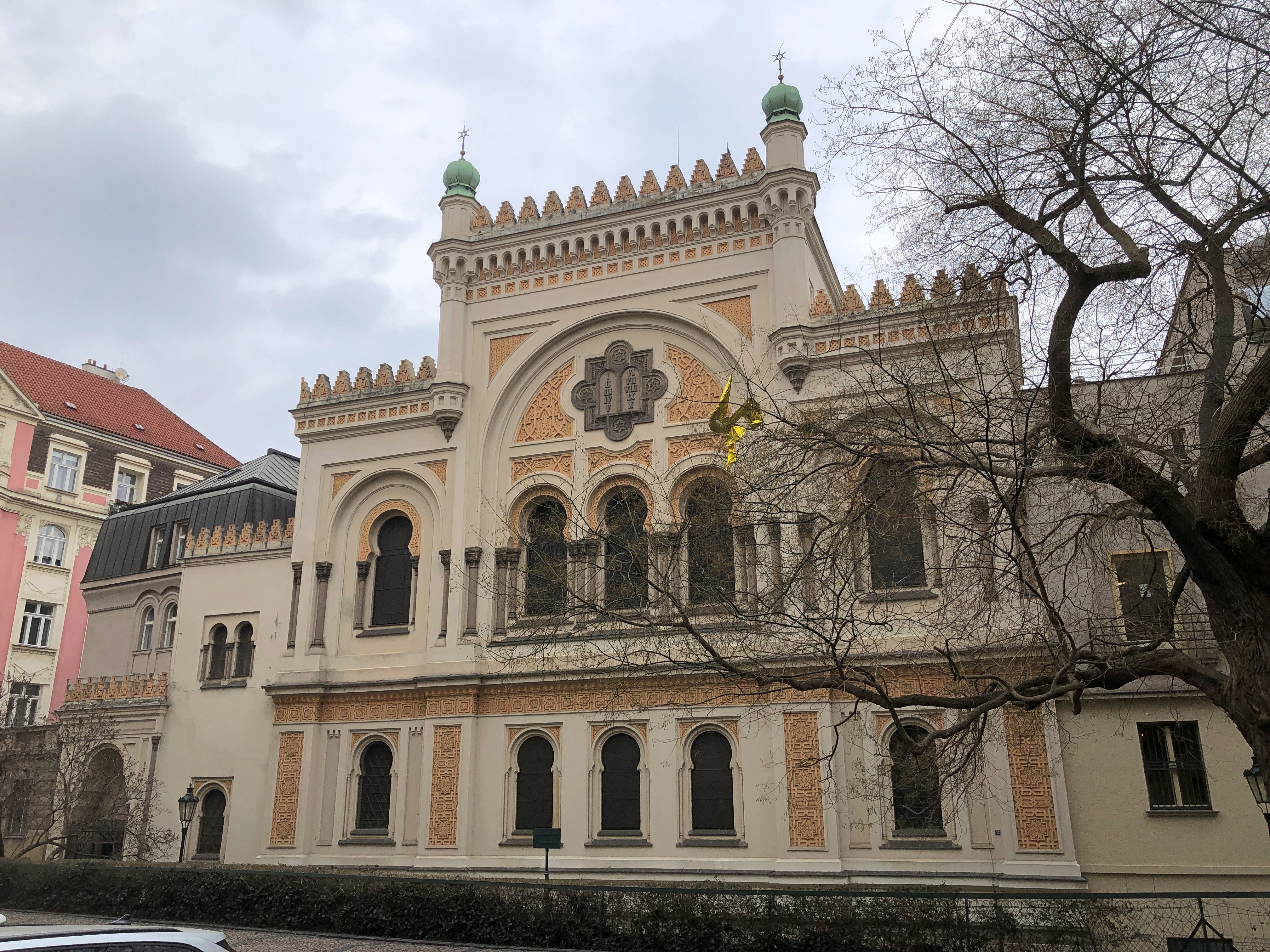
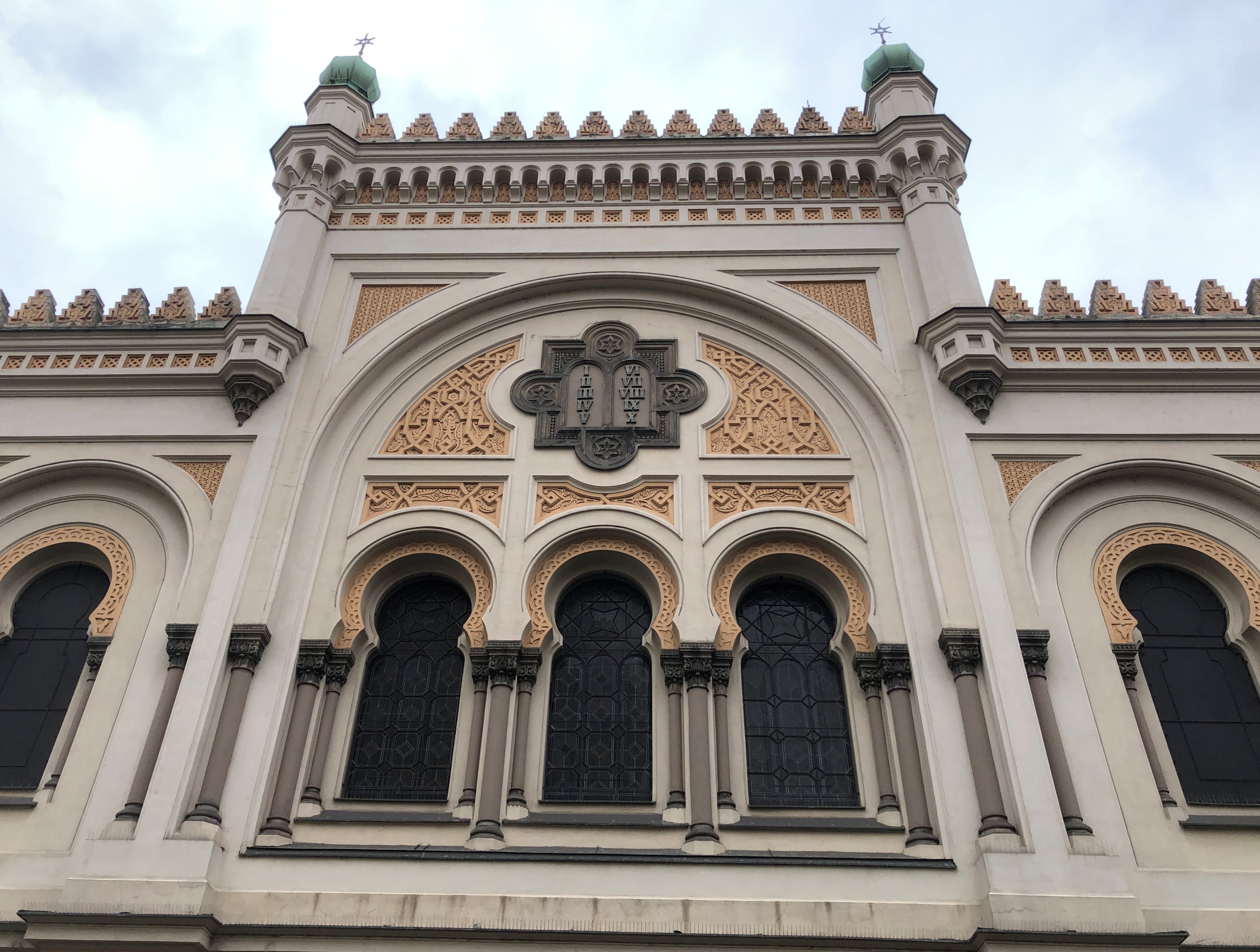
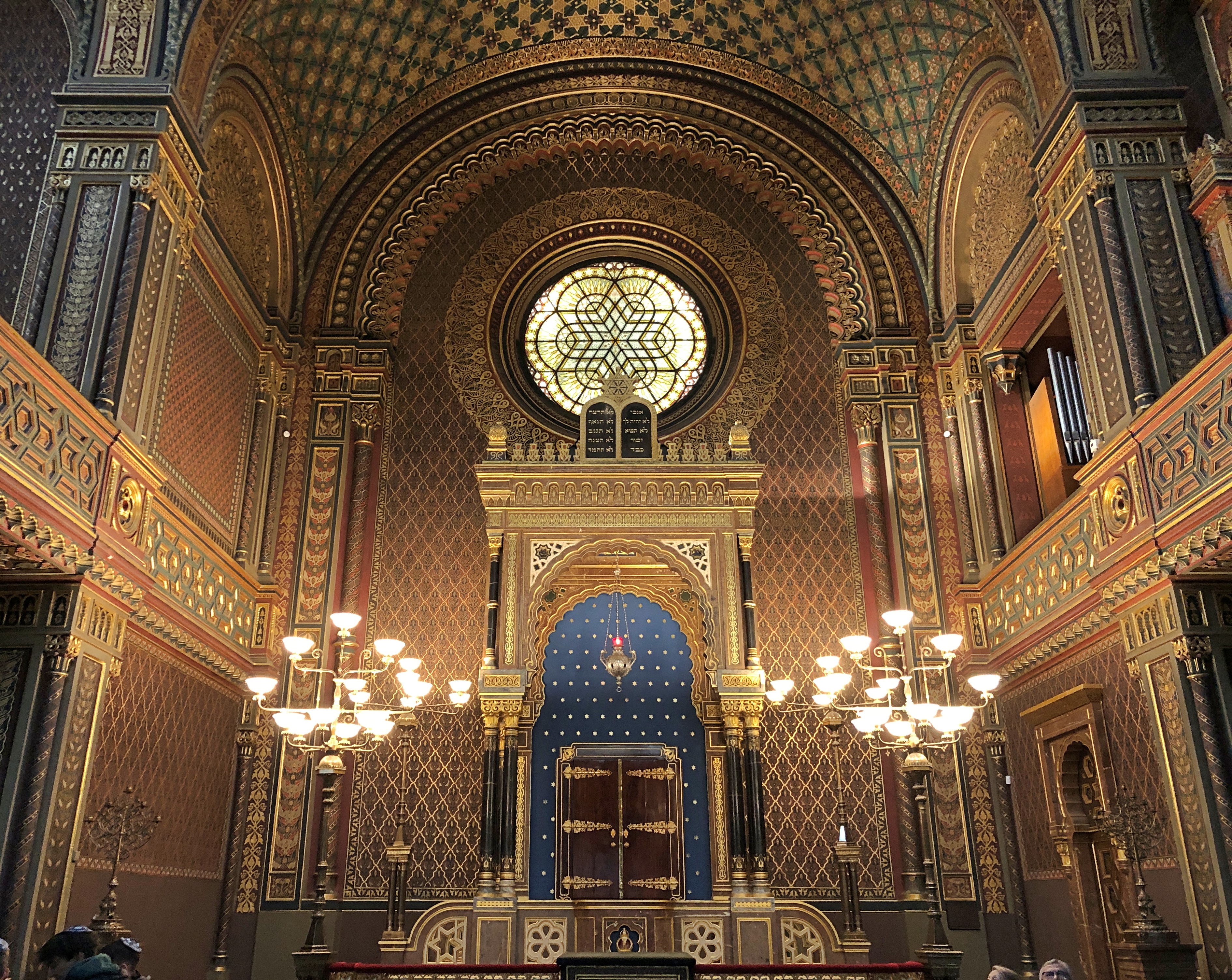
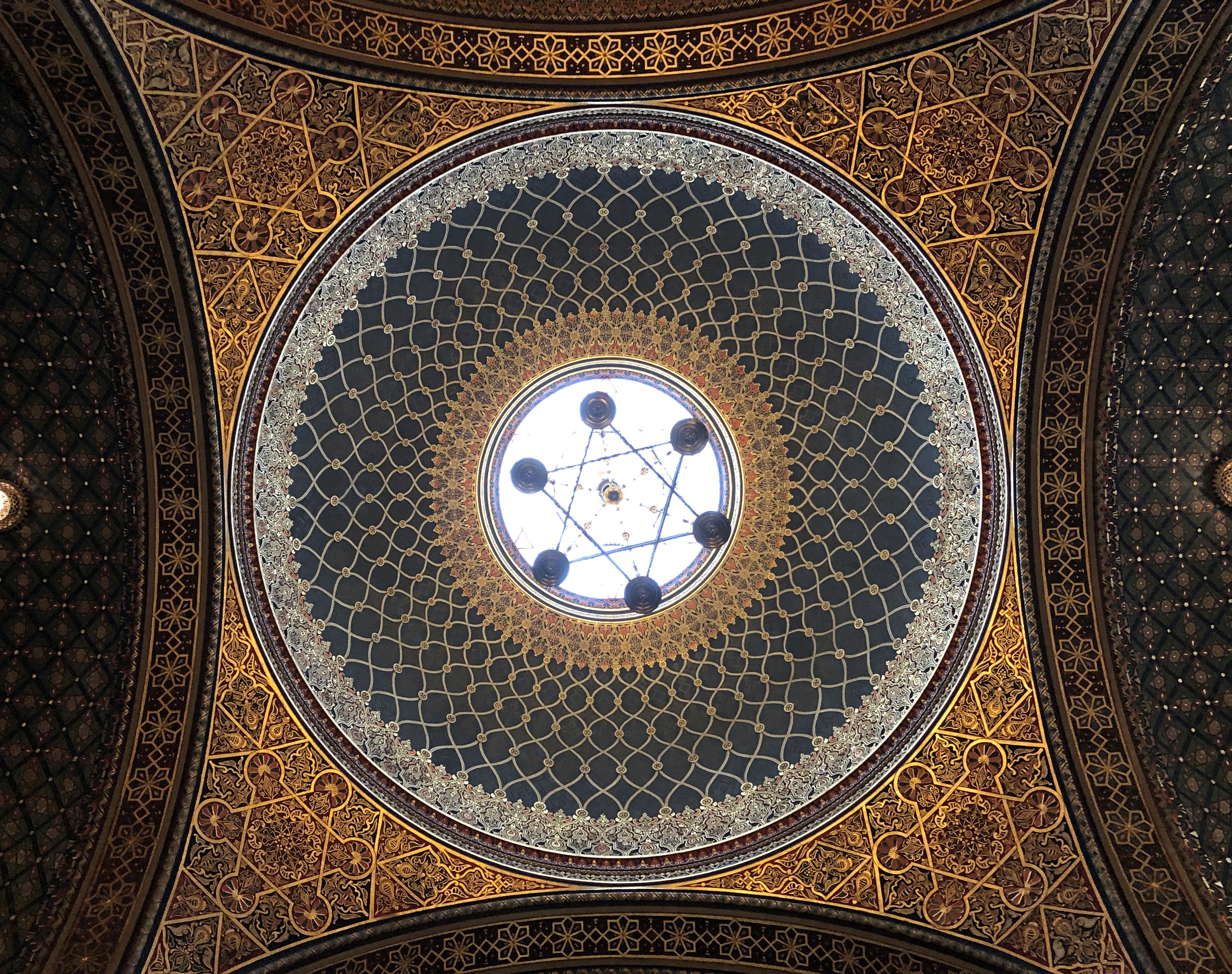
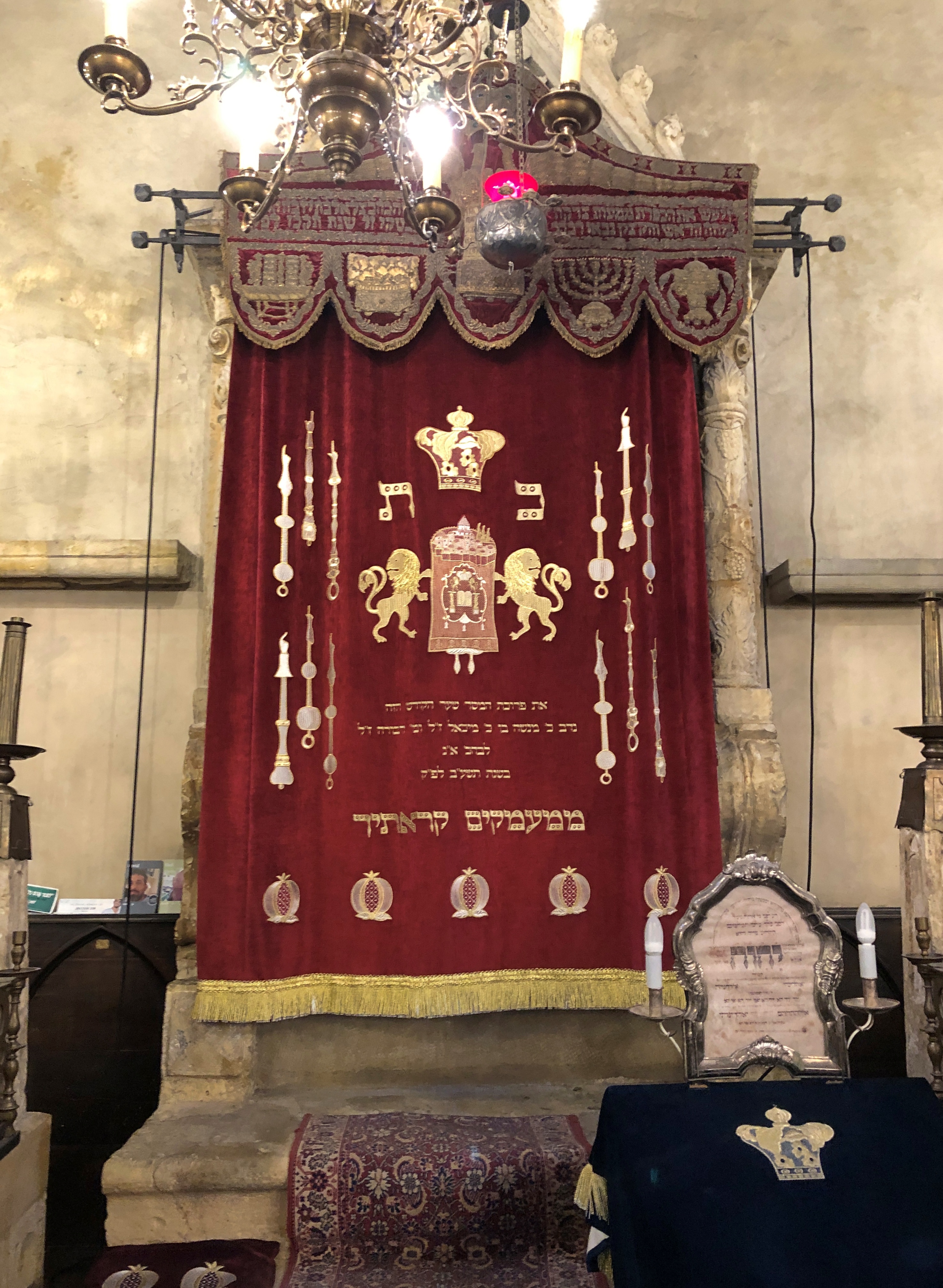
I don’t know whether it is coincidence or not, but the statue happens to be near the Spanish Synagogue (Španělská synagoga). An exceptional piece of work, dating from 1868, built on the site of a much older synagogue. There has been a Jewish community in the city since at least the 10th century of the Common Era.Prague 2025 Kafka Prague 2025 Kafka

Now a museum, the Spanish Synagogue – referring to the Moorish Revival style – is part of the Jewish Museum in Prague, which oversees a half-dozen or so structures in the former Jewish quarter, including the aforementioned Pinkas Synagogue and Old Jewish Cemetery.

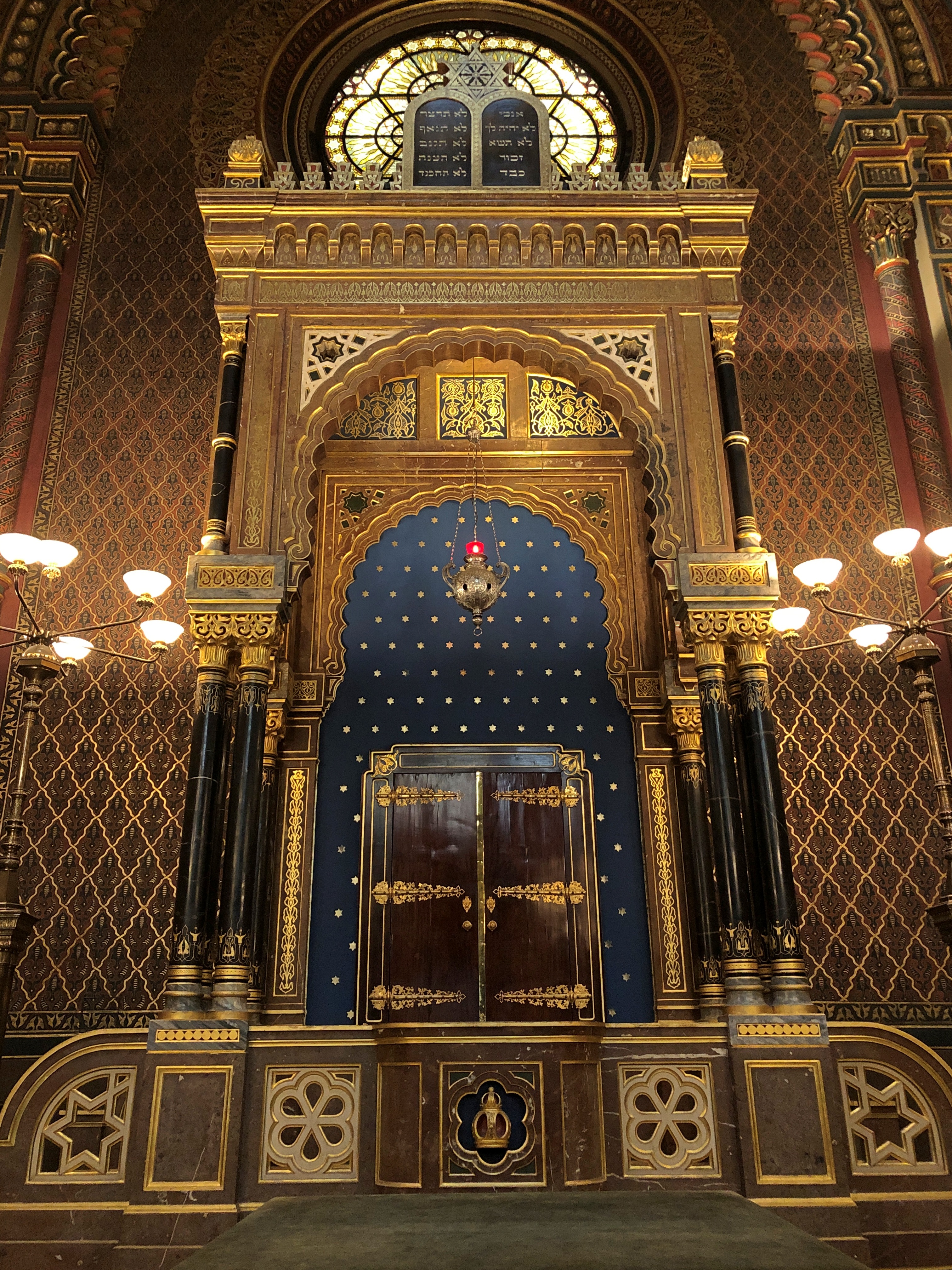
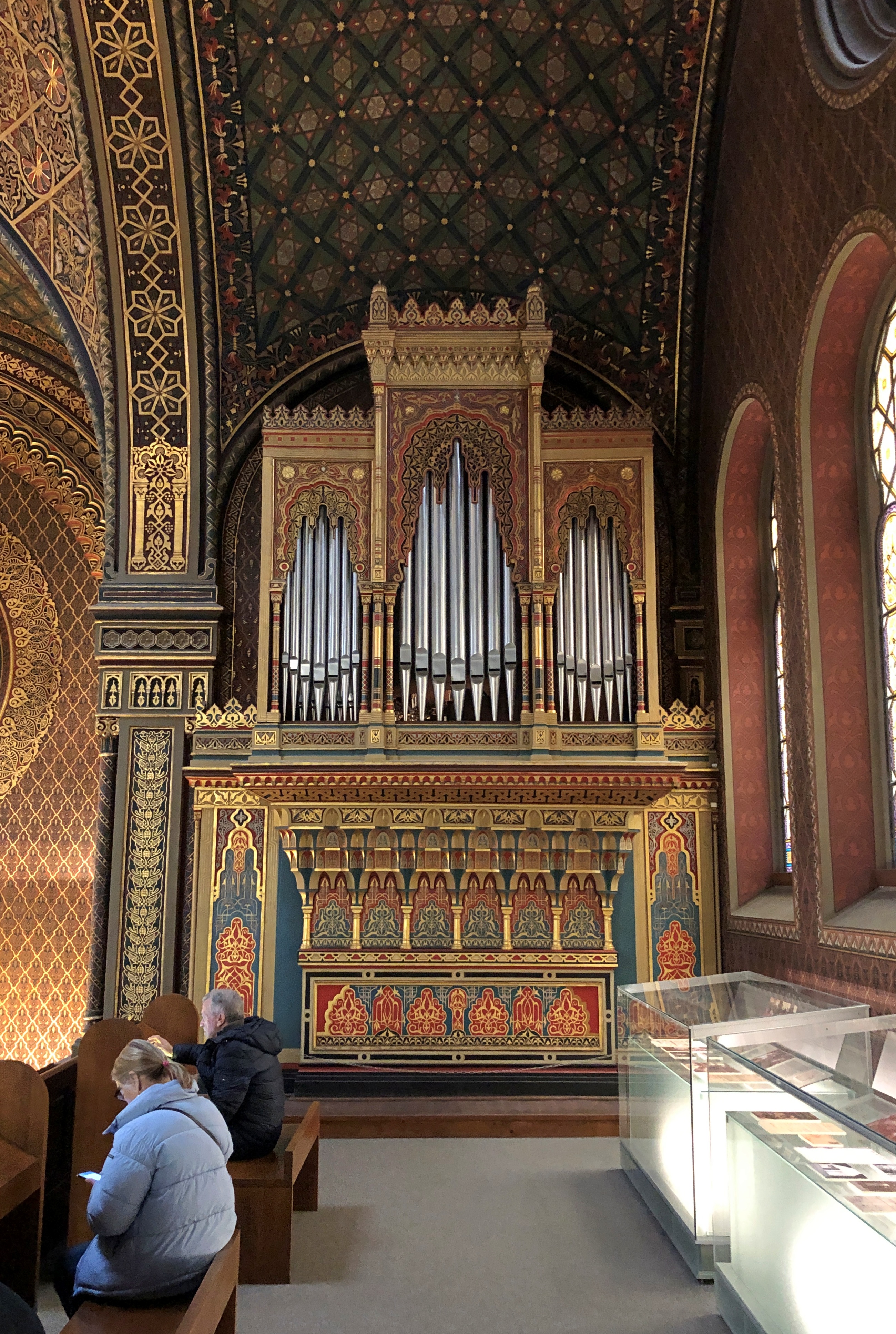
After decades of misuse and neglect, beginning with the Nazis and continuing under the Communists, the Spanish Synagogue was restored not long after the Velvet Revolution. It is magnificent.Spanish Synagogue Prague Spanish Synagogue Prague Spanish Synagogue Prague

The view from the upper level.Spanish Synagogue Prague Spanish Synagogue Prague

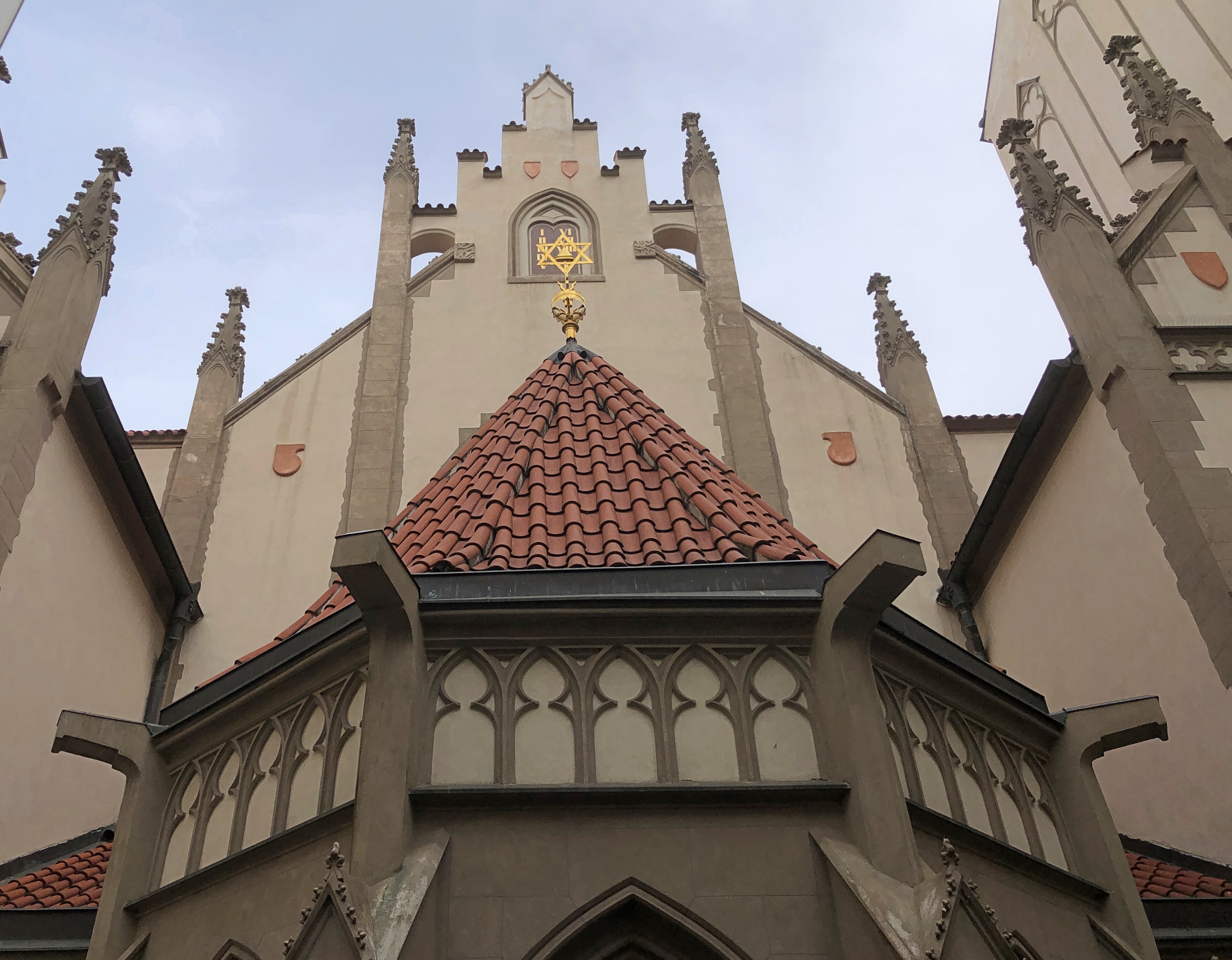
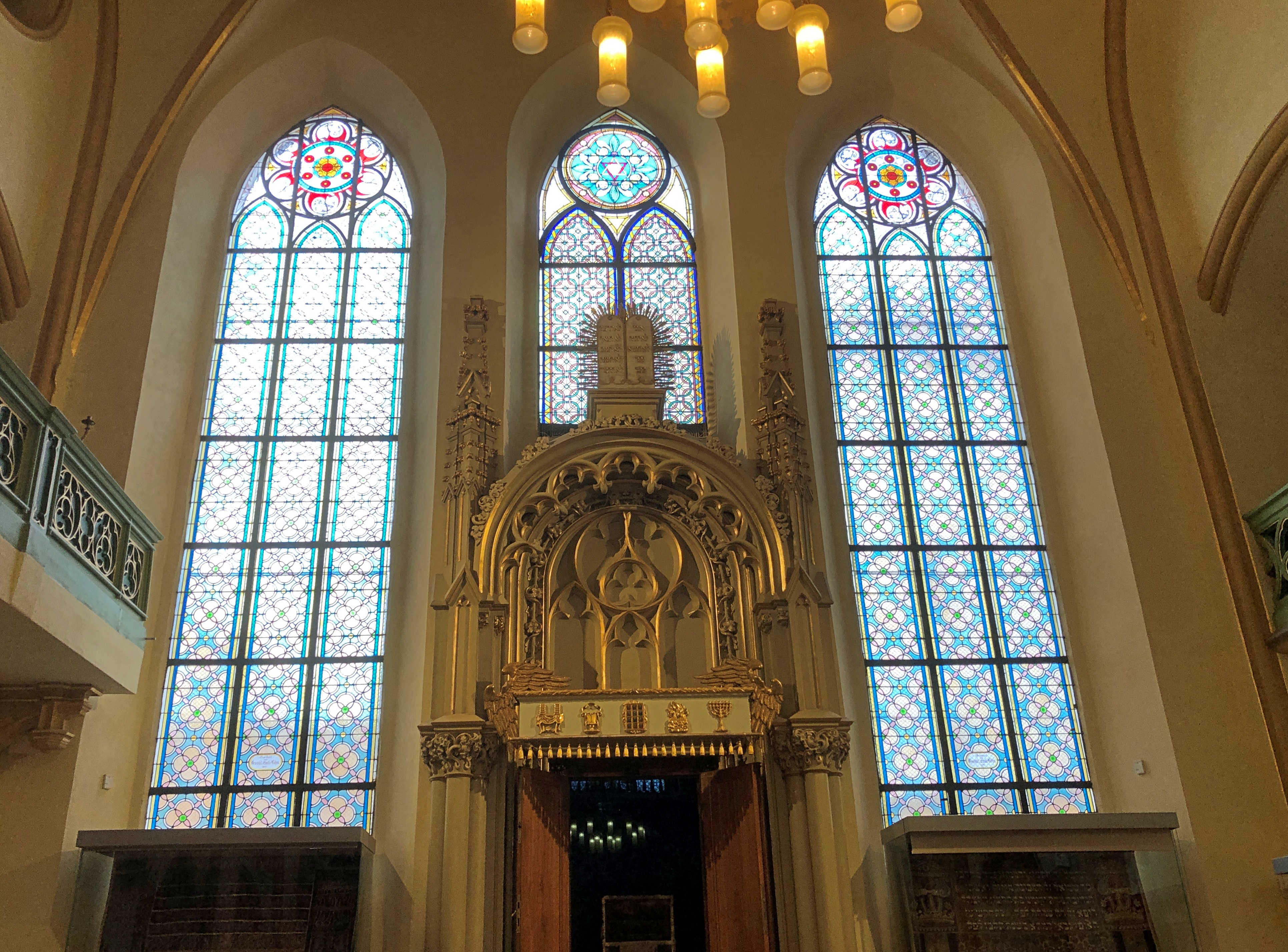
Another synagogue-turned-museum is the Maisel Synagogue (Maiselova synagoga).Maisel Synagogue Prague Maisel Synagogue Prague

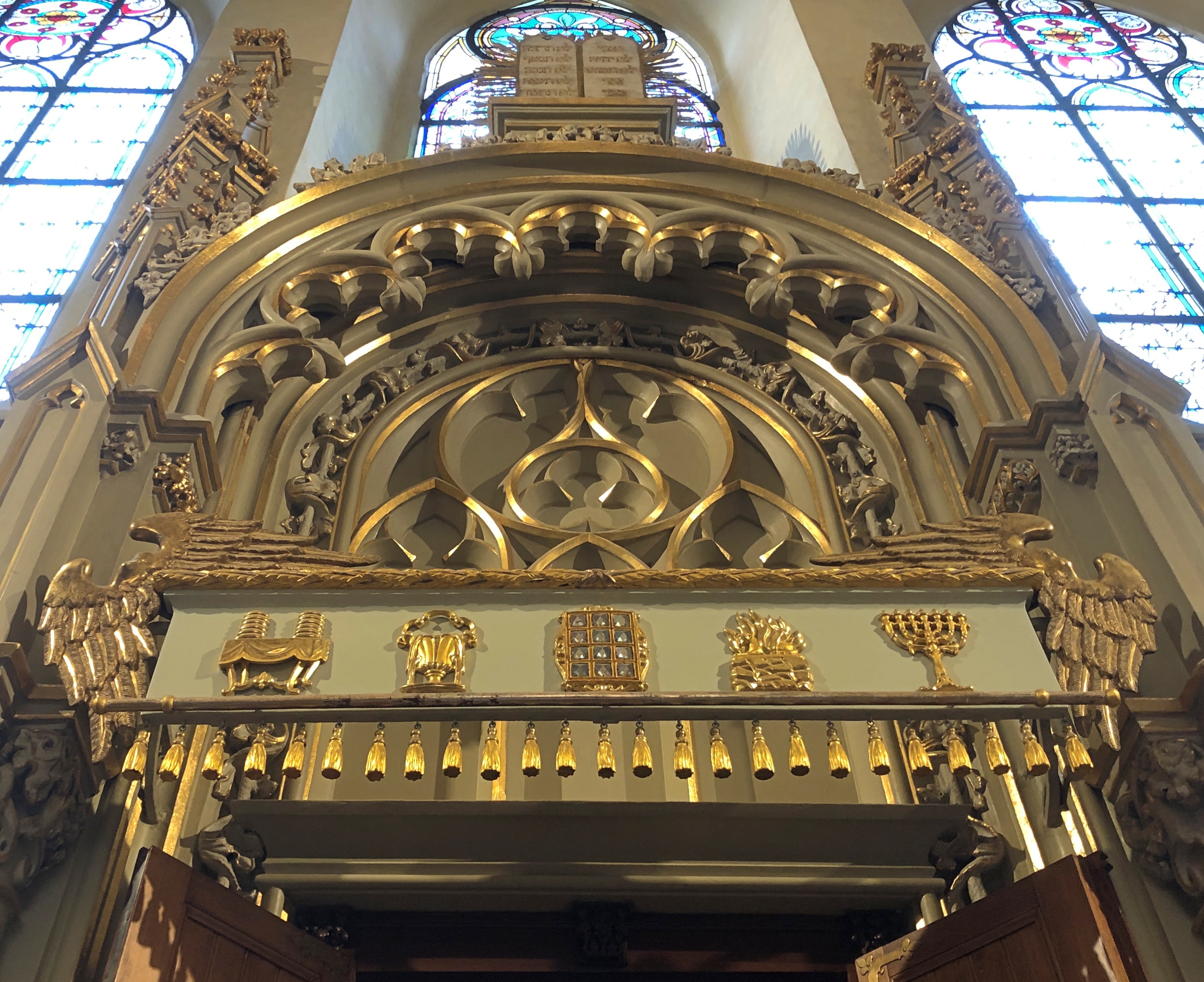
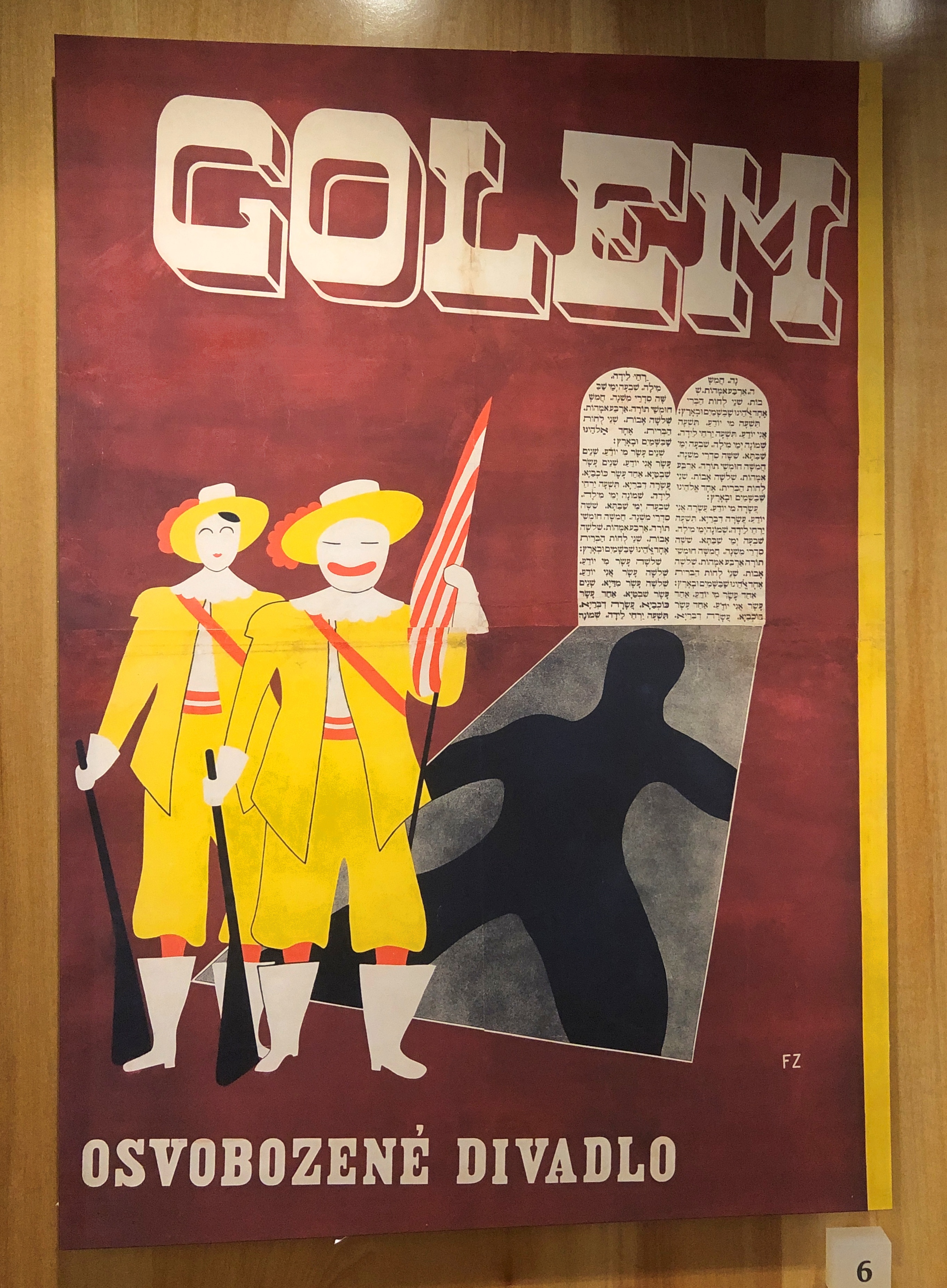
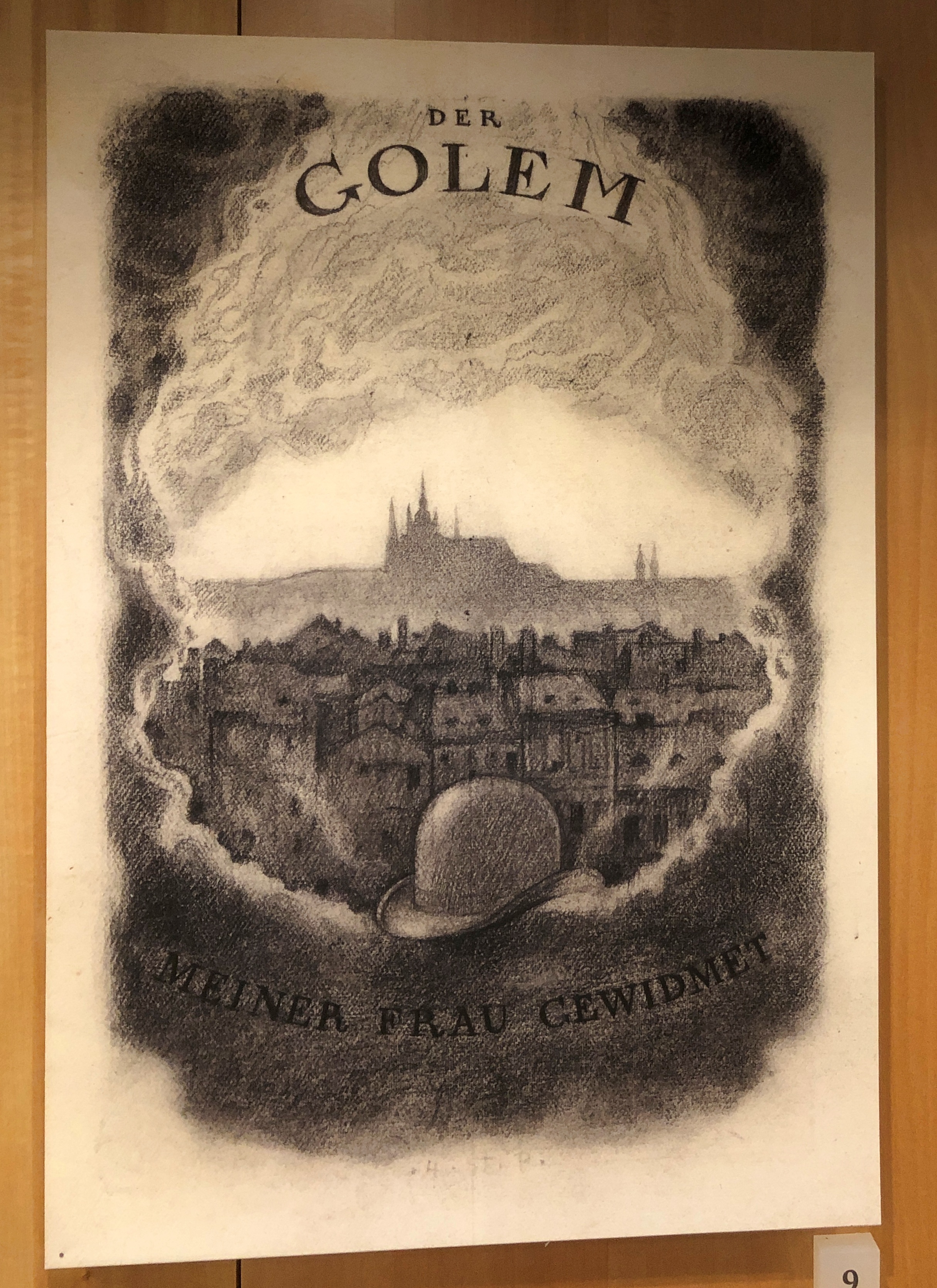
What would a Jewish museum in Prague be without mentioning everyone’s favorite clay man animated by one of the names of the Lord? On display at the Maisel.Maisel Synagogue Prague Maisel Synagogue Prague

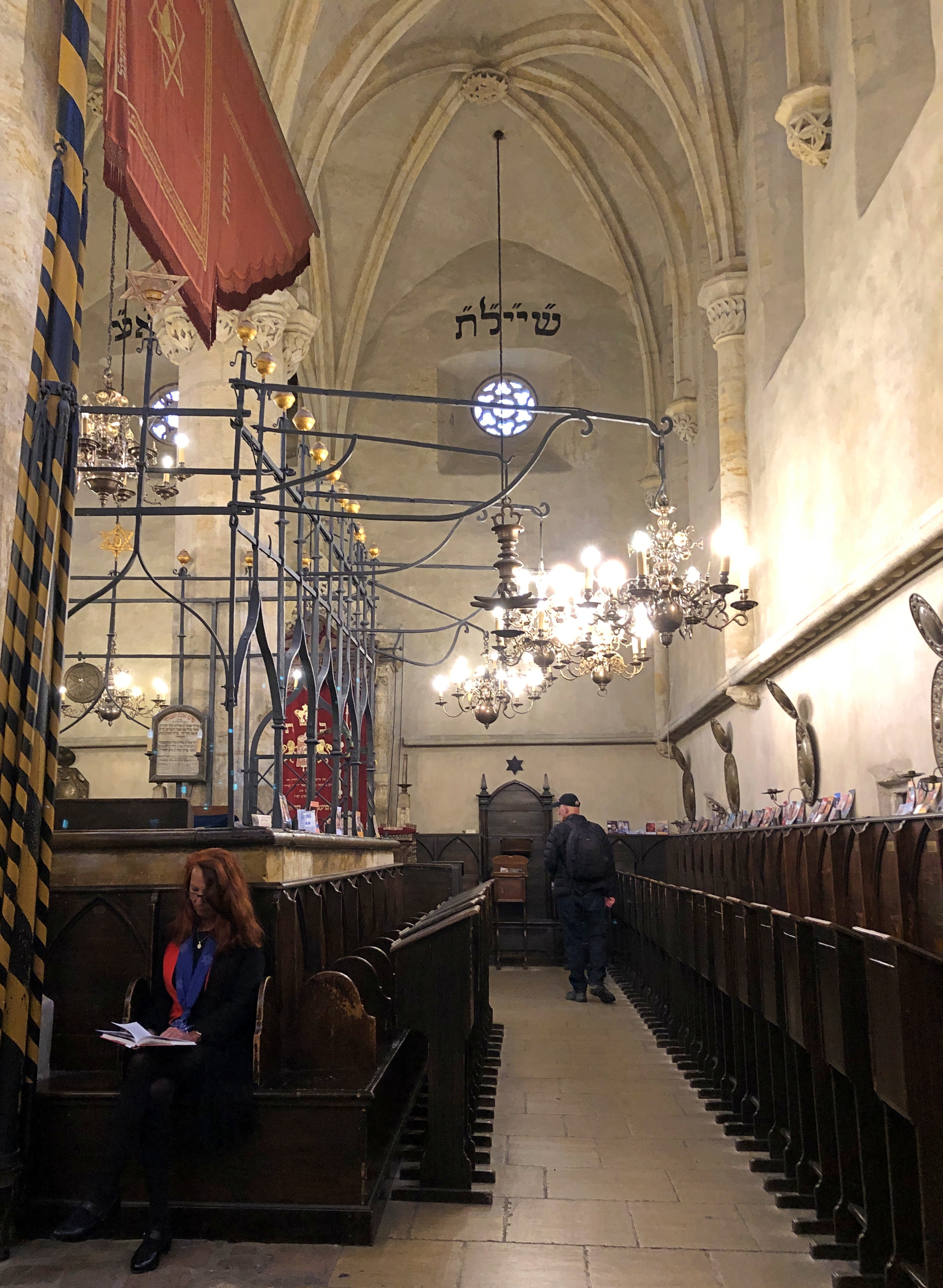
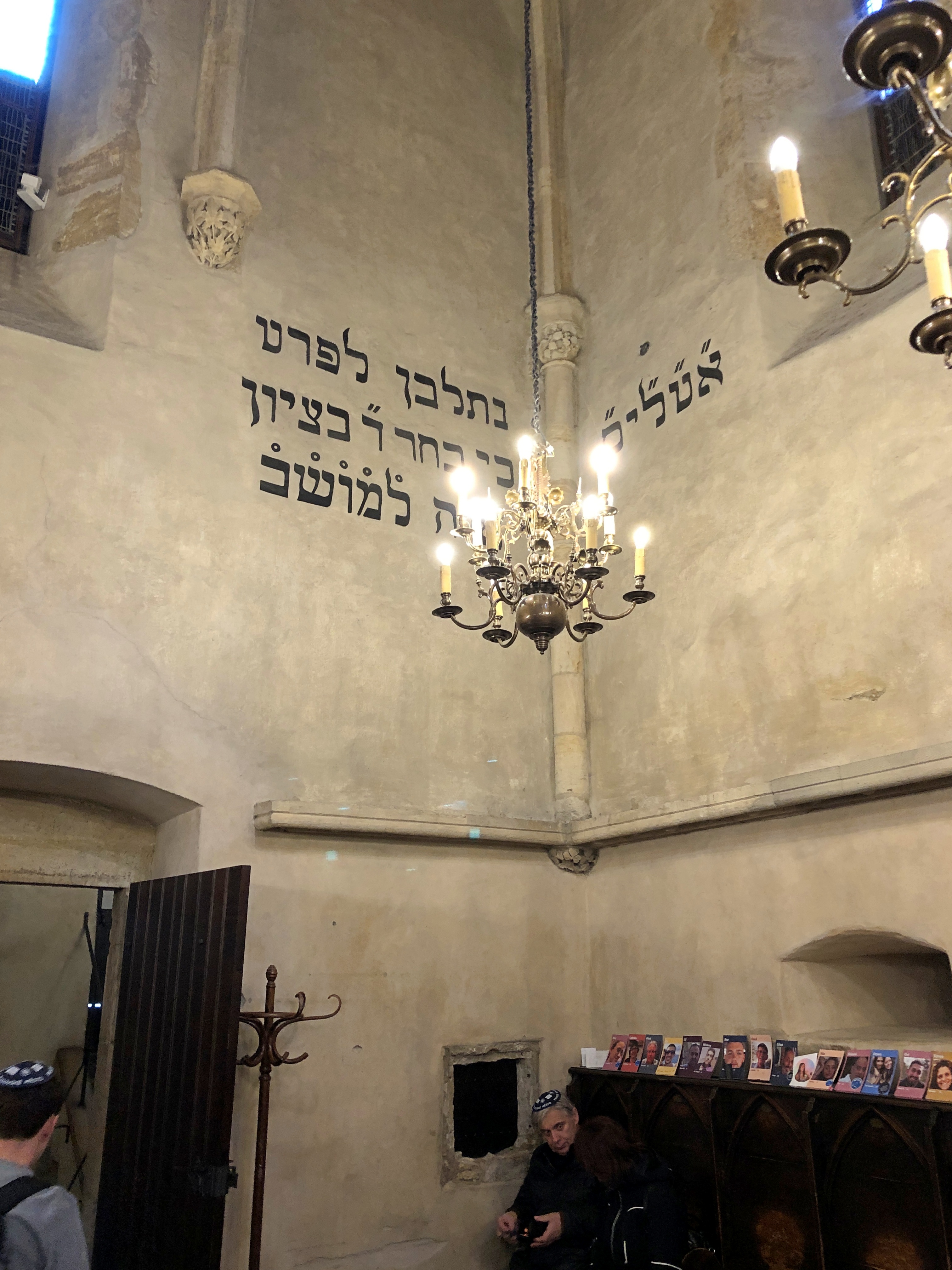
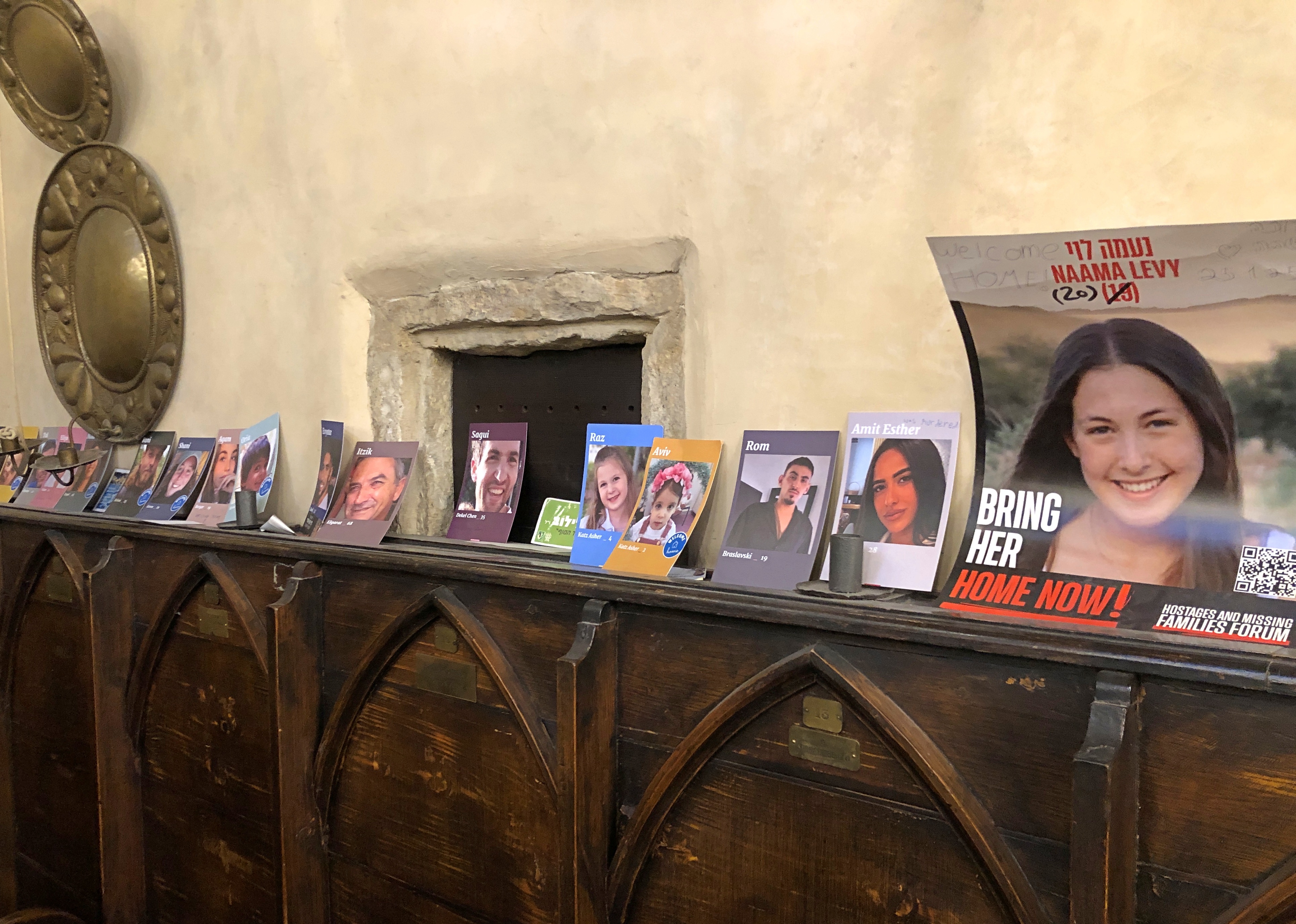
An active congregation gathers at the Old-New Synagogue (Staronová Synagoga), another of the historic structures.

It was once the New Synagogue, then there was a newer one; so it became Old-New, built in late 13th century of the Common Era. More than one source says that Staronová Synagoga is the oldest active synagogue in Europe.Maisel Synagogue Prague Maisel Synagogue Prague Maisel Synagogue Prague Maisel Synagogue Prague

Yes.

Palm Monorail, Dubai

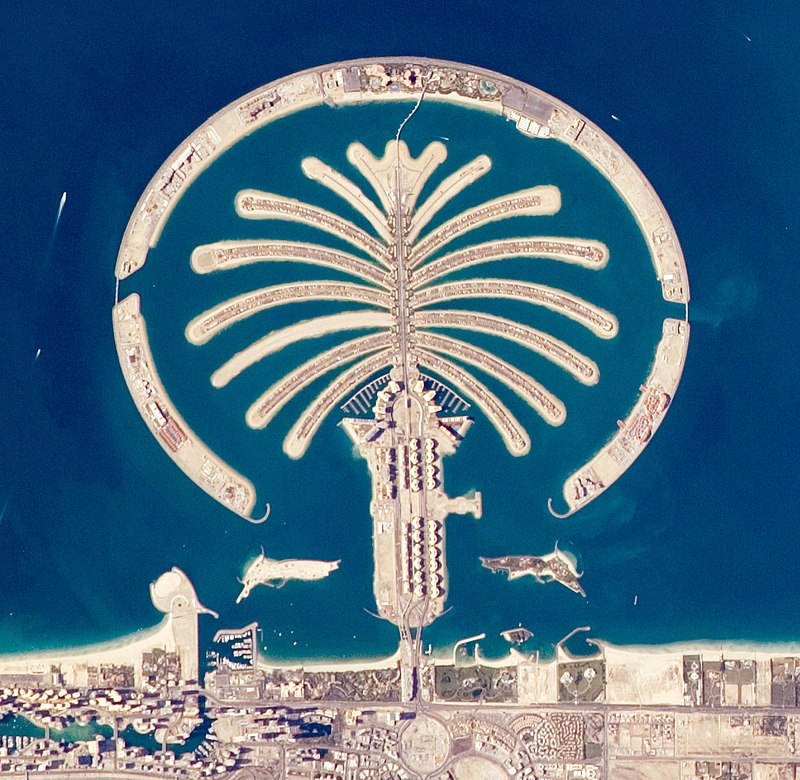
What was the monorail pitch like, for the line that now runs along the trunk of the Palm Jumeirah in Dubai? The Palm Monorail, it’s called.

Well, sir, there’s nothing on Earth like a genuine, bona fide, electrified, six-car monorail!

What’d I say?

Monorail!

What’s it called?

Monorail!

That’s right!

Monorail!

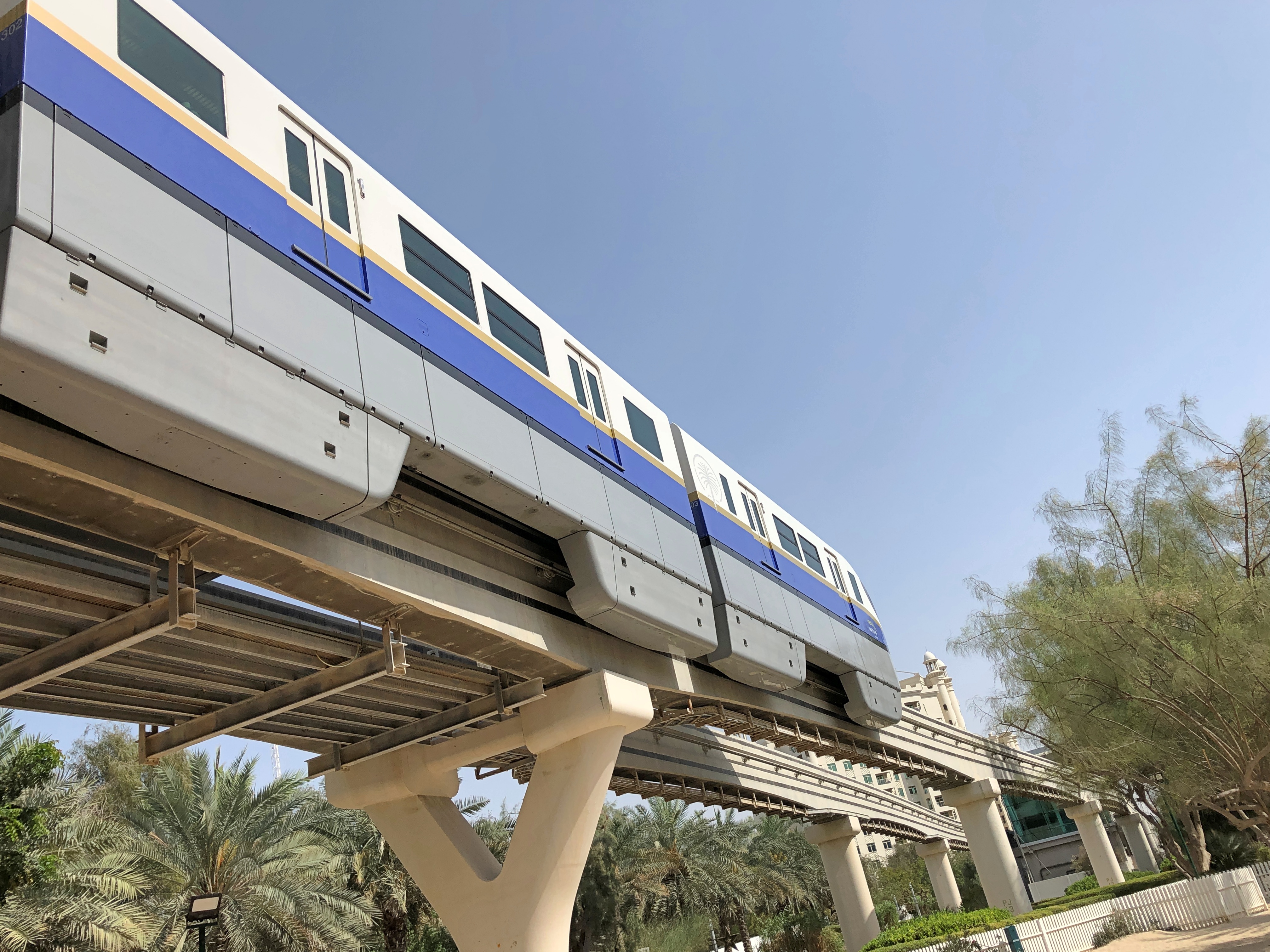
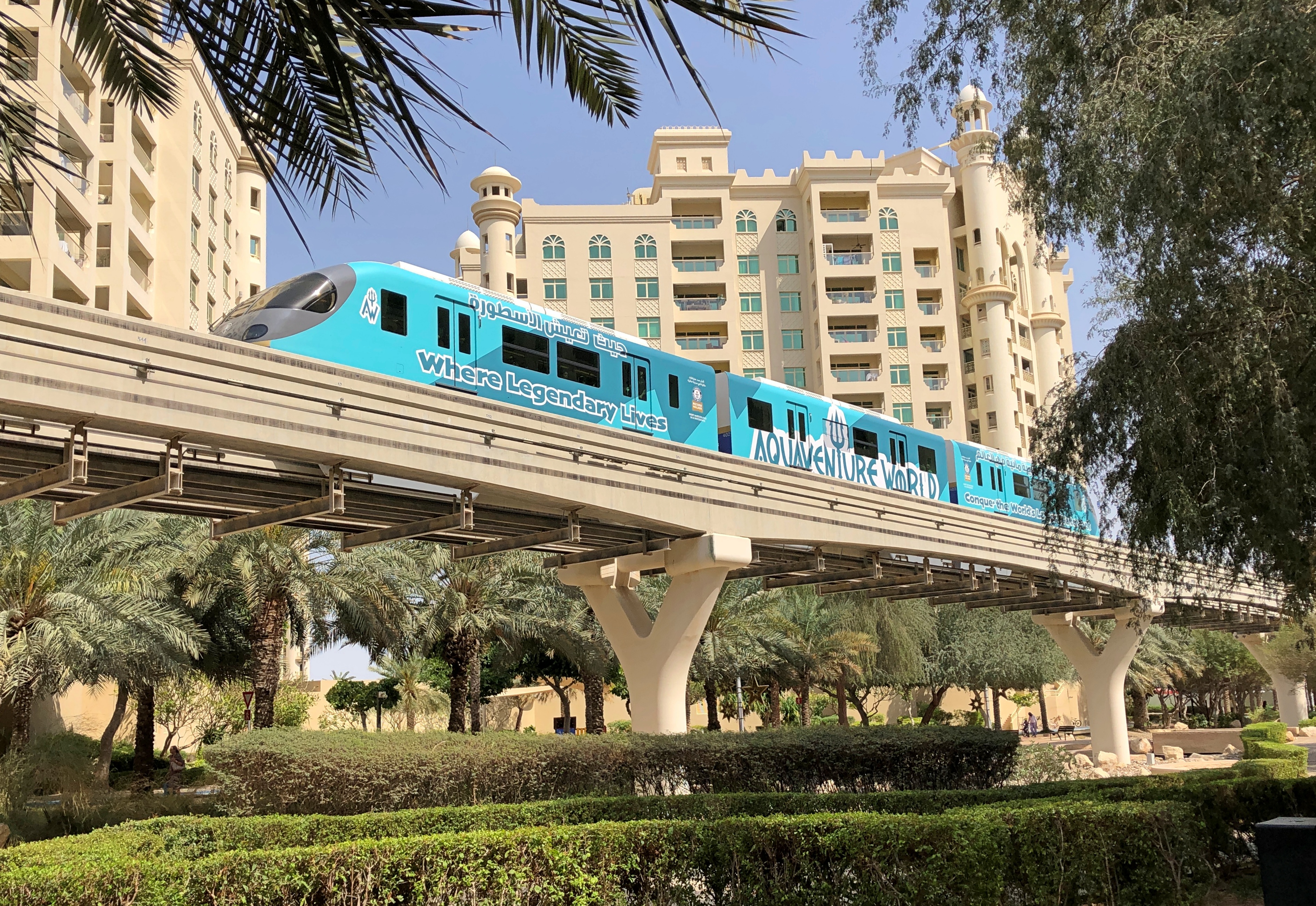
There probably wasn’t that much singing, or that much English, but whatever happened, the line has been up and running for about a decade and a half now. A go-to source (Wiki) tells me that it is the only monorail in the Middle East, which if true ought to spur the likes of Saudi Arabia into some monorail development, maybe in lieu of grander projects.Palm Monorail Palm Monorail

Sleek styling, as monorails ought to have, built by Hitachi Rail. Driverless.

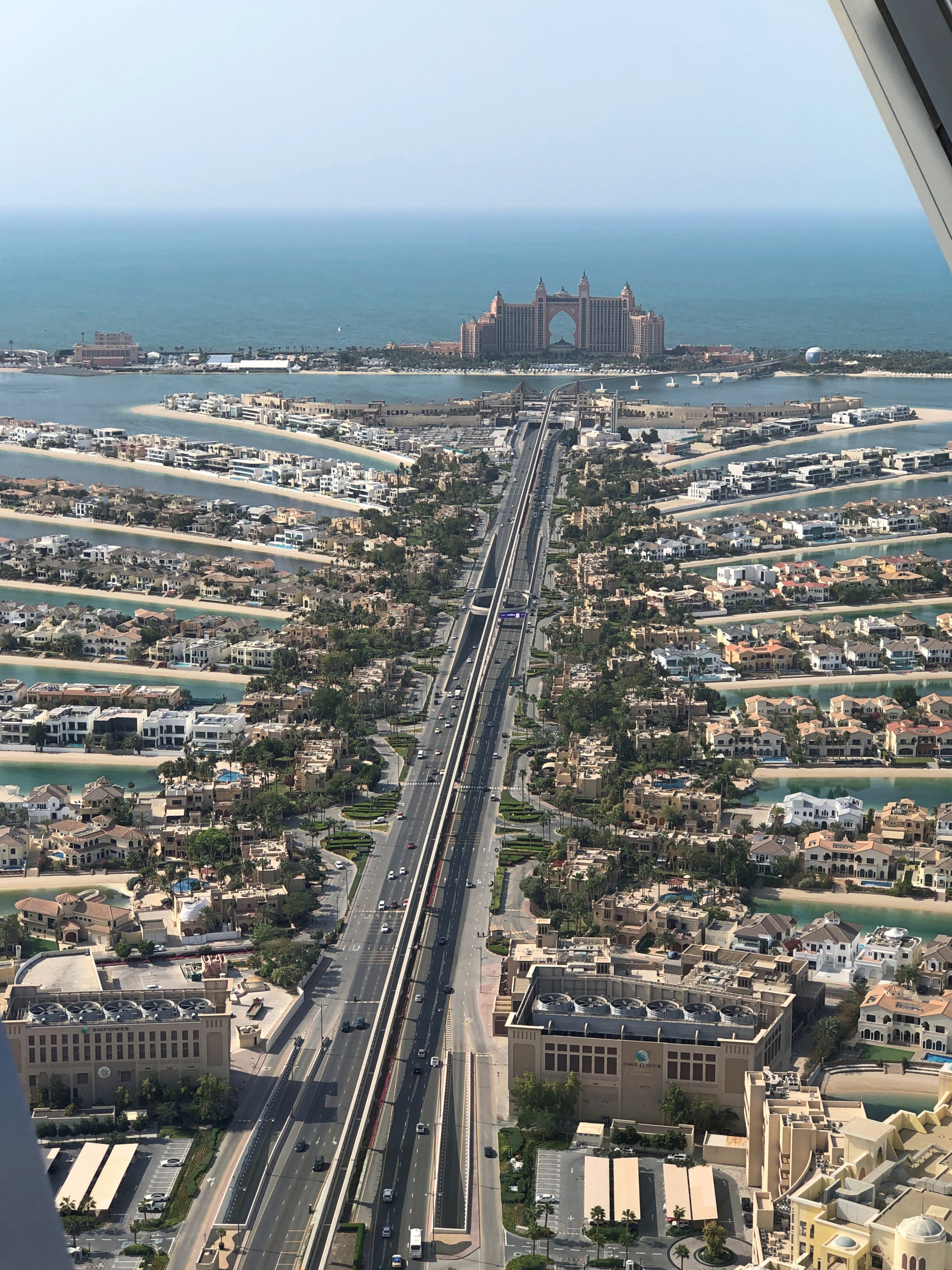
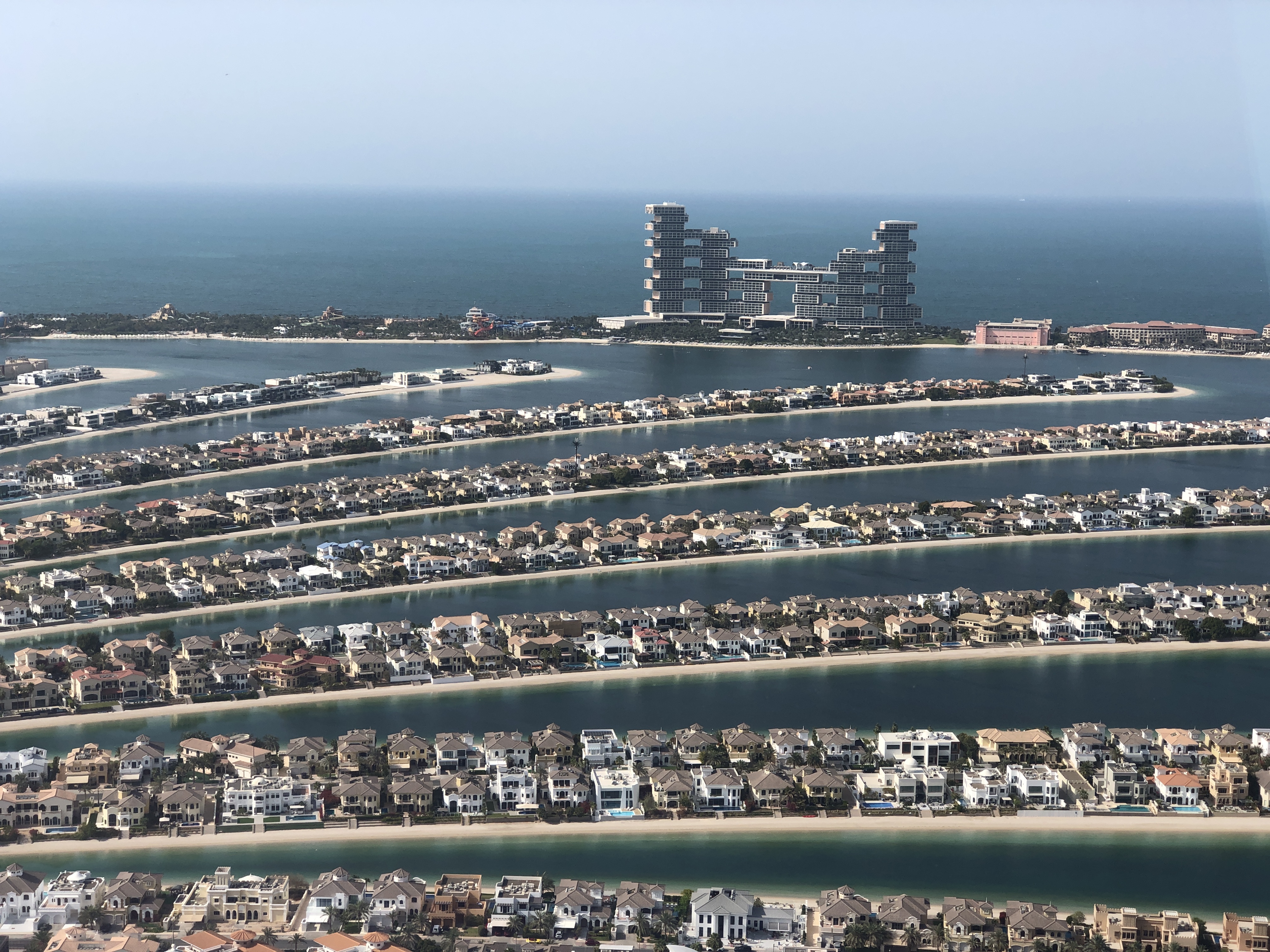
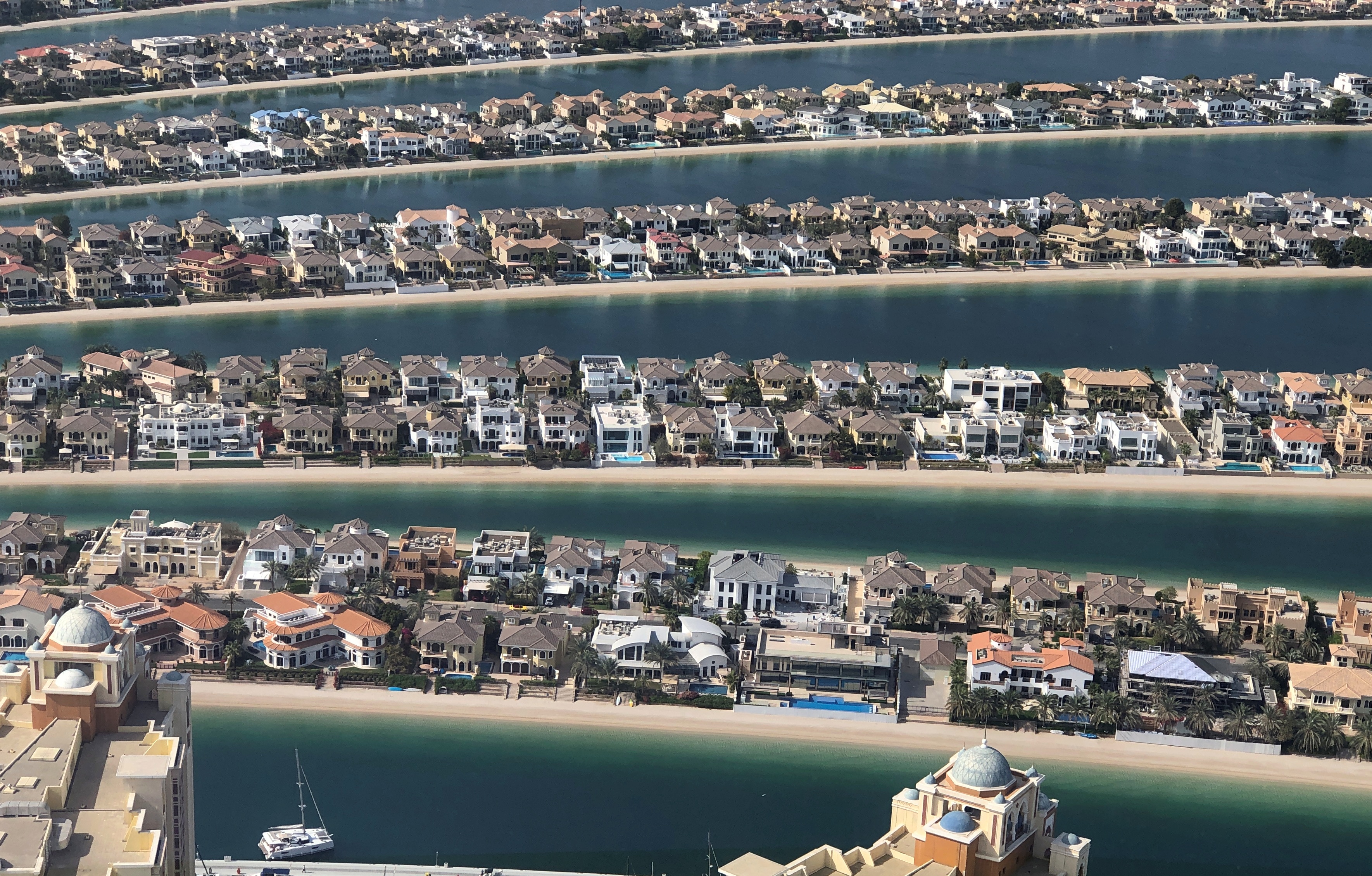
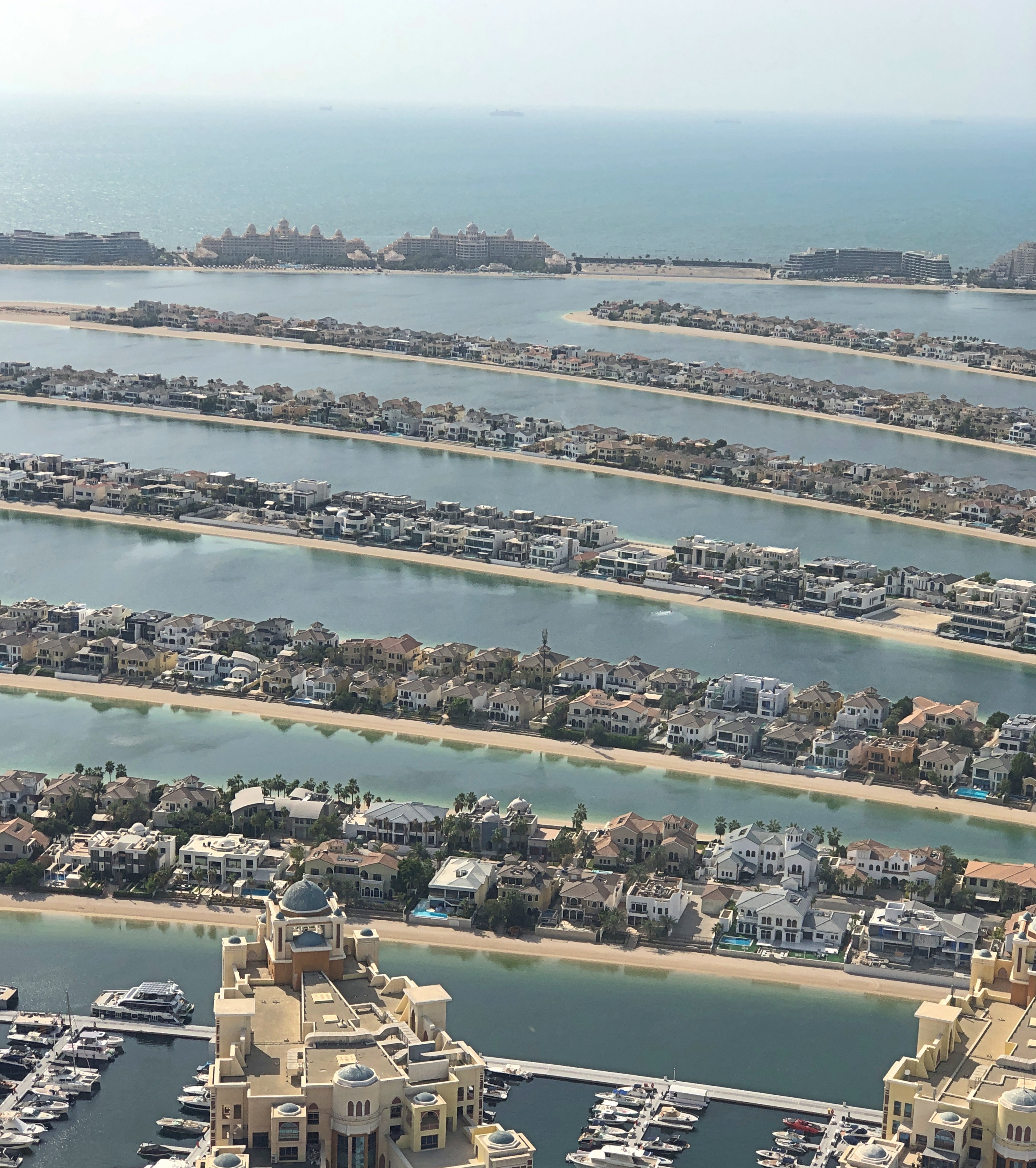
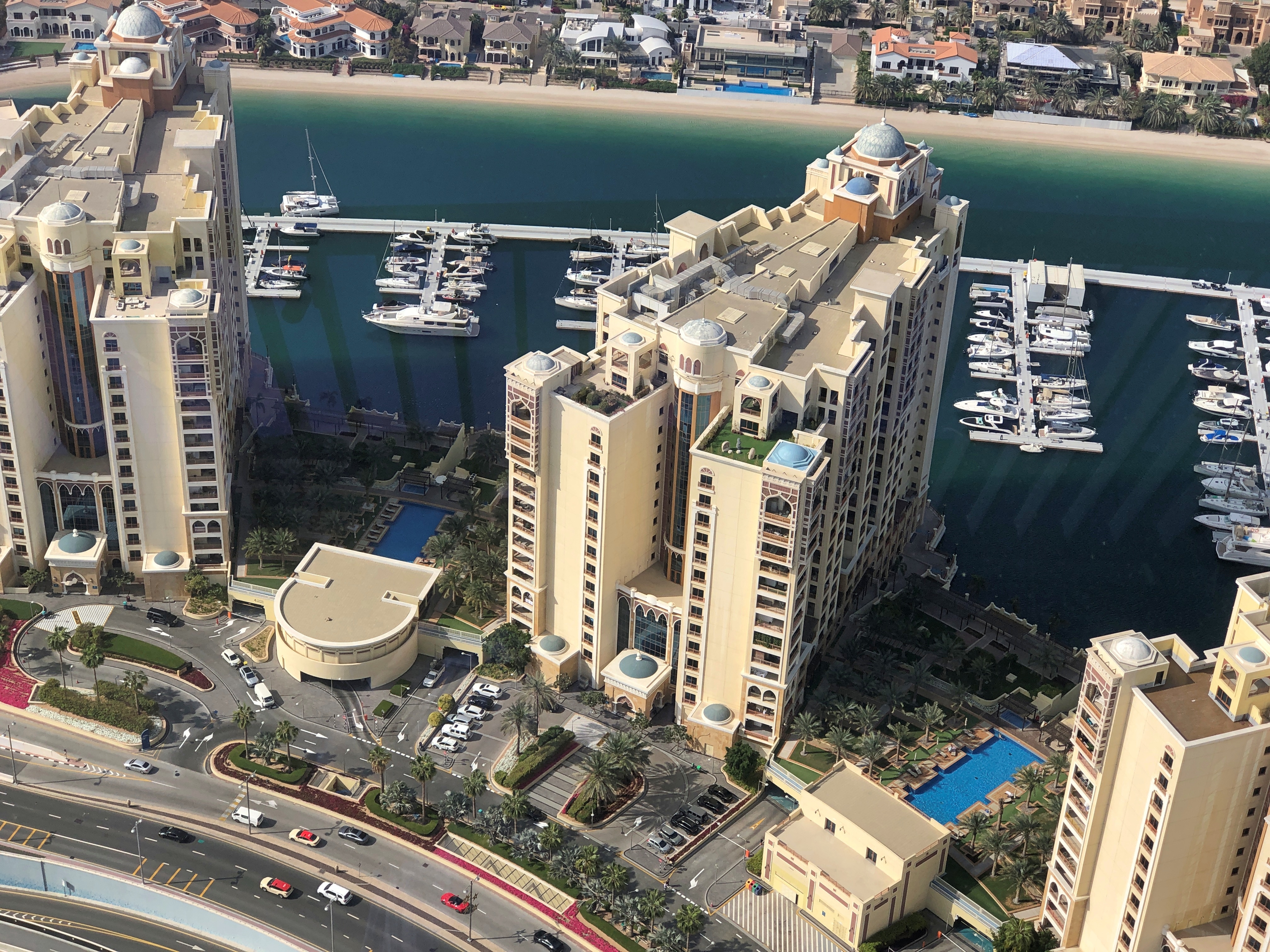
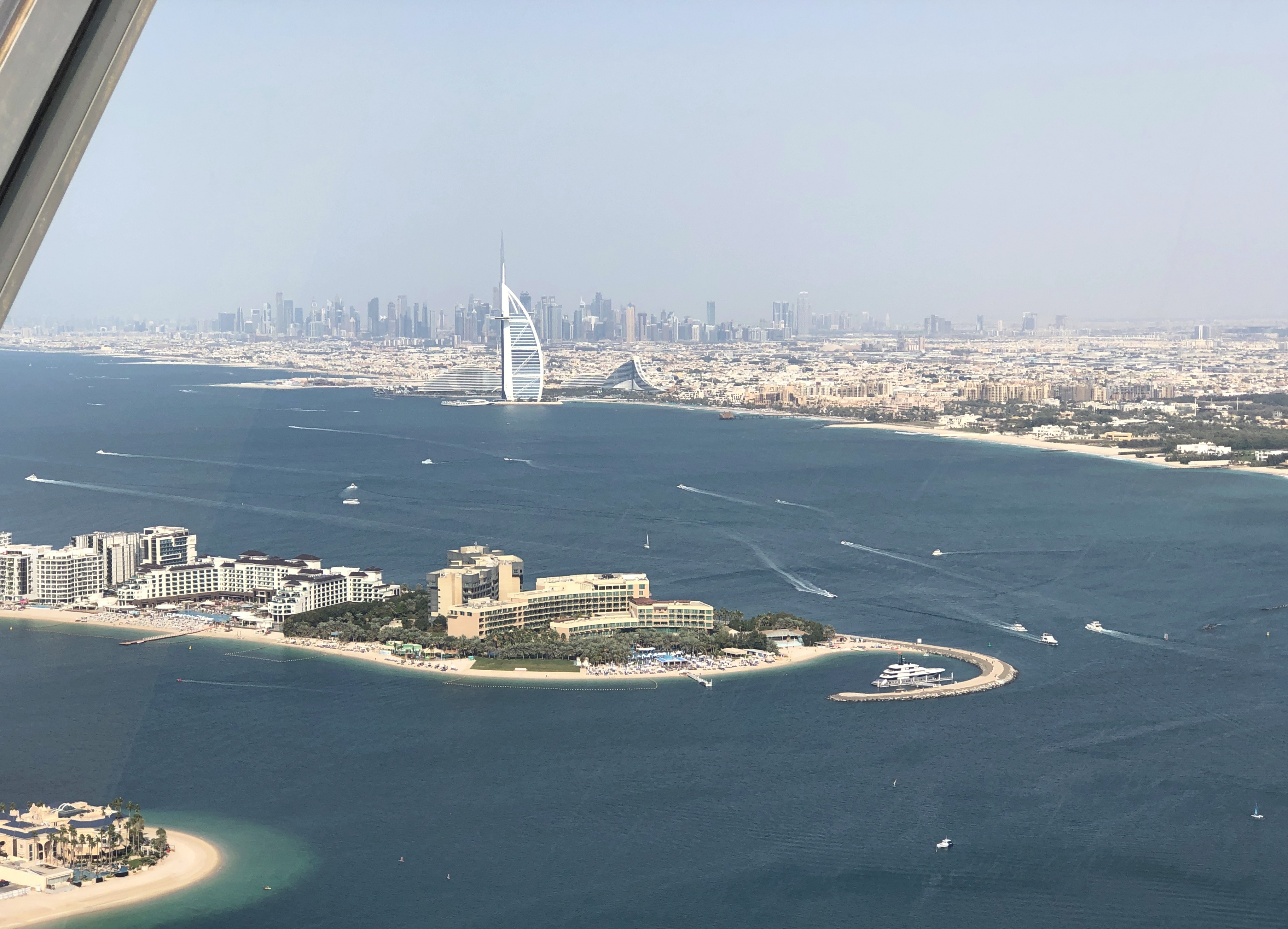
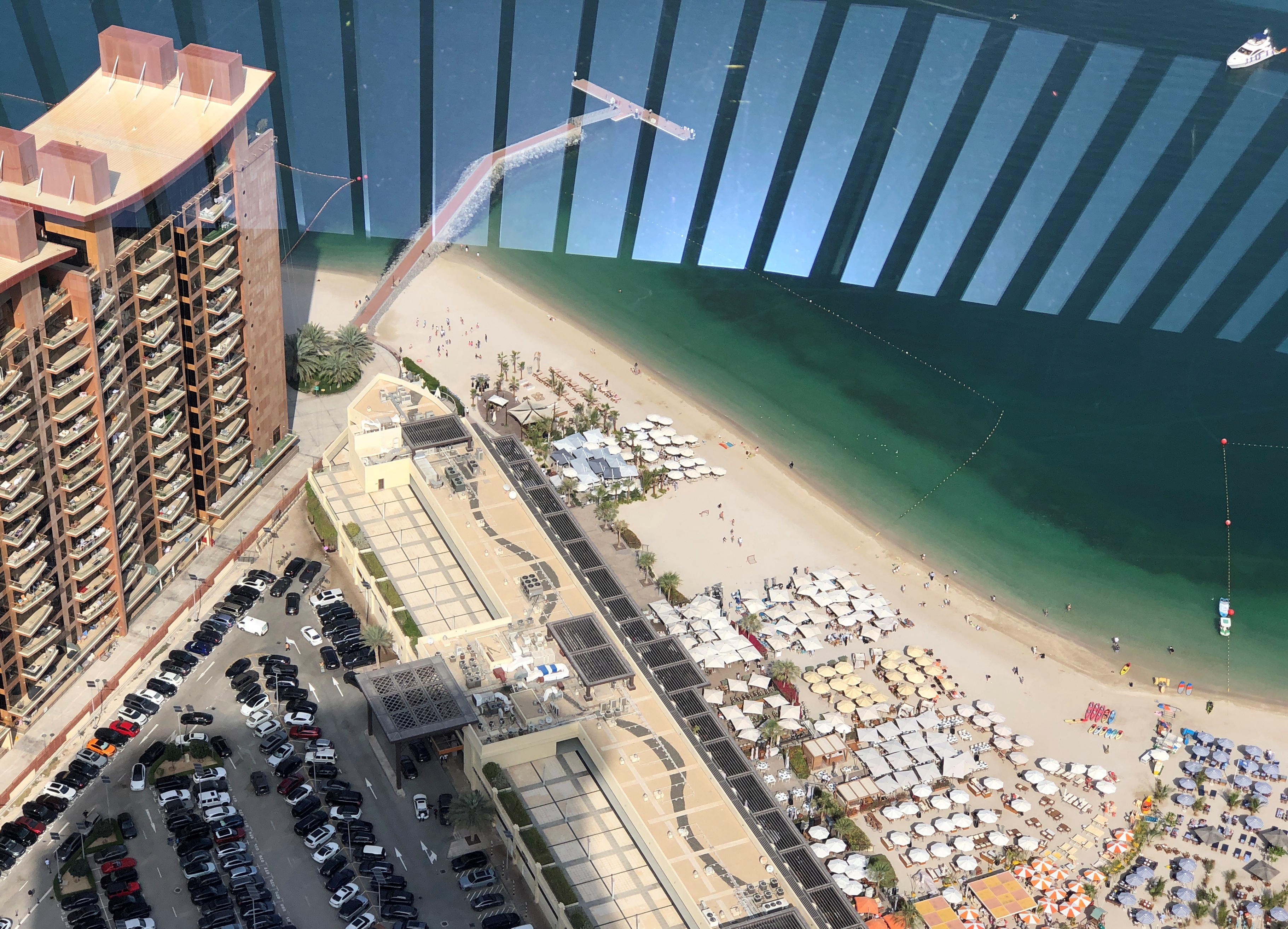
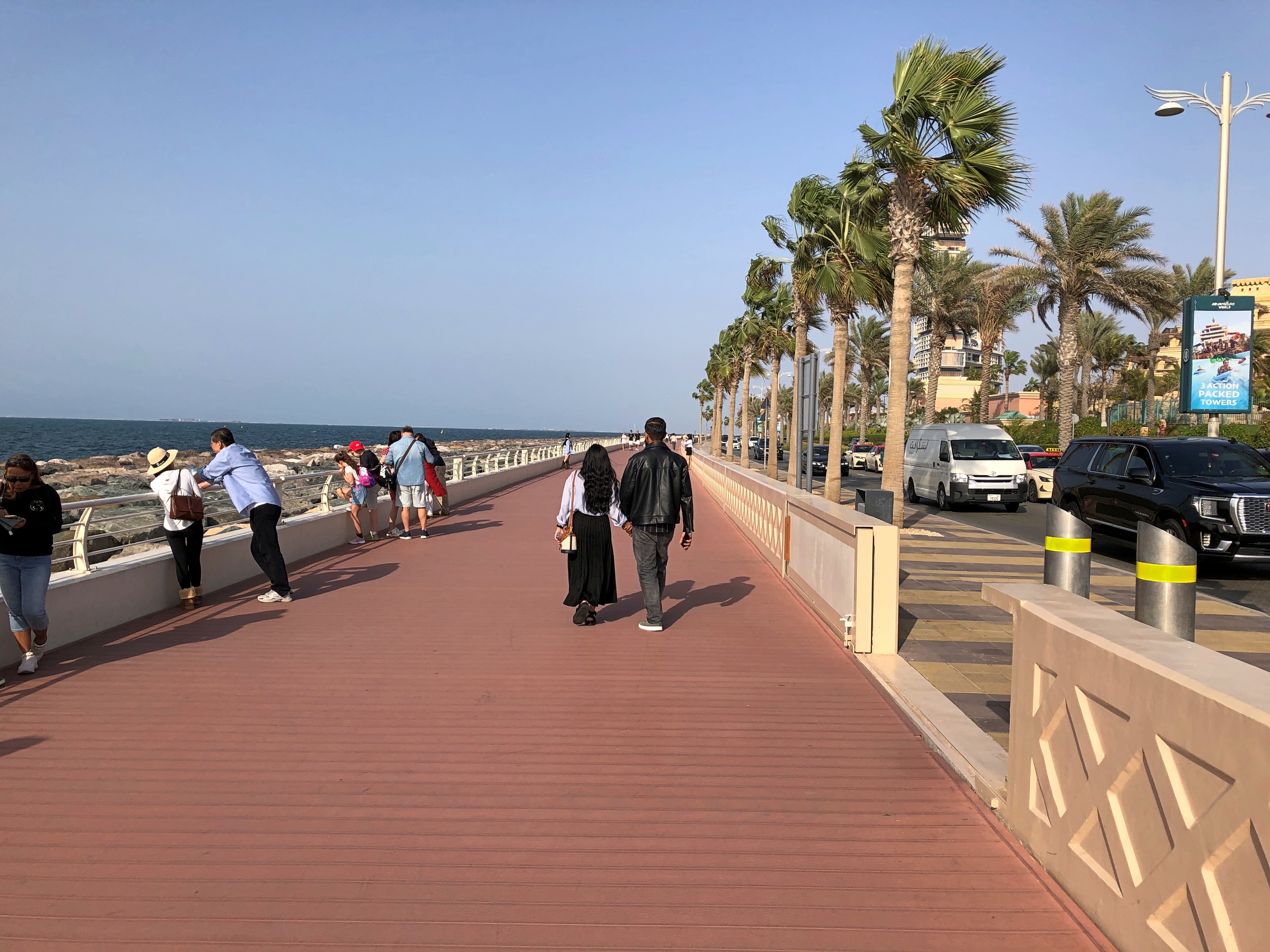
I rode its entire 3.4-mile length and back on March 2, as part of my excursion to Palm Jumeirah. Levity aside, I can report a wholly positive experience. The ride didn’t cost much, the wait wasn’t long, the cars were busy but not packed, and the vantage offered some terrific views of the artificial islands that comprise Palm Jumeirah – the trunk and fronds, as they’re called, and their linear neighborhoods spreading out, always along the ocean.

I also wonder whether the monorail was an important enough component of the overall Palm Jumeirah project for decision-makers toward the very top – even the emir himself – to focus on it. Hard to say, since Palm Jumeirah was an epic project that involved creating a palm-shaped island with seven miles of coastline from 120 million cubic meters of sand and other material dredged from the sea, along with mountain rocks, putting a breakwater mostly around it, plus adding roads, bridges, utility networks and sundry infrastructure.

What set all that in motion was the pronouncement, “So let it be written, so let it be done.”

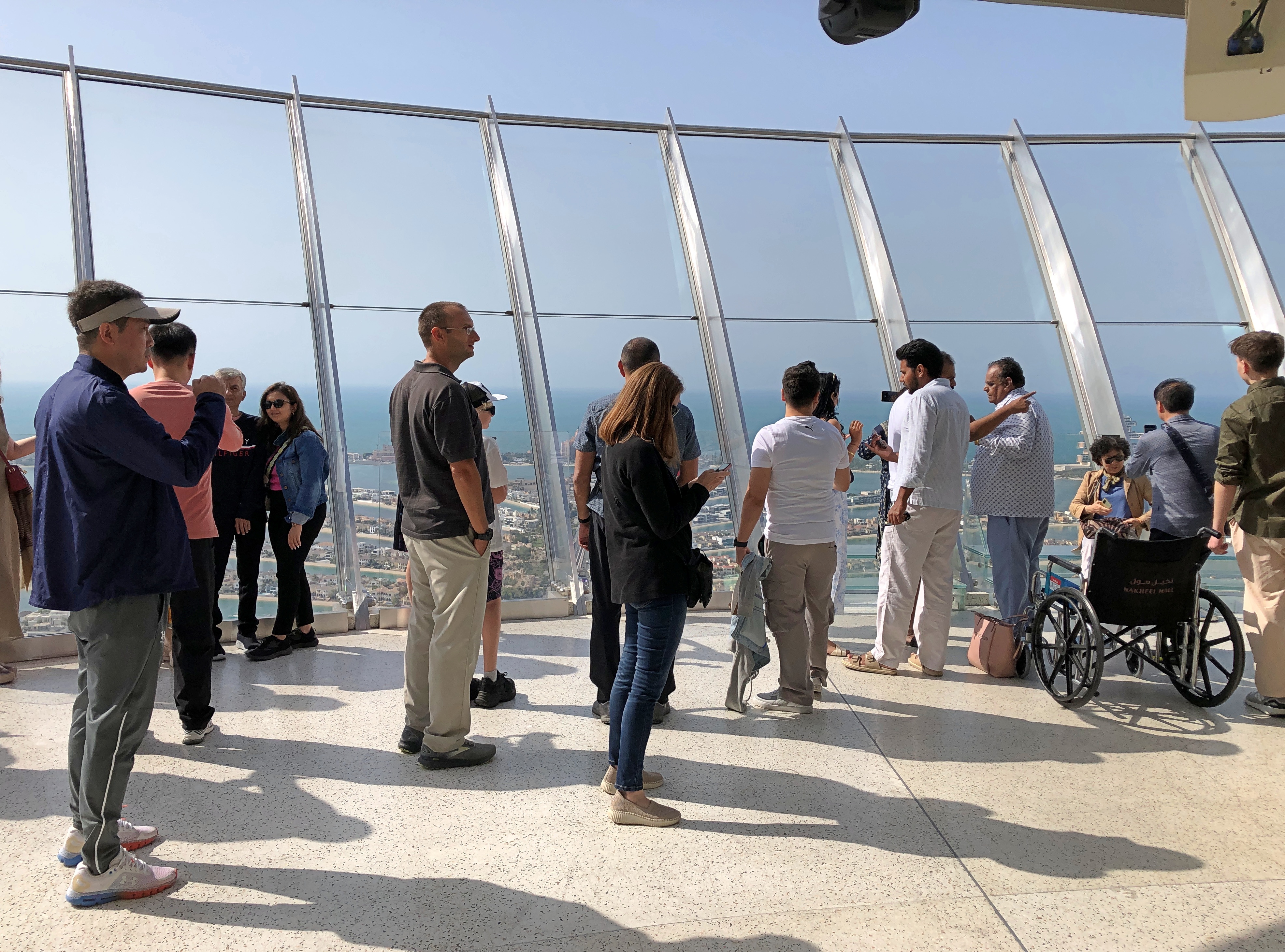
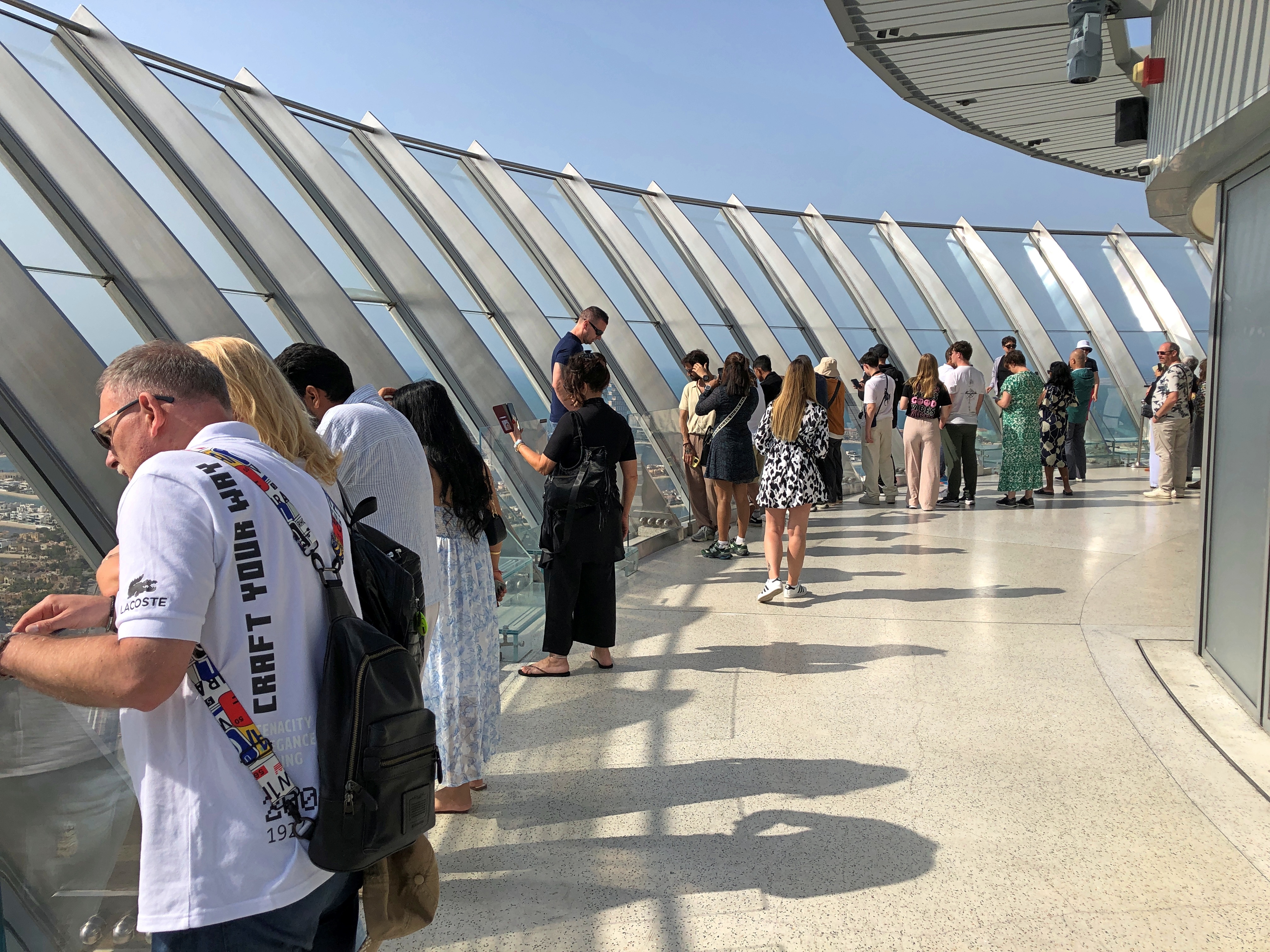
What’s one monorail in all that?Palm Jumeirah Palm Jumeirah

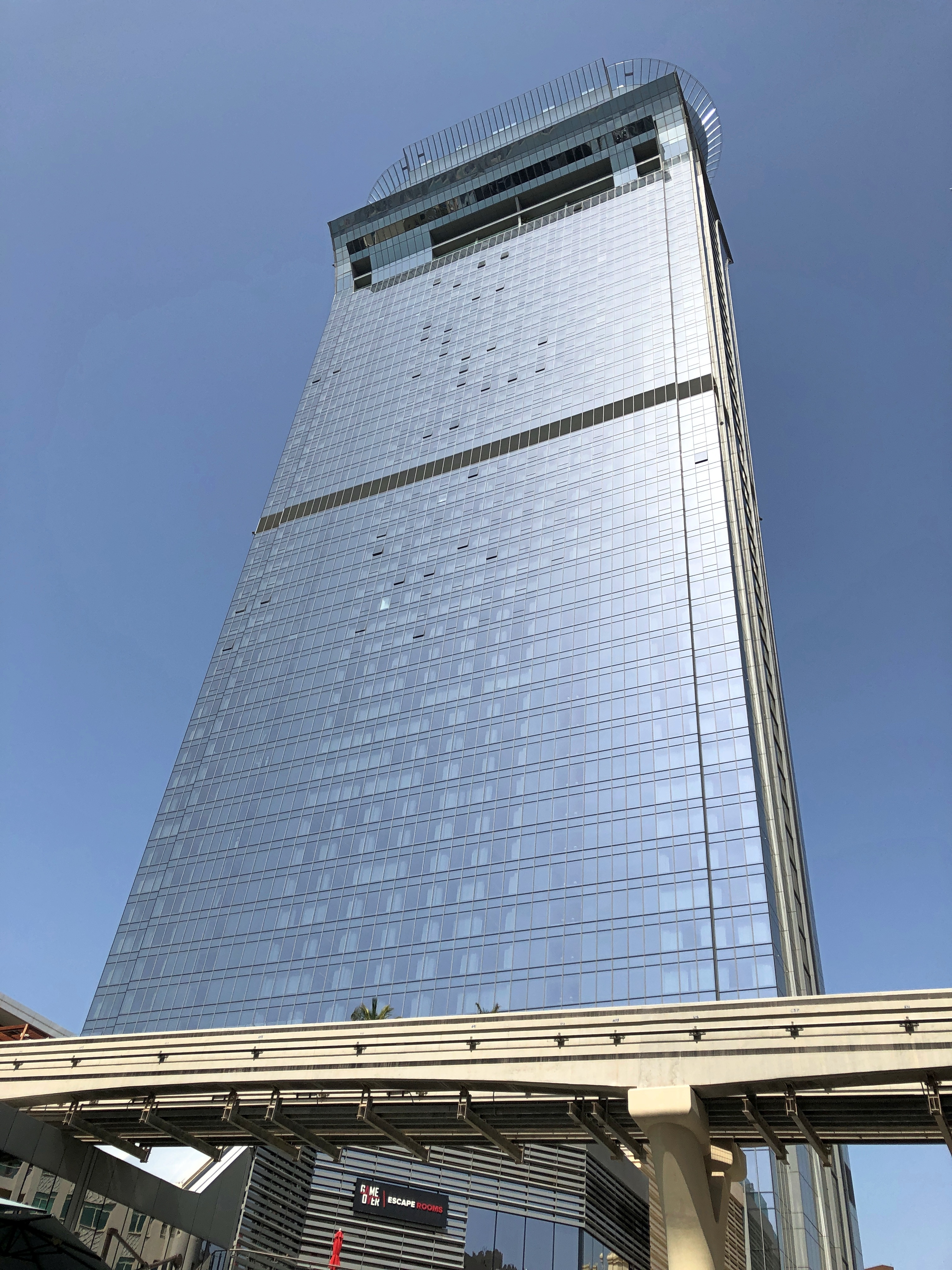
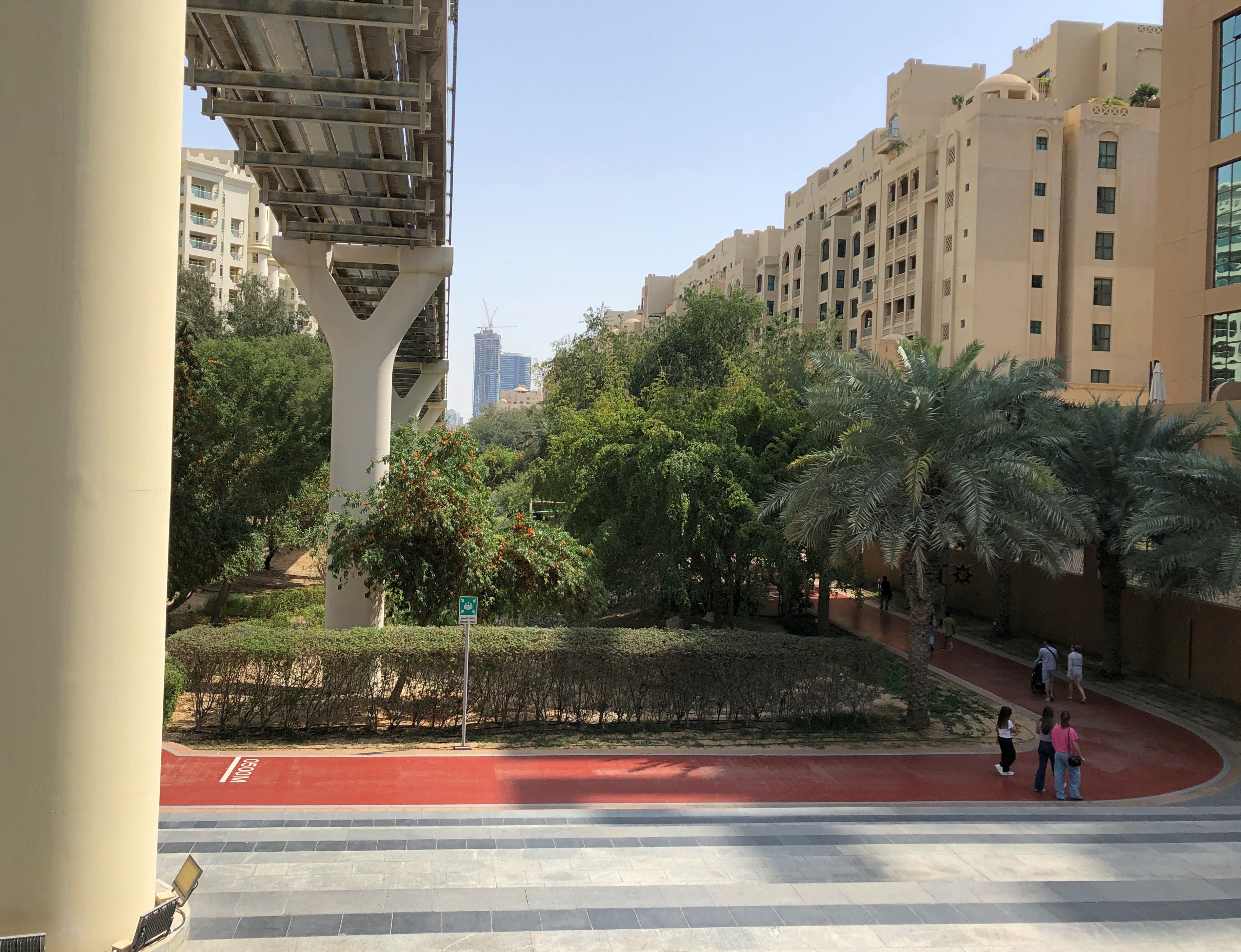
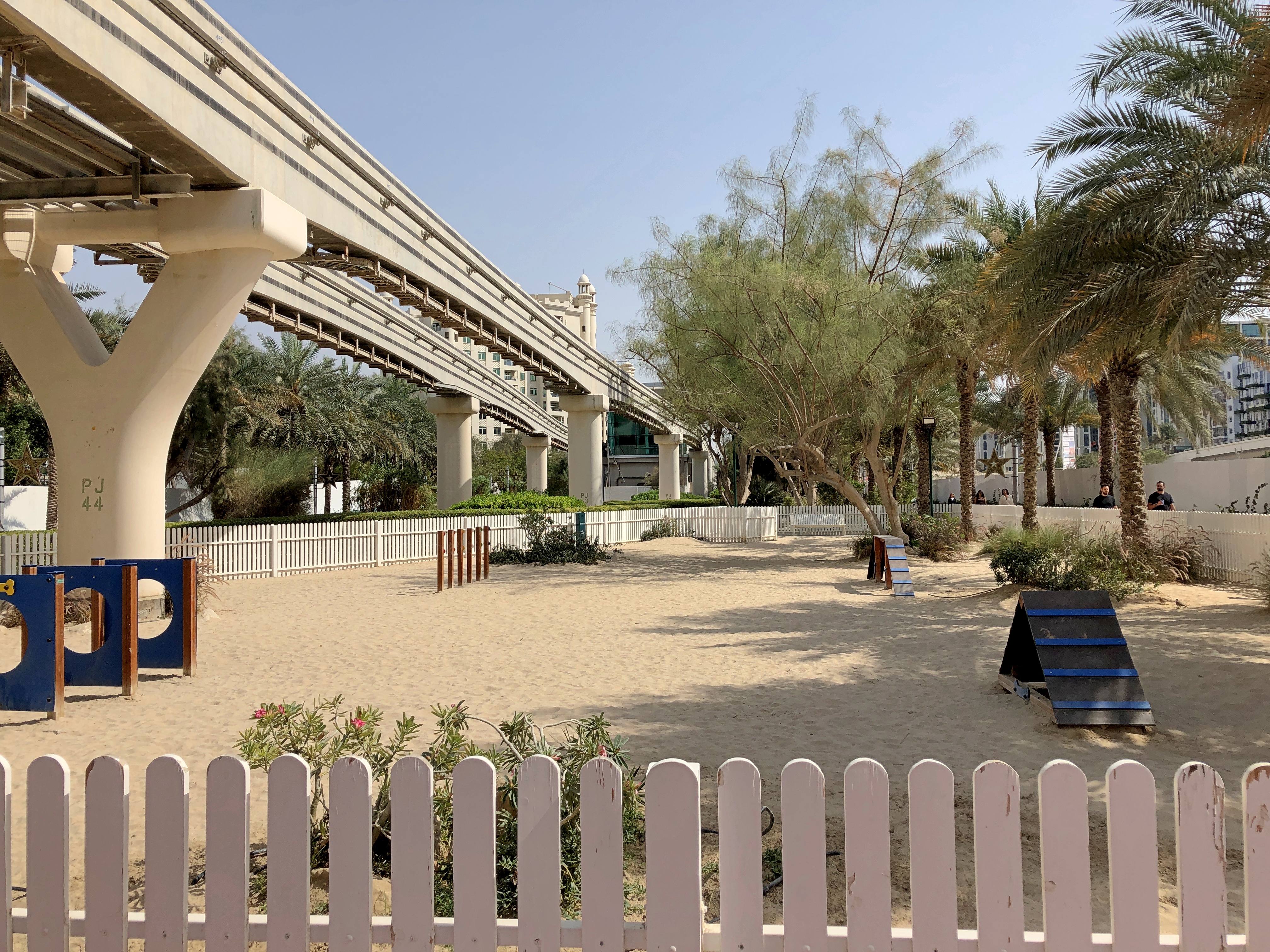
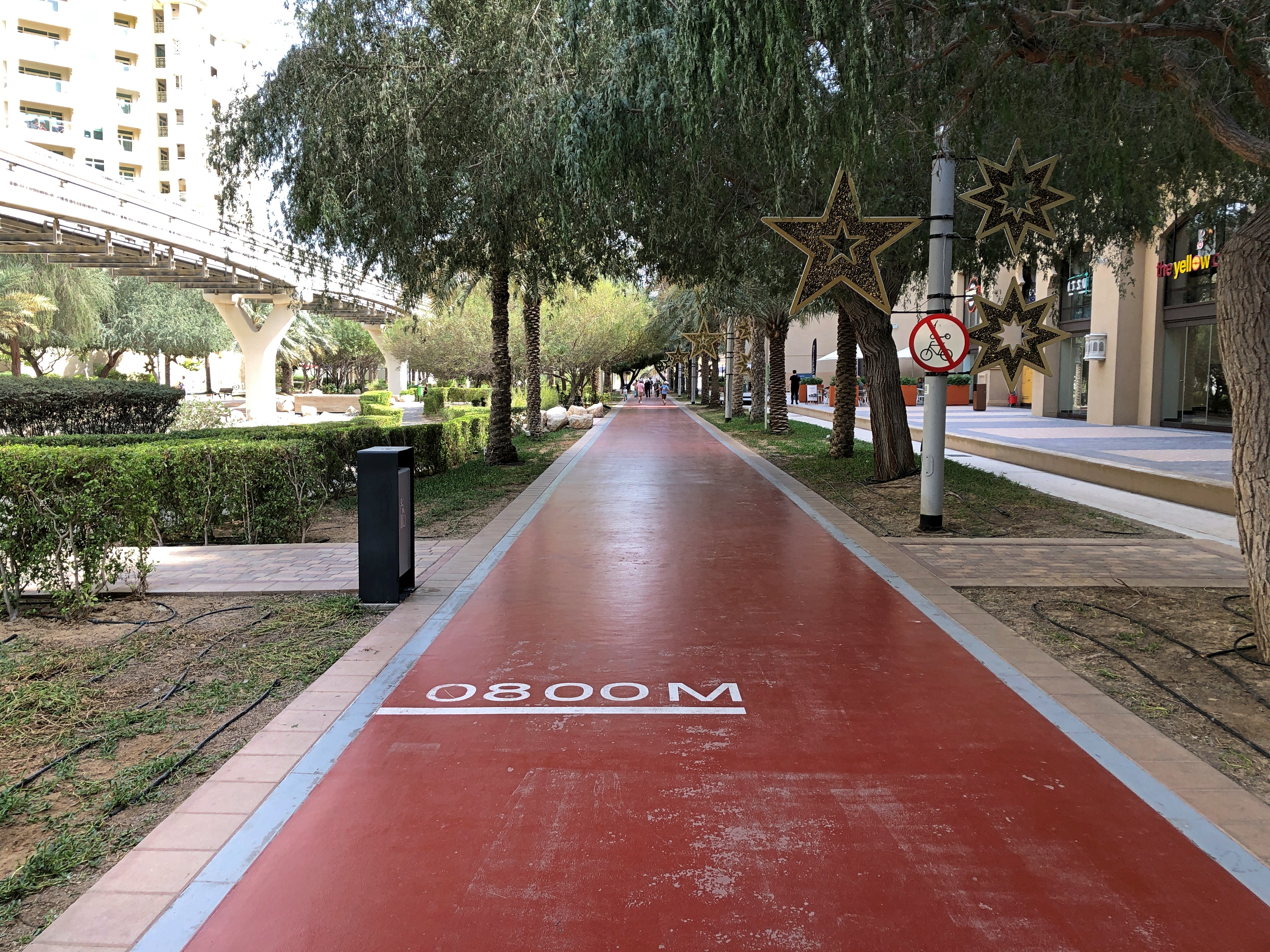
First stop, Nakeel Mall, named for the company that developed the Palm Jumeirah. Large enough, but nothing on the order of Dubai Mall, except for the high count of carriage-trade stores. The mall also provided access, down an outdoor staircase, to Al Ittihad Park, which runs part of the length of the trunk under the monorail.Palm Jumeirah Palm Jumeirah

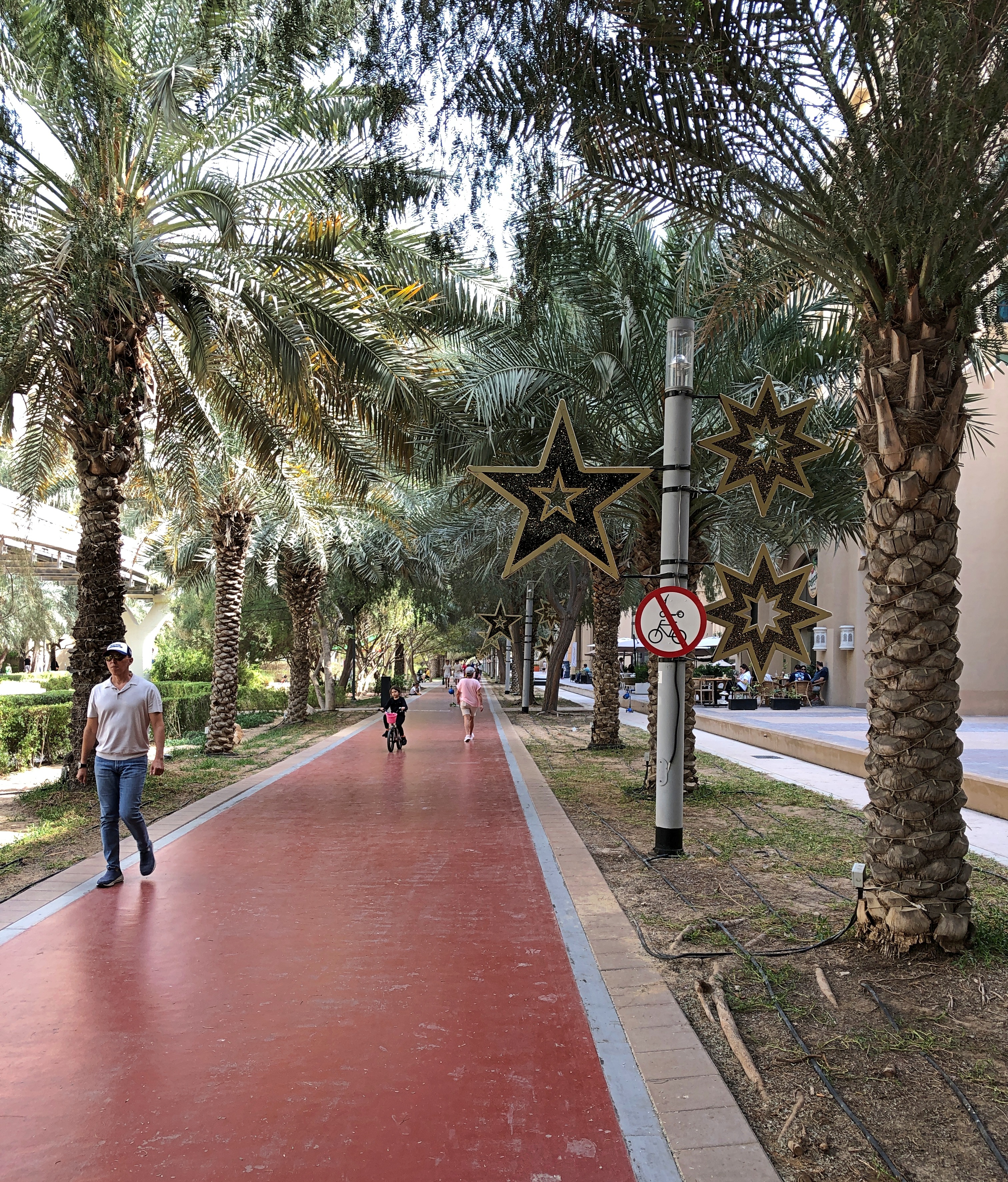
Two walking-jogging trails run the length of the park as well. I walked.Palm Jumeirah Palm Jumeirah

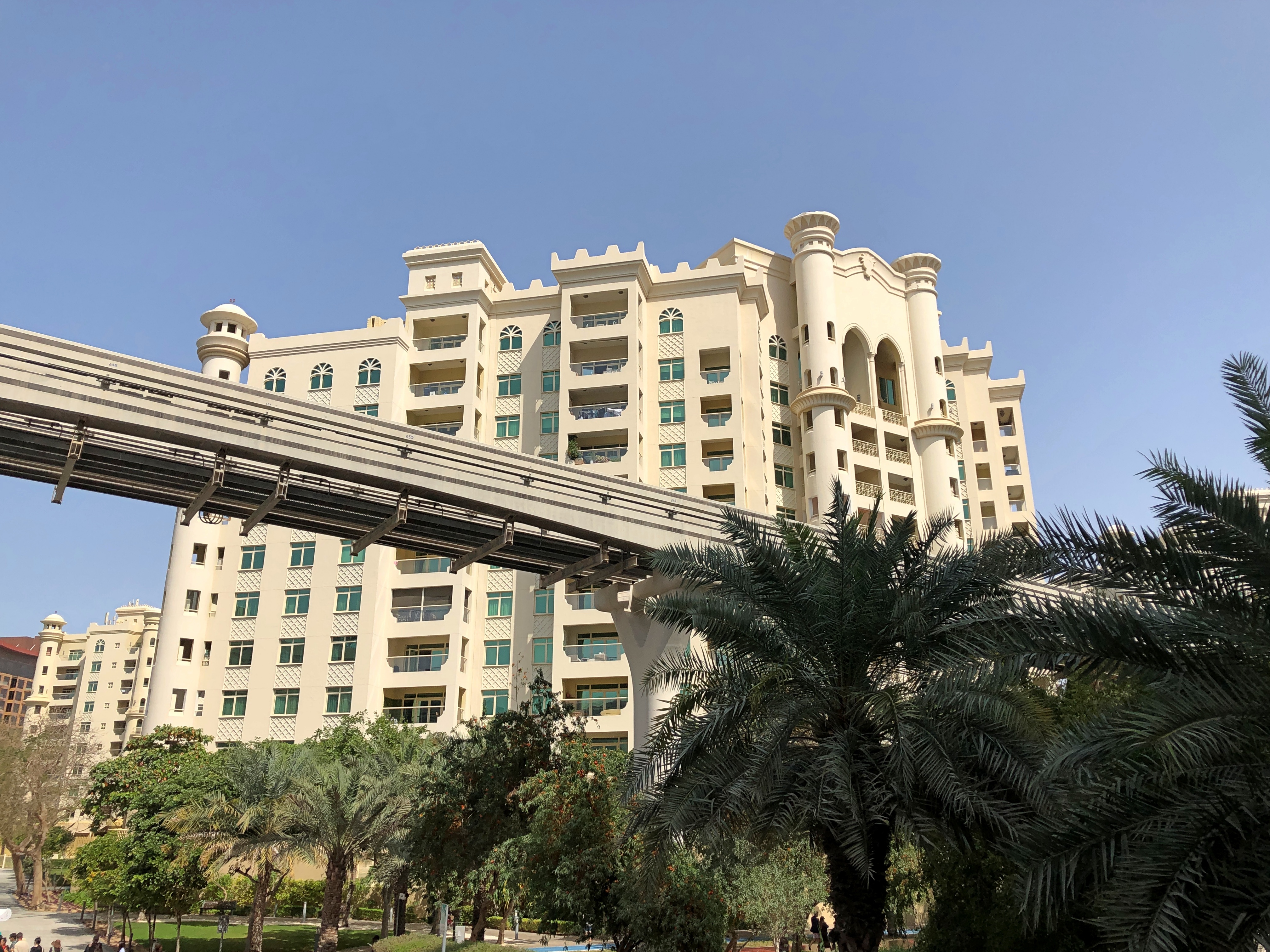
The park is hemmed in by sizable structures on each side whose first floor (ground floor) is populated by high-end service providers, such as Petsville Palm Jumeirah, The Blowout Bar, The Golden Mile Gallery, Bedashing Beauty Lounge, and KIBERone IT school for children.

There were a fair number of benches for idlers and old men, but not a lot of occupants. I accessed a bench and for a little while watched a steady trickle of people walking the path, and mothers (or nannies) with young children visiting the playgrounds. Foliage blocked part of the sun, which was borderline intense that day.Palm Jumeirah

Quite the place, this neighborhood: created out of nothing not long ago, then Money was invited to live here. Money from wherever. And so it has, with an estimated population of about 25,000 out on the trunk and fronds.

You can speculate about some soggy future for such low-lying territory, but for now, it’s prime real estate. That means that engineers, who are paid to do so, are thinking about upgrades. I can’t pretend any knowledge of hydrology, so for all I know, their efforts will match those of King Cnut, but the abstract makes for interesting reading.

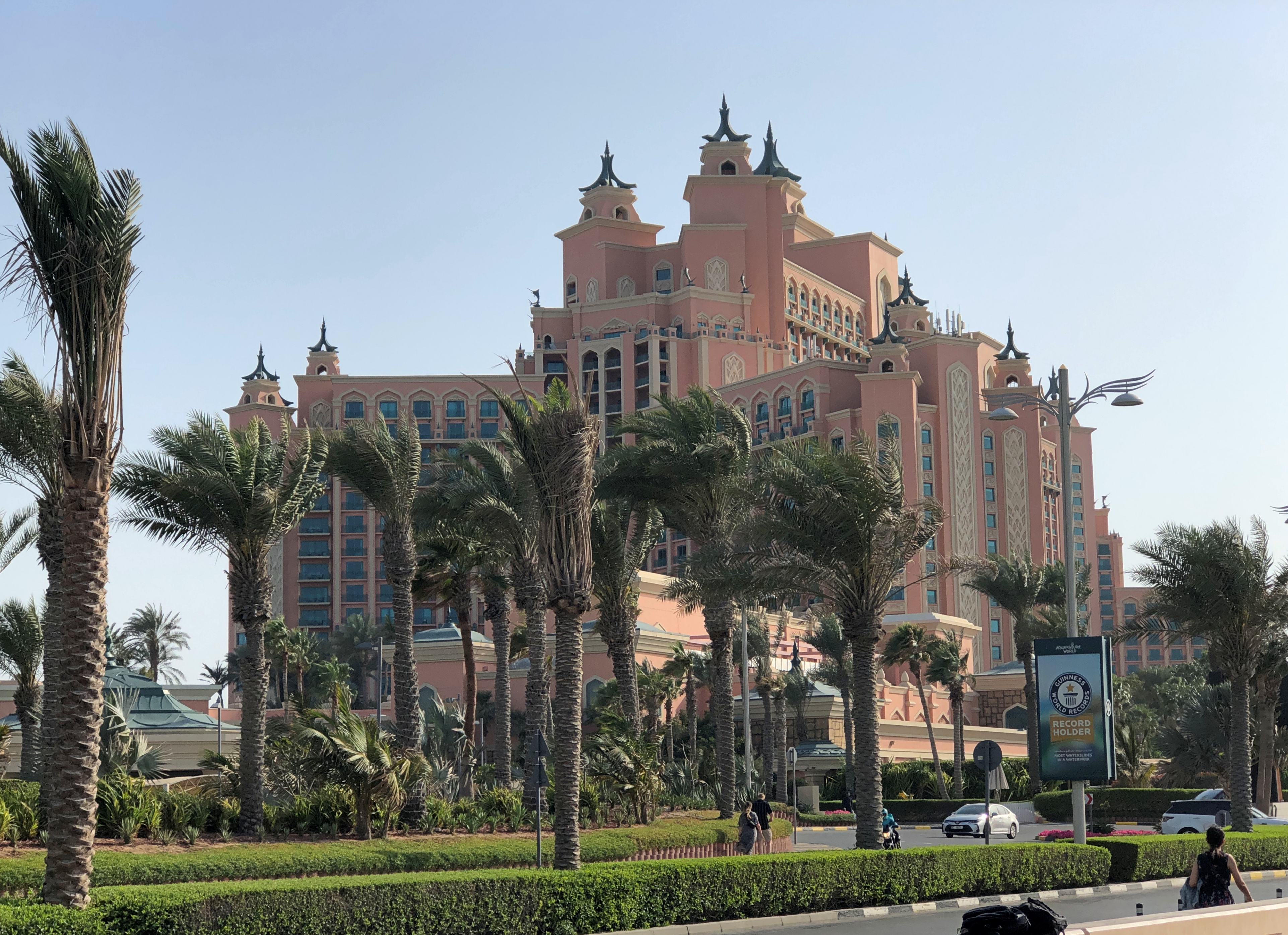
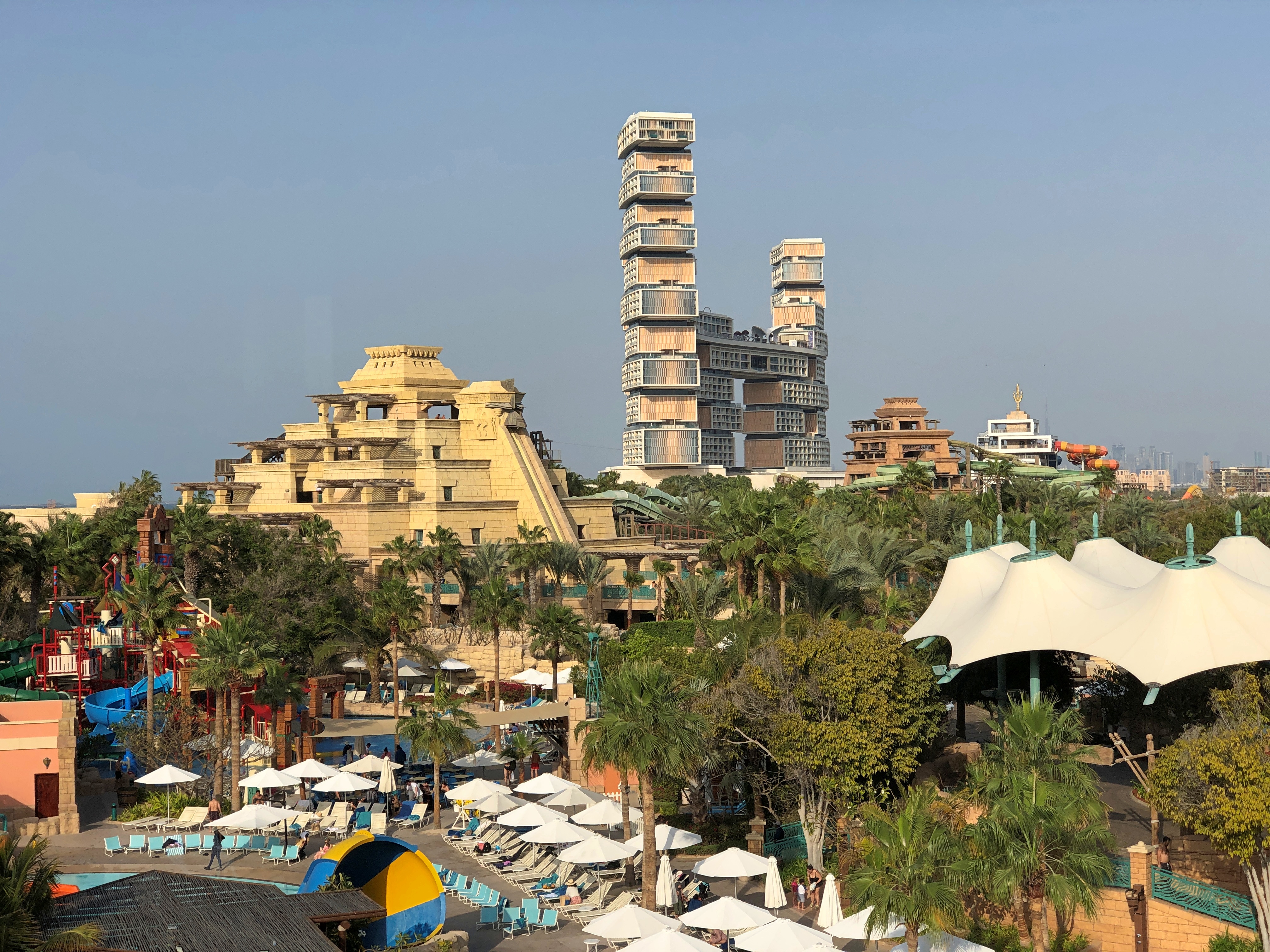
The end of the line for the monorail is at the tip of the Palm. A district of resorts, hotels and more upscale shopping.Palm Jumeirah
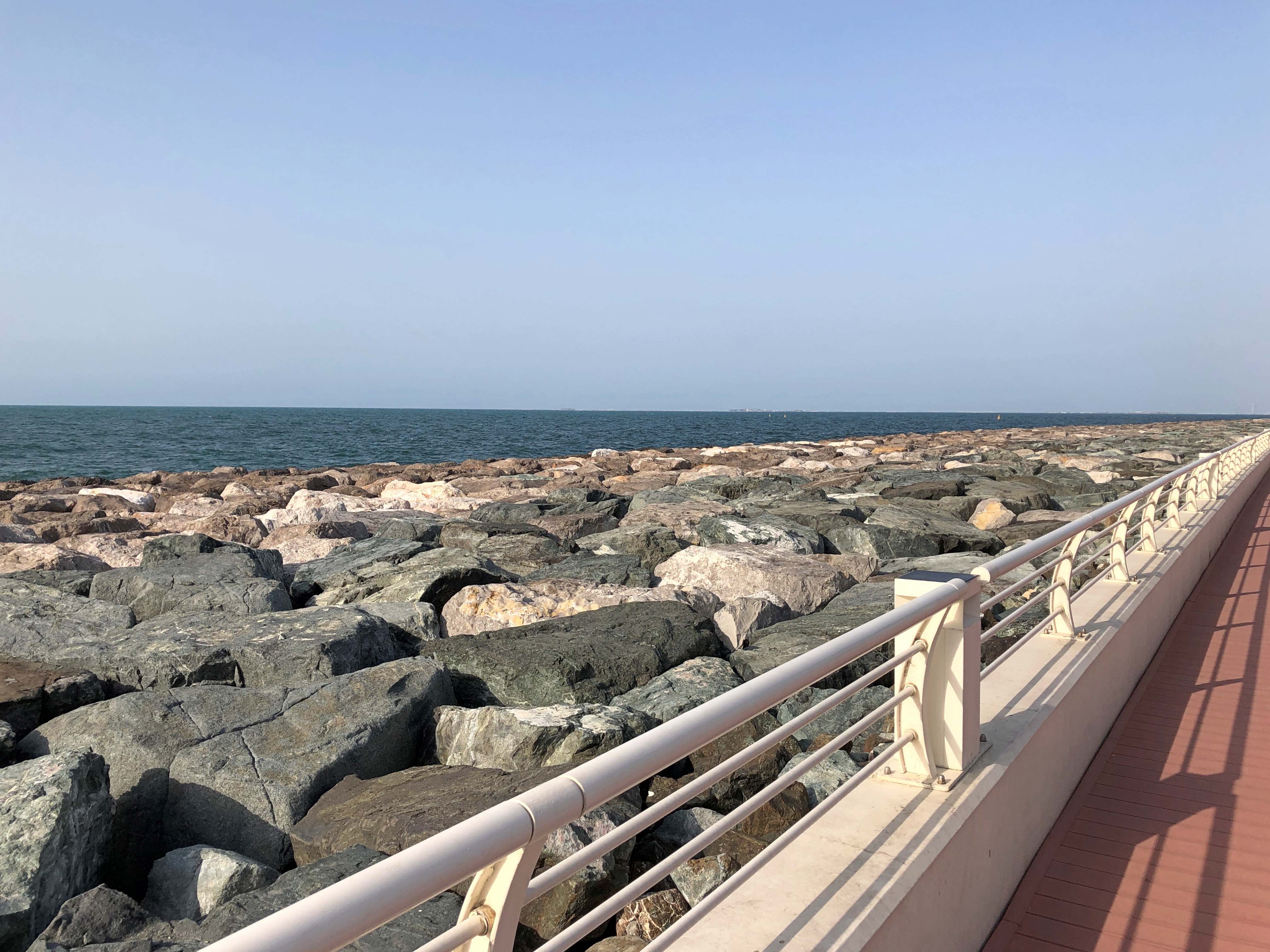
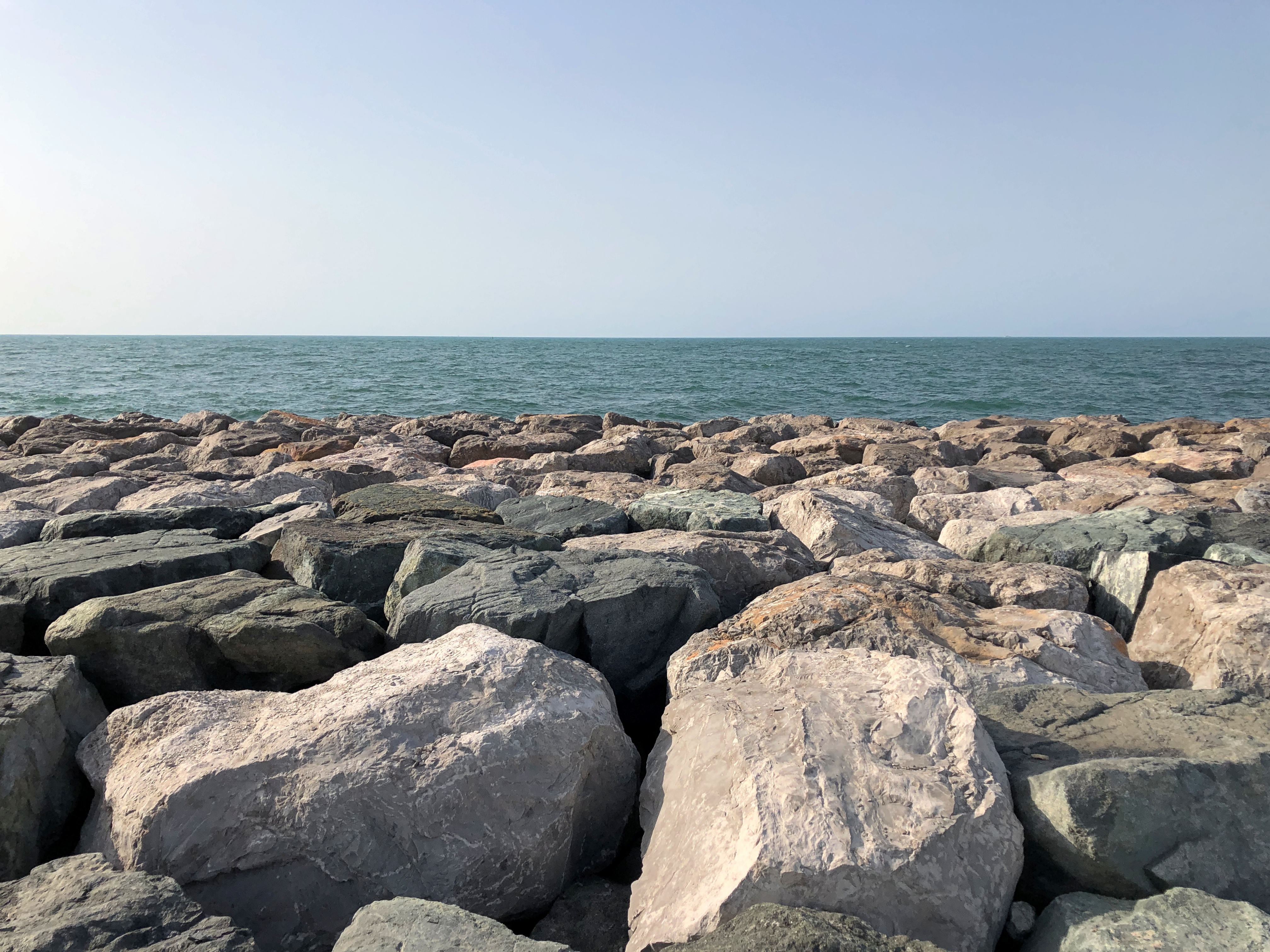
Palm JumeirahA short walk takes you from the station to a seaside path within sight of the storied Persian Gulf.Palm Jumeirah Palm Jumeirah Palm Jumeirah

Very storied. Going back at least to Sumer, up the coast a long way, but still on the shore of this sea.

Humayun’s Tomb, Isa Khan’s Tomb, Delhi

Just outside the gates of Humayun’s Tomb in Delhi, I spotted postcards for a sale from a street vendor, which was a rarity. I paused to look. That was a mistake. Before you could say boo, several other vendors – those that didn’t even have a spot on the near the gates, but who carried their wares around – were in my face. Inexpensive jewelry-, souvenir- and tchotchke-wallas. The only thing for it was to keep moving.

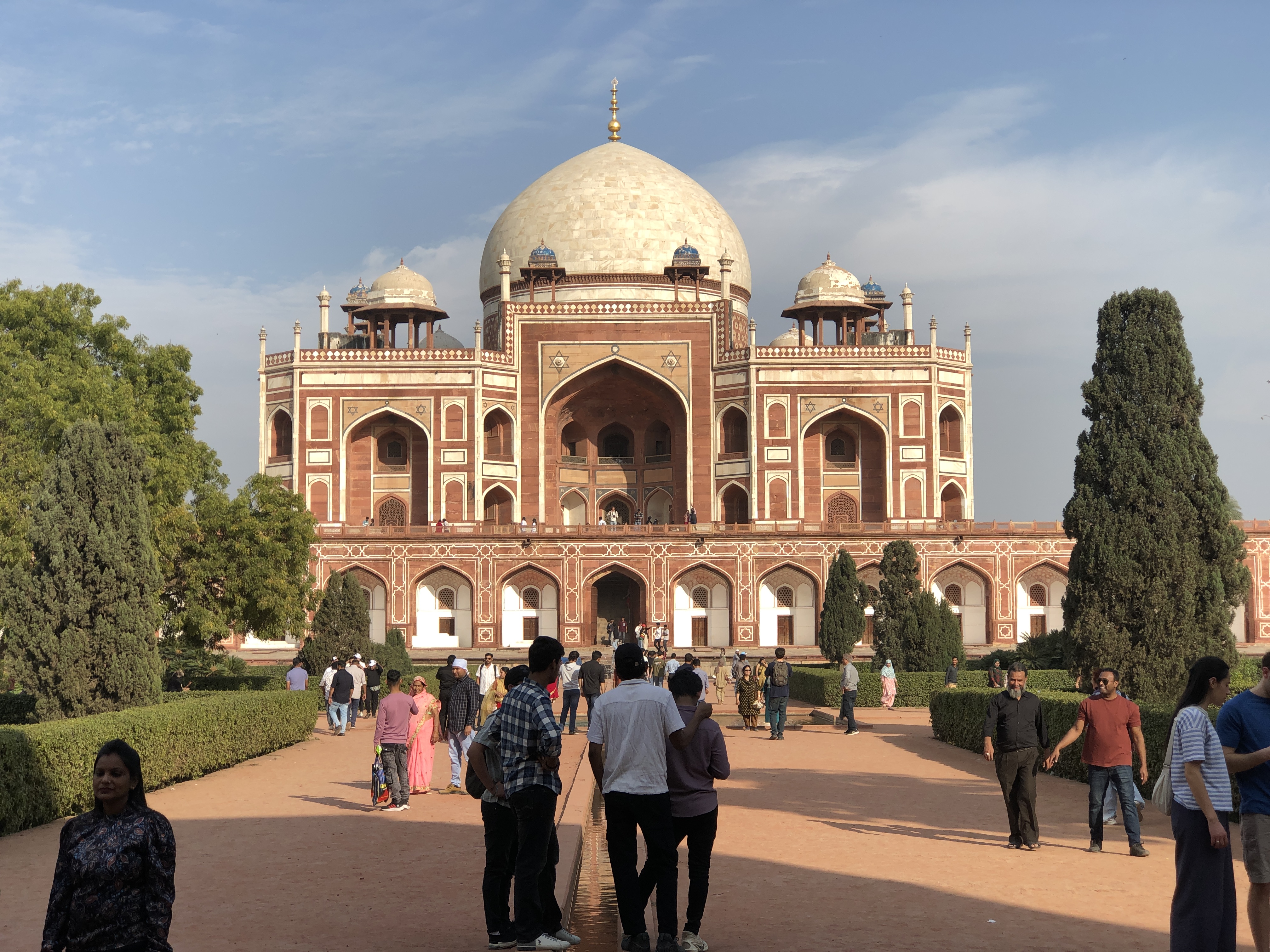
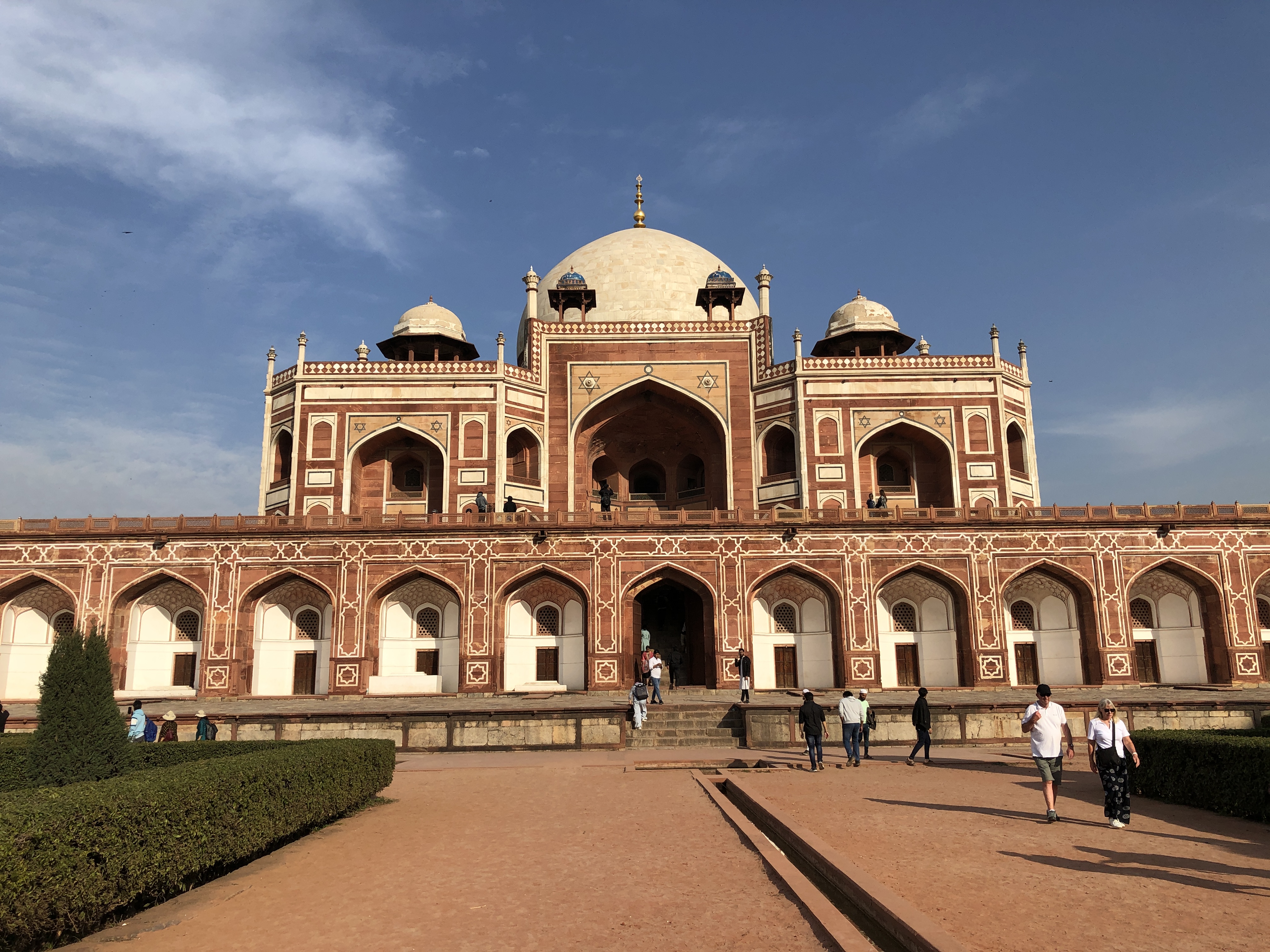
We were at the tomb on February 19. As a Mughal emperor, Humayun (d. 1556) rated one of considerable splendor.Humayun’s Tomb Humayun’s Tomb

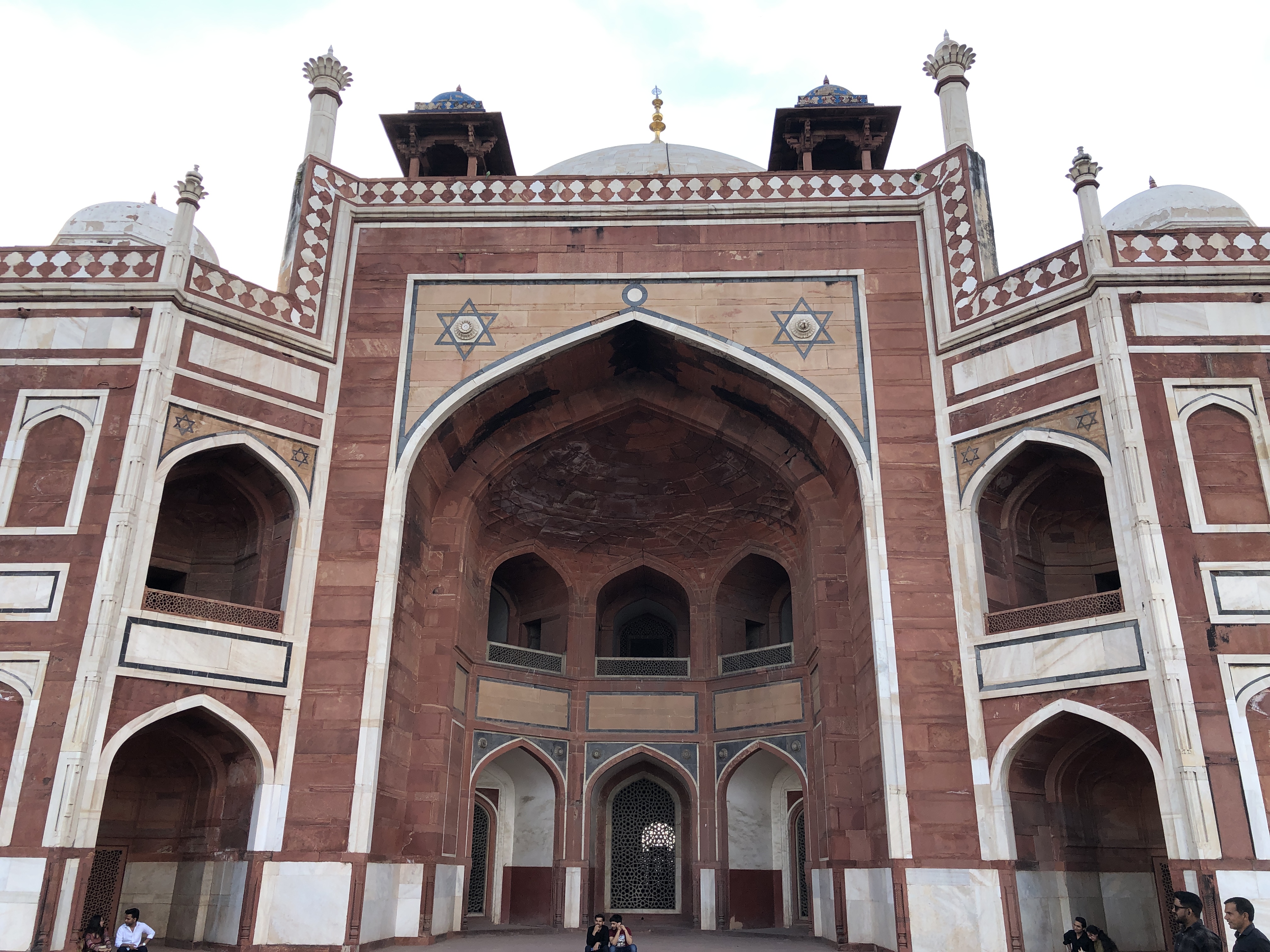
“Persian and Indian craftsmen worked together to build the garden-tomb, far grander than any tomb built before in the Islamic world,” notes UNESCO, for indeed the tomb complex is a World Heritage Site. “Humayun’s garden-tomb is an example of the charbagh (a four quadrant garden with the four rivers of Quranic paradise represented), with pools joined by channels.”Humayun’s Tomb Humayun’s Tomb

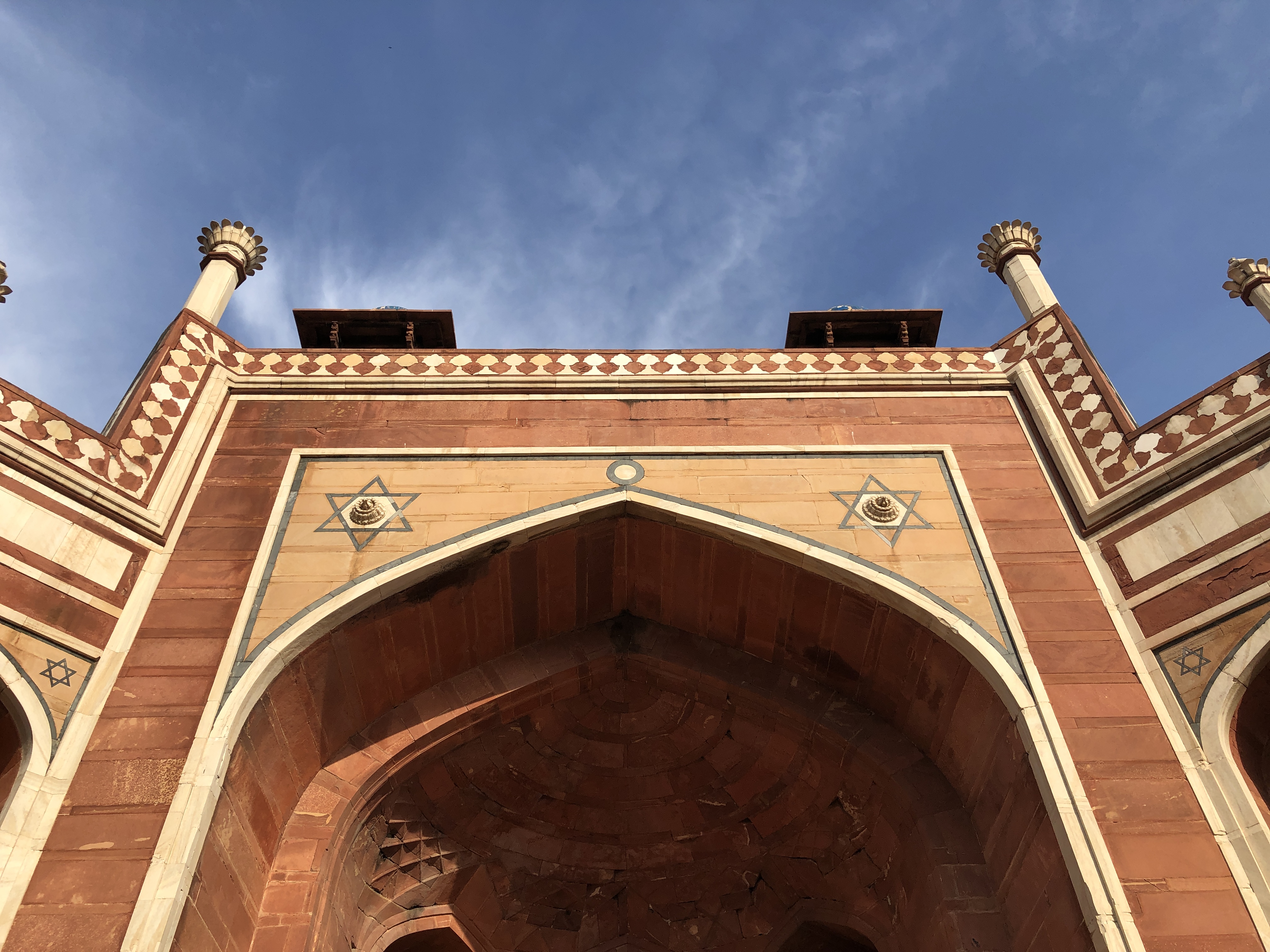
“The mausoleum itself stands on a high, wide terraced platform with two bay deep vaulted cells on all four sides,” UNESCO continues. “It has an irregular octagon plan with four long sides and chamfered edges. It is surmounted by a 42.5 m high double dome clad with marble flanked by pillared kiosks (chhatris) and the domes of the central chhatris are adorned with glazed ceramic tiles.

“The interior is a large octagonal chamber with vaulted roof compartments interconnected by galleries or corridors. This octagonal plan is repeated on the second storey. The structure is of dressed stone clad in red sandstone with white and black inlaid marble borders. Humayun’s garden-tomb is also called the ‘dormitory of the Mughals’ as in the cells are buried over 150 Mughal family members.”

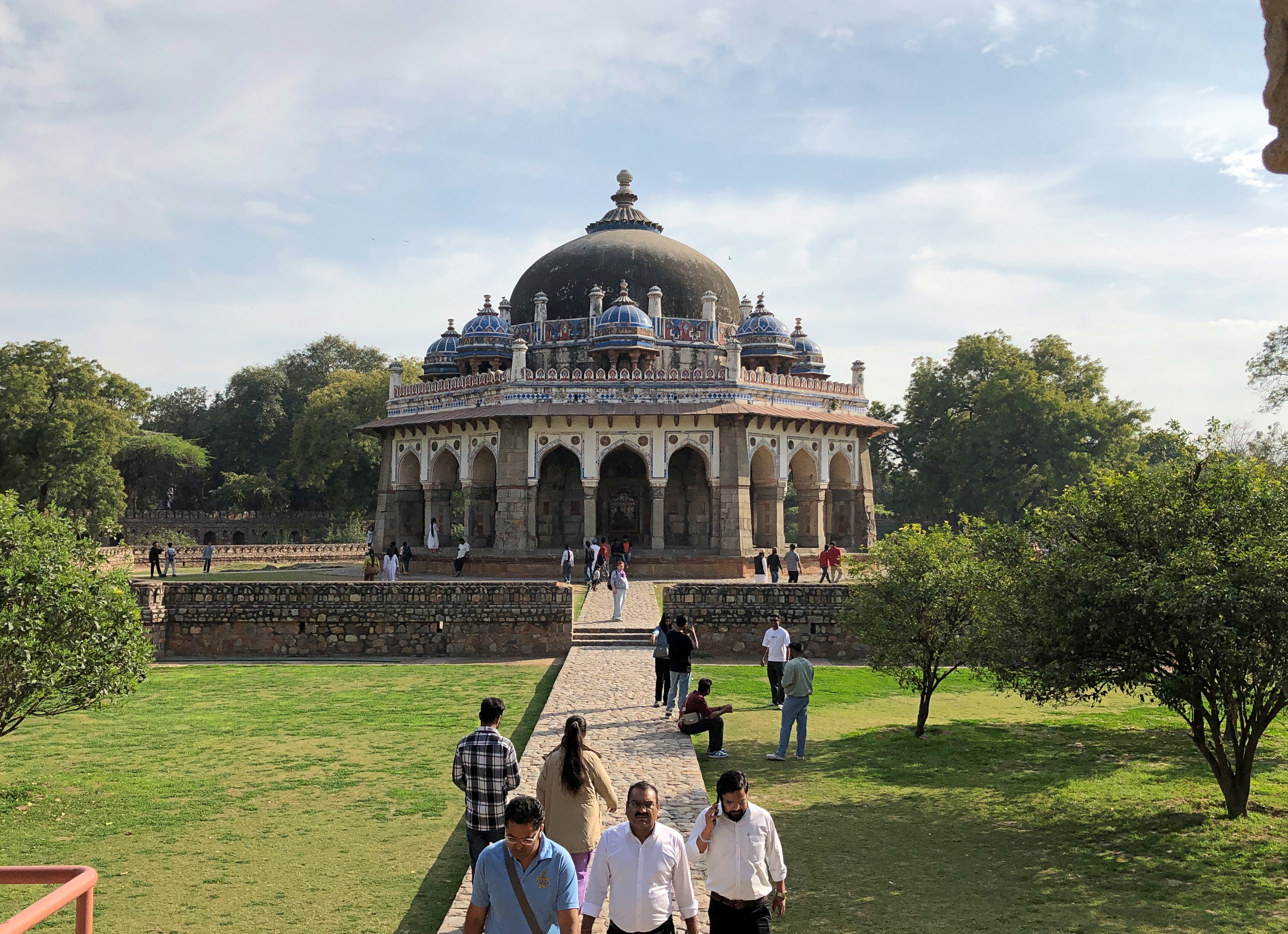
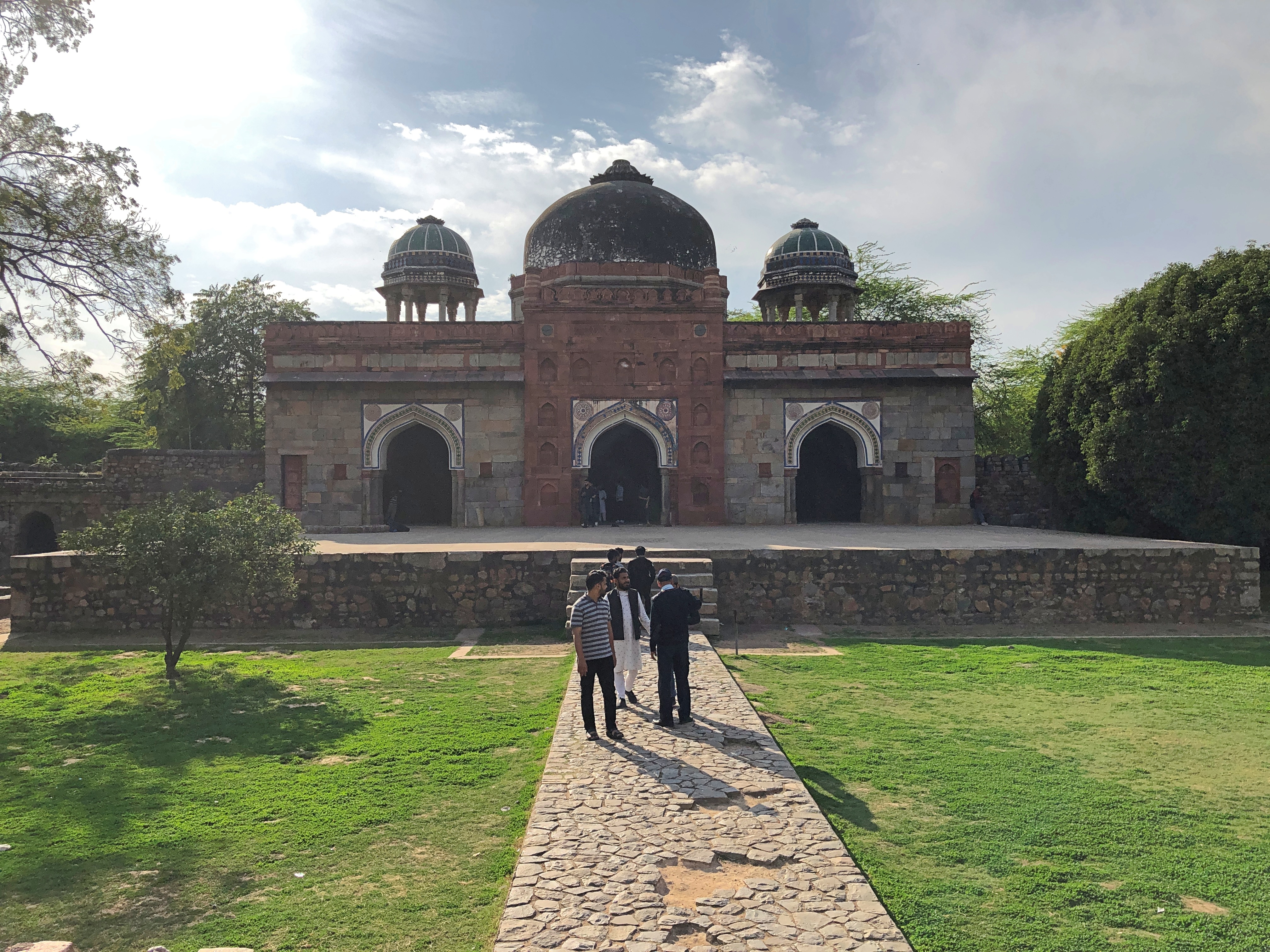
A precursor to the Taj Mahal, it is said. I can see that. But Humayun wasn’t the only eminence to have a mausoleum on the grounds. There are others, such as that of Isa Khan (d. 1548), who was there first.

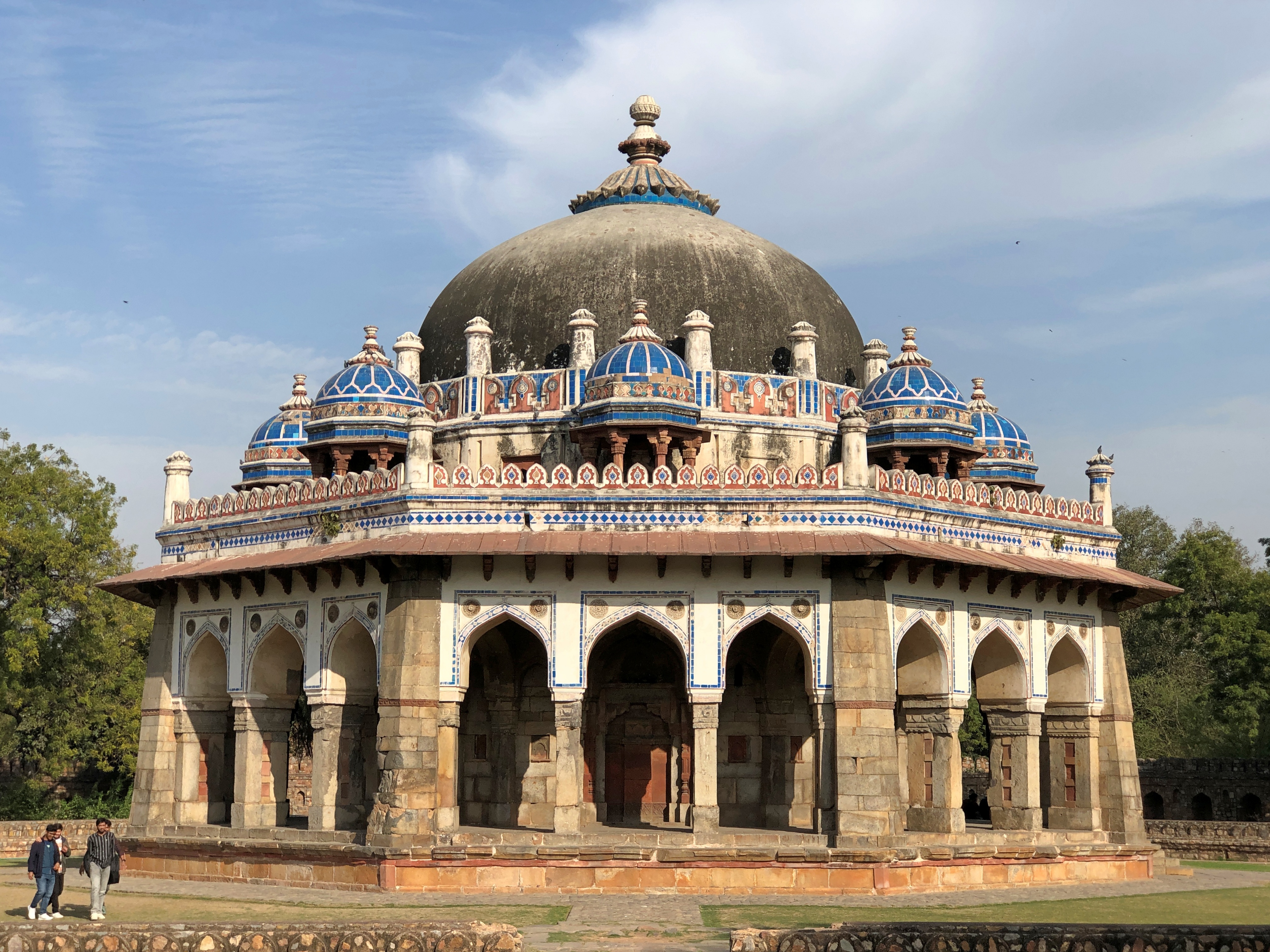
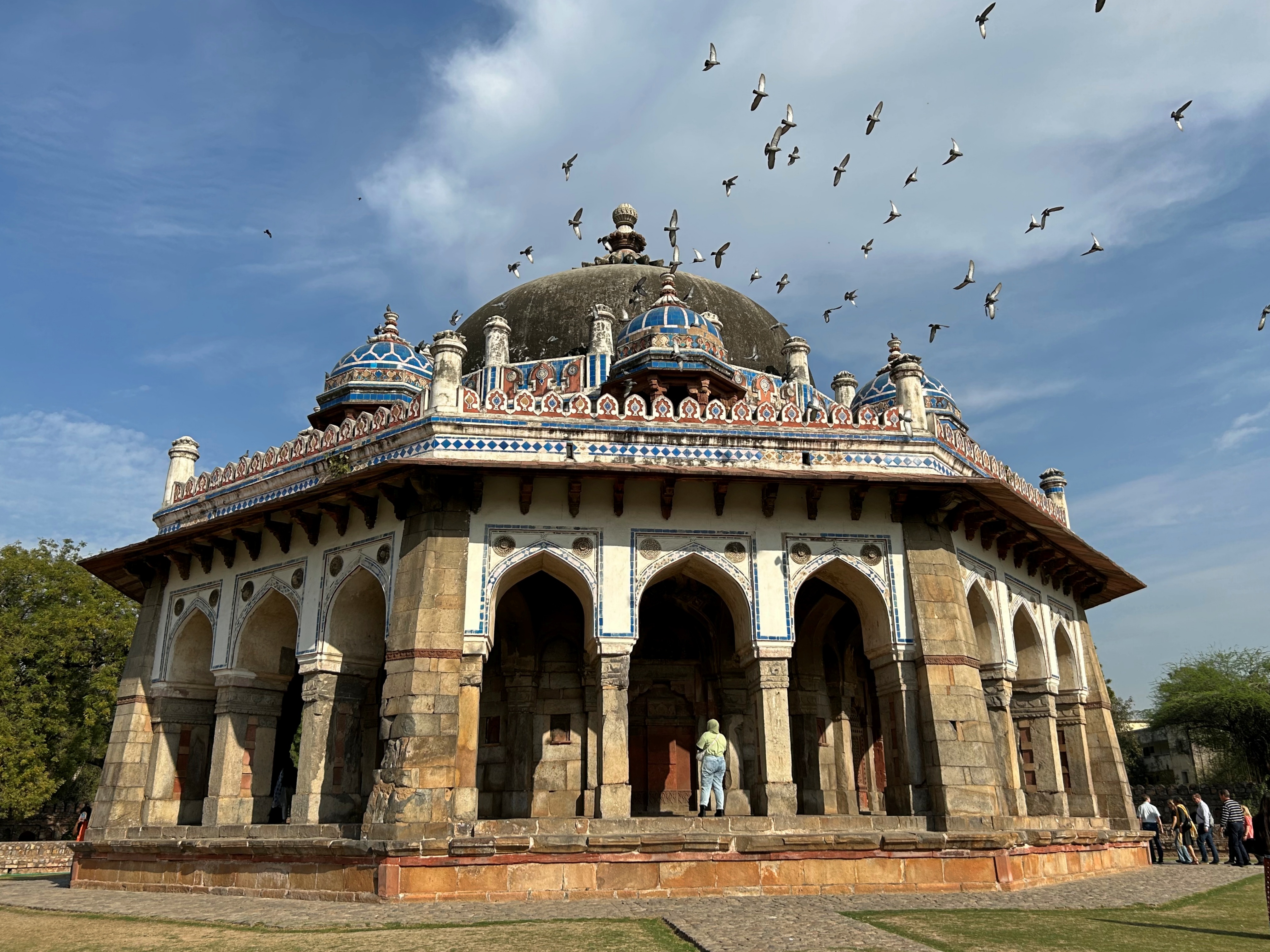
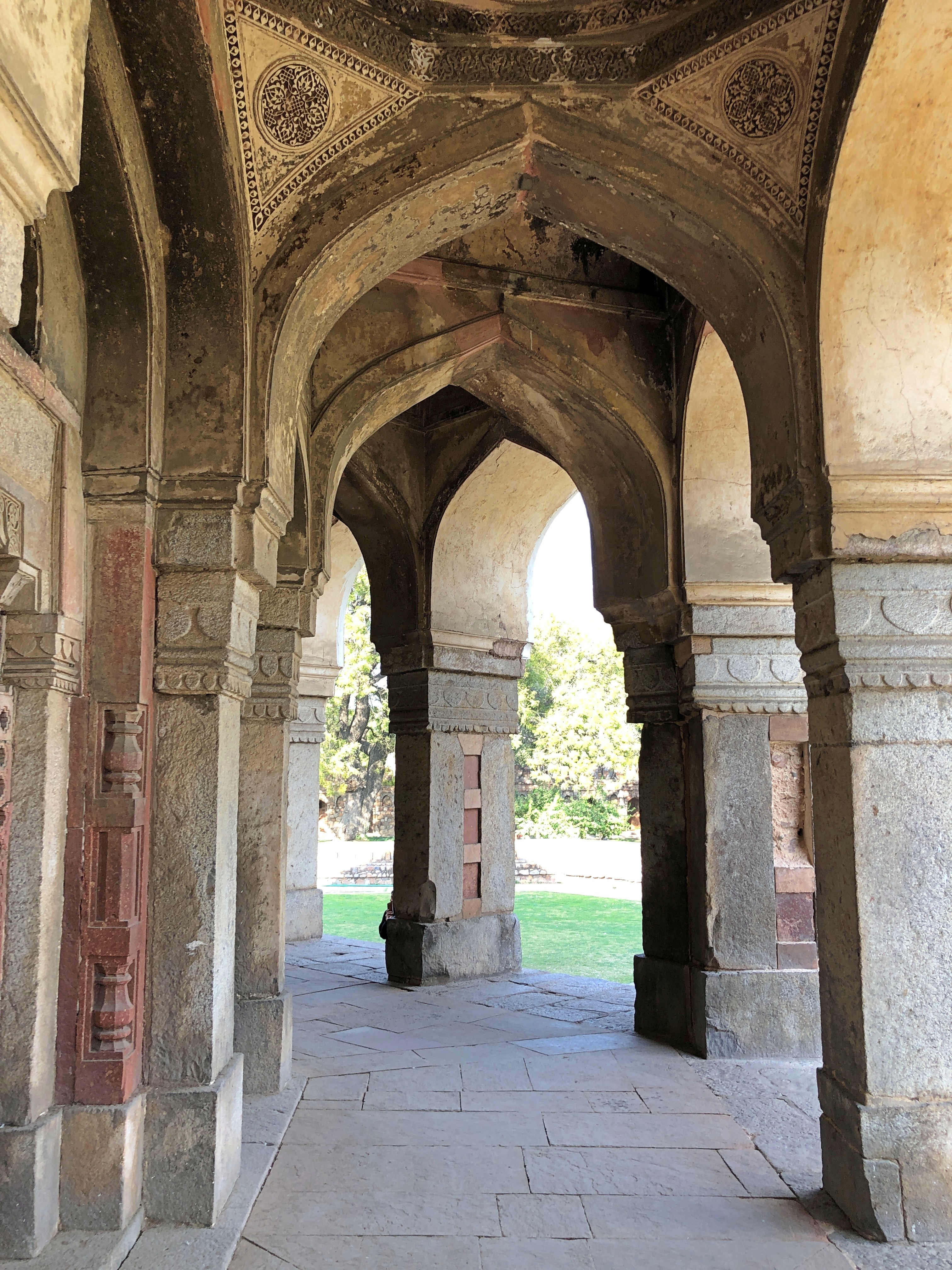
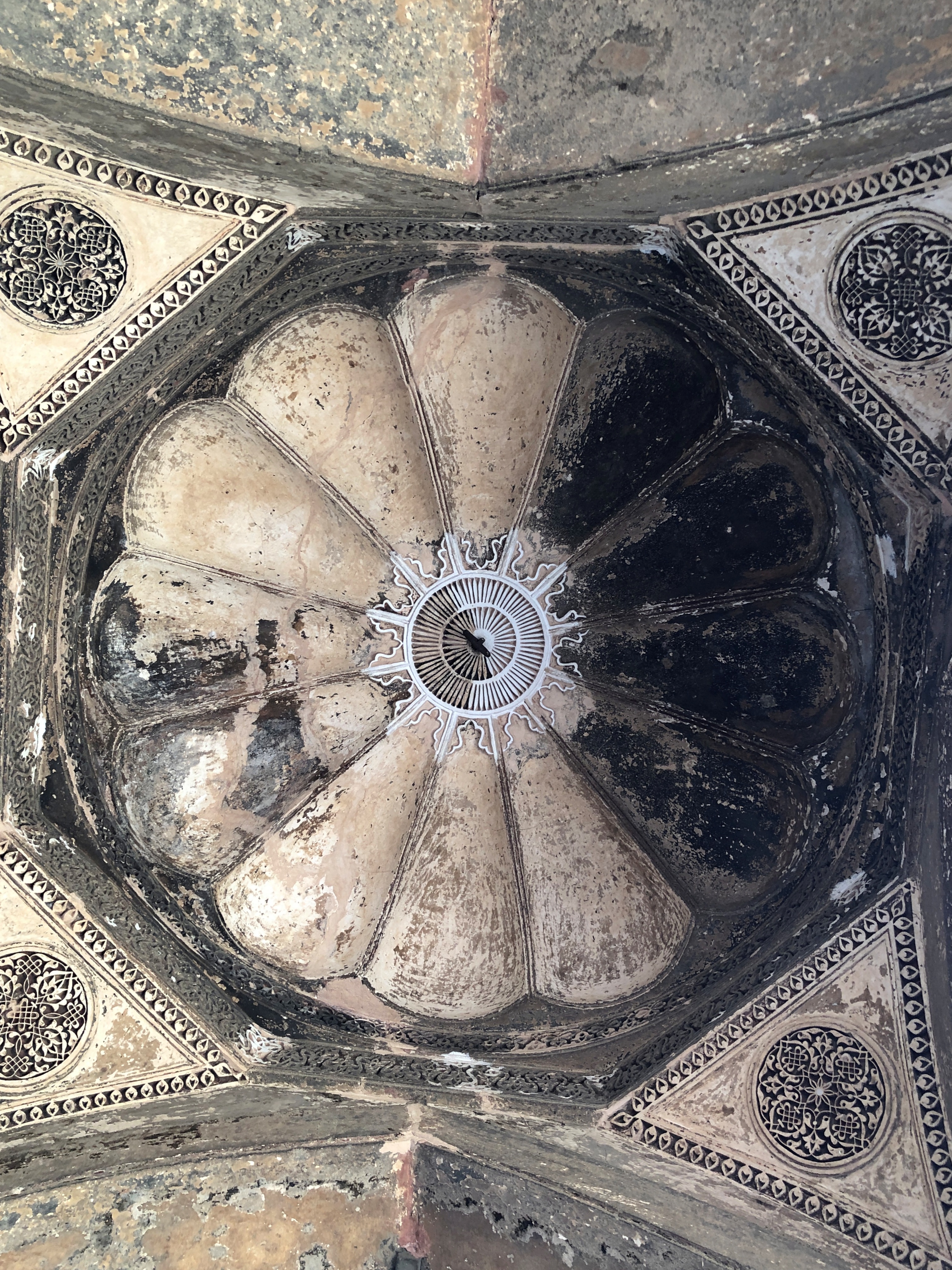
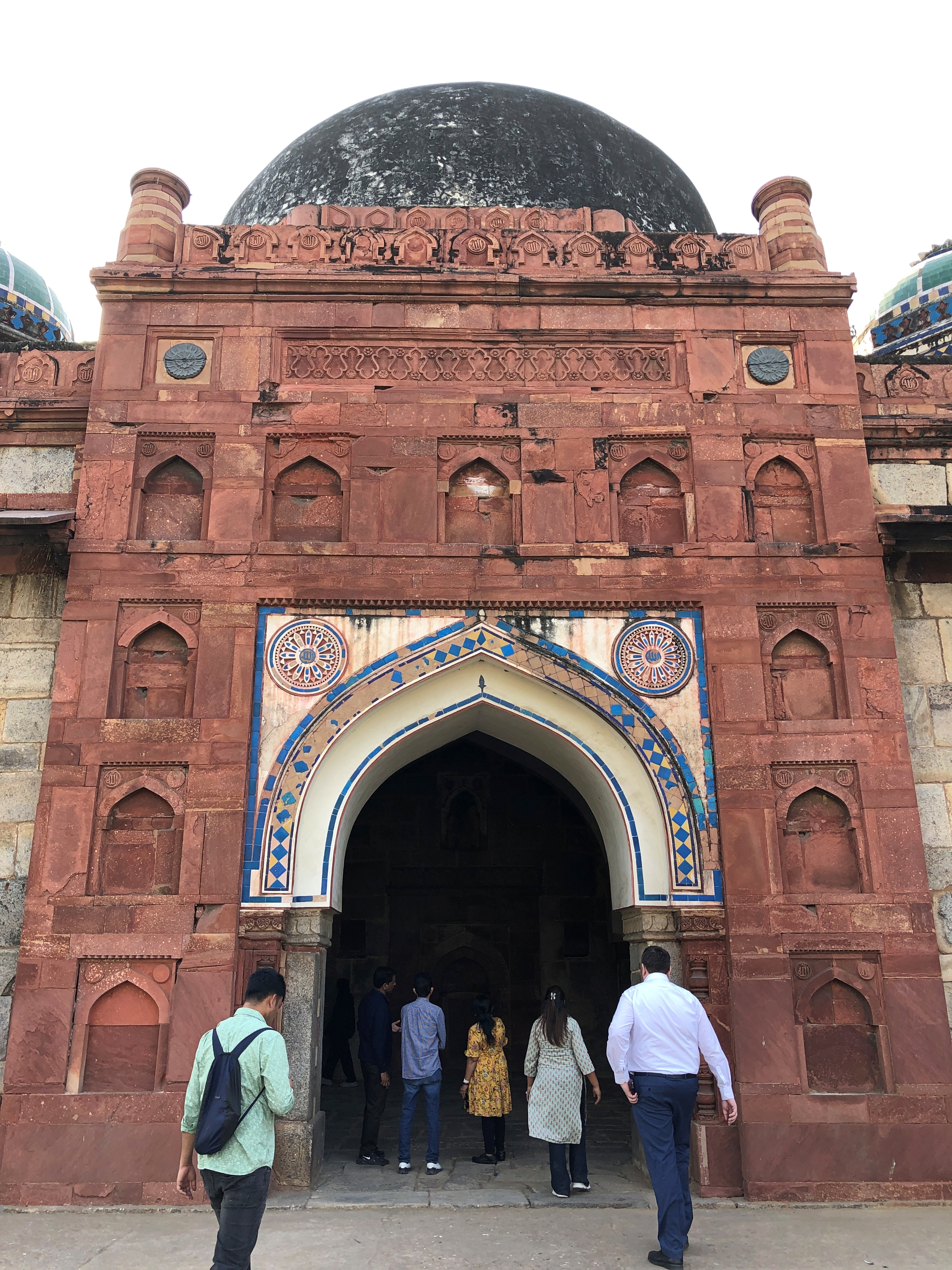
A more manageable-sized mausoleum.Isa Khan's Tomb Isa Khan's Tomb Isa Khan's Tomb Isa Khan's Tomb

Isa Khan wasn’t royalty, but rather a noble, in service of the short-lived Sur Empire, whom the Mughals eventually overcame.

Seems easier to appreciate the details in a smaller-scale edifice.Isa Khan Isa Khan Isa Khan

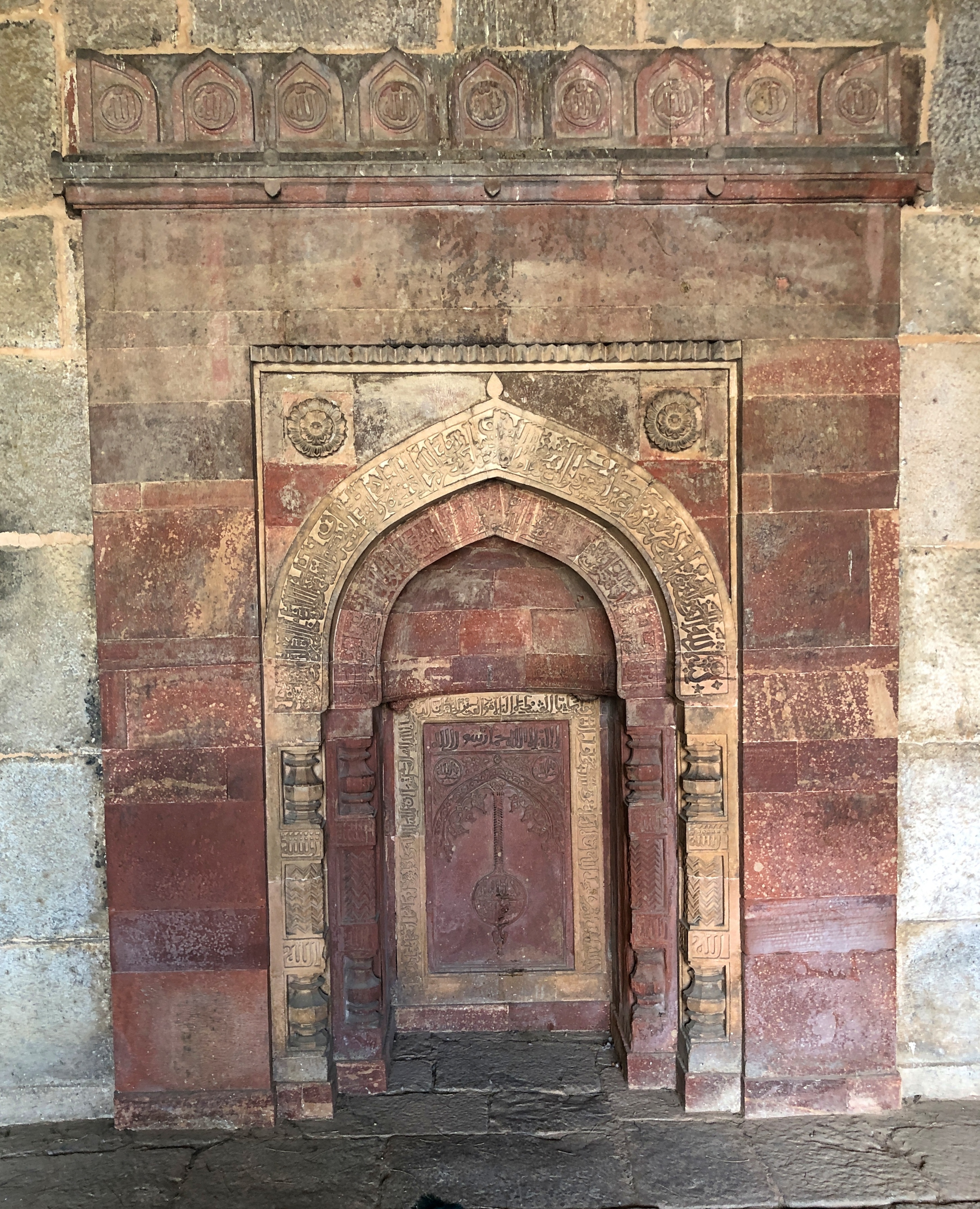
Not far from his tomb is a mosque named for him.Isa Khan Mosque Isa Khan Mosque

Also has some worthwhile detail.Isa Khan's mosque

Humayun and Isa Khan: Not on the same side in life, but in death good neighbors.

Nagoya Castle

Spring tugged back on Friday, windy and warm, touching somewhere in the 70s, with some warmth continuing over the weekend. Only a little warmer than it was in Nagoya on February 15. A nice day for an outing there.

We arrived by rail. That marvel of intercity top-speed train transportation, the Shinkansen, connects Tokyo and Osaka, and being a creature of JR (Japan Railways), you can use a Japan Rail Pass to travel on it: a pass good on JR for unlimited rides on a fixed number of days. Our passes in hand, we went from Osaka to Tokyo, and later back again.

On the way back to Osaka, we stopped for an afternoon in Nagoya, a city that most North Americans wouldn’t know. Just like most Japanese probably don’t know (for example) Indianapolis, unless they are into auto racing. Deeply into it, that is. There have to be some of those.

Whatever the enthusiasm, there is a node or a knot or a cluster or a clutch of Japanese devotees – and I’m thinking of a kicker bar I heard about in the ’90s somewhere in Japan, which may or may not have existed, but that was definitely in the realm of the possible. Decked out in someone’s idea of a ’50s Southern honky-tonk, the joint offered both kinds of music every weekend, country and western, and most of the patrons decked out themselves in their idea of country duds, including most importantly, cowboy hats.

We squeezed our luggage in a station coin locker, found the right bus stop, and rode to Nagoya Castle (名古屋城) in about 10 minutes.Nagoya Castle Nagoya Castle Nagoya Castle

As Japanese cities go, Nagoya isn’t ancient, though it sounds like people have lived scattered in the area for thousands of years. The city got up and running because of the needs of the new ruling elite, in their efforts to remain so, in the early Edo period. A new castle was just the thing. The engineers and stonemasons got to work on it in the 1610s, though who on the project would have known the Gregorian decade?

Pictured above is the main keep, a 1950s reconstruction, since the original was destroyed in 1945. The reconstruction, done in steel-reinforced concrete, hasn’t aged well, and these days the castle interior is closed due to safety concerns. One really strong earthquake might be bad for anyone who happened to be inside, no doubt. If I understand correctly, there is a plan to rebuild the keep once again, this time closer to the original, since the place was extensively documented in the late 19th and early 20th centuries. Probably up to modern seismic standards, however.

A nearby structure, Hommaru Palace, was rebuilt in the early 2010s, and is open at no extra charge.Nagoya Castle

Having a castle is one thing, but in the long period of peace during the Edo period, the Owari lords of castle needed more convenient administrative offices and residences. A samurai palace, in other words. The place is sumptuous. Hommaru Palace  Hommaru Palace  Hommaru Palace

“This luxurious architectural style, known as Shoin-zukuri, was preferred by the samurai caste as formality and etiquette were highly valued,” Nagoya City’s web site says. “Each room’s styling denoted its rank, while the lord’s audience chamber is positioned at a higher elevation than the other rooms as a show of authority.” Hommaru Palace  Hommaru Palace

There are other open buildings on the castle grounds. Including a tea house, since samurai were fond of their tea.Nagoya Castle grounds Nagoya Castle grounds Nagoya Castle grounds

I only took a few images in Nagoya that didn’t involve the castle and environs, since mostly that was what we had time for. But I did document a few other sites.Nagoya KFC
Sorry to report that I found no statues of Harlan Sanders in Nagoya or elsewhere in Japan this time, though his reassuring face (except for chickens) was represented at the locations I saw, such as above. What I saw represented a small sample, of course, and maybe I missed the Col. Sanders statues. Every Japanese KFC ought to have one, if you ask me. That counts as today’s eccentric opinion.

Sanssouci

At the Alte Nationalgalerie in Berlin, more about which eventually, there is an enormous canvas by Adolph Menzel (d. 1905), one of a number of his paintings on display: “Flötenkonzert Friedrichs des Großen in Sanssouci” (“The Flute Concert of Frederick the Great at Sanssouci”; “Frederick the Great Playing the Flute at Sanssouci”), dating from 1850-52.

When I made my detail, I focused on the king. Reading about the painting, and looking at images of it, I see that I might as well have focused on the preternaturally luminous chandelier.Sanssouci

A few days earlier, on March 9, Jay and I had boarded a train at AlexanderPlatz in central Berlin bound for Potsdam, location of Frederick’s summer retreat, Sanssouci. I expect that in the 18th century, the area was indeed a retreat, a healthy distance from Berlin and its hubbub. These days, you take the S Bahn to an outer suburb. From the Potsdam main station, a municipal bus drops you off near one of the outbuildings of Sanssouci, now the ticket office. Remember that, it will be important later.
This wasn’t our bus, but rather a tour bus, playing up the Potsdam Giants, a storied Prussian infantry regiment and special passion of Frederick the Great’s father Frederick William I, who is pictured as well (and it was Frederick the Great who disbanded them). I’d heard of the Giants, but not in detail, and the more I learn about them, the more amused I am.Sanssouci

Now there’s a name for a German baseball team: The Potsdam Giants. As far as I can tell, there is no such team, though the Humburg Stealers, the Mannheim Tornadoes and the Heidenheim Heideköpfe (ah, those funky Swabians) knock around the horsehide sphere professionally in the Federal Republic. That’s what I ought to do, if I ever go back to Germany, see a baseball game. Bet there are some peculiarities. Like in Japan, when you release balloons during the Seventh Inning Stretch. At least they did at Hanshin Tigers games in the early ’90s. Actually, they were blown up condoms.

The styling is Sanssouci in most English-language sources, but spelled Sans, Souci. on the building.Sanssouci Sanssouci Sanssouci

Seems like party-time in stone. Vineyards were important to the scheme of Sanssouci, so of course Bacchus-adjacent figures should be too.Sanssouci

The view from the palace. This time of the year, there was no admission to the Sanssouci gardens, so it functioned as a city park. A mild Sunday in March had brought people out to the park. Sanssouci

A benefit of low-season tourism: practically no waiting to get into the palace. I say low season, but in a lot of places in Berlin, and Prague too, we noticed that school groups, or individual students, were out and about in force. A form of spring break?

Images without reference to room.Sanssouci Sanssouci Sanssouci

One thing to like about the Rococo effervescence at Sanssouci is that there isn’t too much of it. As 18th-century European palaces go, it’s modest. Frederick wanted a place to entertain himself and others, not wow visiting muck-a-mucks. Only a dozen or so rooms. You don’t come away feeling overloaded.

What is this about?Sanssouci

I quote this at some length because this material, from the organization that oversees the palace, is funny. And a little quaint.

On May 13, 1998, at Sanssouci Palace a taboo in historical preservation was broken. After more than a hundred years, the Marble Hall of Frederick the Great’s summer residence once again became the scene of a festive dinner...

This time it was the Chancellor Helmut Kohl, who had prevailed against all of the preservation apprehensions. It had been his express wish to honor Bill Clinton, the president of the United States of America, with a luncheon at Sanssouci during his second state visit to Germany…

The suggestion to hold the dinner in the Ovid Gallery in the neighboring New Chambers of Sanssouci, which otherwise served as the festive setting when receiving state visitors, was turned down by the American chief of protocol.

The sensual scenes from the Metamorphoses by the Roman poet Ovid, set into the gallery walls in the form of gilded stucco reliefs, were considered by the protocol chief as being too permissive. There was a fear that the press would make a connection to the Lewinsky affair, which had been a constant theme for the media since the beginning of 1998.

Scenes from the room supposedly decorated for Voltaire, who visited the palace till he had a falling out with the king. rococo  rococo  rococo

When we were done, we went back to the bus stop where we got off, operating under the assumption that Sanssouci was as far as the bus went, and it would take us directly back to the train station. This was wrong. Soon we were riding along, further into less developed areas, and I remember thinking – or did I say it out loud? — I don’t remember any of this.

We passed by a sign for the Max Planck Institute in front of some buildings in the mid-distance. Really? That’s here? Suburban Berlin was certainly plausible, but later I found out that Max Planck Society is headquartered in Munich, and has a lot of branches. That includes one in Golm, an outlying neighborhood of Potsdam, with narrow and lightly traveled streets through smallish but pleasant single-family houses with yards. Elsewhere in Golm are fields that are probably agricultural, or at least pastureland.

I hear Max Planck Institute and I suspect one or more branches are doing Time Tunnel research. You know, go back in time and make sure Hitler becomes an architect instead of a politician, that kind of thing. That kind of thinking is what I get for watching TV science fiction as a lad.

Then the bus stopped and we were directed to exit at the end of the line. Jay mustered his German and communicated with the driver, a chunky middle-aged fellow puffing on his vape, now that he was on break. The bus, we found out, would return to the train station in about 30 minutes. We were able to communicate this to the two other passengers who had done the same as us, two women tourists from South Korea, I think.

Such was a Sunday schedule, meaning a wait at the transit hub of Golm.Golm, Germany

Luckily, the day was mild, almost pleasant, so sitting around outside for a while was no issue. Or taking a short walk.Golm, Germany Golm, Germany

An oddity.Sanssouci

3.10.1990 is all it says. The date of German reunification. The neighborhood’s private memorial to that event? Or was it a former border marker? I checked and no, Potsdam was firmly in East Germany. A stone marking the occasion when Potsdam, or even Golm, didn’t have to be in the DDR any more? Could be.

Qutb Minar, Delhi

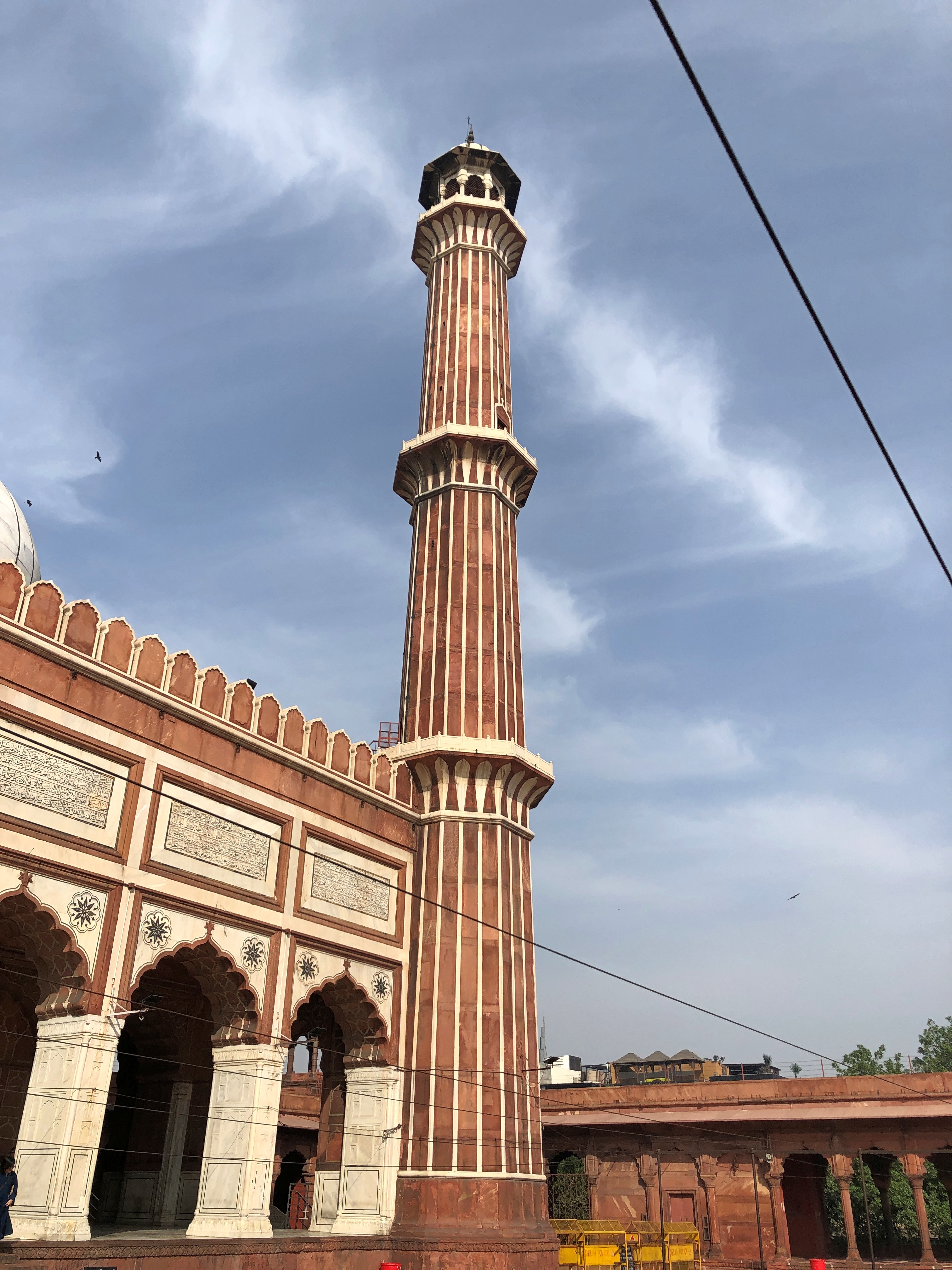
When it comes to historic ruins in Delhi, the Mughals aren’t the only game in town. Qutb Minar, a 238-foot pre-Mughal legacy of the Delhi Sultanate, rises above the southern part of the metro, part of a larger complex that’s a World Heritage Site. That was how it went for us as tourists in modern India. Another day, another World Heritage Site.

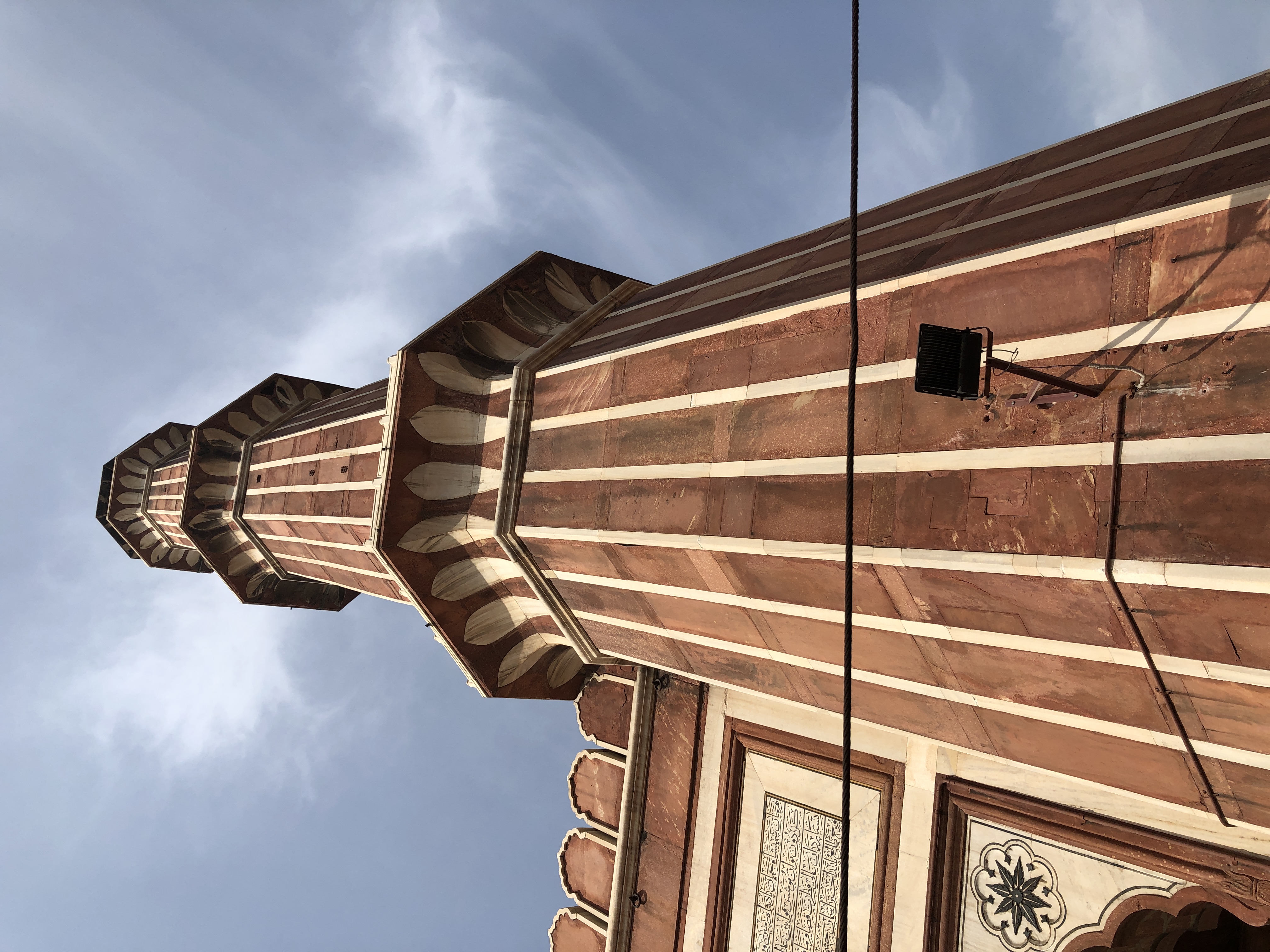
I’d say Qutb Minar deserves its modern status.Qutb Minar, Delhi Qutb Minar, Delhi

Casual visitors can’t climb to the top any more and I’m not sure I could have anyway. “Access to the top ceased after 2000 due to suicides,” asserts Wiki. But you can stand right under the tower and behold the detail, as we did on the afternoon of February 20.Qutb Minar, Delhi Qutb Minar, Delhi Qutb Minar, Delhi

Monumental structures this old come with extra layers of marvel, at least in my reckoning. It’s one thing to admire a tower like Tokyo Skytree or Burj Khalifa, which are certainly impressive, but whose construction also had the benefit of all sorts of machines and experts in their use — enormous cranes come to mind, as do CAD systems with more computing power than the entire Apollo program.

On the other hand, Qutb Minar is essentially an artful stack of brick, one of whose characteristics turned out to be longevity. I’m certain some machines were available for the task, but I also imagine much of the building involved human and animal power. How did builders beginning around AD 1200 – around what, AH 620? — undertake such a feat? It only goes to show that machines might augment the result, but technique lies in the human mind.
Various sources tell me that Qutb Minar counts as a minaret for the nearby Quwwatu’l-Islam mosque, built around the same time and now a ruin, and as a “victory tower.” That is, presumably to remind the local population who was in charge now: one Qutb al-Din Aibak, the Ghurid-aligned conqueror of Delhi and founder of the Delhi Sultanate, whose military efforts were part of the hard-to-follow wave of Central and South Asian conquests and counter-conquests that played across centuries now remote.

The Ghurids, who were Tajiks, seem to be one of those peoples that pop up in history with some regularity, a minor group from somewhere remote from most urbanized civilizations, suddenly expanding by conquering its neighbors and basically kicking butt for a few centuries across a wide area before fizzling out. They also had the distinction of being also first Muslim conquerors of north-central India.

Quwwatu’l-Islam is noted for any number of reasons, including its columns.Quwwatu'l-Islam Quwwatu'l-Islam

Their distinctiveness has been long noted. From Treasure spots of the world, by Walter Bentley Woodbury (1875): “… no two columns of this structure are alike, and this peculiarity applies also to the almost endless number forming the colonnade surrounding the building… the portico of the Quwwat ul-Islam Mosque framing the courtyard area consists of columns/pillars from destroyed Hindu and Jain temples…”Quwwatu'l-IslamQuwwatu'l-Islam Quwwatu'l-Islam

Views of the courtyard.Quwwatu'l-Islam Quwwatu'l-Islam Quwwatu'l-Islam

Details. including what look like restorations.Quwwatu'l-Islam Quwwatu'l-Islam Quwwatu'l-Islam

In the middle of the courtyard is the Iron Pillar, covered with faint inscriptions.Iron Pillar, Delhi

Three Raj-era tablets offer translation in Arabic, Hindi and English. Perhaps not up to the latest translation standards, but worth a read all the same.Iron Pillar, Delhi

The pillar is an echo of an even earlier time, created during the Gupta Empire in the fourth to the sixth centuries as reckoned by the Gregorian calendar, and thought to laud the warrior deeds and memory of Chandragupta II (d. 415), also known as Chandra. What is it doing at Quwwatu’l-Islam? Brought from somewhere else as a bit of loot by one ruler or another many years after its creation, though exactly who or when or from where are matters of scholarly debate.

More.Iron Pillar, Delhi Iron Pillar, Delhi Iron Pillar, Delhi

The grounds also include a surprising amount of green space.Qutb Minar, Delhi Qutb Minar, Delhi

We only spent a short time in Delhi, but it didn’t seem overloaded with green space.

Tokyo Skytree & Senso-ji

I’ve been seeing ads recently for a fine-looking daypack (carryon pack, the ad calls), since the bots surely know that I just did such things as take airplanes to far-flung destinations, use a credit card overseas and bought the likes of an e-sim. The daypack’s array of pockets and their layout seem useful, too. Then there’s the price: $300. No.

As if to try to answer my immediate objection, soon a new ad for the same item appeared: “Why would you buy a $300 pack?” it asks. I don’t stick around for the answer. I have a fine daypack already. More than one, in fact, were pressed into service during the RTW ’25. One went on my back into the airplane, the other, empty, was waiting in the checked bag for light duty during the trip.

For all the years I spent in Japan, Tokyo didn’t represent much of that time. All together I spent maybe a week there, including a delightful visit in November 1993: young marrieds out on a long weekend. Wish I could remember the name of the minshuku where we stayed, somewhere in the sprawl of Tokyo. I close my eyes and I can see its tidy lobby, paper walls, delicate prints, narrow dark stairs, tatami underfoot. Our hosts were most hospitable, from a long line of inn keepers, I think. On the wall was a framed drawing of a banjo by Pete Seeger, along with his signature. Some decades earlier, he had stayed there.

This time we stayed in a guest room at the residence of Kyoko and her husband and two nearly grown children not far from the University of Tokyo, and had a pleasant visit. Good to see old friends, wherever they are. Yuriko and Kyoko go way back. Kyoko spent time in Texas, Corsicana specifically, and we traveled with her to Arizona in ’97. After Lilly was born, she came to Chicago to help out for several weeks.

One thing we missed in the early ’90s was Tokyo Skytree, rising 2,080 feet over Sumida Ward, and for good reason: the tower was completed only in 2012 as a TV tower and a tourist attraction. We arrived in the afternoon of February 14.Tokyo Skytree Tokyo Skytree Tokyo Skytree

Who has the wherewithal to build such things in the early 21st century? In Japan, anyway, railroad companies do, in this case Tobu Railway Co. Ltd., a Kanto regional line that offers some sweet destinations, including the mountain resort of Nikko and the hot springs around Kinugawa Onsen, both of which I only know by reputation. Naturally, Japanese RR companies are never just that, and in this case while transport remains a core business, the conglomerate also includes entertainment venues, hotels, a commercial real estate and construction arm, and retail operations, especially department stores at major terminals.

Judging by my previous and recent experience at the department stores owned by regional RRs, the department store not only isn’t dying in Japan, it flourishes. They are serving a much more dense population, of course, and one that travels by train, but there’s also that matter of stocking goods people want to buy, including basements full of exceptionally good food. The stores’ bustle is something American department stores can only dream about in their dying reverie.

Up in the Tokyo Skytree bulb are a couple of tourist observation decks. The combo ticket, while expensive, isn’t outrageously more than just visiting the lower deck, so we opted for access to the deck at 350 meters and the narrower one at 450 meters, one after the other. It turned out to be easier to take good pictures from the lower level.

Busy, but not sardine-can busy.Tokyo Skytree

Now those are some views, showing just how dense metro Tokyo is.Tokyo Skytree Tokyo Skytree Tokyo Skytree

Below is the Sumida River, which wasn’t always so densely populated.

Night on the Sumida River – Kobayashi Kiyochika, 1881

“Night on the Sumida River” by Kobayashi Kiyochika, 1881

Three hundred fifty meters high? That’s well and good, but nothing as impressive as more than a thousand feet: 1,150, to be almost exact.Tokyo Skytree Tokyo Skytree

Window washers came by as we looked out at 350 meters. Hanging, as far as I could tell, by two wires attached to their car, and not their persons. They seemed pretty blasé about that, but anyone who felt otherwise (like me) would be in the wrong line of work.Tokyo Skytree window washers Tokyo Skytree window washers

On the other side of the river, and visible from the tower, is Senso-ji temple, in the Asakusa neighborhood. We still had some afternoon light after visiting Skytree, so we decided to go to the temple, a short train ride and a longer walk away. A long pedestrian street (Nakamise-dōri) goes through Asakusa to the temple grounds.Nakamise-dōri

Hōzōmon gate.Senso-ji temple, Tokyo Senso-ji temple, Tokyo

The temple’s other gate is known as Kaminarimon, and if I’d known about its noteworthiness, we’d have backtracked a bit to see it. Apparently we entered the Nakamise-dōri at the middle, and so missed Kaminarimon (and it took me a while to figure that out just today). Ah, well.

There has been a Buddhist temple on the site since our 7th century, with the usual history of fires and rebuilding down the centuries, including the most recent cycle in the 20th century. The early 1945 air raids destroyed the temple, but rebuilding was complete by the 1970s. Said to be one of the most-visited religious sites in the world, the temple has the advantage in that regard of being square within the world’s most populous metro.Senso-ji temple, Tokyo

The temple is dedicated to Kannon, the bodhisattva of compassion, which might also help explain its popularity. Who doesn’t need some compassion sometimes? Kannon is popular when it comes temple dedications, with Shitennō-ji, Kiyomizu-dera and Sanjūsangen-dō also dedicated to Kannon, all in the Kansai region, and all of which I visited at one time or another.

The Main Hall.Senso-ji temple, Tokyo Senso-ji temple, Tokyo Senso-ji temple, Tokyo Senso-ji temple, Tokyo

No shortage of visitors.Senso-ji temple Senso-ji temple, Tokyo Senso-ji temple, Tokyo Senso-ji temple, Tokyo

Not a bad afternoon in Tokyo, visiting popular structures from the 21st and 7th centuries, respectively, and being fully alive in the present.

The Brandenburg Gate

To mark the spring equinox, winter pulled hard in the tug o’ war between it and spring, with snow falling overnight. By day, spring pulled back, melting most of the snow.

The weather during almost all of our trip turned out better than expected. Japan was dry and fairly chilly some days, but not others, even up north in Tokyo. As for north-central India, February is a good time to visit: slightly cool at night, warm or very warm during the day, and no rain at all, much like the days we spent in Mexico City. Later in the year, I understand, heat begins to oppress the region and soon the monsoon comes. In Dubai: consistently warm, almost hot in the afternoons, but never unbearable desert heat, which will come soon enough as well.

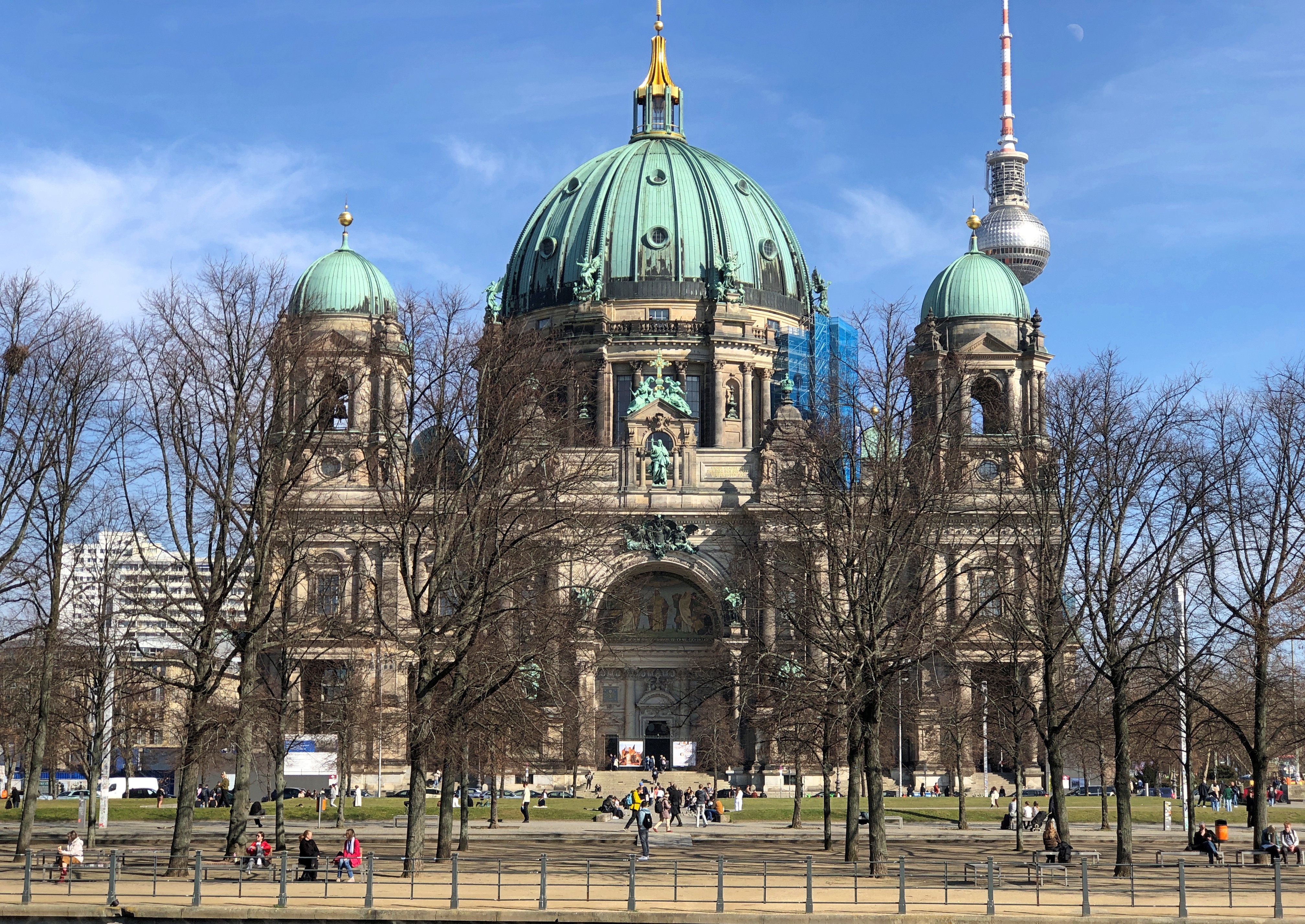
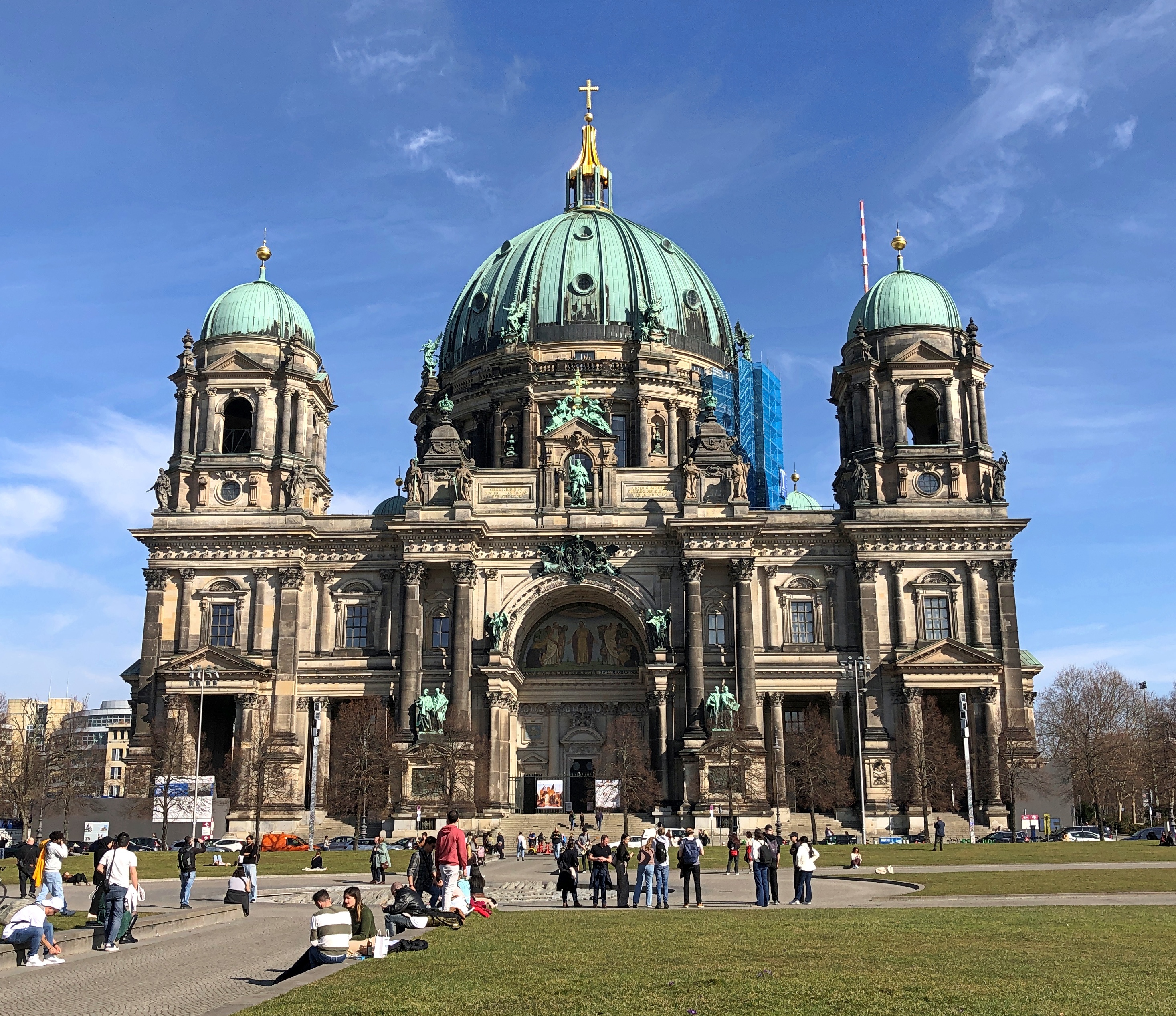
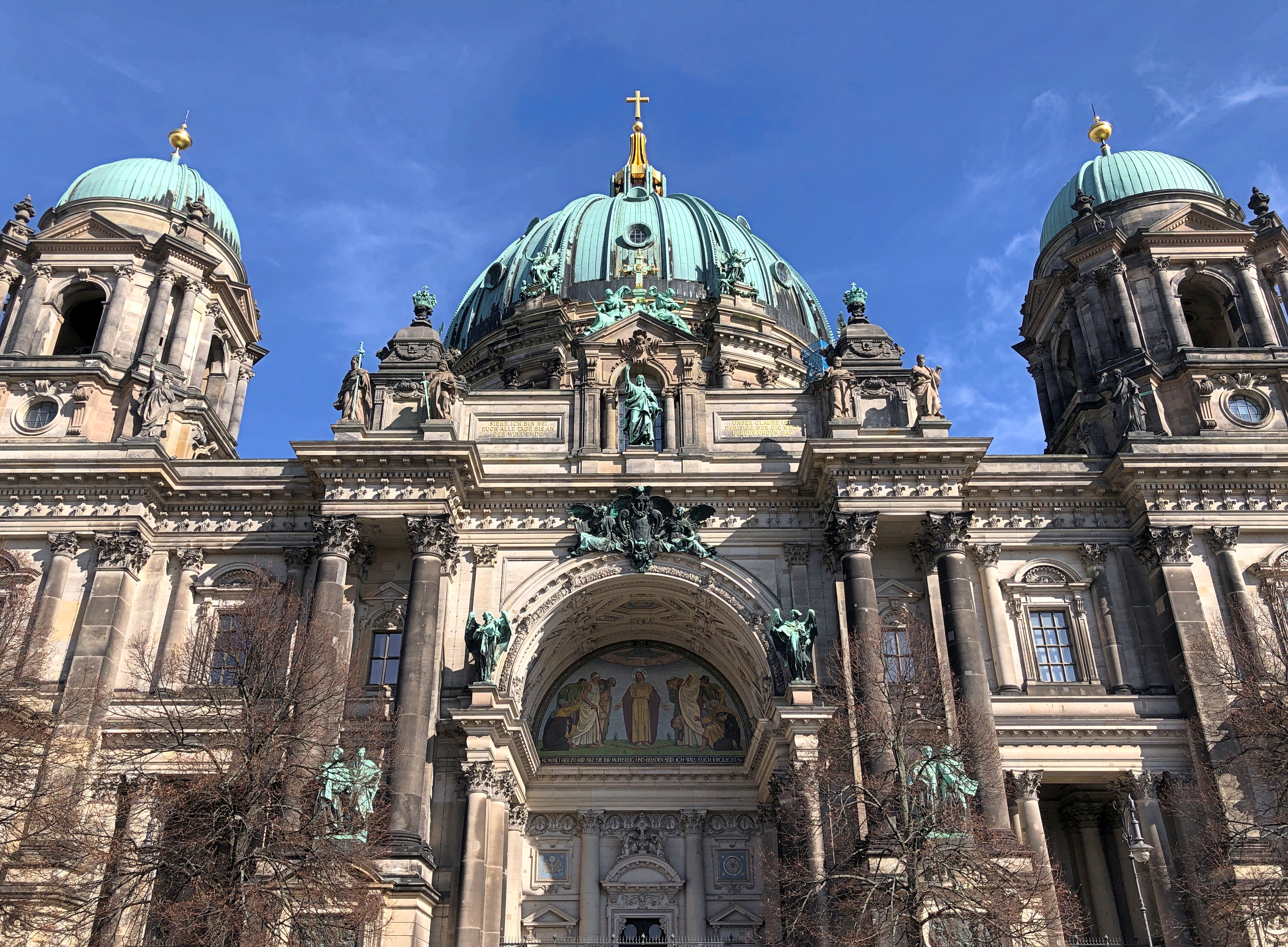
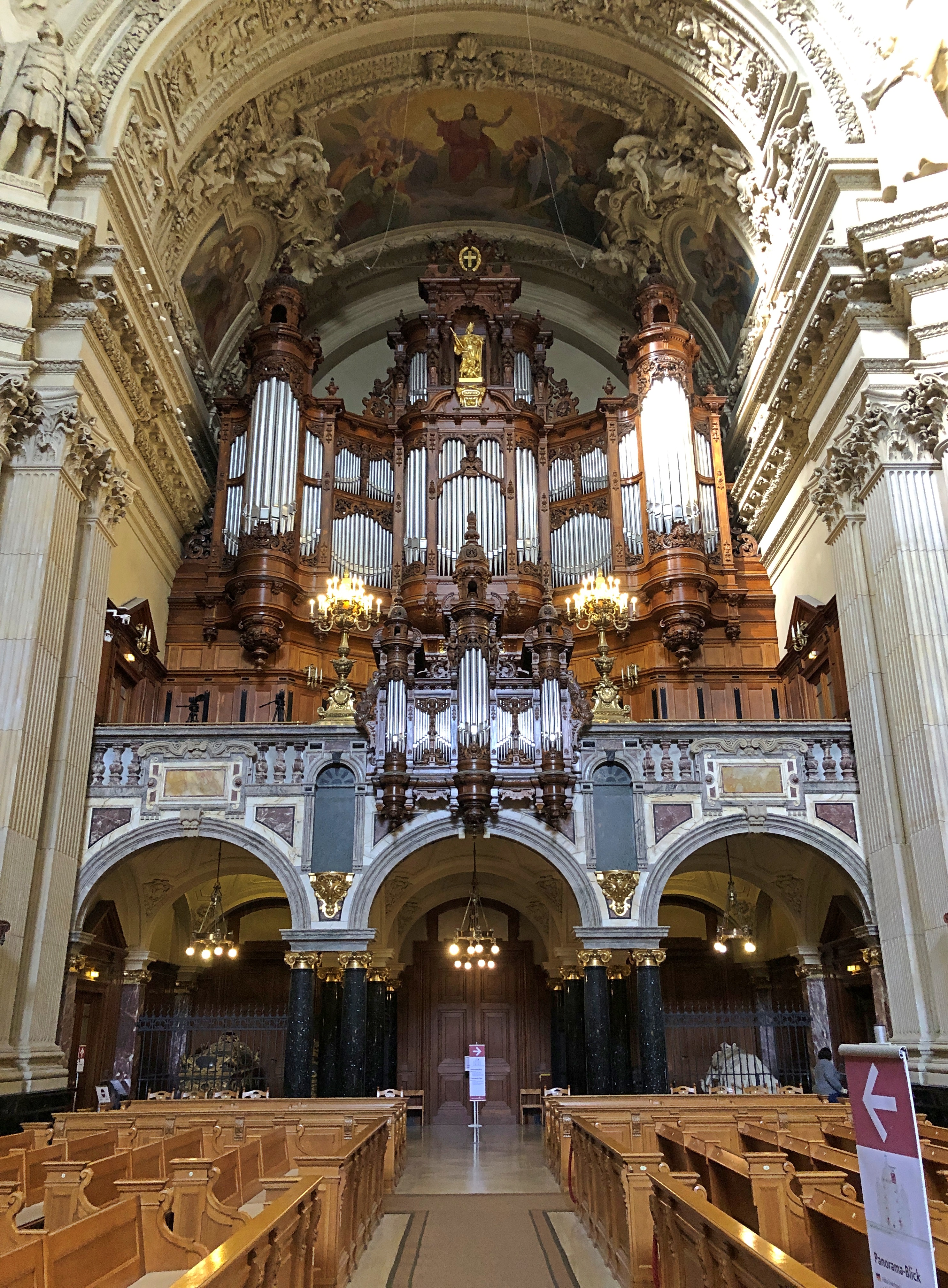
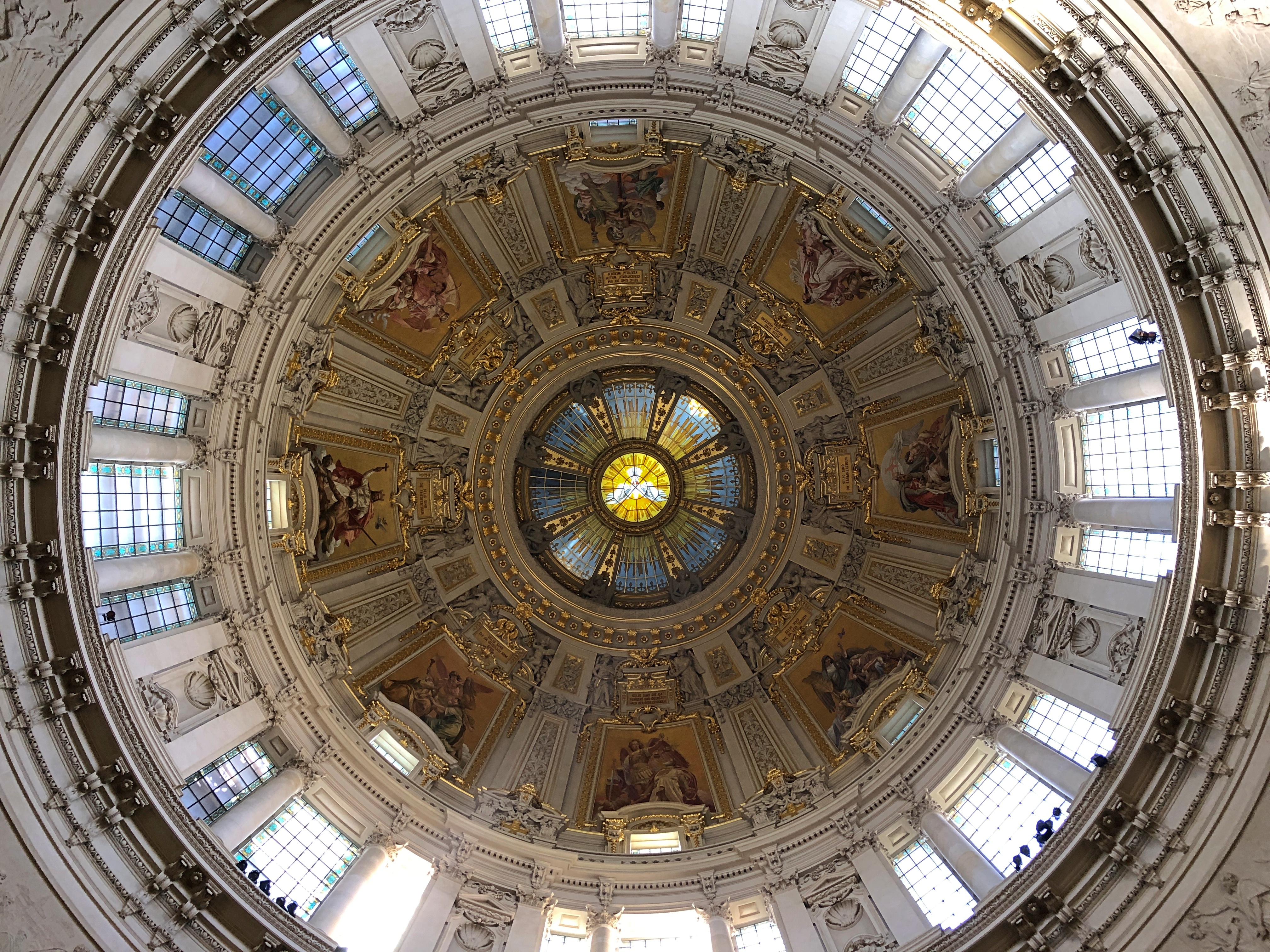
Germany and the Czech Republic were a pleasant surprise, mostly. During the first few days, temps were cool but not cold. The warmish Saturday Jay and I went to Museumsinsel, Berliners were out in numbers, sitting and lying around on the green space next to the Berliner Dom. Only toward the end of our visit did it get as cold as we’d expected, just above freezing, and there was light rain the day we returned to Berlin from Prague, and a little more the cold morning we left.

The day I got back to northern Illinois was warm and pleasant, until it wasn’t. That tug o’ war in action.

The very first thing I wanted to see in Berlin this time around was the Brandenburg Gate (Brandenburger Tor). I’d seen it before, of course, but let’s say the circumstances were a little different. On July 8, 1983, I wrote, a little confusingly:

The gallery [National Gallery] wasn’t that large, which was a virtue, and later we headed for the Reichstag to catch a bus. En route we passed as close to the Brandenburg Gate as you can without getting shot at.

I suppose I meant that we walked from the western National Gallery just south of the Tiergarten – not the National Gallery building in the east, since we didn’t visit East Berlin until the next day – to the Reichstag building, then a museum, to catch a bus westward, toward our hostel. Such a walk would take you within sight of the Brandenburg Gate, but not next to it, since the gate was in the east, behind the Wall.

These days, one can stroll right up to the Brandenburg Gate and pass under it. A lot of people do. Jay and I did on March 7.Brandenburg Gate 2025 Brandenburg Gate 2025 Brandenburg Gate 2025

Pass through going west, and pretty soon you’re within sight of the Reichstag building.Reichstag 2025

The ghost of the Berlin Wall runs through the platz behind the Reichstag.Site of Berlin Wall Site of Berlin Wall

The front of the Reichstag building.Reichstag building 2025

Unlike 40 years ago, when you could wander in and see a few rooms, going in these days involved timed tickets and other rigmarole, so we didn’t bother. Instead we repaired to a small establishment a short ways into the Tiergarten for refreshments. In my case, a soft drink I’d never heard of before, though I could have encountered it in its place of origin, Vienna. Not bad.

The Brandenburg Gate has been the site of a goodly share of history since Friedrich Wilhelm II had it built, such as Napoleon parading through (and swiping part of it), soldiers posted atop during the Spartacist uprising, and President Kennedy not really calling himself a jelly doughnut nearby.

Events continue. Late afternoon on the 9th, we saw one ourselves, a rally to the west of the gate, voicing German support for Ukraine.Brandenburg Gate 2025 Brandenburg Gate 2025

The gate was catching the setting sun about then.Brandenburg Gate 2025

Nice. Glad to make it to post-reunification Berlin.

The Burj Khalifa

If it weren’t too much trouble, I’d rummage through my paper archives – paper agglomeration – and dig up a roundtable interview I did in the early 2000s for the magazine I edited at the time. A number of local, meaning Chicago, architects gathered in a meeting room and I recorded their conversation, publishing an edited version. One of the participants was Adrian Smith.

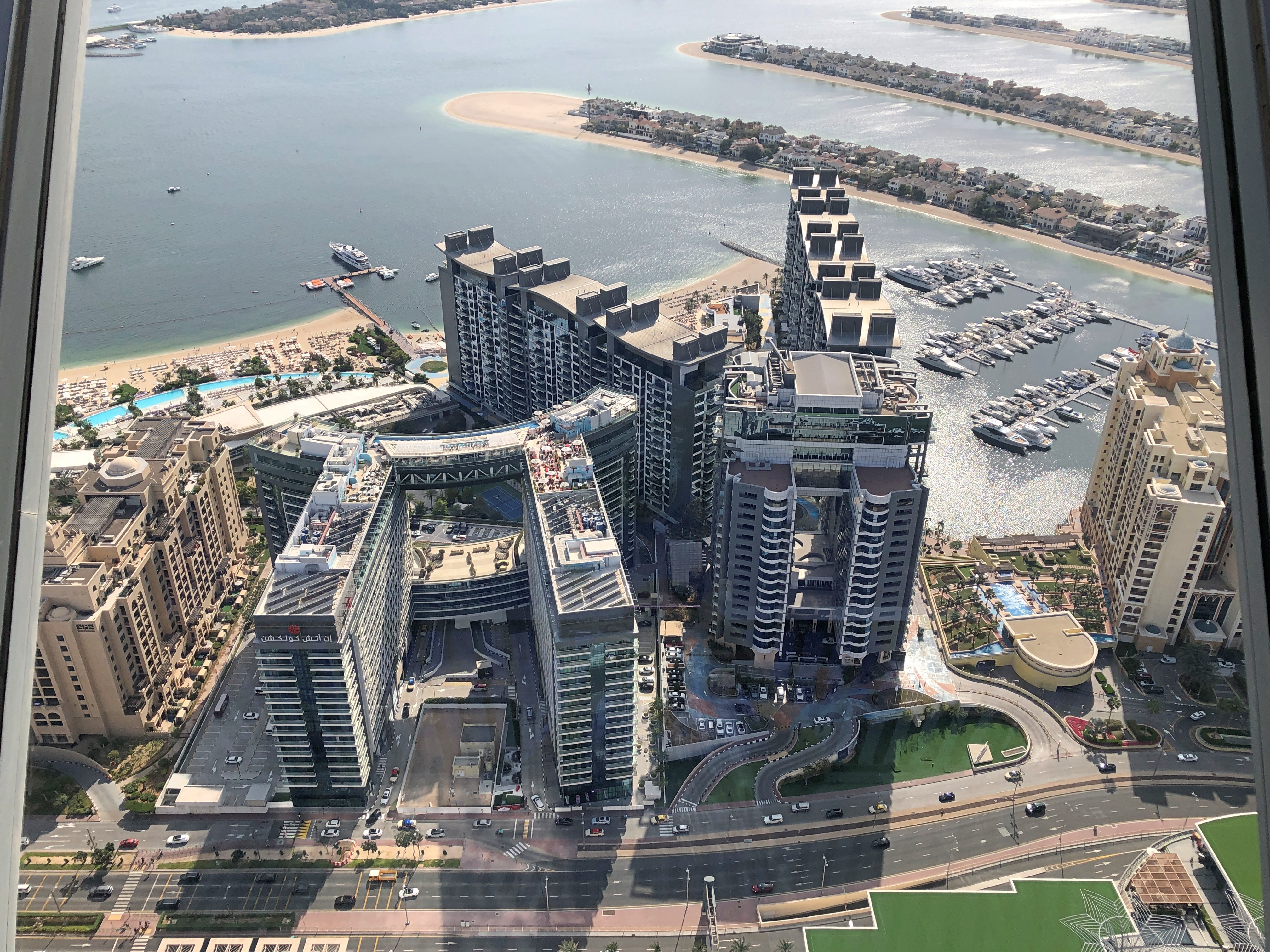
That came to mind in the shadow of the Buji Khalifa in Dubai on the last day of February.Burj Kalifa Burj Kalifa Burj Kalifa

As an architect with HOK, Smith designed the Burj Khalifa (burj = tower). One day I will dig up the interview, to see whether he mentioned it. I’m not sure of the timing, but HOK might have been in discussions for the commission at that very moment, since construction started in 2004. Regardless, quite a thing. A signal achievement for Smith, whatever you think of very tall buildings, and not just for its height, but for its elegant stacking effect.

Dubai is eager to point out that the Buji Khalifa is currently the tallest manmade structure in the world (2,722 feet), taller than any poser in East Asia or obscure TV tower in North Dakota or behind the former Iron Curtain. For casual visitors, two observation decks are advertised, and no doubt there are even more expensive, unadvertised options, including for the rarefied few, going to the very top.

The ordinary tourist deck is at a lower level (floors 124-125) than the one at a significant premium (floor 148), which offers welcome refreshments (coffee and dates), access to a lounge and – mostly importantly – no waiting around in line to get in.

The Burj Khalifa is popular. You will wait in line if you pick the ordinary deck — about 45 minutes in my case — and you’ll see a spot of overselling on the way.Burj Kalifa Burj Kalifa

It wasn’t the waiting itself that was irritating, but the fact I always sensed that the elevators were going to be around the next corner, only to be wrong a half-dozen times. But I’m being churlish. All that grouchiness vanished as soon as I got on the elevator — which was a straight shot up to the deck, no changing cars necessary — and especially as soon as I reached the view.

Looking down at the Dubai Mall, and the massive nearby fountain, which erupts periodically with a height of its own.Dubai

Behind the Dubai Mall (from my vantage).

Next to the Dubai Mall.Dubai

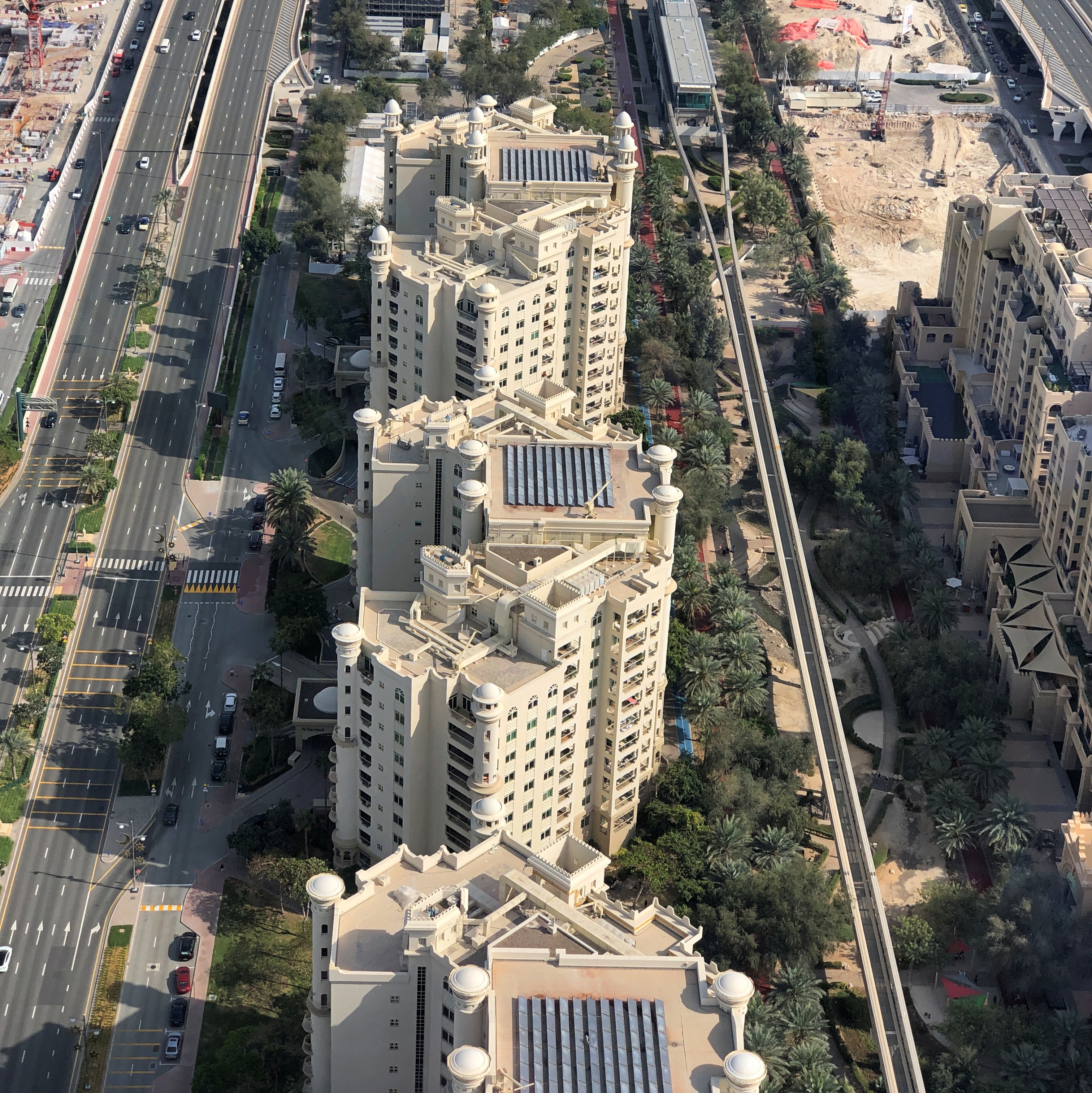
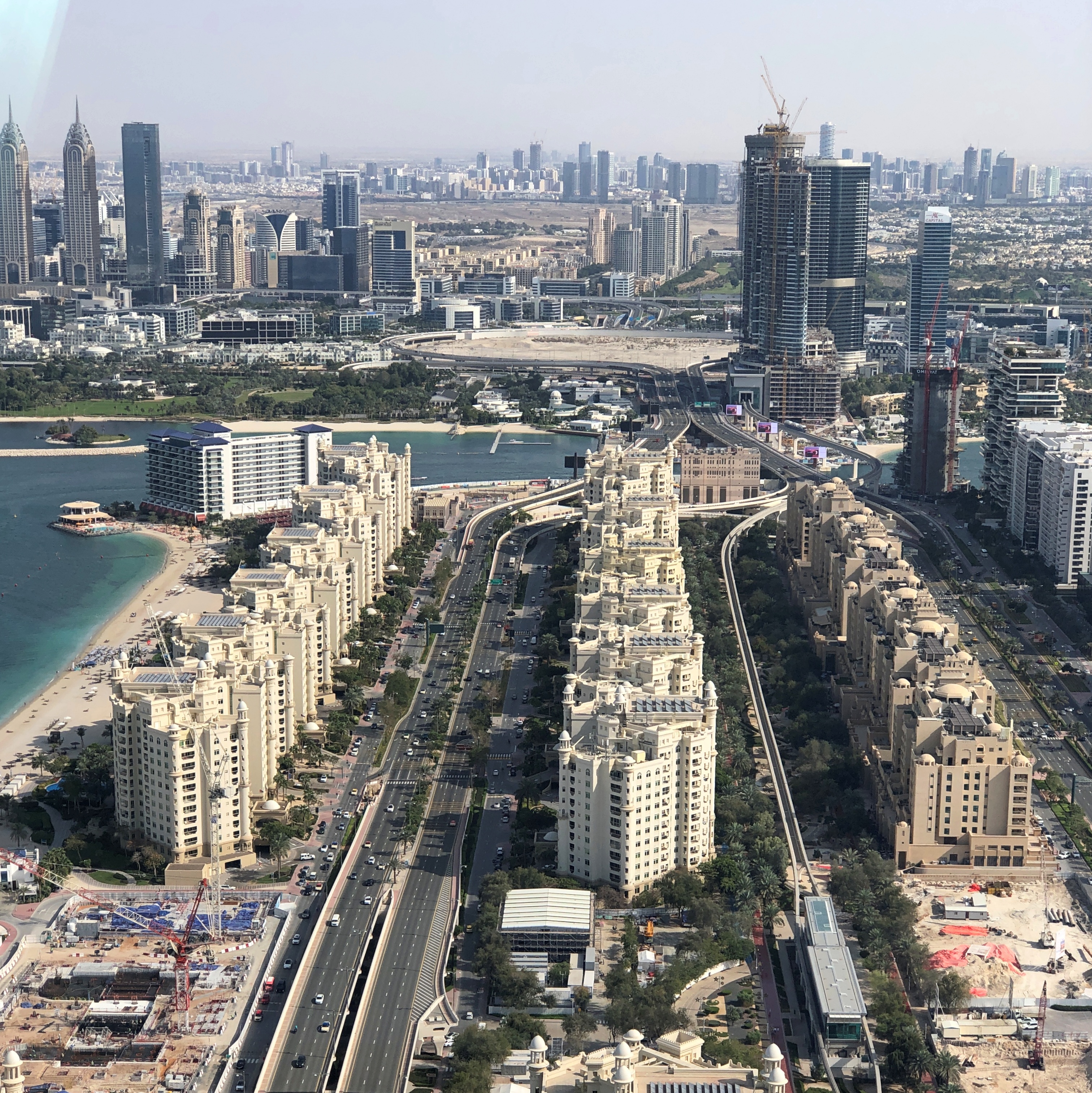
I started losing track of directions. Dubai spreads out in a number of them.Dubai Dubai Dubai

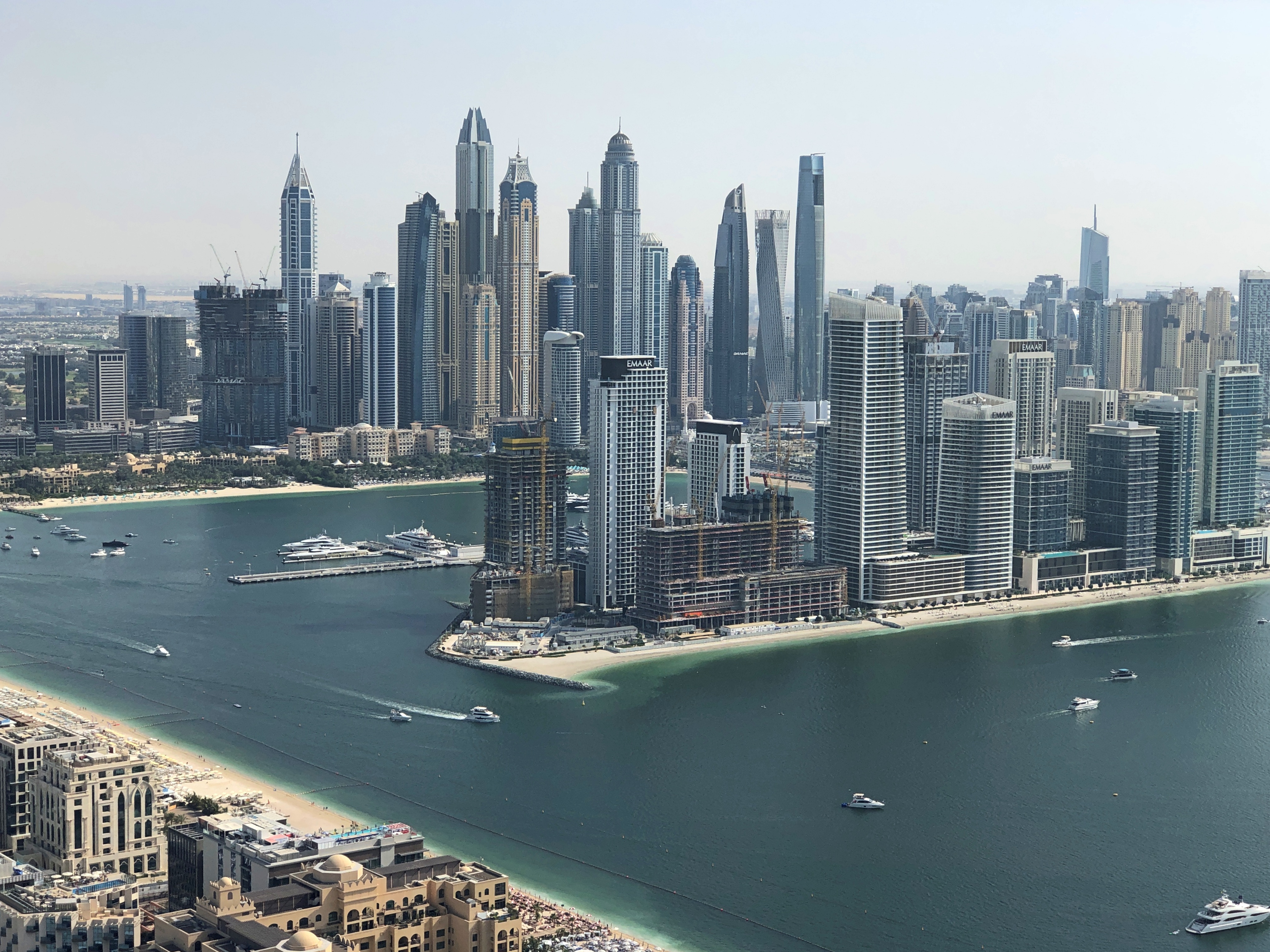
Emaar being a major real estate developer in the region, controlled by this fellow, autocrat of Dubai.Dubai Dubai

Burj Khalifa, opened in 2010, was one of its projects, along with the Dubai Mall. To judge by how often the name Emaar appears on large buildings in Dubai, I’d guess it and legions of guest workers built most of modern Dubai as well.