Alliance, Nebraska

The highway Nebraska 2 passes through the town of Alliance, as do the BNSF railroad tracks paralleling the highway. During my drive across the Sandhills, I saw train after train headed east from Alliance. Long trains, the seemingly endless sort, even though they’re going the opposite direction you are, so they’re passing by at your speed plus their speed: well over 100 mph probably.

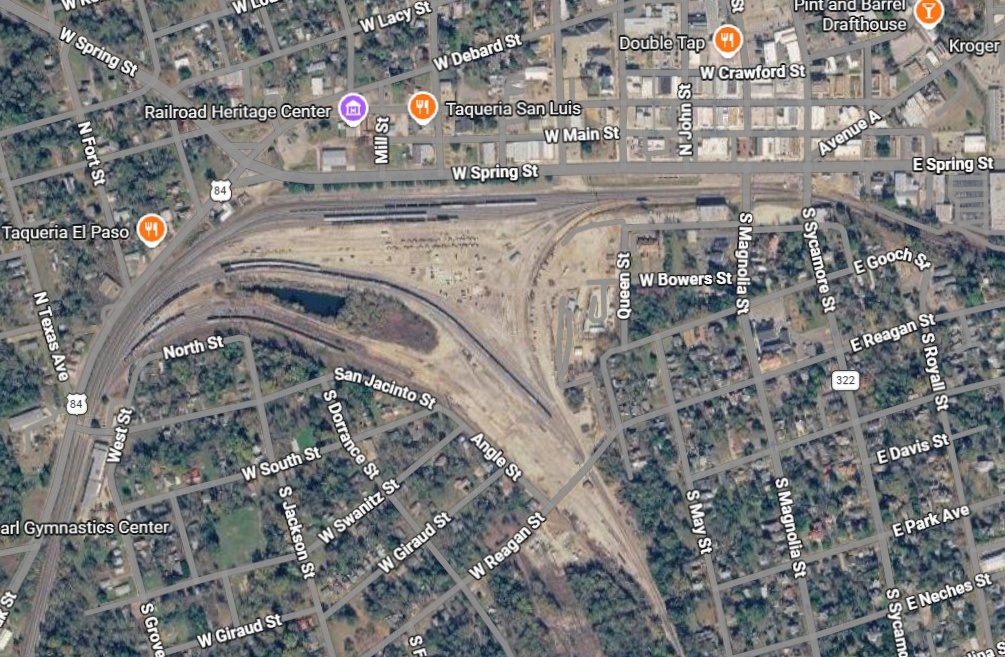
Every single one was a coal train. The industry isn’t what it used to be, but it isn’t dead, and much extraction takes place in the Powder River Basin, with rail from there converging in Alliance and then heading to the markets in the east. For a fairly small place, Alliance (pop. 8,150 or so) has a large rail yard.

Back up a little further, and the region reveals clear signs of circle-pivot irrigation.

In ag terms, most production in Box Butte County – a favorite of mine among county names – is actually livestock, raised on non-irrigated grassland, which you can also see driving in. As for the irrigated places, that’s corn and wheat, with a smattering of alfalfa, beans, sunflowers and sugar beets. Somewhere up north is a rock formation called Box Butte, a name that I understand the railroads were using in promoting settlement this way, before it was ever official.

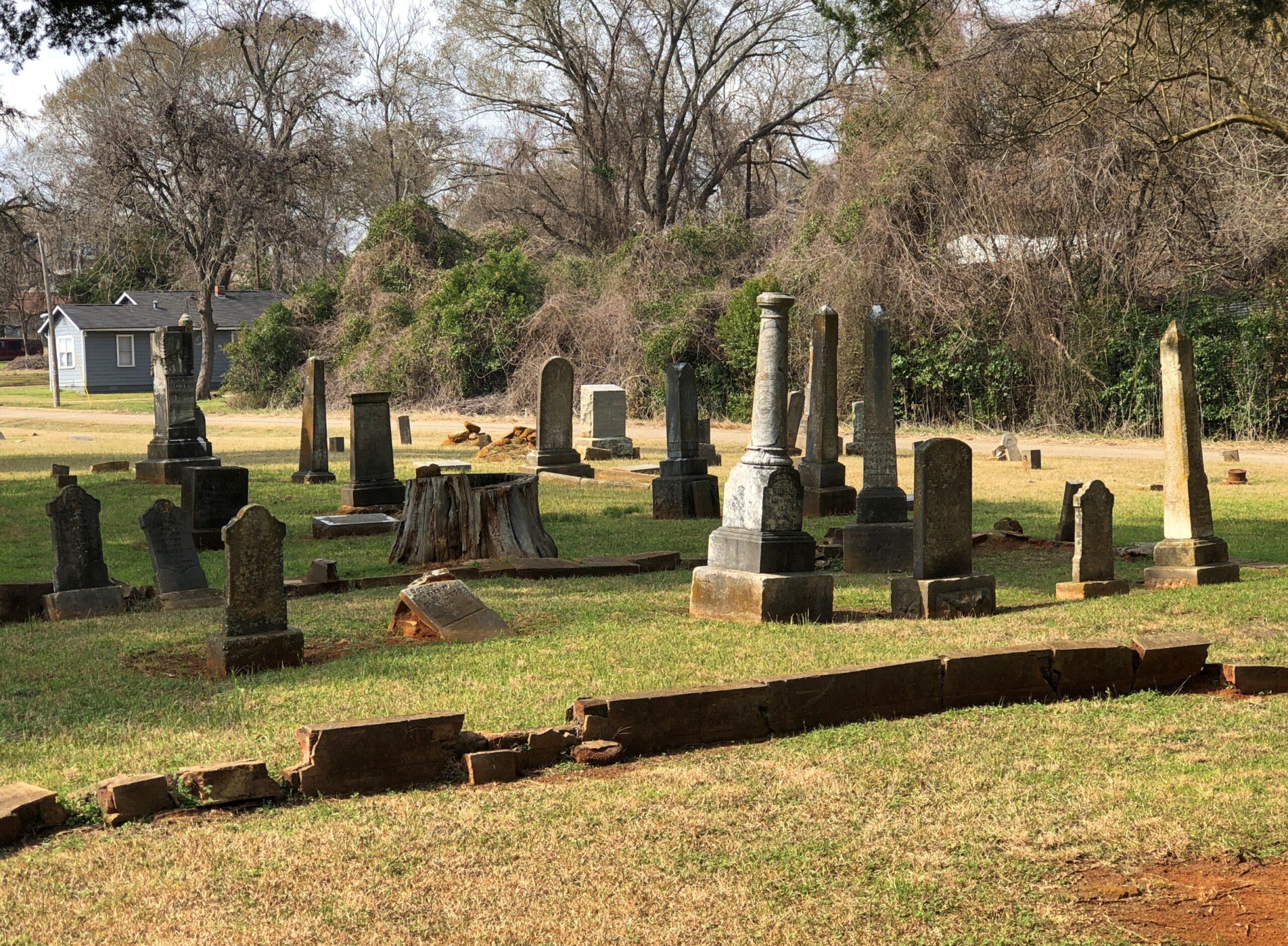
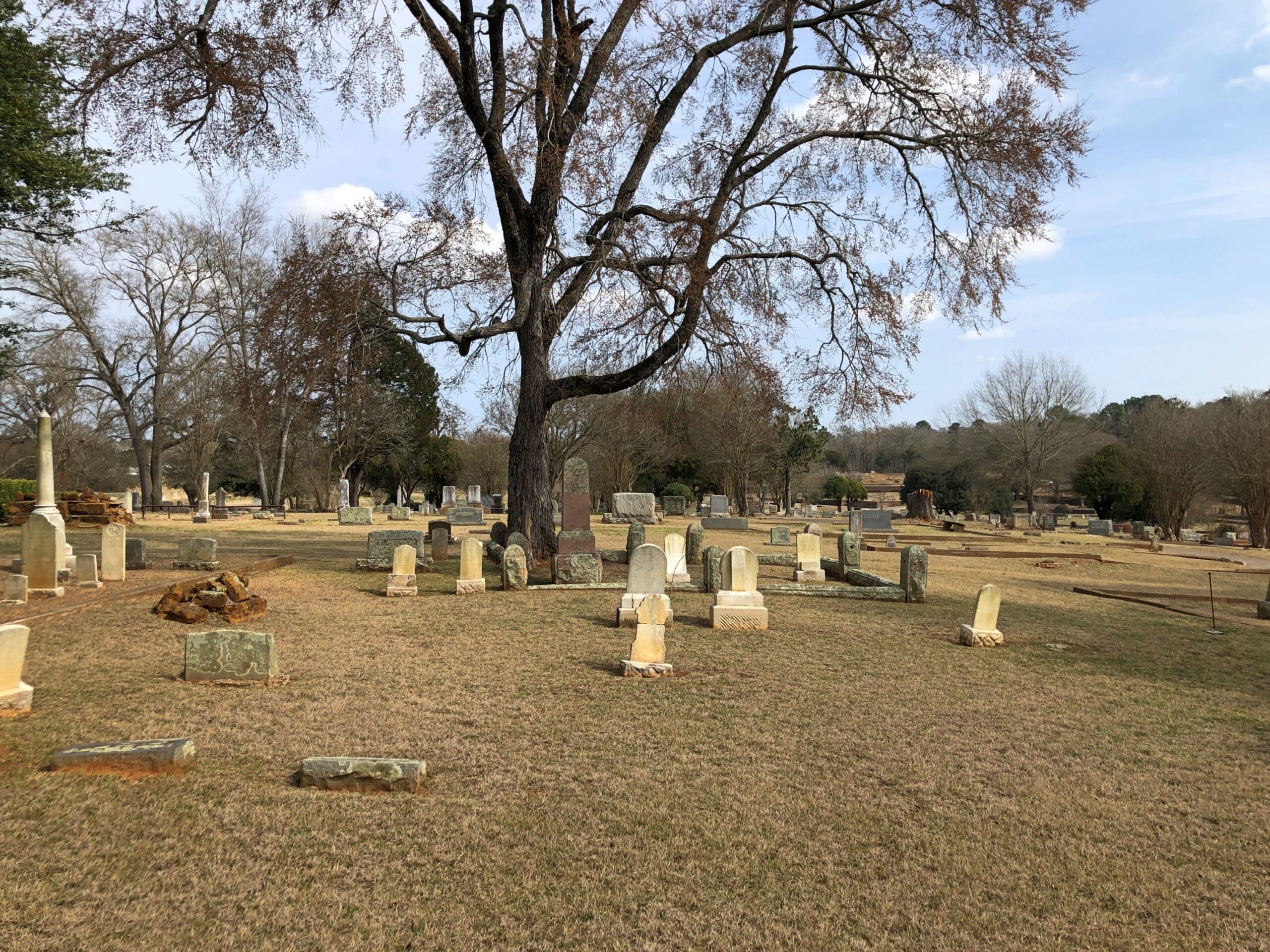
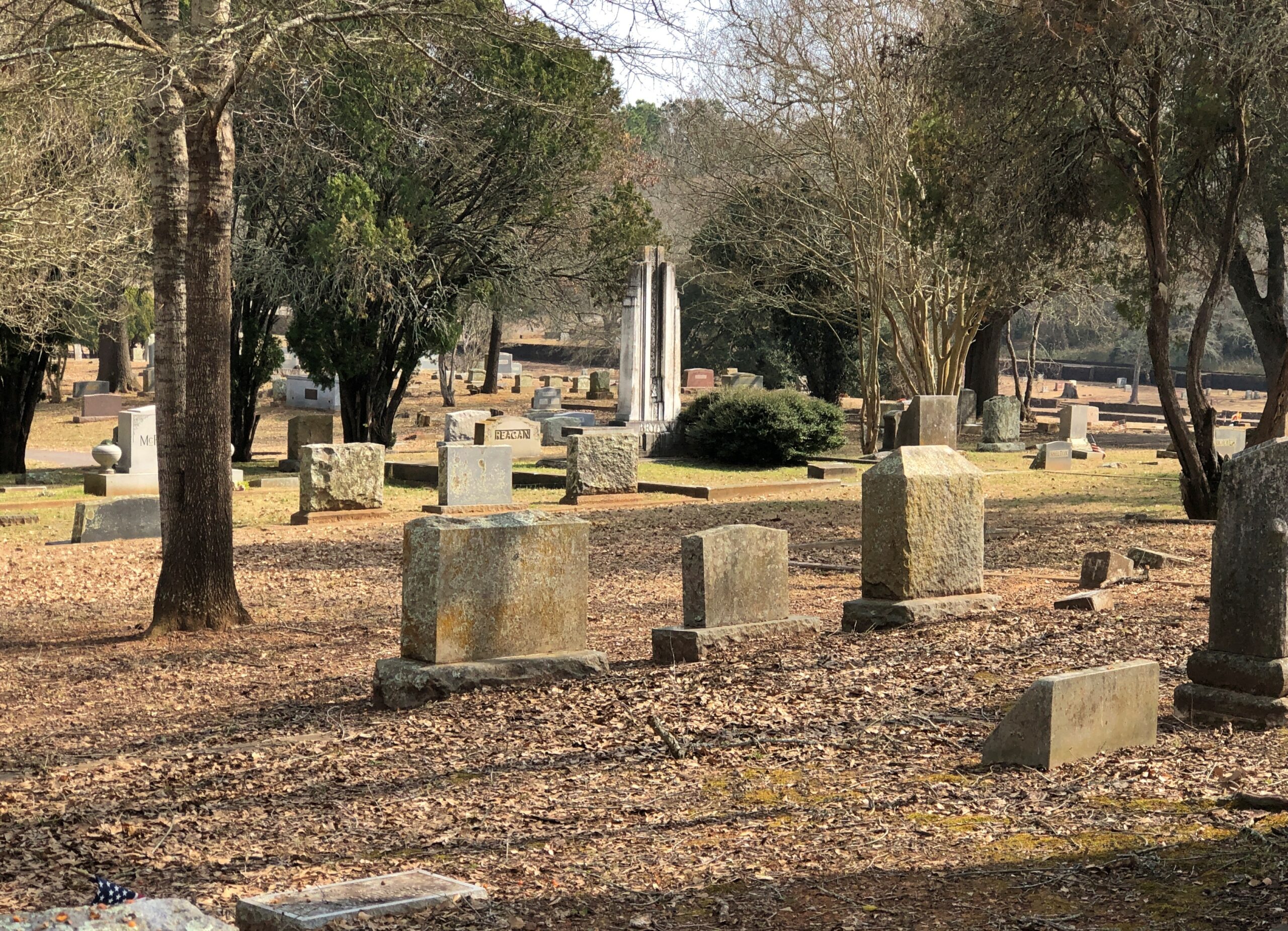
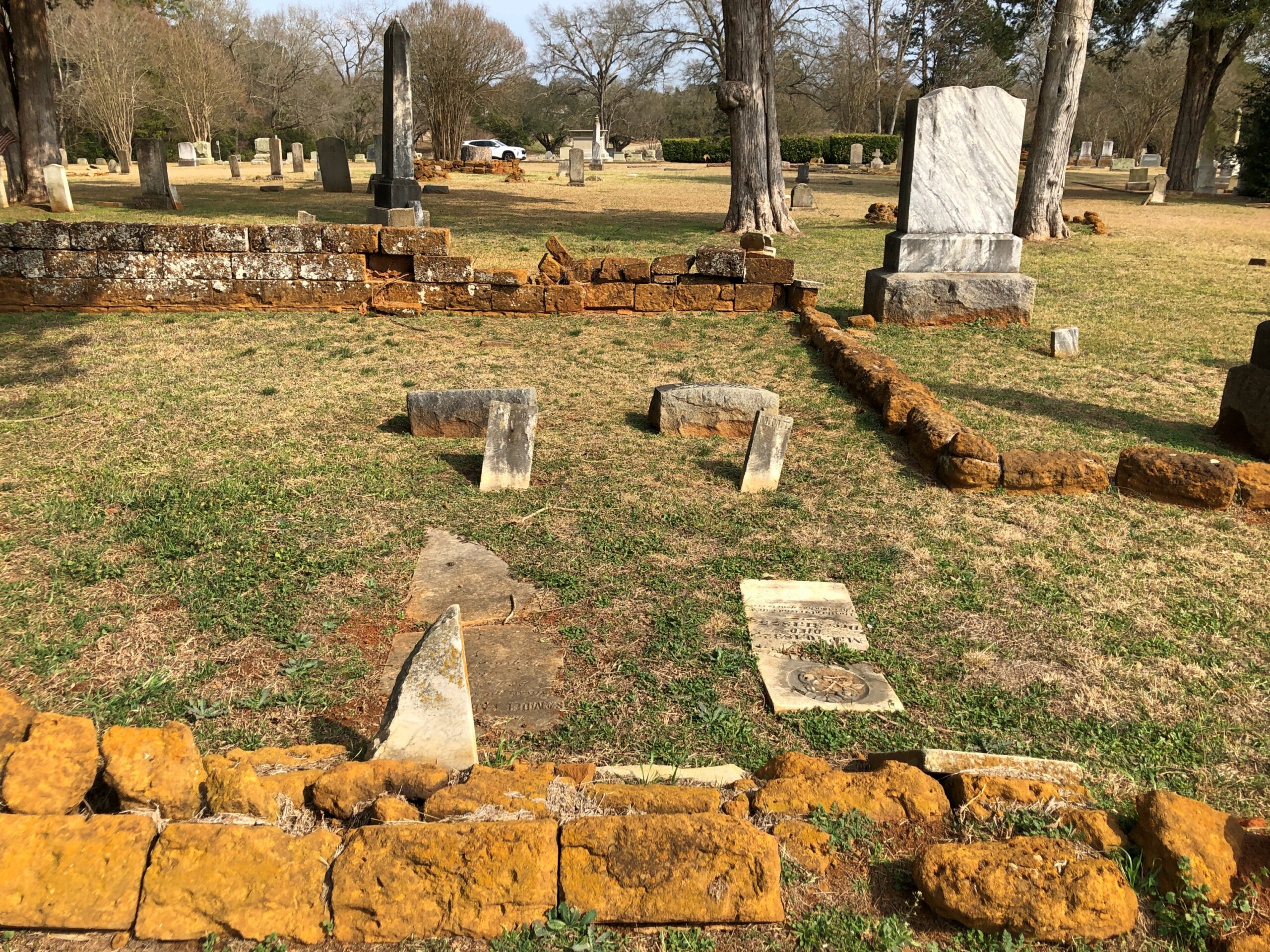
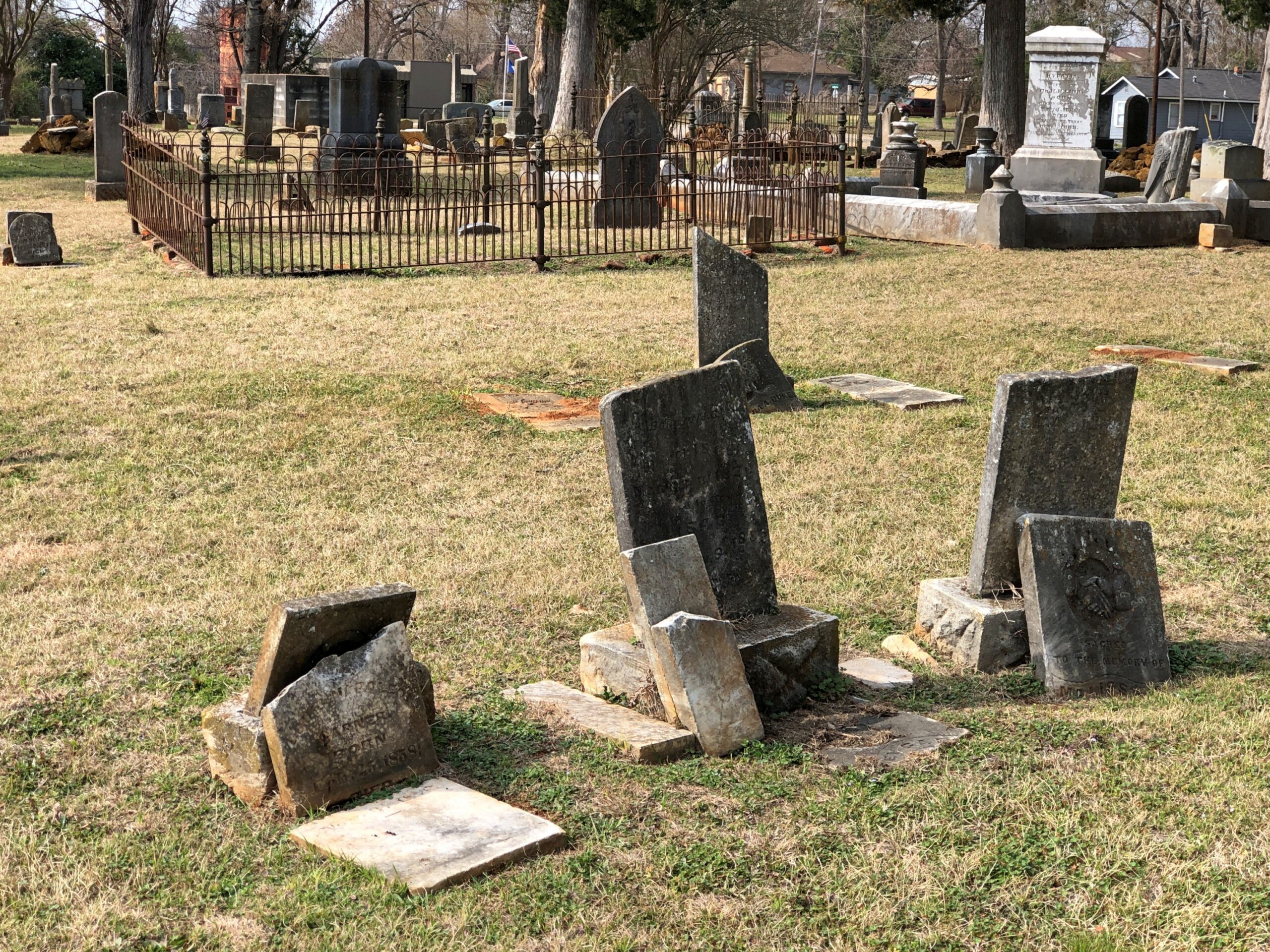
I didn’t come to town to learn all that, but I did later. Mainly I came to see Carhenge. The weather that day, September 7, was clear and very warm, which inspired some further looking around. First stop, Alliance Cemetery.

Alliance Cemetery
Alliance Cemetery
Franks & Beans

“Bury me in old Box Butte County.” There’s a western swing title in that.

Alliance Cemetery

Something I’d never seen on a gravestone before: Scooby-Doo.

Go figure. Maybe Richard “Red” Hardy is the one who wanted it on the stone, since he would have been almost 10 when that cartoon premiered (September 13, 1969), and that’s about the right age to get hooked on such a thing. Then again, I was eight — saw the first episode myself — and yet somehow I’ve remained immune to its charms.

As for the Huskers, I saw them on some other stones in this cemetery. Hardly the only example of fandom from the grave.

I’ve seen cowboy churches and I’ve seen cowboy graves.

The cemetery is east of downtown Alliance, but not that far away. The Box Butte County Courthouse is on Box Butte Ave.

Box Butte County Courthouse

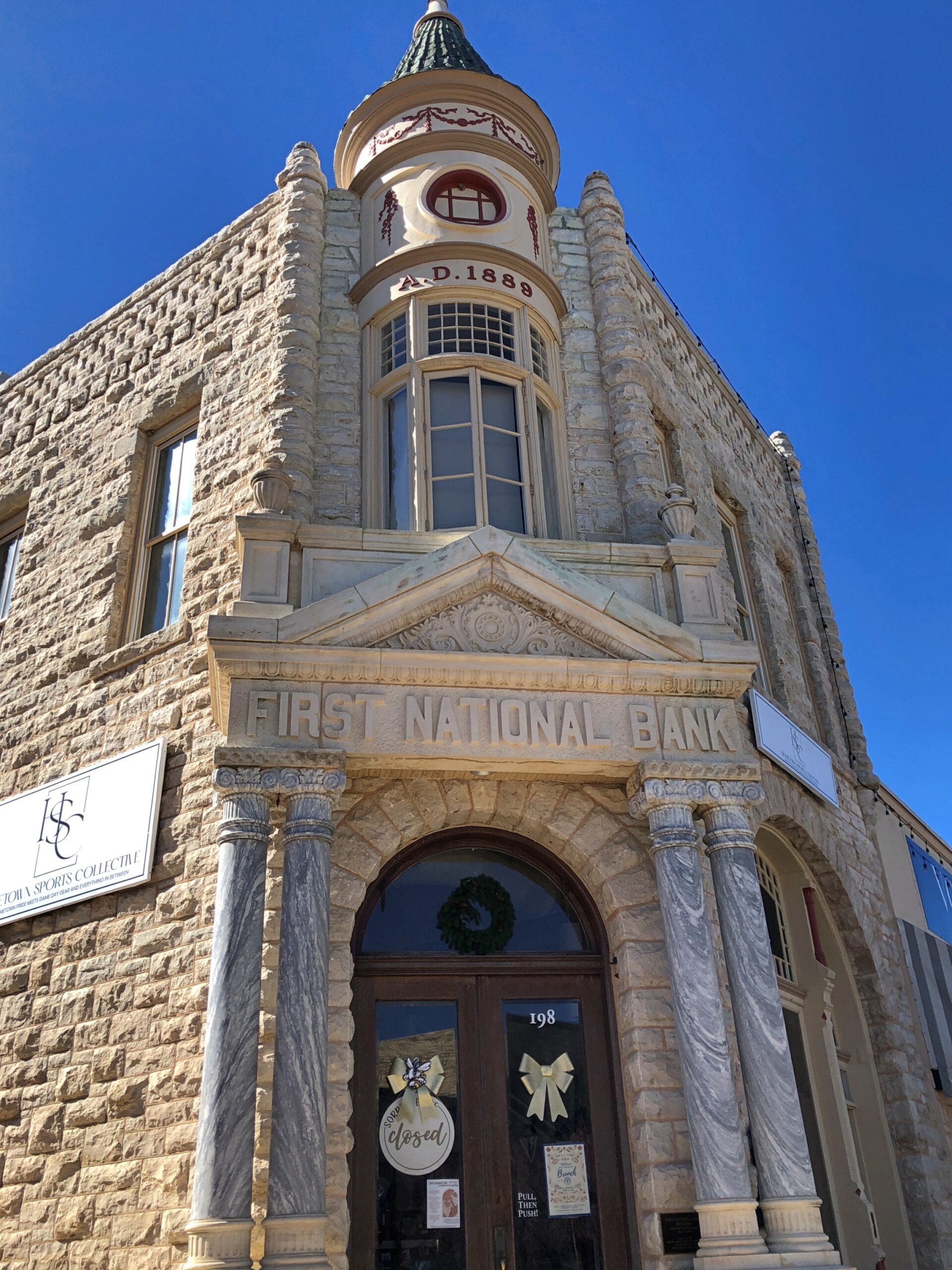
Along with a number of other vintage buildings. Newberry’s Hardware Co., once upon a time, which seems to be 1888 and then maybe an enlargement in 1914? Looks like it needs an occupant.

The 1927 Fraternal Order of Eagles Building.

FOE Building, Alliance NE

Slacker that I am, I didn’t take many detail shots, but one of this particular building is available (public domain) that shows how seriously the local FOE took its eagles about 100 years ago.

Hardware Hank is a hardware cooperative. New to me, but that only means I need to get out more.

More murals.

Alliance NE

Rhoads’ was a local department store. Gone but not forgotten, at least if you read the mural, which looks refurbished recently. The tag at the bottom says it was a gift of the Alliance High School Class of 1962.

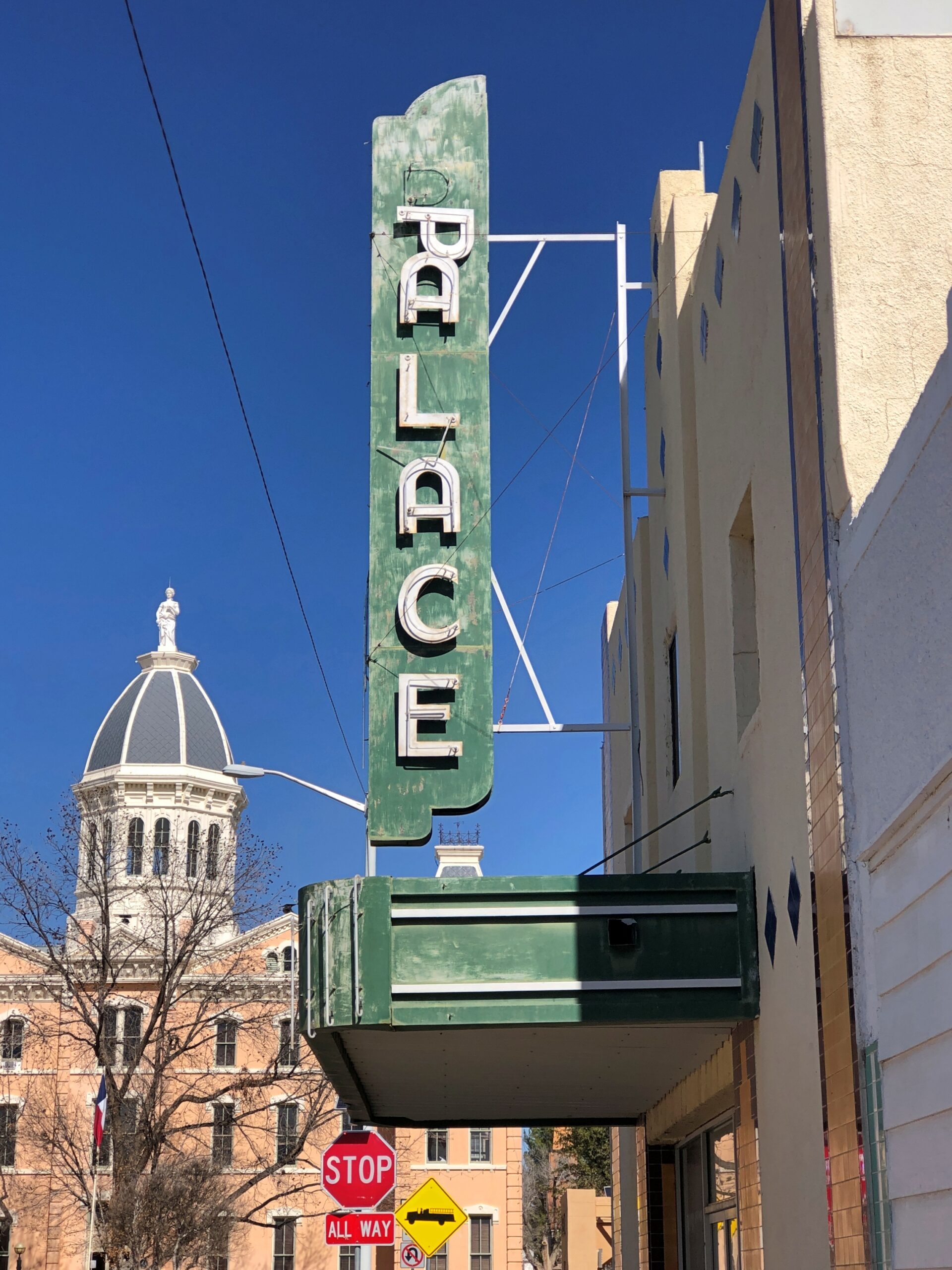
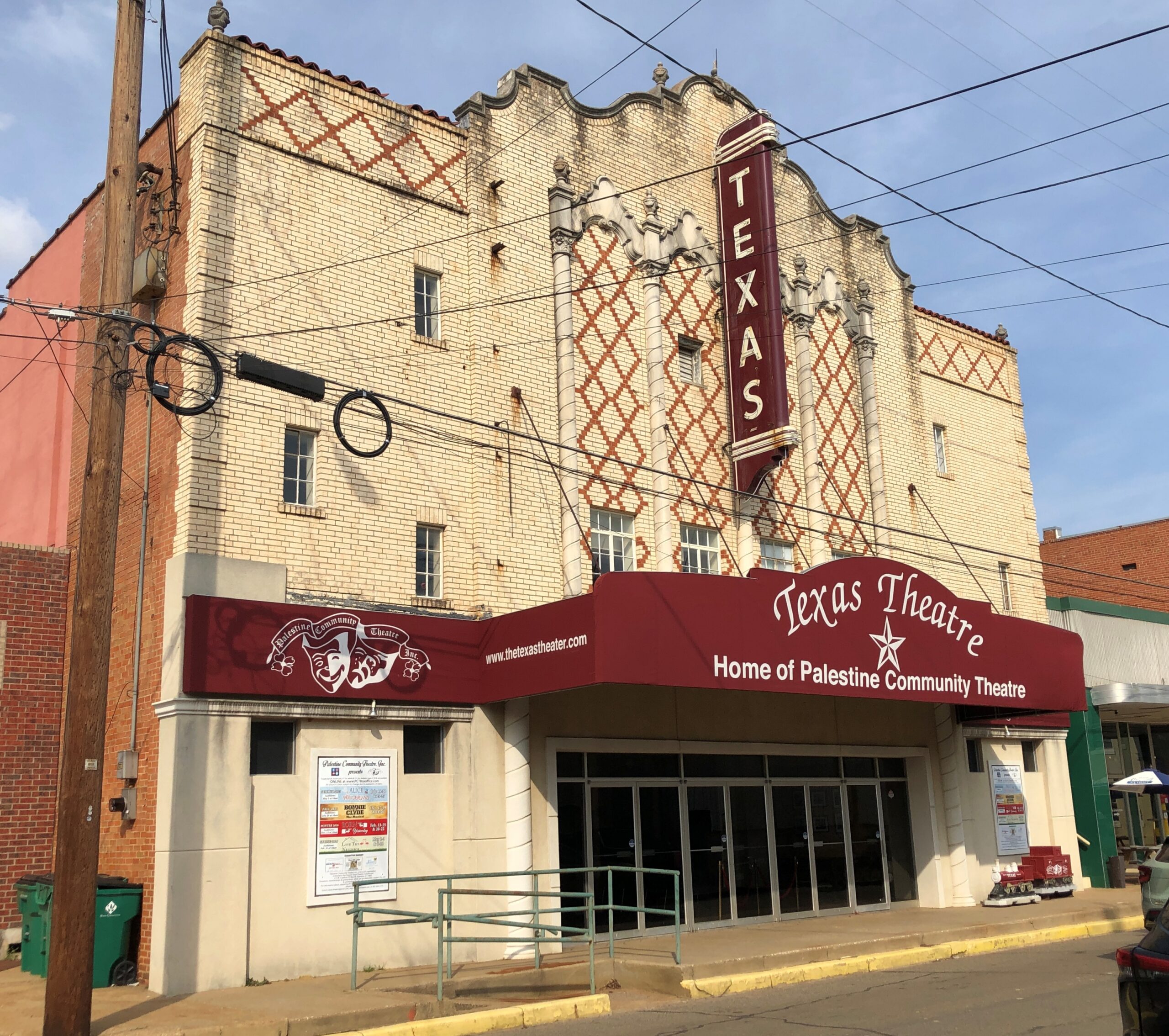
An art deco theater. Nice.

Alliance NE
Alliance NE

A really cheap way to advertise.

You never know when (and where) Dali will show up. Enigmatic fellow.

And who is poor Jerry?

Antique shop within? A simple desultory Google search doesn’t reveal much. Street View puts the sign’s appearance between 2007 and 2012 (Google didn’t come that much to Alliance.) Even the Library of Congress wants to know.
I found lunch in Alliance that day at Golden Hour Barbecue, which promised (and provided) Texas-style ‘cue. I enjoyed it thoroughly. Same league as Salt Lick, though a little expensive, considering how close the cattle are. Then again, everything seems expensive these days, and it was such a large lunch that I barely needed to eat that evening in my room in Scottsbluff, so that mitigated the upfront cost.

Before heading to the big rocks near Scottsbluff on the morning of the 8th, I took a look around that town as well.

Scottsbluff NE

Can’t have too many art deco theaters. When I’ve done image searches for Scottsbluff, the Midwest theater comes up often as not.

A car to match. At least that morning.
Scottsbluff NE

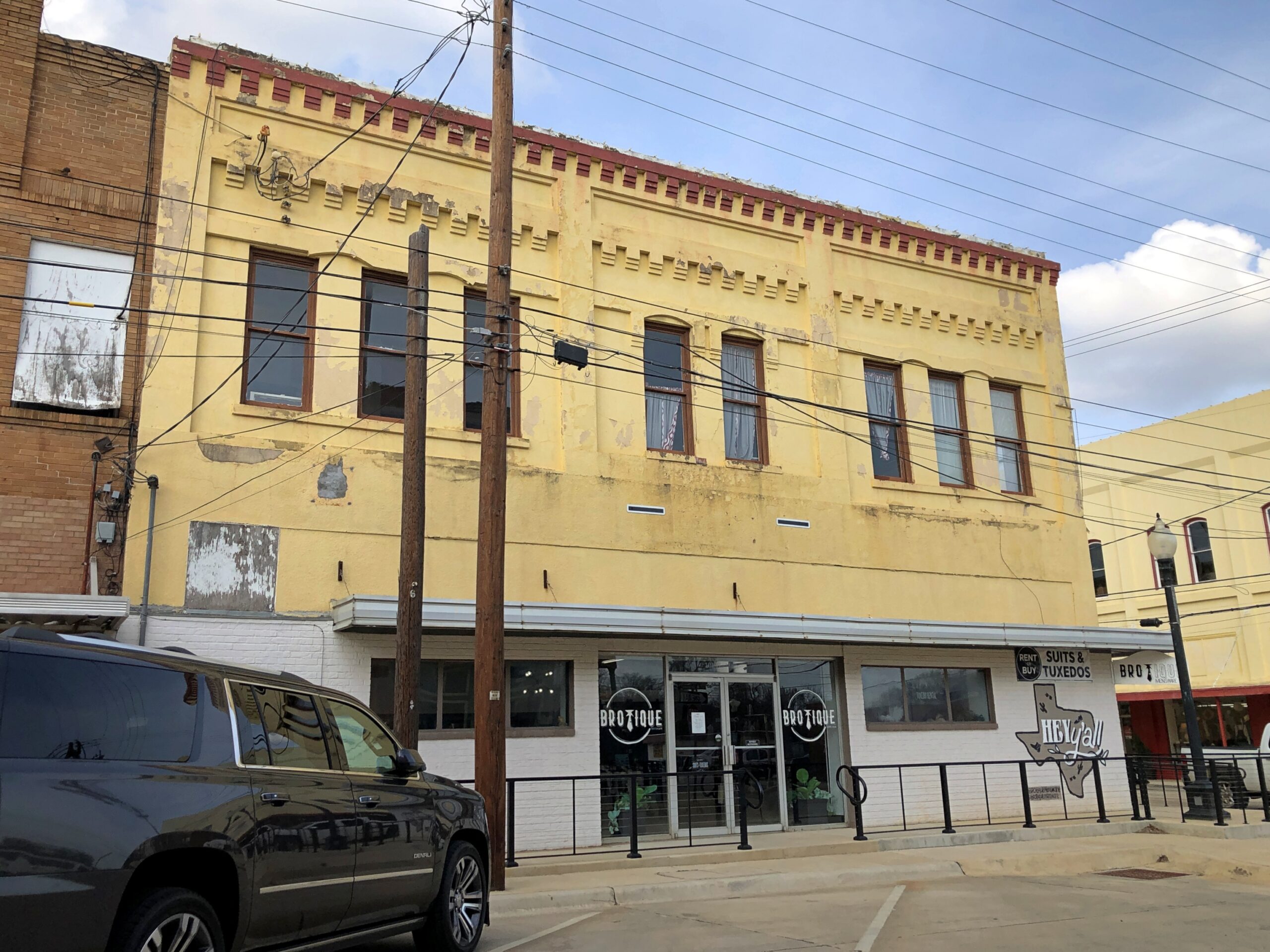
Another former small department store, now private offices.

Just outside Scottsbluff is a single grave.

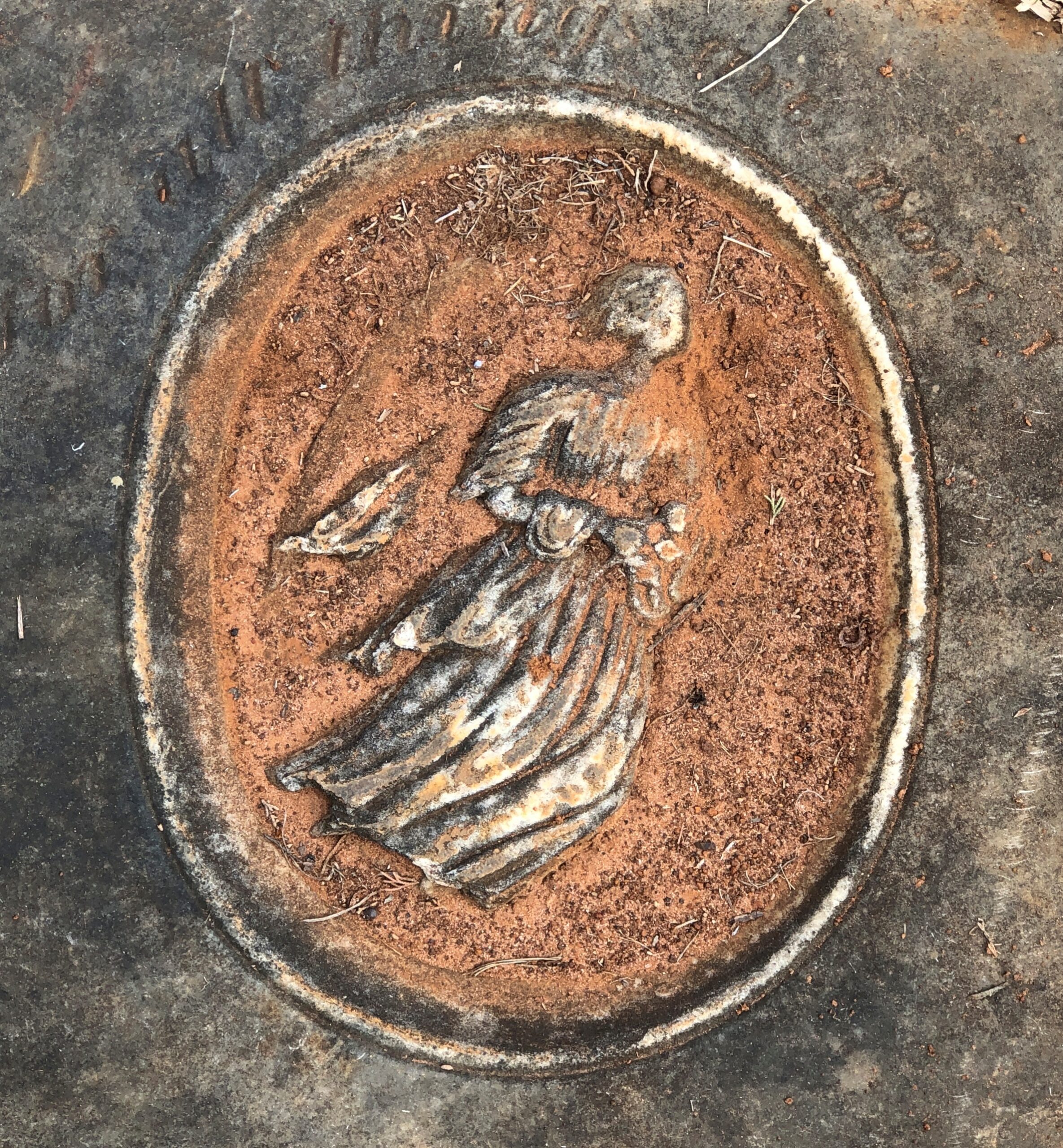
The grave of Rebecca Burdick Winters (d. 1852) She died a faithful Latter-Day Saint, her stone says, on her way to Utah. Officially, it is Rebecca Winters Memorial Park.

“Seven miles northeast of Scotts Bluff National Monument lies a solitary grave,” says Find a Grave. “This site marks the final resting place of Rebecca Winters, who died of cholera on August 15, 1852. Rebecca was only one of thousands of people who succumbed to disease as they made their way west on the overland trails, but her grave is one of only a few that remains identifiable today.”

Seward, Nebraska

There I was, in Seward, Nebraska, parked on a side street lined with single-family houses. Interrupting the pattern of houses was a large open space, with buildings behind it — a large house, and maybe a workshop. In the open space, which was a green lawn, stood a sigma-shaped structure, and behind that, a white pyramid.

Seward Nebraska

Both taller than a grown man. A plaque was fixed to the sigma. From the point of view of the time capsule, the sigma shape could be a 3. So – third millennium?

Seward Nebraska

World’s Largest Time Capsule.

I wasn’t quite sure what to make of that claim. The world’s largest time capsule would surely be the one entombed in 1939 at the New York World’s Fair for an opening in the year 6939, an exercise in official optimism if I’ve ever heard of one. Wouldn’t it? No. It grew in my memory, but was actually quite small. The Crypt of Civilization instead might be a candidate for largest.

Anyway, there’s no doubt Seward’s is a whopper among time capsules.

The capsule, buried by Seward resident Harold Davisson, had more modest ambitions, time-wise, than the NY time capsule: only 50 years. Looking at the plaque, I wondered if the opening, promised for this year, was going to happen.

Later I learned that it had already happened, earlier in the summer. NBC reported that the opening revealed “letters, pet rocks, artwork, a groovy teal suit and even a yellow Chevy Vega.” A video of the opening of the time capsule, and the removal of its contents, has been posted to Facebook. The opening including removal of the car, by means of an enormous wench. News reports suggested that Vega was going to be reconditioned and run during the town’s bang-up Fourth of July festivities. Hope so.
The pyramid lid had been put back on. If you look closely, you can see the line marking the bottom of the lid. Put it back on expertly, since you have to look closely to see there was a separation. So I missed the grand opening by a few weeks. As they say in those parts of Nebraska, c’est la vie. Hard to attend an event you’ve never heard of, though not impossible, as I found out years ago when I happened across Northalstead Market Days one summer day. That one was an eye-opener.

The Big Thing
The Big Thing, Thomas Nast, 1867

Seward honors the Seward of Alaska purchase fame, though if pressed I’d bet most Americans have sort of maybe heard of him, but don’t remember anything about him, even though he (likely) still gets passing mentions in school.

Seward, seat of Seward County, there in the populous (for Nebraska) southeast corner of the state, is close to Lincoln – fitting, isn’t it? – and I-70.

Seward County built itself a handsome courthouse, once upon a time. Classical Revival when the getting was good for that style, in the first decade of the 20th century. It was a popular style around this part of Nebraska at the time, with the National Register of Historic Places Registration Form telling us there are 18 buildings like it still extant in Nebraska. Architect George Berlinghof (d. 1944) designed a lot of them, including this one.

Seward
Seward
Seward

On the grounds, Seward in bronze. I know there are other statues of Sec. Seward, but not that many.

Seward bronze

Sporting a cape. How many bronze figures honored with public statues are in capes? More than I know, probably. The Maid of Orleans in New Orleans comes to mind; she’s wearing a cape, over that armor.

A plaque identifies the artists, brother and sister David and Judith Rubin, and the vintage, recent. Alaska commissioned them to do one of Seward for the 150th anniversary (2017) of the sale of Alaska to the United States. Interested parties in Seward, Nebraska, wanted one for the their town, and so commissioned another one.

The square is right handsome, too.

Seward

Cattle National Bank. Reminds me of Gary Larson, somehow. I’m glad to report that it’s one of four locations for Cattle National Bank & Trust, a community bank owned by the Cattle family. Has been since 1881. If I lived in Seward, I’d bank there just for the name.

One more thing about Seward. This isn’t the one further north.
Seward was a flyby on September 5 on the way to Grand Island, Nebraska, that evening, which would be the jumping off point for my drive through the Sandhills. The highlight of my short stay in Grand Island wasn’t the false alarm that got us all out of our rooms at the motel around 10, thrilling as that was, but the next morning, on my way out of town.
John Cattle and his sons, Robert, John and Walter, were farmers in England and came to Nebraska in the 1870’s, lured by the chance to invest in inexpensive land. The British Steamship Company and the Burlington Railroad promoted land on the Great Plains, and the oldest Cattle son, Robert, took advantage of the company’s offer of a free trip to come to Nebraska and see the prospects for himself. Robert thought the land and opportunities looked good and the rest of the family followed him to Seward County where they bought railroad land north and west of Seward.

I’ll give credit where it’s due: I found Fred’s Flying Circus on Google Maps. Attaboy, algorithm.

Fred's Flying Circus

The work of body shop proprietor Fred Schritt (d. 2016), on his place of business, with the shop now run by his daughter and son-in-law. An informal sort of memorial to the old man, I hope they believe. One of the more cheerful memorials you’ll see.

Colorado Flatland Drives

Go east, old man.

Eastern Colorado

That was the goal about two months ago now, after I left Colorado Springs for a solo drive back to Illinois. The fastest way would be to link with I-70 while still in Colorado. I wasn’t inclined to do that, though I did take that Interstate route through much of Kansas. Instead, I wanted to start remote and stay that way for the length of eastern Colorado.

So east on Colorado 94 it was, which passes through such hamlets as Yoder, Rush and Punkin Center. Mostly, though, there are few signs of people.

Eastern Colorado

I noticed the Front Range growing smaller in my rearview mirror. I wondered at what point they would vanish from sight, and decided to keep track of their shrink, and note the last time I could see them. Naturally, I forgot about that resolve, and next thing I knew, the road backward and forward stretched to both horizons.

This is looking back west, a mountain barely visible, and is also an image illustrating that the eastern Colorado terrain isn’t completely flat.

Eastern Colorado

Eastbound Colorado 94 ends near Aroya, where it meets US 40/287. I took that road southeast to Kit Carson (pop. 255).

Kit Carson, Colorado

The railroad still comes through Kit Carson. It’s safe to say that without the railroad, the town might be no larger than Punkin Center. The Kit Carson Railroad Depot is now a museum.

Kit Carson, Colorado

Closed. Till Decoration Day. Really?

Kit Carson, Colorado

In any case, it was closed on September 22.

Across the street, metal works. The pump jack is one thing, but the other is a — tower?

Kit Carson, Colorado

The Kit Carson town web site has a few things to say about itself:

The town of Kit Carson had two locations. The original site was located near the site where Kit Carson traded with the Arapahoe and Cheyenne Indians. The present site was determined by the arrival of the railroad. Destroyed by fire three times, twice by the torches of Indians and once by carousing cowboys, the determined citizens of the town showed their desire to survive by rebuilding.

I can’t help but think those carousing cowboys were actually a gang of rustlers, cutthroats, murderers, bounty hunters, desperados, mugs, pugs, thugs, nitwits, halfwits, dimwits, vipers, snipers, con men, Indian agents, Mexican bandits, muggers, buggerers, bushwhackers, hornswogglers, horse thieves, bull dykes, train robbers, bank robbers, ass-kickers, shit-kickers and Methodists.

Also of note, according to the town: The railroad brought in foreign dignitaries, such as the Grand Duke Alexis [Alexei Alexandrovich] of Russia. The Grand Duke hunted in Kit Carson and was accompanied by his military escort, General George Armstrong Custer on January 20, 1872. [Custer was a lieutenant colonel at the time, but never mind.]

Grand Duke Alexis was on his 1871-72 tour of America. Sounds like he had a fine old time. Could have been the subject of an episode of Death Valley Days, but I don’t think it was. Dom Pedro, emperor of Brazil, made an appearance, as did the Emperor Norton, but I digress.

From Kit Carson, I headed south to Eads, still in Colorado, and then east on Colorado 96. I had the idea that I wanted to see the Sand Creek Massacre National Historic Site, which isn’t too far from that road. Just before the turnoff to the historic site, I noticed something odd near the highway.

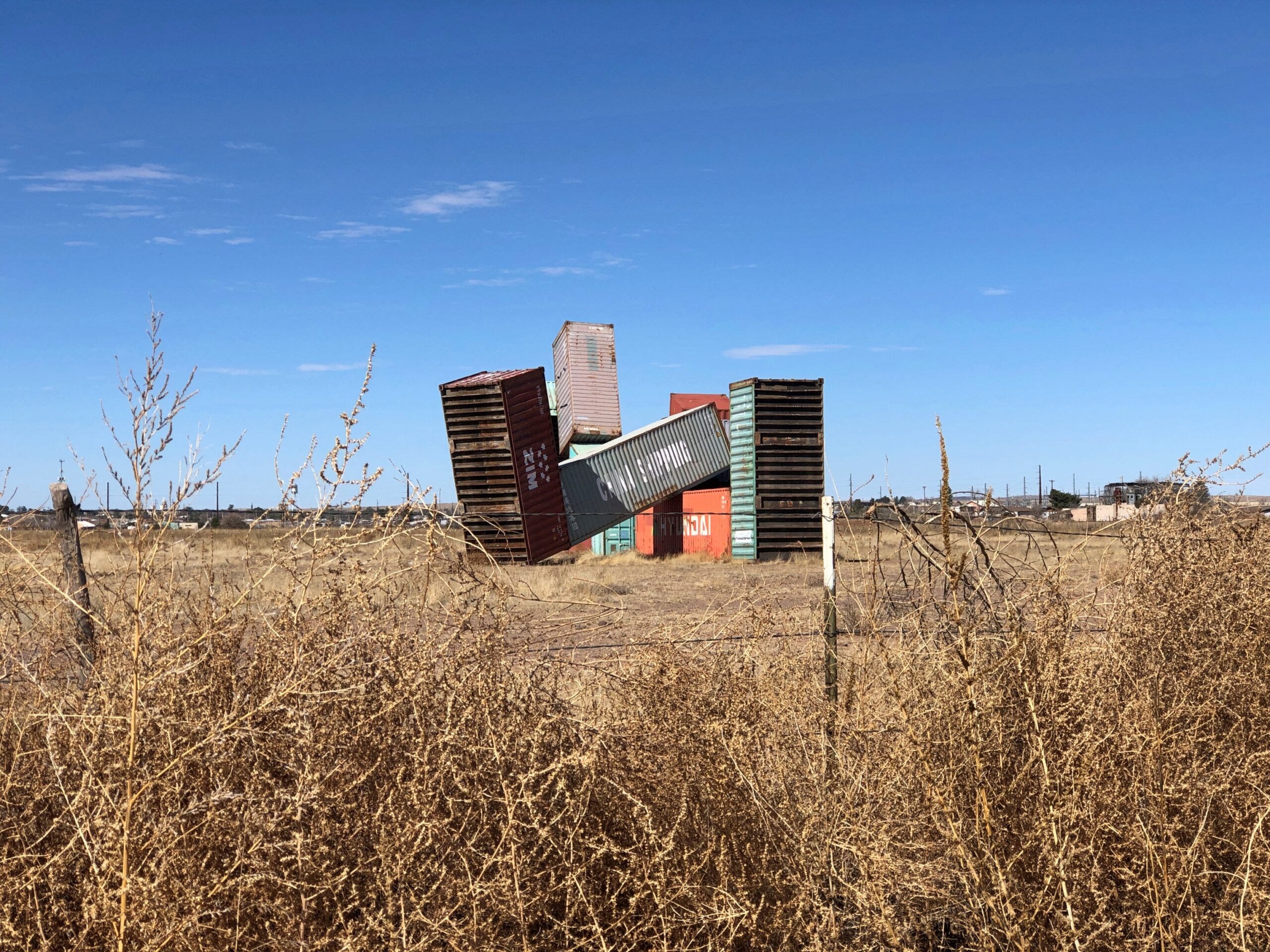
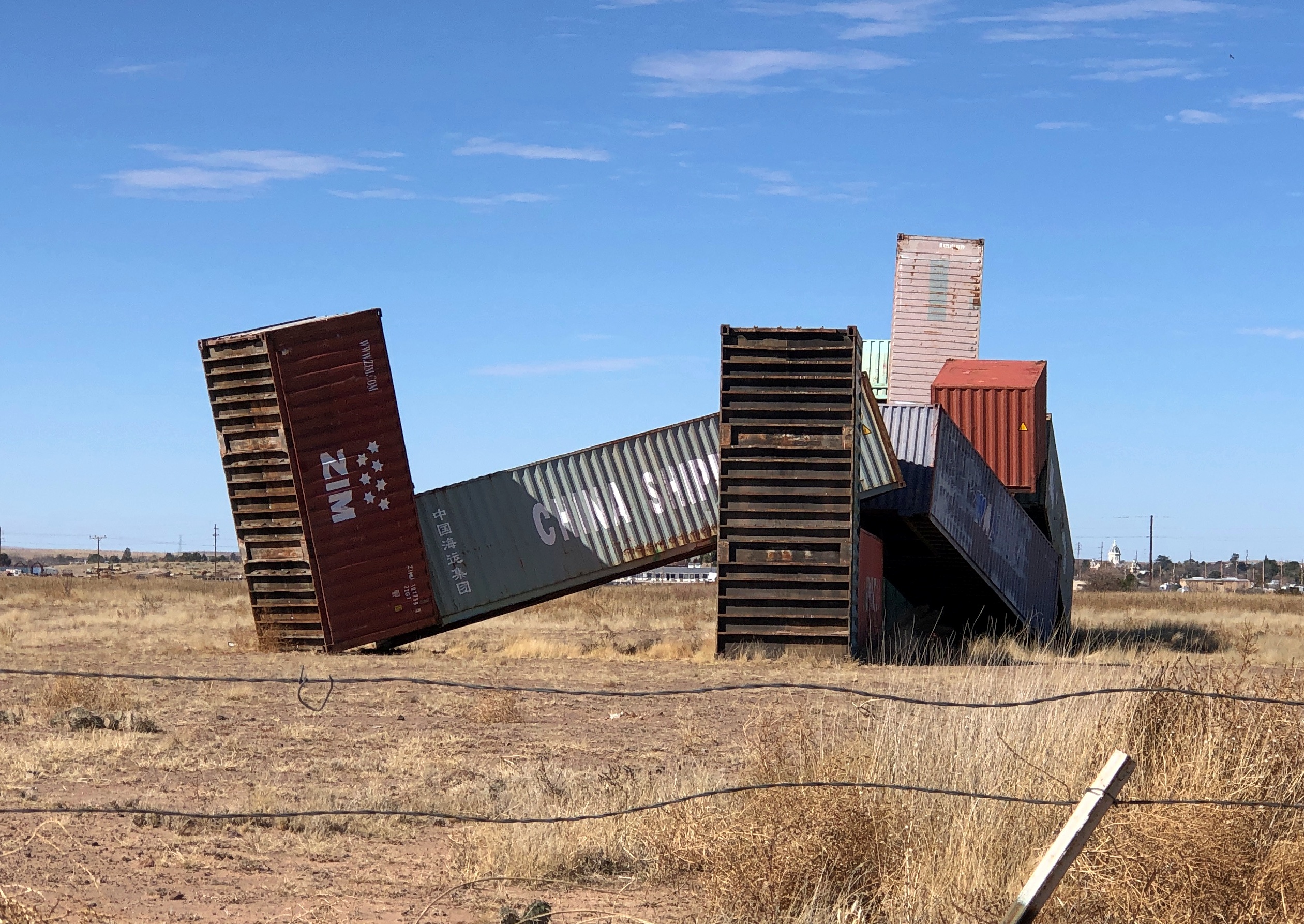
A wrecked train. A long wrecked train. The cars toward to back.

train wreck, Colorado

Toward the front.

train wreck, Colorado

Nary a clue as to how it happened, or when, except that the cars don’t seem rusted or overgrown. I stayed on the road to take my pictures. The cars are lined up as if they were dumped off the track on purpose. No. Why? Or could it have been some odd accident in which the train essentially fell off in place? Or is that how derailments work? Why are front cars especially mangled?

It didn’t take too much research (later) to find some answers. The Kiowa County Independent reported in August: The heavily laden train was navigating a significant curve and elevation change west of Chivington when 16 covered hopper cars derailed. Each was filled with thousands of bushels of wheat, spilling tons of grain onto the ground along Highway 96, which runs parallel to the rail line.

Oops. Guess everyone would have heard about it if the cargo had been more volatile or toxic.

At the turnoff to the historic site, I got a view of the tracks (again, from the road). Far enough away that the mangled train cars aren’t visible.

Eastern Colorado

On to the historic site, via an unpaved road.

Eastern Colorado
Eastern Colorado
Eastern Colorado

Turns out the historic site closes at 4 pm. I got there just as the rangers were leaving, and one of them, who had a remarkable collection of snaggled and bent teeth, told me so politely. I didn’t argue with him, but I also wondered why a site so remote closes at all, except maybe for the visitors center or small museum. Rules is rules, I guess.

That was pretty much it for Colorado. I got to the border with Kansas not long after, and looked back.

Colorado-Kansas Border

Colorful Colorado. I’ll go along with that.

Colorado Mountain Drives

Metro Denver is enormous, much larger than I remembered, even as recently as 2017. Or so it seemed. To the south, Colorado Springs is fairly large, but some orders of magnitude less than the monster metro to its north. Further south, Pueblo doesn’t seem that big, but even so it has 111,000 residents, give or take.

Then you come to Walsenburg. Who has heard of Walsenburg, Colorado (pop. 3,035), even though it too is on I-25 and on the irregular line where prairie and mountains meet? Colorado’s brisk growth over the last few decades seem to have passed it by. Its peak population was in 1940, when more than 5,800 people lived there.

I wish I could say I’d formed an impression of Walsenburg, but we stopped only for gas, and to get off the Interstate.

US 160, Walsenburg to Alamosa

Walsenburg has few people, and when you go west on US 160, that dwindles to practically none. The road crosses the Culebra Range of the Sangre de Cristo Mountains at North La Veta Pass, elevation 9,413 feet, into the San Luis Valley. I enjoyed writing that sentence almost a much as I enjoyed the drive itself.

Enjoyable at least until dark. Wish we’d gotten to see more of it. We’d futzed around in Colorado Springs much of that day, September 13, including a fine lunch at Edelweiss German Restaurant. So the sun went down before we got to our destination, Alamosa. But we did stop for a few minutes on US 160 before we lost the light. A chilly wind blew clouds along at quite a speed, and for their part the clouds were catching the sunset in luminous patches. Until I can see the aurora, that will more than do.

Colorado
Colorado

Wolf Creek Pass, Way Up on the Great Divide

Follow US 160 west from Alamosa and eventually you’ll get to Four Corners. We didn’t go that far on the 15th, just to Durango. The road passes through much of the San Luis Valley, which is wide – the largest alpine valley in the world, they say – so the way is flat until you reach South Fork, Colorado. Then you climb into the San Juan Mountains, until you reach Wolf Creek Pass. Way up on the Great Divide.

Woof Creek Pass, Way Up on the Great Divide

Yuriko had been driving on the ascent to Wolf Creek Pass. Usually she doesn’t care for mountain roads, but she focused on a wide-load vehicle ahead of us, and we followed it up, though not at too close a distance. She thought better of driving down the other side, even though she’s never heard it immortalized by C.W. McCall.

Wolf Creek Pass, Way Up on the Great Divide

So I drove down. Truth be told, it’s not that bad on a clear day. In our time, US 160 down from Wolf Creek Pass is four lanes, and while curvy, only the hairpin turn – which you are well warned about – is a little tricky. Not that bad in a car, anyway. I couldn’t say about taking a truck down. I’ll bet 50 years ago the route was probably still two lanes and maybe even more winding, so C.W. was only exaggerating for comic effect, not making everything up.

Wolf Creek Pass, Way Up on the Great Divide

At the end of the drop is Pagosa Springs, whose main street was completely torn up with construction. We found lunch off the main drag at PS FroYo, which is one of those restaurants that makes money for a local charity, in this case Aspen House. We didn’t know that before we ate our sandwiches, just that it was near where we parked and not fast food. A nice bonus to find out.

Lewis Street wasn’t under construction, so that made for a pleasant stroll after lunch, including time at a resale shop. No post cards. Bought some nearly new jeans, which proved their $5 worth (and much more) when I was later deposited briefly in the Kansas mud. They were standing by at that moment, sitting in a bag on top of everything else in the back seat — blankets, sleeping bag, small bags with some winter wear. I didn’t have to dig around looking for them. That never happens, or so it seems, so I thought I’d remember when it did by noting it here.

Lewis Street.

Pagosa Springs, but not a feed store

West of Pagosa Springs, but before Durango, is Chimney Rock National Monument. Not to be confused with Chimney Rock National Historic Site in Nebraska.

Chimney Rock, Colorado

There is a road up to Colorado’s Chimney Rock, a ridge-top archaeological site that is the nucleus of the national monument, but it was closed. The small museum at the base of the rock was still open, so along with our view, we took in a little about the Ancestral Puebloans who used to live there.

Chimney Rock and Companion Rock, foci of the national monument.

Chimney Rock, Colorado

“Chimney Rock covers seven square miles and preserves 200 ancient homes and ceremonial buildings, some of which have been excavated for viewing and exploration: a Great Kiva, a Pit House, a Multi-Family Dwelling, and a Chacoan-style Great House Pueblo,” says the Chimney Rock Interpretive Association. “Chimney Rock is the highest in elevation of all the Chacoan sites, at about 7,000 feet above sea level.”

US 550 North from Durango

North from Durango on US 550, the scenery starts pretty soon.

US 550
US 550

A few miles out of town, Honeyville. It looked like a good place for souvenirs.

Honeyville, Colorado

It was. I’m still working on a Honeyville jar of whipped cinnamon honey, which makes a warm biscuit sing.

All sorts of honey products are available.

Honeyville, Colorado

You can watch part of the process.

Honeyville, Colorado

A warp drive engine fueled by honey? Could be that Zefram Cochrane kept (will keep) bees.

Honeyville, Colorado

Only a few miles north, just off US 550, is Pinkerton Hot Springs, which is the kind of place that winds up on Atlas Obscura lists (actually, so does Honeyville). We took a look, but not a dip.

Pinkerton Spring
Pinkerton Spring

Before you get to Silverton on US 550, you cross Molas Pass, which has some terrific views of the edge of the Weminuche Wilderness. The day, by this time September 18, was clear and not exactly warm, but not that cold yet. Good day for a mountain drive.

Molas Pass
Molas Pass
Molas Pass

Like the highway, the Molas Pass viewpoint was busy, but not overcrowded.

Molas Pass

The route from Silverton to Ouray is known as the Million Dollar Highway. There isn’t a consensus about why that might be.

“There are a variety of explanations regarding the source of the name for the ‘Million Dollar Highway,’ says Roadtrip America. “One version claims it is based on the value of the ore-bearing fill that was used to construct the road, and another says it refers to the high cost of building a road over Red Mountain Pass (11,008 feet) and the Uncompahgre Gorge. One thing no one will dispute is the million-dollar views around every turn. This marvel of engineering, designed by Russian immigrant Otto Mears, slices through rugged mountains as it follows old stagecoach routes and former pack trails.”

If you want some twisty mountain road action, Million Dollar’s got it. Also, stretches without guard rails.

“About 40 accidents take place on the Million Dollar Highway each year, with an average of seven deaths per year,” the Durango Herald reported in 2023. “Most of the accidents are caused by careless or fast driving in bad road conditions. Other factors are mudslides, inclement weather and wildlife appearing on the road when there is nowhere to swerve.

“While avalanches used to be a factor, the last reported death on the road because of an avalanche came in 1992.”

The views are exceptional, both as you move and when you stop. The road near Ouray.

US 550

Views near Ouray.

US 550
US 550

Ouray’s got some handsome buildings.

Ouray, Colorado

The main street in Ouray is the kind of place that has benches made from skis. Not the only time I saw that in Colorado.

Ouray, Colorado

Also, some boutique retail. Good to see that Grateful Goo is available.

Ouray, Colorado

Who sells that again? Gwyneth Paltrow? Anyway, hipsters, or more likely plastic surgeons and orthodontists and tech millionaires, seem to have long ago discovered Ouray, close as it is to Telluride. I saw a bumper sticker-like posting on a light pole in town that said: What do you mean there’s an employee housing crisis in Ouray? My 2nd home is always empty.

Monarch Pass

On our return to Denver, we headed out of Montrose east on US 50, a route that edges the gorgeous Blue Mesa Reservoir, and on to Gunnison and Salida. Just west of Salida, we took US 285 north, which goes to greater Denver. That highway crosses the Great Divide at Monarch Pass, elevation 11,312 feet.

Monarch Pass, Colorado

Even as early as September 20, the trees were ablaze.

Monarch Pass, Colorado

I suppose that isn’t early for that elevation. We saw trees turning a week earlier, further north at Rocky Mountain NP. I didn’t know it at that time, but we were just beginning a fall season during which we’d see more colors (probably) than any other year. It’s not quite over even yet, with some reds and yellows here in the neighborhood. That isn’t so unusual. Lots of people seek out fall foliage. The odd thing was that it was completely unplanned.

Nebraska 2

Which of these two destinations aren’t like the others?

Cairo, Neb

That’s a beginner’s-level question. Better question: where can you find this pole, with mileages and – what units measure the distance to Heaven or Hell? – other signs?

Answer: Cairo, Nebraska.

Cairo, Neb

Maybe a palm tree was in the works, but the city decided not to spend any more money. Cairo (pop. 822) is one of the small chain of small towns on the eastern section of the highway Nebraska 2, which runs westward and north of Grand Island. Cairo is the first place I stopped on my way west on that highway in early September.

Eventually the highway reaches the Nebraska National Forest and Grassland, a patch of (partly) wooded land that inspires the question, there’s a national forest in Nebraska?

West from the forest, Nebraska 2 crosses the Sandhills, an unusual place here in North America, with the land morphing from cropland to ranch land on sandy steppes. The towns on the way are mere hamlets, and sometimes not even that. On the western edge of the Sandhills, one comes to the sizable town of Alliance, Nebraska, home of Carhenge and railroad staging area for coal trains headed east.

Before I did the drive, I was looking forward to it as much as any of the roads in Colorado. It lived up to expectations. Nice when that happens.

Nebraska 2

The Fence Post cites Charles Kuralt’s fondness for Nebraska 2: “Highway 2 is not just another highway that goes somewhere. Highway 2 is somewhere,” he’s known to have said. I’d say whatever else his failings, Kuralt had good taste in roads.

Just outside Broken Bow (pop. 3,491), seat of Custer County and pretty much the only town of any size in that county, the Sandhills Journey Scenic Byway Visitor Center offers a building with bathrooms and pamphlets and displays and, for my visit at least, a grandmotherly and talkative volunteer. Old enough, she said, to remember when the highway was just a road through the countryside that attracted no attention from the outside world. Not a scenic byway, and sand hill cranes were just flocking birds. Now a trickle of tourists and bikers and RVers come this way. She had some solid recommendations, especially a good diner for lunch.

The visitor center grounds include a relocated (or was that reconstructed?) Sandhills cabin. The residences of the farmers trying to scratch out a living in the Sandhills, and finding out that no amount of scratching would make decent crops grow consistently from the land.

Broken Bow, Neb
Broken Bow, Neb
Broken Bow, Neb
Broken Bow, Neb

The Custer County Courthouse. Saturday, closed.

Broken Bow, Neb

A block from the courthouse, some buildings around City Square Park.

Broken Bow, Neb
Broken Bow, Neb
Broken Bow, Neb

City Square Park is a generic sort of name. Wonder whether there’s anyone from the town who can be honored by renaming the park? Looking at list of notables from Broken Bow, one instantly stands out.

This guy: Solomon Butcher.

Wiki: “Solomon D. Butcher (January 24, 1856 – March 18, 1927) was an itinerant photographer who spent most of his life in central Nebraska, in the Great Plains region of the United States… he began in 1886 to produce a photographic record of the history of European settlement in the region. Over 3,000 of his negatives survive; more than 1,000 of these depict sod houses.”

Frederic Schreyer and family, Custer County, 1880s, by Solomon Butcher.

Definitely name the park after Butcher, Broken Bow.

One more in that town. I couldn’t be bothered to get out of the car.

Broken Bow, Neb

West of Broken Bow is Anselmo (pop. 145), home of this church, St. Anselms Catholic Church, nicknamed Cathedral of the Sandhills. Saturday, closed.

Anselmo, Neb

A more common sort of building, not far from the church.

Anselmo, Neb

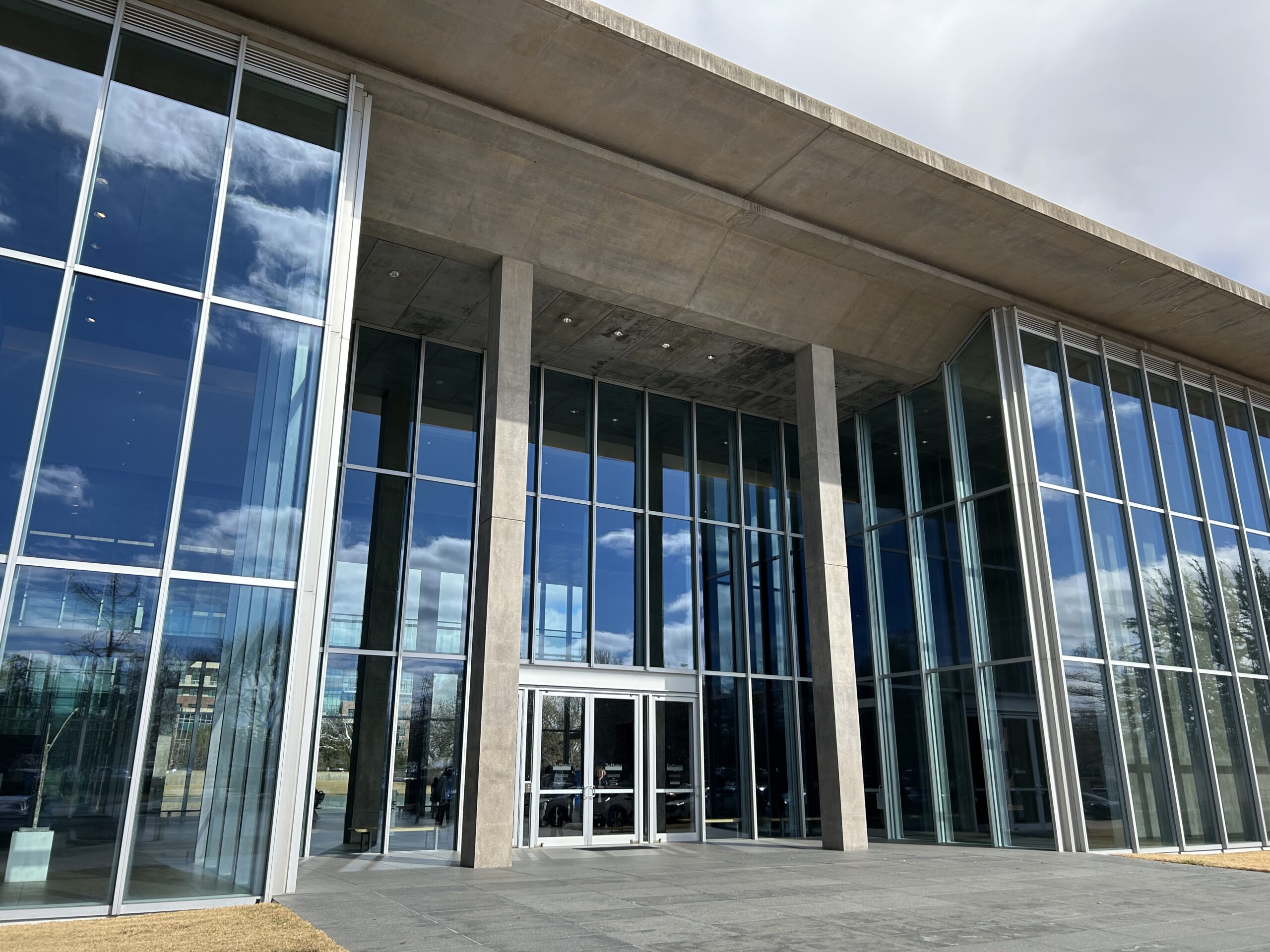
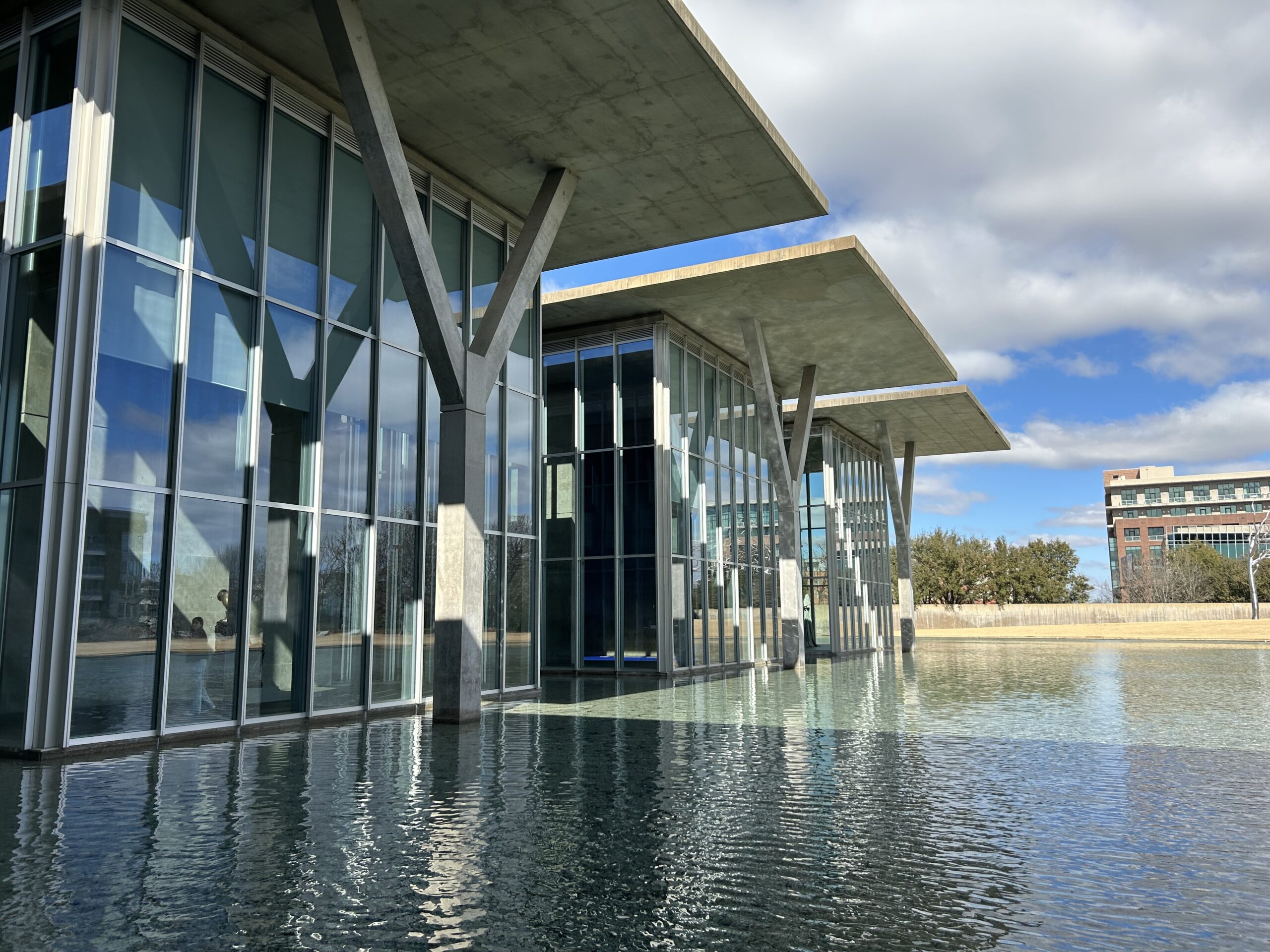
Not the most imposing that I saw, but representative of the many structures like it. The grist of a photo collection. Of course it has been done. I’m pretty sure I saw a room of Bernd Becher’s photos of water towers at the Modern Art Museum of Fort Worth.

Nebraska National Forest and Grassland is in an unexpected place, slap in the middle of Nebraska, not due to a freak of nature, but the efforts of human beings. Specifically, mass plantings of trees by the federal government for more than 100 years, beginning (not a surprise) during the administration of Teddy Roosevelt.

Nebraska National Forest

Near the national forest entrance is the Middle Loup River, broad but shallow, and crossable on a foot bridge.

Nebraska National Forest

I camped in the national forest. The campgrounds weren’t completely full, but there were more people than I expected for a remote spot in Nebraska. Then again, it was a Saturday night, and soon enough I figured out what brought most of them: the ATV trails. Not long after dawn on Sunday, the campers across from me – a man and a small knot of teenage boys – roared away in a small caravan of ATVs crusted with dust from the day before.

I packed up and sought out a quieter place. A national forest hill with a fire tower and some views. The tower was closed.

Nebraska National Forest

But the views were still pretty good.

Nebraska National Forest

West from the national forest, Nebraska 2 heads into the rolling grassland of the Sandhills proper. In the village of Thedford (pop. 208), varied public interpretations of the Sandhills are available for reading.

Sandhills of Nebraska

The terrain along the highway Nebraska 2 might seem monotonous to some. Too bad for them. You’re driving across a kind of ocean, terrain all wavy, except that it’s solid ground, marked by occasional trees or manmade structures, and side roads — trails — wandering deeper into the hills.

Sandhills of Nebraska

The handful of towns are really just wide places in the road. Sometimes, not even that.

Sandhills of Nebraska

Nebraska 2 parallels the BNSF line, which came first.

Sandhills of Nebraska

Note: I was standing on a public side road to take that picture, as I do with all my RR shots.

Eventually, I took the road to Alliance. But that was merely incidental. Out this far, the road, as Kuralt said, is the destination.

Five-State National Road Dash

Our first winterish weather blew through early this week, but we’re back to cool days. For now. Some leaves seem to be clinging a little longer than usual, but most are accumulating on the ground, as expected for November. A scattering of Christmas decorations are already up, and I don’t mean in stores, where they’ve been for weeks. Let November be November, I say.

Much of my return from the East Coast generally followed the westward course set by the National Road, though I didn’t use much of US 40, which has that nickname. If you want to make decent time, you take I-68 through Maryland and then I-70 across Ohio and into Indiana, which pretty much parallels the National Road.

The Interstate is designed for just that kind of efficient travel. On the whole, it delivers. The four-lane highways also deliver boring drives, to hear some tell it. That’s an erroneous assumption, to hear me tell it. The Interstate has its fine stretches, such as I-68 in October, a gloriously colorful drive. Winding and hilly, too, through Maryland’s peculiar panhandle.

A rest stop near Hancock, Maryland, offers views to the north, so most of what you see is Pennsylvania.

Maryland I-68
Maryland I-68

The rest stop is at Sideling Hill, an enormous rise gouged by an enormous cut for I-68 to go through. An impressive feat of engineering, completed only in the 1980s. Then again, blowing up mountains is a thing that happens in this part of the country.

The narrowest part of the Maryland isn’t far away. At its narrowest, there is less than two miles are between the Potomac and the Mason-Dixon Line. So if you picked up Maryland by the panhandle, it would surely break at that narrowest point.

I filled my gas tank off the highway in the last town in Maryland, Friendsville (pop. 438), at a station whose enclosed retail space (between a few pumps) seemed little bigger than a walk-in closet, and yet there was a clerk manning the place on Saturday just before dark. Rotund and massively bearded, he was playing a video game when I opened the door to pre-pay. He might have been a little surprised to encounter a customer, at least one who didn’t pay at the pump.

From there, I continued into West Virginia, then took I-79 north into Pennsylvania, then headed west on I-70, which crosses West Virginia’s odd panhandle – more like a periscope – before reaching Ohio. After overnighting in Cambridge, Ohio, I bypassed Columbus but stopped in Springfield, near Dayton but with a distinct geographic identity. Alcor to Dayton’s Mizar, you might say.

Downtown Springfield was practically devoid of pedestrians that Sunday, and not that many cars drove through either. A few buildings rise high enough to suggest a more prosperous past, but look too closely and some of them seem to be as empty as the streets, or at least underutilized.

Springfield, Ohio
Springfield, Ohio
Springfield, Ohio

The National Road went, and still goes through Springfield, in the form of US 40. A milestone in Springfield marks the point at which the federal government quit paying for further westward expansion of the road. Anything else would be on the states, namely Ohio, Indiana and Illinois.

National Road Milestone, Springfield Ohio

Later, after the National Road had become History, the Daughters of the American Revolution erected a series of statues along the route, and others to the west: “Madonna of the Trail.”

National Road Madonna of the Trail, Springfield Ohio

There are 12, with the easternmost of them along the National Road. Erected in the late 1920s, the Springfield one was renovated about 20 years ago.

Nearby, passersby are urged to Dream Big.

Springfield Ohio

About an hour west of Springfield, at the border of Ohio and Indiana on I-70 – just barely inside Indiana – is the Uranus Fudge Factory. I had to stop for that.

Uranus Fudge
Uranus Fudge
Uranus Fudge

Sure, there’s fudge in there somewhere, but also a lot of gags involving the word Uranus (Your-anus). Examples can be found in the newspaper — an honest-to-God paper newspaper — that the store produces, The Uranus Examiner, and gives away. I have a copy. My kind of souvenir.

Sample front-page headlines from the Summer 2025 edition:

Breaking News: You Can Explore Uranus In Three Locations

Eating Their Way Through Uranus

Get A Lick Of Uranus

Sink Your Balls In Our Putt Holes

The second of those stories was about the 2nd Annual Eating Uranus Fudge Galactic Championship held at the Anderson, Indiana location in March. Apparently it was a Major League Eating-sanctioned event, and apparently MLE is a real thing. One Patrick Bertoletti won the 2nd championship at Uranus, putting away a bit more than nine pounds of fudge in about as many minutes.

Fudge is one thing, but mostly Uranus sells stuff. A lot of stuff.

Uranus
Uranus Fudge

The Richmond, Indiana location is the third of three for Uranus, and I think the only one with dinosaurs —

Uranus Fudge
Uranus Fudge

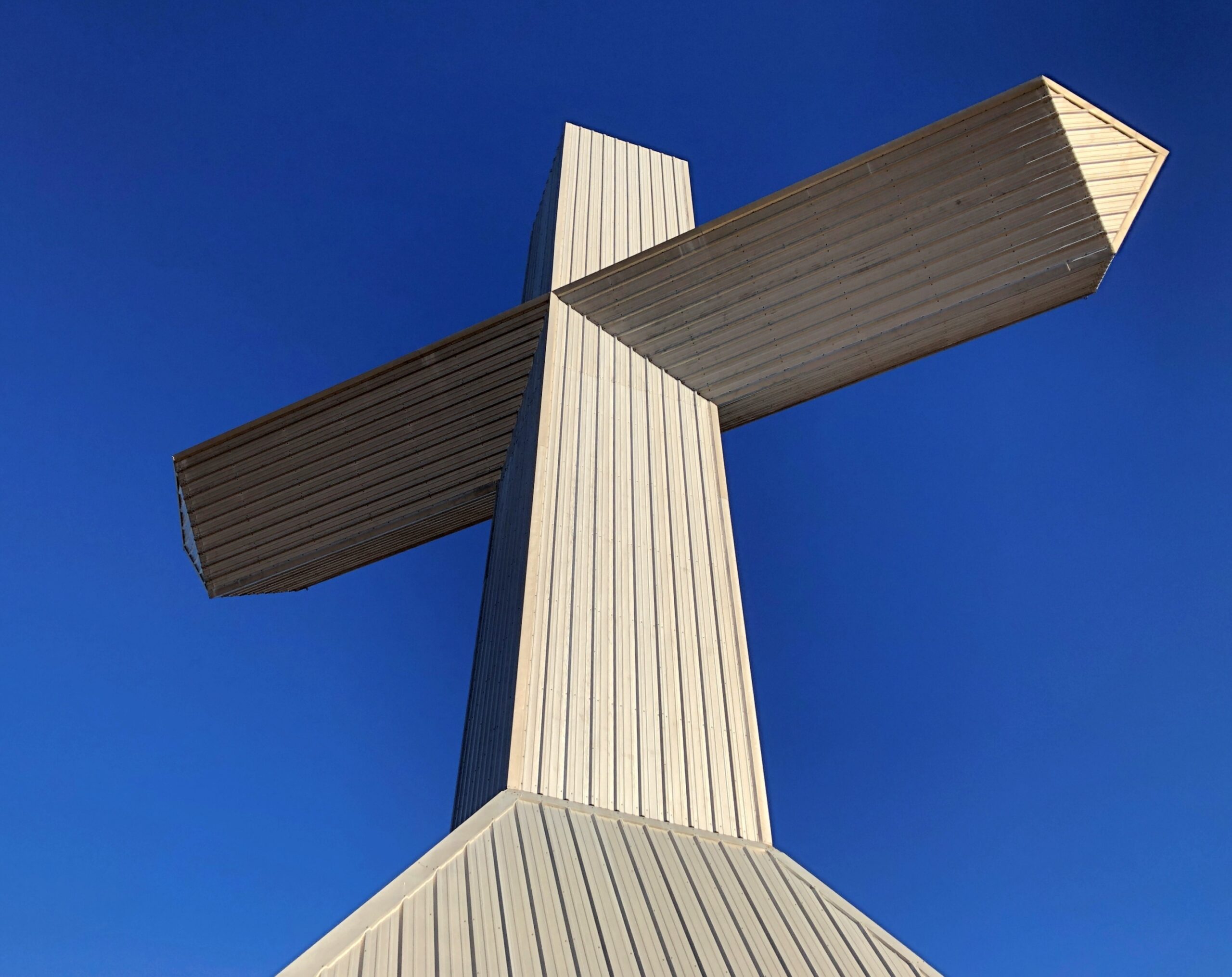
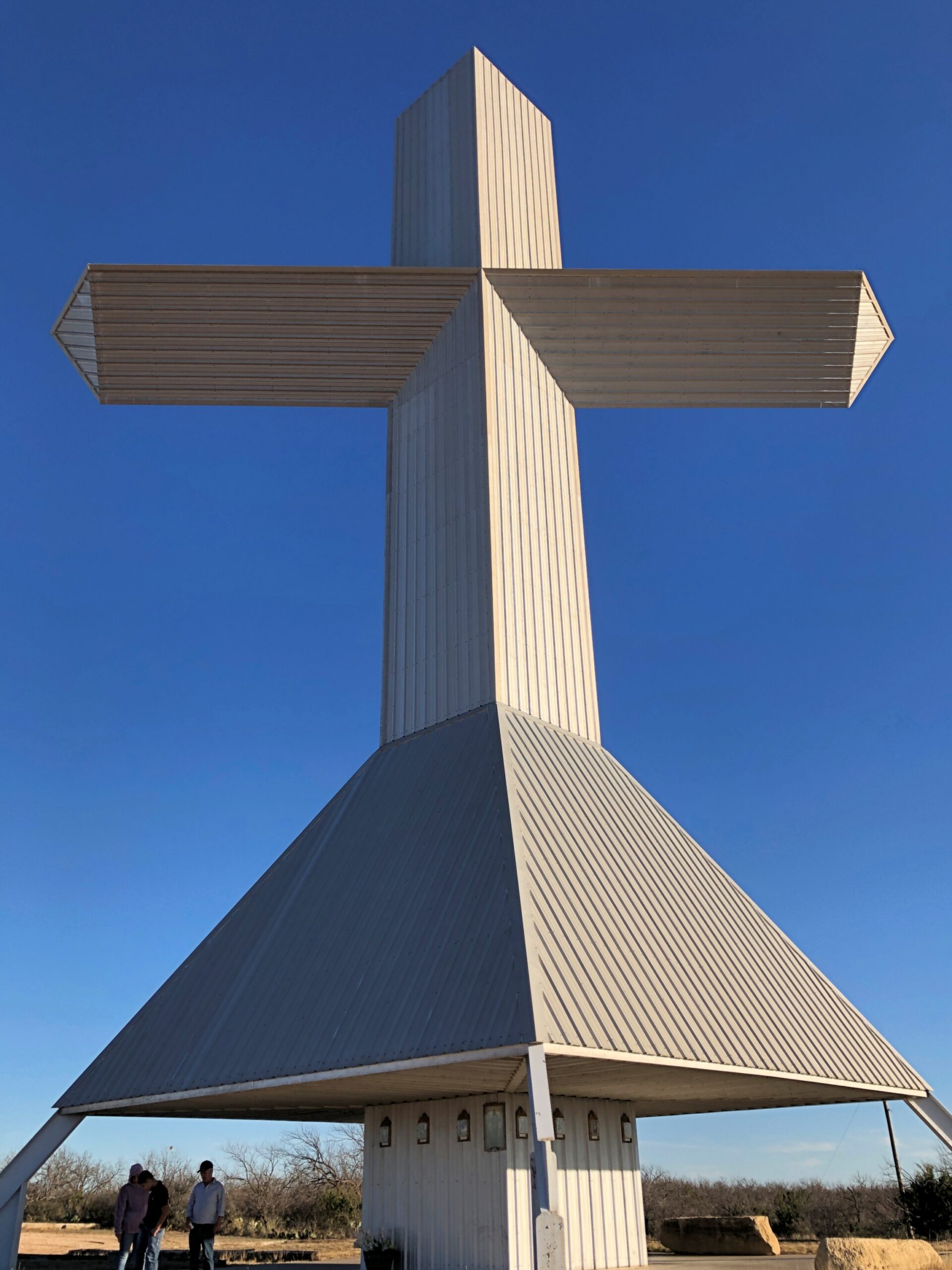
— and a 100-foot cross of corrugated steel over a metal frame.

Uranus Fudge
Uranus Fudge

Until about 10 years ago, the property belonged to New Creations Chapel, which also included a church building, boarding school for troubled teens and a Bible college. The ministry, for reasons its web site explains in some detail, sold the property to Uranus, including the cross.

Heading through Richmond, Indiana, I stopped at an entrance to a large park to check my map. Glen Miller Park. A colorful spot in October.

Glen Miller Park, Richmond, Indiana

Not named after the bandleader, which would be Glenn Miller Park. “Glen Miller Park was established in 1885 and was named for Colonel John Ford Miller, who was a railroad executive during the late 1860s,” the city of Richmond says. “Colonel Miller bought the land from Nathaniel Hawkins in 1880, with the intention of transforming the land into a park.”

So Glen Miller as in glen, a term that evokes pleasant Scottish valleys. I was just about to be on my way when I noticed a statue.

Glen Miller Park, Richmond, Indiana

It was another of the 12 Madonna of the Trail statues, located at the edge of the park, where it meets US 40. Unlike the earlier one in Springfield, I hadn’t sought it out. It was just there. One’s travels, like life, can be strange sometimes.

The Maryland State House

Yesterday I asked ChatGPT a question. I had my reasons.

Human (me)-generated question: How many U.S. state controllers or comptrollers have been honored with bronze statues?

Machine-generated answer (entirely sic): As of my knowledge cutoff in 2023, two U.S. state controllers or comptrollers have been honored with bronze statues:

William S. “Billy” McKeller (Tennessee) – McKeller was the Comptroller of the Treasury for Tennessee from 1923 to 1953. He was honored with a bronze statue that stands at the State Capitol in Nashville. The statue was unveiled in 1956, following his retirement.

Edward J. “Eddie” O’Neill (Massachusetts) – O’Neill was a longtime Comptroller for the Commonwealth of Massachusetts. He was known for his tenure and service, and a bronze statue of him was placed at the Massachusetts State House.

Both statues honor the legacy of these public servants for their dedication and leadership in state finance and governance.

However, it’s worth noting that statues of public officials in general tend to be more common for governors, senators, or prominent historical figures, so the specific recognition of state comptrollers or controllers through bronze statues is quite rare. There may have been updates or new statues since my last update, so I recommend checking local state records or news sources for the most current information.

Wow, that’s a solid example of an AI hallucination. There may have been human beings named William S. McKeller and Edward J. O’Neill living at some point in Tennessee and Massachusetts, respectively, but neither of them held that office. See the Tennessee Blue Book for a list comptrollers of the treasury in that state. As for Massachusetts, comptroller isn’t a constitutional office, so a list of them is a little elusive. (The commonwealth has an elected “treasurer and receiver-general.”)

Just as dispositive is a list produced by the commonwealth that lists the artwork at the Massachusetts State House. A bronze honoring Edward J. “Eddie” O’Neill isn’t one of them.

That said, the machine is probably correct that “specific recognition of state comptrollers or controllers through bronze statues is quite rare,” but, considering that the machine’s examples are bogus, that ranks as nothing but educated speculation that I didn’t need ChatGPT to create for me. I can guess that myself.

Just as damning, however, is that the machine missed a perfectly real example.

Annapolis

During my visit to Annapolis, Maryland in late October, I chanced to meet Louis L. Goldstein. His memorial, that is, a bronze at the corner of Bladen and Calvert streets, about a block from the Maryland State House.

Annapolis

The statue is in front of the office building occupied by the state comptroller. Goldstein was comptroller of Maryland from 1959 until his death in 1998 and, it seems, a character. A character who was also a successful politician, which is an increasingly rare combination, unless you count those pretending to be wingnuts.

“Many recognized Goldstein as the state’s white-haired, robustly outgoing goodwill ambassador, a handshaker’s handshaker, passing out fake coins as souvenirs and bestowing his trademark greeting, ‘God bless y’all, real good,’ “ the Washington Post reported at the time of his passing.

More politicos should pass out fake coins. I have fond memories of the aluminum Silber Dollar we had around after the 1970 election in South Texas. It’s probably still around.

Admittedly one ChatGPT answer is a small sample size, but still – how is it that three years have passed since I asked the machine to come up with examples of a certain kind of real estate deal in the past, and it spat out five completely make up ones? Shouldn’t this kind of thing be less likely by now? Apparently not.

Never mind, Maryland has a handsome capitol, one built remarkably enough in the 1770s – beginning before the Revolution and completed in the throes of that war, in 1779.

Annapolis
Annapolis

The view from the steps. The small rally below, at a place called Lawyers Mall, is demanding that Maryland Gov. Wes Moore to kick Avelo Airlines out of BWI airport, for its deportation flights for ICE.

Annapolis

Detail on the exterior: the obverse and reverse of the Great Seal of Maryland.

Annapolis
Annapolis

A cool seal, if you asked me. Including an Italian motto used, for obscure reasons, by the Calvert family. Fatti maschii, parole femine has drawn criticism, enough that the state has an innocuous “official translation,” which is fine, if a little silly.

Of course, Maryland also has a cool flag, the heraldic banner of arms of Cecil, Second Baron Baltimore, acknowledging the state’s founding as a proprietary colony of the Calvert family. It’s also worth noting that the flag wasn’t official until 1904, by which time the family had become merely a colorful part of History. 

Unlike Delaware, Maryland’s capitol was open on a Saturday.

Maryland State House

With a few volunteers talking to visitors.

Maryland State House

The Maryland State House has the distinction of being the capitol of the United States, from November 26, 1783 to August 13, 1784. Two important events happened in the building during that narrow window: George Washington came before the Confederation Congress to resign his commission as commander-in-chief of the Continental Army, and Congress ratified the Treaty of Paris, which acknowledged U.S. independence.

Maryland doesn’t want you to forget that Washington stepped down in the state house. On display are artifacts and artworks to illustrate the point.

Maryland State House

Including portraits of those who were there for the event. Some of those who were, I assume.

The scene itself, depicted later, and on display at the state house.

The speech. Washington had a gift for brevity. A more prolix (and vain) fellow might have gone on at length about the virtuousness of Cincinnatus — hint, hint, like a certain other man you might know — but I suspect he knew that his audience, and maybe posterity, would make the comparison without it being explicit.

Delaware 9

Coincidence or synchronicity? In September, as I was leaving Colorado Springs, I noticed an equestrian statue near a major street: William Jackson Palmer, railroad developer and Union Army officer. Stopped at a traffic light, I had a little time to look at the statue. Soon I forgot about it.

Palmer had one of those remarkable 19th-century careers, not only as a railroad man and military officer, but also a town planner, hotelier, publisher and philanthropist. He founded the towns of Colorado Springs, Manitou Springs, and Durango, among others. Though he grew up near Philadelphia, he was born on a farm near Leipsic, Delaware. Barely a month after I’d spent time in some of the towns that Palmer founded, I found myself in Leipsic, Delaware.

I still wouldn’t have make the connection if I hadn’t looked up Leipsic on Wiki. I noted that the entire list of notable people from that town had exactly one name: William Jackson Palmer. Leipsic has never been a very big place, and certainly isn’t now. I looked him up, and when I saw the picture of the statue, I remembered seeing it.

I’m going with coincidence. I have a fairly high bar when it comes to synchronicity, especially since I don’t really understand the concept. Does anyone?

Before I left Delaware last month – and believe me, it doesn’t take long to leave Delaware – I drove a section of Delaware 9, a two-lane, north-south highway that parallels the coast of Delaware Bay, running east of places like Dover, Smyrna and Odessa. An intriguing squiggle on the map, made more intriguing by the fact that part of it is also known as the Delaware Bayshore Byway, which is a National Scenic Byway. Experience has taught me that those kinds of designations are usually accorded for good reasons.

After the traffic-jammed day before, I thoroughly enjoyed the nearly empty Delaware 9.

Delaware 9
Delaware 9

One of the few towns along Delaware 9 is Leipsic, pop. 178. I might not have stopped but for the cemetery, one so obscure that Google Maps doesn’t have a name for it, and I didn’t see evidence of a name on the ground either.

Leipsic, Delaware
Leipsic, Delaware

Leipsic Cemetery, perhaps. Whatever the name, it has clearly been a burial ground for a long time.

Leipsic, Delaware
Leipsic, Delaware
Leipsic, Delaware

With the sort of heartbreakers you find in cemeteries of this vintage.

Leipsic, Delaware

Three children, same family, buried in the same decade in the 19th century.

The road passes mostly through farmland, though woods and the western edge of Bombay Hook National Wildlife Refuge also mark its course. Delaware’s main crops are corn and soybeans, and I’m pretty sure I was in time to see the soybean leaves changing their color. Quite a sight.

Delaware 9

You’d think I’d have seen that in Illinois or Indiana or any of the other states chock-a-block with soybeans, but I wasn’t sure I had. Driving on a two-lane road, you’re practically driving through the color, as opposed to the distance of a four-lane highway.

Corn and soy may be the main plant crops in Delaware, but the main livestock is chickens. Some 276,700,000 head of chickens were raised in Delaware in 2024, according to the USDA. That’s an impressive number, considering how small Delaware is: almost the same number as in much larger states such as Tennessee, Kentucky or Missouri. I’m not going to crunch the numbers (I have a life to live), but I’ll bet per square unit of territory, Delaware is the nation’s chicken champ.

First State, Last State

The Avalon Project, run by Yale Law School, has a remarkable trove of “documents in law, history and diplomacy,” as the site says. If you’re looking for a translation of the Code of Hammurabi or the Athenian Constitution, there are links. You can also find the annotated text of Magna Carta, the Mayflower Compact, and the many founding documents of the United States, just to mention some of the more famous ones.

If you’re after something less well known, try The Combinations of the Inhabitants Upon the Piscataqua River for Government, October 22, 1641 or Money and Trade Considered With a Proposal for Supplying the Nation with Money by John Law 1705 or Agreement Concerning Trade-Marks Between Brazil and the United States (1878).

Also within the Avalon Project is the text of the Ratification of the U.S. Constitution by the State of Delaware, December 7, 1787. To wit:

We the Deputies of the People of the Delaware State, in Convention met, having taken into our serious consideration the Federal Constitution proposed and agreed upon by the Deputies of the United States in a General Convention held at the City of Philadelphia on the seventeenth day of September in the year of our Lord one thousand seven hundred and eighty seven, Have approved, assented to, ratified, and confirmed, and by these Presents, Do, in virtue of the Power and Authority to us given for that purpose, for and in behalf of ourselves and our Constituents, fully, freely, and entirely approve of, assent to, ratify, and confirm the said Constitution.

Delaware ratified before any other state, and so claims “First State” as its nickname. I have my own private nickname for Delaware. At least I do now, since waking up on the morning of October 25 in my rented room in Dover: “Last State.” As in, the 50th state I’ve spent the night in. That isn’t an achievement of any kind, just a reflection of the fact that I’ve been fortunate enough to have the time and resources necessary to go that many places. Also, that I’m eccentric enough to keep track.

After dallying in Concord on the 23rd, and spending some time in Attleboro, Massachusetts, I arrived in East Providence, Rhode Island for the night. The point of that stop was entirely to spend the night in Rhode Island, since I’d never done that either. So RI was number 49. My hotel was just barely in that state.

I noticed the Honey Dew Donuts even closer to the border. I’d seen other locations driving in. The breakfast at my “3-star” hotel was meager, so I went to Honey Dew for a second breakfast. I wish I could say I’d discovered a great regional doughnut shop along the lines of Tim Horton’s, but it was only OK. Maybe I’ll give the brand another chance sometime.

Since I’d wanted to go from eastern Massachusetts to central Delaware, I should have broken that day’s journey somewhere in New Jersey. But that wouldn’t have involved stopping for the night in Rhode Island, which had been a short stop back in the summer of ’91 – a few hours to look around Providence, and especially the capitol – and the destination of a day trip in ’95, to Newport.

As for Delaware, my entire previous experience with the state was the Wilmington interstate bus station, a break in a bus ride from Washington DC to Boston, which was a leg of the Great Bus Loop of 1982. I’m not even sure I got off the bus, though I usually did when it stopped for long enough.

Getting to Delaware last month involved an aggravating day’s drive, mostly on I-95, spending a lot of time in traffic jams. Counting the cars on the New Jersey Turnpike, bah: more than grains of sand on a beach or stars in the sky.

Even so, there were a few worthwhile moments. I finally got to see (from the turnpike) the enormous American Dream mall, adjacent to the Meadowlands Sports Complex. Reportedly now second largest in the nation, after only the Mall of America. I’d been reading about American Dream for years, since “chronic delays” always figured in real estate reporting on the project, but now it’s more or less complete. (If the developers had asked me, they’d have kept the much cooler earlier name: Meadowlands Xanadu.)

At the Vince Lombardi Service Area on the NJ Turnpike, I parked in the very large parking lot and headed for the very large building and its very large men’s room. As I walked along, a small group of Hasidim went around me, not running but at a brisk pace, headed the same direction. By the time I got to the bathroom, they were almost done with their business, and off they went. Nothing unusual about seeing Hasidim, certainly not in New Jersey, but I have to note that October 24 was a Friday, and it was mid-afternoon. So they were racing the clock. Or, more accurately, the sun.

A digression: service areas on the New Jersey Turnpike and the Garden State Parkway are named for famed New Jerseyans. A list is here. I suppose it’s fine that musicians such as Frank Sinatra, Whitney Houston, Jon Bon Jovi and Celia Cruz are honored, but where’s Bruce Springsteen? It isn’t a matter of posthumous naming, since Bon Jovi is still alive – as is Bruce Willis, who also gets an area, and Connie Chung, who does as well, though she isn’t actually from New Jersey. The ways of the NJ Turnpike Authority are mysterious.

I arrived in Dover late on the October 24. The next morning, a Saturday, I left fairly early. First stop: the Delaware State House. It was closed for the weekend. My reaction: what kind of Mickey Mouse operation is this? I got a good look at the exterior, at least.

Delaware State House

A fairly new sculpture, in front of the capitol: The Delaware Continentals.

Delaware State House

The plaque is long on functionaries’ names, short on information about the Delaware Continentals. An historic plaque up in Wilmington says of them:

Commanded by Colonel John Haslet, the Delaware Regiment consisted of more than 500 battle-ready troops when they marched northward to join the Continental Army in August 1776. After expiration of enlistments and Haslet’s death, the Regiment was reorganized in the winter of 1776-77 under the leadership of Colonel David Hall. Participants in many of the major battles of the Revolution, their conduct earned the praise of their superiors and the respect of their enemies. Forced to endure great hardship, the Regiment was widely acclaimed for its discipline and bravery. Greatly depleted in number, they returned to Delaware victorious in January 1783.

That was hardly the end for the regiment. The 198th Signal Battalion in the Delaware Army National Guard traces itself directly to the Delaware Regiment.

Not far from the current capitol is the former state house, now a museum. It was open.

Old Delaware State House

In fact, I got a tour.

Old Delaware State House

I was happy to learn that here, in this very room, the delegates to the Constitutional ratifying convention met, and made their quick and unanimous decision.

Sleepy Hollow Cemetery, Concord

Concord naturally follows Lexington. That’s just the way it is. I made the short hop between Lexington and Concord on the morning of October 23, ahead of the day’s ultimate destination in Rhode Island. The first thing I needed to know was the status of the men’s room at the Concord Visitor Center, there on Main Street. I’m glad to report I didn’t run into any “closed for the season” nonsense.

I can also report that the South Burying Place is half a block away, an irregular slice of land wedged between Main, a side street, and some basic apartments.

South Burying Place
South Burying Place

Notably similar in style to Lexington, and why would they be any different?

South Burying Place
South Burying Place

One detail on the latter stone caught my attention. It took me a few minutes to work it out.

South Burying Place

Deacon Joseph Dakin happened to depart this life on March 13, 1744/3. Ahead of the British switch to the Gregorian calendar in 1752, there were competing ideas of when New Year’s Day should be: January 1 or March 25. Most of the rest of Europe had gone to January by the 1740s, but England clung to its traditional date. He died March 13, 1743 by the the traditional reckoning; March 13, 1744 if January 1 is the first day of the year. Besides switching to Gregorian, the ’52 change fixed January 1 as New Year’s Day in the English-speaking world.

That’s the kind of detail that can make my day. A lagniappe of the visit. South Burying Place itself was a lagniappe to my travels that day. The cemetery I had in mind to see was Sleepy Hollow Cemetery, a short drive from Concord’s main retail street. Not to be confused with the one of the same name in New York state, though I have to say that one looks like it would be worth a visit.

Sleepy Hollow in Massachusetts is in a wooded hollow.

Sleepy Hollow Cemetery

A wooded hollow. That’s a good place for a cemetery. Better yet, Sleepy Hollow is a cemetery of some age, by North American standards. Even better yet, autumn colors.

Sleepy Hollow Cemetery

When I got there, I found I wasn’t alone among the living. A rare thing at a cemetery. A trickle of people came and went to pay their respects to a clutch of famed authors who are buried at Sleepy Hollow. They’re up on Authors Ridge. The cemetery thoughtfully built a small parking lot at the base of the ridge, to facilitate that trickle of literary pilgrims.

Sleepy Hollow Cemetery

A path from the lot leads upward. At the crest of the ridge, the authors are found with other family members. In alphabetical order:

Louisa May Alcott.

Sleepy Hollow Cemetery

Here visitors don’t leave stones or small coins, but pencils, pens and paper. She wasn’t the only one to attract writing instruments.

Ralph Waldo Emerson.

Sleepy Hollow Cemetery

Where’s Waldo? Right there. Interesting that his memory attracted pine cones.

Nathaniel Hawthorne.

Sleepy Hollow Cemetery

Henry David Thoreau.

Sleepy Hollow Cemetery

When I parked at the small lot, I noticed a group of four girls, college students would be my guess, heading up the path to Authors Ridge. I waited a few minutes in my car, since I didn’t want to interrupt their pilgrimage. Also, I wanted the ridge to myself, if possible. I guessed they wouldn’t be long, and soon they came down the path, got in their car and left.

About an hour later, when I had finished my own cemetery stroll, I was checking my maps in the car, when a middle-woman pulled up, parked, and headed up Authors Ridge, walking her small dog. The trickle was continuing.

I preferred a more leisurely inspection of the authors’ stones, and the rest of the cemetery, for that matter. Such excellent contour.

Sleepy Hollow Cemetery

There’s also a large selection of stones for non-famous residents of this part of the world.

Sleepy Hollow Cemetery

Besides, the authors aren’t the only notable burials. Here’s Daniel Chester French, sculptor of renown.

Sleepy Hollow Cemetery

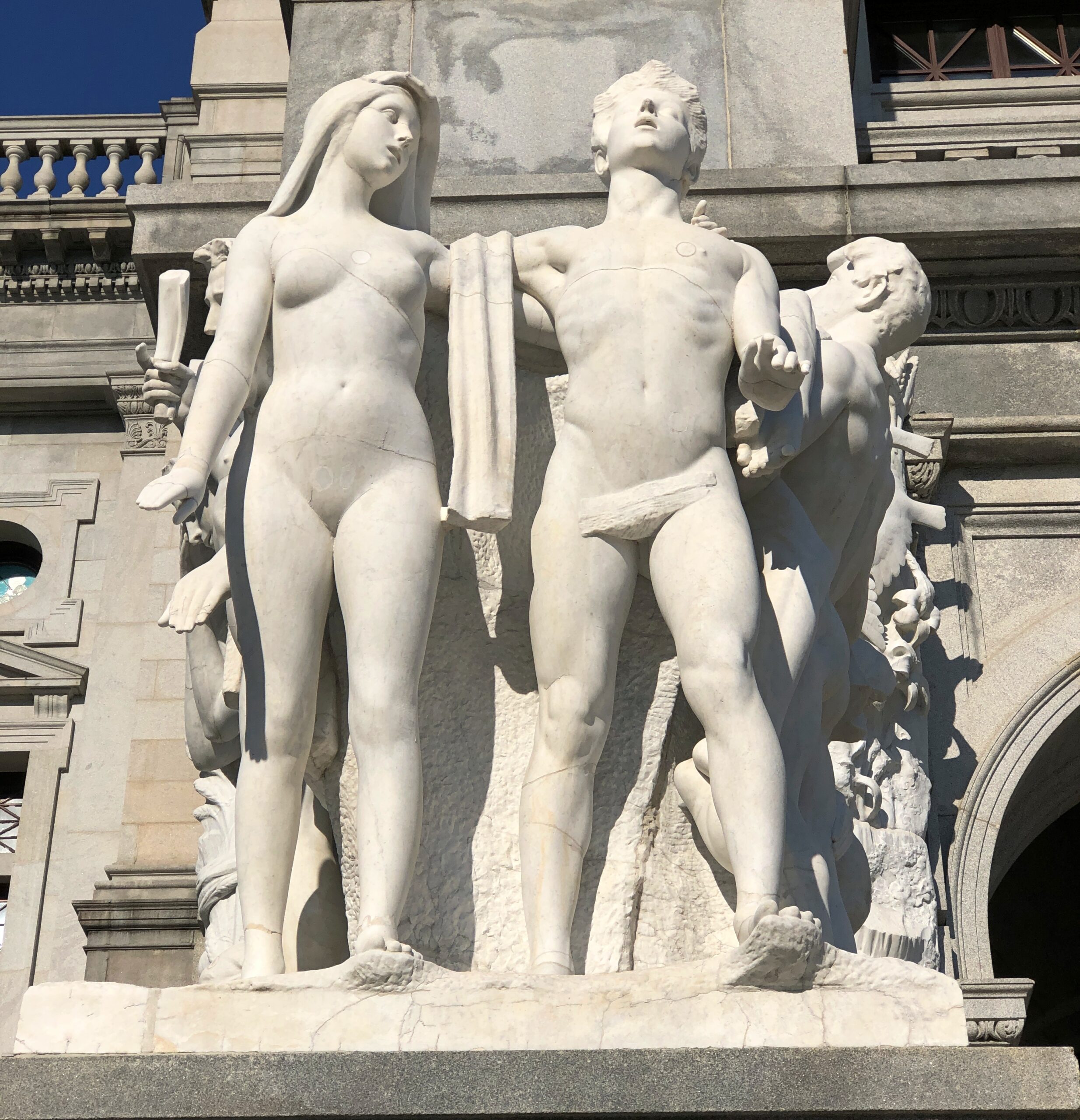
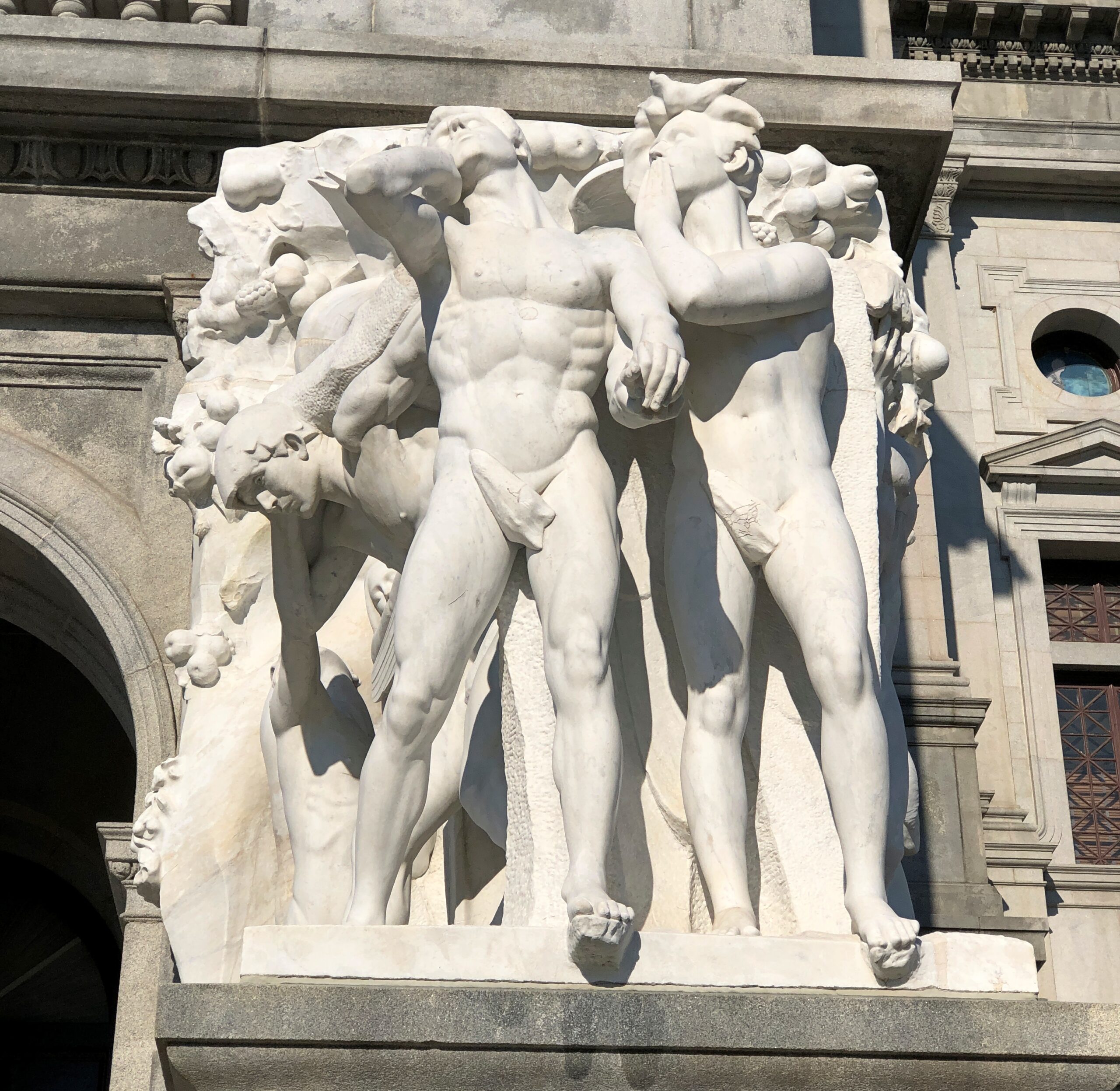
If the seated Lincoln at the Lincoln Memorial was the only thing he ever did, he’d still be remembered. But of course he did a lot more. The smaller version of “The Republic,” bright gold in color and standing even now in Chicago, is one that comes to mind. So do the allegories at the Alexander Hamilton U.S. Customs House at the southern tip of Manhattan. And Gen. Oglethorpe in Savannah.

But you don’t have to go so far to find one of French’s works. Elsewhere in Sleepy Hollow is the Melvin Memorial, honoring three Concord brothers named Melvin (Asa, John and Samuel), who each gave their last full measure of devotion for the Union in ways that represent the spectrum of soldier death in that war: died in combat, of disease, and in a prison camp.

Melvin Memorial

The figure is known as Mourning Victory, a version of which is held by the Met.

Melvin Memorial

Another famed work of French’s is in Concord: namely, “The Minute Man” at Minute Man National Historical Park.

I didn’t bother with that historical park this time, since I knew it would be closed. But I did see it 30 years ago, and it’s stuck with me. Just example of French’s work standing the test — and literally standing the test — of time.