The University of British Columbia Museum of Anthropology

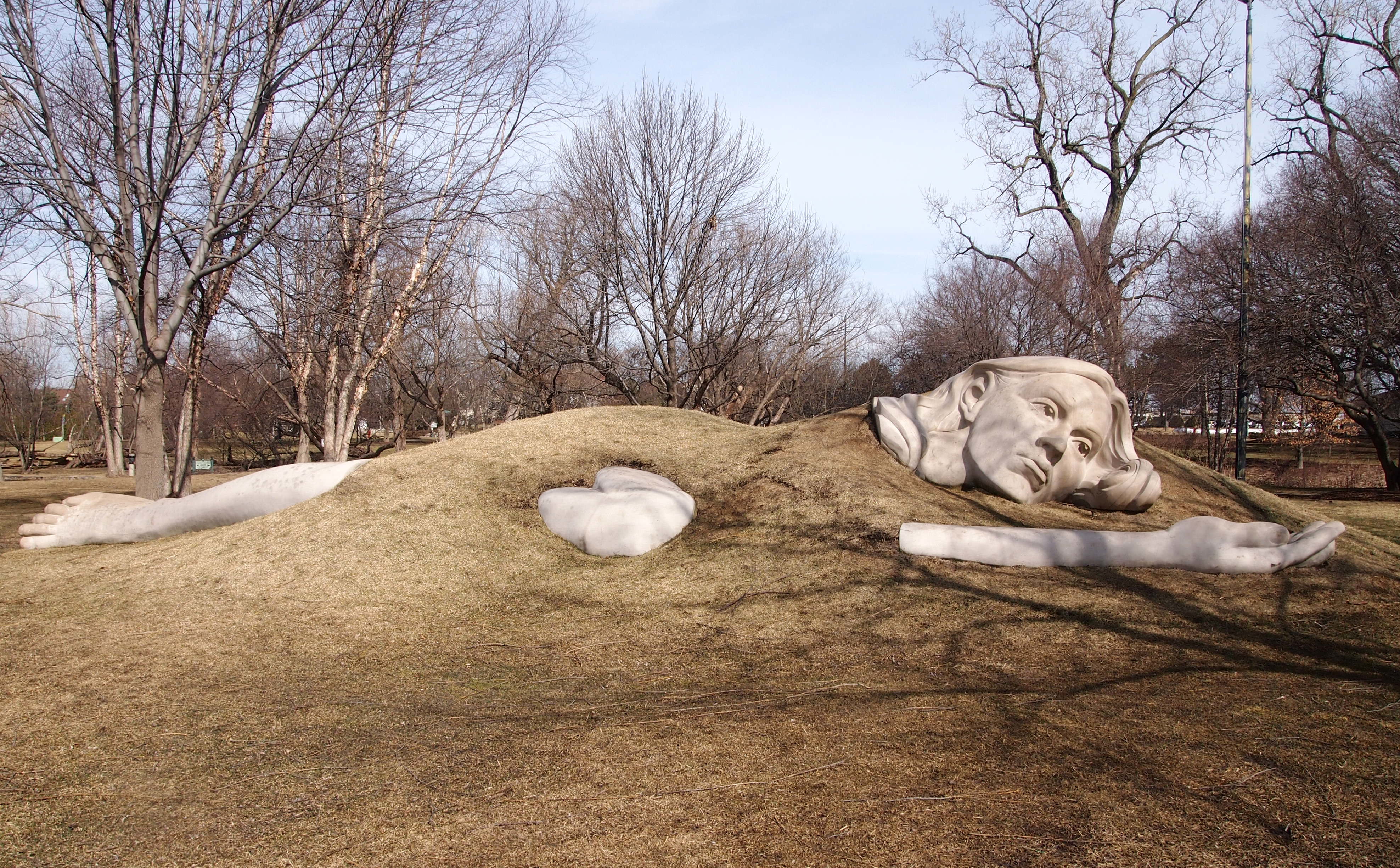
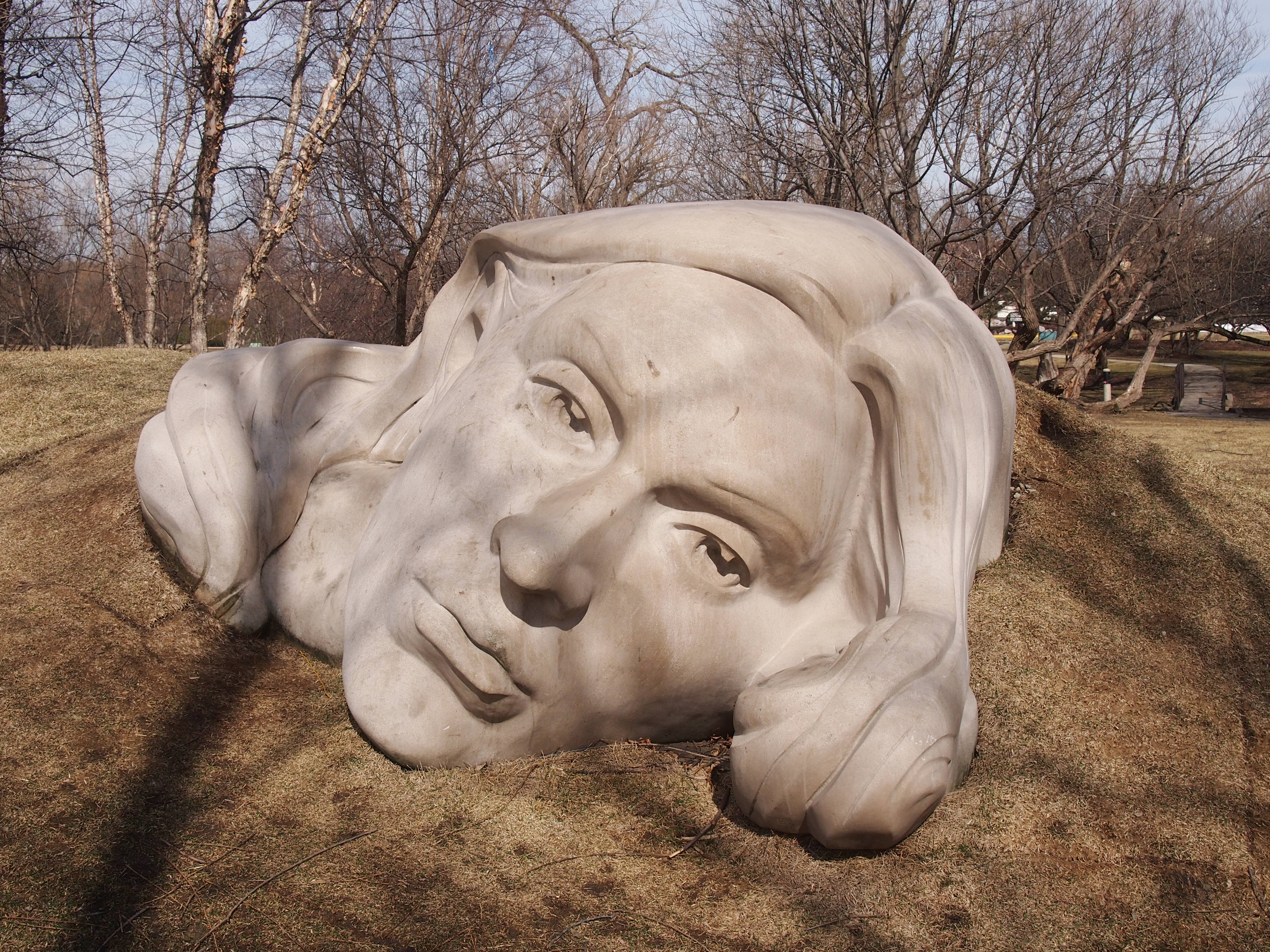
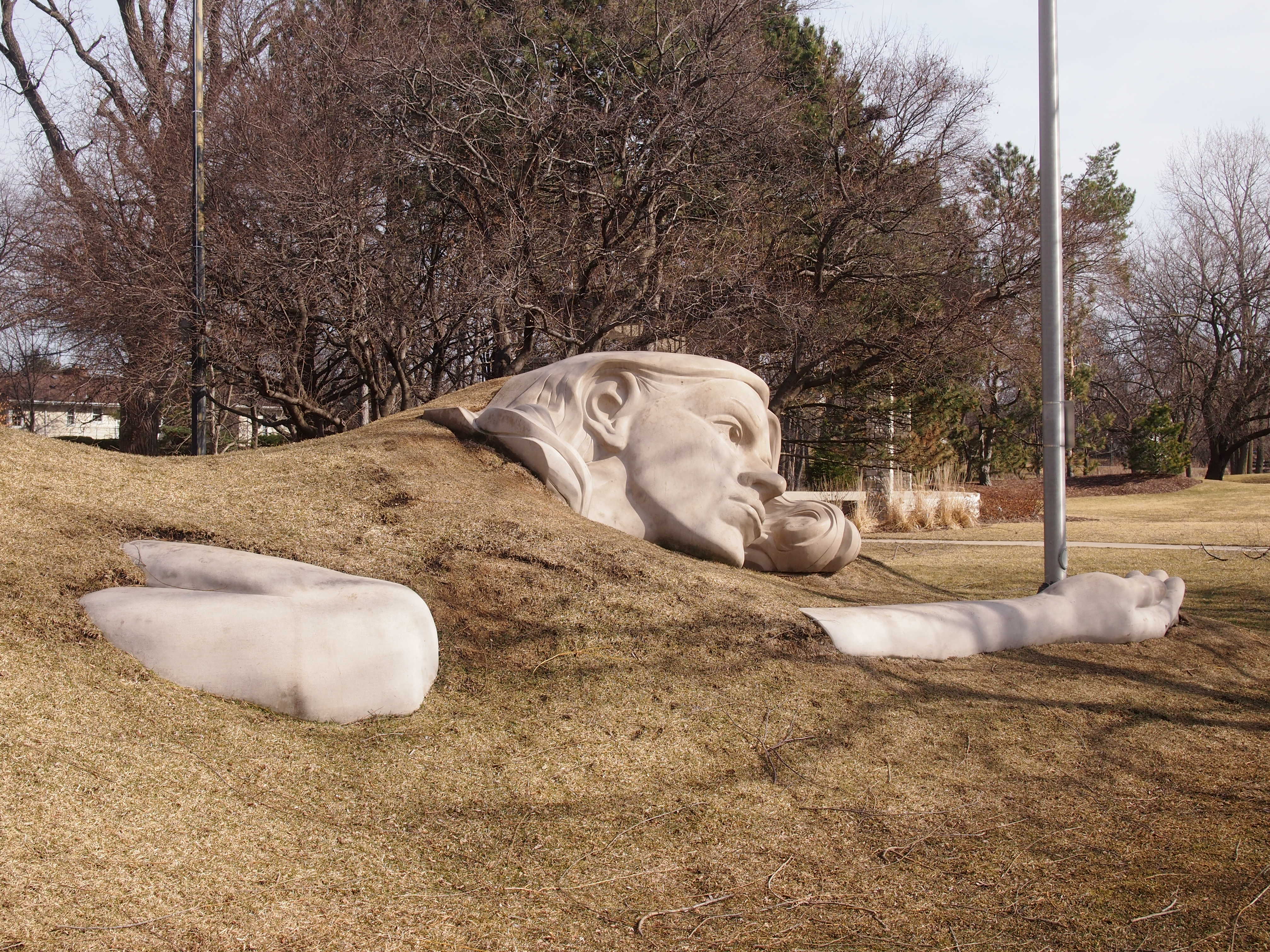
Visit the University of British Columbia Museum of Anthropology, as I did on the afternoon of August 25, and you’ll probably end up in awe of this fellow.Cedar ManIt’s the head and chest of Cedar Man, who stands about two stories tall in the museum’s Great Hall. He has arms and legs, but they were in shadow.

The museum says: “Carved welcome figures on the Northwest Coast have traditionally been raised on village beaches to greet visitors. Joe David carved this one for a different purpose: to protest logging operations on this birthplace of Meares Island, part of the ancestral territories of the Tla-o-qui-aht and Ahousaht peoples of the Nuu-chah-nulth First Nations.”

Meares Island is off the west coast of Vancouver Island in Clayoquot Sound. This was the first I’d heard of it. The protest was in 1984, and eventually the Indians won the day, and the ancient trees on the island still stand. The museum bought Cedar Man from Joe David in 1987.

All together the UBC Museum of Anthropology houses 38,000 ethnographic objects — which I suppose includes artwork like Cedar Man, made in living memory — plus 535,000 archaeological objects. The ethnological collections include over 15,000 objects from Asia, almost 12,000 from North America (including over 7,100 from B.C. First Nations), about 4,300 from South and Central America, 4,000 from the Pacific islands and over 2,300 from Africa.

An overwhelming amount of stuff, in other words, and not just from the Pacific Northwest, though that’s a heavy emphasis. The mass of carvings in the Great Hall, which includes an array of other Northwest Coast totem poles, house poles (carved structural elements), masks, and more, is only the beginning.

The face is pretty much universal.

UBCUBCUBCThe museum goes off in a number of directions, branching into various displays. An entire room is devoted to a sculpture called “The Raven and the First Men” by Bill Reid, which used to be on the Canadian $20 bill.

In other galleries, all stuffed to the gills with items from around the world, I encountered the work of Kwakwaka’wakw carver Willie Seaweed (ca. 1873-1967), which the museum calls “one of the great 20th-century artists of the Northwest Coast.” Among other things, he made ritual items for potlatches while they were illegal in Canada (1884-1951).

UBCI was surprised to find a room devoted to European ceramics, but there it was in the Koerner Ceramics Gallery. I’m not up on European ceramics, so I’d never heard of the likes of Bellarmine or Bartmann jugs, which have bearded faces at the base of the neck, and seemed to have been the last word in jugs in the 16th and 17th centuries, and mostly made in western Germany.
UBCOther galleries sported plenty of other things from around the world. Such as a familiar image of Buddha, though its origin is uncertain (either China or Japan).
UBCA puppet from China, though it reminded me of the ones from the East Indies.
UBCHere’s my own favorite from the UBC, a recent work — the last 30 years or so — from Papua New Guinea, many of whose inhabitants are inordinately fond of The Phantom, who appears on their battle shields like this one.
The Phantom!A great example of cross-cultural WTF. More examples are here.

Peace Arch Park

One thing to think about at Peace Arch Historical State Park in extreme northwestern Washington state is the last time the United States invaded Canada, namely the bungled campaigns of 1812 and ’13. Bungled from the U.S. point of view, that is, though of course there were some successes, such the battles of the Thames and Lake Eire (“We have met the enemy and they are ours.”).

The War of 1812 was the last bit of fighting along the U.S.-Canada border, not counting spats over fishing, so it’s reasonable that a bi-national park on the border commemorates the long peace. Peace Arch Park is that place, 22 acres south of the border (Peace Arch Historical State Park) and nine hectares north of the border (Peace Arch Provincial Park).

I arrived around noon on August 25, driving up from Bellingham, Wash. You take the last U.S. exit on I-5 (or maybe it’s the first exit) and park nearby, just south of the border, and then walk to the Peace Arch, which is slap on the border, meaning it’s also exactly 49 degrees North, as well as in the grass median between the northbound and southbound lanes of the highway (the meeting of I-5 and BC 99). Since traffic stops on each side of the border, crossing the road on foot there isn’t very risky.

Peace Arch, August 25, 2015On the U.S. side, the Arch is 67 feet tall; on the Canadian side, 20.5 meters. It’s been standing for there for 94 years, built at the behest of Pacific Northwest business tycoon Sam Hill (1857-1931), who also had a replica of Stonehenge built in another part of Washington state, and who was an avid advocate of road improvement. (“Good roads are more than my hobby; they are my religion.”) Presumably Hill would have been happy that a major road linking the two nations passes around the Arch.

The border’s also marked by a number of concrete posts.
US-Canada borderThe International Boundary Commission (Commission de la frontiere internationale) put the plaque at the bottom of the post on the occasion of its centennial in 2008. I figure most Americans, and most Canadians, have never heard of the commission. I barely remember reading about it some years ago in the context of the Alaska-Yukon border.

According to the commission’s web site, “Officially, the Commission’s work is described as maintaining the [U.S.-Canada] boundary in an effective state of demarcation. This is done by inspecting it regularly; repairing, relocating or rebuilding damaged monuments or buoys; keeping the vista cleared, and erecting new boundary markers at such locations as new road crossings.”

My italics. This is the body that’s responsible for clear-cutting the border between Alaska and Yukon — a 20-foot (six-meter) swath all the way along the 141st meridian. Since I read about that some years ago, I’ve since pondered the usefulness of doing such a thing. The commission asserts that “the boundary vista must be entirely free of obstruction and plainly marked for the proper enforcement of customs, immigration, fishing and other laws of the two nations.” I’m not quite persuaded, but anyway, more about the line is here.

The border posts have four sides: UNITED STATES on the south face (visible in my picture), CANADA on the north face, and INTERNATIONAL BOUNDARY and TREATY 1925 on the other two. I wondered about that. The commission references it too.

The treaty’s formal name is: “Treaty Between the United States of America and His Britannic Majesty, in Respect of the Dominion of Canada, to Define More Accurately at Certain Points and to Complete the International Boundary Between the United States and Canada and to Maintain the Demarcation of that Boundary, Signed at Washington, February 24, 1925.”

I made a point of crossing and recrossing the border a number of times near the posts. Now I can accurately say I’ve been to Canada more than a dozen times, including the six regular check-your-passport visits, plus the half-dozen (maybe more) crossings at the Peace Arch.

Lan Su Chinese Garden

At the Lan Su Chinese Garden in Portland, I wondered: How true to the original connotations are the inevitably flowery translations of some Chinese phrases into English? Put into English, various parts of the garden come out as “Tower of Cosmic Reflections,” ‘Flowers Bathing in Spring Rain,” and “Knowing the Fish Pavilion.”

I’ll never have an answer to that. Maybe that’s because the “original connotations” would cover a wide range of meaning, even among native speakers of whatever Chinese dialect is represented. Never mind. Lan Su’s a beautiful place.

Lan Su Chinese Garden, Aug 2015According to the garden’s web site, it’s “a result of a collaboration between the cities of Portland and Suzhou, our sister city in China’s Jiangsu province that’s famous for its beautiful Ming Dynasty gardens. Lan Su was built by Chinese artisans from our [sic] Suzhou and is the most authentic Chinese garden outside of China.”

Quite a claim. But I was intrigued that the garden was patterned after ones in Suzhou. I’ve seen some of those gardens. Now I’ve seen this one.

Lan SuLan SuThe web site again: “The garden’s name represents this relationship: sounds from both Portland and Suzhou are combined to form Lan Su. Lan (蘭) is also the Chinese word for Orchid and Su (蘇) is the word for Arise or Awaken, so the garden’s name can also be interpreted poetically as ‘Garden of Awakening Orchids.’ (蘭蘇園).” More of that flowery translation again. In this case, literally flowery.

Lan SuLan SuSomething about the place brings out the flowery, even in English. From Travel Portland: “Since the garden’s opening in 2000, its covered walkways, bridges, open colonnades, pavilions and richly planted landscape framing the man-made Zither Lake have created an urban oasis of tranquil beauty and harmony. It’s an inspiring, serene setting for meditation, quiet thought and tea served at The Tao of Tea in the Tower of Cosmic Reflections, as well as public tours of the grounds led by expert horticulturalists.”

Zither Lake? After the class of stringed instruments? Anyway, this is it, complete with the reflections of surrounding buildings. Lan Su takes up a city block, but it is still only one block among other city blocks.
Zither LakeWhat I remember best from Suzhou were the rocks, and Lan Su has those too.
Lan SuLan SuThe place also inspires romance. I saw a group of people planning a wedding at the garden, a couple necking among the greenery, and more than one person exercising a bit of self-love by taking selfies.

Portland Ramble

I didn’t care how good Voodoo Doughnut in Portland was supposed to be, I wasn’t going to wait in this kind of line to buy any.

Voodoo DoughnutsDowntown Portland on a summer Saturday teems with people, more than most mid-sized U.S. cities I’ve encountered. The obvious tourists were a minority. So were the obviously homeless, though they seemed more numerous than in most cities this size (and statistically, it’s a sad fact). Mostly, I think conventionally housed Portlanders were downtown because it’s an interesting place to be on the weekend. Good for Portland.

One reason is because of the food trucks, which cluster in various places. I had a falafel at one. Not the best falafel I’ve ever had, but good enough for a walkabout in a new city.

food trucks, PortlandOne place I was determined not to miss was Powell’s Books. Otherwise known as Powell’s City of Books, an apt nickname.
Powell's Books, Aug 22, 2015The place is enormous: a full city block with 68,000 square feet of floor space on four floors, divided thematically into color-coded rooms (the Blue Room, the Green Room, and so on). The store says it has more than a million new and used books, and I believe it. I went in without a plan, and I stuck to it, just wandering from room to room and floor to floor, looking at titles and opening books and enjoying myself. I was there about an hour, and could have spent longer. (This article captures the joy well; the writer might have even been there at the same time as me.)

I couldn’t leave without buying something — that would be wrong, since it’s important to support an independent bookstore against the Amazon tide, besides being good to have another book. So I bought Why Orwell Matters (2002) by Christopher Hitchens, which I read almost all of on the return plane ride. I also bought a clutch of postcards. As you’d expect, Powell’s had more than the usual Portland-themed tourist cards.

I’ve never seen more tattooed people in one place than in Portland, including Brooklyn (admittedly, it was October) or Camden Town in London (admittedly, it was 20+ years ago) or any warm-weather mass event I’ve been to recently, such as the Wisconsin State Fair. Summertime clothing was no doubt a factor, but I also think being in Portland was too. Mostly the ink was visible on arms and legs and backs, as you’d except, but not always.
TattoosBefore going, I’d read about the Portland Saturday Market, which has been a local event since the early ’70s. By the time I was walking around in the city, I’d forgotten about it. I happened across it anyway. Besides a wealth of vendors, there were some excellent musicians.

Saturday Market, PortlandAccompanied by a dancer.
Dance!At Pioneer Square, the fellow in the yellow was doing a bit of street preaching. Screaming, that is.
Screaming for JesusHis theology sounded like pure Jack Chick, though he might not agree with him in all the particulars. The fellow in black facing him (not the one with the Turn or Burn in Hell shirt) was not amused by the man’s preaching, and was screaming back. Before long, the cops showed up.
Portland copsI didn’t hear the discussion, but I suspect all parties concerned were being told not to take things to the next level, i.e., a fistfight. I passed by the same intersection about 30 minutes later, and the preacher was still there (with a different set of detractors), so I guess no physical violence broke out. Seemed like a near thing, though.

A Few Fine Portland Buildings

Drive into a large city for the first time, without the benefit of some GPS box advising you, and with few exceptions, it’ll be confusing for a while. The way the streets are connected seems to make little sense. They don’t match your maps, or rather, what you think you remember from looking at your maps. Signage isn’t what it should be (often just an impression, but objectively true in Boston). The route you want to go is under construction. There’s always someone right behind you when you need to make a critical decision about turning, but you’re never in the lane you need to be anyway.

It sounds like I’m complaining, but not really. Once the worst of the drive is over — because you do get where you’re going, usually — you’ve had the satisfaction of navigating through a strange place. You’ve also seen, even fleetingly, some things you wouldn’t have otherwise. GPS is fine if you have a meeting to attend or a plane to catch, but otherwise it obviates the need to guide yourself through new territory with maps, landmarks you know ahead of time, and your own sense of direction.

I plowed through parts all three cities — Portland, Vancouver, and Seattle — on different occasions last week, each causing me temporary location frustration. Each time when it was over, it was worth it. When I found a parking garage in downtown Portland early on the afternoon of August 22 and set out on foot, it was wonderful not to be in that car anymore, and taking in what the streets of Portland had to offer.

The first thing I took in was the air. A light haze and the smell of a not-too-distant fire hung everywhere. It wasn’t a choking haze, or even one that made me cough, but it carried a distinct odor. Smelled like one’s clothes after grilling, especially the burned wood. The source was the vast complex of forest fires then raging in eastern Washington — still raging — and which only a few days before had killed three U.S. Forest Service firefighters near Twisp, Wash., all young men.

Portland is known for a number of things, such as trying to rival Austin for urban weird. More on that later. I want to point out that downtown Portland, and the nearby Pearl District, have some exceptionally fine buildings a century or more old that aren’t remotely weird. Such as the New Market Block (1872).

New Market, PortlandThe Blagen Block (1888).

Blagan Block, PortlandBlagan Block, PortlandThe Postal Building (1900).
Postal Building, PortlandAnd the Pittock Block (1914). Among a good many others, including more modern structures.
Pittock Block, PortlandI have a fondness for buildings with visible fire escapes.

Also worth noting: Portland’s a sizable industrial town. Not something you hear about much either. I spent the night at some distance from the city center at a motel on U.S. 30 near the Willametta River, a major tributary to the Columbia, both of which are working rivers. The motel was in an industrial zone, both for manufacturing and distribution, and I know there are other areas similarly industrial in greater Portland. It isn’t the largest industrial market even in the Northwest, but it’s large enough to have current and projected development of nearly 2 million square feet.

Pacific Northwest ’15

I left for the Pacific Northwest on August 21 and returned home late yesterday. Imagine an axis that connects Portland, Seattle, Bellingham and Vancouver, which are all linked by I-5 (British Columbia 99 north of the border). That axis was the focus of the trip. I went to all of those cities and some points in between, some for a matter of hours, others for a few days. I spent time away from those cities as well, in hilly territory lorded over by towering pines and enchantingly quiet at night.

I drove a lot but also managed to spend a solid chunk of time walking and riding buses and light rail. The visit involved attending a conference, touring an exceptional building and seeing other fine ones, experiencing two large public markets, wandering through one of the largest book stores anywhere and a few other excellent ones, and seeing two museums and a Chinese garden very much like some of the wonderful ones in Suzhou. I ate food both awful and extraordinary, including things I’d never heard of before.

Going to another part of the country means doing new things, too. Or it should. Not necessarily life-changing experiences, but the sort of petite novelties that add up over time to make the fabric of one’s life better. Even before I got there, this was the first time I’d ever booked a rental car through Costco or a room through Airbnb. I attribute a less expensive trip, and a better one, to both. I visited a new city (Portland) in a new state (Oregon) and visited new parts of places I’d been (Vancouver in British Columbia, the Fremont neighborhood in Seattle). I witnessed a major forest fire from the air and smelled the result on the ground as the wind wafted west. Unexpectedly, according to the residents. I stood inside a building designed by Frank Gehry, rather than looking at its curious outside.

I saw a number of odd and interesting things, such as the street musician who’d modified a bagpipe and played it on stilts (Vancouver, just outside the Pacific Central Station). What to call it? Steampunk bagpiping?
Vancouver, August 25, 2015Or the Gum Wall (Seattle, next to the Pike Place Market). Each of the those bits of color is ABC gum, often used to attach cards and small posters to an alley wall. Why? As near as I can tell, just because.

Gum Wall, Seattle, AugOr the echo of a celebrity event I’d missed when it happened, the Bill Murray Party Crashing Tour of 2012 (this sign was in Portland).

Portland, August 22, 2015I can think of a lot worse people to show up at one’s party uninvited; maybe he’s still doing it occasionally.

Most importantly, I reconnected with two dear old friends, one of whom I hadn’t seen in 18 years, another I hadn’t seen in 30 years, since my last visit to Seattle. Our friendships have been maintained over the years mostly through paper correspondence, with a more recent electronic component. But there’s no substitute for being there.

Mars Cheese Castle

The postcards I bought at Mars Cheese Castle style the name Mars’ Cheese Castle. The tall sign in front of the place, highly visible along I-94 in southern Kenosha County, Wisconsin, omits the apostrophe, but it doesn’t forget the Stars and Stripes and the Packers G flag.

Mars Cheese CastleThere’s been a Mars Cheese Castle for years, but only a few years ago, the place was redeveloped. The old store didn’t look anything like a castle. The new store looks like a castle that a child might draw, provided he included a parking lot.

Mars Cheese CastleBefitting a tourist attraction of some stature along I-94, Mars Cheese Castle offers a wealth of cheese, brats and other meat, beer, and gewgaws and gimcracks. We were in the market for a gimcrack or two, namely a souvenir shot glass (Lilly has decided to collect them) and a souvenir spoon (Yuriko has long collected them). We were able to find both at not-too-outrageous prices.

The old store had, on its roof, a statue of a cartoon mouse with some cheese. That particular design element is missing from the new store, but the mouse didn’t go away. He’s inside the store now, and from the looks of him, repainted after years out in the Wisconsin weather.

Mars Cheese Castle 2015A friendly family man took our picture. I took his in turn with members of his family. Note the top of the mouse’s head. That’s no ordinary cheese. That’s a cheesehead hat.

The sign on the cheese says:

WIN $100 WITH YOUR SELFIE

Get the most points by 8/7/15

Retweet/Share = 2 points   Like = 1 point  Comment = 1/2 point         

#SayMarsCheese  @MarsCheeseCastle

A literal sign of the times. We didn’t take any selfies, and the contest was over anyway. I think a better prize would have been a 100-lb. cheese wheel, but that’s mainly because I like the idea of cheese wheels.

Leon’s Frozen Custard, Milwaukee

The web site for Leon’s Frozen Custard is simple, just like the establishment itself, which is at 3131 S 27th St. in Milwaukee, near that street’s intersection with Oklahoma Ave.

Leon'sThe web site says: “Leon’s Frozen Custard opened for business on May 1, 1942. The original 40’s design is seen in the picture below. The building was later remodeled in the early 50’s to as it is seen today. The business is still owned and operated by the original family. The main focus of the business is and always has been to serve the Freshest and Finest Frozen Custard available anywhere.  We are open all year and have a full soda fountain service, limited sandwich menu, daily special flavors and take-out service.”

We wanted to eat lunch before leaving town on Saturday. Not even the mass quantities eaten at the state fair would keep us from being hungry the next day, so we took a drive down a number of streets until we saw a pita joint and nearby, Leon’s. First we ate pita sandwiches, which were OK, then went to Leon’s. It was a lot better than OK. Leon's, MilwaukeeAnn had butter pecan ice cream, which she said was delicious. As was my chocolate shake. When it comes to a weekend of high-calorie food, in for a penny, in for a pound.

The Wisconsin State Fair ’15

Years ago, some friends of mine told me about their visit to the Wisconsin State Fair, which is held every August in suburban Milwaukee. “Meat,” one of them said. “When we got there, we wanted meat. We ate a lot of it.”

I now understand the impulse. I’d also add dairy to the mix. Meat and dairy.
Ann and I arrived at the Wisconsin State Fair last Friday afternoon, staying into the evening (Lilly and Yuriko couldn’t make it). She’d never been to a state fair. I had never been to one either. Neighborhood fairs, town fairs, county fairs, even a world’s fair, and fairs in a number of countries, but somehow never a state fair in the United States. Been mulling it for years, especially going to Wisconsin’s, because it’s the closest one. The Illinois State Fair is in Springfield, at least an hour further away.

WiscStateFair15We got there when it was still fairly hot. That didn’t deter a large crowd of fairgoers, but somehow the grounds managed to hold all of them without too much trouble. I’m glad that a state fair like this drew a crowd, since it’s a real event, one that requires going somewhere, and seeing something, rather than some kind of electronic entertainment. It also provides work for musicians, and not just the headliners, who tend to be acts whose heyday was 30 or 40 years ago. Considering my nephew’s profession, I can get behind an event that employs musicians.

The fair featured a vast array of merchandise booths, a good number of no-extra-charge stages with the aforementioned musicians playing, and large exhibits of farm animals, true to its roots as an ag show. Ann and I spent some time looking at the many, many cows in the cattle barns. At one point we watched a man wash his cow, making use of a squeegee. That isn’t something I’d have thought of.

WIstatefairmapBut that wasn’t the main thing. The main thing was to consume mass quantities. I knew that would be the case, so we both had light lunches. We ate items individually and shared a few things. Mostly, of course, meat and dairy. Namely, a pork doughnut, elk jerky, poutine, a pizza cone, an eclair, lemonade and milk.

The pork doughnut was a regular doughnut-like pastry, not too sweet, filled with pulled pork. The poutine was poutine. I didn’t have that in mind when I went to the fair, but the poutine booth attracted my attention with a large, hand-painted cartoon moose, looking suspiciously like Bullwinkle, wearing a Mountie uniform that looked suspiciously like Dudley Do-Right’s. He promised that the poutine was authentic Quebec style, and as far as I can tell, it was. Not bad at all.

The poutine booth was near the Wisconsin Products Pavilion. Ann got some ice cream there, and on impulse, I bought an enormous eclair, not like one of the dainty delights in France, but American sized: big as fat hot dog in a sizable bun. Not quite as good as the French version, but with its Wisconsin cream and chocolate, almost that good, which is saying something.

After I ate it, I realized I wasn’t going to eat anything else that day. Even I have my limits. That was too bad, because it meant we missed trying the pizza slices cooked with bacon underneath and especially the Wisconsin State Fair Creme Puff.

The creme puff’s apparently a big deal. Even though I knew we couldn’t eat one — Ann was full, too — we went into the building devoted to making and selling creme puffs, right at the fair, just to see the place. It was a large operation with dozens of apron-wearing, hair- and beard-netted people devoted to their creation, visible behind large glass windows. People were lined up inside to buy them and at “creme puff express windows” outside the building. That eclair was good, but I would have traded it, and certainly the poutine, for one of those mountainous puffs.

So it goes. I may live long enough to encounter a state fair creme puff some other time. Next time I’ll be ready.

Prambanan 1994

Candi Prambanan, or Candi Rara Jonggrang, is a 9th-century Hindu temple compound near Yogyakarta in central Java, though it had lain in ruins for centuries before reconstruction in the 20th century. UNESCO asserts that “the temples collapsed due to earthquake, volcanic eruption and a shift of political power in the early 11th century, and they were rediscovered in the 17th century. These compounds have never been displaced or changed.

“Restoration works have been conducted since 1918, both in original traditional method of interlocking stone and modern methods using concrete to strengthen the temple structure. Even though extensive restoration works have been done in the past and as recently as after the 2006 earthquake, great care has been taken to retain the authenticity of the structures.”

Candi PrambananMy snapshots hardly do the structures justice. We visited in the mid-morning of August 11, 1994, after seeing Borobudur earlier that morning. The increasing tropical heat made the temple compound a little harder to appreciate than Borobudur, but it was impressive all the same.

More from UNESCO (the compound became a World Heritage Site in 1991): “Prambanan, named after the village, is the biggest temple complex in Java. It is actually a huge Hindu temple complex… Dedicated to the three great Hindu divinities, this temple with its decorated reliefs is an outstanding example of Siva art in Indonesia and the region.

“It was built in the 9th century and designed as three concentric squares. In all there are 224 temples in the entire complex. The inner square contains 16 temples, the most significant being the 47 m high central Siva temple flanked to the north by the Brahma temple and to the south by the Vishnu temple. These three ancient masterpieces of Hindu architecture are locally referred to as the Prambanan Temple or Lorojonggrang Temple (Slender Maiden); the compound was deserted soon after it was completed, possibly owing to the eruption of nearby Mount Merapi [volcanoes are always a risk on Java].”

img127 adjLooking at it, I’m glad that Indonesia hasn’t spawned as much religious extremism as some other parts of the world. This is the kind of place that ISIS and Taliban barbarians would dynamite.