O-Bon 1990

Things I Did During O-Bon (August 12-19)

Saw the Daimonji Gozan Okuribi on August 16 in Kyoto. I parked myself on the banks of the Kamogawa River among a large crowd also there to see the event. Sure enough, not long after dark, the first of the bonfires came to life, a 大 shape, “dai” or large, defying a bank of rainclouds that occasionally cut loose on the audience. It looked a little distant, but it was worth seeing once.

[The Japan National Tourist Board tells us that “although there are several interpretations as to the origins of this event, it is generally regarded as a fire set alight at the gate for seeing off the souls of ancestors after commemorating the welcoming of their souls. The character of “dai” (meaning “large”) on Mt. Daimonji, and those of “myo” and “ho,” which make up the word “Myo-ho” (wondrous teaching of Buddha) on Matsugasaki Nishiyama and Higashiyama mountains are famous.”]

Took some long walks in Osaka and one in Kyoto, from the Kenkakuji (Golden Pavilion) to the Nijojo Castle. The latter was closed by the time I got there [I eventually visited the Nijojo.]

Visited a few museums, including the Osaka Municipal Museum; the Kyoto National Museum; and the Museum of Oriental Ceramics. [Some years later, I told an acquaintance of mine who’s a gifted potter that I’d been there, and he was clearly envious of the experience. I liked the pottery well enough, but his instincts were right. It should have been him rather than me, in terms of who could appreciate it best.]

Also spent time at the National Museum of Ethnology, which has all kinds of interesting artifacts, such as a yurt, Polynesian vessels, African masks, lots more. The museum is at Expo Park, site of Expo ’70, the world’s fair held in Osaka that year. That’s probably the first time I’d ever heard of the city. Other relics from the fair include the enormous outdoor sculpture called “Tower of the Sun,” looking very much like something created in the late 1960s. [By Taro Okamoto, who died in 1996. I had no idea there was anything inside the work.]

Discovered a second-run theater in Osaka, admission only 600 yen for two movies. Good place to go for air conditioning, a traditional reason to go to the movies. This week saw Lair of the White Worm and Salome’s Last Dance, a sampler of Ken Russell’s recent twisted visions. Before seeing them, I’d mostly known his movies by reputation. Altered States, which I did see once upon a time, was much worse than either of these.

Border Crossings of the ’00s

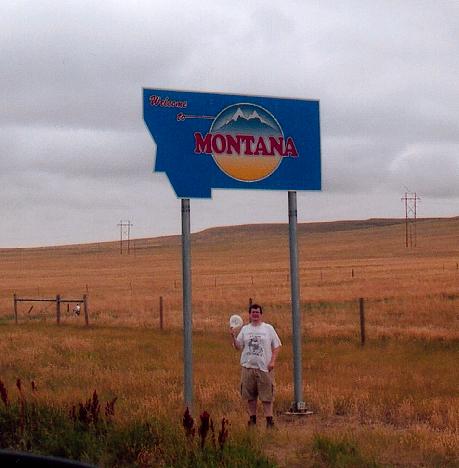
Somewhere in western South Dakota in early August 2005, I got the idea to document our crossing into Montana, where we were headed en route to Yellowstone NP. Document my crossing, really, in a moment of self-absorption. Because anyone who likes maps knows that borders are fascinating. So I got a paper plate and drew “46” on it. As in, my forty-sixth state.

MontanaUS212Lilly took the picture. I thought the number would be a little more visible, but it isn’t. In any case, that’s beside the road on US 212, which cuts from South Dakota briefly through Wyoming, and then into Montana. We camped that night at Custer National Forest and the next day stopped at Little Big Horn.

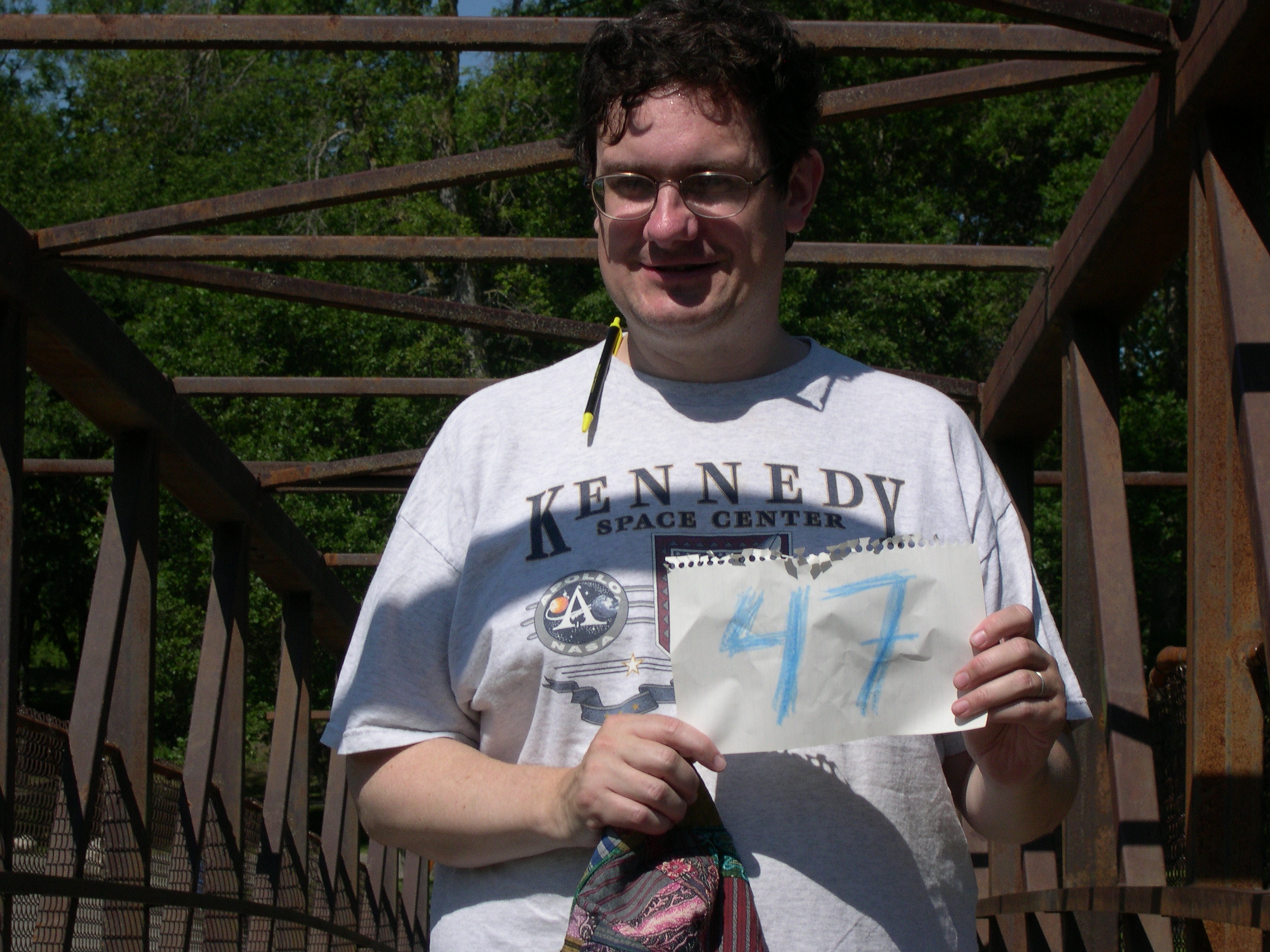
The next year, I wanted the number to be visible, so I had Lilly stand closer. This wasn’t actually the moment I crossed in North Dakota from Minnesota, which was on the Interstate 94 crossing the Red River of the North between Moorhead, Minn. and Fargo, ND a few hours earlier.

I noticed that just north of our campsite in Lindenwood Park in Fargo, on the river, was a footbridge back into Minnesota.

NorthDakotaNo paper plate seems to have been handy, so I used a piece of paper. Standing in the middle of the bridge, I had Lilly capture the moment.

Road Eats ’14

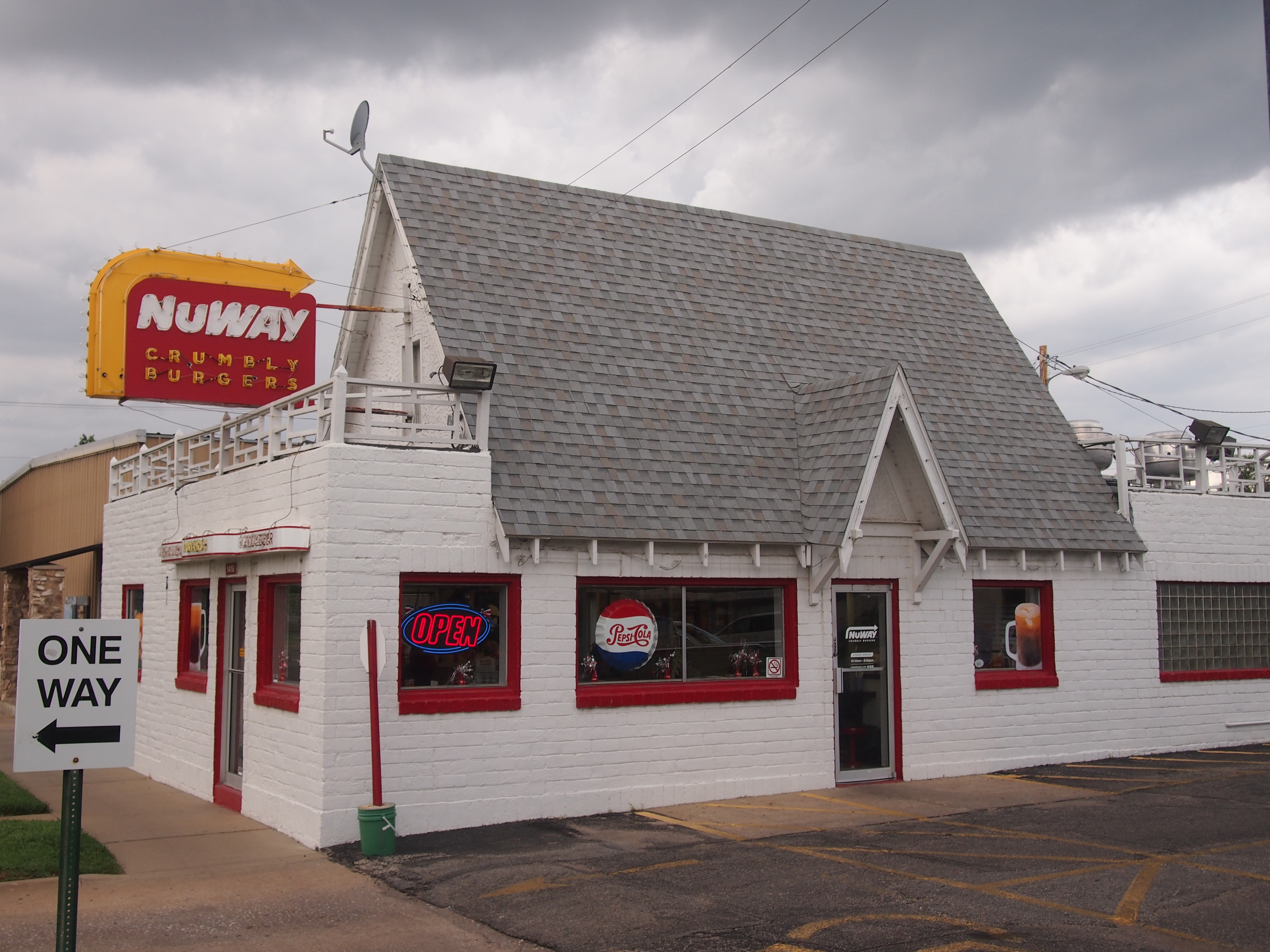
Serendipity is your friend on the road, but you have to be open to it. After spending some time at the Wichita Public Library’s main branch in downtown Wichita on July 14, we headed west on Douglas Ave., the way we’d come into downtown. We wanted lunch, and I thought I’d seen something interesting coming in. But I couldn’t remember exactly what. Then I saw Nu Way Crumbly Burgers.

Crumbly Burgers, yumClearly my kind of place. It’s a small Wichita chain. “The Nu Way tradition began on July 4th, 1930, at the same location we still call our ‘original’ home at 1416 West Douglas,” the Crumbly web site tells us. “It all started when Tom McEvoy… moved from Iowa to Wichita and built the first Nu Way. The dedication and absolute commitment to quality Tom began can still be tasted today as we carry on his reputation.

“We still make Nu Ways with the exact same recipe using our patented cookers and we still make our world famous Root Beer daily along with our homemade Onion Rings.”

Crumbly burgers are loose-meat sandwiches and root beer is, well, root beer, and we had both (Ann’s was a float), sitting at the counter. Considering that it was mid-afternoon on a Monday, the place was busy. For good reason. Those crumbly burgers might crumble, and you have to position your wrapping to catch those loose odds of meat, but they were satisfying. The frosty chilled root beer hit the spot exactly.

Nu Way harkens back to the ’30s. In Dallas, Keller’s evokes the 1950s, I think. But not the ’50s of televised nostalgia – we saw a lot of that in the ’70s – but just an ordinary burger-and-shakes joint that’s simply never been updated. Jay calls it Jake’s, since that used to be its name, but there was some kind of family ownership split or something. We went to the one on Garland Rd., but there are a few others, including one that’s supposed to be a drive-in. Anyway, the Garland location serves tasty burgers, fries and shakes, ordered and picked up at the front counter.

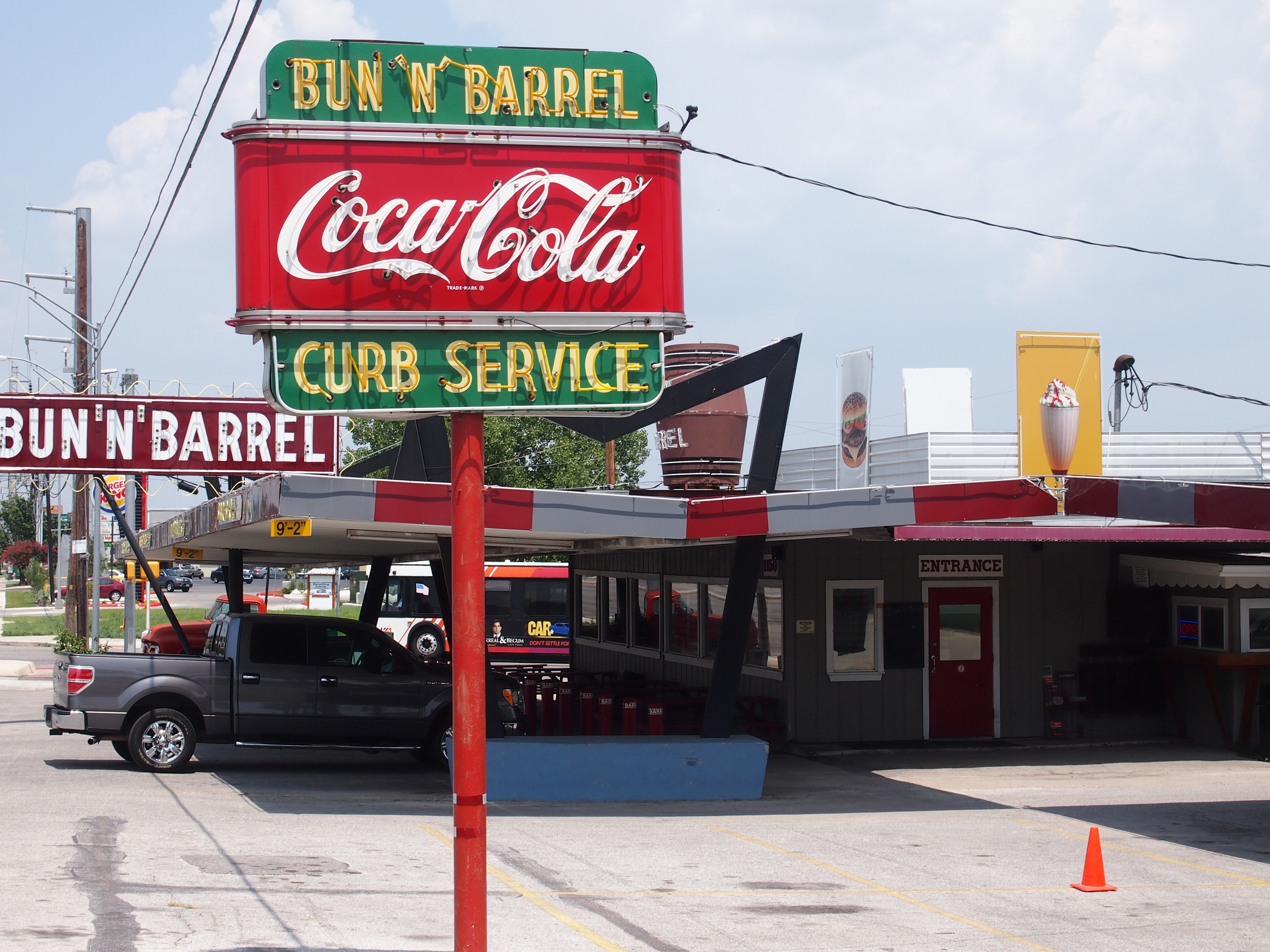
Bun ‘n’ Barrel is on the Austin Highway in San Antonio. Points for actually having two apostrophes. It’s been there since I can remember (it was founded in 1950, so that makes sense). The last time I went might have been in the late ’70s. It doesn’t seem to have changed too much with time, though there’s been a few recent renovations, such as the addition of a little nostalgia-oriented decor. They’re also happy that what’s-his-name on Diners, Drive-Ins and Dives showed up to do a segment a few years ago.

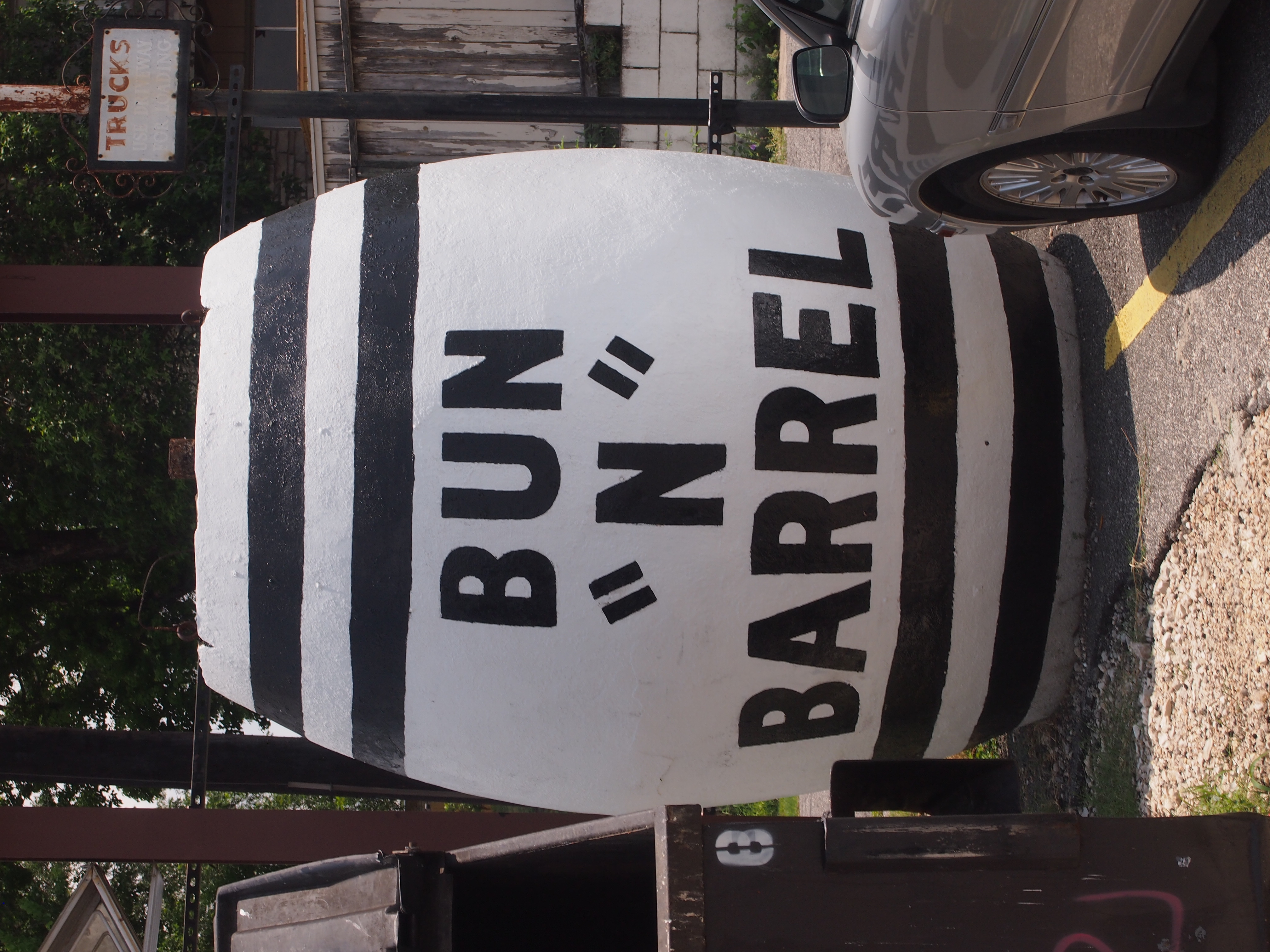
Bun 'n' BarrelThere’s a barrel on the roof, but I had a hard time getting a good shot of it. Also, it was over 90 F that day, and I didn’t want to loll around outside. Instead, I snapped the painted concrete  barrel out in the back parking lot.

Bun n BarrelI got the wrong thing: a ham plate. It wasn’t bad, but it was exactly like ham I can get at a grocery store. Probably the barbecue or a burger would have been a better choice.

Threadgills in Austin isn’t a classic road-food diner or a greasy spoon, but it makes a mighty chicken fried steak. Be sure to have it with mashed potatoes and fired okra. Its nostalgia is late ’60s, early ’70s. For instance, I saw that the Jerry Garcia Fest will be at the restaurant’s beer garden this weekend. We went to the one in South Austin, one of two locations. The current restaurants are descended from a beer joint that opened as soon as Prohibition ended, with a musical heyday 40 or 50 years ago.

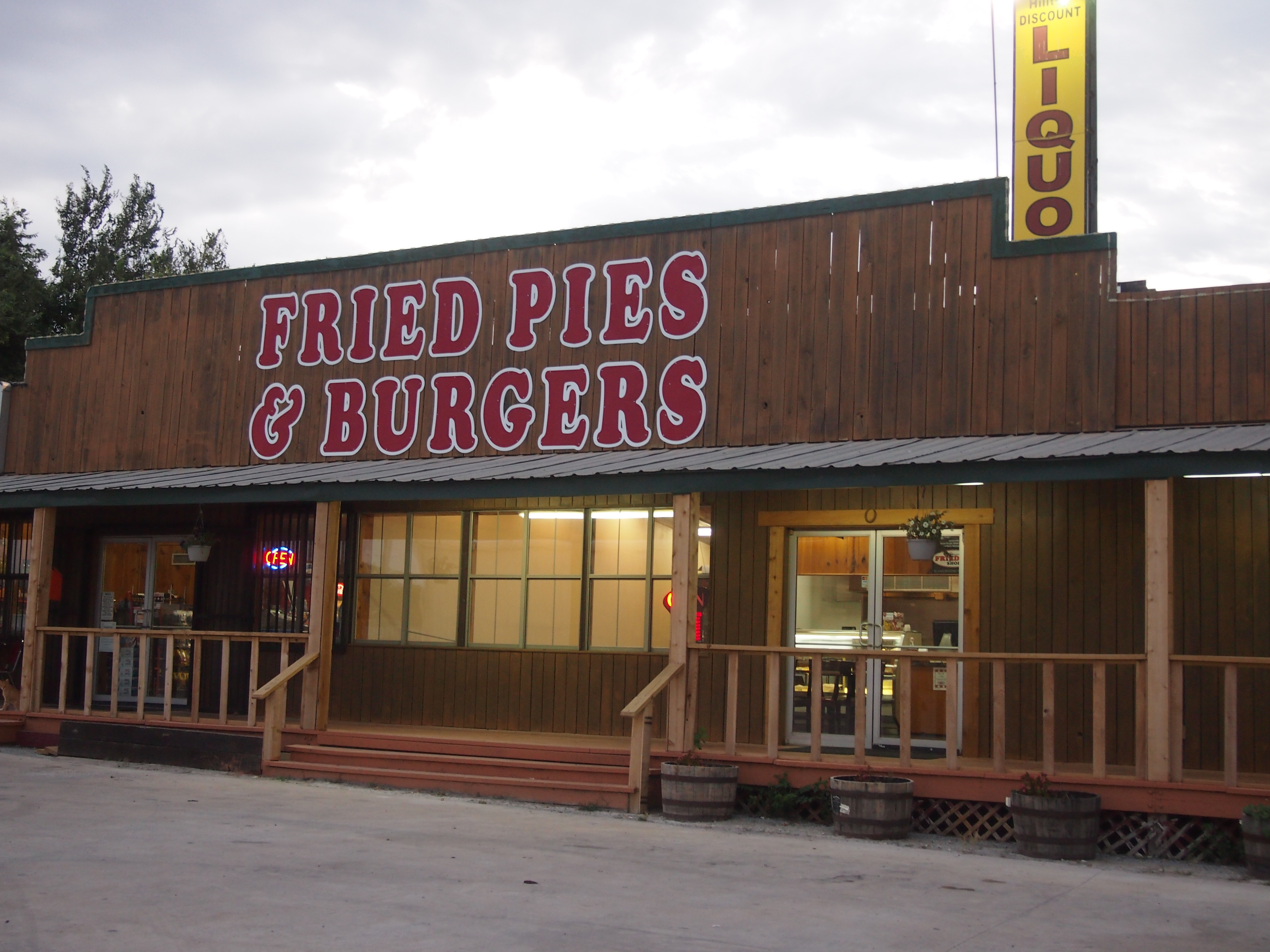
Finally, if you’re southbound on I-35 north of DFW and you take the very first exit after crossing into Texas, and then gas up at the gas station there, you will also see this.

Fried Pies!Among roadside eatery names, that’s high concept. Through much of southern Oklahoma, I’d seen fried pies advertised, like you can see pasties advertised in the UP. I decided it was time to investigate. It was arrayed like a doughnut shop, except replete with fried pies – bigger than the ones you buy in the grocery store, if you’re in the mood for high-calorie, barely mediocre treats. I bought a chocolate pie and a coconut one, and Ann and I split both. They were a lot better than any factory-make ones at a grocery store.

Mother Jones in Mt. Olive

Gene Autry – the singing cowboy, “Rudolph the Red-Nosed Reindeer” Gene Autry – recorded “The Death of Mother Jones” early in his career: 1931, shortly after the death of labor agitator Mother Jones (Mary Harris Jones). It’s worth a listen.

For years I’ve been seeing the sign on the Interstate advising me that Mother Jones’ memorial is off Exit 44 in Mt. Olive, Ill., not far outside greater St. Louis, but it’s been a one-of-these-days destination. The day turned out to be July 27, 2014, our last day of the trip. I’d planned to have lunch at Crown Candy Kitchen in St. Louis, and remarkably enough, I didn’t have any trouble finding that establishment. But at about 1 on that Sunday afternoon, a line was out the door. Crown Candy might be good, but not that good.

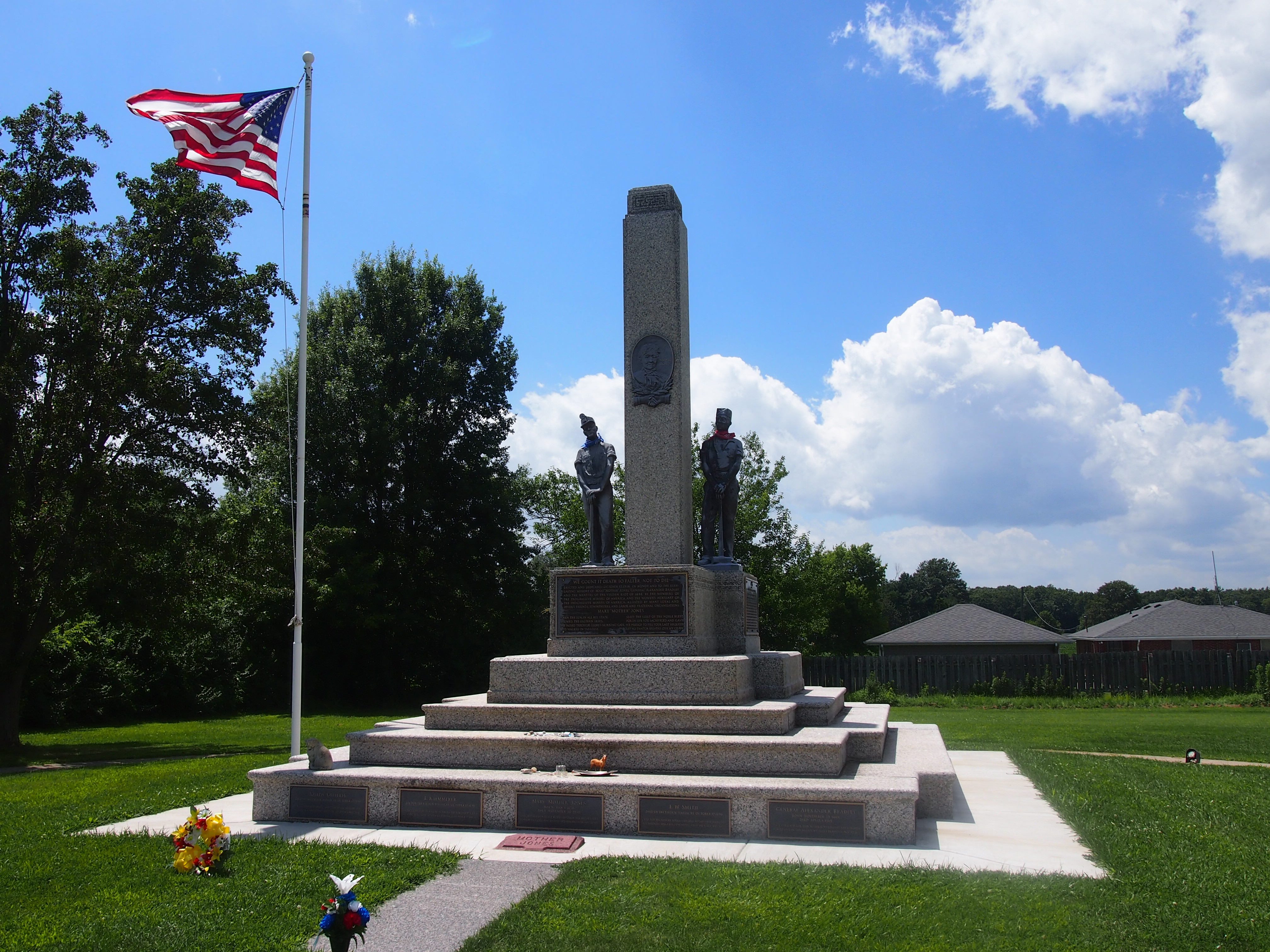
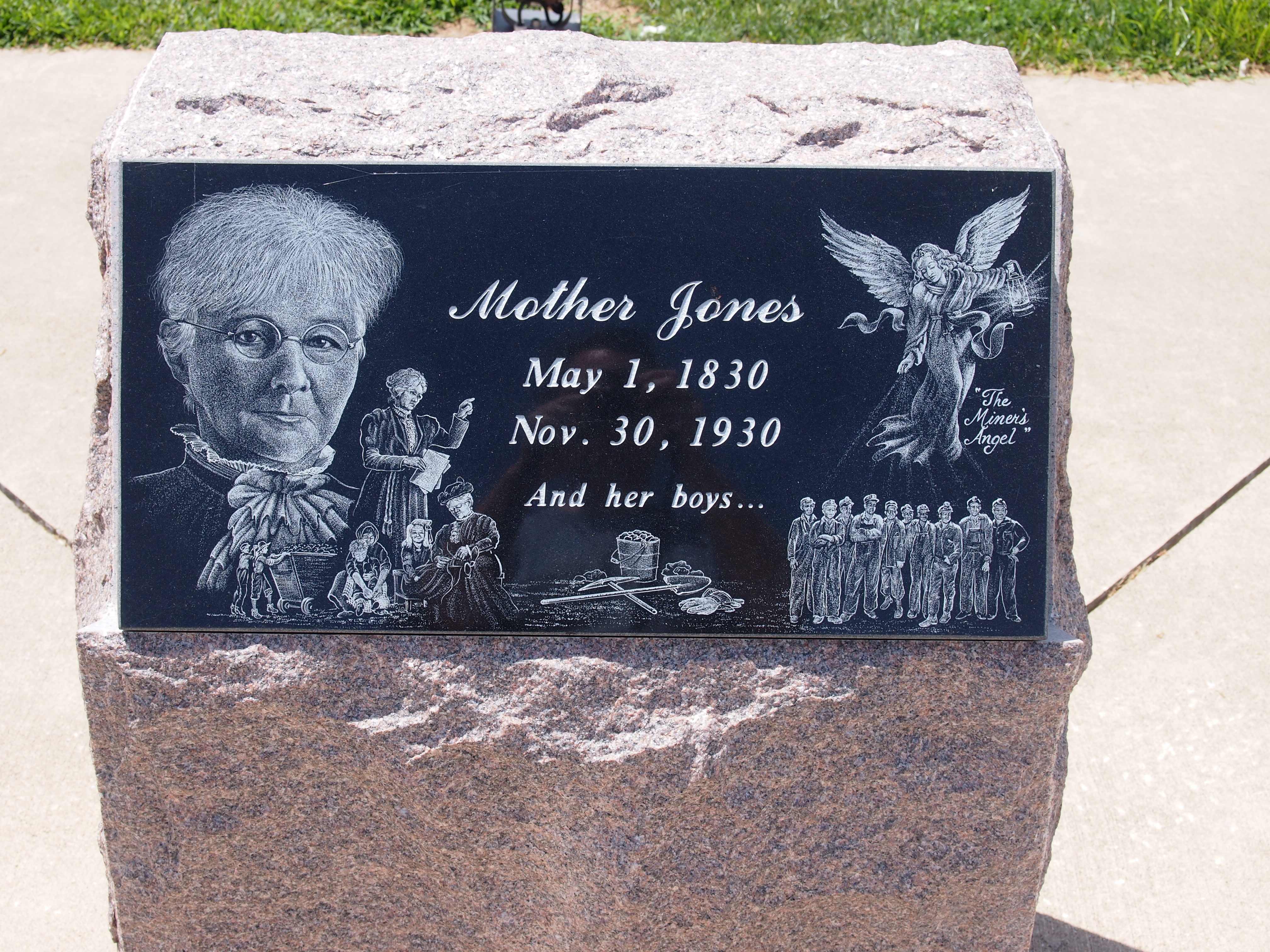
So we pressed on into Illinois. I’d stopped for lunch in Litchfield some years ago, and had a good enough memory of that, so that was the target. But then I saw the Mother Jones sign, and a billboard for a diner in Mt. Olive, pop. 2,000-plus. A winning combo. We got off at Exit 44 and followed the signs to the Union Miners Cemetery, final resting place of Mother Jones and presumably a lot of mining men. This is the view from her memorial.

Union Miners CemeteryThe view of her memorial.

Mother Jones Memorial, July 2014Why Mt. Olive? The Illinois Labor History Society tells us that Mother Jones herself made the request a few years before her death.

A Special Request to the Miners of Mt. Olive, Illinois:

When the last call comes for me to take my final rest, will the miners see that I get a resting place in the same clay that shelters the miners who gave up their lives of the hills of Virden, Illinois on the morning of October 12, 1897 [sic], for their heroic sacrifice of [sic] their fellow men. They are responsible for Illinois being the best organized labor state in America. I hope it will be my consolation when I pass away to feel I sleep under the clay with those brave boys.

— Mother Jones

Mother Jones Memorial, July 2014The monument was dedicated in 1936, and according to the society, “The cash raised for the monument was $16,393.25. All of the labor involved was donated. It stands 22 ft. high on a 20 x 18 ft. base. It is built of 80 tons of pink Minnesota granite. The name of the sculptor is lost from the record.

“The dedication was, itself, a monumental event. Five special trains and 25 Greyhound buses brought celebrants to Mt. Olive. Others came in private cars or hitch-hiked to the town. The crowd was estimated at 50,000. There were 32,000 in the line of march.”

The memorial also includes plaques to men killed in the Virden Massacre, which Jones mentioned, a gun battle in 1898 between union men and company guards over whether strikebreakers were going to detrain at a major mine in Virden. The miners prevailed, in that no one got off the train, but a number of them died. The names of the dead I saw included E.W. Smith, E. Kraemmerer and Joseph Gitterle. “General” Alexander Bradley has a plaque too, though he died in 1918.

“Who were the miners who led this fight? The best known was Alexander Bradley, a 32-year-old mule driver who worked in the Mt. Olive mines,” says Illinois Labor History… By the mid-1890s, Bradley had traveled widely throughout the Midwest, tramping with other unemployed miners to Chicago and taking part in the famous march to Washington DC of Coxey’s Army of the unemployed of 1894.

“In the course of the strike, ‘General’ Bradley, as he became known, developed a well-earned reputation as a colorful and charismatic figure. Arriving with his ‘troops’ in Collinsville, for instance, Bradley sported ‘corduroy trousers, a light blue coat, white shirt, brown straw hat, toothpick (narrow and pointed) shoes, at least three emblems of secret societies and several rings on his fingers…[as well as] a light cane or a furled umbrella.’ ”

More about Virden – “Hotter than San Juan Hill” — is here.

The Crystal Bridges Museum of American Art

I forget which rest stop it was now, but somewhere in Iowa we stopped for the usual reasons, and Ann asked for a cold drink from one of the machines. I fed it my dollar and then some coins, which it returned. But not the dollar. And no drink. There were blank slips to fill out in case of machine failures and a slot to drop them in. My experience with such things is hit or miss – Lighthouse Place Premium Outlets, or at least its vending concession, still owes me a dollar from the mid-00s – but I duly filled it out.

DESCRIBE PROBLEM: Took dollar. Won’t take coins. No refund of dollar.

While looking through my pile of mail when I got home, I noticed a little envelope from Pop Top Vending of Grinnell, Iowa. My slip was inside. So was one Yankee dollar. Good for you, Pop Top. Good customer service isn’t the baseline in this country (as Yuriko often points out), so it needs to be recognized.

The shortest route from metro Dallas to metro Chicago is north on US 75 into Oklahoma, which turns into US 69 – both are divided most of the way – and eventually that runs into I-44. Take that road east to St. Louis, where you catch I-55 northbound for the run up to Chicago. I’ve done it many times over the last 25 years. I used to overnight at Zeno’s Motel in Rolla, Mo., but in more recent years I’ve spent the night at the Munger Moss Motel in Lebanon, Mo. I knew Zeno’s had closed, and the lot seems to be vacant now.

Munger Moss is a solid independent motel. A tourist court. The kind of place where Clark Gable and Claudette Colbert might show up for the night. I was going to take a picture of the neon motel sign, but the co-proprietor – Ramona Lehman, who greeted me at the desk when we arrived at about 9 – turned it off for the night before I got around to it. So I settled for an interior pic of Room 70.
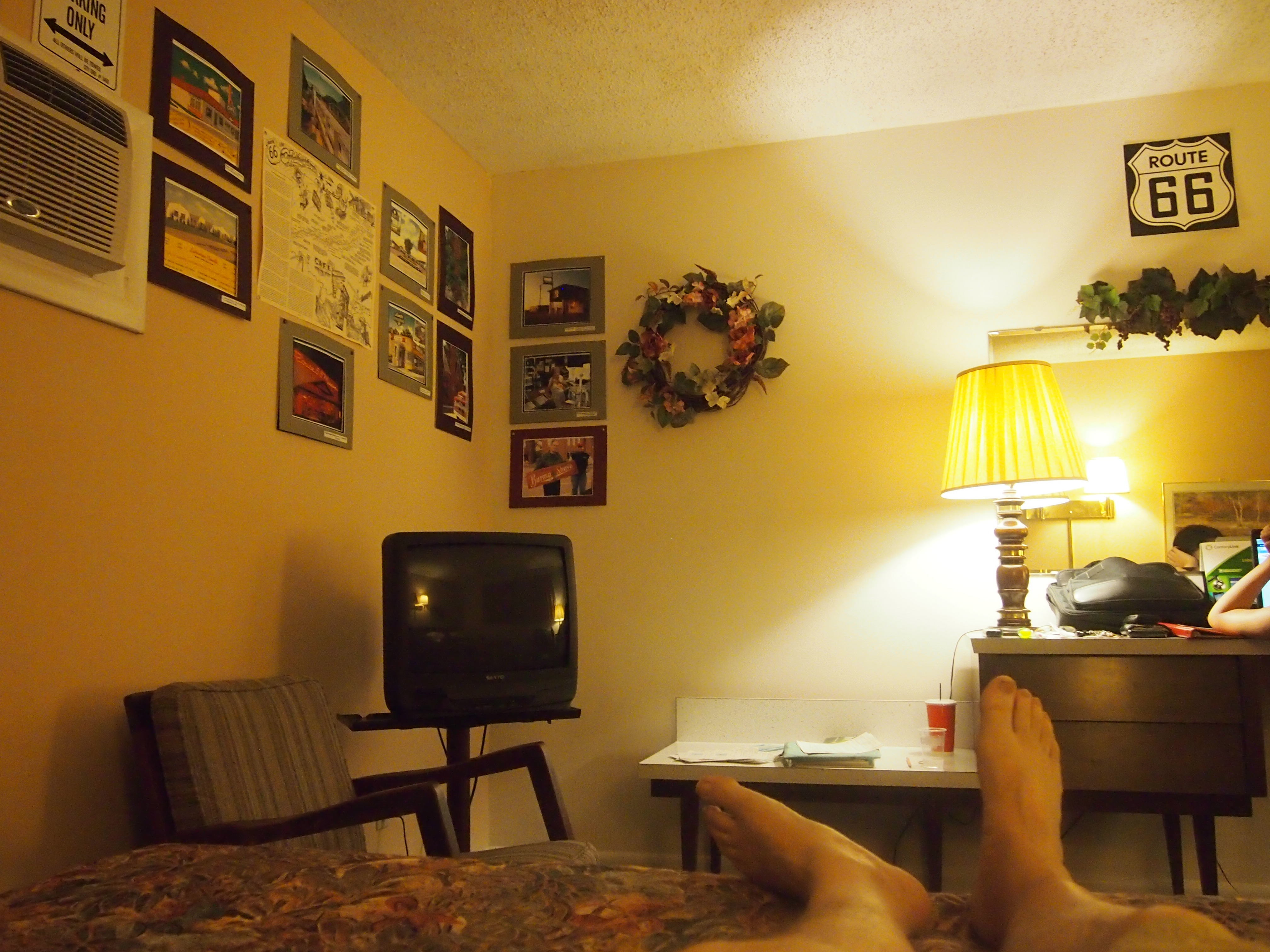
Munger Moss Motel, July 2014Lilly saw the picture and said, “That’s retro.” The pictures on the wall depicted bygone US 66 sites, so yes. Retro. But not completely. Note the TV and the AC. We didn’t turn on TV. Didn’t seem like the thing to do. We did use the air conditioner and access the property’s wifi, though. I had a column to file, and Ann wanted her entertainment. Nostalgia’s fine, but we have to live in our own time.

We arrived latish in Lebanon because I detoured slightly off the most direct route. In northeastern Oklahoma, I turned on US 412 and took it east to I-49 in Arkansas, and then north to Bentonville (I-49 was still called I-540 on my maps, but apparently the name changed recently). Bentonville is known as the hometown of Always Low Prices. Always. It’s the site of the Ur-Walmart and still the location of the behemoth’s HQ.

That isn’t why I came. I wanted to see the Crystal Bridges Museum of American Art. One of the things to do if you happen to be a billionaire is found a museum and stock it with the fine art you’ve been collecting for years. Alice Walton, daughter of Sam Walton, did exactly that. Not another institution on either coast or any of the major cities of the interior, but in the northwest corner of Arkansas.  It’s been open only since late 2011.

You’d think most of the museum’s paintings — and it is heavy on paintings, though there’s a sculpture garden we didn’t have time to see — would already have been locked away in major museum collections, so high is the quality. Shows you what I know about the fine art trade.

From a NYT article published shortly after the museum opened:It was only in May 2005 that Ms. Walton announced the selection of the Israeli-born Boston architect Moshe Safdie to design the museum and ruffled feathers along the Eastern Seaboard by buying a landmark of Hudson River School landscape painting, ‘Kindred Spirits,’ by Asher B. Durand, from the New York Public Library for around $35 million. The purchase came early in an extended shopping spree that rattled nerves, aroused skepticism and stimulated the art market.”

Ruffled feathers and rattled nerves, eh? But I bet when it comes to bidding for art, “riche” always trumps “nouveau.” The museum’s rooms are mostly chronological, from Colonial America to very recent items. A handful of works are astonishingly familiar, such as one of the Gilbert Stuart portraits of President Washington. Many more fall under the category of, You know, I’ve seen that somewhere — it’s here?  Such as “Cupid and Psyche” by Benjamin West, or “Winter Scene in Brooklyn” by Francis Guy, or the delightful “War News from Mexico” by Richard Caton Woodville and the completely charming “The Lantern Bearers” by Maxfield Parrish. (All of those paintings are reproduced under “Selected Works.”)

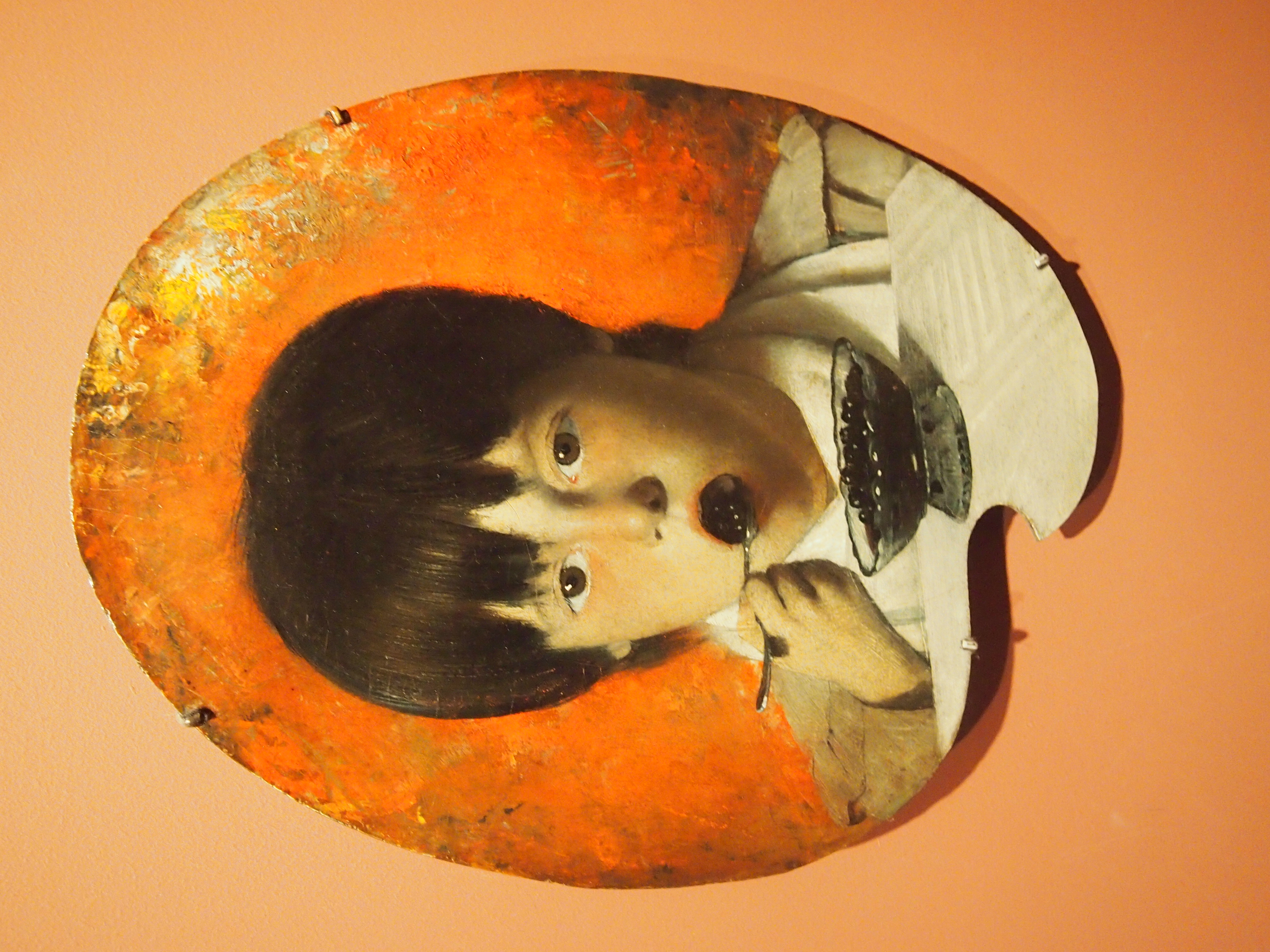
A few of my pics came out decent, such as “Boy Eating Berries” by Joseph Decker, no date (but the artist lived from 1853 to 1924).
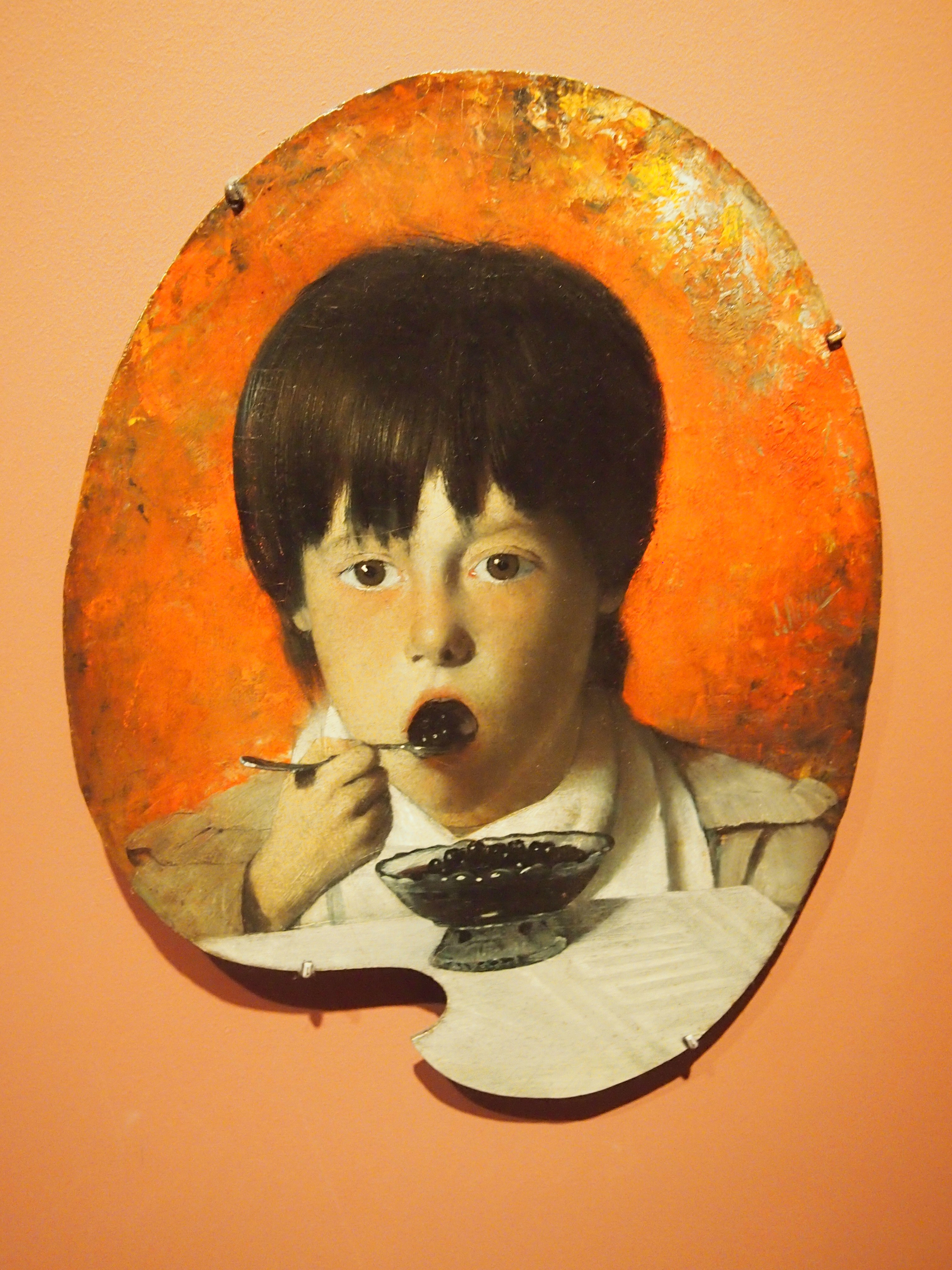
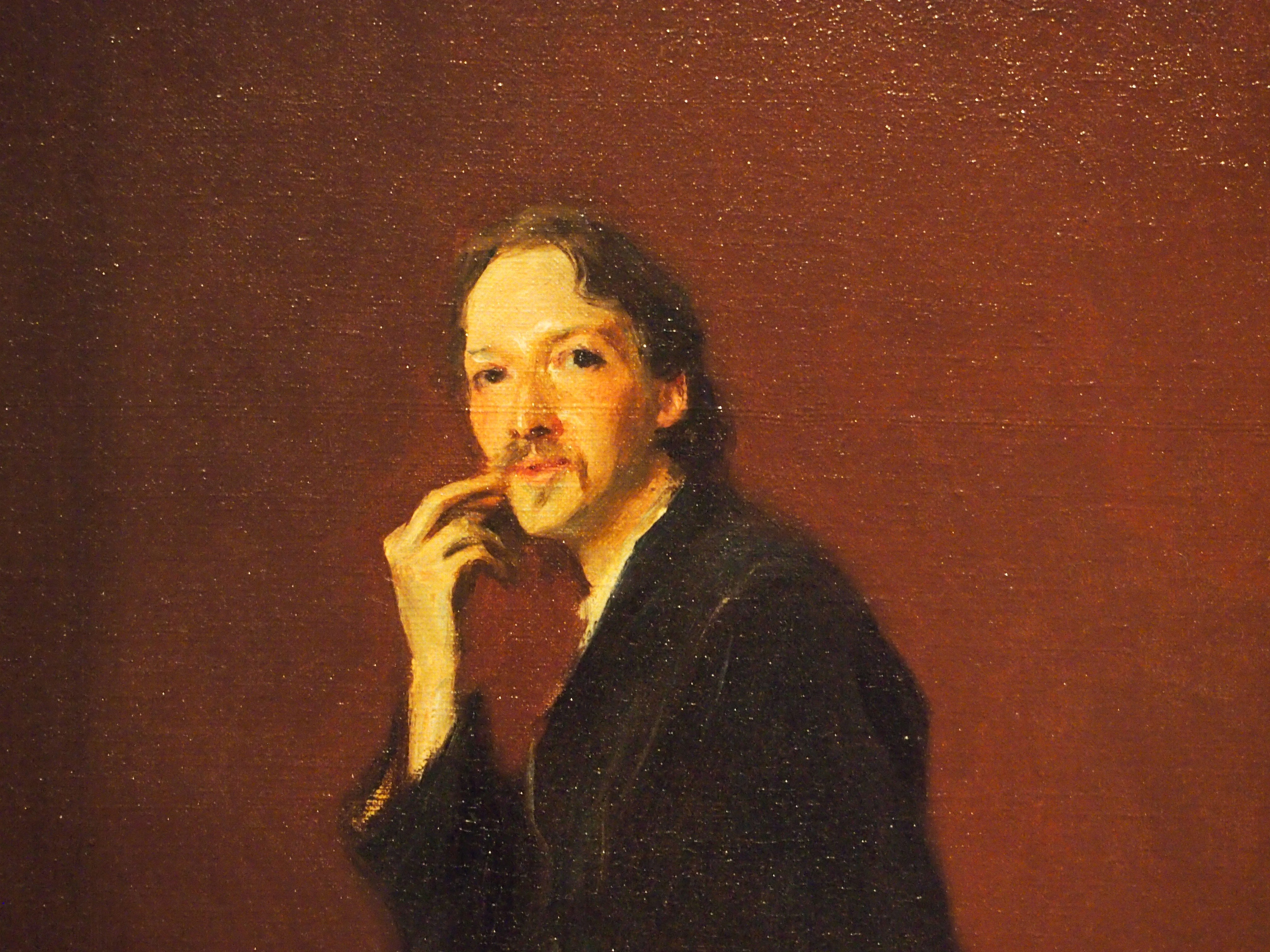
Boy Eating Cherries Did a few detail shots, too. This is RLS from “Robert Louis Stevenson and His Wife” by John Singer Sargent (1885).
OLYMPUS DIGITAL CAMERAFrom “The Lantern Bearers,” which was a Collier’s cover in 1910.

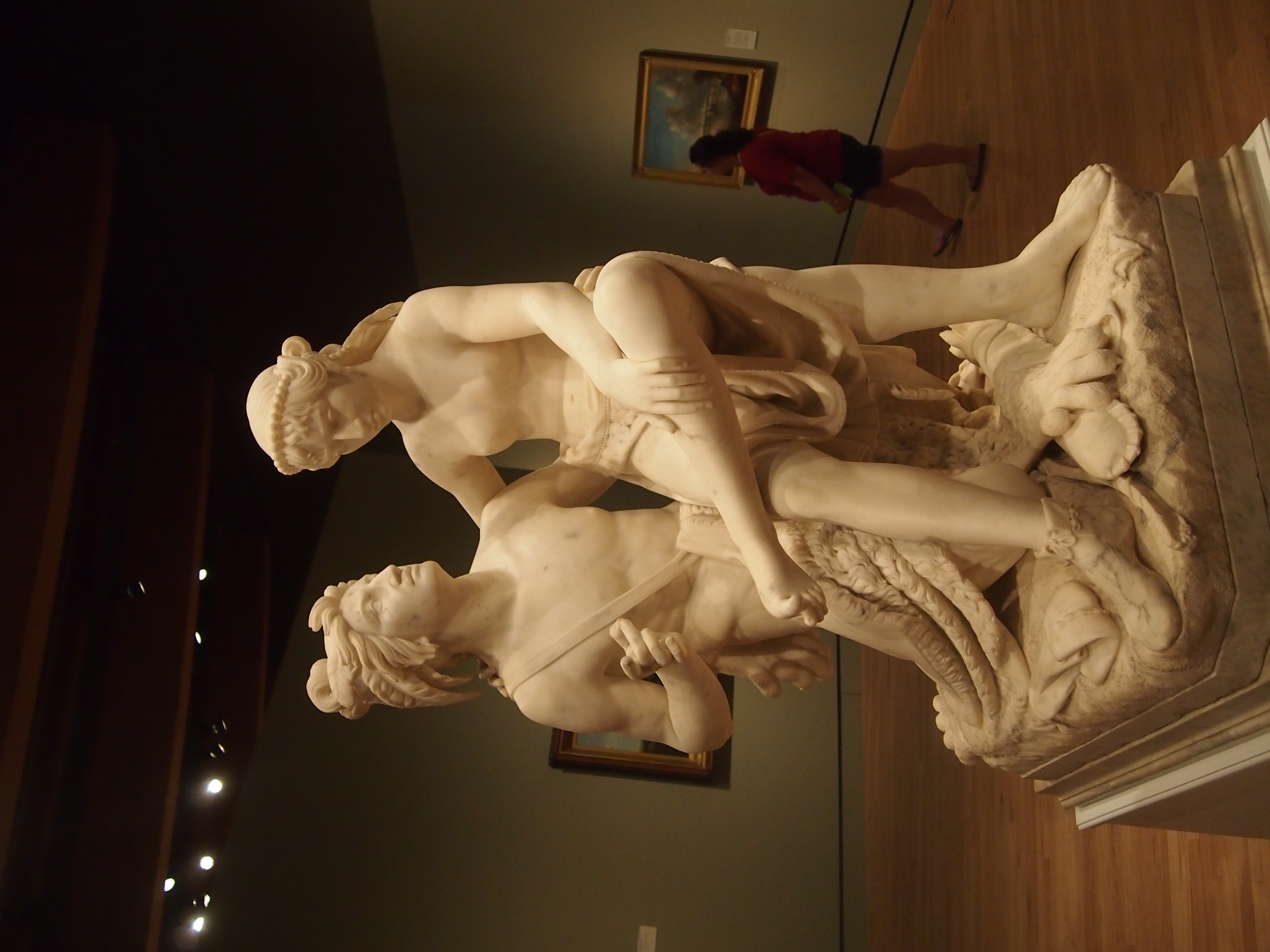
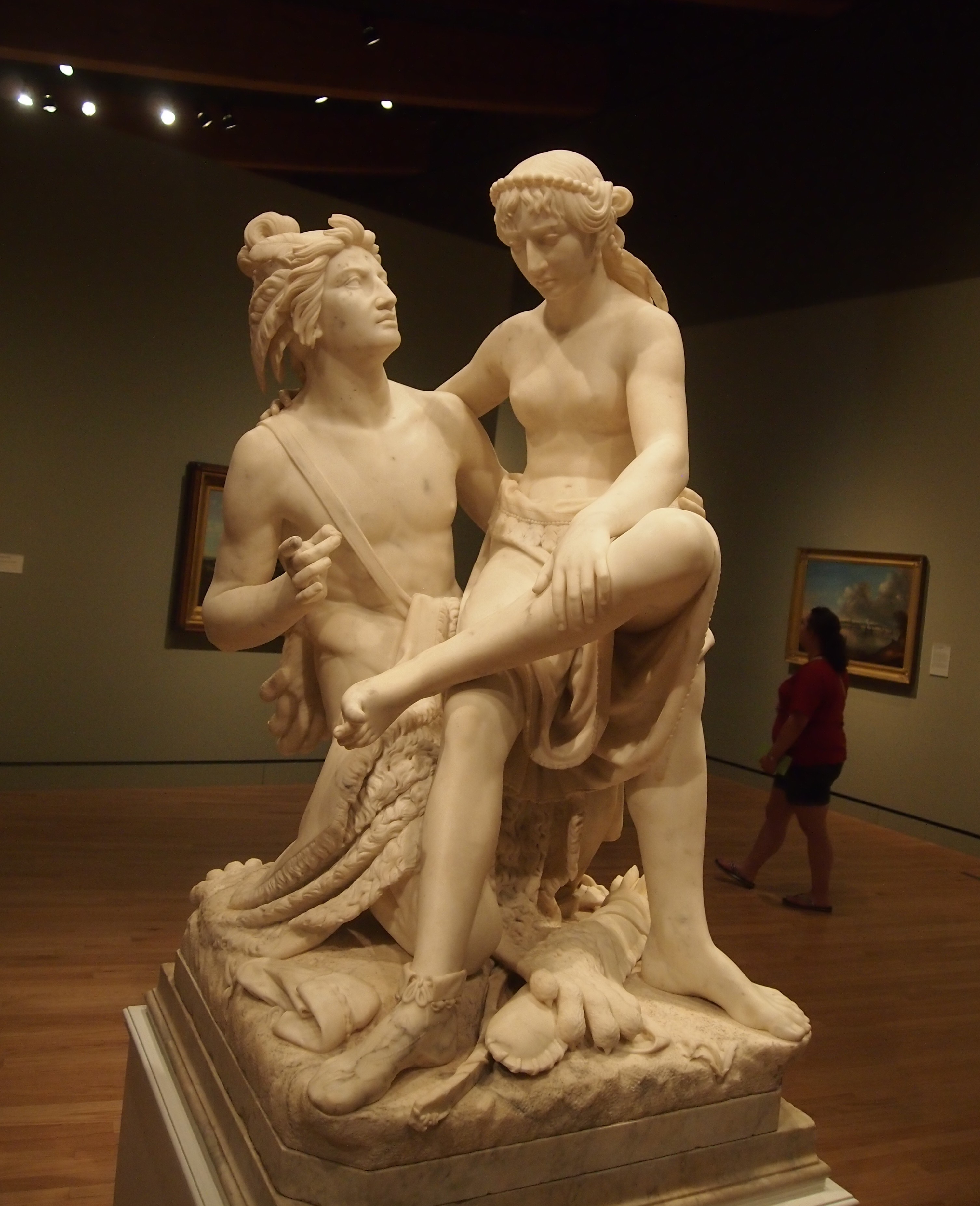
Lantern BearersA few of my sculpture pics turned out passable as well. Here’s an antebellum example, “Atala and Chactas,” by Randolph Rogers (1854). You don’t hear much about that story any more.
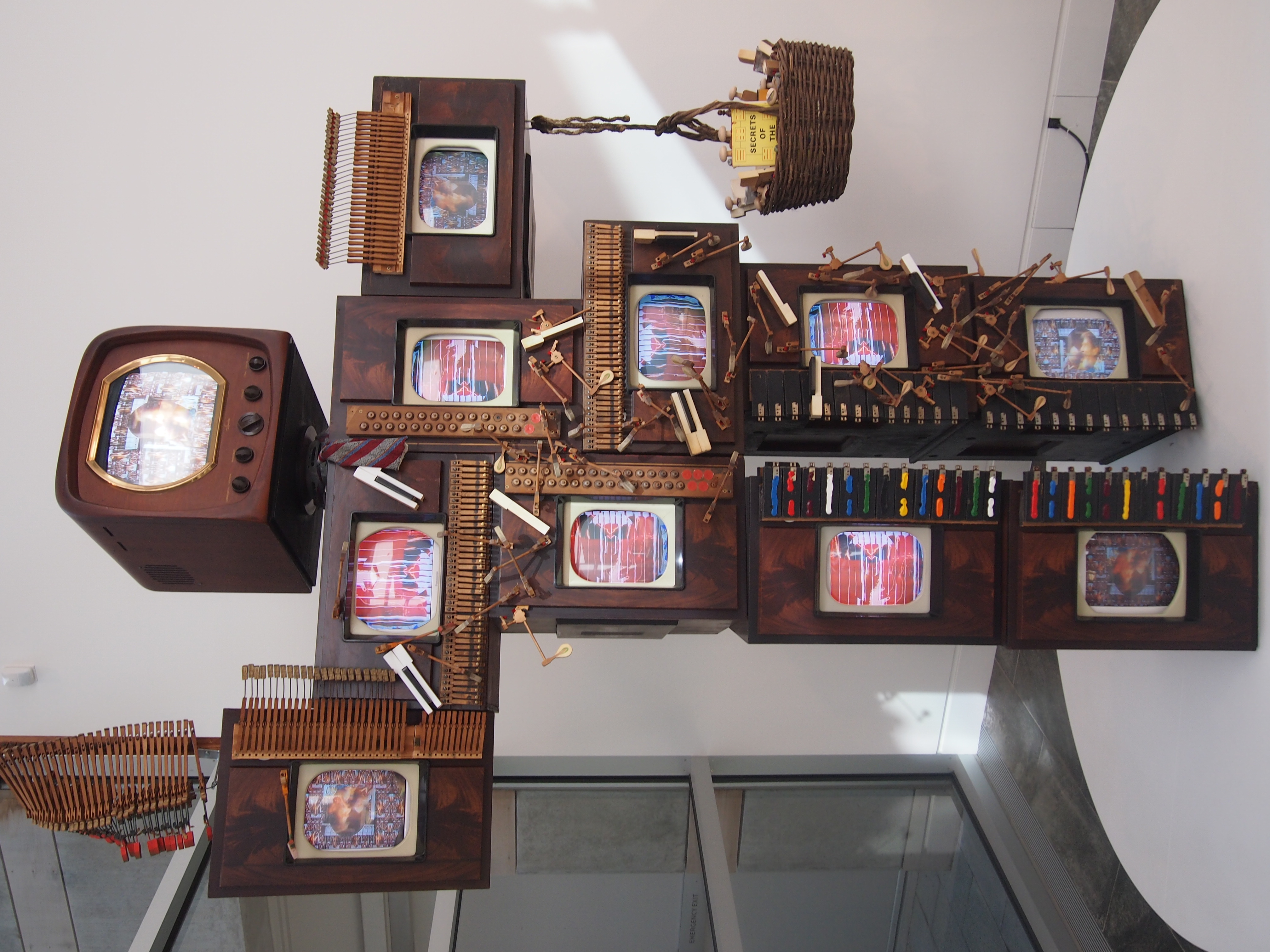
Next, a video-killed-the-radio-star example, “John Cage Robot II,” by Nam June Paik (1995). Eleven wood TV cabinets, 10 Panasonic color TVs, one Samsung, two DVD players and mixed media elements that include piano keys and piano hammers, books, chessmen, and wood mushrooms. You can’t tell from this still, but all the of TVs were playing video loops.
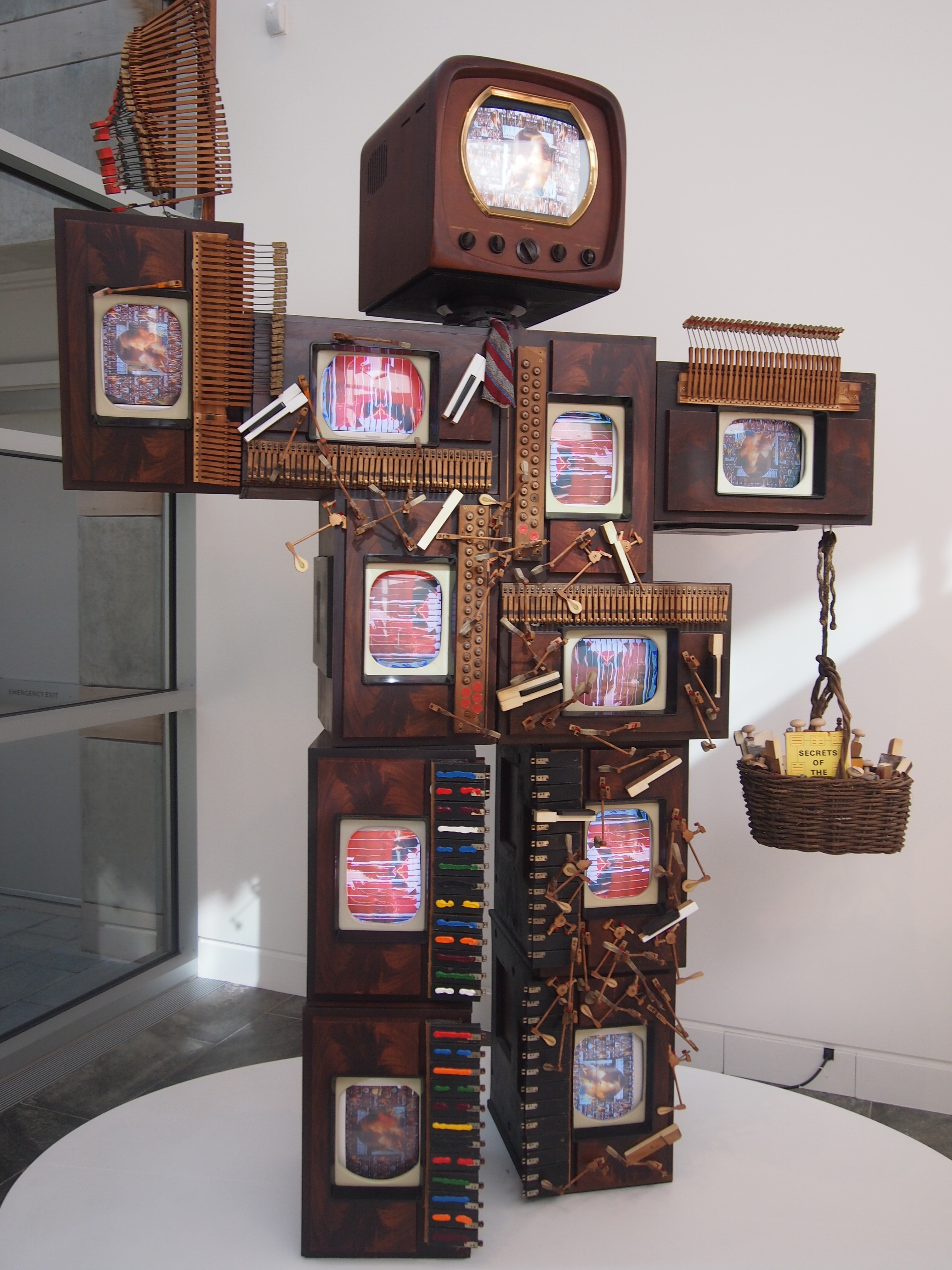
I'm a Television Man, Watching EverythingThe museum also happened to be showing an exhibit about architect Moshe Safdie, including a lot of models of his building designs in such places as Ottawa (how did I miss that?), Jerusalem, Salt Lake City and others. I don’t think I’ve seen anything of his besides Crystal Bridges, which is an interesting work.

“Nestled between two hills in the Ozark… [the museum] traverses a stream within the wild landscape,” notes designboom.com, which annoyingly doesn’t believe in capital letters, so I’ve added them. “Covering 120 acres, the grounds are crossed with an extensive trail network which leads through mature forests of dogwoods, oaks and white pines and eventually leading into the nearby downtown area. The environment fuses art with nature, allowing visitors to descend from the site’s entrance and immerse themselves into the center’s recessed setting, encountering a cluster of pavilions wrapped around a focal pond.”
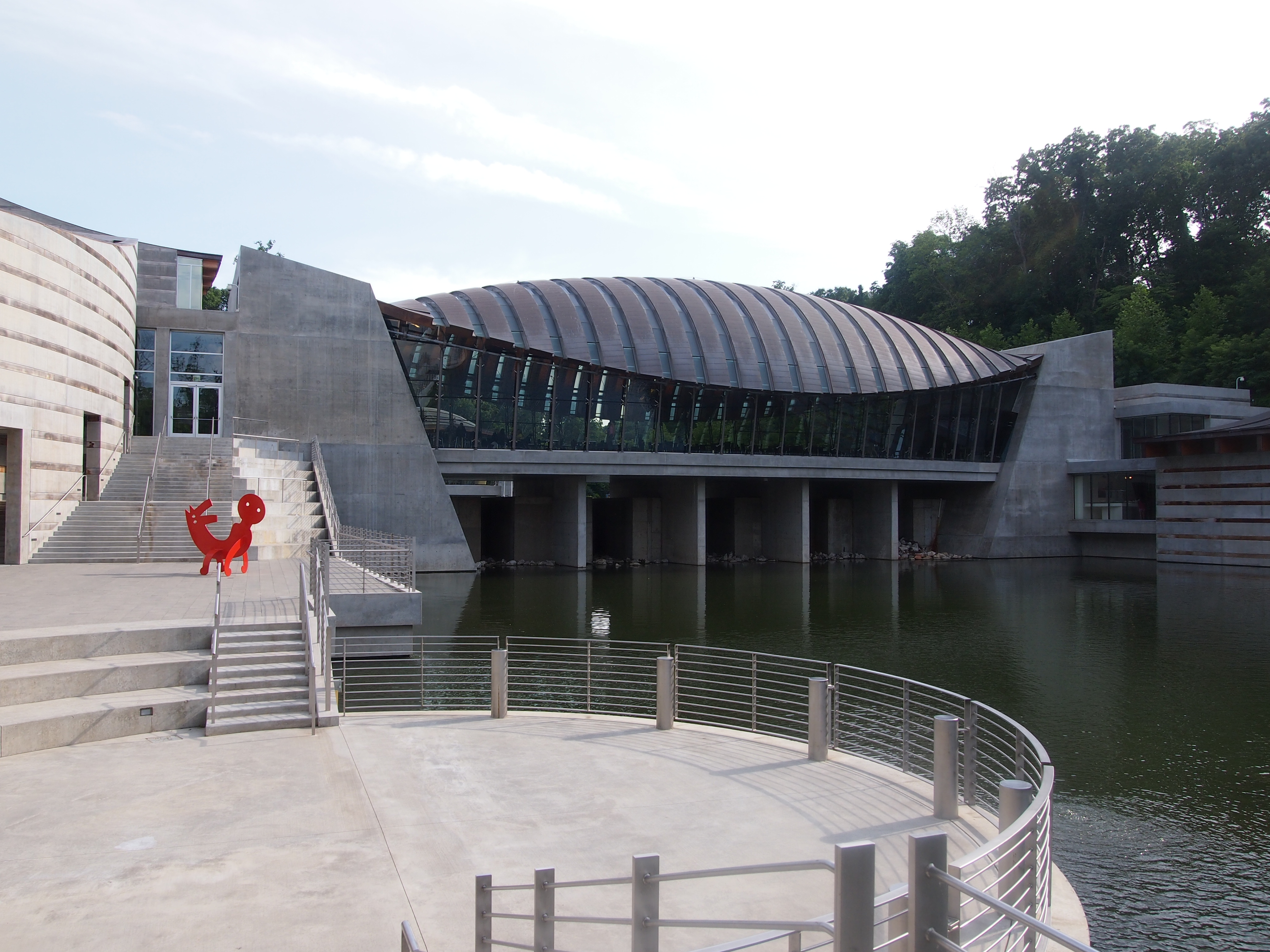
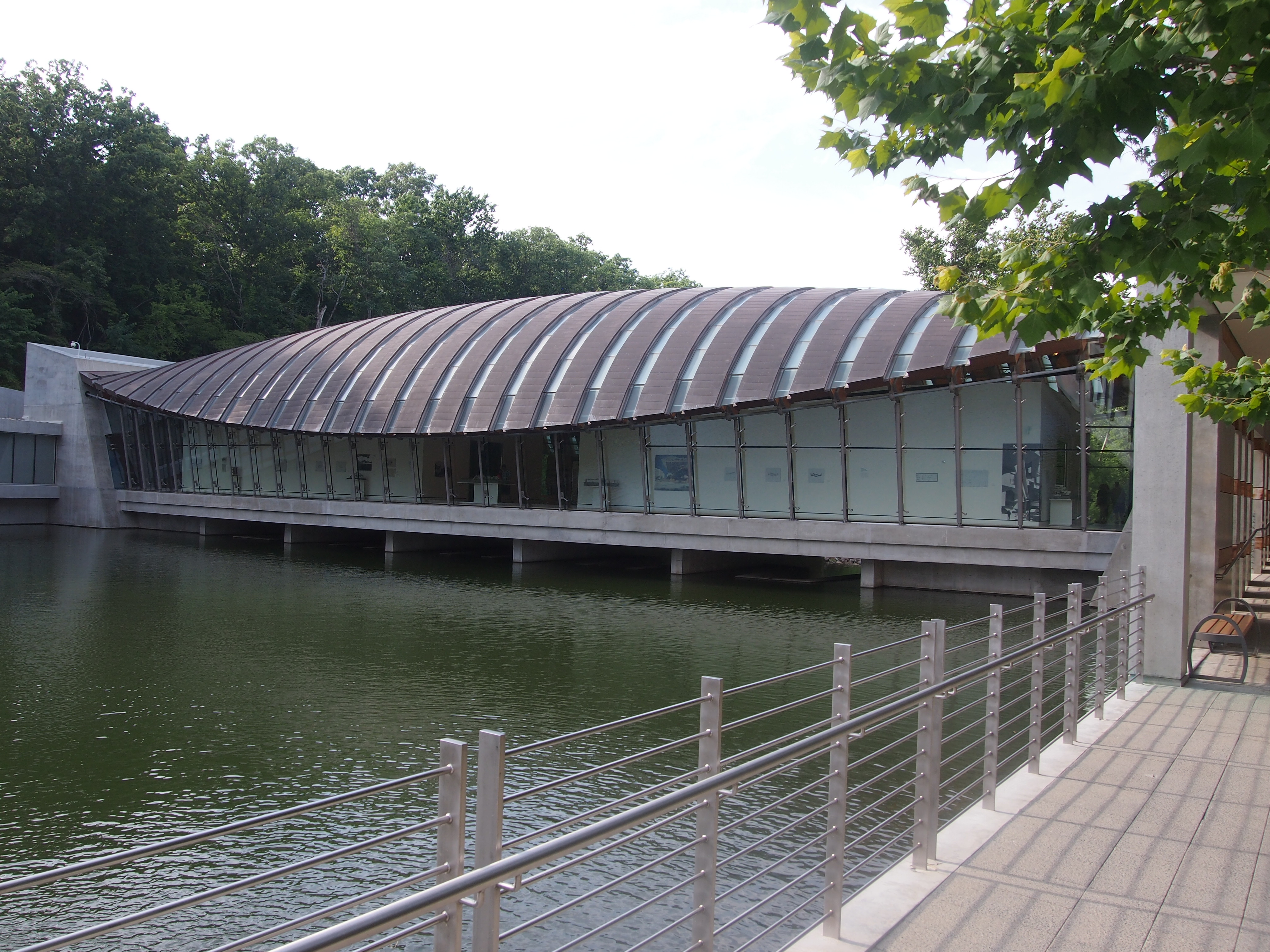
A billion here, a billion therepretty soon you're talking real moneyWe arrived at about 4:30, ahead of closing at 6, so we didn’t have the time to walk around some of the wooded areas. Or to visit downtown Bentonville or the not-far-away Walmart Museum which, no doubt without a hint of irony, celebrates the five-and-dime that Sam Walton founded in Bentonville more than 60 years ago. Also no time for Pea Ridge National Military Park, which is in this part of Arkansas. I’m told I visited when I was small, but I don’t remember it. Ah, well. I might pass this way again sometime.
The University of the Incarnate Word

When I lived in San Antonio, we often drove by Incarnate Word College. I don’t ever remember visiting except (I think) one of its auditoriums for a high school mock UN one Saturday in 1978. (I was an Iraqi delegate, and eventually the Arab nations got together and walked out in protest over something or other.) These days the school is the University of the Incarnate Word, and it’s bigger than I realized: nearly 9,200 students, which makes it the largest Catholic university in Texas and the fourth-largest private university in the state.

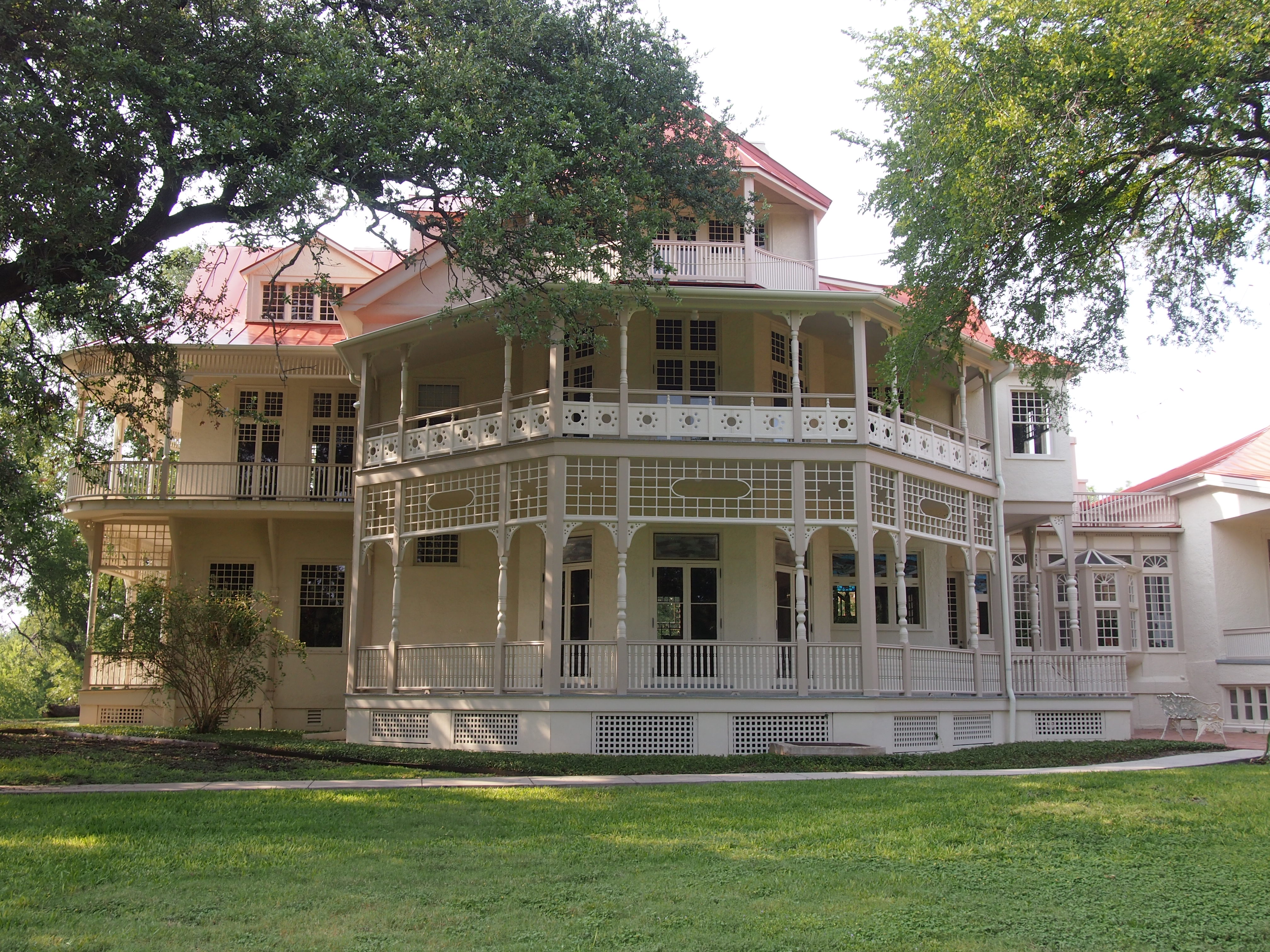
The main campus measures 154 acres, and includes the previously mentioned Blue Hole, mainspring of the headwaters of the San Antonio River. On the way to the Blue Hole, we passed the mansion of George Brackenridge, which he called Fernridge. Brackenridge, a late 19th-century San Antonio business magnate, eventually sold the house and some land to the Sisters of Charity of the Incarnate Word to found their school. (He also called the nearby area Alamo Heights, which he owned for a while, and donated the land for Brackenridge Park.) I assume the university uses it for events now.

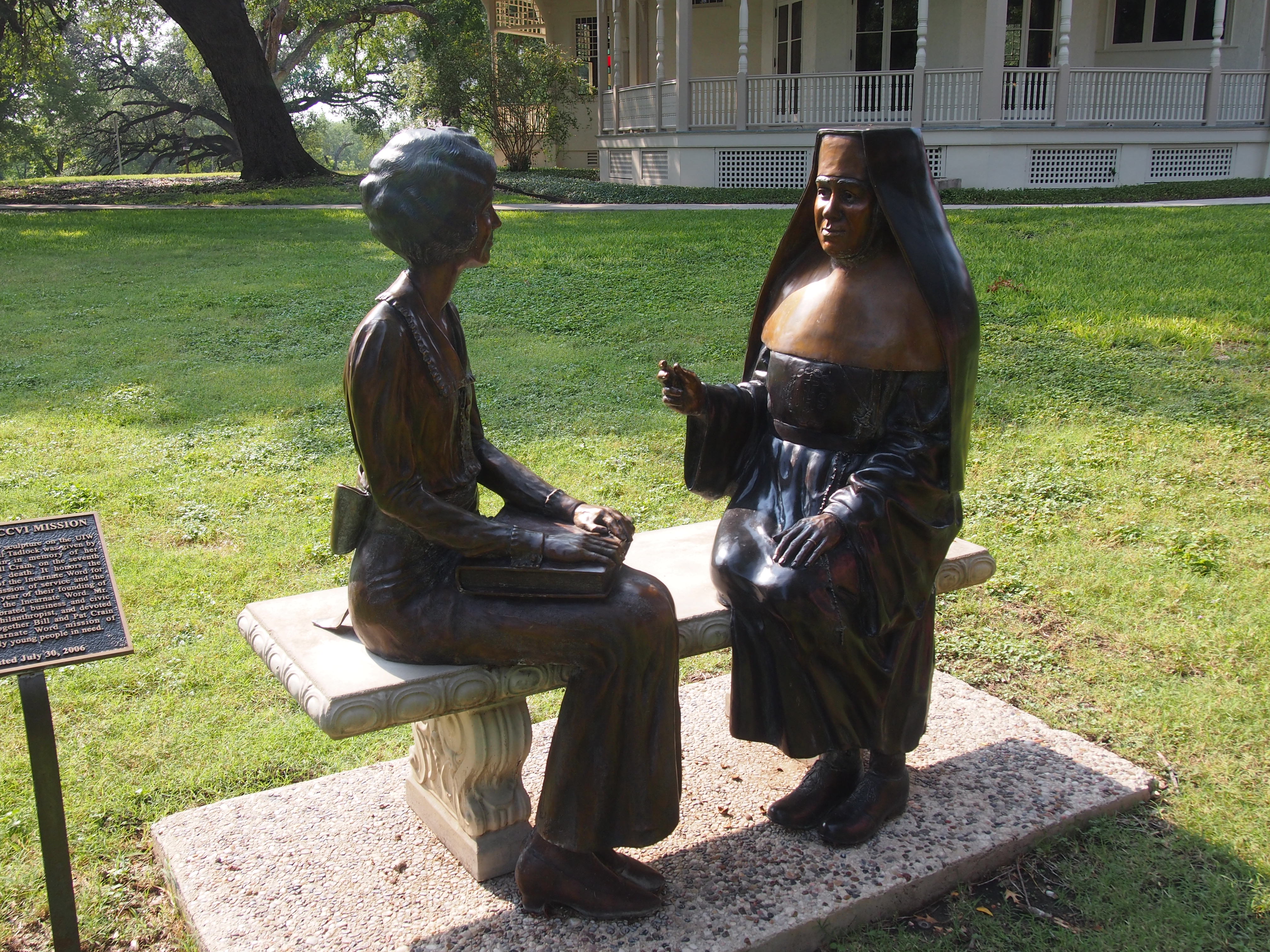
Brackenridge Villa, July 2014Not far away is a bronze nun. Not something you see every day. She seems to be in teaching mode, for the benefit of the young lady bronze. According to the plaque, the work is called “Living the CCVI Mission” and is by Paul Tadlock of New Braunfels. It was dedicated in 2006.

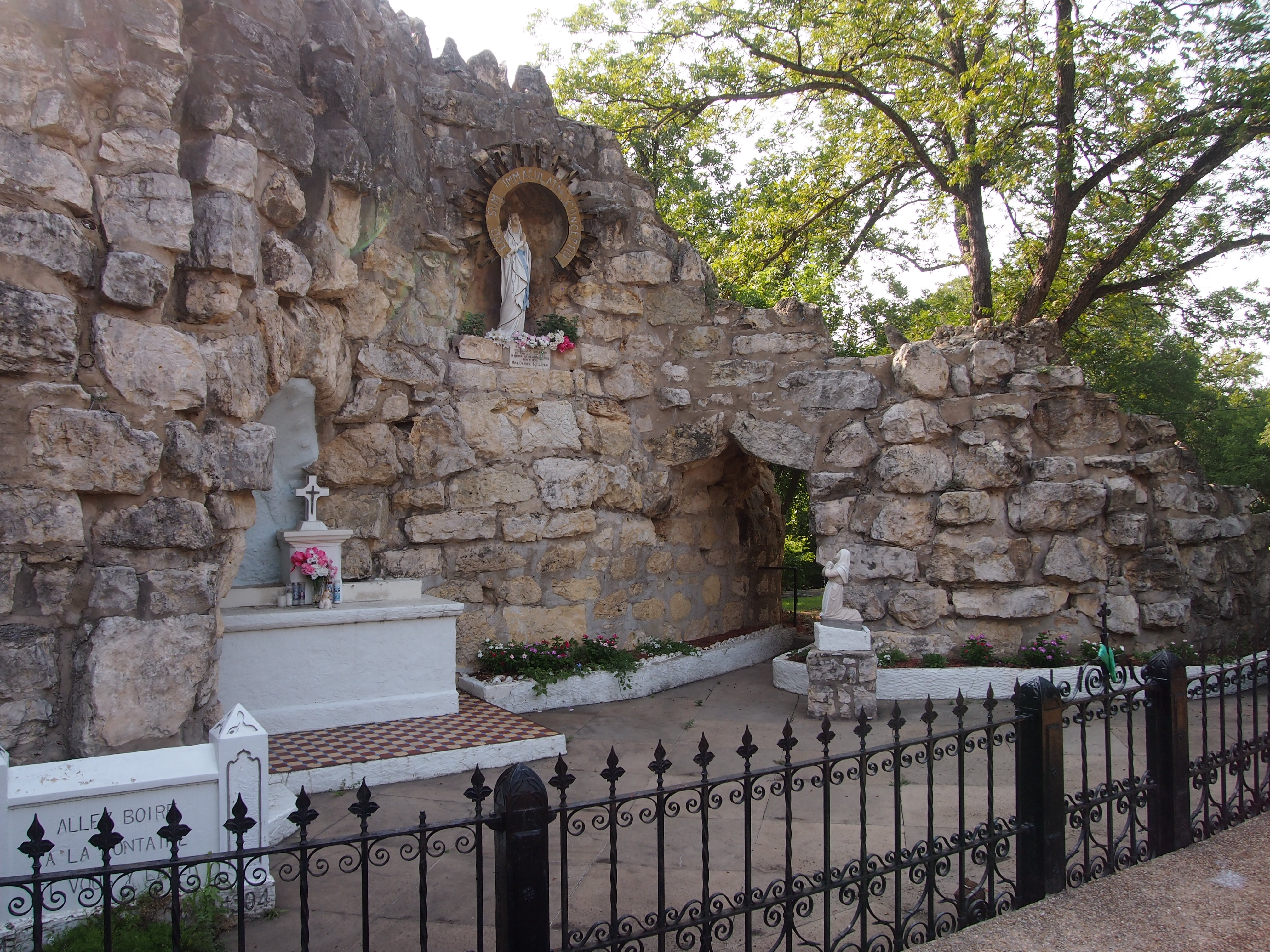
Bronze NunA little further into campus is a grotto. I seem to be running across a fair number of grottos lately. The Incarnate Word grotto is a Lourdes-class grotto, built in 1904 by Fr. J.G. Bednarek, a priest from Chicago, to mark the 50th anniversary of the promulgation of the dogma of the Immaculate Conception of the Virgin Mary. Apparently Fr. Bednarek taught at the school, but why he took an interest in building a replica of Lourdes there, I haven’t uncovered yet.

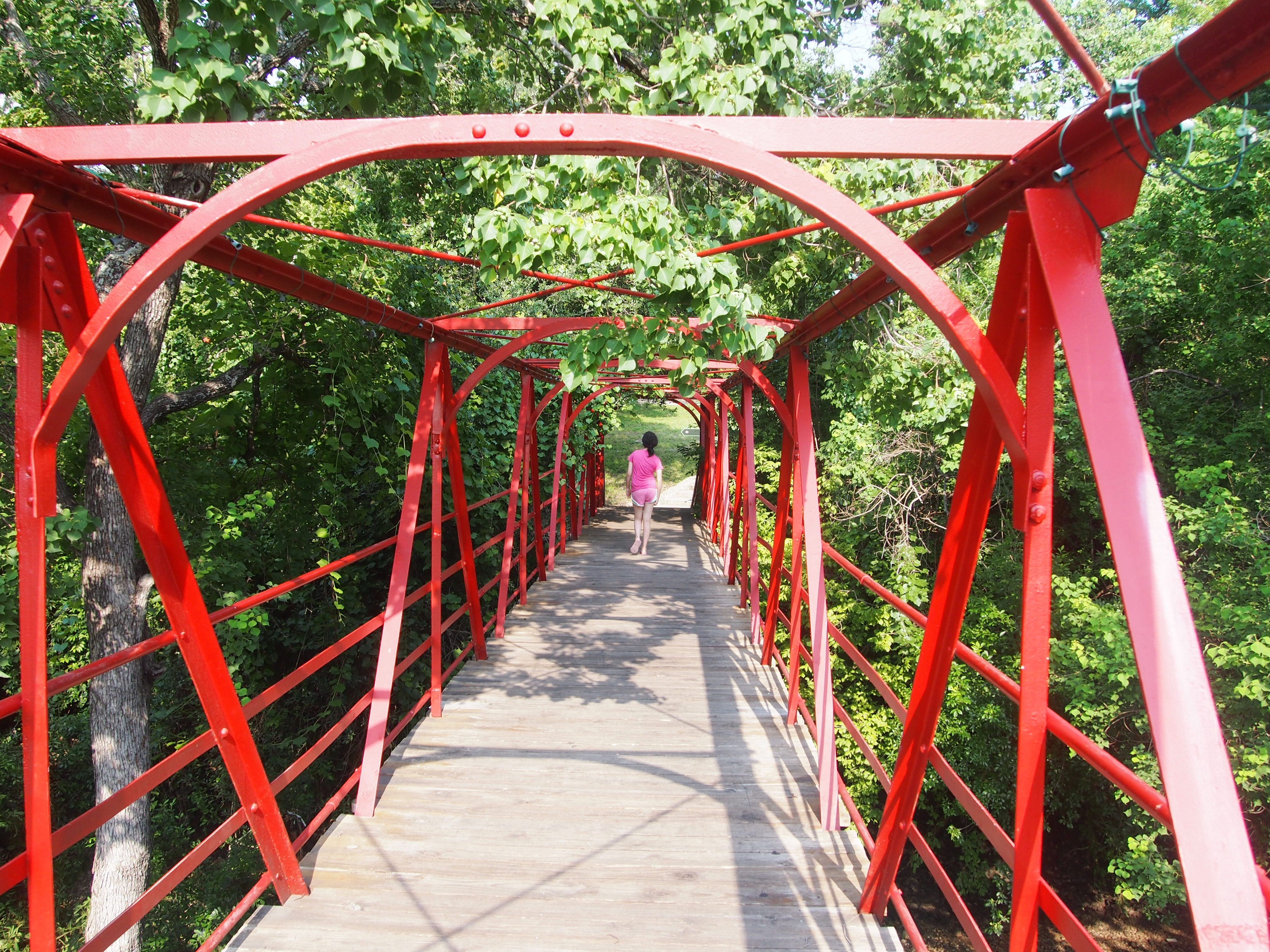
Incarnate Work grotto, July 2014Finally, there’s the first bridge over the San Antonio River, which is just south of the Blue Hole. The river’s pretty small at that point, where Olmos Creek joins the outflow from the Blue Hole. A rivulet in a ditch, really, but nice and leafy this time of year. Nearby is the 53-acre Headwaters Sanctuary. The sanctuary is the last remaining undeveloped property from the original 283-acres the sisters bought from George Brackenridge.

Incarnate Word campus, July 2014We decided it was too hot to walk on the sanctuary, which was still further. But since we’d come to the bridge, the thing to do was cross it.

Bentonite Snarls I-35

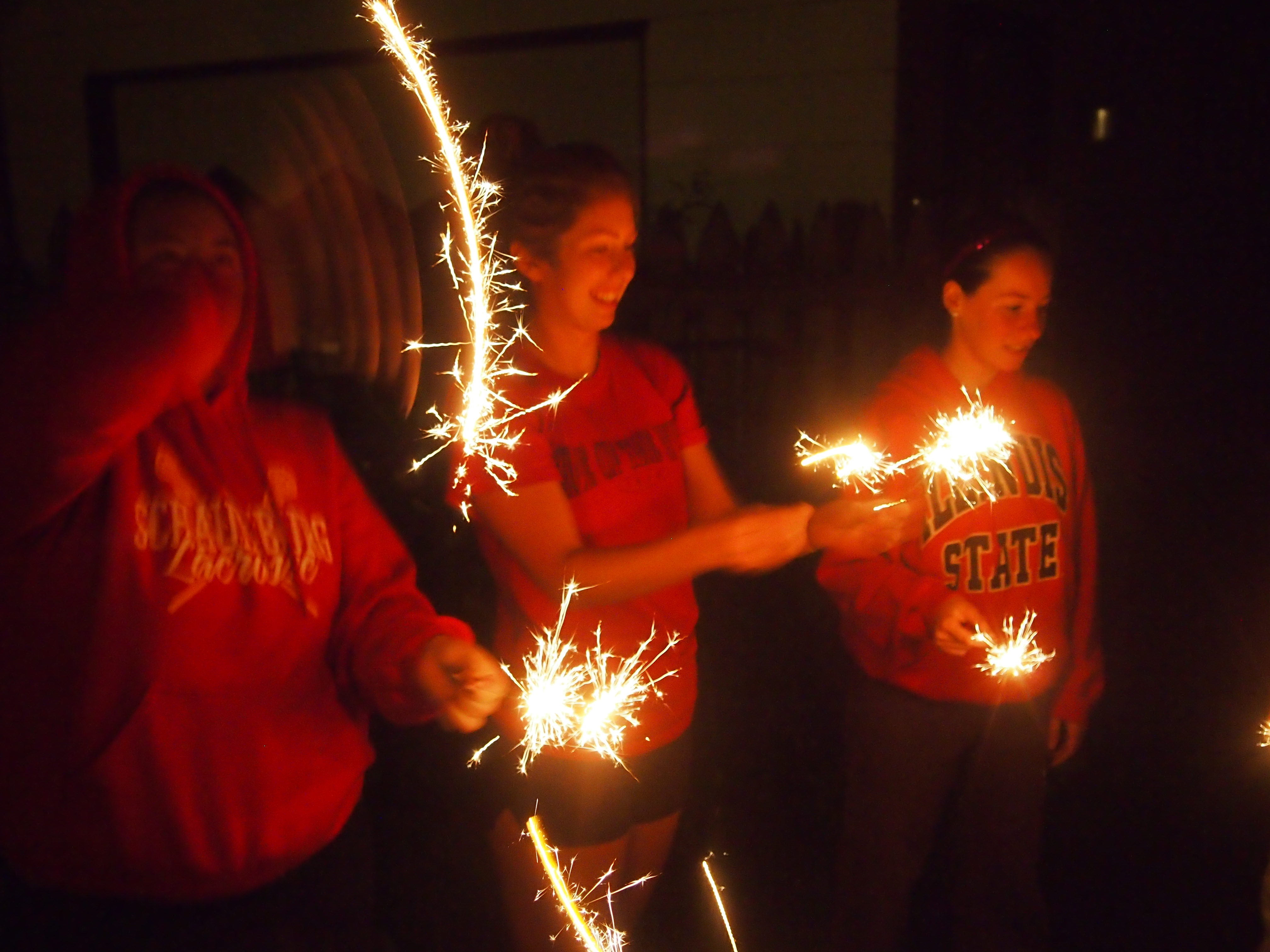
One evening last week was sparkler night. While some of Lilly’s friends were over they did some sparkler-ing in the back yard, where a lot of things happen. A little earlier in the week, the dog had a noisy encounter with a skunk there. Luckily, she — the dog — didn’t get a full blast of eau de skunk. Maybe it was just a sideways blow. She smelled bad, but we were able to wash most of it off.

Lilly, July 2014Sparklers, July 2014Reminds me of an earlier sparkler session.

On the morning of July 18, Jay and Ann and I, along with Jay’s two beagles, set off from Dallas to Austin, where we planned to drop off the dogs at my nephew’s house and spend an afternoon looking around town before meeting my old friend Tom at his place in the later afternoon. We were going to enjoy a slice of Austin on a Friday afternoon. We might not have made it to the Cathedral of Junk, but the Harry Ransom Center or the UT Tower were possibilities. Maybe even a Moon Tower, but those are really best at night (and I did see one at night, years ago).

The Lords of Travel sometimes have other ideas about your day. We headed out southward on I-35 the old-fashioned way. That is, we just went. It’s the last time I drive on I-35 in Texas without consulting Google Traffic.

Things were going well until just south of Waco. We’d been warned earlier by a TxDOT electronic sign to “expect delays” south of Waco. Delays are par for the course on I-35, so we weren’t concerned. Thanks for nothing, TxDOT. What the sign should have said was LEAVE ROAD NOW FIND ALTERNATE. We drove into a massive Interstate gridlock that swallowed up our afternoon.

Once we’d been stuck for a while, Jay called his son Sam to get some idea of what had happened. Sam looked it up (and informed us that Google Maps would have tipped us off). A truck accident early in the morning. Later, I dug up a story from KWTX.

Bell County (July 18, 2014). The southbound lanes of Interstate 35 were reopened just after 2 p.m. Friday between Waco and Temple, two hours after the northbound side of the highway was cleared and nearly 12 hours after three separate 18-wheeler accidents that shut down the highway in both directions.

Southbound traffic was stacked up for about 14 miles into Waco, the Texas Department of Transportation said, and it could take several hours for normal traffic flow to resume…

One of the 18-wheelers that crashed spilled its load bentonite, a material commonly used in drilling mud. When combined with water, it serves as a lubricant, which made the highway slick and required a hazardous material team response to clean up the southbound lanes…

The first accident happened just before 3 a.m. at mile marker 315 and shortly after two more accidents happened between 315 and 314, a spokesman for the Department of Public Safety said.

Authorities directed traffic onto access roads, but the backup extended northward to Hewitt and southward to Temple by mid-morning and left many drivers with no place to go.

Bentonite, huh? We were near the Bentonite Capital of the World once. That’s the last time I thought about it. Eventually, we too left the Interstate — of our own accord — and made our way through the towns of Moody and then Belton on smaller state roads. Then regular ol’ Austin-area gridlock kicked in and didn’t arrive till around 6. Roughly five hours had been added to the trip. For extra fun, one of the dogs threw up.

At least someone did well from the traffic situation. We stopped at a convenience store near Belton, but still away from the Interstate, and the man behind the counter asked us, “Did you come from I-35?” We weren’t the only ones. He must have had extra businesses that day.

Two Bridges of Madison County

While in Winterset and environs, I took the opportunity to see two of the wooden covered bridges of The Bridges of Madison County fame. The movie, at least, seems to be relegated to a chick flick ghetto. Wrongly, I think. The story was at least as much about the visiting photographer – the man – as it was about the farm wife.

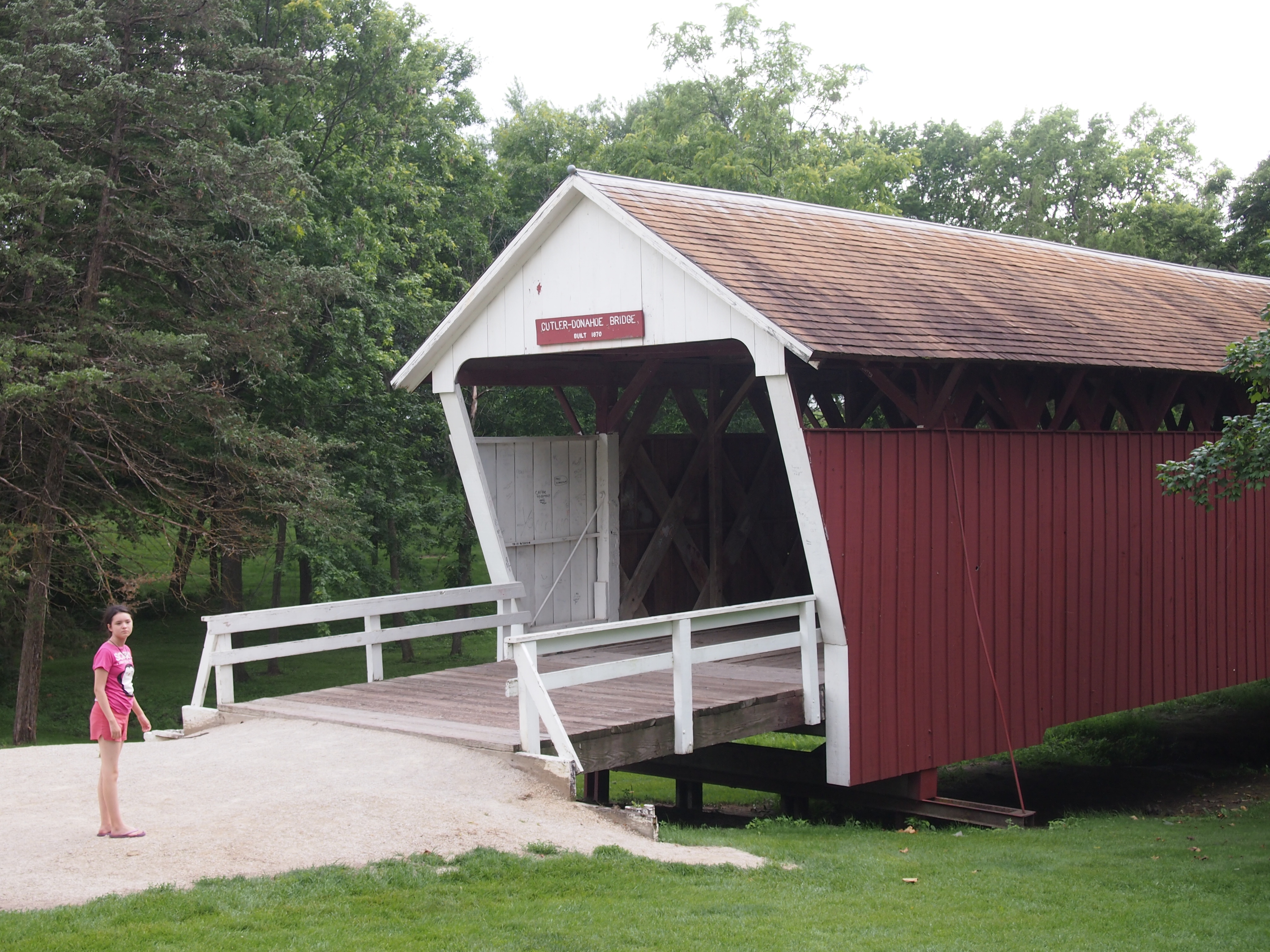
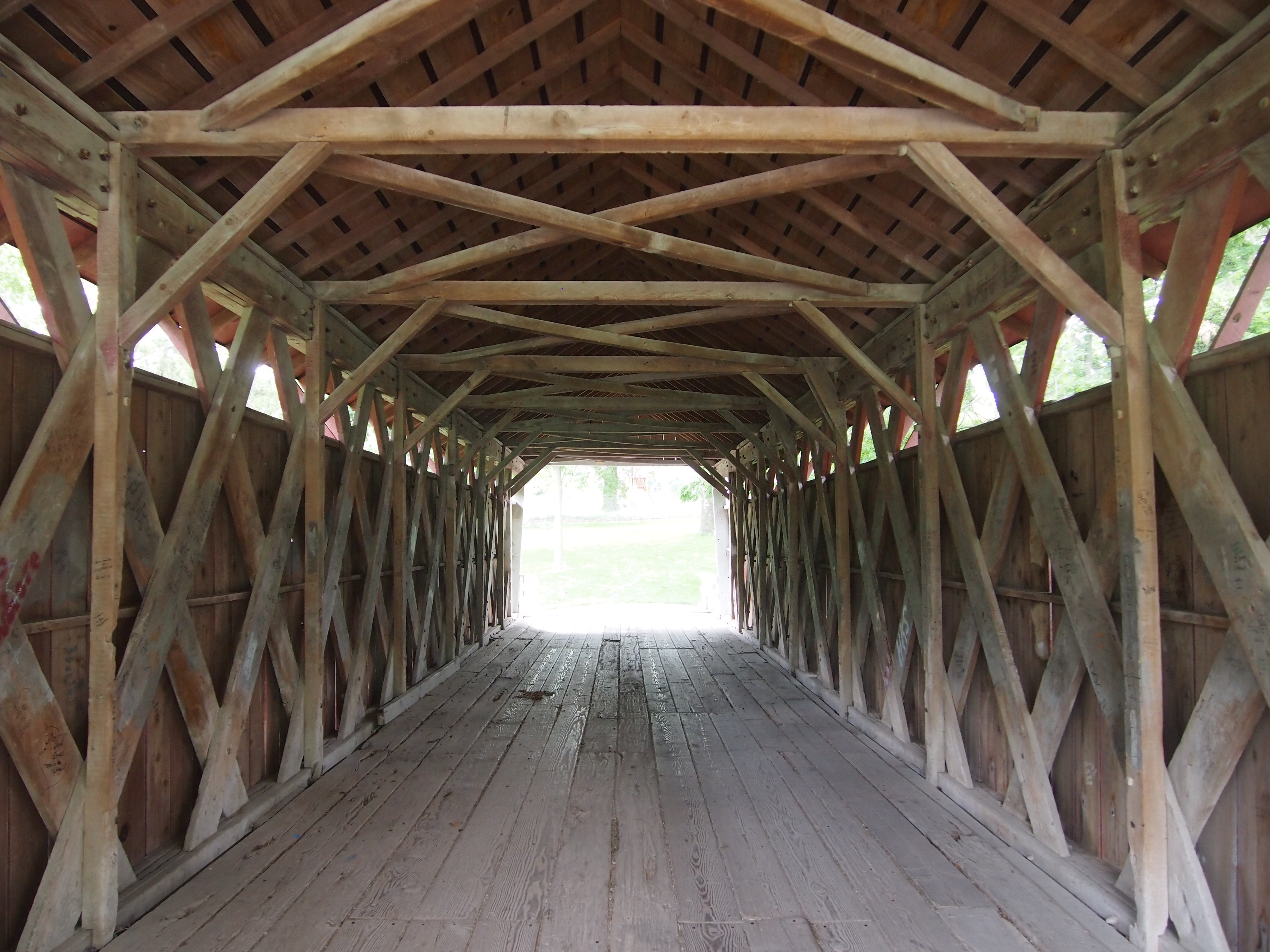
Movie or not, I liked the bridges. At least the two I saw.  It’s remarkable that such artful wooden construction has survived for more than a century, but they have. Ann was less impressed. When we visited the first structure, the Cutler-Donahoe Bridge, she said something like, “What’s so special about this bridge?” You have to be older to appreciate older things, maybe. (Though I’ve liked old things since I can remember. I’m peculiar that way.)

Cutler-Donahoe Bridge, July 2014

The Cutler-Donahoe Bridge dates from 1870, built by one Eli Cox. In 1970, it was moved to Winterset City Park, where we saw it. Length, 79 feet. Weight – and you’d think it would be lighter – 40 tons. Nice work, Eli.

Cutler-Donahoe Bridge interior

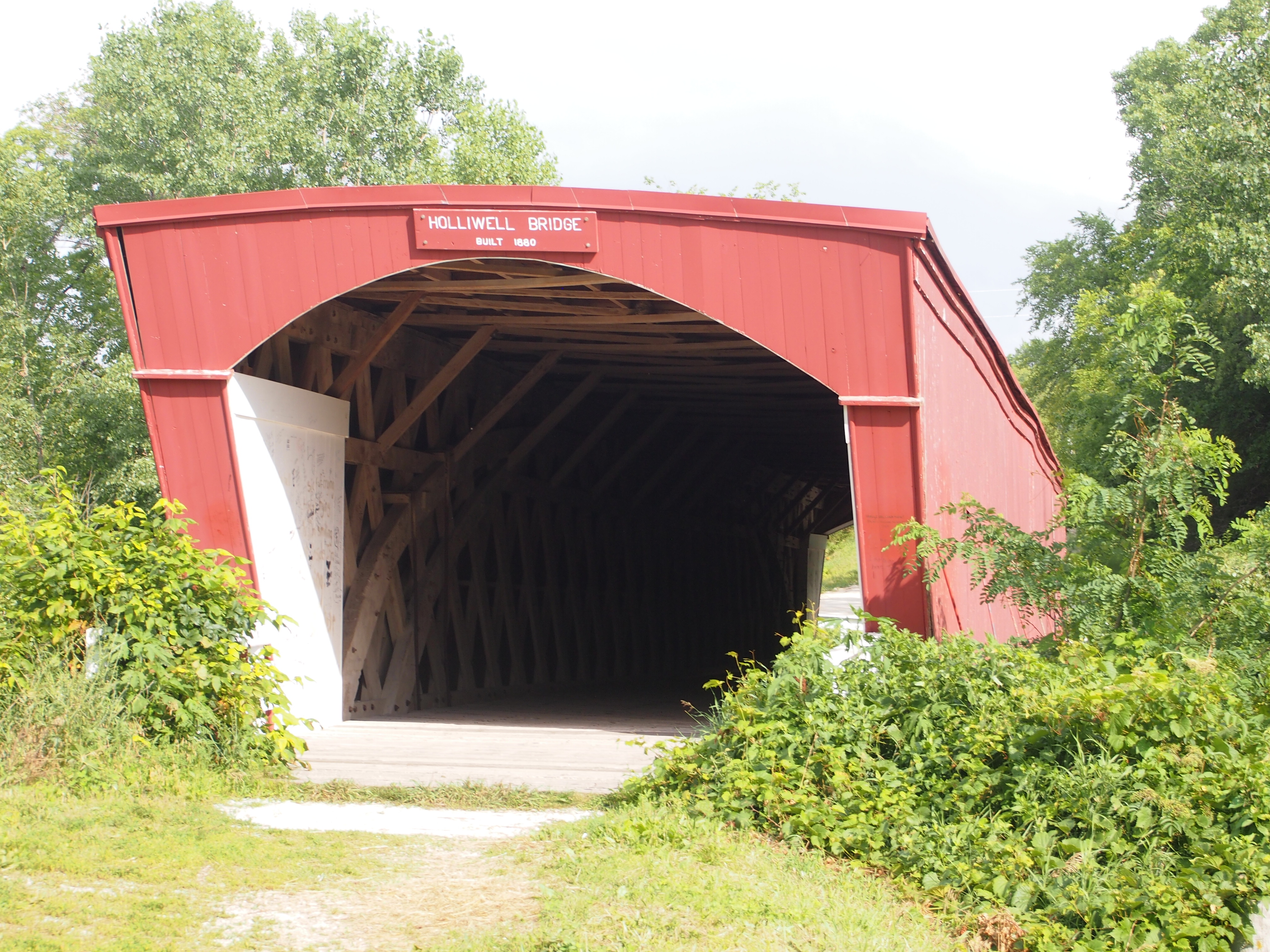
Not far from town is the Holliwell Bridge, in situ over the Middle River.

Holliwell Bridge, July 2014Ann stayed in the car for this one. The structure’s a little newer than Cutler-Donahoe, built by Benton Jones in 1880 and renovated in 1995 (on the occasion of filming the movie, I guess, but my sources don’t say so explicitly).

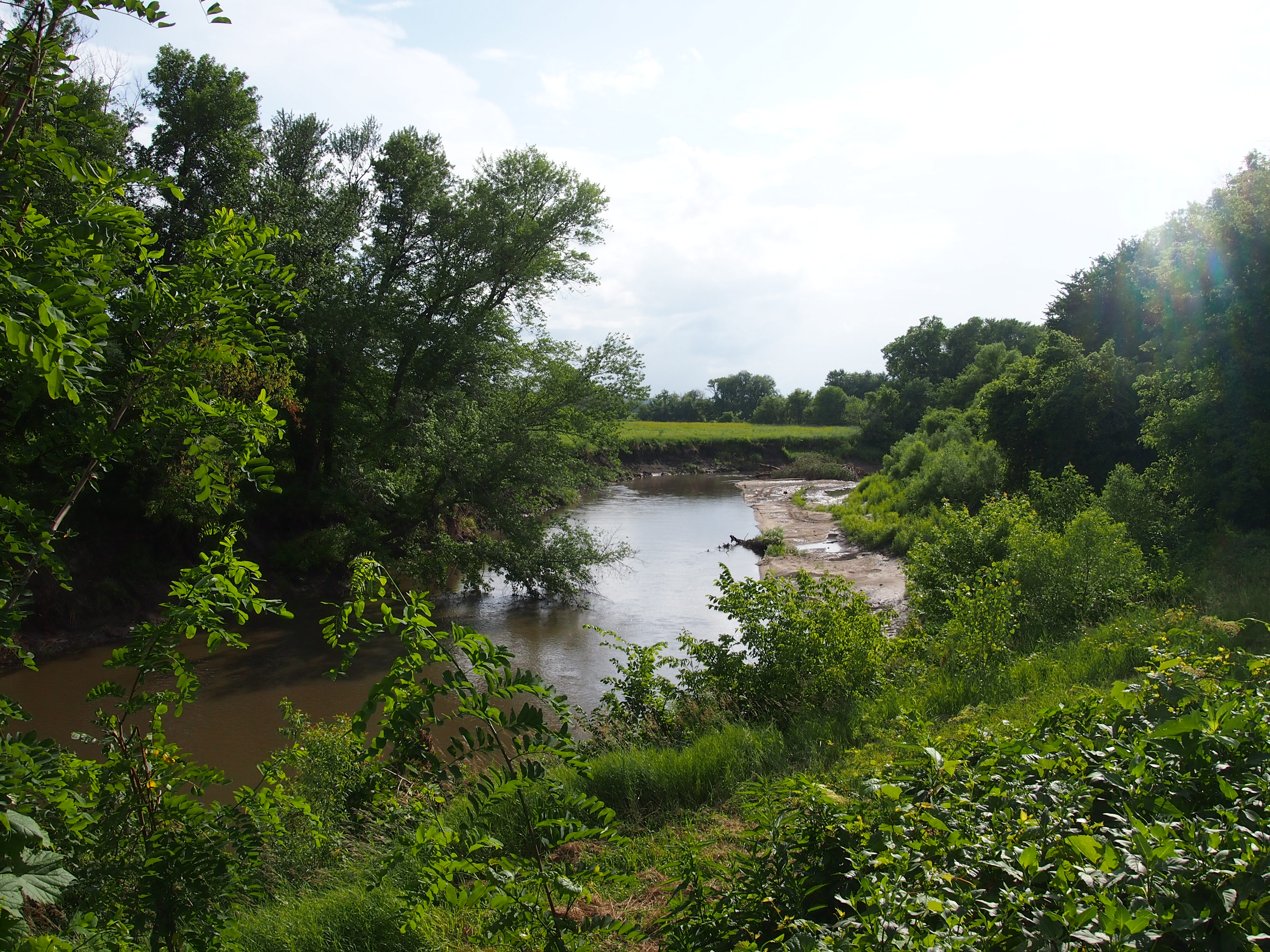
Middle River, Iowa, July 2014This is the view from the north end of the bridge, looking out on the Middle River, a tributary of the Des Moines River that runs through the county. Iowa’s nice and lush this year.

The Duke in Winterset

The thing to do when heading out of Des Moines in a southerly direction is to detour into rural Madison County, southwest of the capital, whose county seat is Winterset. If you have time. I decided we had time, since how could I pass up a look at a bronze of Winterset’s favorite son, Marion Robert Morrison?

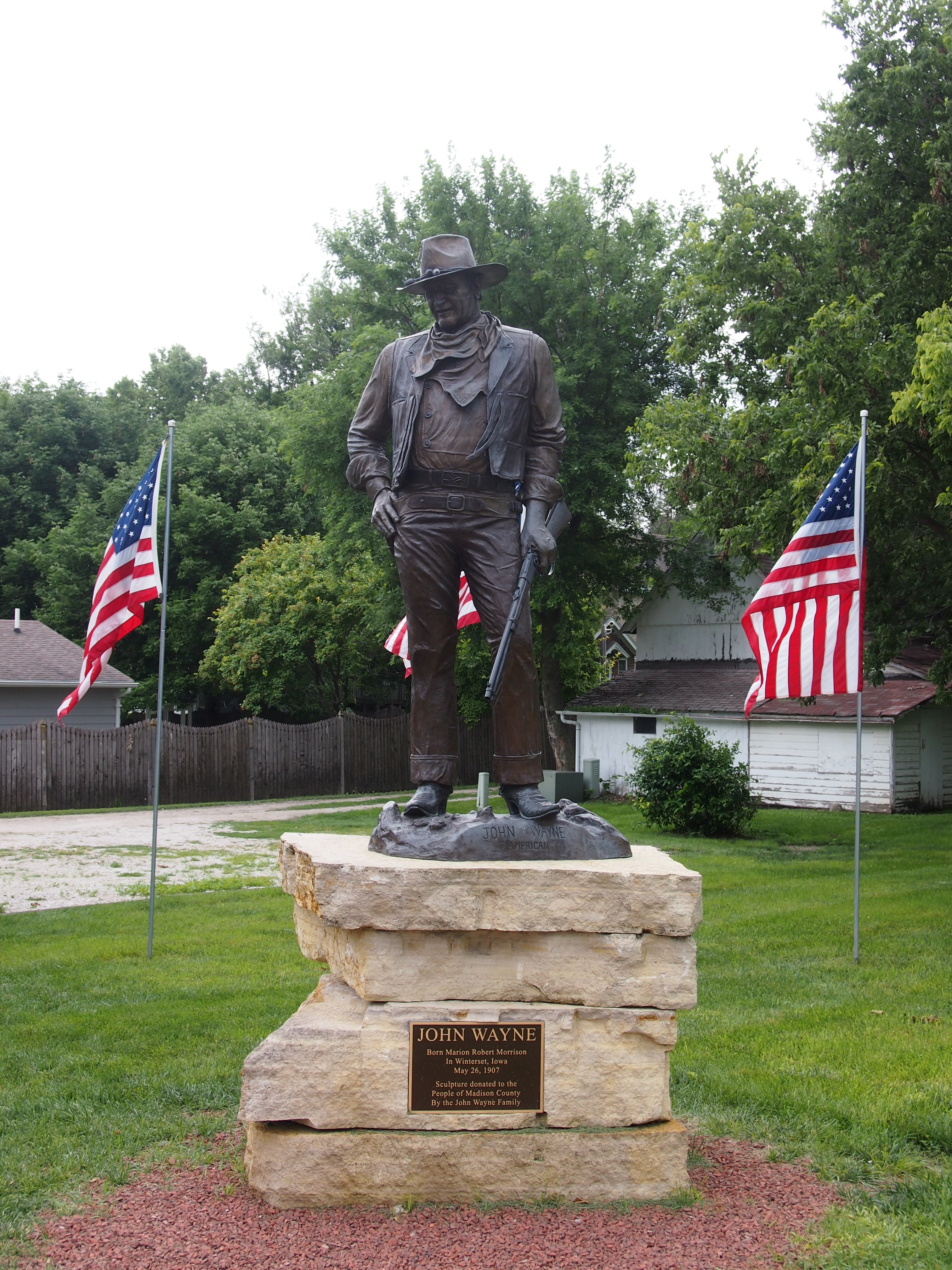
John Wayne, Winterset, Iowa 2014JOHN WAYNE

Born Marion Robert Morrison

In Winterset, Iowa

May 26, 1907

Sculpture donated to the

People of Madison County

By the John Wayne Family

The statue of John Wayne is a short block from his birthplace house, now a museum that (like the capitol) happened to be closed when we arrived. No matter. A good look at the bronze was enough for now, and we weren’t the only ones doing so. A few other families pulled up for a look-see while we were there. Wayne’s fame has some staying power.

Next to the statue is a Chevy van, detailed to honor Wayne. According to the birth site museum web site, “Several years ago, an anonymous person from Arizona donated a full-size 1980 Chevy van that has been extensively customized for the true John Wayne fan….

“This one-of-a-kind vehicle is covered with $50,000 of artwork from John Wayne movies—even the windows are etched to continue the design! The interior boasts hardwood floors, carpeted walls, a wet bar, TV and VCR (this was 1980, remember?), a souped-up sound system, and saloon-style swinging doors that lead to the queen-sized bedroom [sic] in the back.”

I didn’t realize it when we were there, but the statue usually resides at a corner of Washington St. and John Wayne Dr. – one of the main drags through town – but has been moved a block away, so it won’t be damaged during construction of the John Wayne Birthplace Museum. Work started in 2013 on the new museum, which is slated for completion for the 2015 John Wayne Birthday Celebration (and it’s convenient that baby Marion was born pretty close to Memorial Day). Last year my old friend Kevin, quite the fan of the Duke, went to the birthday fest. He said he had a large time.

One more thing: there are other John Wayne bronzes out in the wider world. You have to go to California to see these two.

In the Midst of the Corn, the Middle of the USA

In early August 1978, I took a bus from San Antonio to Stevens Point, Wisconsin, and back again, along with a busload of other high school students to attend the Mu Alpha Theta national meeting in that (seemingly) remote Wisconsin outpost. The route took us through Des Moines, which I only knew as the capital of Iowa from maps. We didn’t stop, but one of the teachers on the expedition, the admirable Paul Foerster, pointed out the Iowa state capitol as we went by – and noted the gilding on the dome, which he said was a very thin layer of gold. Indeed it is.

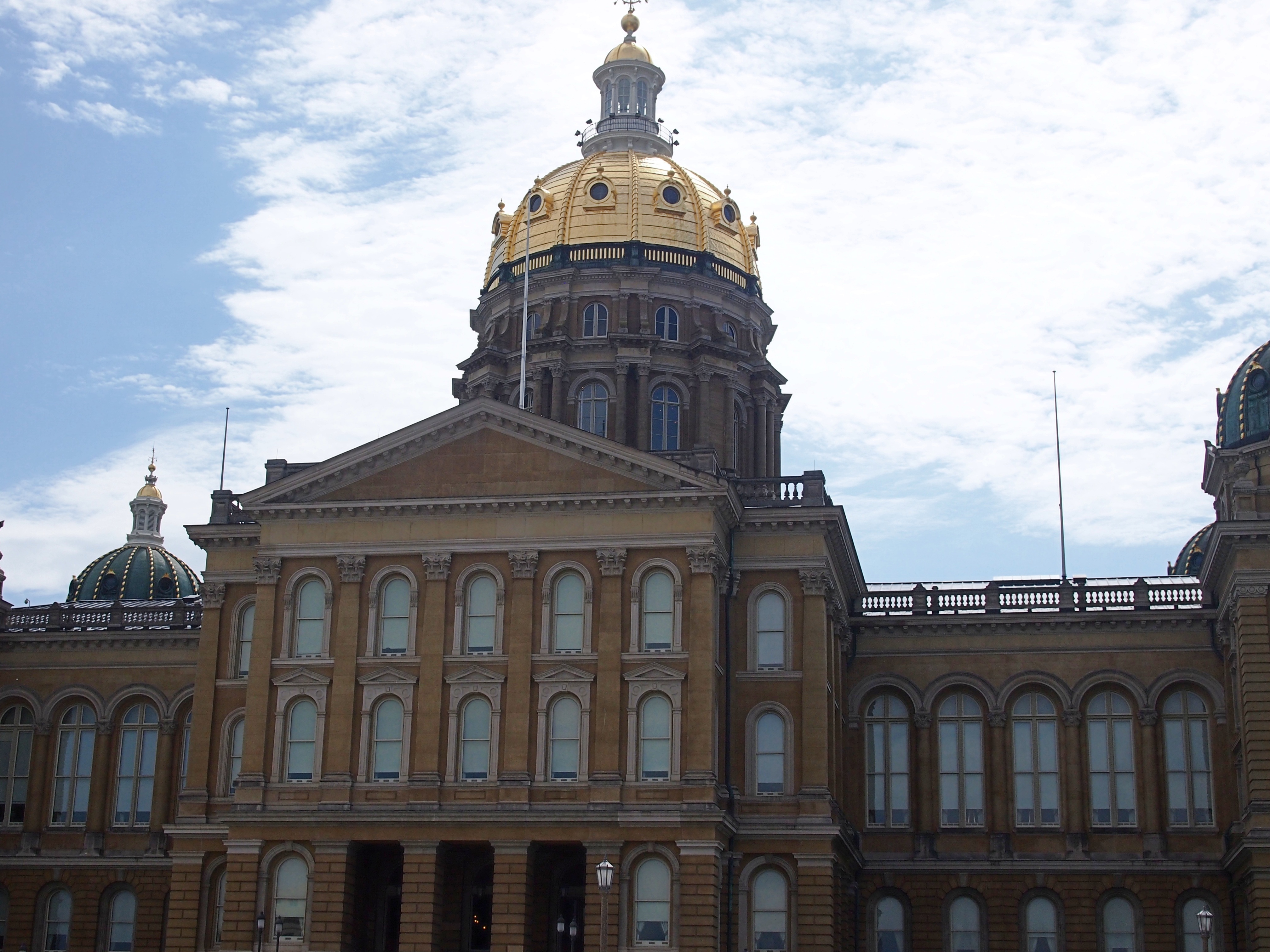
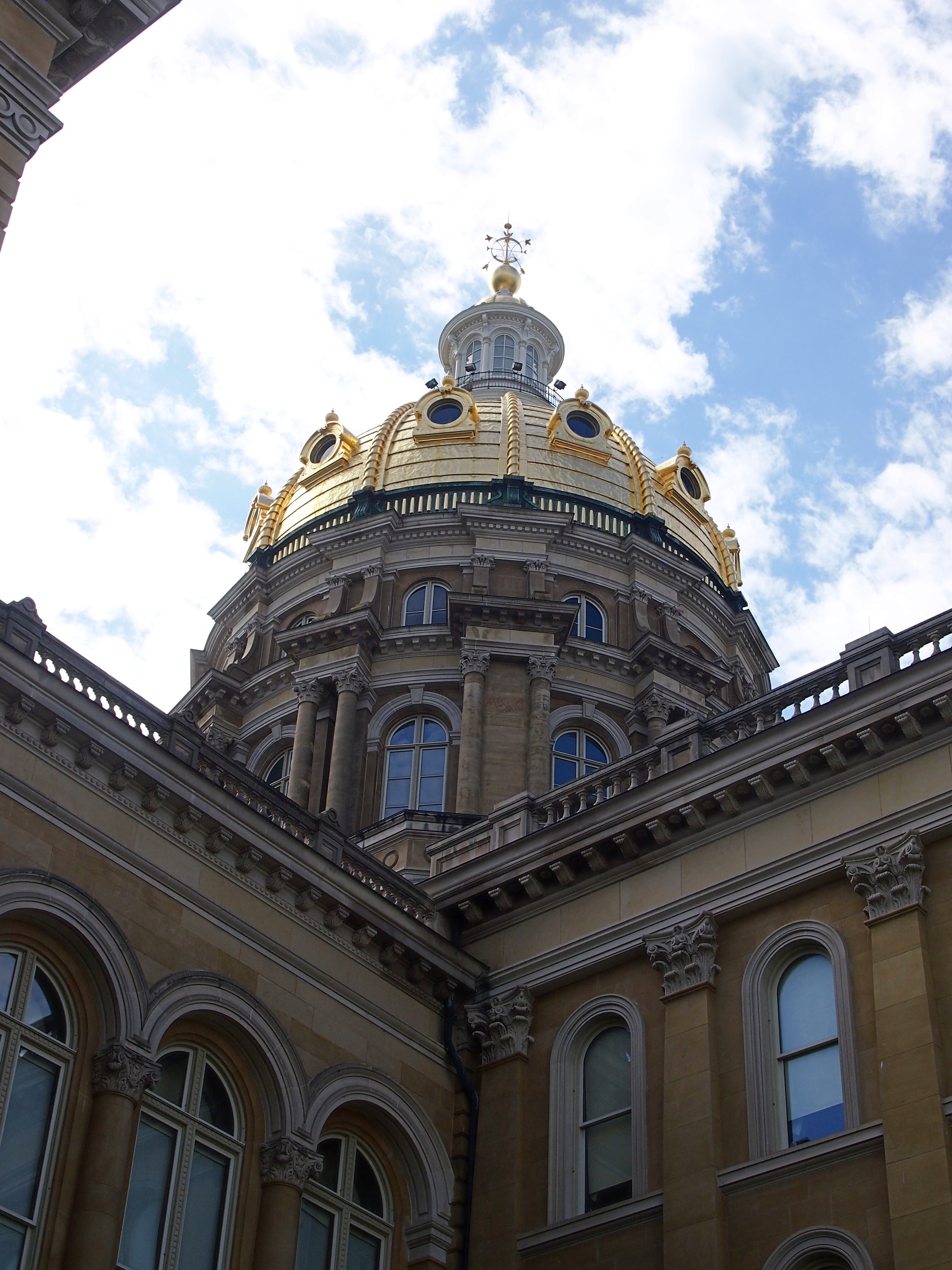
In later years, I figured I’d go back someday and take a look at the capitol more closely. Somehow, I never got around to it until July 12, 2014, our first day of driving, when I made a point of stopping there. We arrived just after 4 on that Saturday afternoon, right after the building closed (that’s what we get for having a leisurely lunch in Coralville). Ah, well. I had to make do with looking around the grounds, and seeing the magnificent gold dome up close from the outside.Iowa State Capitol 2014

The building was completed in 1884, repaired after a major fire in 1904, and exterior refurbishment was done in the last years of the 20th century. “The commanding feature is the central towering dome,” according to the State of Iowa (whose text, I note, was copied directly to Wiki). “This is constructed of steel and stone and covered with 23 carat gold. The gold leafing was replaced in 1964-1965 at a cost of $79,938.”Iowa State Capitol 2014

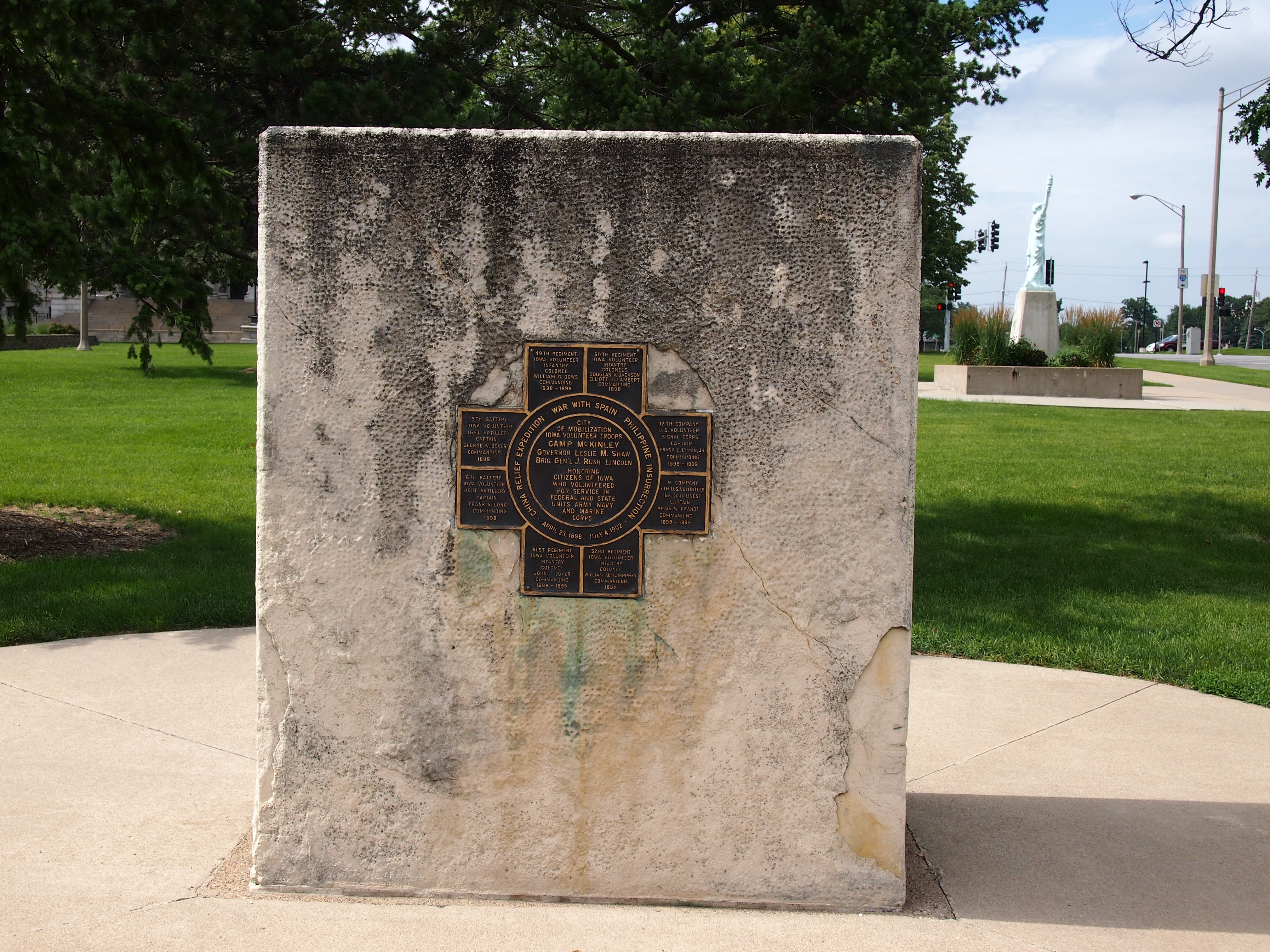
Since the capitol itself was closed, we took a look around the immediate vicinity. We would have done that anyway. The grounds sported a good number of memorials, as capitol grounds usually do. Including the modest and not-very-picturesque, such as this homely slab.

Spanish War memorial, IowaIt memorializes the Iowa men of the China Relief Expedition (you know, 55 Days in Peking), the War with Spain, and the Philippine Insurrection, and is dated April 23, 1898, to July 4, 1902.

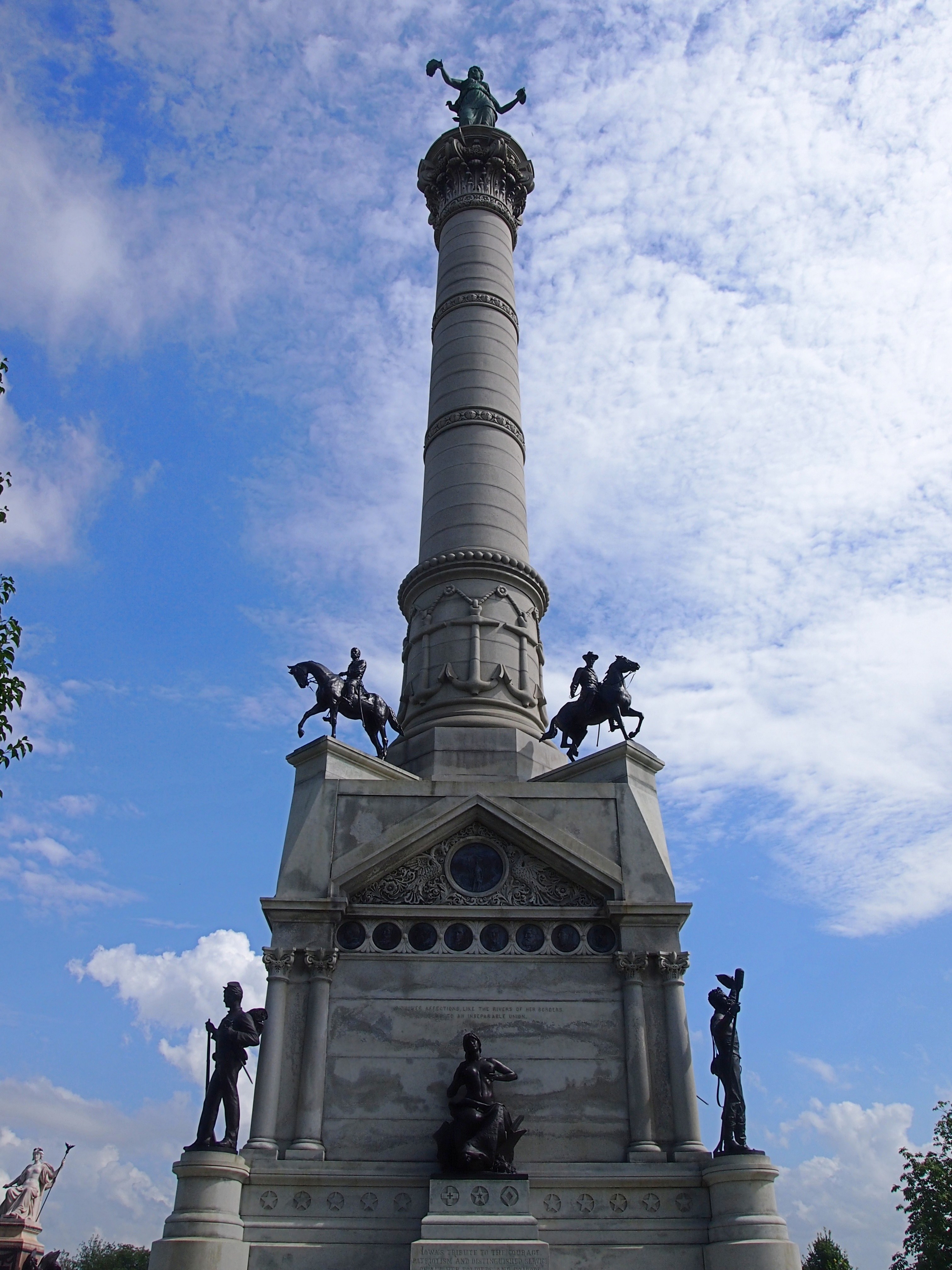
This is a much larger memorial. It is, of course, the state Civil War memorial, or to use its correct title, the Iowa Soldiers and Sailors Monument.Iowa State Capitol soldier's memorial

The Iowa Department of Administrative Services tells us that “the State of Iowa erected this monument, funded partially by refunded war taxes, to commemorate Iowans who fought during the Civil War. The monument was approved in 1888, the cornerstone was laid in 1894, and the structure was completed two years later. Because formal controversy developed over the location and artistic details of the monument, nearly 50 years passed before its dedication in 1945.”

I didn’t realize it looking at the thing, but the equestrian statues – two of the four are visible in my picture – represent actual individuals: Marcellus M. Crocker, who led troops at Shiloh, Corinth, and Vicksburg; John M. Corse, who joined Grant at the siege of Vicksburg; Grenville M. Dodge, who built railroads to support Grant and accompanied Sherman on the March to the Sea, and Samuel R. Curtis, commander of the Union Army at Pea Ridge.

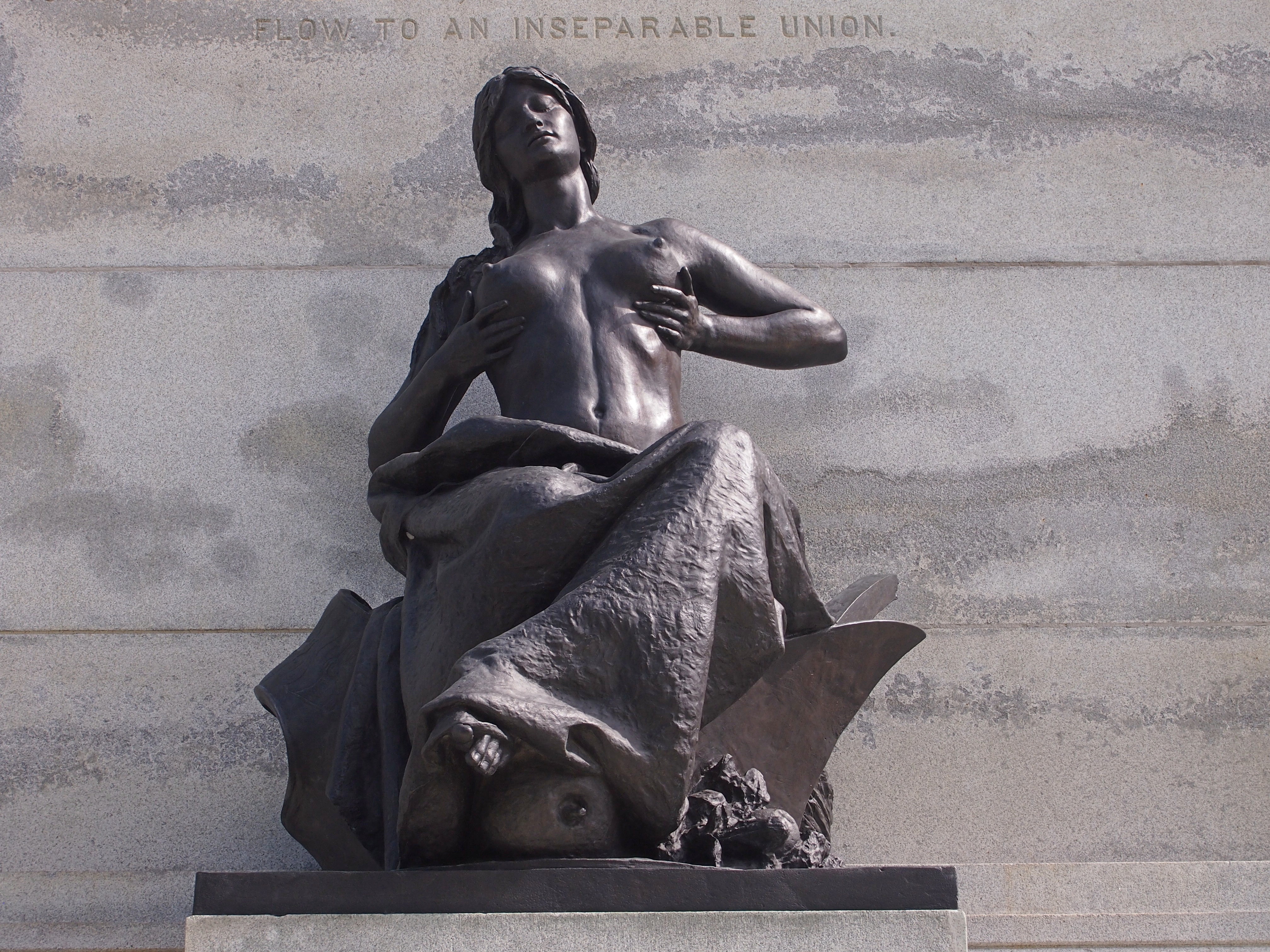
The other figures are allegorical, such as Victory at the top, common soldiers and sailors nearer to the base, and Mother Iowa.Mother Iowa 2014

Let’s just say that Mother Iowa, offering nourishment to Iowans in a way that only a mother can, looks a little odd to modern eyes.