The Fenelon Place Elevator, Dubuque

Do you remember your first funicular? I know I do: Innsbruck, Austria, August 1, 1983. My friend Rich and I signed up for a group hike organized by the youth hostel we were staying at. We rode a bus up a mountain road to the terminus of a train that went further up the side of the mountain: a funicular.

Merriam-Webster: “A cable railway ascending a mountain; especially: one in which an ascending car counterbalances a descending car,” but that’s a latter-day usage. Go back far enough and you get to funis, which is Latin for rope.

Both the word and the thing itself please me. The Fenelon Place Elevator began as a cable car line up the side of Dubuque’s bluff in the 1880s, built by a banker who lived at the top of the bluff but who worked down near the river. By the 1890s it had evolved into a true funicular, using a system based on those used in the Alps, and according to the official history, “Ten neighbors banded together and formed the Fenelon Place Elevator Co…. This group traveled to the 1893 Colombian Exposition in Chicago to look for new ideas. They brought back a streetcar motor to run the elevator, the turnstile, and steel cable for the cars.”

Remarkable the things that are connected in one way or another to the 1893 world’s fair, isn’t it? In our time, a technically more modern – but still old-timey appearing – funicular travels the slope in Dubuque. I assume some people still commute on it, because the neighborhood at the top of the bluff is still residential, and the district at the bottom is still mostly commercial. But I’m sure that much of the Fenelon Place Elevator’s business involves tourists taking it for a lark.

Here’s the view from inside one of the cars, waiting at the bottom. Fenelon Place Elevator
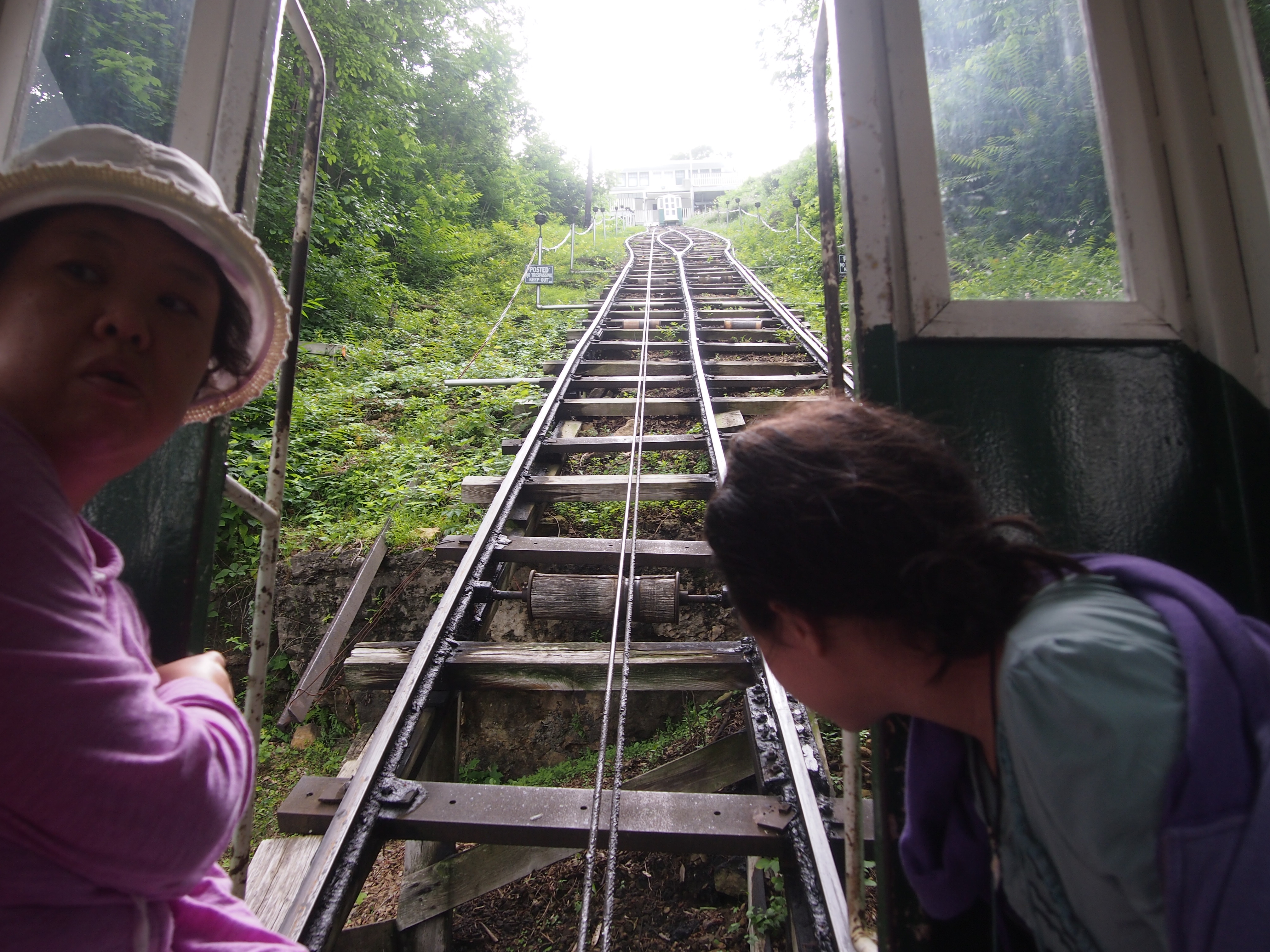
A sign at the entrance says:

CABLE CAR IS OPERATED FROM ABOVE

GET IN AND SIT DOWN

PULL BELL CORD WHEN READY

OPERATOR WILL SIGNAL, WITH A BUZZ, WHEN CAR WILL START TO MOVE

PLEASE REMAIN SEATED UNTIL CAR HAS STOPPED AT THE TOP

The funicular is 296 feet long, runs on a 3-ft. gauge, and while I didn’t time the trip, it couldn’t have been more than a minute. Here’s the view from the observation deck at the top, looking down on the funicular. The cars can hold about six people comfortably.
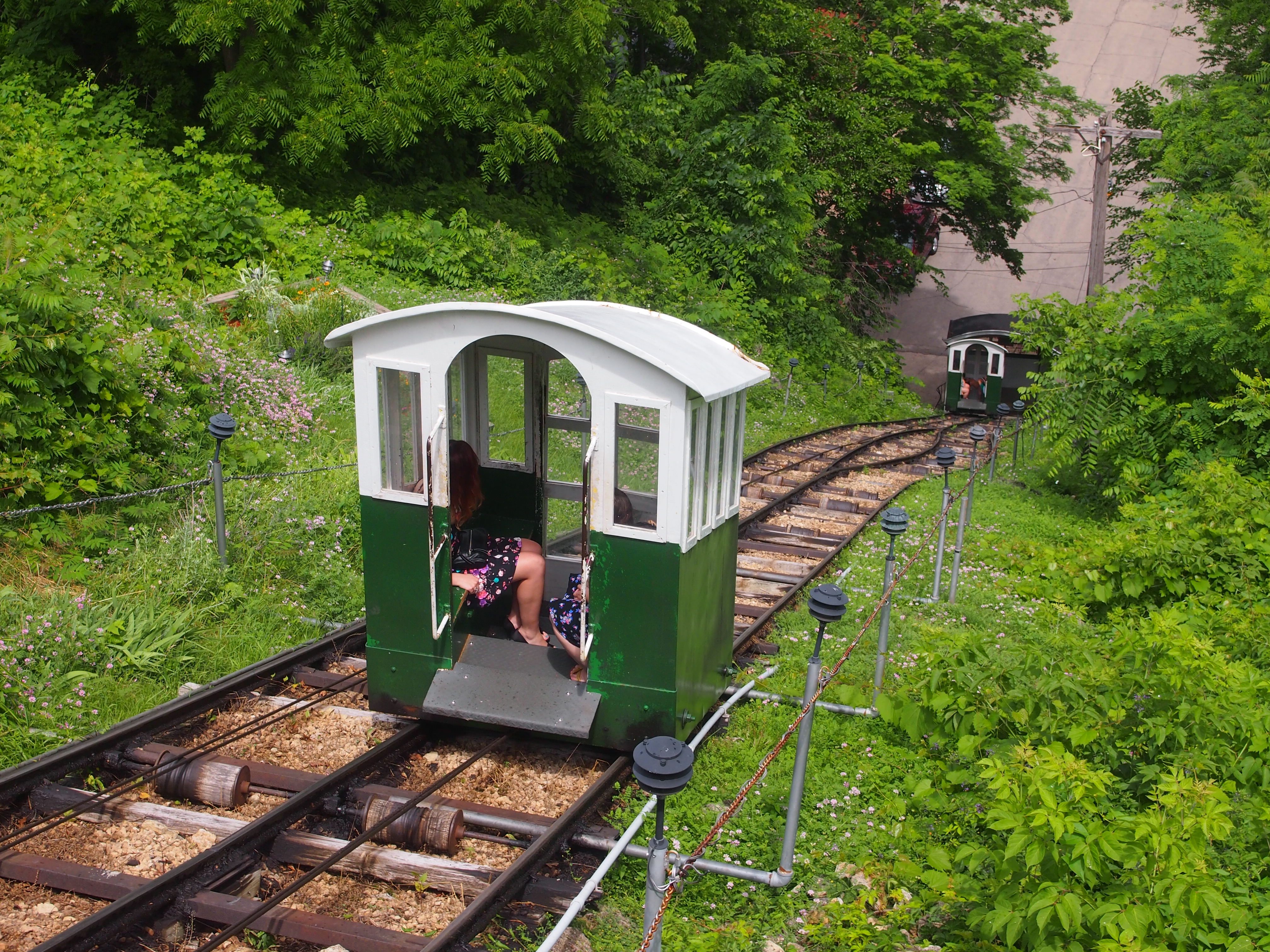
Fenelon Place Elevator, June 2014Round-trip adult fare: $3. A lot if you consider the literal distance traveled. A bargain, if you consider how cool funiculars are.
Driftless Views

The area we visited last weekend included places in three states, but that’s just political geography, invented by men and as transient as a firefly light in the grand scheme of the Earth. A more geographically apt way to think of our destination is the Driftless Area. That too is transient – everything is, over millions of years – but not quite as much.

The concept is well enough known that a part of Wisconsin markets itself as Driftless Wisconsin, no doubt to compete with the better-known wooded areas up north and the cities in the southeast part of the state. The organizations web site tells us that “the Driftless Area includes 24,103 square miles, covering all or part of 57 counties in southwest Wisconsin, southeast Minnesota, northeast Iowa, and a small part of northwest Illinois.

“The region’s distinctive terrain is due to its having been bypassed by the last continental glacier. The term ‘driftless’ indicates a lack of glacial drift, the deposits of silt, gravel, and rock that retreating glaciers leave behind.

“The Driftless Area is characterized by its steep, rugged landscape, and by the largest concentration of cold water streams in the world. The absence of glaciers gave the rivers time to cut deeply into the ancient bedrock and create the distinctive landforms. Karst topography is found throughout the area, characterized by shallow limestone bedrock, caves, sinkholes, springs, and cold streams.”

That is, this part of the Midwest actually has some pleasing topography, unlike most everywhere else. A 1989 visit to Galena, which is in that “small part of northwest Illinois,” introduced me to the pleasures of the land, even though visiting Galena is mostly about the pleasures of a late 19th-century streetscape put to modern uses.

Sometimes I miss hills. The modest hills of San Antonio, the more robust ones of the nearby Hill Country, the rolling hills of Middle Tennessee. So it’s good to visit the hills and take a look off in the distance.

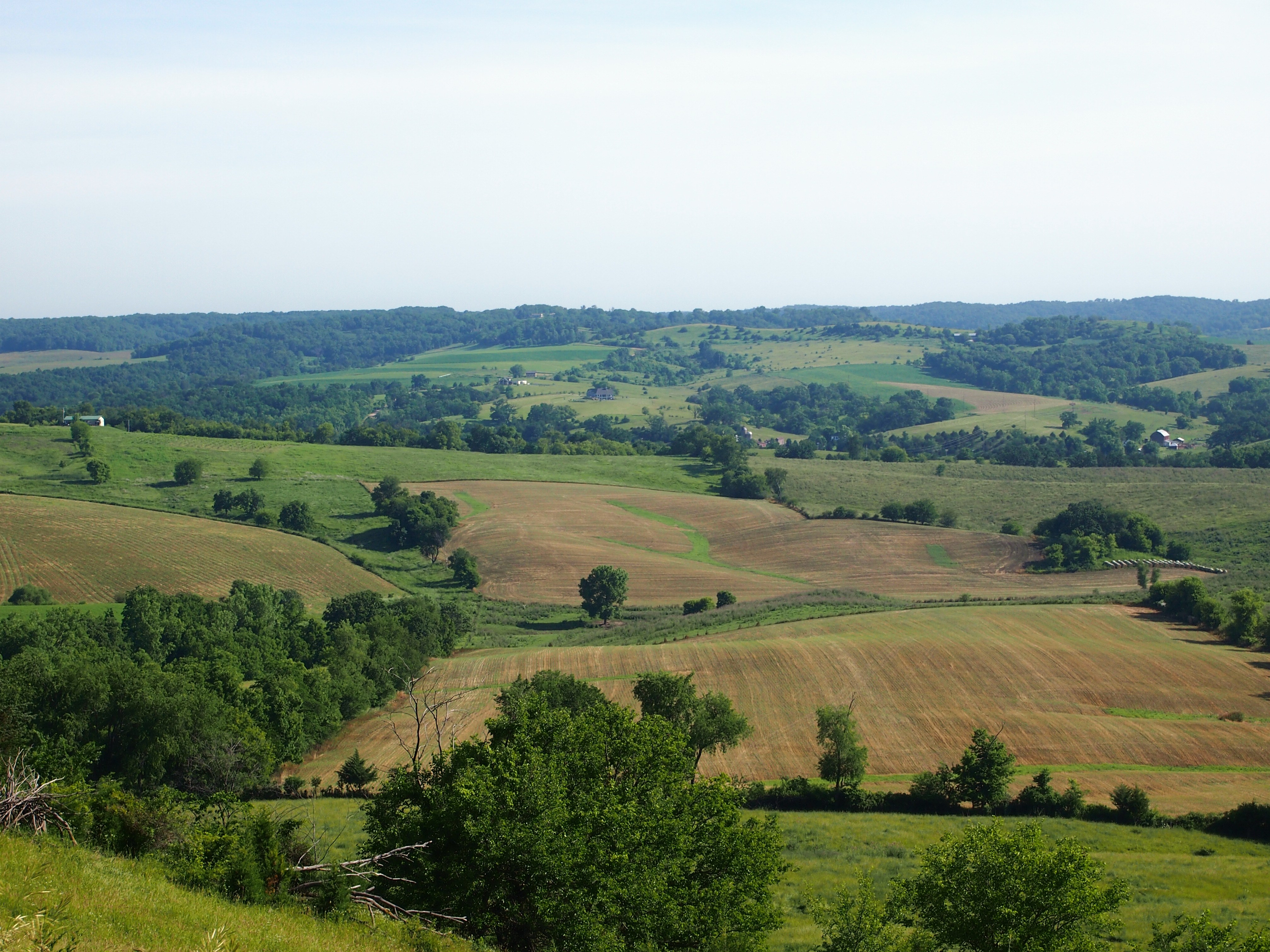
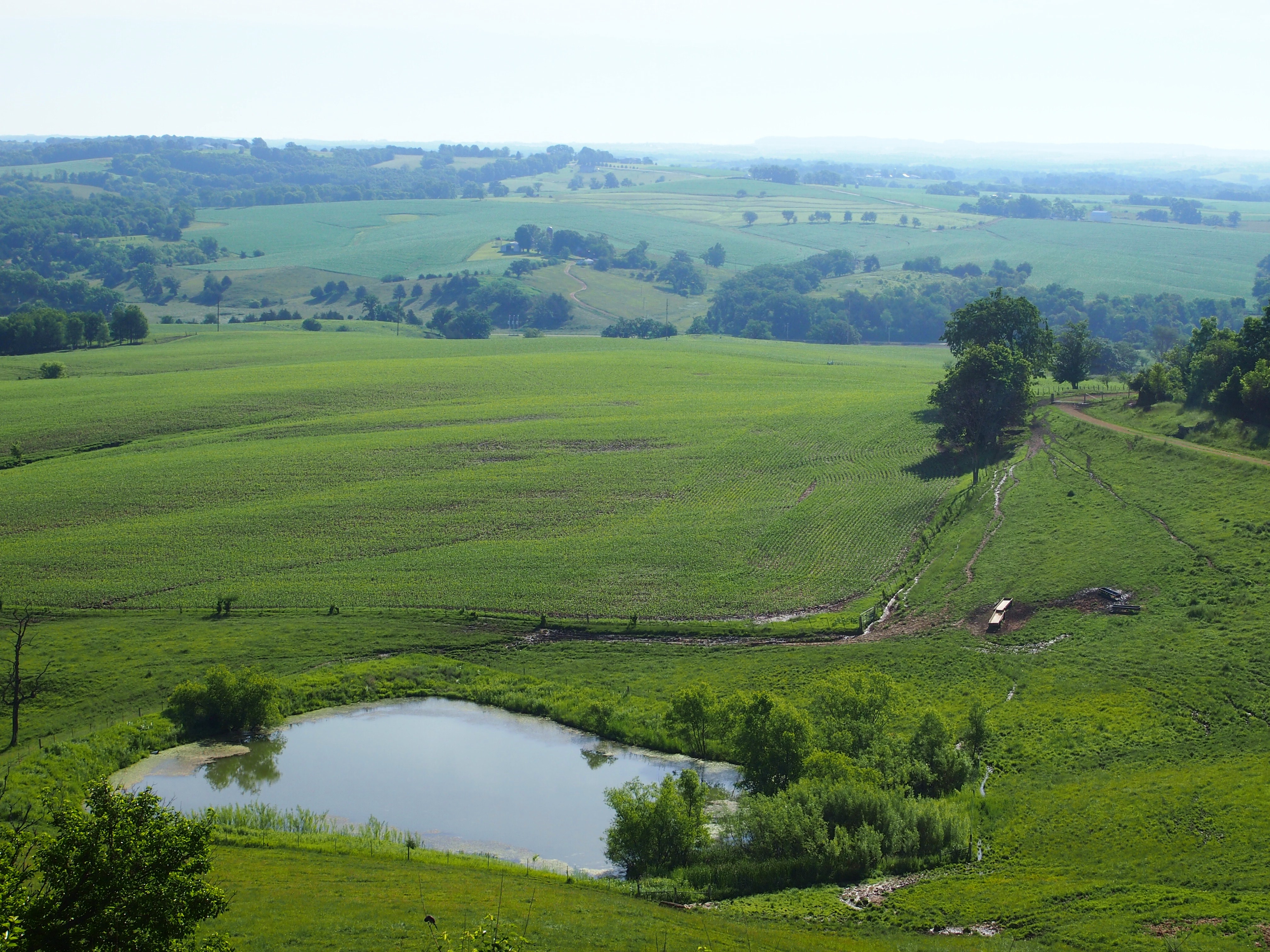
A few miles east of Galena, in rural Jo Daviess County, Ill., along US 20, there’s an overlook worth stopping at.

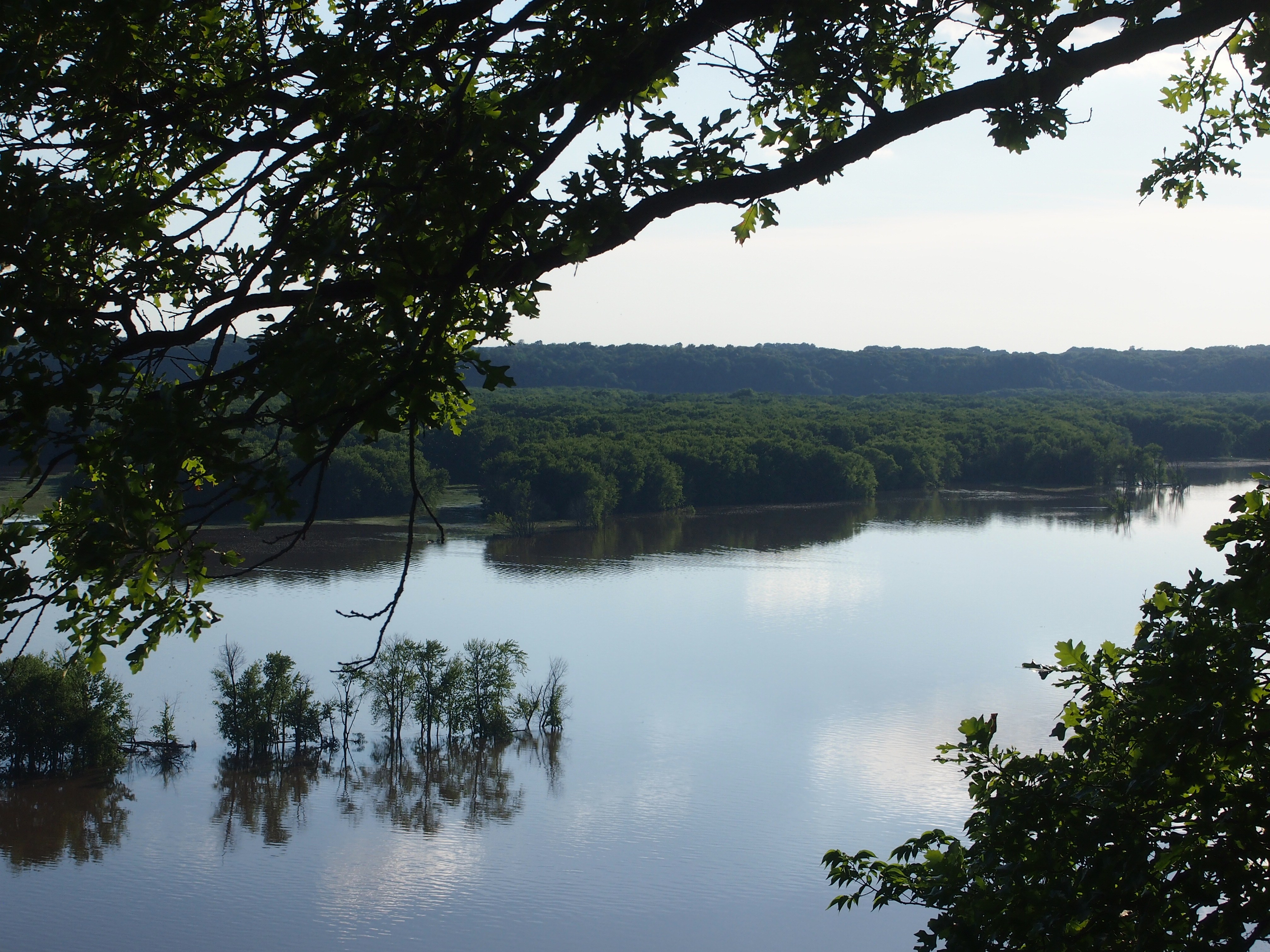
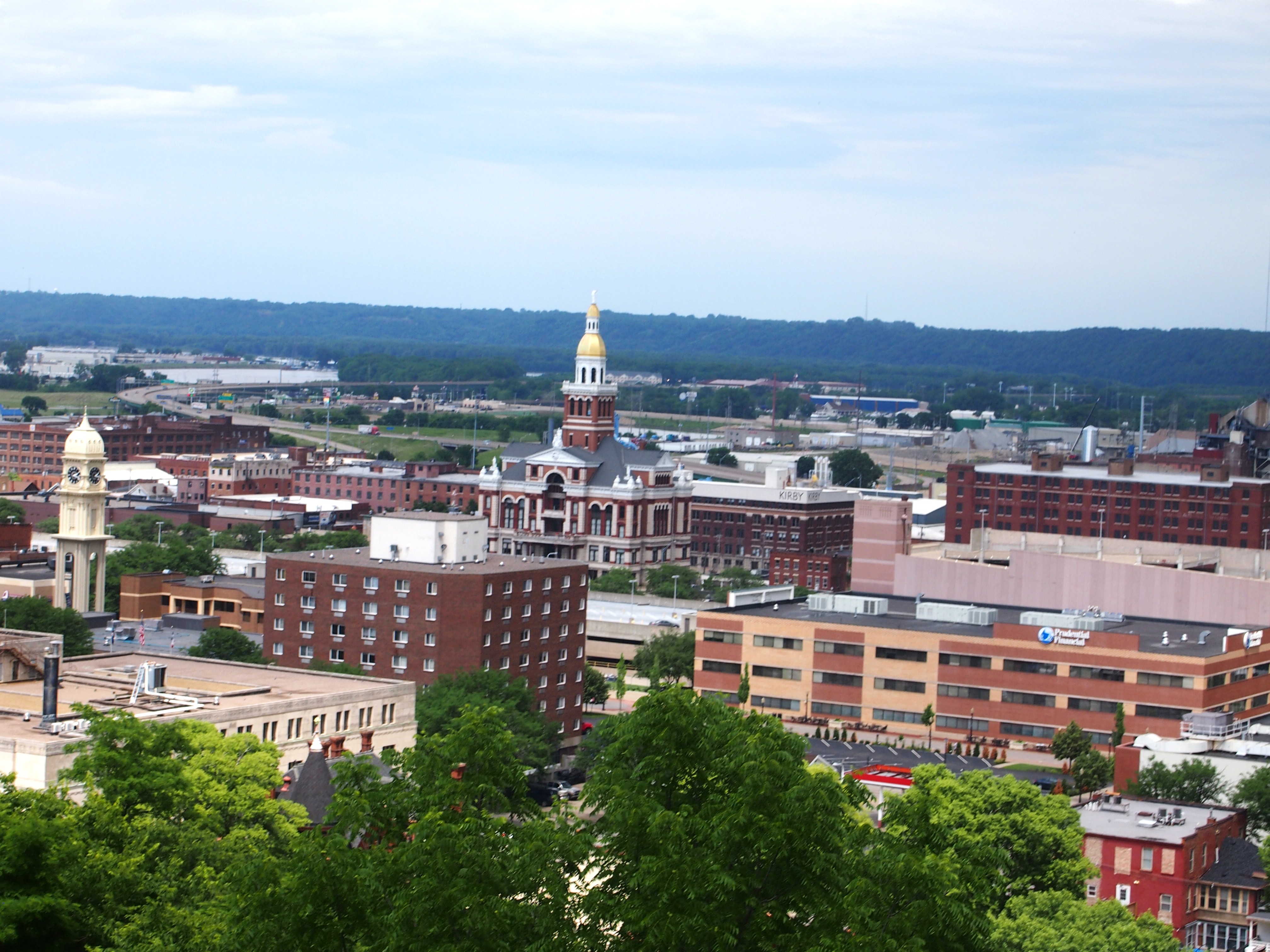
Jo Daviess County, June 2014Jo Daviess County, June 2014Further south at Mississippi Palisades State Park, there are views from the palisades. They’re not quite as lofty as the more famous Hudson River features, it seems, but offer fine views of the Mississippi all the same. Mississippi Palisades State Park, June 2014Mississippi Palisades State Park, June 2014The hilly topography shapes human settlement as well. A large bluff rises west of the Mississippi in the city of Dubuque. The older parts of the city spread out below the bluff, down to the banks of the river. Dubuque, June 2014Dubuque, June 2014Naturally, the visit only whets my appetite to take a look at more of the Driftless Area, especially up around Prairie du Chien in Wisconsin and Effigy Mound Nat’l Monument in Iowa. It’s a mild affliction I suffer.

Tri-State Summer Solstice Weekend ’14

Late on Friday morning we drove west for a few hours – and enjoyed a remarkably long in-car conversation among ourselves, no radio or other electronics playing – and by mid-afternoon arrived at Mississippi Palisades State Park, which overlooks the Mississippi River just north of Savanna, Ill. The plan included bits of three states in three days. My plan, really, since my family humors me in such matters, and lets me think up the details of little trips like these.

Friday was Illinois. We camped at Mississippi Palisades, which is an Illinois State park and incredibly lush this year, and we spent time in Savanna, a little river town on the Great River Road, mostly to find a late lunch. Toward the end of the day, we made our way to Mount Carroll, Ill., which is the county seat of Carroll County and home to a good many handsome historic structures.

On Saturday, we ventured into Iowa – it really isn’t far – and first saw Crystal Lake Cave, just south of Dubuque. In Dubuque, lunch was our next priority, followed by a visit to the Fenelon Place Elevator. Which is a funicular. When you have a chance to ride a funicular, do it. The last time we were in Dubuque, I remember the Fenelon Place Elevator being closed for the season (uncharacteristically, I don’t remember when that was — the late ’90s?). Anyway, this time I was determined to ride it.

Afterward, we headed west a short distance to the town of Dyersville, Iowa, home to the Basilica of St. Francis Xavier, but better known for The Field of Dreams movie set, which still draws visitors. We saw both.

Today was mostly about getting home at a reasonable hour, but I had to add a slice of Wisconsin by navigating a number of small roads until we came to Dickeyville. It would be just another rural Wisconsin burg but for one thing: the Dickeyville Grotto, which actually includes a main grotto, smaller grottos, shrines, a church and a cemetery (and a gift shop, for that matter). Like funiculars, grottos demand our attention, especially such as striking bit of folk architecture as the Dickeyville Grotto.

Peonies Aplenty

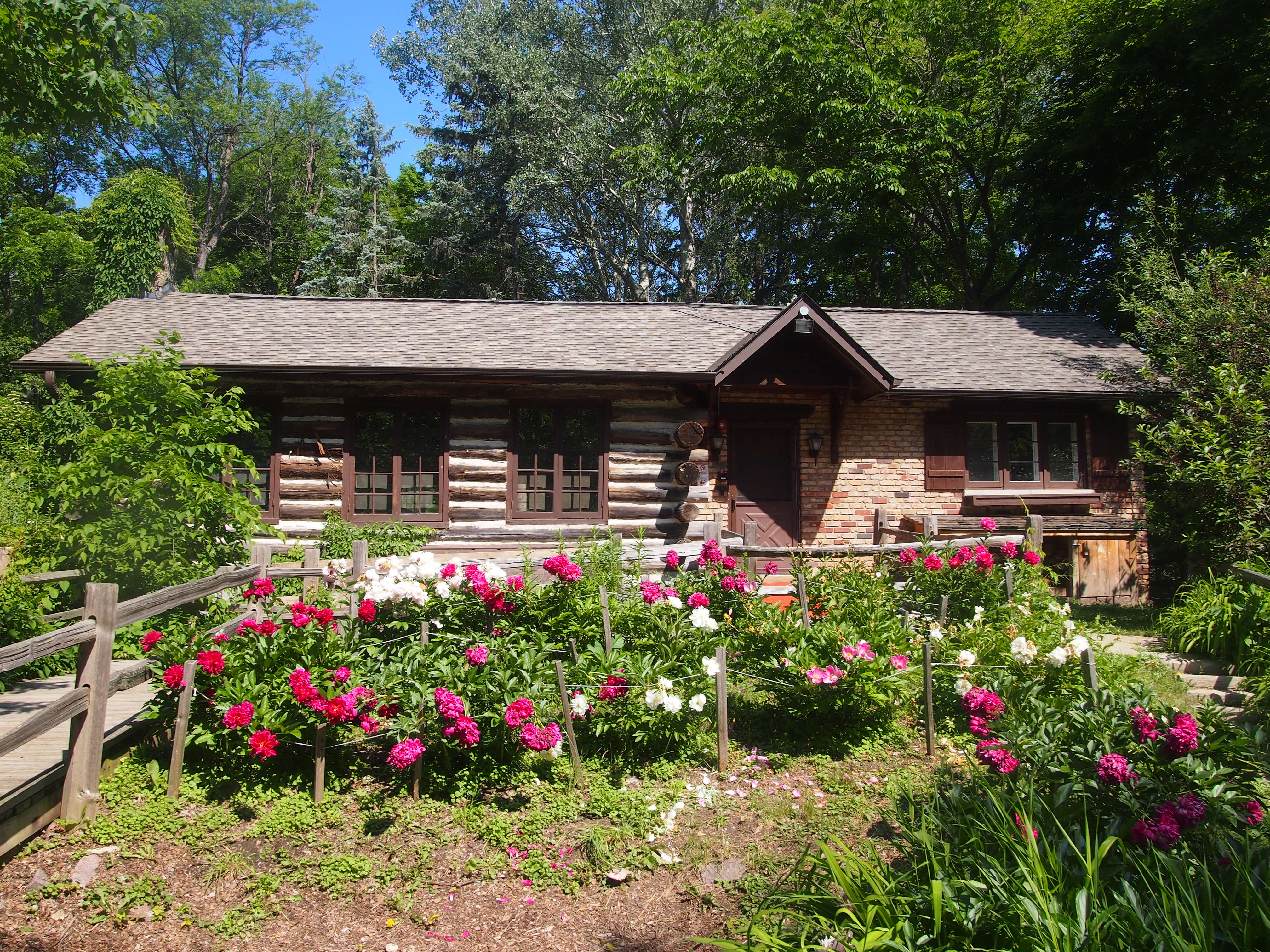
Deep within Spring Valley, here in populous northeastern Illinois, there’s a log cabin built by one John Redeker, son of Friedrich and Wilhelmine Redeker, which sounds like the sort of German family that once farmed the 19th-century Schaumburg. It feels a little remote, but it’s only an illusion. These days, the cabin hosts events and exhibits.

Merkle Cabin, June 2014It’s on the grounds of a peony farm that John briefly ran, but his death in 1930 at 30, and the following Depression and other factors, made it a short-lived enterprise. Still, peonies solider on at the site. Note the bushes in front of the cabin.

Not far away, in a clearing near the cabin, is a field of peonies.

peony field, Schaumburg, June 2014Peony June 2014One more flower, and that's enoughA good place to spend a few solitary minutes.

Ex-Trees

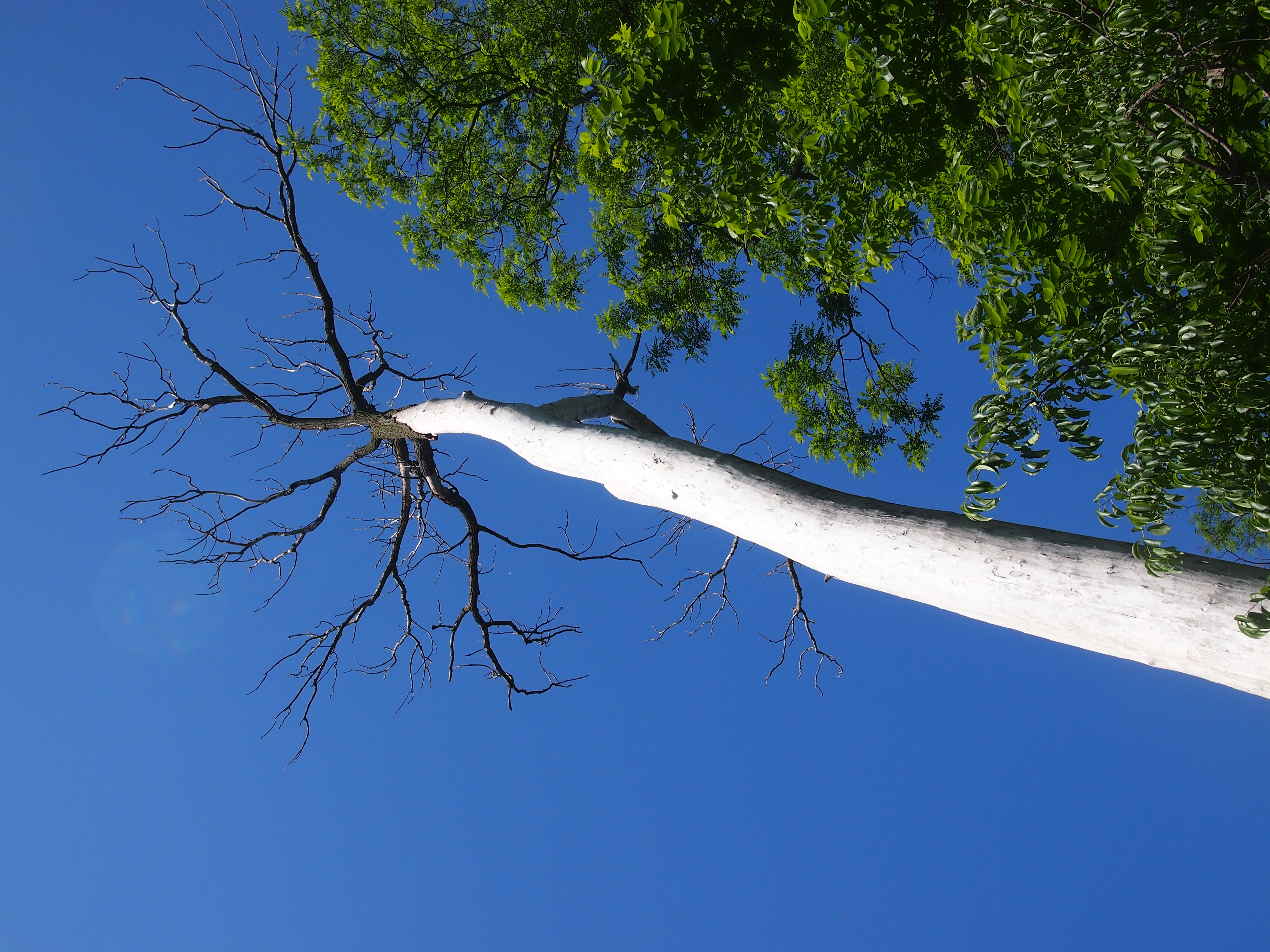
Spring Valley has a number of paved trails, and if you follow the one toward the cabin, you’ll find an enormous white tree not far from the property’s main pond. An enormous, mostly white, all dead tree. Spring Valley tree, June 2014

You might say that it’s passed on. This tree is no more. It has ceased to be. It’s expired and gone to meet its maker. This is a late tree. Bereft of life, it rests in peace. Its metabolic processes are now history. It’s kicked the bucket, shuffled off its mortal coil, run down the curtain and joined the bleedin’ choir invisible. This is an ex-tree.

A large dead tree can be a marvel. Nearly 30 years ago, I ran across a massive one in Mount Rainier Nat’l Park, a “fallen tree trunk bigger than a van. It’s on its side and looks ancient, with gray old roots reaching into the air to twice my height, clawing out in every direction.”

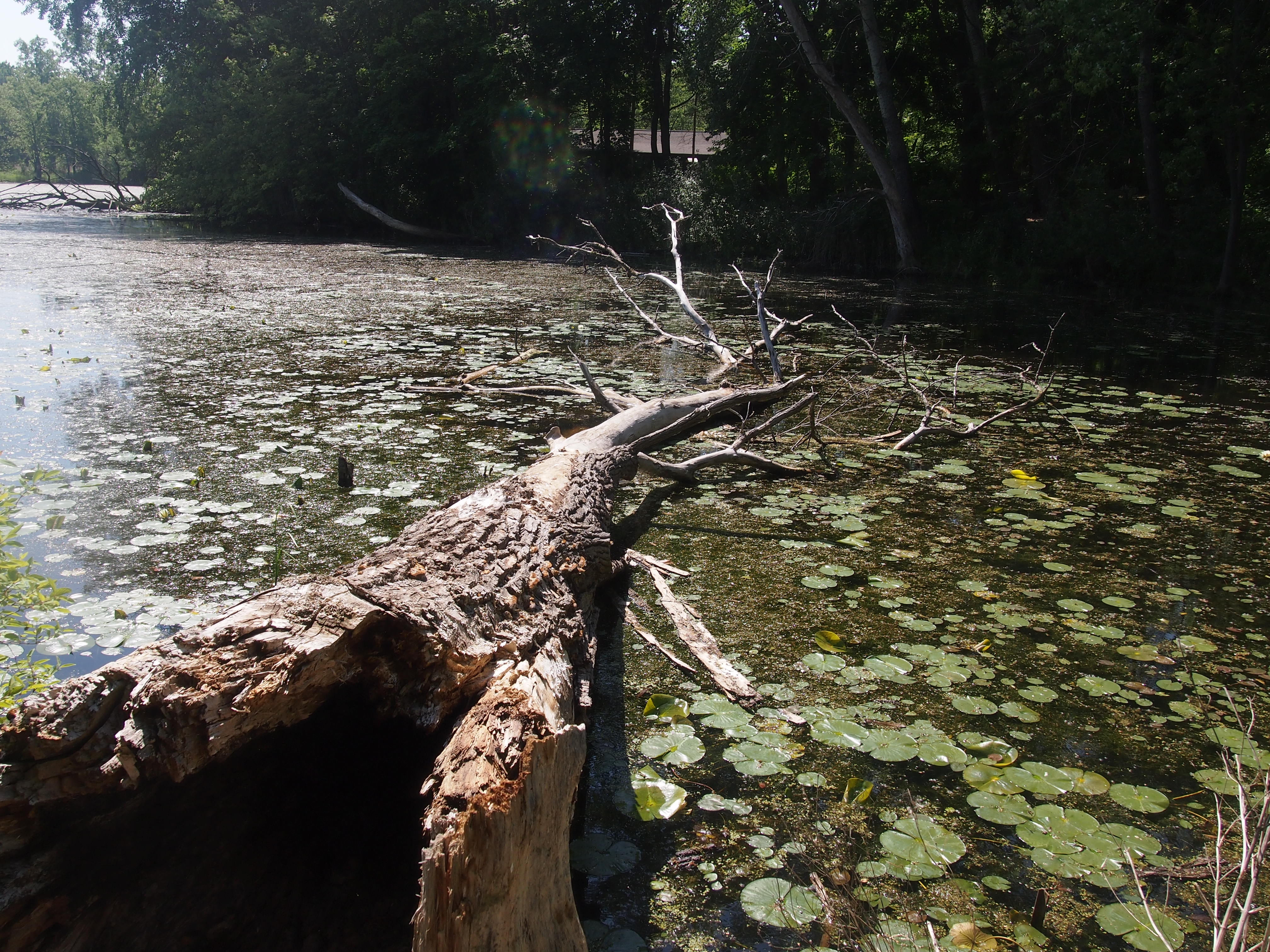
One of these days, unless the Schaumburg Park District removes the thing, the white tree might come crashing down into the pond. Like this smaller (but still fairly large) tree once did. Another tree, June 2014With any luck, it’ll fall some windy night when no one’s around, maybe making a loud crash, maybe not. (How would we know?)

Never Mind the Bollocks, Here Are June Flowers

Rain is falling tonight, and more is predicted for tomorrow. So far, we don’t have the makings of a long, dry summer, though of course that could change.

The following are early June flowers at Spring Valley, here in northeastern Illinois. Mostly I don’t know species names, with the exception of the iris, of course. That’s been one of my favorite blooms since I saw them next to the driveway at our house in Denton, Texas, when I was a kindergartener.

Iris, June 2014

Spring Valley, June 2014Spring Valley, June 2014With flowers come bees. For now, anyway.

Bee, Northeastern Illinois June 2014

Here’s hoping whatever ails the bees doesn’t kill all of them, but makes the survivors resistant to the affliction.

Spring Valley Summer

Northern Illinois is incredibly lush now. Heavy winter snow and consistent spring rain will do that. This is a recent snap at Spring Valley in Schaumburg, Ill. Spring Valley, according to the Schaumburg Park District, “a refuge of 135 acres of fields, forests, marshes and streams.” All you have to do to see it is walk in.

Spring Valley, Schaumburg, June 2014Contrast that with images made at Spring Valley early one April. Remarkable what two months + a certain number of inches of water will do.

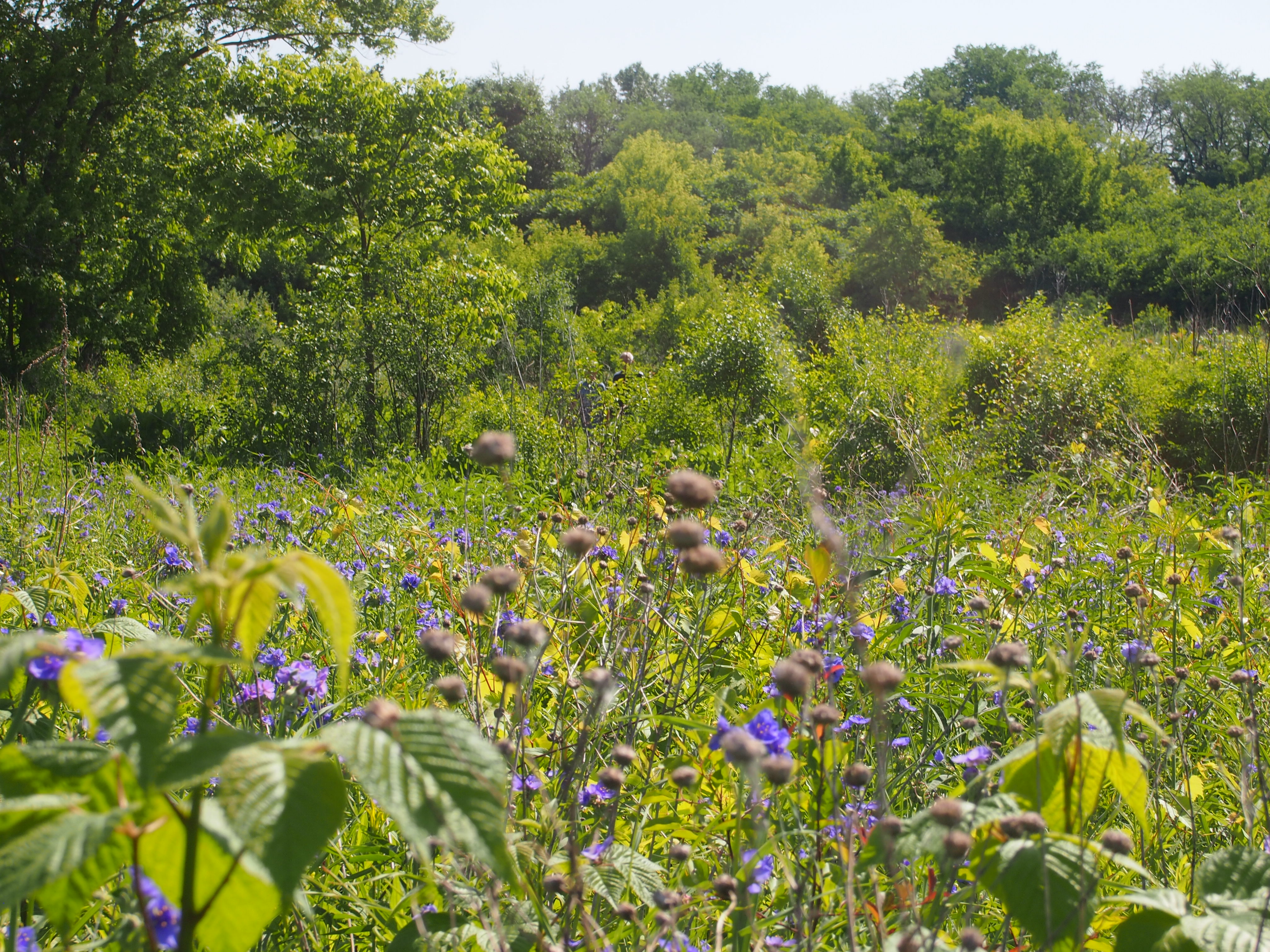
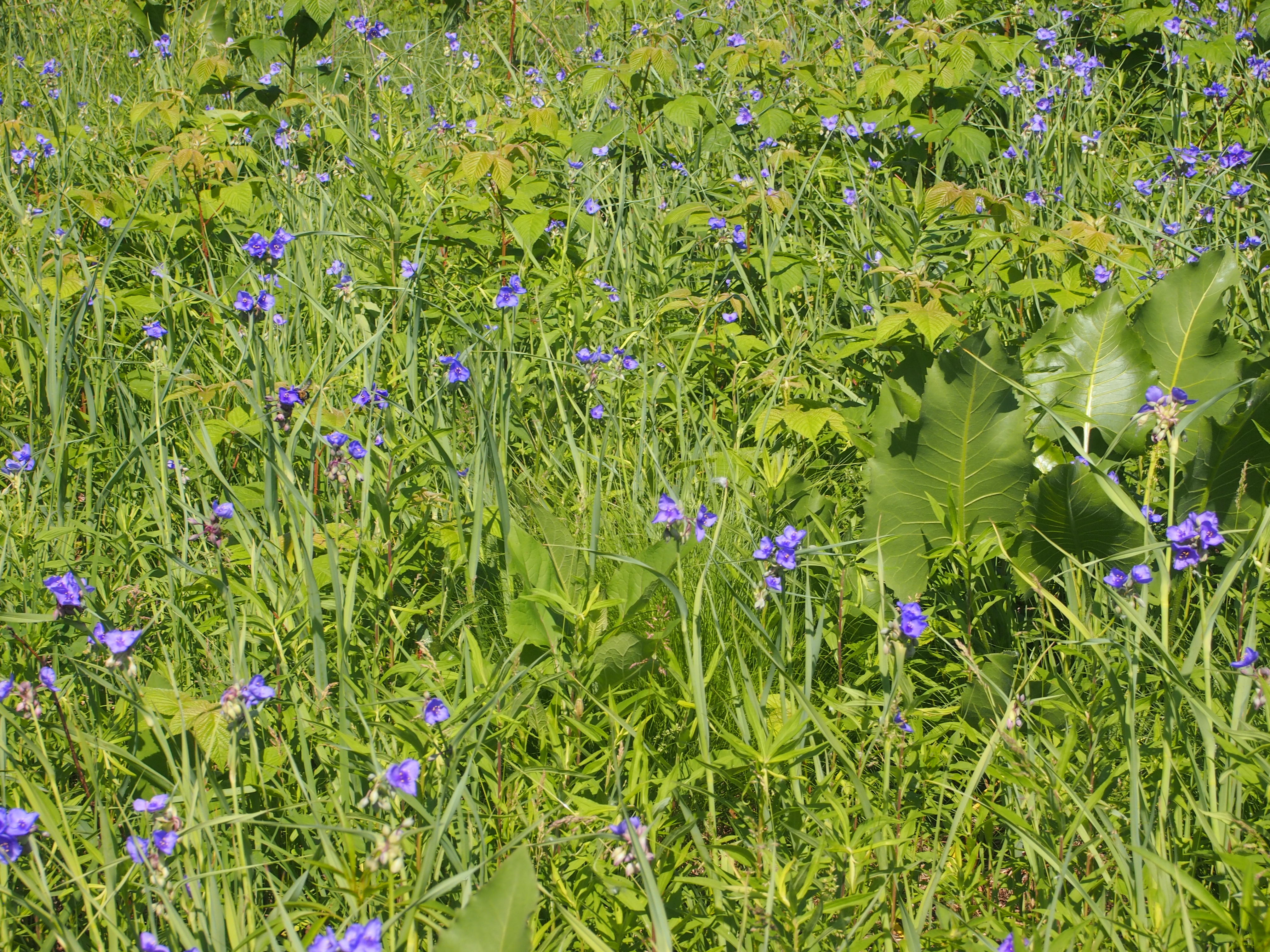
These little blue wildflowers cover the prairie areas. Hope they aren’t invasive. Then again, if they are, they add a lot of color here in early June, so maybe they should be welcome colonists.

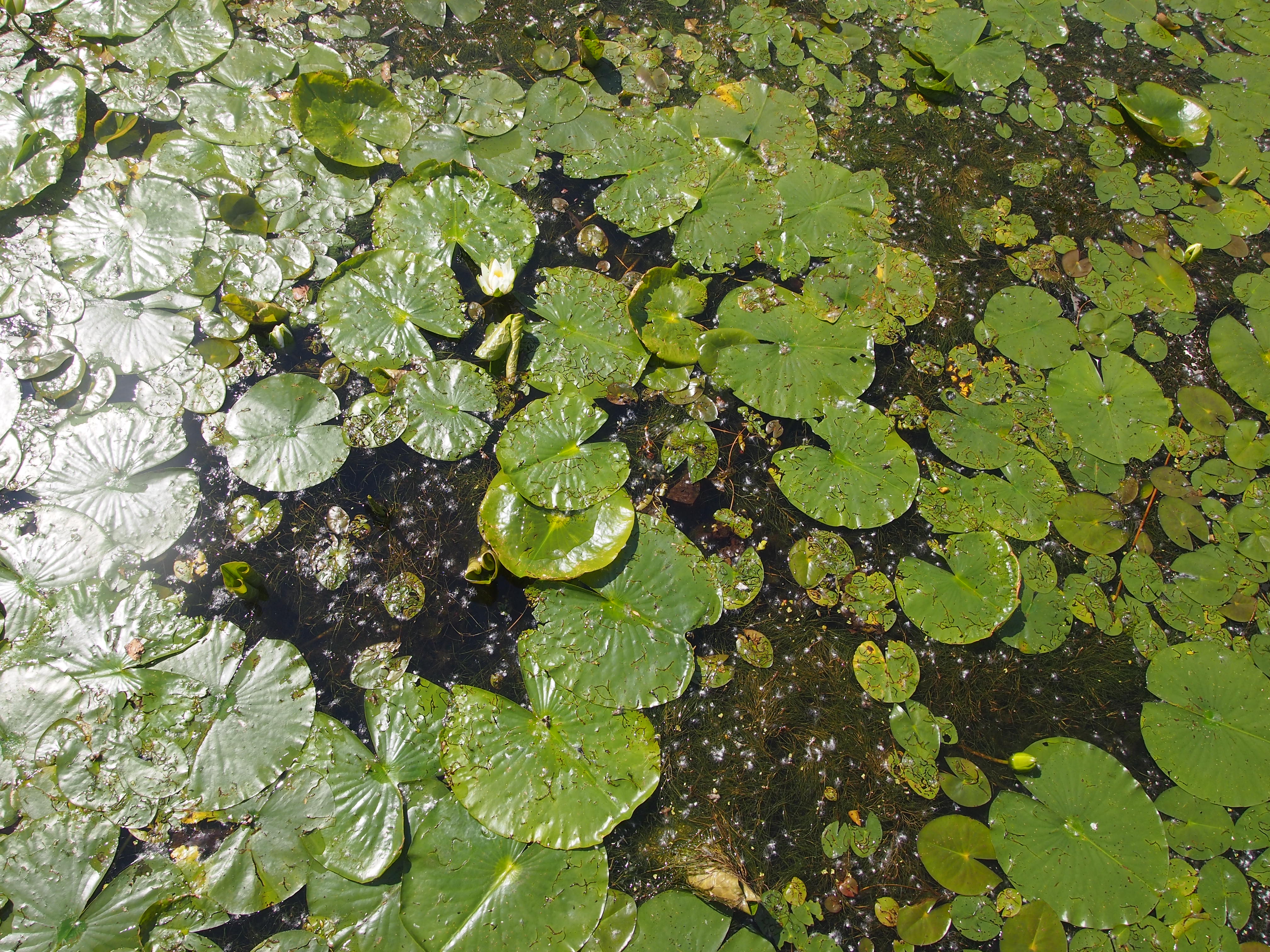
Spring Valley Flowers June 2014The pond’s also verdant as all get out, layered with lily pads and alive with little fish under them. Spring Valley lily pads, June 2014I’m all for going places, far-away places if possible, but there’s also a lot to be said for near-to-here places.

A Passing Coconut Boat

I’m done with Orwell for now, though I need to find more of his essays and other writings and dip into them. So I’m taking up some of the travel books I have around the house but haven’t gotten around to. Such as The Great Railway Bazaar by Paul Theroux (1975), which I’m reading now. Somehow or other I’d never read it, though I’ve had a copy for a long time.

Other unread titles I have around the house include Journey to Portugal (Jose Saramango), three books by Evelyn Waugh (Remote People, Ninety-Two Days, and Labels), and The Happy Isles of Oceania (also Theroux). Or the subject at hand might be Far Away, rather than travel, since some of the books are about spending extended periods in far away places, such as Under the Mountain Wall: A Chronicle of Two Seasons in Stone Age New Guinea, Seven Years in Tibet, and Out of Africa.

The Great Railway Bazaar is justly famous as a tale of months of rail travel in Asia in the early ’70s. Lately I’ve finished the chapters about traveling through Sri Lanka, and was struck by how impoverished the country was 40 years ago. In some sense I must have known that, but mostly I’ve been used to reading or hearing about the decades-long civil war there, and then its more recent economic growth. Time flies, places change.

Which brings me to this picture. Vietboat 1994In June 1994, we were traveling down the Mekong in Vietnam, and we came very near to this coconut boat, and I happened to be ready to take a picture. Vietnam is and was a major producer of coconuts – 1.25 million metric tons in 2013, compared with 1.07 million metric tons in 1994 (a handy Food and Agriculture Organization of the United Nations interactive web site tells me this).

But never mind the production numbers. What became of the people in the boat? Are the parents still running a coconut boat, or did they ever really specialize in that? The child would be an adult now, assuming he survived the perils of third-world childhood, and very likely he did. What’s he up to? Or was it a girl? Just another set of minor unknowables here in the hyperconnected Information Age.

Johnson’s Door County Fish

This quote came to my attention recently: “Chicago is the city of the steak house, of deep-dish pizza, the Italian beef sandwich that requires three hands to manipulate and eleven small paper napkins to mop yourself up with afterwards.” – Joseph Epstein, Literary Education and Other Essays.

Yep. Been there, eaten all those things. But they weren’t on offer recently at Johnson’s Door County Fish in west suburban Lombard, Ill. In fact, a hand-written sign at the counter at Johnson’s told us the sad fact that the restaurant had no Lake Superior whitefish for sale that day. Sad news, since whitefish is a wonderful gift from the 2,800 cubic miles of Gitche Gumee to us omnivorous land-dwellers.

I’d been to Johnson’s once before. I’d seen it written up in the Tribune, and soon after needed to be in the vicinity, which isn’t very often, so I decided to give it a go (here’s a more recent mention in the paper, about its fish sandwiches). As unpretentious fish joints go, it’s first rate. Not the best lake fish I’d ever had – Bayfield, Wis., had that, but pretty good. That was seven or eight years ago, maybe. I remember taking Ann with me, and she was still a toddler.

The place looks about the same. Brown woods, a lot of windows, worn booths, and some fish ornamentation, such as a scene of fanciful schools of purple fish painted on the wall in 20th-century restaurant vernacular style. Also, a there’s navigation map of northern Lake Michigan posted on the wall, along with blown-up b&w images of Great Lakes fishermen and their equipment.

I had the walleye plate and Yuriko had the cod plate. The presentation isn’t anything special. In fact, it looks like the fried fish you might get at one of the lower-rung fast-food places. But the fish is tasty, much better than it looks.

Another hand-lettered sign explained that the restaurant is for sale. Apparently the owners are in their 80s, and want to sell. I’m not in the market for a fish restaurant, but I hope someone takes it over and maintains it as an independent, low-cost fish joint here in the Midwest.

Big Buddhas ’94

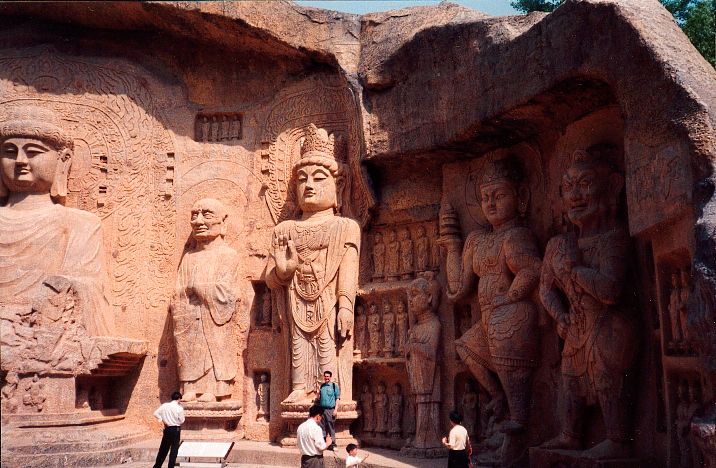
Go to Asia, see Buddhas, big and small. Or, to be more exact, Buddharūpa of various physical sizes. In early May 1994, we were in Hangzhou, China, and took a bus out to see Lingyin Temple, which I called “Lurgyin Temple” the last time I wrote about it (clearly a transcription error).

“The grounds featured a multitude of buddhas, most looking Indian in inspiration, some remarkably large, with huge feet and hands, carved into the side of a bluff,” I noted. “The place was nearly as popular as the West Lake, so the translation of the temple’s name, the Temple of Inspired Seclusion, didn’t apply any more, or at least on warm spring weekends.”

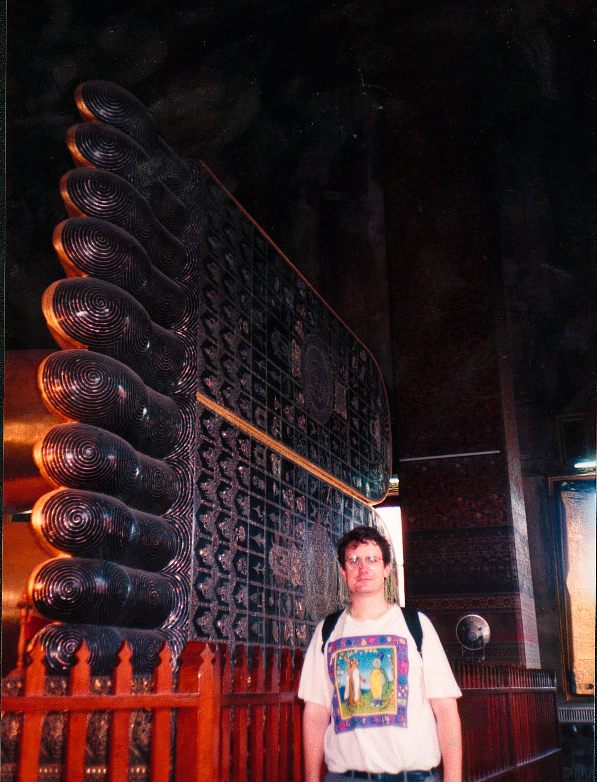
HangzhouBy early June, we were in Bangkok, where we saw more big Buddhas. Including a favorite of mine, the famed Reclining Buddha of Wat Pho. The image is about 16 feet high and 140 feet long, with the right arm supporting the head. Down at the other end, you get a good look at the enlightened one’s feet.

BuddhaToesThese are the feet and toes of Buddha. The bottom of the feet are inlaid with mother-of-pearl, as can be seen here, and supposedly there are 108 designs, though I didn’t count them. One-hundred and eight is an important number in Buddhism, but I’m a little fuzzy on the details, and explanations I’ve read and heard haven’t helped that much.

On New Year’s in Japan, Buddhist temples chime their bells 108 times; there are supposedly 108 earthly temptations to overcome to before achieving nirvana, one of which must surely be an obsession with pachinko.