Bear With Me

“What kind of vegetarian are you, Eyebeam?”

 “I do my best to steer clear of bear meat.”

 Jan. 12, 1994

Today I sat down for a dinner of bear chili. This was my idea. I made it this morning, went off to teach in the afternoon, and came home to it a little while ago. Yuriko’s not home yet, since this is her night class night. The bear meat came in a can – no, came from a bear – anyway, the meat has lately been in a can, sitting on our kitchen shelf since I bought it at Chitose Airport in Hokkaido in October.

Am I contributing to the demise of Hokkaido bears? I don’t know. I do know that there are enough of them to frighten hikers in Hokkaido’s national parks.

2014 Postscript: This article, for one, talks of a lower population of Hokkaido bears because of “hunting and loss of habitat.” I faintly remember the bear meat chili being like chili with beef, only a little greasier.

Maneki Neko

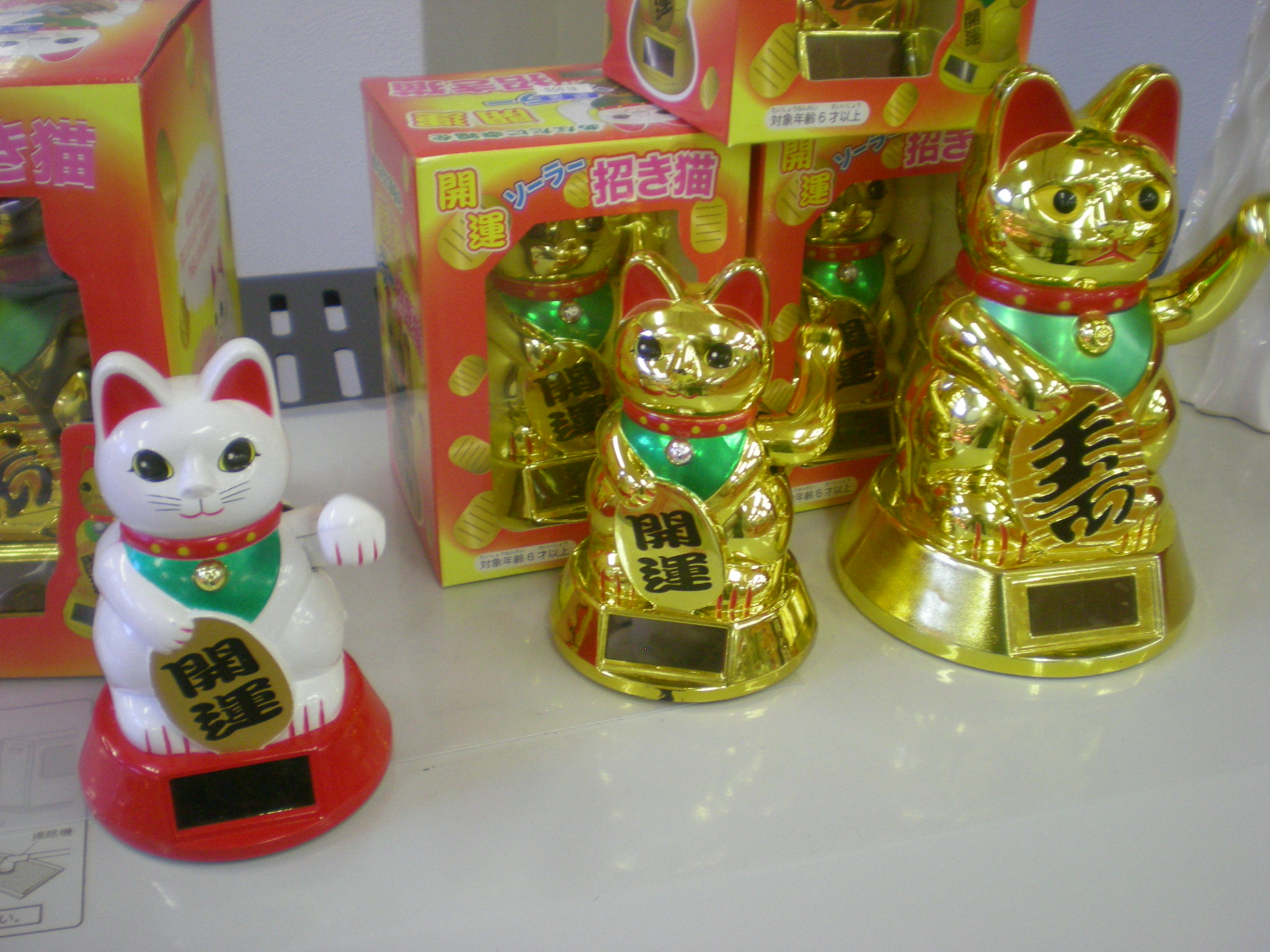
Japan2013-14 019One more image taken in Japan recently by either Yuriko or Ann: some maneki neko at a gift shop not far from the base of Mt. Fuji. They’re the good luck cats that are nearly ubiquitous in Japanese retail establishments and are found in a lot of other places as well. We have one in our house on the same shelf as a few iterations of Spongebob, a pair of salt ‘n’ pepper penguins, a few painted eggshells, and the Ilanaaq figure I got in Canada, among other figurines.

The origins of maneki neko are obscure. As this article by California antique dealer Alan Pate puts it, “Considering how accepted the cat has become, and how dear the image is to the Japanese, few people seem to know much about it. How has a seated cat become a symbol of good fortune and prosperity? What are its roots? Why do some have the left paw raised and others the right? Why are some white, some black, gold, or even red?

“Given the nature of folk traditions, evolving over time, absorbing elements of local beliefs and customs, we may never know the exact evolution of the maneki neko… A casual survey of antique dealers in Tokyo and Kyoto reveals many curious interpretations and theories: They originated in Osaka. No, they originated in Edo (old Tokyo). They originated in the 17th century. No, they most definitely originated in the early 16th century. The left paw is for wealth and the right for luck. No, the left is for a drinking establishment and the right for merchants. No, the left is for business and the right for home…”

I can’t shed any light on the subject. I just know I saw them a lot in Japan, and I asked some Japanese about it, and the best answer I got was that the cat grabs good luck for you and brings it in, as it might a fish or a bird.

That Old Shitamachi Spirit

When I hear of something like the Tokyo Skytree, I react with a completely irrational thought: how could they wait to build it until it’s inconvenient for me to see it?

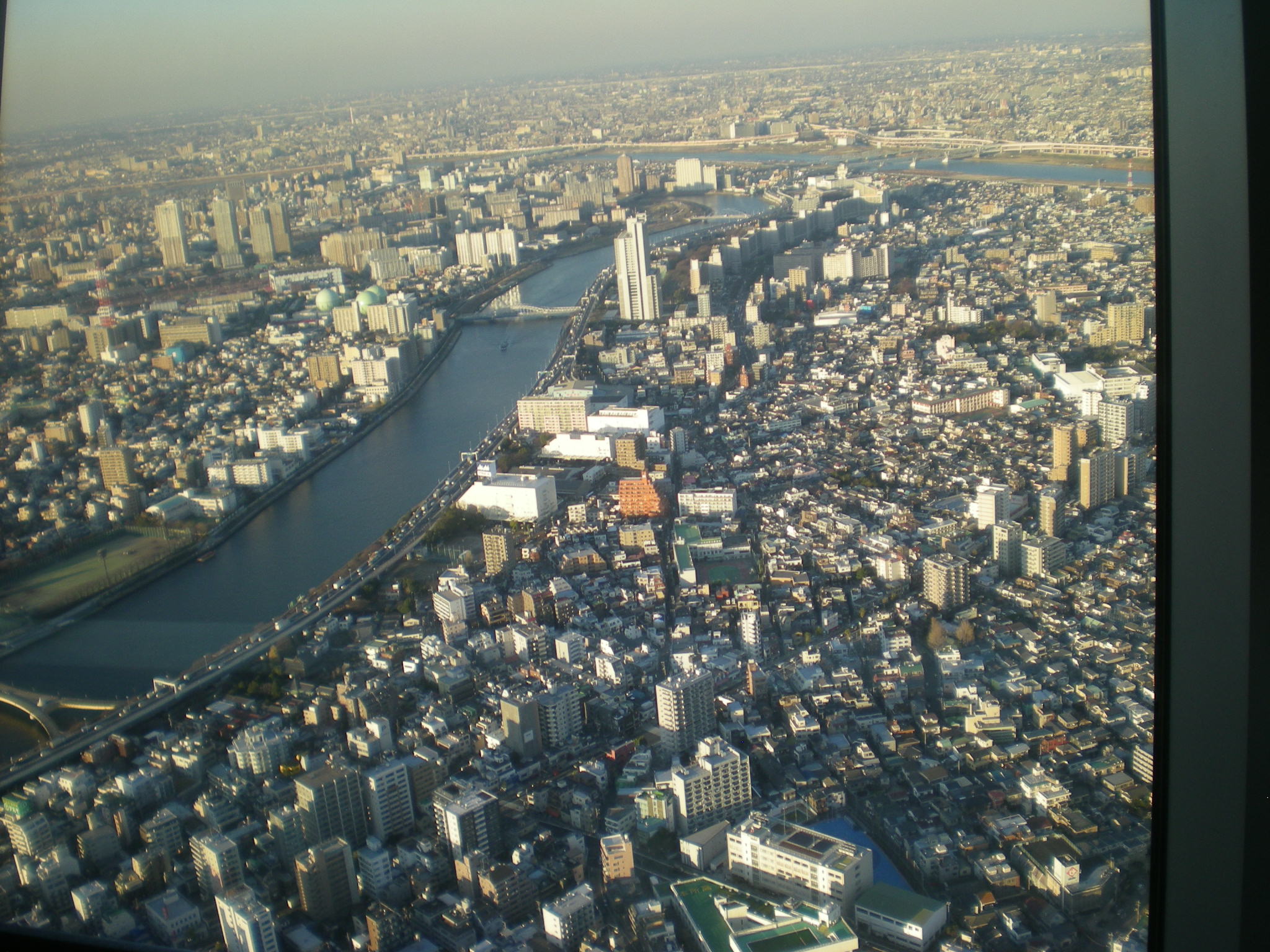
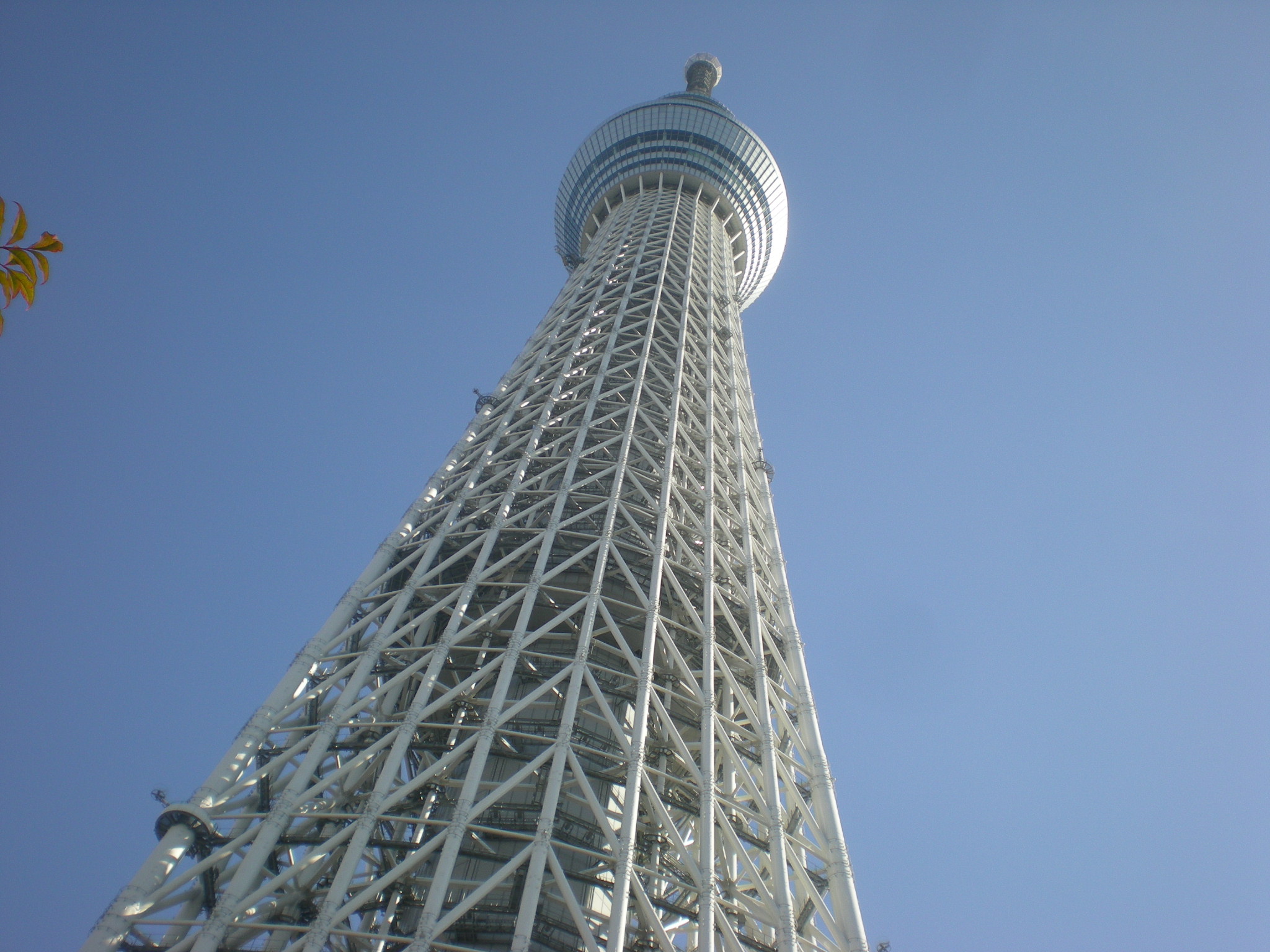
Tokyo Skytree Dec 2013During Yuriko and Ann’s recent trip to Japan, they visited the Skytree, which is now the tallest structure in Japan, and the tallest TV/radio tower on Earth, completed only in 2012 and coming in at more than 2,000 feet. The Skytree itself is a broadcast tower and tourist attraction, but it’s also part of a mixed-use development that includes office space, convention and meeting facilities, a theater, parking garages and more. The Tobu Railroad and a consortium of broadcasters developed it.

The tower also gives Japanese web site designers a chance to describe the place in English: “The ‘town with a tower’ promises a lifestyle that is not uniform. The facilities are developed with the aim of producing a community brand transmitting new local values to the world by generously introducing facilities and functions that will manifest the charm of the shitamachi spirit and produce a synergy effect.

“Note: Shitamachi means traditional old town area with Edo atmosphere.”

The observation deck’s got quite a view, my wife and daughter tell me. And what do you see?

Tokyo, Dec 2013A slice of the vastness of greater Tokyo.

Canterbury, 1994

I took lousy notes during our four weeks in London in December 1994, so I can’t remember exactly when it was we took a day trip to Canterbury. It wasn’t December 1, because that day I saw a revival of The Prime of Miss Jean Brodie somewhere in the West End, and after the show the lead actress made an appeal for donations to fund AIDS research, since it was World AIDS Day.

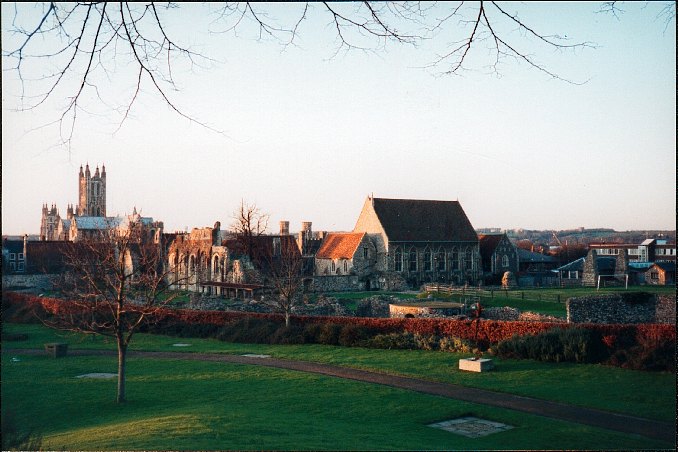
We went to Canterbury sometime early in the month, and we had a pleasant walk around the town and a long look at the cathedral, which is off in the distance in this picture — one of the few I took there.

I think the closer ruins are what’s left of St. Augustine’s Abbey, which Henry VIII put on the road to ruin. The grass looks strangely green for December, but I remember that December in southern England wasn’t very cold at all, to the wonder of people who lived there year-round.

Better pictures of the cathedral and the ruins and other places nearby can be found at the fine Saints and Stones web site.

Old Tractors & Old Abe

At the College of the Ozarks is the Ralph Foster Museum, and at the Ralph Foster Museum is a modified 1921 Oldsmobile Model 46 Roadster, the truck used in the Beverly Hillbillies. I didn’t get to see that because the museum was closed the day I visited in early November last year.

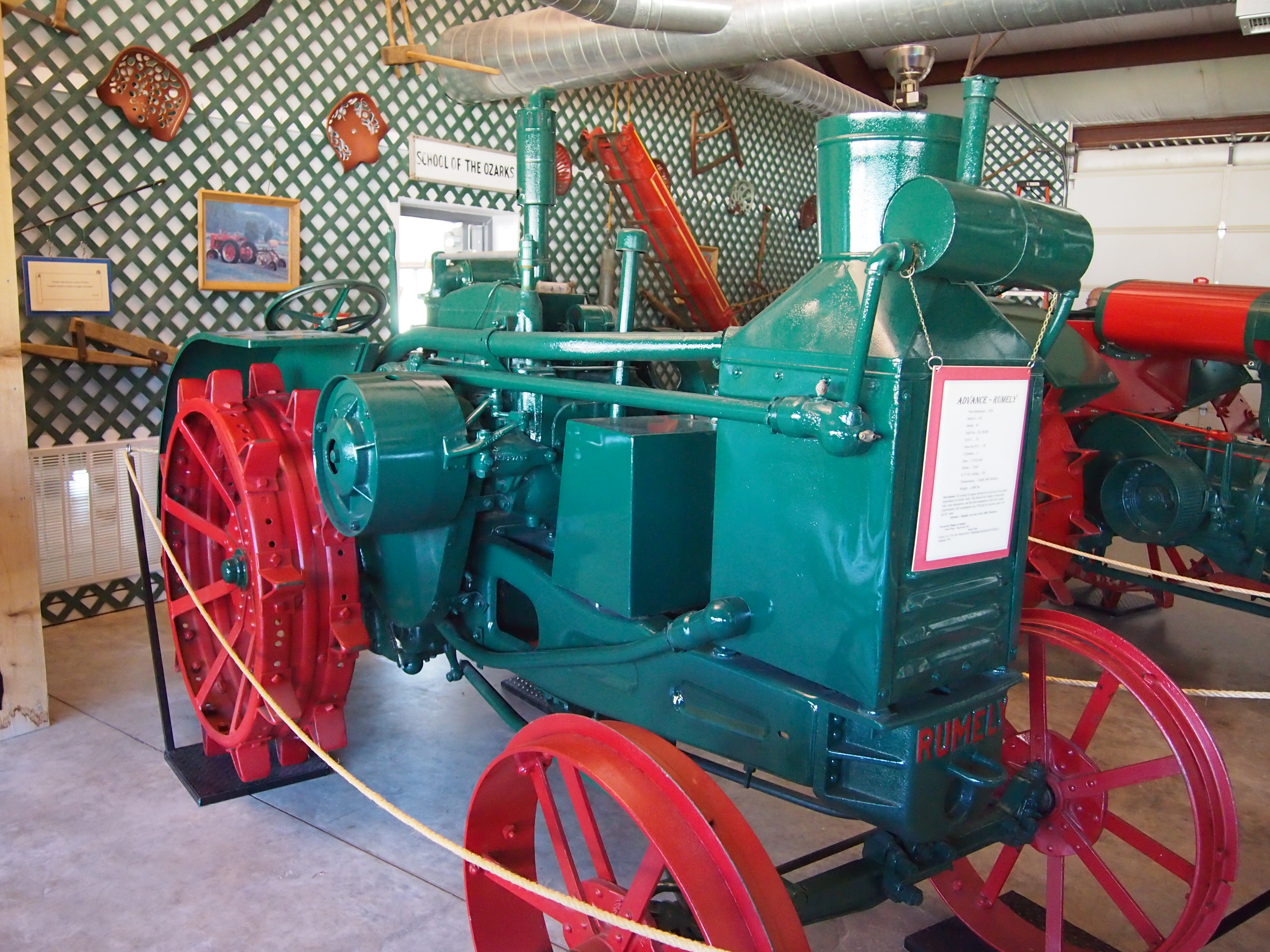
Instead we went to the Gaetz Tractor Museum. On display are such marvels of the machine age as the two-cylinder, three-ton Advance Rumely, introduced in 1924.

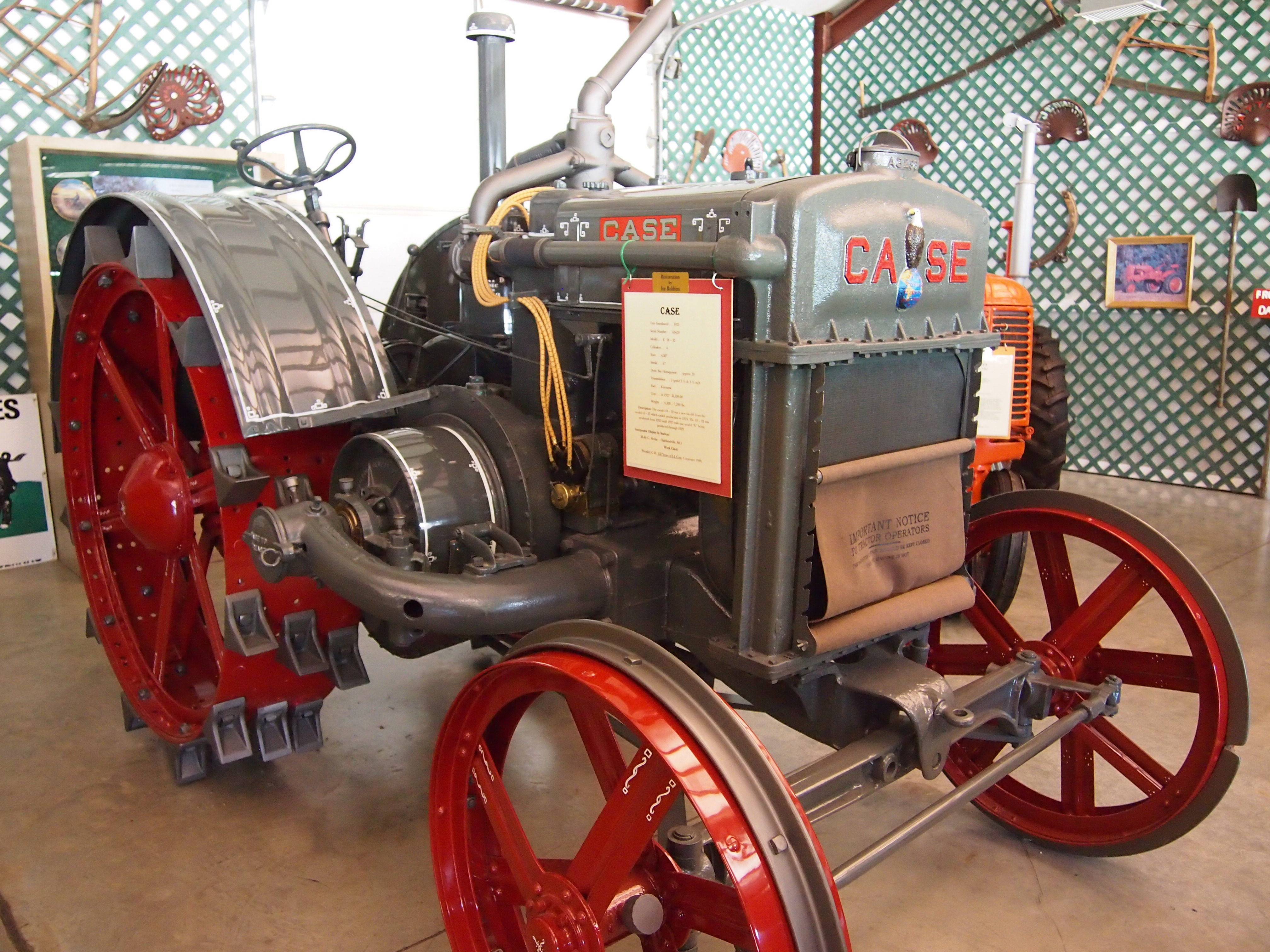
There’s also a Rumely 6A, vintage 1930, as well as four-cylinder, three-ton Case model K, ca. 1927.

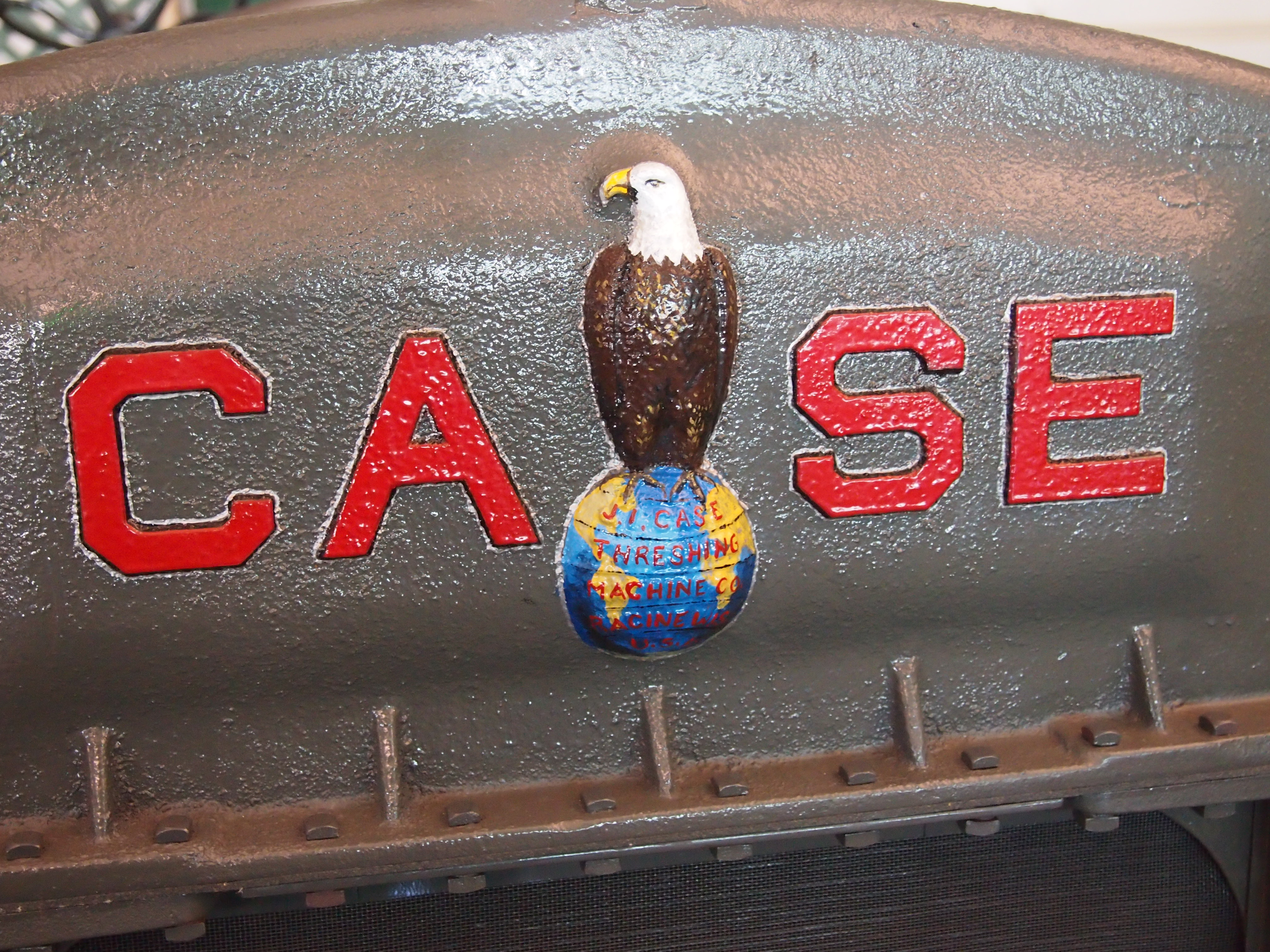
Made by the J.I. Case Threshing Machine Co., which was eventually M&A’d out of existence as a separate entity. Now that’s a corporate name. Beats much of what we have now, such as the Three Initial Corp. or the Random-Syllable Co.

Note the eagle. That was J.I. Case’s corporate symbol, but it isn’t just any eagle. It’s Old Abe.

Old Abe – a living eagle – was the mascot of the 8th Wisconsin Volunteer Infantry Regiment from 1861 to ’64. Quite a story. Bonanzaville, an open-air museum in West Fargo, ND, that we visited in ’06, has a striking Case Eagle on display.

My Own Private North America

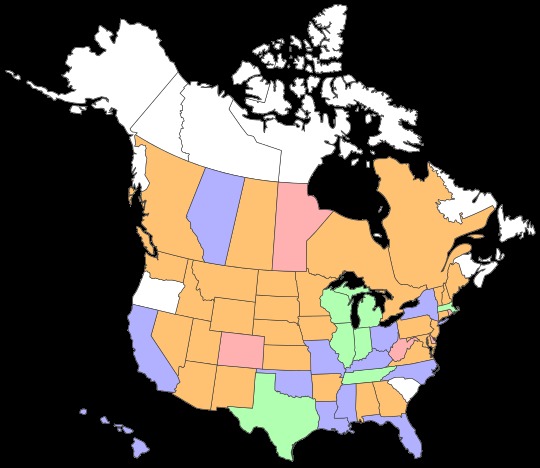
The following is an exercise in self-absorption. But then, what’s a blog for? Recently I chanced across a site that would generate color-coded maps not just of states and provinces you’ve visited, but rank them with a five-color scheme (counting no color). The site of origin is the not-very-often-updated defocus-blog.

I’m changing defocus-blog’s suggested definitions of the colors a little to suit myself.

Green: either lived in these places or visited so many times I’ve lost count. Very familiar.

Blue: Numerous visits covering a fair amount of the state or province, or one or two visits of strong intensity and some variety. Fairly familiar.

Orange: Spent the night at least once, saw a relatively limited number of places.

Pink: Passed through (on the ground) but didn’t spend the night.

White (no color): Never visited.

The difference between orange and blue is sometimes a little hazy. For instance, I thought for a while about the color of Alabama and Georgia, places I’ve been more than once, and decided that I haven’t really seen that much of them. (I need to see Mobile and Savannah, I think, and some spots in between). The rest of New England (except for Rhode Island) could be blue, maybe, since I visited more than once — and they aren’t that big — and Louisiana might merit orange, but Louisiana has offered up some intense visits.

I don’t particularly aspire to add any more green states or provinces. But I would like to convert orange and pink to blue, and fill in those pesky white spots, which naturally are all pretty far from each other and me.

Alexander & Johann

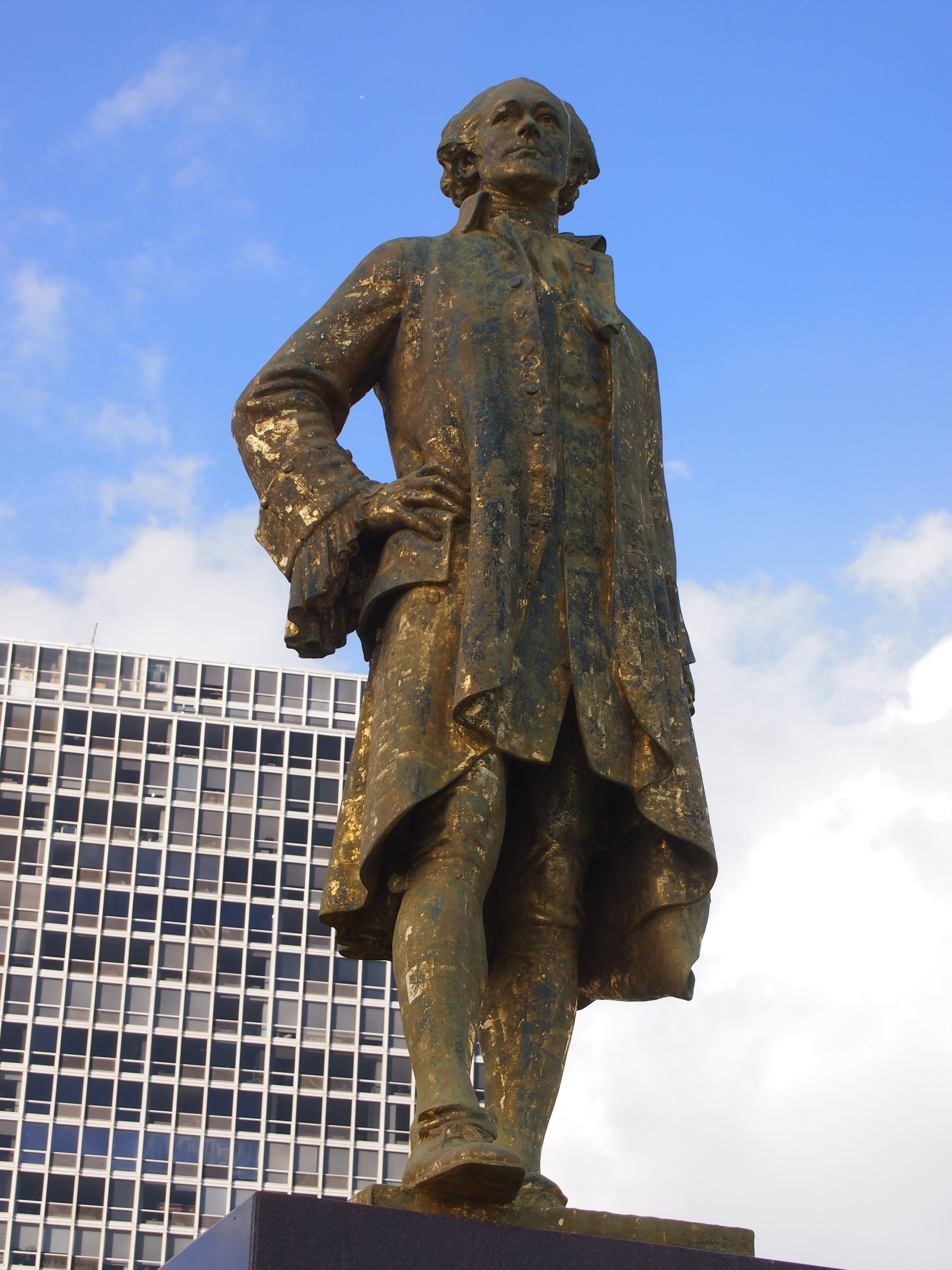
Name that Founding Father. Who happens to be depicted by a bronze in Lincoln Park in Chicago, a place he surely never visited.

Yes, it’s Alexander Hamilton, inventor of the national fisc. And, for that matter, our public debt, which you can see as a millstone around ca. 300 million necks, or a brilliant way to promote the stability of the federal government (indeed: the entire world now has an interest in maintaining the United States).

The statue has a story. Kate Buckingham — the heiress who paid to build Buckingham Fountain — apparently thought Hamilton didn’t get his due among Founding Fathers. She lived long enough to see Hamilton put on the $10 bill, so you’d think that would be enough, but no. She didn’t live long enough to oversee the large memorial she originally wanted for the site (see this posting for more on the story, including the original, never-done monument design by Eliel Saarinen).

So what we have in the 21st century is a gilded bronze of Hamilton on a red plinth, overlooking some flower beds. As you can see, there isn’t much gilding left. I like it that way.

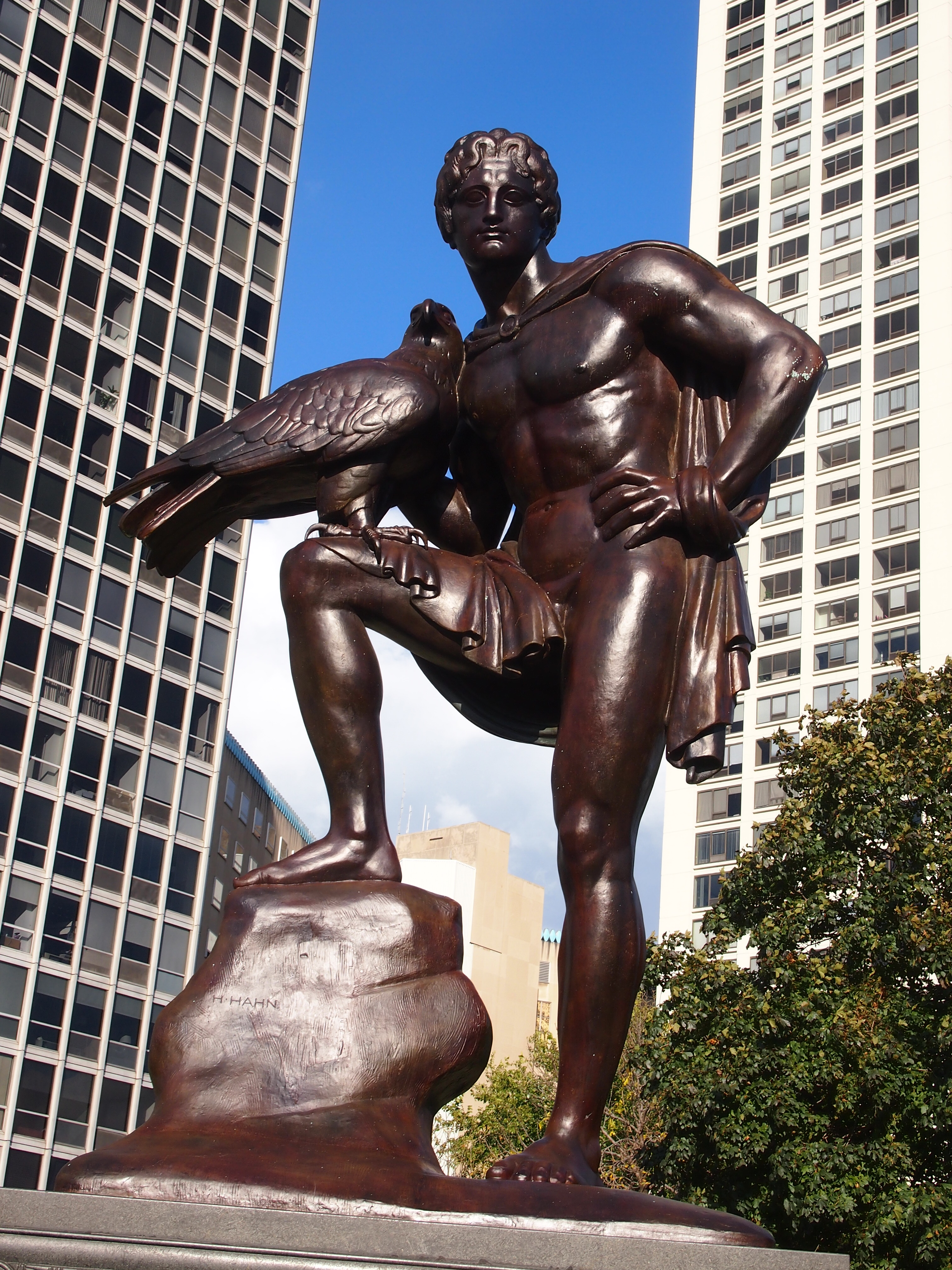
Not far away is a statute with a somewhat different vibe.

Yet Hamilton and this fellow were pretty much contemporaries: it’s Johann Wolfgang von Goethe (except Geothe never wound up on the wrong end of a dueling pistol, so he lived longer than Hamilton). Maybe Johann’s dressed for an outing of Sturm und Drang. At the base the statue says: To Goethe/The Master Mind of the German People/The Germans of Chicago 1913.

I can’t see the date 1913 and not think of what was to come, when the Mind of the German People was distracted in such unfortunate ways. But that’s hindsight. The statue’s been there 100 years, free of the “trammels of costume and conventionality,” as the committee of local Germans who commissioned the work wanted. Recently, I read, a new brown patina was added, so it looks nearly new.

The Elks National Veterans Memorial

“The elks live up in the hills and in the spring they come down for their annual convention. It is very interesting to watch them come down to the water hole. And you should see them run when they find that it’s only a water hole. What they’re looking for is elk-ohole.”

 – Capt. Jeffery T. Spaulding

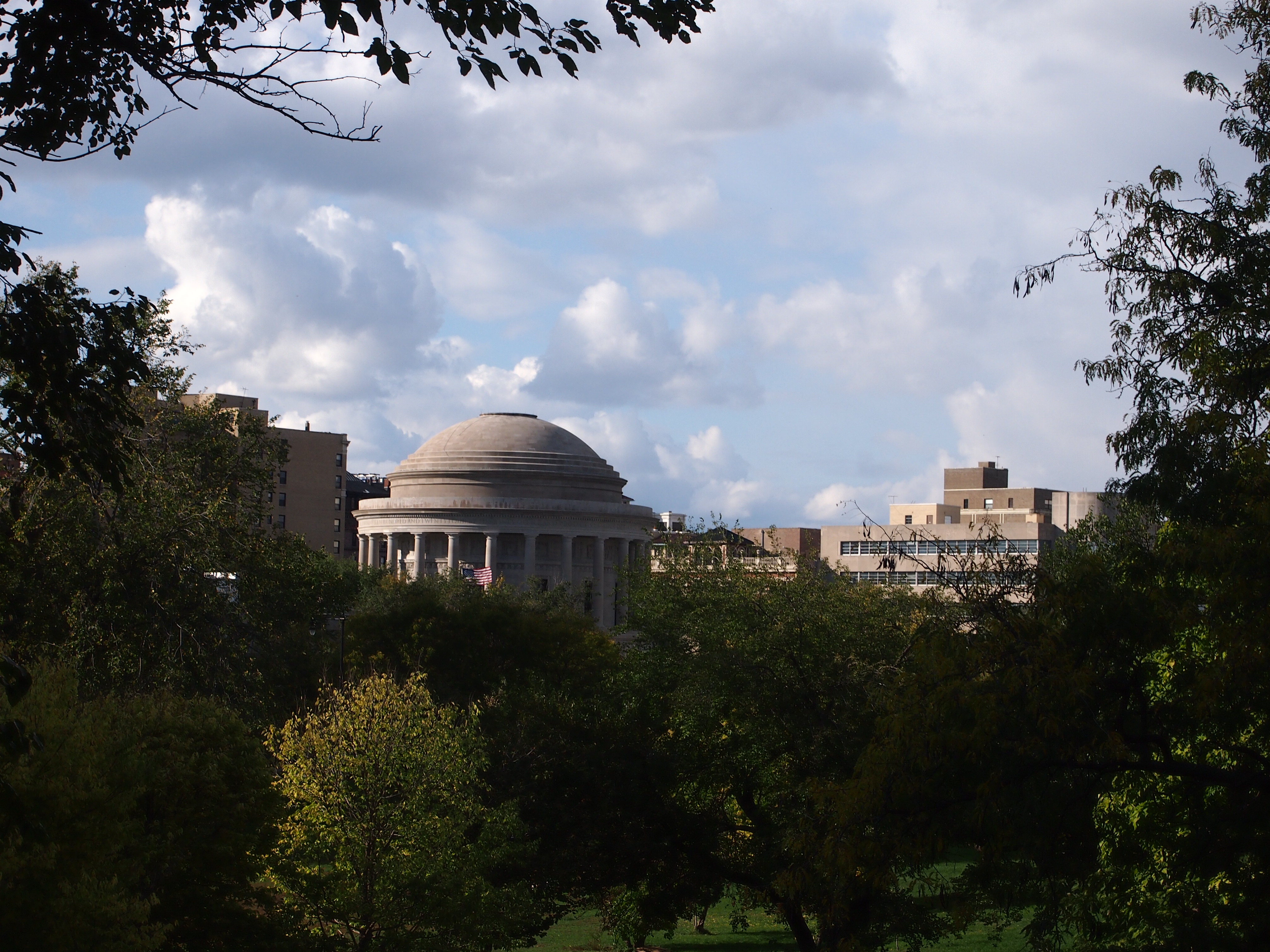
I was winding down by around 4 p.m. on October 19, but I wanted to see one more place. It wasn’t far north of Mother Cabrini’s shrine, and also at one of the edges of Lincoln Park: the Elks National Veterans Memorial. I could see its Roman-style dome from quite a distance in the park.
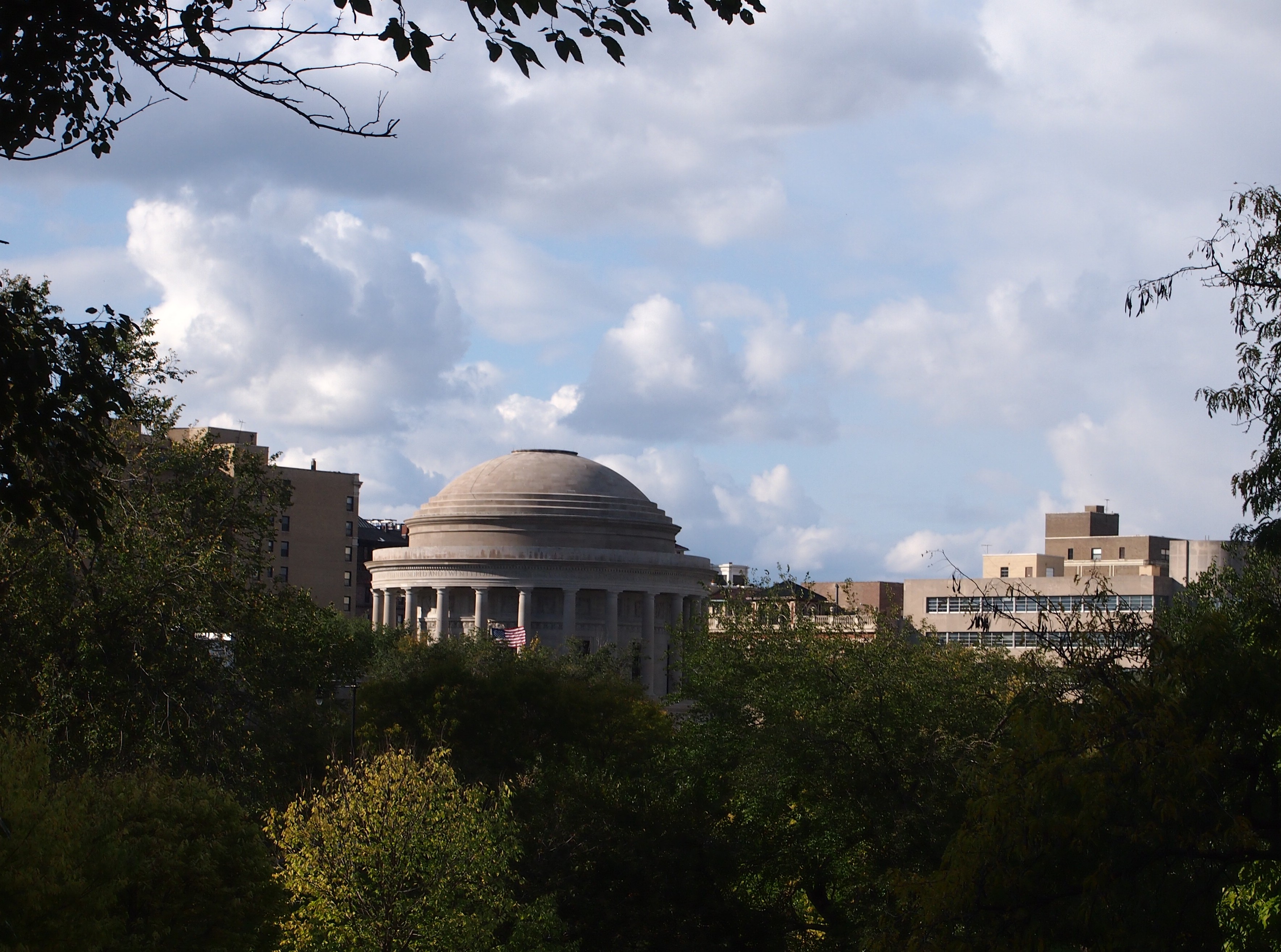
After the Great War, the Elks wanted to build a memorial to their members who had died in the conflict, which numbered more than 1,000, as well as space for the org’s national headquarters. The main rotunda of the Elks National Veterans Memorial was the most ornate space I saw during Openhousechicago, though Mother Cabrini’s shrine was a close second.

This was no accident. The Elks War Relief Commission, which was tasked with supervising the building’s construction, wrote in its  recommendation to the Grand Lodge in 1921 that: “The suggested building be made definitely monumental and memorial in character; that the architectural design be so stately and beautiful, the material of its construction so enduring, its site and setting so appropriate… that the attention of all beholders will be arrested, and the heart of every Elk who contemplates it will be thrilled with pride, and that it will for generations to come prove an inspiration to that loyalty and patriotism which the Order so earnestly teaches and has so worthily exemplified.”

The order picked New York architect Egerton Swarthout to design the memorial. He had a predilection for Beaux-Arts, which shows in the Elks memorial. More than shows, it overflows. I wouldn’t want everything to be done in that style, but it has its place – such as in massive, ornate memorials completed in the 1920s.

My camera, and my skills, aren’t remotely up to capturing the marbles or the soaring murals or even the gilded allegorical statues of the rotunda, which depicted Elk-approved virtues (Brotherly Love, Charity, Fidelity, and Justice). Better to see them with the eye, or failing that, at the memorial’s web site.

By contrast, I gave picture-taking a go at the Grand Reception Room at the Elks National Veterans Memorial. It too is ornate to beat the band.
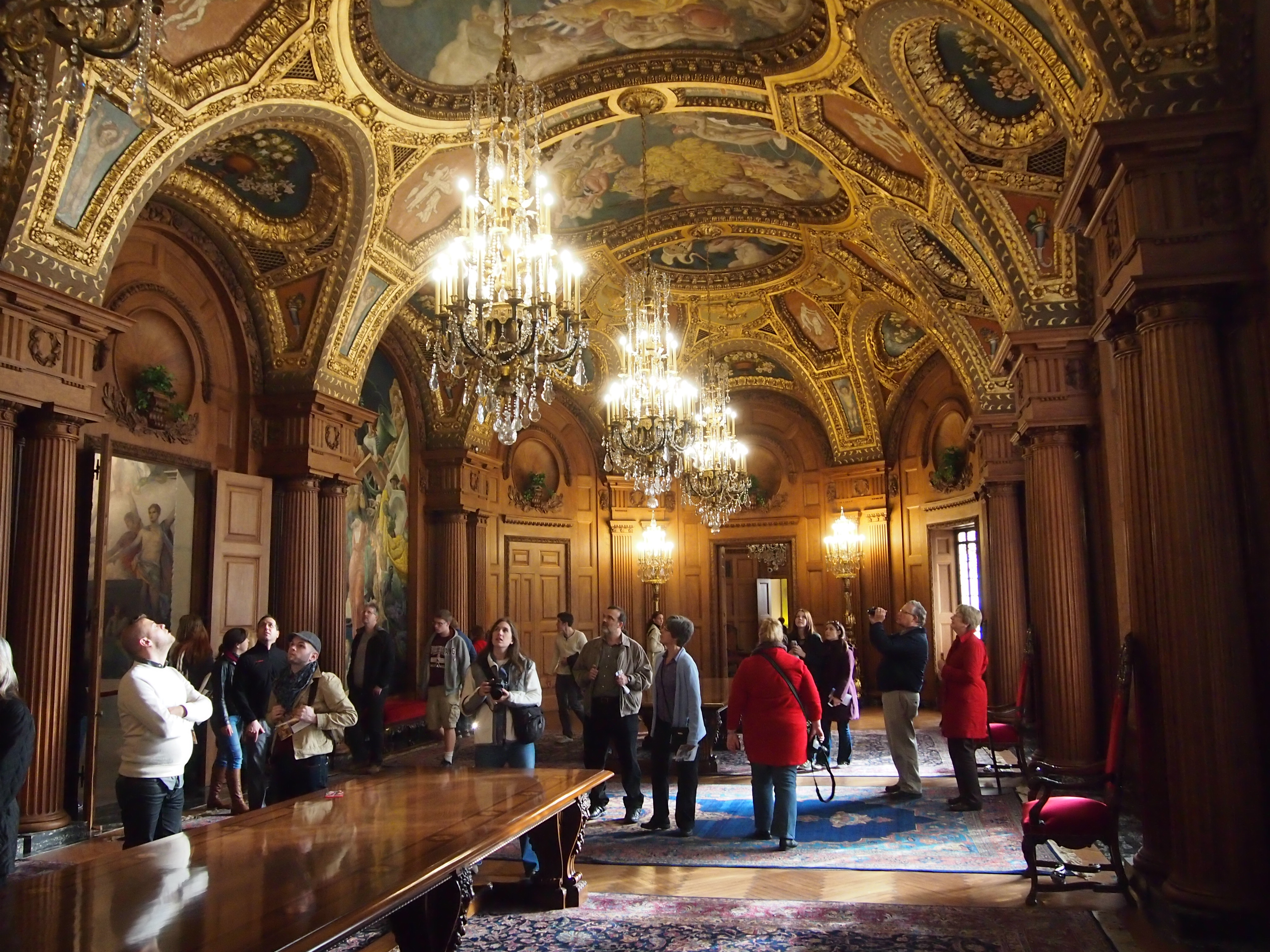
I was especially taken with the allegorical painting called “The Armistice,” which of course references November 11, 1918. Eugene Savage did that work and others in the room, and I thought that style looked familiar. Like a WPA work, but before that agency existed. Sure enough, Savage was an important player in the WPA Federal Arts program, so I guess that was no accident either.
The National Shrine of St. Francis Xavier Cabrini

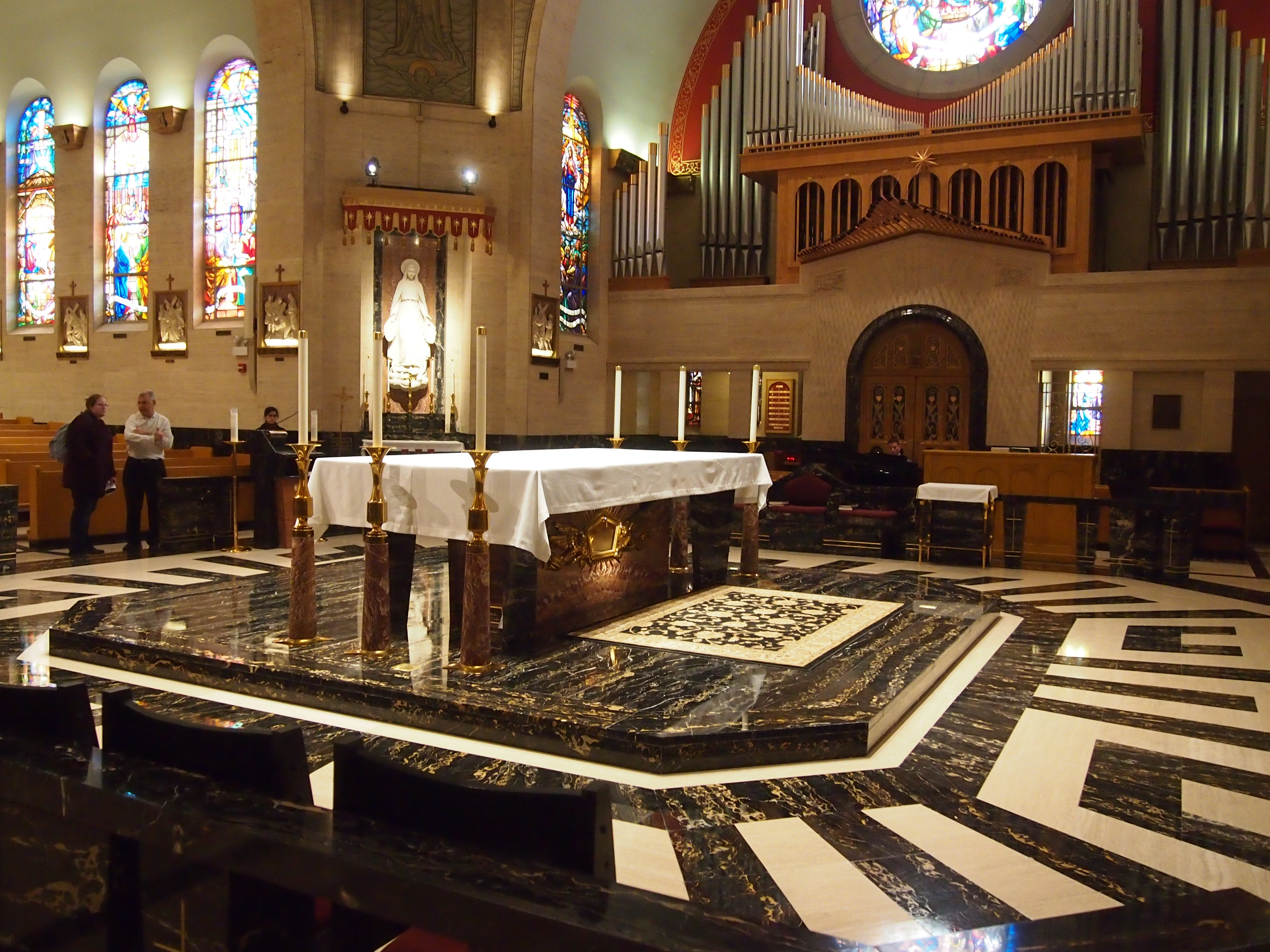
I expected to see interesting architecture on last week’s Openhousechicago. I didn’t expect to run across the humerus of a saint. But the relic arm bone’s behind glass and under the altar of the National Shrine of Saint Frances Xavier Cabrini, which is just west of Lincoln Park.

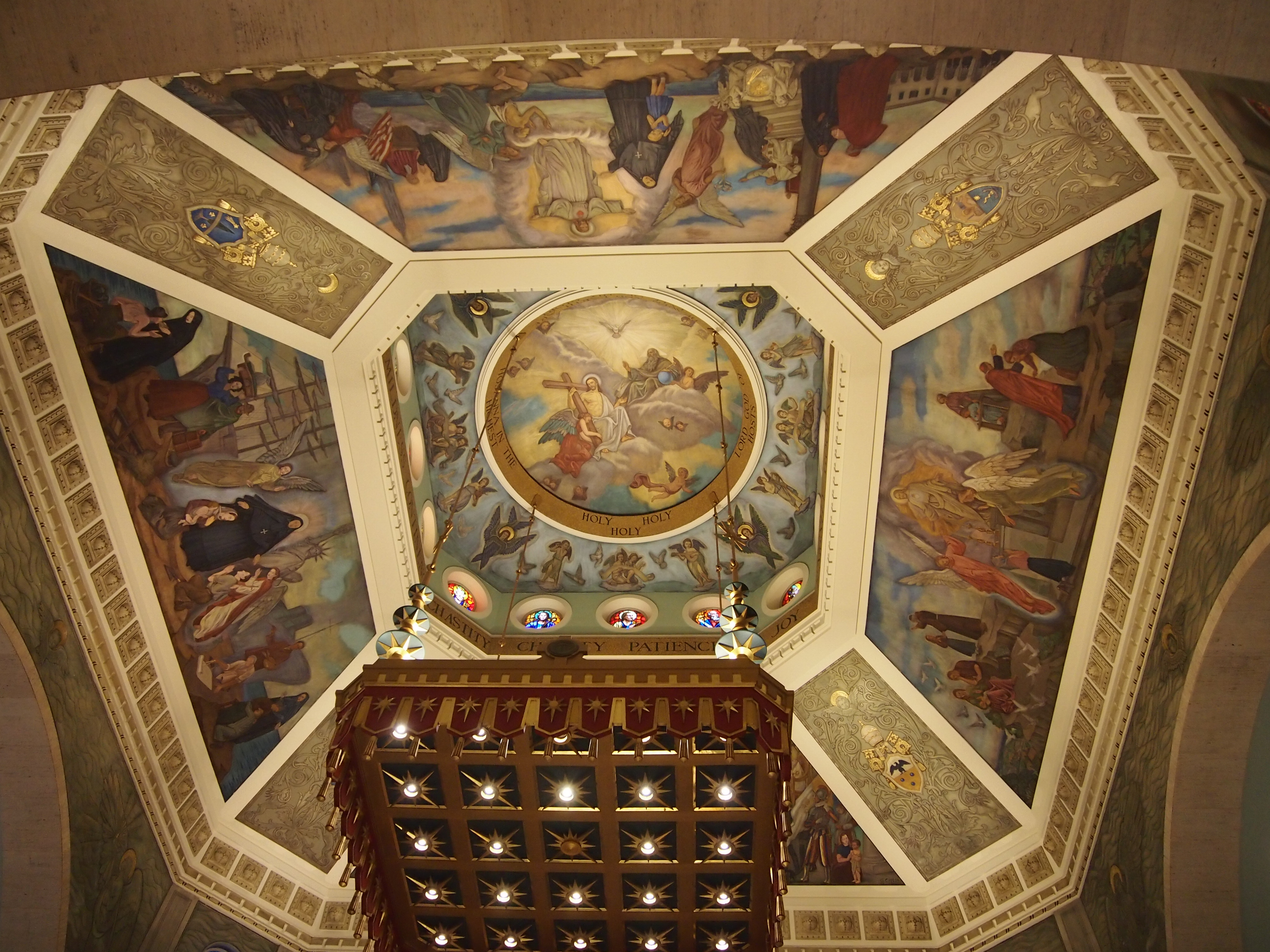
The shrine itself is magnificently ornate, done in a “modern Romanesque” style. Mosaics and frescoes on the dome overhead illustrate the life of the saint; the stained glass all around tell of the Resurrection, the Virgin Mary, the Holy Spirit, the Apostles, and more, even including the seal of the Missionary Sisters of the Sacred Heart of Jesus, which was founded by Mother Cabrini; there are four side chapels and four side altars; and the shrine has a Tamburini Pipe Organ, an Italian variety that I’ve read is rare in North America.

This is the view of the dome from the front pews, and a part of the baldachino (canopy) over the altar.

I’ve been in a fair number of ornate churches, but what struck me about this place was how new it feels. Not just new by the standards of European sacred spaces – which might be 100 years or less – but new by American standards. This iteration of the shrine was only opened last year.

A predecessor shrine was part of Columbus Hospital, an institution founded by Mother Cabrini (d. 1917) at this location in 1905. All together she founded 67 hospitals, schools, and orphanages in the Americas and Europe. I’m pretty sure I knew about the Columbus Hospital before it closed in 2002, but never ventured into it or the original shrine.

A condo tower was eventually developed on the site of the hospital – an extremely valuable piece of land, with its immediate access to Lincoln Park and views of Lake Michigan – but part of the deal was that the shrine had to be redeveloped on the site as well. So the floors over the shrine, which is a separate entity within the structure, are residential condos. An unusual arrangement.

The shrine also includes offices and a small museum about the saint. Among other things, the room in the hospital in which Mother Cabrini lived until her death is re-created, and on display are a habit she wore, her bed, an address book, and a to-do list (“continue work on that fourth miracle this week”).

The Kii Peninsula, 1992

In late October 1992, my friend Rich came to visit me in Japan, and one of the places we went was down to the southern shores of the Kii Peninsula, more-or-less south of Osaka, where we visited the cliffs of Osenkorogashi and Nachi falls. Unusually for Japan, the cliff was simply a cliff – no observation deck, no rail, just a drop off with a sign posted nearby. I could read, in red, the large hiragana for “DANGER” (ABUNAI) on the sign. The falls, on the other hand, were visible from a platform not far away. Impressive at 436 feet, and near an interesting Buddhist temple, Seiganto-ji.

I was looking all that up and got a lesson in how the Internet enables wandering minds like my own. How tall, I wondered, is that fall compared to some others I’ve seen? Though broad and impressive, Niagara Falls is only 167 feet high. Not sure anymore which of the Hawaiian falls I saw, and while all of them were very pretty, none seemed that high. The falls on the Athabasca River in Canada were powerful, but also not that high. What about Fall Creek Falls?

Fall Creek Falls is part of a Tennessee state park of the same name I visited about 30 years ago. It was a gorgeous place, with a picturesque fall – and at 256 feet, supposedly the highest “free-fall waterfall east of the Mississippi,” for what that’s worth. While reading the Wiki article, I noticed that part of Dr. Otto and the Riddle of the Gloom Beam (1986) was filmed at that park, while the rest was done in Nashville. If that movie doesn’t ring any bells, you’re having a normal reaction. It’s an early Jim Varney movie, and I must be one of the few people who paid money to see it. I went because the brother of an old friend of mine was a cameraman on the movie.

So I looked my friend’s brother up on the imdb. I knew he went to California in late ’80s to ply his trade, and sure enough he’s done a lot since then, including as an electrician and best boy on various movies and TV shows, few I’d ever heard of except The King of Queens. Glad to know that he’s been able to make a living at it.

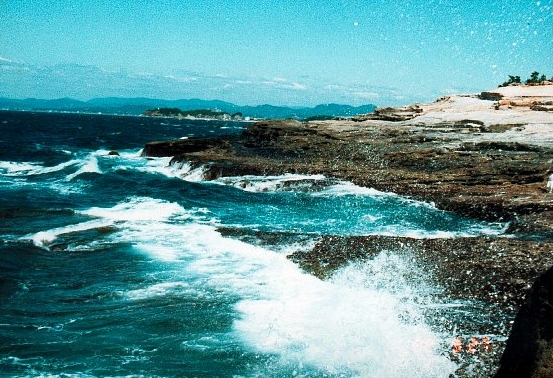
Back to Japan. I don’t remember the name of this place, but it was a rocky shore on the Kii Peninsula, somewhere near those other sights. Flat slabs of rock jutted out into the Pacific, which crashed noisily against the rocks.

It was clear and warmer than it should have been for October. The wind was strong. Rich and I decided that all of the four elements were in play: Earth in the form of the rock, Water in the form of the ocean, Air in the form of the quick wind, and Fire in the form of the warm sunshine.