The Amber Room

Ed tells me that the inside of Church of the Savior on the Spilled Blood  “is… seriously over the top. I like the Russian Orthodox for its restraint, and there is none whatsoever in that church.”

Must be all those mosaics. Maybe the Russians were trying to outdo Byzantine churches – taking that whole Third Rome idea seriously, at least when it comes to adorning sacred spaces. On the other hand, I’ve read that there might be more square feet of mosaics decorating the Cathedral of St. Louis than even the Church of the Savior on the Spilled Blood, and as far as I know no one’s claiming St. Louis as a new iteration of Rome.

The inside of Spilled Blood is just another thing I missed, not because I didn’t visit a certain place, but because I didn’t visit a certain place at the right time. That happens a lot; it has to, if you go anywhere at all. Some things, you want to miss – far better to visit St. Petersburg in 1994 than 1944, for instance. But I’m not thinking of anything quite so dramatic. Not long ago, I read about the reconstruction of the Amber Room, which is near St. Petersburg, and which wasn’t finished until 2003, meaning I missed that too.

It’s quite a story, the Amber Room. The Smithsonian says that the original room, whose construction started in 1701, ultimately “covered about 180 square feet and glowed with six tons of amber and other semi-precious stones. The amber panels were backed with gold leaf, and historians estimate that, at the time, the room was worth $142 million in today’s dollars. Over time, the Amber Room was used as a private meditation chamber for Czarina Elizabeth, a gathering room for Catherine the Great and a trophy space for amber connoisseur Alexander II.

“A gift to Peter the Great in 1716 celebrating peace between Russia and Prussia, the room’s fate became anything but peaceful: Nazis looted it during World War II, and in the final months of the war, the amber panels, which had been packed away in crates, disappeared.” (The whole article is here.)

Burned in a bombing? Buried in an unrecoverable place? Put at the bottom of the Baltic Sea by torpedoes? There are a number of ideas about what happened to the original, but nothing conclusive. Nothing like a good mystery involving treasure.

The Web of Things

Driving along today, I saw Halloween decorations for the first time this year: a large pretend spider web stretching from the ground to the roof of a one-story house. Or many it wasn’t pretend. I wondered out loud – Lilly was in the car – what you could catch with a web that size. Maybe some birds, or squirrels, or people out giving away copies of The Watchtower.

That just goes to show people spend their money on the oddest things, unless the web was homemade by giant arachnids in the house (in that case, stay away, children). Then again, not long ago I found a trove of 8.25 in. x 3.5 in. postcards in a resale shop bin, and I paid 25 cents each for them. I suspect few cards that size, if any, are made any more. But more importantly, they remind me of childhood trips. They weren’t that hard to find 40-plus years ago, and take home as souvenirs.

I’ve already mailed some of them to Ed, a collector of hotel/motel cards, but I still have a few, such as a Howard Johnson’s card from Silver Springs, Fla. We never stayed at that particular one, but the brand has early, and pleasant, associations for me, along with Holiday Inn, Rodeway Inn, and maybe a few others, though we often stayed at independents.

Church of the Savior on Spilled Blood

October became more October-like today, at least the way that month is usually felt in these Northern Hemisphere latitudes. Cool and clear, in other words. A fine day to take the dog for a long walk around one of the small lakes at the Poplar Creek Forest Preserve, in fact the lake in the third picture here (and we wandered under that vast old willow in the picture, too).

My experience of early October in St. Petersburg, Russia, was a lot colder. The place felt positively Decemberish. That didn’t stop Russians, or us, from strolling down Nevsky Prospekt, though it did persuade us not to buy any frozen treats from vendors. Ordinary Russians, on the other hand, seemed quite fond of eating ice cream on the street when the temperatures were barely above freezing.

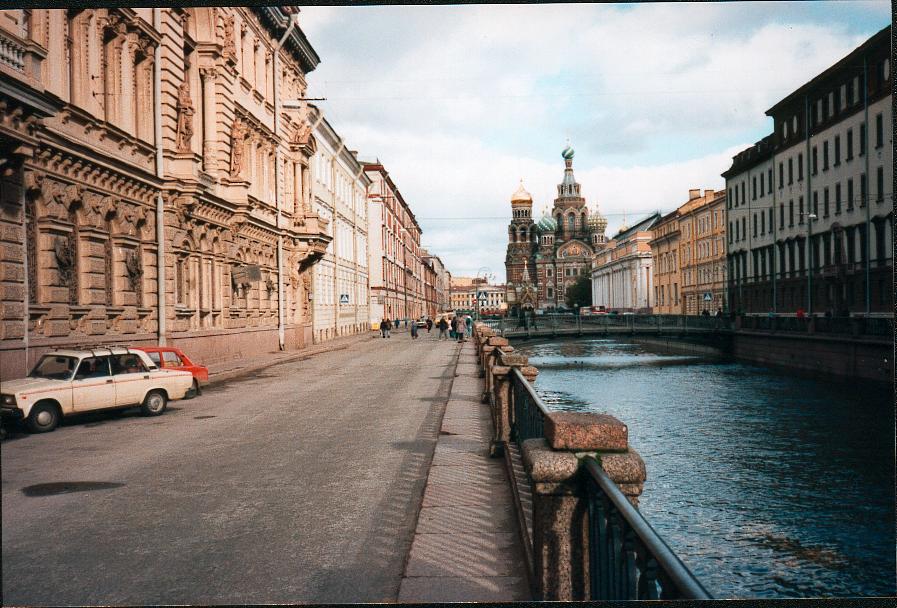
At the meeting of Nevsky Prospekt and the Griboyedov Canal, the Church of the Savior on Spilled Blood appears, just a few blocks away.

Naturally, we had to take a closer look at the church. Its exterior is splendid up close, but I’m sorry to report that it was still closed in 1994. According to the church’s Wiki article in English, the building didn’t reopen until about three years later, following significant restoration. I’m not sure I knew it at the time — even though the information must have been my guidebook — that it was built on the site where Tsar Alexander II was assassinated in 1881.

Two Texas Churches

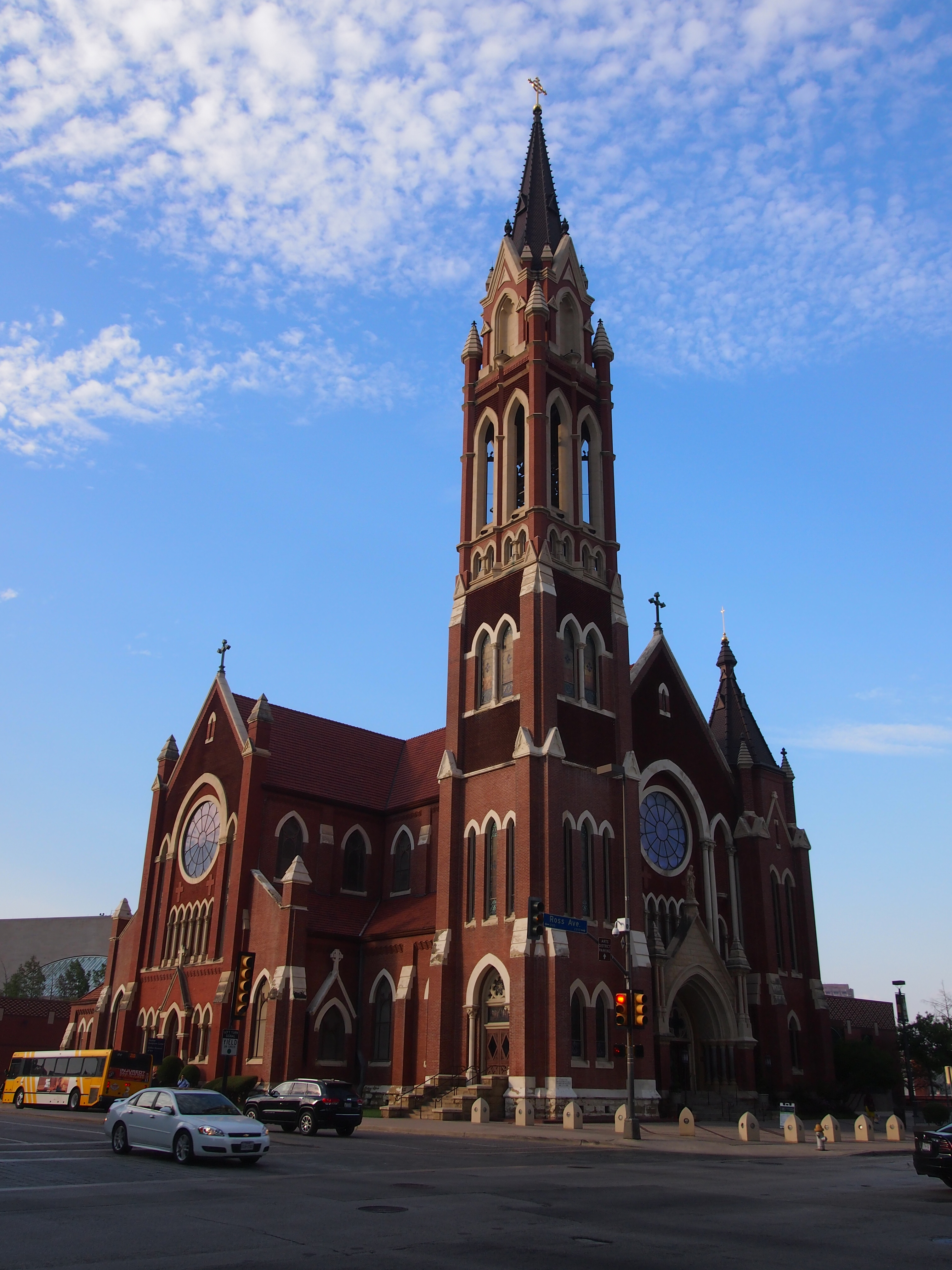
Just before getting back on the train and leaving downtown Dallas, I took a look at the Cathedral Shrine of the Virgin of Guadalupe — Cathedral Santuario de Guadalupe.

The cathedral’s web site tells me that “the Cathedral is the mother church of the 630,000 Roman Catholics in the nine-county Diocese of Dallas. Today, the Cathedral serves the largest cathedral congregation in the United States — as well as the largest Latino parish congregation — with 25,000 registered households.”

I had the place all to myself, as far as other human beings were concerned, for a few minutes on that Wednesday afternoon. Light was pouring in through the stained-glass windows on the west side of the church. It’s a lovely church inside, an example of High Victorian Gothic Architecture, finished in 1902.

Nicholas J. Clayton designed it. He’s another bit of Texas history – a prolific Irish-born architect who seems to have designed everything important in Galveston before the Hurricane of 1900 – that I had to look up (but not the hurricane; I read about that as a lad, and remained fascinated by it). One of these days, I need to go back to Galveston and look around, since I can’t remember much from my last visit, 40-odd years ago.

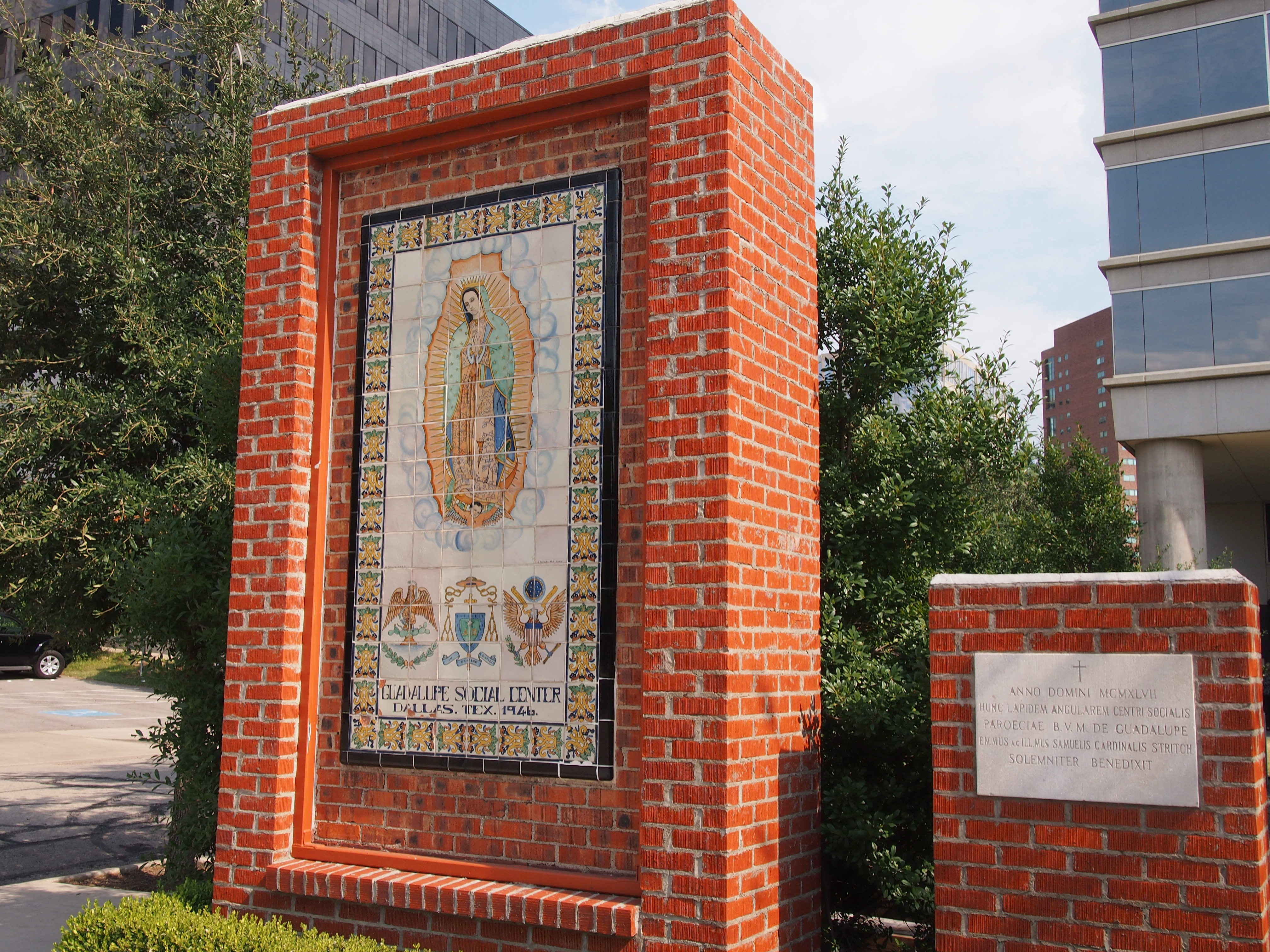
Not far from the cathedral are these small brick constructions.

As near as I can tell, they mark the site of the social center for a neighboring parish, Our Lady of Guadalupe, which eventually merged into Cathedral of the Sacred Heart – the former name for the cathedral pictured above, which was then renamed to honor Our Lady of Guadalupe. Whatever the case, below Mary are the words “Guadalupe Social Center, Dallas, Tex. 1946.”

On the smaller plaque is an inscription in Latin. I have to like that. How much more public Latin is there in downtown Dallas?

ANNO DOMINI MCMXLVII HUNC LAPIDEM ANGULAREM CENTRI SOCIALIS PAROECIAE B.V.M. DE GUADALUPE EM. MUS ac ILL.MUS SAMUELIS CARDINALIS STRITCH SOLEMNITER BENEDIXIT.

Not too hard to figure out. Samuel Cardinal Stritch blessed the social center’s cornerstone on this site in 1947. At the time he was the Archbishop of Chicago.

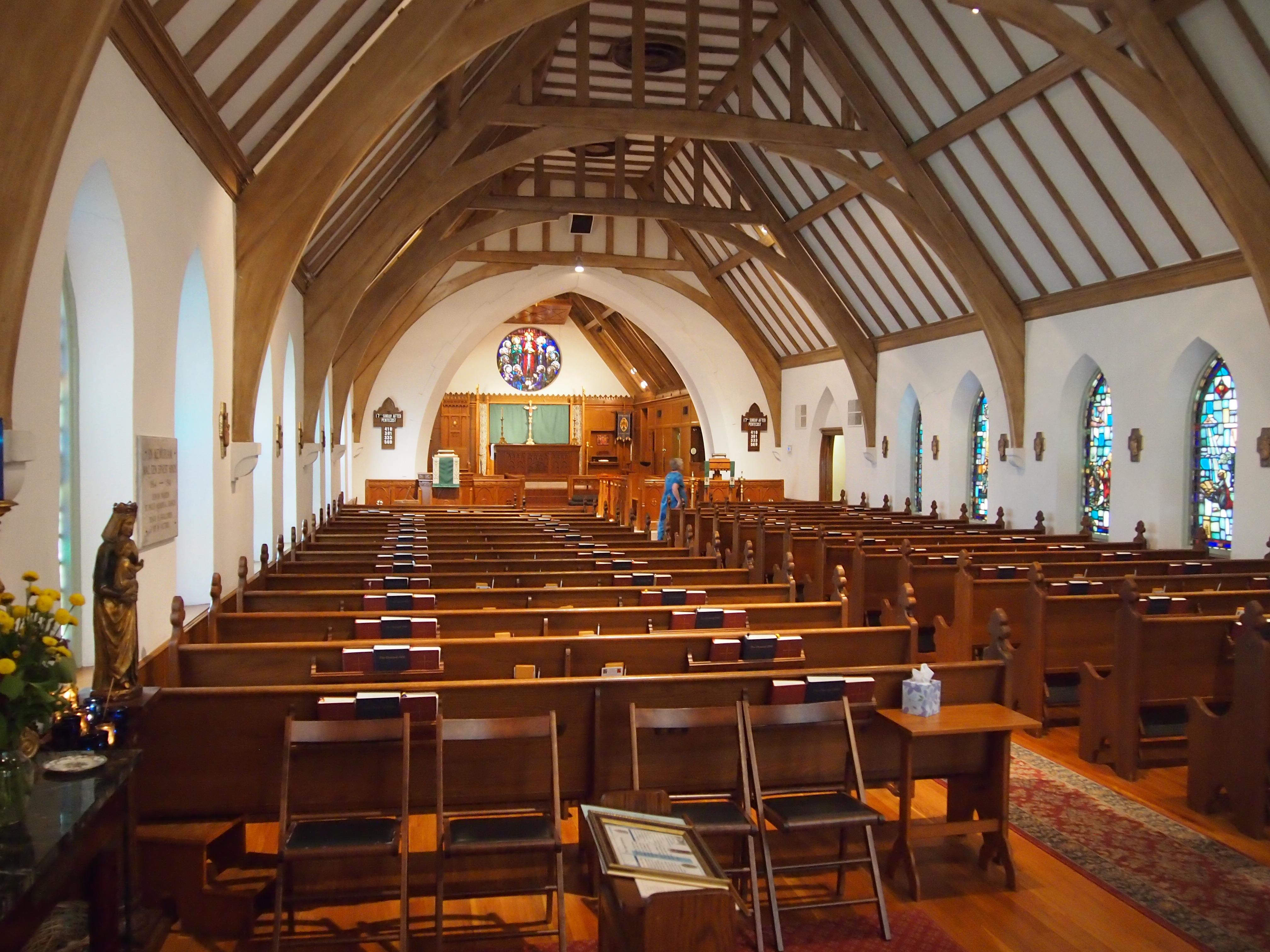
During this visit to Texas, but in San Antonio, I also visited St. Paul’s Episcopal Church, a much smaller house of worship near Ft. Sam Houston. Once upon a time, in the misty lost past, ordinary civilians could drive right through Ft. Sam – as everyone called it – no stops, no questions asked. Now all the entrances are barricaded. So you have to drive a long way around the fort to get to St. Paul’s.

I mention the fort because the church was originally established in the late 19th century to serve Episcopalians posted at Ft. Sam. It’s a church of beautiful simplicity inside, with some fine pews and stained glass.

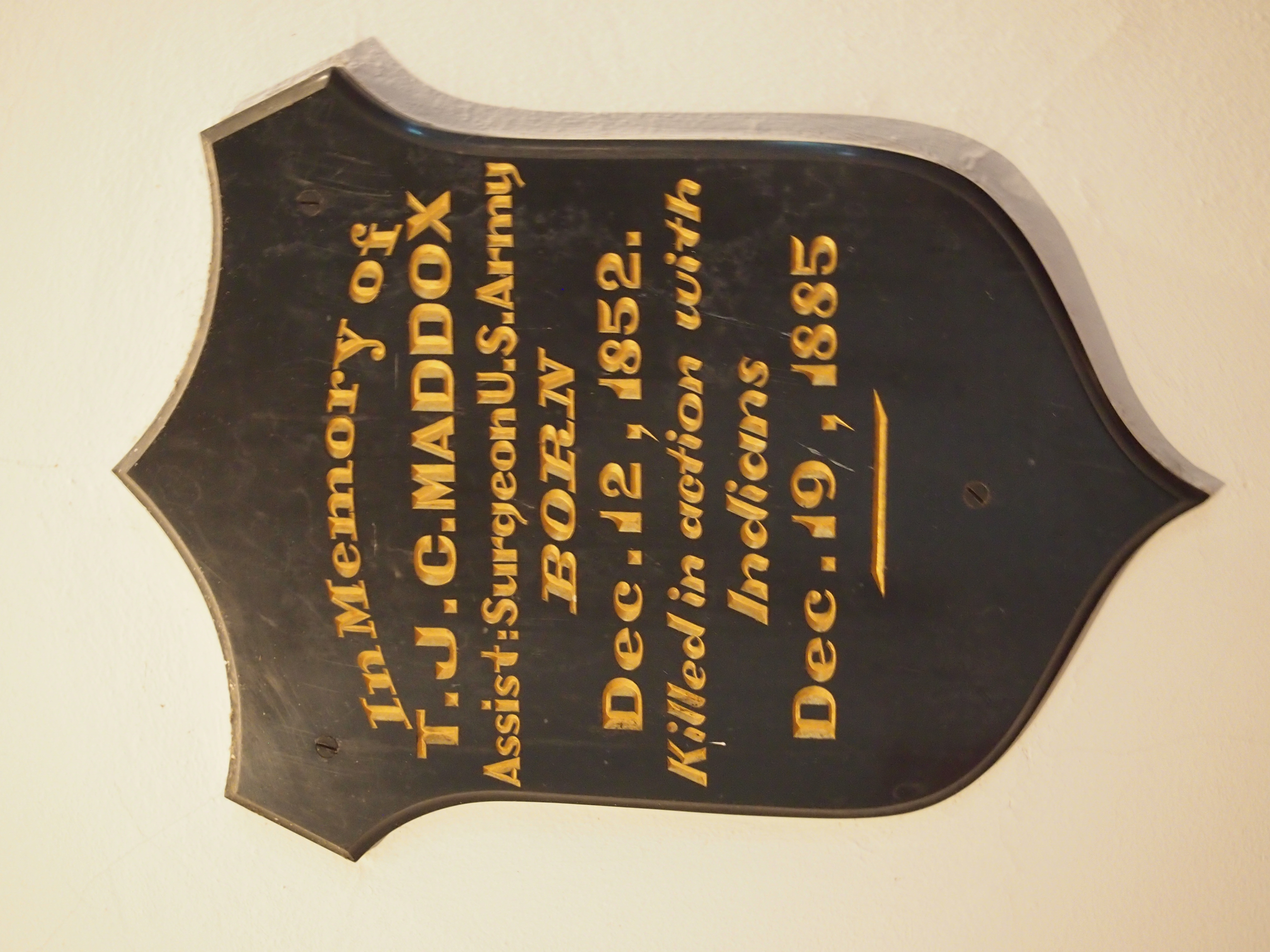
There are also a few plaques on the wall that harken back to other times. Such as this dark one.

In Memory of T.J.C. MADDOX Assist: Surgeon U.S. Army BORN Dec. 12, 1852 Killed in action with Indians Dec. 19, 1885.

TJC Maddox seems to be this fellow. Remarkably, I’ve found found the story of his death on line, which was around the time the U.S. Army was busy chasing down Geronimo.

It’s possible, though I don’t know this for a fact, that relatives of Dr. Maddox who were members of St. Paul’s in its early years memorialized him with this plaque on the wall at the back of the church, where it remains into the 21st century.

Klyde Warren Park

Among the things I did today, I mowed the lawn. It’s still green and was getting long. But with any luck that might be the last time until April.

Also, I visited HealthCare.gov to look around. No time for real shopping today, but I wanted to see whether there were any connectivity issues. I didn’t encounter any problems.

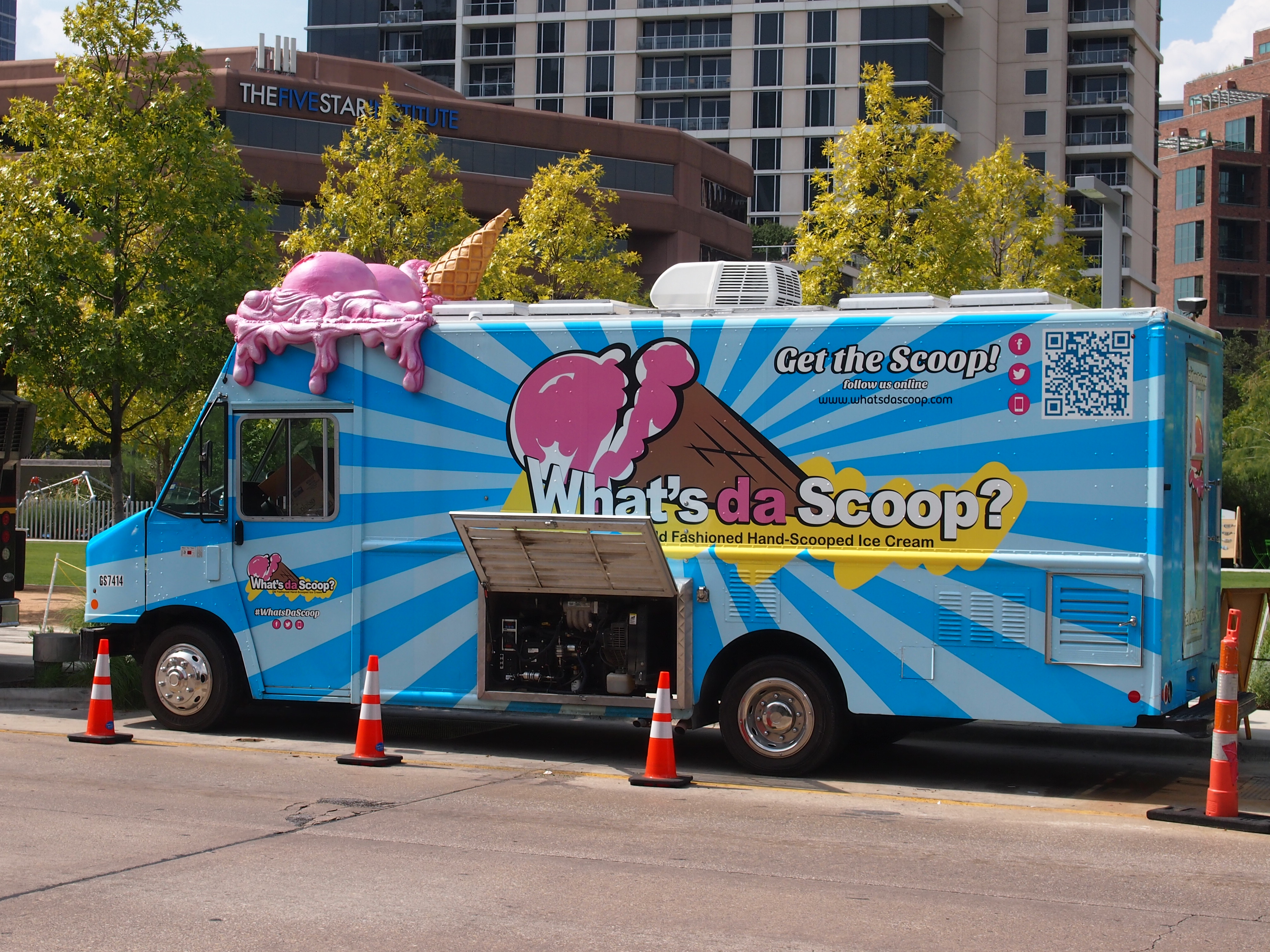
Various works of art weren’t the only thing I saw in Dallas. There was also the following. Call it a work of commercial art.

No ordinary ice cream truck, from the looks of it, but part of the food truck revolution. Or maybe “revolution” is too strong a word. Anyway, there seem to be more food trucks in cities than there used to be, and I suspect their offerings are a cut above what trucks used to serve — and they charge accordingly. What’s da Scoop? doesn’t look like the kind of operation that’s trolling for dollars from kids. It probably wants adult lunchtime business.

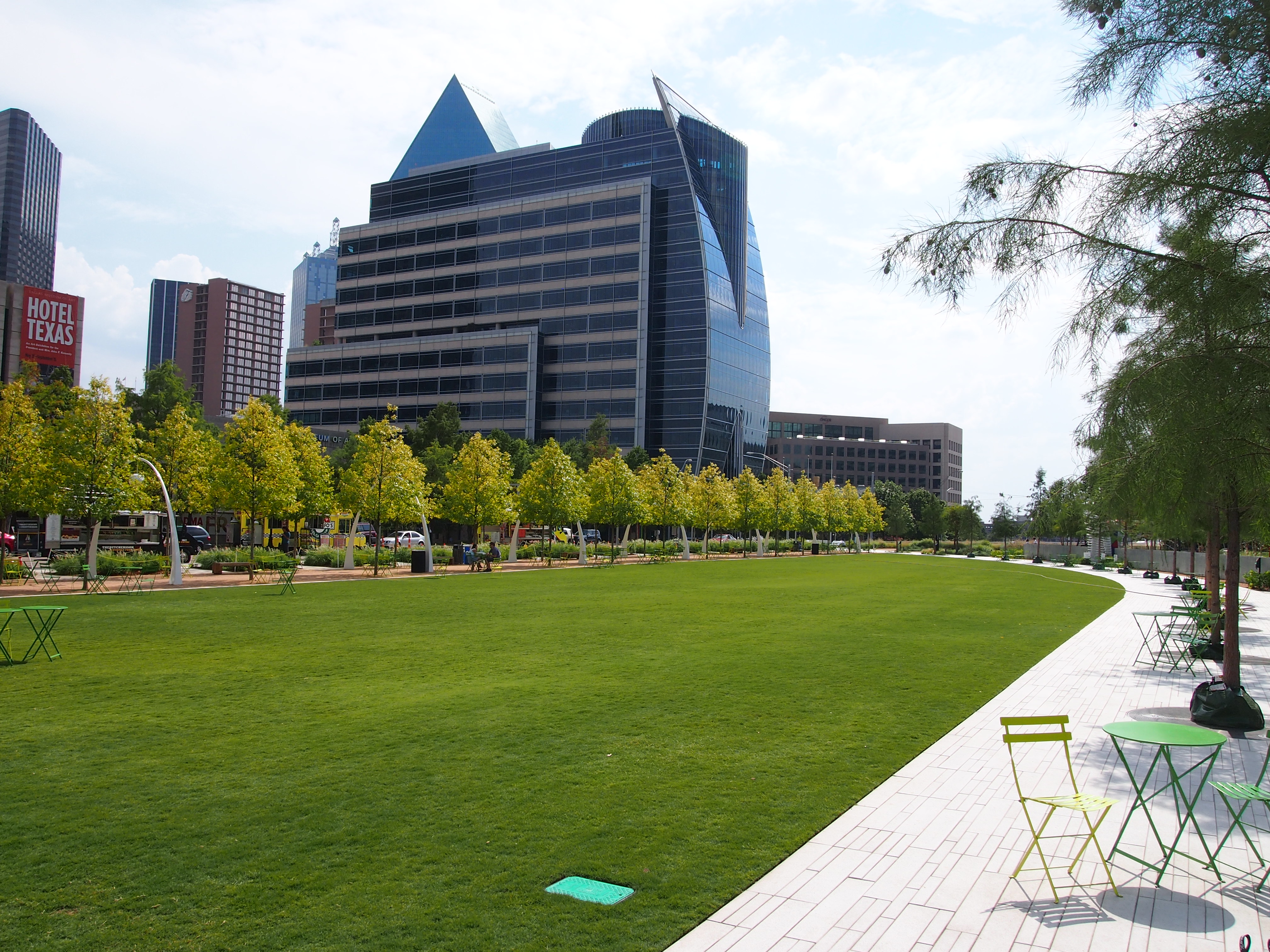
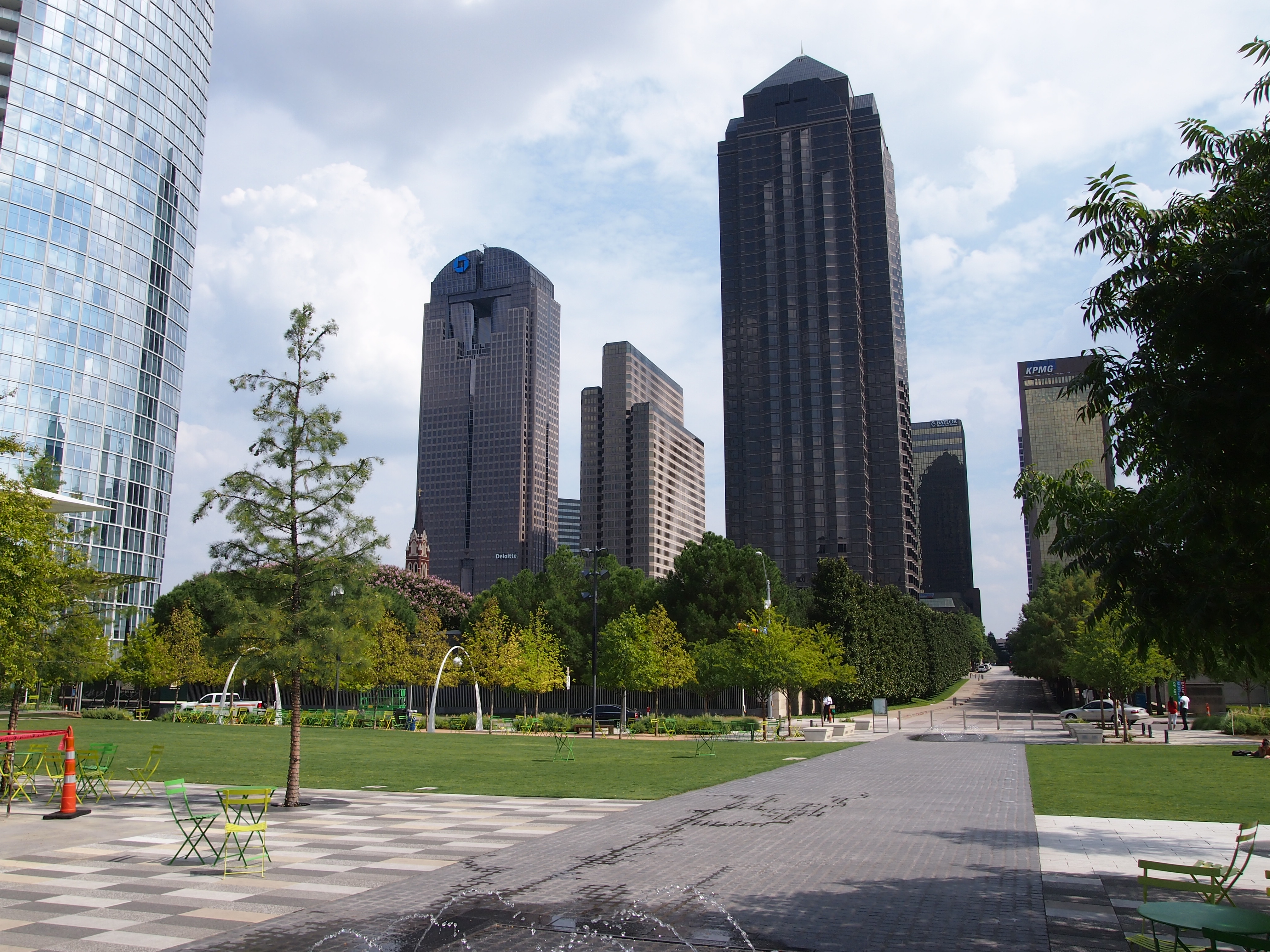
I didn’t find out. I would have considered it — ice cream would have been refreshing on that hot afternoon — but they were closing by the time I wandered by. So were the other food trucks parked in a line next to them. All of them were facing one of Dallas’ spanking new parks, which until recently was air space over a highway.  Now it’s Klyde Warren Park, a strip of greenery and other park amenities built over the Woodall Rodgers Freeway, a recessed road that now goes through a three-block-long tunnel underneath the park.

Some years ago, I interviewed Milwaukee Mayor John Norquist, near the end of his term, and he spoke at some length about how highways don’t belong in CBDs. He felt so strongly about this that as mayor, he oversaw the demolition of a short freeway in Milwaukee. I sympathize with the idea. They get in the way of walking around. If you can’t get rid of the thing, building on top of it seems like a good idea.

The park, which opened only last year, also features an incredibly detailed sign about how it was paid for: a public-private partnership that spent $110 million building it. Private contributions were about $52 million. Other funding sources were from bond sales, various state agencies, and $16.7 million from the American Recovery and Reinvestment Act of 2009.

Oh, really? Texas took some ’09 stimulus money? Well, money’s money and I say for their part, the taxpayers of the entire United States – or Treasury bond buyers worldwide, if you want to think of it that way – did a nice turn for the people of Dallas and visitors who happen by, of which I was one.

The Nasher Sculpture Center

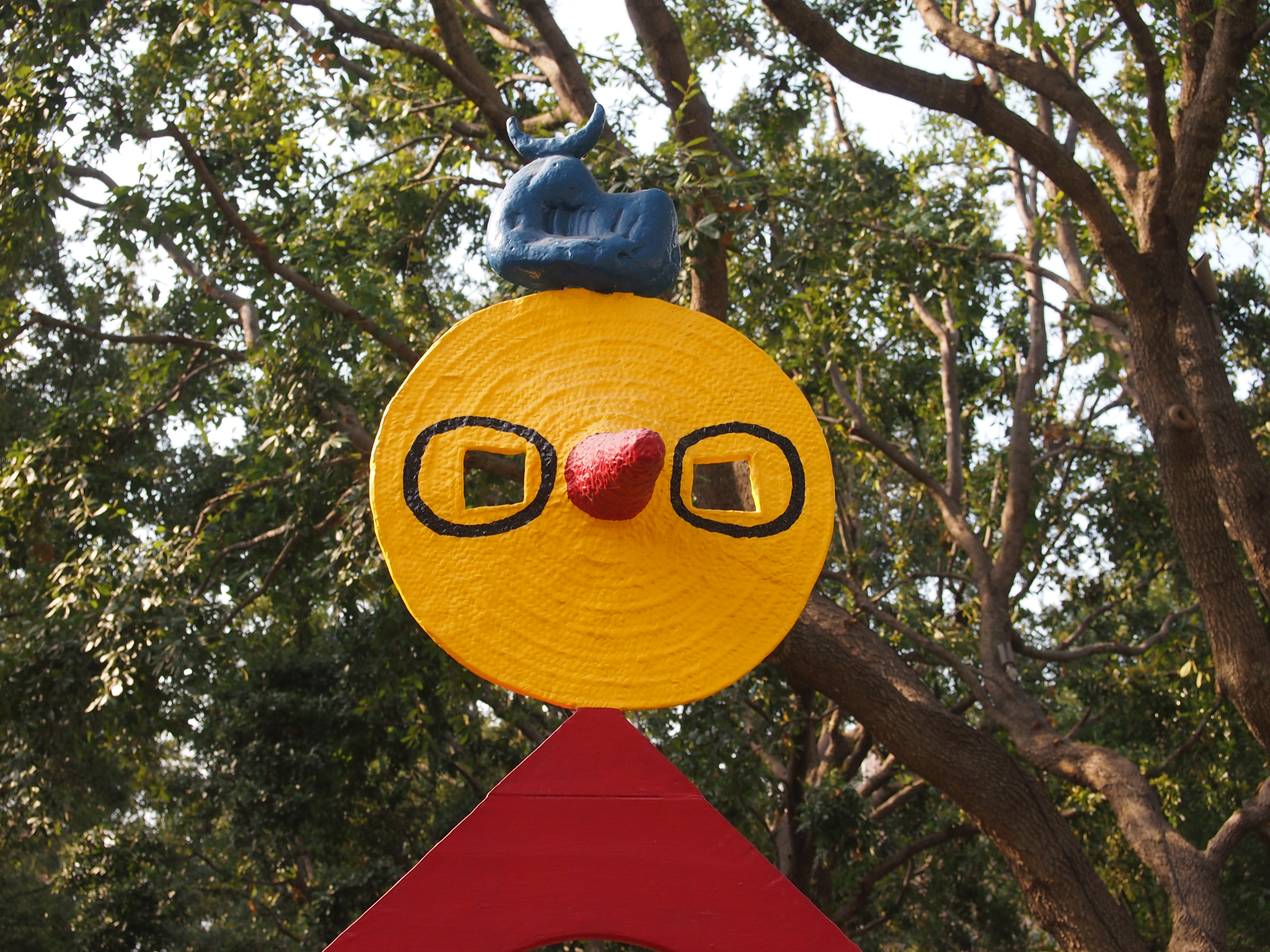
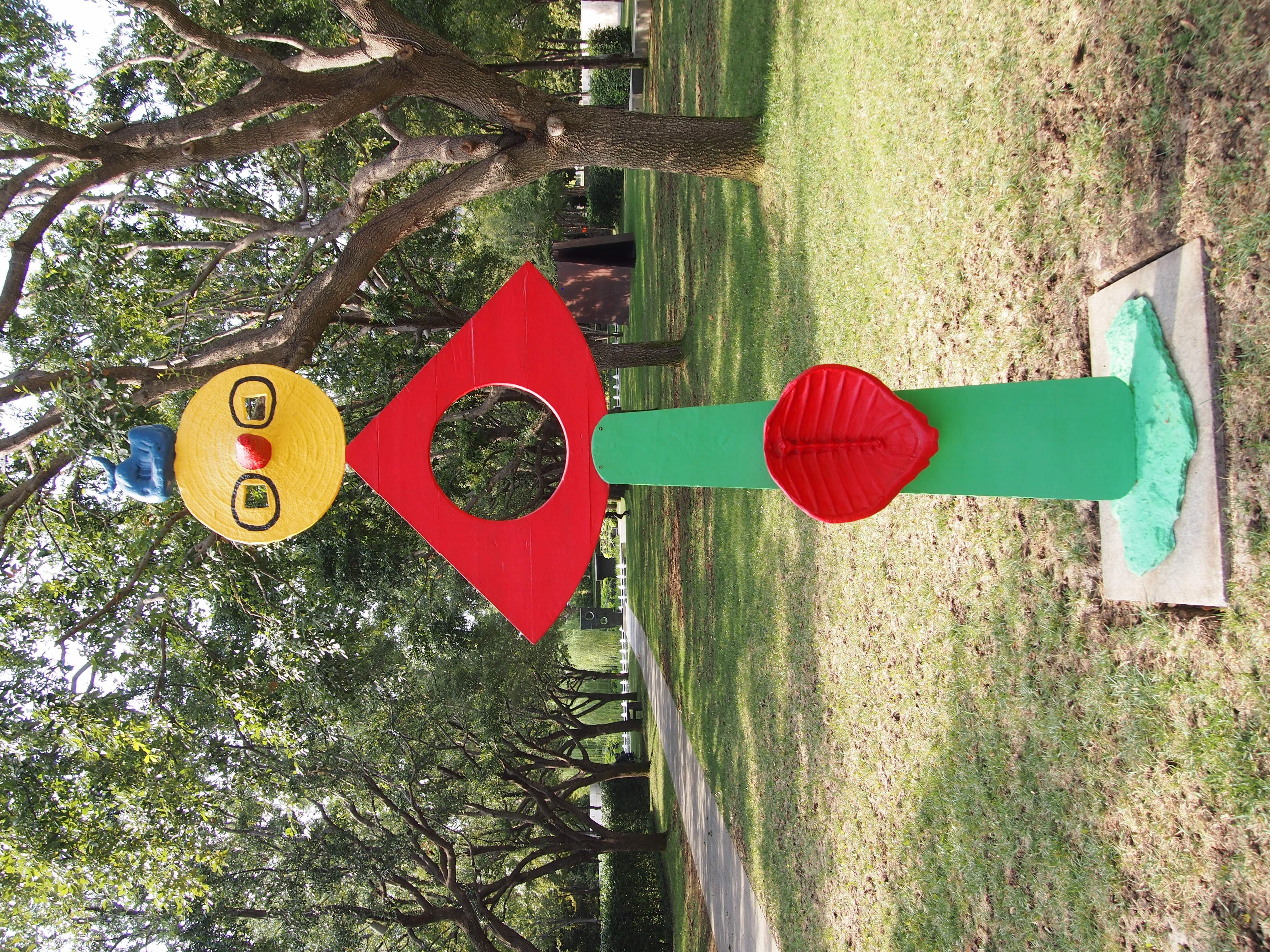
I don’t know a lot about sculpture, but I did recognize this face.

Or at least the artist, Joan Miró. His work’s pretty hard to mistake for anyone else’s. After visiting the Samurai Collection in Dallas, I headed back toward downtown proper, and the choice of two museums presented itself: the Dallas Museum of Art or the Nasher Sculpture Center, which are across the street from each other. Yuriko and I went to the DMA back in ’02, before the Nasher was even open, and while it would certainly be worth another look after over 10 years, I picked the Nasher. I make that kind of choice by going to the one I’ve never been to before.

During our 2007 visit to Dallas, we went to NorthPark Center, the mall the late Raymond Nasher developed. It has an unusually large and visible collection of sculpture and other art, so I knew about his affinity for collecting. Nasher’s museum, designed by Renzo Piano, doesn’t disappoint. There are plenty of fine items to take a look at, both inside and out in the sculpture garden, where the Miró stands. (“Caress of a Bird” (“La Caresse d’un oiseau”), 1967.)

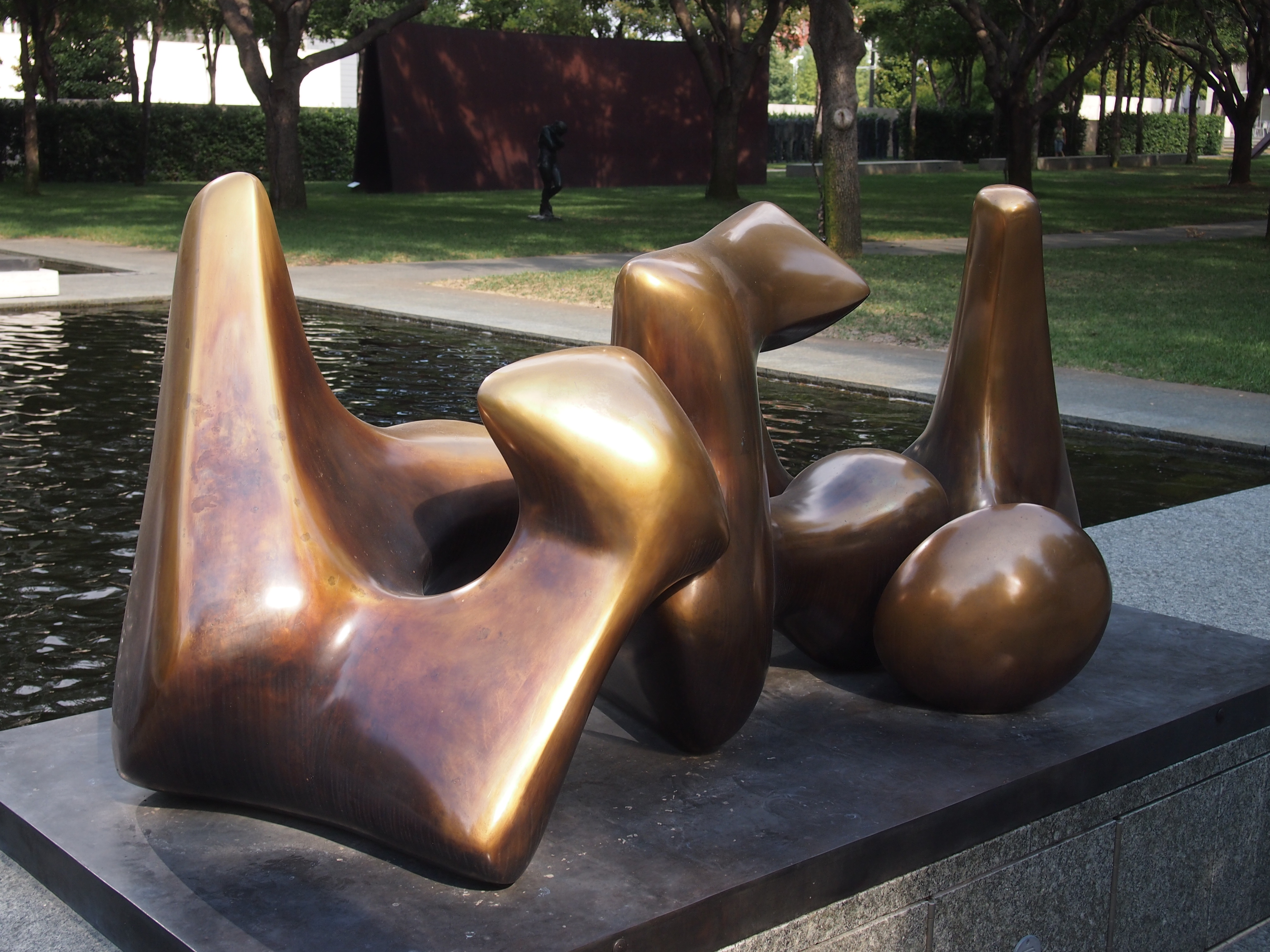
The museum says of its collection: “Surveyed as a whole, the Nasher Collection demonstrates considerable balance between early modern works and art of the postwar period, abstraction and figuration, monumental outdoor and more intimately scaled indoor works, and the many different materials used in the production of modern art.  Perhaps its single most distinguishing feature, however, is the depth with which it represents certain key artists, including Matisse (with eleven sculptures), Picasso (seven), Smith (eight), Raymond Duchamp-Villon (seven), Moore (eight), Miró (four), and Giacometti (thirteen).”

Here’s one of the Moores. Can’t mistake his blobs for anyone else, either.

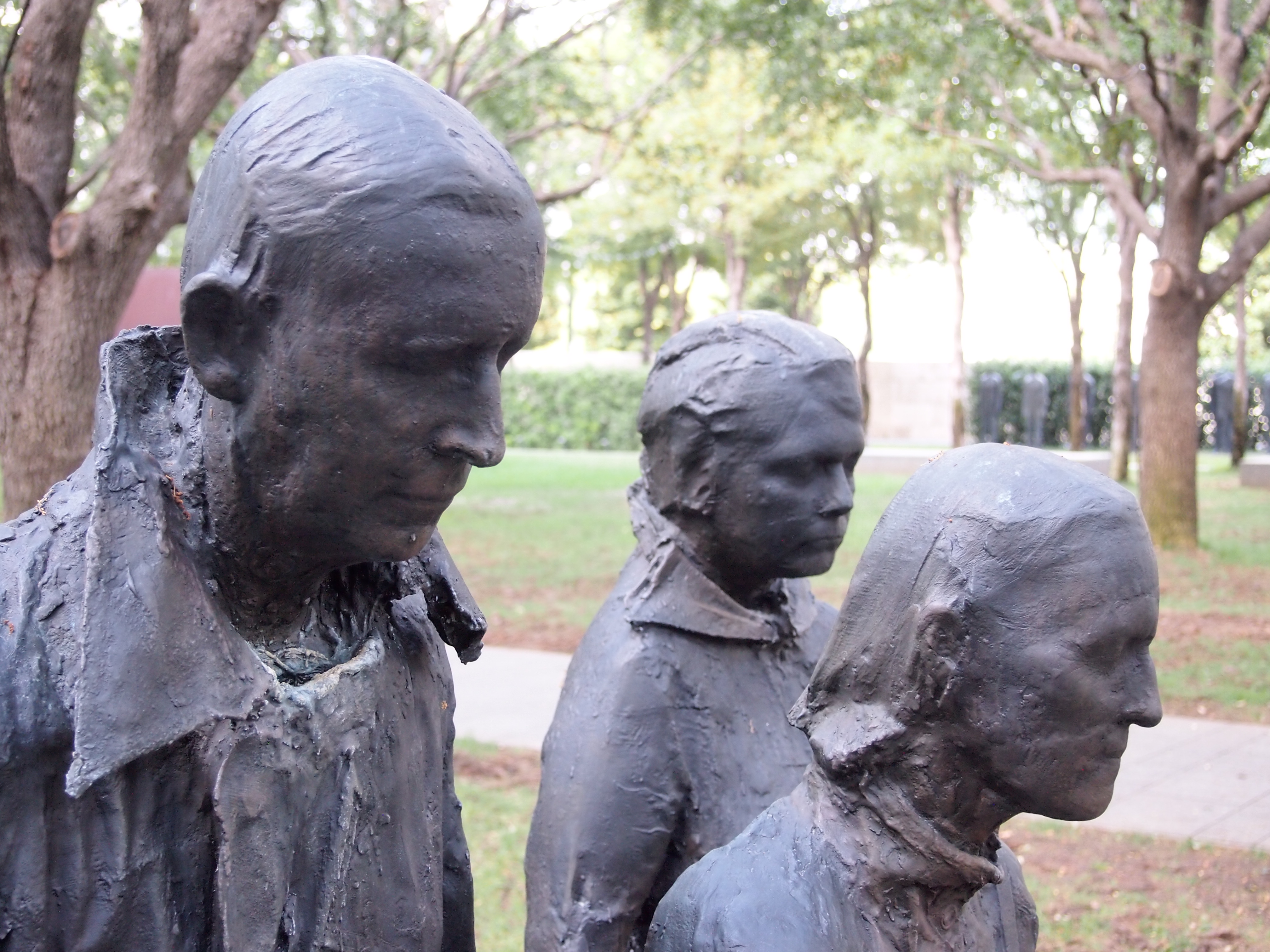
The Nasher’s definitely worth wandering through, inside and out. One irritation, though. Only some of the outside sculptures had signs. Maybe the information can be accessed in the self-guided audio tour, but even so every work ought to be accompanied by a written description, or at least a small sign with title, artist and year. Take this unlabeled example:

I thought, that looks familiar. Seen something like it – where? Then I remembered some of the works at the FDR memorial in DC. Sure enough, same artist, George Segal. Fittingly enough, the Nasher one is called “Rush Hour” (1983).

Or maybe “Sad People Walking Through the Cold” would be more fitting. Seems to have been a motif of Segal’s.

The Samurai Collection

The Ann & Gabriel Barbier-Mueller Museum: The Samurai Collection takes up the second floor of the St. Ann Building in Dallas’ Uptown district, which is a walkable distance from downtown, even in the late-summer heat. The museum is another new attraction for the city, open only since March.

To reach it, you enter a first-floor restaurant, pass its reception desk, and then go up some stairs. It’s a small museum with a single focus: samurai armor, weapons, masks, and related items. The museum asserts that its “collection of samurai objects is one of the largest of its type in the world and is displayed in the only museum outside Japan whose focus is samurai armor.”

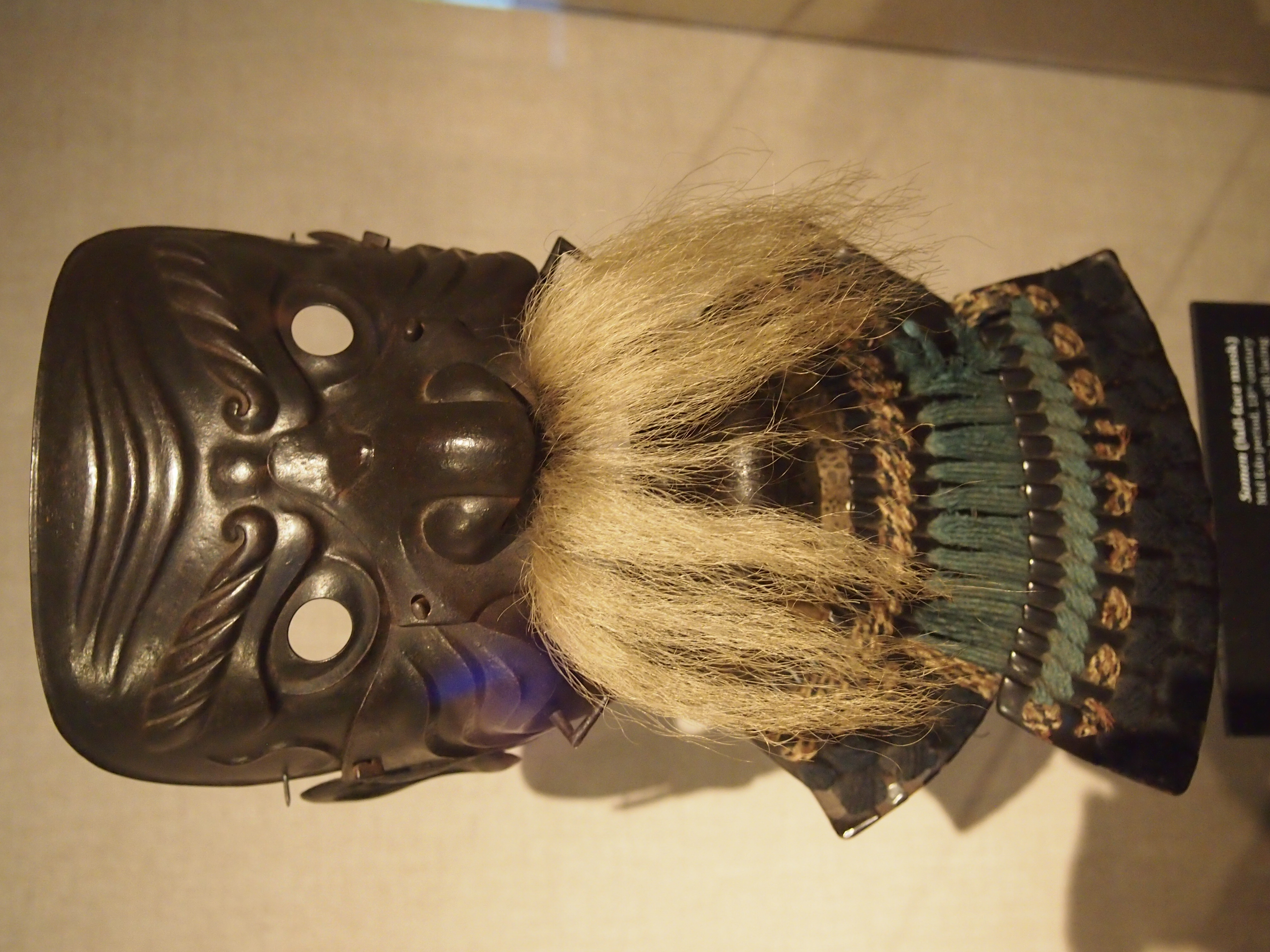
Go up to the cool, quiet reaches of the museum, and pretty soon you’re face-to-face with the likes of him:

It’s a somen (full-face mask), made of iron, leather, horsehair, lacquer and silk lacing, dating from mid-Edo – the 18th century. During earlier periods, when a samurai might actually have to do battle, somen weren’t that popular, since a mask like that can obscure your vision. In the more peaceful Edo era, that wasn’t such a concern, and the masks had a revival among samurai (at least those who could afford them).

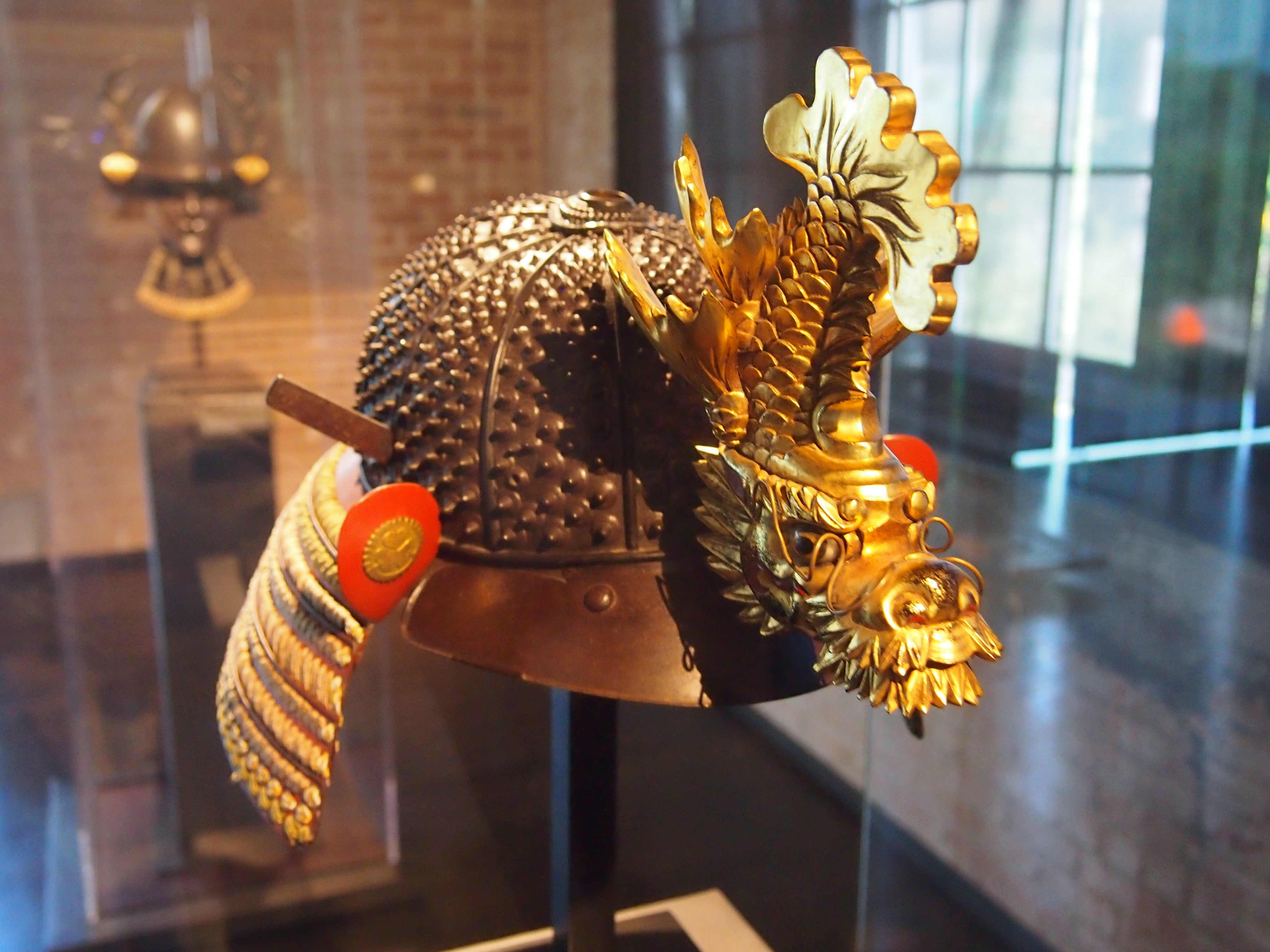
Another cool item at the Samurai Collection is this helmet.

It’s an akodanari kabuto, a melon-shaped helmet of iron and lacquer and dating from the Muromachi period, or the late 15th to early 16th centuries, when it was entirely likely that a samurai would be fighting someone. The museum says that “the construction of this kabuto, with twelve plates covered in protruding rivet comprising the helmet bowl, is unique. There is no other known example.”

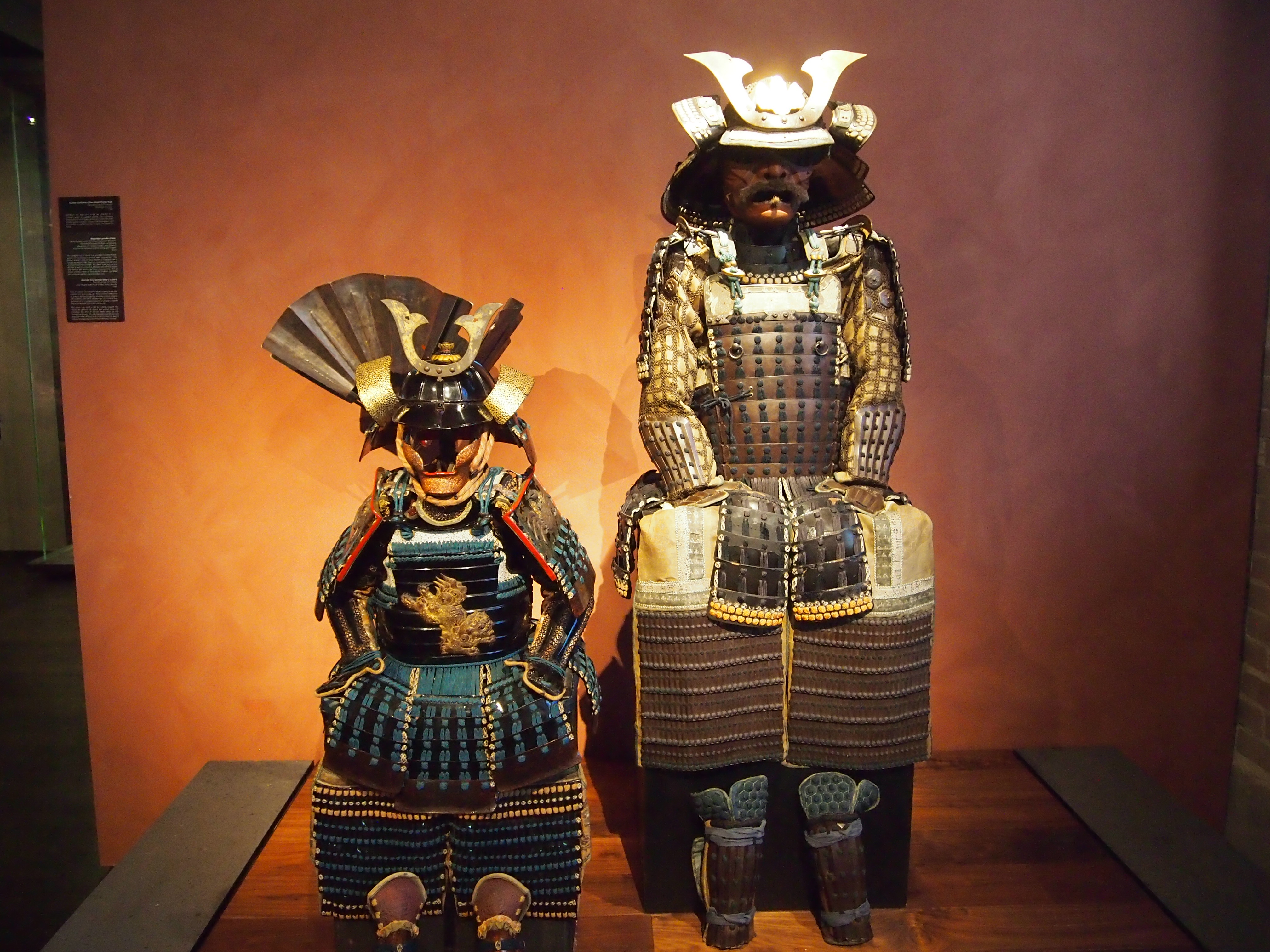
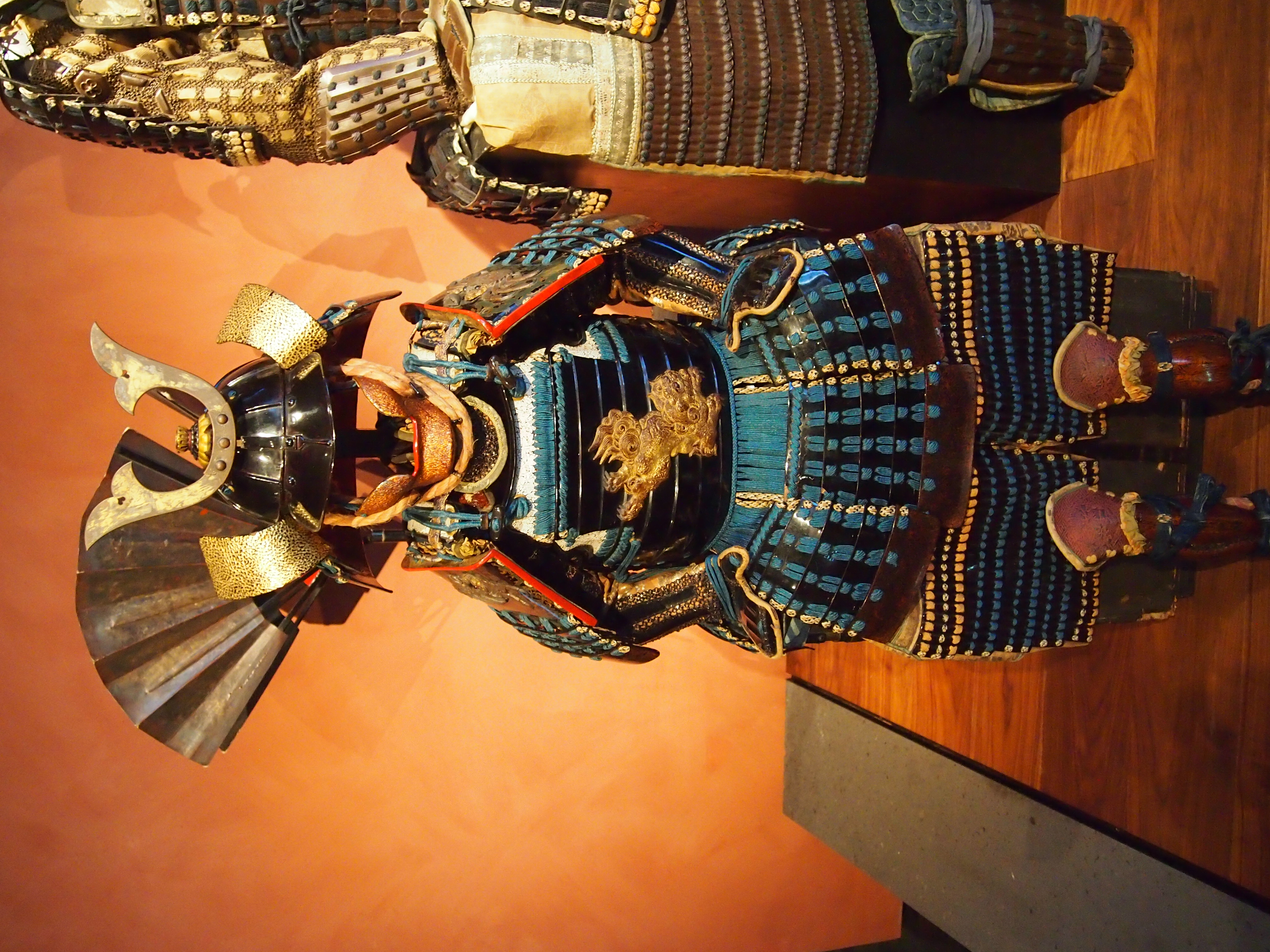
These are fine artifacts, but they aren’t as grand as some full armor that the Barbier-Mueller has. In this case, one for a man, another for a boy.

The larger suit, the museum notes, “was assembled during the Edo period and incorporates several older components. The helmet displays stylized horns known as kuwagata and a frontal ornament in the shape of a paulownia leaf, the crest of several important families…” As for the smaller suit, it’s late Edo. “Boys of samurai class families began training to become warriors at a very young age… at around age 12, samurai boys participated in a ceremony known as genpuku, wherein they received their first armor and sword.”

All in all, a high-quality collection, and not such a large display that you can’t leisurely take in most of it in one visit. It’s as if a single room of some vast, first-water museum – the British Museum, the Met, the Art Institute – had detached itself and landed in Dallas. So why Dallas? The museum’s name says it all: Dallas real estate mogul Gabriel Barbier-Mueller and his wife Ann, long-time collectors of this kind of art and artifact, wanted it to be there.

Here’s a 2006 D article about Barbier-Mueller, scion of the Swiss family of that name who decided to live in Dallas, in as much as anyone with four houses lives in a particular place. It begins with the amusing line:Gabriel Barbier-Mueller owns a lot of stuff.” Well, so do I. It’s just that a lot of his stuff is more expensive.

Downtown Dallas ’13

Saturday was warm and partly cloudy, with gusts of wind all day but nothing strong enough to do damage. Lately it’s been cooling off dramatically at night, but that didn’t happen on Saturday. At around 10 pm, I sat on my deck and took in these vestiges of summer. At about 11, it started to rain.

On Wednesday the 18th, I squeezed enough time out of my schedule to drive from my brother’s house to the White Rock Station on the Blue Line of the Dallas Area Rapid Transit (DART) system, to catch a train to downtown Dallas. The station opened in 2001 as the light rail line system expanded, and I remember catching a train there in November 2002 with Jay and Yuriko and Lilly (who was just four at the time) to go downtown and catch a Red Line train to the Dallas Zoo. Riding a train in Dallas was a novel experience at the time, like riding one in LA was in 2001.

Whenever I can, I ride urban rails – light, heavy, commuter, subway, elevated, monorail, trolley, you name it. All-day passes are sold at vending machines at DART stations, and I bought one for $5. The ticketing system is the same as I remember some German transit systems being – roving ticket inspectors check tickets randomly, and the punishment for free riding is being thrown in front of the train. That or a fine.

The DART Blue Line proved an efficient way of getting downtown and back again late in the afternoon, and as it happened no one checked my ticket. Had I got it into my head to free ride, no doubt an inspector would have shown up.

As many times as I’ve been to Dallas – I started my visits as a very tiny baby and they’ve continued in each decade since then – I don’t quite know the place. Not like San Antonio or Nashville or Chicago or even Austin or Osaka. Or at least not downtown. Been years since I spent much time in that part of the city. The last time might have been when we visited the Dallas Heritage Museum some years ago, though that has more of a view of downtown than actually being in it. There was also the time when Yuriko and I dropped by the Sixth Floor Museum in the early ’90s, and another time I went to Deep Ellum, whenever that was.

A good thing to do when you only have a few hours in a particular place is to focus on one thing, and see what else you see along the way. I decided to visit the Ann & Gabriel Barbier-Mueller Museum: The Samurai Collection, a museum on the second floor of a building in Uptown, which is in walking distance from the downtown Blue Line St. Paul station. It was a hot walk – it’s still essentially summer – but not that far.

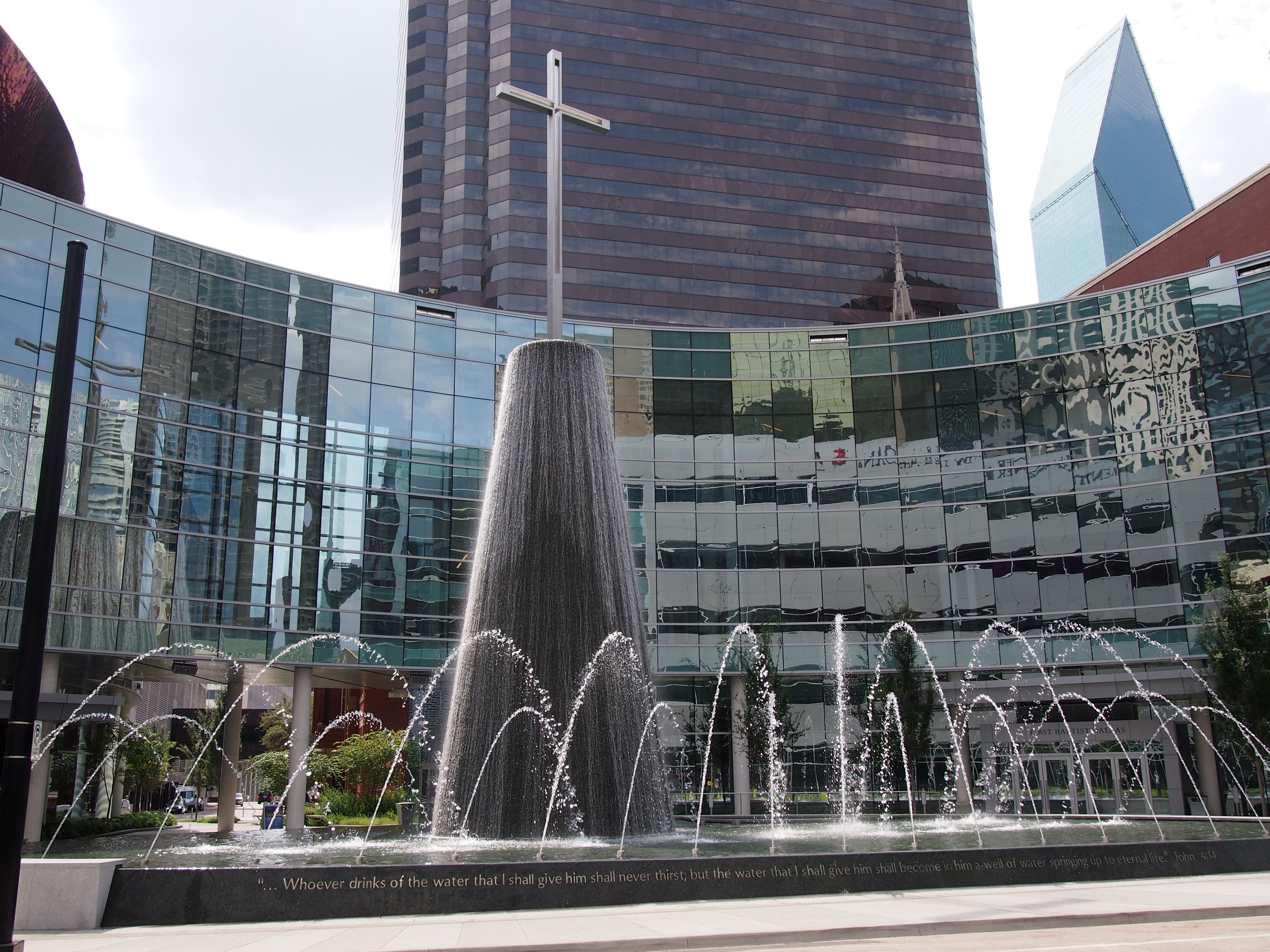
Along the way, I happened across the Jeffress Fountain Plaza, which is merely one of the more visible parts of the spanking-new First Baptist Church campus. I hadn’t seen it before because it was completed just this year.
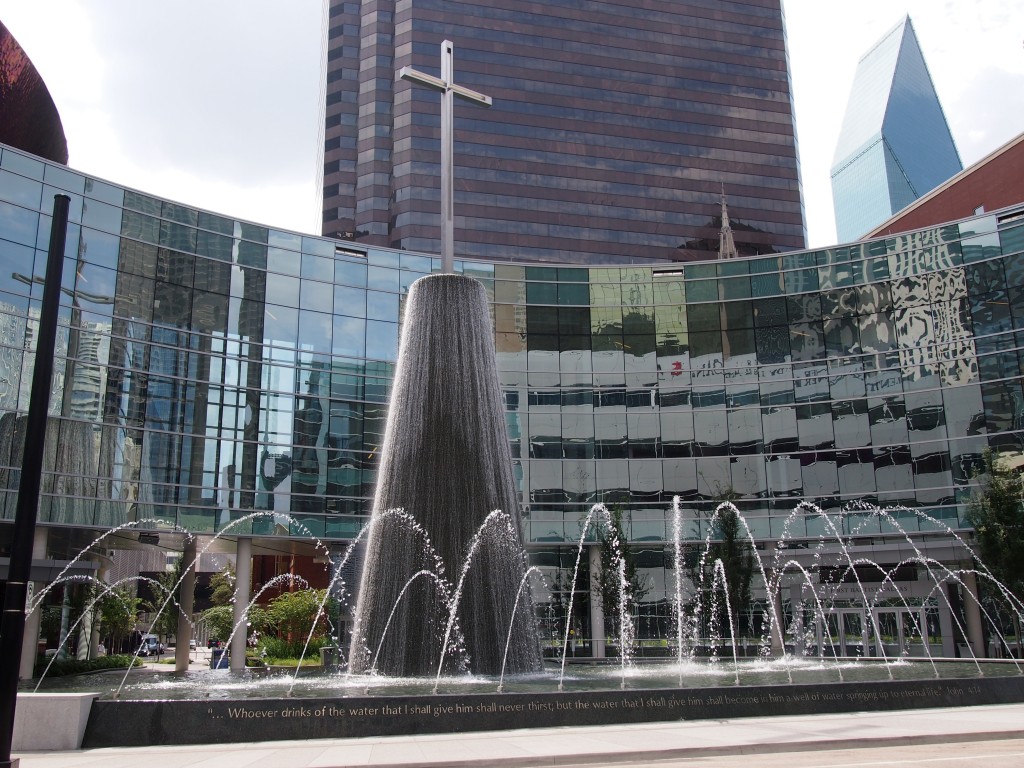
“First Baptist Church of Dallas, led by nationally known pastor Dr. Robert Jeffress, has completed the largest Protestant church building campaign in modern history, opening its new state-of-the-art $130 million campus on Easter Sunday, March 31,” Charisma News tells us.

The article’s worth quoting at some length, if only to show that the urge to build big, expensive churches isn’t a Catholic monopoly. “The new facilities feature the newest technological advances for any church, providing a unique worship experience,” Charisma News continues. “A new 3,000-seat Worship Center, located next to the historic landmark 122-year-old sanctuary, includes a 150-foot-wide IMAX-quality video wall stretching more than two-thirds the width of the auditorium. It incorporates seven high-definition projectors blended together, making it one of the largest viewing screens in any church in the world. Additionally, wood bands along the walls surrounding the Worship Center contain LED strips that can be programmed to millions of different colors, creating dramatic ambient lighting to supplement and enhance any platform program.
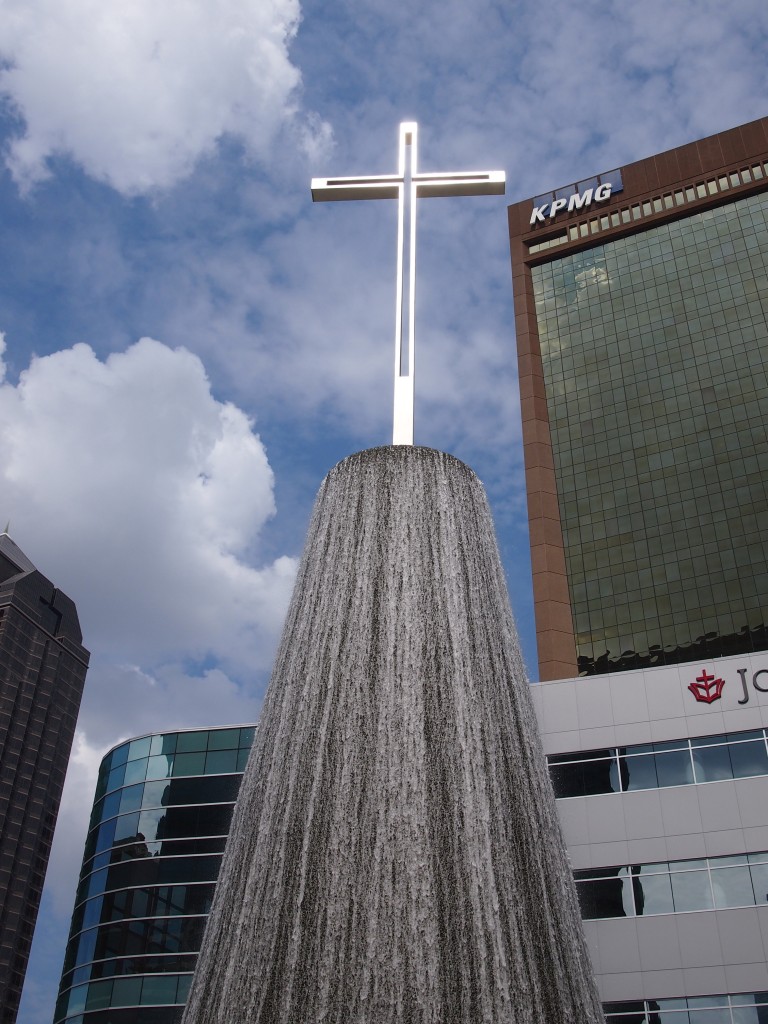
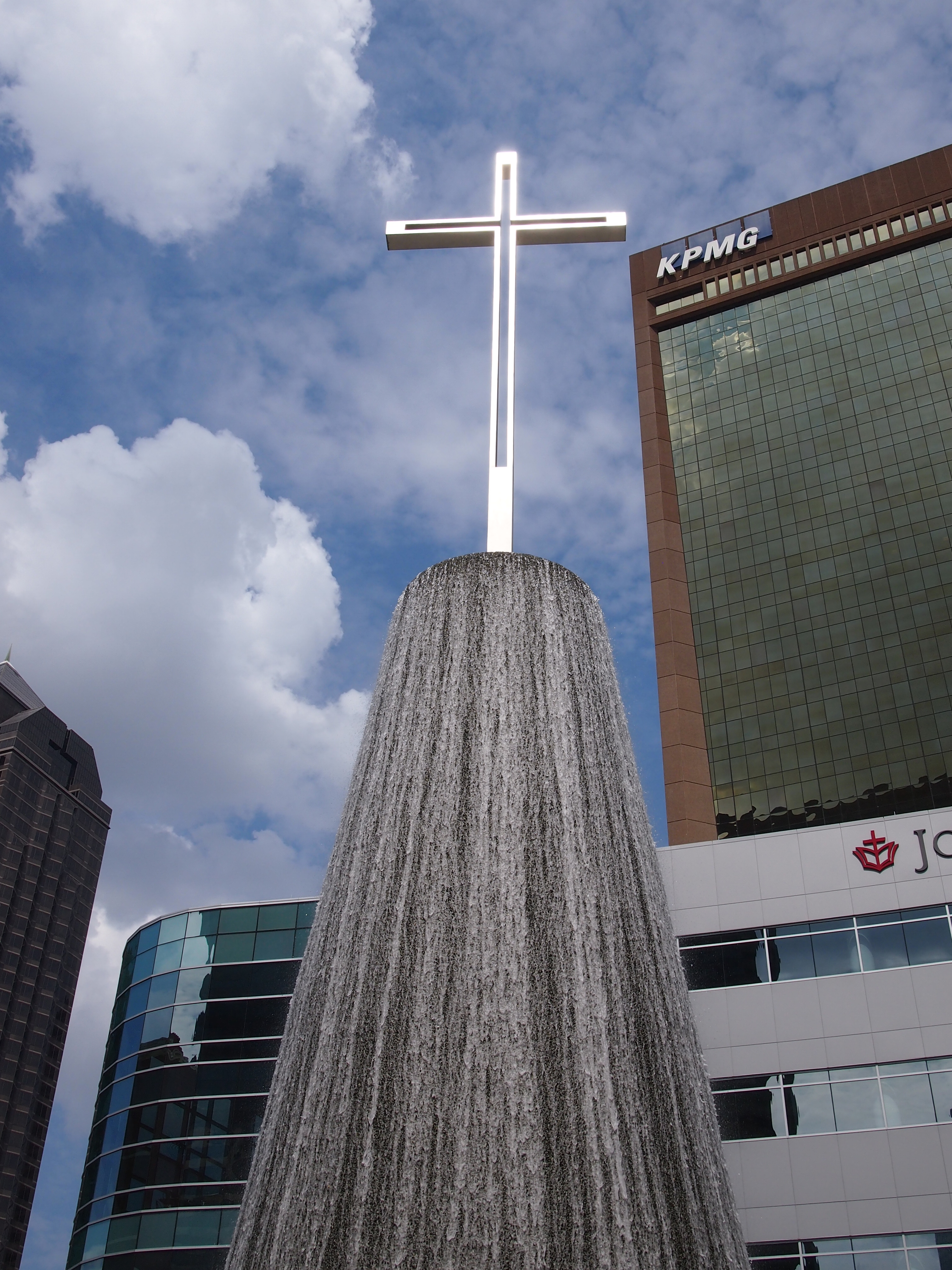
“The fountain serves as the grand entrance to the new campus, featuring a stainless steel cross atop a pedestal rising 68 feet high. Surrounding the tower is a shallow water pool containing a heated baptistery as well as eight water canons [is that supposed to be a pun, or did they just misspell cannon?] and 21 undulating titan water jets. Inscribed along the edge of the fountain’s pool is a Scripture text from John 4:14, stating, ‘Whoever drinks of the water that I will give him shall never thirst; but the water that I will give him will become in him a well of water springing up to eternal life.’ Several custom orchestral scores of anthems and spiritual songs accompany the programmed flow of the cascading water.”
Texas 130

A long and newly opened stretch of the toll road known as Texas 130, my sources tell me, includes the fastest posted speed limits in the nation – 85 mph. As we drove from San Antonio to Dallas last week, I made sure to take full advantage of that maximum. It’s fun for a while, but then you get used to the speed, especially since there isn’t much other traffic. You glide right along, mile after mile.

I haven’t followed the development of Texas 130 in any detail, though I know a little about it – it’s a private toll road, or rather a PPP (public-private partnership), which is generally just a new twist on the patronage schemes traditionally associated with road building. That aside, the theory of Texas 130 is to reduce congestion on I-35 through Central Texas, particularly Austin, which is awful and probably an unintended consequence of NAFTA allowing a free flow of trucks up from Mexico, plus rapid population growth in Central Texas in recent decades.

We drove the entire length of the toll road to take advantage of its stated purpose for being: avoiding traffic on I-35. If you’re going from San Antonio to Dallas, as we were, it adds a few miles to the trip, but it does indeed bypass the worst of Austin traffic.

It didn’t look like a lot of other drivers were doing the same. It is a toll road, after all. There was some traffic on the northern sections of the road, close to Austin, but not much. And no one seemed to be driving on the southern section of the road, near where it connects with I-10 (the main road from San Antonio to Houston). At times I saw no one on the road with us, ahead or behind.

That makes for more relaxing driving, but not a particularly successful toll road. The Austin American-Statesman reported earlier this year that “Texas 130, in 2011 traffic counts, saw a high of 43,000 vehicles a day on it in Pflugerville, about a fifth of what I-35 sees in Central Austin. Traffic on Texas 130 steadily ebbed further south, to just 9,600 vehicles a day near Mustang Ridge. Officials haven’t released traffic counts for the privately operated section south of Mustang Ridge, which opened last fall.”

The land along the road is also almost empty, too. Even at the few exits, there’s little development yet. Most of the time the view is open, not quite rolling, not quite flat, not quite green, not quite brown.  Some trees, but not a lot. It’s remarkable how much unpopulated space there still is in Texas, considering that 26 million people live there, with a good many of them along the Dallas-Austin-San Antonio axis.

Turns out a fair number of wild pigs live in the countryside near the road. We were warned not to drive Texas 130 at night, lest we run down pigs on the road.

Confederate Field

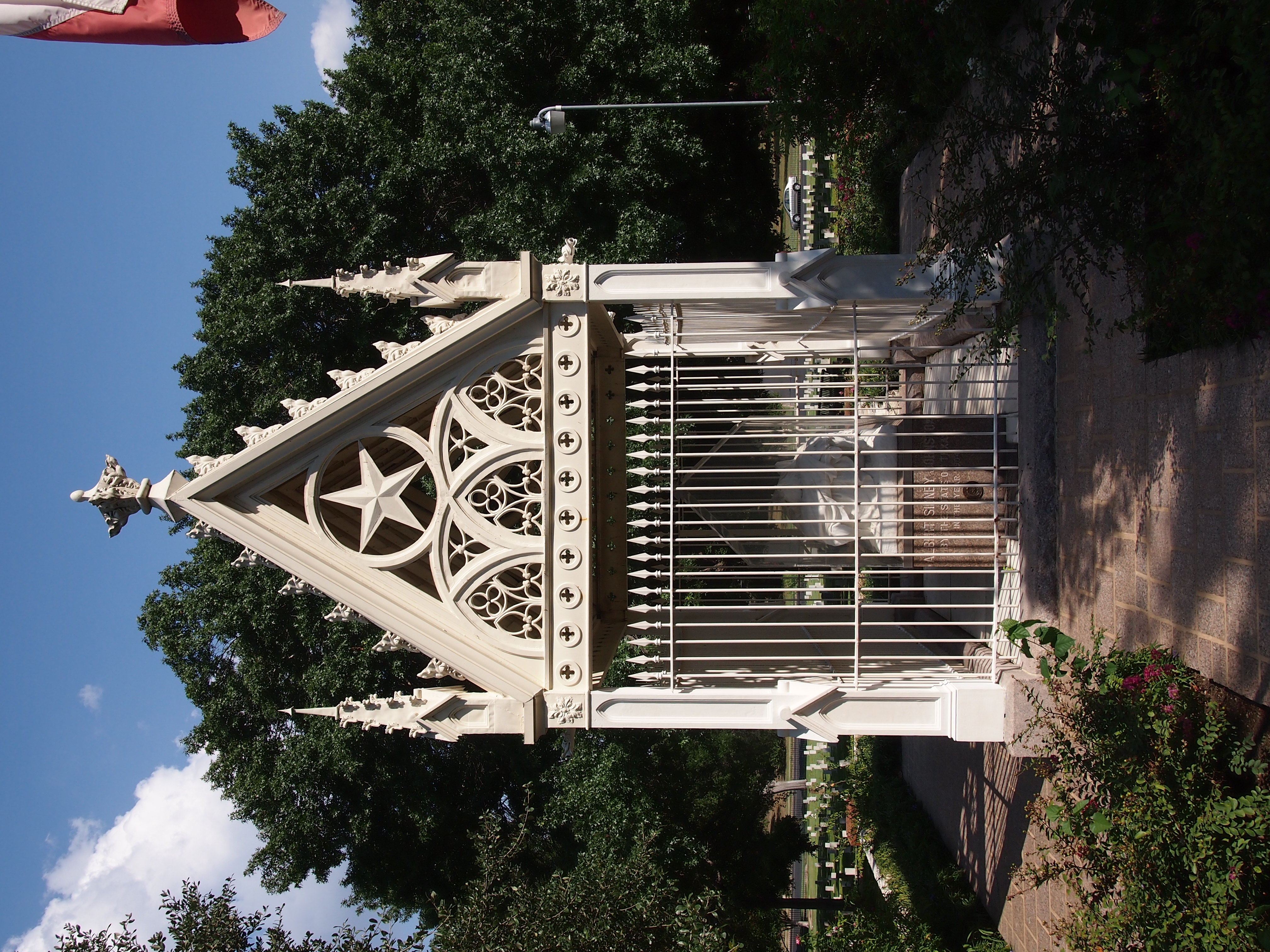
Another major section of the Texas State Cemetery honors Confederate dead. Even before we went, I knew that Gen. Albert Sidney Johnston, who took a slug at Shiloh, had been reburied at the cemetery. Sure enough, he has one of the larger memorials, at a place of honor among the field of Confederates.

The memorial, including a recumbent statue of Gen. Johnston, was done by Elisabet Ney, another European sculptor who did well in 19th-century Texas, though she was no slacker before she left Europe. “Among her best-known works from this period [i.e., pre-Texas] are portrait busts of Arthur Schopenhauer, Giuseppi Garibaldi, and Otto von Bismarck, and a full-length statue of King Ludwig II of Bavaria,” notes the Handbook of Texas. After establishing herself in Texas, she did busts of Stephen F. Austin and Sam Houston (presumably not from life), among others. All in all, quite a career.

These days her Austin studio is a museum. How did I not know about it? Got another thing to see in Austin someday.

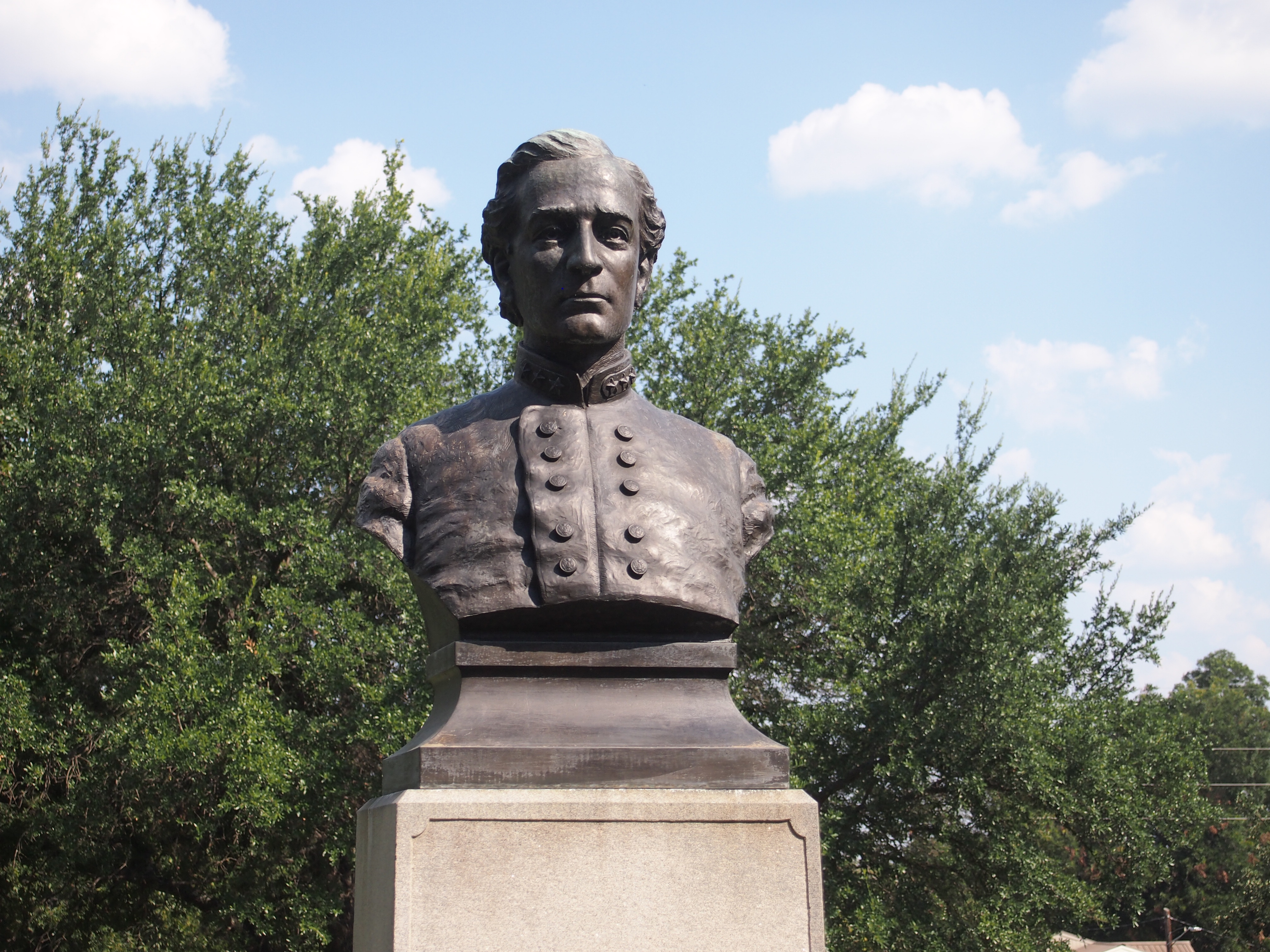
The light was poor on the recumbent Gen. Johnston, so I didn’t make an image. Not far away, however, is a much more obscure Confederate general, John A. Wharton. He was in full sunlight.

Another Confederate Texan, his date of death is listed as April 6, 1865, so I figured he was one of the unlucky few killed in action just as the war ground to an end. But no. Again from the Handbook of Texas: “On April 6, 1865, while visiting Gen. John B. Magruder’s headquarters at the Fannin Hotel in Houston, Wharton was killed by fellow officer George W. Baylor in a personal quarrel that grew out of ‘an unpleasant misunderstanding over military matters.’ Even though Wharton was found to have been unarmed, Baylor was acquitted of murder charges in 1868.” Geez.

The bust was by Enrico Filiberto Cerracchio, another European sculptor who ended up in Texas. Who knew there were so many? He came a little later, though, and is best known for his large bronze equestrian figure of Sam Houston at the entrance to Hermann Park in Houston, which dates from 1924.

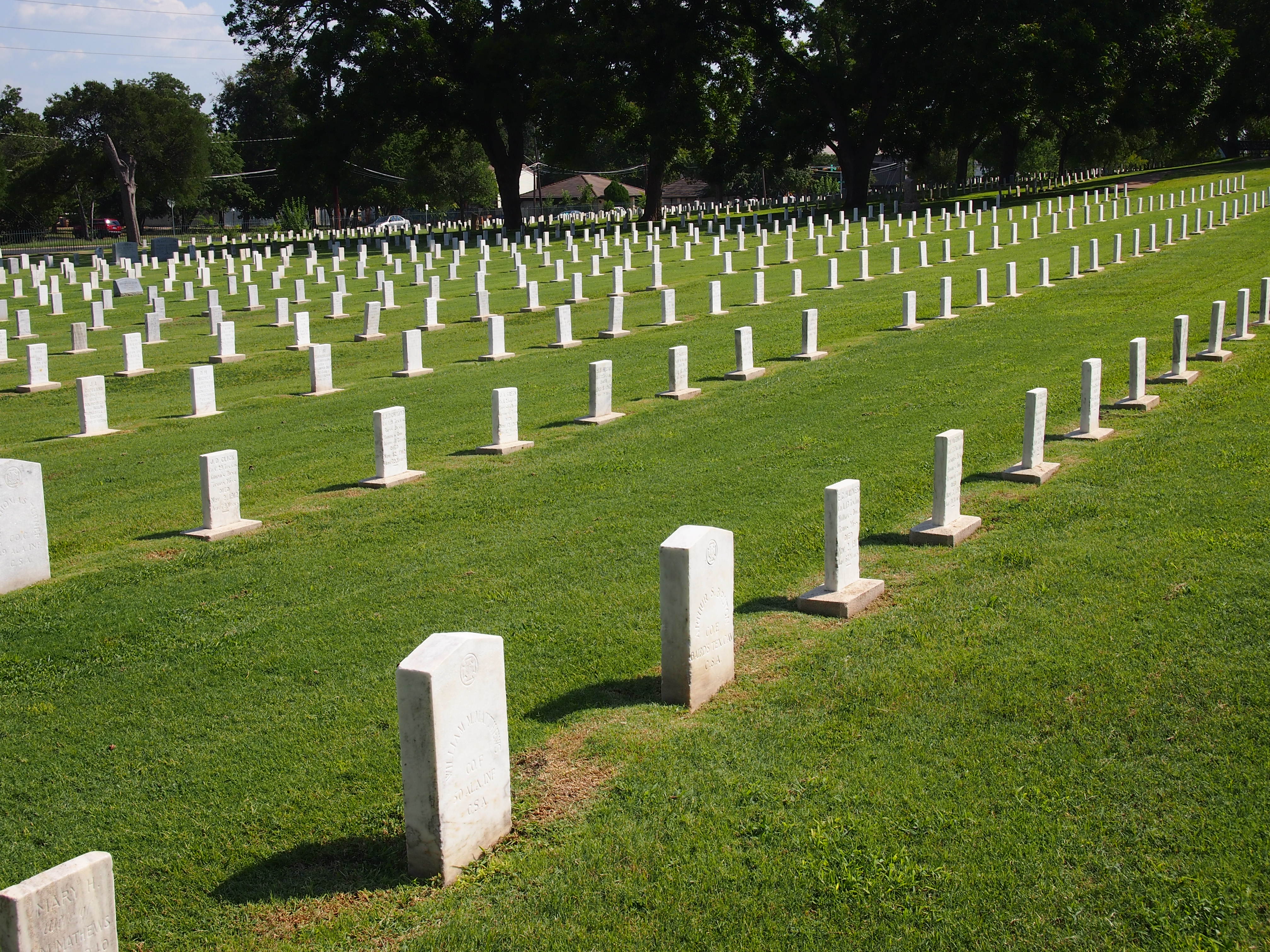
Generals are one thing, but far more of the cemetery is occupied by ordinary Confederate soldiers, or more exactly, old men who had once been CSA who died in the late 19th and early 20th centuries. Confederate Field is large.