Stephen F. Austin and the Company He Keeps

There are a lot of notables in the Texas State Cemetery, but who’s more notable for Texas than Stephen F. Austin, especially since Sam Houston is buried somewhere else? Austin’s been in the cemetery in Austin for over 100 years now, reposing under a statue by an Italian sculptor who did most of his work in Texas, one Pompeo Coppini, whose name is conveniently on the base, and who had an interesting career I didn’t know about until I looked him up.
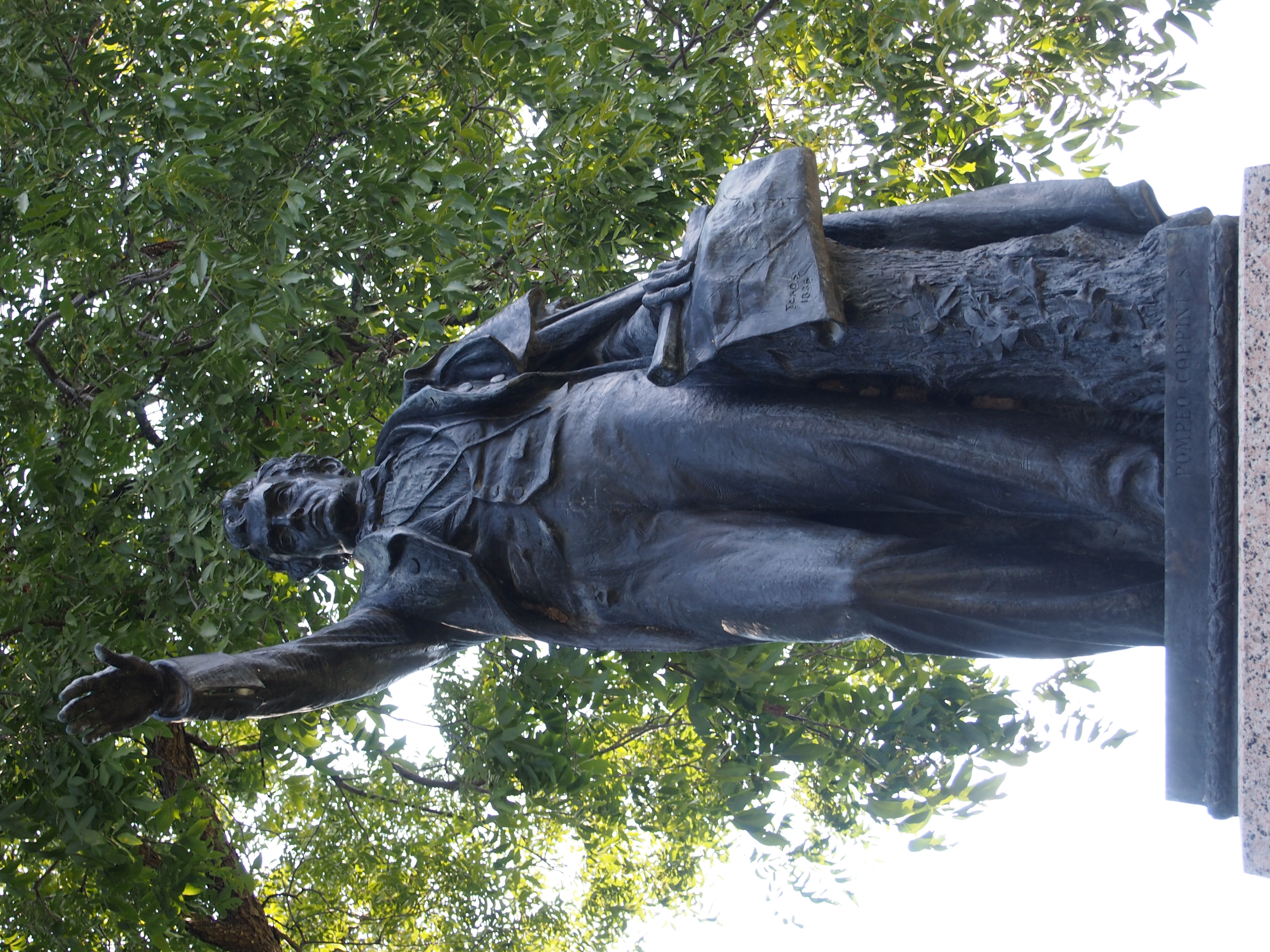
Wonder how many people who know about the city of Austin for its tech industries or music scene or its politics or UT or Keep Austin Weird or its moon towers know even a bit about Austin the man. Anyone who took Texas History in the 7th grade or read Texas History “Movies,” maybe.
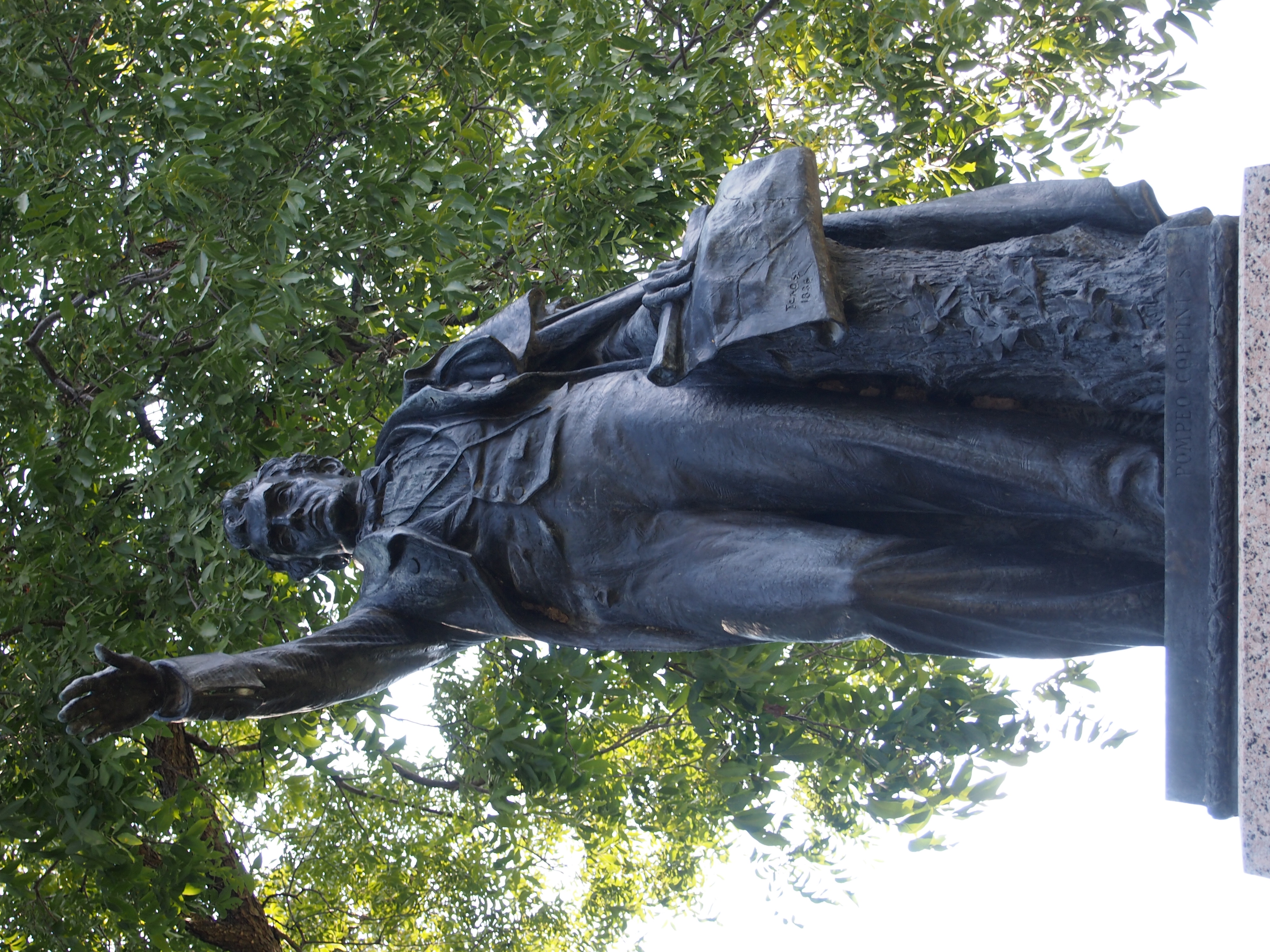
Coppini gave Austin a determined visage, reaching for the future. Since he died young, at only 43, you have to wonder what he would have done had he lived another 30 years — at the very least held a number of high offices in the republic and the state, as Houston did.

The plaque in front of the figure says:

Stephen Fuller

AUSTIN

“The Father of Texas”
was born in Wythe County, Virginia
November 3, 1793
and died in Brazoria County, Texas
December 27, 1836

Wise, Gentle, Courageous, and Patient
He was the founder
of a mighty commonwealth

He’s actually one of the few full-sized bronzes in the cemetery. Most of the funerary art involves other shapes, such as that of Ma and Pa Ferguson, who are not far from Austin.
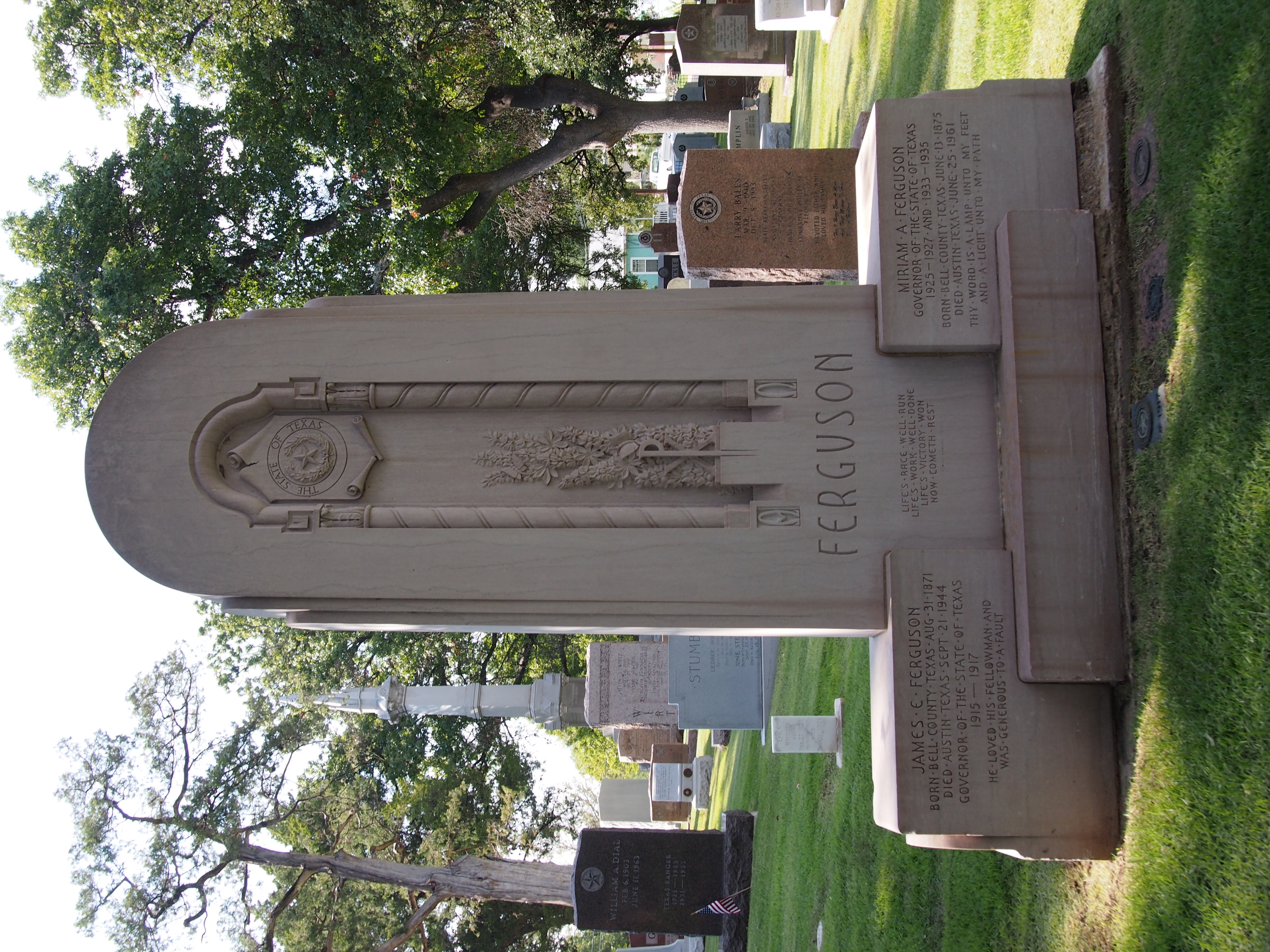
James and Miriam Ferguson, that is, who were both governor of the state at various times. My mother remembers them, and I heard about them from her from time to time.

One of the least conventional memorials in the cemetery — or in any cemetery — was this one, to William and Carrin Patman, whom I had to look up. He was a long-time Texas state senator and also spent a while in the U.S. House.
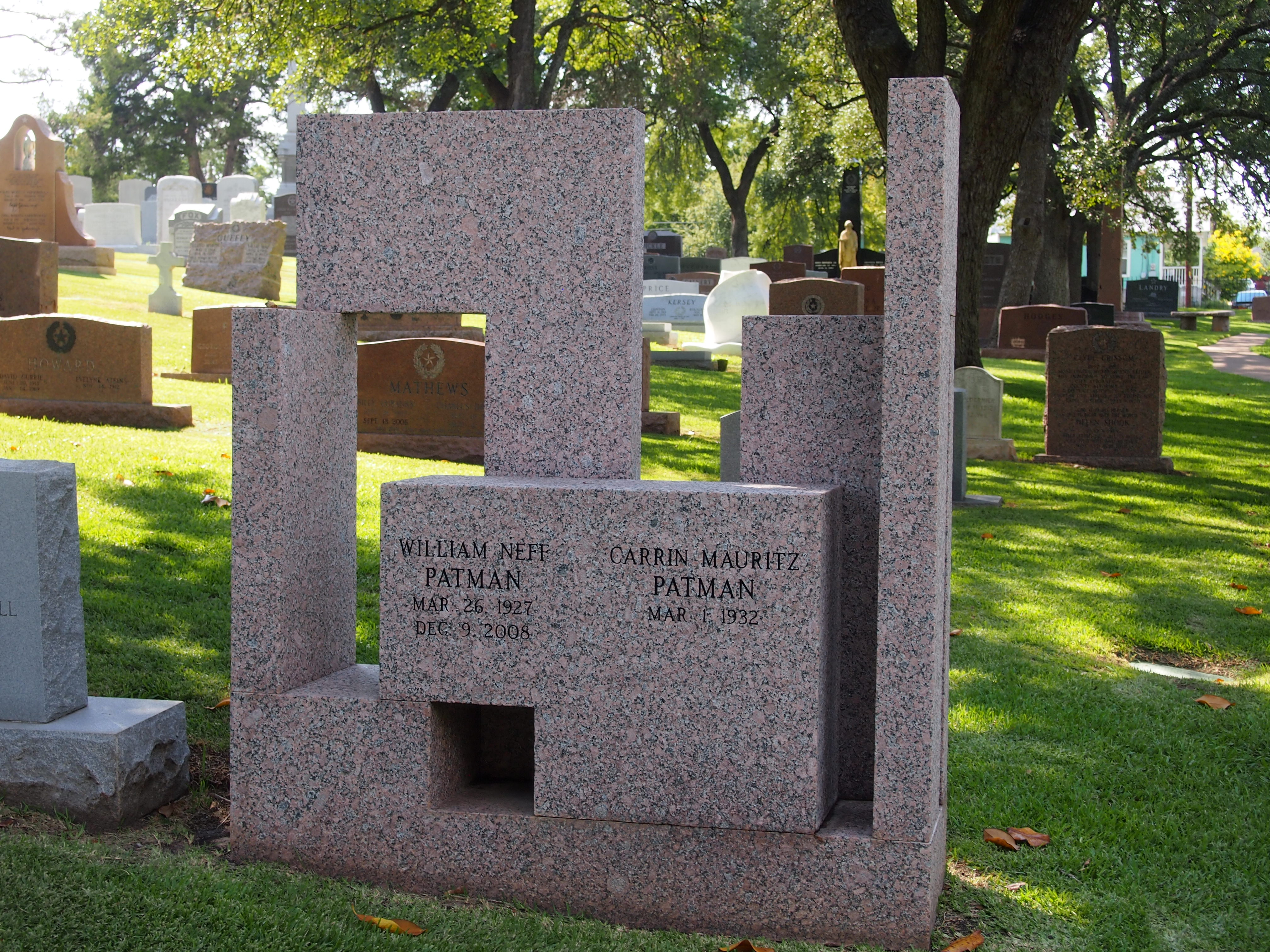
Other notables we spotted on “Republic Hill,” whose centerpiece is the Austin statue, included Walter Prescott Webb, Bigfoot Wallace, Rep. Barbara Jordan, Rep. Jake Pickle, and a few other governors and state officials. Coach Darrell Royal is buried near the road. I hadn’t realized he was dead. His stone features a UT gold ring and the words, “Let’s Give Him Three.”
 

The Texas State Cemetery

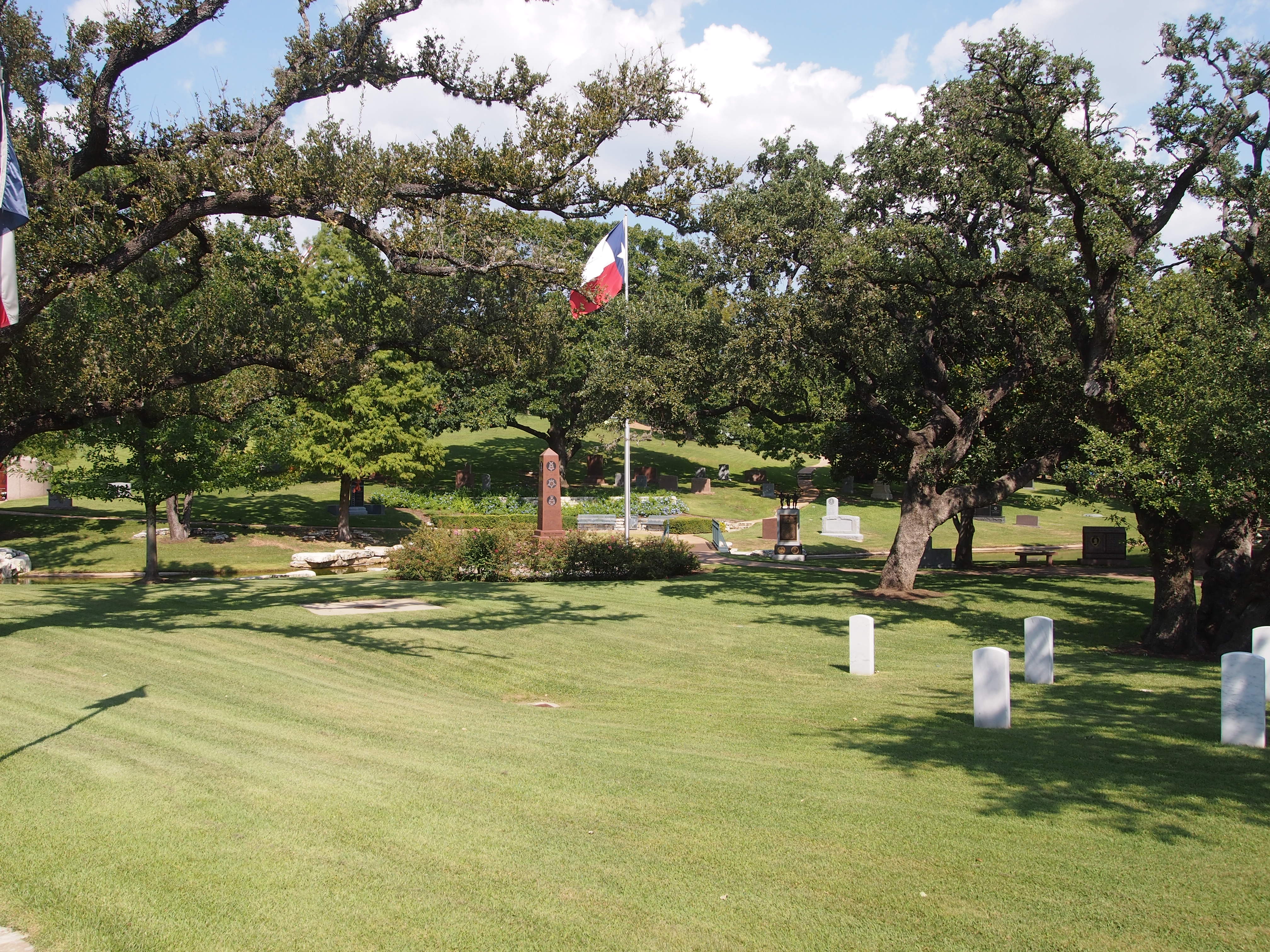
The Texas State Cemetery, which is in Austin east of I-35 but still not that far from the capitol, is a lush patch of mildly sloping land, artfully landscaped, graced by a variety of trees, a few water features, narrow roads, many Texas flags, and lots of monuments of different sizes and shapes, as you’d except from a good cemetery. Jay and I stopped by the State Cemetery on the afternoon of Friday the 13th under partly cloudy skies, and during the usual high heat you’re going to encounter in September in Central Texas. Fortunately, there was also a good bit of shade.

One thing the cemetery did not have, at least when we were there, was many other visitors – maybe a four or five all together, and I think at least one of them worked there. Then again, that’s not so strange. I often find myself alone – among living people, anyway – even in large cemeteries. The only recent exception to that has been Arlington National Cemetery.

The invaluable Handbook of Texas tells us that the 22-acre Texas State Cemetery “is divided into two plots. The smaller one includes some 234 marked graves of more or less prominent men and their wives, including… representatives of every department of state government and every period of state history. The larger plot contains the marked graves of some 2,047 Confederate veterans and their widows, who died after 1889 in the Texas Confederate Home and the Confederate Woman’s Home.”

The cemetery also still has room for expansion. I understand that most state officials can be buried there if they so desire, and the legislature can offer burial in the cemetery to whomever it wants. That would account, for example, for the stone dedicated to Wille James Wells, “El Diablo,” 1906-1989.

I hadn’t heard of him before. His stone says, “Played and managed in the Negro Leagues, 1924-1948. Began his career with the St. Louis Stars and became baseball’s first power hitting shortstop… He was best known for his aggressive play [hence the nickname]. During his career he compiled a .392 batting average against Major League ballplayers. In 1997, Willie Wells was inducted into the National Baseball Hall of Fame…” Wells’ connection to Texas isn’t obvious from the stone, so I looked him up, and it turns out he’s native to Austin.

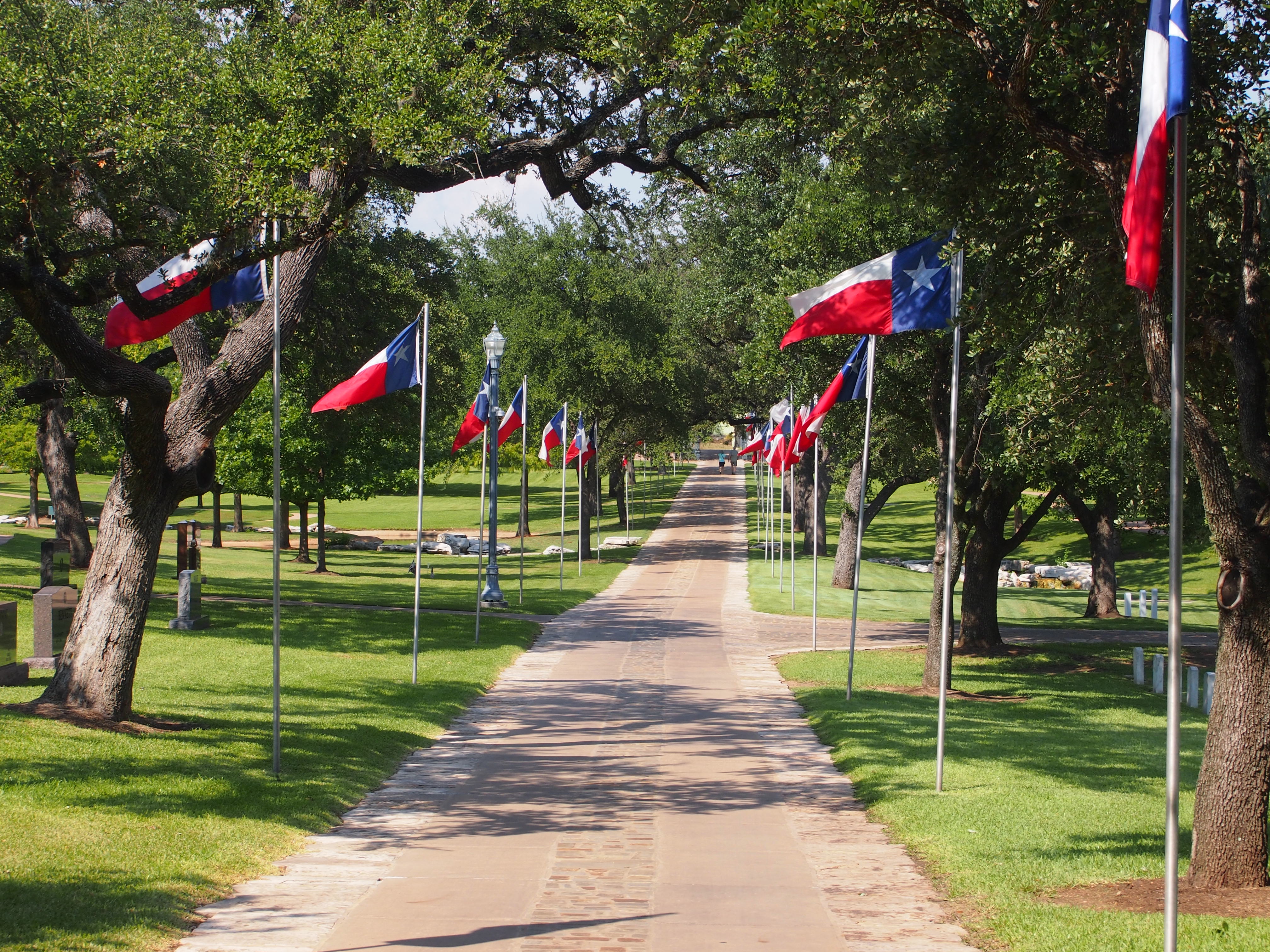
Roads run through the cemetery, making a T shape. The formal entrance to the grounds is at the bottom of the T. According to Wiki at least, the stem of the T shape is part of Texas 165, which also includes part of a side street that borders the cemetery. It isn’t clear from the text whether the rest of the T also counts as Texas 165, but never mind.

This is the view looking north, past the top of the T. Whatever you call it, the road is abundantly lined with Texas flags.

GTT Fall 2013

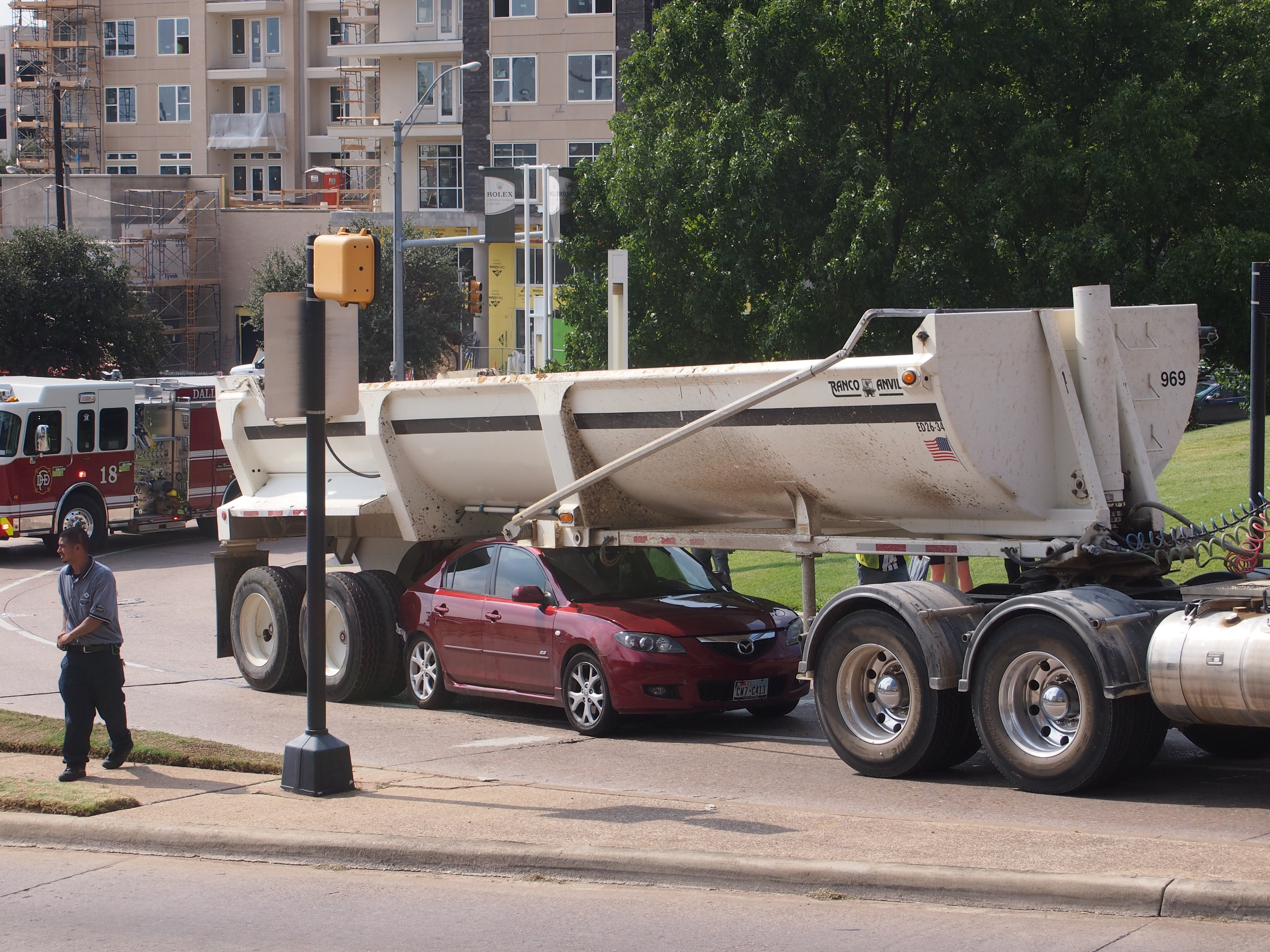
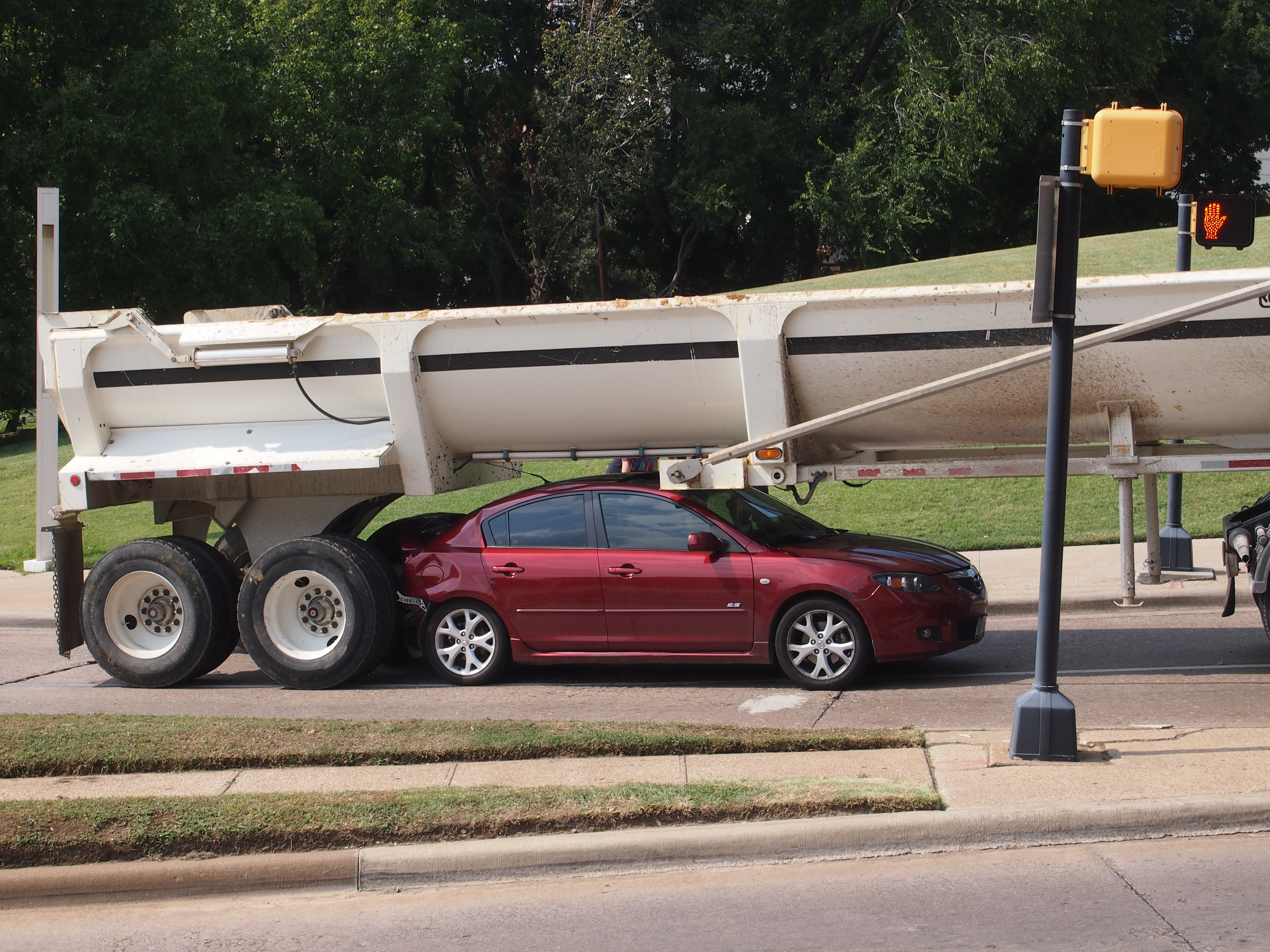
Last Wednesday I spent the afternoon in downtown Dallas, walking around on a typically hot September day. I was visiting the second floor of a building – more about that later – when sirens blared in the street below. The windows sported heavy drapes, but it wasn’t hard to pull them back for a peek. On the street below was the aftermath of a traffic accident without apparent injuries, but also a little hard to understand.

So how did that little car wedge itself under that large truck? Other witnesses marveled at it as well. It would be one thing if the car was at a diagonal to the truck, which would mean that it rammed itself underneath. But the car’s aligned so evenly with the truck. Did the truck somehow park itself on top of the car? How could that have happened?

Just another little mystery. I went to Texas on the 12th and came back on the 19th. It was a trip but not a vacation. I spent time with family and friends, but I also continued working – all I need for that is a laptop, phone, and Internet connection. I drove a fair amount, too, because I flew to Dallas, drove to San Antonio by way of Austin, and later returned to Dallas for the flight home.

For a few hours on a couple of days, I managed to see a few things. New things, in fact: a large, immaculate Austin cemetery that I’ve known about for years but never visited; a music venue I’d never heard of in a familiar part of San Antonio; some small to mid-sized museums in Dallas, a pleasant bar in the same city, and a large church there, too.

Maps, Maps, Maps

Back again around September 22 — about on the equinox. That’s just a coincidence, since it’s the next Sunday that I want to begin posting again. But those days must mean something. Years ago, I took a flight across the equator on the solstice, and I turned into a Druid for a few minutes.

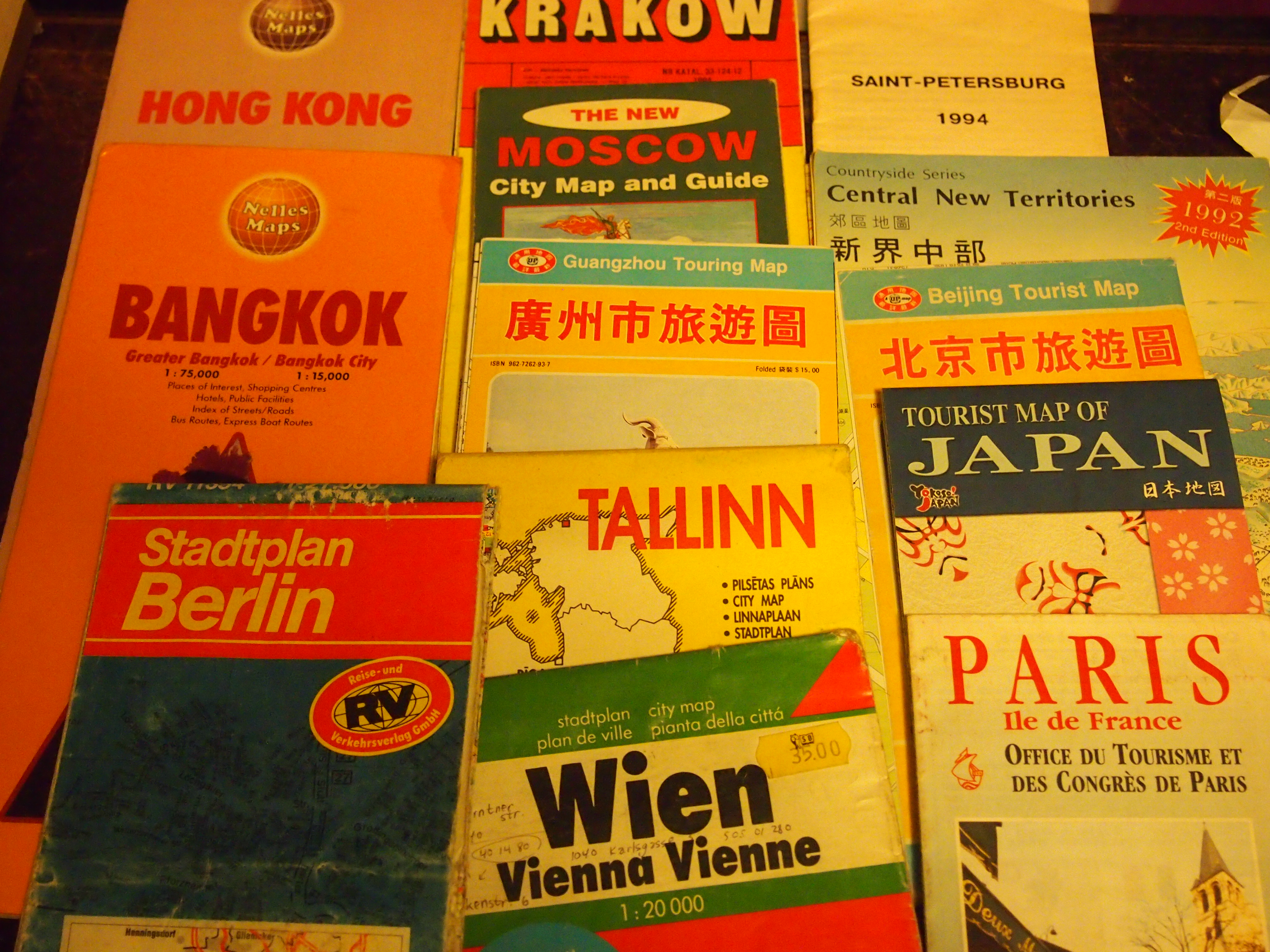
I have a collection of maps, many of which I’ve picked up as I visited places. Recently I moved them out of the lower level of the house, and as I was leafing through them, it occurred to me that my daughters — if they’re ever so peripatetic — will probably not end up with a clutch of paper maps. They’ll have some electronic box that offers directions wherever they are: New York, London, Paris, Munich.

Paper maps can be cumbersome. Of course I use Google Maps and its ilk sometimes. But my daughters and their cohort don’t know how much they’ll be missing without paper maps.

I’ve posted about that Stadtplan Berlin before, and one of my favorite maps ever (not pictured), Bensons MapGuide London Street Map.

And when am I going to give up my paper maps? When they pry them from my cold, dead fingers.

The Rookery

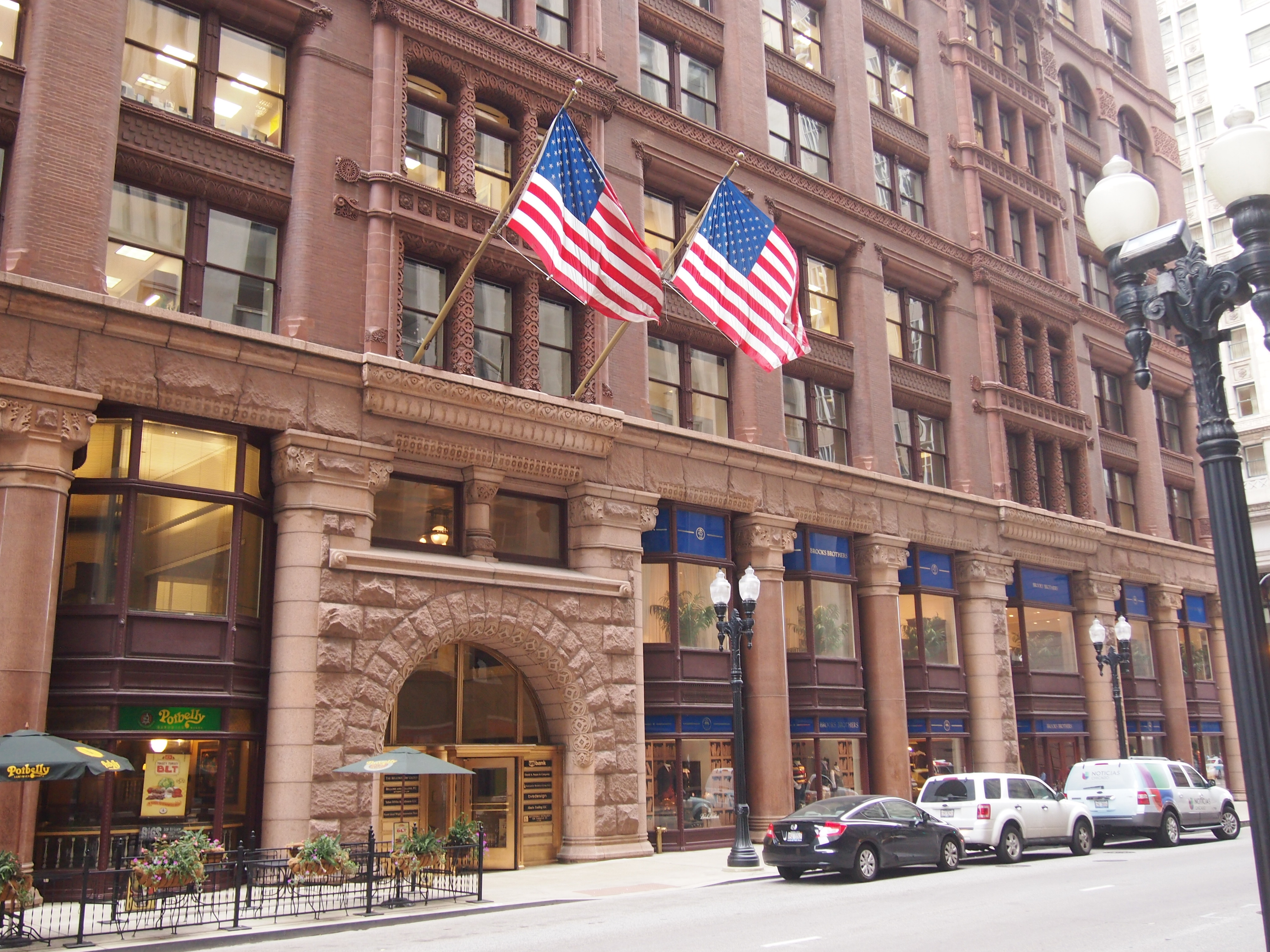
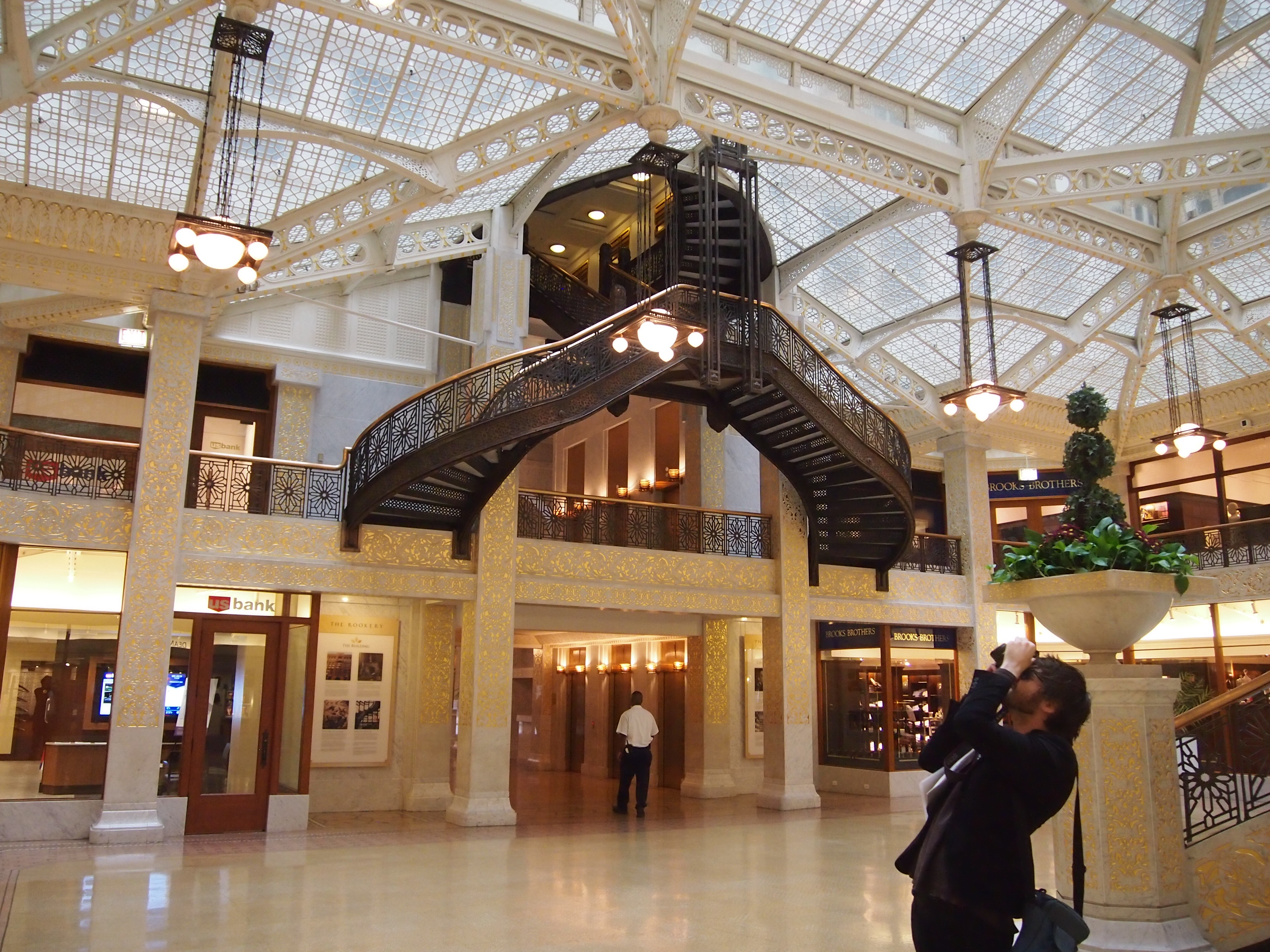
Also during my most recent visit downtown, I swung by the Rookery. Because it had been a long time since I’ve been in the Rookery. The last time might have been the Halloween parties that the concierge service down the hall at the Civic Opera building used to have, when I had an office at the Civic Opera building. The early ’00s, that is.

As always, the Rookery is cool on the outside.

And stunning on the inside.

As you can see, I wasn’t the only person paying photographic attention to the Burnham & Root creation, with its Frank Lloyd Wright filling.

Electric Jellyfish

Not long ago I visited the J.W. Marriott hotel at 151 W. Adams. It hasn’t had that flag very long — only about three years — and the building itself is the former Continental & Commercial National Bank, designed by no other than Daniel Burnham in 1914. I read that to turn the structure into a 610-room hotel — an upmarket one, since J.W. Marriott is described as the “black label” of Marriotts — and restore the ornate lobby, the hotelier spent $396 milllion.

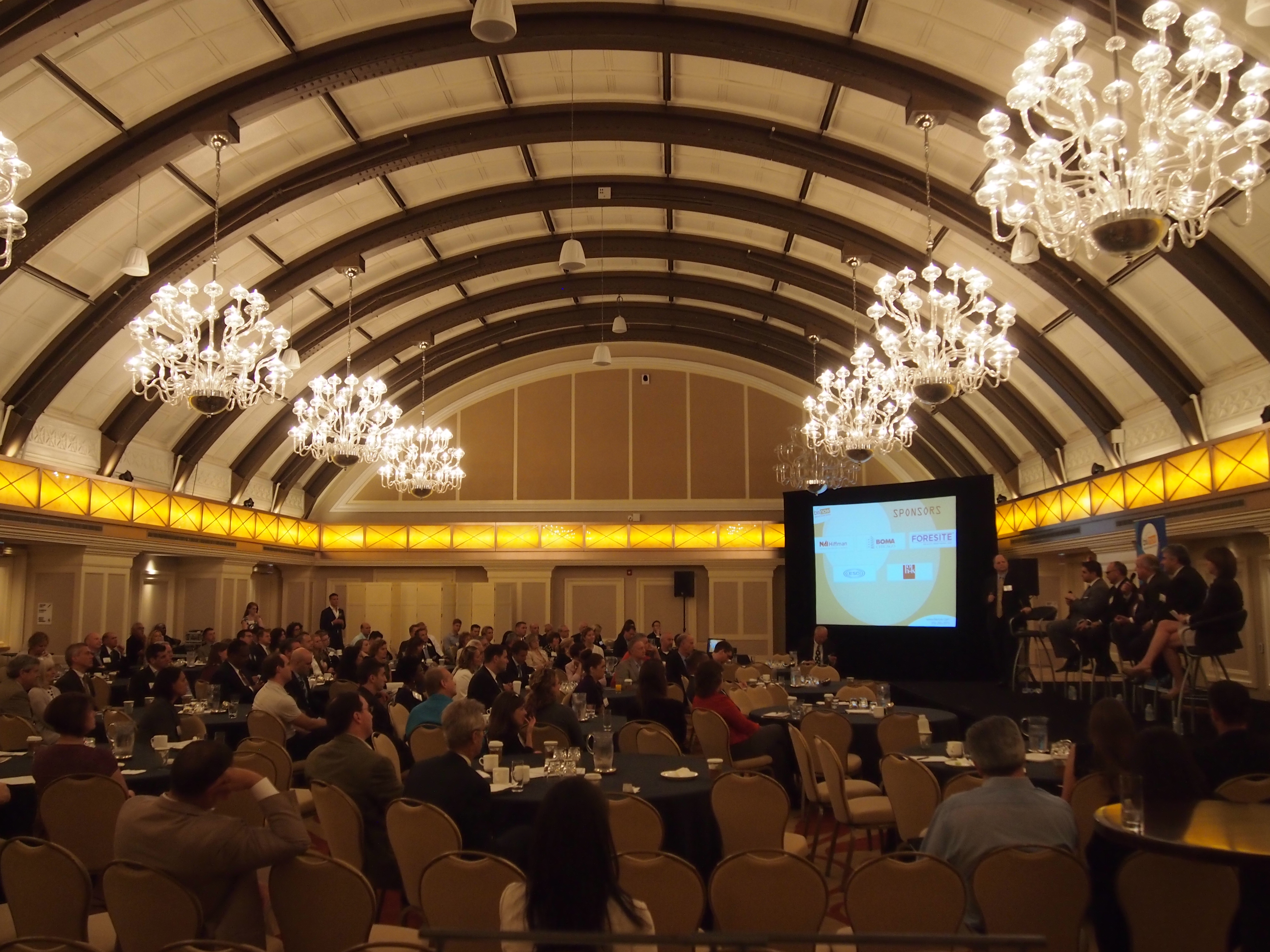
I didn’t have a lot of time in the lobby, but ornate is a good adjective for it. Mostly I was in one of the larger meeting rooms, which was more interesting than most hotel meeting rooms.

There must be a reason, maybe in the original design of the property, that the ceiling sports arched beams, but I’m not in a position to say why.

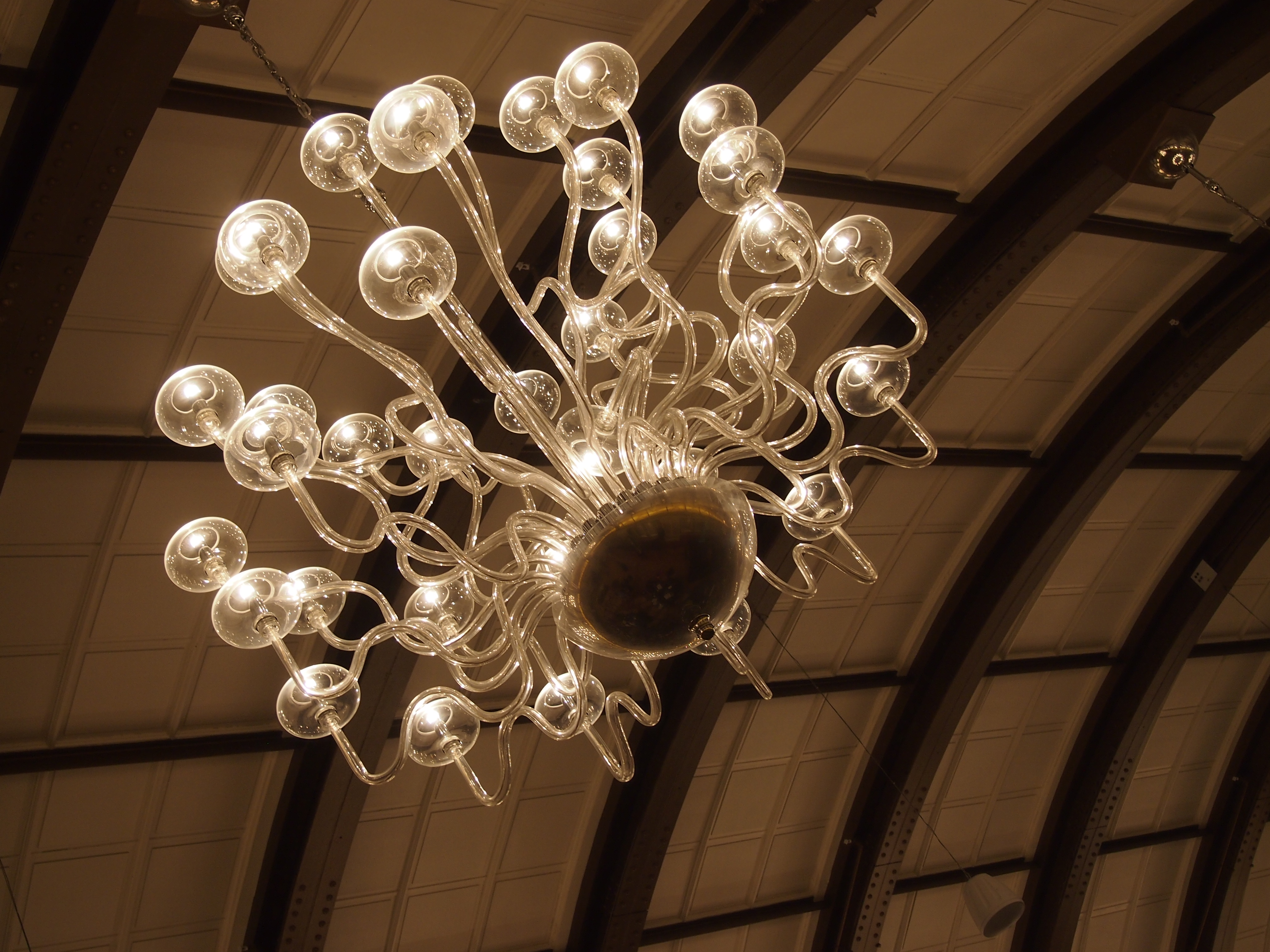
Nice lights, too. A bloom of electric jellyfish

Protest at Adams & Clark

Back again on September 3 or so. Hard to believe the summer’s dwindling down, but at least it’s still as warm and dry as a real summer.

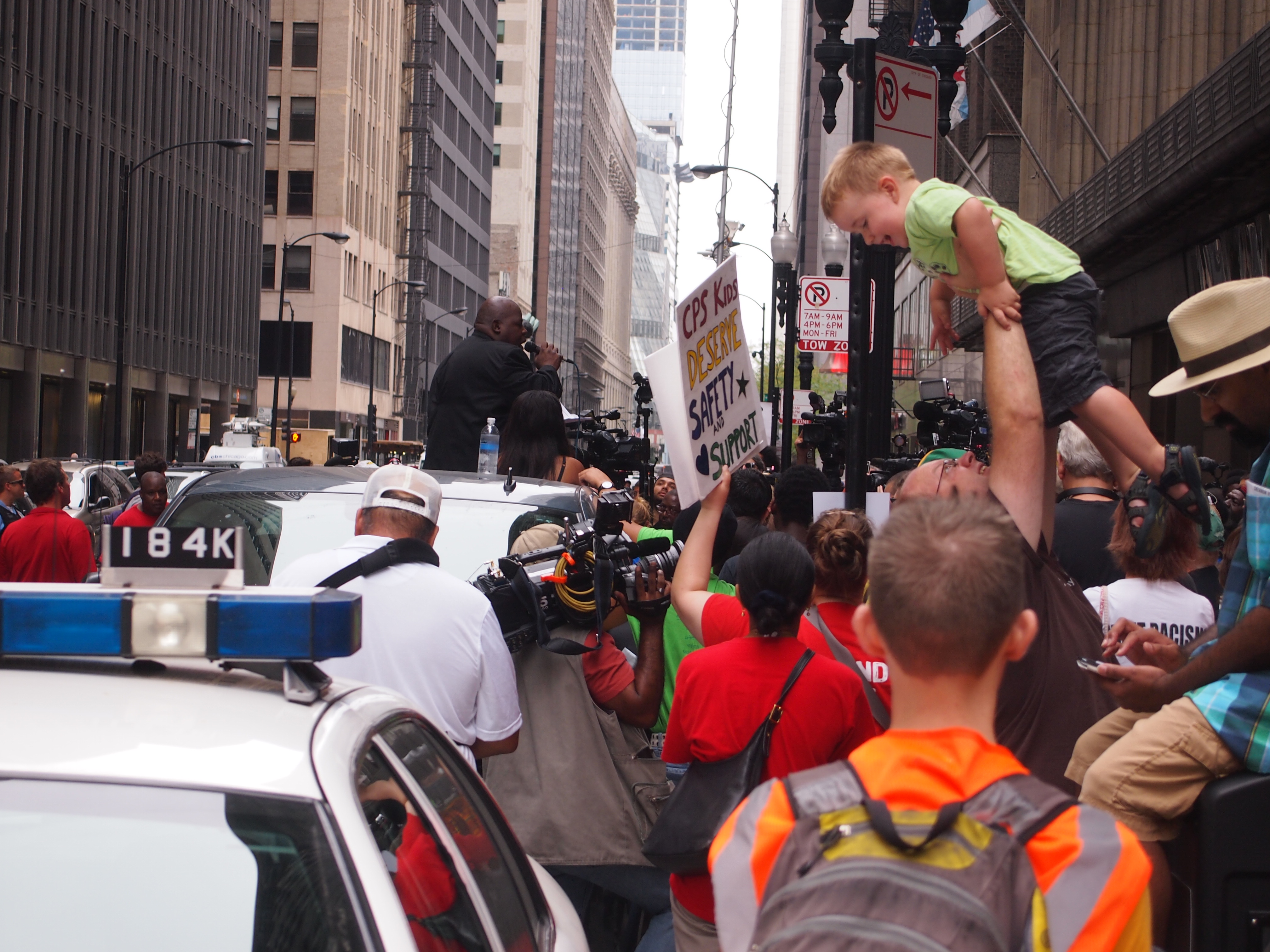
I was downtown late yesterday morning, and spotted a protest at the northeast corner of Adams and Clark. I heard it first, and then went closer to take a look. People filled the sidewalk in front of the building at that corner, and with them were a speaker on a small platform, some cameramen, and a few bored-looking cops, watching.

At first I thought it might be fast-food workers out on strike, but no. That was scheduled for today, and besides, no fast food is available at that corner. Instead, the building is home to the Chicago Board of Education, and it wasn’t long before I figured out that the protestors were being vocal about the recent closings of a large number of public schools in the city.

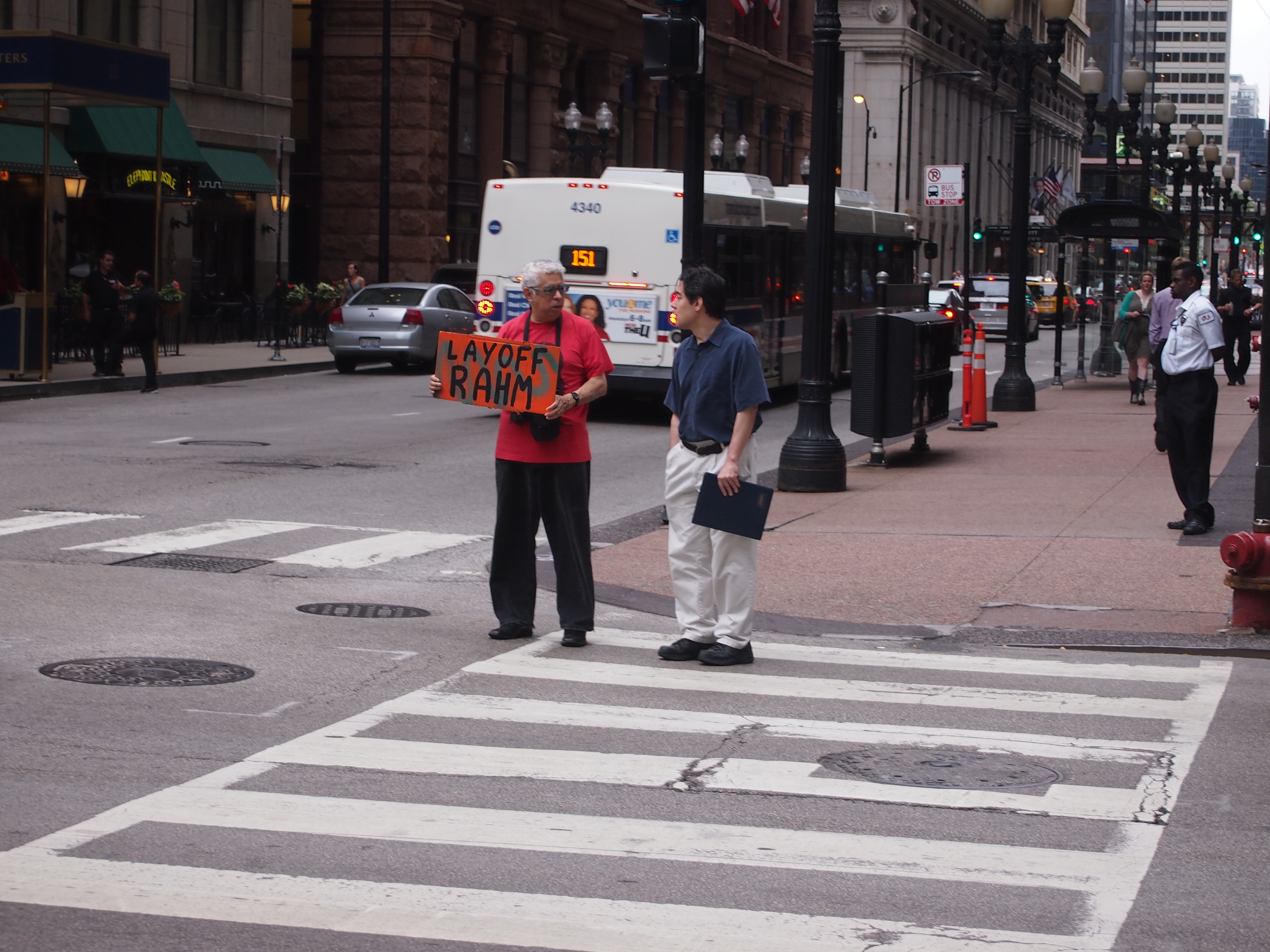
The speaker, despite his microphone, was a little hard to hear. Across the street, a fellow let us know his displeasure with Mayor Emanuel.

I haven’t followed the mayor’s time in office closely enough to form much of an opinion, but I know the protestor is hardly alone.

The Fern Room

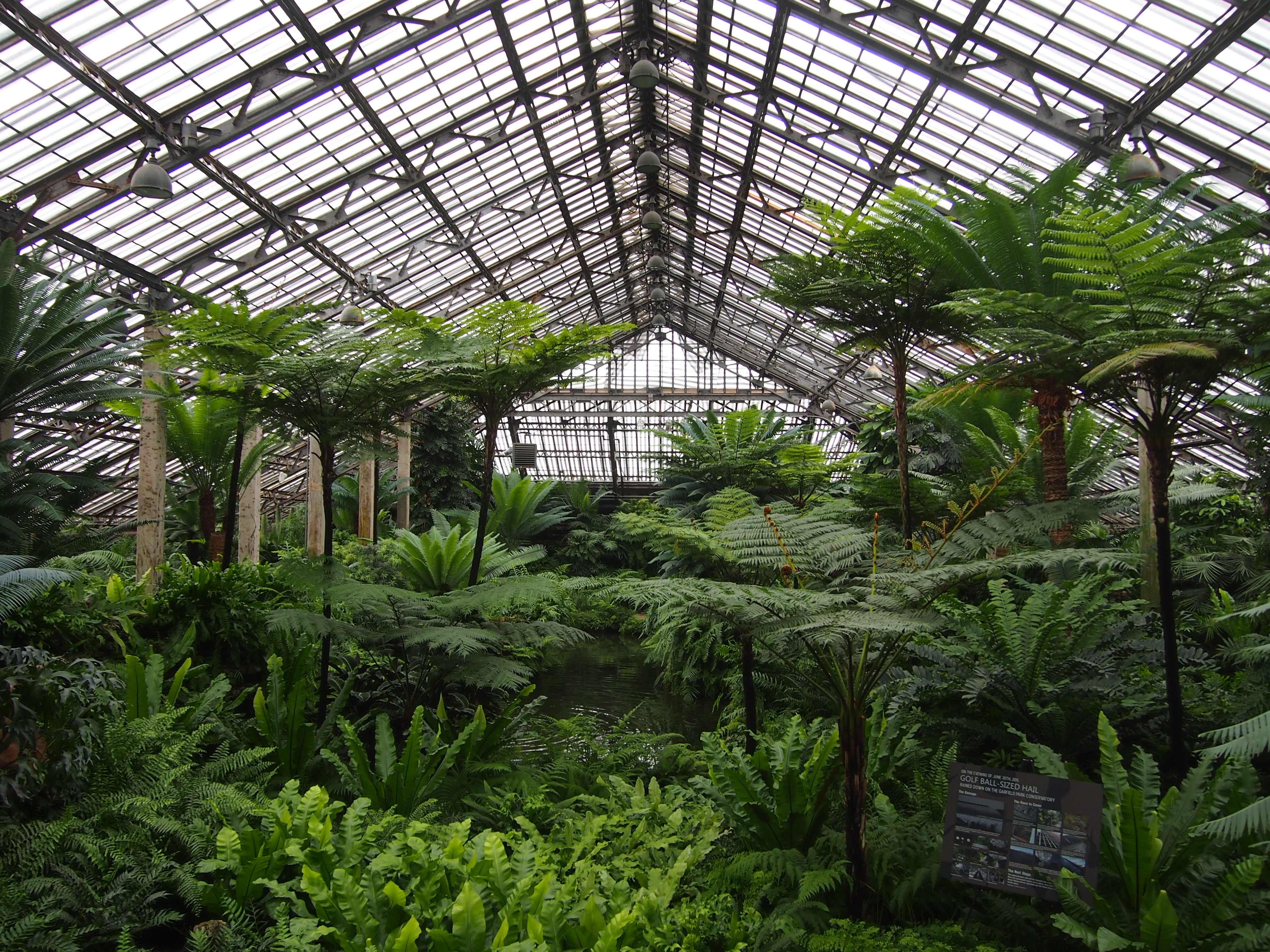
Another picture of the Garfield Park Conservatory: The Fern Room.

According to a sign at the entrance, the room was Jen Jensen’s “imaginative tribute to prehistoric Illinois. So natural looking was the result that when the Conservatory first opened, visitors thought it has been erected over an existing lagoon… Many of the plants in this room date to the time of the dinosaurs. They have changed little from their ancestors over the last 200 million years. Our plants, of course, are not that old. The oldest are about 300 years of age.”

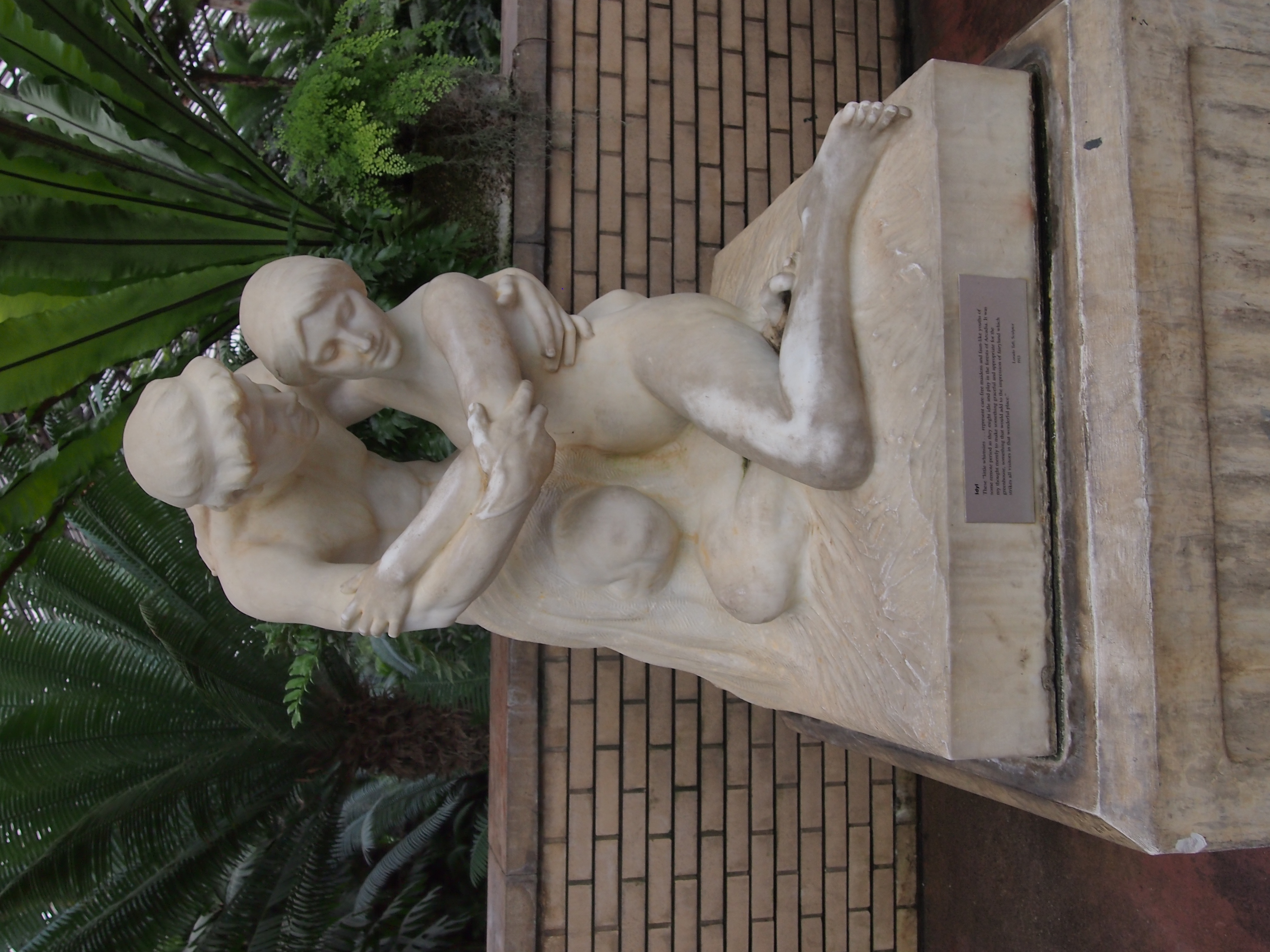
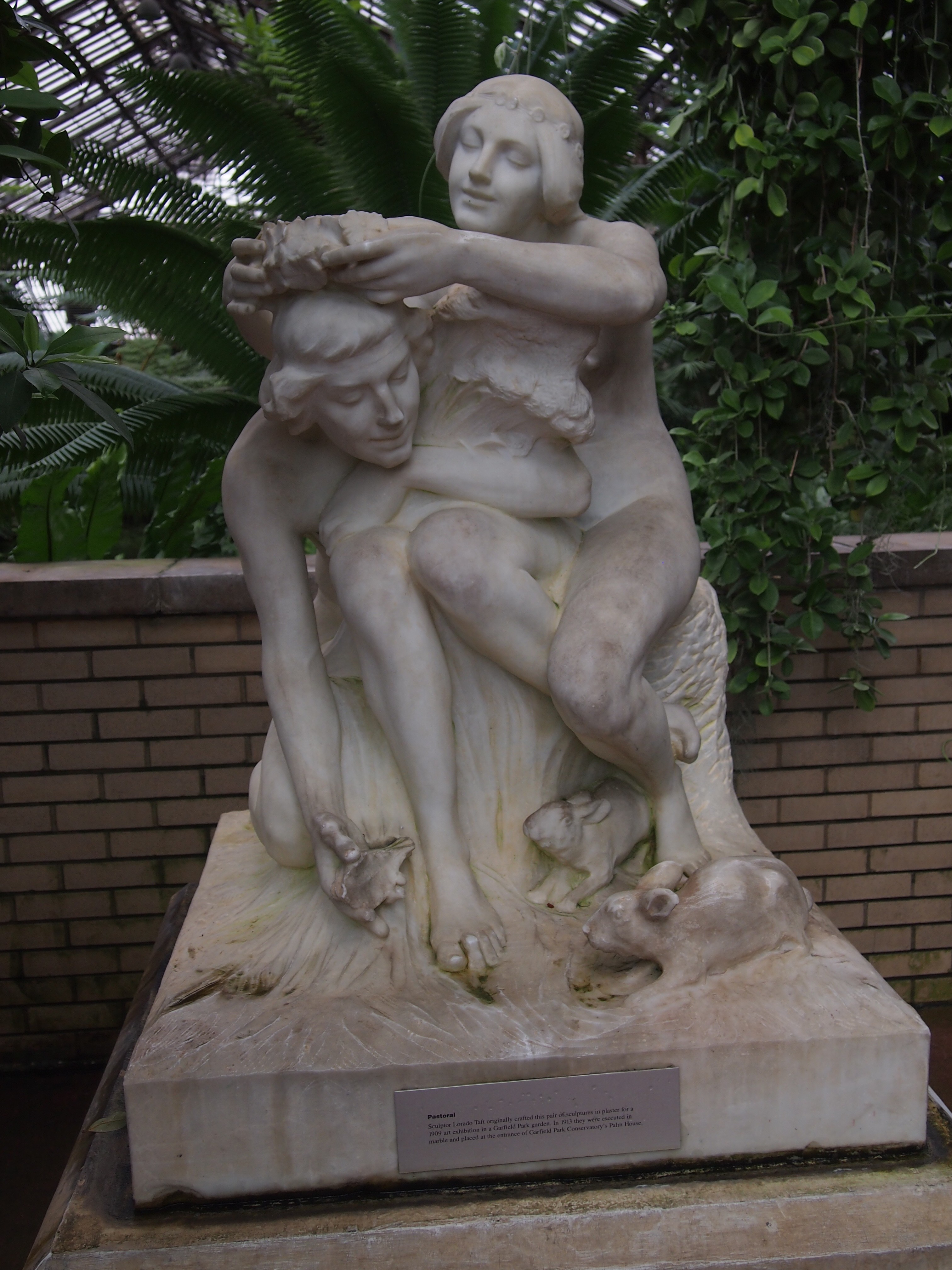
At the entrance to the Fern Room, another Chicago talent of yore left his mark: sculptor Lorado Taft. Seen a few of his things before.

He called this piece “Idyl,” and it dates from 1913.

This one is “Pastoral,” of the same vintage.

The (Glass) House That Jens Jensen Built

“In 1905, Chicago’s West Park Commission’s general superintendent and chief landscape architect, Jens Jensen, demolished the three smaller greenhouses in Humboldt, Douglas and Garfield Parks to create what was intended as ‘the largest publicly owned conservatory under one roof in the world’ in Garfield Park,” according to the Garfield Park Conservatory Alliance. “Many of the original plantings came from the three smaller West Side conservatories.

“Constructed between 1906 and 1907, the Garfield Park Conservatory was designed by Jensen in collaboration with Prairie School architects Schmidt, Garden and Martin and the New York engineering firm of Hitchings and Co. It represents a unique collaboration of architects, engineers, landscape architects, sculptors and artisans. Jensen conceived the Conservatory as a series of naturalistic landscapes under glass, a revolutionary idea at the time.”

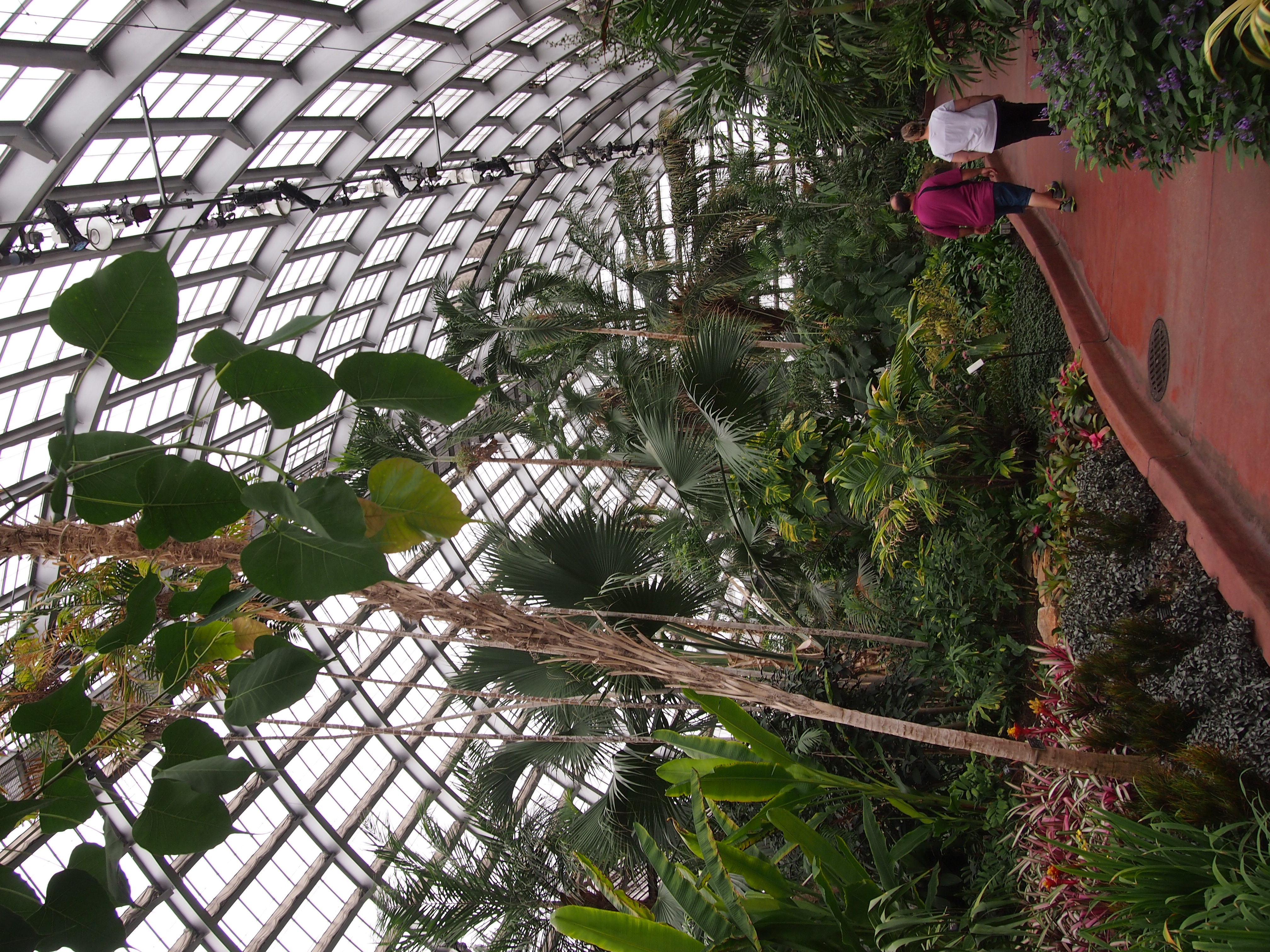
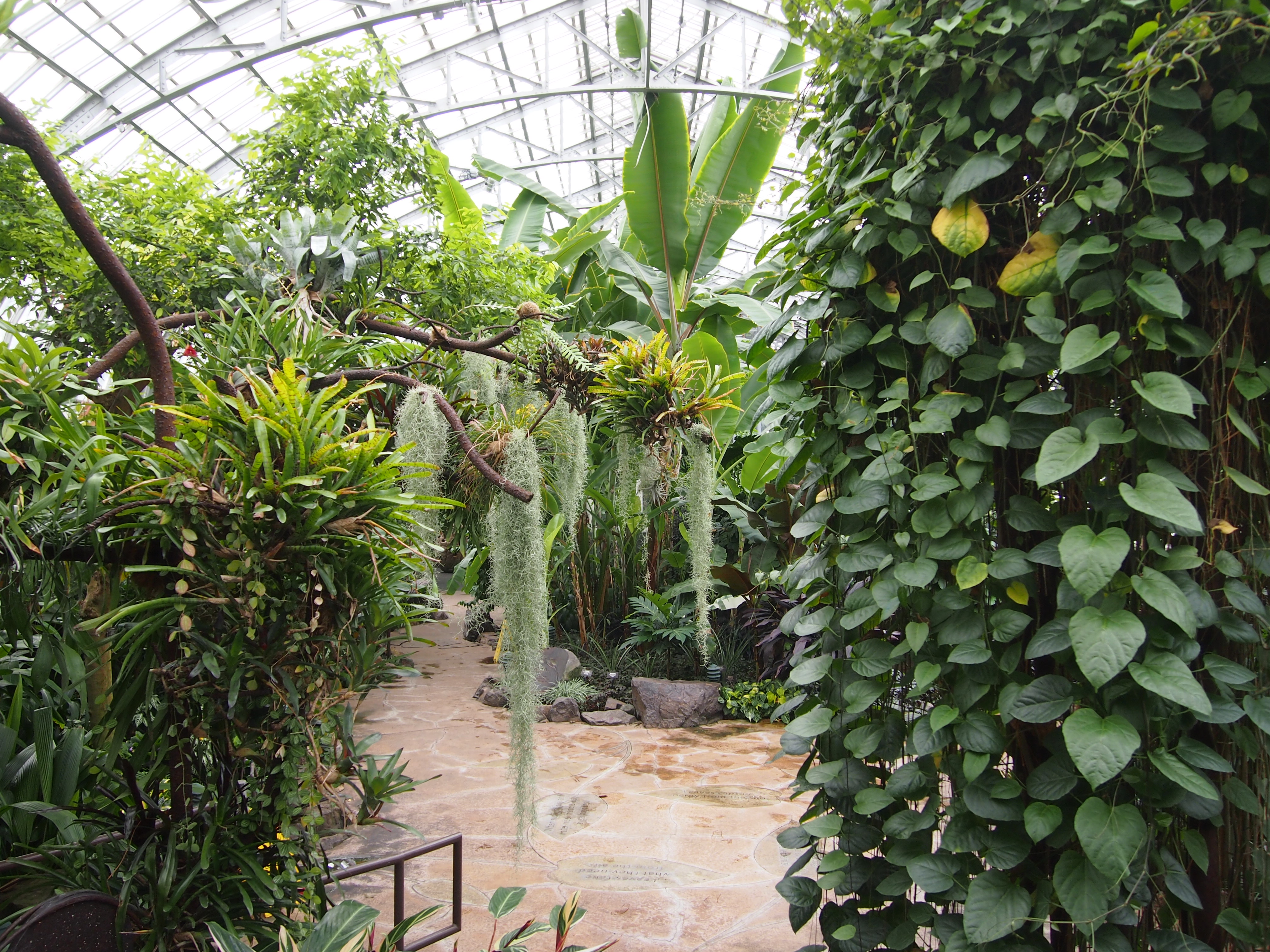
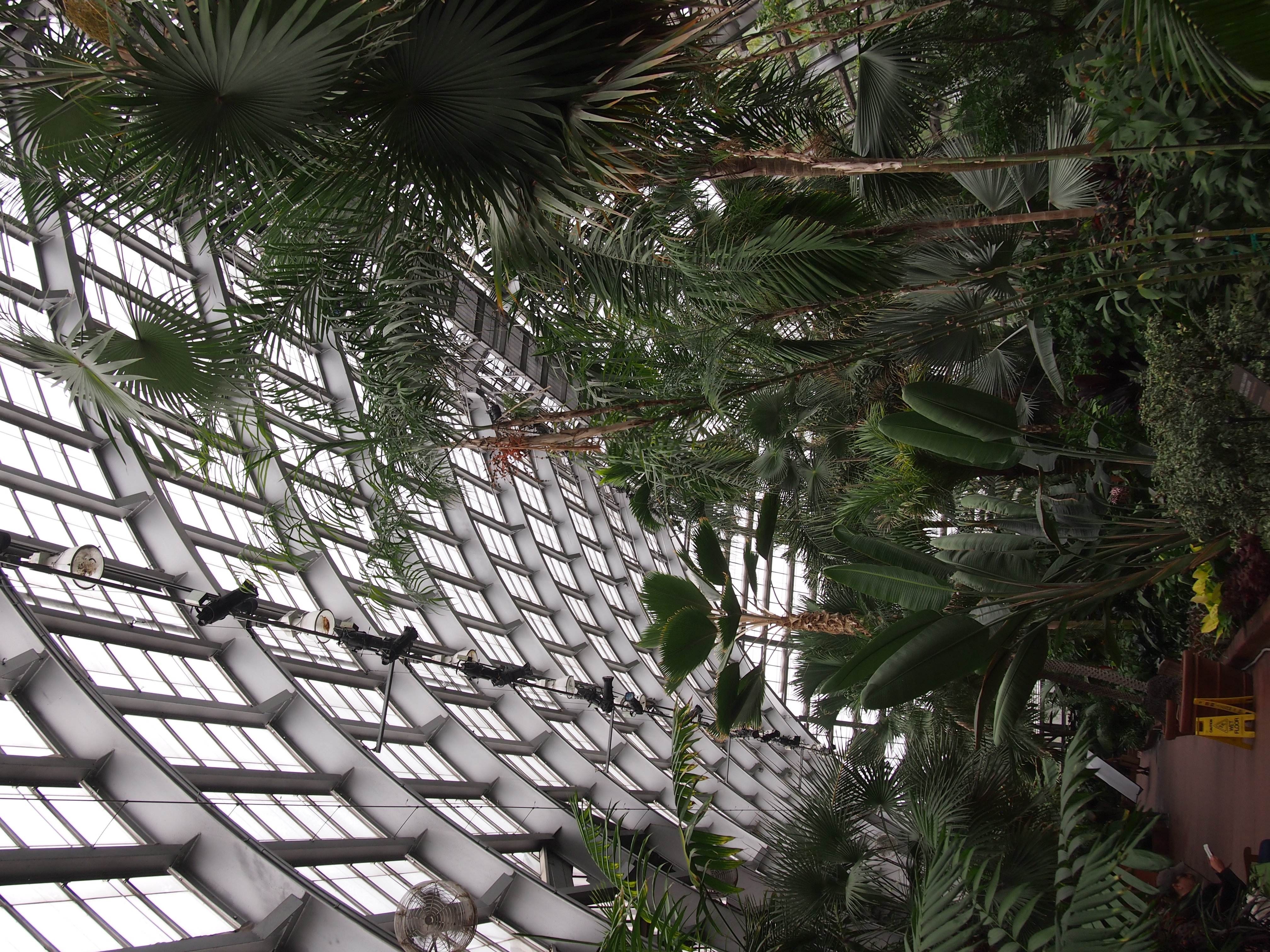
It’s a fine place to stroll, even if you don’t spent a lot of time absorbing botanical facts. Plenty of leafy vistas.

Jens Jenson ought to be better remembered, and not just for the conservatory. The Jens Jenson Legacy Project tells us that he “created Columbus Park on the western edge of Chicago, and extensively redesigned three other large west-side parks (Humboldt, Garfield, and Douglas) as well as 15 small ones. He designed parks in smaller cities – among them Racine and Madison, Wisconsin; Dubuque, Iowa; and Springfield, Illinois. He landscaped dozens of estates belonging to wealthy Midwesterners along the North Shore (Rosenwalds, Florsheims, Ryersons, Beckers) and elsewhere (Henry and Edsel Ford).

“Jensen organized and inspired the early conservation movements that led to the creation of the Cook County Forest Preserve District, the Illinois state park system, the Indiana Dunes State Park and National Lakeshore.”

The Garfield Park Conservatory

Last week I was visited the Garfield Park Conservatory on the West Side of Chicago, one of the great conservatories (just ask anyone). Been some years since I’ve been there, but I remember taking younger versions of Lilly and Ann at least once, and pointing out the cocoa trees. “See? That’s the plant chocolate comes from.”

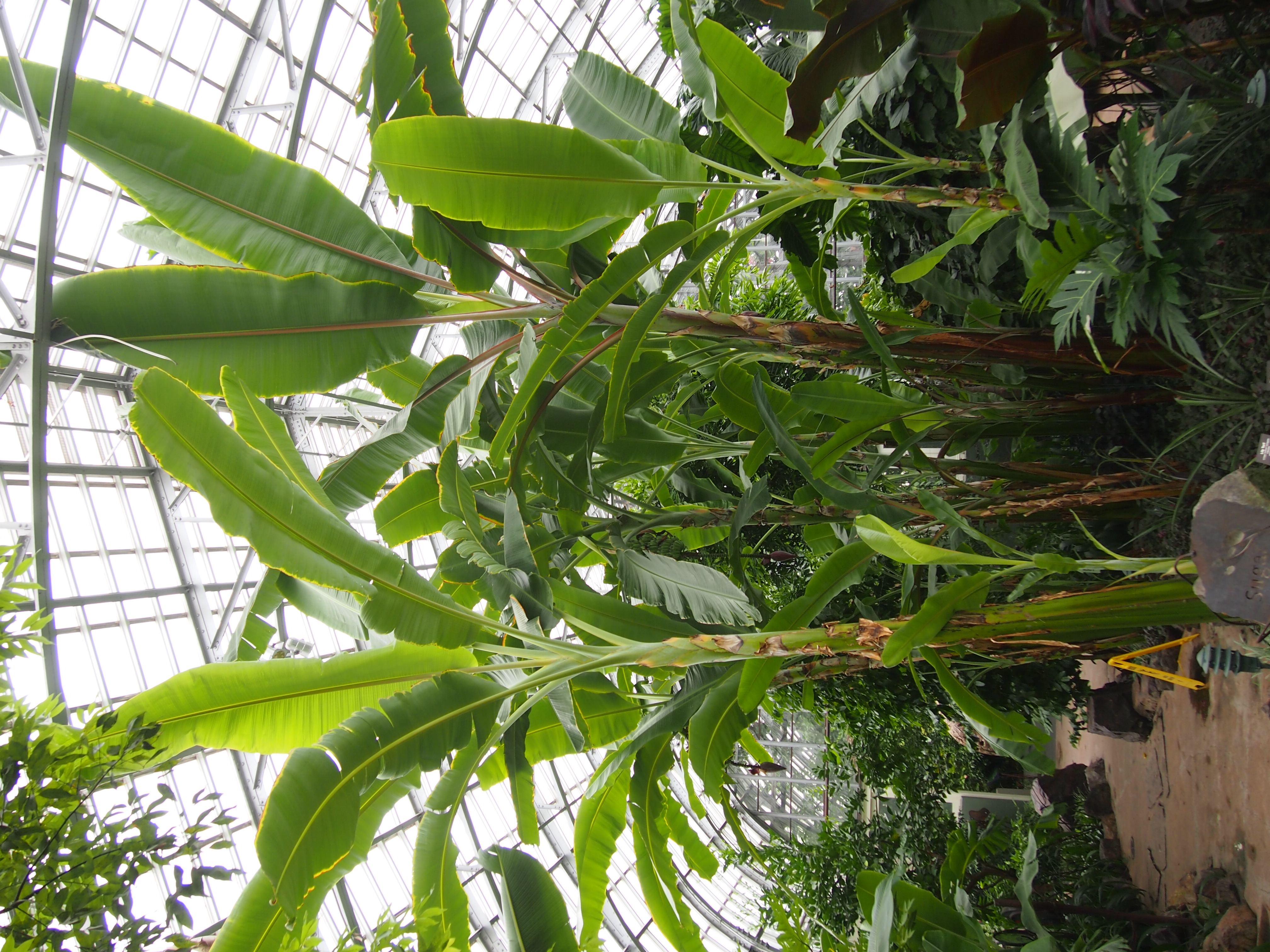
The cocoa trees are still there, of course. So are the banana trees.

Plus a welter of plants I’ve never heard of. Or forgotten. No matter how many conservatories or gardens I visit – and I try to take in a few every year – I always run across something new.  I don’t have it in me to be a botanist, just someone who says, wow, that’s interesting.

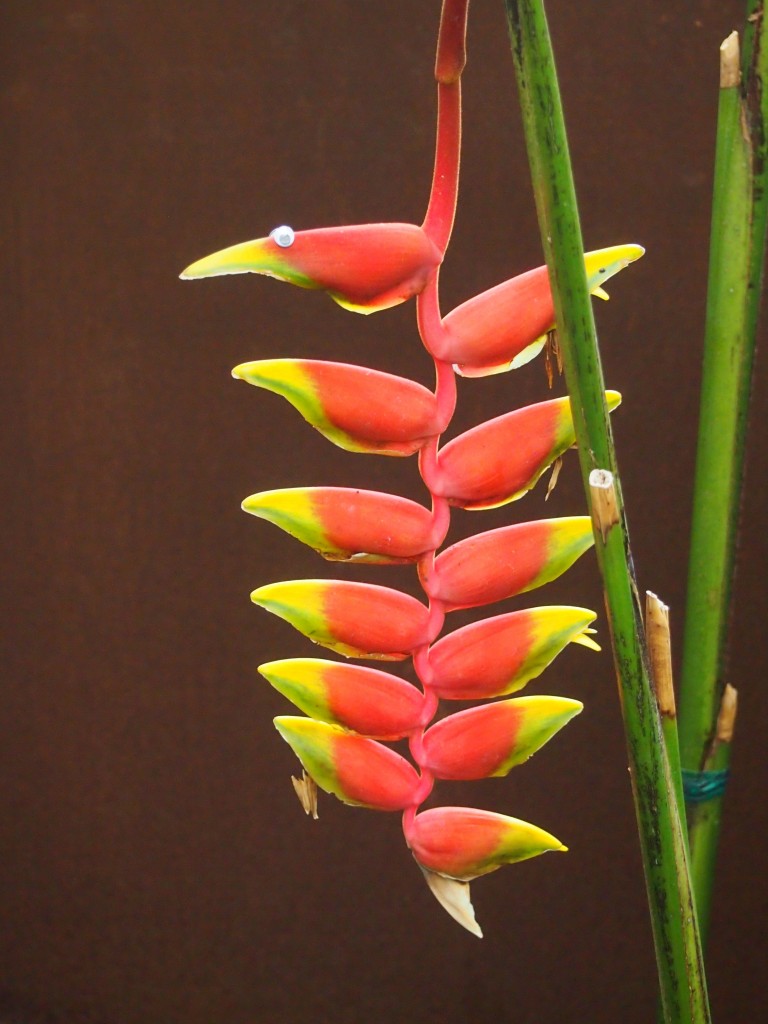
Take a look at the Hanging Lobster Claw, Heloconia rostrata cultivar, Heliconiaceae, native to South America (someone added the little glass eyeballs on the top petal). It’s like something Dale Chihuly might hang at the conservatory. He had a show at the Garfield Park Conservatory a few years ago for which he did hang his glass art in the conservatory, but I missed it.

Or the Shrimp Plant, Pachystachys lutae, Acanthaceae, which grows in Peru.
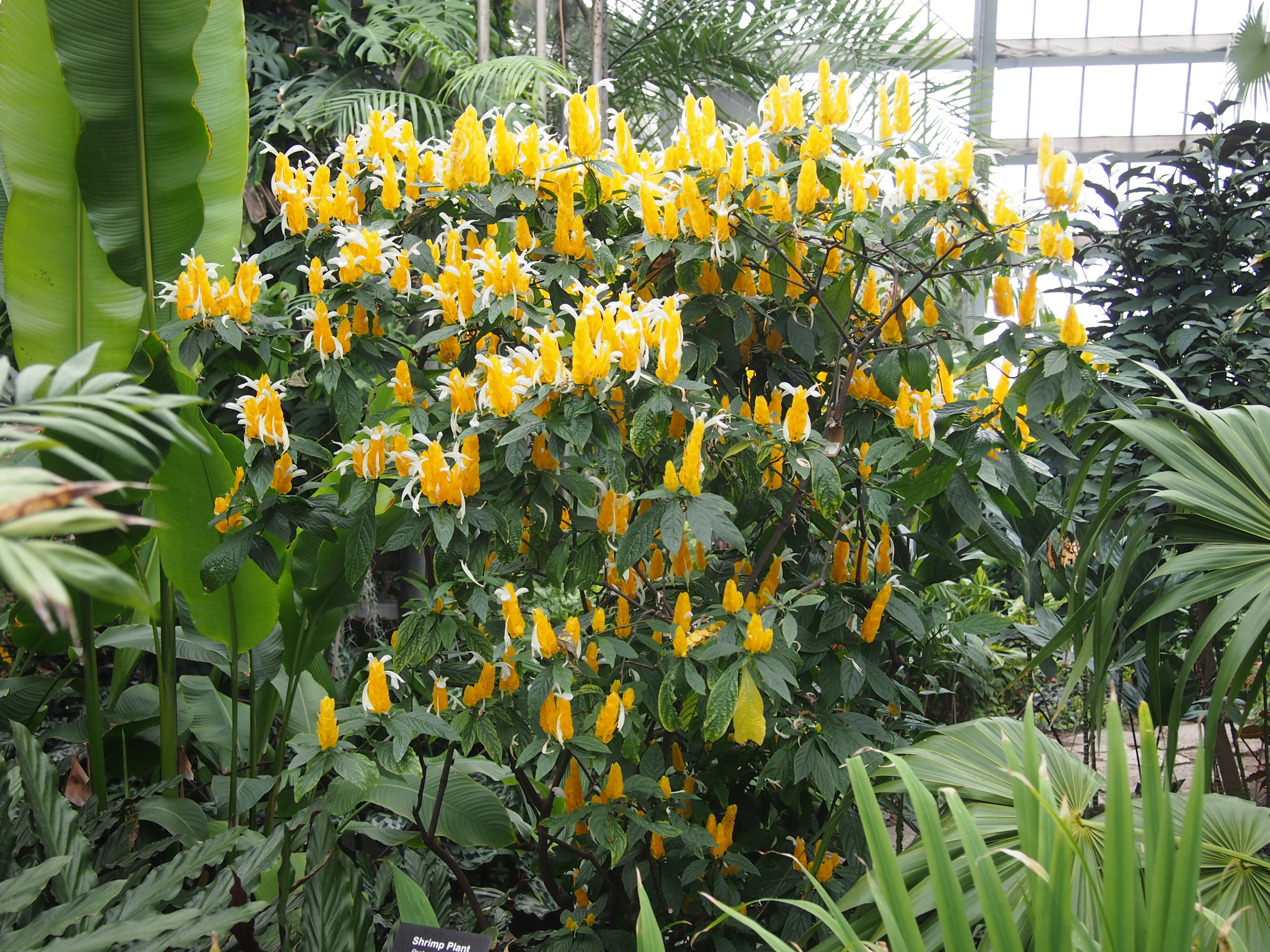
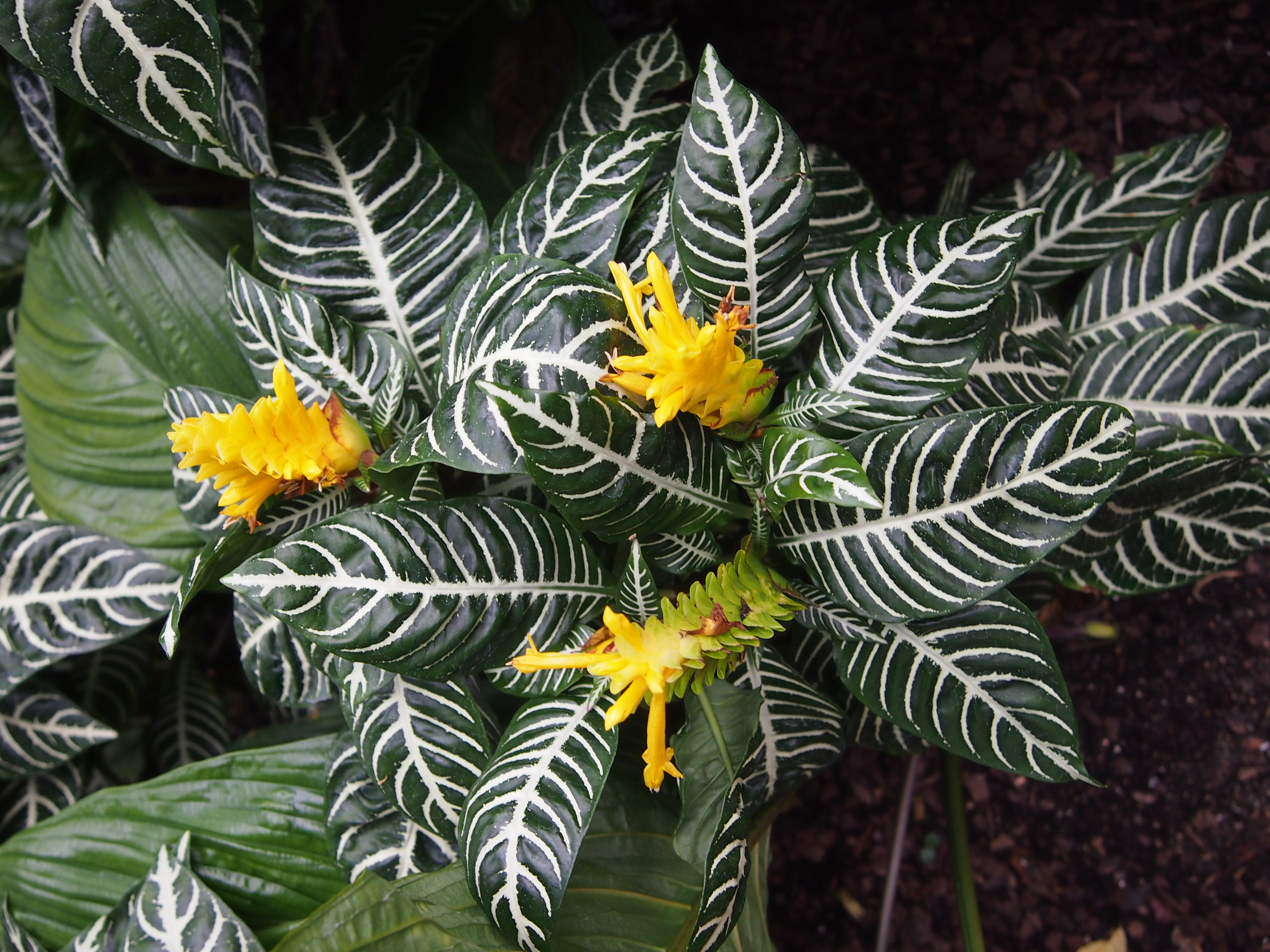
I liked this plant, but it also shows that my note-taking isn’t always very thorough.