The tropics have temporarily set up camp here a few degrees south of 45 degrees North, with a run of wet, humid days. Not quite as hot as the actual tropics might be during the intermissions between rain, but warm enough.
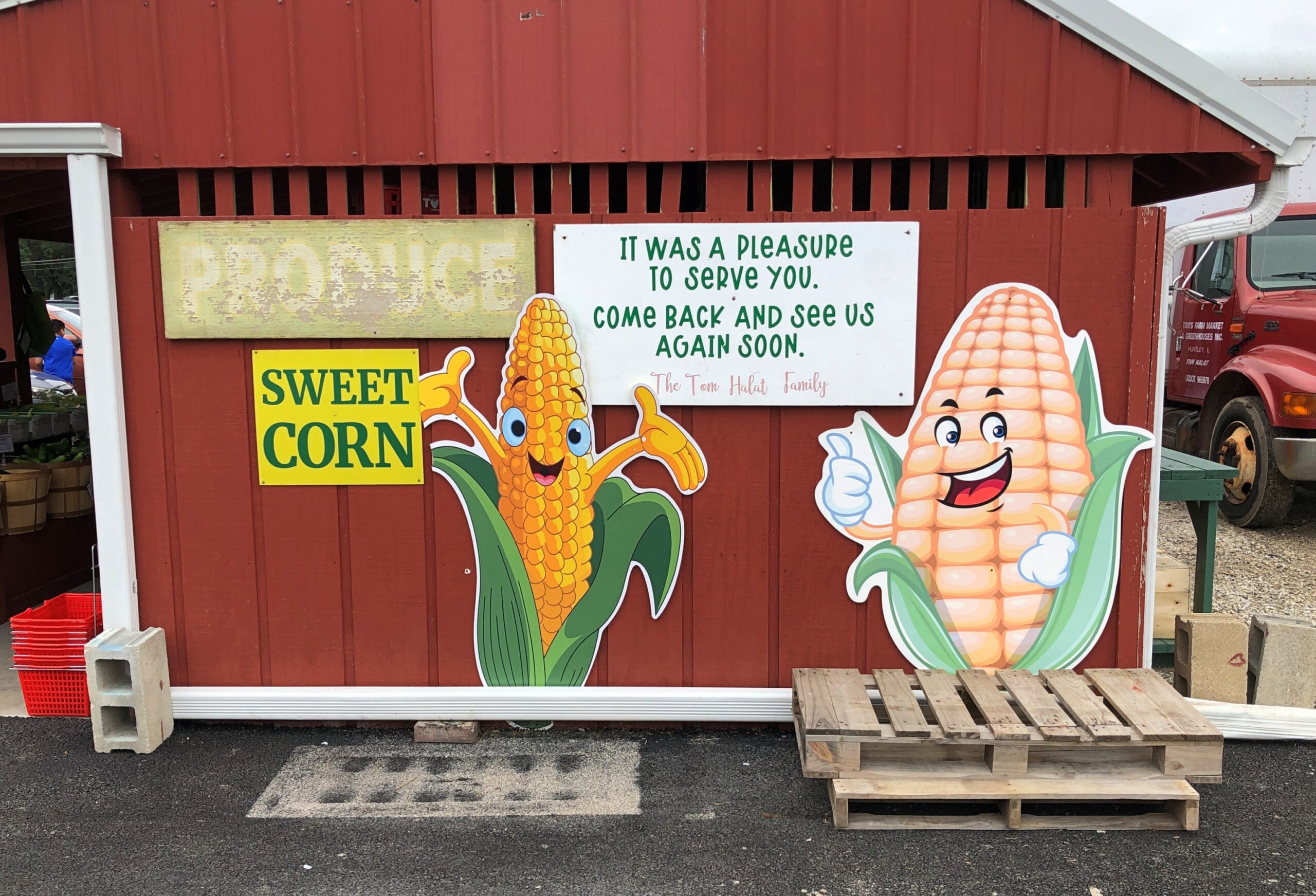
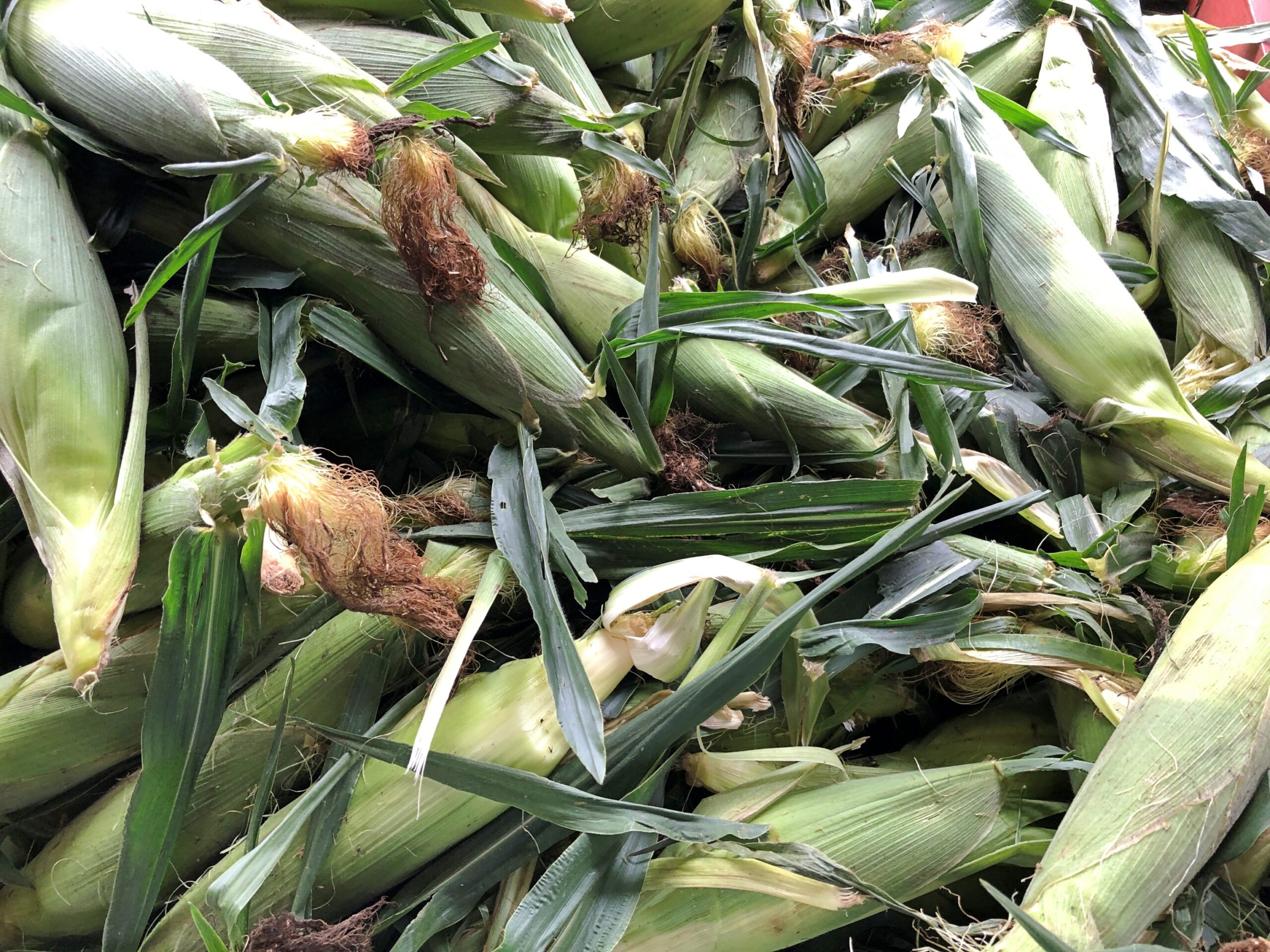
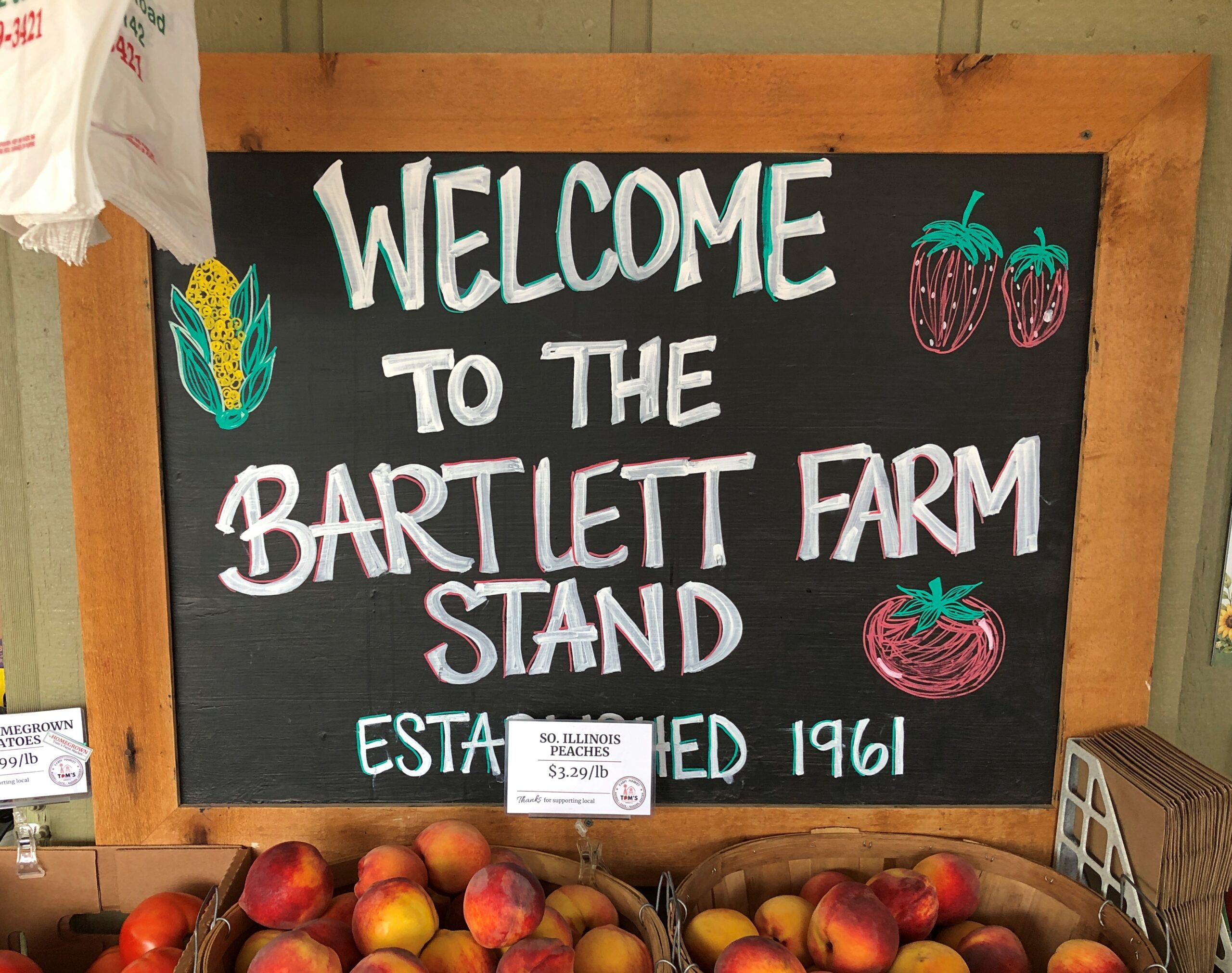
That didn’t keep us at home this weekend, and on Saturday while tooling along US 20 in Bartlett, Illinois (Lake Street, locally), we noticed that Tom’s Farm Stand was open for the season. The sight of the stand inspired in Yuriko a sudden hankering for corn on the cob, so we stopped.
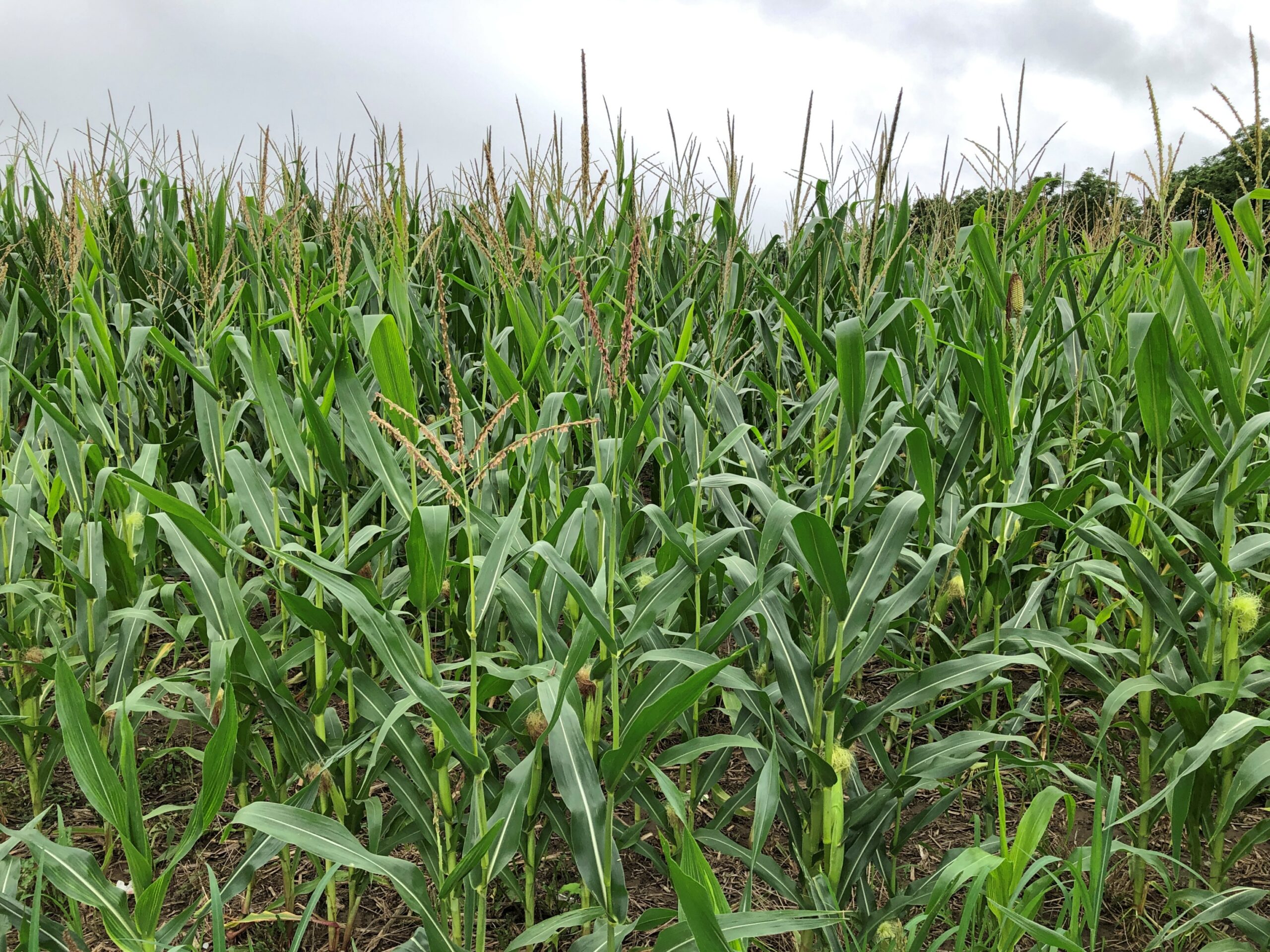
Tom’s is between the road and a wall of corn.
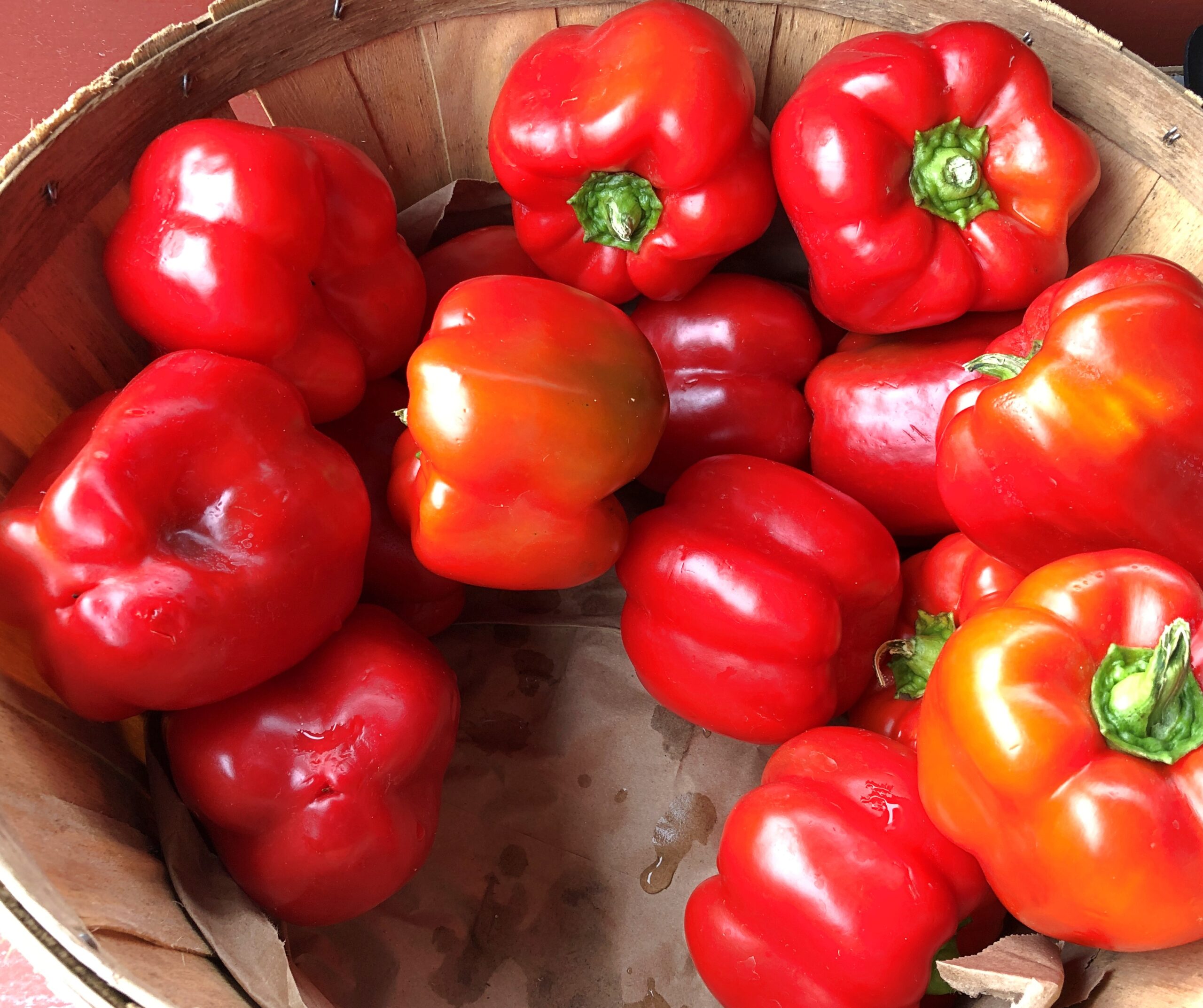
I don’t know whether that cornfield is part of the farm. That would certainly be convenient for Tom or his heirs, but anyway we found corn for sale, along with other opportunities to take still life photography.
Also known as the Bartlett Farm Stand, it seems.
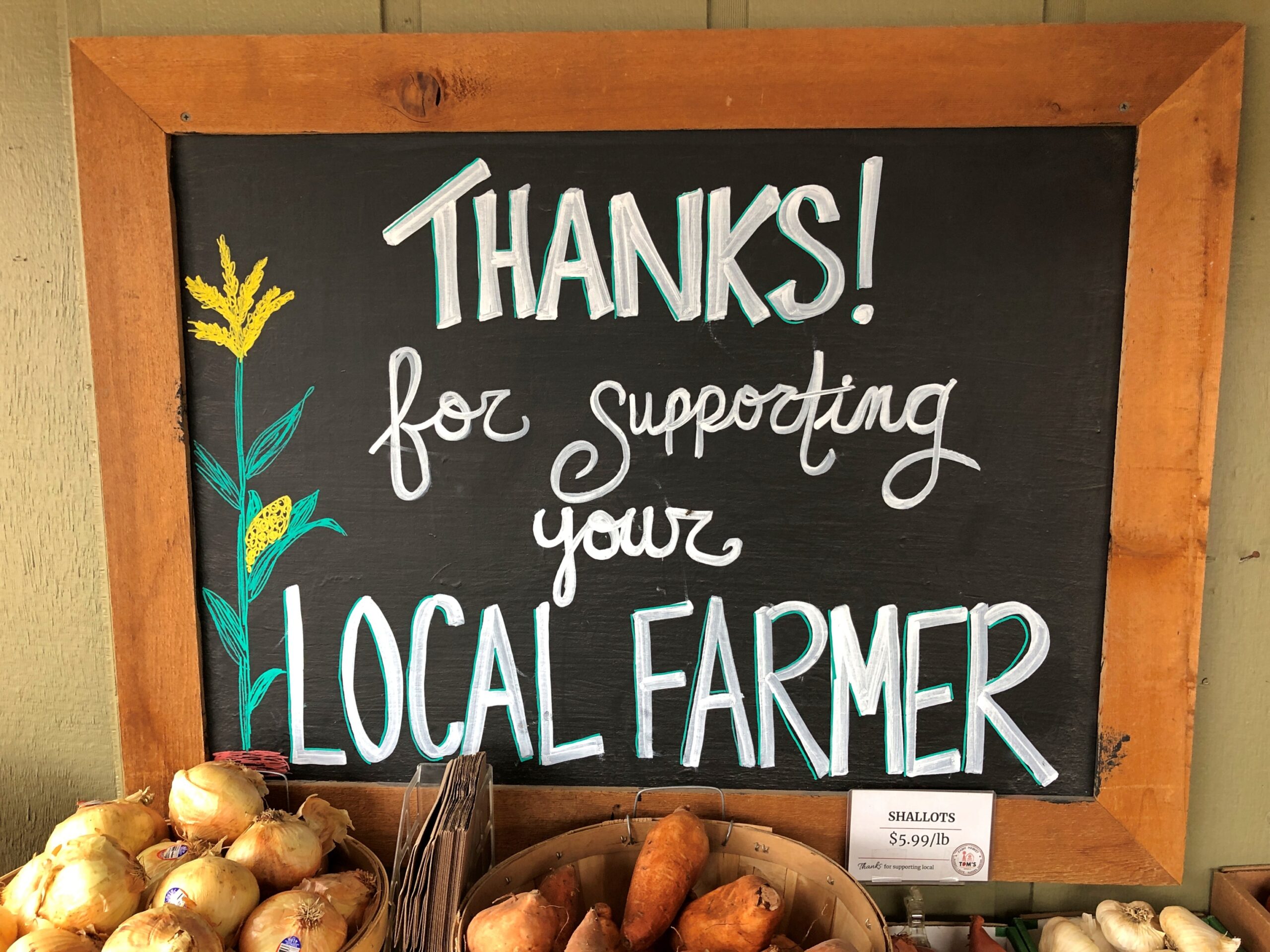
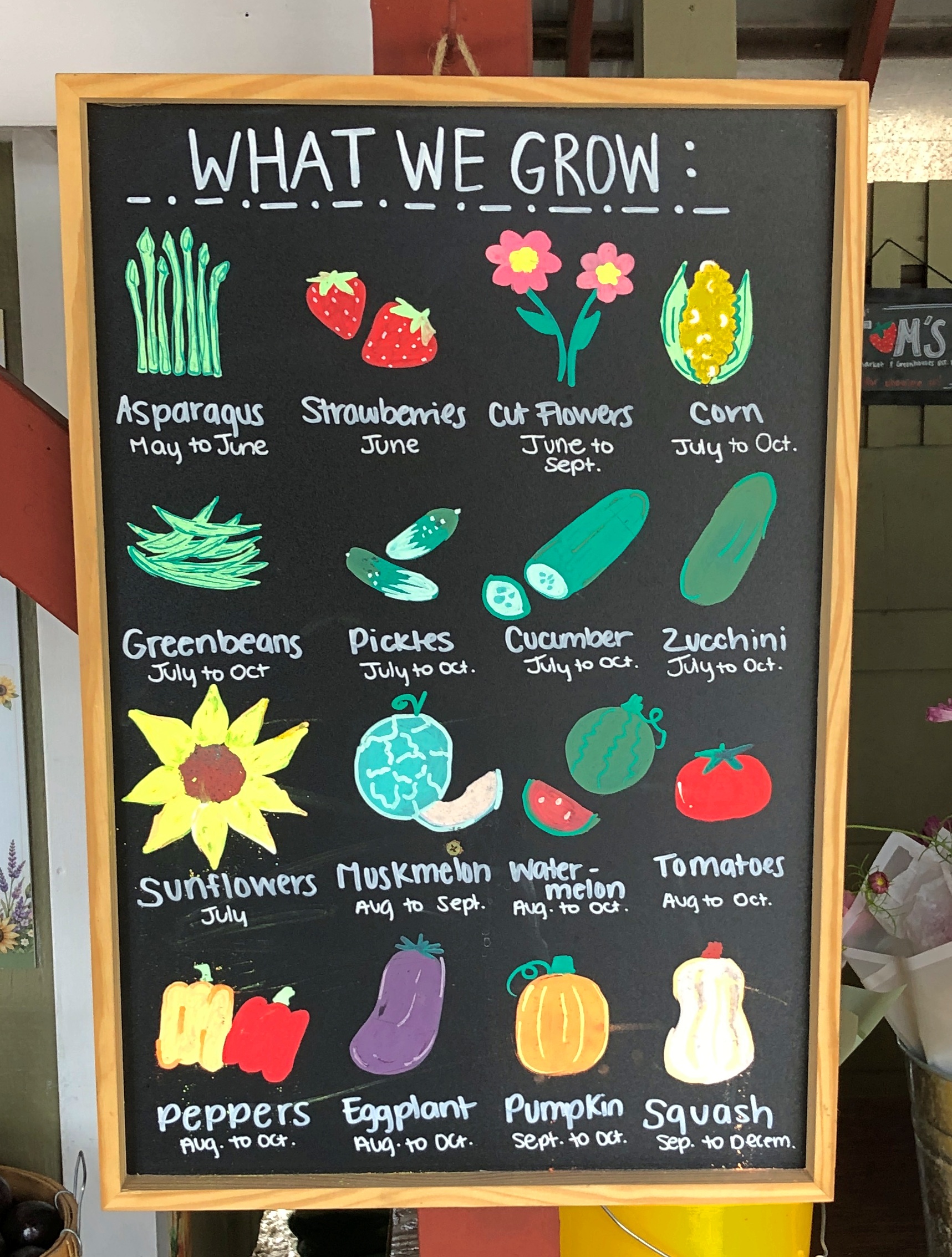
Other chalkboard signs.
My images didn’t capture it, but the place was fairly busy. I don’t know whether you can call the stand a Bartlett institution or not, but it does have staying power: founded in 1961, just like me, and maybe going to outlast me.
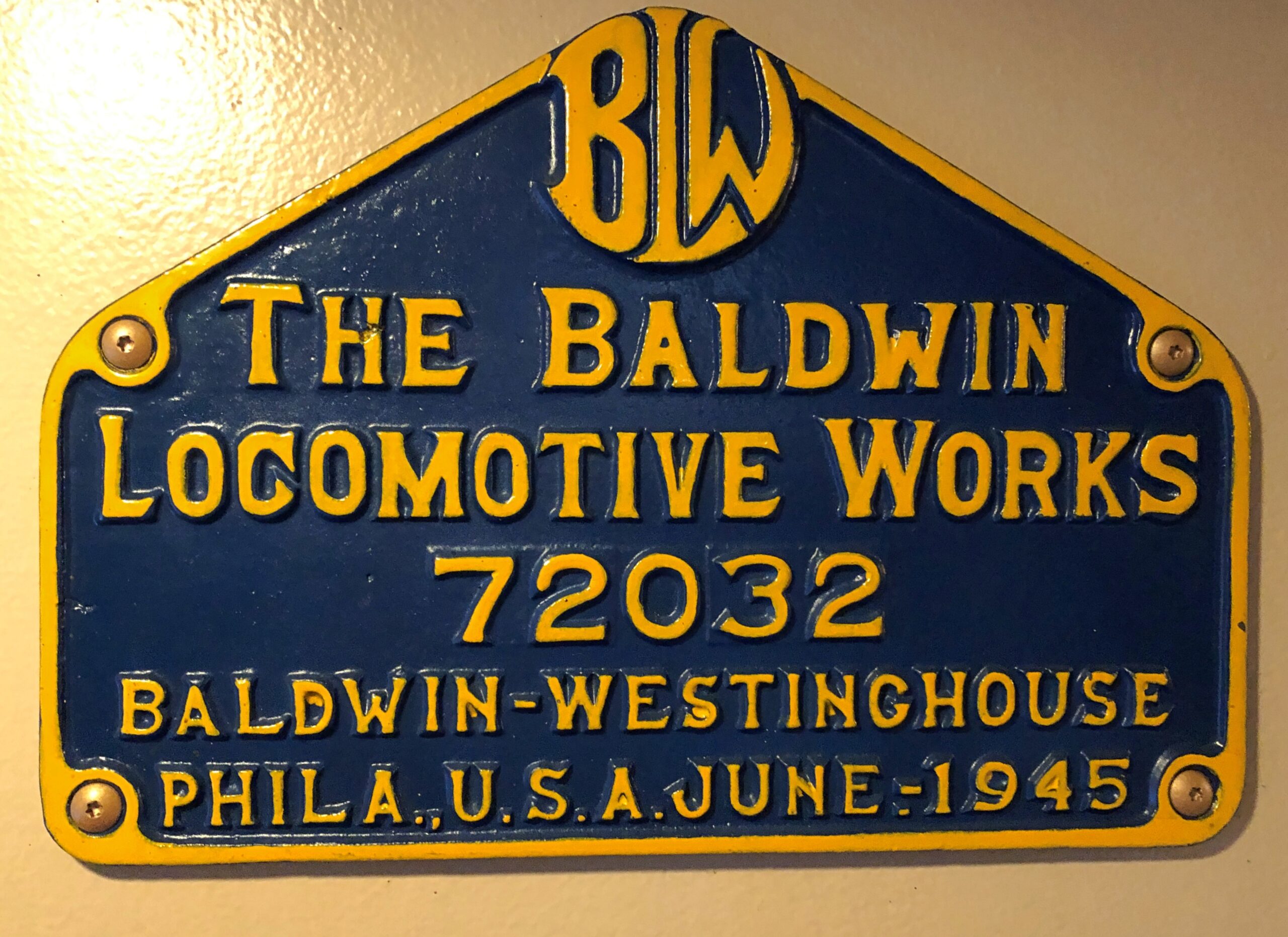
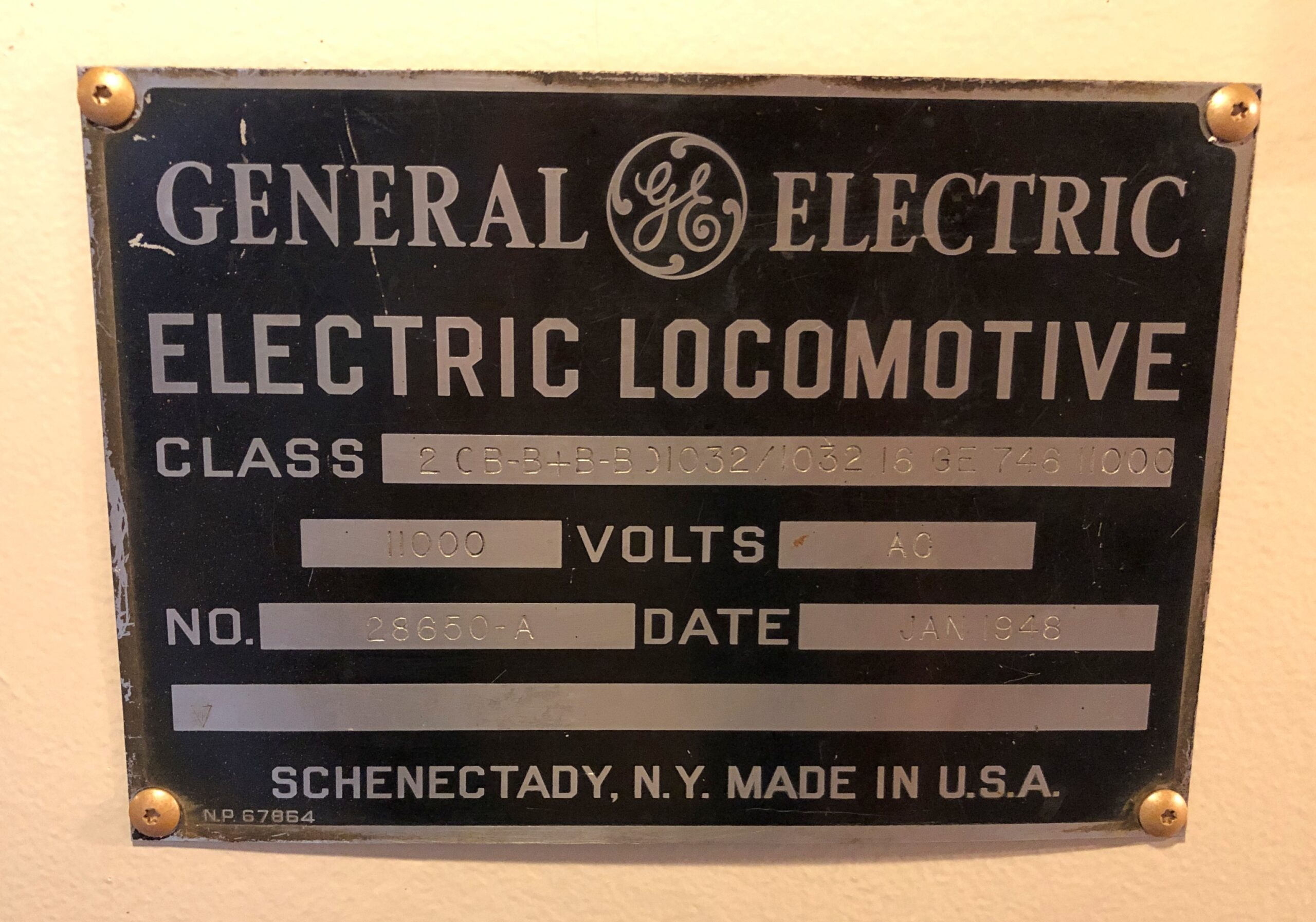
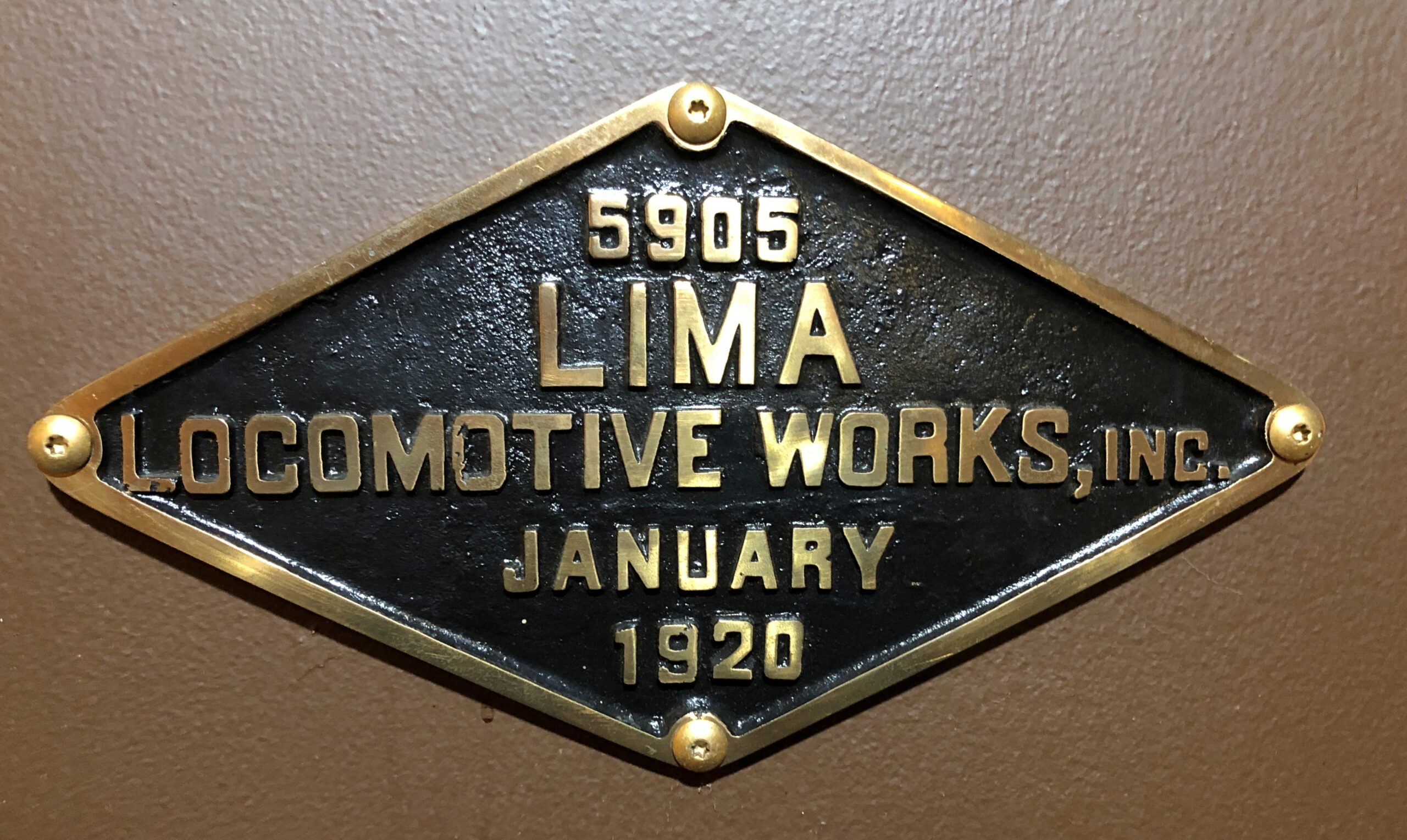
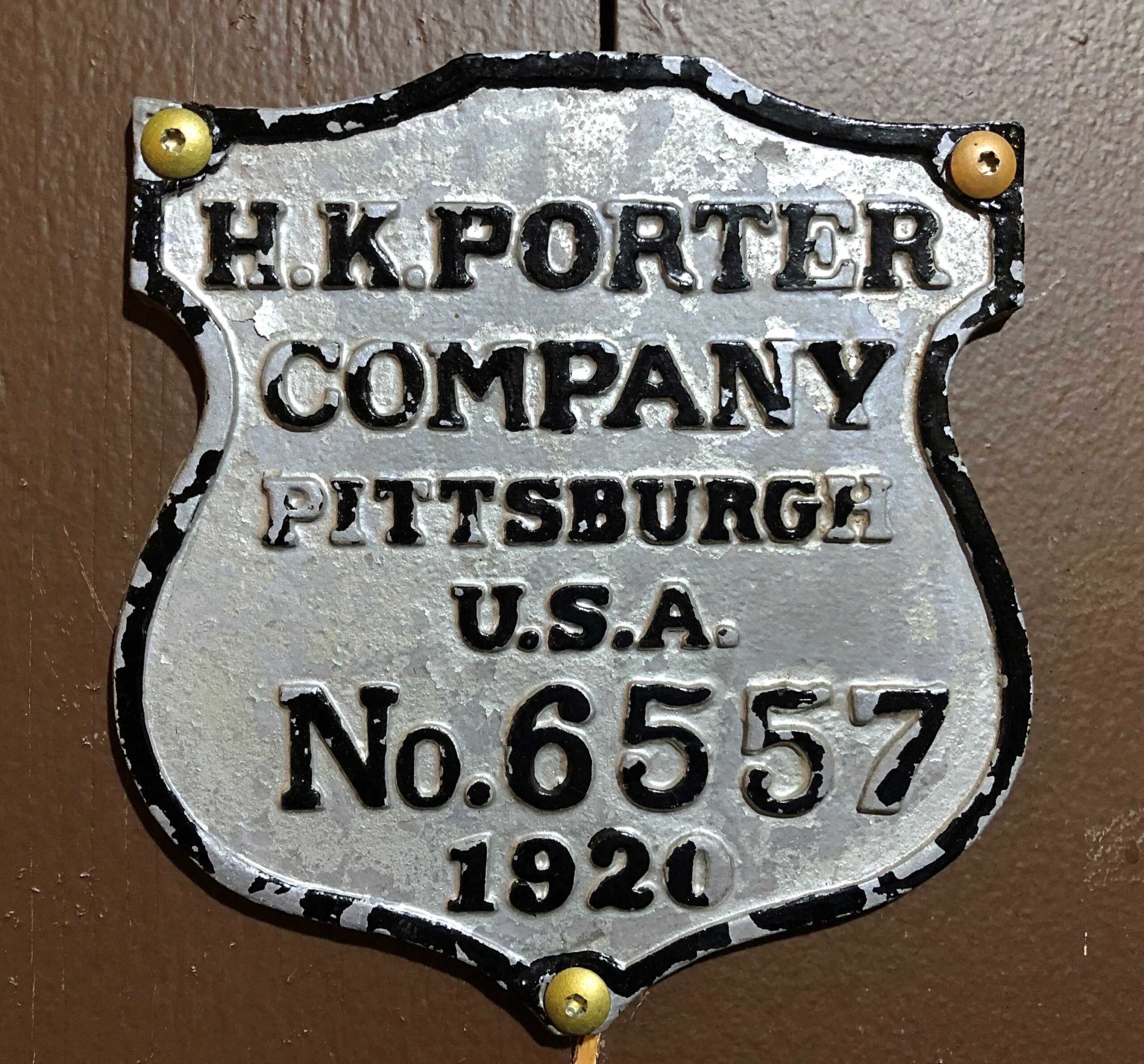
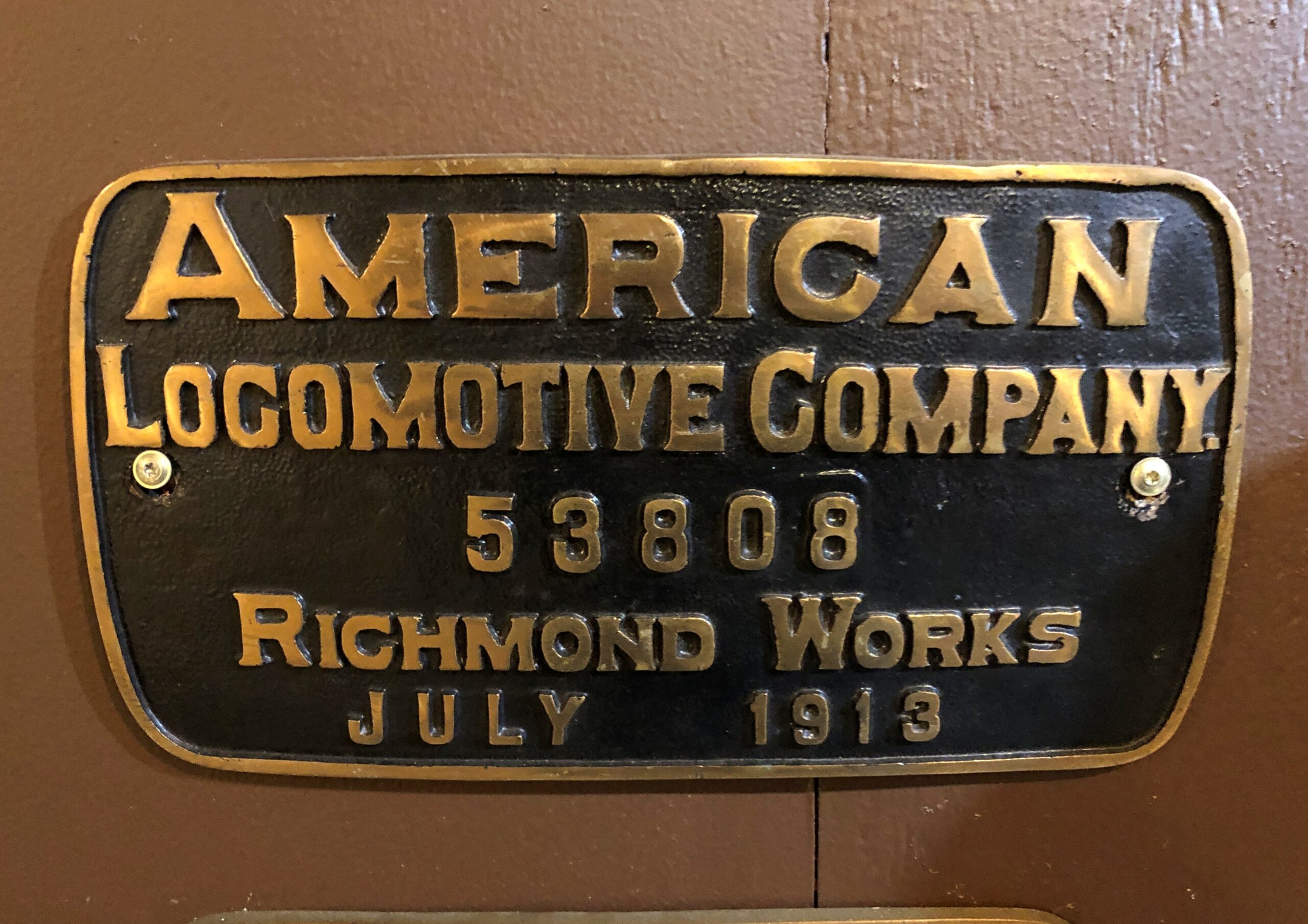
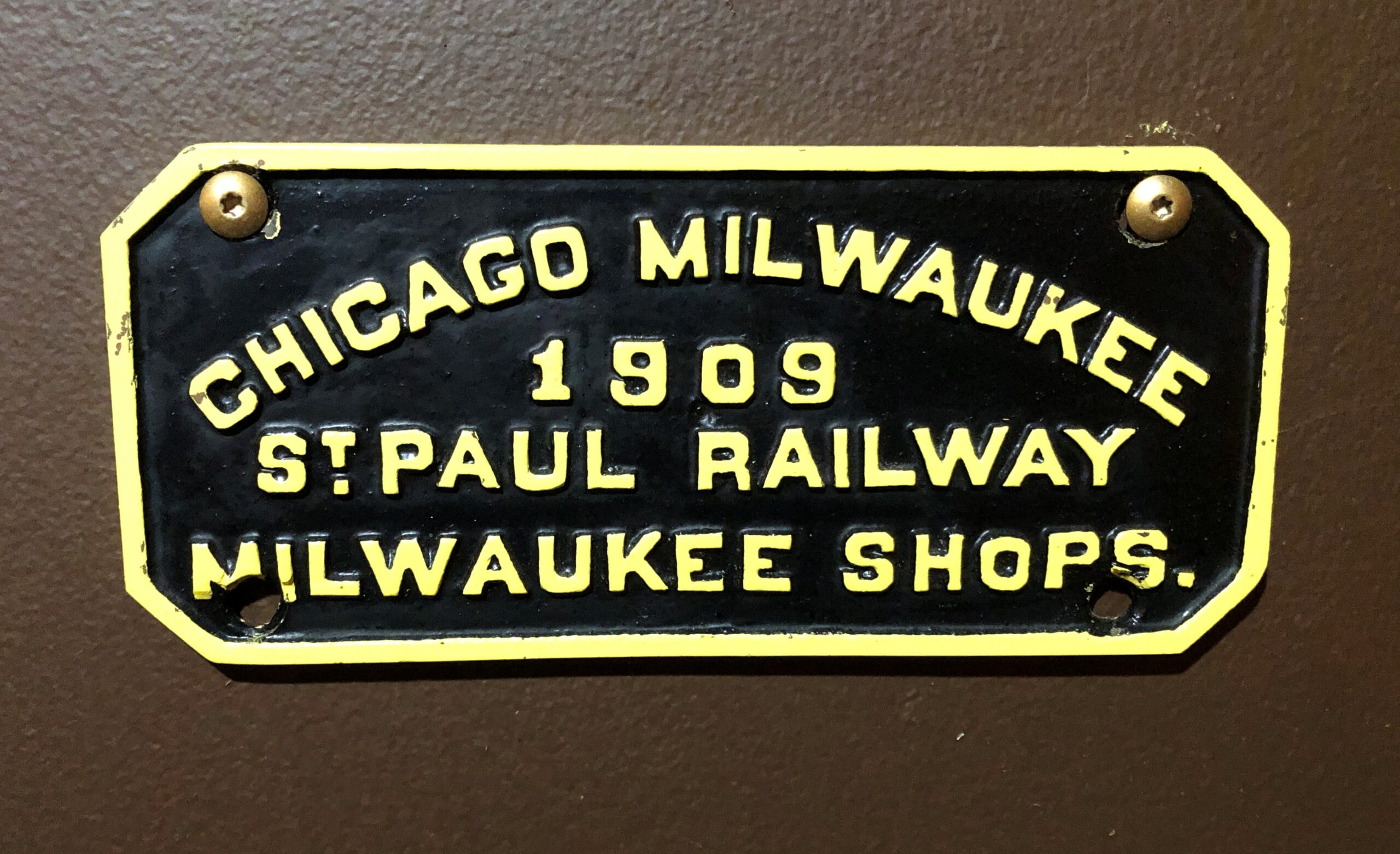
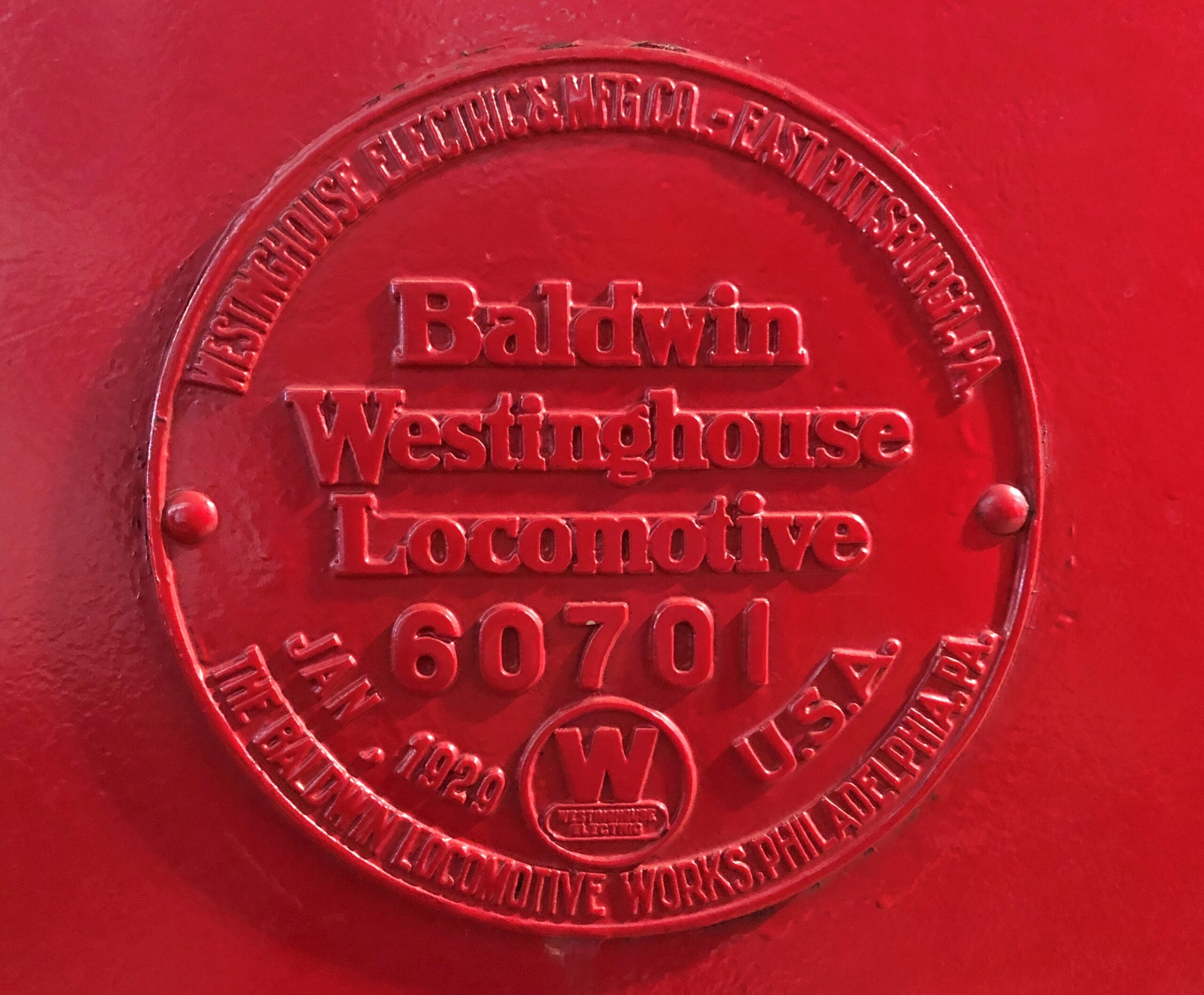
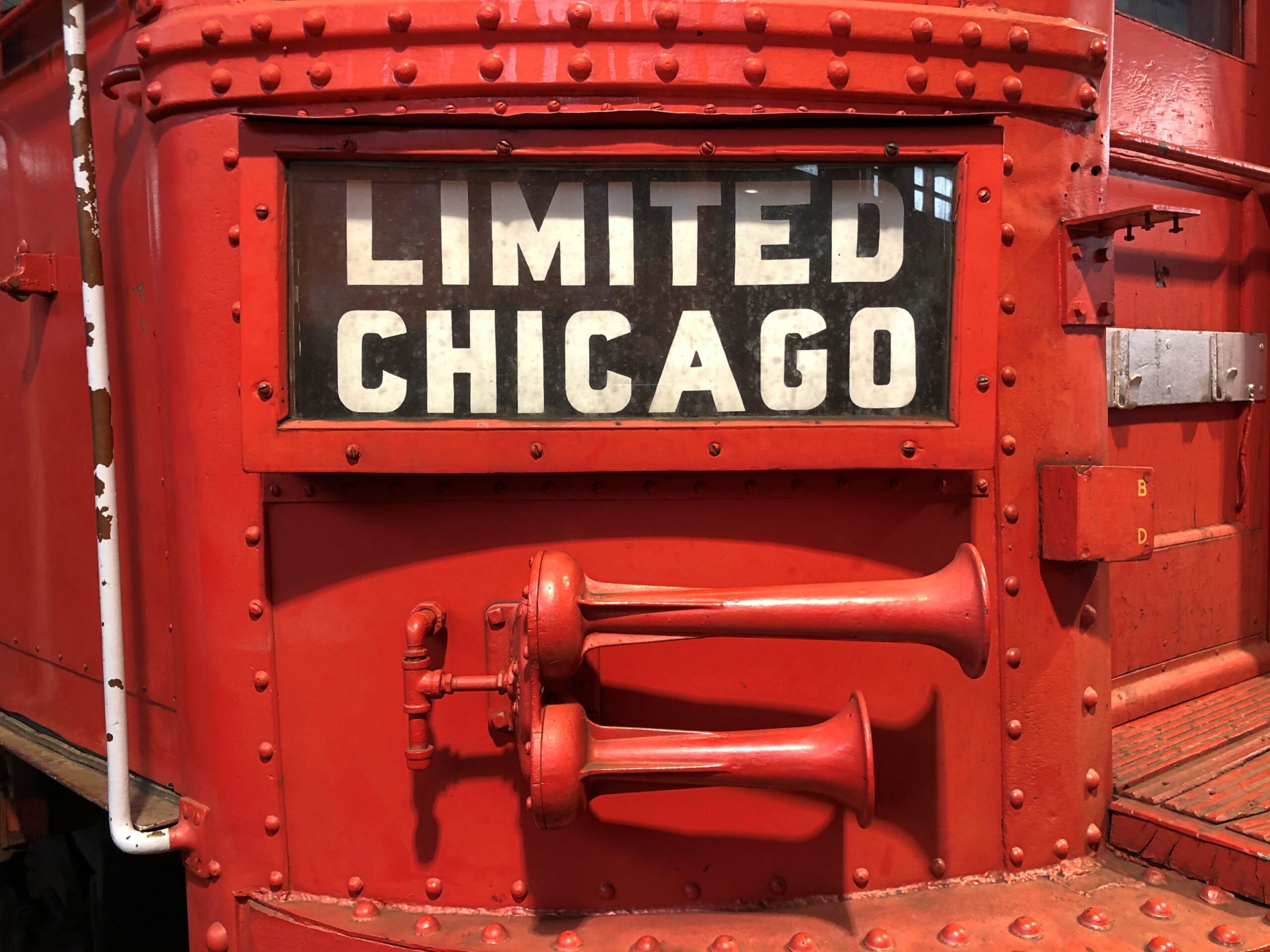
The Illinois RR Museum, as mentioned, has plenty of impressive rolling stock, some of which actually rolls. But like any good museum, the showpieces aren’t the only pieces. The small items have their own stories to tell, or at least to suggest. At one point I went into a repurposed car — I forget what kind of car it was — and found myself in the Builder Plate Hall.
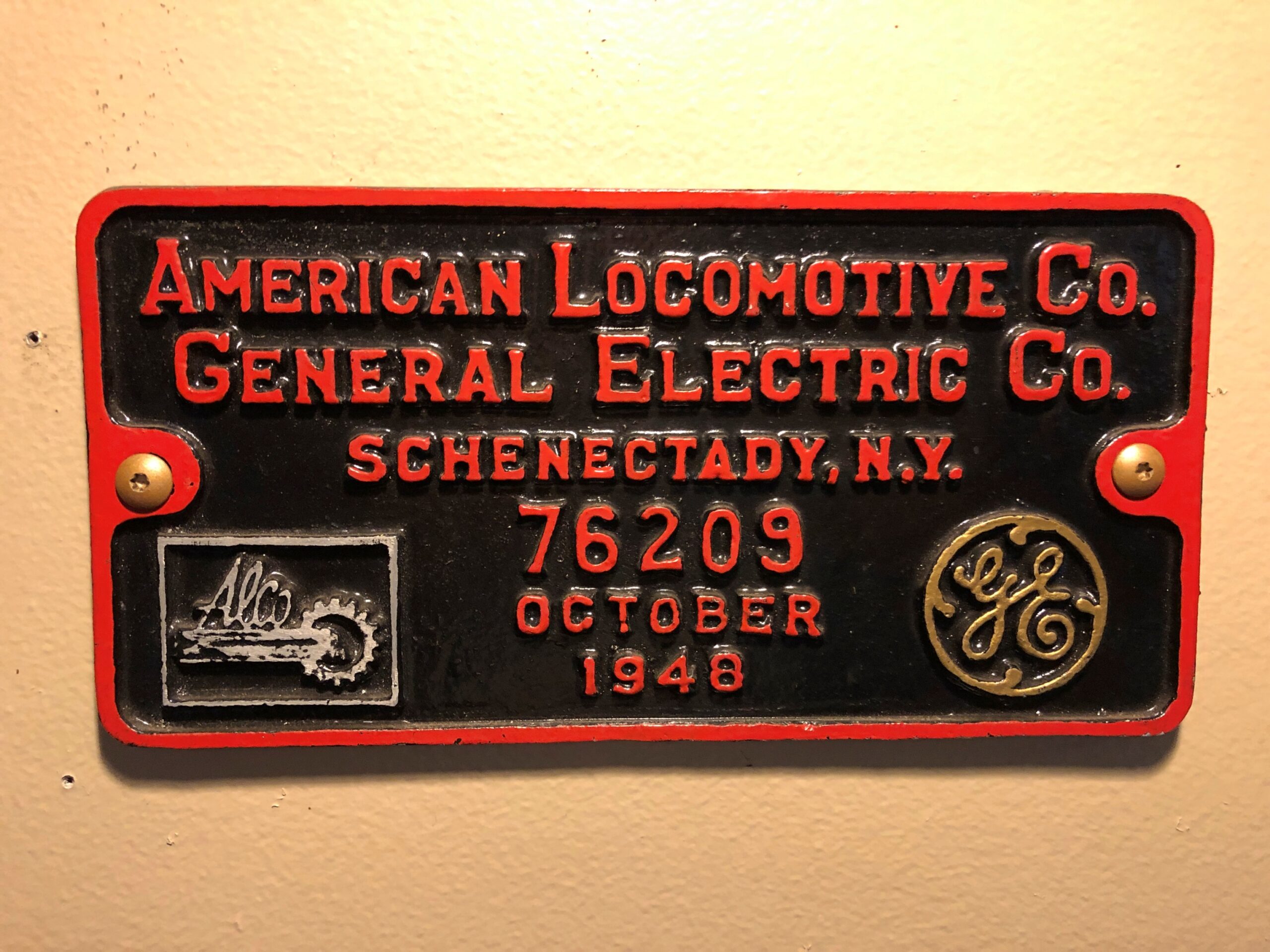
Builder Plate? “In this hall are the builder plates from the builders of steam, electric, diesel, interurban, streetcars and passenger cars,” said a sign in the car. “A builders plate is like the VIN plate on a car. It gives the car a serial number that is unique to that car. A builder plate can service [sic] the same purpose. It is used to identify a locomotive.”
Evocative, these plates.
Evoking the rumble of finished locomotives on tracks, but also the din and heat of the factory floors where working men put together these machine-age power marvels to specs that began on drafting tables by gas light and then early electric bulbs.
I don’t want to romanticize such hard jobs too much, but it’s hard not to.
Are all locomotives made in China in our time? No. According to this Wiki list, there are many more defunct U.S. locomotive makers than not, but there are still active ones, including major repair facilities. Good to know.
And damn it, every time I look into a subject like that, I uncover a new destination. In this case, the Altoona Works.
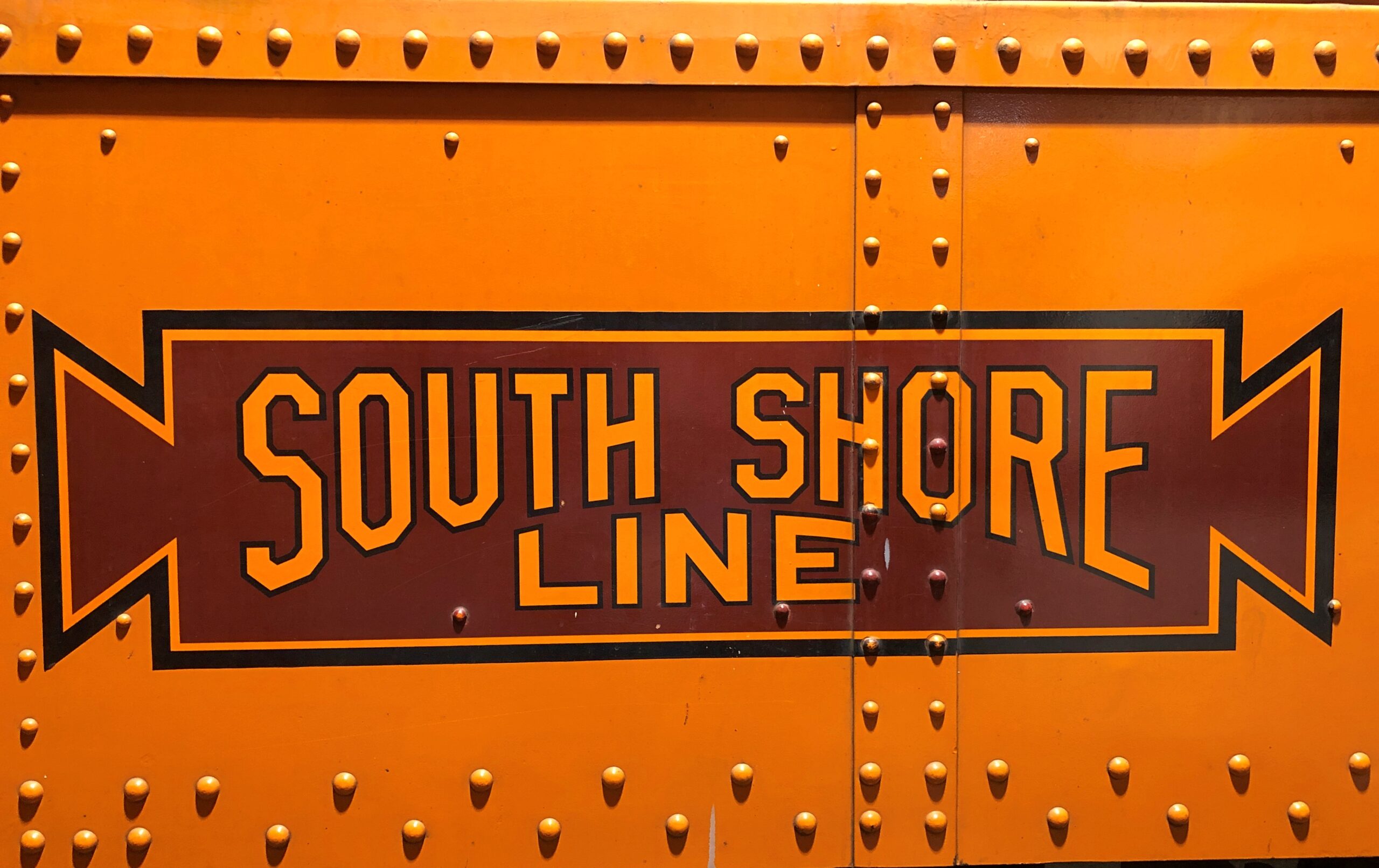
At the Illinois RR Museum, the cars themselves offer detail. Sometimes builder plates.
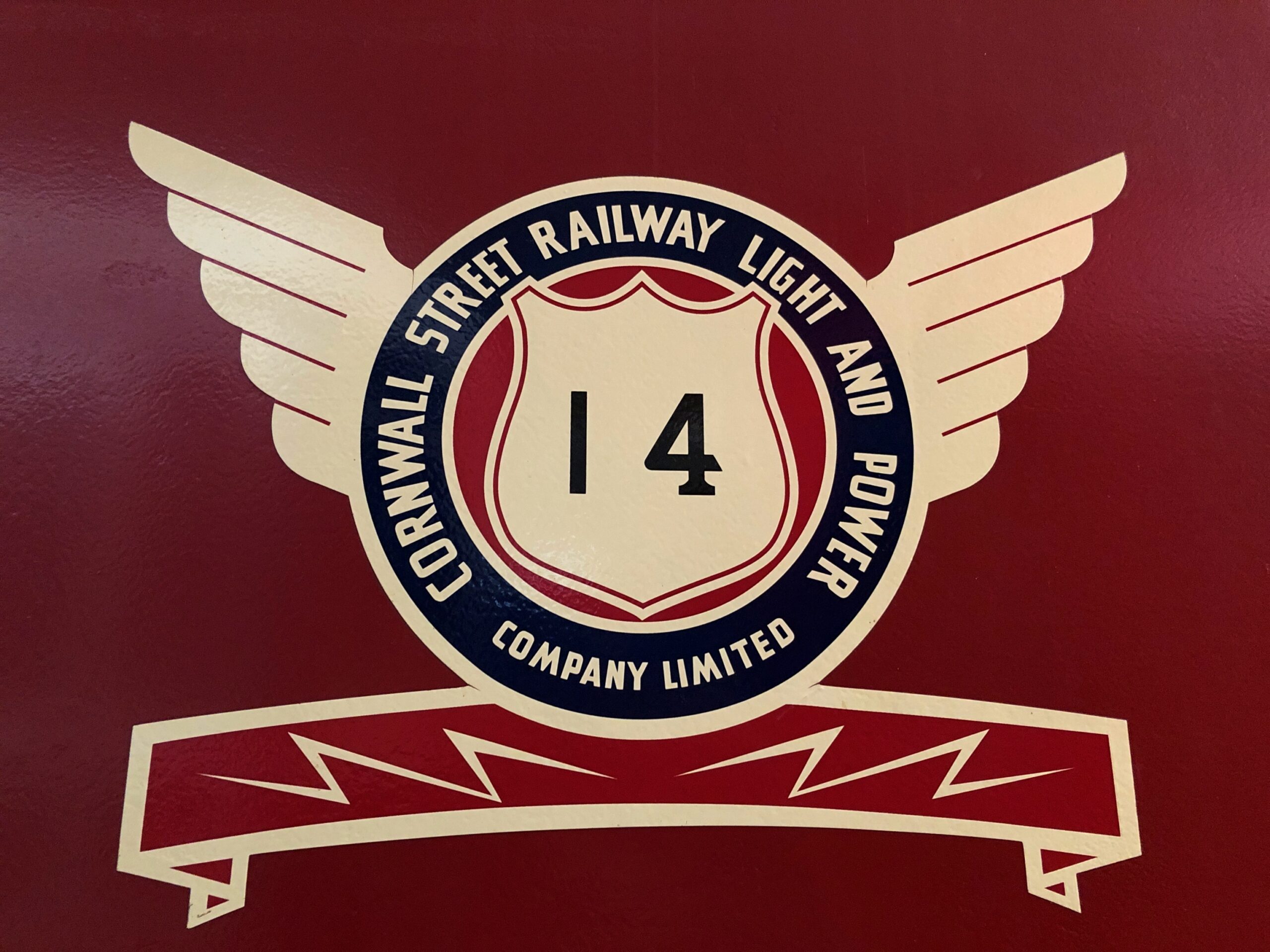
Or branding.
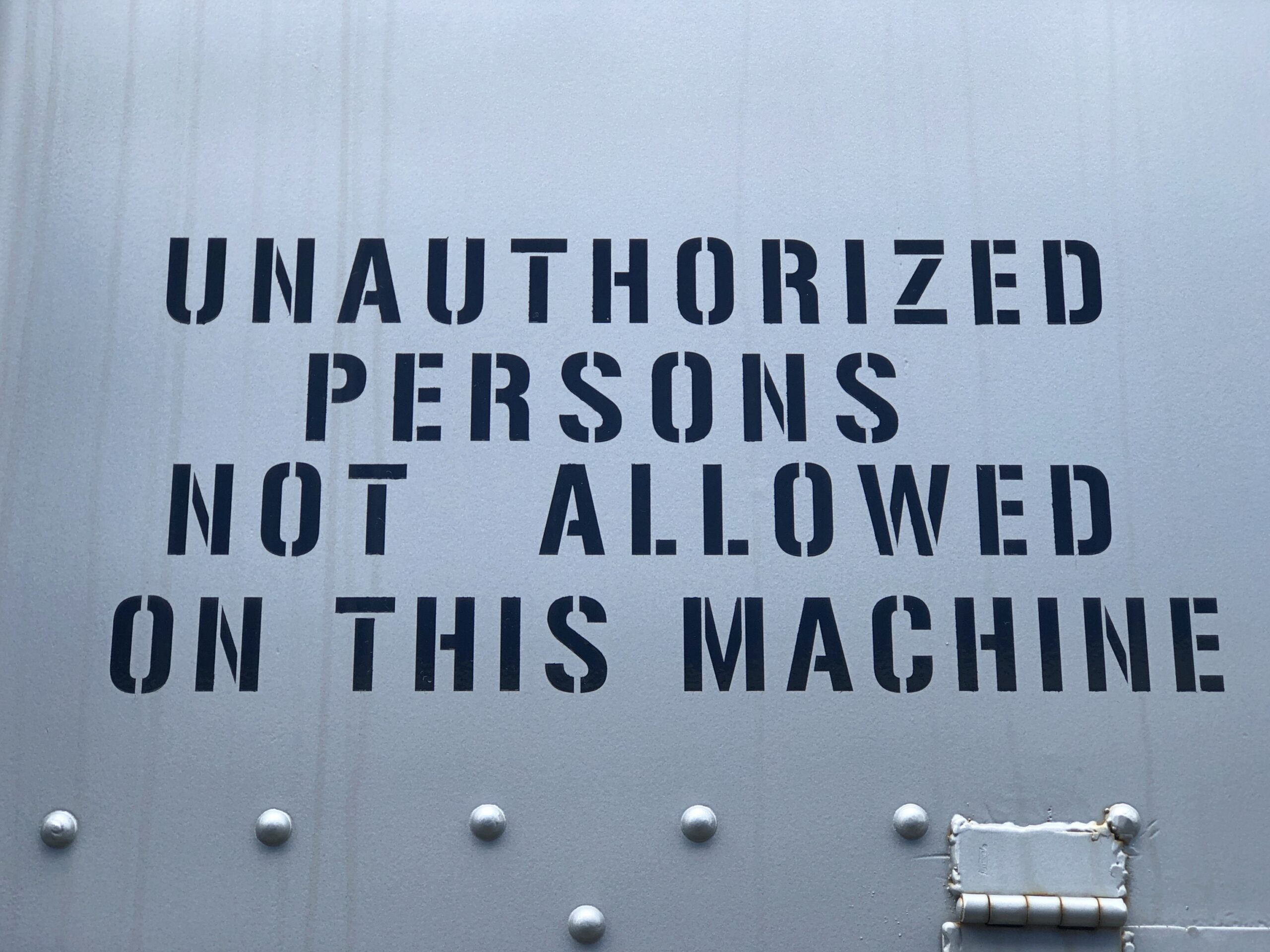
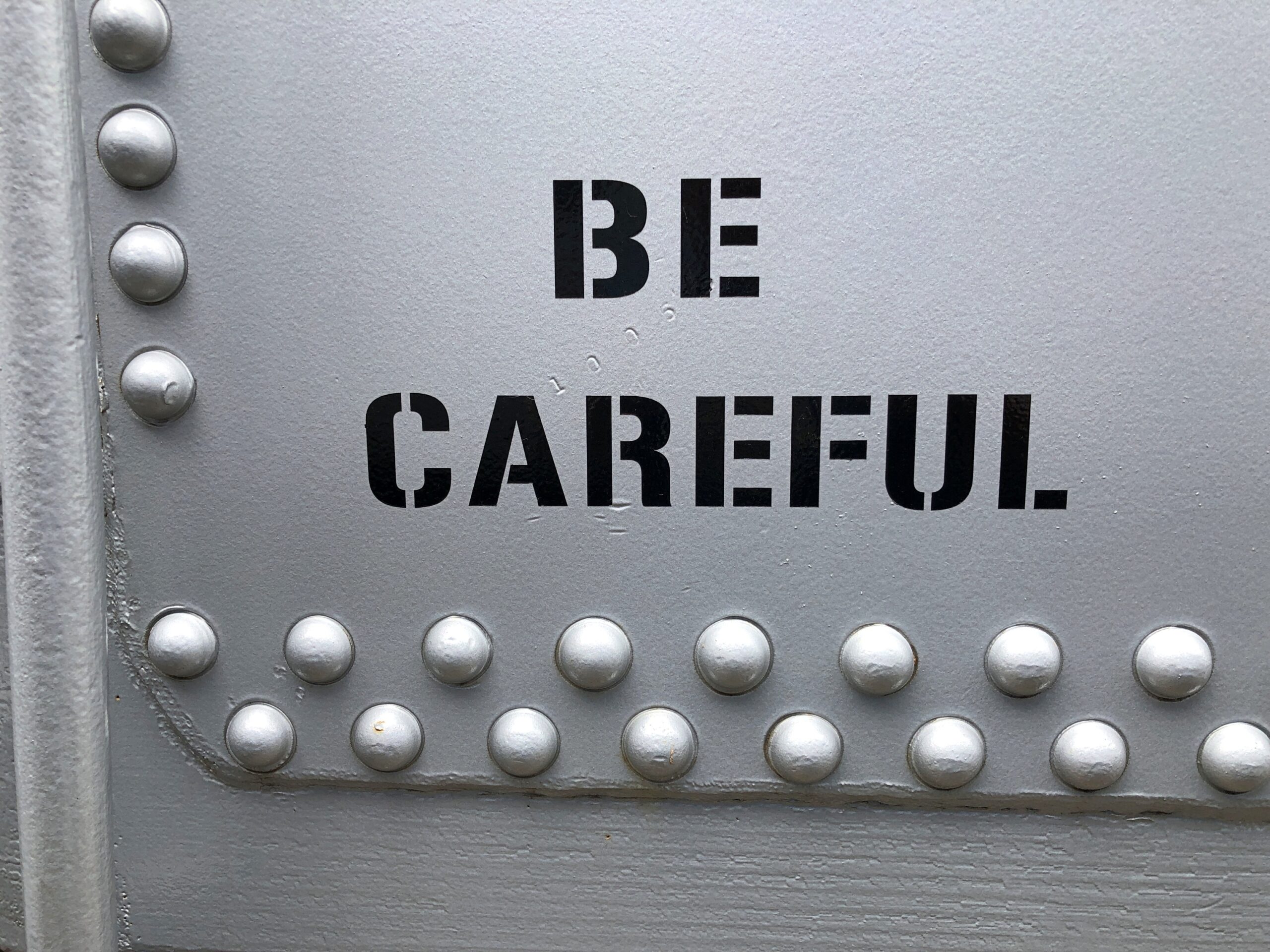
Or warnings.
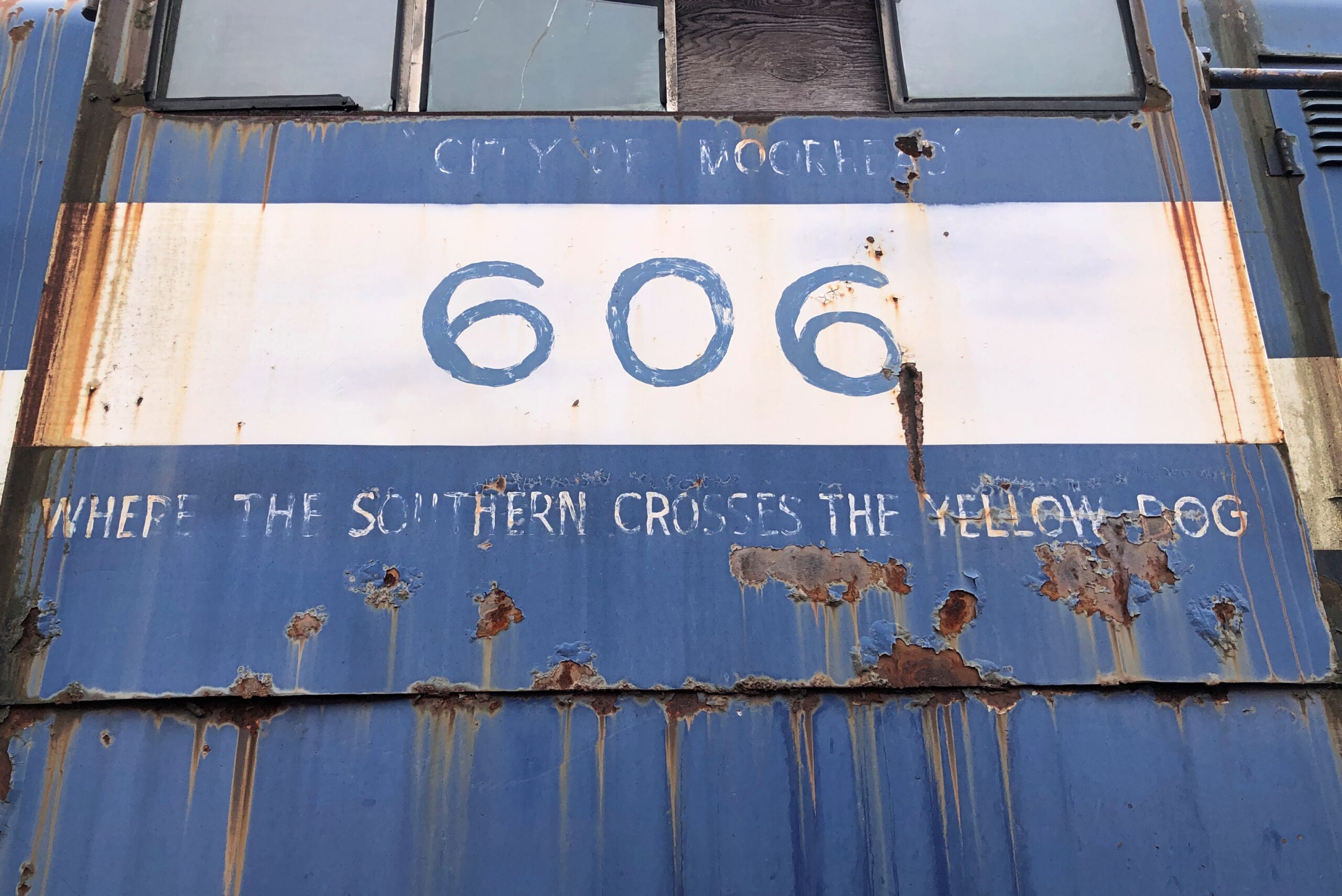
A curious thing to put on your train, but there’s a story.
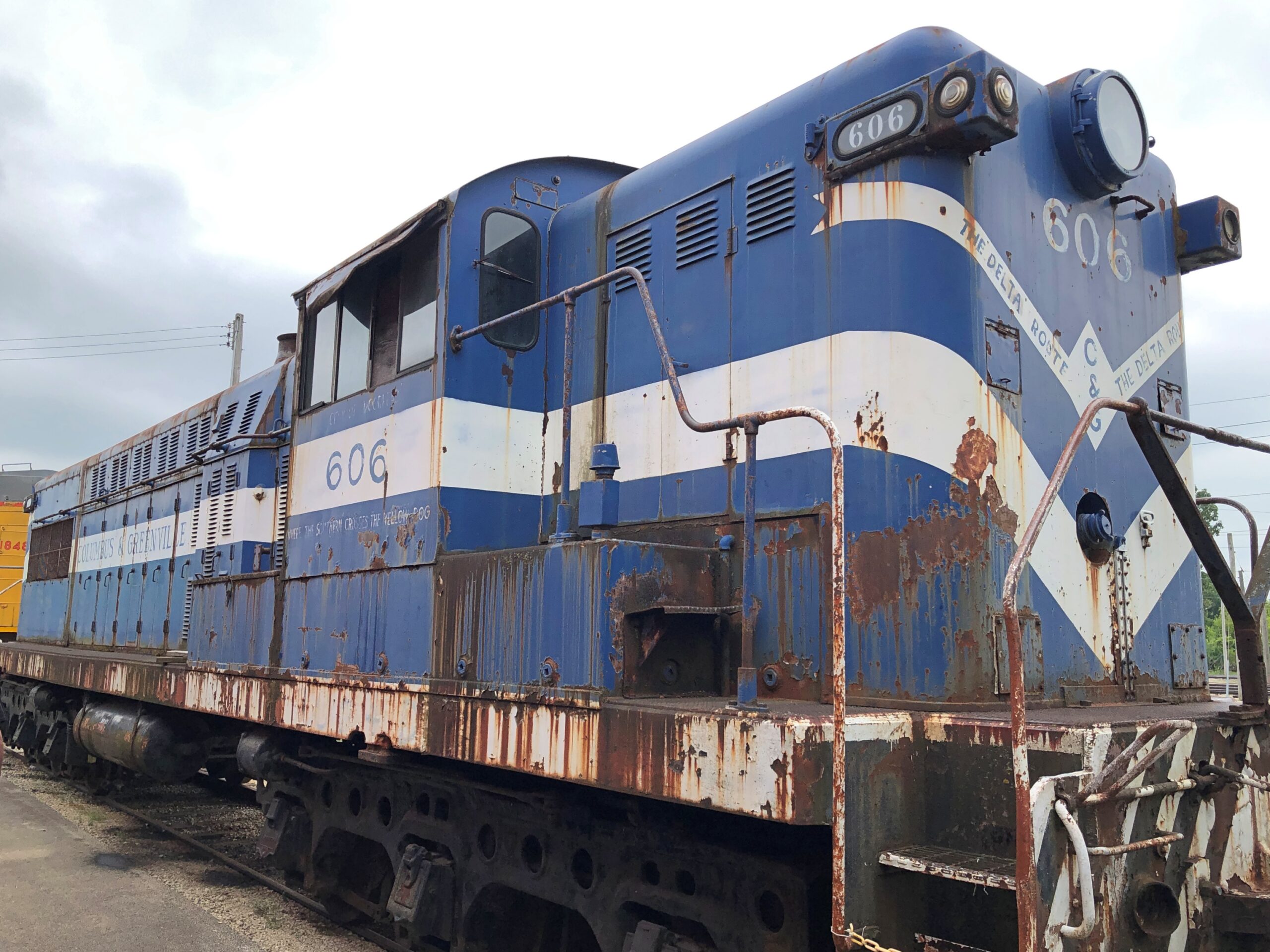
The train, or at least the locomotive, looks to have a name: The City of Moorhead. Where the Southern Crosses the Yellow Dog.
“W. C. Handy, ‘The Father of the Blues,’ immortalized the crossing of the Southern Railway and the Yazoo Delta (‘Yellow Dog’) Railroad at Moorhead in his 1914 song ‘Yellow Dog Rag,’ better known under its later title, ‘Yellow Dog Blues,’ ” notes Mississippi Blues Trail. “Handy wrote that he first heard the line ‘Goin’ where the Southern cross the Dog’ sung by a guitarist at the Tutwiler train station (c. 1903). Moorhead became a hub not only of rail transportation but of blues activity in local juke joints.”
A more recent interpretation of the song is, of course, on YouTube.
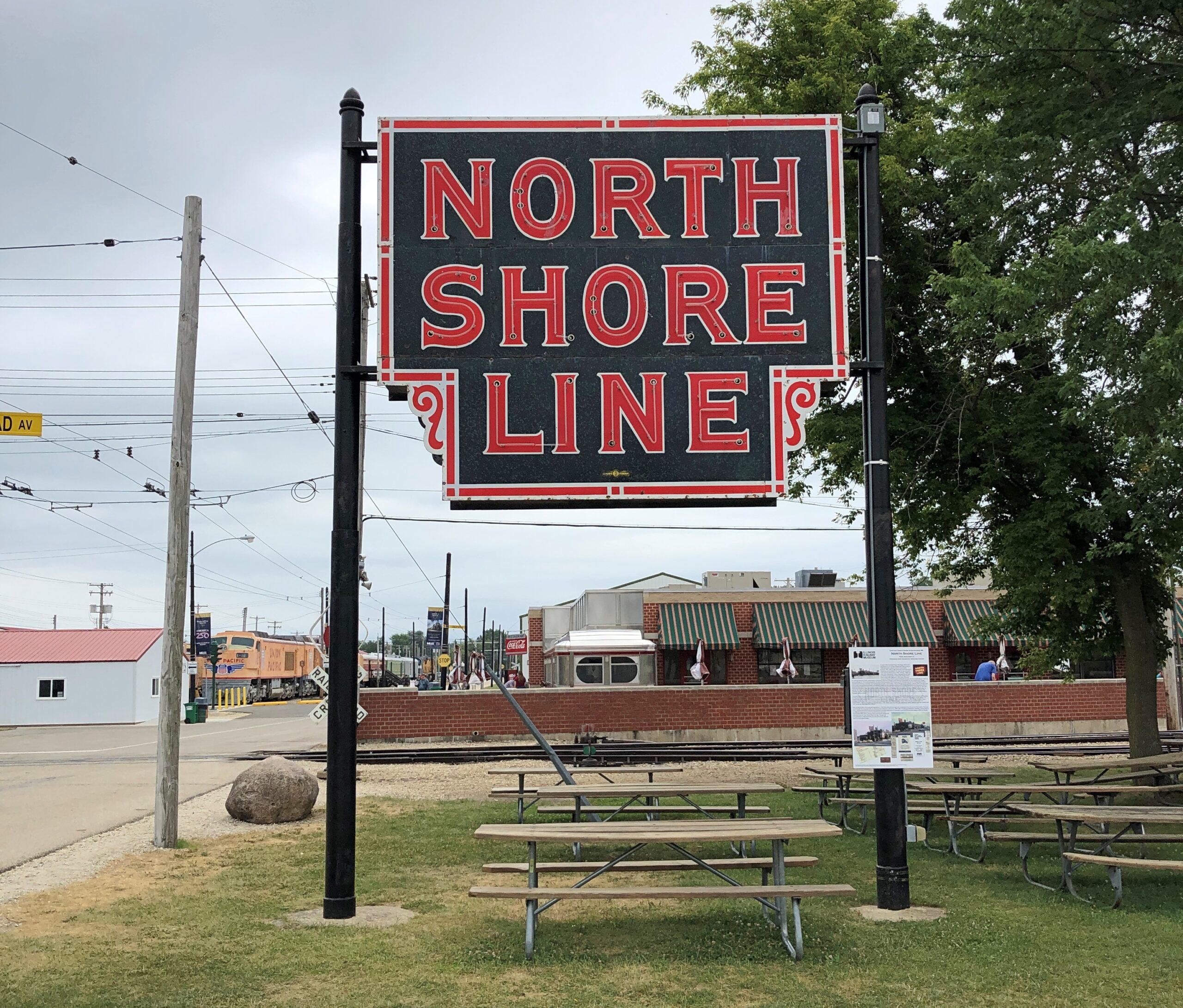
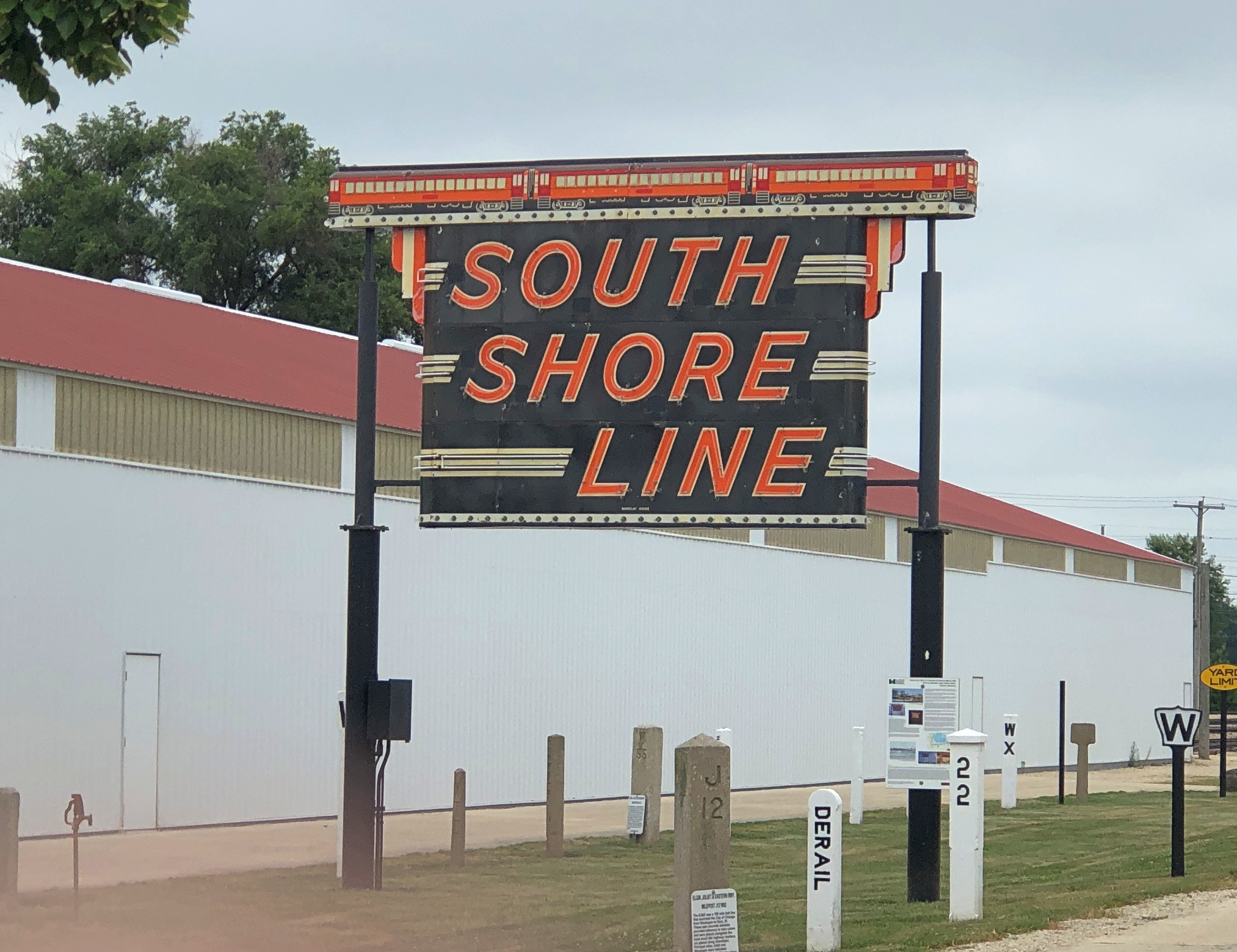
Larger signs. Where there’s a north, there’s a south.
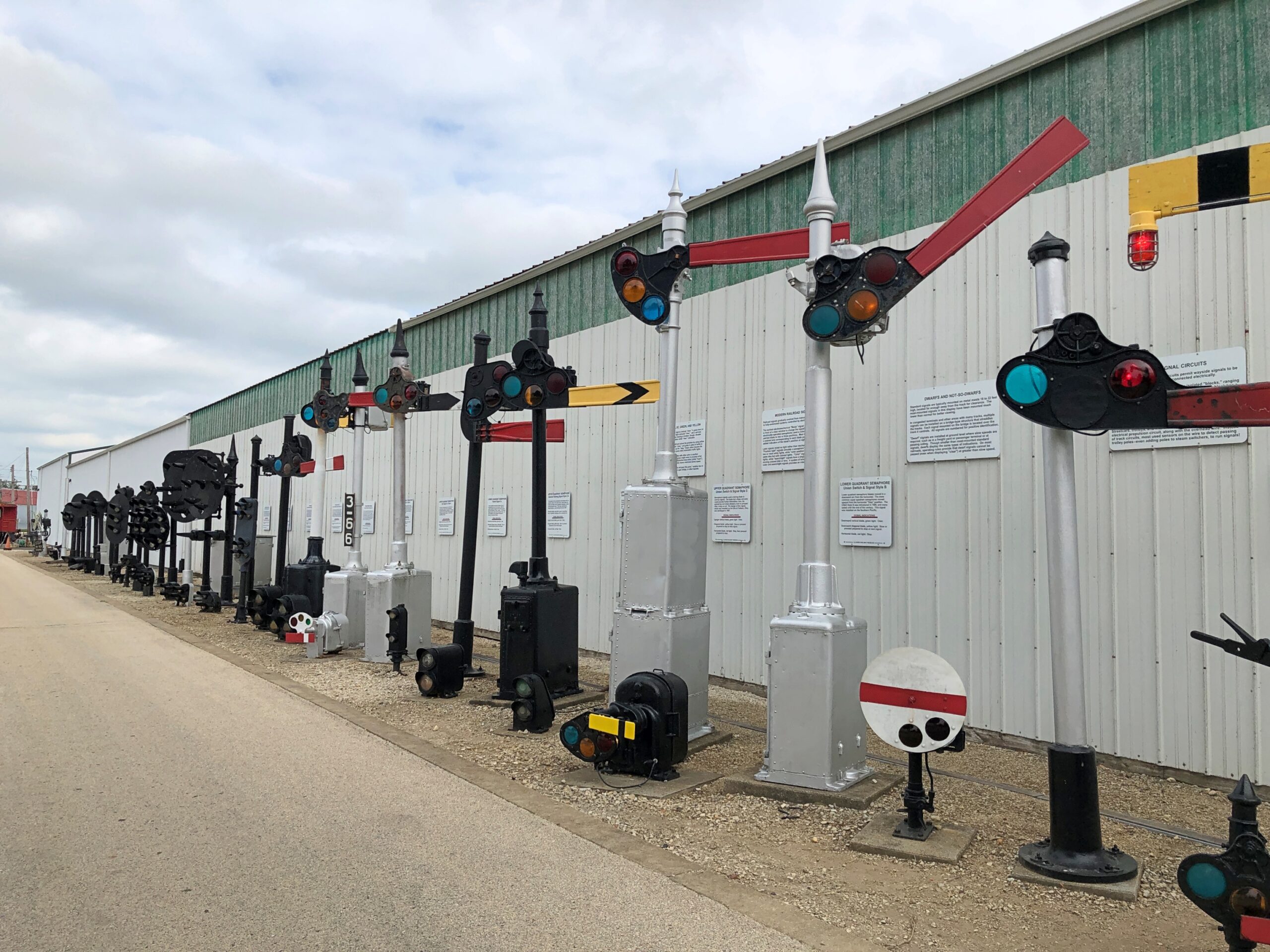
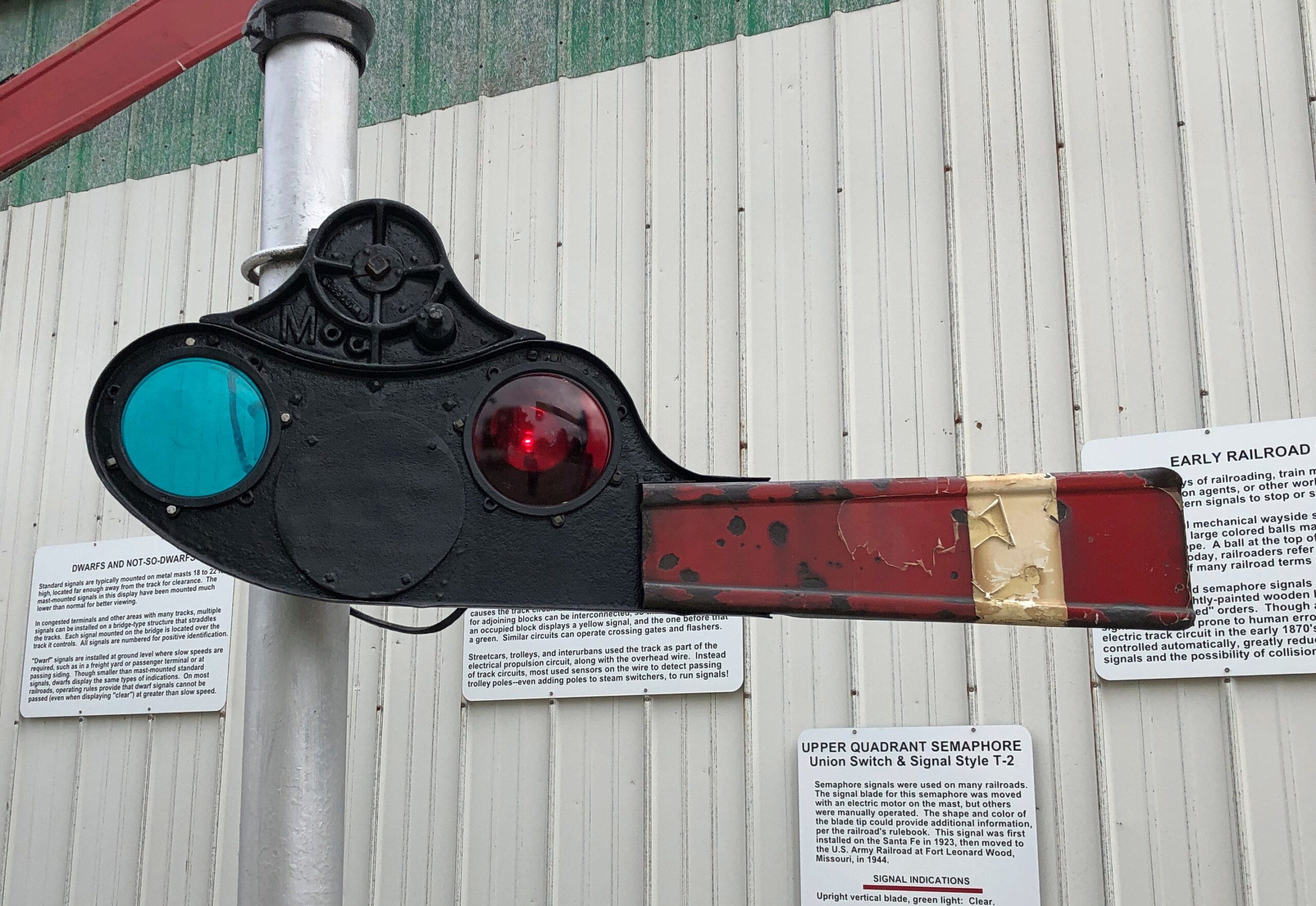
Signals.
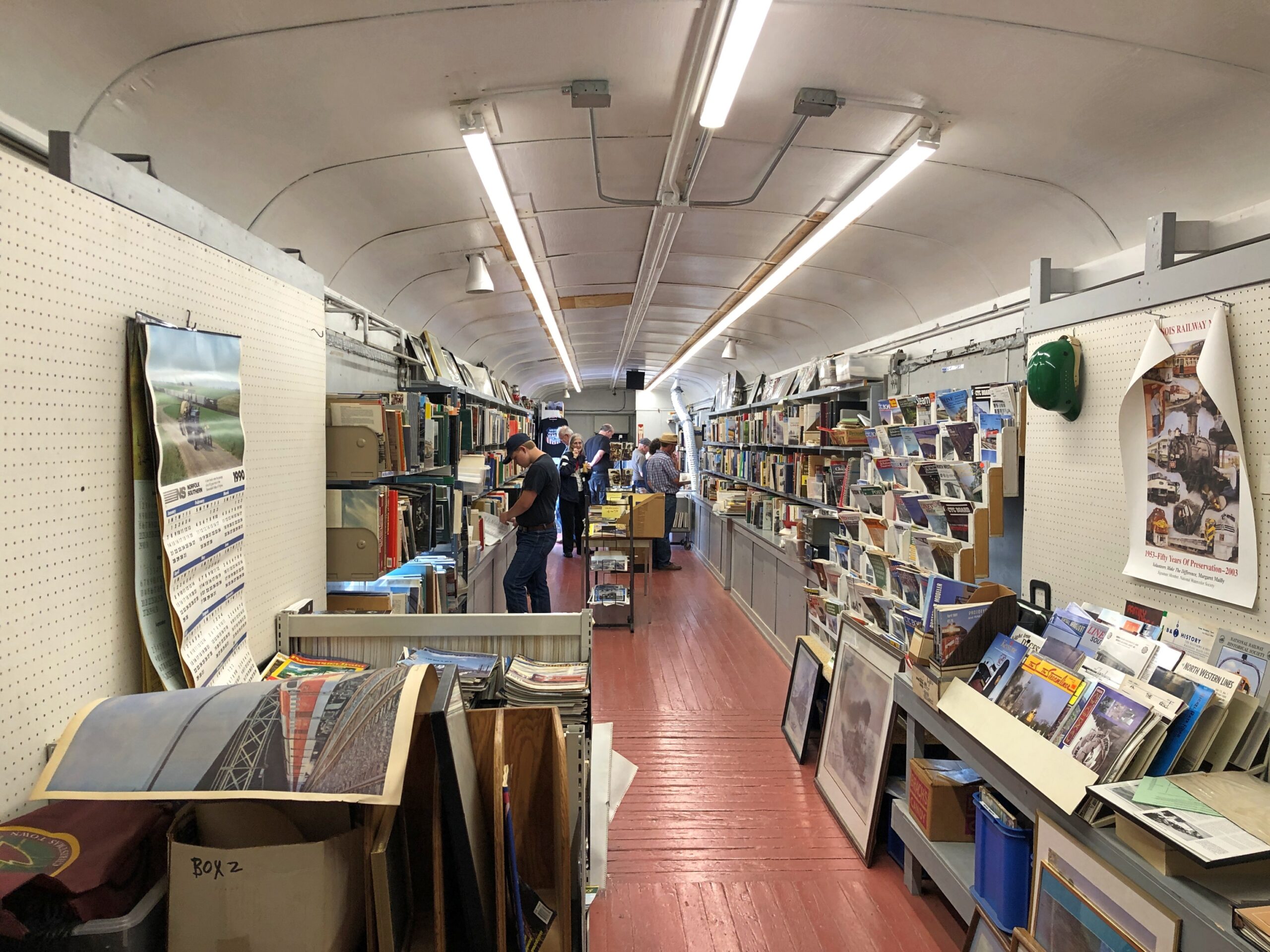
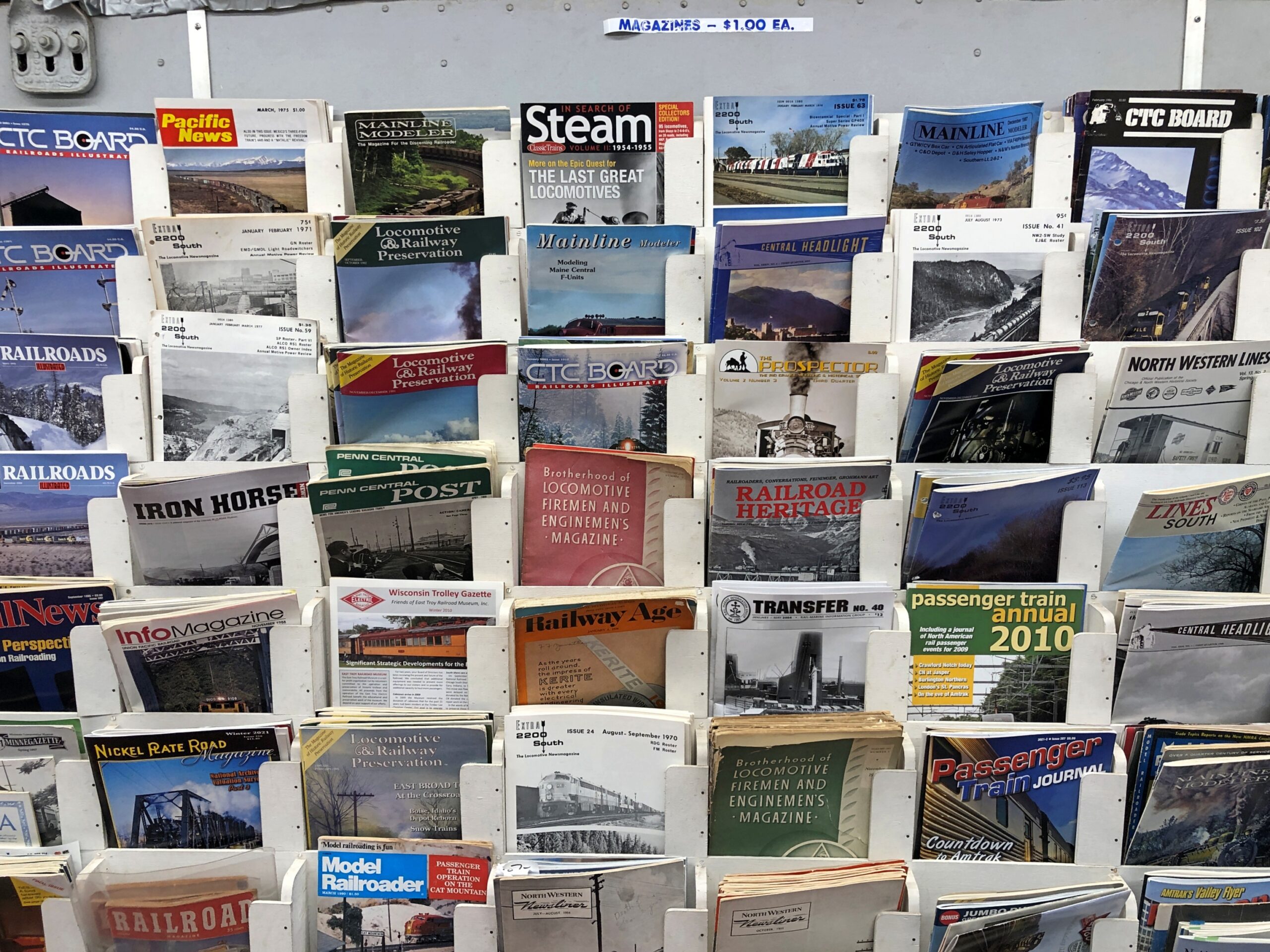
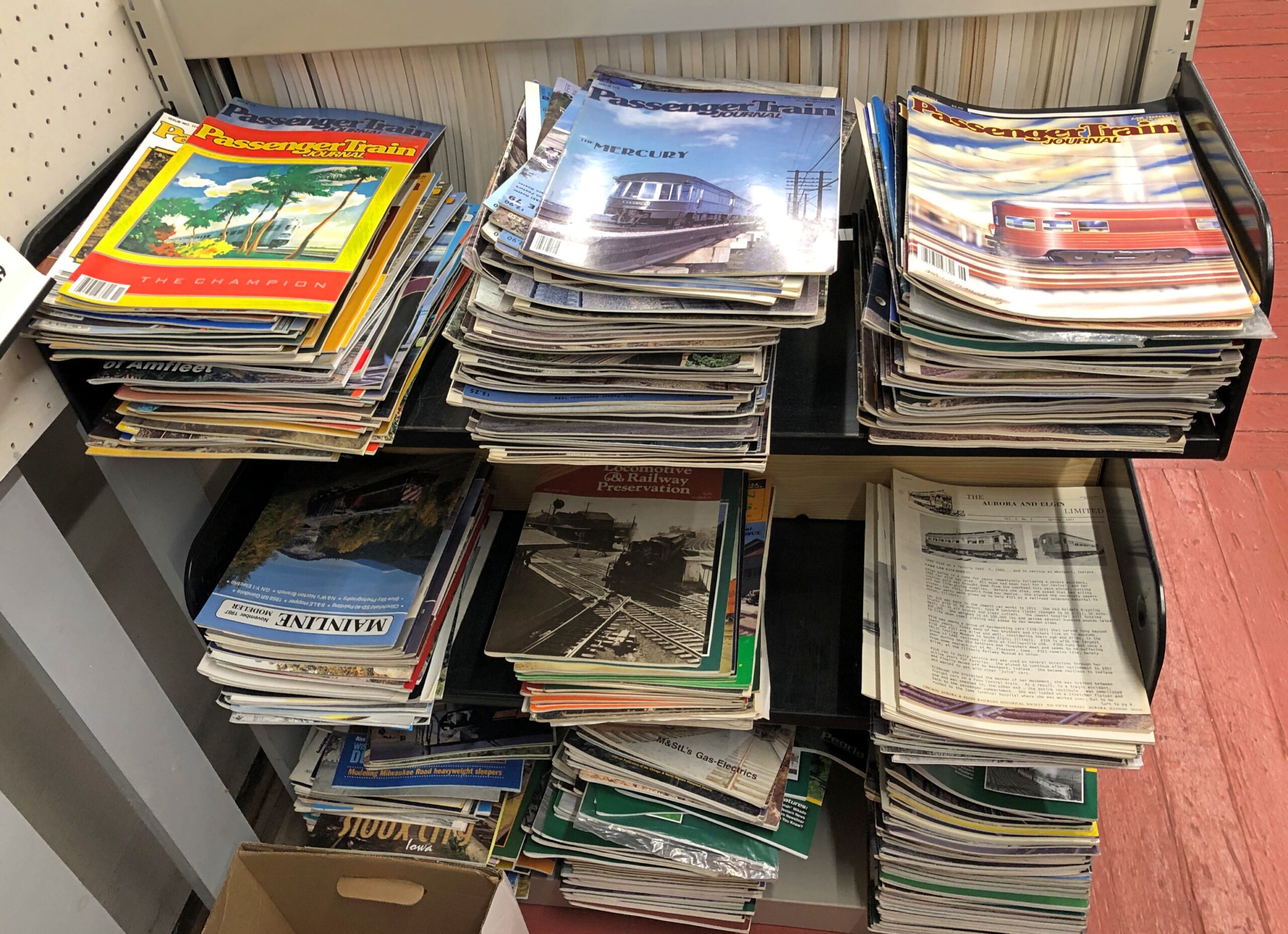
The museum has a railroad-oriented book store in another repurposed car.
Lots of material for the enthusiast.
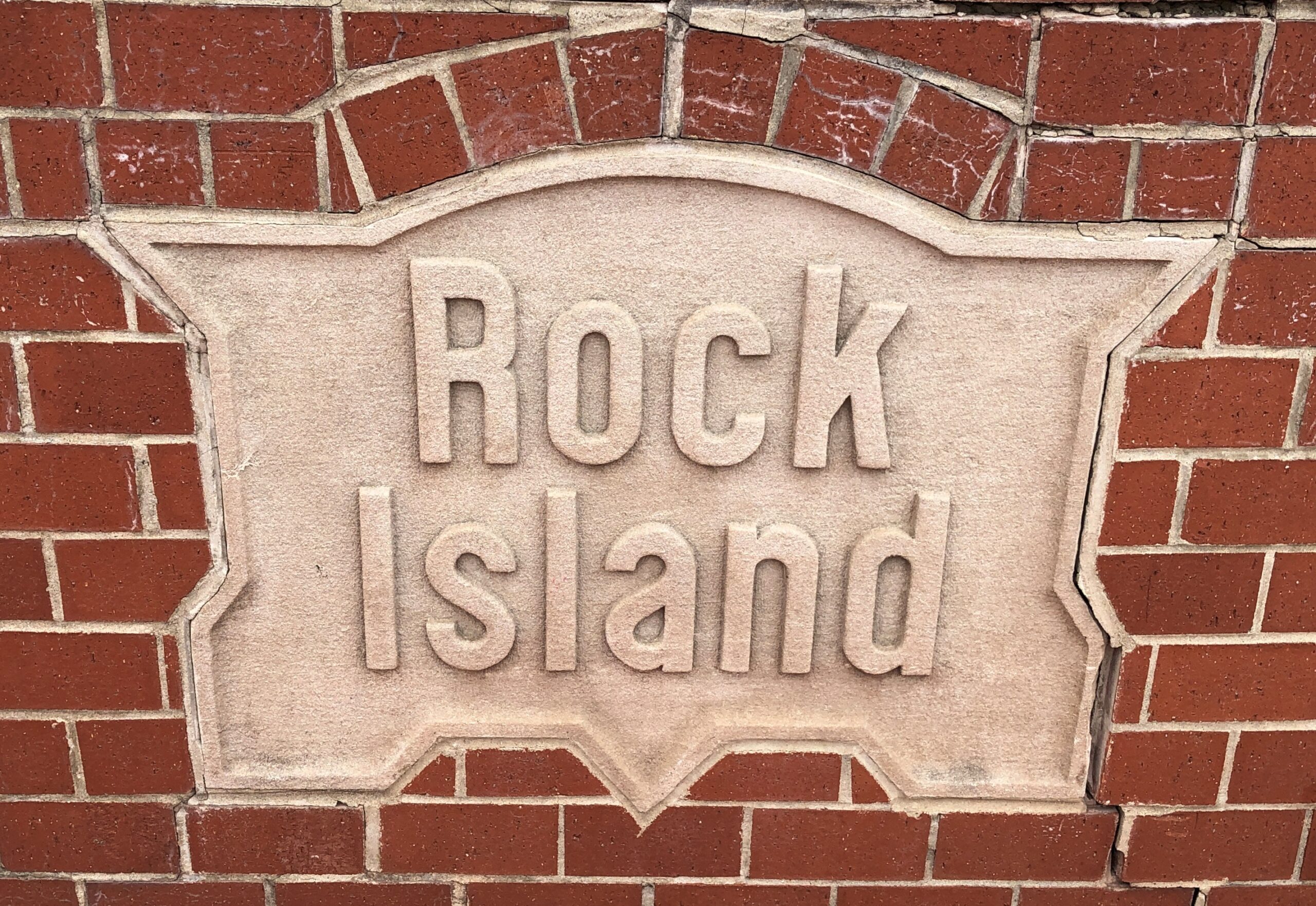
One more item: a bit of re-embedded signage from the Chicago, Rock Island and Pacific Railroad, which traversed Illinois not far from here.
Good to see it. Because, as we all should know, the Rock Island Line is a mighty good road, the Rock Island Line is the road to ride.
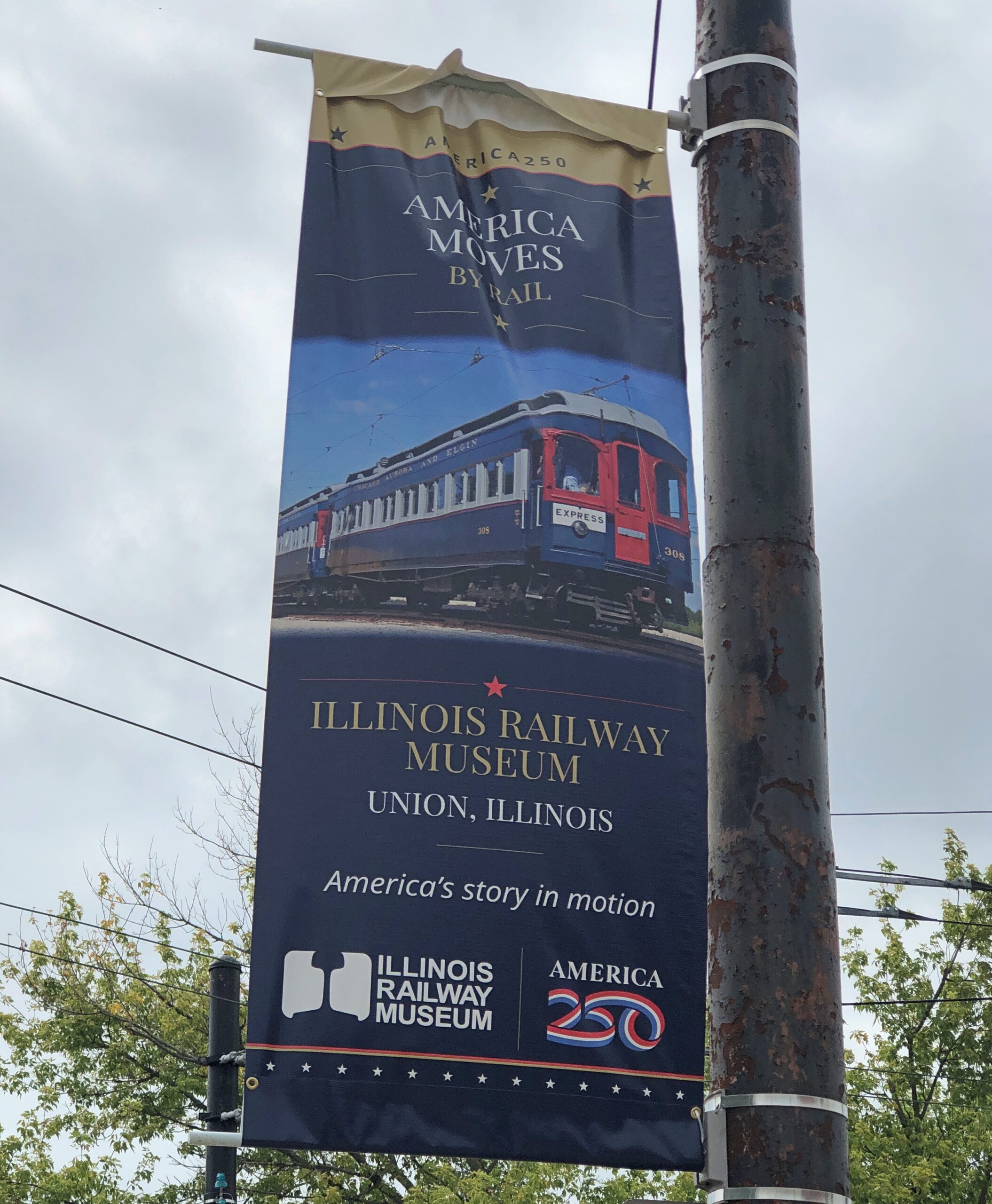
Not long ago my friend Kevin and I were kicking around ideas for a day trip from our homes in Chicagoland, and we happened on a place he’d hadn’t been since he was a child nearly 60 years ago, and I hadn’t been in years, perhaps as long ago as 2005: the Illinois Railroad Museum, near the town of Union in McHenry County, in the northwestern exurbs. About an hour drive from my house. Definitely worth the trip.
Another example of a place people take their kids, but might not otherwise consider. Not how I think. Good for kids, good for everyone else whose admiration for and curiosity about trains hasn’t gone away. During our visit, on the last Saturday in July, the place was busy but not packed, with small children and their elders well represented, but they weren’t the entirety of visitor demographics. The Illinois RR Museum draws old men (old people) as well, sometimes without grandchildren in tow. In that, Kevin and I fit right in.
Not only that, the museum also seems to attract former railroad employees and railroad aficionados, enthusiasts and nerds of all ages and walks of life. Toward the end of our visit, near a display of dispatcher equipment, a visitor struck up a conversation with a museum volunteer that I was near enough to overhear. Old men both, older even than me, and both former dispatchers for lines long ago absorbed into the handful of U.S. railroads that still exist. They had a lot to talk about – with an intensity of jargon that was nearly opaque to us non-professionals.
But you don’t need to know every technical detail to appreciate the collection.
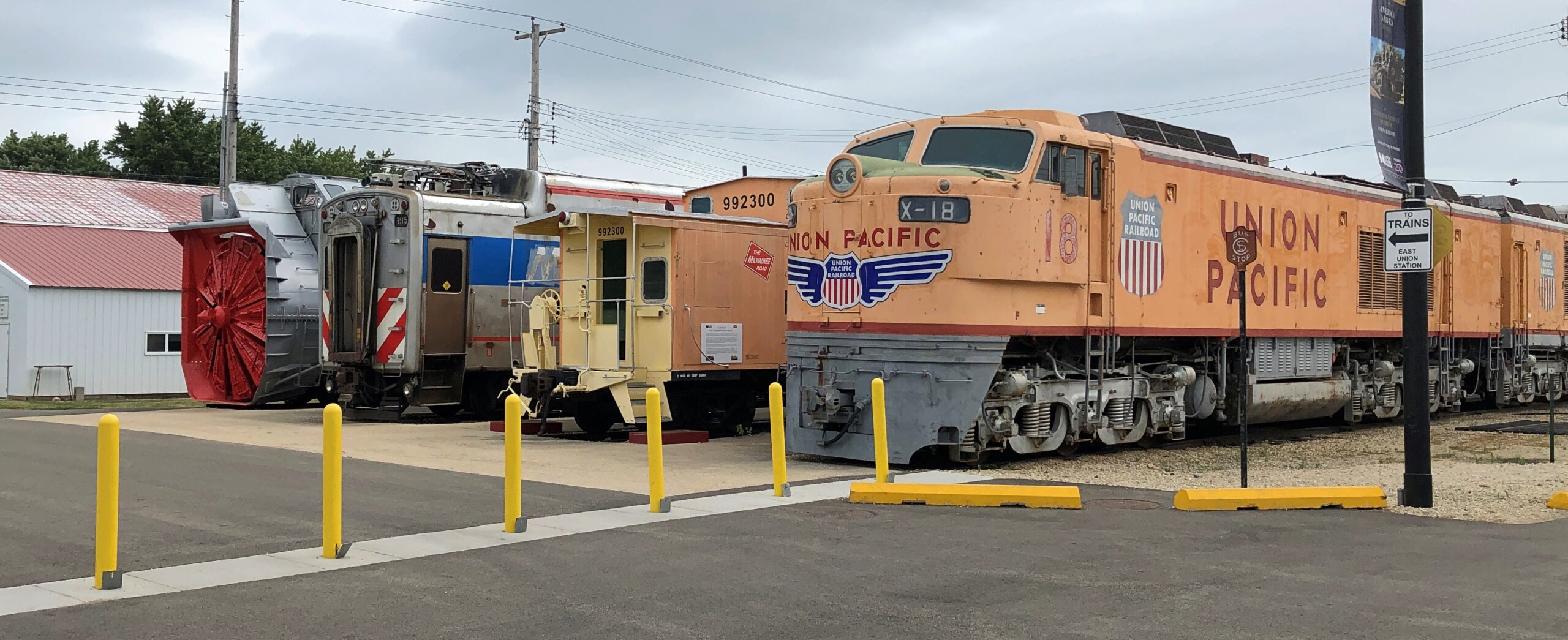
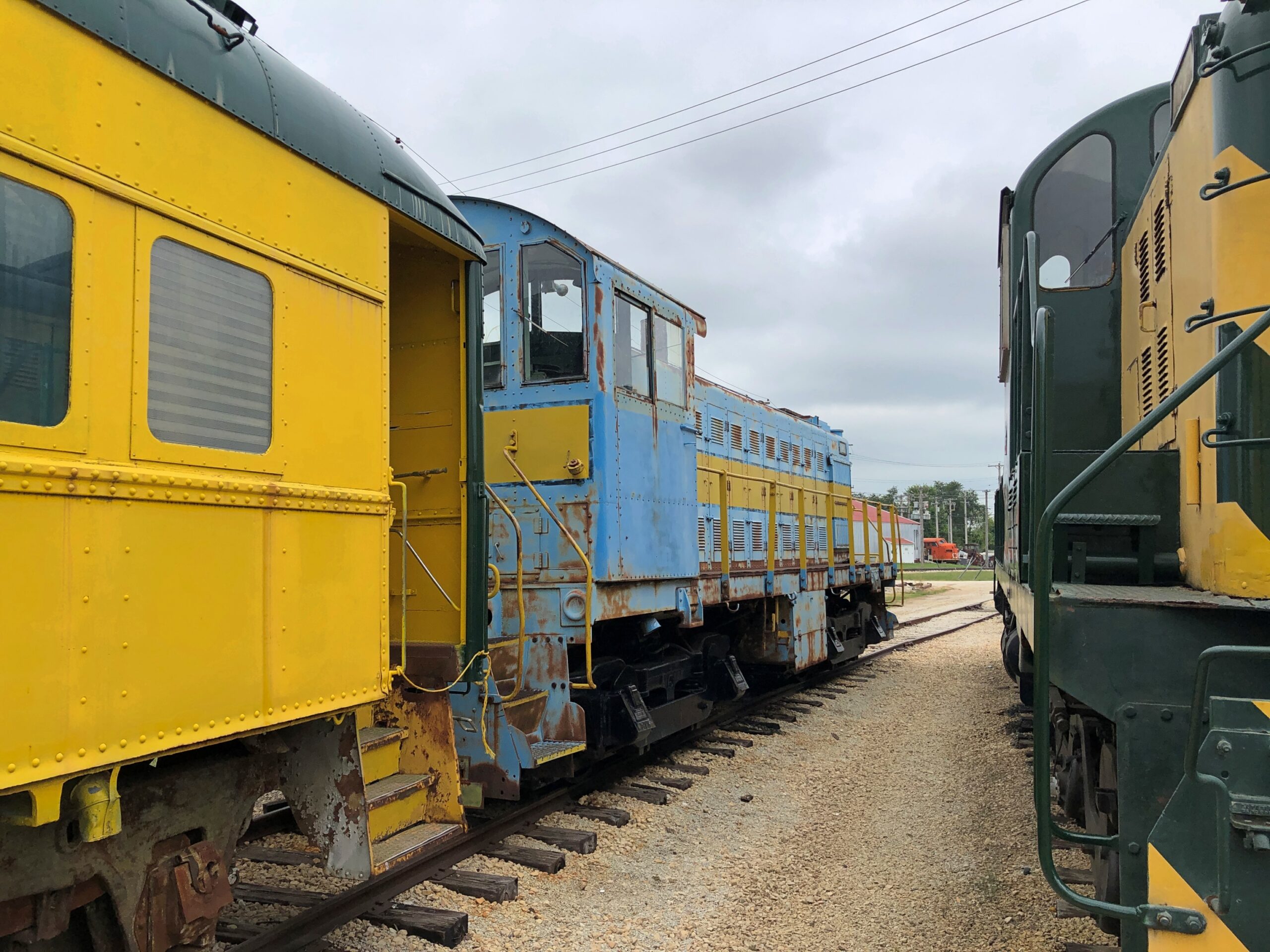
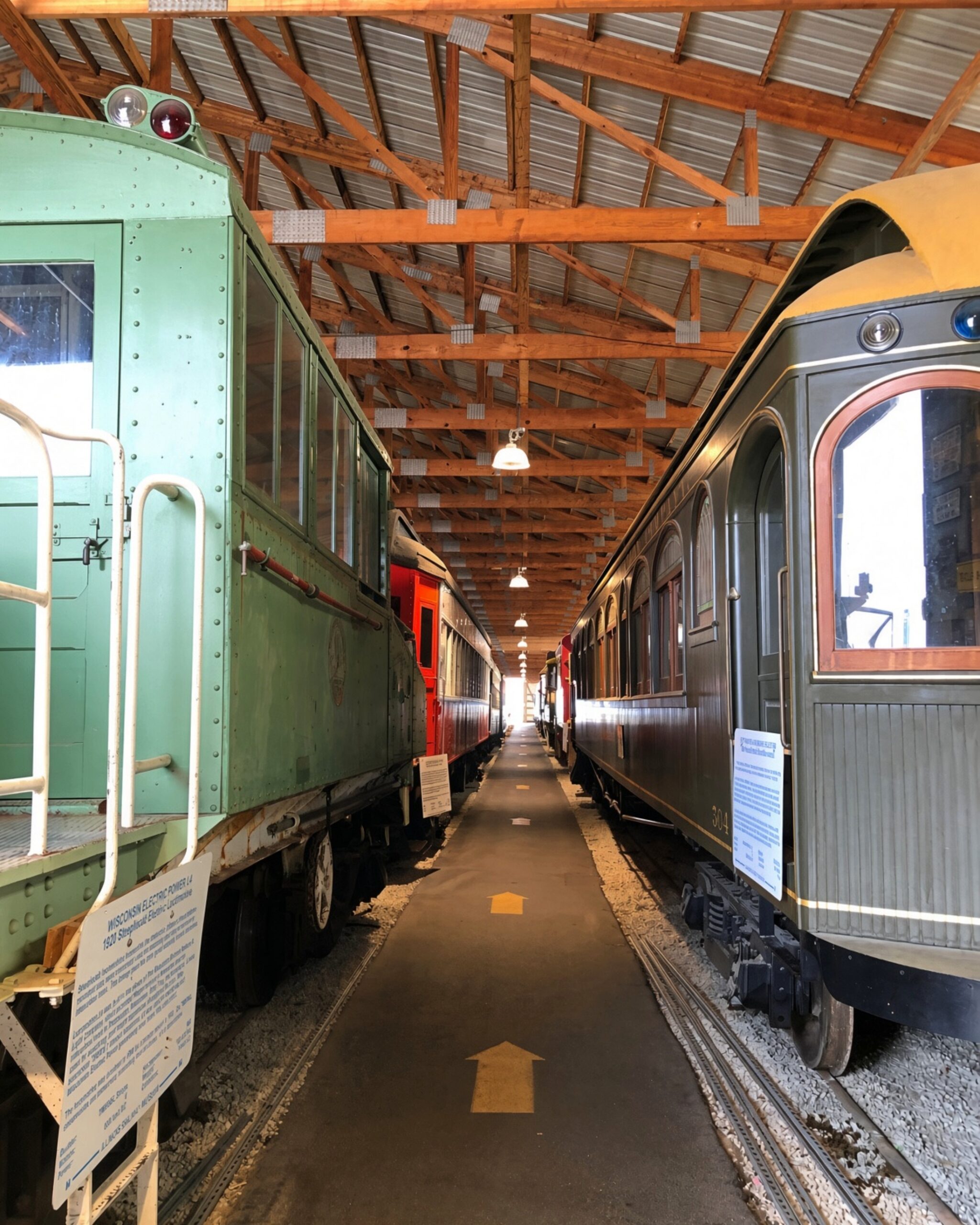
It’s massive, including locomotives and steam engines, freight cars, interurban cars, long-haul passenger and baggage cars, subway cars, streetcars, trolley buses, railroad work equipment, signals, signs and much more, either open to the elements or in several sizable train barns. Some of the rolling stock is still rolling, and visitors can take short rides out into the countryside along a few miles of right-of-way that the museum owns, with volunteers running the show.
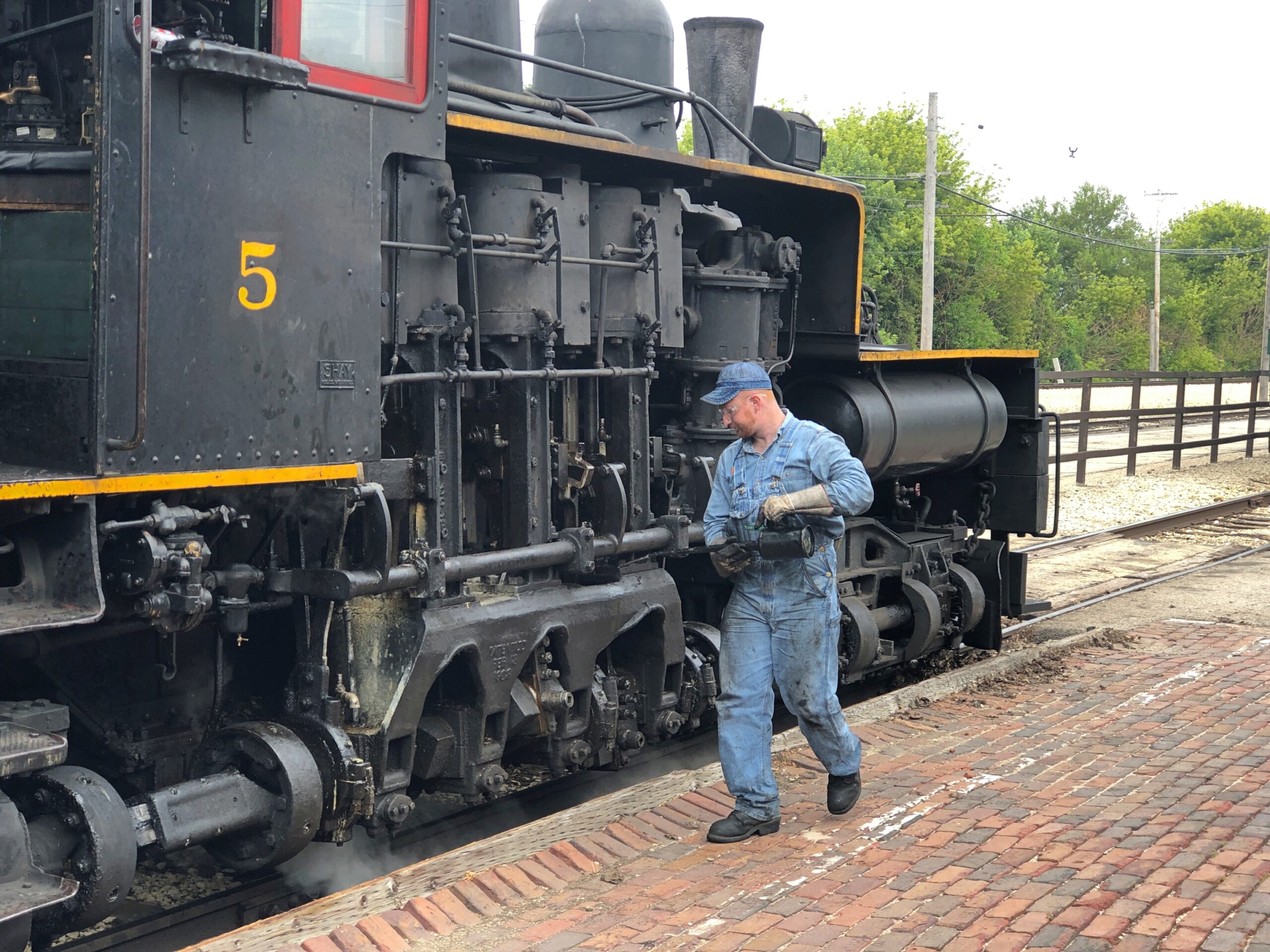
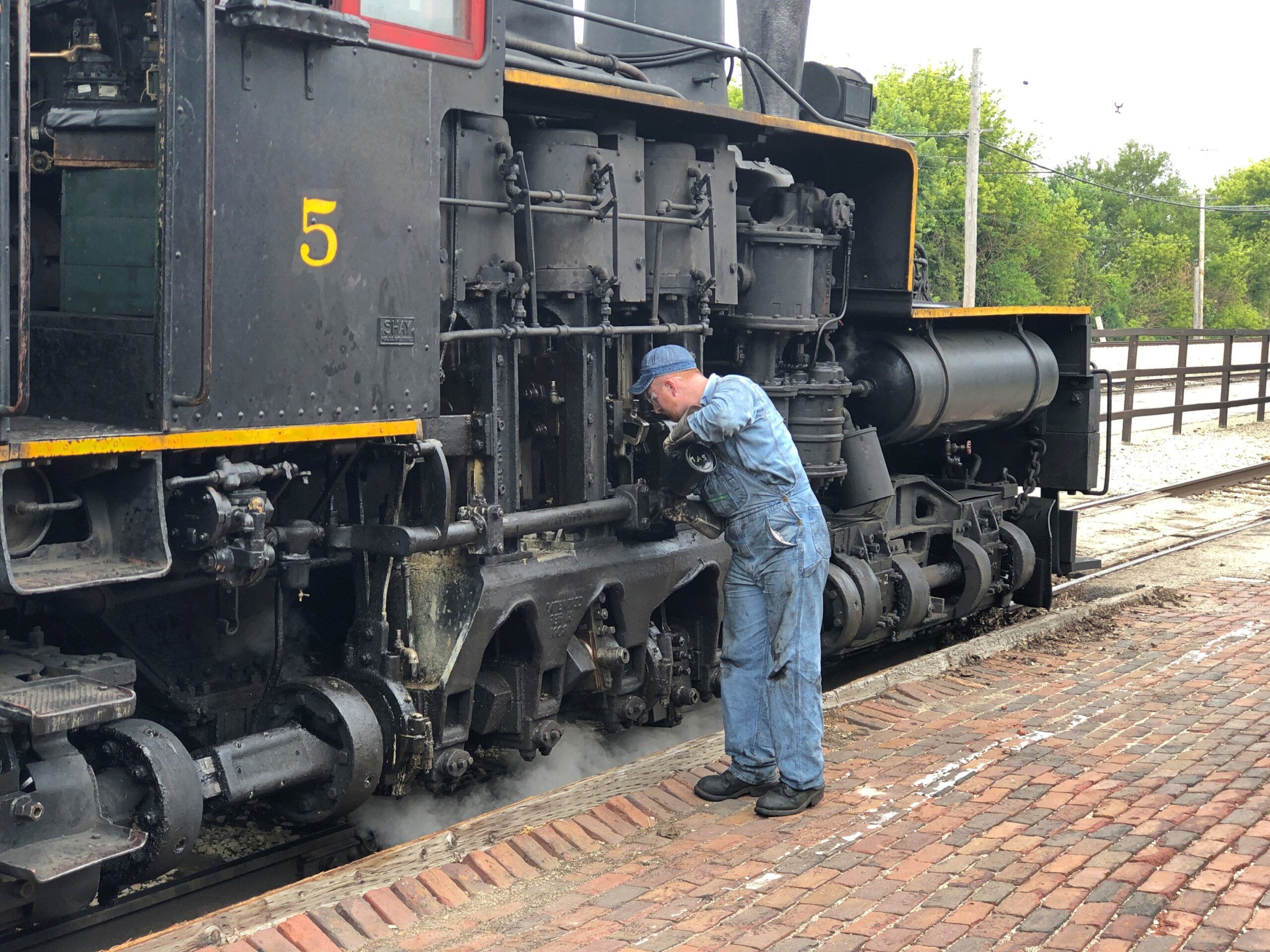
And doing the maintenance: I don’t think I’d ever seen anyone in railroad garb oiling the machinery with a long-spout oil can, as you see (saw) in illustrations.
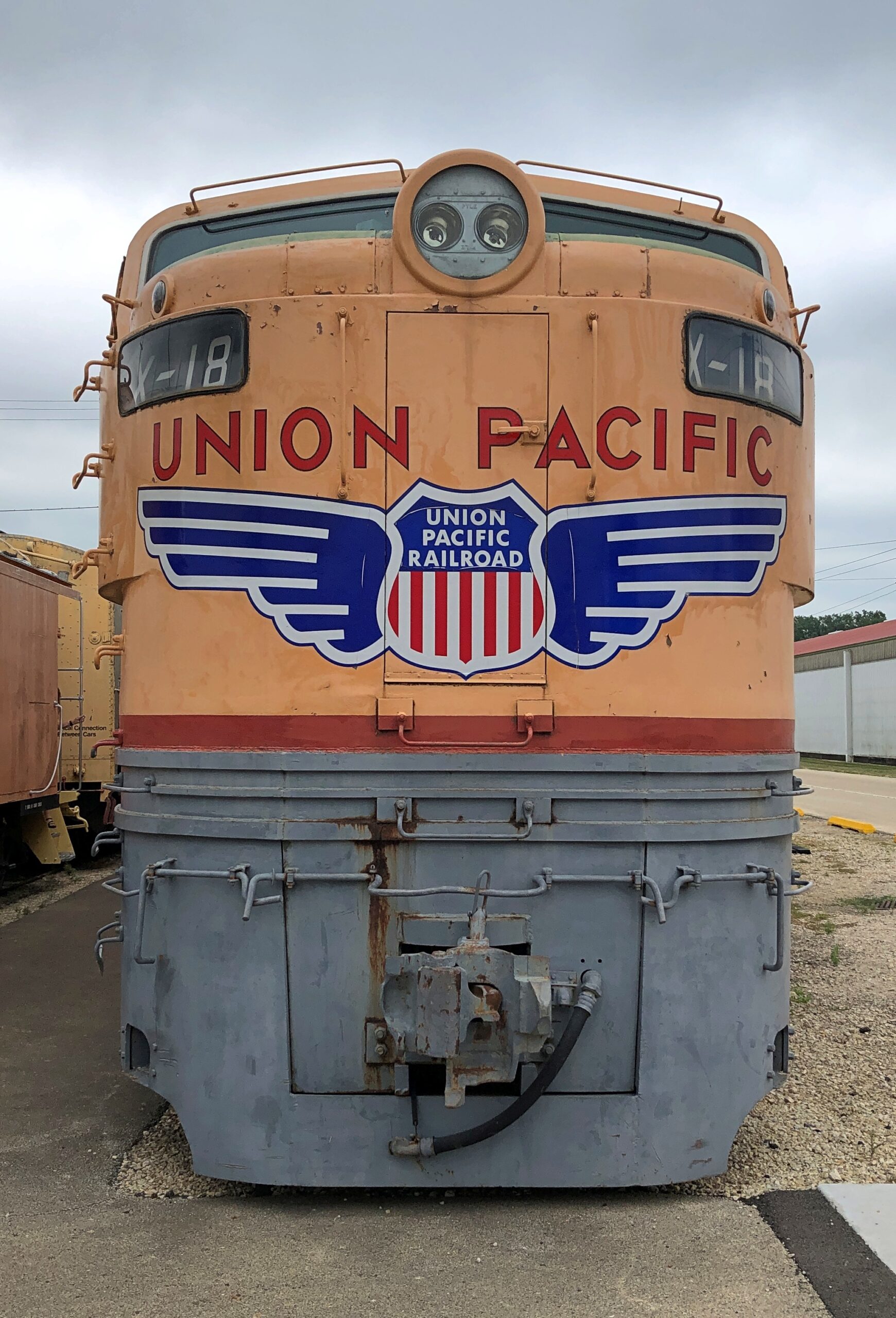
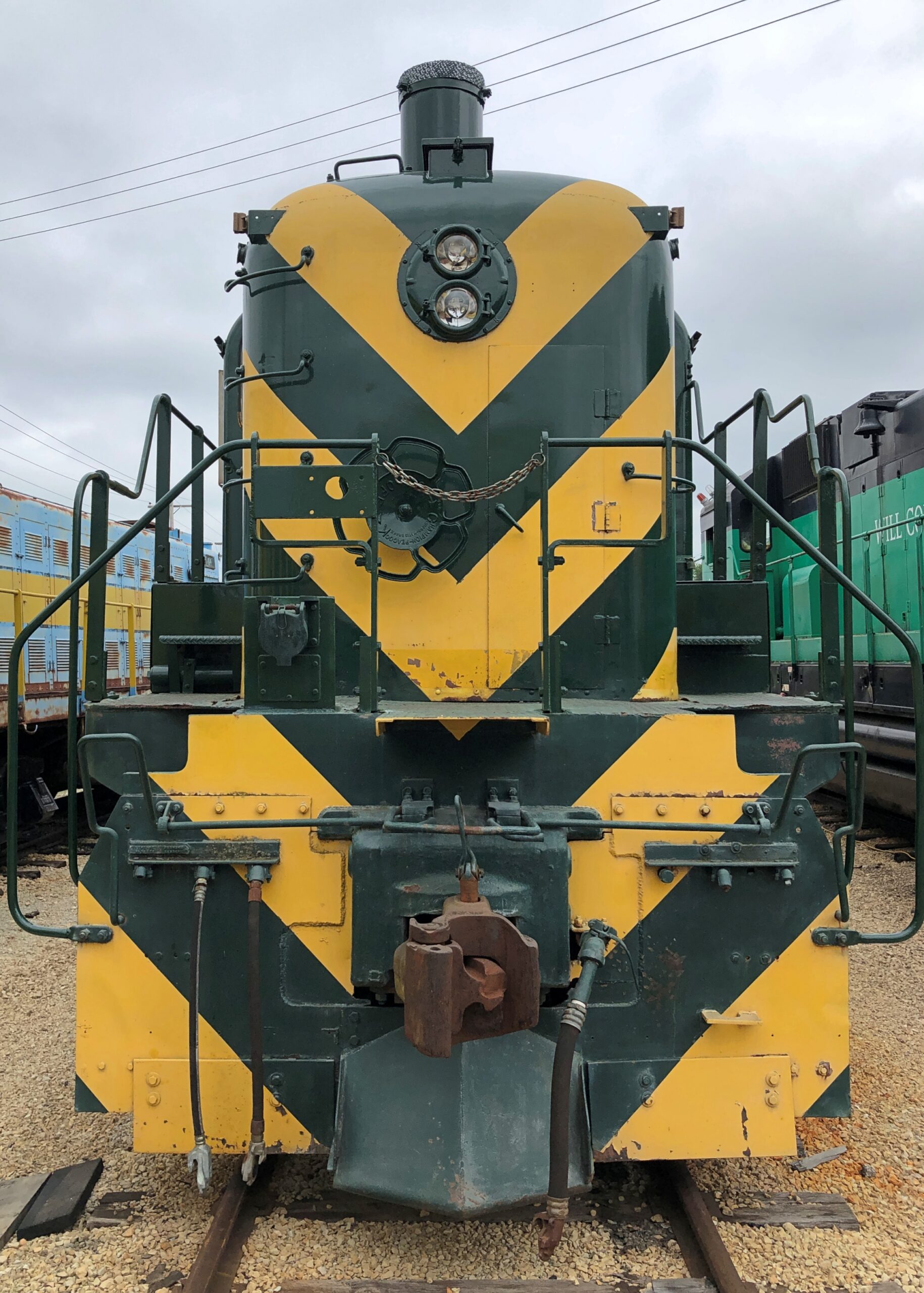
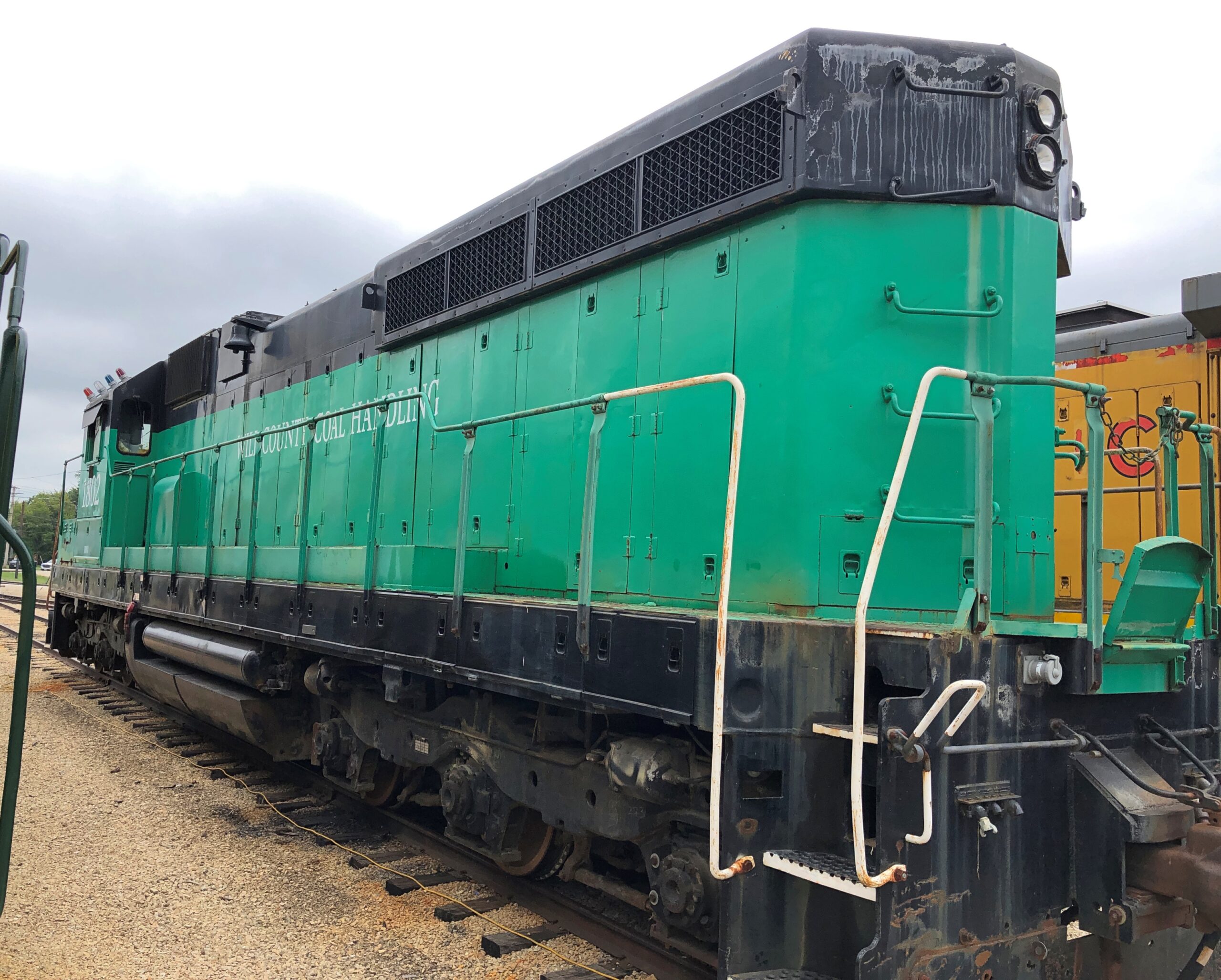
Mighty locomotives of various kinds.
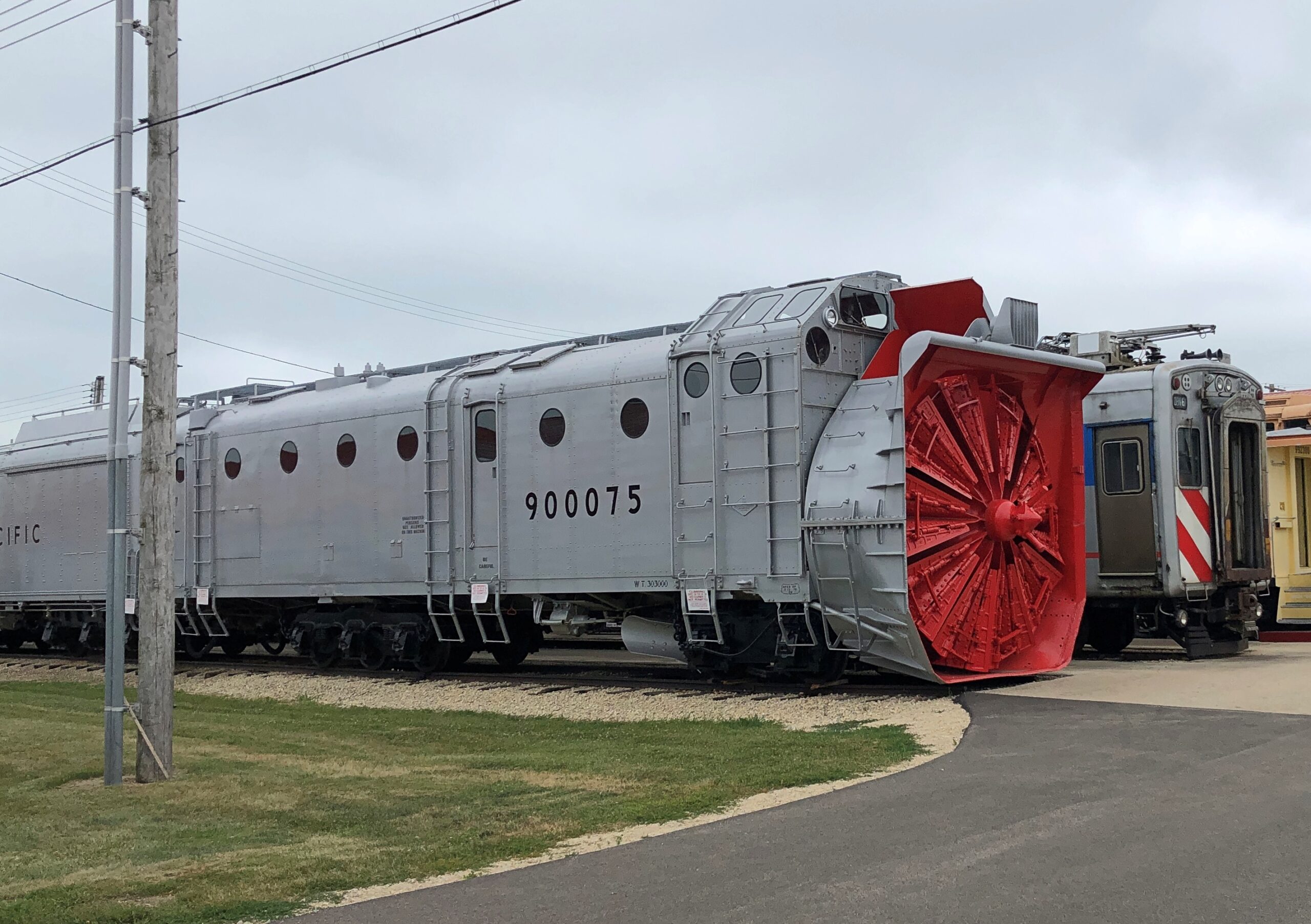
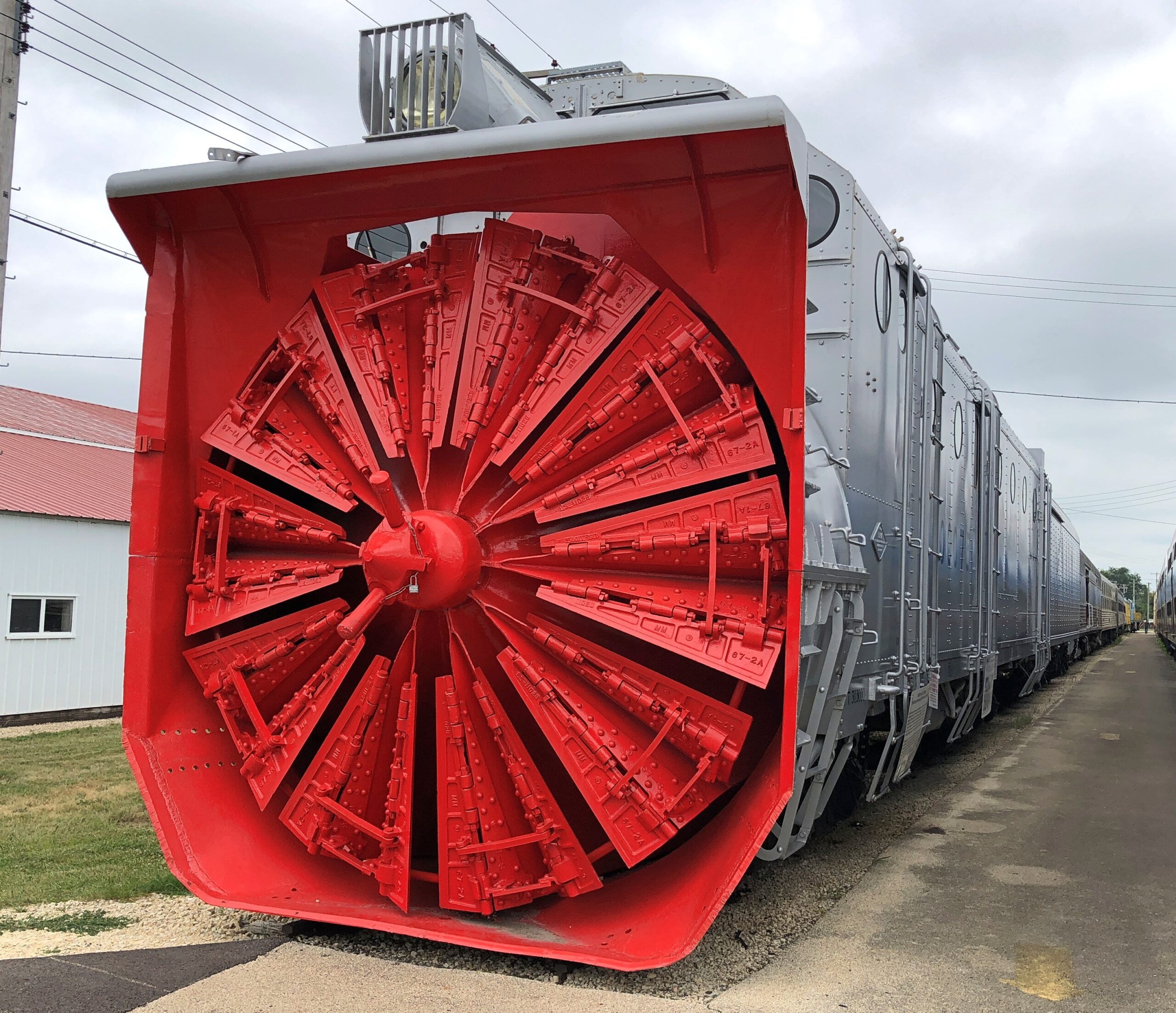
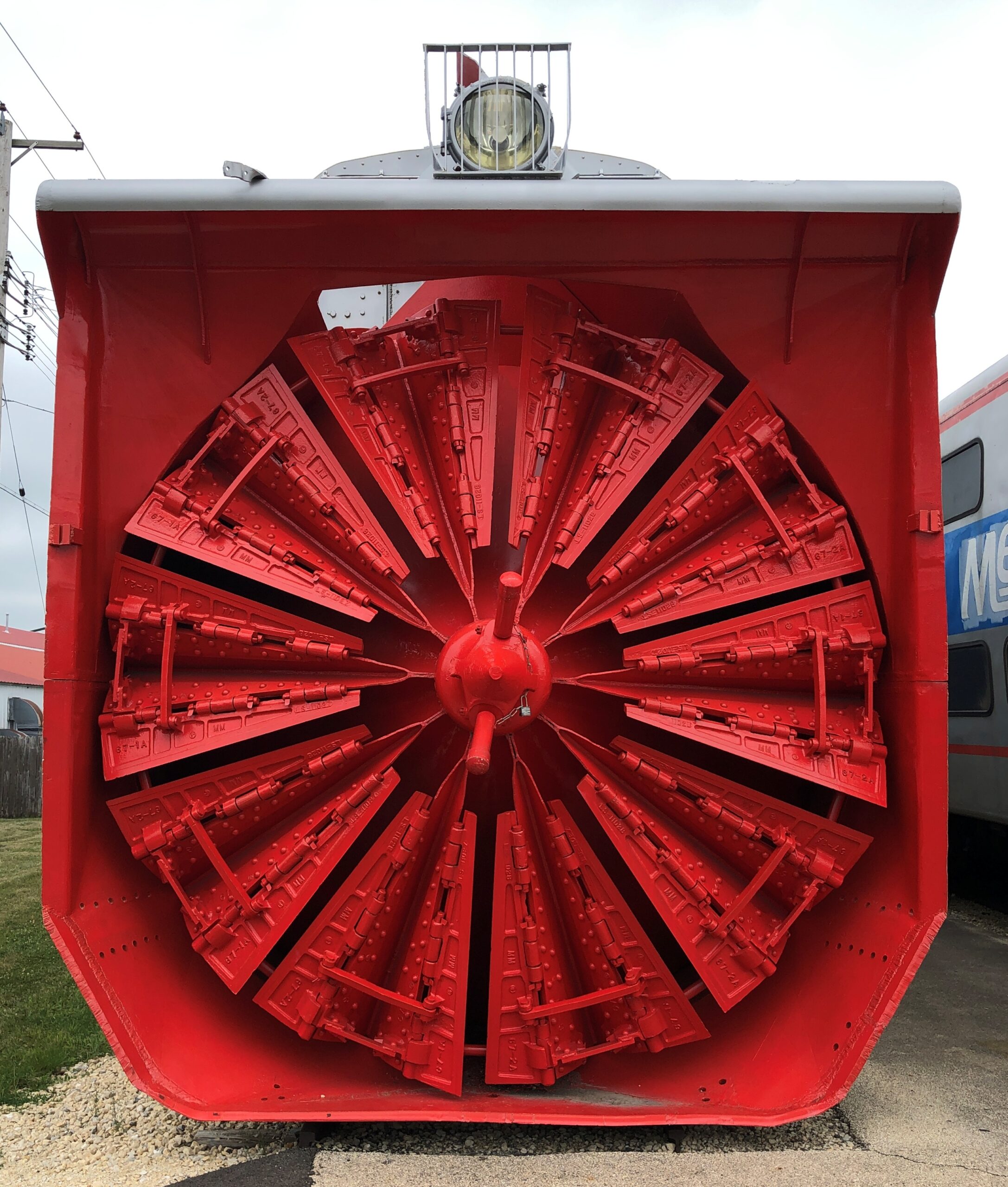
The collection includes some rolling stock you don’t see that much, such as a 1949 steam-powered Leslie rotary snowplow designed to clear tracks of ice and snow, and one of the last ever made, as these too converted to diesel. To do its job, the blade at the front rotated at 150 rpm.
A wicked red maw, ready to grind its way forward. Just the thing for a fistfight, on the top of the car, between Bond and a nameless henchman; resulting in the henchman tumbling into the blade; think of your own Roger Moore bon mot for that situation (something about a grinding headache, maybe).
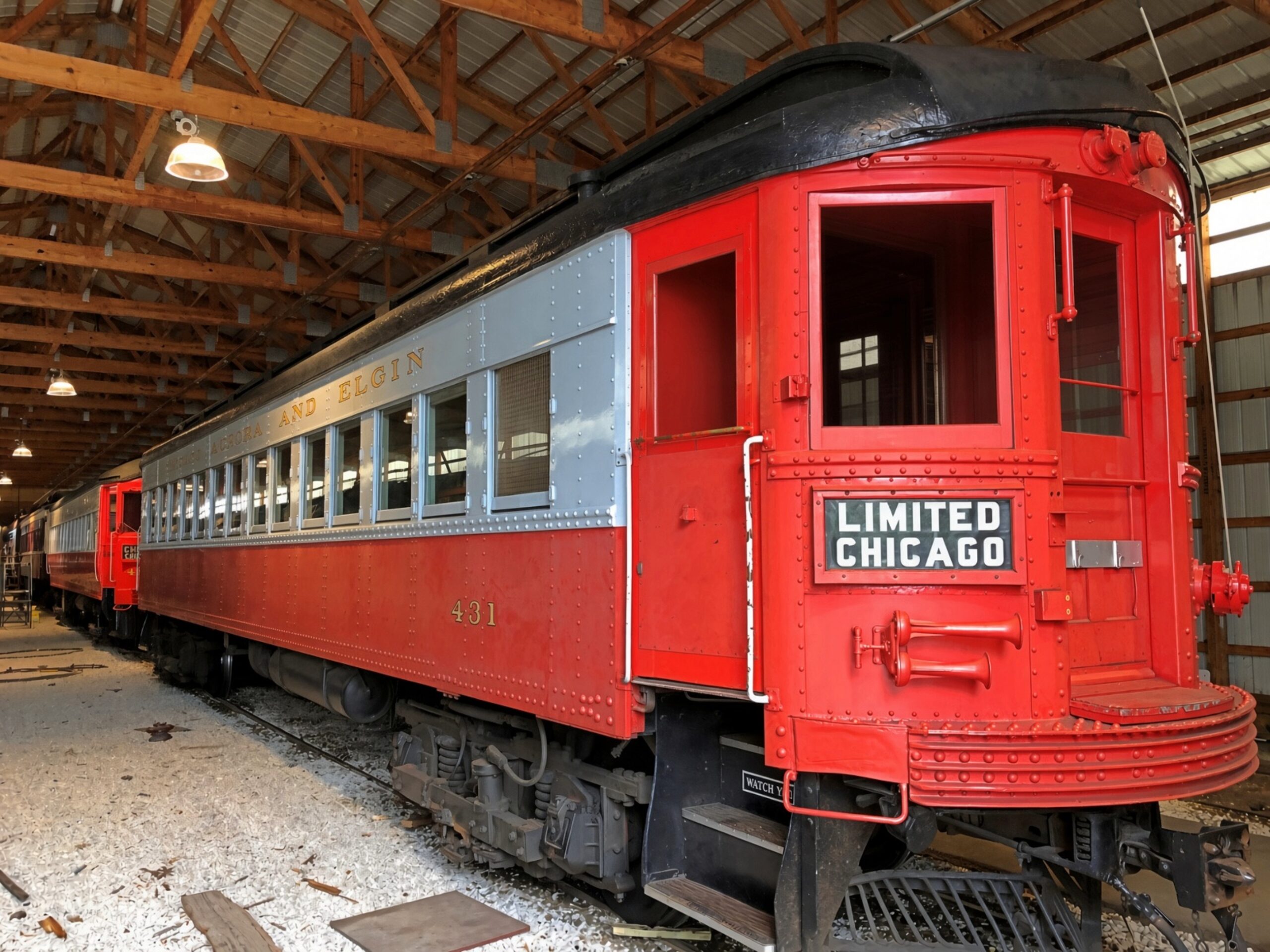
Interurban cars. Including this one, in which we rode out into the Illinois cornfields.
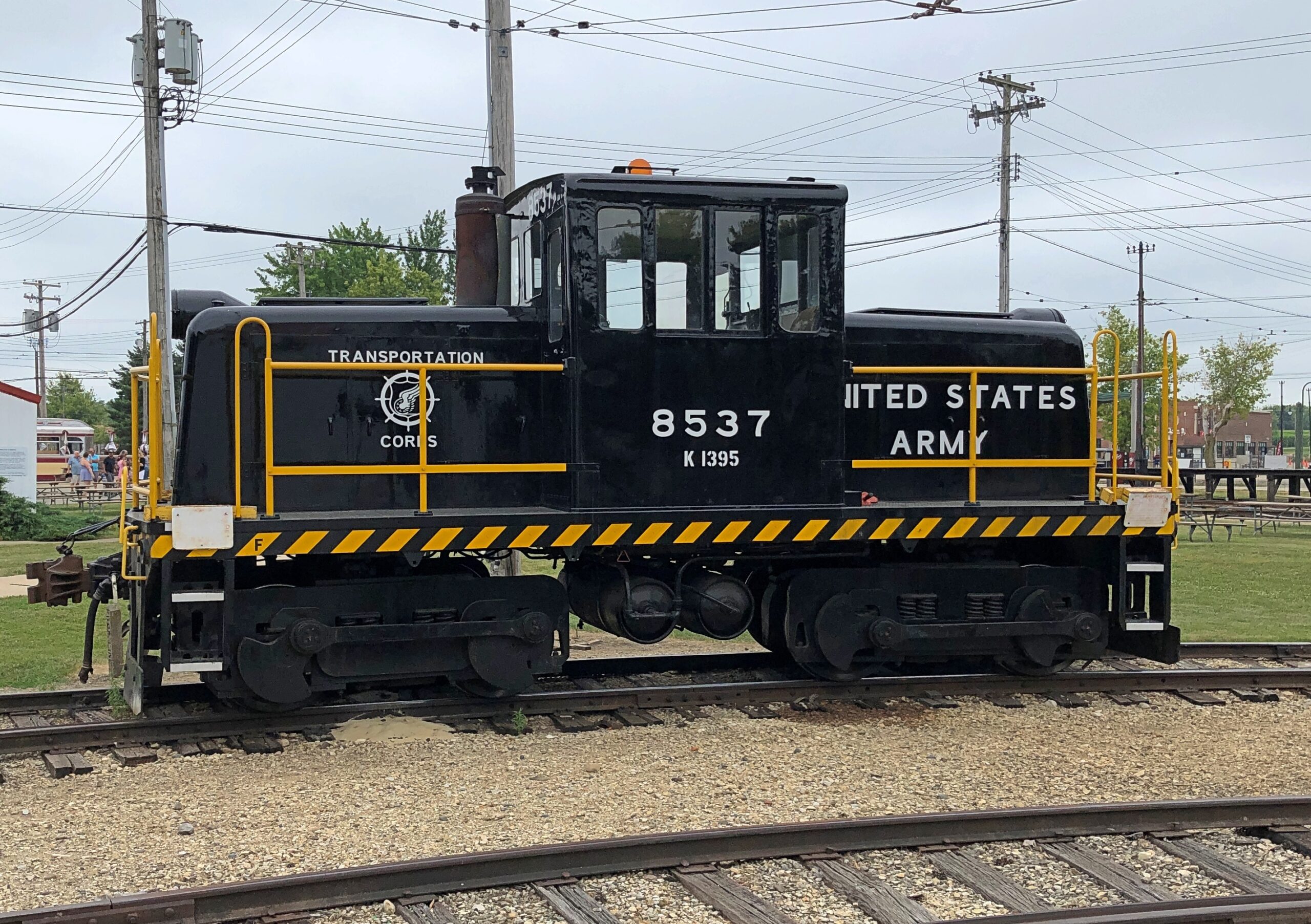
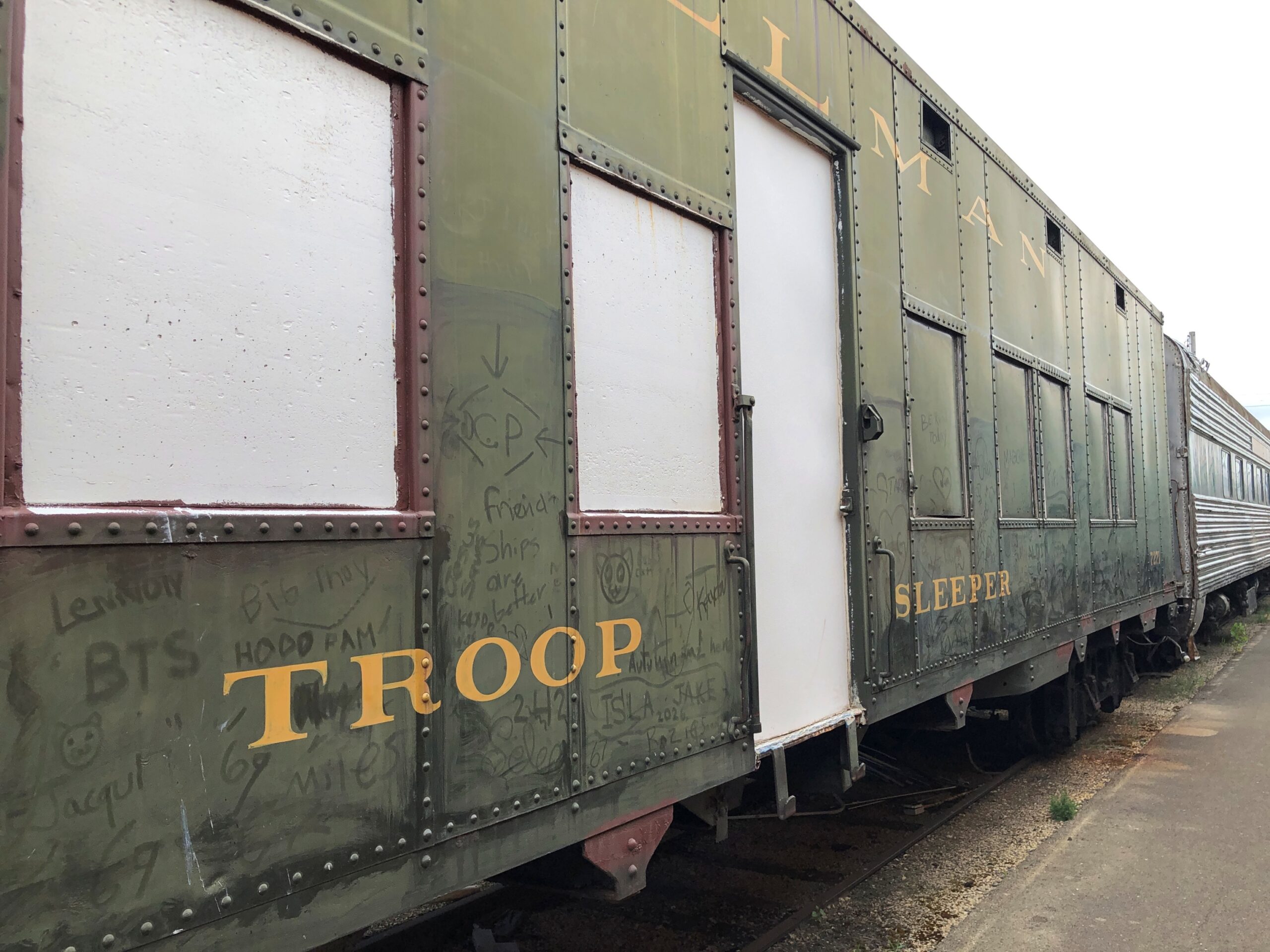
A few military cars.
The latter is a troop sleeping car, built by Pullman, doing its part for the war effort in the early 1940s.
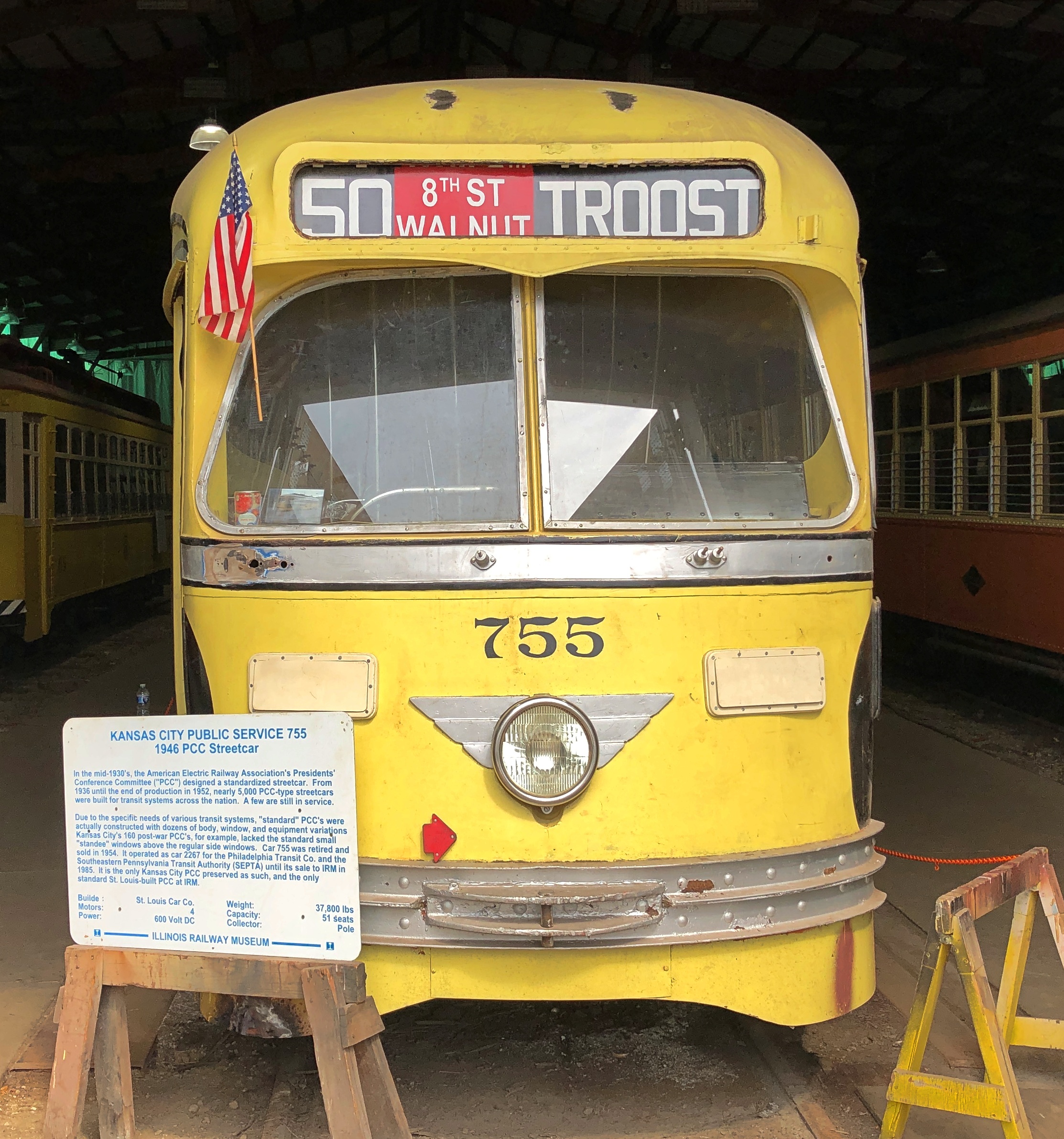
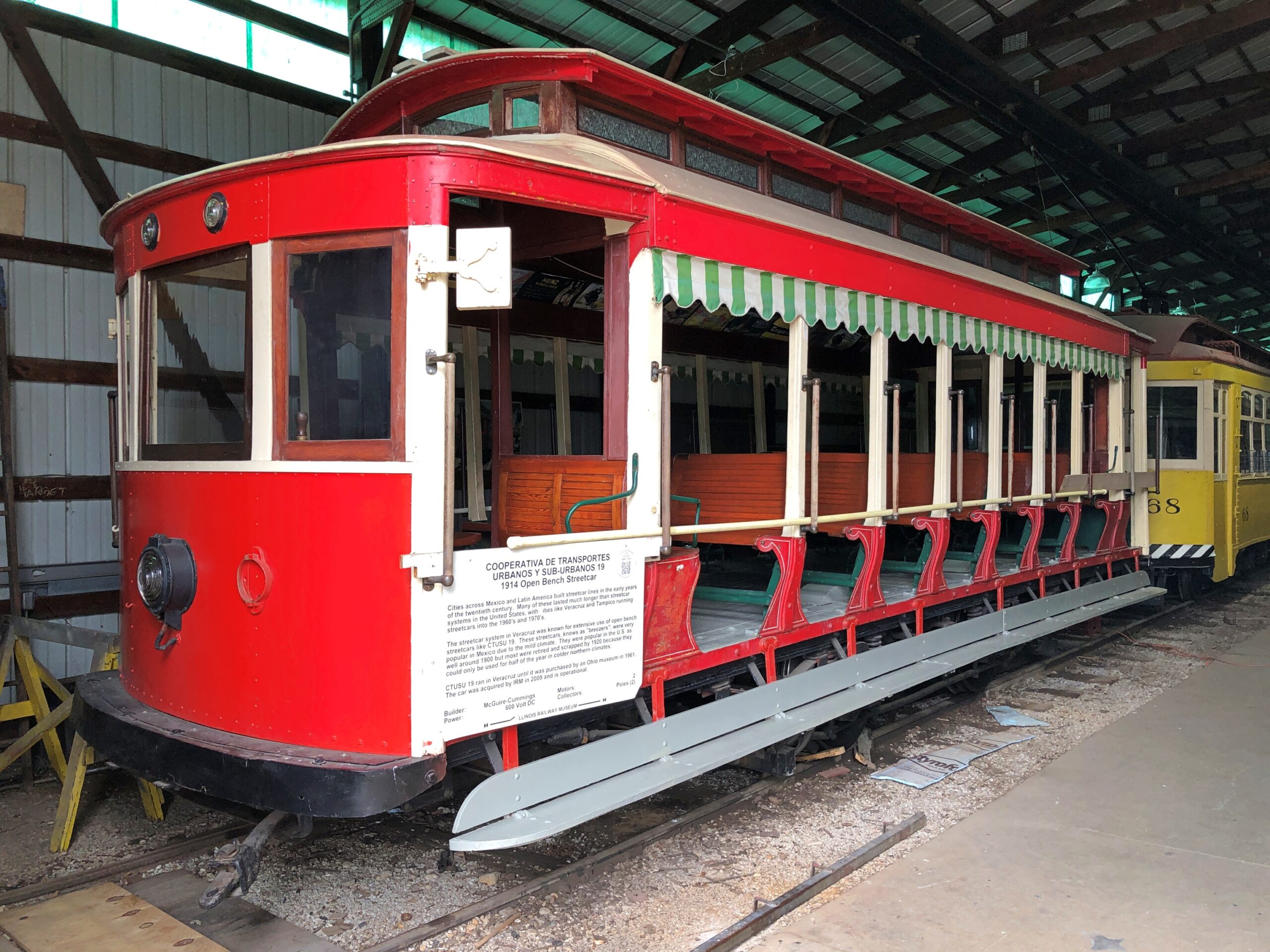
Examples of the many streetcars and trolley cars in the collection.
The latter built in 1914, so it’s a little anachronistic, but I thought of it as a Meet Me in St. Louis streetcar.
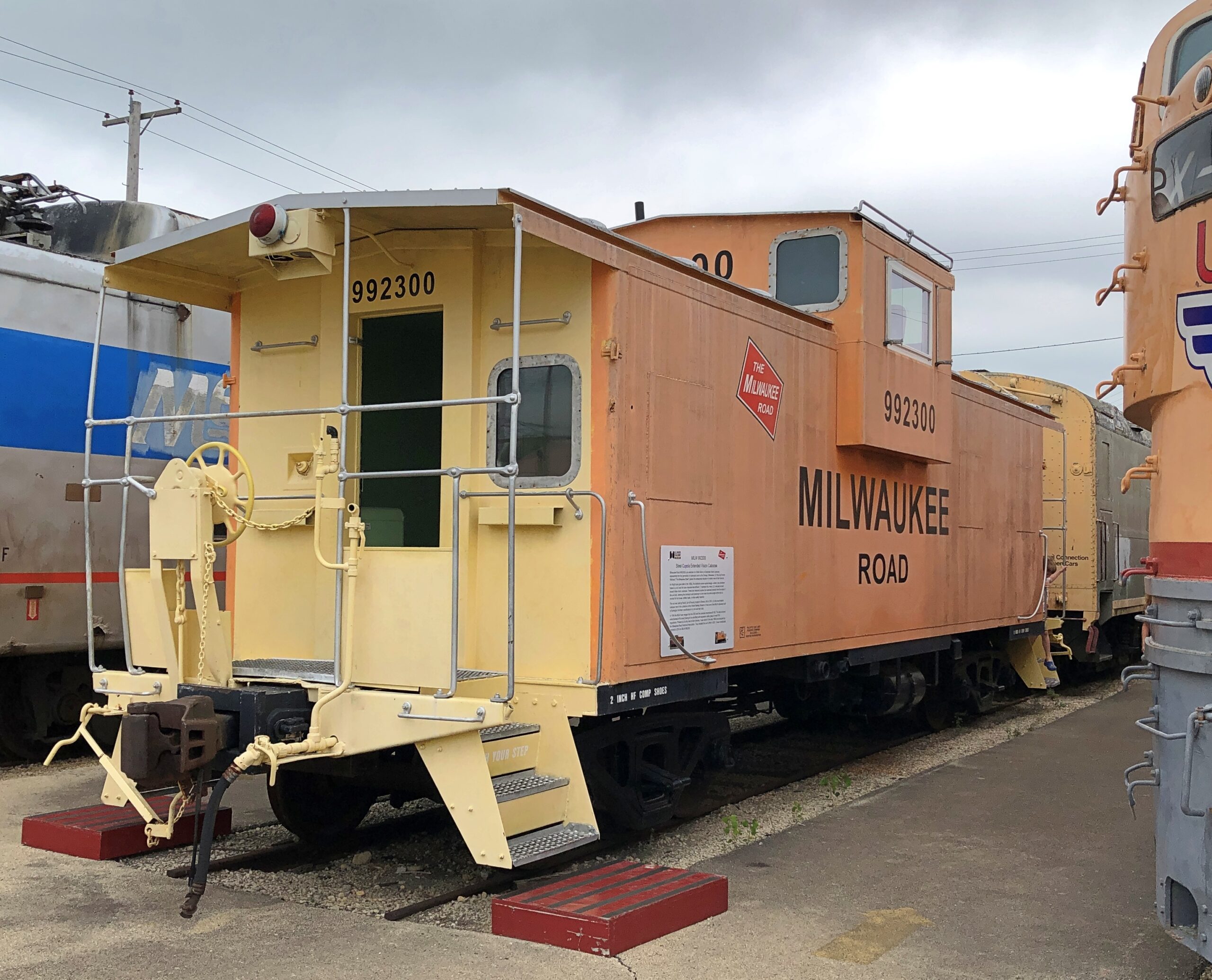
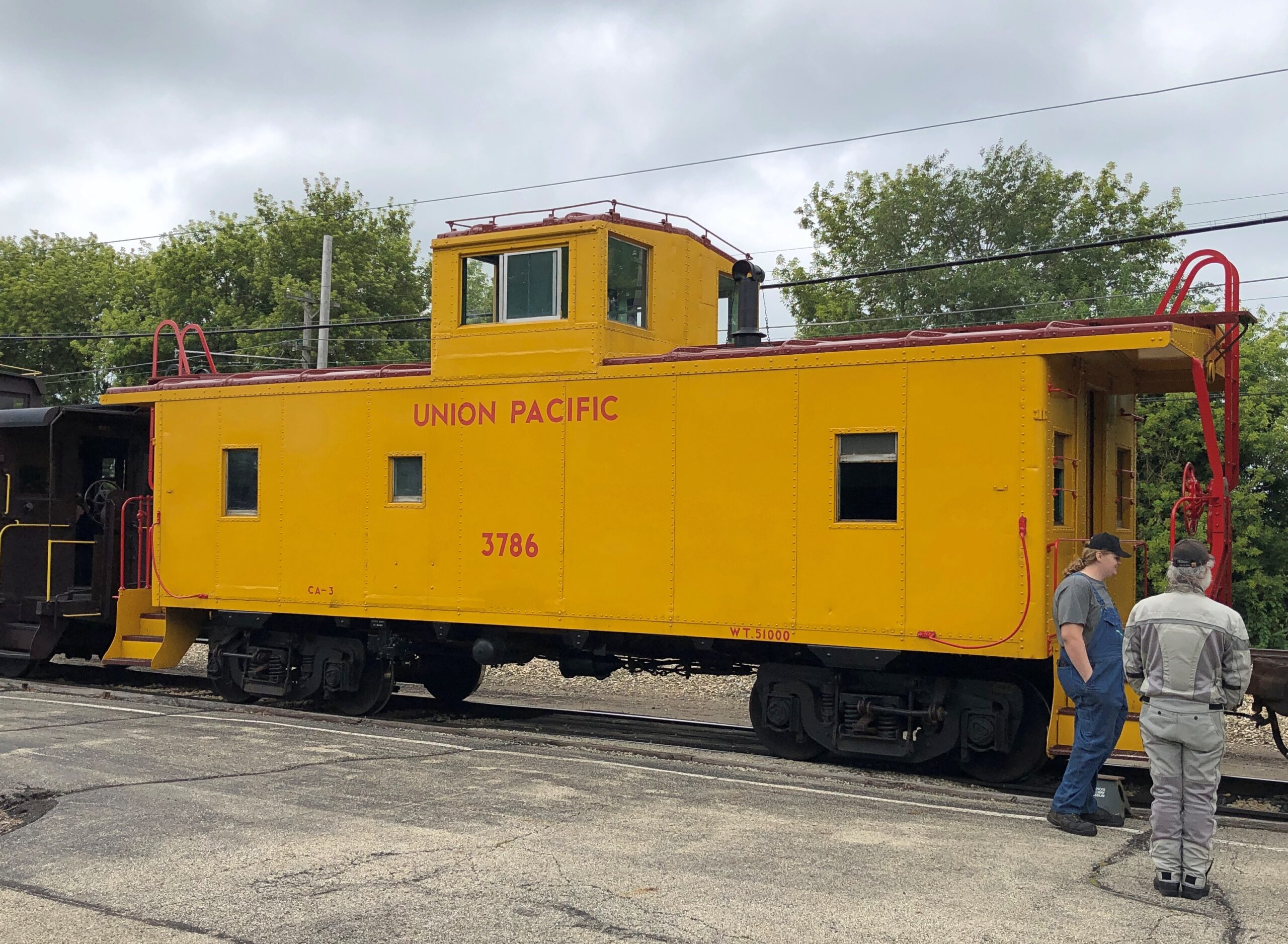
And — of course it should be last — cabooses.
If you asked me, railroads should still be using cabooses. For aesthetic reasons. No railroad is going to do that, naturally, but that’s my opinion.
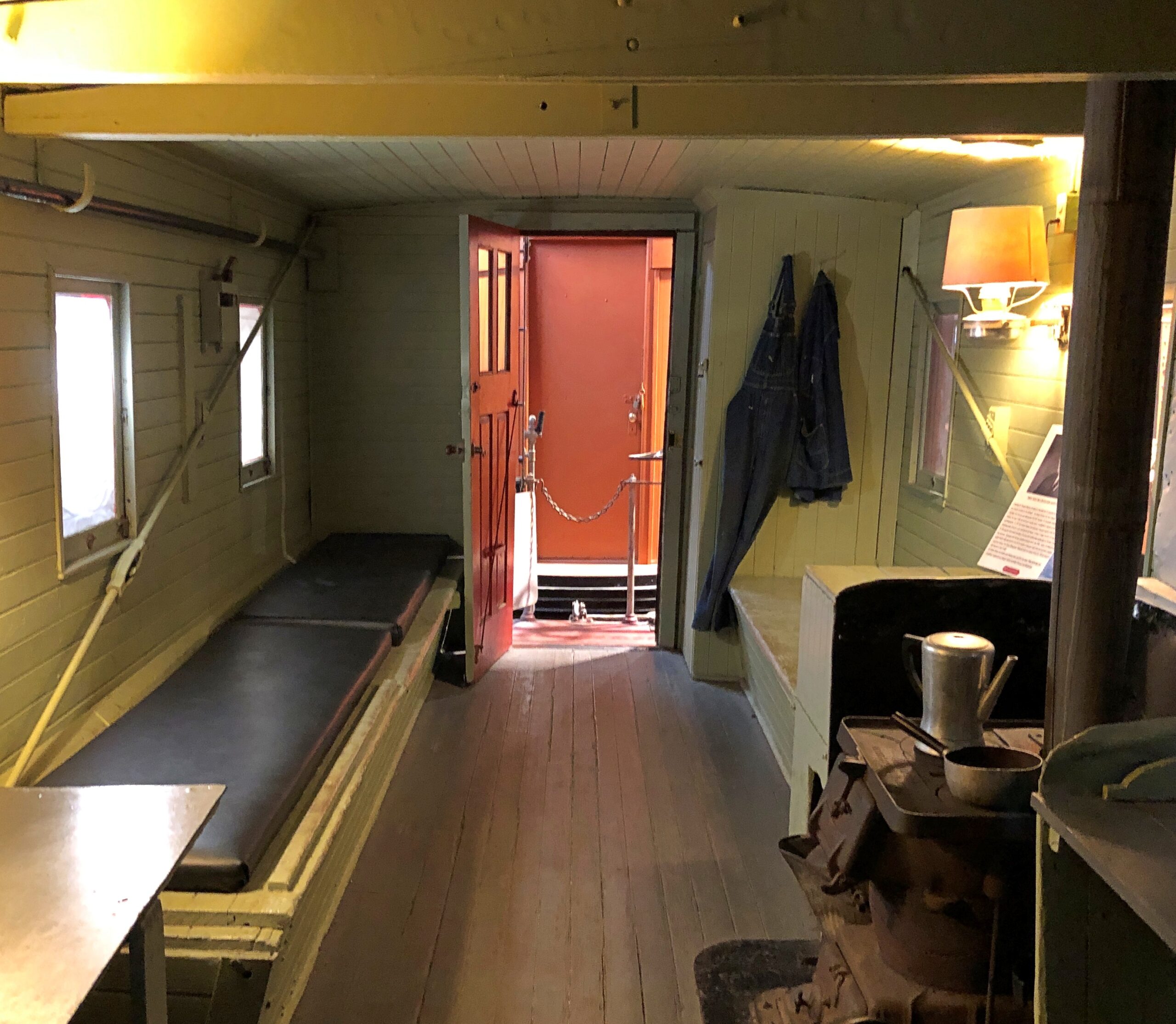
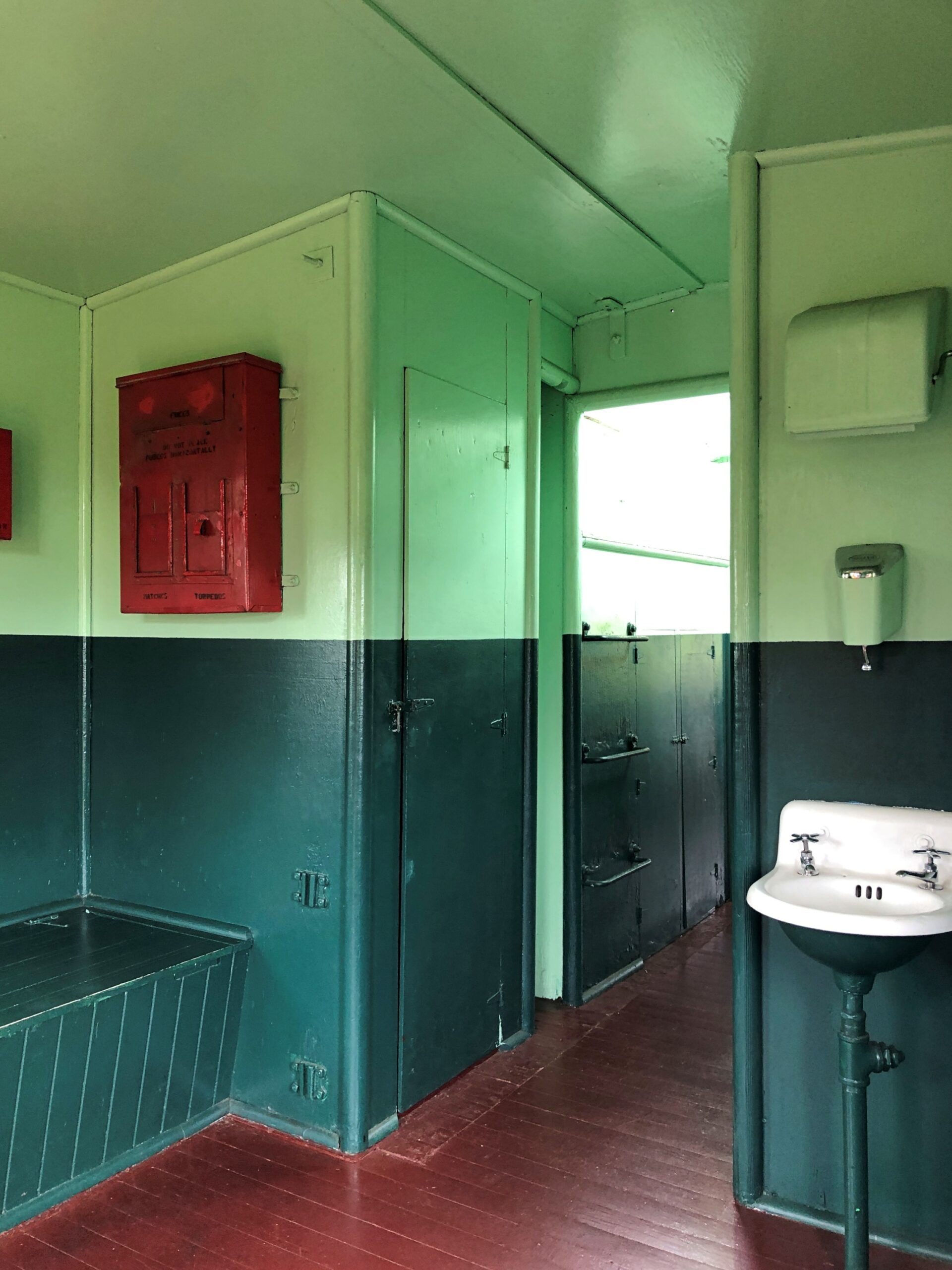
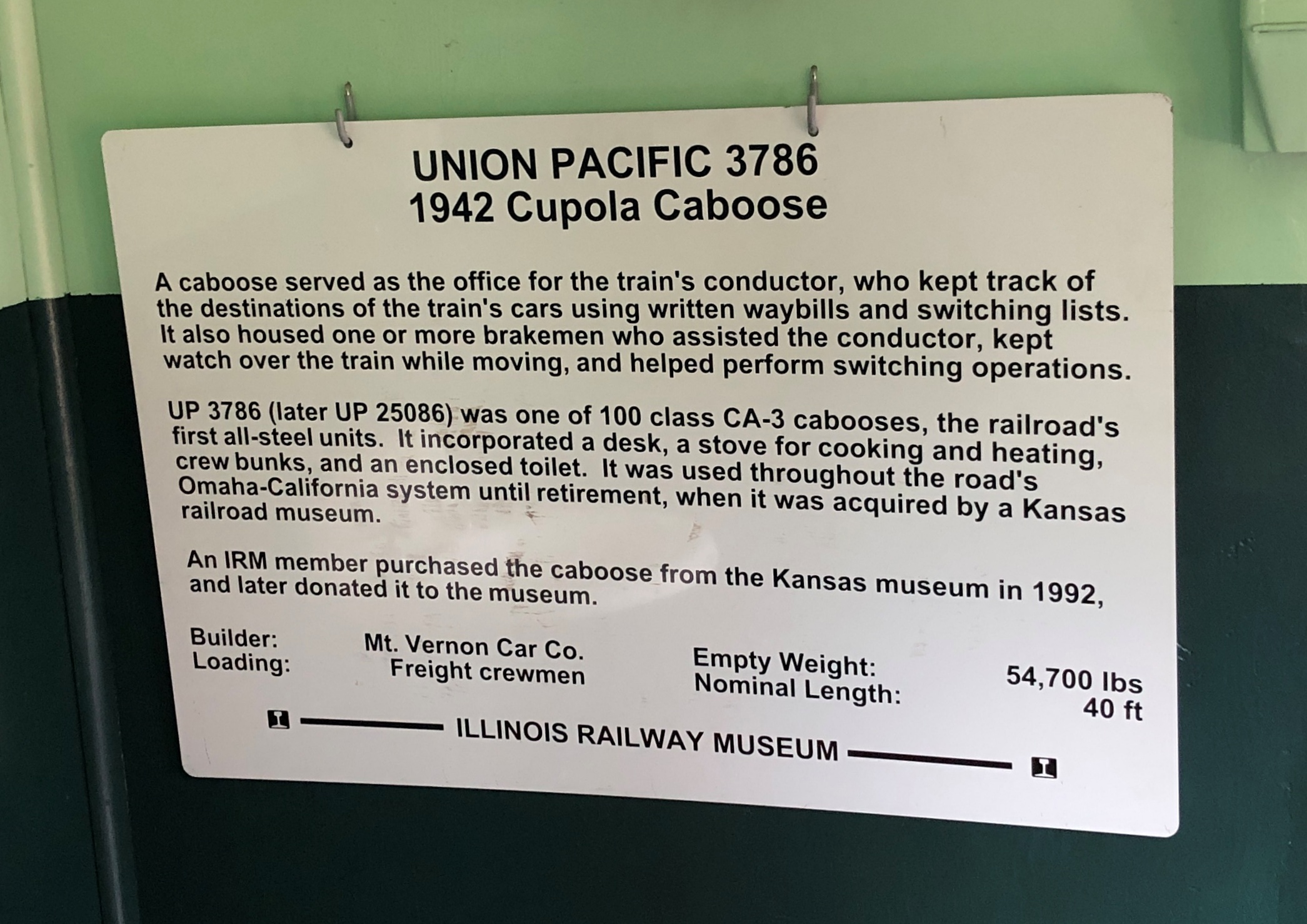
The interior of one of the cabooses. A good many of the cars at the museum are open, provided you’re willing to climb into them, and we certainly were in this case.
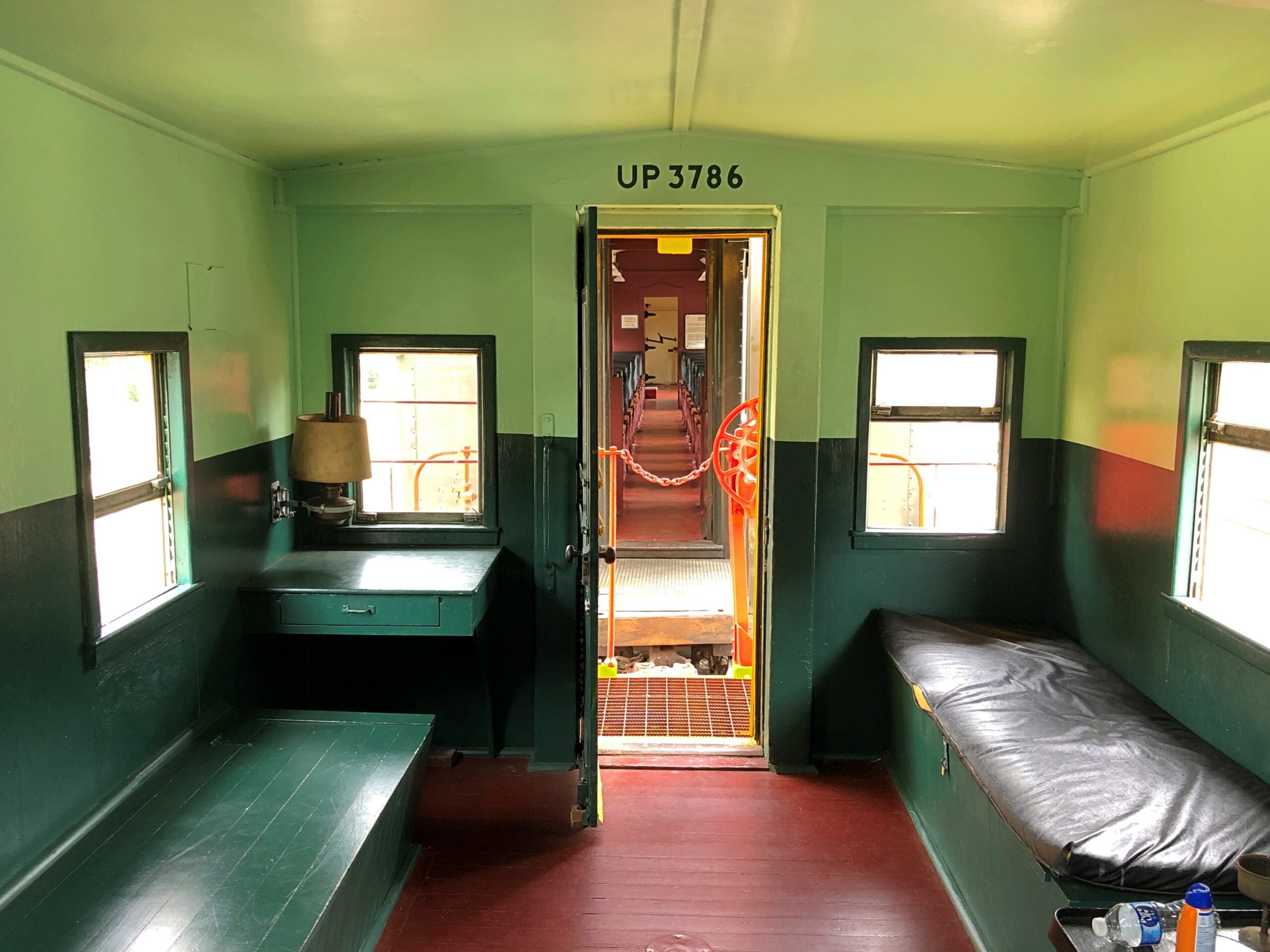
A somewhat newer caboose. We went in there, too.
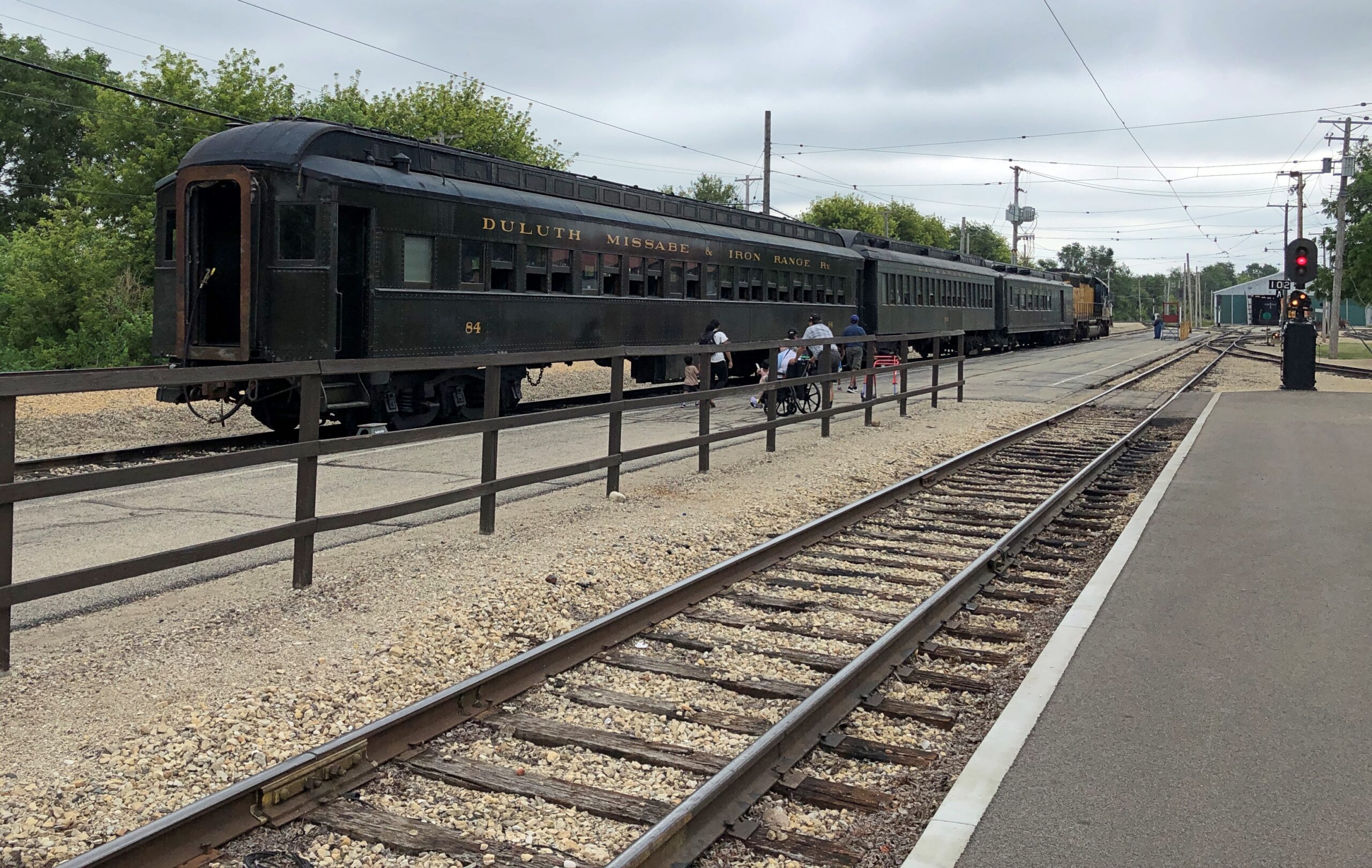
This caboose was attached to another caboose and an engine, and you could take rides. We did. I couldn’t ever remember riding in a moving caboose before, but now I have.
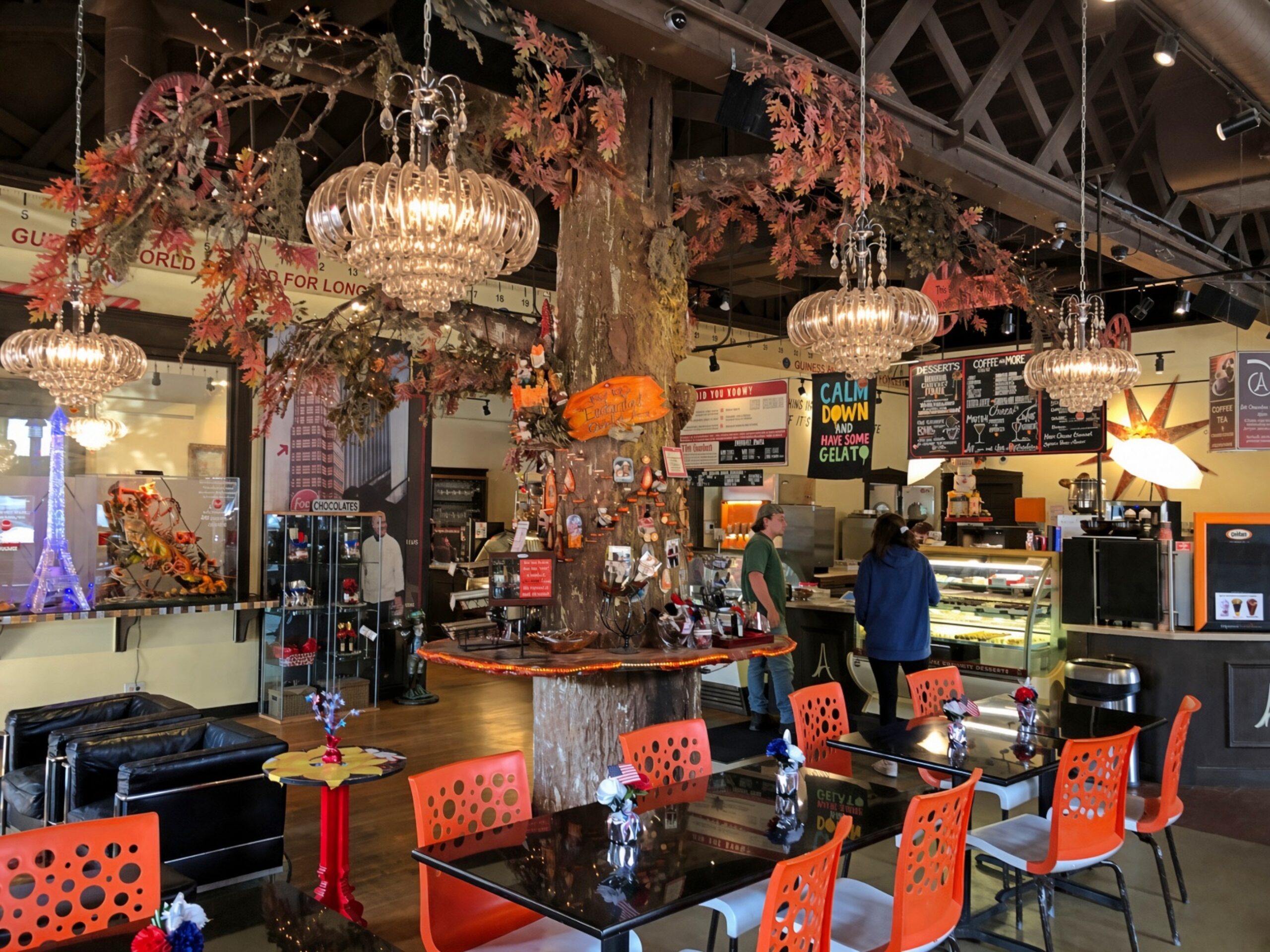
On Third Street in Geneva, Illinois, a few weeks ago, we went looking for something cold to drink, since it was a warm day. A place called Coffee, Cones & Cabernet looked like it might provide something refreshing, and it did: iced coffee for Yuriko and lemonade – really good lemonade – for me. We weren’t in the market for the cone or cabernet part of the equation at that moment, but I’m sure everything else there is good, or better, certainly to judge by the racks of chocolates behind glass or the aroma produced by a coffee maker.
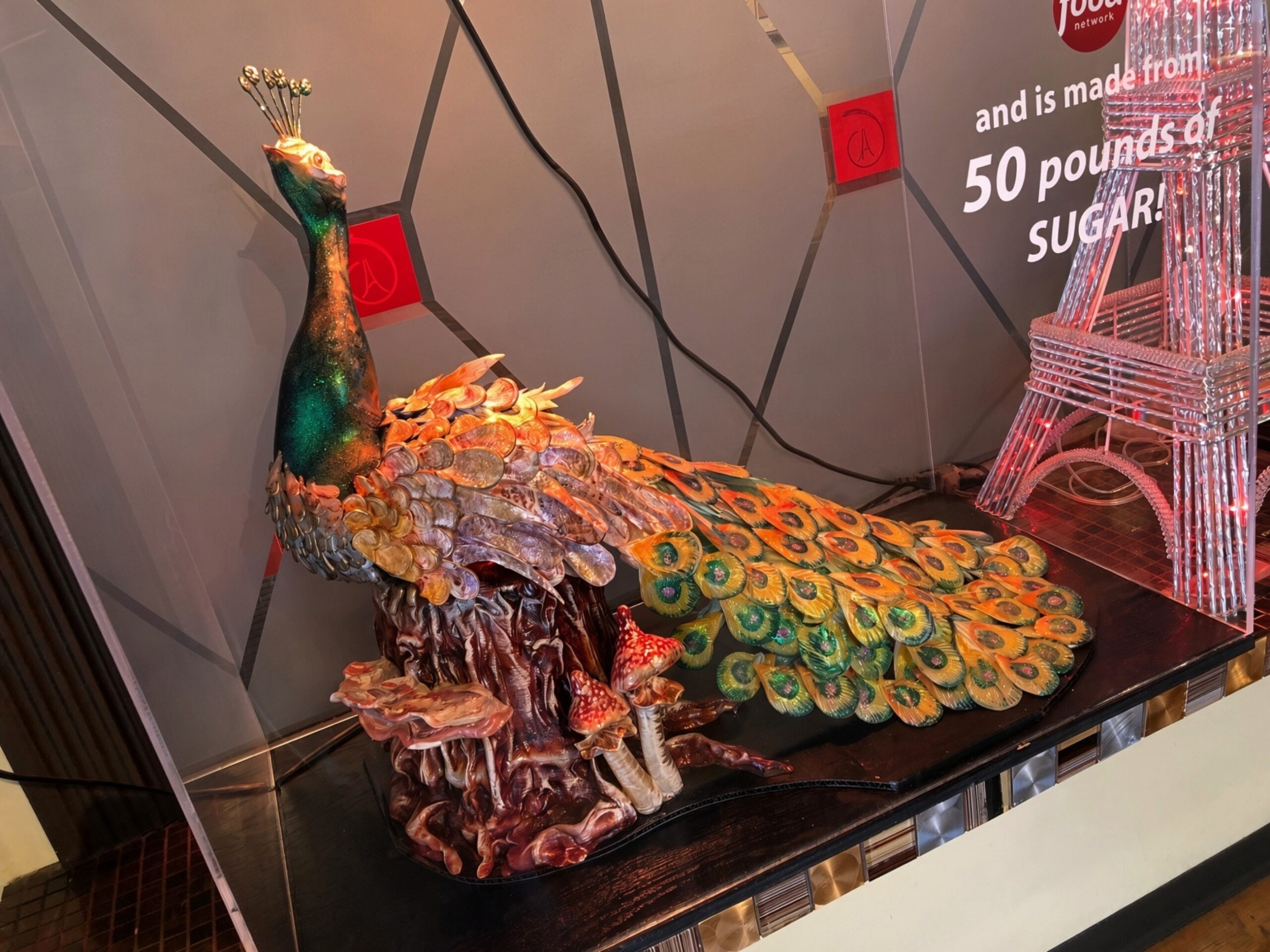
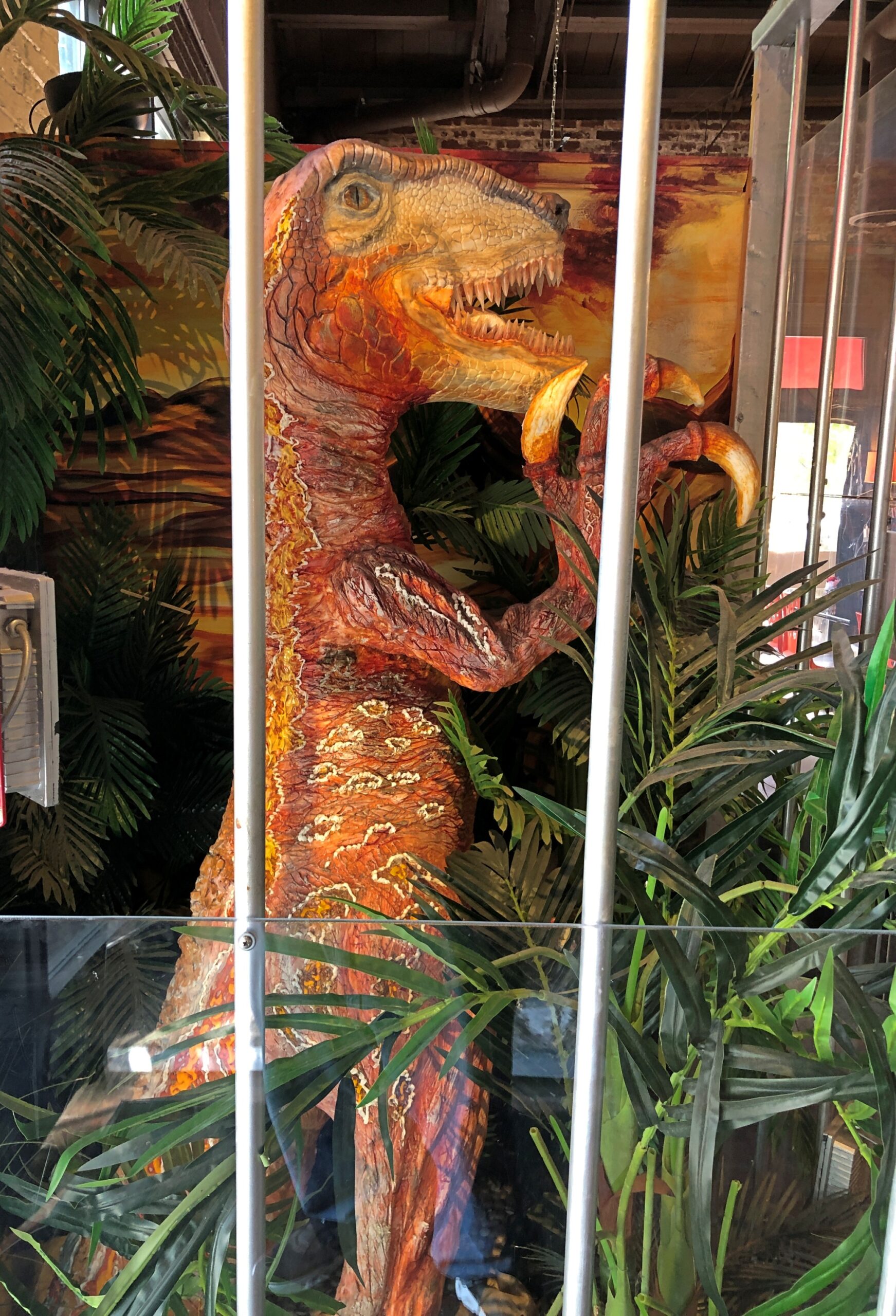
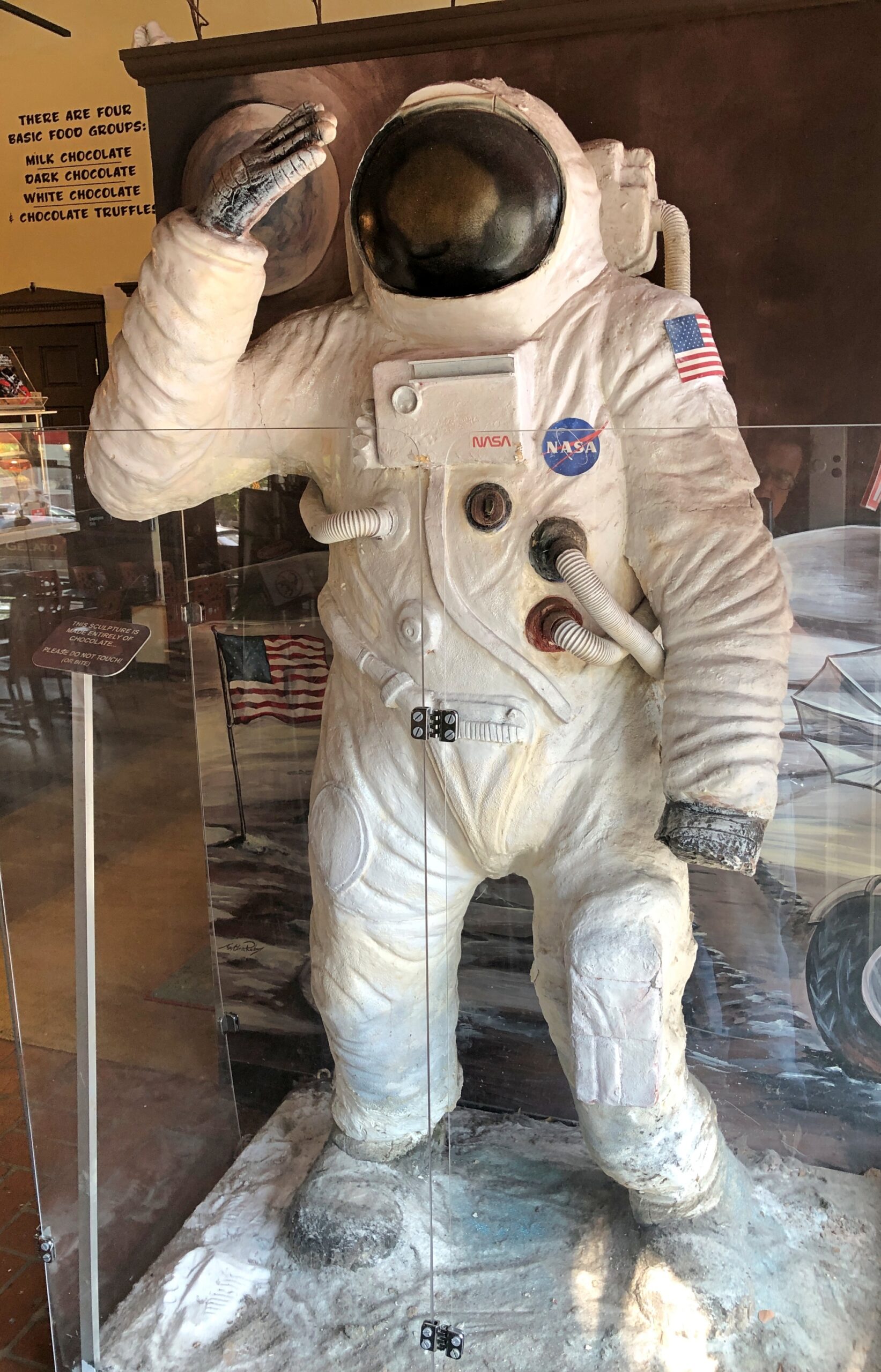
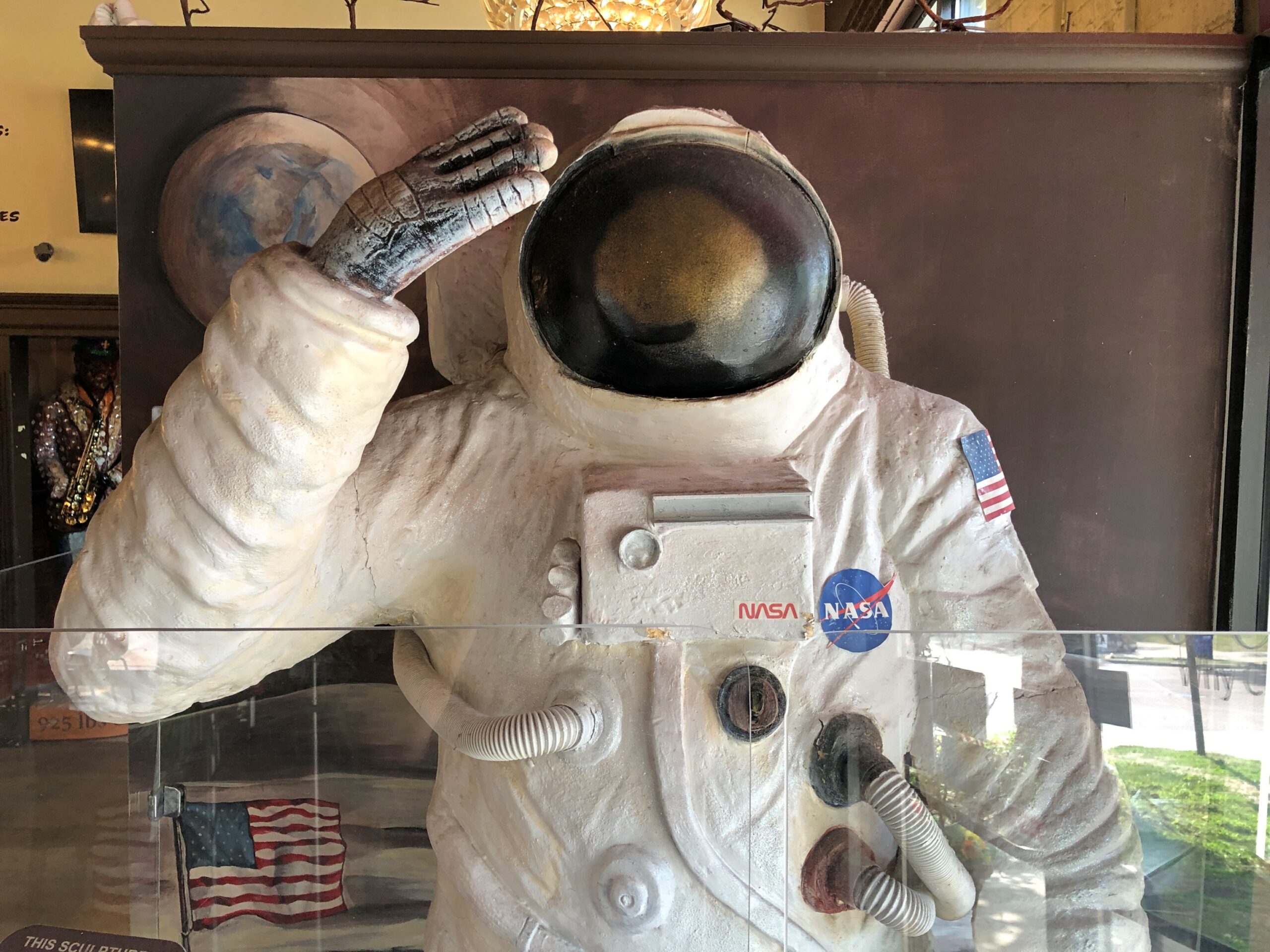
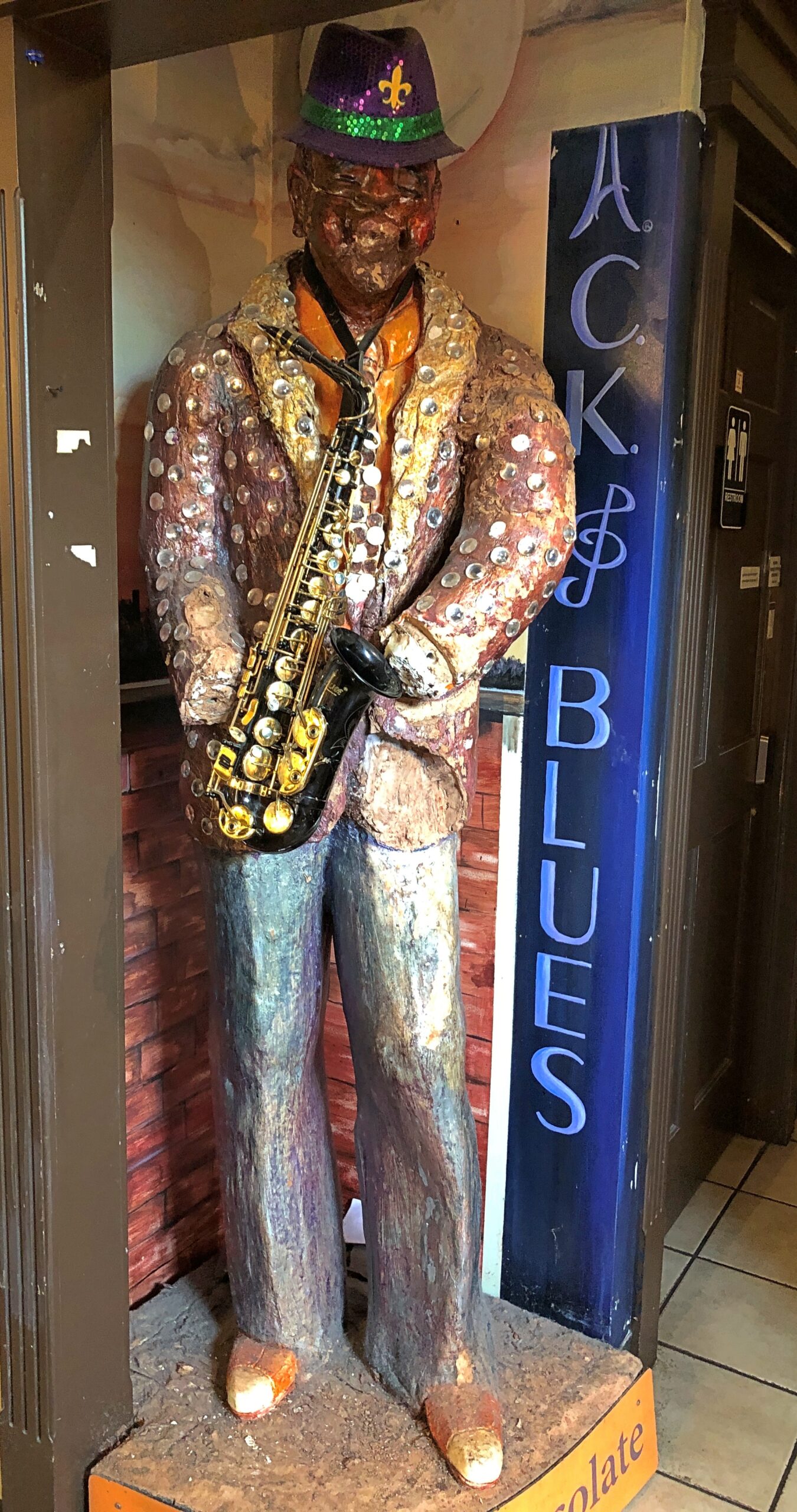
When selling luxury comestibles, retailers are at risk of a posh sameness, but there was absolutely no risk of that here. We’d stepped into the former All Chocolate Kitchen, whose legacy includes a display of sculptures around the shop: a life-sized depiction of Neil Armstrong in his moon suit, a dinosaur, a peacock, a New Orleans jazz man, and more, all made of chocolate and sugar.
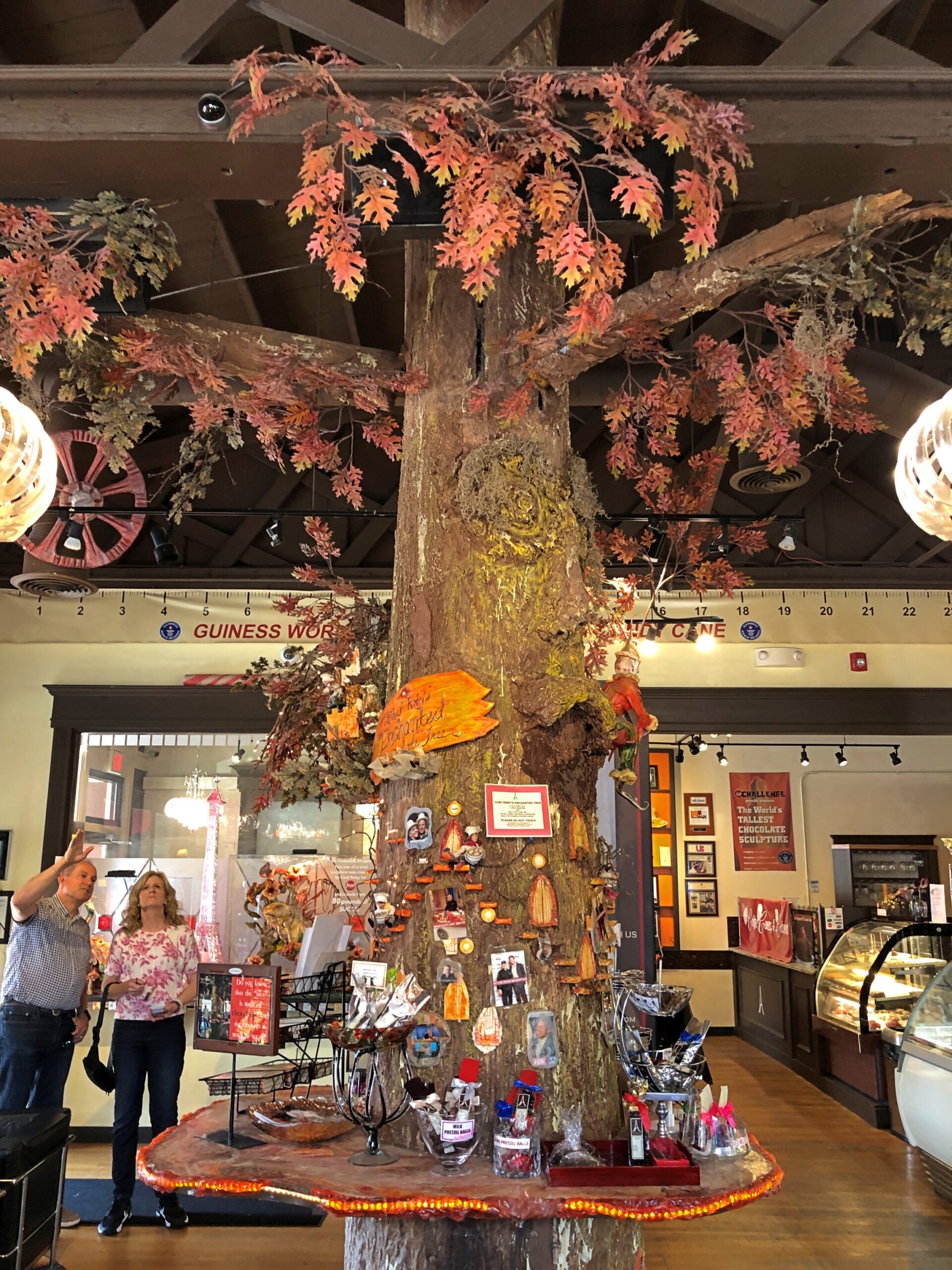
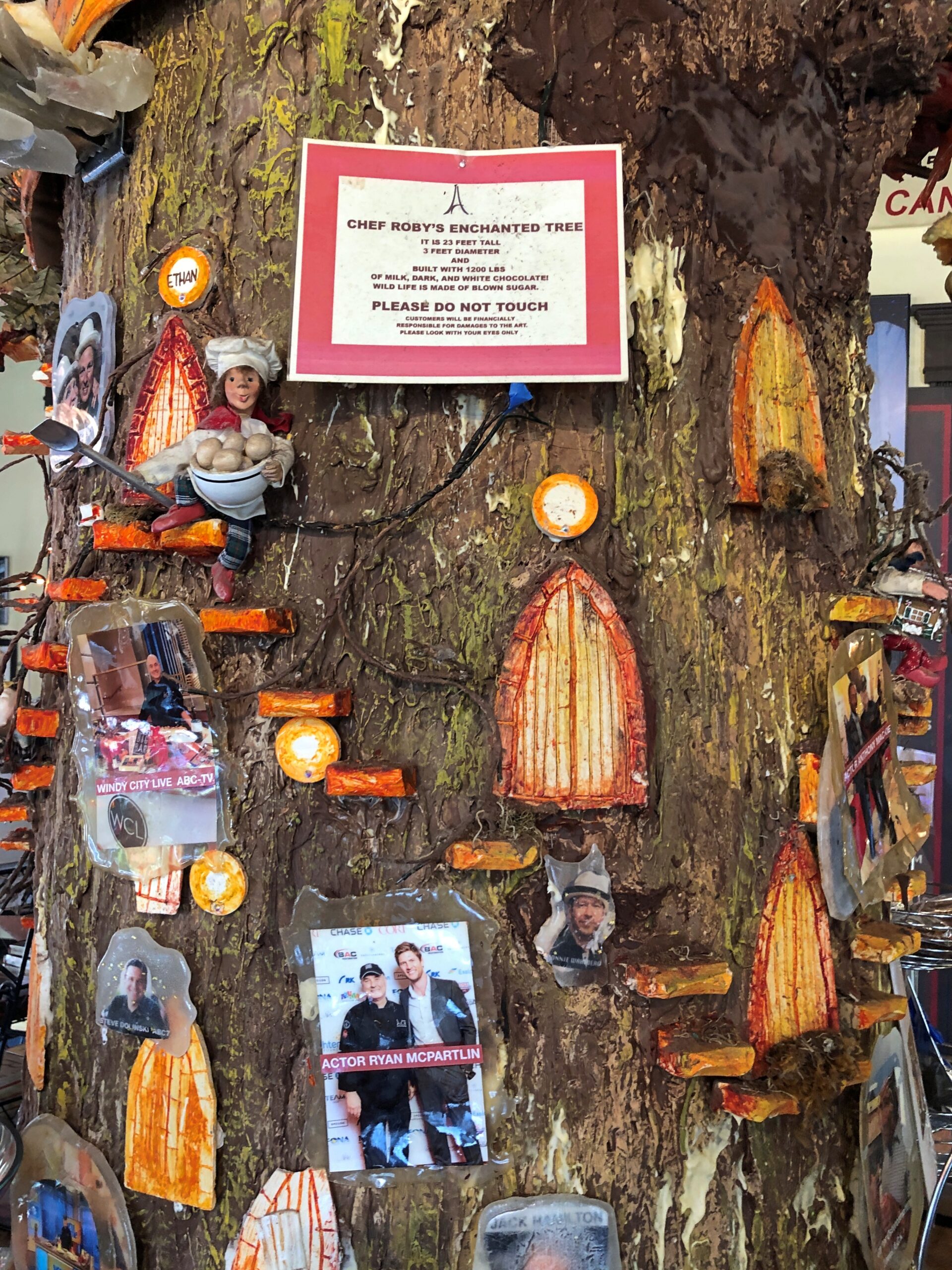
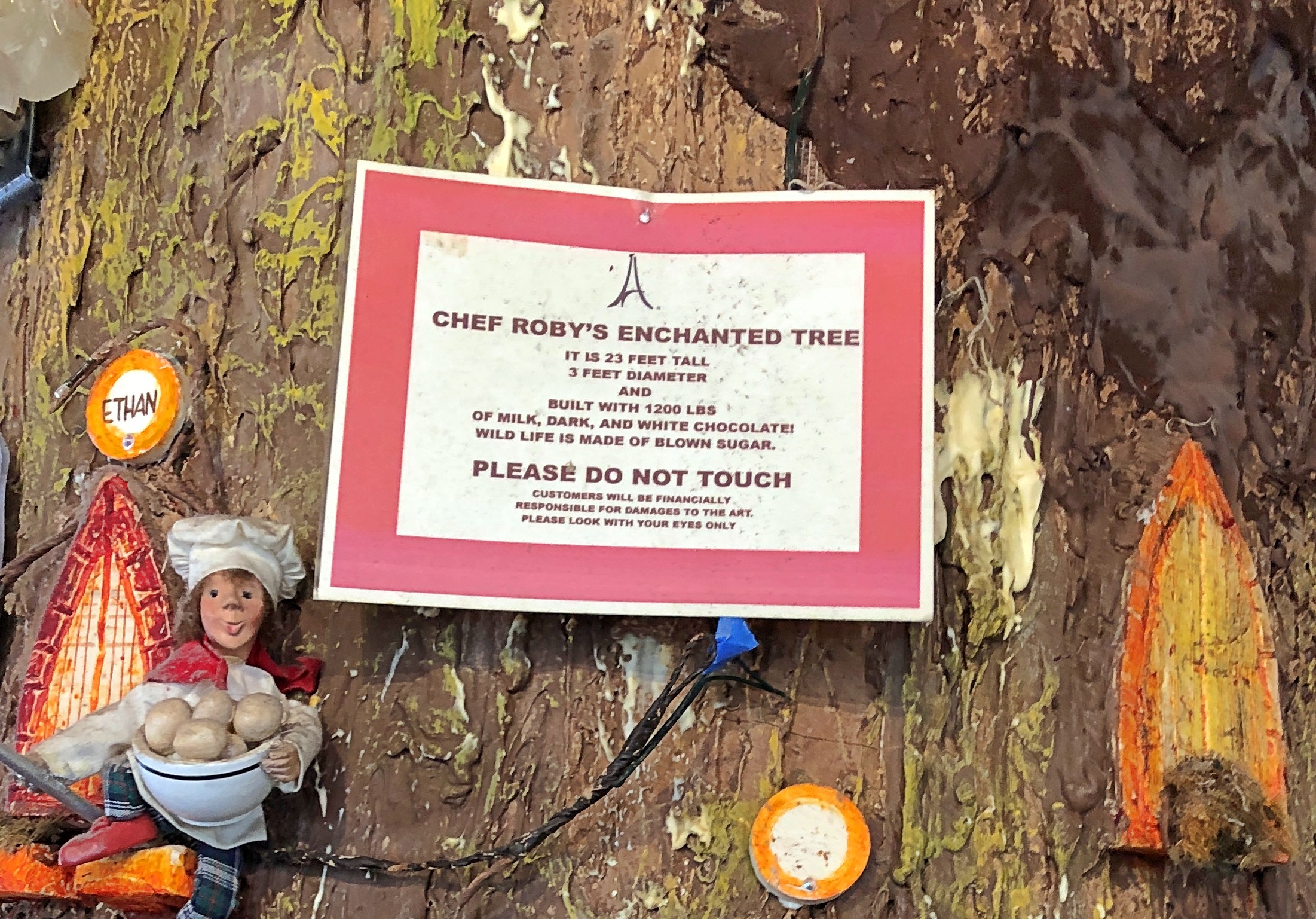
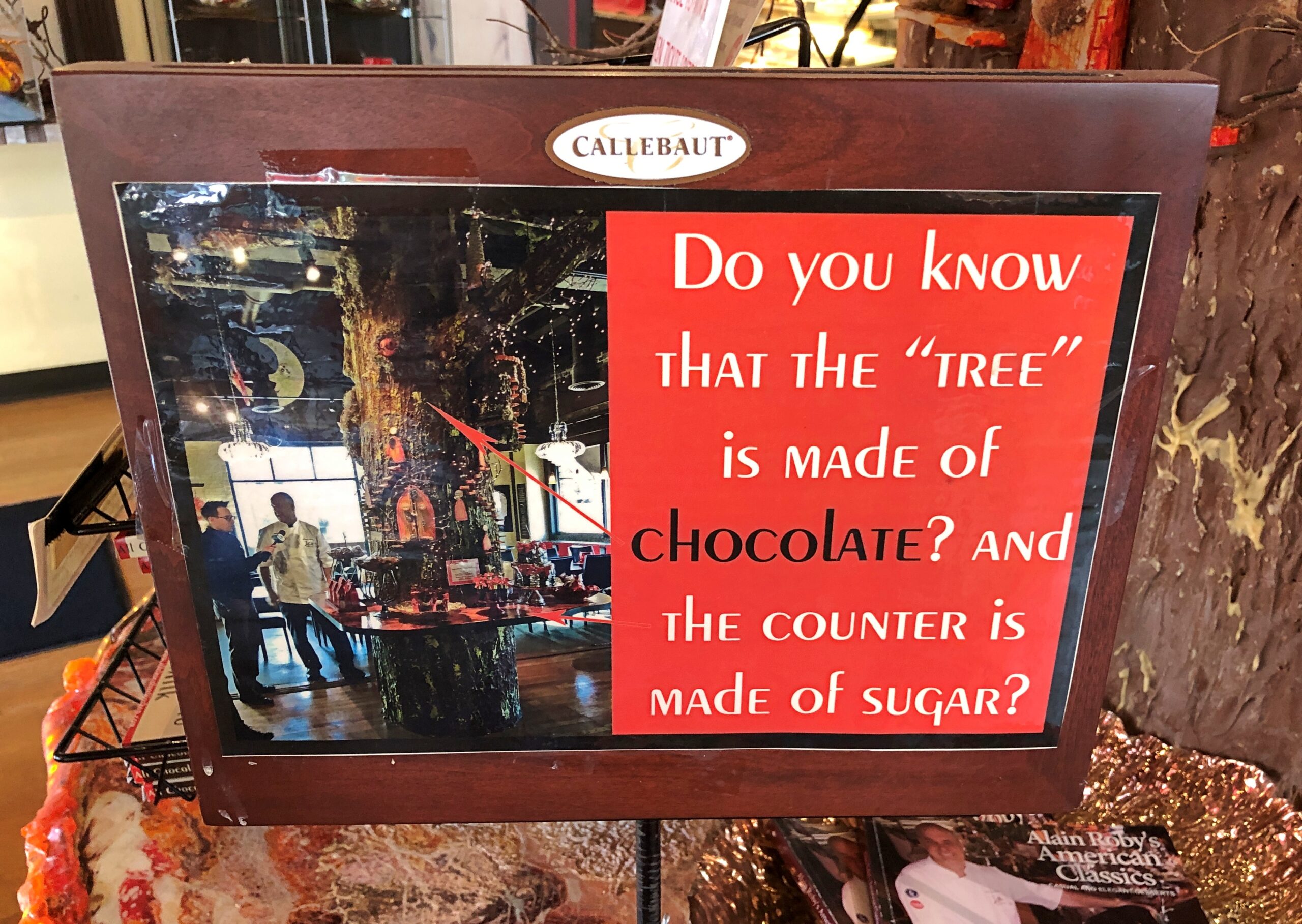
The centerpiece chocolate sculpture is an enormous tree, “Chef Roby’s Enchanted Tree, ” lording over the customer seating area at center of the shop.
A thing of awe: 1,200 pounds of dark, milk and white chocolate, 23 feet tall and three feet in diameter. You know, as big as an actual tree. Chocolate isn’t usually accorded such permanence. I know I don’t think of it that way.
No samples, please.
Sugar is also a medium at this unusual gallery.
The shop changed hands only in November, when an employee, Marissa Kirch, bought the business from Chef Alain Roby and his wife Esther Roby when they retired.
Apparently we’d happened onto the work of Chef Roby, as famed a pastry chef as that profession has, at least to judge by his fairly long list of accomplishments and the fact that I don’t know much about that particular world. If for some reason he isn’t as famed in that world as I think he is, he should be.
“Coffee, Cones, & Cabernet continues to adhere to the recipes of Chef Alain Roby and the previous business and employees of All Chocolate Kitchen,” the shop web site says. “Chef Alain Roby is a three-time Guinness World Record holder, a world-renowned pastry chef, and an author who has made multiple appearances on the Food Network and The Martha Stewart Show.”
Being on the Food Network or rating an entry (or three! including world’s longest candy cane) in GuinnessWorld Records is all well and good, but I’d say the grand scope of Roby’s talent is nowhere more apparent than the shop itself. We can start small – which isn’t small at all, considering the effort that must have gone into it – and work up from there.
A 50-lb. sugar peacock.
A chocolate dinosaur behind electrified bars. I’m sure you’d get an unpleasant but mild shock, but even so that’s a first at a chocolate shop. Or any kind of shop. I didn’t test it.
Neil Armstrong, bold explorer, done in white chocolate. Looking a little unnerving close up, to be honest, but still, quite the work.
Says blues in the background, but I’m reminded of jazz.
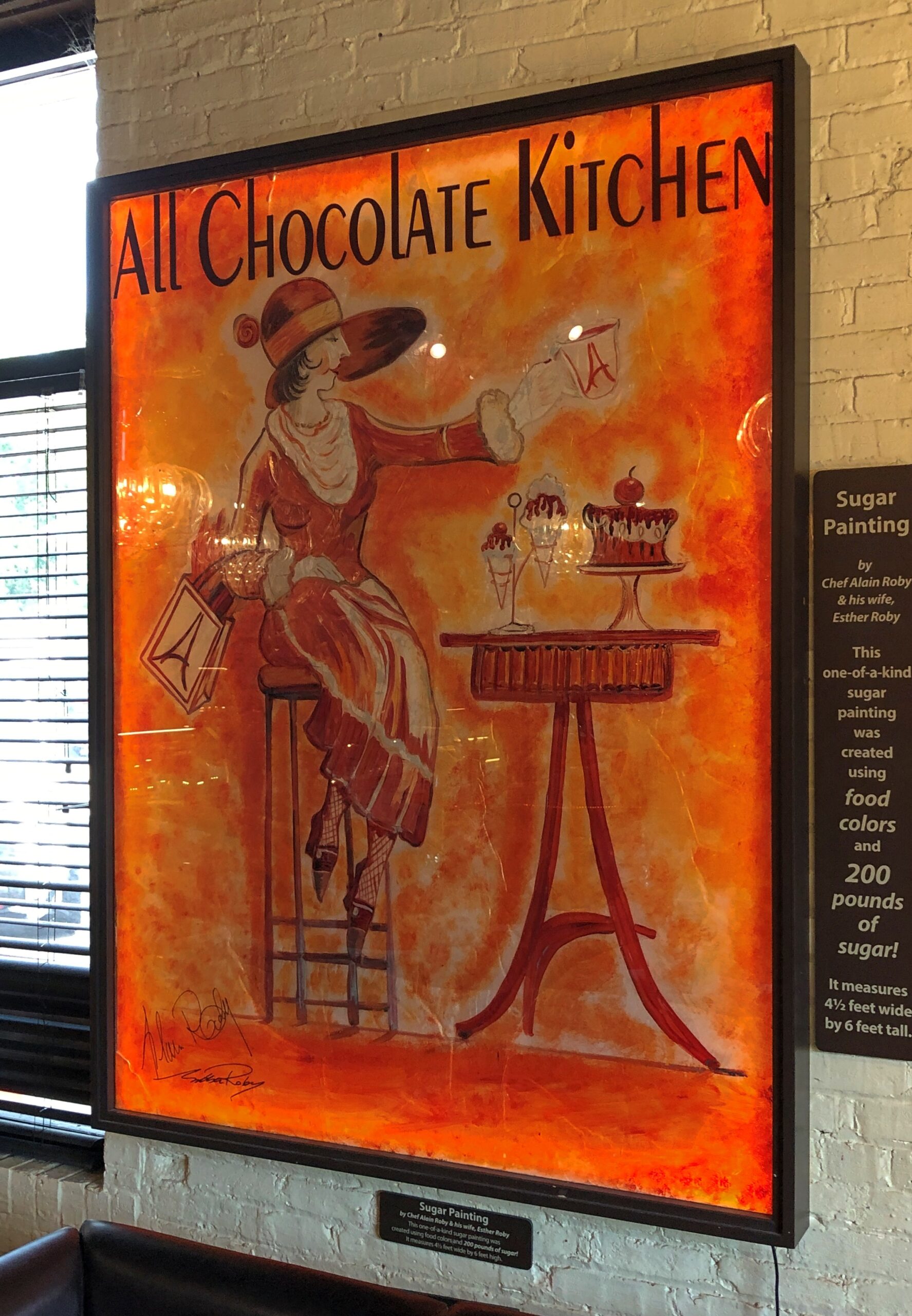
An homage to the shop itself, in sugar and food coloring.
We lounged around a little while, savoring our respective beverages, and enjoying the fact that the shop was about 15 degrees F. cooler than the outside. It occurred to me that the HVAC system has to work flawlessly during the summer. I hope it continues to do so for many summers to come.
This morning I woke from a dream briefly persuaded that there had been a crossover TV show combining Star Trek and Gilligan’s Island. This is the kind of idea that evaporates immediately after your conscious mind snaps back in place with the thought: no, that never happened. Sometimes, emerging from a nightmare, the feeling is relief. Other times, emerging from a good dream, the feeling is that you want more. I’m not sure what this particularly odd dream counted as.
Still, the idea isn’t quite as ridiculous as it sounds (just mostly), since those shows aired roughly during the same period. For a uncharted place in the Pacific, visitors seemed to show up with regularity on the Island, for all the good it did the castaways. Also, the Enterprise was known to travel in time somehow, especially to the 20th century, though if I were putting such a crossover together, I think it would be one of the shuttles landing on the Island.
All this only goes to show what Jung said about the unconscious. Like Camelot, it is a silly place.
***
Another fine local place to visit in the summer, or really most of the year, is Spring Valley. At Spring Valley, according to the Schaumburg Park District, “the following activities are encouraged: Walking, birdwatching, sketching and painting, photography, reading and writing, relaxing, and learning.”
We don’t do all of those, but walking is a fine thing to do, as is photography. Summer is a lush time.
Complete with its own array of flora.
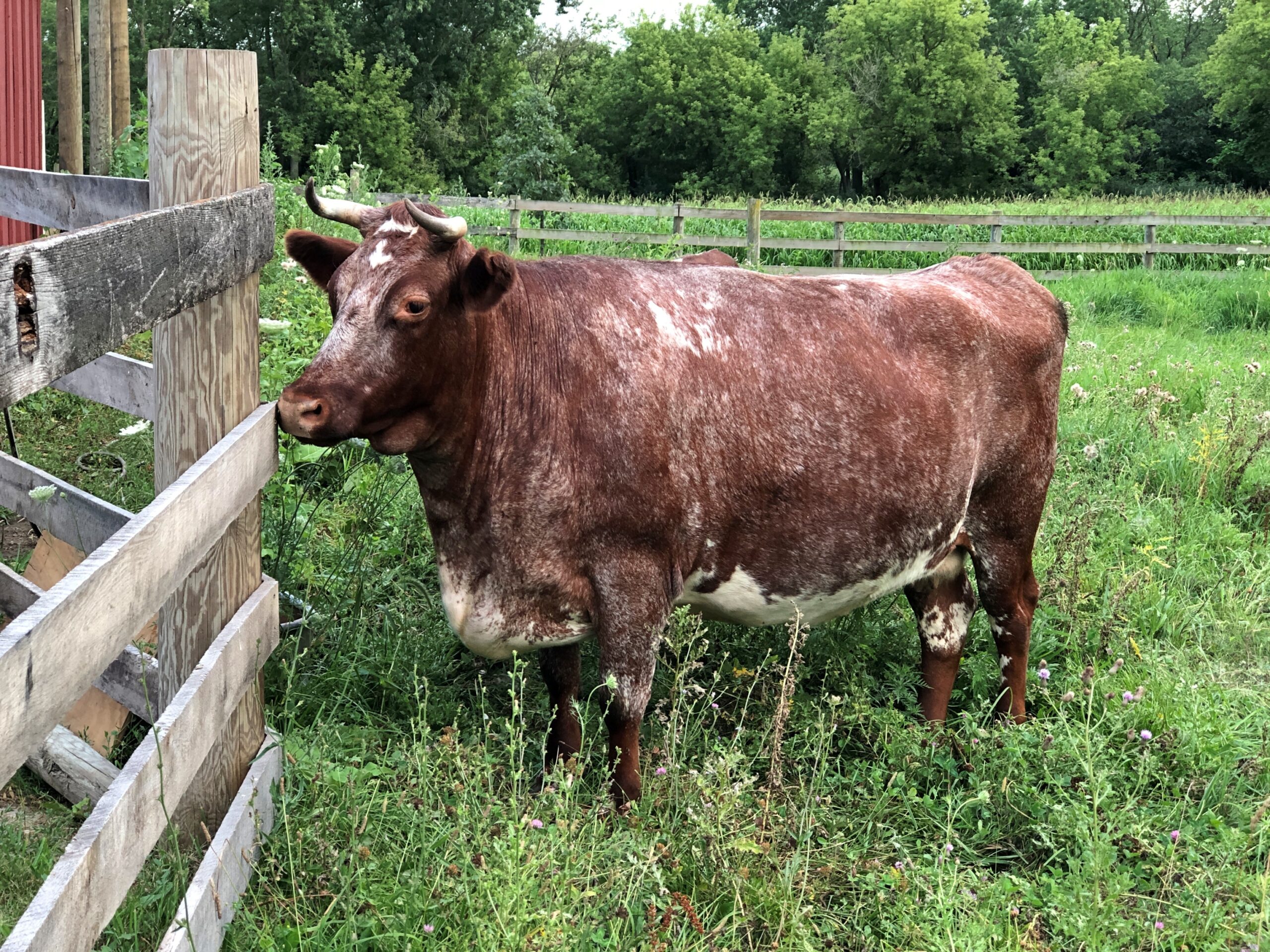
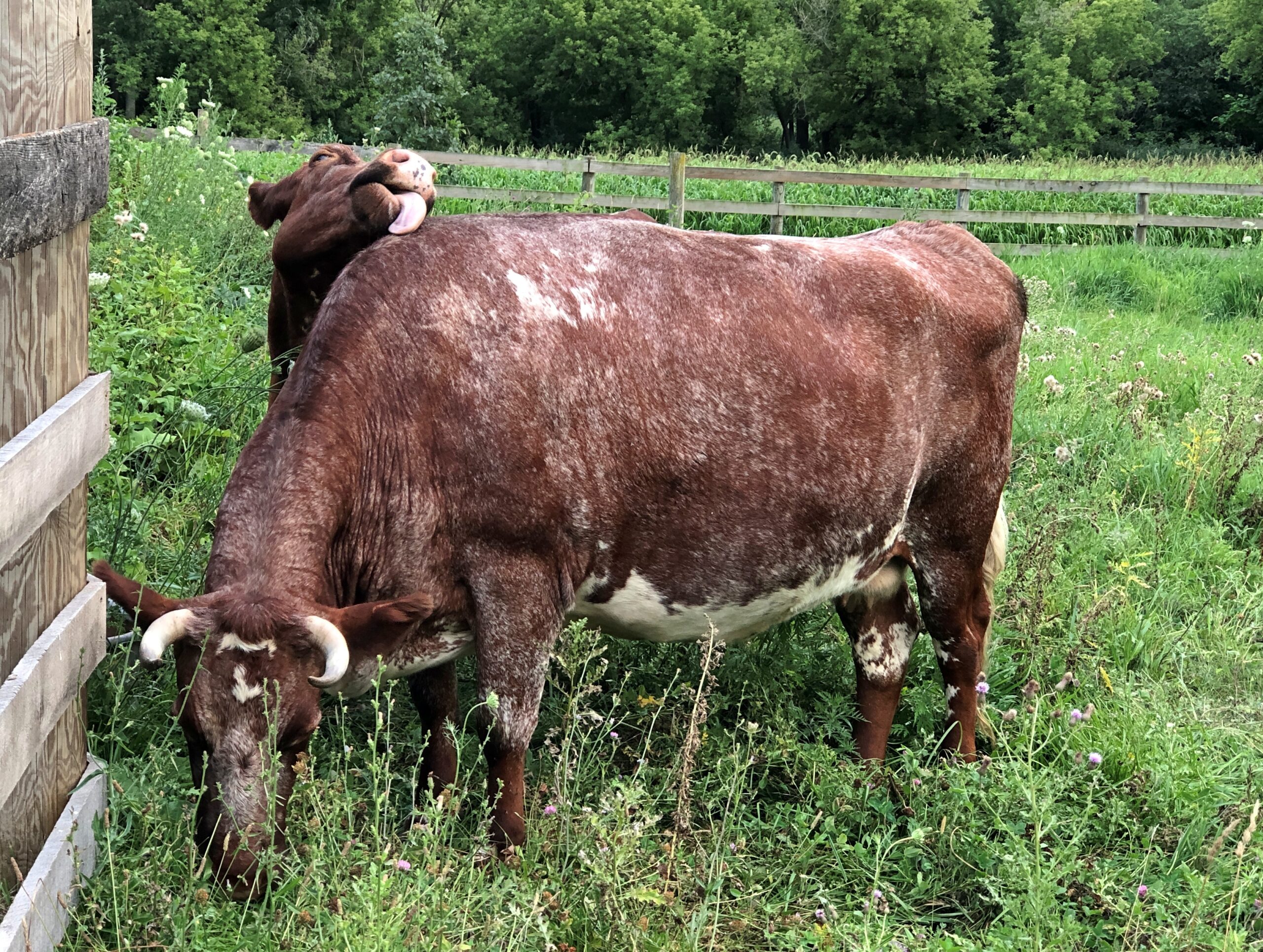
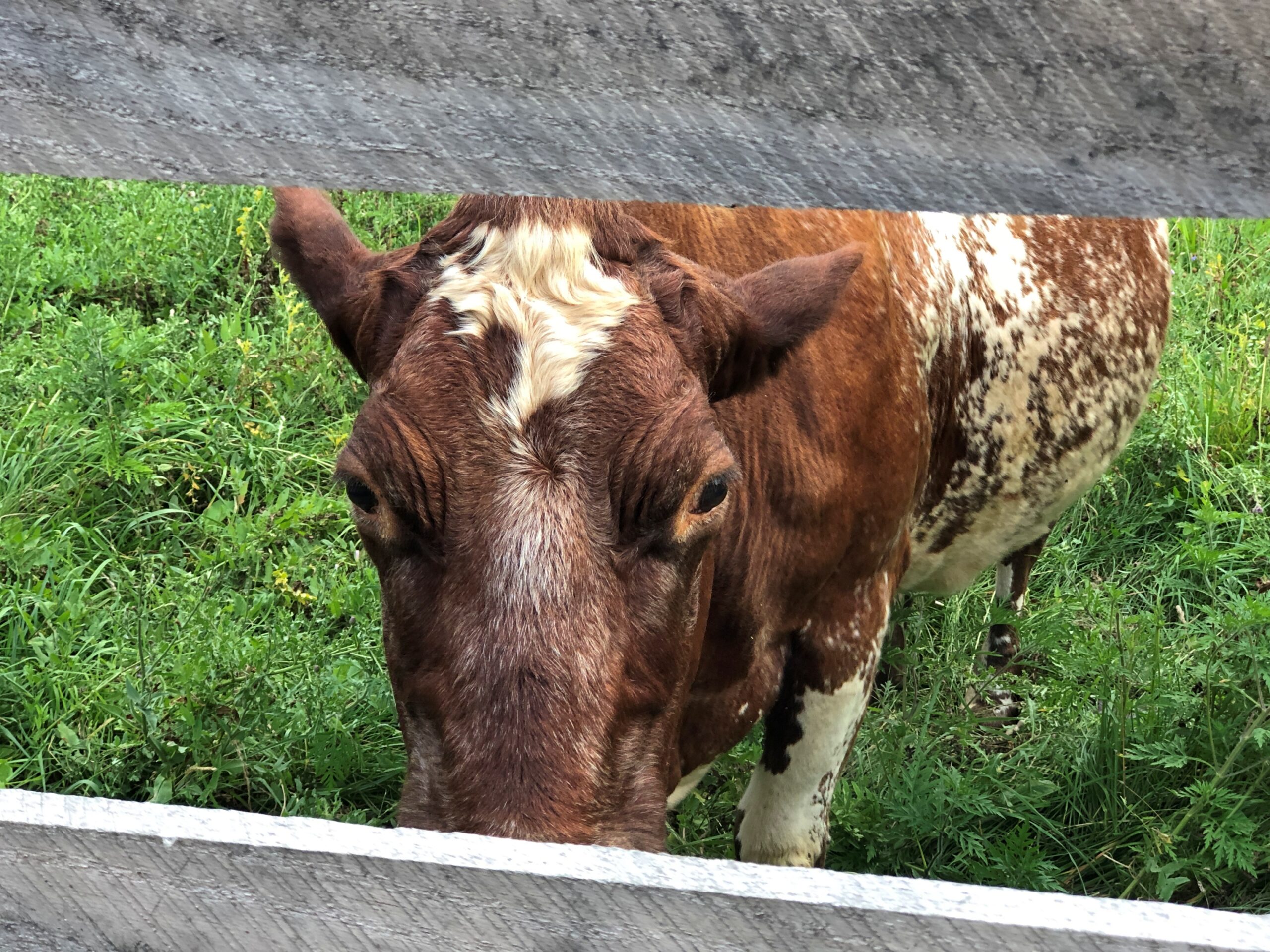
The preserve also includes a open-air farm museum, which I’ve noted before, and recently. But the time we were there in May, the animals were on vacation, or at least tucked away somewhere. In July, we got a look at the cows.
Behind fences, and a good thing too. Those beasts are massive.
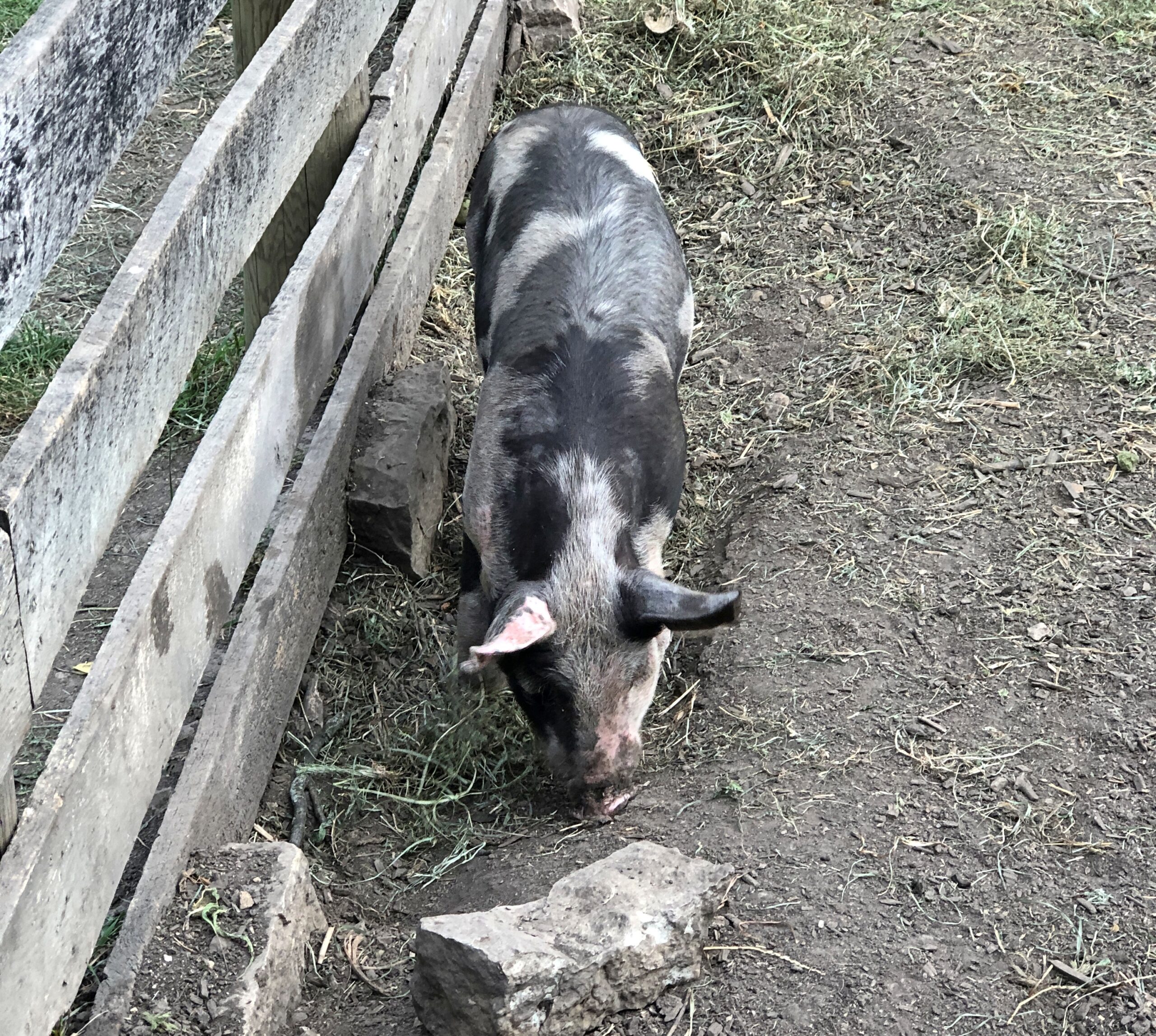
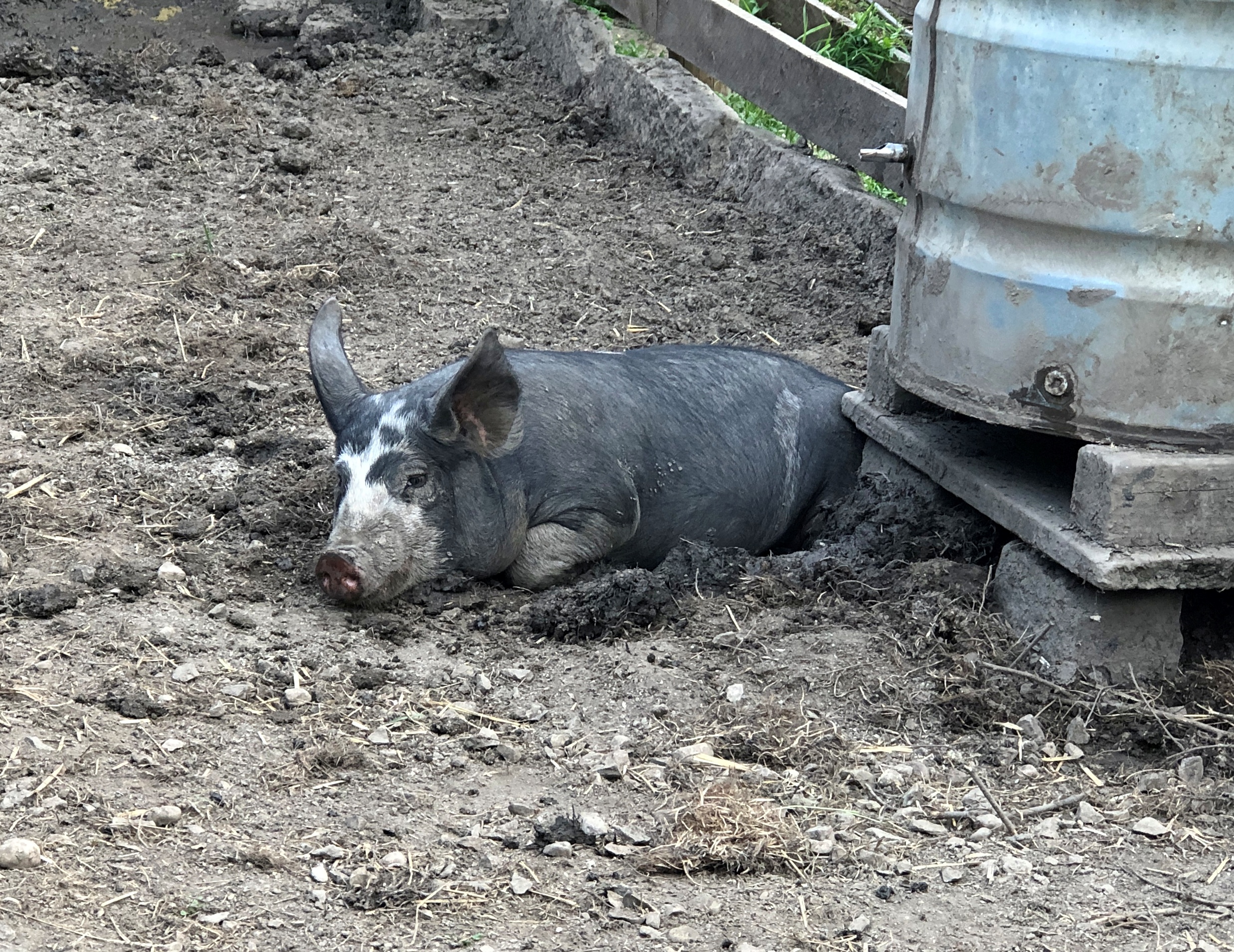
Pigs.
Also behind fences, and a good thing. Those beasts are smelly.
Yet another example of something not just for kids, though people often think that. Sure, the kiddie-winkies enjoy visiting a pseudo-farm. I can attest to that personally, having taken small children to this very place, once upon a time. But also enjoyable for us adults. If nothing else, seeing such animals up close reminds us of where our burgers and bacon come from.
How is it that, in stereotypical gendered thinking, men are supposed to have little interest in flowers? Or, put another way, how is it women are supposed to have so much?
There might be scholarly tomes on this very question, but I’m going with my usual reductionism and point to the usual suspects: Victorians, who encouraged upper- and middle-class women practice floral arrangement and paint botanical still lifes, as activities considered suitable for the fair sex, with florists and their ad men partners in the 20th century taking up the task of selling the products of a burgeoning flower-growing industry to women. So here we are.
Yet all sorts of flowers appear in heraldry, which evolved from designs on shields, helmets and crests – elements of armed combat, in other words, and what could be more manly than that? It was the Tudor rose, not the Tudor quince.
On the other hand, I’m not particularly interested in receiving a bouquet as a gift. Gender norms are pretty sticky.
Some of us have been known to name girl children after flowers. Except that her mother is also named “lily,” since the Japanese for that flower is ユリ(yuri). And I insisted that the name Lilly be distinct from the flower Lily, but of course the latter spelling is actually more common these days in the English-speaking world as a name. Ain’t language fun?
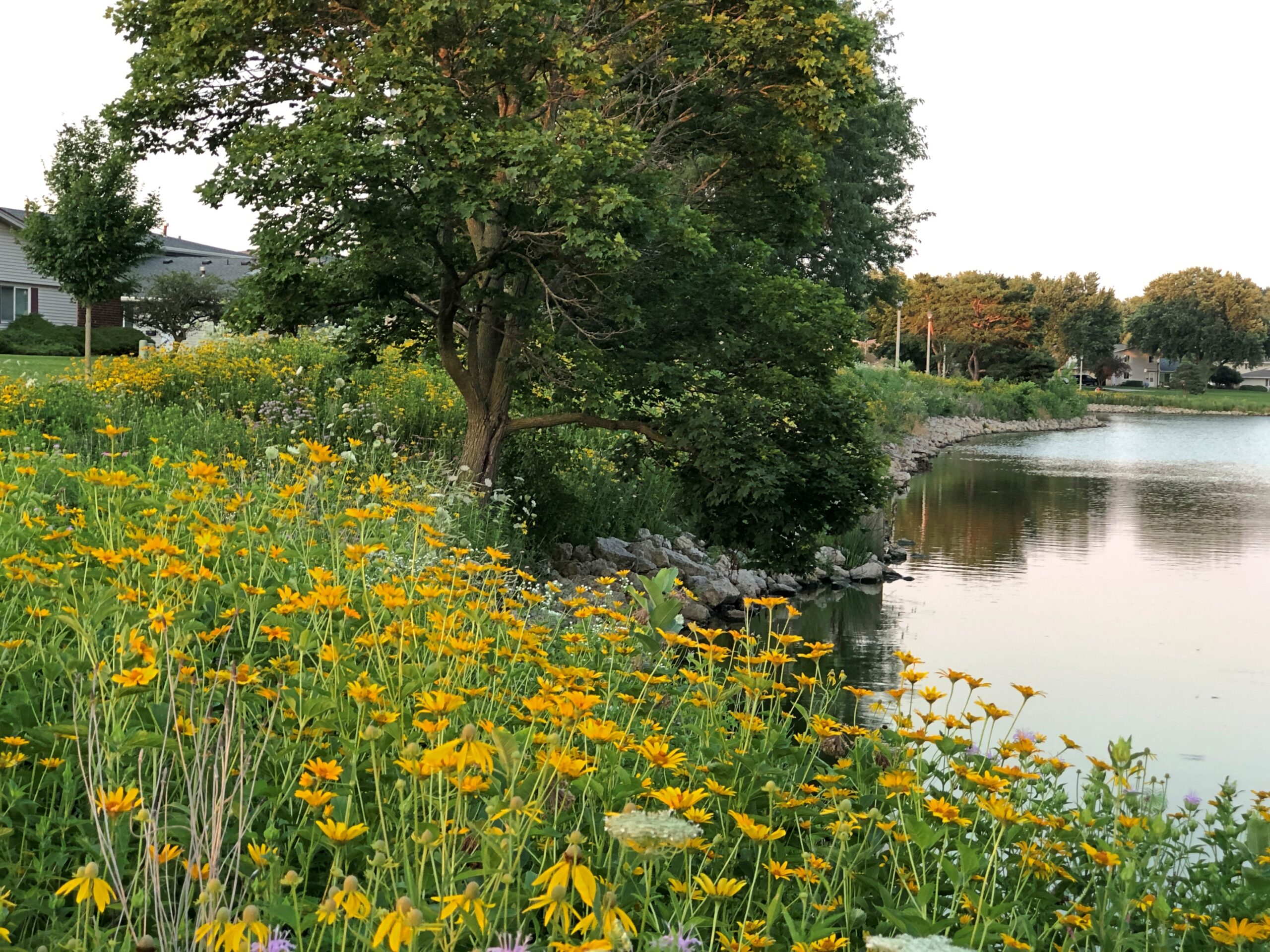
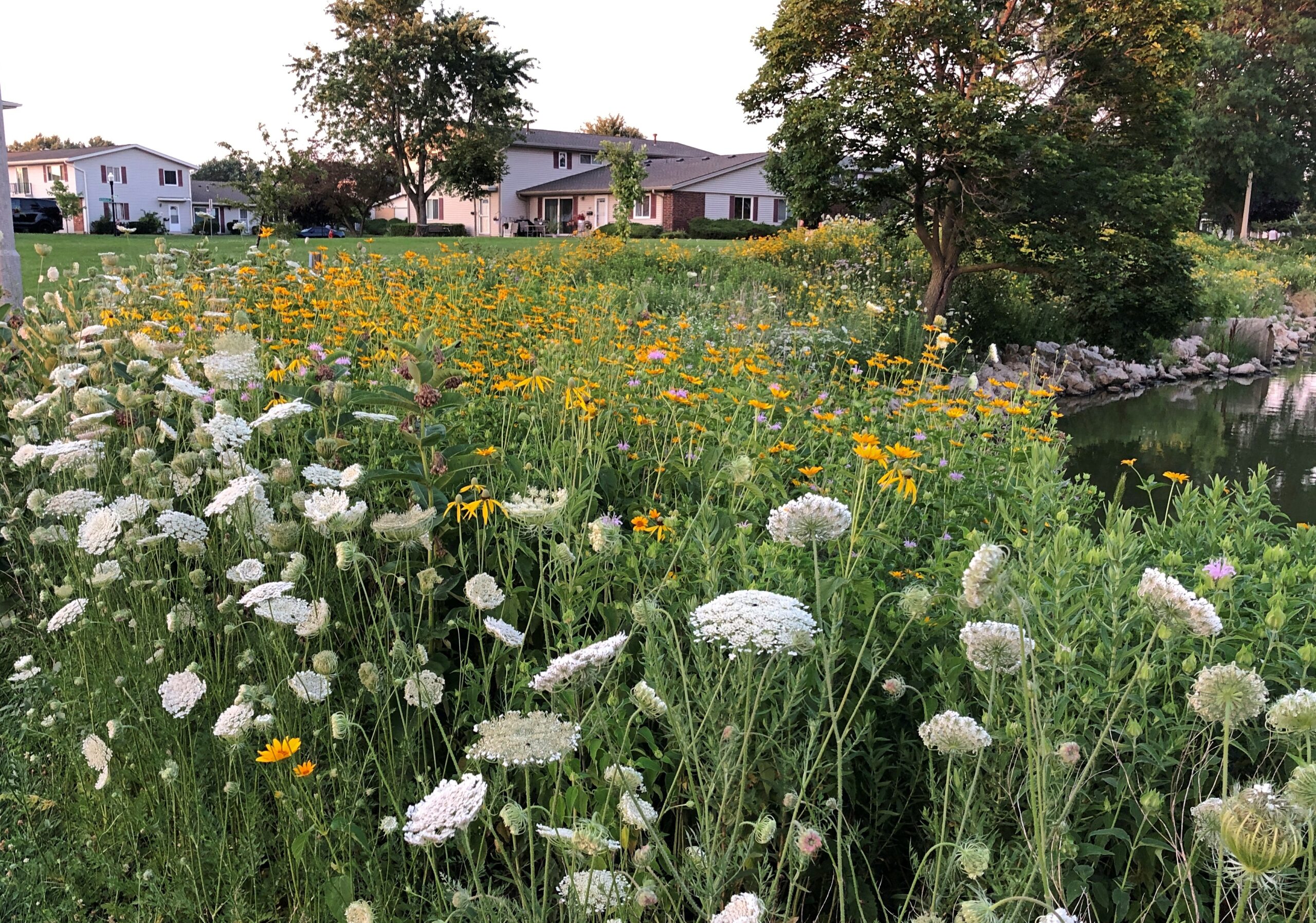
Never mind. I enjoy looking at flowers. Also, taking their pictures, since they don’t move much (except in a high wind), you don’t need their permission, and they can make highly aesthetic images. Not long ago we visited Volkening Lake in Schaumburg, as we often do, and July is an especially good time and place for flowers there. Such as along the shore.
Through the marvel of Google Images — something I didn’t really appreciate until recently — I can look up which flower is which, including common and scientific names.
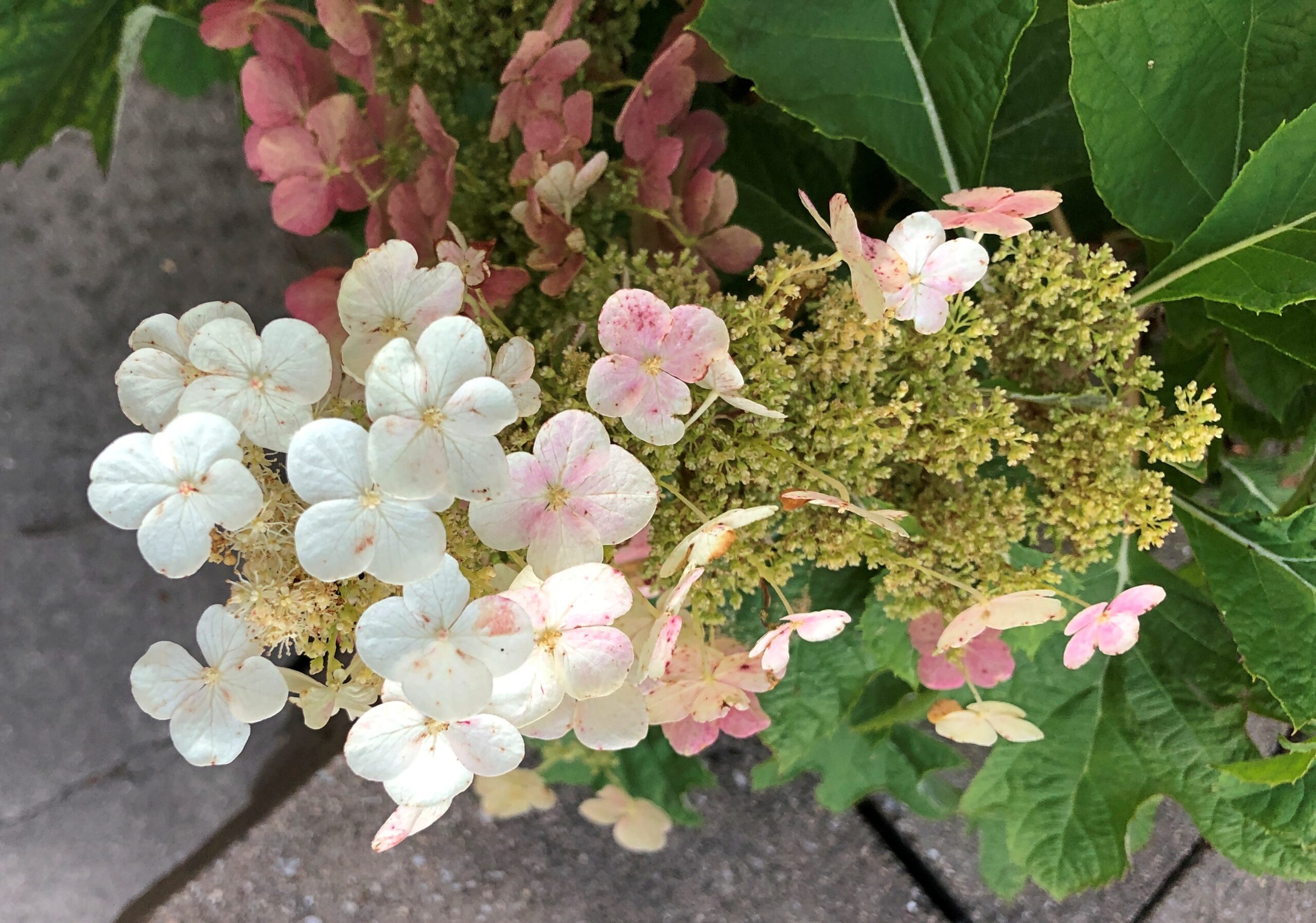
Such as Oakleaf Hydrangea (Hydrangea quercifolia).
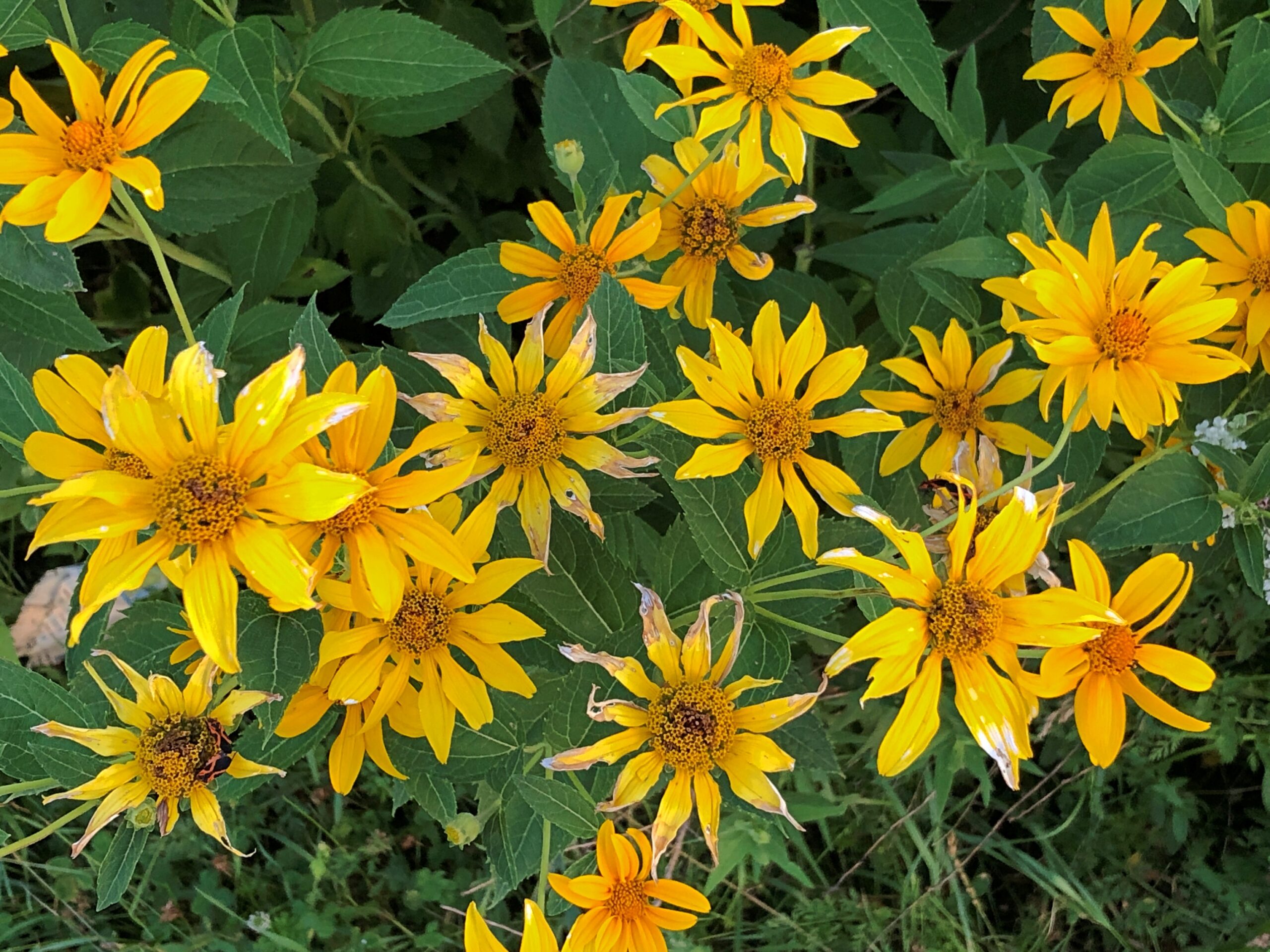
Smooth Oxeye (Heliopsis helianthoides), also known as the False Sunflower. I can see that.
Bergamot or — and this is a fine alternate common name — bee balm (Monarda fistulosa).
Ironweed flower (genus Vernonia).
I liked this one so much I played around with the image. Reminds me of something you might see in the distant reaches of space. AI Prompt: Refashion into a nebula. So you have it: The Ironweed Nebula.
One I knew: Queen Anne’s Lace. But not the scientific name (Daucus carota). I didn’t know it’s the wild carrot. One of the most common flowers of summer around here, though not originally native to North America. Our back yard is lousy with them.
Near the lake are some flower beds. I knew this one, too: Marigolds (Tagetes erecta).
But not New Guinea Impatiens (Impatiens hawkeri), though if I remember right, my mother was fond of them.
Or the Globe Amaranth or Button Flower (Gomphrena globosa).
AI Prompt: Refashion as stars being born in a nebula.
The Button Flower Nebula. Not especially celestial, but nice to look at.
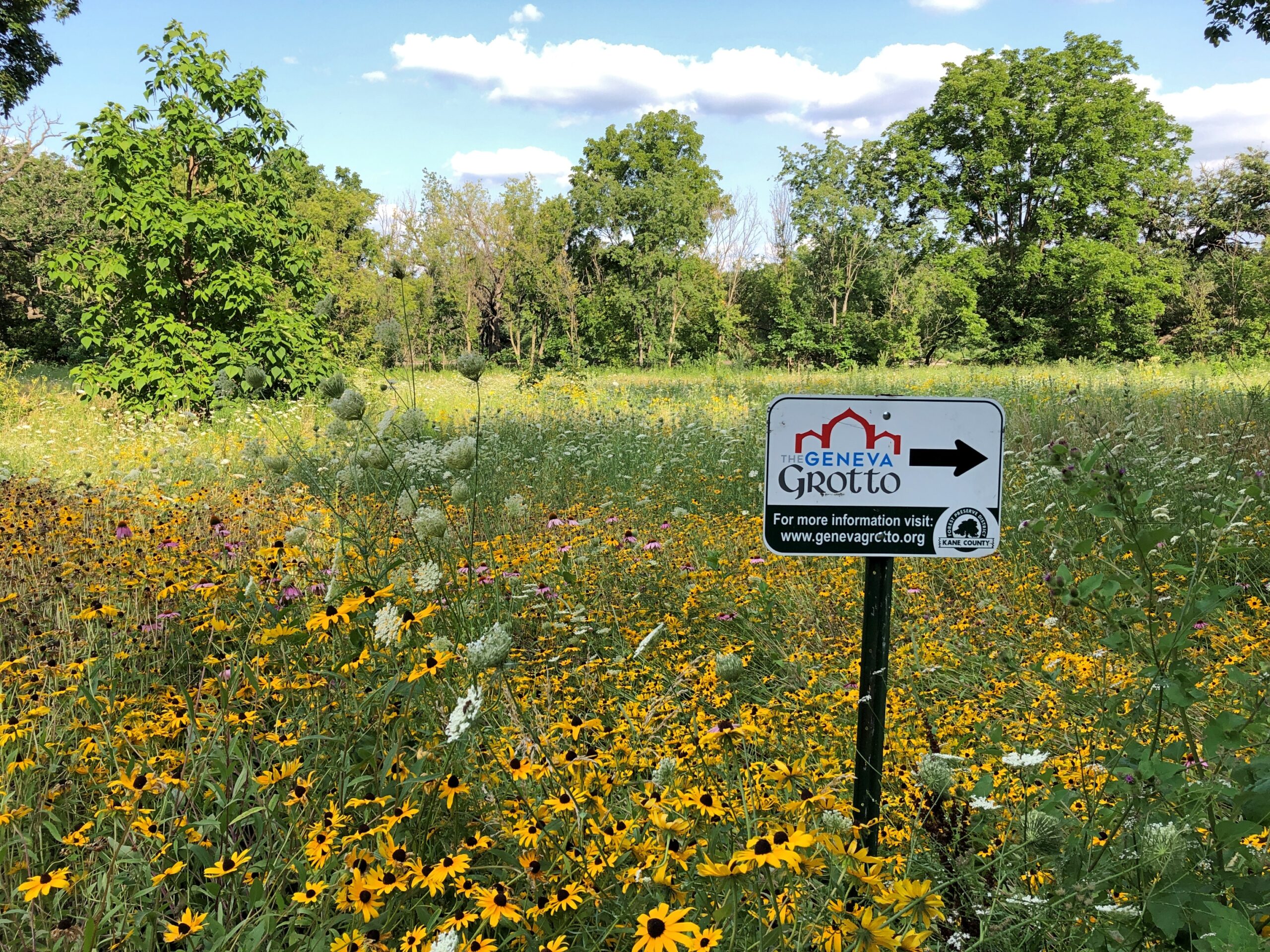
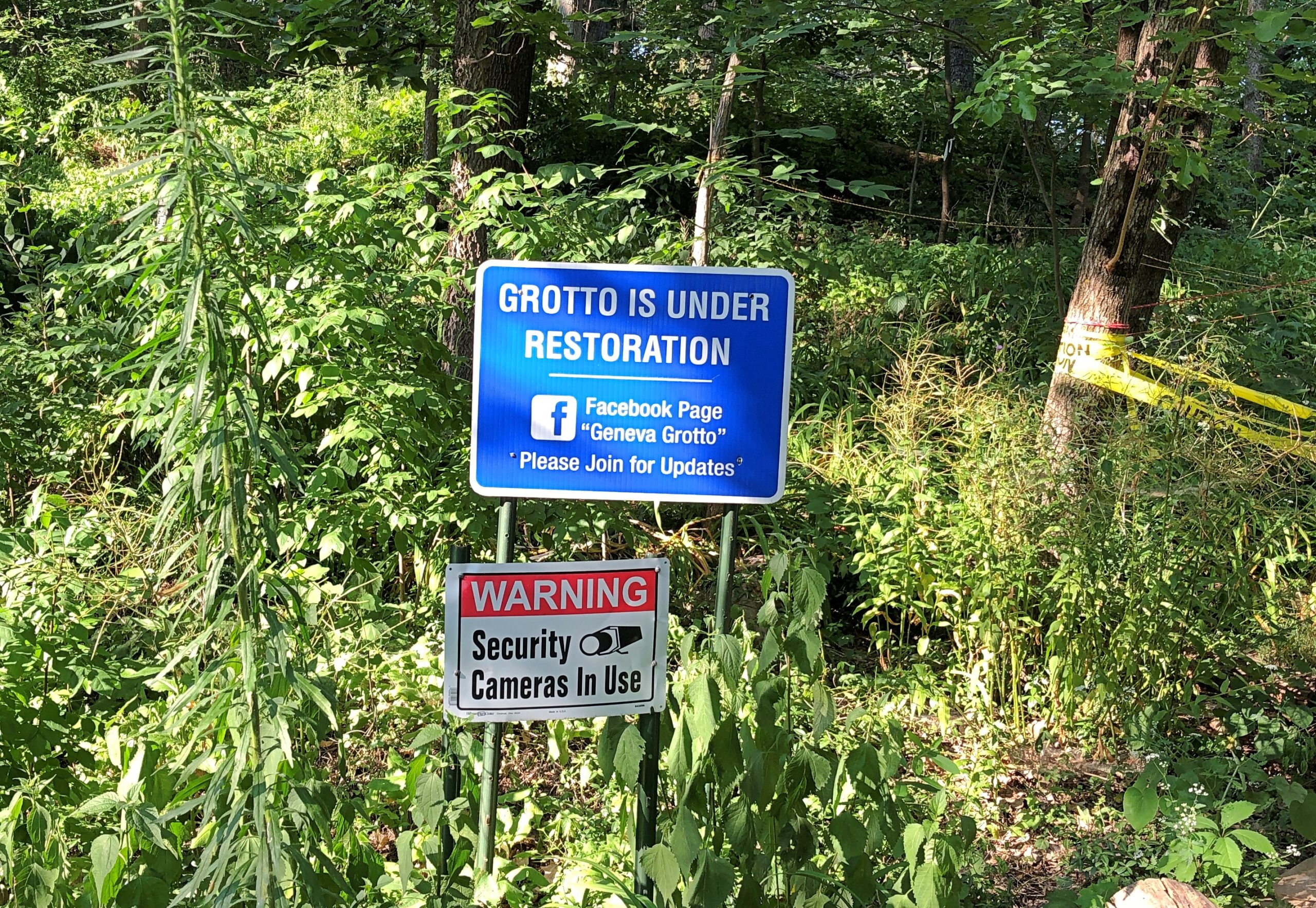
I don’t know about anyone else, but when I see something like this, I’m intrigued. The Geneva Grotto, you say?
Barring an obvious hazard – and there weren’t any, unless you count the possibility of mosquitoes carrying some disease yet unknown to science – that’s the kind of thing that bears further investigation. So toward the end of our most recent visit to Geneva, Illinois, we followed the sign, which is next to a parking lot in the Gunnar Anderson Forest Preserve on the Fox River, behind the Kane County Government Center.
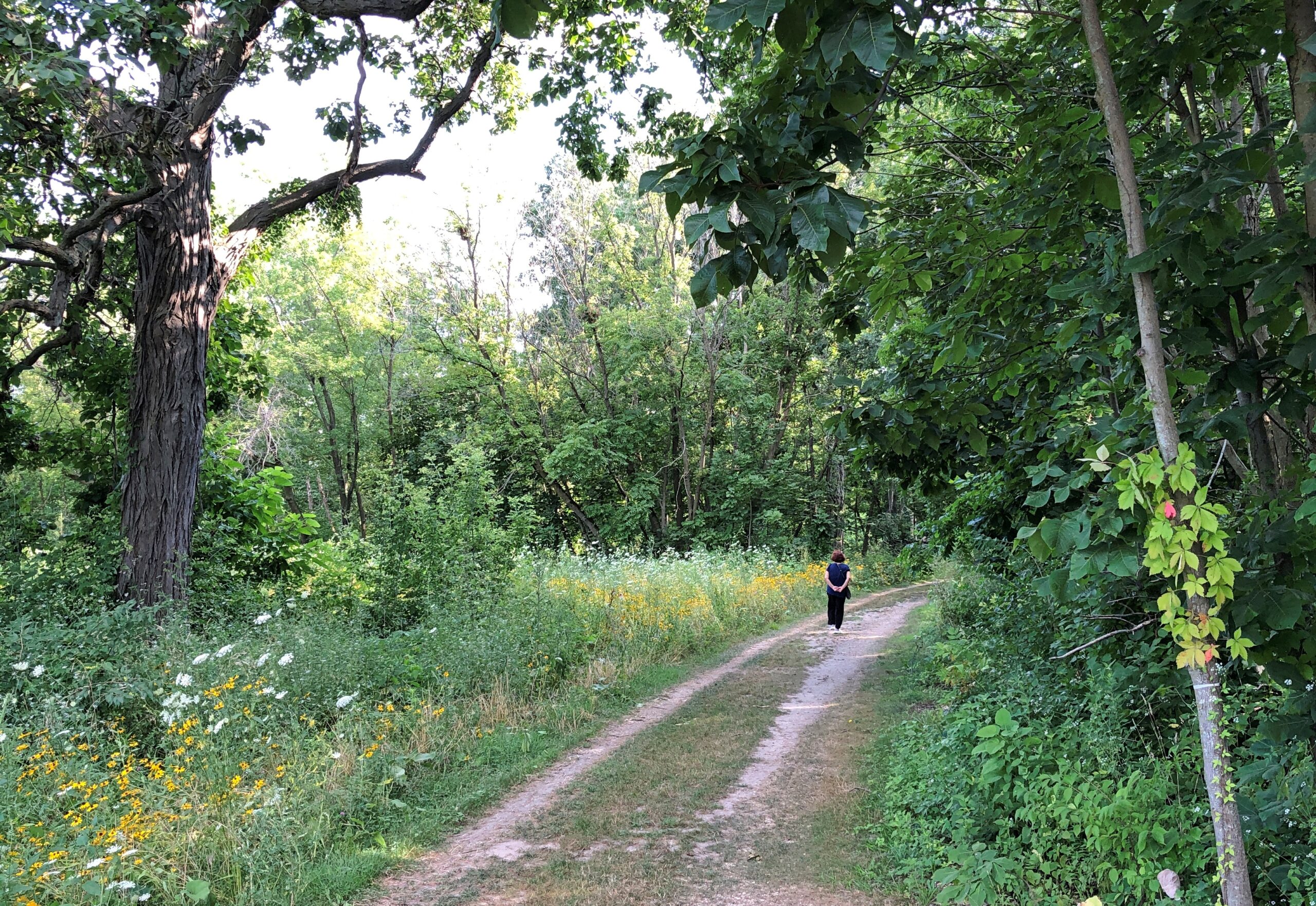
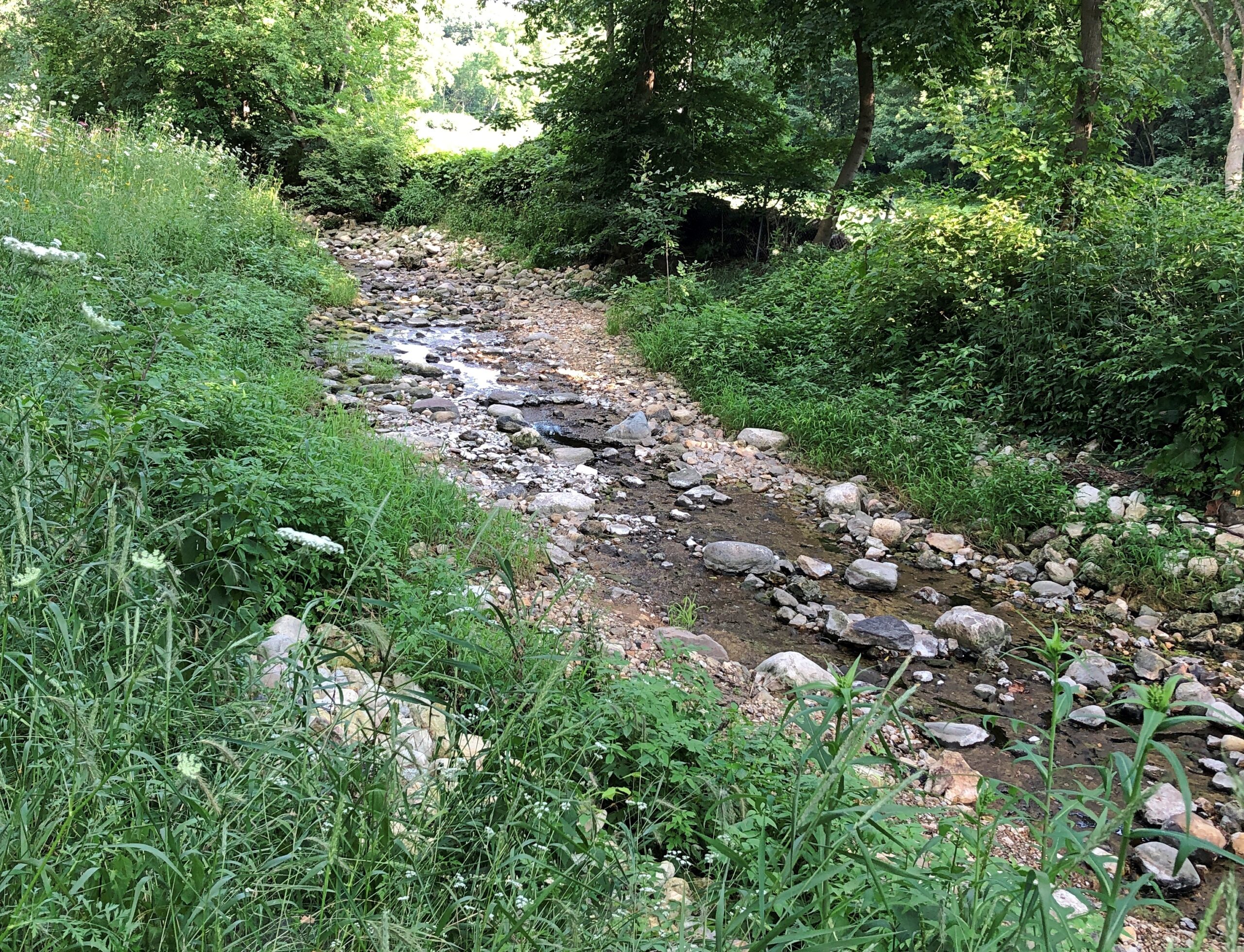
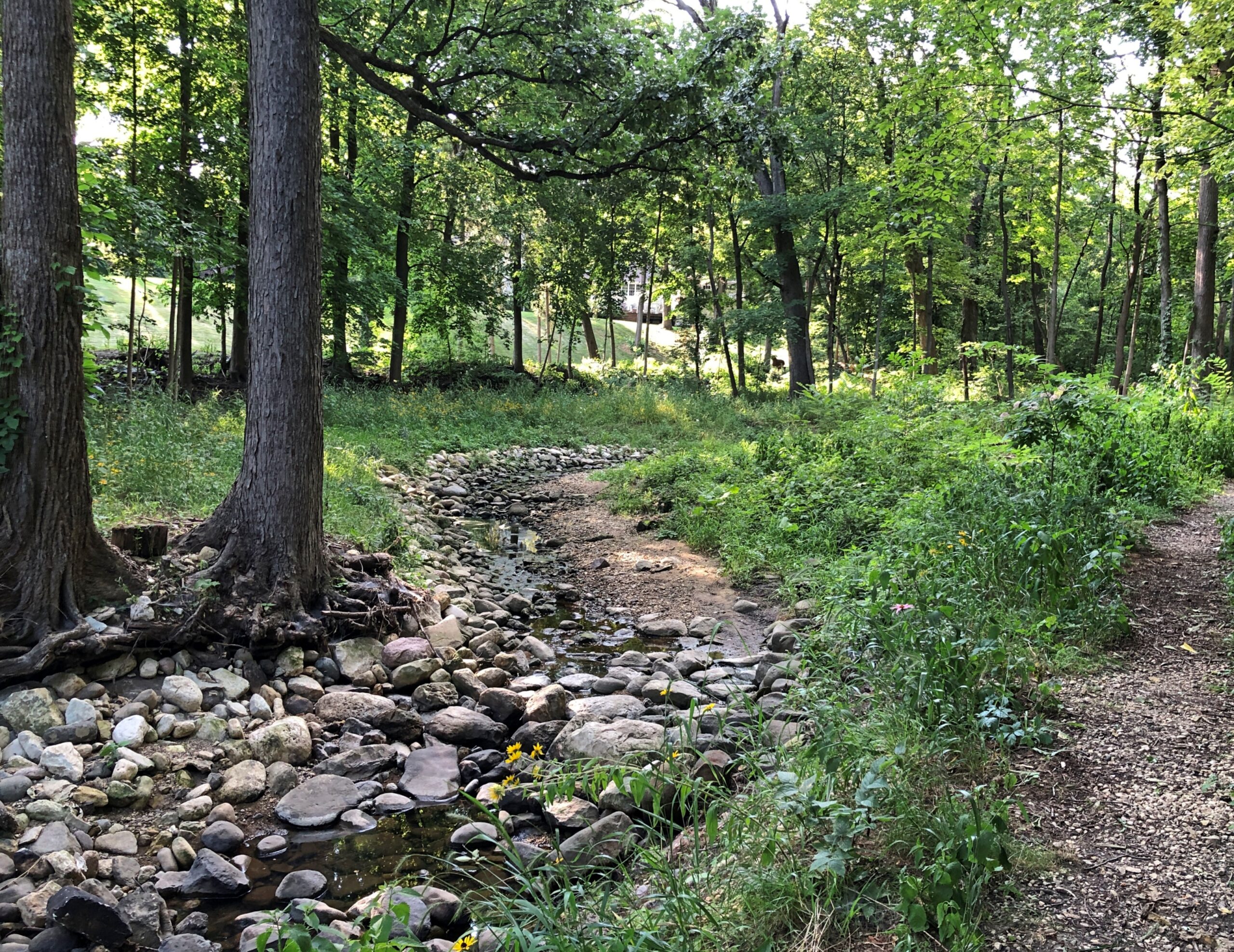
The tracks lead to a smaller trail into the forest, along a small, rocky creek that feeds into the Fox.
So small it isn’t acknowledged on Google Maps. The place felt a little remote, but of course it isn’t. At various points along the way, houses just outside the forest preserve are visible. Also, it doesn’t take long to get to the promised destination: less than five minutes. Bold exploration, this was not. More like seeking out the obscure, which I have a certain knack for.
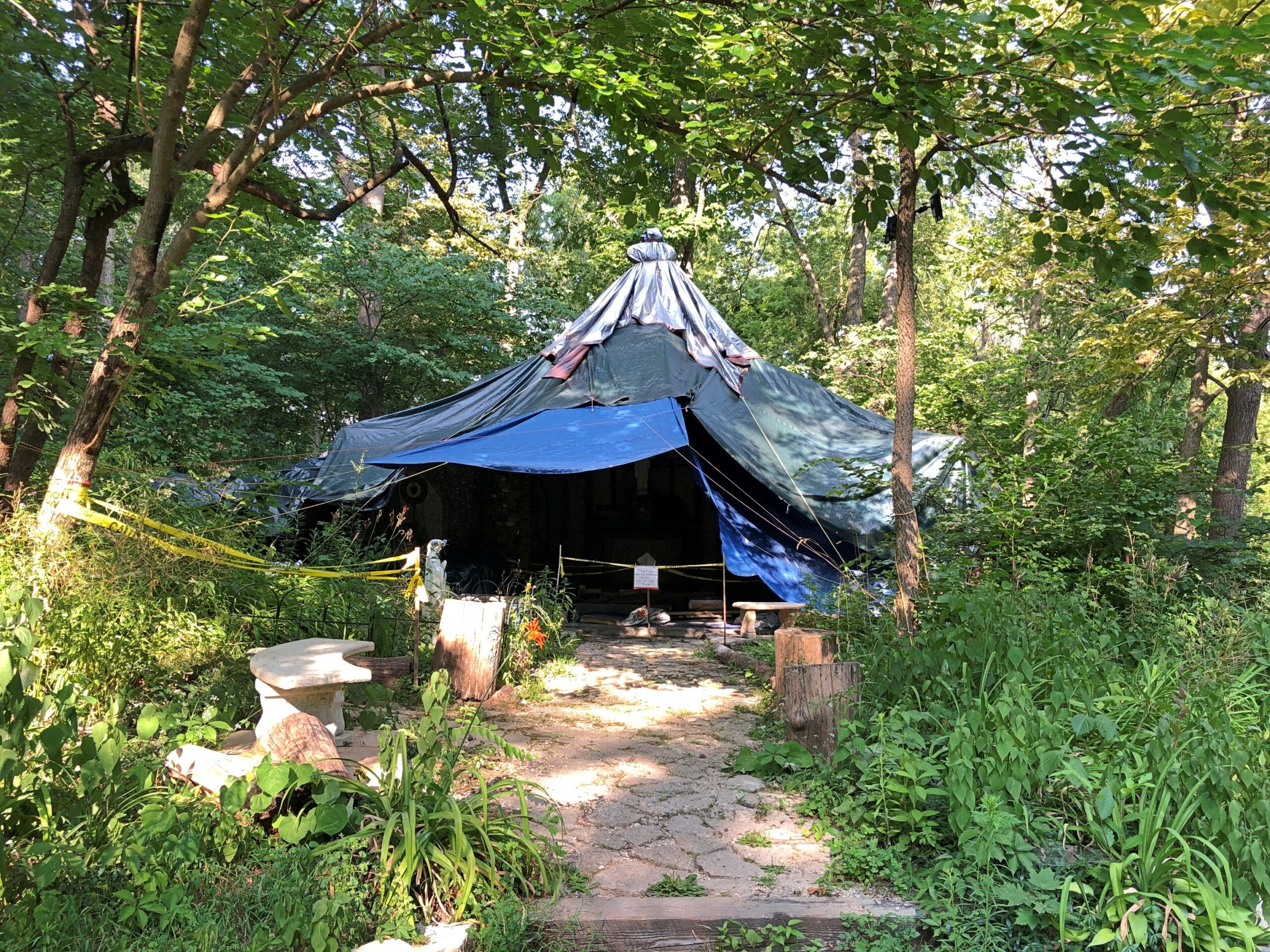
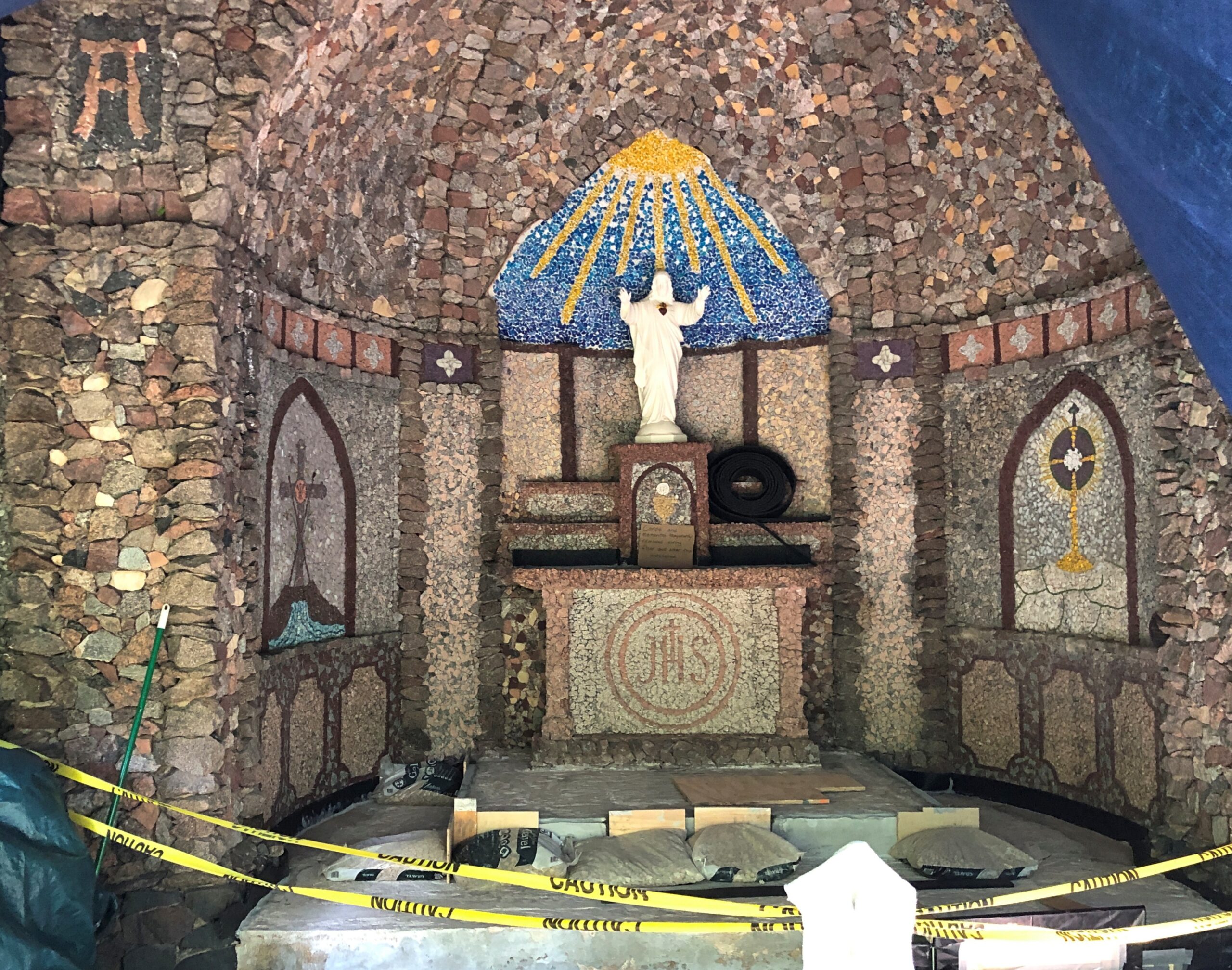
When we arrived, the grotto stood in the forest, and under a tarp.
Restoration is under way. Wanker vandals damaged the place in recent decades, I understand, so a camera now watches.
When I see that kind of setup, I’m reminded I’m reminded of the opening lines of “Soldier of Plenty” by Jackson Browne (1986).
God is great, God is good He guards your neighborhood Though it’s generally understood Not quite the way you would
So while the grotto might be obscure, it isn’t unknown. In fact, it has its own web site. Or rather, the volunteers overseeing the restoration do.
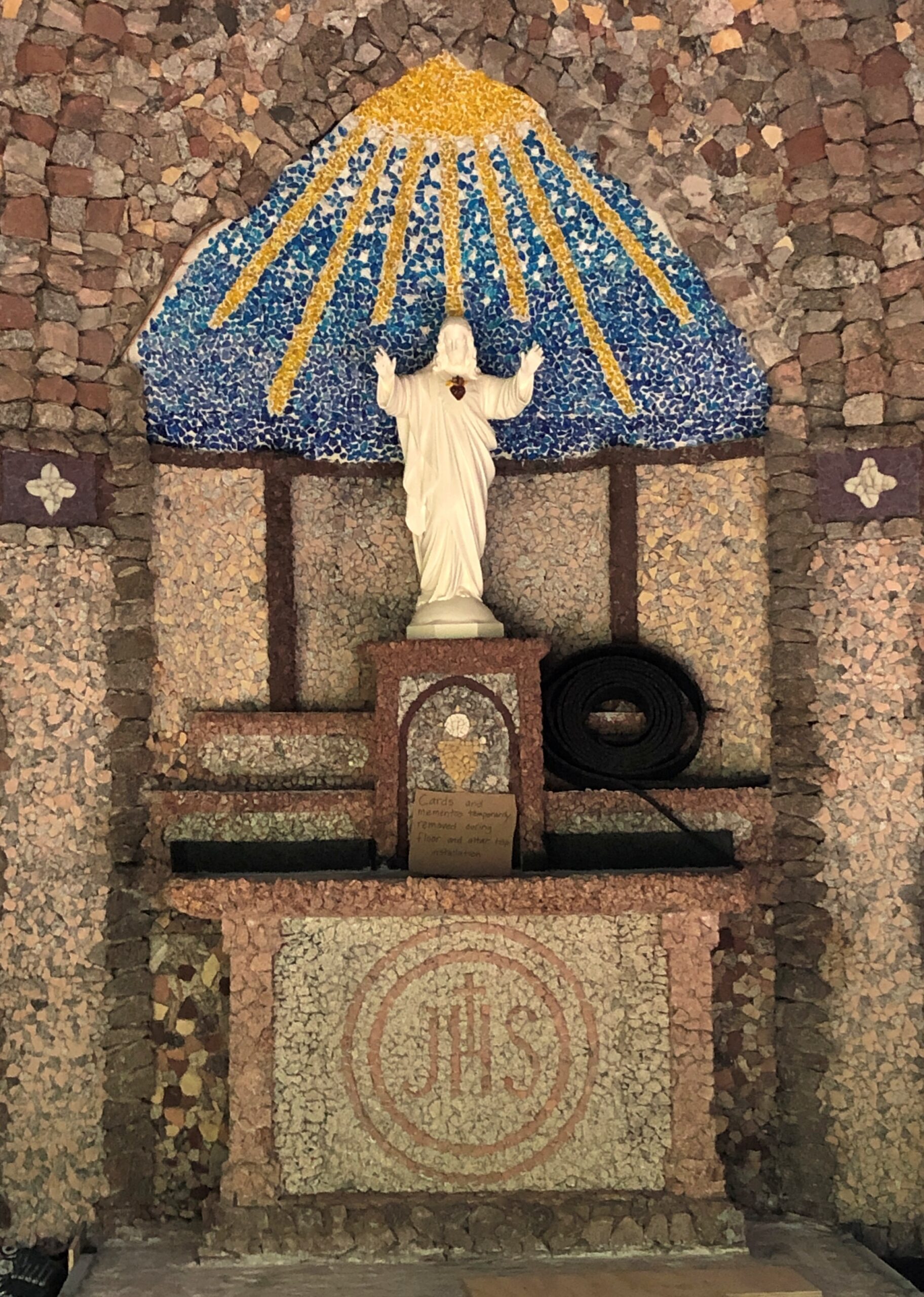
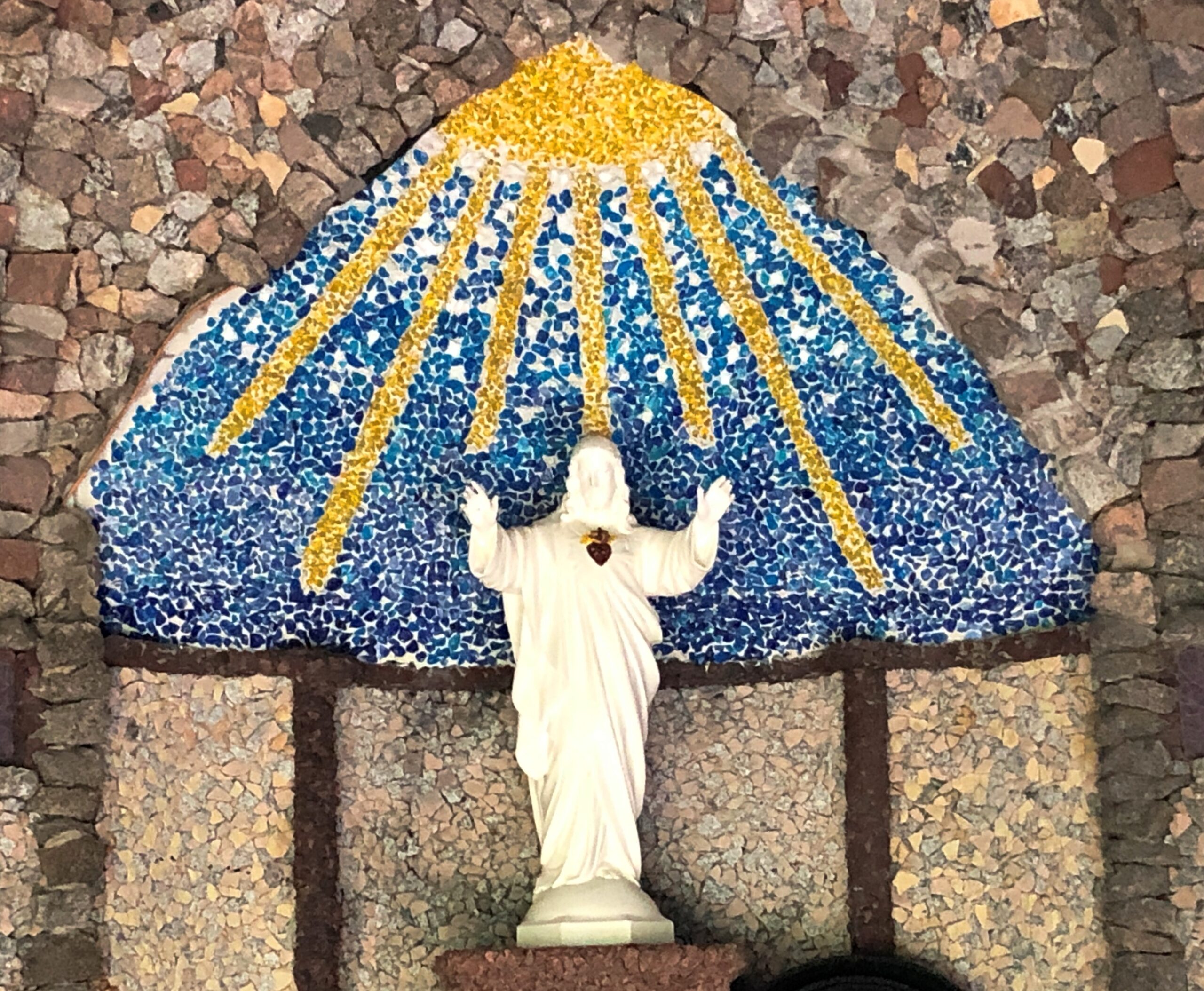
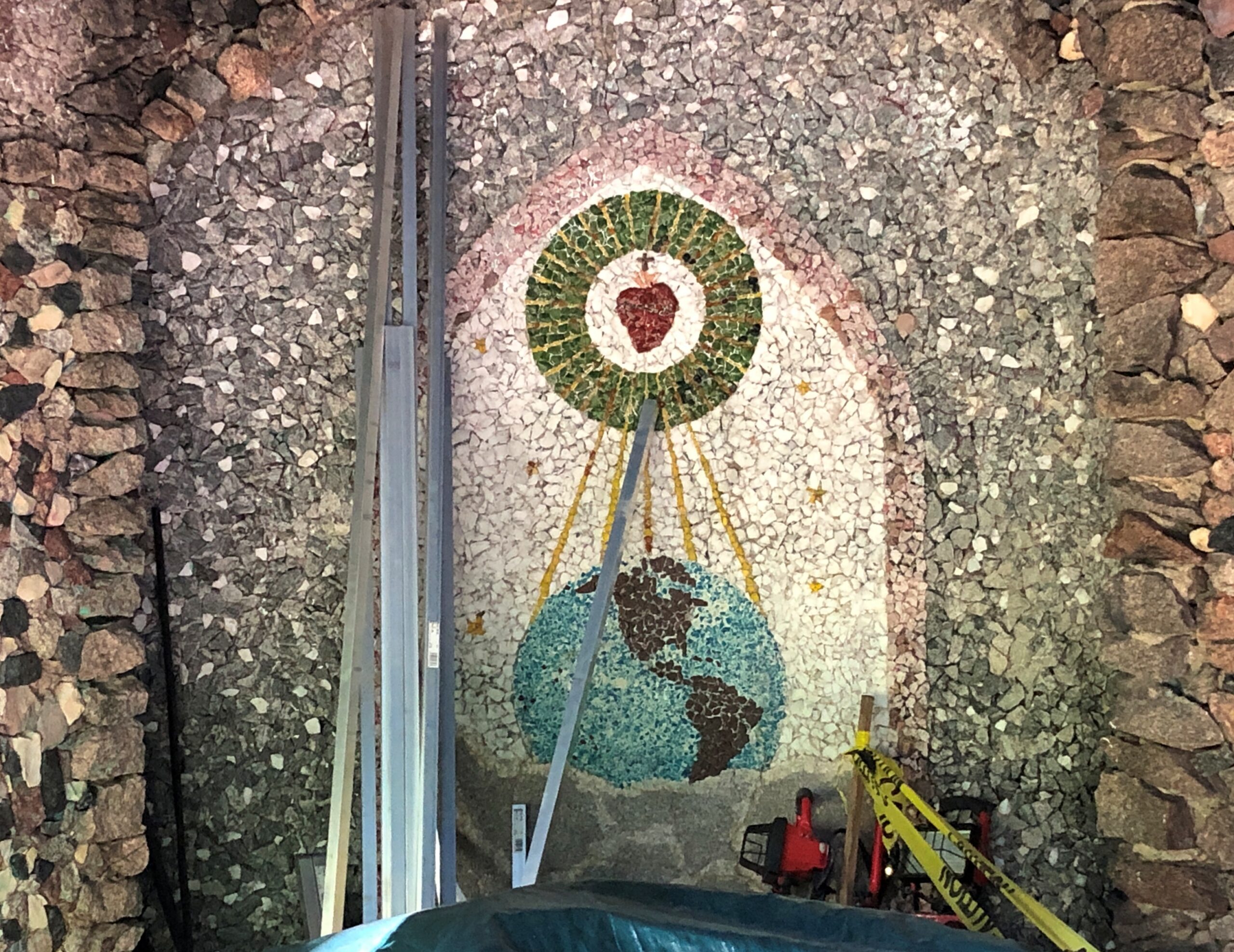
“Built in the 1930s when the property was owned by the Missionaries of the Sacred Heart [MSC], the outdoor chapel is an imposing stone structure,” the site says. “A German priest [Bro. Driesch] built the shrine, using rocks and colored glass from the local river beds to create the small chapel-like structure.”
We got as close as we could without stepping on the stone floor of the grotto, since a sign further warned us that that would hinder the restoration. Close enough that some of the interior mosaics were visible.
The land ultimately proved so valuable that the MSCs sold it in the early ’70s and moved on. But the grotto, with the help of restoration, endures.
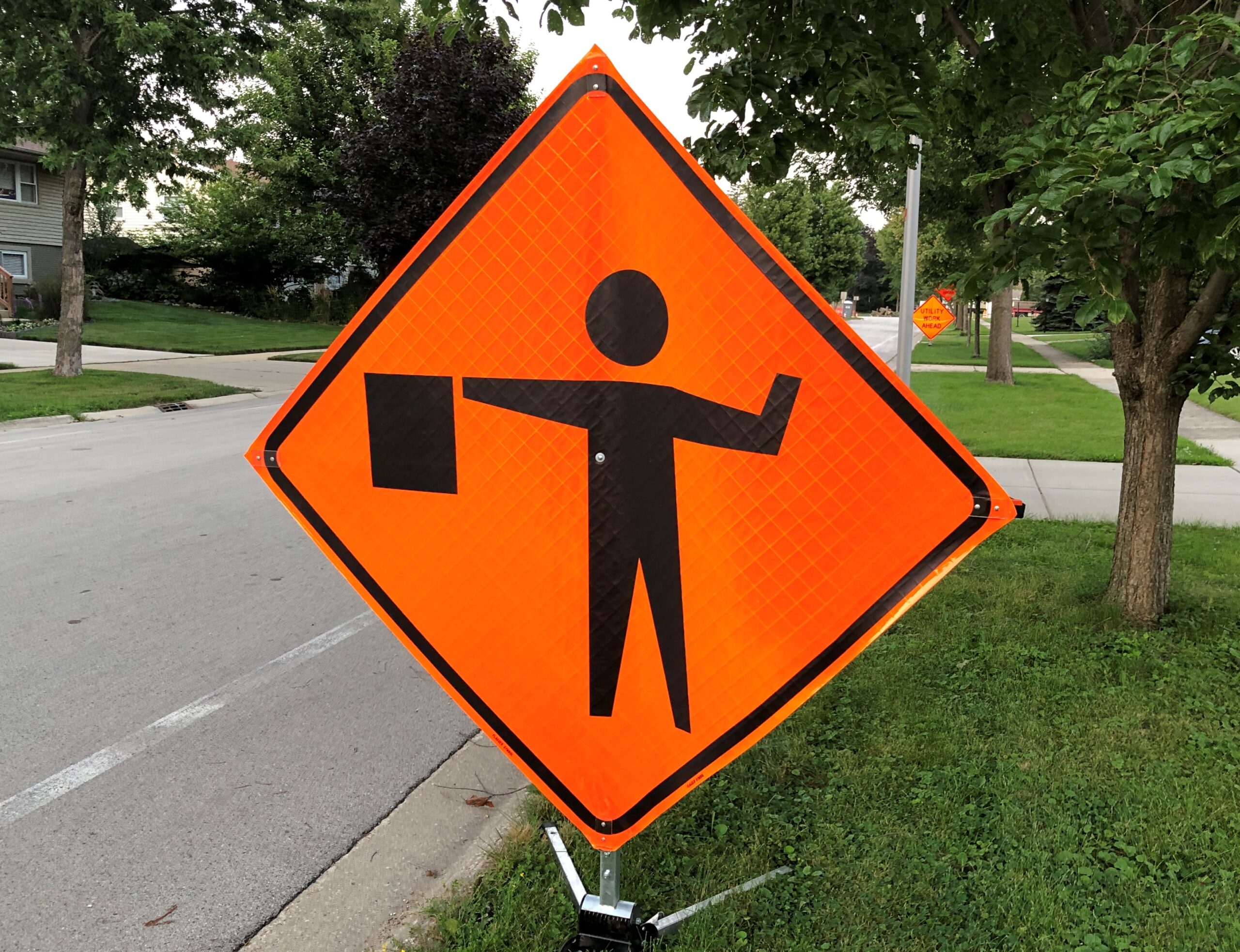
In the near quarter-century I’ve lived on my street, this was the first orange warning sign ever posted directly in front of my house.
Indicating a flagman ahead, of course, but if you squint, the figure is holding a book to read, with a flagpole and flag attached to his back. It could be done; some kind of harness and a light-weight aluminum pole or the like.
***
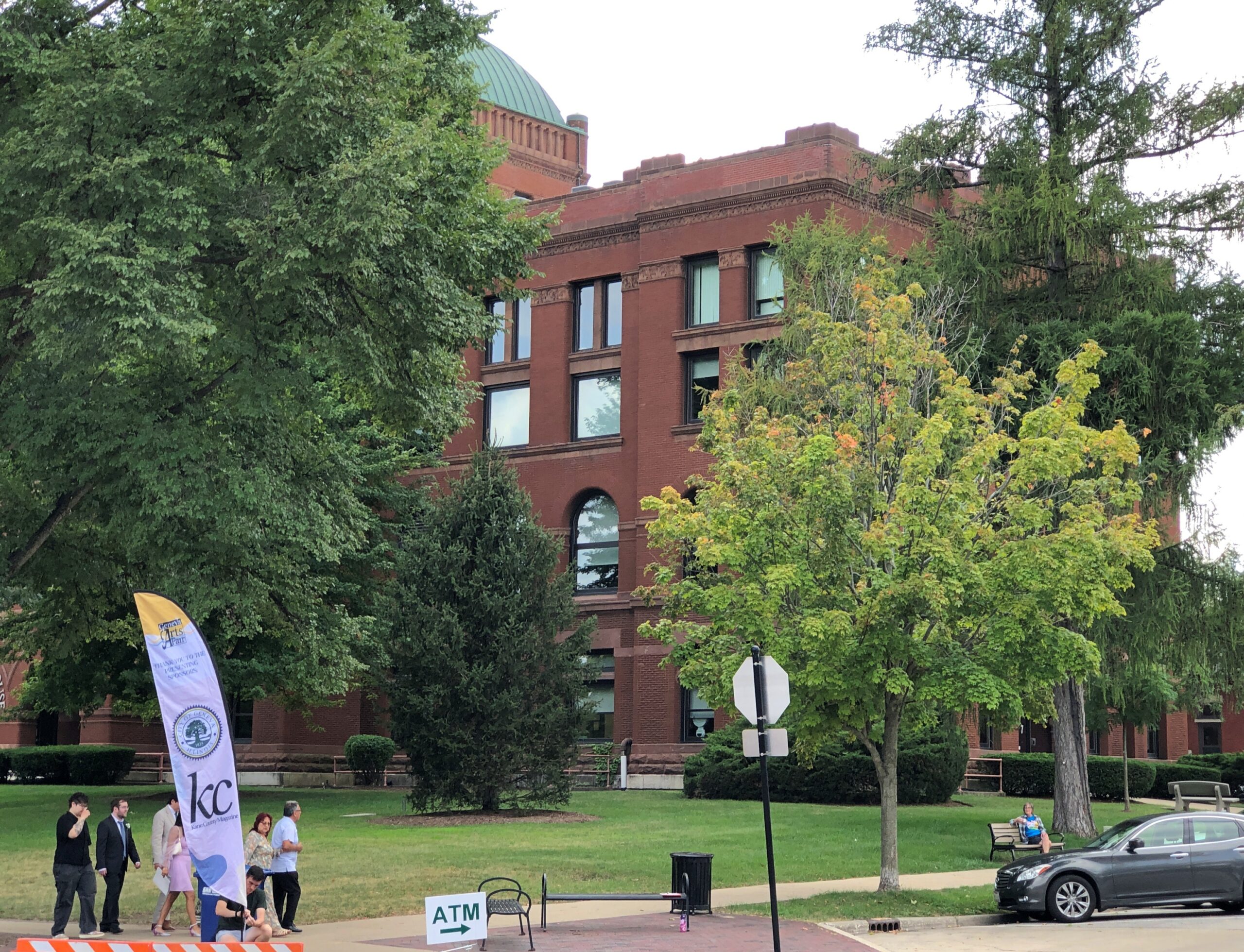
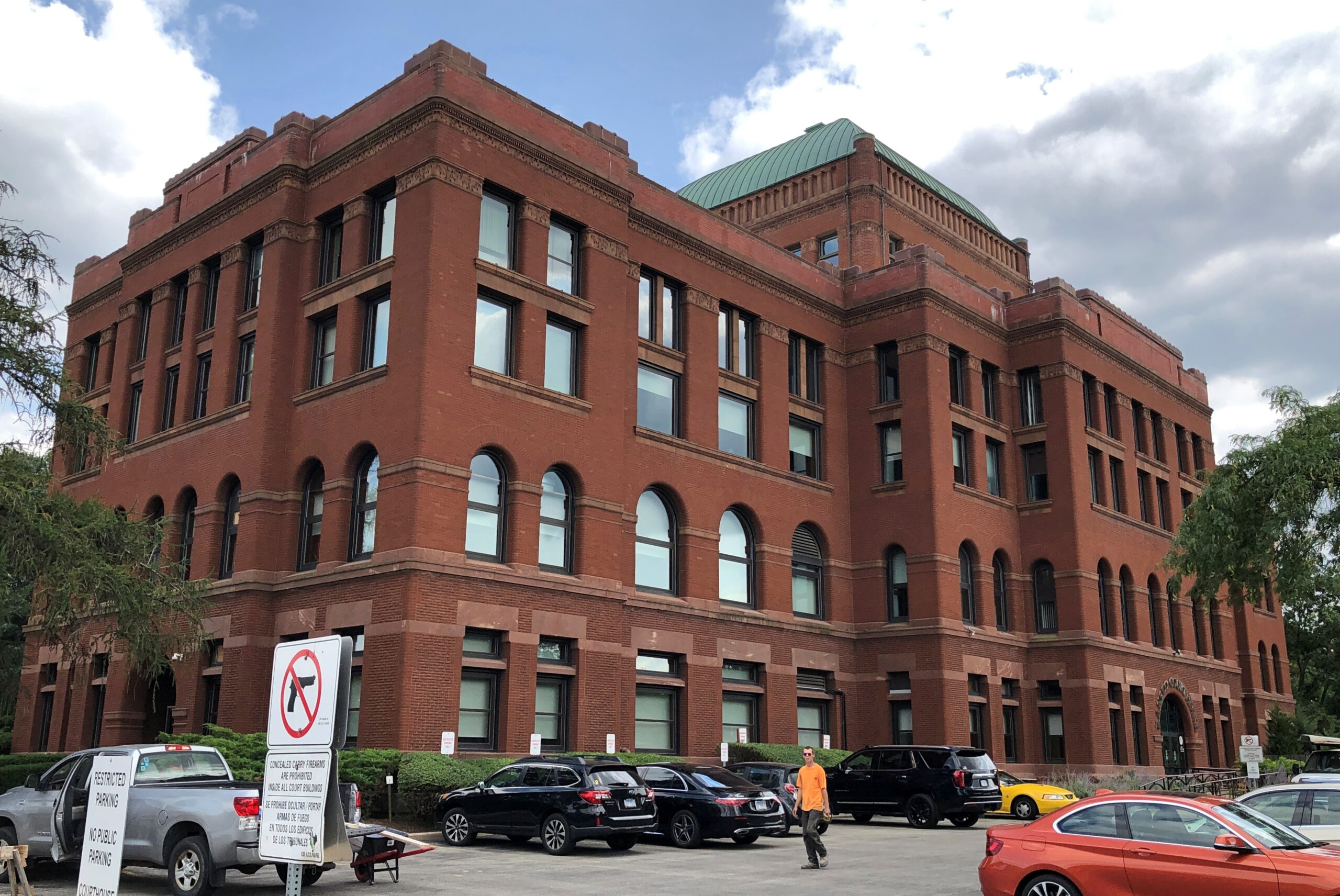
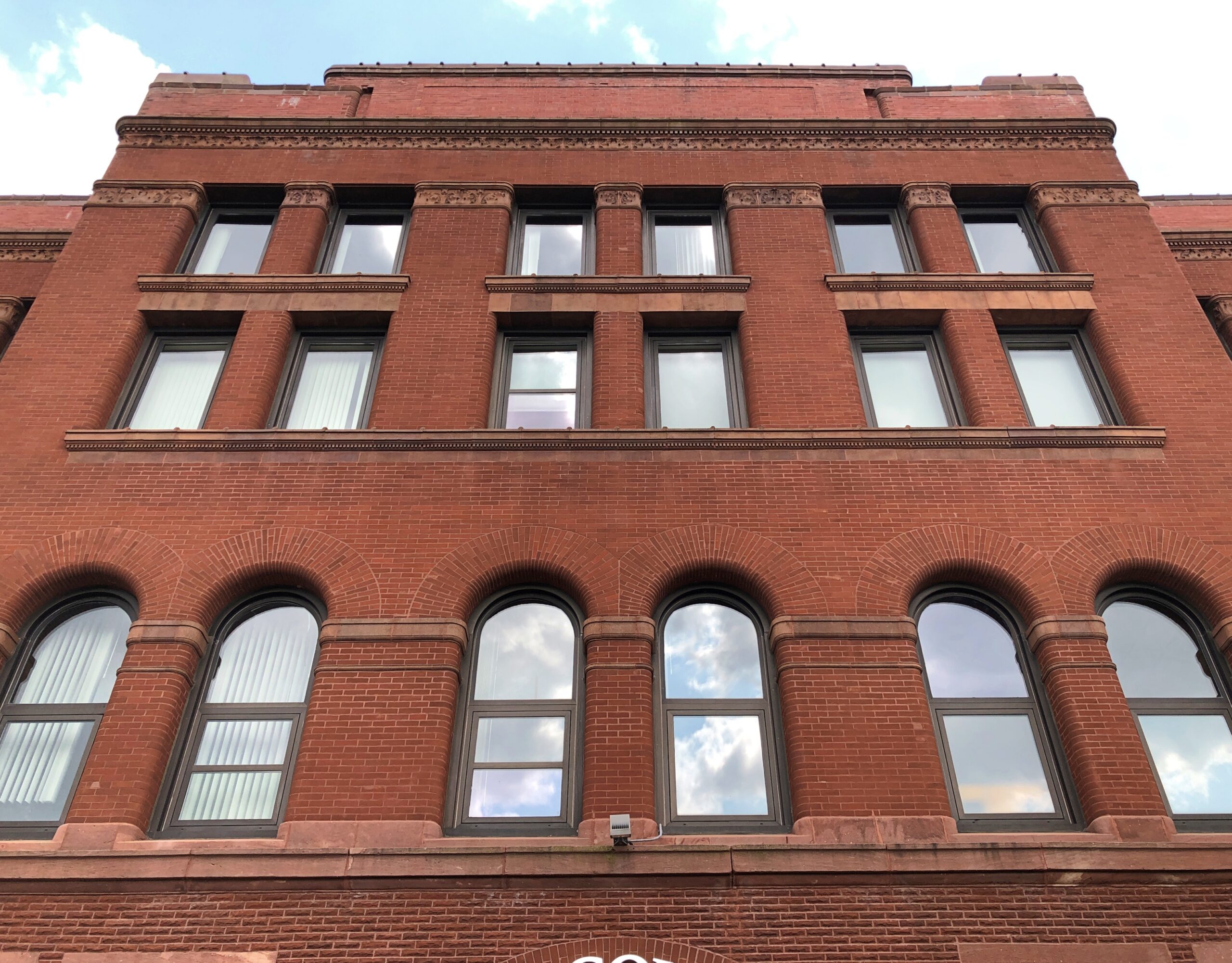
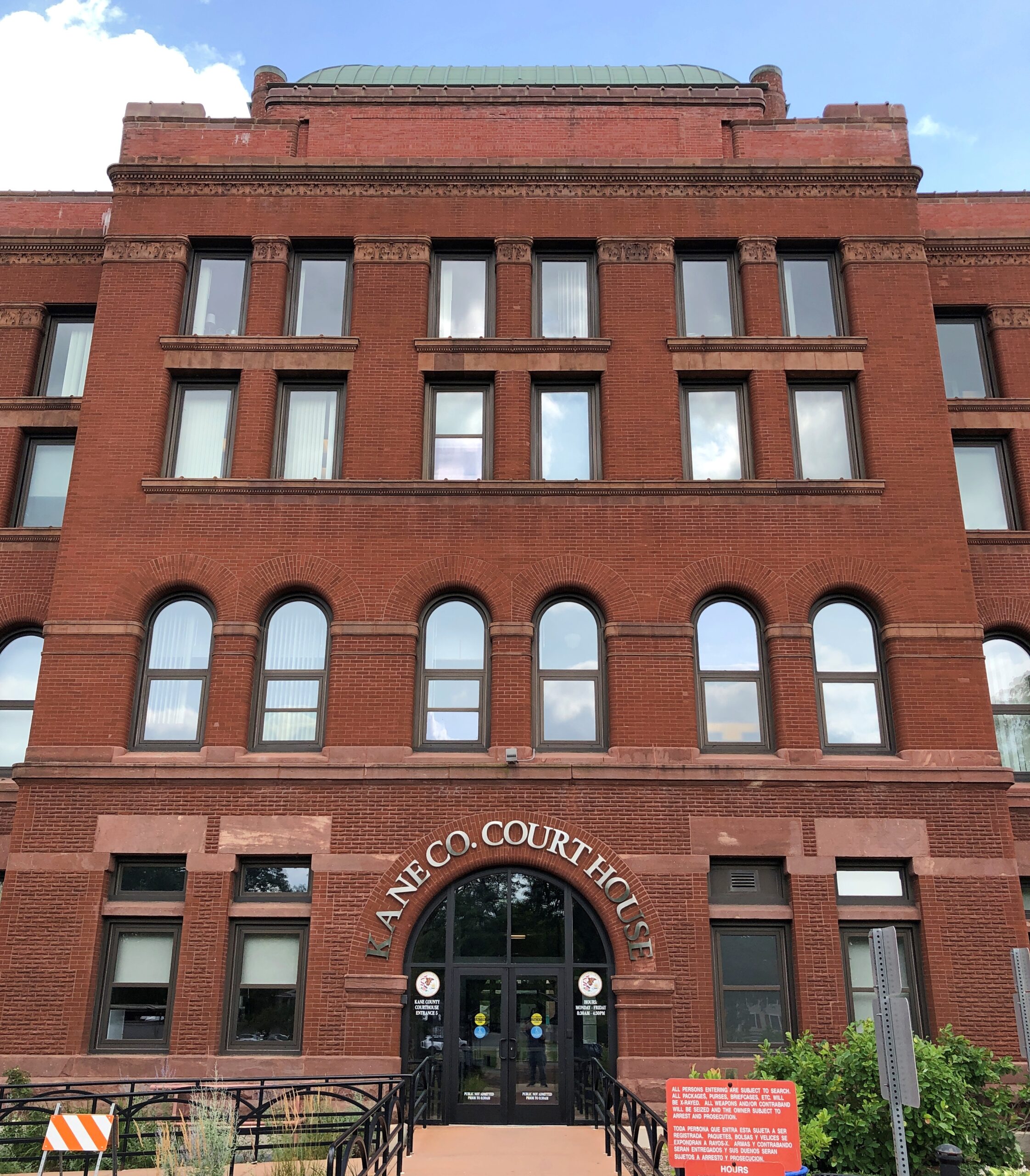
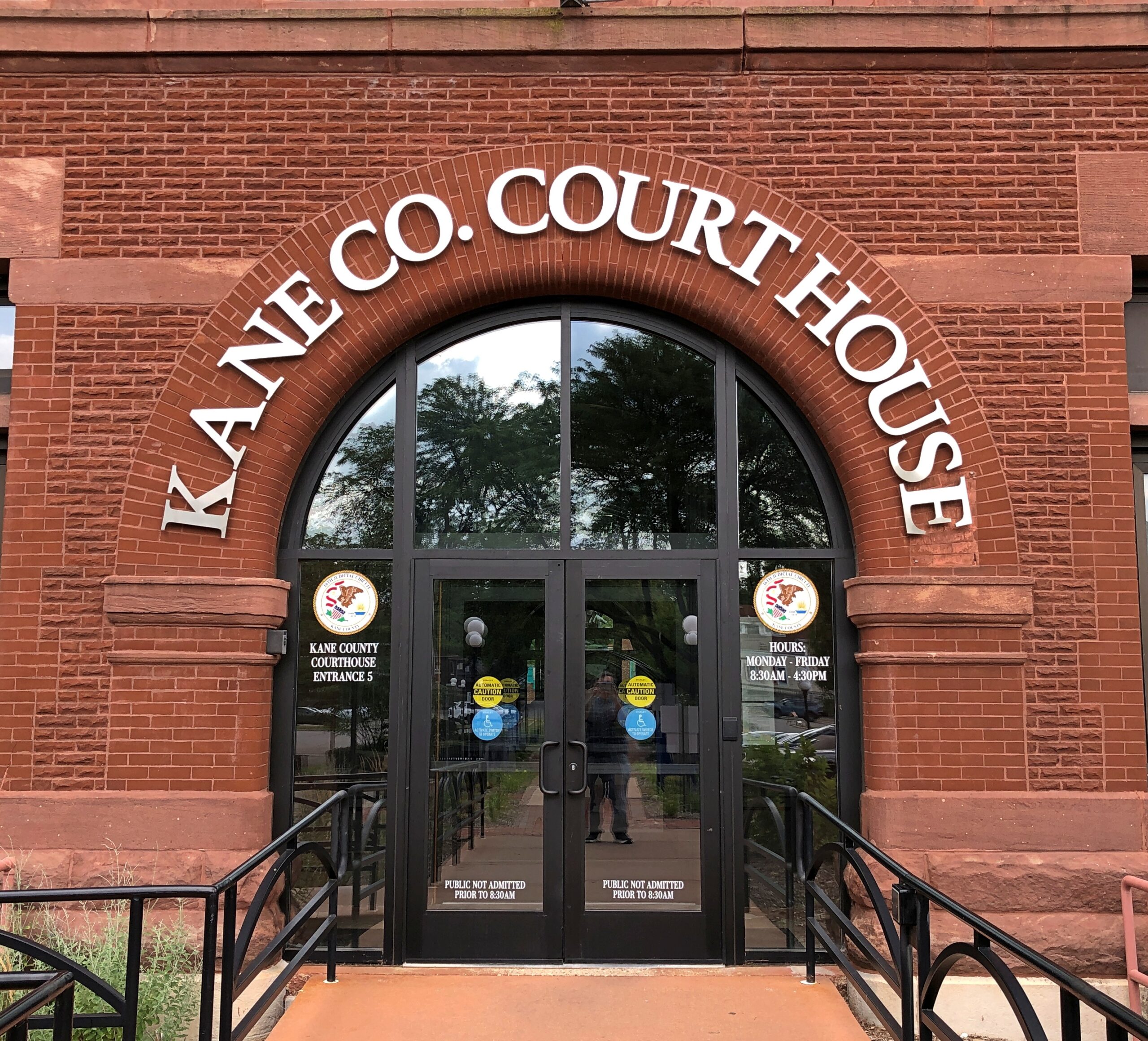
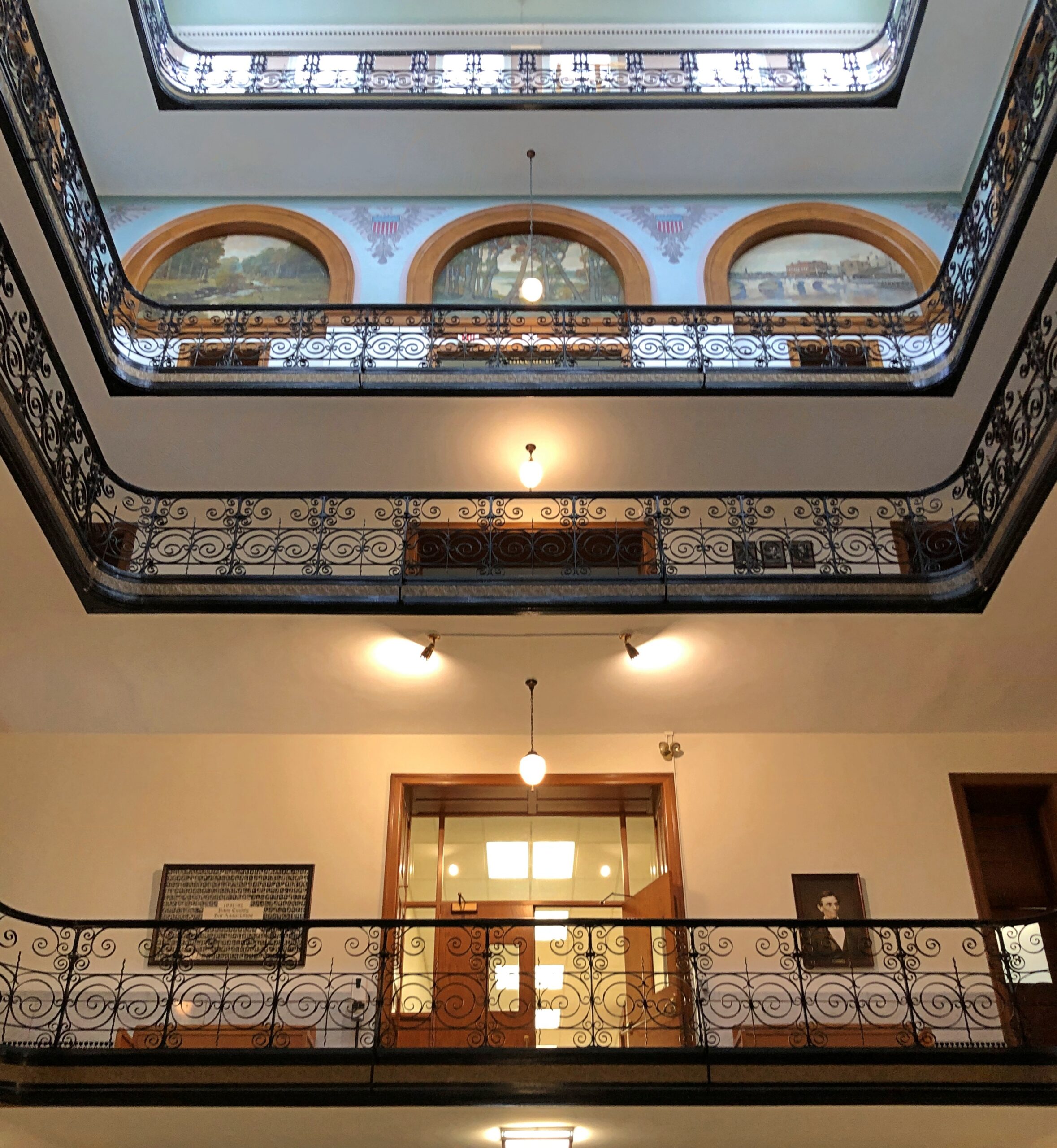
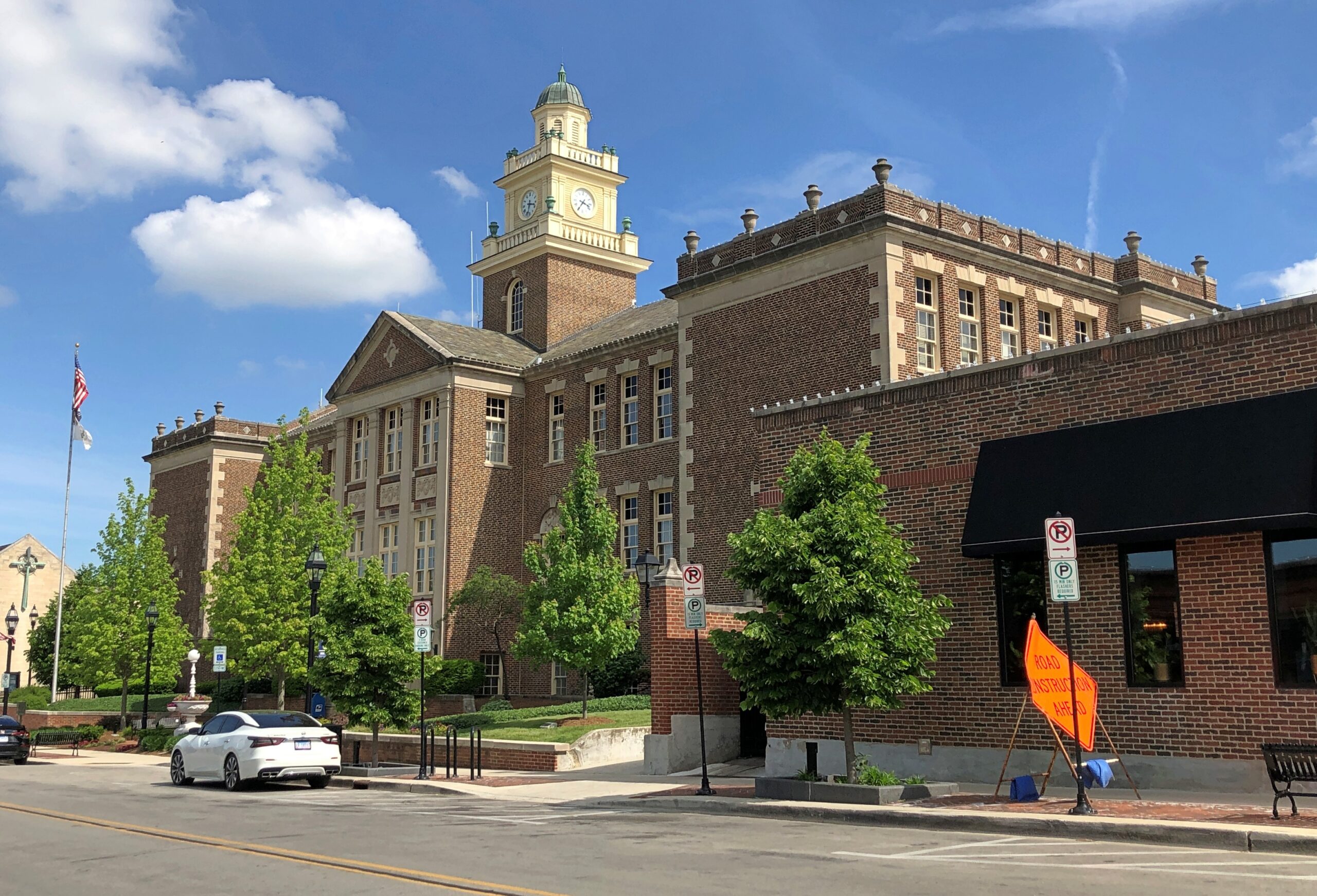
How big does a building need to be hulking? No doubt context is important. I’d say that in the context of Third Street in Geneva, Illinois, the Kane County Courthouse is a hulking presence, though its hulk is softened by being set back from the street, and by grounds marked by large trees.
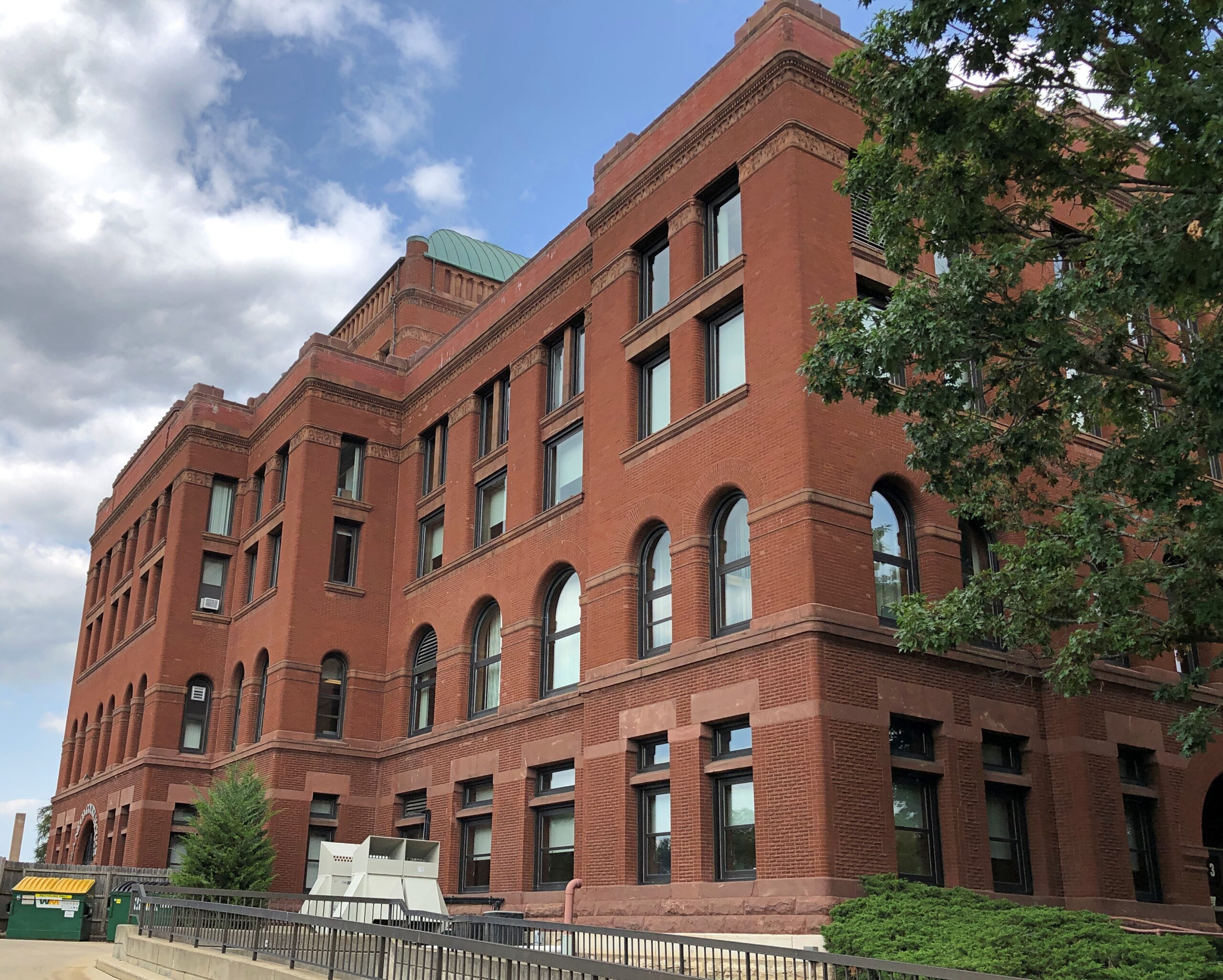
To get a full appreciation of the massed brickwork, head around the building for a more open view.
The area didn’t used to be open. The county jail — back when jails were jails and not correctional facilities – used to be there, built at the same time as the courthouse, in 1892. It didn’t last to the present.
“The Kane County Board commissioned Chicago architects W. J. Edbrooke and Franklin P. Burnham to create the impressive courthouse and accompanying jail — a testament to the county’s commitment to functionality and architectural excellence,” notes Kane County Connects.
“At the time, the jail was described as ‘the best building, most complete and convenient jail building and sheriff’s residence in the state of Illinois,’ according to an article in The Republican. The same article optimistically noted that any prisoners locked in the new jail would remain there as needed.
“However, just six weeks later, three prisoners escaped. That week’s Republican article began, ‘It is rather a bad start for Kane County’s new jail to have an escape in the first month of its occupancy.’
“By the 1970s, the 1892 facility was deemed ‘totally inadequate’ and in ‘deplorable condition’… The building was ultimately demolished in 1975.”
Be that as it may, there’s no doubt about where you are these days if you find yourself near the courthouse.
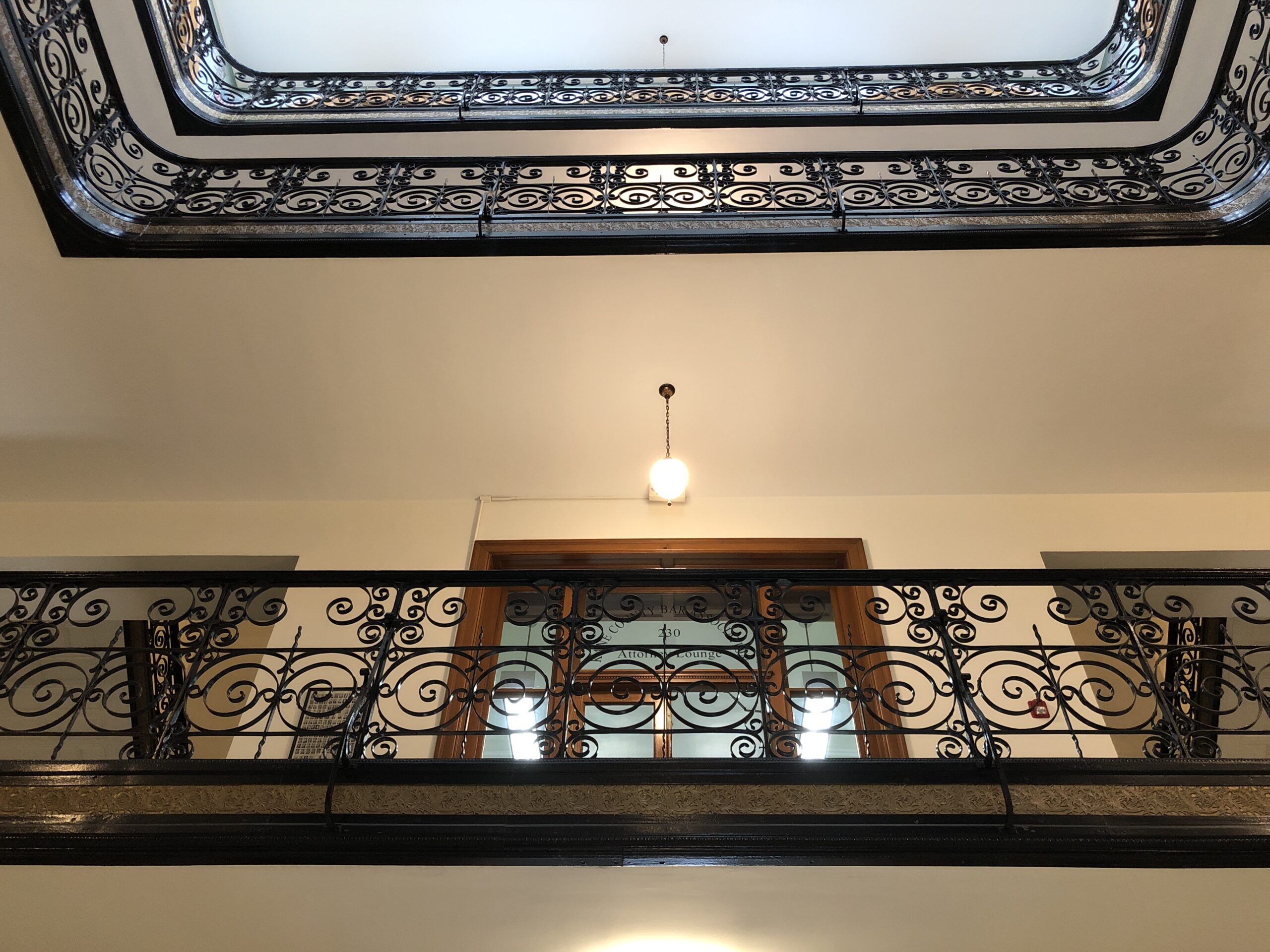
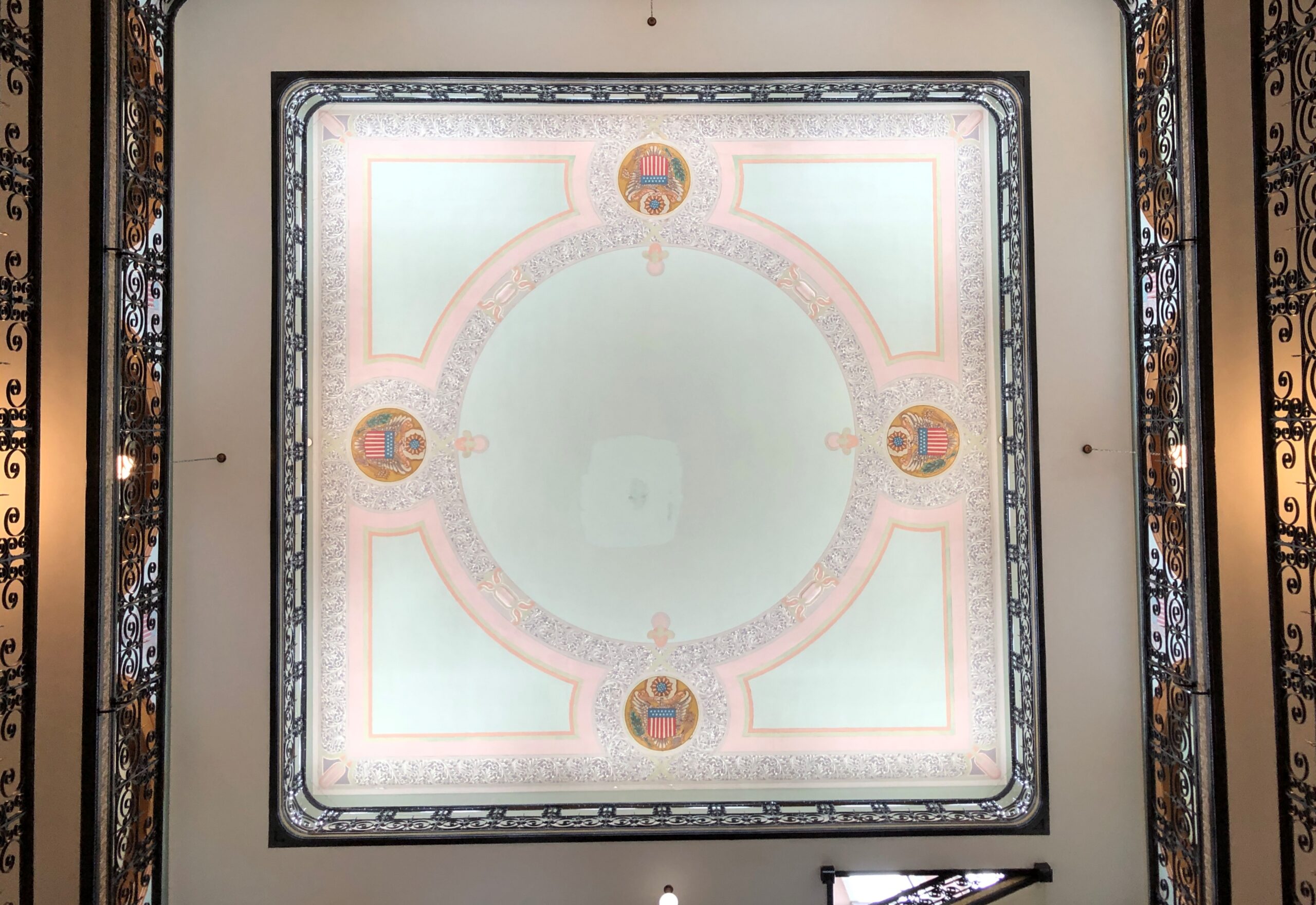
I went through the minor rigmarole (empty pockets, put everything in tray, walk through metal detector) for a look at the vaulting interior, designed in the days before air conditioning. Also, back when county budgets allowed for fine ironwork.
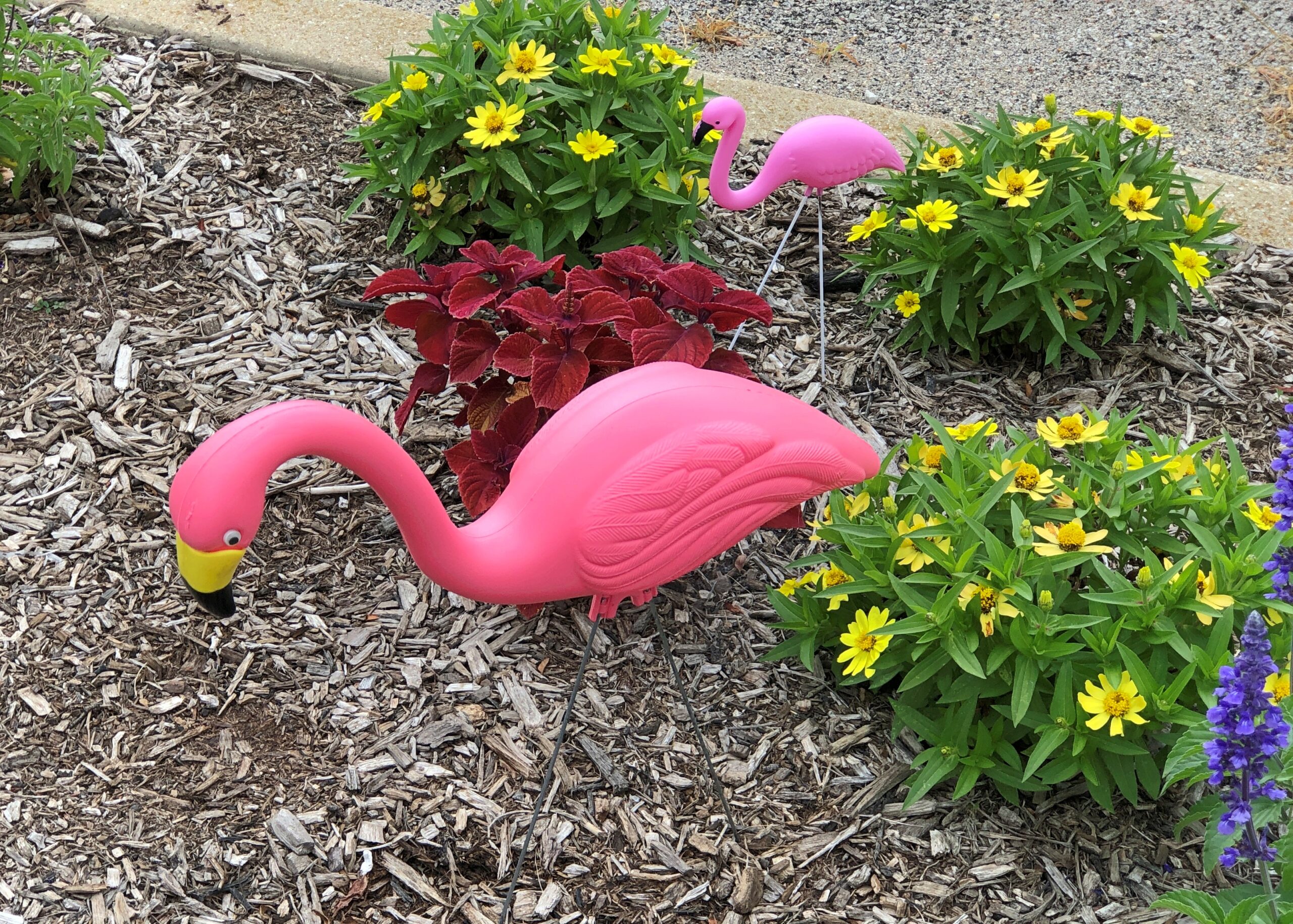
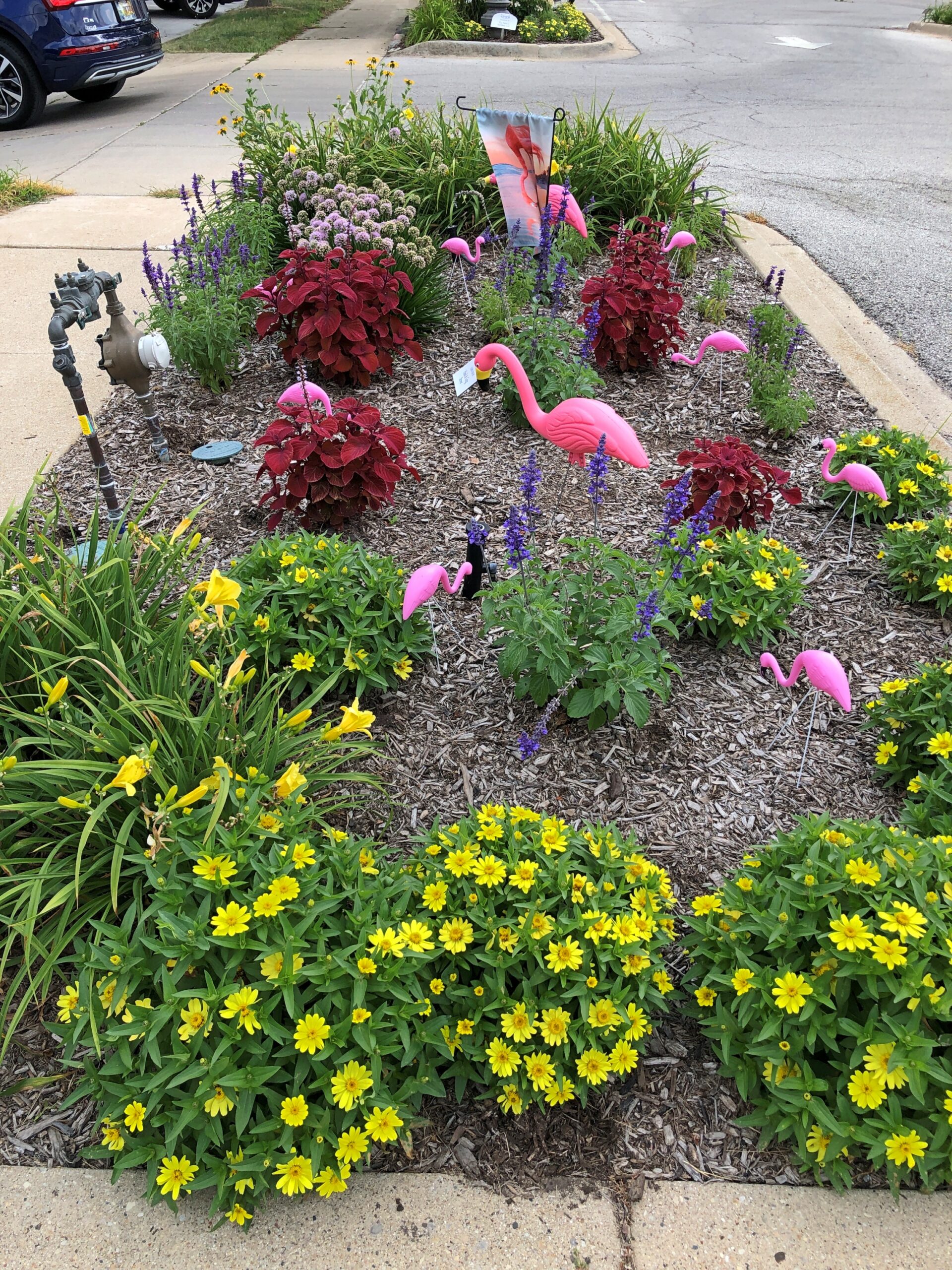
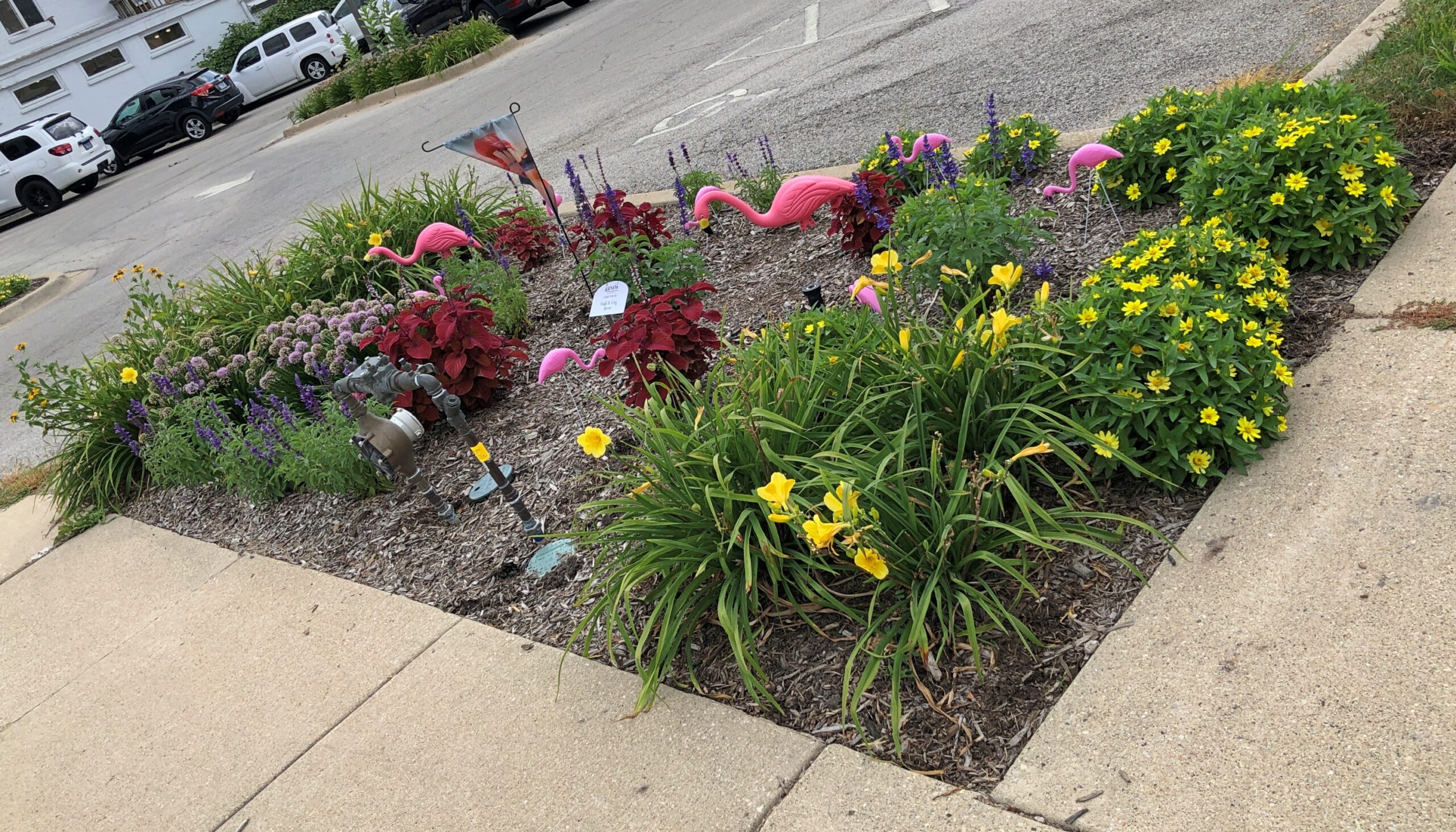
Not long ago, I was reminded that I need to acquire at least one pink flamingo for the deck, since the previous one — a dollar-store purchase when $1 was still the usual price — had fallen to pieces after repeated summers and winters. I was reminded because I saw some out in the wild.
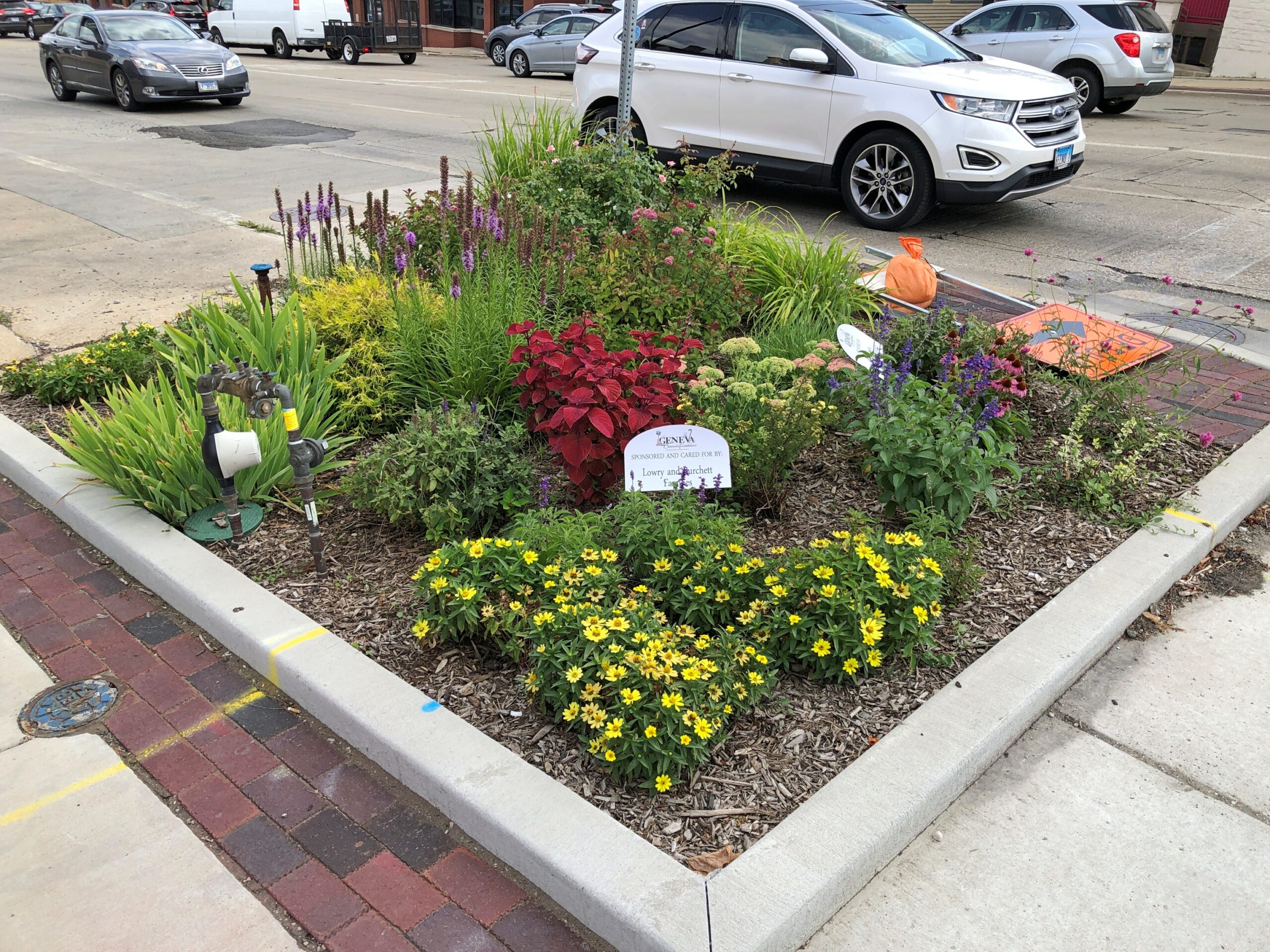
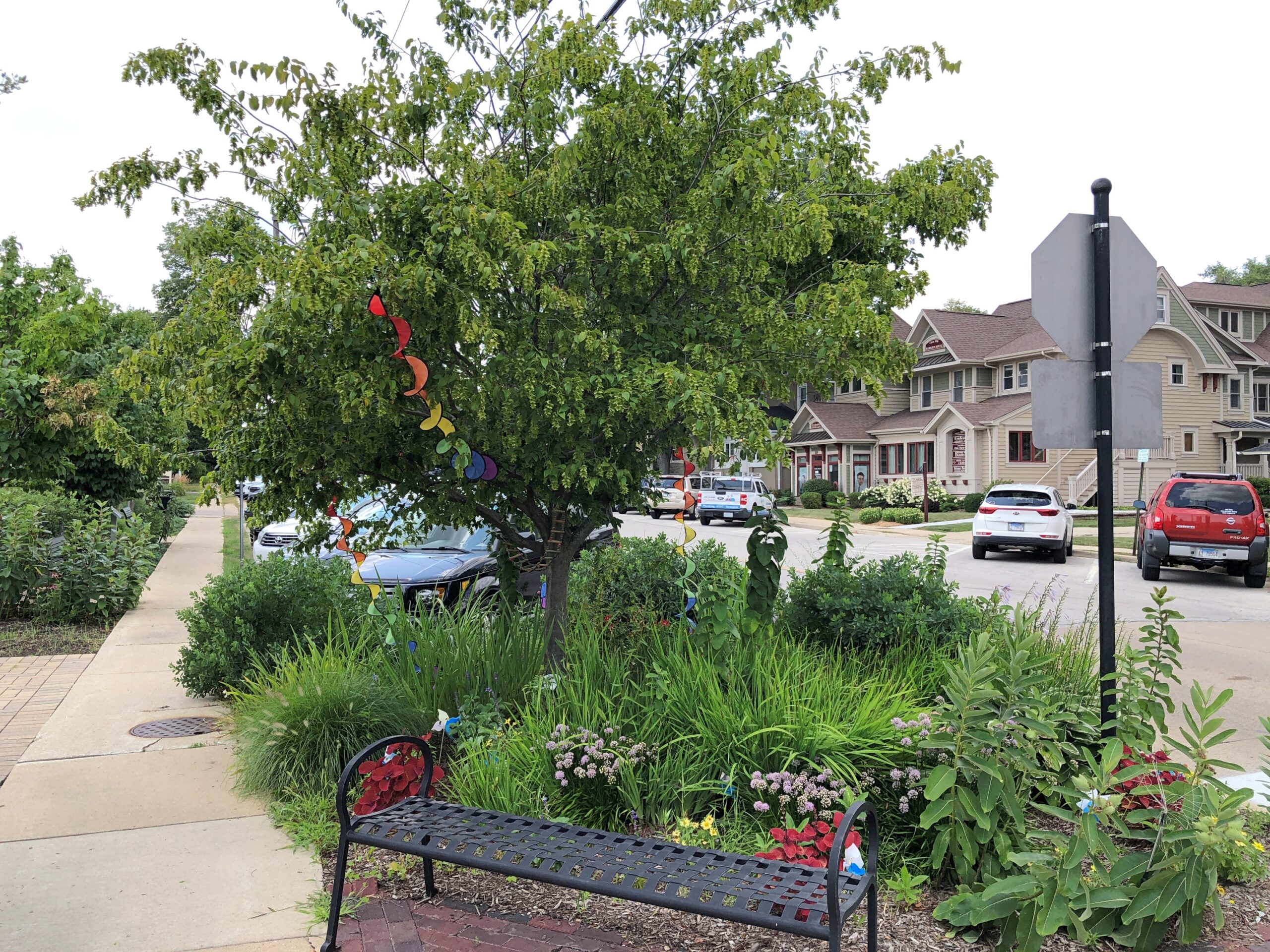
We’d parked on Hamilton St. in Geneva, Illinois, a street distinctive for its plantings on the odd land shapes created by the various angled meetings of streets, parking lots and sidewalks.
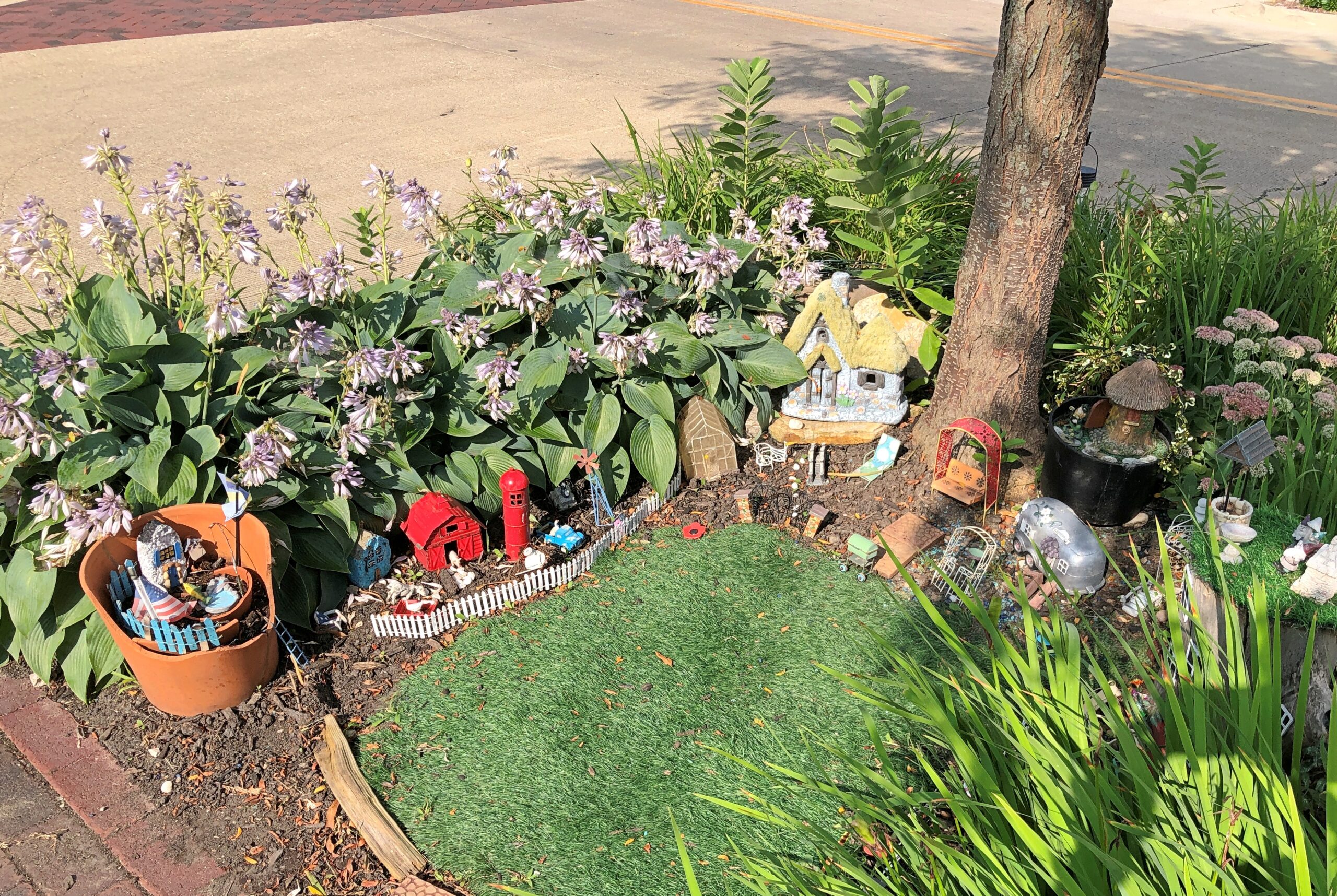
Other examples, among a number on the street.
Nice. I suspect volunteer planting and maintenance, but that’s only a hunch. A nice scattering of greenery in a hard-surface context regardless.
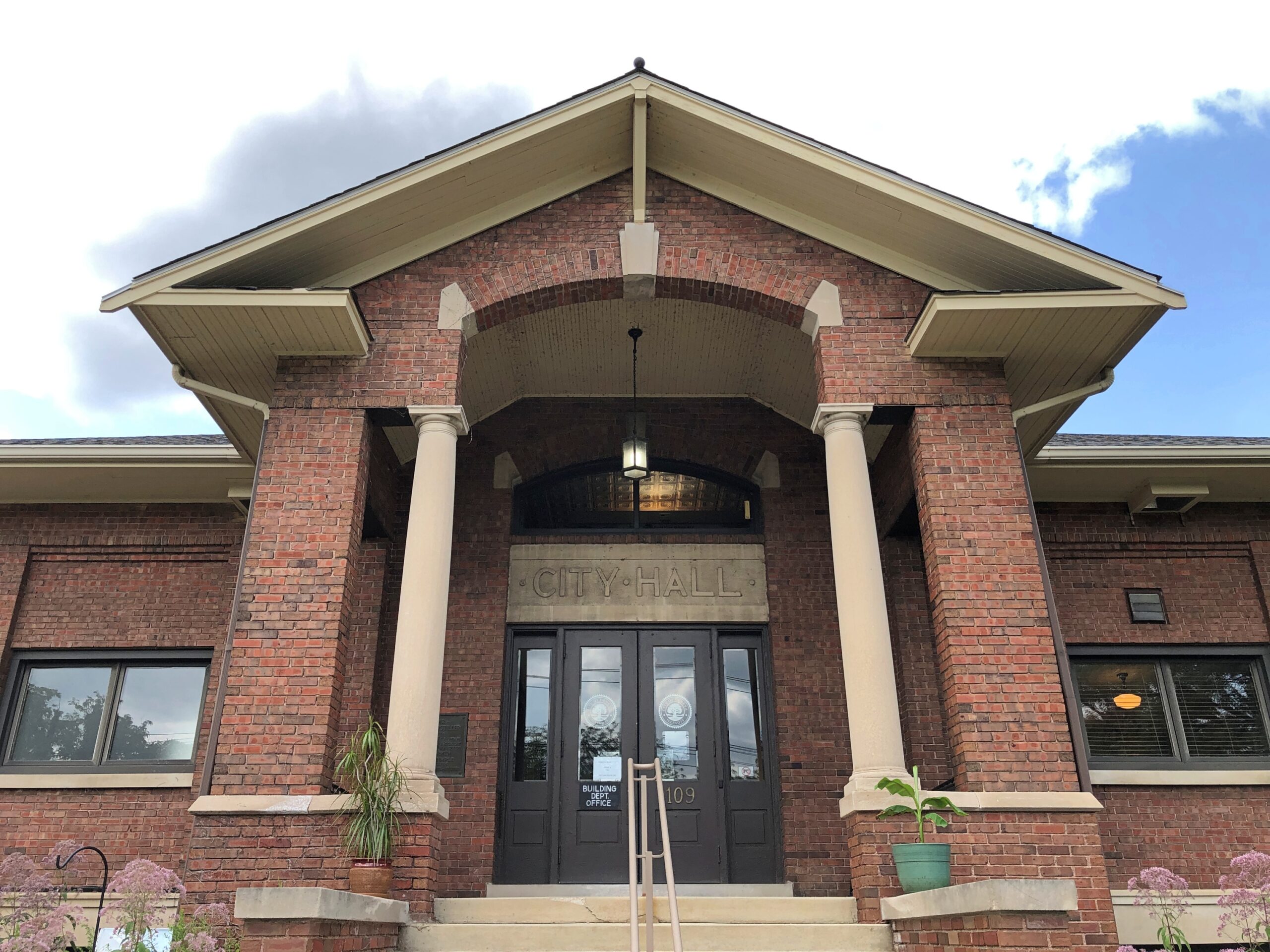
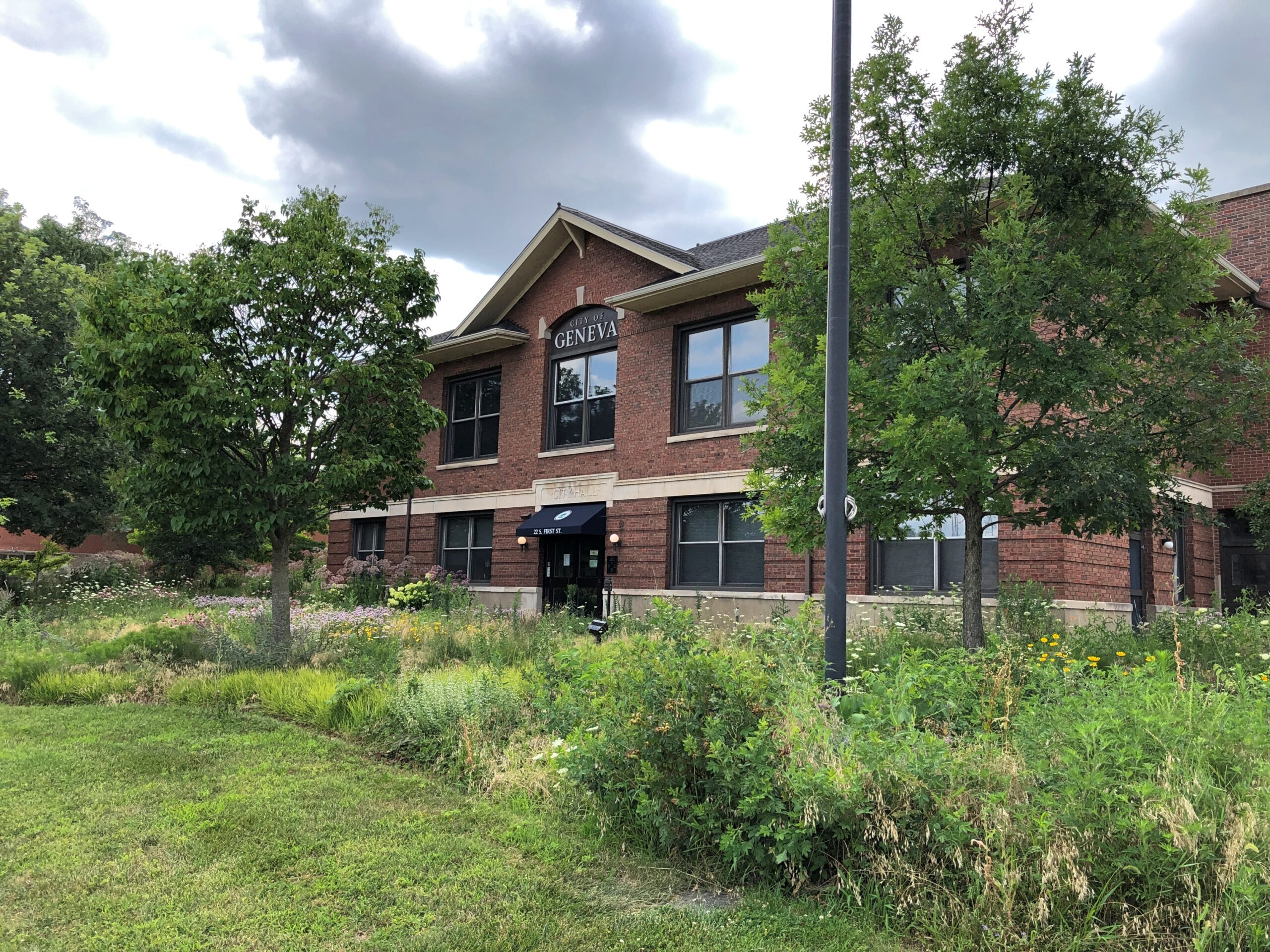
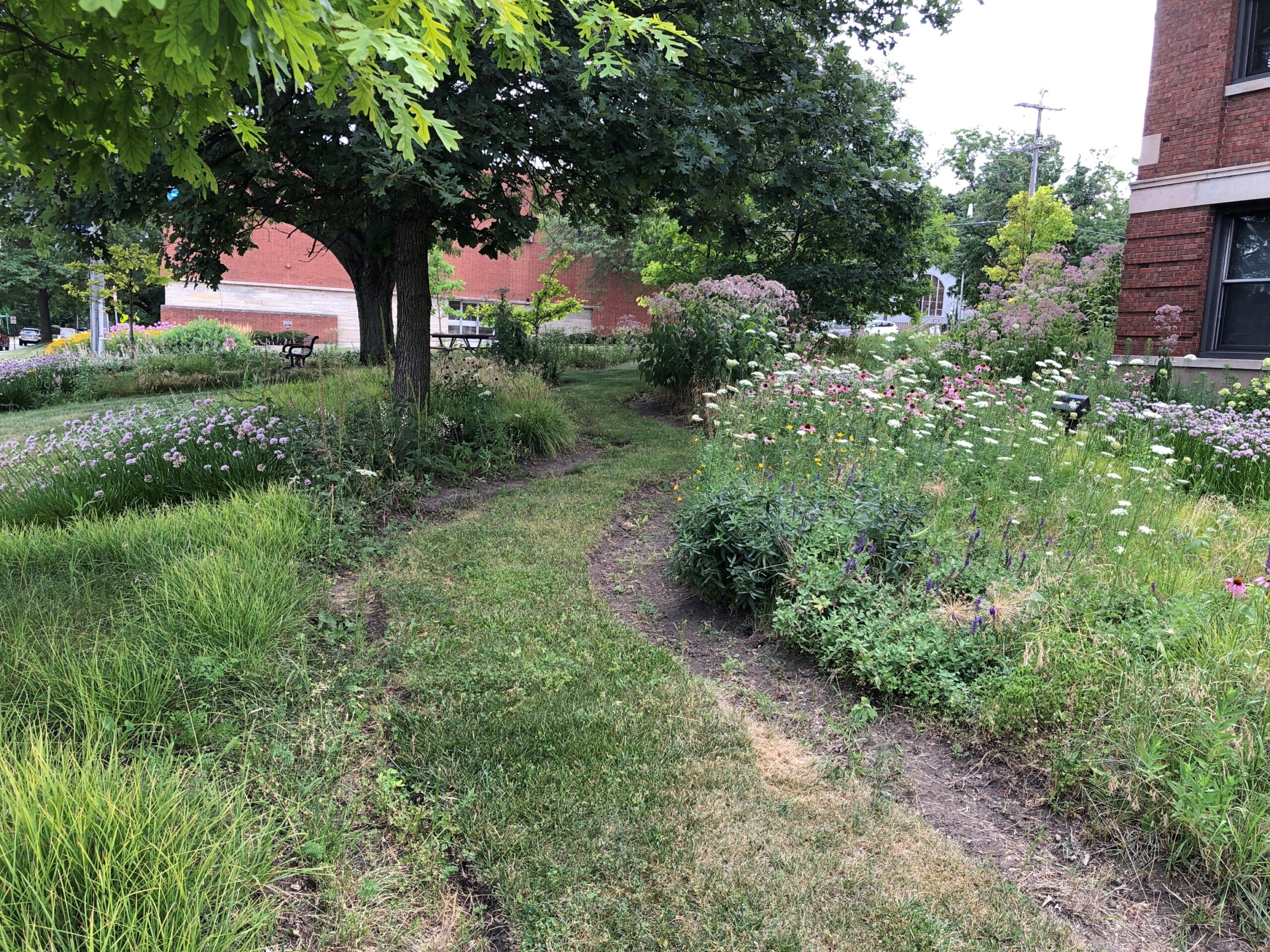
Or they might represent a city-sponsored activity, since greenery is an important aspect of the grounds around the 1913-vintage Geneva City Hall.
Going for that prairie look, and not the kind attributed to FLW, but actual grass prairie.
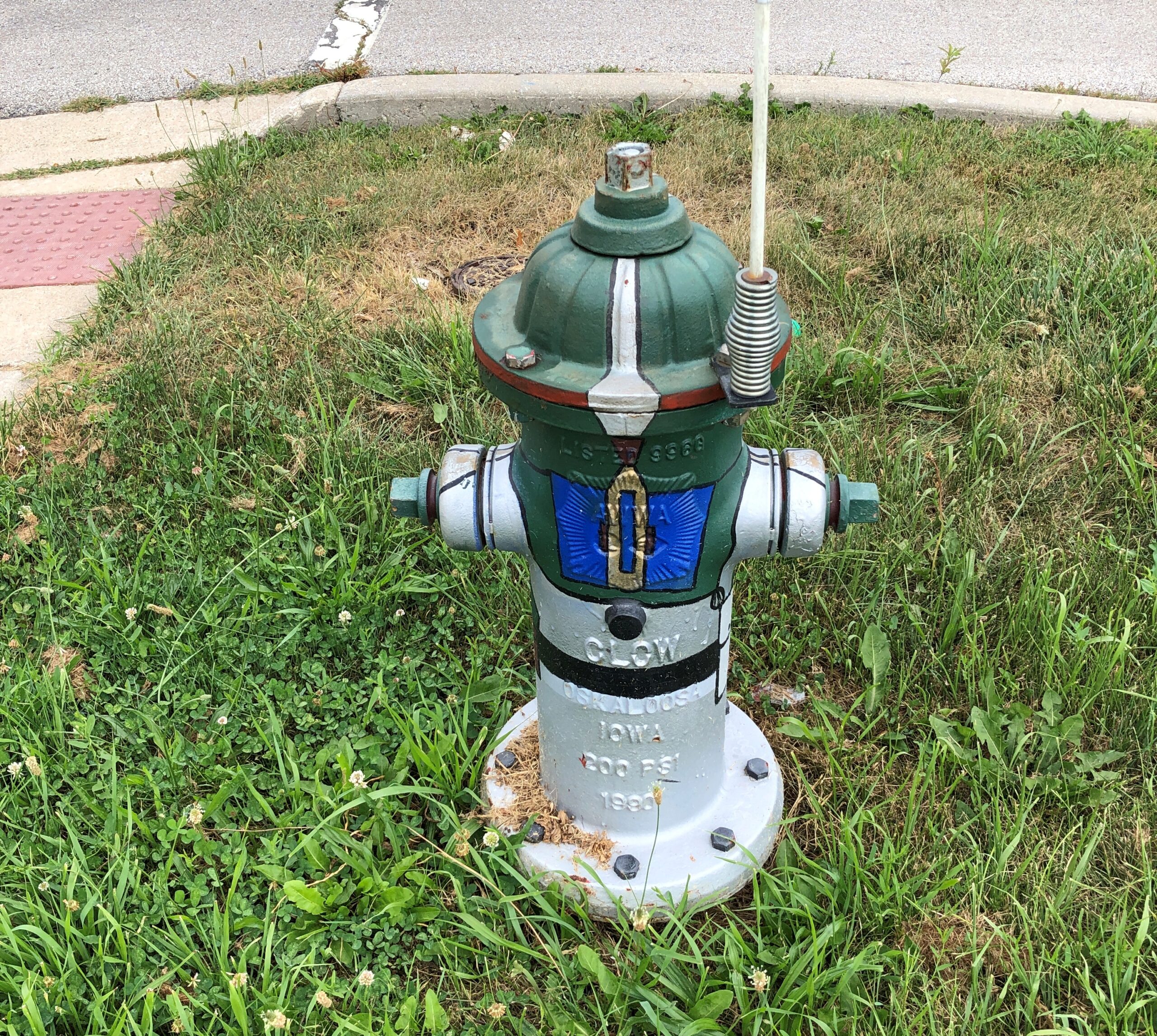
A little more municipal whimsy.
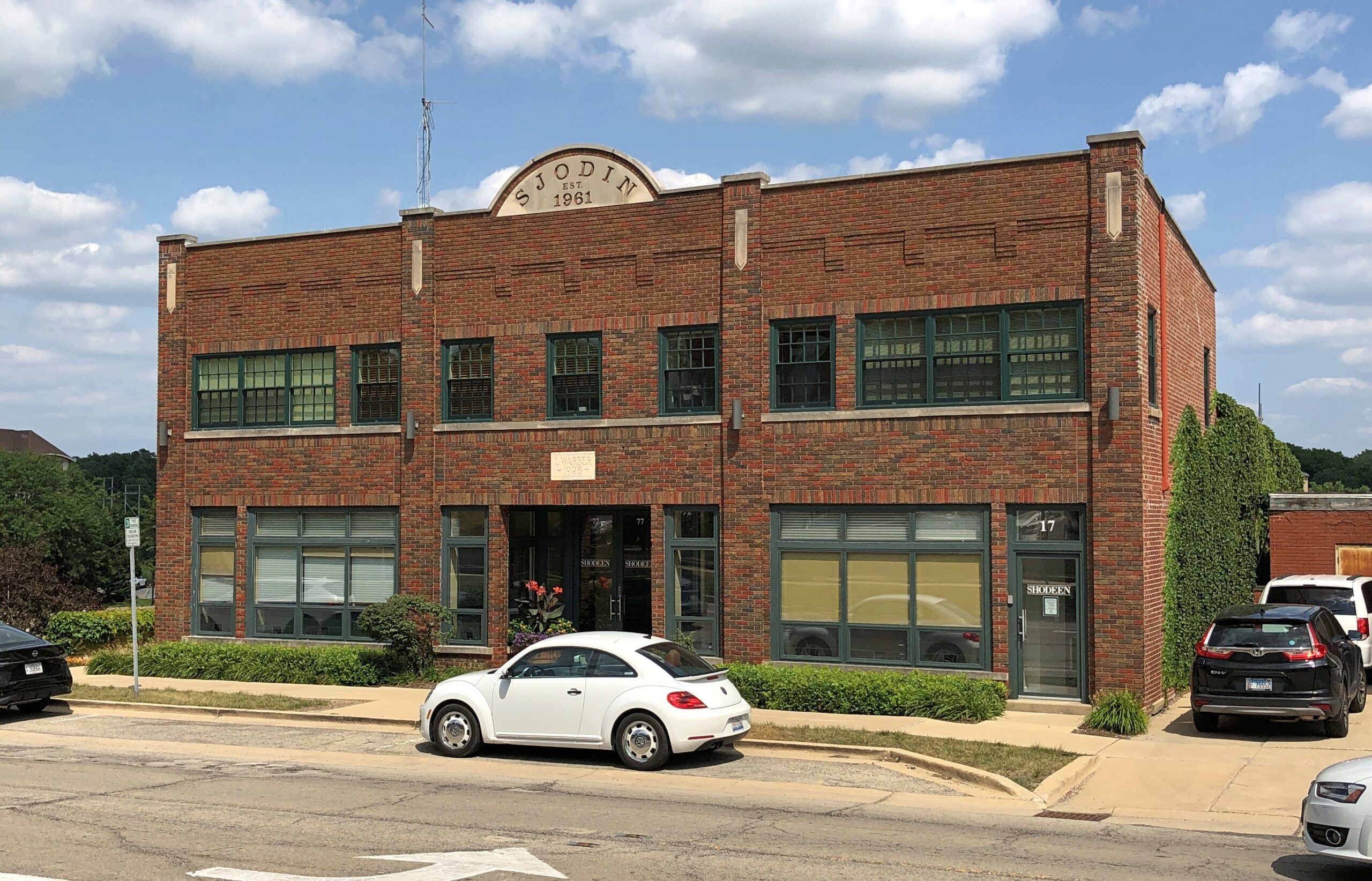
Not far from City Hall is a handsome brick building with “Sjodin Est 1961” on a lunette on top and a smaller stone plaque over the door that says “L. Warber 1928.” Sjodin must be an early version of Shodeen, the residential developer that occupies the building.
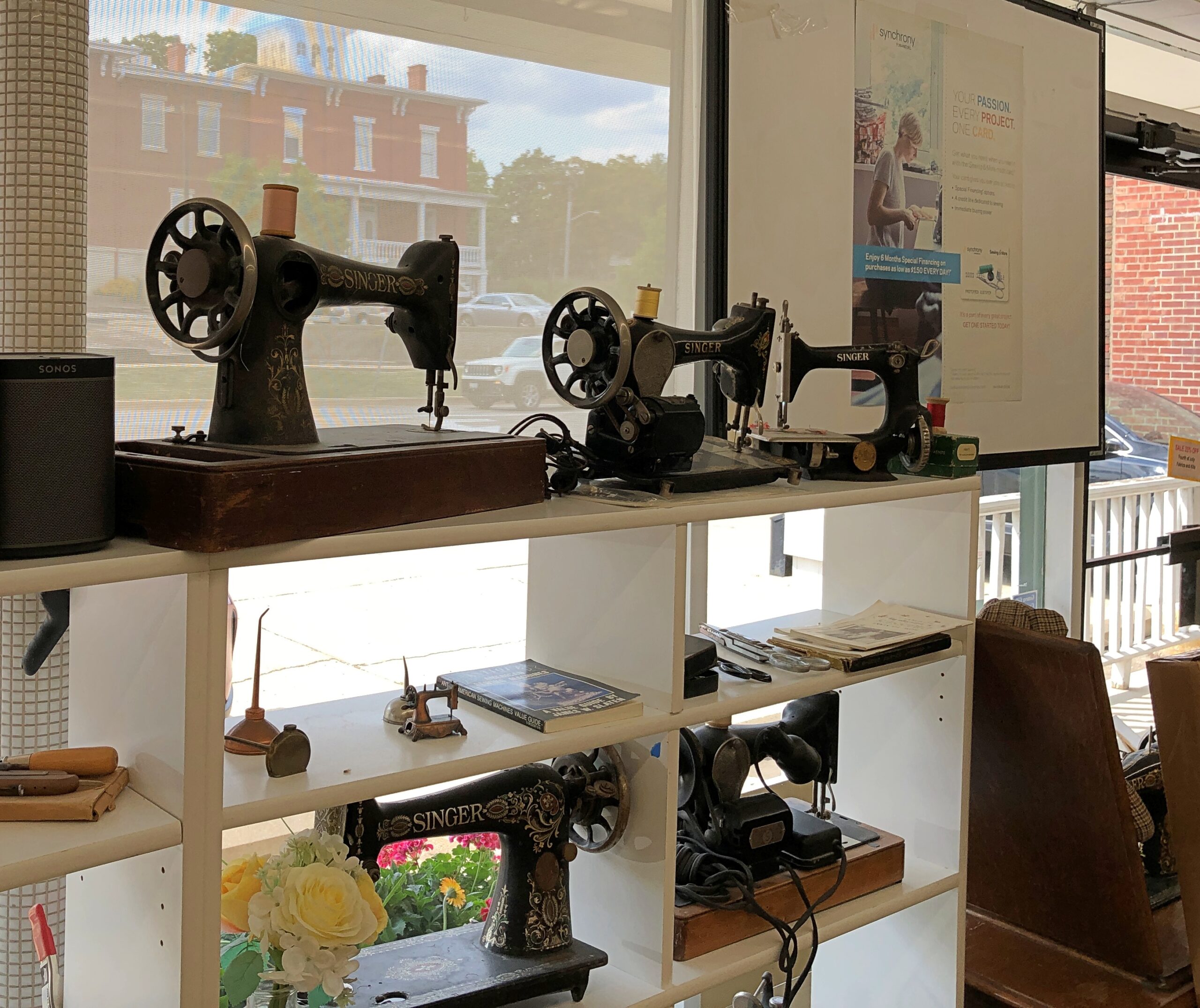
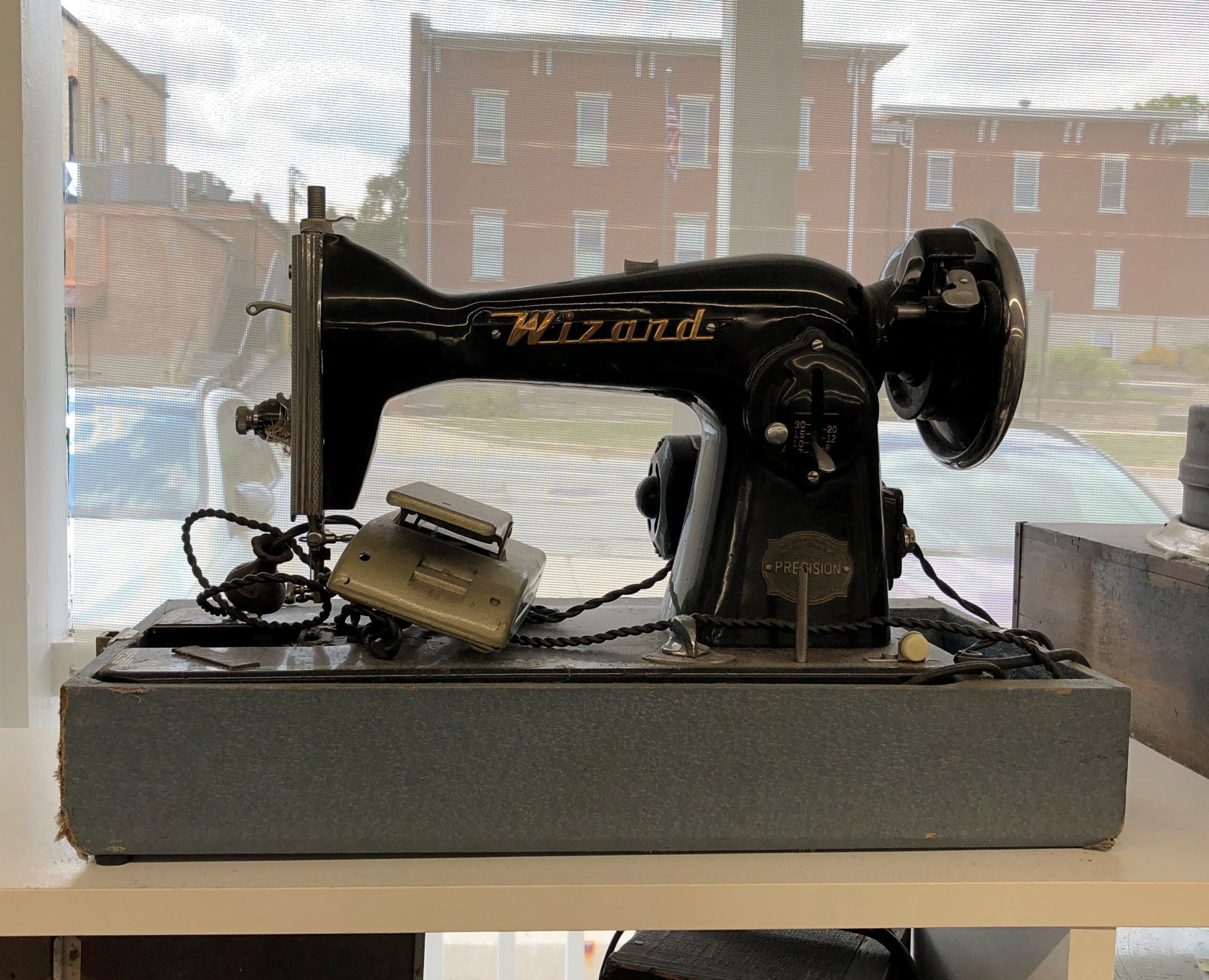
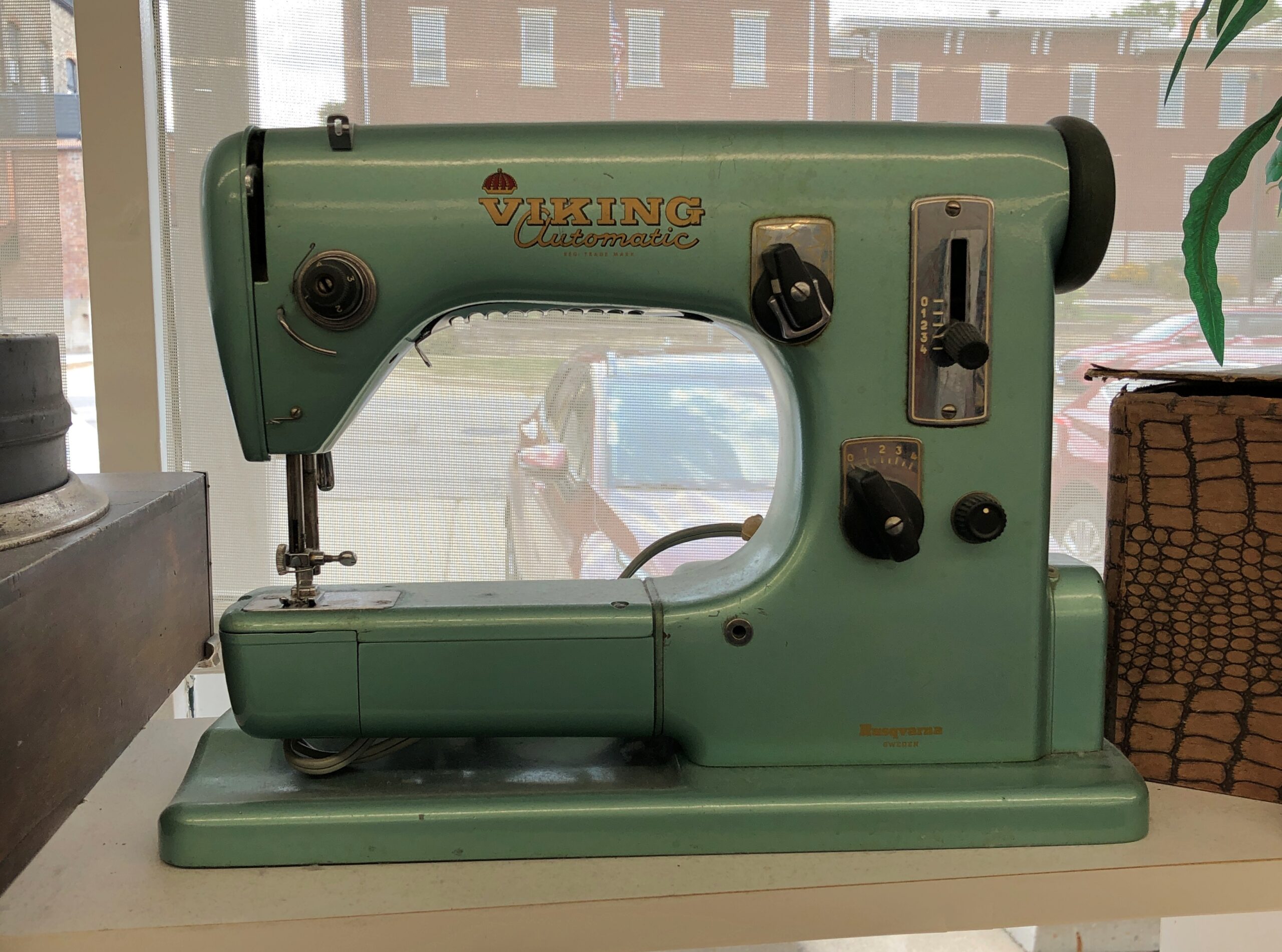
On the same street is Creative Sewing & Quilting, a sizable shop devoted to the sewing arts. Yuriko was keen to spend a while there, and as I prepared to continue my stroll, I noticed the shop’s collection of antique sewing machines.
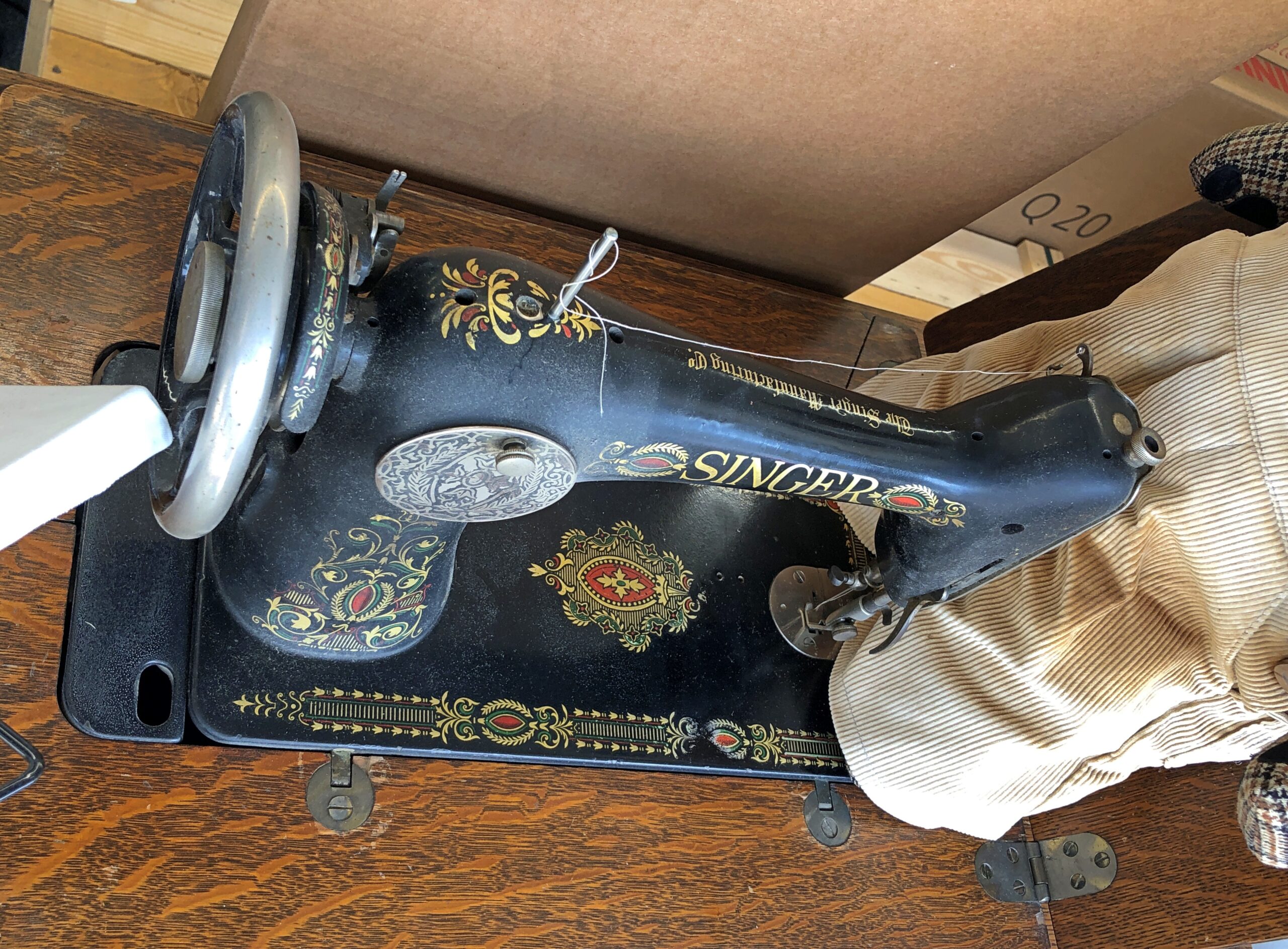
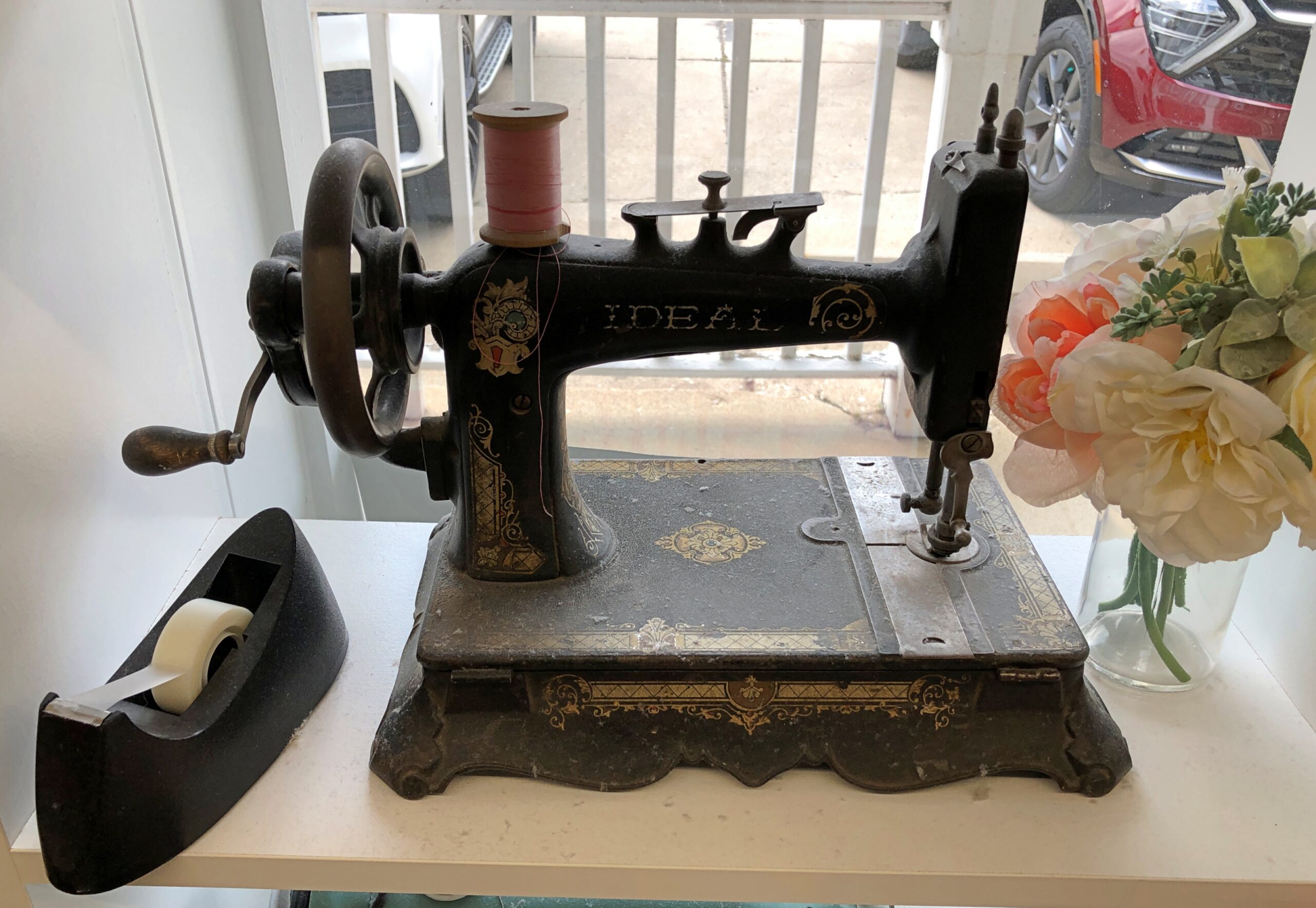
Everyone knows Singer, but there were also other brands.
All news to me, since it’s an industry I know little about. But I know this: without sewing machines, in the days of hand-stitched clothes, I’d probably only have one set of workday clothes and one of Sunday clothes, which would be the case for most people.
Even modest buildings have a history. Or point to a history.
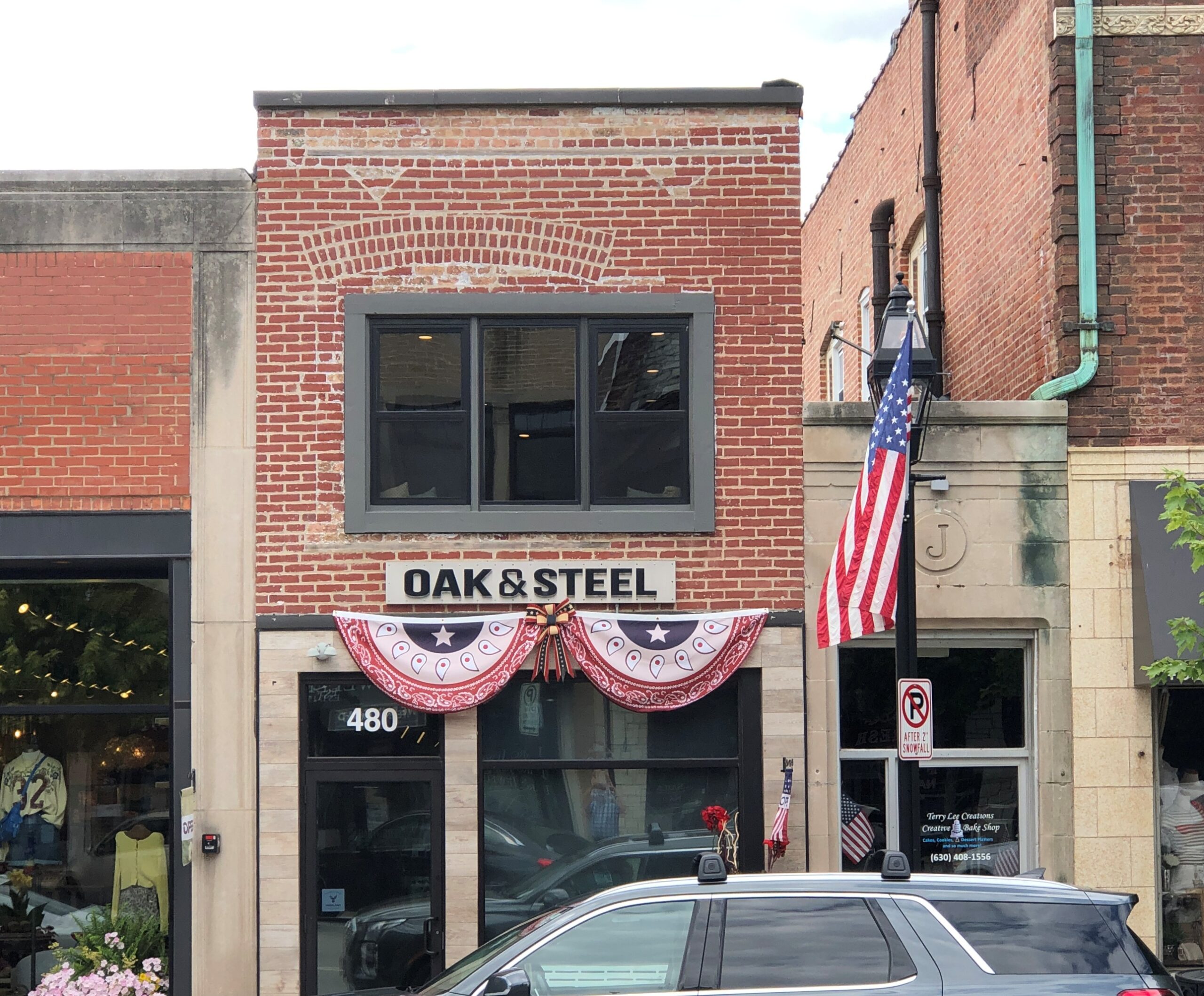
Just not much visible history in this case. Yet under this building in downtown Glen Ellyn, Illinois – in the Glen Ellyn Downtown North Historic District – is the main creek that used to pass through the village. Indian Creek, flowing for about 100 years now through an underground manmade channel. Civil engineers were busy in the 1920s.
An article published in 2023, “The Creeks of Old Glen Ellyn, Part 1” by Robert Elliot, offers a bit of detail: “Though we do not know exactly when, the creeks which flowed through old Glen Ellyn were slowly moved underground. Indian Creek appears to have remained above ground for a long time, although it too eventually fell victim to development. Although the exact year remains unknown, it appears that Indian Creek was mostly moved underground in 1922, when a dry goods store was constructed where it used to flow under Main Street. Today, Oak & Steel occupies the same location.”
Glen Ellyn was once marked by open creeks and small ravines and other irregularities, much like the rest of Du Page County. Like in much of the rest of the county, or the nation for that matter, that wasn’t consistent with modern suburbia, so the terrain was modified – in the same spirit as controlling the Mississippi or digging the Panama Canal, if not the gargantuan scale.
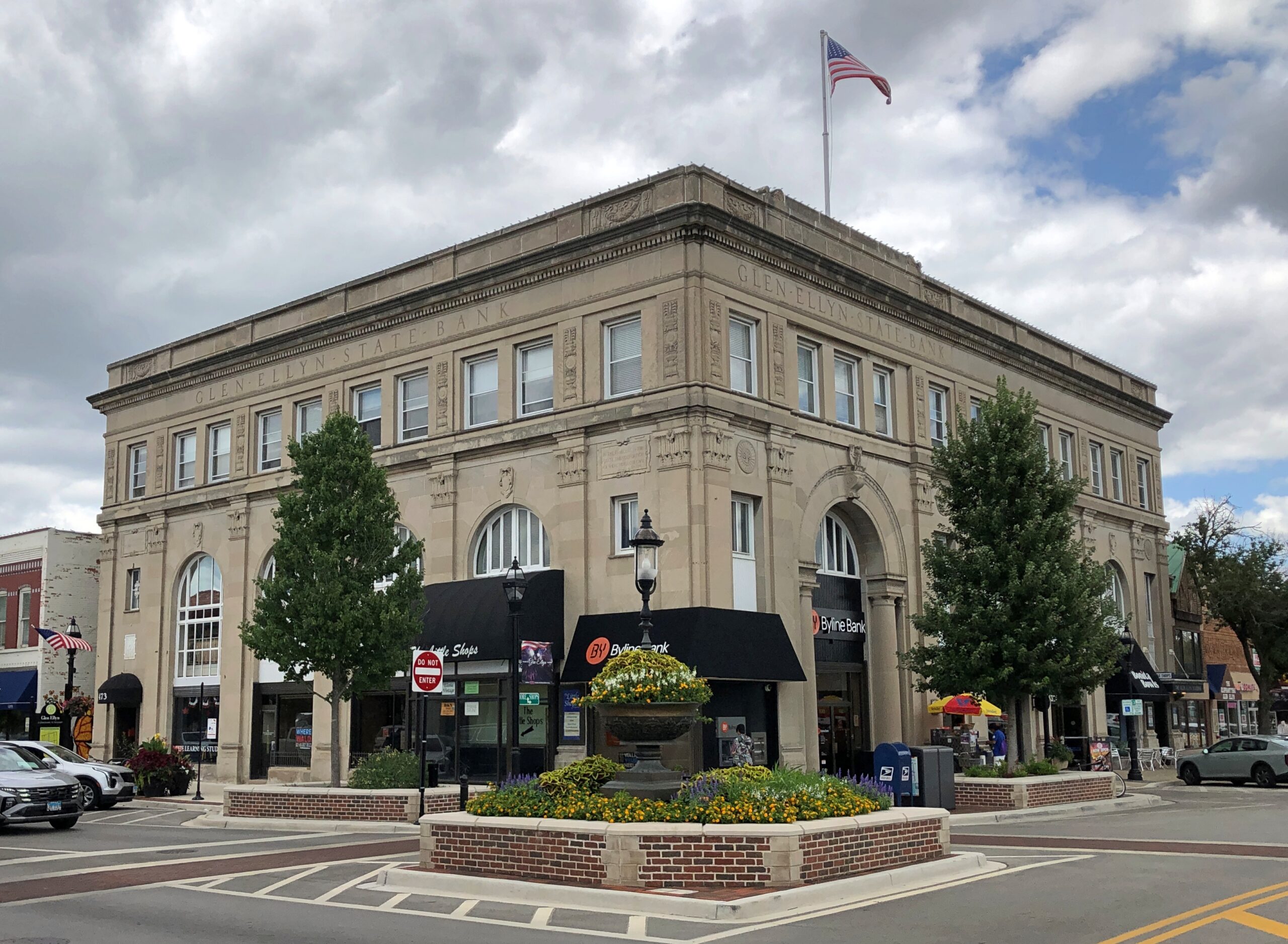
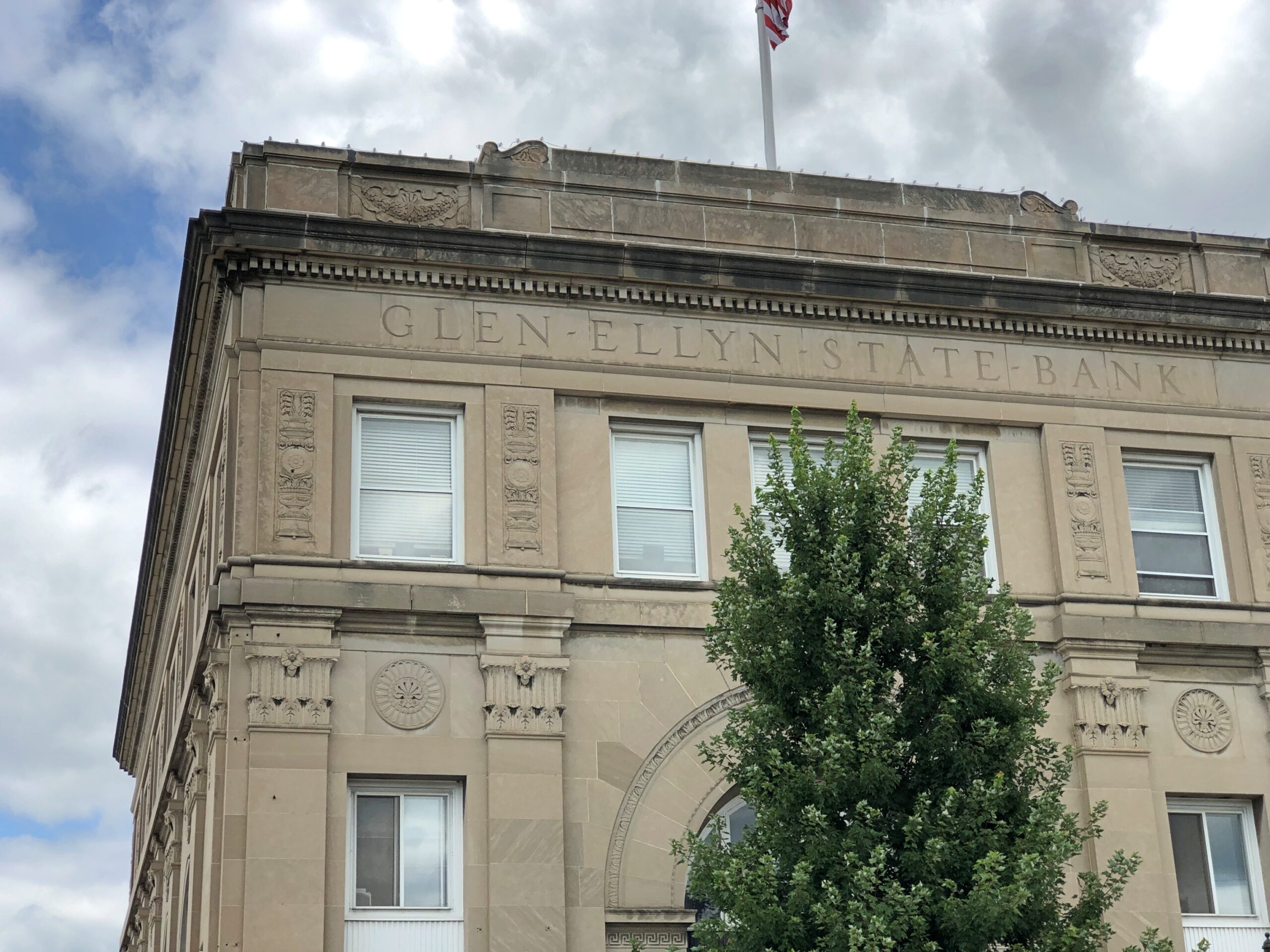
The 1920s also saw brisk commercial development near the Glen Ellyn interurban station, and it is these buildings that make up much of the historic district today. Such as a bank building, a sturdy-looking edifice built to re-assure in the days before the FDIC. Sturdy and elegant, I have to add.
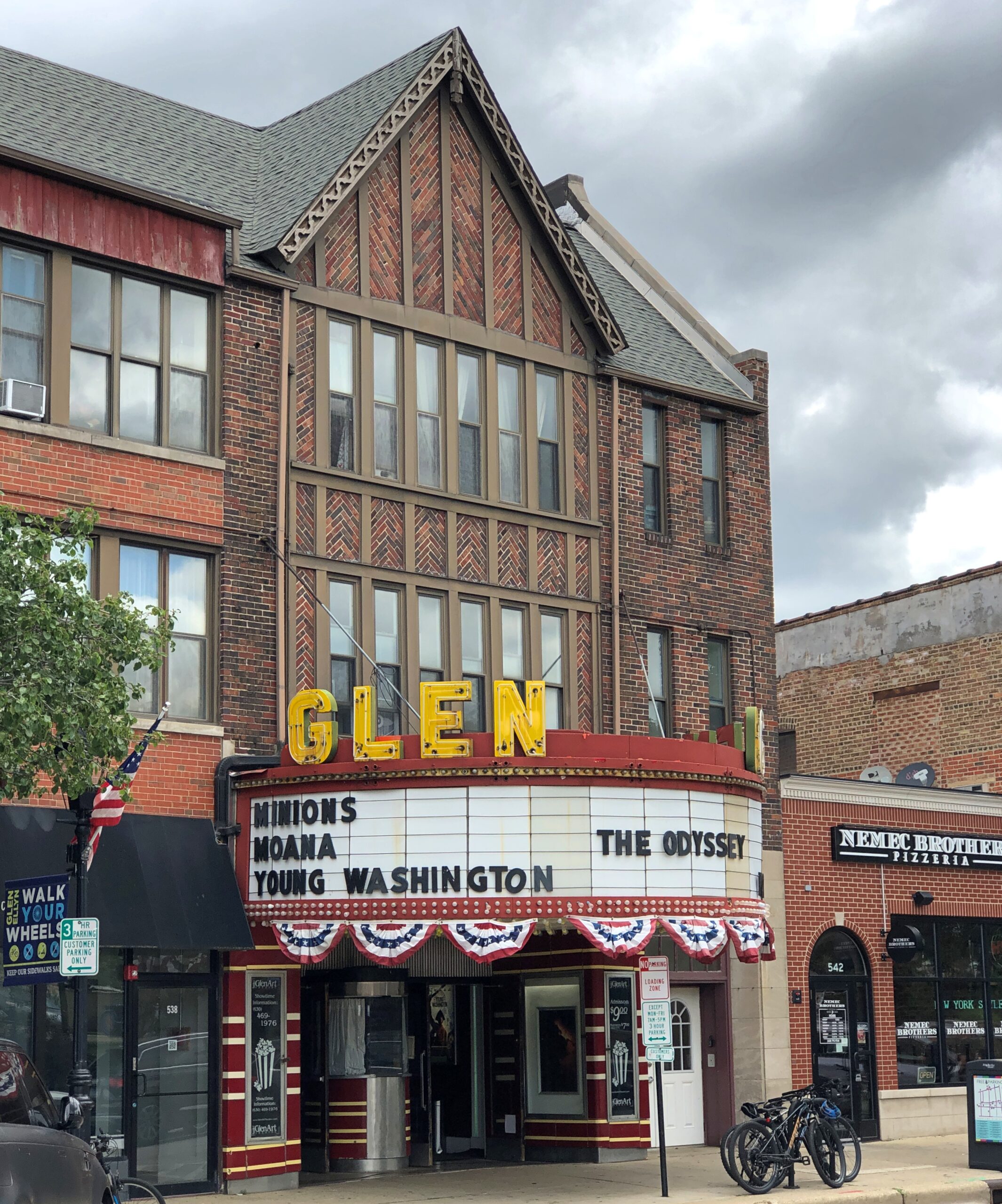
The Glen Art Theatre. A spot to take in a motion picture, now as then.
“The Glen Theatre, formerly a single screen theatre, opened in February 1927,” says Cinema Treasures. “It was designed in the Tudor Revival style, along with the storefronts on either side of the three-story building. The architect was William B. Betts of Park Ridge, IL, who also designed a number of other movie theaters in the Chicago suburbs. Originally, the Glen Theatre not only featured motion pictures, but live stage acts, as well, and contained a Barton organ.”
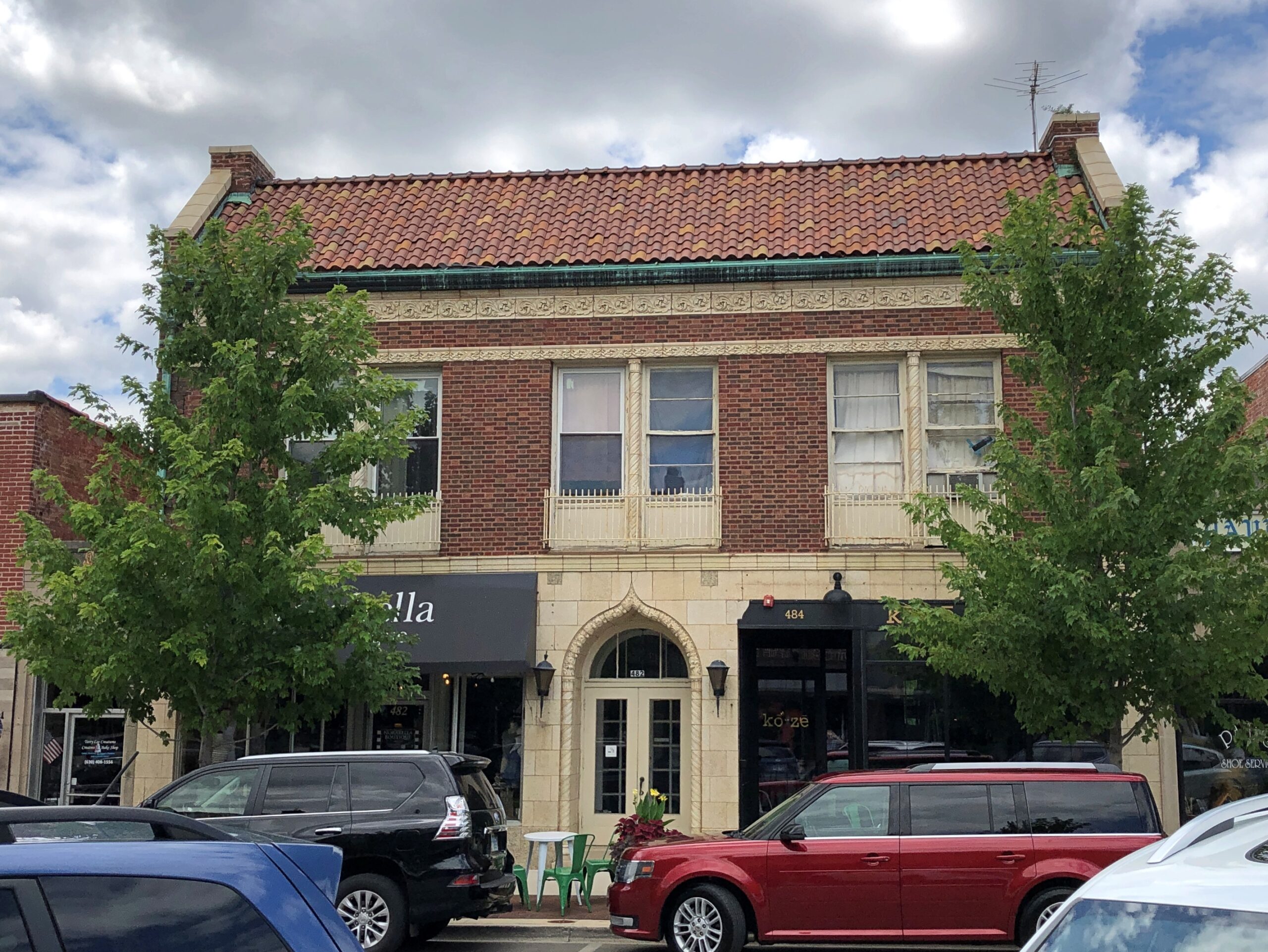
Other historic district structures.
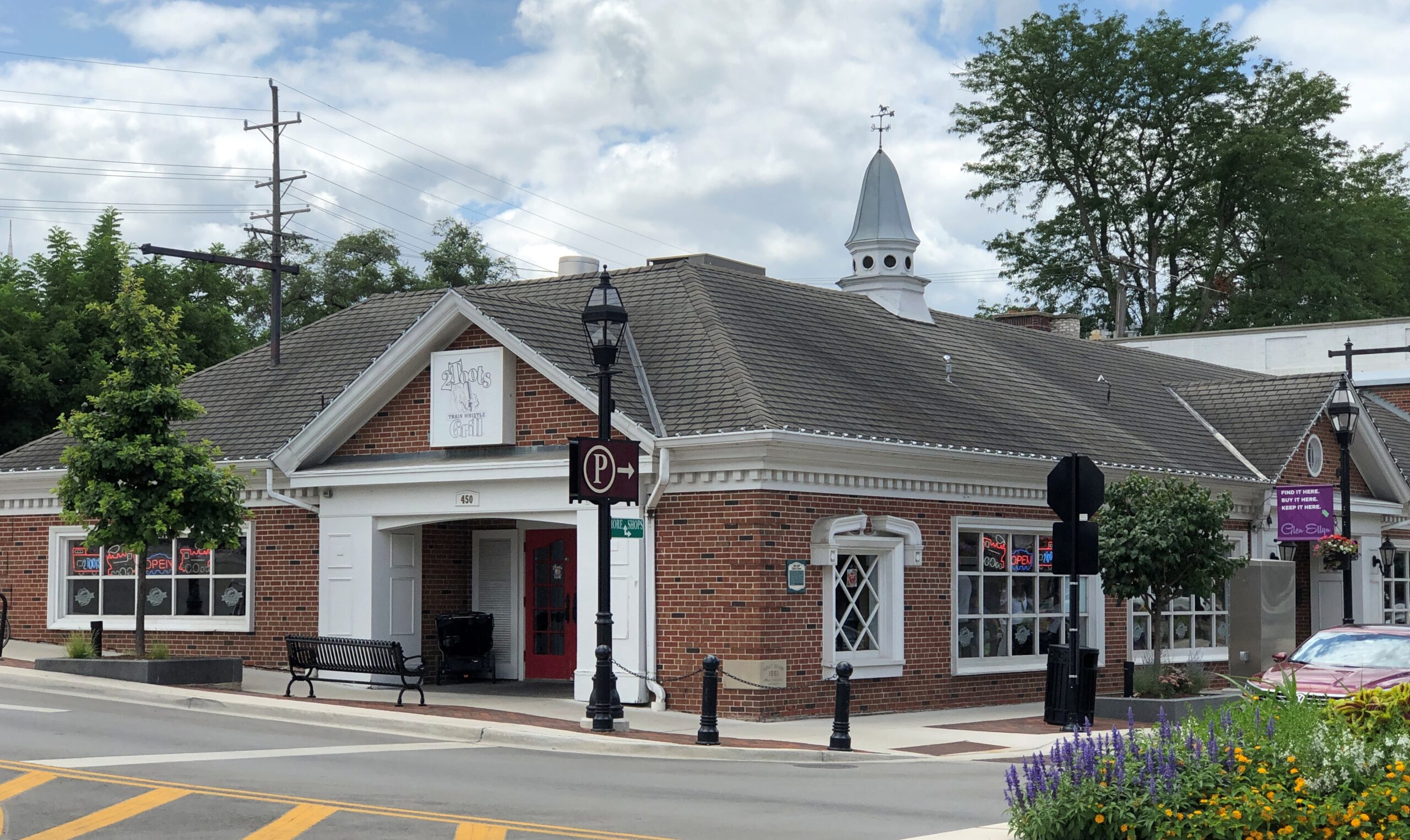
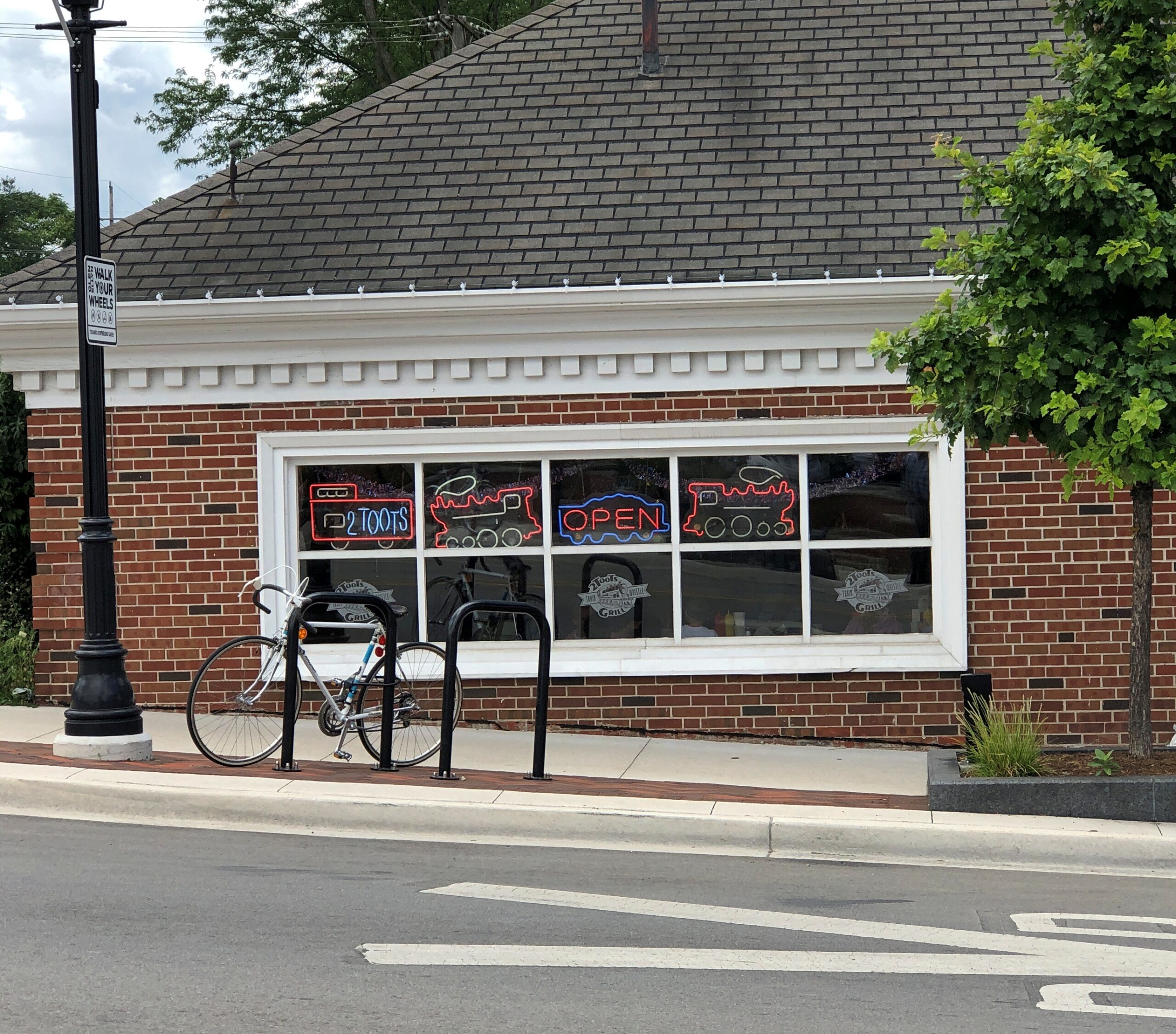
The site of the interurban line station. These days, it includes 2 Toots, a restaurant that delivers your burger and fries by model train.
I didn’t confine my peregrinations to the historic district, mainly because I didn’t know about it until later.
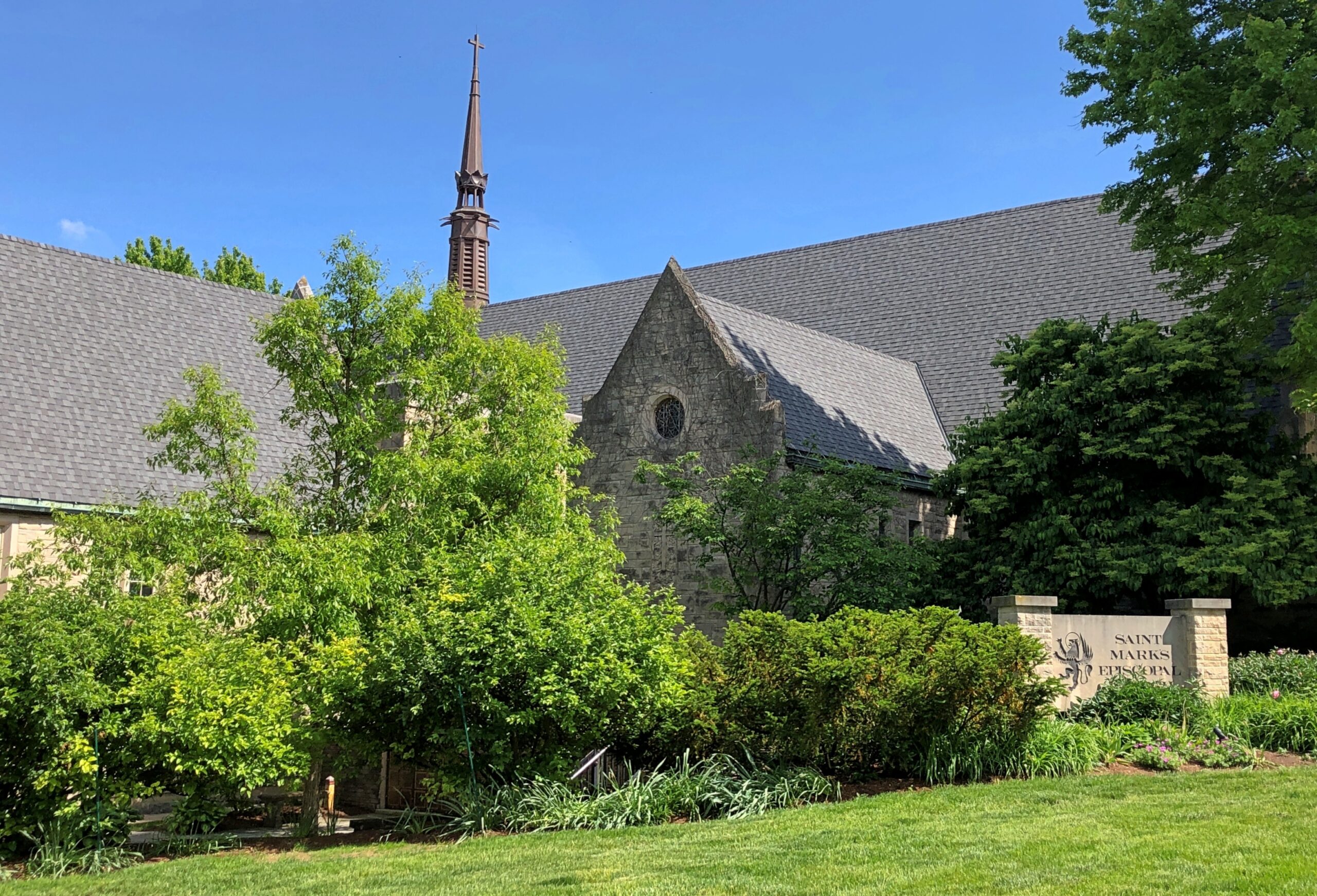
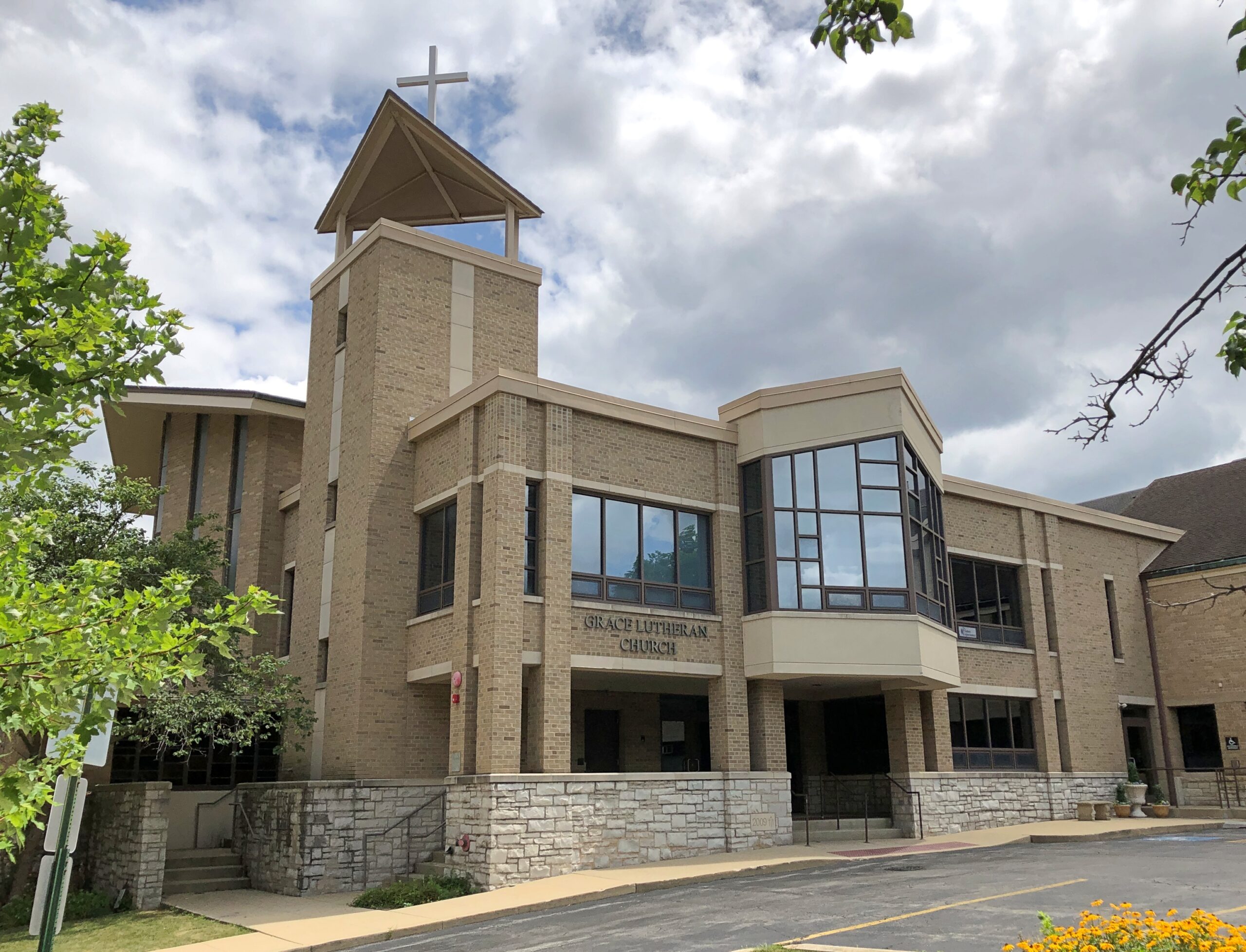
Just outside the district, a couple of churches.
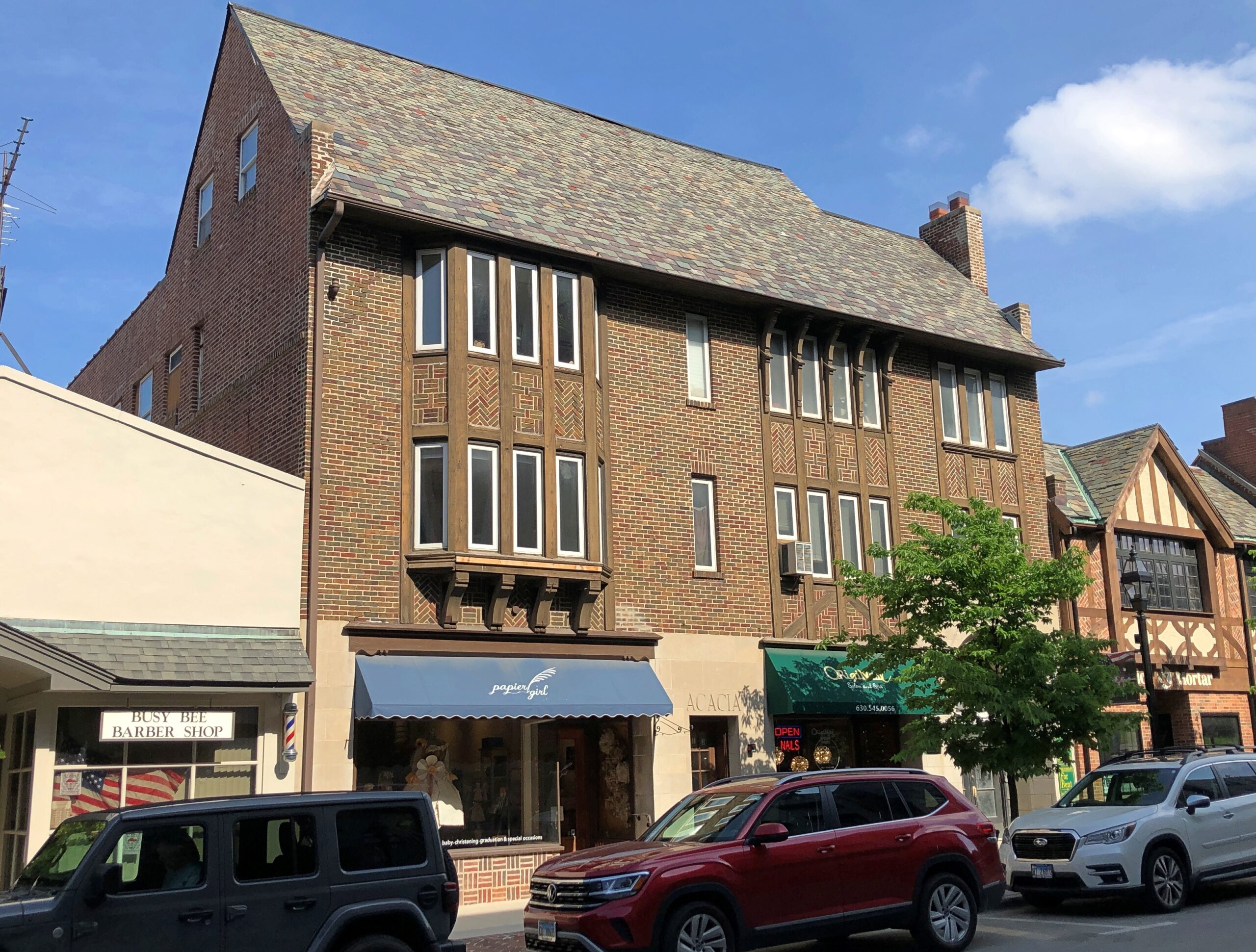
More apartments up/retail down structures.
The Village Office, looking a little New Englandish.
The interurban line that once came through Glen Ellyn, the Chicago, Aurora and Elgin Electric (CA&E), is long gone, as they all are. But it left a legacy, namely the Main Stem of the Illinois Prairie Path.
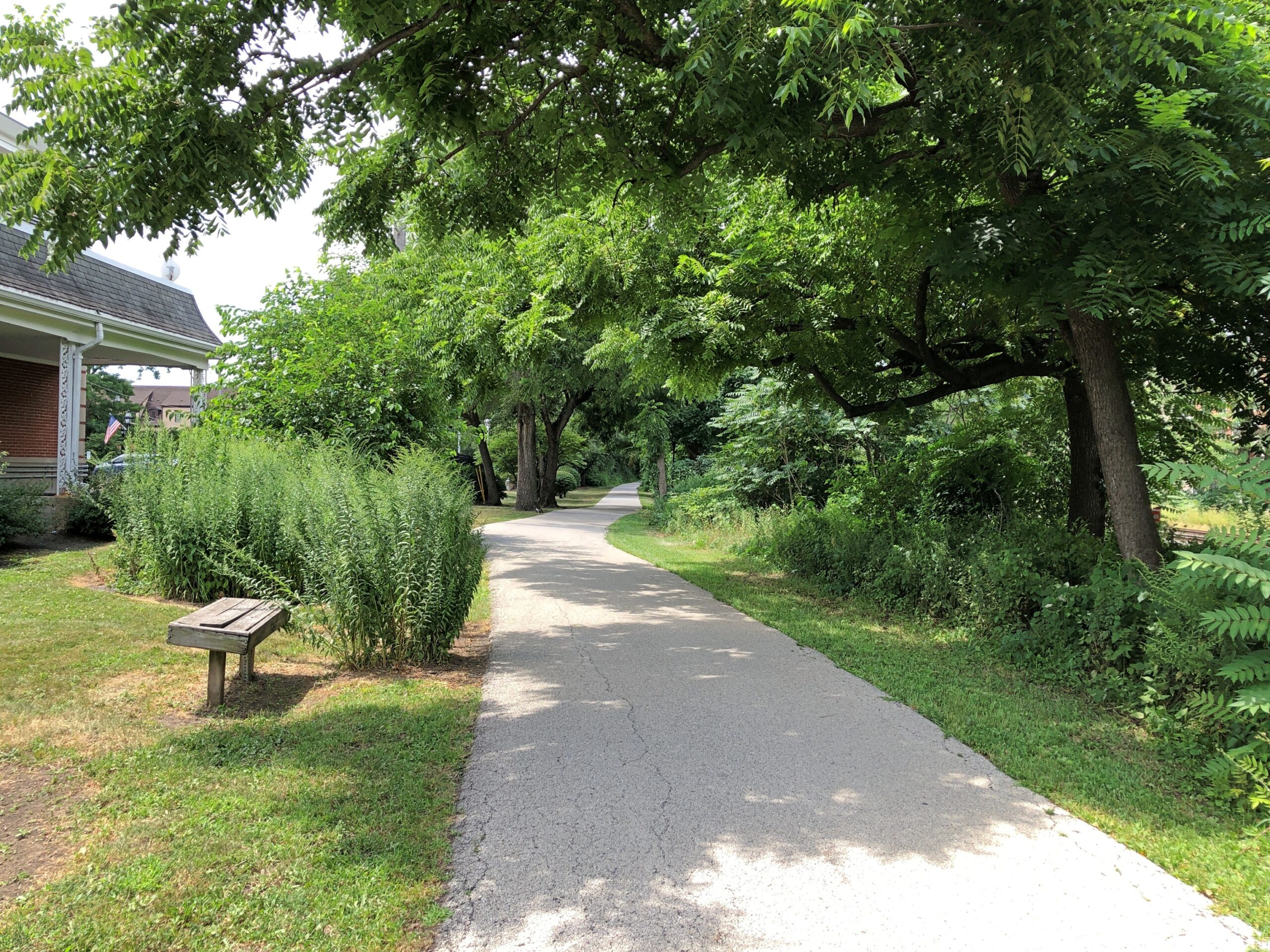
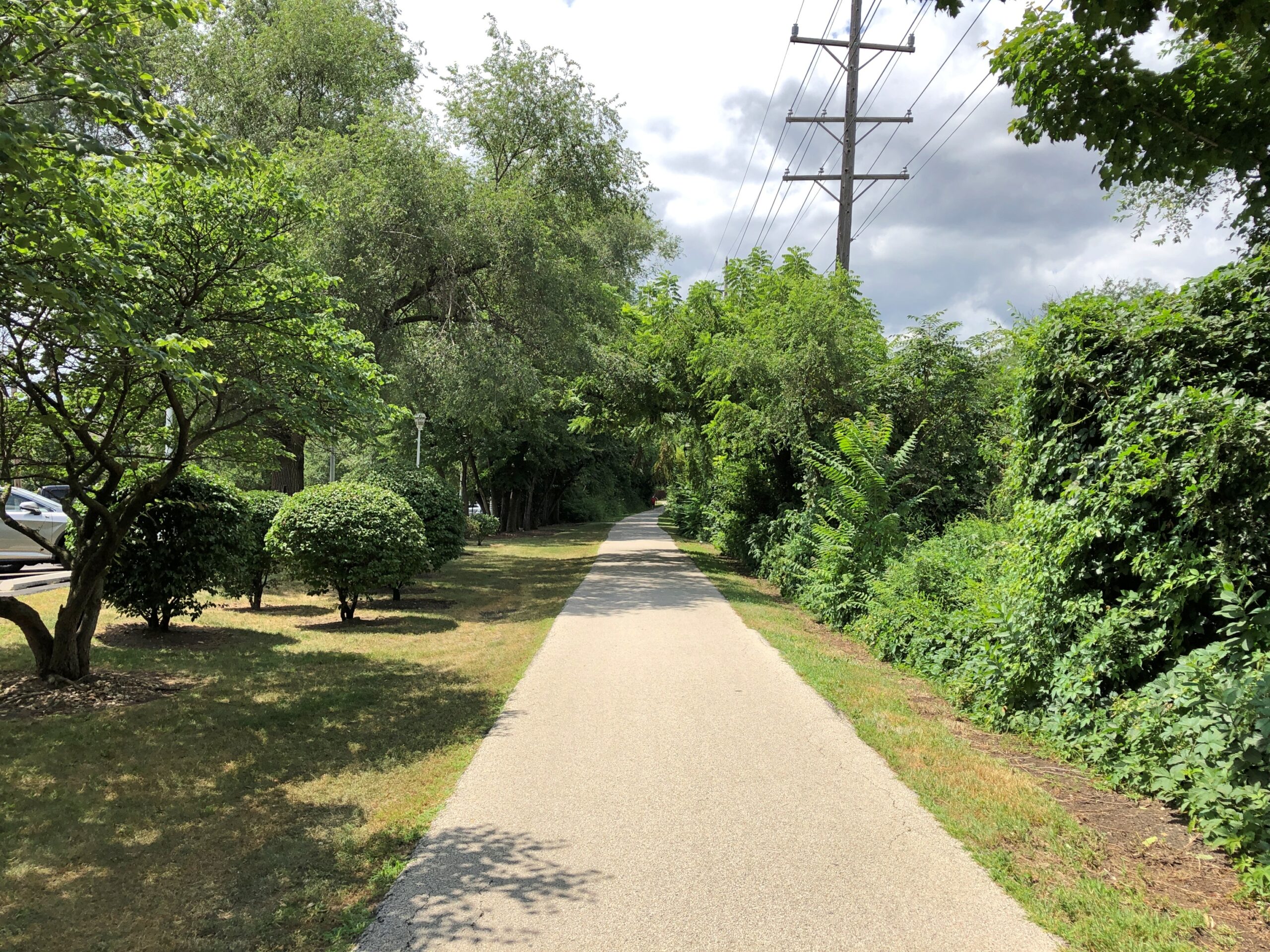
Worth a short walk or a long one. Traversing Du Page County is possible on its 61-mile network. During my recent visits, I walked maybe 1 percent of that distance, but I’m considering other segments.