Hemingway Visits the Key West Aquarium

Land meets sea in Key West. For encounters with sea creatures, one can hire a boat and some deep-sea fishing gear and make like Hemingway. We went to the Key West Aquarium instead. A sedate sort of place, a legacy of early 20th-century Key West, when tourists started coming in numbers.
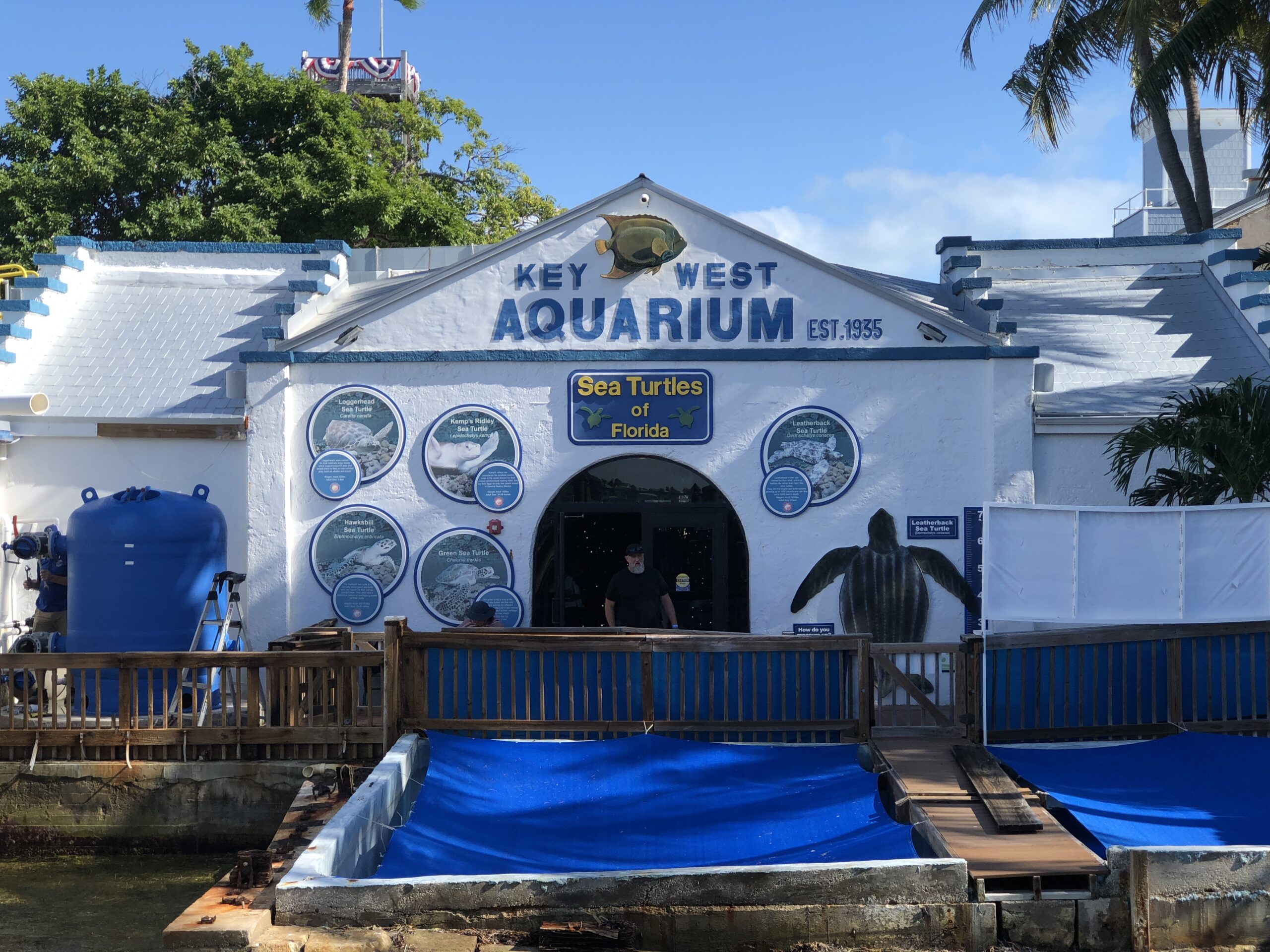
I managed to make one of the employees, or volunteers, laugh a bit. A youngish woman, she took our tickets and said that if we wanted to touch any of the sea creatures – there were a few large tanks with rays and the like, touching allowed – use only two fingers.

“So you’ll still have three, right?” I said.

Most of the aquatic life was in smaller tanks. A nice selection, “home to over 250 specimens of fish, sharks and four of the five species of sea turtles that inhabit the waters of the Florida Keys,” the Aquarium web site says. Also, the place is a more manageable size. Not a big-deal world-class mega-aquarium that takes all day to visit. Not that those can’t be impressive. But we had a good hour as childfree adults at Key West Aquarium, and that was about the right length for a visit.

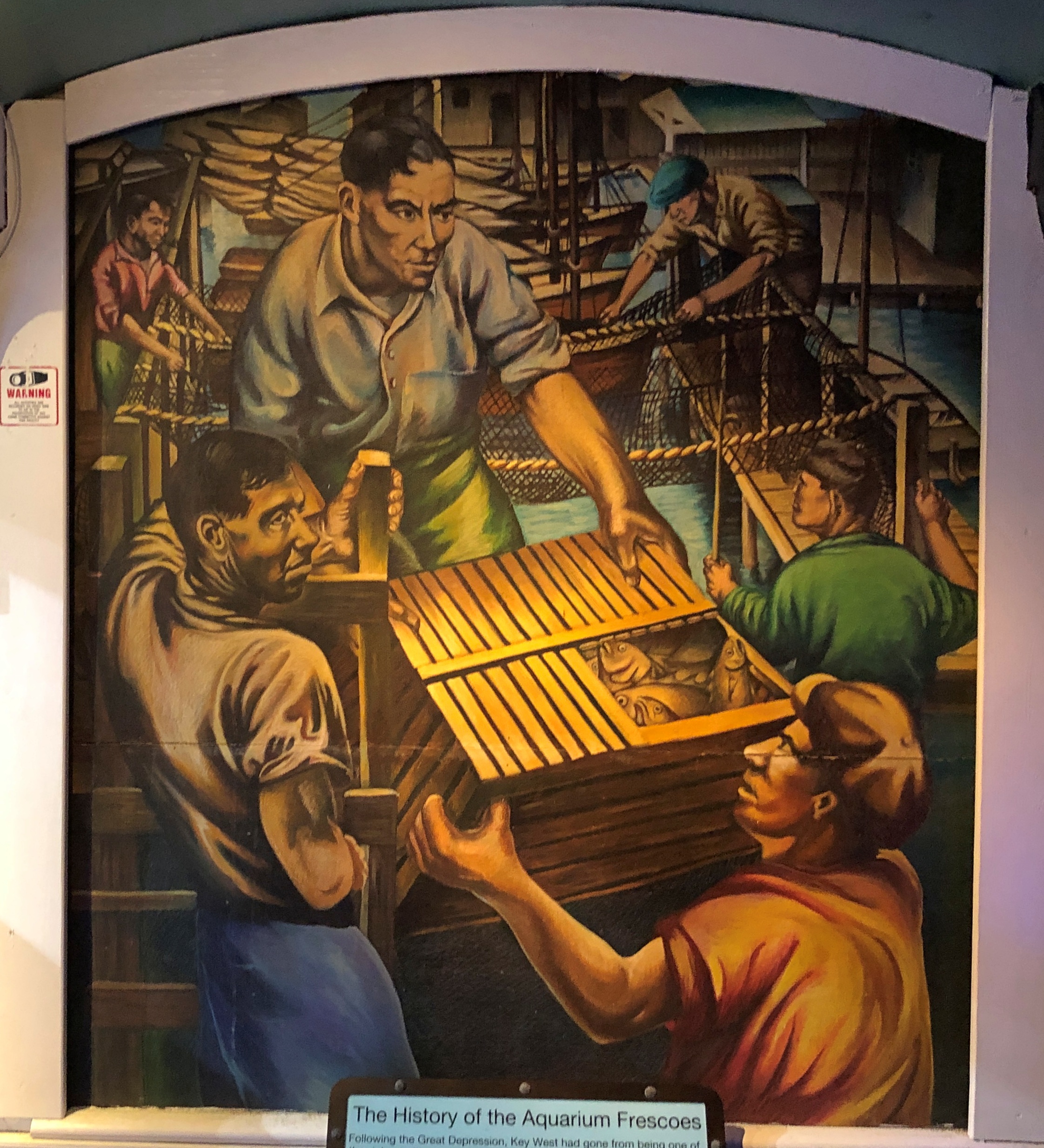
Besides fish, there are fishermen. Depression-era murals of fishermen, that is.
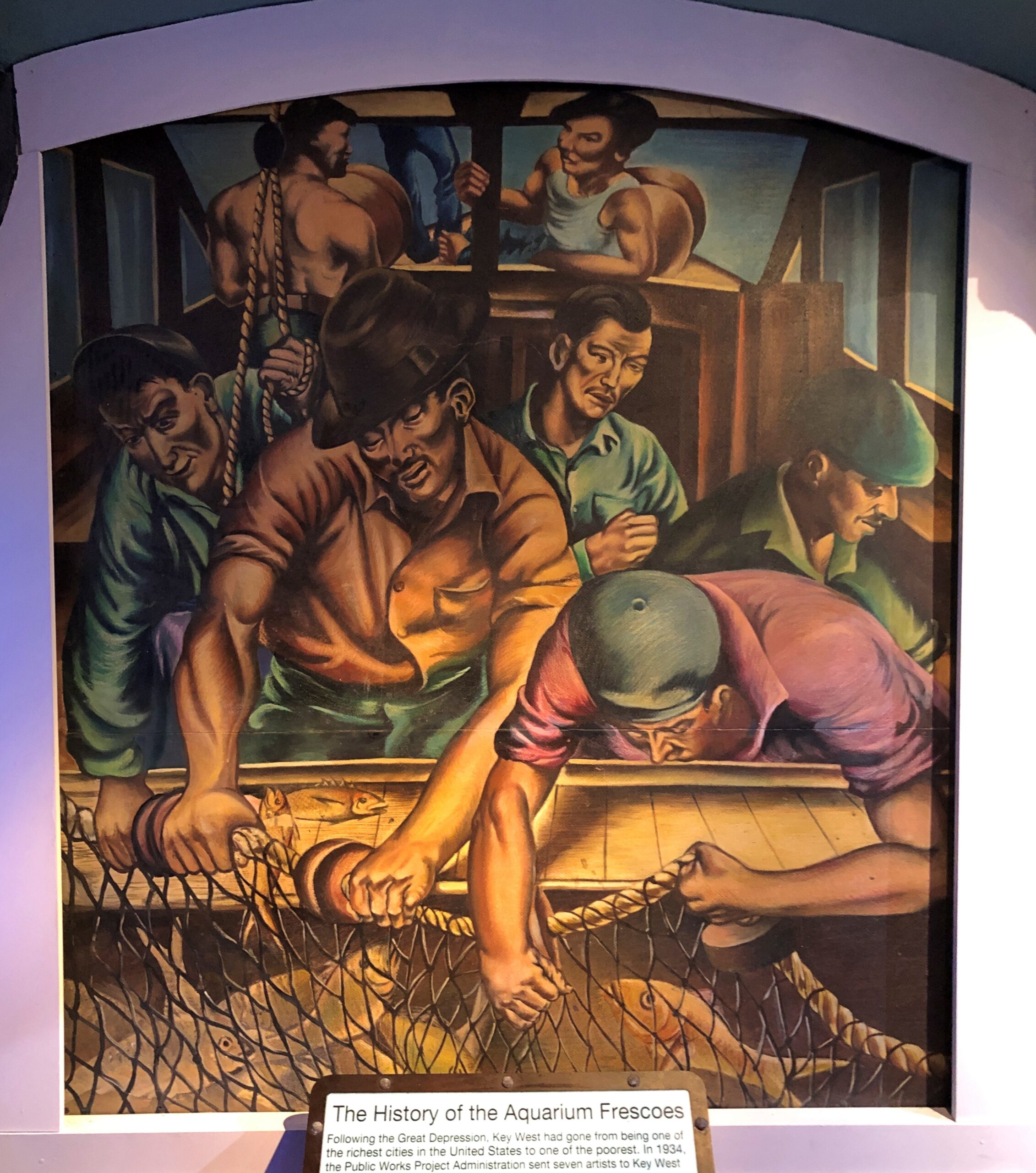
What a pleasant surprise. By the Civil Works Administration, a short-lived predecessor to the WPA. Not the originals, however, which were by an artist named Alfred Crimi (d. 1994). The Living New Deal says they’re more recent replicas.

Come to think of it, Hemingway would have known about the aquarium. Key West isn’t that big a place, and the attraction would have been fairly new when he and Pauline lived mere blocks away. Wonder whether he ever went there.

Of course, we’re used to thinking of the youngish Earnest as a hard drinking, hard fishing sort of guy. Notions that, I believe, Hemingway carefully cultivated. Not only did he create memorable characters for his books, he did for himself as well.

On a whim, I turned to an AI writer available on line, and fed it the following prompt:

Write an account of visiting the Key West Aquarium, in the style of Earnest Hemingway. Three paragraphs is sufficient.

All of 15 seconds later, the machine gave me this.

The aquarium sat low and white against the glare, and the heat lay on the street like a weight. Inside, the air was cooler and smelled of salt and old wood. The tanks were clean and plain, and the fish moved with the calm certainty of things that belong where they are. A tarpon held itself still in the water, strong and watchful, and its eye followed me as if it knew I was only passing through.

I stood by the open pool where they fed the fish, and the water broke suddenly with life. The fish came hard and fast, flashing silver and green, their bodies cutting the surface and falling back again. It was violent in a small way and honest. The men who worked there spoke little, and when they did it was direct, as if there were no reason to waste words on what could be seen.

When I stepped back outside, the sun struck again and the sea wind came down the street. The aquarium stayed behind me, quiet and contained, holding its ordered slice of the ocean. I thought of how the fish swam without doubt, and how good it must be to live so close to what sustains you. Then I walked on, feeling the heat, and the day continued.

I was expecting something from a bad Hemingway writing contest, but no. This is pretty good. Better than that, actually. A little wow moment for me, and the day continued.
Earnest Hemingway House, Key West

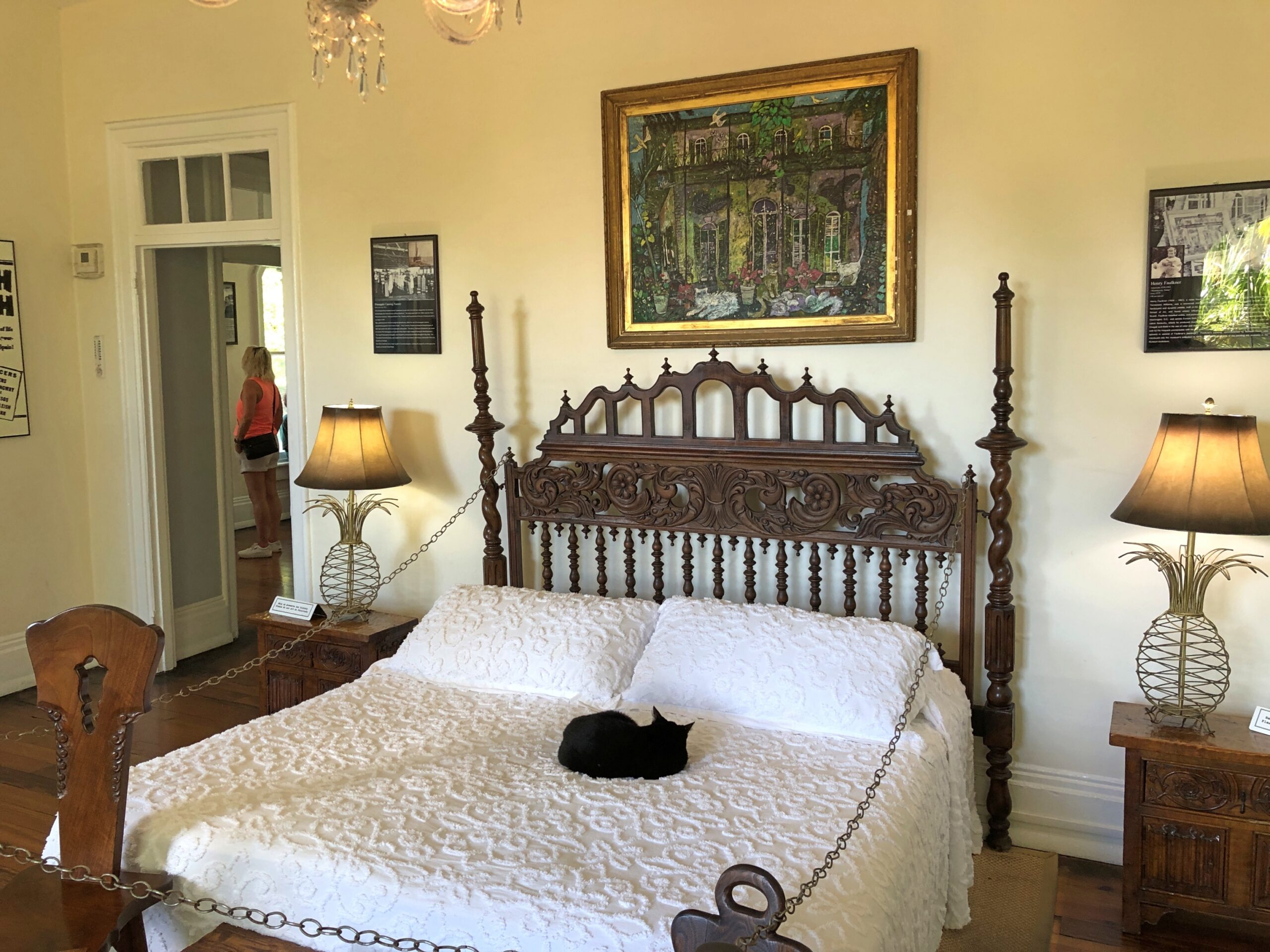
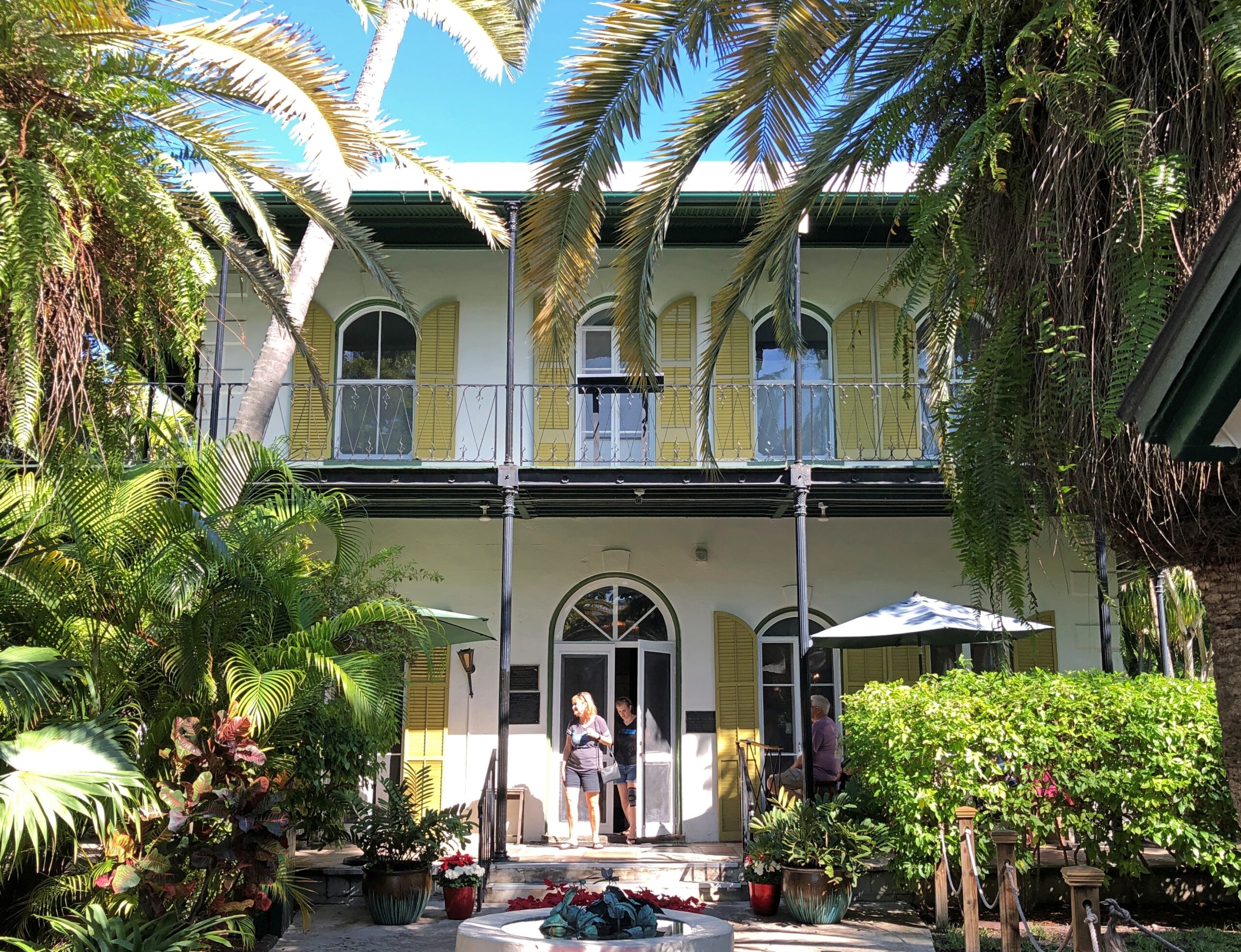
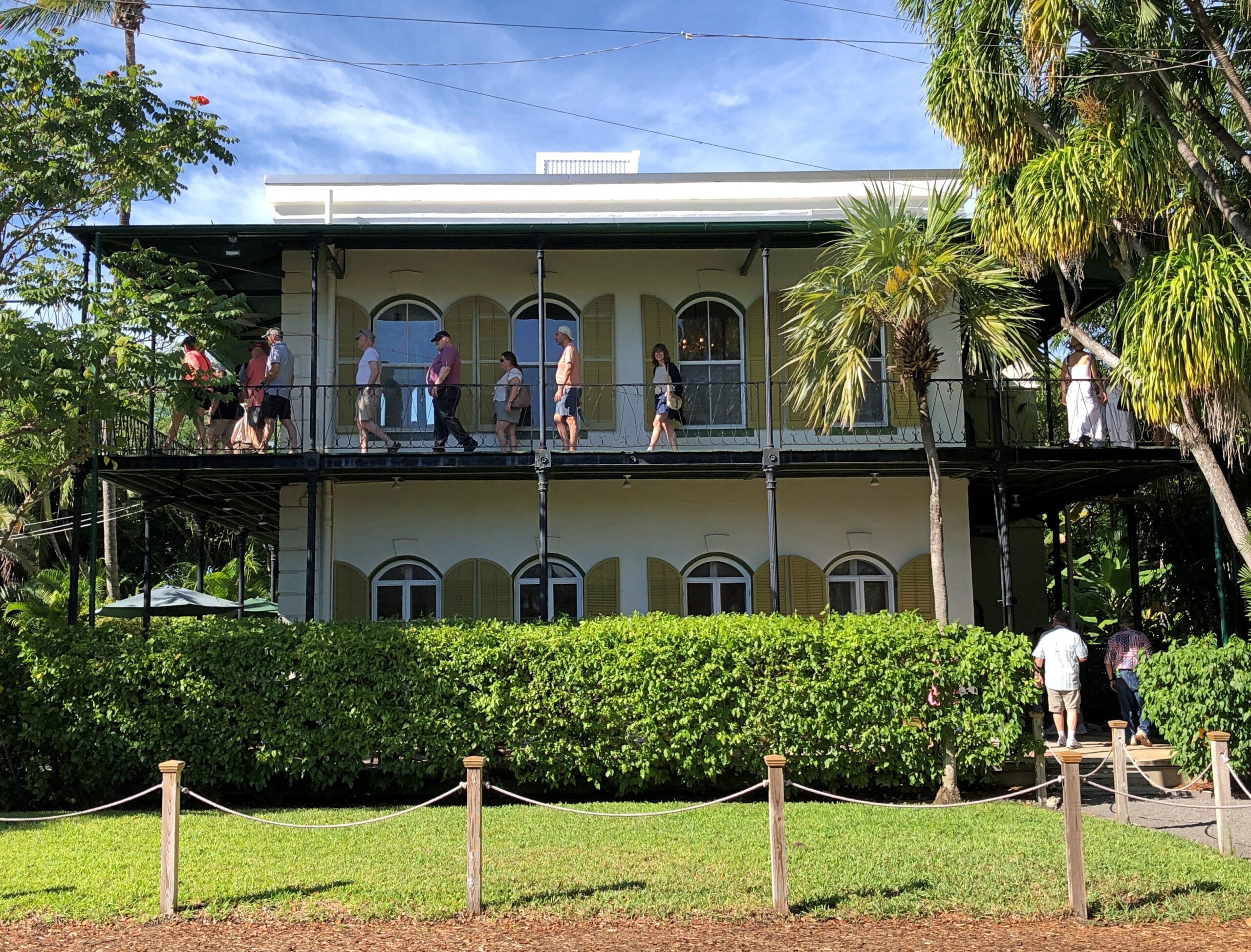
“How many of you came because you’ve read some of his books?” our guide at the Earnest Hemingway House in Key West asked our small group. We’d paid our entrance fee, waited outside the house for a few minutes, then started on the tour. I was in that group. Most of his books, in my case.

“OK, some of you. How about because someone else dragged you here?”

A few more hands went up. I don’t think he was taking a survey, exactly, just kicking off the tour in an interesting way.

“What about to see the cats?” Hands went up. Some laughter.

Yuriko came for the cats, mostly, though she told me Hemingway is a writer than isn’t hard to read in the original English. We’d come to Hemingway House after our Duval Street stroll. It was about as pleasant a day as possible for such a walk. Everything is a short distance in Key West, so we arrived after a short walk.

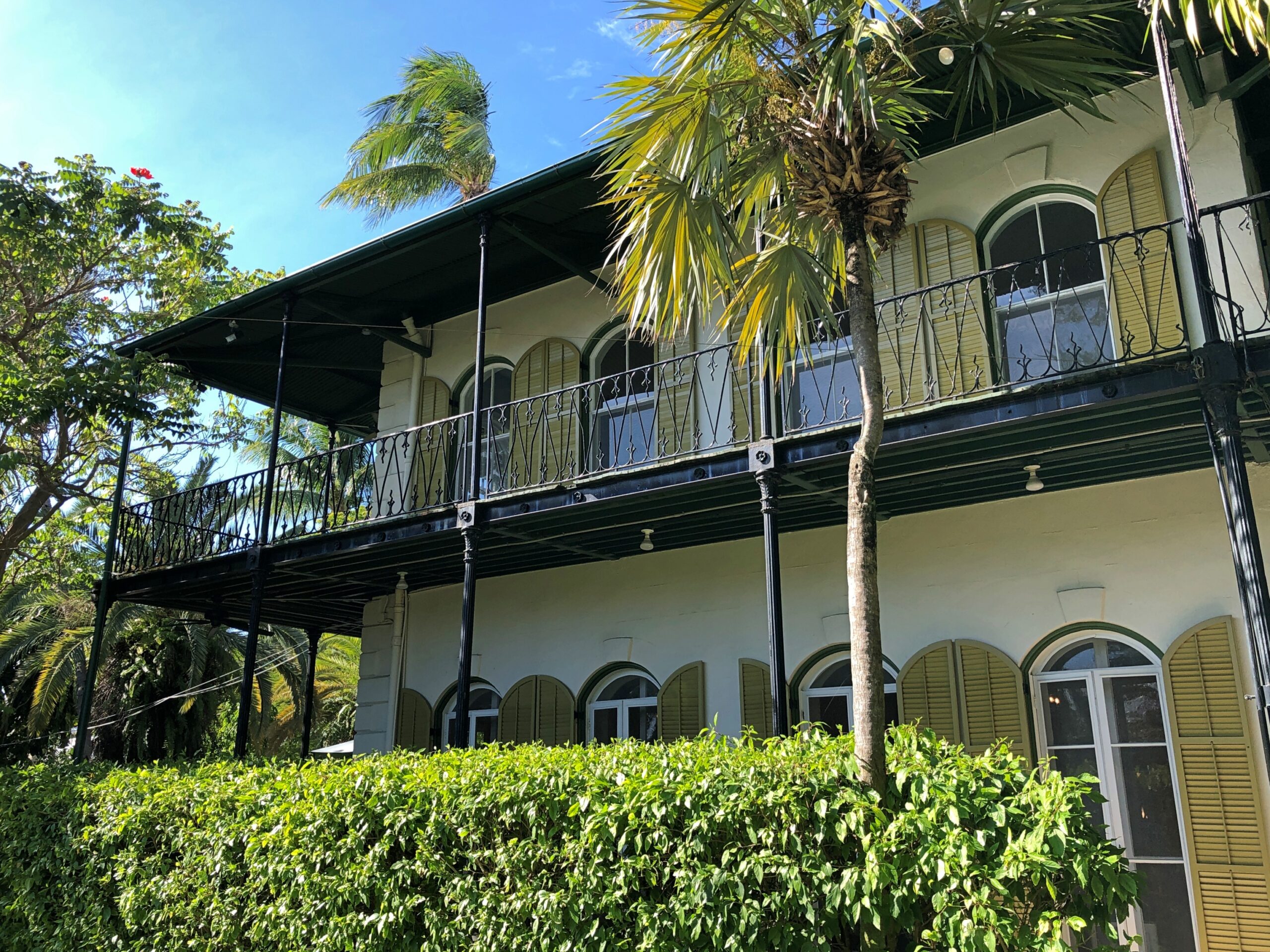
The house is a block off Duval, on as high a spot as Key West provides, and in the shadow of a lighthouse about a block away. The grounds are lush, the house itself a handsome two-story legacy of one of the 19th-century Key West booms. One Asa Tift, a Key West wrecker, completed the house in 1851.

Tift was one of the more successful wreckers, looks like: a man who led small boats out from Key West to the nearby hazardous reefs when ships foundered there. Wreckers were eager for valuable salvage from these vessels, and if the Hemingway House is any indication, the rough-and-tumble of salvage — and you know the process was dangerous, full of natural hazards, but especially other violence-prone wreckers out for the same prize — nevertheless produced at least few men of means in isolated, pestilential Key West.

Emphasis on pestilential. Just ask Asa Tift, whose sizable family, for whom the house was built, were carried away in that all too common 19th-century way, by communicable disease.

The Hemingways showed up some decades after old man Tift died, acquiring and renovating the property using her family’s money. They did what they did, and these days the house is a museum to their presence.

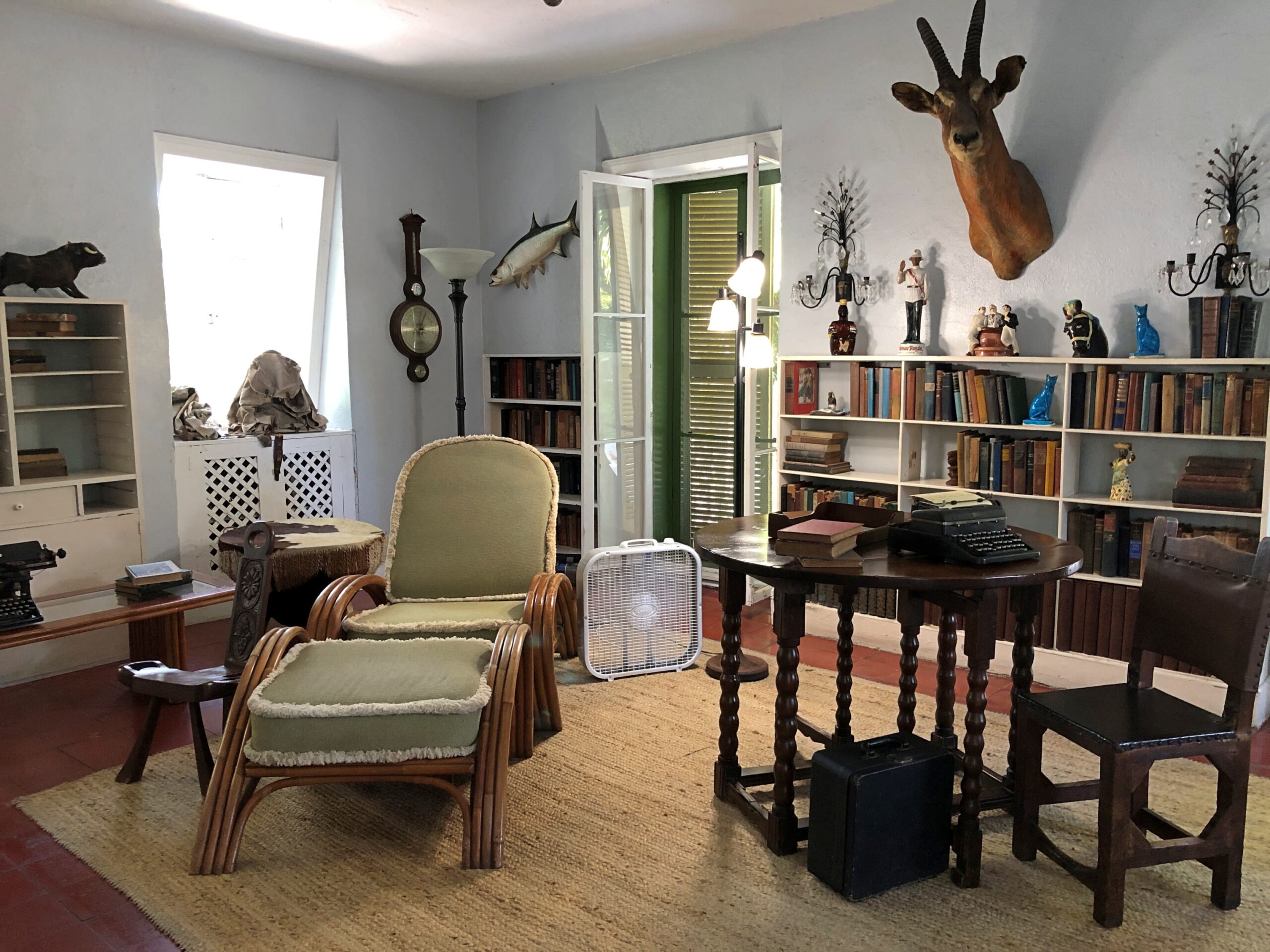
No one lives there anymore. No hefty, dark-mustachioed man staggers home from Sloppy Joe’s bar good and drunk and flops to bed there, or goes to the upstairs office-studio and bangs out famed literature during sober periods, or argues with his wealthy wife under the sub-tropical shade trees – quarrels whose root seemed to be Hemingway’s roving eye, with a dash of alcoholic irresponsibility added to the mix.

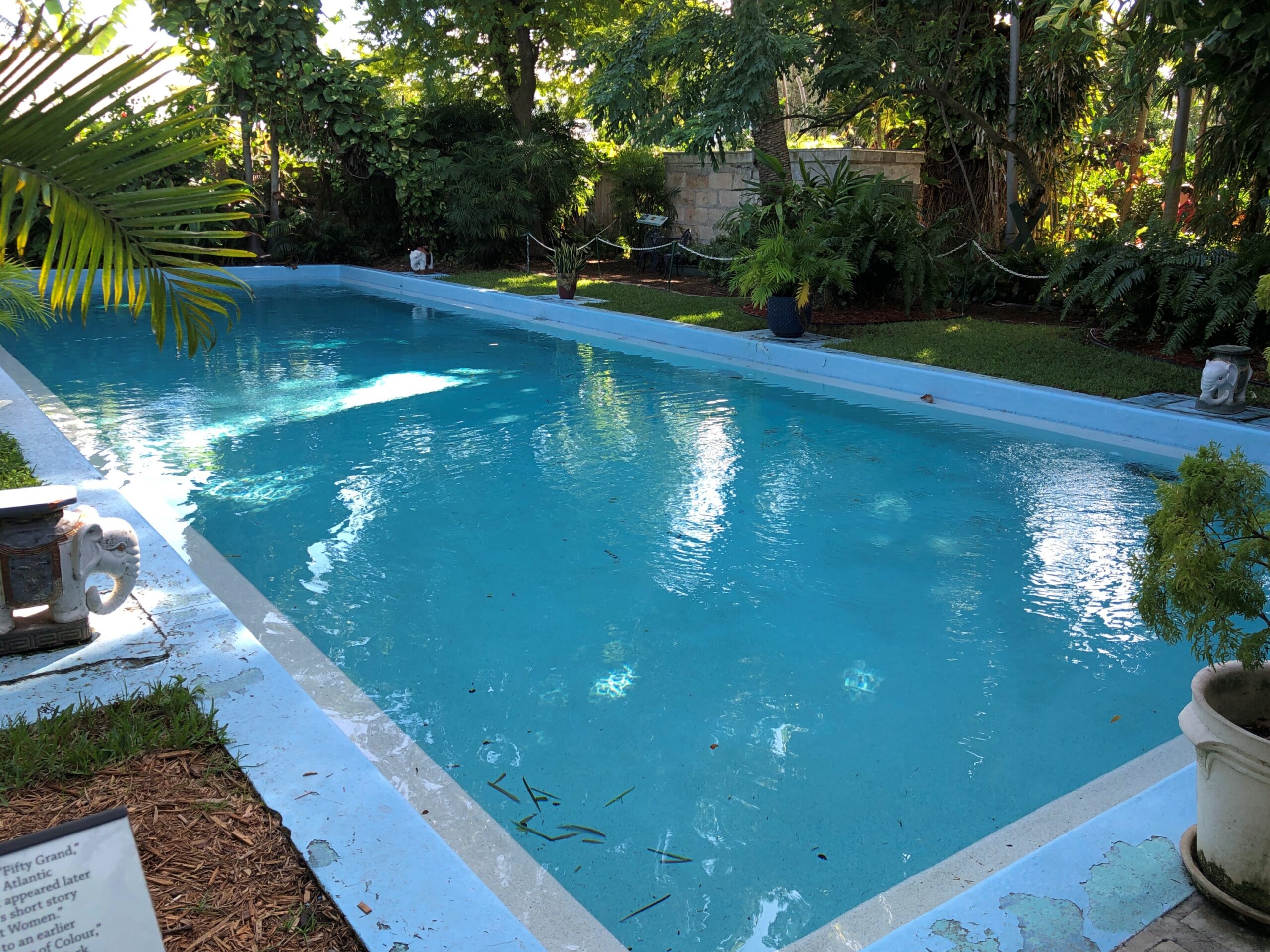
The pool was an addition by his wife, Pauline Pfeiffer, which caused consternation for Earnest. Something about taking the place of his informal boxing ring on the same site, done while the author was out gallivanting somewhere. Terrific writer he might have been, and I certainly admire his talent for gallivanting, but he also seems to have been a touchy bastard.

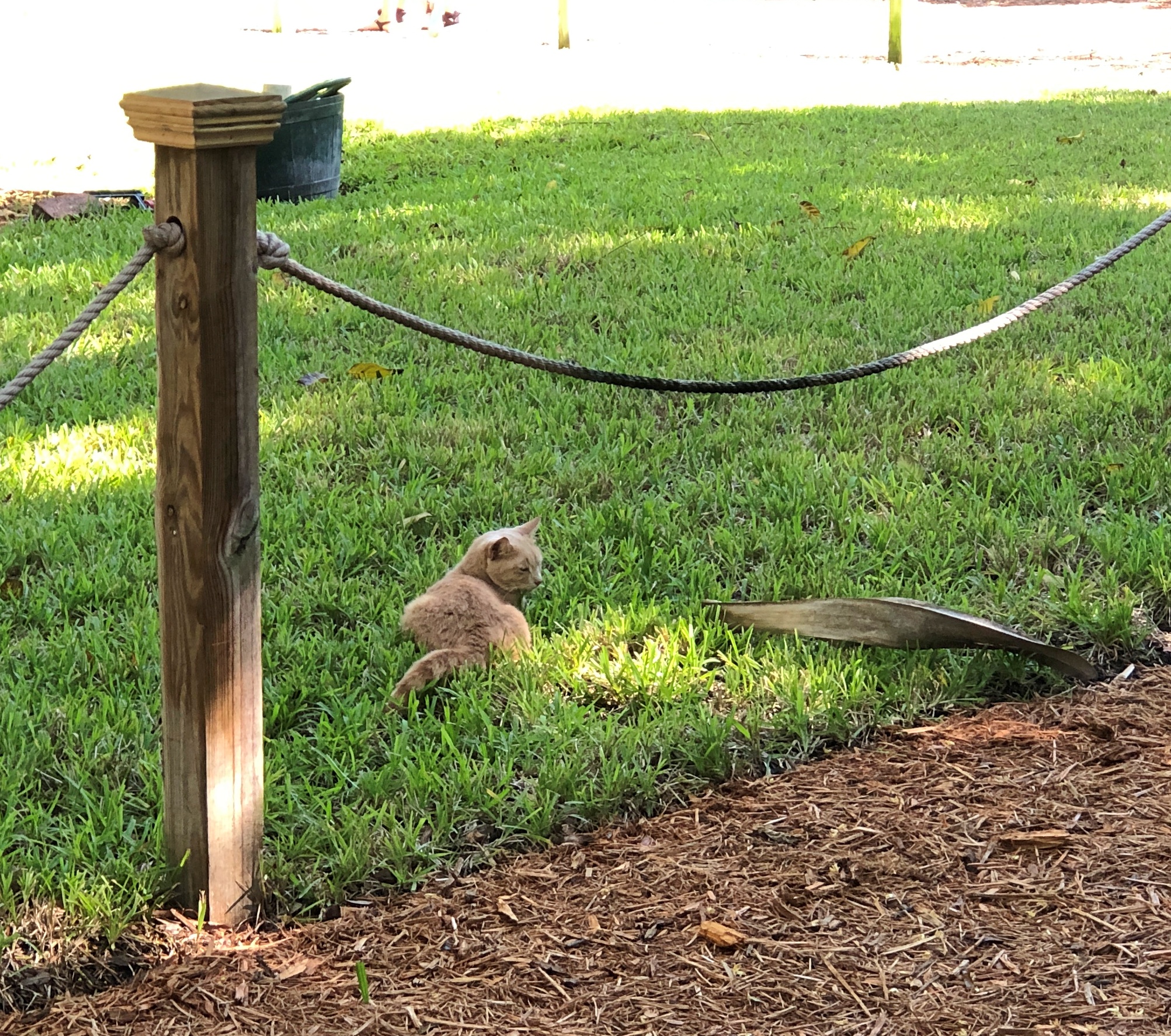
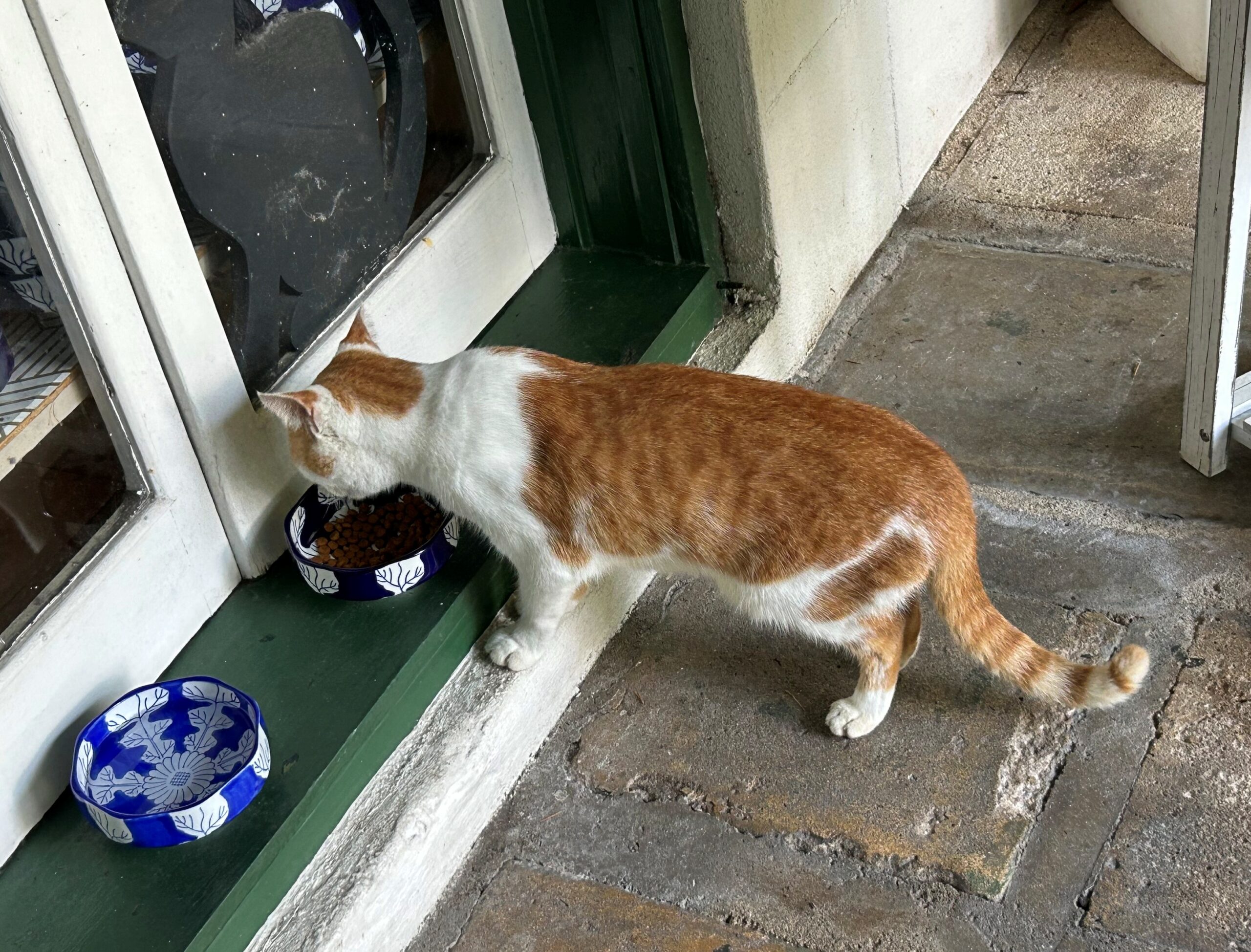
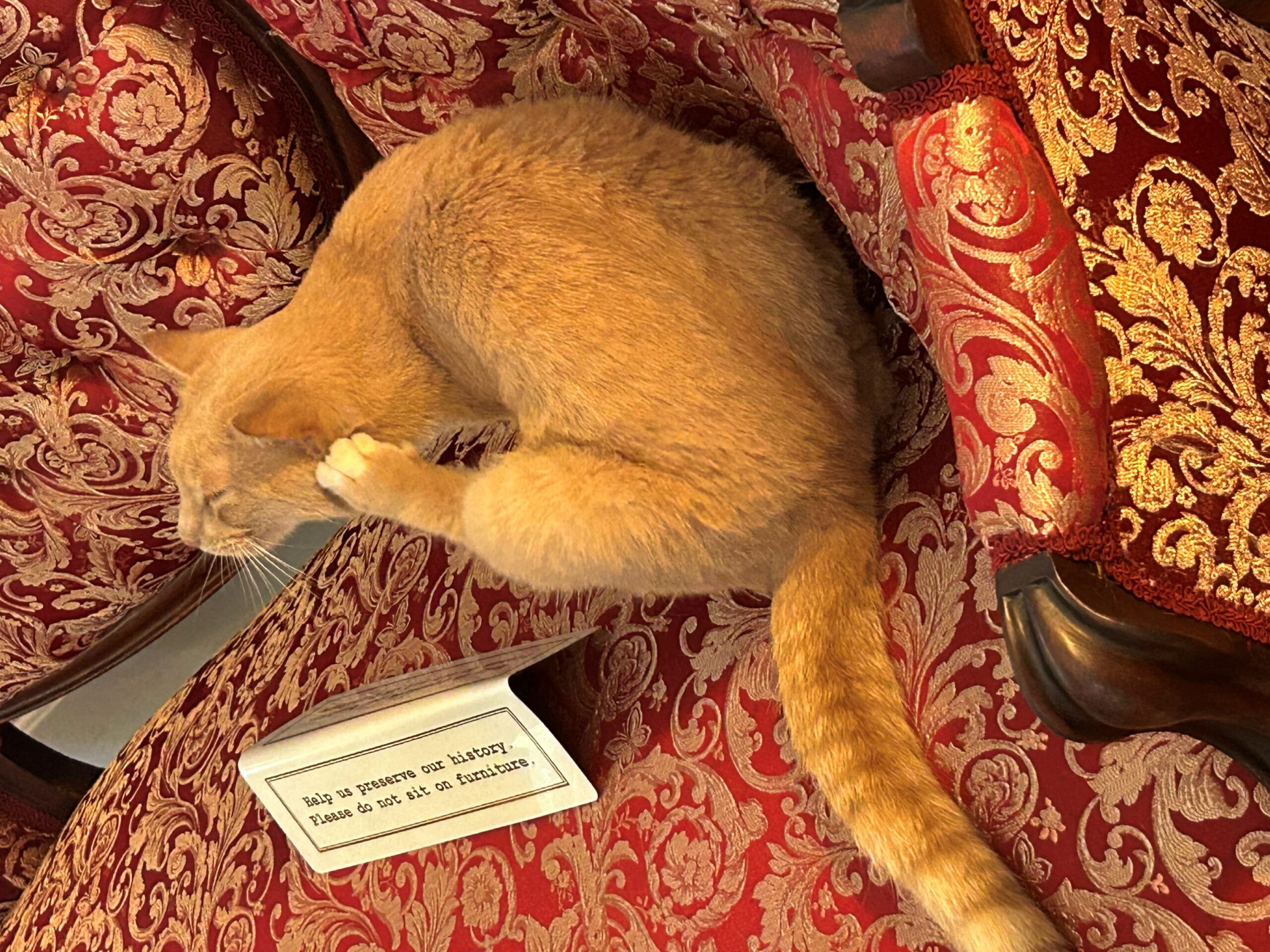
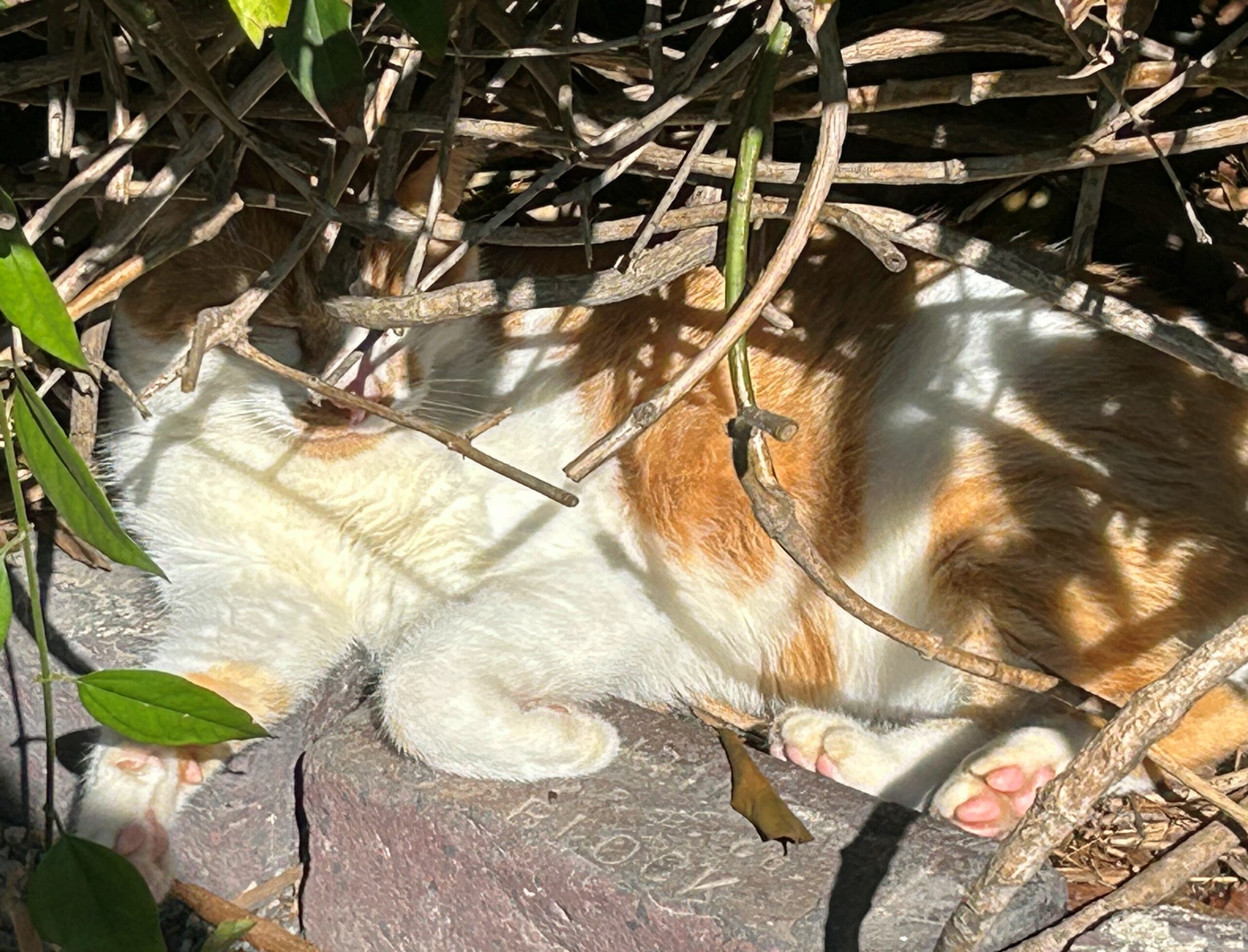
Tourists and staff come and go, but in our time, only cats live at 1301 Whitehead St., a property enclosed by sturdy brick walls. Said the be the descendants of Hemingway’s son’s six-toe cat, the herd is large. Our guide told us how many, though I can’t remember the exact number now. In the range of dozens, beyond the dreams of even the most thoroughgoing cat ladies.

They are everywhere.

I mean everywhere, except maybe the pool.

My favorite story about the house doesn’t involve cats. The guide didn’t tell it this time, but I heard it before. By the mid-1930s, Hemingway was already a Famous Author, and without even telling him, the local chamber-of-commerce or the like put the house on a pamphlet given to tourists, as one of the local sights. Inevitably, people started showing up at odd and inconvenient hours, or entered expecting a tour. The brick wall all the way around the house is a legacy of that situation.

Sleepy Hollow Cemetery, Concord

Concord naturally follows Lexington. That’s just the way it is. I made the short hop between Lexington and Concord on the morning of October 23, ahead of the day’s ultimate destination in Rhode Island. The first thing I needed to know was the status of the men’s room at the Concord Visitor Center, there on Main Street. I’m glad to report I didn’t run into any “closed for the season” nonsense.

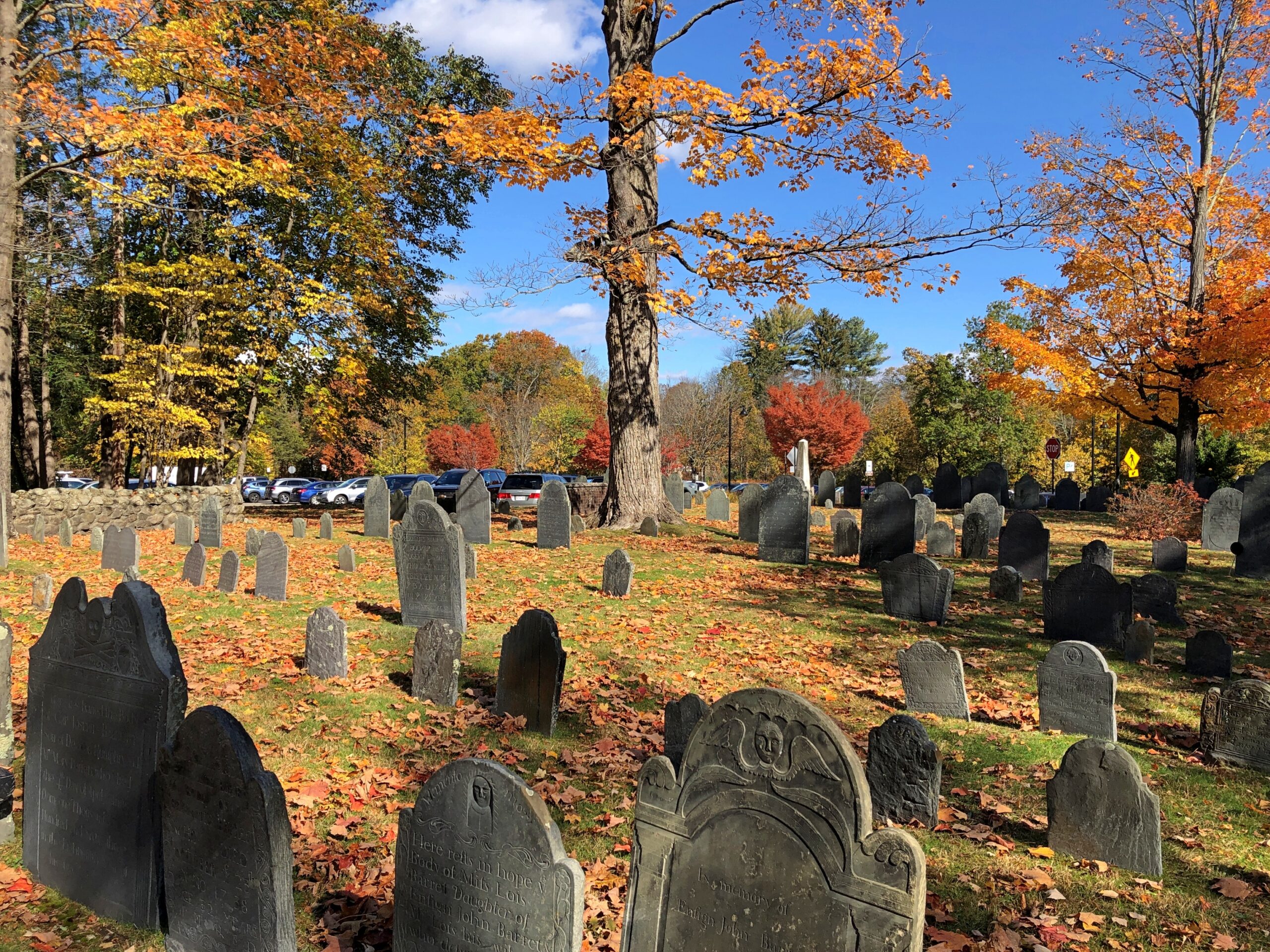
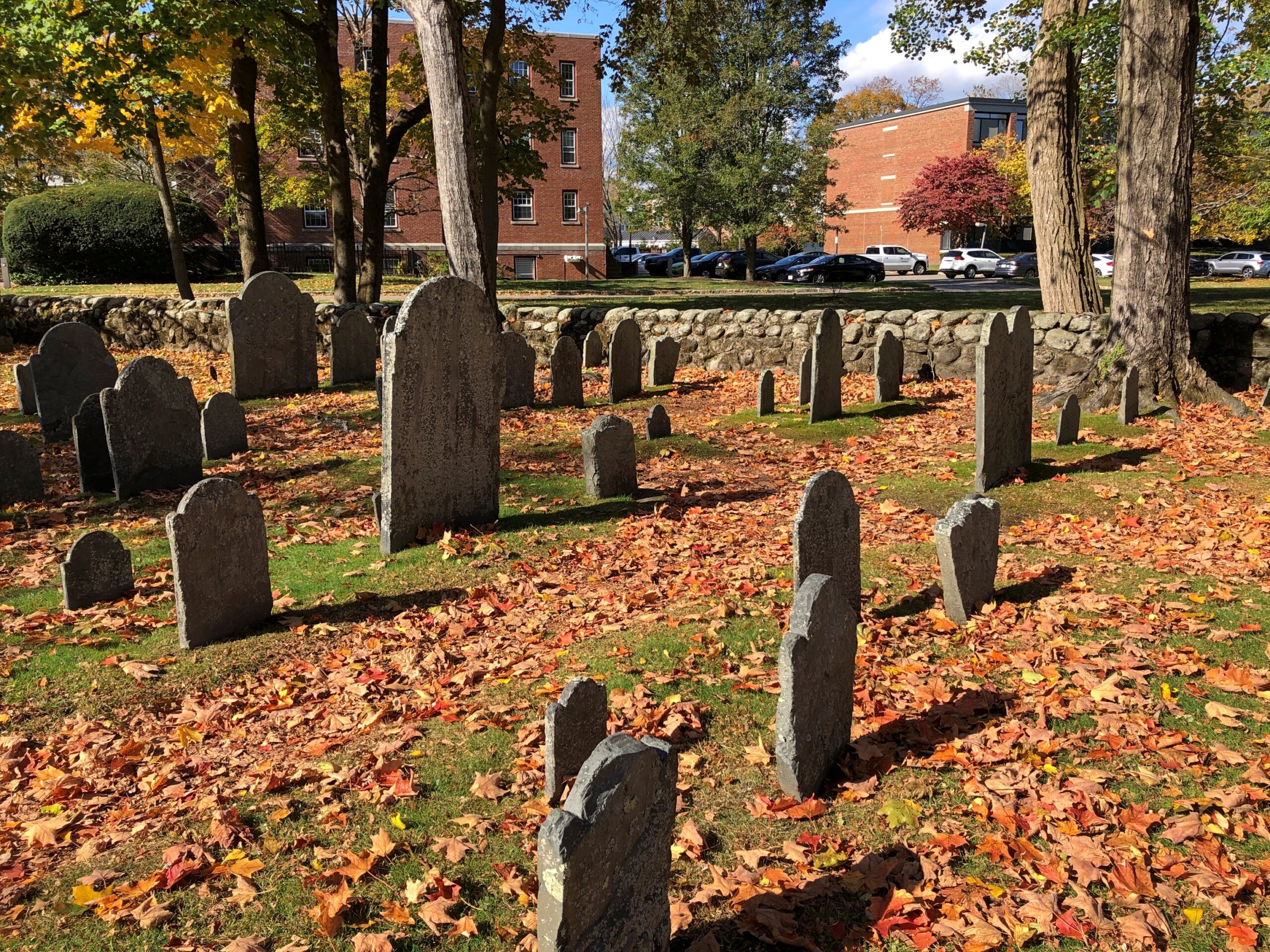
I can also report that the South Burying Place is half a block away, an irregular slice of land wedged between Main, a side street, and some basic apartments.

South Burying Place
South Burying Place

Notably similar in style to Lexington, and why would they be any different?

South Burying Place
South Burying Place

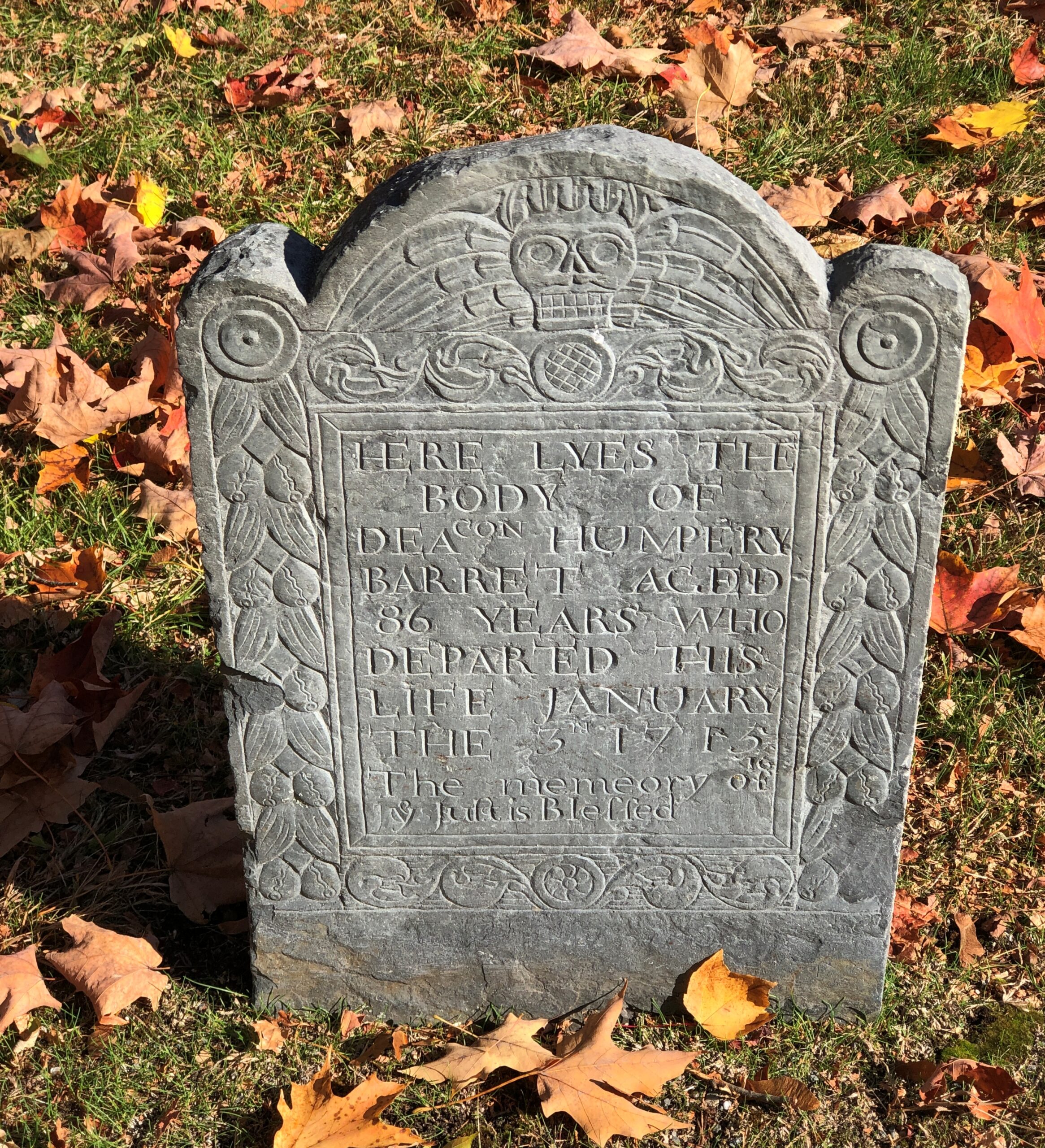
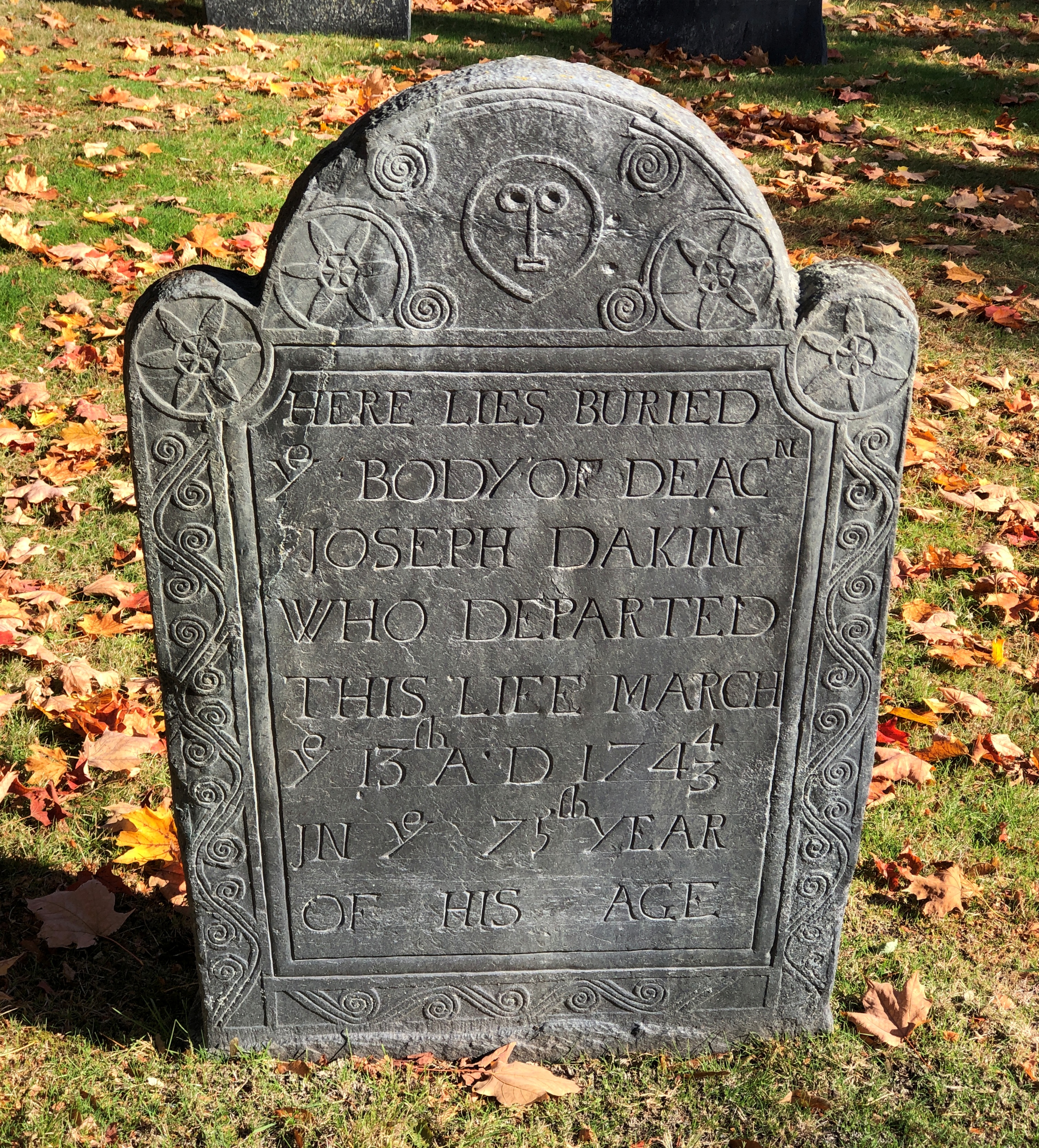
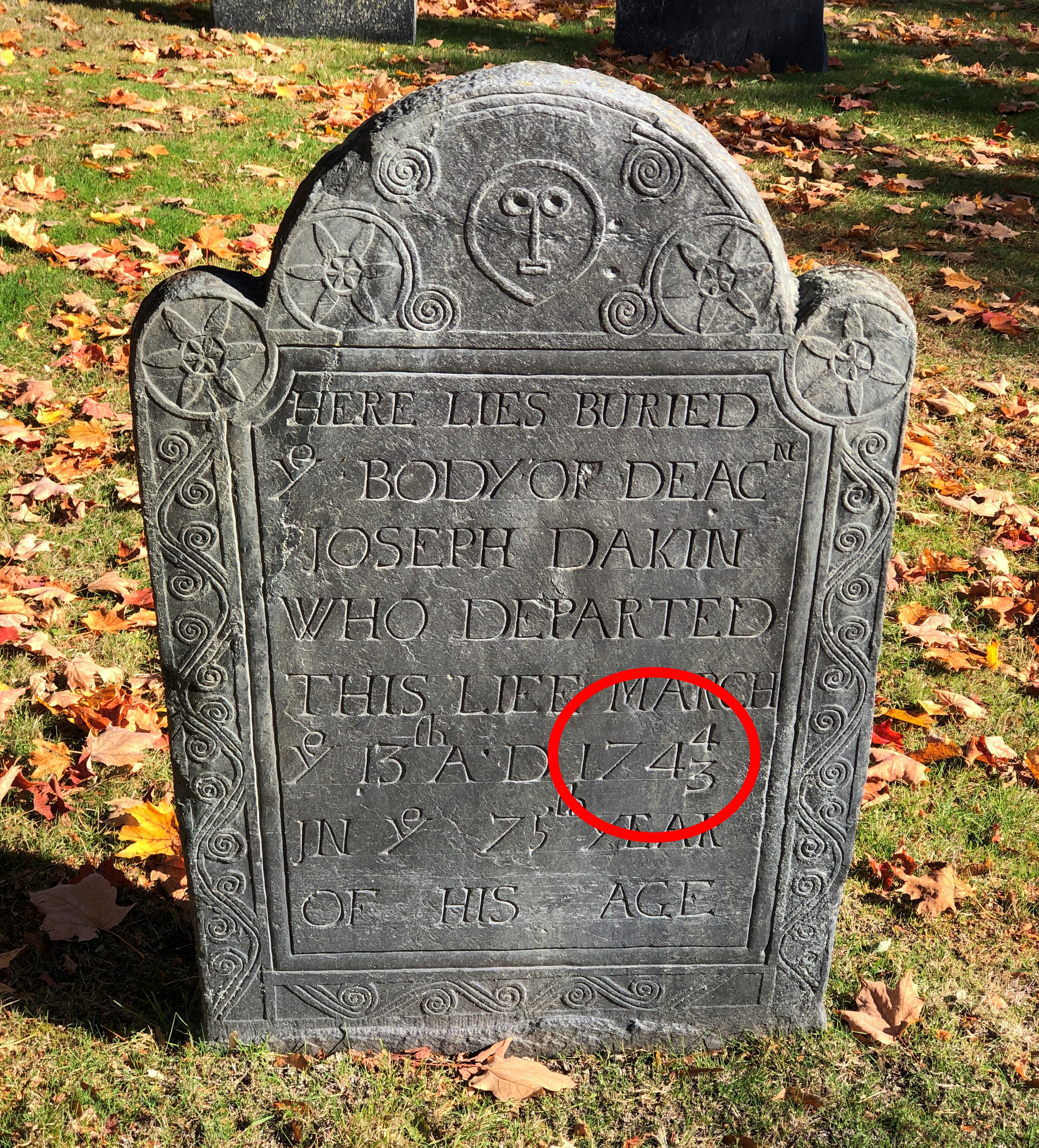
One detail on the latter stone caught my attention. It took me a few minutes to work it out.

South Burying Place

Deacon Joseph Dakin happened to depart this life on March 13, 1744/3. Ahead of the British switch to the Gregorian calendar in 1752, there were competing ideas of when New Year’s Day should be: January 1 or March 25. Most of the rest of Europe had gone to January by the 1740s, but England clung to its traditional date. He died March 13, 1743 by the the traditional reckoning; March 13, 1744 if January 1 is the first day of the year. Besides switching to Gregorian, the ’52 change fixed January 1 as New Year’s Day in the English-speaking world.

That’s the kind of detail that can make my day. A lagniappe of the visit. South Burying Place itself was a lagniappe to my travels that day. The cemetery I had in mind to see was Sleepy Hollow Cemetery, a short drive from Concord’s main retail street. Not to be confused with the one of the same name in New York state, though I have to say that one looks like it would be worth a visit.

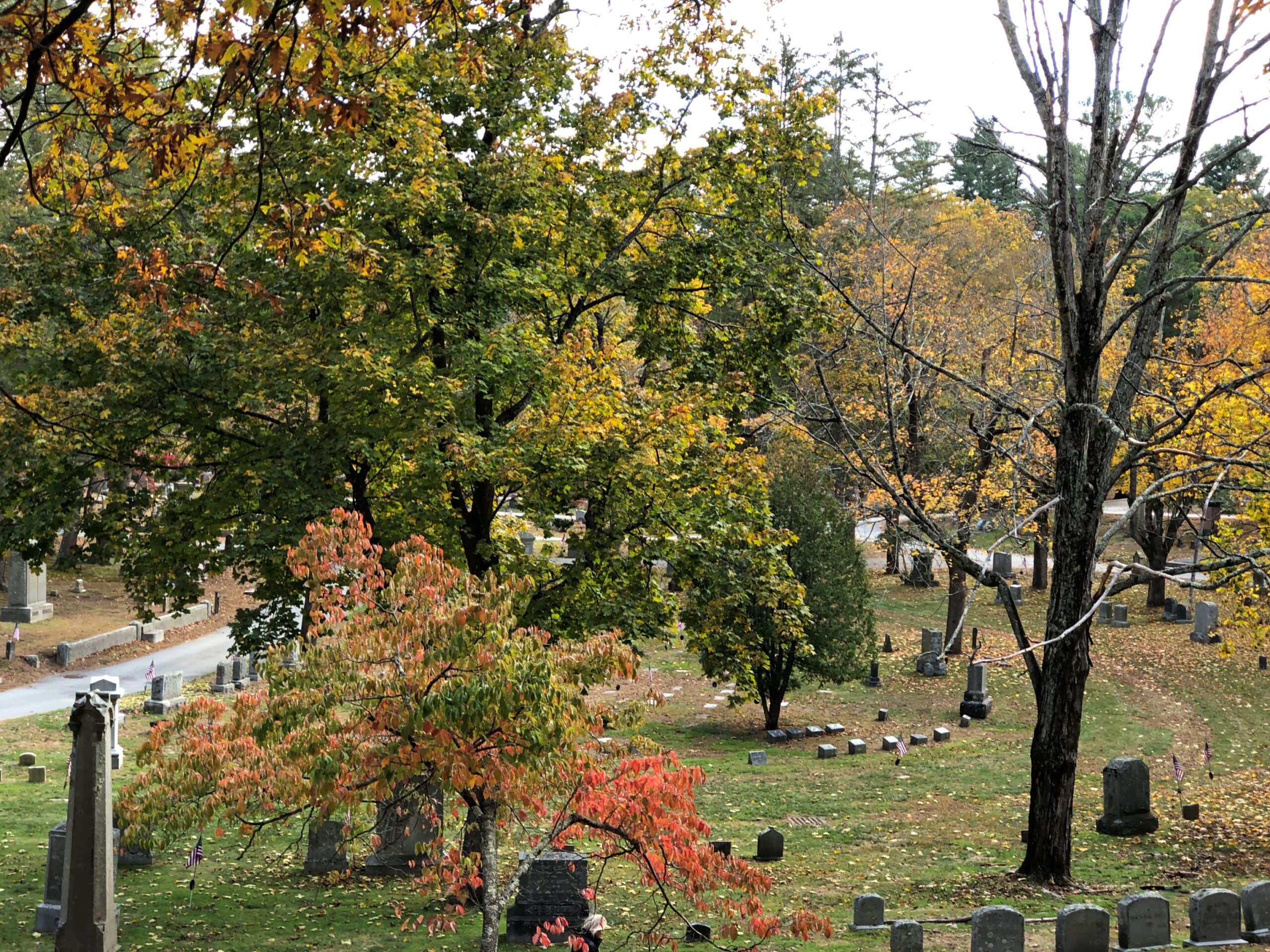
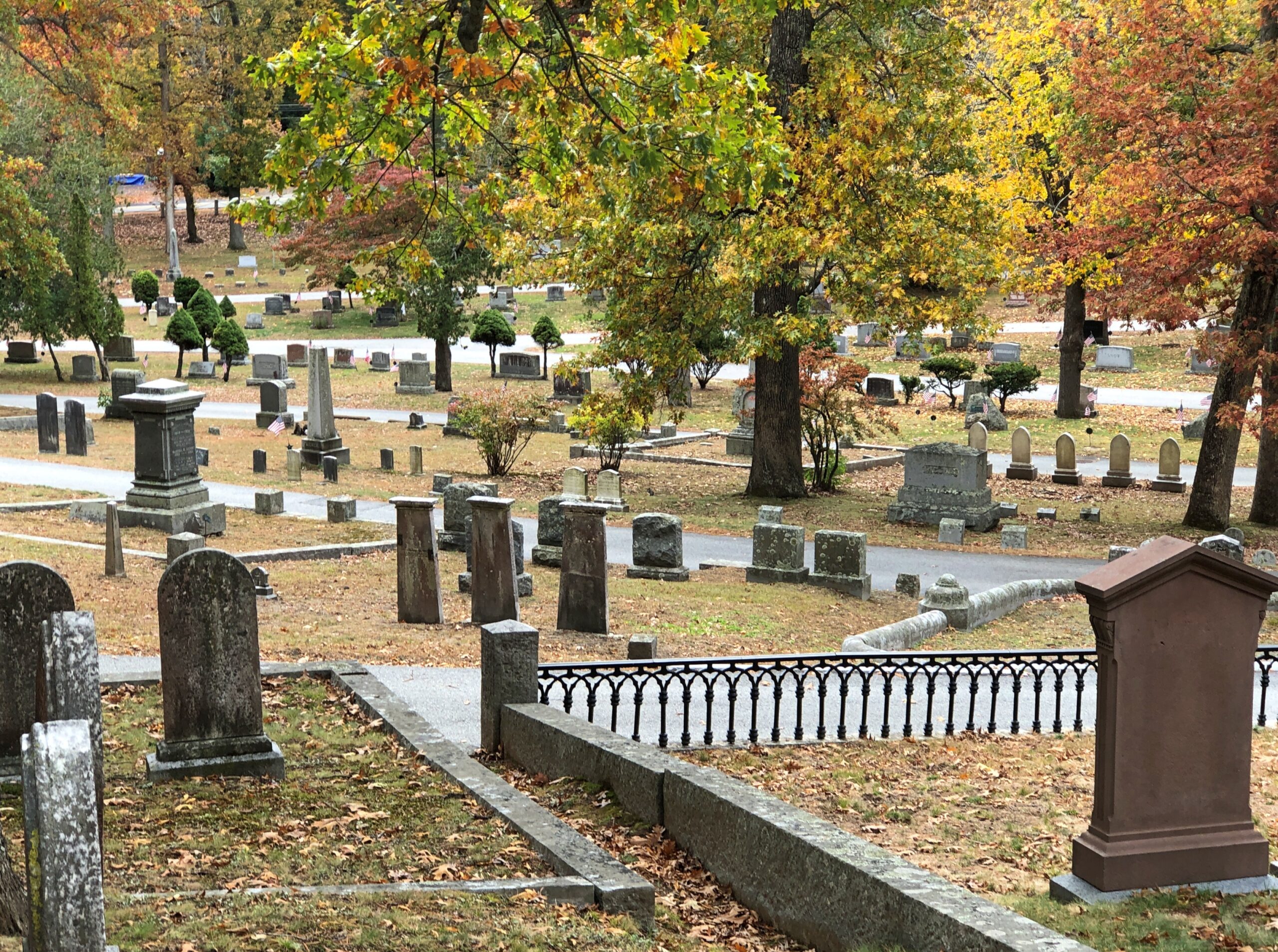
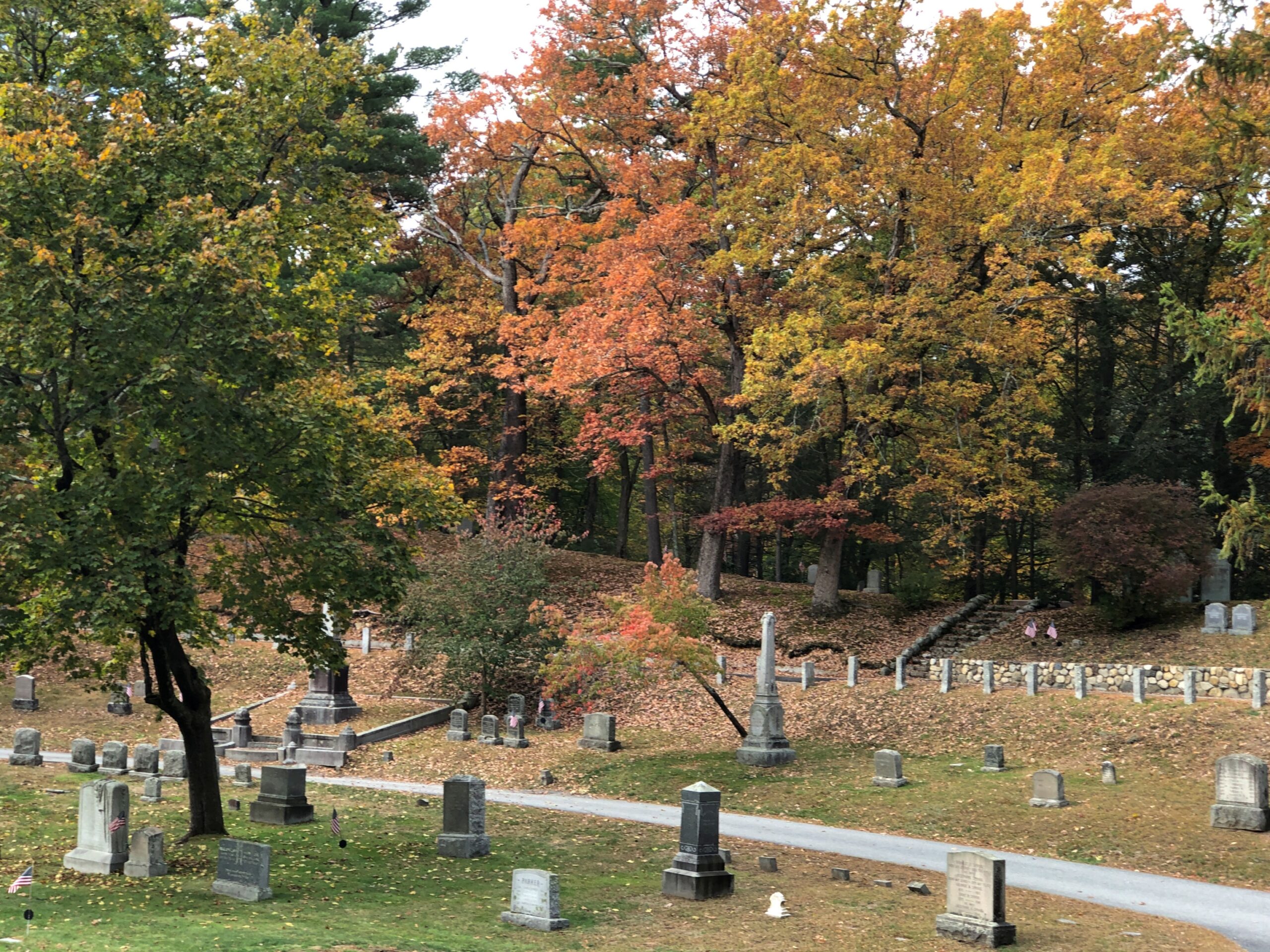
Sleepy Hollow in Massachusetts is in a wooded hollow.

Sleepy Hollow Cemetery

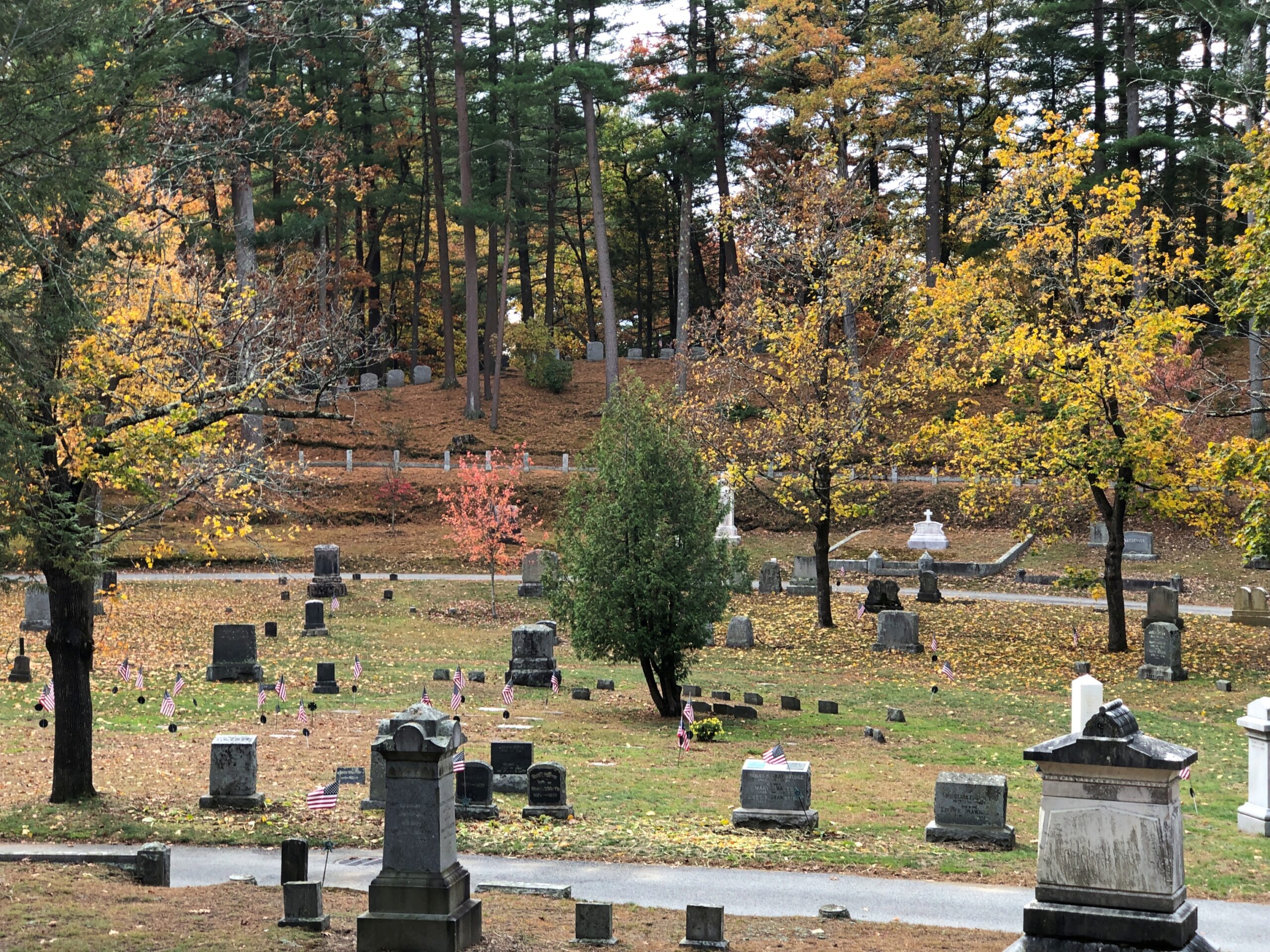
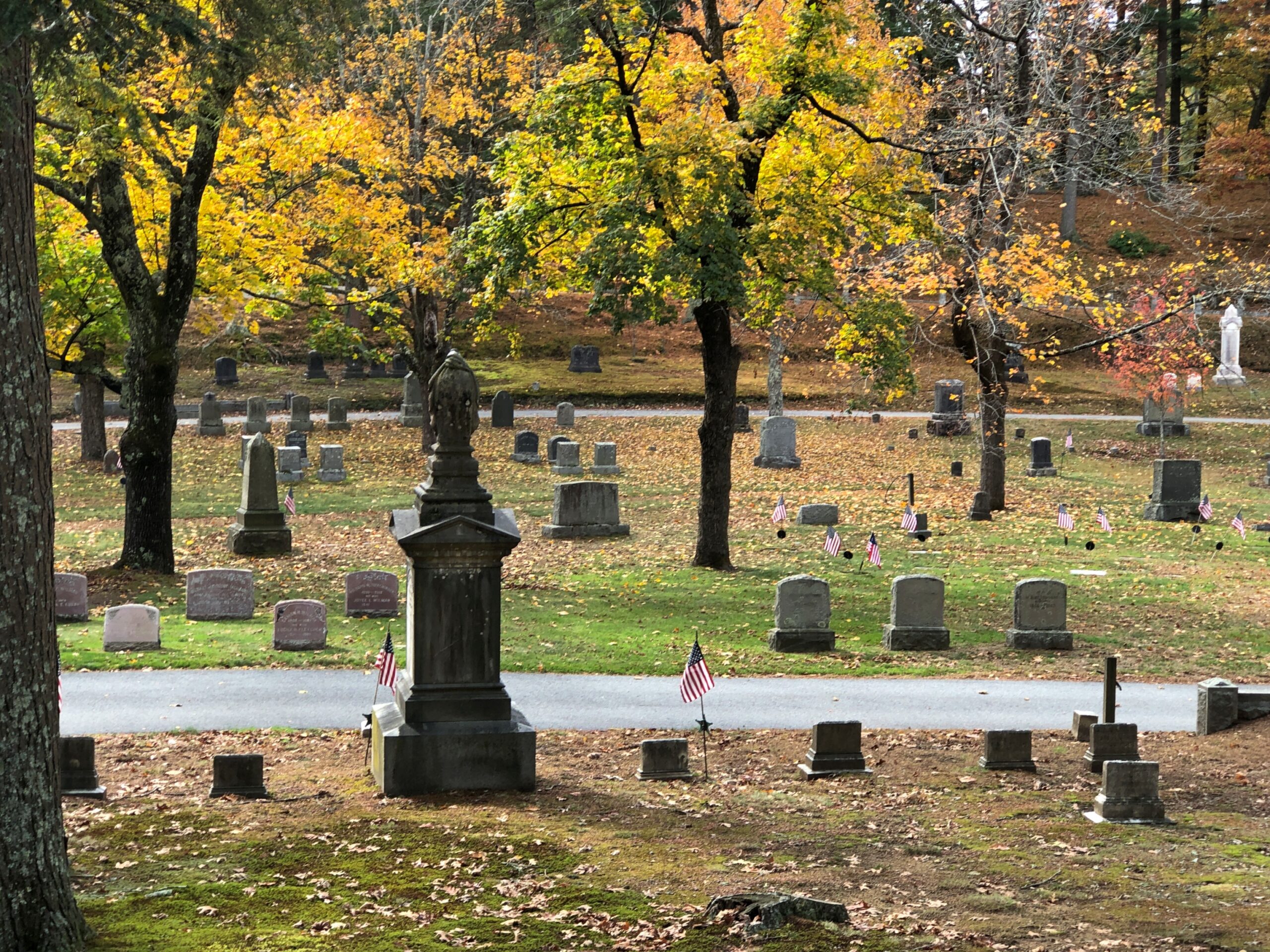
A wooded hollow. That’s a good place for a cemetery. Better yet, Sleepy Hollow is a cemetery of some age, by North American standards. Even better yet, autumn colors.

Sleepy Hollow Cemetery

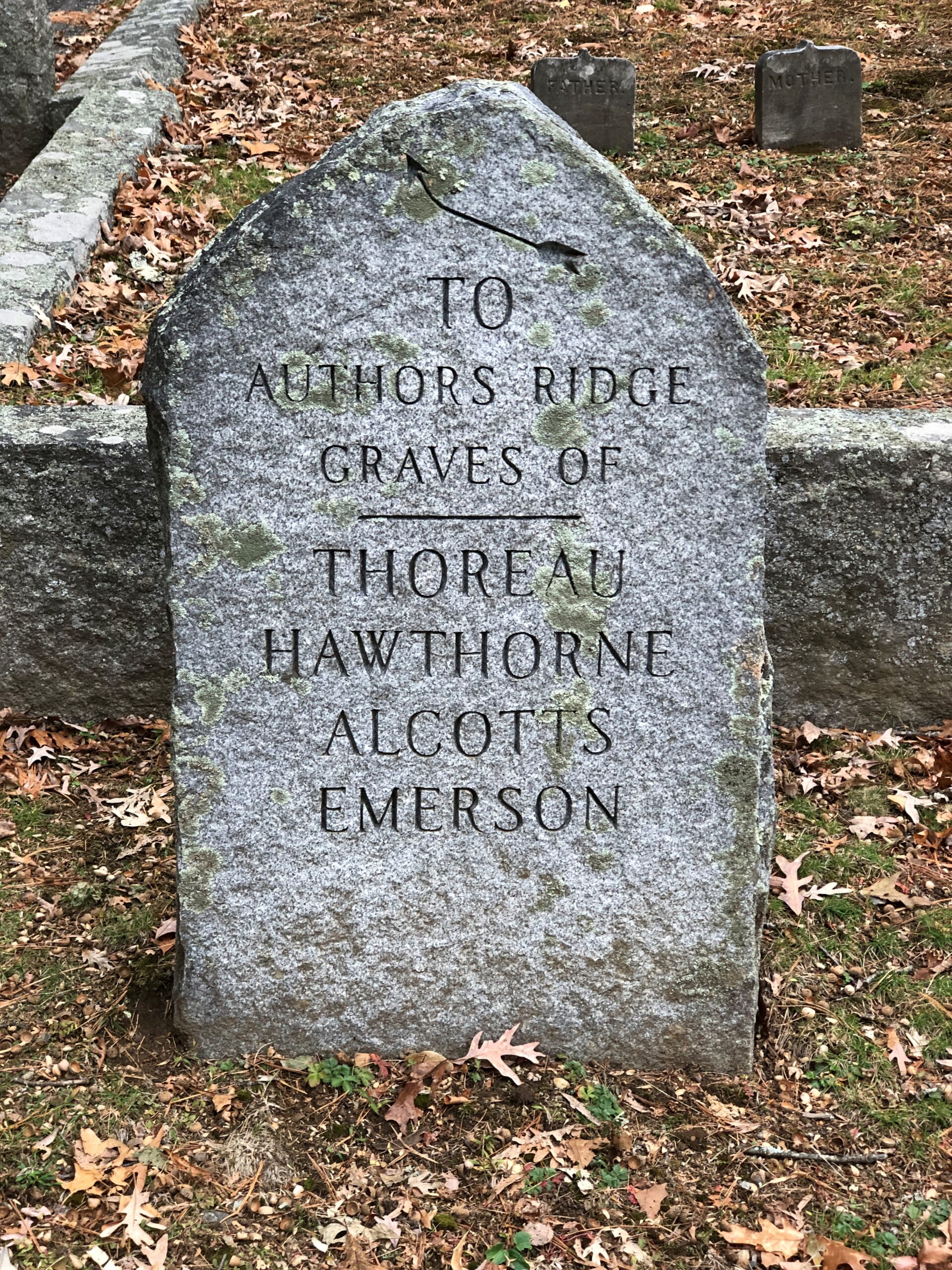
When I got there, I found I wasn’t alone among the living. A rare thing at a cemetery. A trickle of people came and went to pay their respects to a clutch of famed authors who are buried at Sleepy Hollow. They’re up on Authors Ridge. The cemetery thoughtfully built a small parking lot at the base of the ridge, to facilitate that trickle of literary pilgrims.

Sleepy Hollow Cemetery

A path from the lot leads upward. At the crest of the ridge, the authors are found with other family members. In alphabetical order:

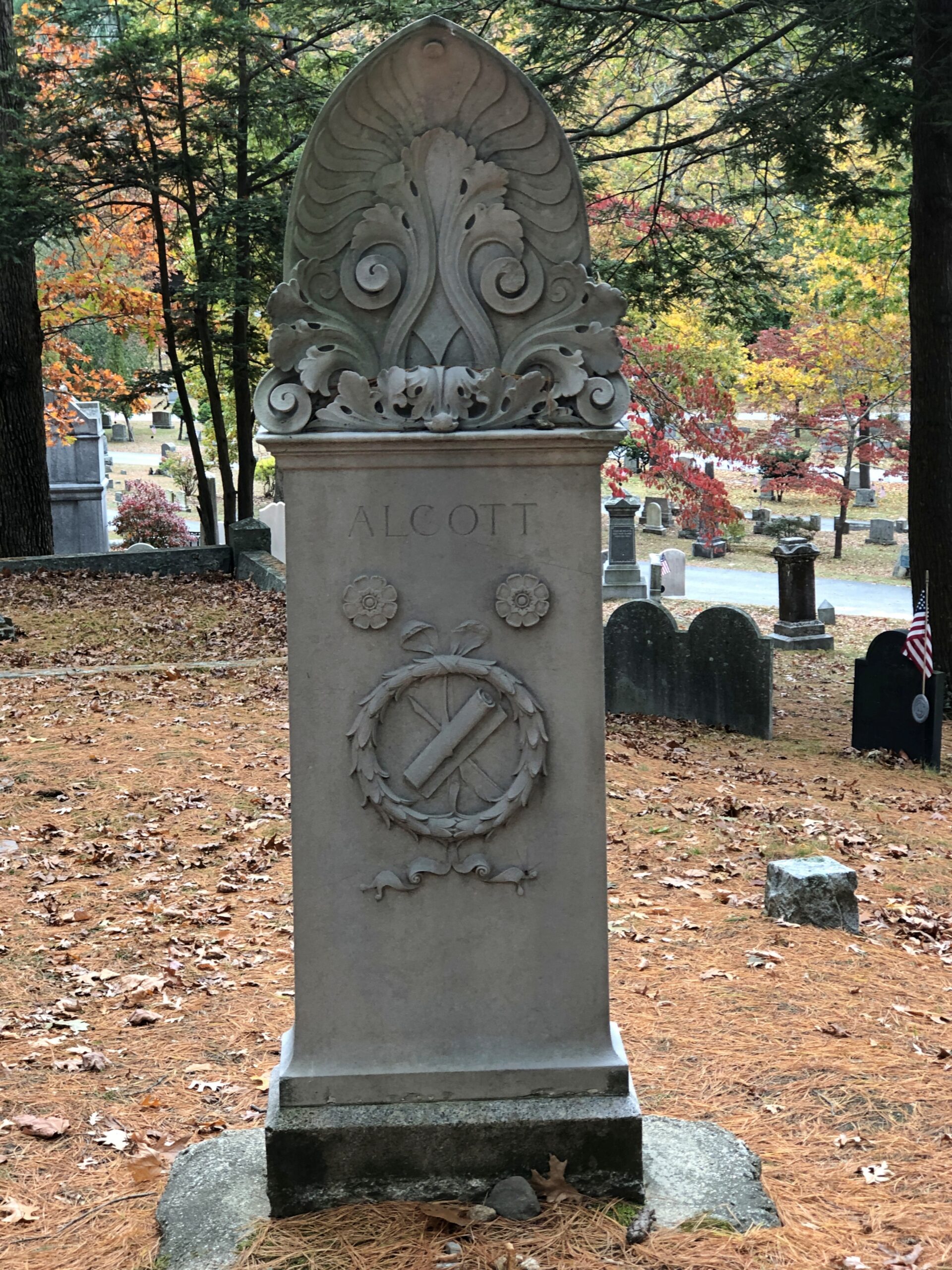
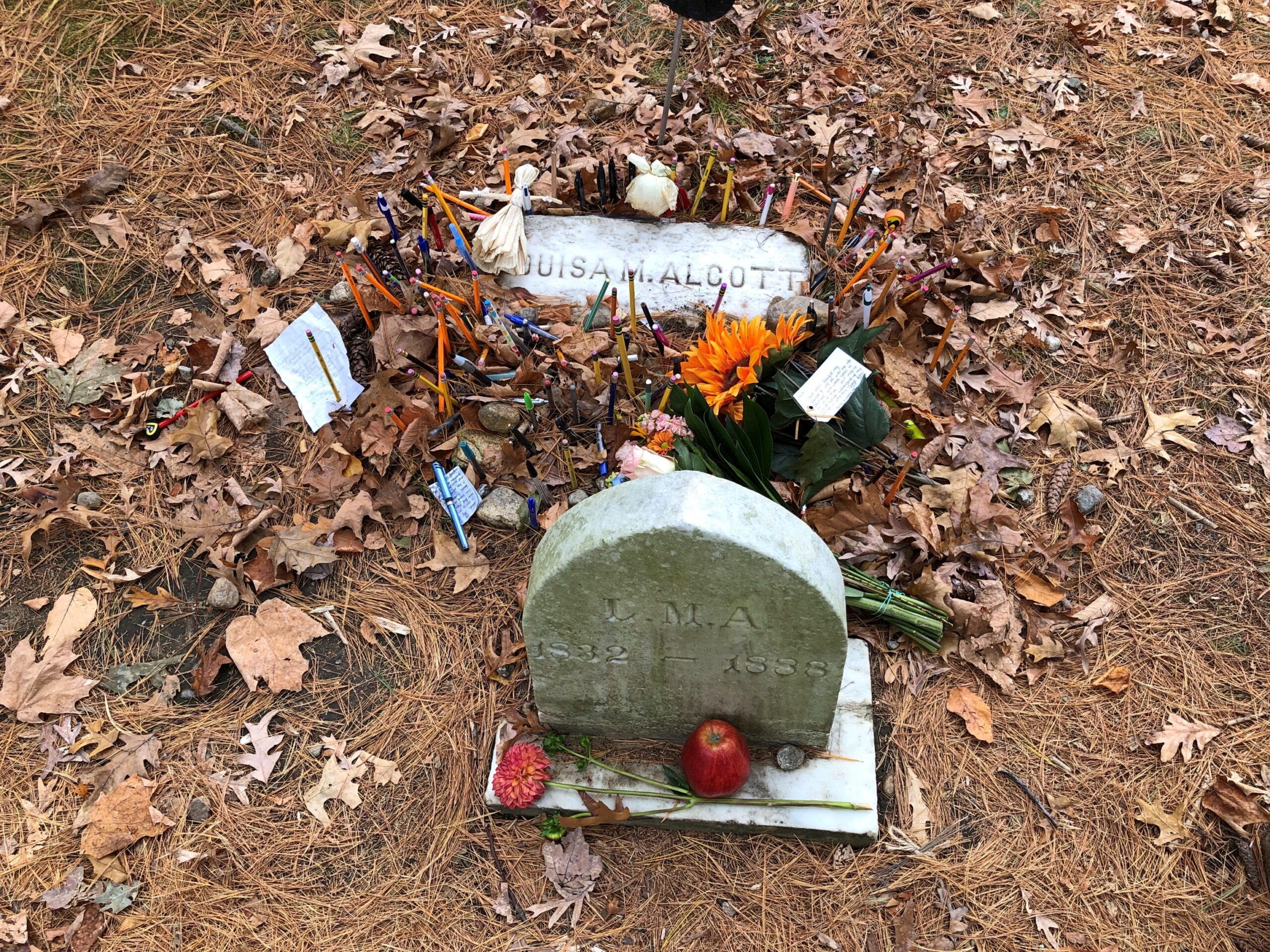
Louisa May Alcott.

Sleepy Hollow Cemetery

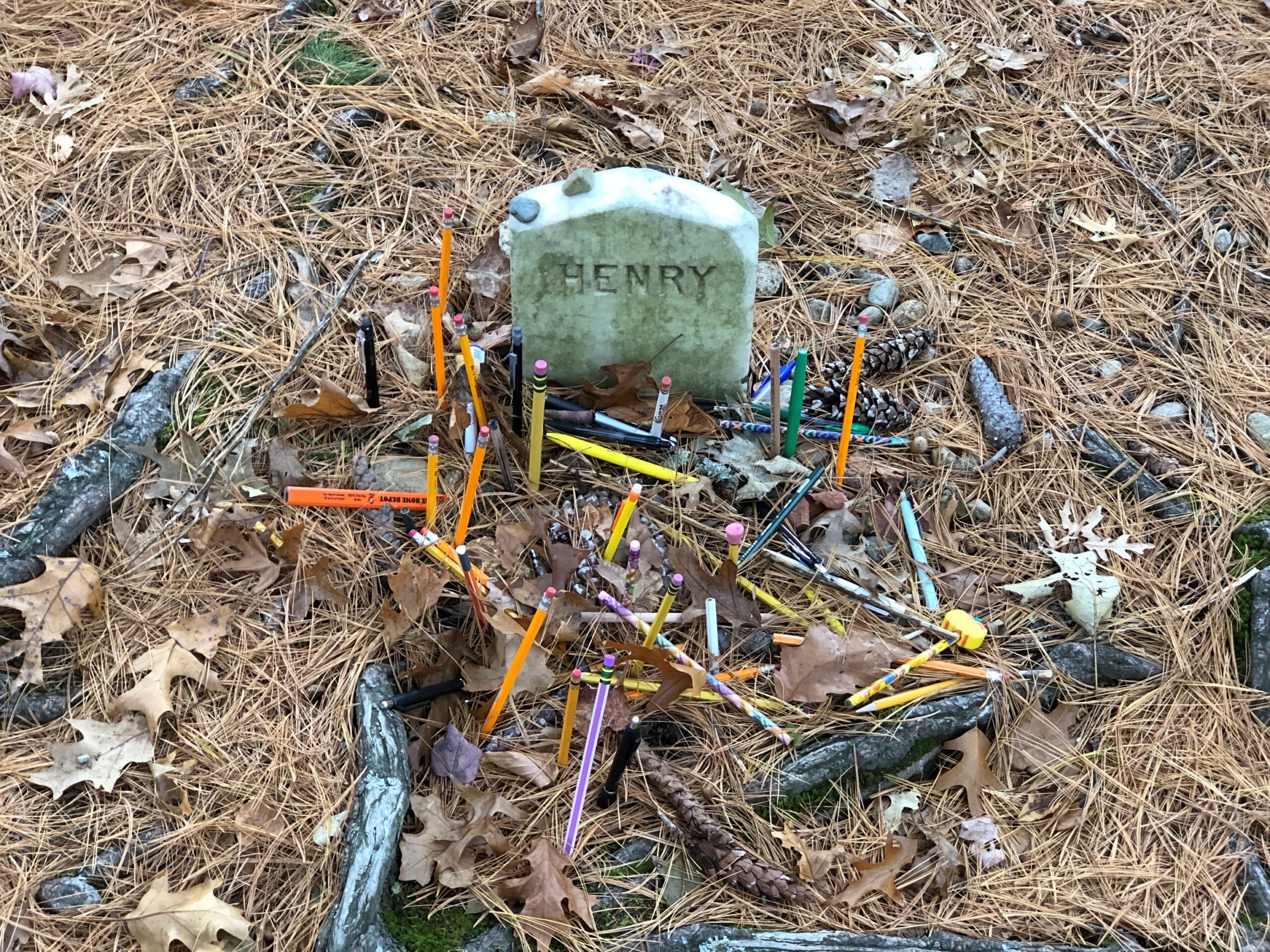
Here visitors don’t leave stones or small coins, but pencils, pens and paper. She wasn’t the only one to attract writing instruments.

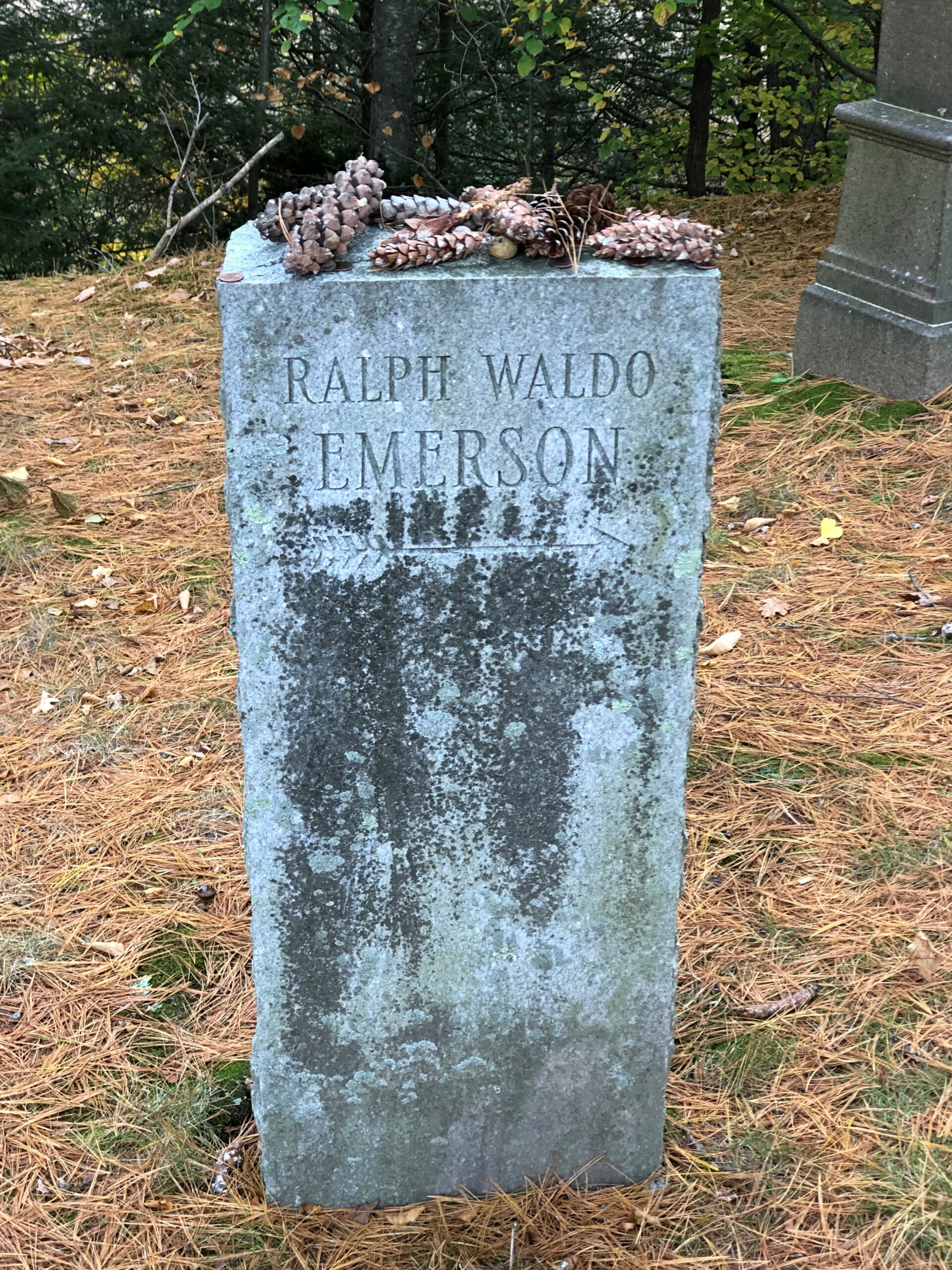
Ralph Waldo Emerson.

Sleepy Hollow Cemetery

Where’s Waldo? Right there. Interesting that his memory attracted pine cones.

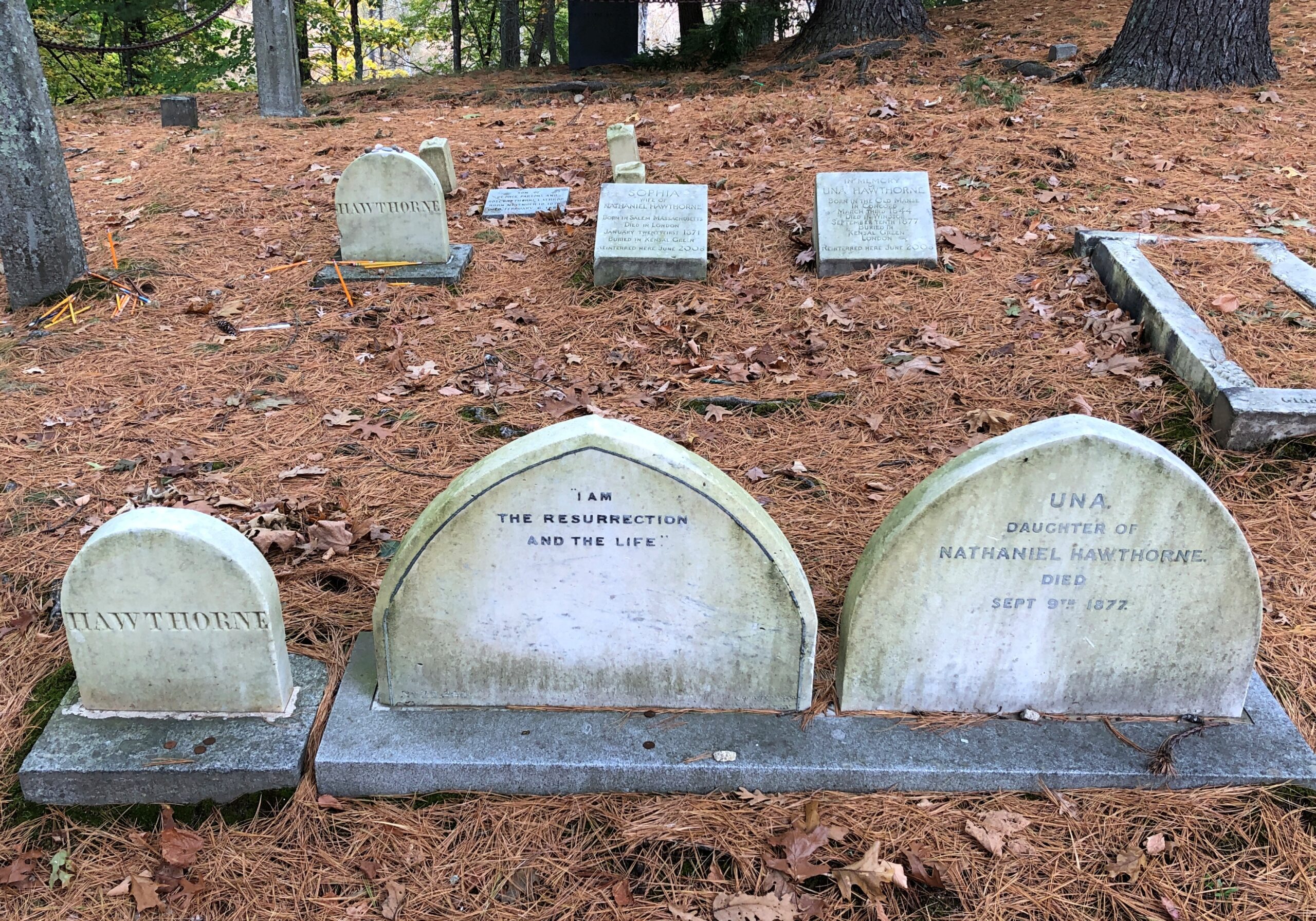
Nathaniel Hawthorne.

Sleepy Hollow Cemetery

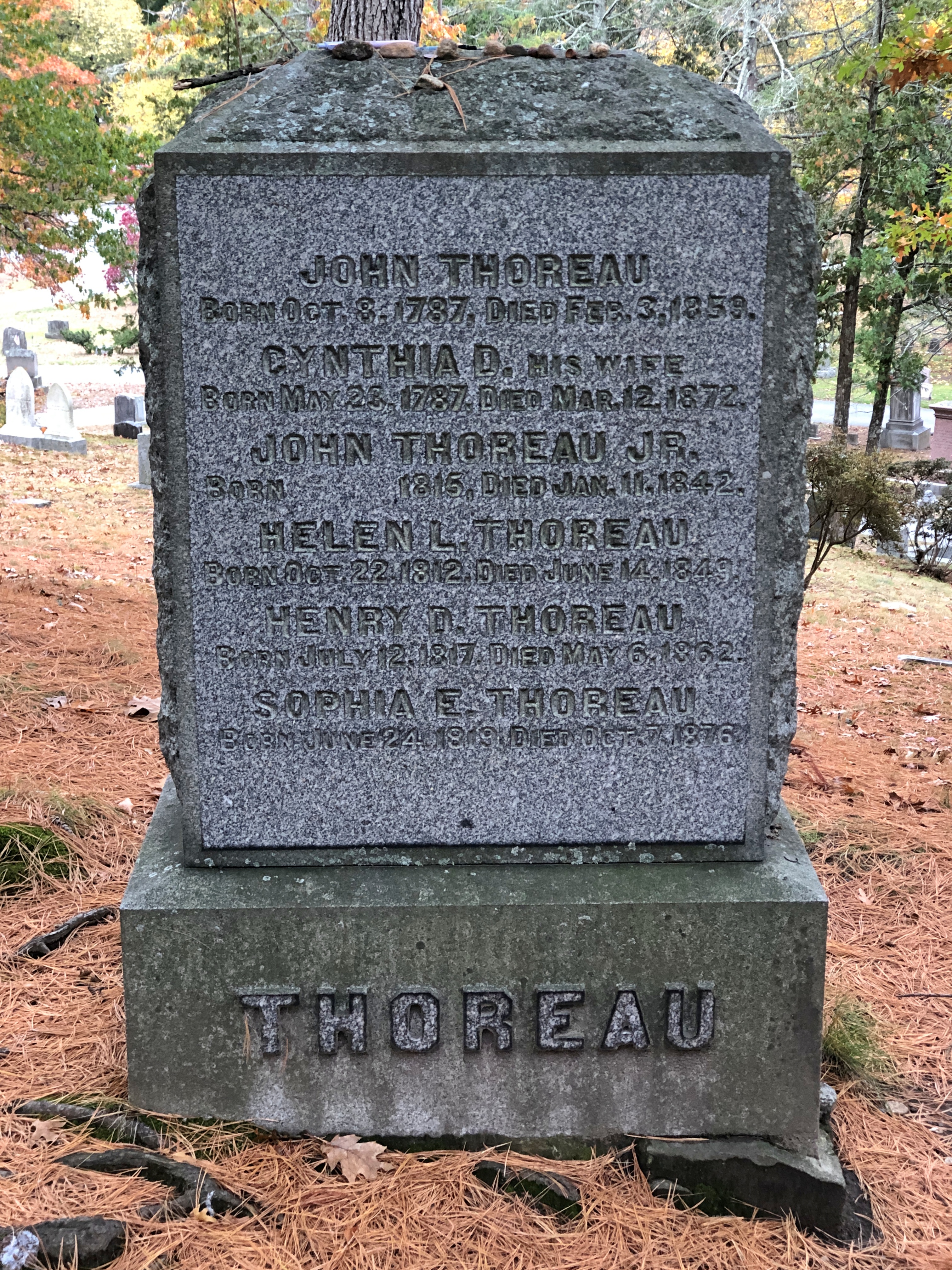
Henry David Thoreau.

Sleepy Hollow Cemetery

When I parked at the small lot, I noticed a group of four girls, college students would be my guess, heading up the path to Authors Ridge. I waited a few minutes in my car, since I didn’t want to interrupt their pilgrimage. Also, I wanted the ridge to myself, if possible. I guessed they wouldn’t be long, and soon they came down the path, got in their car and left.

About an hour later, when I had finished my own cemetery stroll, I was checking my maps in the car, when a middle-woman pulled up, parked, and headed up Authors Ridge, walking her small dog. The trickle was continuing.

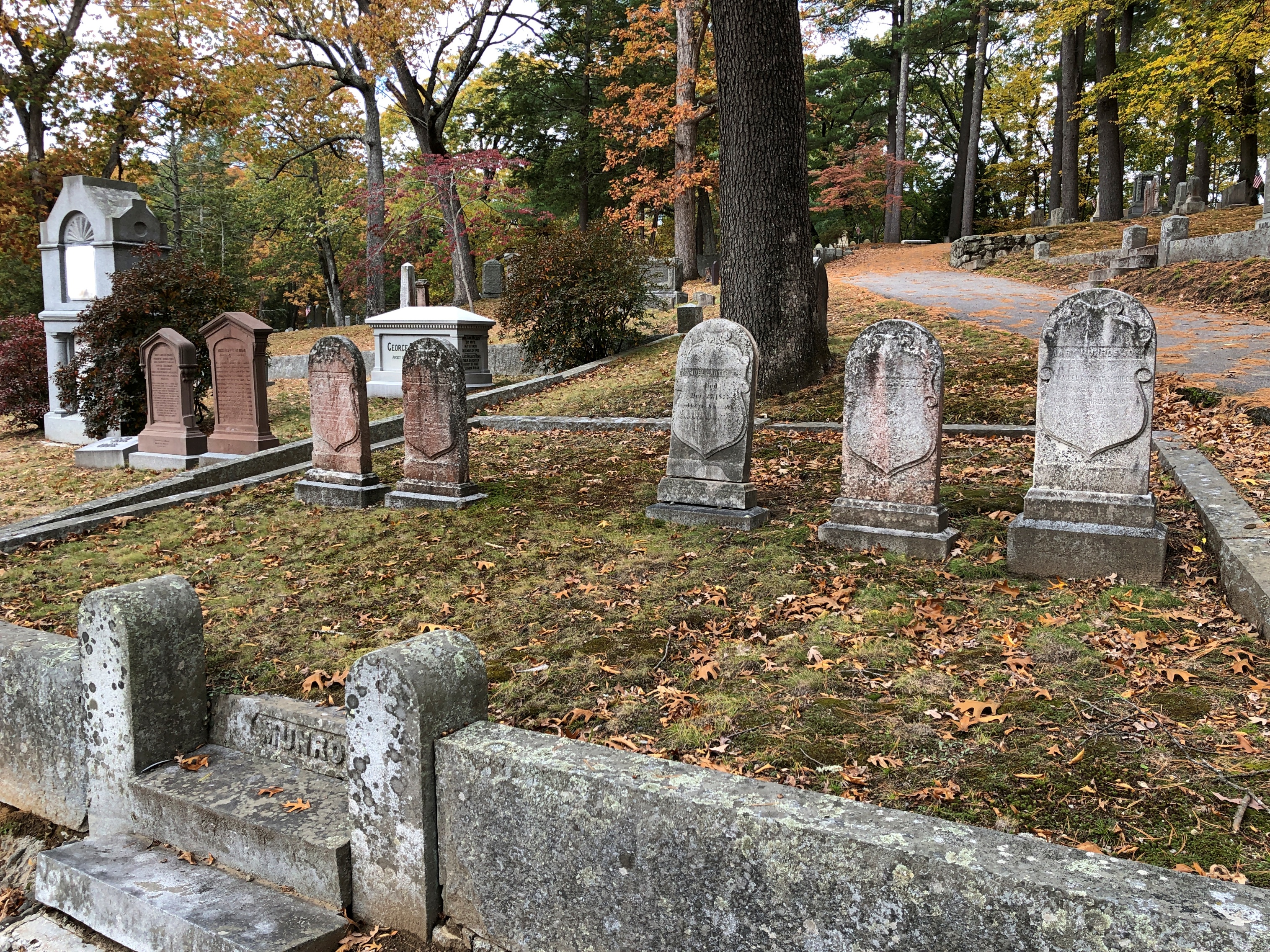
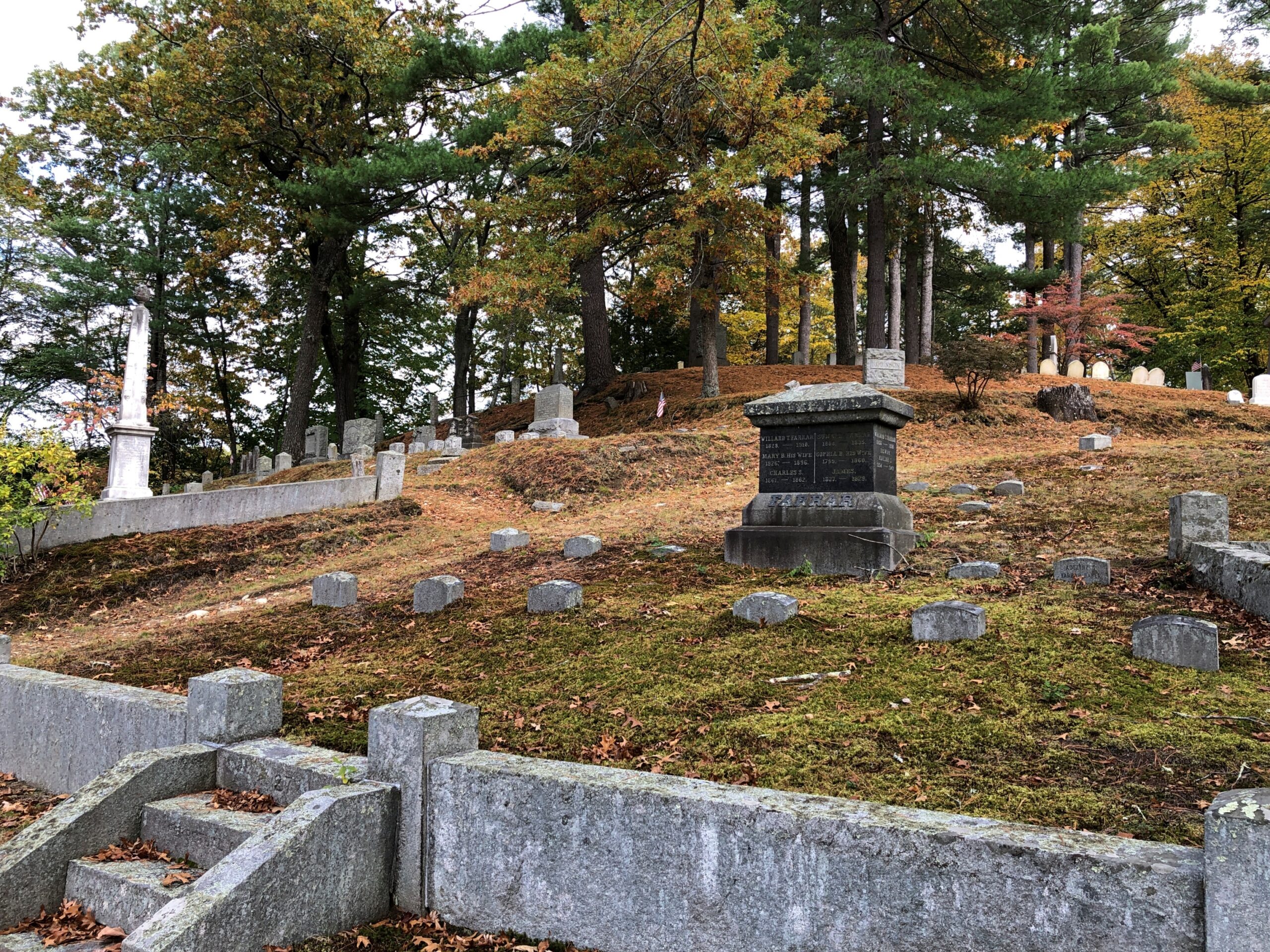
I preferred a more leisurely inspection of the authors’ stones, and the rest of the cemetery, for that matter. Such excellent contour.

Sleepy Hollow Cemetery

There’s also a large selection of stones for non-famous residents of this part of the world.

Sleepy Hollow Cemetery

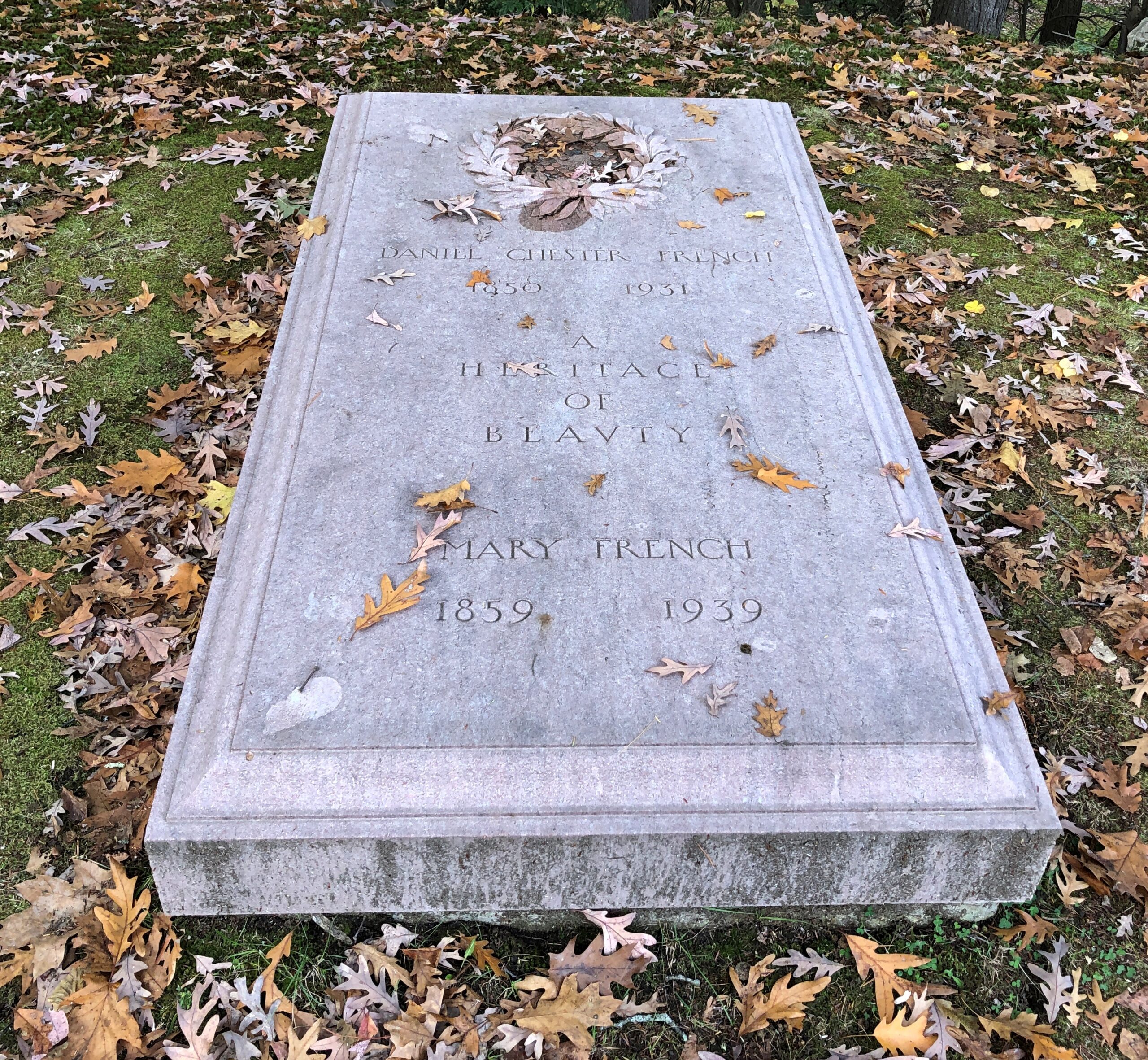
Besides, the authors aren’t the only notable burials. Here’s Daniel Chester French, sculptor of renown.

Sleepy Hollow Cemetery

If the seated Lincoln at the Lincoln Memorial was the only thing he ever did, he’d still be remembered. But of course he did a lot more. The smaller version of “The Republic,” bright gold in color and standing even now in Chicago, is one that comes to mind. So do the allegories at the Alexander Hamilton U.S. Customs House at the southern tip of Manhattan. And Gen. Oglethorpe in Savannah.
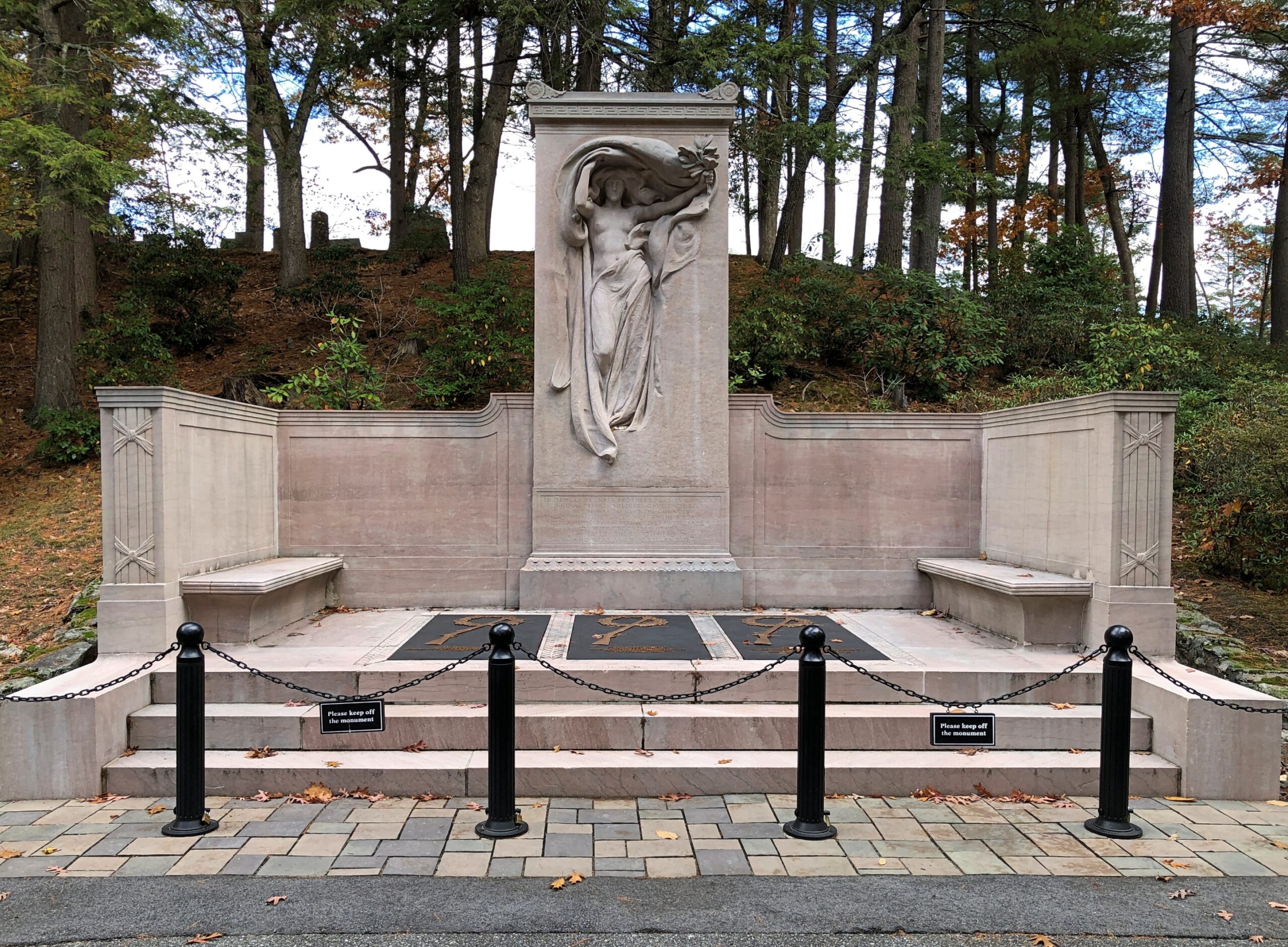
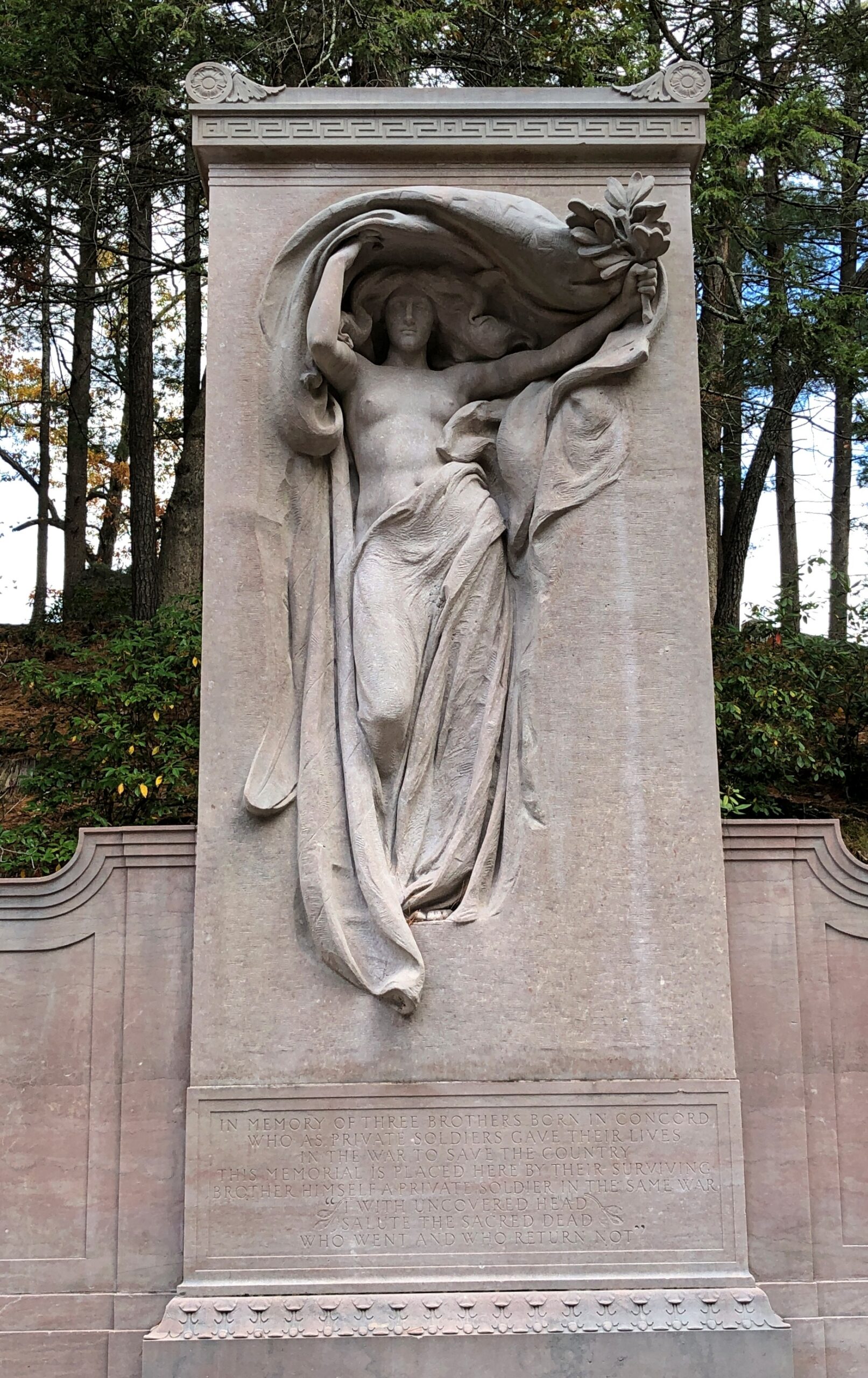
But you don’t have to go so far to find one of French’s works. Elsewhere in Sleepy Hollow is the Melvin Memorial, honoring three Concord brothers named Melvin (Asa, John and Samuel), who each gave their last full measure of devotion for the Union in ways that represent the spectrum of soldier death in that war: died in combat, of disease, and in a prison camp.

Melvin Memorial

The figure is known as Mourning Victory, a version of which is held by the Met.

Melvin Memorial

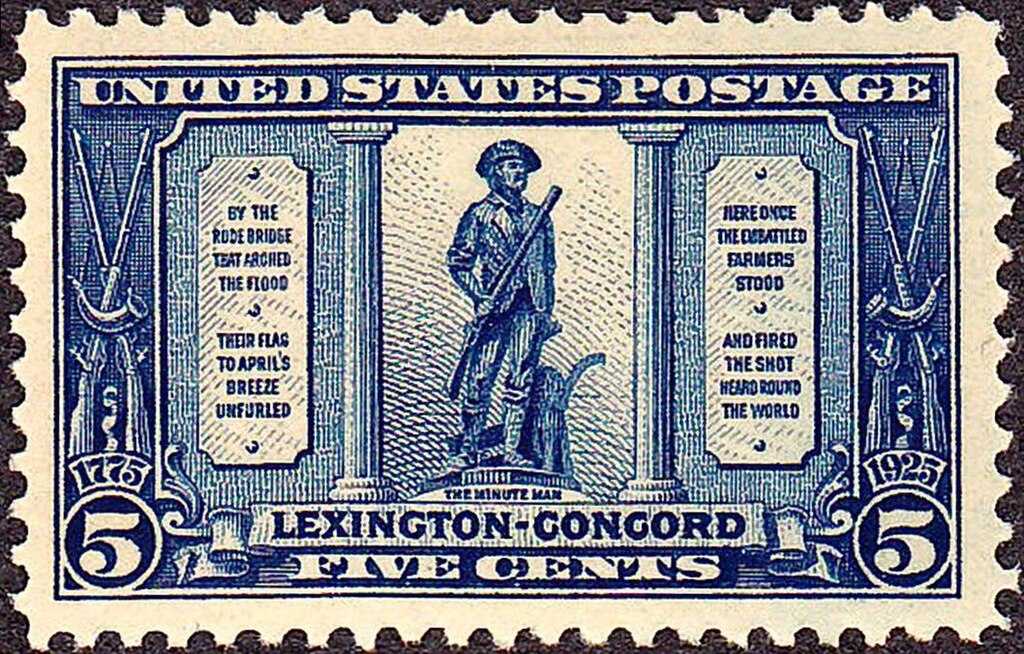
Another famed work of French’s is in Concord: namely, “The Minute Man” at Minute Man National Historical Park.

I didn’t bother with that historical park this time, since I knew it would be closed. But I did see it 30 years ago, and it’s stuck with me. Just example of French’s work standing the test — and literally standing the test — of time.

Southern Loop Leftovers: SC & GA

Early in the recent trip.

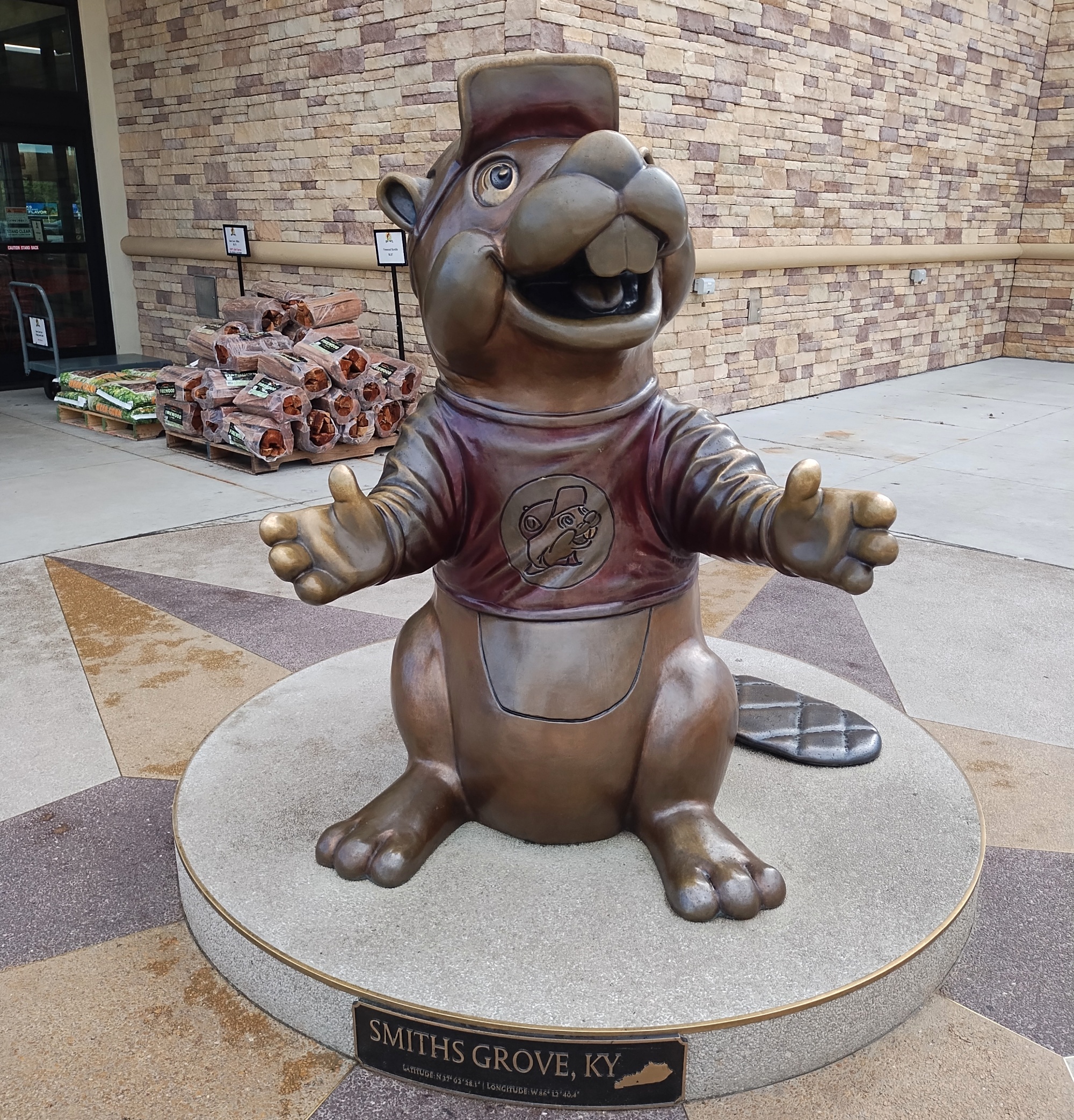
The Buc-ee’s imperium marches on. On my way to Tennessee that first day, I stopped at the location near Smiths Grove, Kentucky, to visit its gleaming facilities. Business was reasonably brisk that Monday, but nothing like the bedlam on the Sunday, nearly two weeks later (on the trip’s last day), when I stopped on the way back home at the same place, for the same reason.

South Carolina

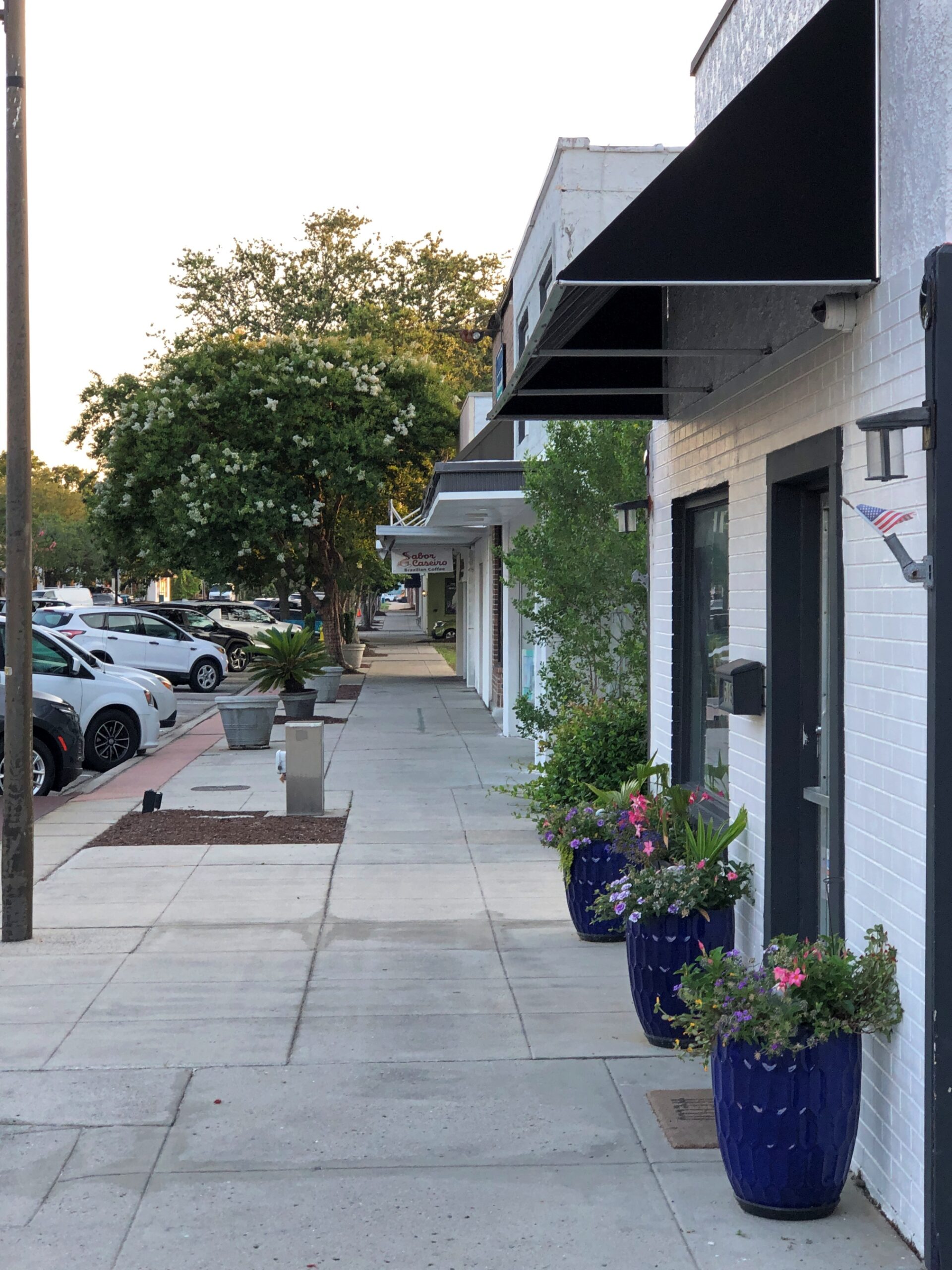
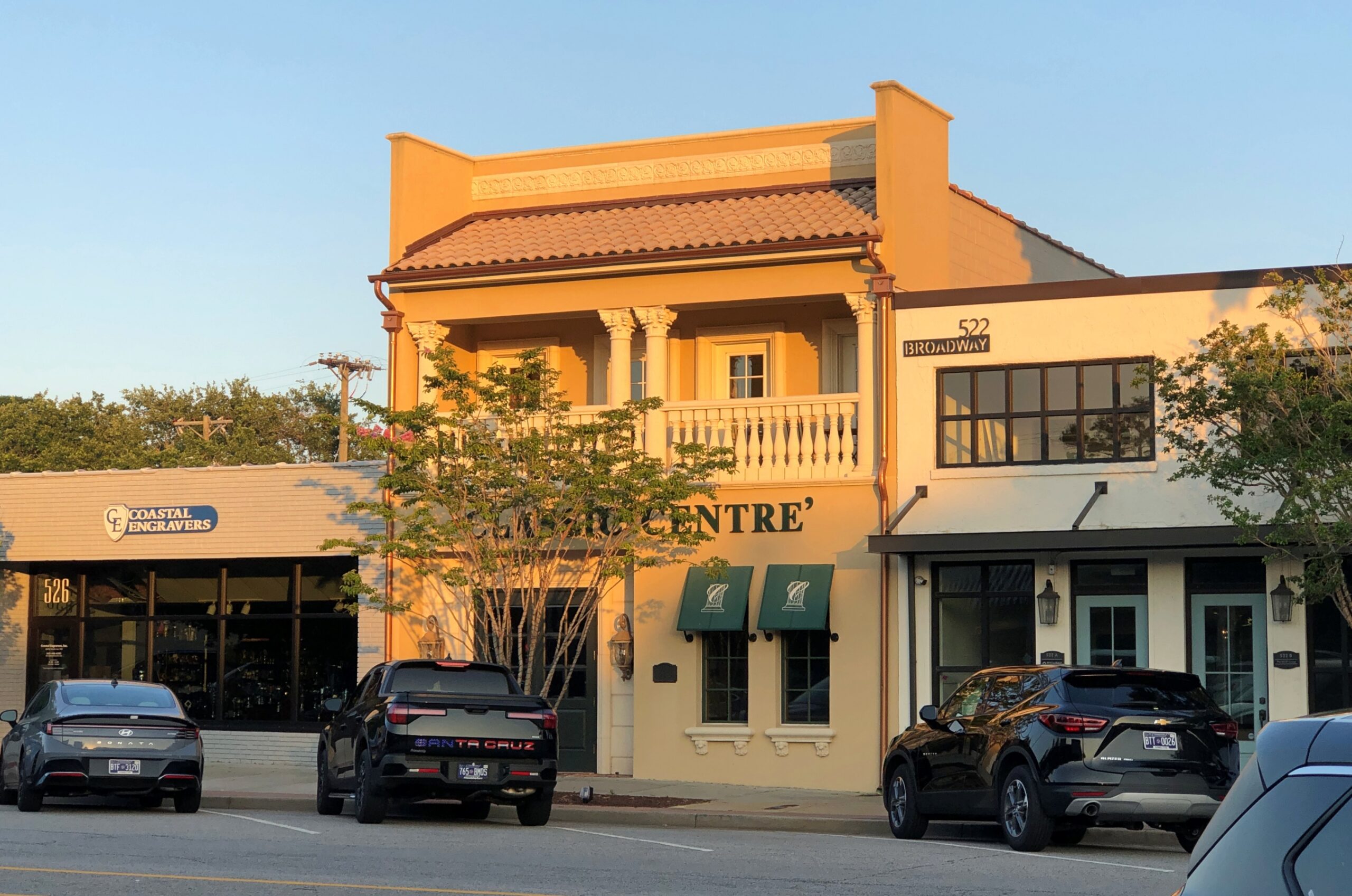
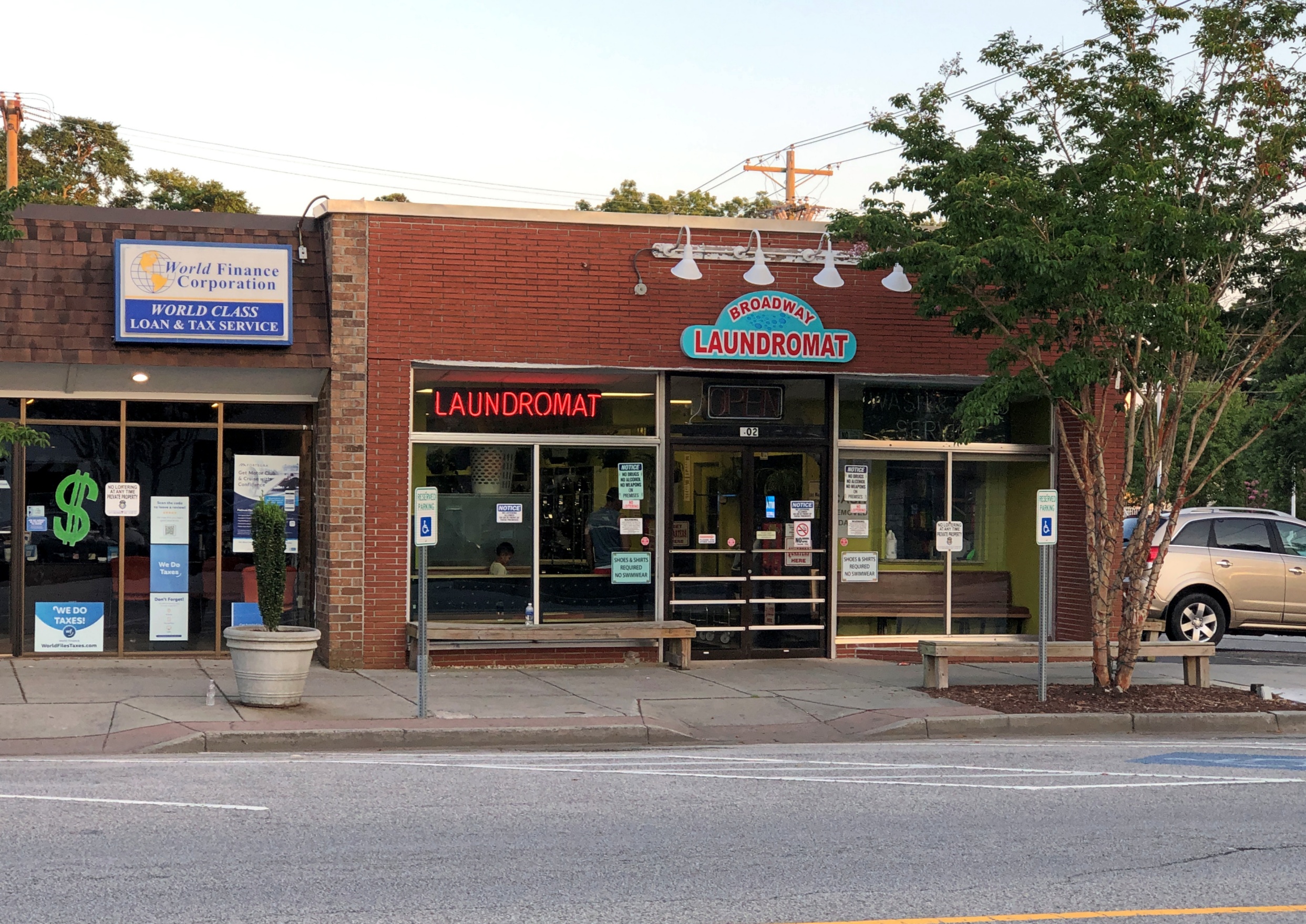
Had a pleasant walk down a non-tourist street on a Sunday in Myrtle Beach. Not a lot going on. The late afternoon light had a nice glow.

Myrtle Beach, SC
Myrtle Beach

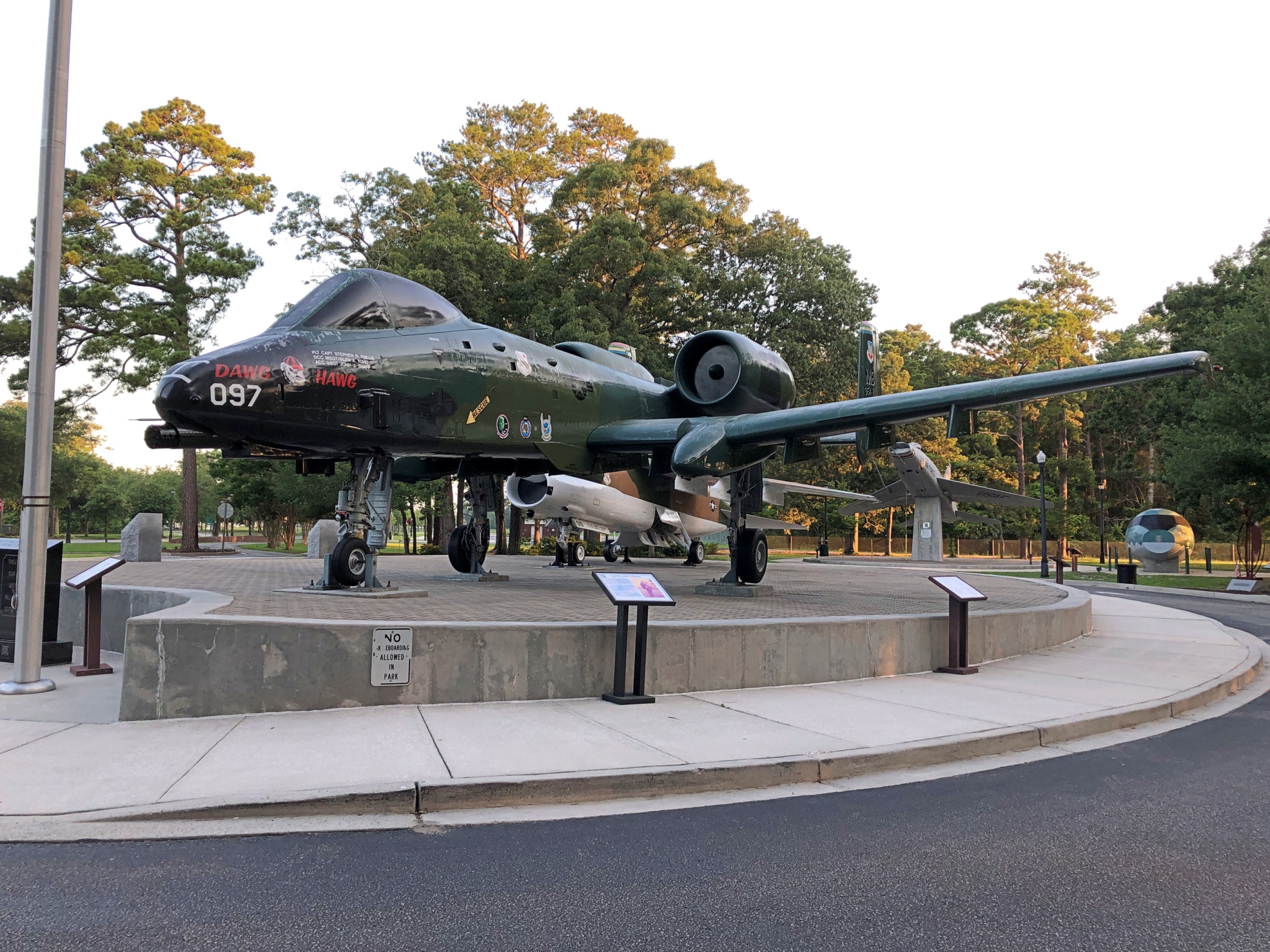
Myrtle Beach International Airport used to be Myrtle Beach Air Force Base, which began as Myrtle Beach General Bombing and Gunnery Range in 1942 for use by the U.S. Army Air Corps. It closed in 1993.

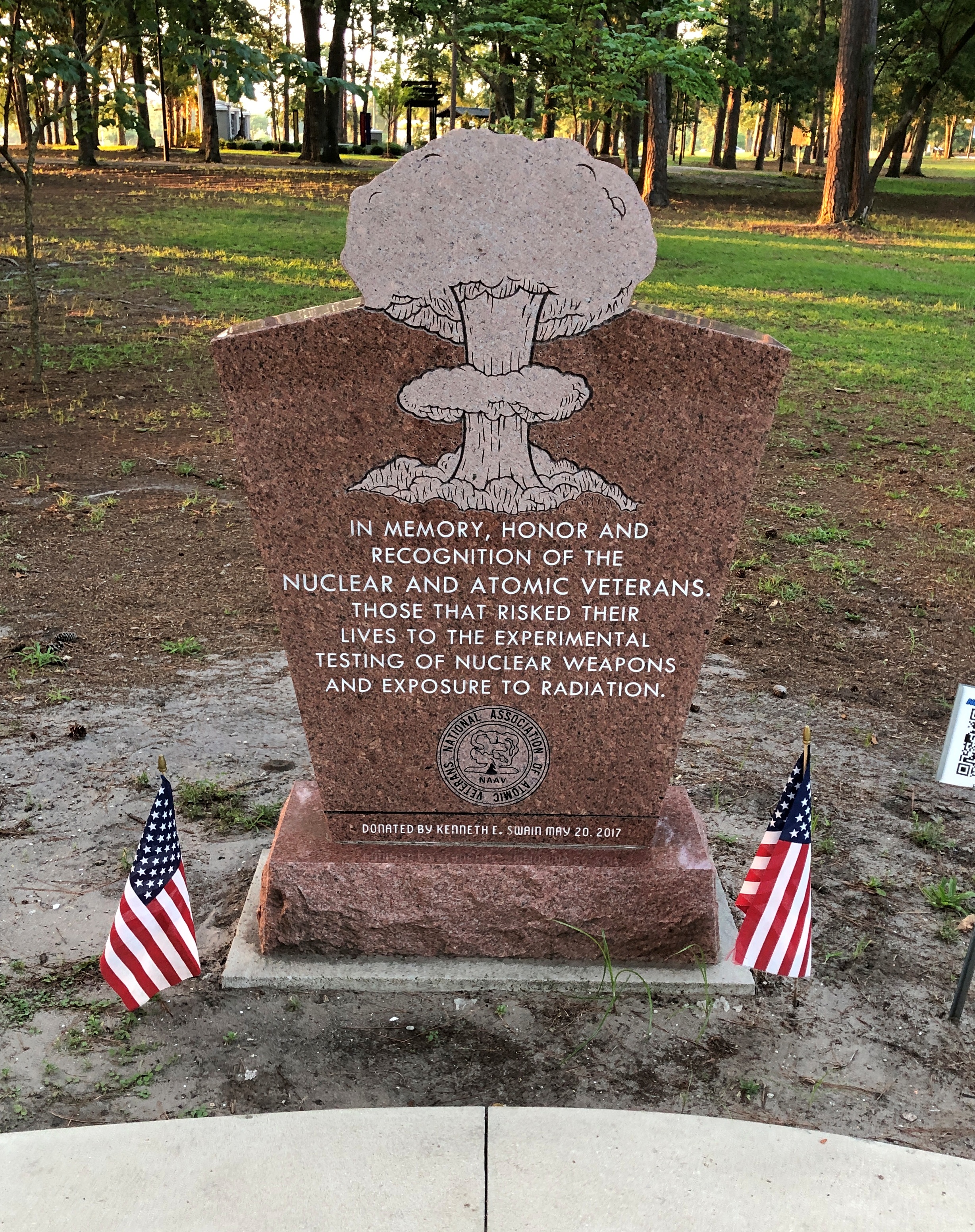
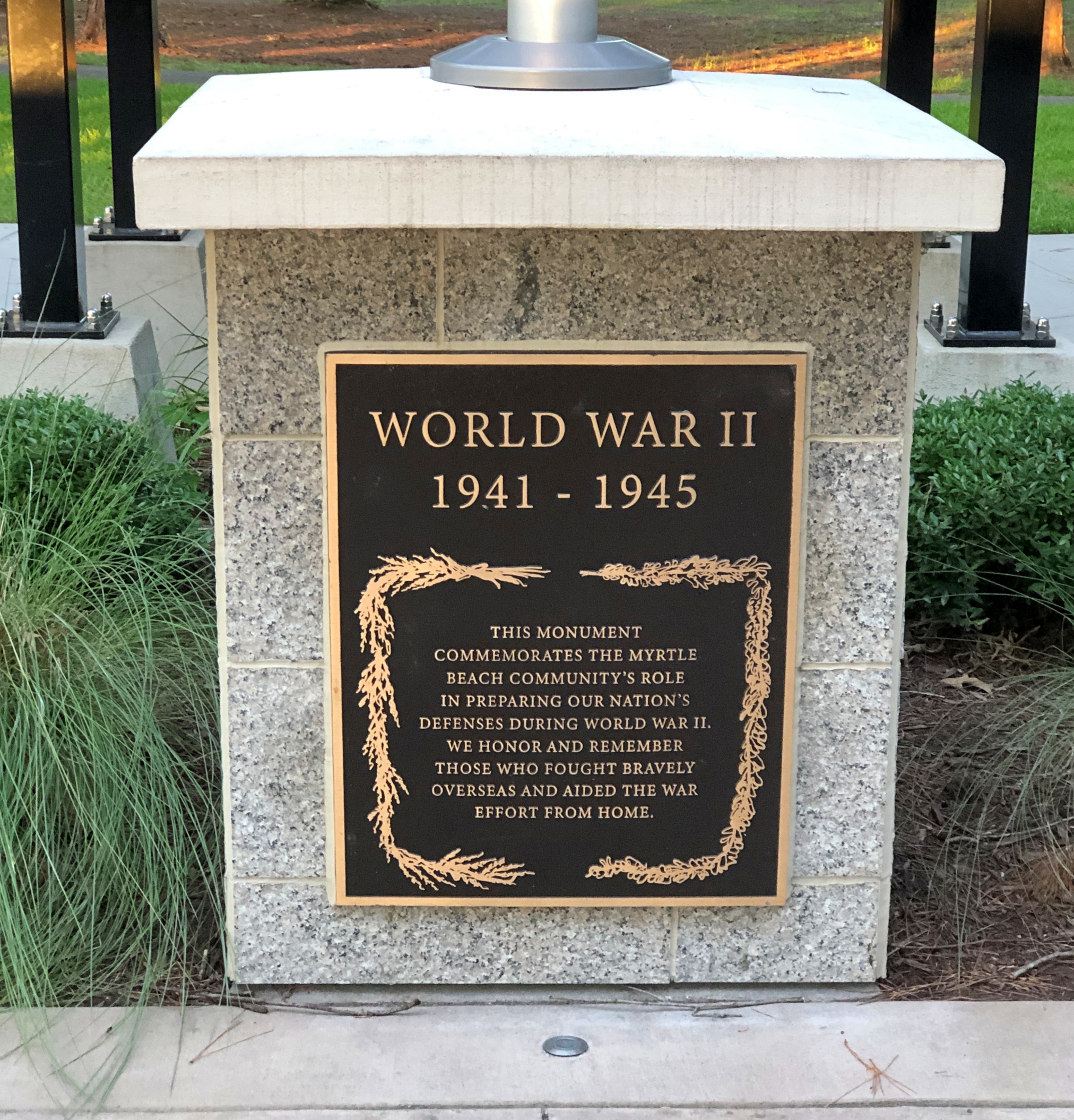
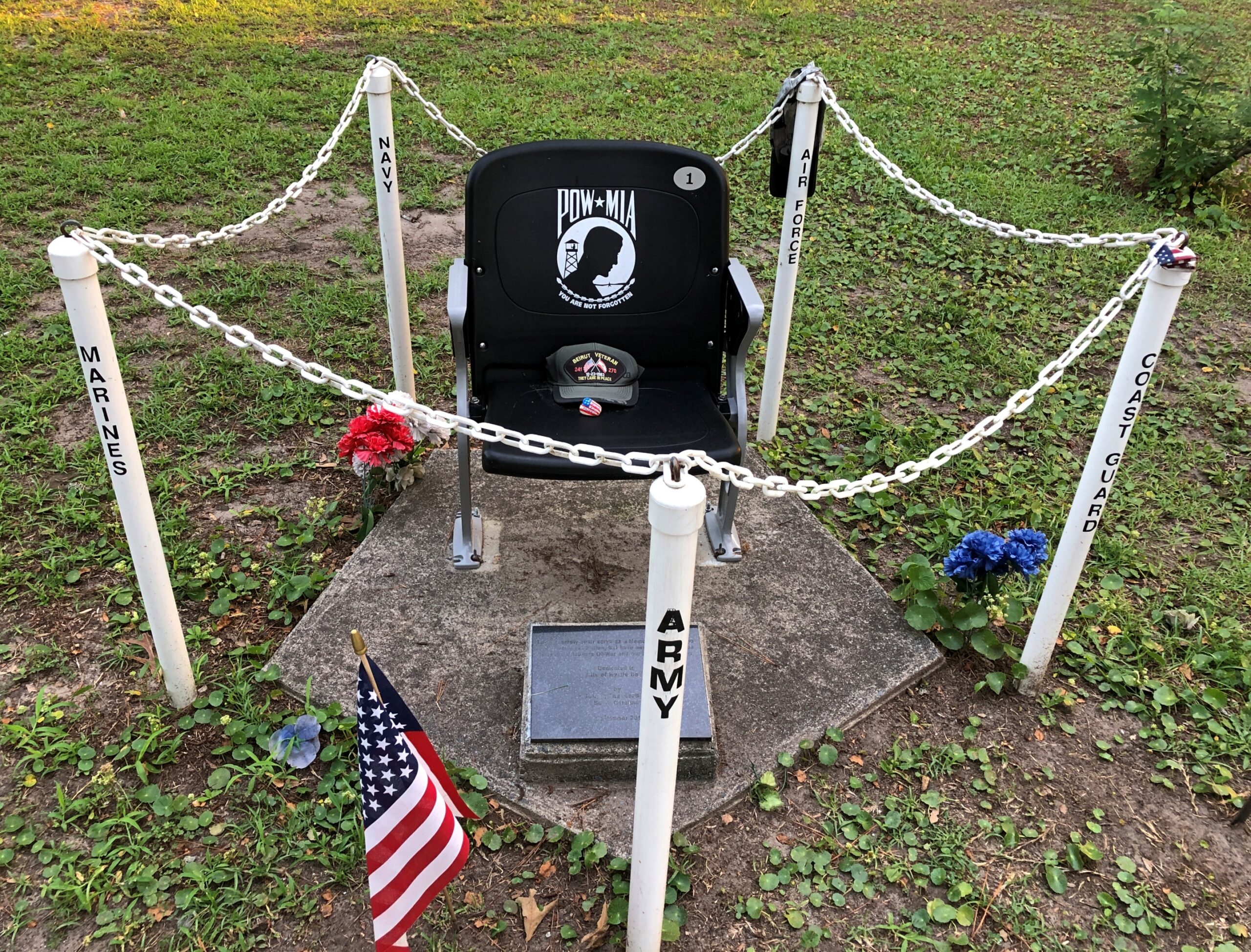
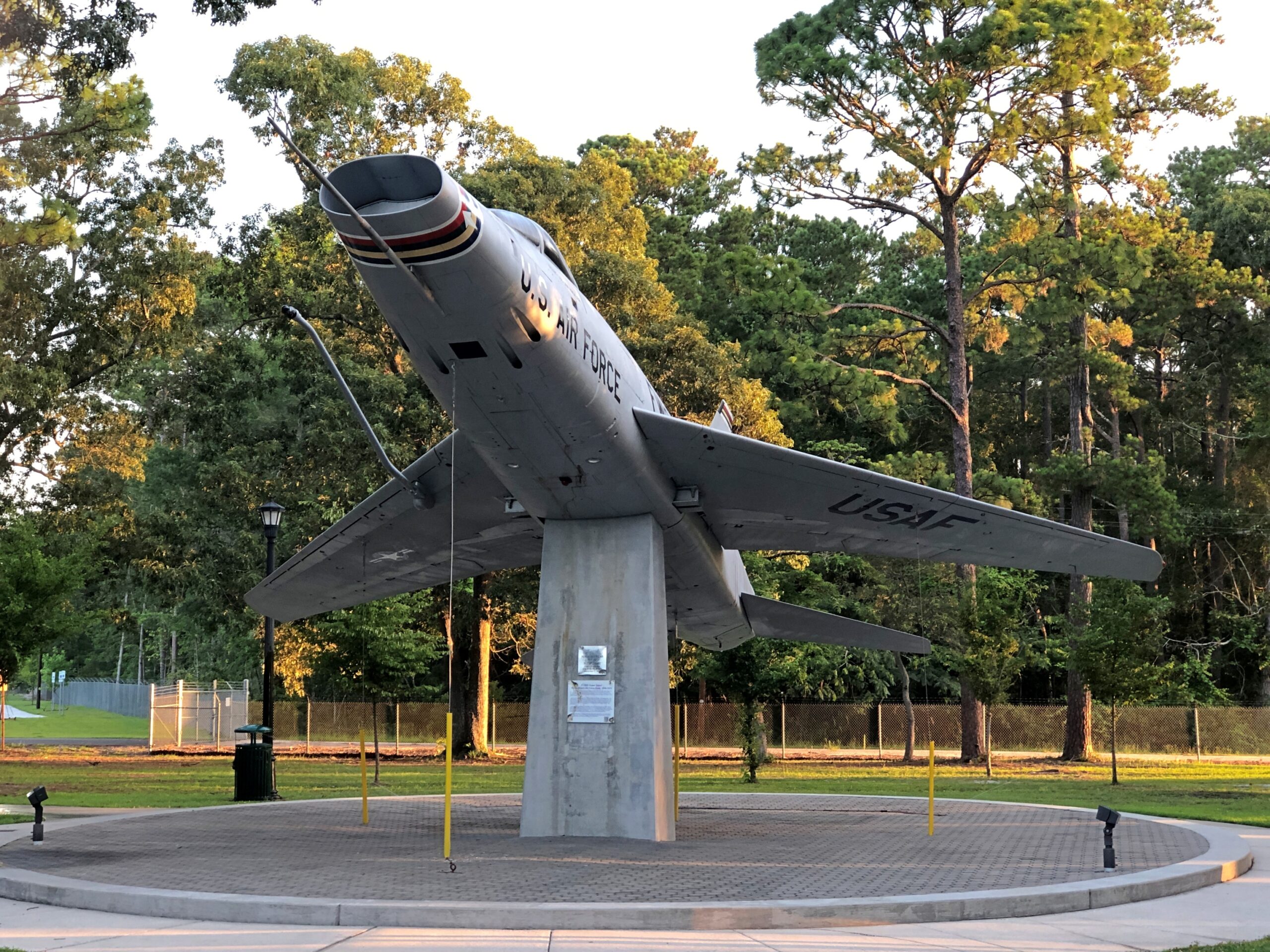
One legacy of the base is a cluster of military memorials near the perimeter of the airport – at a place called Warbird Park, which is fully accessible to casual visitors – that includes something you don’t see all the time.

Atomic Veterans

It is one memorial among many.

Myrtle Beach
Myrtle Beach

As well as some of the aircraft that used the air base.

Found at a MB beach shop among the clothes and beach equipment. Nothing says Myrtle Beach better than skulls, no?

There was more. Much more.

Shithead on glass

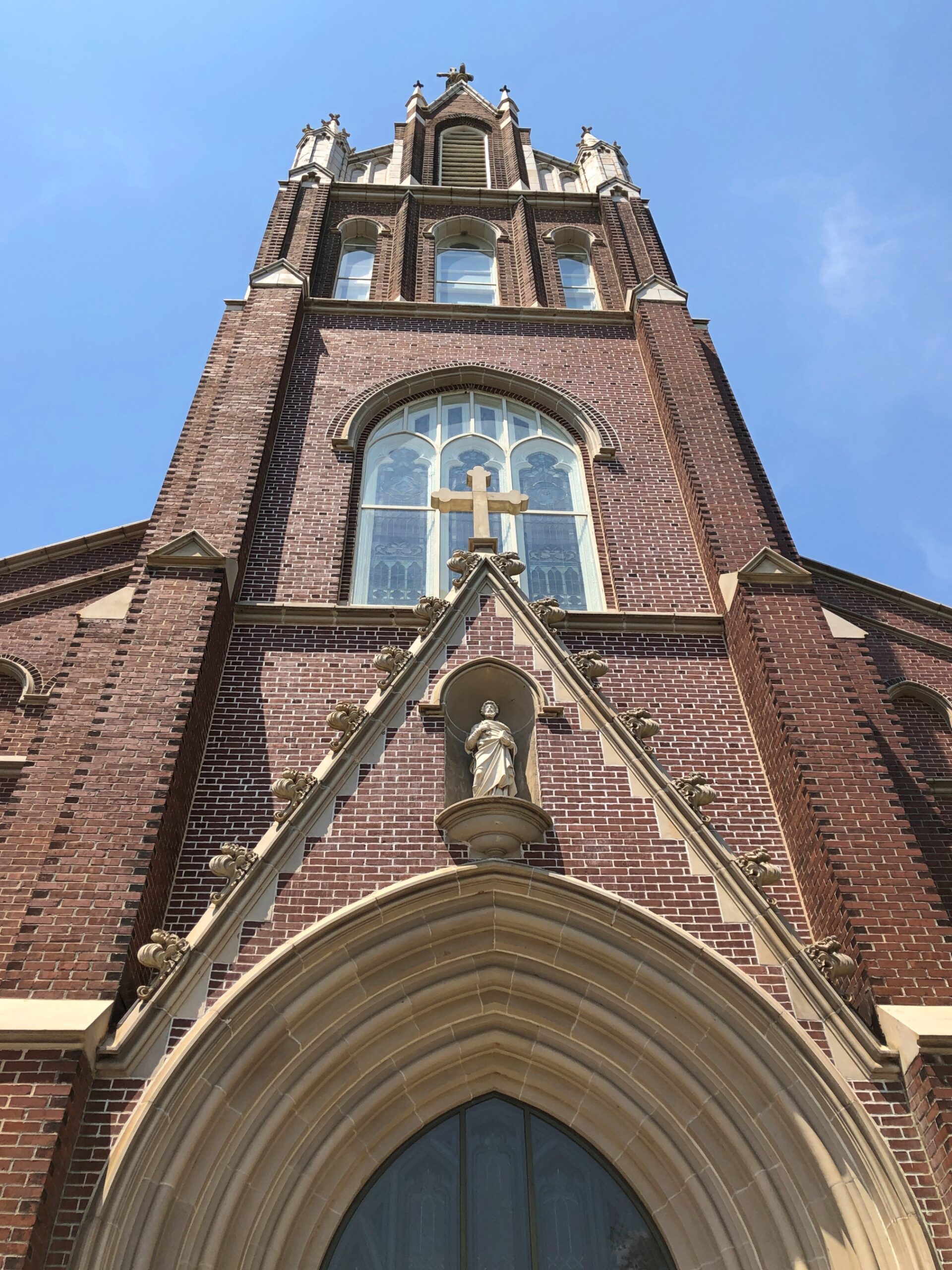
In Columbia, the Basilica of St. Peter.

Basilica of St Peter, Columbia

Mass was in progress in its impressive interior, so only a glimpse.

Georgia

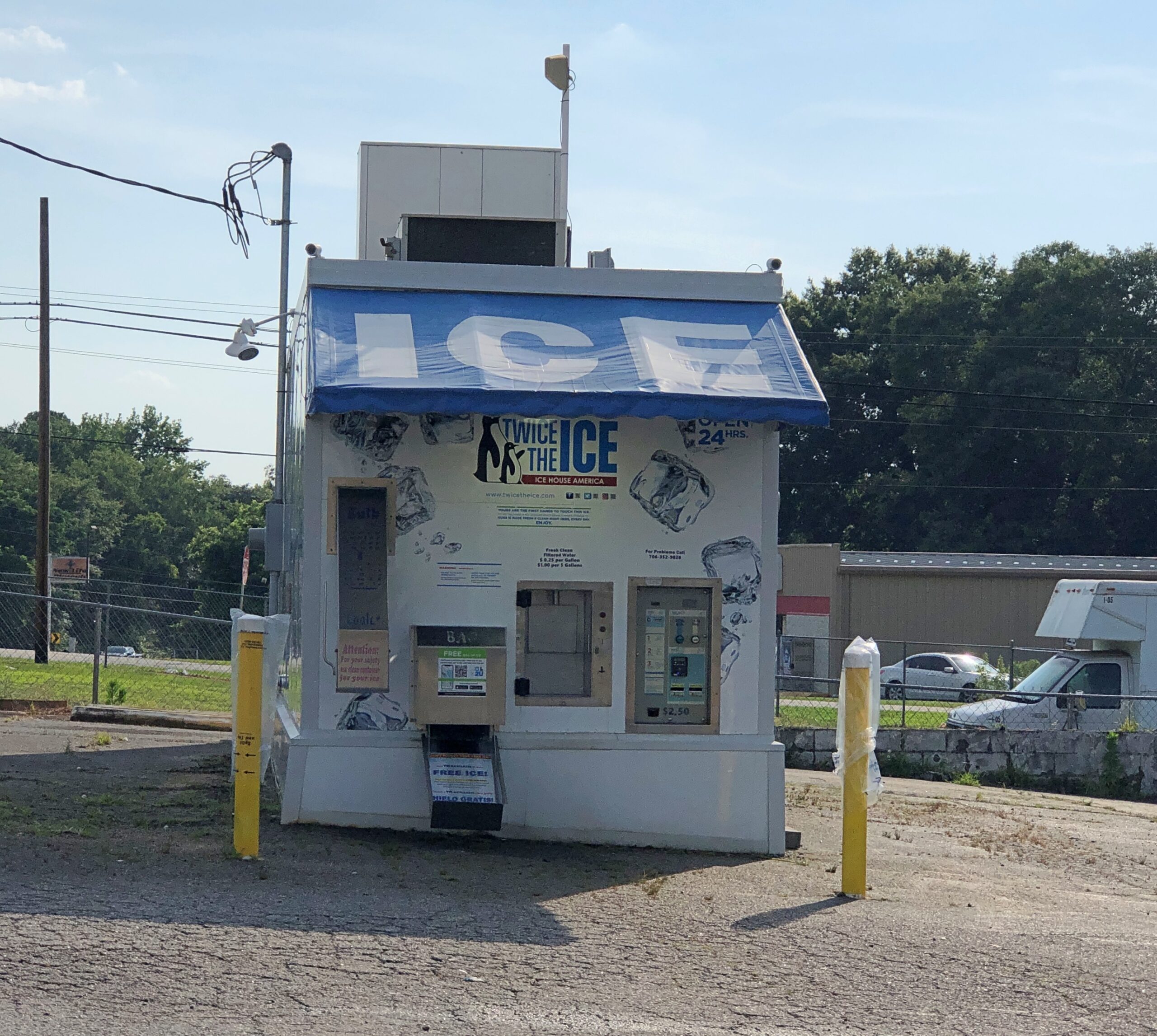
An automated, Fotomat-style ice store in north Georgia. They’re not as common up north, with the closest of this brand to me (I checked) in Aurora, Illinois.

Ice

Twice the Ice is the brand name. Quick facts: there are about 3,300 Twice the Ice locations so far in the United States and elsewhere – water and ice “vending machines,” according to one page on the company web site. Another page on the same site puts it at over 4,000 locations, which just means part of the site isn’t being updated. Whatever the exact number, there are a lot, and most if not all are franchised, representing about 1,000 franchisees.

It’s automation we call all get behind. I don’t think the machines are putting ice handlers and baggers at local gas stations and grocery stores out of work, since who holds that specific job?

So far as I know, “Ice is Civilization” is not the company motto. But it could be. It was said with such conviction by Allie Fox in The Mosquito Coast.

Of course, by the end of the book and movie both, he was howl-at-the-moon mad. So maybe some other slogan. Then again, that line is one of the few things – besides the fact that Allie Fox goes nuts chasing Utopia – that I remember from either the book or the movie after about 35 years. So it’s pretty memorable.

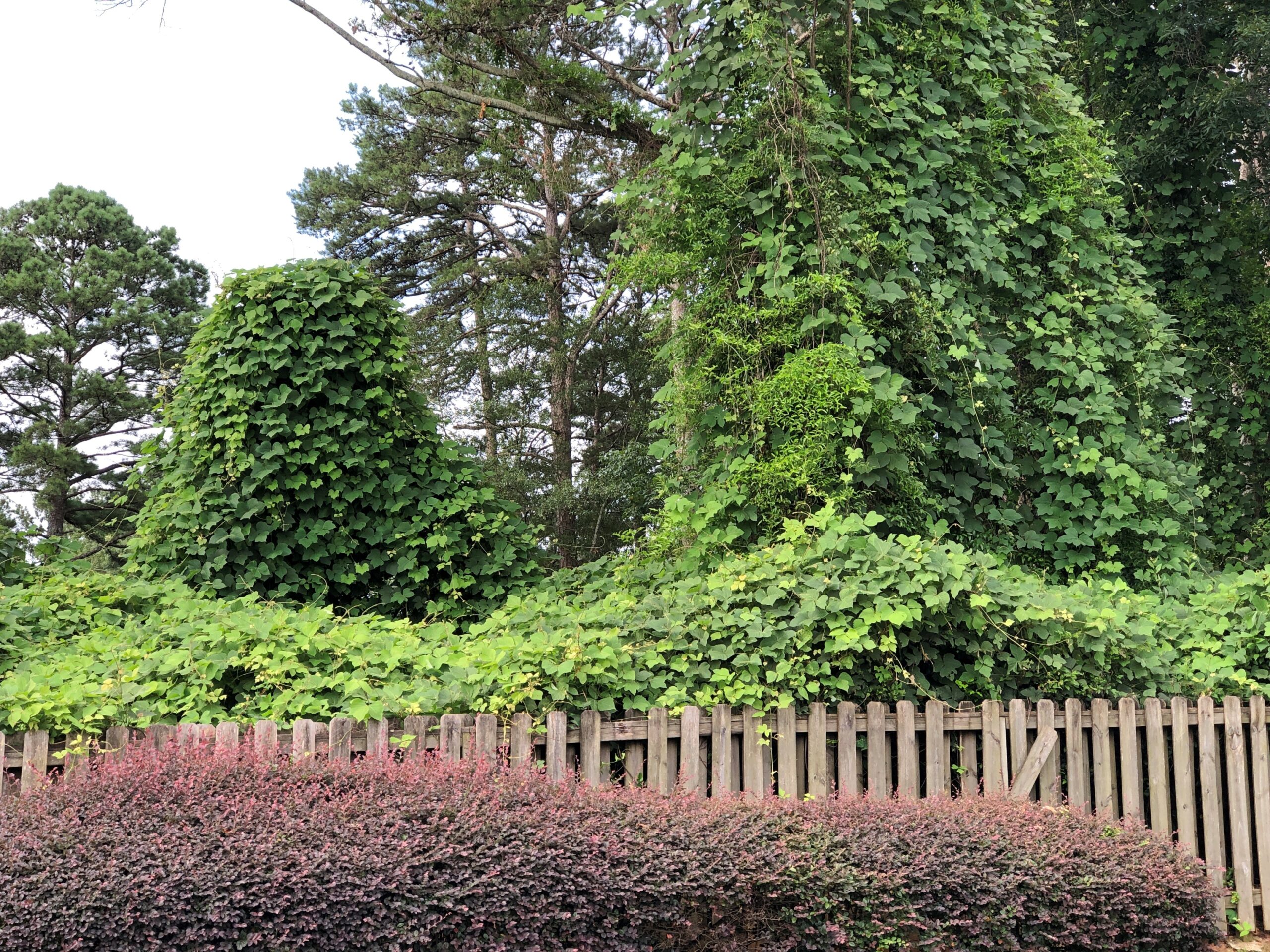
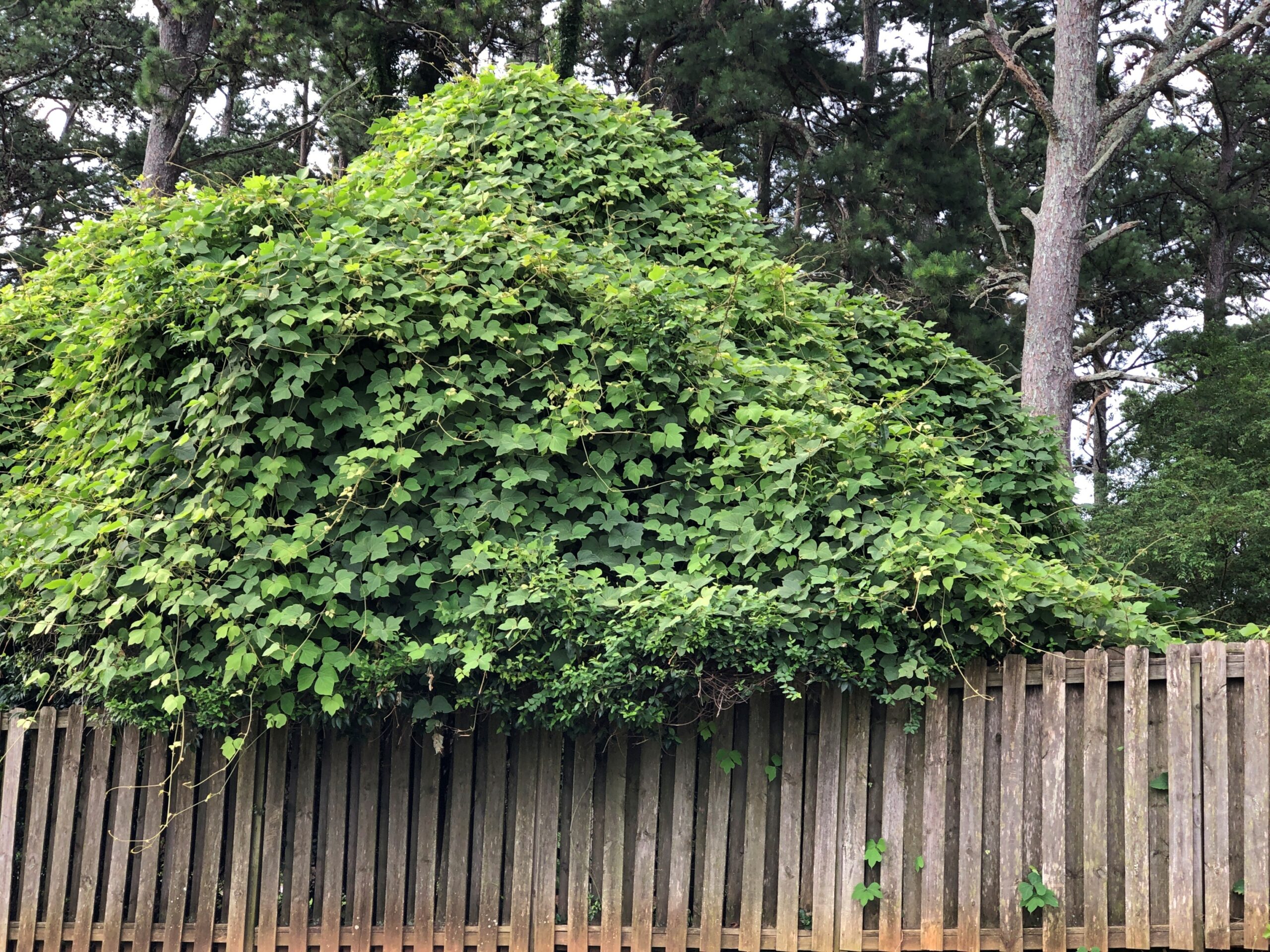
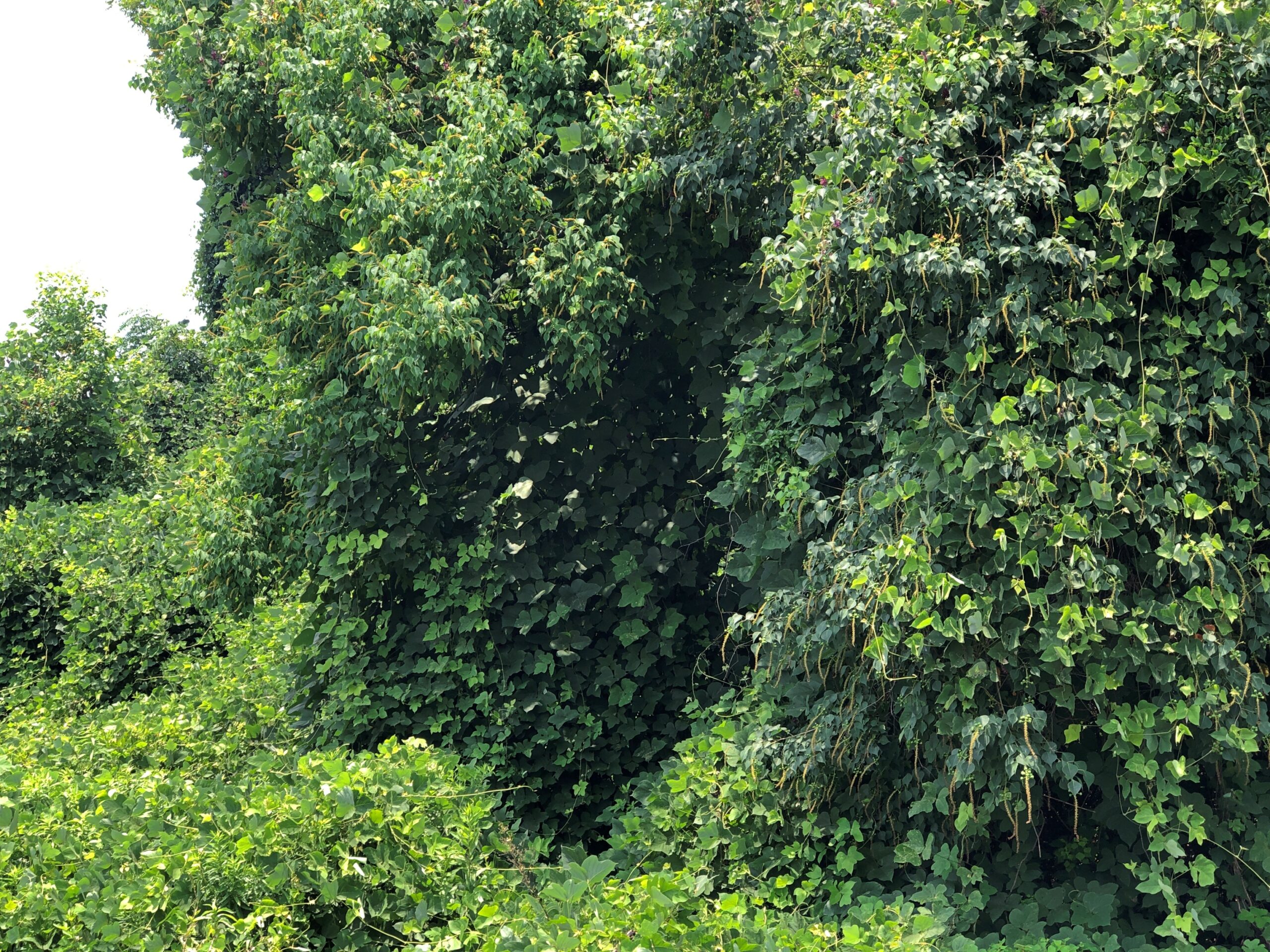
After gassing up at a station in north Georgia, I parked away from the pumps near the edge of the property to fiddle with my phone for a few minutes. Just outside the car window, kudzu lurked.

Which got closer.

And closer. Man, it grows fast.

Not really, but I did see all that kudzu at the edge of the gas station property. Kudzu. Who hasn’t seen the walls of it down South?

“In news media and scientific accounts and on some government websites, kudzu is typically said to cover seven million to nine million acres across the United States,” Smithsonian magazine reported in 2015. “But scientists reassessing kudzu’s spread have found that it’s nothing like that. In the latest careful sampling, the U.S. Forest Service reports that kudzu occupies, to some degree, about 227,000 acres of forestland, an area about the size of a small county and about one-sixth the size of Atlanta.

“That’s about one-tenth of 1 percent of the South’s 200 million acres of forest. By way of comparison, the same report estimates that Asian privet had invaded some 3.2 million acres — 14 times kudzu’s territory. Invasive roses had covered more than three times as much forestland as kudzu.”

Yet kudzu is regarded as a particularly intractable invasive species. How is that? It grows well in highly visible places. Such as next to a gas station parking lot. Smithsonian notes: “Those roadside plantings — isolated from grazing, impractical to manage, their shoots shimmying up the trunks of second-growth trees — looked like monsters.”

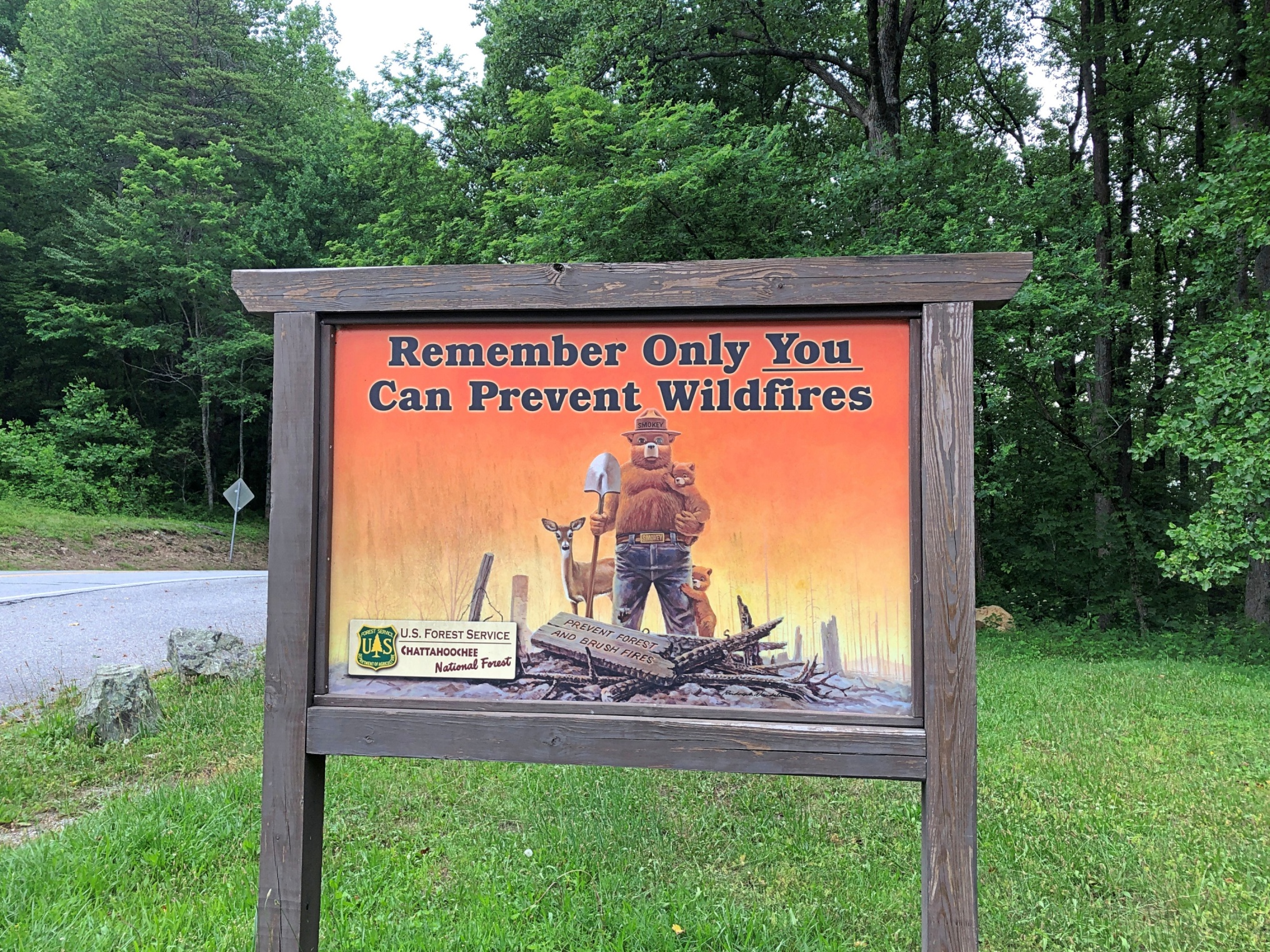
Along Georgia 60 in Chattahoochee NF, Smokey Bear is still at his job.

One thing leads to another online, and Smokey eventually lead me to “Smokey the Bear Sutra.” Only takes a few minutes to read, and it’s a trip. Just like the song “Elvis is Everywhere,” there’s a founding document of a religion in the distant future, one that asserts that humans should never have given up worshiping bears.

Jama Masjid, Delhi

Part of the inspiration to visit India was the book City of Djinns: A Year in Delhi (1993) by the admirable Scottish writer William Dalrymple, which I’ve known about for years but only got around to reading late last year. Timing is important in one’s travels, even before going anywhere, and I happened to be reading that book as we discussed going to Japan in the coming winter. In a typical train of thought for me, I figured if we’re already in Japan, how much more effort would it take to go on to India? Some, as it turned out, mostly after we arrived, but worth the effort.

One memorable passage in City of Djinns involved Dalrymple’s visit to Jama Masjid in Delhi, during the end of Ramadan one year. A mass swirl of humanity came to the mosque on that occasion.

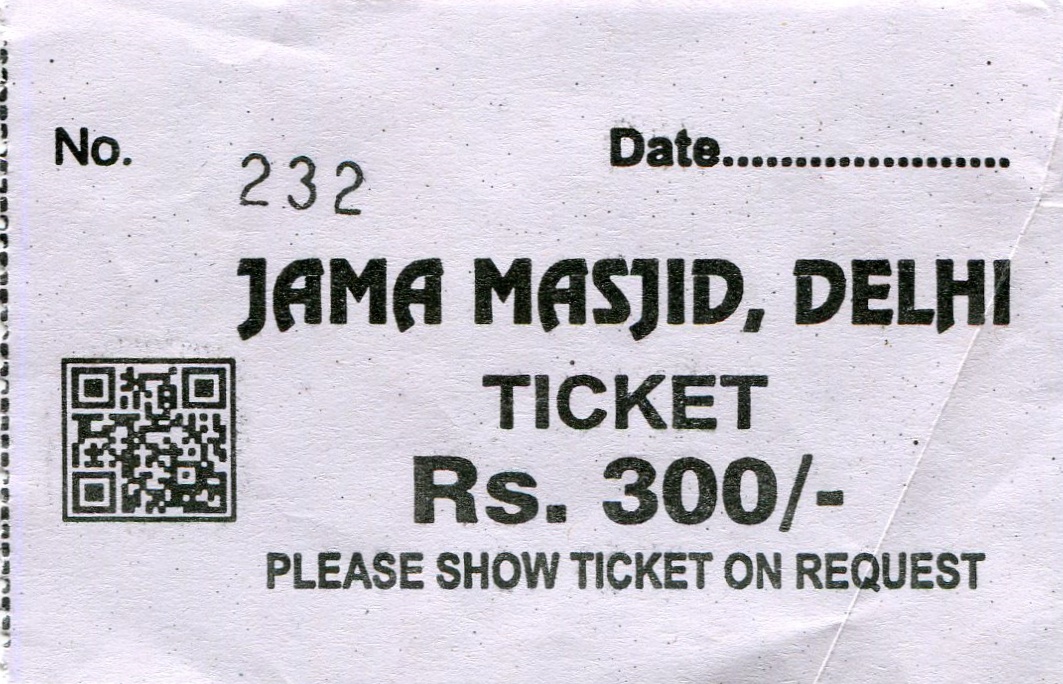
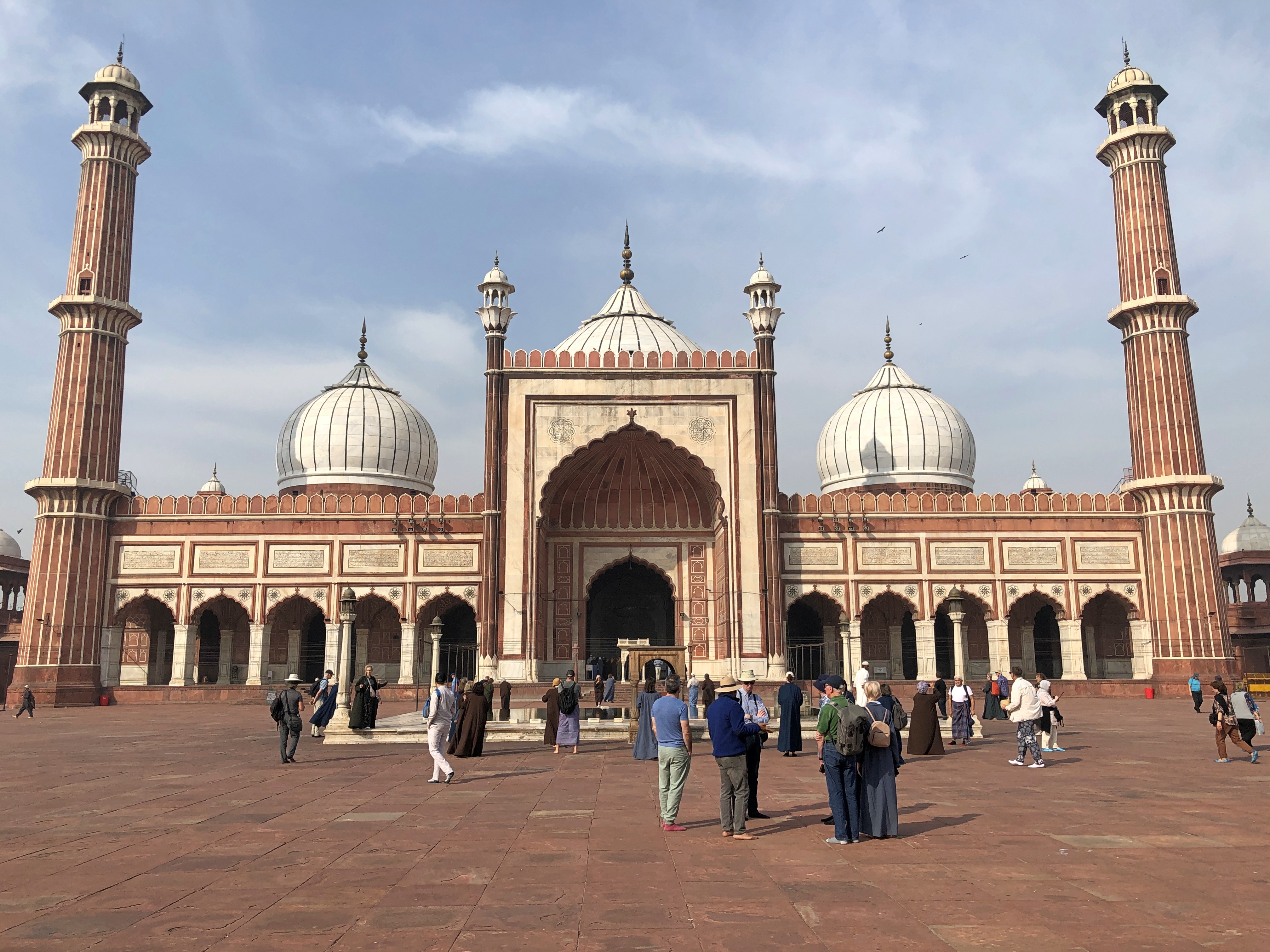
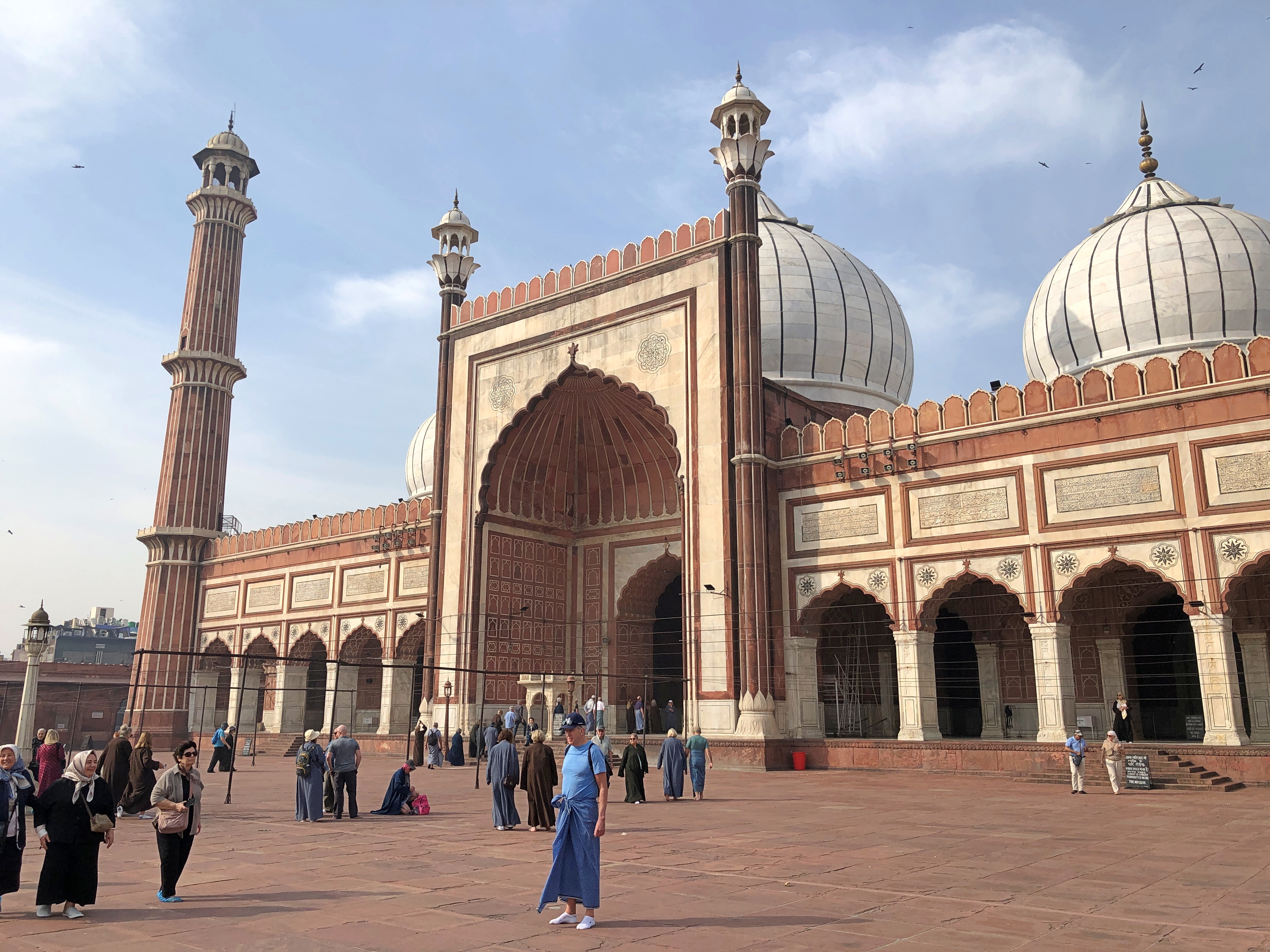
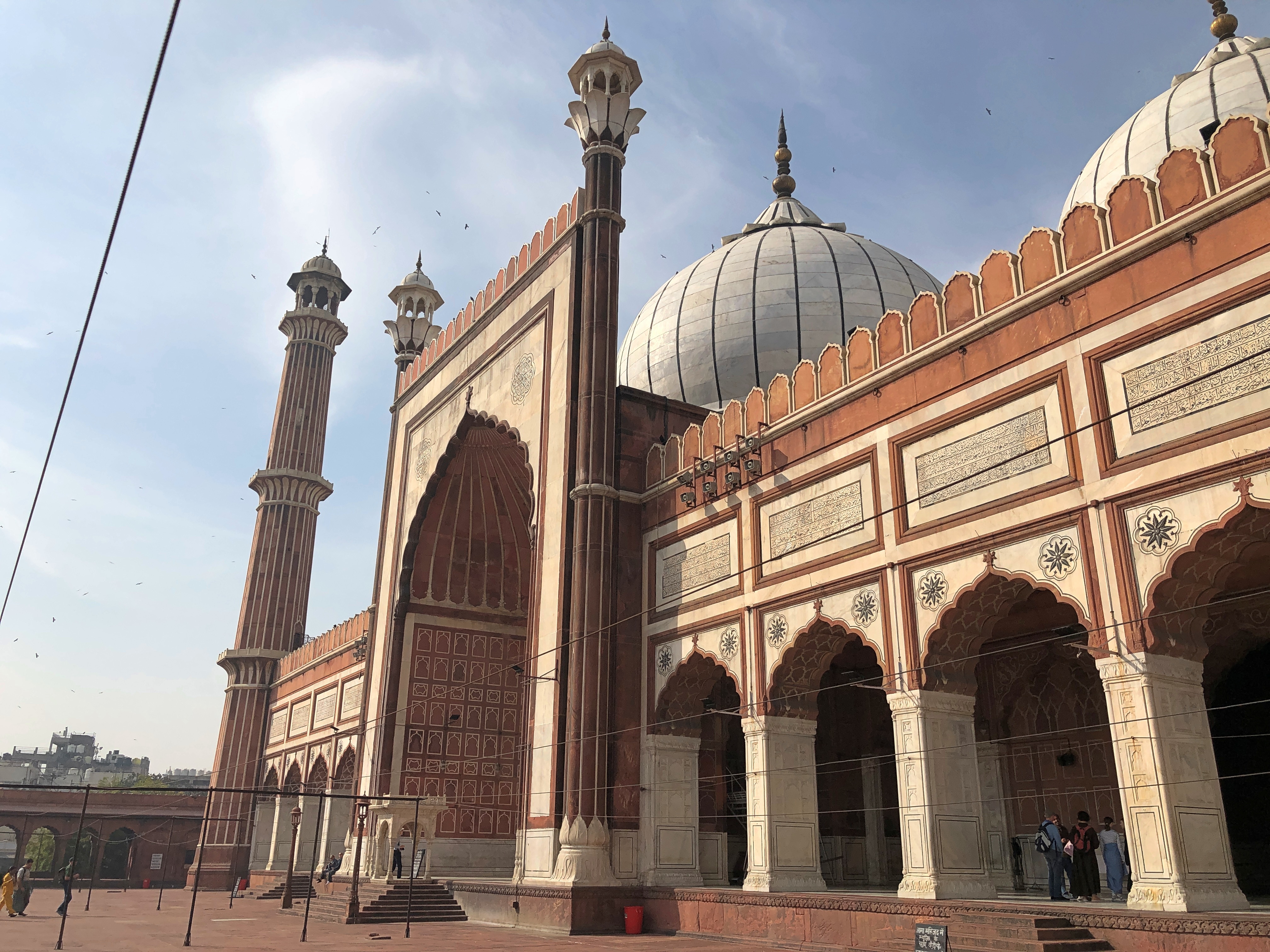
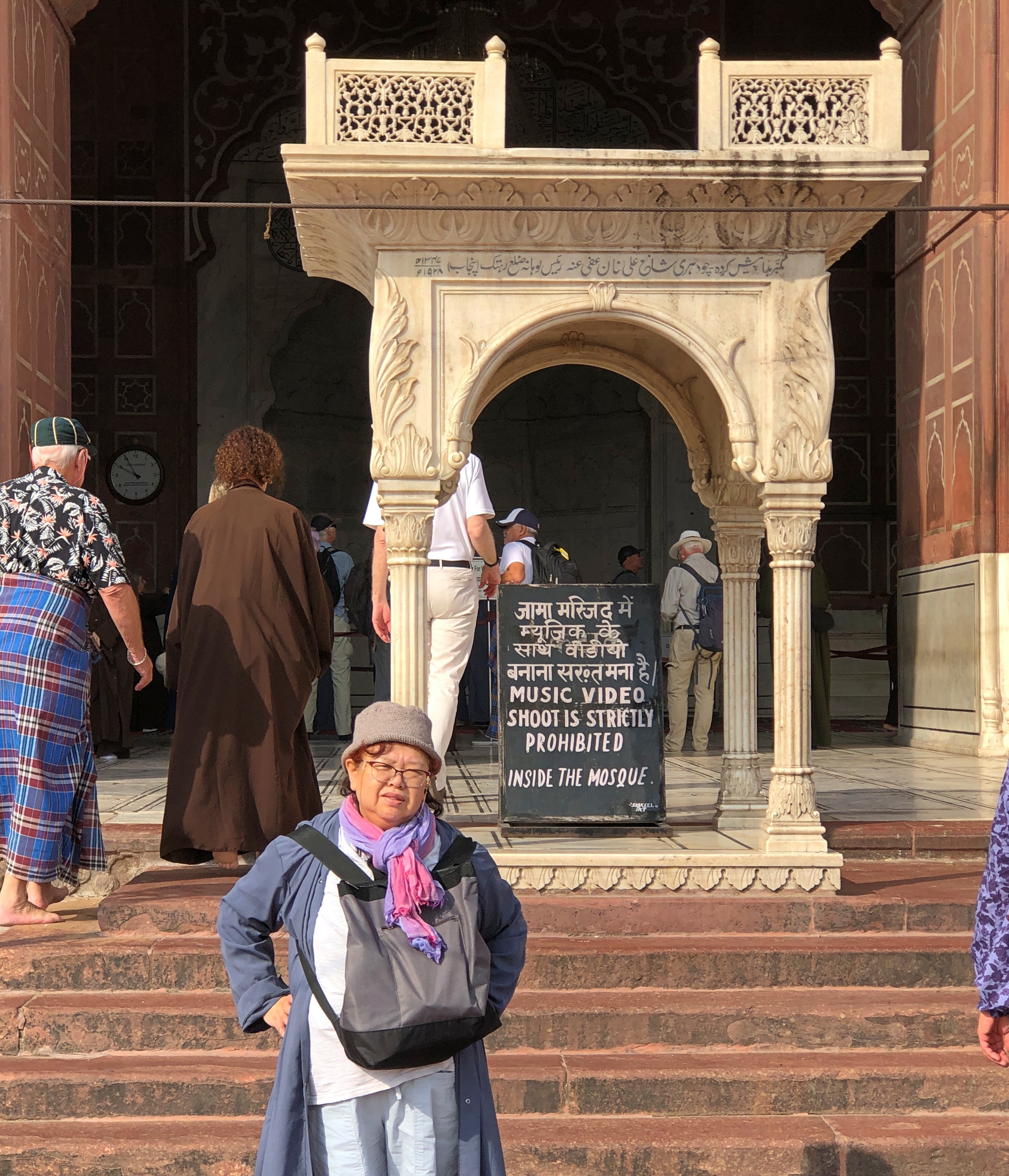
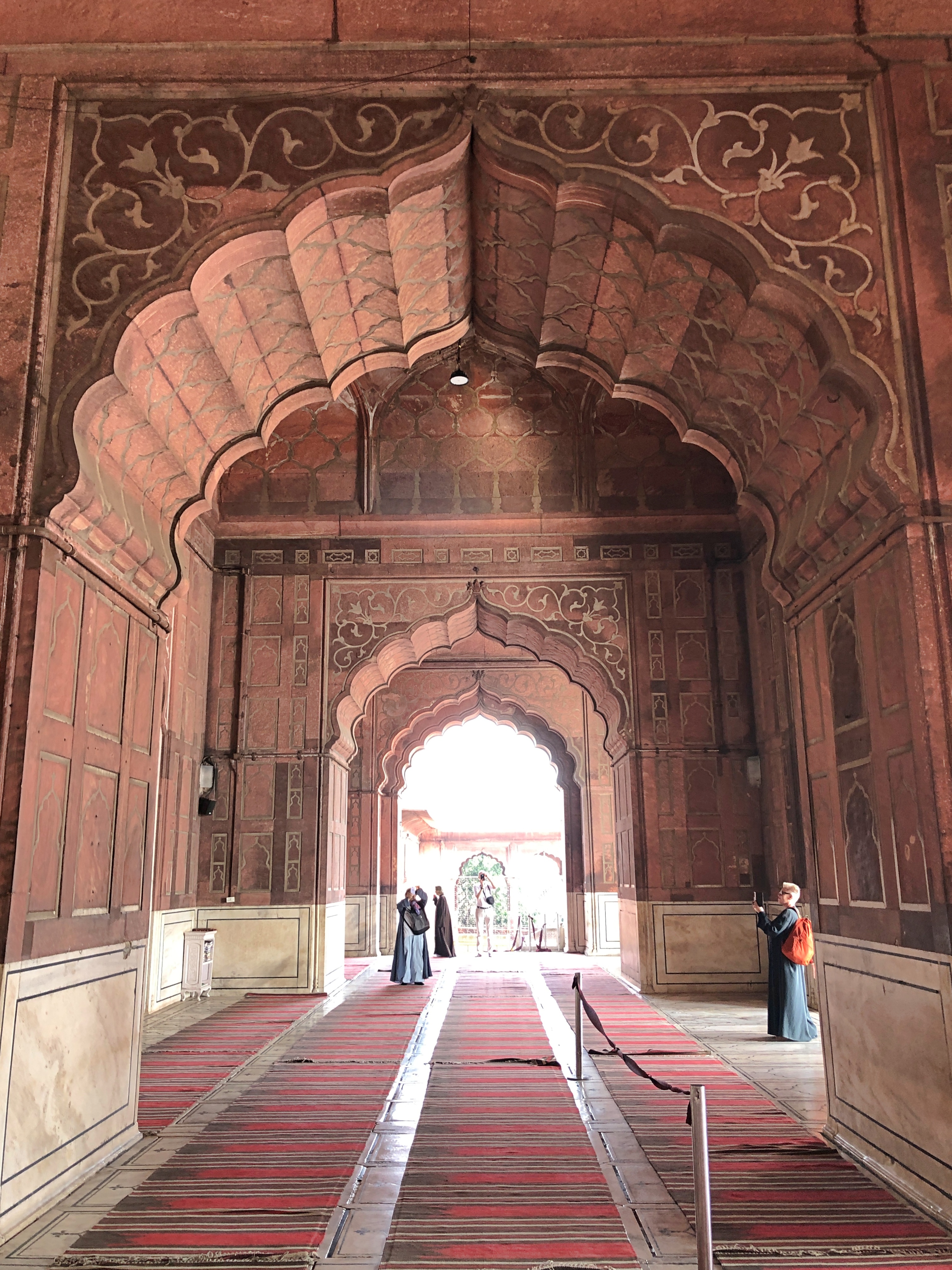
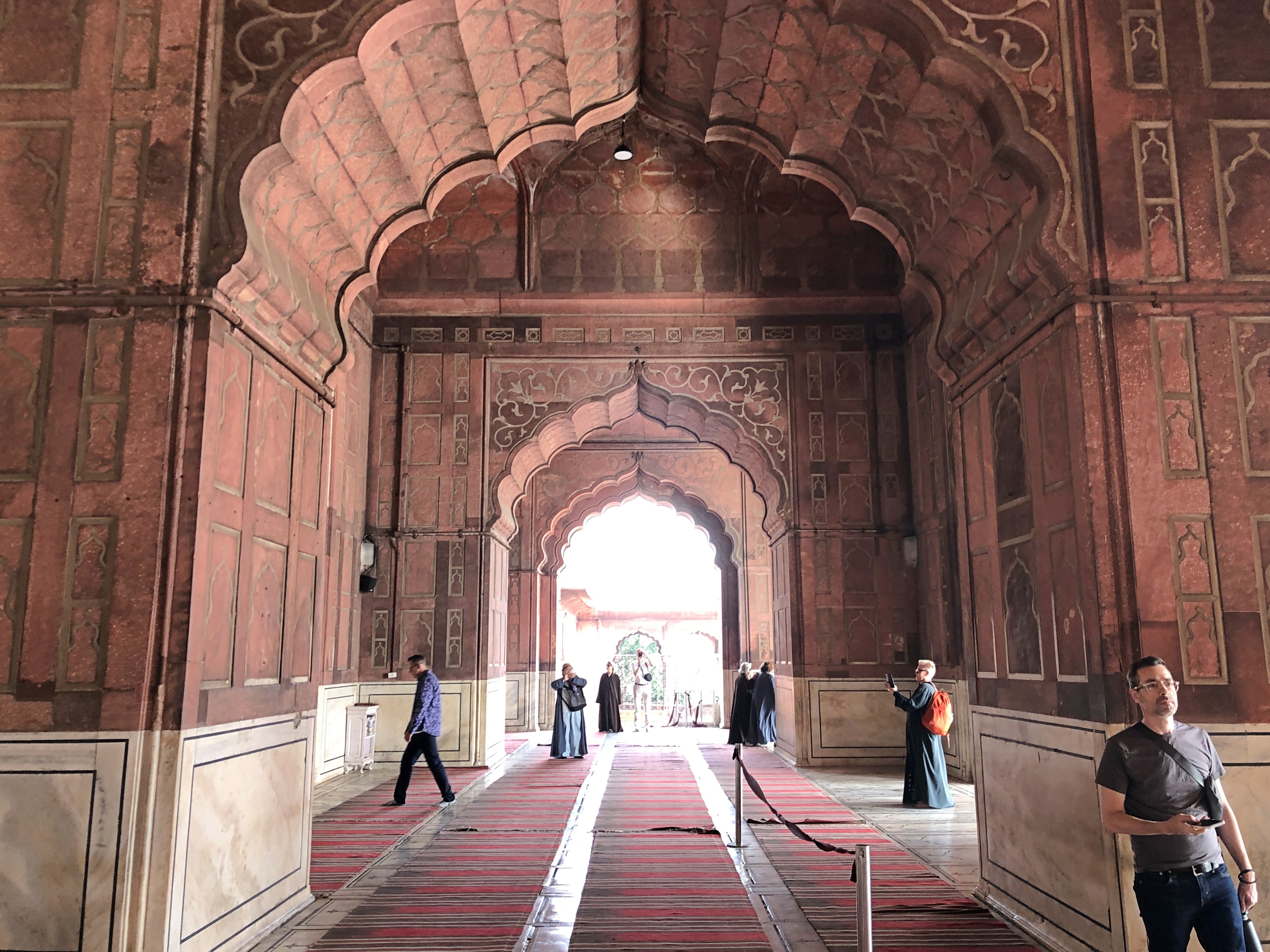
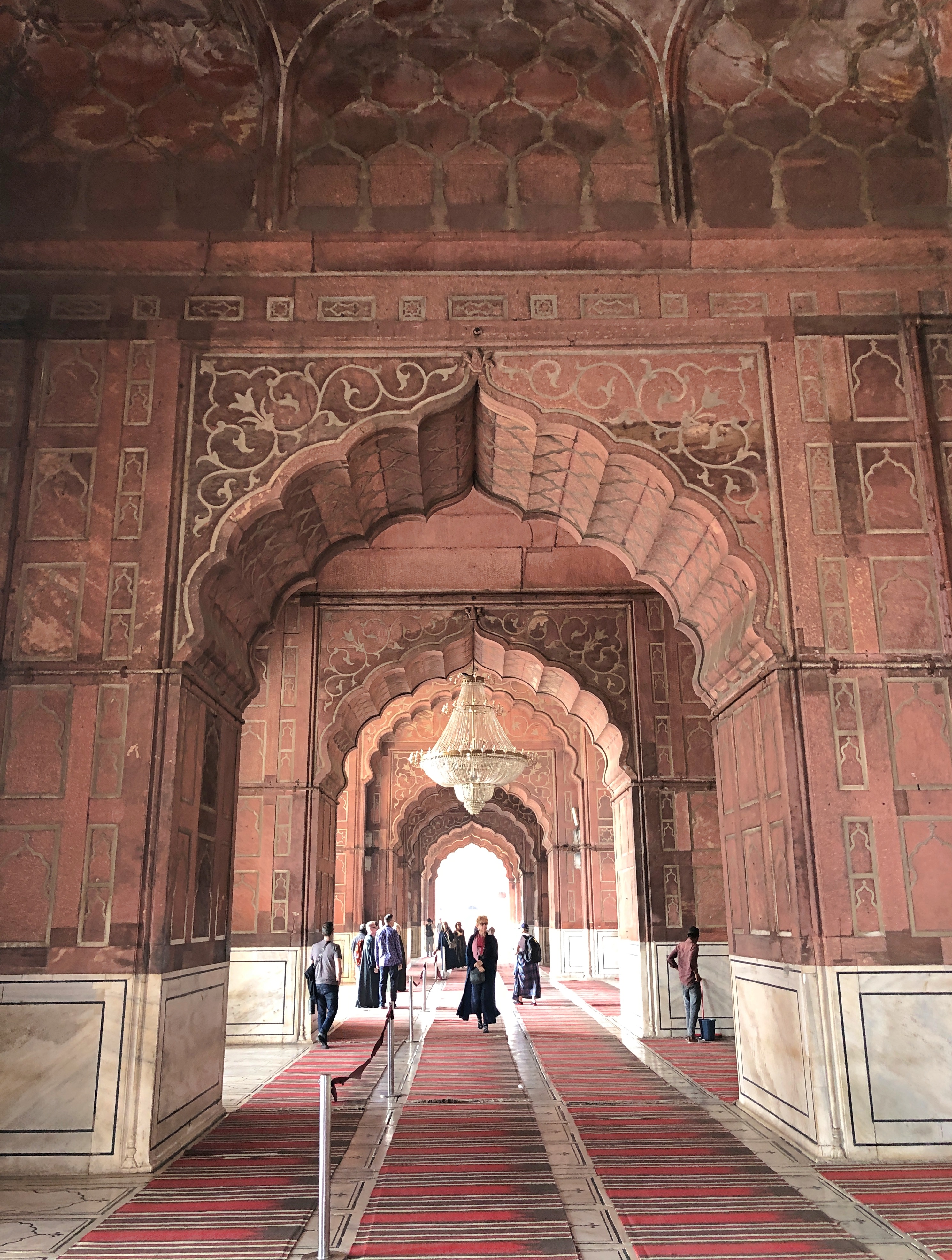
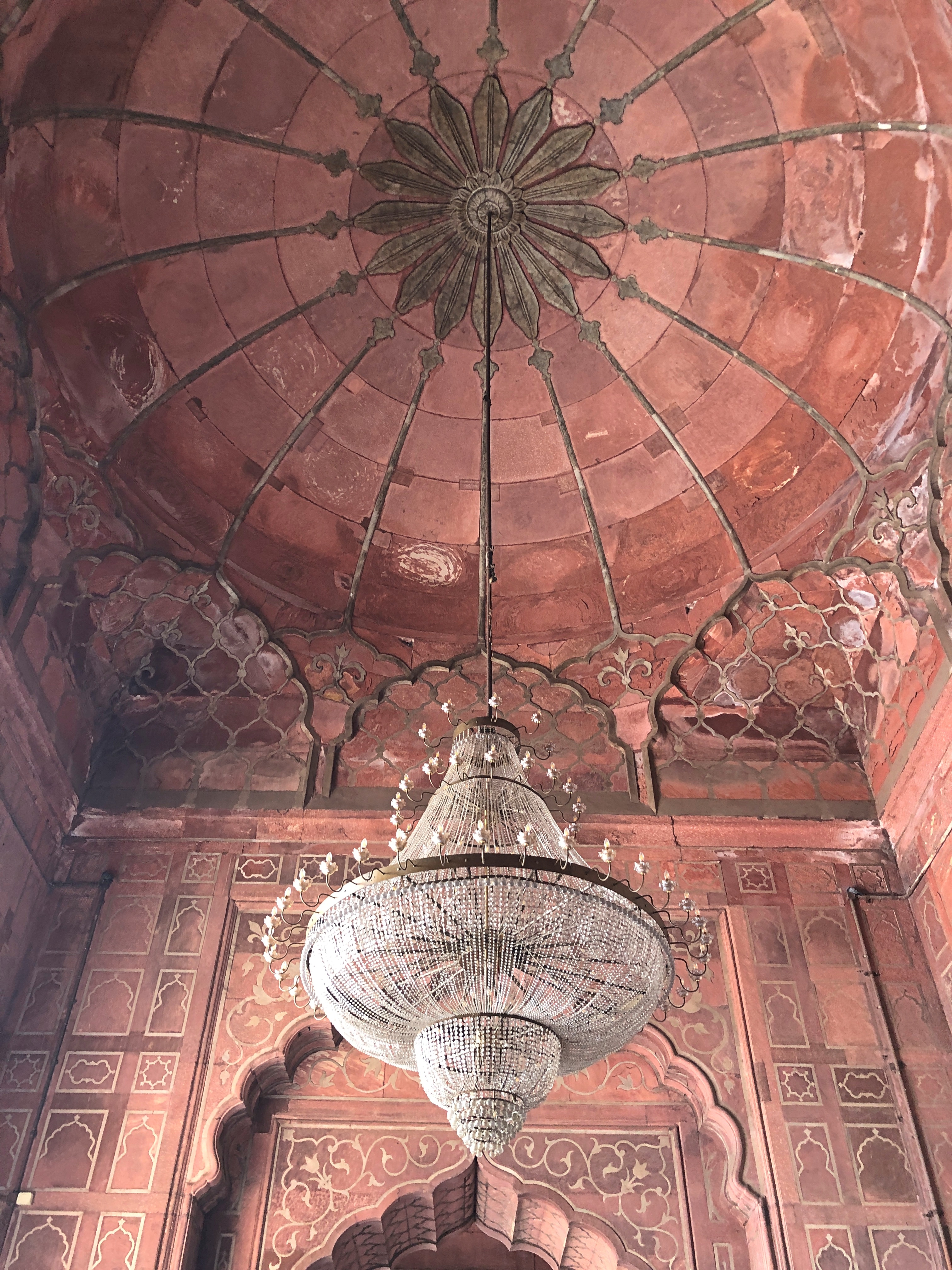
When we were there in February on an ordinary non-Friday, humanity was mostly represented by tourists, contributing our little bit to the upkeep — a reasonable $3.50 or so each at that moment in February. Plus another $1 or so baksheesh each to the young man watching your shoes.Jama Masjid Jama Masjid Jama Masjid

As well we should visit. Extraordinary in its grandness, the place also reminds a North American just how far he is from home.

At the entrance of the prayer hall.Jama Masjid Jama Masjid

That hints at a history of video crews making, or trying to make, their works on the sly. Equipment doesn’t need to as large as it used to be. Jama Masjid
Jama Masjid Jama Masjid

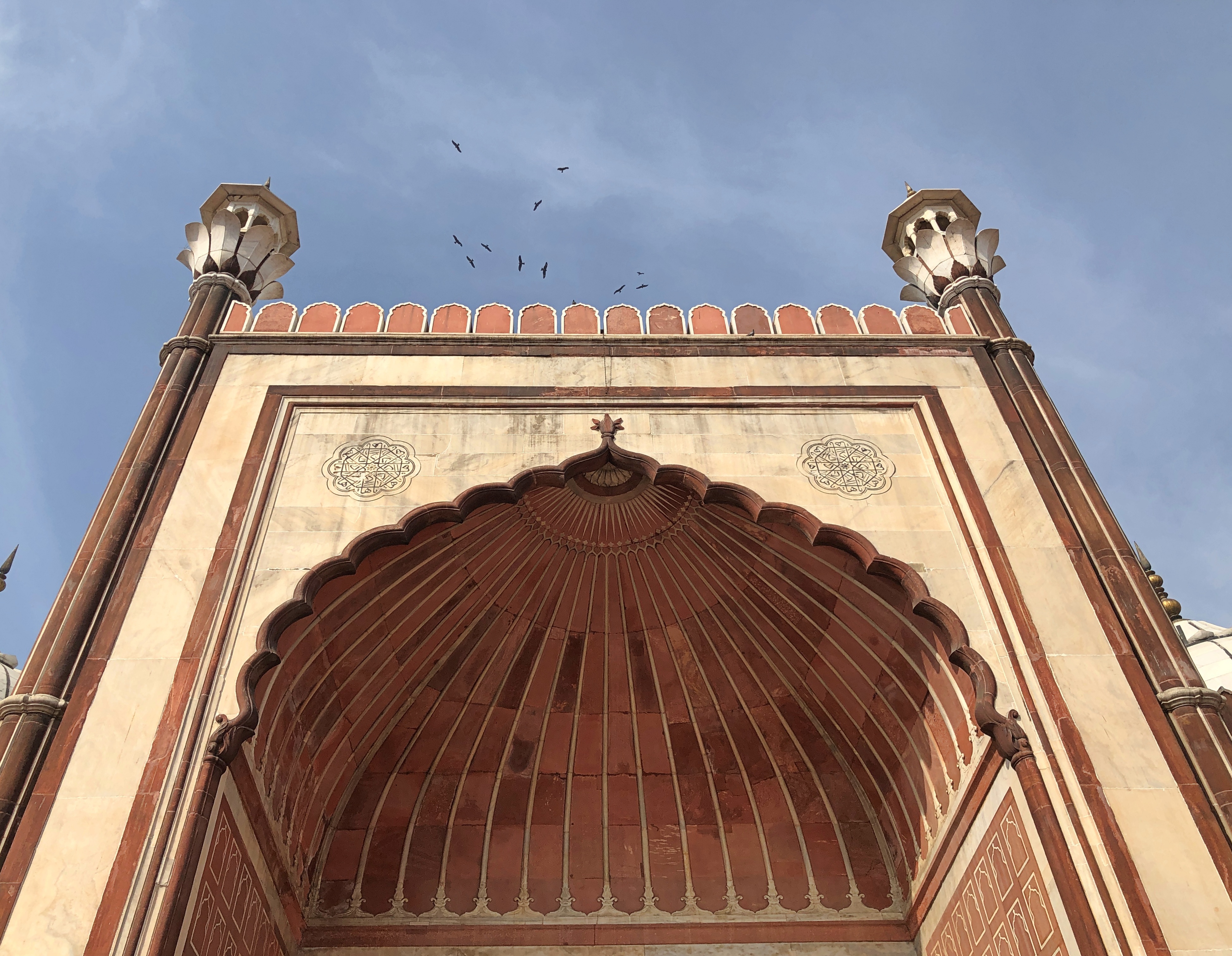
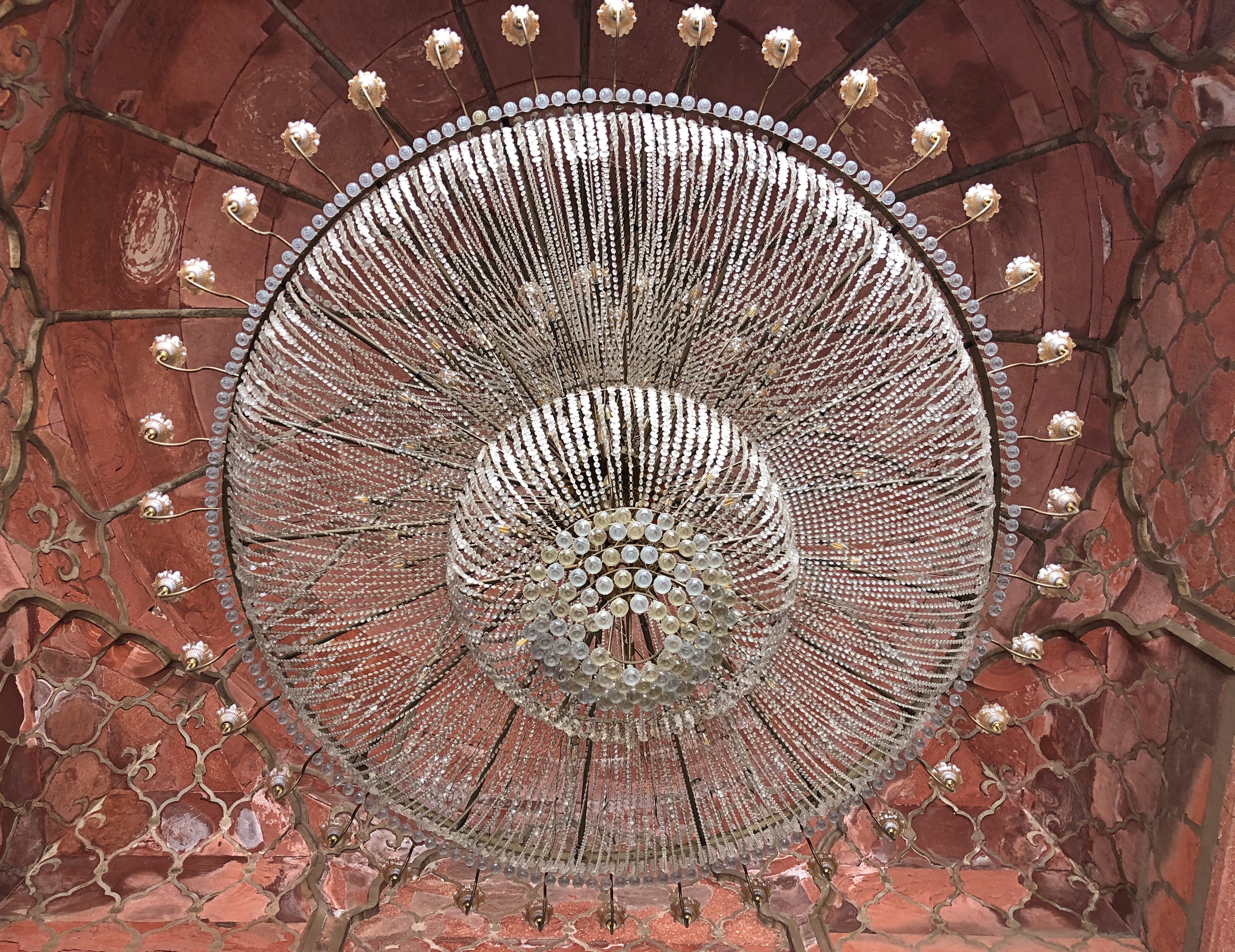
Up.Jama Masjid Jama Masjid Jama Masjid

Once again, what would modern India be without reminders of Mughal power and prestige? The mosque is the work of Shah Jahan I (d. 1666), fifth Mughal emperor, or rather the 5,000 workers hired for the job and supervised by his Grand Vizier. “Indians, Arabs, Persians, Turks, and Europeans” were among the workers, according to Wiki.

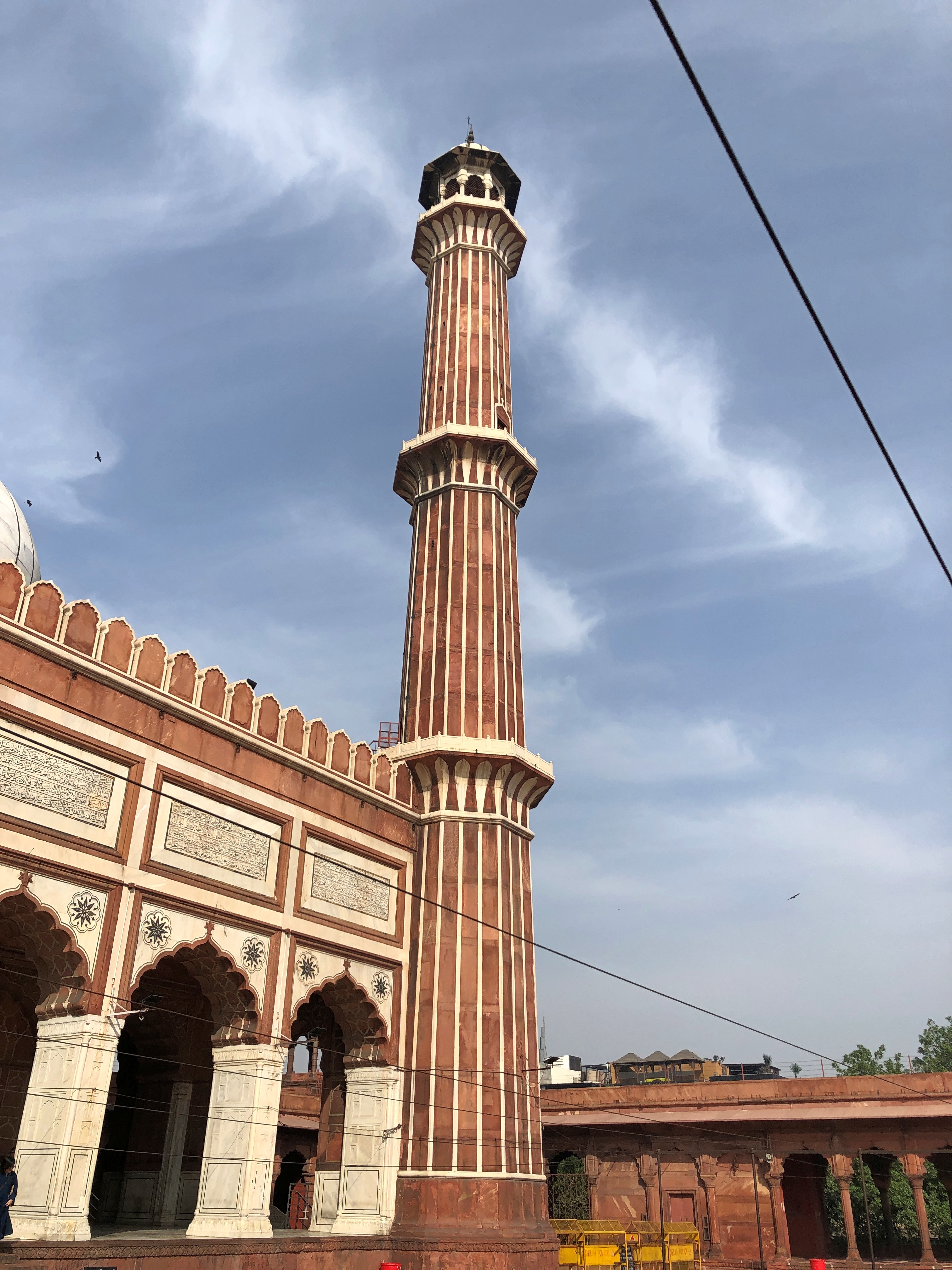
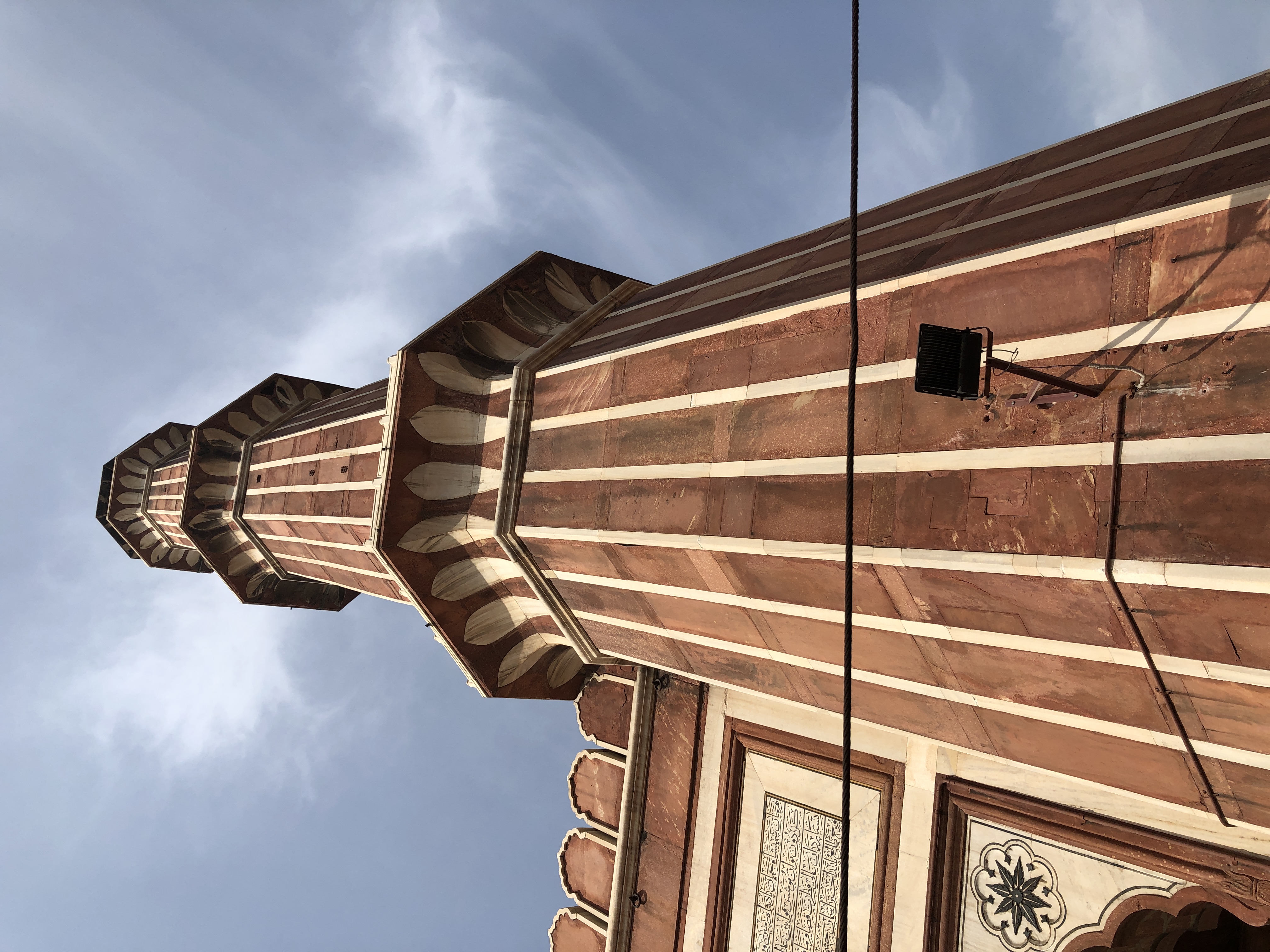
The mosque commands a hill in Old Delhi, rising on the edge of the marketplace maze that is Chandni Chowk. Its minarets rise 135 feet.Jama Masjid Jama Masjid

I didn’t have the urge to make a video at the Jama Masjid of Delhi, but I can see its omnidirectional visual appeal. The Mughal talent for architectural grandness shows up in pretty much every direction.

Twenty-Plus Years of December Firsts

Chilly days over the last week, a slide into winter even before the calendar turned to December. The first of this month now always reminds me of the sizable snow we got that day in 2006, coming as if winter were actually was signified by a particular day. Why that sticks in memory, it’s hard to say. Memory’s an oddity, often as not.

The following are the first paragraphs from postings on December 1, here at my corner of the Internet. If a year isn’t listed, that means I didn’t post that day. By my count, only eight of the 16 postings started with weather, counting one that is a quote from The Sun Also Rises about how good it is to be in a warm bed on a cold night. A few others mentioned some aspect of the holiday season, such as cops chasing a shoplifter with a taste for German Christmas ornaments.

2022: As expected, full winter is here. Not much more to say about that till a blizzard comes. We’re overdue one, at least when it comes to my completely nonscientific feelings on the matter. Not that I want one, just that it’s been a while, and the Old Man might want to let us have it this year.

2021: Ambler’s Texaco Gas Station is on the edge of Dwight, Illinois, not far from the Interstate, and after our short visit on Sunday, Ann and I went further into town, seeking a late lunch. We found it at El Cancun, a Mexican restaurant in the former (current?) Independent Order of Odd Fellows building, dating from 1916. Looks like the orange of the restaurant has been pasted on the less-colorful IOOF structure.

2020: About a month ago, our long-serving toaster oven gave up the mechanical ghost after how many years? No one could remember. Eventually, its heating element refused to heat, so we left it out for the junkmen at the same time as the standard trash, and sure enough it vanished in the night.

2019: December didn’t arrive with a blast of snow, but instead gray skies that gave up rain from time to time, which — by Sunday just after dark — had turned into light snow. In other words, weather like we’ve had much of the time since the Halloween snow fell, followed by the Veterans Day snow.

2016: Someone’s already thought of the Full Griswold. Maybe I’d heard of it before, but I don’t know where. I thought of it this evening driving along, noting the proliferation of Christmas lights in this part of the suburbs. Some displays, of course, are more elaborate than others, but I haven’t seen any Full Griswolds just yet.

2015: Some years, December comes in with the kind of snow we had before Thanksgiving. This year, rain as November ended and December began. El Niño?

2014: After a brief not-cold spell on Saturday and Sunday – I can’t call it warm, but still not bad – it’s winter cold again. Diligent neighbors used the interlude to sting lights on their houses or finishing removing leaves from their lawns. I did no such things.

2013: I took lousy notes during our four weeks in London in December 1994, so I can’t remember exactly when it was we took a day trip to Canterbury. It wasn’t December 1, because that day I saw a revival of The Prime of Miss Jean Brodie somewhere in the West End, and after the show the lead actress made an appeal for donations to fund AIDS research, since it was World AIDS Day.

2011: On Saturday, we went to Chicago Premium Outlets, which is actually in Aurora, Illinois, just off I-88. I saw something there I’ve read about, but never seen before: an electric vehicle charging station.

2010: Some years, December 1 means snow. This year, for instance, unlike last year. But not that much; an early breath of winter across the landscape. Just enough to dust the sidewalks and streets, but not cover the grass. As if to say, this is only a taste of things to come, fool.

2009: “Whoa! Whoa! WHOA!” I heard that and when I turned around, caught a glimpse of a Chicago cop running by. I’m pretty sure he had said it. A moment before that I’d entered the German Christmas ornament shop at Kristkindlmarkt [sic] Chicago in Daley Plaza to take a look at the large selection of pretty, and pretty expensive, ornaments. Someone else in the shop said something about chasing a shoplifter, so I left the shop to do a little rubbernecking. Cops chasing a guy beats piles of German Christmas ornaments any day.

2008: “After supper we went up-stairs and smoked and read in bed to keep warm. Once in the night I woke and heard the wind blowing. It felt good to be warm and in bed.”
The Sun Also Rises

2006: We were warned, and sure enough sometime after midnight on December 1, 2006, the clouds opened up, as if to tell us that today is the real beginning of winter, and don’t you forget it. First came sleet, then snow. It was still snowing at 6:30 in the morning when I got a call telling me that Lilly had no school. By about 10, it had stopped. We’d had about a foot of snow, judging by my unscientific eyeballing.

2005: Back in the late ’80s, one of the perks of my job at a publishing company was a real-time connection to the AP wire at our workstations. Stories queued up in the order they were published electronically, newer ones pushing older ones down toward the bottom. The interface was simple: green characters, no graphics, no hyperlinks.

2004: I read in the papers that tonight’s airing of Rudolph the Red-Nosed Reindeer represents the show’s 40th anniversary, making it nearly as old as me. I have a sneaking feeling it will be more durable than me, playing for a good many more decades before it finally peters out, but that isn’t because I like it. No, I never cared for it.

2003: Time to start this thing again, before the wheels completely rust up. December 1st is a good day to do it, too, being the start of meteorological winter. No need to wait around for the solstice around here, since it’s pretty cold just about every day now. What better definition of winter do you need?

How I Learned Michael Landon Didn’t Look Much Like Charles Ingalls

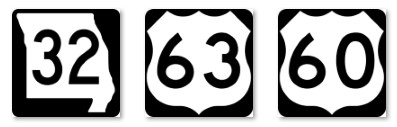
Because of our drive through southern Missouri on April 6, first on Missouri 32, then U.S. 63 and U.S. 60, generally trending west but also somewhat south, I’ve learned a few things.

One, there’s a crater on Venus named after Laura Ingalls Wilder, which is mentioned in passing here and confirmed by the USGS.

All features on that planet are named after females, real or fictional. Specifically, according to the IAU, craters are named for “women who have made outstanding or fundamental contributions to their field (over 20 km); common female first names (under 20 km).” I assume the measurements refer to diameter.

This page on planetary nomenclature is fascinating stuff, as far as I’m concerned. Dig down a little deeper, and you’ll find 900 Venusian crater names, from Abigail (the name) and Abington (actress Francis Abington) to Zurka (gypsy first name) and Zbereva (aviator Lidiya Zvereva, d. 1916). With a death date like that, I’d assume a flying accident, but no: typhoid fever.

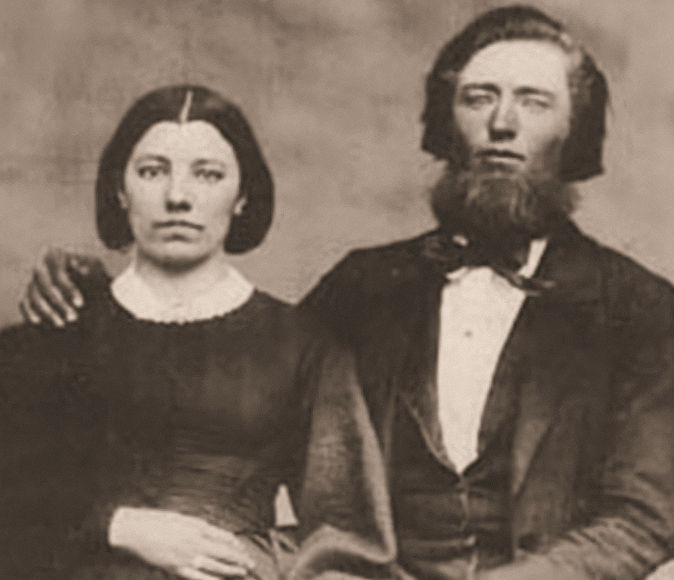
Also, I learned that Michael Landon, who portrayed Laura Ingalls Wilder’s father on TV, doesn’t look much like the man, Charles Ingalls. I can see that for myself, as he’s pictured with his wife Caroline here.

If it had been up to me, Landon would have at least sported a beard like Chas. Ingalls’. I don’t know whether that would have made Little House on the Prairie a better show, but it couldn’t have hurt.

The drive wasn’t quite car commercial driving. There was some traffic, and while the spring green woods and flowering patches of Mark Twain National Forest and the farms and businesses and churches and small-town buildings of southern Missouri offered pleasant enough scenery (and a favorite town name: Cabool), it wasn’t a Class A two-lane drive, as we would experience later, in Arkansas.

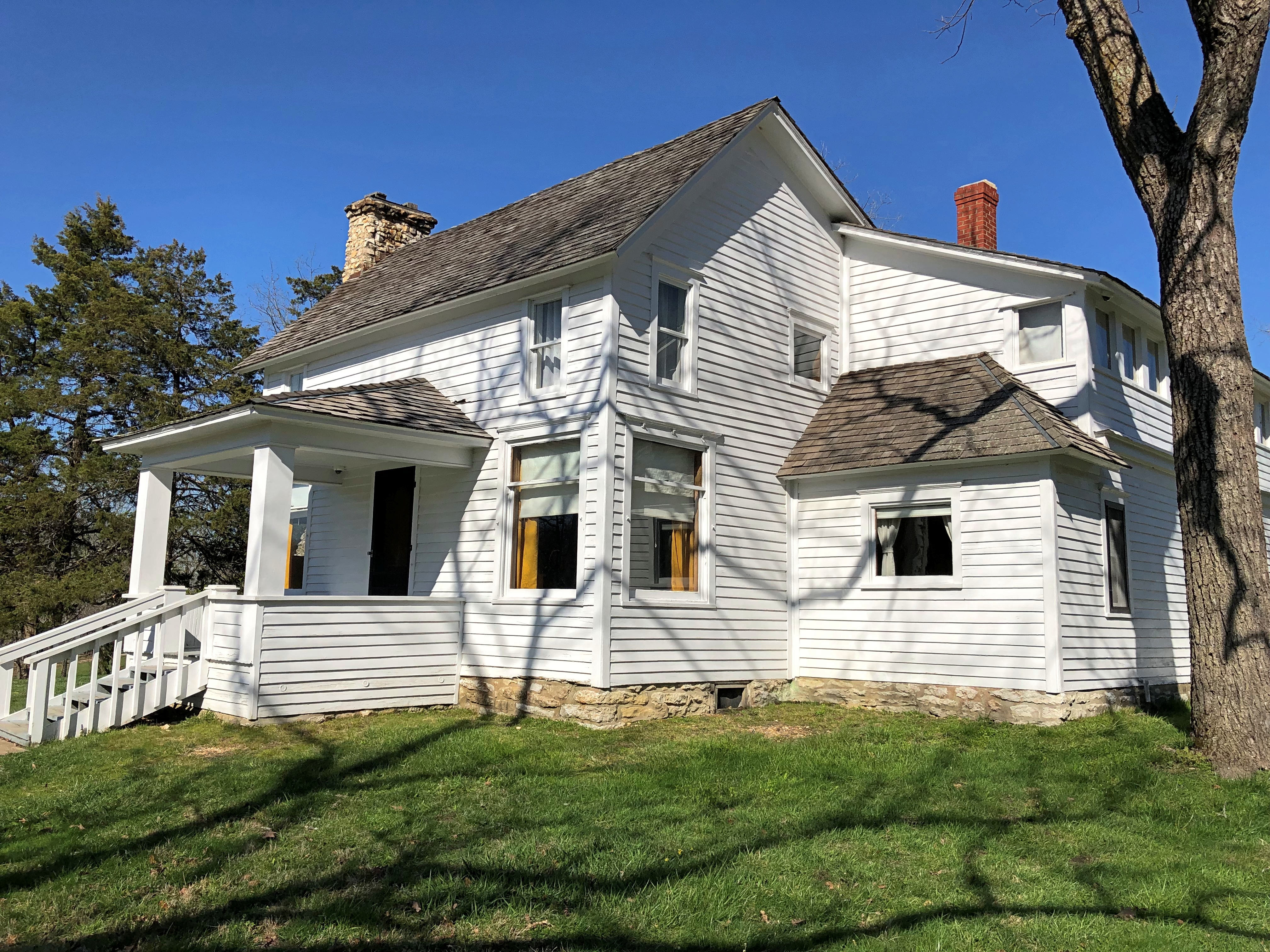
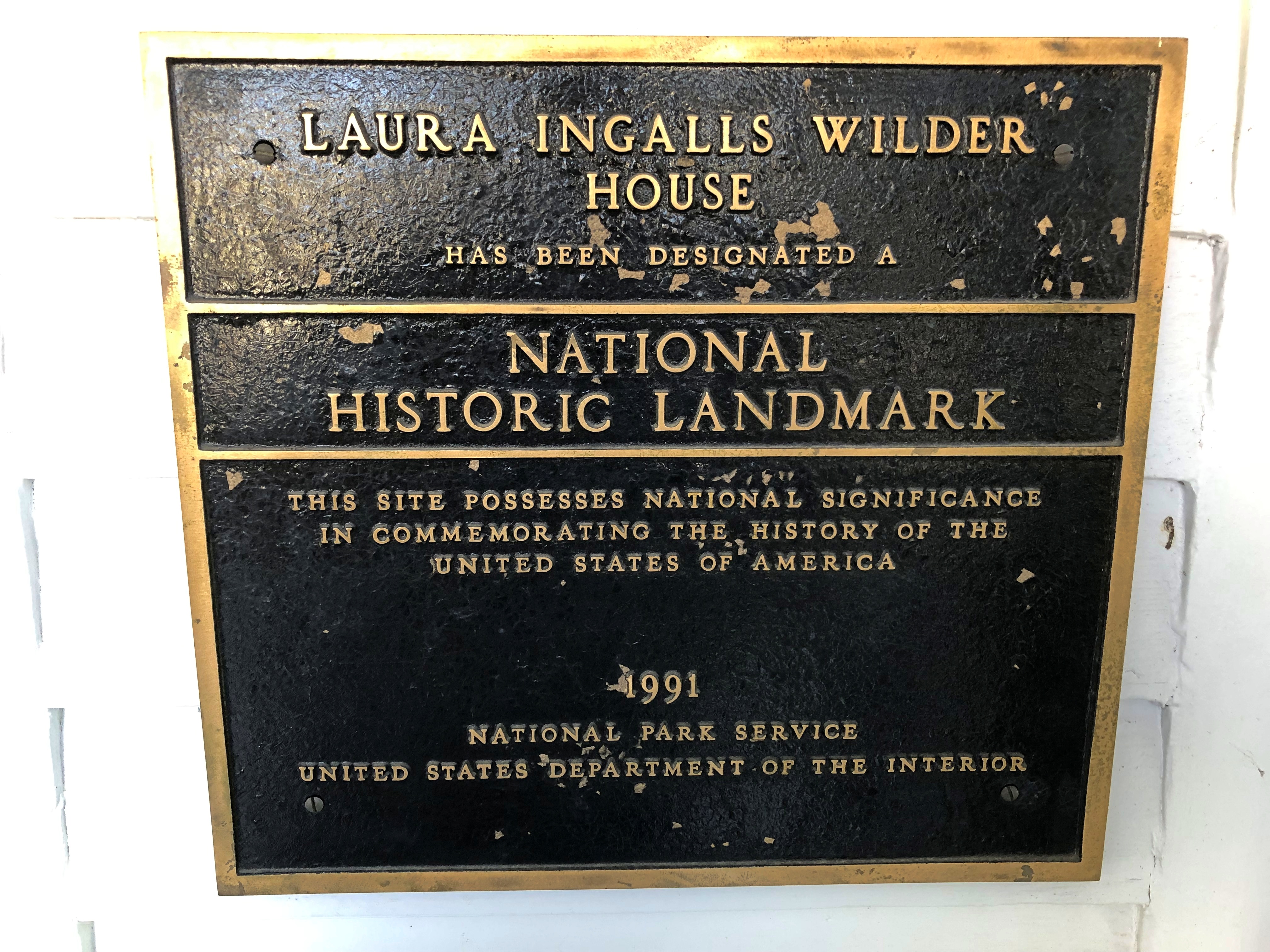
Late in the afternoon, we came to the Laura Ingalls Wilder Historic Home and Museum, near U.S. 60 as it passes through Mansfield, Mo., and we were just in time to catch the last tour of the day. That’s what ultimately turned my attention to Venusian craters, 19th-century beards, etc.Laura Ingalls Wilder home Laura Ingalls Wilder home

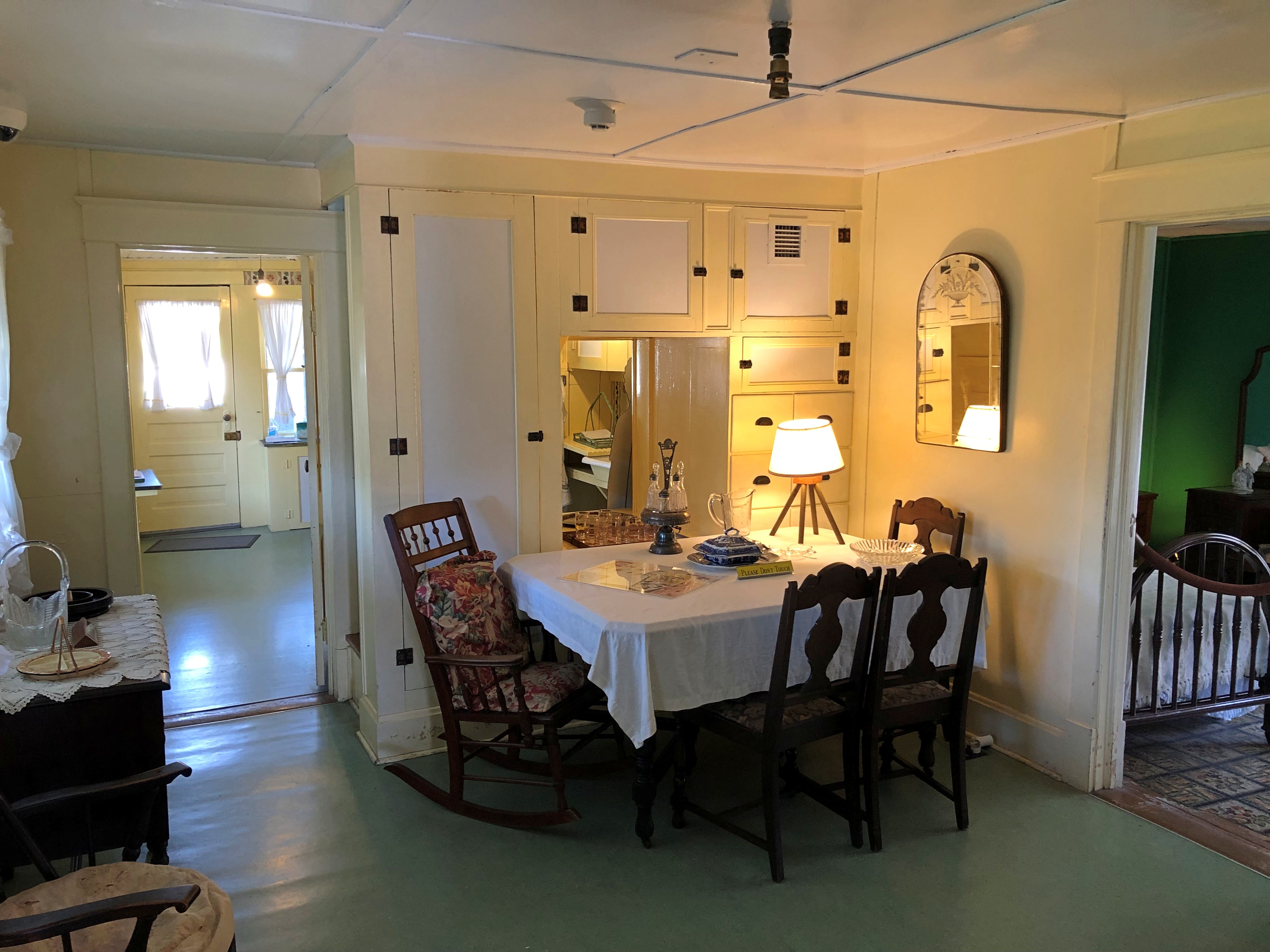
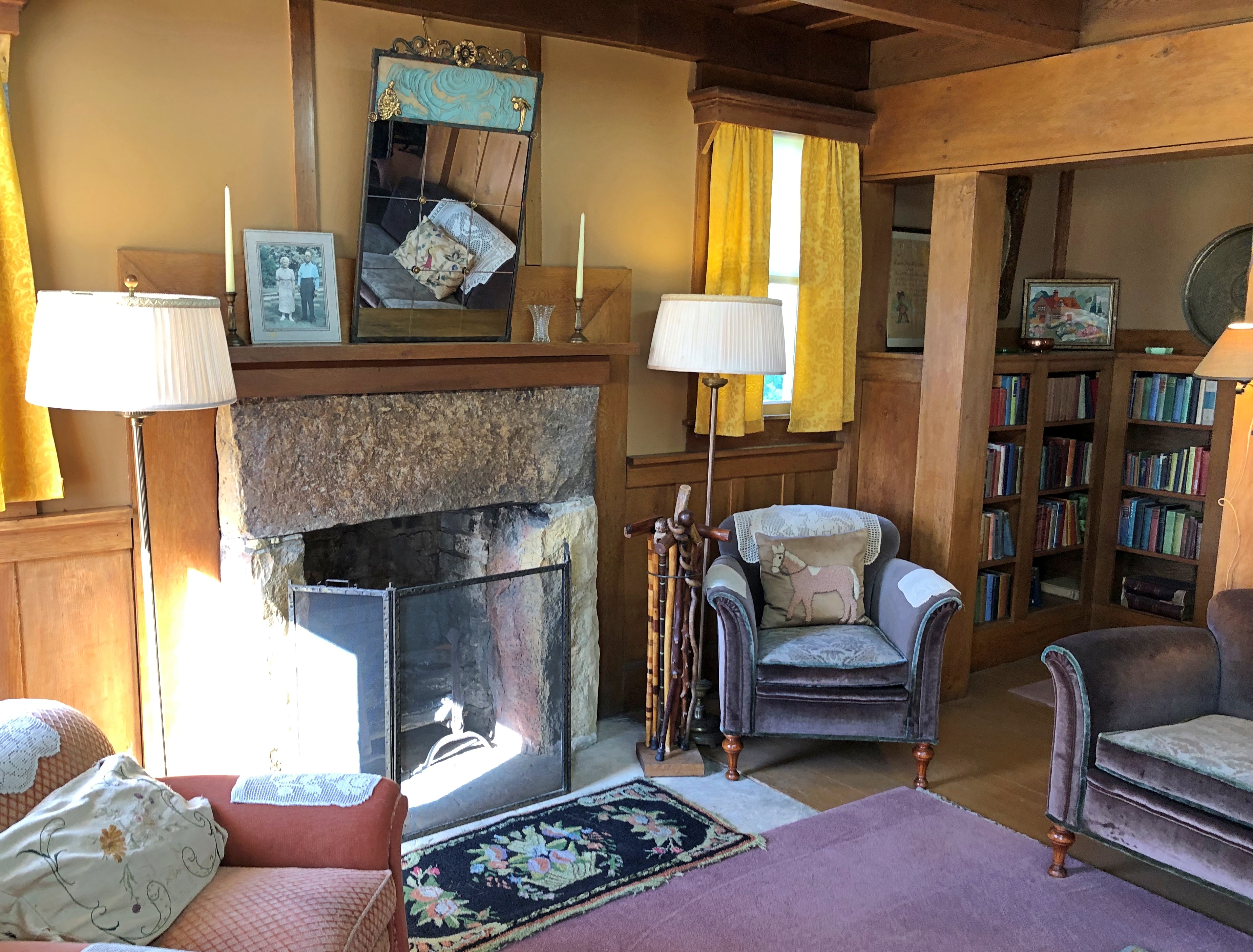
Not bad for an essentially self-built house – mostly by Wilder’s husband, Almanzo Wilder. She lived until 1957, for many years at this house, and could afford comfortable furnishings later in life.Laura Ingalls Wilder home Laura Ingalls Wilder home

Though the colors and styles were different, the living room nevertheless reminded me of my grandparents’ home in San Antonio. It had a similar old-folks-in-mid-century feeling somehow.

21st-Century Leaps

Another February 29. If I counted right, my 16th. That got me to thinking, just how many February 29ths have there been? As in, ever? Not as simple a question as all that, first of all because the day Caesar inserted into the calendar was an extra one after the equivalent of our February 24, a situation that persisted for a long time. So a different question might be how many intercalary days have there been since the Julian calendar’s first (let’s say first one after the extra days tacked on 46 BC, the longest year in history).

I feel like I’m staring into a pretty extensive rabbit hole. So, I’m backing away.

2020

Last time around on February 29, no entry. I attended an exceptionally pleasant dinner party at an exurban San Antonio ranch house, on flat land in the direction of the Hill Country. Six of us, I think, eating and drinking a few glasses of wine and conversing. People wonder whether the art of conversation is dying, and I doubt it. But it might go underground.

Also, that was the last social gathering I attended until April ’21 counting ones with family members, and June that year that for groups of friends.

2016

“The saying represents something exceptionally easy, of course, but even so I’m not sure it would be.” I wrote. ”Let’s assume the barrel is full of water as well as fish. Unless we’re talking about really large carp or some such, you might disturb the water and scare the fish, but I’m not sure how many small fish would actually be hit. Also, you’d think that shooting would soon destroy a wooden barrel and cause a dangerous amount of flying debris. Or if it were a metal barrel, such as a steel oil drum, the danger of ricochets might be high.

“This is something for the Mythbusters fellows to investigate, but I suspect that shooting fish in a barrel never was anything but a metaphor, and by now a hackneyed one at that. So I’m reluctant to say that making fun of a press release I received recently — especially the first line — is like shooting fish in a barrel. But it cries out to be mocked.”

2012

“I’m sure that I learned about Leap Year at an early age, like most people. But I never knew the details — Caesar and Sosigenes, the longest year in history (46 BC), Julian and Gregorian calendars, etc. — until I read The Clock We Live On. [I forgot to mention that Isaac Asimov wrote it? I’m rectifying that now.]

“The inside cover has an example of my father’s handwriting, something I don’t have too much of, so I wanted to save that too. Apparently he bought it in 1963, the year before he died.” [Sixty years and a day ago. RIP, dad]

“I first read it in 1977. Besides the story of the western calendar, there was plenty of other interesting topics — why days have 24 hours and hours 60 minutes, the development of clocks and chronometers, the establishment of meridians and time zones, and so on. The calendar chapter formed the basis of an oral report I did in high school Latin class.”

2008

“Battlefield gore is a necessary ingredient in any war movie of our time, as well as soldiers’ profanity, and understandably so. My own preference in historical fiction runs to verisimilitude, but that isn’t to say that I didn’t like The Sands of Iwo Jima.

“The most effective horror-of-war scene in Flags involved off-screen gore. At one point, one of the men (Iggy) goes mysteriously missing from the hillside. Later, his comrades discover that the Japanese pulled him into one of their caves and killed him in a way the American soldier who found him would only describe as, ‘look what they did to the poor son of a bitch.’ At that point one of the characters is looking at whatever remains of Iggy, but we don’t see it, and it’s much more horrible that way.”

2004

Leap Year brings to mind the lore of King Numa reforming the early Roman calendar, Julius Caesar (and Sosigenes) replacing lunar with solar, Caligula trying to name a month after Germanicus (at least according to Robert Graves), Pope Gregory ordering his change but the Protestant parts of Europe ignoring it, and so on.

“When I was a kid I was fascinated by calendars, and would draw my own sometimes. In high school, I read about the history of the calendar on my own time, because it wasn’t part of any class. Even now I have some interest, though not as much as a fellow I know who spent time calculating the dates of Easter in the far distant future — thousands of years further than the standard Easter tables. I think he even wrote a computer program to do that for him.”

V.S. Pritchett ’83 (Part 2)

The VU class that V.S. Pritchett taught in 1983 was fiction writing, which makes sense, since he was a fiction writer of renown and, presumably, Vanderbilt’s attenuated reputation for literature was still important to the English Department at the time. It’s hard to recollect much about the class, though. It’s been 40+ years, of course, but it’s more than that. To undergraduates, professors seemed to ply their trade from the perch of an advanced age, one that was hard to imagine. That didn’t always interfere with a student’s ability to absorb the material, however, provided the professor had some skill as a teacher.

Pritchett was 82. That was more than advanced; that was positively antediluvian, in my youthful estimation. I still feel that way a bit, though I know that advanced age doesn’t necessarily — or even that often — cut into ability in the intellectual arts. Regardless, aged or not, he wasn’t one of the great teachers that one encounters along the way. I’m not even sure he was that good. He seemed to like to listen to students read each other’s stories out loud – we wrote stories for the class, and read them, but not our own. I think. Then we talked about the stories in a meandering sort of way. He made comments, but for a writer of stories, didn’t seem to tell that many in class.

VU prof Walter Sullivan (d. 2006, curiously at 82), whose fiction writing class I’d taken in the fall of 1982, read student stories himself, ones he’d picked to illustrate some point, and then led the discussion. Not with an iron hand precisely, but the firmness of the former Marine that he was.

One student wrote a story about (again, I think) about a little girl and the death of a baby bird, or some such. Dr. Sullivan read it, and then thundered: “Don’t write stories about animals! Or little children! Short stories should be about grown men and women.”

Sullivan was, as I recall, the better teacher. Still, we liked Pritchett. But being in his class was something of a squandered opportunity. We were dense youth, so we didn’t really ask him many good questions. No followup about Orwell, as I’ve mentioned, even though Pritchett did tell us a snippet or two about him.

But here was a man who, for instance, remembered World War I as a youth (though not in the fighting) and who went to Paris in the 1920s as a young man, and who took a ramble through Spain and Ireland during that same decade. I wish I’d thought to ask about those things. Or what about the other writers that he knew? Or his opinions on such luminaries as Chekhov – he must have been thinking about him when he taught us, since he published Chekhov: A Spirit Set Free in 1989. Ah, well. At this remote time, all I can do is shrug.

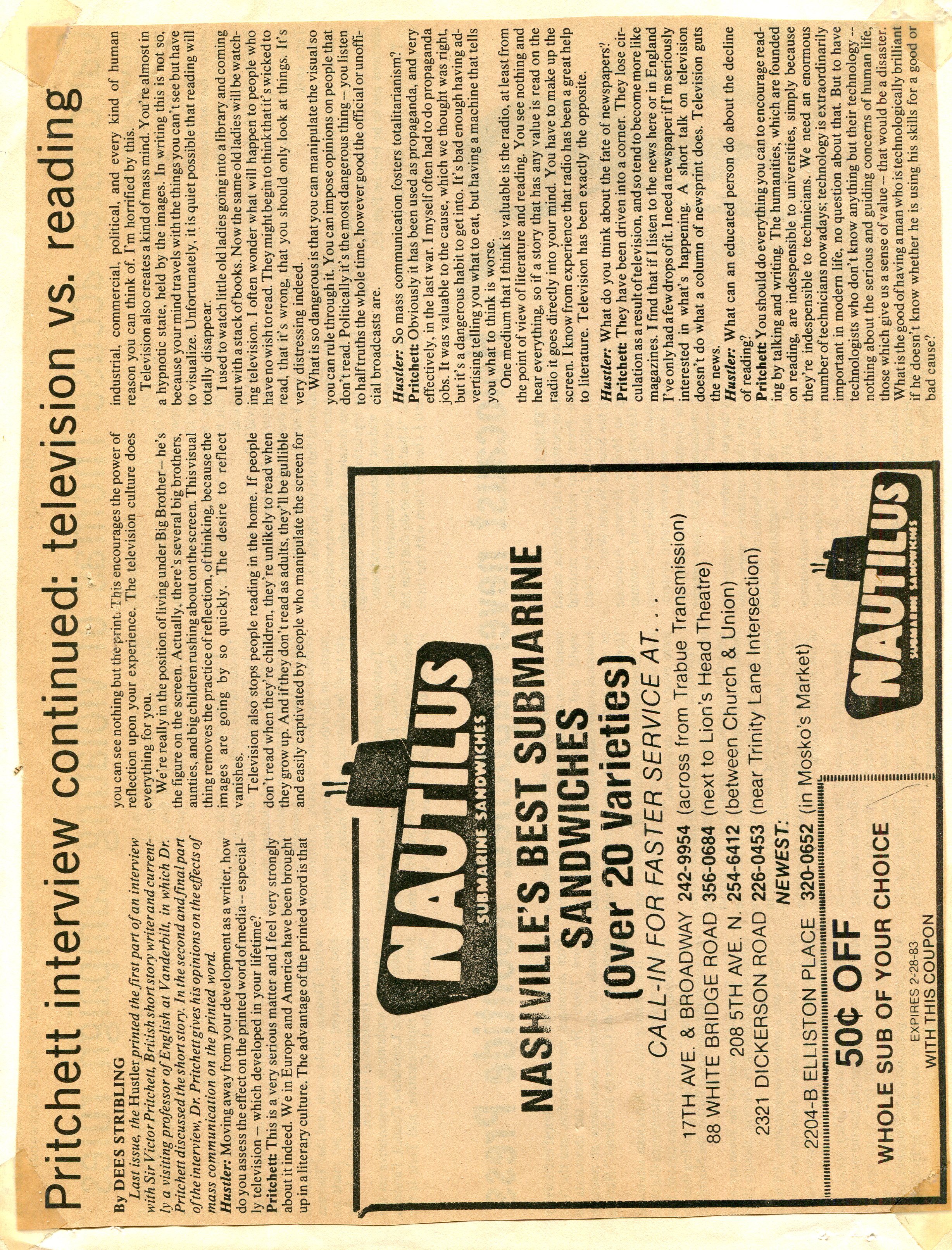
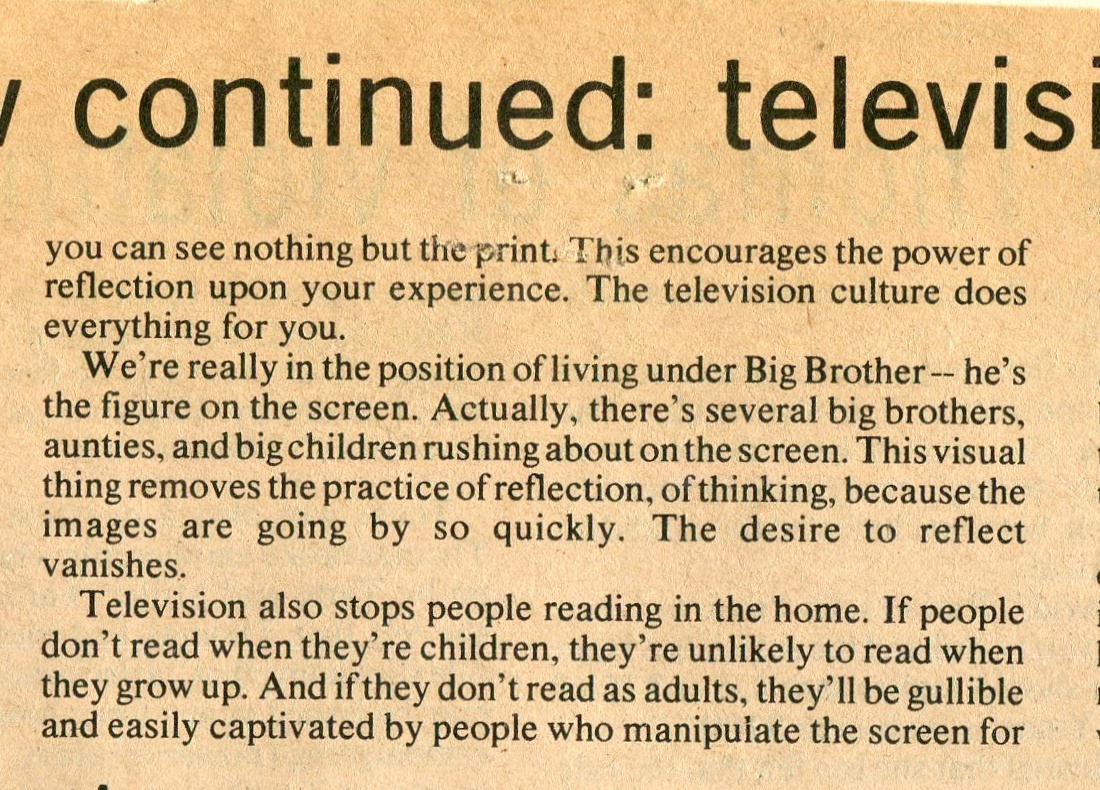
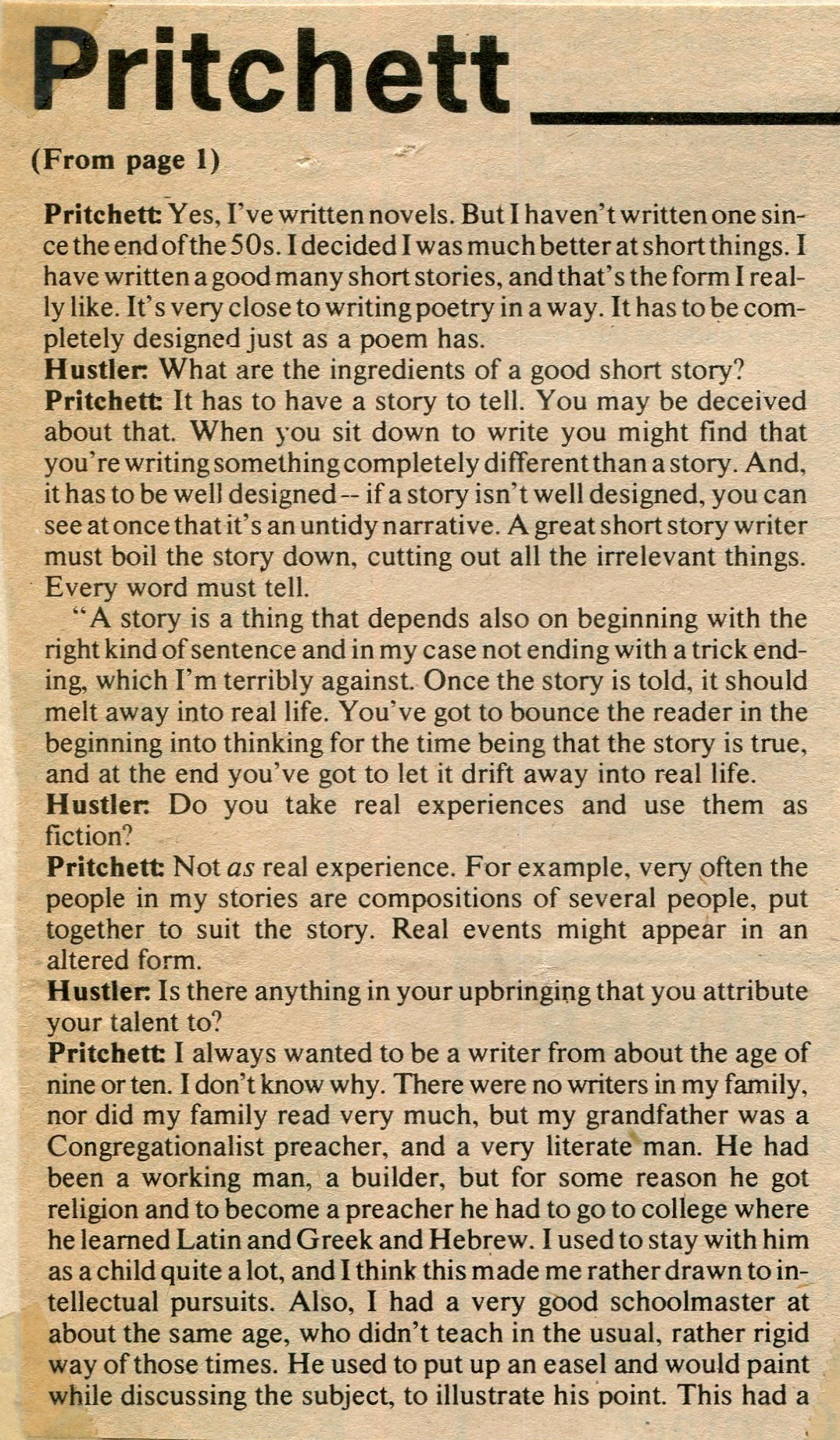
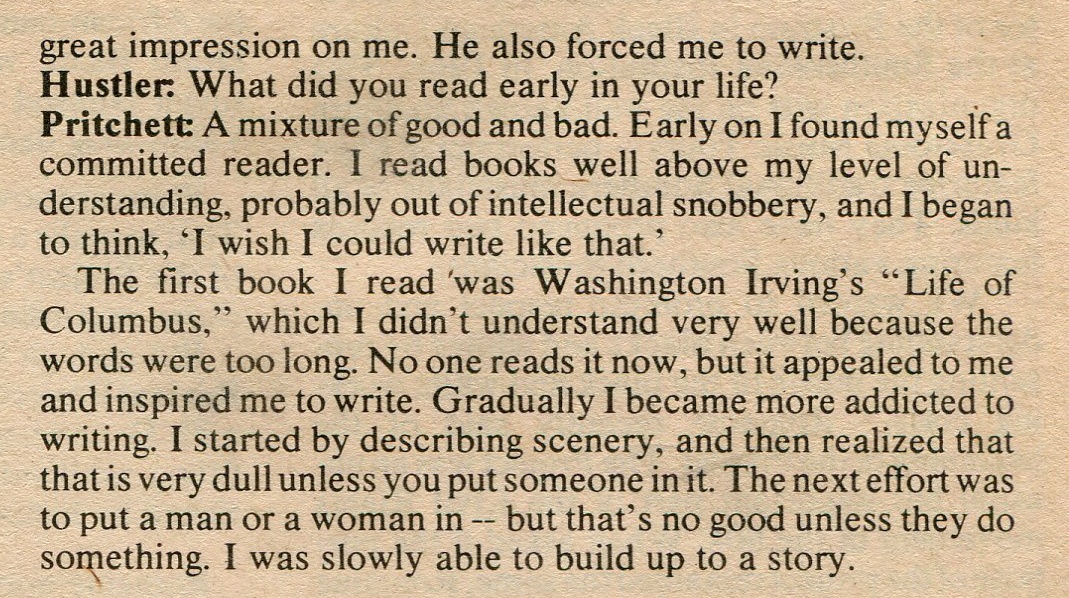
This is the second part of my interview, published February 11, 1983.

Television was killing the printed word in those days; had been since Howdy Doody started shilling for Wonder Bread. Seems almost like a quaint notion now, its dumbing down role famously usurped by social media, though I’d say that TV is still in the game.

I have a collection of Pritchett’s short stories somewhere or other, and I dimly remember reading some of them. I also have a book of his literary criticism, Myth Makers (1981). I know where that one is. That’s pretty close to the time I interacted with him.

“Essays on major European and Latin-American writers of the nineteenth and twentieth centuries, by the distinguished English man of letters, include lucid, sensitive interpretations of Tolstoy, Dostoevsky, Chekhov, Flaubert, Stendhal, Kafka, Borges, and others,” notes the Amazon squib. I ought to get around to reading it.

V.S. Pritchett ’83 (Part 1)

I’m not one to drop names. One reason is I don’t have many to drop. There was that time I was pretty sure I saw Neil Young having lunch at the International Market in Nashville, ca. 1985, or at least someone who was a dead ringer for the musician. I let the man eat his food in peace.

And of course there was the other time (spring 1980) two friends and I saw Gregg Allman and his entourage enter the same Nashville restaurant we were having lunch, making a bee line back to a private room. If one of my friends hadn’t pointed them out, I wouldn’t have known.

The same with Larry David. A colleague and I were passing through the lobby of the Boca Raton Resort & Club in 2004 and he (my colleague) made a startled announcement: “That’s Larry David,” referring to a fellow we’d just passed whom I’d scarcely noticed in the crowd. That was the first I’d ever heard of him. Later I discovered that his brand of humor isn’t really for me.

Which brings me to Sir Victor Sawdon Pritchett (1900-97), a British writer best known for his short stories. V.S. Pritchett, his byline is usually styled. I expect many (many) more people, Americans anyway, have heard of the other notables I’ve mentioned than him.

Still, I not only saw Pritchett, I met him, since I took a class he taught as a visiting professor at Vanderbilt in the spring of ’83. I’ve mentioned him precisely once in 21 years, so I can’t call knowing him earth-shaking or otherwise consequential to the course of my life. Even so, I’m dropping his name now.

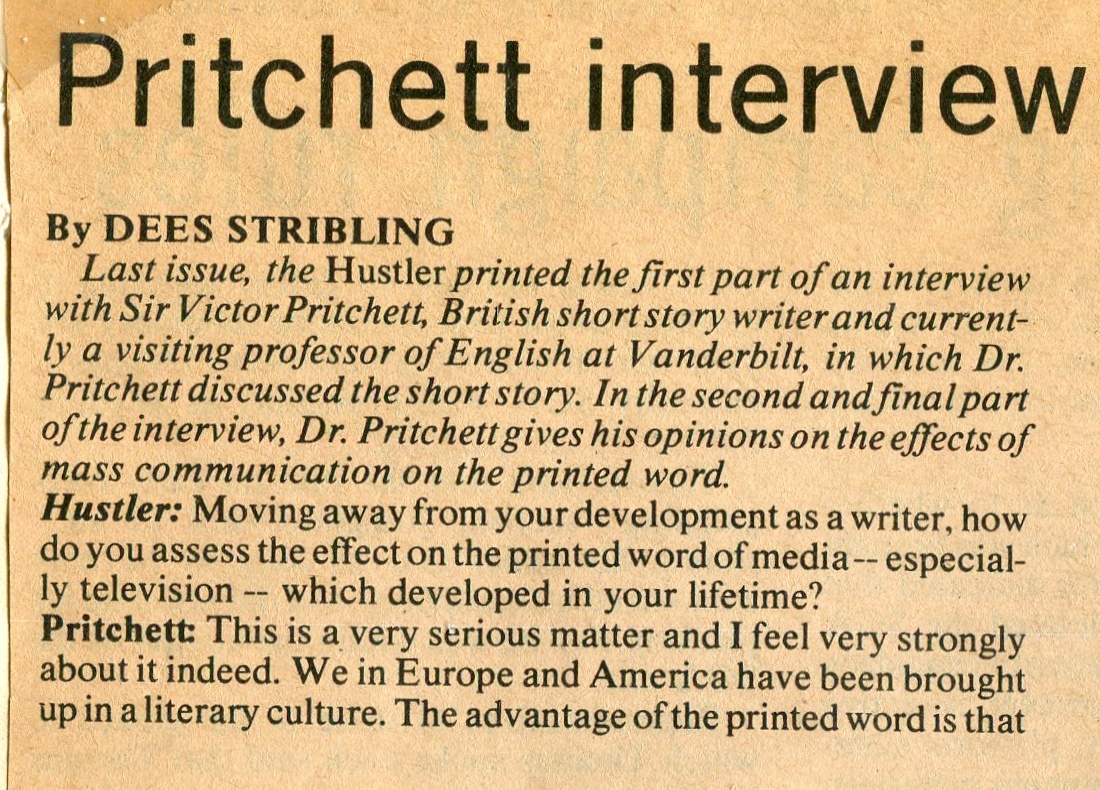
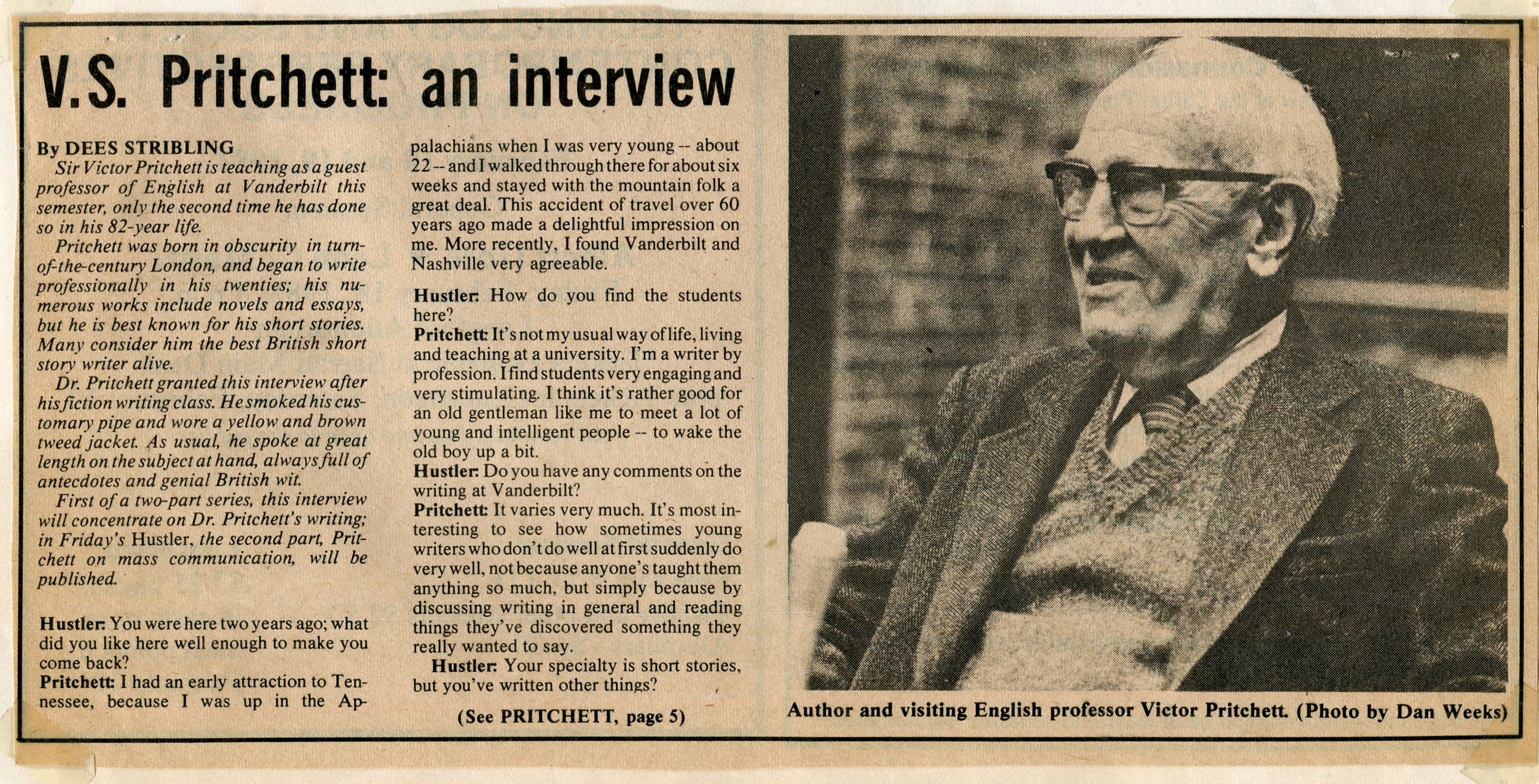
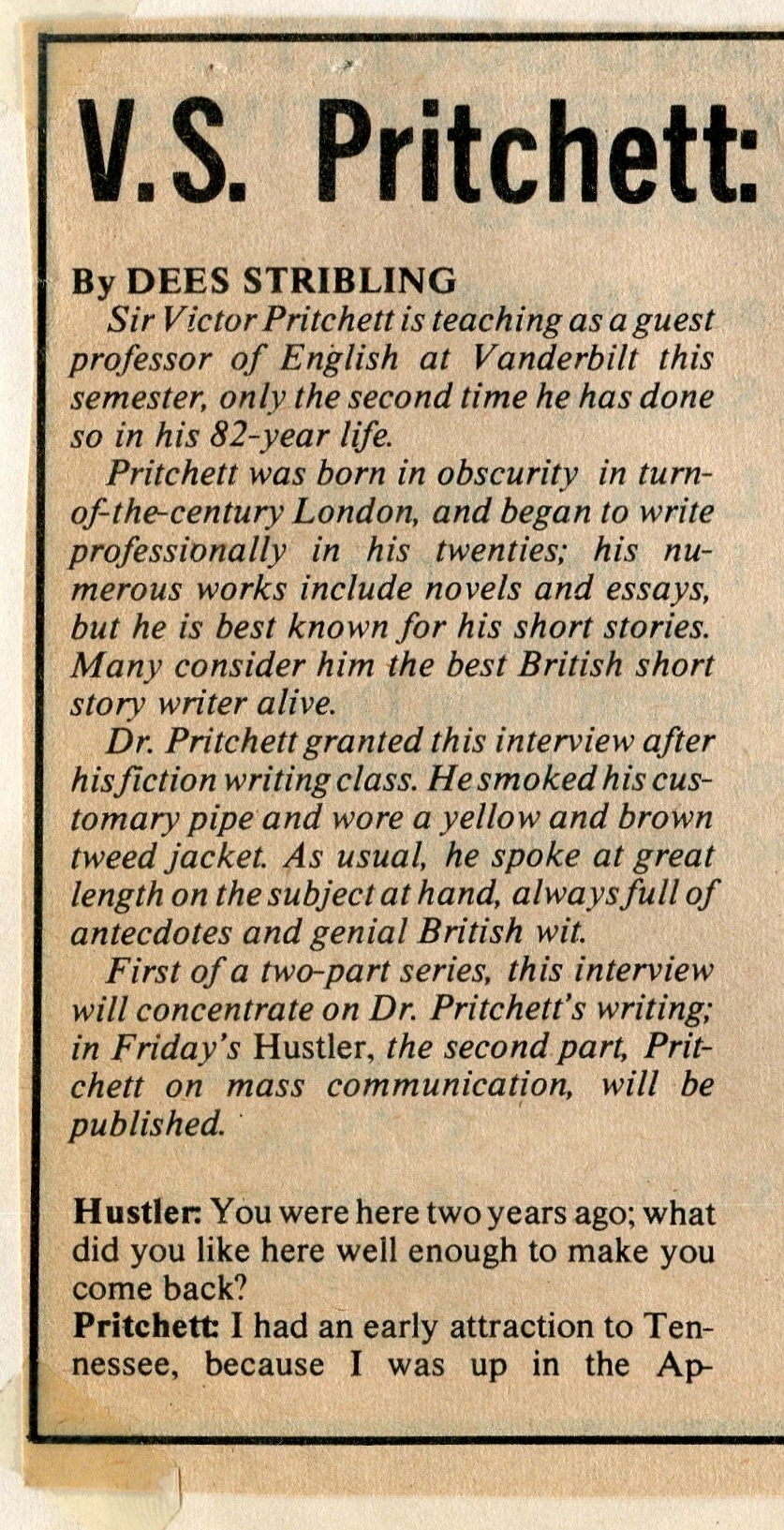
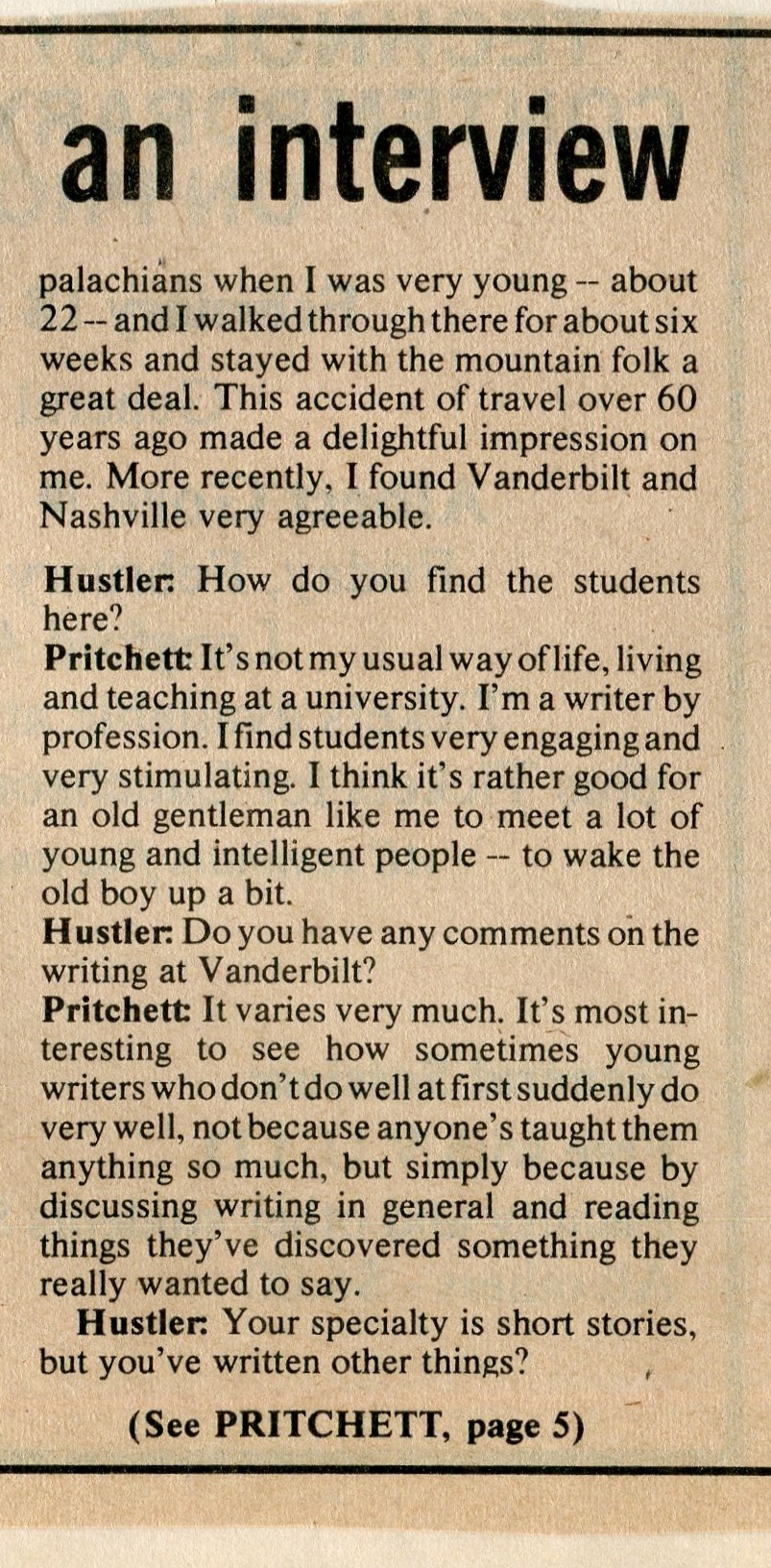
Besides sorting postcards, I’m opening up old files – physical files, of which there are many – with a mind toward sorting them as well. One I opened this week was labeled “Clips Before 1984.” Most of them are items I wrote for The Vanderbilt Hustler, the VU student newspaper. I was its news editor in the spring of ’83, and one of the items I did was a longish interview with V.S. Pritchett.

I’d completely forgotten about it. But there it was in black and white, to use the cliché. A front-page interview, but below the fold.

The first part ran on February 8, 1983. 

The second part was published on February 11. Not a bad interview for a college kid. But why – why – why didn’t I ask him about George Orwell? He knew Orwell. At least I know my degree of separation from Orwell is exactly two, a thought that pleases me for some reason.

Because of the nation’s absurd copyright laws, I suppose the article technically still belongs to Vanderbilt Student Communications, but I doubt they’d begrudge me posting it nonprofessionally after more than 40 years. If they do object, I’ll take it down. Until then, it represents an interview with Pritchett that probably isn’t posted anywhere else, a thought that also pleases me, though it surely doesn’t add or change anything about the record of his life.

RIP, Sir Victor.