The Deering Family Galleries of Medieval and Renaissance Art, Arms, and Armor

Some years ago, the arms and armor gallery at the Art Institute of Chicago, a long hall packed with Medieval and Renaissance arms and armor, but also such artwork as reliquaries, disappeared during a renovation. A permanent exhibit of Indian art, as in the Indian subcontinent, took its place.

Indian art is a fine thing, but I missed arms and armor. Earlier this year, I read that the museum had restored the arms and armor display in a different place, but I was skeptical that it would be as good as the good old hall. I was wrong. The new galleries, collectively known as the Deering Family Galleries of Medieval and Renaissance Art, Arms, and Armor, are better.

An Art Institute press release from March says that the galleries are “the permanent home for nearly 700 objects from the museum’s rich holdings of art from 1200 to 1600, including monumental altarpieces, exquisite jewelry, and the beloved arms and armor collection.

“While much in the collection may be familiar to long time visitors, the installation expands the display of art of this period sixfold and enfolds them in an historically inspired atmosphere and context. The construction of these galleries marks the most ambitious architectural undertaking at the museum since the Modern Wing opened in 2009.”

In the very first gallery, you see the Ayala Altarpiece, dated 1396 and commissioned by Pedro López de Ayala, later chancellor of Castile. The museum spent three years recently restoring the painted wood altarpiece, 24 feet across by eight feet high, and it’s quite a sight.

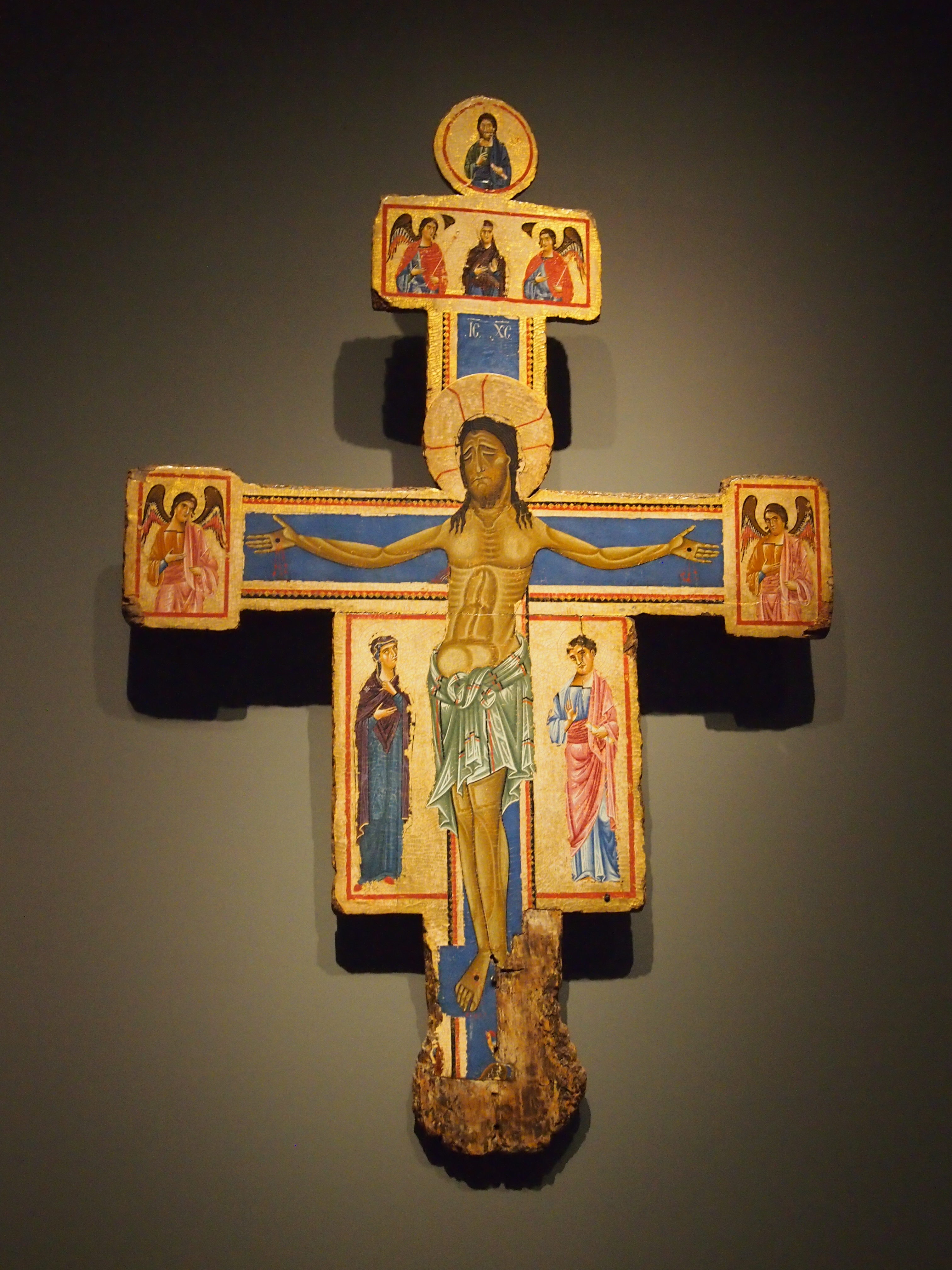
Also in the first gallery are the likes of a crucifix by the Master of the Bigallo Crucifix, Italian, active about 1225-65.
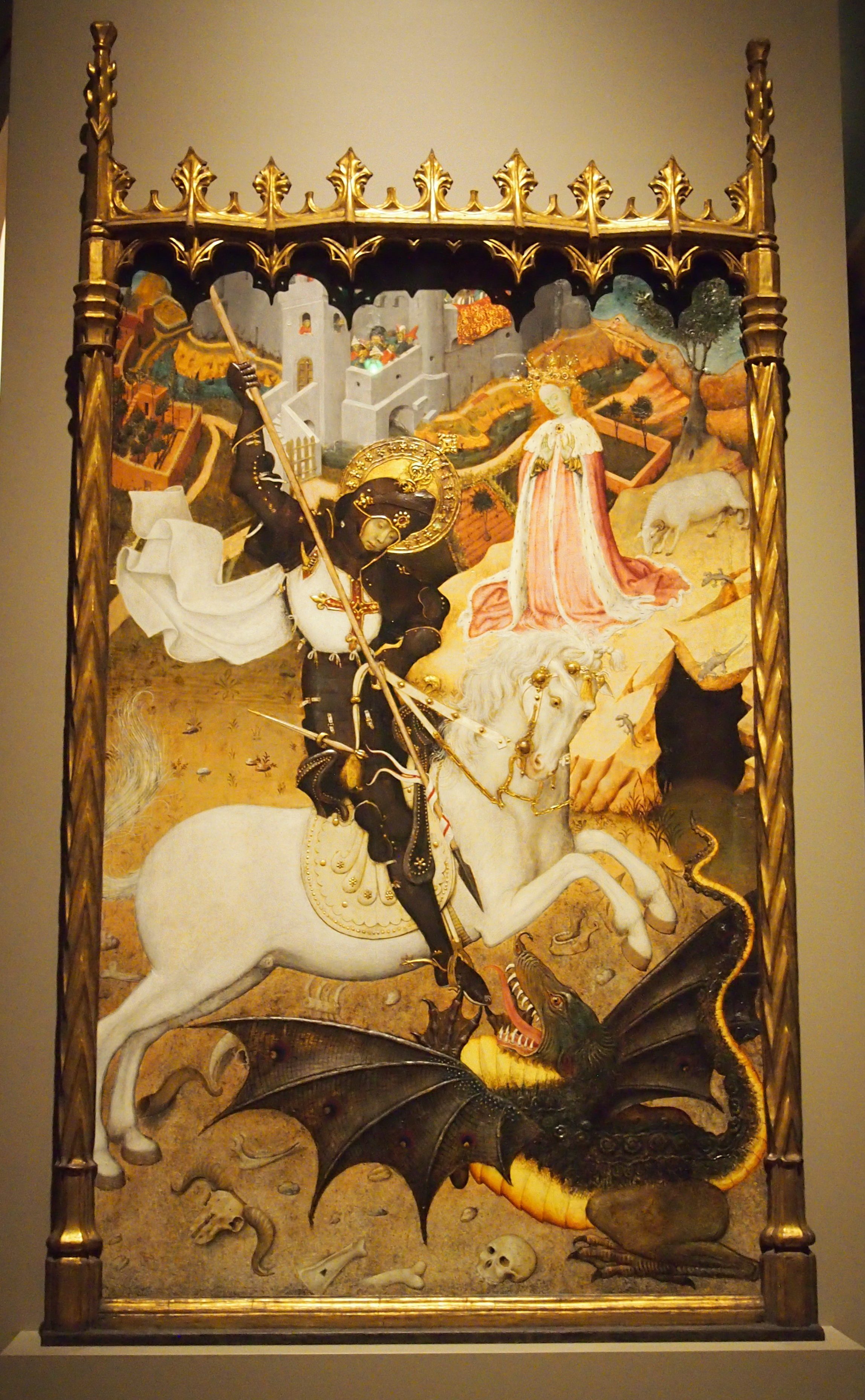
And “Saint George and the Dragon” by Bernat Martorell, a Spaniard (1434/35).
“The galleries that follow are more intimate, focusing on late Gothic and Renaissance domestic life,” the museum continues. “Luxury goods and accessories for feasting fill one room while another displays works of art for the bedchambers of Tuscany’s merchant elite. Everyday objects from northern Europe, along with jewelry and items of personal display, complete the domestic picture of the period.

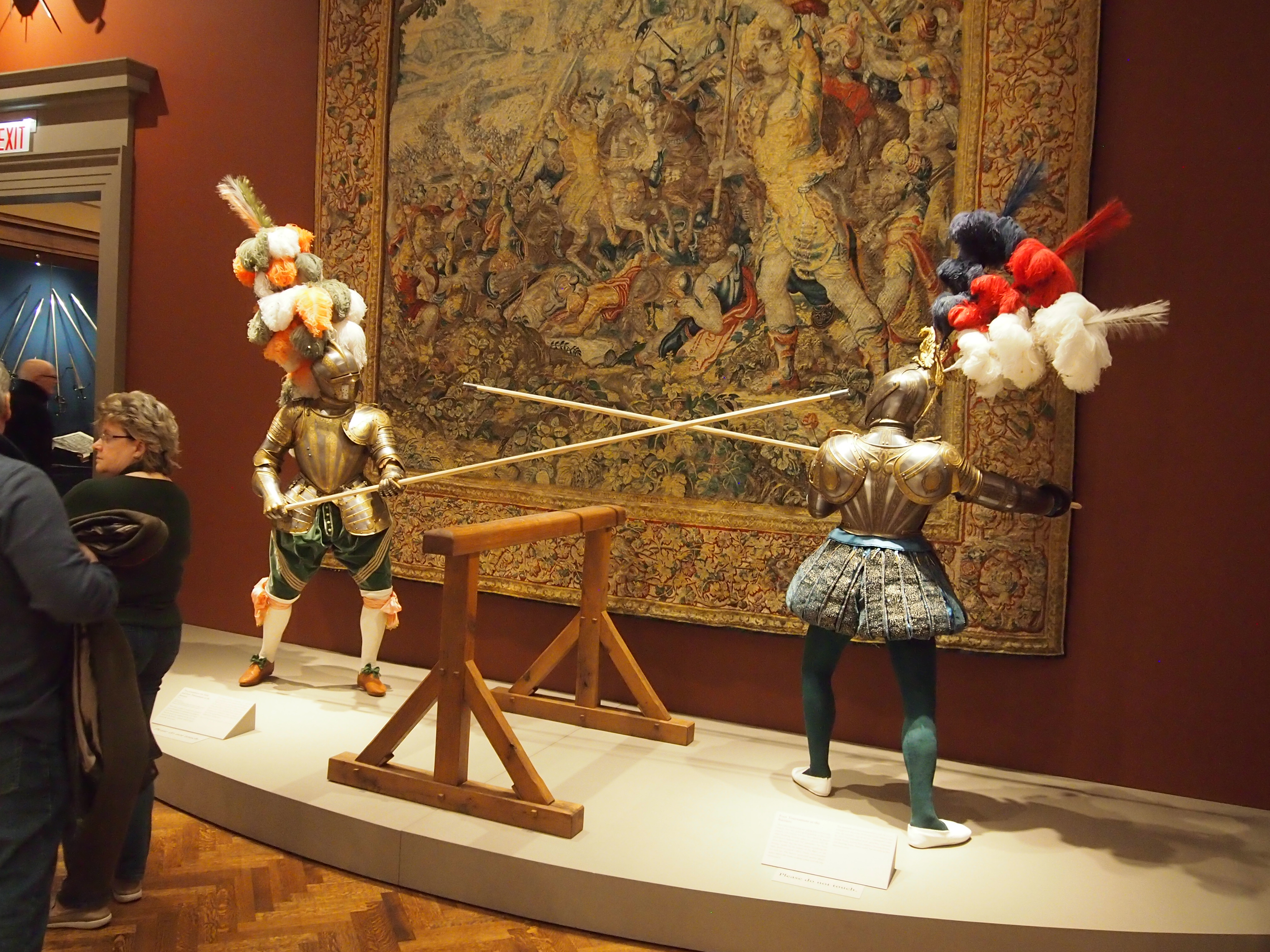
“From here, the space opens to the new home of the museum’s expanded arms and armor collection. Filled with weaponry and armor, the display is dominated by two armored figures on horseback — one dressed for battle, the other for sport — and two armed and costumed figures engaged in foot combat.

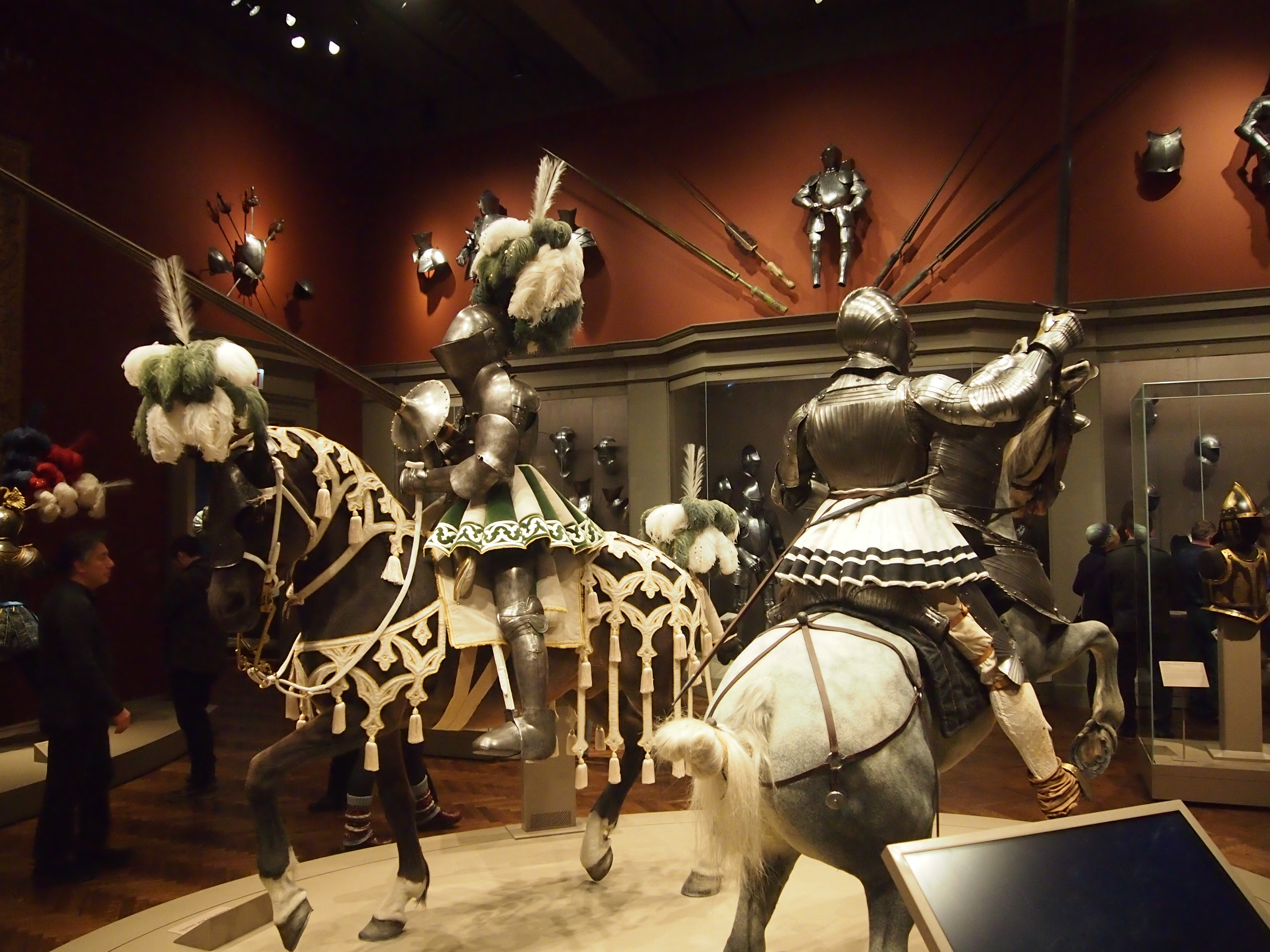
That’s a kind of armored contest I’d never seen depicted before. Clearly the object of the contest was to knock the other man over without crossing the cross beam, and probably striking below the waist was against the rules.

There were also some good old-fashioned displays of armor in a standing position.
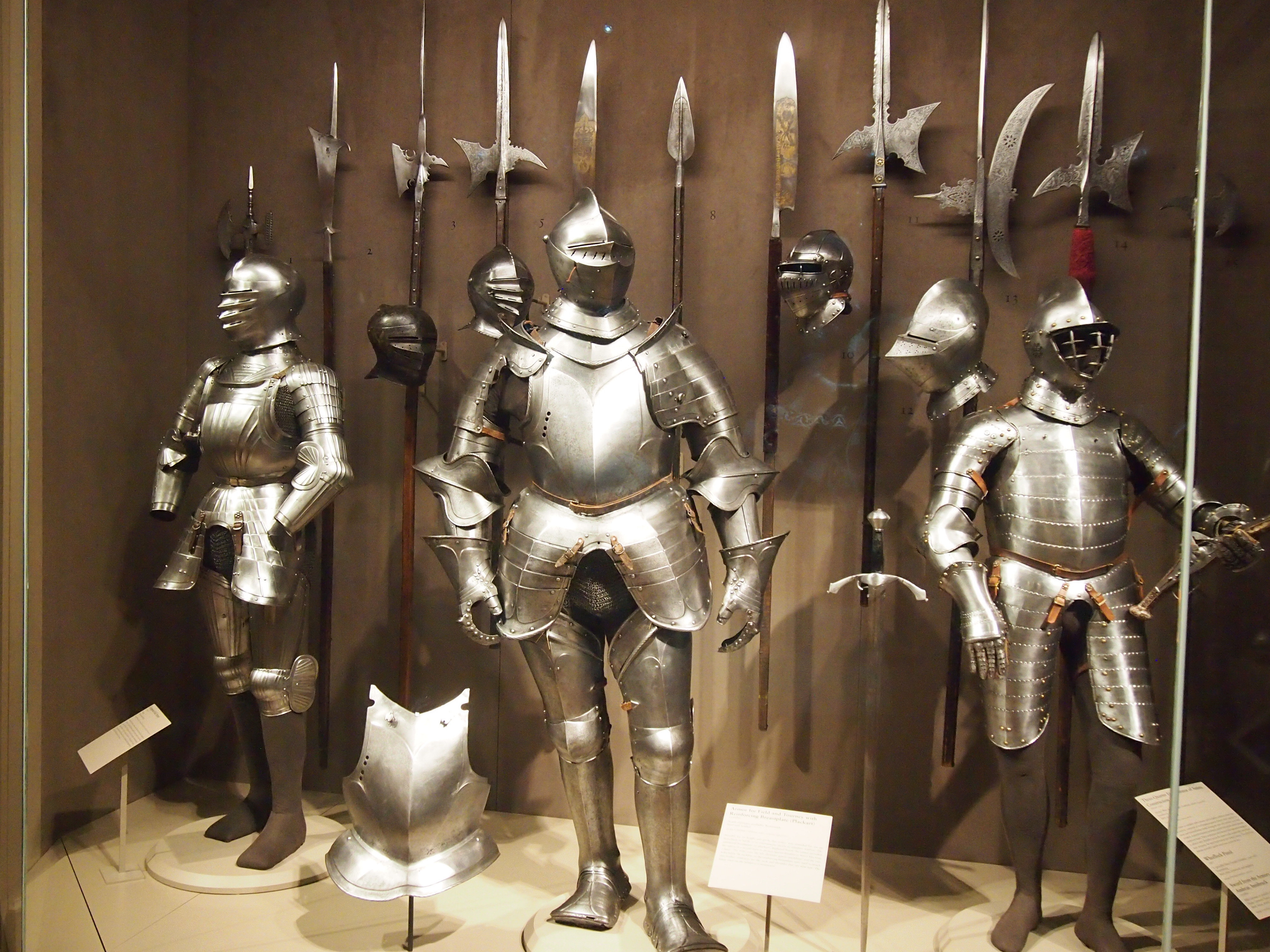
Along with plenty of weapons representing many ways to hack into the other guy.
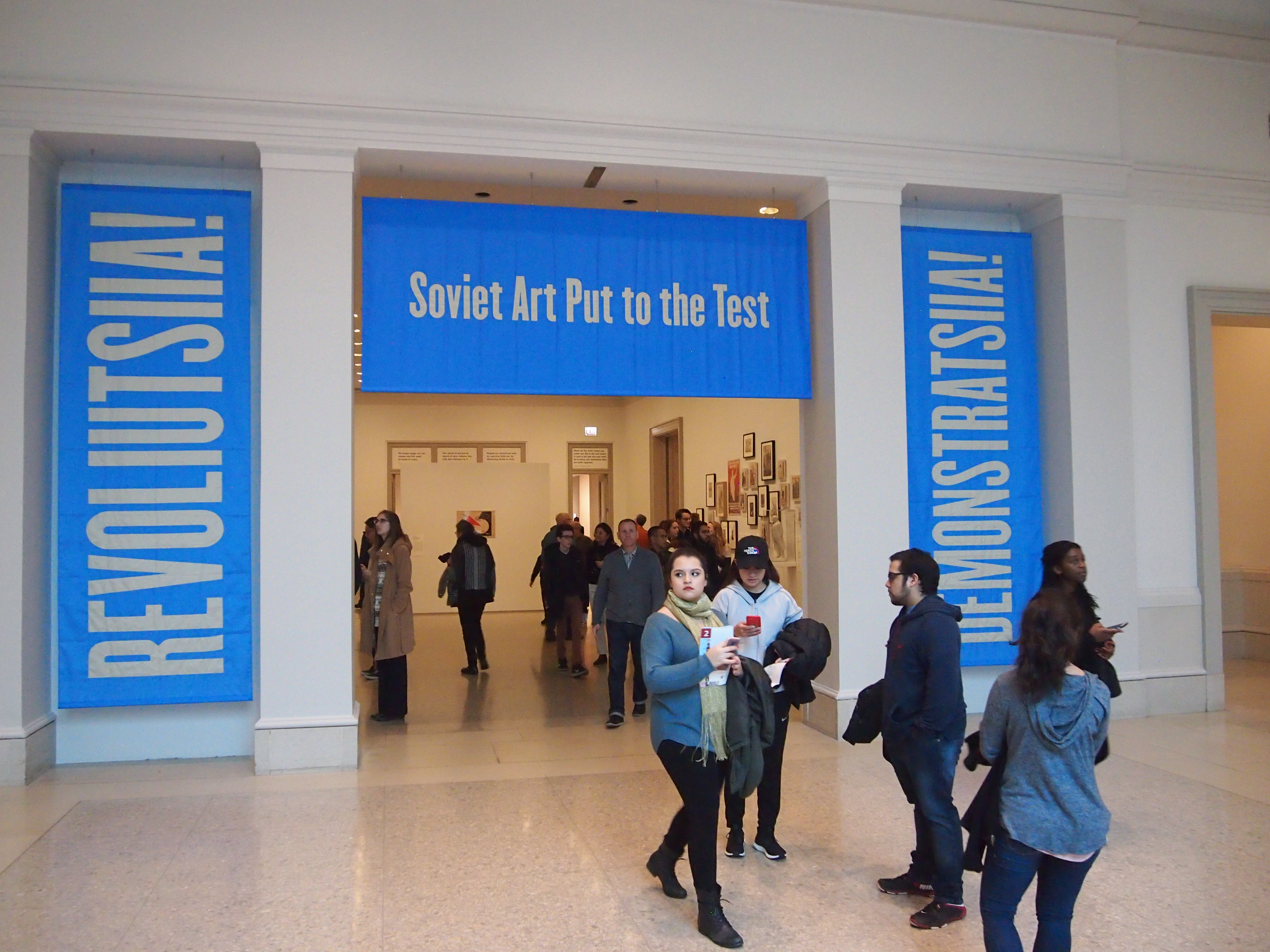
Revoliutsiia! Demonstratsiia! Soviet Art Put to the Test

After lunch at Shake Shack on Michigan Ave. on Saturday — crowded, but not impossible — we wandered over to the Art Institute. Been a while since we’d been there. I was particularly keen to see Revoliutsiia! Demonstratsiia! Soviet Art Put to the Test.

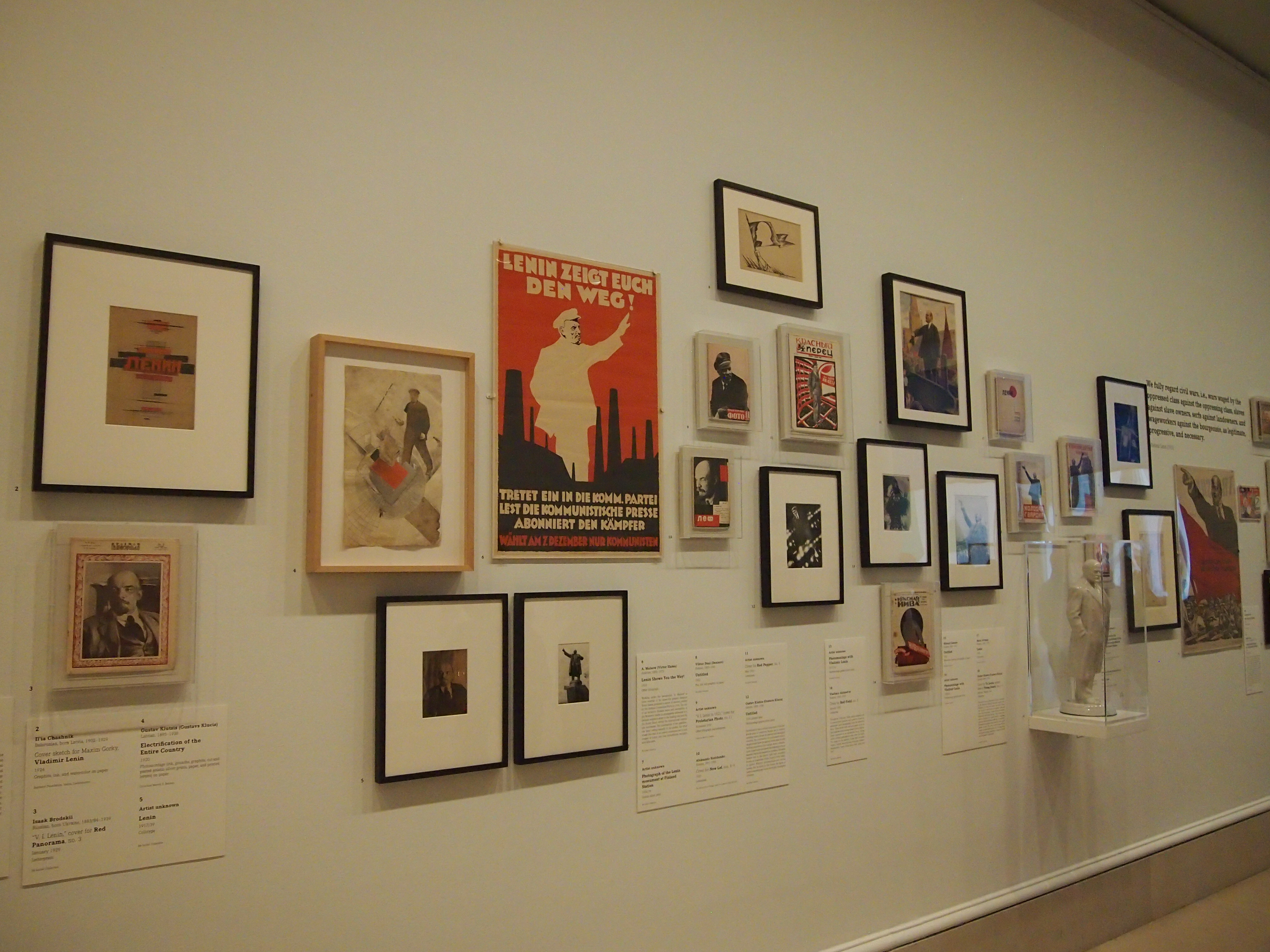
Mounted, I’m sure, to coincide with the 100th anniversary of the revolution. Just inside the entrance to the exhibit was the “Lenin Wall.” Lots of Lenin, including a small statue.

Besides that, the exhibit featured paintings, posters, prints, drawings, photos, magazines, film, agitprop ephemera, porcelain, figurines, life-size reconstructions of early Soviet display objects or spaces commissioned especially for the exhibition, and more.

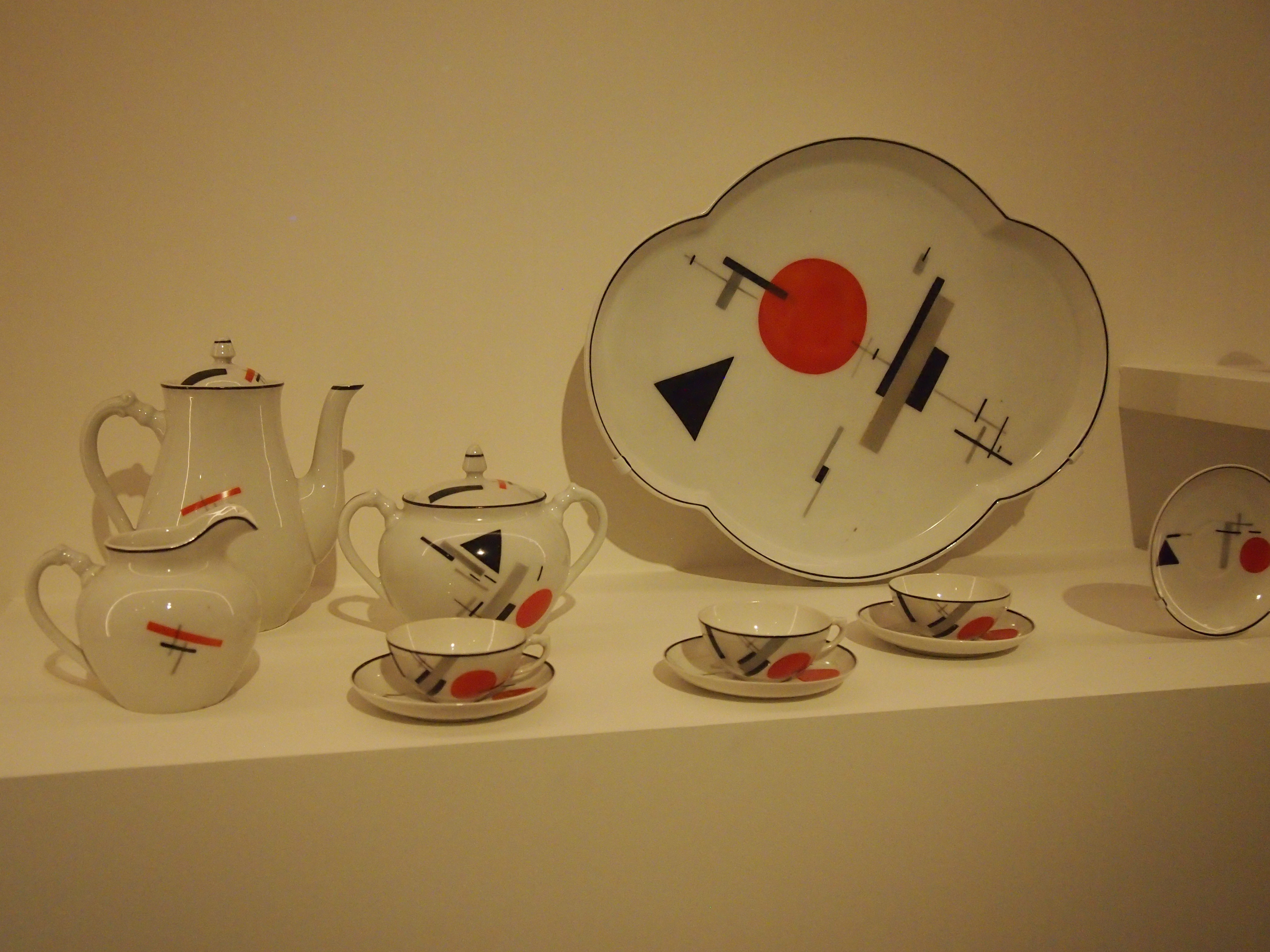
I was glad to see the Suprematist porcelain collection (I. I. Rozhdestvenskaia).
That’s because I used to have a Suprematist-style cup and saucer. Actually, I still have the saucer, but the cup broke long ago.

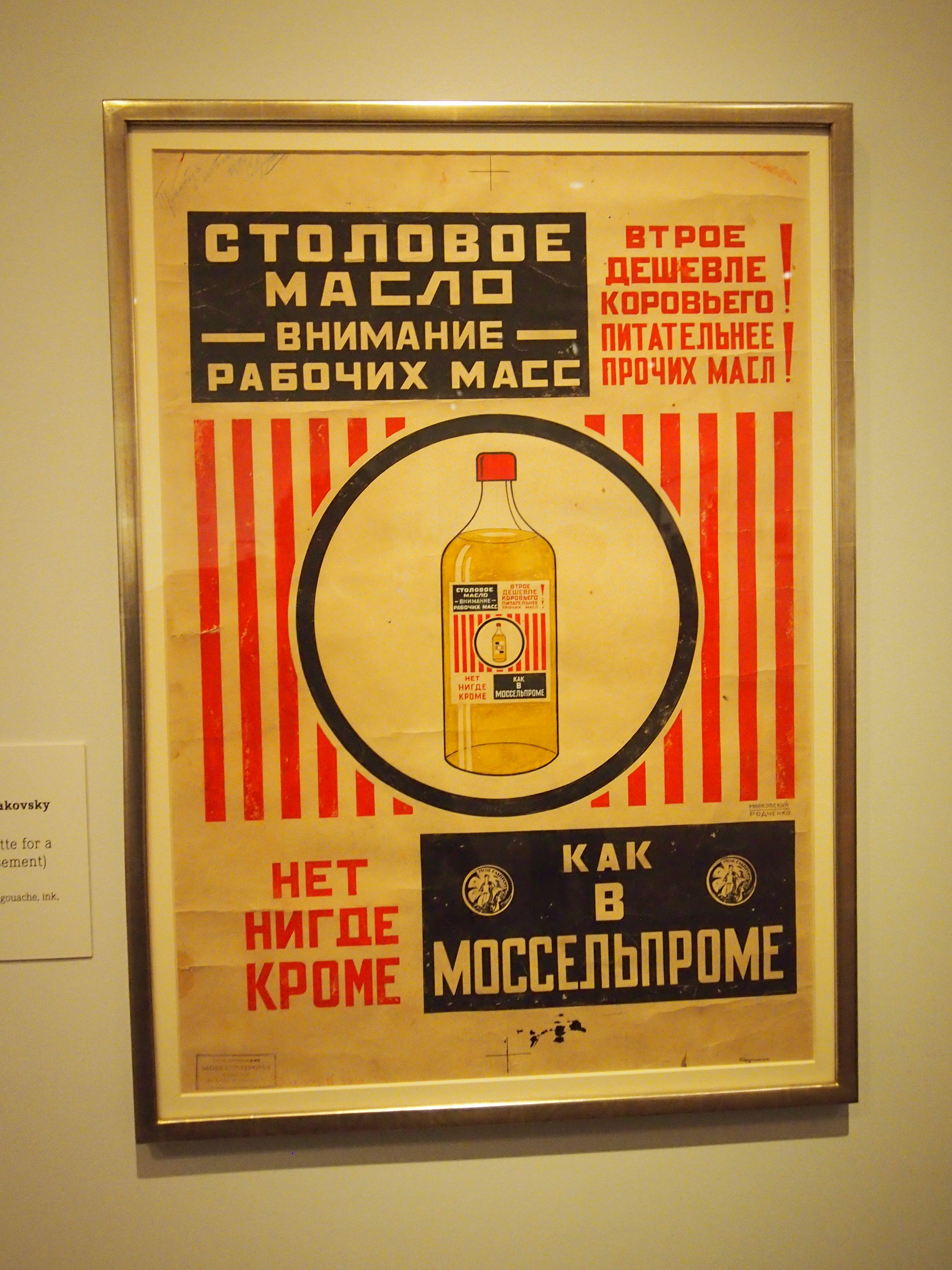
Remarkably, there was such a thing as Soviet advertising. Or an equivalent. At least early on (1923).
That’s a preliminary design for a Mosselprom building advertisement for cooking oil by Aleksandr Rodchenko, the Constructivist.

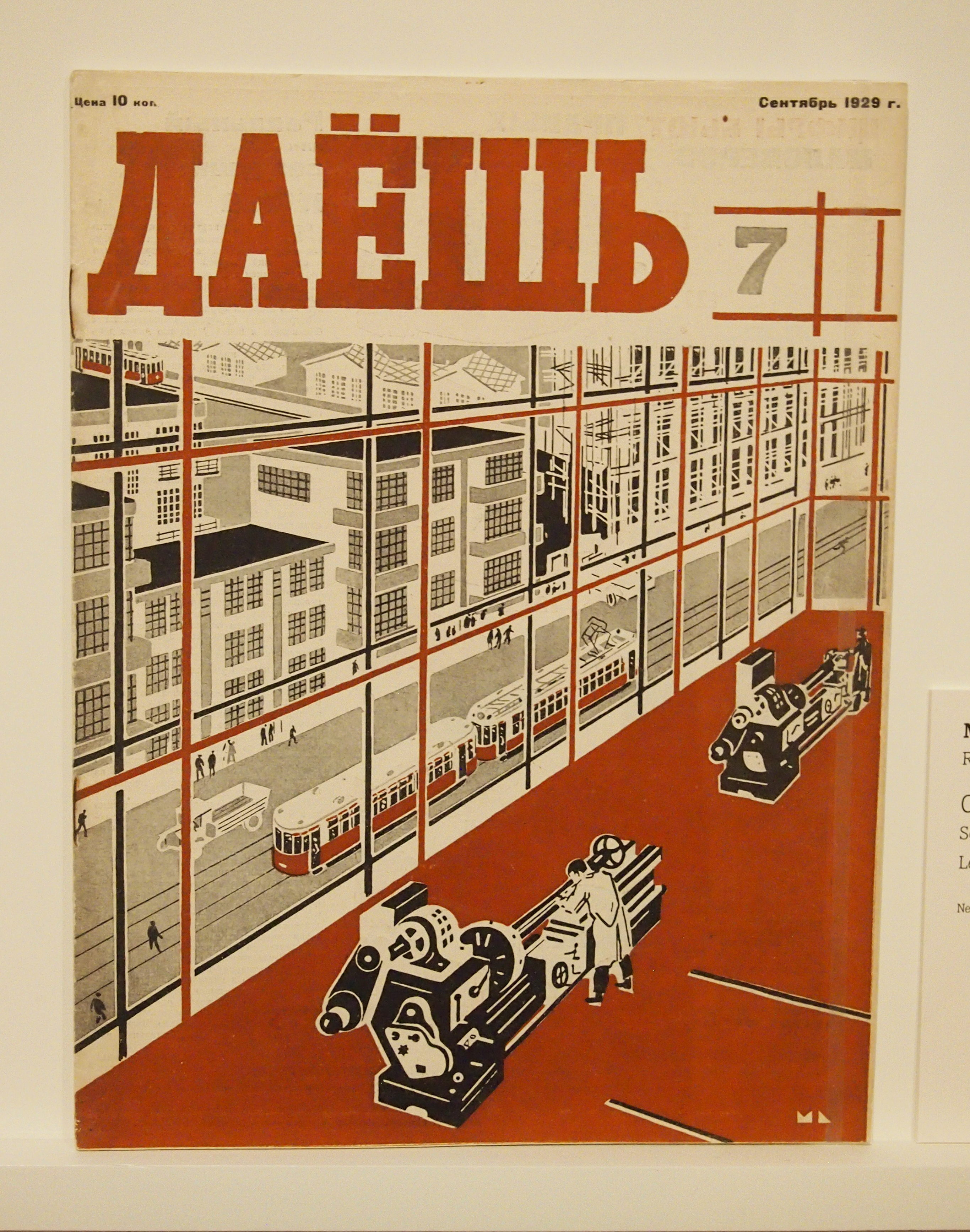
The cover of Produce! magazine (Mechislav Dobrokovskii, Sept. 1929).
And the cover of a magazine called Atheist at the Workbench, Jan. 1923 (Dmitrii Moor).
The theme of that cover is “We got rid of the tsars on Earth, let’s deal with the ones in Heaven.”

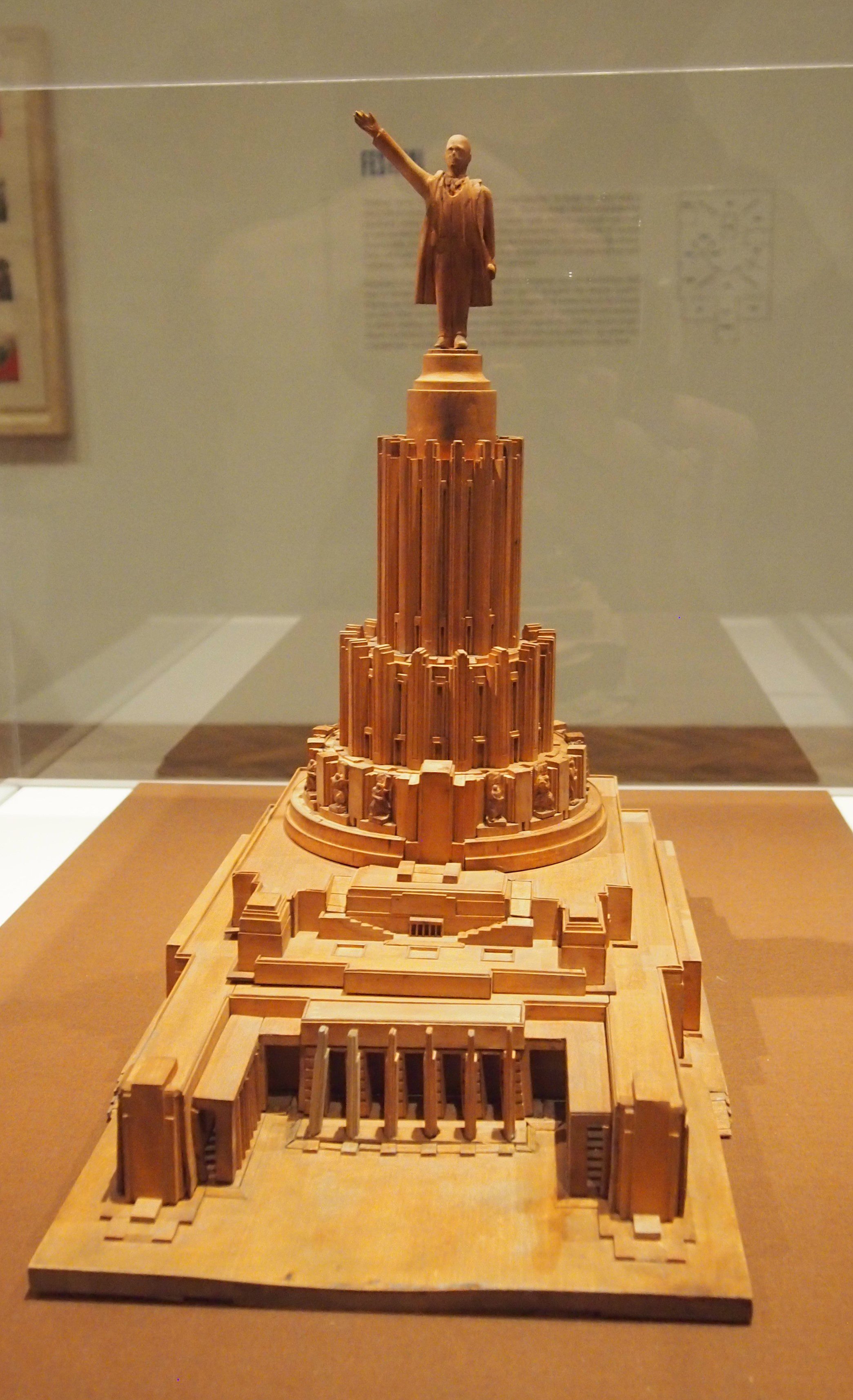
This is a model of the never-finished Palace of the Soviets in Moscow, whose partly completed structure was cannibalized for raw materials to fight the Nazis. That’s Lenin on top.
Here’s one of a series of 36 small posters extolling gender equality and increased industrial production (1931). All of them pictured women doing one kind of socialist labor or another, and graphs whose trends were always upward.
If there had been a collection of postcards in the gift shop based on these posters, at a reasonable price, I would have bought it. Or a Suprematist tea cup. But no.

State Street ’17

On the Saturday after Thanksgiving this year, I noticed a short item on the web site of the Telegraph, the British newspaper: “Best Tesco Black Friday weekend deals 2017.”
What? Black Friday is a thing in the UK? That big shopping day that’s the Friday after — the fourth Thursday in November? Which, I think, the British call “Thursday.”

Know what the United States needs? Bank holidays. Some of them overlap with U.S. holidays, but we could use a few more, such as the first Monday in June and the first Monday in August.

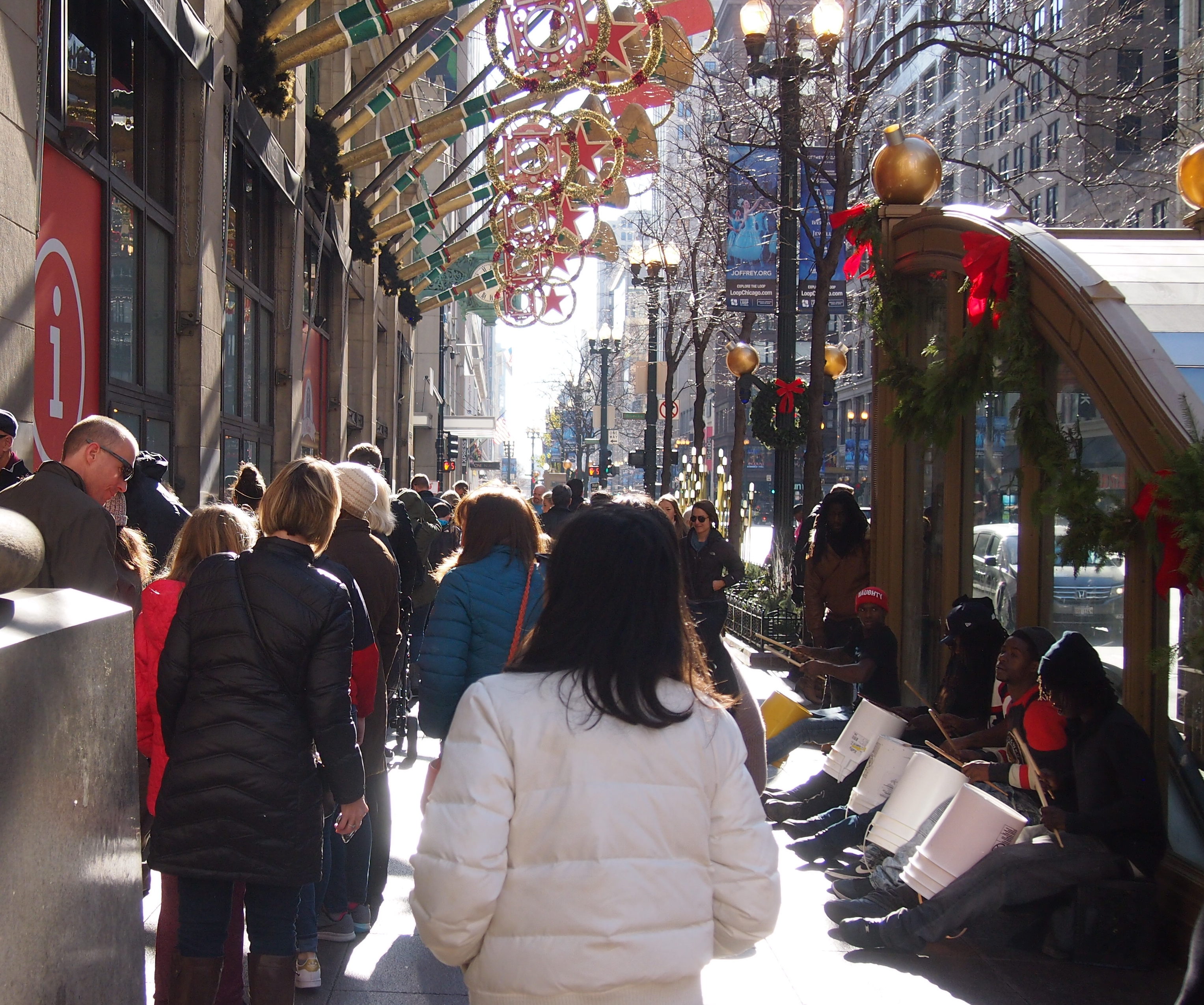
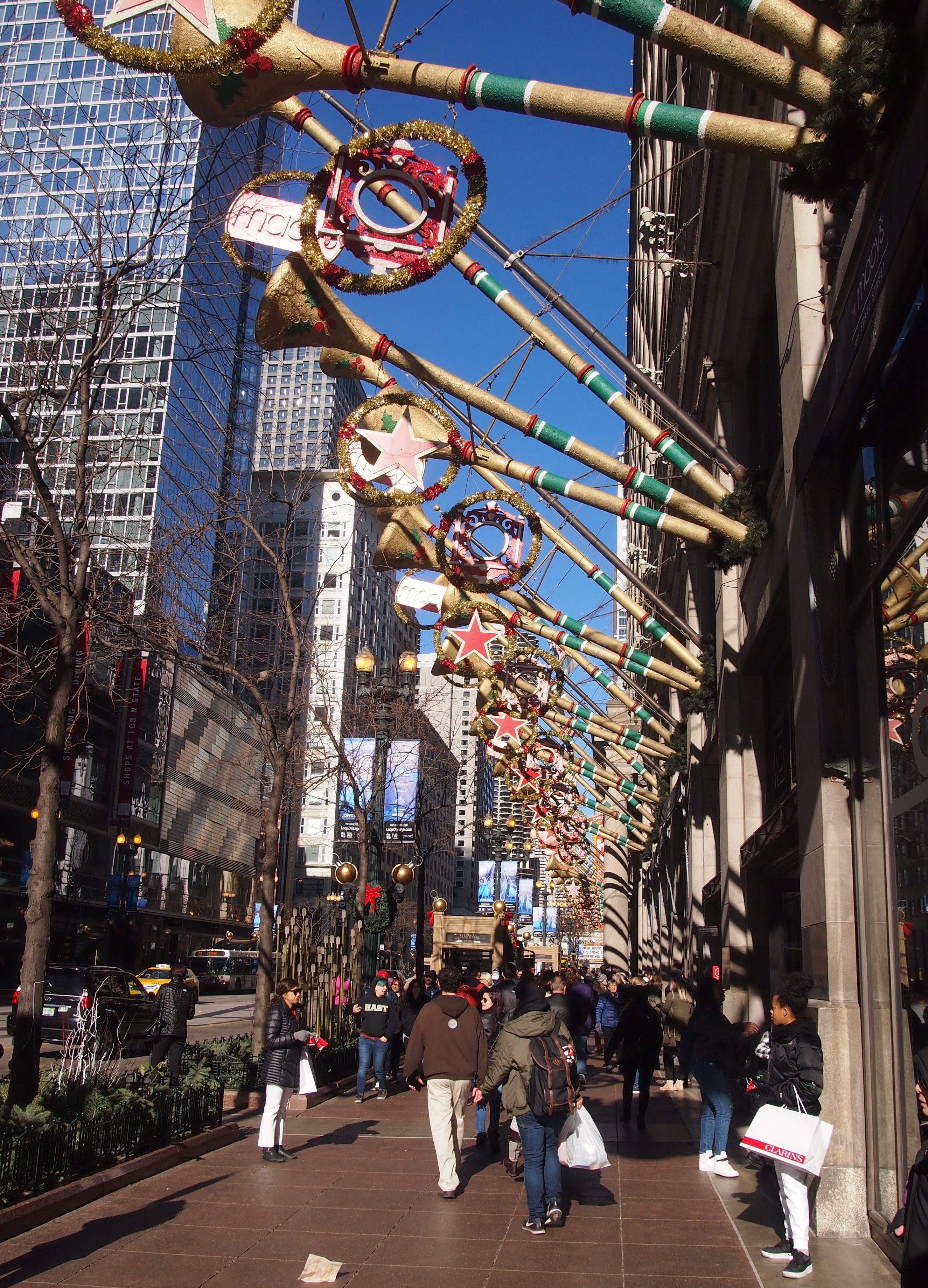
On Saturday morning we went downtown, taking advantage of above-freezing temps and a clear day. State Street near the store formerly known as Marshall Field’s was well populated with shoppers and the boomba-boomba-boomba of plastic container drumming.

This time of the year you go to that stretch of State Street to see the holiday windows that Macy’s carried on from Marshall Field’s. Two years ago, the windows were creative and pleasant to look at. This year, they were not.

“Generic” is how Ann put it, as in generic holiday scenes, and I agree — not a drop of the creativity of a window that had creatures on the outer planets throwing snowballs at each other.

At least the holiday trumpets were still in place.
The Marshall Field’s restorationists were out with their signs.
Or would they be revanchists? Not sure that applies, since we’re not talking about taking back the Alsace-Lorraine or wherever. Still, the “take back” could be said to be metaphoric, so you could argue that it’s retail revanchism. As far as I know there’s no specific term for agitating for the restoration of a name.

Or a name change. Maybe there should be such a term, considering that former slaveholders not named Washington or Jefferson are out of favor.

Thursday Havering

A lot of the ads popping up lately on YouTube have been to promote Canadian tourism. Mostly the ads depict, in music video style, young people doing the kind of vigorous activities that (some) young people must imagine is the essence of traveling to exotic places like Saskatchewan. Actually, one today featured the Yukon.

I’m all for visiting Canada, and encouraging people to do so, but the ads don’t really speak to me. Besides, Canada’s not really top of my mind in November. Then again, it’s good to plan ahead, so you can visit Canada, and even the Yukon, during that short window of opportunity when the place is pleasantly warm.

I never knew until recently that The Proclaimers did a charming version of “King of the Road” back in 1990. No one does it like Roger Miller, but I smile when I hear lyrics like, “destination Bangor, Maine” in that burr of theirs.

“King of the Road,” in the way things go on the Internet, soon leads to a song stuck in mid-60s amber, “Queen of the House.” Even better, the song is done in a Scopitone.

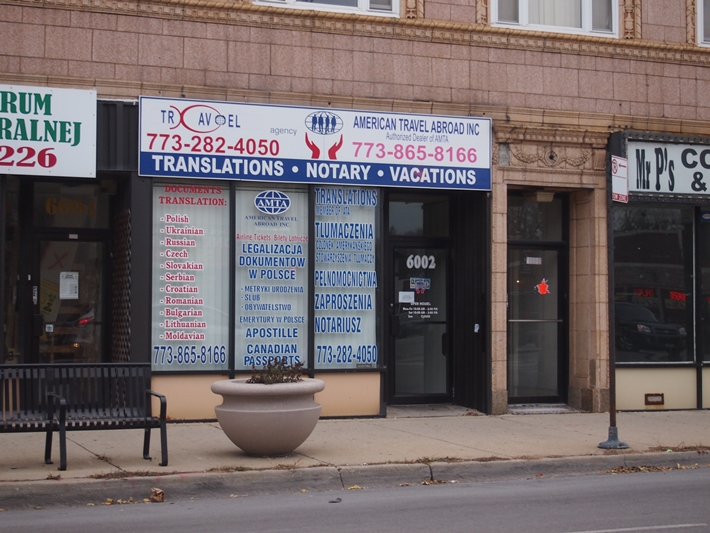
I was in the city not long ago with a camera in the front seat, so I took a few pictures while stopped at traffic lights. Such as this place. So very Chicago.
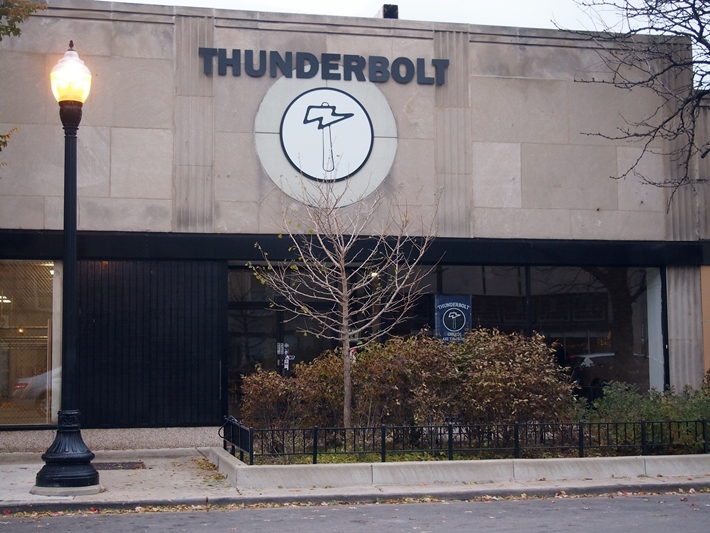
Then there was Thunderbolt.
It’s an ax throwing venue, only the second one in Chicago, according to the Tribune, opening this spring.

“Ax throwing — indoor or outdoor — is a skill-based sport; [owner Scott] Hollander likens it to pool or darts, where participants can take the competition as seriously or lackadaisically as they please,” the paper says.

“Easygoing ax throwers can book an hour at a lane for $15 per person Wednesdays and Thursdays, and for $20 per person Fridays, Saturdays and Sundays. Food and nonalcoholic drink is allowed and can be consumed at the plywood stands behind each pair of lanes or at the picnic tables in the building. Thunderbolt also is available for bachelor or bachelorette parties, birthday parties and corporate events.”

What do I think of when I hear about ax throwing? Ed Ames, naturally. Tomahawk, but close enough.

Thursday Tidbits

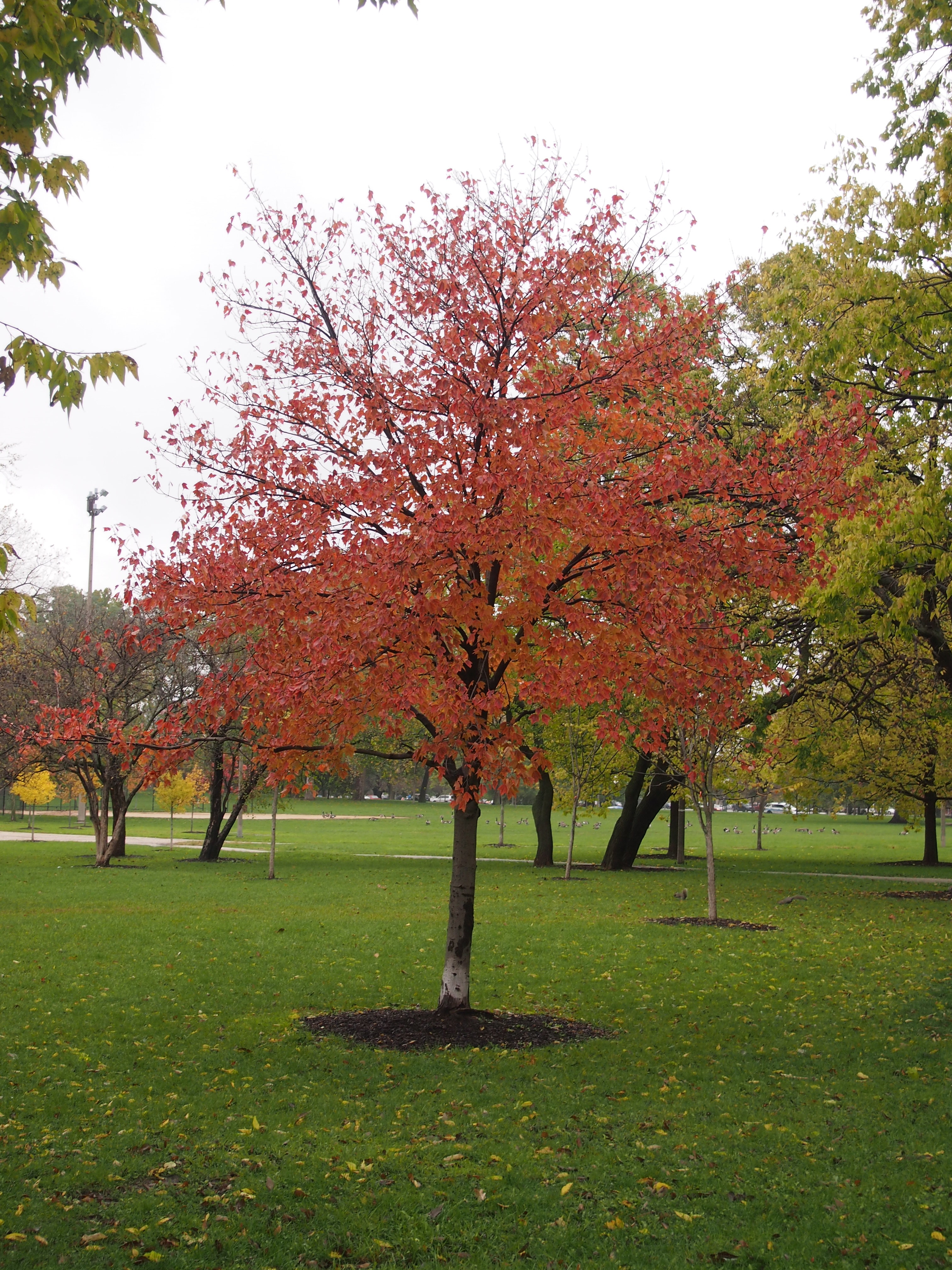
Last night Northern Illinois dropped below freezing, and it wasn’t a lot warmer during the day. A taste of winter, dressed like fall.
Fall colors, ChicagoI didn’t know until recently that Lotte Lenya, who can be heard here singing “Mack the Knife,” or maybe more properly “Die Moritat von Mackie Messer,” played Rosa Klebb, the SPECTRE operative who tries to off James Bond with her poison-tipped shoe in From Russia With Love.

Not an important thing to know. Just another one of those interesting tidbits to chance upon.

A rare thing: a YouTube comment that’s actually funny. It’s at a posting featuring “Pack Up Your Troubles in Your Old Kit Bag and Smile, Smile, Smile!” sung by Oscar Seagle and the Columbia Stellar Quartette, recorded January 25, 1918.

Someone calling himself Xander Magne said: ” ‘Praise the Lord and Pass the Ammunition’ ain’t got s–t on this, sonny. Damn 30s kids with their jazz and their swing and their big band and their ‘World War 2.’ We used to have a Great War and it was Great and you liked it!”

One more thing I saw at the International Museum of Surgical Science, a polemic cartoon by Edward Kemble that was part of a display about patent medicine, the Pure Food & Drug Act, etc.

International Museum of Surgical Science, Chicago“Palatable Poison for the Poor.” Whew. Good thing that’s not possible in the 21st century, eh?

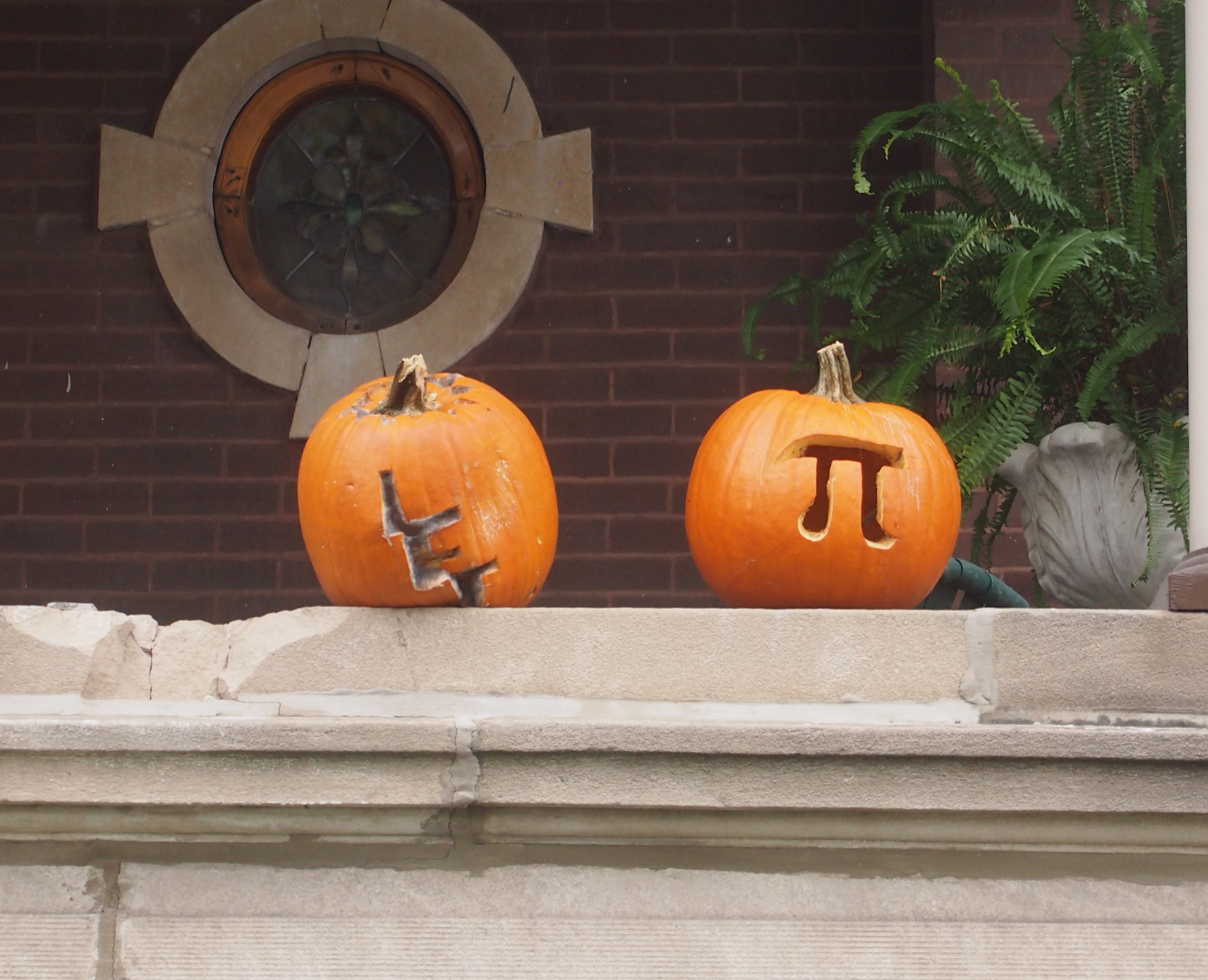
Again, too melancholy a note on which to end. Here’s something I saw just before Halloween. Pumpkin π.

Pumpkin π

A bit o’ pumpkin whimsy.

Iron Lung & Shoe-Fitting Fluoroscope

Today I said to Ann, “Don’t forget, it’s the 100th anniversary of the October Revolution.” She wasn’t much impressed by that odd Bolshevik-calendar curiosity.

At the International Museum of Surgical Science recently, I saw a number of things I’d read or heard about, but never seen before, which is one thing I want from a museum. Two items stood out in that way.

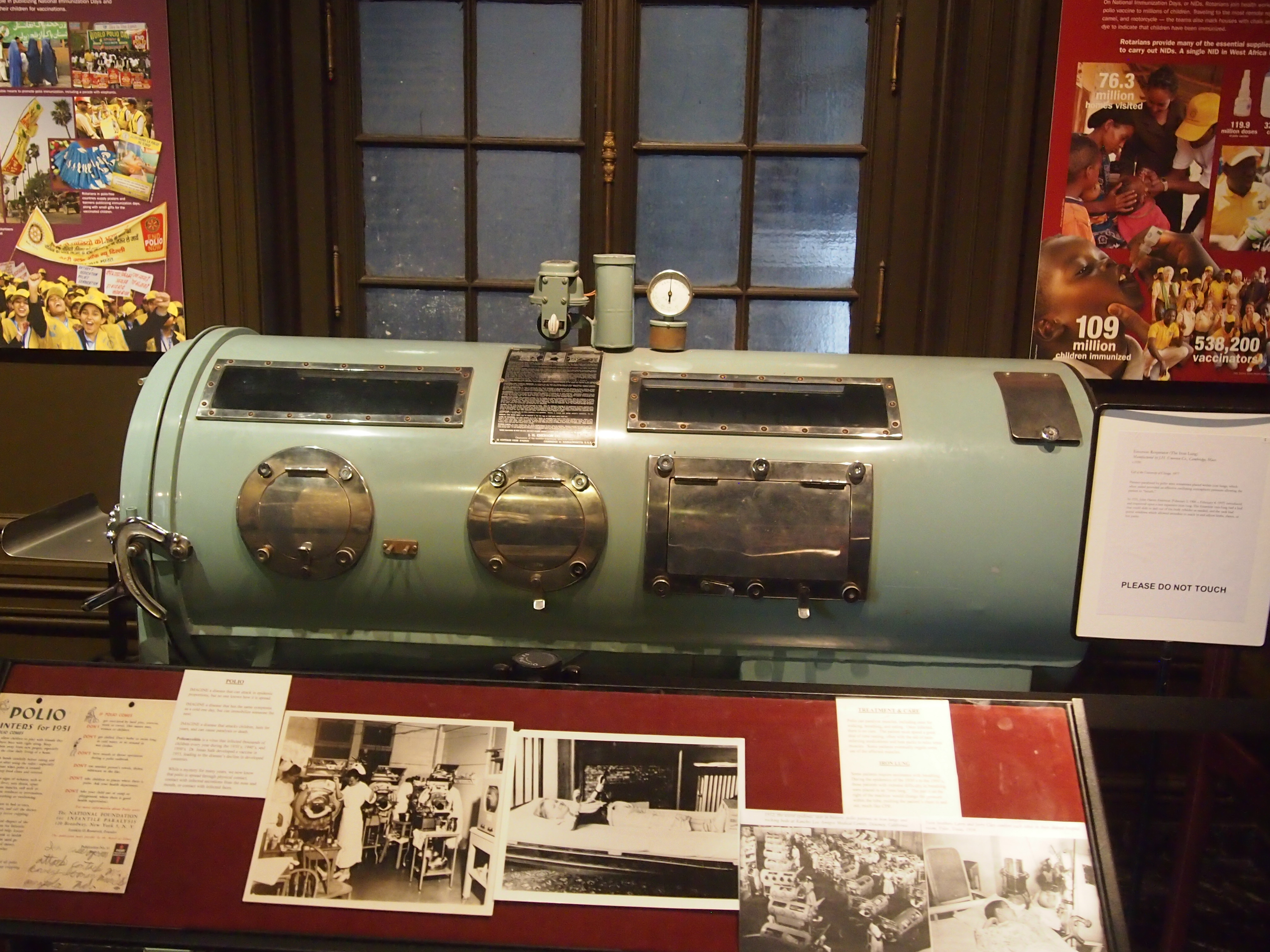
One was an iron lung.

International Museum of Surgical Science

An Emerson device. Apparently that was the most successful kind of iron lung, invented and manufactured by John Haven Emerson (1906-97), a collateral descendant of Ralph Waldo and nephew of Maxfield Parrish.

I stood there for a while looking at the thing, thinking about the terror of such a disease. An iron lung sums that up pretty well. Something dim-bulb anti-vaxxers need to see.
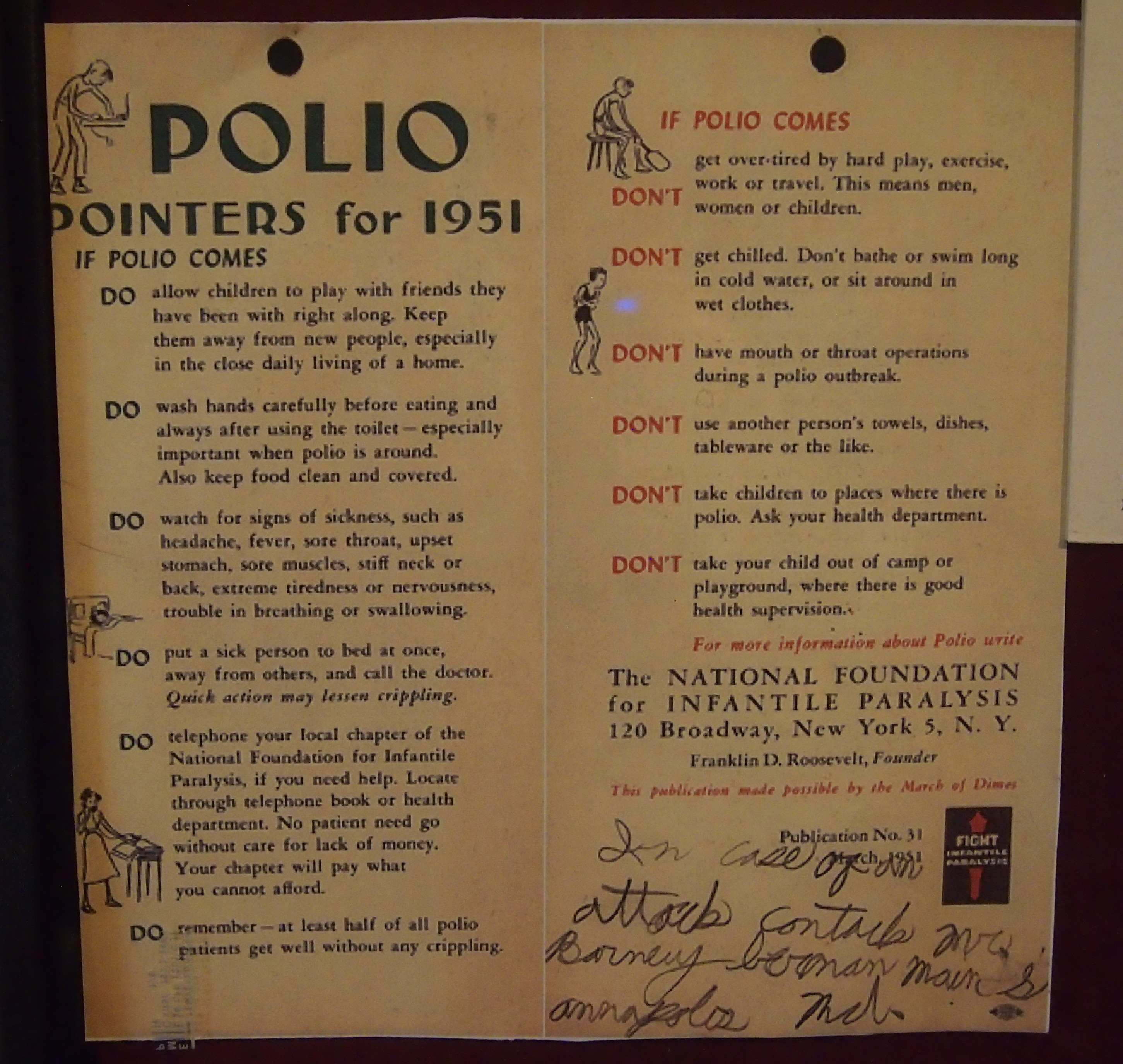
Some ephemera next to the iron lung drove home the point.
Polio Pamphlet 1951Only 10 years before I was born.

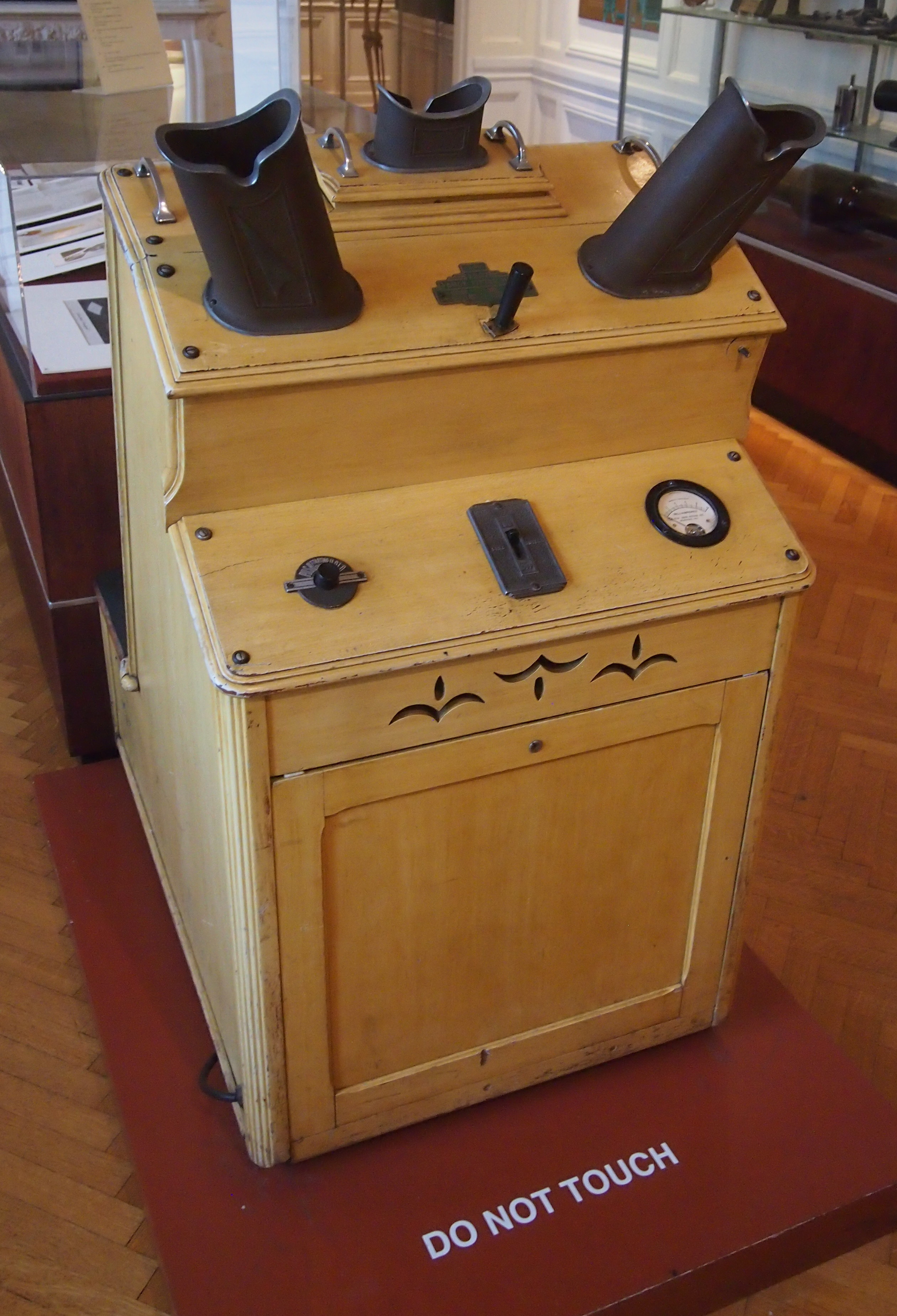
In another room was another device I’d heard of, but never seen: a shoe-fitting fluoroscope.

Shoe-fitting fluoroscopeA x-ray machine found at shoe stores, in other words. Put your foot in and see the bones inside. Ostensibly for a better fit, but mostly as novelty. I can believe that kids wanted to see the inside of their feet.

X-Ray Shoe Fitter Inc. of Milwaukee made this particular one, ca. 1940-50, according to the museum. Feet were inserted into the side not visible in my picture.

As many as 10,000 such devices were in use in the United States during their heyday in the 1950s, after which time state legislatures, worried about radiation poisoning and the like, started banning the things. I doubt that any customers were harmed, but you have to wonder how many shoe salesmen suffered from their exposure to x-rays oozing out of the non-leaden boxes over a number of years.

Skulls and Bones and Things

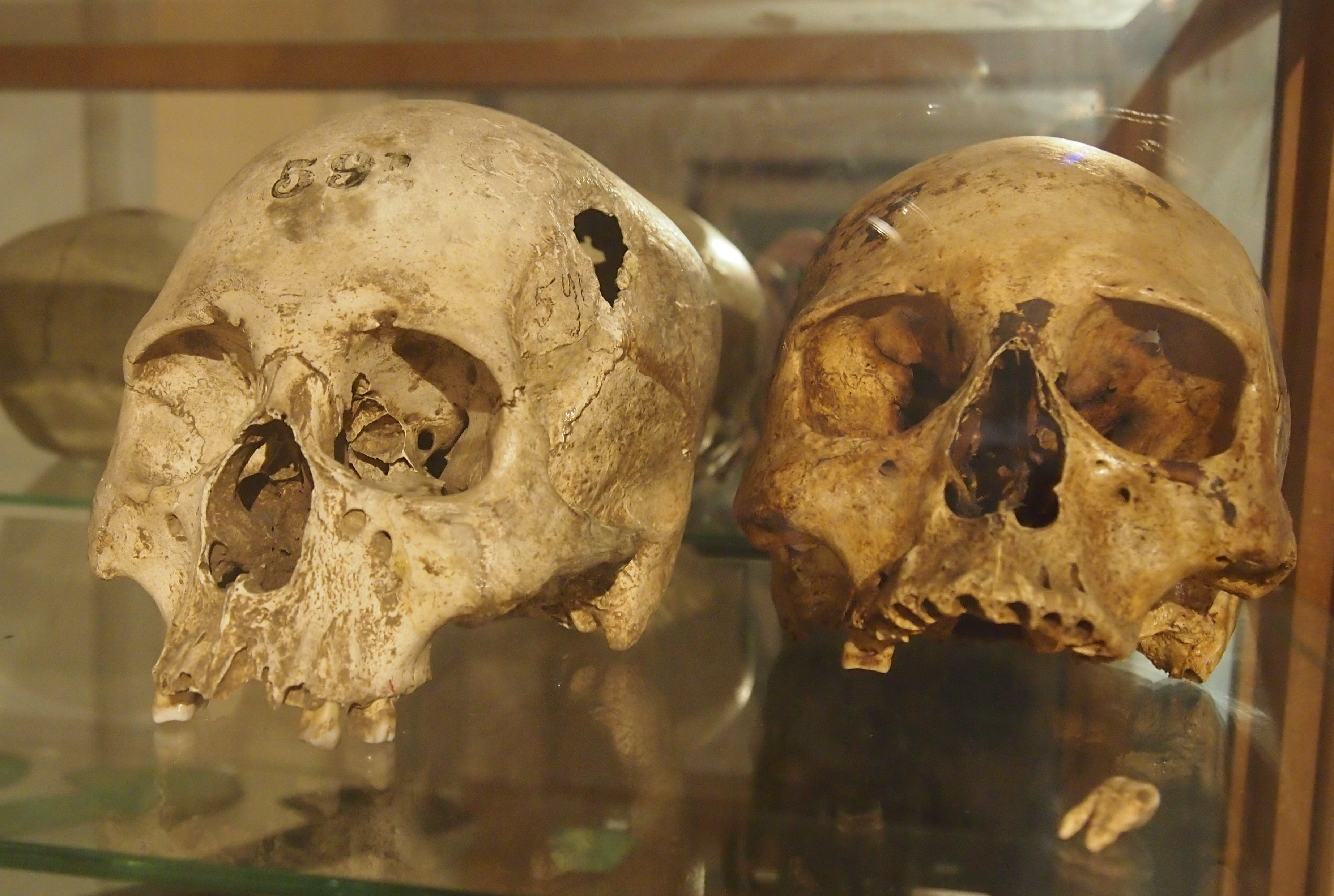
Want to see some particularly good momento mori? Look no further than the International Museum of Surgical Science in Chicago. I visited recently and came face to face with these fellows.

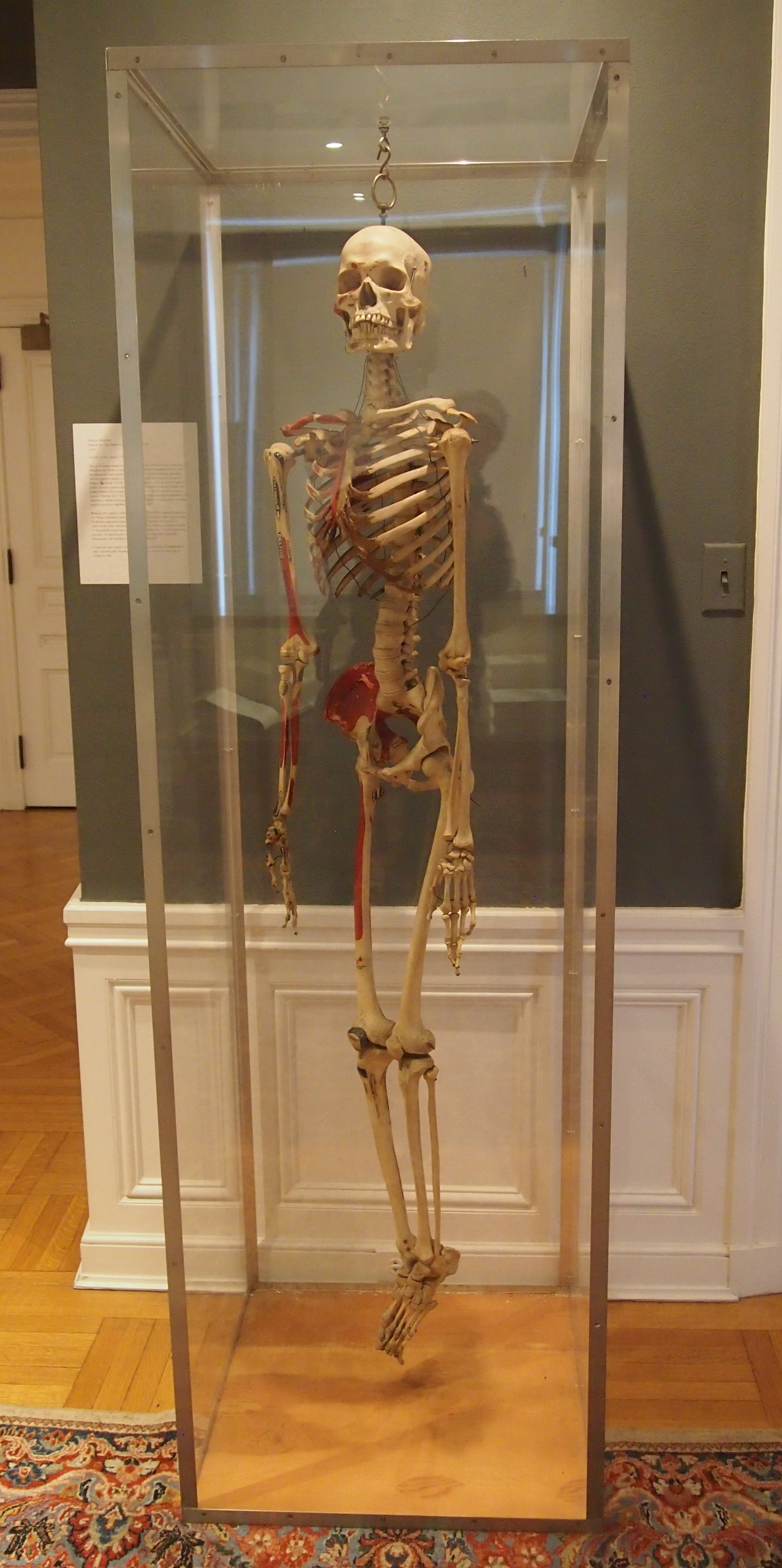
International Museum of Surgical Science in ChicagoAlso, a fuller version.
International Museum of Surgical Science in ChicagoGlad I didn’t see these exhibits when I was a kid. I found skulls and skeletons particularly creepy then, which I guess is a fairly common feeling among youngsters.

The feeling is long gone. Now I look at a skull and wonder, who was that? How did his headbone come to be here, instead of in the ground, or made into ashes?

The museum is a division of the International College of Surgeons, which is headquartered on Lake Shore Drive and includes about 10,000 square feet of public galleries committed to the history of surgery. Much more than skulls and bones. A good deal more, mainly artifacts from the history of cutting people for their own good, as well as other aspects of medicine.

There’s a large array of surgical tools from the last few centuries, medical machines from the late 19th century onward (such as antique x-ray machines), photos, paintings, drawings and a lot of reading material next to the exhibits. Some of the surgical tools, such as Civil War-vintage amputation kits, give me the willies more than any old skull could, even a trephined one.

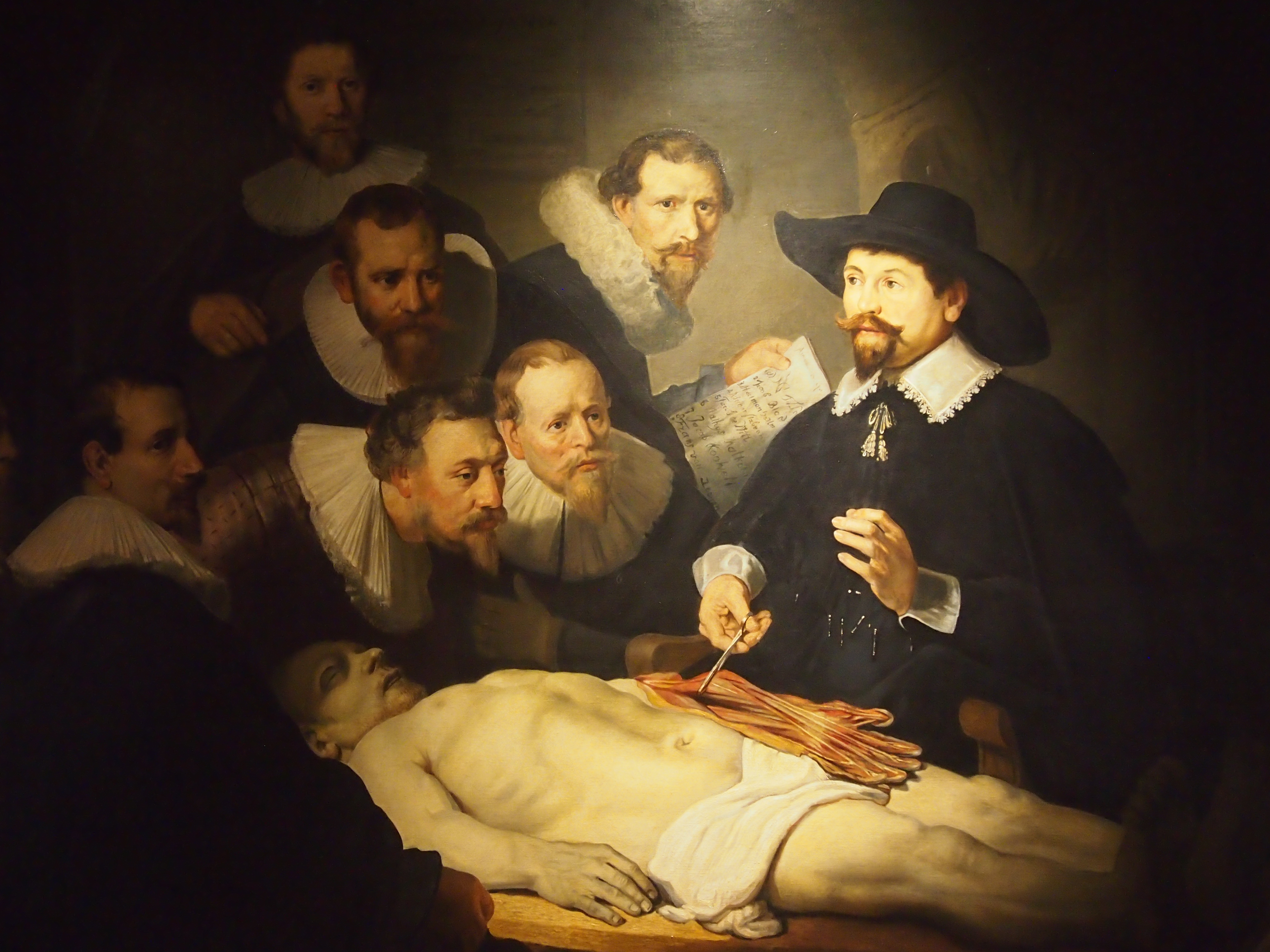
Some paintings depict highlights from the history of surgery. Such as a copy of Rembrandt’s famed “The Anatomy Lesson of Dr. Nicolaes Tulp.”
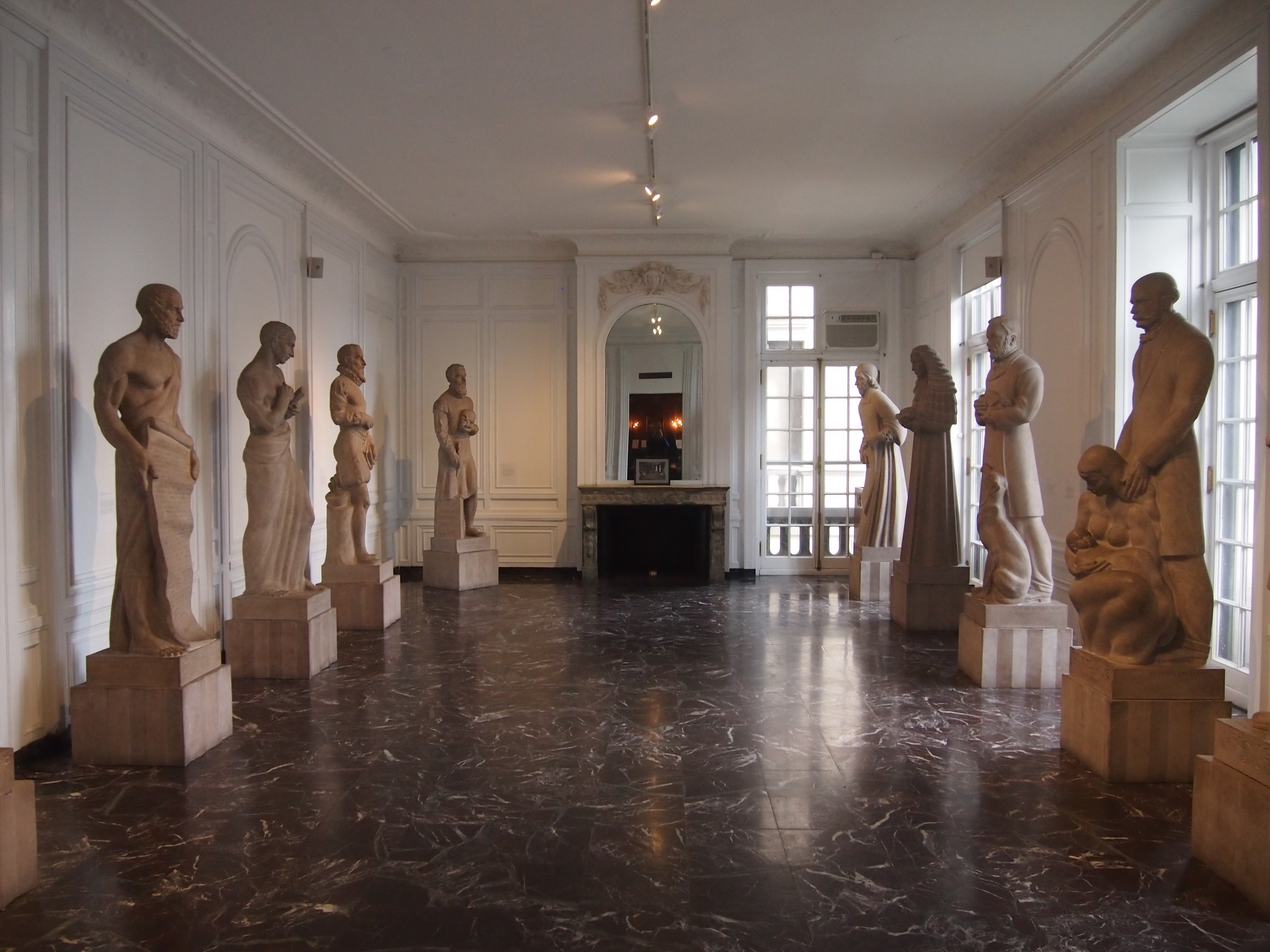
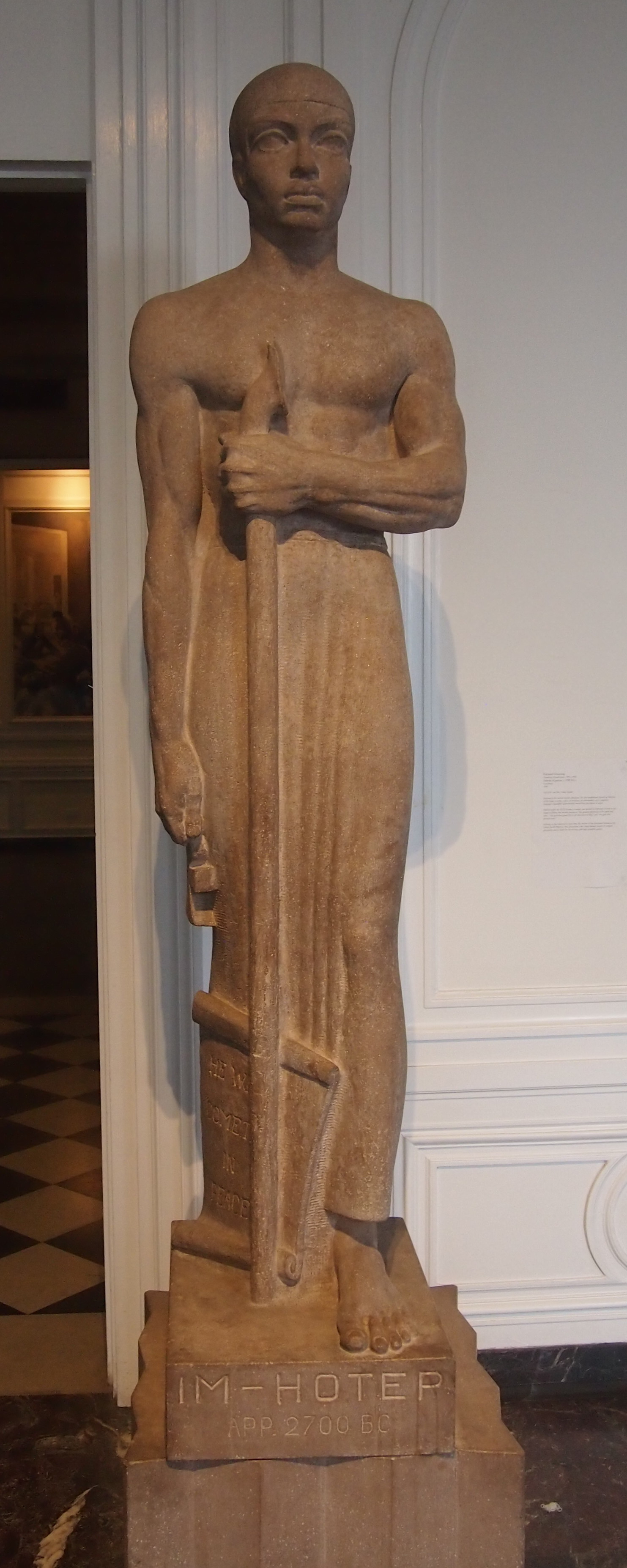
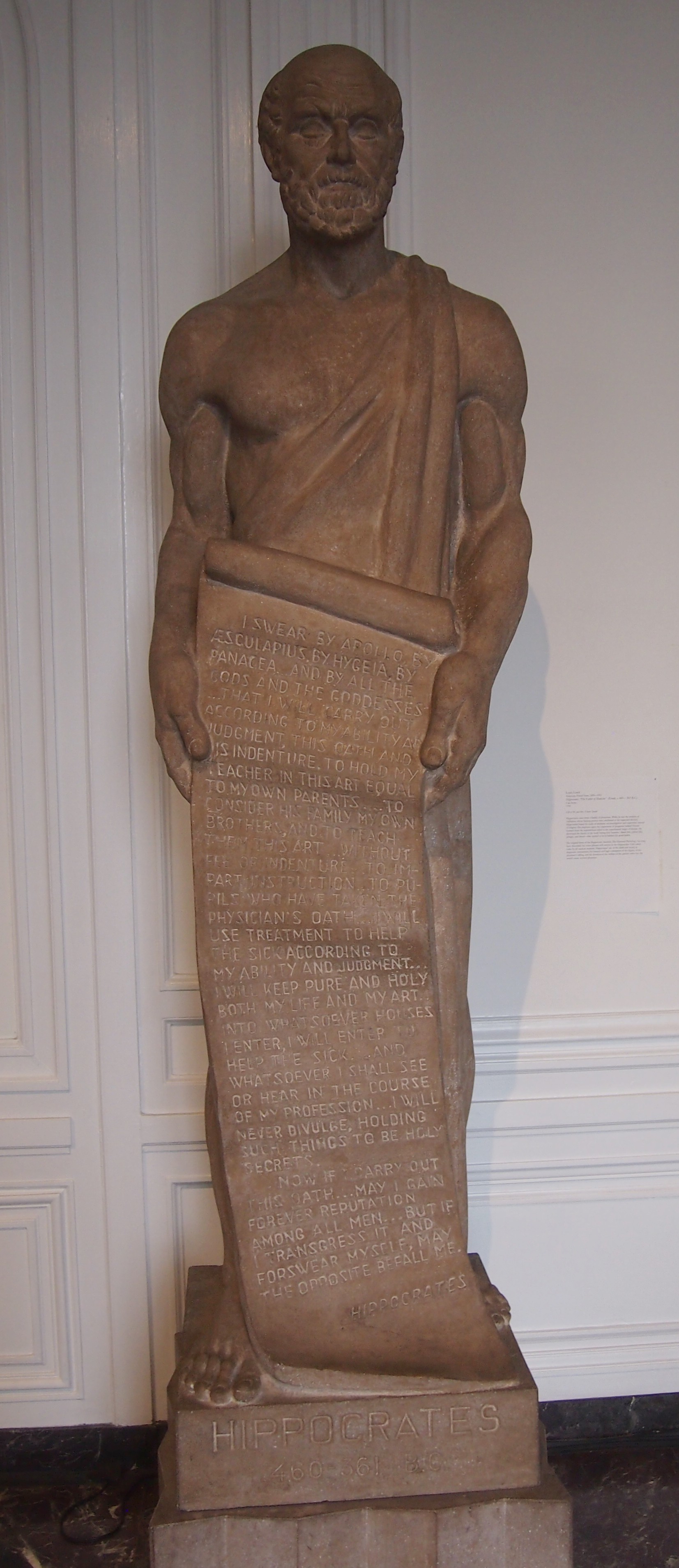
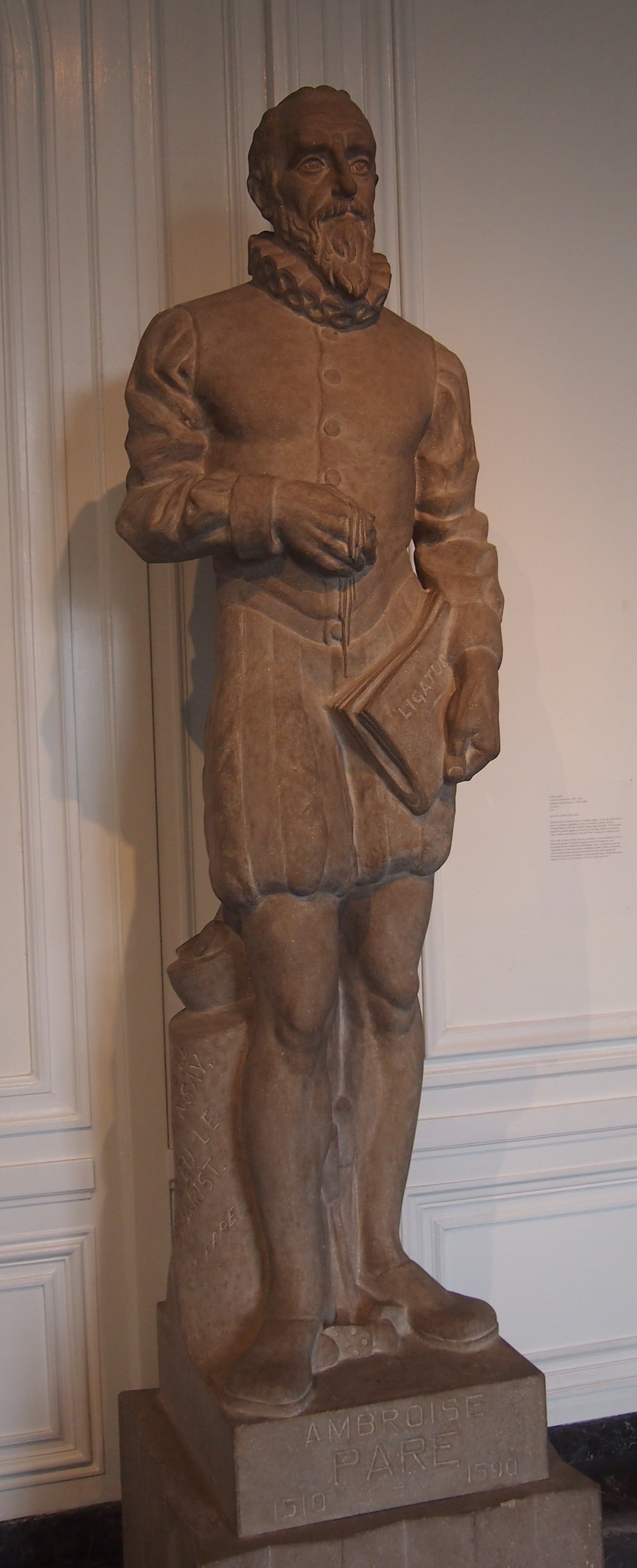
International Museum of Surgical Science in ChicagoOne room is given over to larger-than-life luminaries in the history of medicine — the “Hall of Immortals” — commissioned by the museum in its early days, in the 1950s, and mostly done by sculptor Louis Linck. That’s just old-fashioned enough to make me smile.
International Museum of Surgical ScienceIncluded among the immortals are Imhotep, Hippocrates, Andreas Vesalius, Wilhelm Conrad Röntgen, Ambroise Paré, Joseph Lister, and Marie Curie.

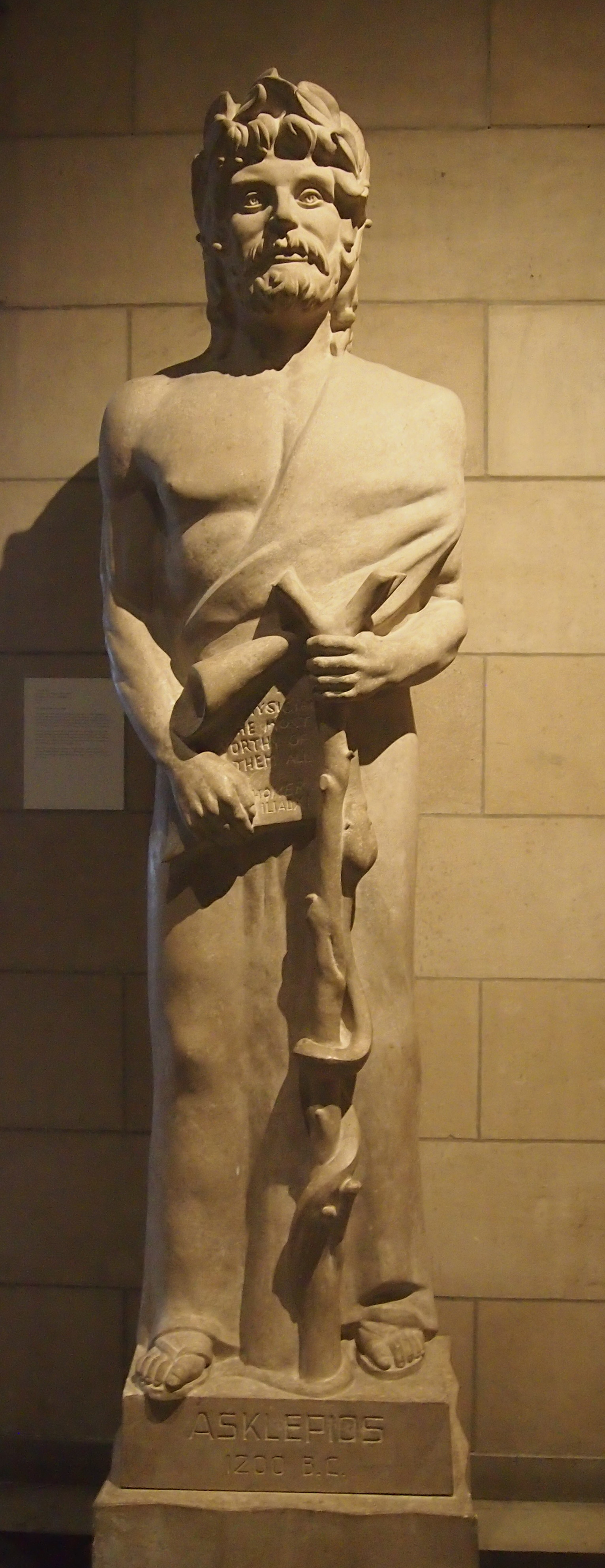
International Museum of Surgical ScienceInternational Museum of Surgical ScienceInternational Museum of Surgical ScienceJust outside the Hall of Immortals is Asklepios, also by Linck.
International Museum of Surgical ScienceI suppose he wasn’t in the hall itself, since however much he’s part of the history of medicine, he isn’t an actual historic figure.

Our Lady of Sorrows Basilica

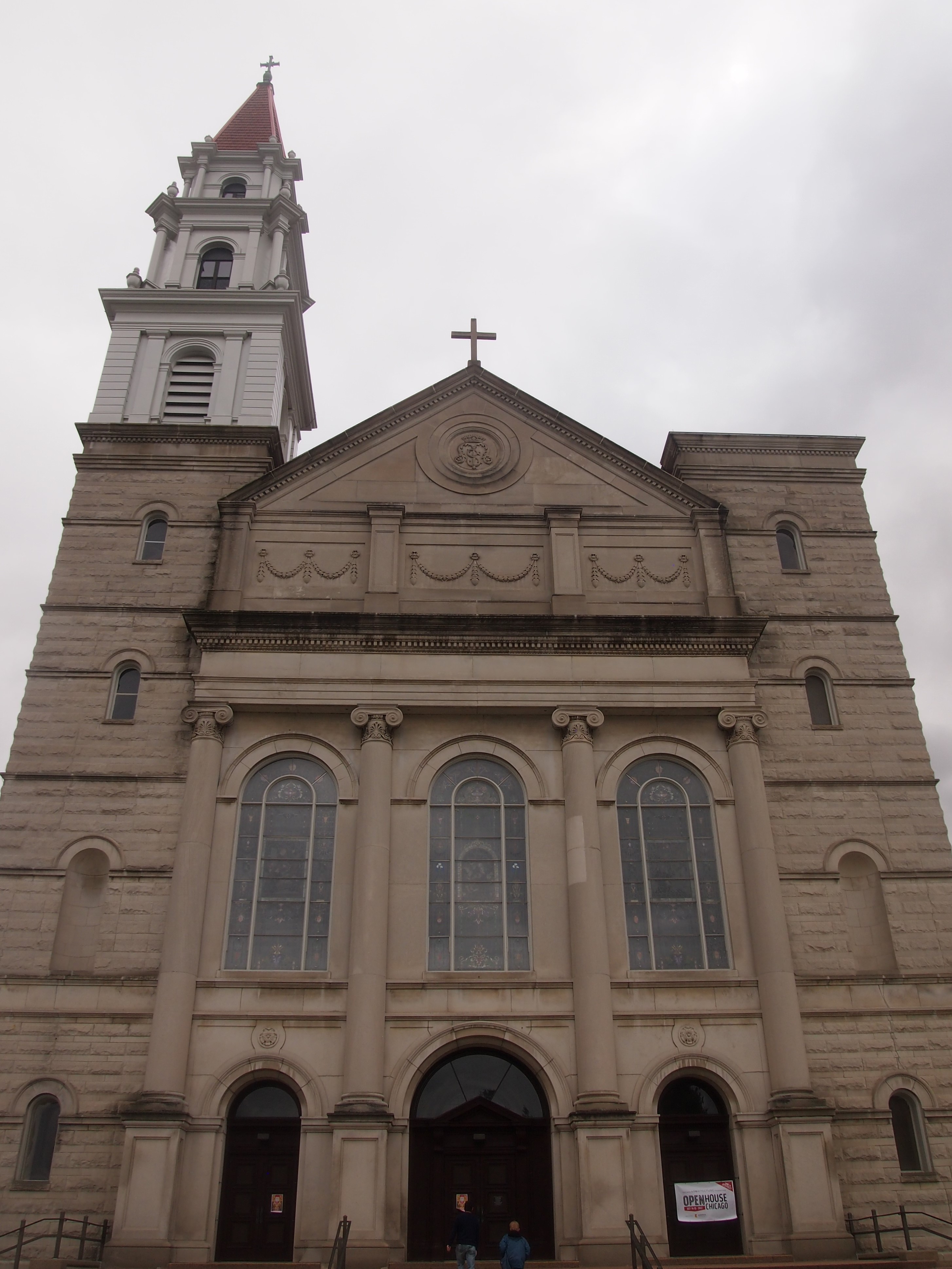
The only place we visited during Open House Chicago on Sunday that wasn’t in the northwest part of the city or in near suburban Oak Park was Our Lady of Sorrows Basilica on the West Side. Or more formally, the Basilica of Our Lady of Sorrows.

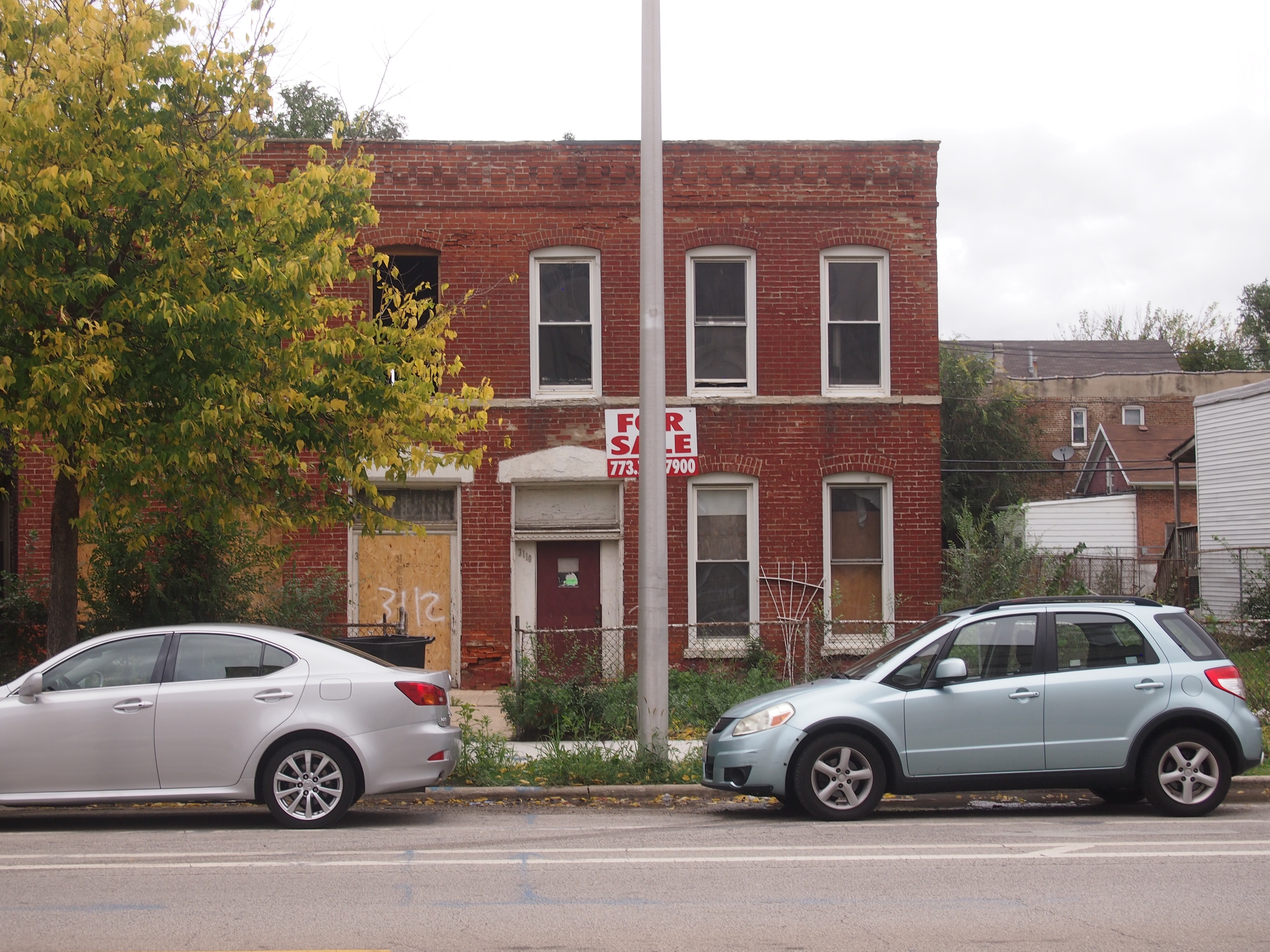
Our Lady of Sorrows Basilica, ChicagoIn our time, the neighborhood is blighted. Across the street from the basilica are more modest structures.
Our Lady of Sorrows Basilica, Chicago neighborhoodBut as mendicants, I expect the Servite Order that runs the basilica wouldn’t want to be in a posh neighborhood. The basilica itself, however, is jewel-box ornate.
Our Lady of Sorrows Basilica, ChicagoDesign credit is given to three gentlemen: Henry Englebert, John F. Pope, and William J. Brinkmann, with the structure going up from 1890 to 1902. I encountered a Brinkmann work earlier this year, out at Mount Carmel Cemetery.

No citation for it, but I have to mention his demise, as described by Wiki: “Brinkmann’s death was unexpected, gruesome and mysterious: his mangled, decapitated body was found on train tracks near 73rd street in February 1911… yet contradictory evidence prevented an inquest from finding a clear reason for his death or a finding of murder.
His funeral was held at St. Leo’s Church on 78th Street, a church he had himself designed in 1905. His death remains unsolved to this day.”

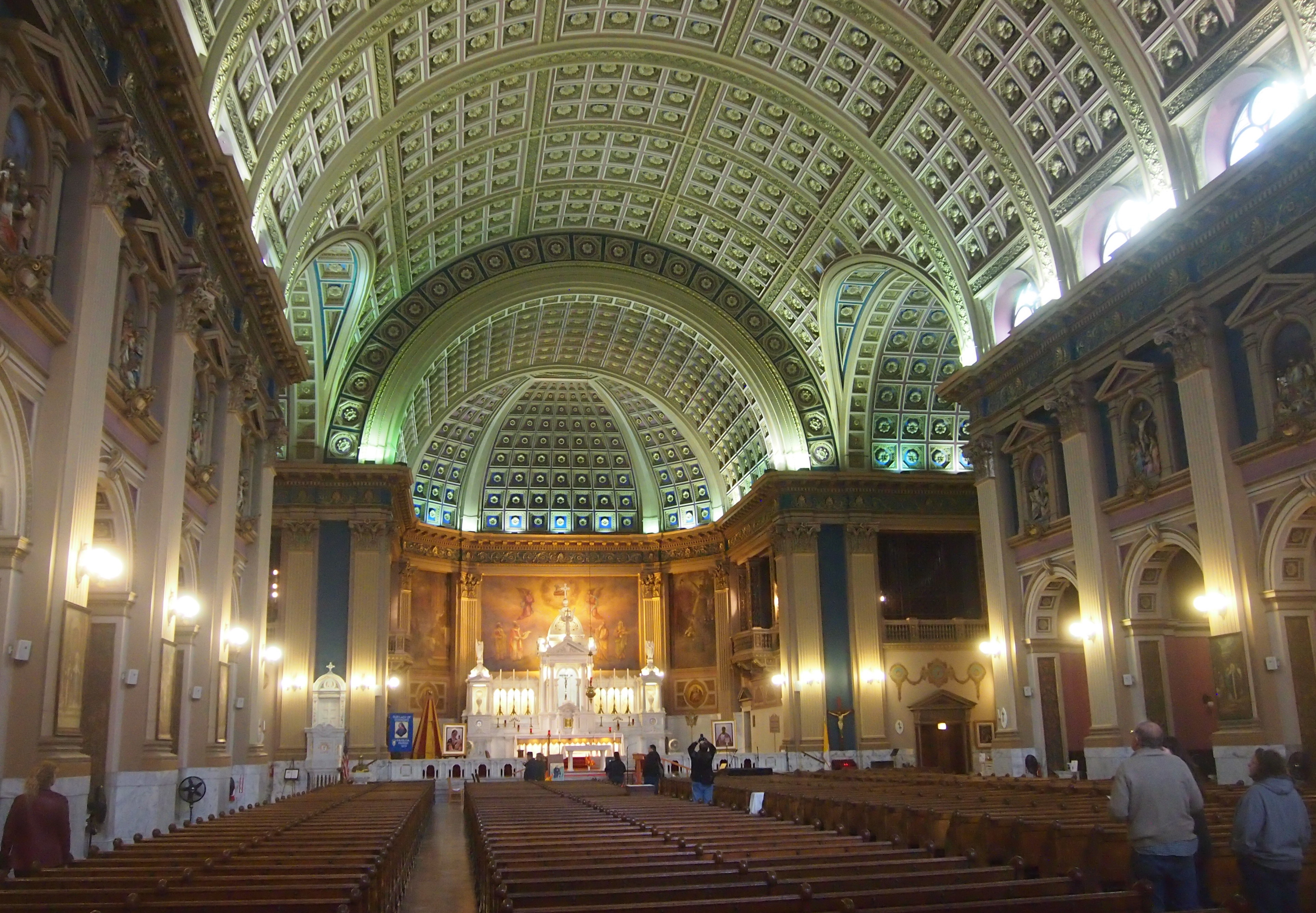
The AIA Guide to Chicago is succinct on the basilica: “It’s Bramante on the Boulevard — with a coffered, barrel-vaulted ceiling rising above the long nave. The stolid Classical facade is enlivened by an English Baroque steeple (its mate was destroyed by lightning).”

Looking straight up at that barrel-vaulted ceiling.
Our Lady of Sorrows Basilica, ChicagoIt’s familiar from a short scene in the 1987 movie version of The Untouchables. In our time, that’s easy to confirm. Sean Connery and Kevin Costner are toward the back of the very long nave. I didn’t remember that scene, since I haven’t seen the movie since it was new, but I read about it. The Chicago way, eh? The Federal way — busting Capone for tax evasion — proved more effective.

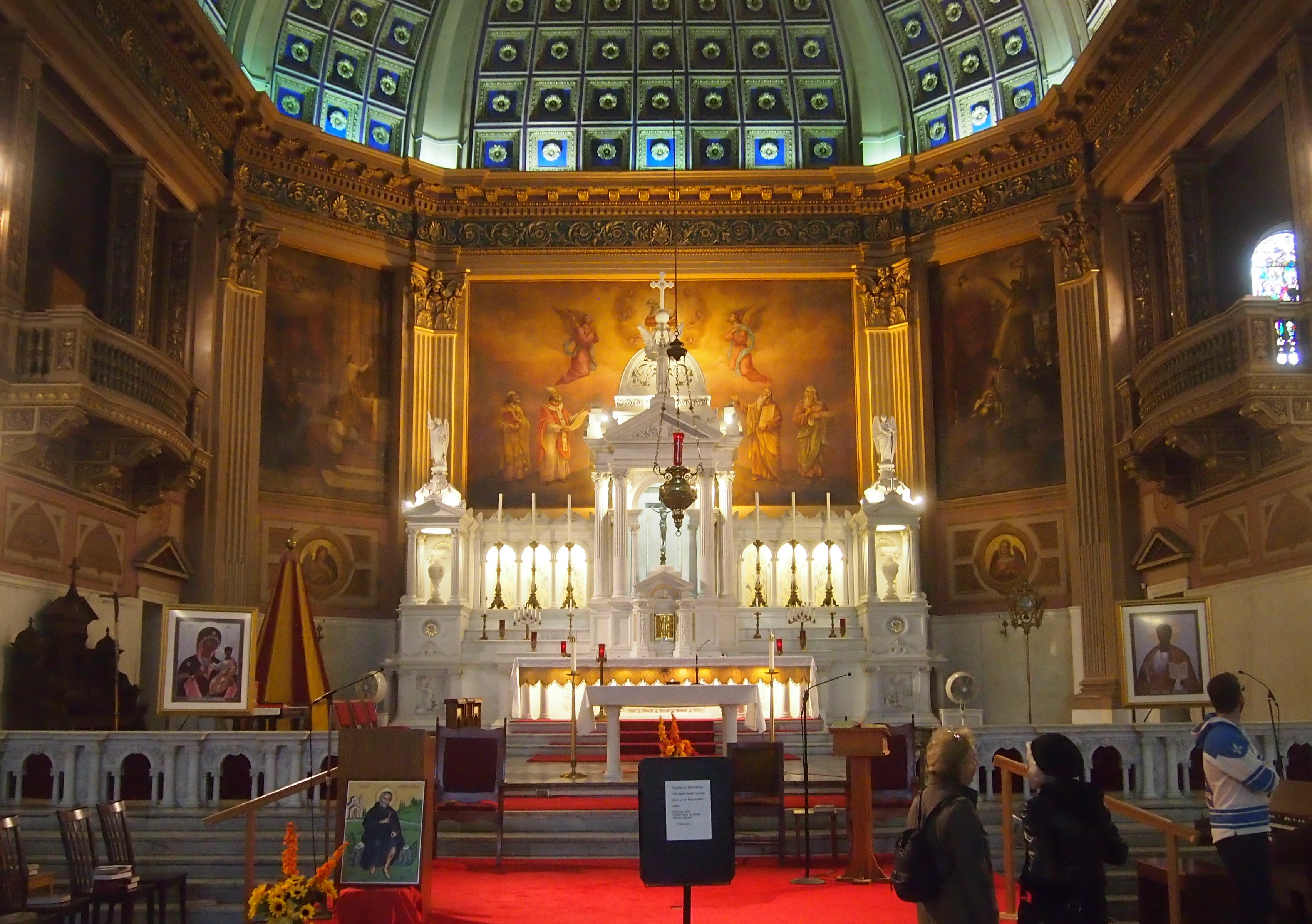
The sanctuary.
Our Lady of Sorrows Basilica, ChicagoAnd more.

Our Lady of Sorrows Basilica, ChicagoOur Lady of Sorrows Basilica, ChicagoOur Lady of the Sorrows Basilica Our Lady of the Sorrows BasilicaIt occurs to me that it’s been a good year for visiting basilicas. Our Lady of Sorrows makes the fifth so far. Hasn’t been a matter of planning, it’s just worked out that way.

Logan Square Walkabout

We’re no strangers to Logan Square, but there’s always more to a neighborhood. Aloft Circus Arts isn’t far from the square, but even closer is the Norwegian Lutheran Memorial Church (Minnekirken). In fact, the church faces the square.Norwegian Lutheran Memorial Church (Minnekirken) ChicagoThe church dates from 1912, when I suspect there were a lot more first-generation Norwegians in the area, and was designed by an architect by the fitting name of Charles F. Sorensen. As we entered, I wondered just how Norwegian the congregation is a century later.

Norwegian Lutheran Memorial Church (Minnekirken) Chicago

Norwegian Lutheran Memorial Church (Minnekirken) ChicagoMore than I’d have thought. According to the church’s web site, my emphasis: “Minnekirken serves as a reminder of a neighborhood heritage long past in which Scandinavians played a significant part. The church is a place where one can experience Norwegian culture in a very real way — whether it be the Christmas celebrations, the after-service coffee hour with traditional Norwegian delicacies, a codfish dinner, or when Minnekirken hosts performers either from Norway or with Norwegian ties. Minnekirken is the only remaining Norwegian language church in Chicago.

By golly, that’s interesting. Like finding out in Charleston that there’s still a French Huguenot church.

Also interesting, and something I didn’t realize at first: the above stained glass window looks like it depicts the Veil of Veronica. I don’t think I’ve ever seen a window with that as the subject.

On the southern end of Logan Square is Logan Square Auditorium, dating from 1915, in the Gilbert Building.

Logan Square AuditoriumThe first floor has retail and the second floor small offices, for doctors and the like. The upper floor has a large ballroom, though with enough chairs I suppose it could be an auditorium. Not especially picturesque, but it would be a good place for an event with a lot of people.

The volunteer in the ballroom showed us a print of a photo of just such a large event, taken in September 1927. A luncheon from the looks of it, with the crowd looking very much like you’d expect, down to the round eyeglasses and Bendel bonnets. Most of the men had taken off their suit coats, so I’d guess the room was warm in those pre-air conditioned days.

According to the caption, the guest of honor that day was Illinois Gov. Len Small, then in his second of two terms. Generally forgotten now, but true to the tradition of Illinois electing crooks to that office.

Not far to the south of Logan Square Auditorium is Armitage Baptist Church. The leaves in this picture cover its ugly, and unfortunately placed marquee.

Armitage Baptist Church, ChicagoDeveloped in 1921 as the Logan Square Masonic Temple, in later years the Masons bugged out and the building was by turns an event venue and a school. Now Baptists meet an auditorium-style sanctuary that’s very spare, except for mostly Latin American flags. And conga drums.
Armitage Baptist ChurchOn one of the upper floors is a gym in need of some restoration, though it looks like you could still shoot some hoops. The church is working on the building, when funds are available.
Armitage Baptist Church basketball courtFew gyms in my experience have Bible verses on the walls, but I don’t visit many parochial schools.

Before leaving Logan Square, we got a quick look at the Illinois Centennial Monument rising over the square.
Illinois Centennial MonumentI took a closer look at its base some years ago. Next year is Illinois’ bicentennial. I still don’t think we’re going to get another memorial.

Open House Chicago 2017

On Saturday it seemed like northern Illinois got all of the rain that didn’t come in September in a single October day, beginning well before dawn and extending well after dark. The weather nixed our plans to attend Open House Chicago that day, as we did on Saturdays in 2013, 2014 and last year.

Open House Chicago 2017Fortunately, the event is both Saturday and Sunday, so we adjusted our plans a little — because some buildings aren’t open on Sunday, or open after noon (most churches, for instance) — and went on Sunday. By that time the weather was dry and fittingly cool for October.

This year we drove, making a U-shaped foray into the northwest side of the city and then out to Oak Park. In order, we visited: Fort Knox Studios, Aloft Circus Arts, Norwegian Lutheran Memorial Church, Logan Square Auditorium, Armitage Baptist Church, the Stan Mansion, Our Lady of Sorrows Basilica, Pleasant Home (Farson House), St. Edmund’s Catholic Church, Grace Episcopal Church, and the Nineteenth Century Club.

I’ve been to churches and auditoriums and public event spaces and historic houses, all of which are represented on the list, but never to a recording studio. Fort Knox Studios was that and more.

Fort Knox Studios

The name seems like a play on the gold depository, devised by a promoter dreaming of gold records, but it’s also a fact that the facility is on N. Knox Ave., a minor street very near the Kennedy Expressway. In fact, the sizable facility (160,000 square feet) is tucked away in an anonymous industrial area that’s nevertheless readily accessible via the highway. Many years ago, I’ve read, televisions were made on the site.

Our guide claimed that artists liked the obscure location, the better to avoid attention while in town. The name she kept dropping as a studio user was Chance the Rapper, who’s a big deal to people who care about that kind of thing. Chance the Wrapper would be funnier, but I guess he’s not a comedy act. I checked, and he has a perfect real name for someone in that line of work: Chancelor Johnathan Bennett.

Besides the recording studio, Fort Knox also includes rehearsal suites — we passed through a seeming warren of them — and office space for booking agents and others in the business end of things. Just this year, an entity called 2112 opened there as well. It’s an incubator specializing in music, film and other creative startups. Or as 2112 puts it, an “ecosystem” for such businesses. That term has been creeping into business jargon lately.

2112 ChicagoThe fellow who founded 2112 is named Dan Fetters, and our guide said he picked the name because other incubators are named with numbers, especially 1871 in Chicago, but also as a die-hard fan of Rush. That suggests a man of a certain middle age. If he’d been a big fan of Van Halen, the place might be named OU812.

Further south, but still on the northwest side of the city at 3324 W. Wrightwood Ave., we also visited Aloft Circus Arts. From the outside, it looks like a church.

Aloft Circus ArtsThat’s because it used to be one. According to Open House, the structure dates from 1907: “Aloft Circus Arts, the third largest circus school in the country, moved into this more than 100-year-old former Evangelical church last year. Nearly $100,000 worth of renovations were made, including the removal of the pews and installation of rigging on the ceiling to allow students to learn and practice trapeze, aerial skills, pole acrobatics, trampoline, tight-wire, hand-balancing and more.”

People were busy when we walked through. They paid us no mind.

Aloft Circus ArtsAloft Circus ArtsAloft Circus ArtsDoing things I would never do, even if I weren’t a hefty fellow.
Aloft Circus ArtsAs I watched it all, I couldn’t help but wonder: how do you insure a business like that? There must be a way. Glad I don’t have to pay for it.