Dwarfs on Parade

How is it that I didn’t know until yesterday that Belmopan is the capital of Belize, and has been since before that country’s independence? If you’d asked before yesterday, I would have said Belize City. But I was looking at a globe and chanced to see Belmopan starred as the capital. Has Belize moved its capital? I thought. (The globe was new.)

The answer is yes: in 1970. I’m shocked at my ignorance sometimes. A new capital was built in the late ’60s, as Brazil built a new capital for itself in the late ’50s. Apparently, Belmopan isn’t known as a hotbed of modernism like Brasilia, at least to judge by the kind of buildings featured in the Wiki article.

On Saturday Ann and I went to downtown Chicago. As we headed eastward on Jackson, we came across a sparsely attended parade along Dearborn. One of the cops on duty told us we could go ahead and cross the street – the next part of the parade was still off in the distance – and I asked her what kind of parade it was. The 10th Annual Disability Pride Parade, it turned out. (She just called it the “Disability Parade”; I had to look up the rest.)

I think we missed most of it. We did happen to see the marchers – or rather riders, since they all seemed to be in vehicles – for Little People of America, the “nonprofit organization that provides support and information to people of short stature and their families,” to quote the little people themselves. I’m glad to know that they embrace the terms “dwarf” and “dwarfism,” a fine old word reaching back into the mists of Anglo-Saxon to maybe proto-Indo-European.

Other things I didn’t know: the organization was founded by actor Billy Barty, whom I’m certain I’ve seen on old TV or movies. Also, October is Dwarfism Awareness Month, at least in Arizona, California, Delaware, Illinois, Indiana, Kansas, Massachusetts, Mississippi, Missouri, New Mexico, New York, New Jersey, Oklahoma, and Puerto Rico. The org seems to be working on having the federal government so designate it.

And there’s this: the strange story of the Ovitzes and Josef Mengele. The things you find out if you’re paying attention never cease to amaze.

Summer Ephemerals

Late in the afternoon today, after a mostly sunny day, storm clouds rolled through, and for 15 minutes or so we had a heavy downpour. About 30 minutes later, the skies were clear.

Early this evening, I saw the flick of fireflies. Brief but luminous. Luminous but brief.

Another thing with a brief life: stands set up to capitalize on the Blackhawks’ victory. This one stood in Schiller Park, Ill., on Tuesday.

I have no intention of being among the madhouse crowds downtown tomorrow.  It’s enough that I got to see the Art Institute lions in headgear last time around.

Funerary Art

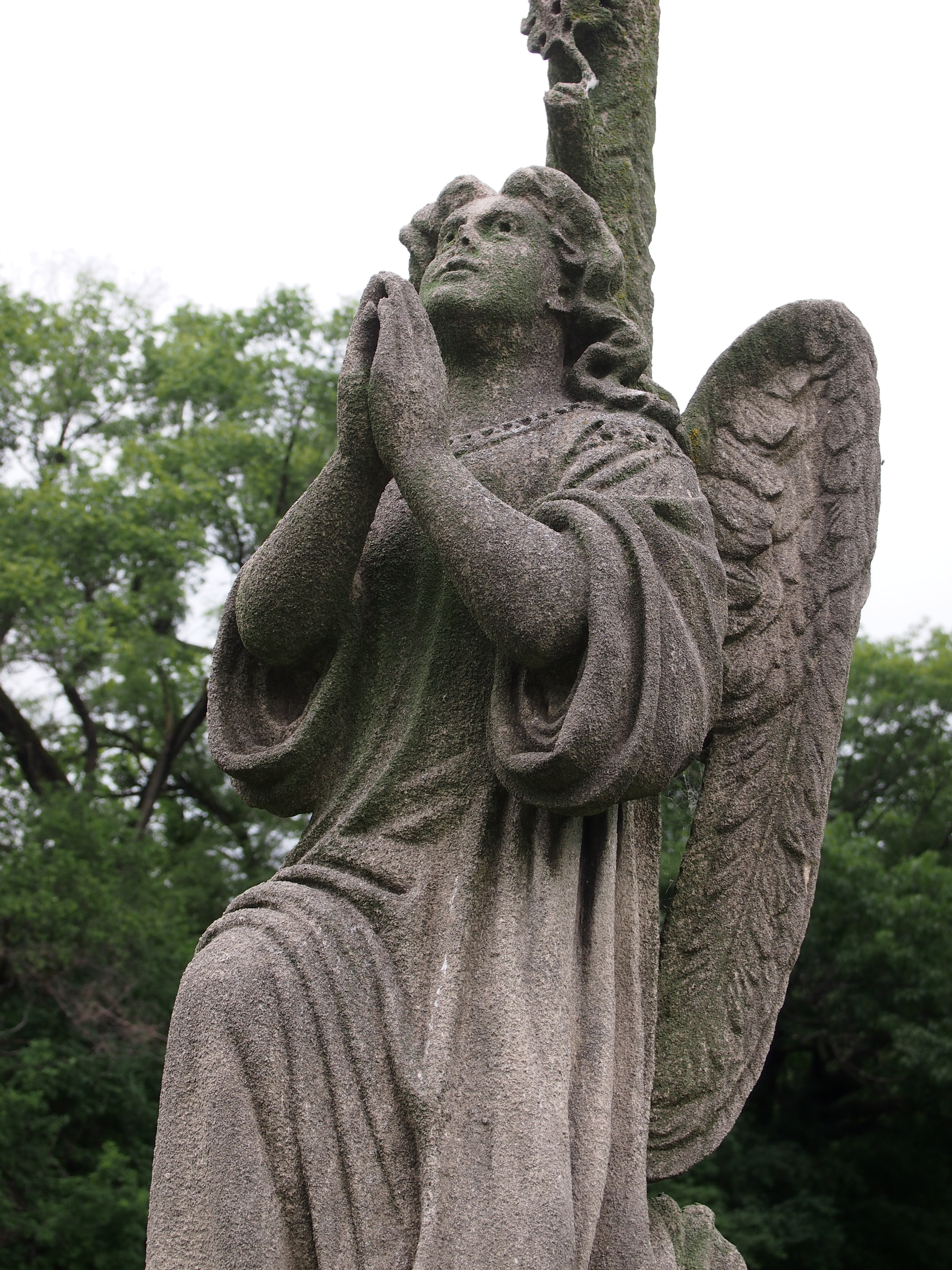
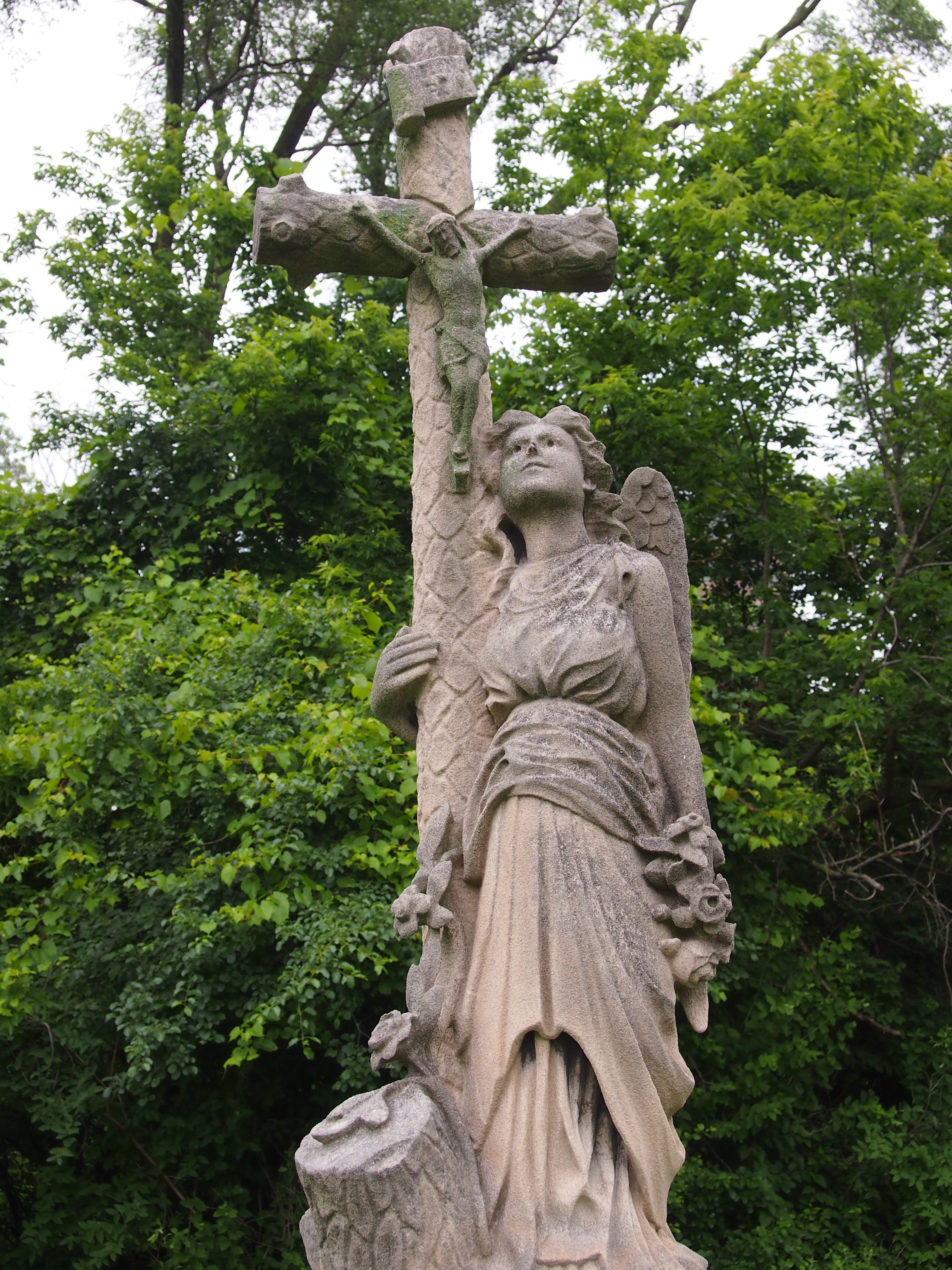
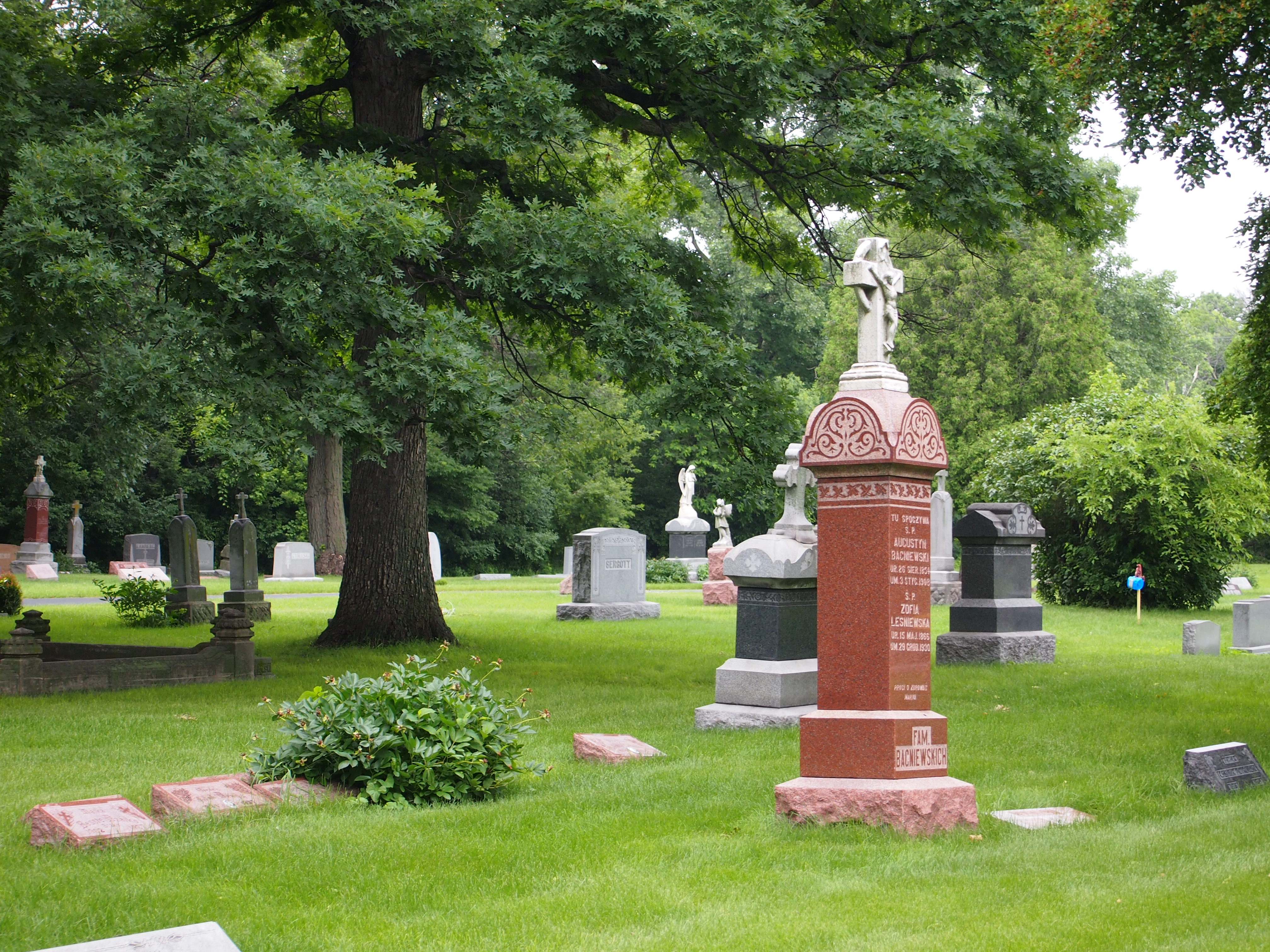
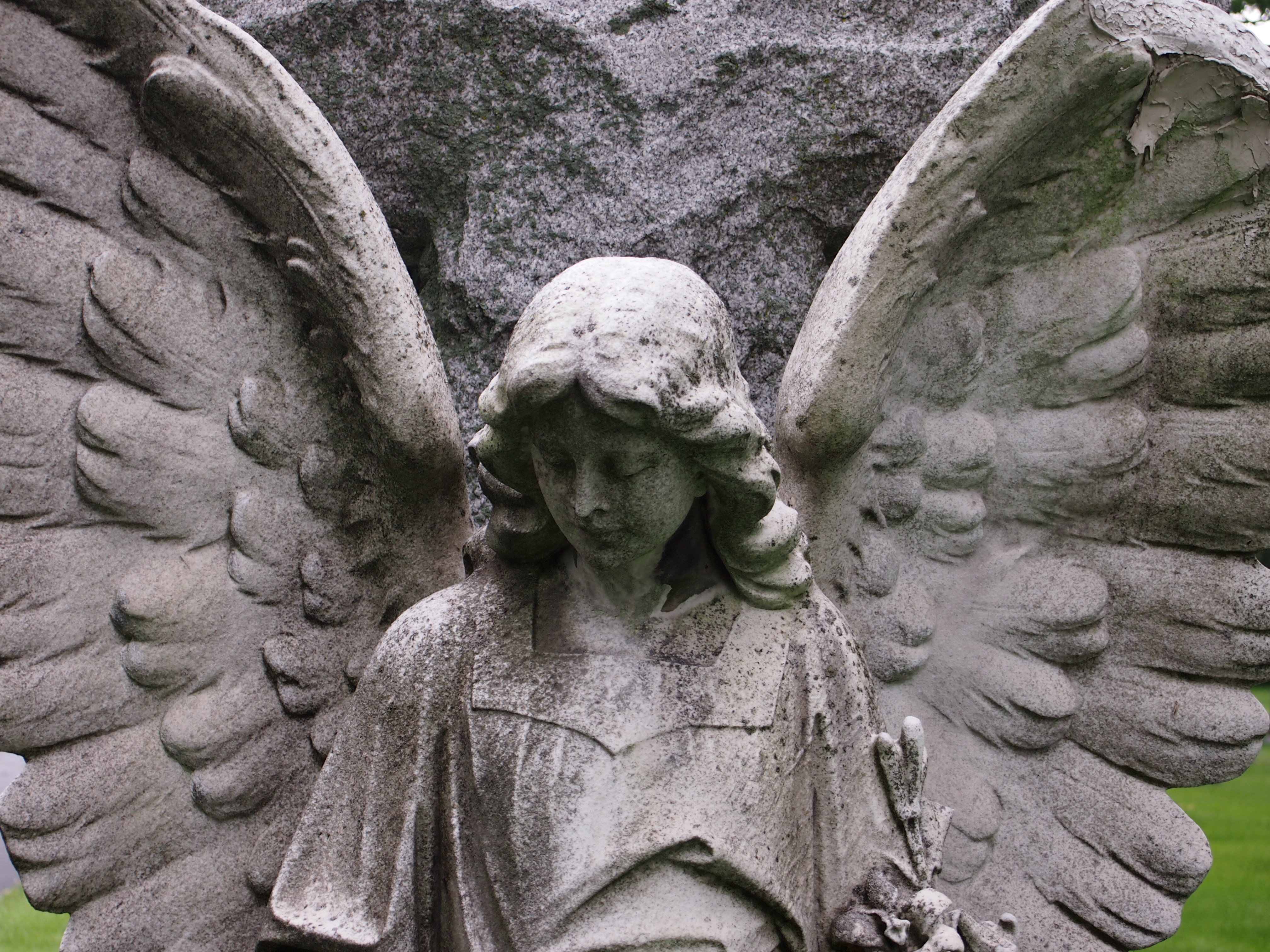
The All Saints Cathedral Polish National Catholic Church Cemetery near O’Hare doesn’t have the most elaborate examples of funerary art that I’ve ever seen, but there are some nice ones there.

Most a bit worn by the elements, and darkened by air pollution.

But they’re still standing in the places that family members, themselves probably long gone now, put them.

Most of the names on the stones are Polish, as you’d expect, but a sprinkling of non-Poles reside at the cemetery, too. Because it’s a cemetery, there are clearly sad stories beneath the stones. Such as that of Doris Jean Putynkowski, whose stone is simply marked 1925-1925. A family named Deal has a column indicating long lives for Robert (1920-2009) and Jean (1921-2008), but not so much for Jeffrey, whom I presume is their son: 1951-1999.

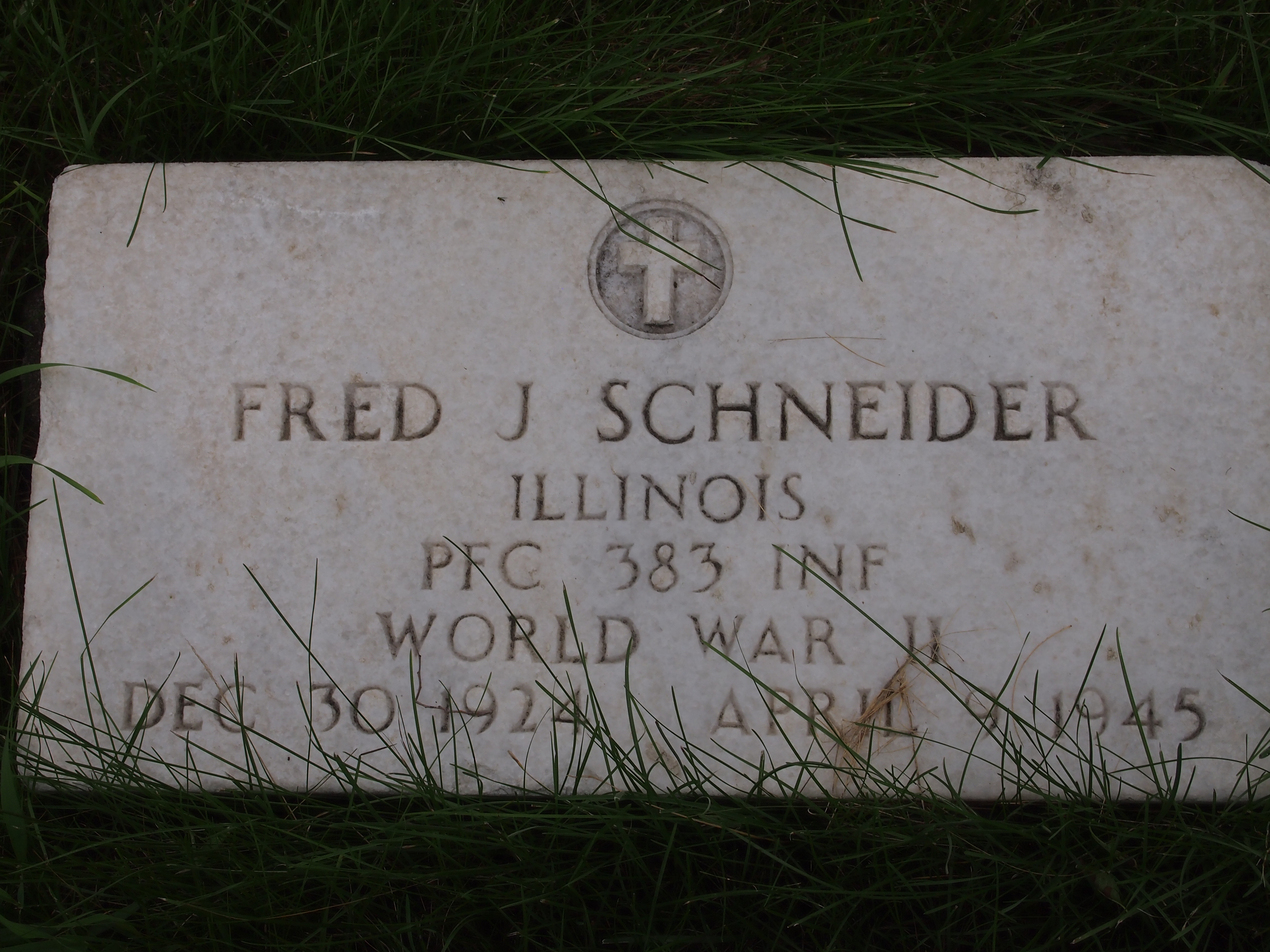
In contrast to the large funerary art, there were a handful of veterans’ stones, including this one.

It’s easy to look up in our time. The 383rd Infantry was part of the Okinawa campaign, so we can be sure that’s where PFC Schneider gave his last full measure of devotion.

All Saints Cathedral Polish National Catholic Church Cemetery

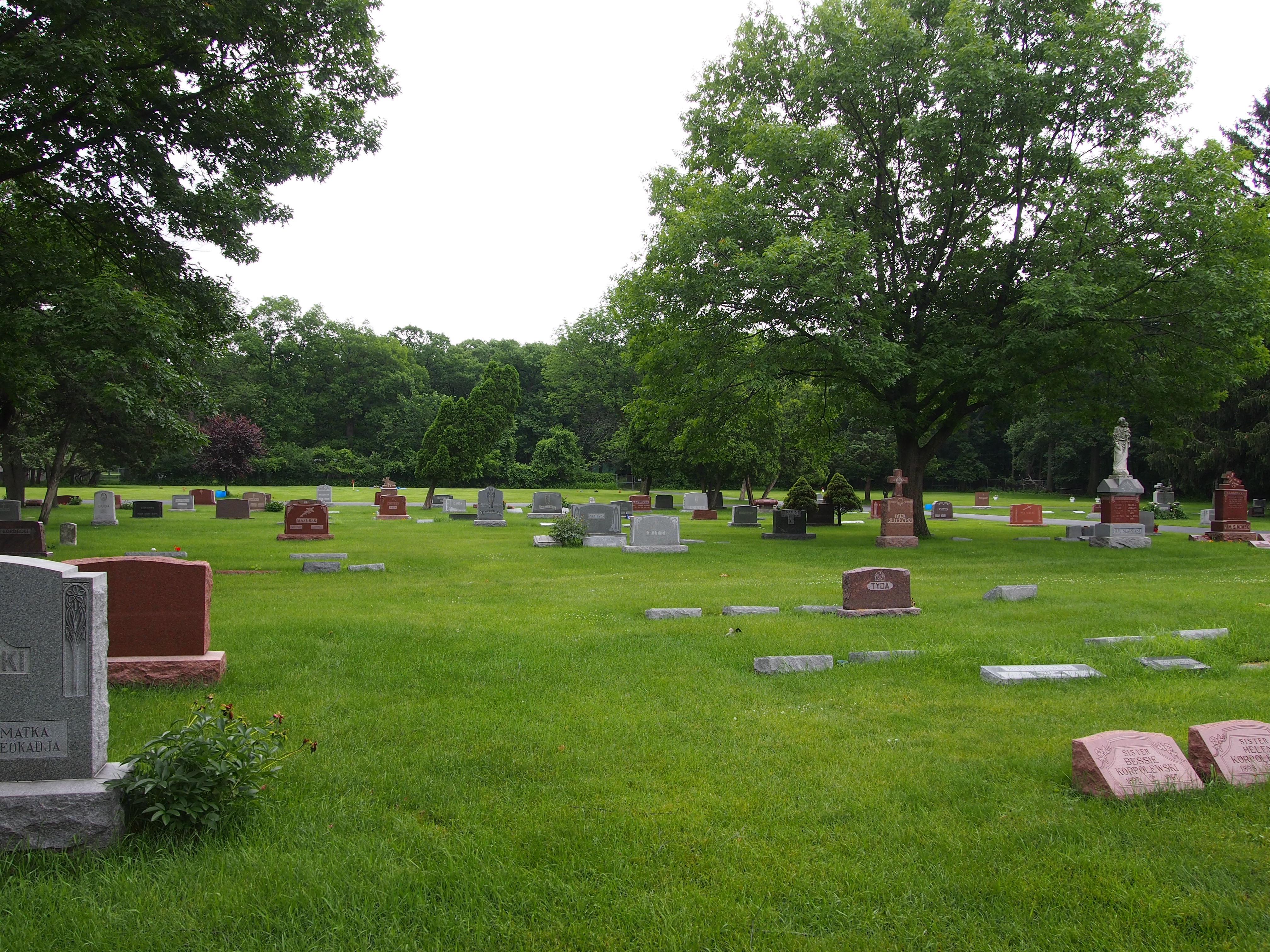
The Cathedral of All Saints of the Polish National Catholic Church happens to be on Higgins Road in extreme northwestern Chicago these days, though it was once deeper in the city. I happened to drive past the current site today, and decided to visit its cemetery, a patch of land behind the church, verdant and quiet in the late morning.

Or at least as quiet as a place can be tucked near the junction of the Tri-State Tollway (I-294) and I-90, and within two miles of the runways at O’Hare. In fact, activity is all around the area, at hotels, restaurants, bars, entertainment venues, a casino, a convention center, and more – the town of Rosemont, which is right next door, has all that.

The cemetery has trees and bushes and grass and flowers and stones. Except for a groundsman, I was the only living person there.


The Big March Snow

Snow! Not much more to report on this March 5. Both elementary and high schools were closed, even though the snowfall really didn’t get under way until late in the morning, and Yuriko stayed home too. When the snow started to fall, it came with gusto. But not much wind. Just steady snow, hour after hour.

I didn’t get around to shoveling until about 8:30. After dark, but with light bouncing off the snow, it wasn’t that dark. There must be two feet on the ground now, counting this snow and the previous buildups.

March snows aren’t that strange, but ones so vigorous are a little uncommon. The last time I remember so much coming down this month was in early March 1998. We had so much that we postponed out meeting with the home inspector at the house we would eventually buy in Westmont that year.

The Chicago Time Zone Plaque

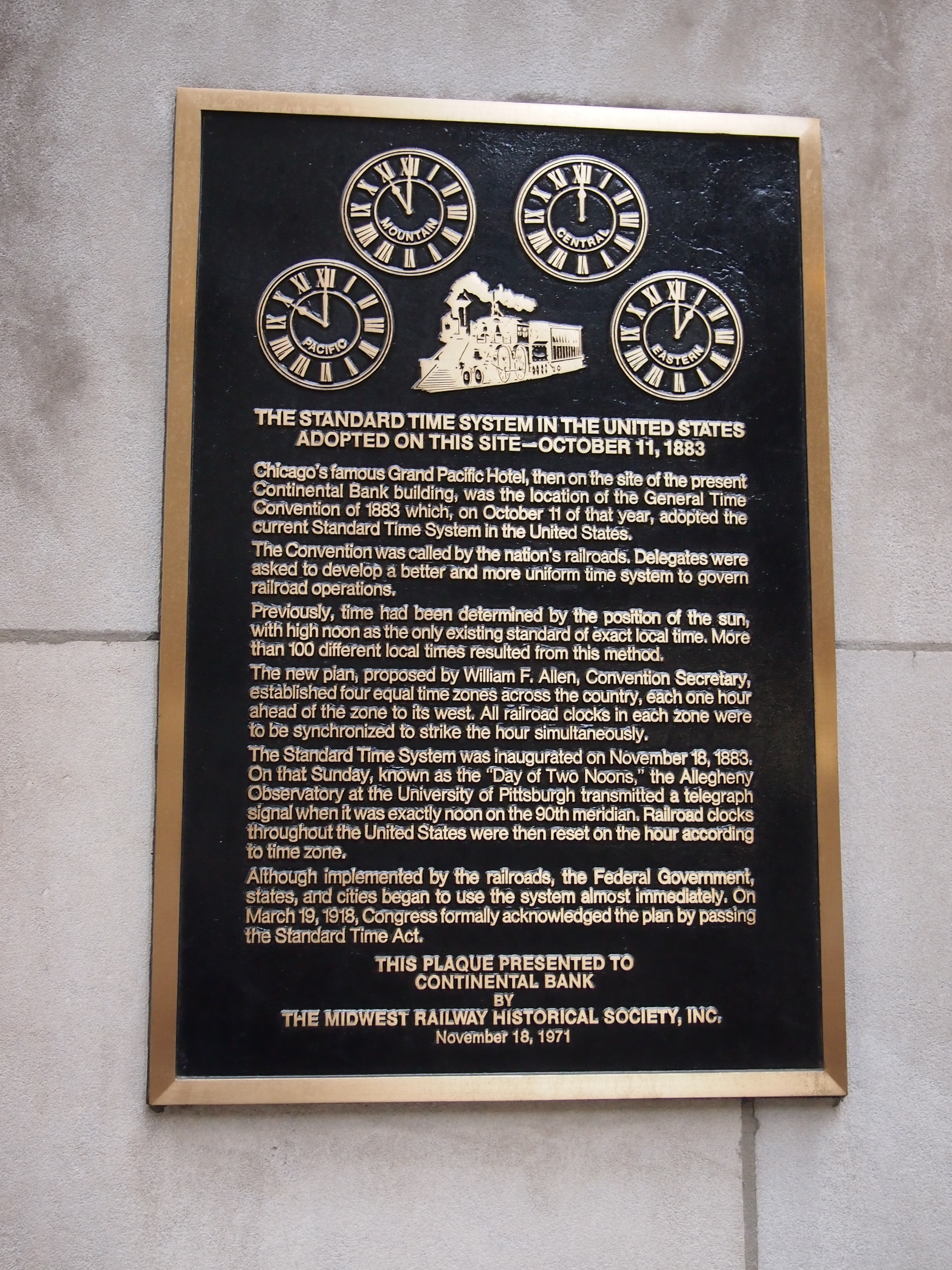
One more item from downtown Chicago, at least until the next time I go there. This plaque, near the junction of LaSalle and Jackson for over 40 years now, memorializes something few people give much thought — few people give it the time of day, you might say. Time zones.THE STANDARD TIME SYSTEM IN THE UNITED STATES ADOPTED ON THIS SITE — OCTOBER 11, 1883.

Chicago’s famous Grand Pacific Hotel, then on the site of the present Continental Bank building, was the location of the General Time Convention of 1883 which, on October 11 of that year, adopted the current Standard Time System in the United States.

The Convention was called by the nation’s railroads. Delegates were asked to develop a better and more uniform time system to govern railroad operations.

Previously, time had been determined by the position of the sun, with high noon as the only existing standard of exact local time. More than 100 different local times resulted from this method.

The new plan, proposed by William F. Allen, Convention Secretary, established four equal times zones across the country, each one hour ahead of the zone to its west. All railroad clocks in each zone were to be synchronized to strike the hour simultaneously.

The Standard Time System was inaugurated on November 18, 1883. On that Sunday, known as the “Day of Two Noons,” the Allegheny Observatory at the University of Pittsburgh transmitted a telegraph signal when it was exactly noon on the 90th meridian. Railroad clocks throughout the United States were then reset on the hour according to the time zone.

Although implemented by the railroad, the Federal Government, states, and cities began to use the system almost immediately. On March 19, 1918, Congress formally acknowledged the plan by passing the Standard Time Act.

CBOT Allegories

More snow this afternoon. In fact, more than any other storm this winter so far, and it’s still falling. This can mean only one thing: shoveling soon.

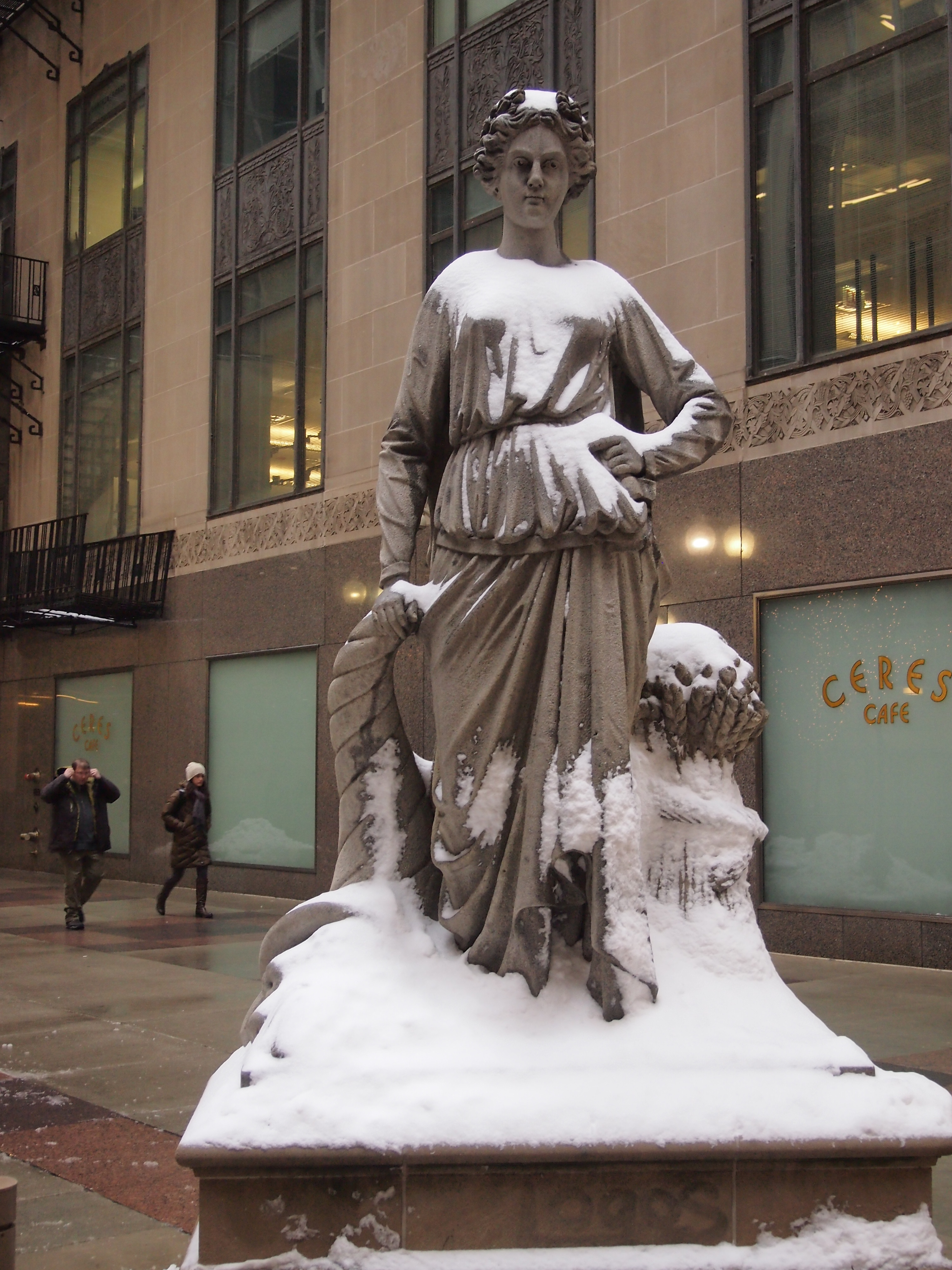
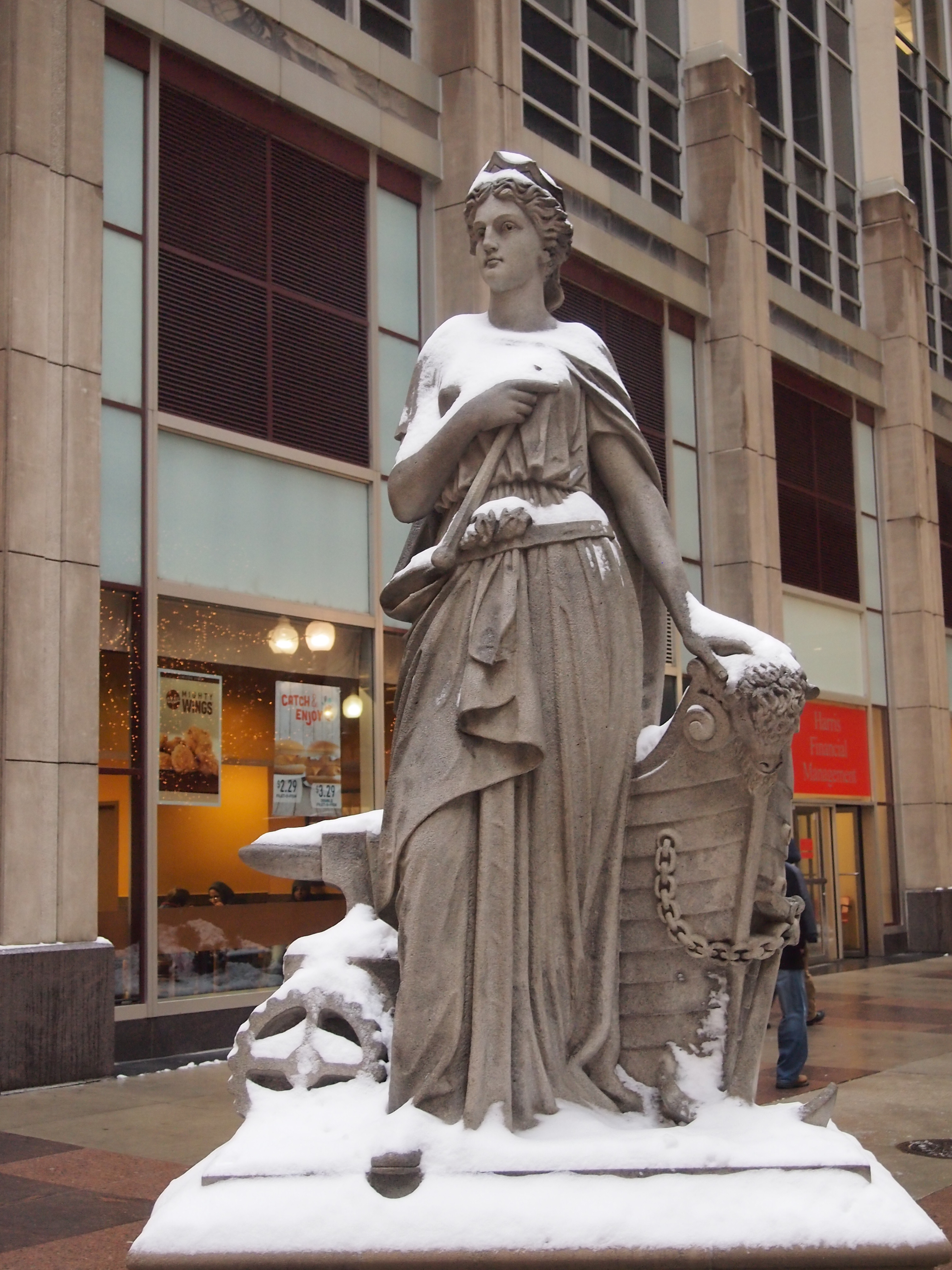
Last week I took a look at these downtown ladies – 12-foot granite ladies who weigh a remarkable 5.5 tons each, festooned with last week’s snow. They can be found in the plaza outside the Chicago Board of Trade.

First, Agriculture. Note Ceres Cafe in the background.

Next, Industry.

Allegorical statues, that’s what this country needs more of. A nearby plaque explains: “These two statues, one symbolizing agriculture and the other industry, once stood at the main entrance of the Board of Trade Building, built in 1885. The statues greeted commodity traders and the public for 45 years. Thought lost forever when the buildings were demolished in 1929 to make way for the exchange’s current Art Deco structure, in 2005, the statues were graciously returned to their origins through the generosity and goodwill of DuPage County Forest Preserve District.”

A 2004 Tribune article says: “The statues turned up in 1978, lying on their sides in grass, when the DuPage Forest Preserve District bought the former estate of Arthur Cutten, a wealthy CBOT grain trader in the early 1900s. For about the past decade, they’ve stood watch over the parking lot to the Danada Forest Preserve District in Wheaton.”

Jewelers Row, Chicago

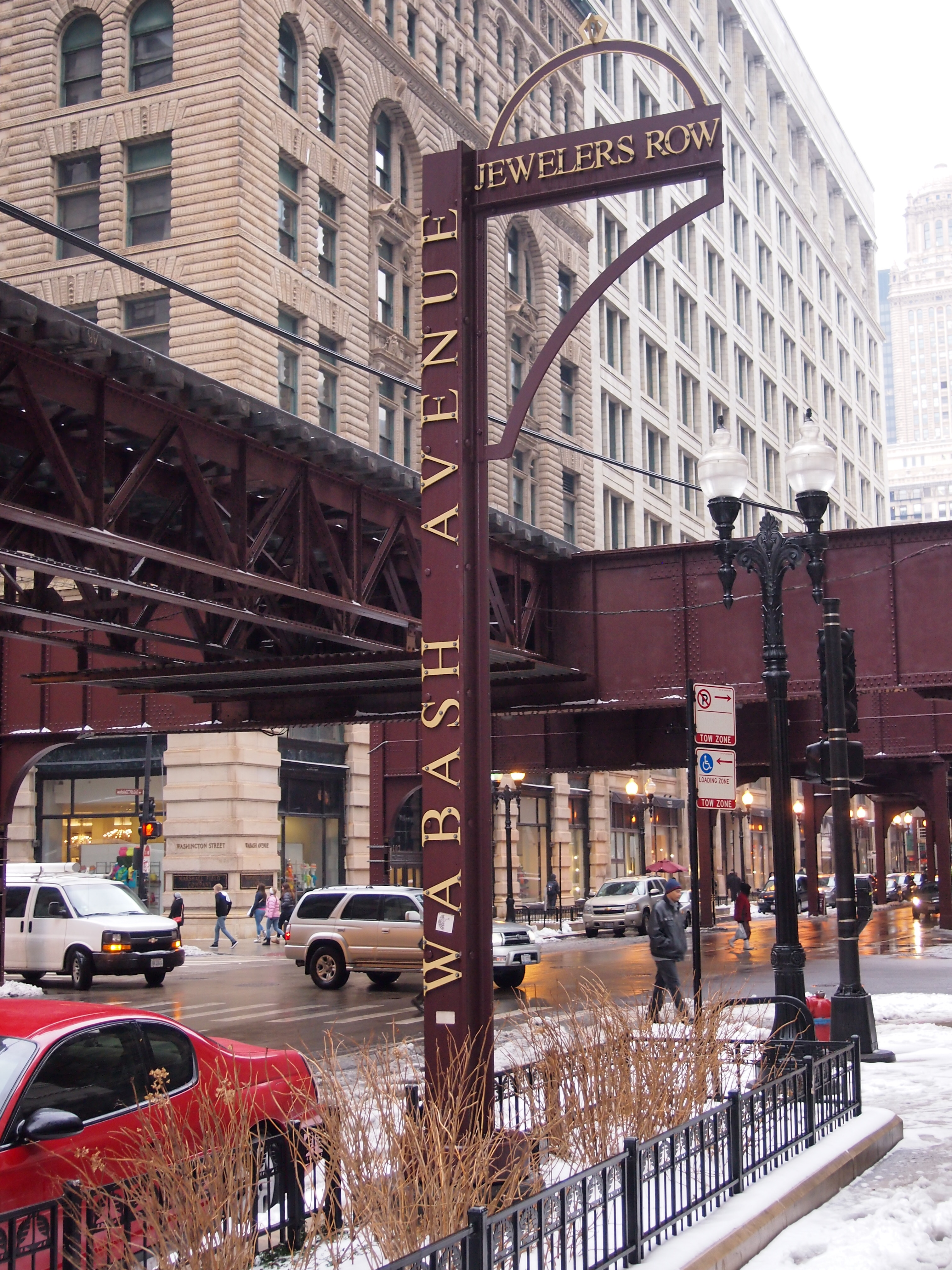
Since I don’t go downtown regularly anymore, I miss new things that appear there. I’m not sure when these signs went up on Wabash Ave., but I don’t remember seeing them before. It could have been several years ago for all I know. I’m going to think of them as new anyway.

There are more than one of these gamma-like signs, with some on each side of the street, though I didn’t make an exact count. It’s more than just an historical marker, since there’s still a concentration of jewelry stores along that stretch of Wabash from Washington to Monroe. Jewelry makers and sellers, silver specialists, and watch makers have clustered in the area for about 100 years.

It’s an historical district for its buildings. According to the City of Chicago: “Comprised of a distinguished group of buildings important in the development of Chicago commercial architecture, the district includes important building types such as post-Chicago Fire loft manufacturing buildings, Chicago School loft manufacturing, mercantile, and office buildings, early twentieth-century skyscrapers, and Art Deco-style mercantile buildings. These buildings were designed in a variety of architectural styles, including Italianate, Chicago School, and Art Deco, by significant Chicago architects, including John Mills Van Osdel, Hill & Woltersdorf, Adler & Sullivan, D. H. Burnham & Co., Holabird & Roche, Alfred Alschuler, Christian Eckstorm, and Graham, Anderson, Probst & White.”

Note that the sign is brown, to match the paint on the elevated tracks nearby. I think that paint job is new, too, since I seem to remember the El tracks being faded yellow covered with the grim of decades, but maybe I’m just imagining that.

Heaven on Seven ’13

Snow fell on Thursday night all right, but not enough to stop anyone from normal tasks on Friday. Workers went to work, kids went to school, and I commuted downstairs to file a couple of things, including my podcast. Then I went downtown to meet some old friends for lunch at Heaven on Seven, which I’ve mentioned before (and I met the same old friends, only we’re all a little older).Heaven on Seven

It’s got lively decorations. Mardi Gras is over, but it always looks a little like Mardi Gras at Heaven on Seven. The only reason it’s mostly empty is because we met there at 2:30. Every other time I’ve been has been closer to noon, when there’s a wait for a table.Heaven on Seven

I didn’t take any pictures of my food. I can’t say I’ve never done that, but mostly I skip it. Somehow Look at what I ate! doesn’t appeal to me. I had some red beans & rice, hoppin’ john, collard greens, and andouille sausage, with gumbo on the side. All that might not have made a good photo, but it made a good lunch.

Lakeshore East Park

I attended an event recently at the Swissôtel Chicago, which is downtown east of Michigan Ave. When it was over, instead of emerging from the front of the hotel on Wacker Dr., I exited at by a back door, planning to walk to Union Station. It had been a long time since I’d walked through the East Loop. So long, in fact, that I’d never seen this park.

Lakeshore East Park, the centerpiece of a mixed-use redevelopment called Lakeshore East — note the residential properties ringing the park. I reported on its beginnings about 10 years ago, but hadn’t thought much about it since my old magazine, Real Estate Chicago, went under. The developers managed to finish a lot of Lakeshore East before commercial development mostly ground to a halt in 2008, but not all of the proposed buildings. The six-acre park park opened in 2005. Needs a snappier name, I think.

Supposedly it’s the only Chicago park with a free wireless signal, but I didn’t test that. February’s about the worst time to linger in a park. No one else was around, either. Bet the place will be busier as it greens up.

This fountain ought to be running by then, too.

This tray of rocks is one of several along a sidewalk running through the park. I expect water will return when it’s warm enough not to freeze.