Milwaukee Doors Open ’18

We went to Milwaukee on Saturday for this year’s Milwaukee Doors Open, a fine event that more cities in this country would do well to emulate. Doors Open and Open House have a fair number of participating cities around the world, but by my count only Atlanta, Chicago, Denver, Milwaukee, Lowell, Mass., and New York in the U.S.
Last year during the event, we visited five Milwaukee churches and one secular building, City Hall. After visiting six churches just last week in Chicago, we took a break from religious sites and focused on other kinds of buildings: a theater, an arena, a former clubhouse that’s now an event venue, a library and a planetarium.

The Doors Open buildings weren’t the only things we saw. For instance, in downtown Milwaukee I noticed this memorial on the grounds of the Milwaukee Fire Dept. HQ, called “The Last Alarm.”Words on one side the plinth explained: Traditionally, in the Milwaukee Fire Department, when a fire fighter dies in the line of duty, his-her boots, topped by a fire fighting coat and helmet, are placed in the procession. As the funeral cortege of the fallen firer fighter approaches, the on-duty crew comes to attention and offers a final salute. This empty turnout gear not only symbolizes the missing fire fighter, but also the emptiness felt by family, friends, and fellow fire fighters who share the loss.
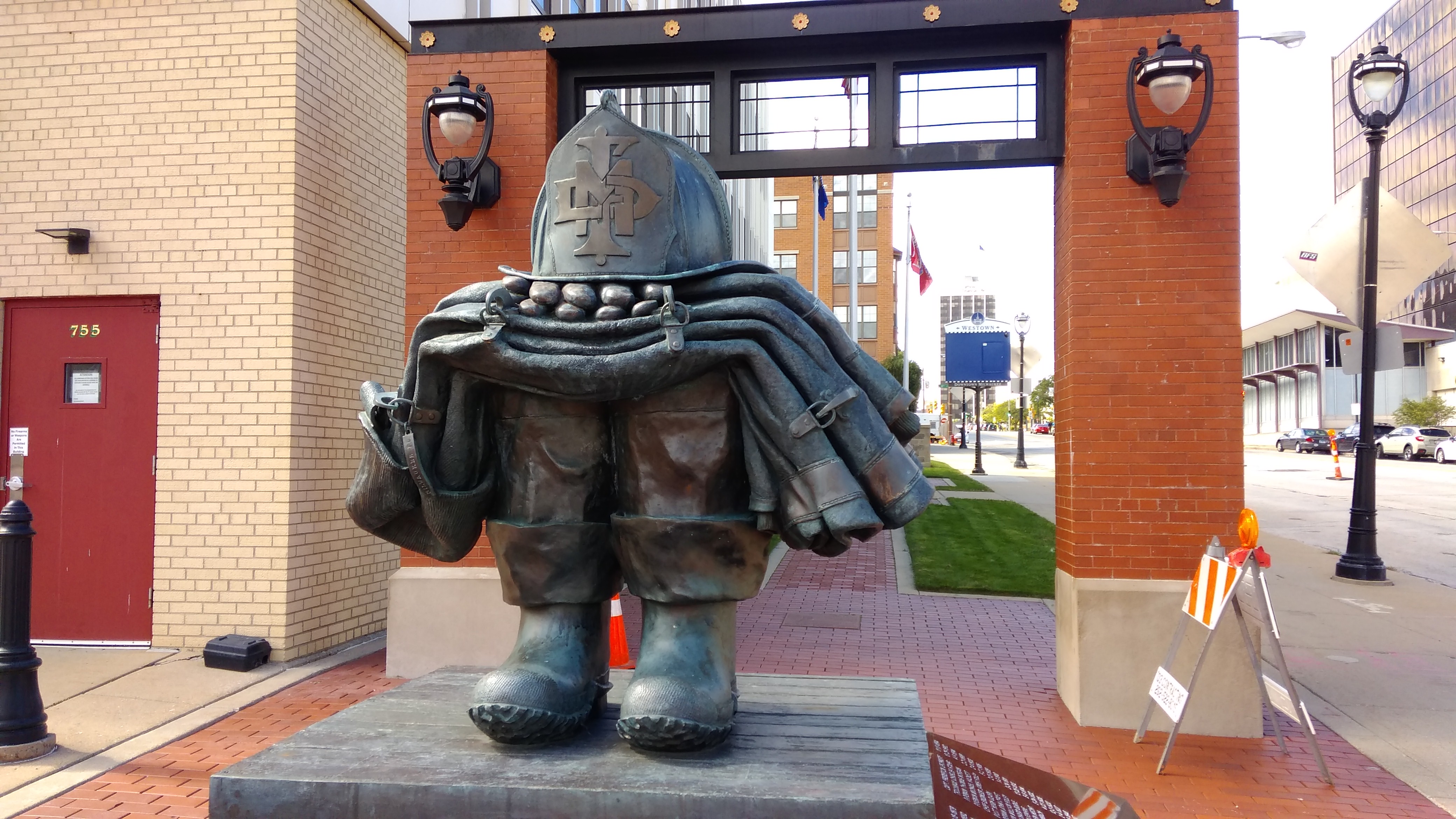
On another side of the plinth is a list of Milwaukee FD firefighters who died in the line of duty.

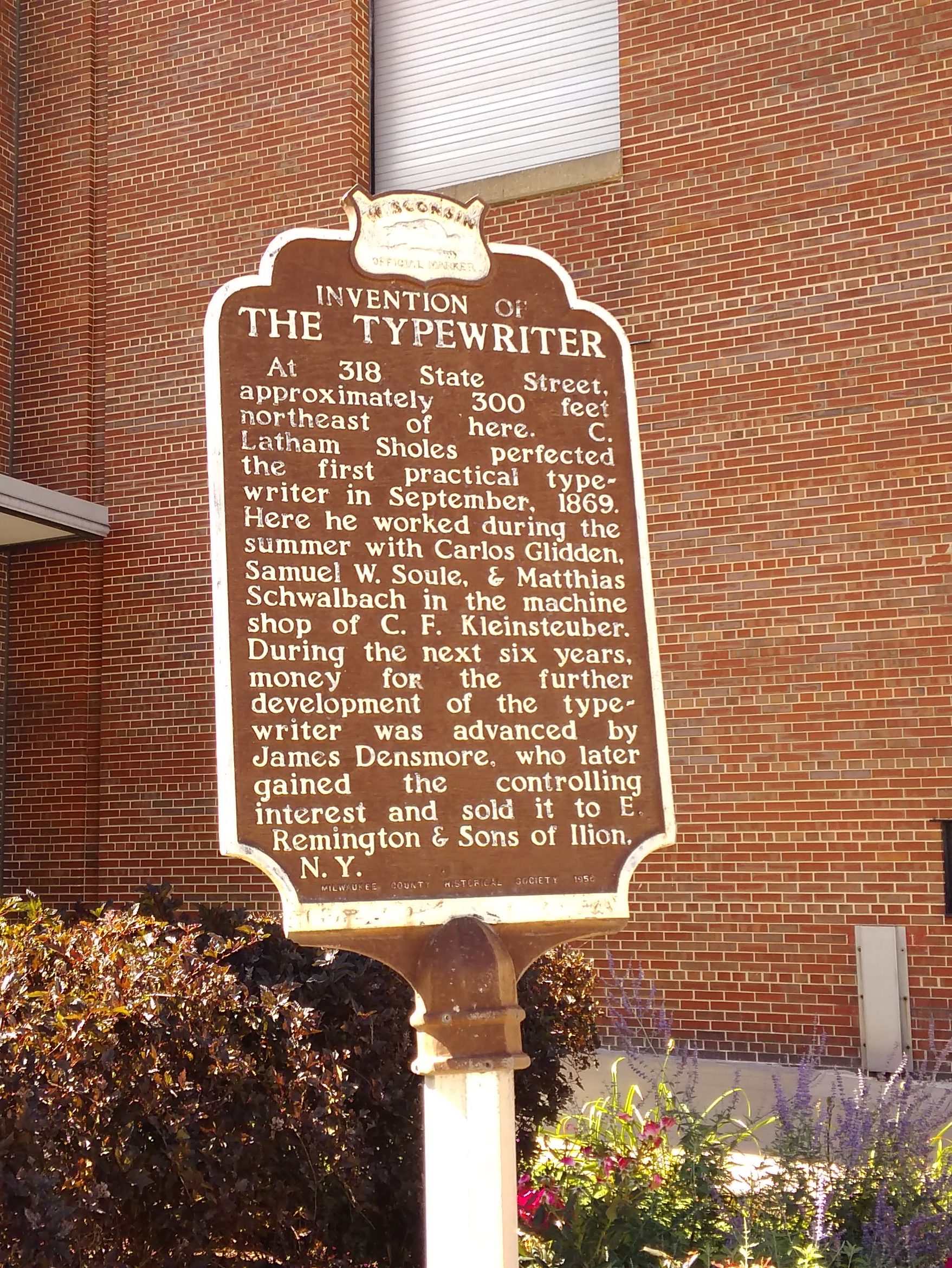
A few blocks away is an historical marker about the typewriter. It’s pretty much self-explanatory, at the least to the aging part of the population that grew up with typewriters.
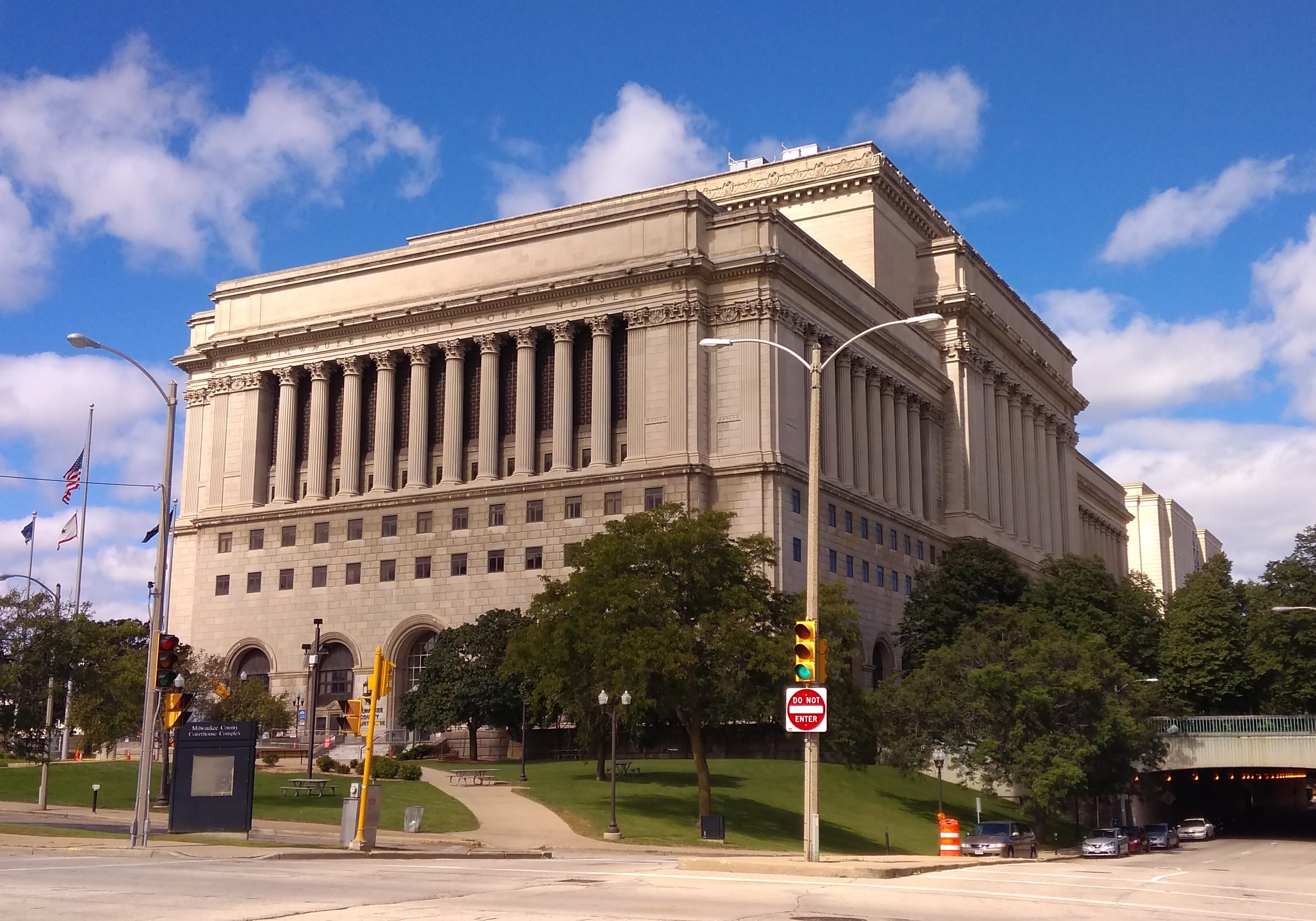
Also downtown is the Milwaukee County Courthouse, and imposing neo-classical edifice by McKim, Mead, and White, finished in 1931. From the east.
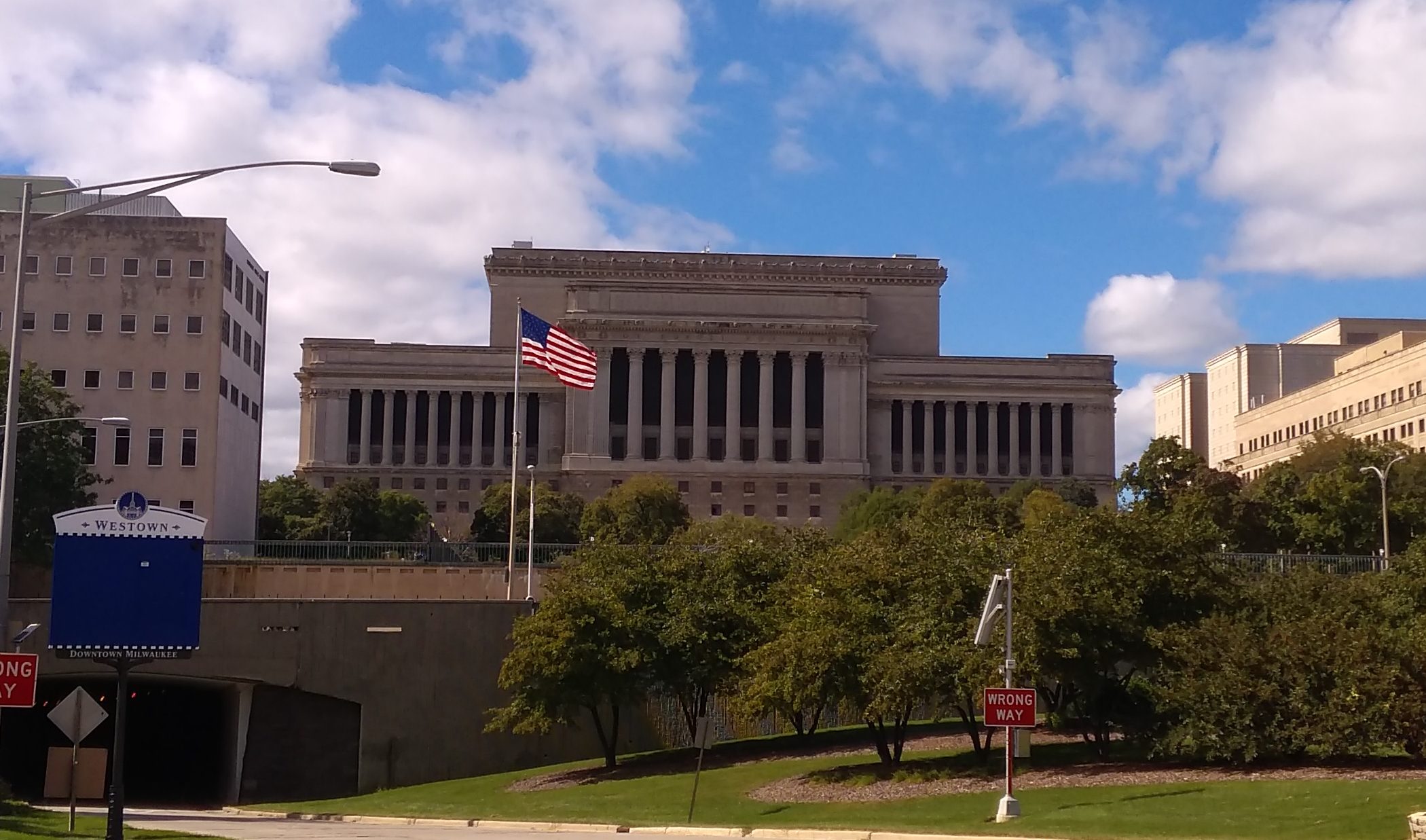
Another view, from the southeast, roughly.
In the afternoon, we left downtown to visit the campus of the University of Wisconsin- Milwaukee, which is in the northern reaches of the city, not far from Lake Michigan. Though not open for a tour, I thought this building was interesting.
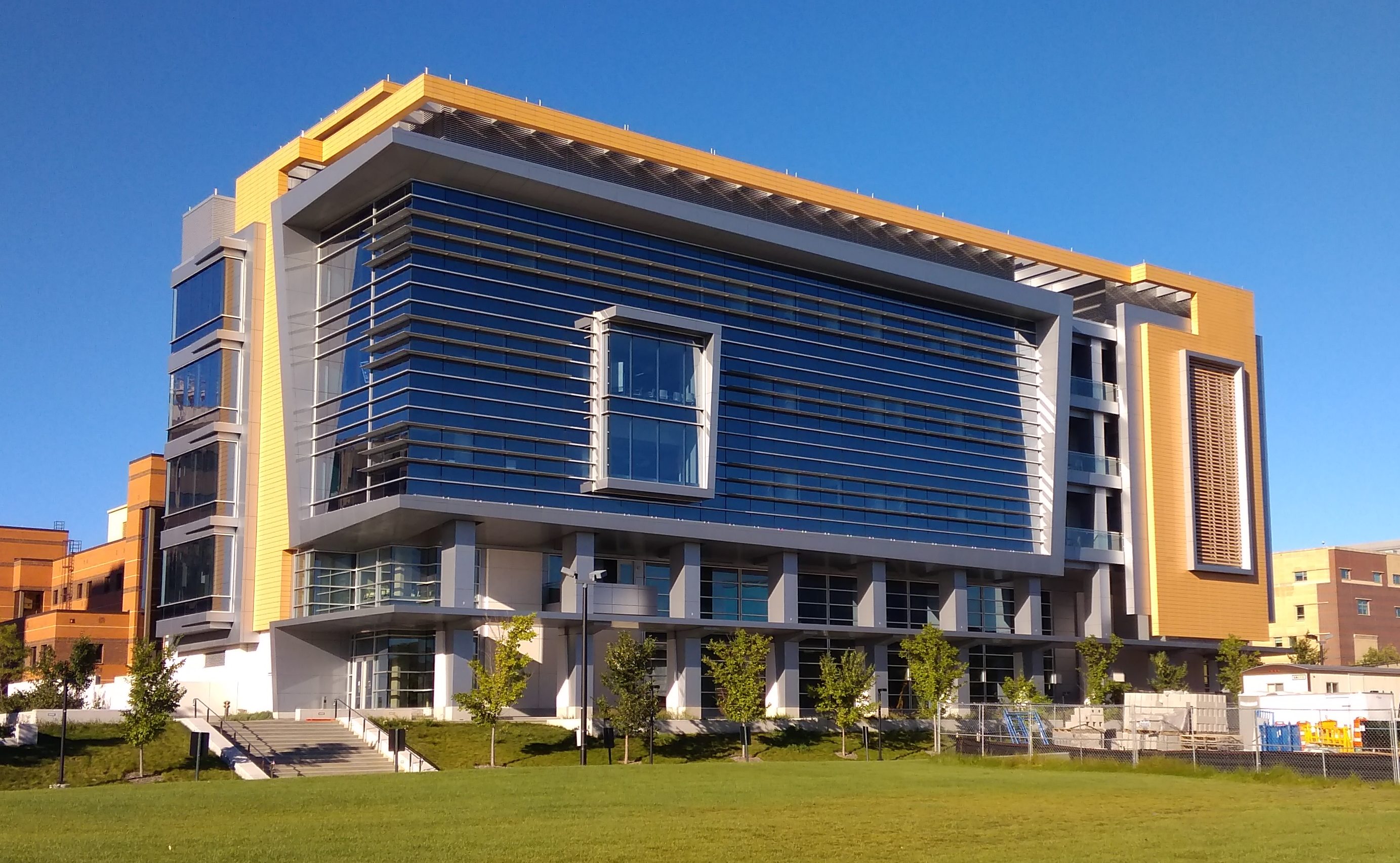
It’s the Kenwood Interdisciplinary Research Complex, which includes labs, classrooms, offices and meeting spaces for the university’s physics, chemistry and the Environmental Health Sciences doctoral program within the Zilber School of Public Health. Finished in 2015.

Postmodern, I suppose. According to Flad Architects, who designed it, “the exterior expression of yellow terracotta, exposed concrete and metal panels is rendered as an assemblage of components, a metaphor for the research and innovation happening within.” That is to say, pay attention, Science is happening here.

Not far away is a sizable concrete sculpture.

Not the most aesthetic assemblage of material, or even concrete, that I’ve ever seen. But it has a cool name: “Jantar-Mantar,” which I suppose is an homage to the astronomical observatories in India of that name, though without the hyphen. Erected in 1995.

Narendra Patel, who used to teach art at the university, is listed on the plaque as the sculptor, with the piece otherwise “created and completed through the hard work and direction of Dennis Manley and the following students of sculpture [lists 14 names].”

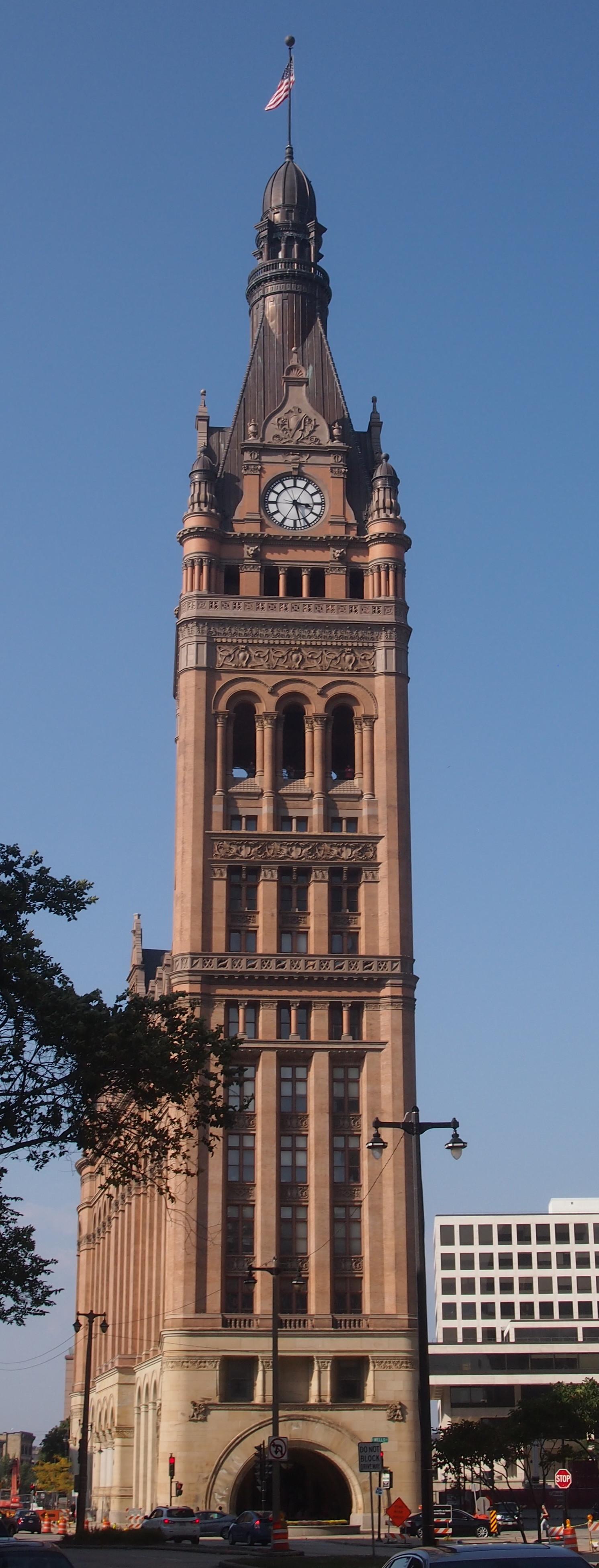
Milwaukee City Hall

After spending much of the day in churches, we ended Milwaukee Doors Open by visiting a structure of the state. More specifically, Milwaukee City Hall, which is as palatial in its way as any ornate church.

The view of the building from the corner of E. Kilbourn Ave. and N. Water St.

Milwaukee City Hall“From 1895 until 1899, the tallest inhabited structure in the world was Milwaukee’s City Hall, a building noted for its Flemish design and landmark qualities,” says the Wisconsin Labor History Society. “Towering more than 300 feet, it was a pioneering building in an era as elevators finally were becoming practical. The building’s design has been heralded and it still stands as a trademark [sic] of Wisconsin’s largest city.”
The clock tower, from Water St. south of E. Wells St.
Milwaukee City HallI didn’t realize until I read more about the building, designed by local architect Henry C. Koch, that City Hall was featured in the introduction of Laverne & Shirley, probably because I haven’t seen that show in nearly 40 years. At the time, large letters midway up the clock tower said WELCOME MILWAUKEE VISITORS. A nice sentiment, but déclassé on your city hall, and the letters were removed at some point.

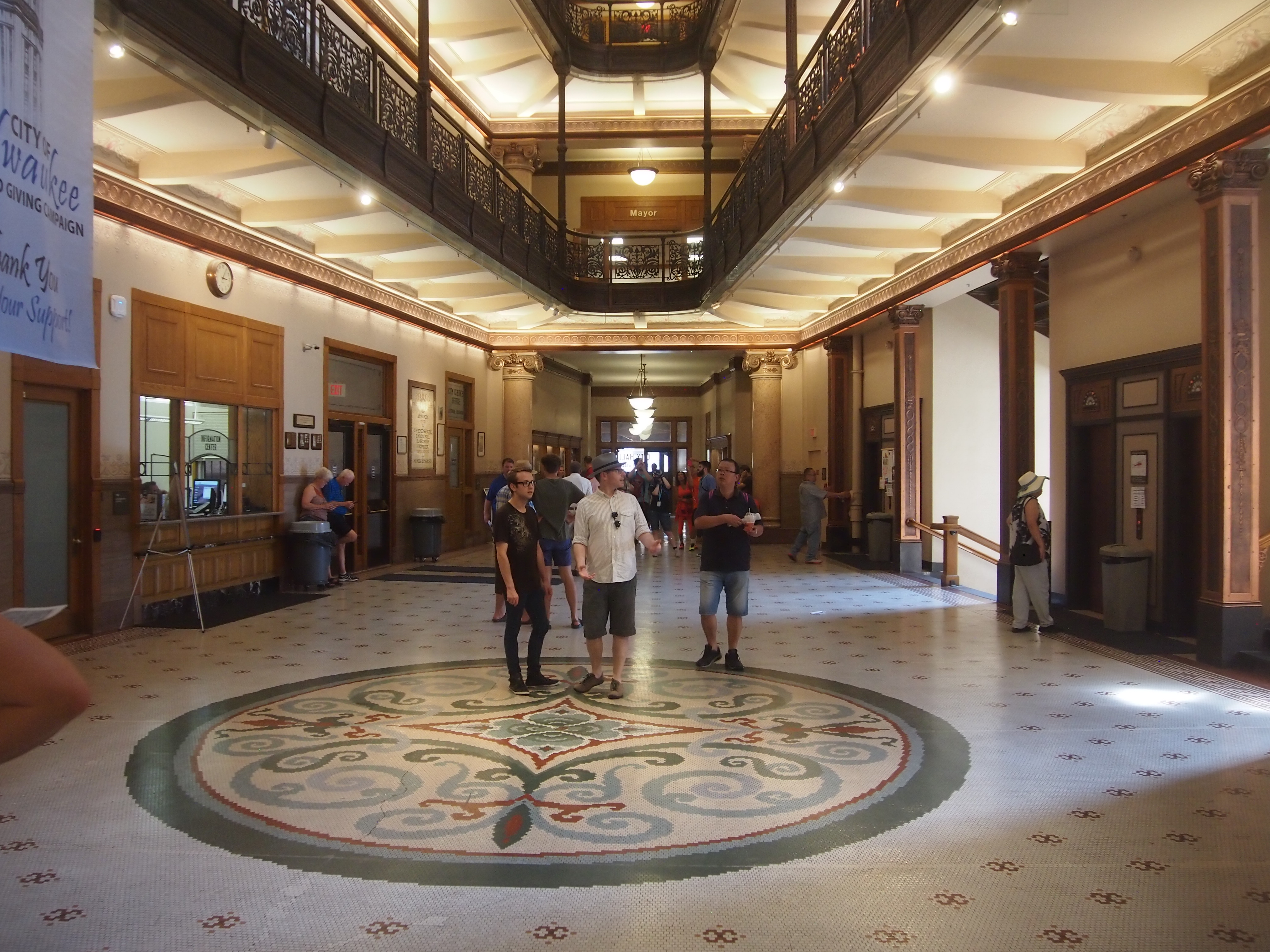
The first floor lobby offers a good first impression of interior.
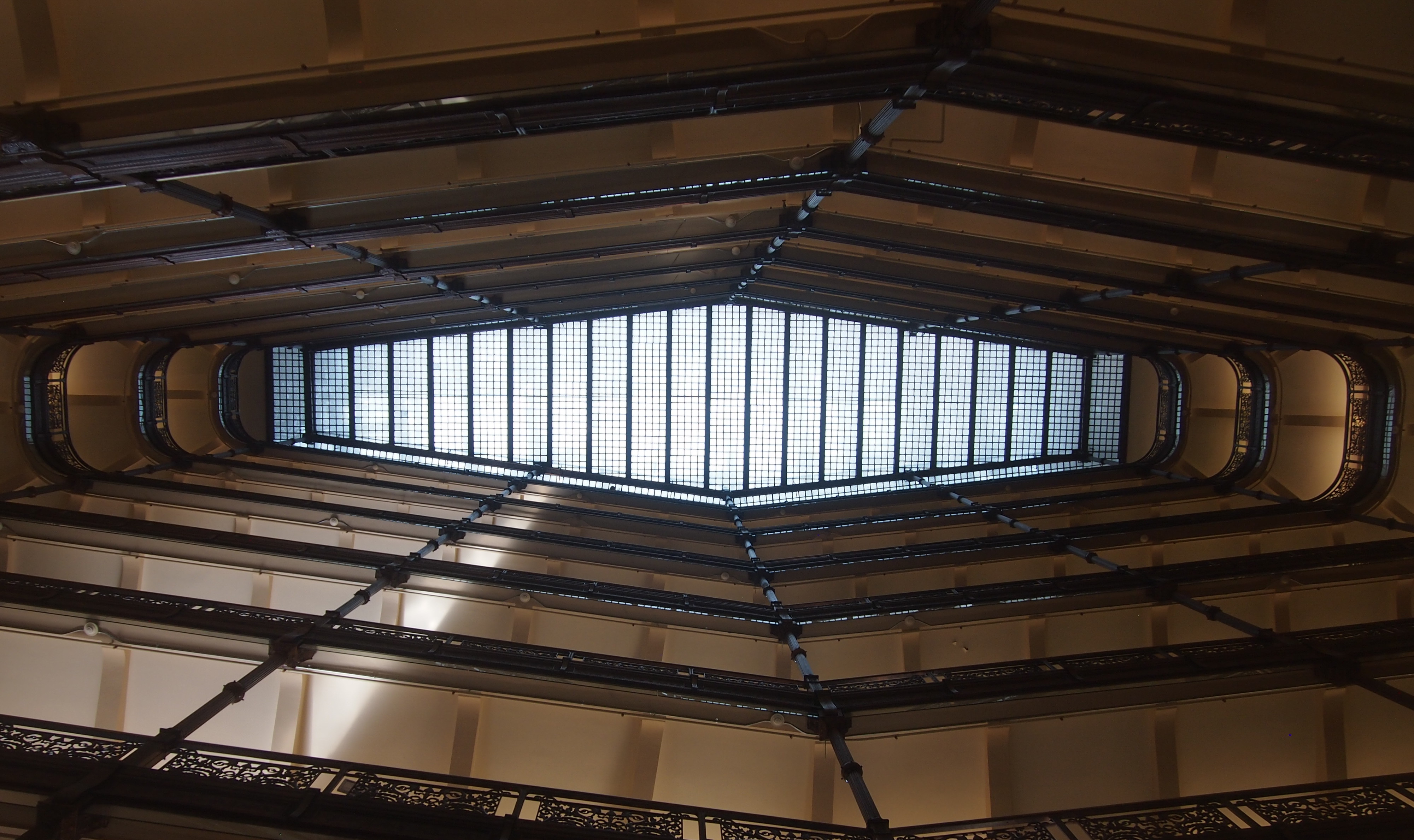
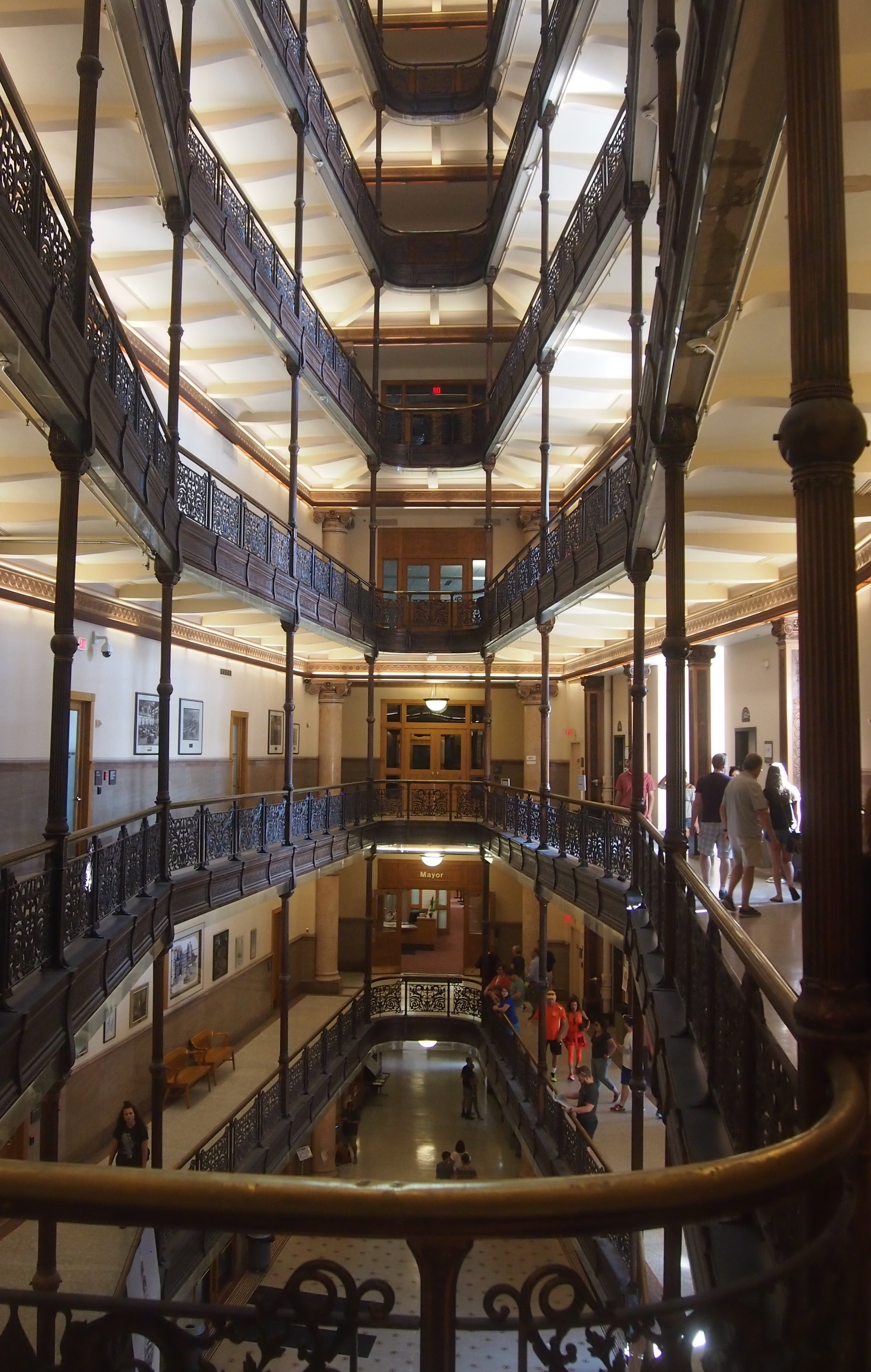
Milwaukee City Hall“The building was one of the first to feature an extensive open atrium, of 20 by 70 feet, rising eight stories in the building’s center,” the city’s web site says.
Milwaukee City Hall“During the Great Depression, seven people jumped to their deaths, and an eighth died of a stroke after one of the jumpers nearly missed him. Afterwards, in 1935, protective wiring was placed around the center rails of the floors to prevent accidents and suicides and remained in place until Mayor John O. Norquist took office in 1988.”

A view from the third floor, looking toward the mayor’s office on the second floor.
Milwaukee City Hall“The building measures 393 feet from the base of the bell tower to the top of the flagpole, making it Milwaukee’s sixth largest. The flagpole measures 40 feet in length.

“The 22,500-pound bell – named ‘Solomon Juneau’ after Milwaukee’s first mayor – was fabricated from melted copper and tin from old church and firehouse bells around the city, and was hoisted to the tower in 1896, first chiming on New Year’s Eve.

“While Milwaukee’s Allen-Bradley building (Rockwell Automation) features the world’s second largest four-sided clock, City Hall’s 18-foot clock was believed to be the world’s third largest when it was fabricated.”

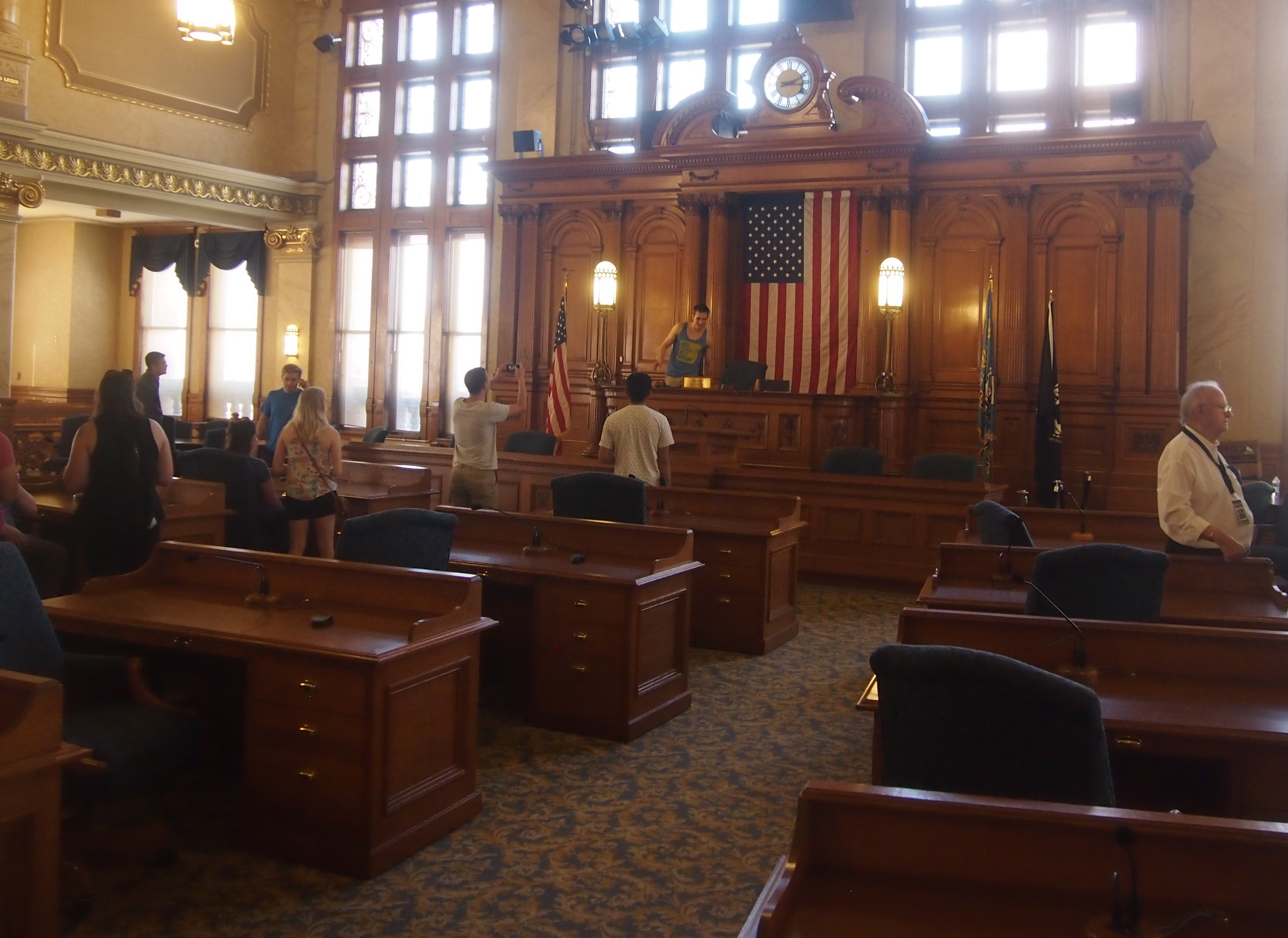
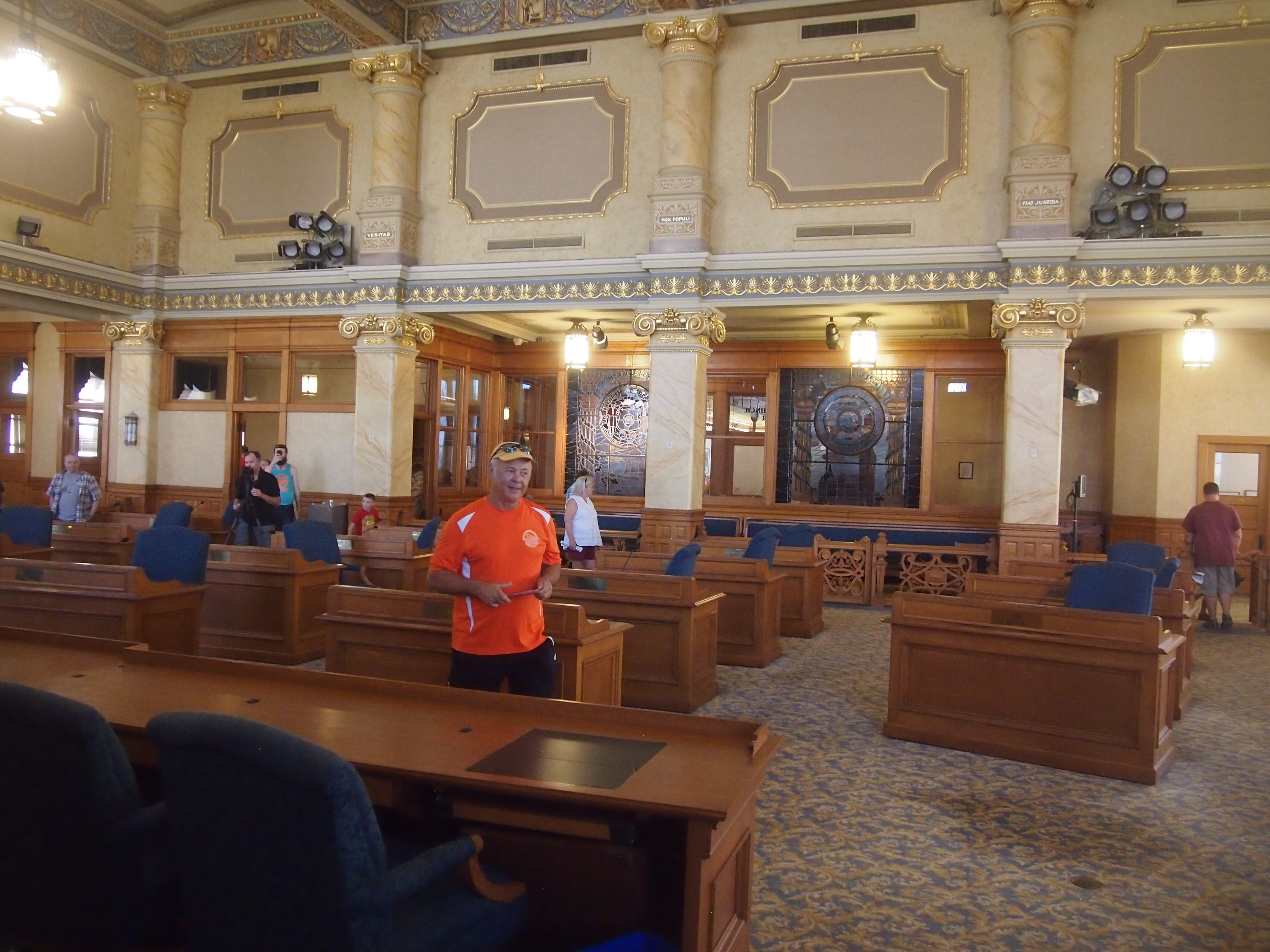
On the third floor is the Common Council chamber. A lot of natural light fills the room from behind the dais.

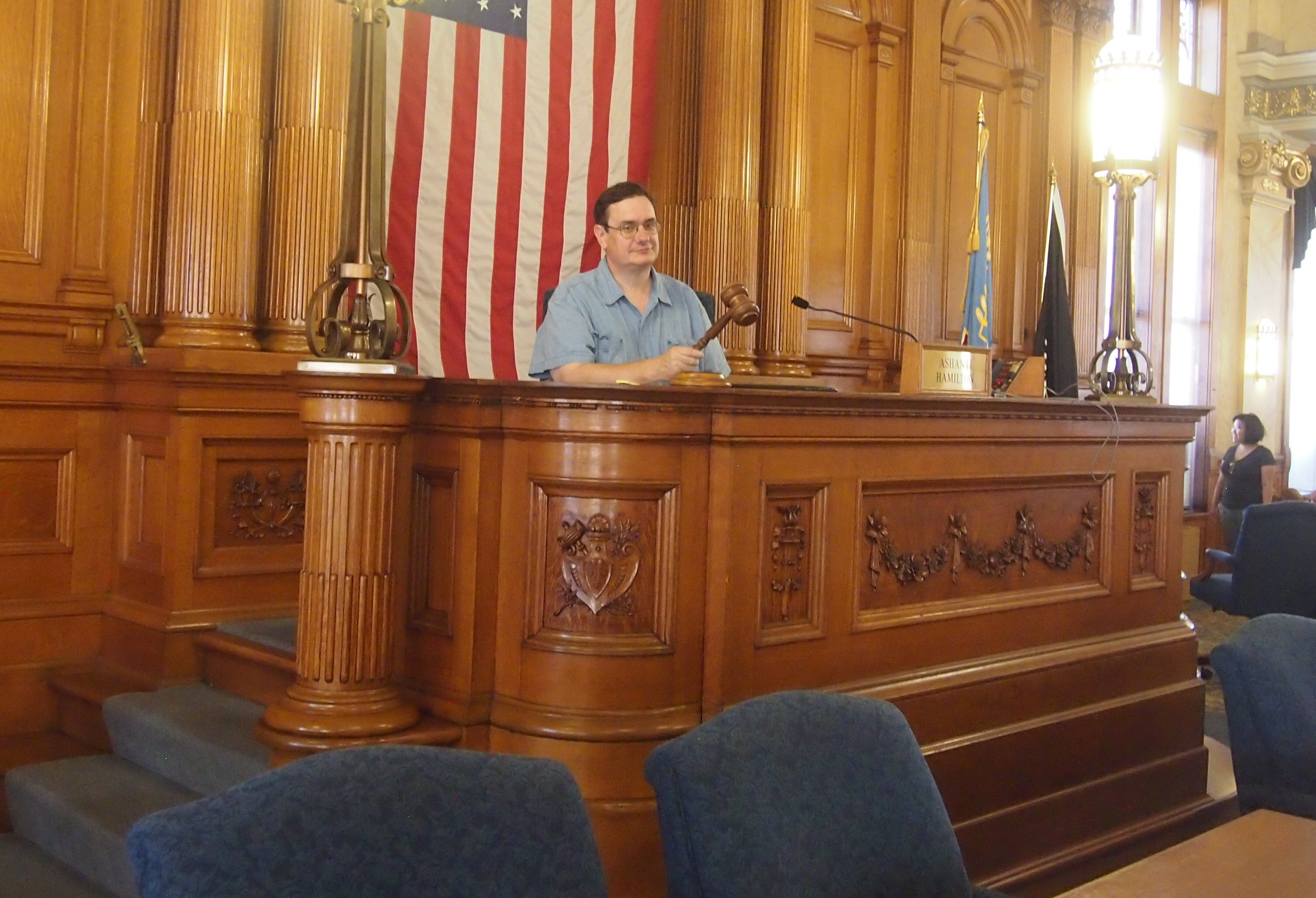
Milwaukee City HallMilwaukee City HallPeople were taking turns sitting at the dais, holding the gavel, so why not?
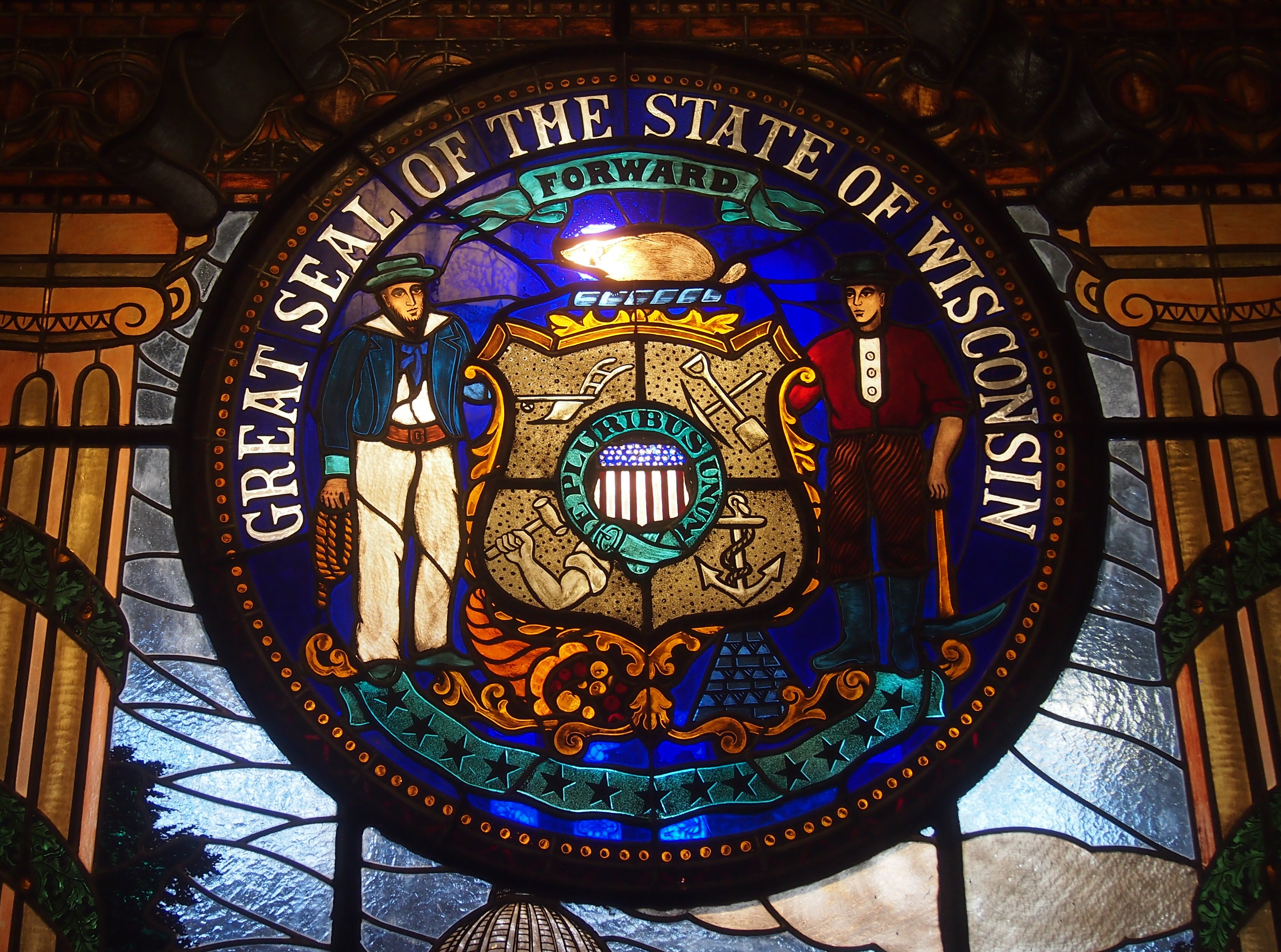
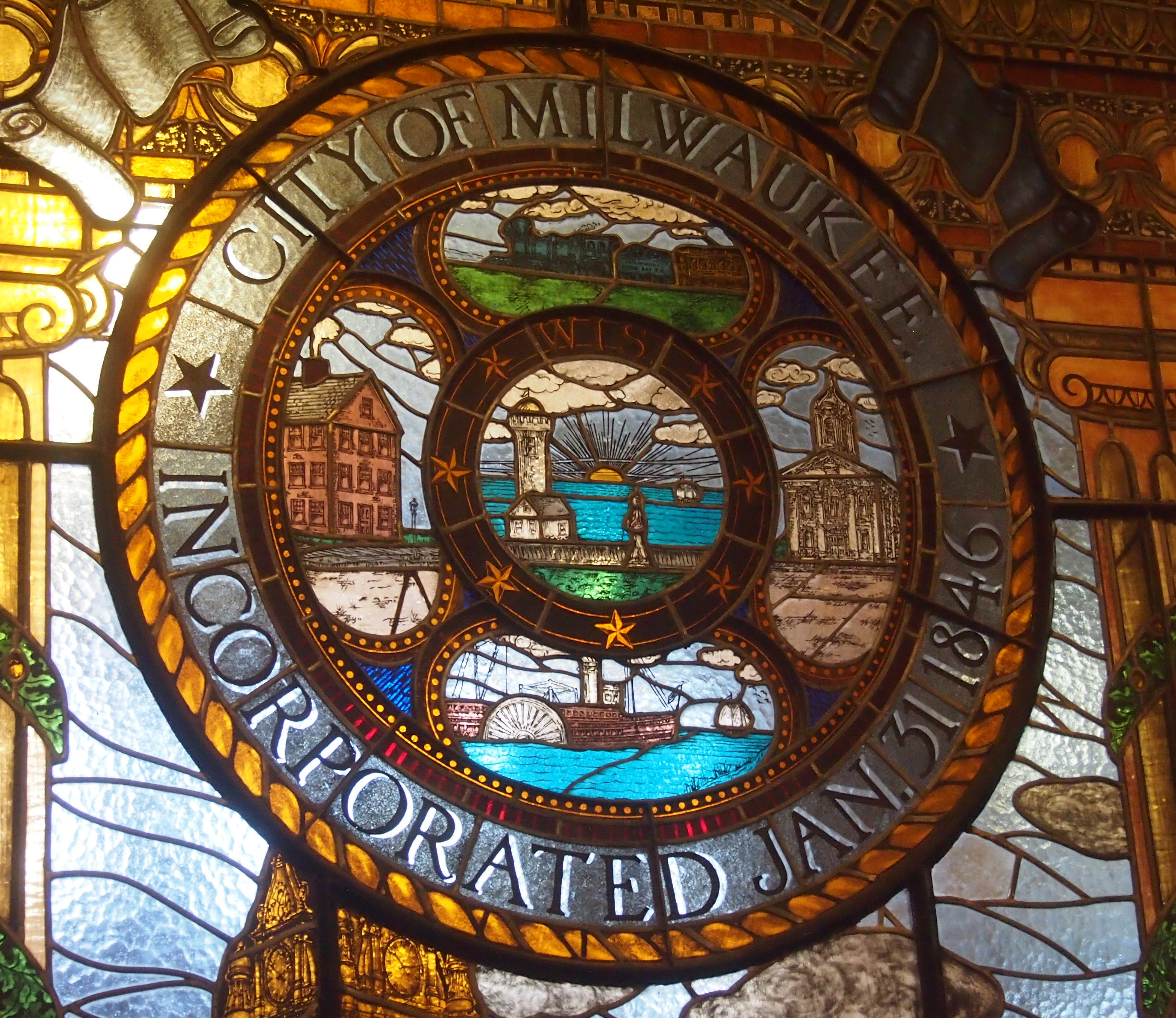
Churches have their stained glass. So do municipal buildings, at least this one, at the entrance to the Common Council.
Milwaukee City HallMilwaukee City HallTours of the upper reaches of the clock tower were booked by the time we got there. Too bad. Just another reason to go back next year.

Three East Town Milwaukee Churches

East Town is part of Milwaukee’s urban core, characterized by upmaket apartments and condos, smaller office buildings — the larger commercial properties are just to the south — and large churches. The district, also known as Juneautown, or the Juneau-Cass Historic District, or Yankee Hill, is east of the Milwaukee River (various sources give it various names).

Two large churches are on Juneau Ave. One is Summerfield United Methodist Church.
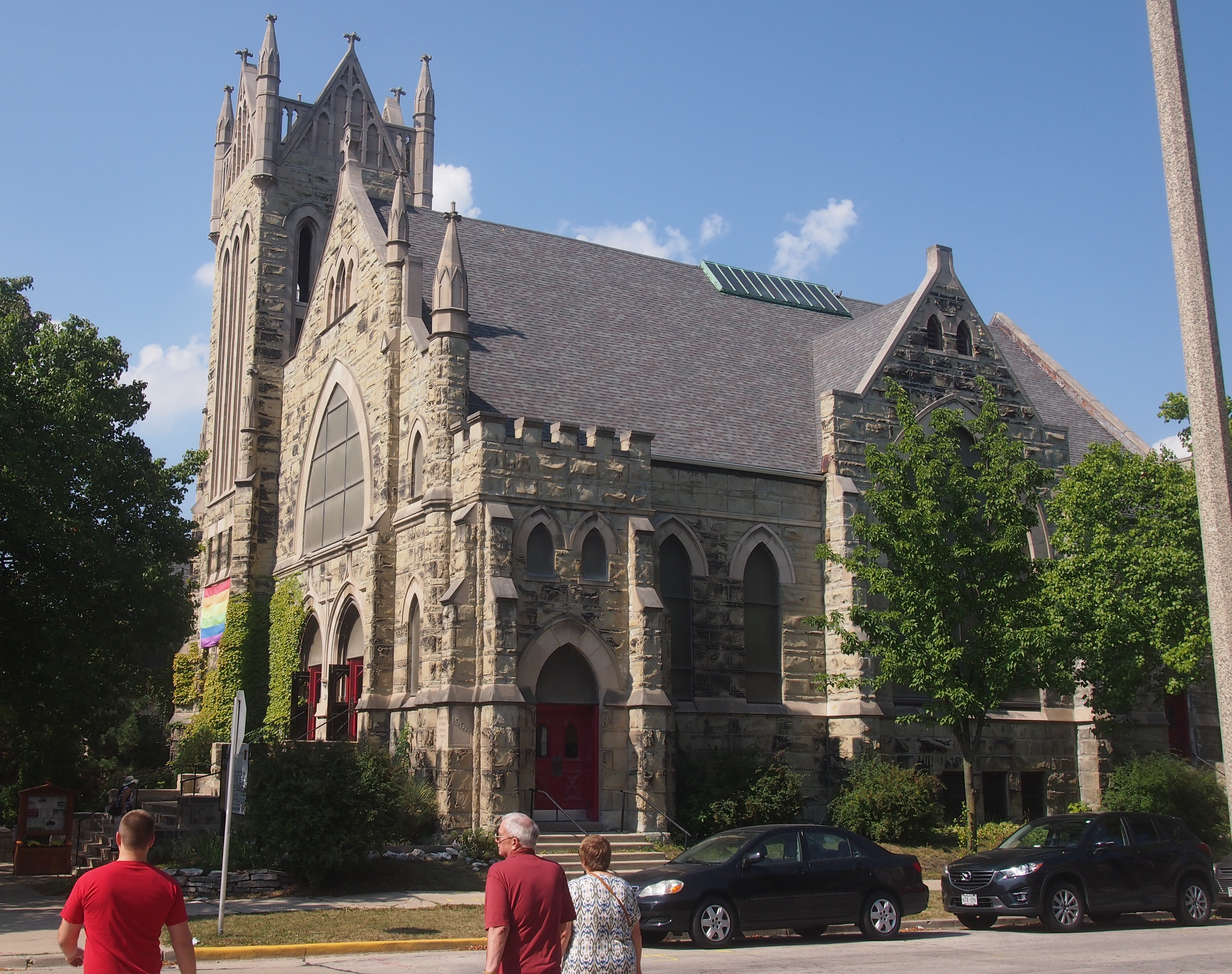
Summerfield United Methodist ChurchA handsome sandstone and limestone Gothic church, it dates from 1904, when it was occupied by the First Community Church. Later that church and Summerfield Methodist merged. Summerfield, as a congregation, goes back to the 1850s, when they were abolitionist to the core.

Coming from a Catholic basilica, the church seemed like an exercise in Protestant restraint.
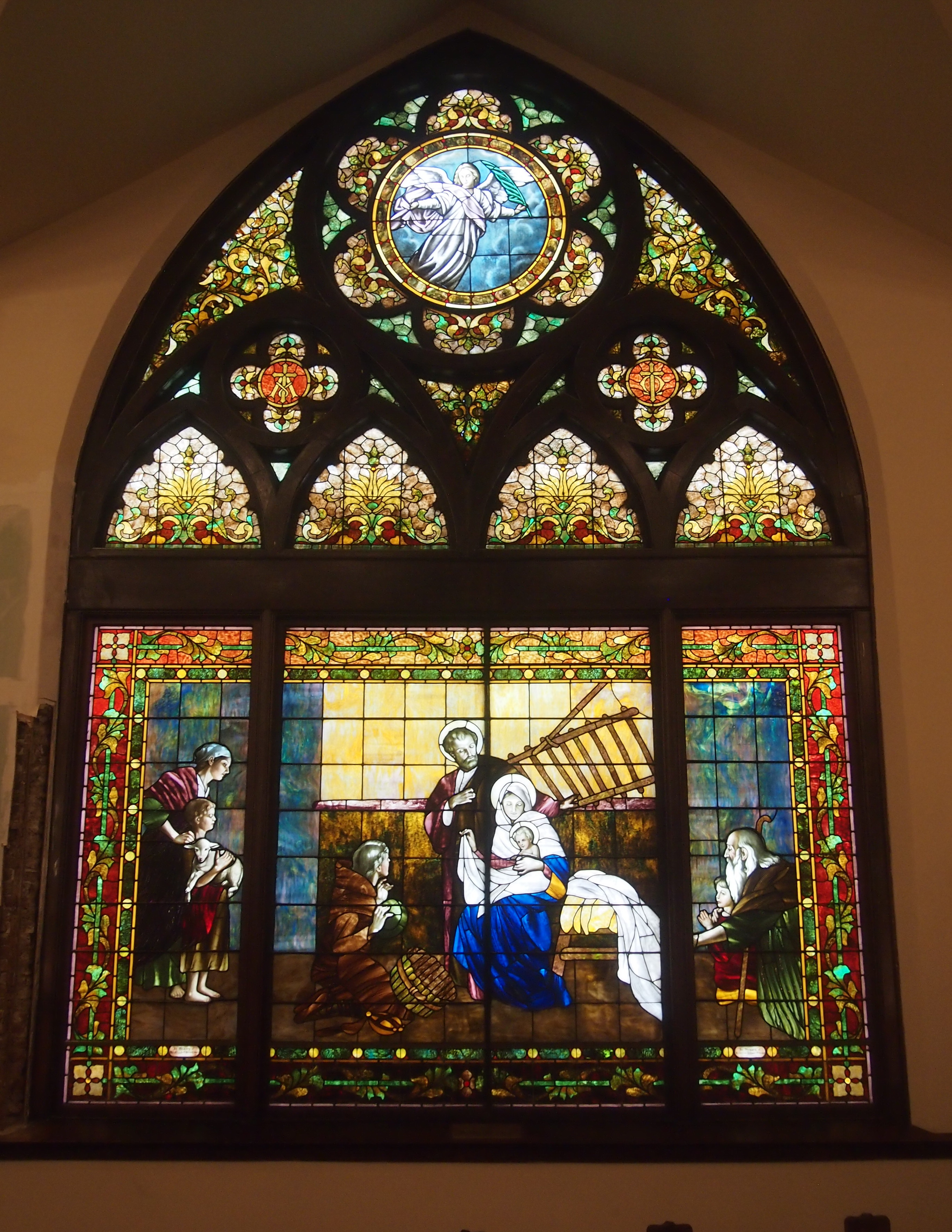
Summerfield United Methodist ChurchBut it isn’t completely unornamented.
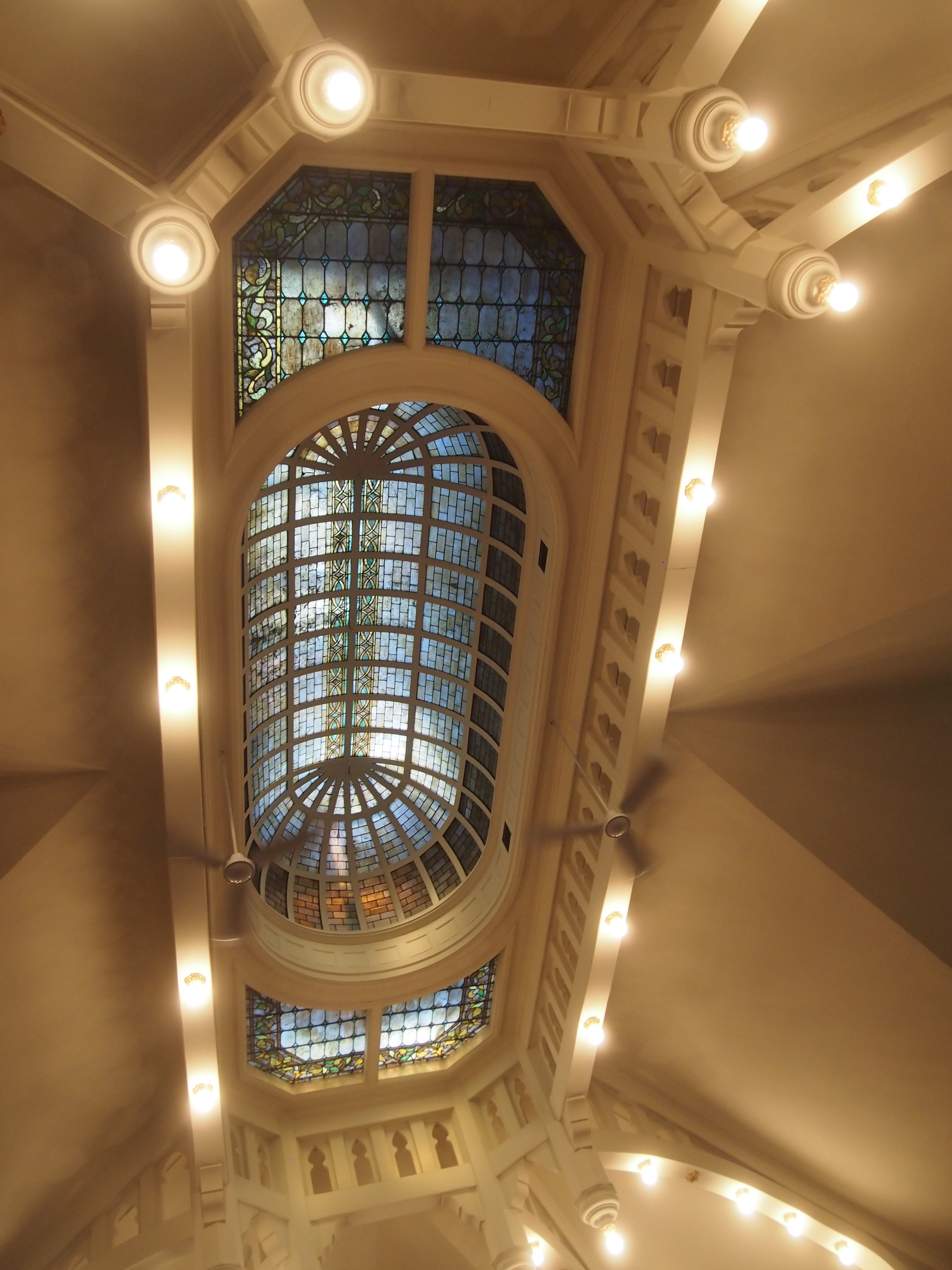
Summerfield United Methodist ChurchWith one of the more interesting church ceilings I’ve seen lately.
Summerfield United Methodist ChurchWhile reading about Summerfield, I discovered that its immediate post-Civil War pastor was Samuel Fallows. I’d met him before, in a way. I saw his grave at Waldheim Cemetery more than a decade ago.

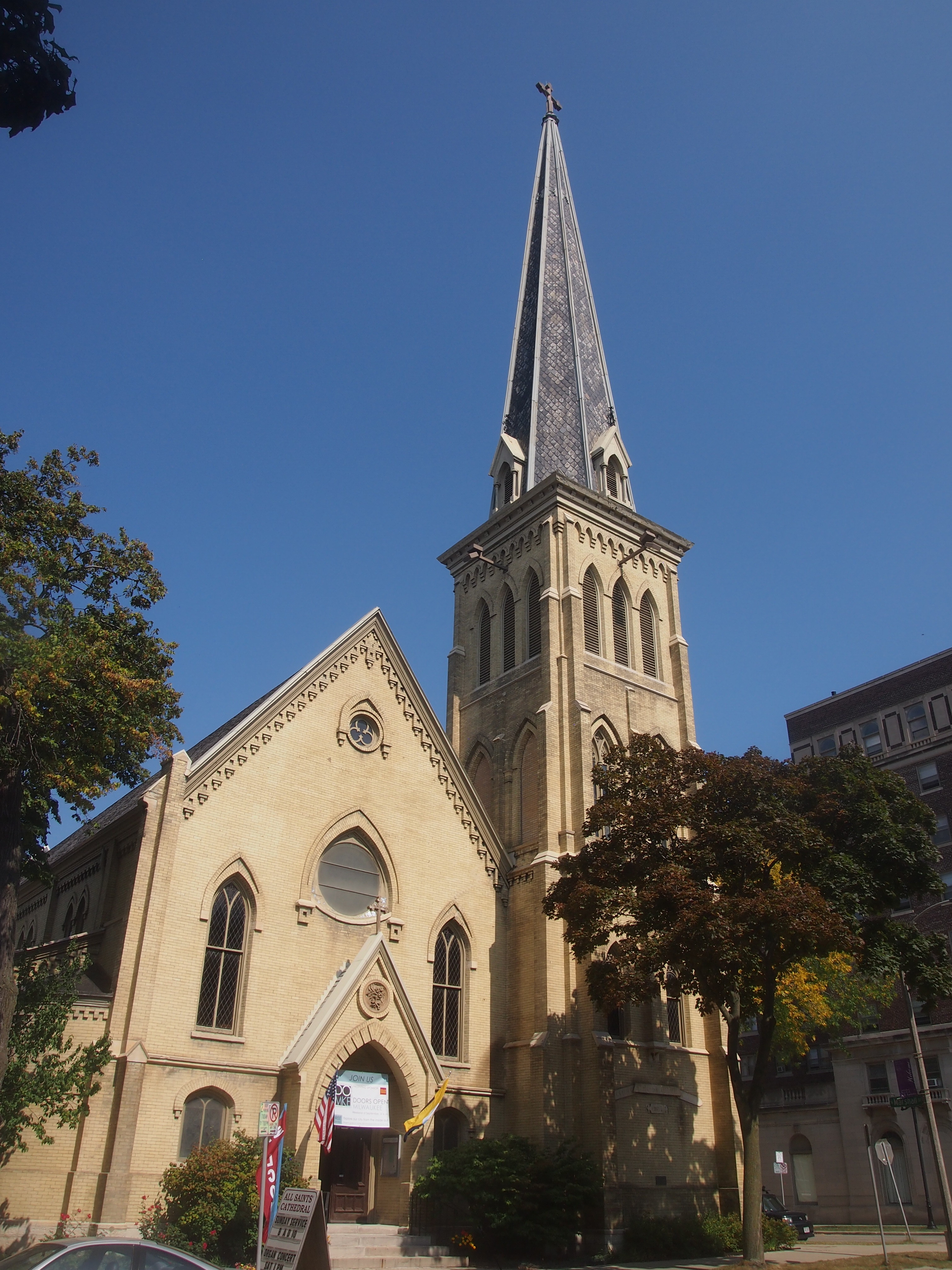
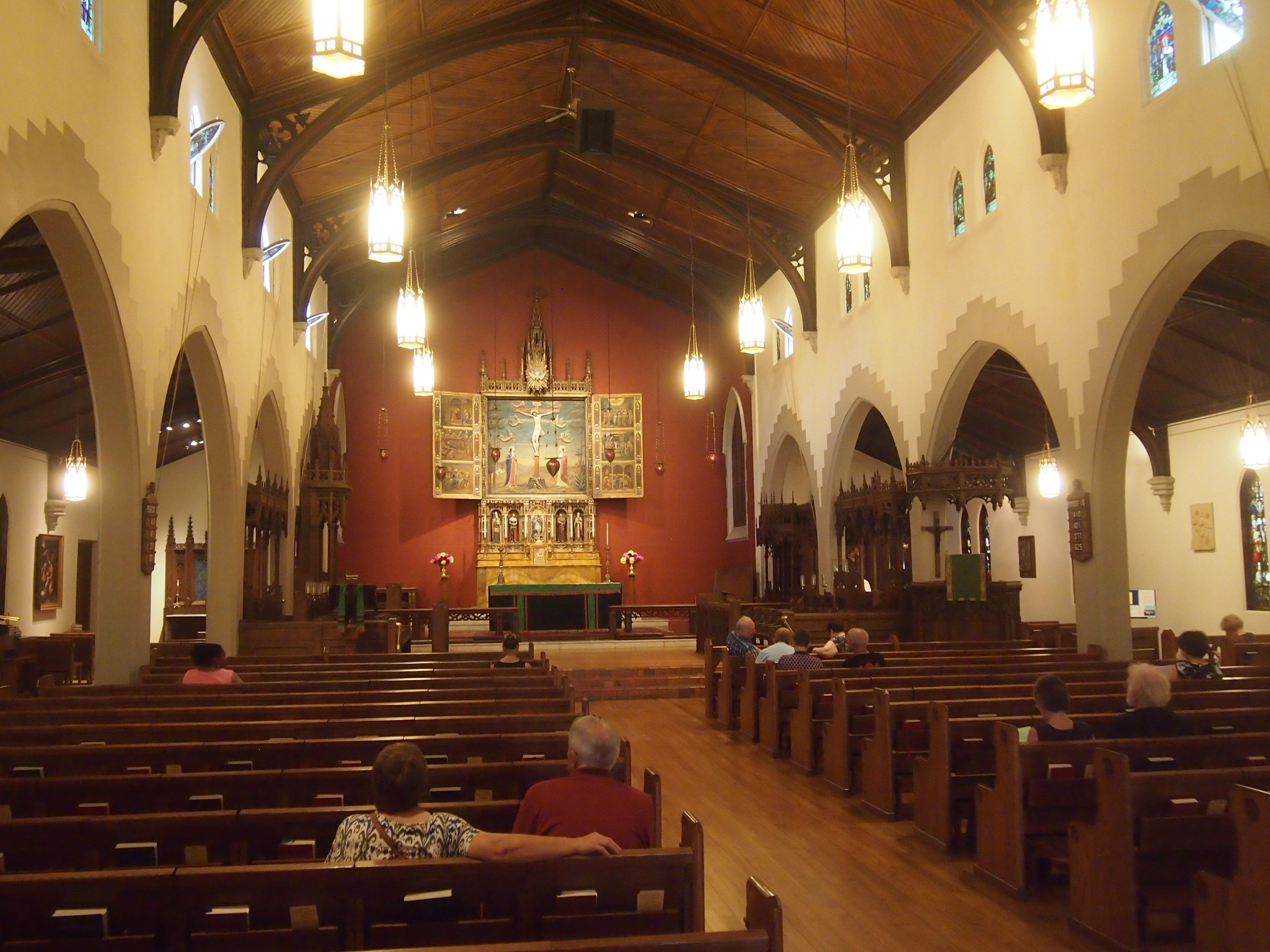
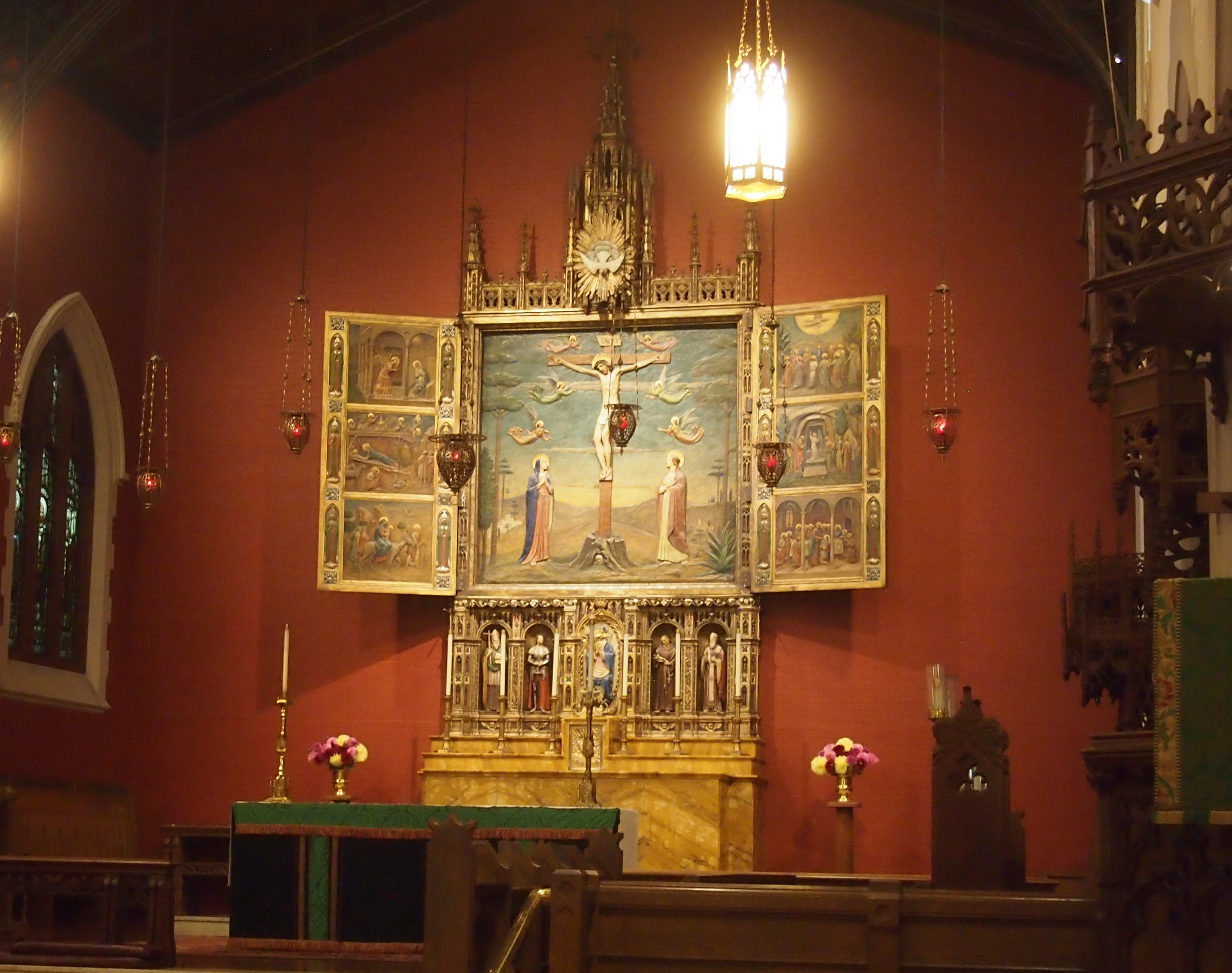
Less than a block away from Summerfield is All Saints’ Cathedral, or more formally, the Cathedral Church of All Saints, seat of the Episcopalian Bishop of Milwaukee.

Cathedral Church of All SaintsEdward Townsend Mix, a busy 19th-century Milwaukee architect, designed the building for Olivet Congregational Church in 1868, but it wasn’t long (1871) before the Episcopal diocese bought it, consecrating the structure as a cathedral in 1898.

All Saints' Cathedral, MilwaukeeAll Saints' Cathedral, MilwaukeeI’ve read that the congregation there is Anglo-Catholic, and we found the interior traditionalist in one way at least: no air conditioning. That made the place warm on the day we were there. But that wasn’t so bad. We sat and listened to part of an organ concert at the cathedral, an all-J.S. Bach program by Canon Joseph A. Kucharski, cathedral precentor.

Interesting note from the handout that the cathedral gave us: “1825: The first Episcopal priest was brought to the Wisconsin Territory at the request of the Stockbridge (NY) Oneida (a.k.a. the Mohican tribe of the Algonquin nation), who moved first to the lands along the Fox River in 1818, then to the east shore of Lake Winnebago. To this day, the Cathedral Church of All Saints has active Oneida members.”

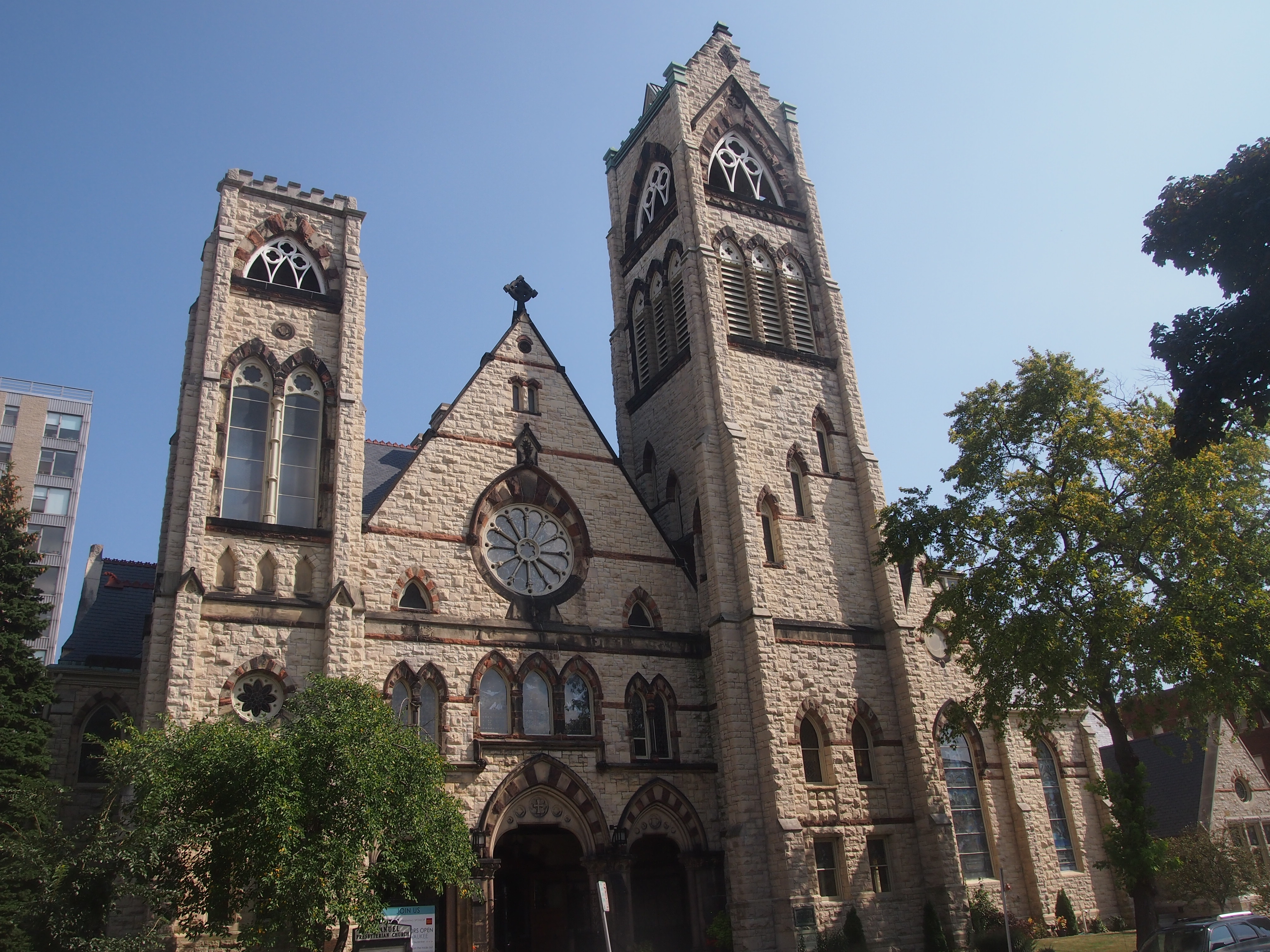
On N. Waverly Pl., near the other churches, is Immanuel Presbyterian Church.
Immanuel Presbyterian ChurchThe church asserts that it was the first congregation in Milwaukee, organized in 1837. The building dates from 1875, except that it burned down in 1887 and was rebuilt by 1889. Various other changes followed in the 20th century. Edward Townsend Mix again.

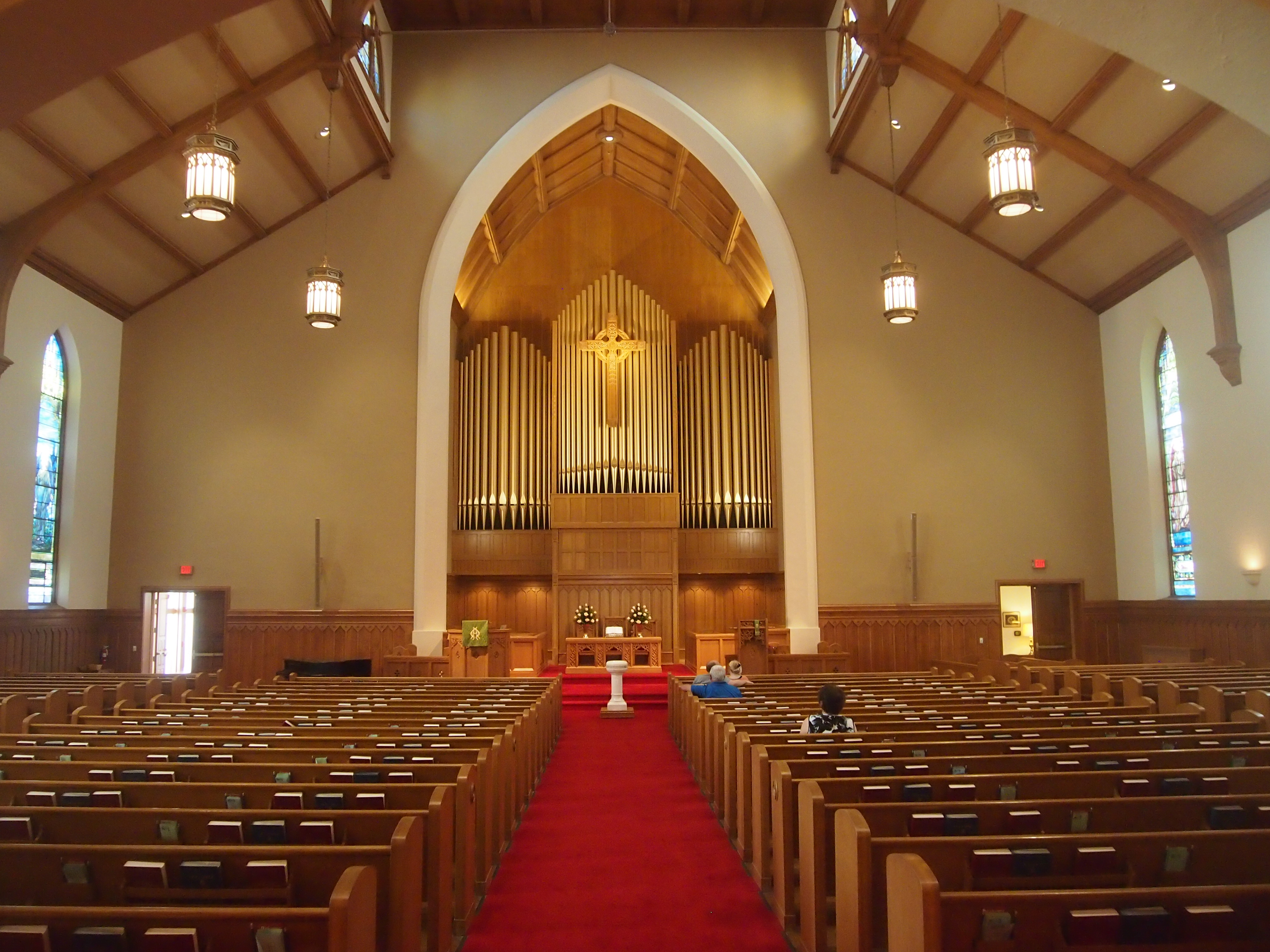
Spare indeed, but elegant.
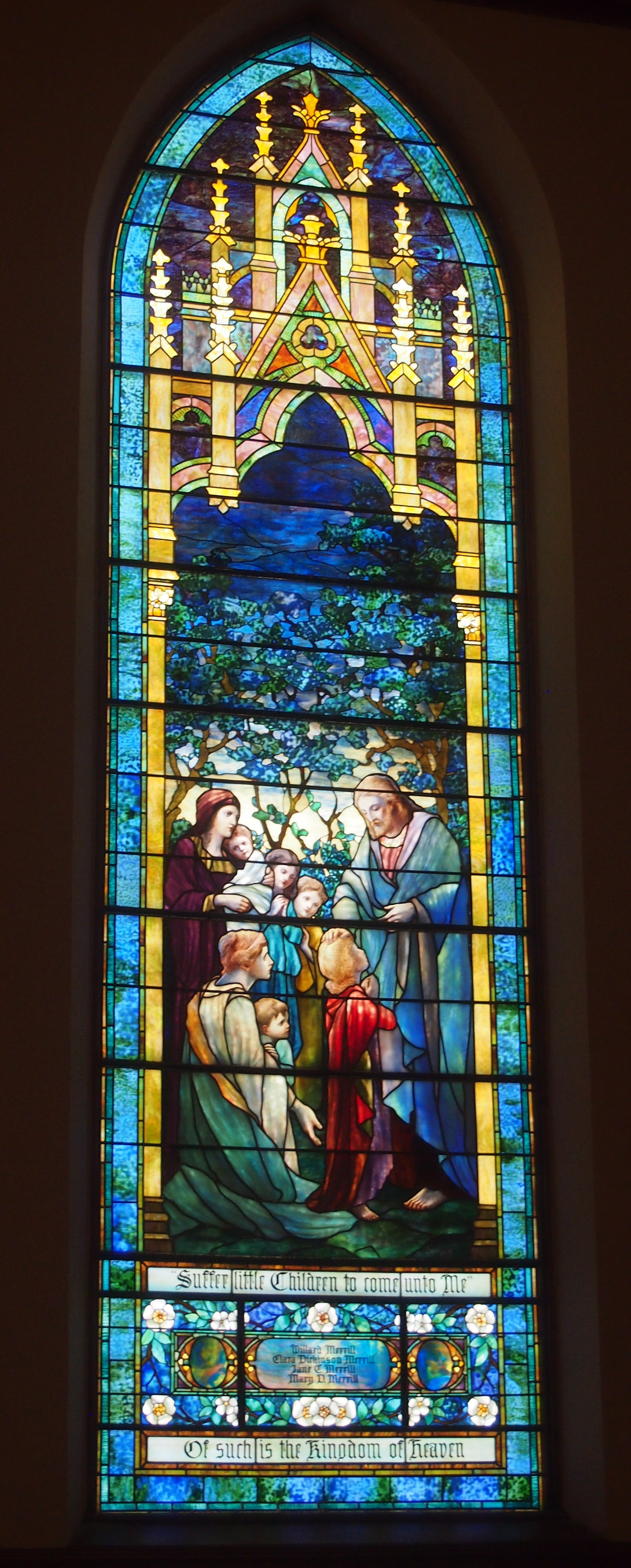
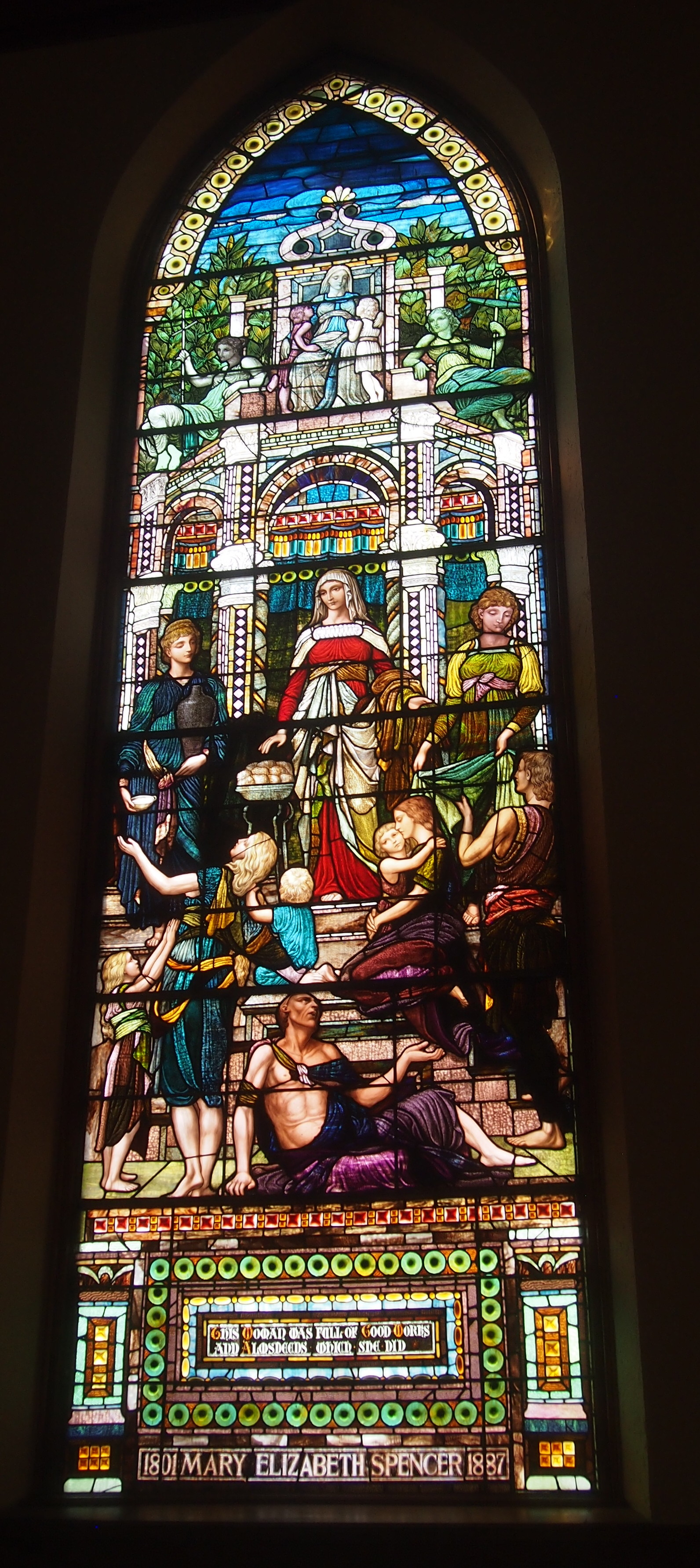
Immanuel Presbyterian Church, MilwaukeeWith many fine stained glass windows.
Immanuel Presbyterian Church, MilwaukeeImmanuel Presbyterian Church, MilwaukeeThere was one more church nearby open for Milwaukee Doors Open, but we wanted lunch, and besides, five is probably enough for any one day. Aesthetic overload begins to set in: Gee, look, another beautiful church, with magnificent stained glass. Wow. You know, I’d really like a hamburger.

Return to the Basilica of St. Josaphat

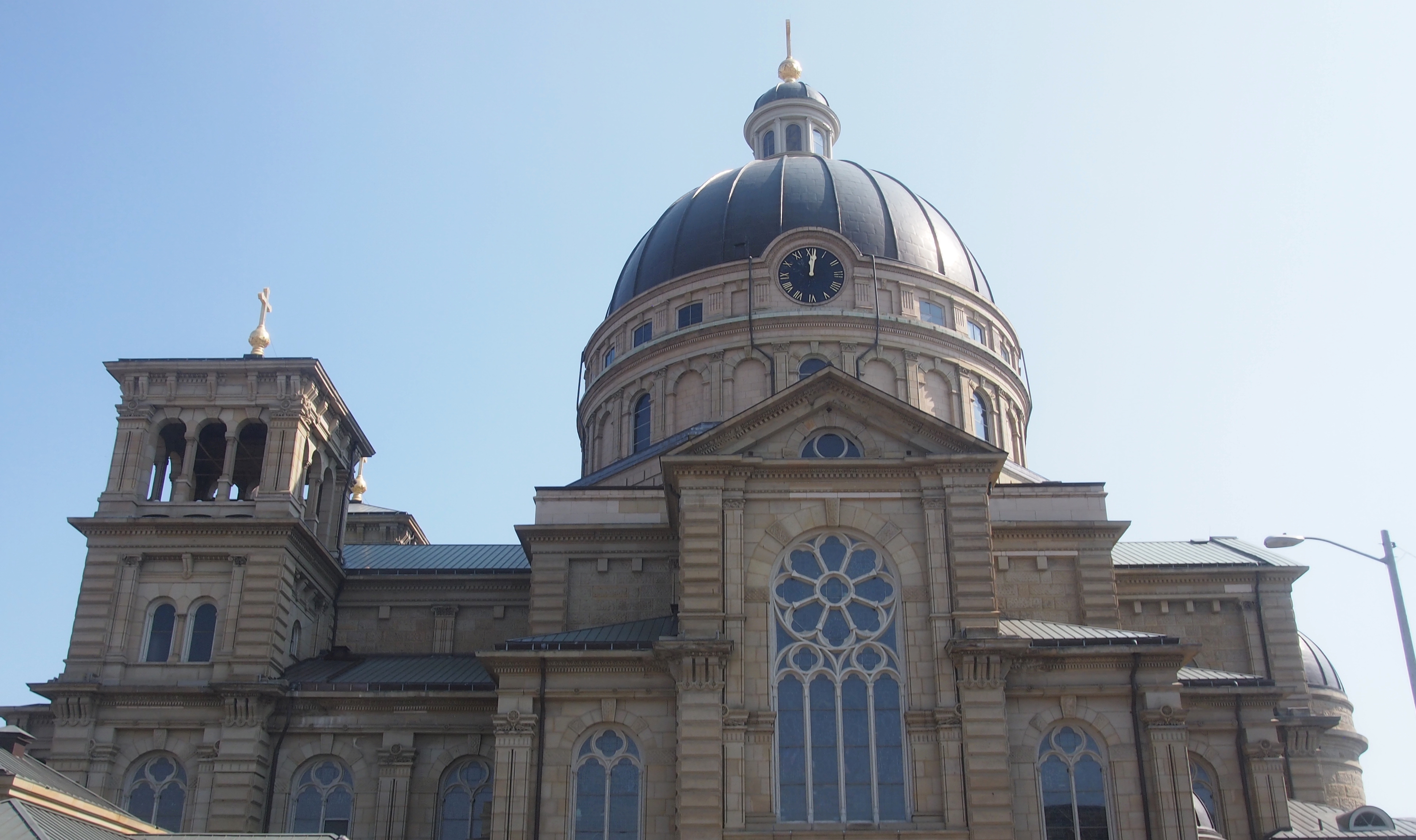
The last time we visited the Basilica of St. Josaphat in Milwaukee, the sky was slate gray and drizzly. This time, an unusually hot September sun in perfectly blue skies bore down on the church. The basilica looked as imposing as ever.
Basilica of St. Josaphat, Milwaukee

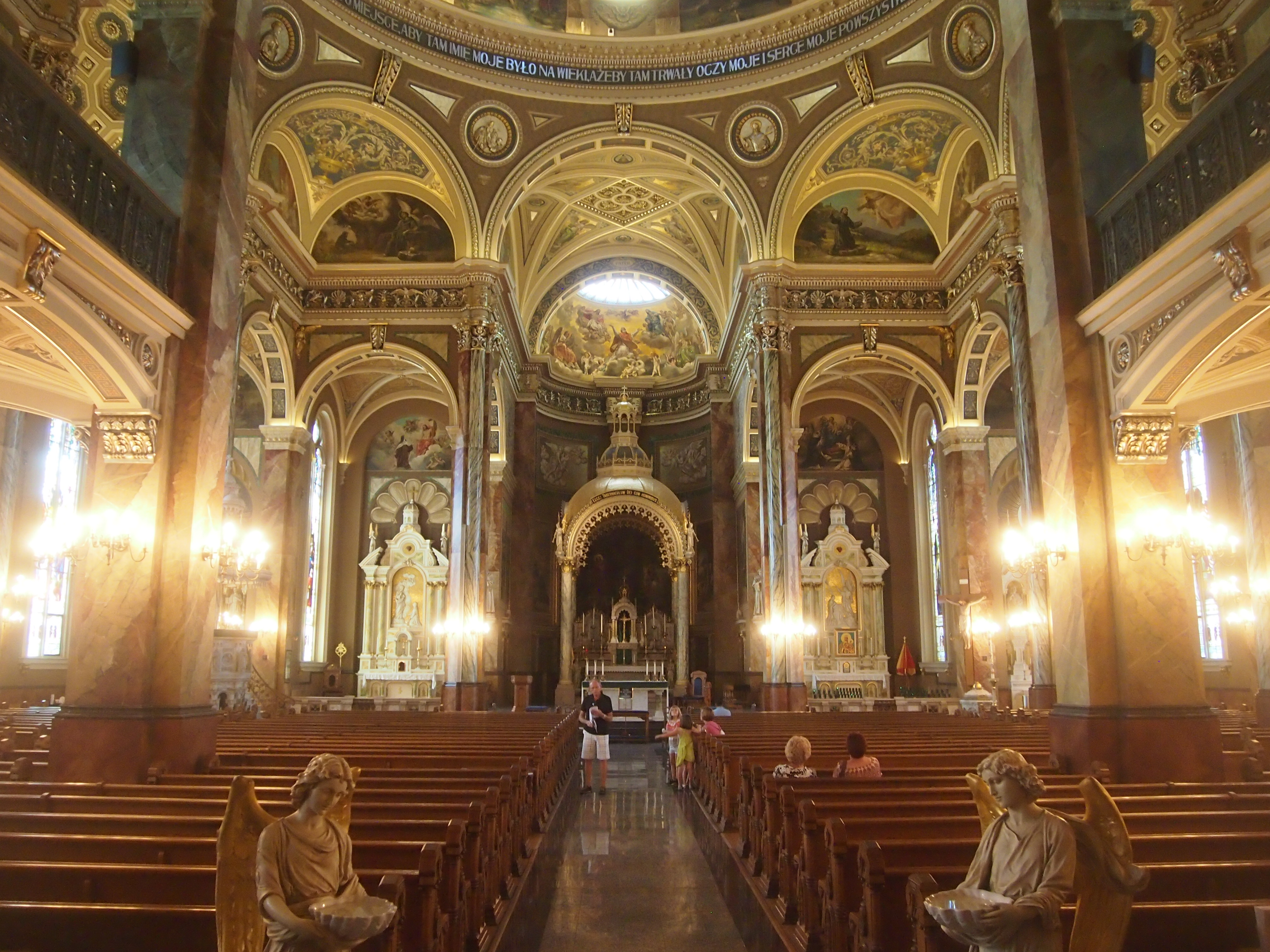
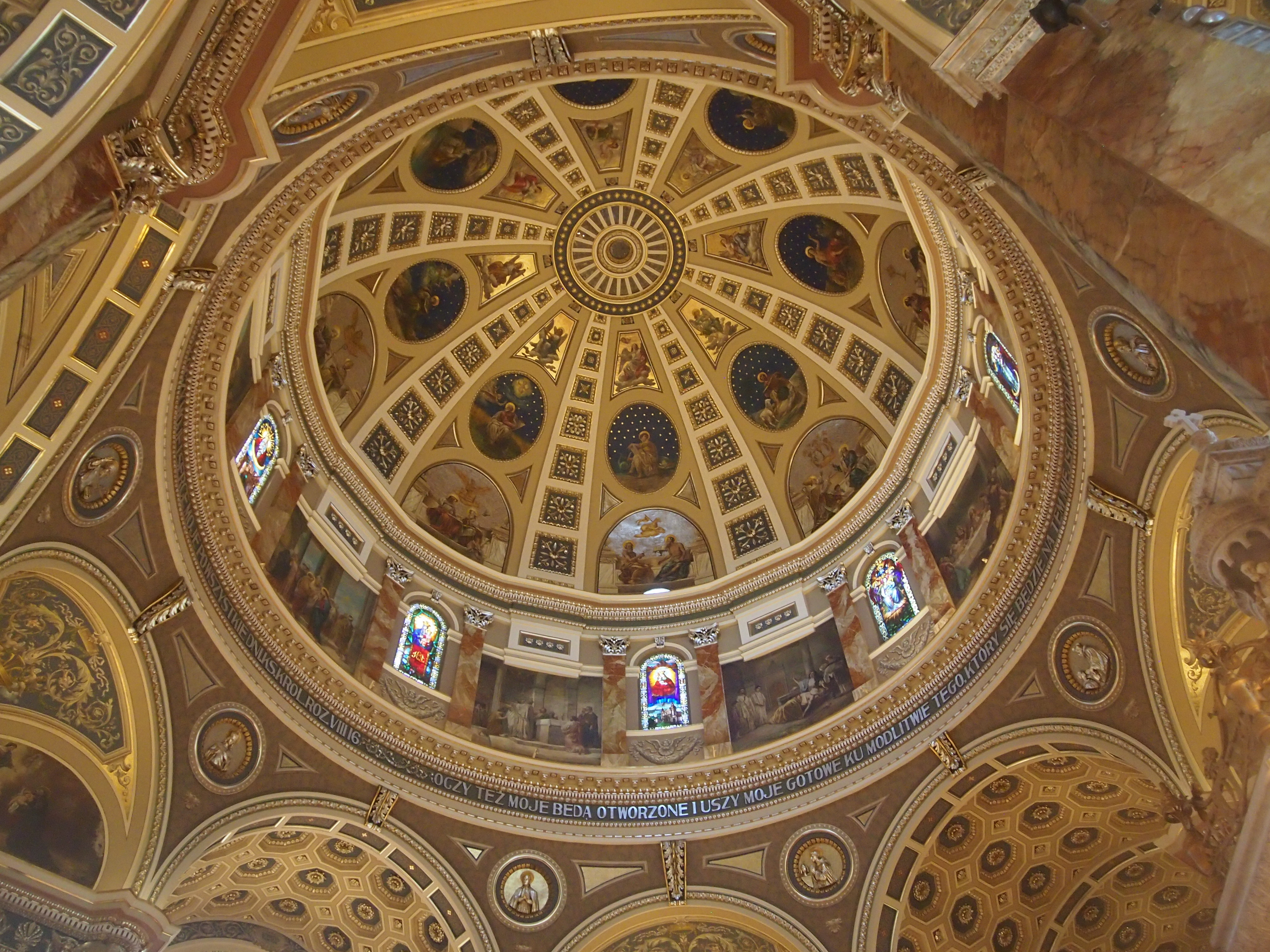
Back in 2011, I related the story of how the church was built of recycled bricks from a massive Chicago post office, and a bit about the saint, so I won’t repeat myself. The visit this time was mainly about getting a longer look at the opulent interior, patterned after St. Peter’s in Rome, only smaller.

Basilica of St. Josaphat, Milwaukee

The splendid dome.
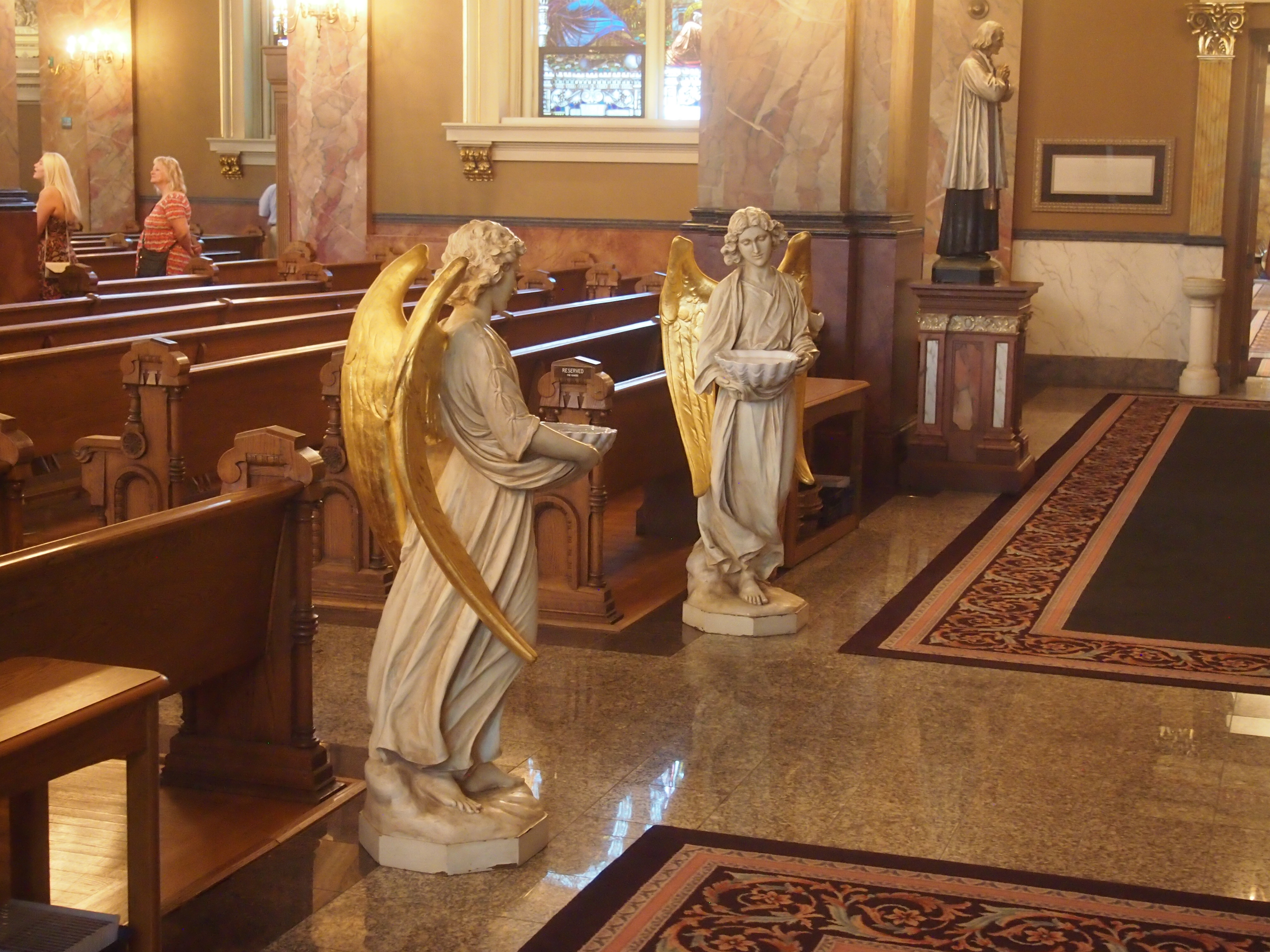
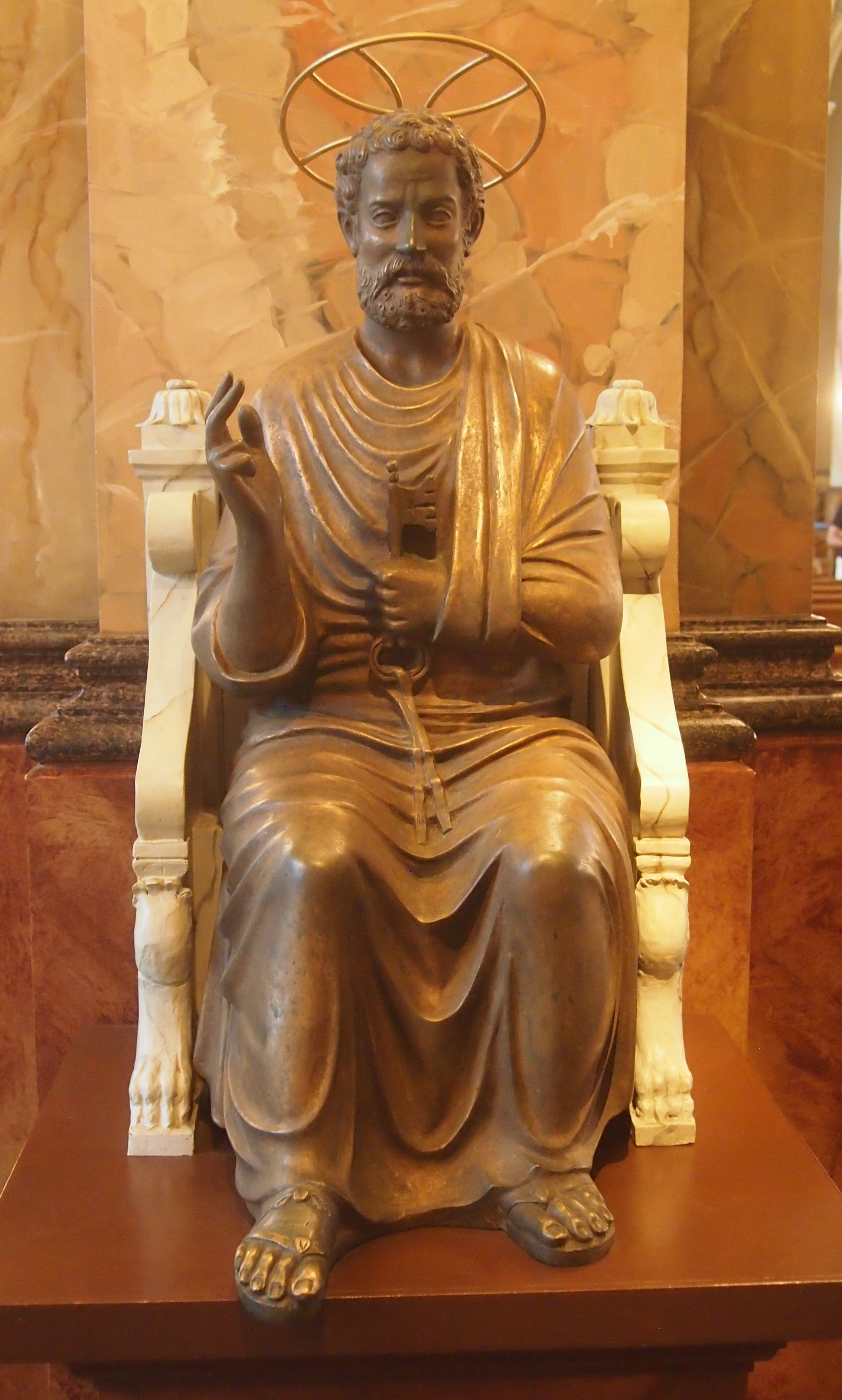
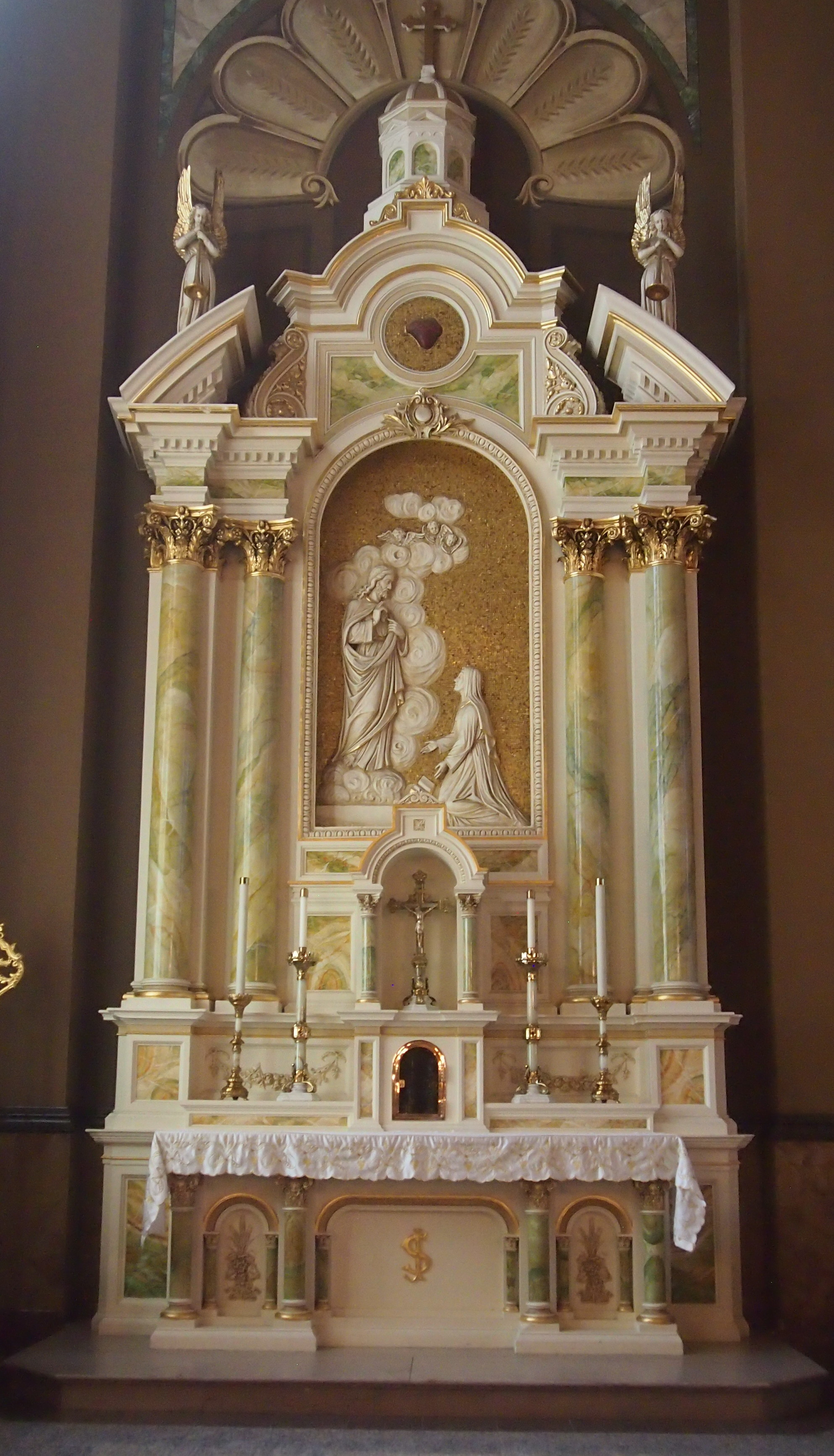
Basilica of St. Josaphat, MilwaukeeAnd more.

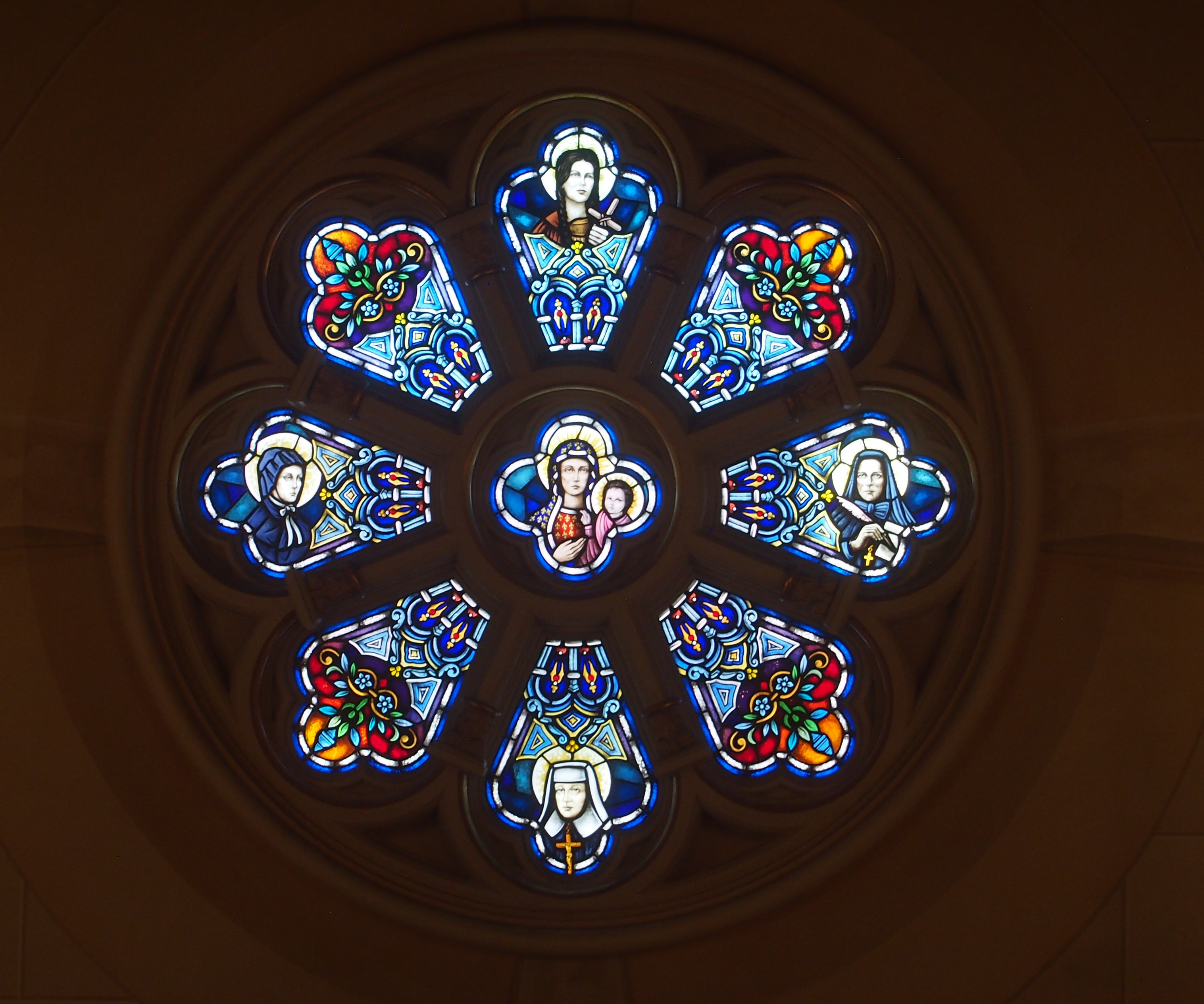
Basilica of St. Josephat, MilwaukeeBasilica of St. Josephat, MilwaukeeBasilica of St. Josephat, MilwaukeeThe rose window.

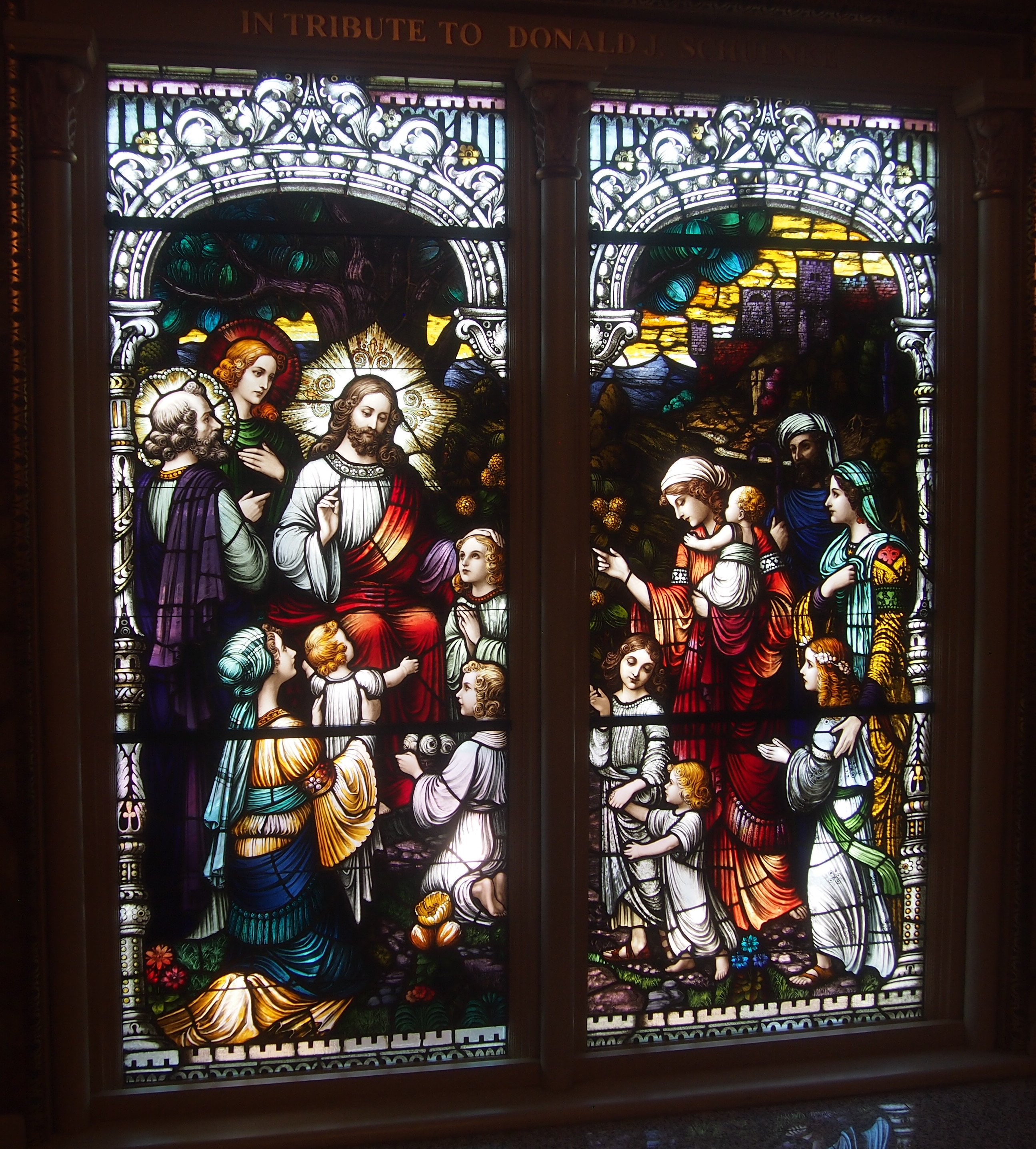
Basilica of St. Josephat, MilwaukeeOther fine windows.

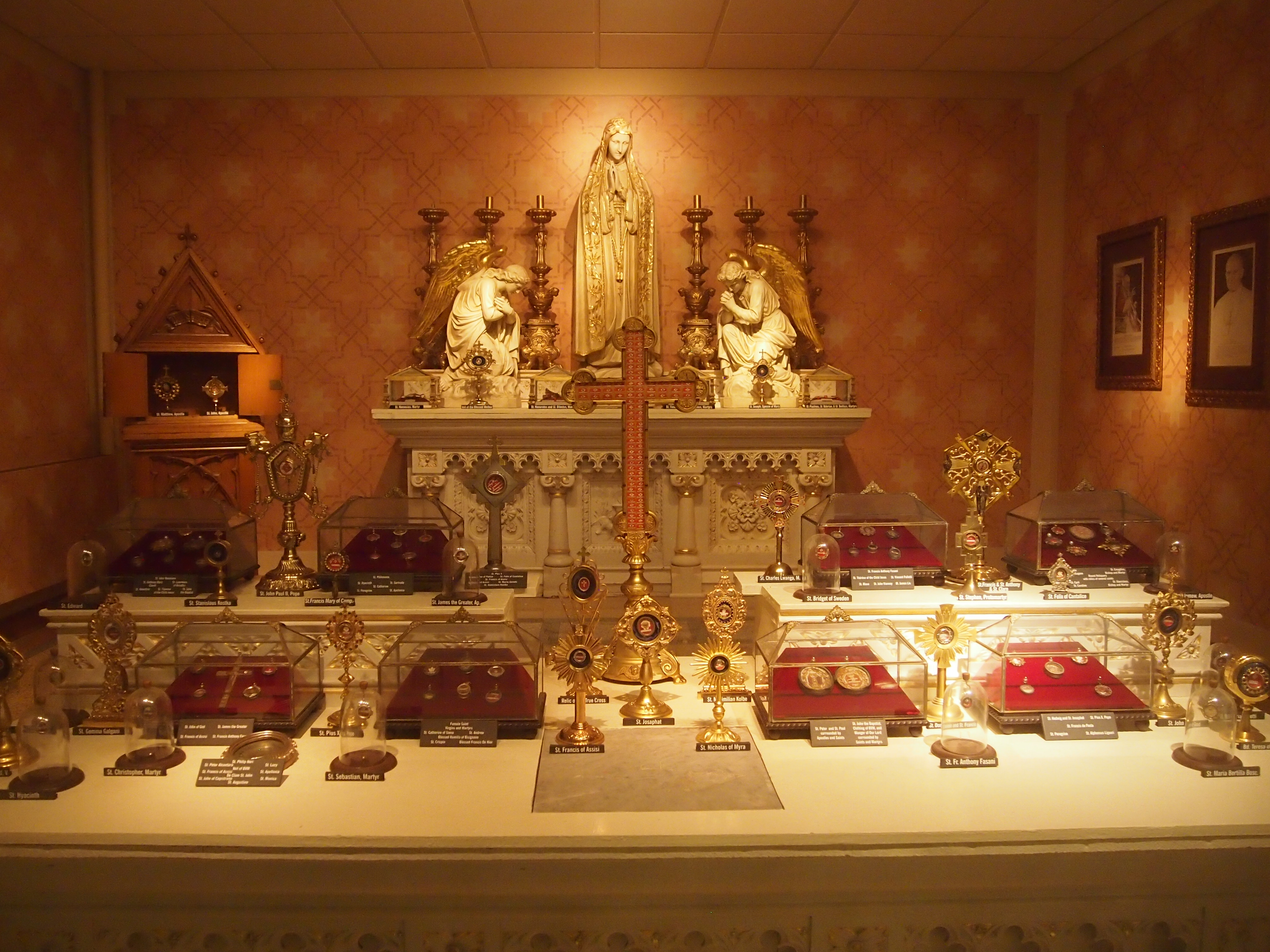
Basilica of St. Josephat, MilwaukeeDownstairs is the relic room. A big stash of them in many reliquaries. The room looks open, but I put my camera between iron bars to capture the image.
Relics of the Basilica of St. Josephat, MilwaukeeThere’s one from St. Josaphat, which seems appropriate, as well as St. Francis of Assisi, St. Nicholas of Myra, St. Sebastian, St. Maximilian Kolbe, St. Stanislaus Kostka, St. Bridget of Sweden, St. Pius X, and St. John Paul II, among others.

There’s also a Relic of the True Cross, according to one of the signs. More easily obtainable than I would have thought. Well, you know what Calvin, who of course had his own agenda, said about that.

Annunciation Greek Orthodox Church & Stalin’s Tattooed Granddaughter

I had a short talk with one of the volunteers at Annunciation Greek Orthodox Church in near-suburban Milwaukee during the Open Doors event. That was the first place we visited. She was roughly my age, and knowledgeable about her church. I asked her about the church’s pews. That’s not something you usually see in the Orthodox tradition.

The pews arrayed in a semicircle, with all of them facing the sanctuary. Each pew is lined with sky blue cushions — with gold carpet underneath — and a fish is carved into the end. Interesting detail, I thought.

Yes, she said, pews are unusual for an Orthodox church. In all the others she’d seen, including in the United States and Europe, the congregation stands. Are pews normal in other churches? she asked me. Catholic and Protestant ones?

I answered yes, even as the implications of the question sunk in. Someone so informed about her church, and with plenty of years behind her, had never visited any other kind of church? That couldn’t be. Not even for a look? Not even in the great cities of Europe, where you can wear yourself out visiting churches of renown?

That’s just about inconceivable to me, who will enter a church or any other religious site that’s open, without hesitation. Especially unusual places such as Annunciation.
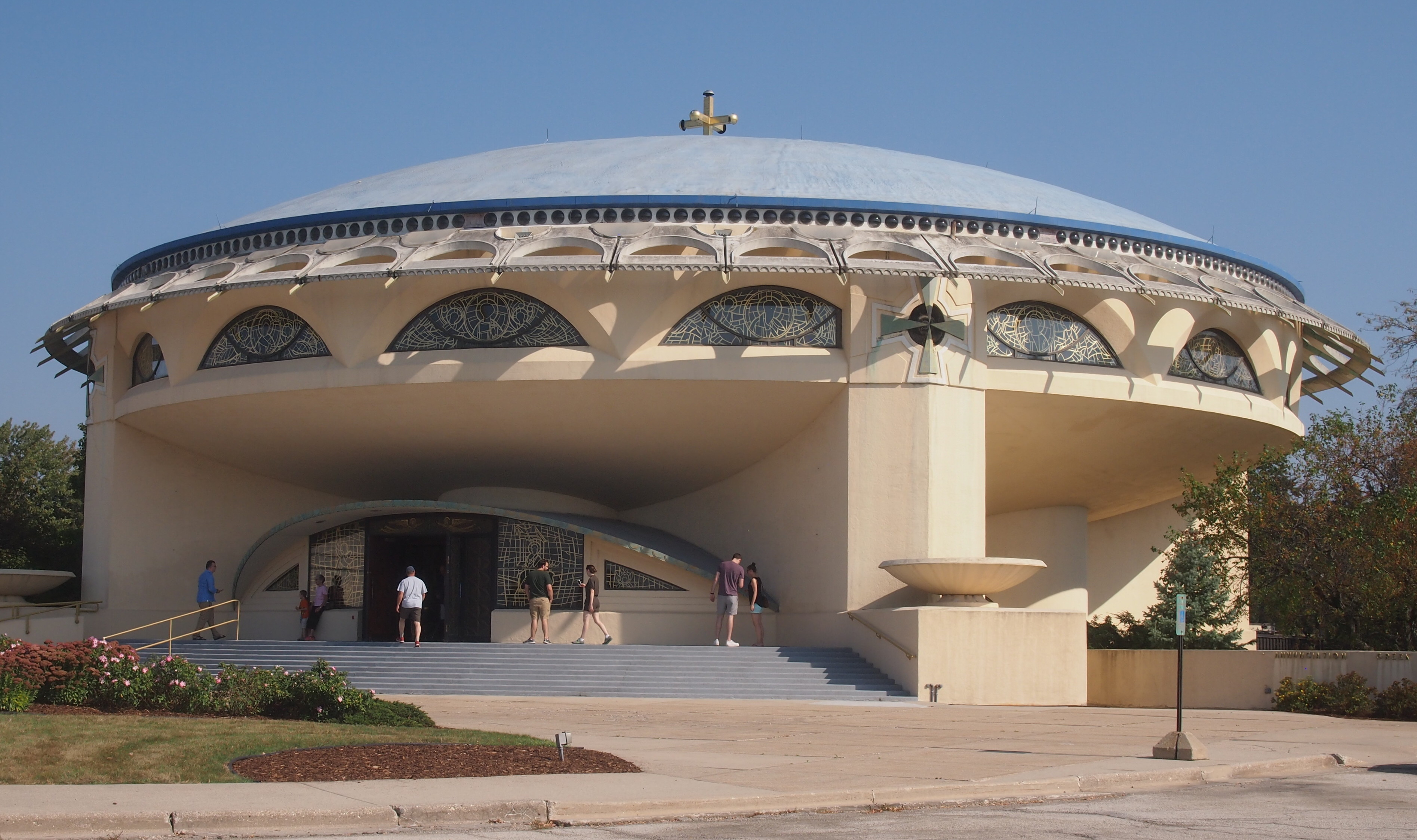
Annunciation Greek Orthodox Church, WisconsinGenius or otherwise, Frank Lloyd Wright’s work is almost always worth a look. Interesting how he incorporated Byzantine elements such as the dome, and crosses in circles, into something that doesn’t look like other churches, Eastern or not. And doesn’t the church have that Space Age look as well? Like the Jetsons might have attended there.

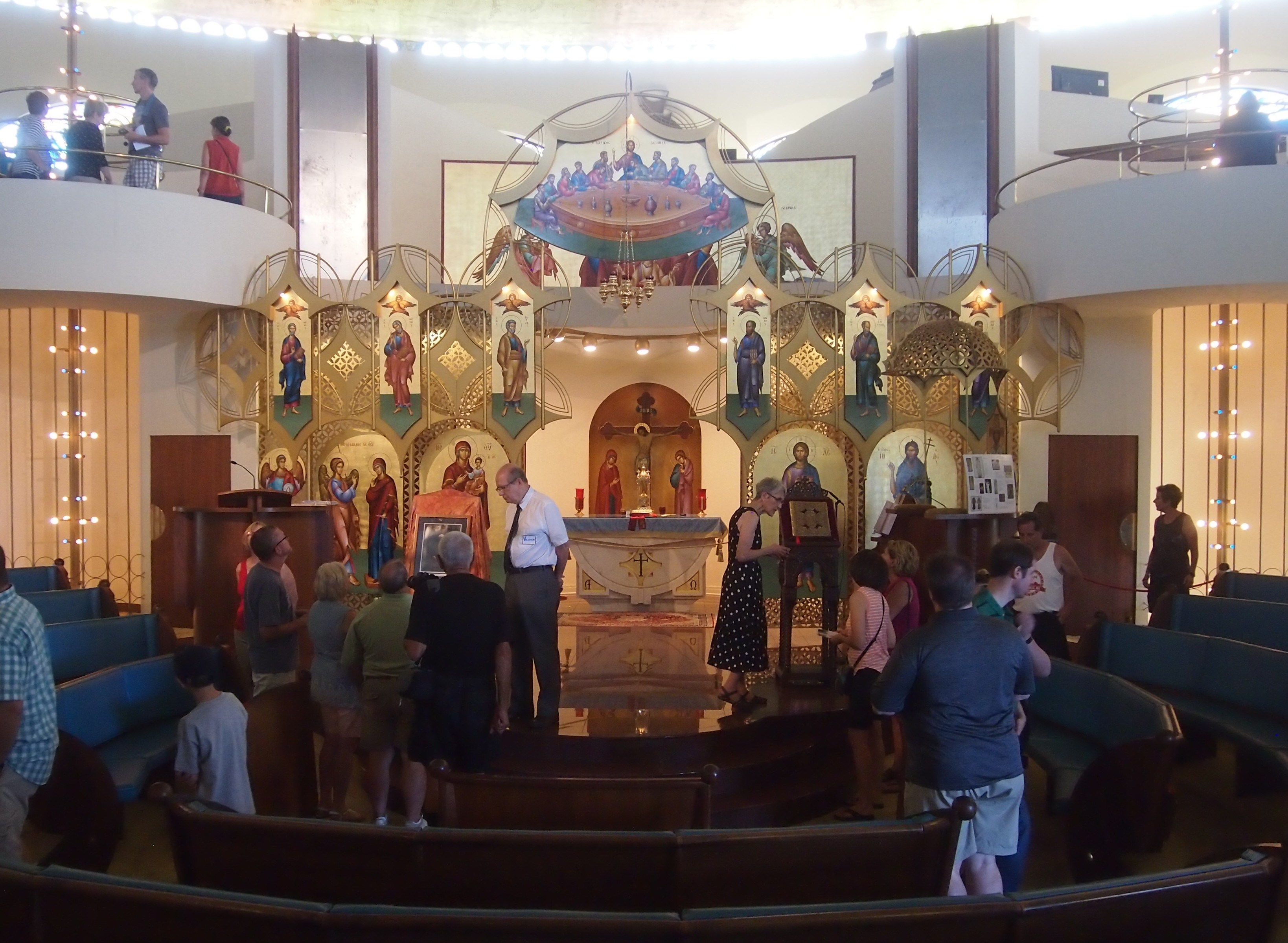
This is facing the iconostasis. The pews are partly visible.
Annunciation Greek Orthodox ChurchRachel Minske writes in Wauwatosa Now: “The altar area, once carpeted, is now marbled. Egg tempera two-dimensional depictions of church icons surround it. The church choir normally sits high above the altar, on the second floor, and its members view the service using a video monitor as they are somewhat hidden from view, [Father John] Ketchum said.

“Stained glass windows are found throughout the church, which also were additions after the building was completed, Ketchum said. Glass bulbs line the church’s perimeter, up high near the dome. There are more than 200 bulb-shaped windows, each letting in a significant amount of natural light.

“…The original ceiling was tiled, but that was replaced with paint after changing temperatures inside the church caused the tiles to fall off the ceiling.

“To access the church’s bottom floor, there are three spiral staircases that wind downstairs. Each has a whimsical design and is lined with gold carpet.”

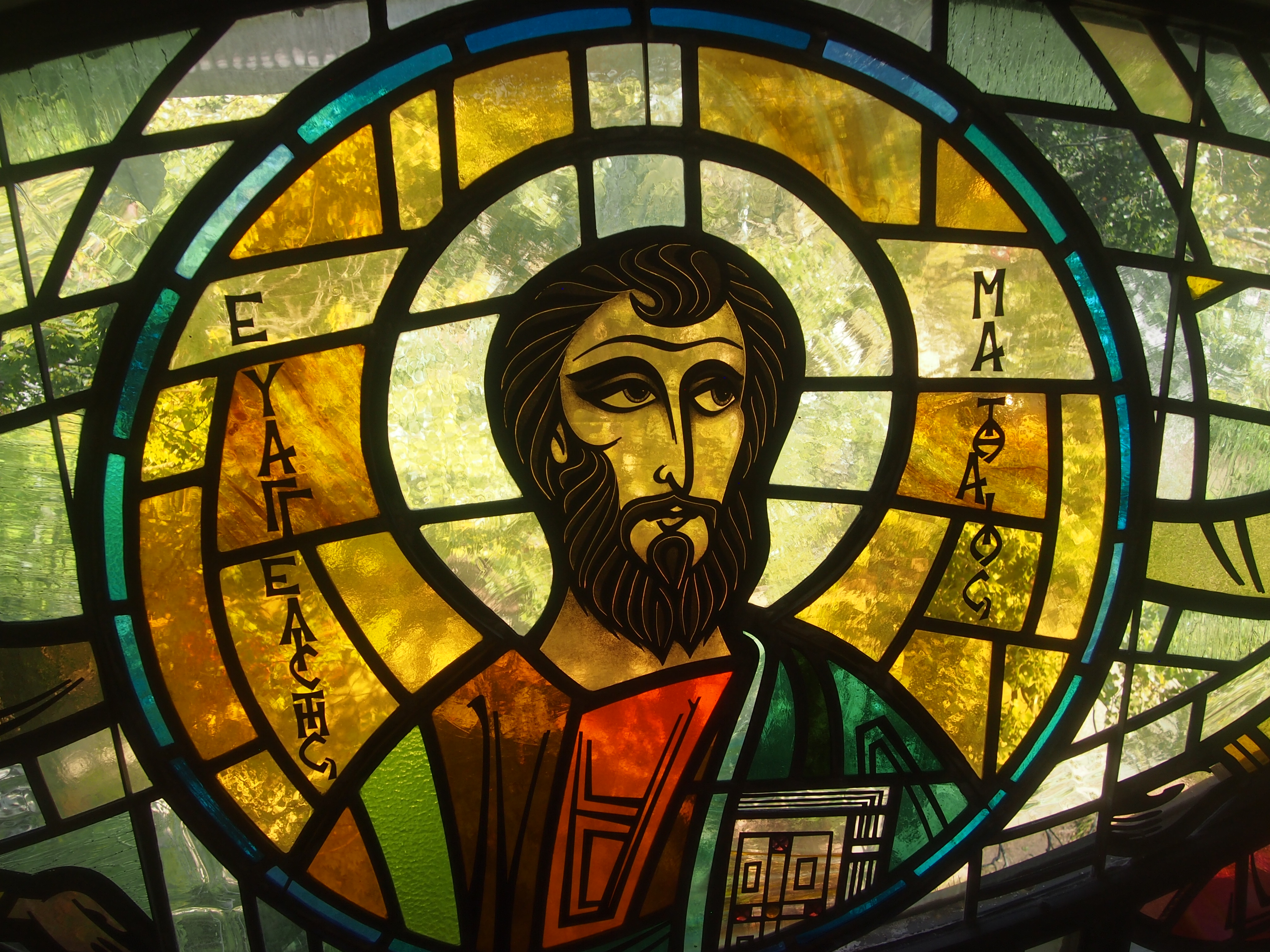
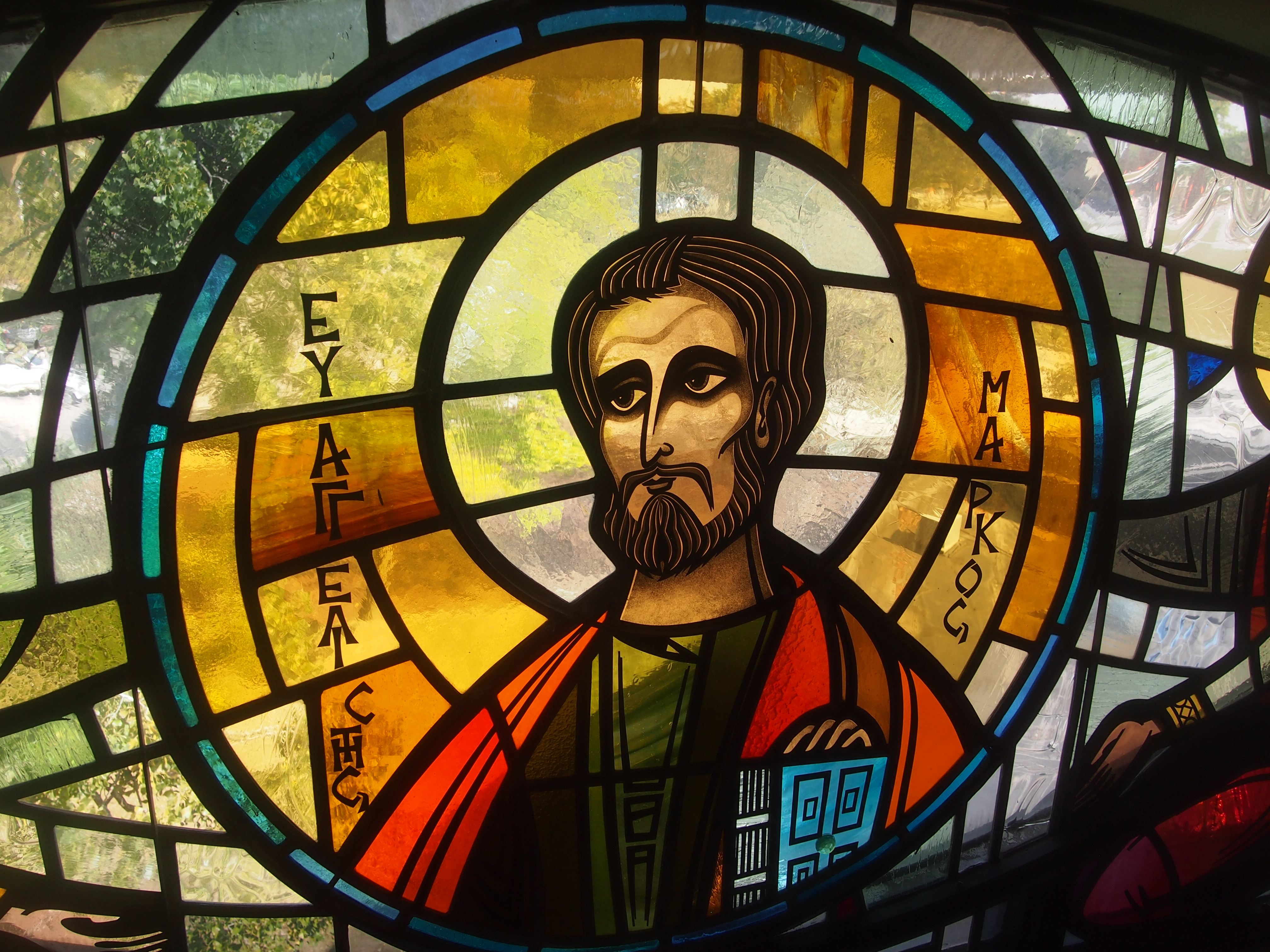
On the upper level, I got a few decent images of the stained glass.
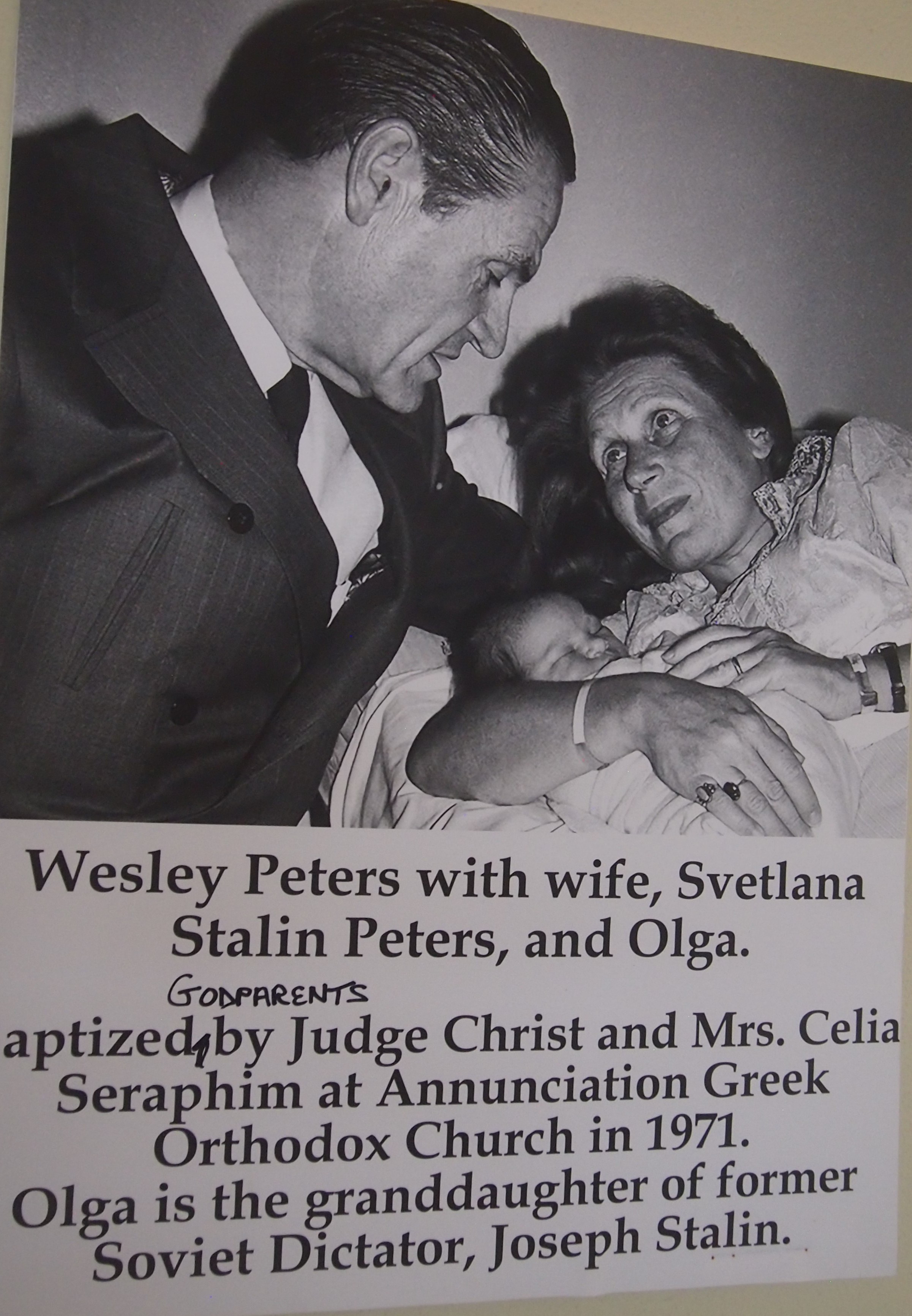
Annunciation Greek Orthodox Church Annunciation Greek Orthodox Church And a look at this sign.
Annunciation Greek Orthodox ChurchCurious that the church would draw attention to Stalin’s granddaughter’s baptism there. More current information about Ogla, now Chrese Evans, is all too easy to look up. I’ll take the NY Post as authoritative in this case.

Milwaukee Doors Open ’17

Temps have cooled down some, but it’s still warmer than usual for this time of year. At about 12:30 this afternoon, I saw an ice cream truck drive down our street. I can’t ever remember seeing one in October.

Last weekend, Yuriko and I drove up to Milwaukee to participate in Milwaukee Doors Open. Ann couldn’t make it, even if she’d wanted to, because she was attending her first high school speech tournament.

That’s a good thing. Her joining speech inspired me, while in Texas recently, to open up one of my high school yearbooks, the 1979 edition, to the page devoted to the National Forensic League. I was a member.
NFL AHHS 1979I discovered when Ann signed up for debate that it isn’t the NFL any more, but the National Speech & Debate Association, only since 2014. What kind of name is that? Hopelessly bland. It’s as distinctive as the name of a suburban office park in a mid-sized market.

Note in the picture above: the club’s officers (I was one of those, too) had fun with belonging to the NFL. We lined up like football players for the picture.

Doors Open Milwaukee 2017First we went to Annunciation Greek Orthodox Church, which is in the near suburb of Wauwatosa. It’s best known for being one of Frank Lloyd Wright’s last works, and in fact was completed after he died. As I read, and as I saw, this 1950s church is informed by traditional Byzantine forms. But I also couldn’t help thinking of space age forms.

From there, we went into the city and revisited the Basilica of Saint Josaphat. Last time we were there was Good Friday 2011, and as you’d guess, the church was fairly busy that day. This time, it was open just for a look, so we were able to do that at some length.

East Town, the part of downtown Milwaukee east of the Milwaukee River, was next. A number of churches along or near Juneau St. were open, so they became the focus. Doors Open features a lot more than churches, but with so many clustered together, I figured that would be a good theme for this year.

They included All Saints’ Cathedral (Episcopal), Summerfield United Methodist Church and Immanuel Presbyterian Church. All were worth seeing.

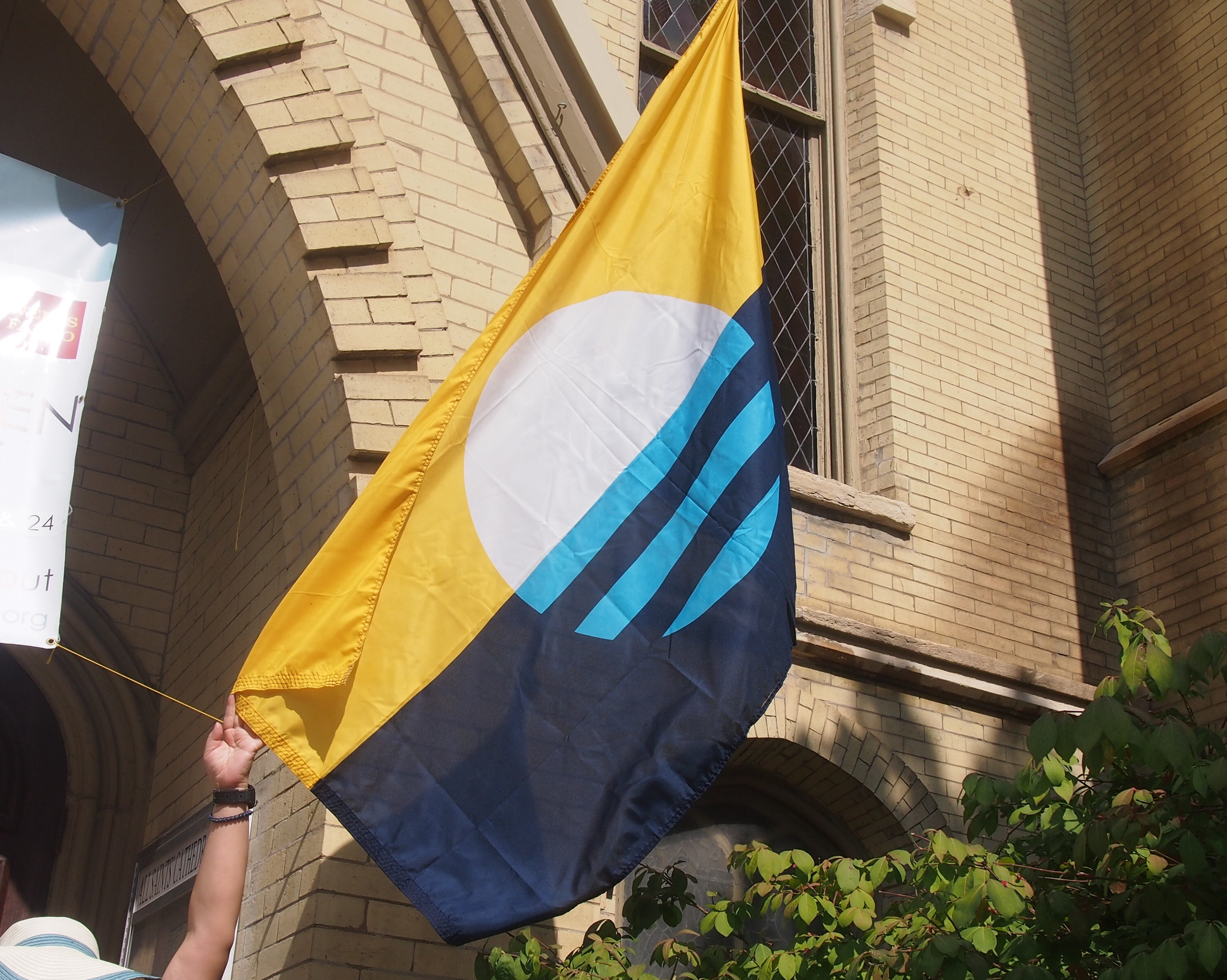
At one of them, a U.S. flag and another flag graced the entrance. The other one, which I’d never seen before, intrigued me. Y held it so I could take a picture, since the wind wasn’t up.
The People's Flag of MilwaukeeI asked the volunteer inside the door about it, and she told me it was the new flag of Milwaukee. I took that to mean officially, but that’s not so. There’s a movement to make it the official flag, to replace this embarrassment, but it hasn’t happened yet.

Currently it’s the People’s Flag of Milwaukee. Sounds like the banner under which the proletariat would storm City Hall, but I don’t think the organizers of online poll to pick a new design had that in mind. I’ll go along with it, though I don’t live in Milwaukee. It’s a good design. Vexillologists hate the current flag, and I agree with them.

Speaking of Milwaukee City Hall, that was the last place we went for Doors Open Milwaukee after a late lunch at the downtown George Webb, the local diner chain with two clocks. I interviewed the mayor of Milwaukee in his office at City Hall in 2003, but I really didn’t get to look around. It’s a splendid public building, dating from the Progressive Era.