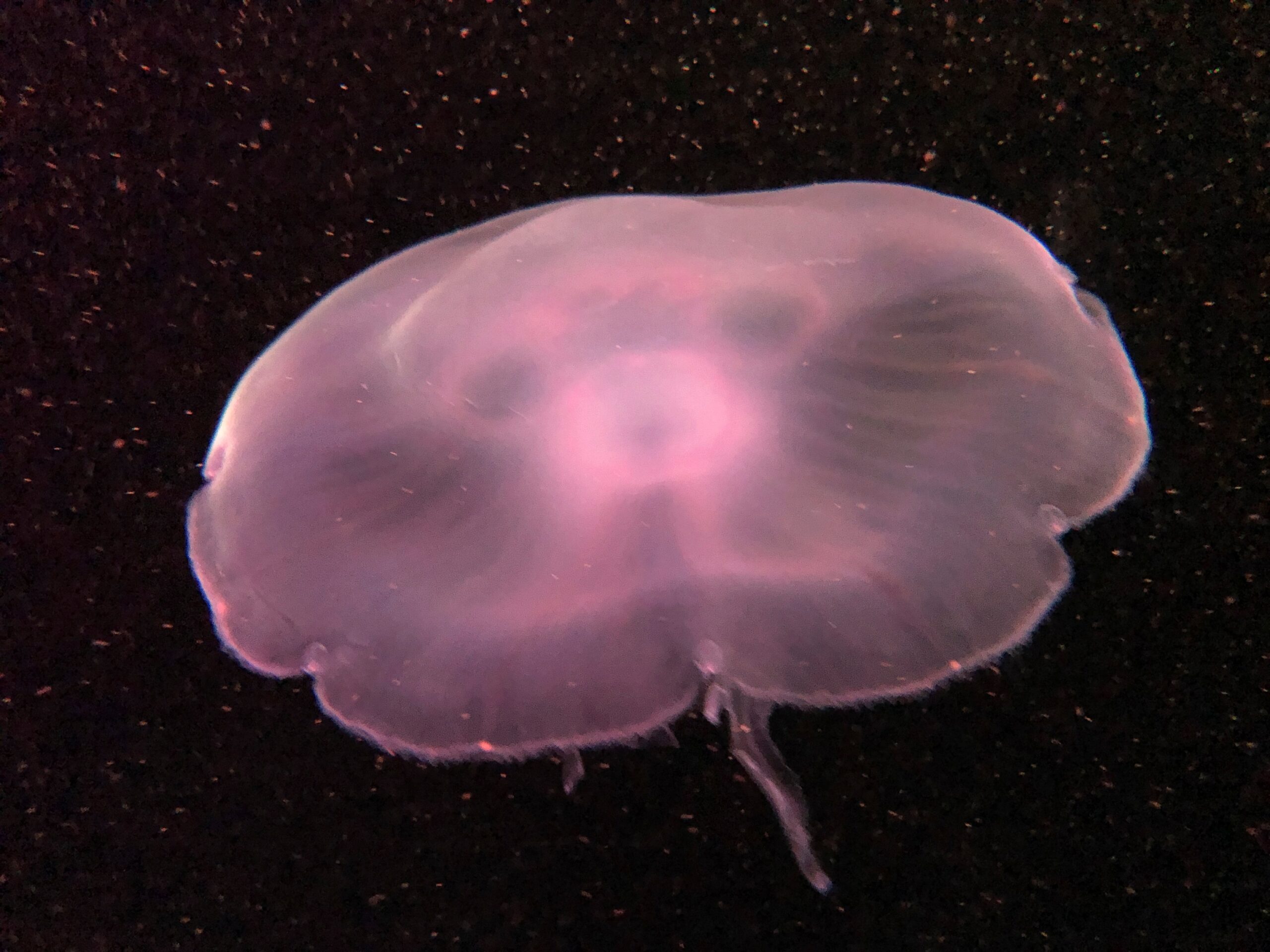
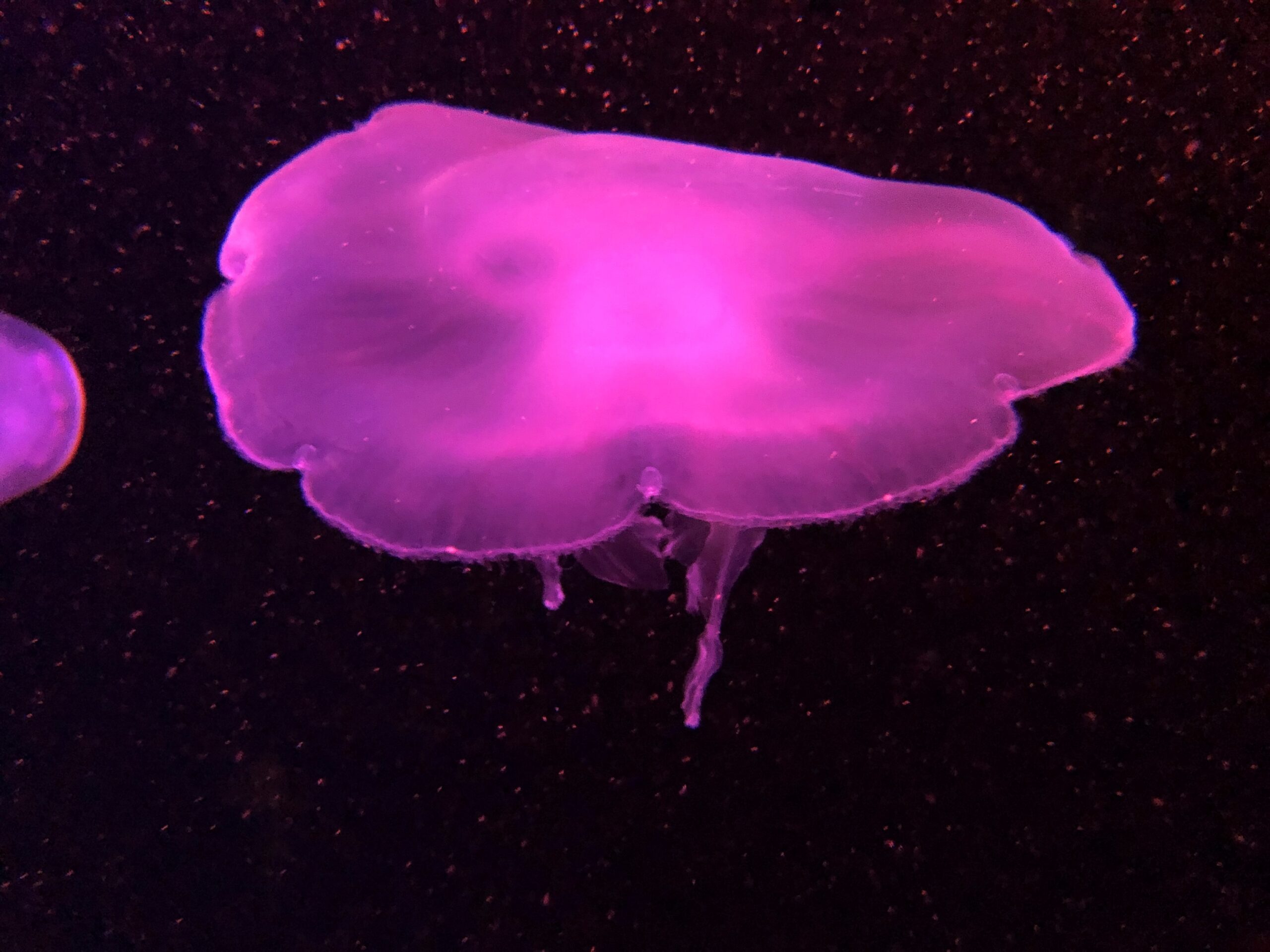
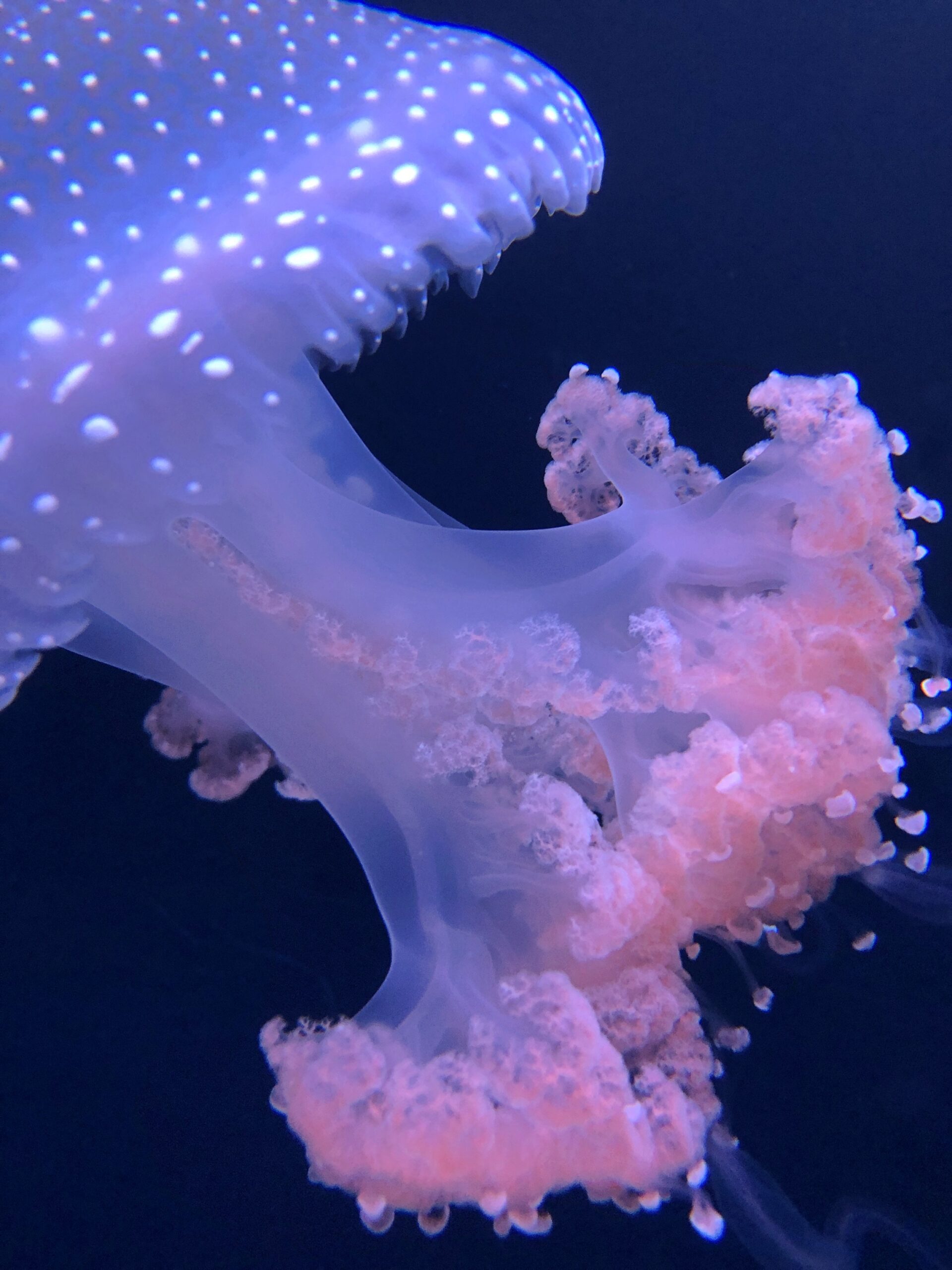
I’m always glad to spend some time peering into a tank where the moon jellies drift, but also somehow contract their entire selves to glide along in deep quiet.
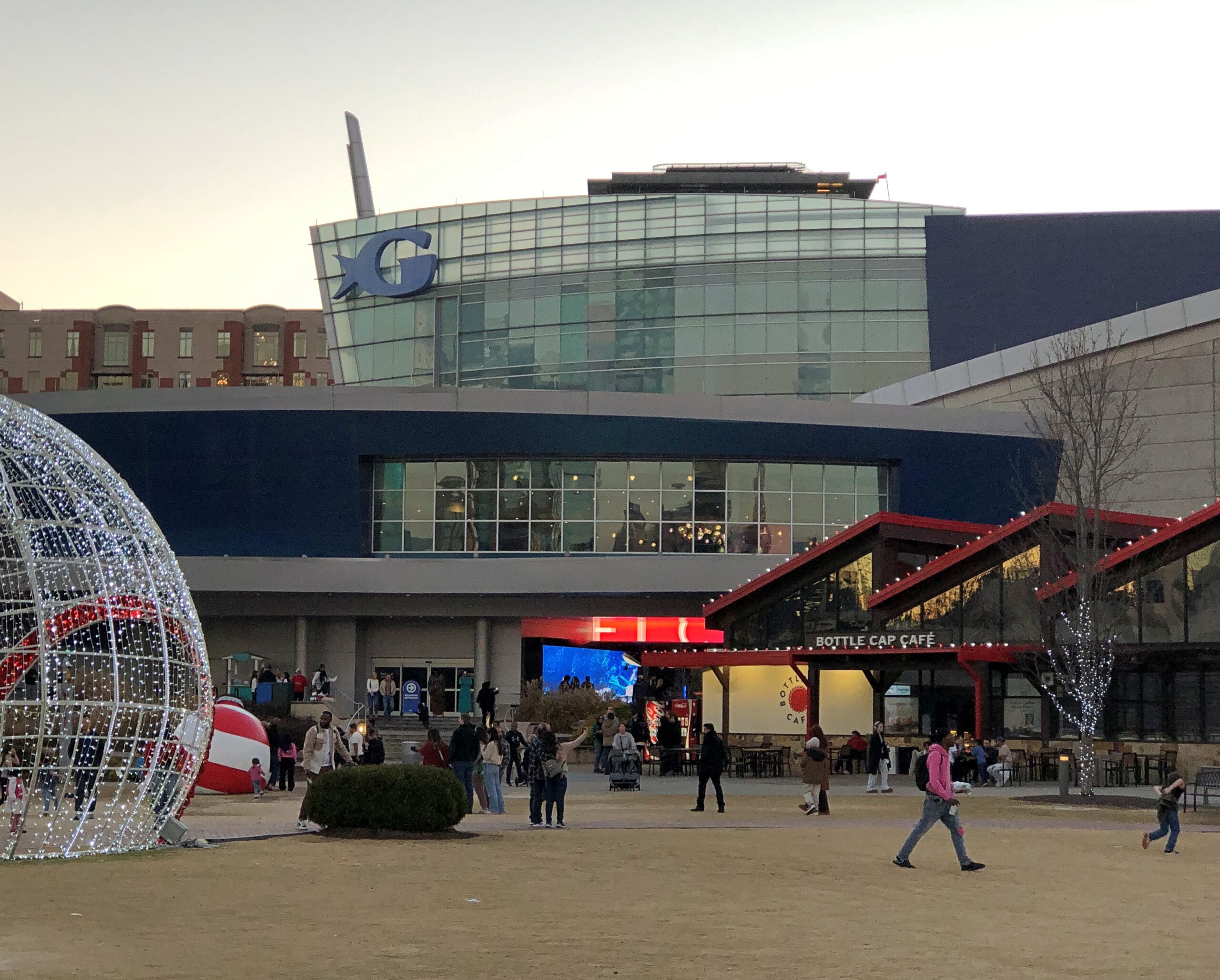
We’d come to the Georgia Aquarium, which keeps company in downtown Atlanta with the World of Coca-Cola, the National Center for Civil and Human Rights, and a large parking deck on about 20 acres of a plaza known on maps as Pemberton Place. To its south is Baker St. and Centennial Olympic Park; to the north, Ivan Allen Jr. Blvd. and a massive substation behind walls. For just an instant I thought that was Irwin Allen Jr. Blvd., and was disappointed to realize otherwise.
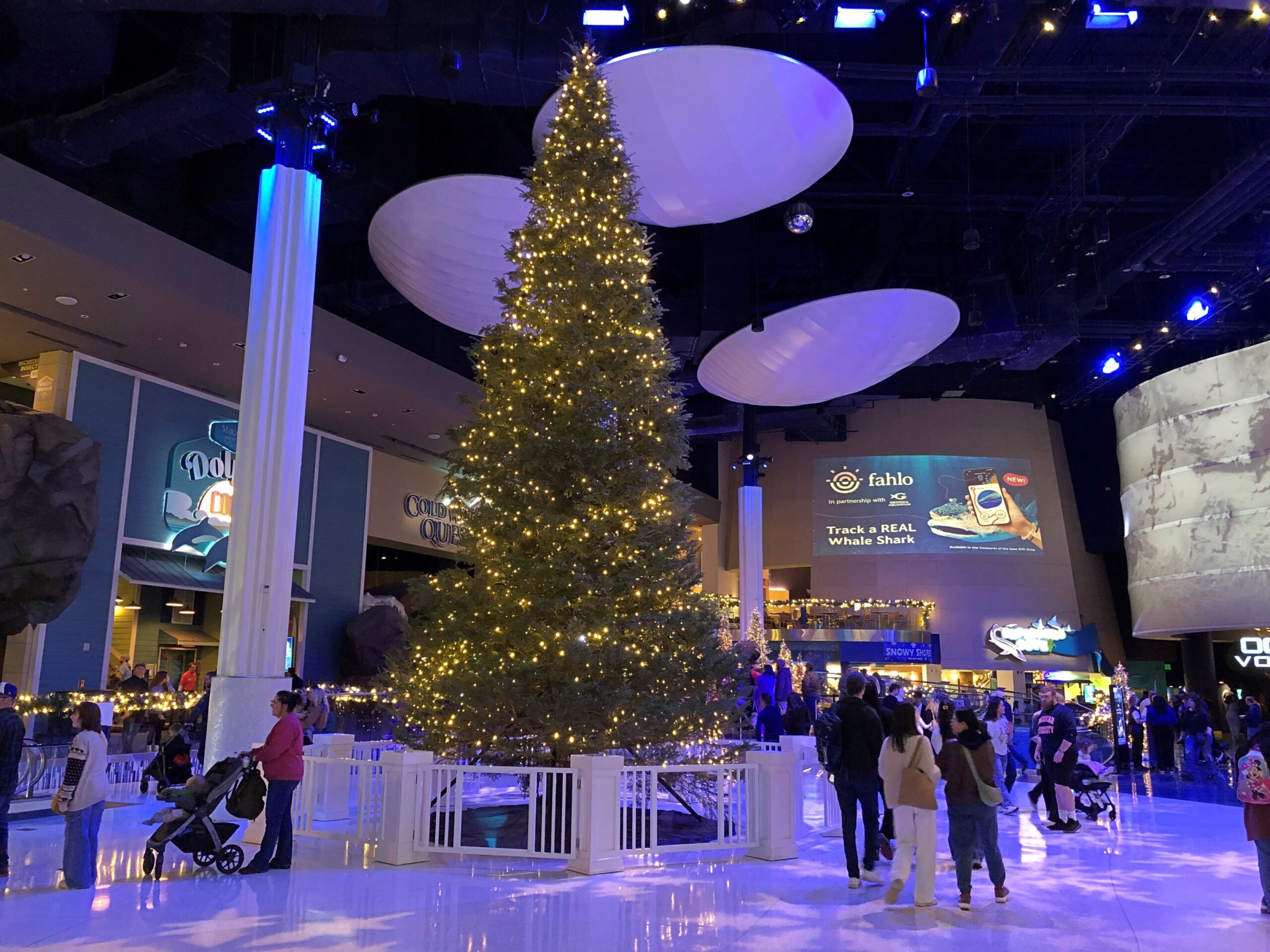
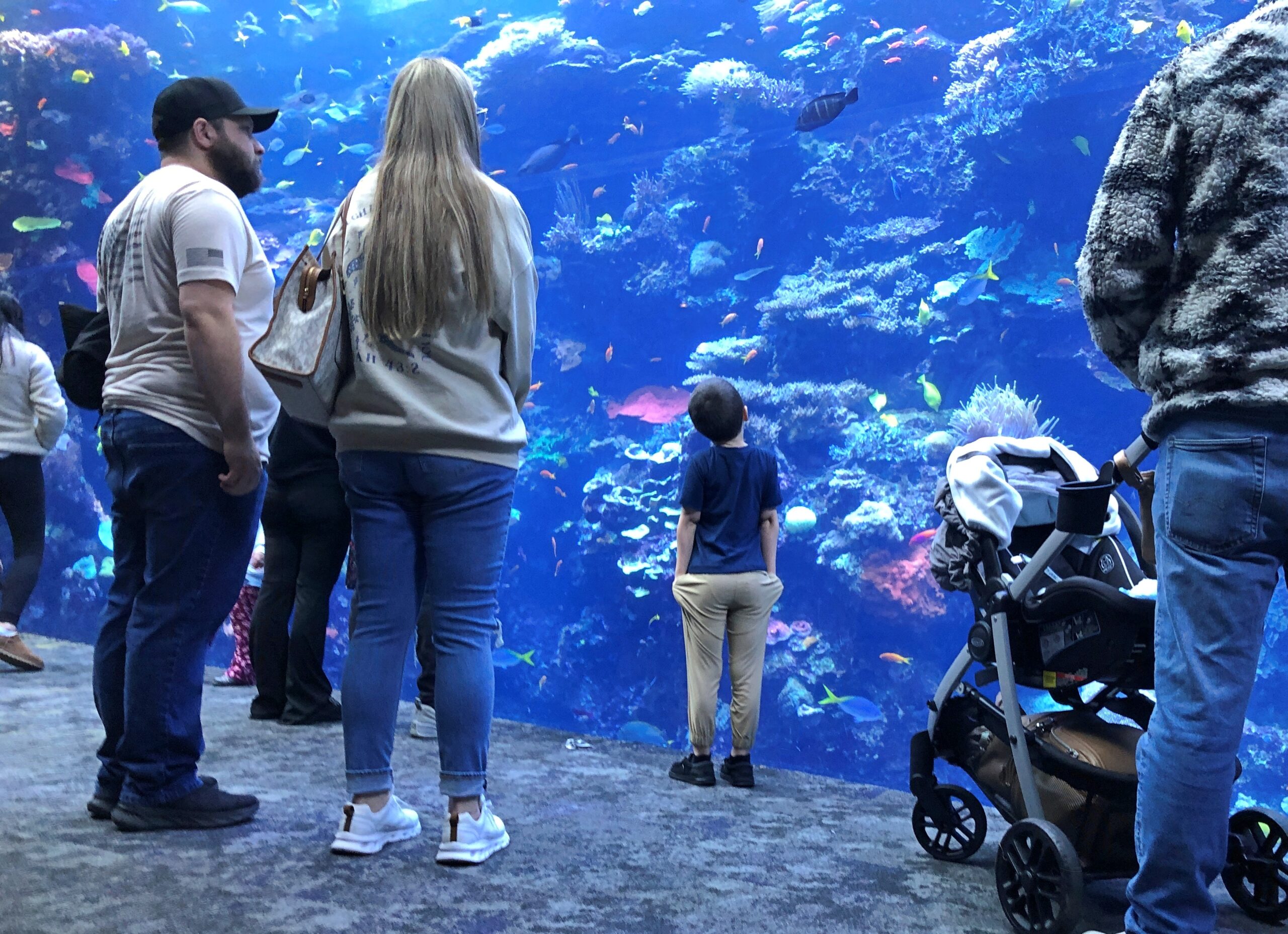
At 11 million gallons – which is apparently how major public aquariums are measured – the Georgia Aquarium is listed on Wiki as the sixth largest in the world and the largest in the United States, and I believe it. The structure is hub-and-spoke, with an enormous, vaulting hall with sizable exhibit spaces radiating from that hall: Tropical Diver, Ocean Voyager, Explorers Cove, Cold Water Quest, Southern Company River Scout, Dolphin Coast, Truist Pier 225 and Aquanaut Adventure.
Five days before Christmas, much of the human population of Atlanta was there, gawking at the sea and land creatures. We did our own gawking.
The invertebrate collection included much more than moon jellies. There were other kinds of jellyfish, too, looking like the sort of thing that if you see on the beach in Australia (or anywhere), you’d better not to touch.
They puff along.
Other invertebrates. Such as the inspiration for Patrick Star.
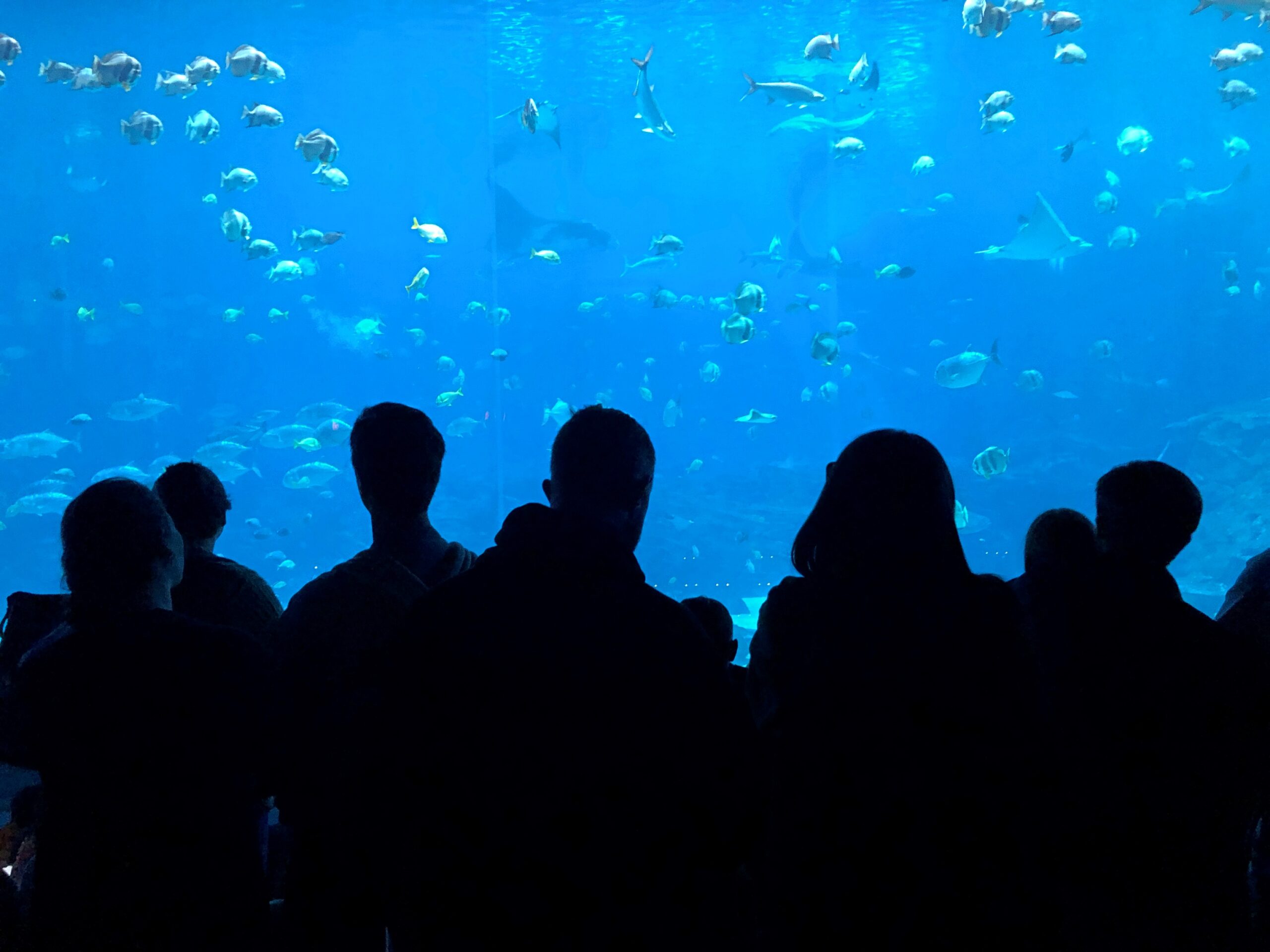
And of course, fish. Many, many fish.
Including the inspiration for Nemo.
Small creatures can be intriguing or even enchanting, but what really packs ’em in are the likes of whale sharks, the largest fish species know to science, and one of the aquarium’s signature attractions. There’s no shortage of other kinds of sharks as well, it always being Shark Week at the facility: tiger sharks, silvertip sharks, blacktip reef sharks, and great hammerhead sharks.
More from the sea: Manta rays, goliath groupers, green sea turtles, Japanese spider crabs and weedy sea dragons. Freshwater creatures include, but are hardly limited to, Asian small-clawed otters; black spot piranhas — just how many kinds of piranhas are there, anyway? — snapping turtles; banded archerfish; discus fish; and shovelnose sturgeon.
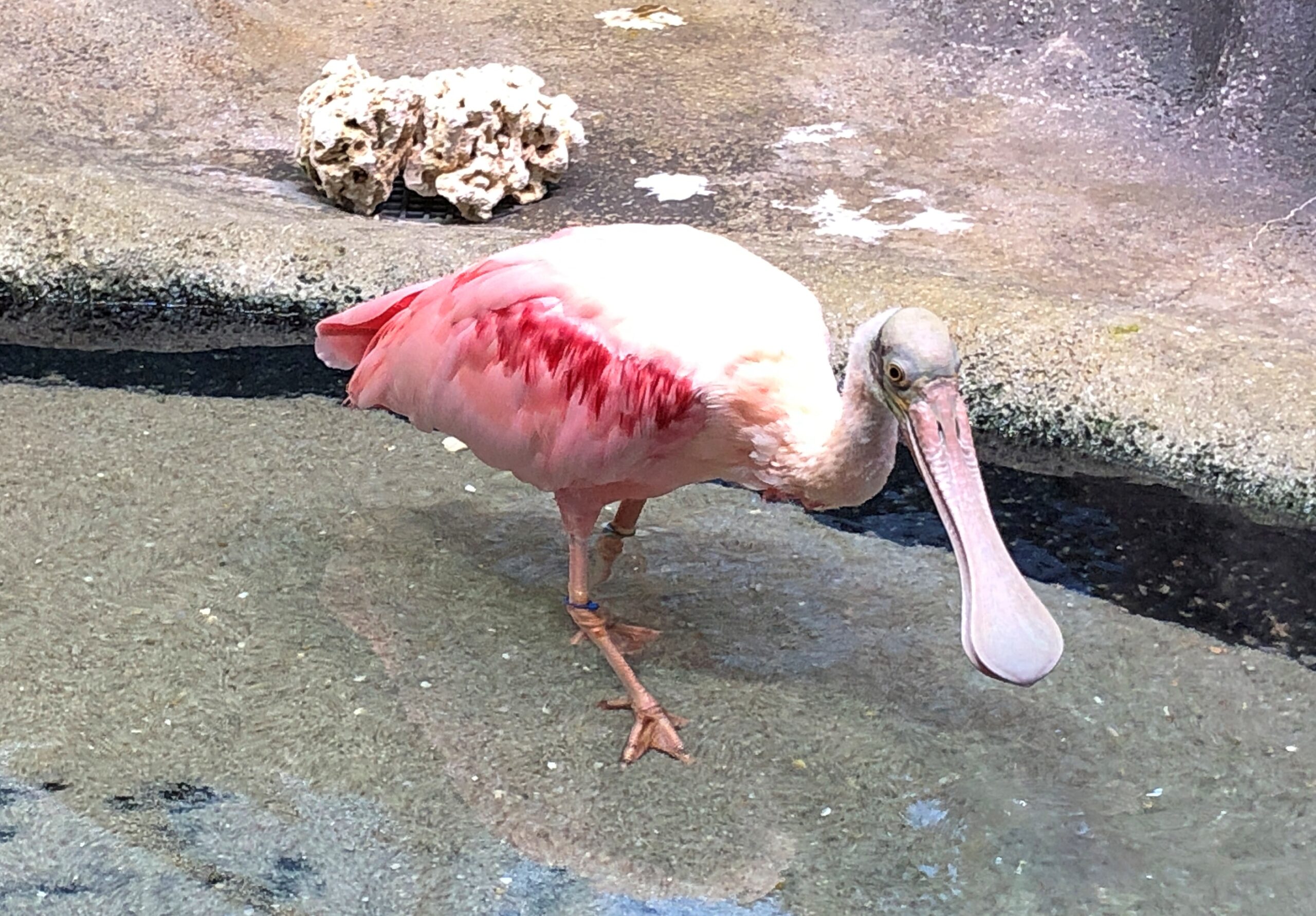
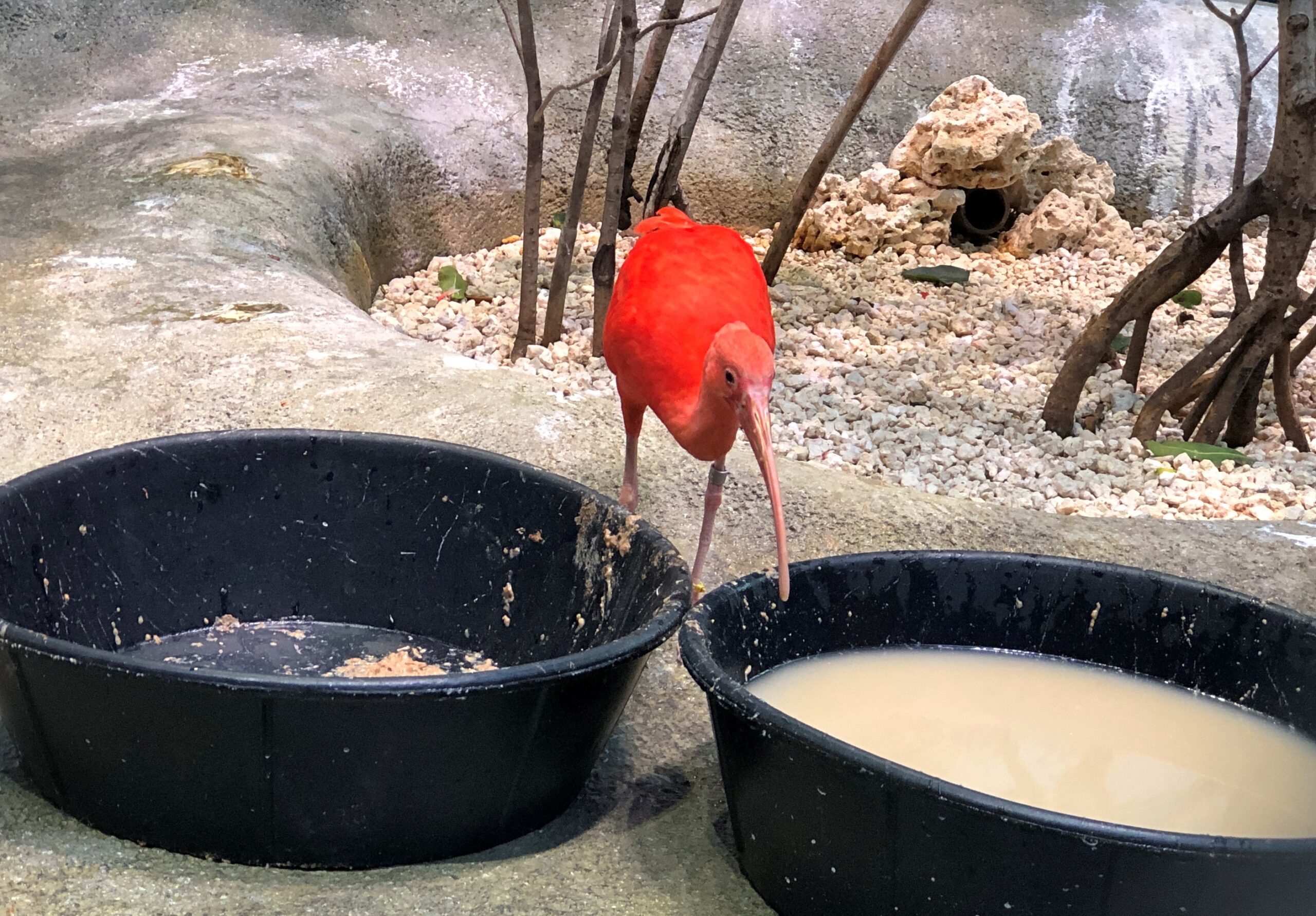
A few birds are on hand, such as spoonbills and ibises. Ones that subsist on fish, in other words.
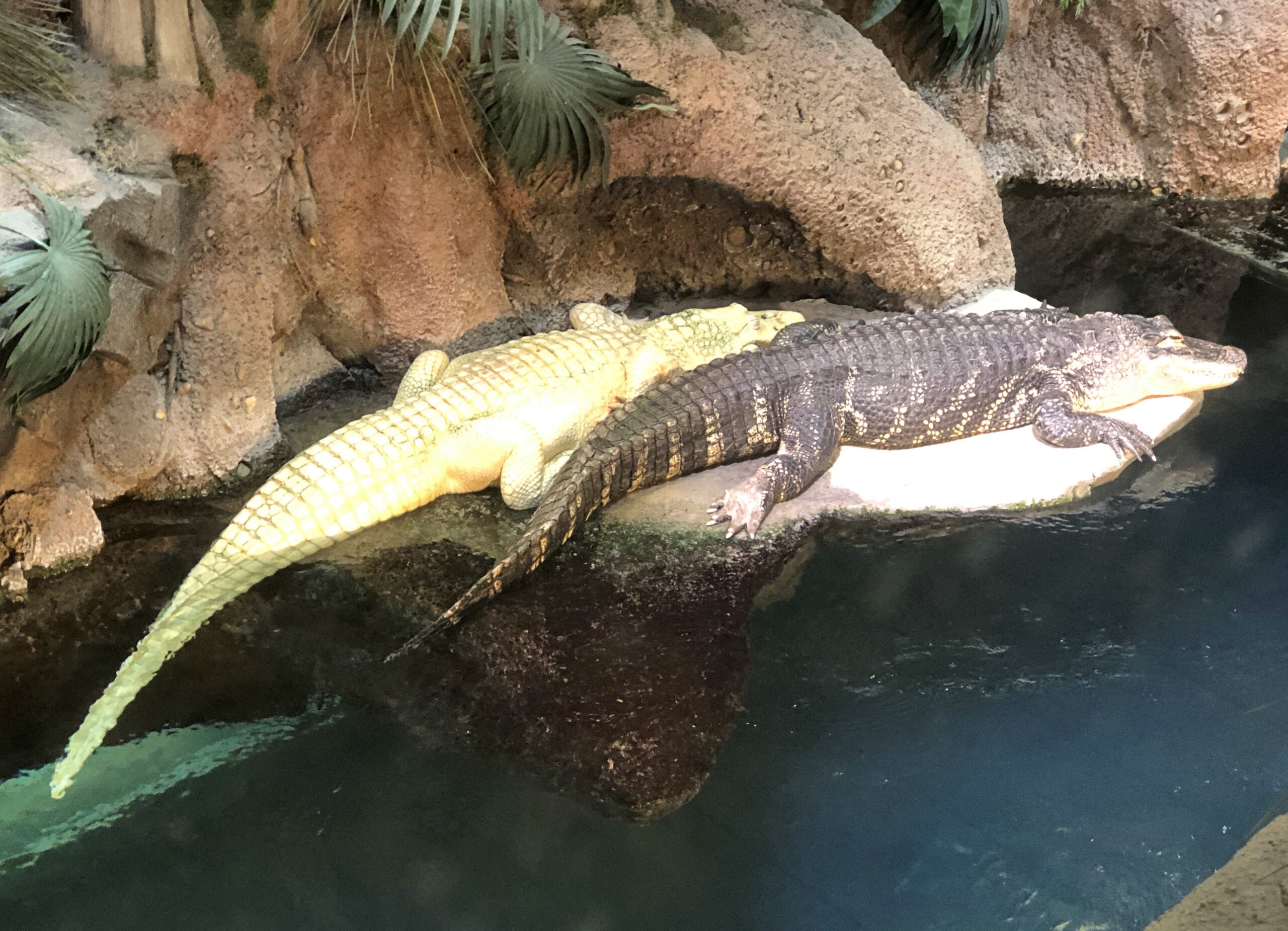
In case we hadn’t had enough gators in Florida, the aquarium had a few Georgia gators, including a rare albino. I take it Georgia gators were the inspiration for Albert in Pogo.
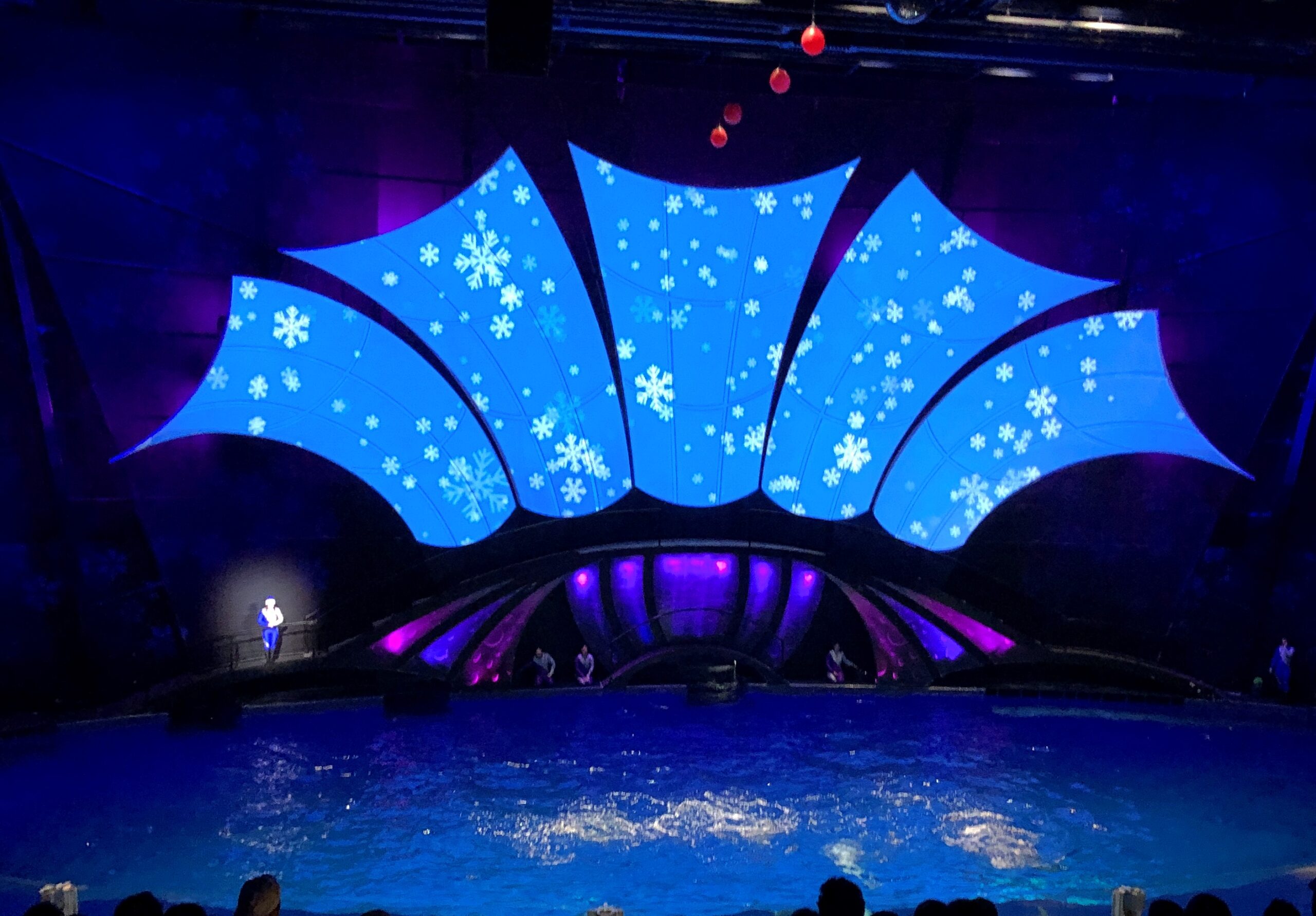
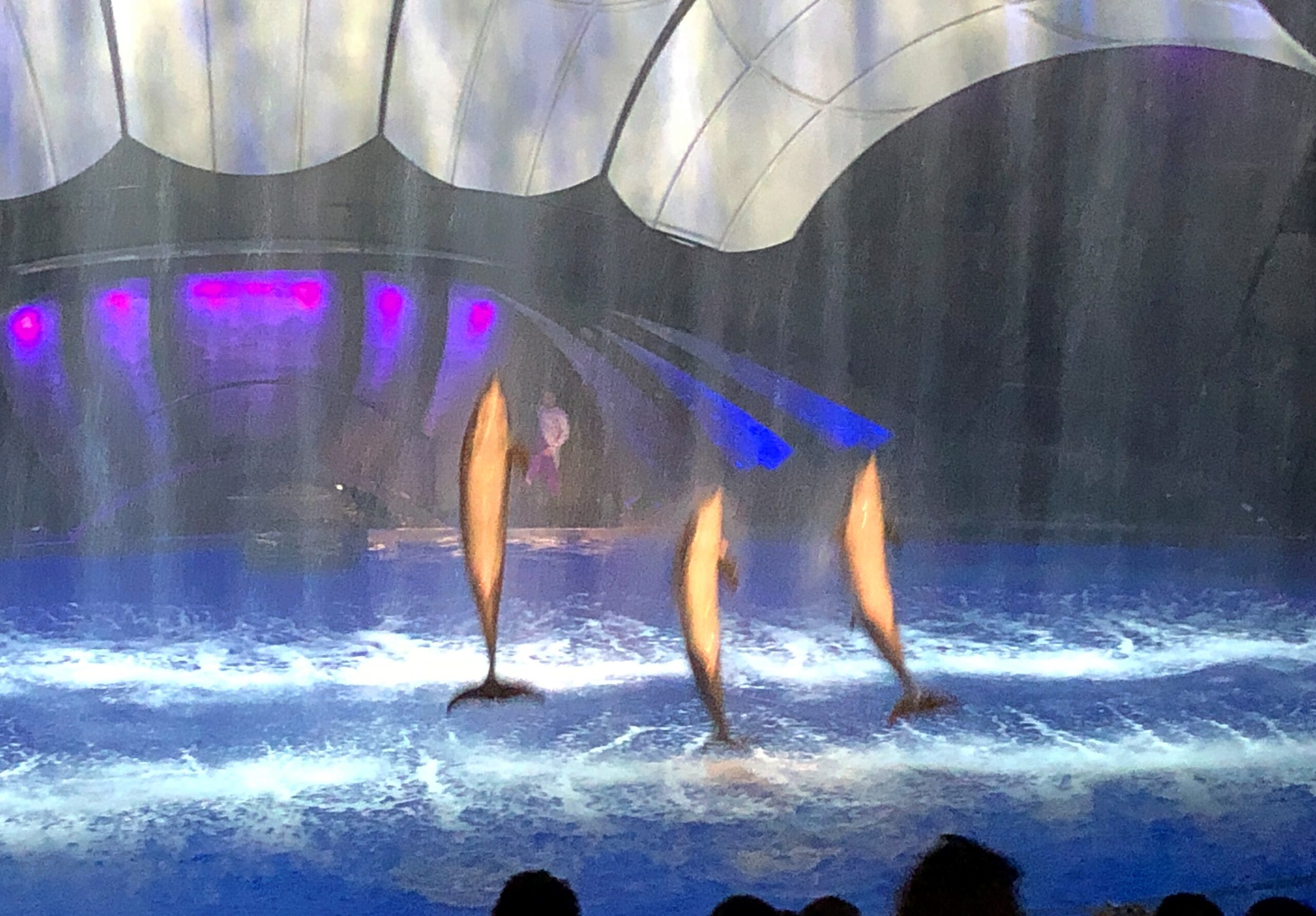
We saw the dolphin show. My still camera wasn’t the best for capturing the action, and there was a lot of jumping and splashing, but squint and the second shot looks like an impressionist work featuring a line of mid-air dolphins.
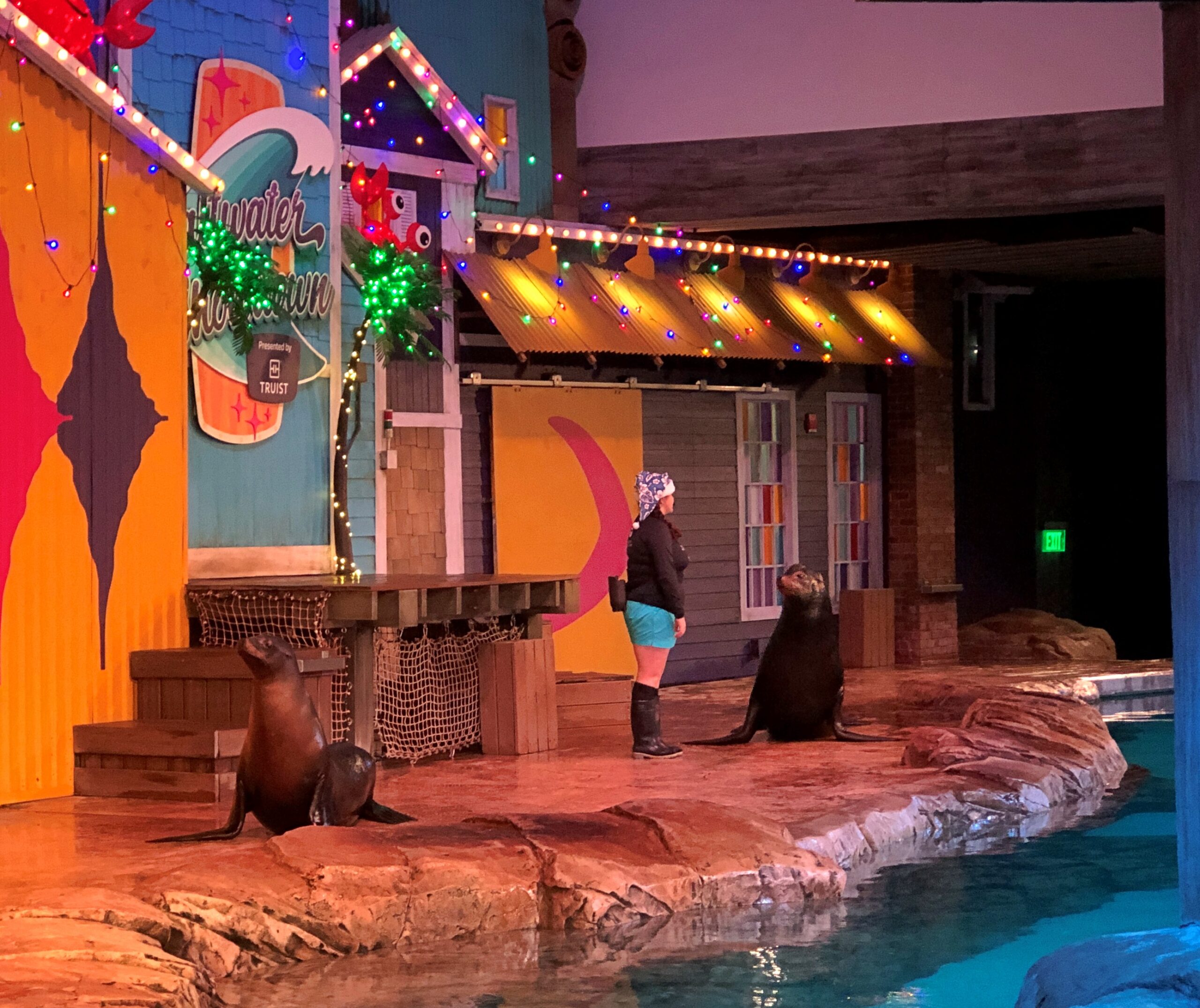
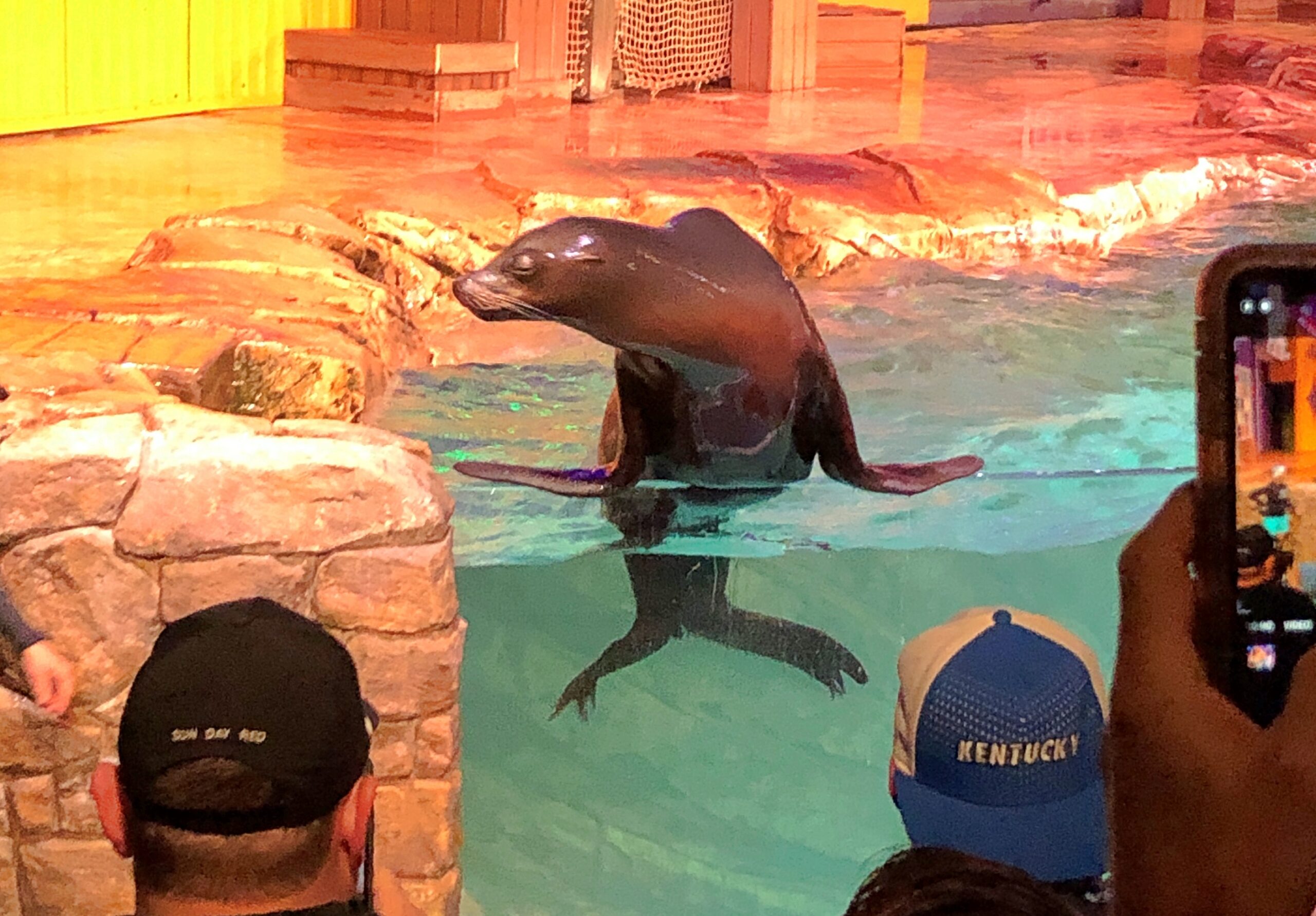
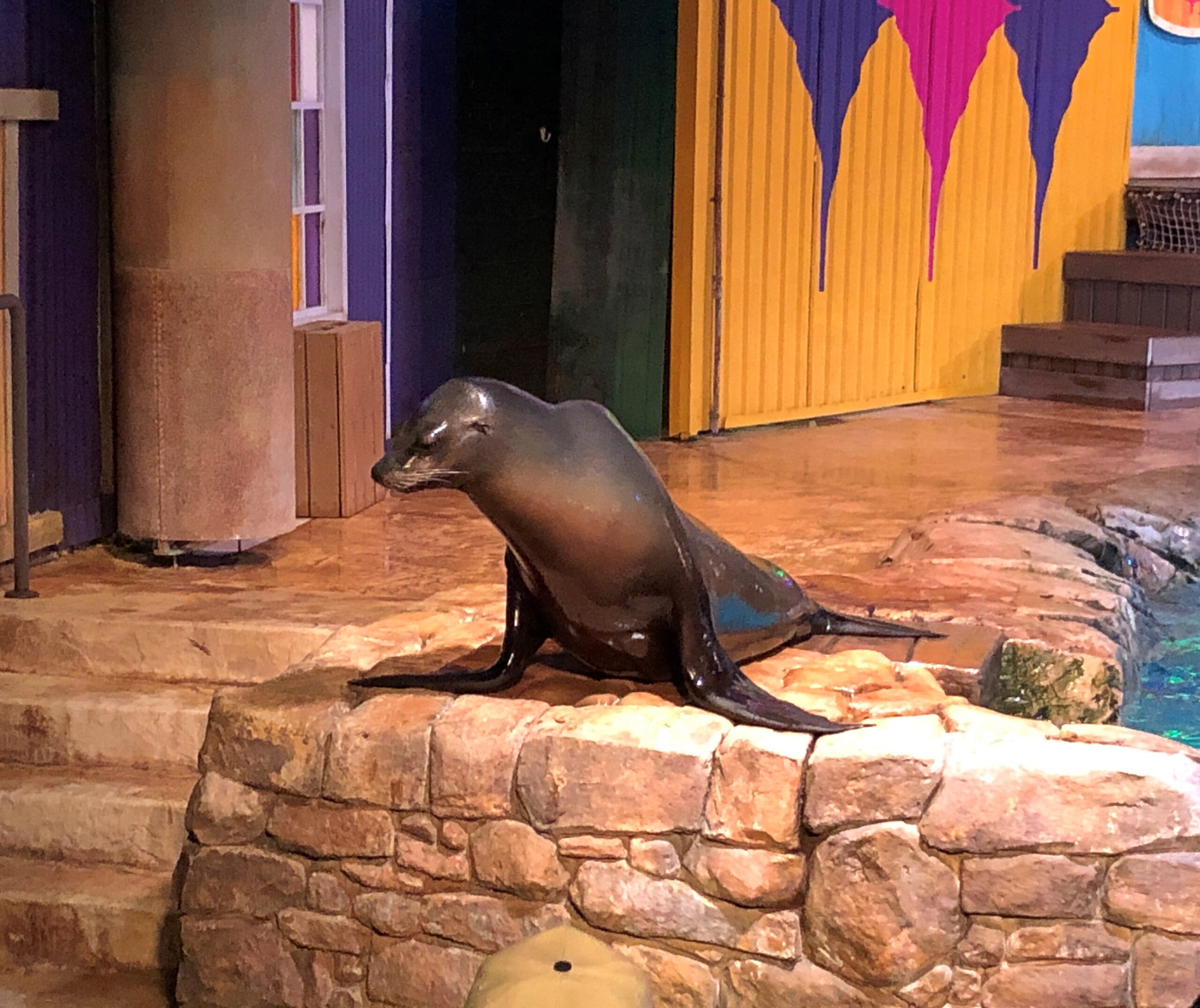
A separate show features seals and sea lions, doing seal and sea lion things for fish rewards.
About half as many people crowded into the aquarium would have made for a better experience, but I can’t begrudge the Georgia Aquarium its massive popularity, since it delivers the aquatic goods. Better a crowd than too few people. They’re out seeing real things. Often better, I believe, to see some part of the physical world than an electronic simulacrum.
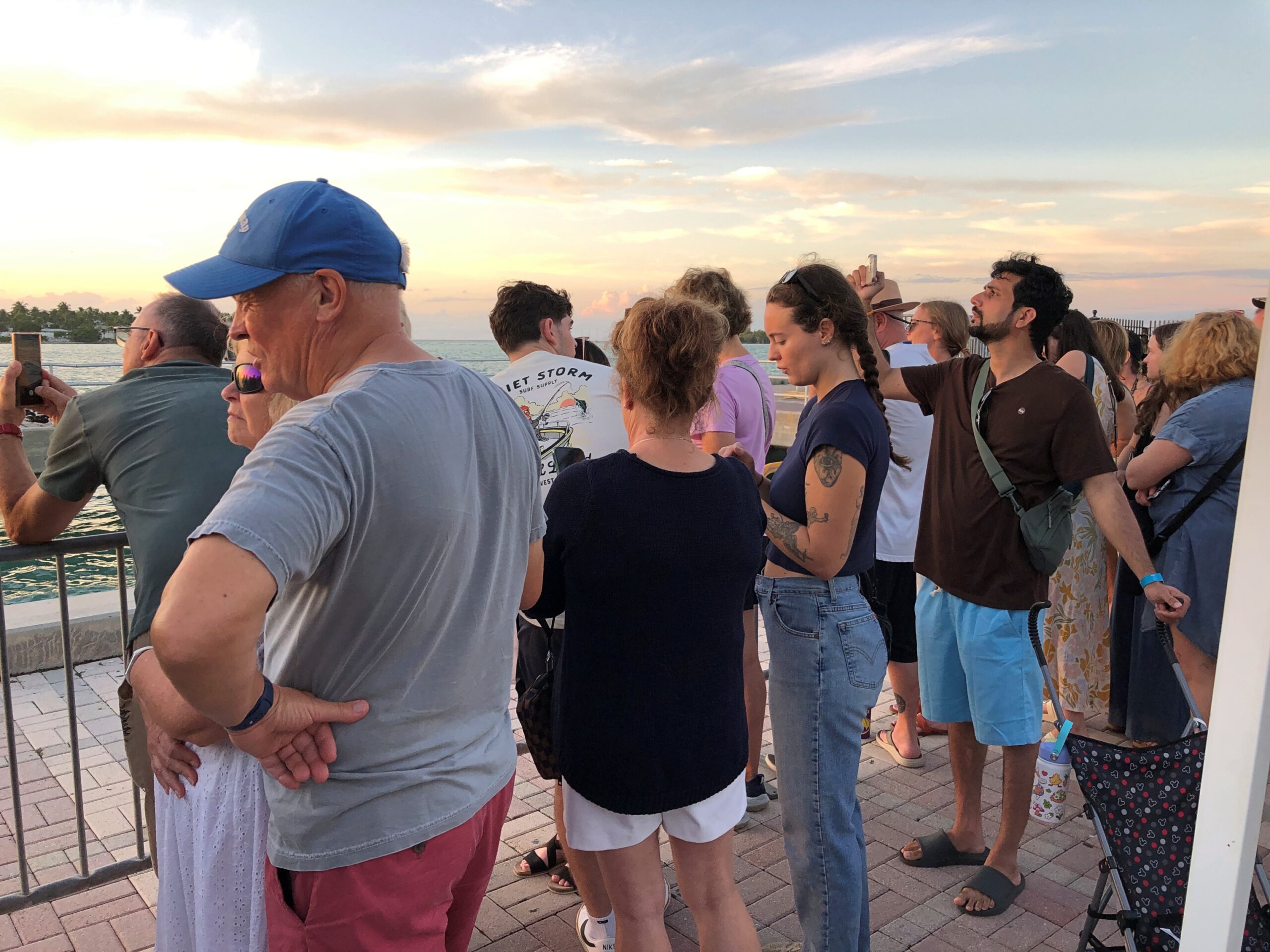
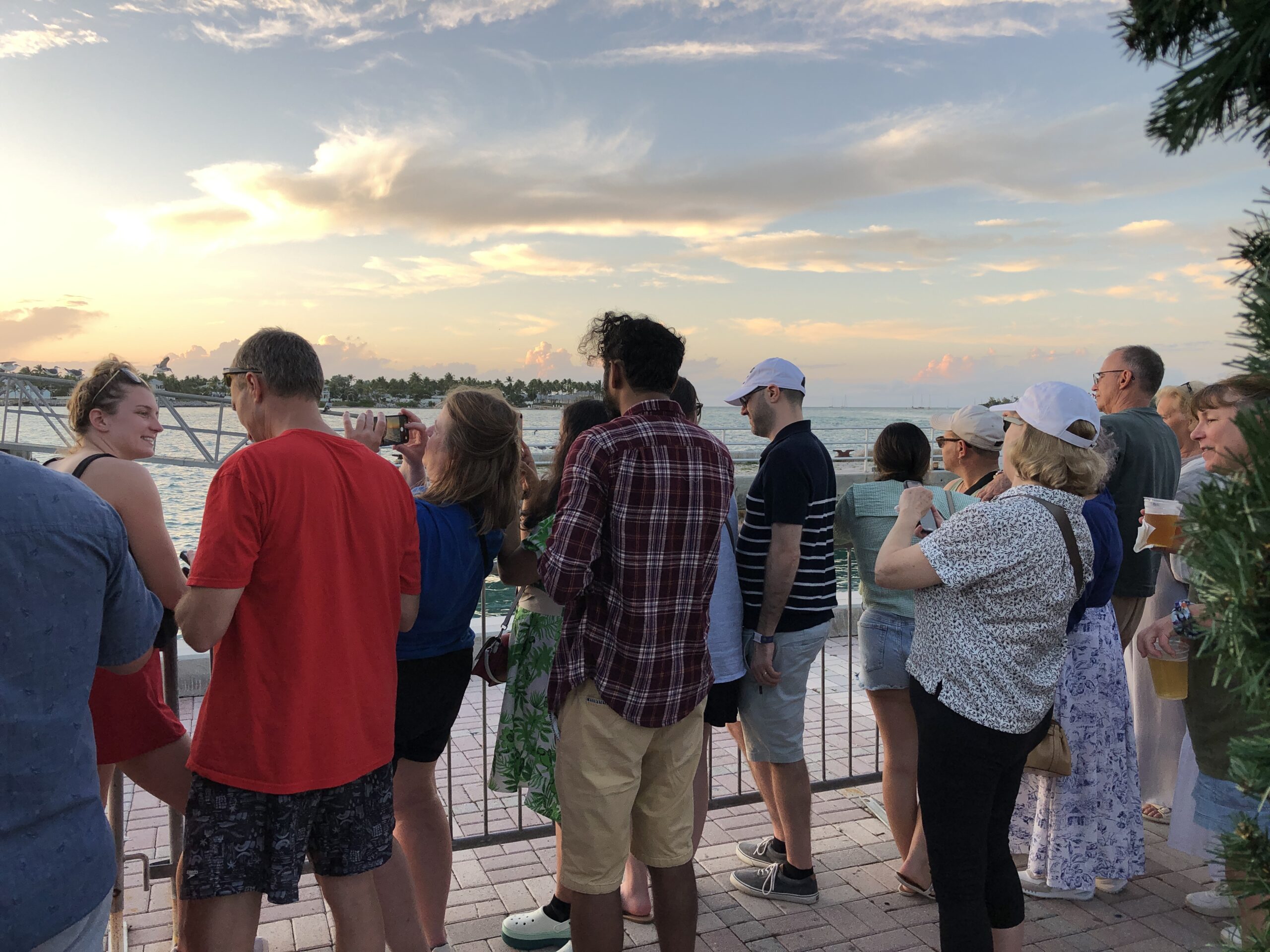
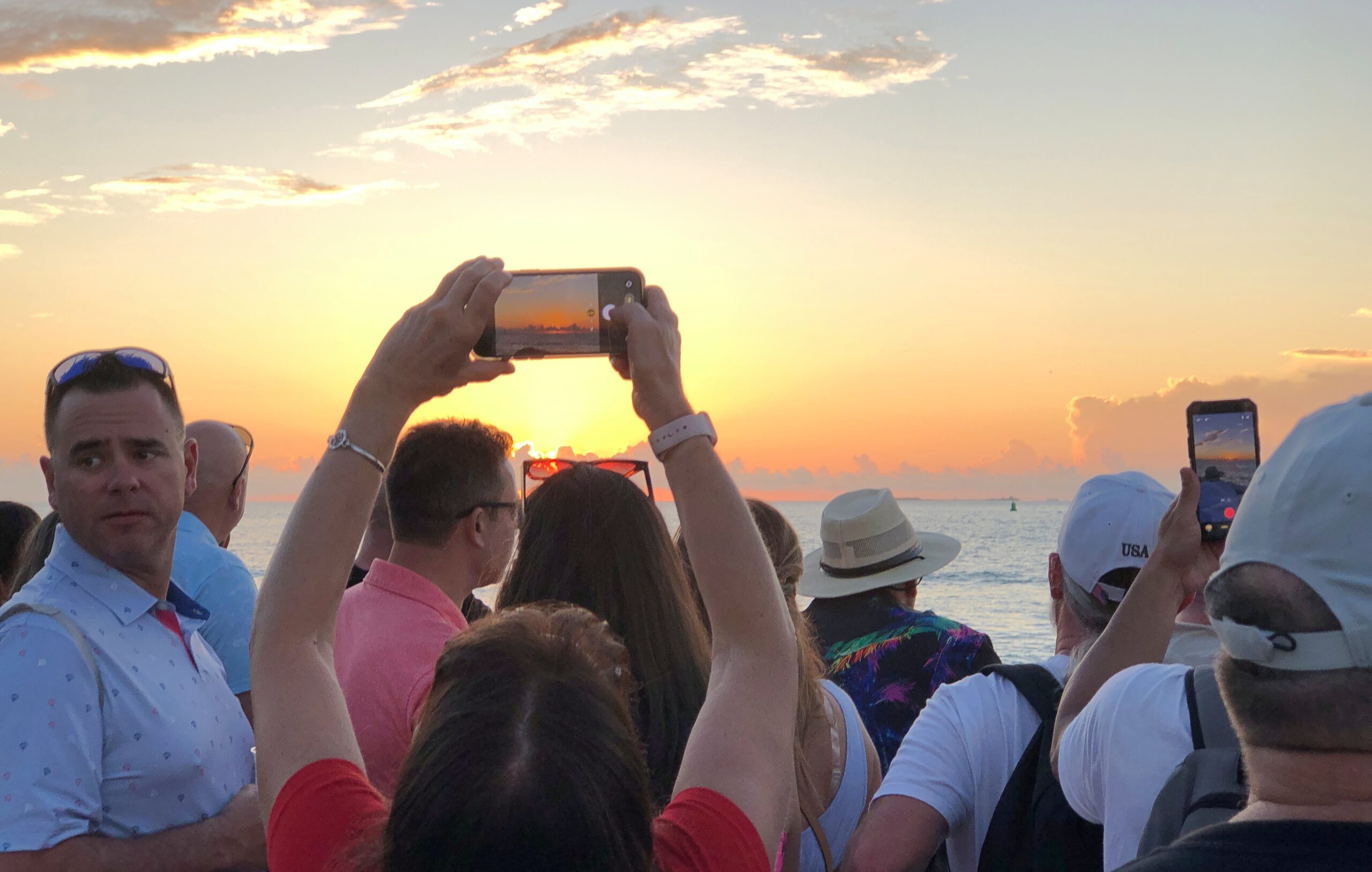
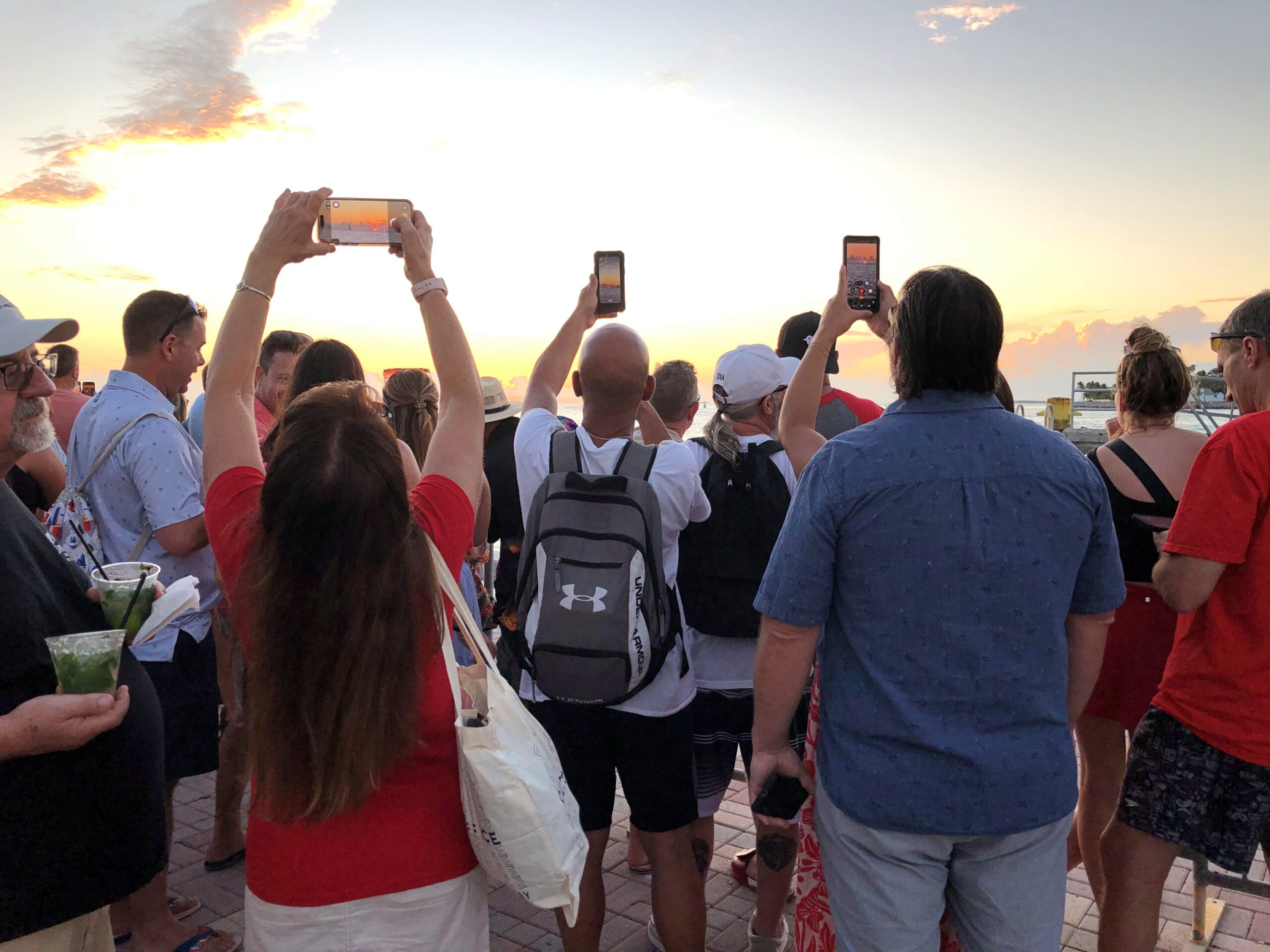
We joined the other Key West tourists, and who knows maybe a few locals, for an spontaneous sunset viewing party. I know if I lived around there, I’d be out at least occasionally, taking in something that never gets old. No organizer at all, just people collecting at the right place at the right time to see the disk of the sun transition from yellow to red and other colors, as it visibly creeps lower toward the horizon. Down the sun went, in its predictable splendor, and then — green.
I’m pretty sure what I saw was an inferior-mirage flash, to use a technical term I learned later. I checked later, finding that one characteristic of such a flash is an oval of light lasting no more than 2 seconds (I’d say it was no more than a single second, if that). They tend to happen when the surface is warmer than overlaying air, and close to sea level.
All that fits for the green flash — a variety of green intense and completely new to me — as the sun set our first day in Key West. The flash came exactly as the top edge of the disk of the sun dipped below the horizon. You have to, I believe, be looking straight at the exact right place at exactly the right moment to see it, as I was, by pure accident. I’d heard about green flashes for a long time, but I’d never seen one. A really long time: I remember them being mentioned during a planetarium show in San Antonio as a kid in the early ’70s.
We hadn’t come to Mallory Square to see a green flash or any other meteorological optical phenomena. We hadn’t even come to see the sun go down. We just happened to arrive at Mallory, a large public plaza near the north end of Duval St. and right at the water’s edge, just at the right time, after gadding about that part of Key West.
It’s a mildly festive place around sunset. Also, people are waiting. The sun was not to be hurried.
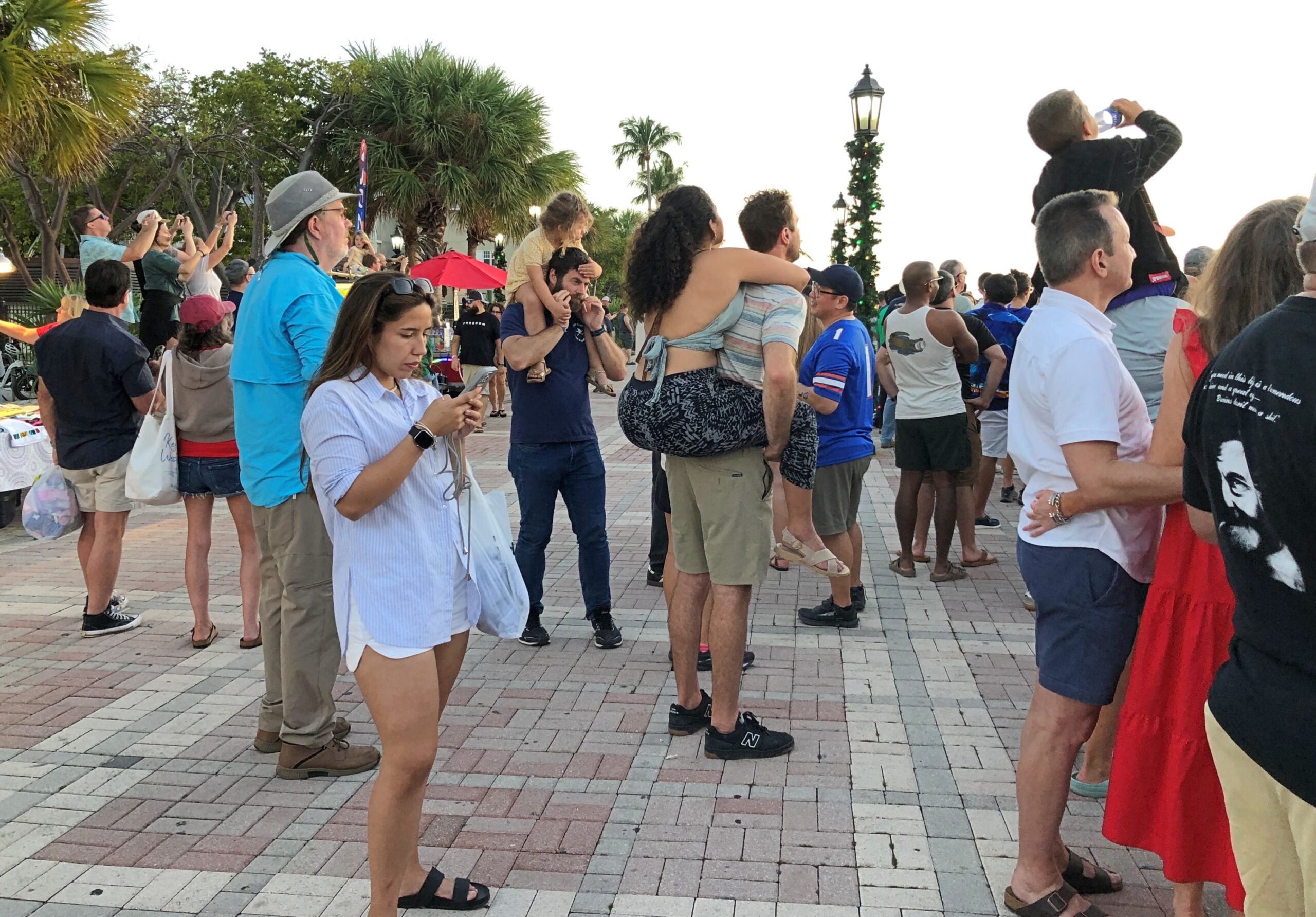
Lots of people around, not an overwhelming crowd, more of a happy milling of vacation-goers.
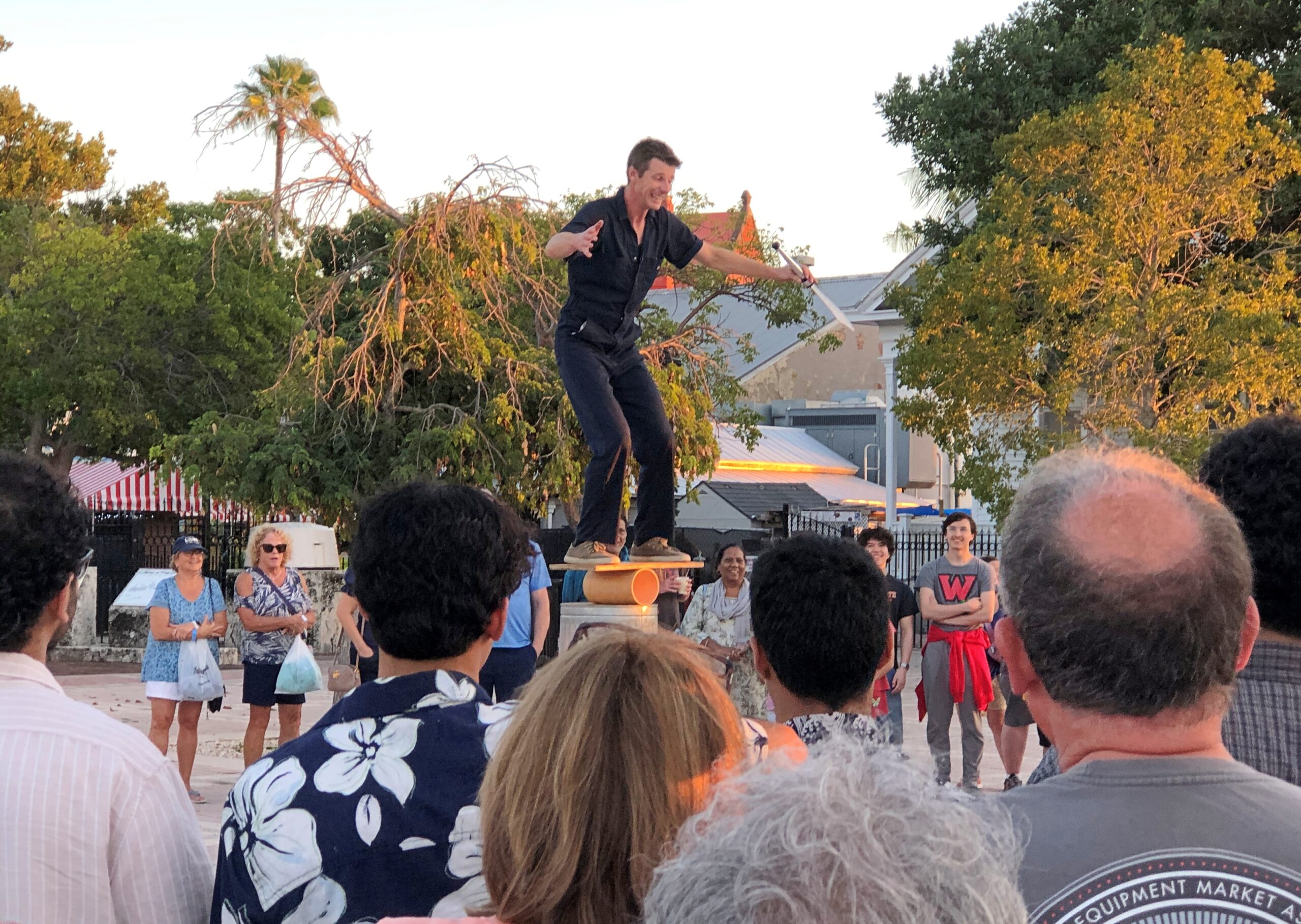
Live entertainment was on hand.
The star attraction, however – make that the solar attraction – was the sunset. Mallory Square has a fine view of the westward horizon, where sea and sky come together like a hazy kiss out on the ocean.
So now I’ve seen a green flash. A total solar eclipse (two, actually), lunar eclipses, the transit of Venus, double rainbows, ground-to-sky lightning, sun- and moondogs, meteors, planets through telescopes including the moons of Jupiter and Saturn, the impressive whisp of the Milky Way in a dark sky, the Southern Cross and the Magellanic Clouds – add a green flash to the list.
But what other cool things to see in the sky that so far have eluded me? The aurora, for one. Aurora borealis would be great, and certainly more doable than aurora australis, but wouldn’t seeing the Southern Lights be a kick? I think I first learned about it in a Carl Barks Scrooge McDuck comic, and never forgot.
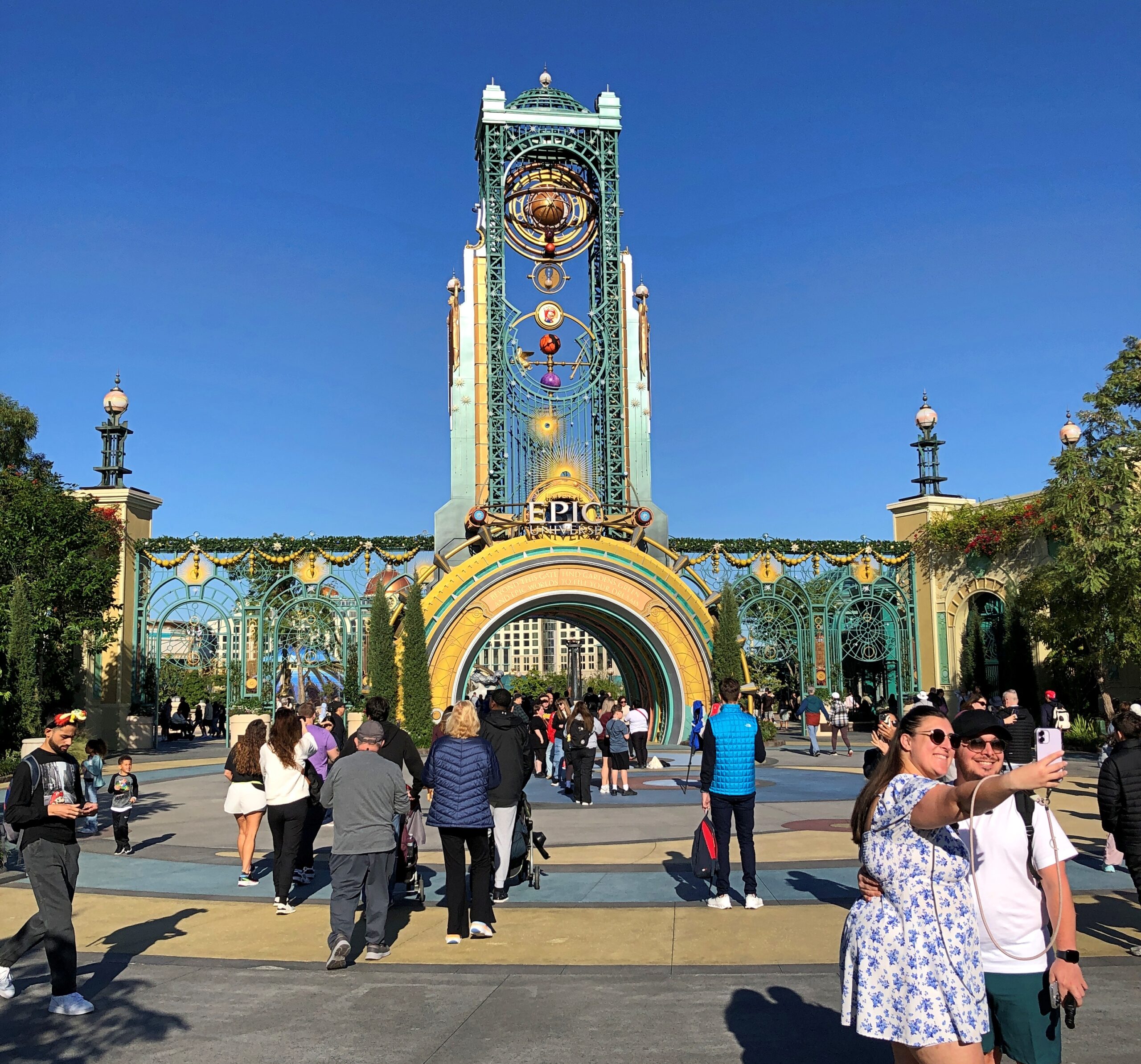
A theme park should have a theme, right? As far as I could tell, the theme of Universal Epic Universe, the most recently opened park in central Florida, is We Own These Valuable Intellectual Properties. Namely, such globally successful entertainment franchises as Harry Potter and Mario Bros. and How to Tame Your Dragon. I mean, How to Train Your Dragon. Shows you what I know about these properties, which is a lot less than many people.
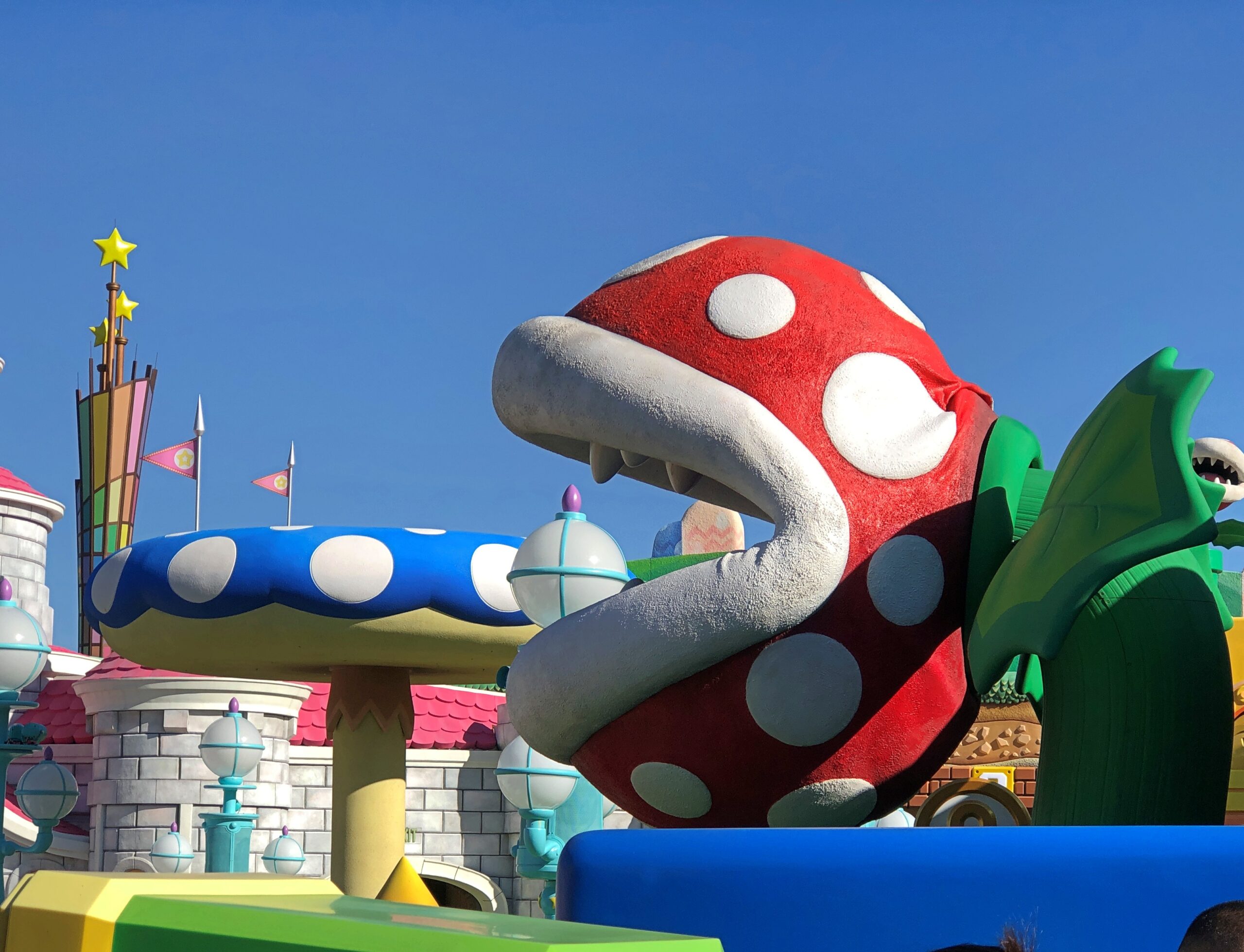
For instance, Ann had to school me in who Bowser was, which she was happy to do as we waited in line for the first ride of the day at Universal Epic Universe, in the area of the park devoted the world’s most famous cartoon building supers. Even I know Mario and Luigi. I was around to see their arcade games appear in the early ’80s. I’d heard of Princess Peach. Word of damsels and their distress tends to get out.
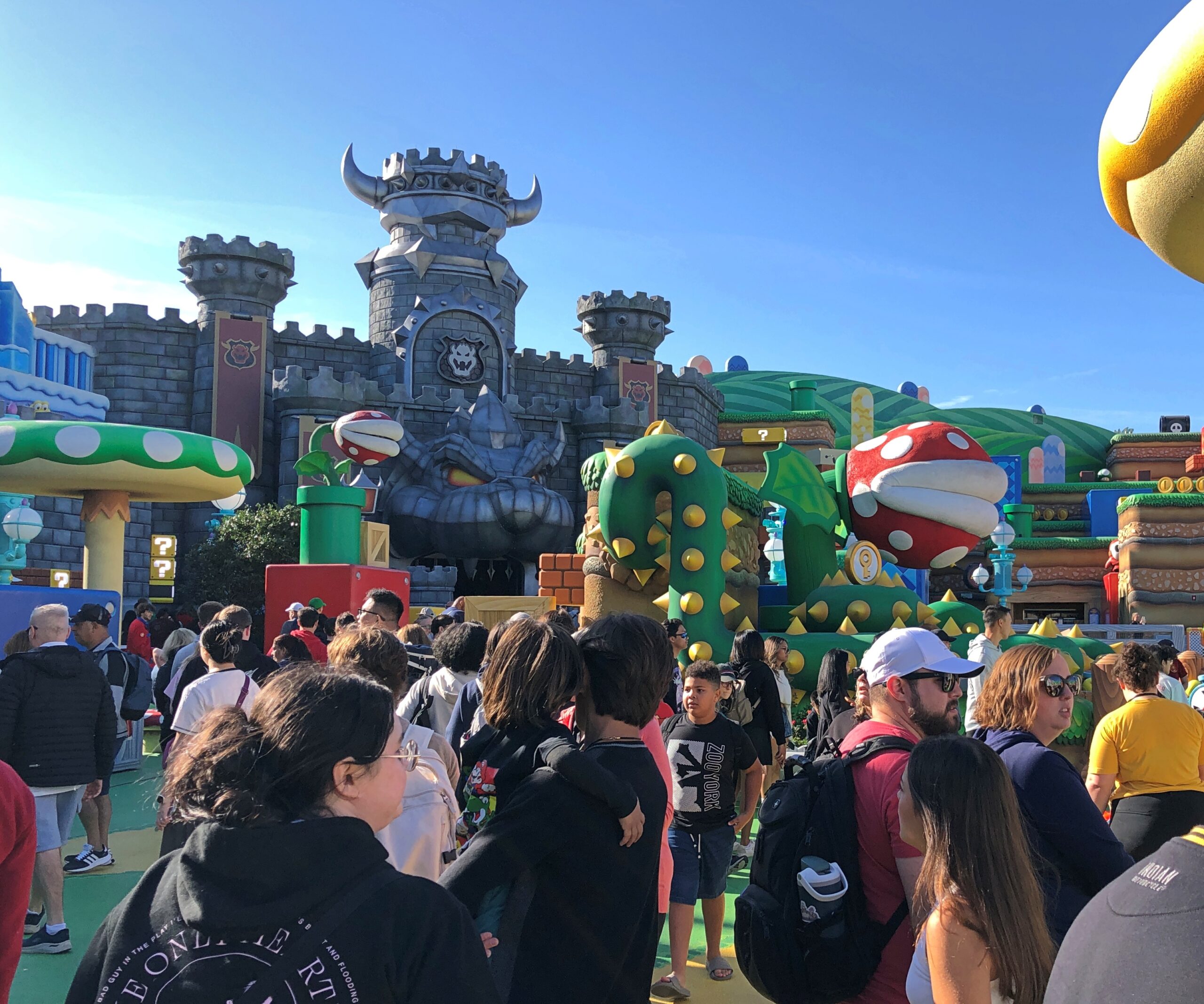
Bowser is the main antagonist of franchise, turns out. The line snaked through his castle or lair or the Bowser secret scheming room, since he seems like a fellow that schemes a lot. But I will say this: Universal went to a lot of trouble to give you something to look at as you waited for the ride, including in this case giant faux library books with such titles as Why Good Things Happen to Bad People, The Second Place Banana and Other Horror Stories, and Sibling Rivalries and How to Exploit Them, and many more, all in-universe jokes, some of which were amusing even if you didn’t know the back story. A committee of Mario Bros. experts must have spent months on dreaming up the titles, marveling every day that they were paid to do so.
The overflow of things to see while you wait repeats itself in the other major rides: the Gothic detail that evoked the monochromic worlds of the early Universal horror pictures, and the positively palatial hall ahead — a long time ahead — of the Harry Potter-adjacent wizard swooshing ride.
We’d arrived fairly early on the morning of December 9 for our day at Universal.
The weather was ideal for the visit. The crowds were less than ideal, but not bad. I can’t imagine the hordes at the park, say, today – one of the days between Christmas and New Year’s, when many more people are off, and kids aren’t in school.
We opted not to do the line-skipping scheme, after I determined that adding it to the ticket prices for three people would involve roughly the same amount of money as the accommodation budget for the entire trip. Universal, which is to say Comcast, was already getting enough of my money.
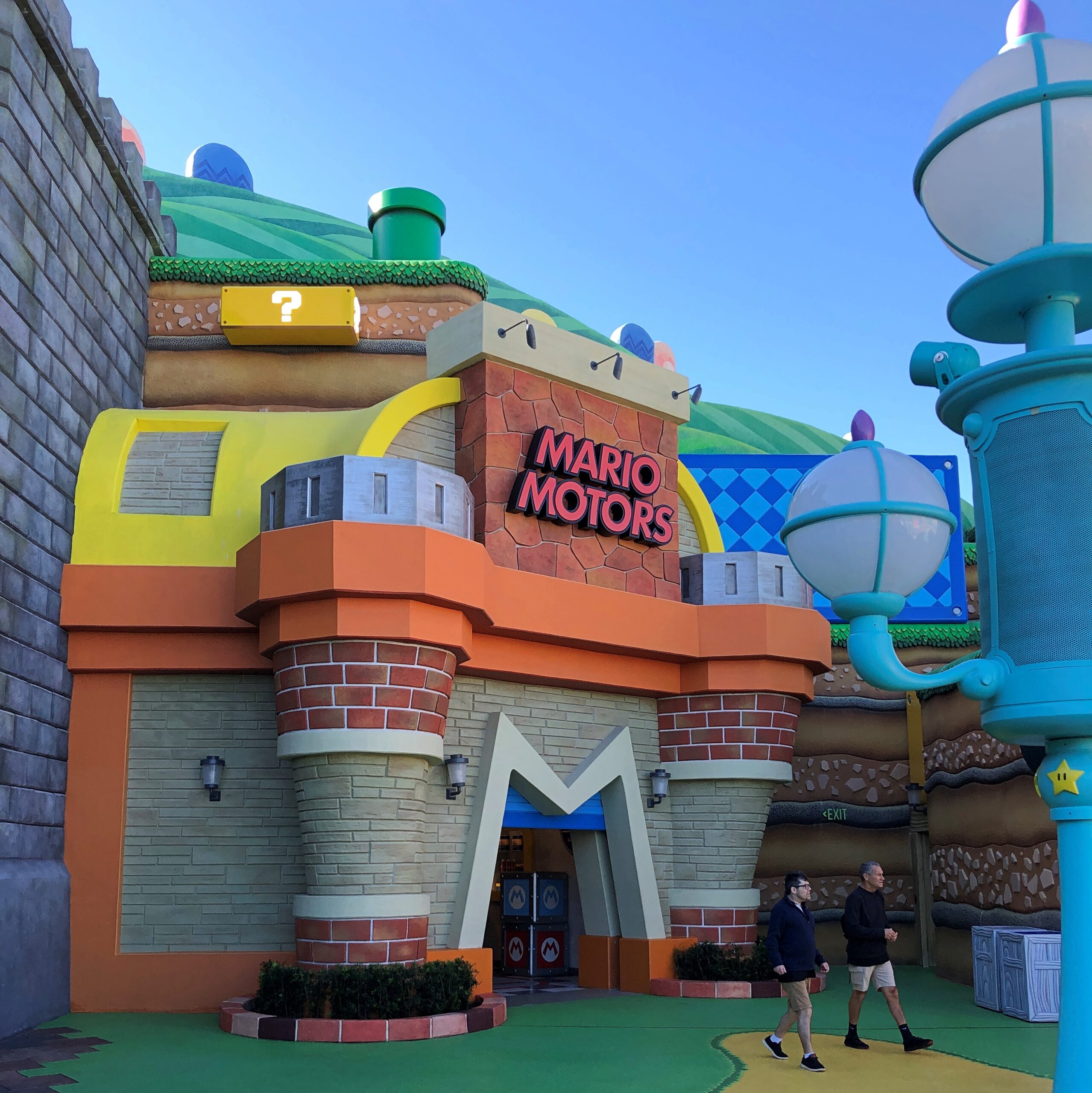
But I carp. Regular tickets by themselves aren’t cheap, but the quality of the attractions is very high, even if you aren’t particularly interested in the franchises. Mario-world is pretty interesting, even before you do the ride, which offered sensory-overload that involved a blur of simulated kart racing. I can’t actually remember much more than that after more than two weeks, but there was a lot of light and motion and grabbing of that wheel.
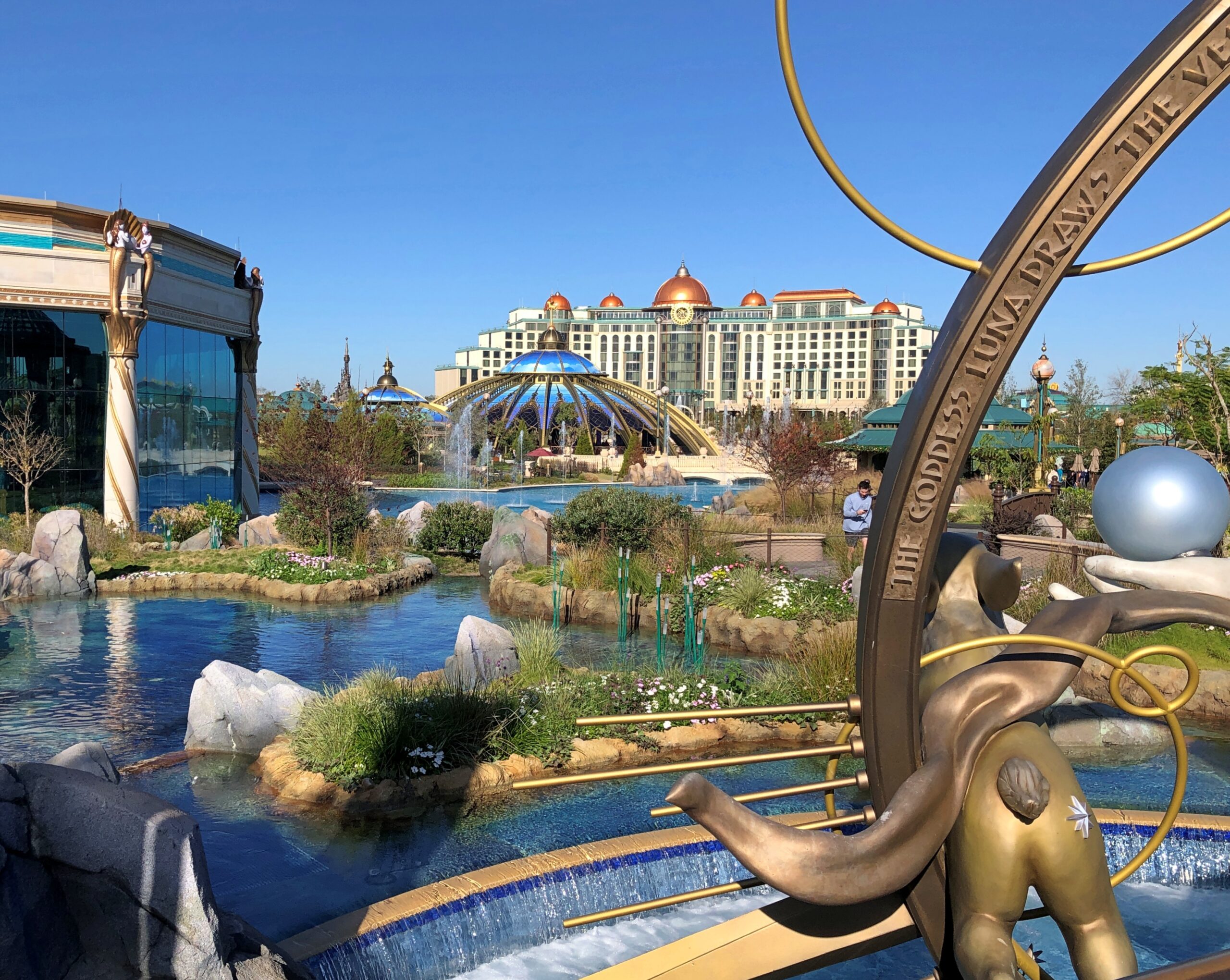
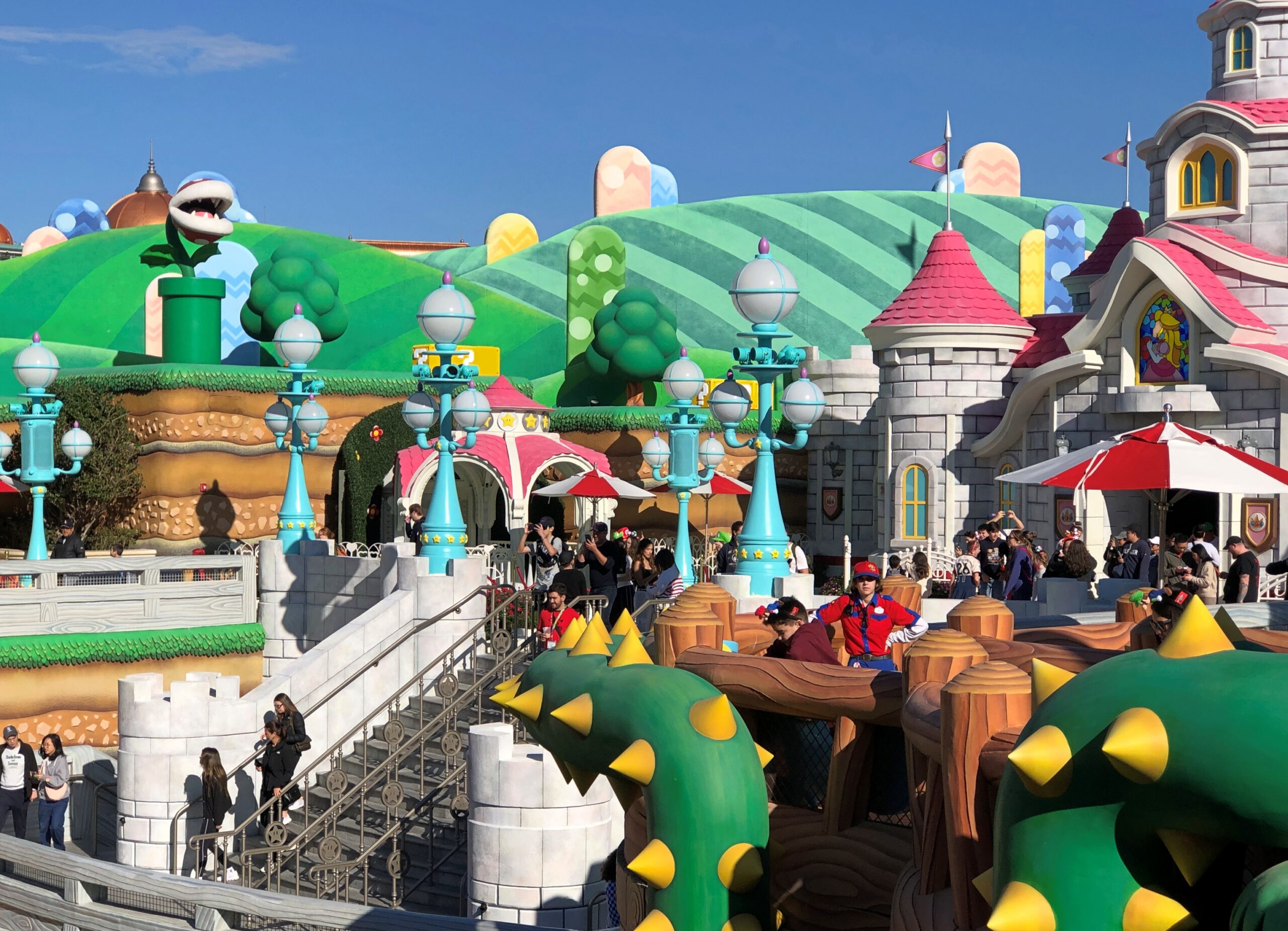
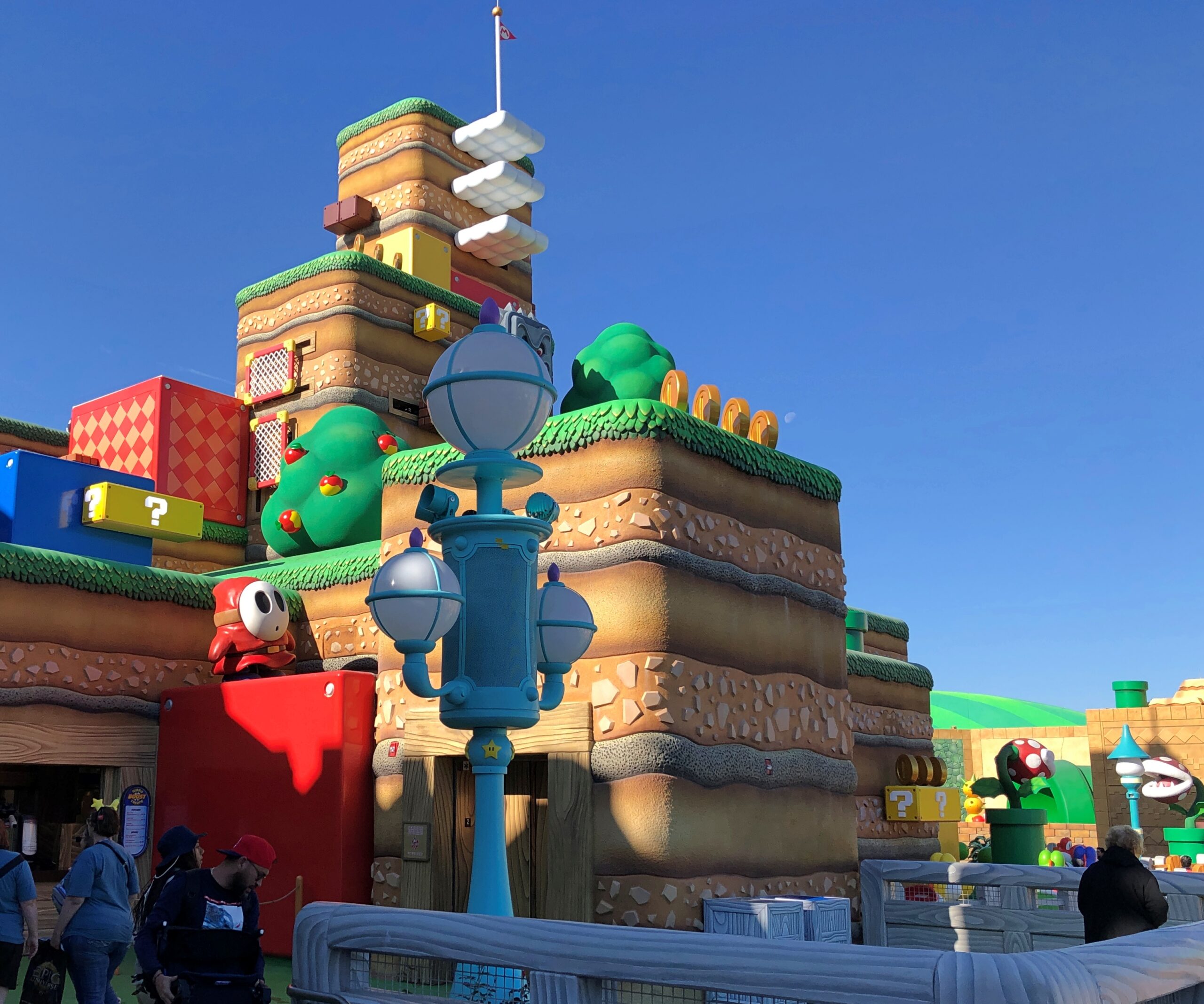
The plaza outside the ride. Like stepping into the game, yes? A big hit, anyway.
Who knows? These very buildings might be the inspiration of a wildly popular architectural style in the 22nd century.
When we got to ride entrance, there was a posted 60-minute wait. Ann insisted we go right then. When we exited, we noticed that the wait time had more than doubled. Good call, Ann.
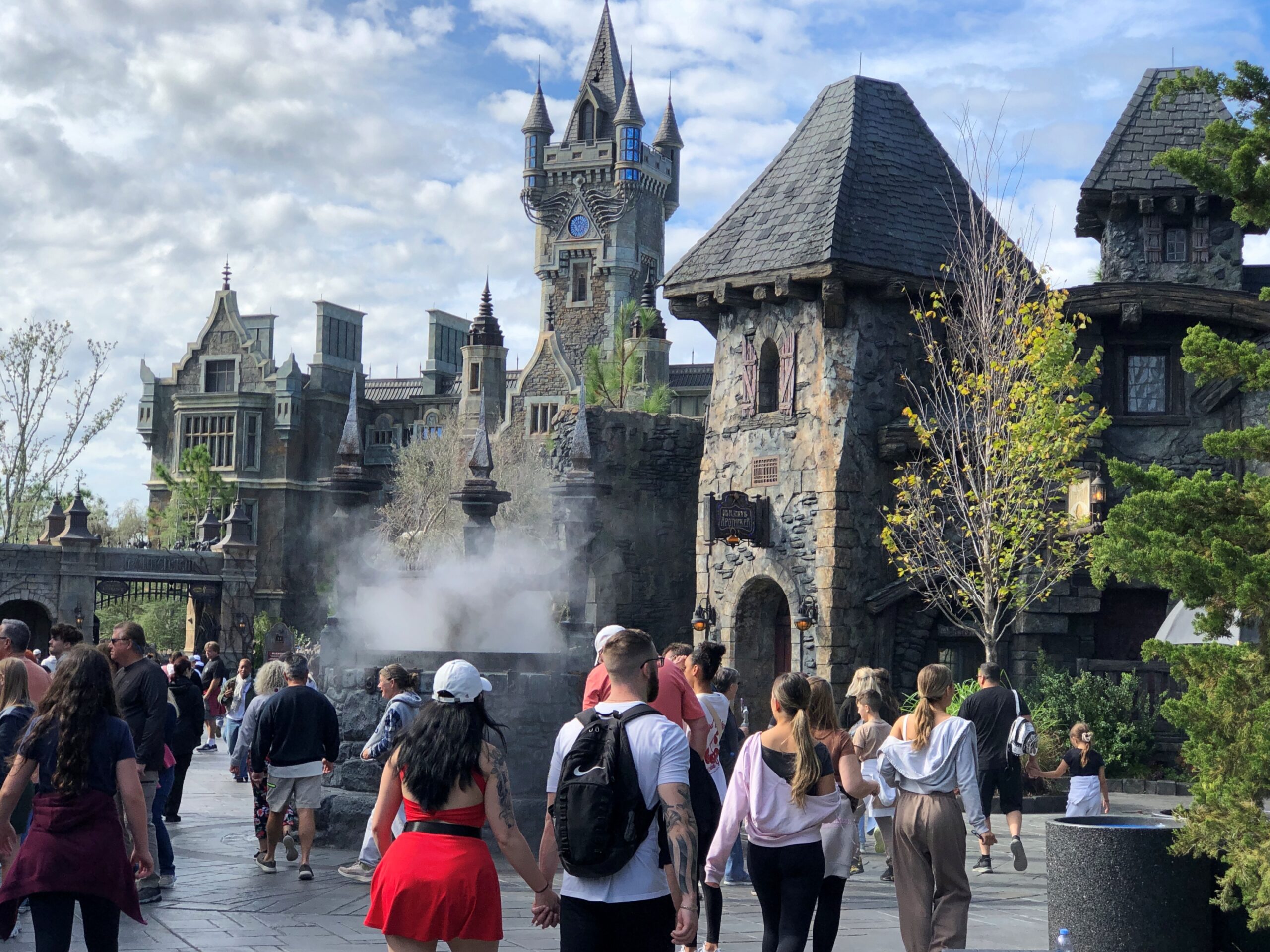
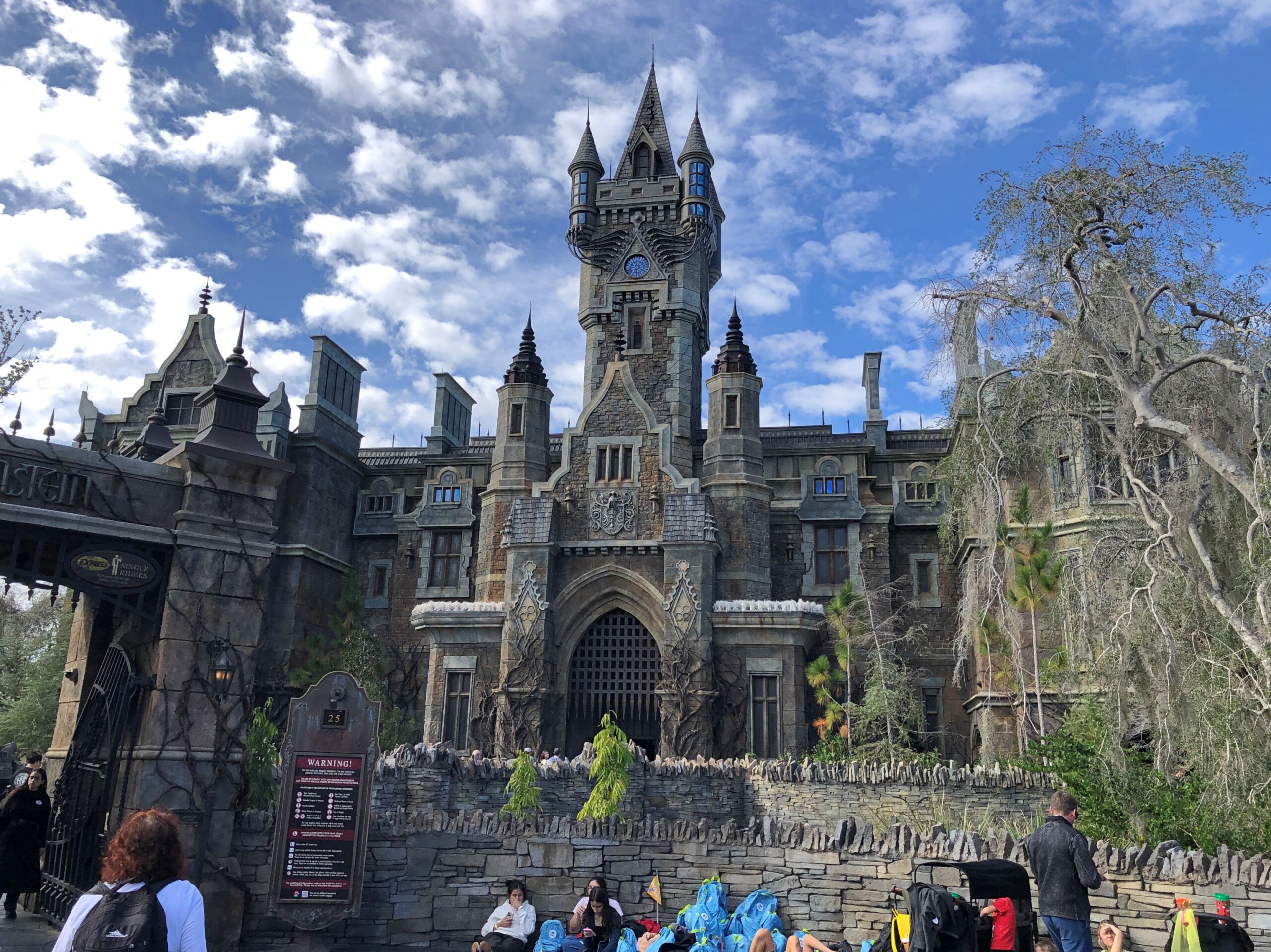
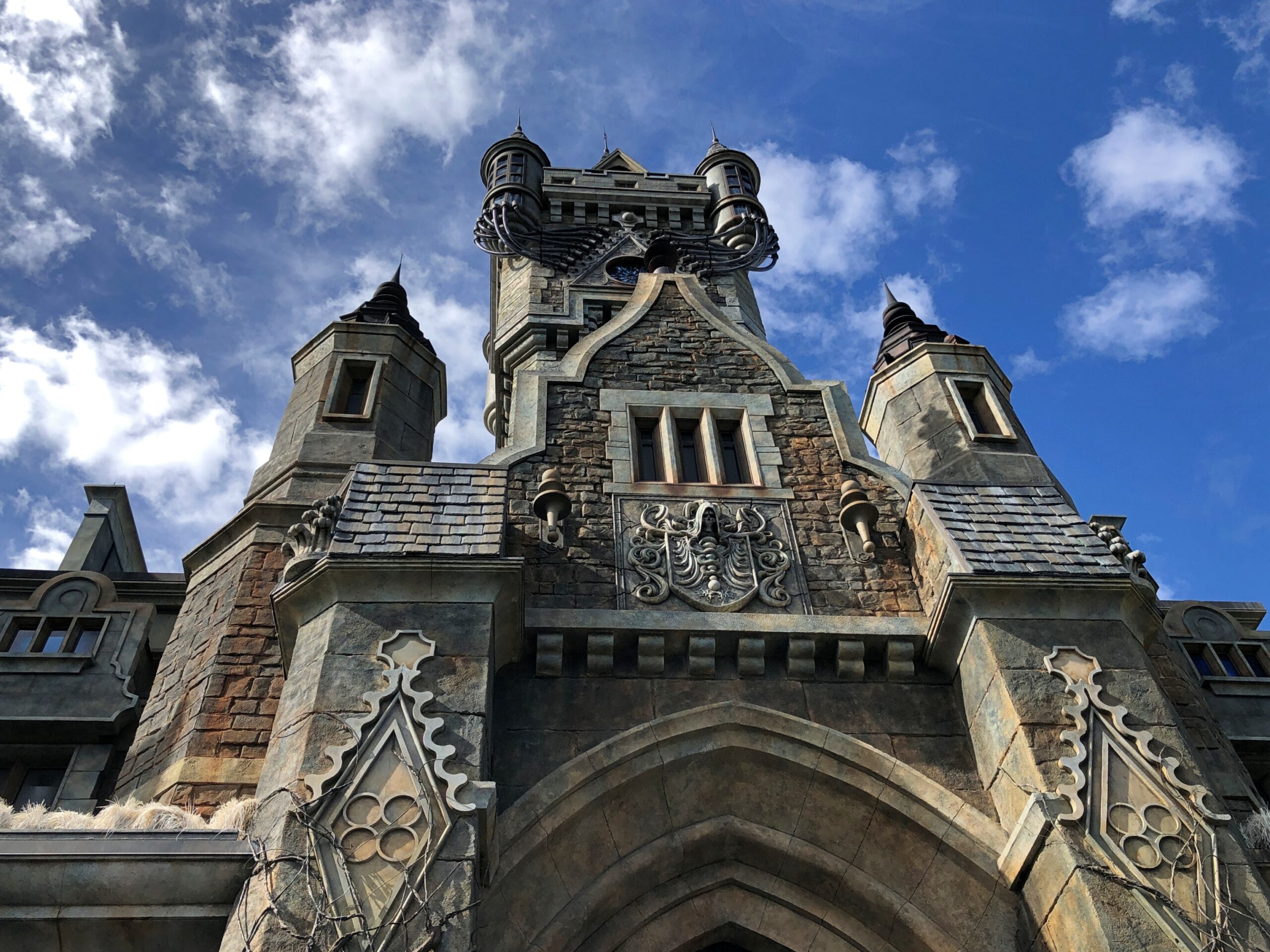
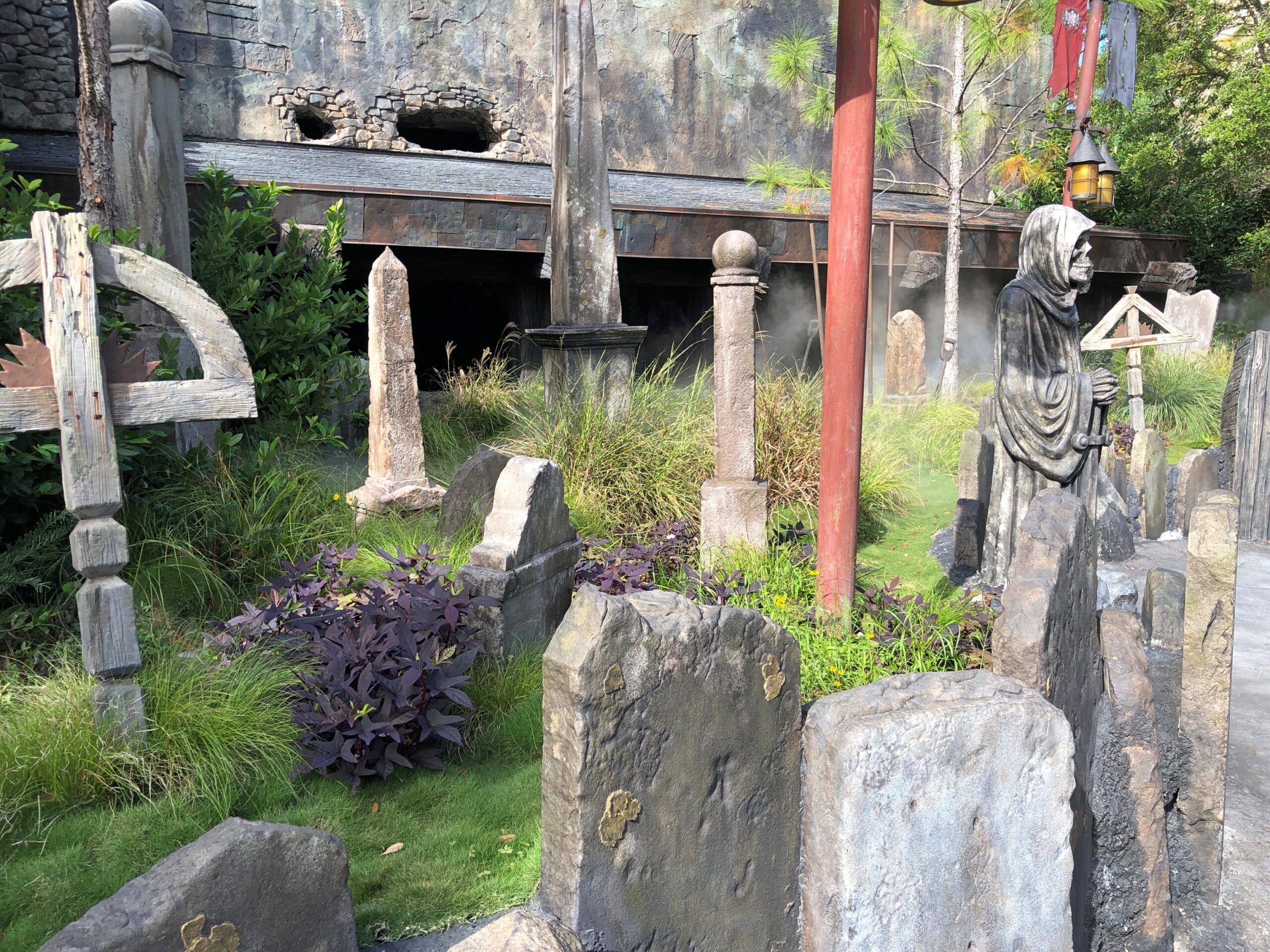
Our second ride involved a faux Transylvanian castle and the various monsters from Universal’s 1930s and ‘40s monster heyday. The style, amusement park Gothic. From the towering castle of Frankenstein renown to the details in faux stone and faux headstones.
Faux it may be, but that’s no cheap structure. Add to that the ride at the heart of the building, and you’ve got some impressive entertainment engineering.
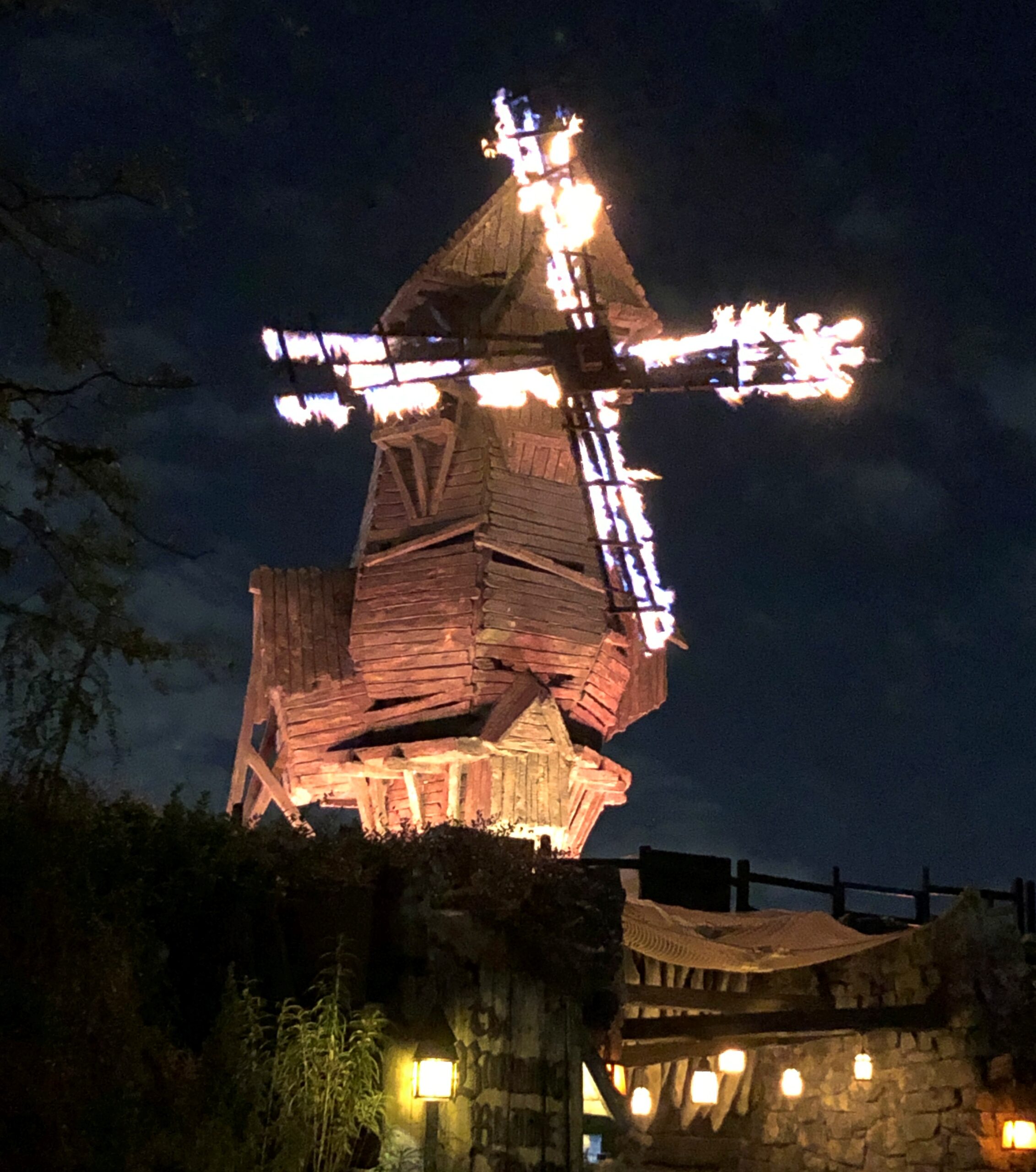
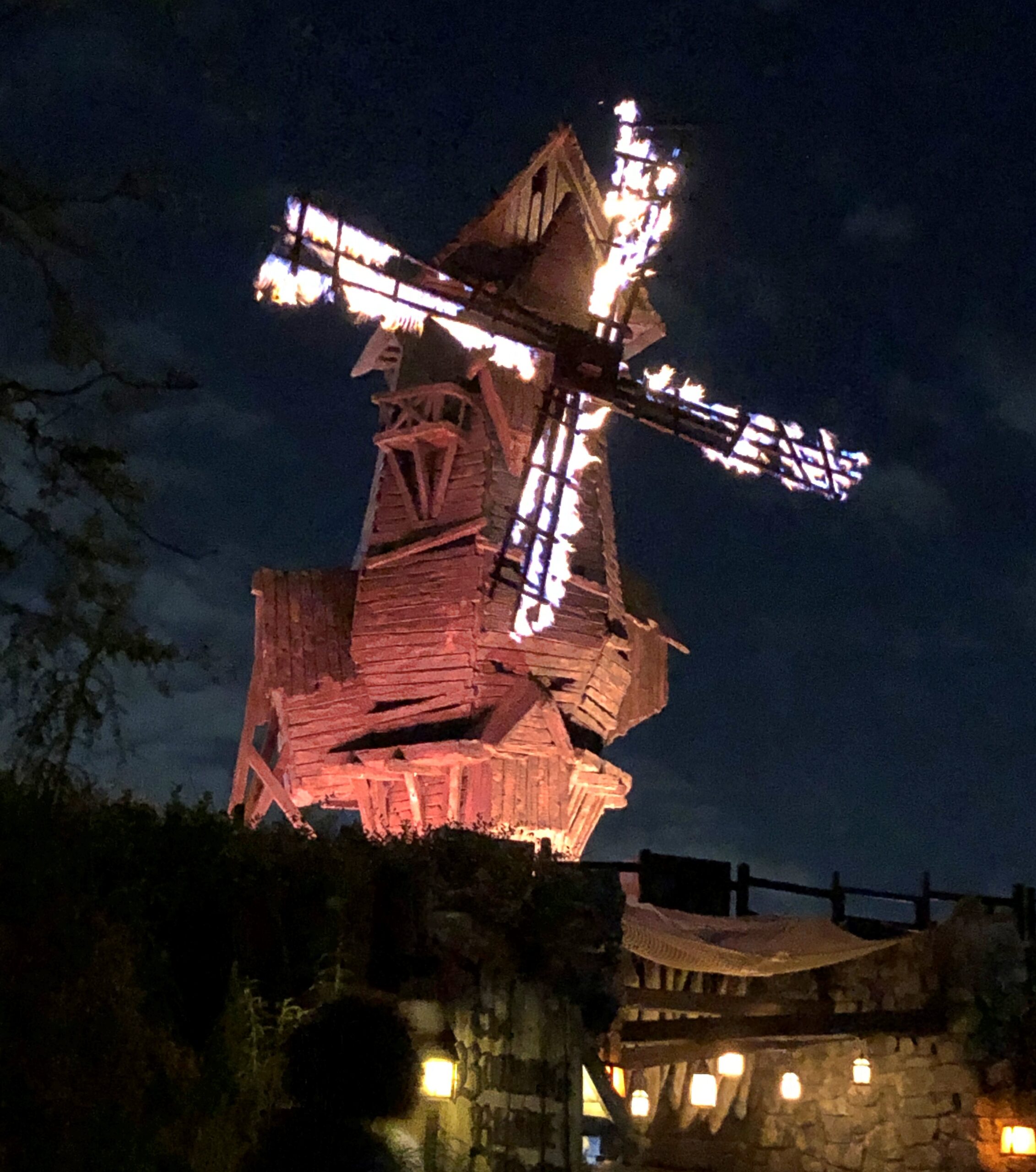
We came back after dark for the roller coaster in the Frankenstein part of the park. Ann wanted to go back for the roller coaster, that is, a separate ride from the one in the Gothic castle. While Y and I waited on a nearby bench we saw, by chance, the burning windmill. Nice touch. It didn’t collapse, naturally, and would re-ignite every 15 minutes or so.
The Frankenstein ride wasn’t quite as intense, in lights or motion, as Mario Bros., but was it was about as loud, with a character purporting to be Victor Frankenstein’s great-granddaughter directing the monster to fight Count Dracula — or was it the Werewolf? The Creature from the Black Lagoon also made an cameo appearance, but the details of the ride are a little fuzzy. Entertaining hubbub, that’s what it was.
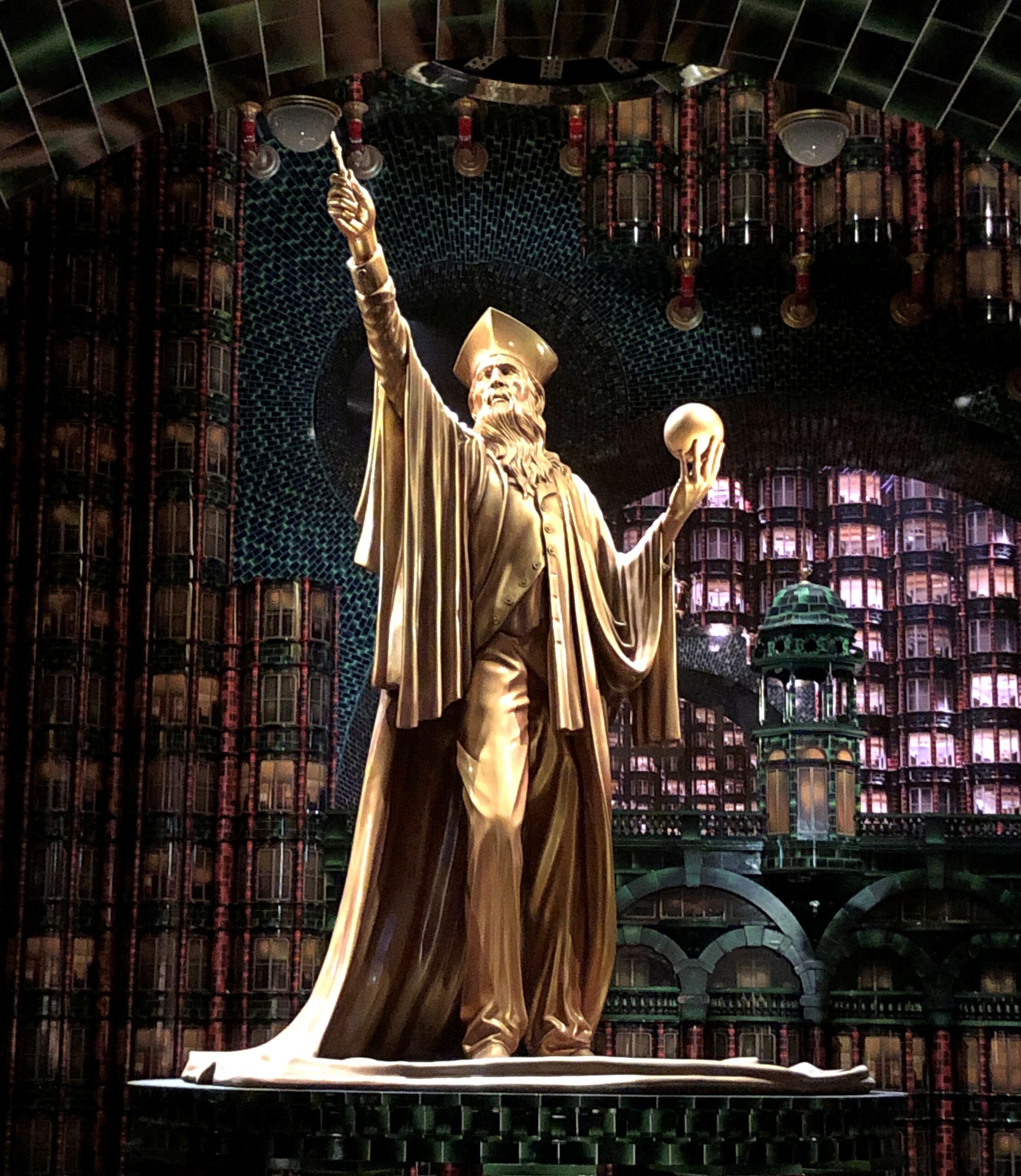
The line for the Harry Potter-ish ride was the longest. Around an old-fashioned amusement park waiting pen, down a long hall, though “portholes” foggy with dry ice emissions, into a vast hall, around a cluster of gigantic gilded statues, under several floors worth of faux offices, near another gigantic gilded statue (below) into another hall, and there you were. Ready to go up some stairs, along another couple of hallways, and down some more straits. You did have things to read along the way, such as Wanted Posters for villainous wielders of the Dark Arts.
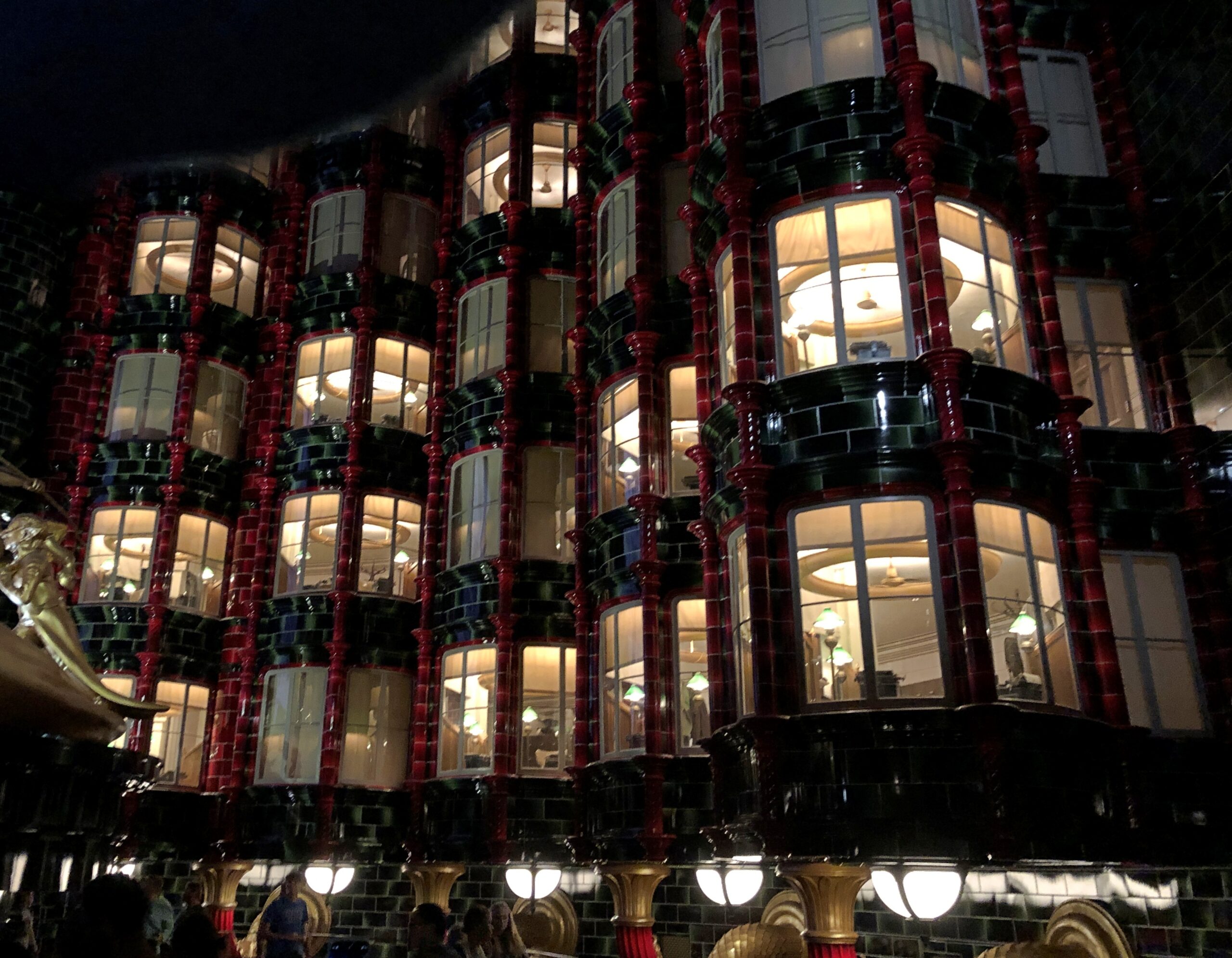
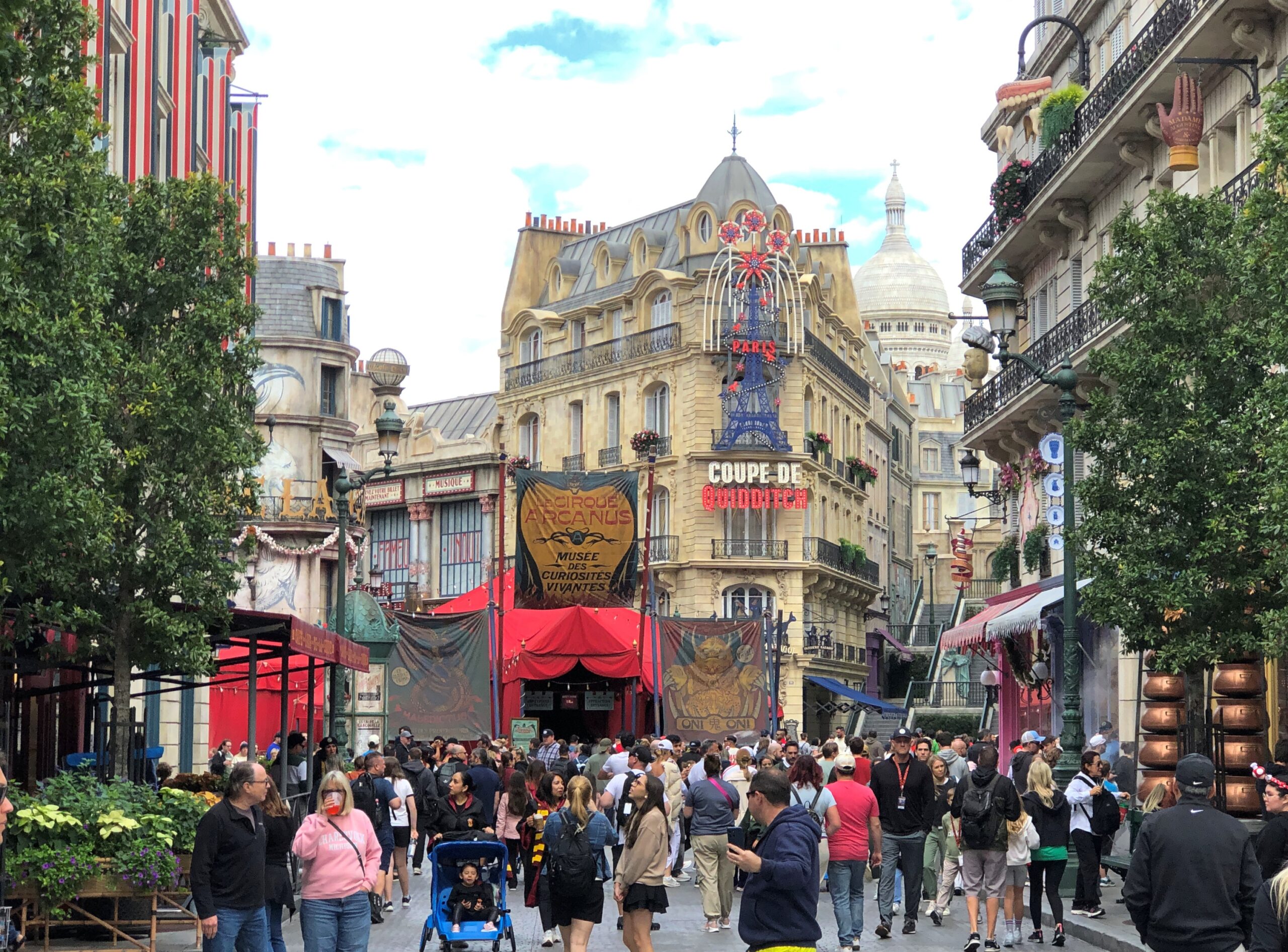
The ride was also ensconced in a faux Paris, in a building that was supposed to be the French magic ministry in the early 20th century (it is a prequel), down to a warren of small offices with lamps and typewriters of the period.
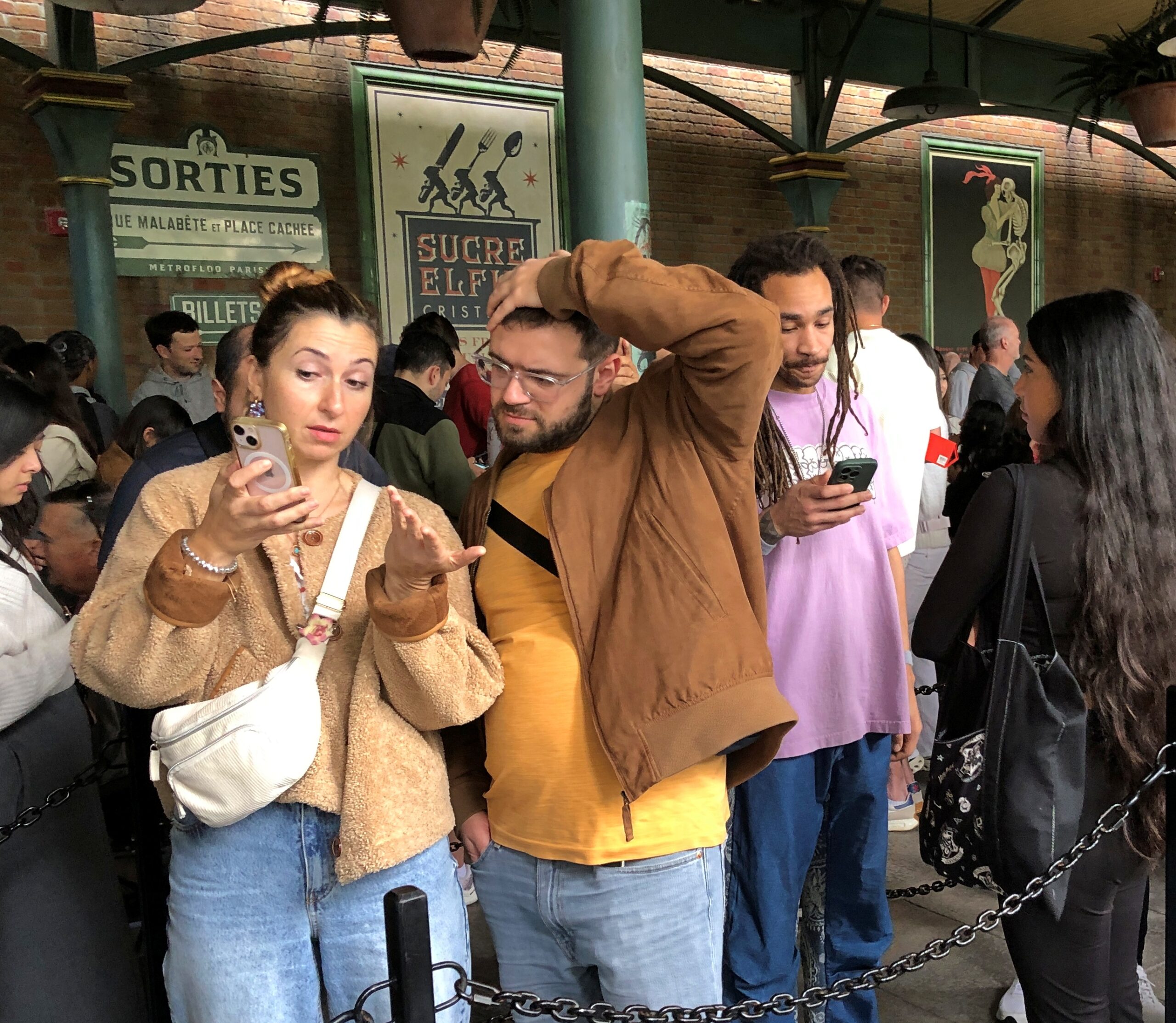
Why Paris? Even Ann wasn’t quite sure, but thought it had something to do with one of the prequels, which has something to do with the French Ministry of Magic or the like. Say, does the minister report to the President of the Third Republic? Or is he not part of representative government? Regardless, I was impressed by faux Paris – the most Parisian place I’ve seen except for the actual city of Paris.
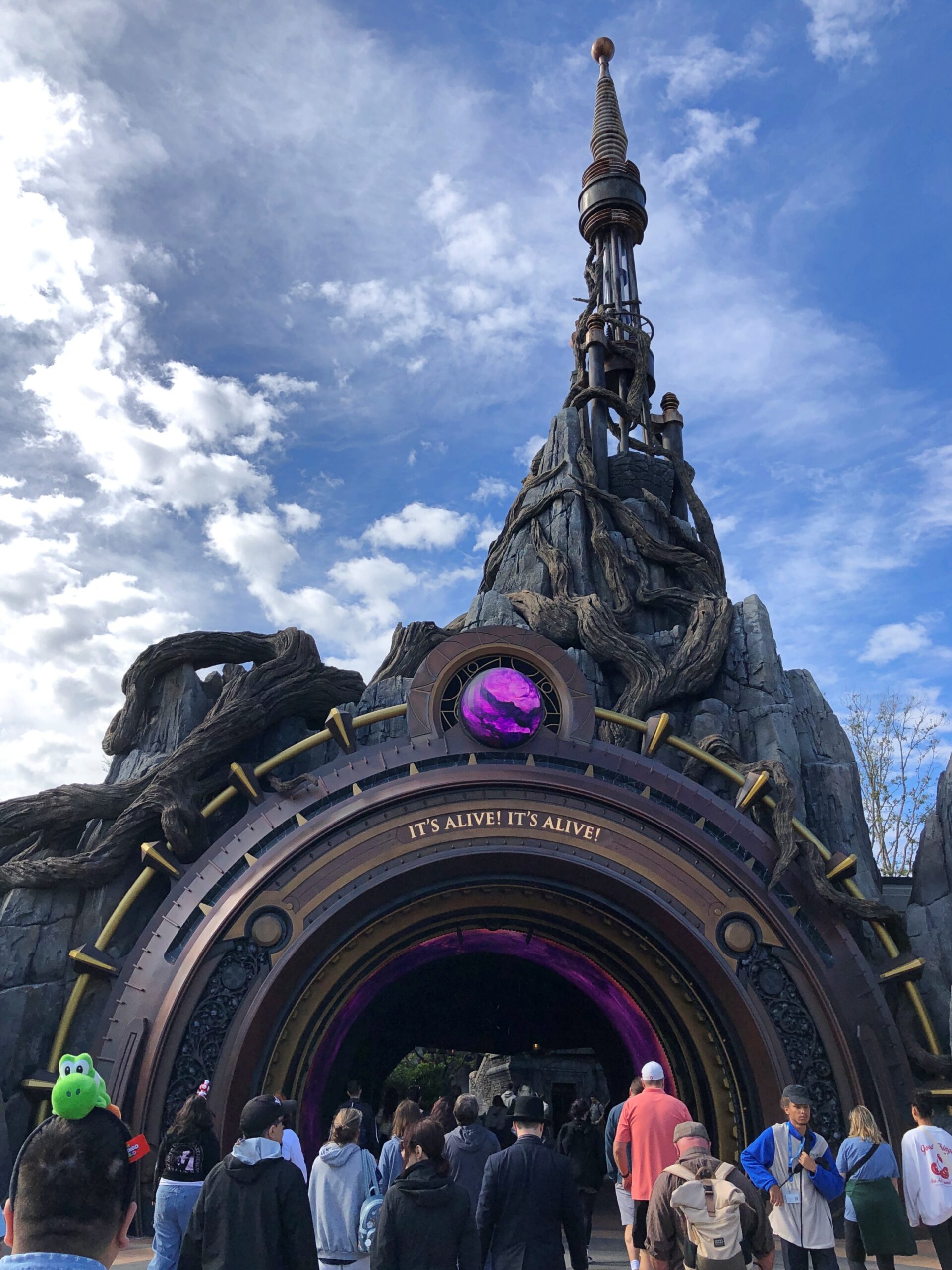
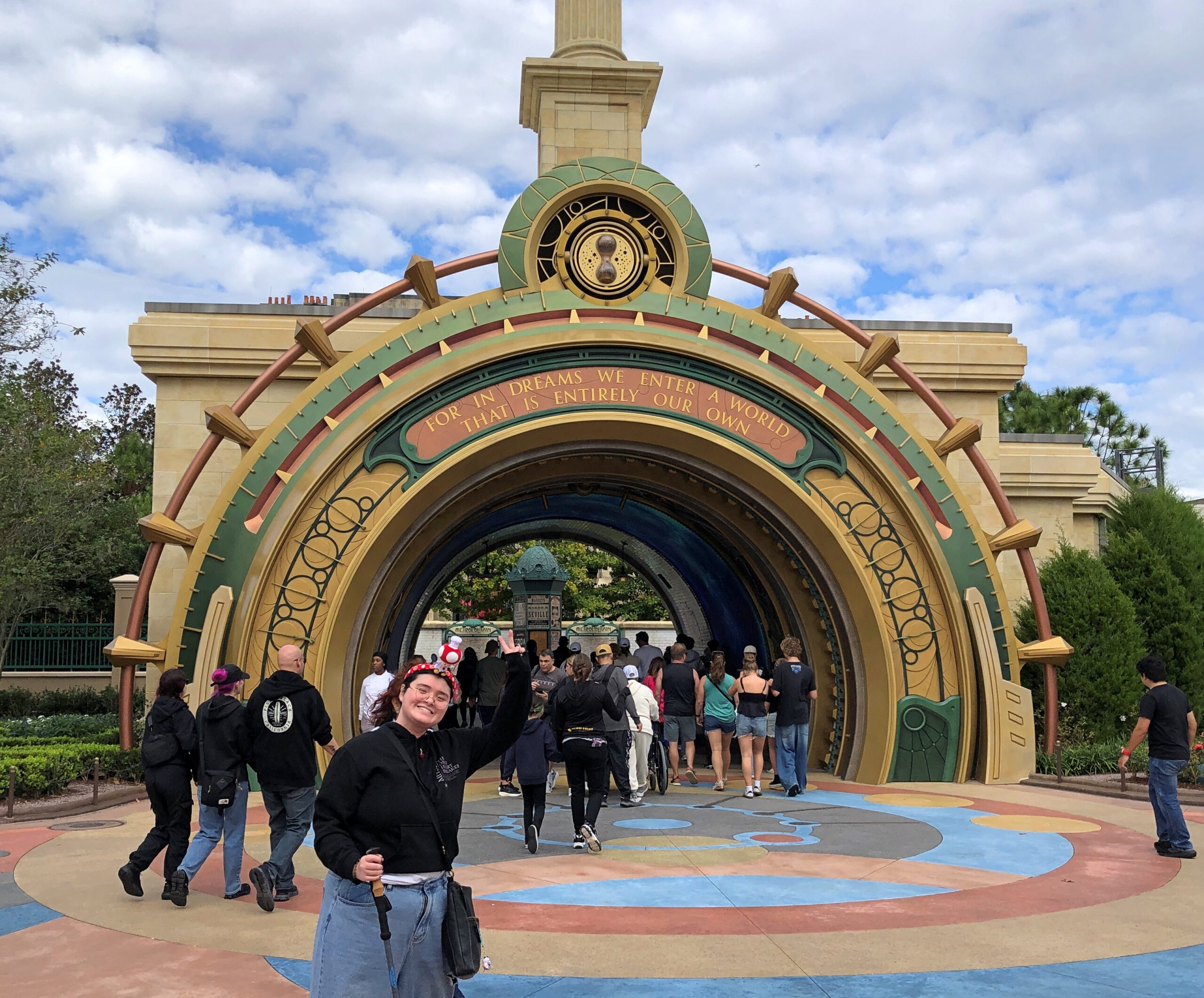
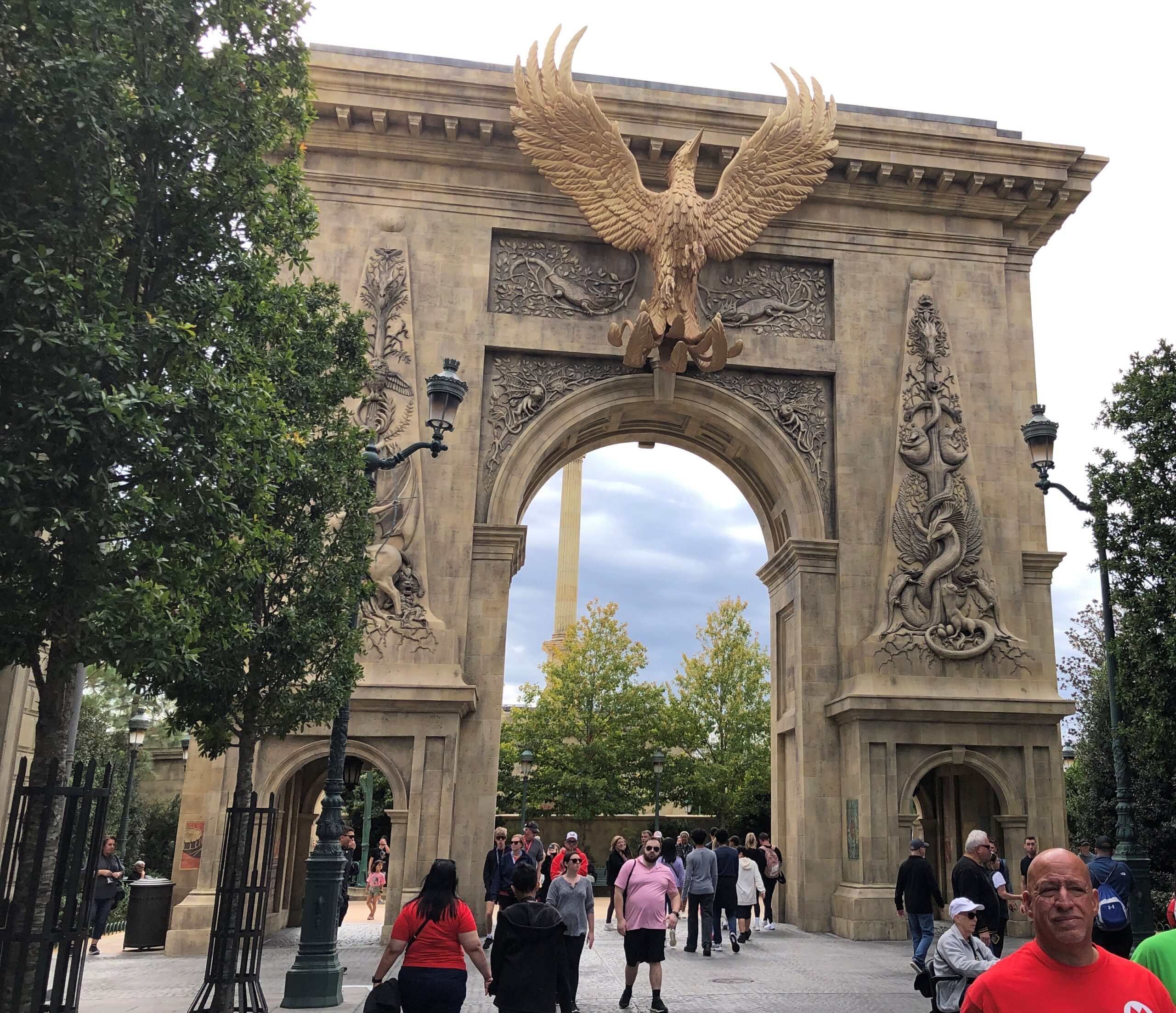
The entrance, which led to —
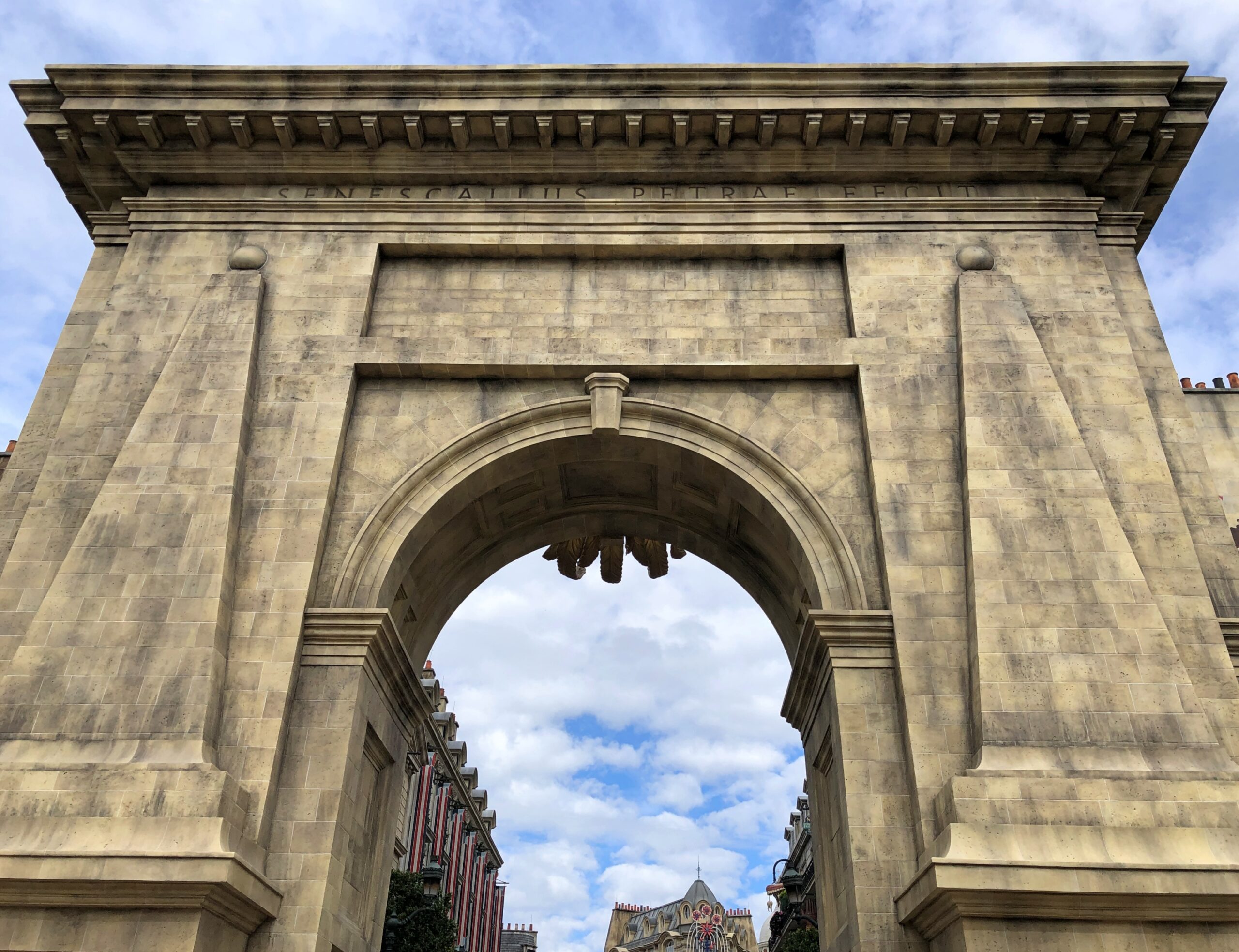
— to a truly monumental arch, front and back.
Leading to faux Paris streets in their faux glory. I keep using that word, but it doesn’t mean I wasn’t impressed.
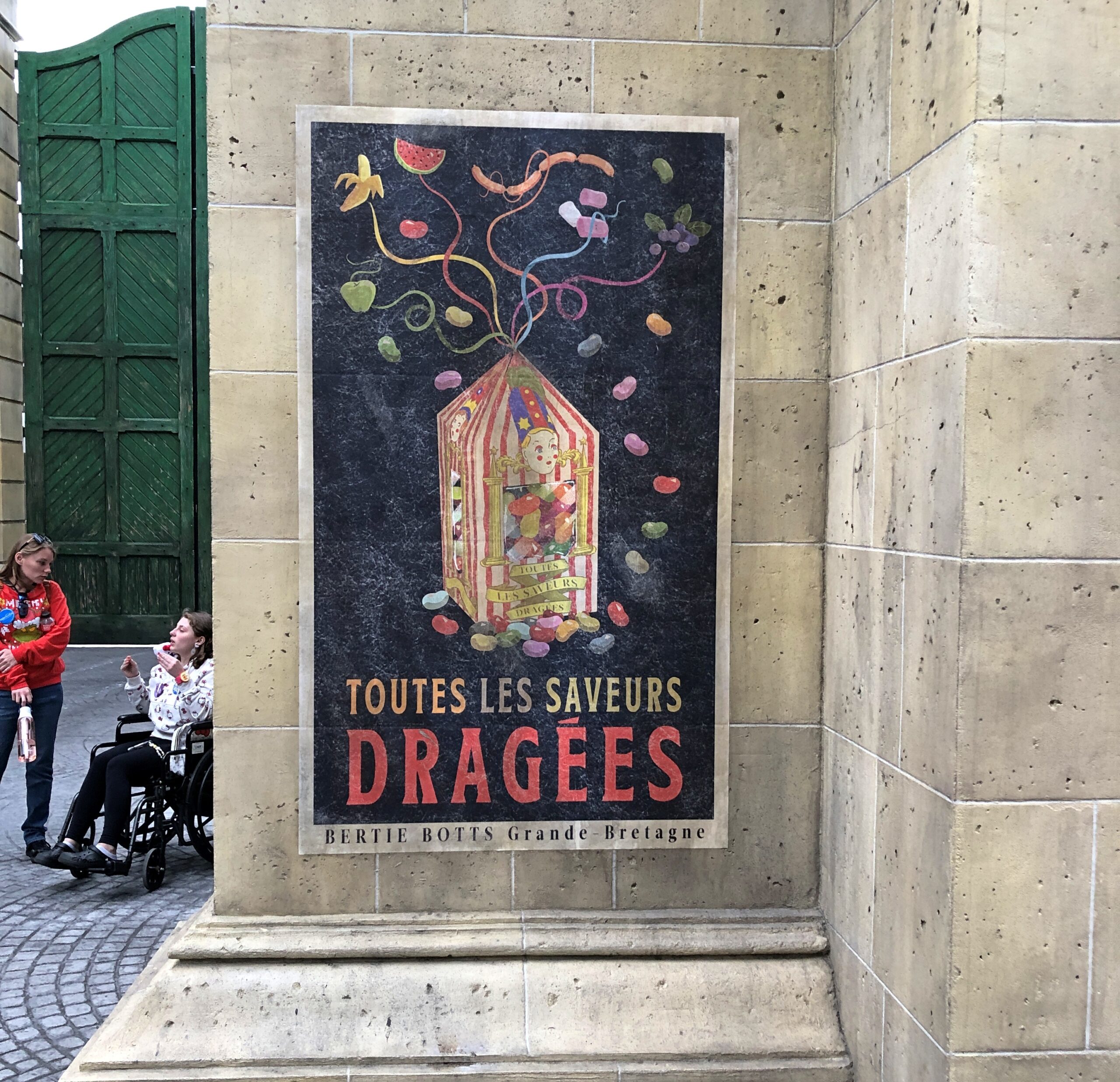
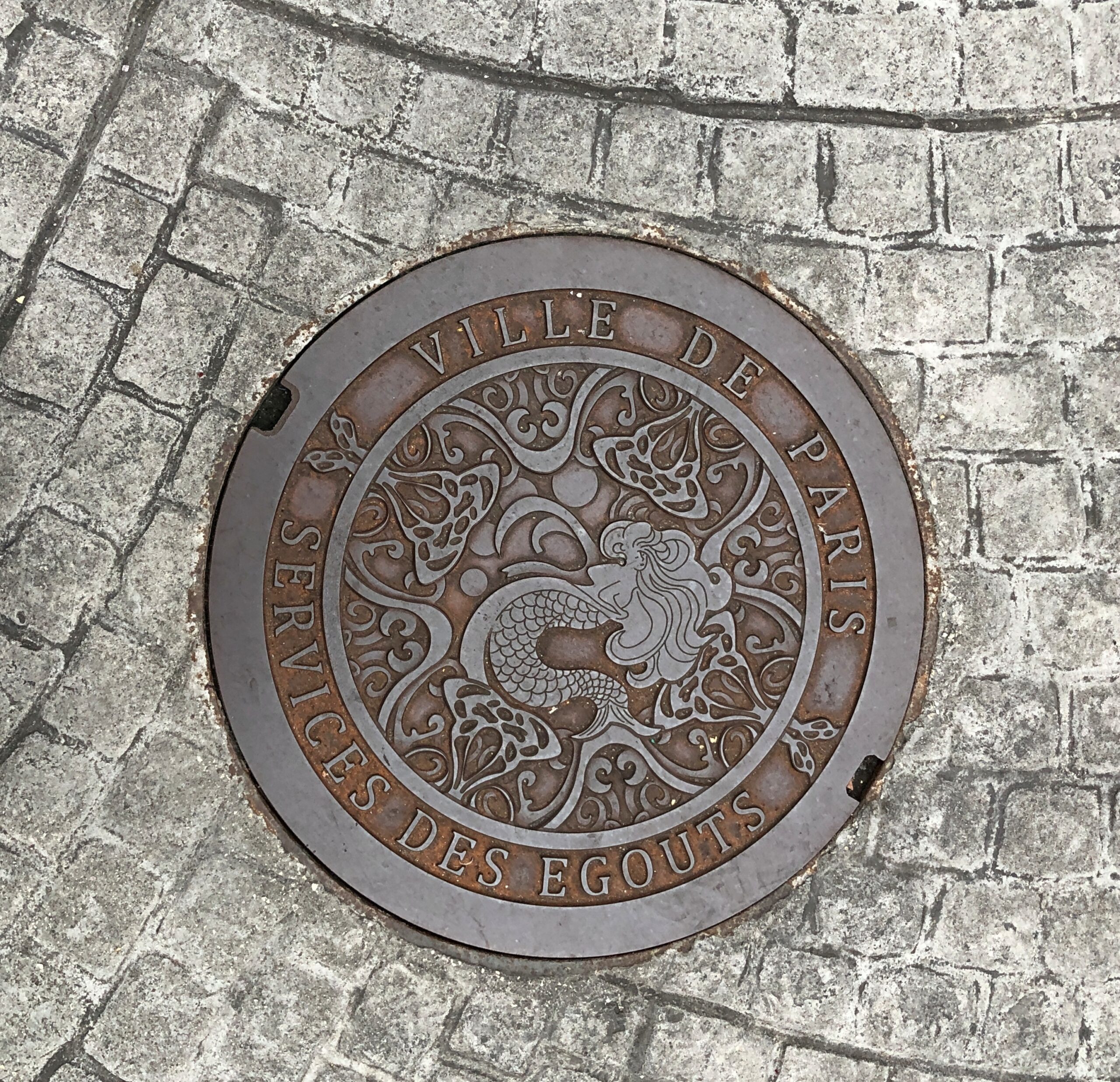
Details, details.
The 110-acre Universal Epic Universe, a name that doesn’t quite click, seems to have been designed to be compact enough to do in a day. There is a hub, there are spokes, the aforementioned themed areas, which included their main rides, but also other rides and plenty of shops and eateries. Yet none of the areas was overly large, and all of them were marked by a distinctive tower for each that could be seen from a distance. Nice bit of waymarking.
We had lunch at one of the faux-Paris restaurants. At a Olde World Europe-themed restaurant at which you ordered food via an app. The food was good, but that business with the app, which we had to figure out on the fly, didn’t please me at all. I can only hope that isn’t the future of food service.
Once we got to the Harry Potter ride — remember, it is located in Paris, for reasons, and Harry himself seemed to be only a minor presence — the long line was instantly forgotten in the shaking and lurching and whizzing. Characters etched of light came and went, following a script set down in computer code. It reminded me of a roller coaster, even though most of the sensation of motion was done via special effects, especially active lighting. Supposedly we were sitting in a jury box – one of the characters was on trial for something or other. I used to like roller coasters, but age has taken that pleasure from me.
Kids came in some numbers for Halloween here in the northwest suburbs yesterday, but I didn’t keep an exact count this year. The day was cool but not cold, without a hint of rain, so that might have encouraged turnout, like for voting. One time a passel of kids showed up, maybe a dozen or so, all under 10, with a smaller passel of parents off near the sidewalk.
We were giving away full-sized candy bars until they ran out, and the passel squealed with delight at receiving the various Hersey products. Even now, the costumes are a blur, maybe because I didn’t recognize a lot of the characters. Ones that I might have known weren’t familiar either. I asked the parents of a very small boy — ah, first-timers — what he was supposed to be. His shirt pattern reminded me of TMNT, but it was Hulk, they told me. “Hulk smash,” they said. “Hulk smash, all right,” I agreed.
All of the Halloween traffic, except for a handful of older kids, came before dark. My not-so-inner curmudgeon reacts: in my day, we trick-or-treated after dark, risking bodily injury on the streets, and we liked it.
But I am glad to report that the older kids – junior high and even high school – are far fewer than they were, say, 20 years ago. So it’s back to the way it should be. For older people, there are always such seasonal events as the Greenwich Village Halloween Parade. To this day, the ’06 iteration of that parade remains the only time I’ve encountered the band KISS live – they were the grand marshals (RIP, Ace Frehley). We also encountered Space Ghost then, or at least a fellow who was adamant about his Space Ghost identity.
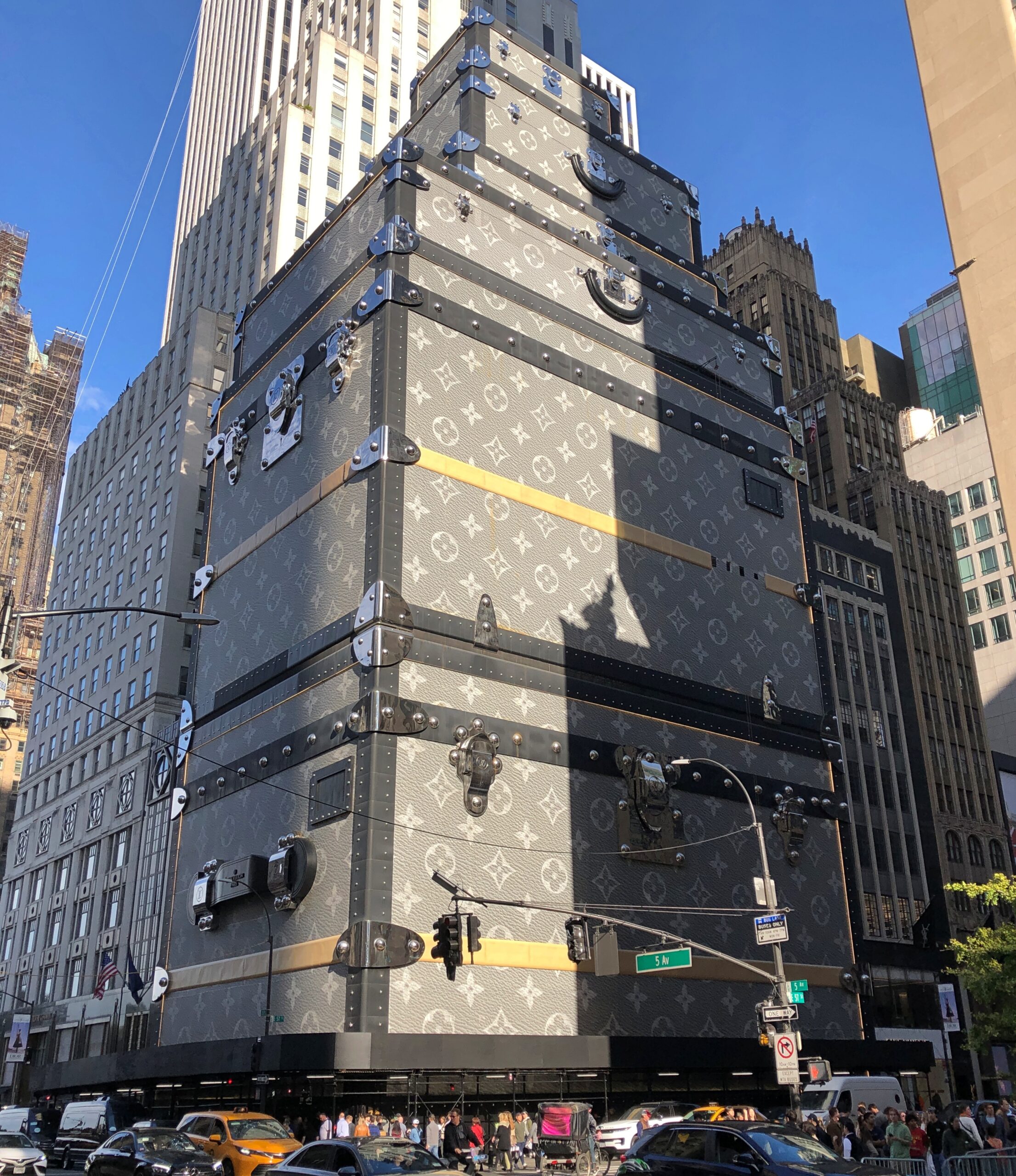
Near Central Park on Fifth Ave. is 1 East 57th Street. We walked by last month.
A few years ago, luxe retailer LVMH Moët Hennessy Louis Vuitton added a faux facade to its NY flagship store there on the avenue, one that evokes its signature luggage trunks in a highly visible way. Redevelopment plans for the building behind the trunks were unveiled not long ago, so I suspect the trunk-appearance doesn’t have much longer to look down on Billionaire’s Row and its strato-priced residential properties (whose high rents and sale prices don’t necessarily guarantee high-quality construction, apparently).
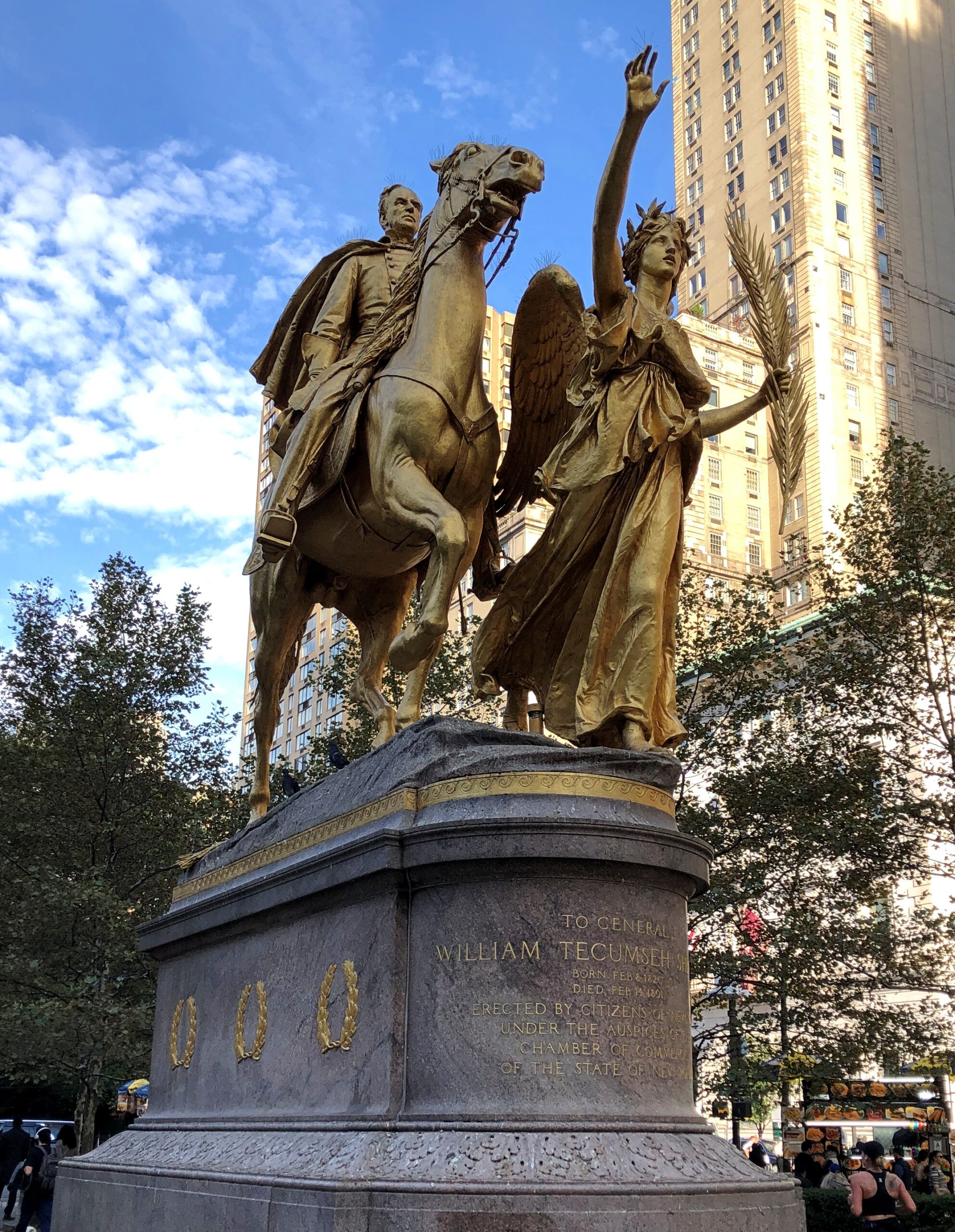
As we neared Central Park, we spent a little time at Augustus Saint-Gaudens’ statue of William Tecumseh Sherman (dedicated 1903) in Grand Army Plaza. Life’s too short not to look at some Saint-Gaudens from time to time.
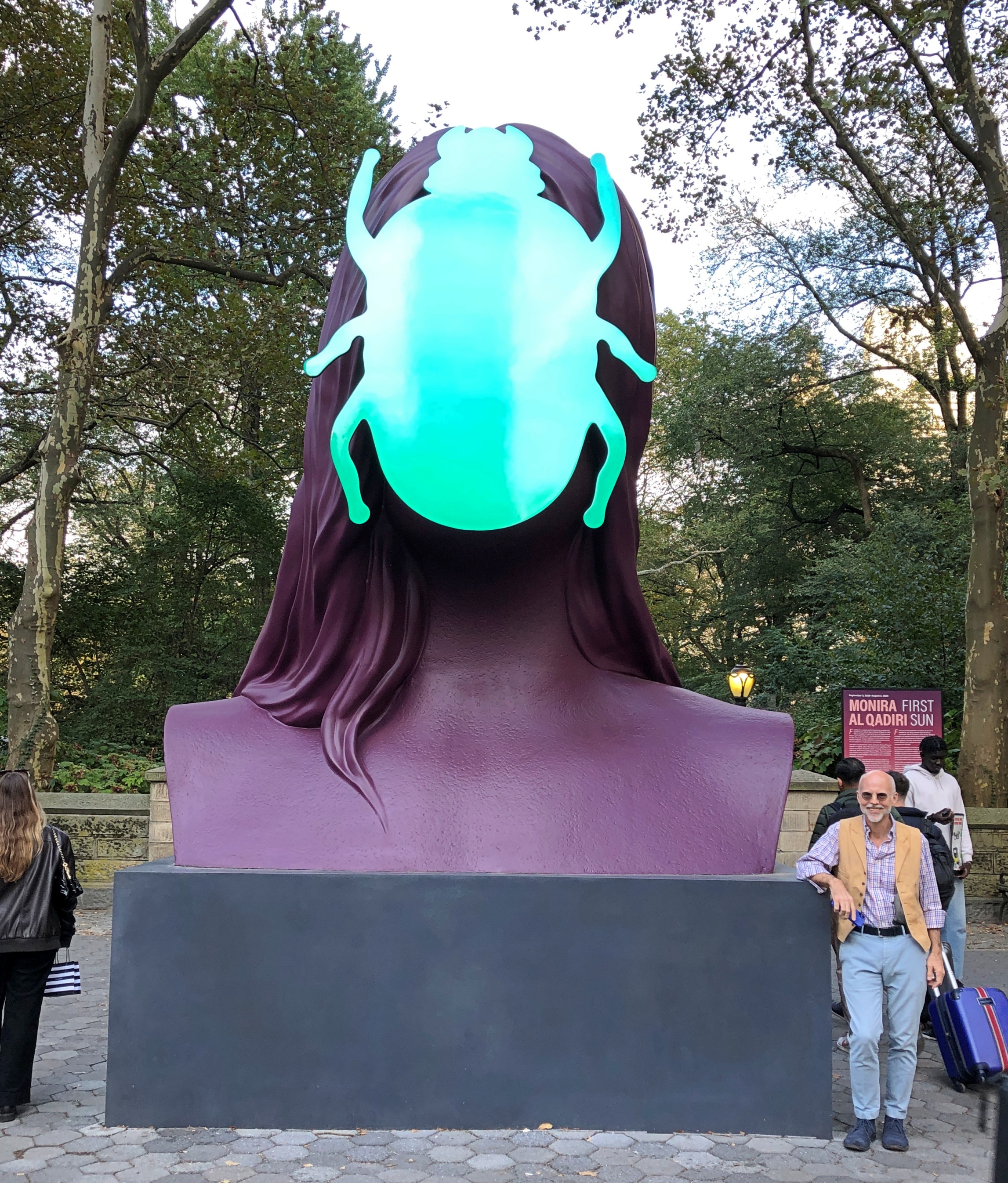
Not far away, something a little newer.
“First Sun,” a painted aluminum sculpture of a human-scarab figure by Senegalese artist Monira Al Qadiri, and slated to be in place until the end of next summer.
Visible from near the statues is the storied Plaza Hotel and an Apple Store, which is open 24 hours, Google Maps tells me. Storied in a different way.
I’m glad the Plaza acknowledges its fictional role in The Great Gatsby by featuring a lavish-beyond-the-dreams of Croesus Gatsby Suite. Of course. A smart hotel operator isn’t going to waste an opportunity like that. In this case, Fairmont Hotels and Resorts, a Canadian company, managing for owner Katara Hospitality – the large hotelier owned by the Qatari government. In the 21st century so far, the Plaza has been owned by an Israeli company and then an Indian one before Katara bought it. There’s something oddly American about an ownership trajectory like that.
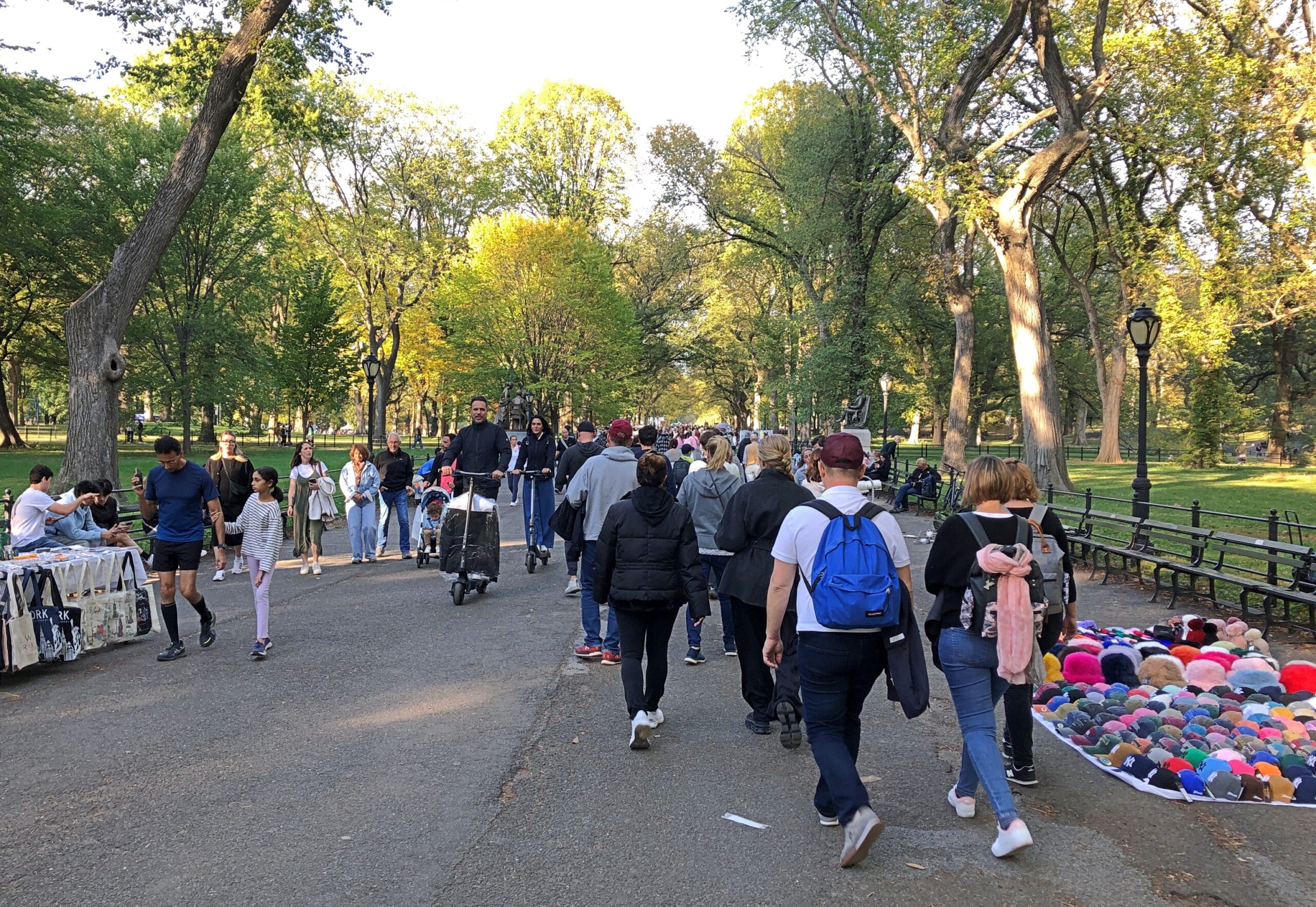
We – Robert, Geof, Yuriko and I – charted ourselves a simple walking path through some of the southern reaches of Central Park. Manhattanites and visitors to the borough were out in Saturday-afternoon force. Saturday, in the park/I think it was the 18th of October. No, that doesn’t scan. A fair number of pitch-a-blanket cap and souvenir salesmen were out, too, but not nearly as many buskers as a great city park like Central Park should attract.
There’s an editorial right there: why America needs more buskers, and why some American cities need to chill when it comes to suppressing buskers. Europeans might not be right about everything, but about allowing buskers? Yes.
The leaves weren’t at peak just yet, with the greens still hanging on more than not. I don’t remember which visit to Central Park it was, but one time I wandered the park during peak coloration, whipped into even greater yellow-and-red glory by a brisk October wind. Temporary clouds of leaves came and went, even as the wind shook more leaves from their branches. Color, but also motion.
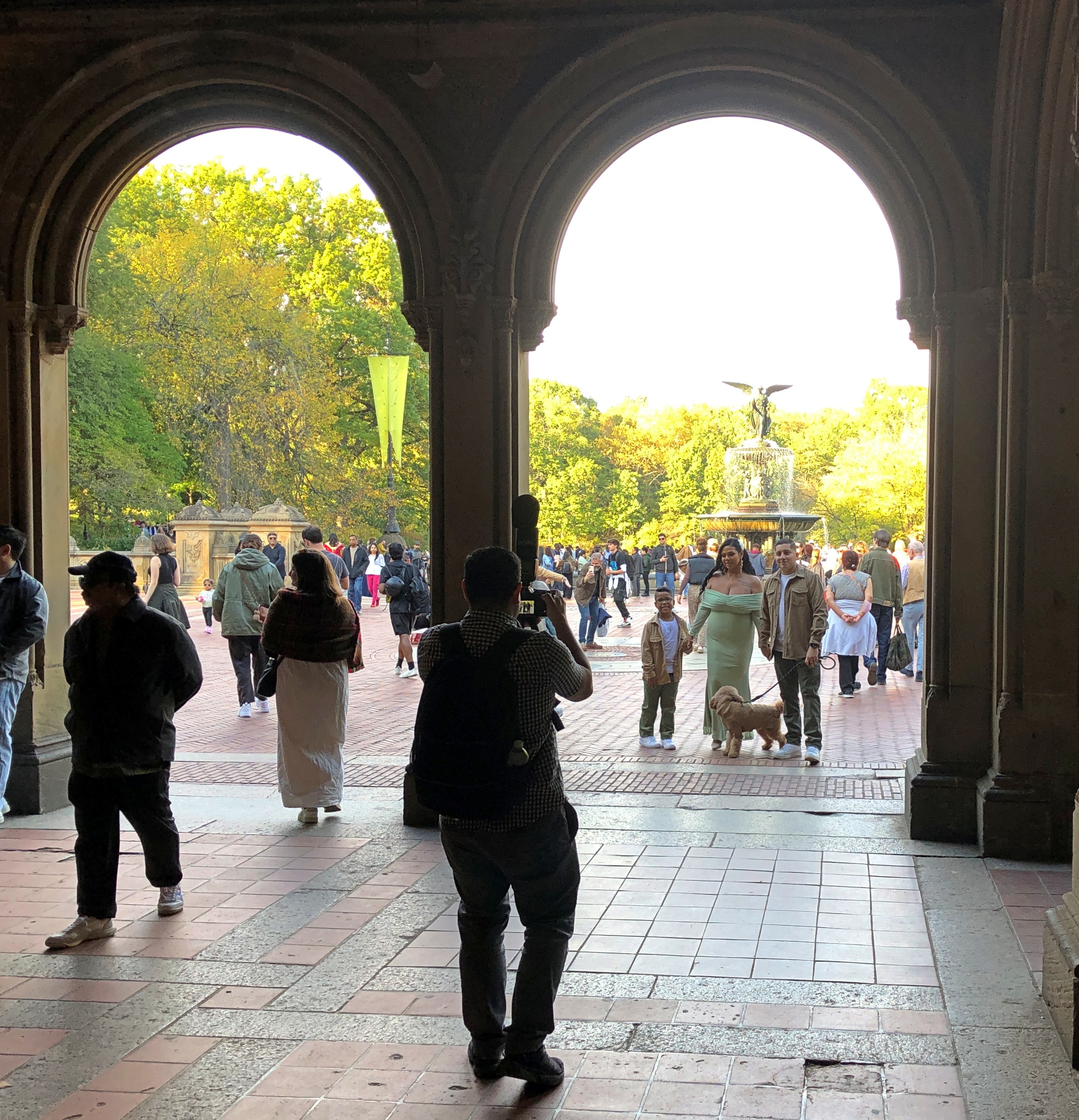
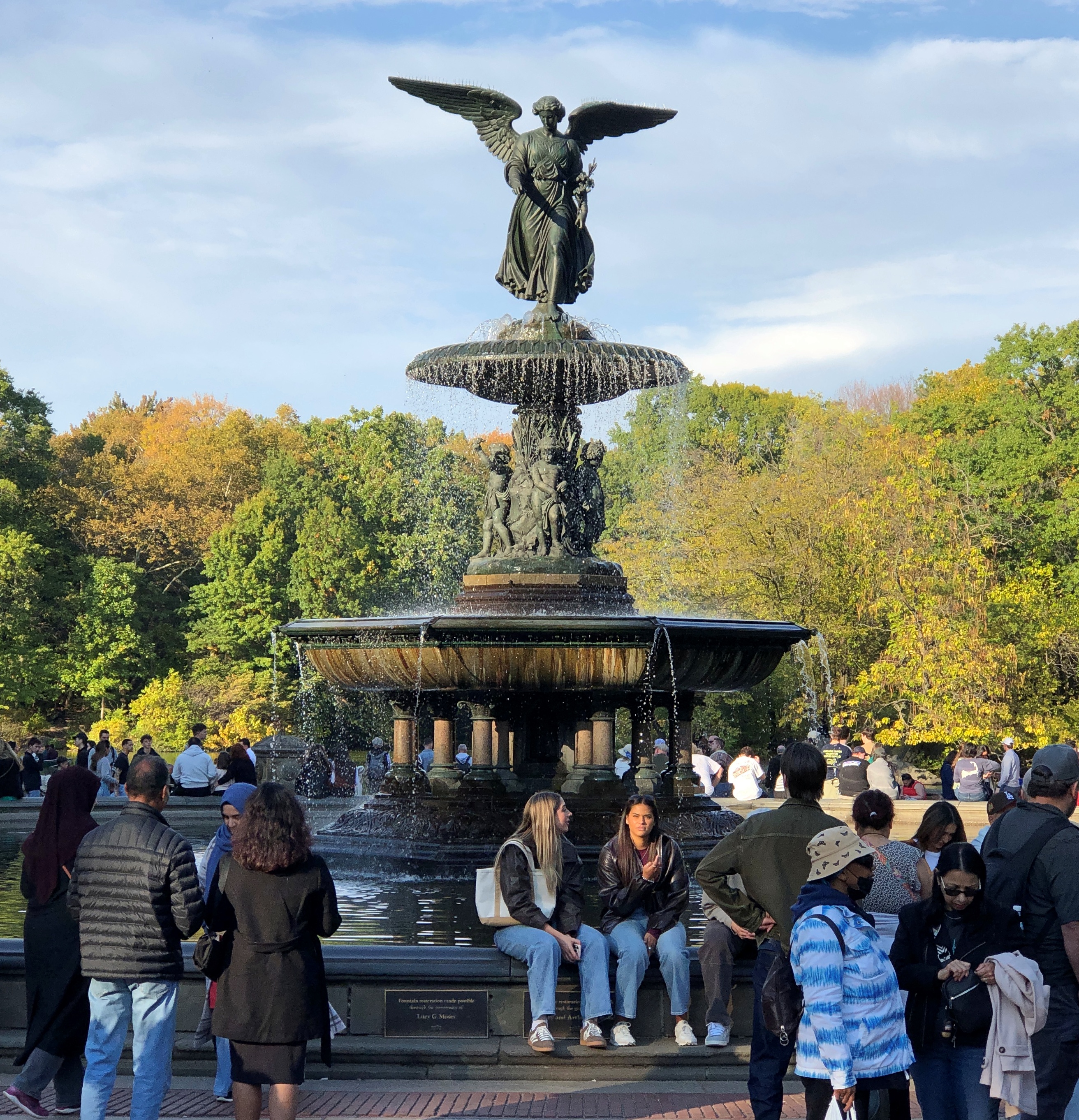
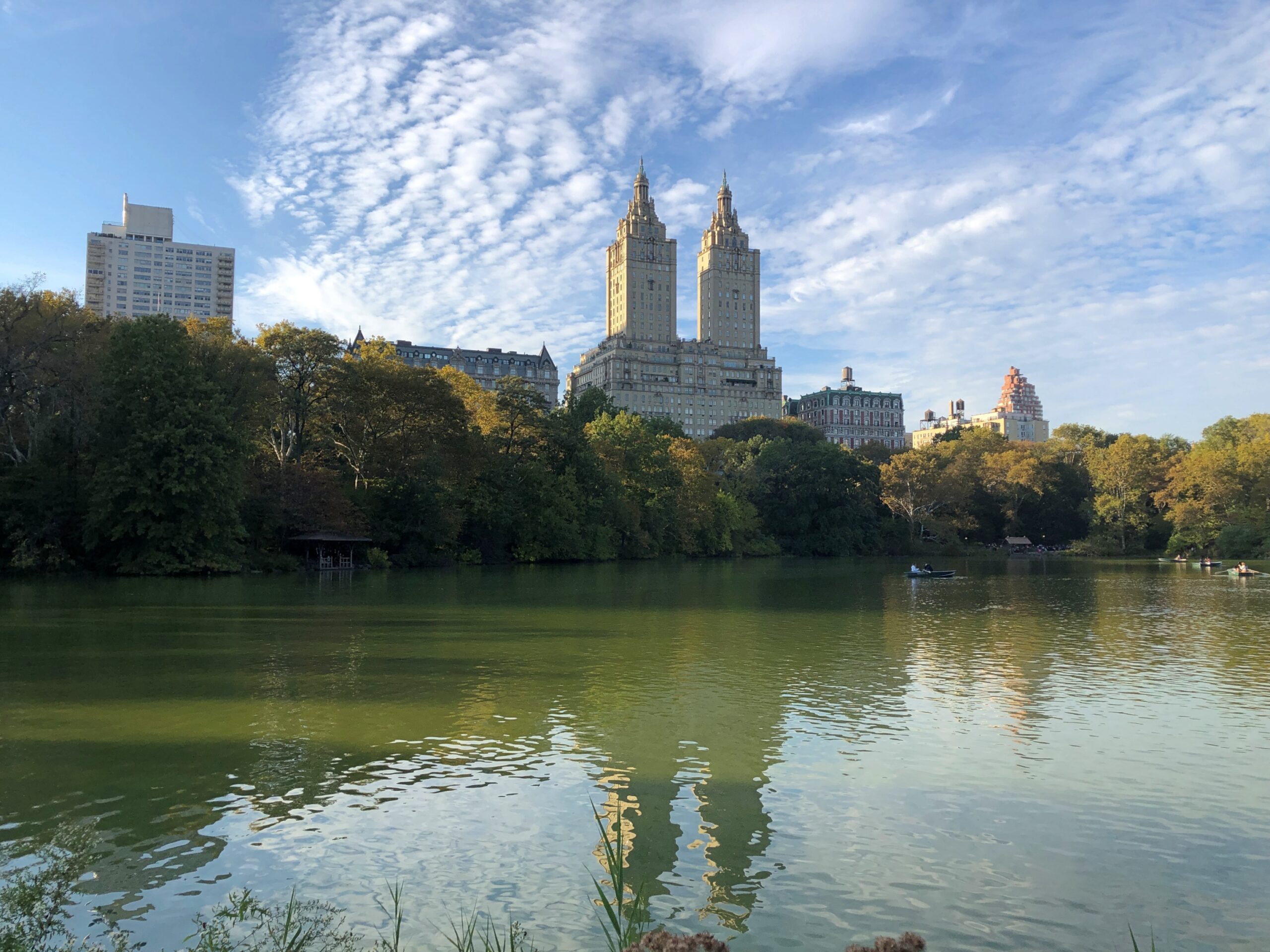
Eventually, we came to The Lake by way of Bethesda Terrace and Fountain.
But not all the way across The Lake to The Ramble, whose Wiki description drily states that “historically, it has been frequented for both birdwatching and cruising,” with hyperlinks articles about both of those activities. What about cruising birdwatchers? There’s a Broadway musical in that concept somewhere.
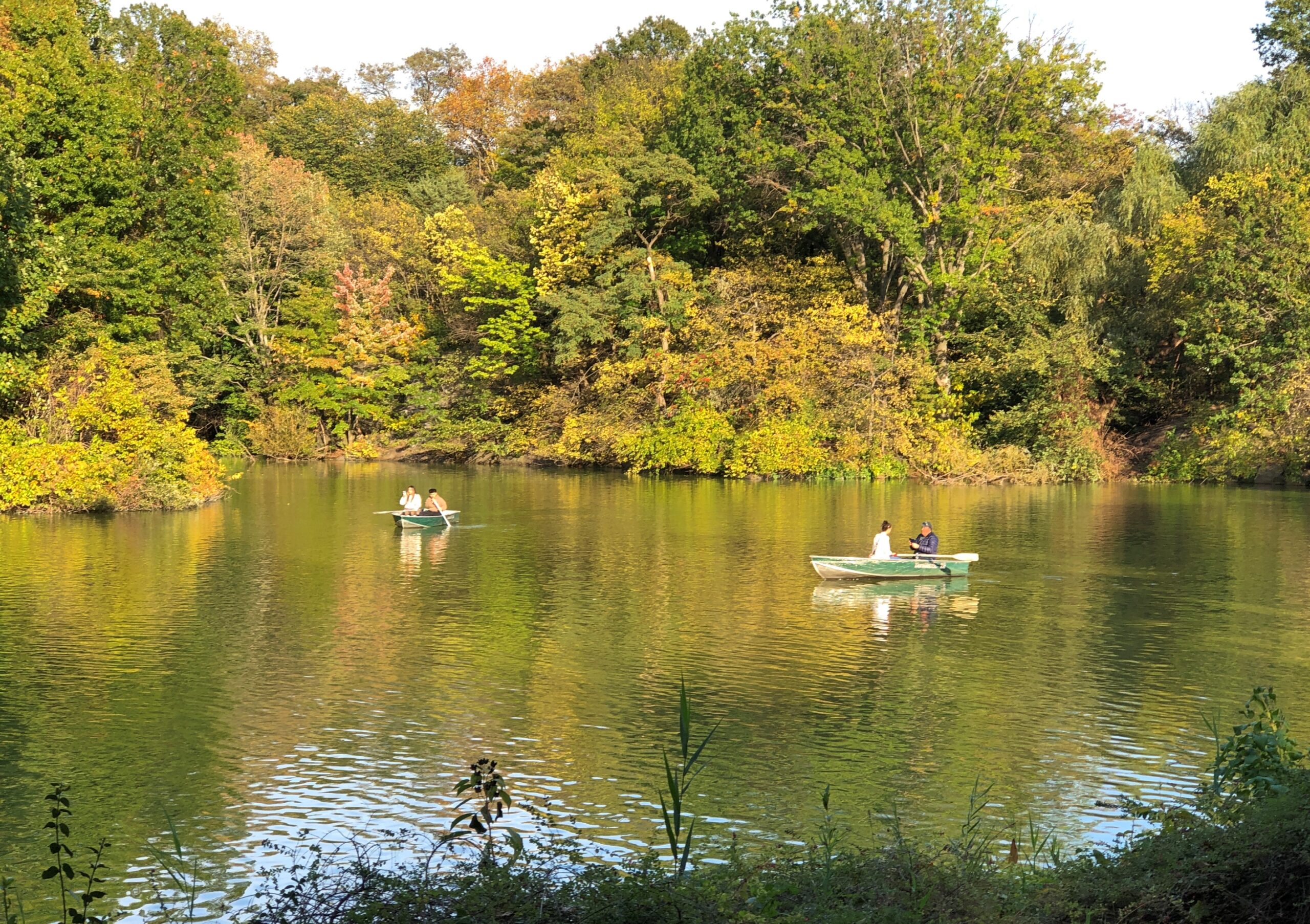
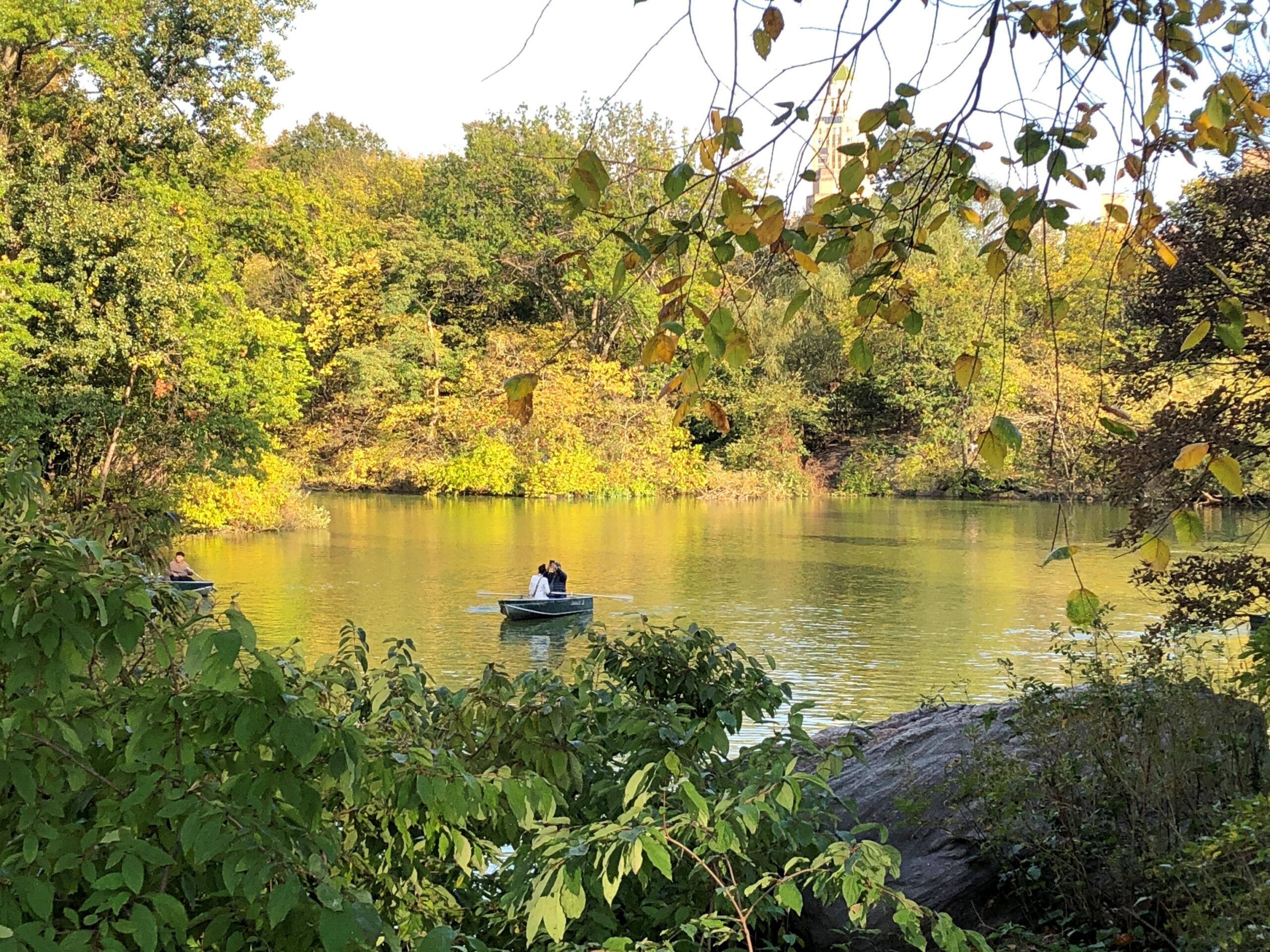
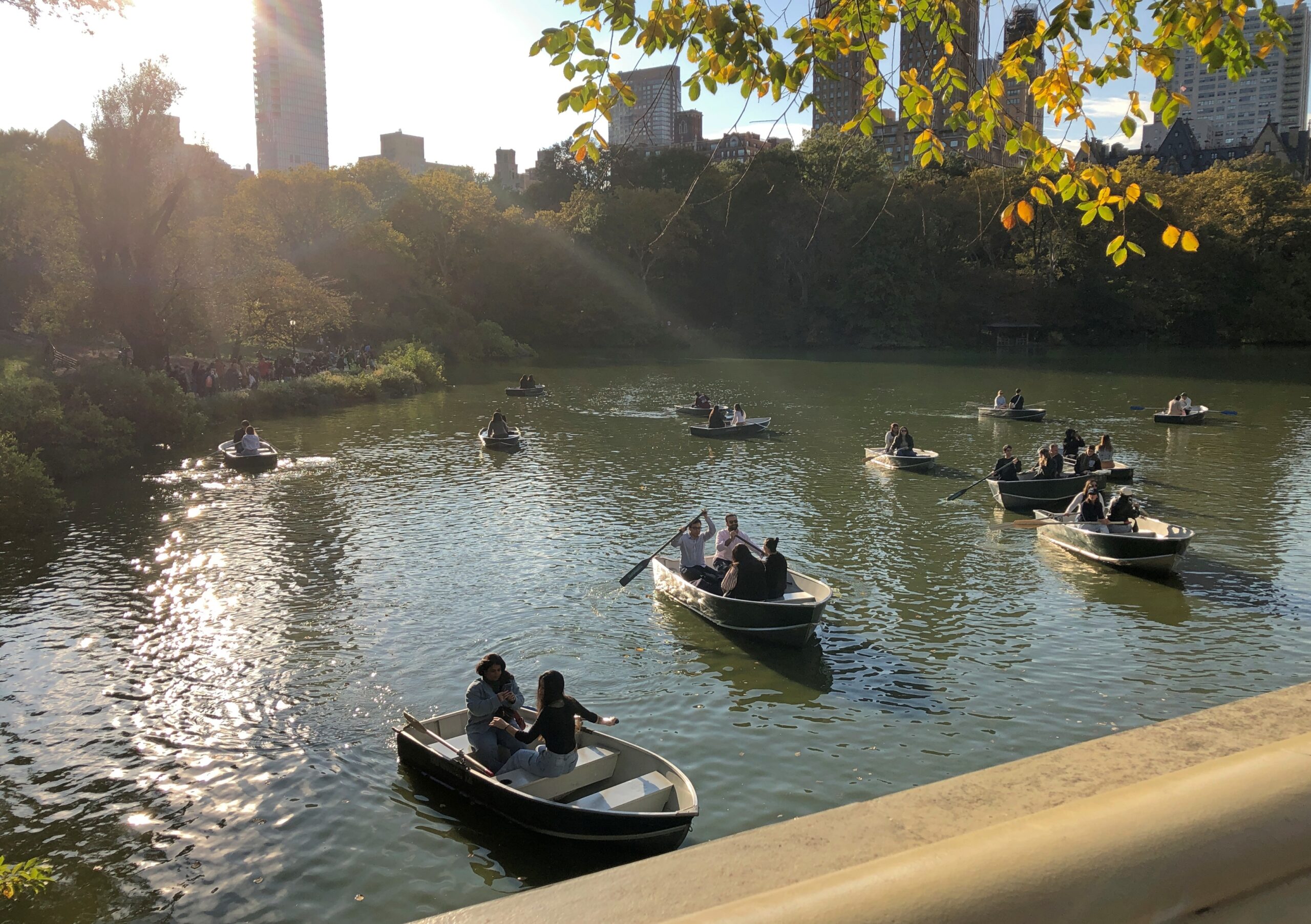
The Lake was clearly a good time and place for casual boating.
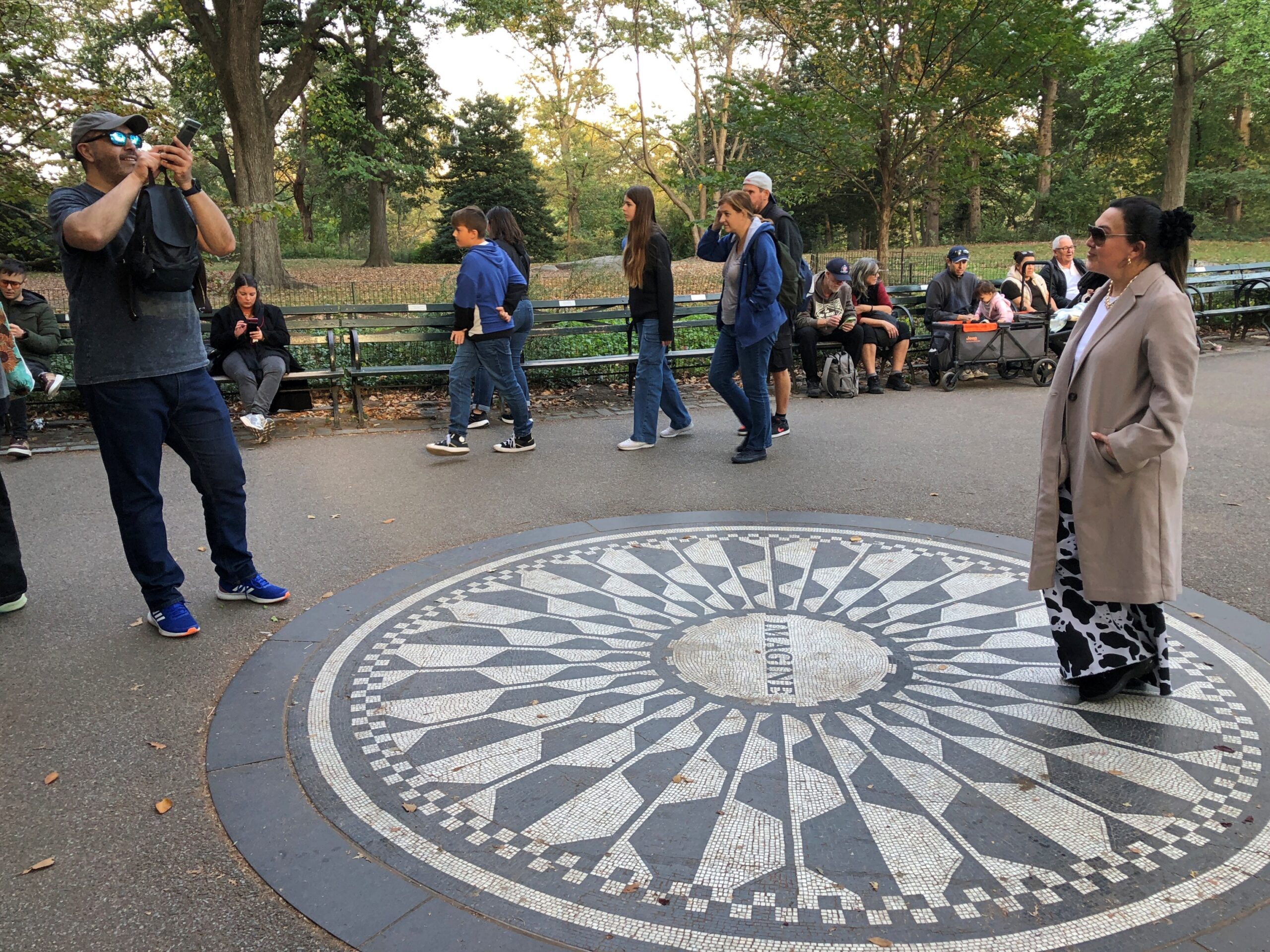
In that part of Central Park, it’s hard to miss Strawberry Fields. There is a fairly empty section.
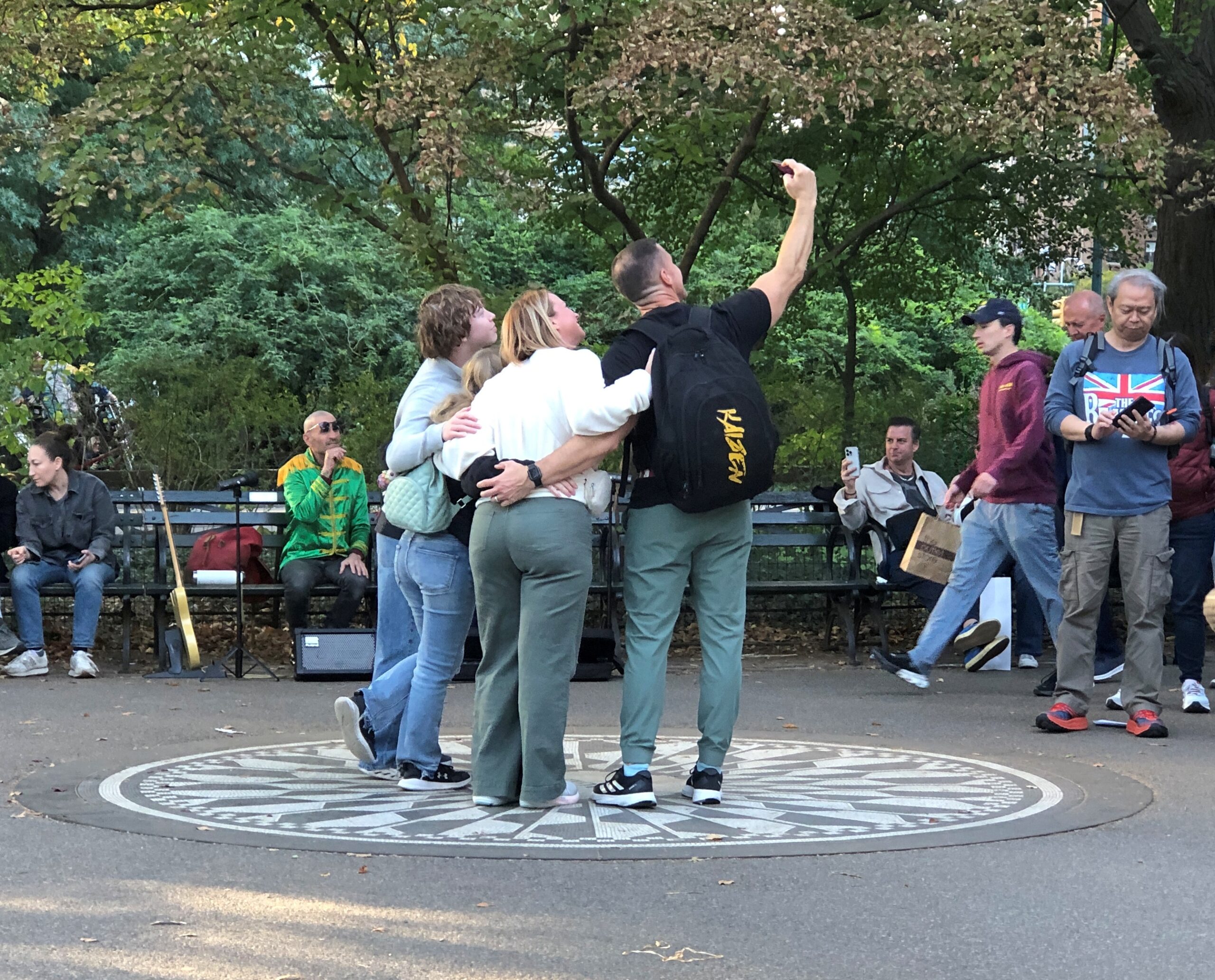
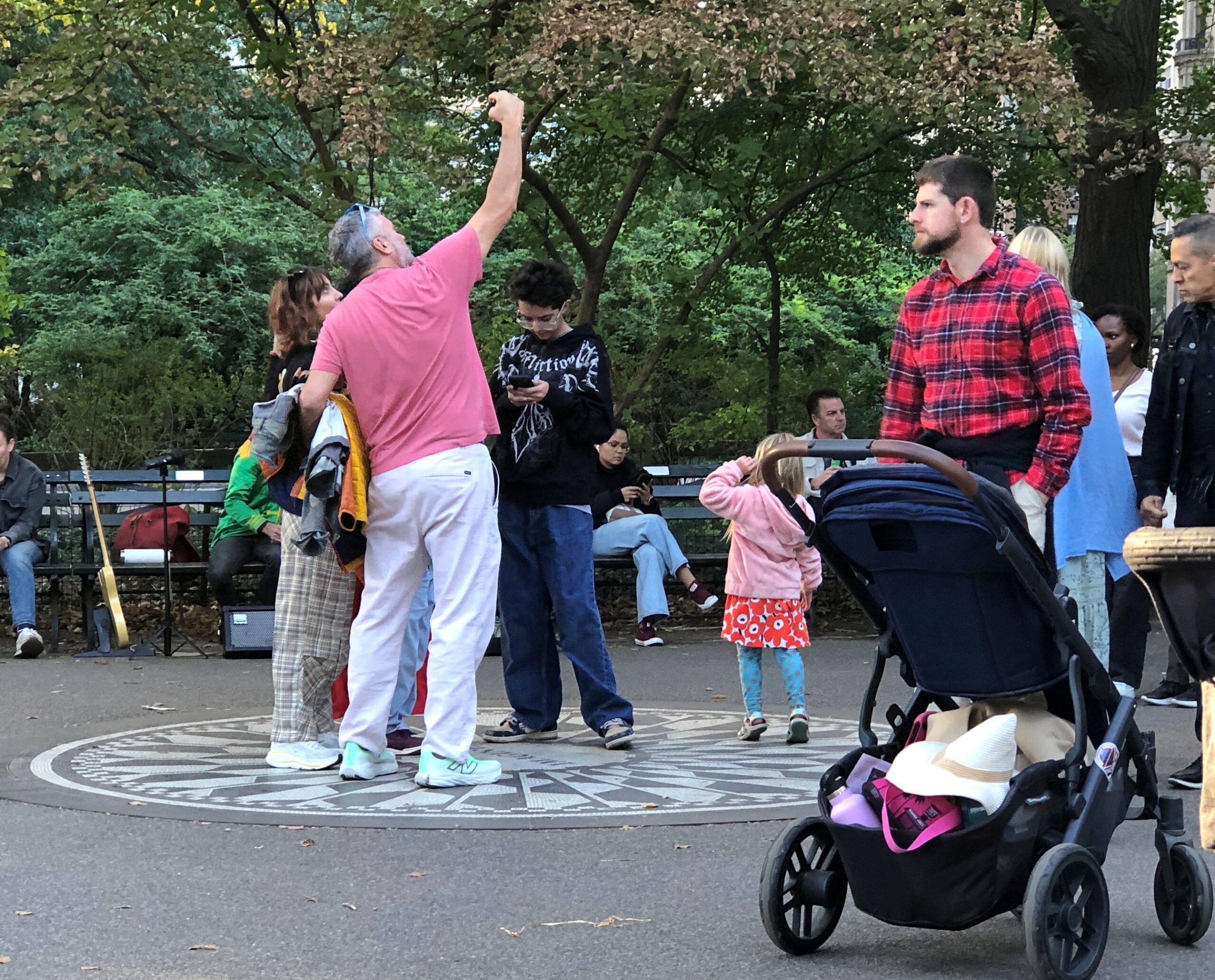
That’s not the case when you get to the Imagine memorial. Among the visitors, a guitarist was noodling out one of the more famous Lennon-McCartney tunes, but I forget which. One of the usual ones. Not “Dr. Robert,” say, or “Happiness is a Warm Gun.” So that was one busker anyway, since I think he had a guitar case open in front of him. All you need is love, sure, but bills are bills.
Gone these 45 years and still packing ‘em in. Good for you, Mr. Lennon. In another 45 years? It would be interesting to know, and I sure I won’t.
I’m afraid the history of memorials doesn’t bode well for the longevity of any memorial, even the kind that people line up to pose with. I didn’t know the man, but I suspect somehow that the thought of fading into obscurity wouldn’t have bothered John Lennon.
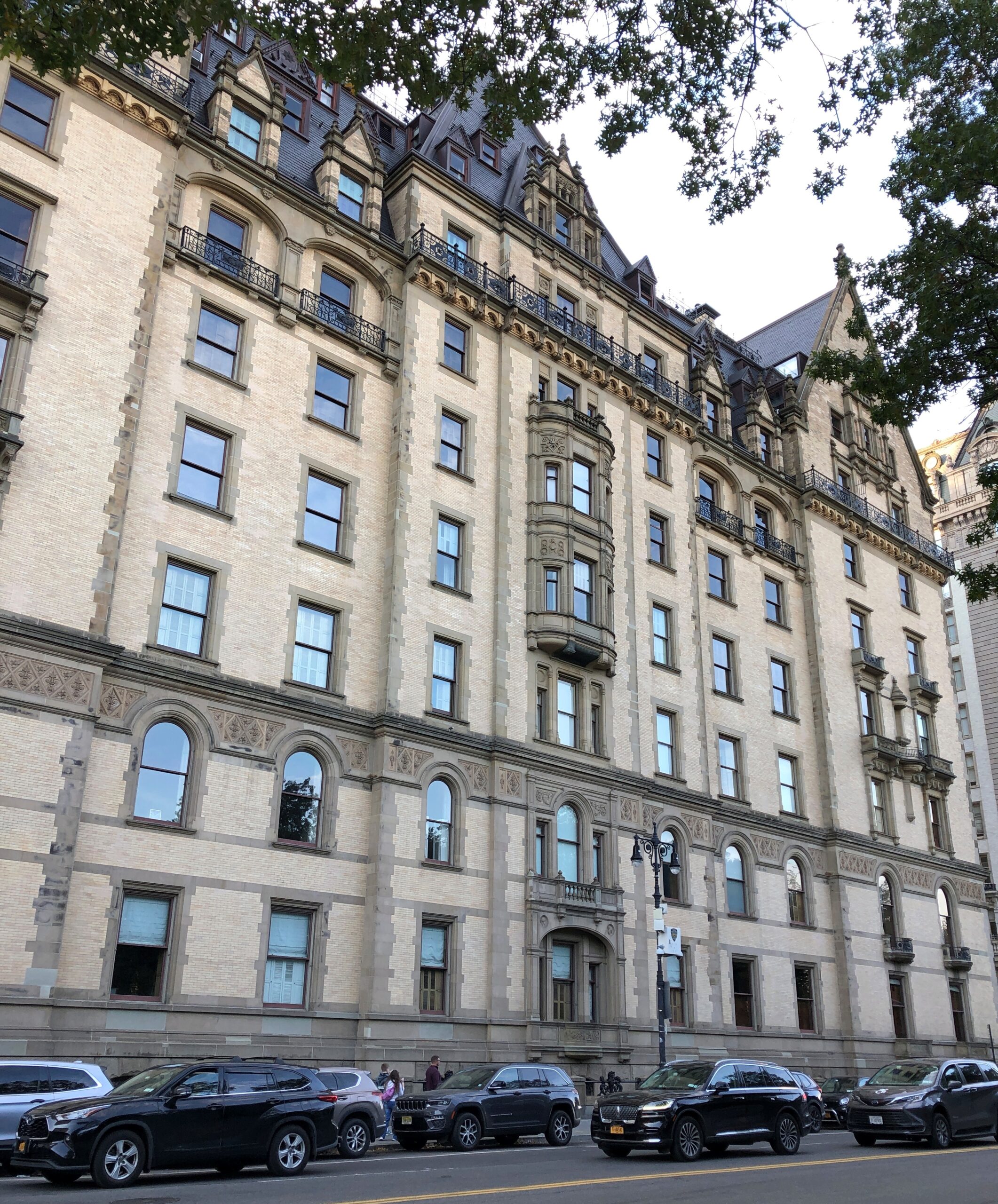
At that point, you emerge from the park and are practically face-to-face with the Dakota.
We headed east to a subway station, and happened to walk by the entrance of the Dakota. In its grim way, it’s a kind of memorial too. The signs make it known with no uncertainty that no one unauthorized is getting in.
Driving down from the alpine wonders of Rocky Mountain National Park a couple of weeks ago on highway US 36, I realized we’d be passing through Boulder, Colorado. So during one of the moments of standstill traffic on that highway as it winds into Boulder — it’s a crowded road, especially on a weekend during warm weather — a thought occurred to me. More of a memory-thought, since it harkened back almost 50 years.
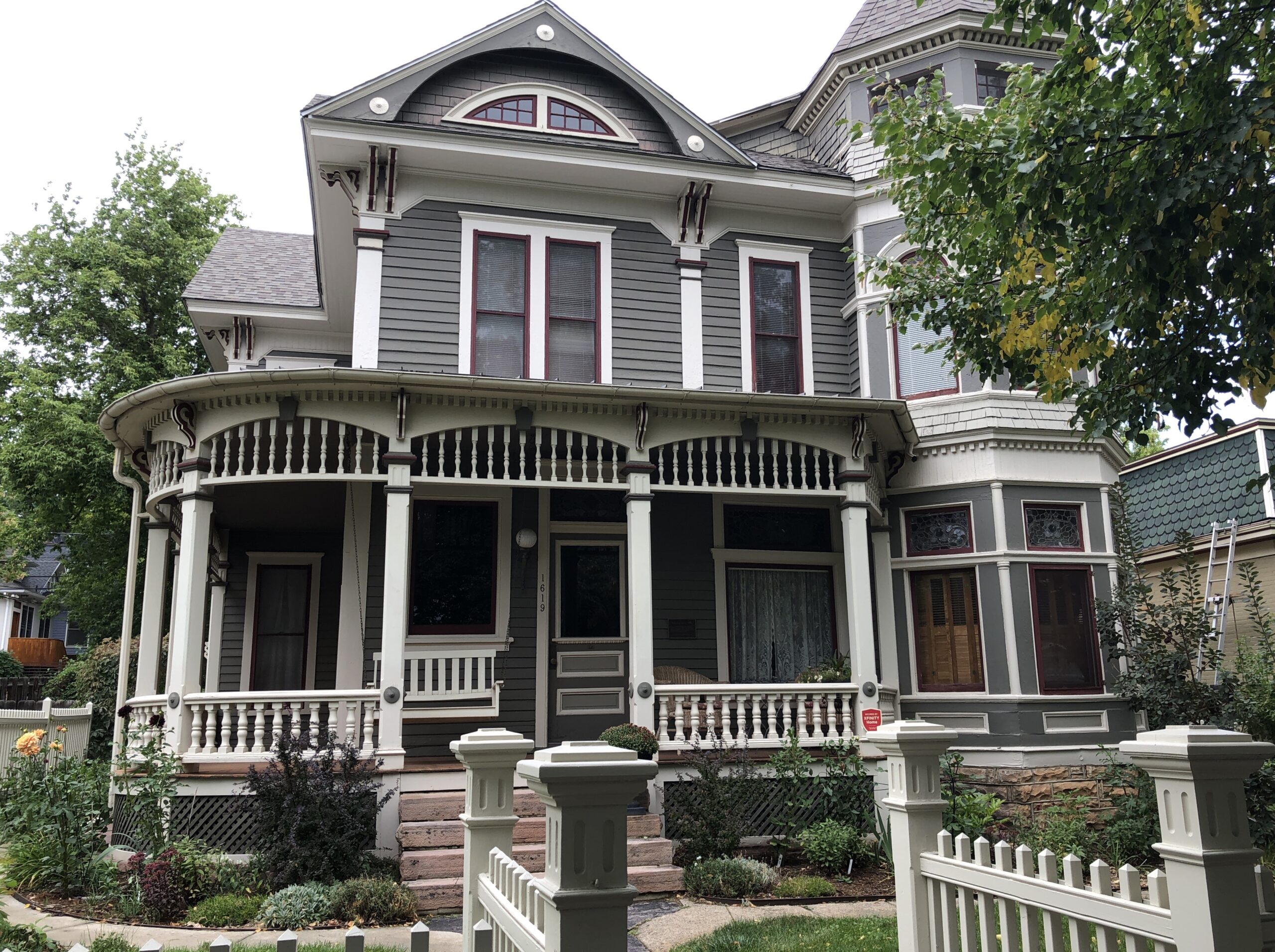
At zero mph, I had time to consult Google for more information. (Remarkably, the signal was strong.) Google Maps pinpointed the location I’d thought of, on a leafy street in Boulder. That day I expended some tourist energy, of which I don’t have quite as much as I used to, to find Mork’s house.
That is, the house used in establishing shots in Mork & Mindy to show their home, since the show was set in Boulder. I know I’d seen Boulder on maps. Funny name, I thought as a kid. Really Big Rock City. It’s still a little funny. But other than as a spot on the map, the show was probably the first time I’d heard anything else about the place.
The passengers in my car, Yuriko and Emi, having grown up outside of the orbit of ’70s American sitcoms, didn’t particularly appreciate the place. At least not until I conveyed the information that the show made Robin Williams famous. He’s a known quantity. I read a bit about the house later, and there seems to be no consensus about whether the owner cares whether anyone stops by the take a picture. My guess would involving factoring in a dwindling number of people coming by. You know, because the show went off the air over 40 years ago.
Then again, if my U.S. travels have taught me nothing else, it’s that retirees are out being tourists. They have the time they didn’t used to, and currently are just the right age to take a peek at Mork’s house at 1619 Pine Street, which is easy enough to find. Even if, like me, their fondness for that show was lukewarm at best.
Boulder and Mork came early in the second leg of my three-legged, 4,498-mile drive, which seemed to kill that many bugs on the windshield and front hood and bumper. The house counted as merely one spot in a trip that took me through hundreds of places. I spend most of September on the road, heading west from Illinois early in the month along I-80 and smaller roads, especially Nebraska 2 through the Sandhills, and spending time in western Nebraska and its rocky outcroppings and in southeast Wyoming, before going to Denver. That would be the first leg. Which, I’m very happy to say, included a good look at Carhenge.
Yuriko flew to Denver on the last of the points I got from SWA for the Christmastime FUBAR a few years ago and we met there. (New motto for the airline: Now We’re Just Another Airline!) After an overnight jaunt to Rocky Mountain NP in the company of our friend Emi, the two of us then spent more than a week taking a clockwise circle-(like) course — a lasso, you might call it, a straight line connected to a loop — from Denver to Colorado Springs to Pueblo to Walsenburg to Alamosa to (coming down from Wolf Creek Pass) Pagosa Springs to Durango to Silverton to Ouray to Montrose to Salida and back to Denver, where Yuriko flew home. That was the second leg. The drives were varied and gorgeous.
You’d think that would be enough, but I had to drive home, loosely following I-70 this time, making my way from Colorado through Kansas, Missouri and Illinois, and making a number of stops, big and small, such as Kit Carson, Colorado; Abilene, Kansas; and Kansas City, Missouri, for a third and final leg. No single small road took me through Kansas, but a series of them did, some as empty as, well, eastern Colorado and western Kansas. That’s some fine driving. Mountains are great, but after a week or so of their twisty ups and downs on two lanes, flat is all right. More relaxing, even.
For reasons that will soon be obvious, not long ago I looked up 2024 visitation statistics for the four national parks in Colorado: Rocky Mountain, Mesa Verde, Great Sand Dunes, and Black Canyon of the Gunnison.
Far and away the top national park draw in Colorado is Rocky Mountain NP, which received 4.2 million people last year, according to the NPS. In fact, it’s a top ten among most-visited U.S. parks. That isn’t so much of a surprise, considering the monster population that lives nearby in greater Denver and other parts of the Front Range. Indeed, for a lot of people, RMNP is easily a day trip.
That isn’t true for the other three national parks, but even so I was surprised to learn how few people actually visit any of them. They aren’t that remote. We aren’t talking Gates of the Arctic NP or American Samoa NP remote. Still, out of the 63 current U.S. national parks, last year Mesa Verde ranked 41st, Great Sand Dunes 44th, and Black Canyon 49th. The three of them combined saw only about 30 percent as many visitors as Rocky Mountain in 2024.
We set out to see all four of the national parks in Colorado. And we did. You could call it a national park trip, along the lines of the one a few years ago mostly on the Colorado Plateau. But the parks were only a framework, never the total picture, over mountains and across plains. We saw a lot else besides, such a male bear outside our window about 10 miles north of Durango, a female in a tall nearby pine snarling at him, and cubs higher up in the tree. More detail to come on that, in the fullness of time.
Rocky Mountain NP is an exercise in rising above the tree line, by vehicle but also on foot, up a path, into to a satisfying exhaustion before majestic mountains. The pale sand dunes of the Great Sand Dunes NP rise from a valley and back up against a mountain range, as if a giant broom swept it off to corner, and for visitors amounts to a giant sand box. Mesa Verde NP, where the stone dwellings of the Ancient Ones are tucked away in steep stone canyons, shows how much effort people will put into making a home for themselves. Black Canyon of the Gunnison NP is a scenic great unknown, a great dark crack in the earth that reminds you that gravity is in charge, its ragged cliff edges rife with opportunities to die for an Instagram image.
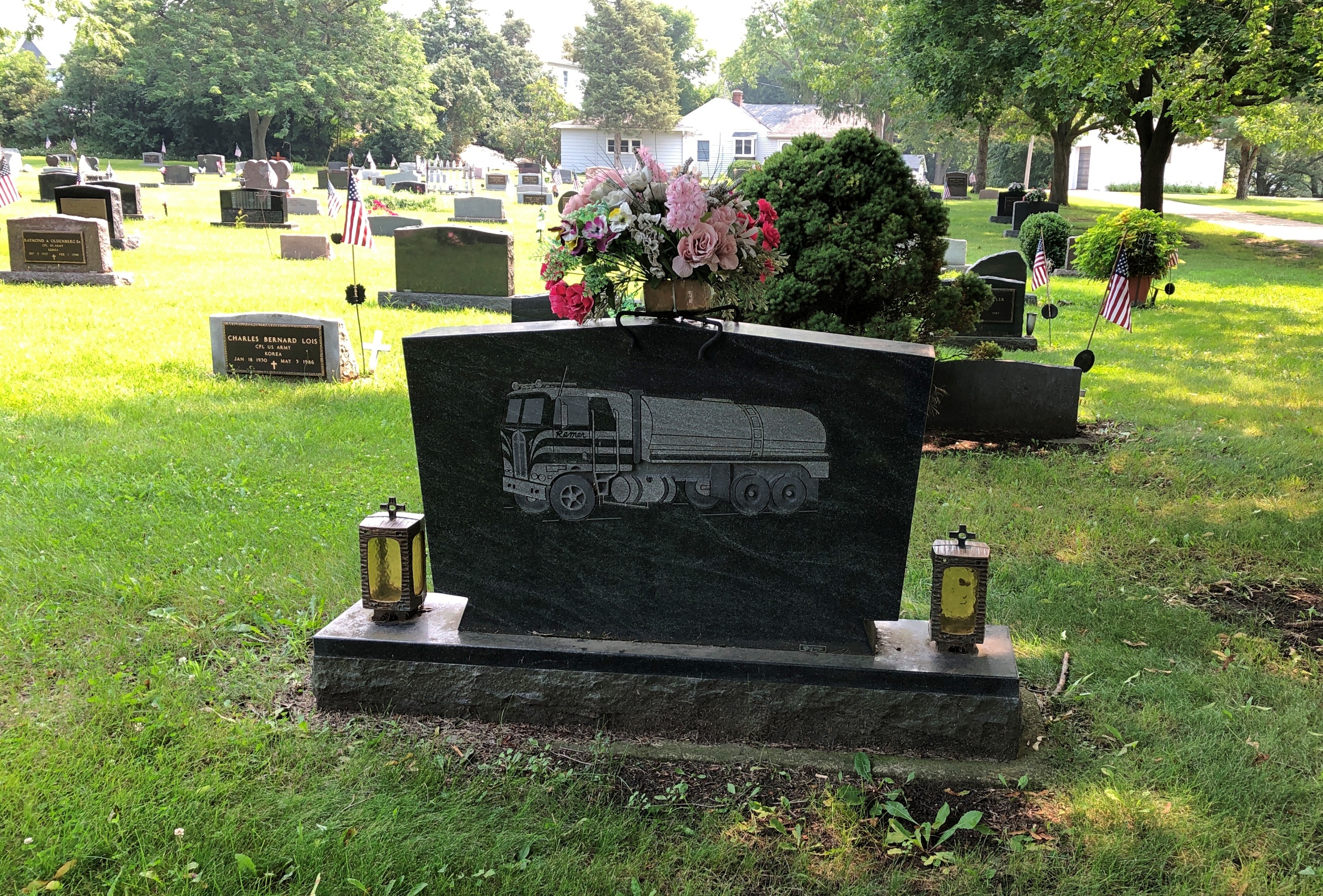
Something I’d never seen on a gravestone: a truck. I’ll bet most people can say that.
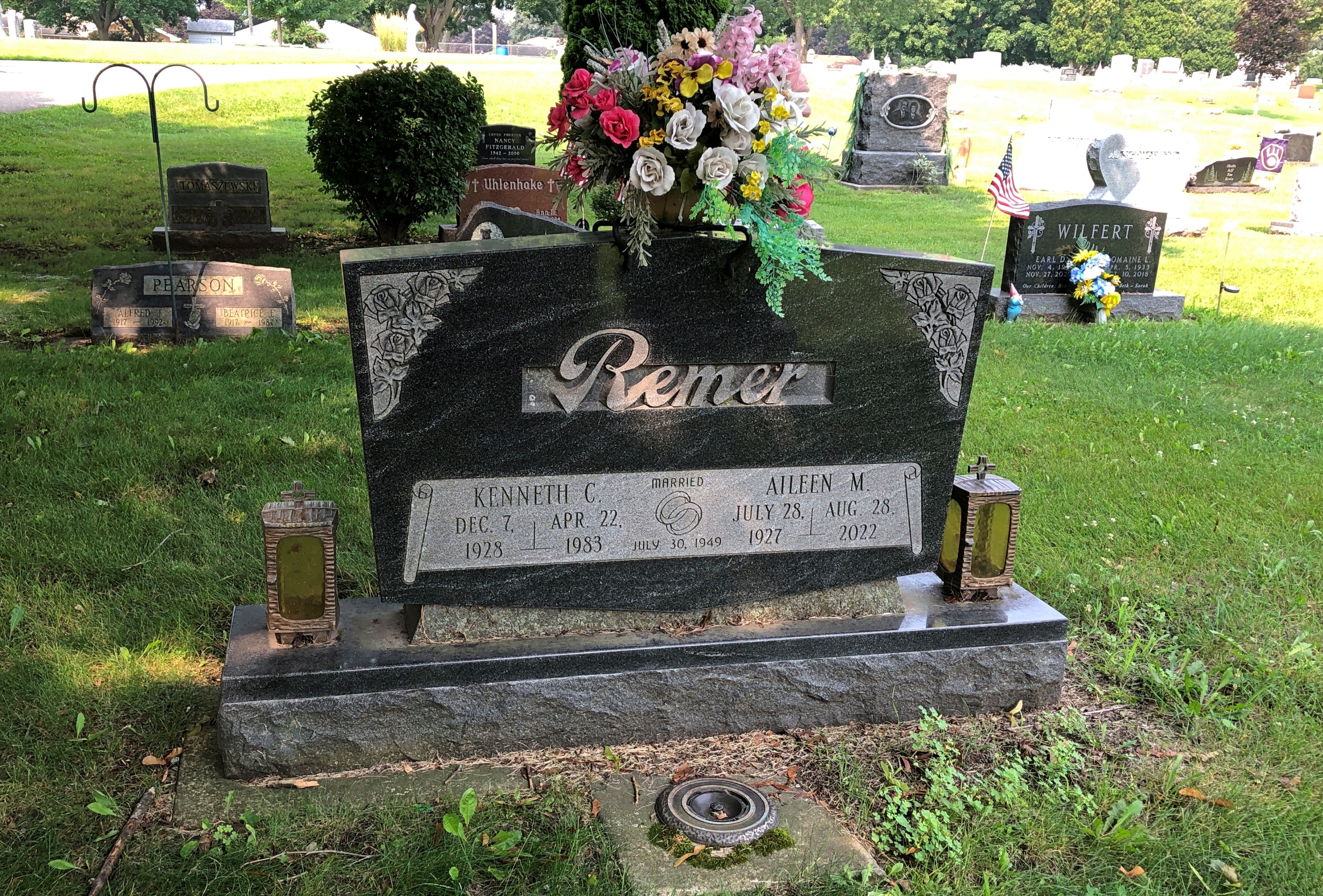
My best guess when I saw it was that Kenneth C. Remer was a trucking man who, among other things, lived through the short romanticization of trucking men in the mid-1970s. Something I’m sure is lost on later generations, as if that matters. If I were silly enough to say “That’s a big 10-4” to either of my daughters, I wouldn’t expect comprehension. That bit of code wasn’t invented by truckers, but even so.
I looked him up, as one can in our time. His obit says he was a “partner in Remer Milk Service.” So could be he drove a milk truck, at least sometimes. That is a liquid-hauling truck depicted on the stone. Not something celebrated in song and story, but useful work all the same.
Another thought on that: though “Convoy” was much more popular, C.W. McCall’s “Wolf Creek Pass” is by far the more entertaining song. (And it’s a real place.) A better song about driving a truck is “Willin’,” originally by Little Feat. Of all people, the inestimable Linda Ronstadt did a remarkable cover of it.
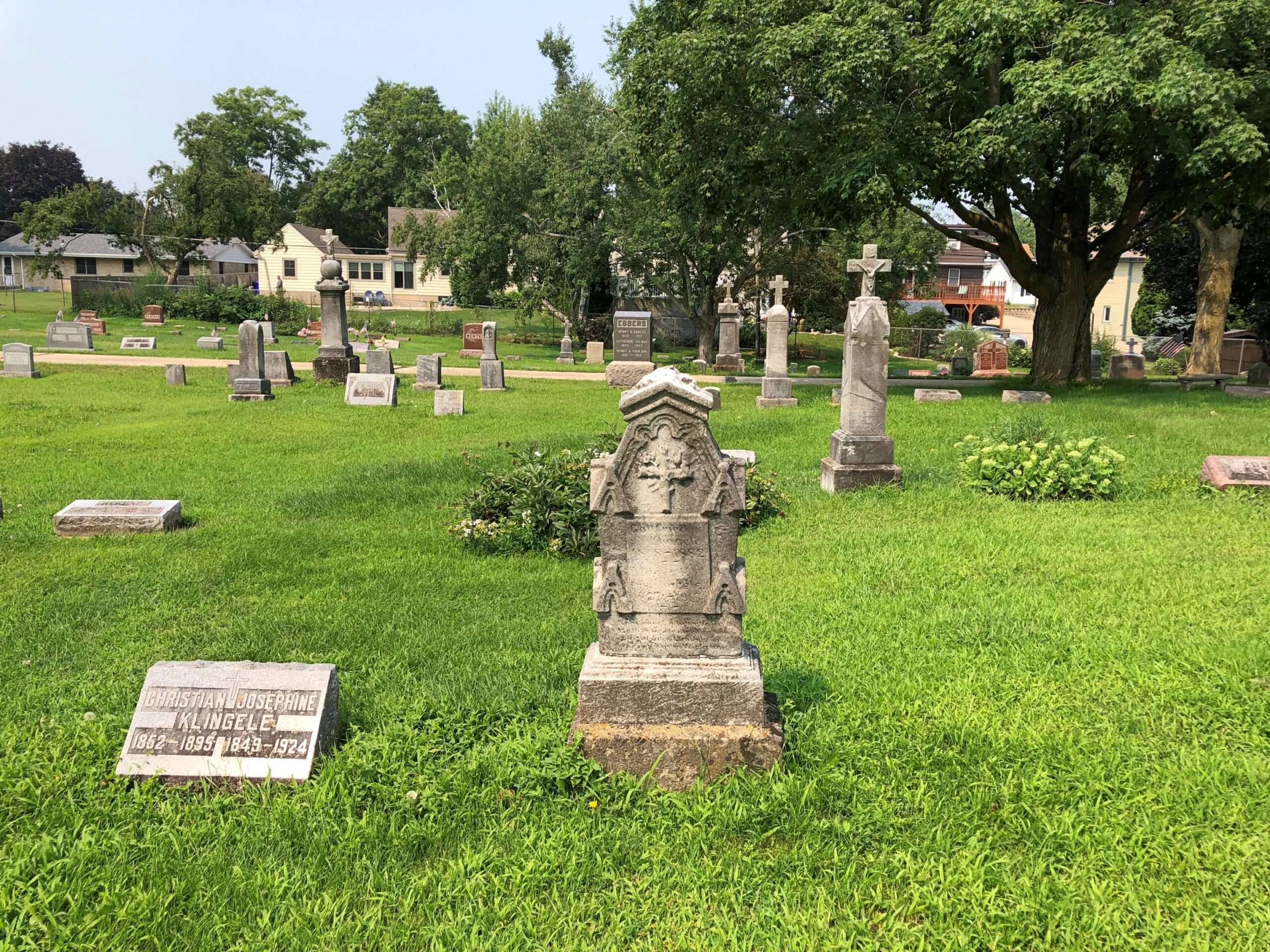
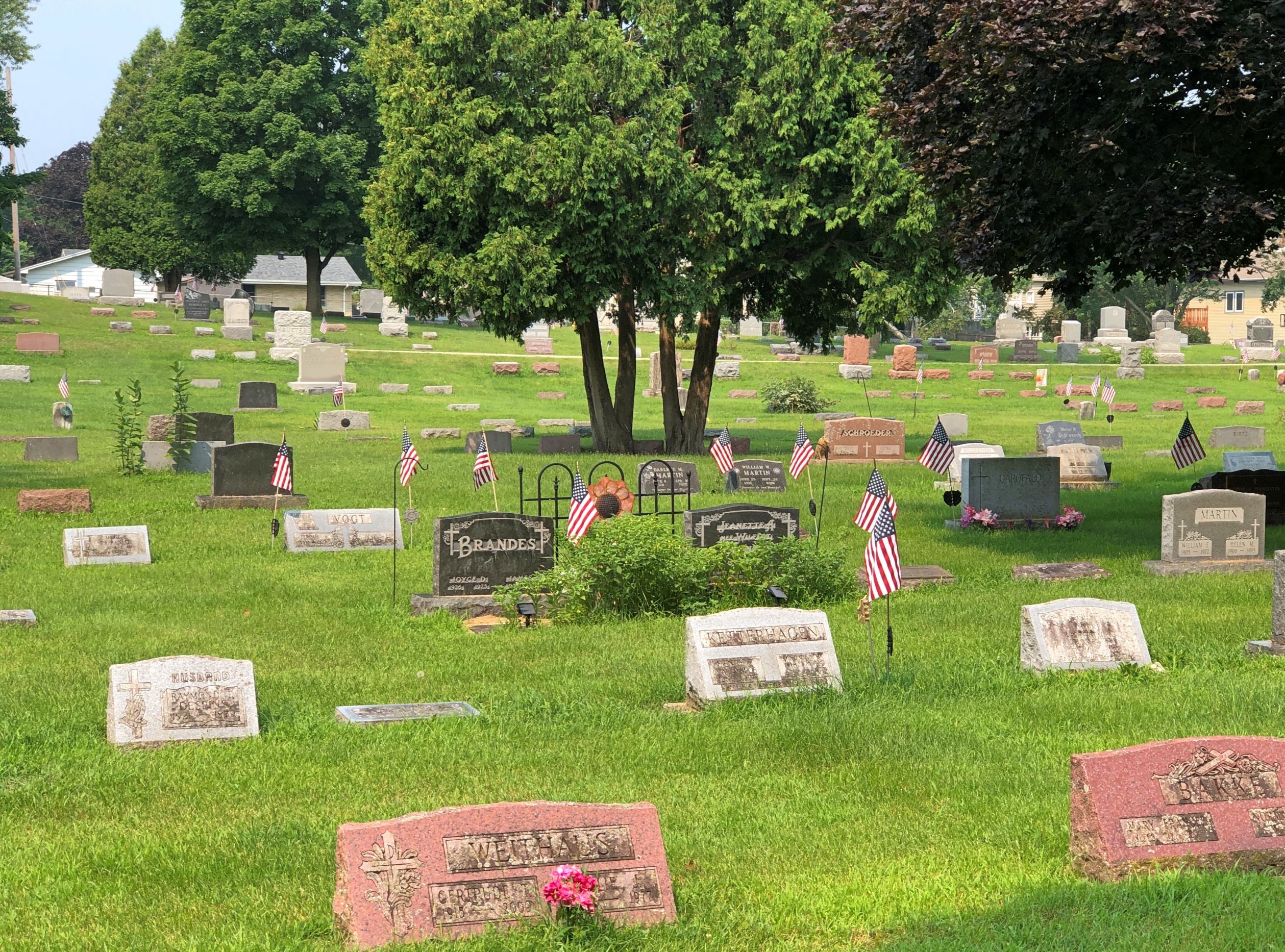
I encountered Mr. and Mrs. Remer at St. Mary’s Cemetery in Burlington, Wisconsin last month. A Catholic cemetery with a nice assortment of stones.
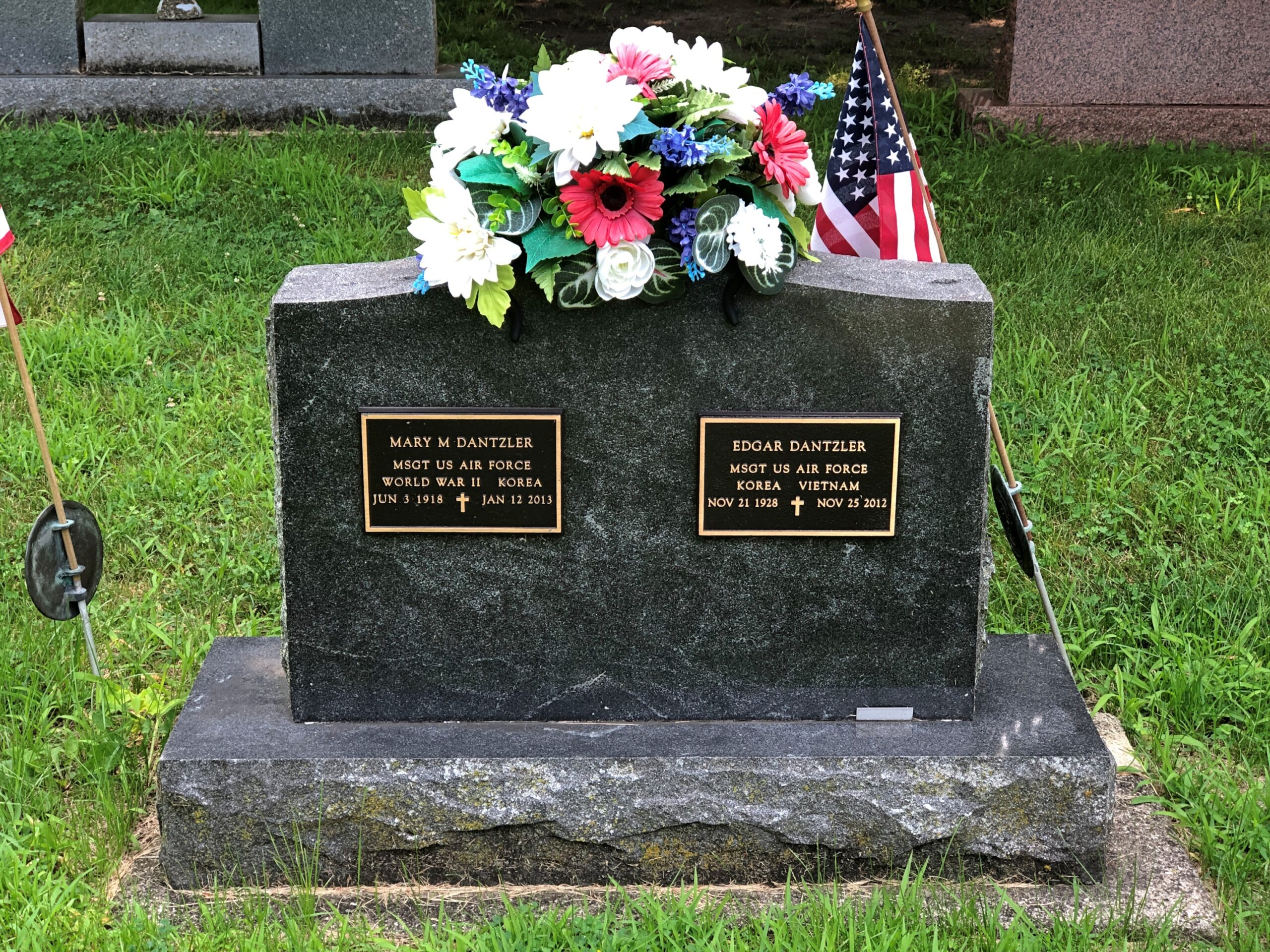
Unusual: two Air Force (I assume originally Army Air Corps) Master Sergeants, married to each other.
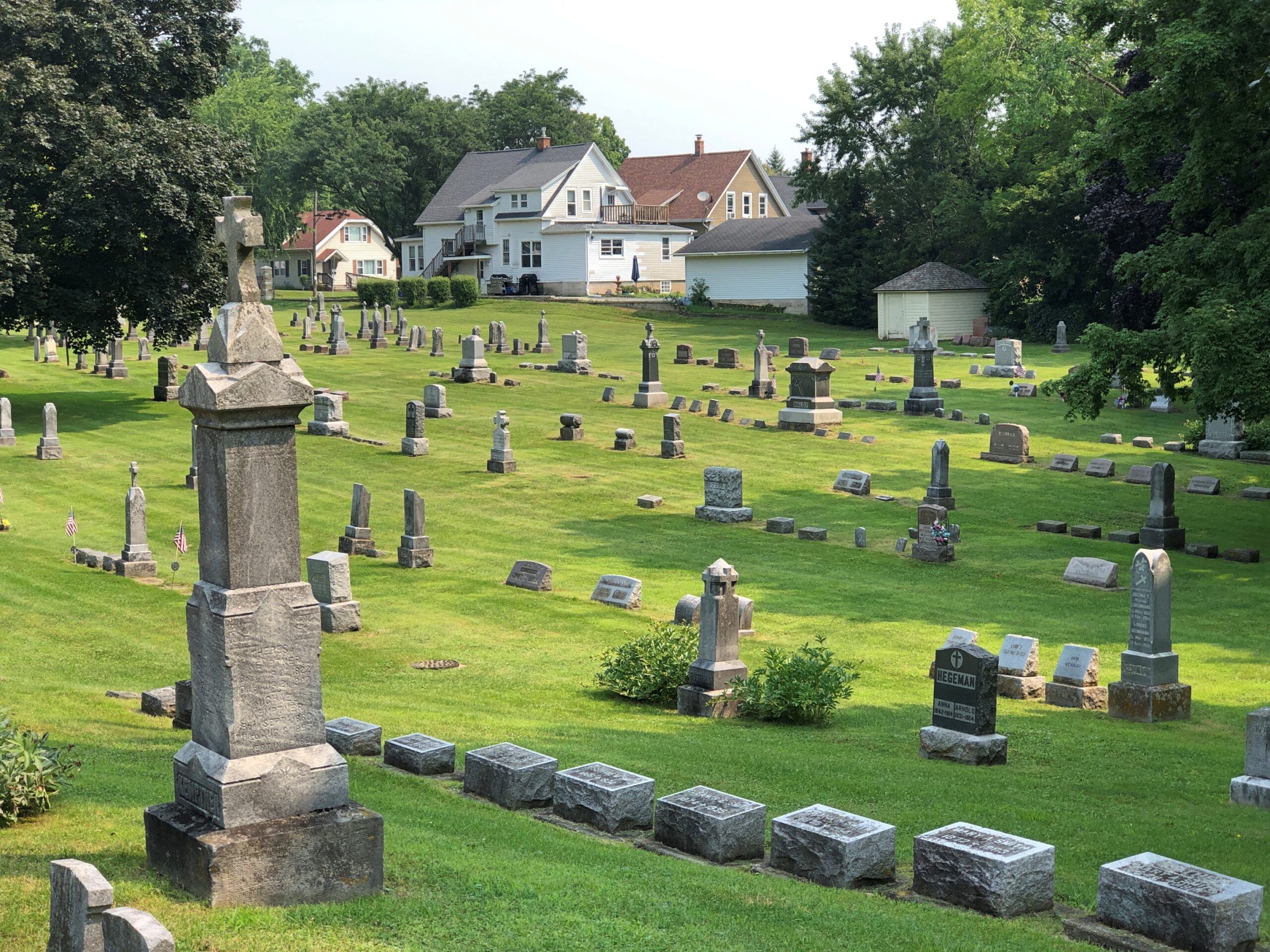
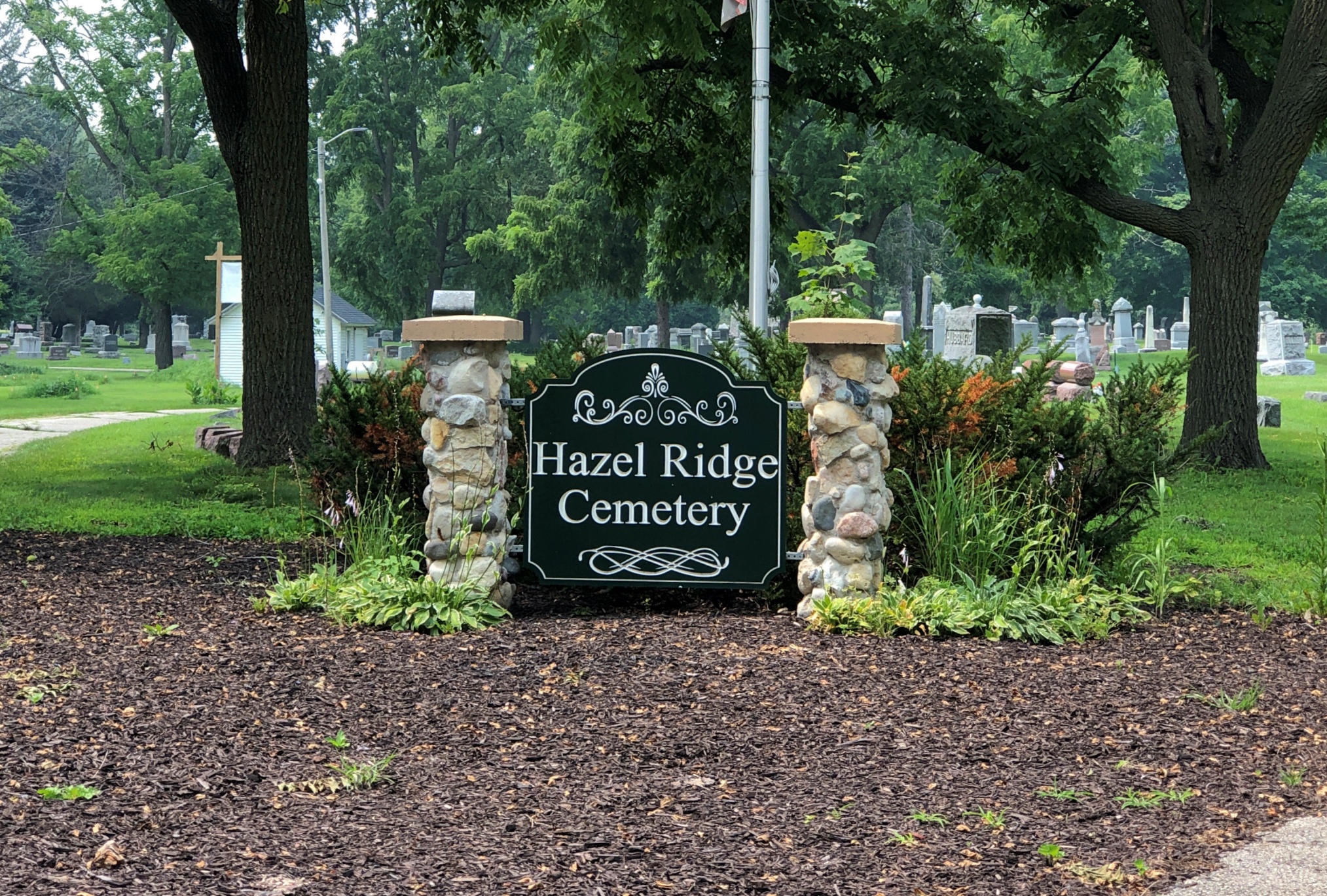
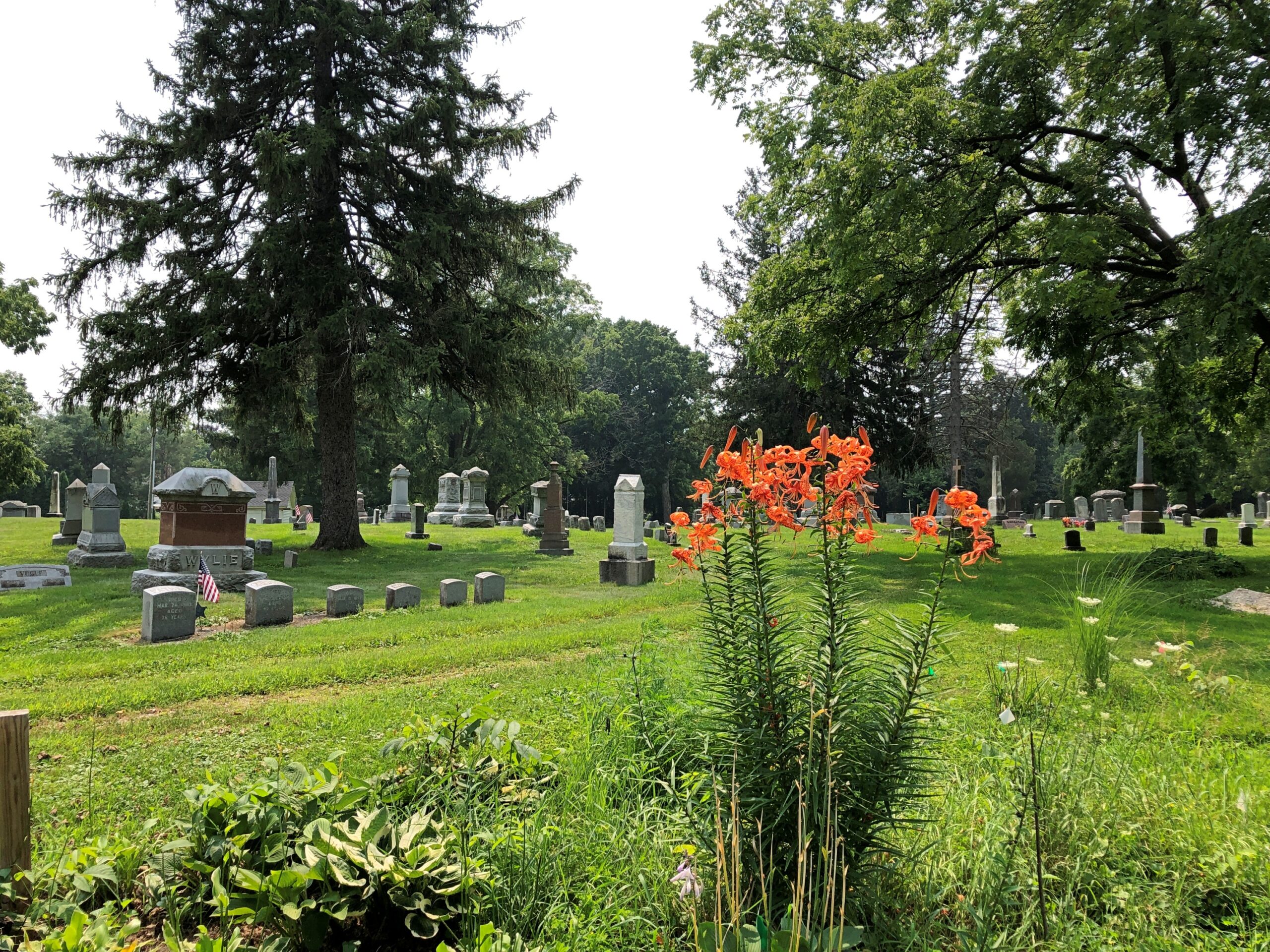
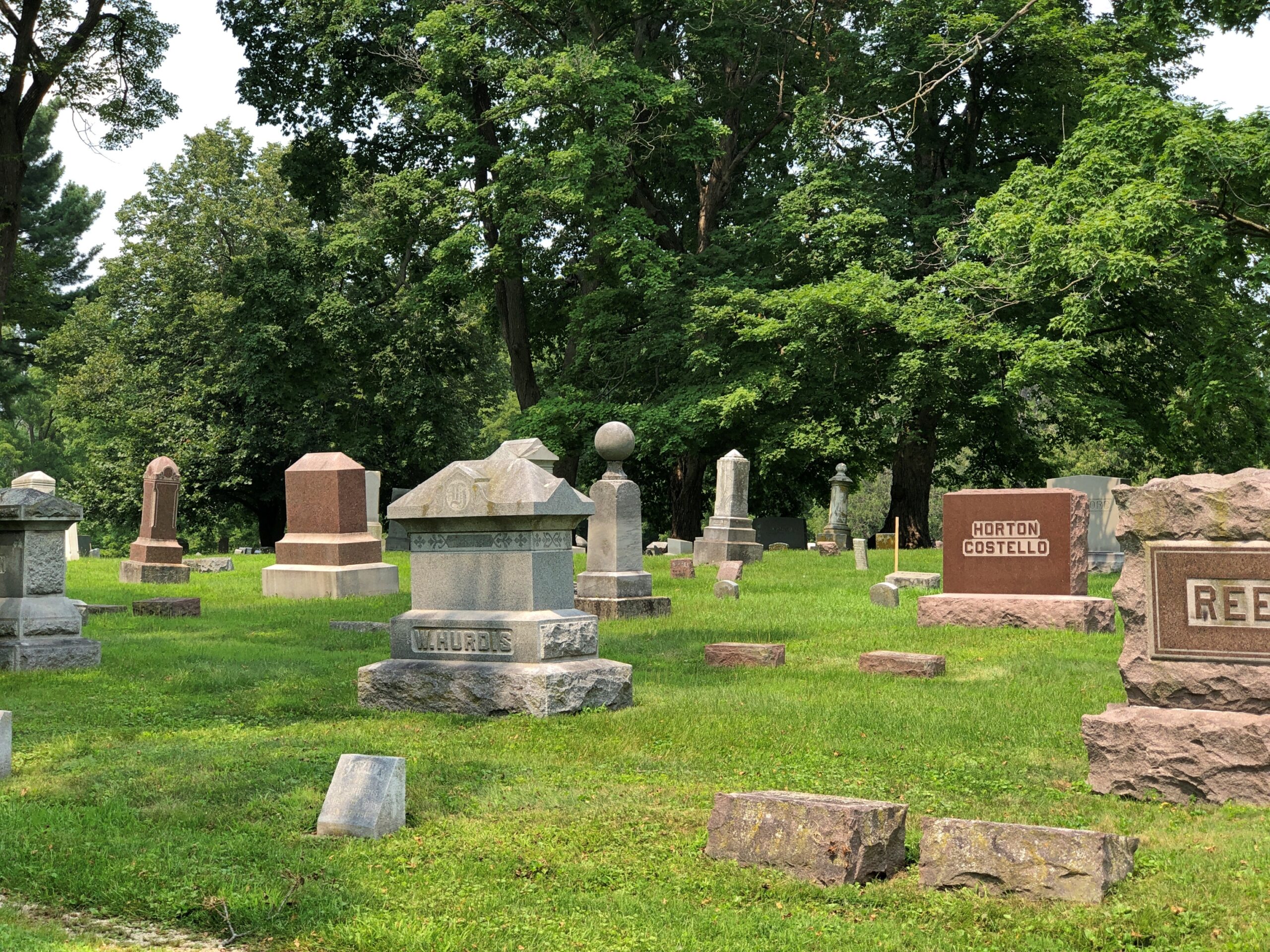
During my recent visit to Elkhorn, Wisconsin, I did no more than look for an “historic cemetery” on Google Maps to find Hazel Ridge Cemetery. Historic for sure, founded more than 150 years ago.
It too has a fine collection of memorials. The cemetery is also an arboretum, with more than 25 native species and ornamental varieties.
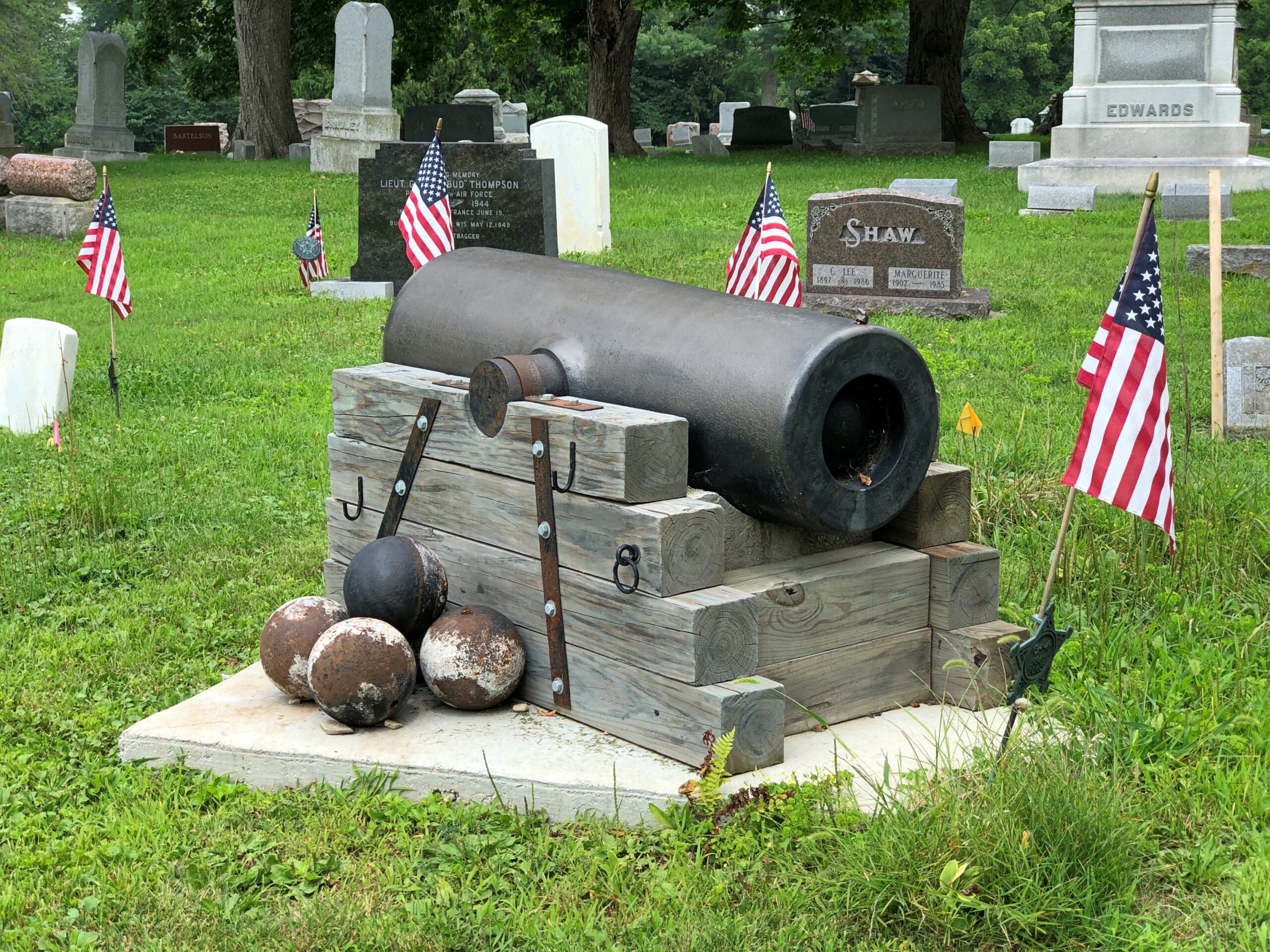
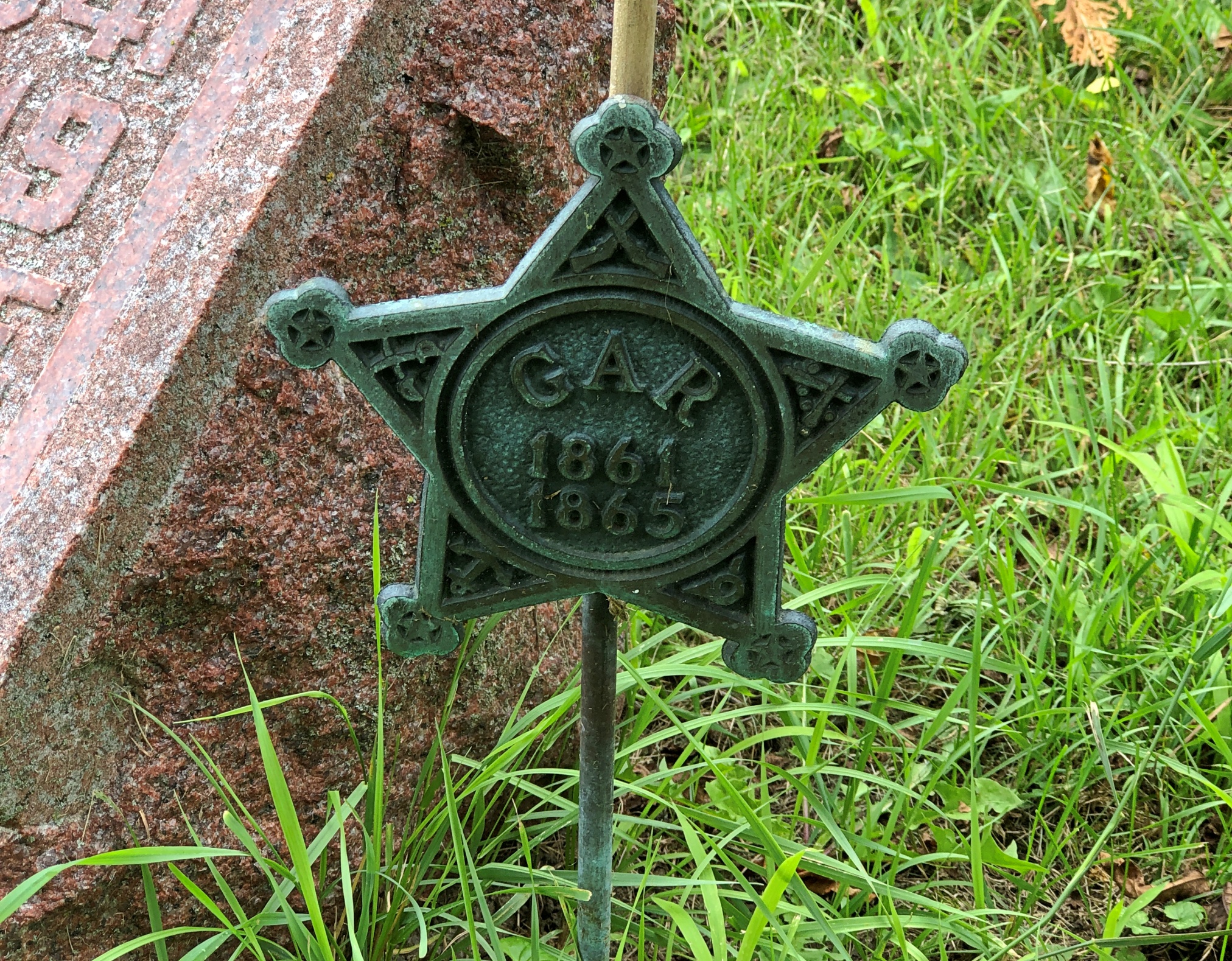
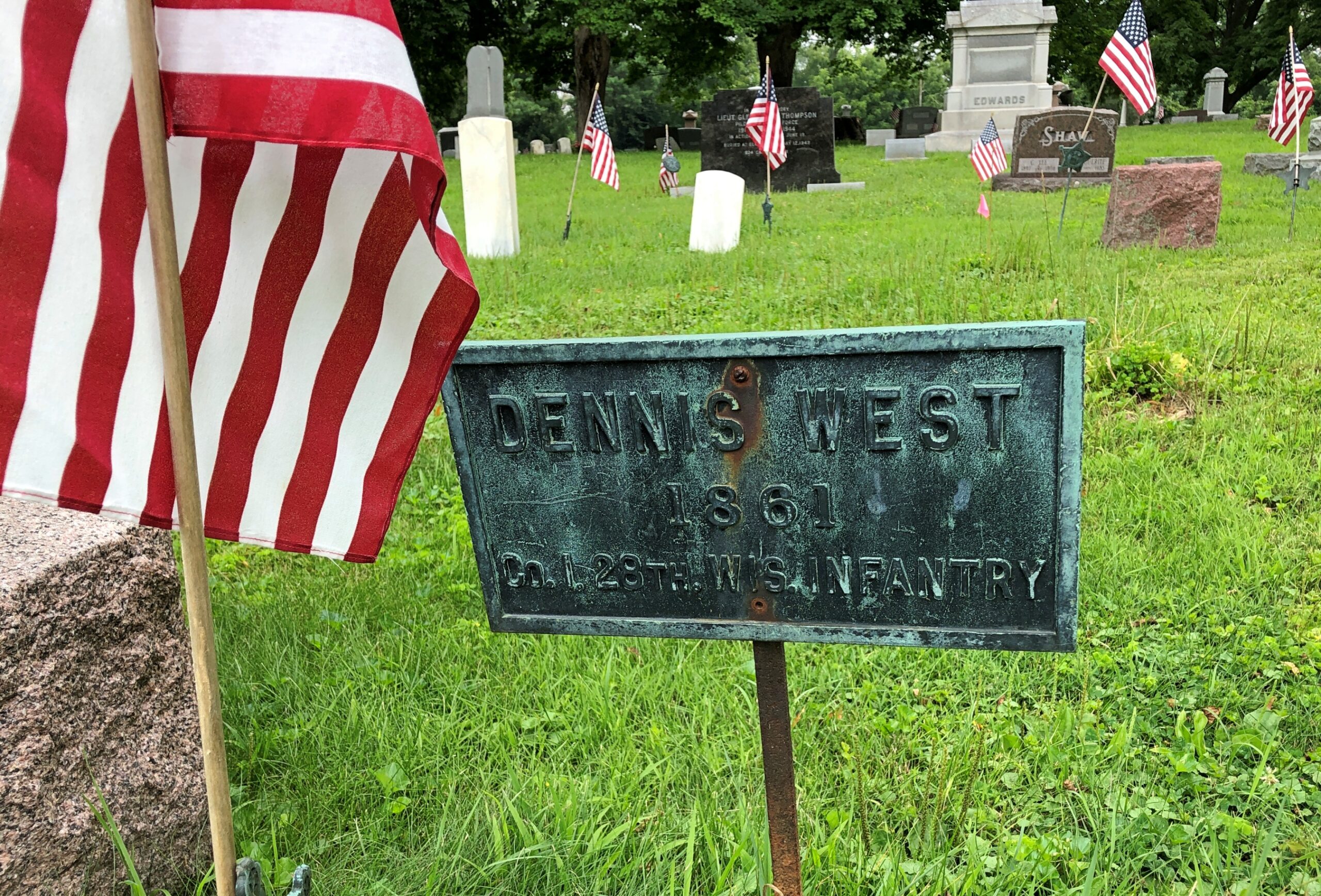
Hazel Ridge has a clutch of war dead memorials, including an 8-inch siege Howitzer as the centerpiece of a Grand Army of Republic memorial.
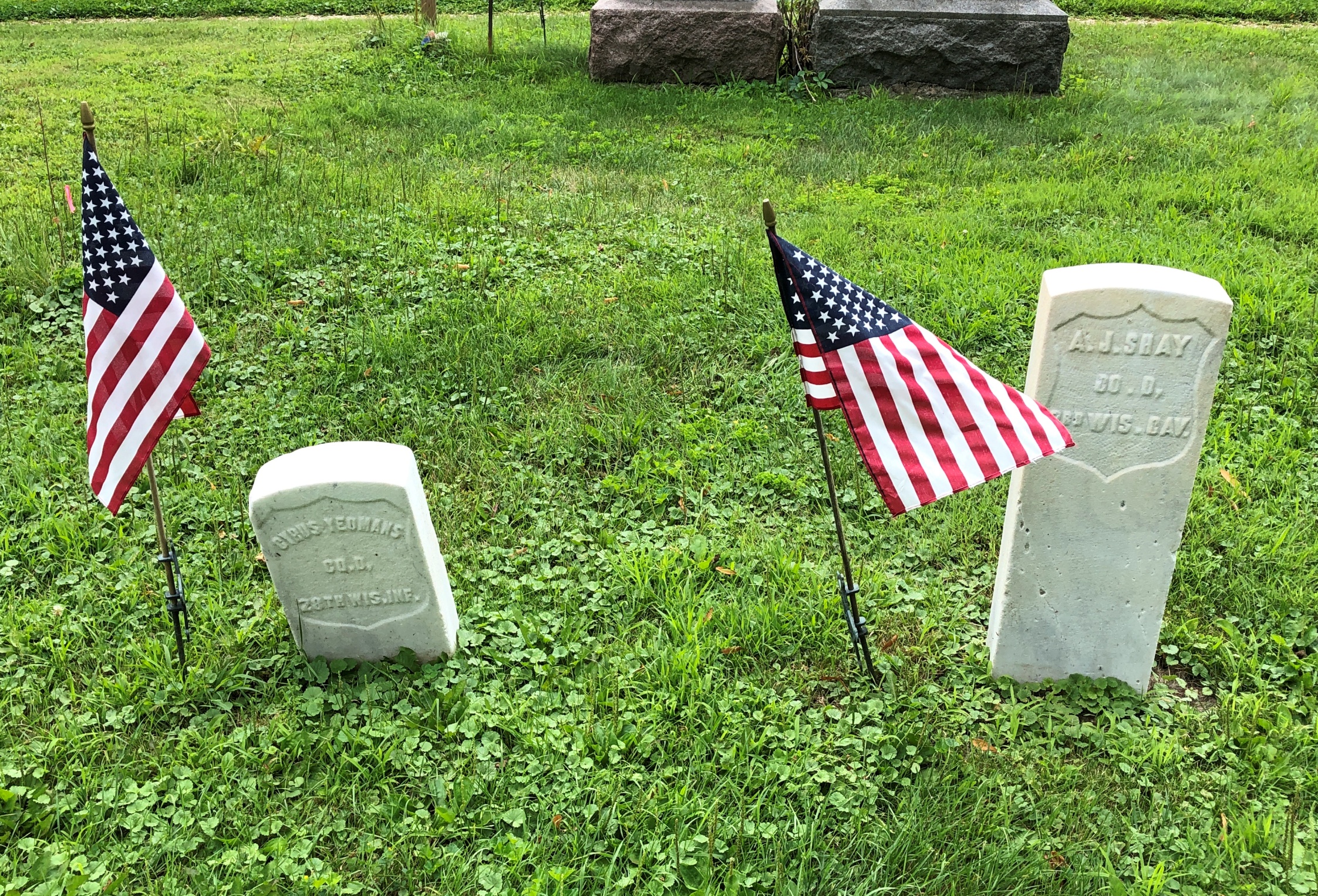
This particular cannon, according to a nearby sign, was made in 1862 at the Fort Pitt Foundry in Pittsburgh. I assume it did its part for the Union. Nearby are soldiers who did likewise.
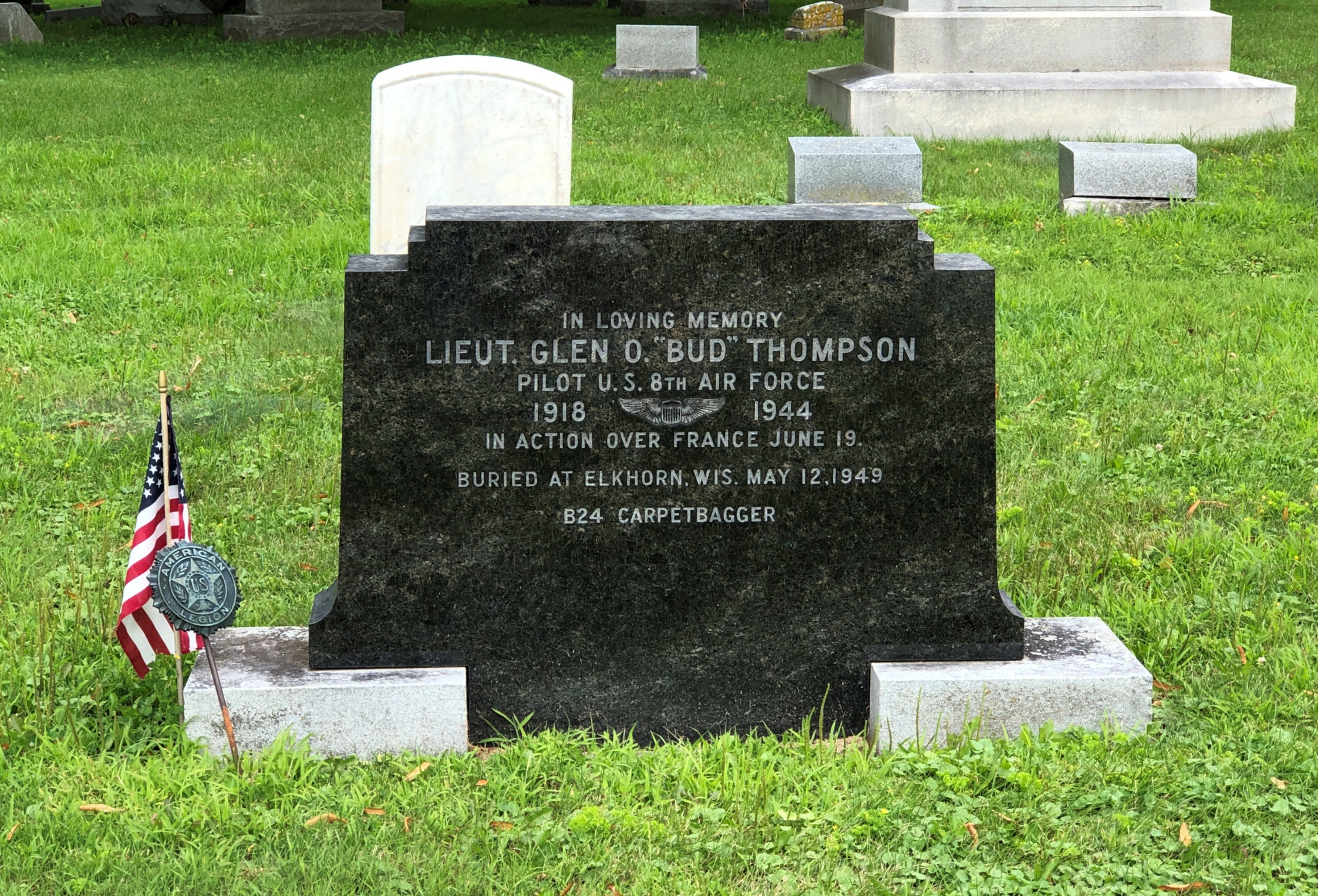
And those who died in later wars.
The single word “Carpetbagger” on the stone tells quite a story. Operation Carpetbagger involved black-painted B-24s flying low and slow by night, dropping supplies and agents to the resistance in France before and after the Normandy invasion. Clearly dangerous work. RIP, Bud.
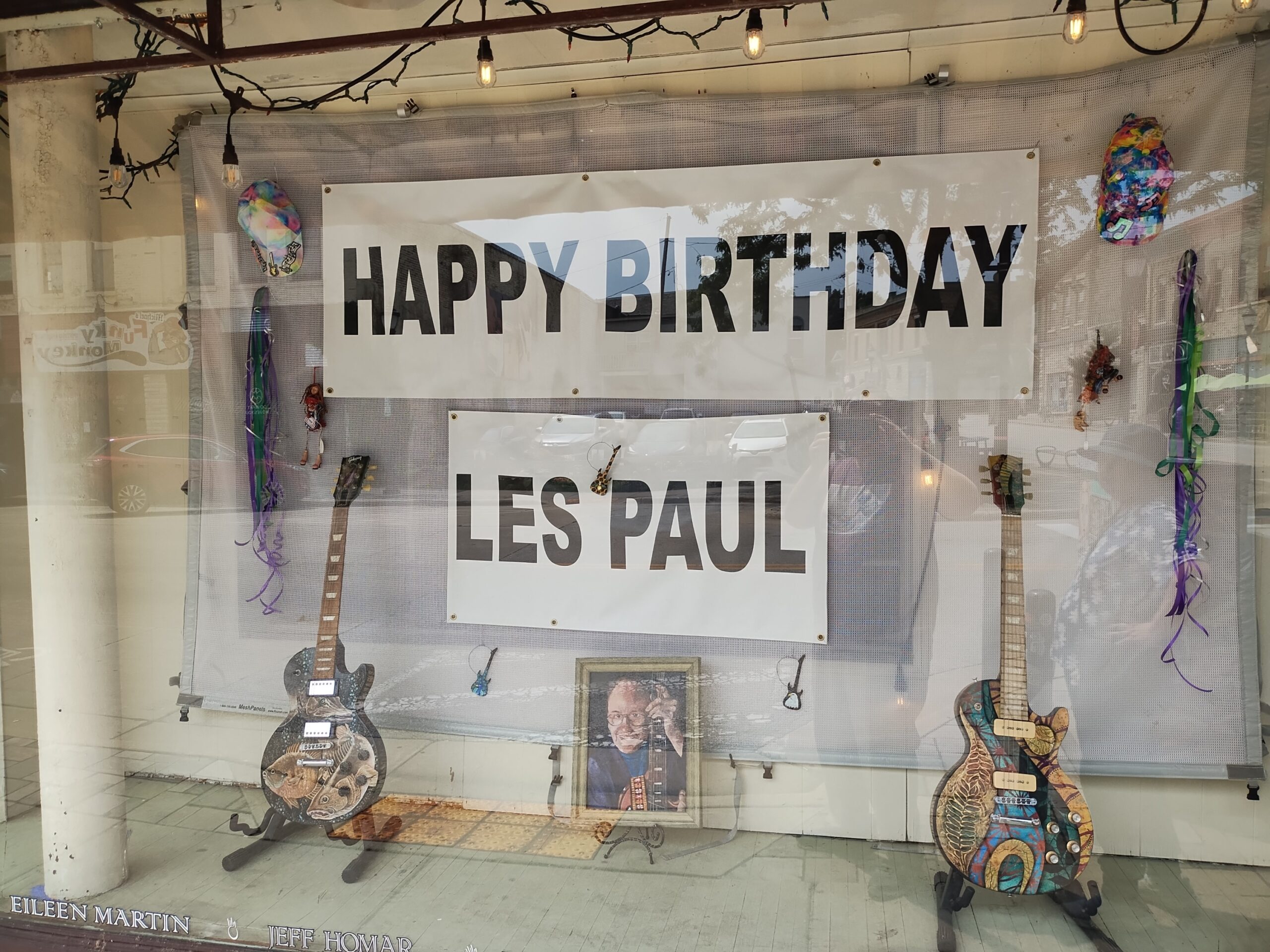
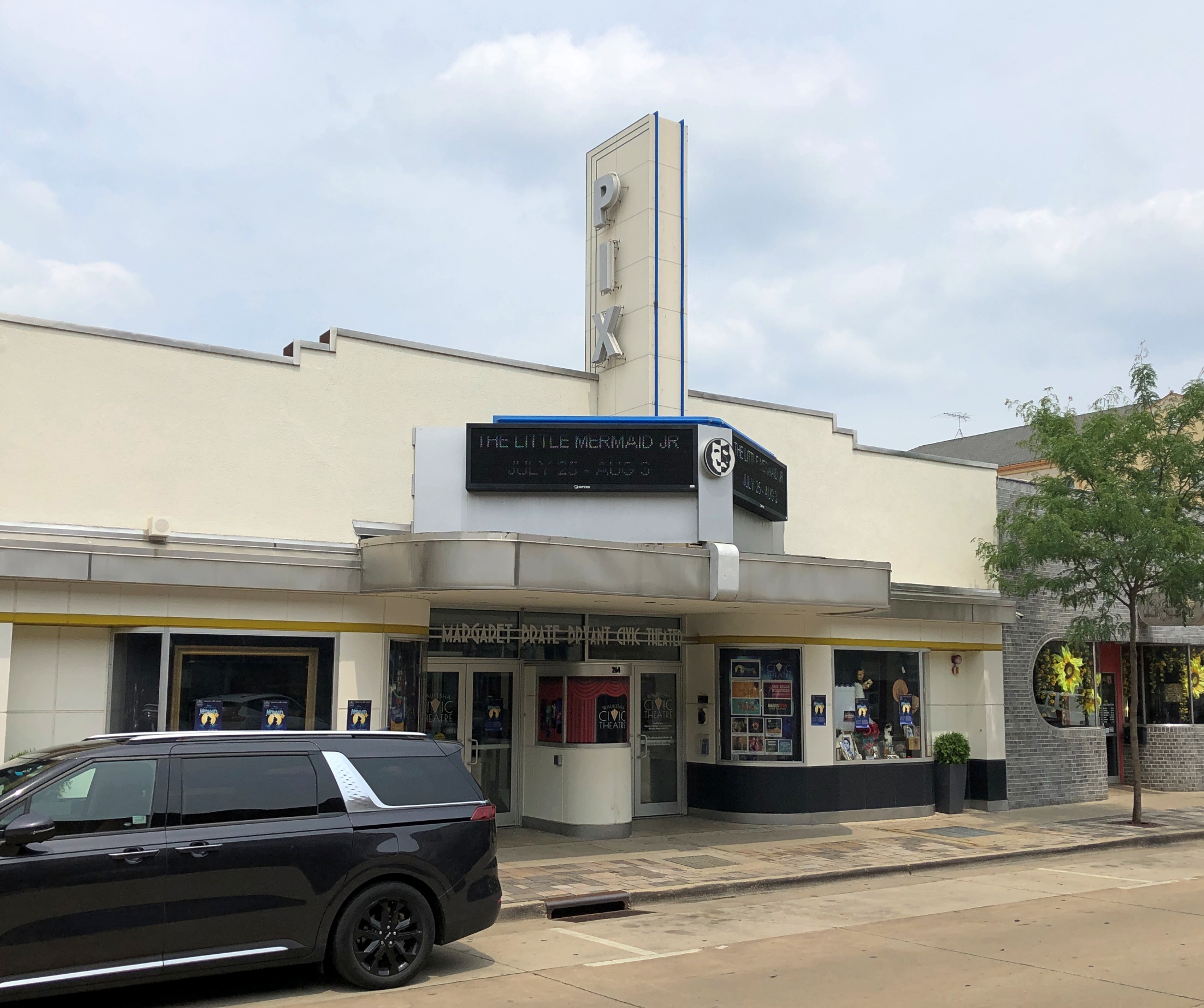
Something I didn’t know about Waukesha, Wisconsin, before we went there last month: that Les Paul (b. 1915) grew up around there. Waukesha certainly hasn’t forgotten.
A recent sign, since his birthday is in early June. Waukesha is a “GuitarTown,” because of its association with the famed musician and music technologist. Apparently there is more than one GuitarTown, since Gibson Guitars doles out the moniker, or at least used to.
“Waukesha was named a Gibson GuitarTown in 2012 and 2013, two years in a row, to honor the birth and resting place of electric guitar legend Les Paul,” The Freeman reports. “Other GuitarTowns include Austin, Nashville and London.”
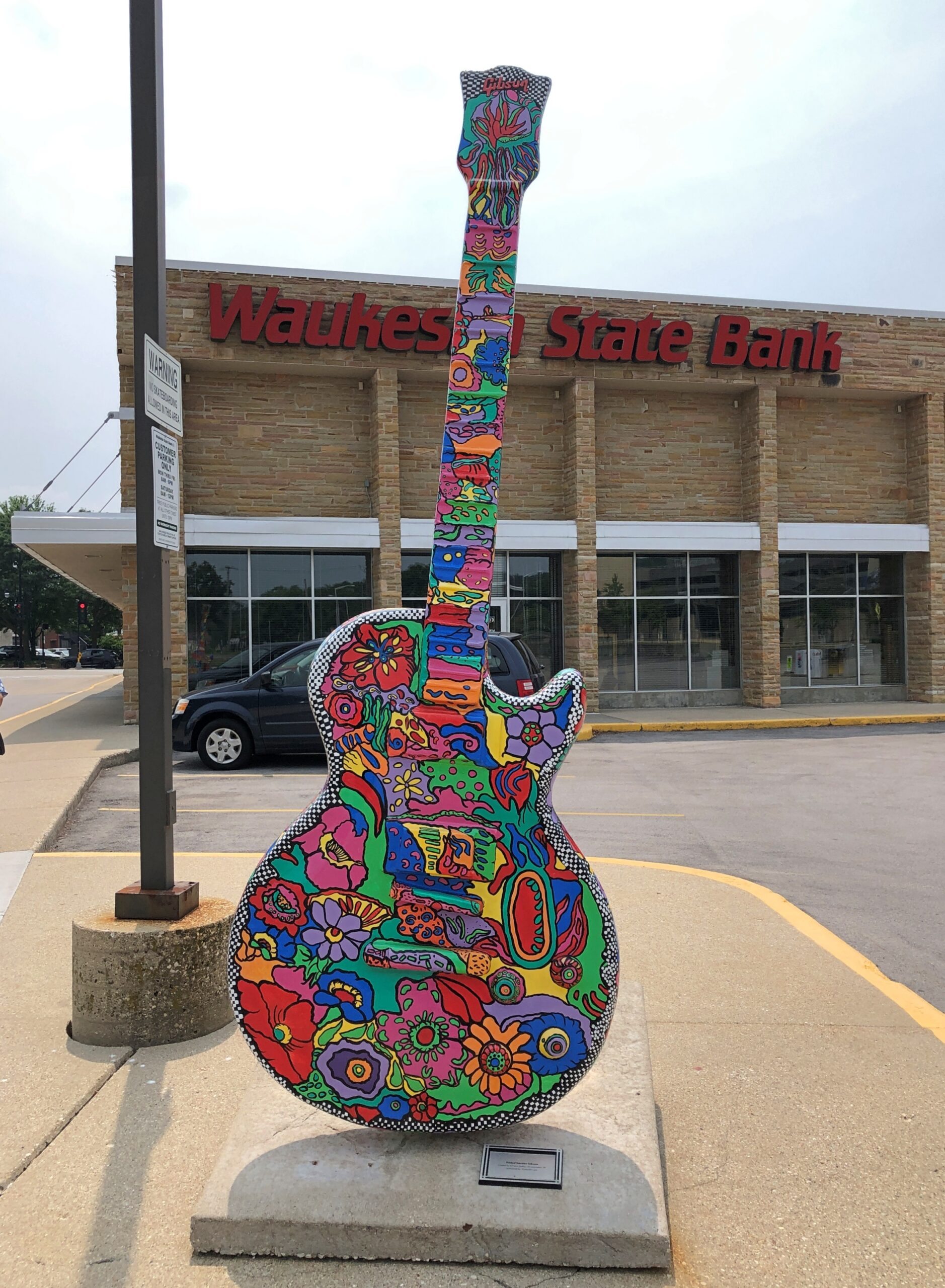
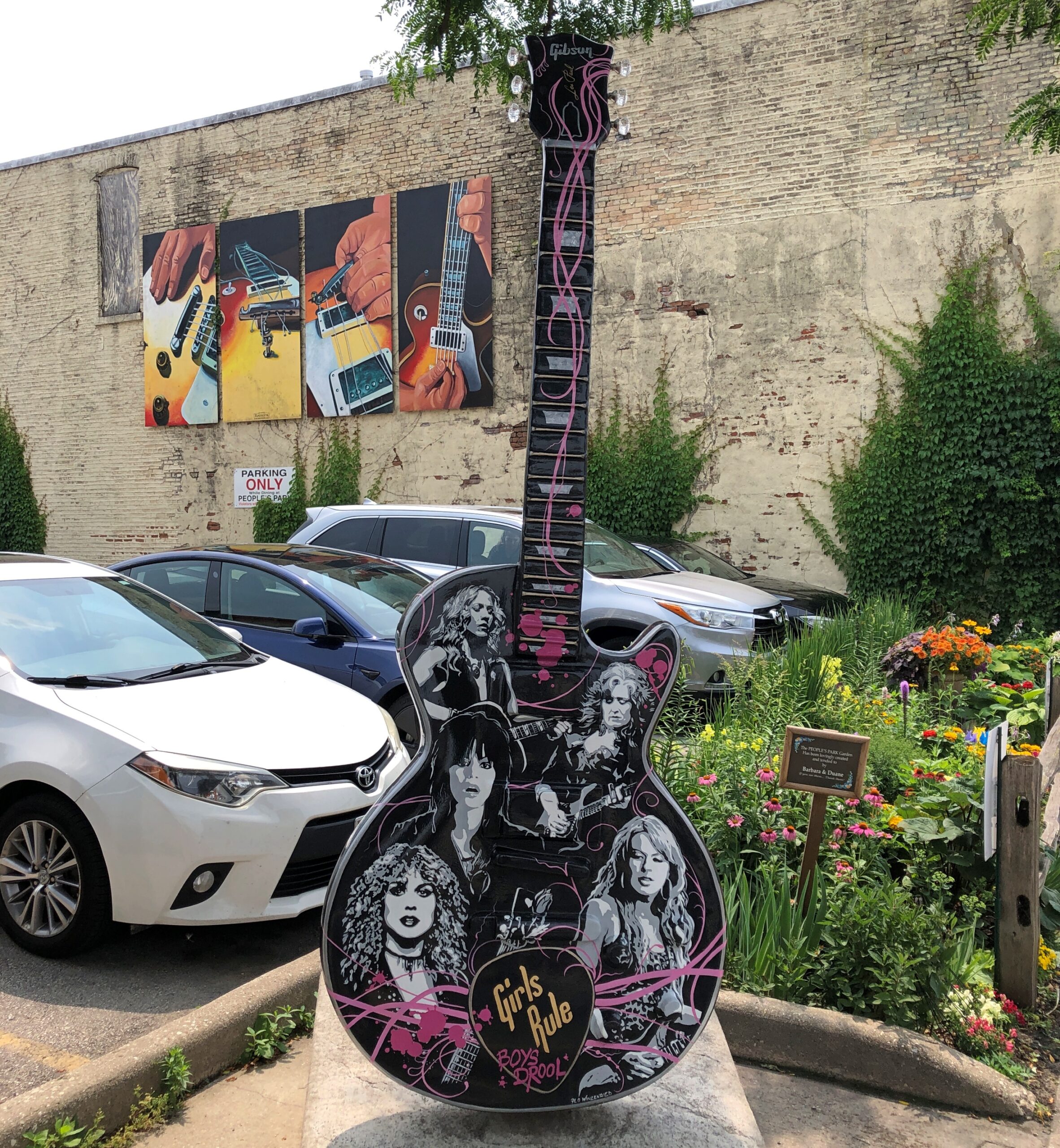
As GuitarTown, Waukesha has 15 guitar statues in public places, each 10 feet tall and designed by local artists. Elsewhere in town, you can find Les Paul Middle School, Les Paul Parkway, the Les Paul Performance Center, and the Les Paul gravesite monument. Missed that, alas. Maybe some other time. But we did drive on his parkway. And see a few of the giant guitars.
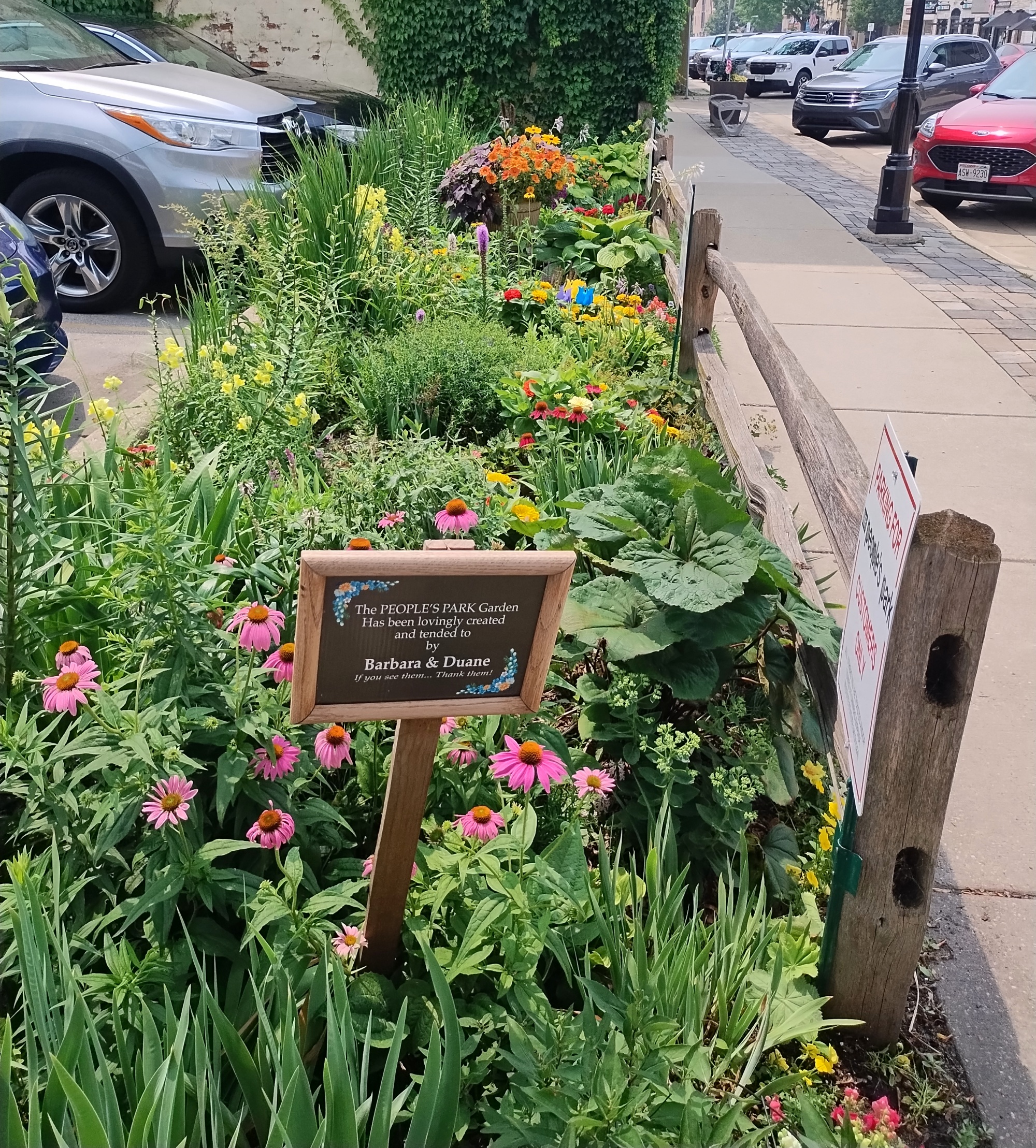
Next to that particular guitar, a small garden is wedged between the sidewalk and a parking lot. The PEOPLE’S PARK Garden, says the sign.
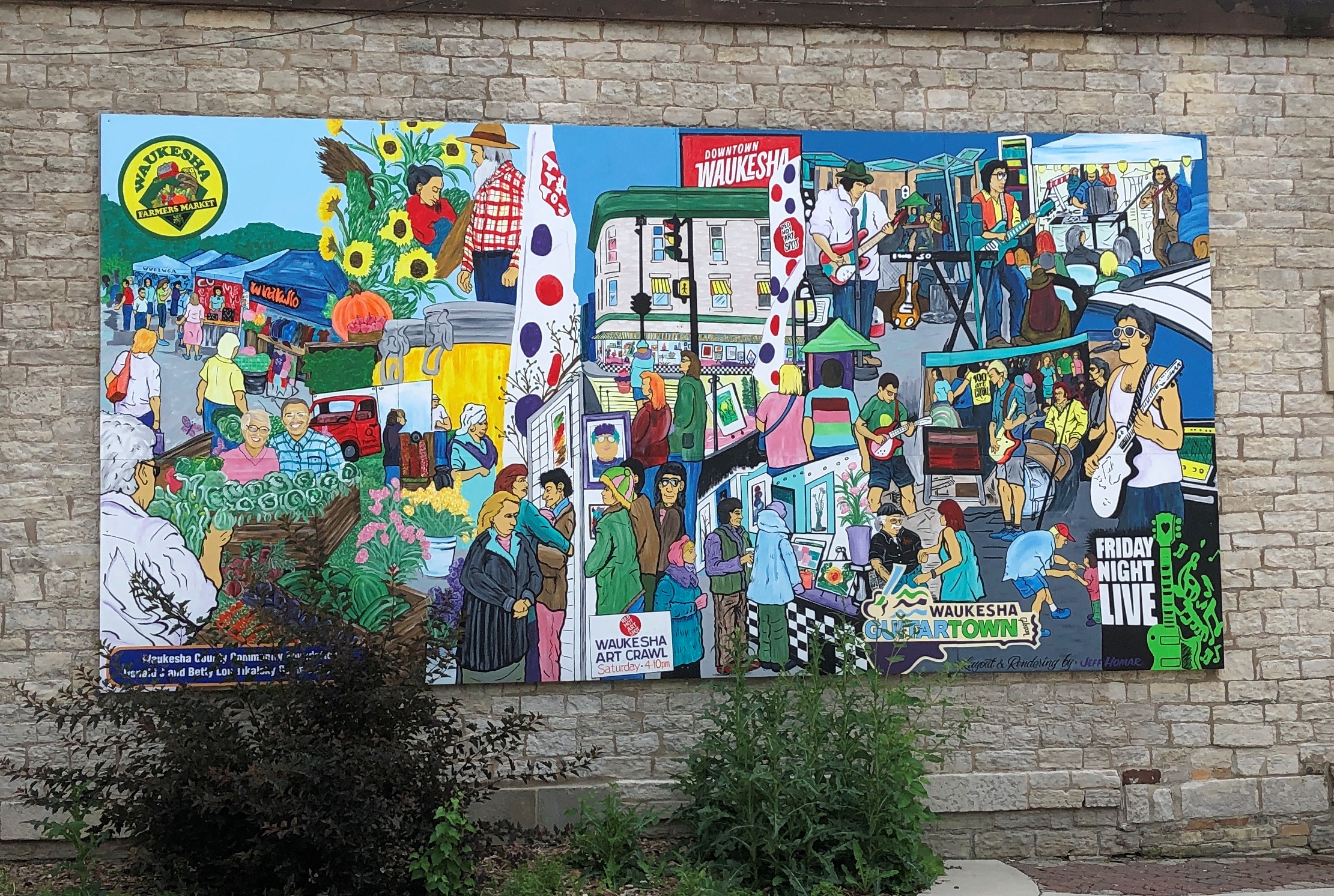
The Wall Dogs also came to town and painted 13 murals. I assume this is one of them.
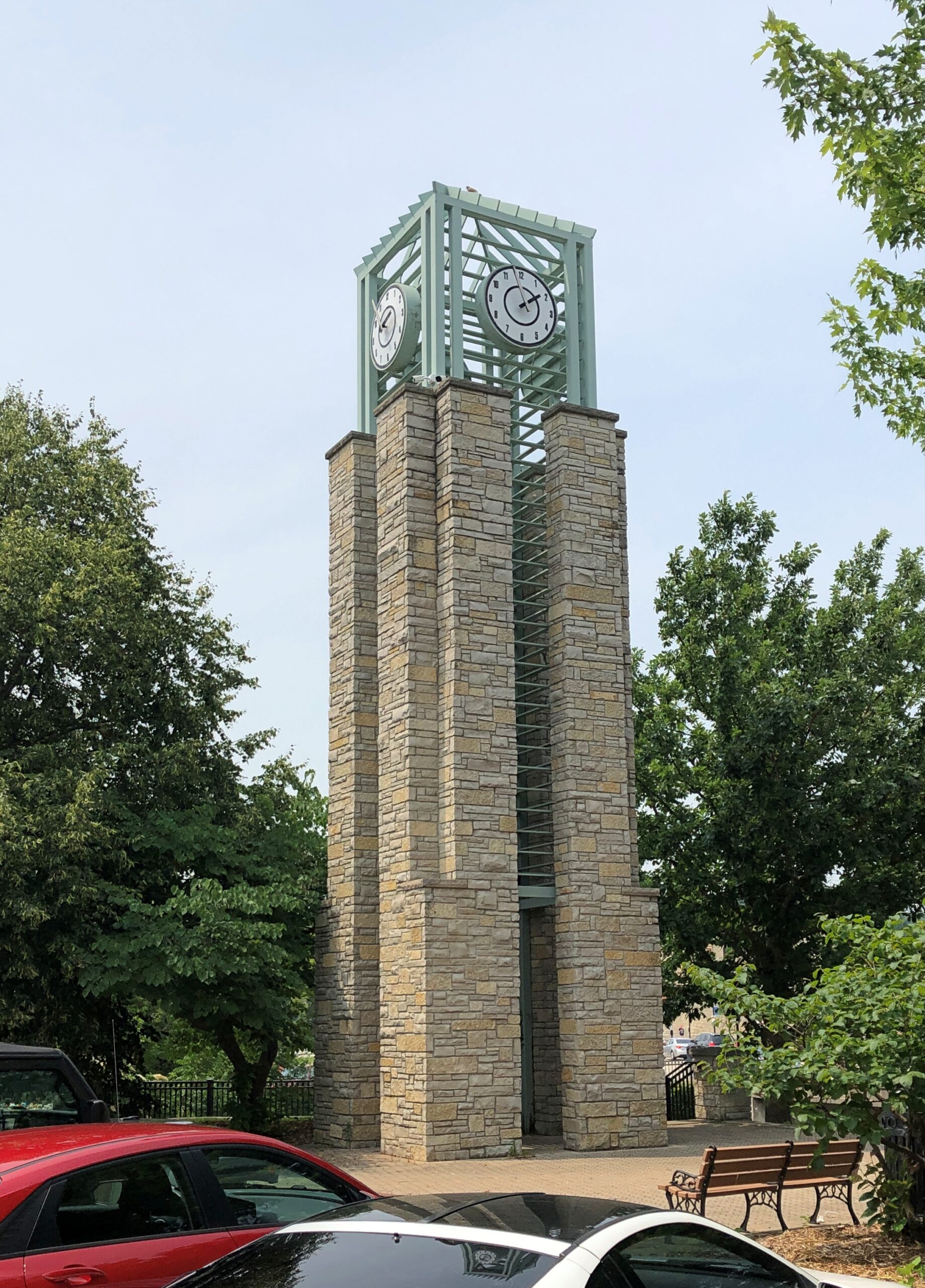
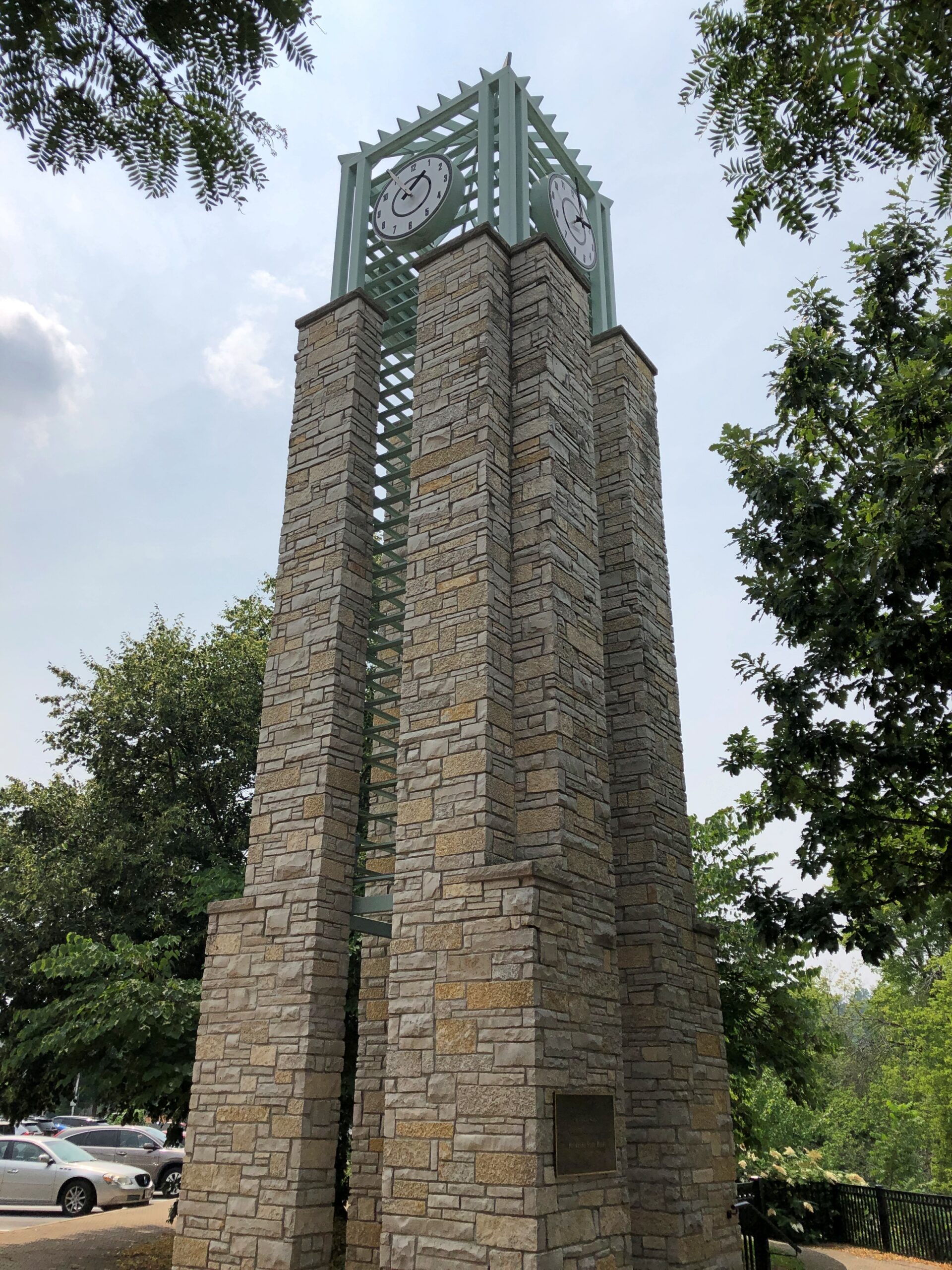
Across a parking lot from that mural rises Waukesha’s impressive stone clocktower.
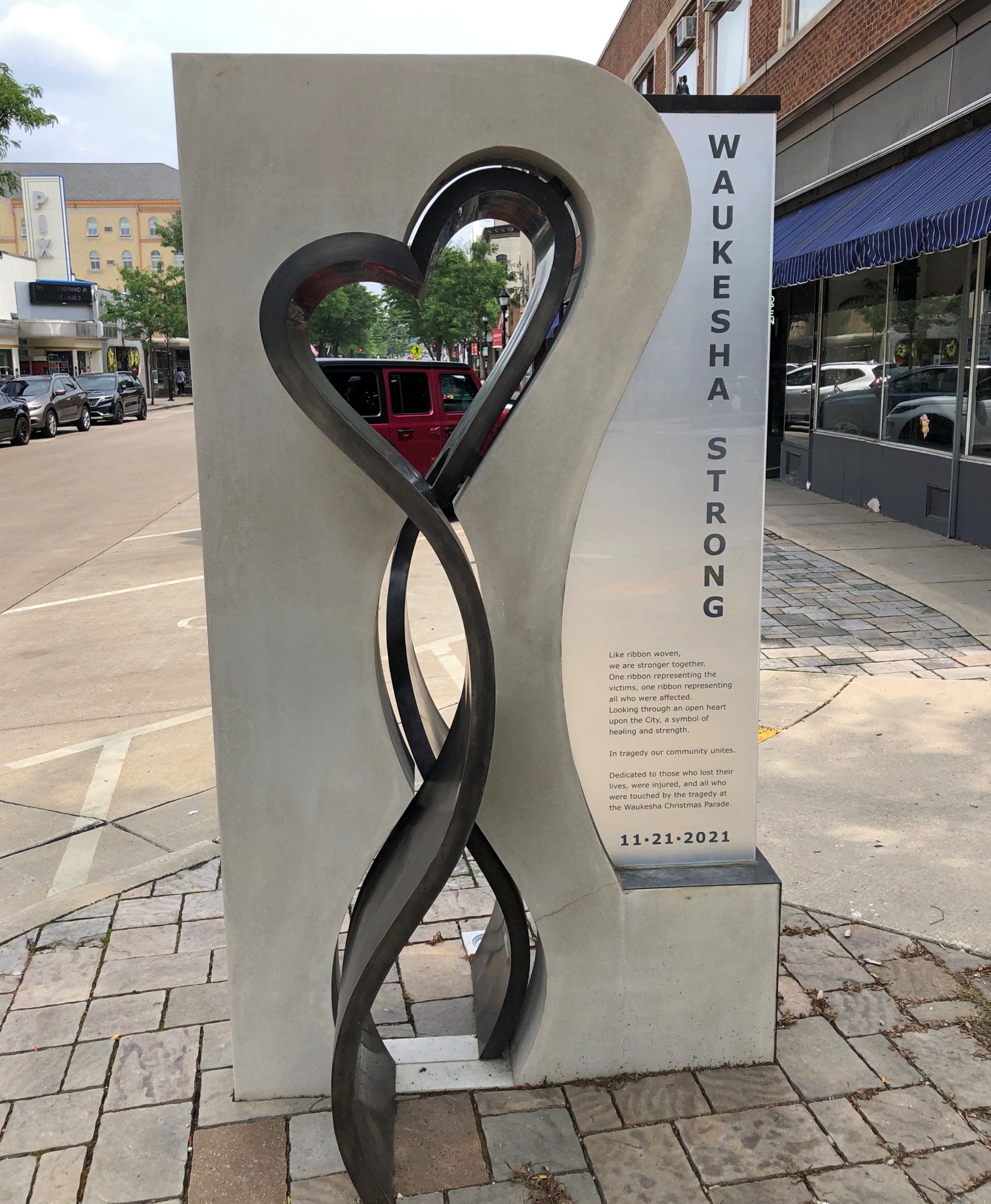
On Main Street, a memorial.
Outrages by homicidal wankers are so common that I had to refresh my memory about that particular one, in late 2021. Then I remembered. The only good thing I can report is that the wanker, who went double wanker at his trial by asserting sovereign citizen nonsense, is now a permanent resident of a tightly locked state facility.
Upriver a half mile or so from downtown is the sizable riverside Frame Park.
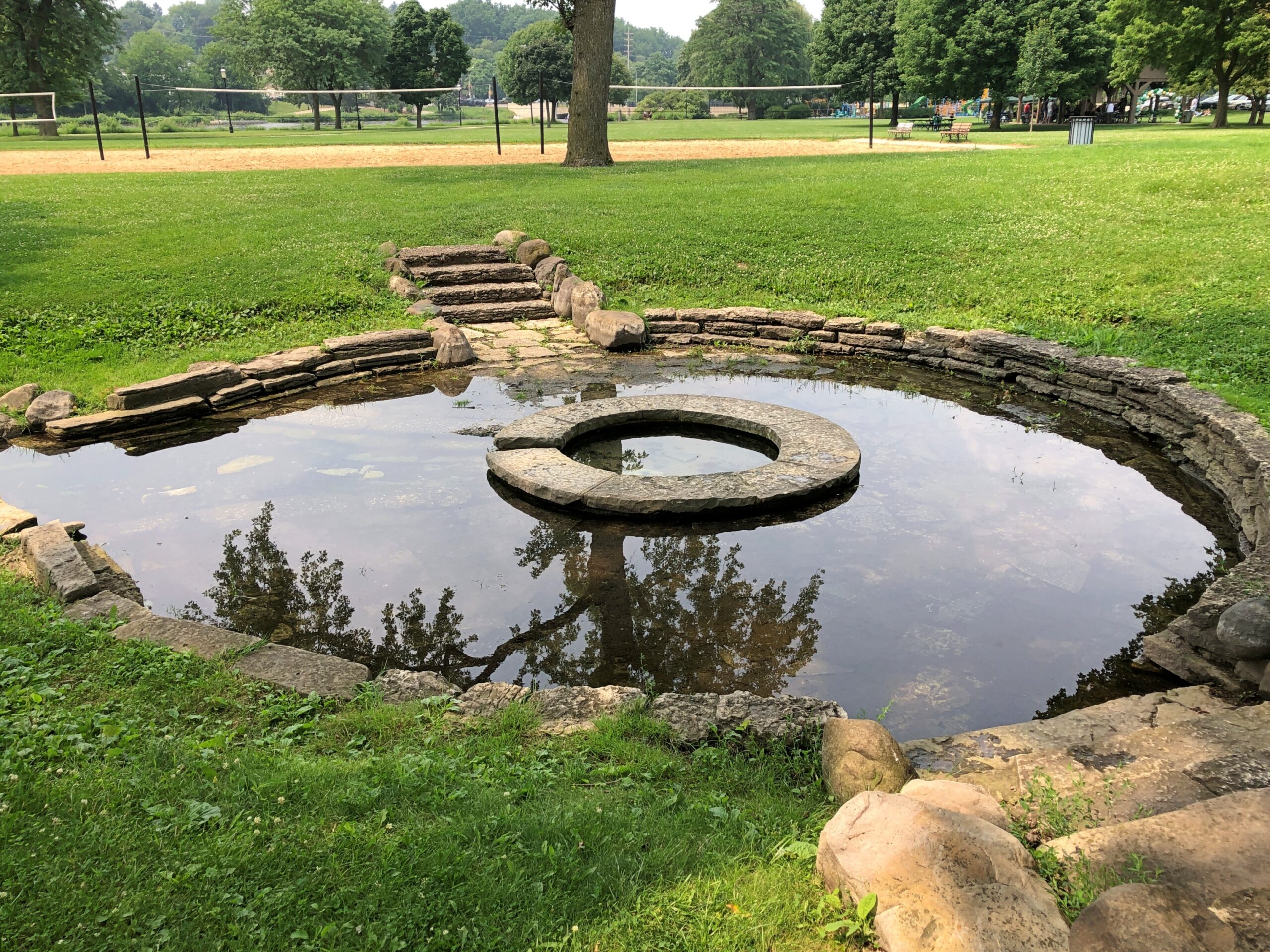
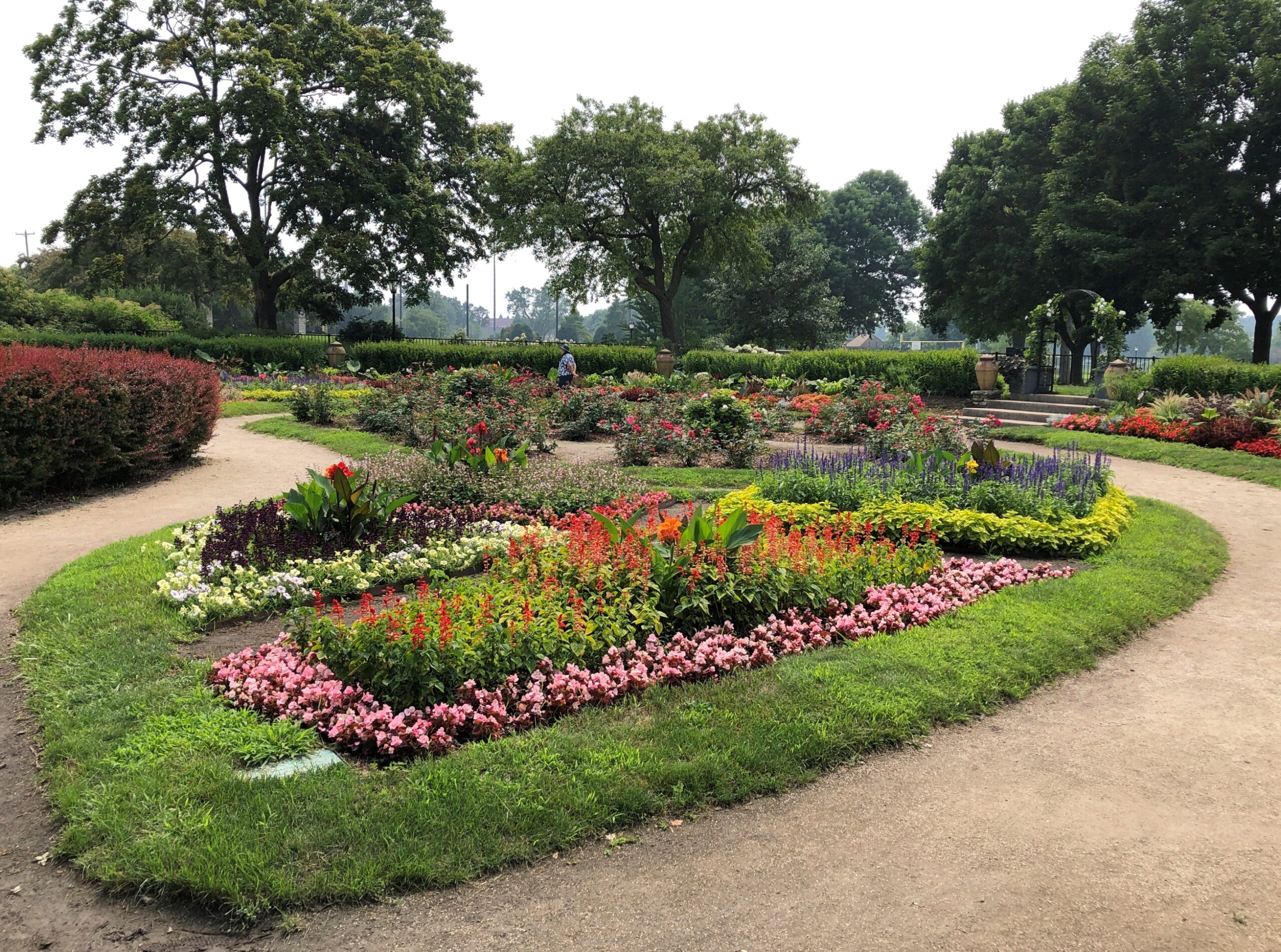
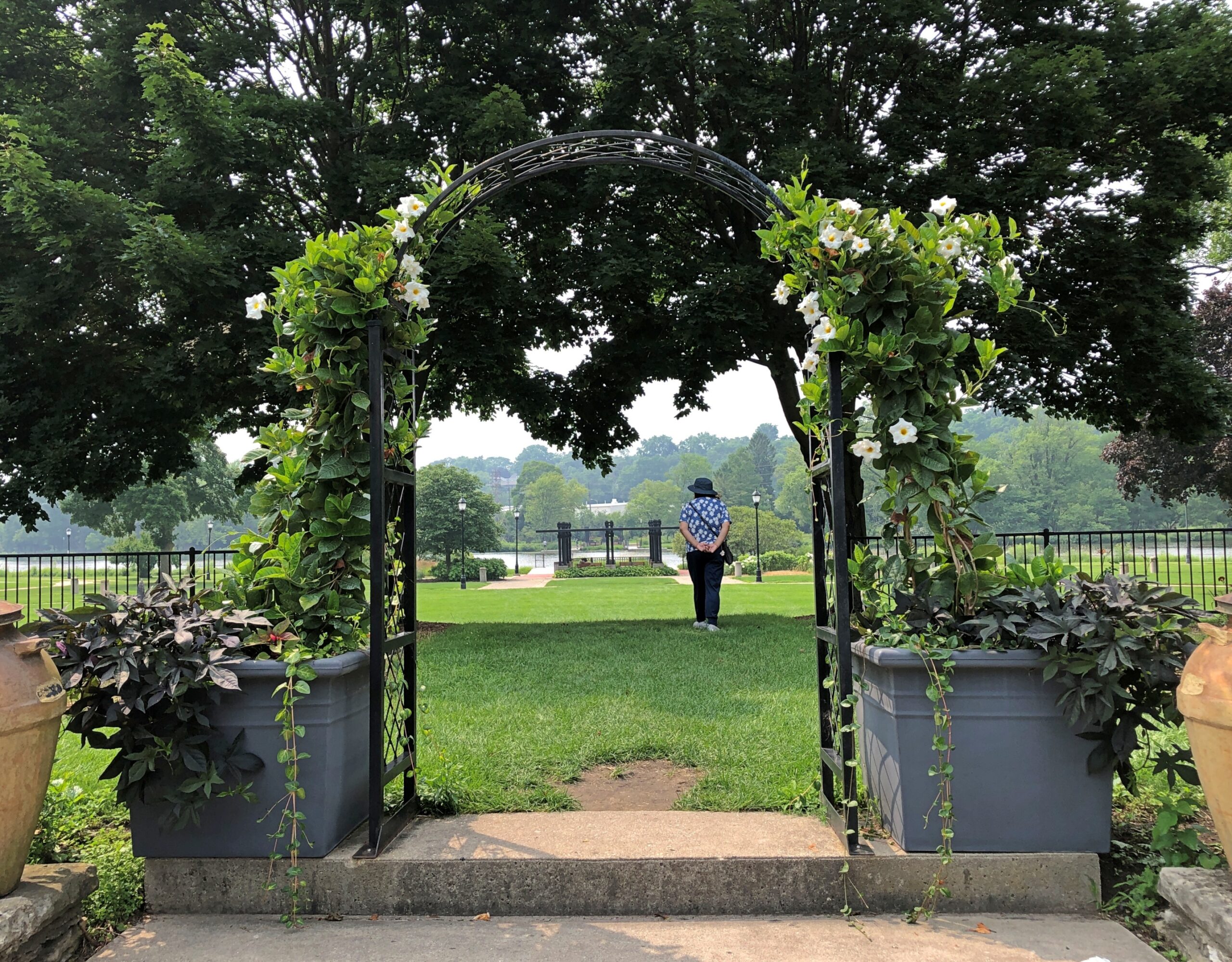
Including the Frame Park Formal Gardens.
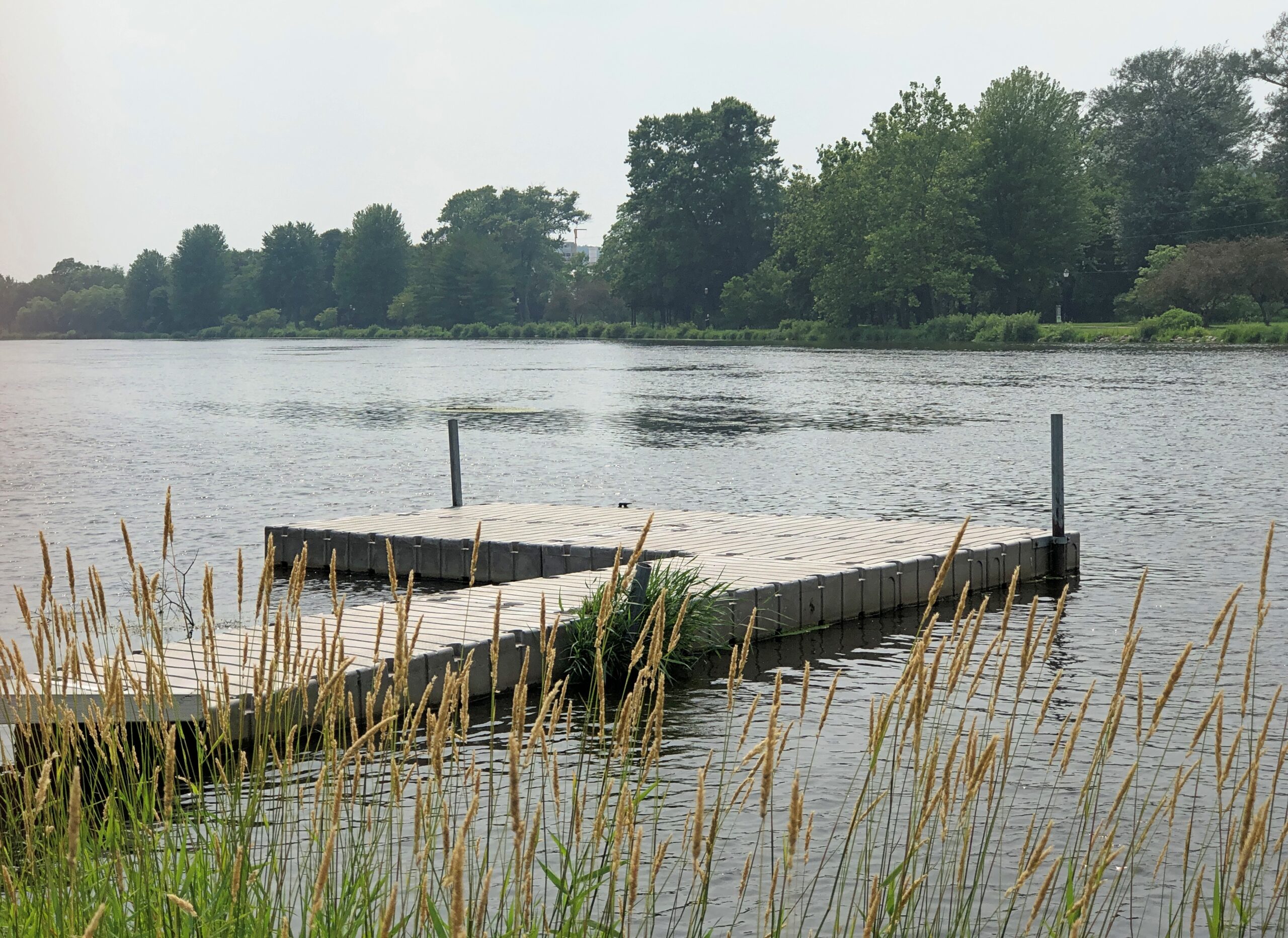
I hope the park and its garden weren’t damaged too much by the raging Fox, since it is flat most of the way from the garden to the river.
The Fox is large at this point. Not something you want to see described as “angry.”
The other day I wondered how long it would take to count a million dollars’ worth of nickels and dimes a million times. That’s one of the dream images from “Minnie the Moocher.” Not just a dream, but an opium dream. After all, no sooner does Minnie learn to kick the gong around, does a vivid dream of wealth begin, all shiny and metallic, ending with:
She had a million dollars worth of nickels and dimes
And sat around and counted them all a million times
Let’s say half the dollar value is nickels, half dimes. That would be 5 million dimes and 10 million nickels. So 15 million individual coins. Let’s also say it takes a second to count each, just to keep it simple. That would be 15 million seconds, or 0.475 years (roughly, I shaved off a few places). Counting them a million times would thus be (roughly) 475,000 years.
Of course, if it’s an opium dream, the niceties of time and such don’t apply. Still, it sounds like a hellish task of a Sisyphean kind. But maybe it would be a heavenly task, if you have no sense of the passage of time.
I didn’t sit down to figure all that out until I was at my desk, but the question came out of nowhere during a short interstate drive just before the end of July, up in the southeast corner of Wisconsin. One destination that day, a Sunday, was downtown Waukesha, an outer suburb of Milwaukee, but a place with a distinct history of its own, where people came to take the waters once upon a time.
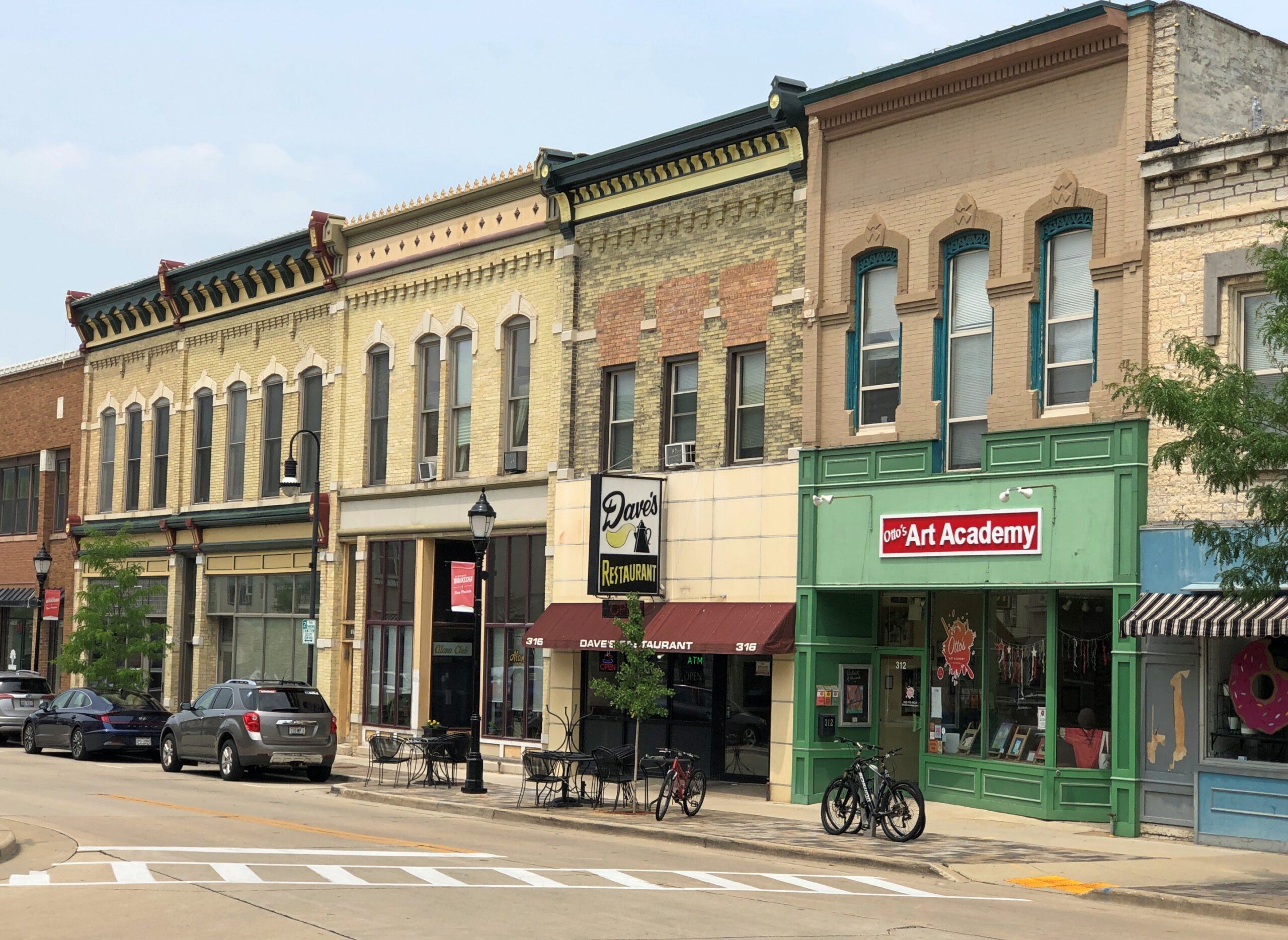
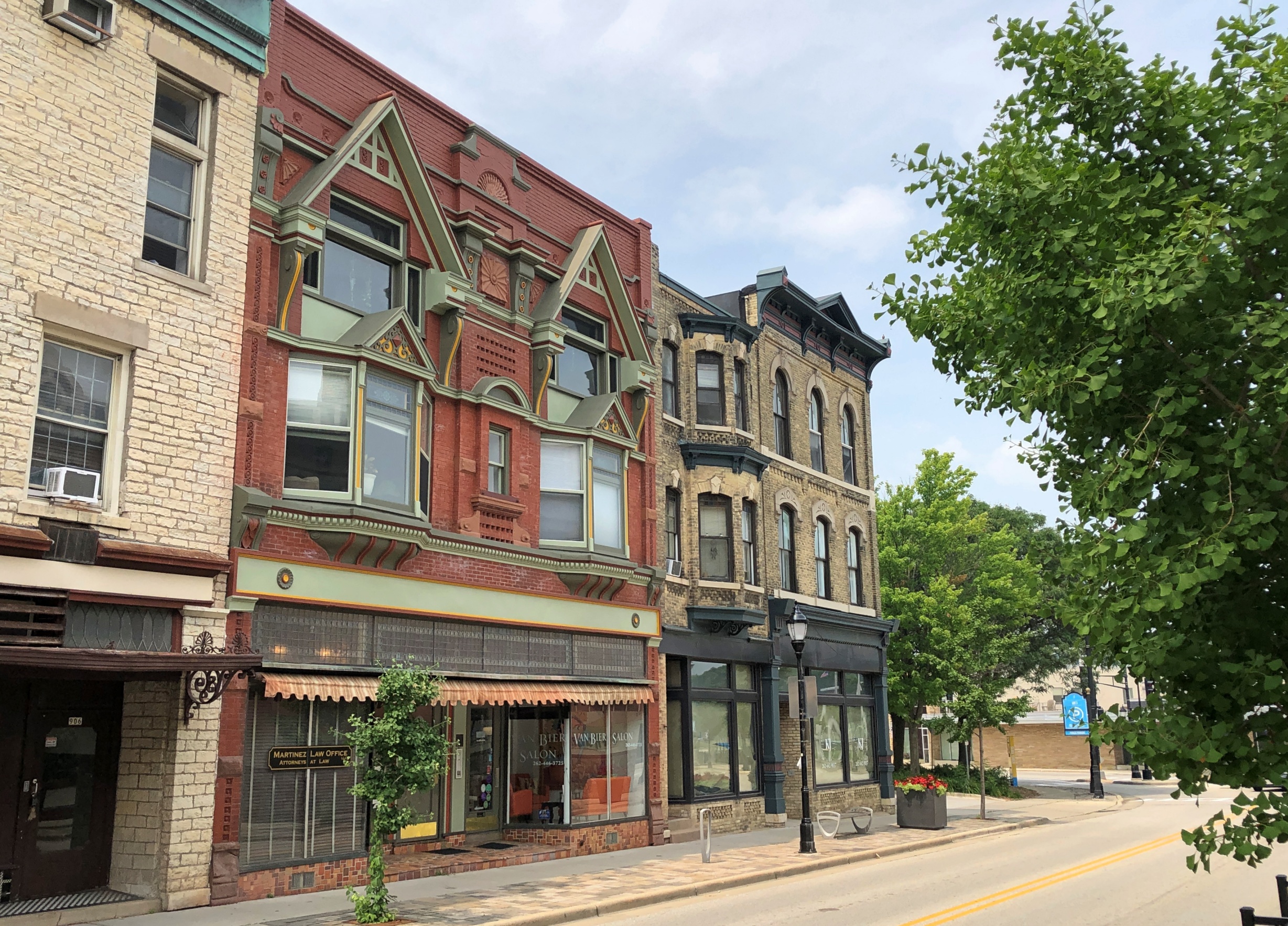
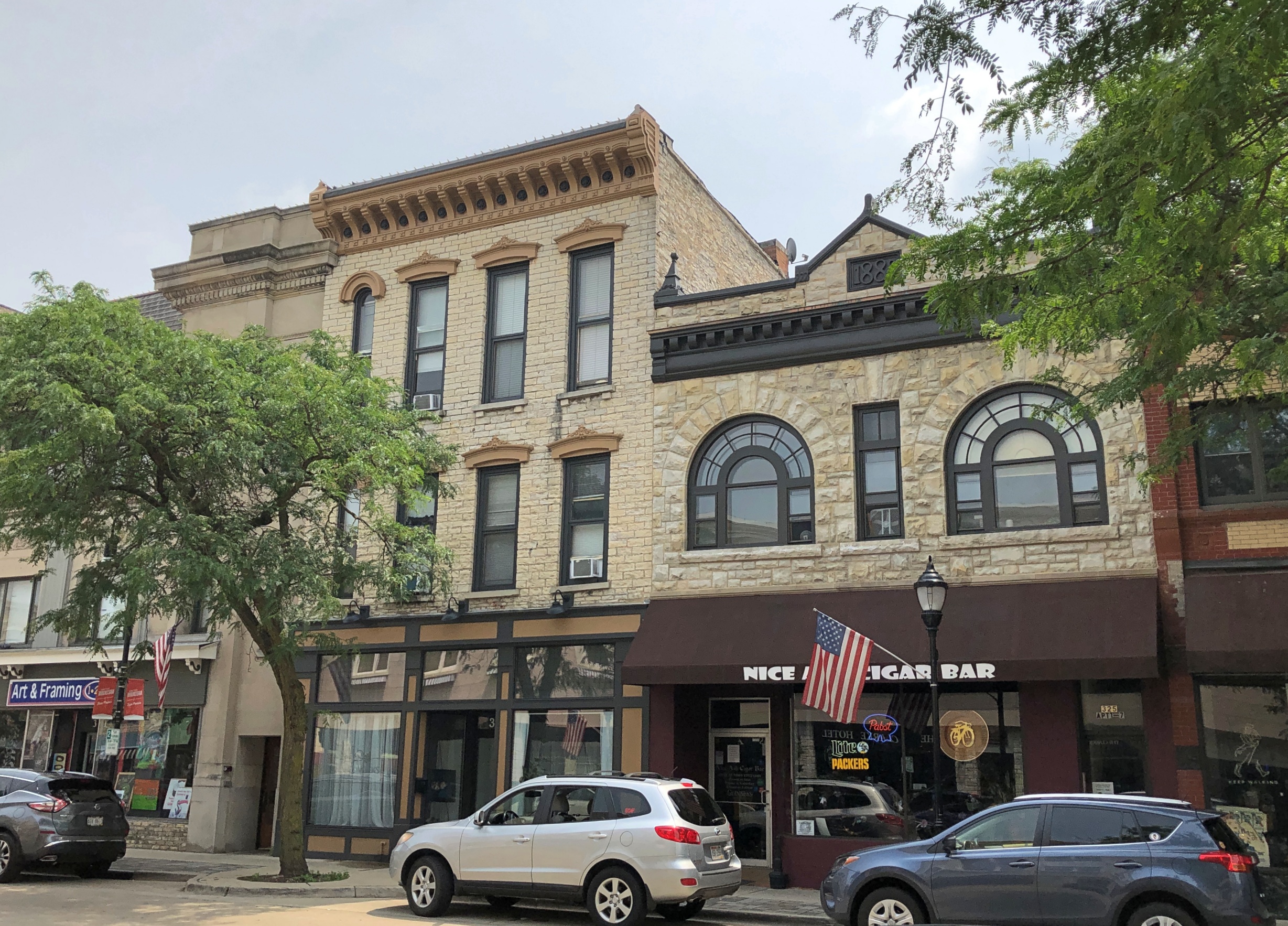
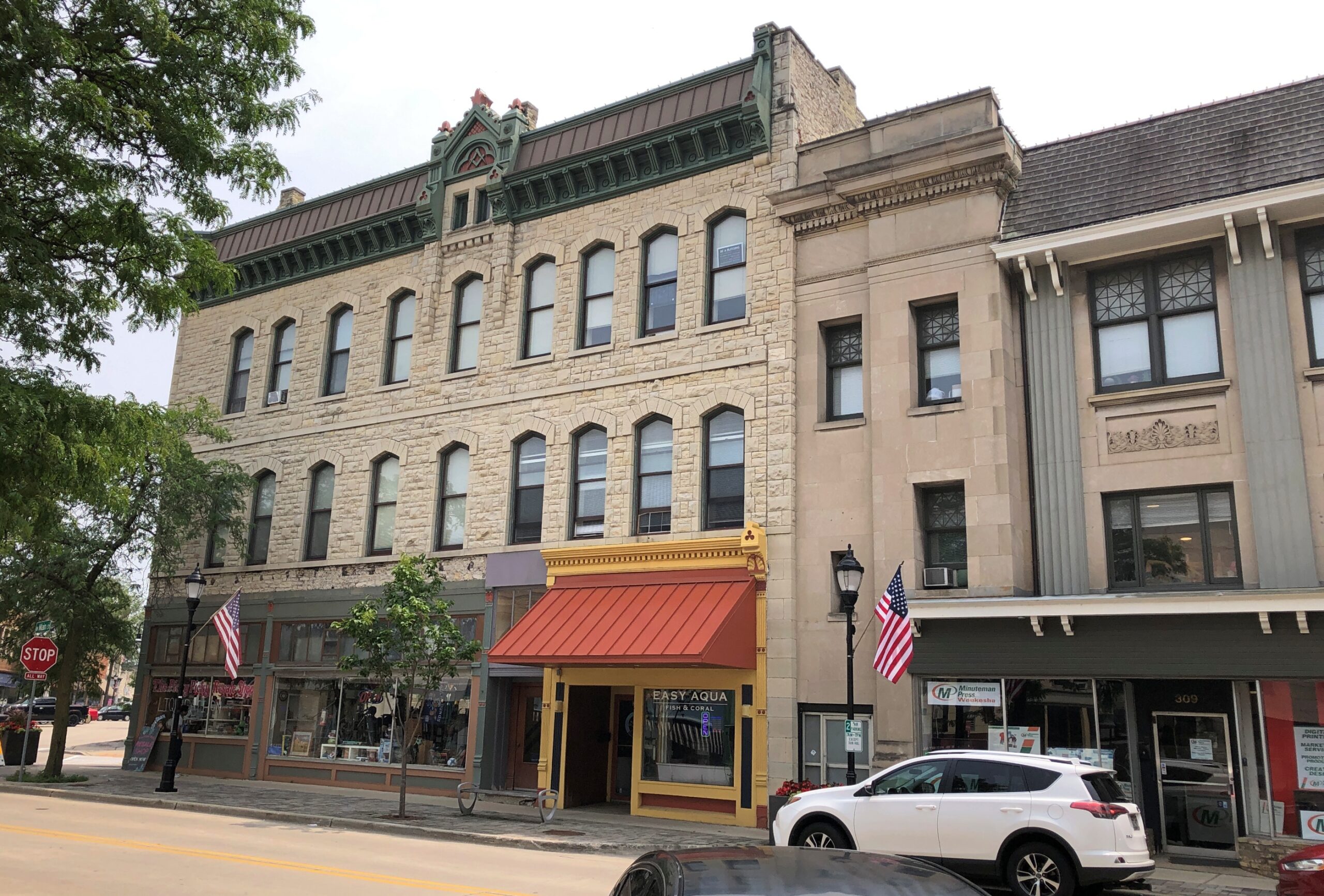
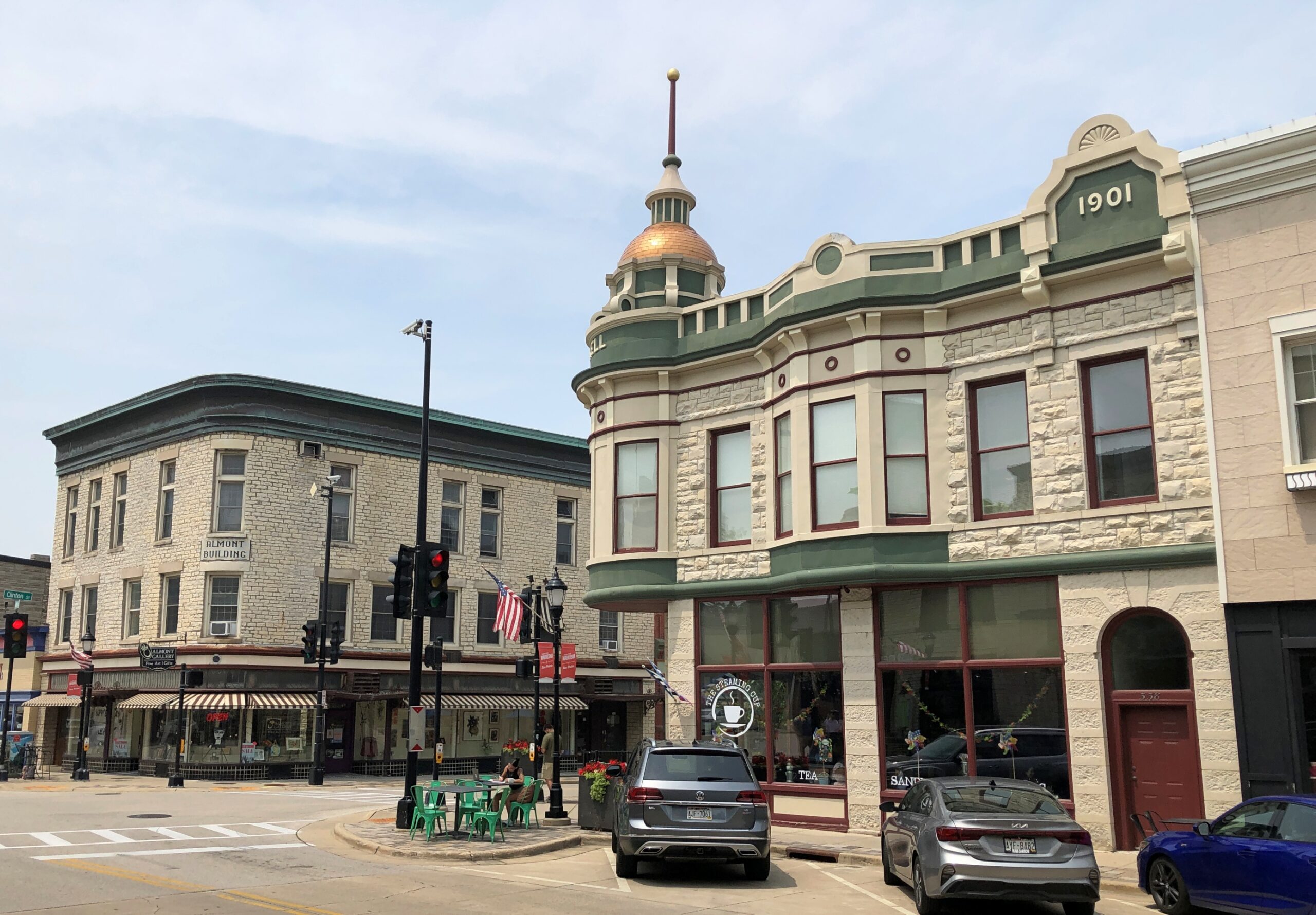
We spent some time near the five-pointed intersection of Main, Broadway and Grand, focal point of a handsome streetscape.
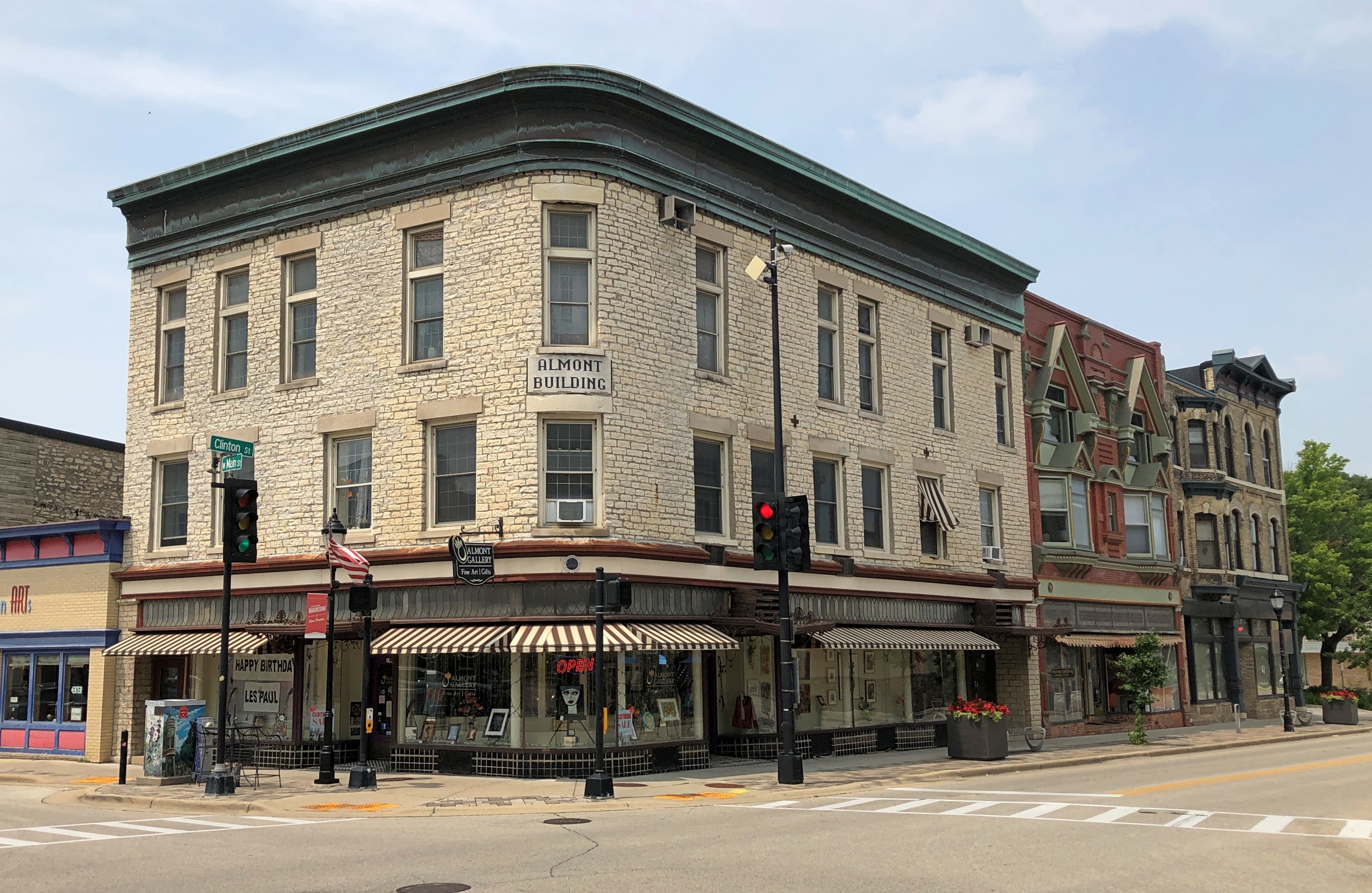
Now this is a set of buildings.
The Almont Building, whose original name was the Robinson Block.
“The core of the downtown, prior to 1856, consisted of freestanding wooden frame buildings, but a new era began after a massive fire nearly destroyed this northern section of Main Street,” the Waukesha County Historical Society & Museum says. “The Robinson Block was built in 1857 with fireproofing in mind and is the first Five Points building to use Waukesha limestone.”
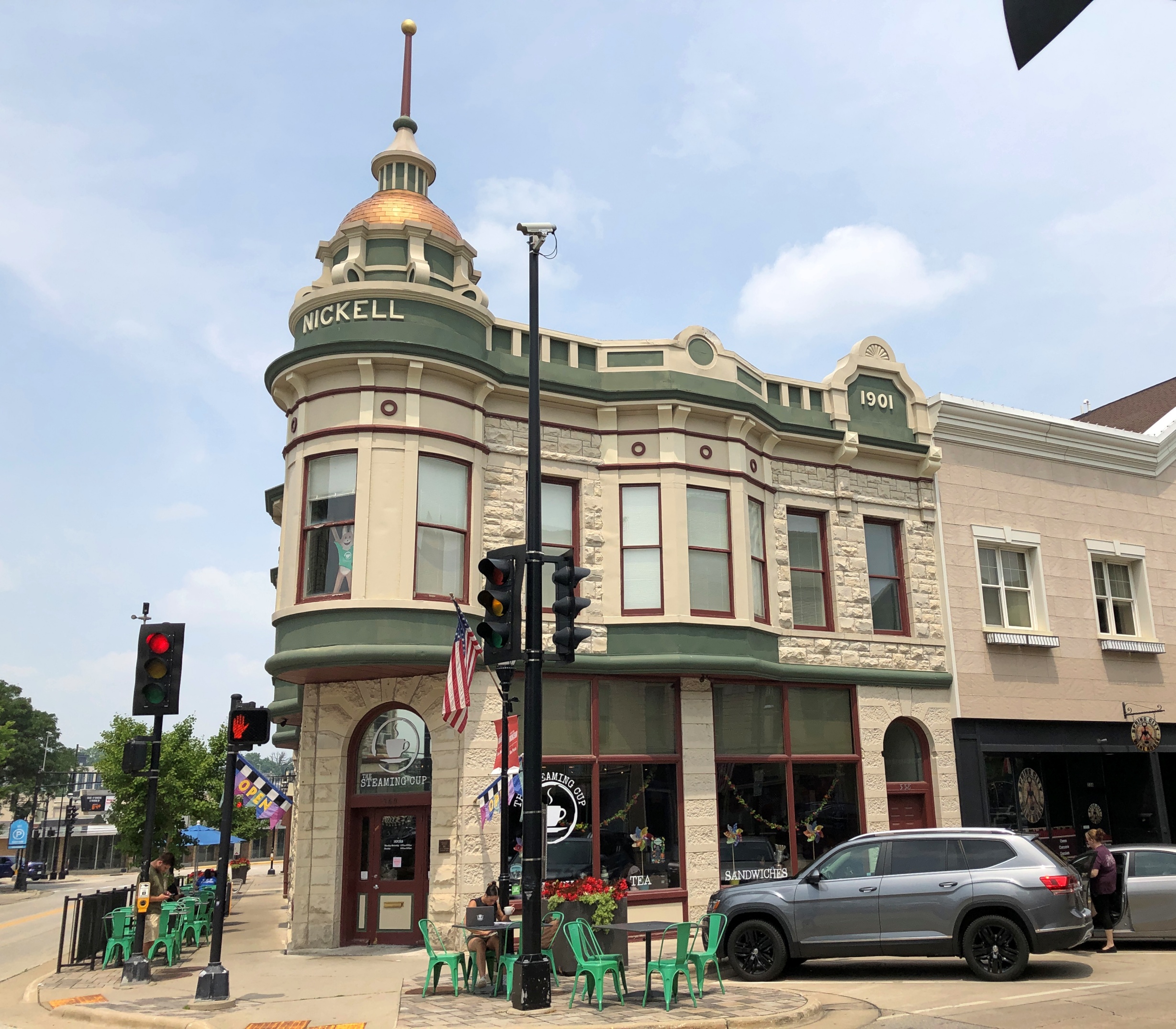
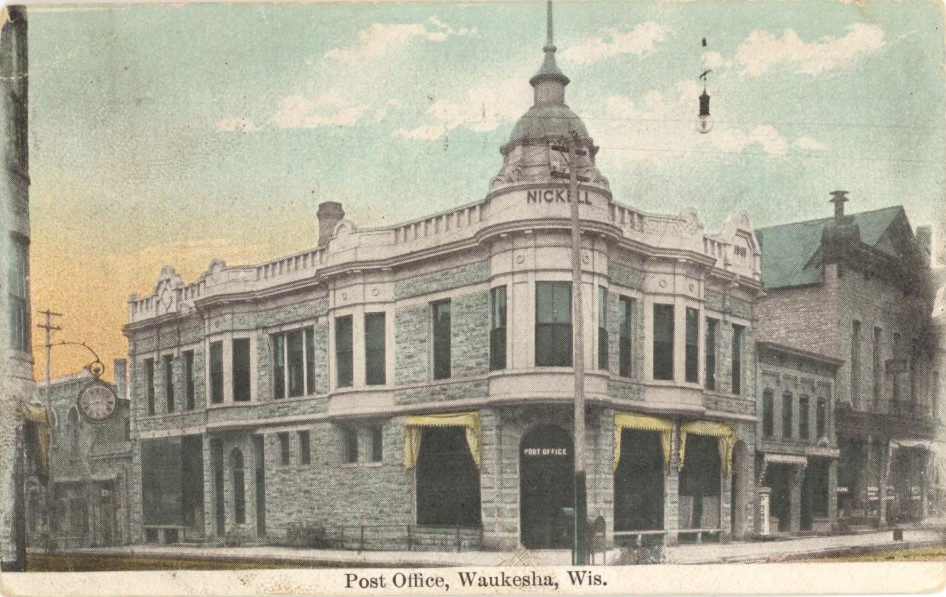
The Nickell Building, as it looked recently, and long ago.
“Built by Addison J. Nickell, local businessman and jeweler, the first floor housed the U.S. Post Office from 1902-1914,” notes the WCHS&M. “The work of Waukesha architect C.C. Anderson, this Queen Anne displays a projecting oriel and corner turret capped by a domed roof: both are covered by pressed metal.”
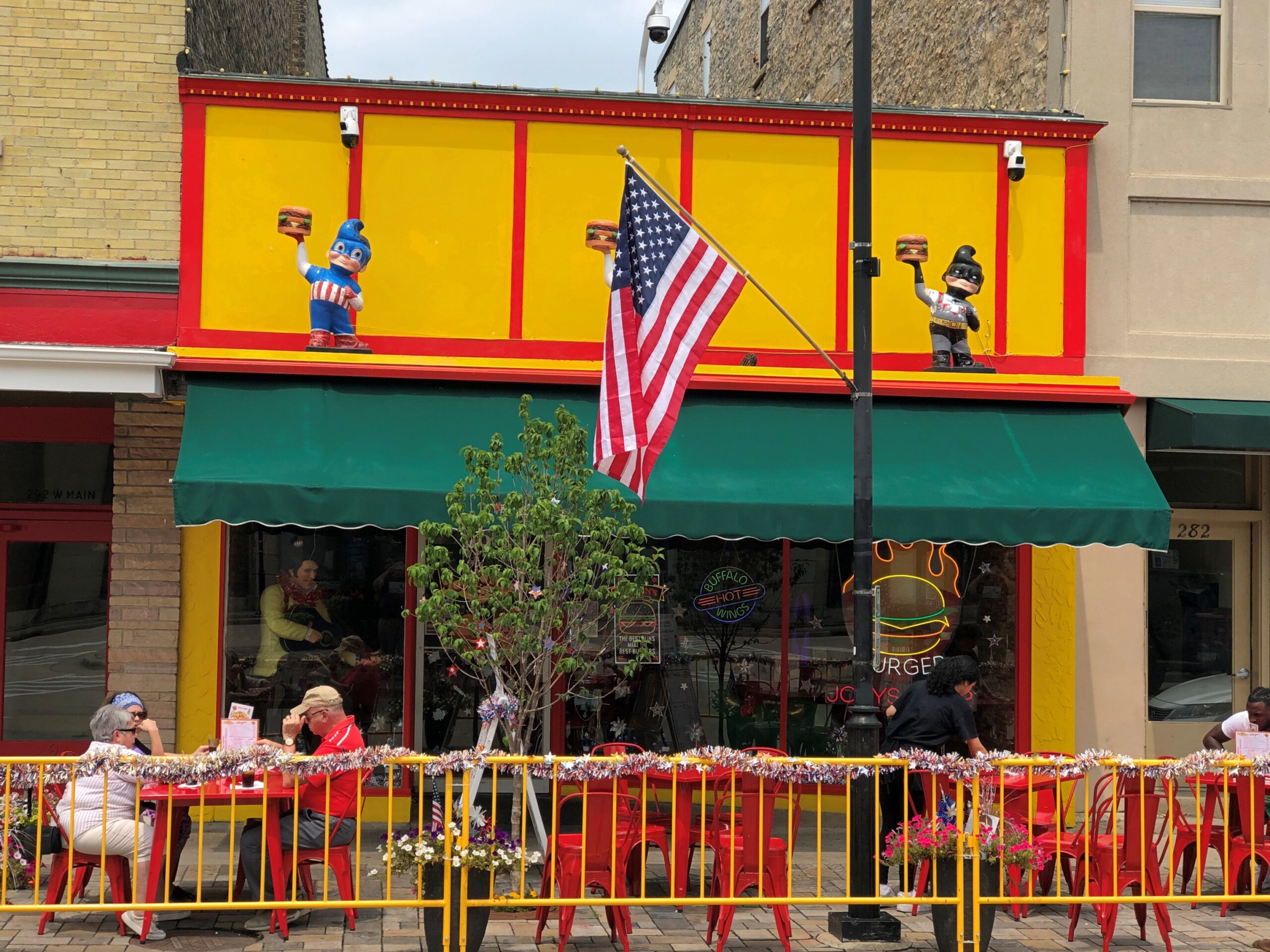
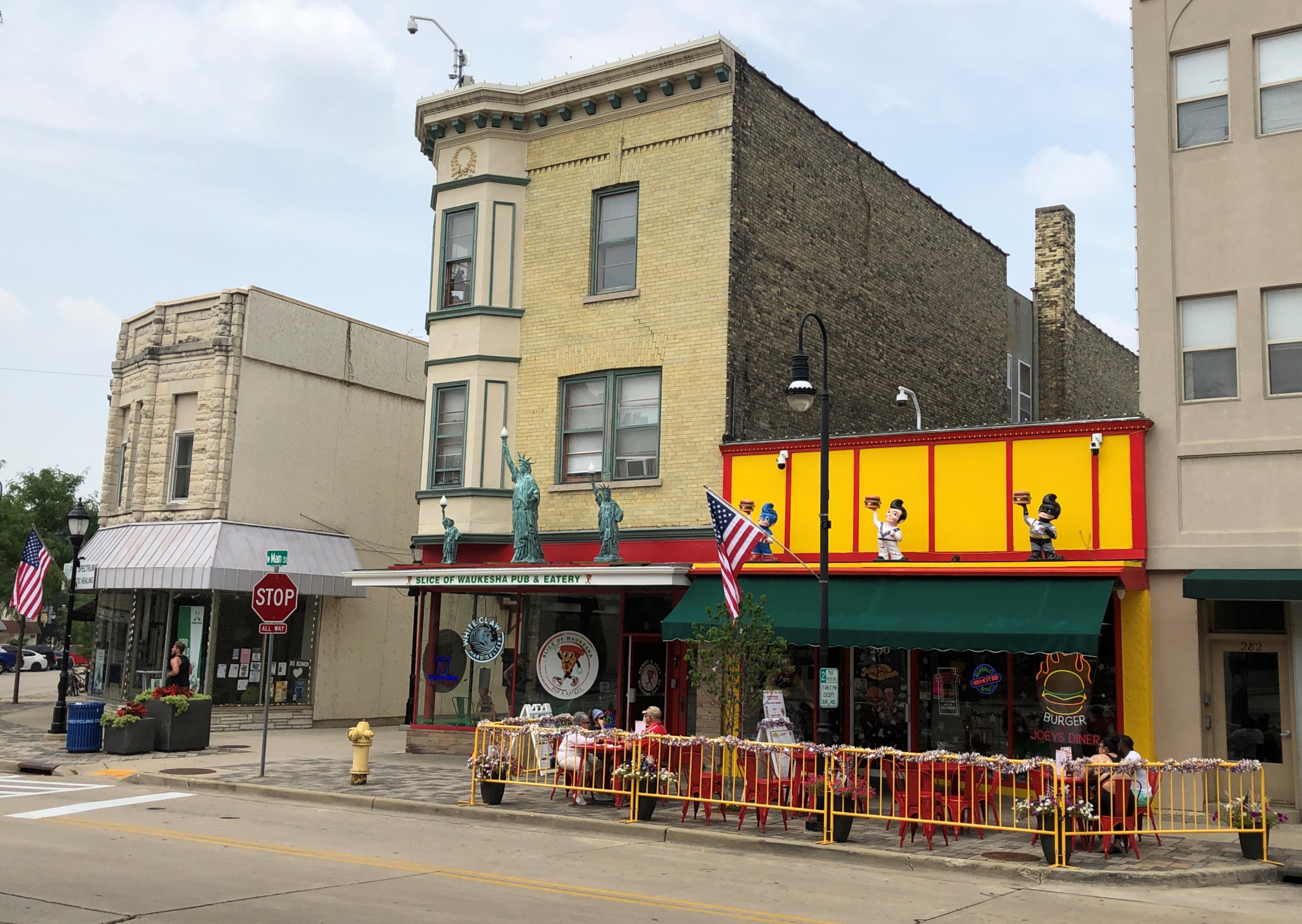
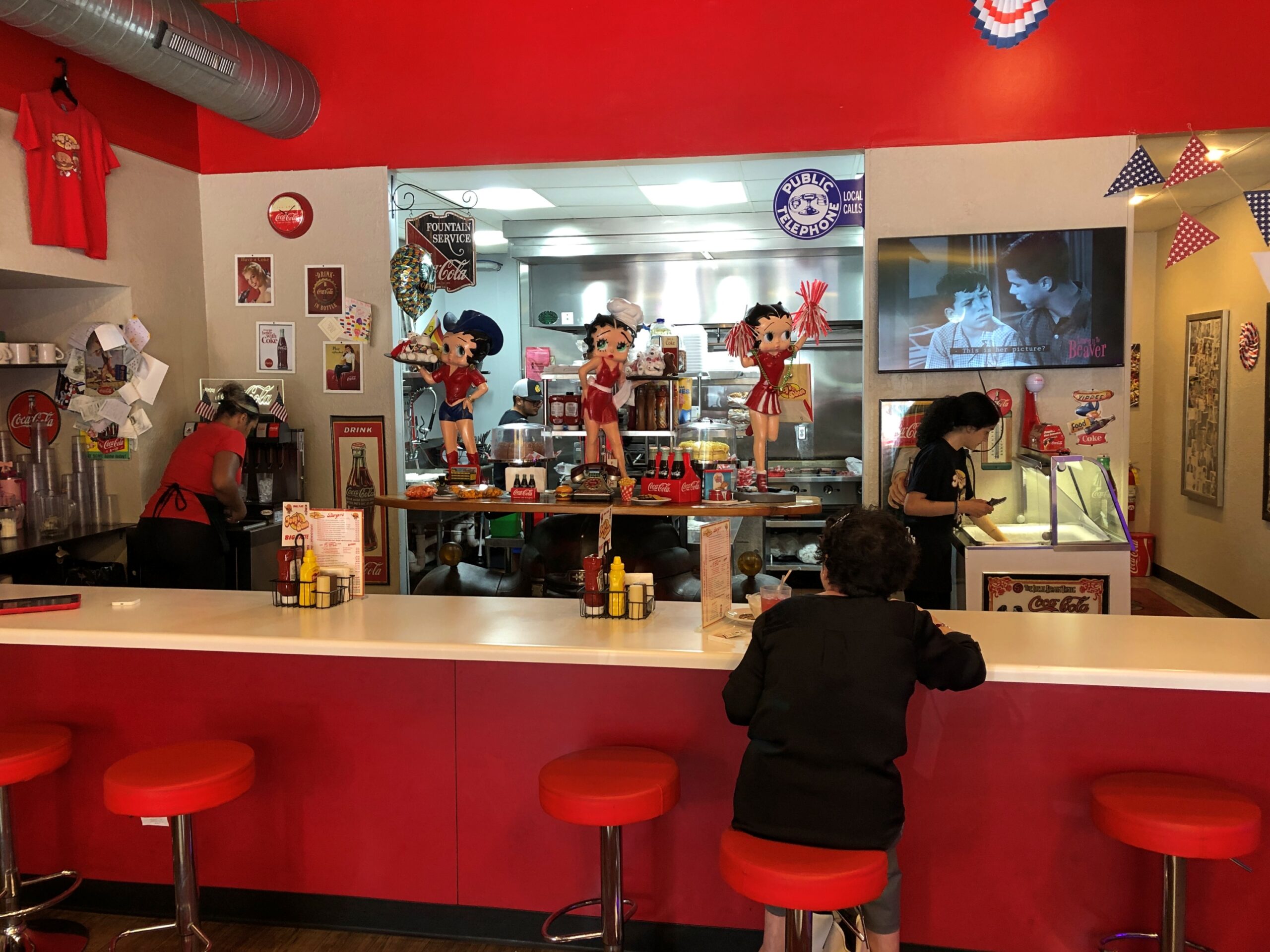
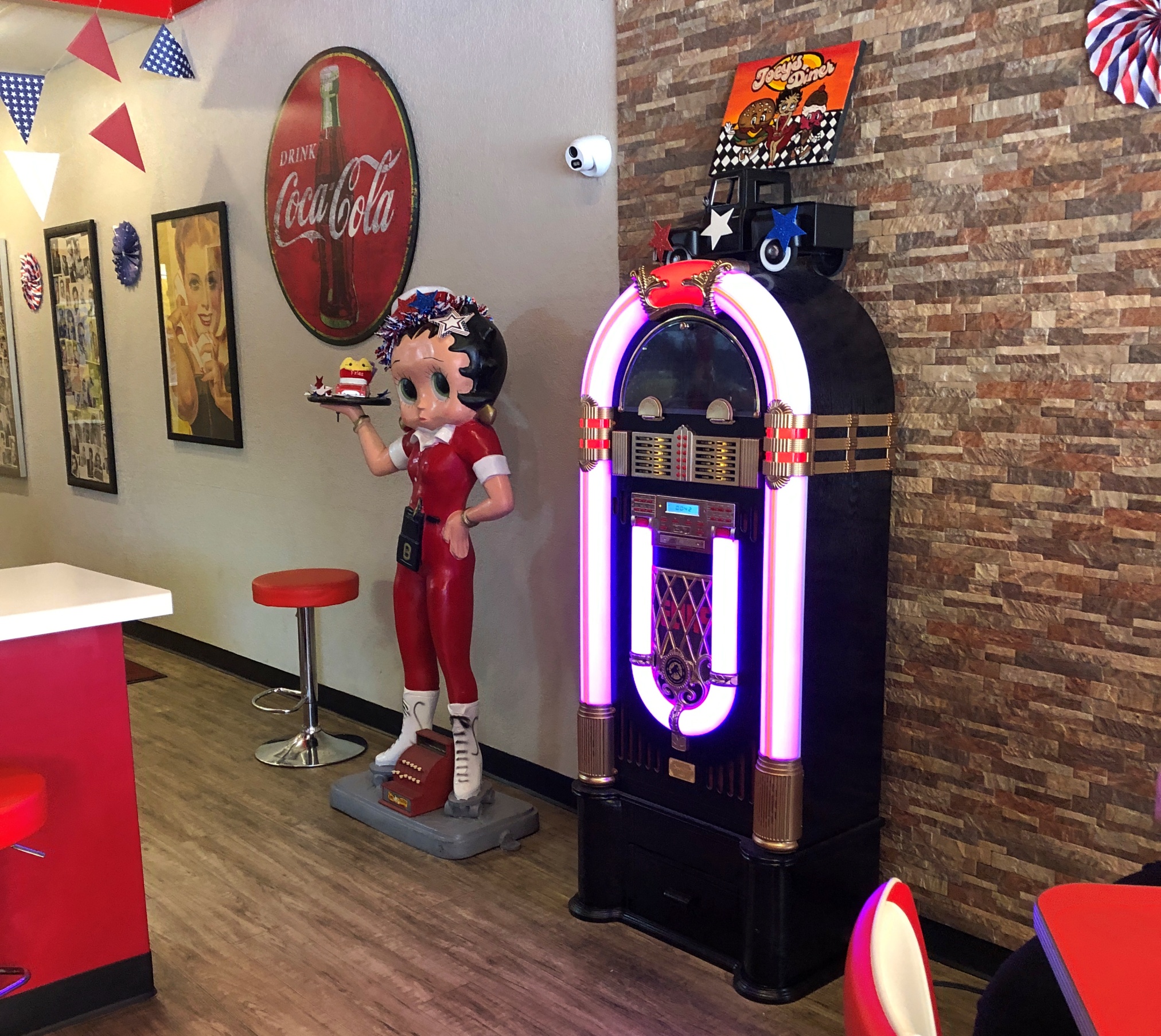
Being mid-day, one bit of business to take care of: lunch. We soon found the friendly joint called Joey’s Diner.
Joey likes Betty.
Joey’s is next to an Italian restaurant, similarly casual, that I think was owned by the same fellow. He was everywhere at once all the time — running a restaurant is nothing if not busy, and he seemed to be running two — but toward the end of our meal, asked how it was. I answered enthusiastically to the positive about my simple but also delicious hamburger. He responded by giving us a slice of chocolate cake, on the house. Thanks, Joey.
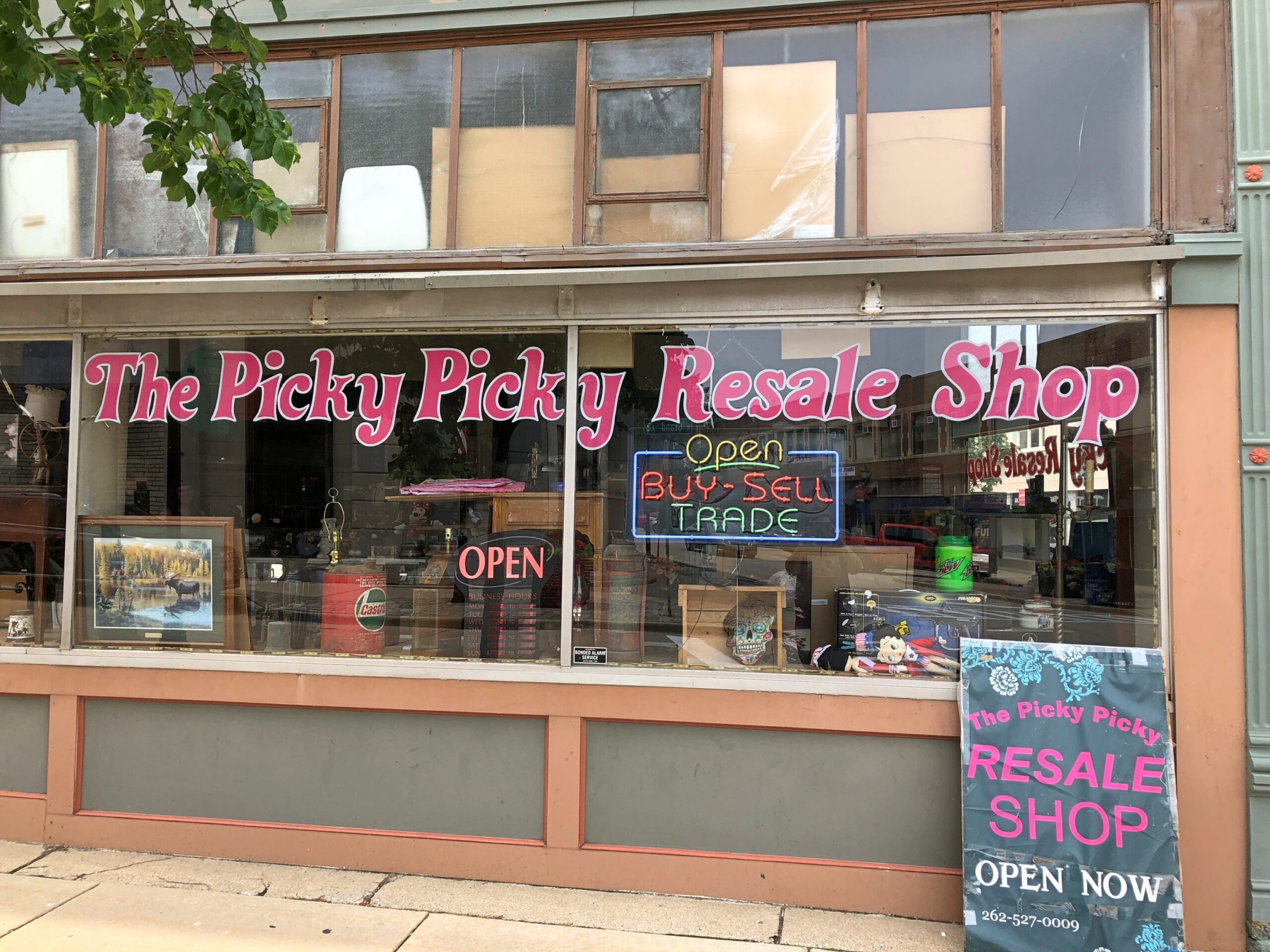
The street has other (many other) examples of places found here and nowhere else.
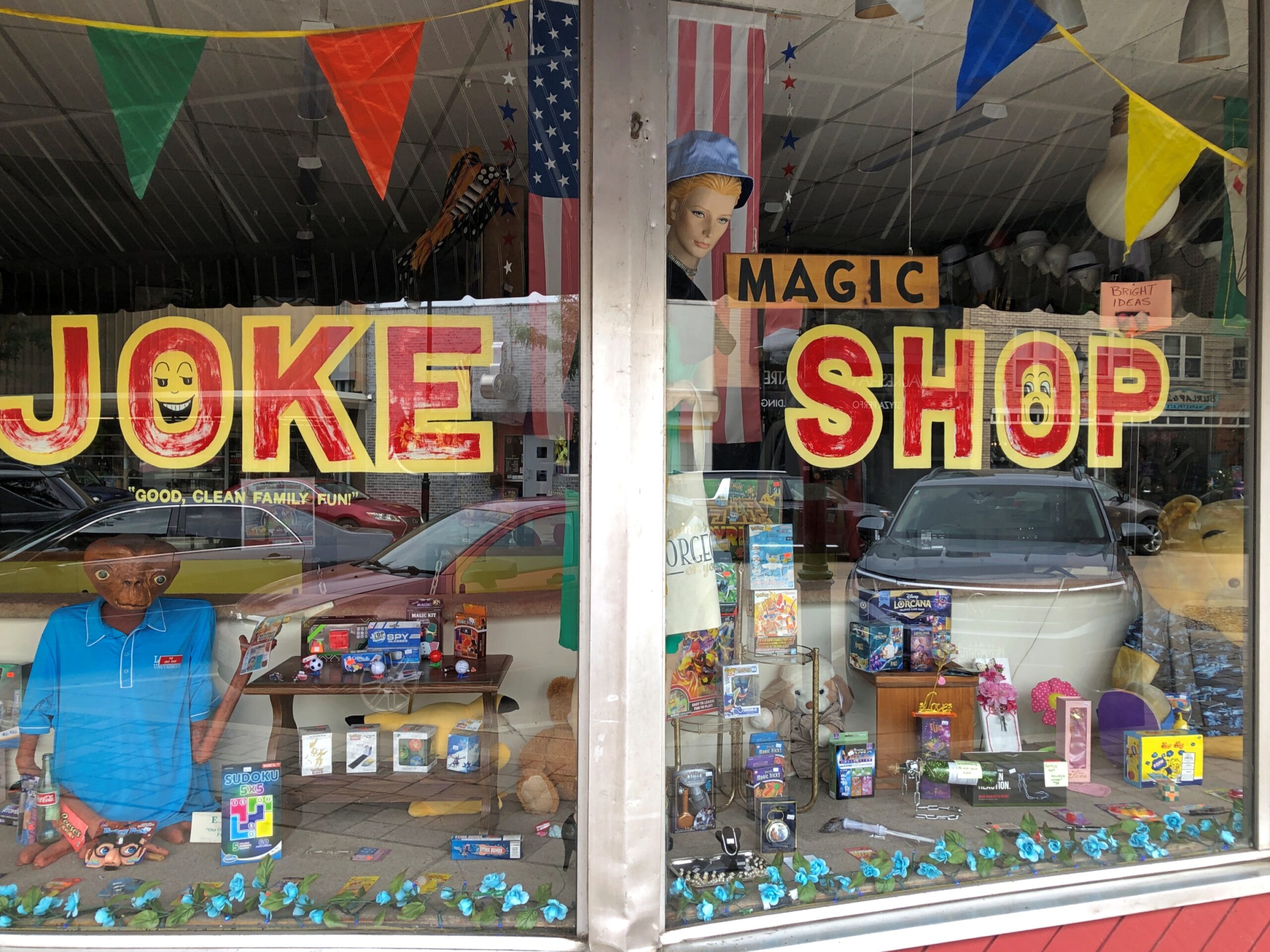
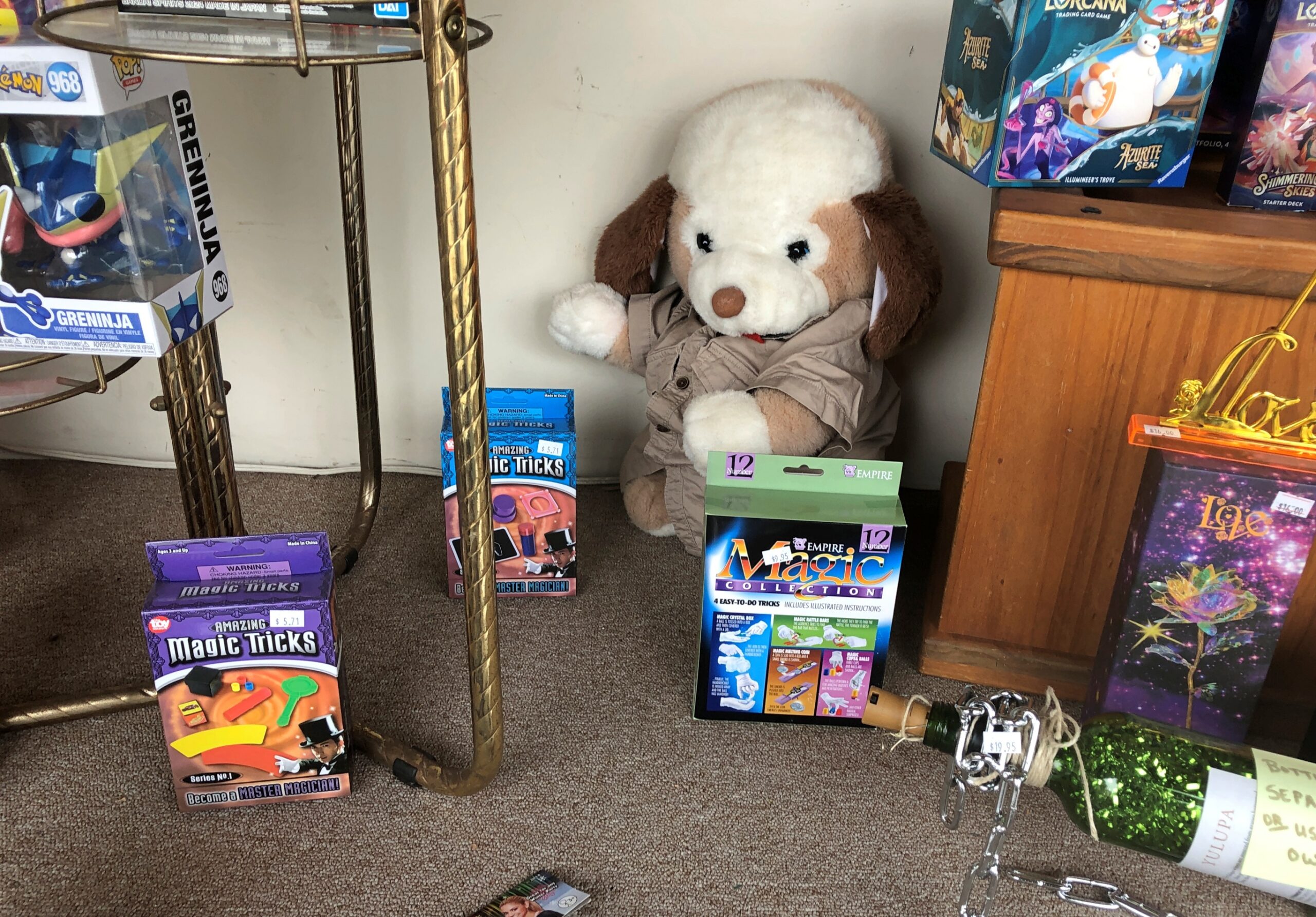
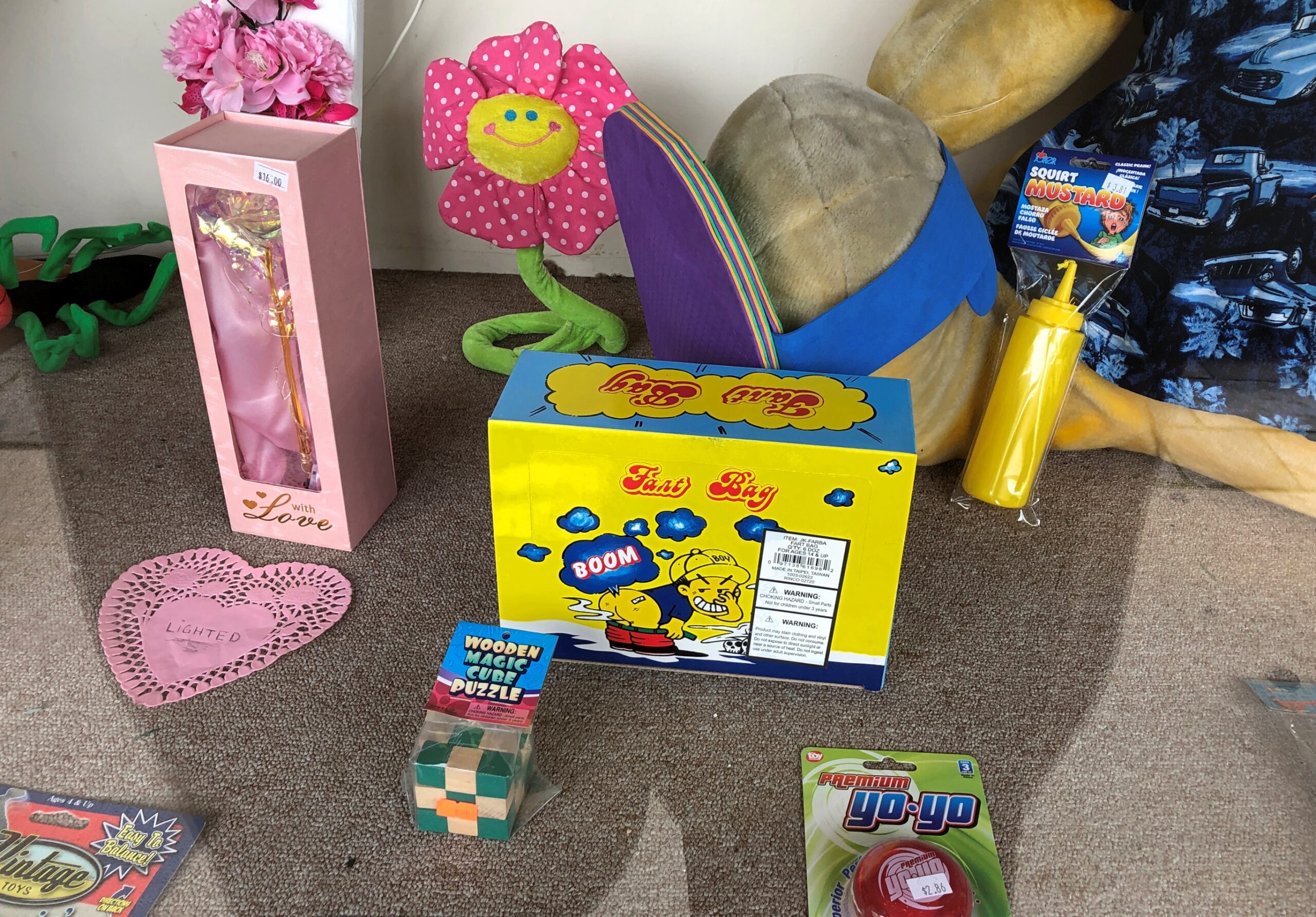
Been a while since I’d seen a joke shop. Closed.
The last one might have been Uncle Fun in Chicago, which closed some years ago. Too bad about that, but at least Jest For Fun Joke Shop, which has been at this Waukesha location more than 40 years, is keeping the retail tradition alive.
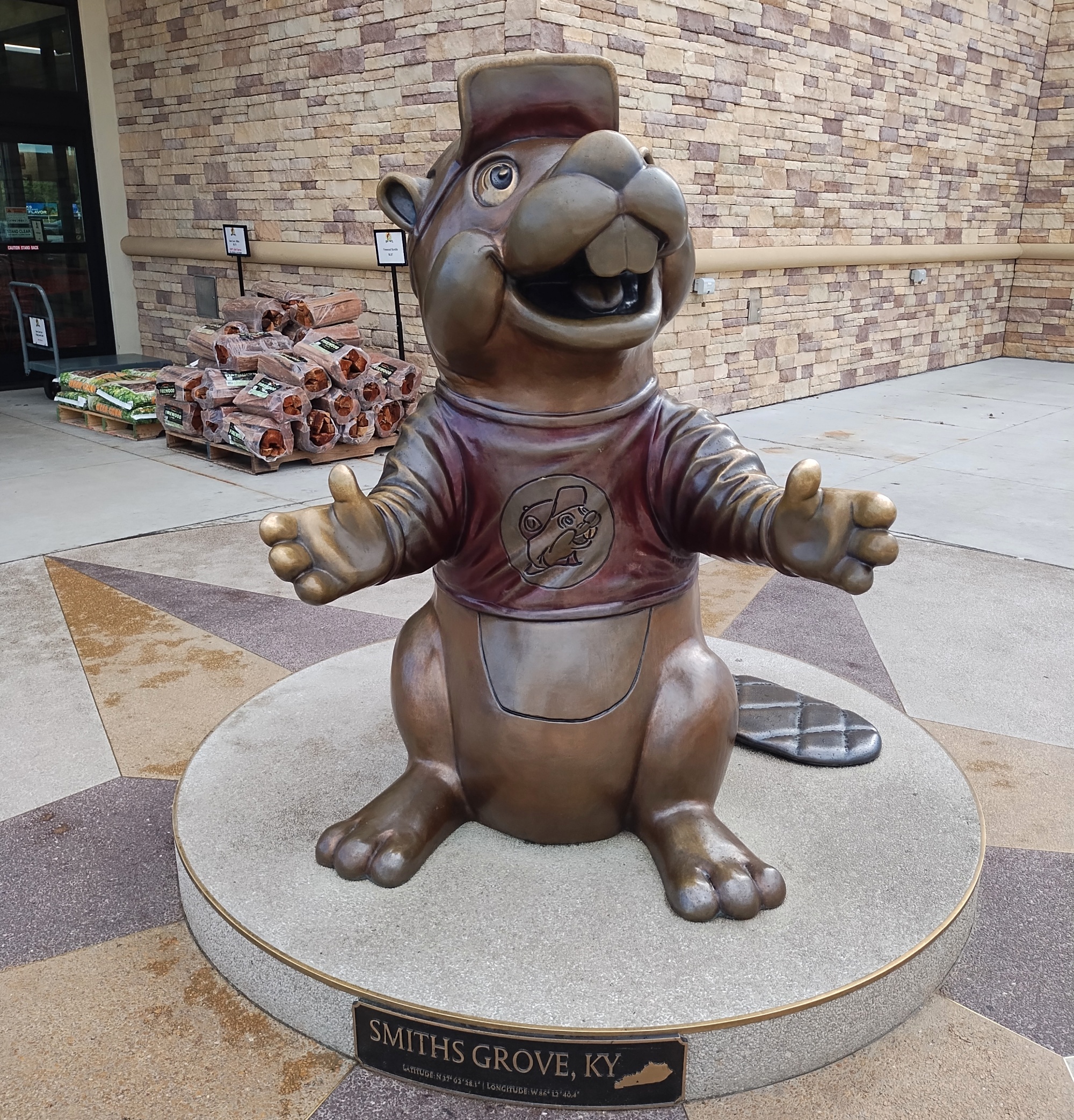
The Buc-ee’s imperium marches on. On my way to Tennessee that first day, I stopped at the location near Smiths Grove, Kentucky, to visit its gleaming facilities. Business was reasonably brisk that Monday, but nothing like the bedlam on the Sunday, nearly two weeks later (on the trip’s last day), when I stopped on the way back home at the same place, for the same reason.
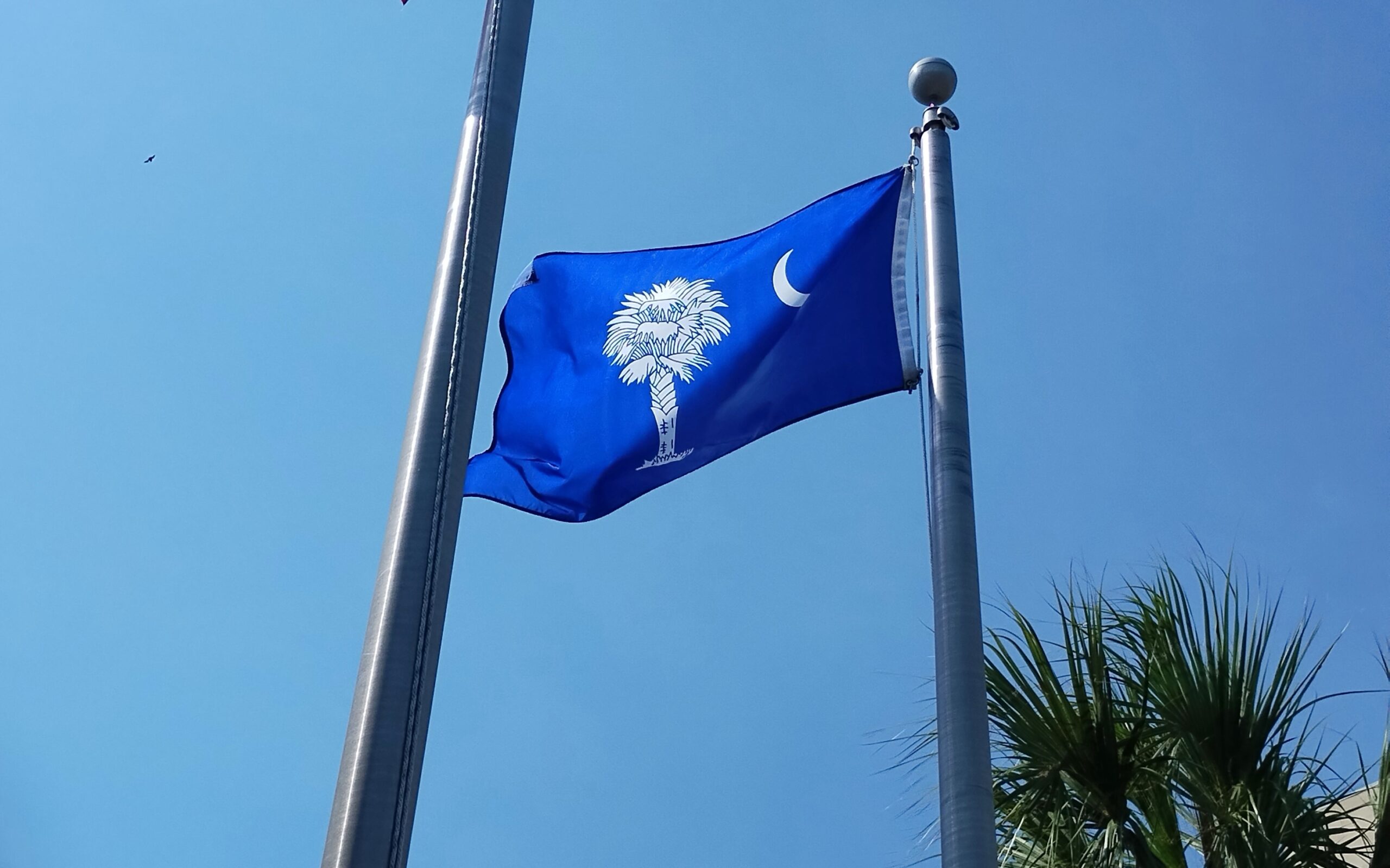
South Carolina
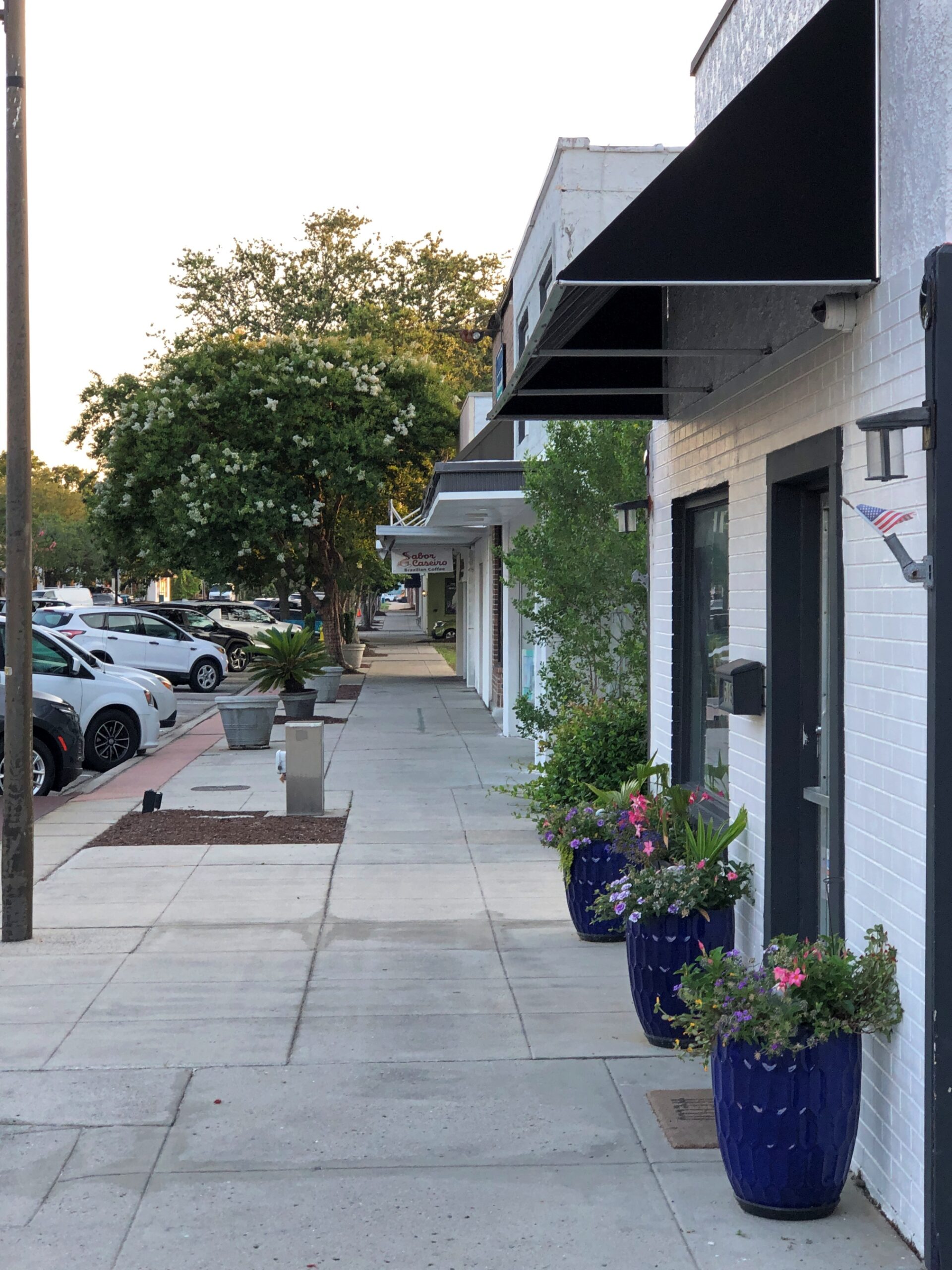
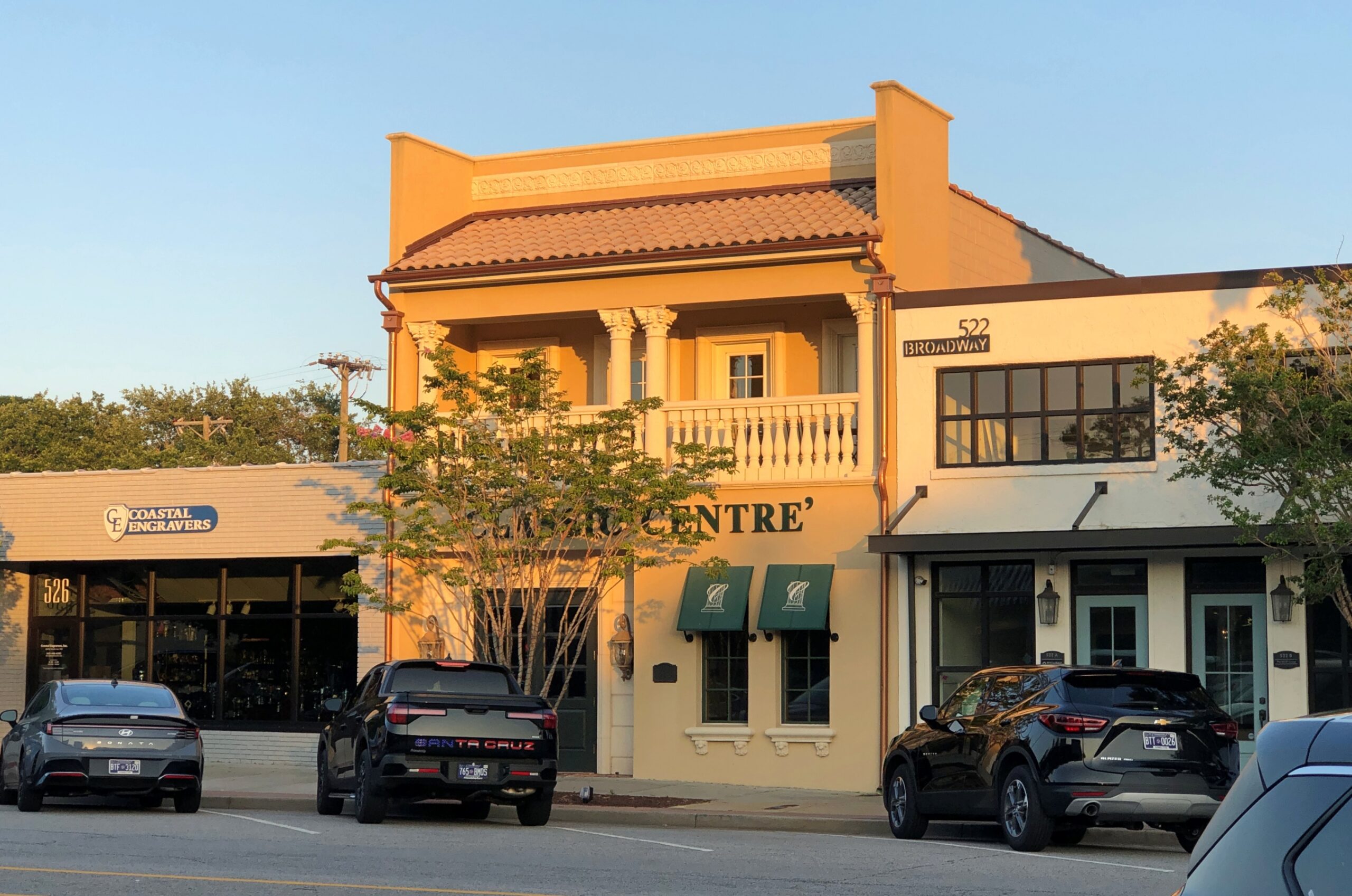
Had a pleasant walk down a non-tourist street on a Sunday in Myrtle Beach. Not a lot going on. The late afternoon light had a nice glow.
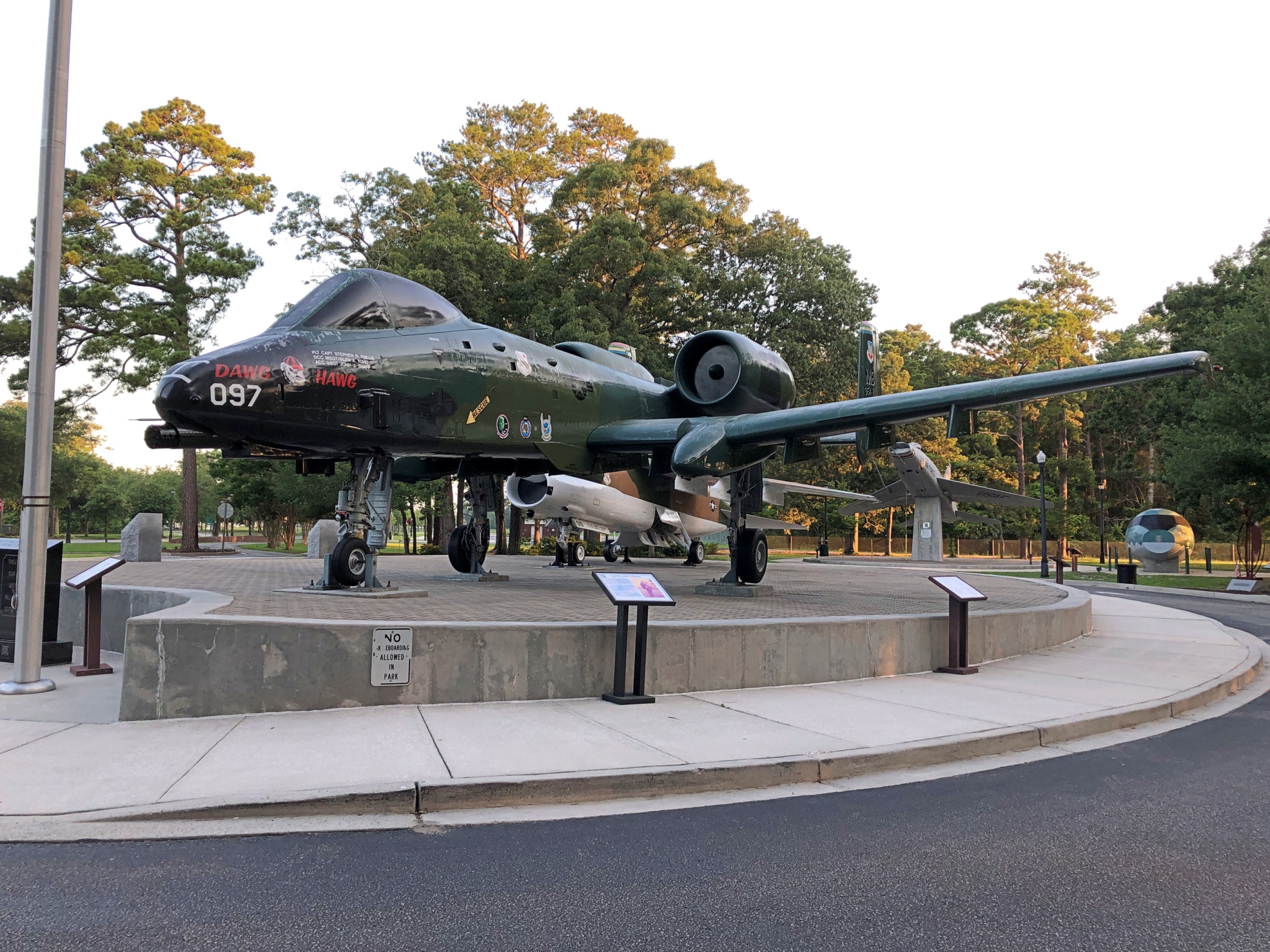
Myrtle Beach International Airport used to be Myrtle Beach Air Force Base, which began as Myrtle Beach General Bombing and Gunnery Range in 1942 for use by the U.S. Army Air Corps. It closed in 1993.
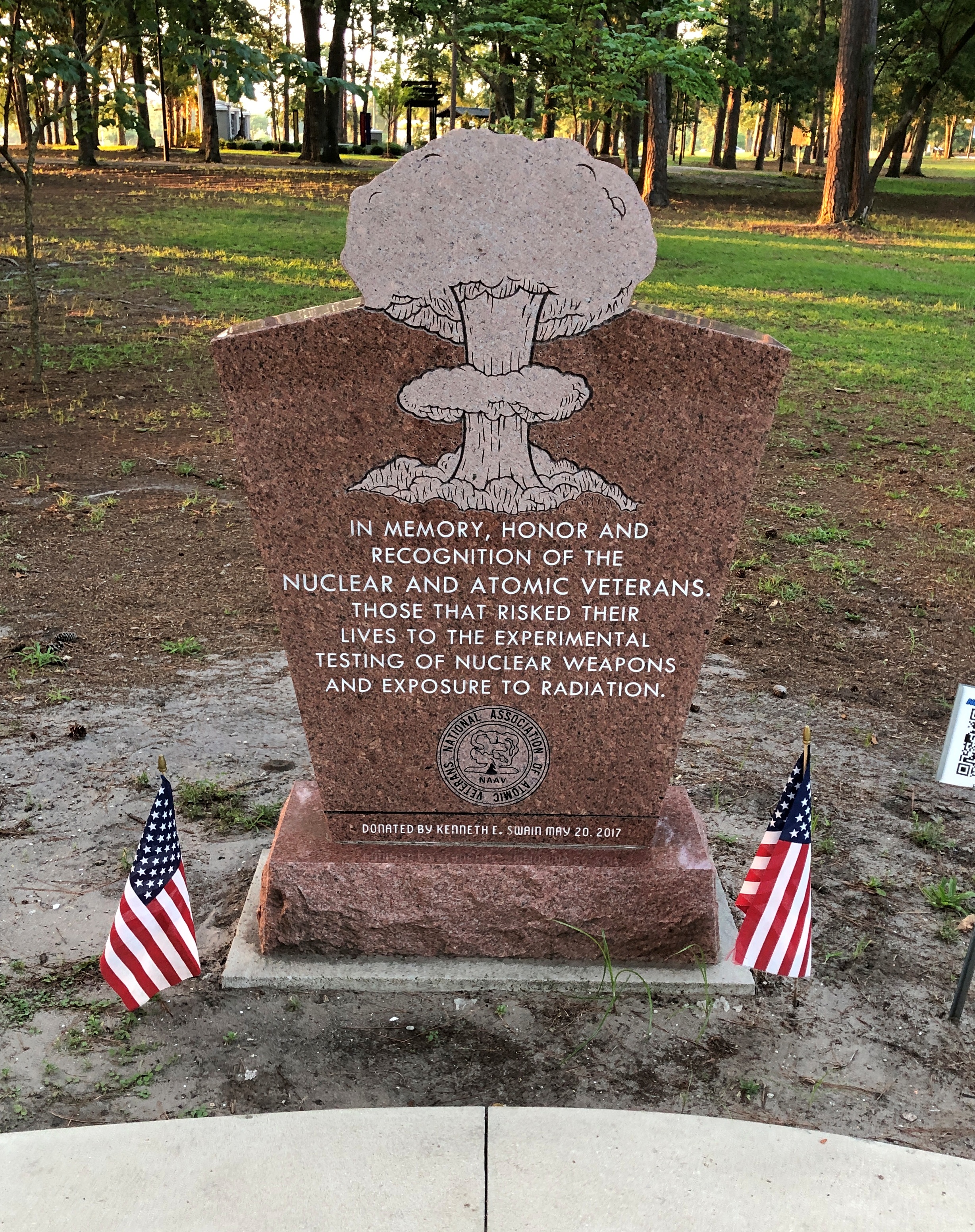
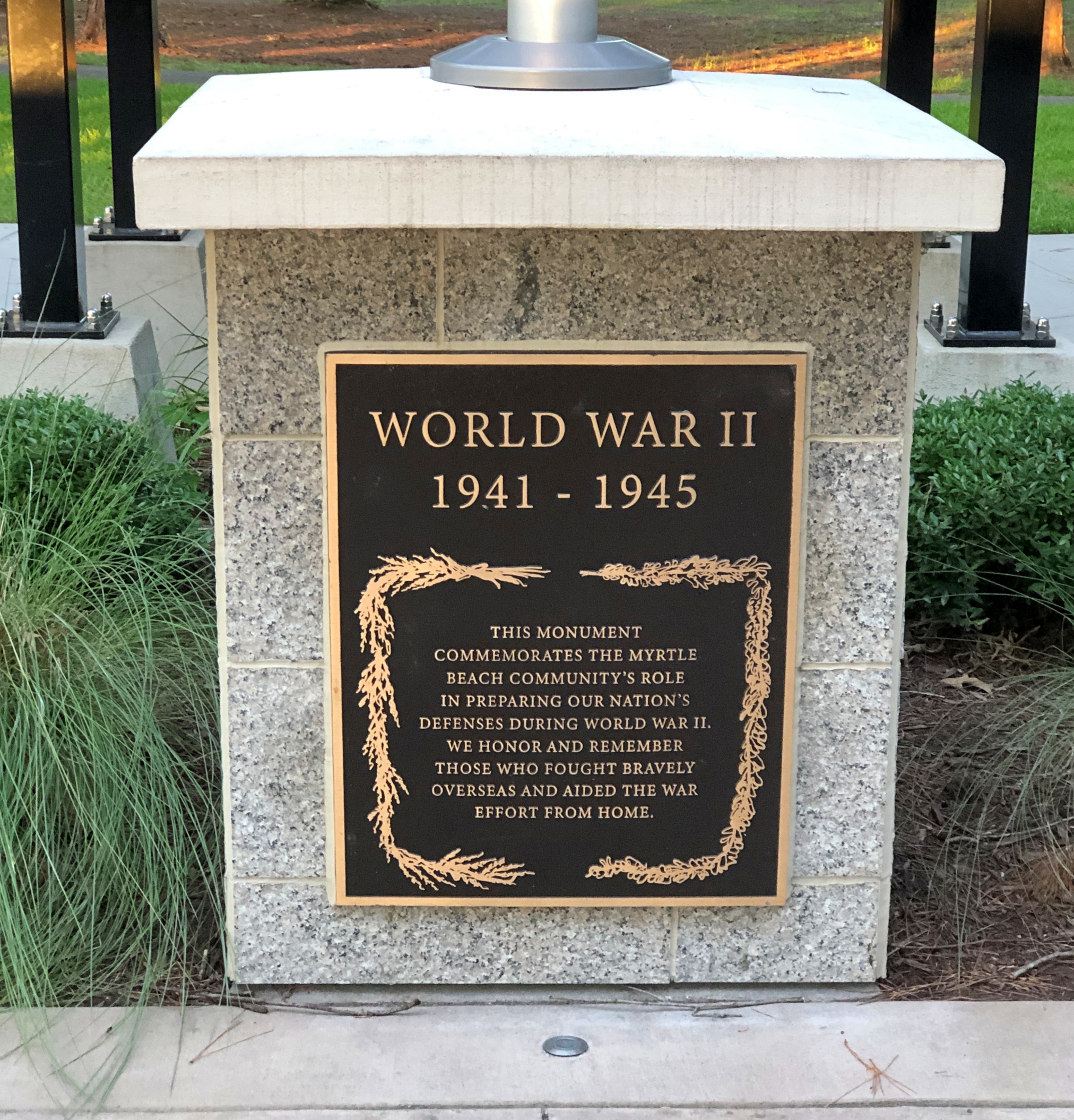
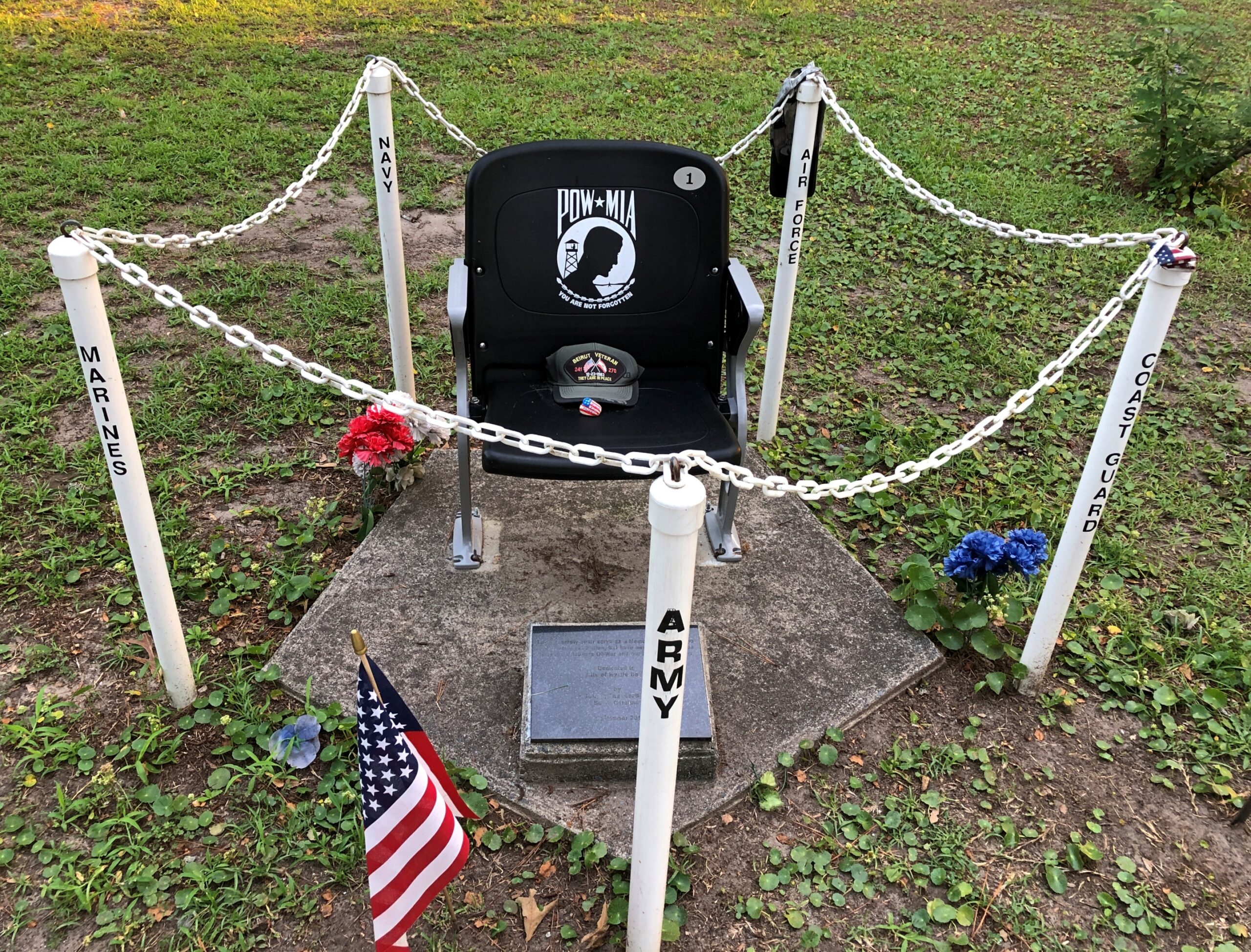
One legacy of the base is a cluster of military memorials near the perimeter of the airport – at a place called Warbird Park, which is fully accessible to casual visitors – that includes something you don’t see all the time.
It is one memorial among many.
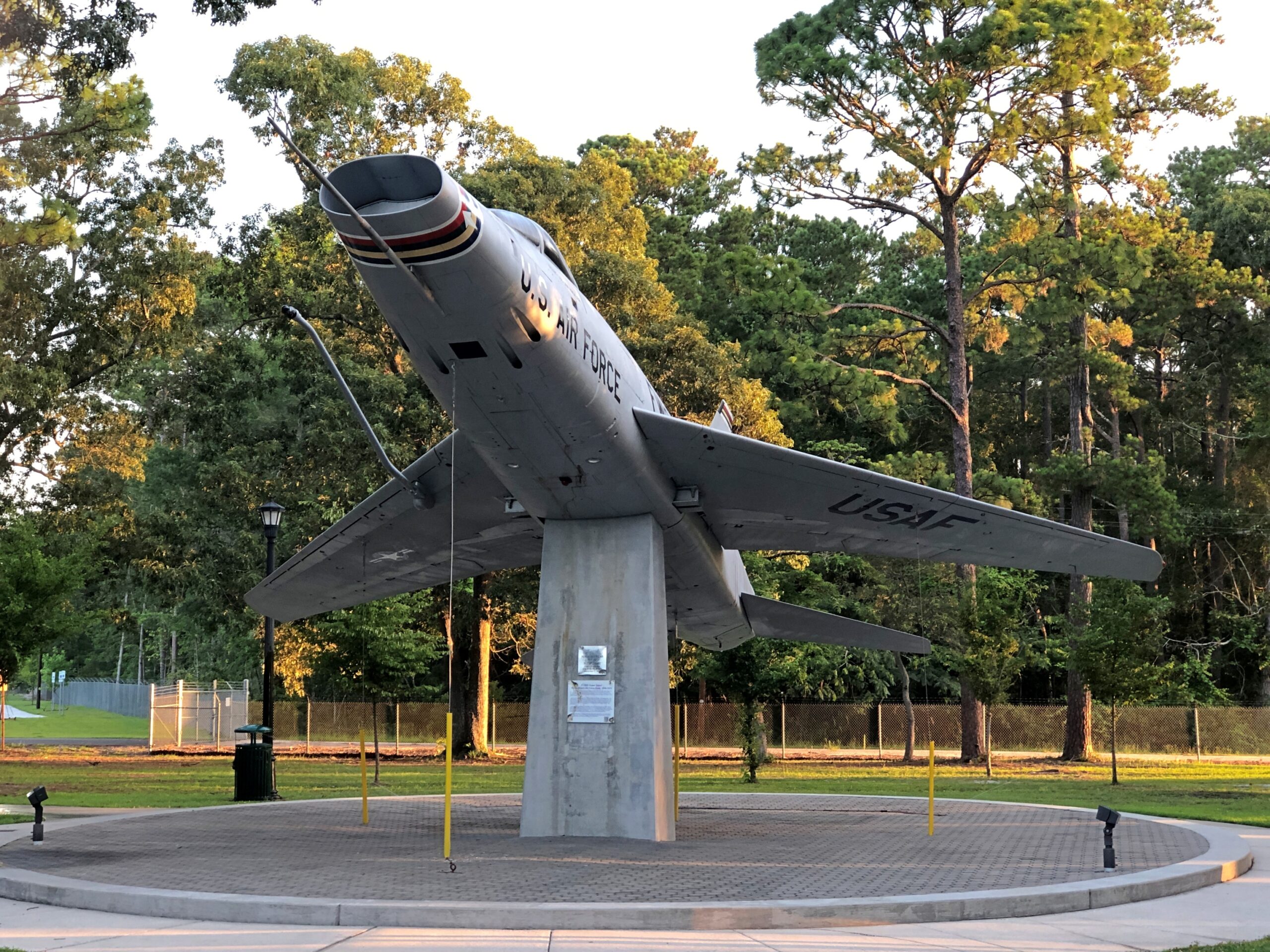
As well as some of the aircraft that used the air base.
Found at a MB beach shop among the clothes and beach equipment. Nothing says Myrtle Beach better than skulls, no?
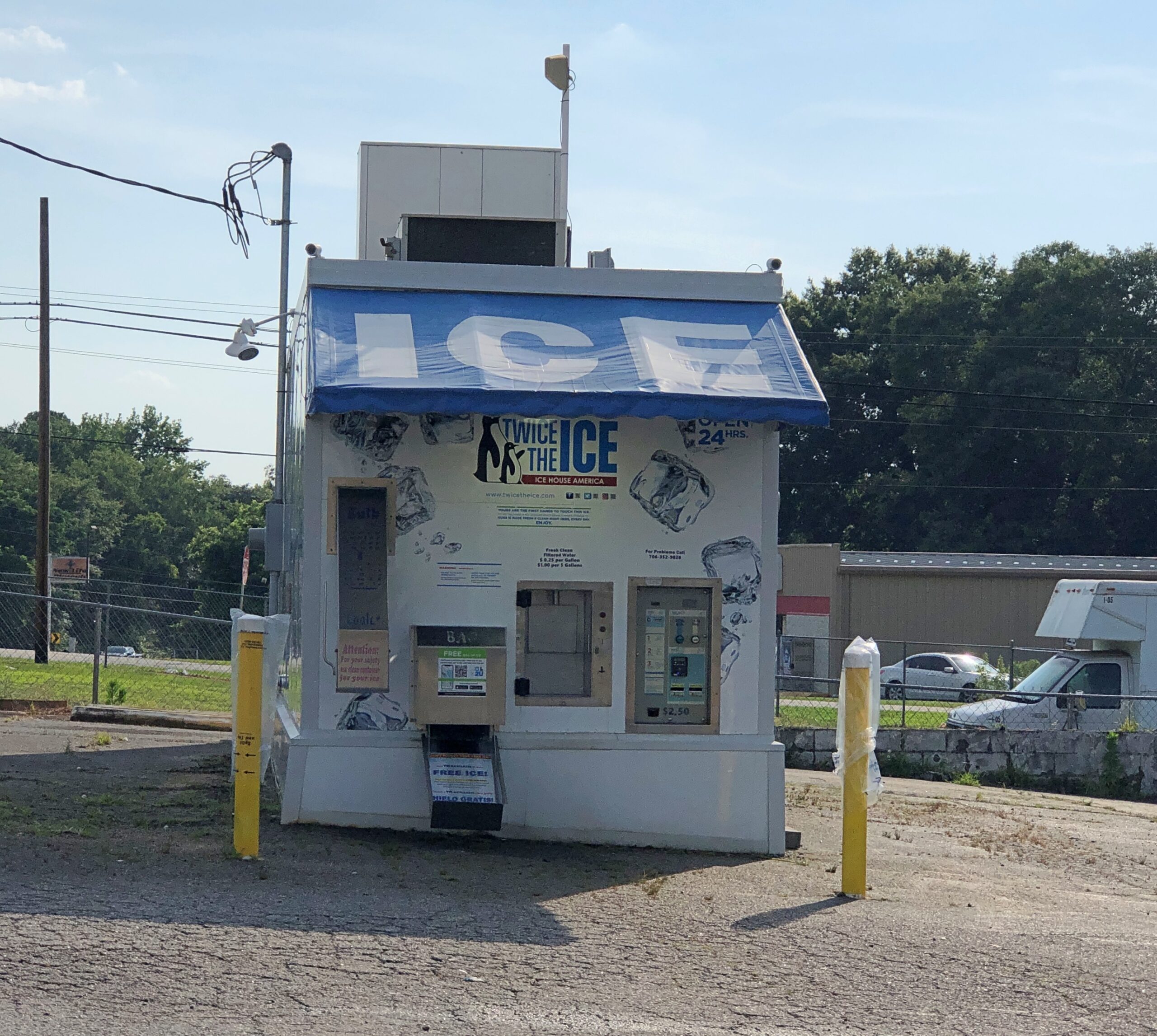
An automated, Fotomat-style ice store in north Georgia. They’re not as common up north, with the closest of this brand to me (I checked) in Aurora, Illinois.
Twice the Ice is the brand name. Quick facts: there are about 3,300 Twice the Ice locations so far in the United States and elsewhere – water and ice “vending machines,” according to one page on the company web site. Another page on the same site puts it at over 4,000 locations, which just means part of the site isn’t being updated. Whatever the exact number, there are a lot, and most if not all are franchised, representing about 1,000 franchisees.
It’s automation we call all get behind. I don’t think the machines are putting ice handlers and baggers at local gas stations and grocery stores out of work, since who holds that specific job?
So far as I know, “Ice is Civilization” is not the company motto. But it could be. It was said with such conviction by Allie Fox in The Mosquito Coast.
Of course, by the end of the book and movie both, he was howl-at-the-moon mad. So maybe some other slogan. Then again, that line is one of the few things – besides the fact that Allie Fox goes nuts chasing Utopia – that I remember from either the book or the movie after about 35 years. So it’s pretty memorable.
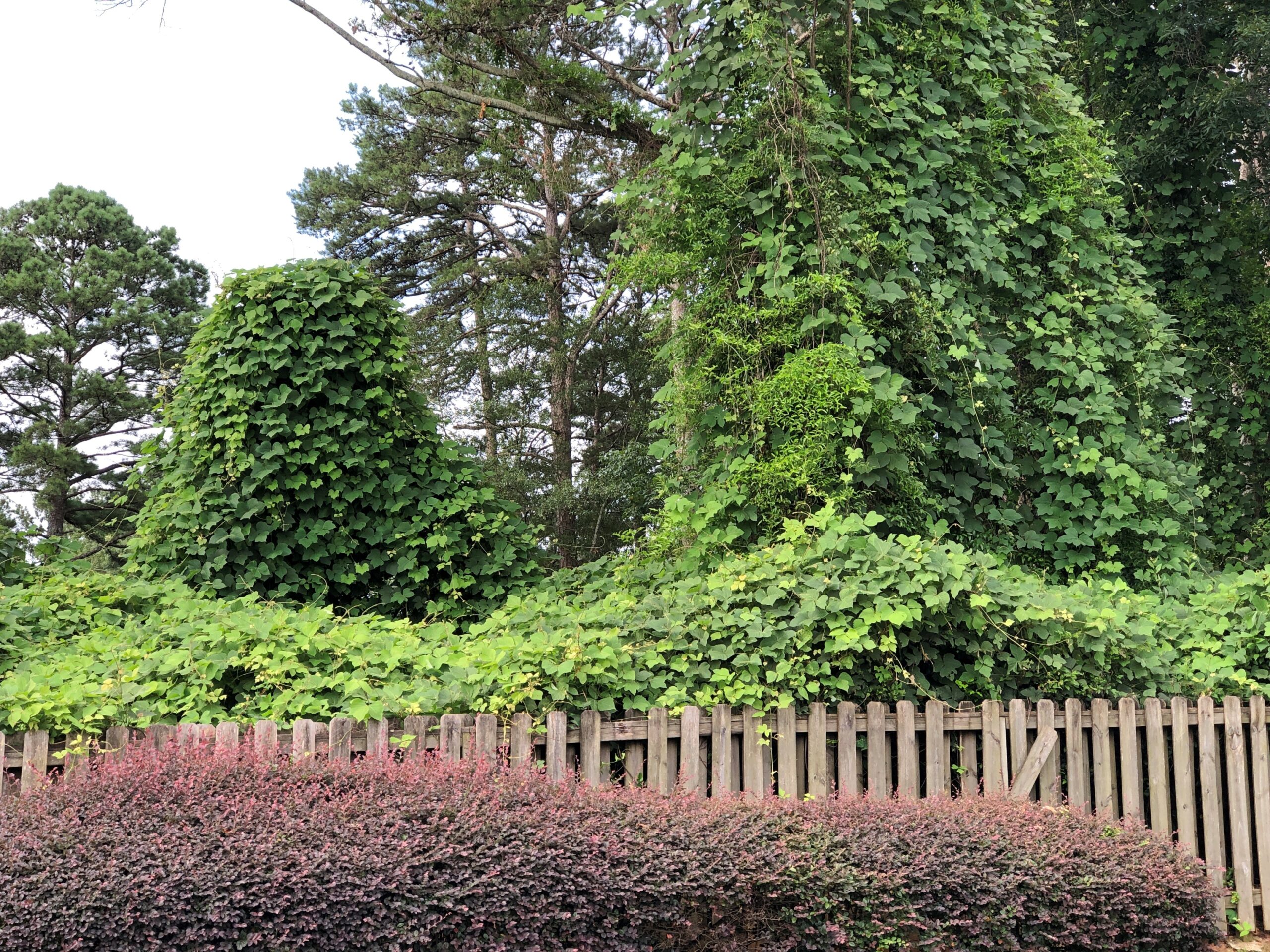
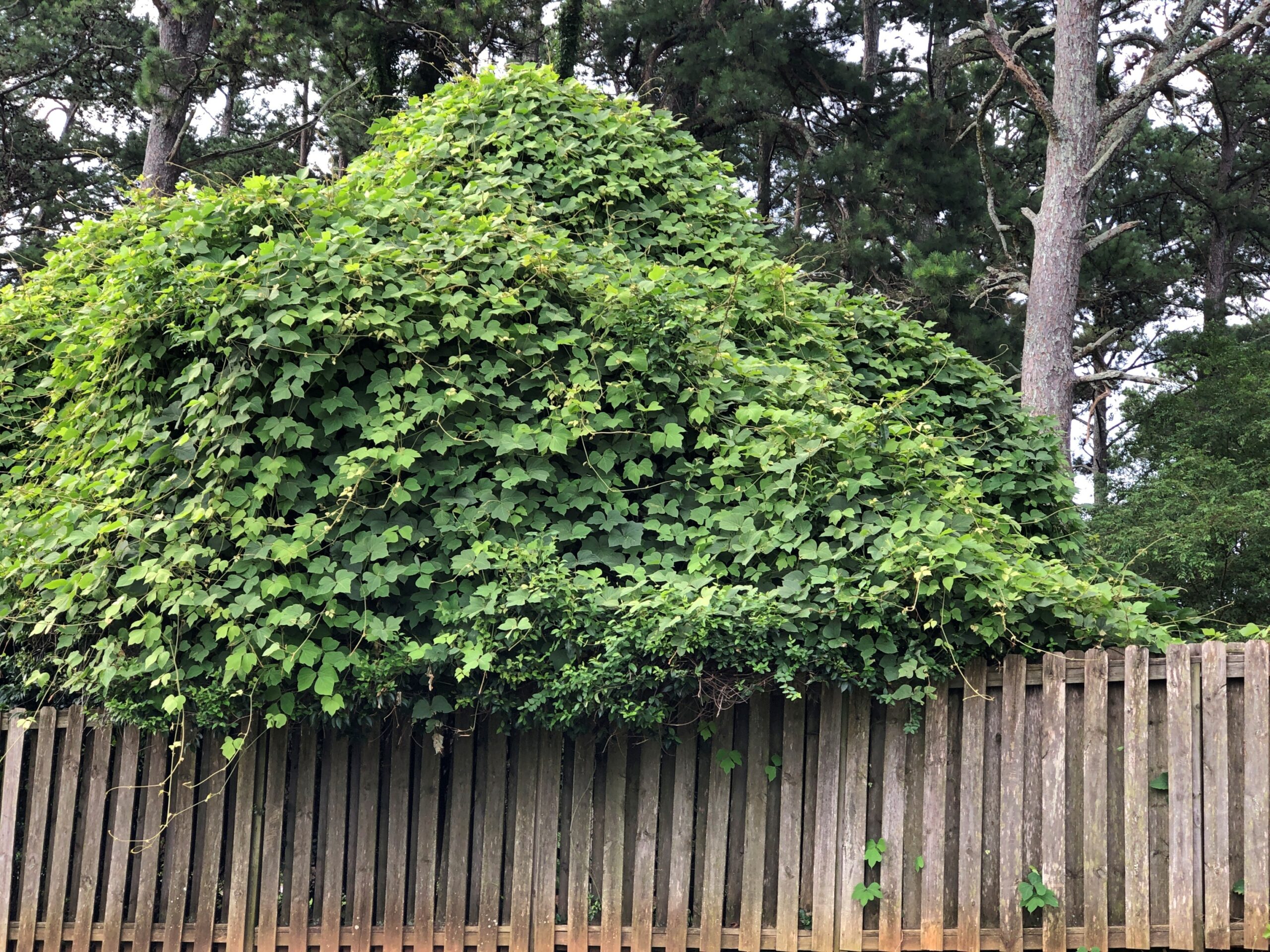
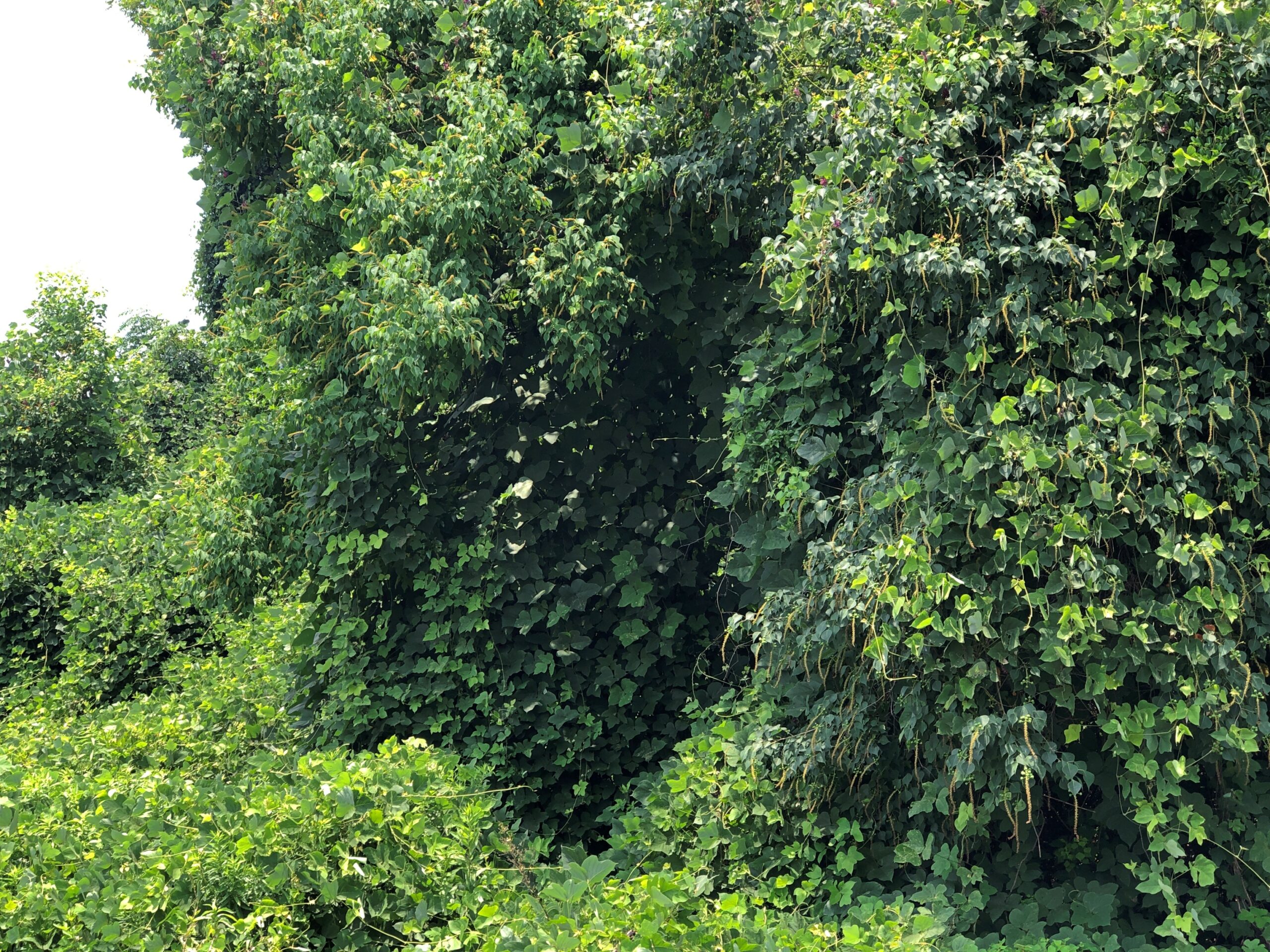
After gassing up at a station in north Georgia, I parked away from the pumps near the edge of the property to fiddle with my phone for a few minutes. Just outside the car window, kudzu lurked.
Which got closer.
And closer. Man, it grows fast.
Not really, but I did see all that kudzu at the edge of the gas station property. Kudzu. Who hasn’t seen the walls of it down South?
“In news media and scientific accounts and on some government websites, kudzu is typically said to cover seven million to nine million acres across the United States,” Smithsonian magazine reported in 2015. “But scientists reassessing kudzu’s spread have found that it’s nothing like that. In the latest careful sampling, the U.S. Forest Service reports that kudzu occupies, to some degree, about 227,000 acres of forestland, an area about the size of a small county and about one-sixth the size of Atlanta.
“That’s about one-tenth of 1 percent of the South’s 200 million acres of forest. By way of comparison, the same report estimates that Asian privet had invaded some 3.2 million acres — 14 times kudzu’s territory. Invasive roses had covered more than three times as much forestland as kudzu.”
Yet kudzu is regarded as a particularly intractable invasive species. How is that? It grows well in highly visible places. Such as next to a gas station parking lot. Smithsonian notes: “Those roadside plantings — isolated from grazing, impractical to manage, their shoots shimmying up the trunks of second-growth trees — looked like monsters.”
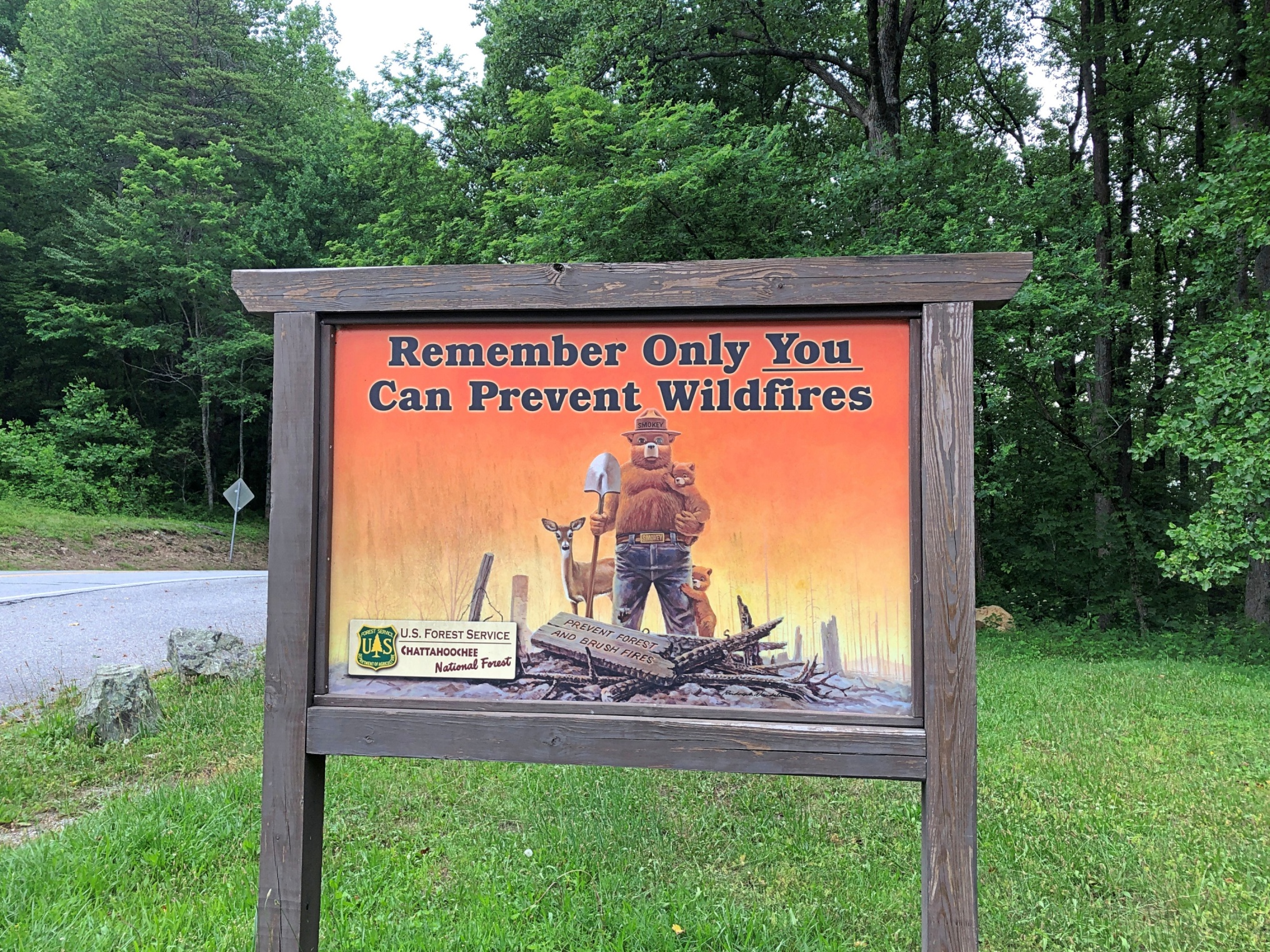
Along Georgia 60 in Chattahoochee NF, Smokey Bear is still at his job.
One thing leads to another online, and Smokey eventually lead me to “Smokey the Bear Sutra.” Only takes a few minutes to read, and it’s a trip. Just like the song “Elvis is Everywhere,” there’s a founding document of a religion in the distant future, one that asserts that humans should never have given up worshiping bears.
In the heat of midday back in late June, en route to Athens, Ga., I arrived at the Georgia Welcome Center on I-20, a sizable structure just inside the state, and did what I needed to do. Returning to my car, I wondered whether I should drive into Augusta, only a few miles off the Interstate at that point. Specifically to downtown, to see what I could see, even at 90+° F. or so.
Would it be worth the short detour? At that moment, the lyrics of a song of my youth came to mind, as the only mention of Augusta I know in popular music.
I beg your pardon, mama, what did you say?
My mind was drifted off on Martinique Bay
It’s not that I’m not interested, you see
Augusta, Georgia is just no place to be.
The song was “An American Dream” by the Nitty Gritty Dirt Band (a.k.a. the Dirt Band) – with backing vocals by Linda Ronstadt, no less – which reached No. 13 on the Billboard Hot 100 after its release in late 1979, and probably annoyed Augusta’s city fathers and other local boosters. But all that was nearly a half century ago, so I expect any annoyance is long gone as the tune has slipped into obscurity.
The song merely came to mind then, as songs often do, and didn’t affect my decision – which was to go. Do a flyby, in my idiosyncratic nomenclature for such a visit. That is, pass through a place, but a little more than merely driving through. If I see anything interesting during a flyby, I’ll stop for a short look. (So not only is my nomenclature eccentric, it isn’t really accurate. Who cares.)
Sure enough, I spotted something worth stopping for.
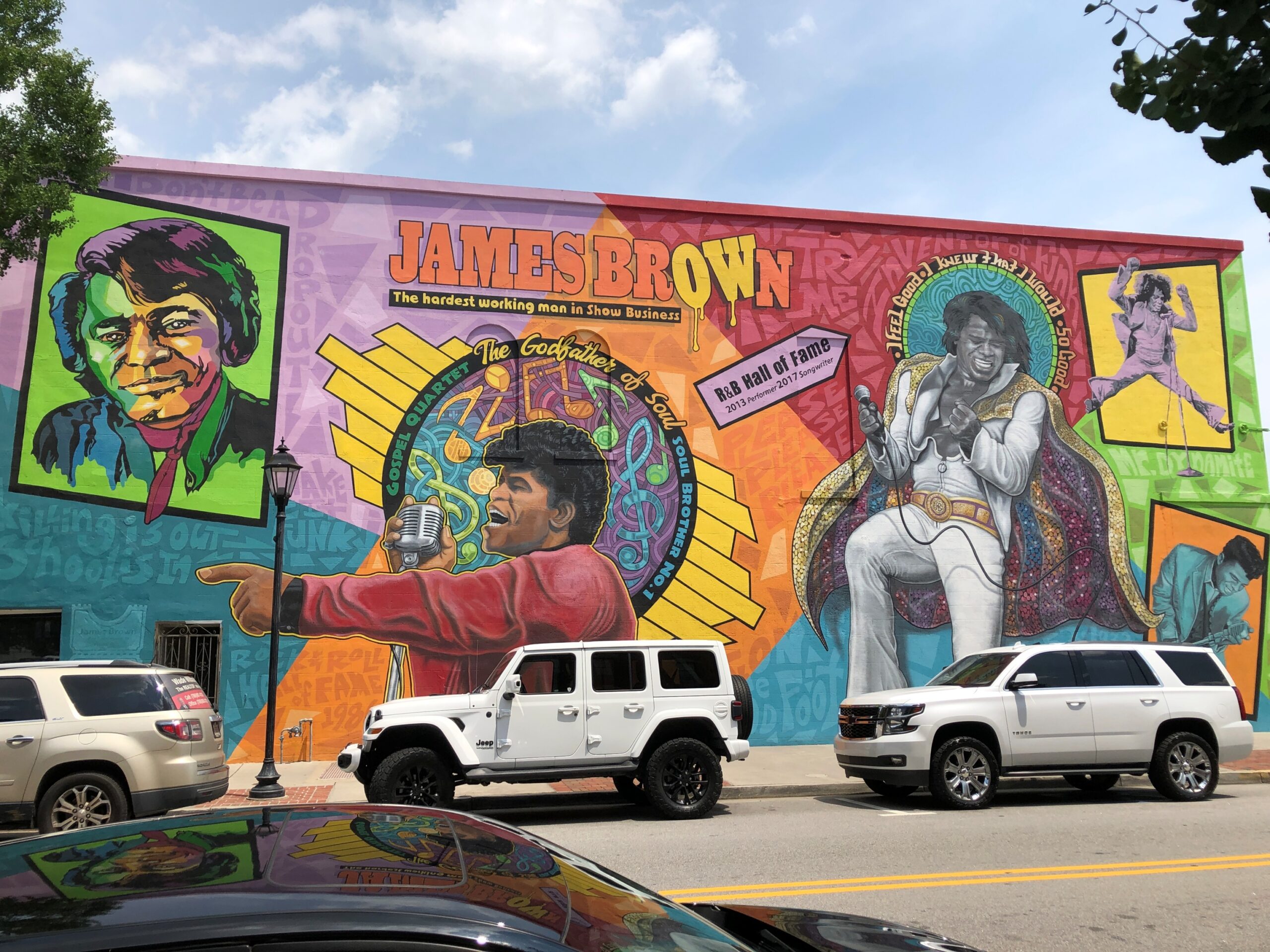
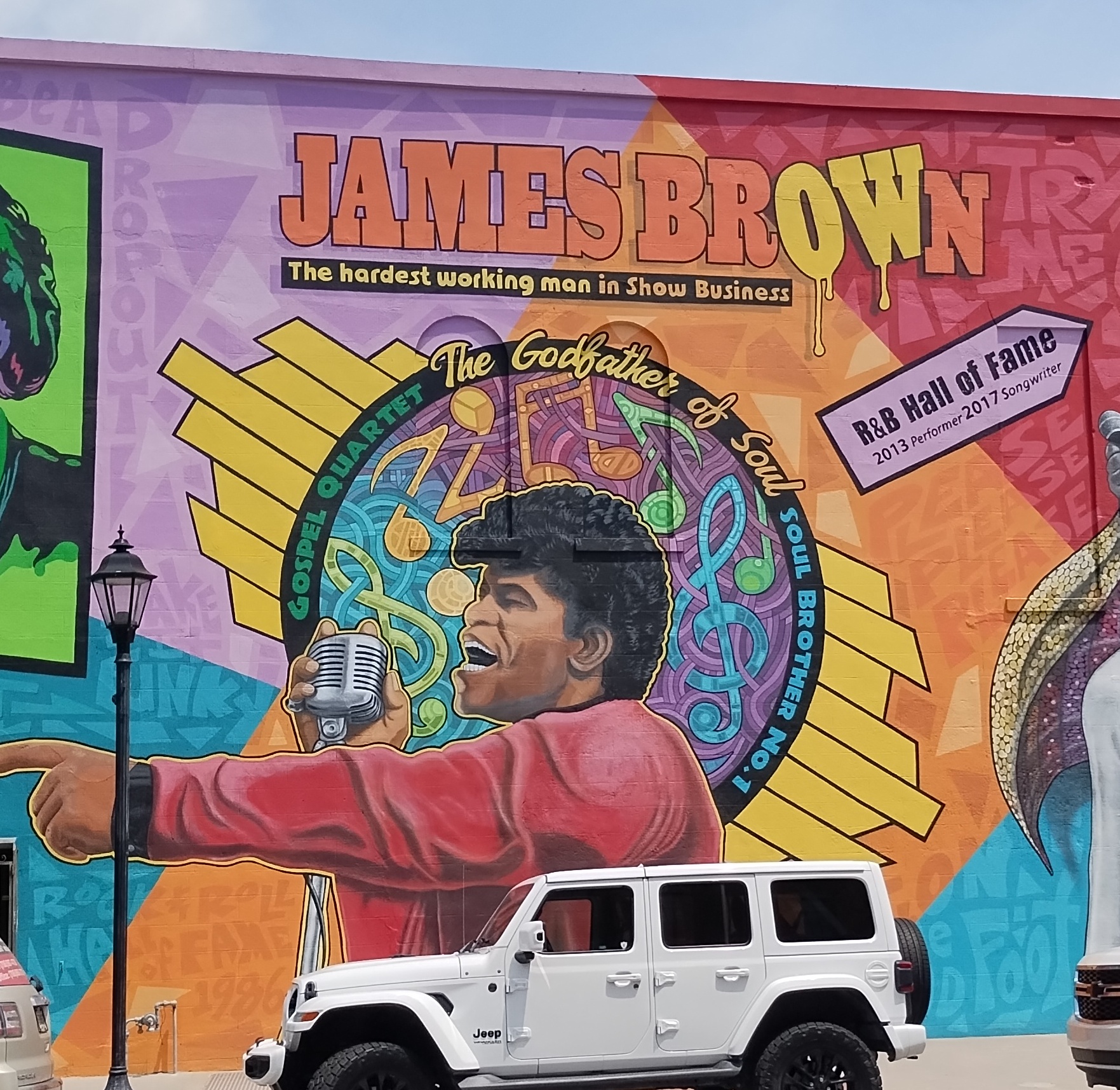
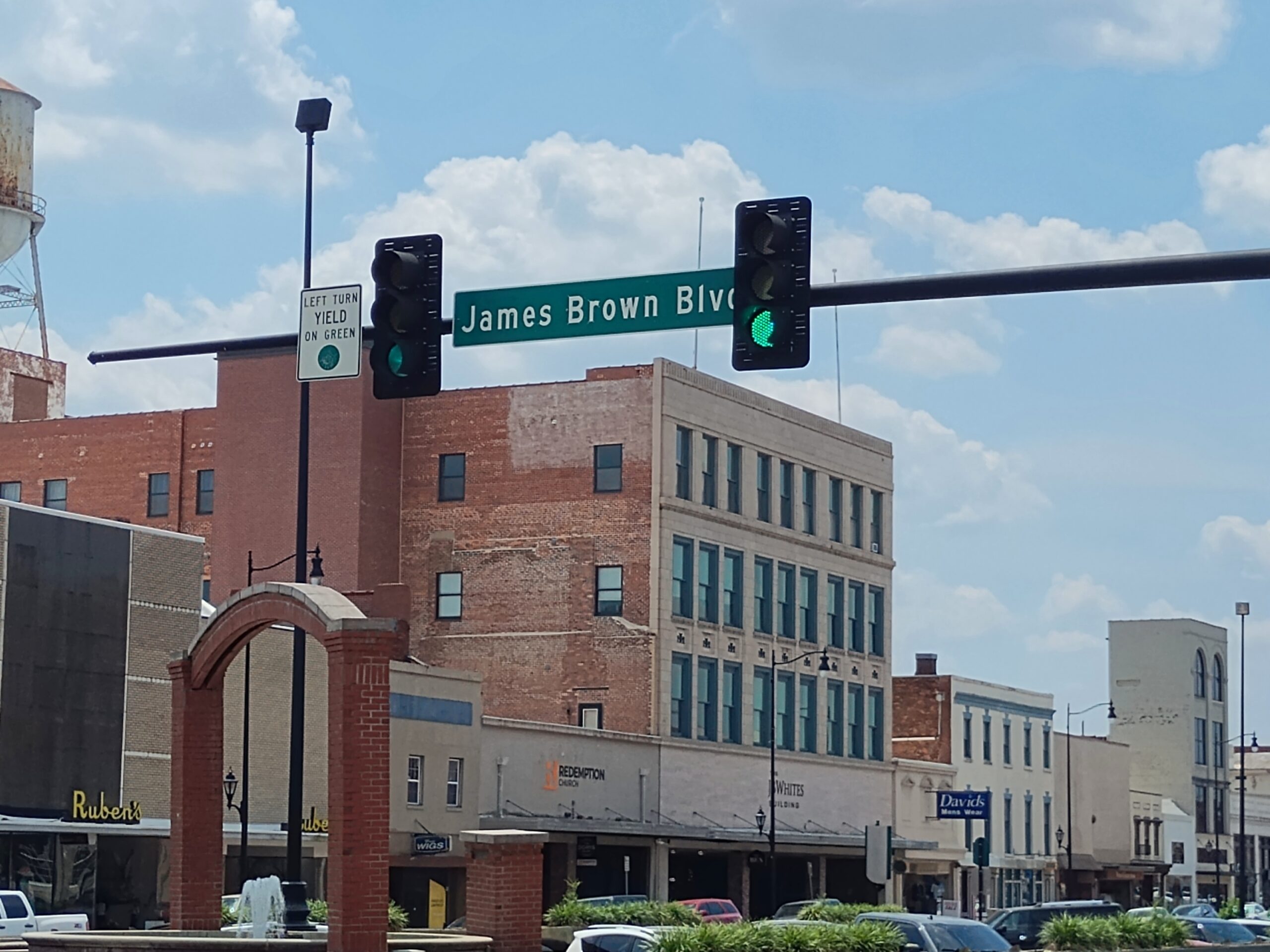
A mural at the intersection of James Brown Blvd. and Broad St., completed in 2020 by an artist named Cole Phail. Though born in South Carolina, Brown grew up in Augusta, a fact I previously didn’t know.
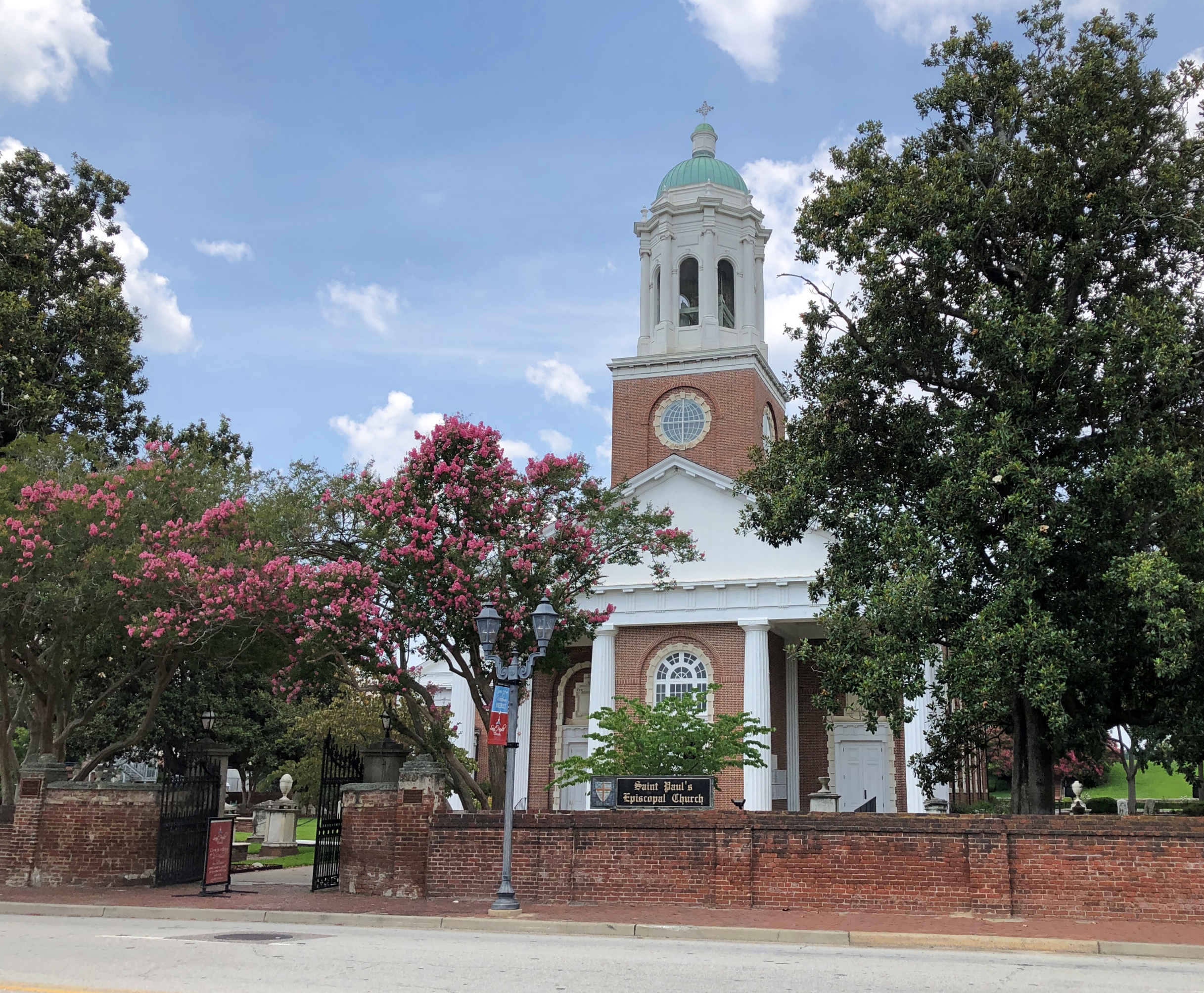
Later I learned that there’s a bronze of the Godfather of Soul not far away on Broad, but I didn’t look around enough to spot it, considering the heat dome, which seemed to be bearing down on me personally at that moment. So I looked at the mural, got back in my car, and blasted the AC. A few blocks away, as I was driving along, I saw an open church. I had to stop for that, too.
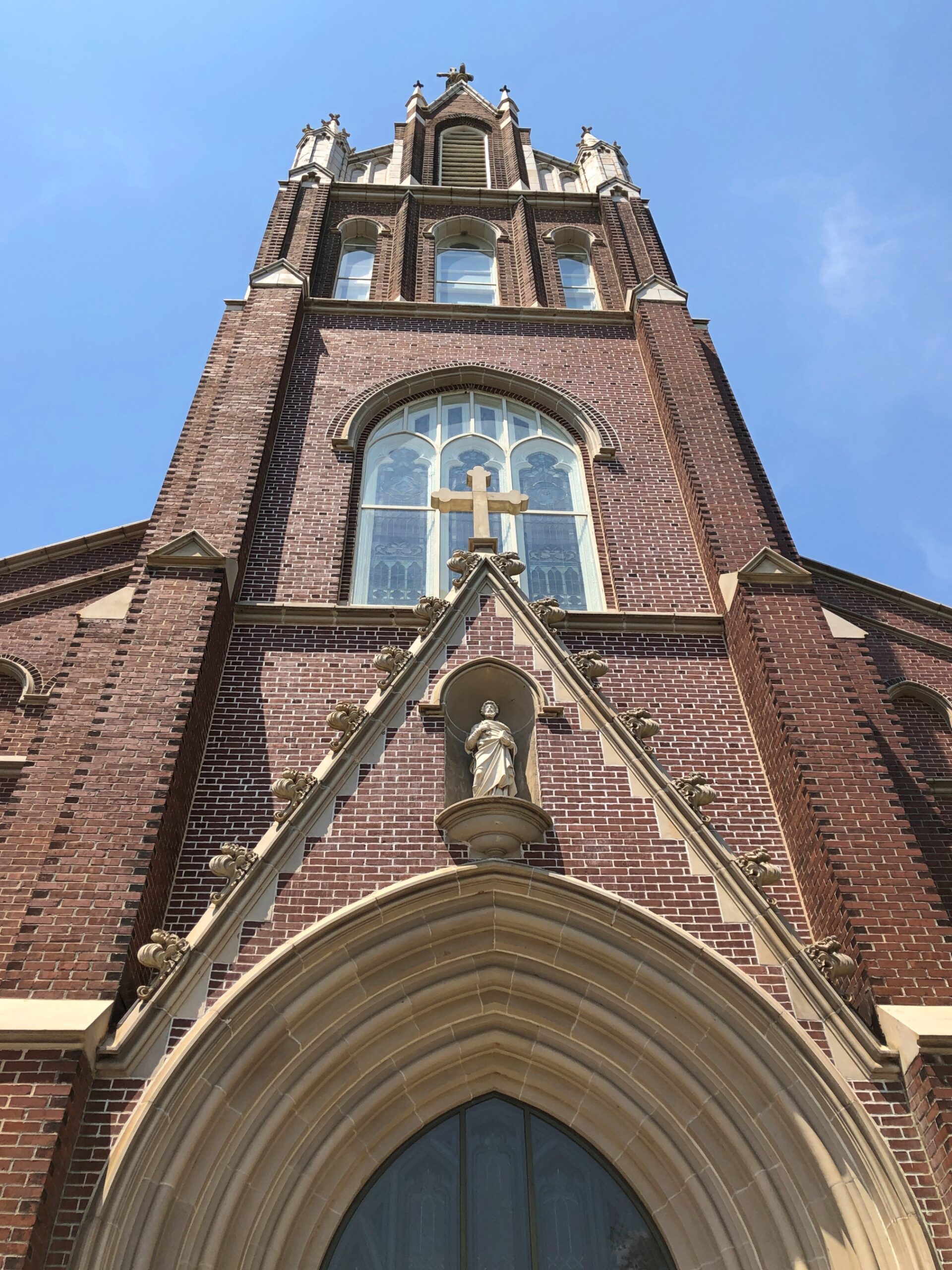
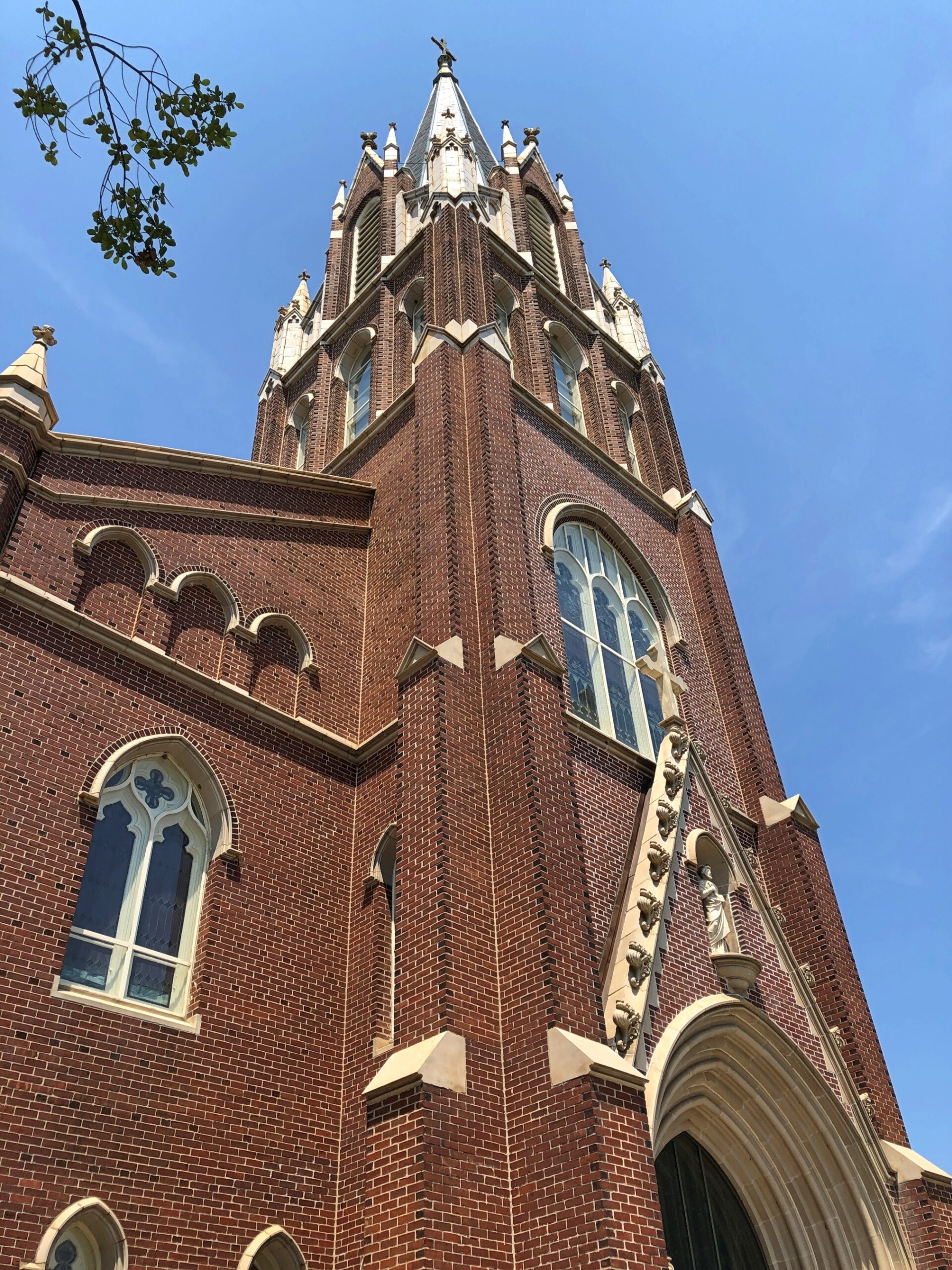
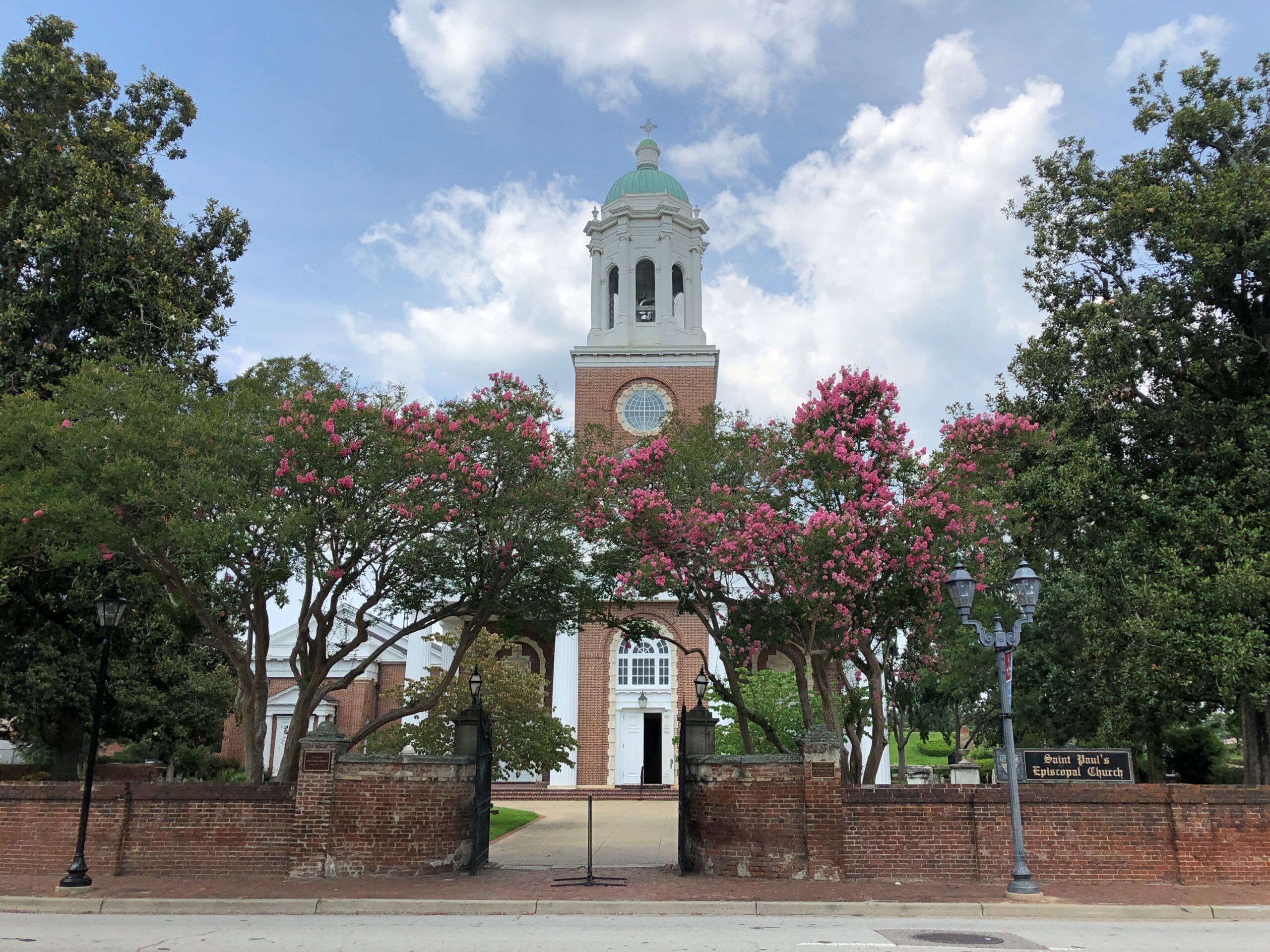
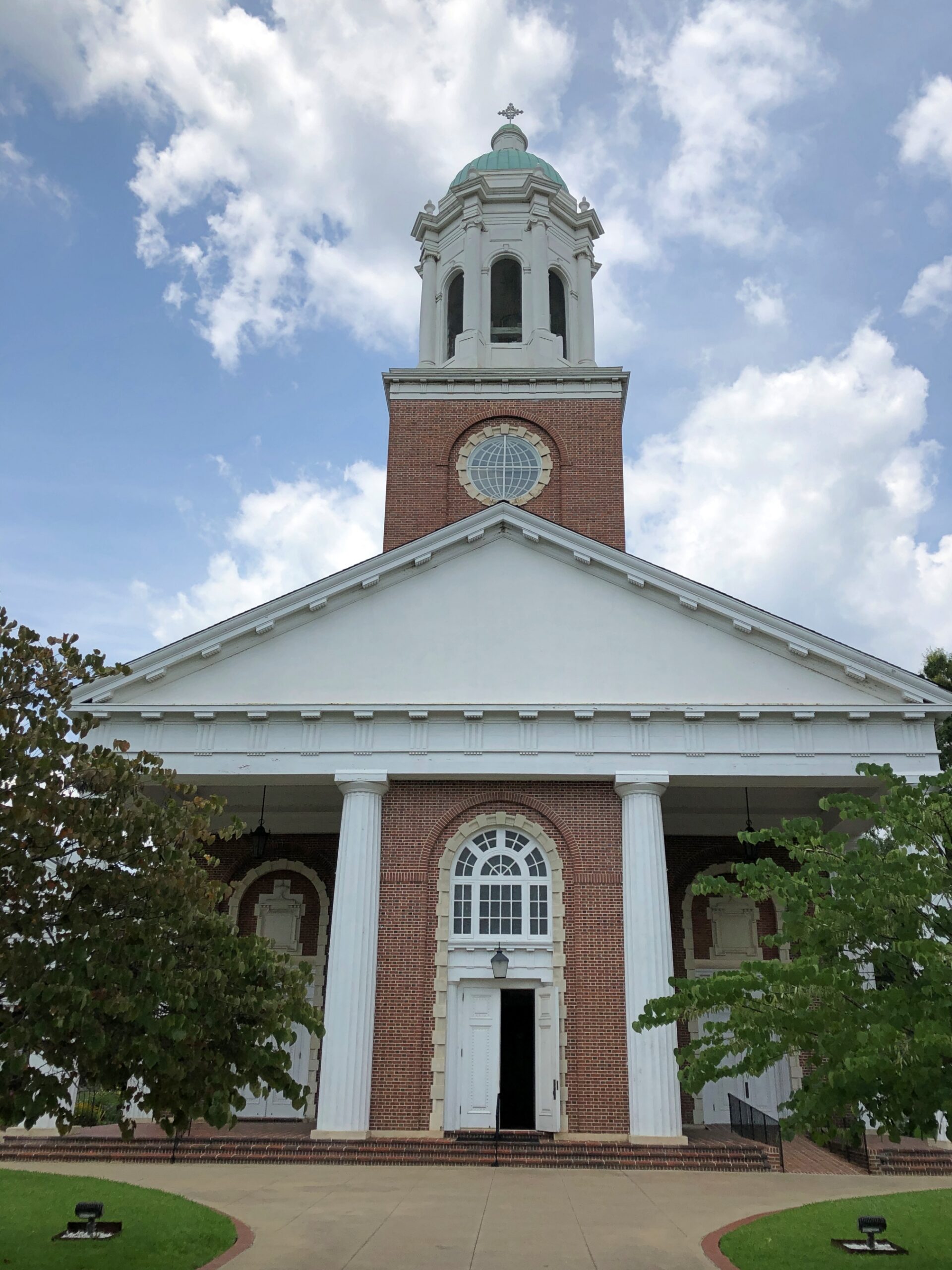
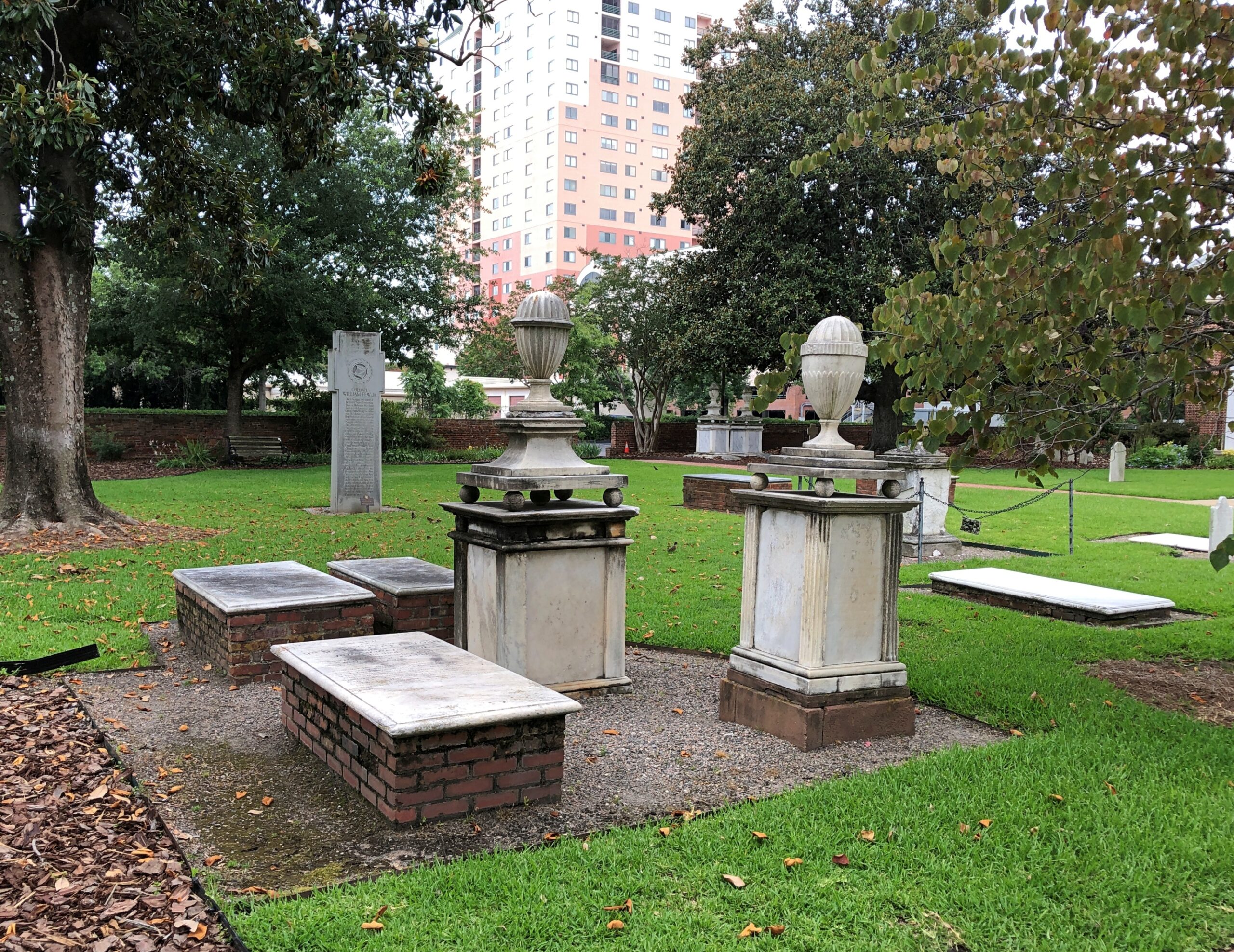
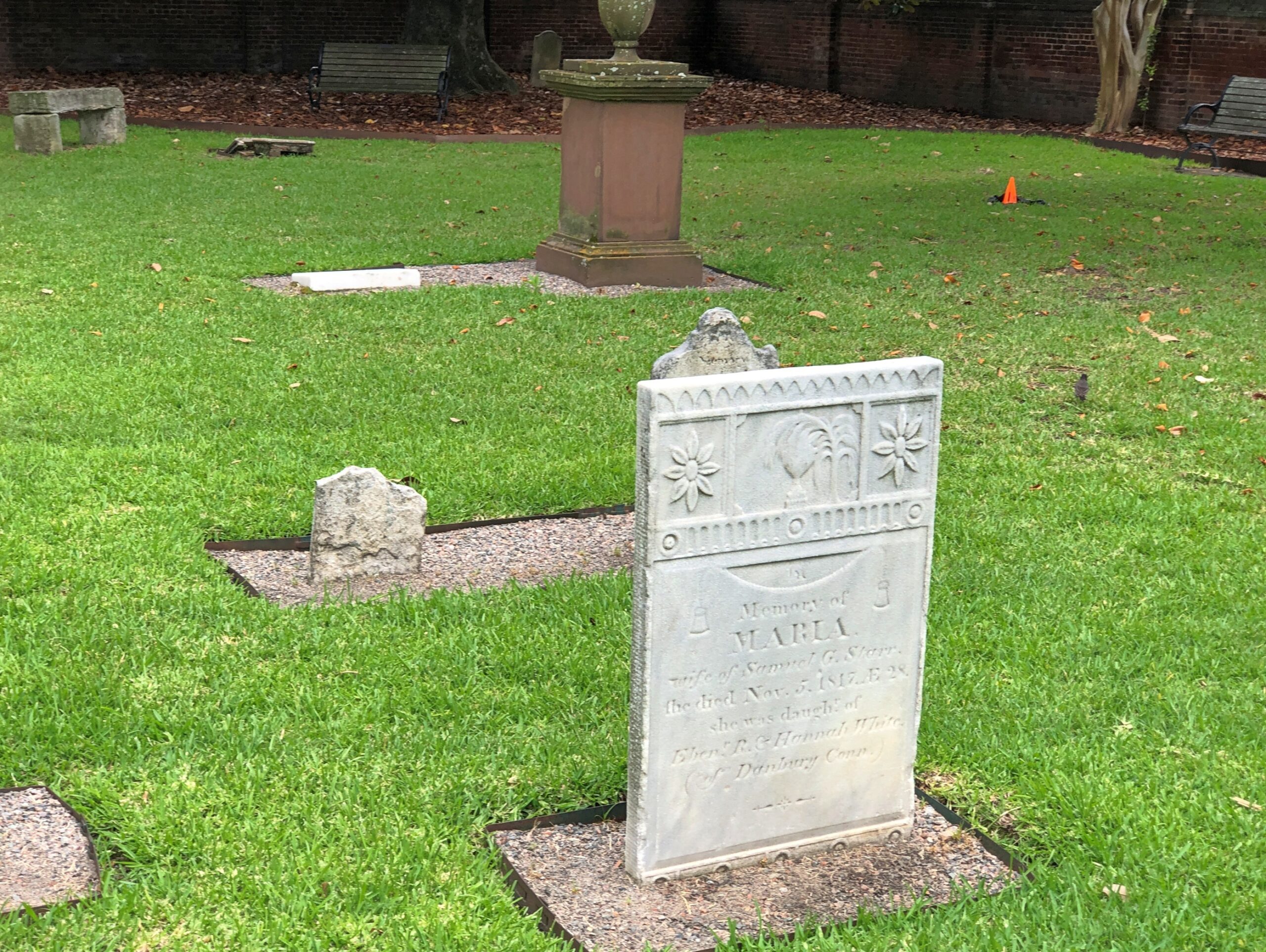
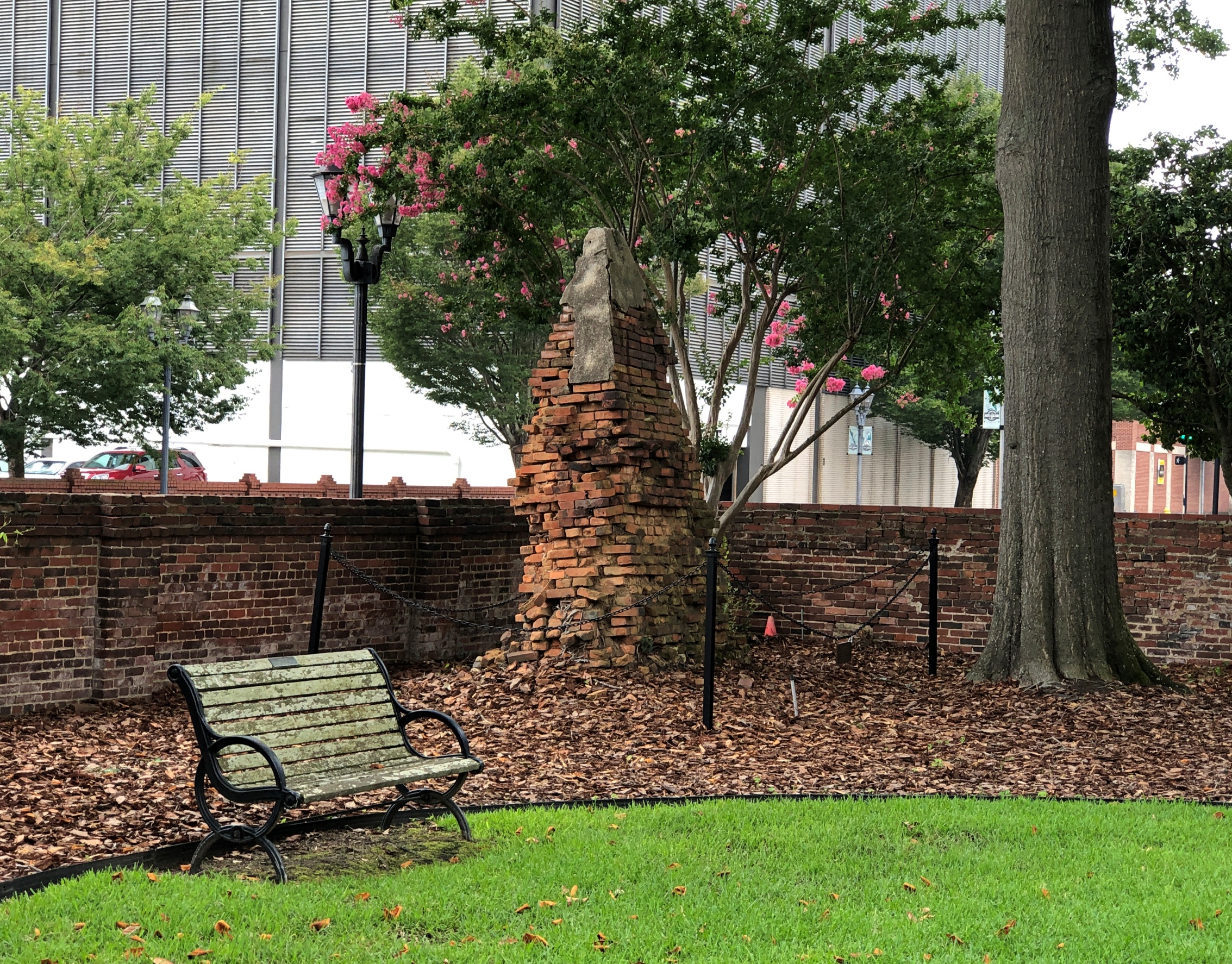
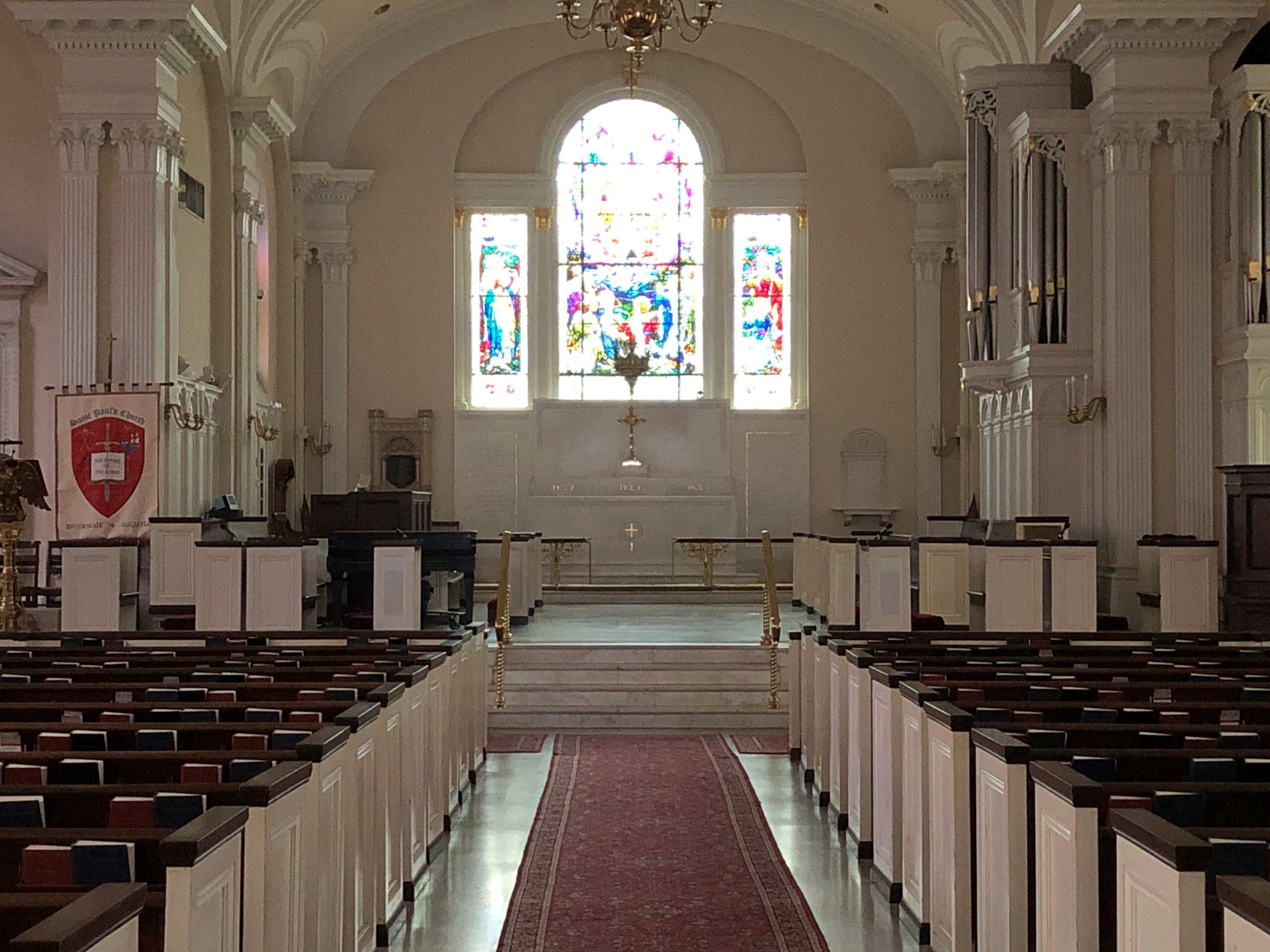
St. Paul’s Episcopal. Not only a church building, but a church graveyard as well.
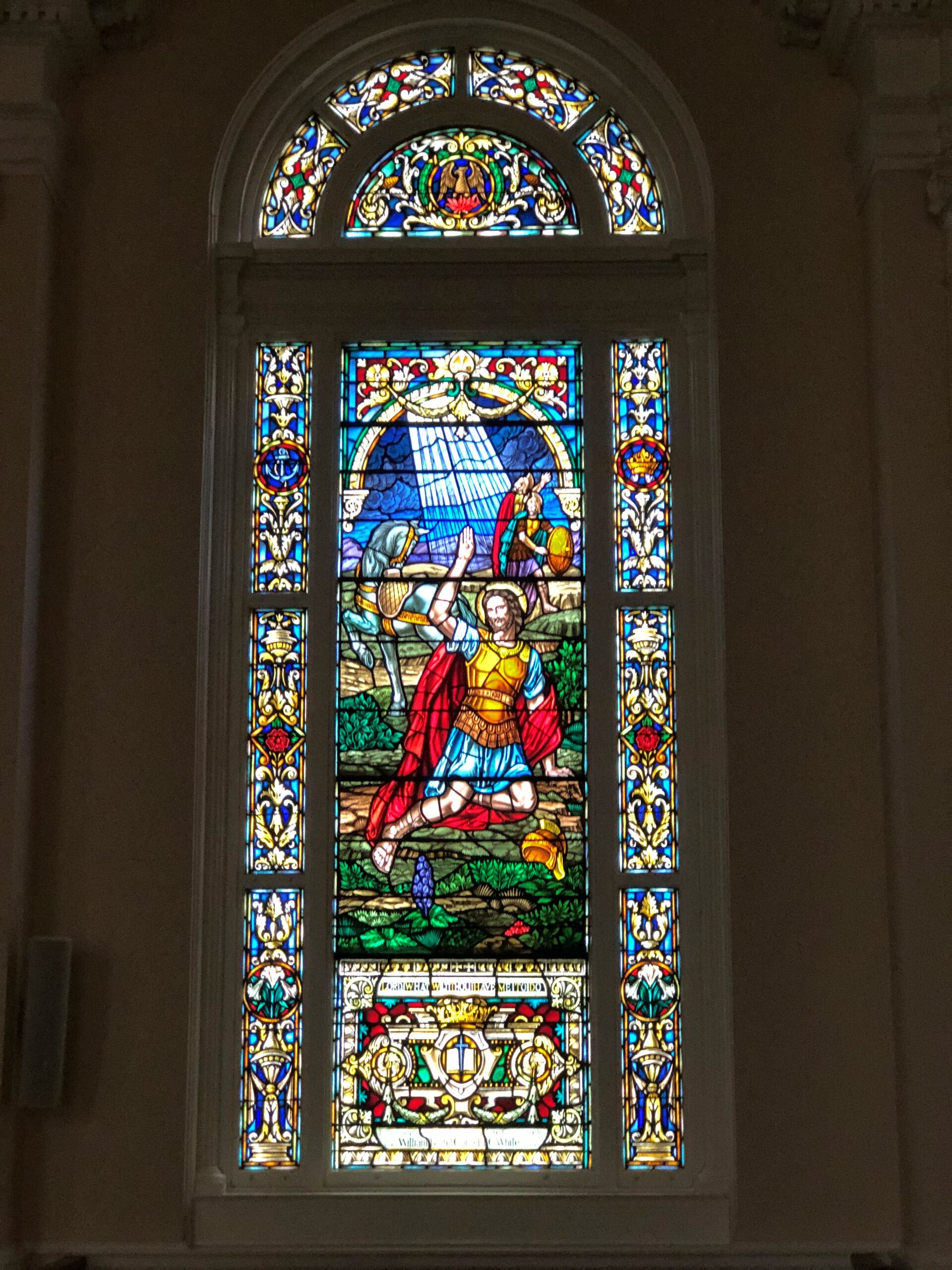
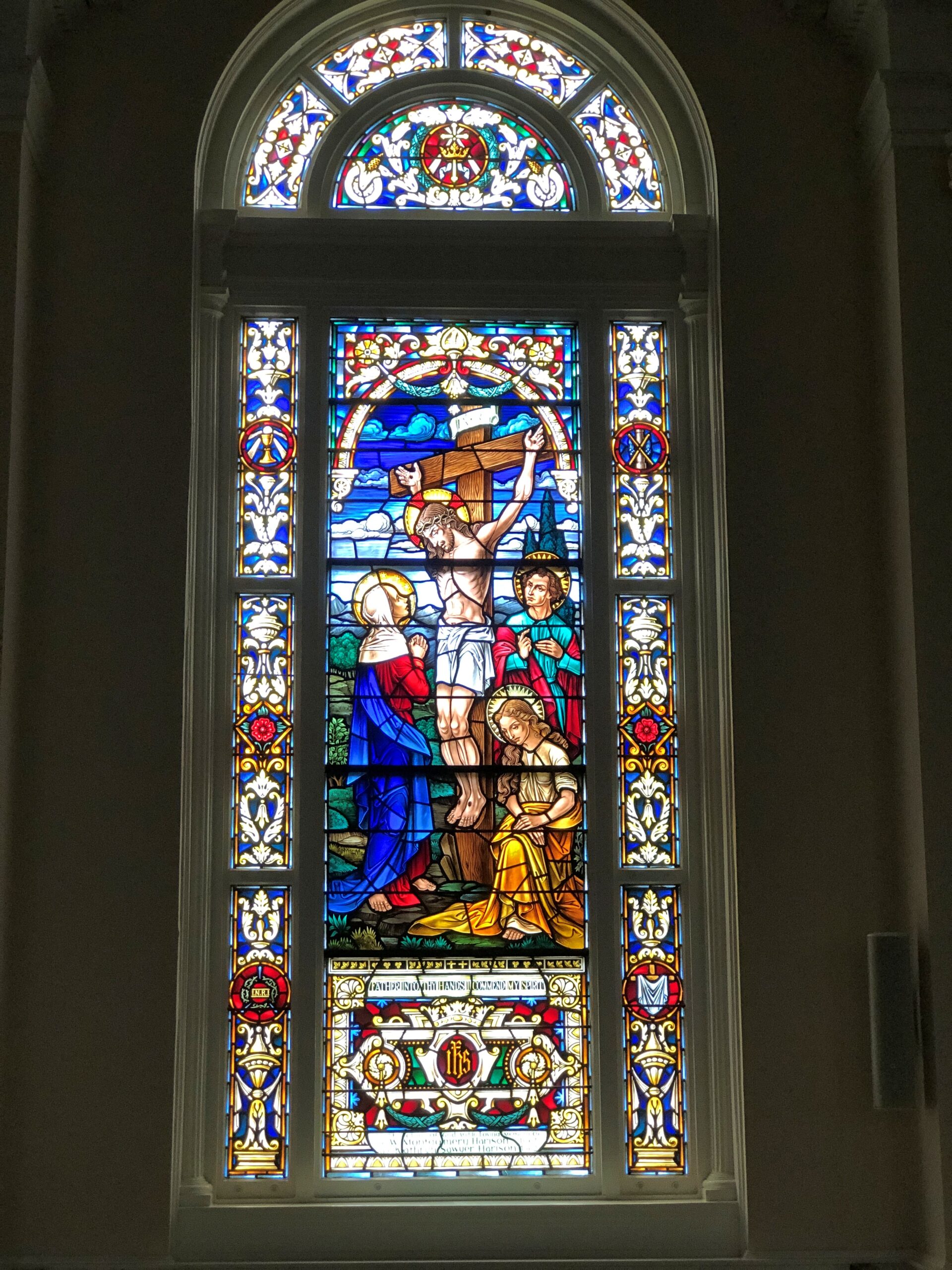
Inside, some fine stained glass.
“Four buildings on this site have been destroyed,” the church web site says. (Sank into the swamp? Burned down, fell over, then sank into the swamp? Speaking of 50-year-old references.)
“Our present church, built in 1919, was designed as a larger copy of the 1820 church lost in Augusta’s Great Fire of 1916. Among the furnishings saved from the fire is the original baptismal font brought from England in 1751, now located in the narthex.
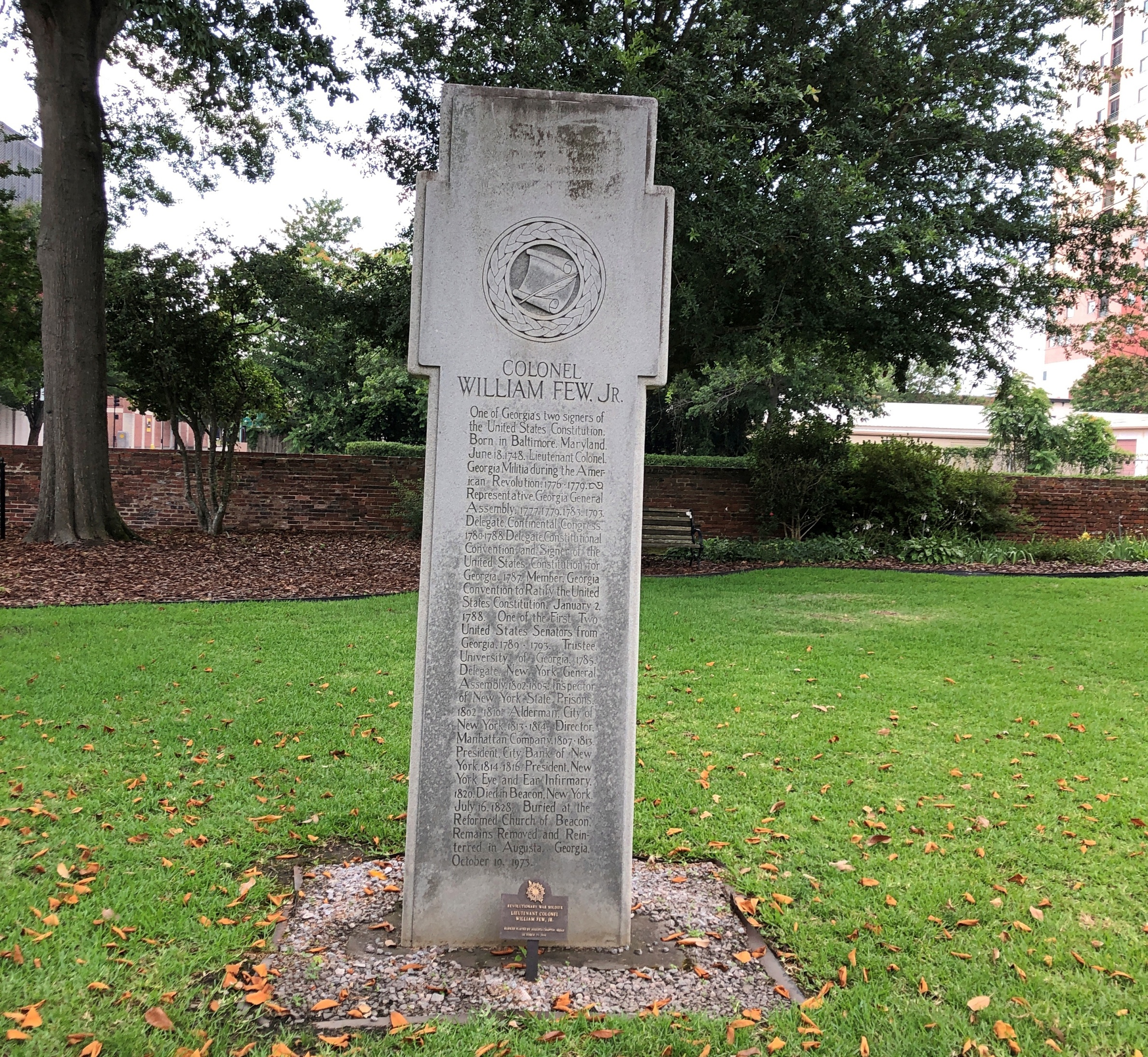
“History buffs will find the church yard fascinating. Many undocumented graves lie beneath the ground, but others are marked, including that of Col. William Few, a signer of the United States Constitution, whose portrait hangs in the narthex…”
Missed the painting. But I did see Col. Few’s stone.
A busy fellow, both before and after the Revolution, including attendance at the Constitutional Convention in 1787, and a stint as one of Georgia’s first Senators under the Constitution. His capsule bio at the Biographical Dictionary of the U.S. Congress mentions all that, except leaving out the fact – detailed by the stone I saw – that he was reinterred at his current location in 1973.
Also, no word on whether he knew Button Gwinnett, everyone’s favorite early Georgia politico. He must have. Gwinnett might have had a similar career had he not ended up on the wrong end of a dueling pistol in ’77.