CDMX

Something I didn’t know until recently: Mexico City, which has more autonomy than it used to, is no longer in the Distrito Federal, which it had been since 1824. Two years ago, the federal government of Mexico signed off on a name change, which the city’s government had wanted, to simply Ciudad de México, abbreviated CDMX.

On Wednesday, December 27, Lilly and I flew to Mexico City, returning on New Year’s Day 2018 — or actually early January 2, since the return flight was late. We stayed at a hotel in the Zona Rosa, just south of Paseo de la Reforma, a major thoroughfare, but also within walking distance of the Roma neighborhood.

We spent our time as dyed-in-the-wool, first-time tourists, seeing impressive places and structures, visiting grand museums, walking along interesting streets, eating a variety of food, taking in as much detail as possible.

Considering that Mexico City is a vast megalopolis — all too apparent from the air as we arrived in the daylight and left at night — we experienced only the slimmest sliver. But an endlessly fascinating sliver.

Adding immeasurably to the trip was the fact that my old friend Tom Jones — known him nearly 45 years — was in Mexico City at the same time. In fact, I’d suggested the trip to him on the phone last summer, when I called him to hear about his experience in seeing the eclipse. He’d been a fair number of other places in Mexico over the years, more than I have, but not Mexico City, so he was open to the suggestion.

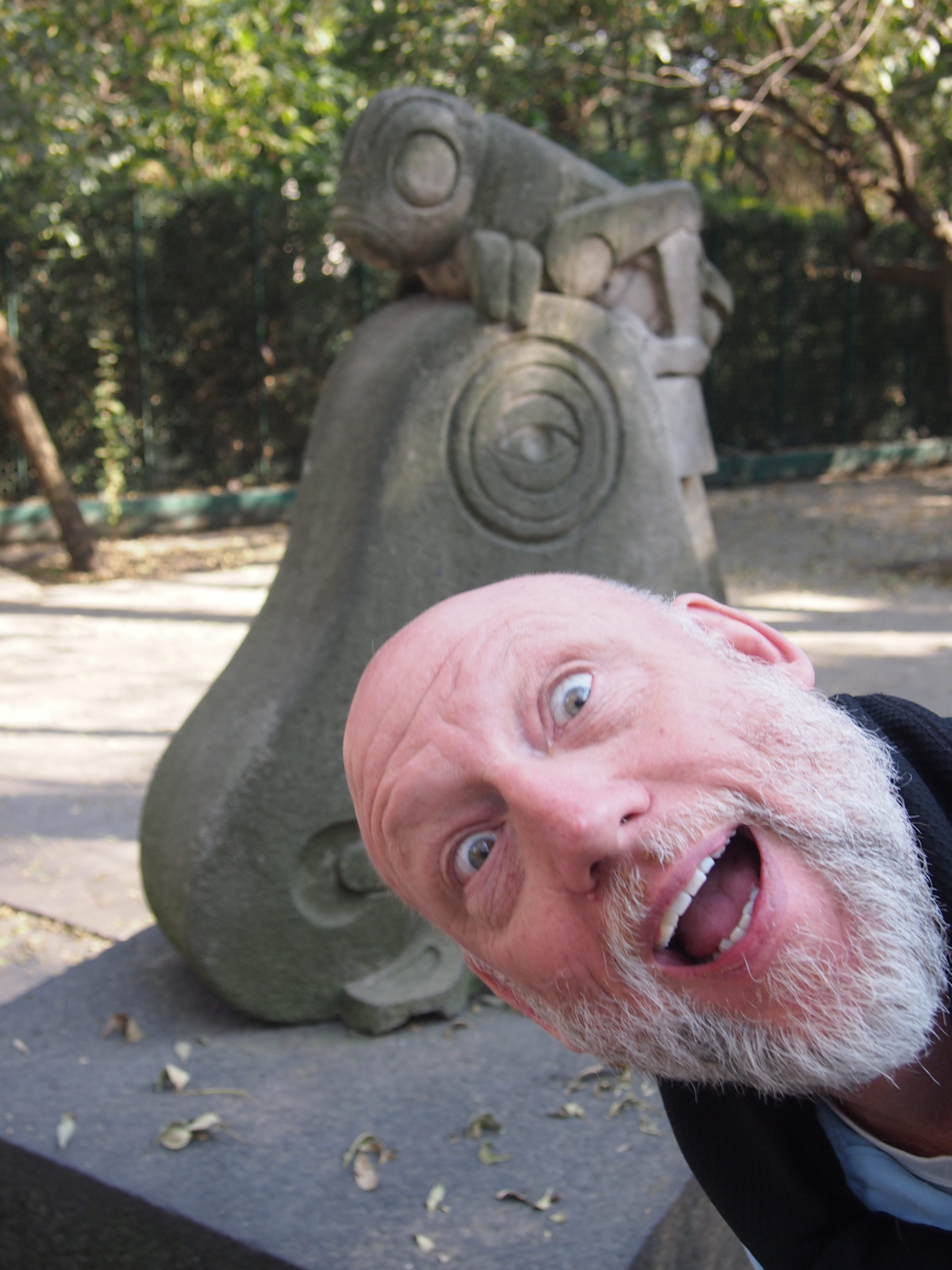
So the three of us went a lot of places together in the city. Tom has an impulse for photobombing.
The first place Lilly and I went, not long after we had arrived, was the enormous Zocalo (formally the Plaza de la Constitution), which was packed with holiday revelers enjoying a temporary ice-skating rink and amusement-park slides. We circumambulated the square, said to be the second largest in the world after Red Square, and spent some time inside the vaulting Catedral Metropolitana, which opens onto one side of the Zocalo.

The second day, with Tom joining us, was for large museums in the even larger Bosque de Chapultepec, the city’s equivalent of Central Park: the Castillo de Chapultepec, a grand palace along European lines and now a history museum; and the Museo Nacional de Antropologia, an epic museum devoted to the many and varied cultures of pre-Columbian Mexico (or more precisely, pre-Cortez).

All that makes for tired feet, so the third day was less intense. Even so, we got a good look at a small part of the charming Coyoacan neighborhood, which includes the Museo Frida Kahlo. The lines were too long to visit Frida, but not to get into the Museo Casa Leon Trotsky a few blocks away.

The next day, December 30, was exhausting, but completely worth all the energy and money we spent, because we got to visit the renowned Teotihuacan, which is to the northeast of the city, in the State of Mexico, and climb its pyramids. From there, we went back into the city to see the Basílica de Nuestra Señora de Guadalupe — the Basilica of Our Lady of Guadalupe — a pilgrimage site I’ve been curious about since I encountered The Shrine of Our Lady of Guadalupe, Des Plaines.

And as if that wasn’t enough for a day, we returned to Castillo de Chapultepec on the evening of the 30th, along with four of Tom’s friends from Austin who were also visiting Mexico City, for an outdoor performance by the astonishingly talented dancers, singers and musicians of the Ballet Folklórico de México.

On the last day of 2017, we slept fairly late, but were out and about after noon, for a visit to the Palacio de Belles Artes, a striking building with art exhibits and some astonishing murals, especially the Diego Riveras. More Rivera murals were in the offing at the Palacio National, the last large site we visited.

We were tired on the evening of the 31st, but not too tired to walk a few blocks from our hotel to the Paseo de la Reforma. One of the city’s two main New Year’s celebrations was being held around the Angel de la Independencia, a famed gold-colored statue atop a tall column in the center of a Paseo de la Reforma traffic circle. The event featured live music by well-known (I was told) Mexican bands, a countdown just like at Times Square, except in Spanish, and then fireworks: a bang-up way, literally and figuratively, to start 2018.

A Christmas Carol, Suburban Chicago Version

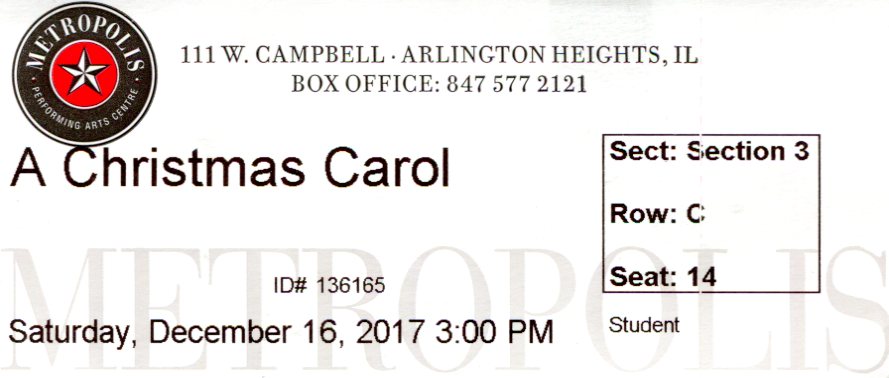
Metropolis Performing Arts Centre is an excellent mid-sized theater that would fit in anywhere in the city, but it happens to be in suburban Arlington Heights. We went to see a production of A Christmas Carol there on Saturday.

Another nice detail: they produce paper tickets. This was Ann’s.
The soulless ticket cartel might be eager to get rid of paper tickets, but venues ought to be eager to keep them. People keep them, especially if they show was good. They’re cheap long-term bits of marketing.

Ann had never seen A Christmas Carol on stage, and neither had Yuriko. The last time I saw it was also at the Metropolis — almost exactly 10 years ago, when I took Lilly.

This production had everything it needed to have, particularly an actor (Jerry M. Miller) who could handle Scrooge’s dour initial disposition that slowly melts to his inevitable conversion to altruism. A Christmas Carol without that is a limp rag indeed.

Since it’s based on a novella, and not a source play, stage versions are going to differ, as the movies do. There was more singing and dancing in this version than others I’ve seen. Each of the Christmas spirits got a song-and-dance by a troupe, for instance, which was pleasant enough. This version also featured Bob Cratchit as the story’s narrator, which was a little odd.

A couple of important lines were omitted. Lines I think are important, that is. Old Fezziwig, who seemed reasonably prosperous — he had apprentices, after all — but who also knew that life was about more than making money, got none of his lines. He was mentioned in passing by Scrooge, and he got to dance, but that was about it.

“Yo ho, my boys!” said Fezziwig. “No more work to-night. Christmas Eve, Dick. Christmas, Ebenezer. Let’s have the shutters up,” cried old Fezziwig, with a sharp clap of his hands, “before a man can say Jack Robinson.”

When faced with the Spirit of Christmas Yet to Come, Scrooge didn’t ask it a most important question.

“Before I draw nearer to that stone to which you point,” said Scrooge, “answer me one question. Are these the shadows of the things that Will be, or are they shadows of things that May be, only?”

Just quibbles. Now I’ve done my bit to introduce my children to the Dickensian part of Christmas. If you’re going to celebrate the holiday in this post-Victorian world, you should know it.

Adios, November

Three yawning months of meteorological winter ahead. That’s what counts for winter: December, January and February. Never mind what anyone says about the solstice. But at least no heavy snow or ice is forecast for now.

Back again to posting around December 10.

What did we do to deserve this sunset? A late November event, as seen from our deck.
On Thanksgiving, the girls and I watched Airplane! on demand. What is it about that movie and its rapid-fire, throw the jokes against the wall to see if they’re funny structure? I’ve watched it a number of times since I saw it when it was new, and it’s funny every time.

Unlike another movie I paid good money to see in 1980: The Hollywood Knights. That was a mistake. So much so that sometime afterward I invented my own personal scale of movie quality: The Hollywood Knights Scale, from zero to some unspecified large number, zero being the worst.

The Hollywood Knights comes in at exactly 0 on my idiosyncratic scale. I’ve seen some bad movies in my time, but that ranking is still valid as far as I’m concerned (though I’d have to put, say, Patch Adams at 0.1).

Not familiar with The Hollywood Knights? Wiki gives a pretty good summation: “The ensuing antics include, among other things, a sexual encounter involving premature ejaculation, a punch bowl being spiked with urine, an initiation ceremony involving four pledges who are left in Watts wearing nothing but the car tires they are left to carry, a cheerleader who forgets to put on her underwear before performing at a pep rally, several impromptu drag races, and the lead character of Newbaum Turk (Robert Wuhl) wearing a majordomo outfit and singing a version of ‘Volare’ accompanied by the sounds of flatulence. Mooning also plays a prominent role in the film…”

None of those things necessarily make the movie unfunny. After all, Airplane! includes jokes about drug abuse, pederasty, oral sex, a sick child, and African-American dialect. There are ridiculous visual gags, such as Ted Striker’s drinking problem or pouring lights on the runway. Punning is rampant (don’t call me Shirley). Yet it all works as a comedy. The writing, directing, acting, timing and entire conceit as a spoof of more serious movies are vastly better than anything The Hollywood Knights did.

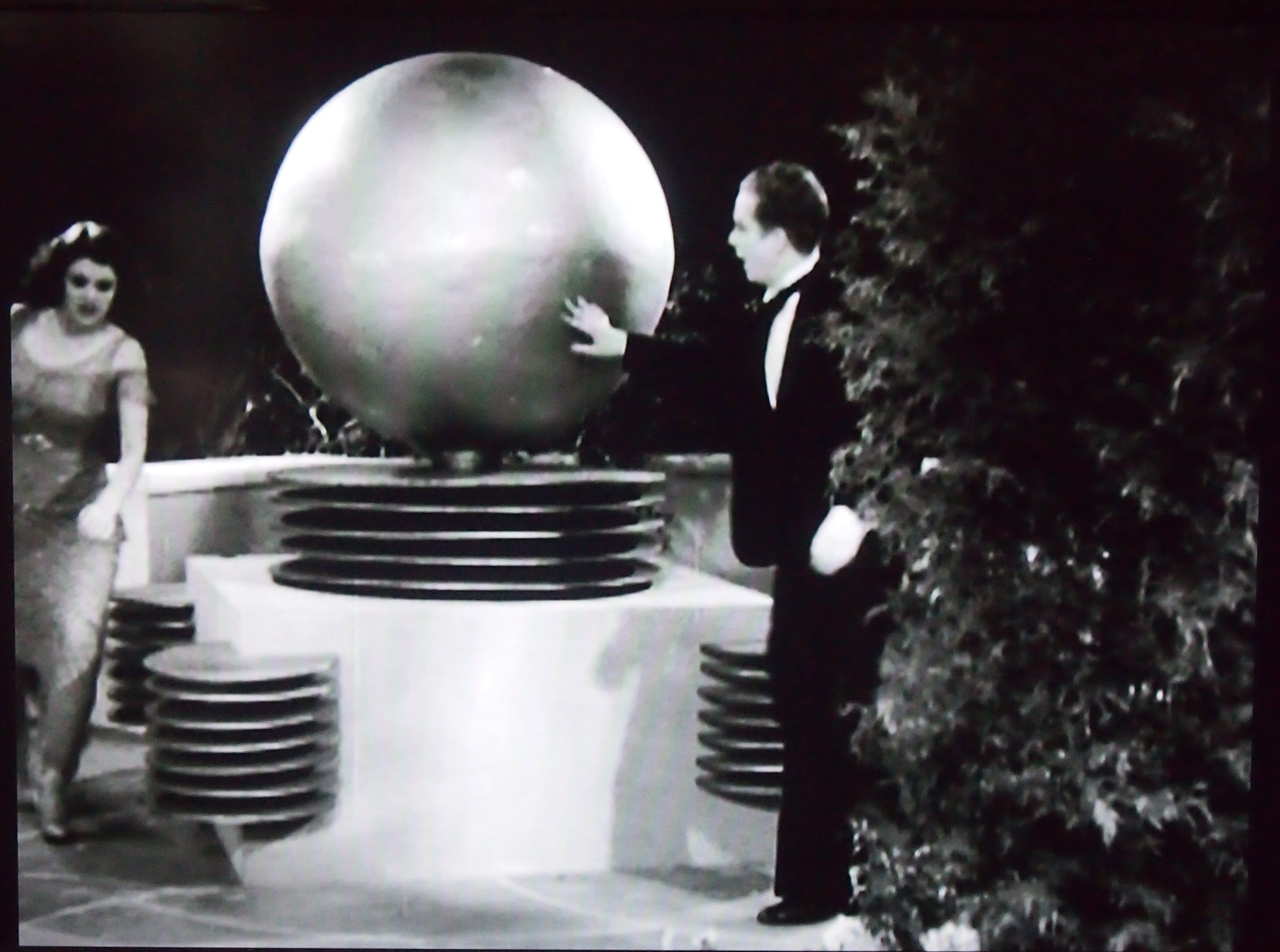
Speaking of odd things in movies, this is a still from Animal Crackers.

That’s supposed to be part of an outdoor patio of a lavish home on Long Island. The characters, who are not really that important in the scheme of the comedy, are the wealthy homeowner’s daughter and her honest but poor boyfriend. What caught my eye was that structure behind them.

According to the imdb, the uncredited art director for the firm was the German-born Ernst Fegté, who was working in Hollywood by 1925, and who had a busy career. Now what, I can imagine him thinking, would a wealthy Long Island socialite want for her patio? Something — modern.

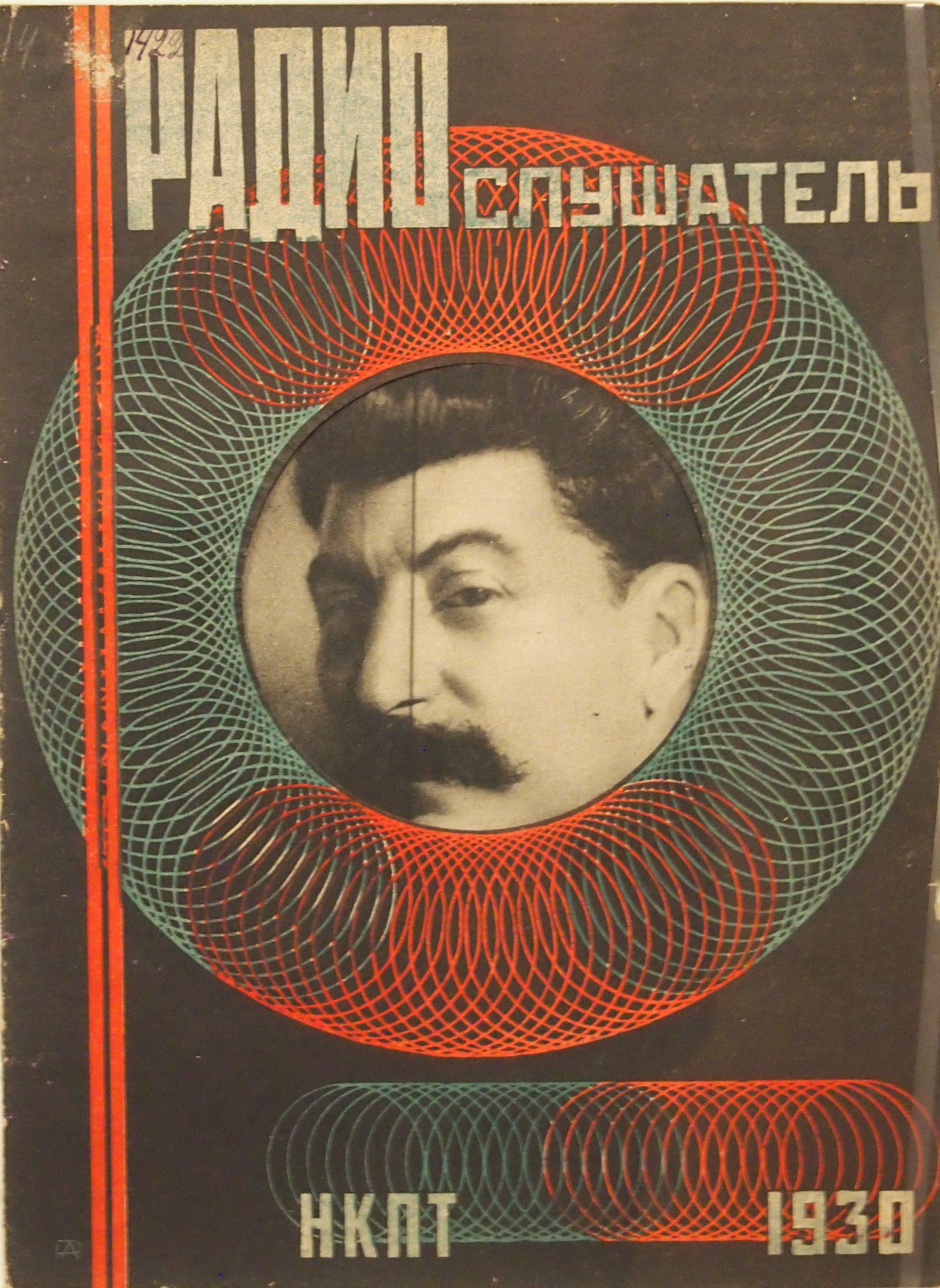
The movie was made in 1930. Here’s something else from exactly then, a cover of Radio Listener magazine that I saw at the early Soviet art exhibit at the Art Institute last weekend.

It’s a Peakaboo Stalin. Lenin figured in a fair number of the works, but Stalin was only an up-and-coming character during most of the period. A little like Fonzie, though — pretty soon he’s going to take over the show.

One more thing, and naught to do with movies or the Soviet Union. I took Lilly back to UIUC on Sunday, and en route arranged to take a picture of this roadside attraction in Kankakee. Almost literally roadside, since it’s best seen from I-57.
“28 feet tall, Abe stands in front of a heavy equipment rental lot, and holds signs that promote whatever its owner feels strongly about at the moment,” says Roadside America.

I’ve seen him with a sign, but for the moment he holds none. Just as well, I figure. A sign in Honest Abe’s hands is gilding the lily.

Tuesday Before Thanksgiving Leftovers

Back on Sunday, November 26. A good Thanksgiving to all.

At about 9 p.m. on November 21, I went outside and there he was. Orion, just rising in the southeast. Winter’s here. Fitting, since it will be well below freezing until tomorrow morning.

Visited the library again recently. Did another impulse borrowing: a box set with five Marx Brothers movies on five disks. Their first five — The Cocoanuts, Animal Crackers, Monkey Business, Horse Feathers and Duck Soup. I’m going to work my way through them over Thanksgiving because it occurs to me that, except for Animal Crackers and Duck Soup, I haven’t seen any of them in more than 20 years. Maybe 30 in some cases.

A booklet comes with the box, including reproductions of the movie posters. The Cocoanuts is praised on its poster as an All Talking-Singing Musical Comedy Hit! Talkies came along just in time for the Marx Brothers.

I’m glad the Bluebird Cafe in Nashville is a long-standing success. I remember visits there as far back as 1984, for meals or music, such as a show by Kathy Mattea sometime in the mid-80s, and always chocolate chunk cheesecake. But I wasn’t glad to read the following in the Washington Post this week:

Nashville, first on ABC and now CMT, has made the 90-seat venue so incredibly popular over the last five years that it’s impossible to get in unless you have a reservation (snapped up seconds after they’re available online) or wait in line outside for hours.”

Hell’s bells. Not that I visit Nashville often enough for this to affect me, but still. The thought that the Bluebird has lines like a Disneyland ride bothers me.

Still, I have many fond memories of the 1980s Blue Bird, along with a number of other small Nashville venues I used to visit, such as the Station Inn, Exit/In, Springwater, 12th & Porter, the Sutler, and Cantrell’s.

The Station Inn offered bluegrass. One fine evening ca. 1985 I saw Bill Monroe himself play there. Some years earlier, I went now and then with friends Neal and Stuart. After ingesting some beer, Stuart in particular was adamant that the band, whoever it was, play “Rocky Top” and “Salty Dog.” Usually the band obliged.

Something to know: the Osborn Brothers released the first recording of “Rocky Top” nearly 50 years ago, on Christmas 1967.

While putting the “detach & return” part of my water bill in the envelope the other day, I noticed in all caps block letters (some kind of sans-serif): PLEASE DO NOT BEND, FOLD, STAPLE OR MUTILATE.

Two of the classic three. Poor old “spindle.” As neglected as the @ sign before the advent of email. As for “bend,” that’s an odd choice. I bend paper a lot, but unless you fold it, paper pops right back.

Correction: Not long ago, I recalled a kid that came to collect candy at our house one Halloween in the late ’90s, dressed as a Teletubbie. I had the time right: it was 1998. But oddly enough, I actually saw two little kids as Teletubbies, at least according to what I wrote in 2004:

“That year, all the kids came during the day, and I have a vivid memory of two kids aged about three to five, dressed as Teletubbies in bright costumes that looked like they could have done duty on the show itself.”

Odd. Memory’s a dodgy thing. How much remembering is misremembering? Or are the details that important anyway?

Thursday Havering

A lot of the ads popping up lately on YouTube have been to promote Canadian tourism. Mostly the ads depict, in music video style, young people doing the kind of vigorous activities that (some) young people must imagine is the essence of traveling to exotic places like Saskatchewan. Actually, one today featured the Yukon.

I’m all for visiting Canada, and encouraging people to do so, but the ads don’t really speak to me. Besides, Canada’s not really top of my mind in November. Then again, it’s good to plan ahead, so you can visit Canada, and even the Yukon, during that short window of opportunity when the place is pleasantly warm.

I never knew until recently that The Proclaimers did a charming version of “King of the Road” back in 1990. No one does it like Roger Miller, but I smile when I hear lyrics like, “destination Bangor, Maine” in that burr of theirs.

“King of the Road,” in the way things go on the Internet, soon leads to a song stuck in mid-60s amber, “Queen of the House.” Even better, the song is done in a Scopitone.

I was in the city not long ago with a camera in the front seat, so I took a few pictures while stopped at traffic lights. Such as this place. So very Chicago.
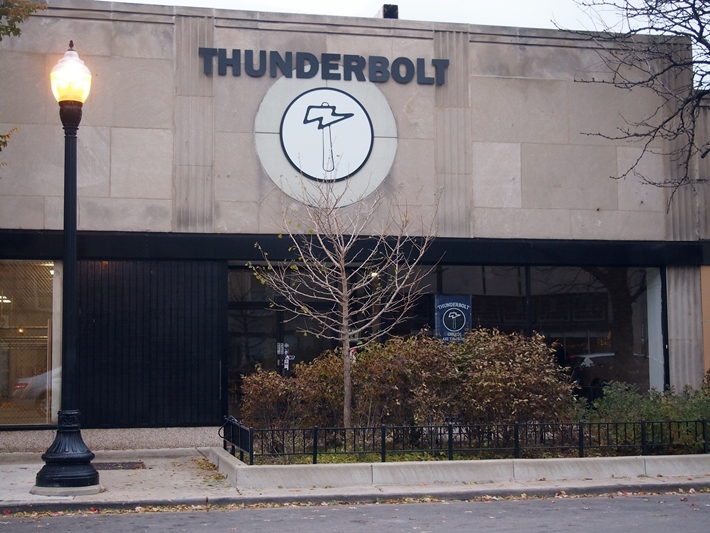
Then there was Thunderbolt.
It’s an ax throwing venue, only the second one in Chicago, according to the Tribune, opening this spring.

“Ax throwing — indoor or outdoor — is a skill-based sport; [owner Scott] Hollander likens it to pool or darts, where participants can take the competition as seriously or lackadaisically as they please,” the paper says.

“Easygoing ax throwers can book an hour at a lane for $15 per person Wednesdays and Thursdays, and for $20 per person Fridays, Saturdays and Sundays. Food and nonalcoholic drink is allowed and can be consumed at the plywood stands behind each pair of lanes or at the picnic tables in the building. Thunderbolt also is available for bachelor or bachelorette parties, birthday parties and corporate events.”

What do I think of when I hear about ax throwing? Ed Ames, naturally. Tomahawk, but close enough.

Casablanca at 75

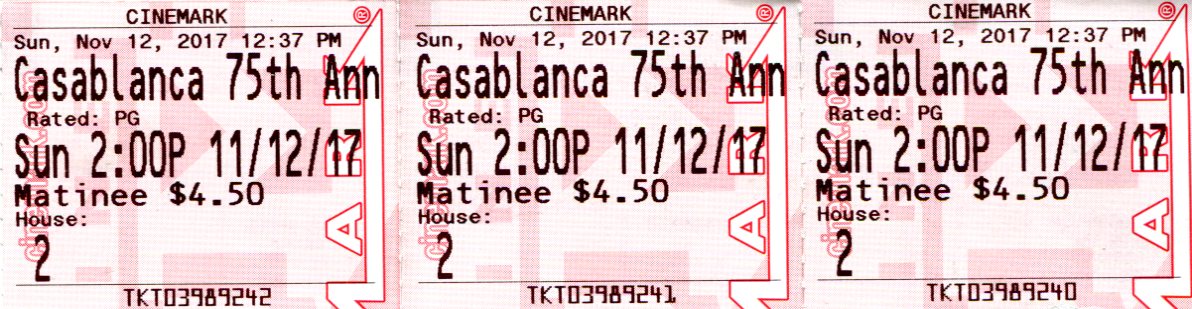
Yesterday we all went to see Casablanca on the big screen. It was in a few theaters nationwide on the occasion of the 75th anniversary of its late 1942 release.

At $4.50 a pop, how could I pass that up? I checked, and the other movies showing at the same multiplex are Thor: Ragnarok, Daddy’s Home 2, Murder on the Orient Express (starring Kenneth Branagh’s facial hair, I’ve read), A Bad Mom’s Christmas, Jigsaw, Boo! A Madea Halloween, Happy Death Day, Geostorm, It, My Little Pony: The Movie, Seven Sundays, and, interestingly, two Bollywood features: C/o Surya and PSV Garuda Vega.

I’ll never live long enough to confirm this, but I suspect that not a single one of those other titles will be revived for a 75th anniversary showing, or for any other year.

Ann had never seen Casablanca before. I didn’t expect her to know, for instance, much about the geopolitical background of the movie, such as why “Vichy” might be important, so I spent a few minutes beforehand explaining a few things to her. I went as far as whistling a few bars of “La Marseillaise.”

She said that sounded familiar — of course it does, it’s an aural shorthand for “France” in English-speaking media — but she didn’t know what it was. I said it was the national anthem of France, and that the movie puts good use of it.

Rick Blaine has been characterized as a stand-in for the United States and its isolationist ways before Pearl Harbor, and I suppose there’s something to that. After all, Victor says to Rick (and I think it’s too-good-by-half Victor Laszlo’s best line): “Welcome back to the fight. This time, I know our side will win.” An optimistic line, that. It’s sobering to think that the movie was not only set when the fate of mankind was in the balance, it was made then.

I’ve seen Casablanca a number of times (not sure how many) since the first time in film class in 1983, so I could focus on details, such as the evocative sets, especially Rick’s. Carl Jules Weyl, who did the splendid sets on The Adventures of Robin Hood not long before and on The Big Sleep a few years later, was the art director.

It also occurred to me how well Victor and Ilsa were dressed. Awfully stylish for a couple barely staying ahead of Nazis pursuing them across the Mediterranean and then North Africa. We never see the luggage that Rick sends Victor off to deal with at the airport, so he can have a moment to tell Ilsa what’s what, but it must have been a steamer trunk or two.

But that’s overthinking the matter. This is the Golden Age of Hollywood. Of course the luminous Ingrid Bergman is going to be dressed to the nines, even in a war-torn world.

Something else I noticed this time was a line with distinct foreshadowing, spoken by Major Strasser to Ilsa: “My dear, perhaps you have already observed that in Casablanca human life is cheap.” Indeed. As it turns out, cheap for Major Strasser, the only major character who dies on screen. And I never get tired of hearing Capt. Renault say, “Round up the usual suspects.” When my film class heard that, we cheered.

Ann wasn’t entirely sure what nationality Renault was supposed to be, so she asked me after the movie. I suppose that’s a function of not watching enough old movies with French policemen or soldiers in them. The kepi is all earlier generations needed to spot a Frenchman, but that must not be so any more.

I also suggested to Ann that she pay attention to the supporting and minor characters, who are widely regarded as one of the chief delights of the movie. Especially these two.

I’m glad to report that Ann liked the movie. It’s entirely possible that she’ll see it again when she’s older, and get more out of it, as one does with good movies re-watched or books re-read. Maybe she will see it around the 100th anniversary. I’m sure Casablanca will still be watched then.

Thursday Tidbits

Last night Northern Illinois dropped below freezing, and it wasn’t a lot warmer during the day. A taste of winter, dressed like fall.
Fall colors, ChicagoI didn’t know until recently that Lotte Lenya, who can be heard here singing “Mack the Knife,” or maybe more properly “Die Moritat von Mackie Messer,” played Rosa Klebb, the SPECTRE operative who tries to off James Bond with her poison-tipped shoe in From Russia With Love.

Not an important thing to know. Just another one of those interesting tidbits to chance upon.

A rare thing: a YouTube comment that’s actually funny. It’s at a posting featuring “Pack Up Your Troubles in Your Old Kit Bag and Smile, Smile, Smile!” sung by Oscar Seagle and the Columbia Stellar Quartette, recorded January 25, 1918.

Someone calling himself Xander Magne said: ” ‘Praise the Lord and Pass the Ammunition’ ain’t got s–t on this, sonny. Damn 30s kids with their jazz and their swing and their big band and their ‘World War 2.’ We used to have a Great War and it was Great and you liked it!”

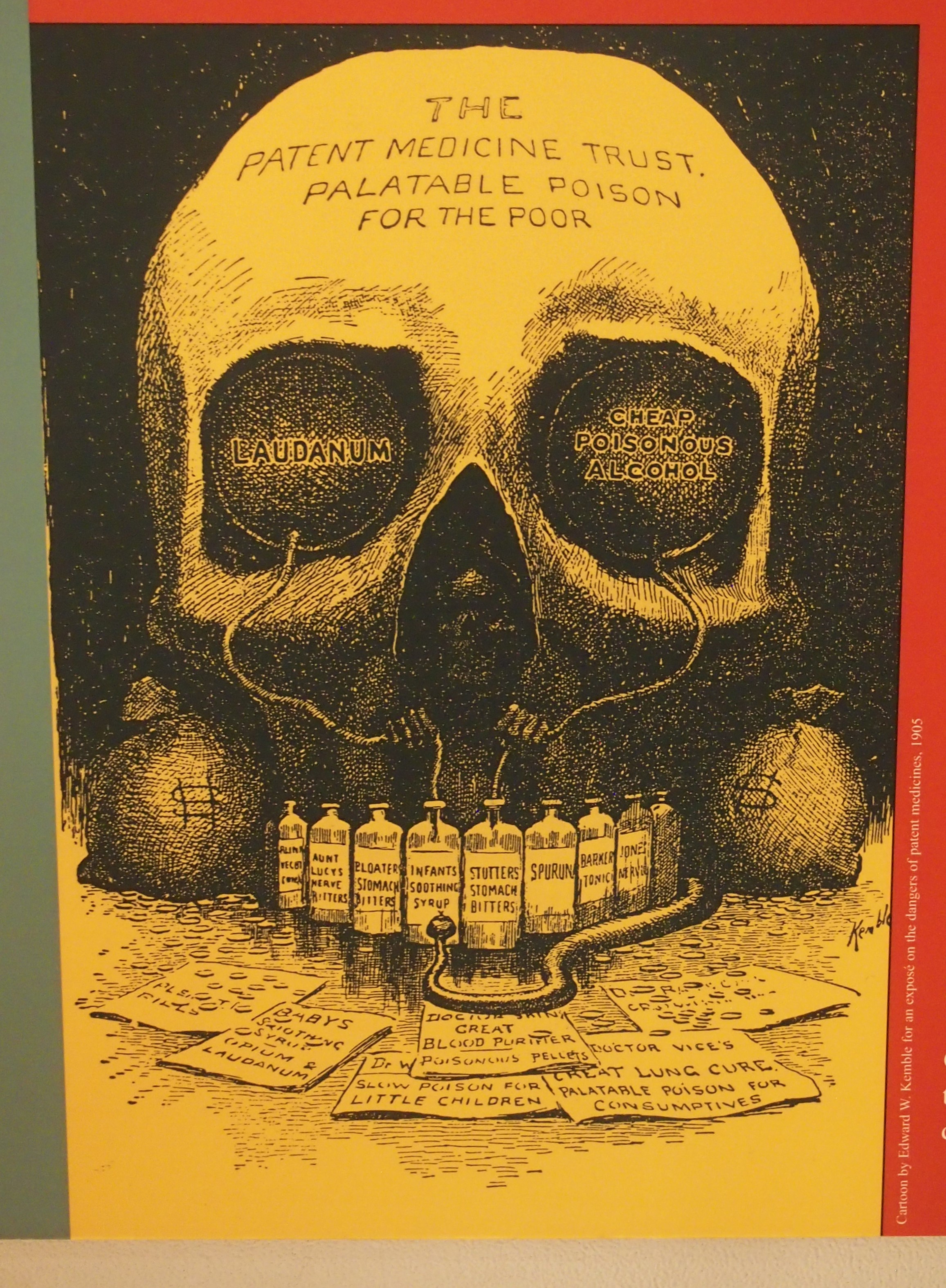
One more thing I saw at the International Museum of Surgical Science, a polemic cartoon by Edward Kemble that was part of a display about patent medicine, the Pure Food & Drug Act, etc.

International Museum of Surgical Science, Chicago“Palatable Poison for the Poor.” Whew. Good thing that’s not possible in the 21st century, eh?

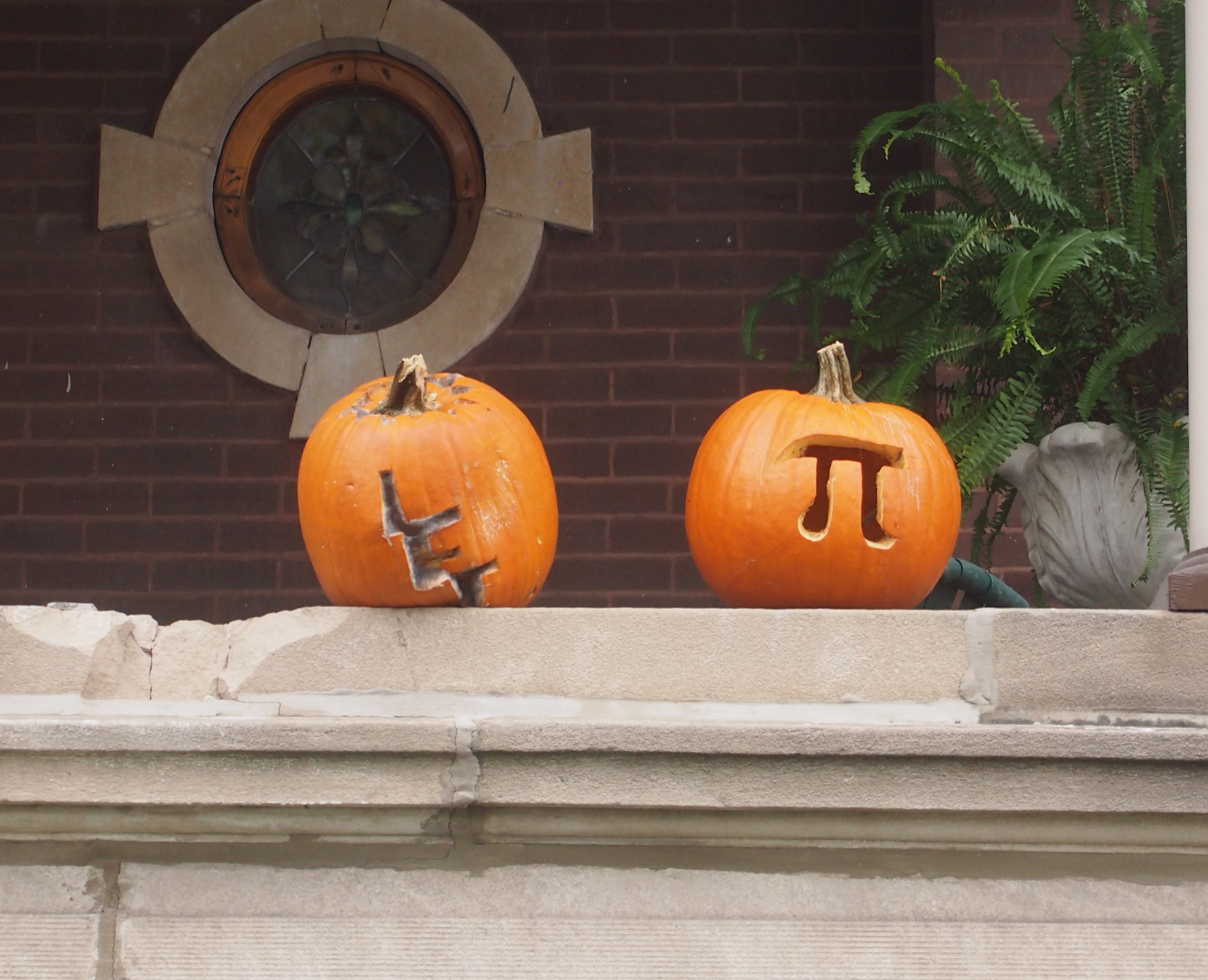
Again, too melancholy a note on which to end. Here’s something I saw just before Halloween. Pumpkin π.

Pumpkin π

A bit o’ pumpkin whimsy.

Upon Saint Crispin’s Day

I’ve posted this before, but it was nine years ago, and besides, you can’t watch the St. Crispin’s Day speech often enough.

Laurence Olivier’s version is, of course, very accomplished, but somehow it doesn’t resonate with me like Kenneth Branagh’s.

As it happens, I’ve been reading about Agincourt in The Face of Battle by John Keegan (1976) these last few days. I’ve had the book a long time, though not 41 years, and only recently decided to get around to it. In Keegan’s capable hands, the historical Agincourt is every bit as interesting as Shakespeare’s.

The Pirates of Penzance

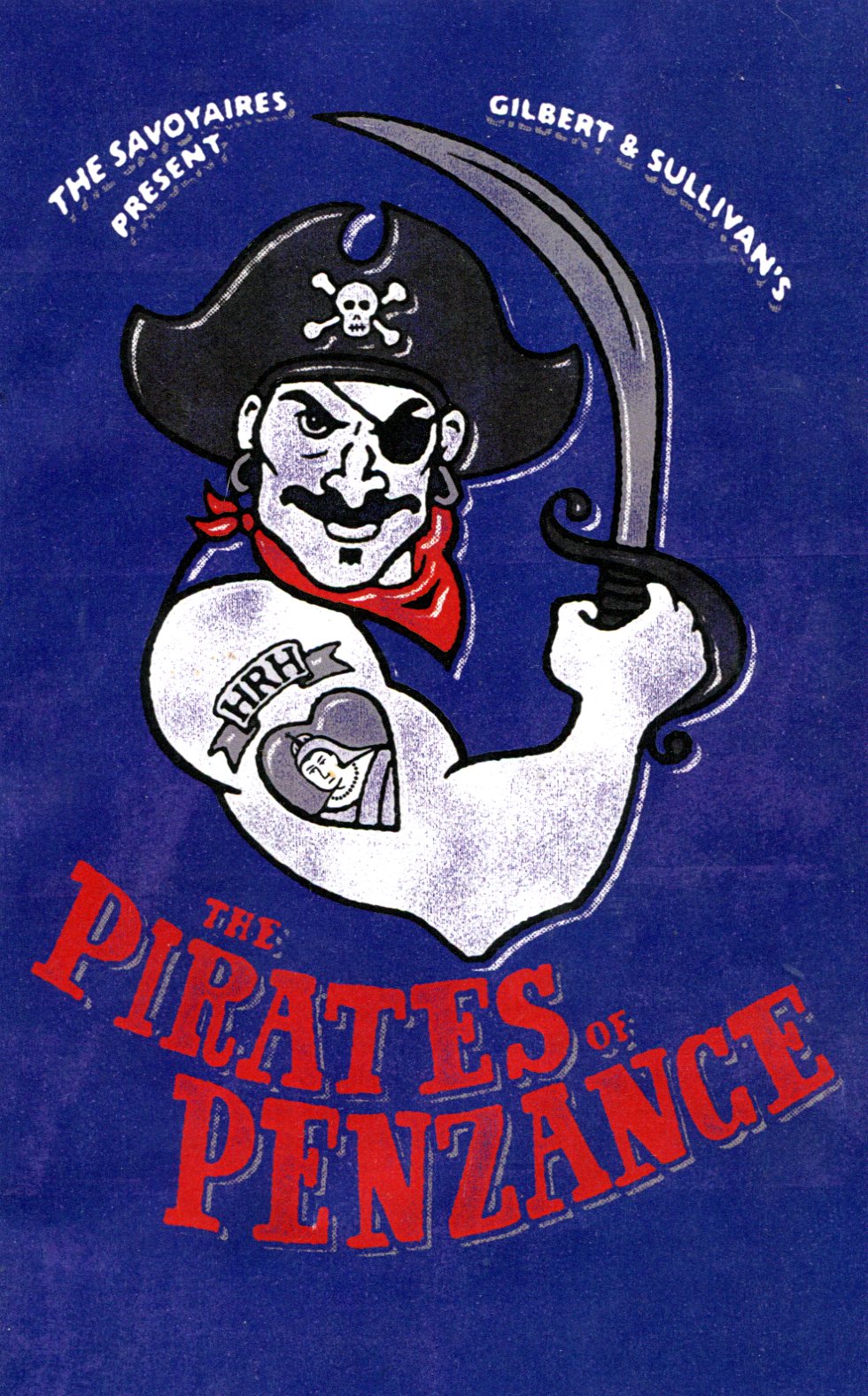
Not long ago Ann and I went to Evanston to see a production of The Pirates of Penzance by a troupe known as the Savoyaires, directed by Amy Uhl (choreography) and Timothy Semanik (music). I’d seen it advertised in the Iolanthe program last spring, and it occurred to me that I’d never seen it on stage. So I wanted to go.

img492I saw the Kevin Kline and Linda Ronstadt movie version sometime in the mid-80s at the Vanderbilt cinema. It was essentially a filming of the 1980 Broadway production. I’m not sure what it was, but I remember the movie being a little off. A little stiff.

Maybe it didn’t offer enough of that jolly good time that you should get from Gilbert & Sullivan. We got that from the Savoyaires, who didn’t need an elaborate venue to pull it off. The show was staged in a sizable but plain junior high school auditorium, complete with an orchestra.

Phillip Dothard played the Pirate King with gusto, and Sahara Glasener-Boles brought the right amount of sauciness to the part of Ruth. Of course what everyone was waiting for was the Major-General to show up and sing his signature song. An actor named Bill Chamberlain did that part.

“How did he learn to do that?” Ann asked later.

“Practice,” I said, though in fact, even if I had the voice, I doubt that I could ever do “I Am the Very Model of a Modern Major-General.”

And while Chamberlain was very good, he didn’t quite get all of the enunciation. Close enough, though. He was definitely part of the jolly good fun.

The program included “A Pirates of Penzance Glossary,” including the likes of Babylonic cuneiform, The Frogs of Aristophanes and Heliogabalus, whom it described as an “infamously depraved Roman emperor.”

“What was he depraved about?” Ann asked.

I couldn’t remember. It had been years since I’d read about him. A vague sense of perversion clings to him, but I wonder if there’s much to it. Ancient historians liked gossip and lurid invention as much as anyone else, and so did not-so-ancient historians.

“To confound the order of the season and climate, to sport with the passions and prejudices of his subjects, and to subvert every law of nature and decency, were in the number of his most delicious amusements,” Gibbon wrote of the boy-emperor.

He also wrote: “It may seem probable, the vices and follies of Elagabalus have been adorned by fancy, and blackened by prejudice.” In other words, dress as a woman a few times and people will make up all kinds of stories about you, especially if you’re emperor.

Ah, well. I will leave it to learned sages to argue over Heliogabalus. Next year’s production by the Savoyaires is Ruddigore, another G&S I’ve never seen staged. I’ll try to go.

Mr. Hall is Gone, But the Monty Hall Problem Lives On

There needs to be a verb to describe reading an obiturary, or hearing about a recent death, with the reaction: He was still alive? Or she, to be complete. Happens a lot. Example I read about not long ago: Monty Hall.

I can’t deny that I spent some hours of my young life watching him preside over eager costumed contestants vying for a new car! etc. But I didn’t know until a few years ago about the Monty Hall problem.

Another example: Tom Paley of the New Lost City Ramblers, the other musical Tom P who died recently. How many people recorded songs about the war with Spain in the late 1950s?

For an even more obscure version, here’s “The Battleship of Maine” by Red Patterson’s Piedmont Log Rollers. Recorded in 1927, when the war was very much in living memory. It’s a little hard to (easily) scare up information about Red, but it’s possible.