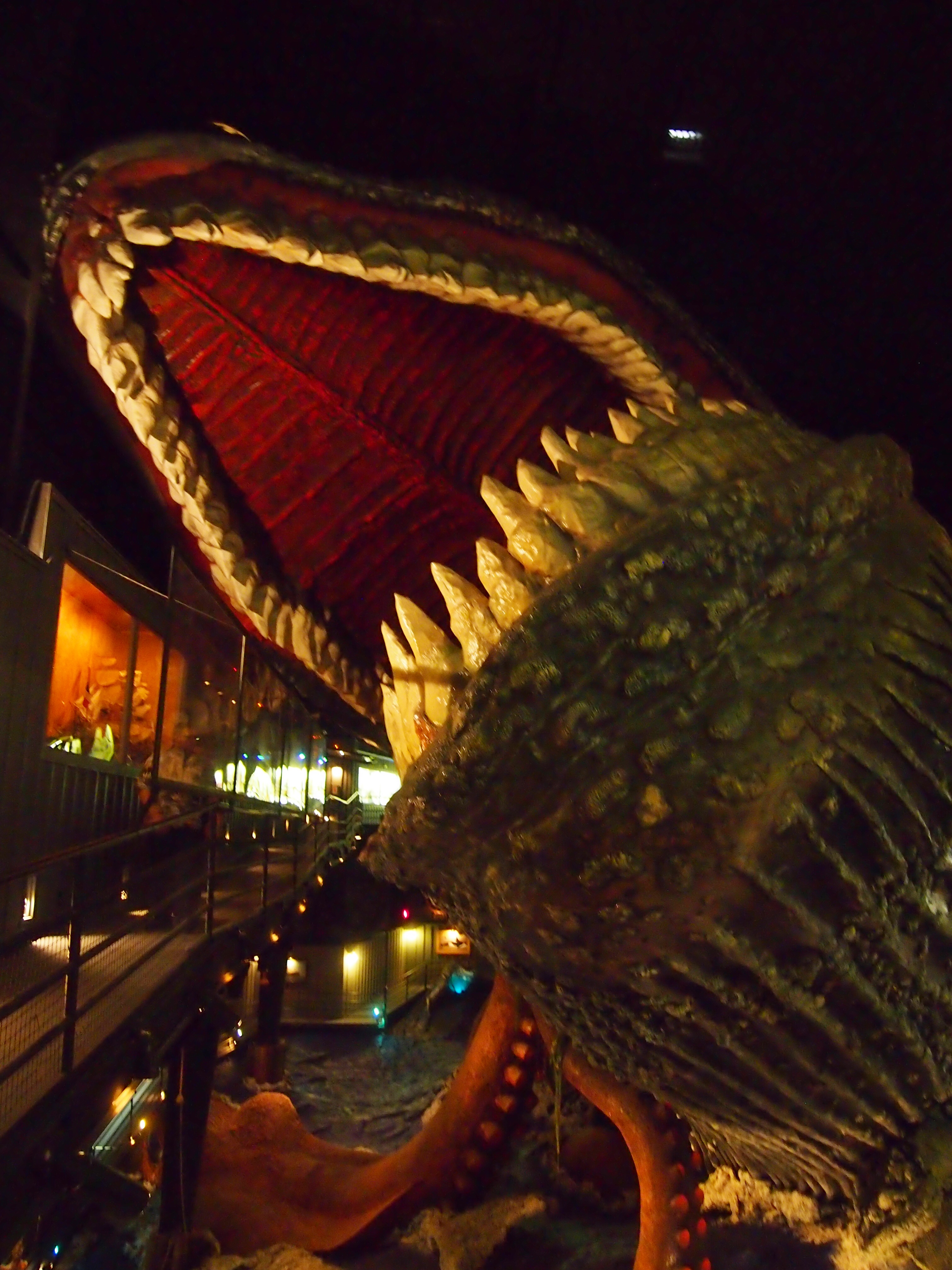
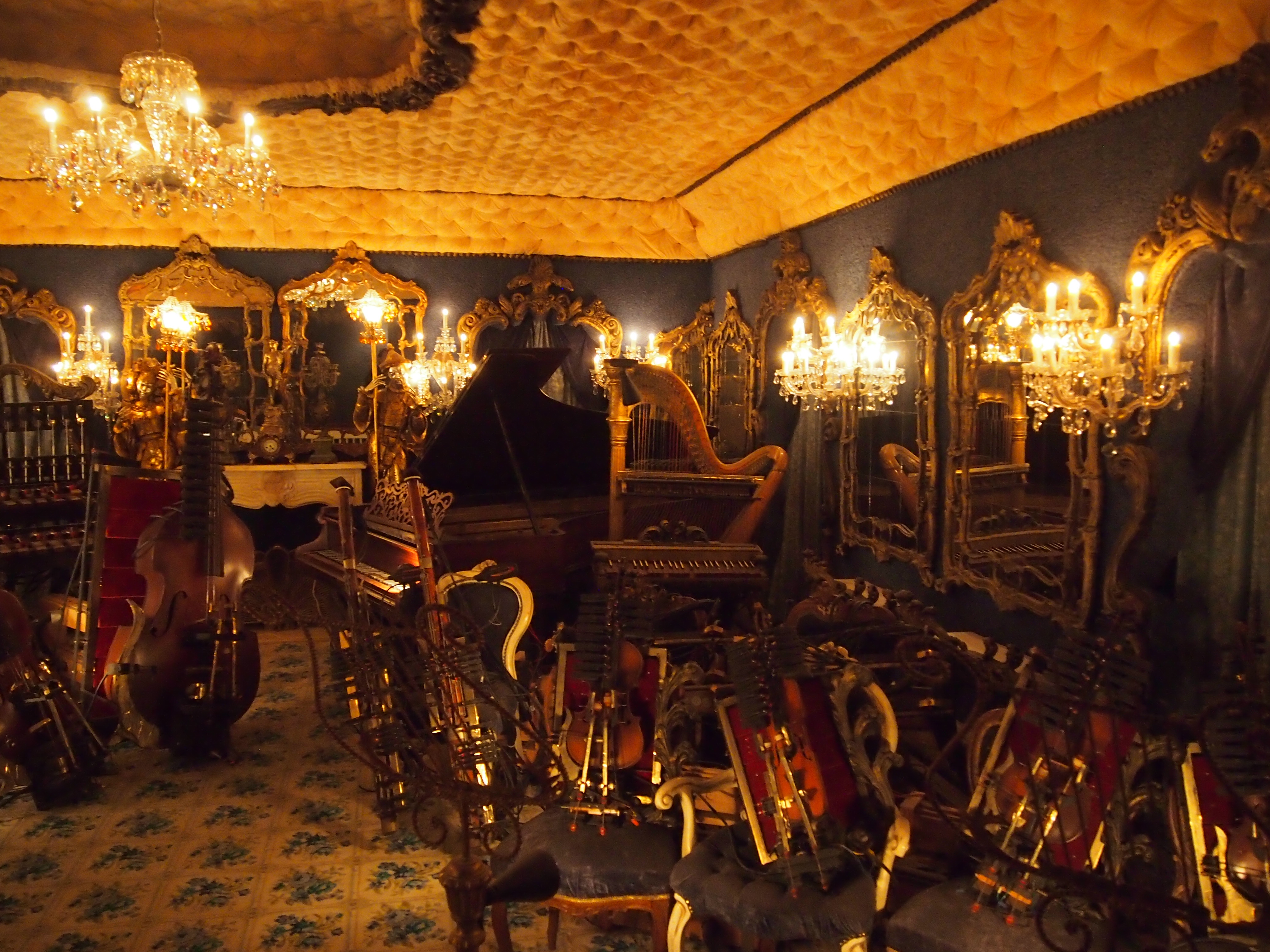
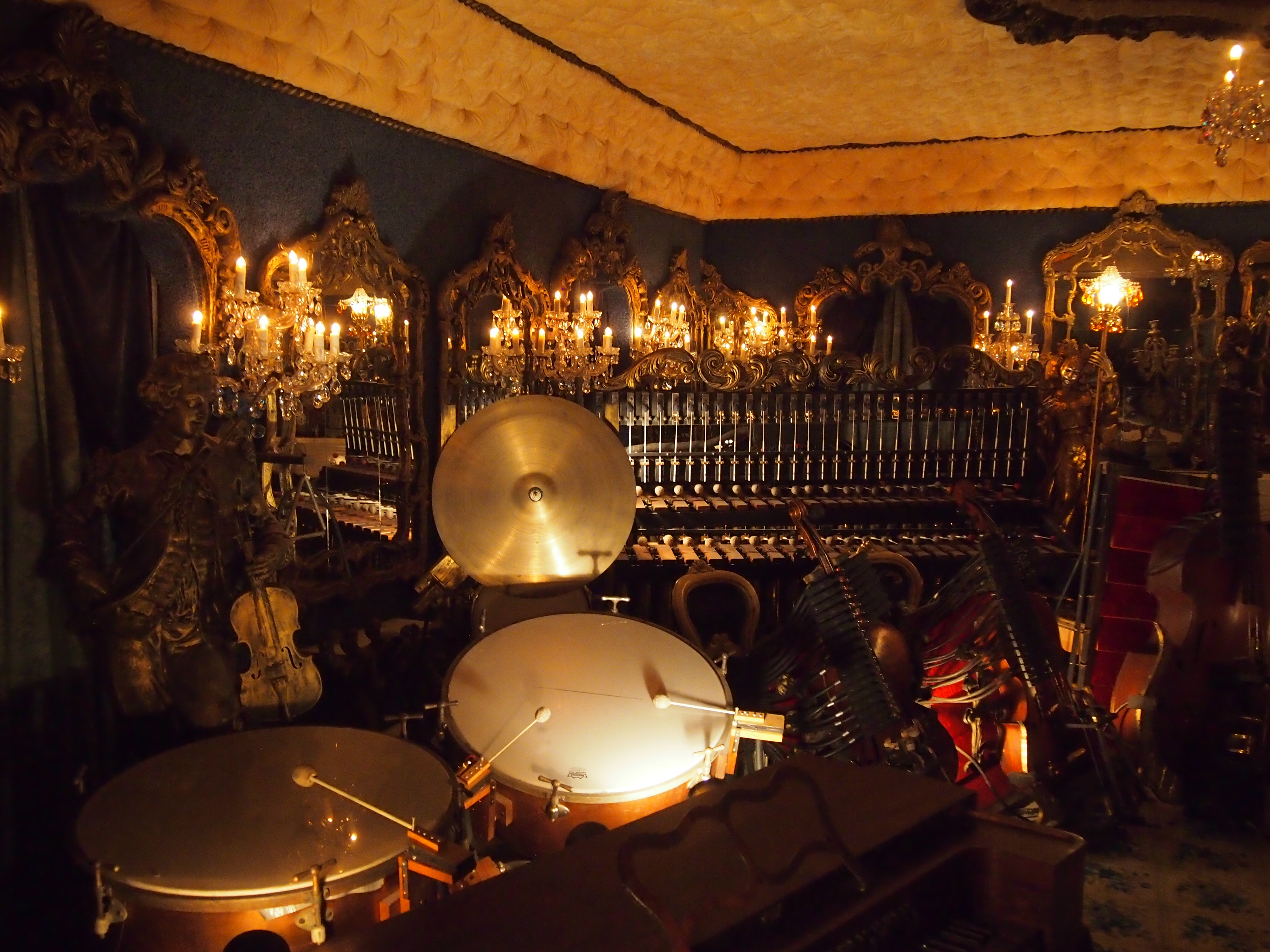
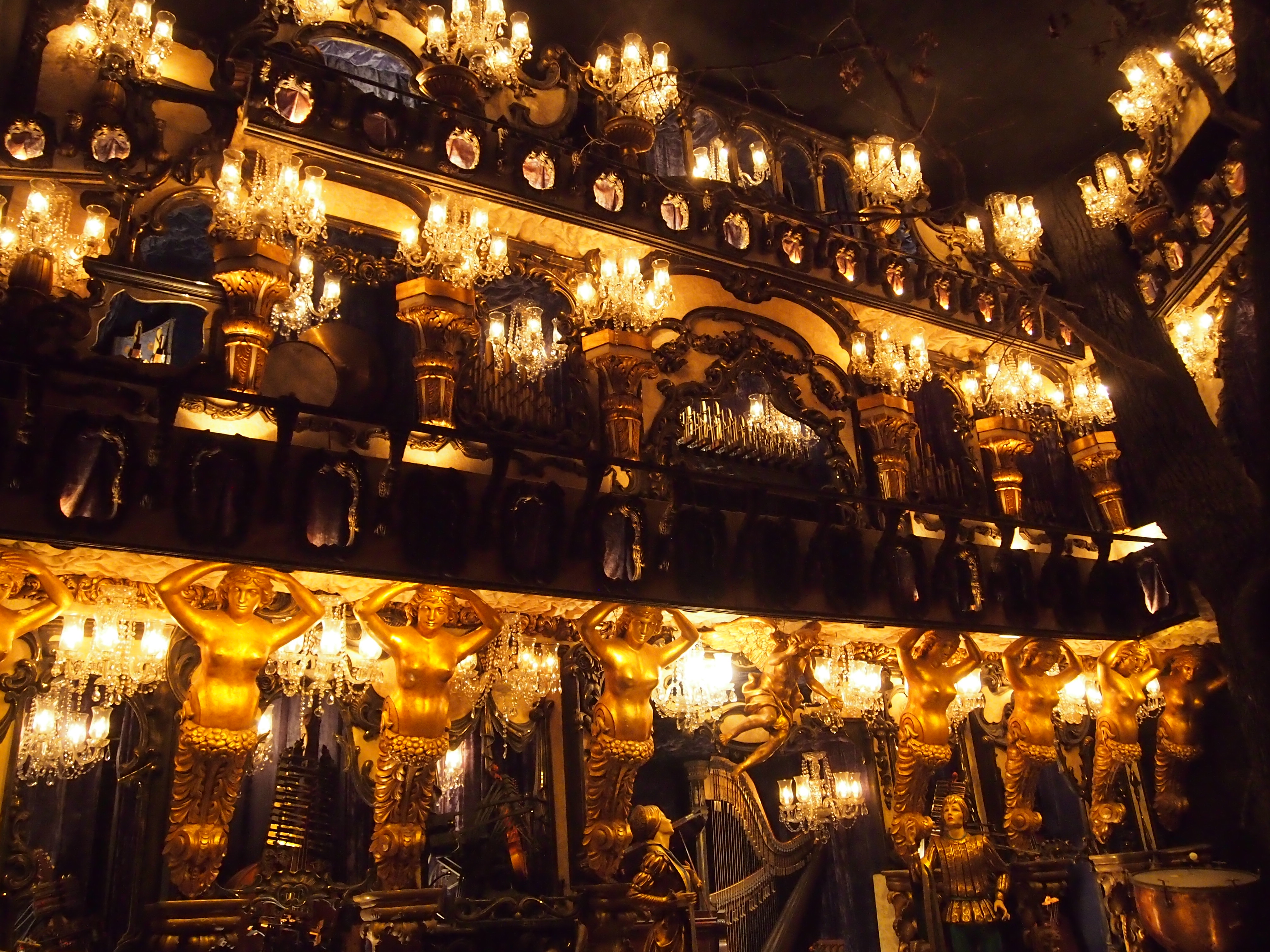
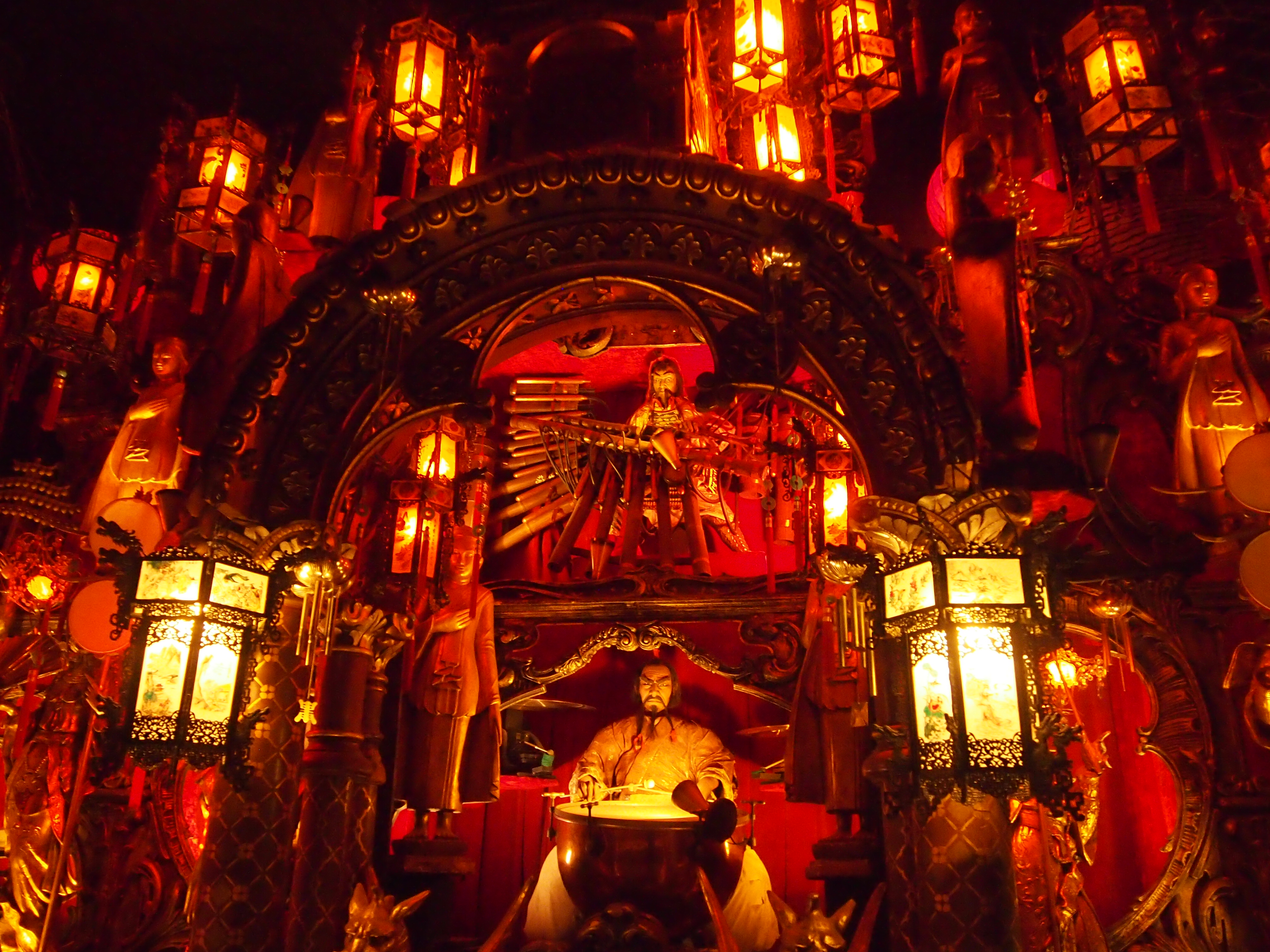
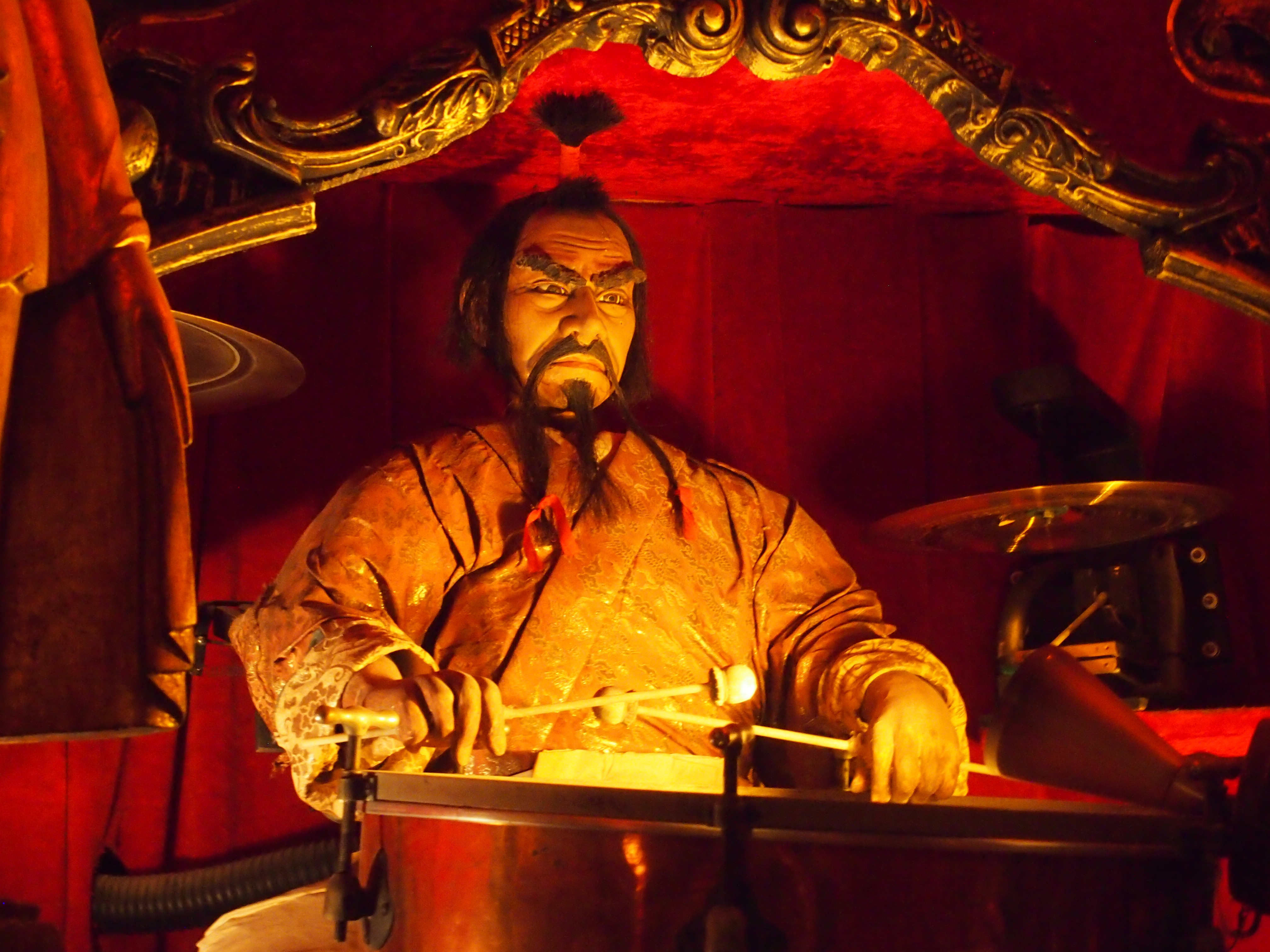
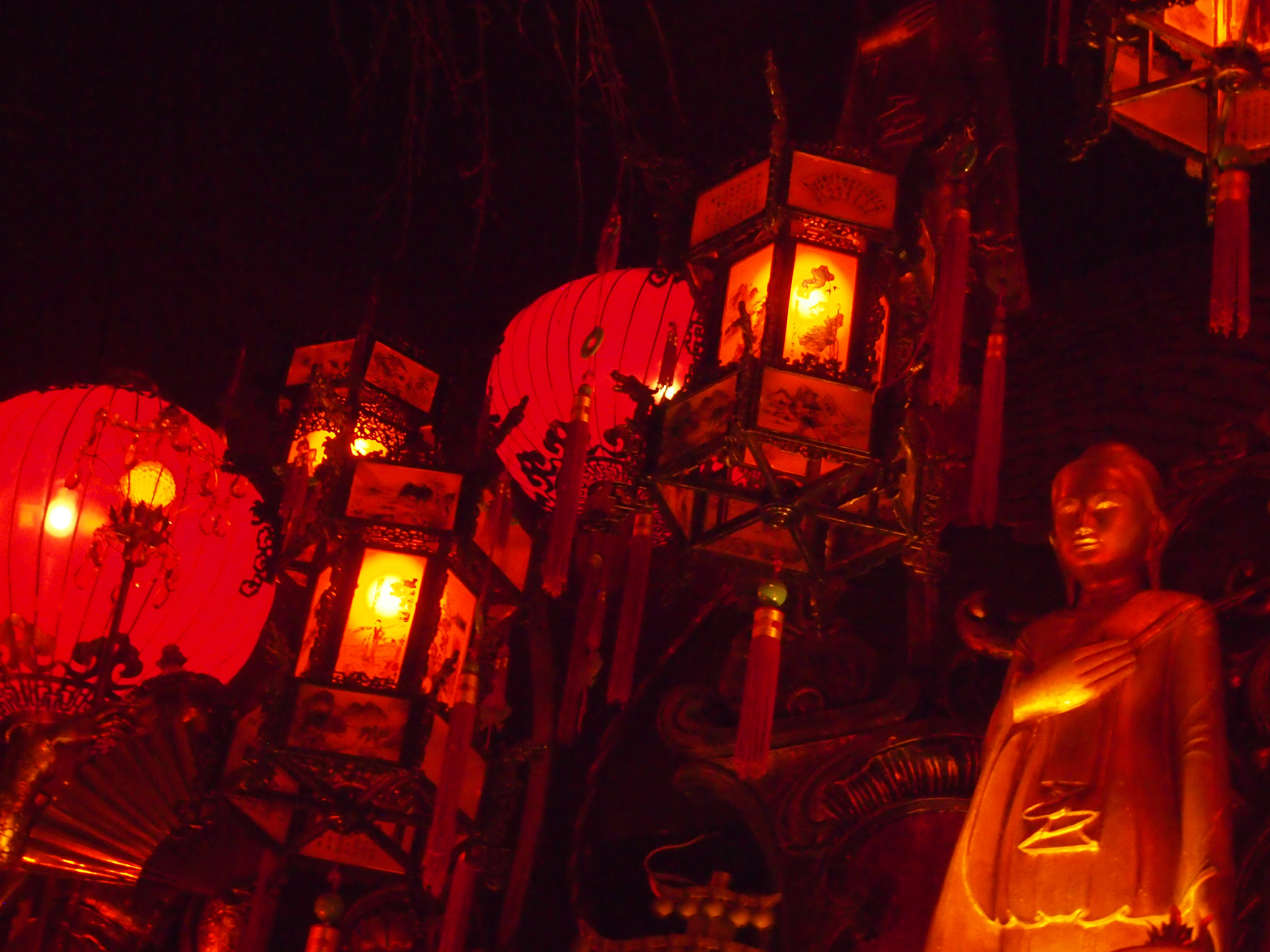
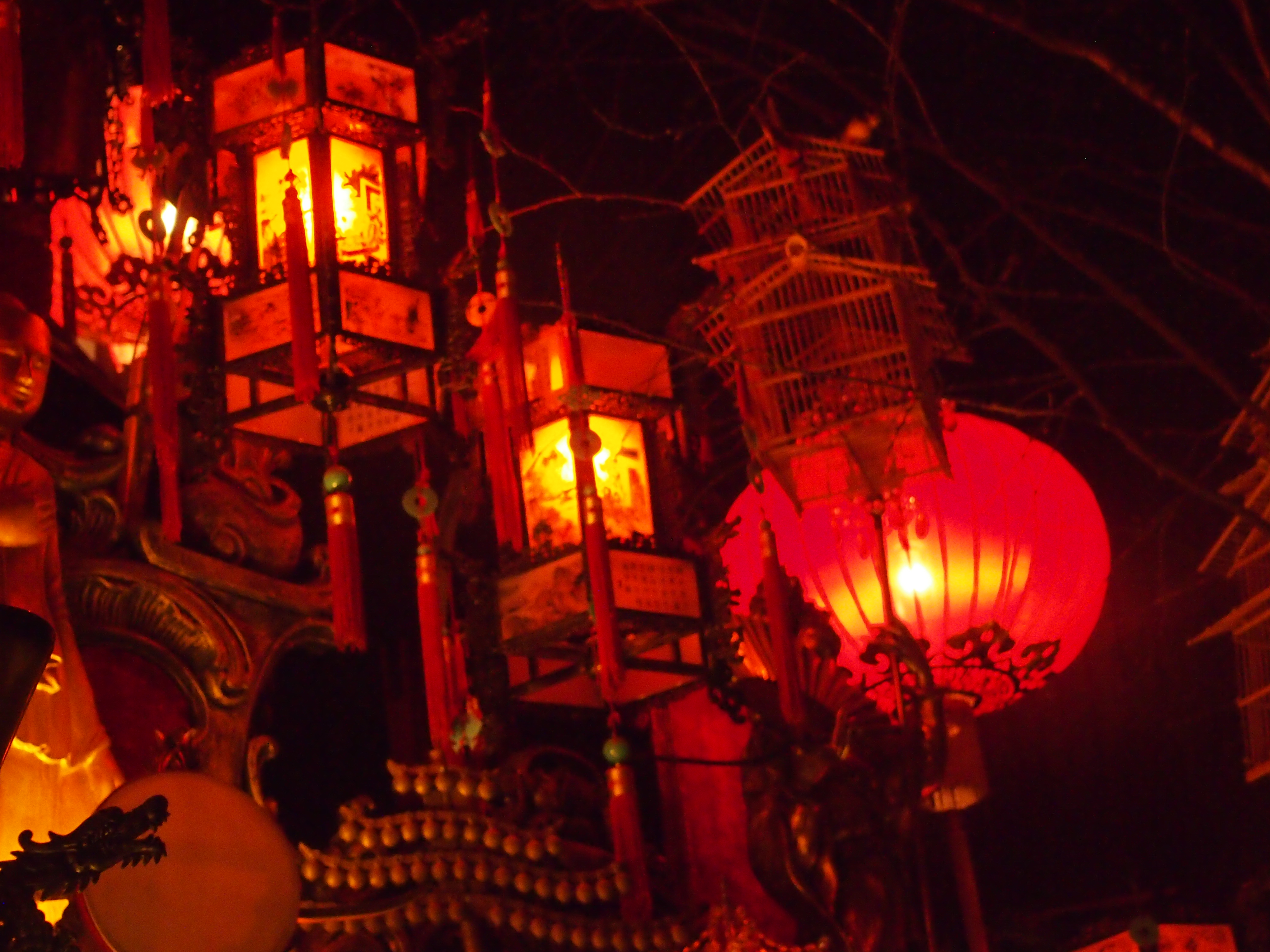
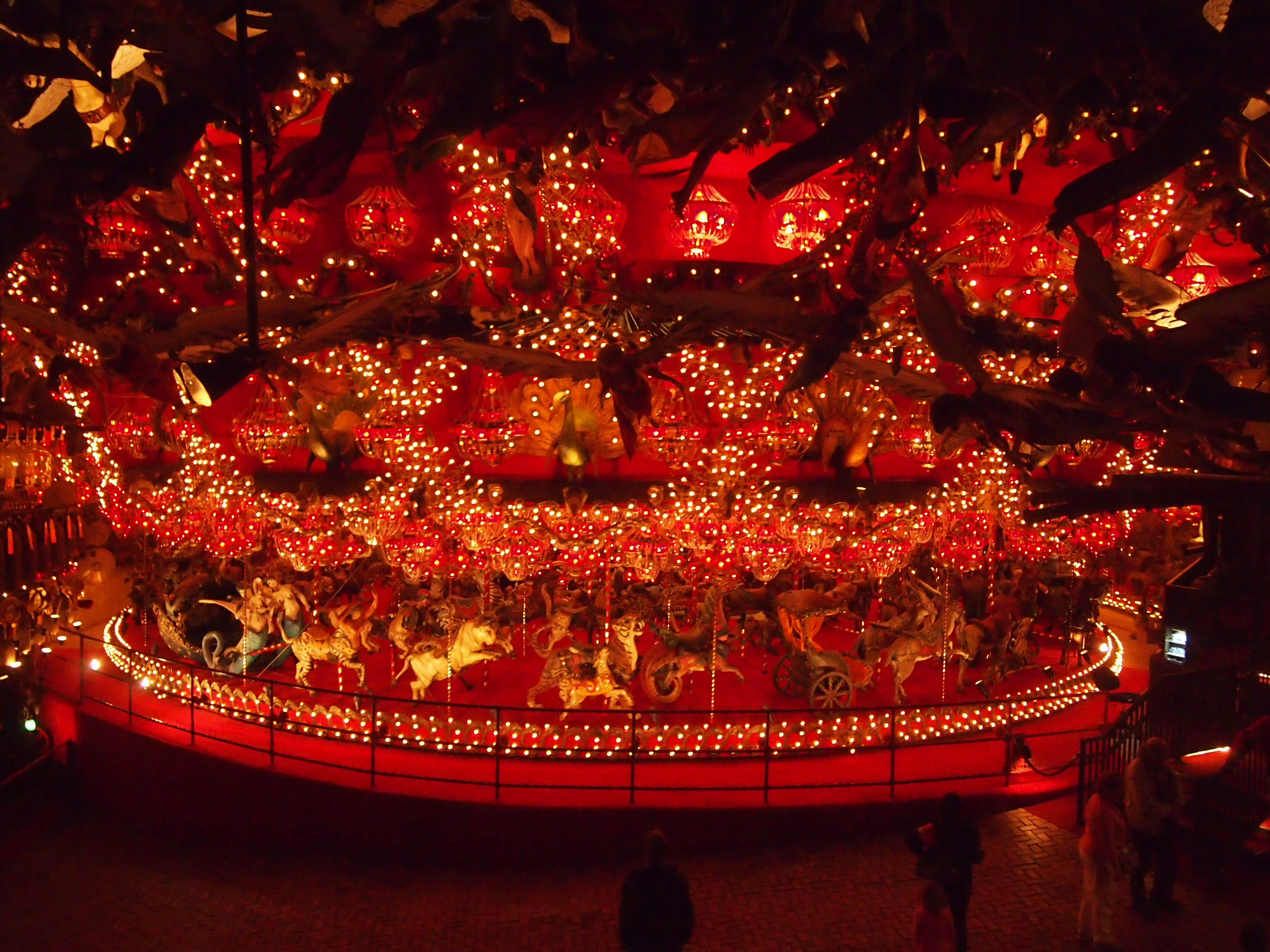
At some point during our walk through the third and final section of The House on the Rock last weekend, I thought, if Willy Wonka had brewed beer instead of made candy, it would look like this place.
As a tourist attraction, The House provokes strong responses. For fun, I looked at TripAdvisor’s reviews after visiting the place. Currently there are 761 reviews, with the preponderance of them rating it “excellent” or “very good” — 563 reviews. A sizable minority, however, rate it “terrible” or “poor”: 96 reviews. Those are the ones to look at (all sic).
“The displays are a collection of crap found at a flea market circus or the back of and old man’s shed that never thows a thing away. After 30 minutes my small family was looking desperately for a door for some fresh outside air.”
“there is so much junk in this place i can only imagine the dust, dirt, pollen, etc. dripping from bits and pieces of old lamps, caliopes, industrial waste metals, mannequins, fabric, wooden broken instruments – fakery of all kinds. it is impossible to clean and has been around for 50 years – horrible. and this is called a man’s ‘collection’. it is hoarding on an unimaginable scale. the lighting is low, the whole ‘decor’ garish and tasteless. what have you really seen at the end of 3 hours?: junk; junk on a big scale.”
“My parents and I thought we were coming to see an architectural delight. Wrong-o. This haphazard maze of low-ceilings, moldy carpet, dank rooms, and low lighting brings back images of ‘inappropriate parties from the seventies’ said one local.”
“This place was like a slow death.”
That’s enough of that. Neat freaks and people who hate clutter — which I see as the normal condition of the Western world after the Industrial Revolution — aren’t going to like The House on the Rock. But I will say that by the third section, I was getting a little testy myself. Not because I objected in some fundamental sense to the agglomeration of stuff, or the irregular lighting, or the bizarre randomness of it all, but because I was feeling the overload. I often feel the same way at large museums during the third or even fourth hours of a visit.
Still, there were things to see. In the third section, The House reaches its peak of lunatic accumulation; or maybe it seemed that way because I was tired.
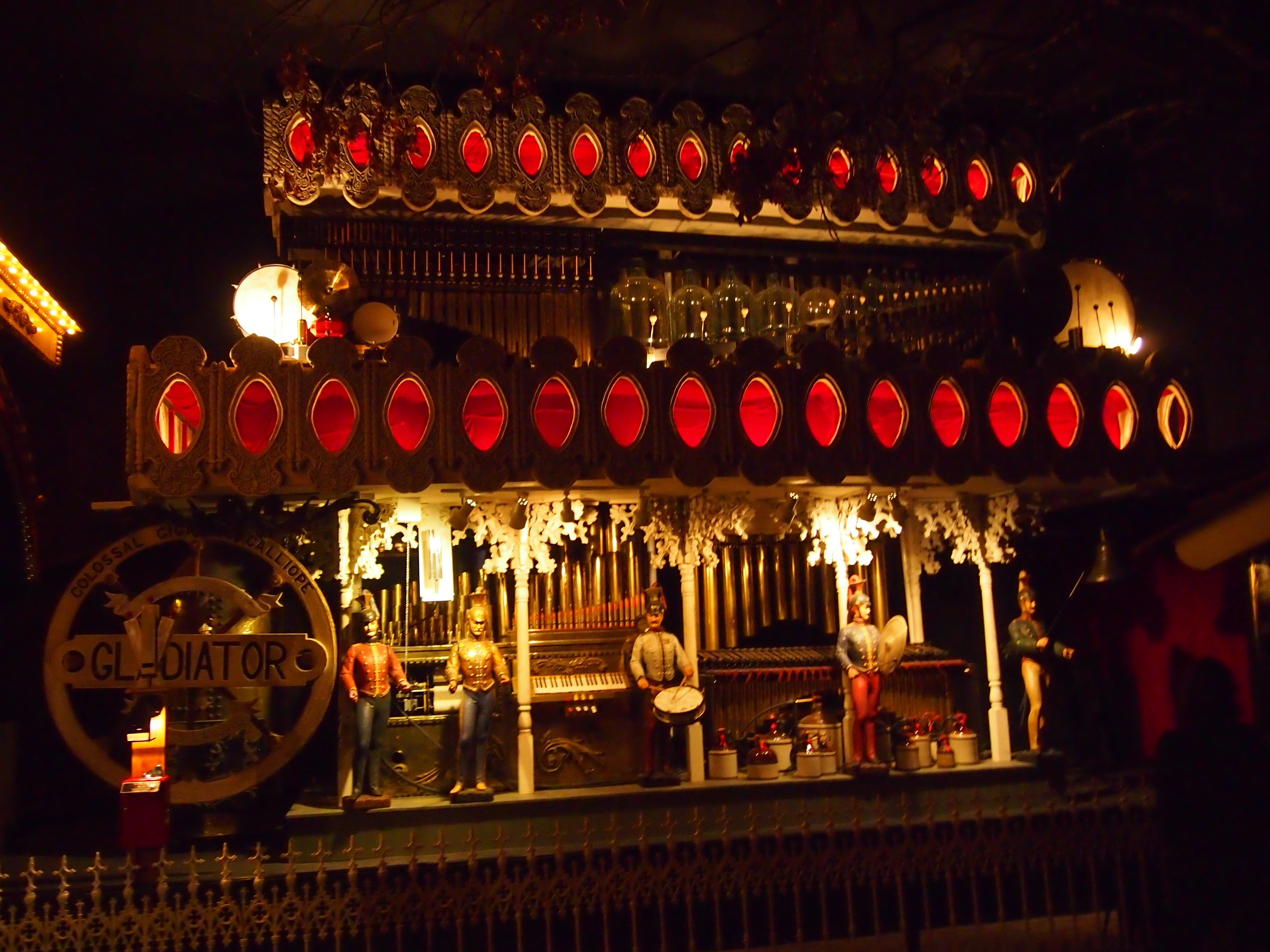
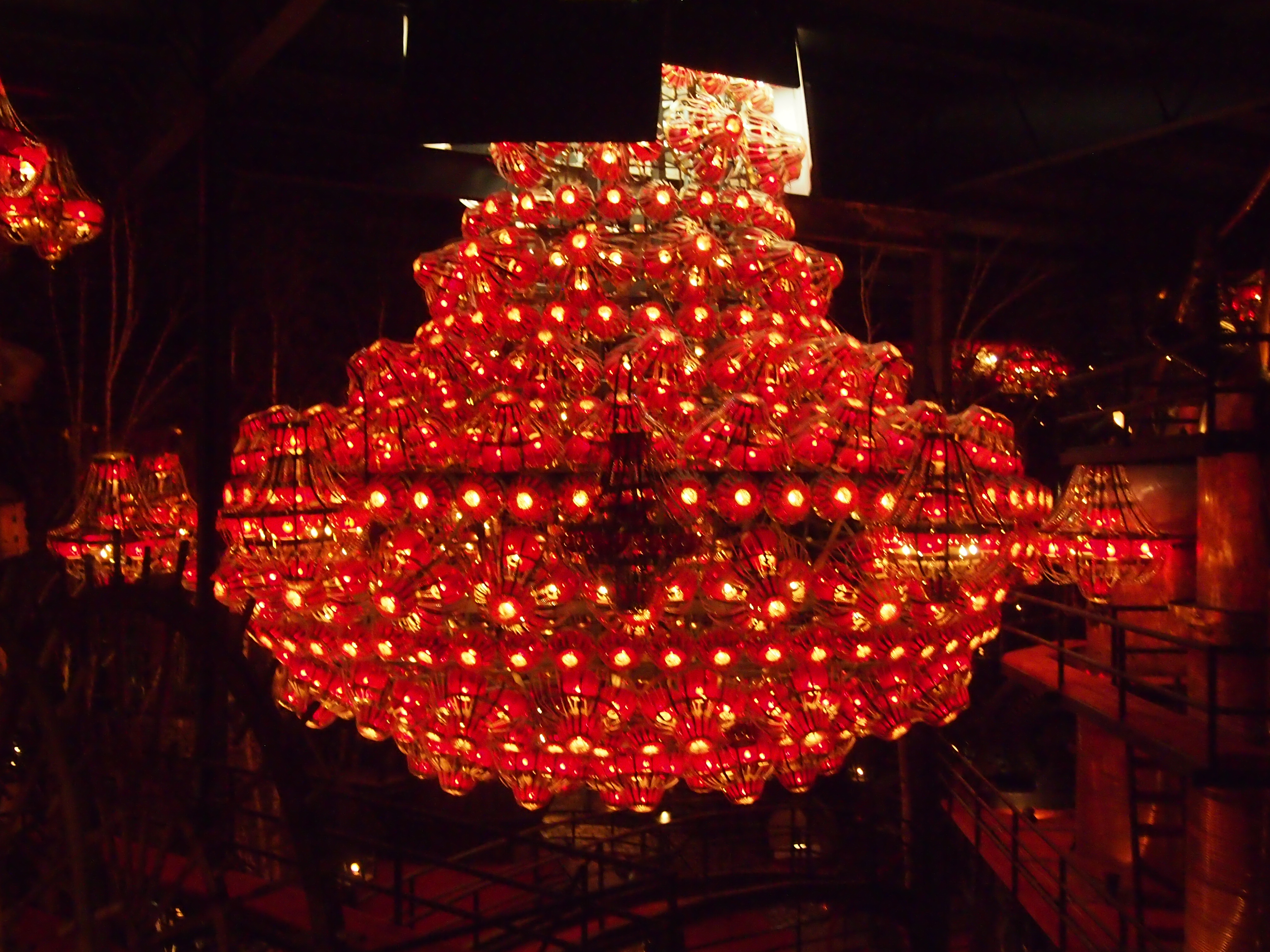 That’s the centerpiece lighting of an enormous room full of enormous stuff: The Organ Room. The pathway snakes along past huge brewing vats, big bells, a large ship’s propeller, spiral staircases to nowhere, large machines of unknown import, and what The House calls a “perpetual motion clock,” all of 45 feet high, which I didn’t notice was moving. Also according to The House, this room includes “three of the greatest organ consoles ever built, one with 15 manuals and hundreds of stops.” I don’t remember seeing those. But I was missing a lot by this point.
My overall impression of the room was of an industrial nightmare, a little like being trapped in Metropolis, with you as the little human surrounded by huge metal contrivances. Or it could have been a factory set designed for a Batman movie. Add artificial fog, and you’d have a steampunk acid-trip factory floor in which Batman could fight his enemies. Or it could have been the set for a Willie Wonka reboot in which Mr. Wonka is a brewer and drunkards get their comeuppance with the assistance of DT-inspired Oompah-Loompahs.
So the place had a sinister edge. Even so, the mass of metal wowed sometimes. Then near the end of the Organ Room were some cannons. And a machine gun. Don’t ask why, it’s a futile exercise.
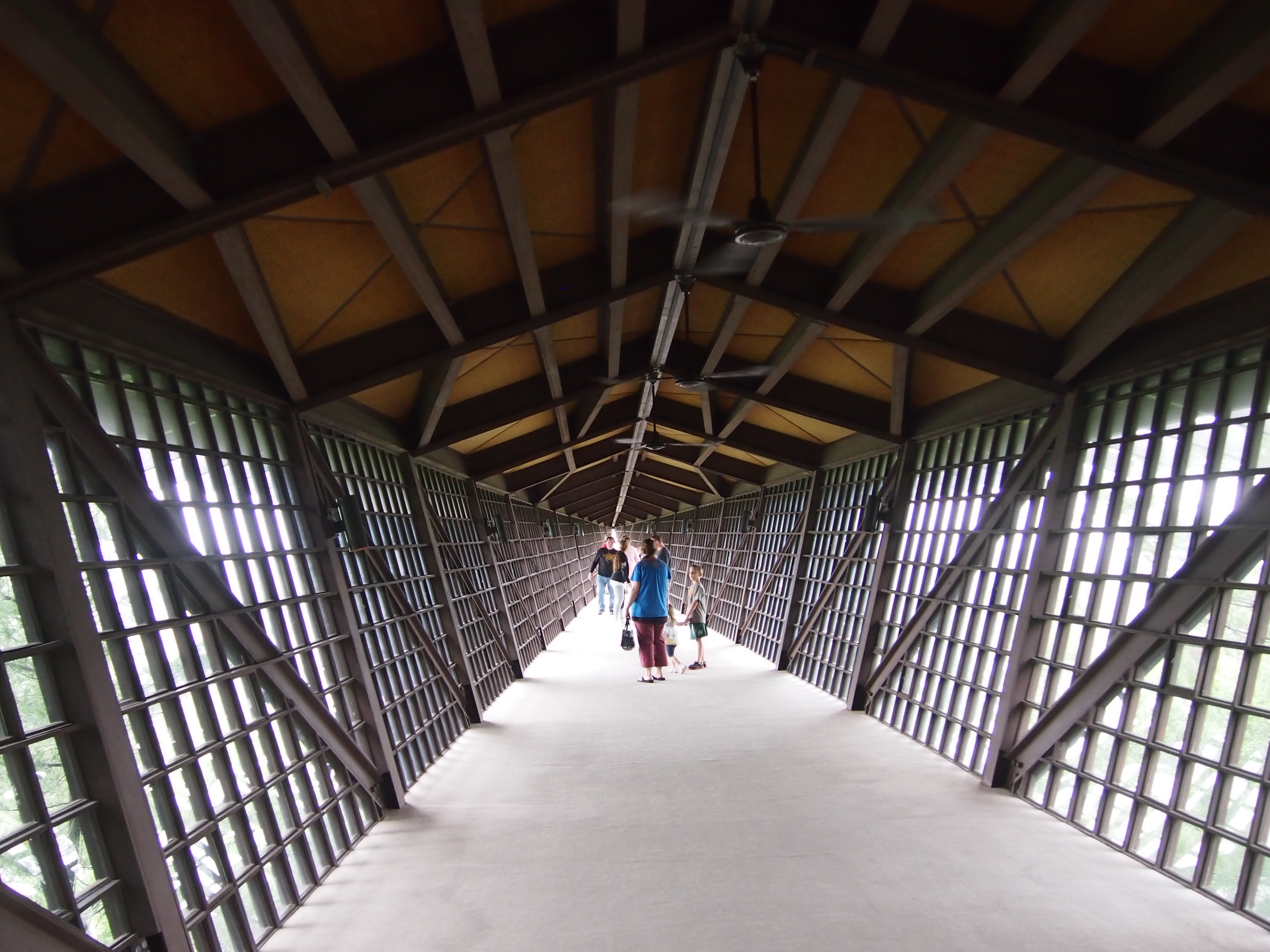
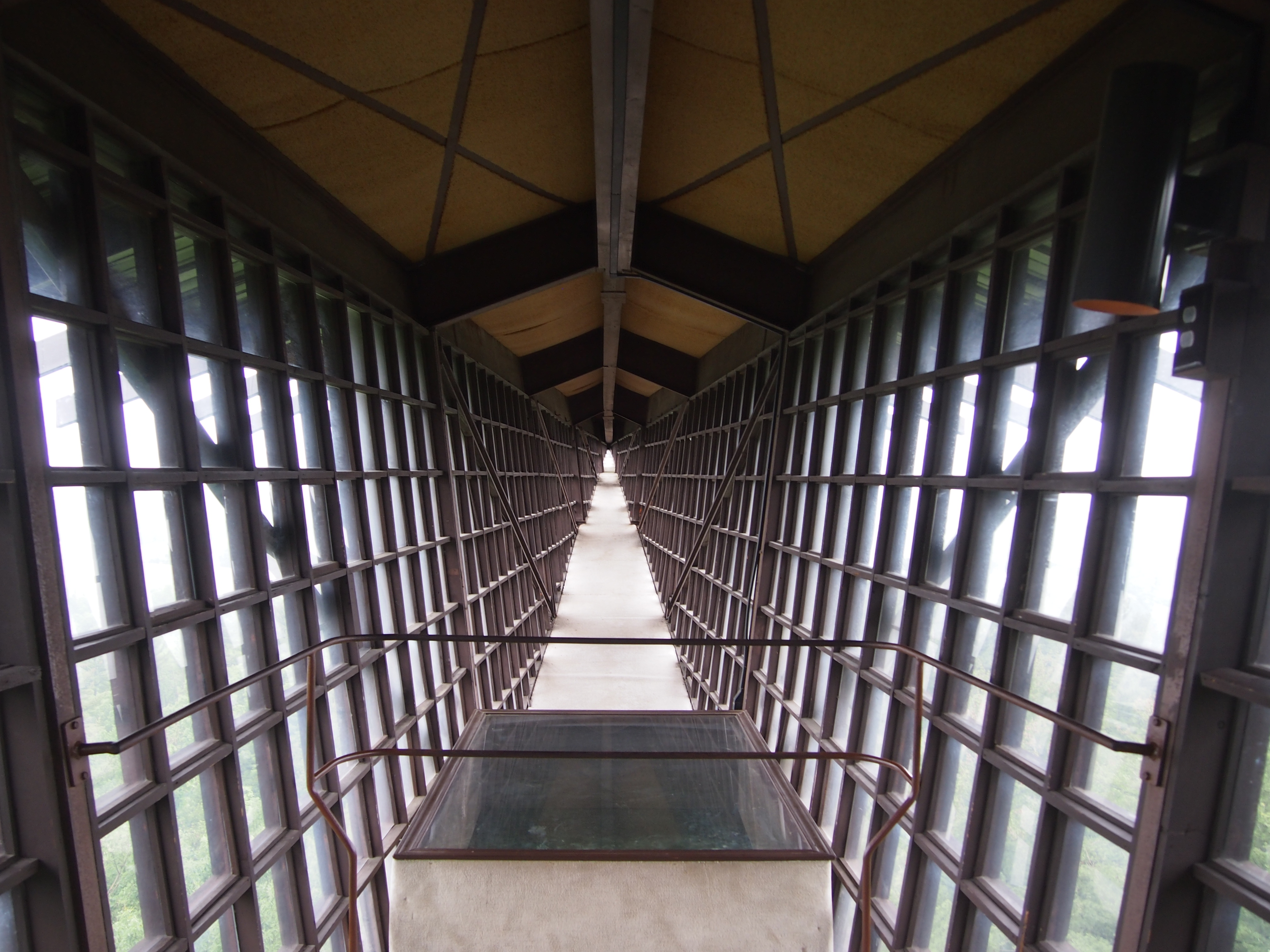
Suddenly, you come to Inspiration Point, a restaurant (not in operation) with large windows and temporary access to the outside world. This was a considerable relief. It also offered a view of the Infinity Room, behind some trees, but more importantly, a respite from the sensory overload.
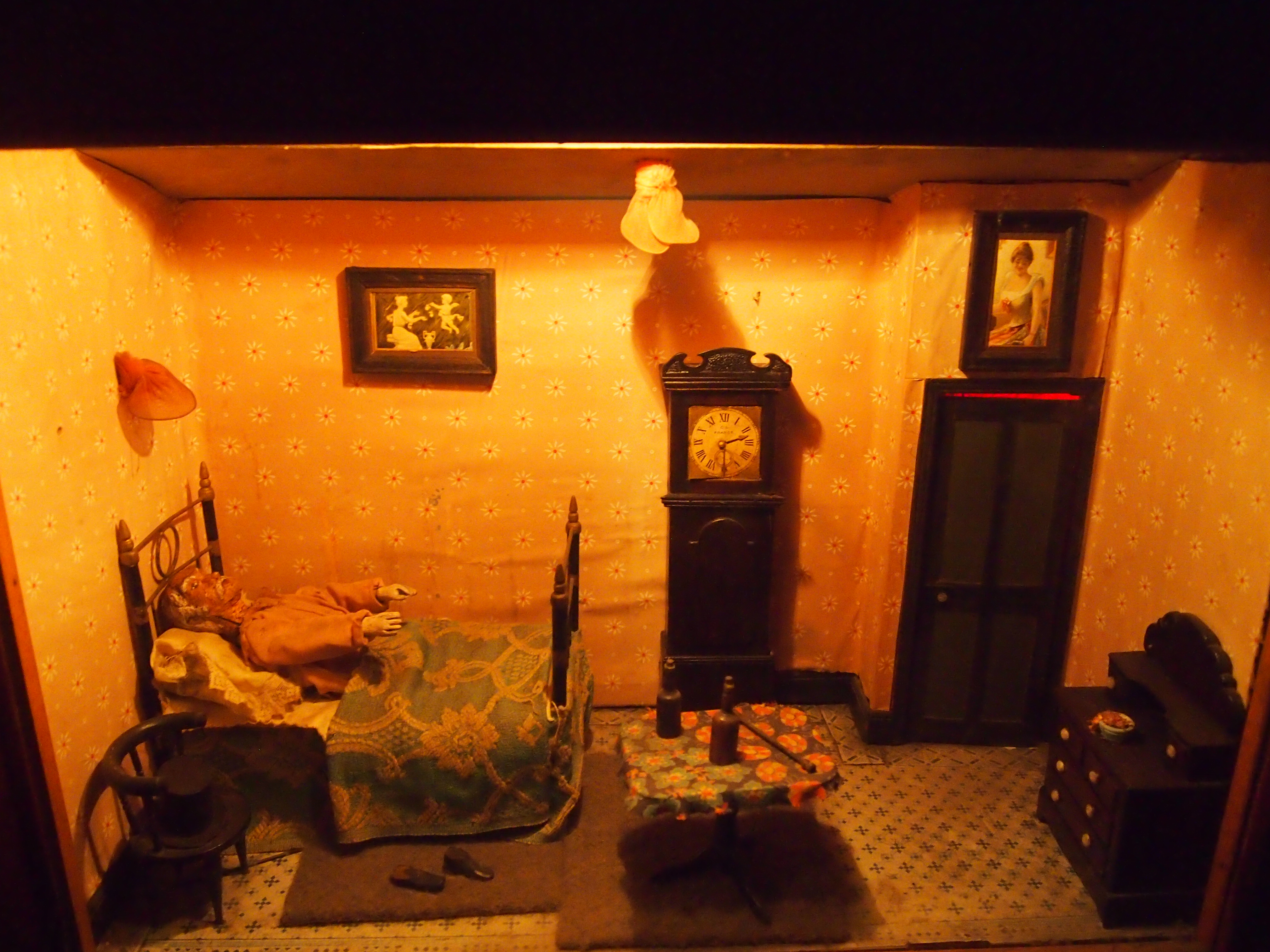
 The last leg of the third section was essentially a walk-through. Which is too bad, since it had its interests, though I wouldn’t have spent that much time in the Doll House Building — which came after Inspiration Point — even if I’d had more energy. Just a matter of personal preference.
Alex Jordan, on the other hand, clearly loved him some dolls. The room might as well have been called Dolls, More Dolls, and Even More Dolls. Should a grown man enjoy such a fascination with dolls? Sure, why not, most people would say, but not really believe it, since the prevailing attitude is that boys and certainly men aren’t supposed to be interested in dolls. I feel that way myself, though I know it’s arbitrary.
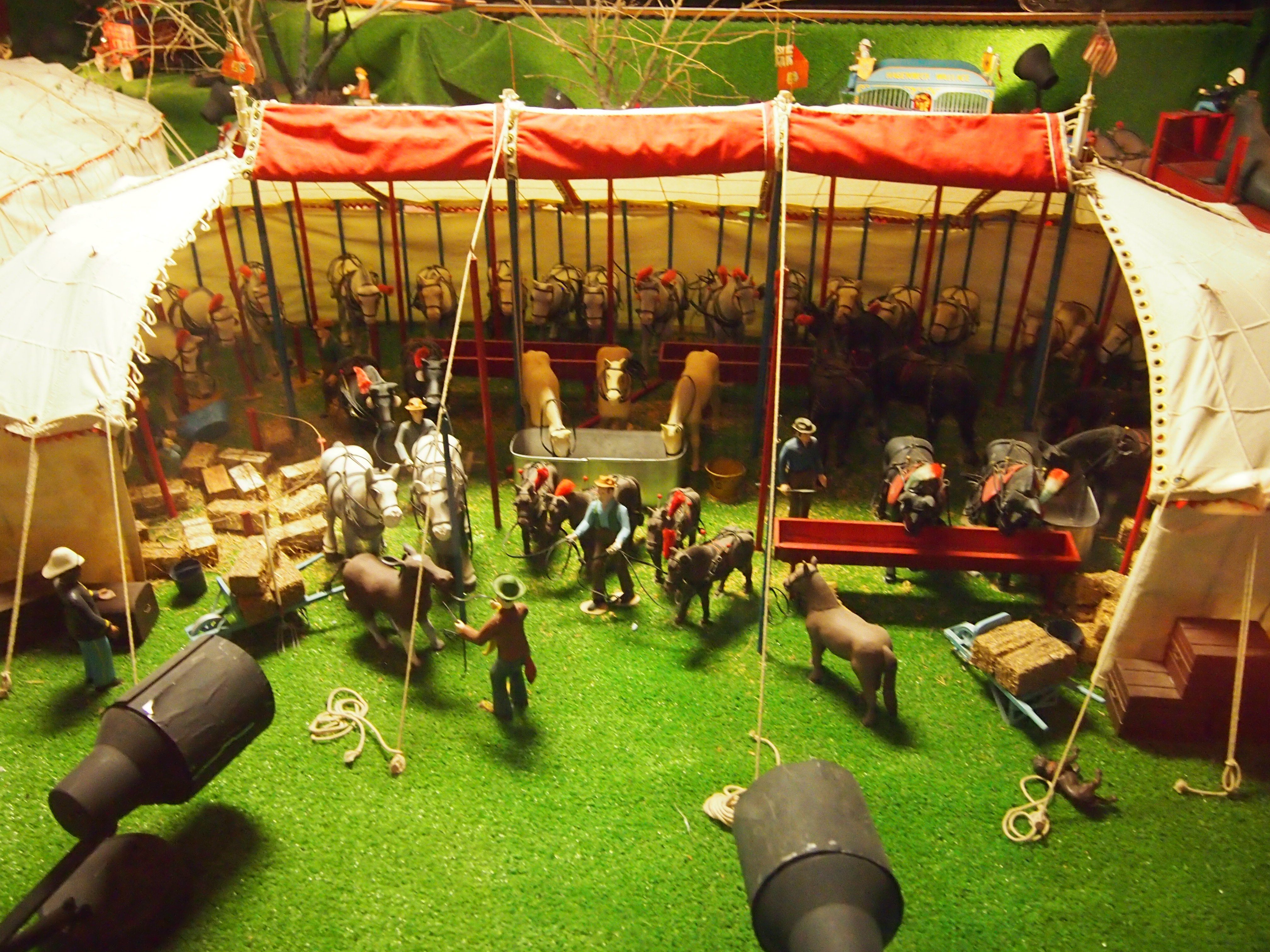
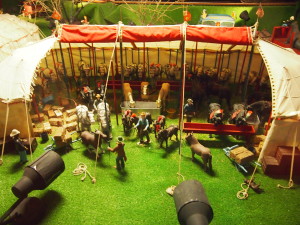 The dolls then gave way to room after room of circus miniatures — a lot of miniatures. Circus figures under the big top, certainly, but also figures doing just about everything imaginable and behind-the-scenes associated with a mobile circus, such as feeding the animals (pictured; each figure is about three inches tall) and performers changing costumes. I wouldn’t be surprised if there was a depiction of men cleaning up elephant dung. There were model circus trains and (something I’d never heard of) models of circus boats, as might have plied the Mississippi or the Ohio. Famed three-ring circuses and long-forgotten one-ring affairs were both represented.
Old or recreations? I don’t think it matters. A great deal of artisan effort went into these. That alone ought to demonstrate that The House, whatever its flaws, is no mere repository of junk. You don’t have to be all that keen on circuses to be impressed by a million artfully done circus figures (the number The House claims) or even many thousands. All you have to do is pay attention.
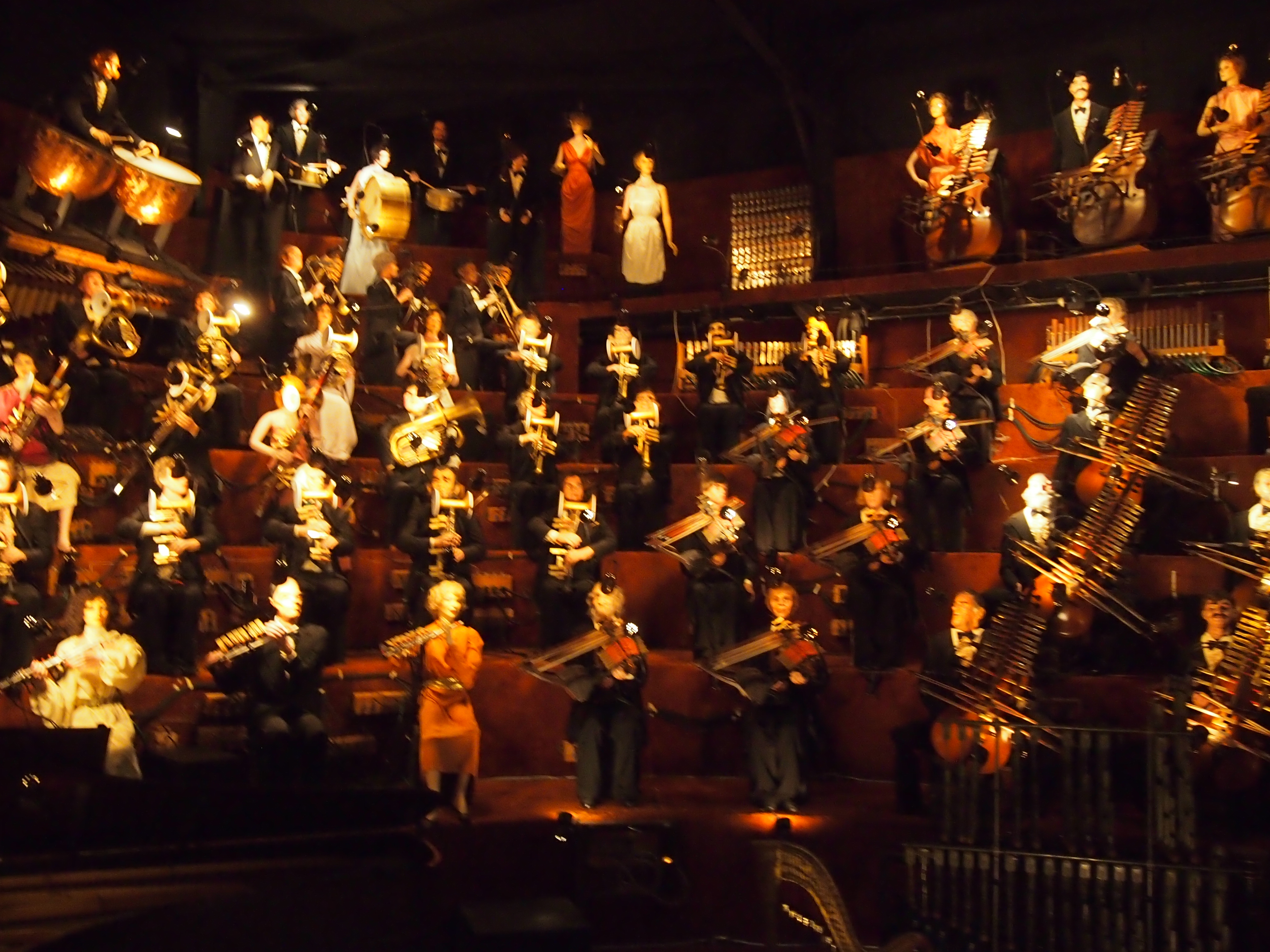
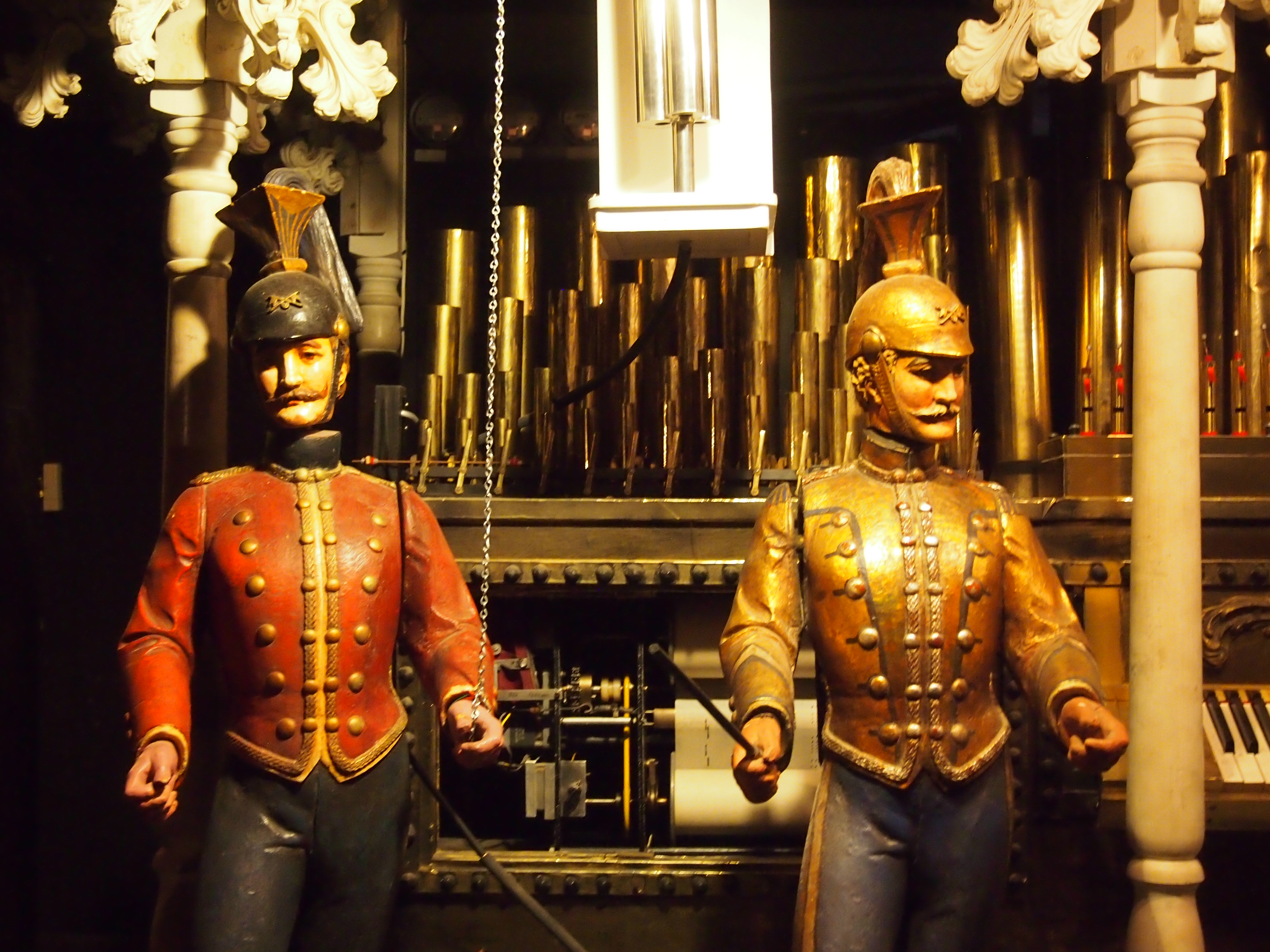
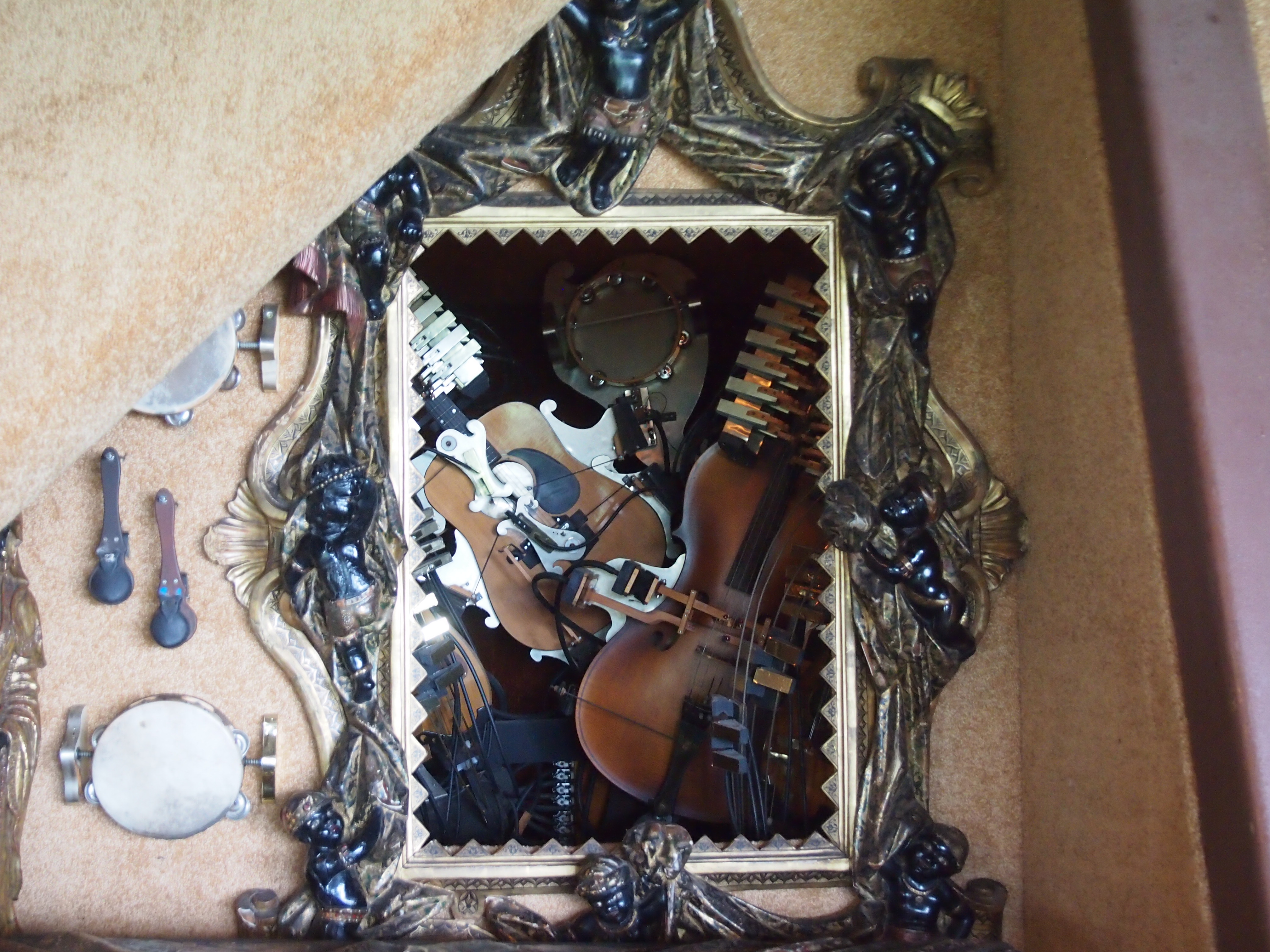
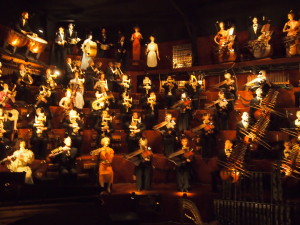 Alas, I didn’t have much energy for paying as much attention as the circus figures deserved, and on we went, now wanting the experience to be over. After the little circus figures were big circus figures: a sizable circus wagon hanging from the ceiling, populated by a 40-piece mechanical band. Below them was an 80-piece mechanical orchestra (pictured; those are life-sized figures). The House claims that 37 miles of electrical wiring and 2,300 pneumatic motors make them play. I used a token and made them play. I was still interested enough for that.
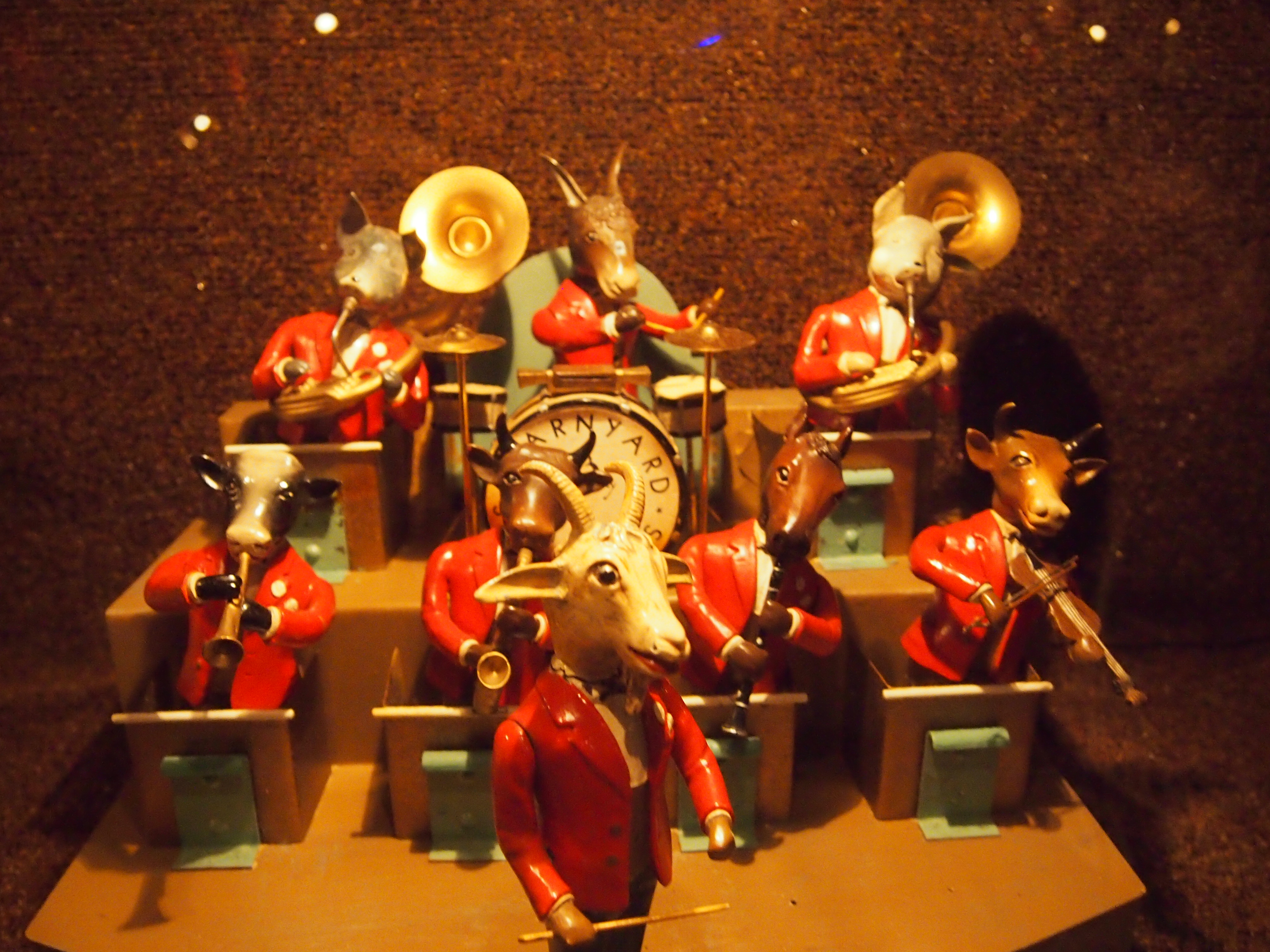
But that’s not all. Maybe hallucinations were creeping in by this point, or more likely experiences with hallucination-like qualities. But I have photographic evidence I saw a small display called The Barnyard Serenaders (behind glass, a few inches tall).
 After the Circus Building: Asian art, armor, and more weapons, including an artificial leg with a place to conceal a derringer (talk about concealed carry). The fake crowns of the crowned heads of Europe were unimpressively fake. Finally — well, almost — we passed by the doll carousels. “So many [dolls] to display that if one were to display them on a towering, 6-tier lighted, revolving carousel, there would still be hundreds of dolls left over,” a post card from The House says. “Solution? Build a second doll carousel.”
I’ll hand it to Alex Jordan: a doll carousel, much less a six-tiered one, is something I’d never seen, or encountered as an idea or even a wisp of a notion. I didn’t look at them much, however. I wanted out. Enough’s enough, especially a place who’s motto could be, Too Much is Never Enough.
At the exit you find a Japanese garden.
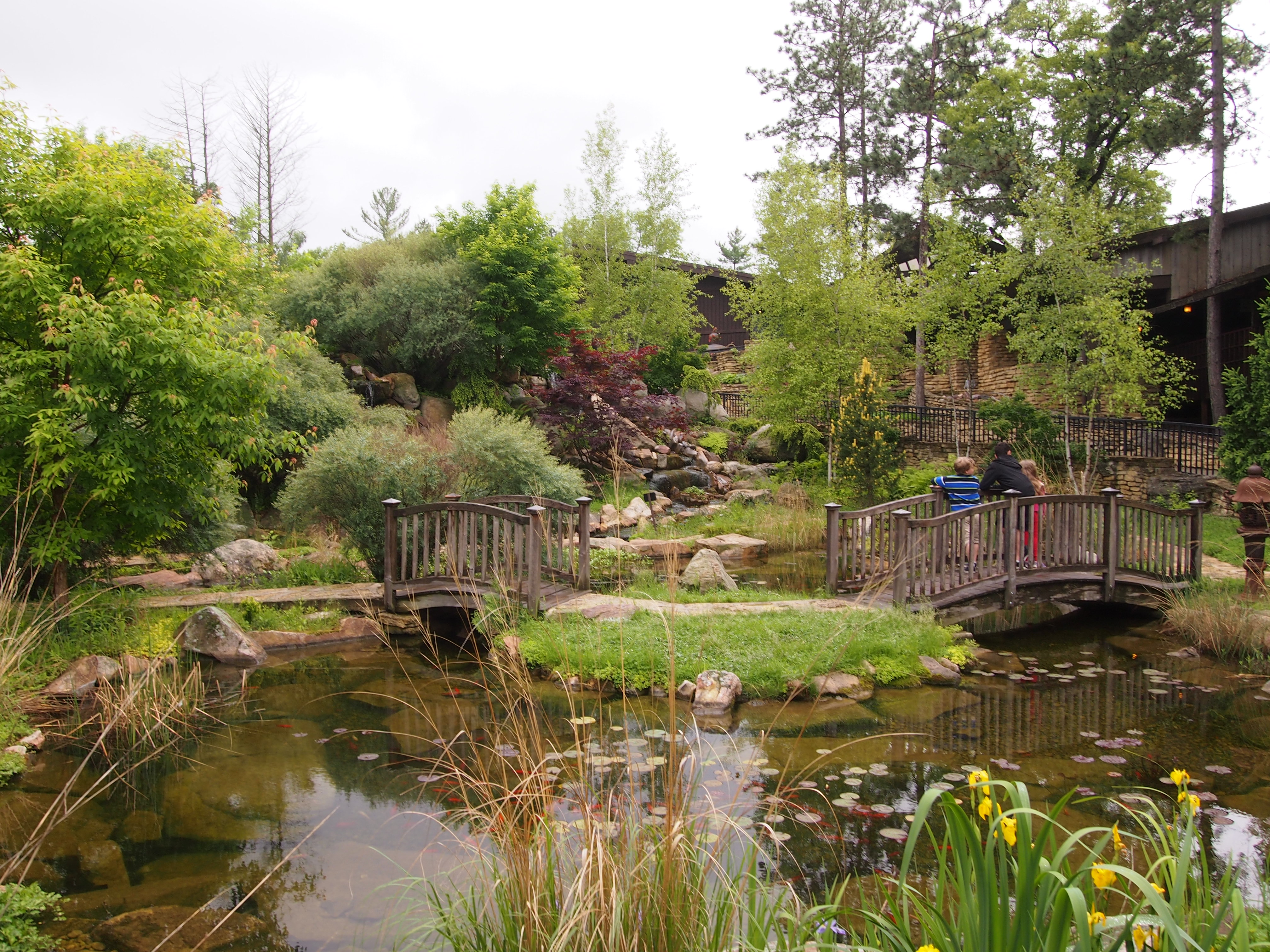 A pretty little one, too, but we didn’t linger.
There’s a fine arts dissertation waiting to be written about The Rock on the House — a massive, kinetic entity that questions the importance of authenticity and blurs the lines between art and artless, and probably smashes a few paradigms along the way. But I doubt that any academic is going to take it up as a subject. They say they want to smash paradigms, but they don’t really.
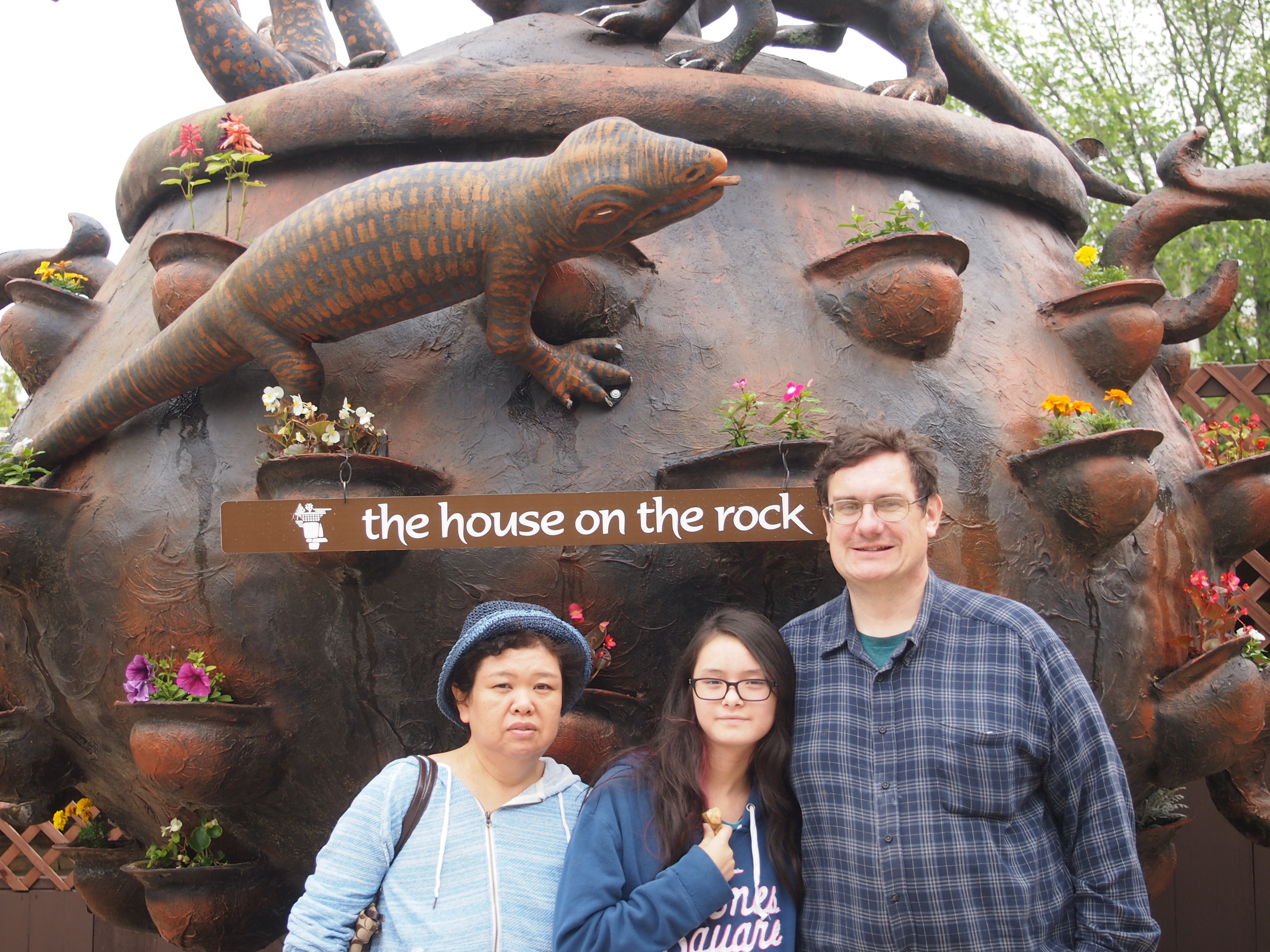 It is what it is: sprawling, cluttered, dingy in places. Sometimes fake, sometimes authentic, often hard to tell which. Does it contradict itself? Very well, then, it contradicts itself. It’s large and contains multitudes.