I Don’t Need No Talking Pictures

From the Department of Not My Beat, excerpts from a PR pitch that arrived in my inbox recently:

While the Covid-19 pandemic has officially ended, the male loneliness epidemic in the U.S. persists… AB, Founder and Executive Coach of CD, knows this struggle all too well. He was the “Mayor of the Friend Zone”… Over the span of a decade, he immersed himself in the art and psychology of male-female connection, meeting countless women all over the world while training with the most elite dating and attraction coaches…

AB is available to speak on the male loneliness epidemic, how to find success on dating online and IRL, trending news stories, and the following topics:

Logic is the Death of Romance: Many of CD’s clients come from analytical fields (doctors, engineers, software developers). CD helps them get in touch with their inner emotions that attract women — more Captain Kirk than Mr. Spock…

My eyes are a little sore, having rolled them so much reading that pitch. Or maybe that’s just a lack of empathy on my part.

Nah. Still, anyone can call him- or herself a “dating coach.” I don’t think there’s a specific NAICS code for that. (I had to check: probably 812990, “all other personal services.”) Moreover, how does one get to be an elite dating coach? Is there a series of tests, like for actuaries? Doubt it. Do dating coaches have trouble keeping a straight face when they meet each other? Could be.

Interesting to note: the Kirk-Spock yin-yang is so completely woven into the culture that no elaboration is required. But I will say that Spock got lucky a few times, too. I seem to remember a dalliance with a high-placed Romulan, though it was a ruse, and a hot woman in a cold cave. Also, as evidenced in “Elaan of Troyius,” an episode that Ann and I watched just last weekend, not even an alien space babe with love potion tears could pry Jim Kirk away from his one true love, the Enterprise.

The sorry state of romance, if that’s really the case, reminds me of an entertaining video I happened across earlier this year, one made for the song “Silent Movie” by Little Violet, using artfully edited clips from the movie The Artist (2011).

After seeing the video a few times, I was inspired to finally get around to watching the movie on DVD, which I enjoyed a lot. The leads, especially French actor Jean Dujardin, nailed it, as was widely acknowledged. Take him back in time 100 years and he could have been a silent movie idol.

As for the video, it manages to loosely tell a rather different story than the movie did, and listening to the song without the video isn’t as good an experience. The British label Freshly Squeezed calls Little Violet a “retro pop piano-playing chanteuse and band.”

The Little Violet lead singer is one Cherie Gears, which AMV Music – a music booking agency based in Newcastle, England – describes as a “Yorkshire Wedding Singer Pianist.” Quite the voice.

The Lesson: Go Look at the Elephant Yourself

“Shop epic deals influencers love,” says an ad I saw today, one associated with an online retail behemoth oddly named for a major tropical river. Instantly I found a use for that Reagan-era phrase: just say no.

Influencers would be about as useful for finding worthwhile goods as the blind men in describing the elephant.

I didn’t know until today that the inestimable Natalie Merchant set the poem “The Blind Men and the Elephant” to music. That comes of rummaging around the Internet about blind men and elephants. She might have sung it at Ravinia in 2012, since the recording would have been fairly new then, but I don’t remember.

The poem by John Godfrey Saxe is much older, of Victorian vintage. I didn’t know much about the poet, so I looked into some of his other work. His rhymes tend not to be dense with complex images, as far as I can tell. One begins:

Come, listen all unto my song;
It is no silly fable;
‘Tis all about the mighty cord
They call the Atlantic Cable.

That’s from “How Cyrus Laid the Cable.” I have to like a poem about early communications infrastructure, though I don’t think Natalie has set it to music.

The parable of the blind men and the elephant is much older than the 19th century, of course, a dash of ancient wisdom from the Subcontinent. I might have first heard about it in one of my Eastern religion classes. Or perhaps when I bought the record Waist Deep in the Big Muddy and Other Love Songs in the mid-80s, the disk that kicked my admiration for Pete Seeger into high gear. On that record, he performs a comic spoken version of the parable — the second spoken interlude during a song called “Seek and You Shall Find.”

I like all of the stories. Especially the first one, which is about boiling all the world’s wisdom down into one book, then one sentence, then one word. A re-telling for our time wouldn’t involve a king and wise men, but perhaps a tech mogul and his AI specialists. Eventually, sophisticated AI boils all the world’s wisdom down into a single word, and the result is the same. Maybe.

A Ship of Fools Sailing On

The first chill of fall is on. Not freezing, not even in the wee hours, so mild in the grand scheme of the year. A warm day in December, brought forward.

More than a tinge of yellow and brown in the trees, but green is still dominant. For maybe a week. Bright colored leaves will soon detach themselves and find their way to the ground, where they will be pushed around and crackling underfoot: a sound of the season universally experienced but less often mentioned. (But not never.)

Not long ago, I watched the video of “Everybody Have Fun Tonight,” which dates from 1986, a vaguely remembered curiosity. I remember the song being OK, even fun – it’s in the title – but not liking the video, which jump cuts like there’s no tomorrow.

That’s an inventive band name, Wang Chung, who hailed from London, and were not the least bit Chinese. “Yellow Bell” in Chinese, Wiki tells me. A foundational term in Chinese music, Music Educators Journal tells me, but my grasp of music theory – Western, much less Chinese – is a flimsy thing, so I can’t pretend to understand it.

After I watched the video once, I watched it again. And a few more times over the course of a week.

The jumpy visual structure bothered me less and less. I was even a touch mesmerized. Soon I began to appreciate the method to its particular madness. It emphasizes the musicians as their parts begin and end against a spare background, especially the two lead members of the band, whose images are sometimes effectively fused as they sing together. But the supporting musicians get their due. It’s really quite remarkable, this video.

I also paid attention to the lyrics. I’m sure I never did, even when the song was on the radio; that was a time of my declining interest in the radio, for one thing. It’s easy enough not to pay attention, which means you hear the refrain, which is smooth as cold beer and seemingly meaningless. Silly, too. Self-referential. Everybody have fun tonight! Everybody Wang Chung tonight!

Though a line or two of lyric hint at seriousness early in the song, if you’re paying attention that is, the lead singer, one Jack Hues, belts out four serious lines at about 2:30, or half way through, that seem to drop from out of nowhere. (Jack Hues is a stage name for Jeremy Ryder, supposedly picked since it sounds like j’accuse. This just keeps getting better.) Hues sings:

On the edge of oblivion
All the world is Babylon
And all the love and everyone
A ship of fools sailing on

We all feel that way sometimes, don’t we? No? Anyway, that’s peppy pessimism.

Doors Open Milwaukee 2023: A Nondescript Warehouse, Home to an Enormous Theater Organ

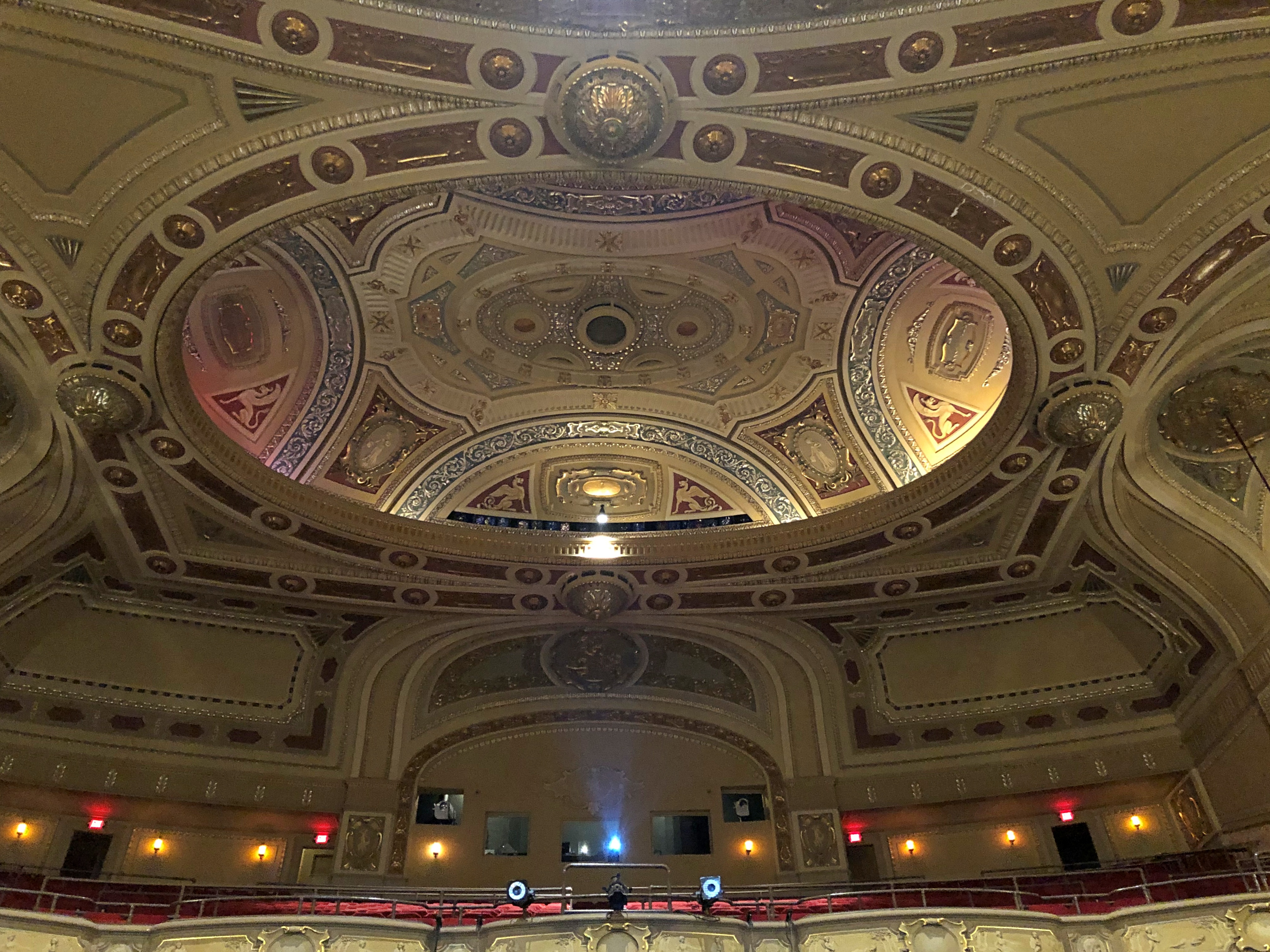
A summerish weekend as the fall equinox came and went. That made Saturday a good day for Doors Open Milwaukee.Doors Open Milwaukee

The main event on Sunday was planting the enormous number of tulip bulbs that Yuriko acquired at a yard sale recently for a small price. If half or a quarter or even a tenth produce blooms next spring, there will be a nice display.

How would one start, and profit from, a virtual tulip bubble? Just wondering. Sillier things have happened in our time.

This was the sixth Doors Open for me. Yuriko didn’t feel like it this year, so it was a solo shot up to Milwaukee and back for me. When I was reading about possible sights at Historic Milwaukee’s web site, I came across one for Carma Laboratories, maker of lip balm Carmex.

“The 40,000 square foot building was built by Carma Laboratories approximately thirteen years ago specifically to function as a warehouse and distribution center,” Historic Milwaukee said. “The style of the building is a generic contemporary warehouse made of concrete.”

Well, fine. Why should I go there? Next paragraph:

“Carma Laboratories, the manufacturer of Carmex Lip Balm, is home to the world’s largest theater pipe organ, [which is] housed in its distribution center. The organ contains 6,000 pipes, a concert grand Steinway Piano, numerous percussion instruments and a set of handbells all playable from the organ console.”

Really? Rarely has such a bland opening paragraph been followed by such a wowzer. I knew I had to see that. It was my first stop Saturday morning.

Ordinary exterior indeed.Carma Laboratories

It’s one building in a district of suburban offices and distribution centers in Franklin, Wisconsin, which is south of Milwaukee proper.

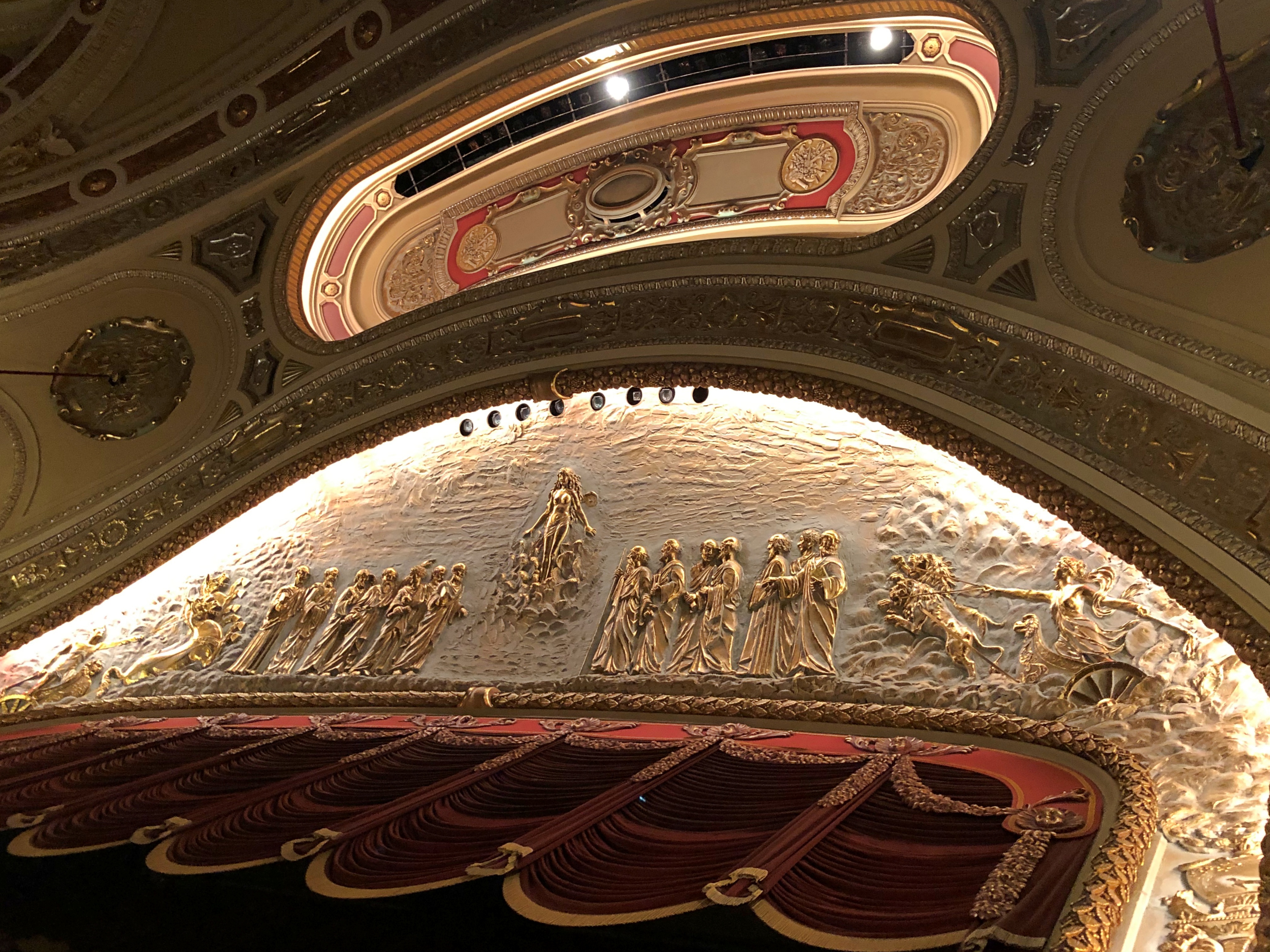
Inside.Carma Laboratories organ Carma Laboratories organ

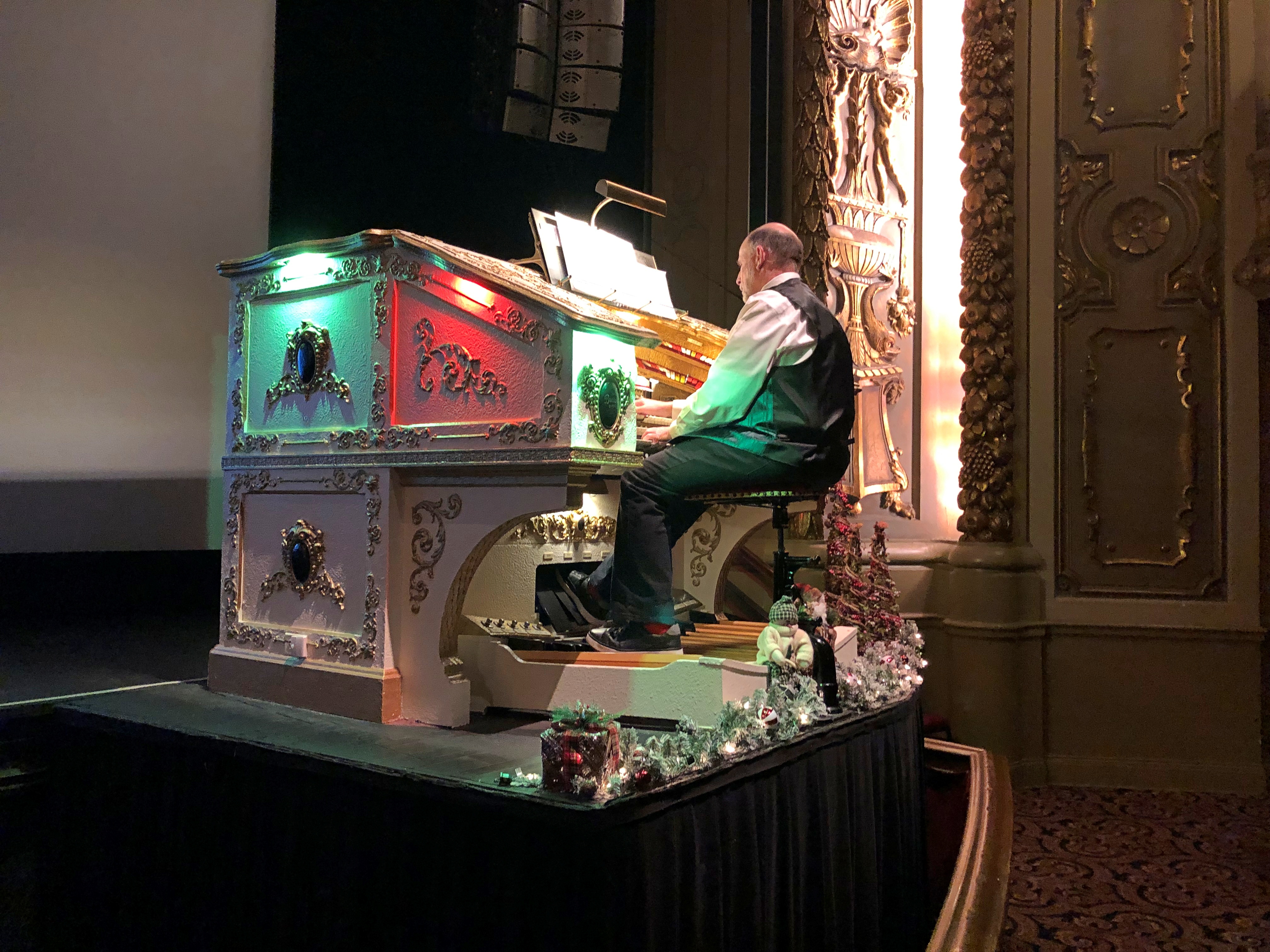
The organ is the vast enthusiasm – hobby is hardly the word – of the president of the company, Paul Woelbing, who was on hand to tell visitors about the organ, which has been under construction by the Century Organ Co. for years and isn’t quite finished even now. But enough to belt out a rousing version of the main theme from Star Wars (1977), which was playing when I walked in the door.

“When Woelbing and his late father, Donald, were inspecting a vacant warehouse for the expansion of Carma Labs, the acoustics of the cavernous building gave him some inspiration,” says the American Theatre Organ Society. “Woebling, a collector of paintings, old Harleys, and self-playing musical instruments, naturally thought of a pipe organ for the space.”Carma Laboratories organ Carma Laboratories organ

Woelbing at the console, programing the instrument ready for another piece, but I forget what. Carma Laboratories organ Carma Laboratories organ

Not Toccata and Fugue in D minor, though I’m sure that played at some point during the day. Still, the piece that did play was equally rousing, seeming to fill the space from top to bottom. Theater organs aren’t an enthusiasm of mine particularly, but I know a powerful instrument when I hear one.

This recorded concert from this summer gives some idea of its power and range, but not quite like being there.

The sound is one thing, but I’d say the icing on the cake is the location. We’ve all heard organs of various sorts in various places — including a few theaters — but in an obscure warehouse in an obscure corner of the Midwest? Sweet icing indeed.

The organ’s many parts occupy only part of the warehouse. The rest is exactly that – warehouse space, which was roped off to us casual visitors on Saturday.Carma Laboratories organ

“The nucleus of the instrument is the 3/15 Wurlitzer organ that was originally installed in Chicago’s Nortown Theatre,” says ATOS. “Denver organ enthusiast Dr. Bruce Belshaw purchased the organ in the 1950s and installed it in his home, before it made the current move to the Franklin, Wisconsin warehouse.

“With many additions, the now 90-rank instrument has extensive tonal colors. The organ has been used for annual company holiday parties, and Woebling’s desire is to share the instrument and music with the community.”

A $100,000 Space Suit, Almost

International Talk Like A Pirate Day has rolled around again. Where does the time go? Soon enough, it will be Millard Fillmore’s birthday and then National Gorilla Suit Day.

The art of the headline isn’t one of my strengths, but I understand the tendency to fudge just a bit for the sake of grabbing those eyeballs. Take the “$100,000 space suit.” That’s what the reader will see, the thinking goes, relegating “almost” to a second-place consideration, if that. The text will clarify.

Unless it doesn’t. I don’t know whether formal studies of the matter have been done, but they don’t need to be. It’s clear that the exaggeration is more easily retained by human memory than the small-print facts of the matter. You could argue an evolutionary advantage in that kind of big-picture perception for savanna dwellers of yore, but I’m not smart enough to know whether that’s the case.

Here’s the fine print: the item I’m talking about isn’t, in fact, a real space suit, and probably not selling for $100,000. The other day I saw a snippet about an auction to be held next month by Heritage Auctions, “The World’s Largest Collectibles Auctioneer.” The item for sale: Astronaut Space Suit (6) Piece Ensemble from 2001: A Space Odyssey (MGM, 1968).

At a starting bid of $80,000, the item might indeed sell for $100,000 or more, so my headline isn’t completely off base.

More detail, according to Heritage: “Vintage original (6) piece astronaut space suit ensemble including…  helmet, metal neck ring, tubing and applied ‘United States Aeronautics Agency – Clavius Base’ decal, leather lined interior retaining a label handwritten ‘Sean Sullivan’… These space suits can be seen prominently during the Moon crater and Moon Bus shuttle scenes… This epic piece of film history exhibits age, paint cracking to the entirety of the coveralls and gloves, crazing to the left side of the helmet visor, paint chipping to the backpack, and heavy production use.”

Cool. I hope the likes of the Seattle museum formerly called EMP acquires it for display; that would be a good outcome for the auction. I am, of course, a longstanding fan of that movie. I will not, however, ever find myself the proud owner of a faux space suit associated with it.

September 13, 1975

A curiosity in my personal chronology: I remember what I was doing from 10 pm to 11 pm Central on Saturday, September 13, 1975. I was 14 and the start of high school was just a few weeks behind me, but that wasn’t so important that evening. During that hour, I was parked in front of our living room television, a black-and-white set because my mother didn’t convert to color until it was impossible to buy black-and-white. That didn’t bother me a bit.

Because the Internet never ceases to amaze, it took me only a few seconds to find the local TV schedule for San Antonio that day, to confirm what I already knew: the 10 pm slot on Channel 12, which was the ABC affiliate, was given over the Space: 1999. Not just any episode of that show – sold to U.S. markets in syndication, so not in prime time – but the first episode, “Breakaway.”

As the most expensive British television program up until that time, the show got quite a buildup, so it was no accident I tuned in. Martin Landau and Barbara Bain, as I recall, had plugged it on The Tonight Show not long before. (That too is online, at least as difficult-to-hear audio.)

So I watched that evening, and every week for a short time afterward. The physics of the premise — the Moon blown out of orbit and traveling the stars — was like something out of the Irwin Allen playbook, but even so the show started with some promise. As time passed, however, its essential dopiness became all too clear.

I think of this when I recall that I saw the first episode of Saturday Night Live on October 11, 1975. Or rather, the last two-thirds of it, switching channels after Space: 1999 was over at 11 Central. My reaction was, What is this? Then I think I remembered that a live comedy show had been slotted for that time, as it had been promoted as well. Within a few weeks, I didn’t bother with Space: 1999 any more, and took up SNL, as many of my peers did.

Despite its failure as science fiction, Space: 1999 did have one thing going for it, something I occasionally still enjoy. Namely, the kick-ass introduction.

Visually, it teases with quick-cuts of the episode ahead, as well as reminders of how the hapless residents of Moonbase Alpha got into their situation, and a sequence that fixed the fictional events of September 13, 1999 in one’s mind (and, lots of crashing space ships!). Aurally, there’s a rousing blend of orchestral passages, jazz and a funky electric guitar by British composer Barry Gray (d. 1984) that had early ’70s all over it.

The Demise of Cousin Oscar

Unlike Wednesday morning’s thunder but no rain, Thursday morning provided rain but no thunder. At least, none that I was awake for. Not a lot of rain, but enough to kick off a cool cloudy day.

Not long ago I watched an episode of All in the Family on a whim, as the series is available on one of the streaming services I pay for. I was curious to take a look at the program, so famed in its time, with my older eyes – older now than any of the characters.

I didn’t watch it every week back in its heyday, except maybe during the fall of ’73, when CBS had its remarkable Saturday line up: All in the Family, MASH, Mary Tyler Moore, Bob Newhart and Carol Burnett.

As I was 12 that year, Saturdays weren’t yet for social occasions; that would come later, sometimes causing me to forego television I would have enjoyed, such as a number of episodes of the original-cast SNL. It was years before I saw the Killer Christmas Tree sketch, for instance.

The All in the Family episode I watched recently, “The Saga of Cousin Oscar,” originally aired on September 18, 1971, as the first episode of the second season. Even though the show had found its footing by then – All in the Family became No. 1 that season, probably as a result of word-of-mouth that summer — I’m fairly certain I’d never seen “Cousin Oscar” before. As a 10-year-old, I wasn’t paying attention to that kind of word-of-mouth.

As a start for a season, the episode was a good one. It was actually funny at times. The main reason, I believe, is that there was very little in the way of discussions, or arguments, about the issues of the day, except maybe a comment by Mike complaining about the funeral industry. That’s often the case with comedy, and especially this show: the lower the level of tendentiousness, the funnier it is.

The titular character Oscar, a ne’er-do-well cousin of Archie’s, was described in the first act, but not seen, as he was reportedly sleeping late upstairs. Why he had no other place to go at that moment wasn’t entirely clear, but it was clear that Archie considered him a moocher and planned to kick him out. Commercial break.

I was entirely sure I knew what would happen next. I’ve seen enough sitcoms in my life.

Sure enough, like the luckless guest in “The Kipper and the Corpse,” Oscar checked out sometime that morning. Now the Bunkers had to deal with that, including a series of long-distance calls to other relatives, trying the raise money for Oscar’s funeral, which Archie doesn’t want to pay for. I’m not giving much away when I note that in the end, he’s stuck with the bill, though it’s played as him reluctantly doing the right thing.

A lot of sitcoms could have done that story. I could imagine a cousin of Fred Sanford’s doing the same. Plautus could have done the story too. Maybe he did, and the scroll waiting to be discovered at some buried site in the Near East.

Some observations.

Archie was incredibly bossy, which I suppose fits, but more remarkably everyone else goes along with it, including Mike.

One forgets what an involved process long-distance calls used to be.

Edith, of course, had more sense than Archie, and more empathy too, a pattern that persisted throughout the series. Plautus could have done that as well.

No one even mentioned the possibility of cremating Oscar, a cheaper option. I know it wasn’t as common then, but it did happen. Or, for that matter, having Oscar buried in a potter’s field at county expense (Mike’s suggestion) and then holding an inexpensive memorial service. It was either all or nothing when it came to a funeral.

This was before residential sets were often depicted as more expensive than the characters could afford (viz., Friends). I marveled that there was supposed to be enough room upstairs for Oscar to have his own bed to die in.

In terms of sets, the show had a remarkable economy: the living room and the kitchen. I can only remember a handful of times the upstairs was seen, including one memorable moment when Archie got on Mike’s case – nonpolitically, mostly demented – about the right way to put on socks and shoes.

The show could have used more material like that.

Late Summer Tomatoes

Heard the rumble of thunder at some distance during the wee hours this morning, but upon looking outside after dawn, no rain came of it, at least here. We’ve had a few dry weeks now, with the local grass retreating to its brown state till water comes again.

From our back yard. We’ve been watering our small tomato crop through the dry days.

The quarter came from the Royal Canadian Mint facility in Winnipeg, and I picked it up somewhere near Lake Superior last month, and exported it to the United States.

There were more tomatoes in the dish until recently, today in fact, smaller in diameter than the quarter, but we ate those. Man, garden tomatoes are good. I’m hardly the first person to notice that, but it’s worth repeating.

Did some reading about the late singer and businessman Jimmy Buffet today. This paragraph made me smile.

“Mr. Buffett’s original idea for Margaritaville was ‘to expand the opportunity for as many people to experience the lifestyle immortalized in his iconic song as possible,’ according to the statement on the company’s website,” the New York Times reported. “The company had $2.2 billion in gross annual revenue last year.”

The lifestyle immortalized in his iconic song? That of a drunken layabout? You don’t need to visit a resort to do that.

Gary Wright also died recently. That makes two popular musicians who first had hits in the 1970s. You know what that means, according to unfalsifiable popular notions. Number three dead ahead, and I do mean dead.

The Wawa Goose

Whatever else you can say about the township of Wawa, Ontario, the goose comes first. I can’t call Wawa famous, but to the extent the town is known in the wider world, the goose puts it on the map.Wawa, Ontario

The current goose is only a few years old, the second steel-bodied bird to stand on the site, which originally sported a chicken-wire and plaster goose erected in 1960 that lasted only a few winters. The statue calls attention to Wawa, which was its sole original purpose, since the brand-new Trans-Canada highway had bypassed its main street.

It works. You only need to pull off the Trans-Canada to see it, and then you stand a chance of going further into town (pop. 2,700). Though I spent a couple of hours in Wawa, and saw and did other things, the goose persuaded me to stop about mid-day on August 3. Well, maybe. With a name like Wawa, I might have stopped anyway. But the experience wouldn’t have been nearly the same.

Wawa has taken to its goose wholeheartedly. Follow the road into town and you’ll see other, more volant unofficial geese.Wawa, Ontario Wawa, Ontario

Look a little closer, and there are even more geese. It’s geese all the way down. This can be found on the wall outside of the township’s offices. Based on the township seal, looks like.Wawa, Ontario

A small goose at a small historic cemetery in Wawa.Wawa, Ontario

Pretty much any fact about the Wawa Goose is a fun fact, but I’m only going to cite a few from the Northern Ontario Travel (NOT) web site and other sources. The most fun of the fun facts, in my opinion.

The goose is 28 feet tall, 22 feet long, and has a wingspan of 20 feet, according to NOT. [What, no metric measurements?]

One Dick Vanderclift, Dutch immigrant and ornamental wrought iron specialist from Sault Ste. Marie, created the second goose. I assume the third one hews pretty close to his original design.

One Al Turcott, owner of a Wawa dry goods and clothing store – back when that could make you a prominent local citizen – ponied up for most of the money to build the original.

“The Canada Goose is not an official symbol of Canada,” NOT says. “Only the beaver and the maple tree have this cultural status.”

[What committee decides – no, I’m not going down that rabbit hole.]

“Stompin’ Tom Connors sang the song ‘Little Wawa’ about a goose that stayed behind when her lover Gander Goo got shot down with an arrow!” NOT exclaims. “Bet you didn’t know that one!”

I sure didn’t know that one. Stompin’ Tom Connors (d. 2013) only now has come to my attention. Quite a thing in Canada, he was. This isn’t “Little Wawa,” but it is Stompin’ Tom.

Wait, Conan O’Brien is Canadian? No. No reason he couldn’t be, but he’s from Massachusetts. He clearly knew what his Canadian audience wanted.

Turtle Creek Parkway, Tanks and White Line Frankenstein

Tooling along one of southern Wisconsin’s two-lane highways a week ago Friday, the radio station I happened to be tuned into – I’m not giving up terrestrial radio on road trips – introduced a new song by Alice Cooper, with a few words from the artist himself. That got my attention. Alice Cooper, shock rocker of my adolescence, is still making records?

He is, at the fine old age of 75. I never was a big fan of his, except of course for “School’s Out,” but I was glad to hear that all the same. Keep on keeping on, old guy.

For my part, I kept on driving, passing the greens and golds of high corn and the utilitarian buildings that support farming, intersections with gravel roads, hand-painted signs and, now and then, another vehicle. It was an obscenely pleasant July day, clear and warm and not nearly as hot as much of the rest of the country.

The new song came on. Title, “White Line Frankenstein.” Remarkable how consistent Alice Cooper has been through the years. What does he sound like, now that he’s a senior shock rocker? Sounds a lot like young Alice Cooper. A good showman finds something that works and sticks with it, and there’s no arguing his showman abilities.

About half way through the song I was inspired to pull off to the side of the road near where a rail line crossed the road, and take pictures.rural Wisconsin rural Wisconsin rural Wisconsin

Missed the last half of the song, but oh well.

Near Beloit, Wisconsin – close to the town of Shopiere, but not in any town, is a spot called Turtle Creek Parkway, a Rock County park. At four acres, it’s the rural equivalent of a pocket park, with its star attraction across a field next to Turtle Creek: the Tiffany Bridge, or the Tiffany Stone Bridge, vintage 1869, which as far as I know is still a working railroad bridge. (Tiffany is another nearby town.)Tiffany Bridge, Shopiere Tiffany Bridge, Shopiere

More than 20 years ago, I visited the bridge, accompanied by small child and pregnant wife. It wasn’t a park then, just a wide place in the road to stop. Enough people must have stopped there for the county to get a hint, I guess, and acquire and develop the land by adding a boat launch on Turtle Creek, a small rental event building, and a small parking lot.

Regardless, it’s hard to take a bad up-close picture of the structure.Tiffany Bridge, Shopiere Tiffany Bridge, Shopiere Tiffany Bridge, Shopiere

Just a hunch: the arches are too sturdy to destroy in a cost-effective way, so it abides.

Rather than return to the Interstate right away, I headed out from Shopiere onto the small roads where I eventually heard about Alice Cooper. Not long before that encounter, I spotted a tank in the hamlet of Turtle, Wisconsin.Turtle, Wisconsin

Another former Wisconsin National Guard tank, an M60A3.Turtle, Wisconsin Turtle, Wisconsin

It’s part of a plaza honoring veterans of the area. Interesting to run into another tank in southern Wisconsin so soon after the last one. I decided to keep an eye out for tanks on the rest of the drive, and sure enough I spotted more as the drive progressed.