The Gardens of the Fox Cities

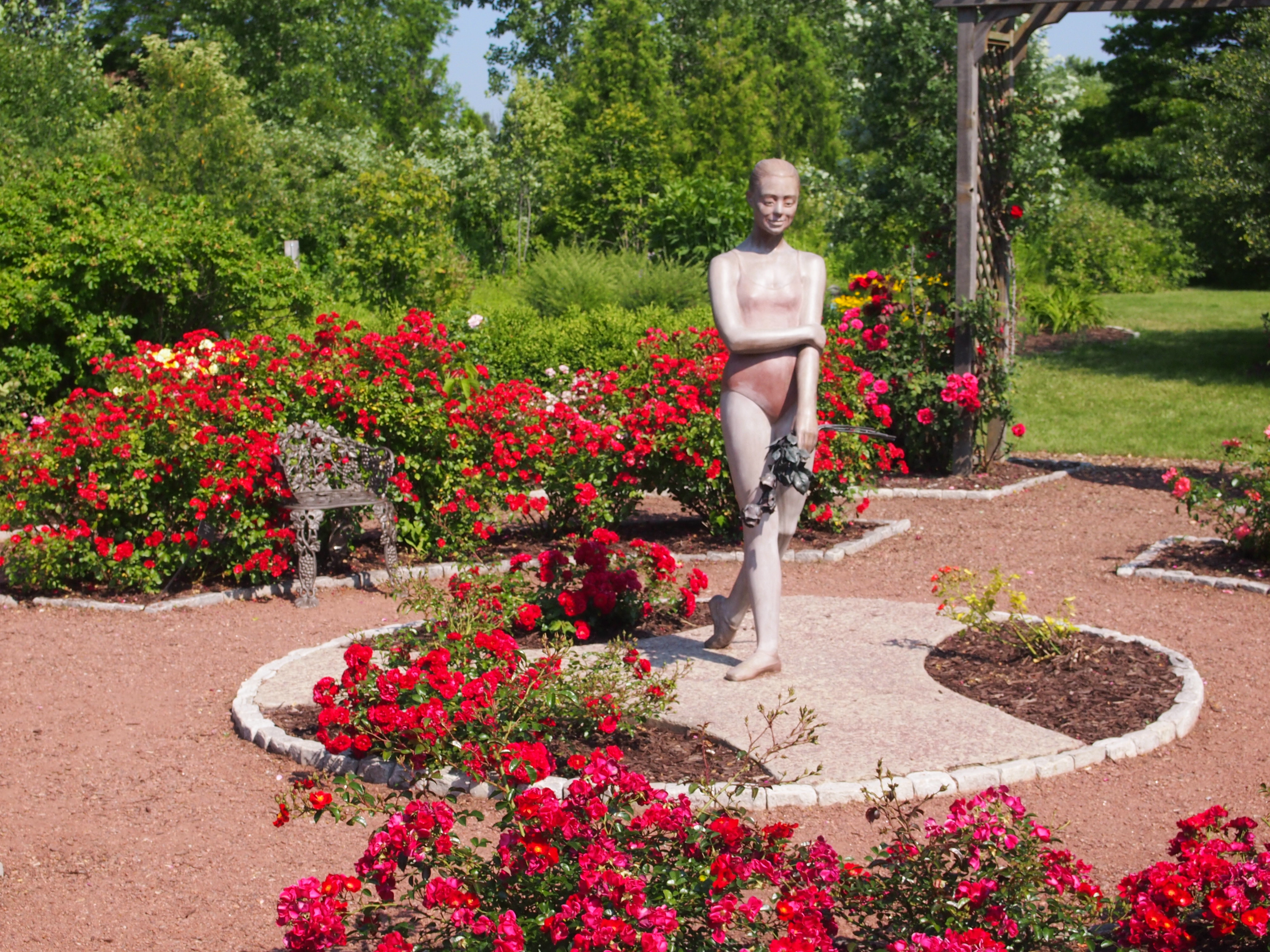
The Gardens of the Fox Cities in Appleton, Wis., consists of a series of formal plantings, such as the rose garden, which also includes a statue called “Reflections of Love,” by a local sculptor named Dallas Anderson. In the full flush of early July, it’s a gorgeous, but hot, setting. We visited fairly early in the morning – early for us on non-work days, ca. 10 a.m. – but even so, the heat was on.

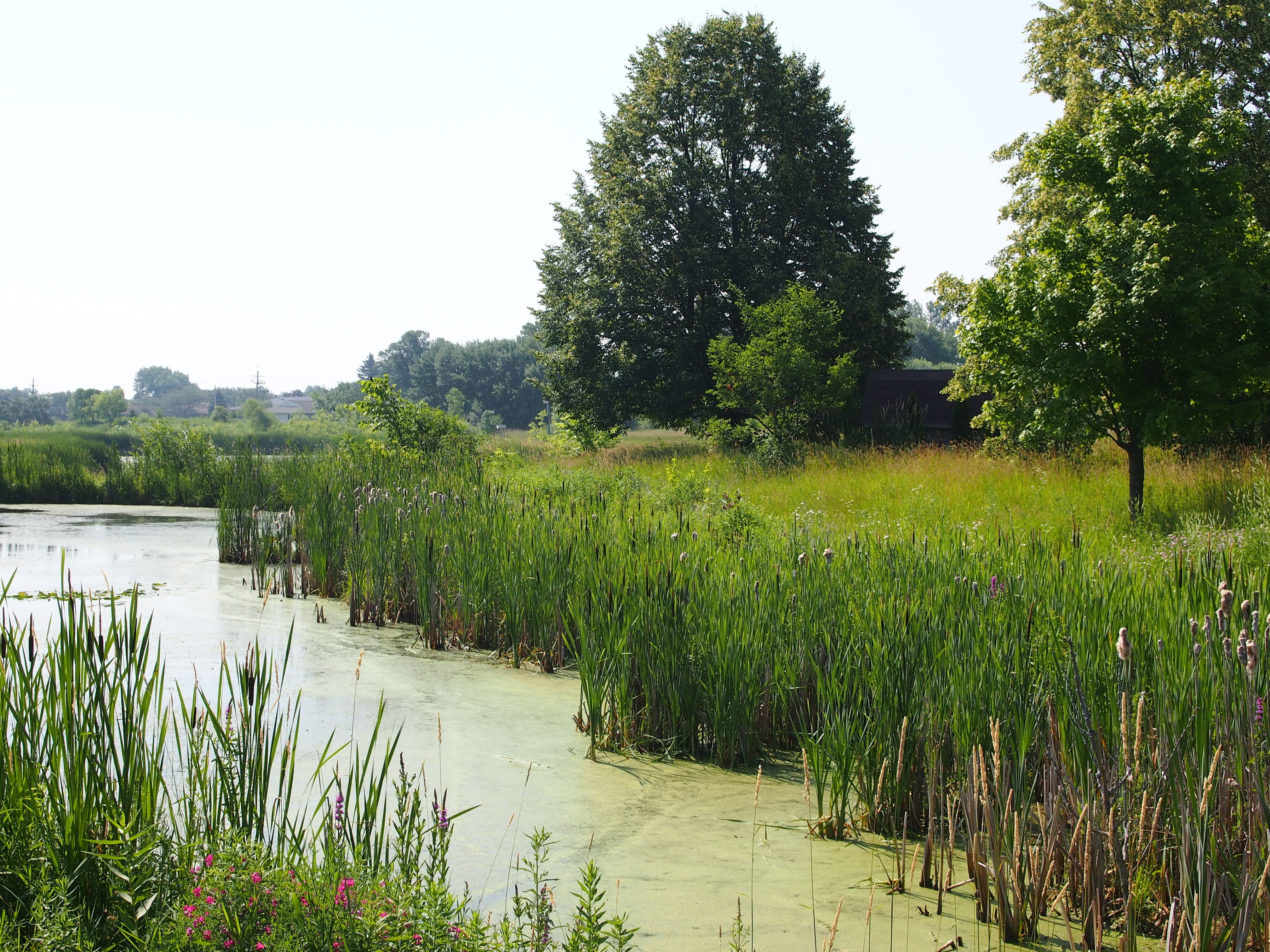
The gardens are either part of the large and mostly rec-oriented Appleton Memorial Park, or right next to that park, with no visible border. Turns out that the gardens also include wilder sections. Frame your shot just right and it’s a little hard to imagine that about 360,000 people live in the surrounding metro area.

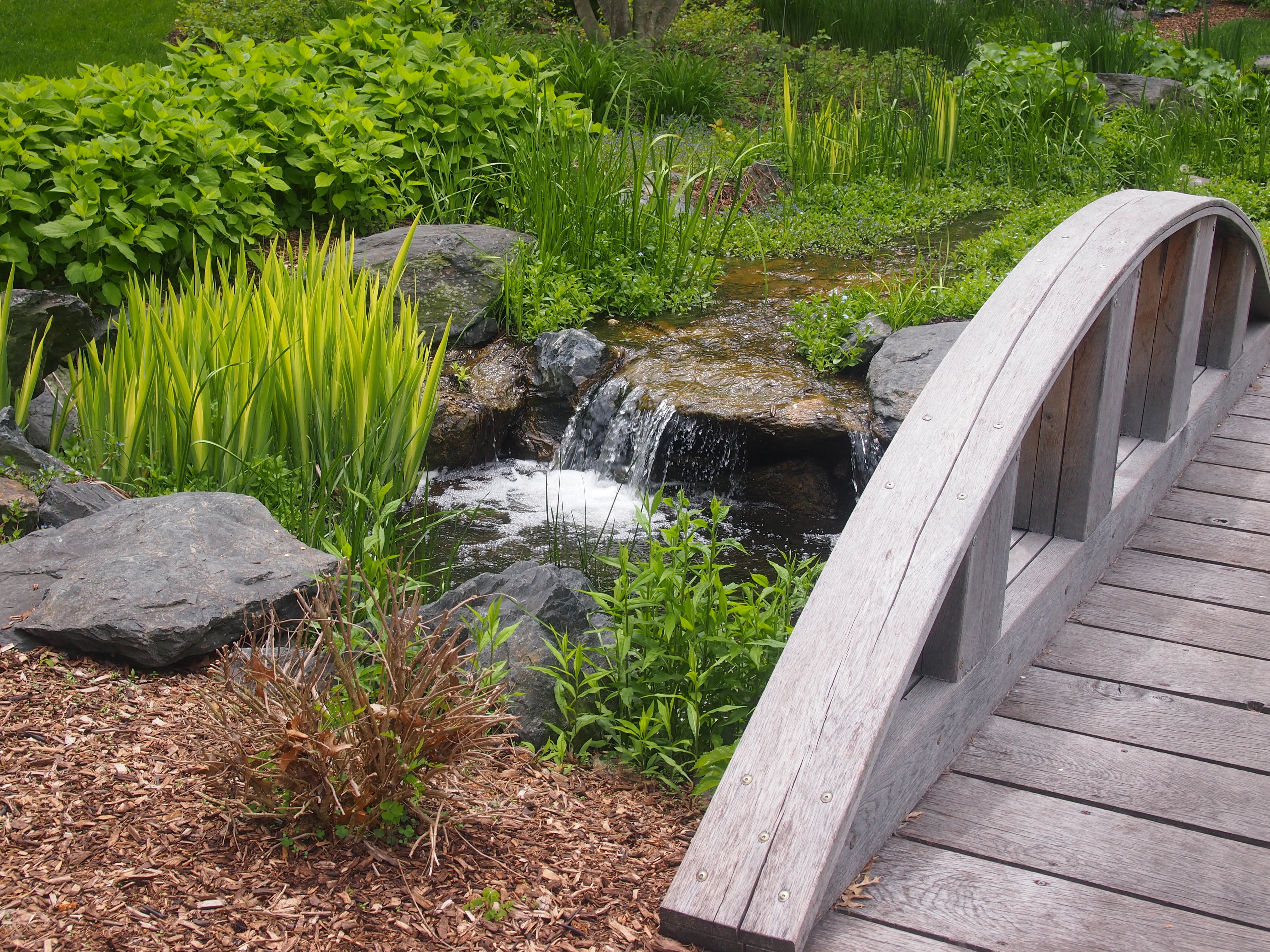
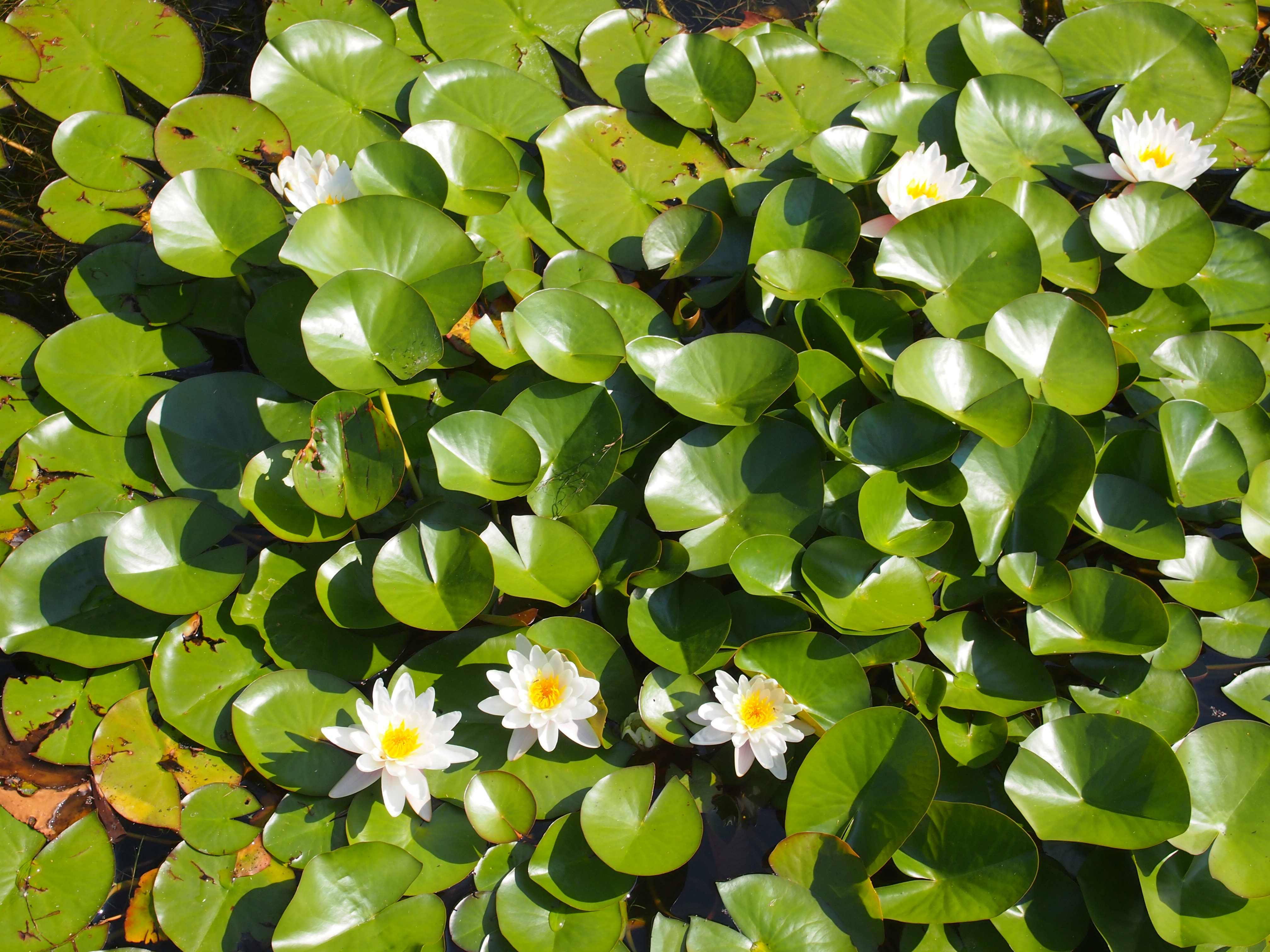
Look carefully, though, and there’s a house and a telephone pole in the distance. The gardens’ water features, some of them, luxuriated in lily pads.

The gardens also included a plant I’d never heard of – though there are many of those – called Lamb’s Ear (Stachys byzantina), which is native to Turkey and Iran. It’s an incredibly smooth plant, much like felt.

More About Lilacs Than You Need to Know

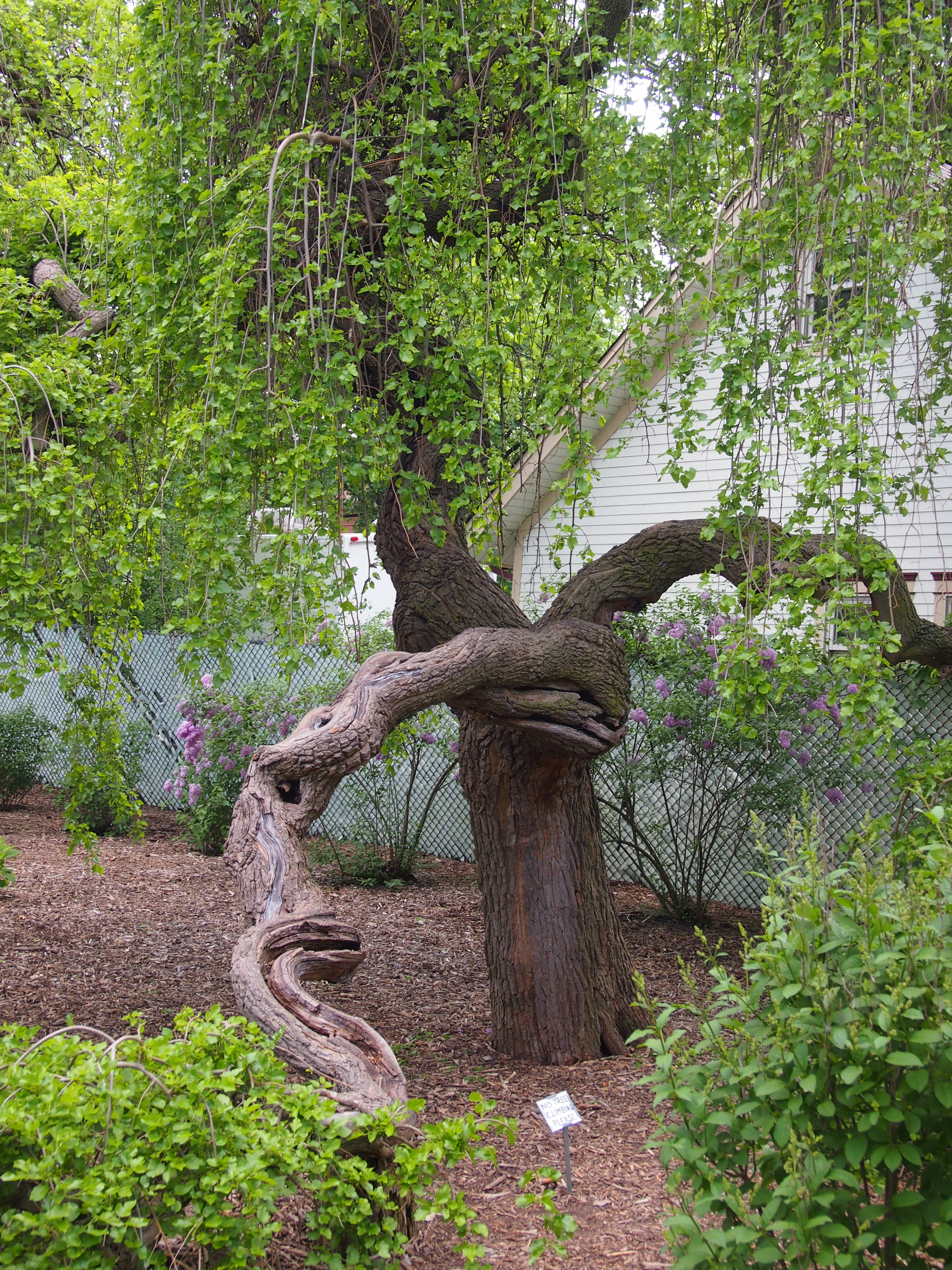
One more shot from Lilacia Park — a peculiar tree. Who doesn’t like tree trunks that splay out in different directions?

More on the story of this beflowered little park is told by Illinois Old Houses (1977) by John Drury, which this web site extracts and asserts the book is public domain. In any case, it says that “… this was the home of the late Colonel William R. Plum, pioneer resident of the village — soldier, lawyer, traveler, writer, horticulturist, and founder of Lilacia Park. Containing more than three hundred varieties of lilacs from all parts of the world, this park is regarded by botanists as the finest lilac garden in the Western Hemisphere.

” ‘In 1911, when we were on a tour of Europe,’ Colonel Plum once told a family friend, Mrs. Annabelle Seaton, ‘we stopped at Nancy, in France, and there visited the famous lilac gardens of Pierre Lemoine. That visit proved my downfall. My wife purchased two choice lilac specimens, a double white and a double purple, and we brought them back to Lombard. From that time on my enthusiasm for lilacs grew and I have never lost interest in them since.’

“When Colonel Plum made this statement, the results of his hobby could be seen all about the old Plum home. Here were all types of lilacs, including one of his favorites, a blue variety called the ‘President Lincoln.’ The shrubs were pleasingly arranged on the Plum estate of two and a half acres, which he called ‘Lilacia.’ Since expanded to ten acres, Lilacia — re-named Lilacia Park — now contains 1,500 lilac bushes as well as 87,000 tulip bulbs.”

The Abraham Lincoln variety, I noticed, is still growing on the grounds of Lilacia Park. So is one named after Gen. Pershing, but most varieties don’t involve famed Americans. As for Pierre Lemoine, he seems to be this fellow, Victor Lemoine (the Spanish version of the page gives his full name as Pierre Louis Victor Lemoine), “a celebrated and prolific French flower breeder who, among other accomplishments, created many of today’s lilac varieties.” Born 1823, died 1911, so I guess you could say he created lilacs for the Belle Époque.

Water-Colored Water & Pink Flamingos

Rain promised early in the day on Monday, but it didn’t come until late in the evening. So I had time to mow the lawn, a task that I’ve put off lately. I enjoyed cutting all the high dandelions and scattering their seeds to the winds.

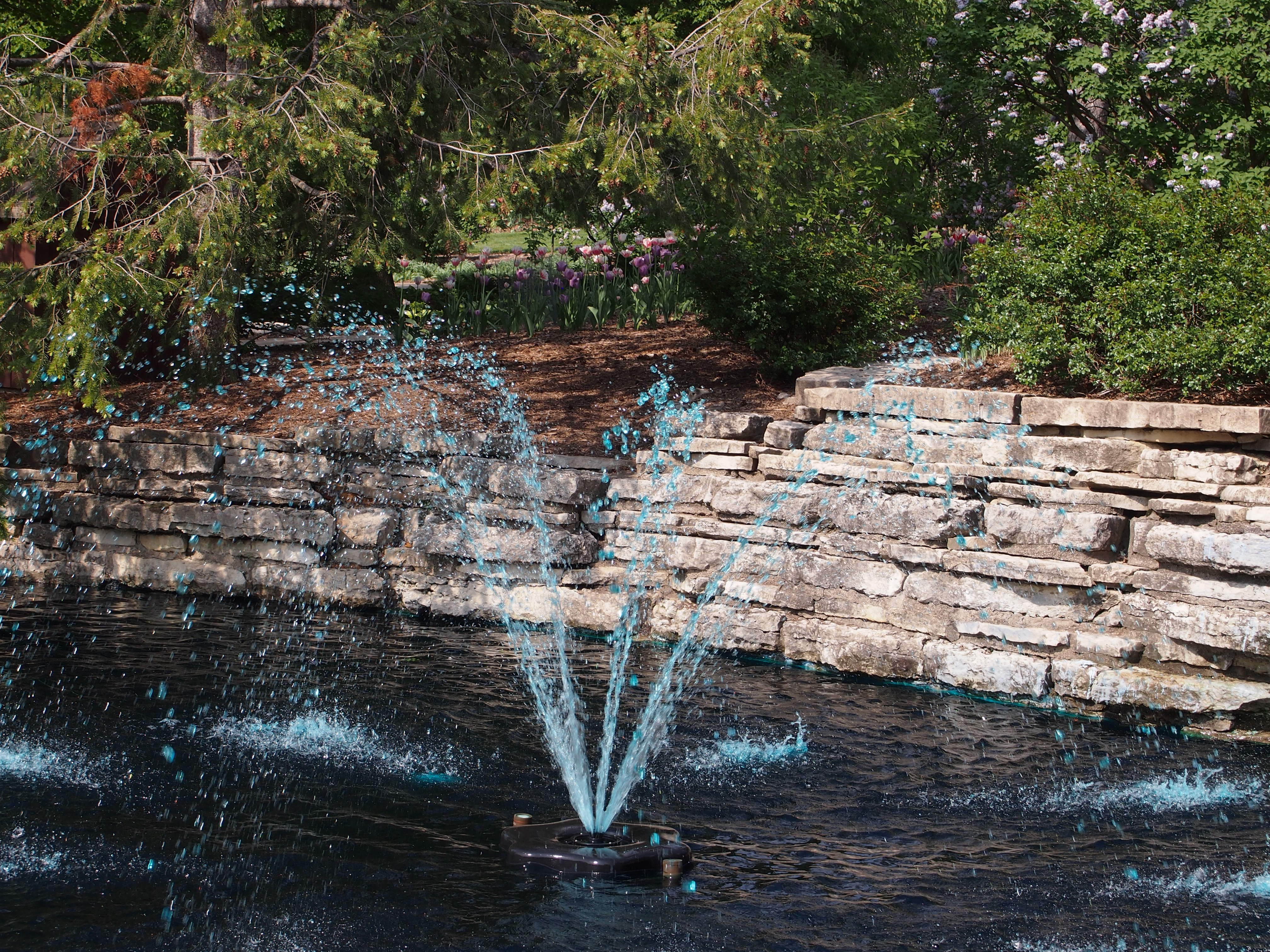
We saw an odd feature of Lilacia Park: a fountain spouting blue-colored water. I’m pretty sure that the last time I saw the fountain, non-tinted water was used.

It made me think of Mon Oncle, which I haven’t seen in many years. One of the features of the ultramodern house in that movie, if I remember right, was a fountain spouting blue-colored water. It was something seen in passing, not commented on, but I think it was supposed to be a visual comment on the vacuousness of the haute bourgeoisie, or burgeoning postwar consumerism, or something (I’m entirely too Anglo-Saxon to care much about the subtleties of Gallic social criticism).

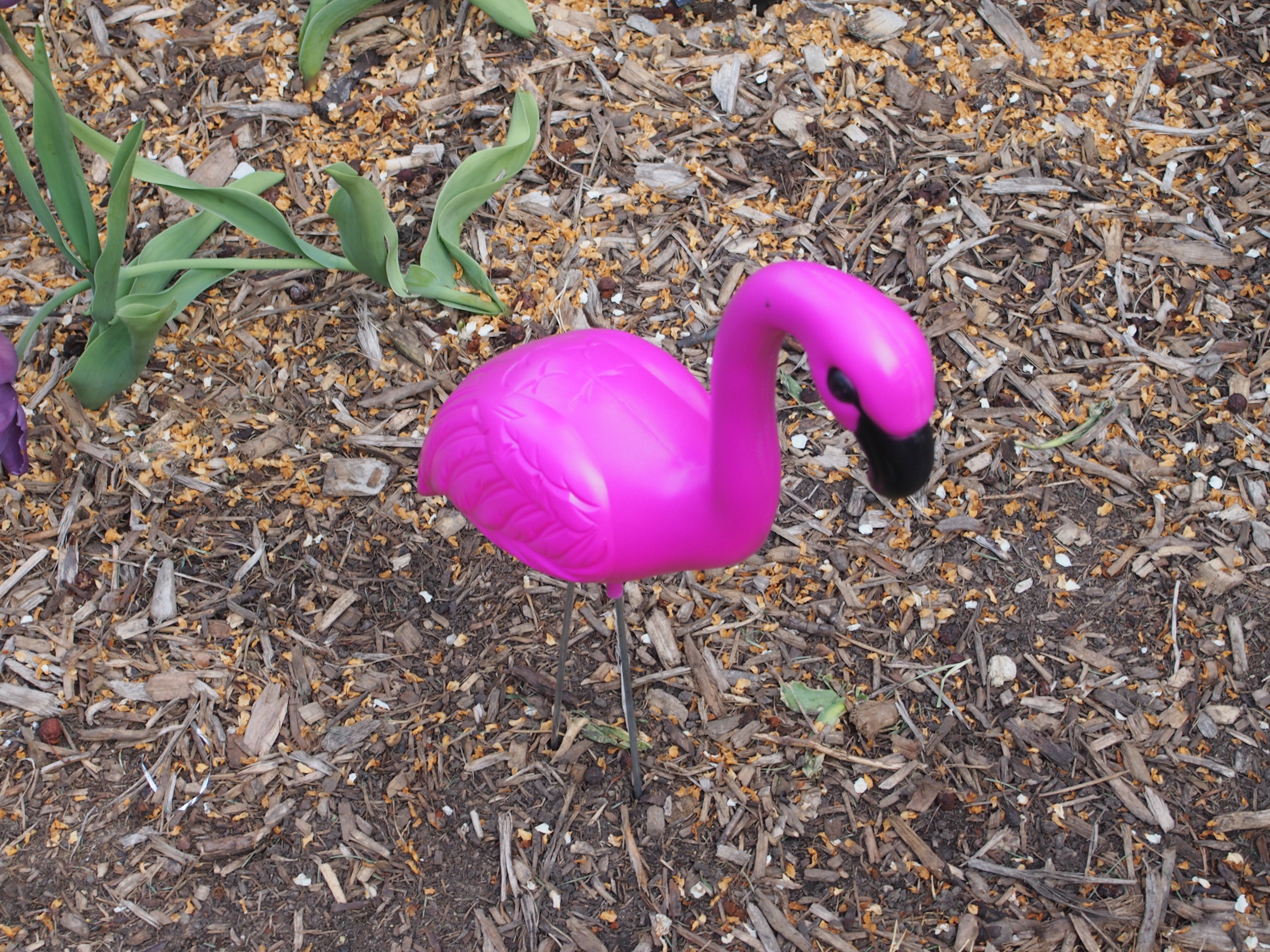
Also noted at the park: a couple of pink flamingos. There were exactly two that I could see, just idling next to one of the walkways. Say what you want about pink flamingos, I think there ought to be more of them in parks and gardens.

Lilacia Park ’13

It’s been a while since we visited Lilacia Park in Lombard, Ill., at the height of lilac blossoming. It’s been six years, in fact. I wouldn’t have guessed quite that long. On Saturday I thought it was time to visit again.

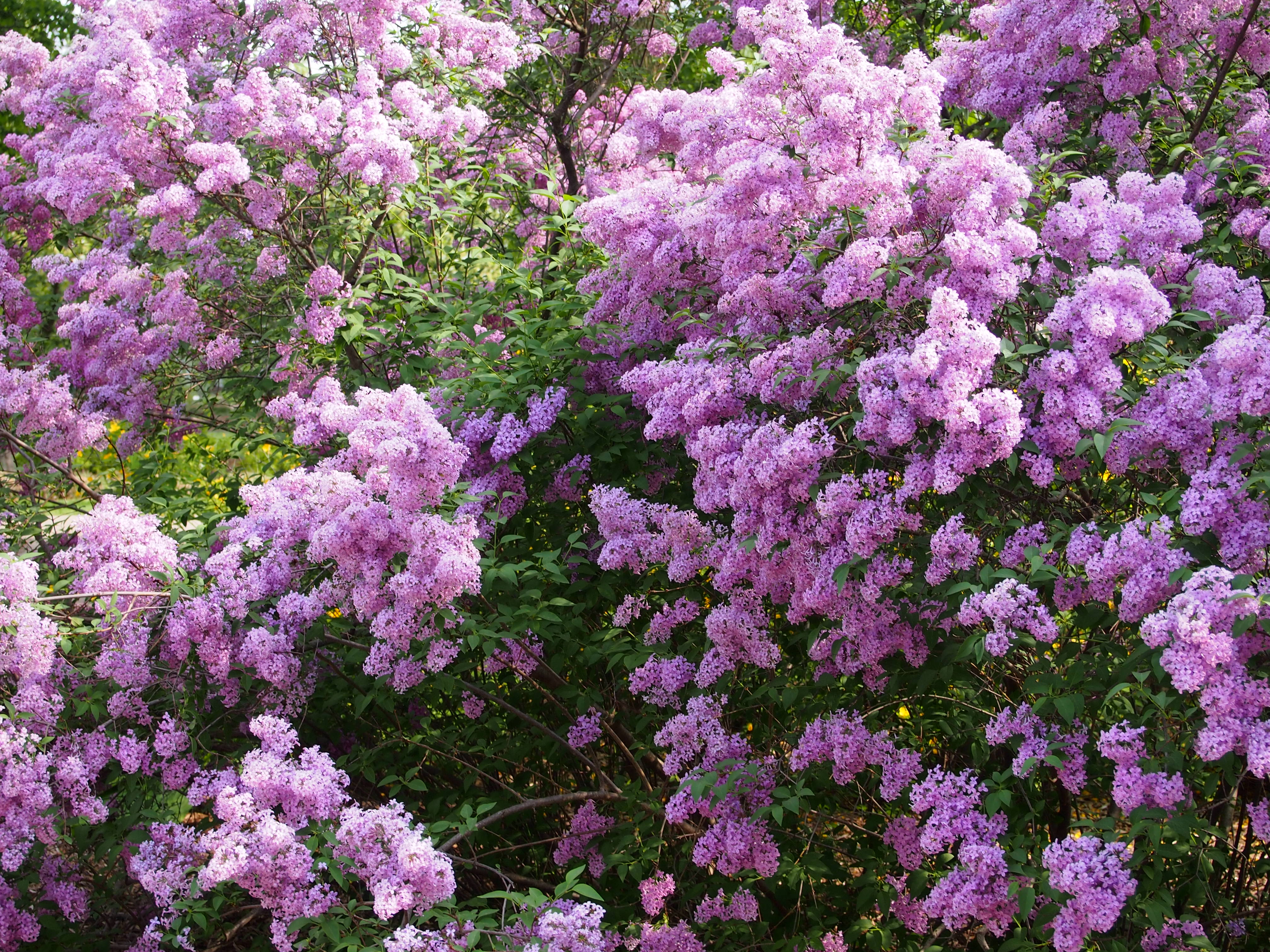
I’m glad we went. For the profusion of lilacs, if no other reason. Make that two reasons: their fine sweet smell, which the picture can’t convey.

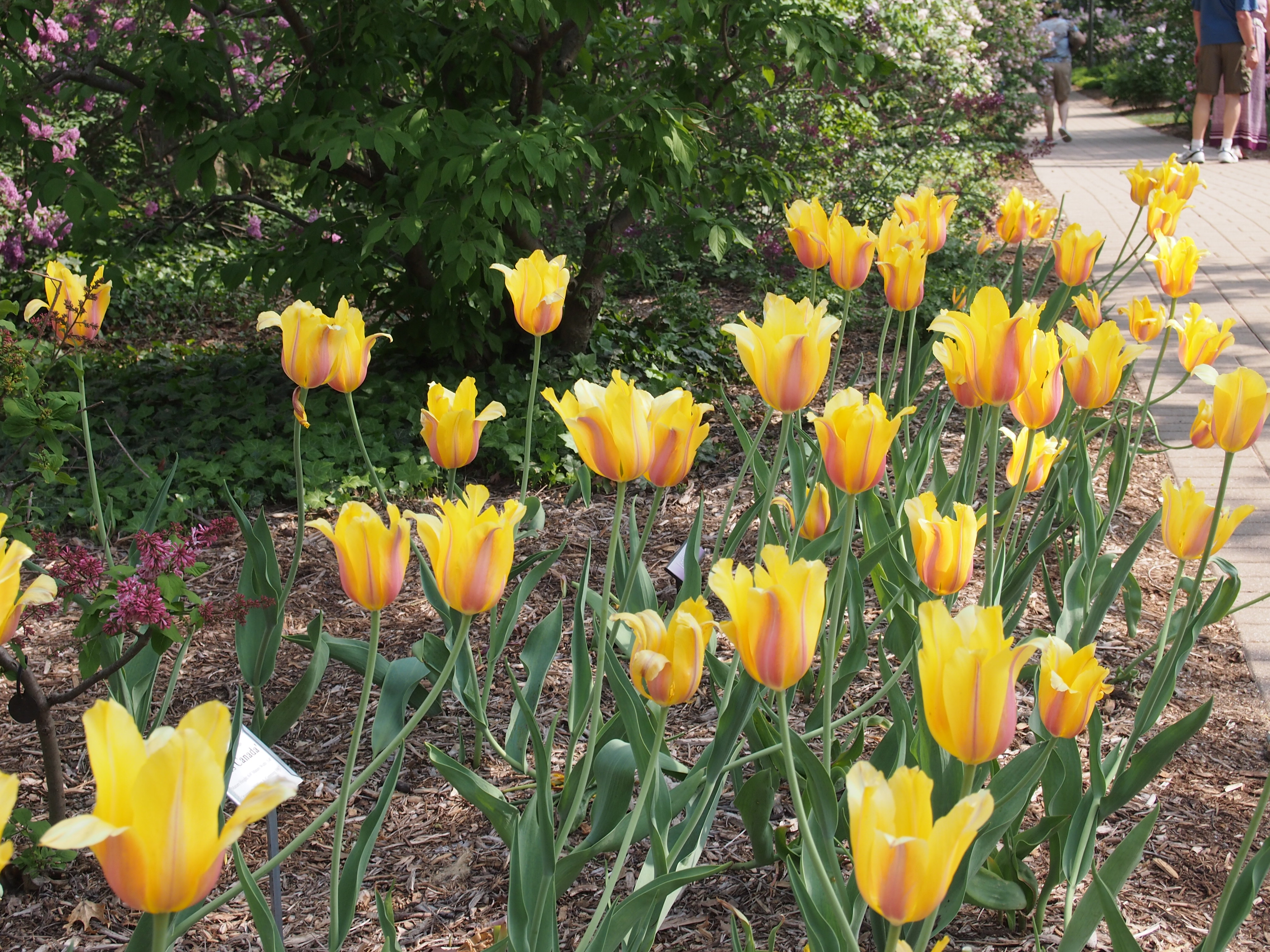
The tulips aren’t too shabby, either.

It was a flawless spring day, warm but not hot. Yet the park wasn’t jammed with flower seekers, though it was hardly empty. It’s a little-known jewel of the suburbs.

The Sunken Gardens

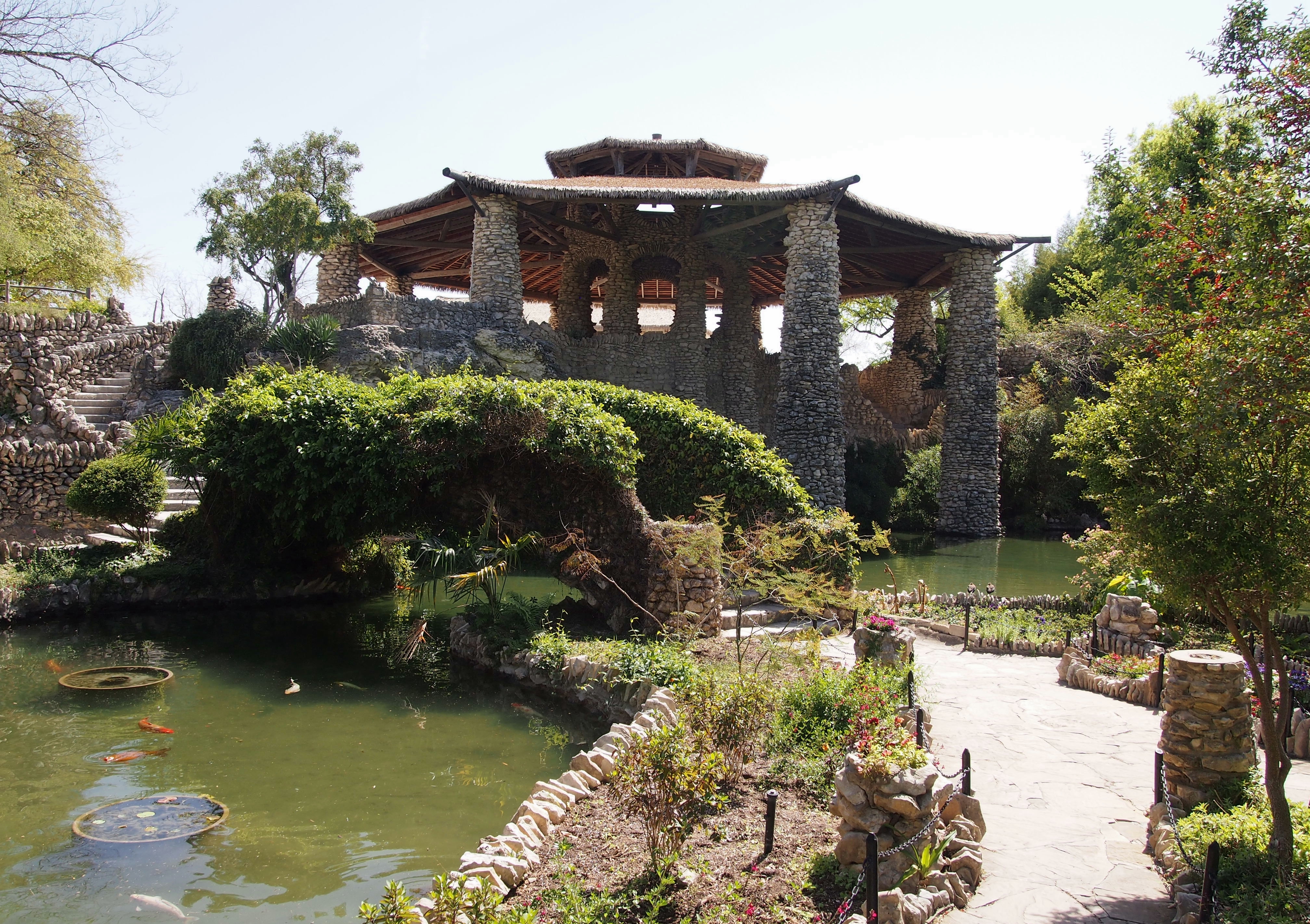
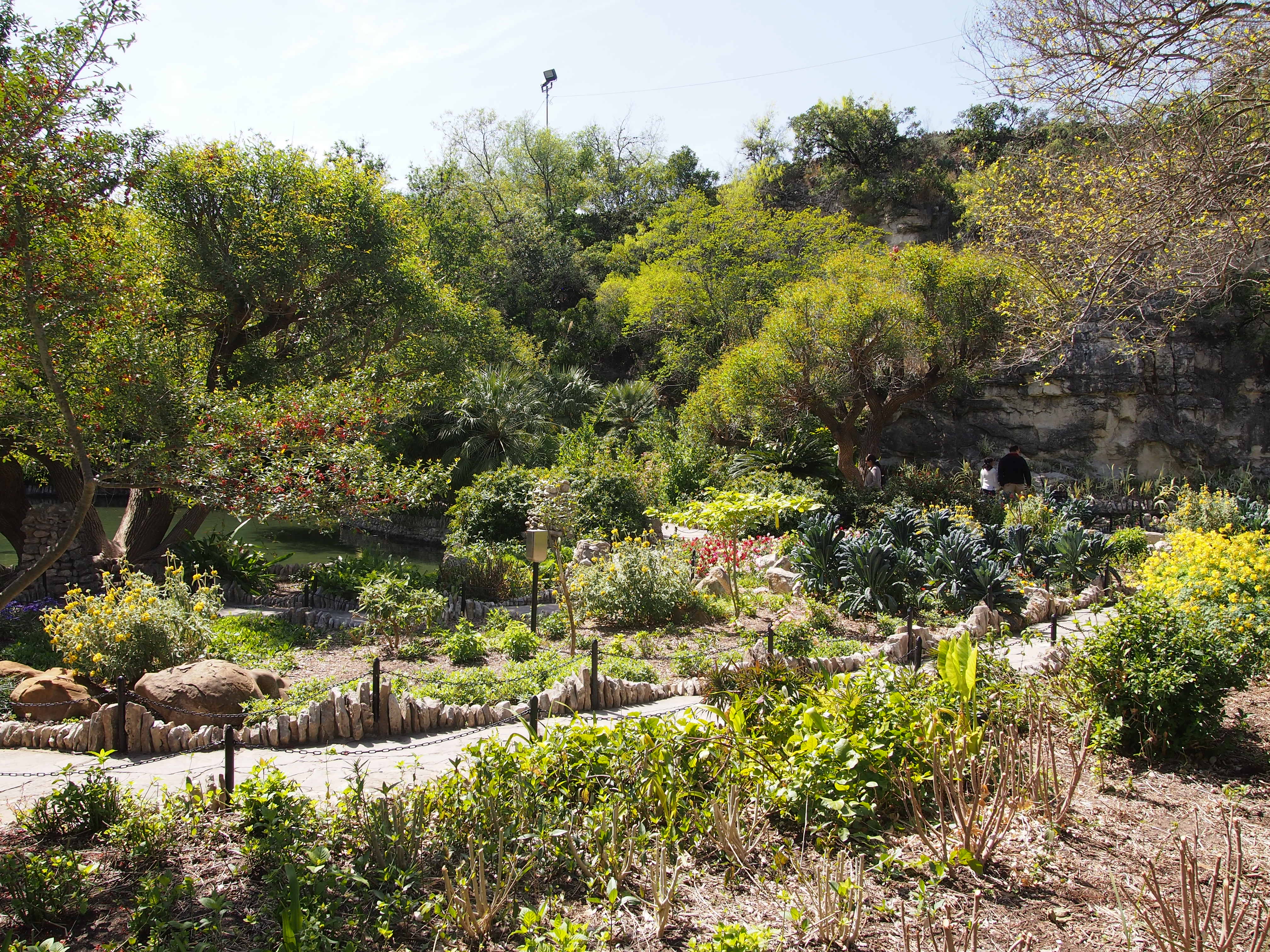
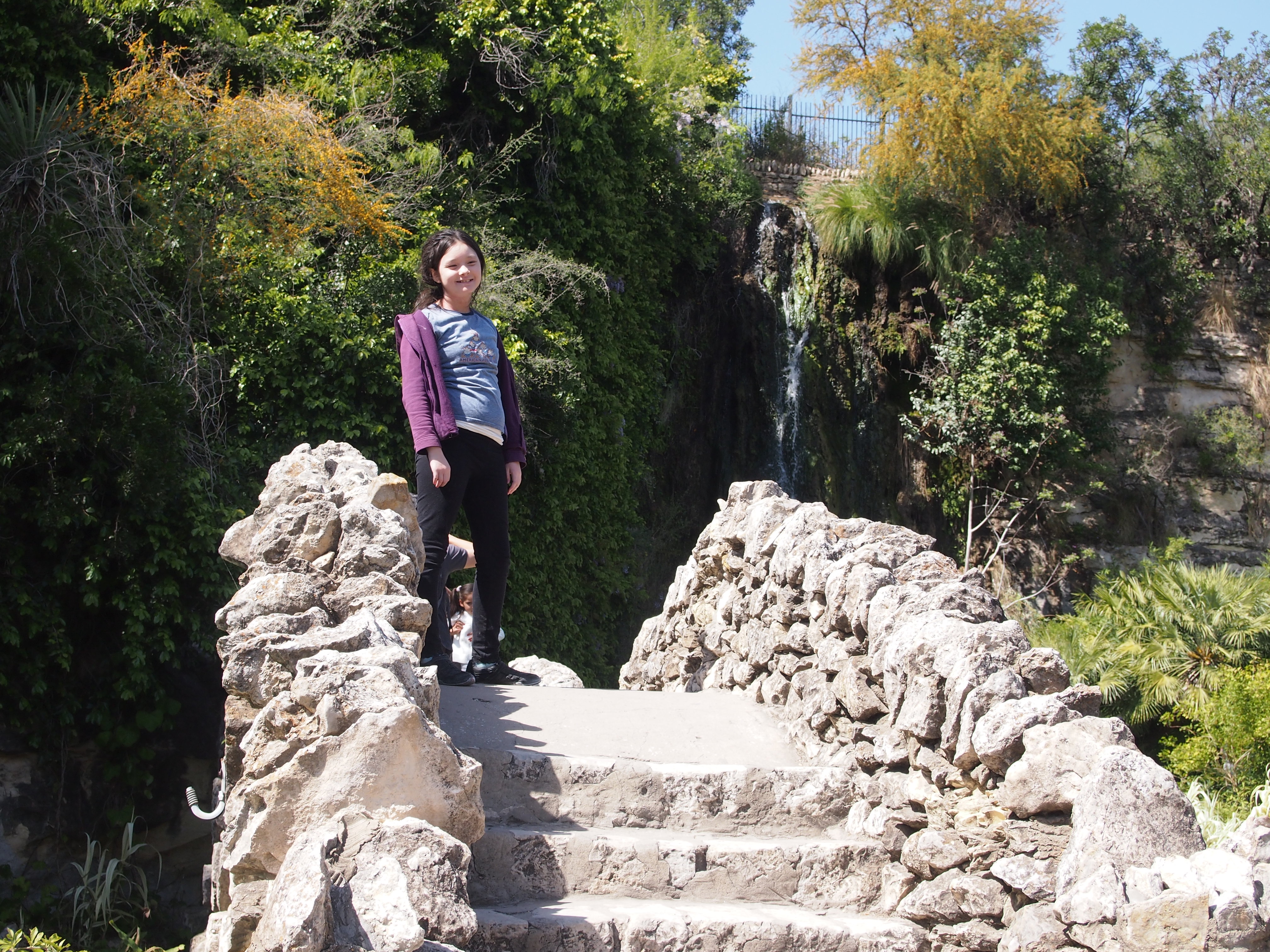
I went with my brother and children to the Sunken Gardens in San Antonio last week. It isn’t officially called that, but rather the Japanese Tea Gardens. More about that in a moment, but under any name it’s a lovely place, and a fine example of land re-use, since long ago it was a quarry.

A view from the “sunken” portion of the gardens, looking up at the pavilion, whose columns are remarkable stacks of stone, a bit like manmade hoodoos.

Coming from the pre-spring landscapes of the North, we appreciated the spring lushness of the place. Of all of San Antonio, actually.

At its web site, the city of San Antonio briefly tells the story of the Sunken Gardens, which is part of the larger story of Brackenridge Park, crown jewel of San Antonio municipal parks. “The restored garden features a lush year-round garden and a floral display with shaded walkways, stone bridges, a 60-foot waterfall and ponds filled with koi,” the site accurately says.

I call it the Sunken Gardens because that’s what everyone called when I was growing up, and maybe people still call it that, despite the official renaming. There’s nothing wrong with the official name, since it honors the pre-WWII history of the garden, but I see no reason to change.

This woman took a better selection of pictures of the garden than I had the patience to make.