Turtle Creek Parkway, Tanks and White Line Frankenstein

Tooling along one of southern Wisconsin’s two-lane highways a week ago Friday, the radio station I happened to be tuned into – I’m not giving up terrestrial radio on road trips – introduced a new song by Alice Cooper, with a few words from the artist himself. That got my attention. Alice Cooper, shock rocker of my adolescence, is still making records?

He is, at the fine old age of 75. I never was a big fan of his, except of course for “School’s Out,” but I was glad to hear that all the same. Keep on keeping on, old guy.

For my part, I kept on driving, passing the greens and golds of high corn and the utilitarian buildings that support farming, intersections with gravel roads, hand-painted signs and, now and then, another vehicle. It was an obscenely pleasant July day, clear and warm and not nearly as hot as much of the rest of the country.

The new song came on. Title, “White Line Frankenstein.” Remarkable how consistent Alice Cooper has been through the years. What does he sound like, now that he’s a senior shock rocker? Sounds a lot like young Alice Cooper. A good showman finds something that works and sticks with it, and there’s no arguing his showman abilities.

About half way through the song I was inspired to pull off to the side of the road near where a rail line crossed the road, and take pictures.rural Wisconsin rural Wisconsin rural Wisconsin

Missed the last half of the song, but oh well.

Near Beloit, Wisconsin – close to the town of Shopiere, but not in any town, is a spot called Turtle Creek Parkway, a Rock County park. At four acres, it’s the rural equivalent of a pocket park, with its star attraction across a field next to Turtle Creek: the Tiffany Bridge, or the Tiffany Stone Bridge, vintage 1869, which as far as I know is still a working railroad bridge. (Tiffany is another nearby town.)Tiffany Bridge, Shopiere Tiffany Bridge, Shopiere

More than 20 years ago, I visited the bridge, accompanied by small child and pregnant wife. It wasn’t a park then, just a wide place in the road to stop. Enough people must have stopped there for the county to get a hint, I guess, and acquire and develop the land by adding a boat launch on Turtle Creek, a small rental event building, and a small parking lot.

Regardless, it’s hard to take a bad up-close picture of the structure.Tiffany Bridge, Shopiere Tiffany Bridge, Shopiere Tiffany Bridge, Shopiere

Just a hunch: the arches are too sturdy to destroy in a cost-effective way, so it abides.

Rather than return to the Interstate right away, I headed out from Shopiere onto the small roads where I eventually heard about Alice Cooper. Not long before that encounter, I spotted a tank in the hamlet of Turtle, Wisconsin.Turtle, Wisconsin

Another former Wisconsin National Guard tank, an M60A3.Turtle, Wisconsin Turtle, Wisconsin

It’s part of a plaza honoring veterans of the area. Interesting to run into another tank in southern Wisconsin so soon after the last one. I decided to keep an eye out for tanks on the rest of the drive, and sure enough I spotted more as the drive progressed.

Old World Wisconsin

On Canada Day this year, we were in Wisconsin. If we’d been in Canada, our Jasper Johns moment probably wouldn’t have happened.Old World Wisconsin

Back up for a little context.Old World Wisconsin

I looked him up, and remarkably, Jasper Johns is still alive at 93, and doing art as of only a few years ago.

We saw the patched 48-star flag on a clothesline of a re-created farm yard at Old World Wisconsin, our main destination during our early July southern Wisconsin dash (a one-day out, one-day back trip, according to my idiosyncratic definition).

Old World is a large open-air museum near Eagle, Wisconsin and Kettle Moraine State Forest. I’ve known about the place for years, probably since camping at Kettle Moraine in the late ’80s, but had never gotten around to a visit, not even with small children in tow. My Wisconsin completist impulses kicked in during the dash, so Yuriko and I went to Old World.

A unit of the Wisconsin Historical Society, the place is large: about 480 acres, with about 60 antique buildings from across the state, and a new brewpub, which I suppose counts as a welcome revenue stream for the nonprofit. Some are town buildings, others farm structures. Many immigrant styles are represented: Danish, Finnish, German, Norwegian, and Polish, and well as in-nation New England and African-American settlers in Wisconsin.

Among the town buildings is St. Peter’s (1839), the first Catholic church building in Milwaukee.Old World Wisconsin Old World Wisconsin

That wouldn’t be the last prominently placed stove we’d see. These were pre-HVAC buildings, after all. Makes me glad for the luxury of central heating, as much as I complain about winter.

More town structures.Old World Wisconsin Old World Wisconsin Old World Wisconsin

The red one is an 1880s wagon shop from Whitewater, Wisconsin.Old World Wisconsin

An 1880s blacksmith shop, with a smithy re-enactor.Old World Wisconsin Old World Wisconsin

And the band played on.Old World Wisconsin

Among the farm structures, you can find this Norwegian schoolhouse.Old World Wisconsin

With a spelling bee ongoing when we dropped in. Old World Wisconsin

Antidisestablishmentarianism wasn’t a word in the bee, though it really isn’t that hard, come to think of it. Scherenschnitte: now there’s a tough one. Unless you’re German.

More farm structures.Old World Wisconsin Old World Wisconsin Old World Wisconsin

More all-important stoves for those long winters. And cooking.Old World Wisconsin Old World Wisconsin Old World Wisconsin

There were a few farm inhabitants, such as chickens and cows. We were able to sample some wonderful ice cream made from fresh milk. Also, we encountered an animal I called Future Bacon.Old World Wisconsin

Yuriko chided me for that, but I’ve seen her eat bacon.

Along the Rock River, Janesville

On the first two days of July, we spent some time in southern Wisconsin, staying the night at a hotel near the Rock River in Janesville, a burg of about 65,000 and seat of Rock County.

Late on the afternoon of the 1st, I took a stroll along the river in downtown Janesville. As urban riversides go, it’s drab, an echo of a time when cities generally ignored their rivers, except for purposes of commerce.Janesville, Wisconsin Janesville, Wisconsin Janesville, Wisconsin

Even Rockford, Illinois, downriver from Janesville on the Rock, has a more pleasant downtown riverside, so small industrial-decline Midwestern cities can refurbish their riverwalks. So can the likes of Waco, Texas. The Rock, incidentally, is a direct tributary of the Mississippi, meeting that river at Rock Island, Illinois.

Still, the riverside isn’t completely without its interests. A fairly new pedestrian-bicycle bridge crosses near an equally newish riverside plaza, or at least an open space.Janesville, Wisconsin

The bridge sports a boulder, too. It’s hard to see, but there’s an inscription on it: The Mick & Jane Blain Gilbertson Family Heritage Bridge. Janesville, Wisconsin

Jane Blain Gilbertson is CEO of Blain’s Farm & Fleet, a big box chain with 44 stores in the upper Midwest and headquartered in Janesville. The stores carry, among many other things, agricultural supplies and equipment. I remember visiting the one in Montgomery, Illinois, years ago to see what there was to see inside.

Downtown Janesville was eerily empty that late Saturday afternoon. There were a few kids – and I mean junior high or high school kids – hanging out near the bridge, making giggly noises. A small party of adults was having a cookout in the yard of one of the apartment buildings near the river. A few cars passed through the area, but not many. Then there was me.

Every town has one of these. Oddly, it was tucked away in a cul-de-sac.Janesville, Wisconsin

Why visit Janesville? Why stay there? I’d passed by many times, but not spent any time in the town. I guess when it comes to Wisconsin, I’m something of a completist.

Janesville has some handsome older buildings within a few blocks of the river, most still occupied, but some not, such as a one-time First National Bank.Janesville, Wisconsin

The McVicar Bros. and Helms buildings. Part of a larger block.Janesville, Wisconsin Janesville, Wisconsin

Other buildings.Janesville, Wisconsin Janesville, Wisconsin Janesville, Wisconsin

Evidence of a more robust downtown life in the past: an old Kresge building. Kresge, of course, was the ancestor of Kmart, and a mighty retail chain. Once upon a time.Janesville, Wisconsin
Janesville, Wisconsin

I had to check: As of more than a year ago, there were only three U.S. Kmarts still open.

That means that this 1987 reference in Calvin & Hobbes will be lost to time. Is already lost to time. I’m sure if I mentioned “blue light special” to either of my daughters, it wouldn’t register.

Calvin: Dad, how do people make babies?

Calvin’s Dad: Most people just go to Sears, buy the kit, and follow the assembly instructions.

Calvin: I came from Sears??

Calvin’s Dad: No, you were a blue light special at Kmart. Almost as good, and a lot cheaper.

I never went to Kmart much, but I did go occasionally, and I remember being in one once, probably in Nashville in the mid-80s, during a blue light special. I heard “Attention, Kmart shoppers!” They did say that. I didn’t buy whatever it was.

That’s the kind of thing that came to mind wandering the empty streets of Janesville.

Delavan, Wisconsin

On Friday, a week after the Bastille Day Lightning Strike — certain things in one’s life just need their own names, such as that or the long-ago Mirabella Incident, when I was the focus of an Italian town’s attention for a few minutes — I opened the deck umbrella to shield myself from the noonday sun, which is pretty much the only thing the umbrella is good for.

I have a conversation piece for anyone who visits my deck in the summer.

Early in July, we passed through Delevan, Wisconsin, pop. 8,500.

“During the second half of the 1800s, as many as two dozen circuses flocked to the Walworth County town of Delavan to winter their horses, elephants and other big tent critters,” said the Milwaukee Journal Sentinel in a 2011 article.

“The famed P.T. Barnum Circus was organized in Delavan in 1871… The Mabie brothers, who ran the U.S. Olympic Circus — during its time the largest traveling show in the country — quartered their animals during the off-season at the site of the Lake Lawn Resort on Delavan Lake because of its abundant pastures and water.

“Alas, the last circus closed its winter digs in 1894, and within 25 years, the huge ring barns and other landmarks were gone.”

So Baraboo isn’t Wisconsin’s only circus town, though it is the one with the Circus World circus museum. Baraboo claims the Ringling Bros. circus. Delevan, which is in southeastern Wisconsin only a few miles northwest of Lake Geneva, claims P.T. Barnum’s circus, as this Walldogs mural attests.Delavan, Wisconsin

Barnum’s circus – mainly, he lent his name and financial backing – later merged with Bailey’s circus, and that entity was eventually bought by Ringling Bros. So I suppose Baraboo prevailed in that sense, though the combined circus skedaddled to Florida in the early 20th century anyway.

We stopped for a look around and possibly lunch, which we ended up eating in Elkhorn, a few miles away. Delevan has a pleasant main street, Walworth Ave., marked by century-old (at least) buildings.Delavan, Wisconsin Delavan, Wisconsin

Note the street bricks. They are apparently distinctive enough to be on the National Register of Historic Places as Delavan’s Vitrified Brick Street. So we trod on historic ground, very literally.

The mural isn’t the only reminder of the town’s circus past.Delavan, Wisconsin Delavan, Wisconsin

Those figures are in the aptly named Tower Park. A water tower emblazoned with the town name dwarfs them.Delavan, Wisconsin

Unlike many water towers, you can stand right under the one in Delevan. Delavan, Wisconsin Delavan, Wisconsin Delavan, Wisconsin

Maybe I should take more pictures of water towers, though of course I’ve taken a few other images over the years.

Kansasville Wisconsin Veterans Memorial Wayside Park

A run of sunny days lately. The early cicadas are bleating and the early crickets are singing, and while the firefly population has been slender this year, they’ve made their high-summer presence known at dusk recently. Much of the nation is hot, we are warm by day, cool at night.

Kansasville, Wisconsin is an unincorporated community in the Town of Dover, in the southeast part of the state, not to be confused with the Village of Dover, which is not too far away, but still in a different county.

Along the highway Wisconsin 11 a few miles east of Burlington is the Kansasville Wisconsin Veterans Memorial Wayside Park. A nearby VFW post, Gifford-Larsen Post No. 7924, maintains the park.Kansasville Wisconsin Veterans Memorial Wayside Park

“Post 7924 is named in honor of Master Sergeant Elmer (Bill) Gifford who was killed in action on 19 February 1944 and Sergeant Einar Larson Jr. who was killed in action on 15 January 1945 at Halten, France,” says the post’s minimal Facebook page.

A tank astride the corn.Kansasville Wisconsin Veterans Memorial Wayside Park Kansasville Wisconsin Veterans Memorial Wayside Park Kansasville Wisconsin Veterans Memorial Wayside Park

“Initially produced in 1960, over 15,000 M60s were built by Chrysler and first saw service in 1961,” says the Federation of American Scientists Military Analysis Network. “Production ended in 1983, but 5,400 older models were converted to the M60A3 variant ending in 1990.”

Looks like this particular tank’s last stop before resting on wayside park concrete was the Wisconsin National Guard, once upon a time.

Chrysler, incidentally, sold sold Chrysler Defense to General Dynamics over 40 years ago, and as General Dynamics Land Systems, the entity makes tanks even now in Ohio.

40 mm anti-aircraft guns.Kansasville Wisconsin Veterans Memorial Wayside Park

I’m not as keen to look up its details, but I will say that it is pointing the wrong direction if there’s an attack from Illinois, whose border is only a few miles to the south.

A bit of rust, a hint of impermanence.Kansasville Wisconsin Veterans Memorial Wayside Park Kansasville Wisconsin Veterans Memorial Wayside Park

A handsome piece of mobile artillery.Kansasville Wisconsin Veterans Memorial Wayside Park Kansasville Wisconsin Veterans Memorial Wayside Park

“To be prepared for war is one of the most effectual means of preserving peace.” — President George Washington, First Address to a Joint Session of Congress (State of the Union), 1790.

Burlington, Wisconsin: Liar Liar

If, in downtown Burlington, Wisconsin – not a very large place, since the entire town’s population is about 11,000 – you pay attention to your surroundings, you’ll start noticing plaques.Burlington, Wis Liar's Club Plaque Burlington, Wis Liar's Club Plaque Burlington, Wis Liar's Club Plaque

They honor winners of a contest put on at the end of every year by the Burlington Liar’s Club. I’ve read that the contest is for tellers of tall tales, submitted by entrants nationwide, but looking at this list of winners, I’d say only some of them count as “tall tales,” along the lines of a watermelon vine dragging a boy in its wake.

The rest are jokes. In the 1978 example, pretty much like one Johnny Carson would have told.

Newspapermen of nearly 100 years ago made up the Burlington Liar’s Club, but the thing achieved a life of its own, quickly evolving into the overseer of a not-very-serious contest with entrants from around the nation. No doubt the contest is unique in the nation, like the Nenana Ice Classic or the Sopchoppy Worm Gruntin’ Festival.

“The club started in 1929 as a joke,” the club website says. “A Burlington newspaper reporter wrote a story to the effect that these ‘old timers’ got together each New Year’s day at the police station, and lied for the championship of the city…

“… city editors, with an eye for interesting features, ‘put it on the wire,’ and the following December the Associated Press and other news agencies began phoning Burlington to find out if the city’s annual contest would be repeated…

“Letters began to trickle in from the four corners of the country commenting on the ‘contest.’ They furnished the inspiration for a real contest instead of a phony one, national in scope, and the Burlington Liar’s Club was formed to carry it on.”

Just the kind of thing to notice during a small-town walkabout. I was delighted. Who isn’t fond of the oddities in Wisconsin? The fiberglass fields and pyramids and Forevertrons.

One Sunday late in June, I took Ann to the southern Wisconsin camp she where is working as a counselor for the summer, and after I dropped her off, spent a little time looking around Burlington and environs.

The small downtown of Burlington, which at this point in history counts as exurban Milwaukee, is a handsome place, with most of its storefronts occupied.Burlington, Wis Burlington, Wis

That is, some handsome old buildings with modern tenants.Burlington, Wis Burlington, Wis

Nothing like a sturdy pre-FDIC bank building. Completed in 1909; that makes it pre-Fed as well.Bank of Burlington, Wis Bank of Burlington, Wis Bank of Burlington, Wis

I couldn’t not look it up. The Bank of Burlington in Wisconsin existed in various forms since the mid-19th century; it was prospering in 1916, according to this article from that year, posted by AccessGeneaolgy. A bank in some form or other was in the building until 2021, which Chase closed its office there. That hints that Chase was the last of a string of banks swallowing other banks in the 20th and 21st centuries.

Also: C.B. McCanna. That would be Charles B. McCanna (d. 1913), who organized the McCanna Cheese and Butter Manufacturing Co., and operated about 20 factories in the area. He was also president of the Bank of Burlington in his later years.

“In 1893, the company was reorganized as McCanna and Fraser, with McCanna serving as president until his death,” says the Wisconsin Historical Society. “In 1898 he founded the Wisconsin Condensed Milk Co., which soon became one of the largest producers of condensed milk in Wisconsin and operated branch factories in Pecatonica and Grayslake, Ill.”

You’ve heard of Wisconsin beer barons. Here we have a cheese baron.

I enjoy the old-fashioned approach of a 1916 article about McCanna, another article accessible via Access Genealogy. Of course, it wasn’t old-fashioned at the time, just standard practice in lauding business men:

“Dairying and the industries which are allied thereto have ever constituted an important source of the wealth and prosperity of Racine County, and among the most enterprising and progressive business men of the district are those who have turned to that line of labor as a source of their business development. One of the well known, successful and highly respected representatives of the business in Racine County was Charles B. McCanna, who became an influential citizen of Burlington and one whose activities constituted not only a source of individual success but also constituted one of the strong elements in the advancement of public prosperity.”

Forest Lawn Memorial Park, Glendale, California

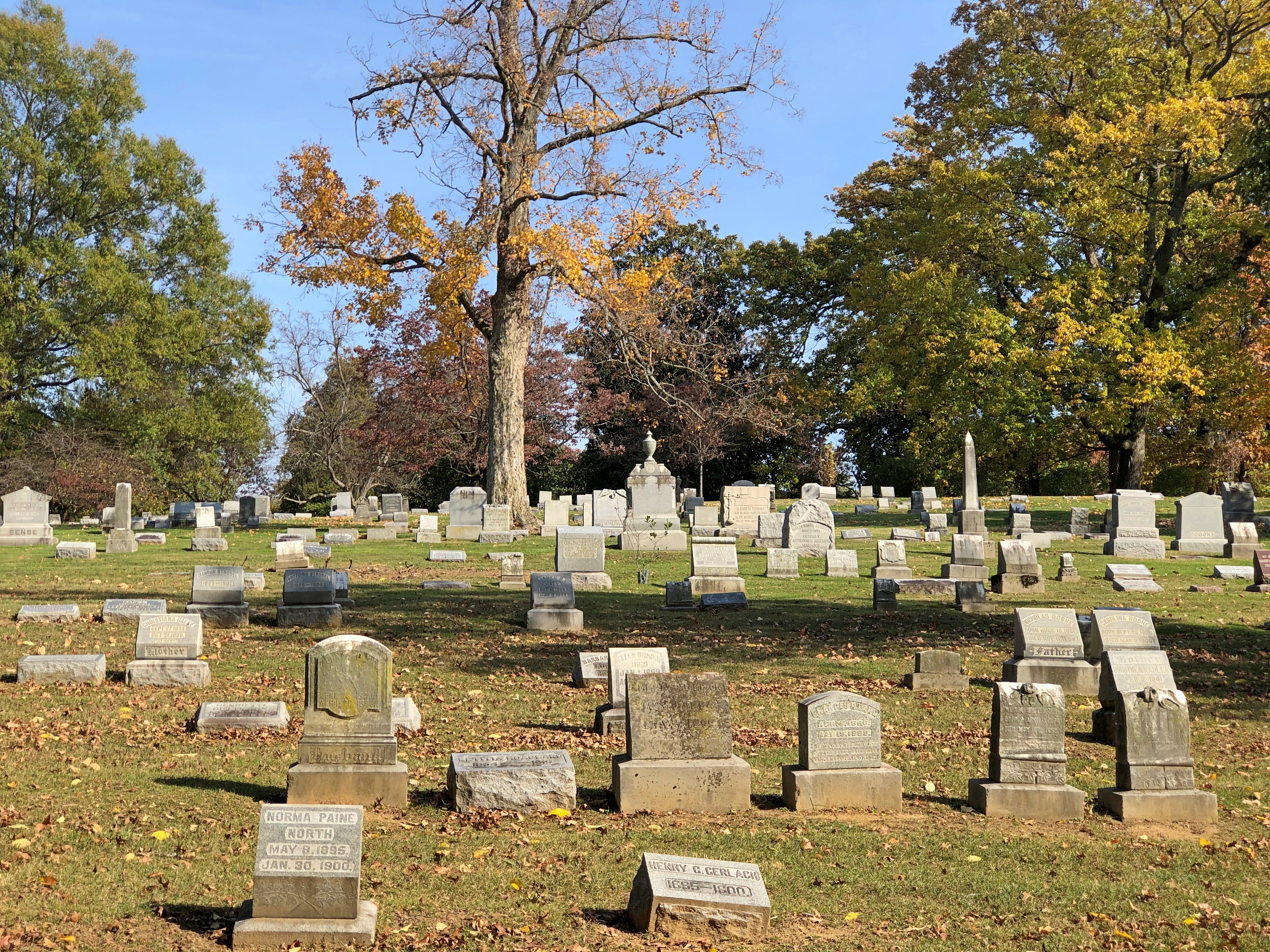
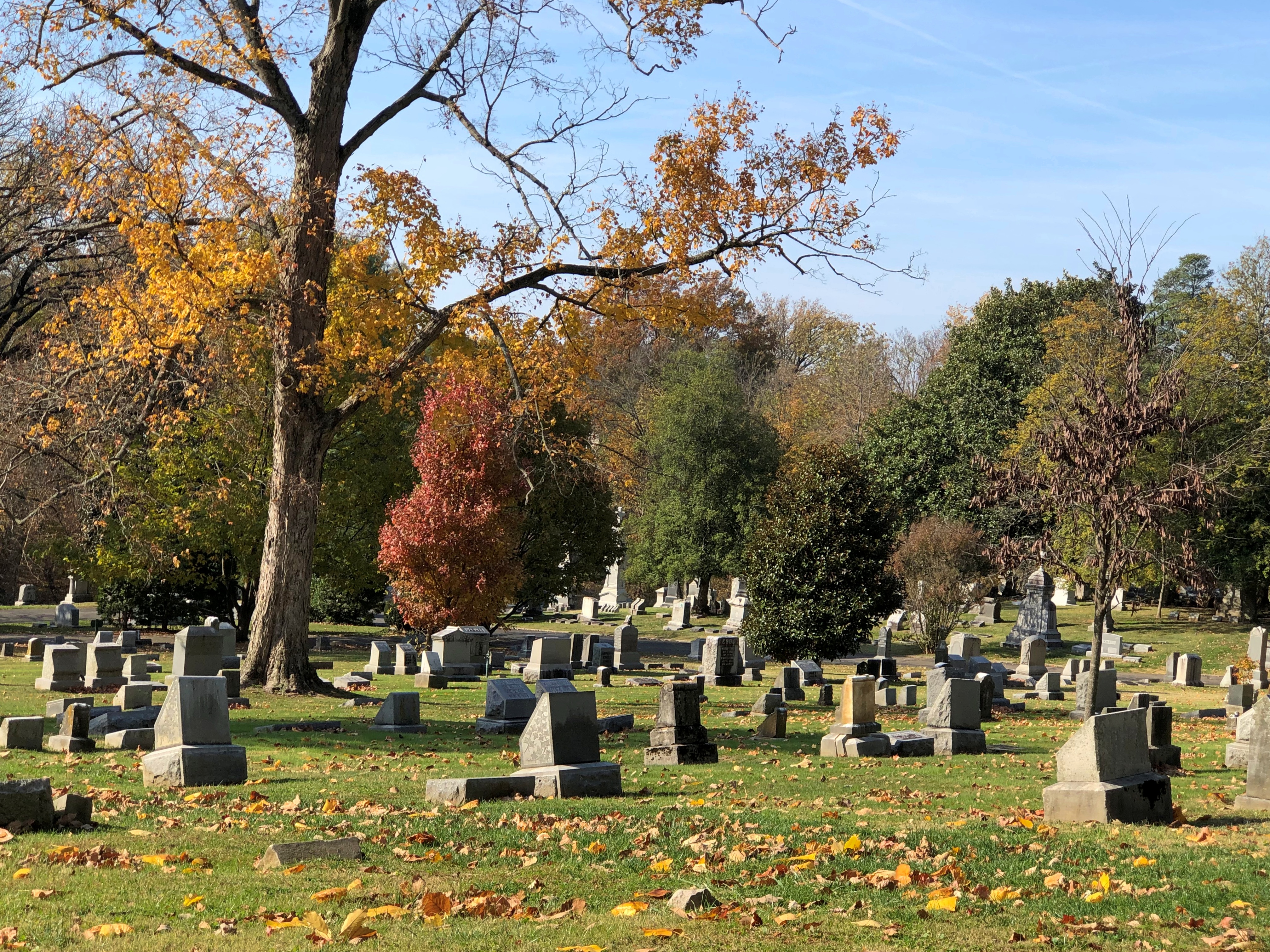
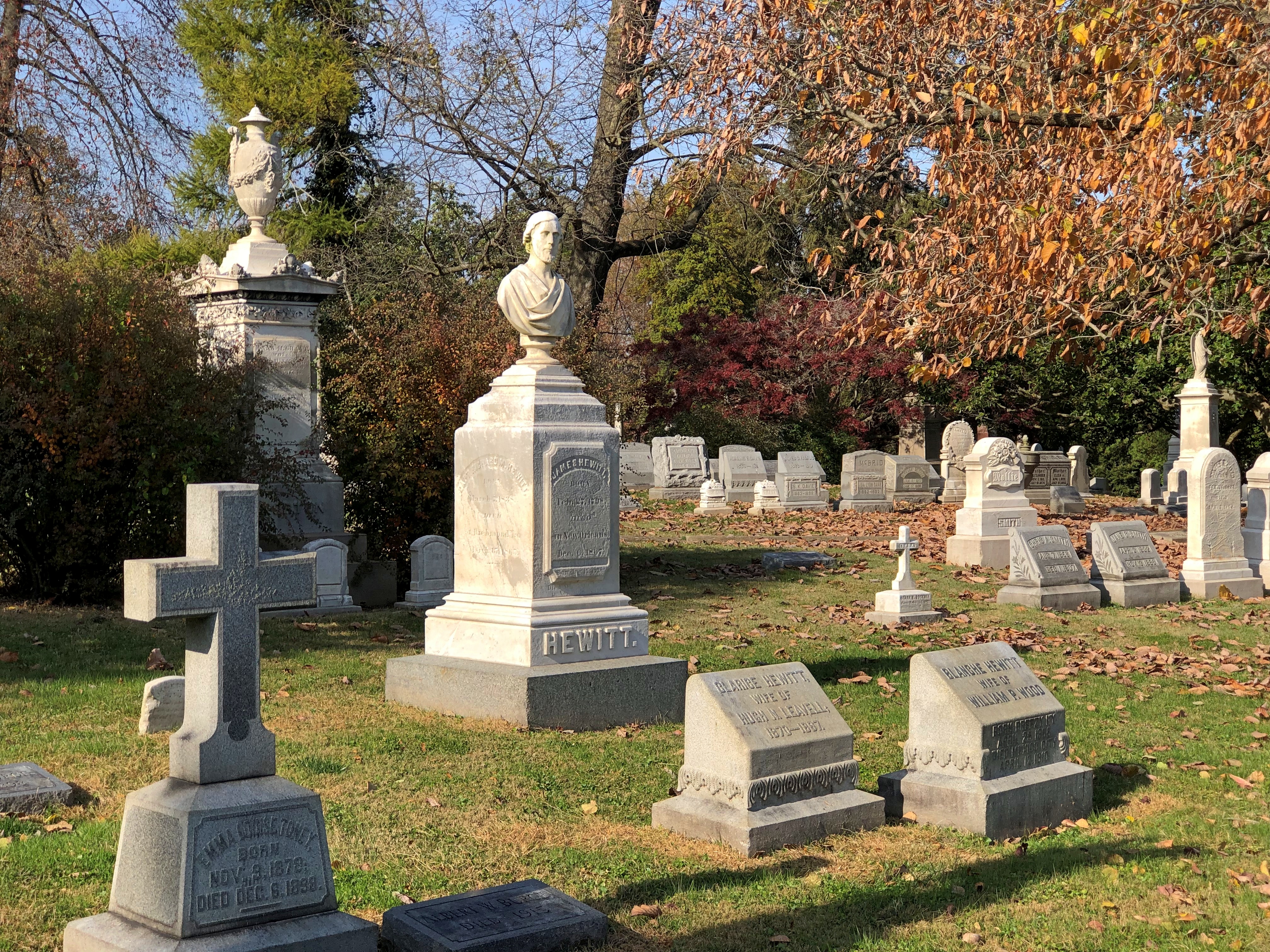
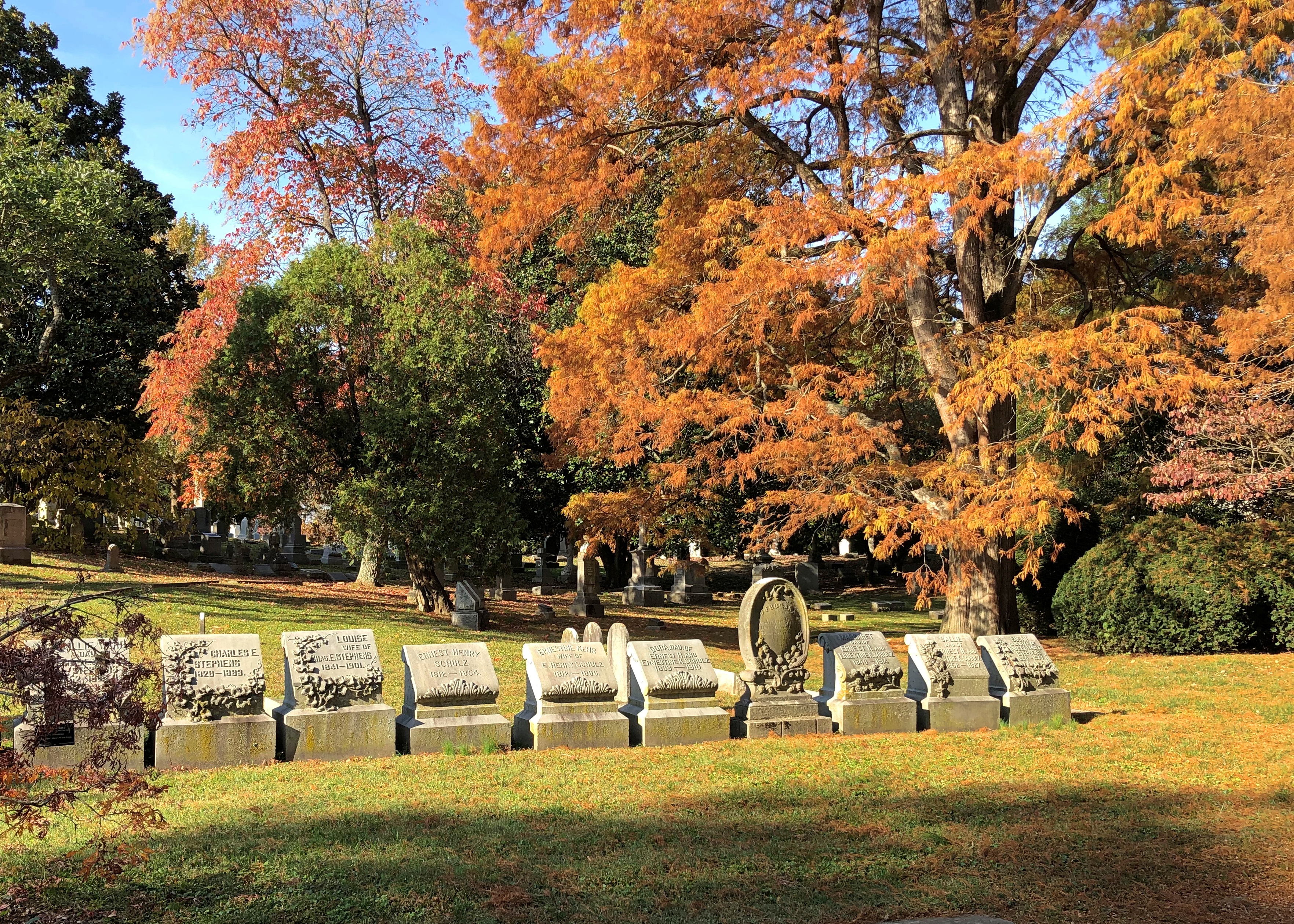
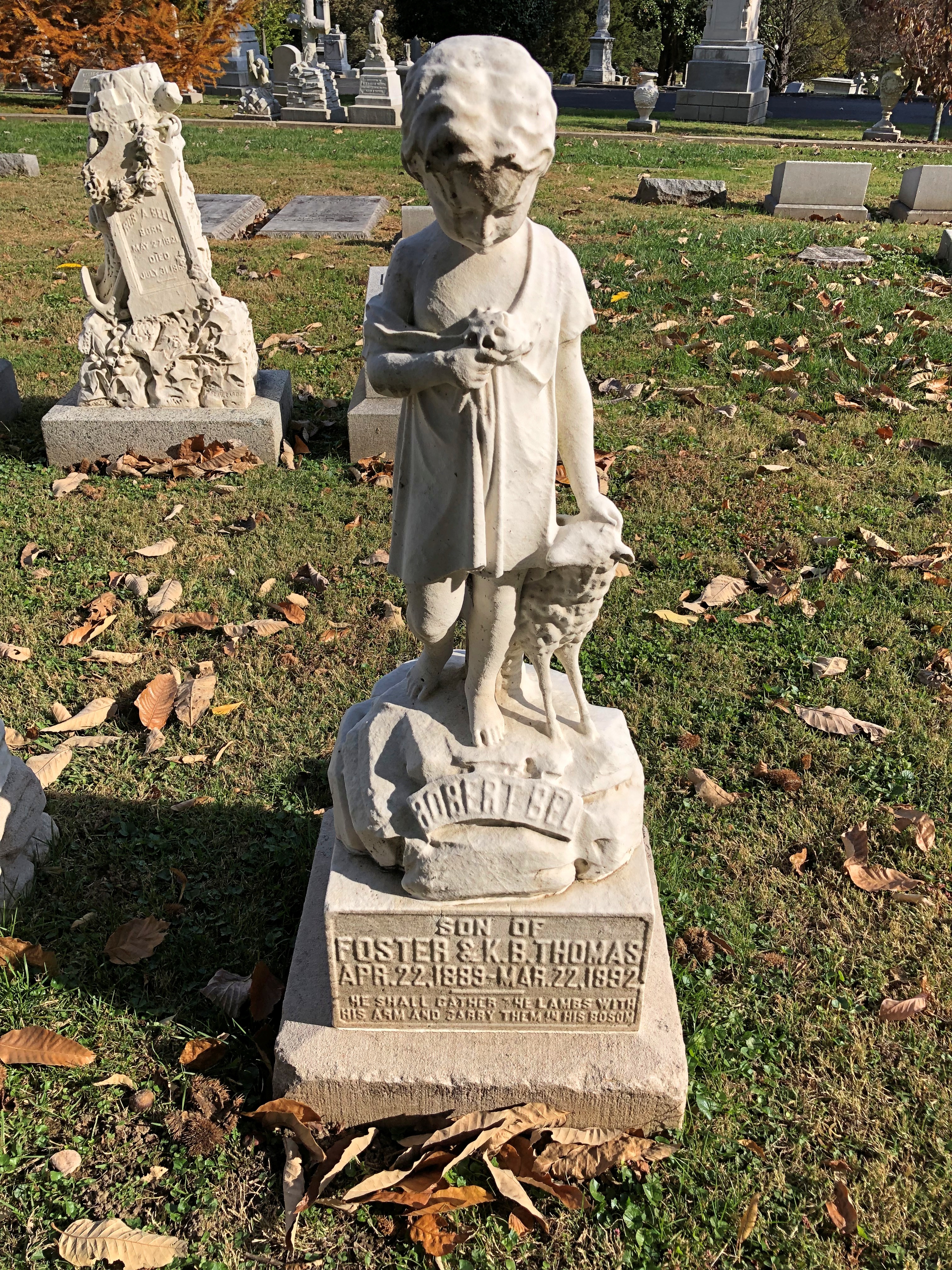
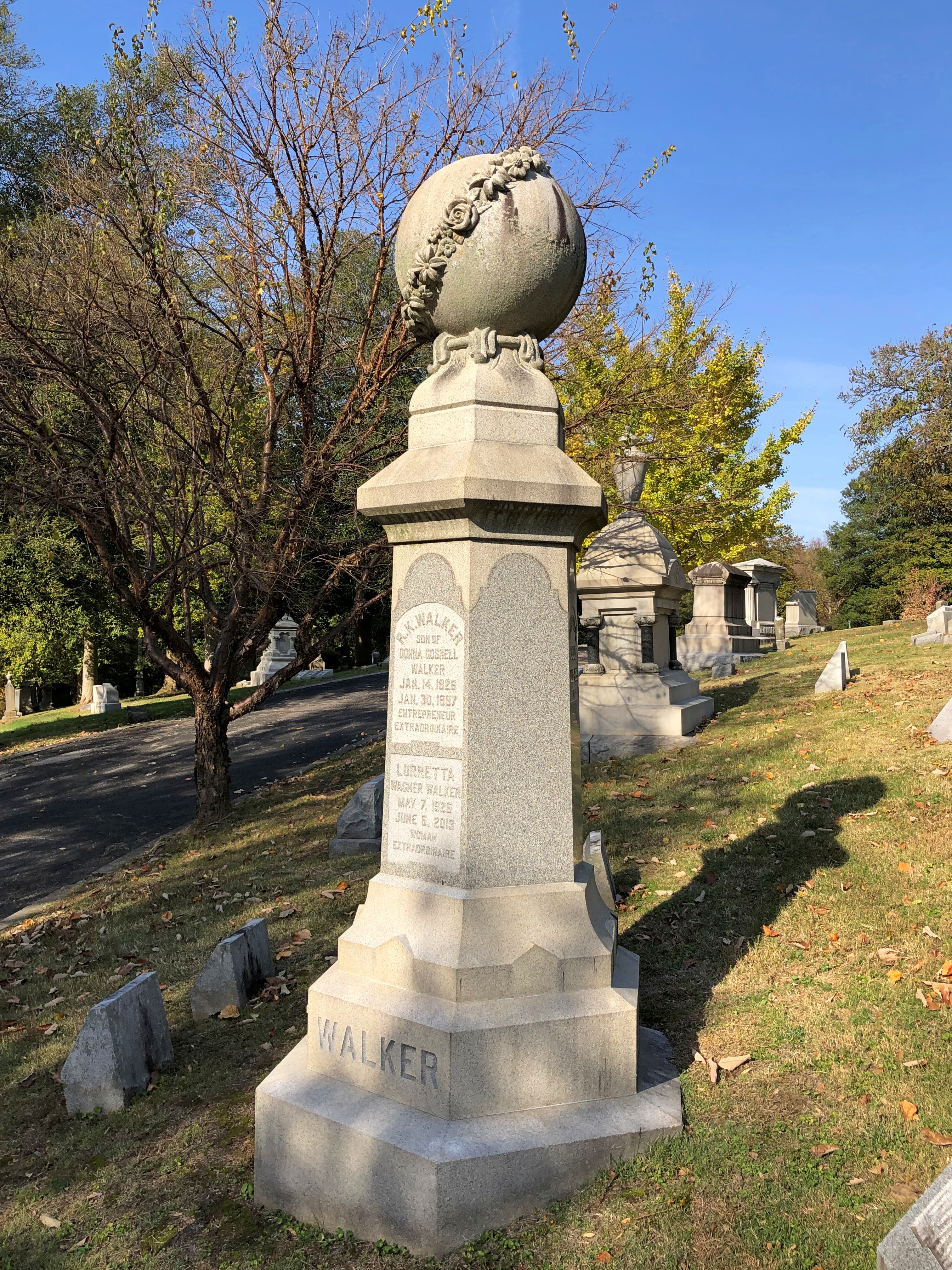
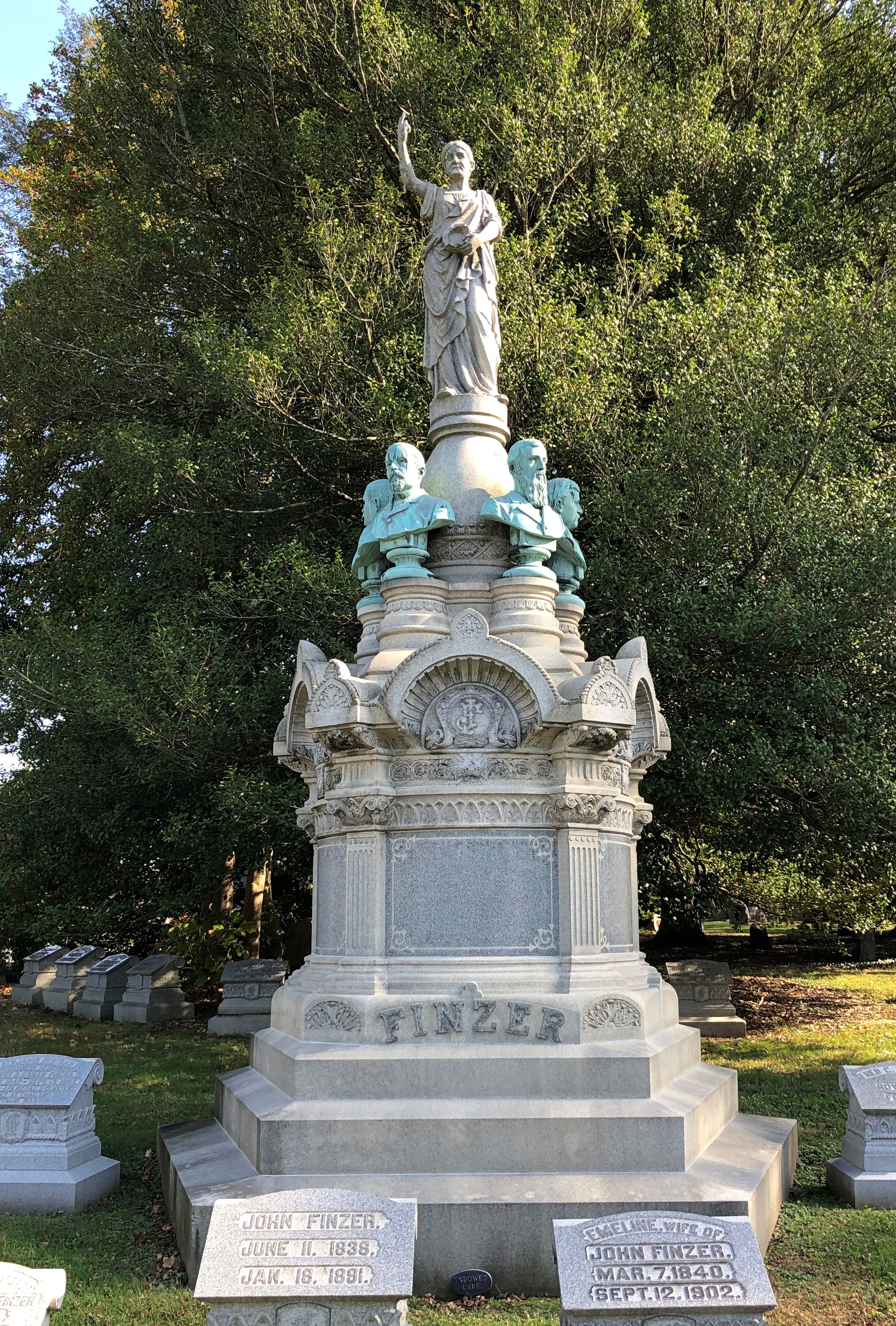
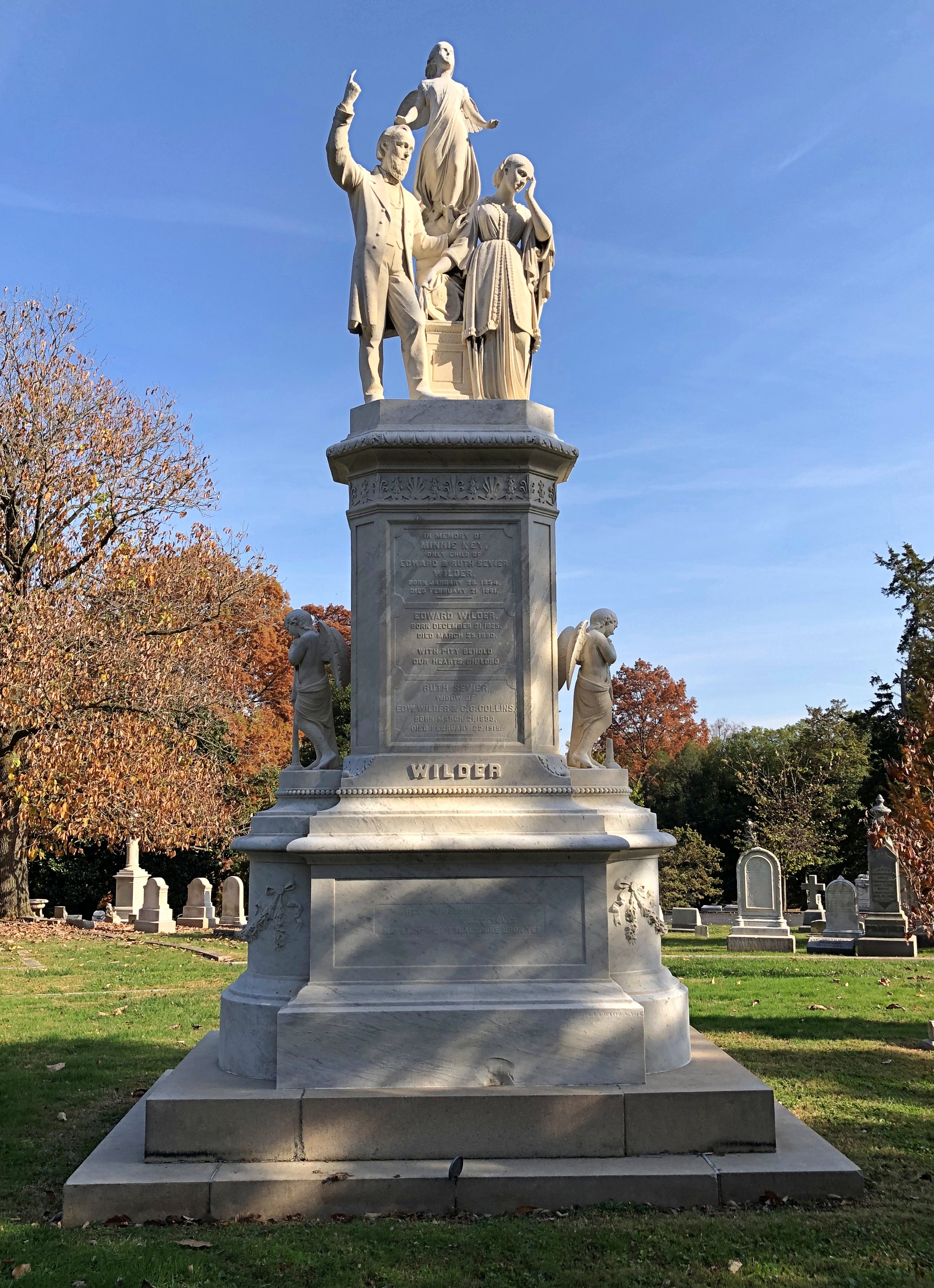
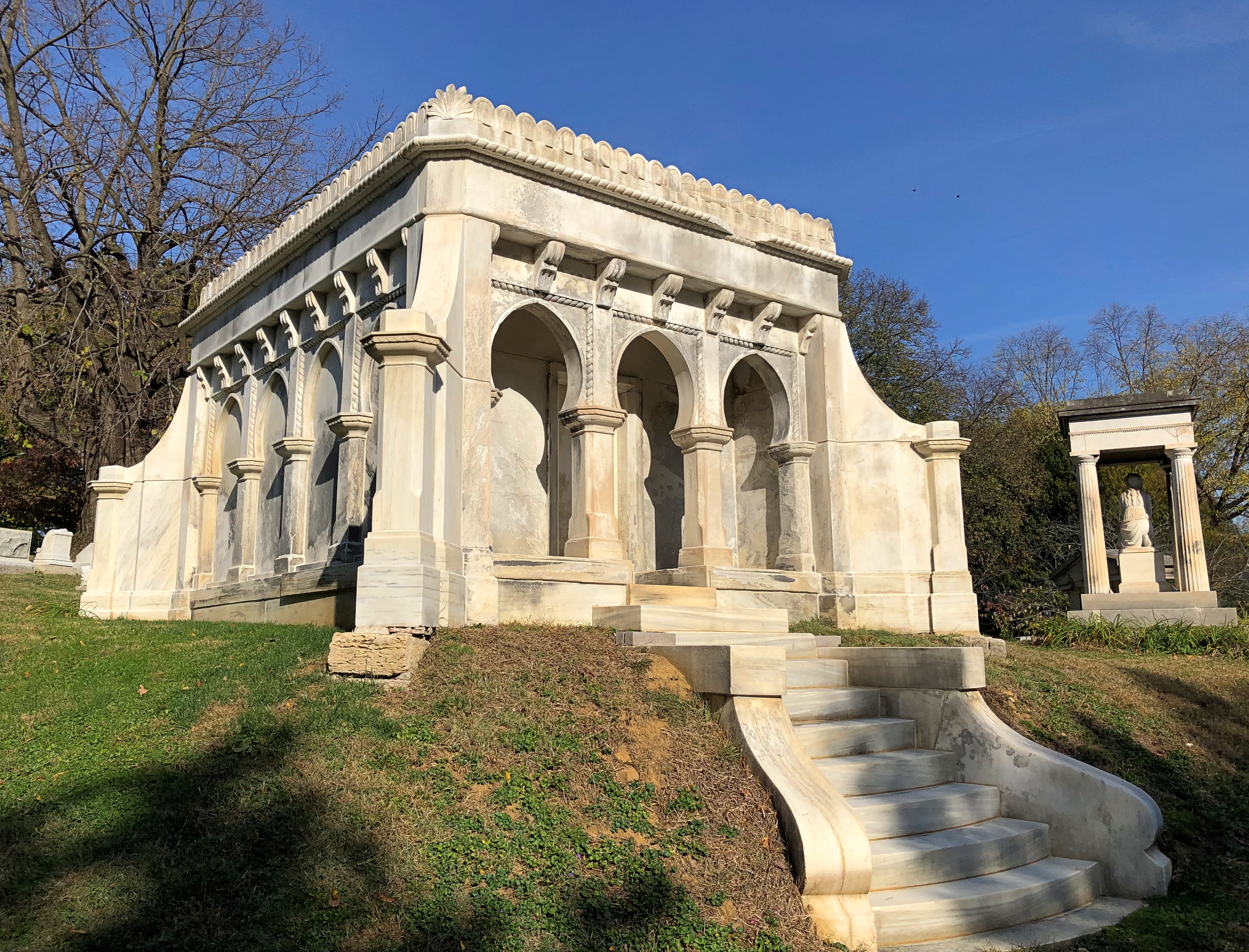
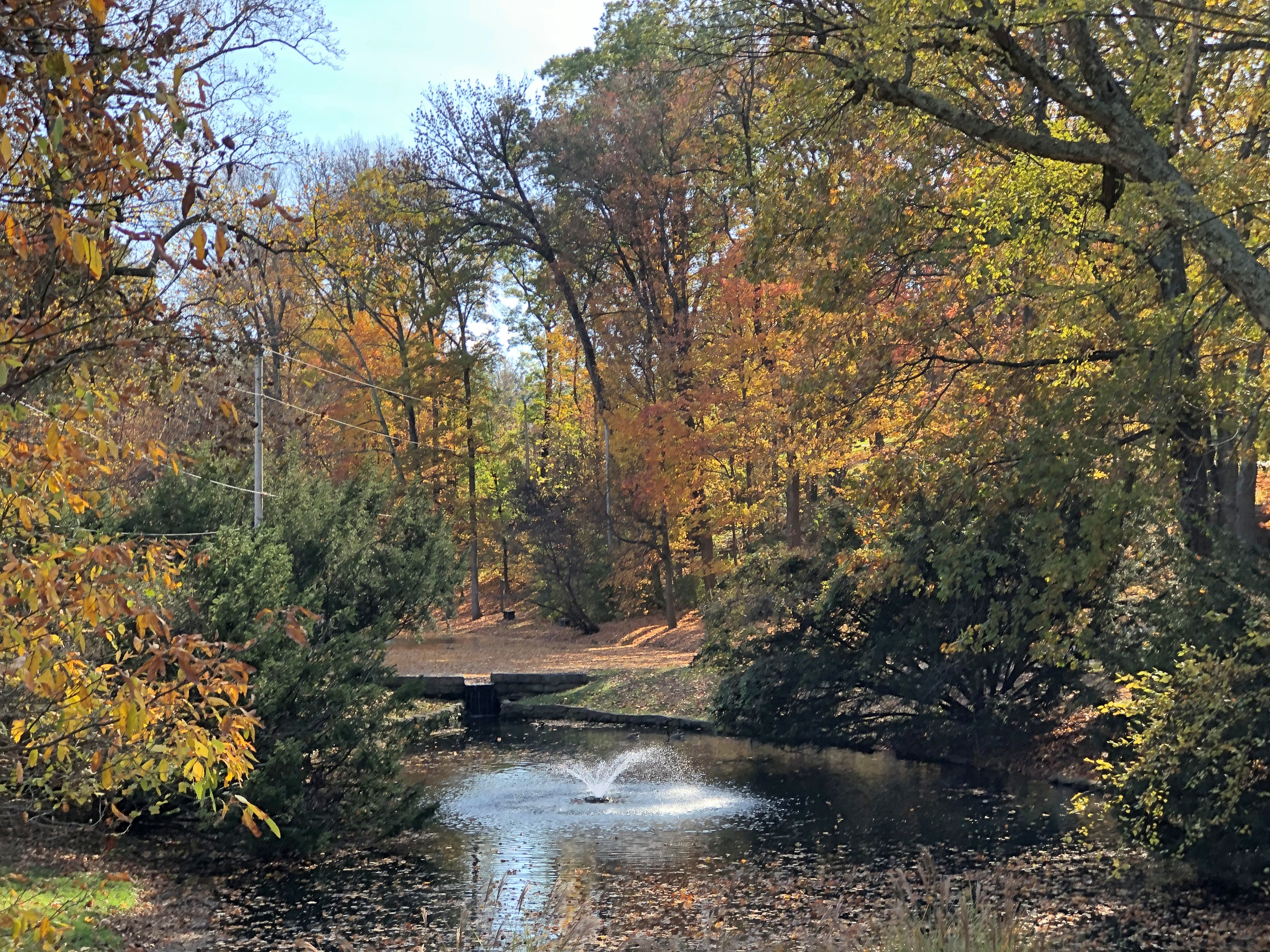
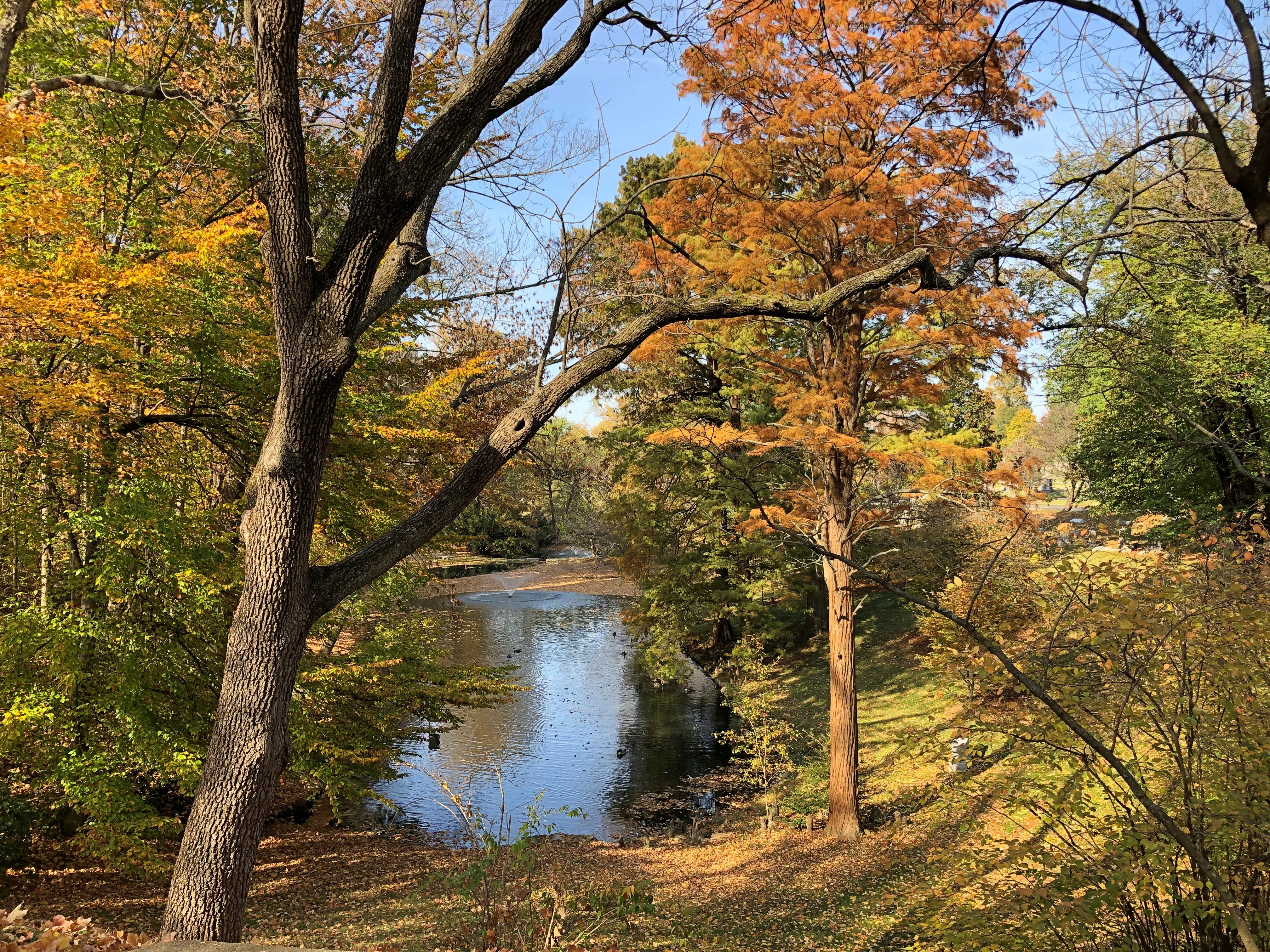
Not long ago, I refreshed my memory about what a hilly cemetery can look like.Dayton, Ohio Dayton, Ohio

Those are images of the Woodland Cemetery & Arboretum in Dayton, Ohio. Been a while since I was there (2016), but it’s still a favorite of mine.

I thought about Woodland and some of the other park-like cemeteries of the nation while on the slopes of Forest Lawn Memorial Park in Glendale, California last month. The Forest Lawn slopes are arrayed with stones flush to the ground, to facilitate lawn care.Forest Lawn, Glendale Forest Lawn, Glendale

Such beauty in its hills and landscape – and such a missed opportunity for a beautiful cemetery. There are spots of beauty, but still. Flush stones, with their numbing sameness, don’t enhance a hill the way a wide variety of standing stones do. Not at all. Not only that, traces of individuality are regularly removed, as a crew is doing in the second picture above.

Even so, Forest Lawn is an interesting place. For one thing, it’s the cemetery that inspired Evelyn Waugh to produce The Loved One, his sharp satire of the American way of death, or maybe just the California way of death. I read the book about 35 years ago, I think, and don’t remember much. I saw the awful movie based on it at some point, and am glad I don’t remember much about it except, vaguely, Jonathan Winters hamming it up, as he usually did.

Looking at the trailer, I realize now how solid the cast is. I’m surprised how much talent went to waste in that movie.
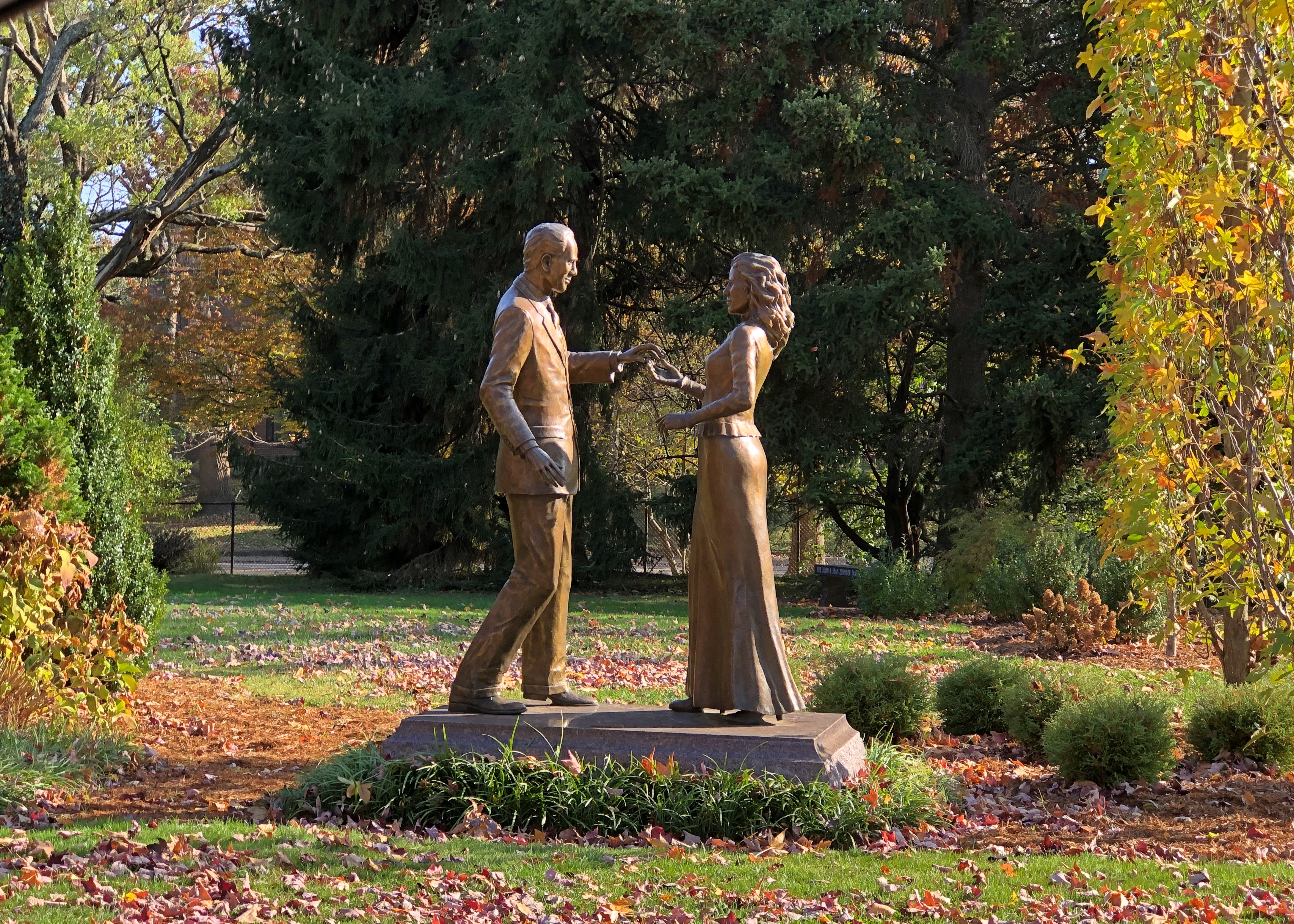
“When Evelyn Waugh came to Hollywood in 1947 to discuss the film rights for Brideshead Revisited, he visited a graveyard: Forest Lawn Memorial Park,” notes Crisis Magazine. “He had heard it praised as a place unsurpassed in beauty, taste, and sensitivity; a place where ‘faith and consolation, religion and art had been brought to their highest possible association.’ But Mr. Waugh found the cemetery dripping with saccharine sentimentality, edged with macabre memorials, and repellent with cuteness.”

I don’t know about all that; I might have a higher tolerance for sentimentality or the macabre or even cuteness than the author, though I have to say that Forest Lawn doesn’t really trade in the macabre, unless you consider cemeteries by definition macabre, which I do not. If anything, it could use just a touch of macabre to tone its memorial-park lightness down a notch.

The park is expansive, its map full of named places: Inspiration Slope, Garden of Ascension, Haven of Peace, Memory Slope, Triumphant Faith Gardens, Gardens of Remembrance, Columbarium of the Christus, Court of David, Court of Freedom, Garden of Honor, Garden of Everlasting Peace, Garden of the Mystery of Life, Gardens of Contemplation, Dawn of Tomorrow Wall Crypts, Vale of Faith, Resurrection Slope, Rest Haven, Graceland, Vesperland, Slumberland, Lullabyland and Babyland, among others.Forest Lawn, Glendale Forest Lawn, Glendale

One thing not on the map is any mention of any of the movie stars buried in the cemetery, or any hint about where they might be. There are many. That’s an odd lacuna, I think, considering this is southern California and that Hollywood Forever makes a point of highlighting the famous, and does it so well with a detailed map.

A handful of famed names appeared on Google Maps at specific points in the cemetery, including Humphrey Bogart. I wasn’t far away, so I went looking for him. I wanted to pay my respects to Bogart. (I’ve seen his hand- and footprints, too.)

Soon I determined that Bogie’s ashes are behind this door to the Columbarium of Eternal Light.Forest Lawn, Glendale Forest Lawn, Glendale

A locked door. No casual admission to see one of the great actors of his time. Or Bacall, who joined him not so long ago. “Golden Key of Memory”?

I had to content myself with stones and niches of random folk.Forest Lawn, Glendale Forest Lawn, Glendale

There’s also an art museum on the grounds, which was closed when I visited, so I had to content myself with some of the freestanding public art on the grounds. There’s quite a bit of that.
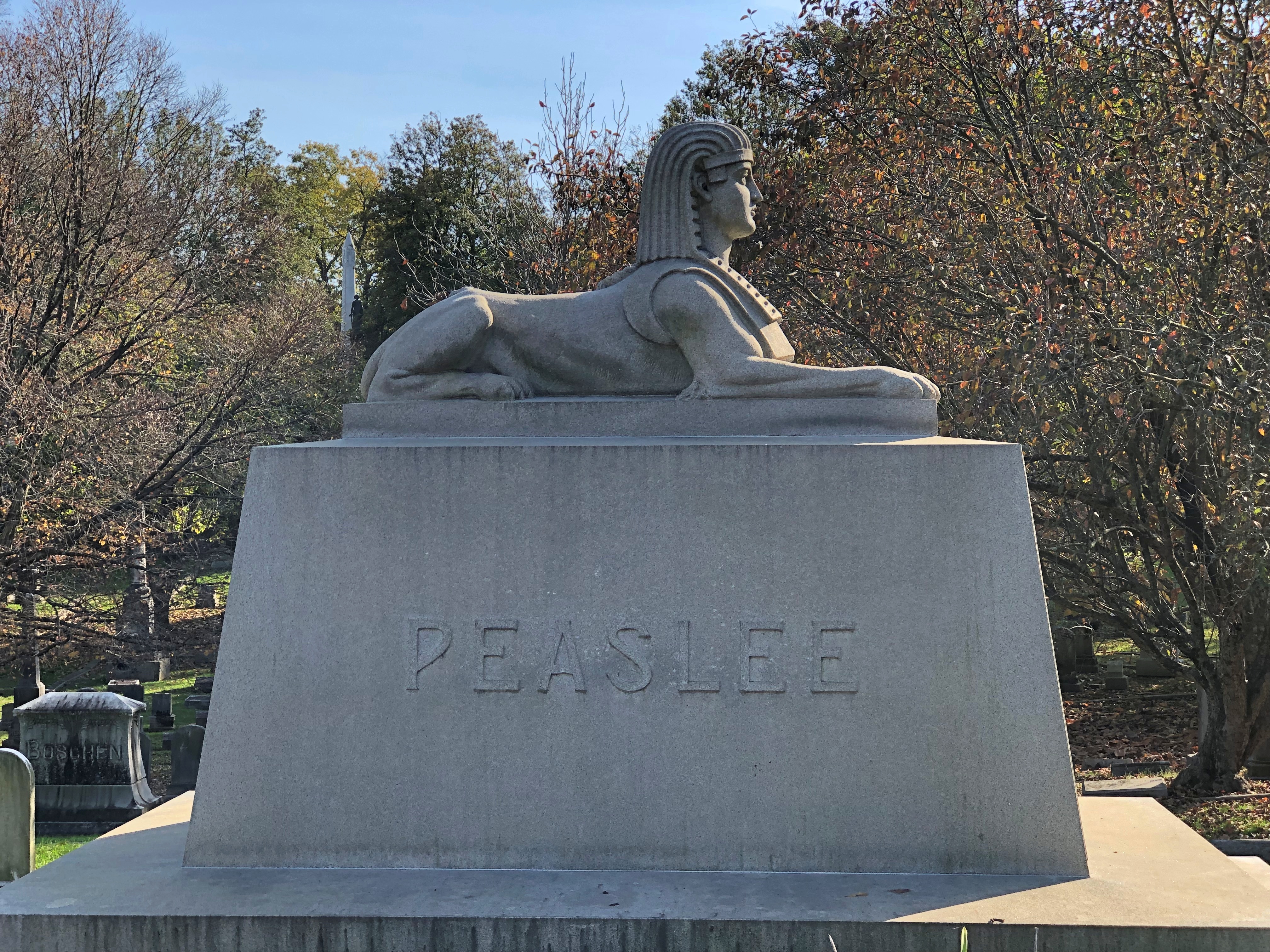
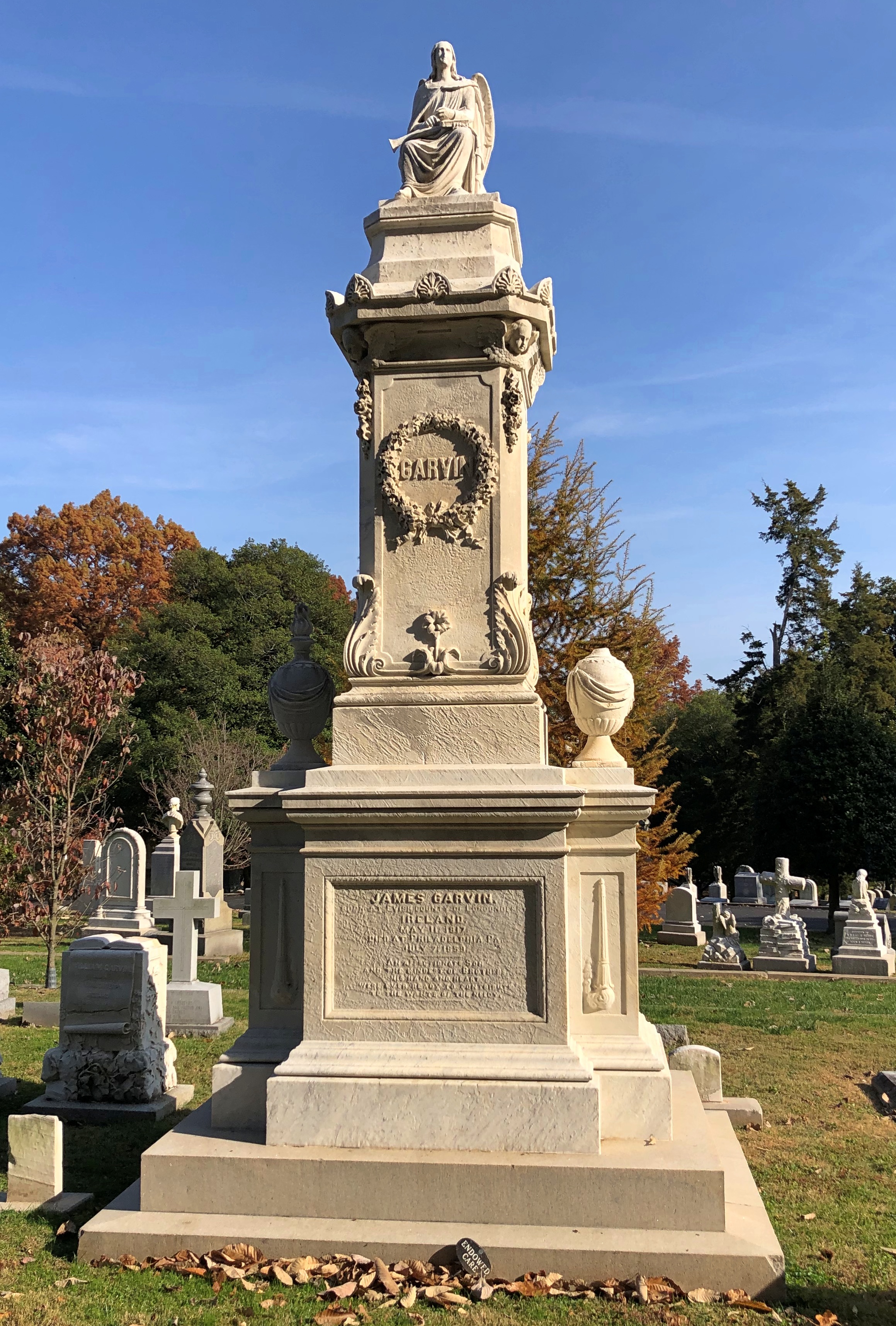
A version of the Christus.Forest Lawn, Glendale Forest Lawn, Glendale

The Court of Freedom, which has a patriotic theme, is ringed with artwork. Such as the Declaration of Independence mural.Forest Lawn, Glendale Forest Lawn, Glendale

George Washington.Forest Lawn, Glendale

The chain in front of him tells a story I’d never heard.Forest Lawn, Glendale

A version of “The Republic” by Daniel Chester French.Forest Lawn Glendale

I don’t count the statue of Washington as a presidential site for this trip, but there was one at the cemetery I did see: the Wee Kirk o’ the Heather, a lovely spot.Forest Lawn Glendale
Forest Lawn Glendale Forest Lawn Glendale Forest Lawn Glendale

Couples are frequently married at the Wee Kirk, as you’d image. In early 1940, Ronald Reagan and Jane Wyman were married there.

Dublin, Barcelona, Then Venice

After a mostly dry June here in northern Illinois, early July saw some rain, but not quite enough to end the dry spell. Out beyond the grass and gardens of the suburbs, it’s a “stressful time for corn and soybeans.”

June 25, mid-day, at a cornfield in southern Wisconsin, which is suffering a drought as well. Moderate drought for the county that includes this field, at least as of the end of June.

The field looked healthy to my untrained eye, but for all I know that’s what a stressed crop looks like a few weeks into a drought. I might be up that way again next weekend or the next, and I’ll stop by for a look at the same field if so.

I had the opportunity to spend most of a weekend in Los Angeles in early June, so naturally I did. To visit some of the places that I considered but didn’t have time for in pre-pandemic 2020, because that’s how I think, though I didn’t make it to La Brea Tar Pits this time or earlier. Like the Cloisters on the other coast, it’s a place that still eludes me.

On the other hand, I made a point of going to the Los Angeles neighborhood of Venice this time.

Though named for the place in Italy,  Venice has a distinctly American history, invented as it was ex nihilo by a real estate developer looking to reference the Old World in the newest part of the New World, namely California. Not just any developer, but one Abbot Kinney, whose career was circuitous and strange, the way business men could be in the late 19th and early 20th centuries.
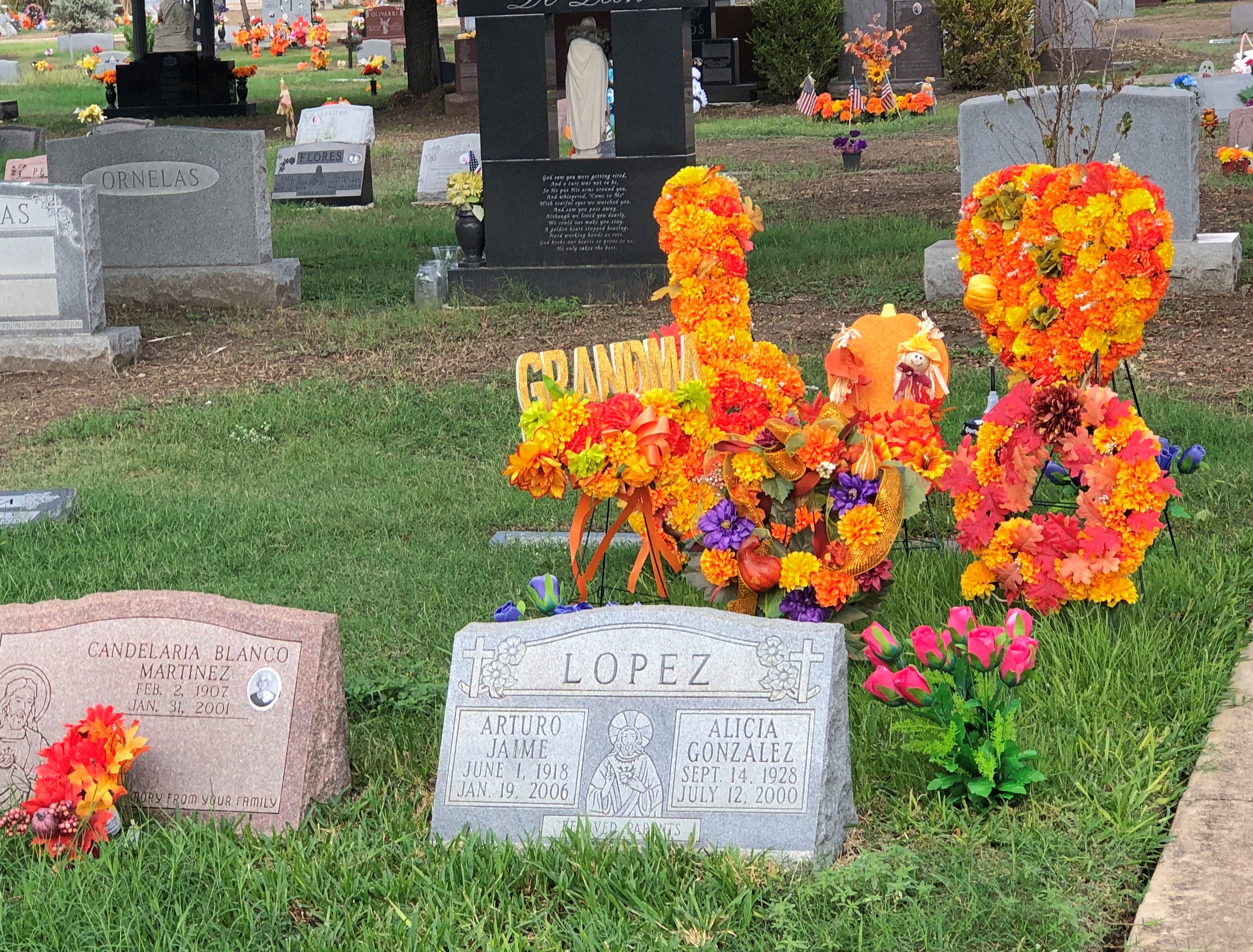
Not only that, the arc of history in Venice is very much American: an initial flowering, subsequent decline, much demolition and disfigurement in the name of modernization, years of scraping along the bottom, an effort to save its meager remnants, gentrification and insane property values – all within the span of about a century, specifically within the 20th, though spilling into the 21st. Which is an affluent time for Venice of America.Venice, California 2023
“When it opened on July 4, 1905, Venice of America boasted seven distinct canals arranged in an irregular grid pattern, as seen… in Kinney’s master plan for the community,” KCET says. “Totaling nearly two miles and dredged out of former saltwater marshlands, the canals encircled four islands, including the tiny triangular United States Island. The widest of them, appropriately named Grand Canal, terminated at a large saltwater lagoon. Three of the smaller canals referred to celestial bodies: Aldebaran, Venus, and Altair.

“Soon, a second set of canals appeared just south of Kinney’s. Linking up with the existing network through the Grand Canal, these Short Line canals (named after the interurban Venice Short Line) were apparently built to capitalize on the success of Kinney’s development. Their origins are uncertain, but work started soon after Venice of America’s 1905 grand opening, and by 1910 real estate promoters Strong & Dickinson and Robert Marsh were selling lots in what they named the Venice Canal Subdivision. Built almost as an afterthought, these six watercourses are the only Venice canals that survive today.”

The rest, the originals in their irregular grid and with their celestial names, were long ago filled in and paved over – that would be the demolition and disfigurement.

I arrived in the neighborhood fairly early in the morning, early enough – I realized later – to park on Venice Blvd. within walking distance of both the canals and the beach, which is more difficult later in the day. Venice Blvd., near the ocean at least, also happens to be the locus of a handful of residents living in parked RVs and, for those who can’t swing that, tents in the boulevard median.

The canals form a neighborhood unlike any I’ve seen and, I have to say, flat-out gorgeous in our time.Venice California 2023 Venice California 2023 Venice California 2023 Venice California 2023

Public sidewalks run between front yards and the canals, with occasional footbridges crossing the canals. This arrangement, I’ve read, is the result of renovation that occurred in the early 1990s. The only vehicular street running through the neighborhood is Dell Ave., which connects with alleys behind the houses with the wide expanse of LA streets. The way residents drive in and out of the area, that is.Venice California 2023 Venice California 2023

The yards are lush, at least they were in June. Temps weren’t that warm the day I visited, and the skies fully overcast and sometimes drizzly, since southern California seems to be in some kind of weird weather bubble these days. Made for a good walking environment, though.Venice California 2023 Venice California 2023 Venice California 2023 Venice California 2023

Hard to believe the area spent much of the 20th century as a slum; a quick look at Zillow’s estimates puts no property along the canals at much less than $2 million, and many a good deal more, with a scattering of new houses under way as well. Such is real estate across the decades.

Barcelona Scraps

One of these days, we might have a string of holidays and quasi-holidays from Juneteenth to July 4, the warm equivalent of Christmas to New Year’s Day. Anyway, back on July 9 or so.

Not as much smoke today, though it is still an air pollution action day, according to the NWS. Curious term. You’d think it would be an inaction day, at least as far as outdoors activity is concerned.

Barcelona city trucks. Specifically, neteja (cleaning).Barcelona cleaning truck Barcelona cleaning truck

The Temple d’August, which is tucked away on a narrow street in the Gothic Quarter. Barcelona

The only Roman ruins we saw on the trip. Toyed with the idea of going to Tarragona to visit its extensive ruins, but that didn’t happen.

“The uniform columns of the Temple of Augustus inside are 9 metres tall and comprise an imposing relic of one of the temples from Barcelona’s Forum, which stood on a corner site at the rear,” Visit Barcelona says. “The temple was built in the 1st century BC and, as its name suggests, it was dedicated to the worship of Emperor Augustus…. The temple was reconstructed by the architect Puig i Cadafalch in the early 20th century.”

La Rambla, near one end. The end near the ocean.La Rambla

Columbus still looks out to sea at that point, as he has done since 1888. Monument a Colom, the maps call it, and efforts to take it down have been unsuccessful so far.La Rambla

There was also a lot of construction in the area, with blocked off sections. I can’t see a sign like that in Spain and not be reminded of no pasarán!

The context is just a little different in this case, however. “Do not pass,” the dictionaries tell me, as opposed the more emphatic will not pass!

I expected to see fast food in Barcelona, but Five Guys was nevertheless a surprise, across the street from Sagrada Familia. Five Guys’ web site tells me that there are currently seven locations in the city, and 28 in Spain all together, with 13 of those in greater Madrid.Barcelona Five Guys

Model of Jesus’ head, on display in the small museum in the basement of Sagrada Família.Sagrada Familia

Cava sangria.

“This variation of sangria called Sangria de Cava in Spanish is made with the sparkling wine Cava, which can be white or rosé,” says Allrecipes. “The name Cava is a protected designation of origin in the European Union, which means that only sparkling wine produced in certain areas of Spain may be sold under that name. To make Cava Sangria, you can use another sparkling white wine instead. The rest of the ingredients is pretty similar to sangria. Cava Sangria often includes orange liqueur.”

Stickers on a wall in Barcelona. A common thing to see. No Buc-ee’s sticker. Not yet.

I took a picture of someone taking a picture of seemingly uninterested musicians, in Parc de la Ciutadella.Barcelona

Sometimes you’d see the independence flag. Not that often, however. The latest effort at independence fizzled, after all.Catalonia flag

Near Palau Güell, you can find the Gaudi Supermercat, Art Gaudi Souvenirs, and the Hotel Gaudi.Barcelona Barcelona 2023 Barcelona 2023

Not everything in the area had Gaudi’s name slapped on it. If we’d been hungry, we might have bought kebabs from this fellow.Barcelona 2023

Elsewhere, more Barcelona flowers.Barcelona 2023 Barcelona 2023

Finally, manhole covers. Like Dublin, Barcelona had some good manhole covers.Barcelona manhole cover 2023 Barcelona manhole cover 2023 Barcelona manhole cover 2023 Barcelona manhole cover 2023

Which is tapa de clavegueram in Catalan, at least according to automated online translation. Now you know.

Basilica of Montserrat

On our way to the Basilica of Montserrat last month, I was pretty sure I’d found evidence of a Spanish post office nearby.Montserrat

The post office wasn’t on the same level as this bronze lion, but up the stairs next to the lion, then to the right. I got lucky, arriving 15 or so minutes before closing. I knew the word for postage stamp (segell) and some numbers, and encountered one of the few retail clerks on our trip who knew little English, but we soon worked things out, helped along (I think) by her good mood at being so near to quitting time, or at least office-closing time, and my good mood at being at the site of a centuries-old abbey in the mountains of Catalonia.

Also, I’d already addressed the cards, so it was easy for her to see where they were going. Soon the cards were winging their way to Texas, Illinois, New York and Tennessee. I wonder whether you can still send a telegram. My guess would be no.

The basilica’s front entrance.Montserrat

Visitor tip: if you didn’t make a reservation ahead of time, you need to go back downhill to the tourist information office, where you can pick your package and times. Our Monday strategy – that is, not visiting Montserrat on the weekend, but Monday – worked in our favor, I believe, since we didn’t have to wait long to get into the basilica proper, or the sanctuary where the Virgin of Montserrat, or Our Lady of Montserrat, resides.

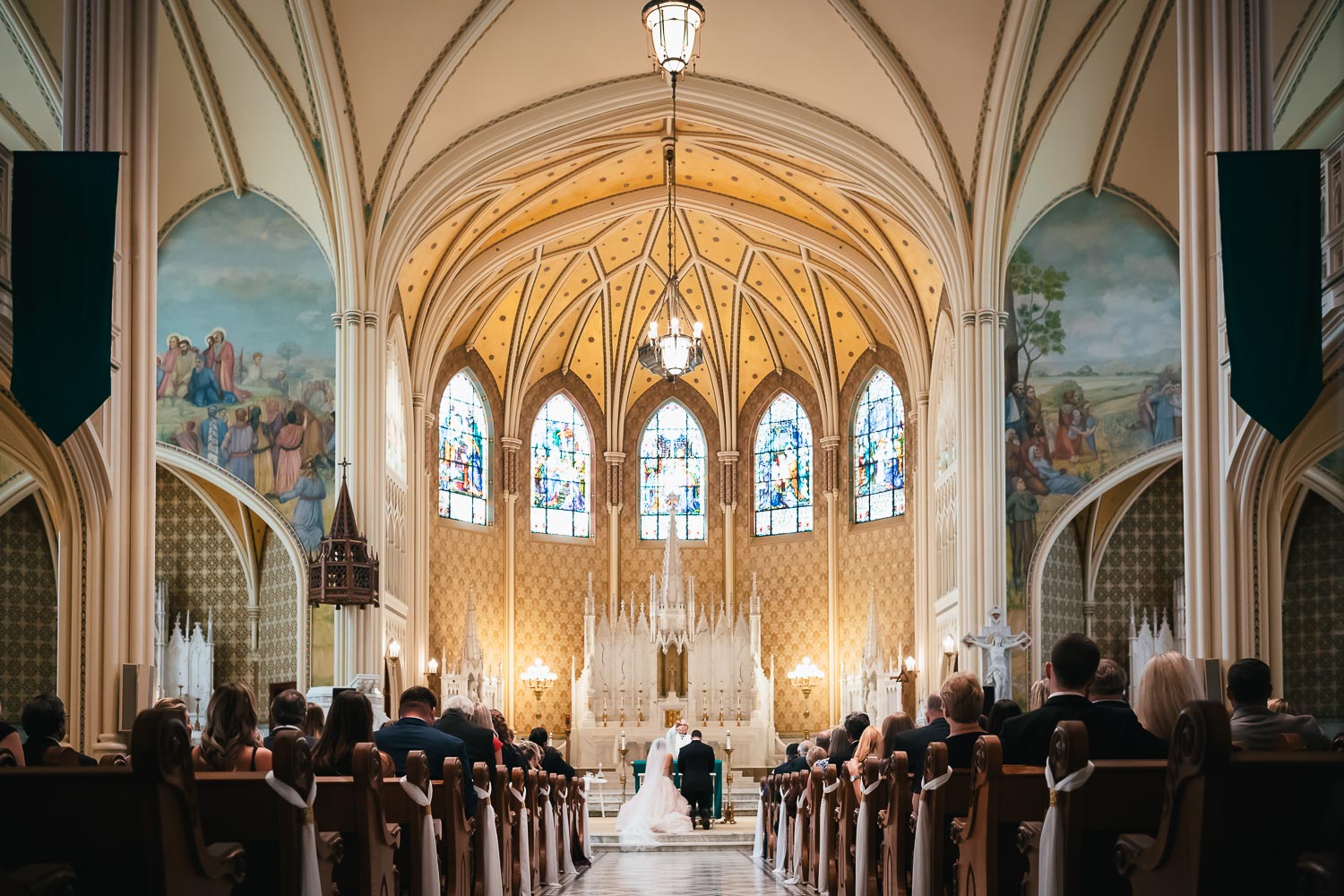
The entrance leads to a resplendent courtyard. Resplendent pretty much describes to the entirety of the basilica, which is mostly a 19th-century reconstruction of the earlier structure burned by some of Napoleon’s soldiers.Montserrat Montserrat
Montserrat

Interiors.Montserrat Montserrat Montserrat Montserrat

Access to Our Lady of Montserrat is via a staircase that leads to a hallway that curves behind, and above, the altar. A small window shows the statue in its sanctuary and, as they come and go, visitors to the statue.

We took our turn visiting the statue. It is behind glass now, but otherwise we saw what countless others have for centuries.

From 1911 Encyclopaedia Britannica: “Nuestra Señora de Montserrat, Patrona de Cataluña (Our Lady of Montserrat, Patron Saint of Catalonia), is one of the most celebrated images in Spain, and her church is visited annually by more than 60,000 pilgrims. The image is small, black, and carved of wood, but possesses magnificent robes and jewels.

“In September 1881 it was solemnly crowned by Leo XIII., who sent a crown from Rome for that purpose. As the celebrity and sanctity of Montserrat increased, so did the number of devotees. Ignatius Loyola (1491–1556) laid his sword upon the altar of the Virgin, and, placing himself under her protection, started from Montserrat to begin his new life.”