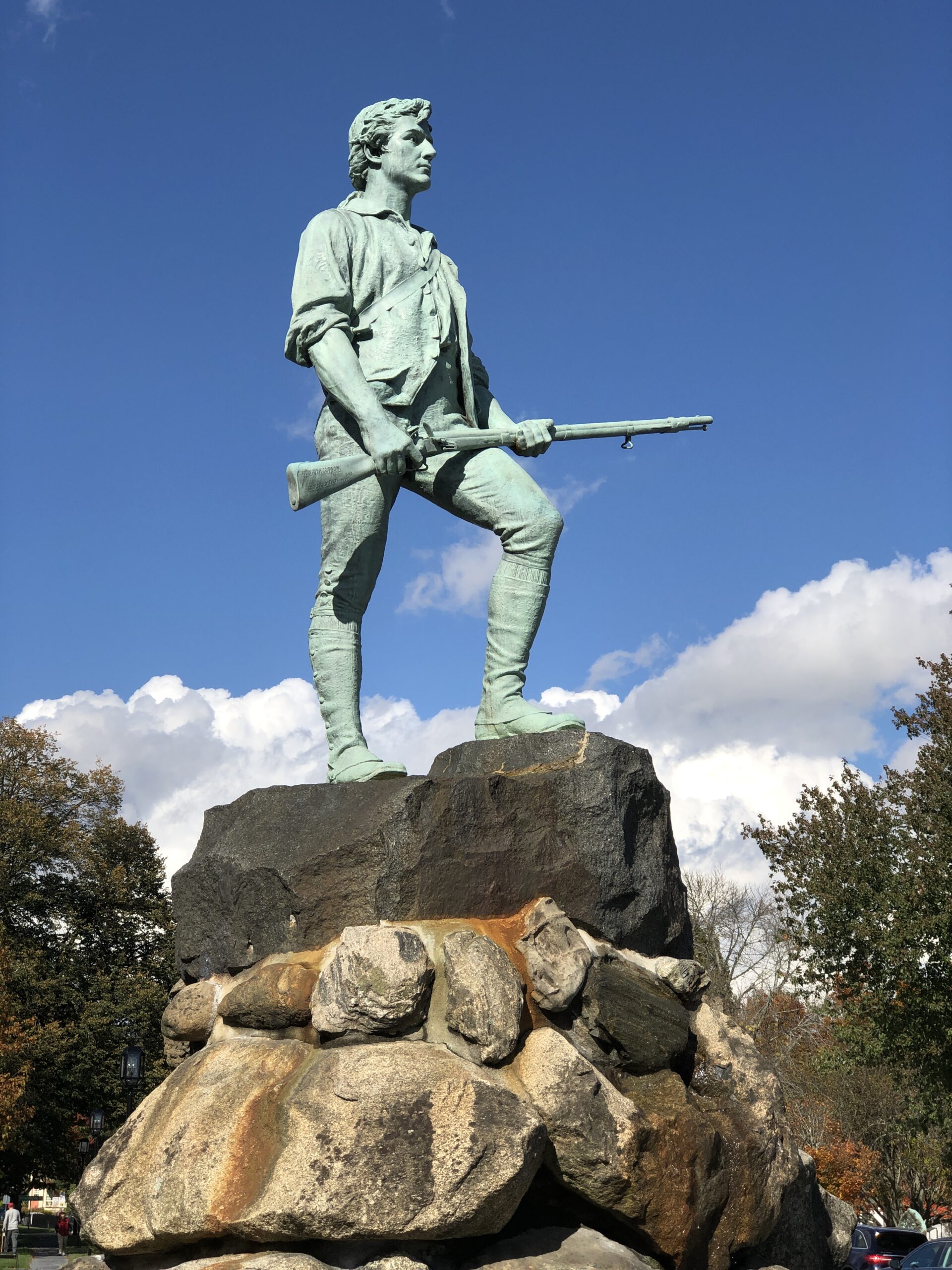
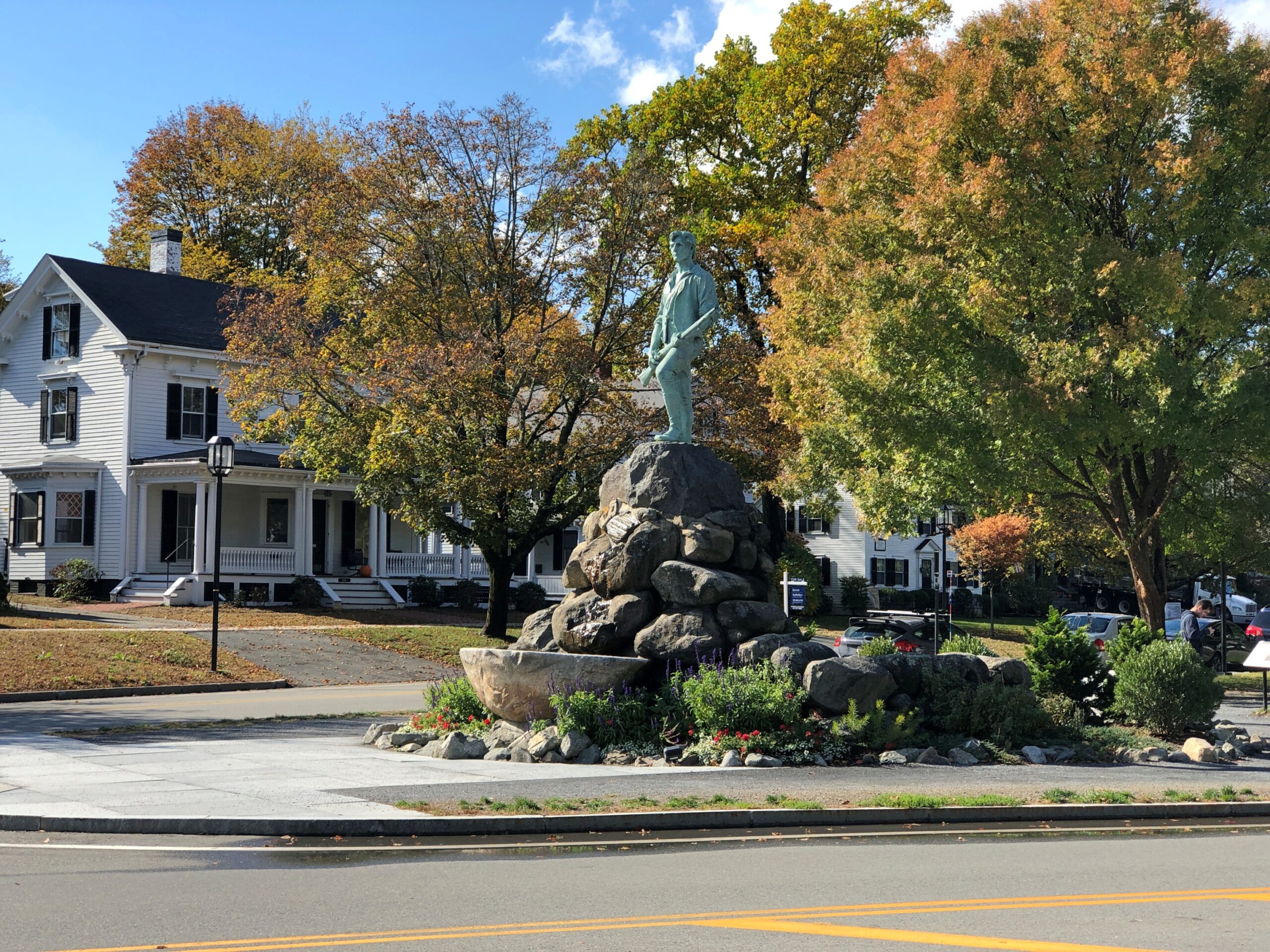
Too bad about iconic. If there ever were a time to use iconic to describe sometime distinctive and revered, John Parker in bronze would be it.
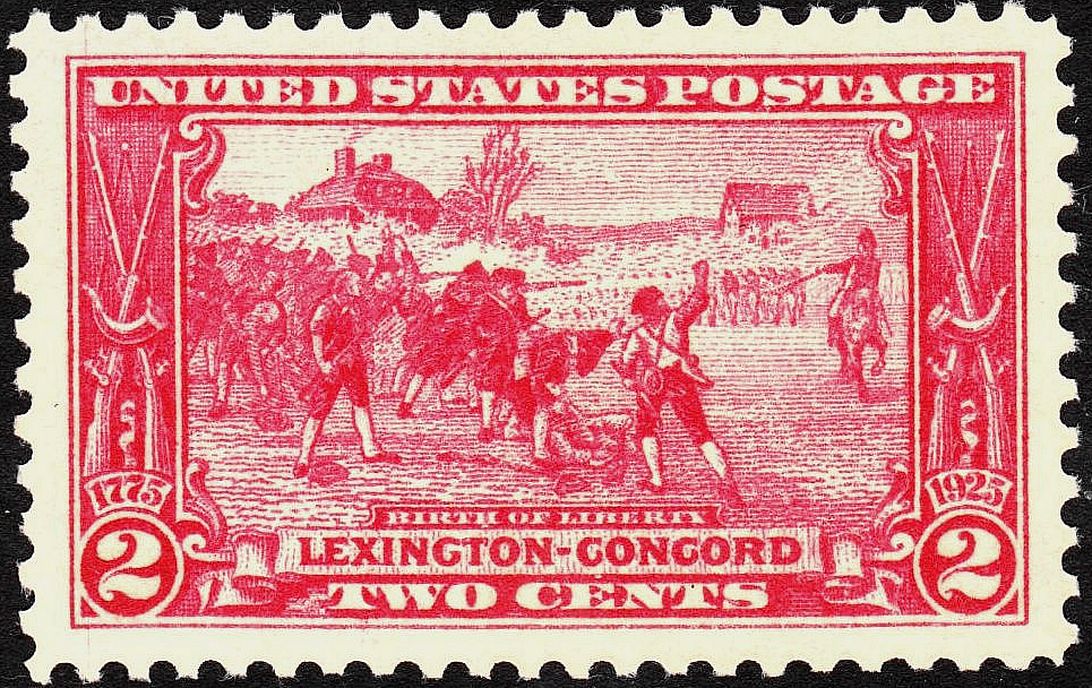
Icons are no accidents. The pose captures the Battle of Lexington as we, Americans, want to remember it: the resoluteness of an ordinary man in the face of the enemy. What the militiamen experienced that morning is partly enshrouded in mystery like a battlefield of the time might be with gun smoke. No one knows who fired the first shot, for instance, but that doesn’t keep the Shot Heard Around the World from having its own name during later generations — a remarkable thing for a simple firearm discharge to have.
Lore has encrusted the story. Even so, the Patriot soldiers in the Revolution, collectively, can’t be said to have lacked resoluteness over the long years of conflict.
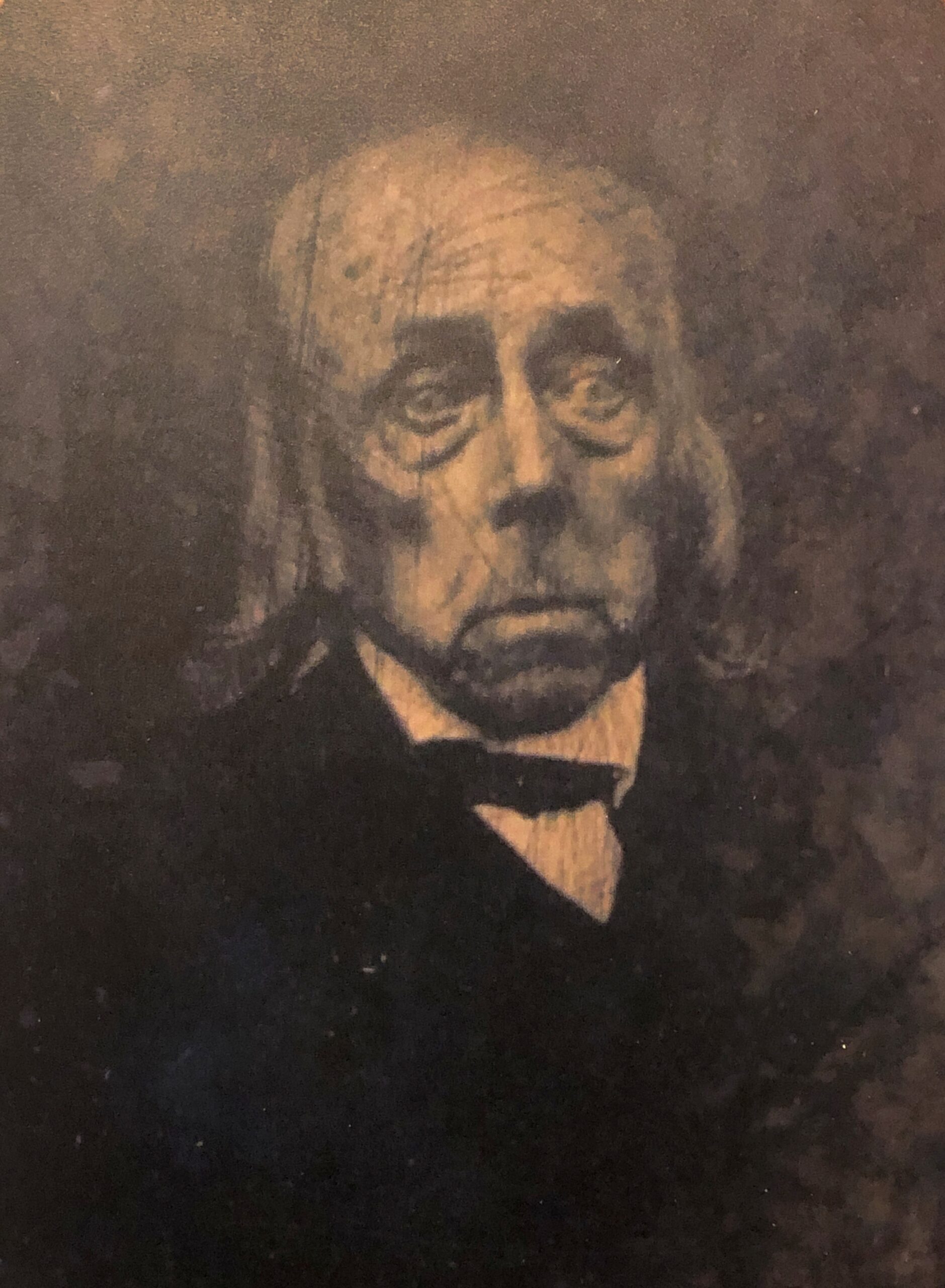
The Parker bronze stands on the edge of Battle Green in Lexington, Massachusetts, and across the street from Buckman Tavern, where the militiamen of the town waited the night before the battle. Among their number on April 19, 1775, was a young man named Jonathan Harrington, a fifer in the militia. About 75 years later, he’s thought to have posed for a photograph, now on display at Buckman Tavern.
Said to be the last survivor of the battle, and the only one to be photographed. The American Battlefield Trust cites a Harrington family history: He said he was aroused early that morning by a cry from his mother, who said: ‘Jonathan, get up, the regulars are coming, and something must be done.’ Jonathan was a fifer. He arose, went to the place where the patriots were gathering, and was with the company on the approach of the British.
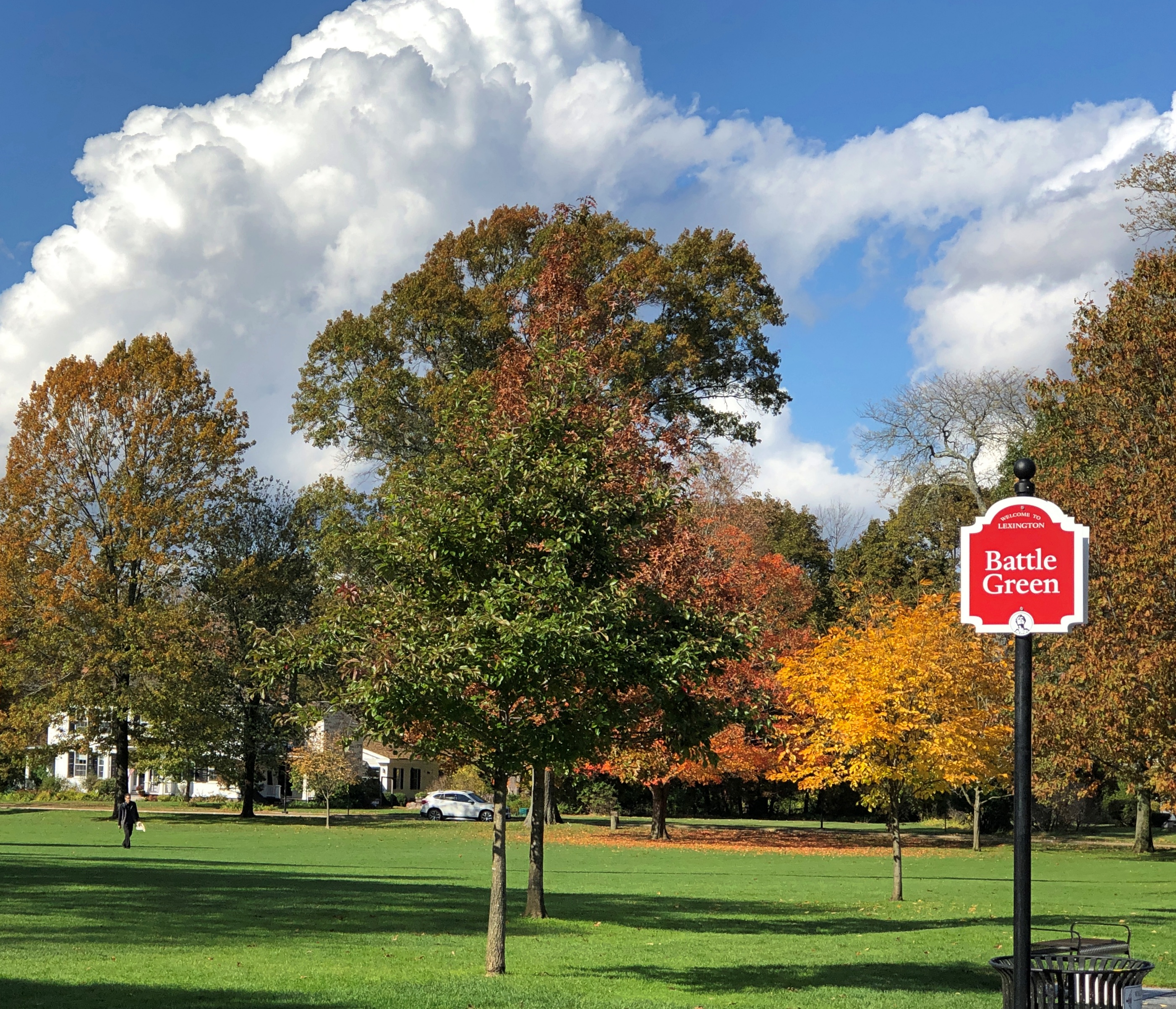
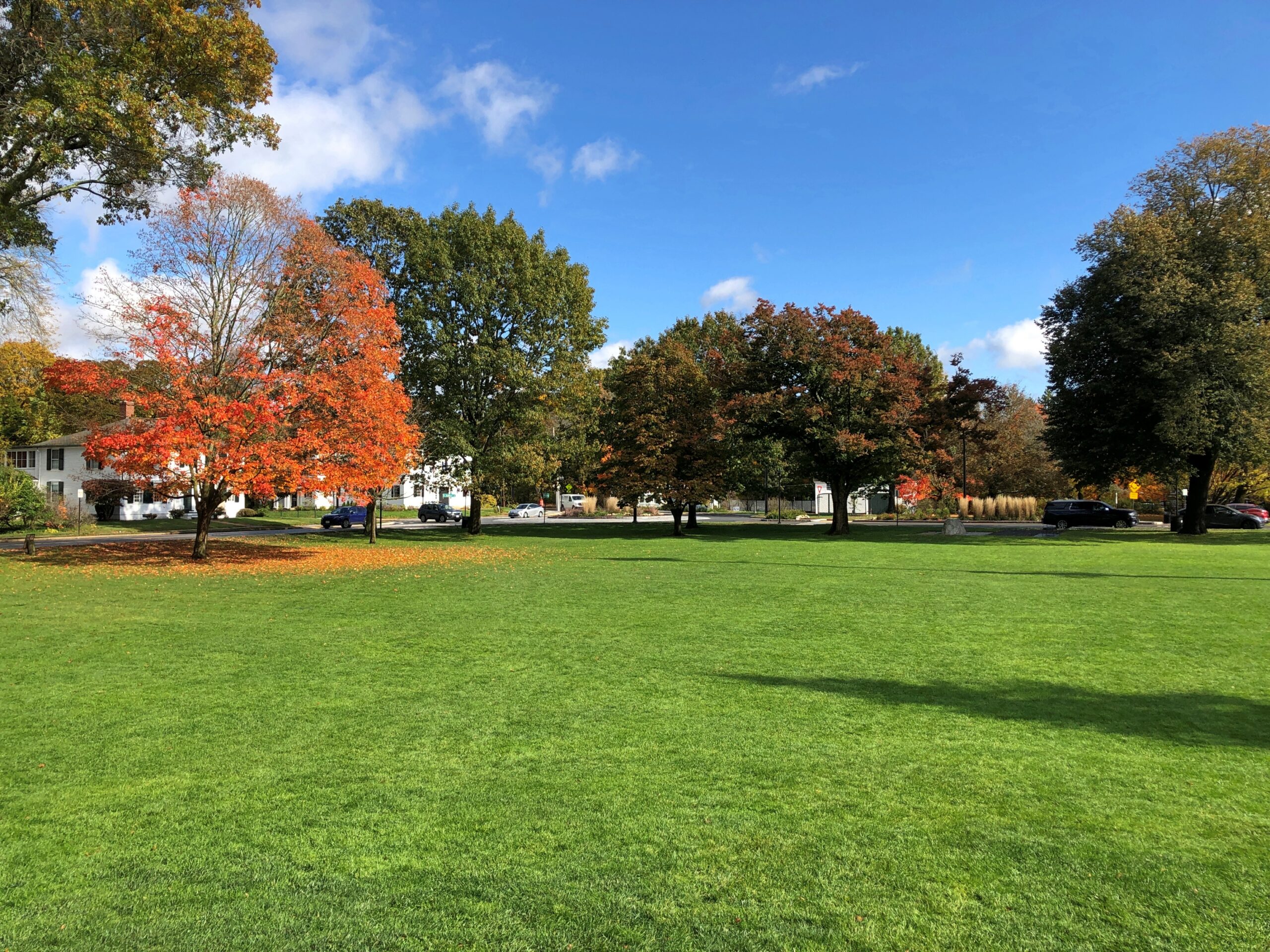
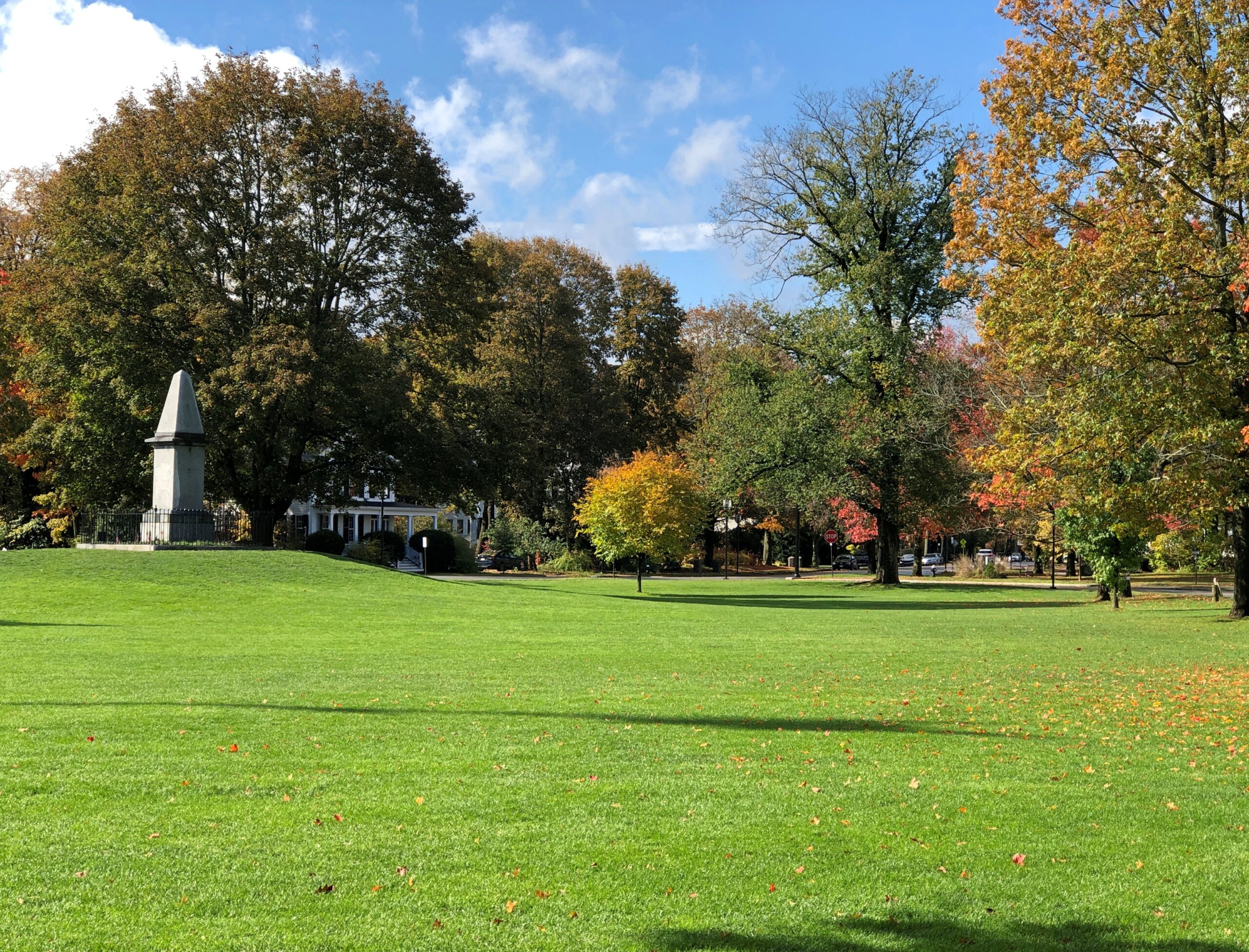
It had rained during the early hours of October 22, 2025 in Lexington, but by late morning the sun was out and only a scattering of puddles remained. Battle Green stretched out behind the bronze John Parker. For a time, I was the only person on the green, though a steady stream of car traffic was the be seen on the roads edging the grounds.
John Parker, originally “Minuteman Statue” by the prolific sculptor and public monument specialist Henry Hudson Kitson, is a latecomer to the green, erected in 1900.
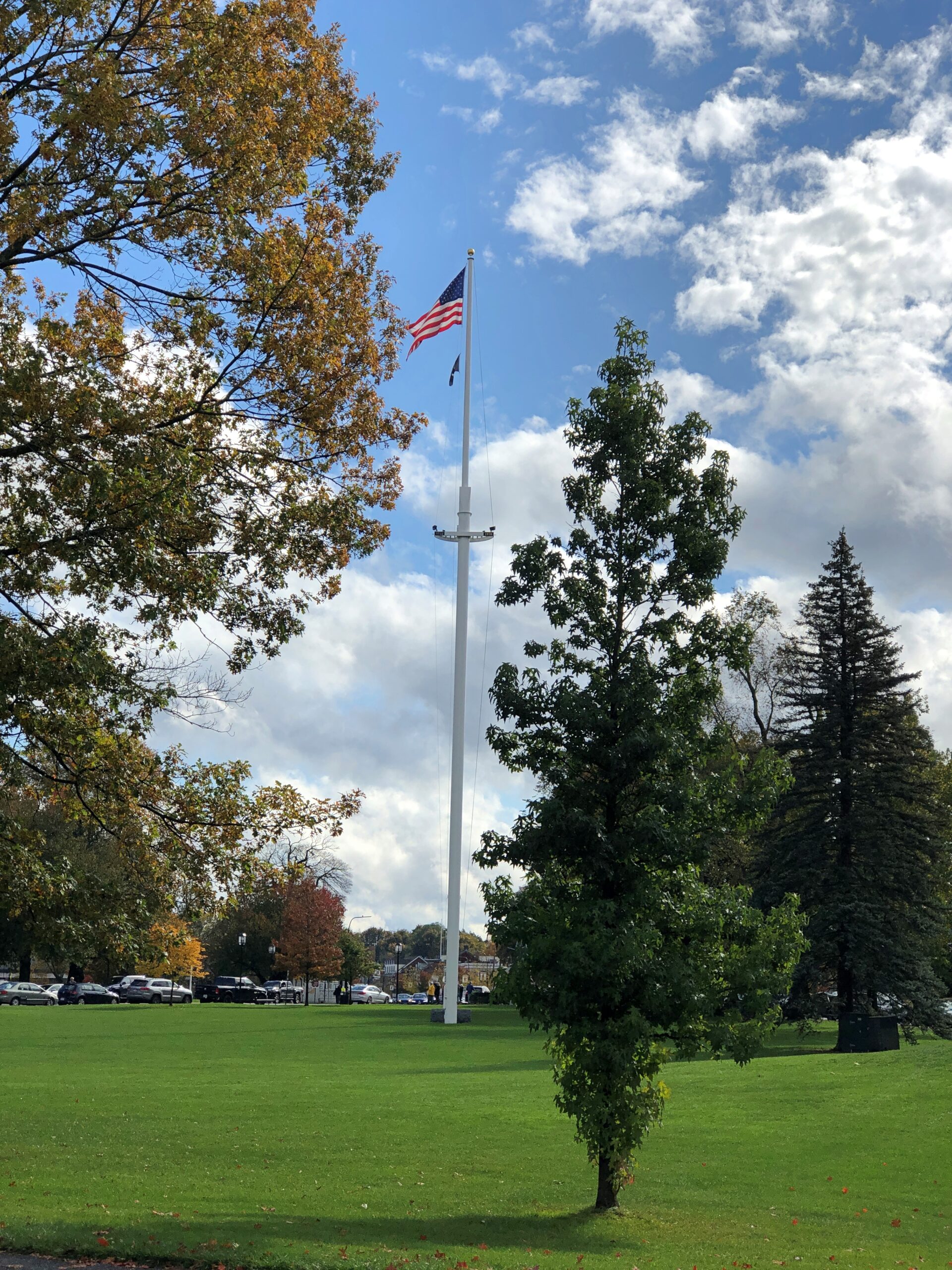
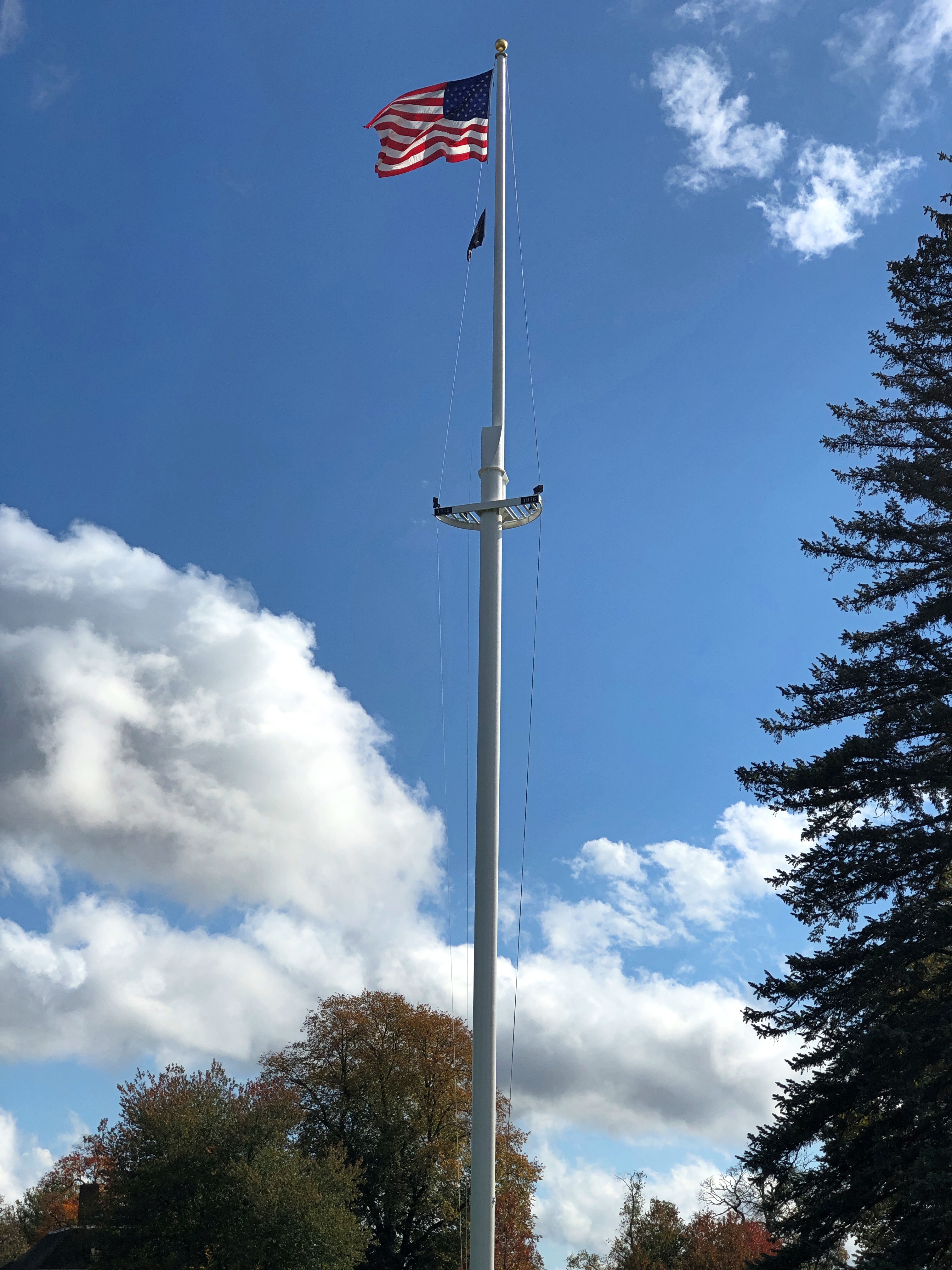
The Battle Green flagpole is newest of all, erected only in 1962. Even so, the pole is on the National Register of Historic Places, and an act of Congress specifies that a flag will always be flown there.
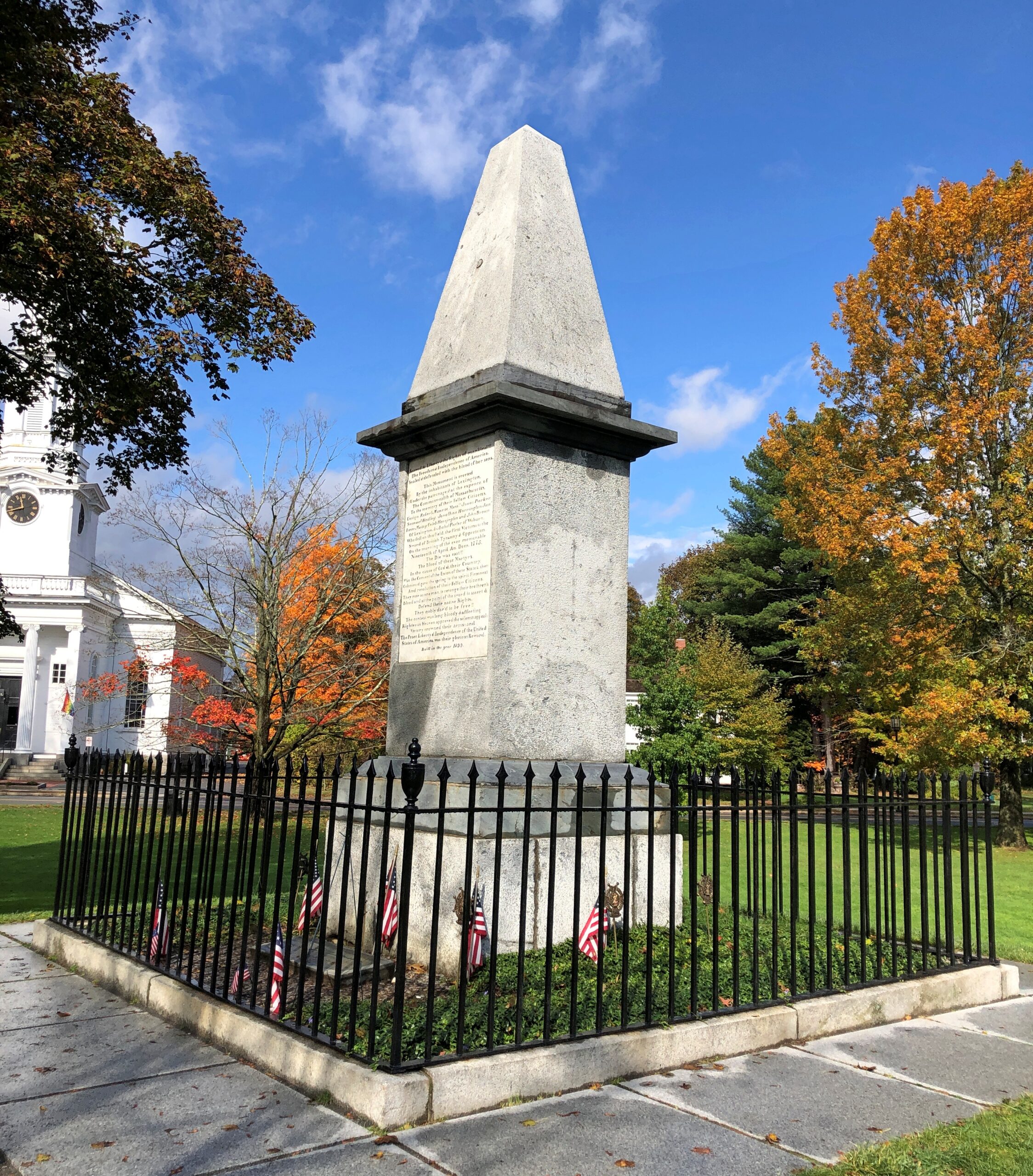
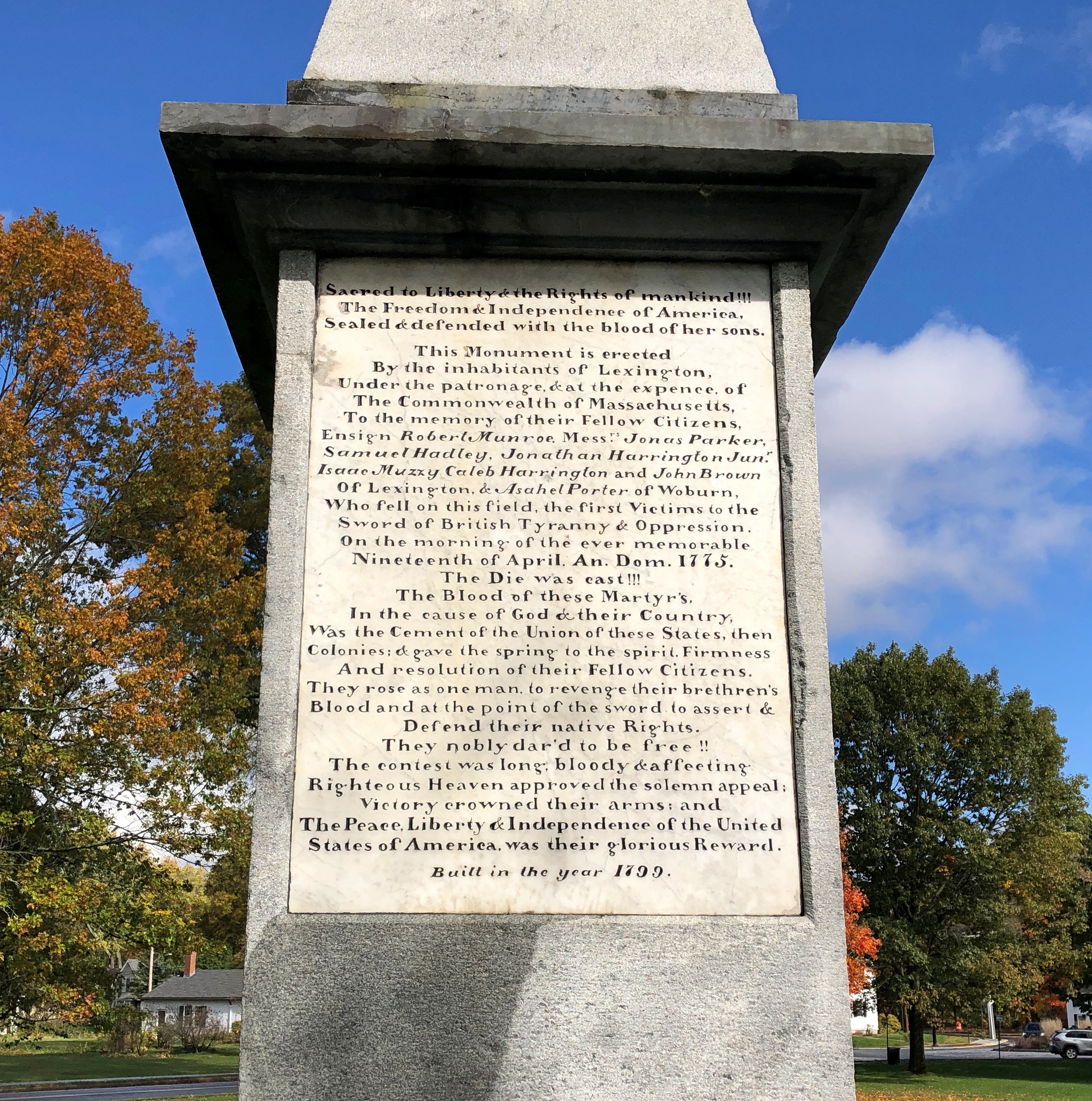
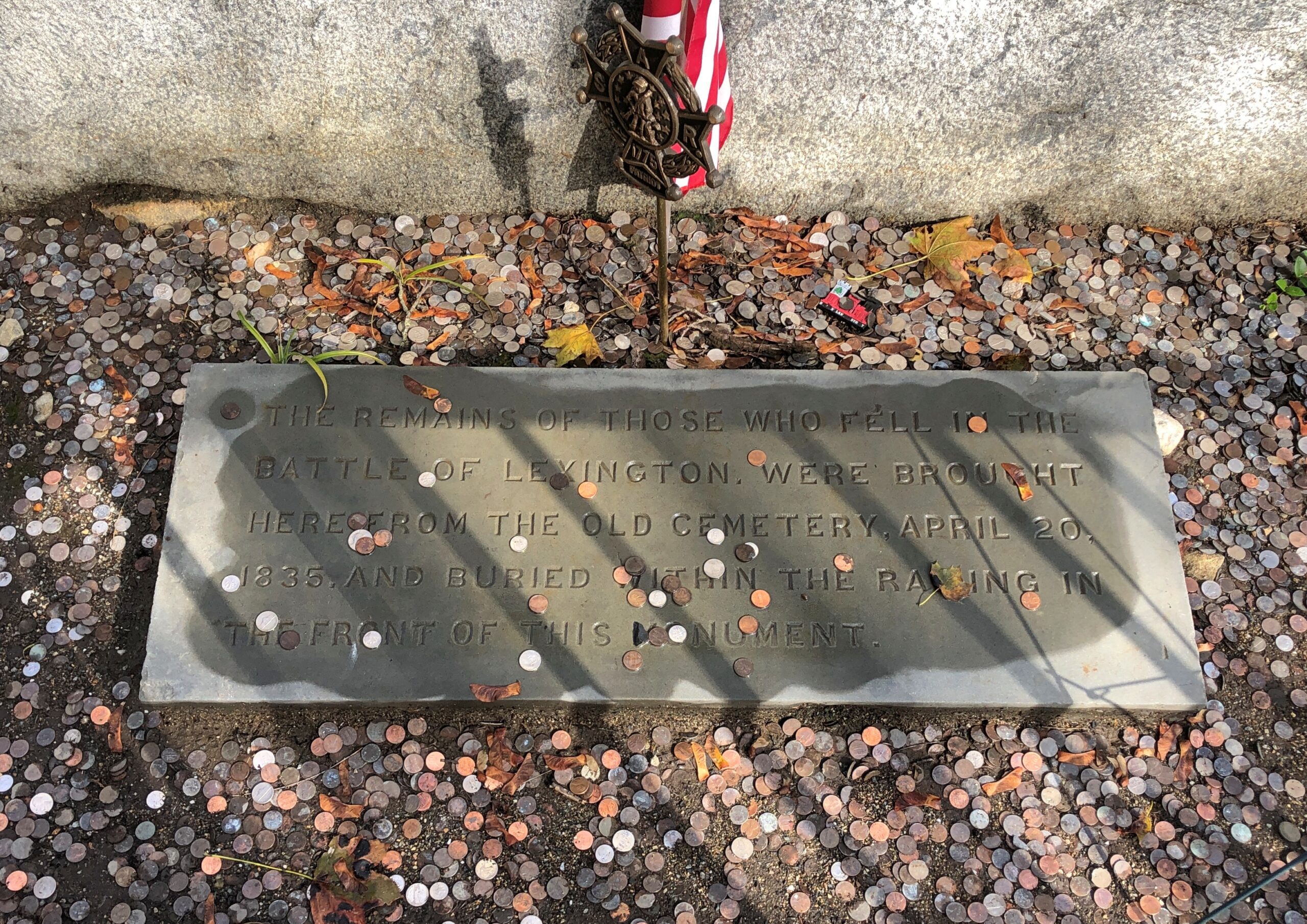
Well within living memory of the battle itself (1799), the town – fully aware of its role as spark of the Revolution – erected a memorial, and relocated the bones of the militiamen killed in the battle to a spot in front of it.
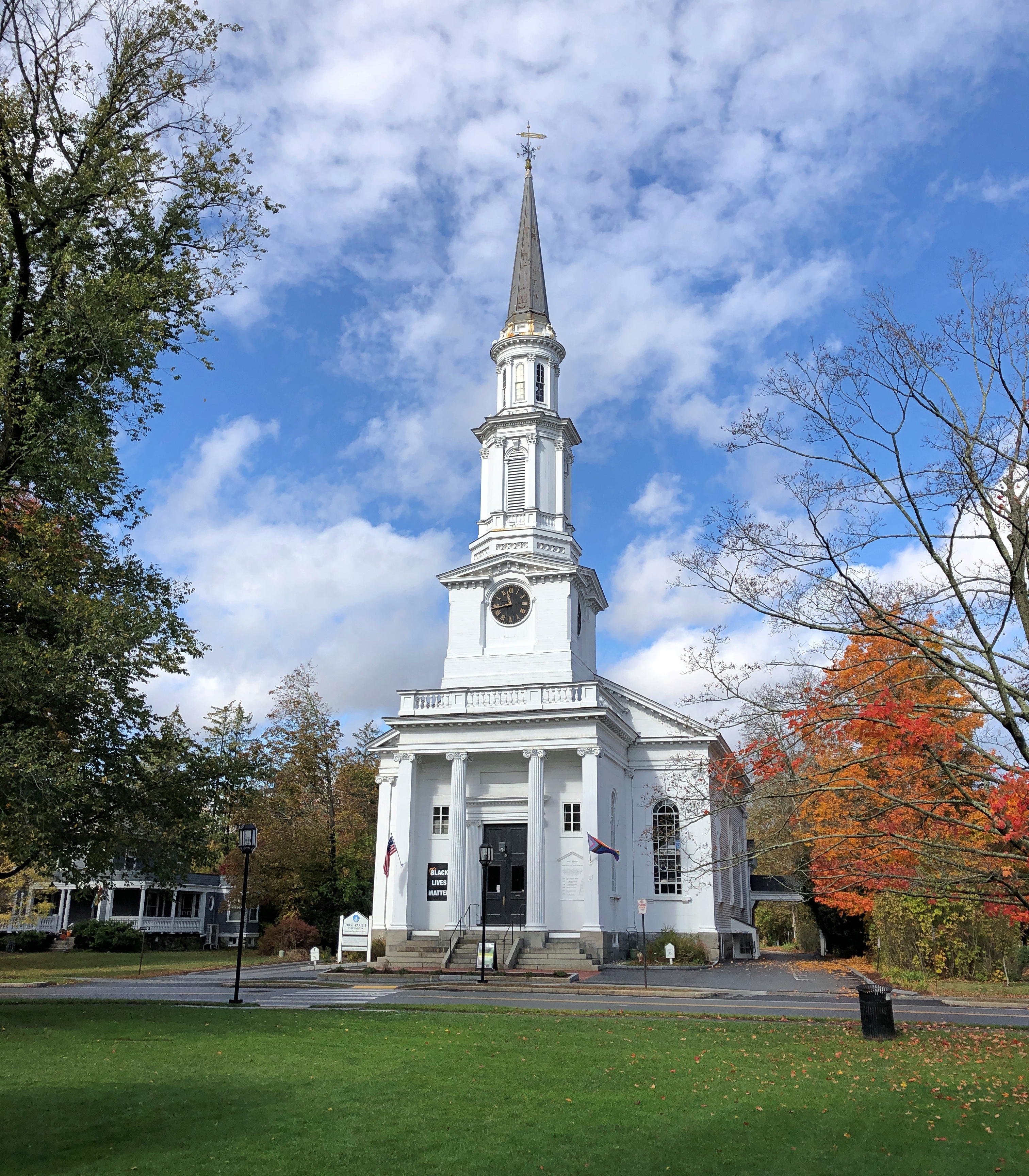
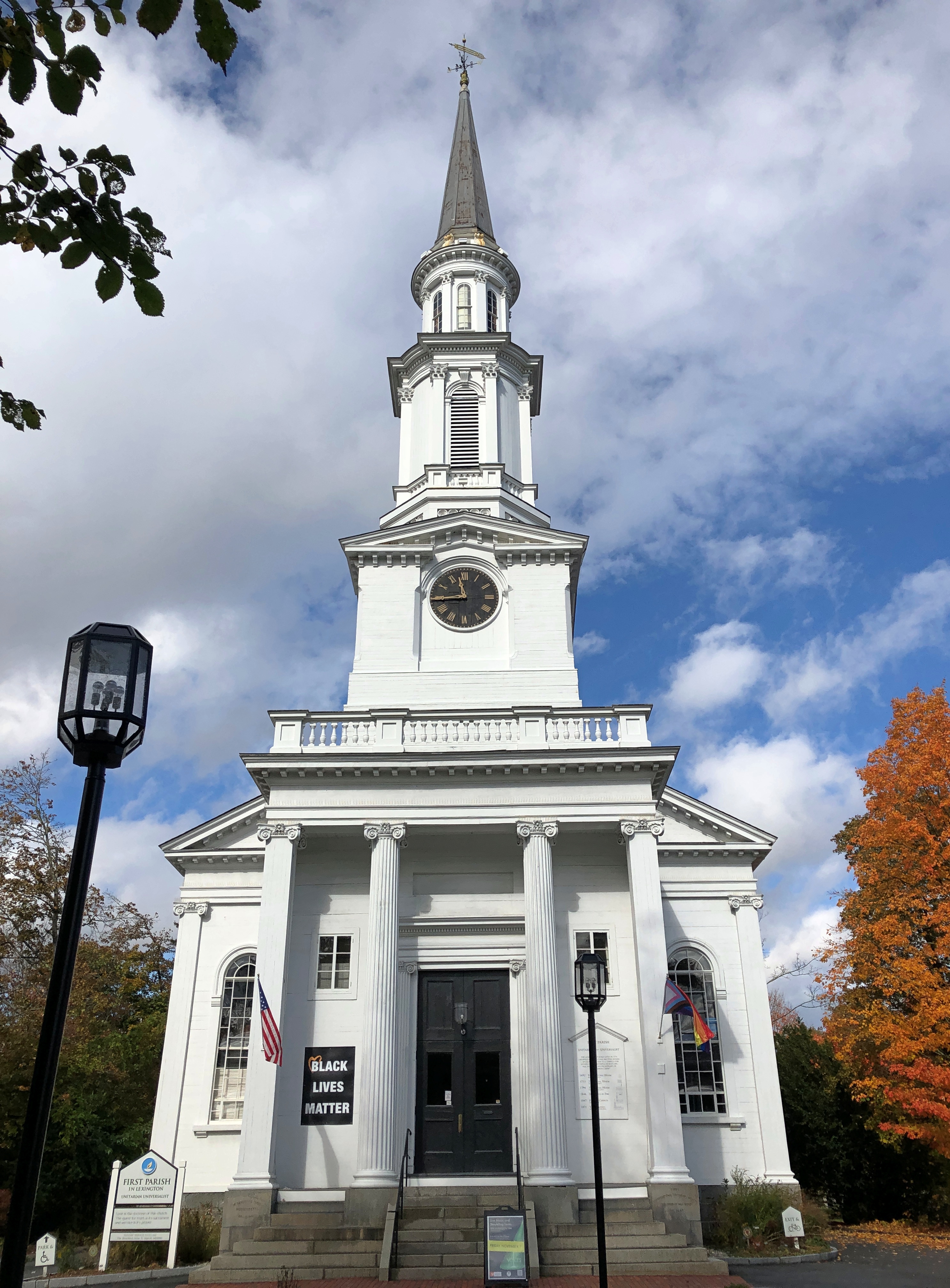
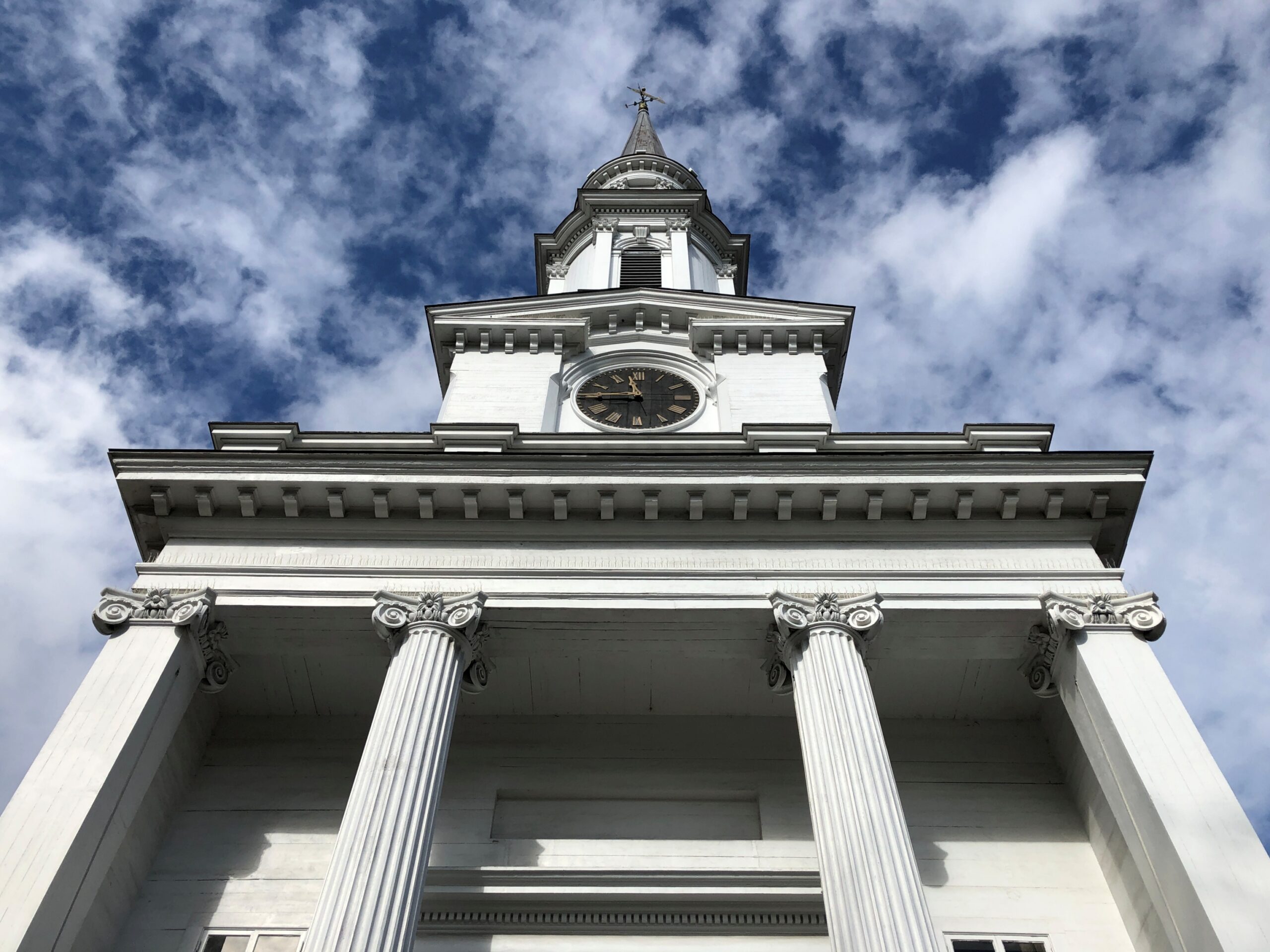
Though not formally part of the green, First Parish Unitarian-Universalist is distinctly part of the place, and looks about as New England as a church can.
It might as well be part of the green, considering the history of the congregation. The present church is a 19th-century structure near the site of Lexington’s only church in 1775, which was a hotbed of Revolutionary sentiment at the time.
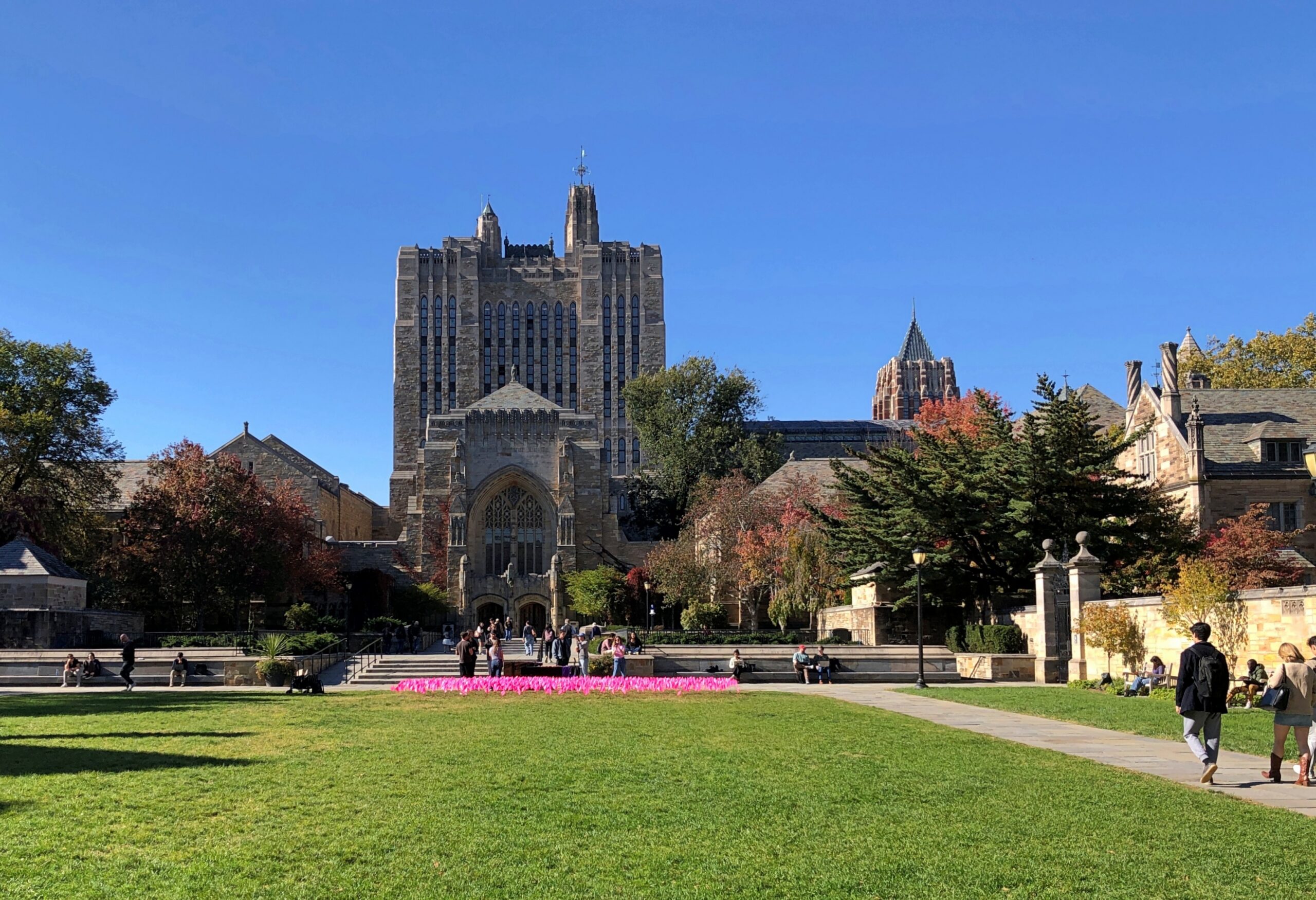
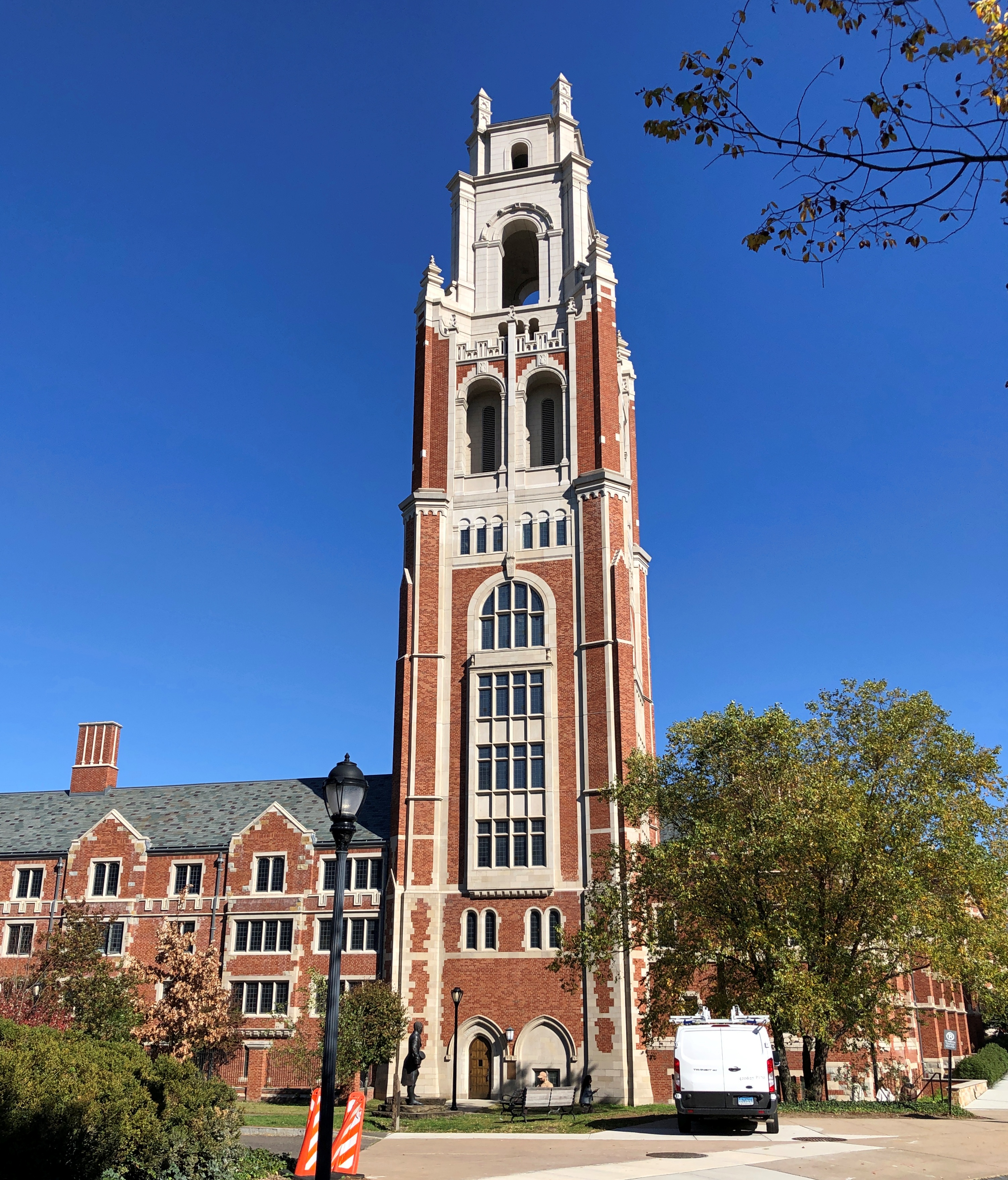
By the afternoon of October 21, New York City was in my rearview mirror, but I wasn’t that far away: New Haven, Connecticut. I wanted to made a short stop at Yale University. During the tedious minutes spent looking for a legal parking place close enough to campus to make that doable, I doubted the wisdom of my idea, but eventually I found a spot. Also, I was ready: I had a roll of quarters for parking meters. Most of them can be paid by app or some such these days, but they also take quarters (most of them), and I’m a traditionalist when in comes to parking meters.
Yale is sprawling, leafy and picturesque in a collegiate sort of way. Digression: The centennial of Fred Waring’s recording of “Collegiate” passed earlier this year, and no one mentioned it. That’s almost as important a musical anniversary as that of “Yes, We Have No Bananas.”
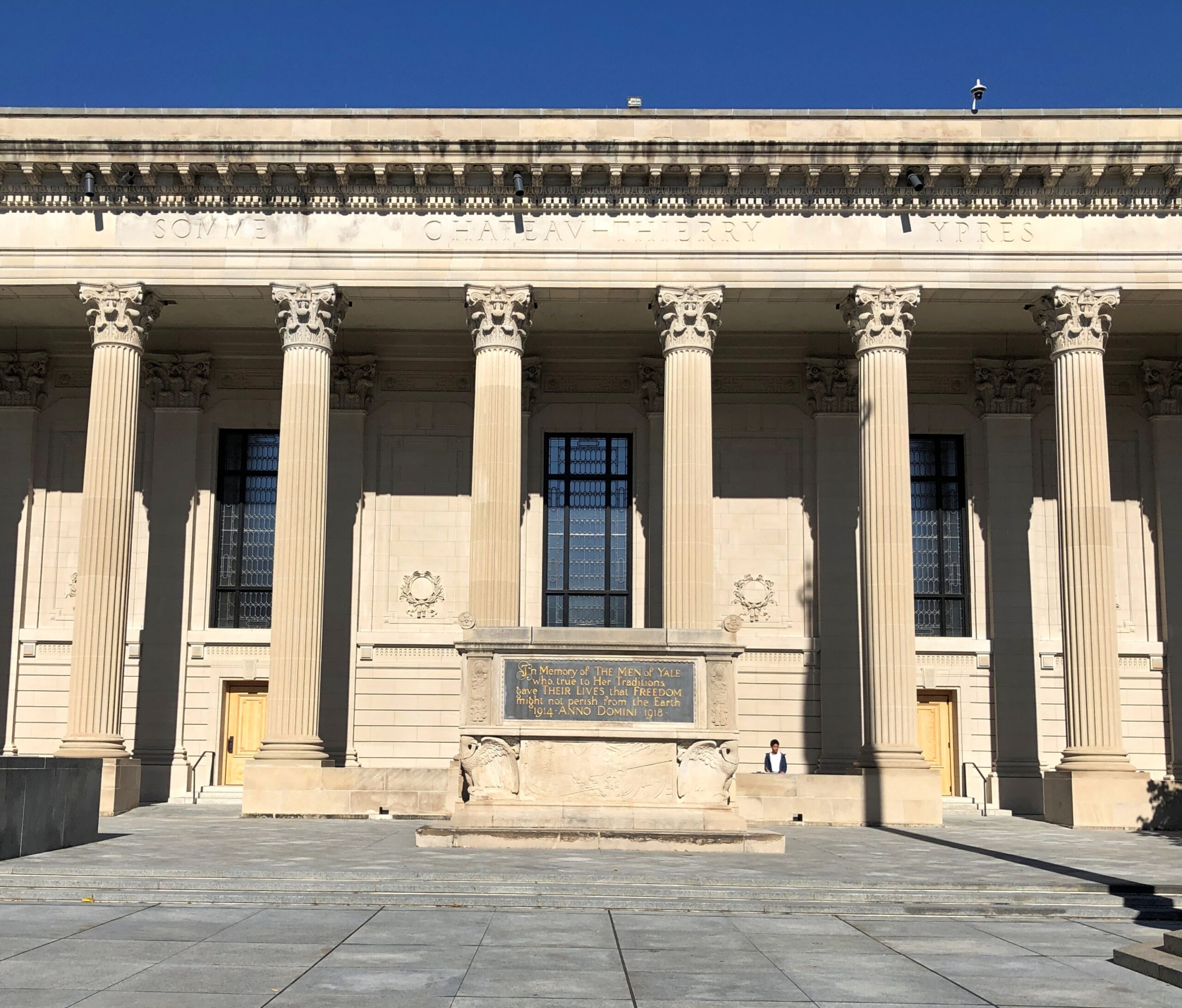
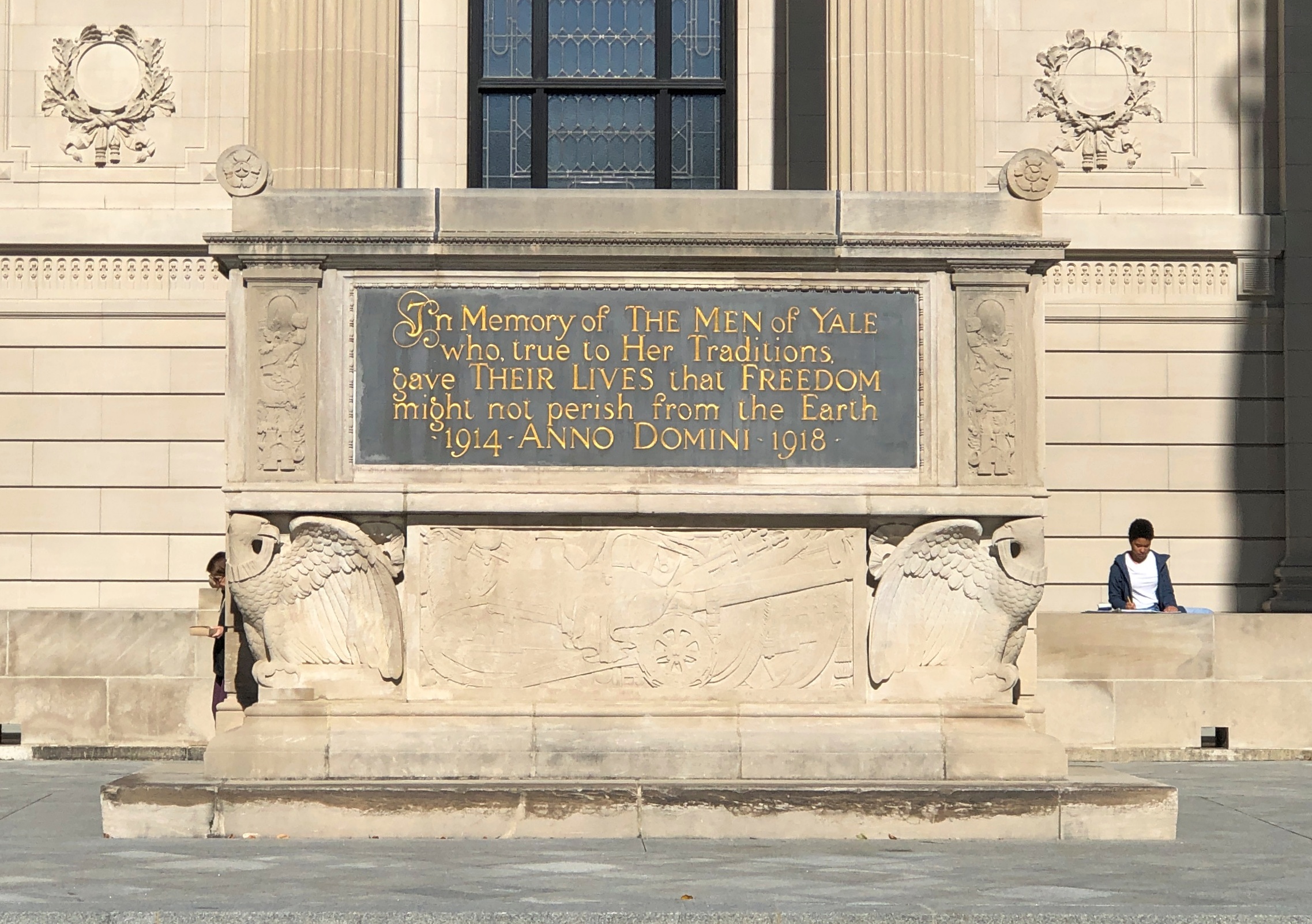
Good to see a prominent memorial to the Yale men who didn’t return from the Great War. RIP, gentlemen.
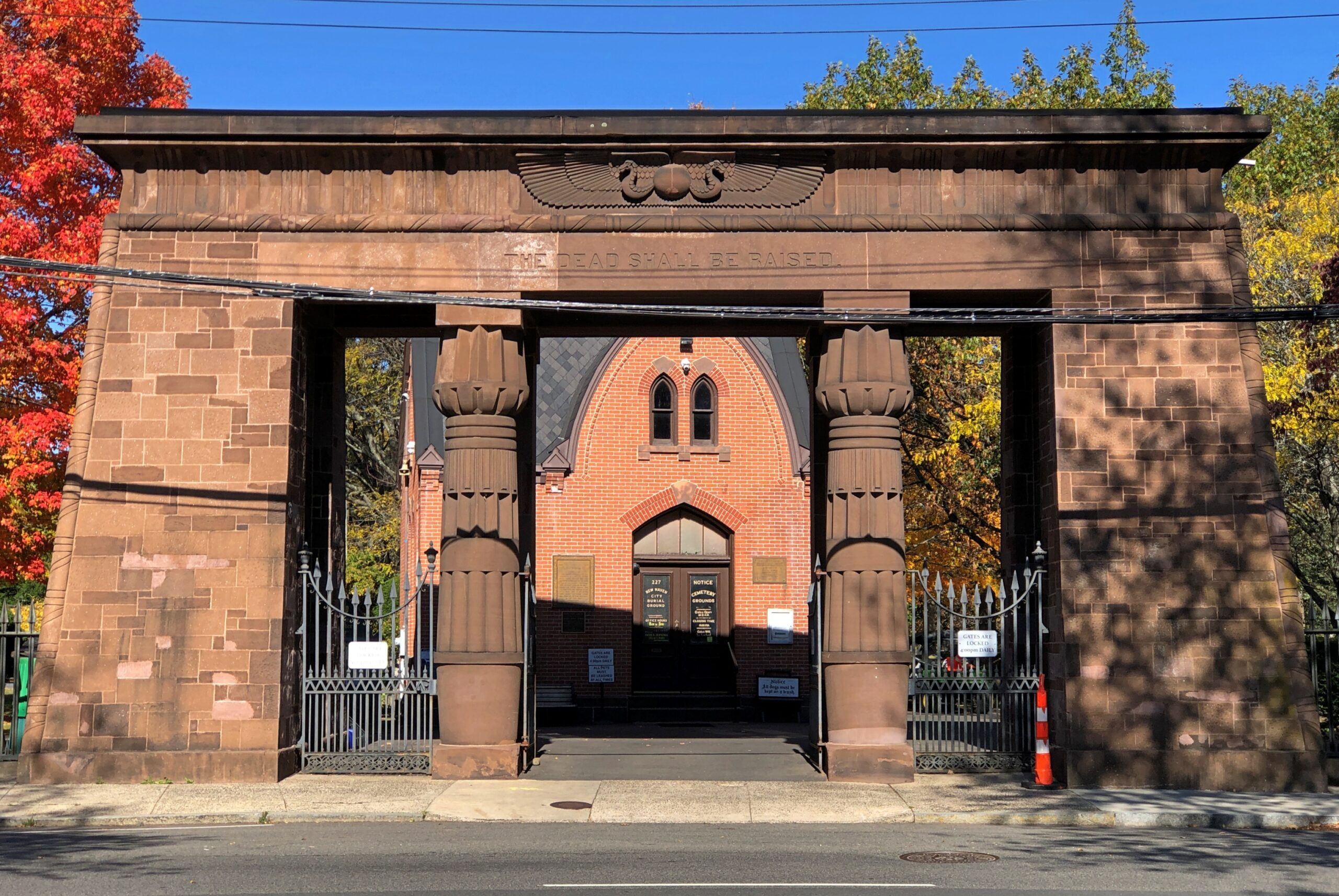
Adjacent to the Yale campus is the Grove Street Cemetery, sporting a fine Egyptian Revival entrance. Not something you see often.
That’s what Vanderbilt needed, a cemetery across the street. All we ever had across the street was the fast food that’s now found on campuses: Krystal, Bojangles, Popeyes, Pizza Hut (Inn?), Wendy’s, etc.
Grove Street owes its founding to pestilence. “After severe yellow fever epidemics in 1794 and 1795, the [New Haven] Green was simply too crowded to continue as the city’s chief burial ground,” the cemetery’s web site says. “In 1796 a group of New Haven citizens led by U.S. Senator James Hillhouse planned a new cemetery on a location at the edge of town. Their efforts were officially recognized in October 1797 when the State of Connecticut incorporated the cemetery as the New Burying Ground in New Haven.”
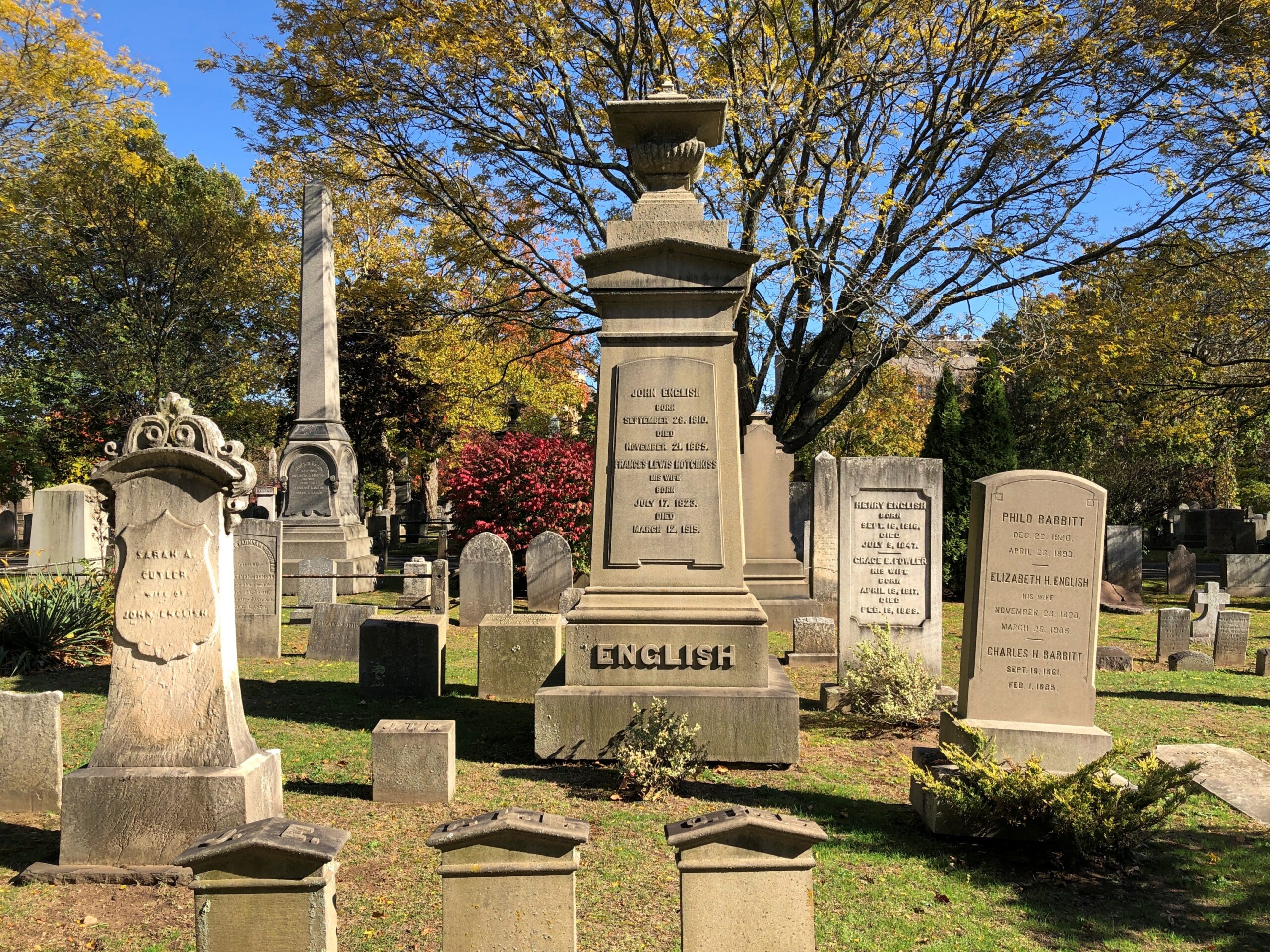
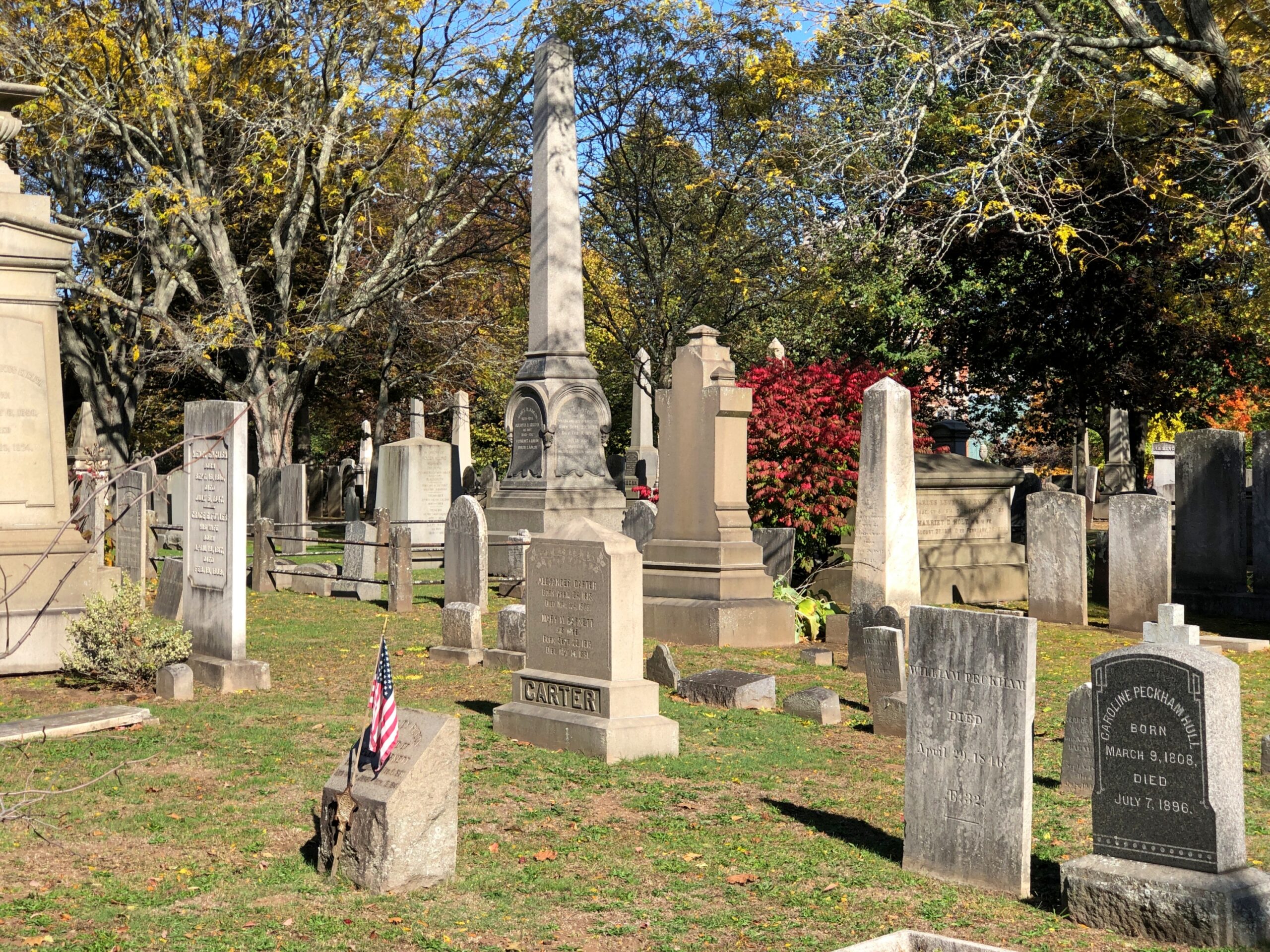
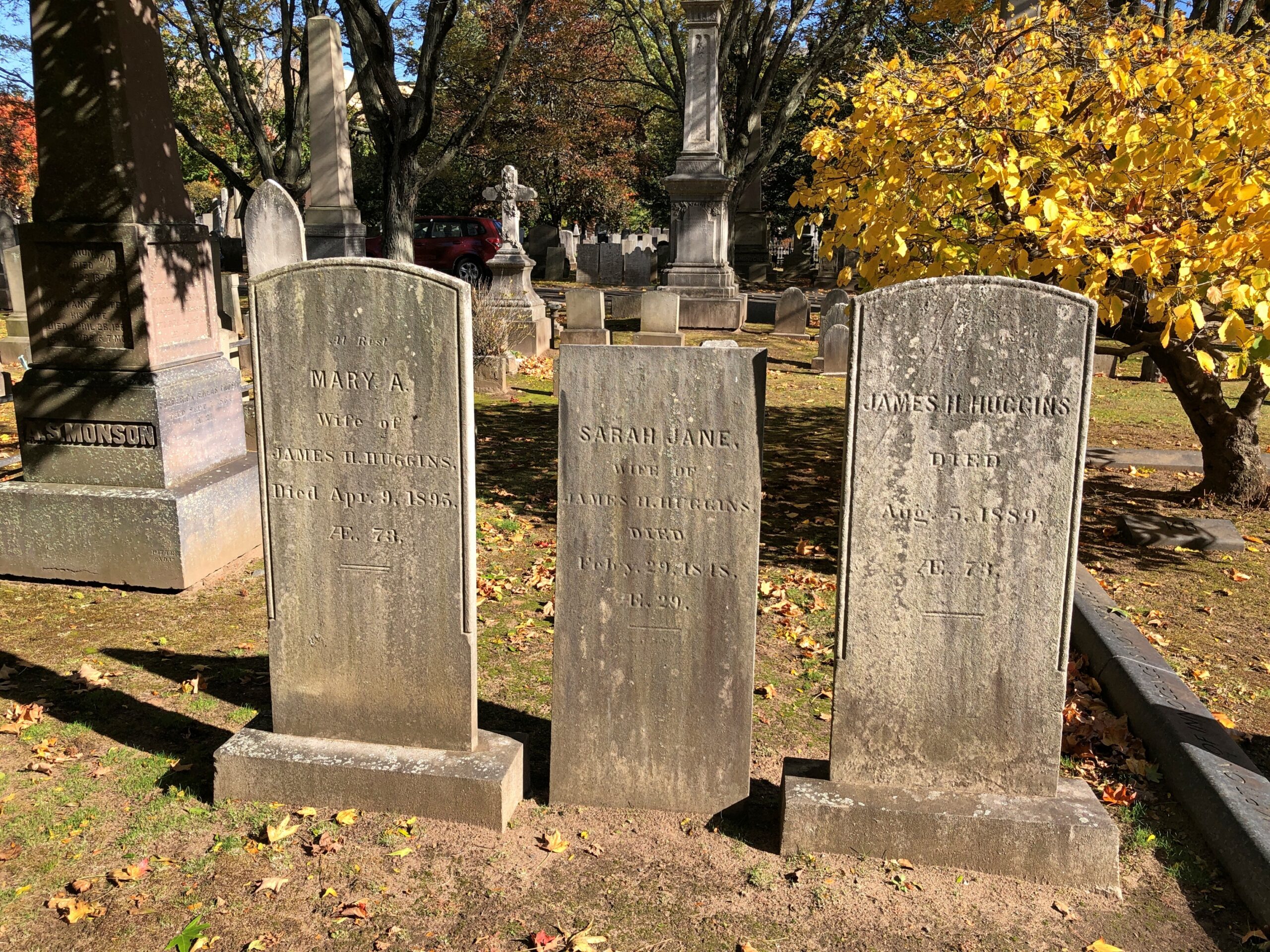
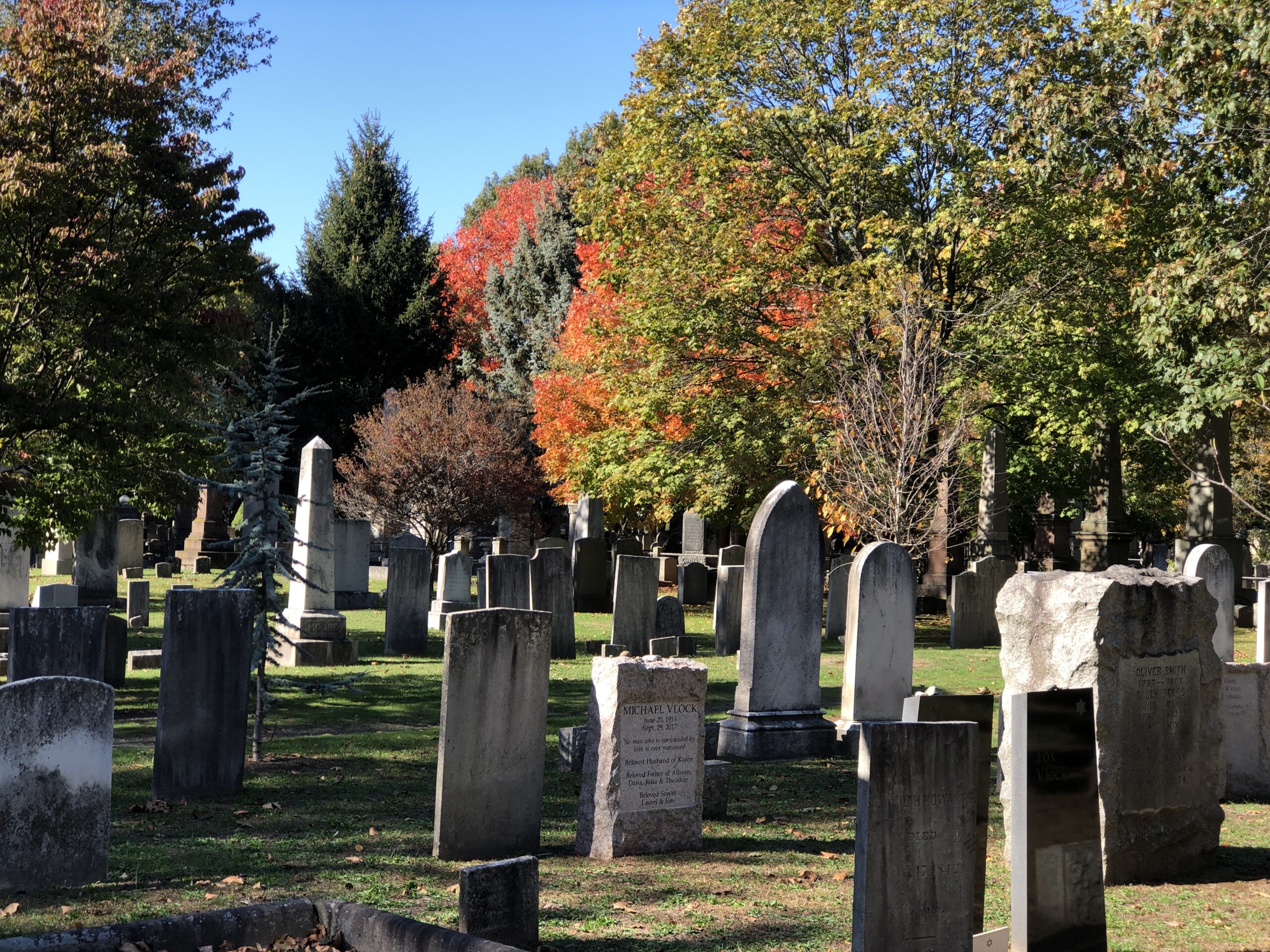
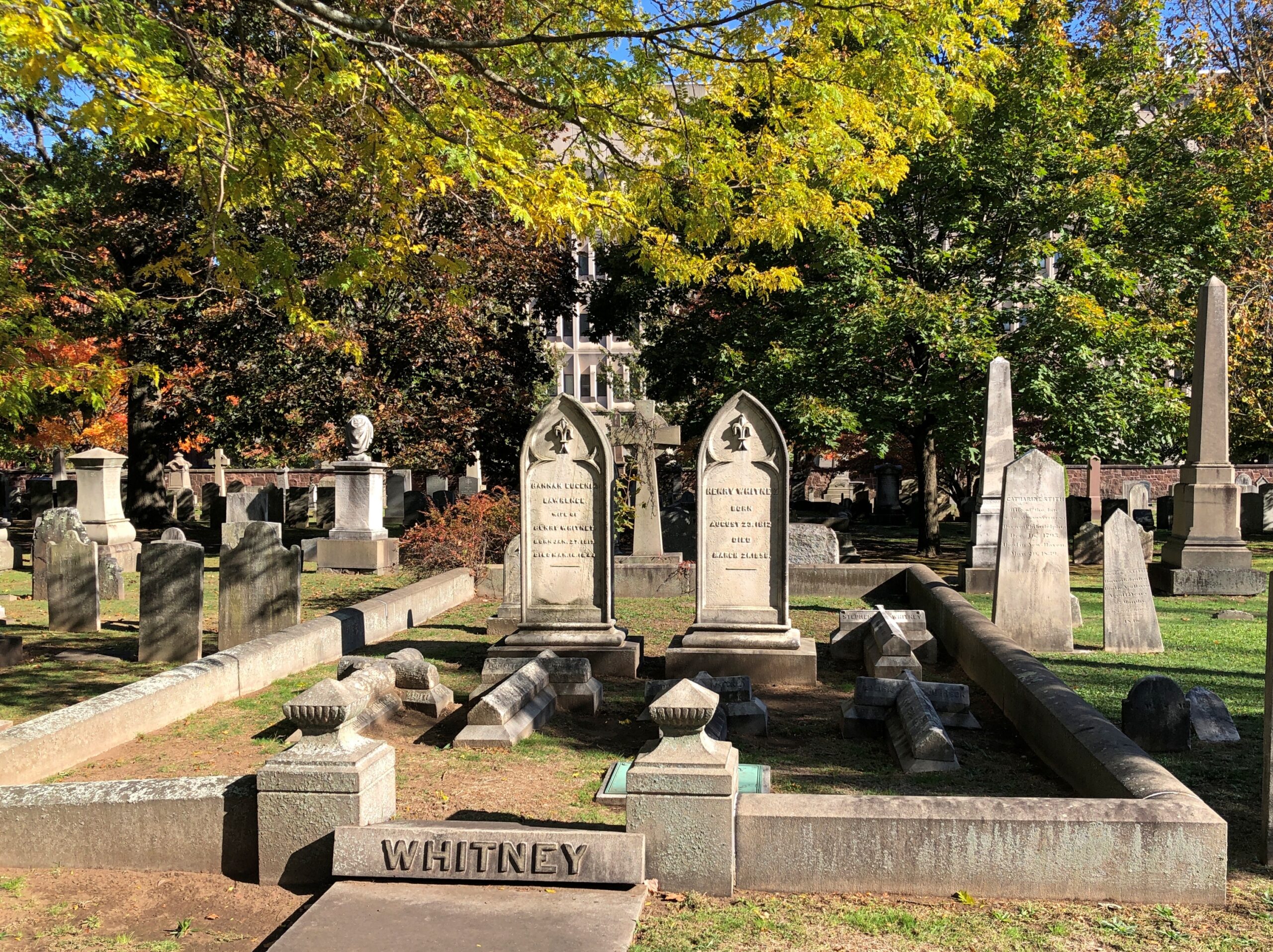
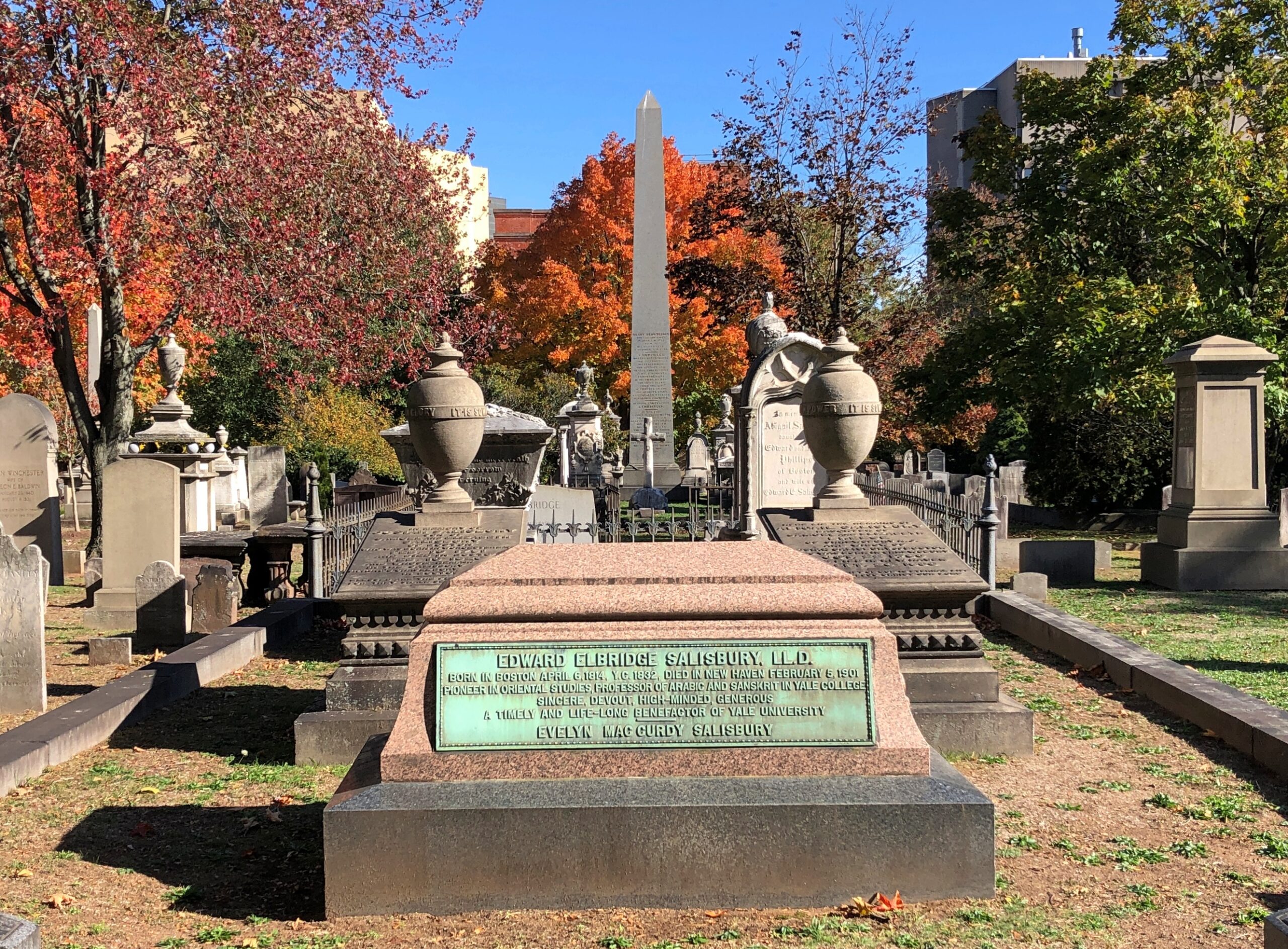
Since then, the population of the cemetery has grown, with stones of various shapes recalling the dead, and trees to provide them shade.
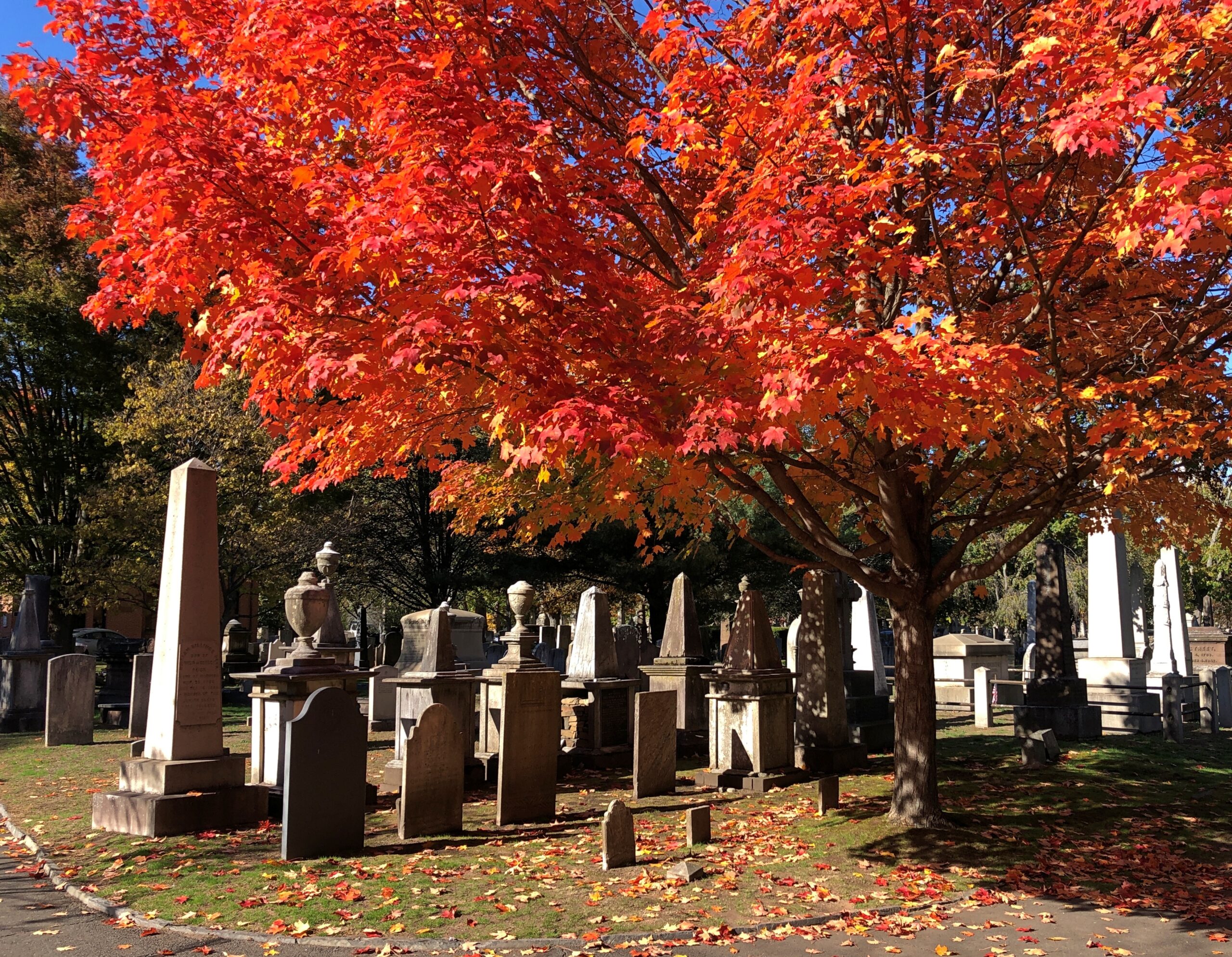
In October, the trees also provide color.
I didn’t go looking for anyone in particular, though there are a lot of notables here. Such as Eli Whitney, inventor; Noah Webster, lexicographer; Josiah Willard Gibbs Jr., scientist; Lyman Beecher, abolitionist and prohibitionist; and O.C. Marsh, paleontologist, among many others.
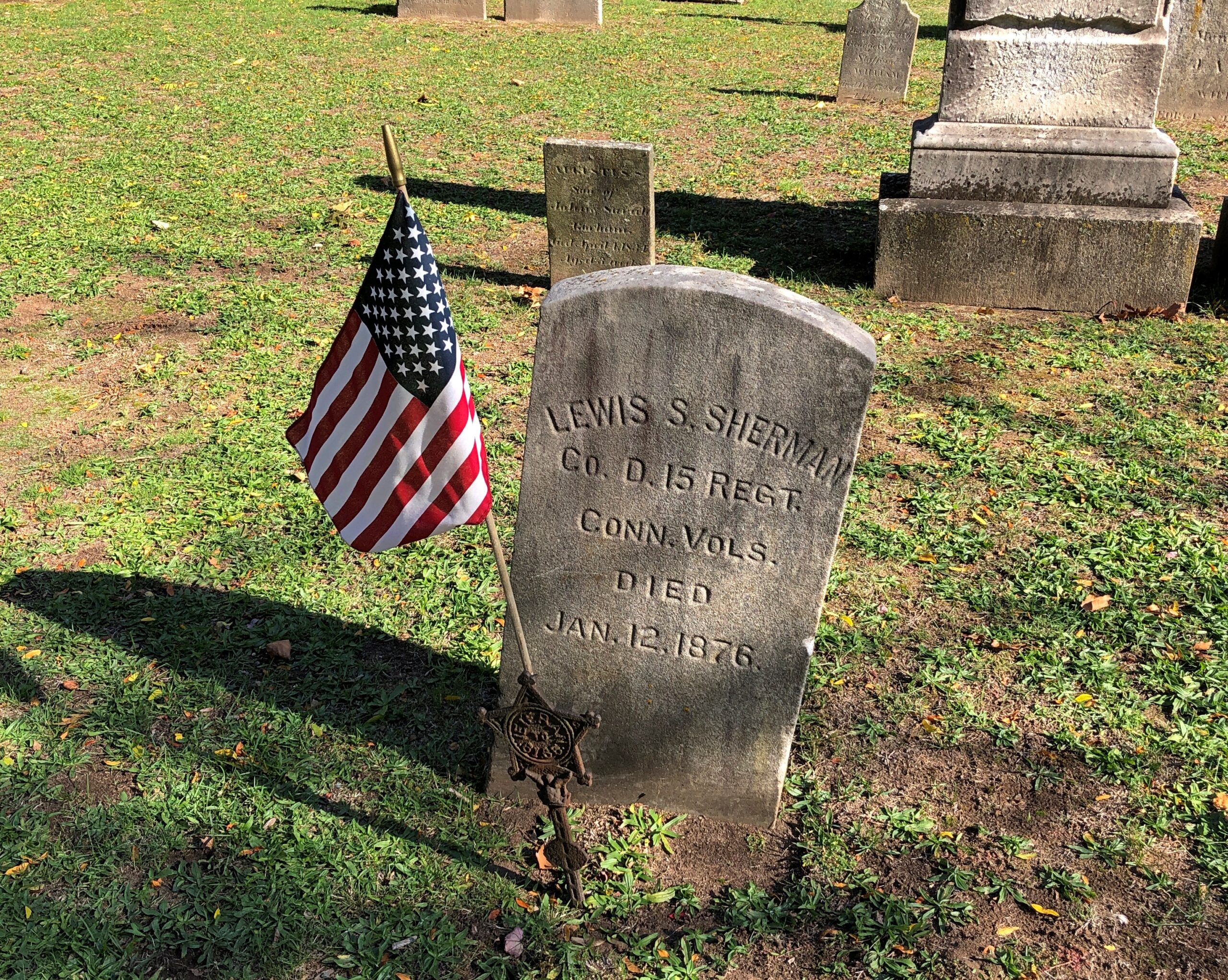
A scattering of stones mark veterans.
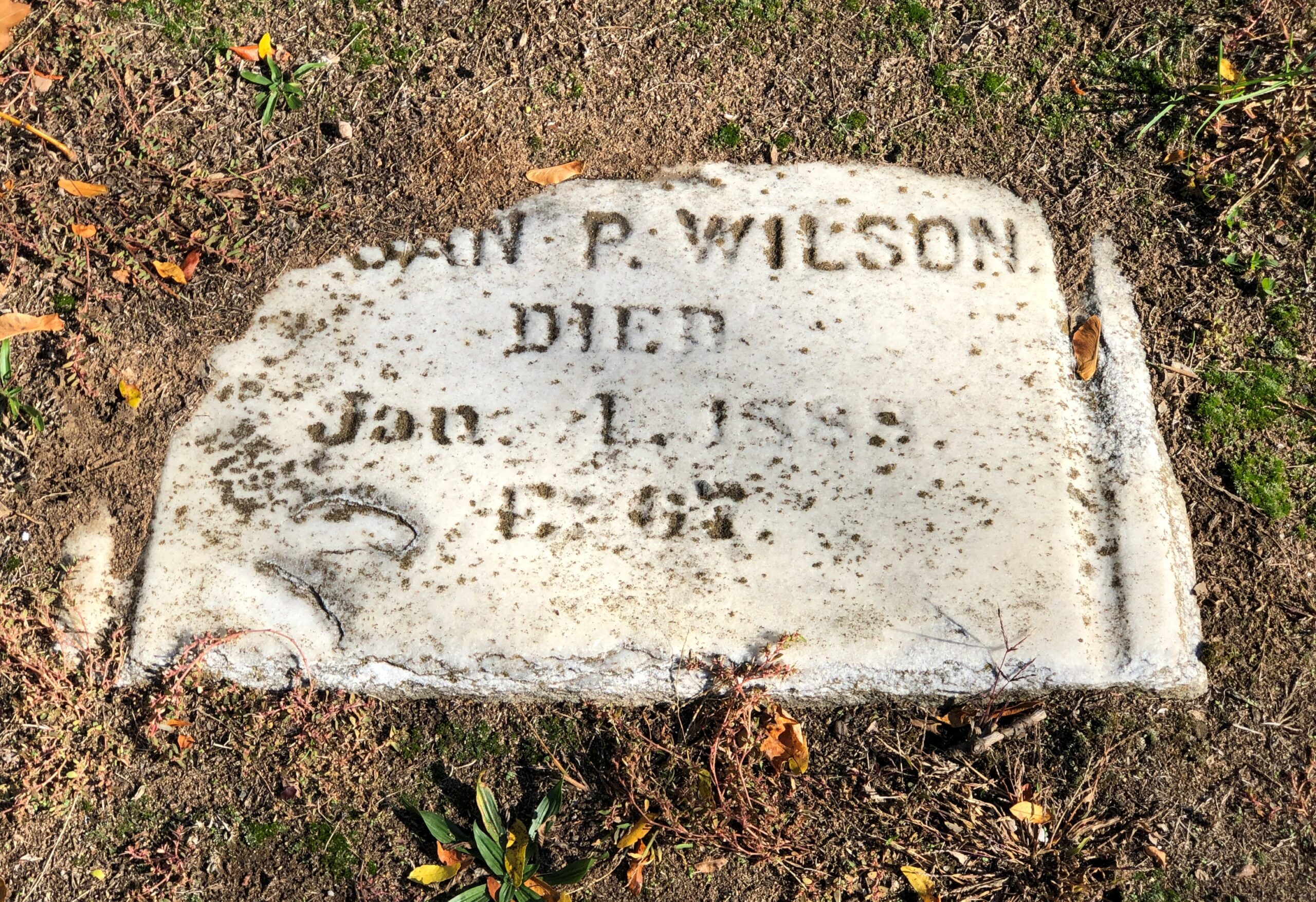
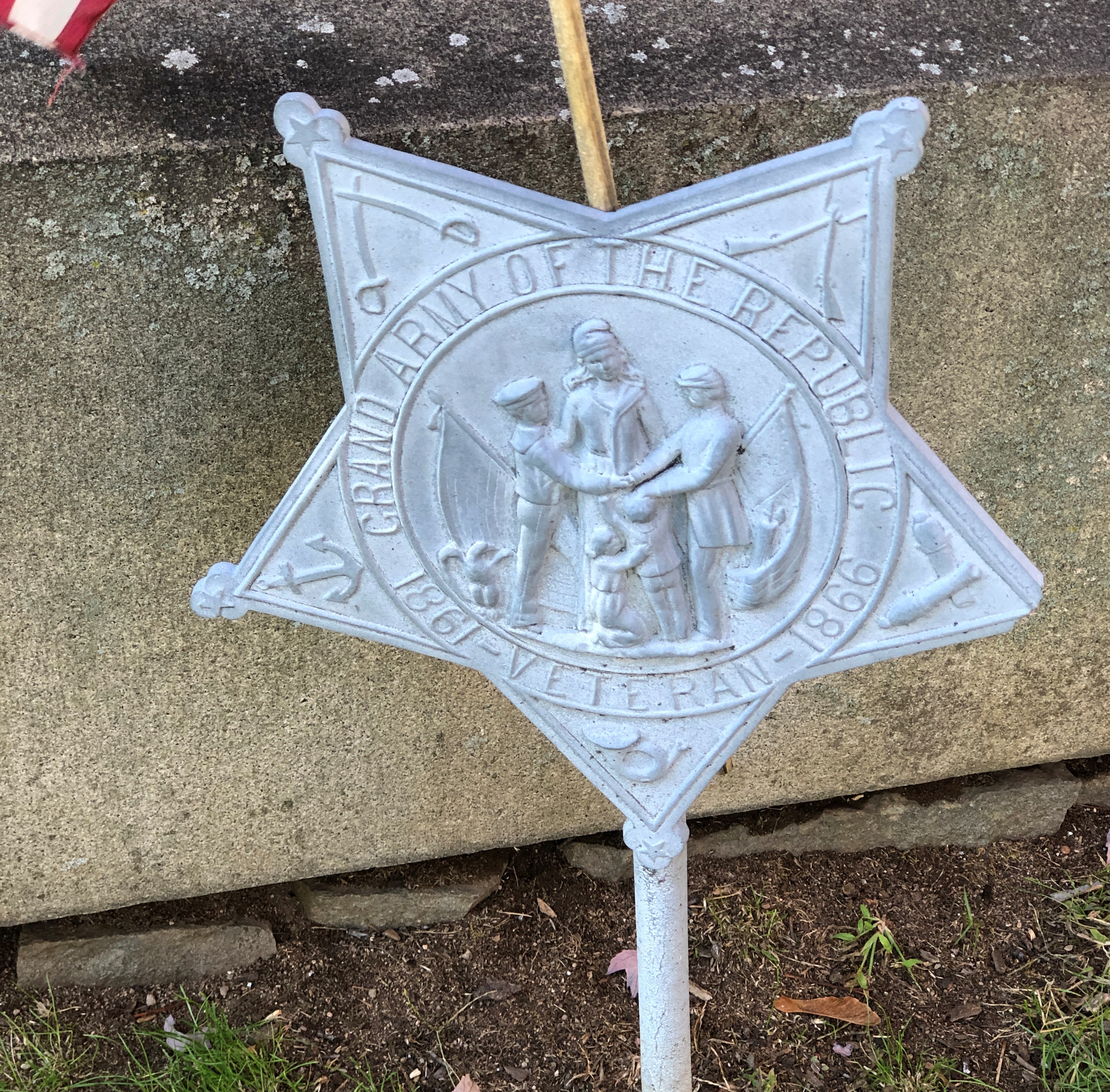
Including one with a GAR star that’s obviously a replacement for something older.
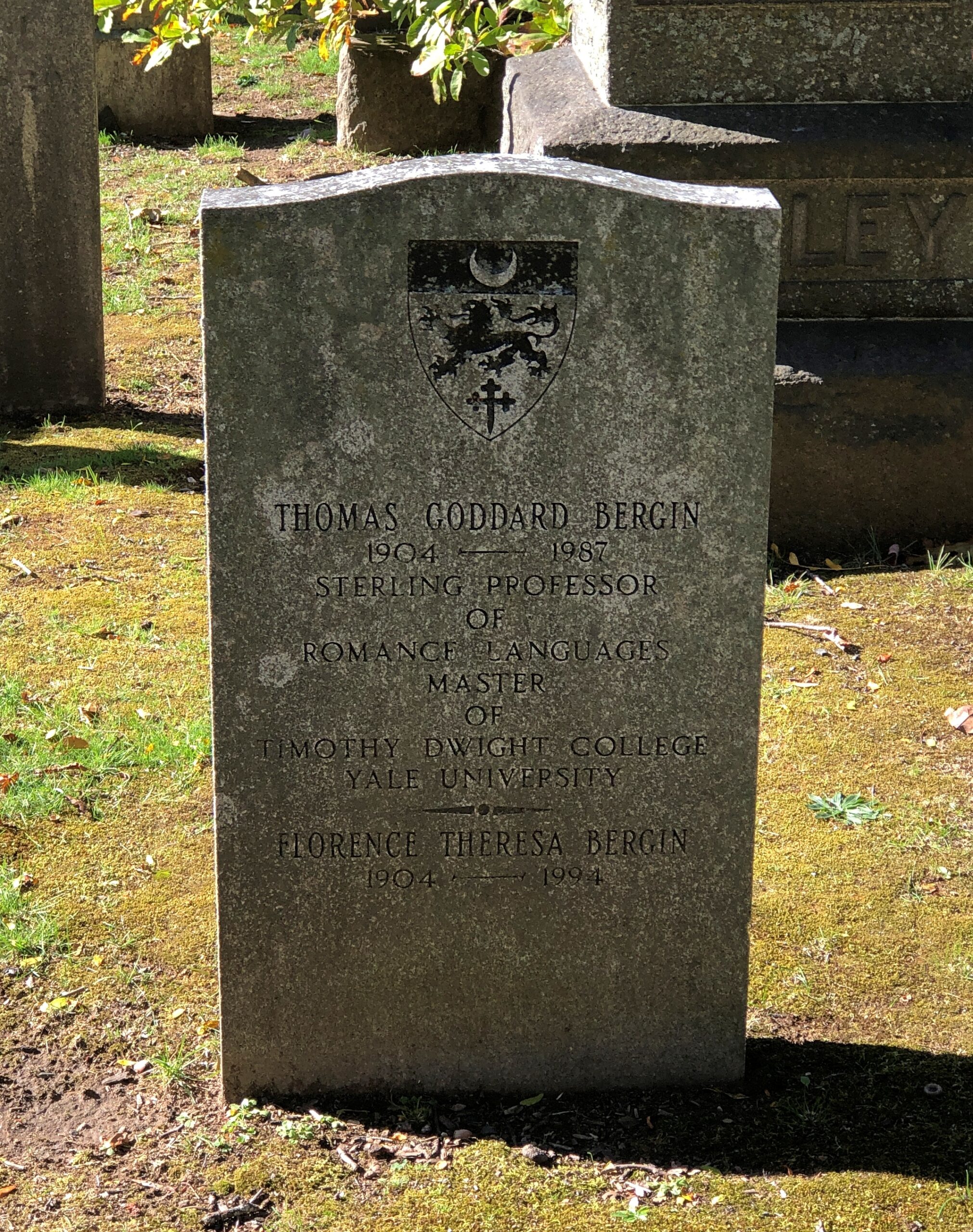
Being so close to Yale, a fair number of academics rest at Grove Street.
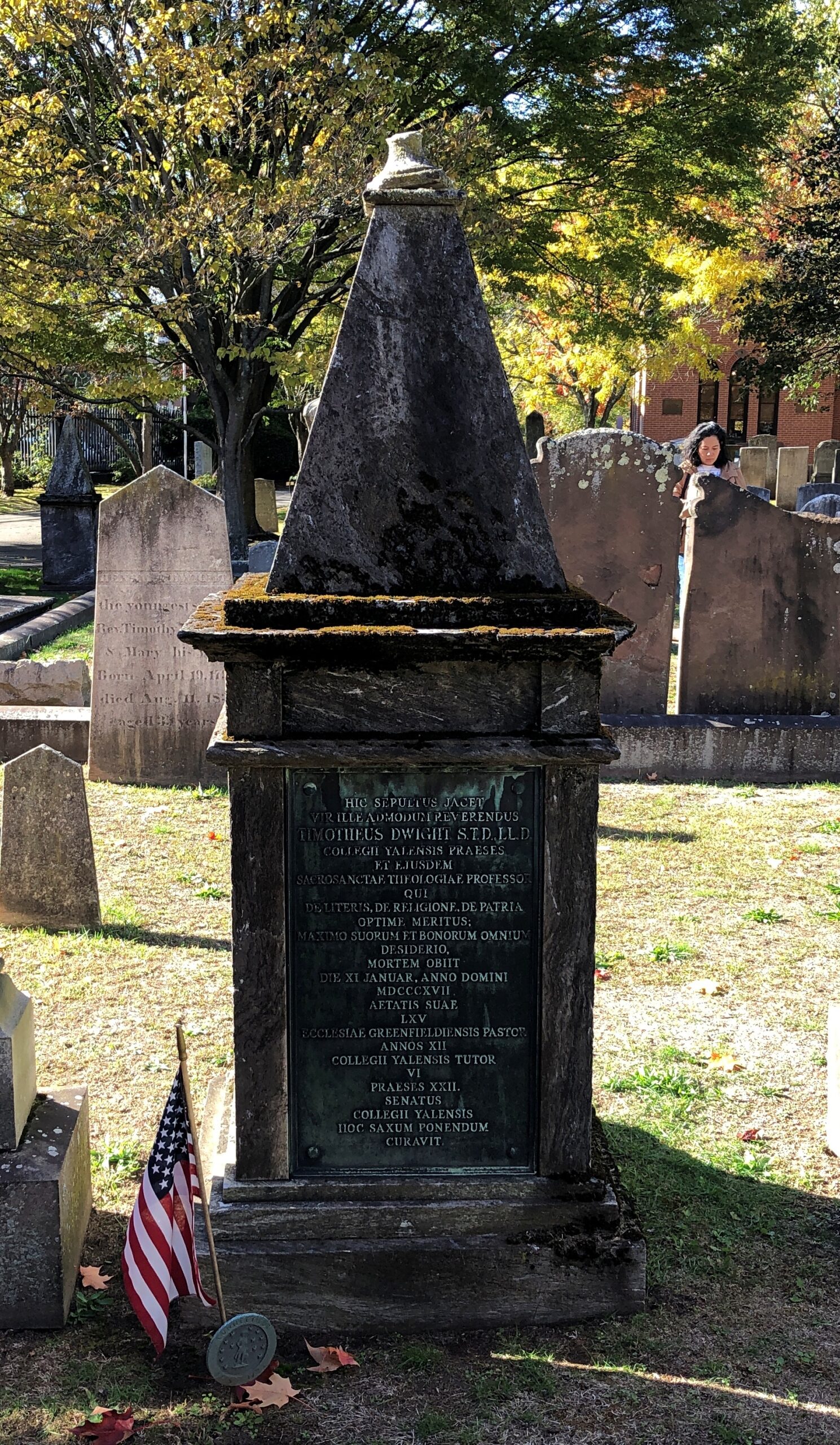
Including this fellow. It’s a little hard to see, but his memorial is inscribed in Latin.
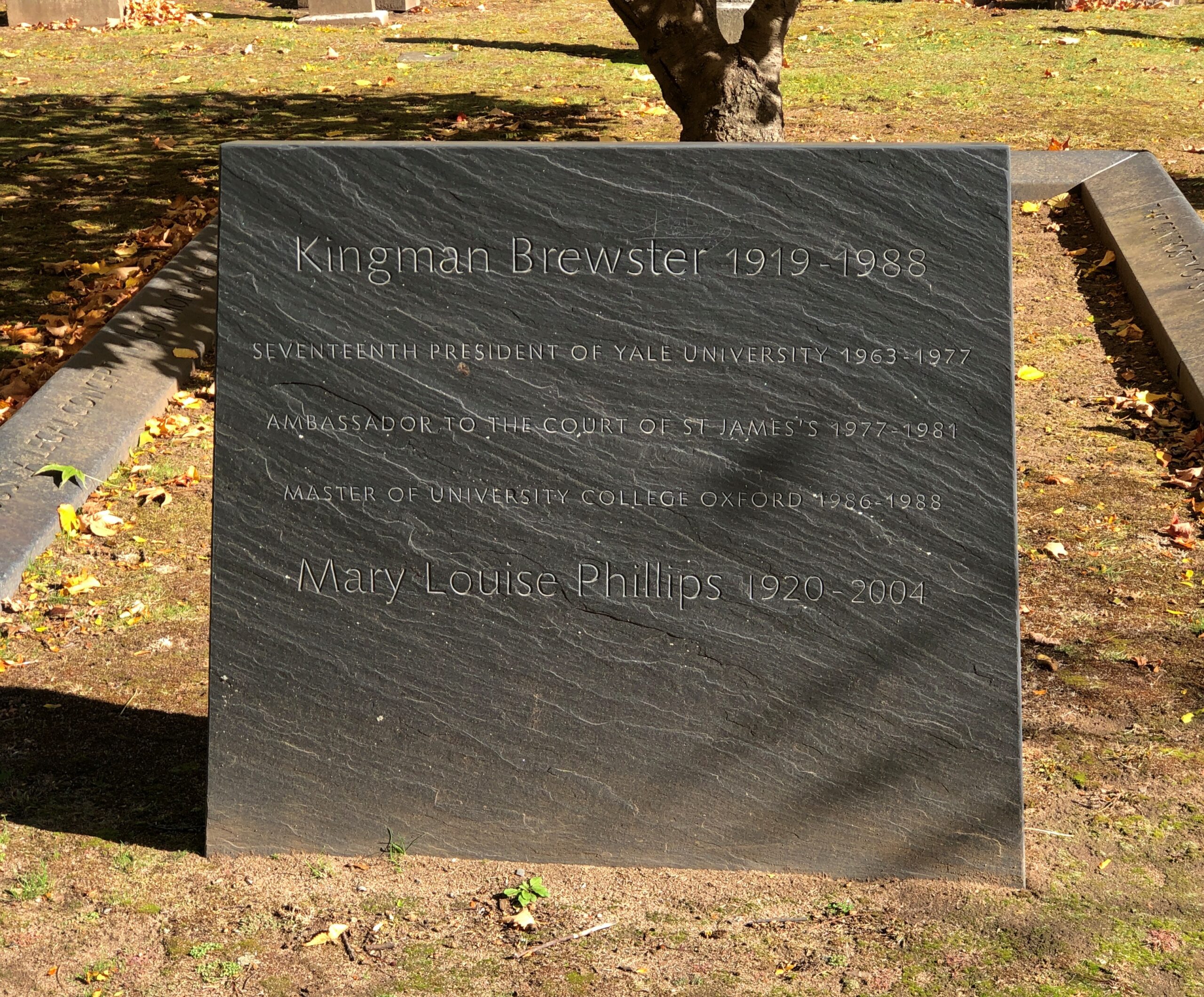
Kingman Brewster was president of Yale from 1963 to 1977, at a time of considerable hubbub on campus, and changes in university policy. Such as going coed in 1969, relatively late for an Ivy League school. No doubt cemeteries are well populated these days by Yale alumni angered by that decision.
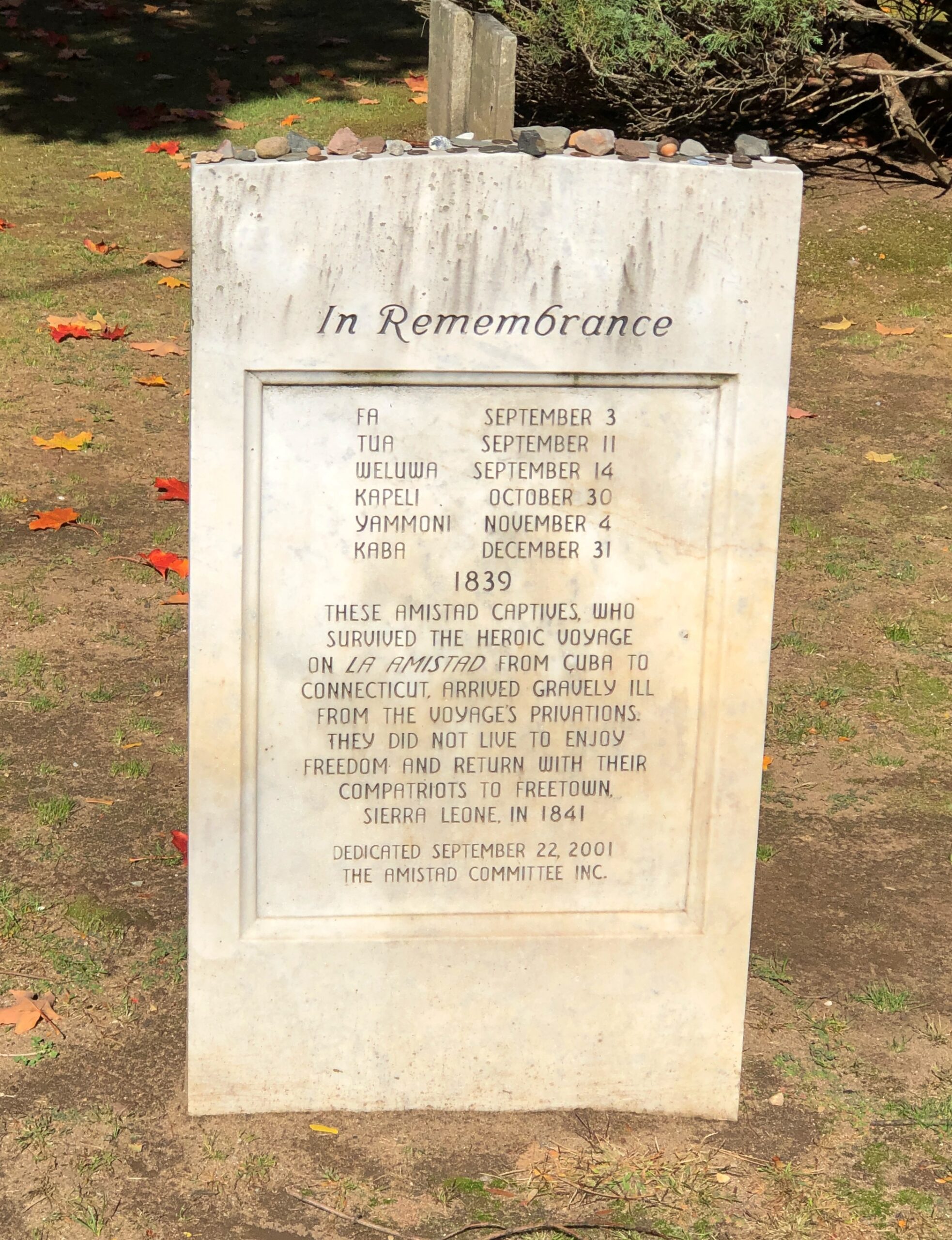
A surprise find: a memorial to captives from La Amistad who died in New Haven, waiting for the adjudication of their case. Waiting for their freedom, that is.
Elsewhere in the cemetery reposes Roger Sherman Baldwin, who argued the case for the Amistad captives, and Professor Josiah Willard Gibbs Sr., who deciphered their language (Mende).
Remarkably, the names of the captives aren’t forgotten. RIP, Fa, Tua, Weluwa, Kapeli, Yammoni and Kaba.
On the morning of October 19, Fort Greene Park in Brooklyn was still pretty green.
Of course, the 30-acre park was named for the talented Revolutionary War general, not for the hues of its 50-plus species of trees, very many of which seemed to be ginkgoes. Whatever the coloration, the park proved to be a nice place for a stroll that day, offering a more manageable size than either Central Park the day before, or Prospect Park would later that day (as great as those two are).
My idea for attending Open House New York was Manhattan on Saturday, Brooklyn on Sunday, planning that took us – by this time, just the two of us – to Atlantic Terminal by way of the LIRR on Sunday morning. From there, Fort Greene Park is a short walk, though once you get there, it’s something of a hustle to climb the park’s central hill. A fort had been on the site, active during the Revolution and again for the War of 1812, for a reason.
As a park, Fort Greene came of age at roughly the same time as the idea of municipal parks themselves, that is during the mid-19th century, with some agitation on the part of Walt Whitman – editor of the Brooklyn Eagle in the late 1840s – helping facilitate its creation.
In 1857, Whitman wrote about the place, known at the time as Washington Park: This beautiful ground is now covered with rich verdure, and is one of the pleasantest resorts anywhere around. On its lofty tops you feel the breeze, and from them behold one of the finest views in the world. Most of the trees are yet too young to cast much shade, but they are growing finely.
We recollect there was a very obstinate and indignant opposition to the securing of these noble grounds, some twelve years since, when the project was mooted before the Common Council and the public. It was argued that Brooklyn was not rich enough to stand the expense of purchase; and that it would be better to let the “old fort” be dug away, and blocked up with buildings.
Fortunately these counsels did not prevail. A more far-sighted policy… carried the day.
Is there any one left of those who so furiously opposed Washington Park, who is not now glad that his opposition did not succeed?
I’m also glad there’s a park, though leaving the ruins of the fort might have been an interesting approach to creating one. As Whitman would surely have appreciated, 21st-century Brooklynites were out in numbers (but not crowds) to enjoy the park on a warmish fall day, walking their dogs and turning their kids loose to play. A scattering of other people had come for Open House.
The green space and trees were only the first layer. Come 1867, Frederick Law Olmsted and Calvert Vaux applied their considerable talents into making Fort Greene into their vision of an urban park, a small-scale version of Central Park or Prospect Park. That’s reason enough to visit.
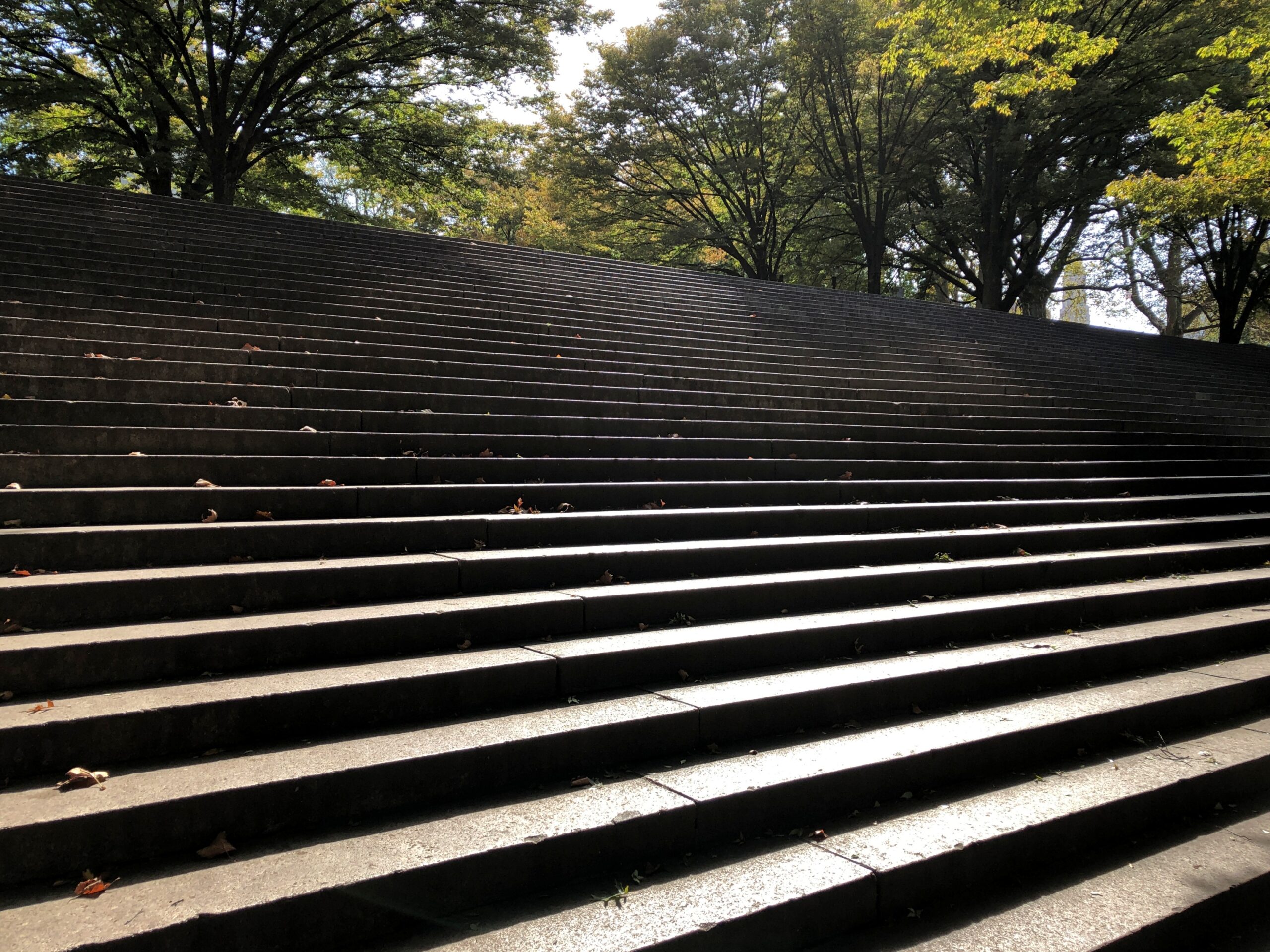
One of their additions: grand outdoor stairs.
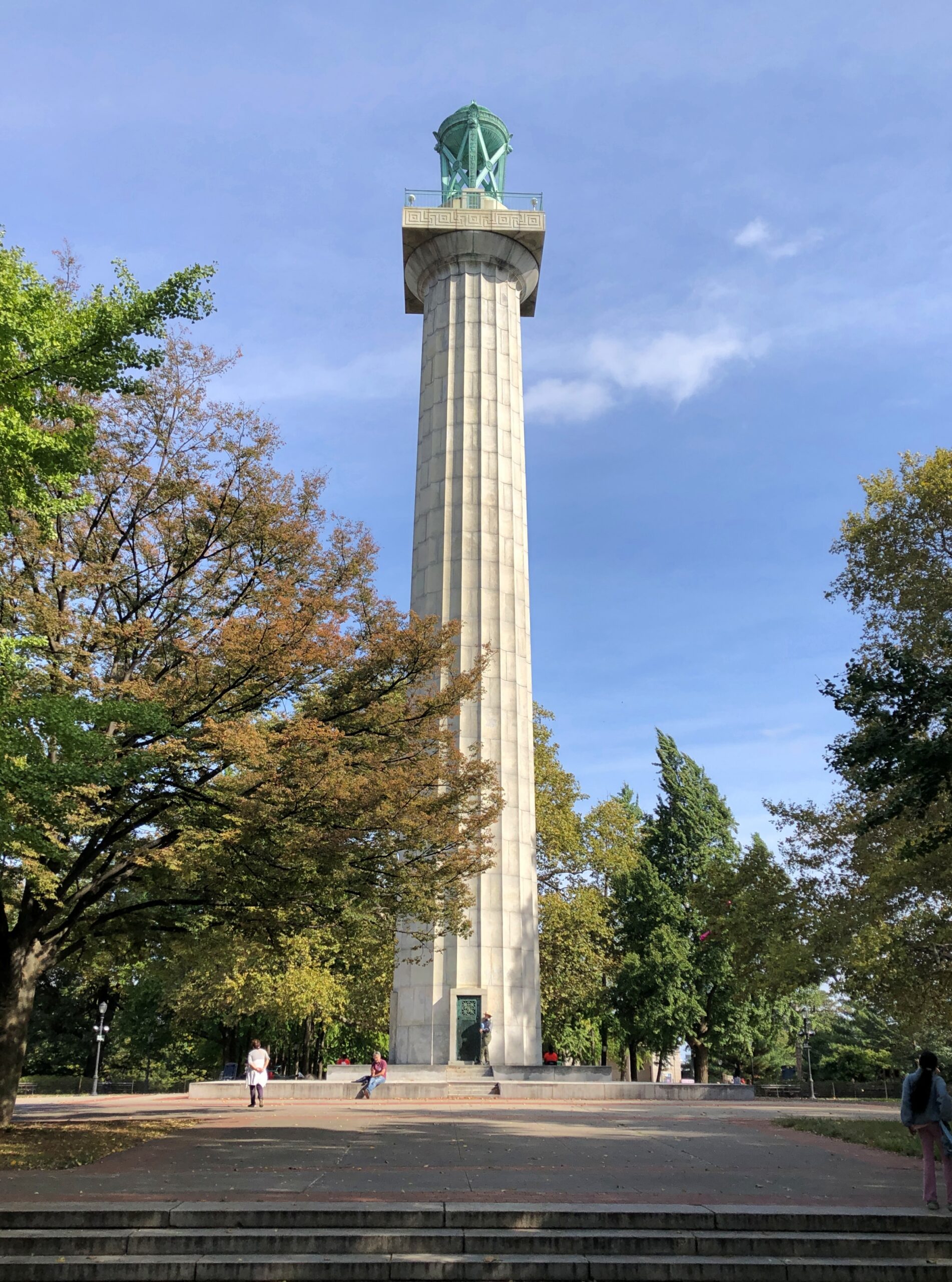
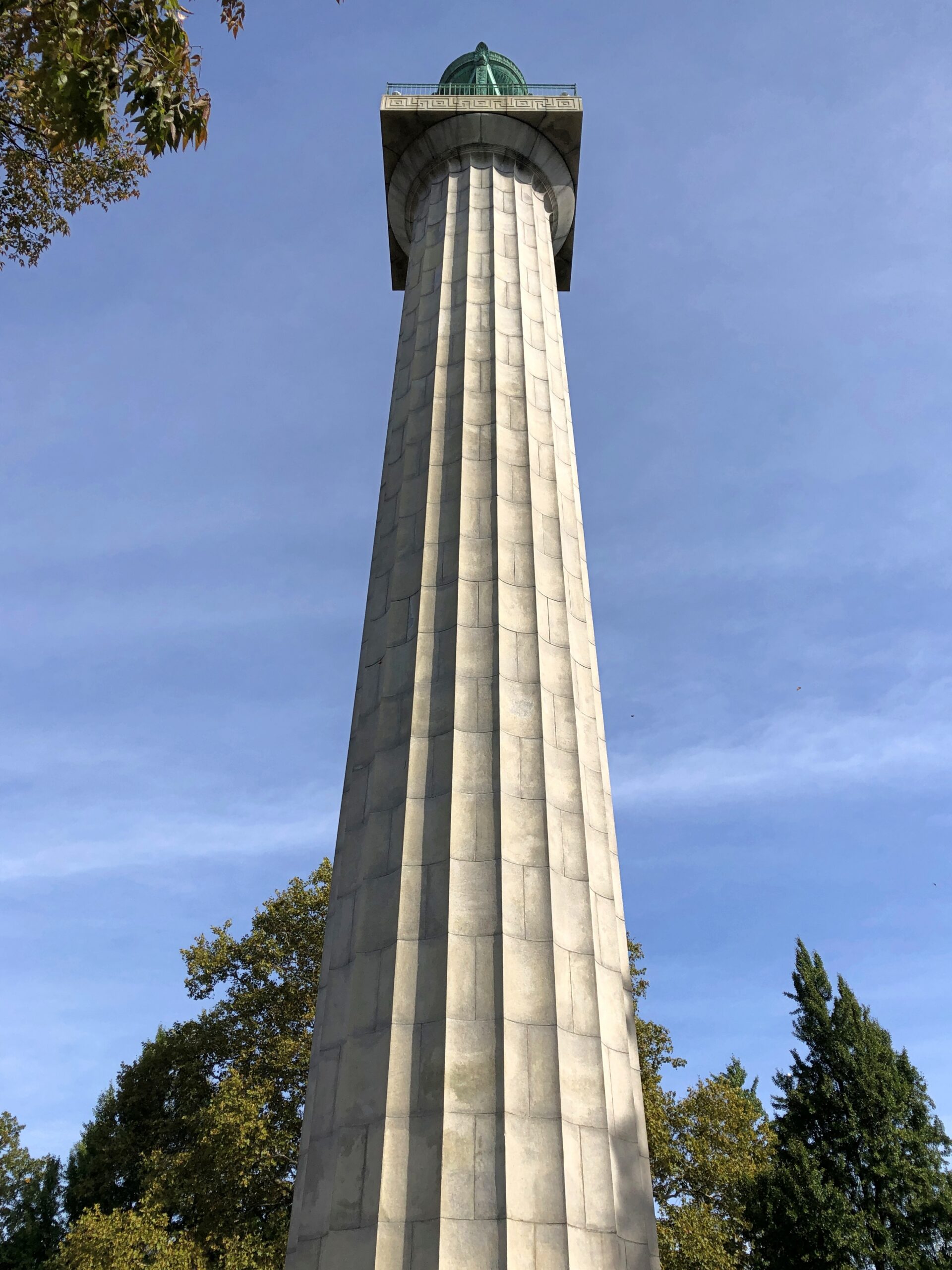
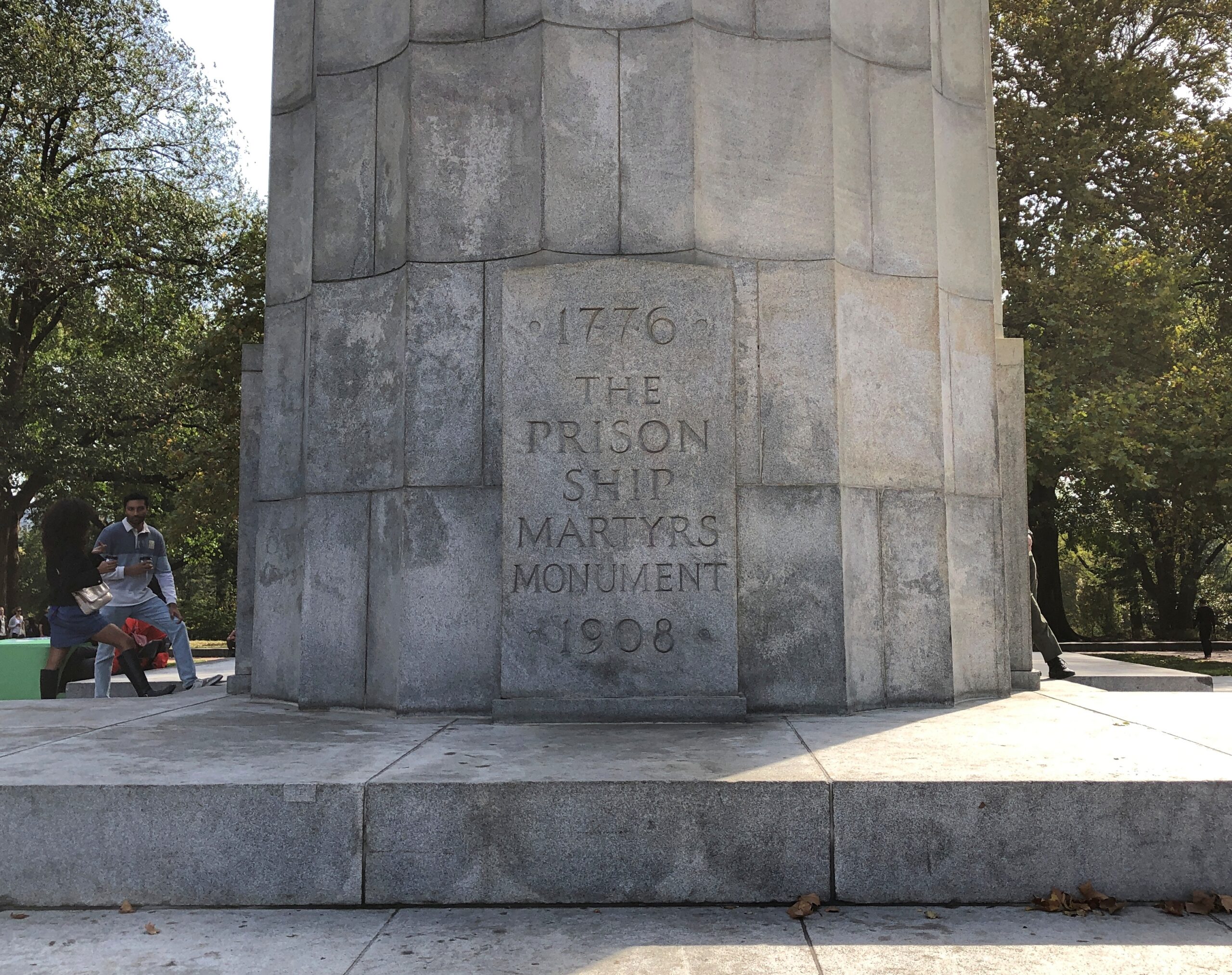
It wasn’t until 1908 that those stairs led to the Prison Ship Martyrs Monument, memorializing the more than 11,500 POWs who died in wretched conditions aboard British prison ships during the Revolution.
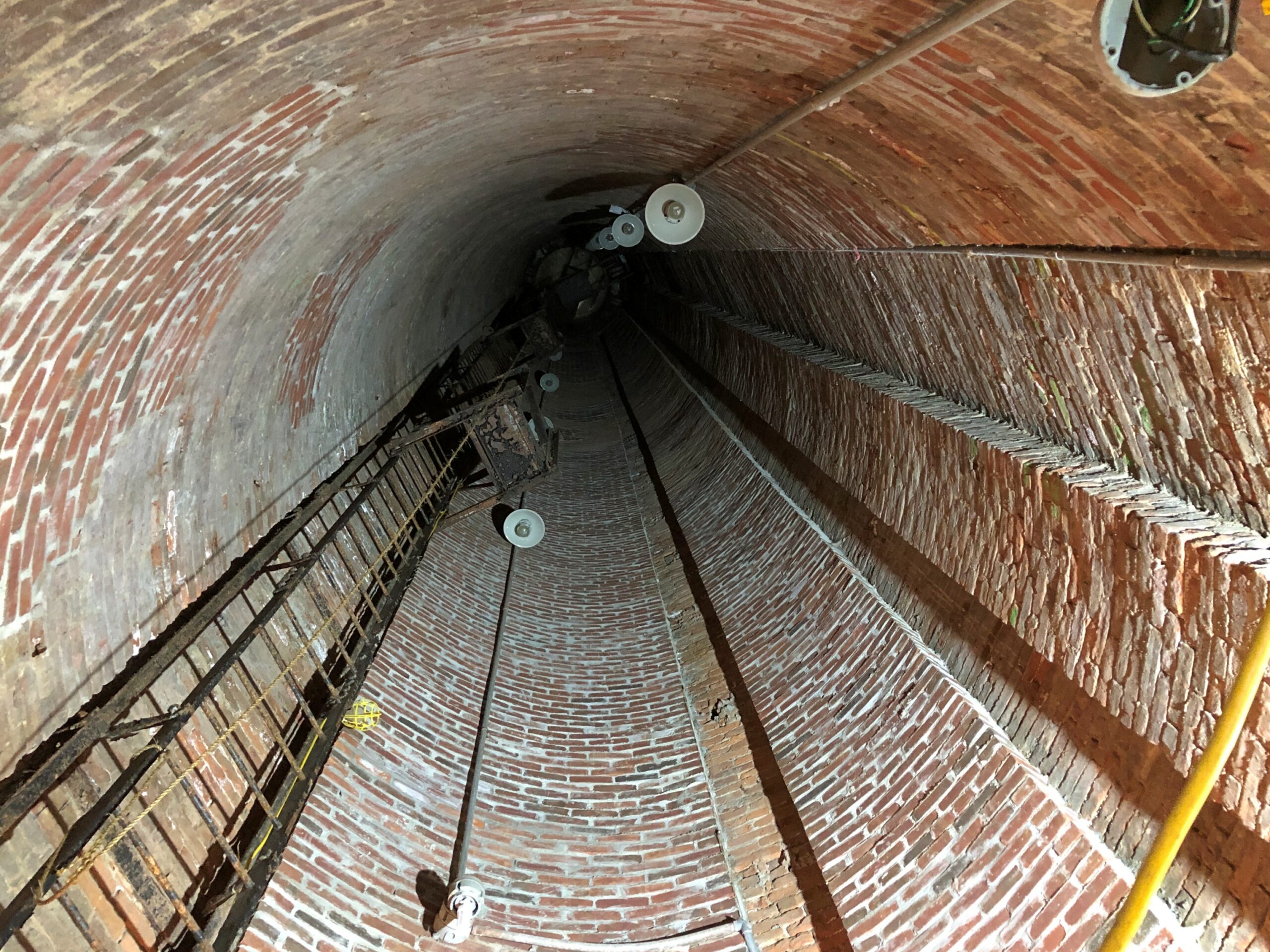
The column isn’t usually open, but Fort Greene Park was an Open House site, so we were able to go inside after waiting in line a short time. I was expecting stairs inside. But there was just a rusty iron ladder, which the park ranger who led us into the column called “scary.” I agree.
There had been a spiral staircase in the memorial’s early days, but it is long gone. I wasn’t in a stair-climbing mood at that moment anyway, so for me it was just as well. If the city ever comes up with the scratch, there might be stairs again, the ranger said.
She also told us about the formation of the park, the long delay in setting up the memorial, and the tomb on the grounds that holds bones of some of the prisoners. The tomb isn’t open to the public.
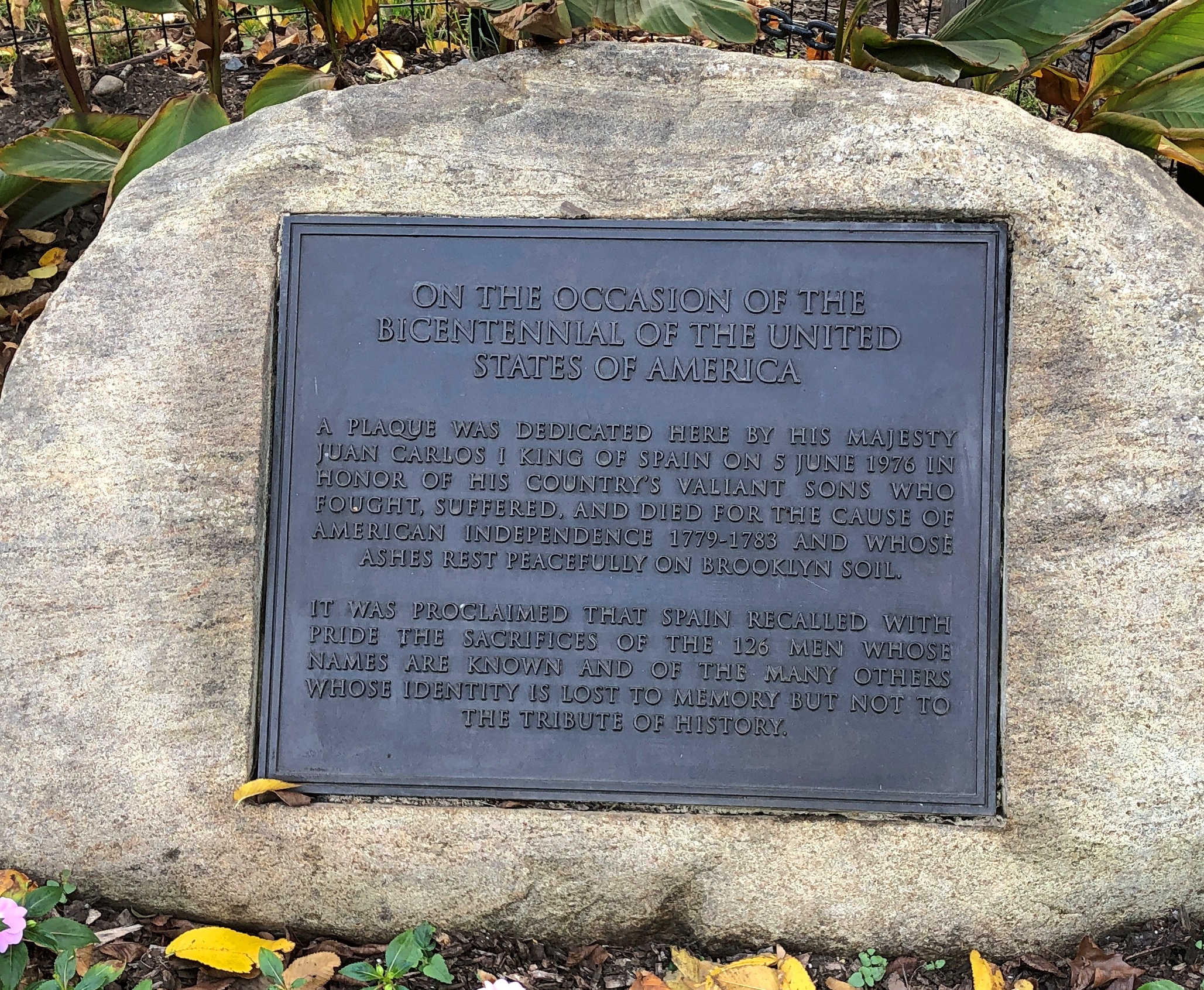
French assistance to the nascent United States was mentioned prominently in school but not, that I remember, Spanish efforts, which were nothing to sneeze at. Maybe by 1898, Spaniards who gave the matter any thought considered the U.S. a pack of ingrates, but such is geopolitics. By 1976 and later, it was high time to acknowledge the likes of Bernardo de Gálvez and his men, and I was glad to find out that Pensacola still celebrates Gálvez Day (May 8).
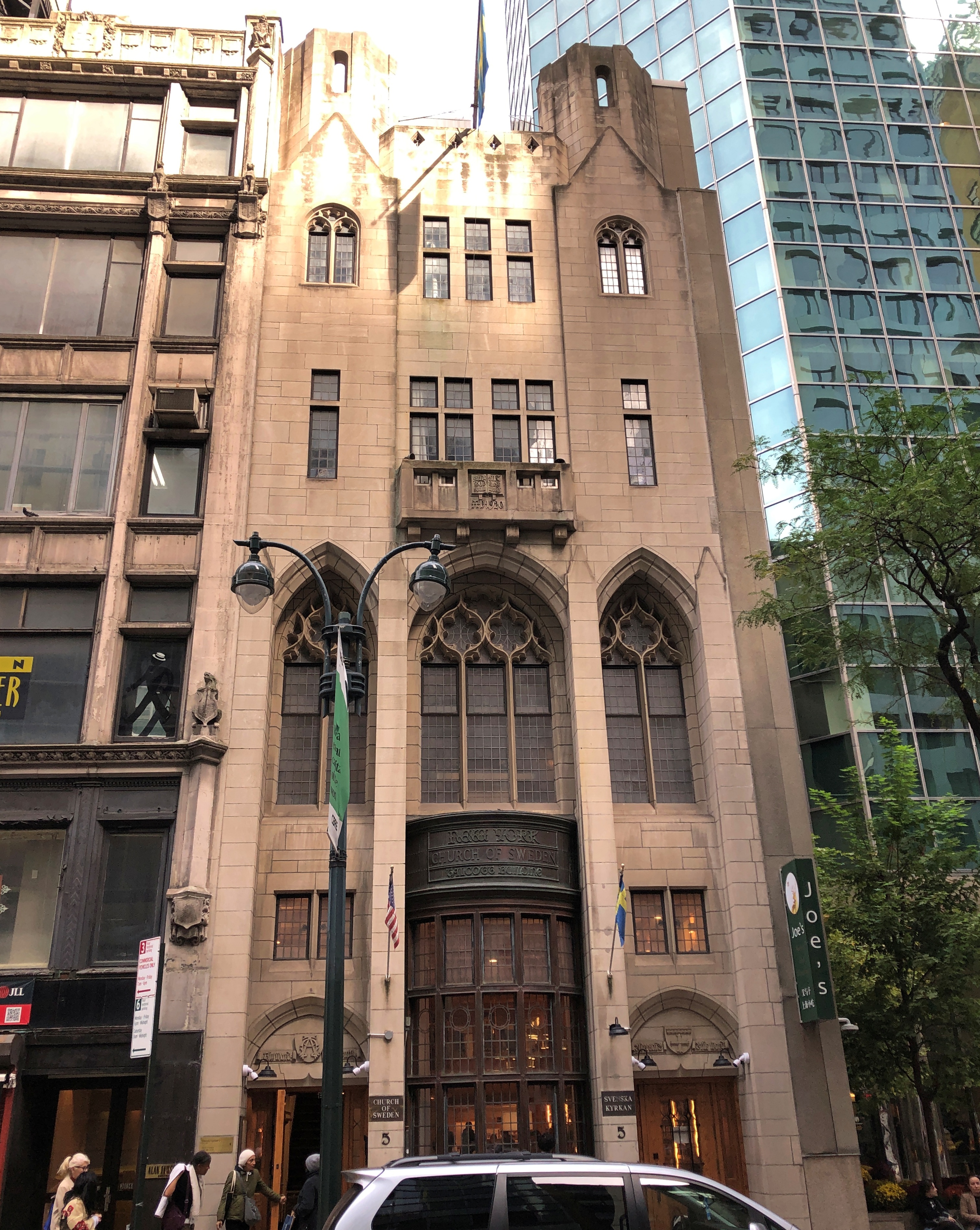
After the General Society of Mechanics and Tradesmen we headed for Park Ave., location of a famed Byzantine revival Episcopal church. Before we got there, we noticed a much smaller church, not actually part of the Open House New York event, at 5 E 48th Street.
Church of Sweden in New York
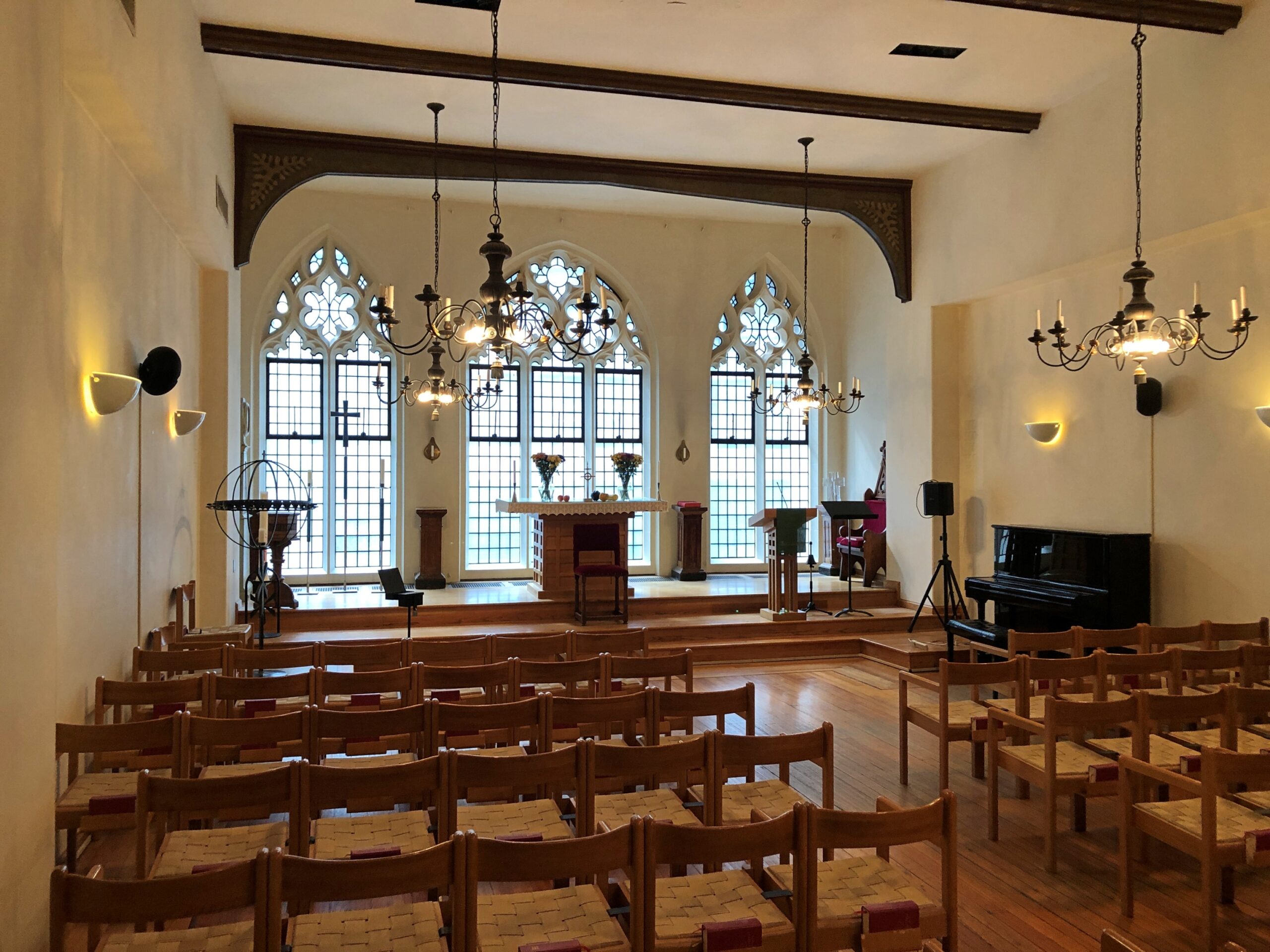
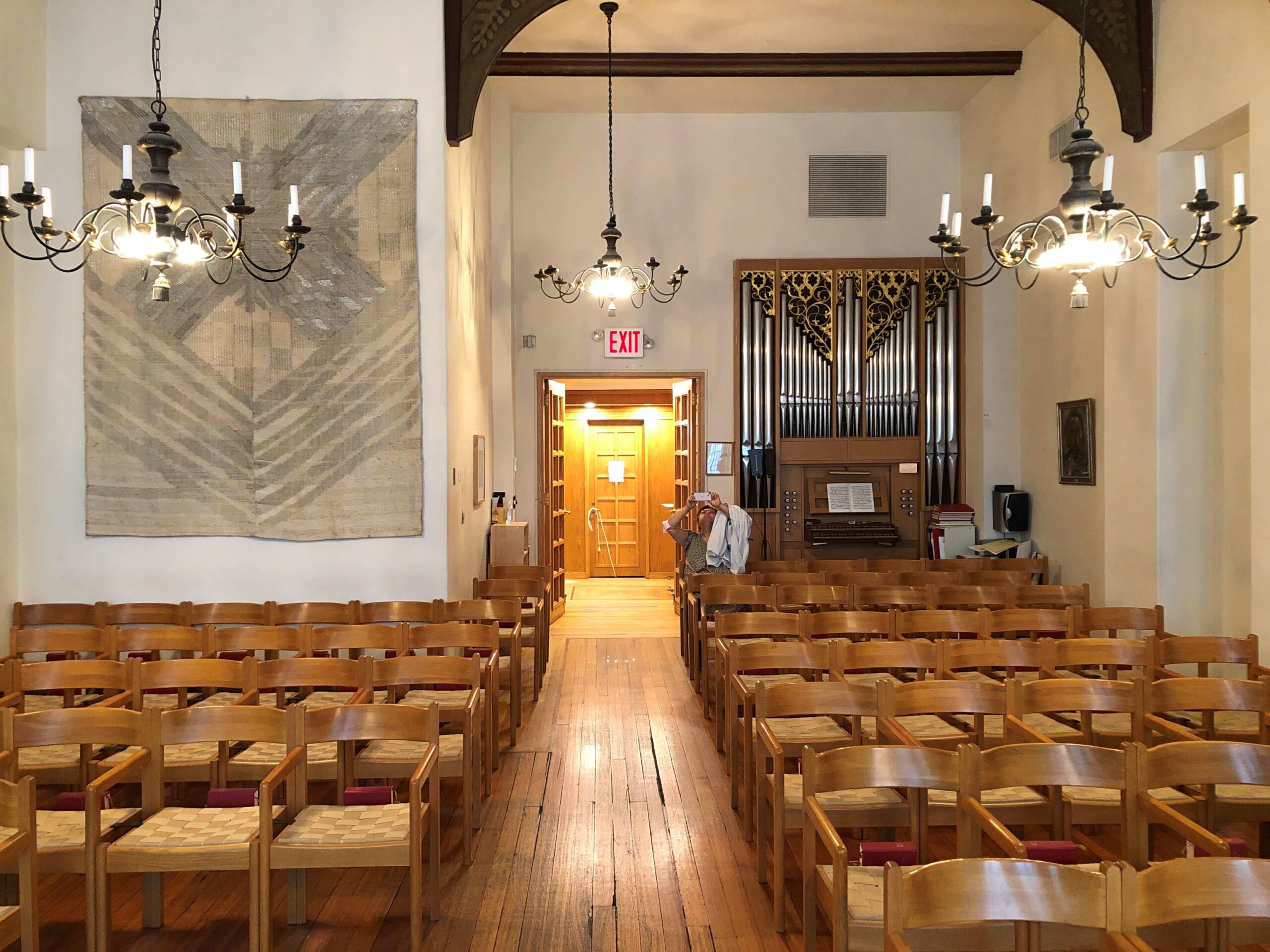
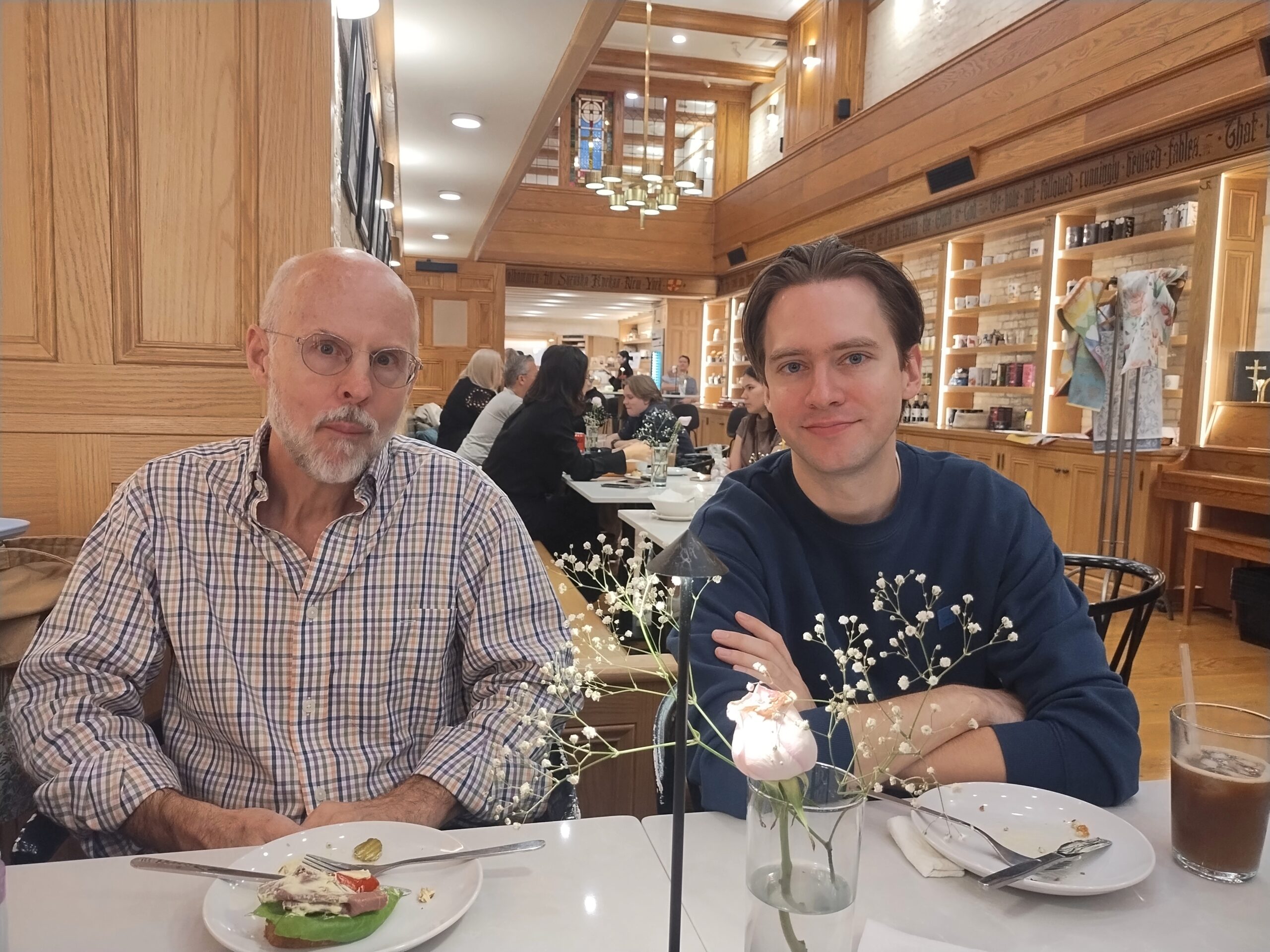
We’d come to the Svenska kyrkan i New York, where services are still held in Swedish. Not only was the church open, there was a cafe on its first floor. The sanctuary is on the second floor. Elegant little place, suitable for the small congregation that Swedish services might attract.
Under the Historik section of the church’s web site, you’ll find this helpful information: När svenskarna började flytta till USA och hur Svenska kyrkan på olika sätt velat vara närvarande i New York. A fuller history in English is on the Wiki page.
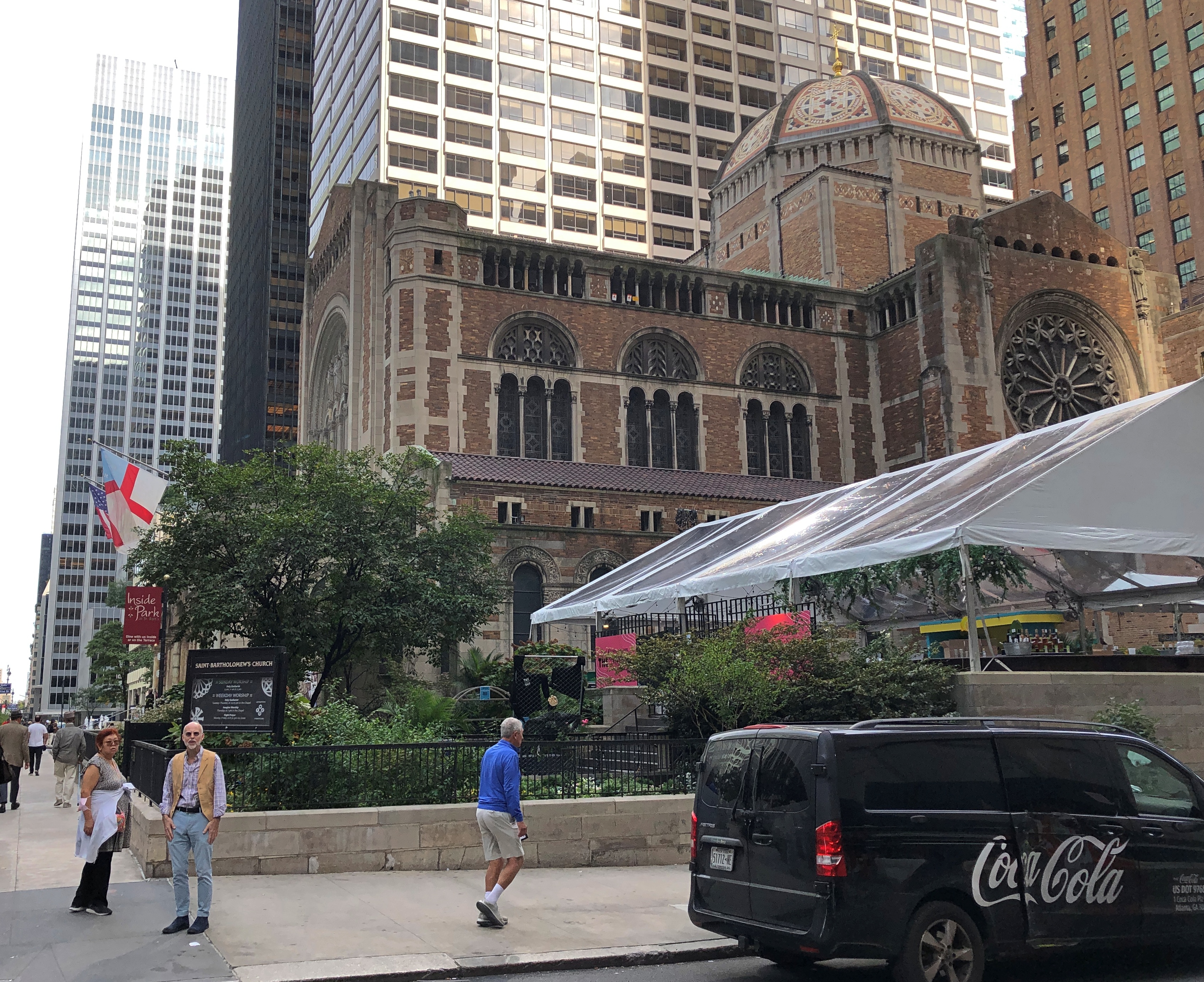
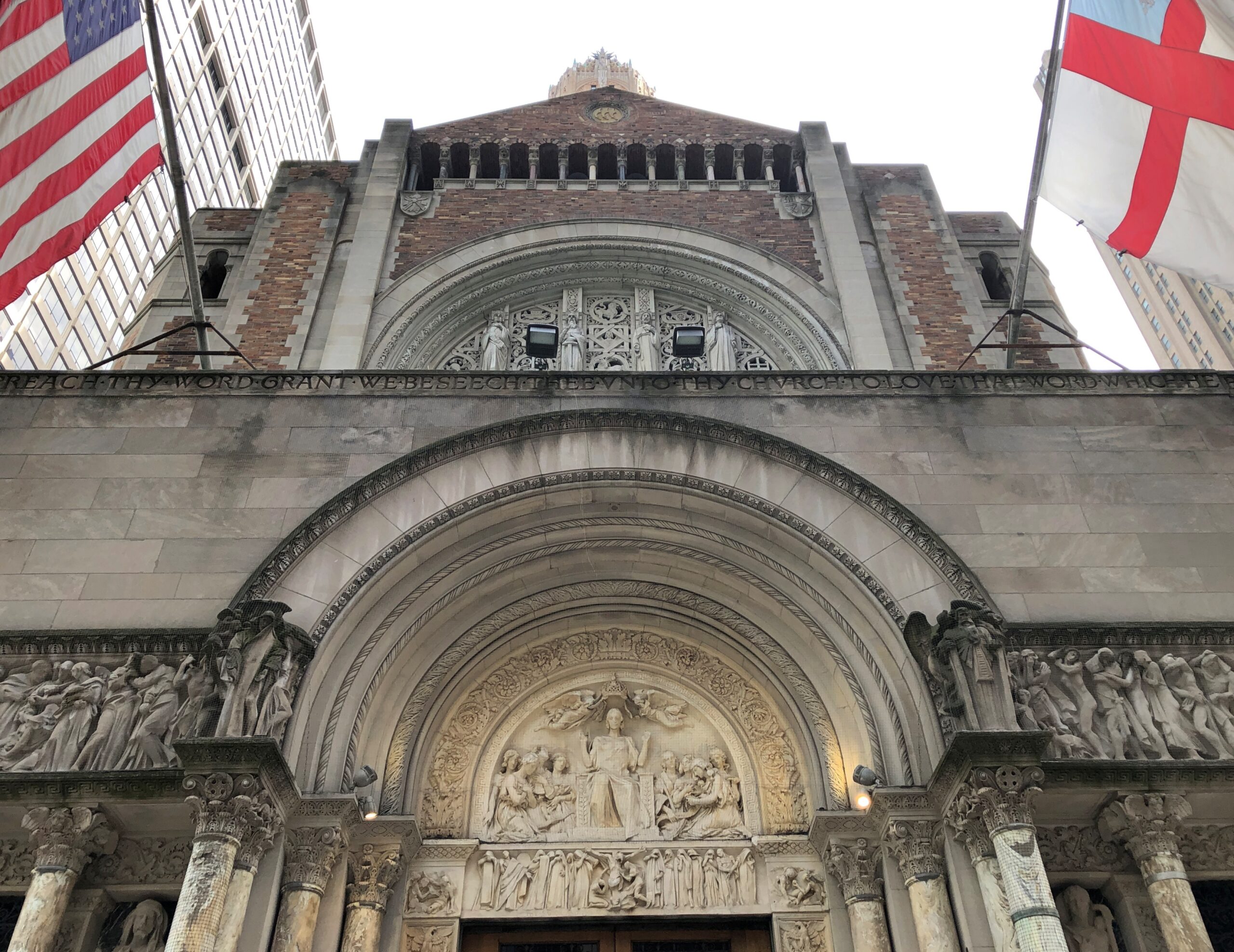
St. Bartholomew’s Church
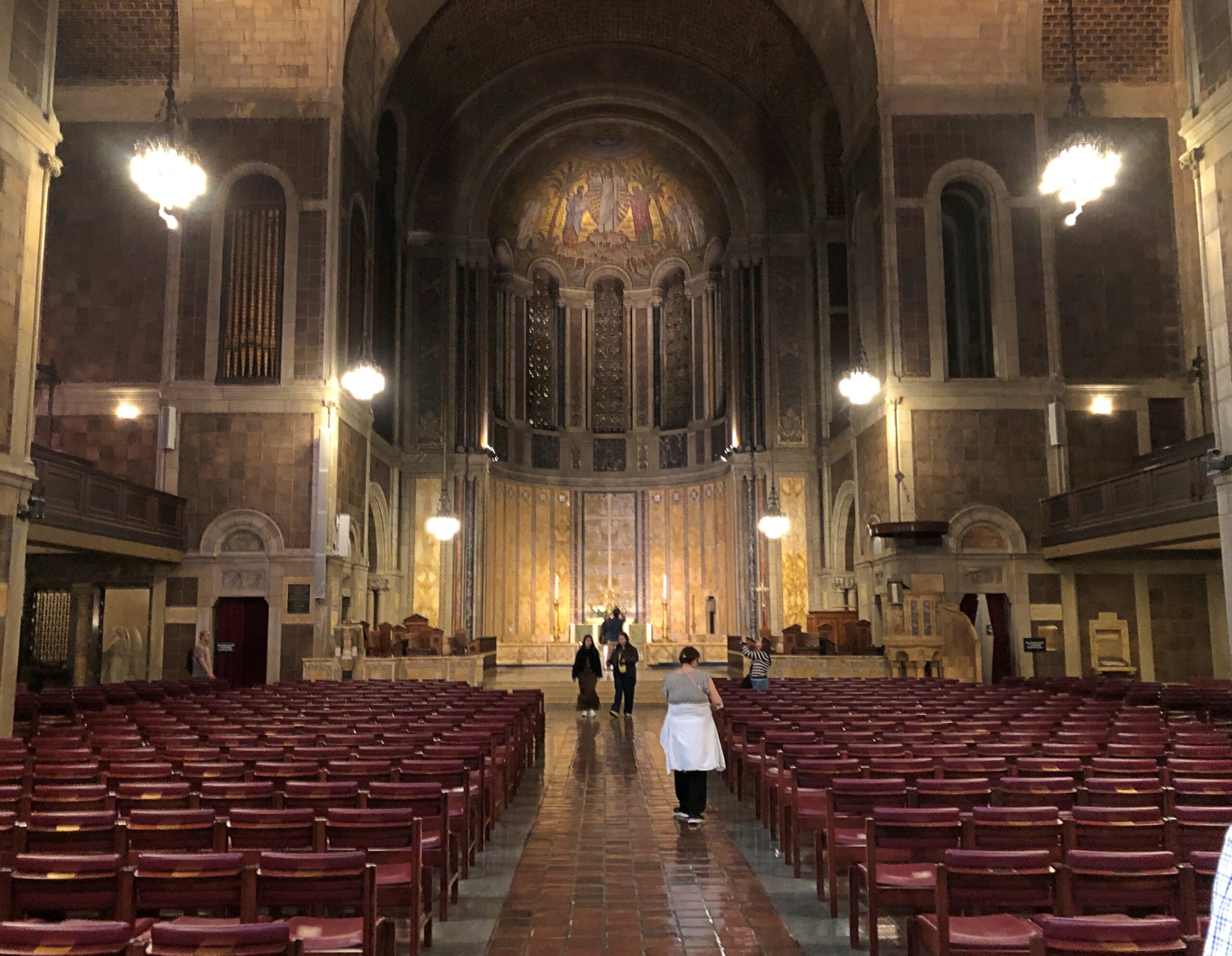
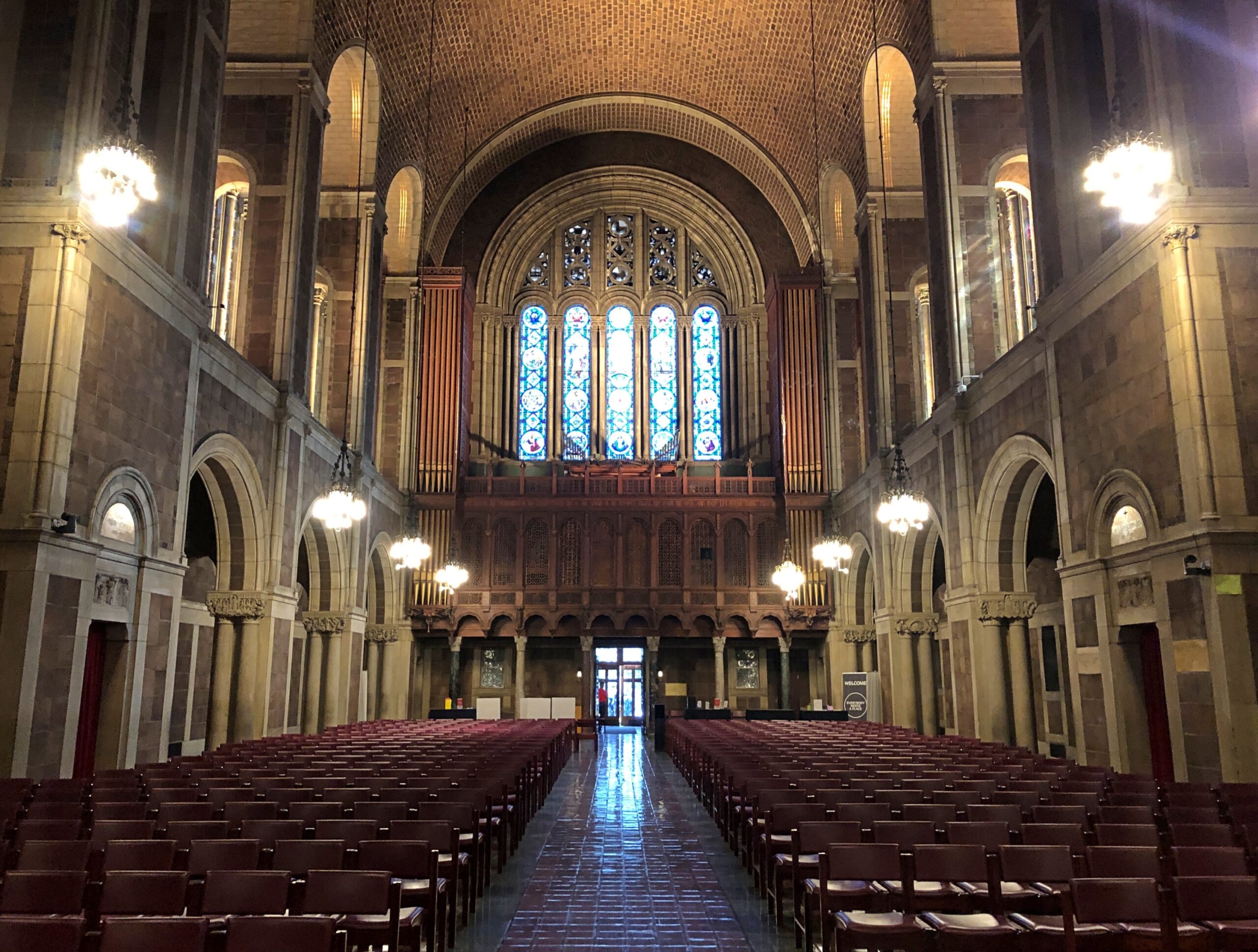
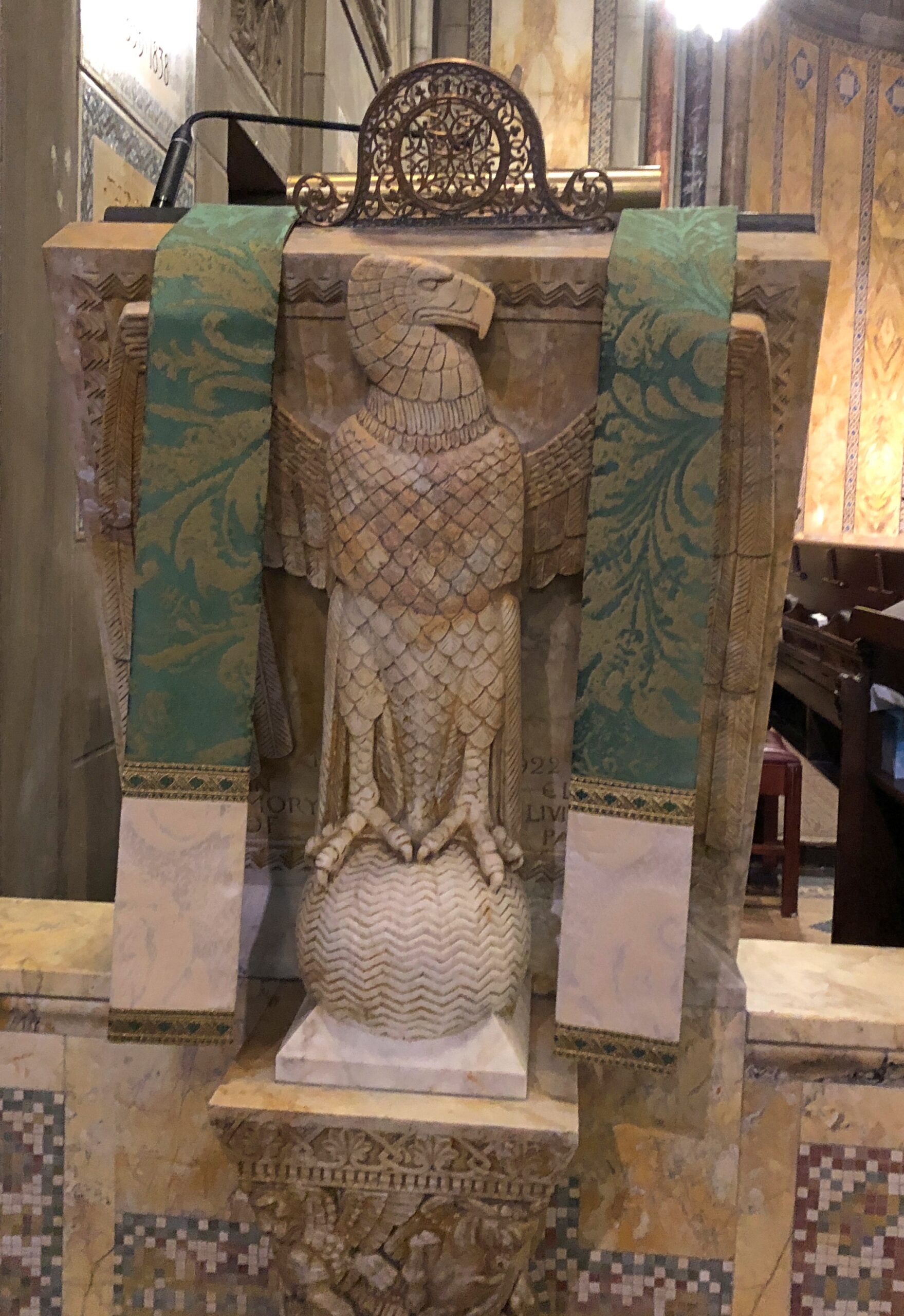
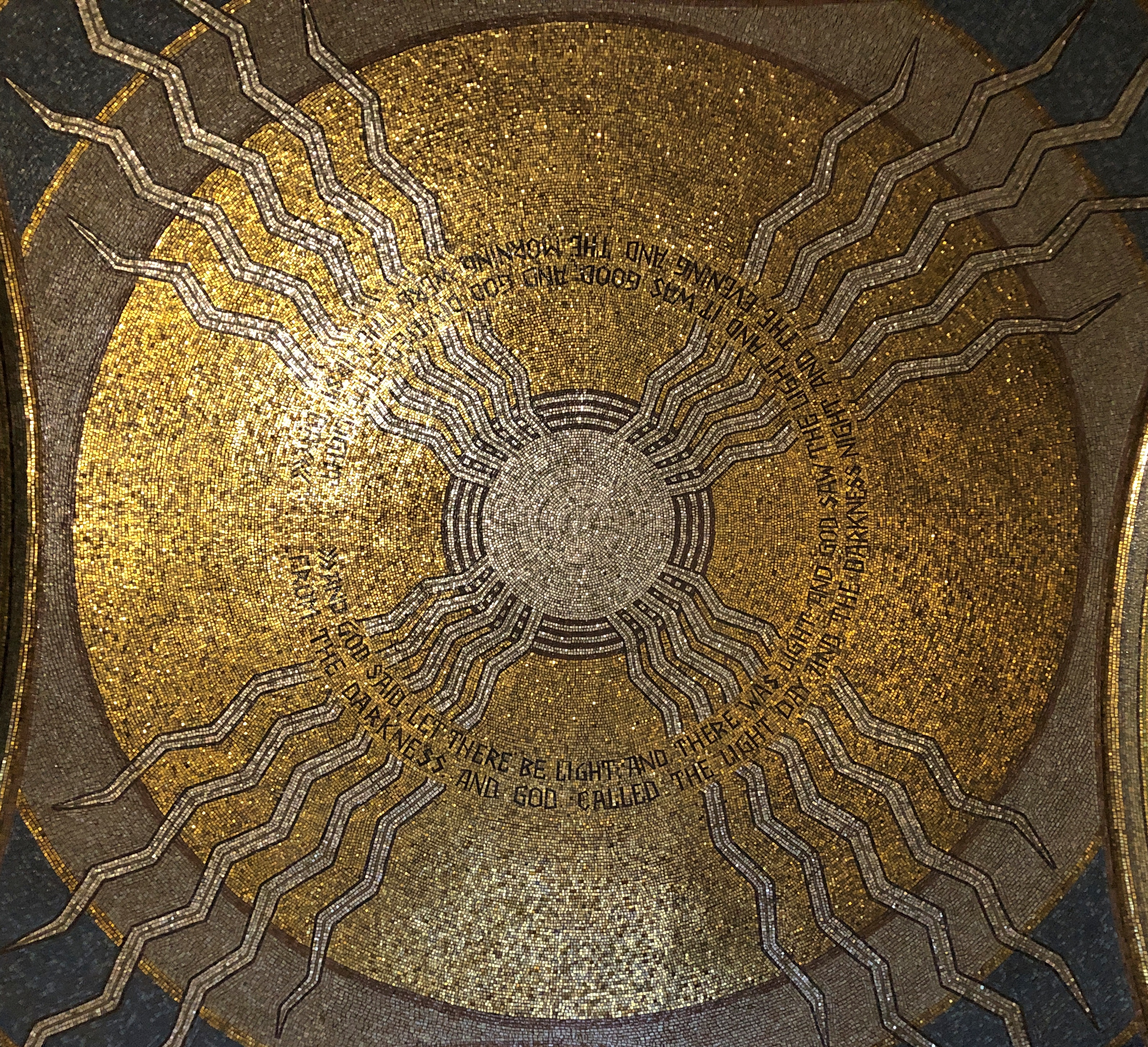
St. Bartholomew’s Church, an Episcopal congregation on Park Ave., was participating in the Open House. That meant it was sure to be not only open, but lighted. The first time I went there, many years ago, I compared it to a cavern. Later I visited when more lights were on. Twenty years ago I wrote: “This time, it was better lighted, the better to show off the church’s superb Byzantine-style mosaics.”
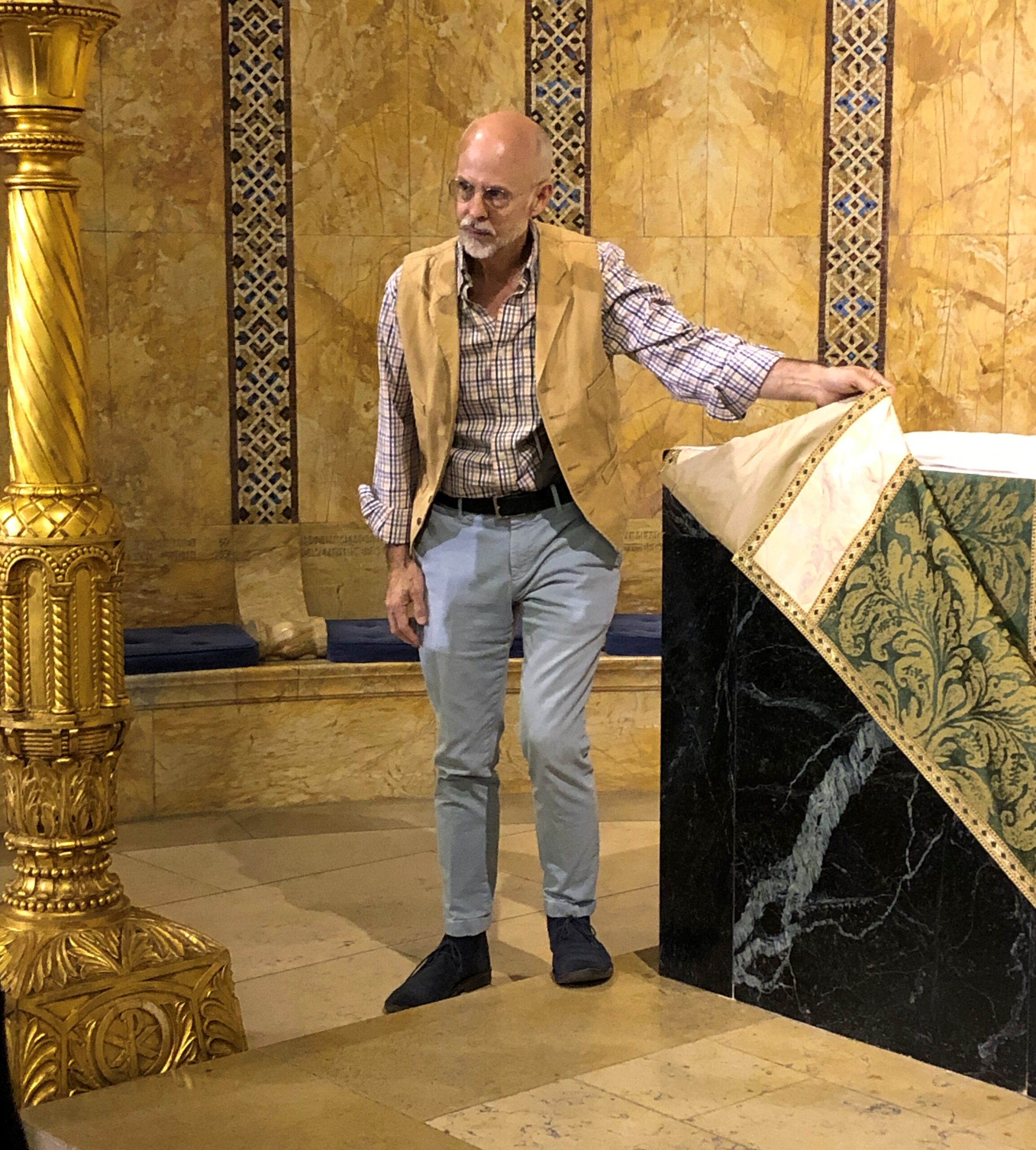
During my 2025 visit, now joined by my nephew Robert, we were able not just to gaze at the lit sacred space, but we had the benefit of a knowledgeable docent, a woman of a certain vintage with a hobbled gait and a raspy voice. She knew the history of the congregation, and its slice of Manhattan. She had the artistic detail down cold. She knew her ecclesiastical styles. From the depth of detail about the many artists who worked on the church, it sounded like she knew some of the artists personally, though that couldn’t be literally true for most of them, since the church was built more than 100 years ago, with certain later design additions.
At the direction of the docent, Geof unveiled the altar for a moment.
It might have been interesting to know Hildreth Meière. Hers was an astounding career: “Working with leading architects of her day, Meière designed approximately 100 commissions, both secular and liturgical,” the International Hildreth Meière Association says. “Her best-known commissions include Radio City Music Hall, One Wall Street, St. Bartholomew’s Church, Temple Emanu-El, and St. Patrick’s Cathedral in New York. She also decorated the Nebraska State Capitol in Lincoln, the National Academy of Sciences in Washington, D.C., and the Cathedral Basilica of Saint Louis.”
Emerging from St. Bart, we agreed that heading back to the cafe at the Swedish church would be a good idea. It was.
Sated with Swedish-style open-faced sandwiches, our walk soon continued, up Fifth Ave. to St. Patrick’s Cathedral, which was its usual crowded splendor. I think I spotted some new, or newish murals, just inside the nave. A wedding was in progress. One must come after another every Saturday not in Lent, with ropes closing off a large part of the nave, making for extra crowding in the side aisles.
We didn’t stay. Not far away was a church far less crowded but with its own splendor.
St. Thomas Church
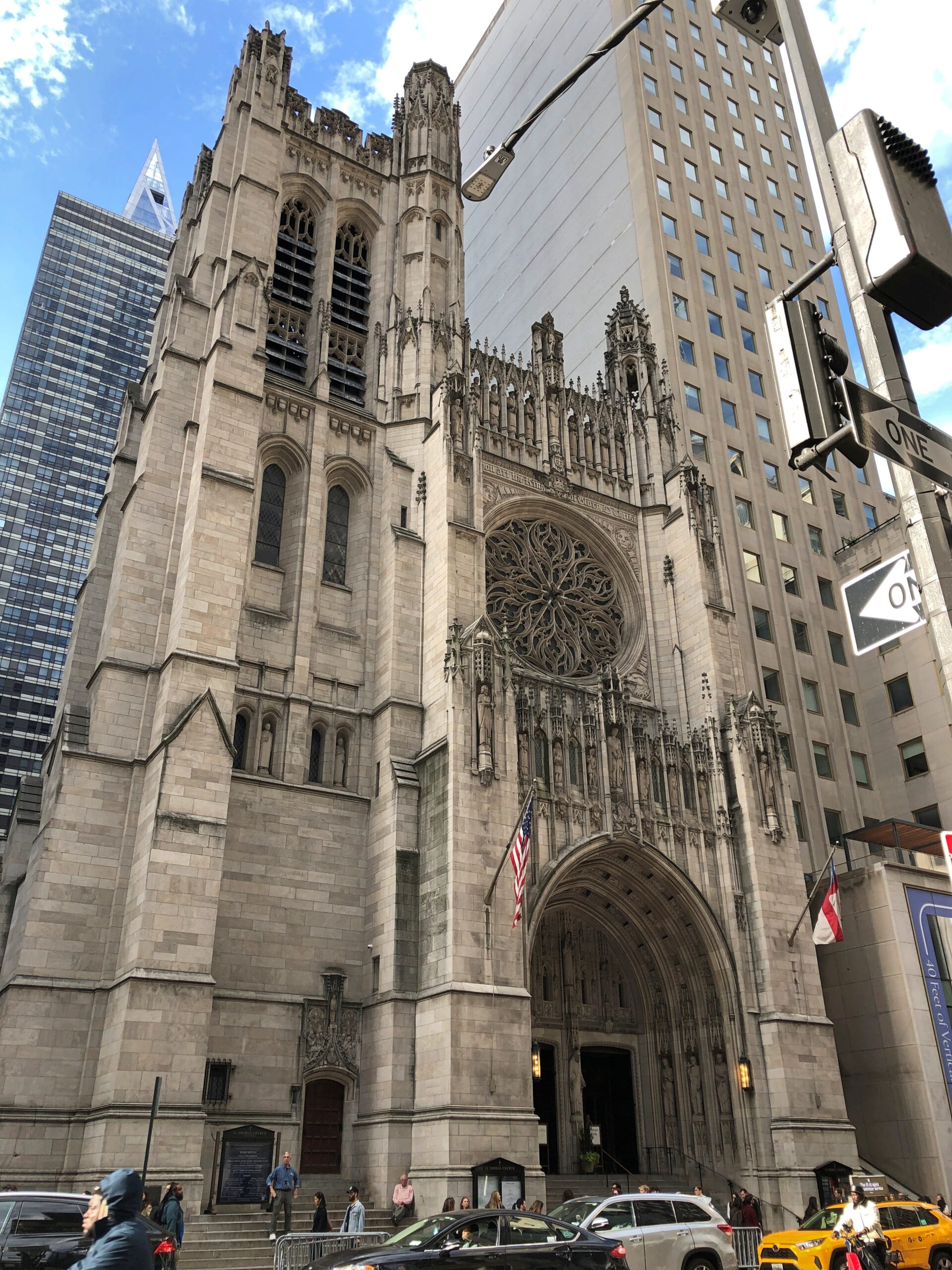
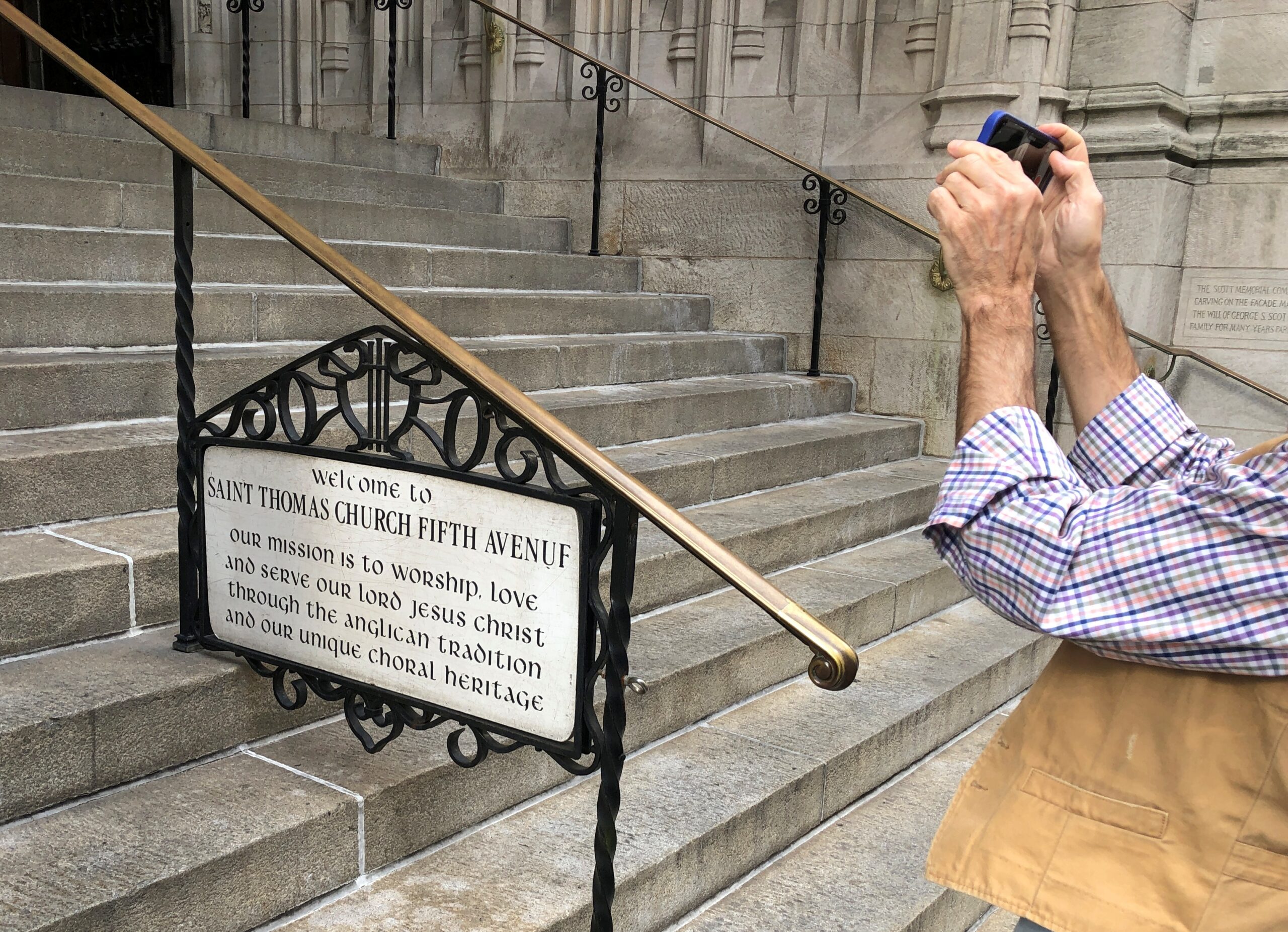
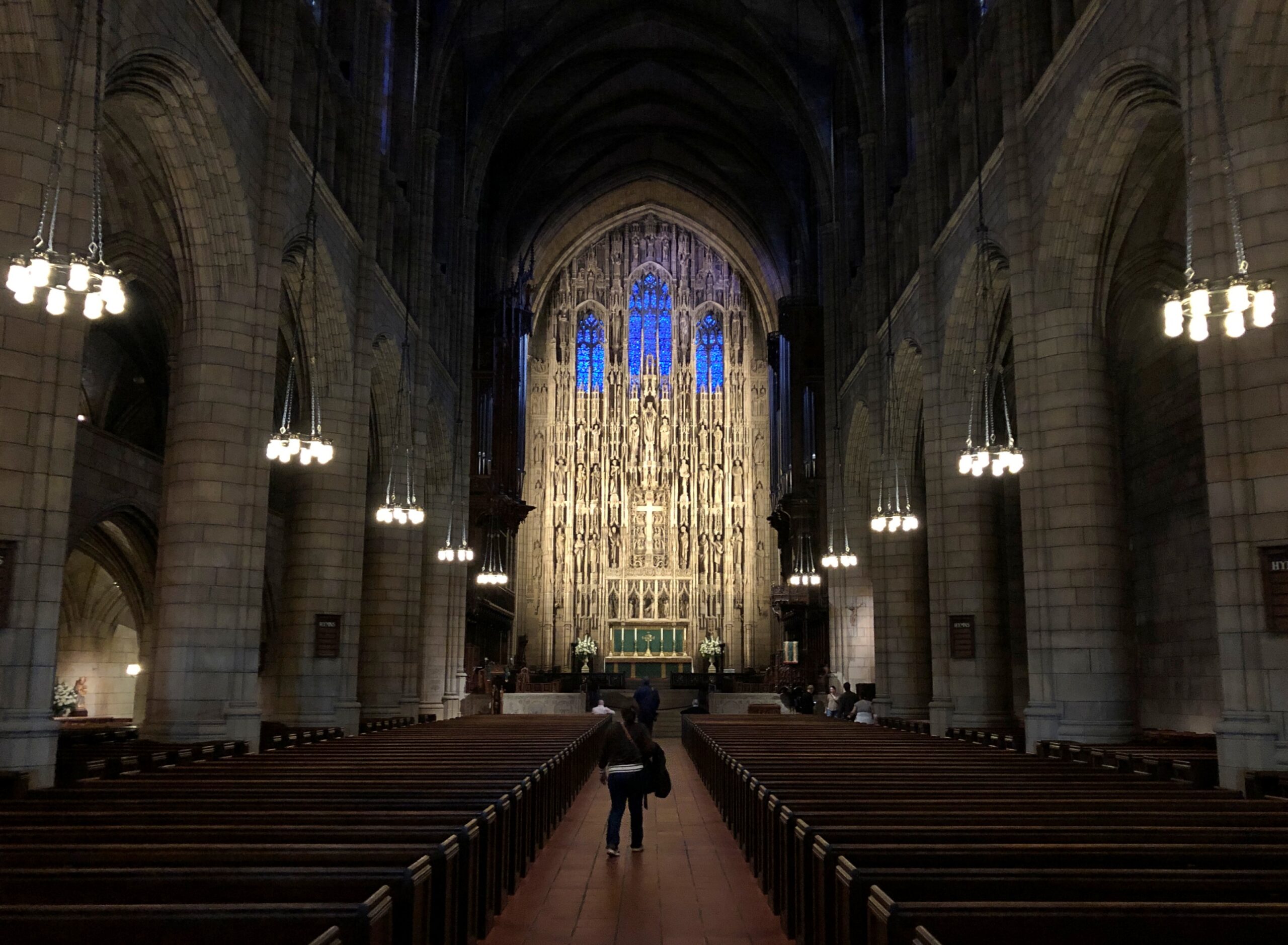
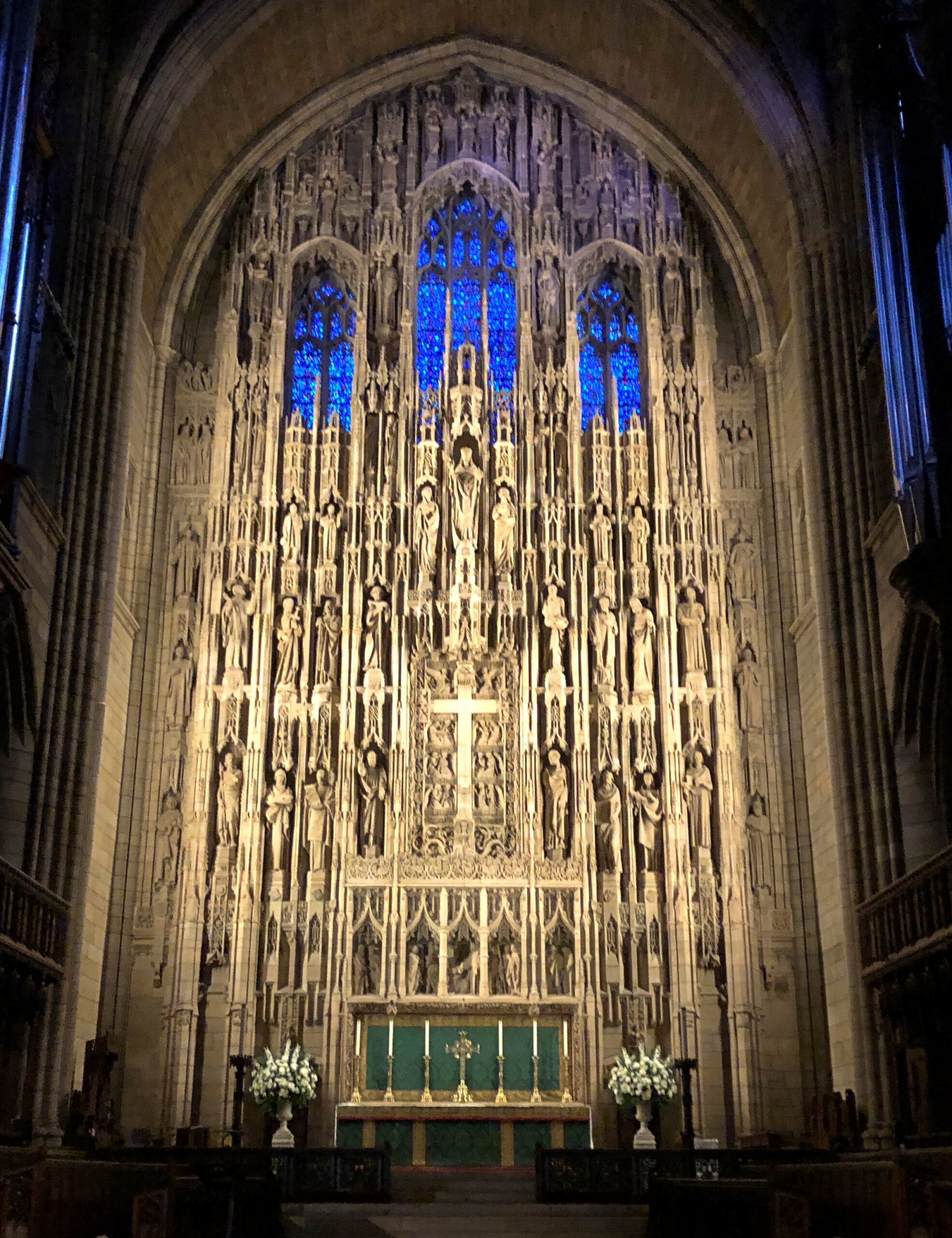
Namely, St. Thomas Church, another major Manhattan Episcopalian congregation. Inside, lights were low. The reredos stood out in the dark, a glowing presence above the altar populated by more than 60 stone carved figures, I’ve read. A Christian crowd: saints, prophets and reformers in an ivory colored stone from Wisconsin. I’d have needed a telephoto lens to have any hope of identifying any of them, but that didn’t make them any less striking.
Ralph Adams Cram and Bertram Grosvenor Goodhue of Cram, Goodhue and Ferguson designed the church, completing it in 1914. They were another of those prolific architects now out of living memory who seemed to design a long list of churches in a short time. The duo did St. Barts, too, and the Cathedral of St. John the Divine, and Rockefeller Memorial Chapel, just to name a few famed sacred spaces of near-palatial character.
Fifth Avenue Presbyterian Church
Just steps away from St. Thomas, as real estate press releases like to say about two close buildings, is Fifth Avenue Presbyterian Church. It was our last Open House church for that day.
With its auditorium style and balconies, it reminded me of the Moody Church in Chicago, though Fifth Avenue Pres is much older: 150 years this year, as it happens.
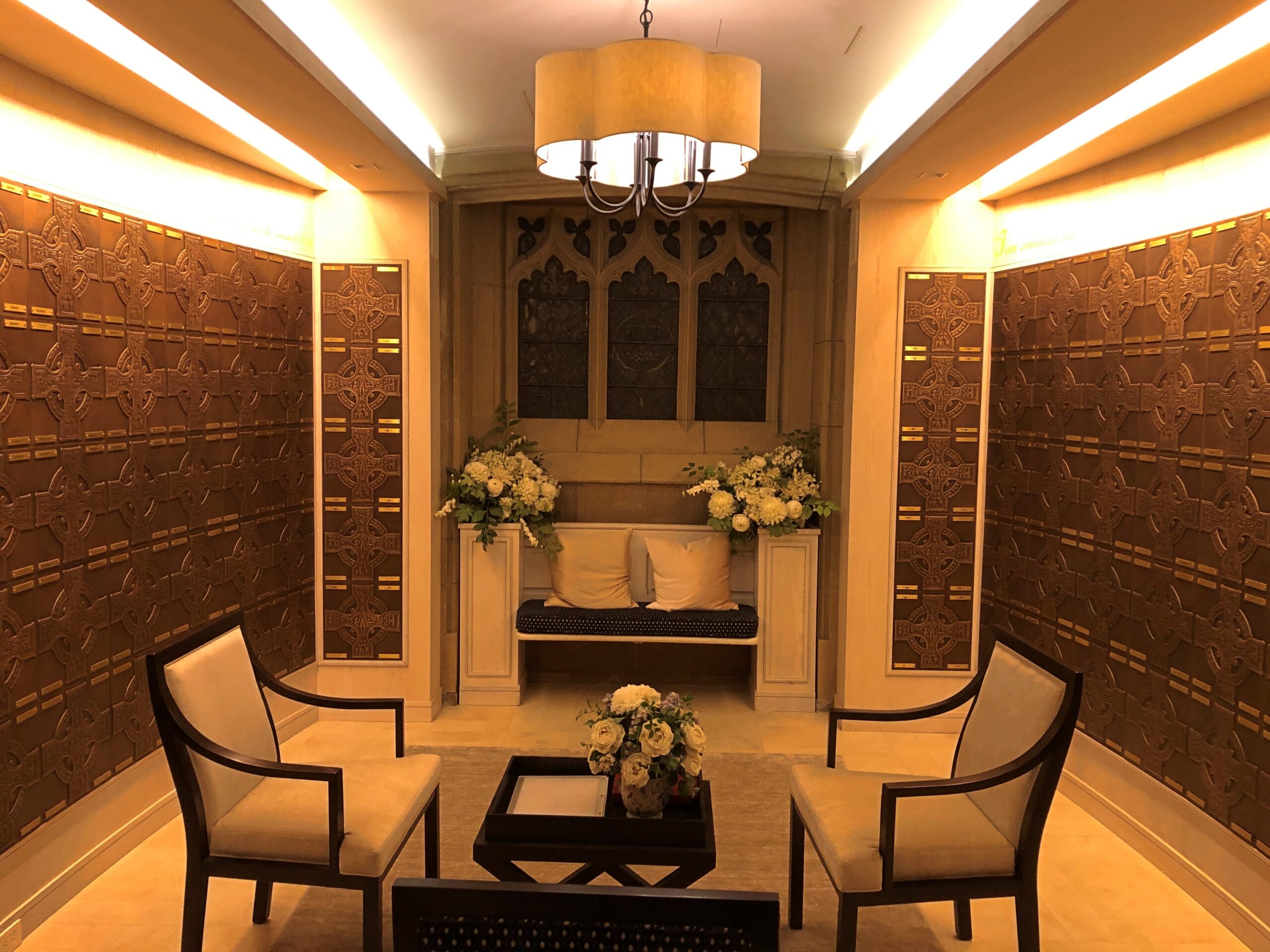
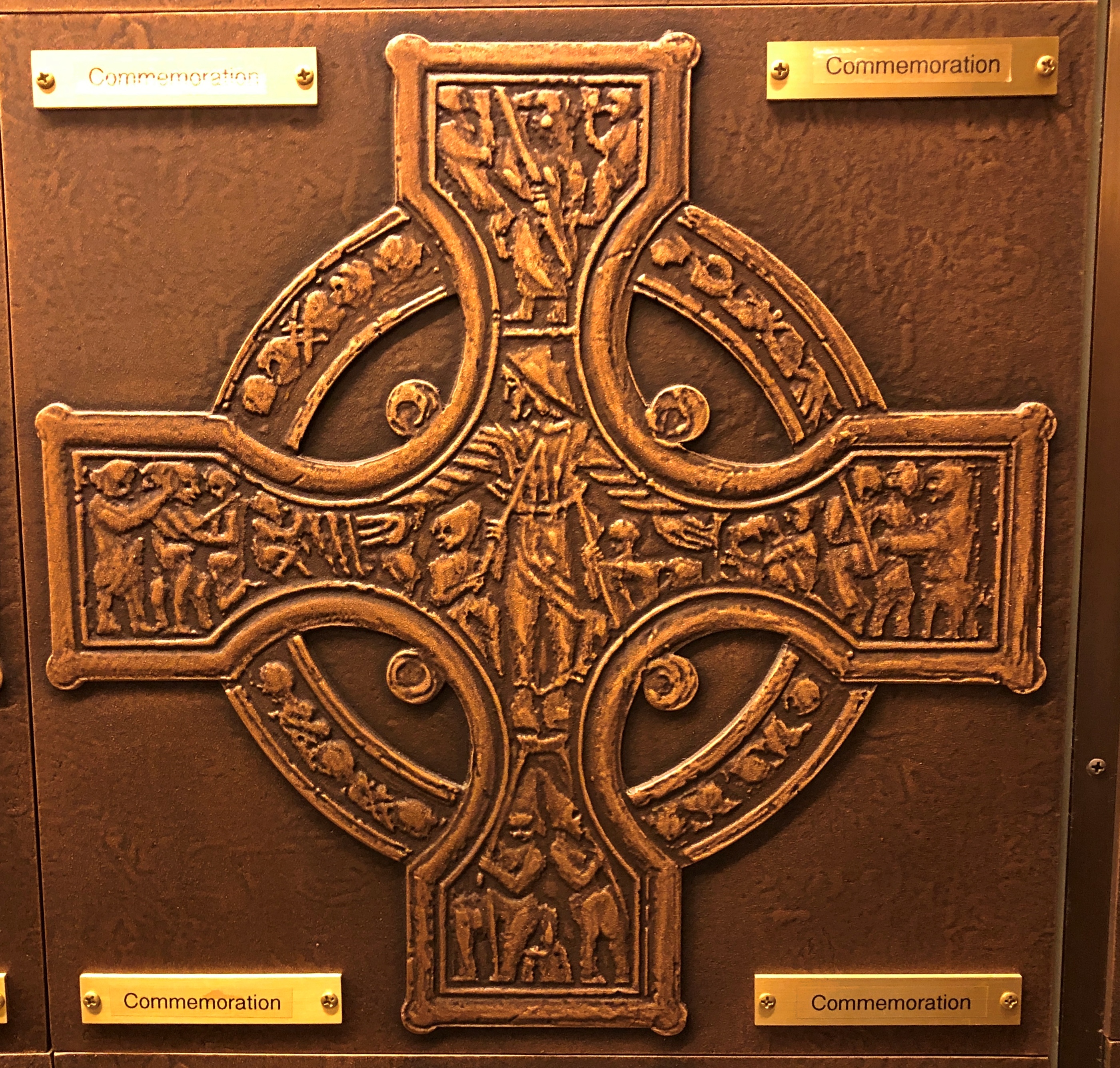
A hallway and some rooms extend beyond the front of the nave, including a columbarium.
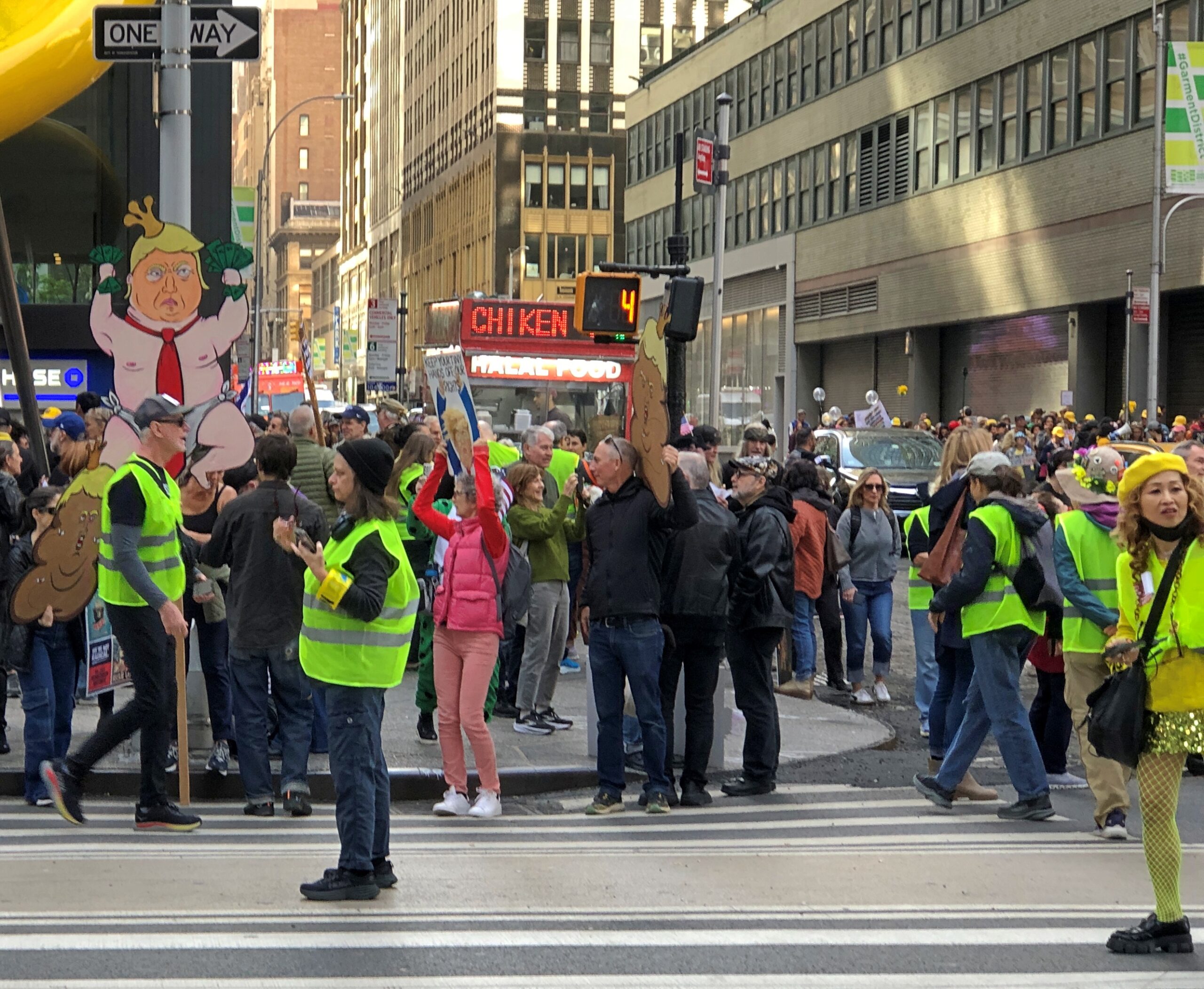
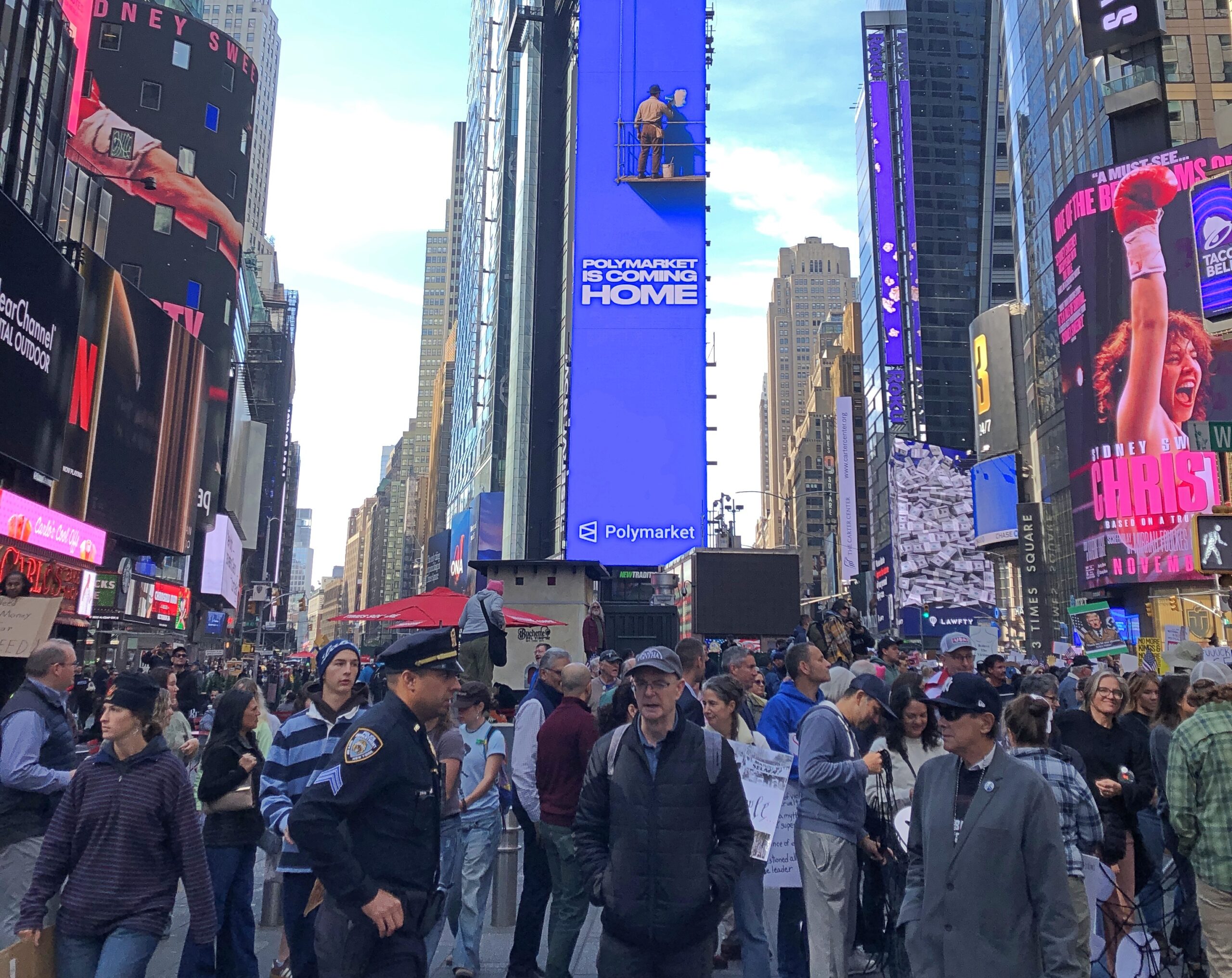
We arrived in Manhattan by the Long Island Rail Road late morning on Saturday, October 18. We walked the short distance from Penn Station to Times Square, where a crowd was in motion.
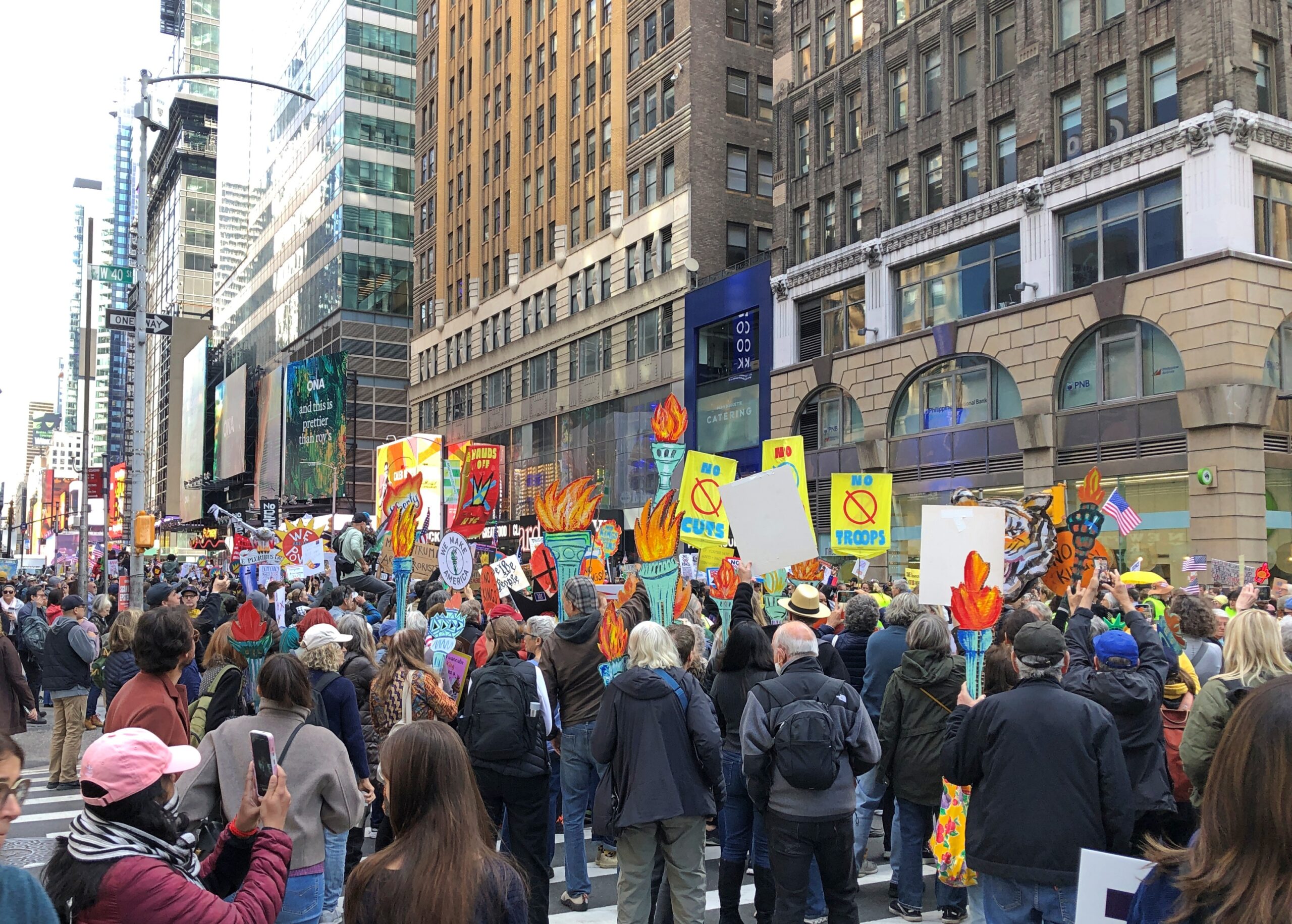
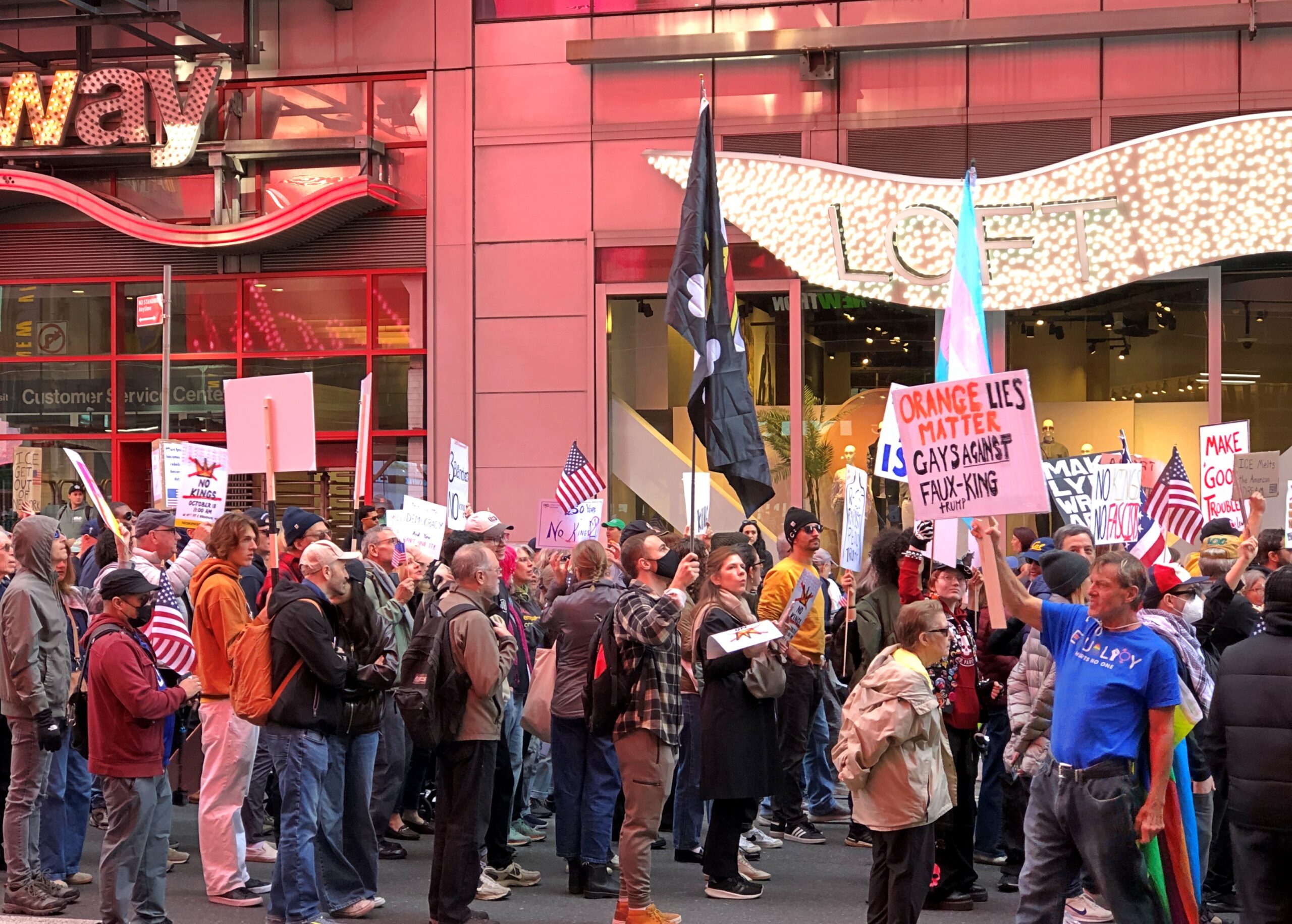
We hadn’t come to New York for No Kings, but Open House New York. Some days earlier, I’d read about the protest was scheduled for late morning on Saturday, October 18. Well now, that’s good timing.
About 100,000 came out in the city’s five marches, one for each borough, according to the NYPD, which is probably as good an estimate as any. Maybe 75,000 of those were in Manhattan?
A small number compared, say, with New Year’s Eve in Times Square – an event not to be found on any list of the things I dream of doing. They say that pulls in a million souls. Of course, it’s easier to draw a crowd for a drunken holiday revel than a sober civic rally. Also, that million people are far more regimented than any mere anti-administration march. Regimented by the police, that is. No Kings, though informal in most ways, was self-regimented. Seems that the NYPD made no arrests associated with the NYC marches.
March? More of a mass walk. Considering some of the egregious behavior being protested, the walking crowd was cheerful. Cheerfully angry, you might call it. As Spock might say in observing such peculiar human emotion, “fascinating.” Then again, it was a middle-class protest, largely attracting people (like me) who would have been nowhere near if they thought a riot was even a little likely.
Do these or any protests make any difference in short- or longer-term policy? Who knows. It is pretty to think so, but the notion wasn’t going to keep us at No Kings more than about a half hour, some of which was spent navigating upstream – which happened to be uptown – against the downstream human tide – who happened to be going downtown.
We numbered three by the time we got to Times Square. The train that Yuriko and I took from Syosset Station on Long Island went to Penn Station, and by the marvel that is texting, we were able to arrange a meeting there with Geof Huth, resident of Astoria these days, in the terminal’s new great hall.
I was astonished by the new hall, called the Moynihan Train Hall and completed only in 2021. Clearly I hadn’t kept up with major redevelopment projects in New York. SOM did the design, knocking it out of the park. I’d been fully prepared for the dowdy experience that Penn Station has been since the notorious destruction of the previous one in the 1960s.
Instead, we entered an open, elegant, fully modern space, crowned by the glass and steel of an expansive skylight and watched over by a four-faced clock on a pole. I was even more surprised when we headed outside and realized that the Moynihan Train Hall was created inside the city’s former main post office, the James A. Farley Building. The last time I thought about that massive, remarkable Beaux-Arts structure (McKim, Mead & White) was the last time I walked around this part of NYC, when it was still a post office.
The Farley exterior gleams the gleam of a newly restored facade, and happily kept the post office faux-motto: Neither snow, nor rain, nor heat, nor gloom of night stays these couriers from the swift completion of their appointed rounds. Good to see.
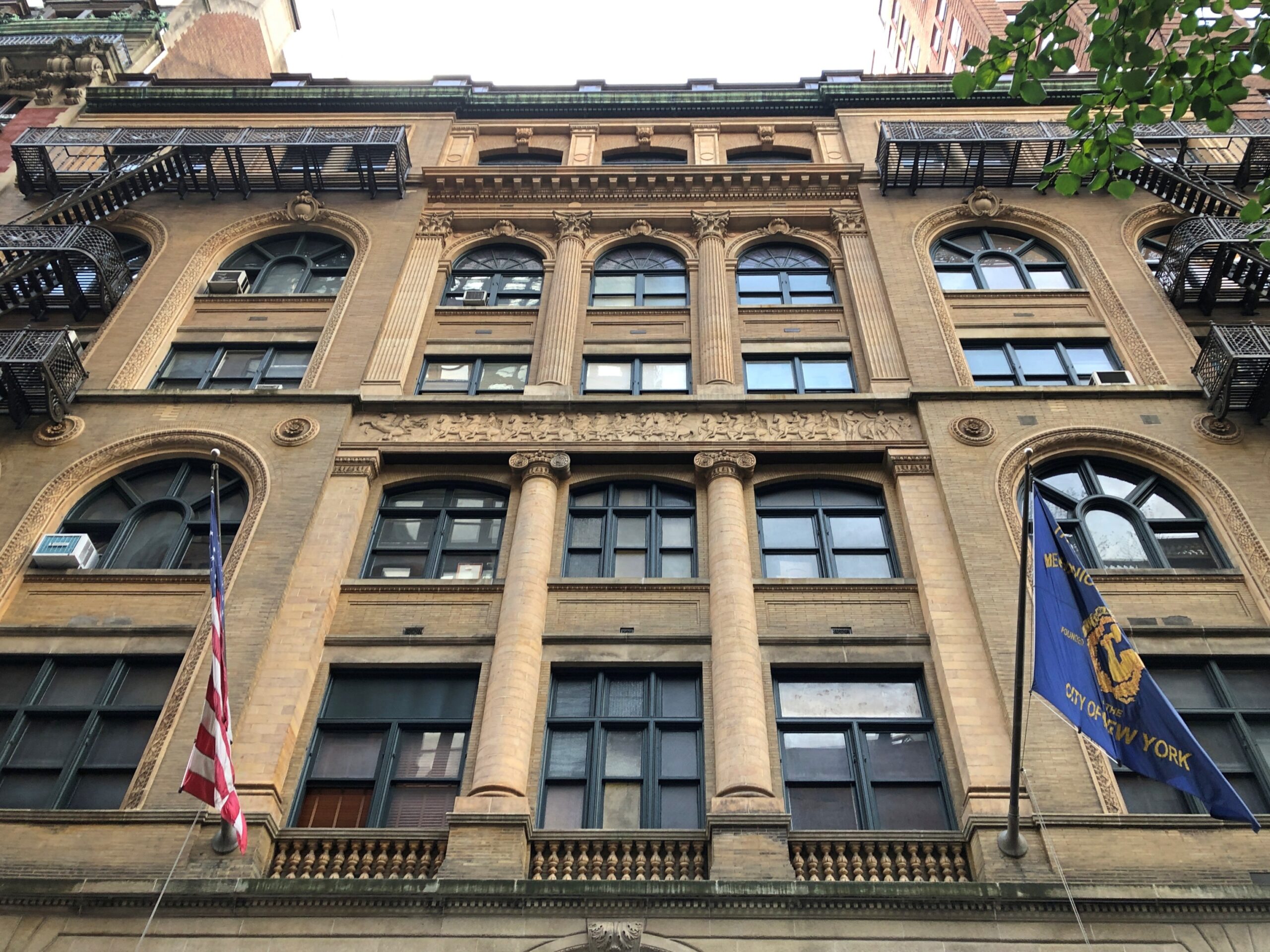
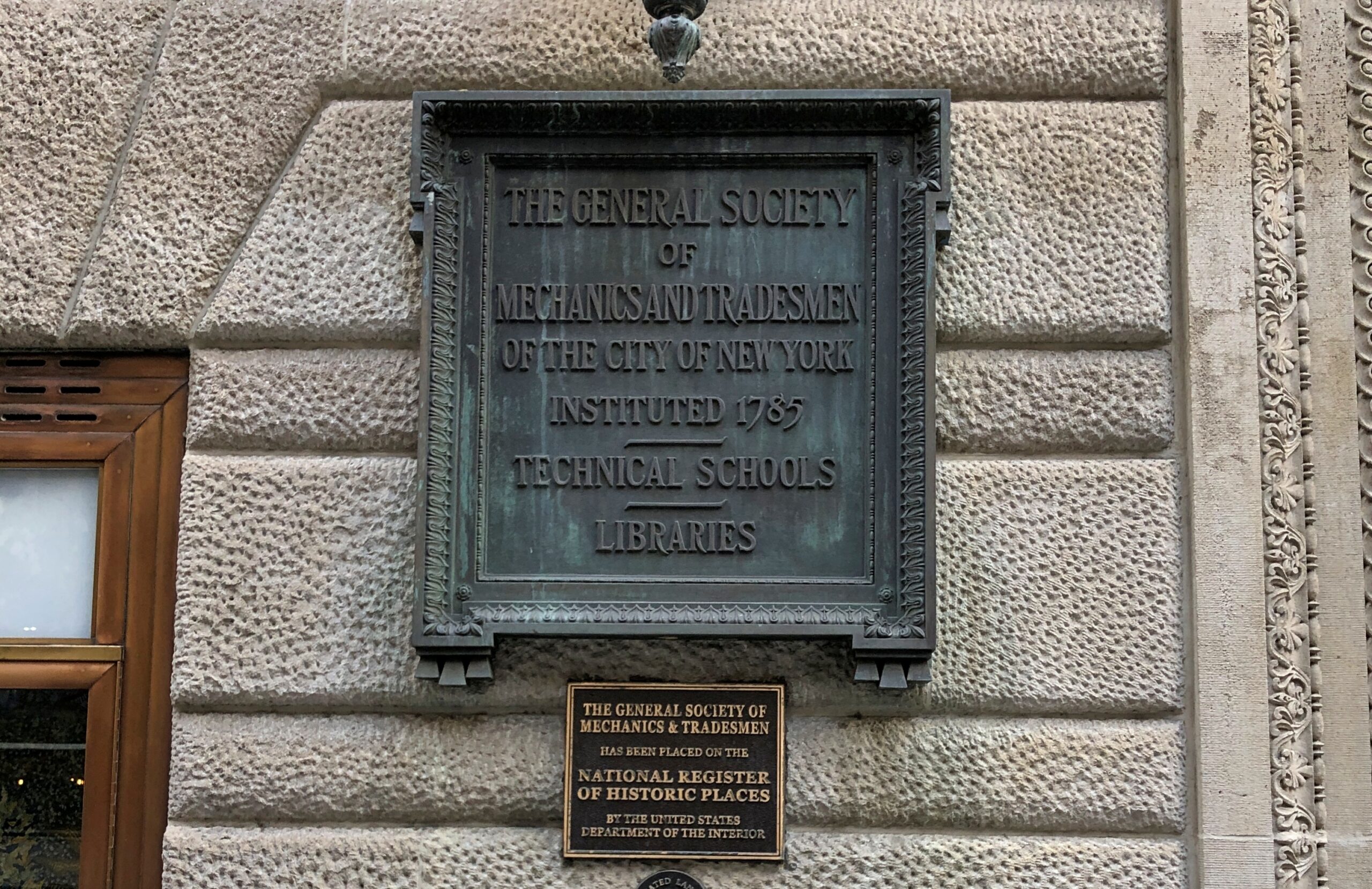
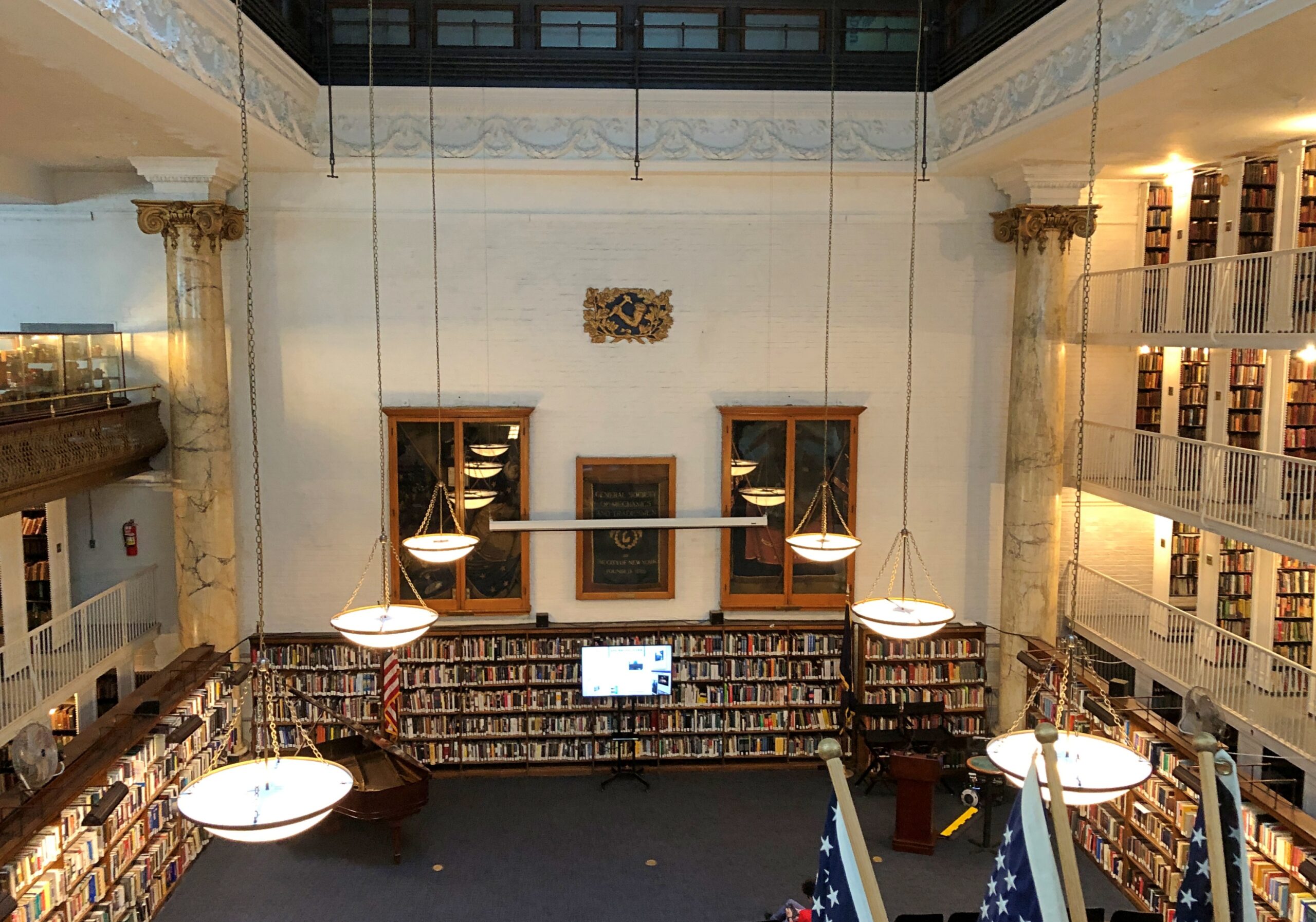
After leaving the No Kings crowd, we made our way to 20 West 44th Street, an 1899-vintage building and home of the General Society of Mechanics and Tradesmen of the City of New York.
It was open for the Open House.
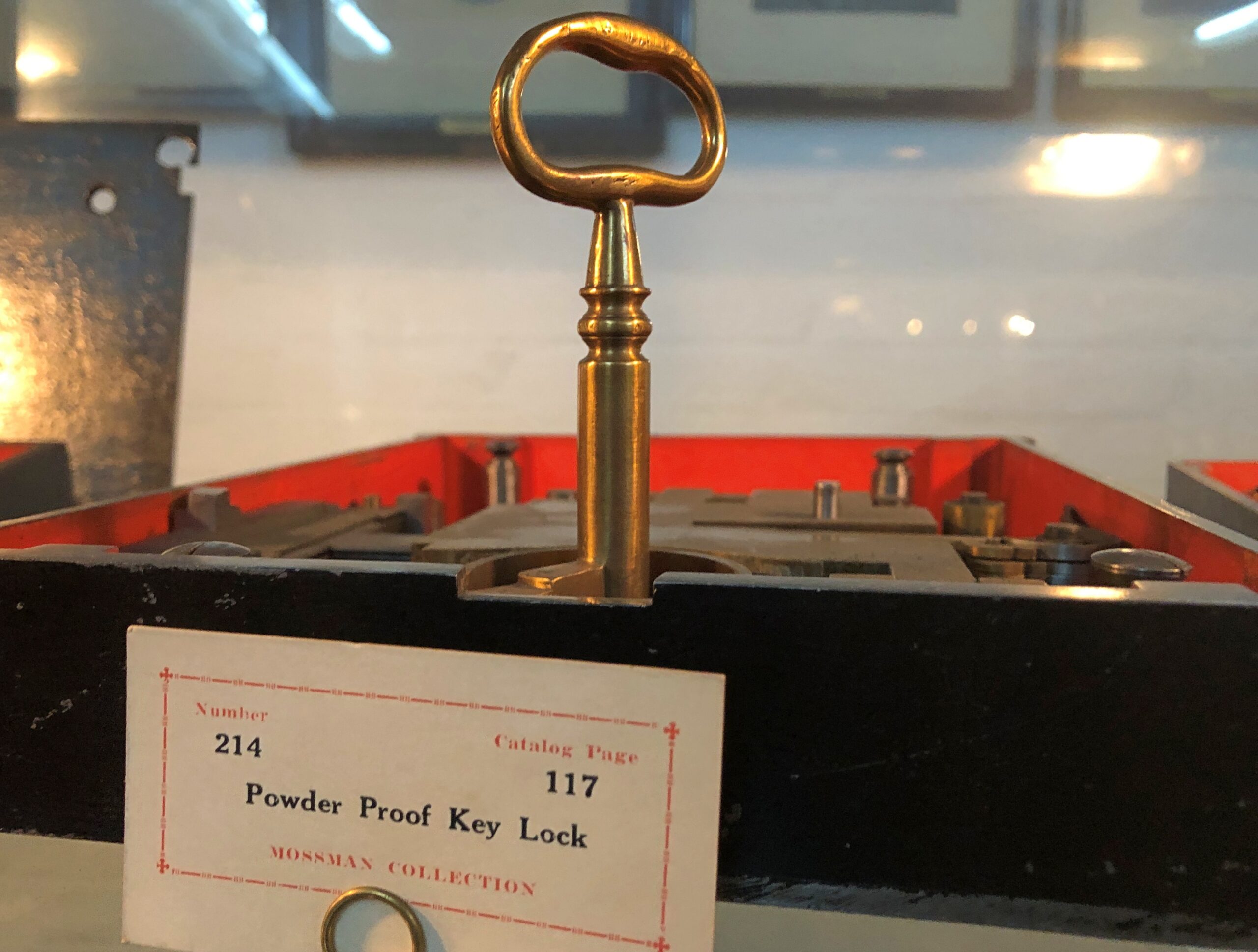
“The second-oldest library in the city includes a light-filled atrium that is used as a vibrant programming space by the General Society and other nonprofits,” notes the OHNY web site. “Overlooking the library on a striking wrought iron balcony is the John M. Mossman Lock Collection, which contains more than 370 locks, keys, and tools dating from 2000 BC to the early 20th century.”
Nothing like a handsome pre-war (Great War) building in which to spend some time. The enormous lock and key collection attests to the fundamental dishonesty of a fraction of mankind, and the ingenuity brought to the task of coping with that fact.
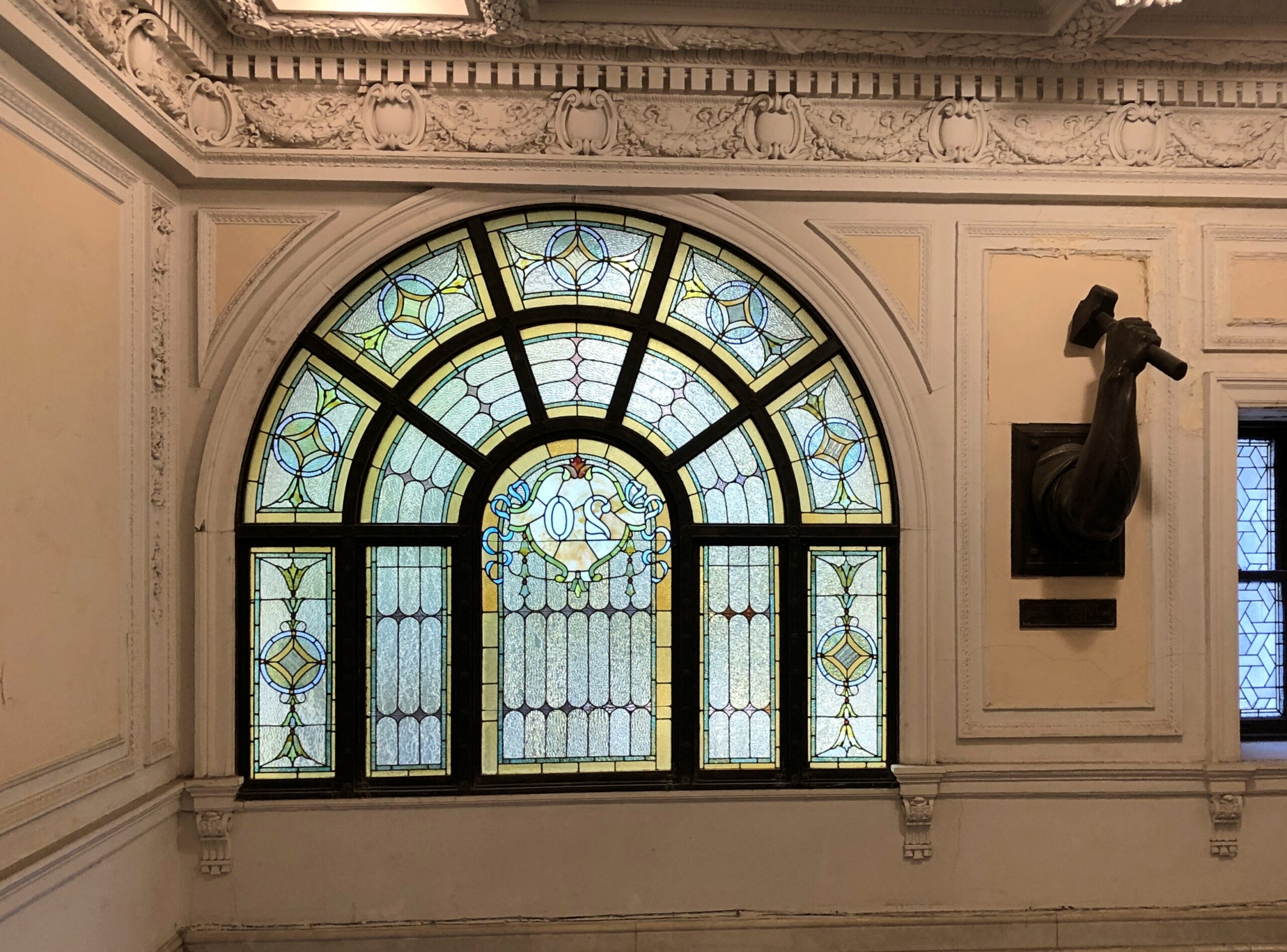
As for the General Society, it provides training and other assistance to skilled craftsmen, beginning in the late 18th century (at different locations) and down to the present. Its motto: By hammer and hand all arts do stand. That accounts for the hammer and hand emerging from the wall in its space.
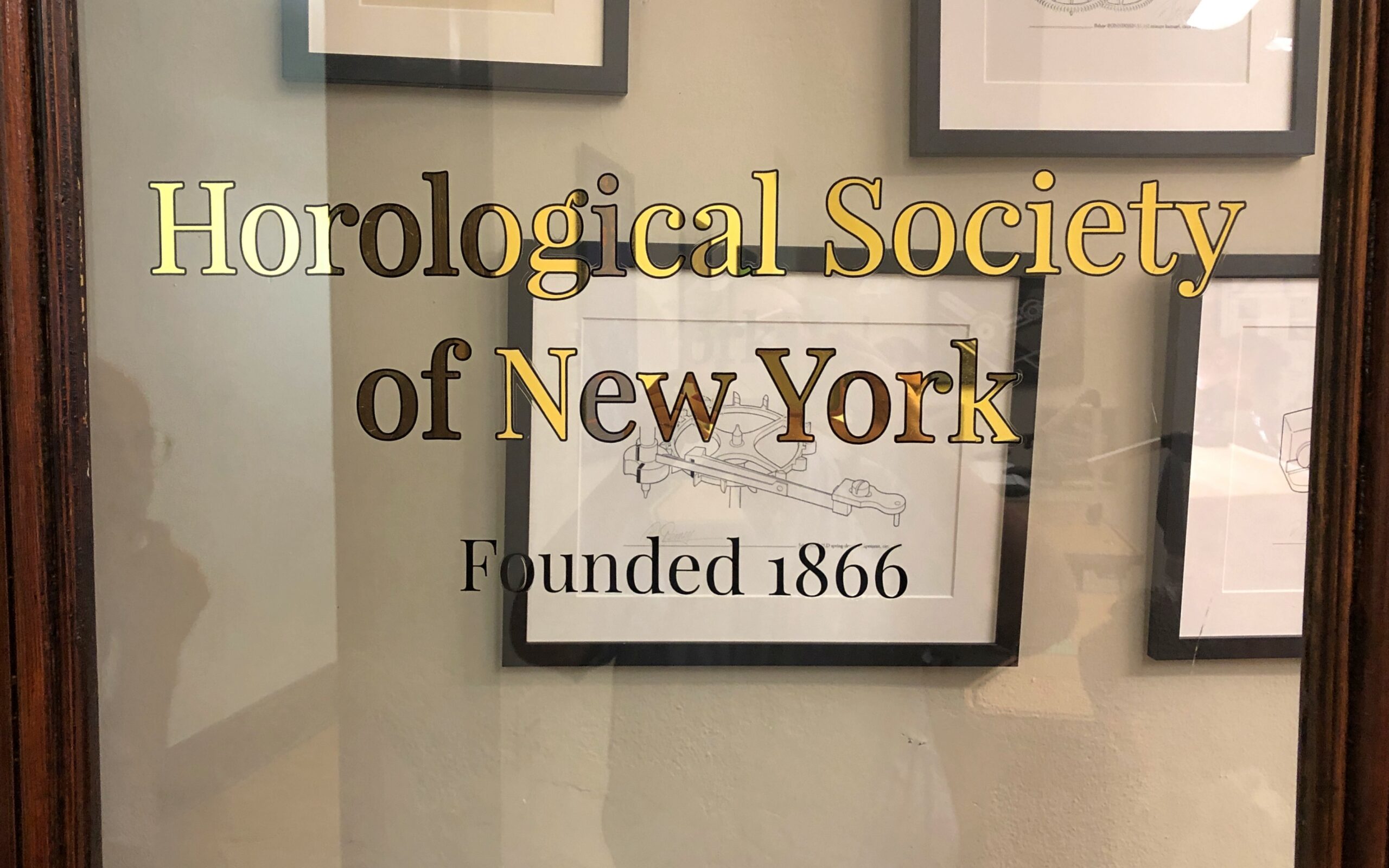
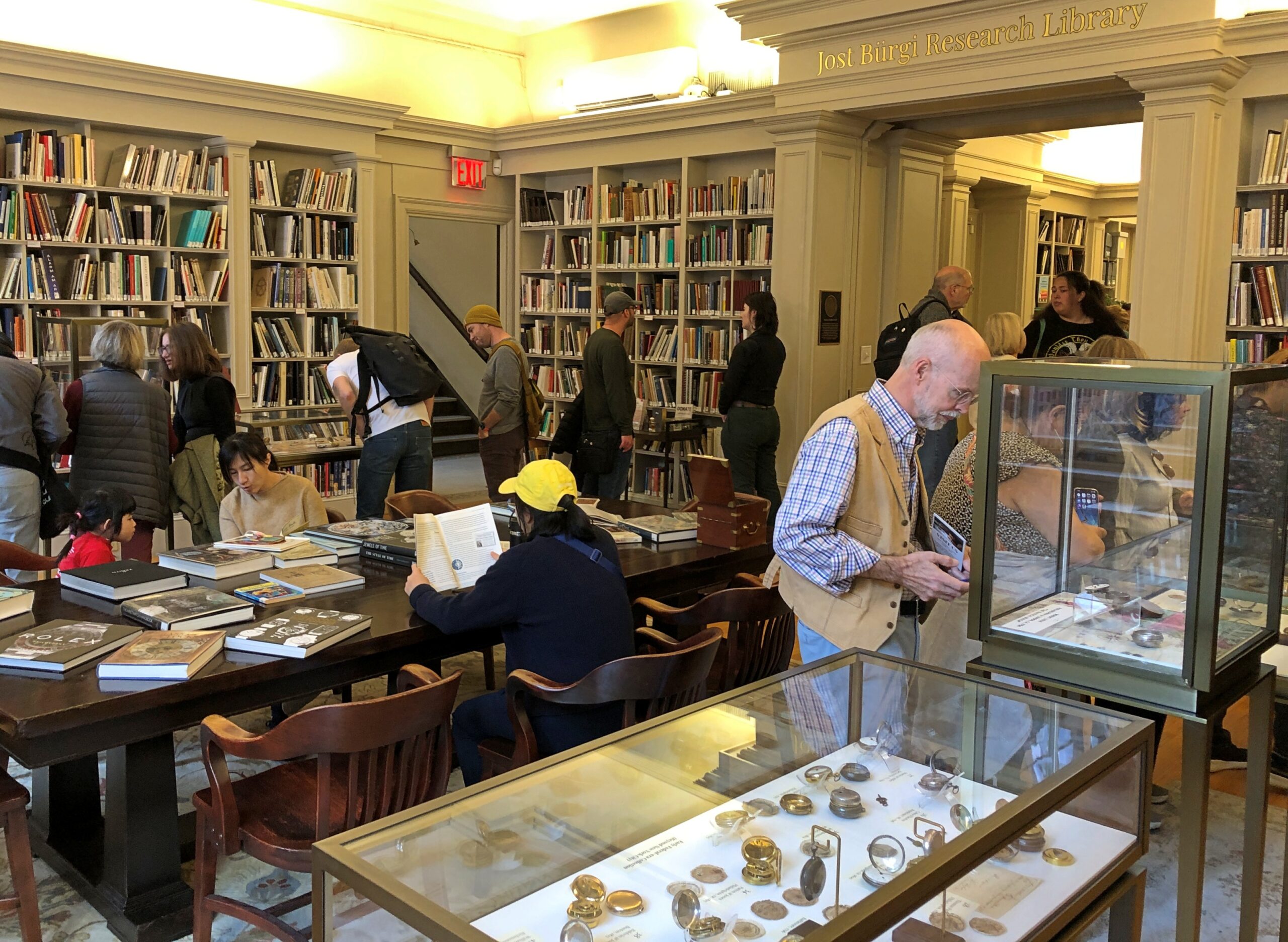
As for the other nonprofits in the building, they include the Horological Society of New York, keeper of all things related to timekeeping since 1866.
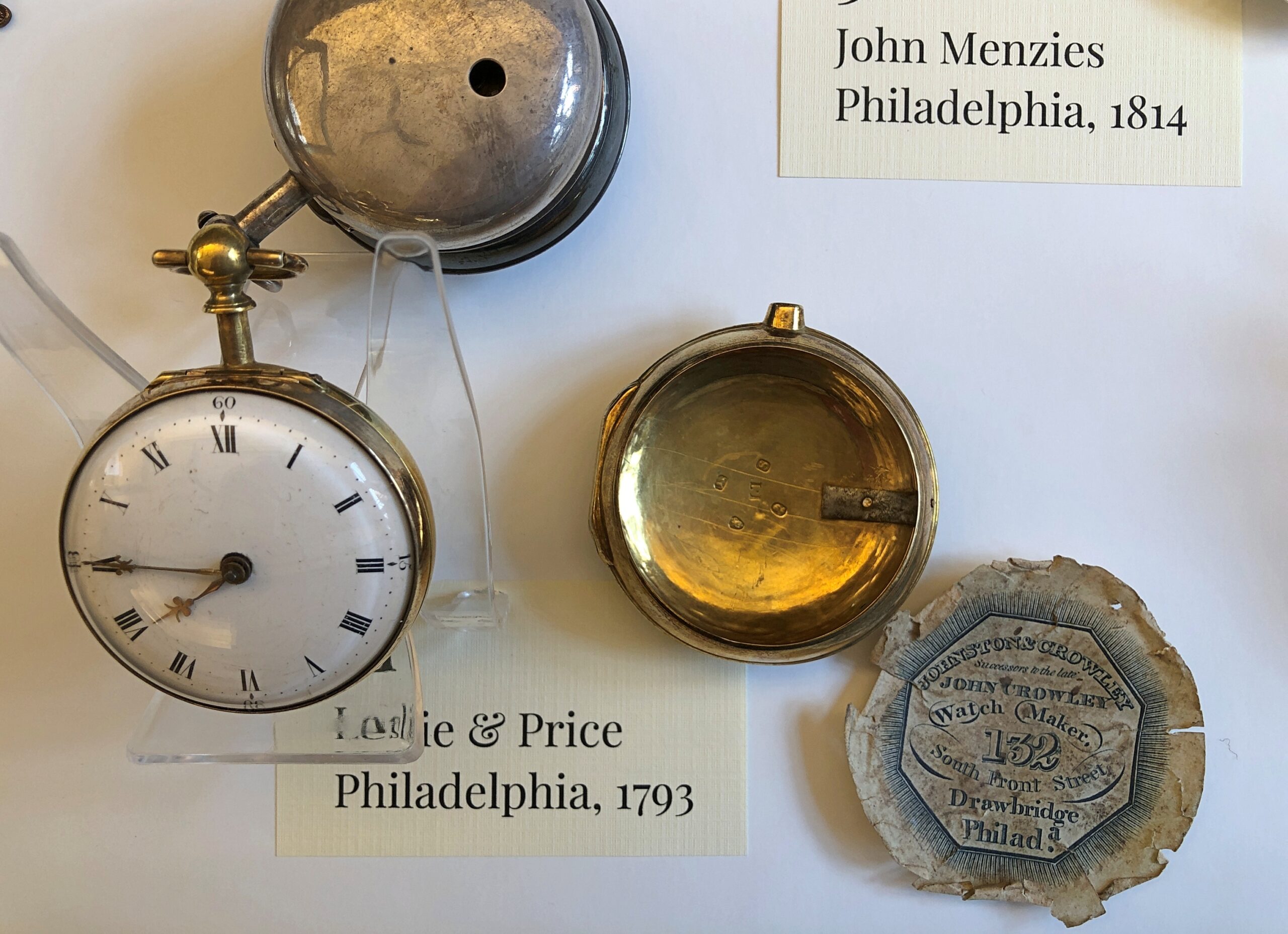
It too was open, and we visited the impressive collection of watches and clocks and horological tools and books.
This is no fusty org relegated to the part-time care of antiquarians. HSNY has the organization heft (and scratch) to put on enormous annual galas, with the next one slated for the Plaza Hotel next year to celebrate its 160th anniversary. That will certainly be a picture to behold.
Today I let Google finish “Cathedral of the…” and got the following responses, top to bottom (capitalization sic): Sea, deep, Holy Angels, holy angels photos, forsaken, immaculate conception, incarnation, Madeleine, deep ds3, pines.
Cathedral of the Sea is La catedral del mar, a “Spanish drama series” that I’d never heard of, though I have been to Santa Maria del Mar. The Cathedral of the Deep and of the Forsaken appear to be aspects of electronic games, and the others are churches in various places.
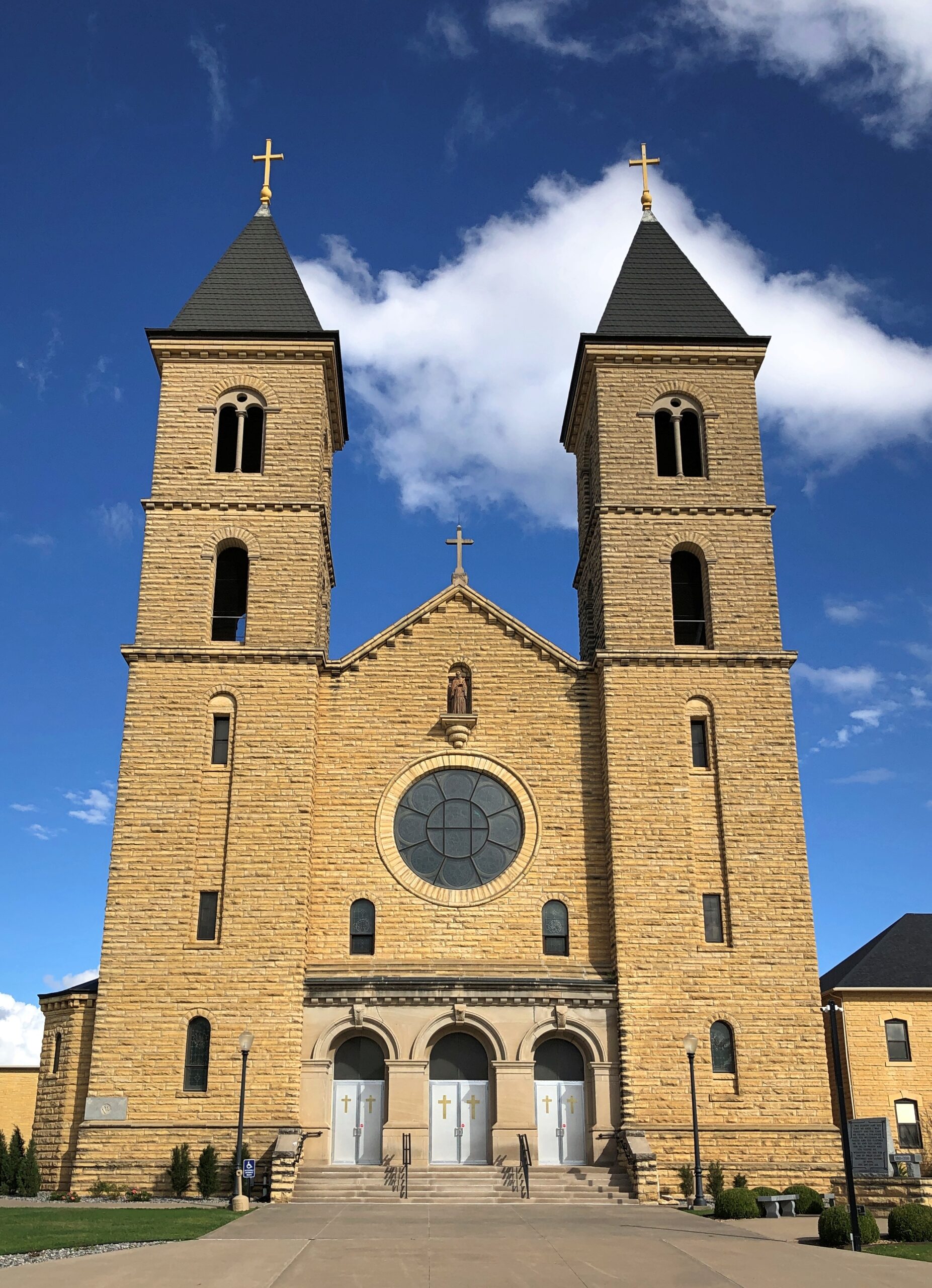
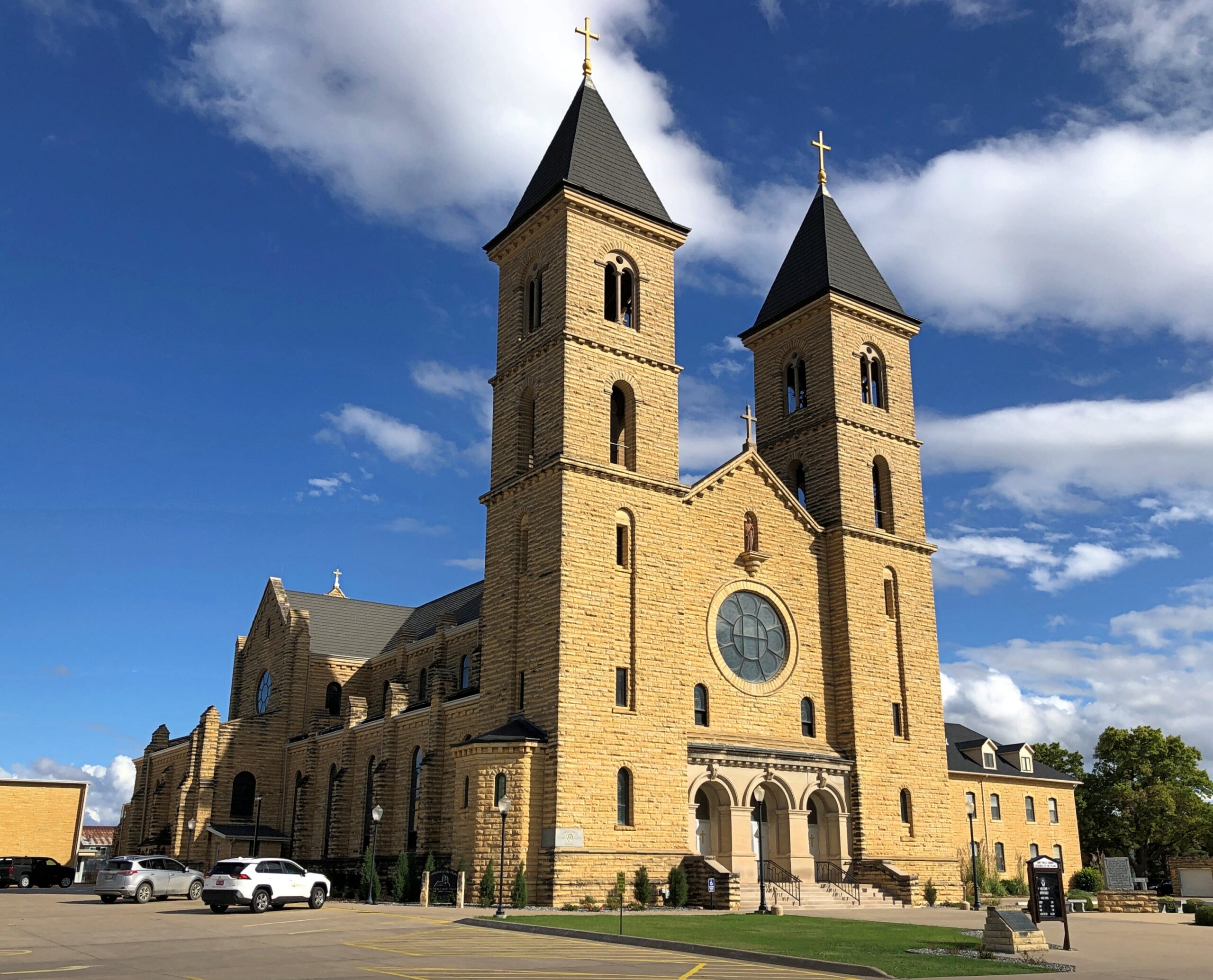
Not on the list is the Cathedral of the Plains. But it’s out there, in central Kansas.
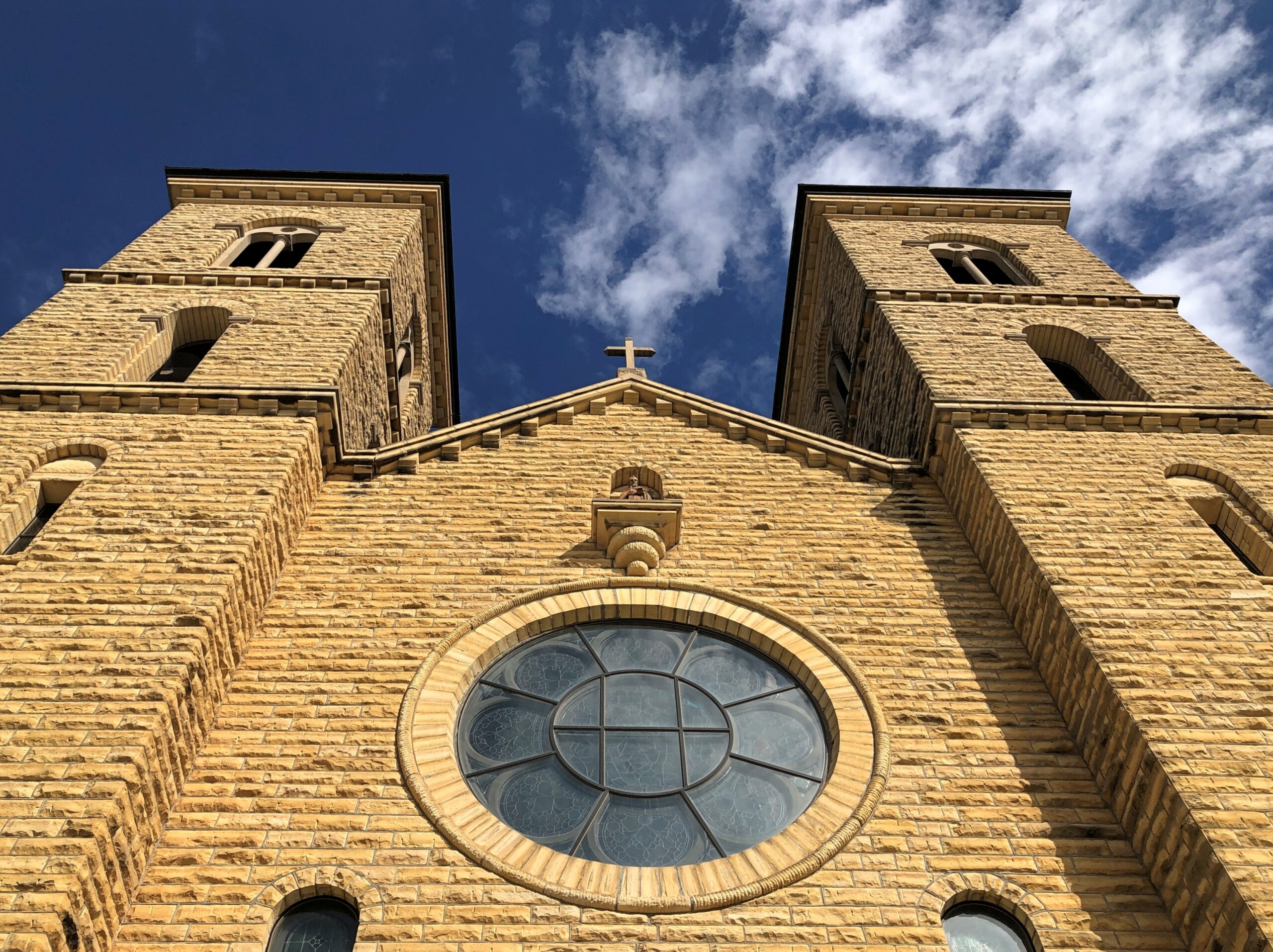
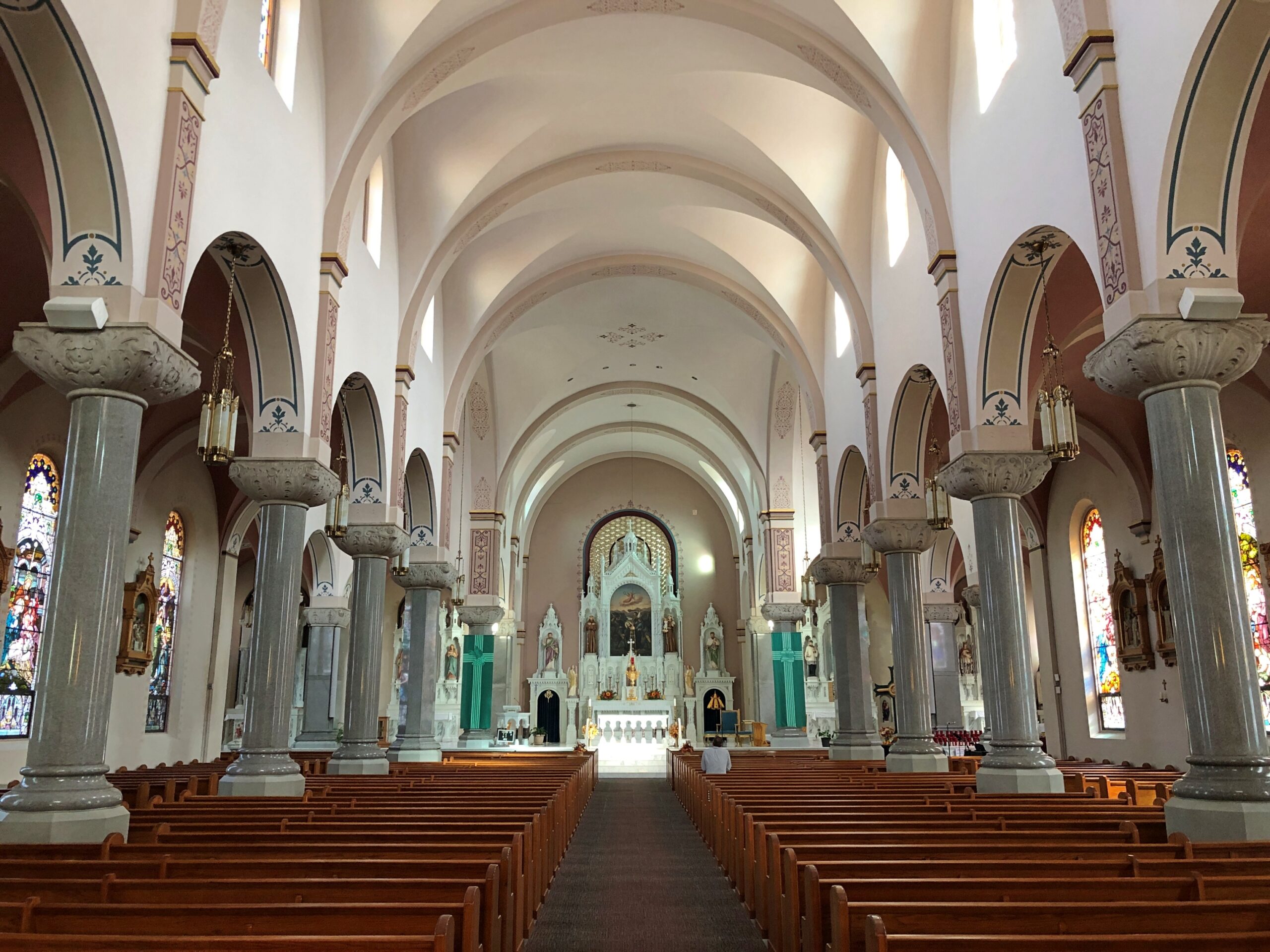
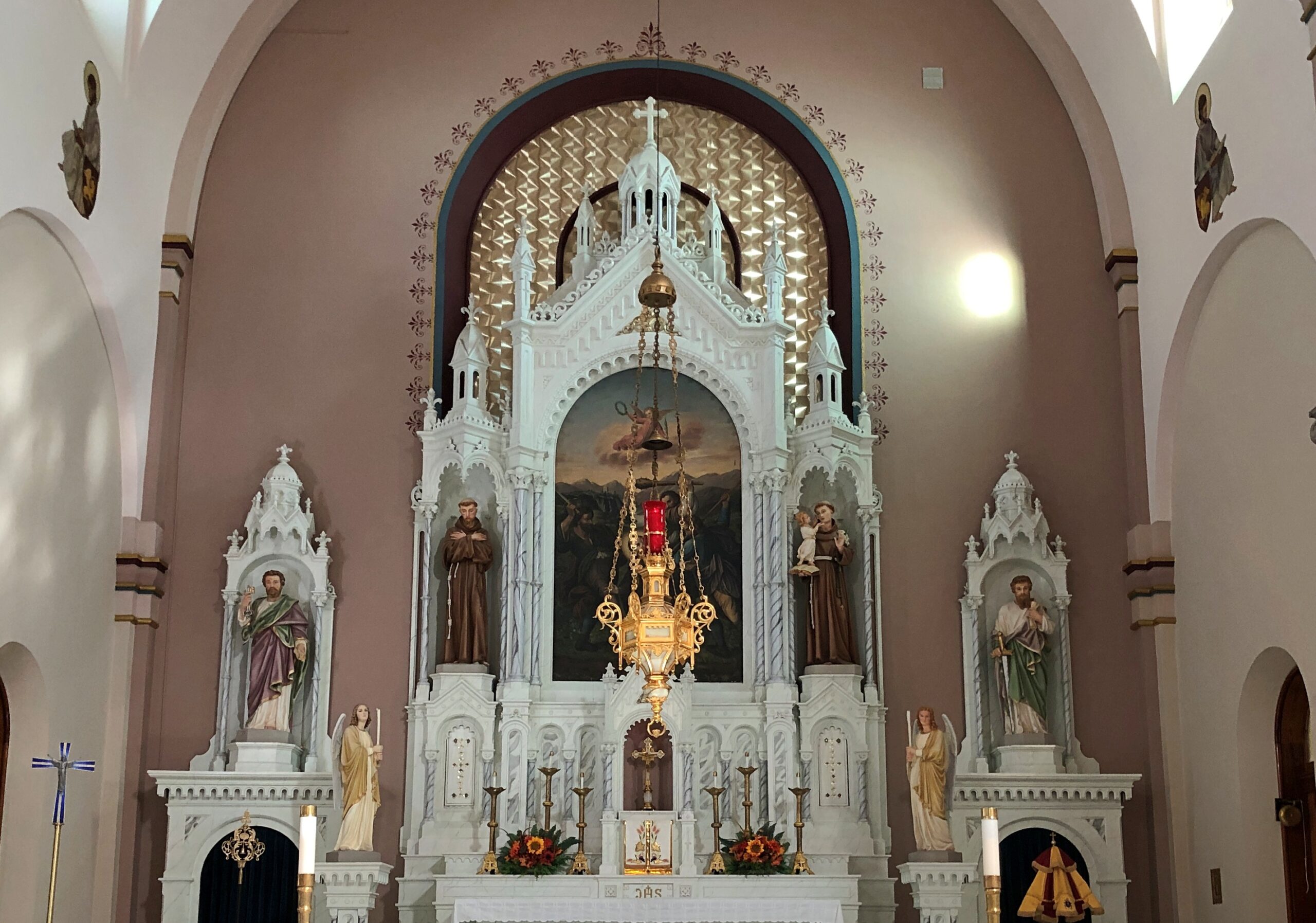
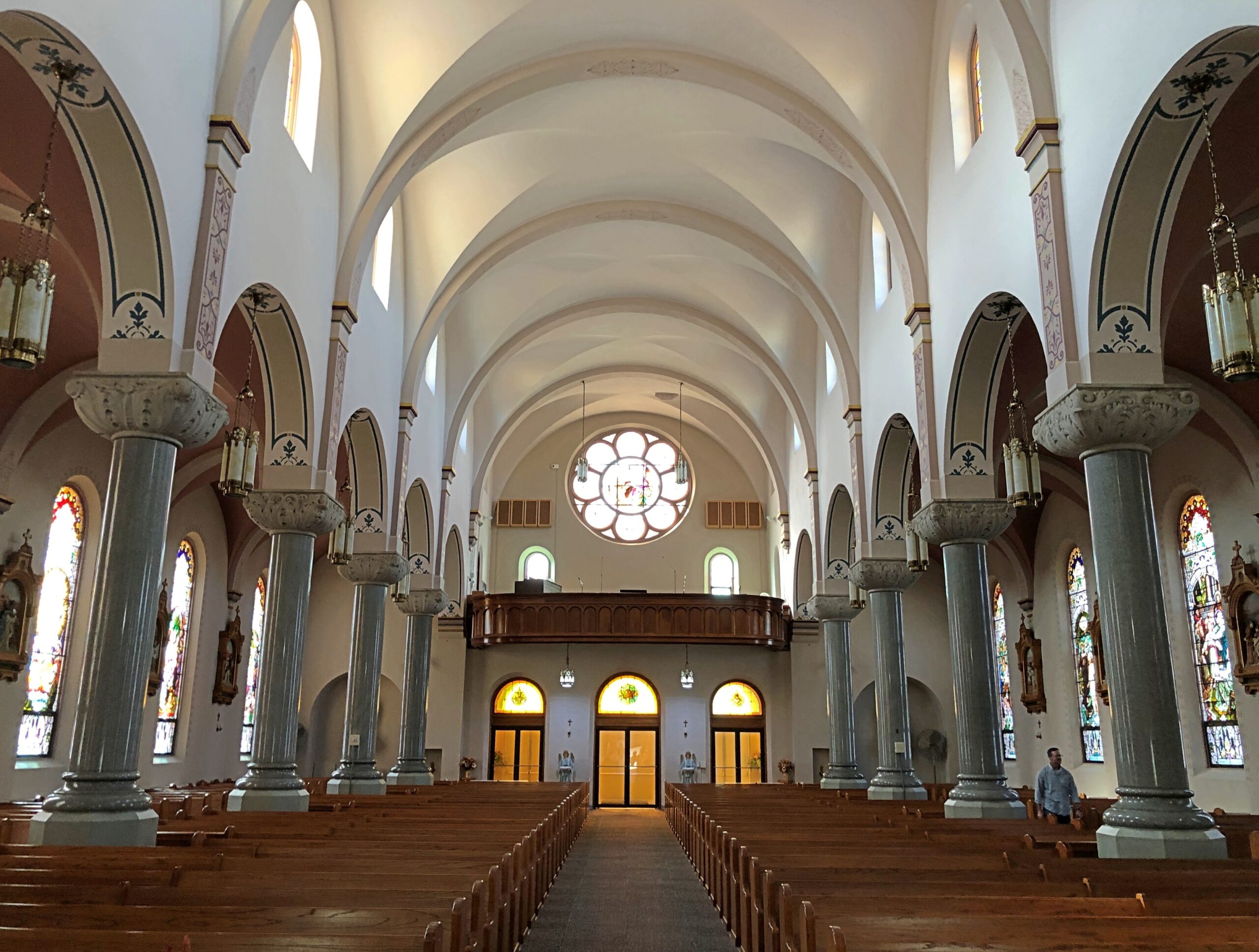
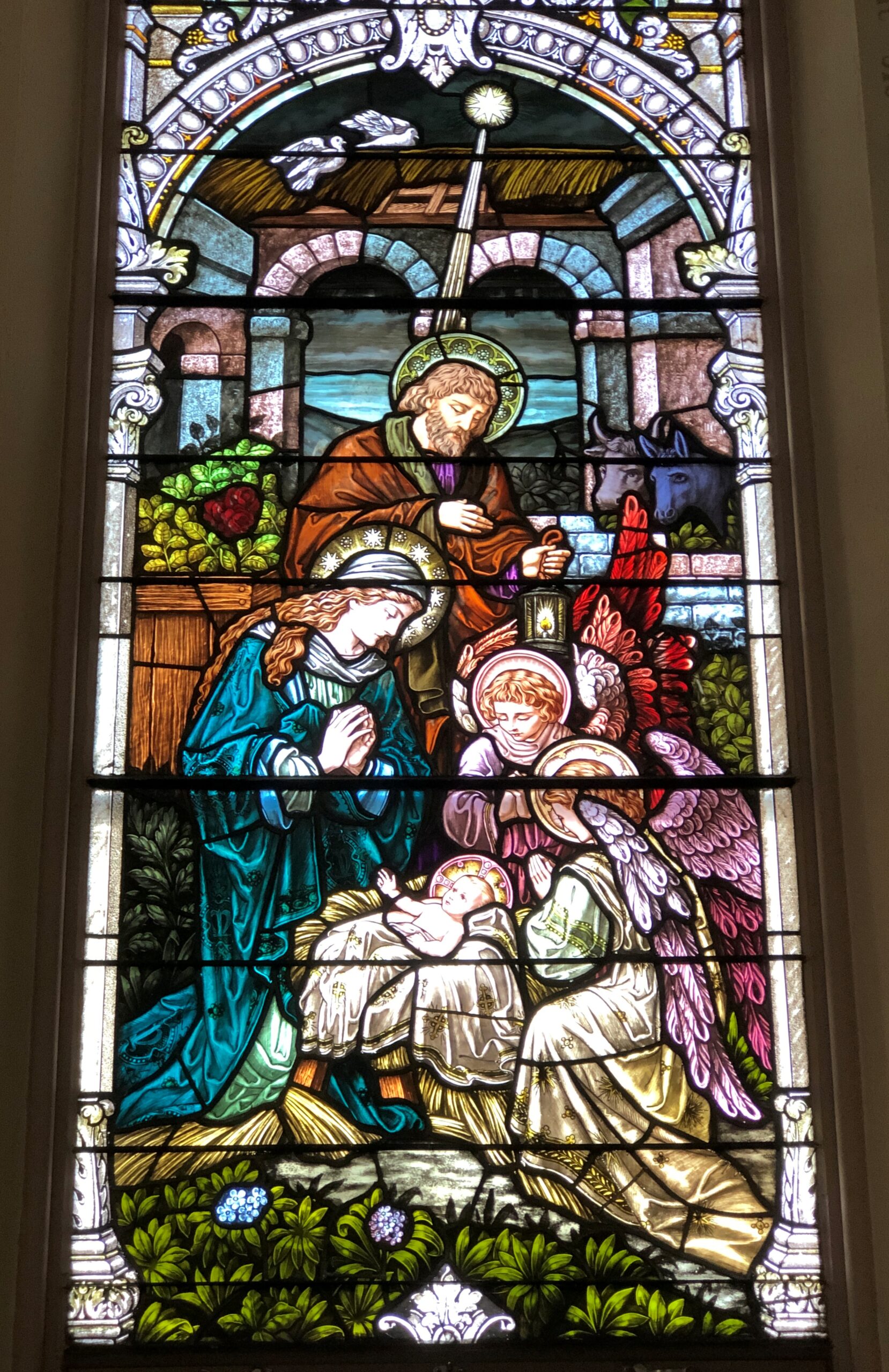
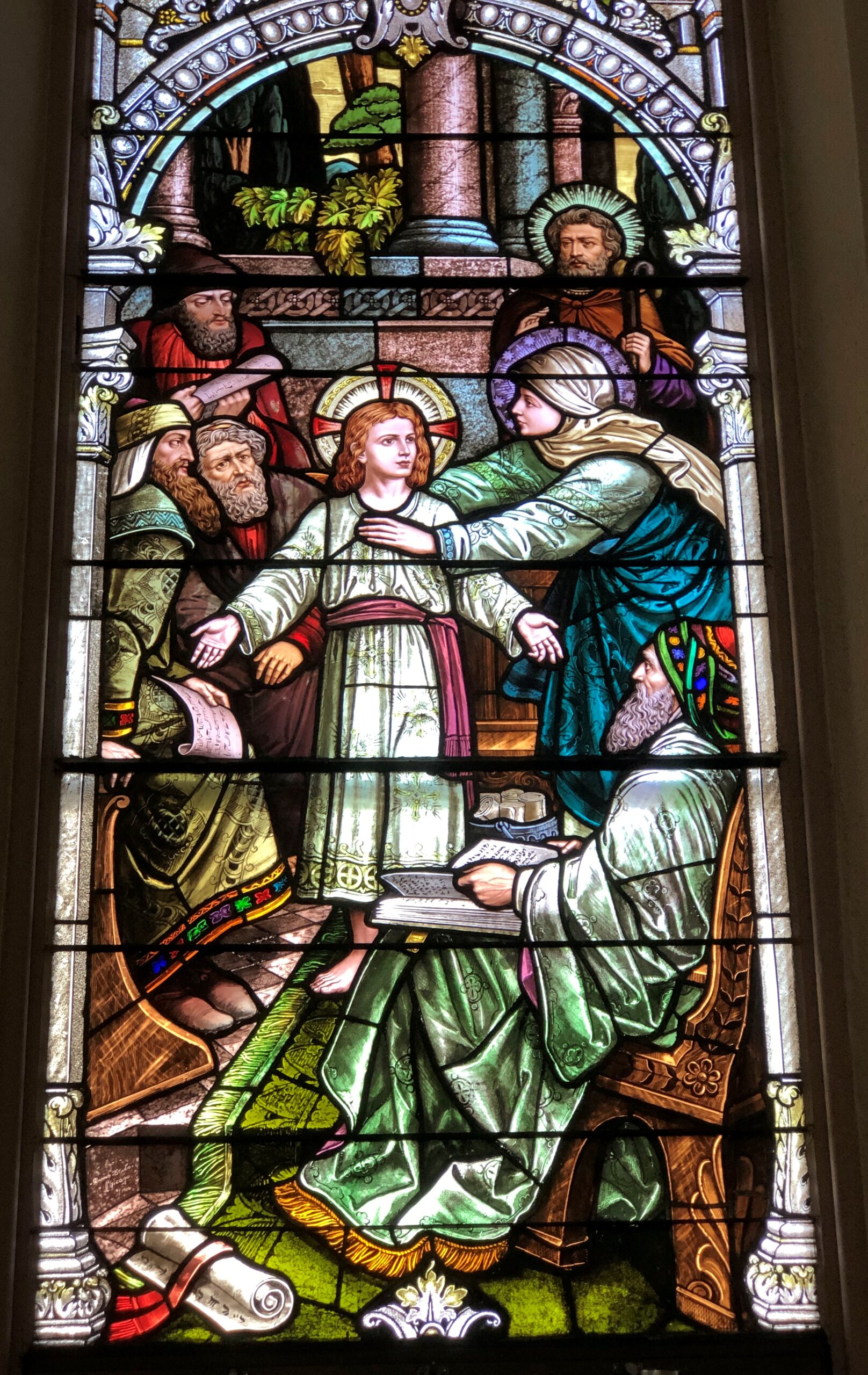
That’s a nickname, since the church isn’t actually a cathedral, but the wording does appear on its point-of-interest spot on road maps – and naturally that got my attention. Formally, the church is the Basilica of St. Fidelis, said to be the largest church west of the Mississippi by seating capacity (1,100) upon completion in 1911 in Victoria, Kansas. Conveniently (for me), some decades later I-70 was built not far away.
John T. Comès (d. 1922), a Pittsburgh architect, designed the church for a congregation of Volga German immigrants. Who had come to greater Victoria starting in the 1870s. Why Victoria? Why not? No doubt they looking for flat farmland.
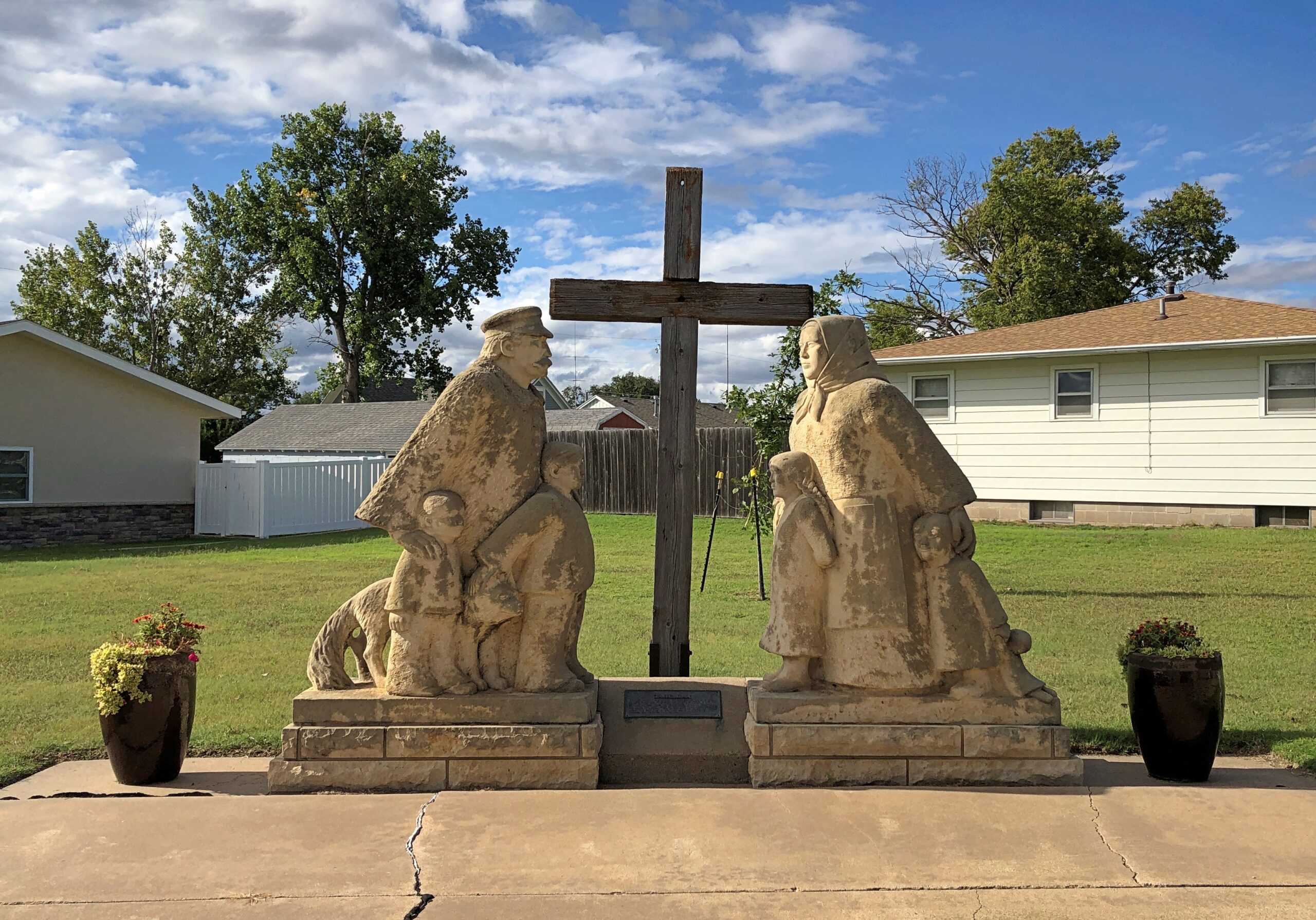
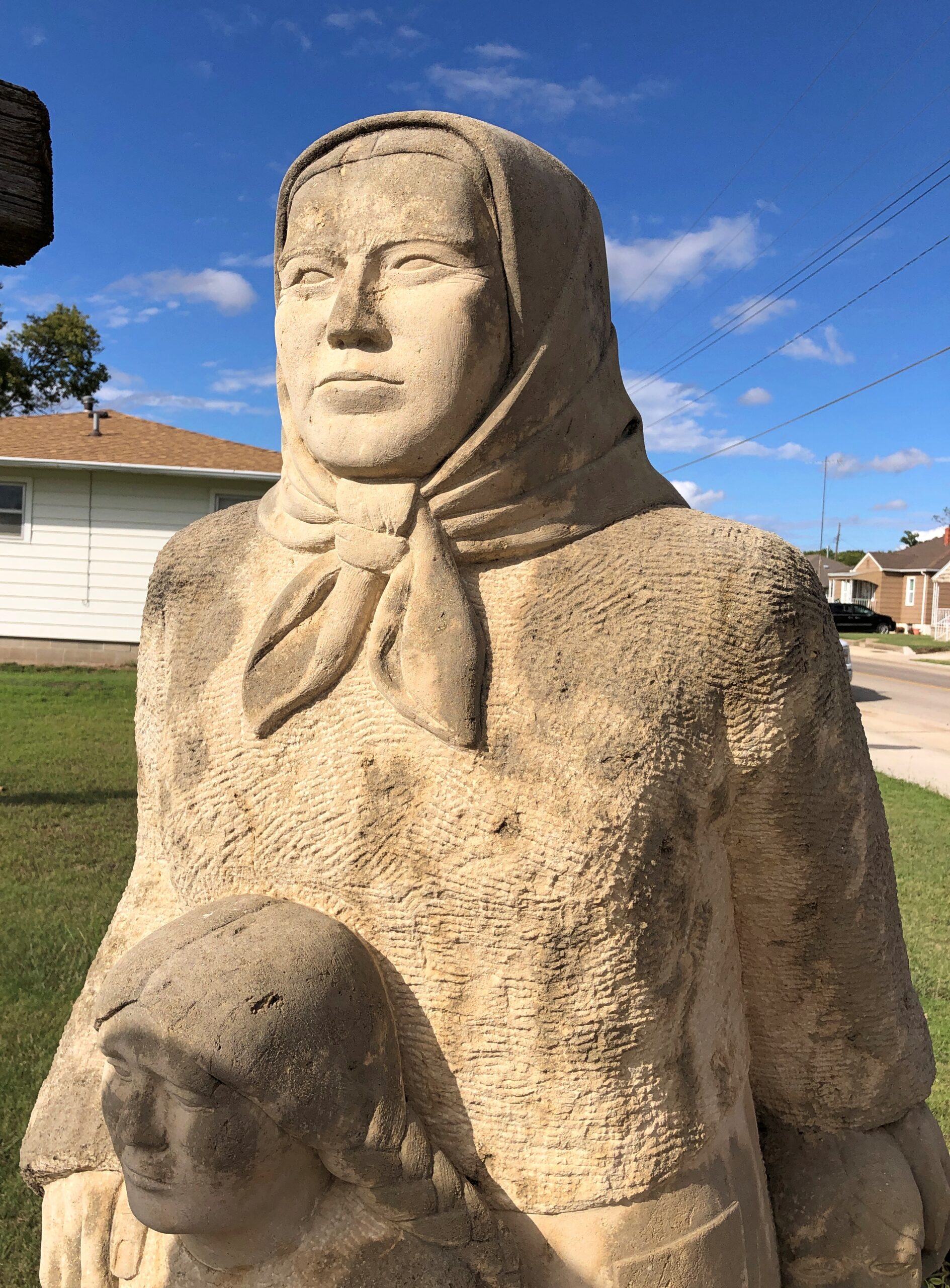
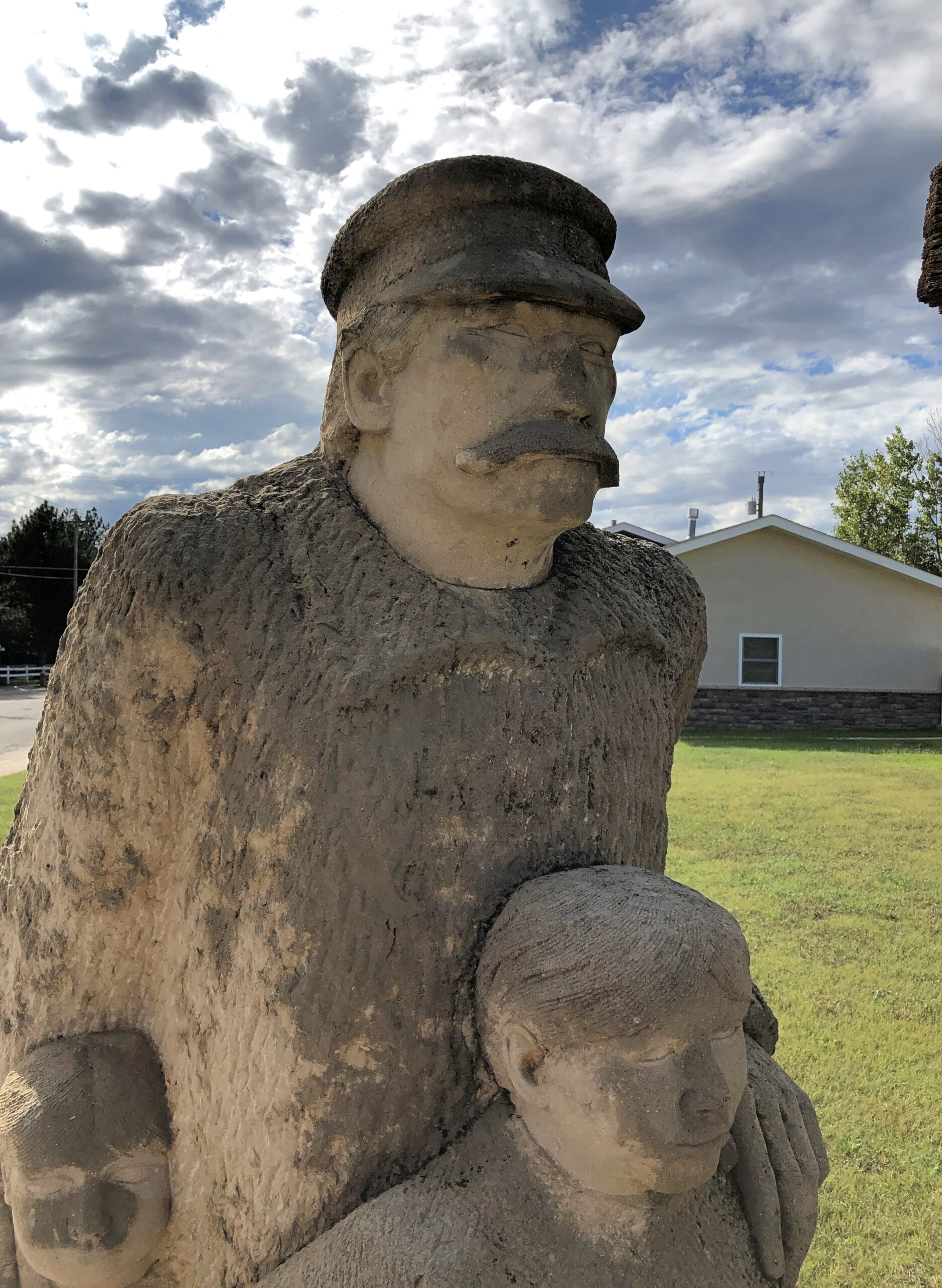
The Volga Germans aren’t forgotten. No doubt their descendants are all around this part of Kansas. In 1976, the townspeople erected a memorial to their immigrant ancestors, across the street from St. Fidelis. A work by Pete Felton, a “Kansan limestone carver,” according to this posting, which also mentions limestone fenceposts as important in Kansas — something else to look into sometime.
After nearly 50 years, the statues are looking a little weatherworn, but they abide.
The woman and daughters caught the light at that time of day, the afternoon of September 23.
The man and sons did not. Would sunlight have made him less – Stalinesque?
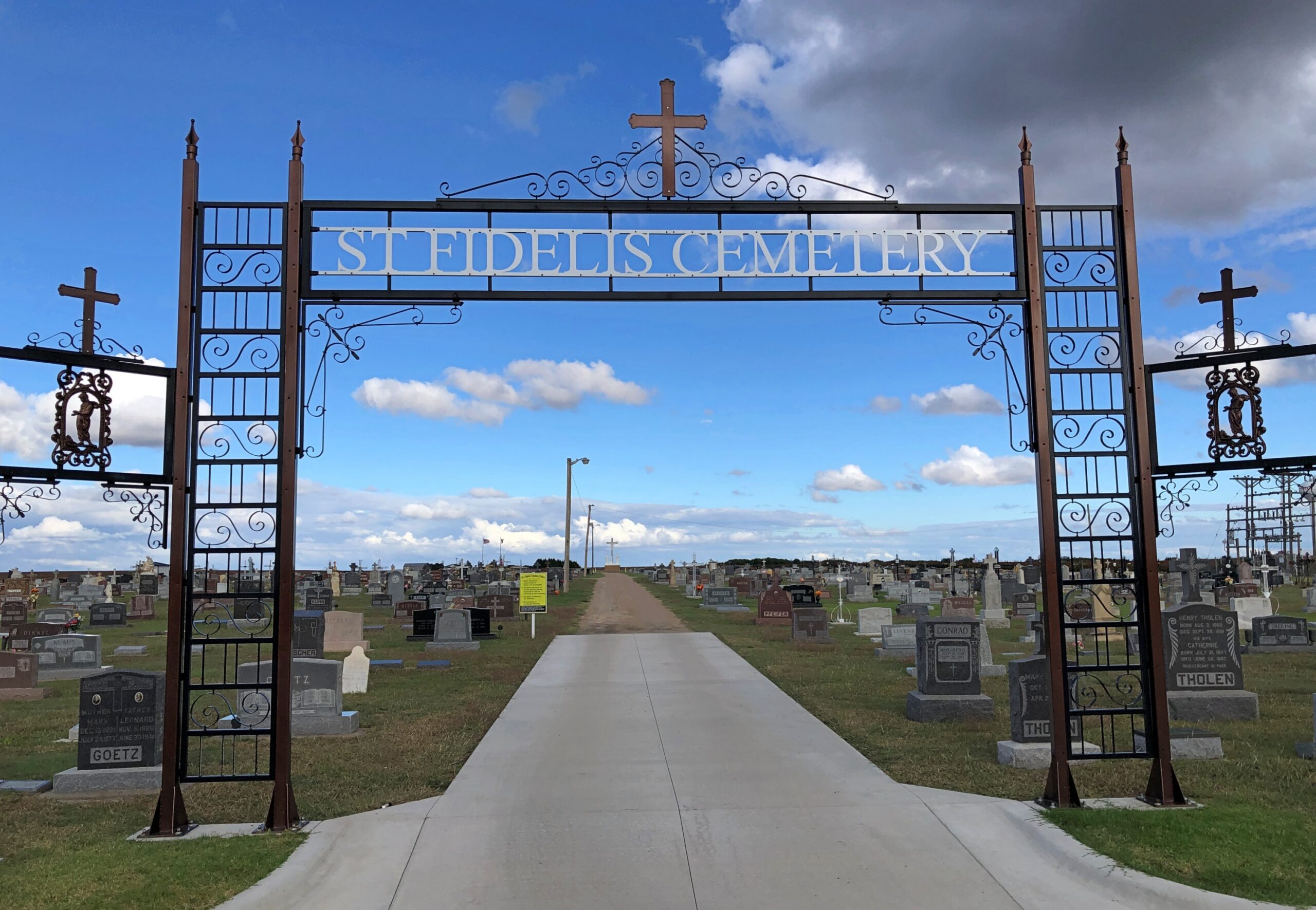
Never mind. St. Fidelis Cemetery isn’t far to the north of the basilica, and I stopped by.
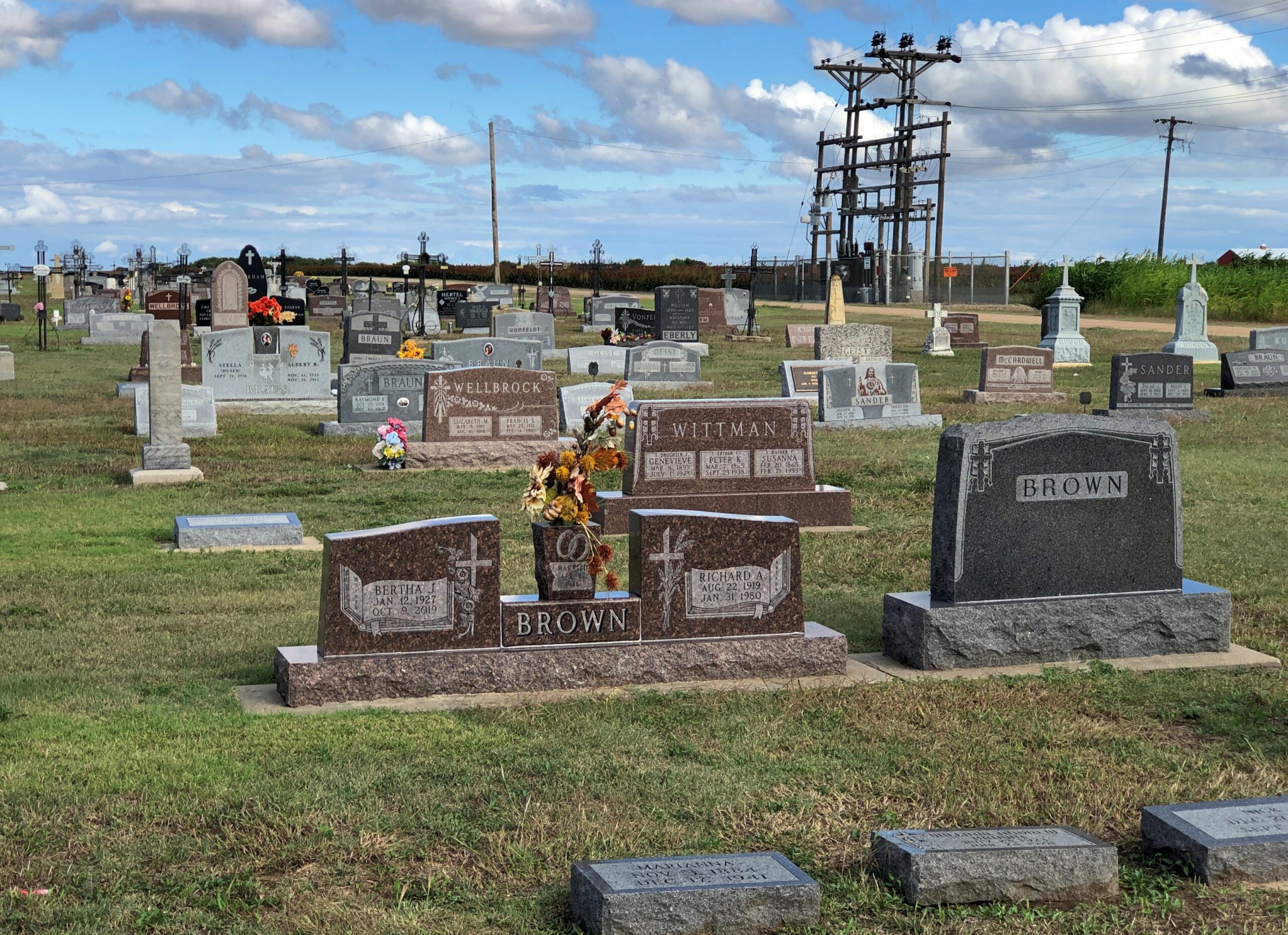
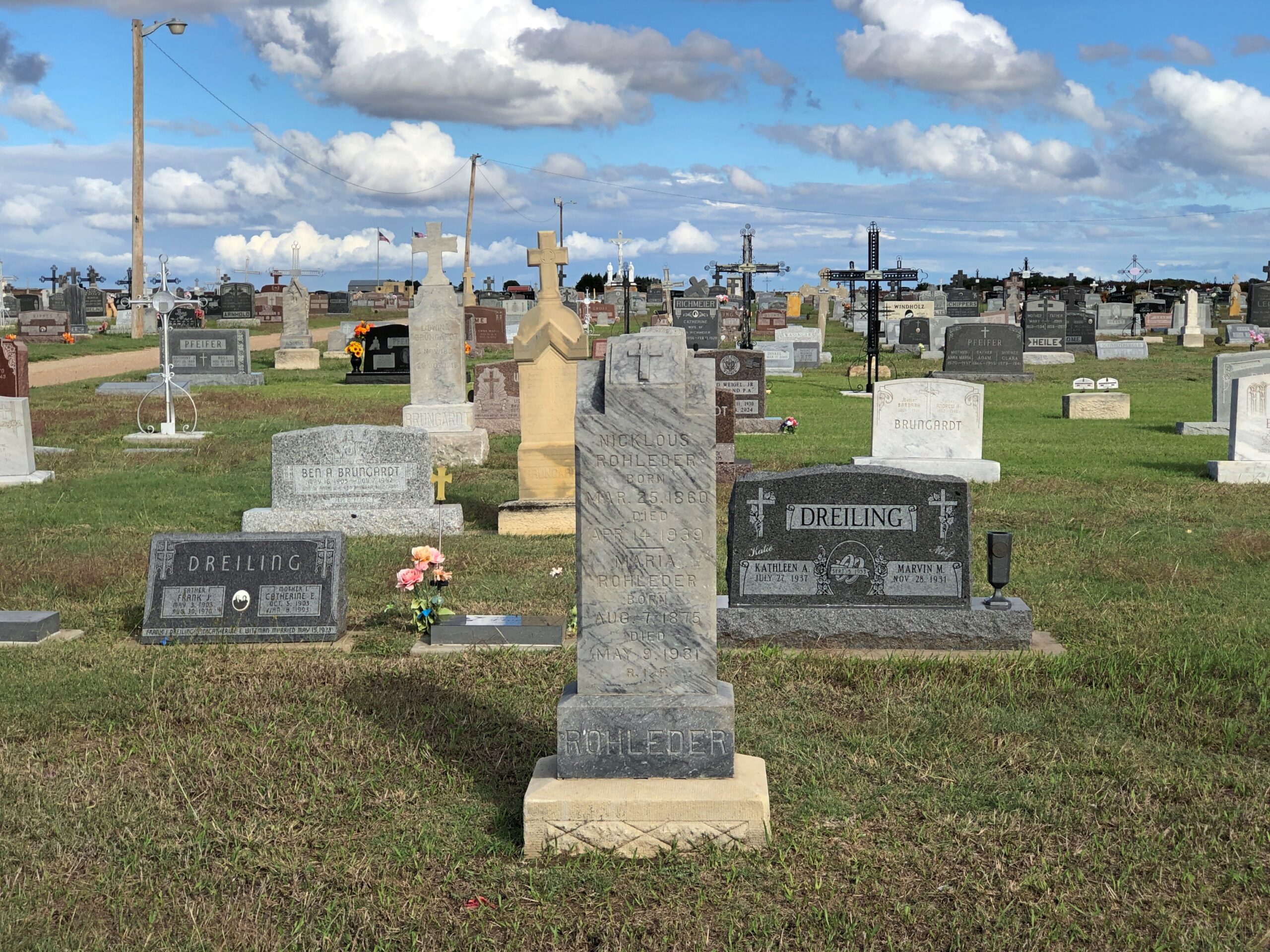
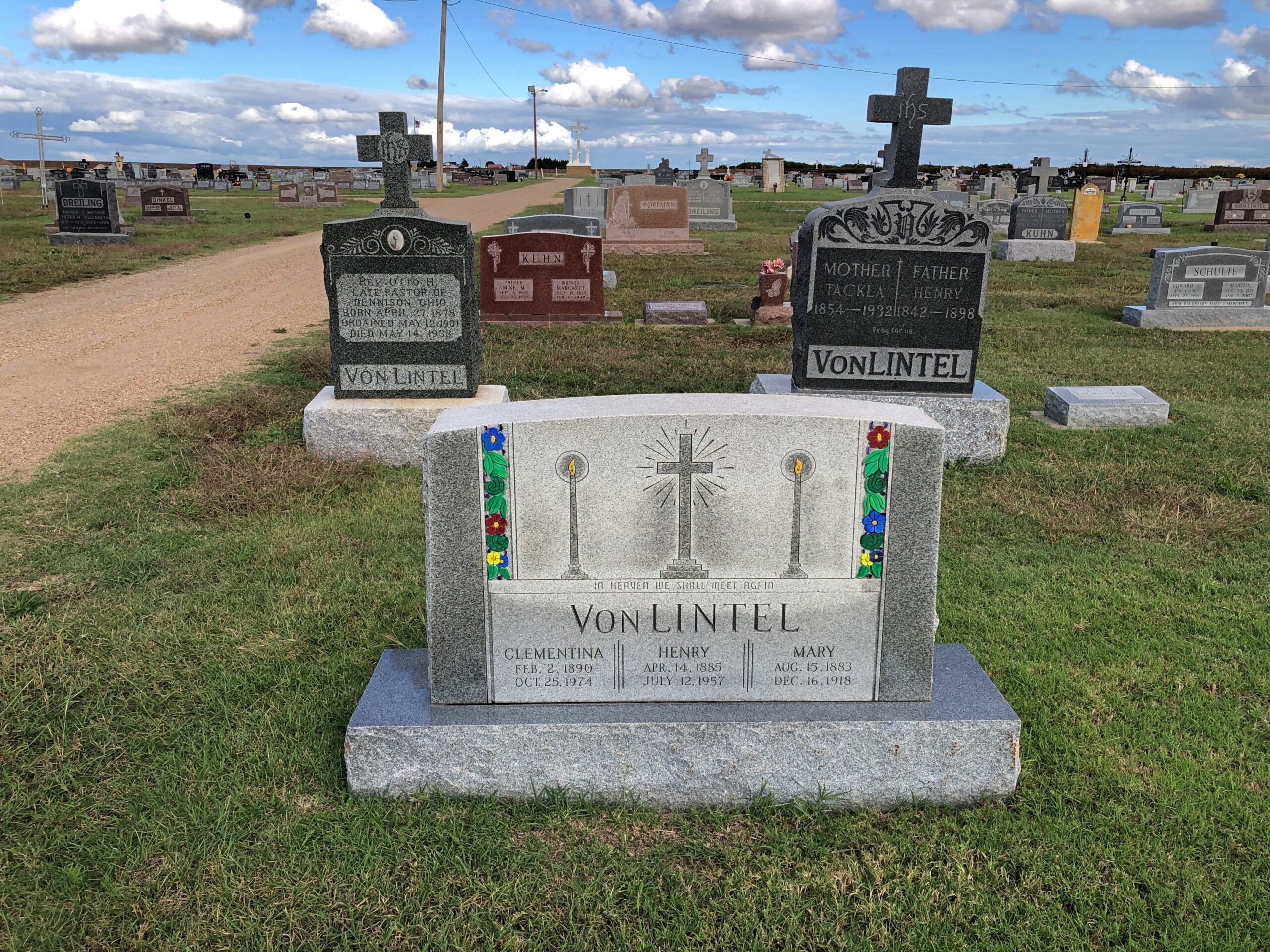
A good variety of memorials in a nice setting, even if the land lacks contour and there’s no flora beyond grass and cut flowers.
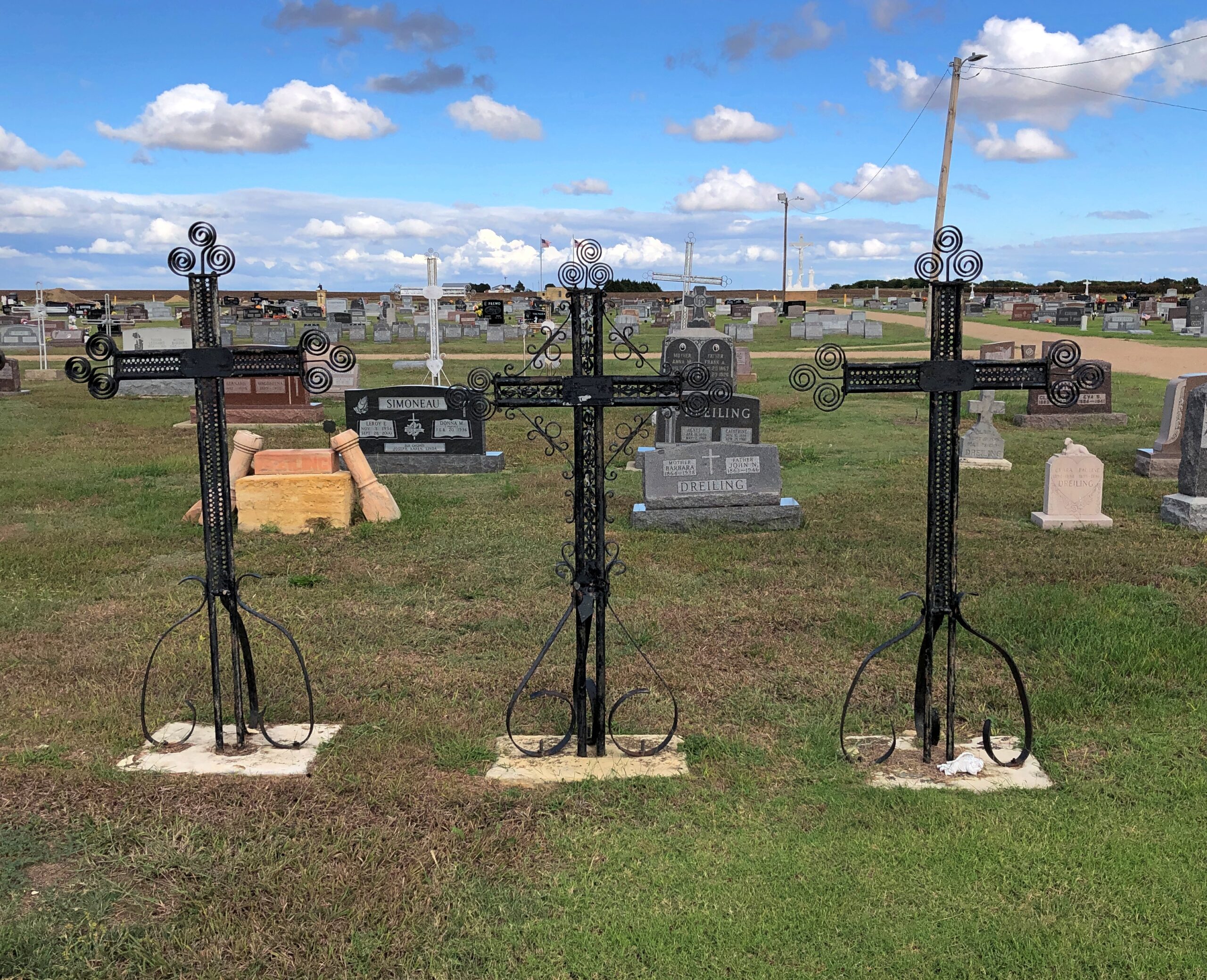
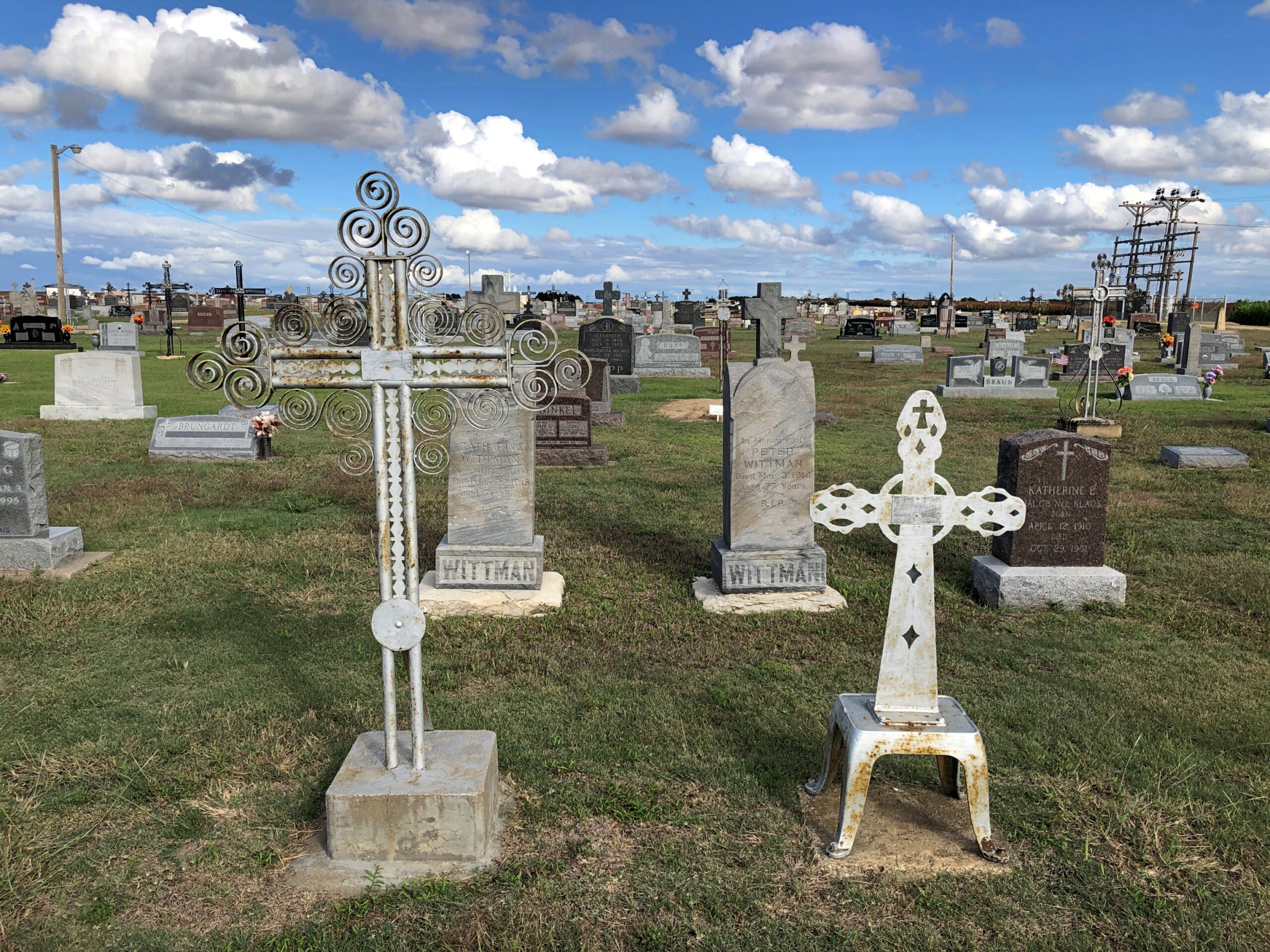
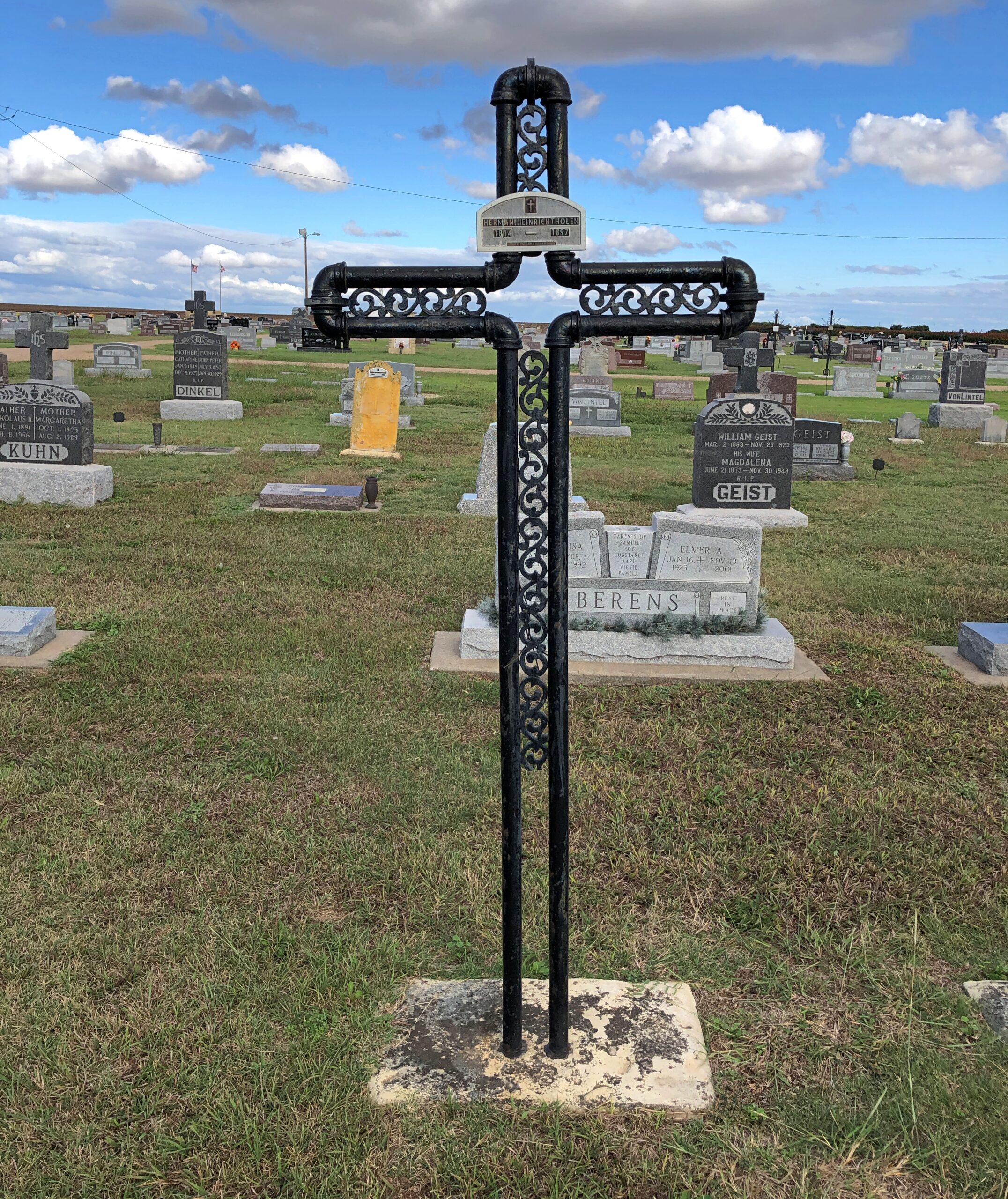
Then I started to notice iron crosses.
A lot of them. That called for further investigation, and it wasn’t long before I found out that Volga Germans were known for their wrought-iron crosses.
“German-Russian blacksmiths began making wrought-iron crosses in North Dakota as early as 1884,” says an article posted by North Dakota State University. “The hand-made crosses were most prevalent in central North Dakota from the late 1880s to about 1925, when marble and granite became more popular for grave marking. Most wrought-iron crosses appear in Catholic graveyards, although a few of these markers are also found in German-Russian Lutheran graveyards.”
The article talks of their crosses in North Dakota, but notes that they are also found in the “Northern Plains.” Such as Kansas, apparently.
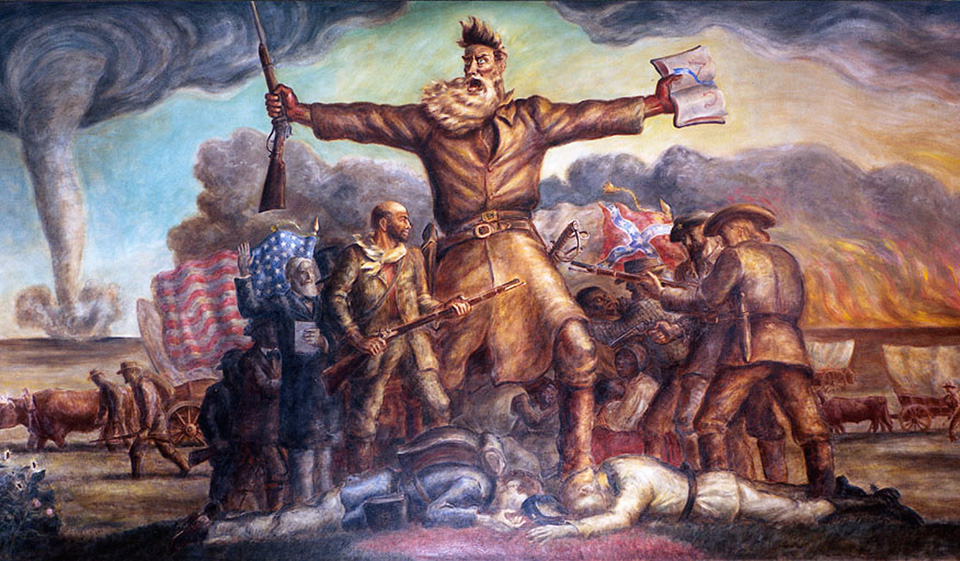
One fine day in the Kansas State Capitol last month, I turned a corner and found myself looking up at Old Testament John Brown. Larger than life, as he has loomed these 160+ years.
The mural, actually called “Tragic Prelude,” is more than 11 feet tall and 31 feet long, taking up an entire wall in the capitol. The lighting isn’t particularly good for taking images of the whole work – a ceiling light in particular washes out much of John Brown’s (let’s say) emphatic expression. Luckily, the image seems to be in the public domain.
A plaque under the mural says:
Sponsored by Kansas Press Association, aided by Kansas school children, these murals were painted in 1940-41 by John Steuart Curry, who was born near Dunavent, Kansas. In John Brown’s outstretched left hand is the word of God. In his right, a “Beecher’s Bible.” Beside him, facing each other, are contending Free Soil and Pro-Slavery forces.
The plaque does not say that the many members of Kansas legislature hated the painting at first, and refused to hang it in Curry’s lifetime (he died in 1946). Curry had had the temerity to depict Bleeding Kansas, by far the most interesting period in the history of the territory and state; the interesting times no one wants to live through. Maybe they thought it glorified John Brown — which it half way does, but with more than a tinge of madness in him as well. Bottom line, the work apparently didn’t sit well with those who might have wanted a Kansas of doughty farmers and hardy pioneers and fertile landscapes.
Eventually, to its credit, the legislature did have the work installed. Whatever you think of John Brown, it’s a striking piece. I’d seen depictions of it, but either never knew or had forgotten that it hangs in the Kansas State Capitol, which made coming across it all the more memorable.
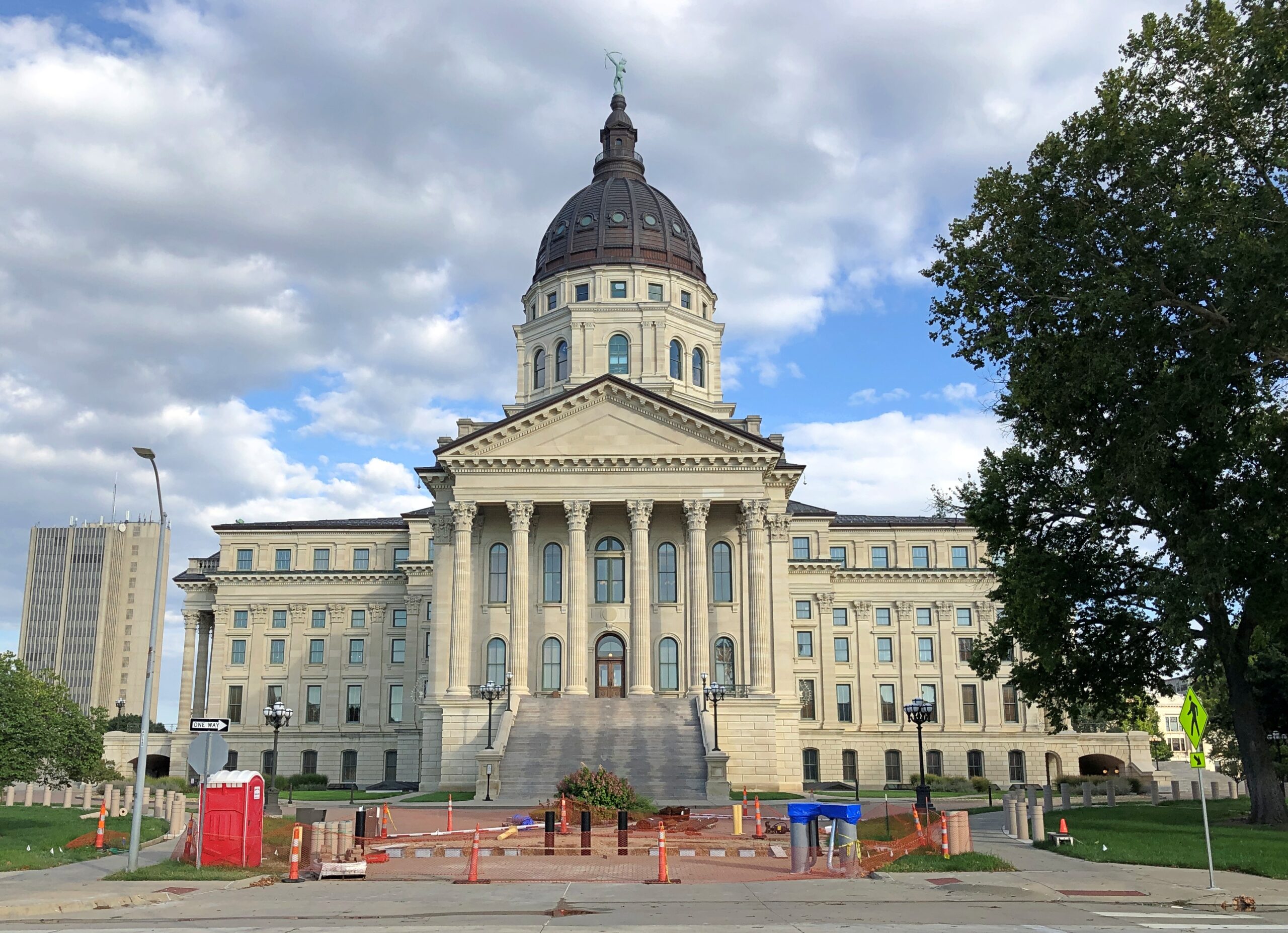
I almost missed it, having dawdled in Salina and Abilene for most of that day (September 24), but I made it to Topeka and the capitol about 30 minutes before it closed.
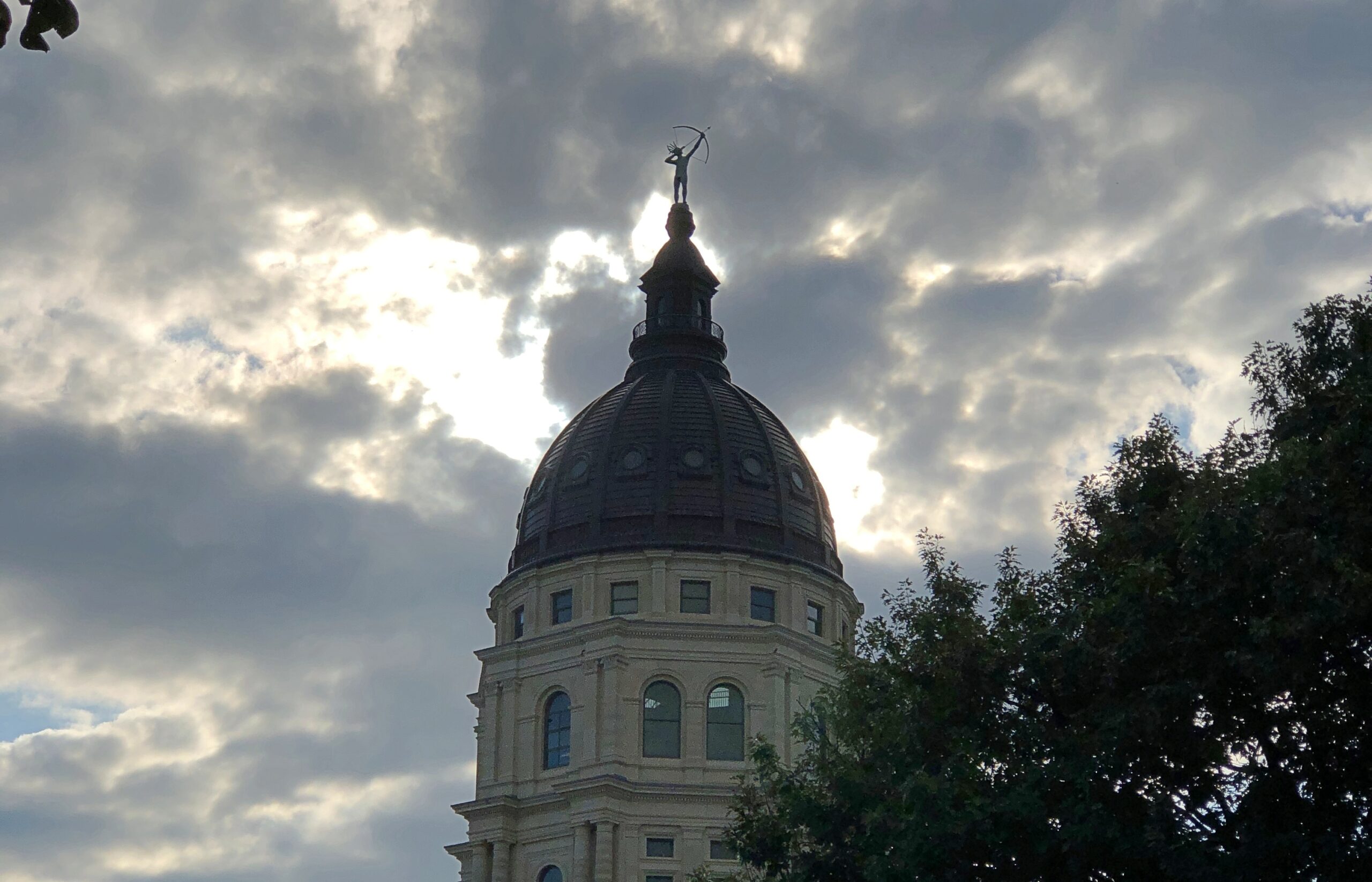
Like any number of monumental edifices, this one took time: construction finished in 1903 after 37 years in the works, not counting renovations or the comparatively recent addition of the 4,420-pound, 22-foot tall bronze “Ad Astra” on top of the dome, which was in 2002. The figure is an acknowledgment of the Kaw Nation (Kansa), who lent their name to the state.
Architect E. Townsend Mix (d. 1890) designed the capitol, though he didn’t live to see its completion. Most of his work is in Milwaukee, where he lived the longest, including St. Paul’s Episcopal in that city.
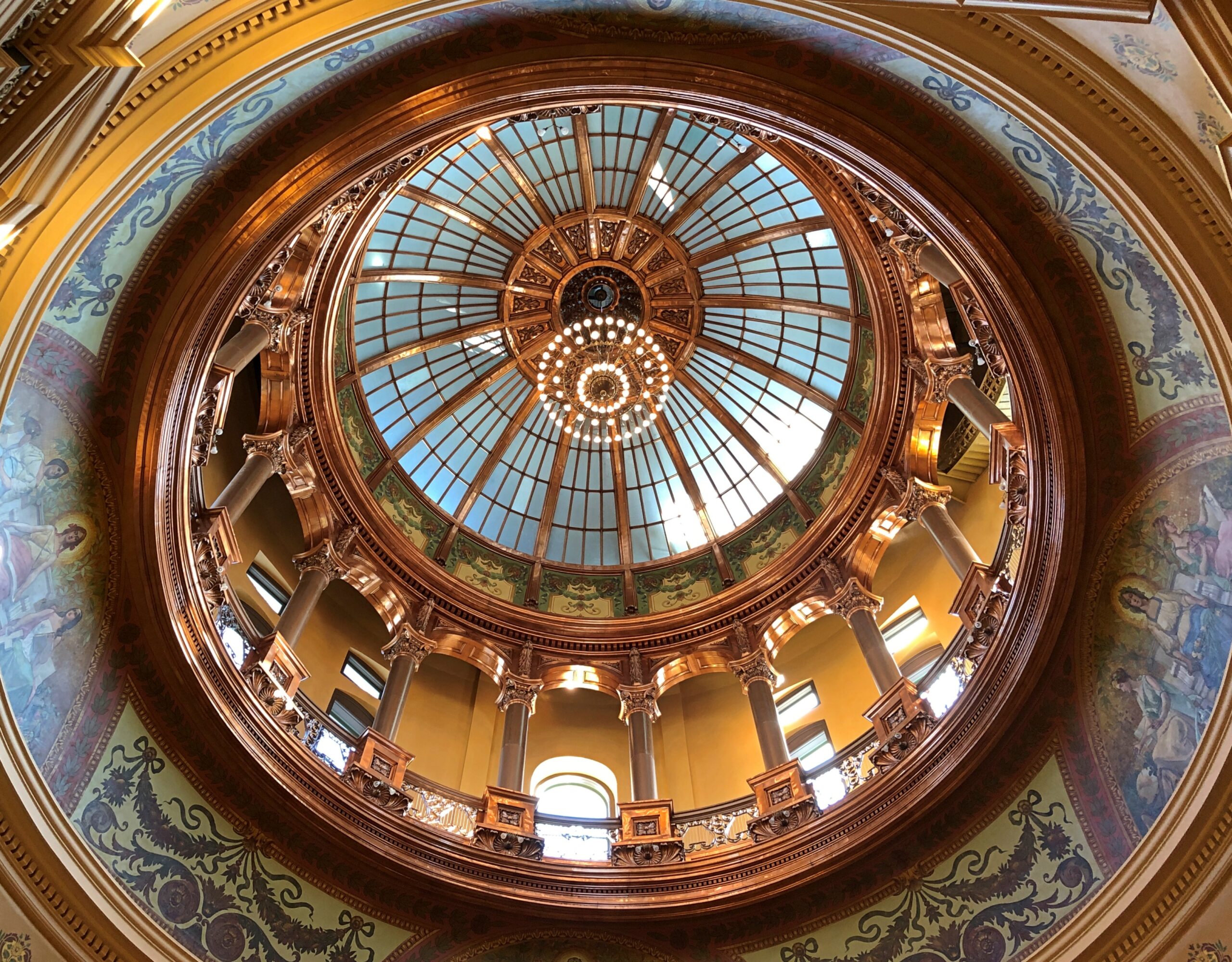
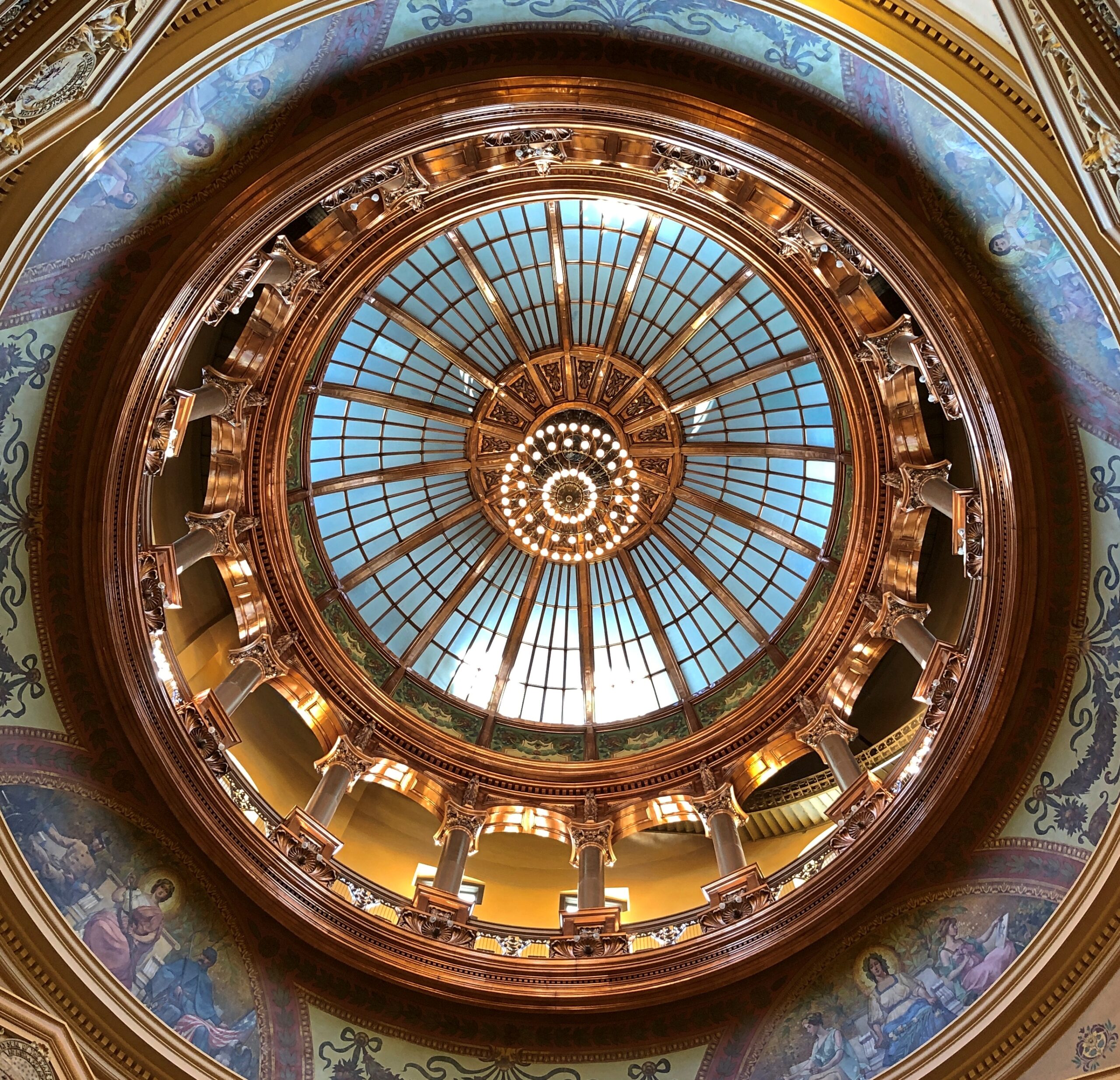
A fine dome.
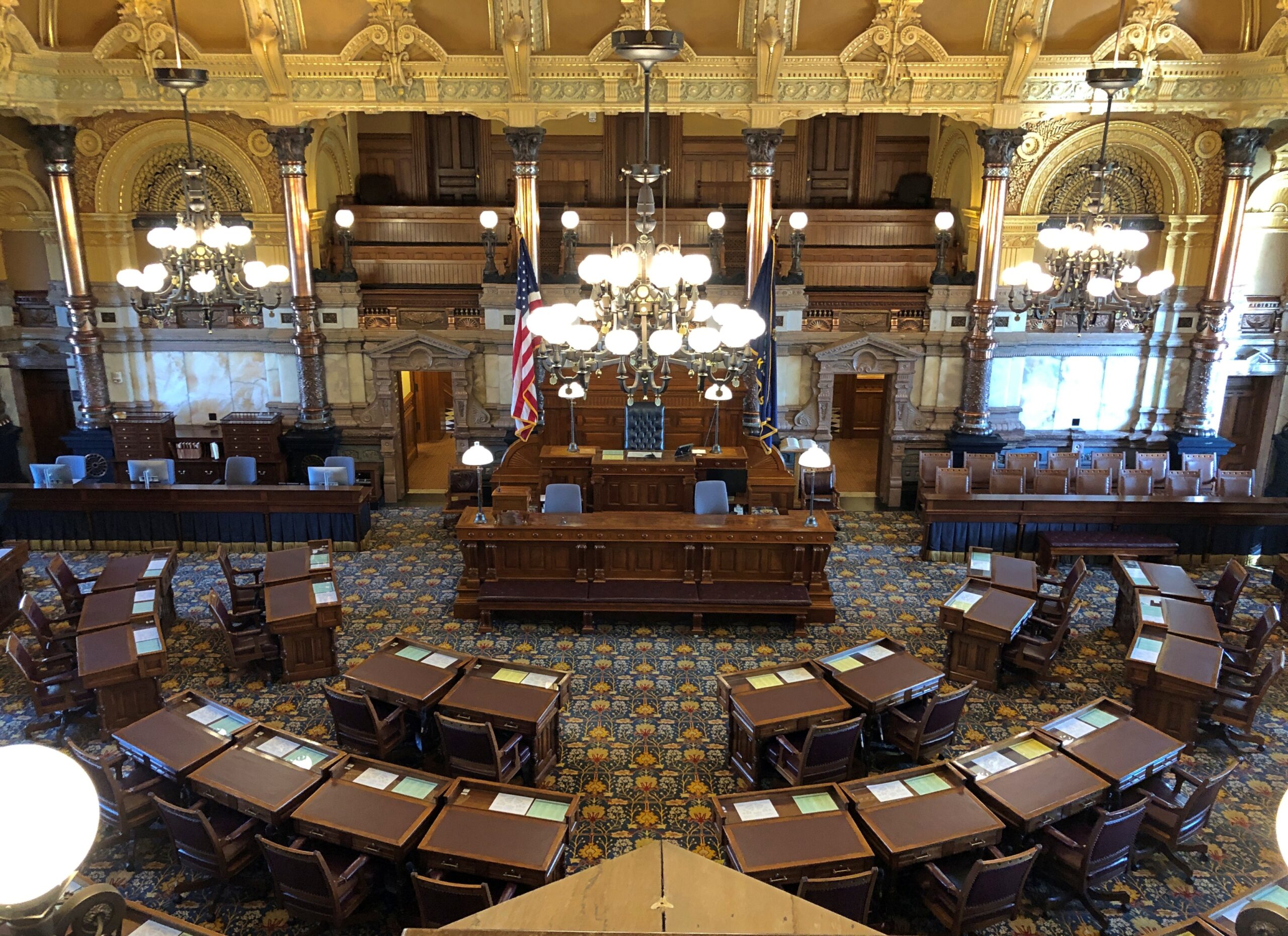
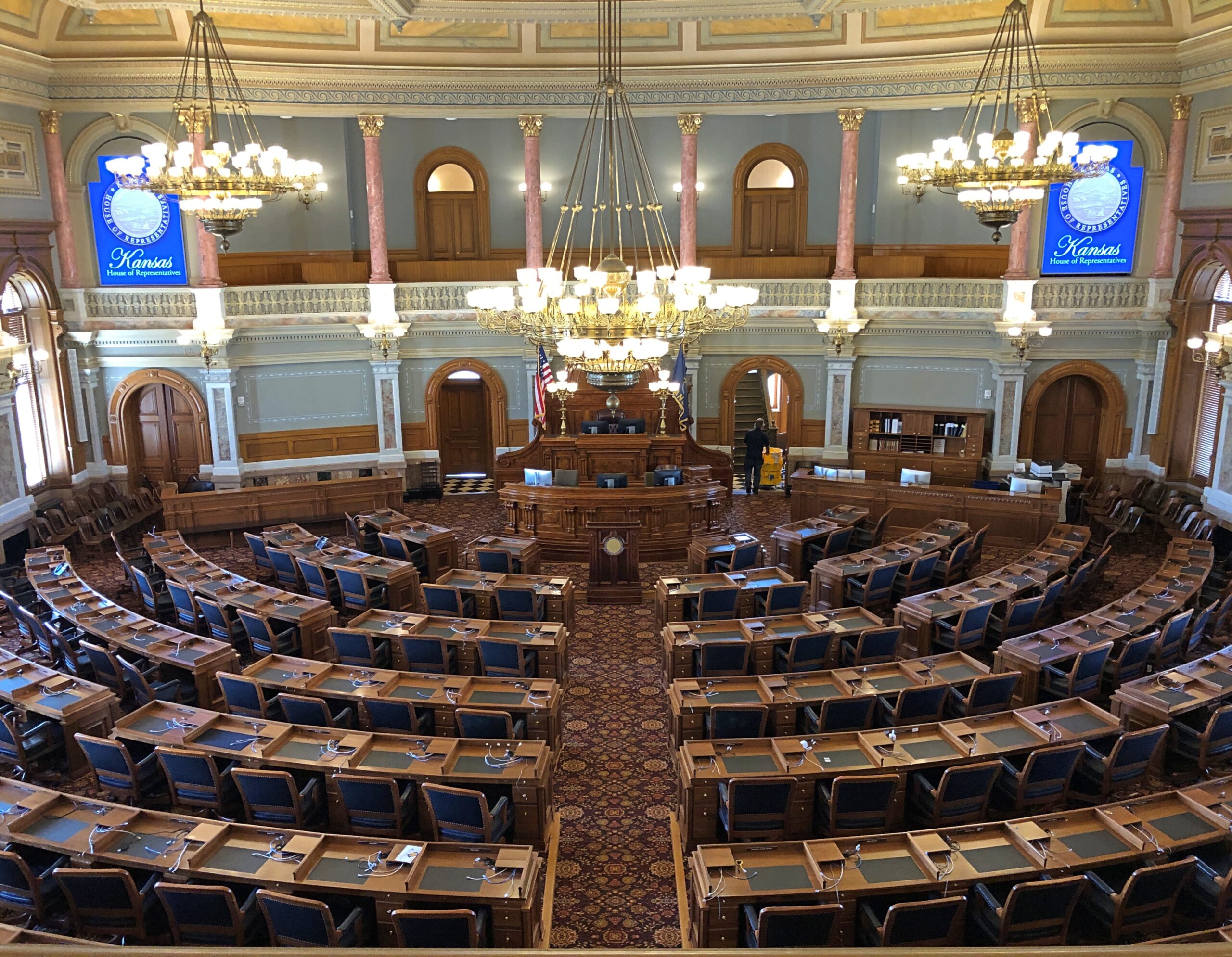
Well-appointed chambers.
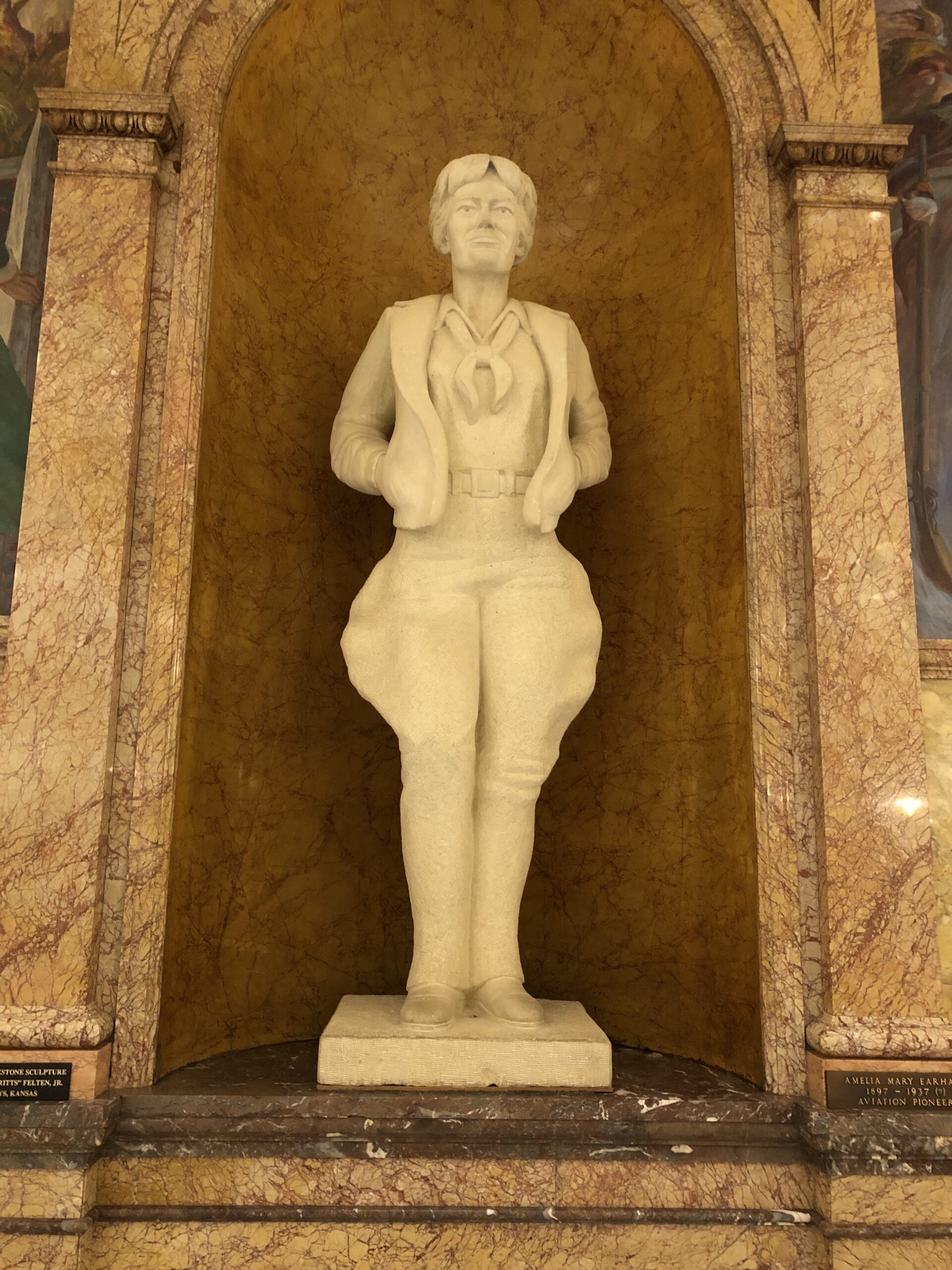
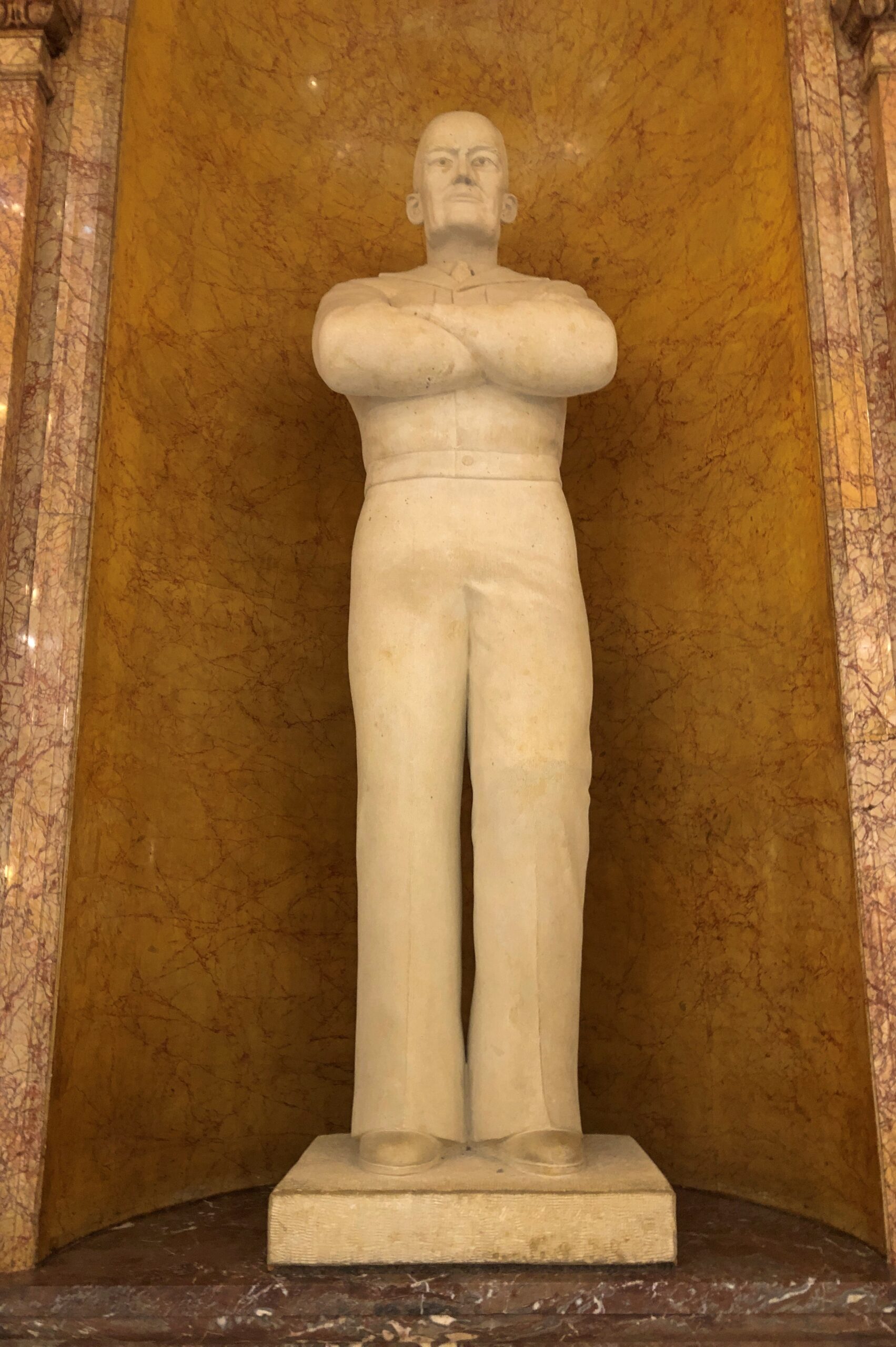
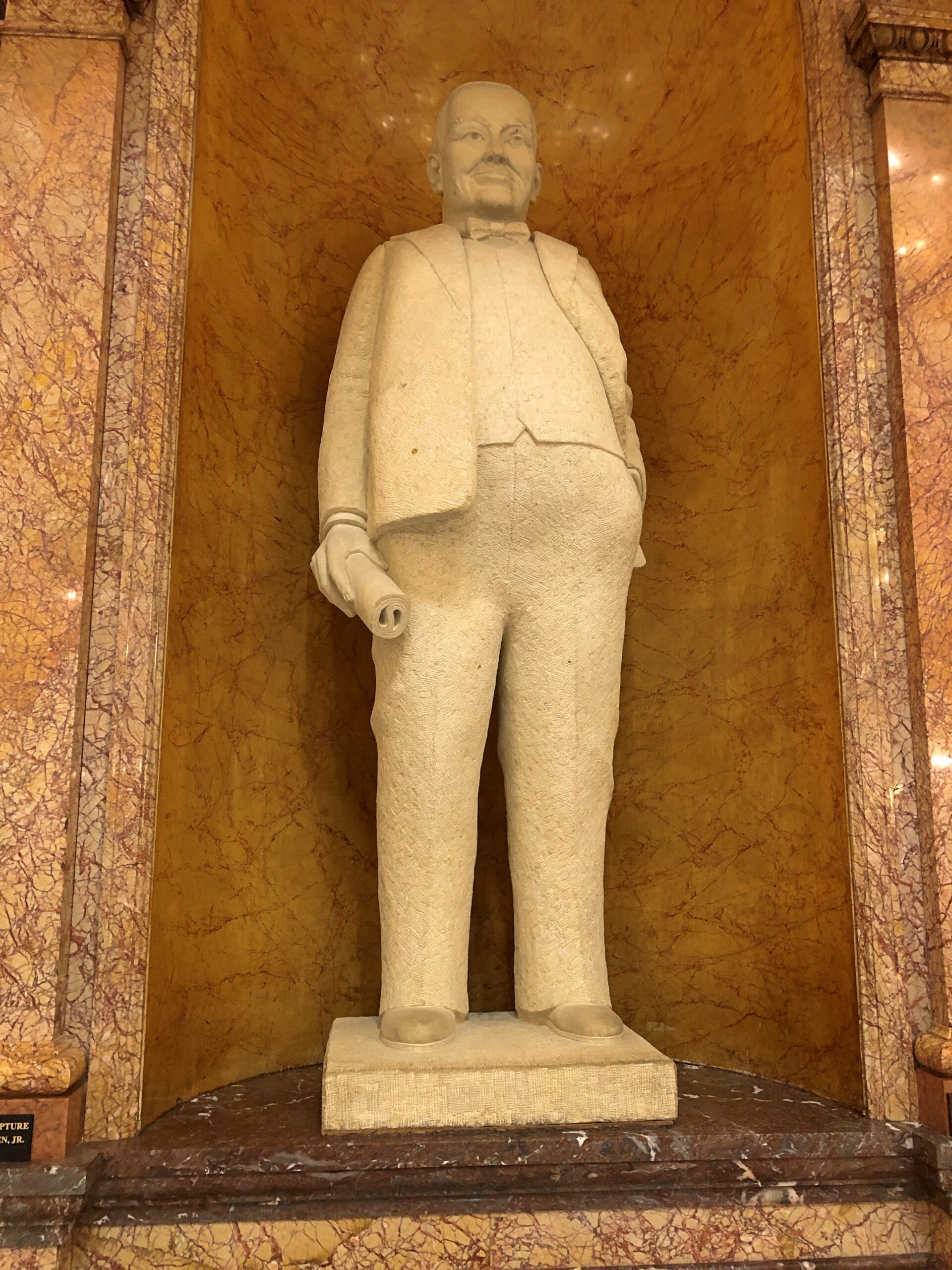
The capitol interior is fairly art-intensive. Not all capitols are. For instance, there are limestone statues in large niches — native limestone, a sign says — of famed Kansans, by Peter “Fritts” Felten Jr. of Hays, Kansas. Such as one of the aviatrix from Atchison.
Amelia Earhart is immediately recognizable, which is no mean feat for someone who is (very likely) been dead for nearly 90 years.
This figure is also more-or-less recognizable – though a depiction of him that’s a little strange, looking for all the world like Mr. Clean. Only a little like that Ike fellow on an Eisenhower dollar.
The fellow below’s fame has, I’m afraid, shriveled up like a balloon that lost its helium: William Allen White (d. 1944) Probably not even known in Kansas any more, since he was a noted journalist, a profession whose posthumous fame tends to be brief. Editor, Pulitzer Prizewinner, his plaque says. A Progressive Through-and-Through, it does not say. That might not play in Kansas at the moment.
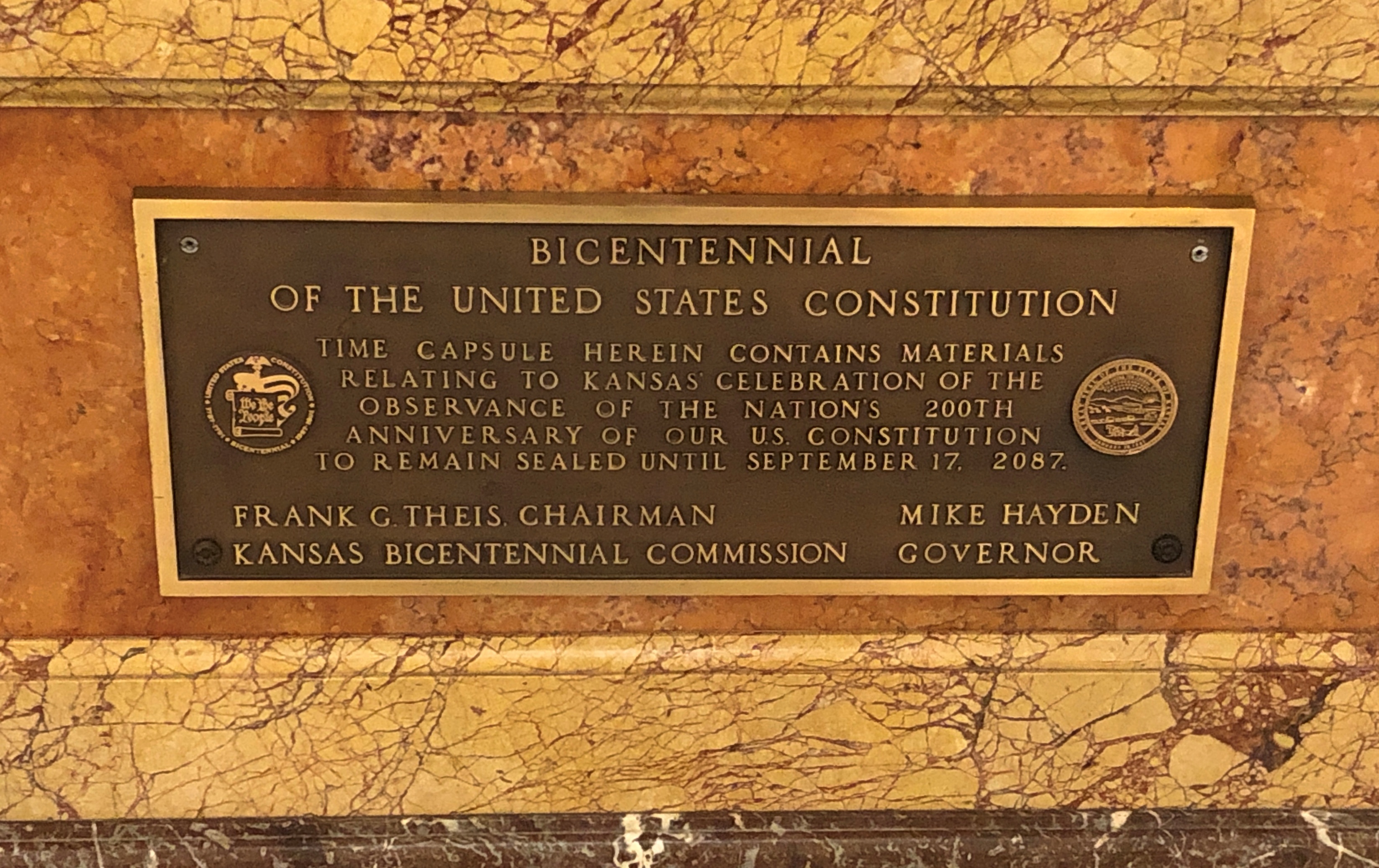
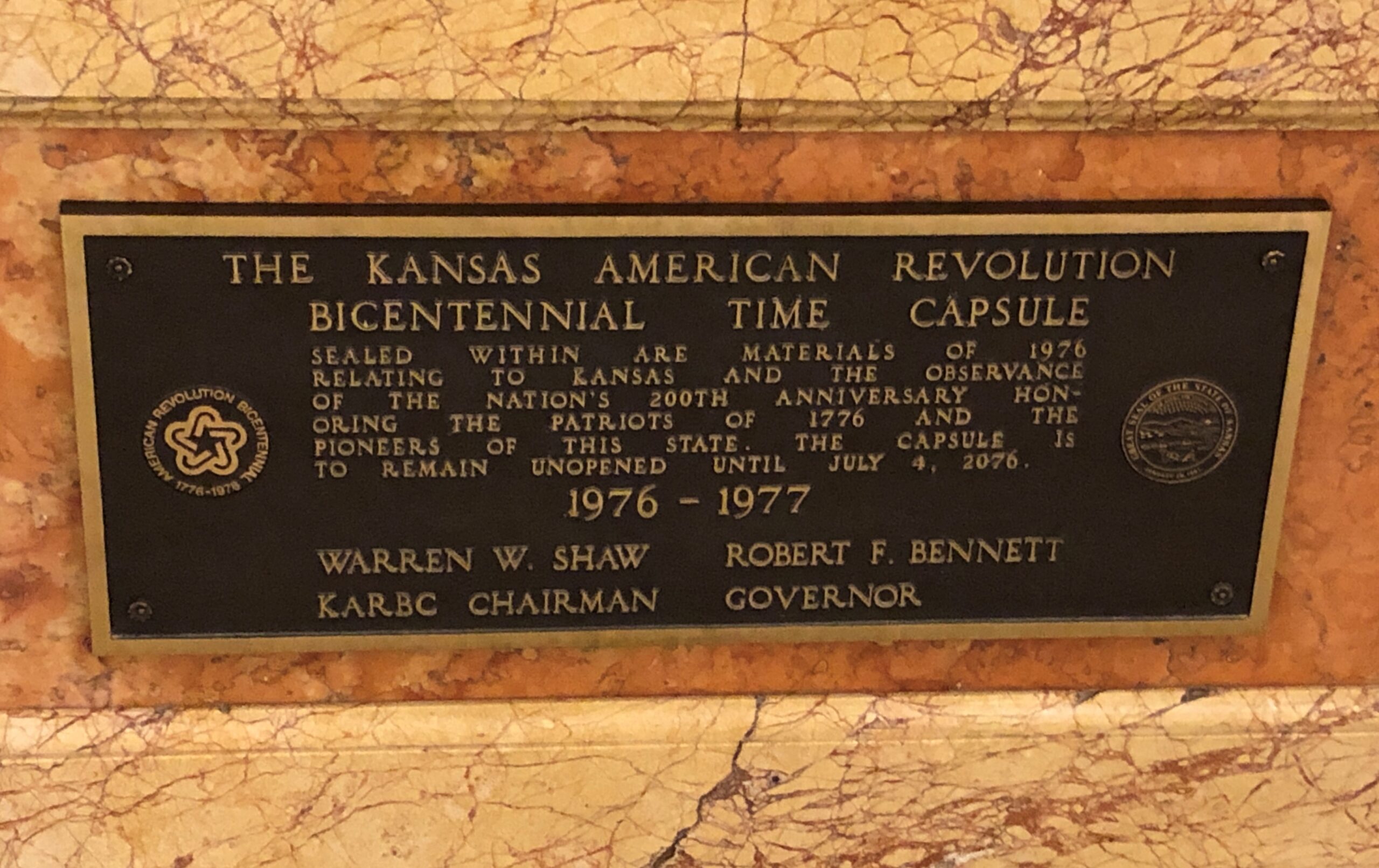
Not one, but two time capsules reside with the capitol walls. At least two that I saw.
This is a digression, but one thing still leads to another on line, and I came across a list published in 1991 by the International Time Capsule Society: “10 Most Wanted Time Capsules.” That is, a list of time capsules whose location had been lost and thus were (up till then) unrecoverable. The page notes that two have been found over the last 30+ years, but eight are still beyond the ken of man. Such as:
MIT Cyclotron Time Capsule.
In 1939 a group of MIT engineers placed a brass capsule beneath an 18-ton-magnet used in a brand new, state-of-the-art cyclotron. The capsule was to be opened in 50 years but was not. No one remembered the time capsule was there (the cyclotron had long since been deactivated). But when reminded of its existence, MIT was faced with another problem: how do you get a time capsule out from under a 36,000-pound lid?
Bicentennial Wagon Train Time Capsule.
This capsule was supposed to hold the signatures of 22 million Americans. But on July 4, 1976, when President Gerald Ford arrived for the sealing ceremony in Valley Forge, Pennsylvania, someone stole the capsule from an unattended van in the bicentennial wagon train. The capsule’s maker, the Reynolds Company, had broken the mold. The thief’s identity and the whereabouts of the capsule are unsolved mysteries.
Further investigation reveals that the whereabouts of the papers that Americans signed in 1976 – a good many pounds of it – mysteriously disappeared, and that theft from a van was one idea, though organizational misdirection sounds more plausible to me. To the same warehouse as the Ark of the Covenant, in other words. Anyway, there’s a 12-episode streaming service comedy in that incident.
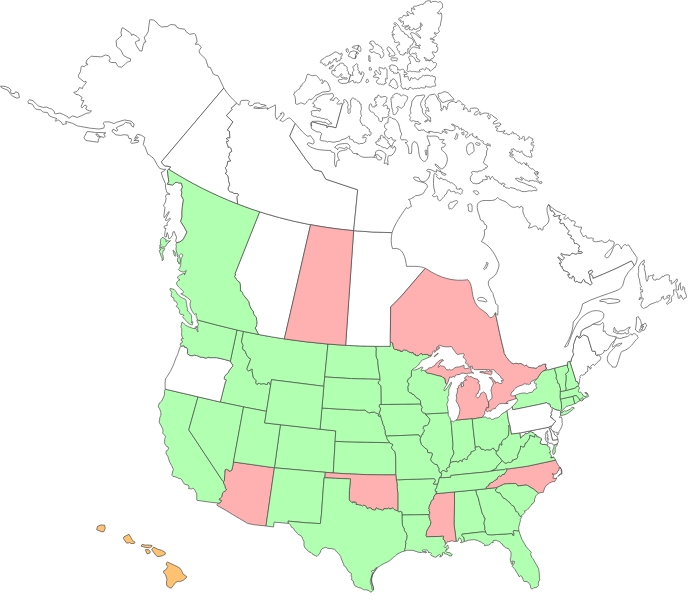
Back to capitols. It’s now easier to keep track of the ones I haven’t seen than otherwise.
Green for an interior visit, orange for exterior only, gold representing uncertainty, and white no visit.
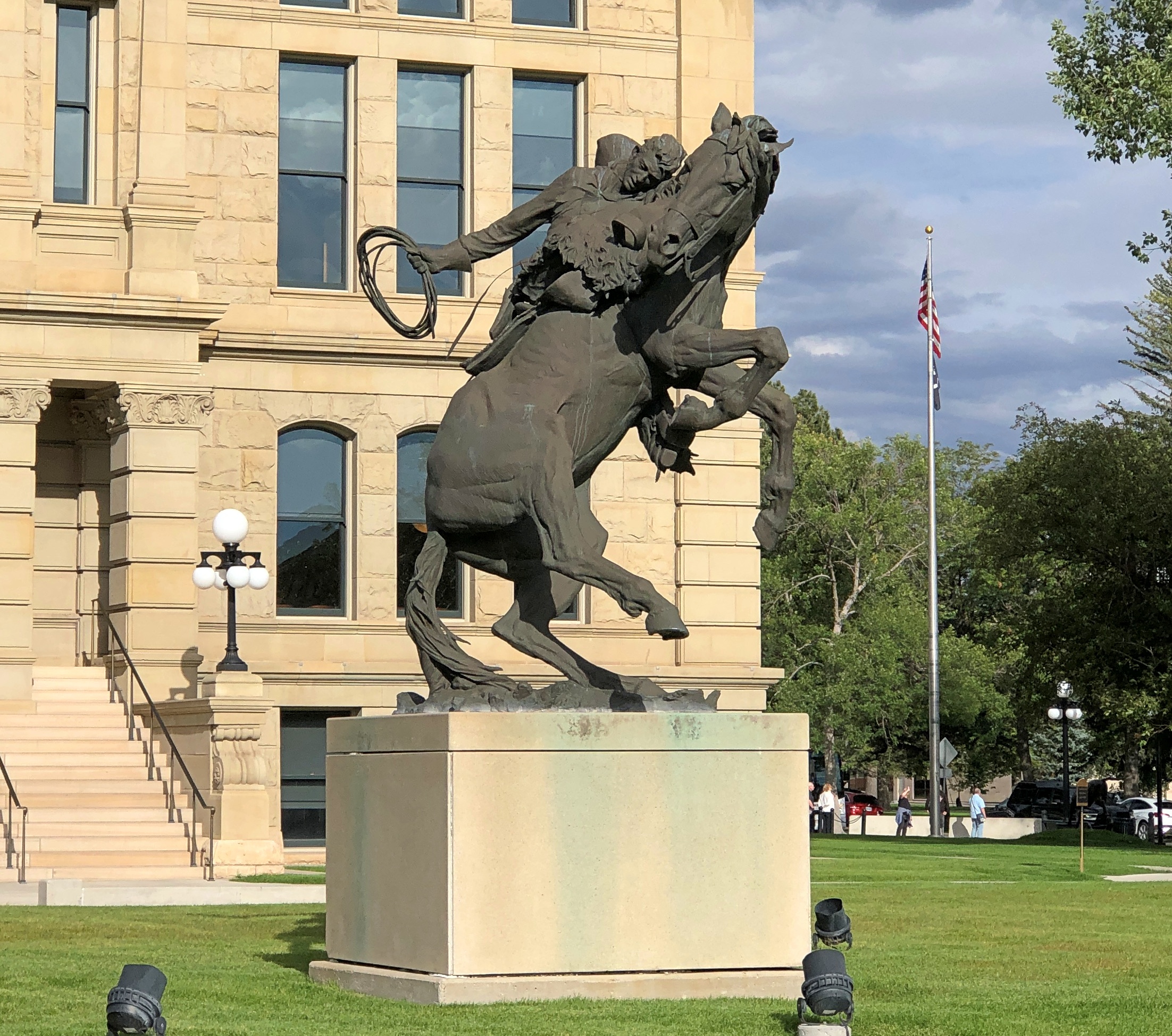
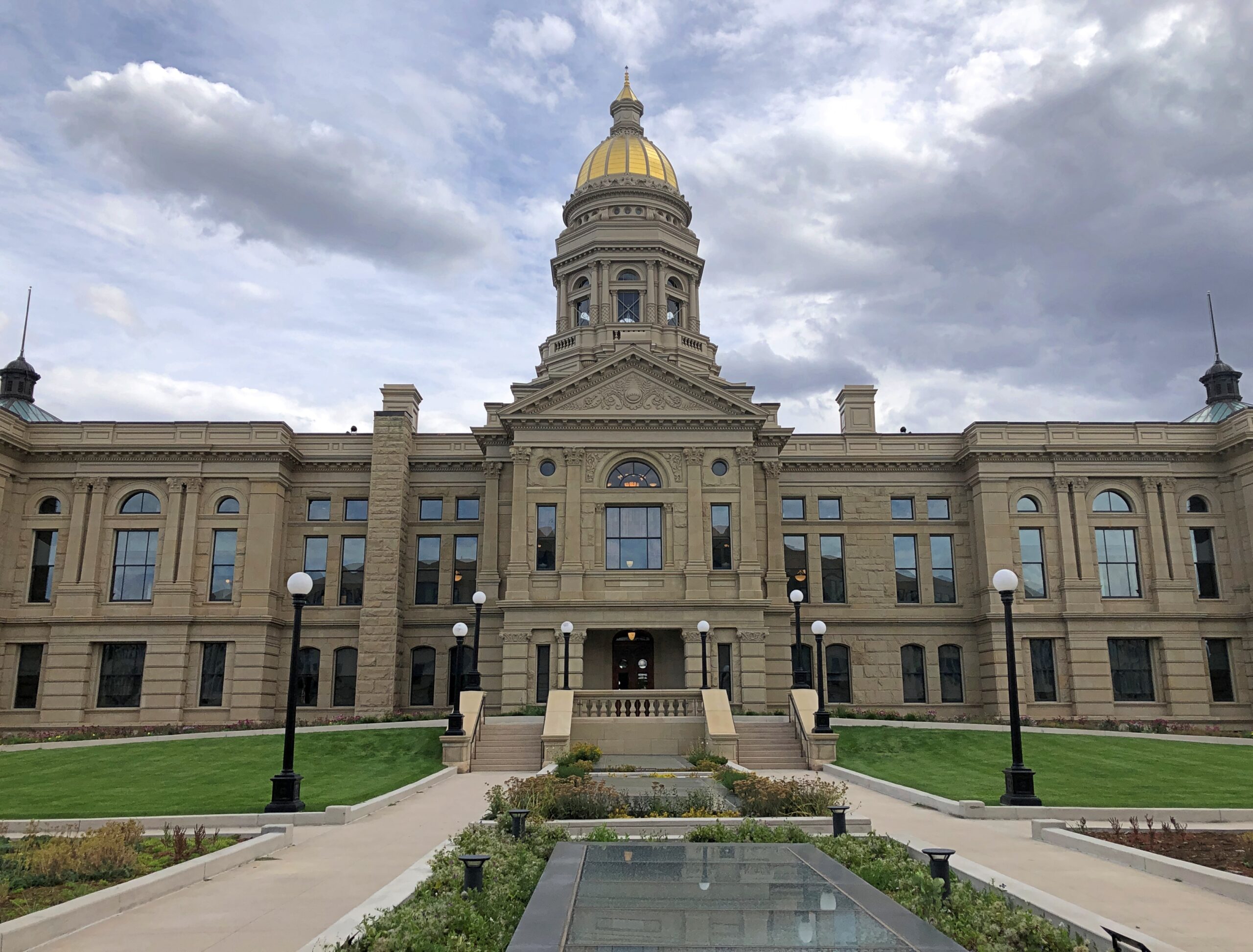
No skeletons were to be found at the Wyoming State Capitol last month, but you can hardly expect too many bone collections on display at state houses. The state of Wyoming does, however, want to remind visitors that they are in Wyoming.
The work is called “Spirit of Wyoming,” and it stands on the capitol grounds, created by artist Edward J. Fraughton (d. 2024). The more I look at it, the more there is to think about. Which I suppose is at least one indication of a good work of art. So the Spirit of Wyoming involves the immediate risk of catastrophic injury by being thrown from a horse? Probably not what the legislature had in mind.
Rather, it might be the determination to hang on, no matter how much or madly the horse bucks. Especially in territorial and early statehood days, that sort of determination applied to a lot of Wyomingites, whether they were cowboys or not.
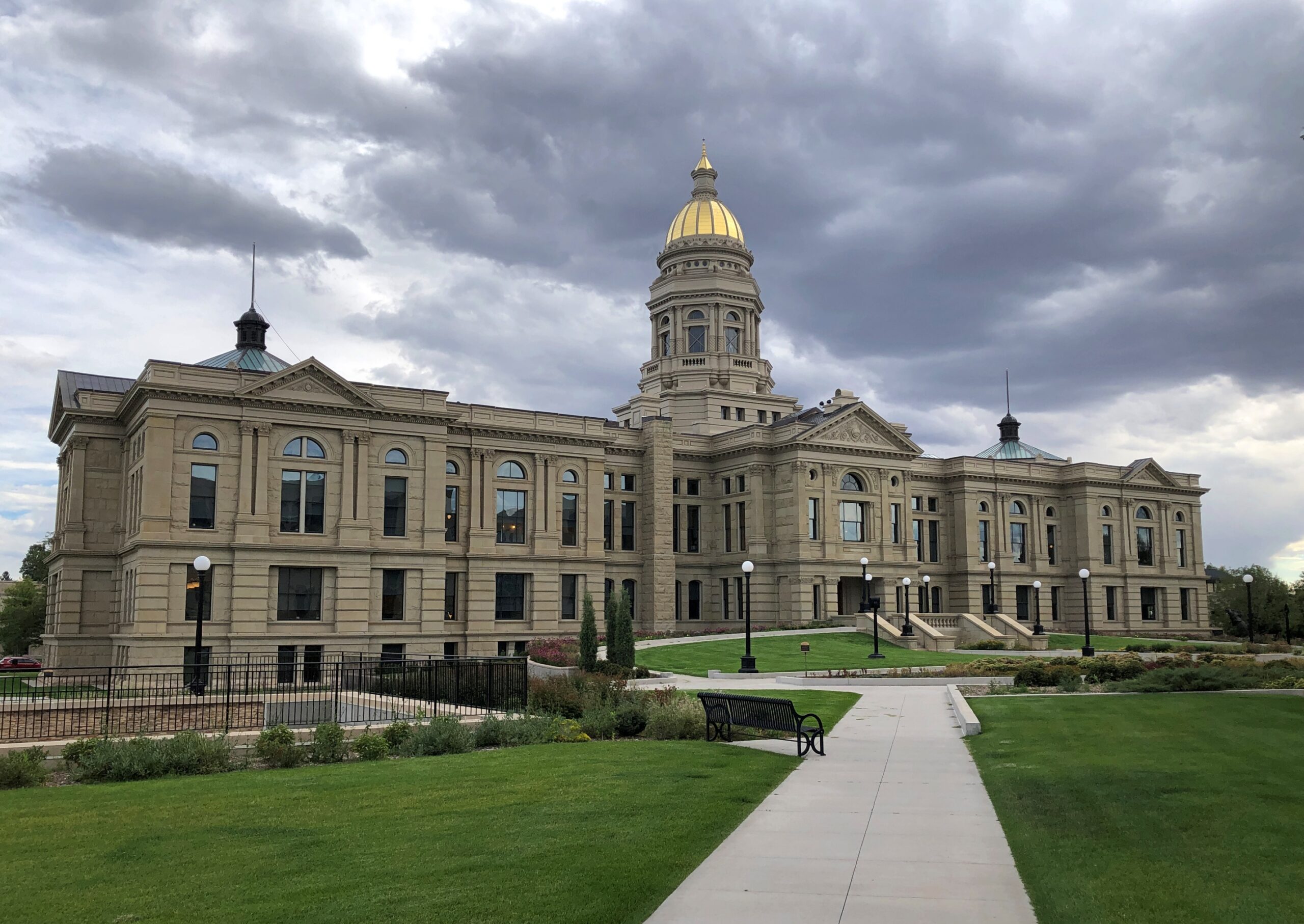
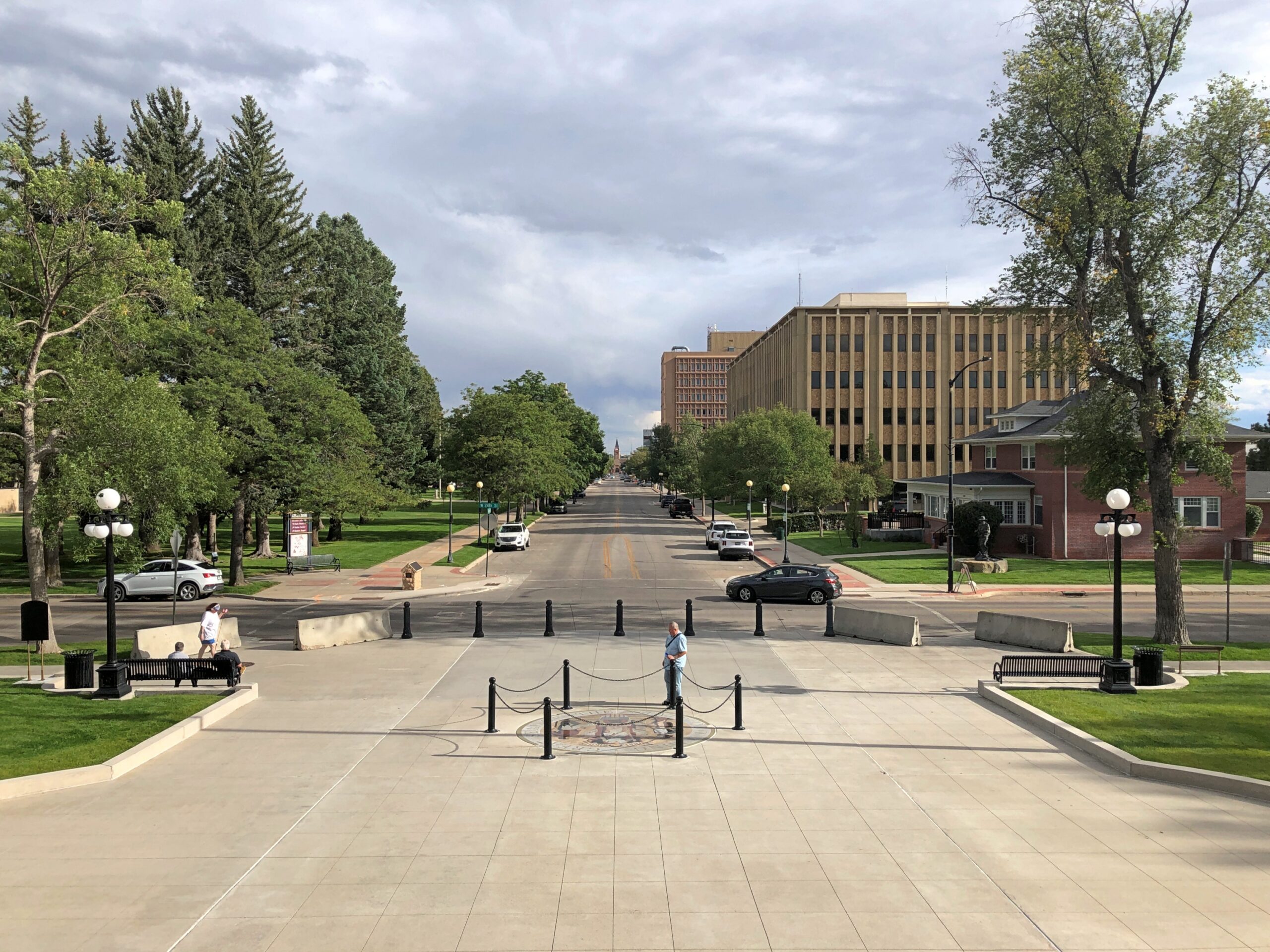
I had the opportunity to walk all the way around the capitol after arriving on the cloudy but warm afternoon of September 8.
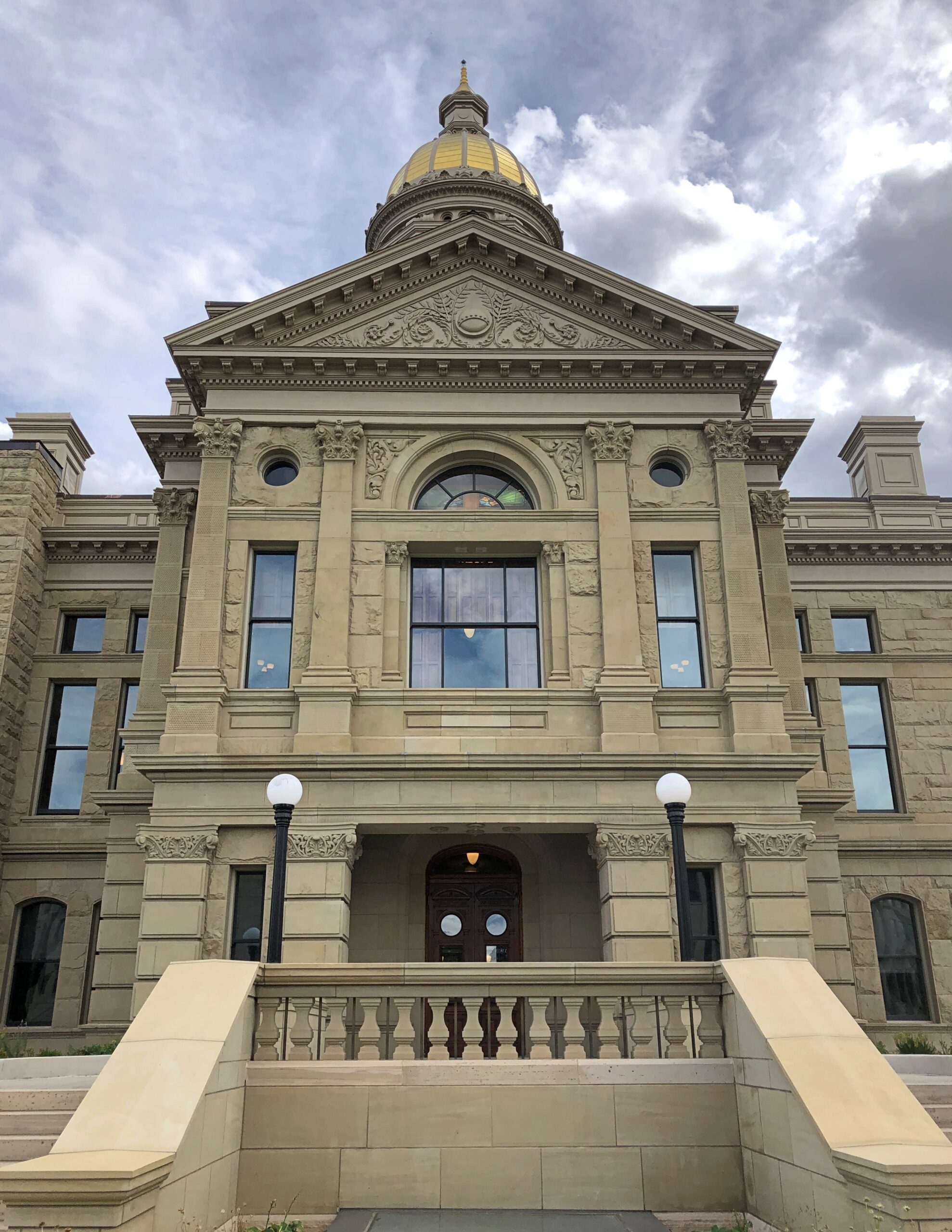
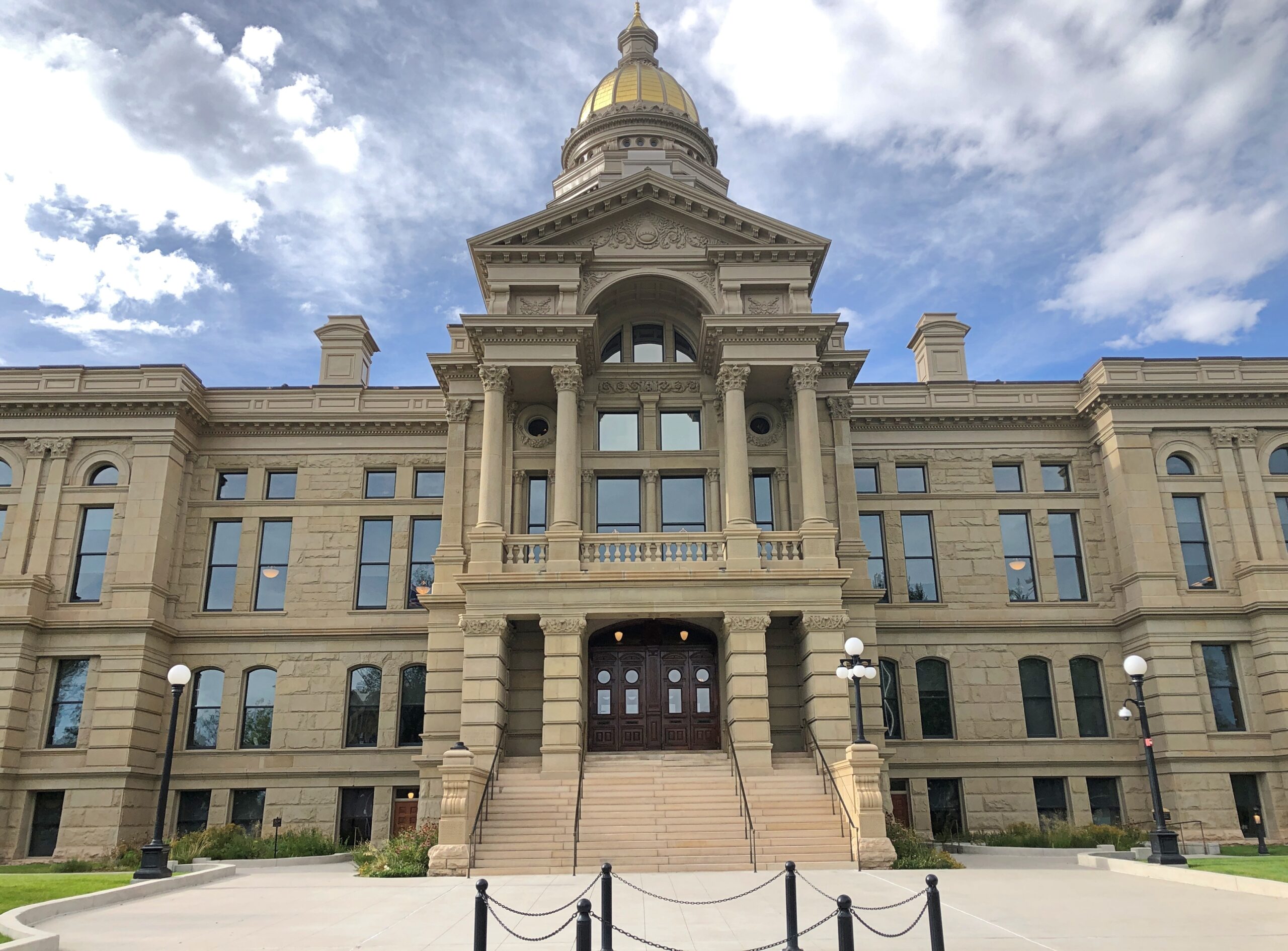
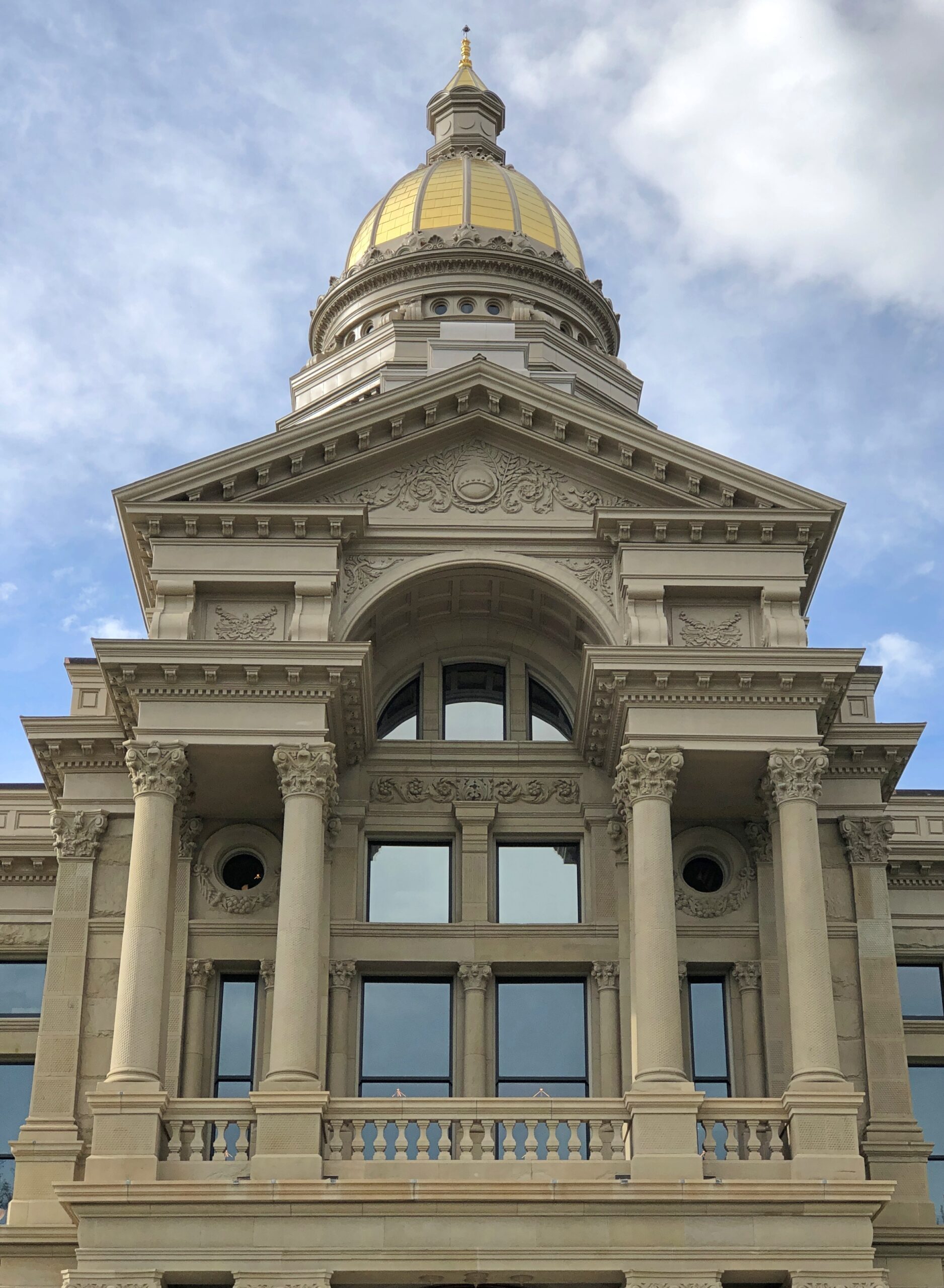
Golf leaf on a copper dome. Gold probably because it’s gold, not because Wyoming has ever produced that much. As of 2025, the state isn’t even among the top 10 all-time U.S. state producers.
I think this was the front.
It faces a long avenue. It was a Monday. Cheyenne isn’t, just yet, cursed with heavy traffic.
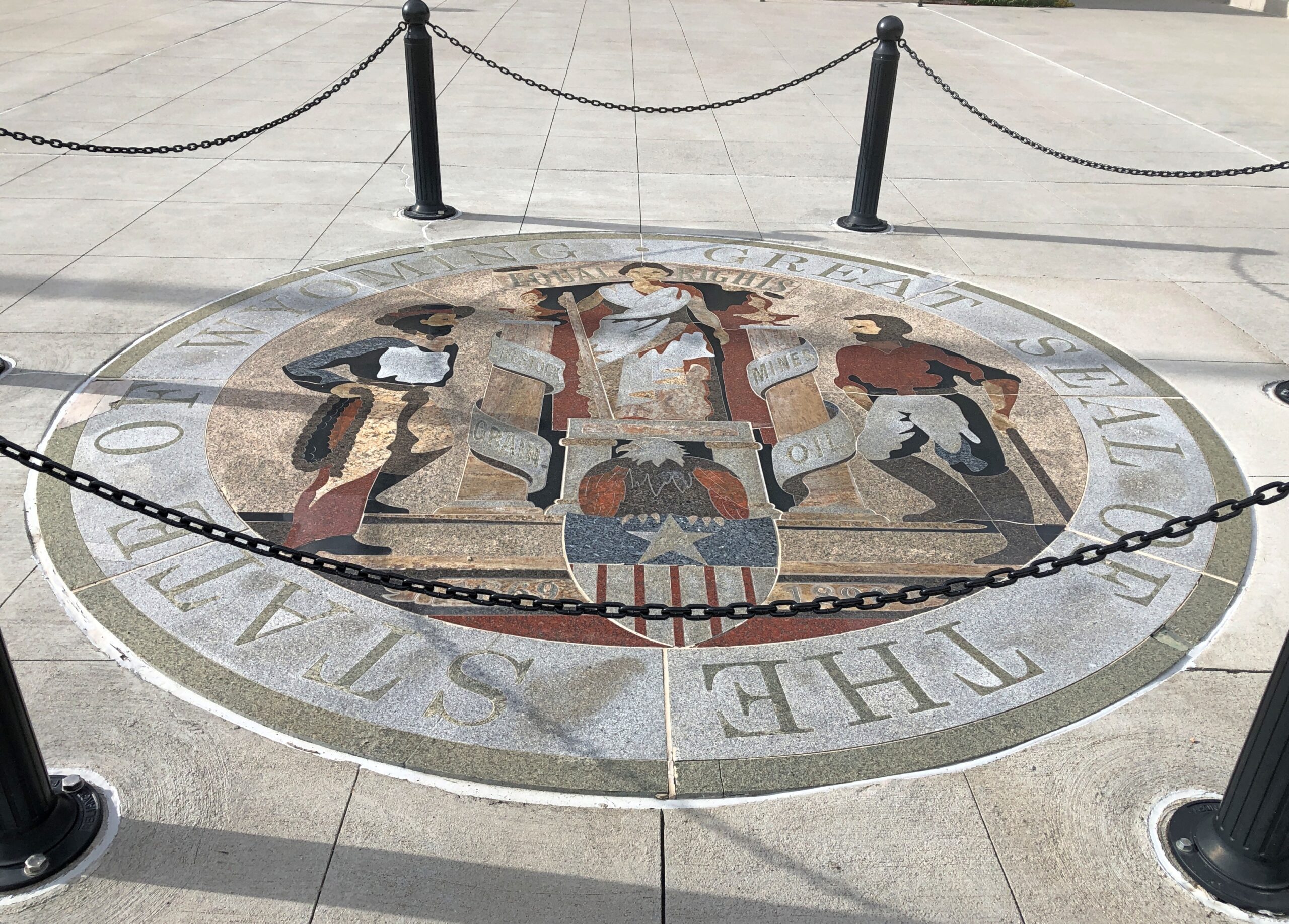
Also, the Wyoming state seal was to be found on that side of the building, in the sidewalk. Like in Virginia, except that you can walk on that one, like the slain tyrant it depicts. No treading on Wyoming.
Adopted in 1893, not long after statehood, and revised in 1921, the seal lists four sources of wealth and livelihoods, unusually (I think) for a state seal. They go with the cowboy and miner figures: livestock, grain, mines and oil. In our time, farming and mineral extraction, at least in terms of employment, are declining industries in Wyoming. Maybe the seal will be revised someday to include data centers, as they sprout in the Equality State.
On the other hand, Wyoming is still a major energy producer among the several states, especially when it comes to coal: 41.1 percent of the total nationwide (EIA stats), though national coal output is a much smaller pie – a dirty pie, to be sure – than it used to be. Also worth mentioning: a quarter of net electricity generation in the state is by renewables, roughly the same percentage as nationally. There is no nuclear power generation in Wyoming. When those data centers eventually get small modular reactors, that would change.
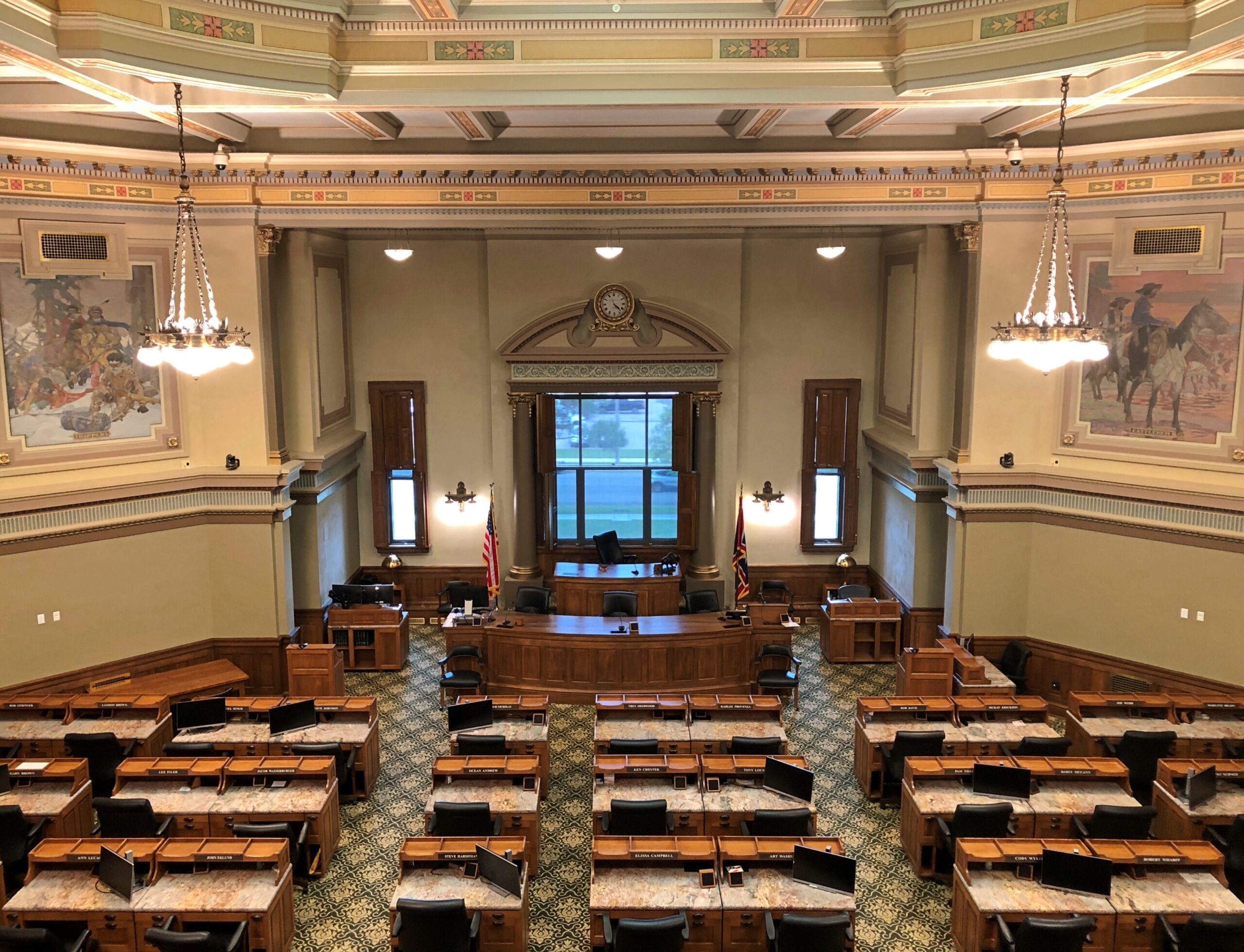
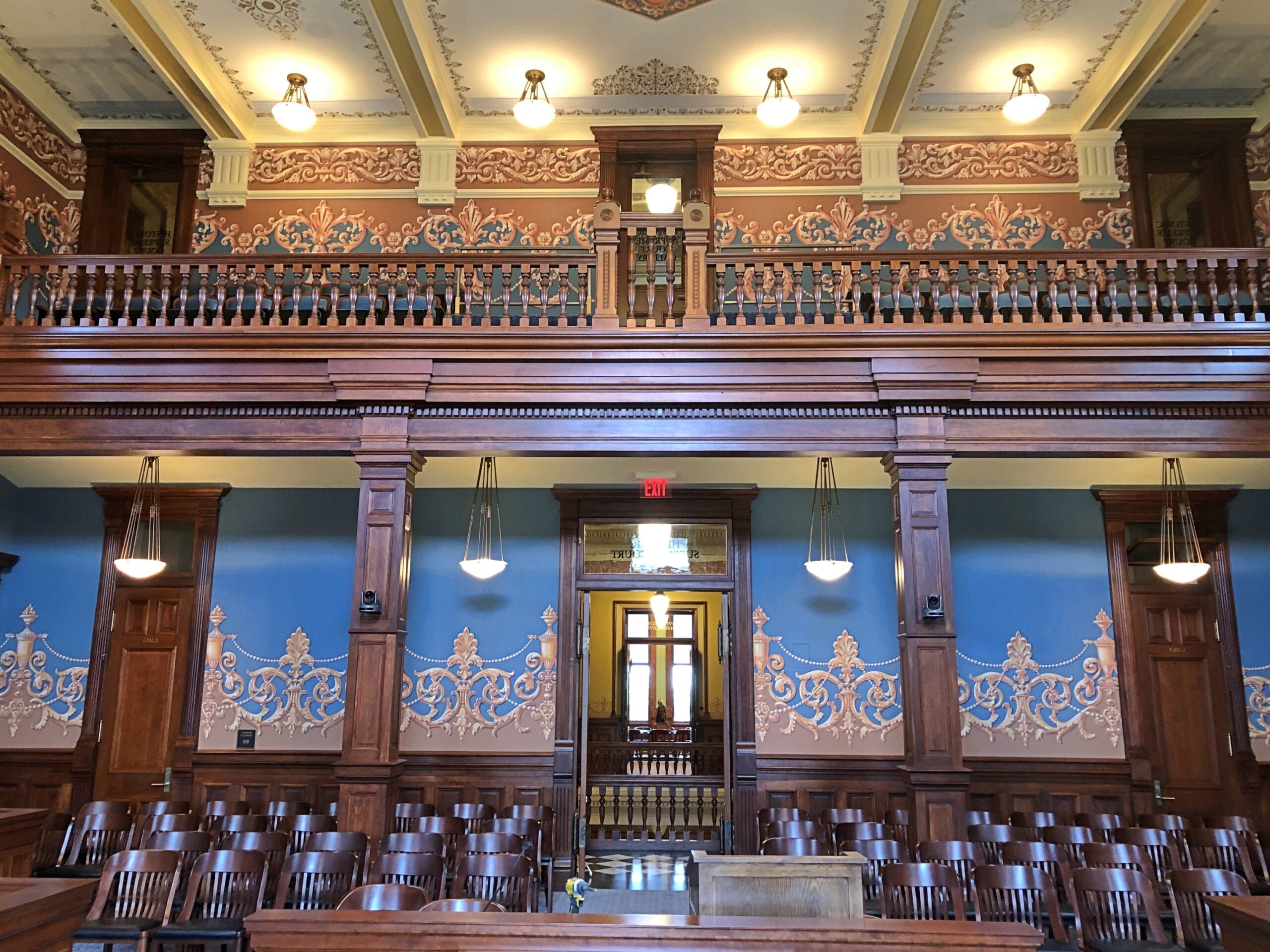
Another distinction of the Wyoming capitol is that work started on it before statehood, with ground broken in 1886. David Gibbs – later mayor of Oklahoma City, of all things – and the prolific William DuBois (a Chicago trained architect) did the design, one of restrained elegance.
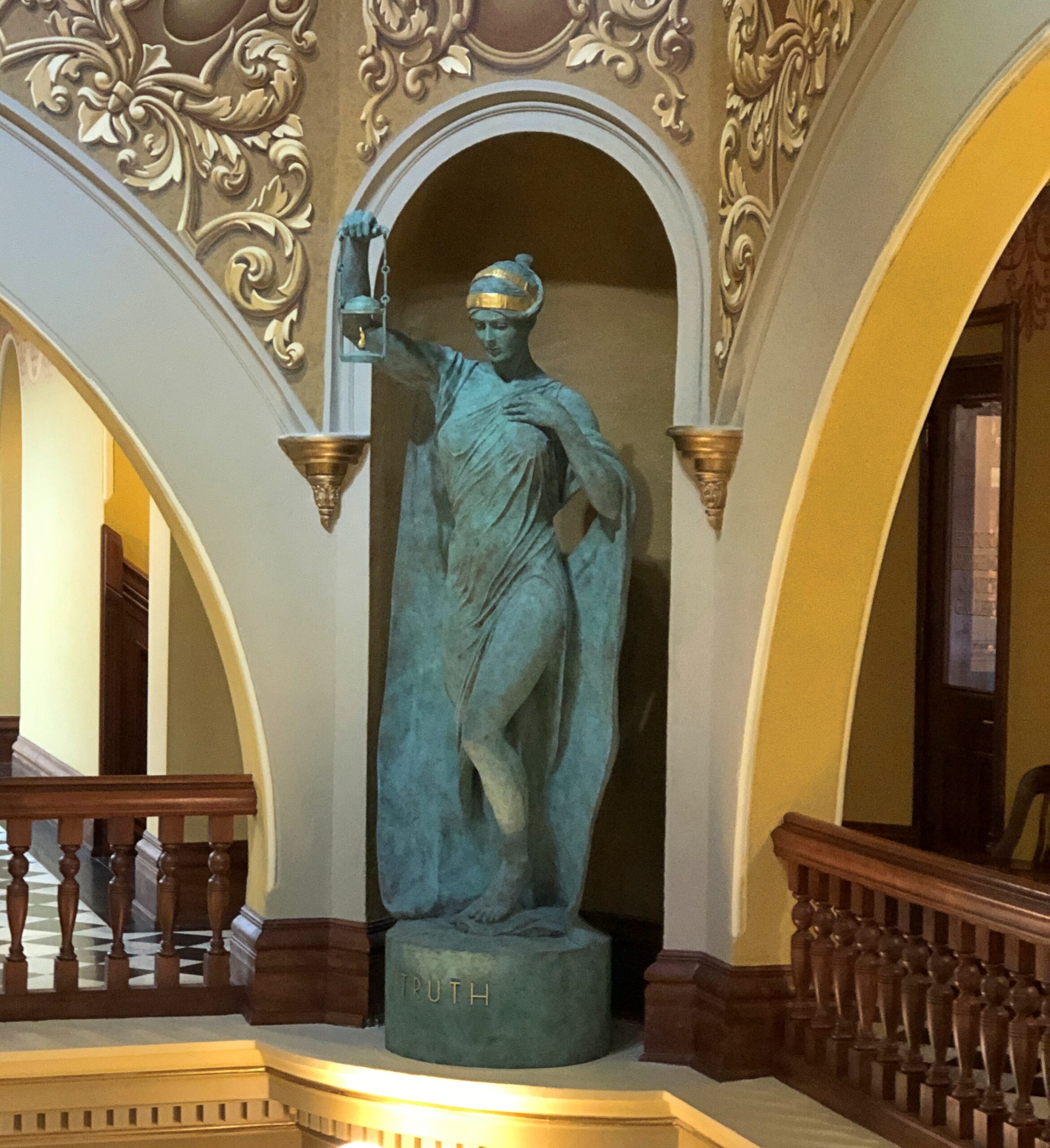
This is one of the four statues at the capitol known as the Four Sisters: Truth. The others are Justice, Courage and Hope.
Though they look vintage, their niches remained empty for 131 years “for reasons that remain unclear,” according to a sign in the capitol. In more recent times, the state tapped the mononymoussculptor Delissalde to fill the niches, and the works were unveiled only in 2019.
They’re way up there.
One more thing to note: a display in the capitol lauds the state – actually the territory – for its enfranchisement of women in 1869, the first place anywhere to do so. Why Wyoming? You could chalk it up to the toughness of frontier women, but certainly women in all the other 19th-century territories were plenty tough. The broader movement to expand the franchise was already underway, though early in the game – and from the sound of things in this article at least, the territory’s move was something of a retroactively happy result “for a large, strange mix of reasons.”
Think of the 50 state capitols as, collectively, a giant free museum of U.S. history, complete with grand buildings and a collection of artifacts with some consistent themes, such as images of elected officials, relics of war, and memorials to officially worthwhile individuals or causes. Some capitols explicitly have museum cases or whole museum floors, with a wide variety of stories and items from a state’s early years.
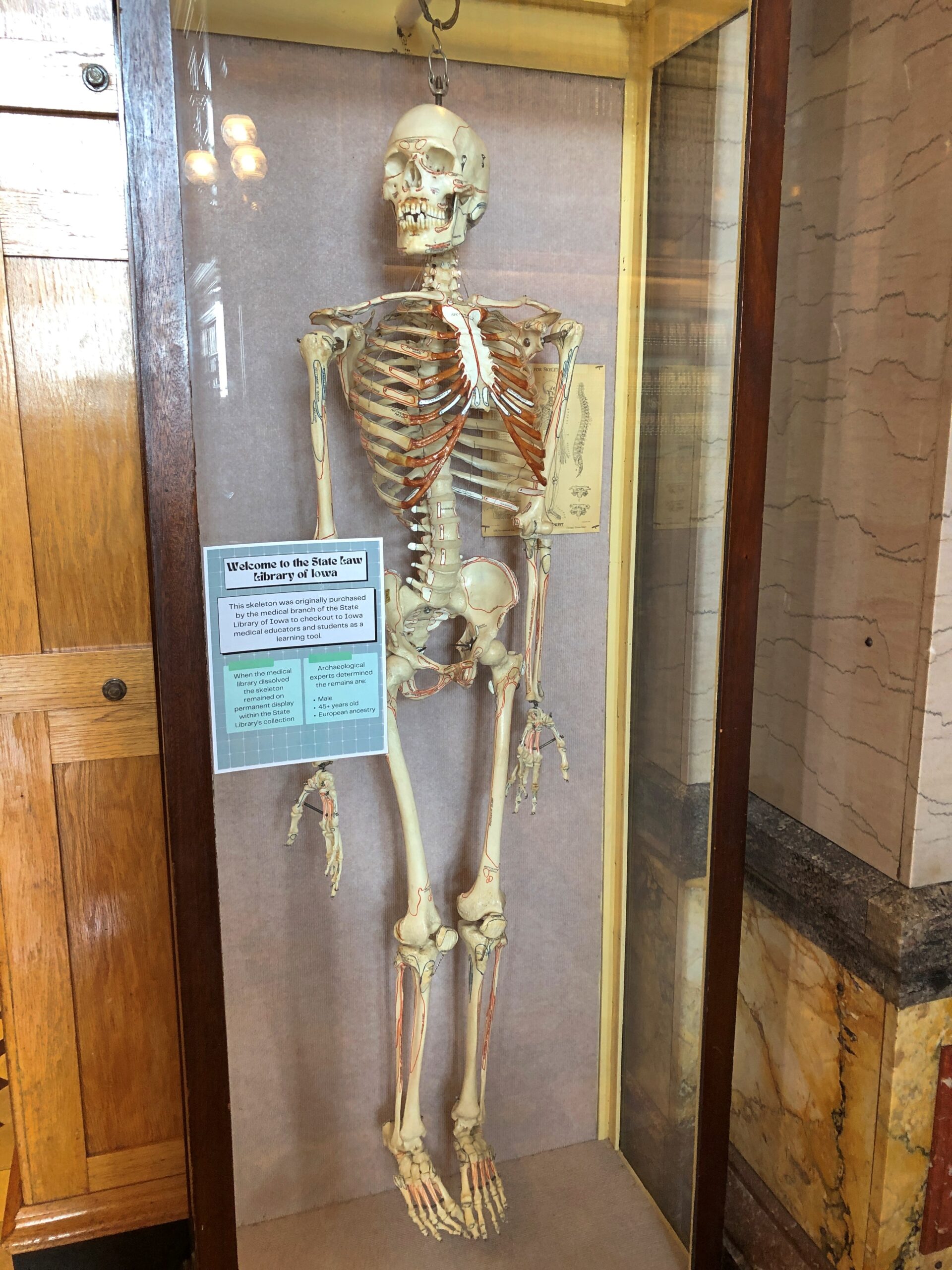
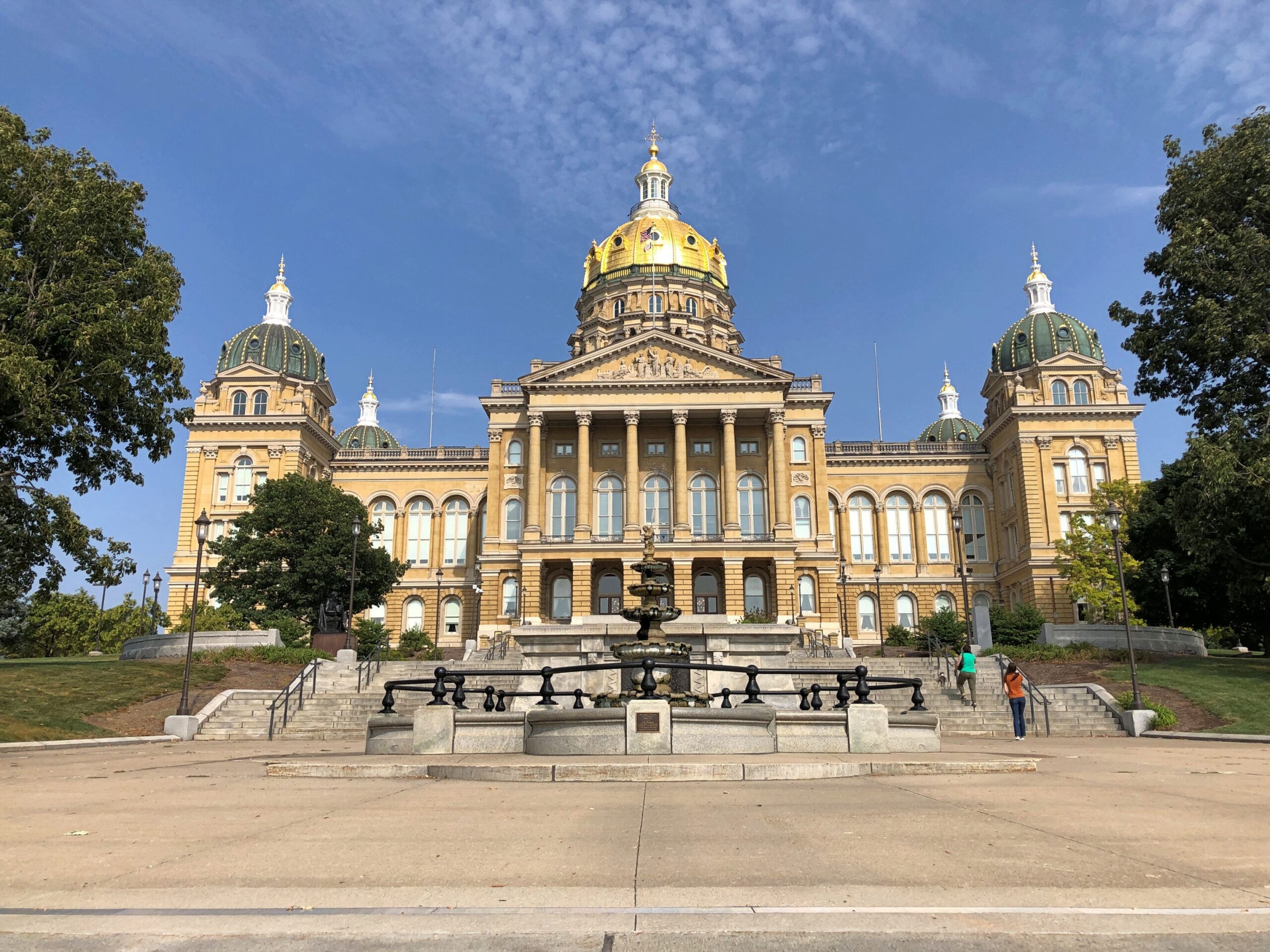
The collections can be a little staid. But sometimes, oddities are tucked away. Not too often, but there was that time I saw a two-headed calf at the Georgia State Capitol, or the miniature Western movie set at the Utah State Capitol. Or a bust of President Benjamin Harrison, carved from a tree stump. In Idaho. Then, at the Iowa State Capitol last month, this fellow.
Last time I visited the Iowa State Capitol, I arrived about 10 minutes after it closed. So I — we, Ann was with me – looked at an assortment bronzes on the grounds, including the memorable (and mammary) Mother Iowa, and admired the gold-leaf dome. This time around, Des Moines was the destination for my first day of driving, September 4, and I was determined to see the interior.
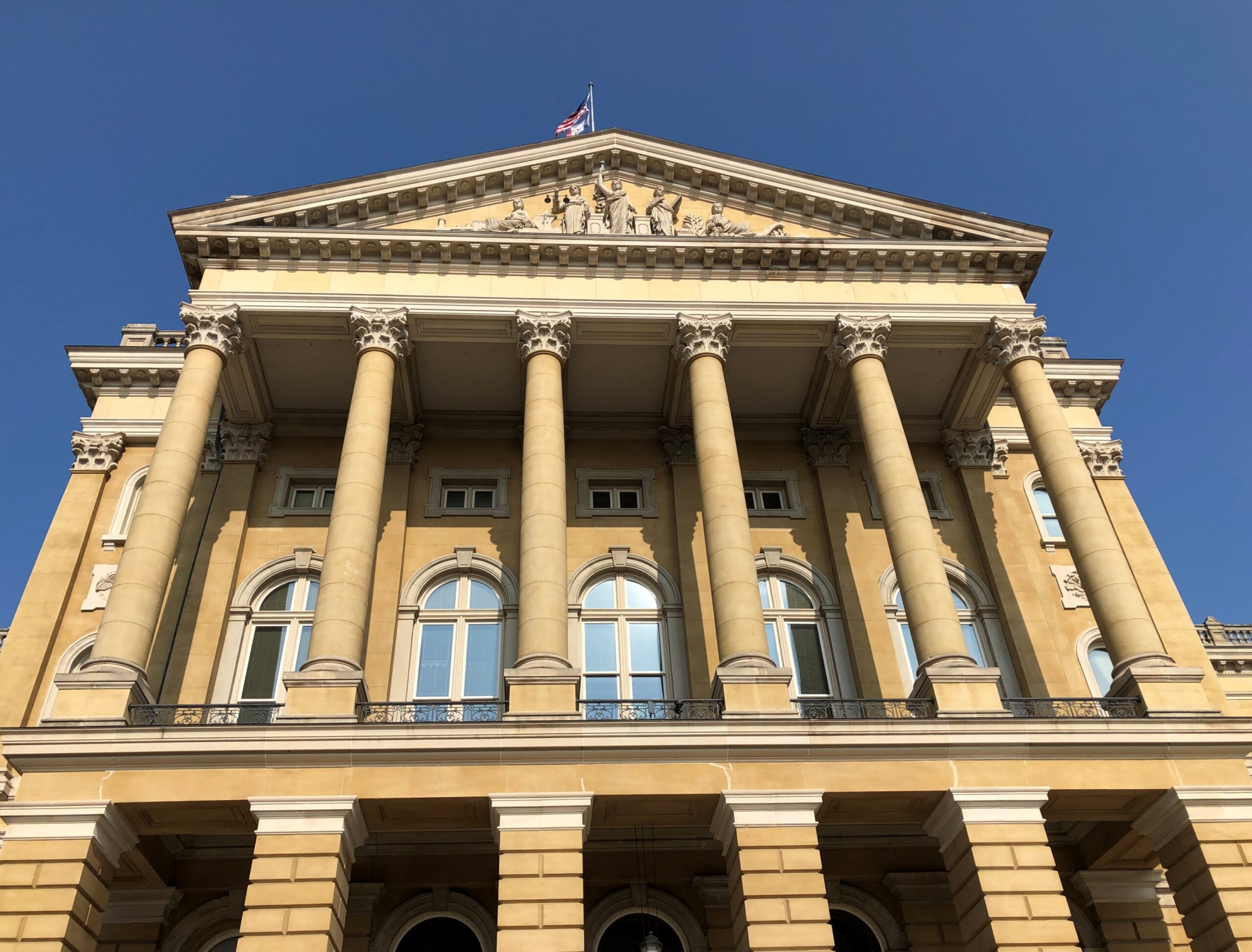
It’s a grand edifice, as capitols usually are.
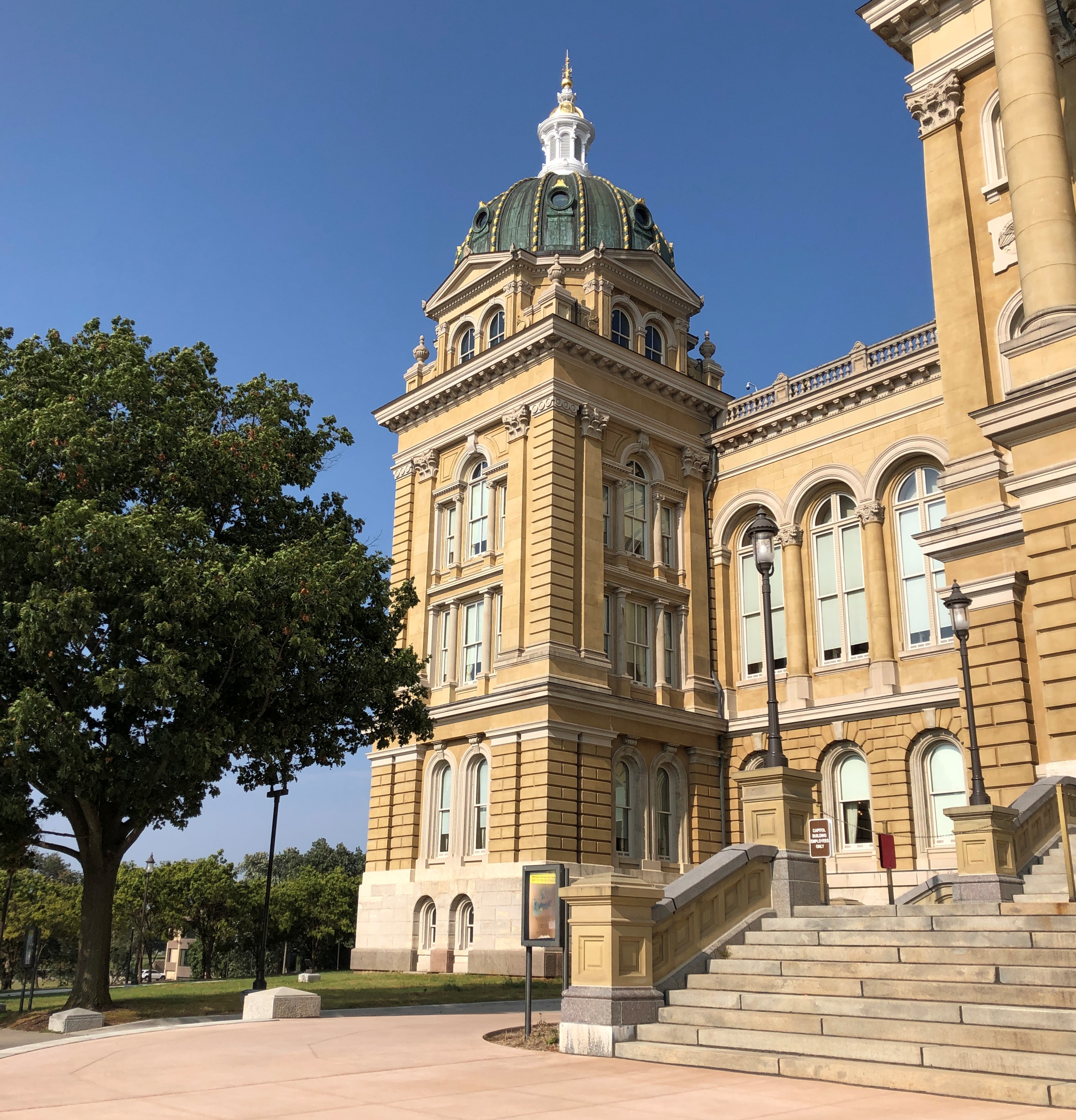
A series of architects oversaw the design, including Chicagoan John C. Cochrane, who also designed the Illinois State Capitol and, less well known, the handsome stick-style All Saints Episcopal in Chicago.
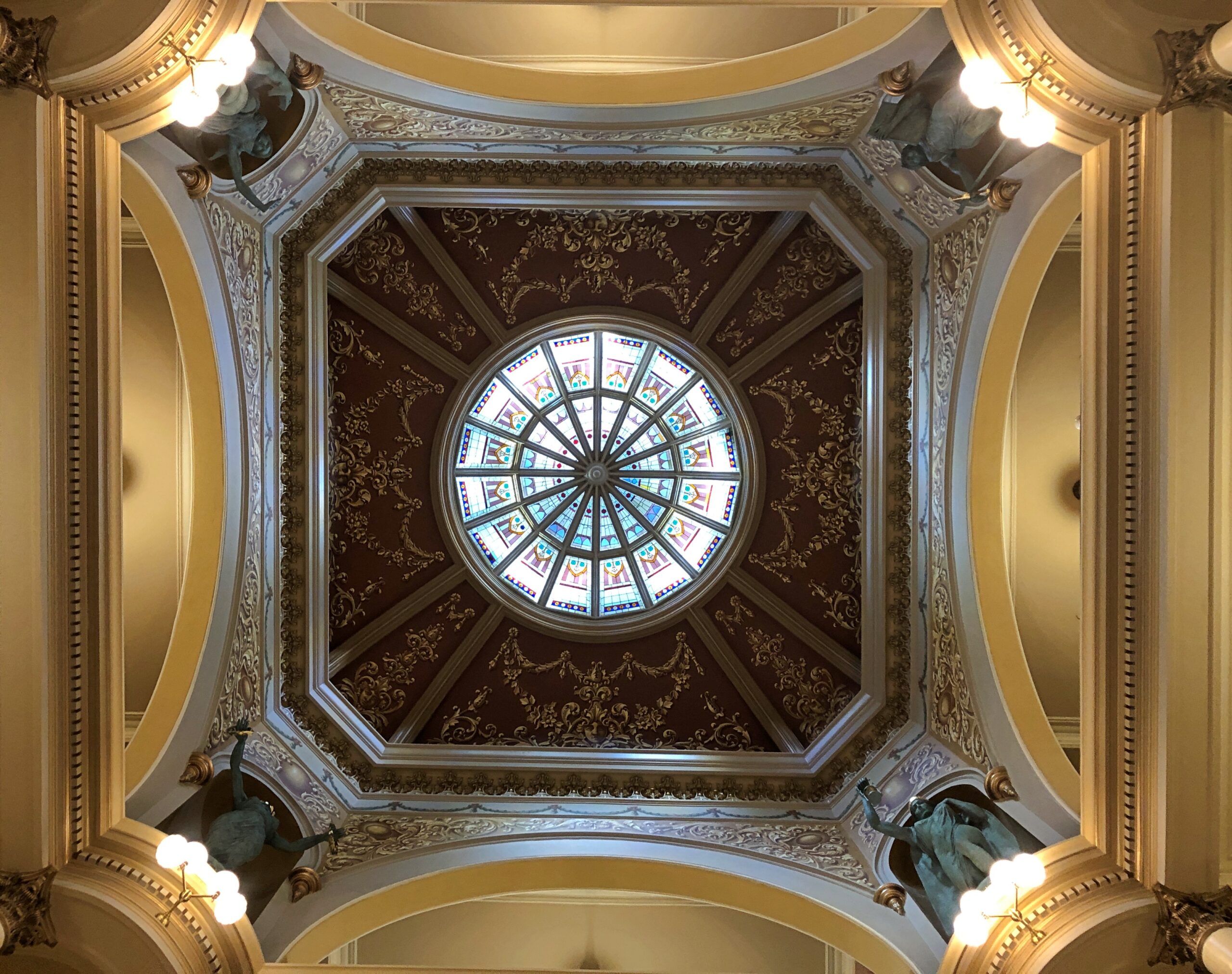
I’d forgotten that four smaller domes flank the main dome, forming in quincunx of domes. I understand that Iowa is the only such five-domed state capitol in the nation. I’m not sure how important that distinction is, but it is a distinction.
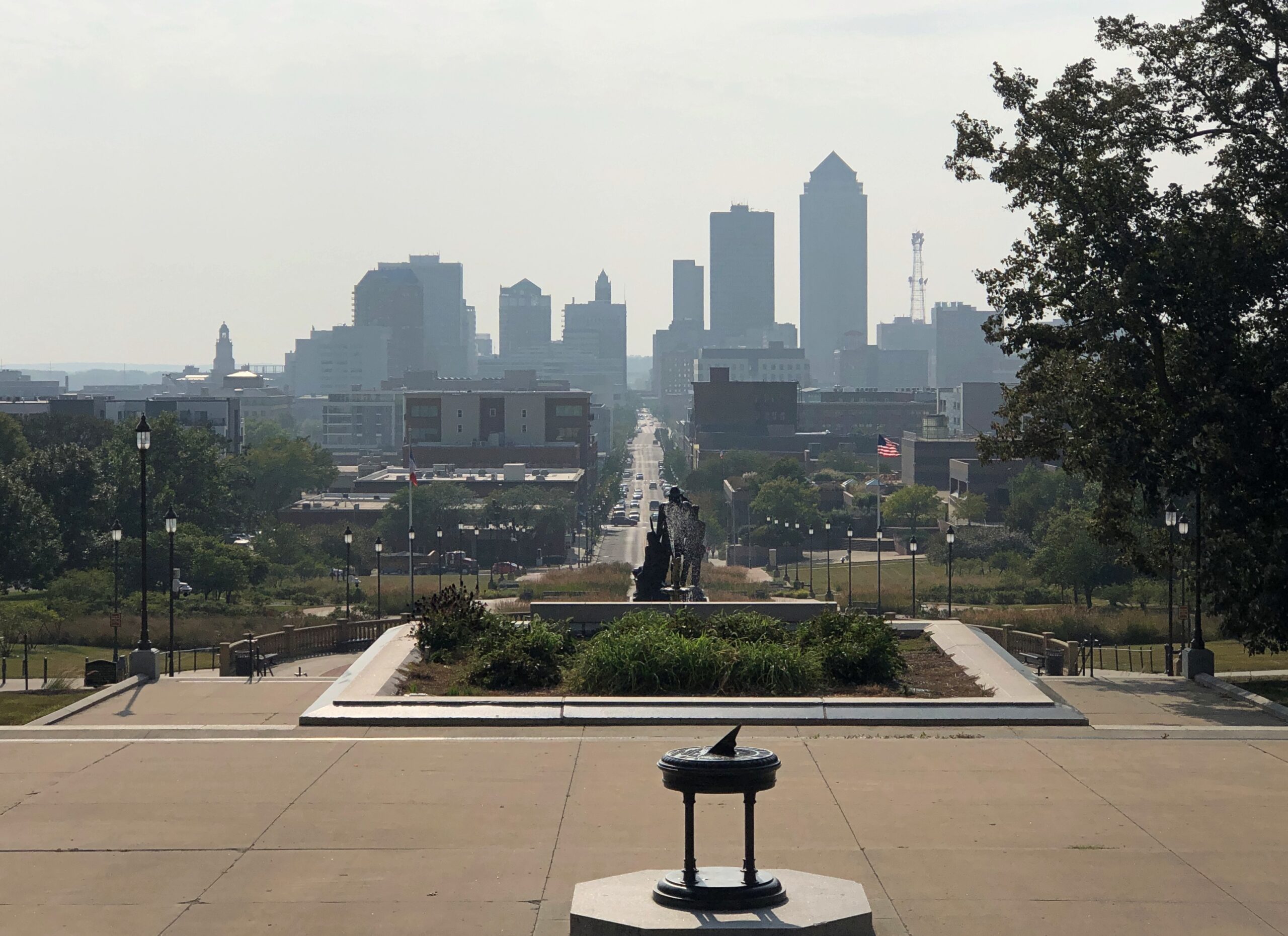
On a clear day, there’s a good view of downtown Des Moines from the capitol steps (and sundial). It was a hazy day, the result of Canadian wildfires.
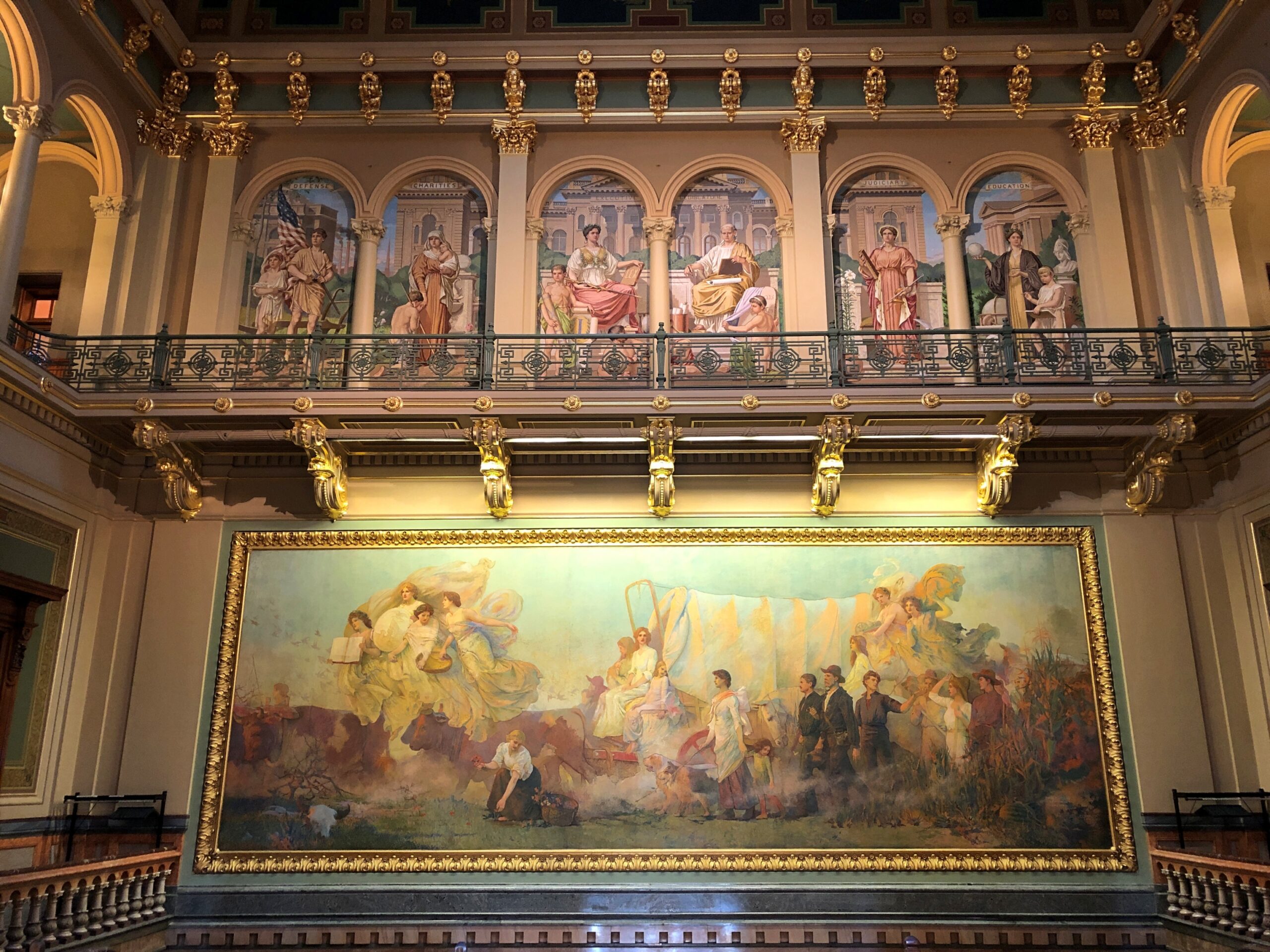
I arrived before closing, and experienced the grandness of the inside. Such as murals.
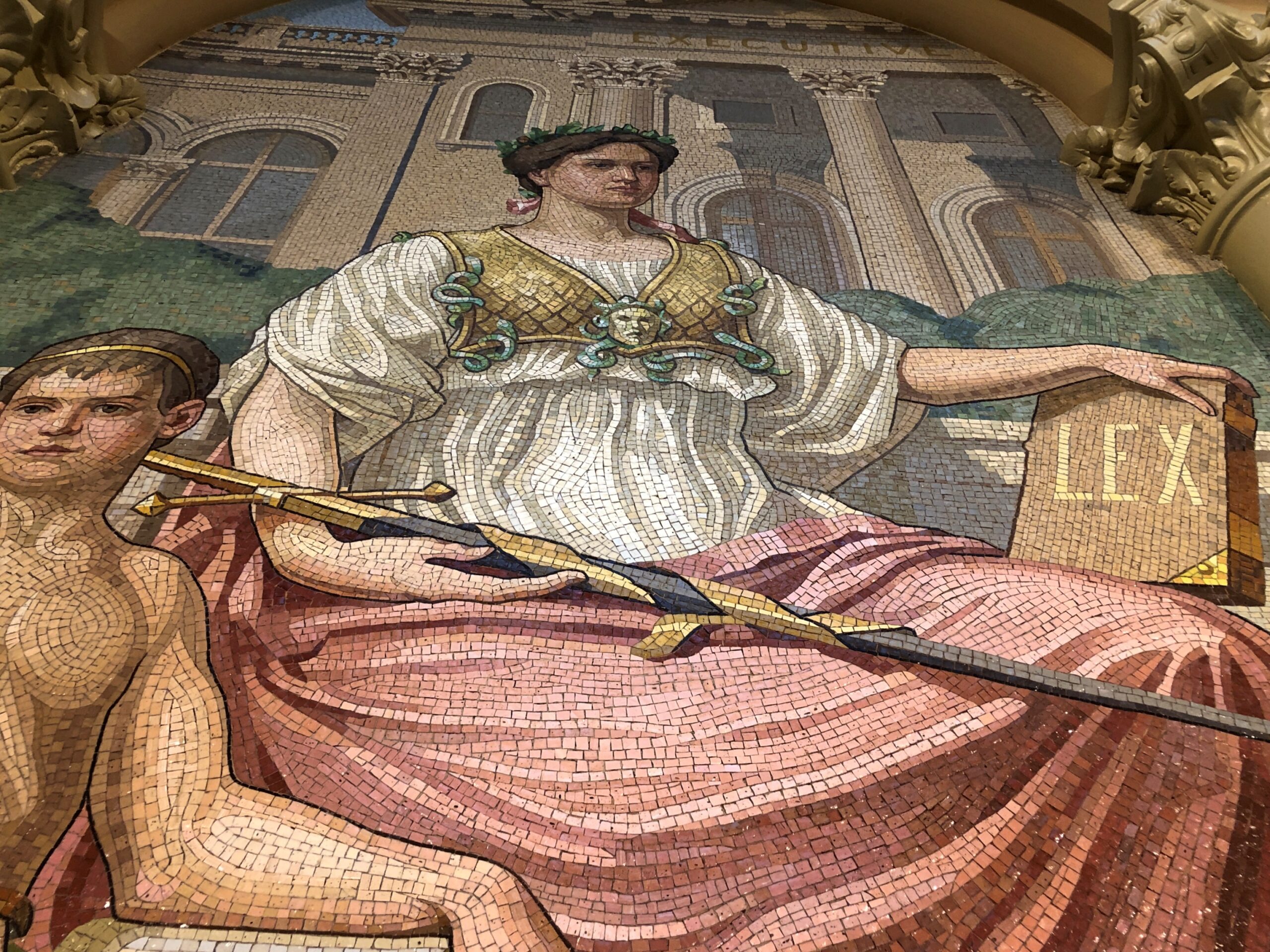
Allegories done in mosaic. Law, for instance. There was no backing up further to get a fuller image of Lex, since that would be over the edge of a balcony.
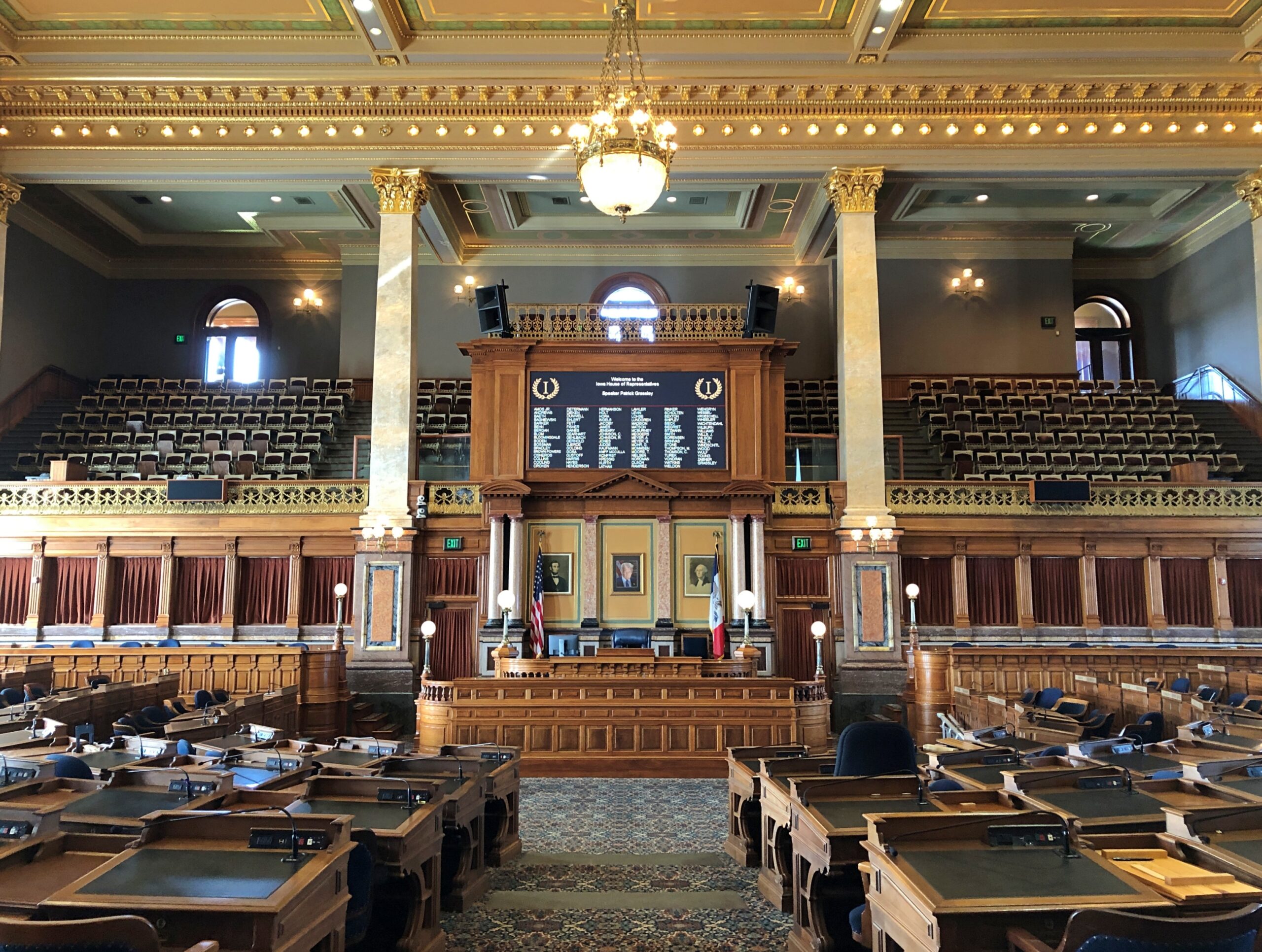
The House of Representatives.
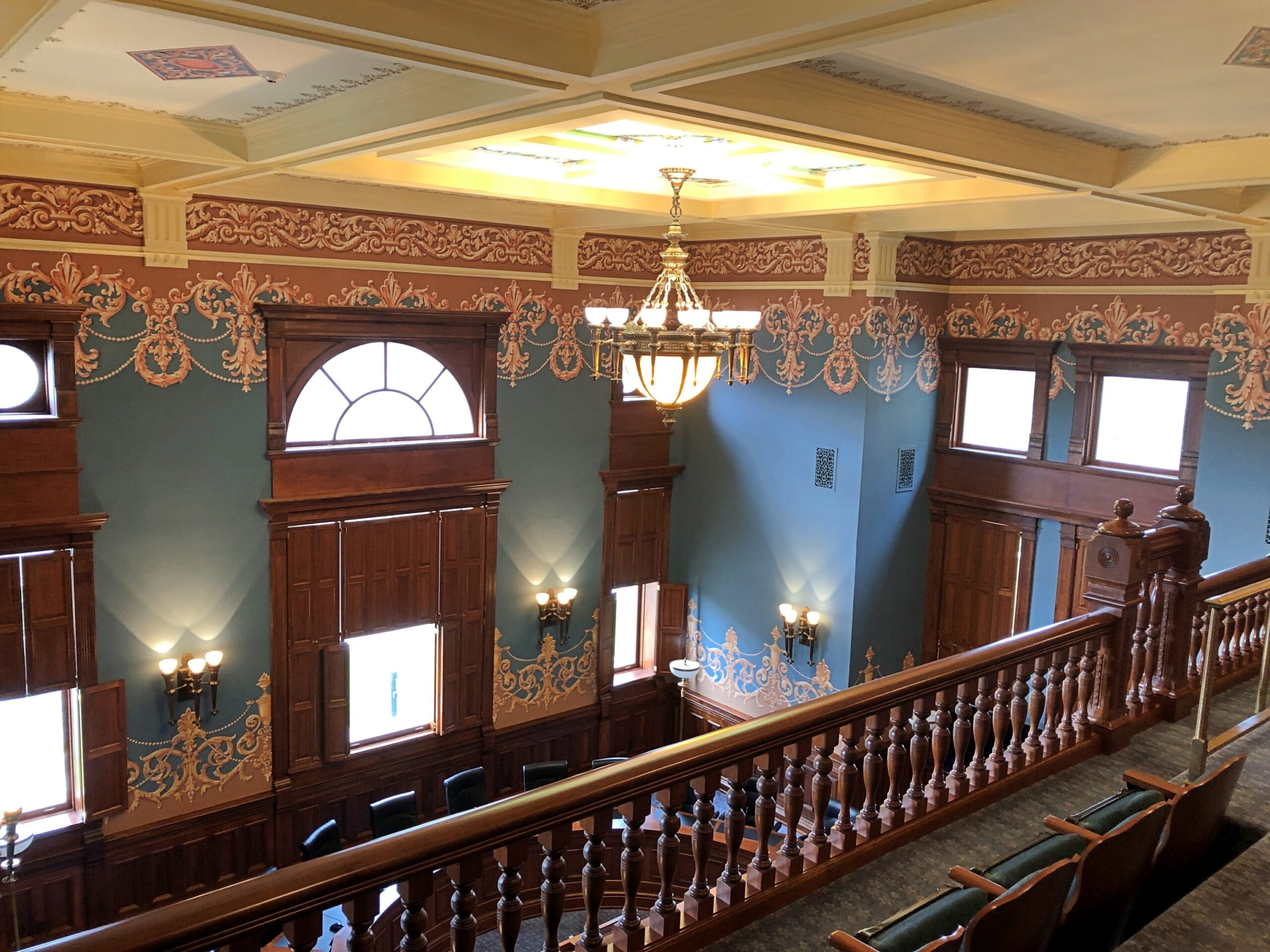
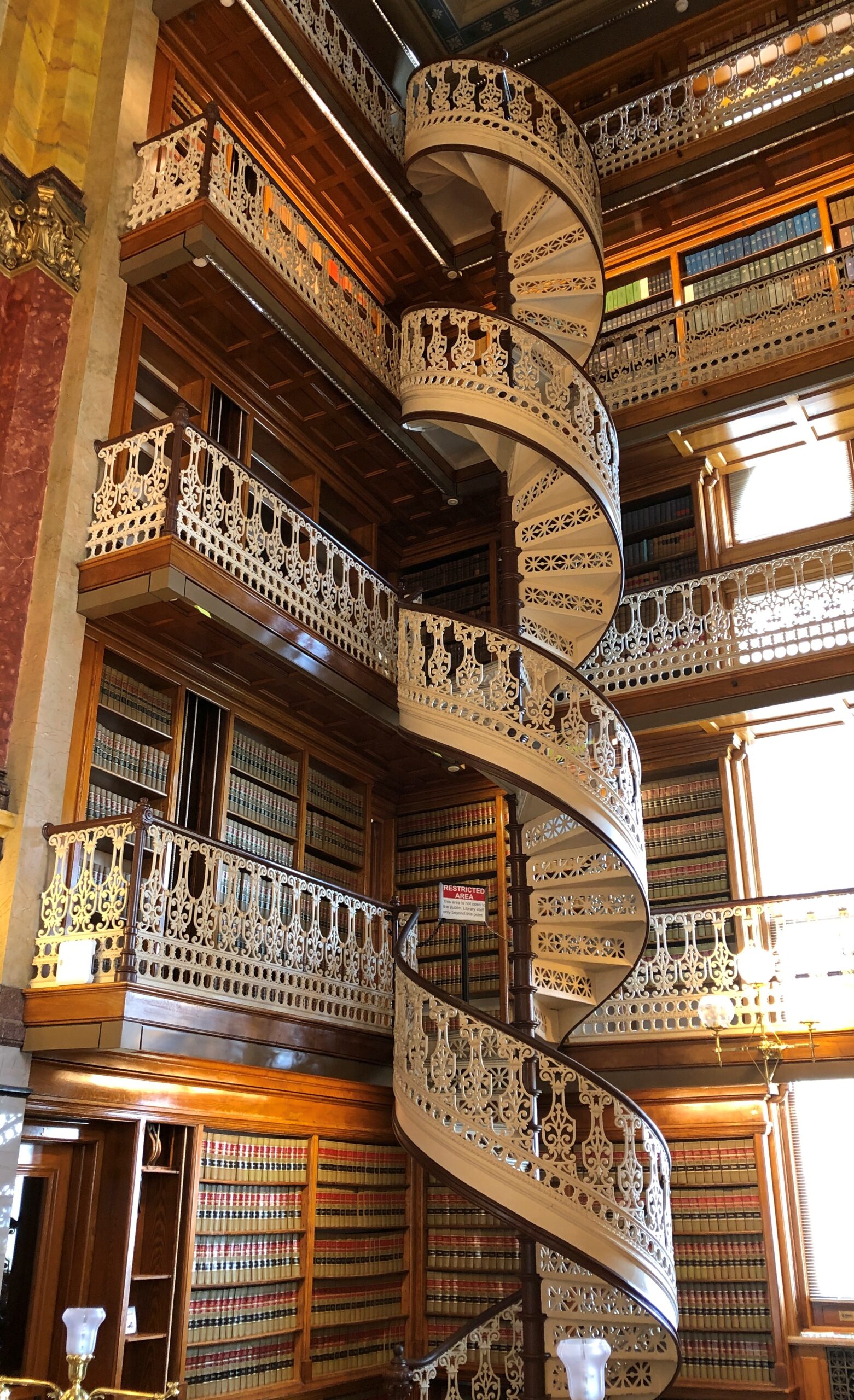
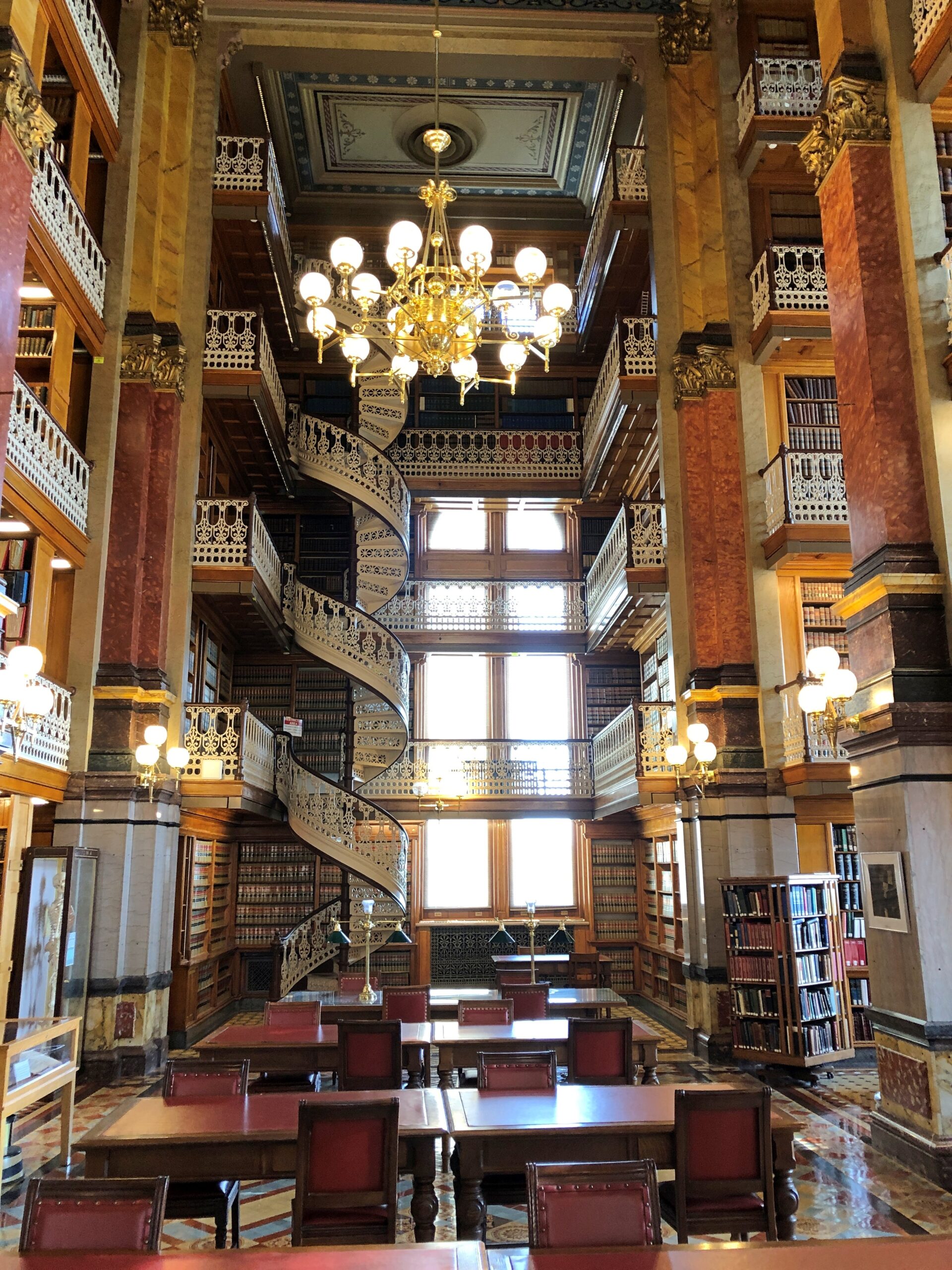
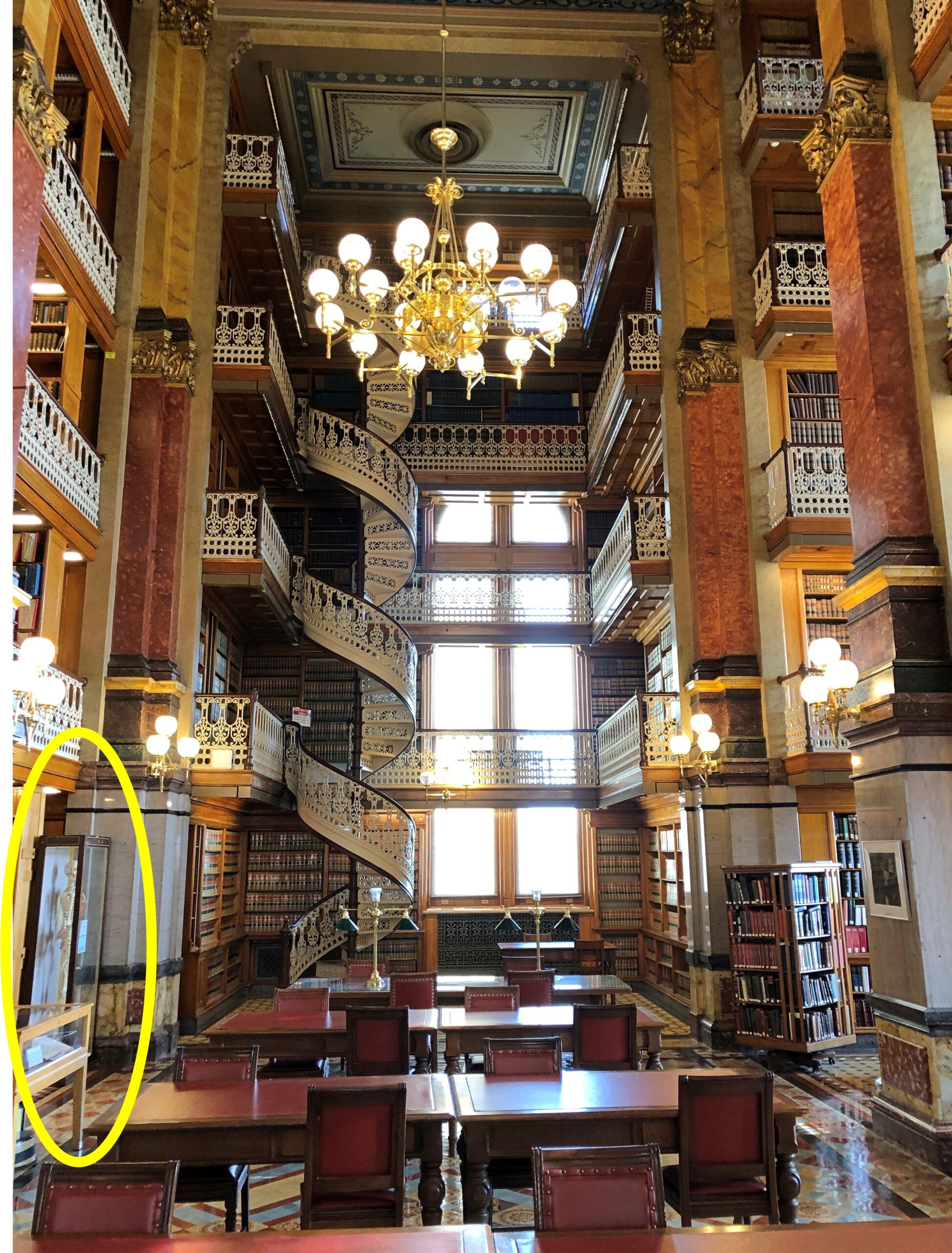
The Iowa State Law Library. The most gorgeous of the spaces, I thought. Just like canyon pictures, an image does no justice to the brilliance of the place itself.
Note that the skeleton is behind glass in the Law Library.
What’s he doing in the Law Library? Showing how strict the library used to be about returning materials late? (Or the smartass answer: “Nothing, really.”)
The sign on the case says, This skeleton was originally purchased by the medical branch of the State Library of Iowa to checkout [sic] to Iowa medical educators and students as a learning tool. When the medical library dissolved, the skeleton remained on permanent display with the State Library’s collection. Archaeological experts determined the remains are male, 45+ years old, European ancestry.
Check out a skeleton from a library? Learning that such a thing ever happened was worth the effort, all by itself, to get to the capitol.
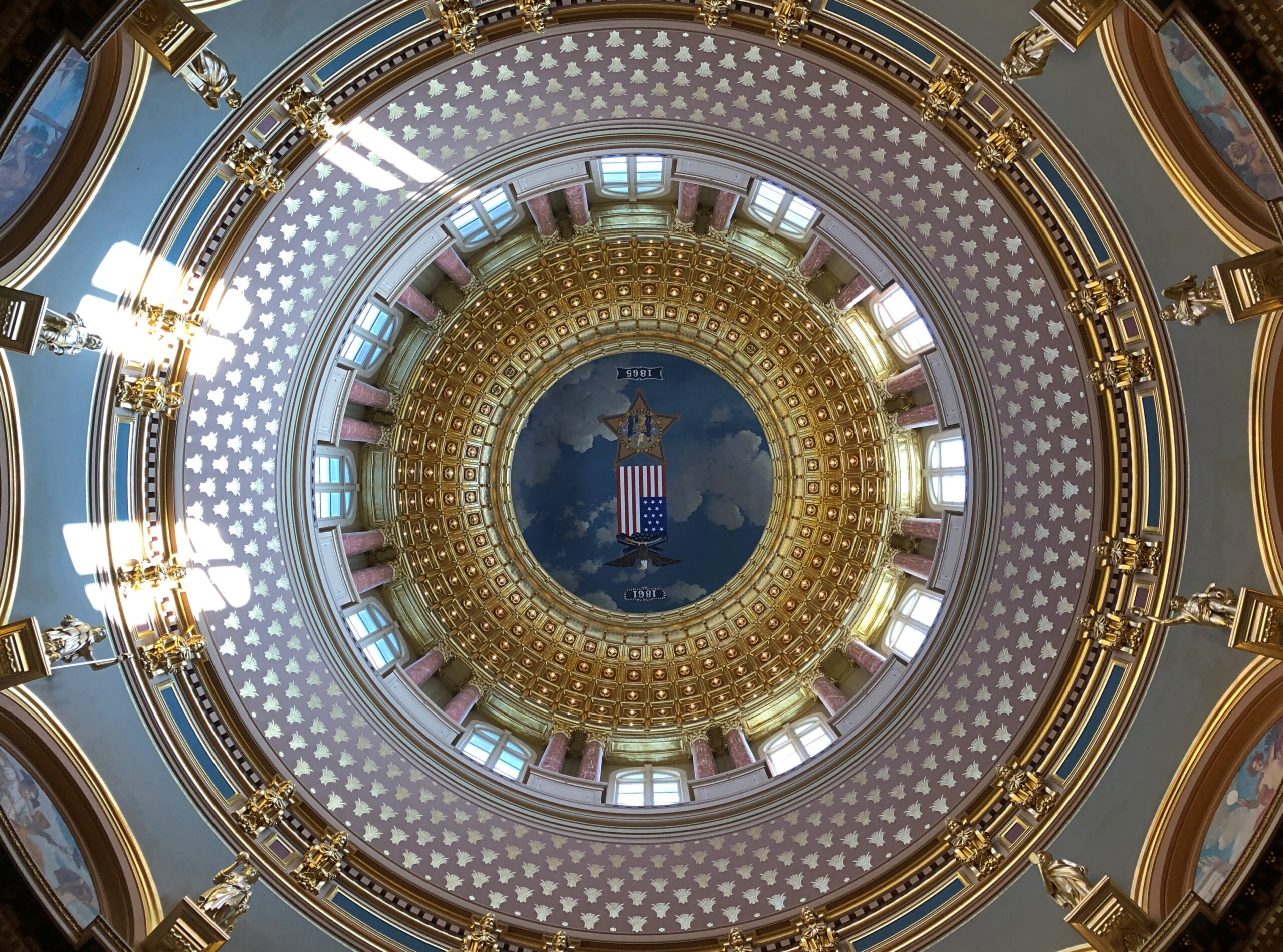
The dome is a little unusual, too, a little more representational that you usually see.
It features a memorial – in this case to the Grand Army of the Republic, with the name of the organization, a 13-star flag, and the dates 1861 and 1865. Considering that the development of the current capitol happened between 1871 and 1886, a GAR memorial of some kind isn’t a surprise, and I suppose the organization had the political heft at the time to get such a prominent spot.
Wiki tells me that more than 76,200 Iowa men fought for the Union out of a population of nearly 675,000 (in 1860), and about 13,000 died for it, two-thirds of whom by disease. Iowans supported the Union by about as lopsided a margin as imaginable. Seventy-six residents of Iowa are known to have served the Confederacy, and very likely most of those had recently moved to Iowa from the South.
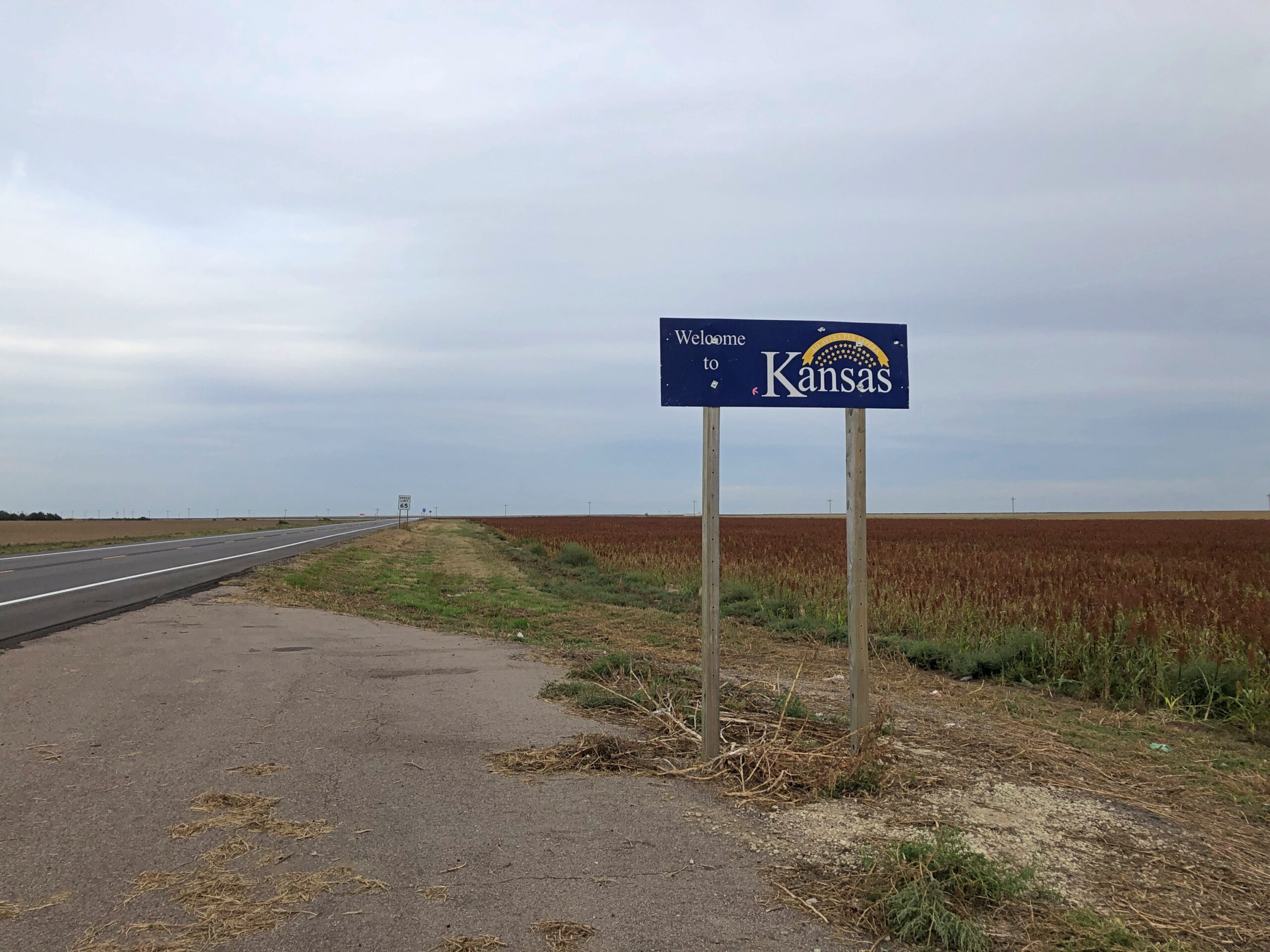
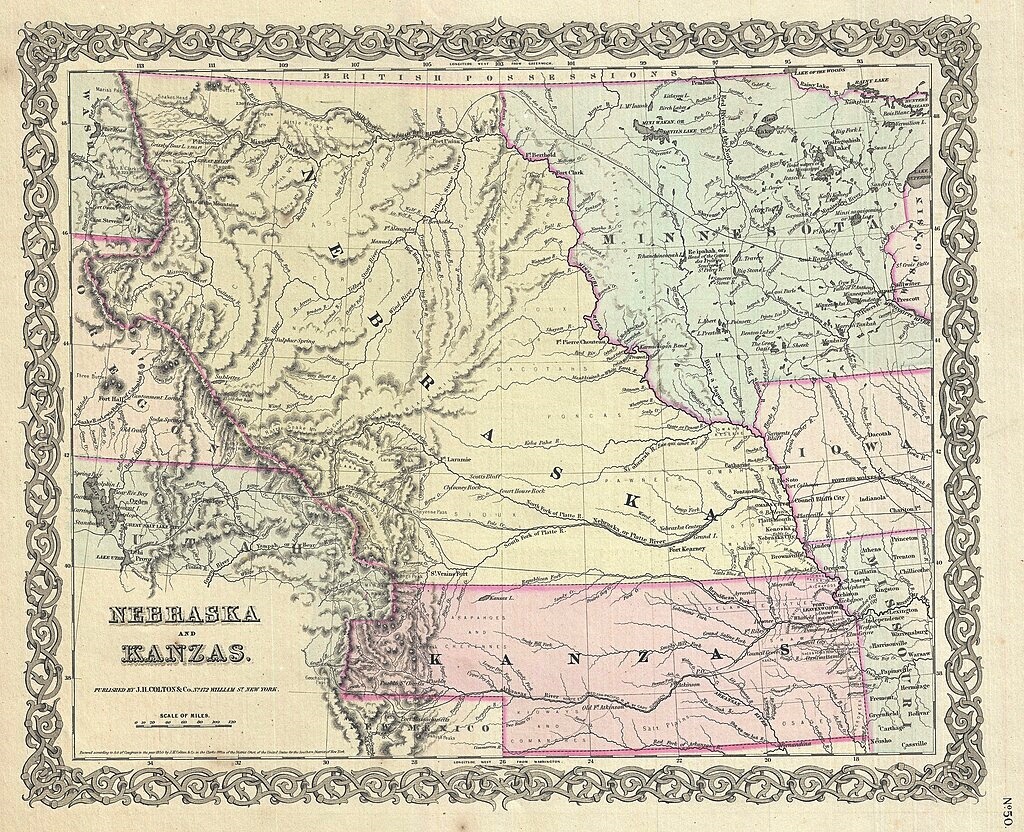
I returned home from Colorado via Kansas, heading eastward from Colorado Springs on September 22. I took this is a sign that day that I had, in fact, reached the western border of Kansas, created at the time of statehood in 1861.
An 1855 map of “Kanzas” and Nebraska.
It would be cool if the spelling Kanzas had caught on. As it stands, “z” is used only once in all the state names, in Arizona.
The current Colorado-Kansas border is fairly close to 102 degrees West of the prime meridian, but actually follows 25 degrees West of the meridian that once cut through the Old Naval Observatory in Washington, DC, as fixed in 1850, assuming the initial surveys out in remote Kansas-Nebraska were accurate. Until later in the 19th century, and not officially until 1912, it seems the U.S. wasn’t having that limey prime meridian; or the froggy one through Paris. (And I was amused to read that for a long time the French referred to Greenwich Mean Time as “Paris mean time, retarded by 9 minutes and 21 seconds.”)
I spent my first full day in Kansas seeking out obscure sights. In western Kansas, there really aren’t any other kind.
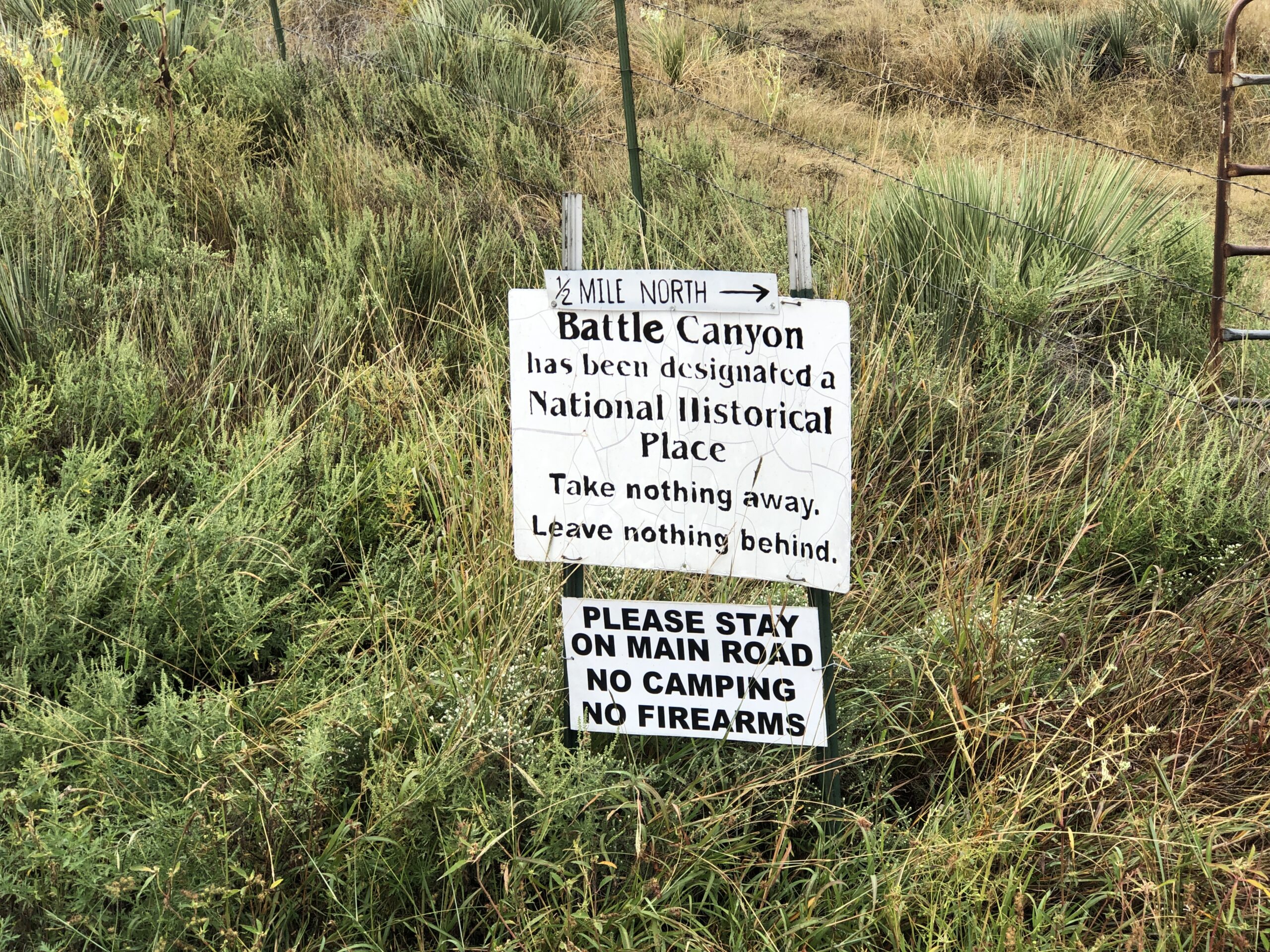
Site of theBattle of Punished Woman’s Fork (Battle Canyon)
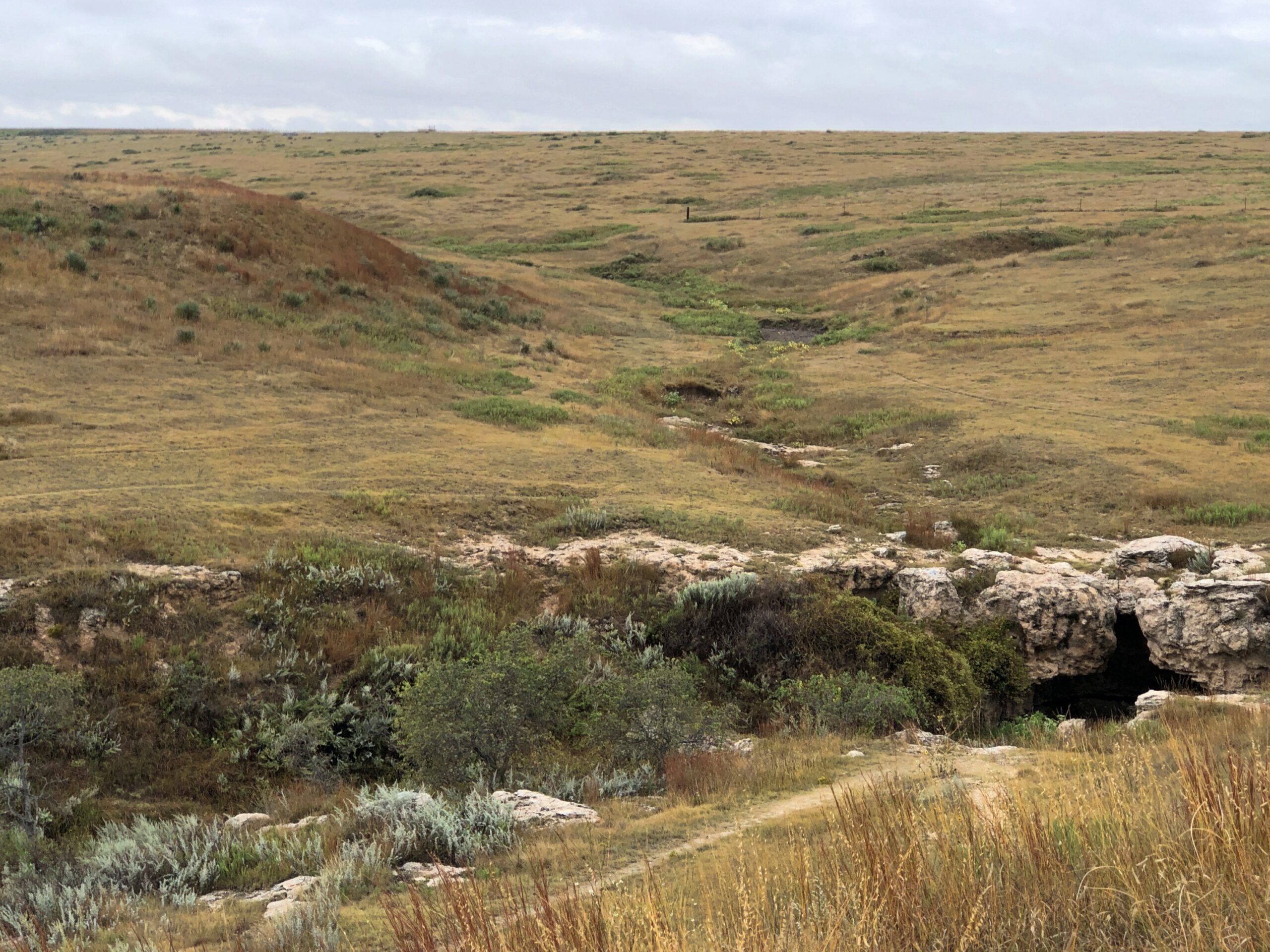
Serendipity on the road is your friend, if you let it be. That is, pay attention to signs. Driving north on the 23rd from Scott City, Kansas, on the highway US 83 – on which you could drive to Brownsville, Texas, if you had a mind to – I saw a small sign directing me to a battlefield of the Indian Wars, in this case the last skirmish between Natives and the U.S. Army within the borders of Kansas: the Battle of Punished Woman’s Fork.
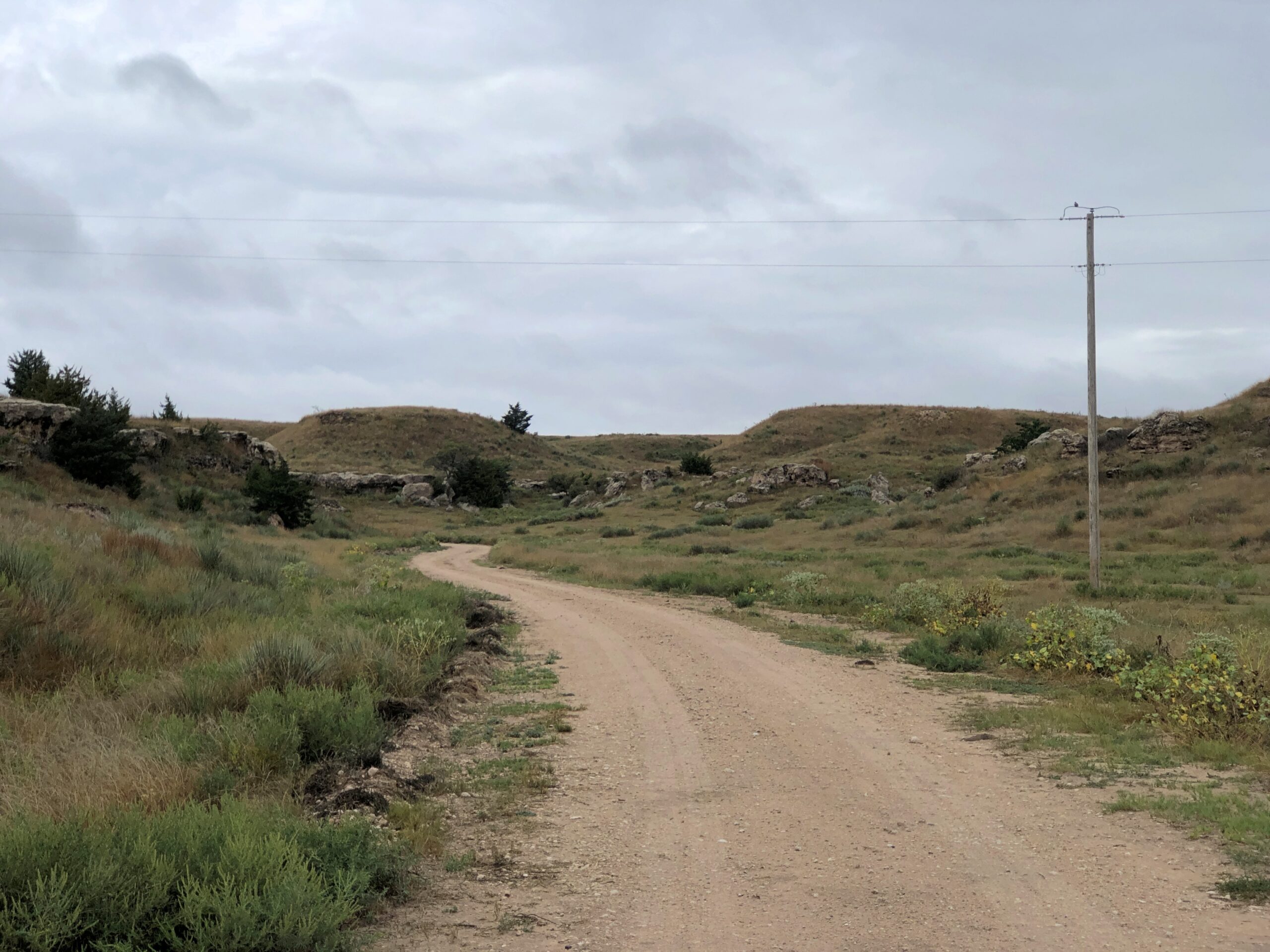
This isn’t the sign I saw, but rather another one at a fork in the road, pointing the way to the battlefield, down an unpaved road.
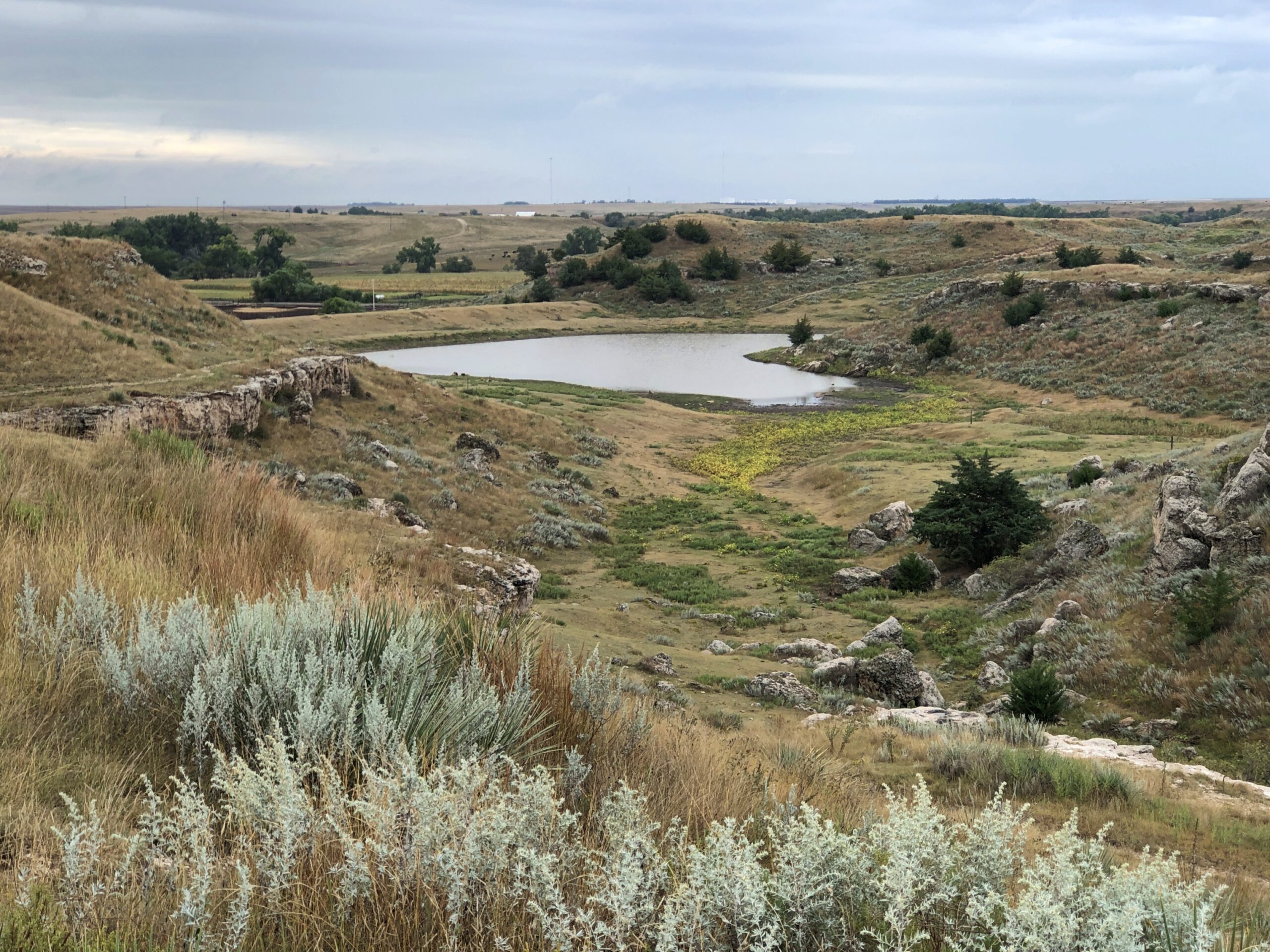
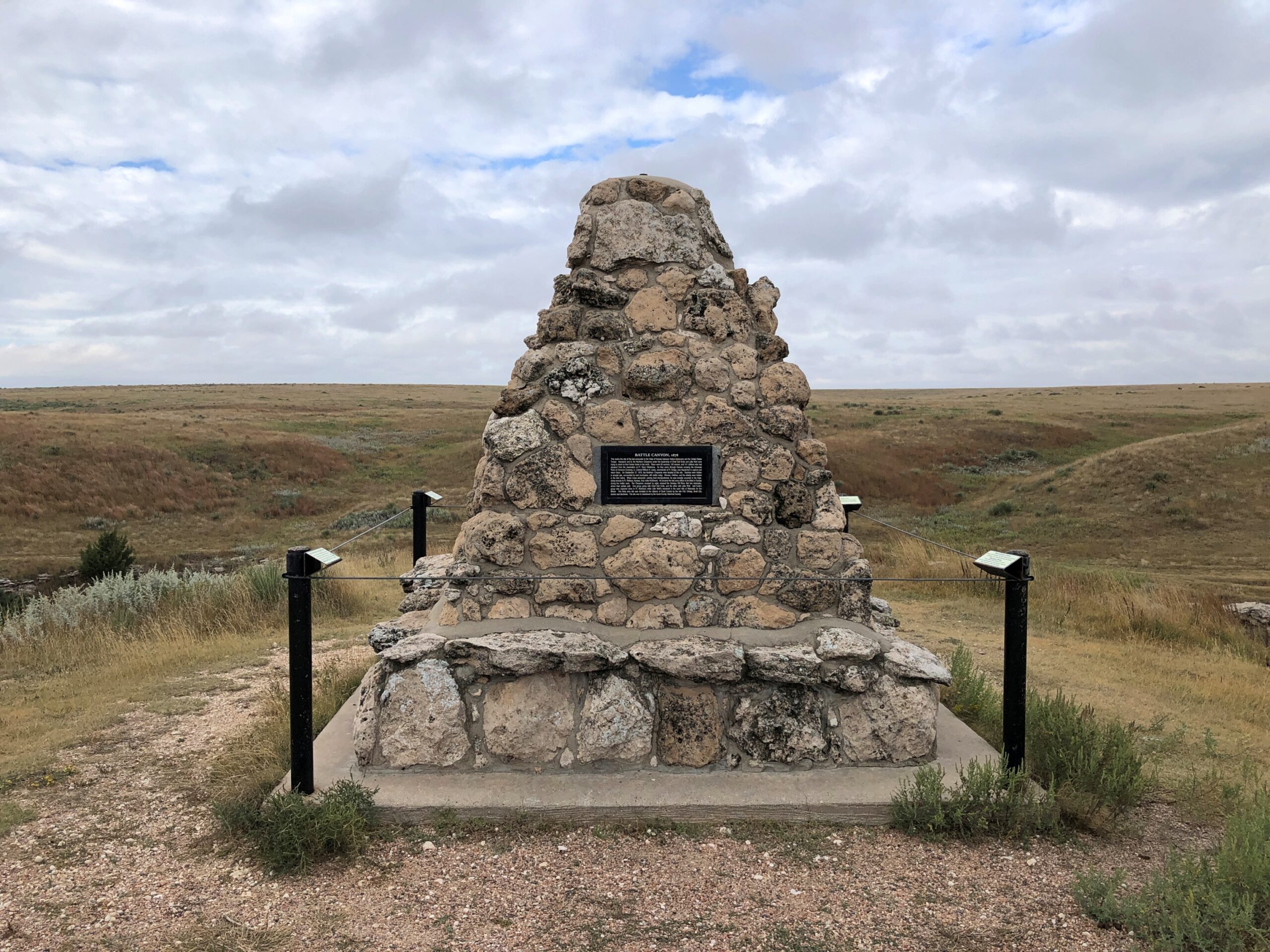
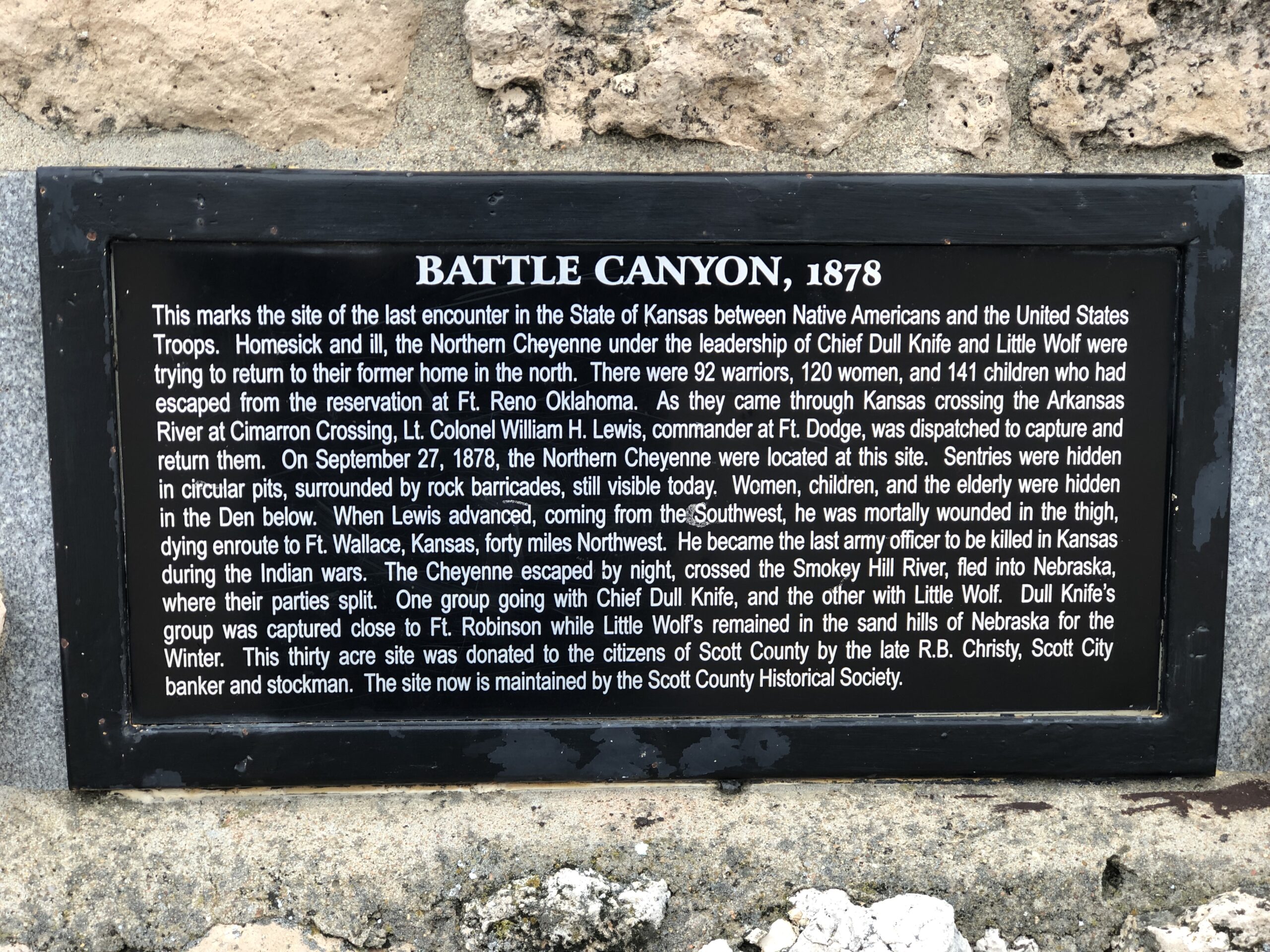
Unhappy at being forced to live in Oklahoma, 350 or so Cheyenne headed north toward Montana in 1878. The U.S. Army gave pursuit and the two sides fought inconclusively at a lonely spot in Scott County. Lonely then, lonely now.
But not so remote that there isn’t a monument, with exposition.
The Cheyenne acquitted themselves well in the skirmish, and while they lost horses and food, were able to escape northward. Eventually some of the group – but not all – did indeed make it to Montana, and were able to stay. The incident is known as the Northern Cheyenne Exodus.
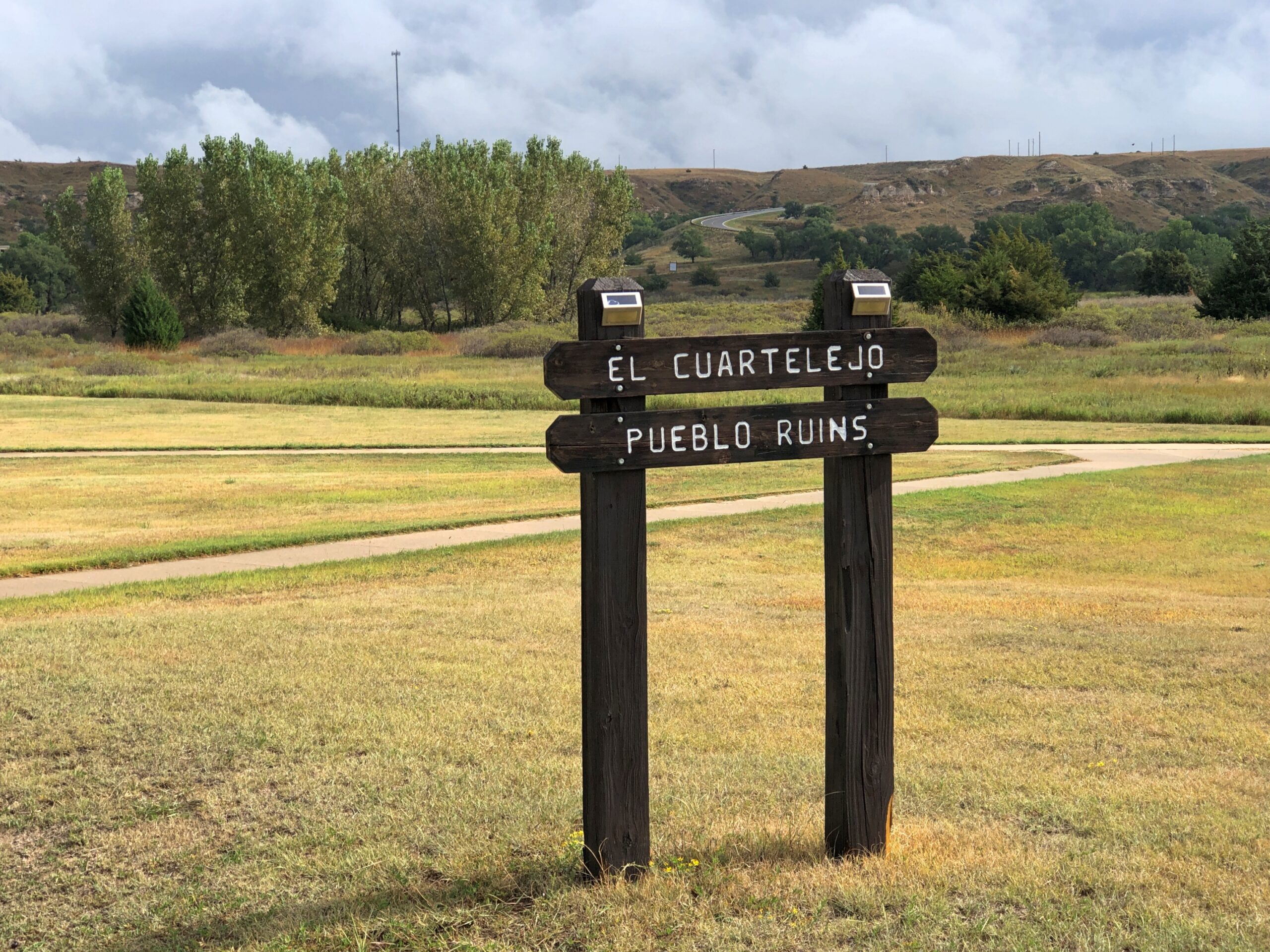
El Cuartelejo
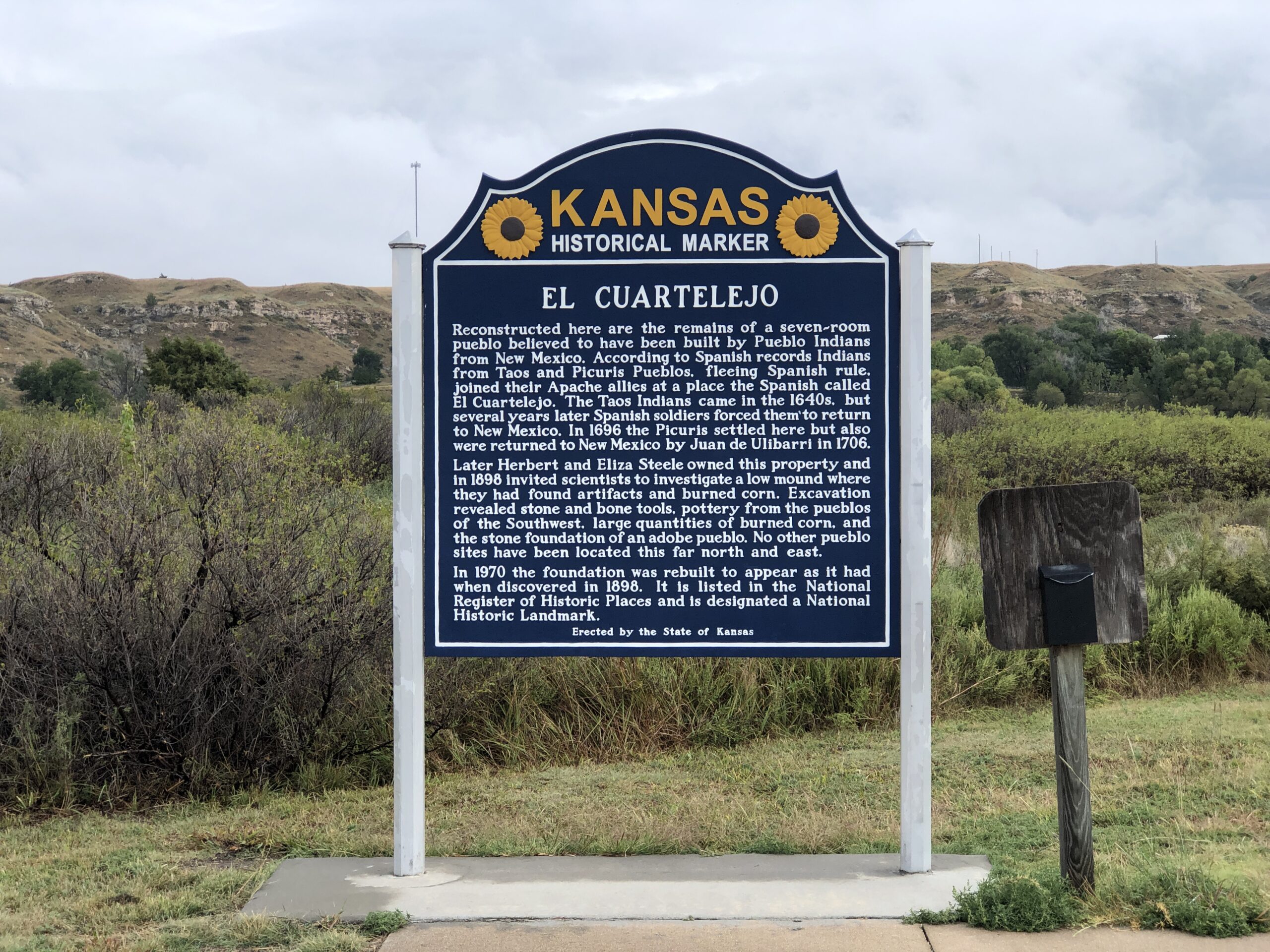
I quote the following at length, because it’s well written, and also happens to be public domain material, published by the National Park Service. Read it while it’s still posted.
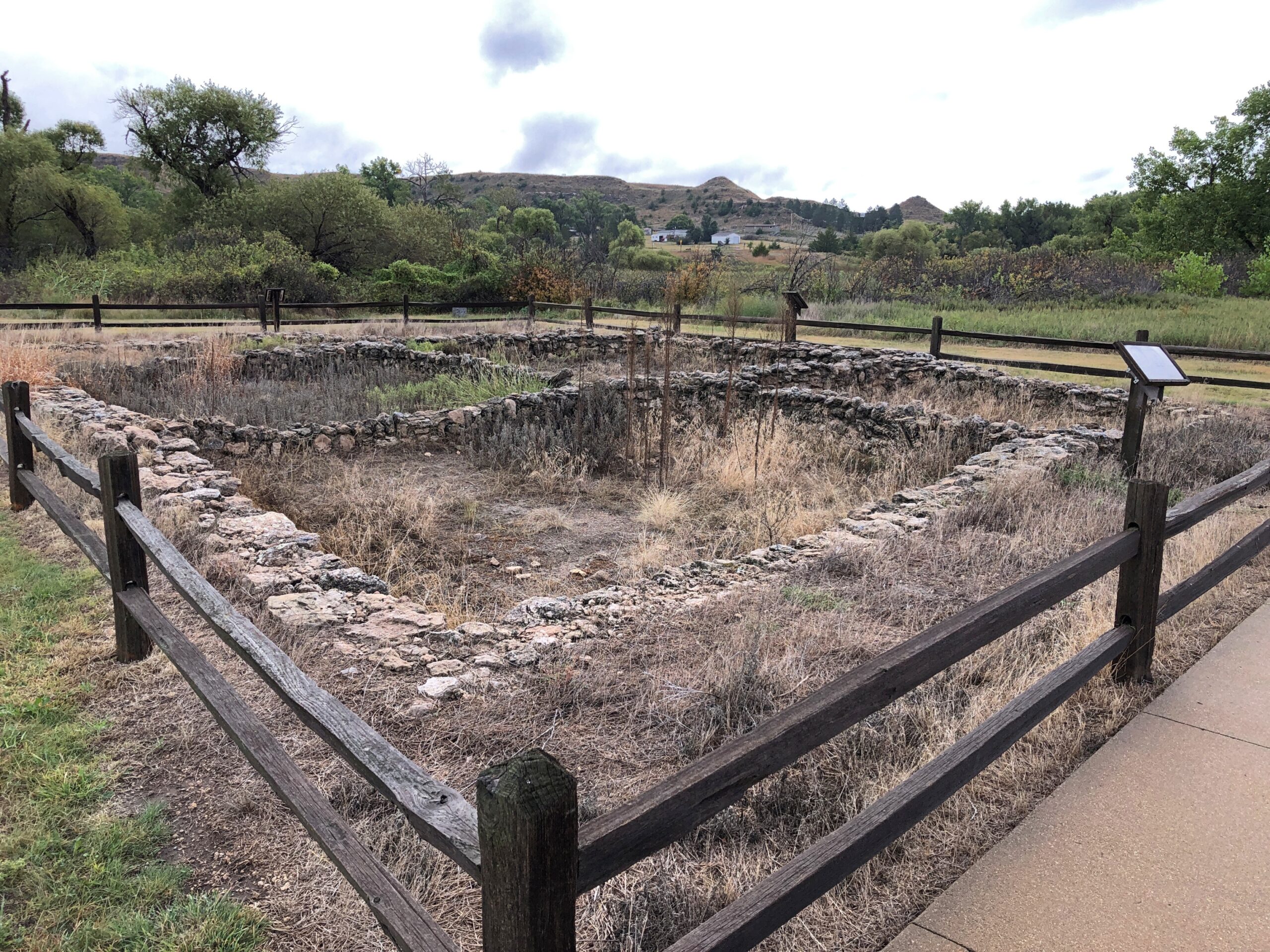
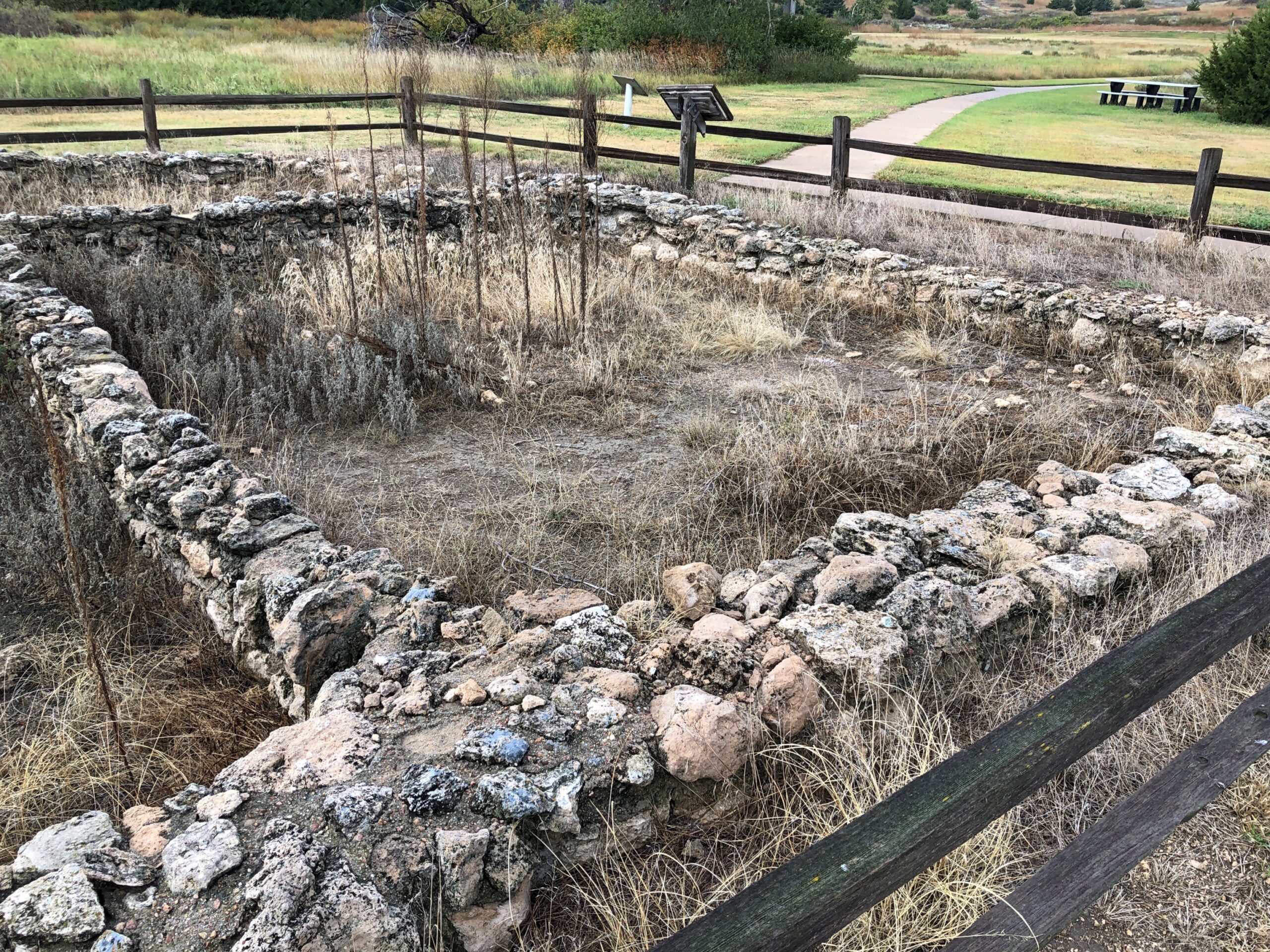
[El Cuartelejo] is one of the key sites indicating the far-reaching expansion of Spain beyond New Mexico and her interest in the Great Plains. It consists of the ruins of a seven-room, stone Puebloan structure, probably built by a group of Picuris Indians who in 1696 emigrated from New Mexico to live with the Cuartelejo Apaches. As early as the 1660s, friction between the Pueblo Indians of New Mexico and the Spanish rulers and priests had caused groups of Indians to migrate to El Cuartelejo.
Spanish expeditions under Archuleta (pre-1680 Pueblo Revolt) and Ulibarri (1706) probably came to El Cuartelejo to return groups of Indians to New Mexico. In 1719, Governor Valverde led an expedition northeast from Santa Fe, visited the Cuartelejo Apaches, and learned from them of French penetration into the Plains. As a result, in 1720, the Spanish sent out the Villasur expedition, which passed through El Cuartelejo but was destroyed later by the Pawnees in Nebraska.
Archeological excavation of the site has produced only a few artifacts of Southwestern origin. The pueblo ruin and its typically Southwestern appurtenances — slab-lined hearths, grinding trough, oven, and the like — were directly associated with a material culture complex that was almost entirely Plains Apache. Either the Puebloans stayed in the area only a short time, or they readily adapted themselves to the everyday implements and utensils of the local residents.
I didn’t know all that detail when I decided to go to El Cuartelego. Just that it was the northern- and eastern-most pueblo, which was enough.
The site is within Lake Scott State Park, where I had considered camping the night before. My earlier camping experience on the trip, in Nebraska, while not terrible, was exhausting enough to put me off the idea. No more camping, I think, where I have to do absolutely everything myself. In any case, it was a good decision, since on the night of the 22nd, a sizable rainstorm blew through Scott County. I listened to the storm with some satisfaction in my rented room in Scott City.
The ruins.
More exposition.
Like at the battlefield, I had the place to myself.
Monument Rocks
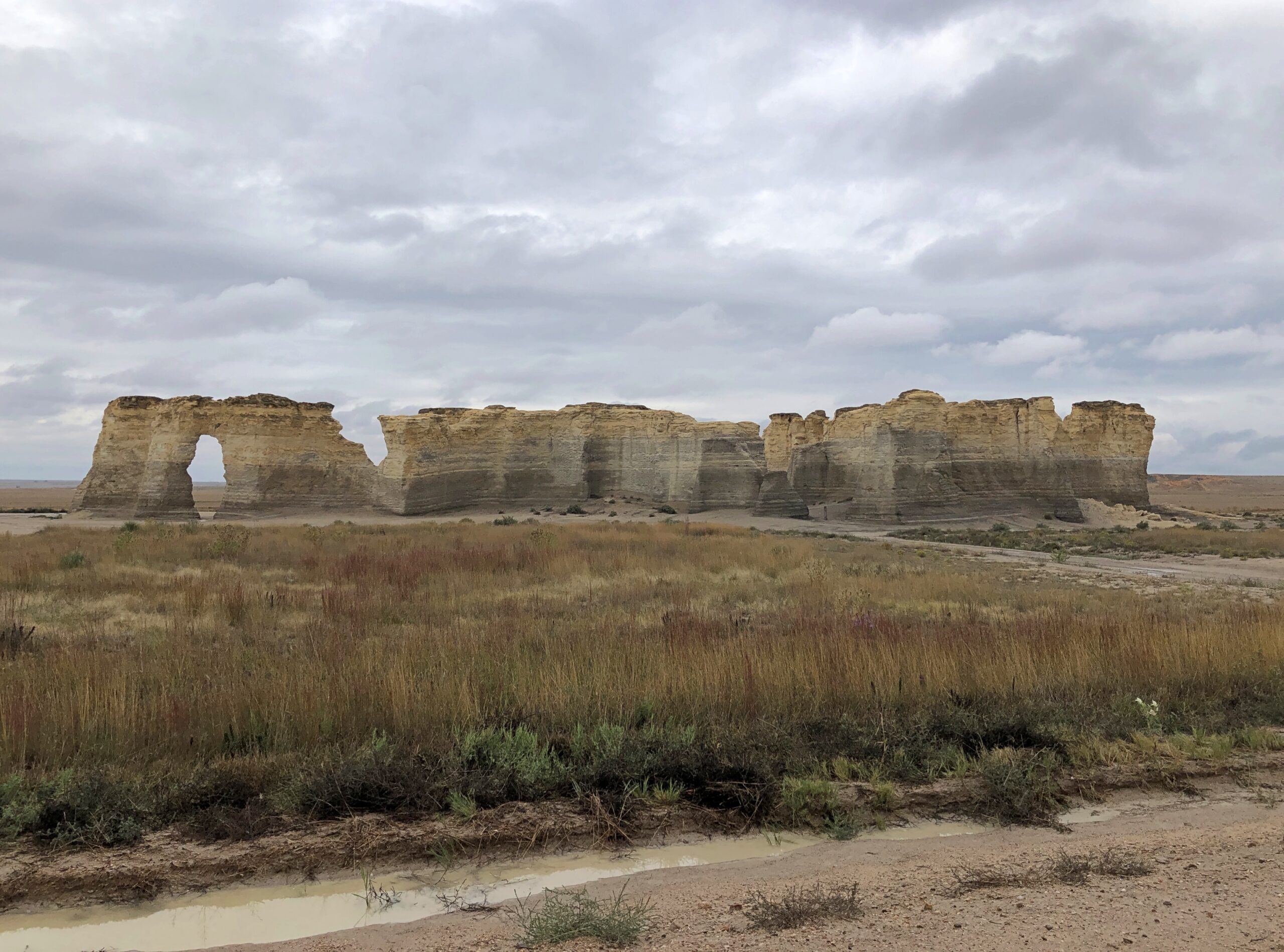
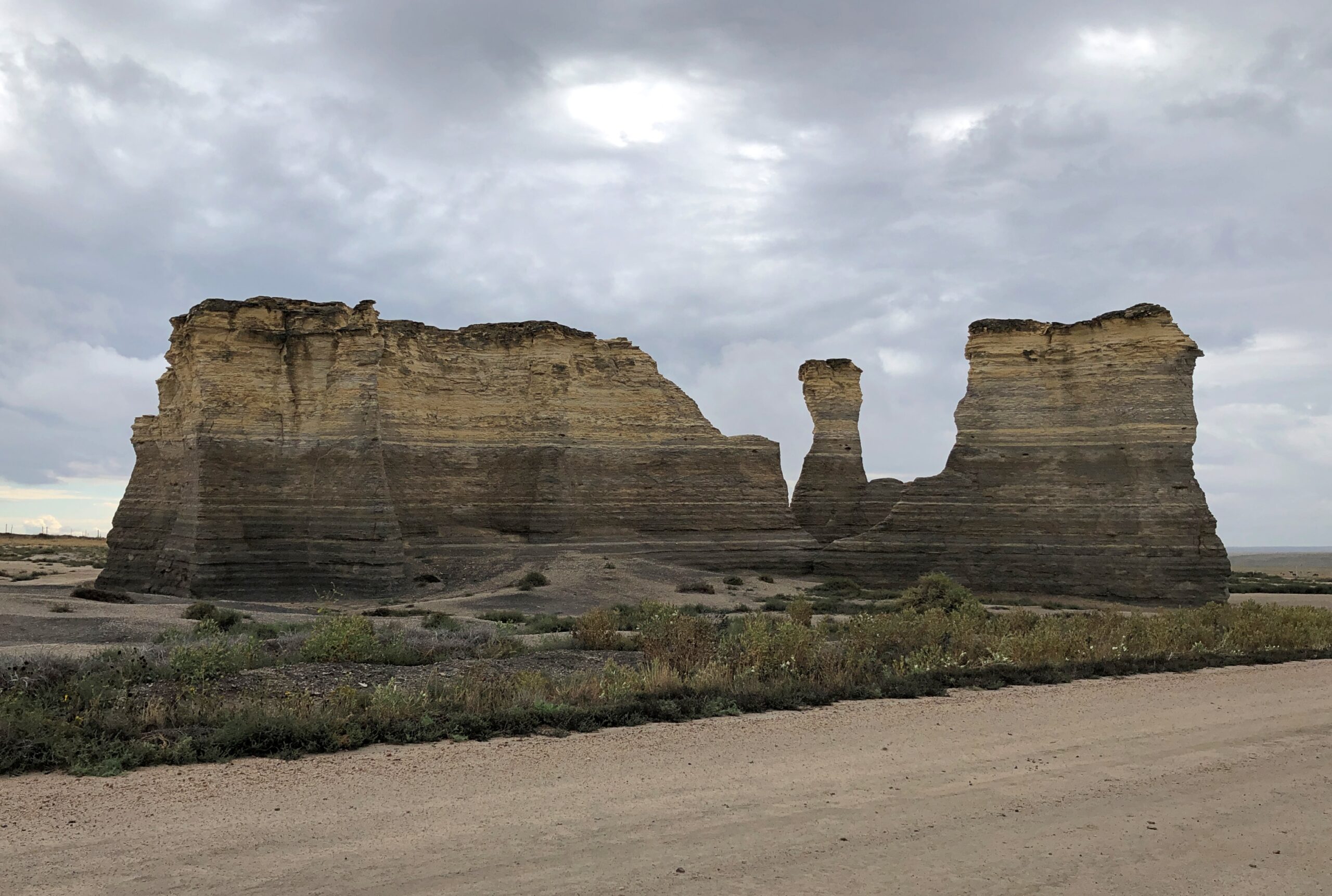
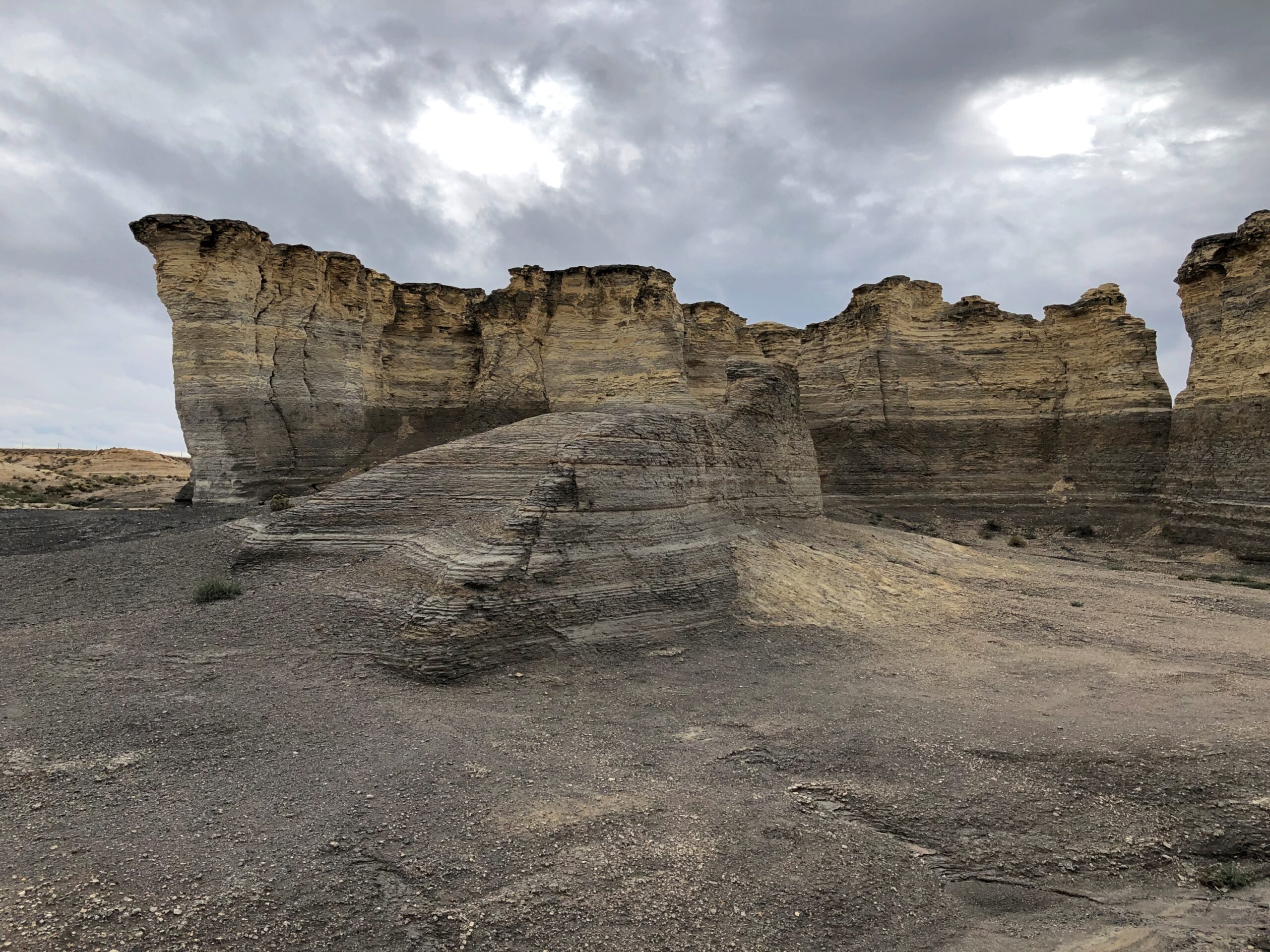
During the planning for the trip, which naturally meant quality time with maps, I spotted a point-of-interest for Monument Rocks in western Kansas. Sounded interesting, and on September 23 I made the trip, again on unpaved roads. The rain the night before made the driving surface a little dodgy, but the roads, layered with gravel, were generally up to the task. I was rewarded with the sight of rocks that are, in fact, pretty monumental.
I didn’t quite have the place to myself. When I arrived, another car was there, occupied by an older couple. They left, and soon after that, two young men appeared in an SUV. But that was all.
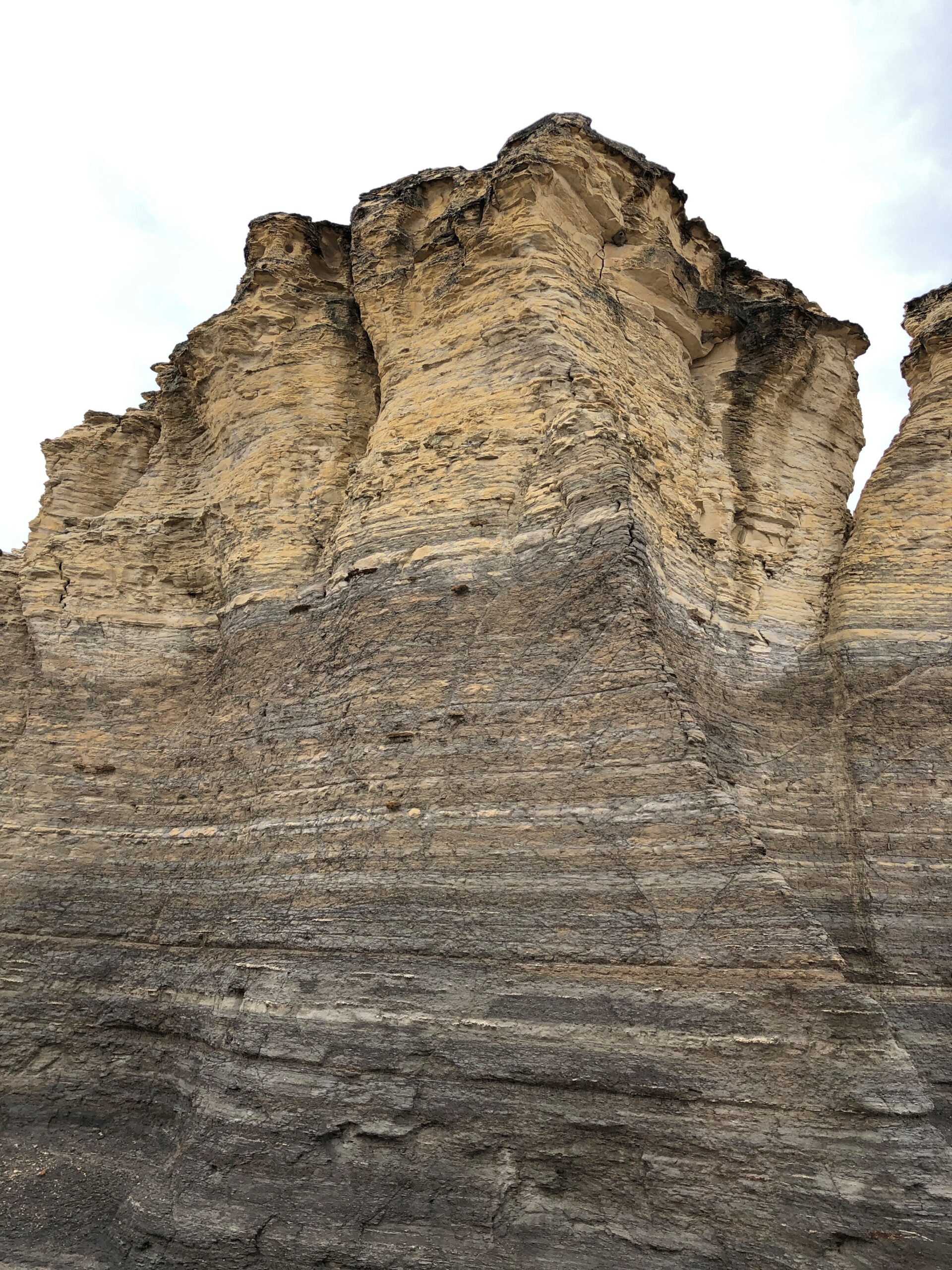
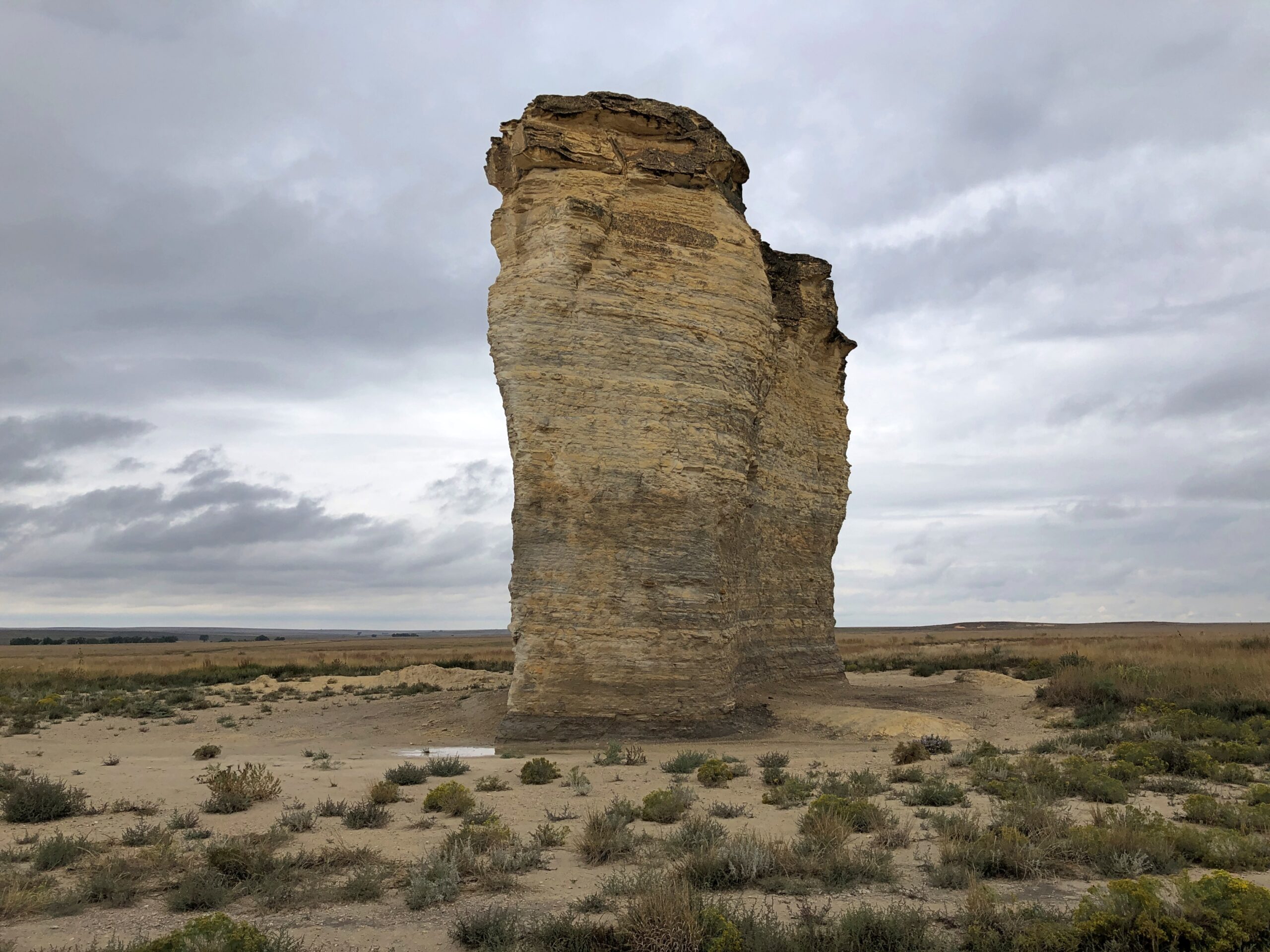
Washburn U. in Topeka tells us:West of Castle Rock area in Gove County, Kansas, erosion has carved these chalk pyramids from what was once the floor of a vast inland sea. Also called Monument Rocks, this site is the first natural landmark chosen by the US Dept. of the Interior as a National Natural Landmark. This landmark in on private land. The owners are generous to share this site with the public. Treat it with respect.
This limestone was once the floor of a great inland sea, existing some 80 million years ago. The sea dried away over time and the rock was carved by elements of nature to create these formations, which now stretch up to 70 feet in height.
The rain the night before had also made mud all around the rocks. I should have taken the time to put on my better shoes for a walk near the rocks, but no. While making my way through the muck, I lost traction, and down I went, on my butt. Luckily, the soft mud cushioned the fall, which was more of a slide anyway, so I wasn’t even bruised.
The back of my pants were, however, coated with sticky, yellowish Kansas mud. So standing outside my car, I changed my pants. The two other visitors were in another part of the site by that time, so no one was around for the unwelcome spectacle. My shoes were covered with mud too, so much so that even a good soaking when I got home didn’t get it all off. When I wear those shoes now, I take a bit of Kansas with me.



.jpg)

