Thanksgiving Dinner 2019

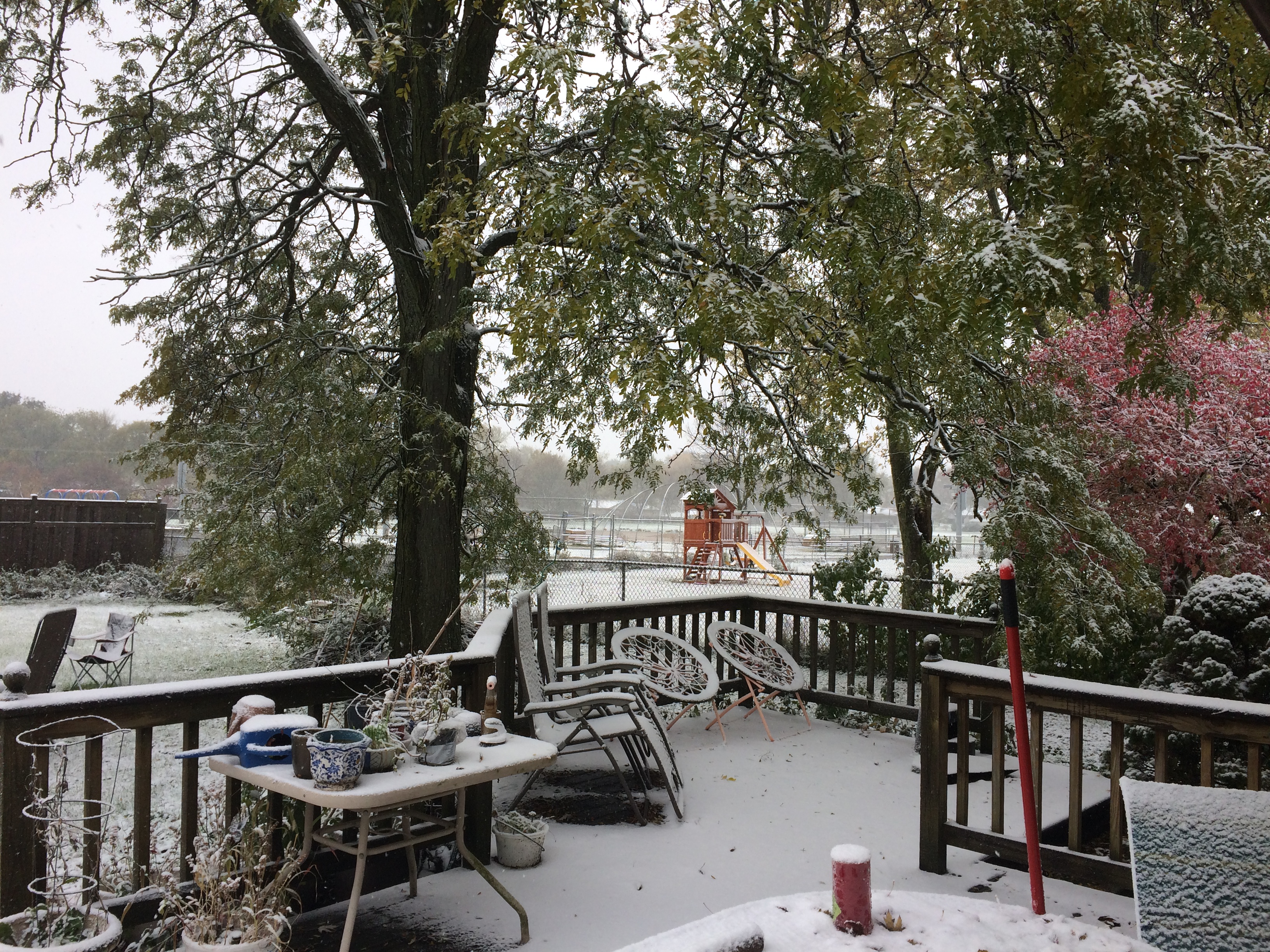
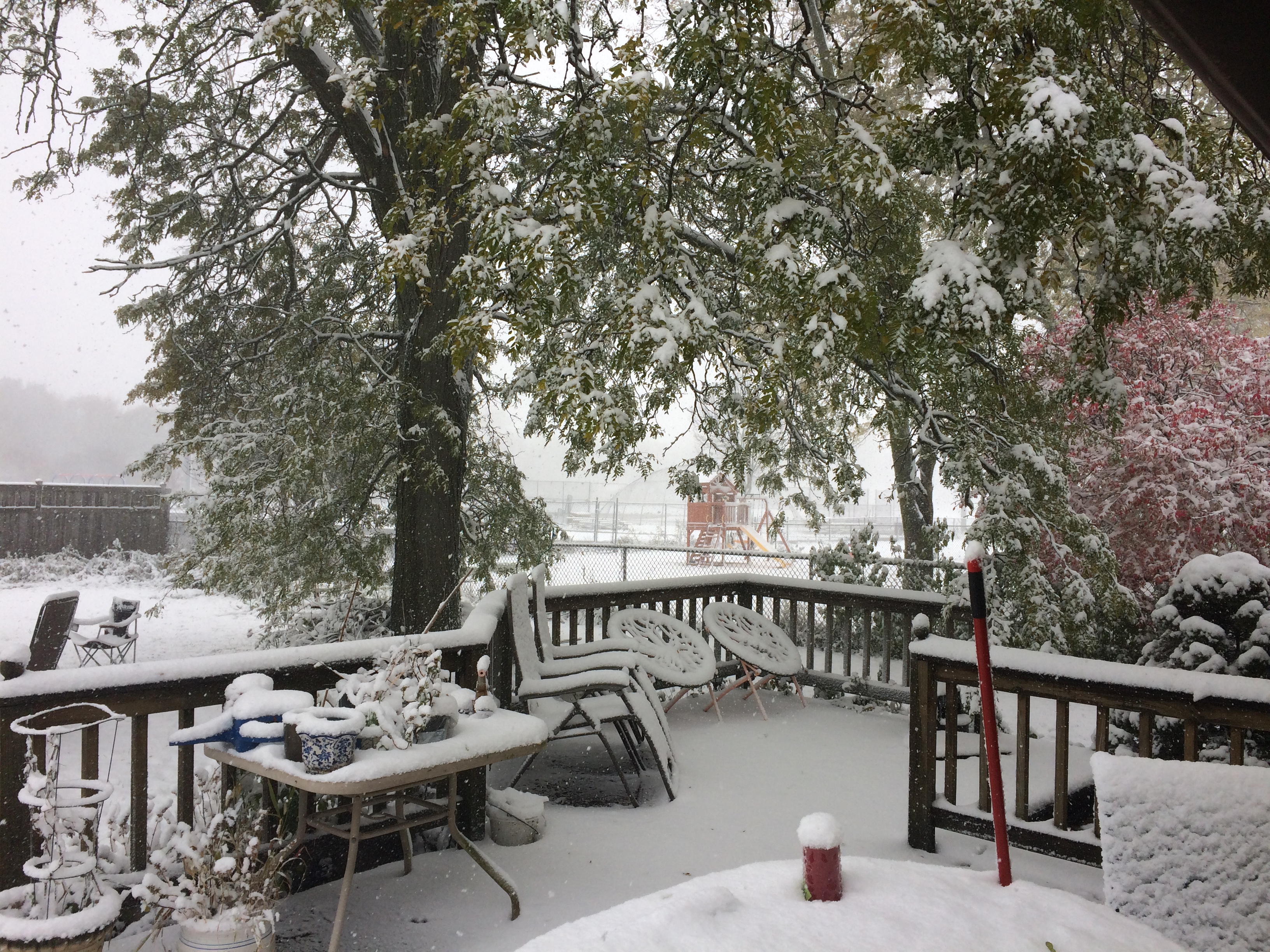
December didn’t arrive with a blast of snow, but instead gray skies that gave up rain from time to time, which — by Sunday just after dark — had turned into light snow. In other words, weather like we’ve had much of the time since the Halloween snow fell, followed by the Veterans Day snow.

Come to think of it, we had Palm Sunday snow this year. Seems like a year for named-day snows. But no Thanksgiving snow. Or Absence of Color Friday snow (well, maybe).

Took no pictures of 2019 Thanksgiving dinner. Will there be a time when it’s socially mandatory to take a picture of every special-event or holiday meal? Or every meal? Sounds like a small component of dark tale you’d see in Black Mirror.

This year’s meal looked pretty much like this plate — same kind of fish bought from the same place — and was just as good, with the food prepared mostly by my daughters’ skilled hands. Chocolate creme pie for dessert, also from a store, and one we’ve enjoyed before. I did all cleanup, a multi-pan, multi-dish, many-utensil effort, but worth it.

Tintinabulation &c

A classic November day outside my window today. Slate gray sky, rain in the morning, chilly but not freezing, gusts of wind pushing leaves around. At least week’s ice and snow are gone. They’ll be back. A brown Christmas would suit me fine, but I can’t count on it.

Back to posting after Thanksgiving, around December 1, after a week-long holiday from posting, but not from work this year. Still, being off on Thursday and Friday — which will include no special consumer activity on my part — ought to be pretty sweet, as always.

We will probably hit the grocery store on Tuesday or Wednesday evening. Meat, carbohydrates, sweets, etc. Exact menu to be determined in conference with the rest of my family in the near future.

Here’s Phil Ochs’ adaption of Poe’s “The Bells.” Didn’t know about it until recently. Nice.

I have a big book of Poe’s work from the library that I’ve been grazing lately. Read “The Bells” again, among other things, after many years. I’d forgotten most of it. Somehow I didn’t notice when I was younger that the poem progresses from silver to gold to brass (brazen) to iron bells — from merriment to happiness to alarm to death, or at least what I take for death in poem, though not the song:

They are Ghouls:
And their king it is who tolls;
And he rolls, rolls, rolls,
Rolls
A pæan from the bells!

Last night I read “Hop-Frog,” which I hadn’t before. A neat little revenge story, like “The Cask of the Amontillado,” though not quite in the same horrifying league. I guessed the ending — what violence Hop-Frog was planning. No matter. Poe’s usually worth a read. The influence of even that minor story seems to turn up in odd places.

The Edgar Allan Poe Museum

Halloween snow today. Mid-morning.Halloween Snow

Mid-afternoon. Of course, it will melt in a day or two.

I’ve spent a fair number of Halloweens in the North; this is the first time snow has fallen. Cold rain, sometimes, but no snow. Sometimes warm fall days or blustery cool ones, like the Halloween of 2001, when Lilly was so unnerved by the dark and the strong winds while out trick-or-treating that she insisted that I carry her home. She wasn’t quite four, so it was possible — but tiring.

Speaking of Halloween, I’ve been listening to “Danse Macabre” lately.

In high school, I made the mistake of calling the piece “Halloween music” in front of my band director. He let me have it. It’s a tone poem! It’s serious music from France! It’s blah blah blah. Know what, Mr. W? I was right. It can be all those other things and Halloween music as well. Halloween as in spirits roaming our world before All Hallow’s, not the candy-gathering custom.

The last place we visited during the recent Virginia trip was the Edgar Allan Poe Museum in the Shockoe Bottom neighborhood of Richmond.

Poe Museum Richmond

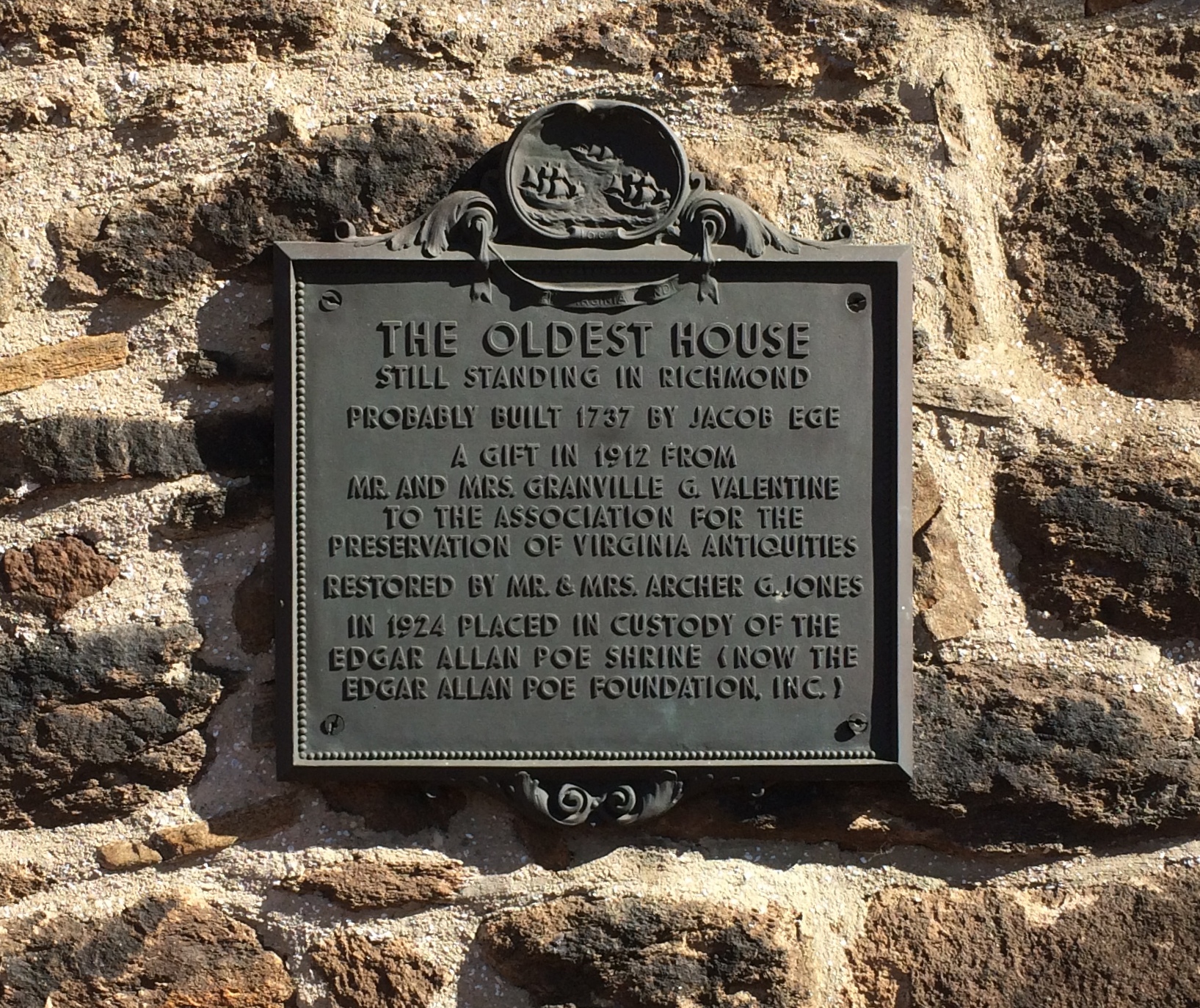
A small, specialized museum not in a house that Poe lived in — one of the places he lived was a few blocks away, long demolished — but including a building that is suitably old. In fact, according to a plaque on the wall, the oldest house still standing in Richmond, the Ege House.

All in all, an interesting little museum. Ann thought so too. I found out things I didn’t know, such as that Poe was a gifted athlete at the University of Virginia. Also heard more about things I did know, such as that after Poe died, his enemy Rufus Griswold wrote damning and largely false accounts of the author — vestiges of which still cling to Poe.

The museum is essentially three rooms: Poe’s early life, which was haunted by Death; Poe’s literary career, which was informed by Death; and Poe’s early and mysterious death, which was literally about Death. Some of the artifacts were owned by Poe or his family, or were portraits of them. Other items evoked his life and literature.

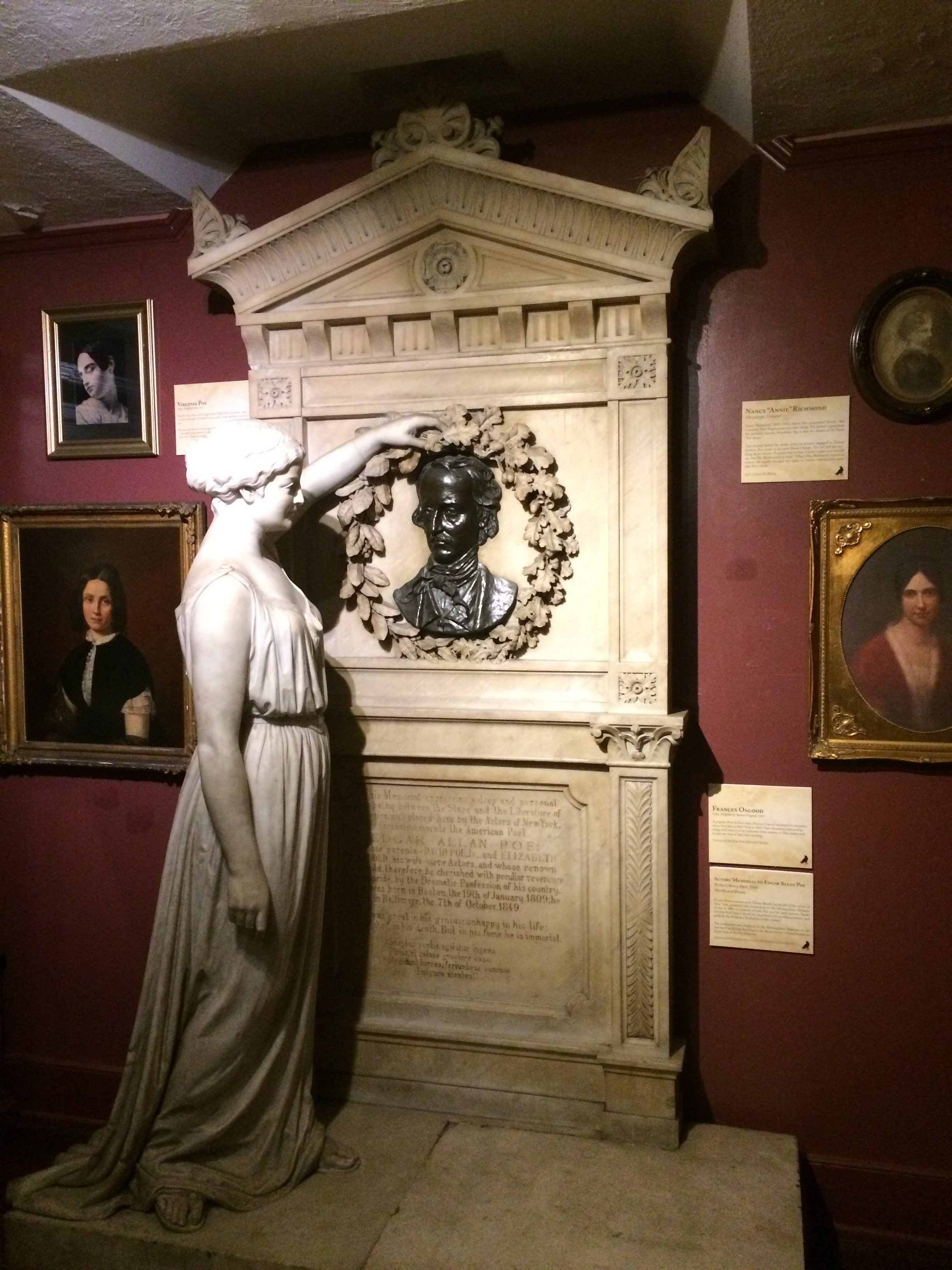
Such as this marble-and-bronze memorial to Poe.

The sign says, “… Edwin Booth, on behalf of the actors of New York, presented this monument to the Metropolitan Museum of Art in 1885 in memory of Poe…” Eventually, I guess, the Met got tired of it, and it ended up in Richmond.

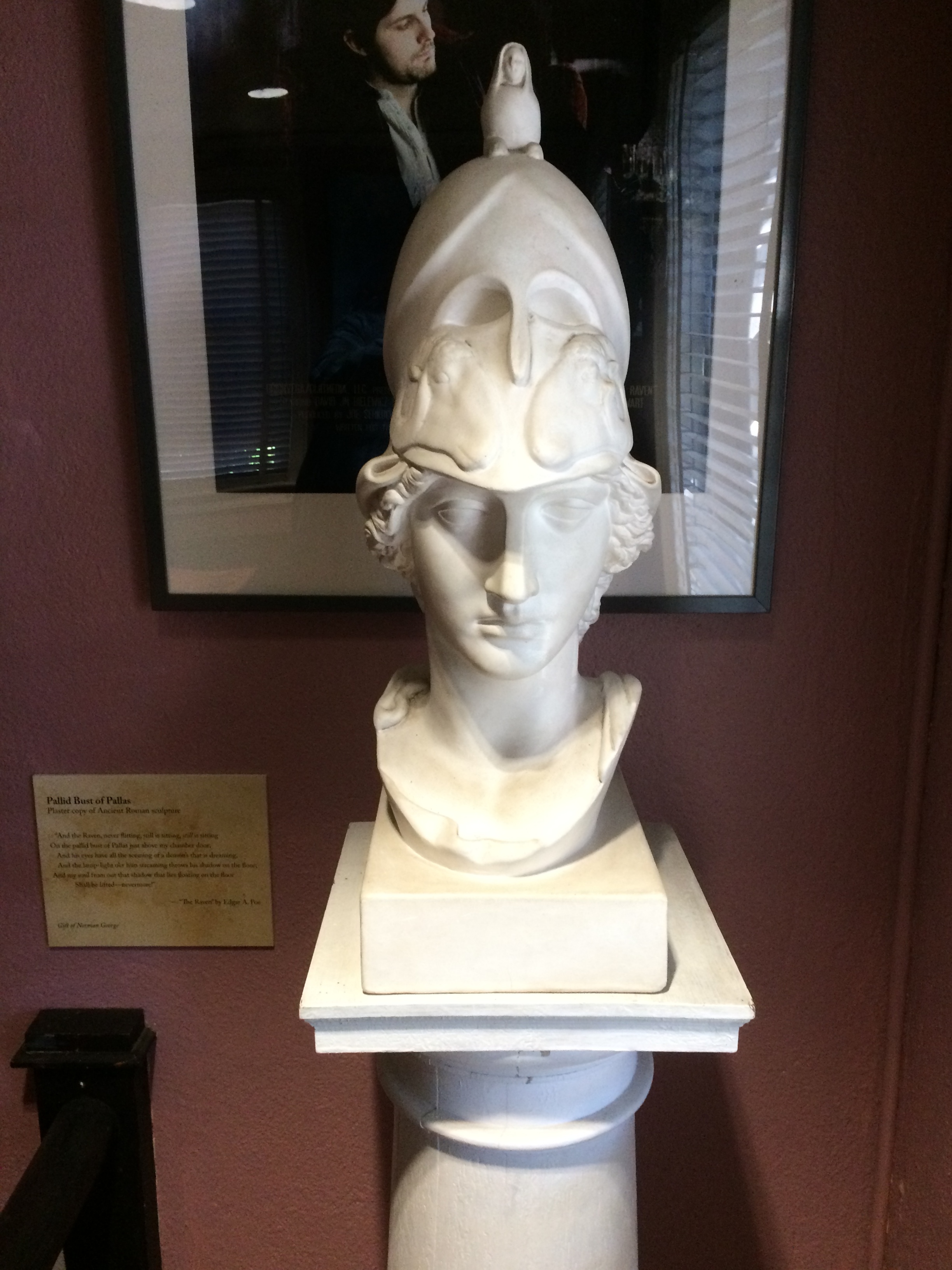
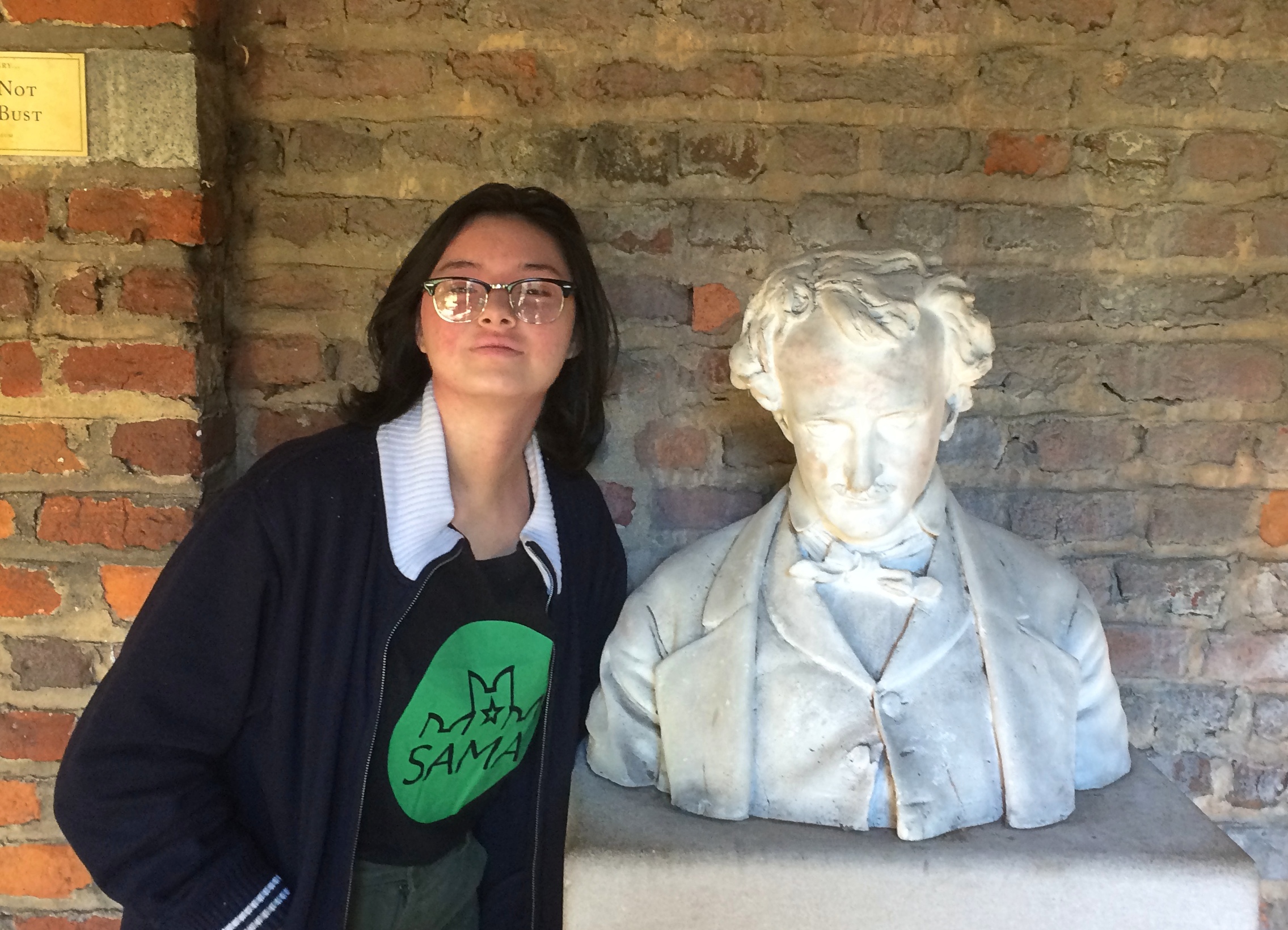
Or this bust of Pallas, a copy of a Roman sculpture. Can’t call yourself a Poe museum without that, though a depiction of Night’s Plutonian Shore would be good as well.

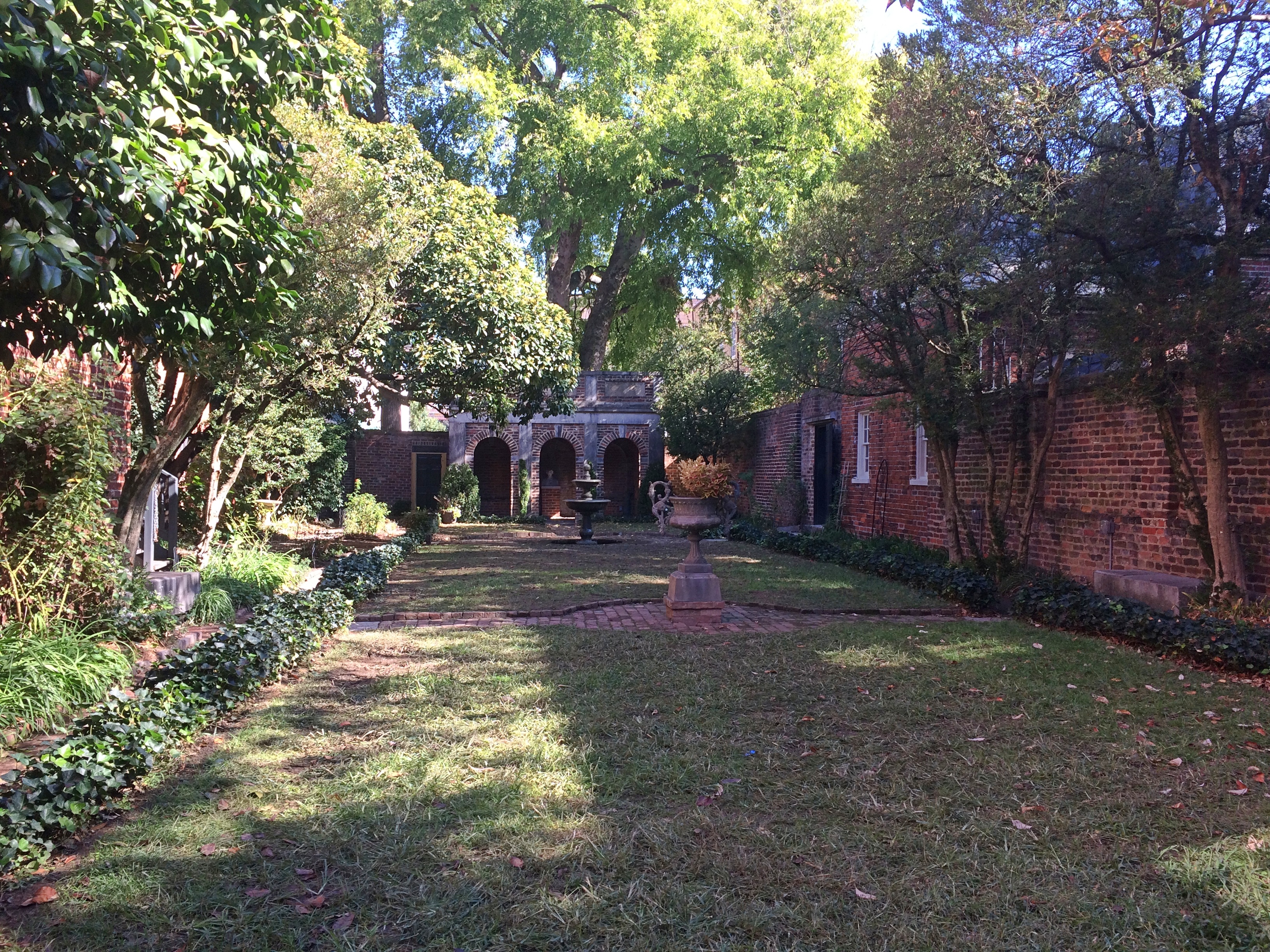
Poe himself in stone out in the garden.

The garden is a pretty little space. People get married there, apparently.

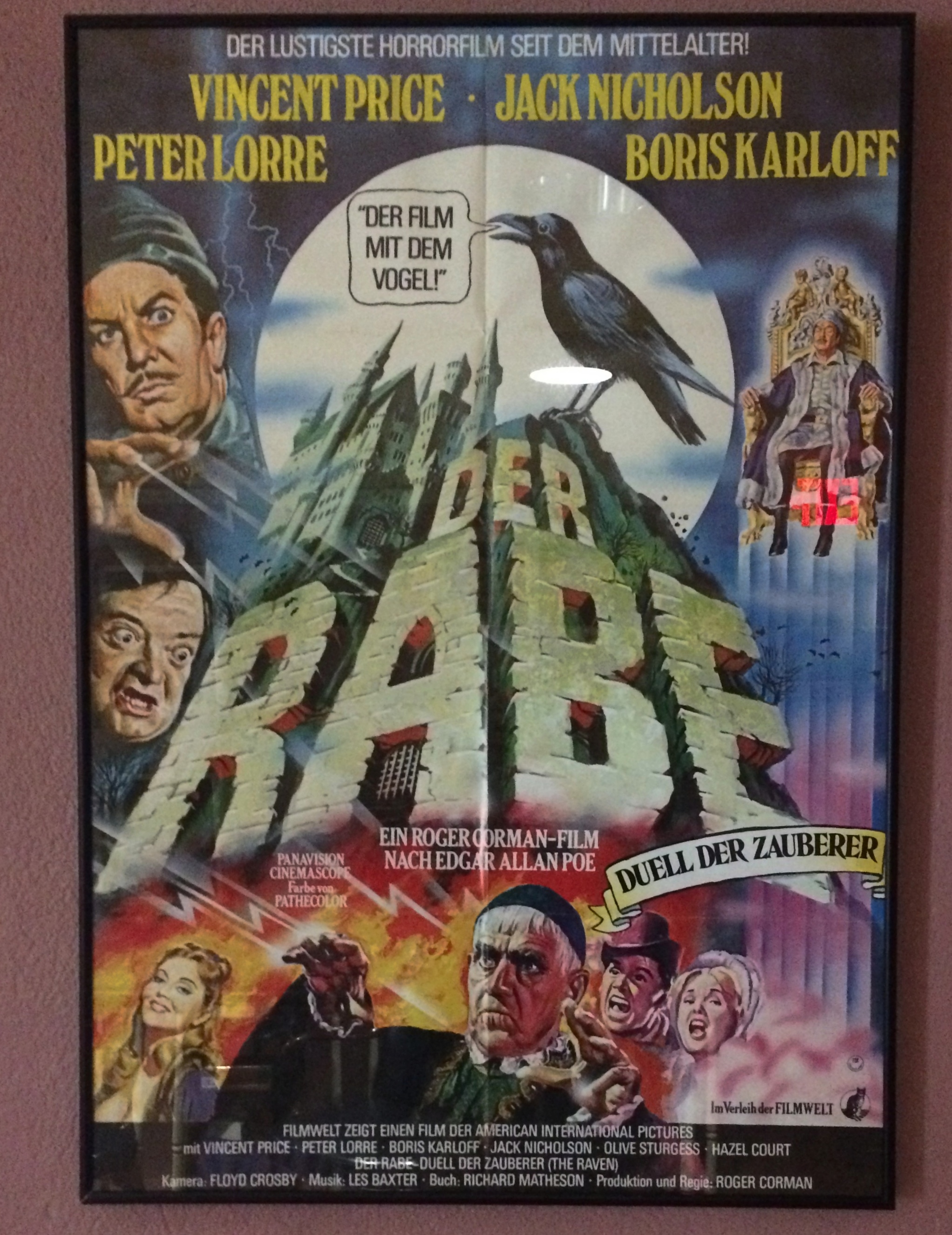
My own favorite item.

I haven’t seen The Raven, but a movie with Vincent Price and Peter Lorre and Boris Karloff and Jack Nicholson, directed by Roger Corman, who did a lot of Poe-inspired movies, has to be worth a look.

Virginia ’19

Some time ago, I noticed that Ann not only had October 14 off — for Columbus Day, that barely there school and post office holiday — but the next day as well, one of those days on which the teachers come to school, but students don’t. According to the way I think, that meant an opportunity to go somewhere.

So on Friday, October 11, Ann and I flew to Richmond, Virginia, returning on the 15th, for what amounted to a U.S. history trip. Fitting for her especially, since she’s in an AP U.S. history class this year. Fitting for me, since the trip included destinations that I’ve wanted to visit for a long time, but never gotten around to.

On Saturday, we spent the day in Richmond — partly downtown, at Capitol Square, where we toured the Jefferson-designed capitol, and at the newly opened American Civil War Museum, which includes part of the ruins of the Tredeger Iron Works, cannon and locomotive maker of the Confederacy.

Navigating downtown Richmond in a car proved to be pain in the ass, with its high volume of traffic, limited parking and numerous one-way streets. Every other street seemed partially blocked by construction, either of buildings or the street itself. Also, the Richmond Folk Festival was that weekend — and a lot of folks showed up for it, crowding the area near the riverfront, where the American Civil War Museum happens to be.

Downtown, as seen from the steep banks of the James River.Downtown Richmond
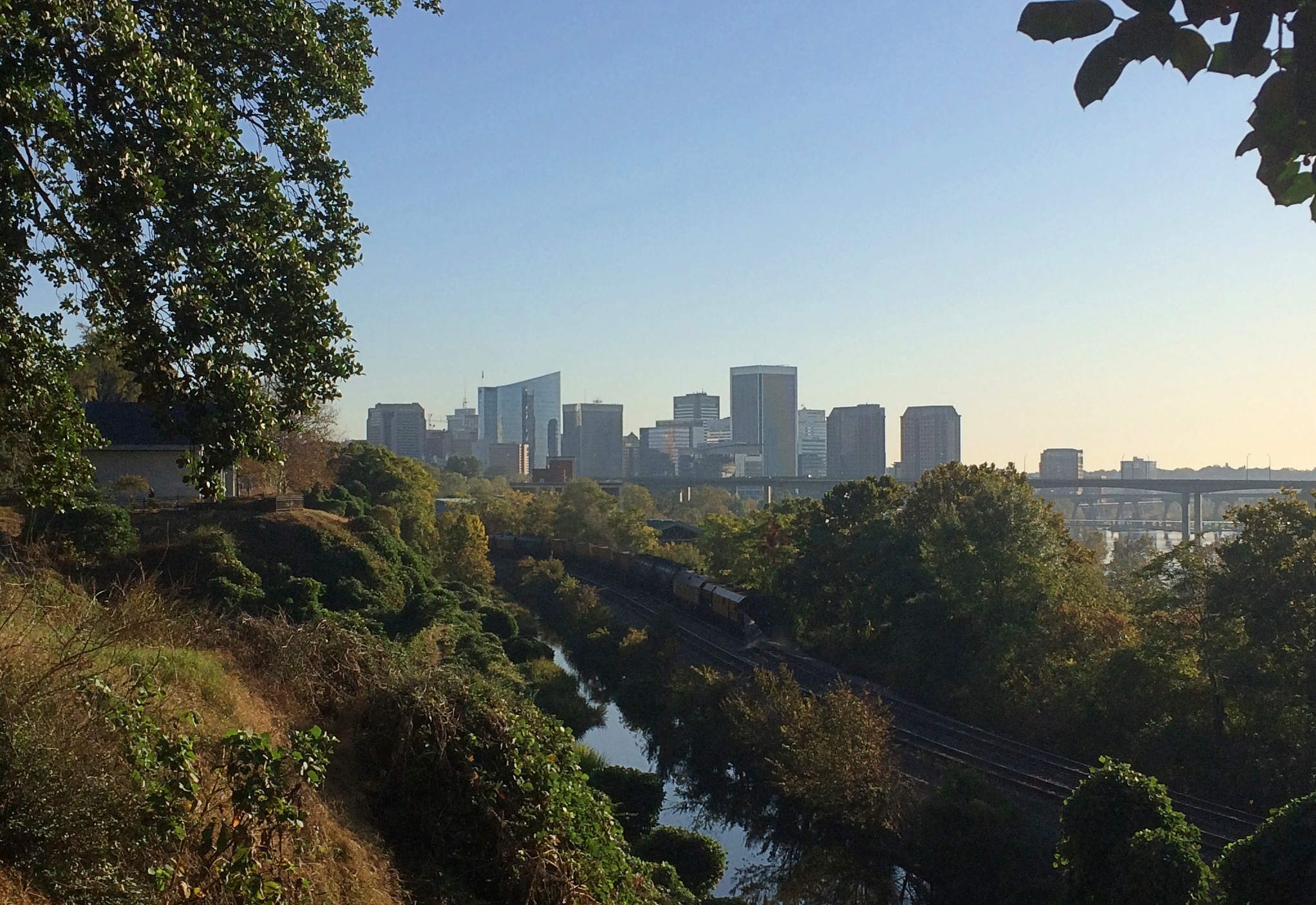
Despite traffic snarls, Richmond struck me as an interesting city, full of life in the present and echoes of its storied past. A day wasn’t nearly enough, but there were other places we wanted to see in Virginia.

On Sunday, we drove to Charlottesville, with Monticello as the main destination. For Ann, a completely new experience. For me, a second visit. But the first time was in 1988, so I’d forgotten a lot. And some things have changed there.

We also visited the University of Virginia that day, which I didn’t do more than 30 years ago (not sure why not). See one famed Jefferson site, best to see another close by. Closer than I realized: from Monticello you can just see the white dome of the Rotunda, the school’s most famous structure.

On the third day, technically Columbus Day Observed, we drove the other direction from Richmond to Williamsburg. More specifically, Colonial Williamsburg, the open-air museum of large scale and ambition, an odd amalgam of past and present.

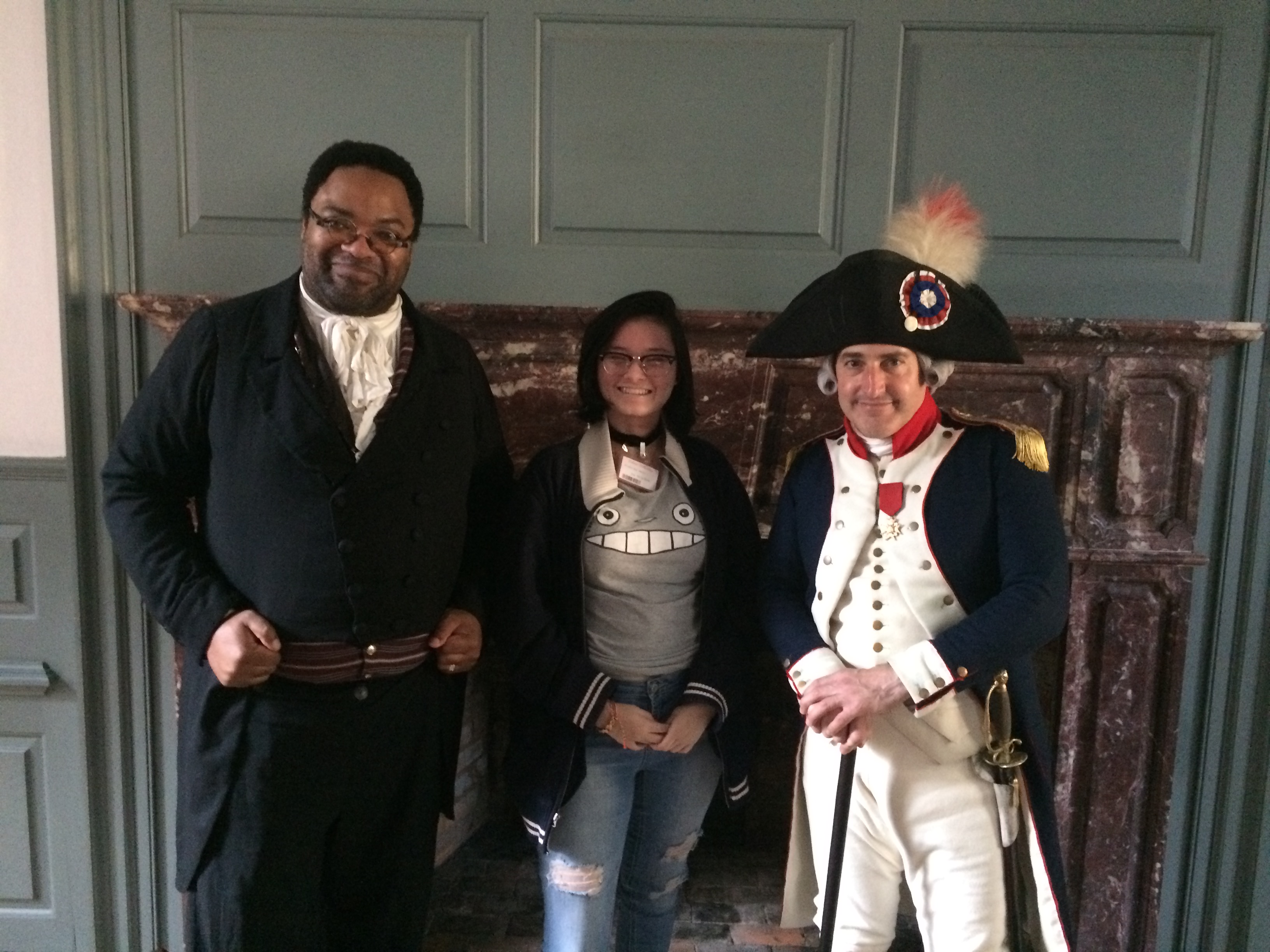
There’s a lot to Colonial Williamsburg, including structures and displays and artifacts and craft demonstrations, but also programs by reenactors. The high point of the visit was one such, held at a reconstructed 18th-century tavern and featuring the Marquis de Lafayette and James Armistead Lafayette.

Afterward, they were willing to pose for pictures.
Colonial WilliamsburgOn October 15, we flew home in the afternoon. In the morning, I drove by myself to a place I’ve wanted to visit for years, the Hollywood Cemetery in Richmond, a stunningly beautiful cemetery perched on a hillside above the James River, populated by numerous historic figures.

After Ann woke up and we checked out of our room, we visited one last spot in Richmond: the Edgar Allan Poe Museum, small but compelling, managing to convey the misery of his life and the legacy of his art.
St. Lorenz Lutheran Church, Frankenmuth

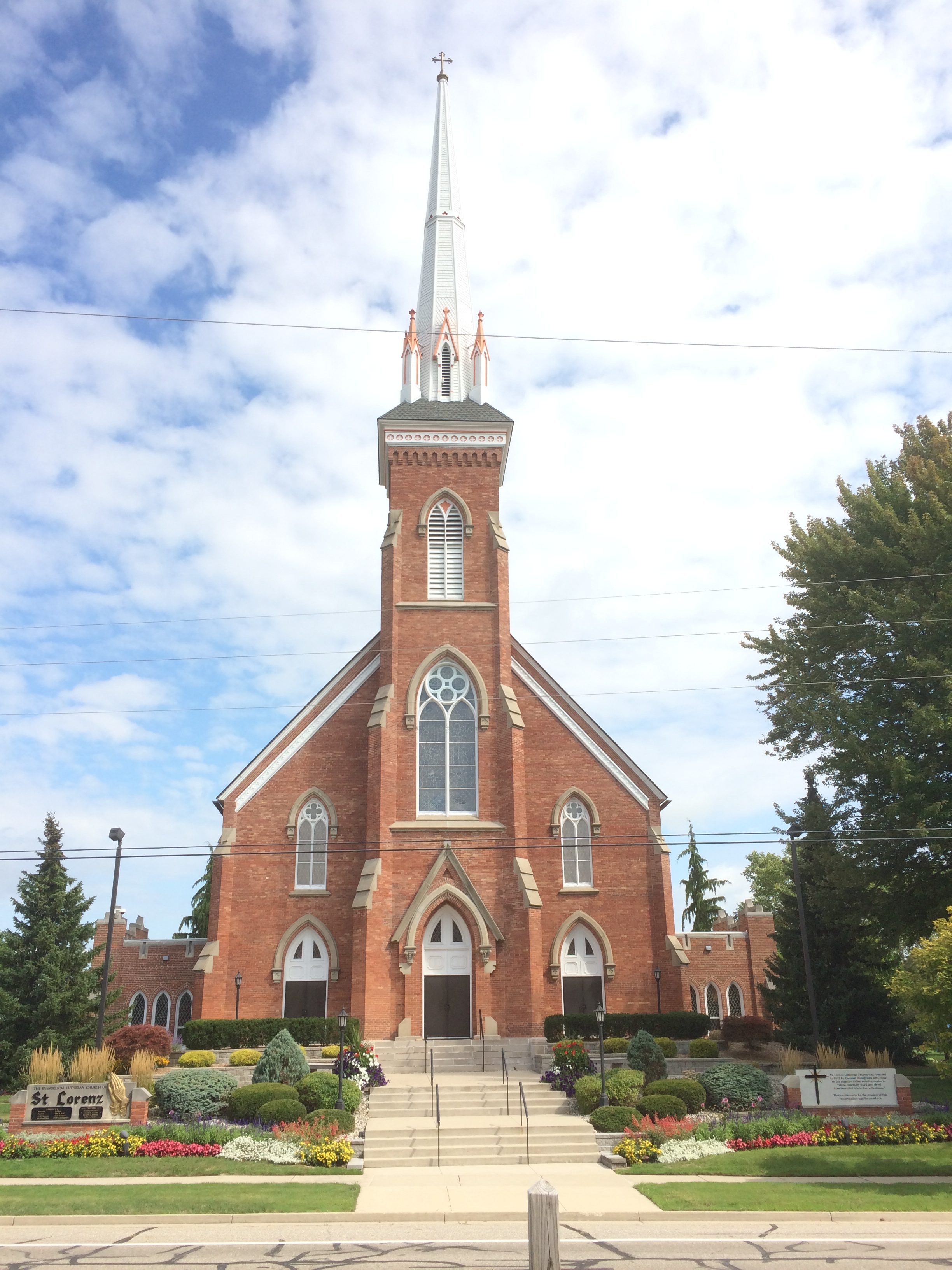
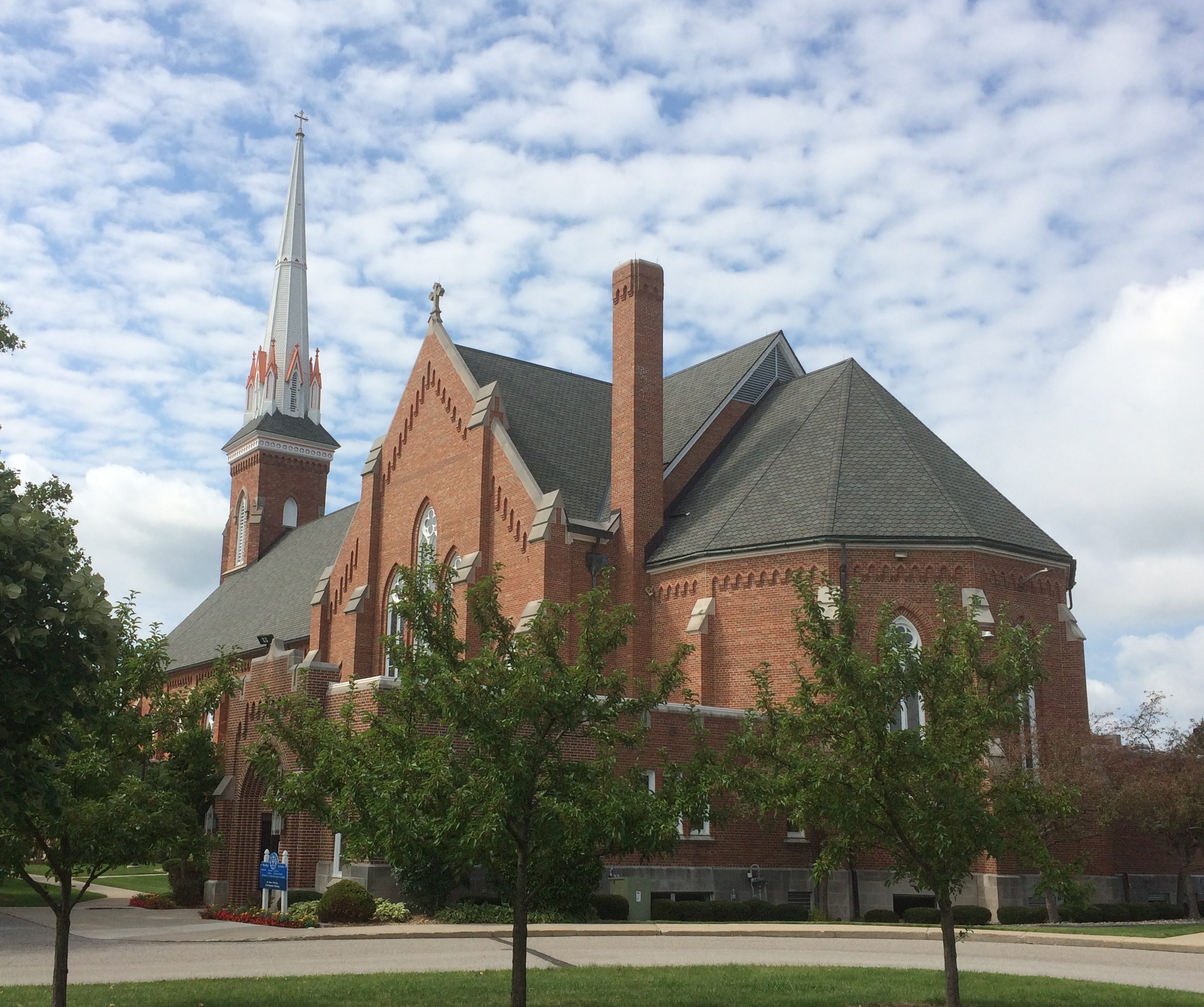
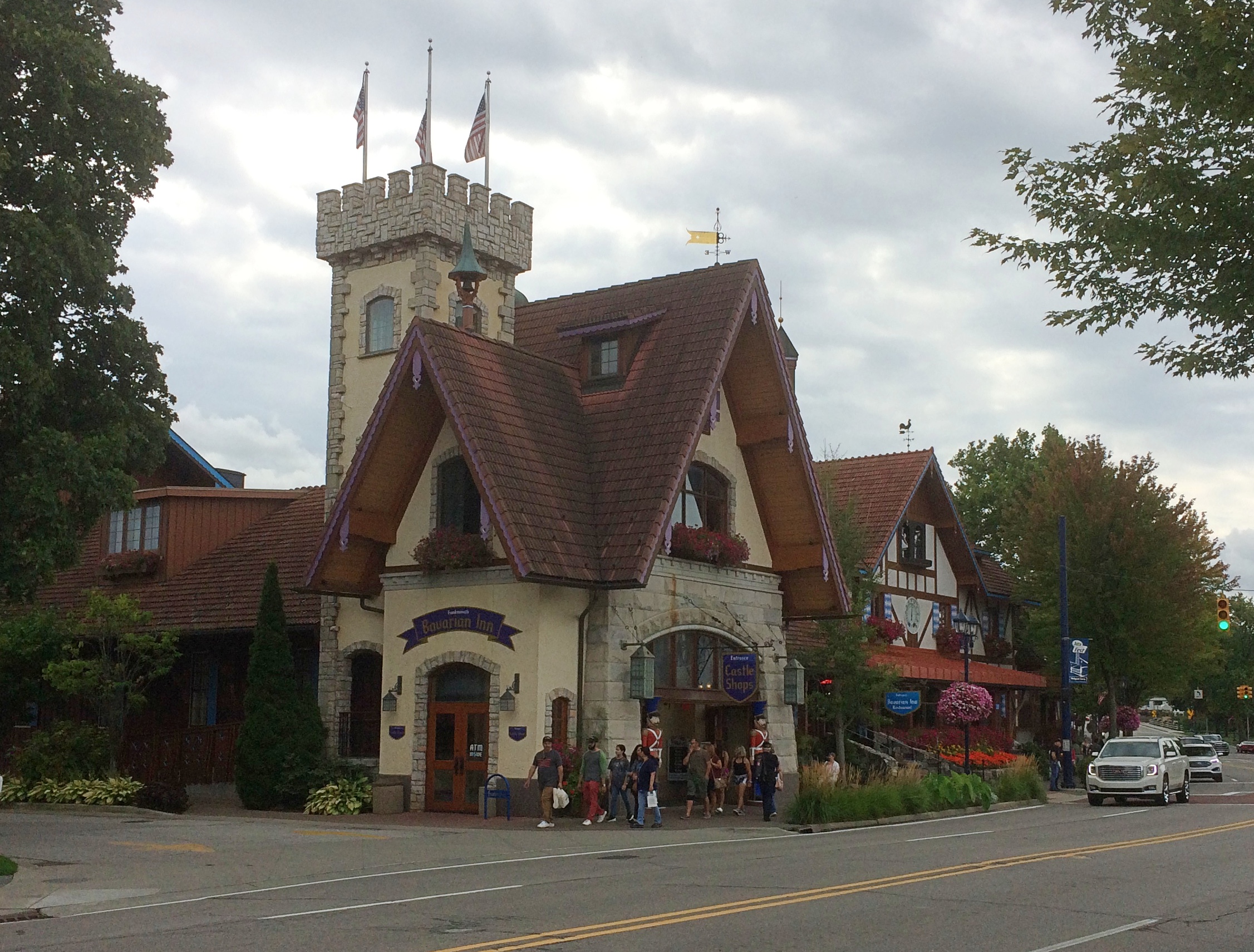
For all its faux Bavarian tourist appeal, Frankenmuth, Michigan has an actual Bavarian history, beginning with St. Lorenz Lutheran Church, about a half a mile from crowded Main Street.

We were the only ones there for about half an hour around noon on Labor Day.
St Lorenz Lutheran Church FrankenmuthSt Lorenz Lutheran Church FrankenmuthThe church was founded at the same time as the town. “Pastor Wilhelm Loehe of Neuendettelsau, Bavaria, was inspired to establish a German Lutheran colony by Michigan circuit riders who requested aid in bringing the Gospel of Christ to Saginaw Valley Chippewa Indians,” the site’s historic plaque says, as reproduced here.

“Directed by Loehe in 1845, Pastor August Craemer and fourteen other immigrants began clearing forests in this area south to the Cass River. They built log houses and dedicated a log church on Christmas Day 1846. The second church, a frame structure, was erected in 1852 and enlarged in 1864, serving until the completion of the present church in 1880.”

A Cleveland architect named C.H. Griese designed the current Gothic Revival church. Traces of him are online, such as in the context of another Lutheran church.

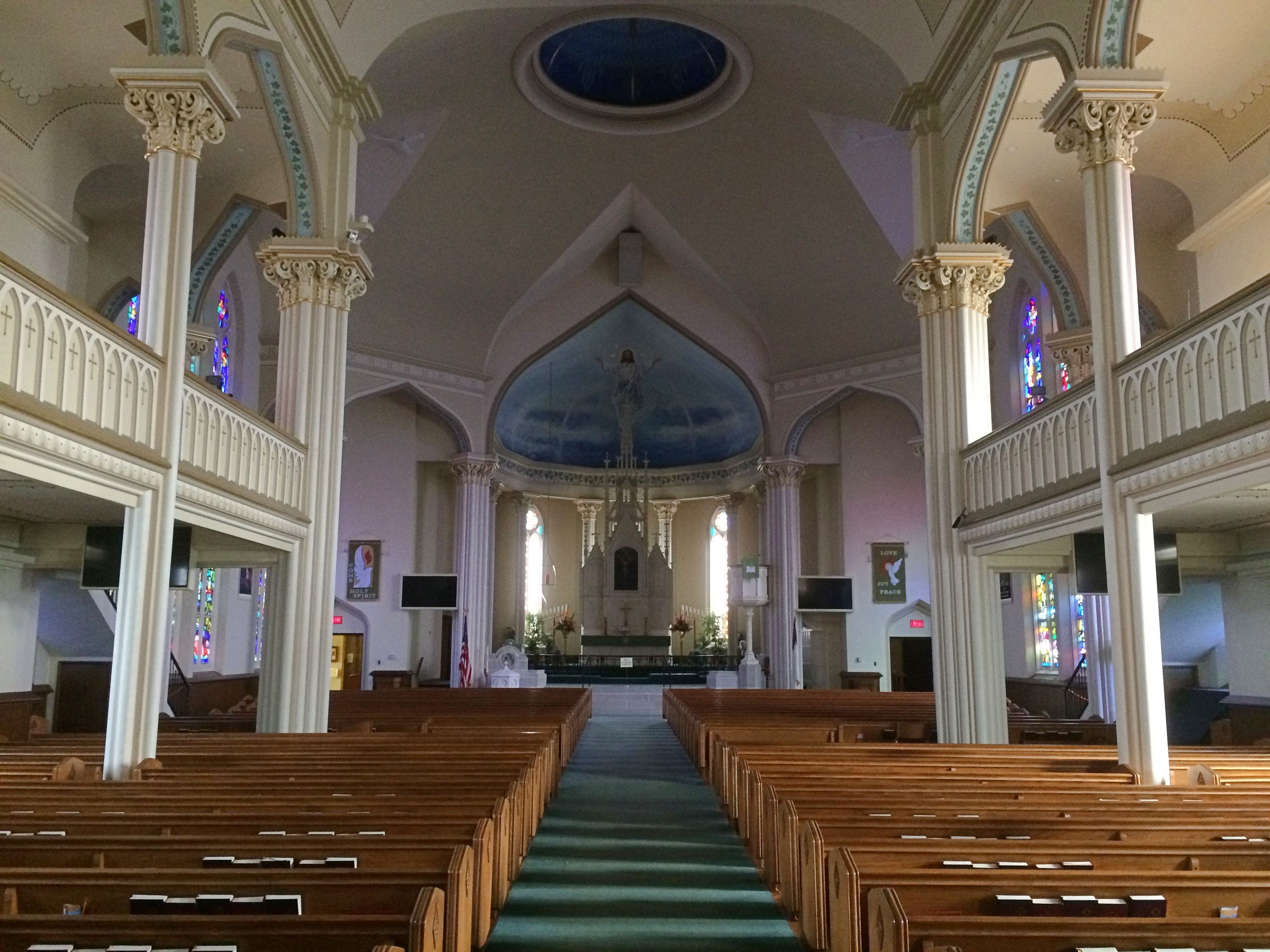
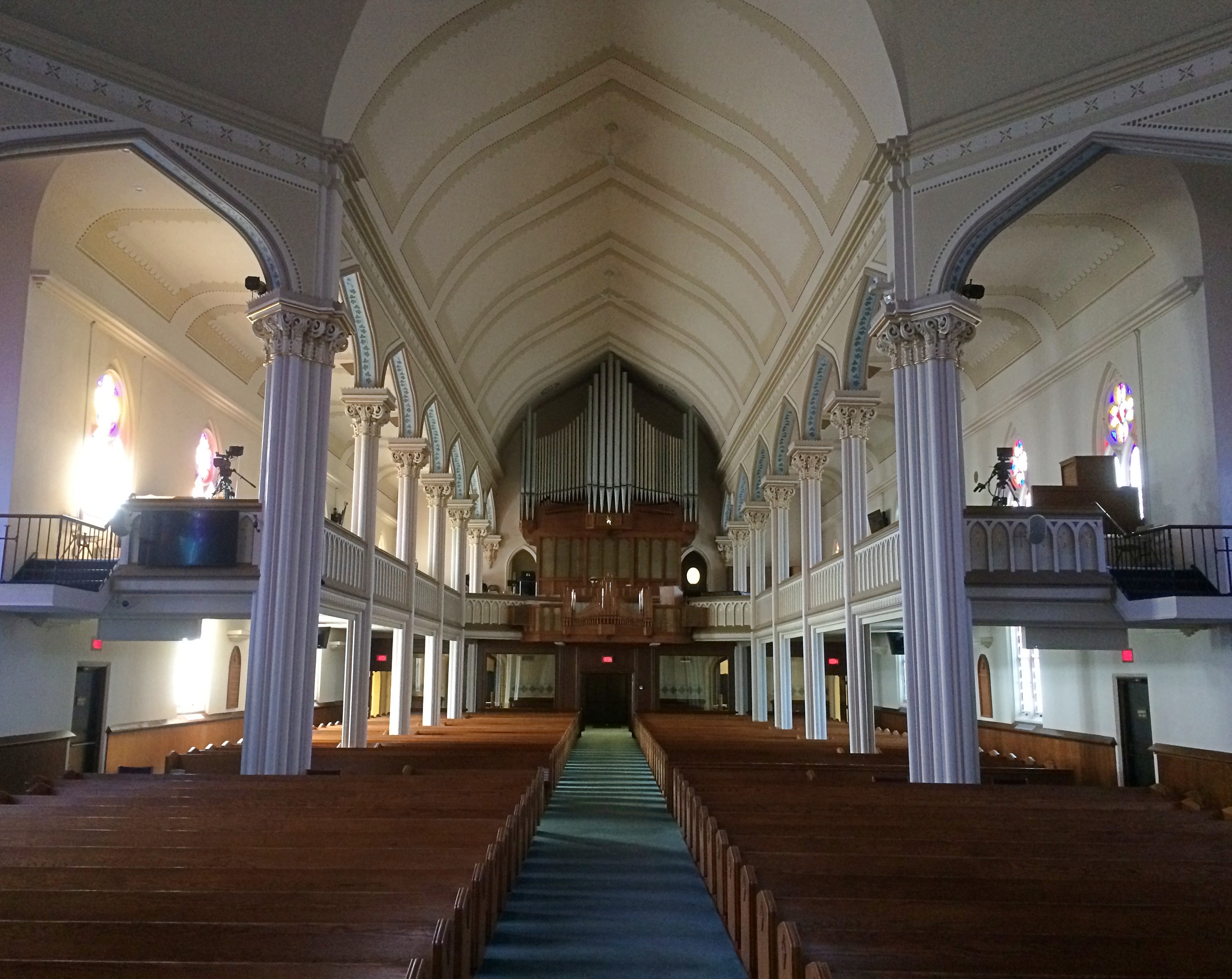
We were glad to find out that the building was open. That’s not always the case, often for good reason. The interior’s handsome indeed.
St Lorenz Lutheran Church FrankenmuthSt Lorenz Lutheran Church Frankenmuth

St Lorenz Lutheran Church Frankenmuth

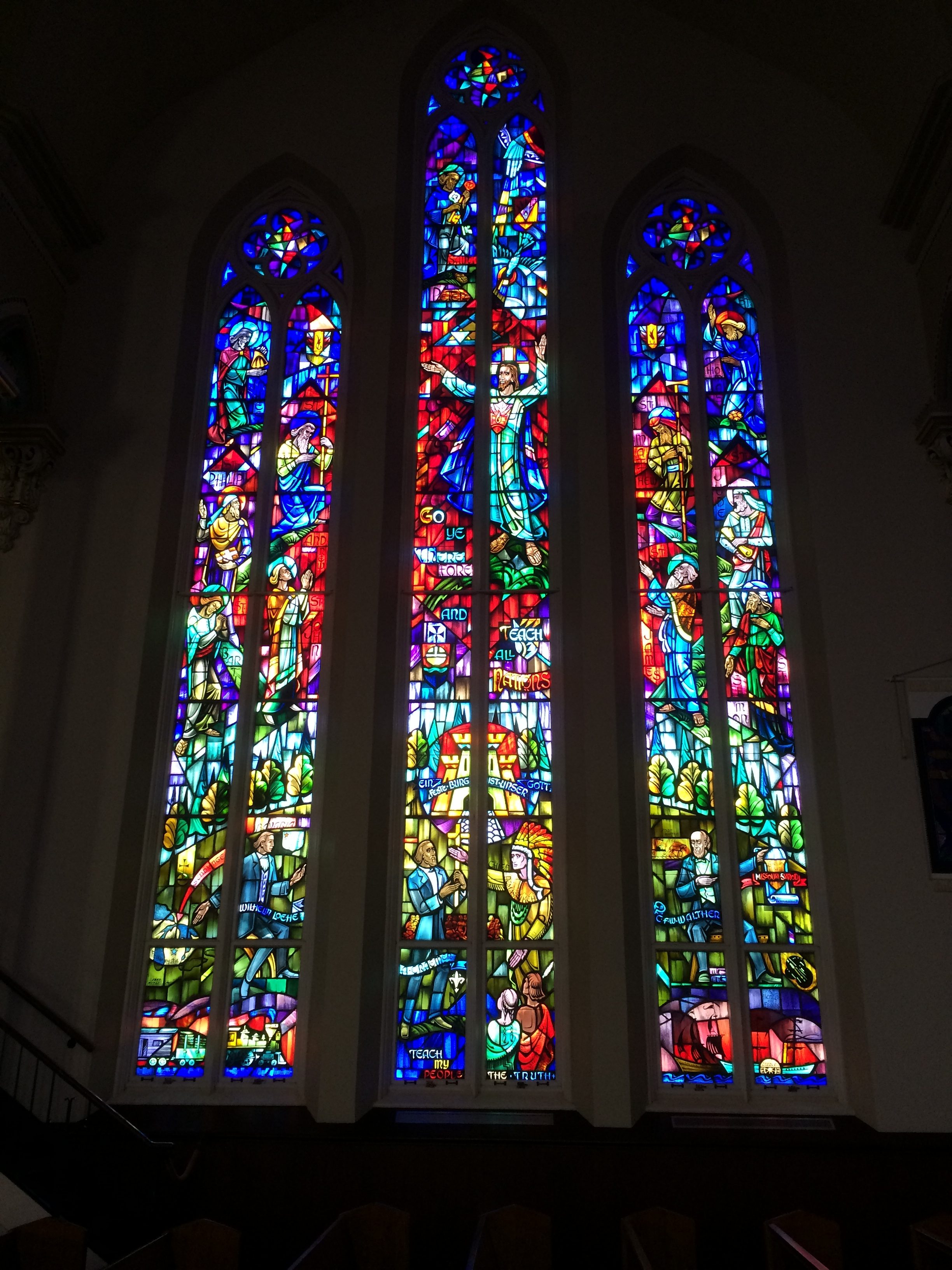
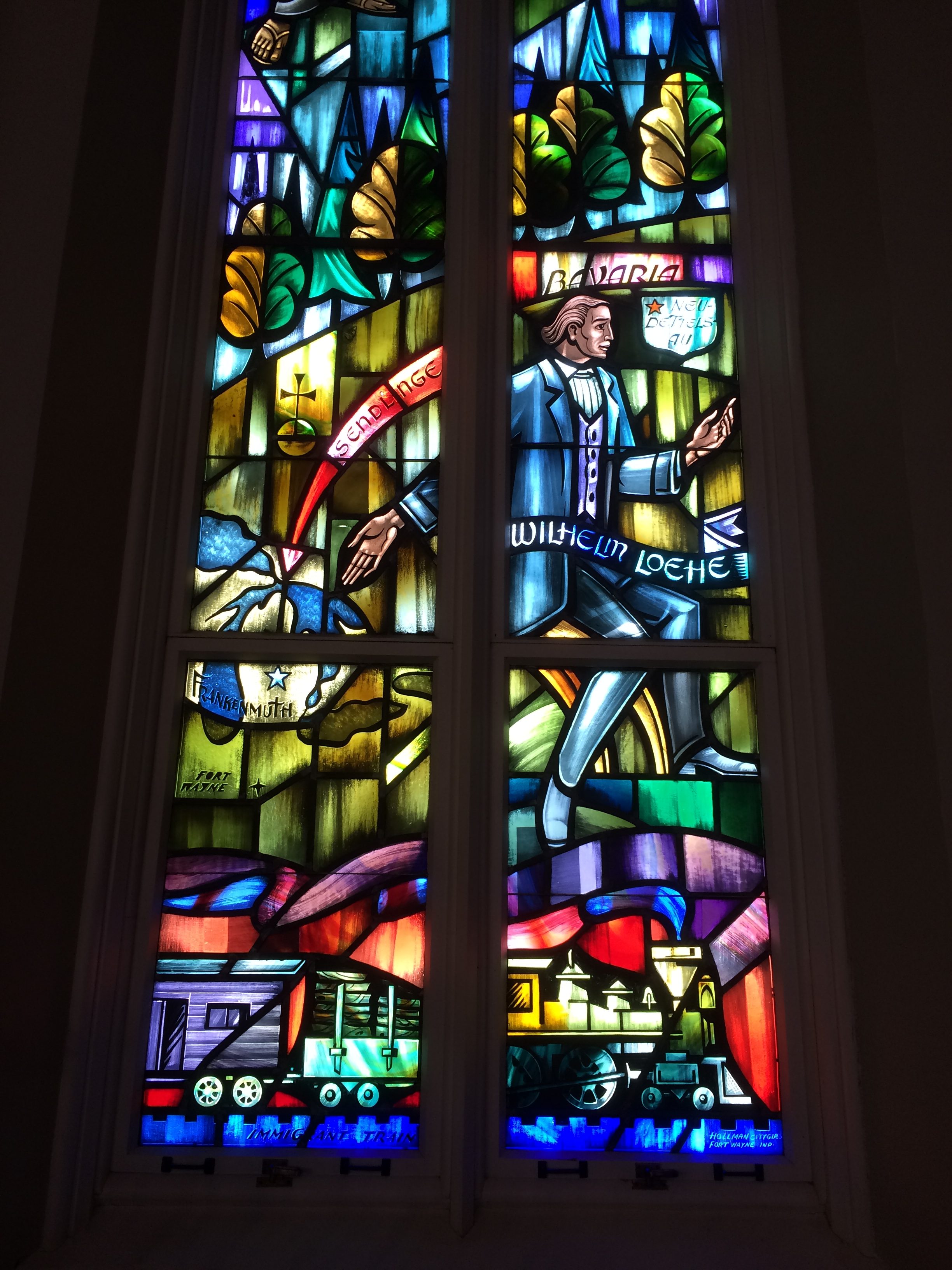
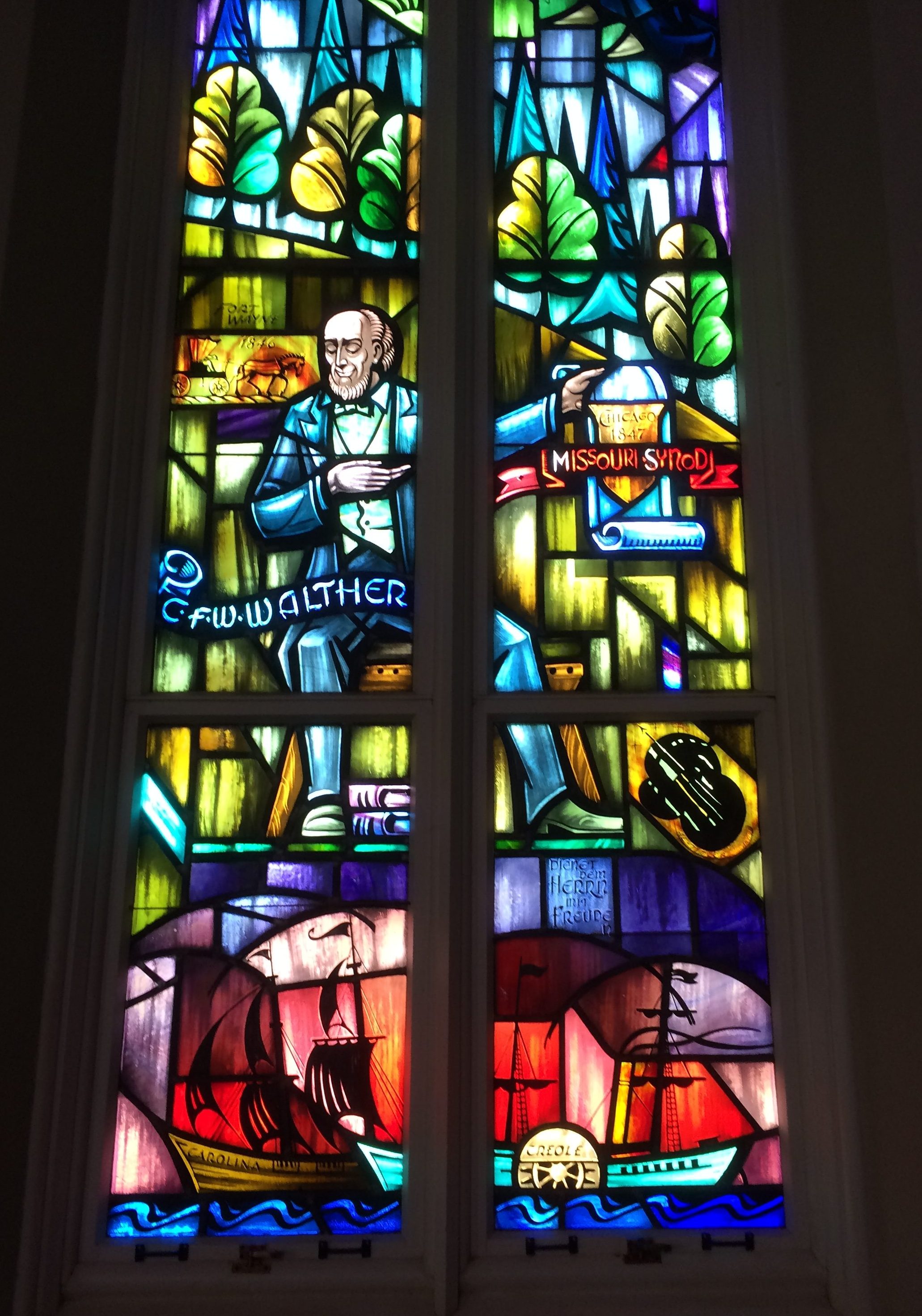
Excellent stained glass as well, signed by Hollman City Glass of Fort Wayne, Indiana.
St Lorenz Lutheran Church FrankenmuthPastor Loehe makes an appearance in glass.
St Lorenz Lutheran Church FrankenmuthI suspect this depiction of him is unique in all the world.

C.F.W. Walther, first president of the Missouri Synod, is also in glass. He’s probably englassed in other Lutheran churches.
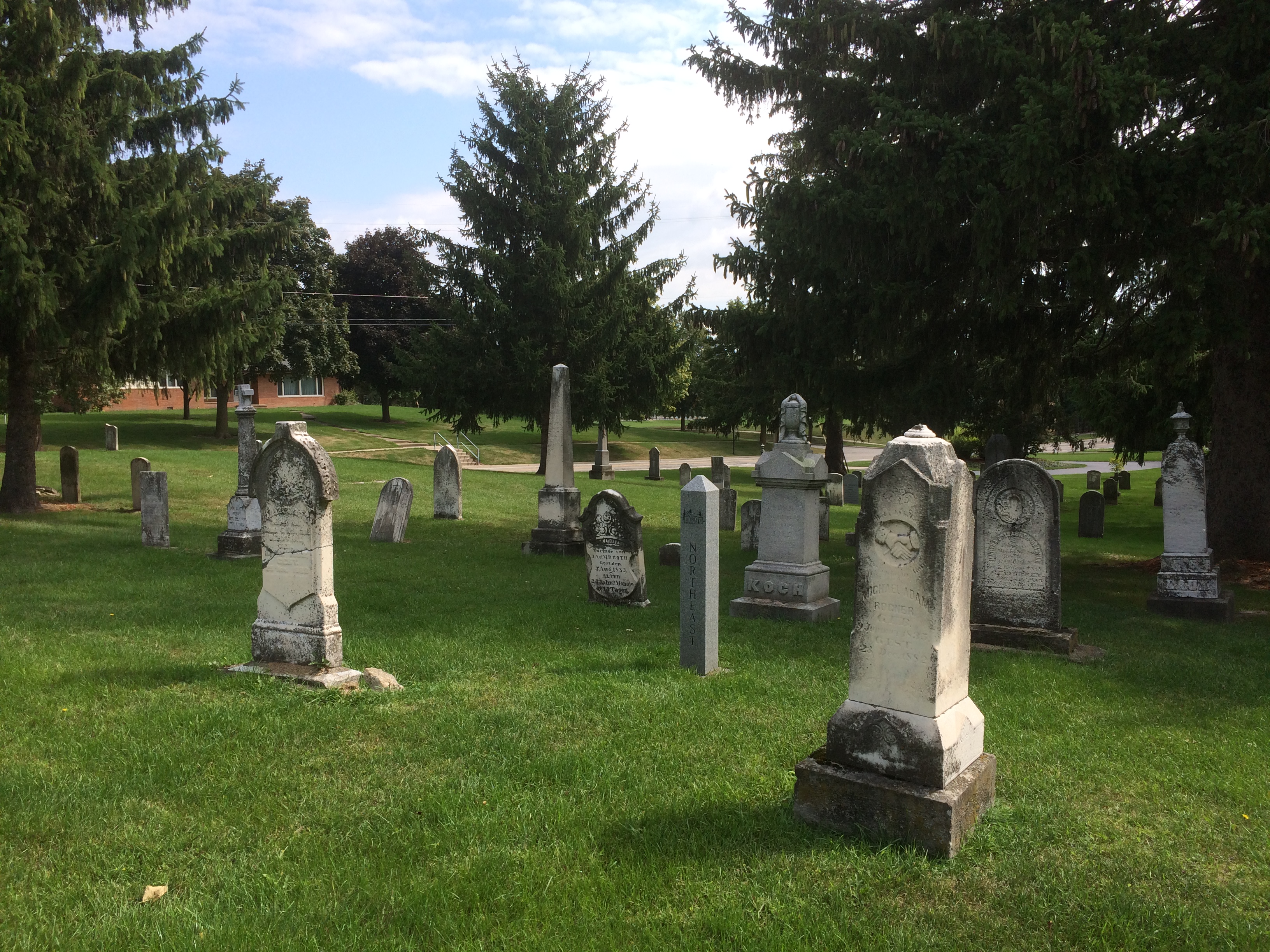
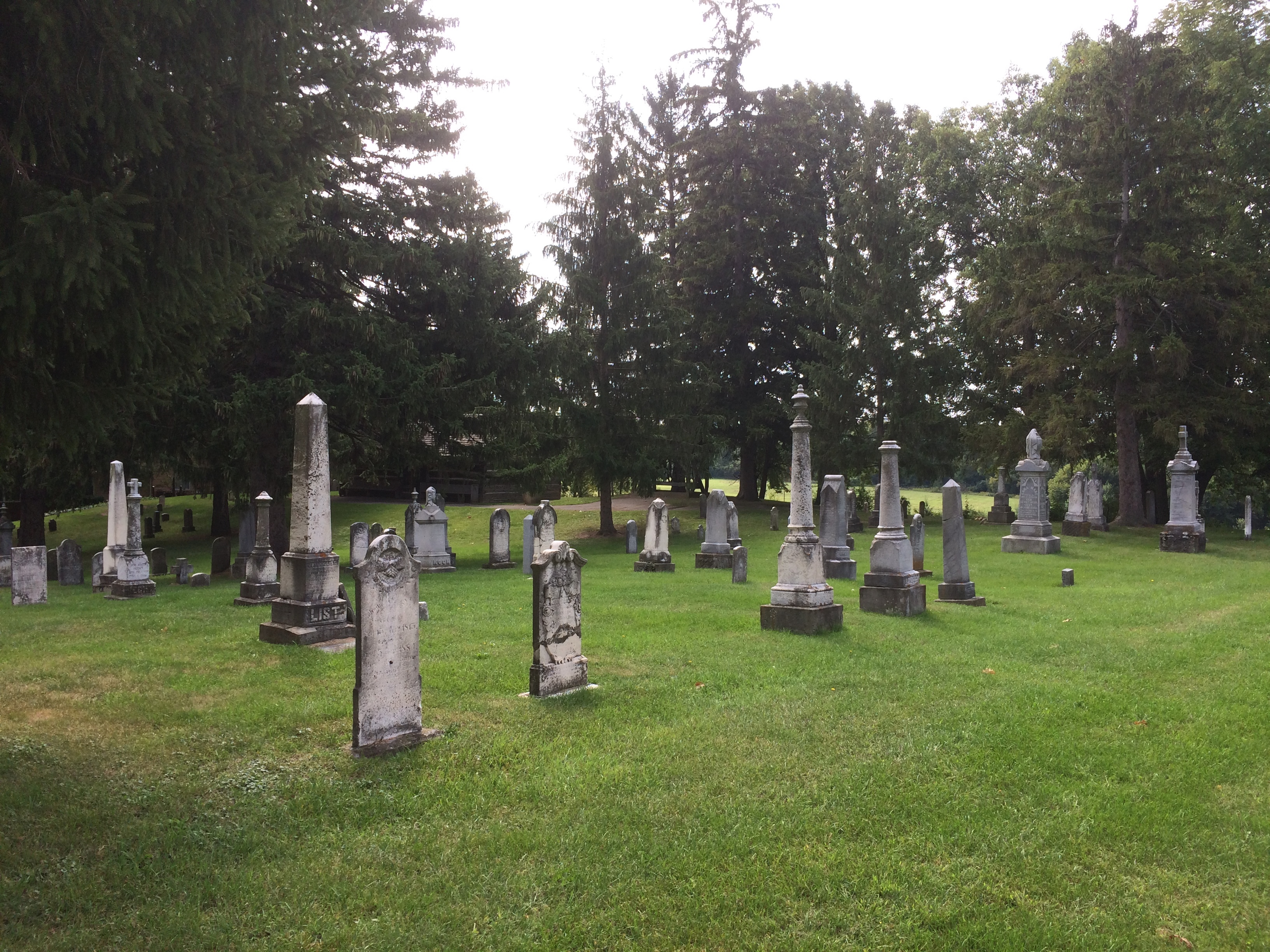
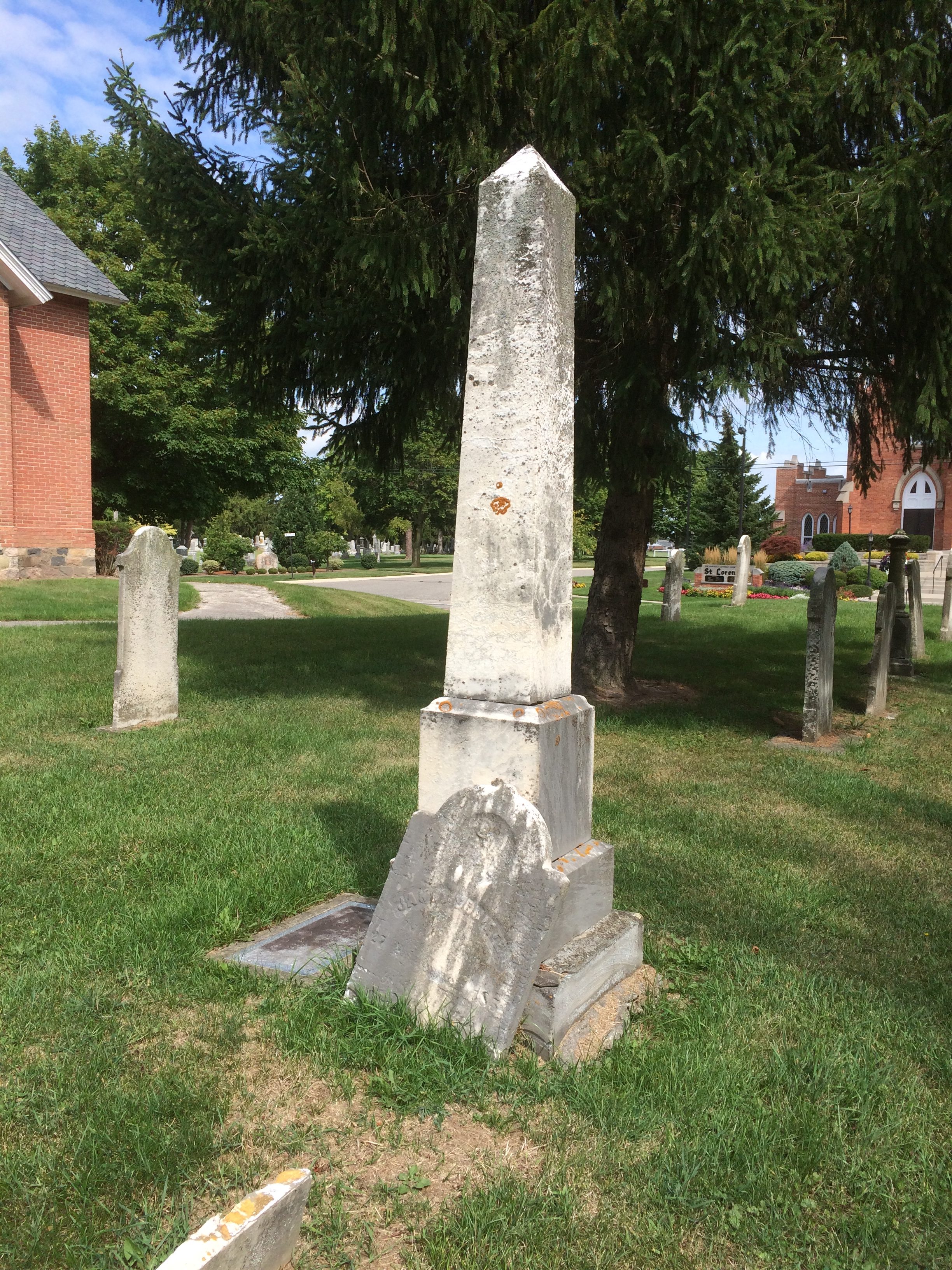
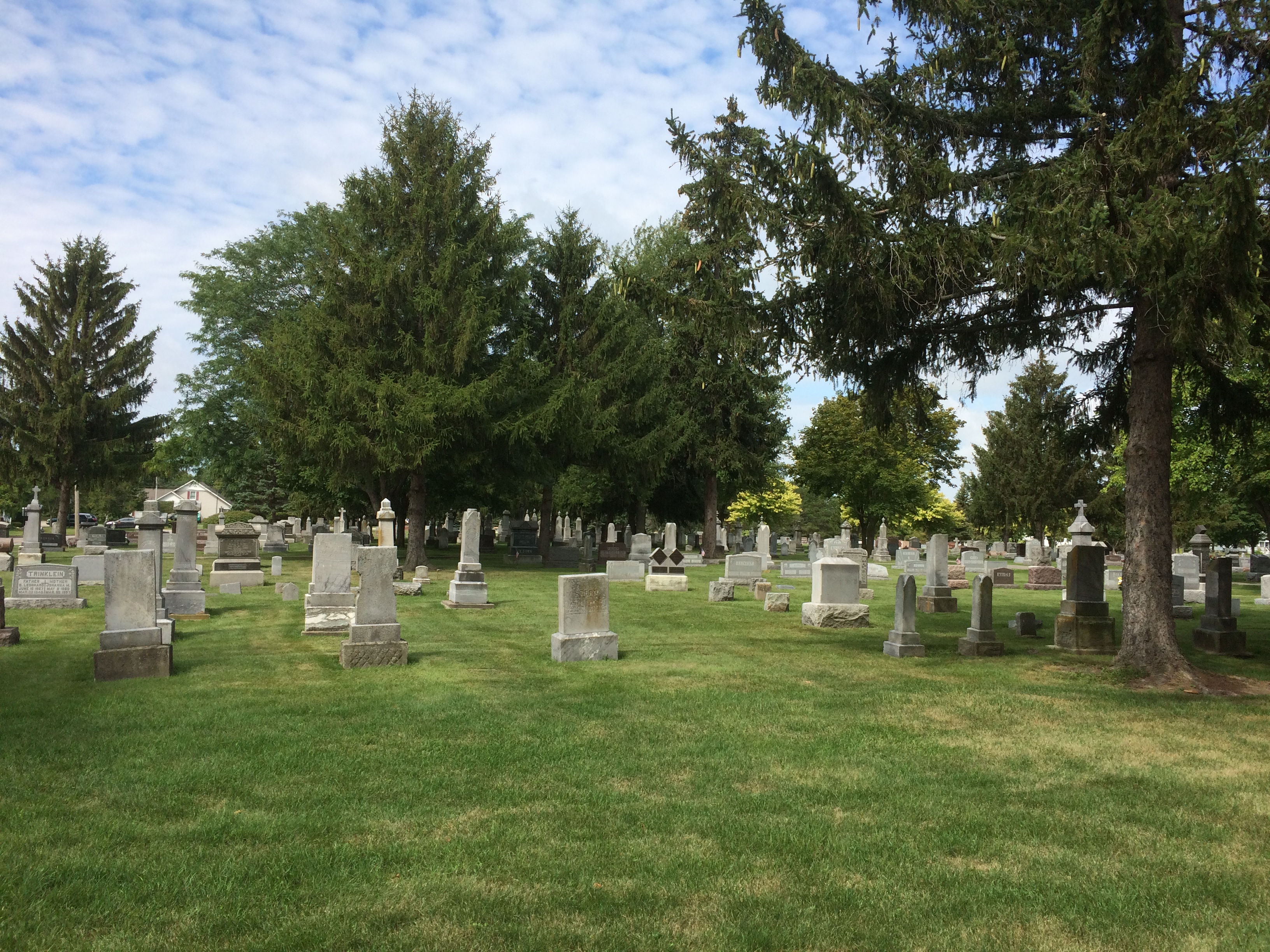
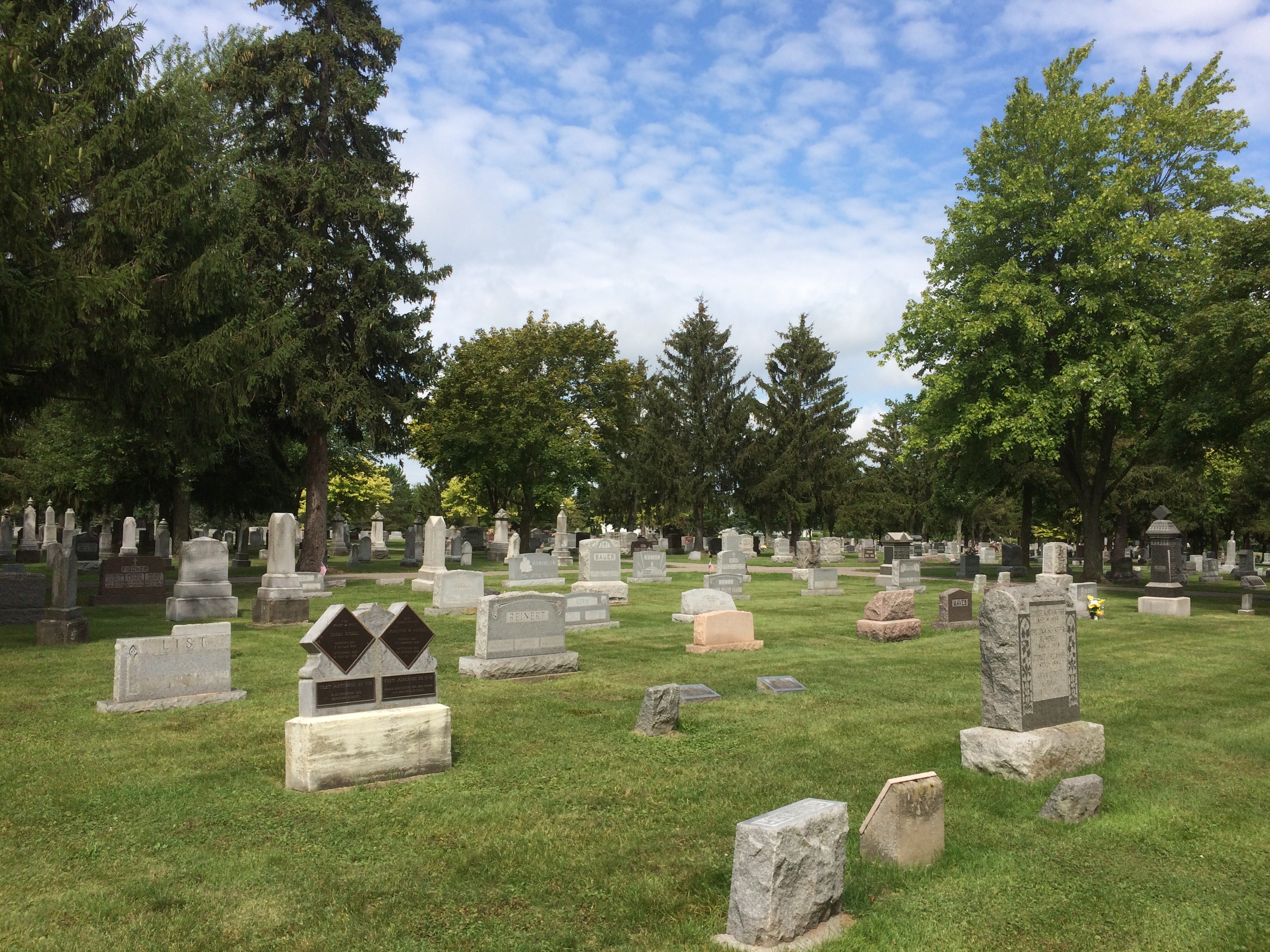
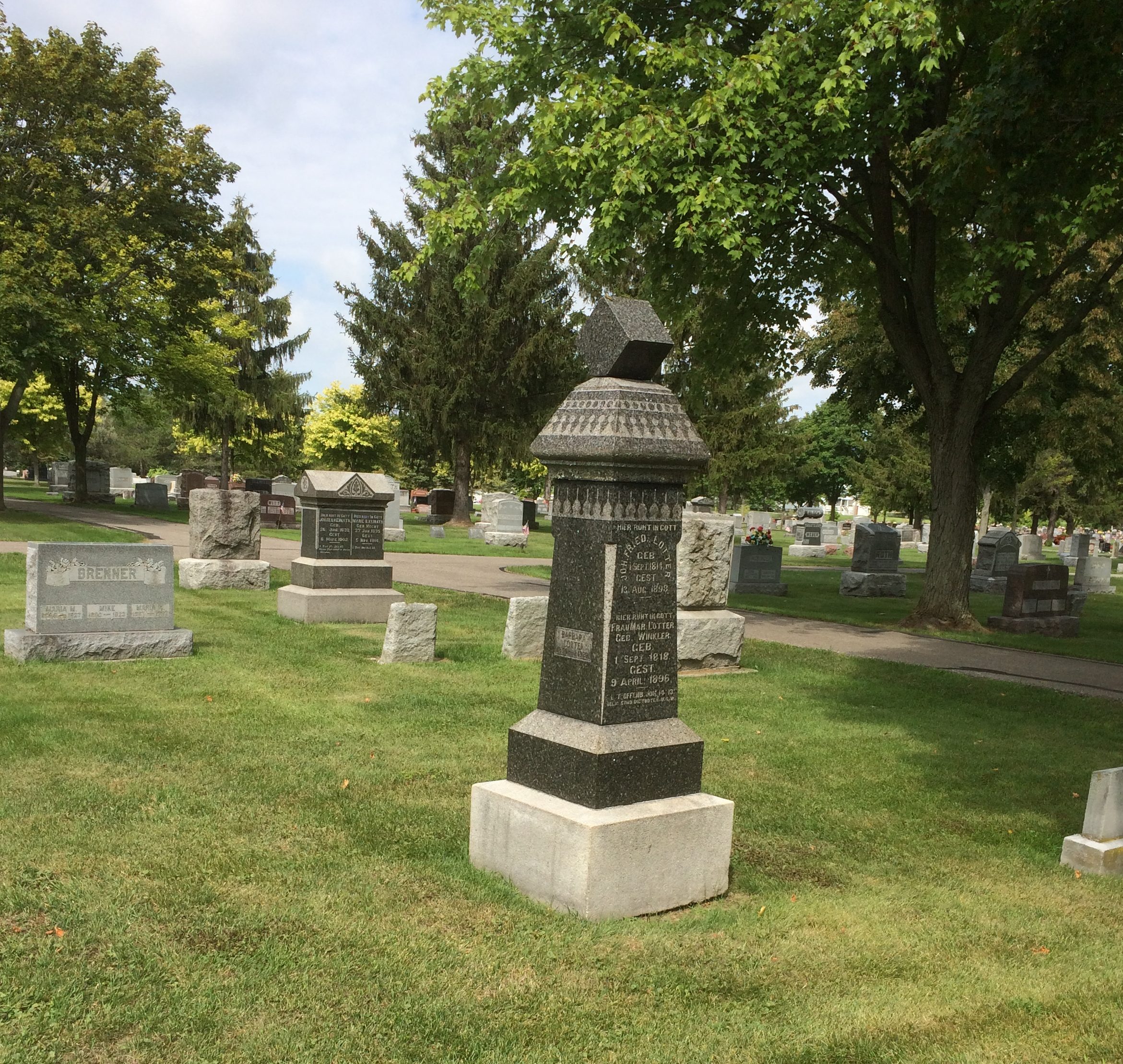
St Lorenz Lutheran Church FrankenmuthThe settlers came to the Saginaw Valley, built their homes, farmed the land, attended St. Lorenz, and when the time came, were buried in its churchyard.

St Lorenz Lutheran Church Frankenmuth cemetery

St Lorenz Lutheran Church Frankenmuth cemeterySt Lorenz Lutheran Church Frankenmuth cemeteryThose are almost all 19th-century stones, near the site of the first two church buildings, and across the street from the current church. A larger cemetery with newer stones is on the same side of the street as the current church.
St Lorenz Lutheran Church Frankenmuth cemeterySt Lorenz Lutheran Church Frankenmuth cemeterySt Lorenz Lutheran Church Frankenmuth cemeteryThe permanent residents are every bit as German as you’d expect: Bauer, Bicker, Fischer, Herzog, Hochthanner, Hubinger, Kern, Roth, Reinert, Weiss, usw. Loehe and Craemer aren’t among them, Find a Grave tells me. Loehe is in Bavaria and Craemer is in St. Louis.

Bronner’s Christmas Wonderland

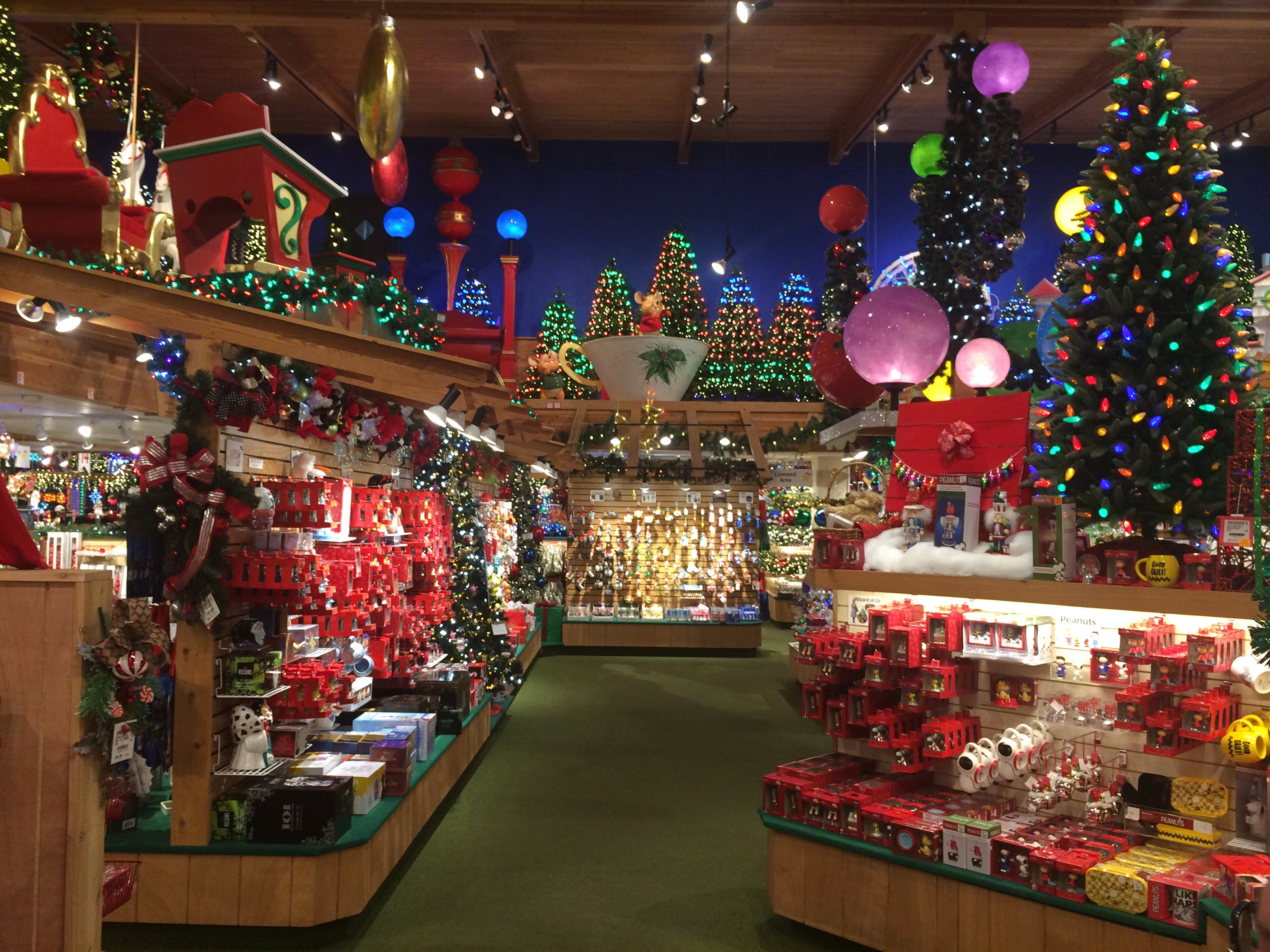
Not far south of the activity on Main Street in Frankenmuth, which is also the two-lane highway Michigan 83, is Bronner’s Christmas Wonderland. We arrived early in the afternoon on Labor Day, just as rain started to pour.

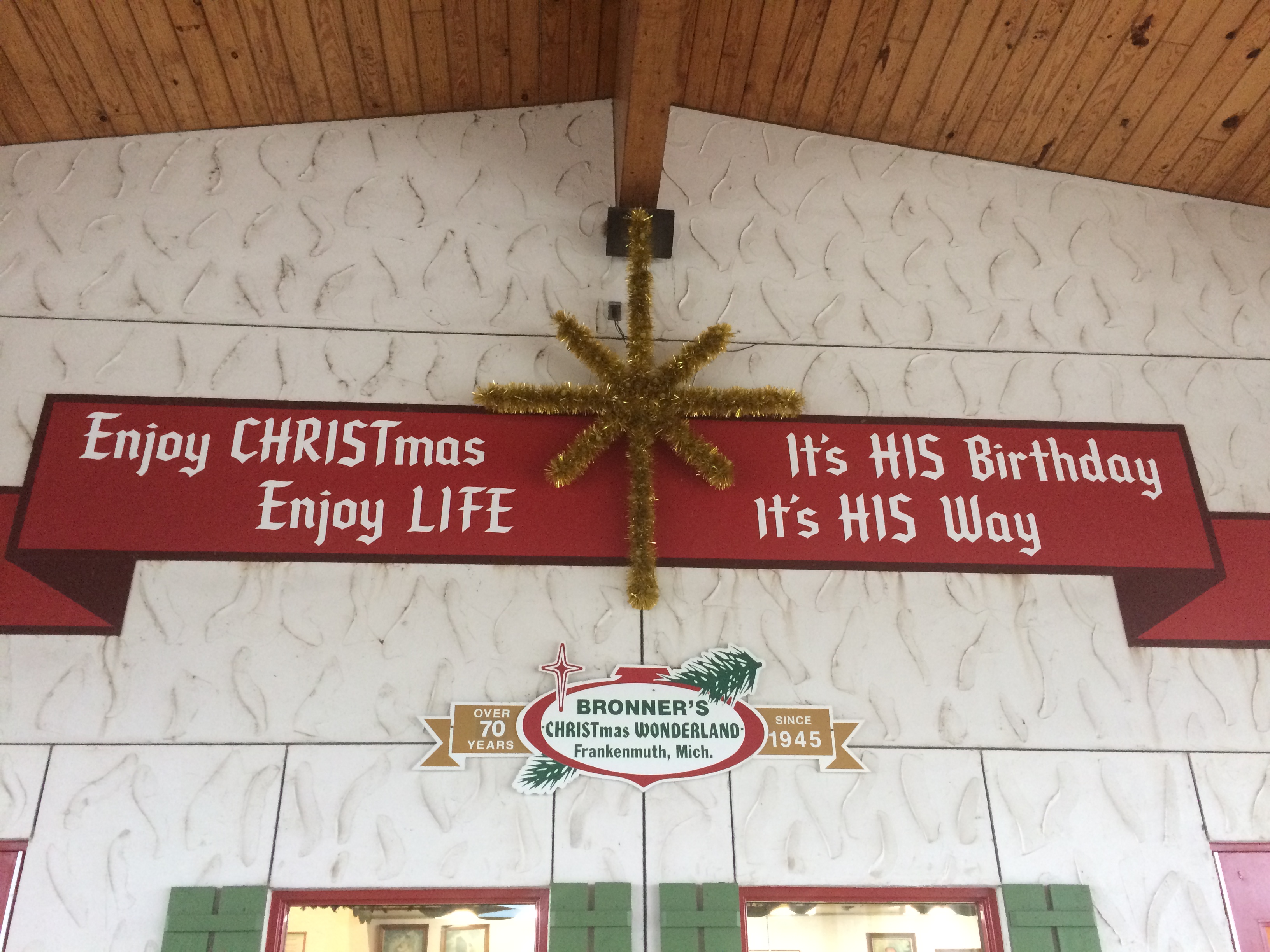
The store actually styles itself Bronner’s CHRISTmas Wonderland, such as on this sign over one of the entrances.
Bronner's Christmas Wonderland, MichiganNo doubt the owners’ religious feelings are sincere — the Bronner family, since founder Wally Bronner died in 2008 — but my editorial instincts and experience kick in at this point, telling me not to style it that way. Allow every irregular brand-style or oddball marketing spelling and you’ll start seeing them everywhere, all the time. That would be an on-ramp to editorial perdition.

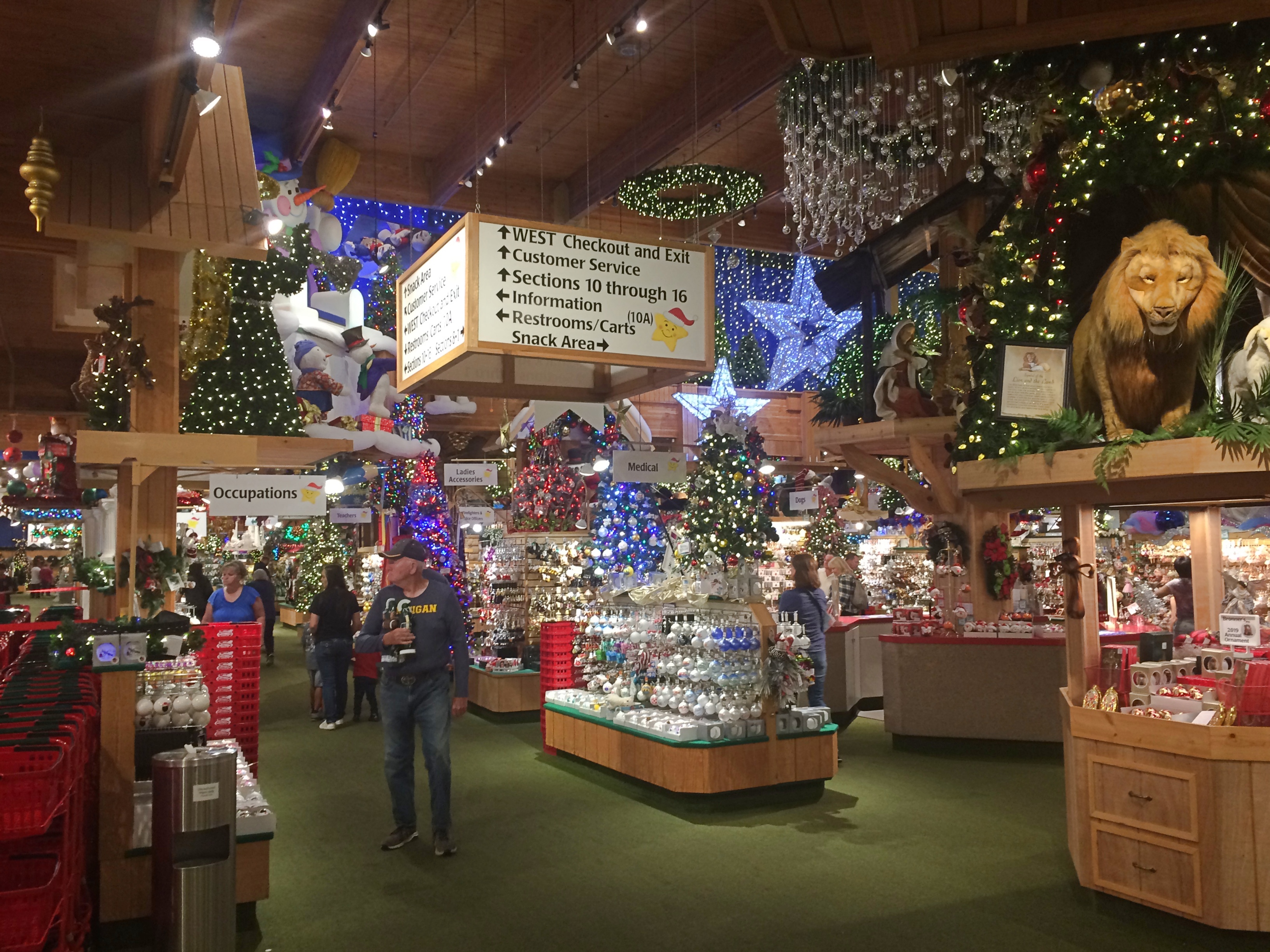
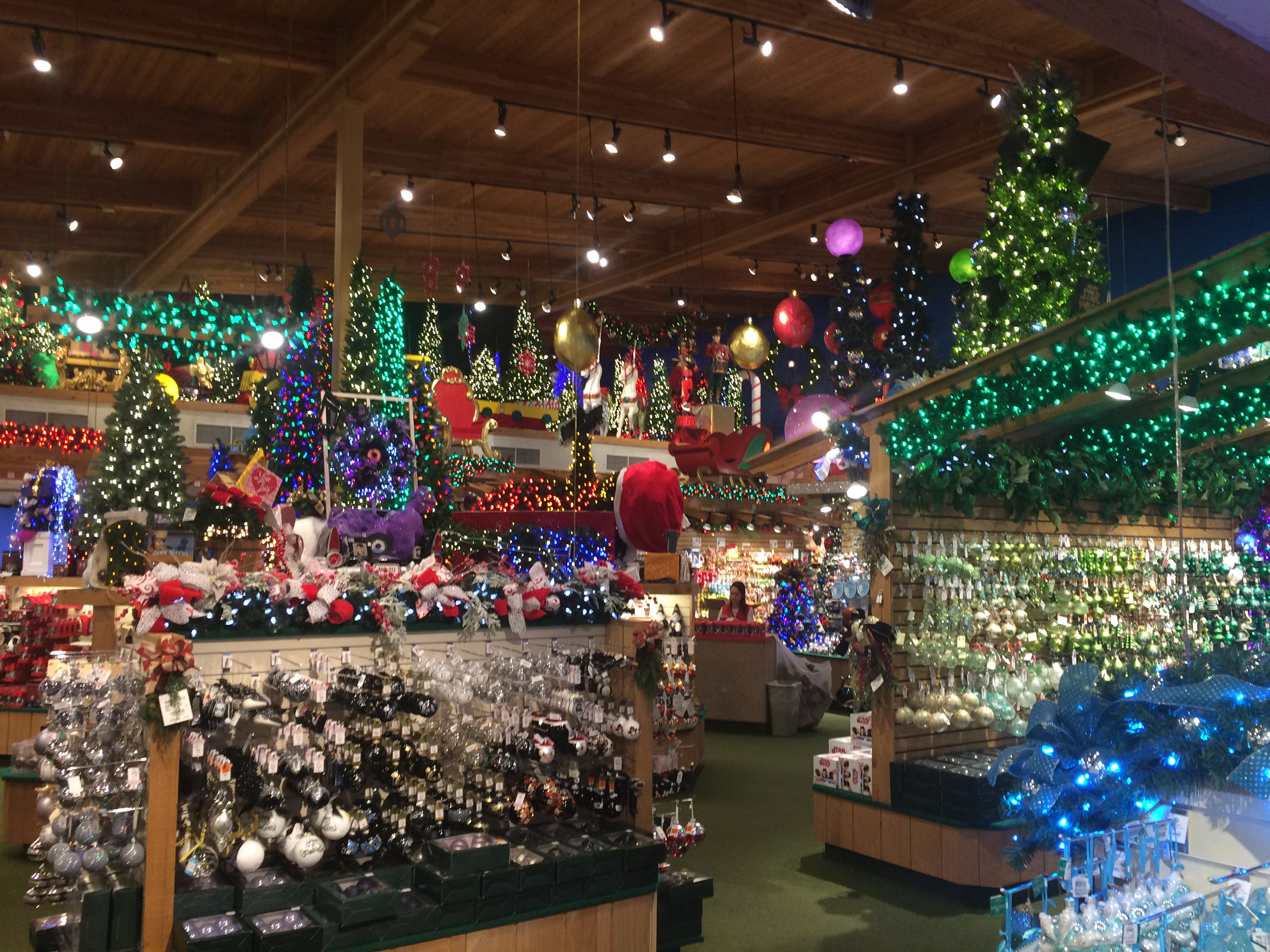
Bronner’s Christmas Wonderland asserts that it’s the world’s largest Christmas store, and I believe it. Over 50,000 items are for sale in a store of over 85,000 square feet — one and a half football fields, or about two acres — including Christmas ornaments, lights, Nativity scenes, Christmas trees, gifts, stockings, Santa paraphernalia, and other decor.

Bronner's Christmas Wonderland

Bronner's Christmas Wonderland

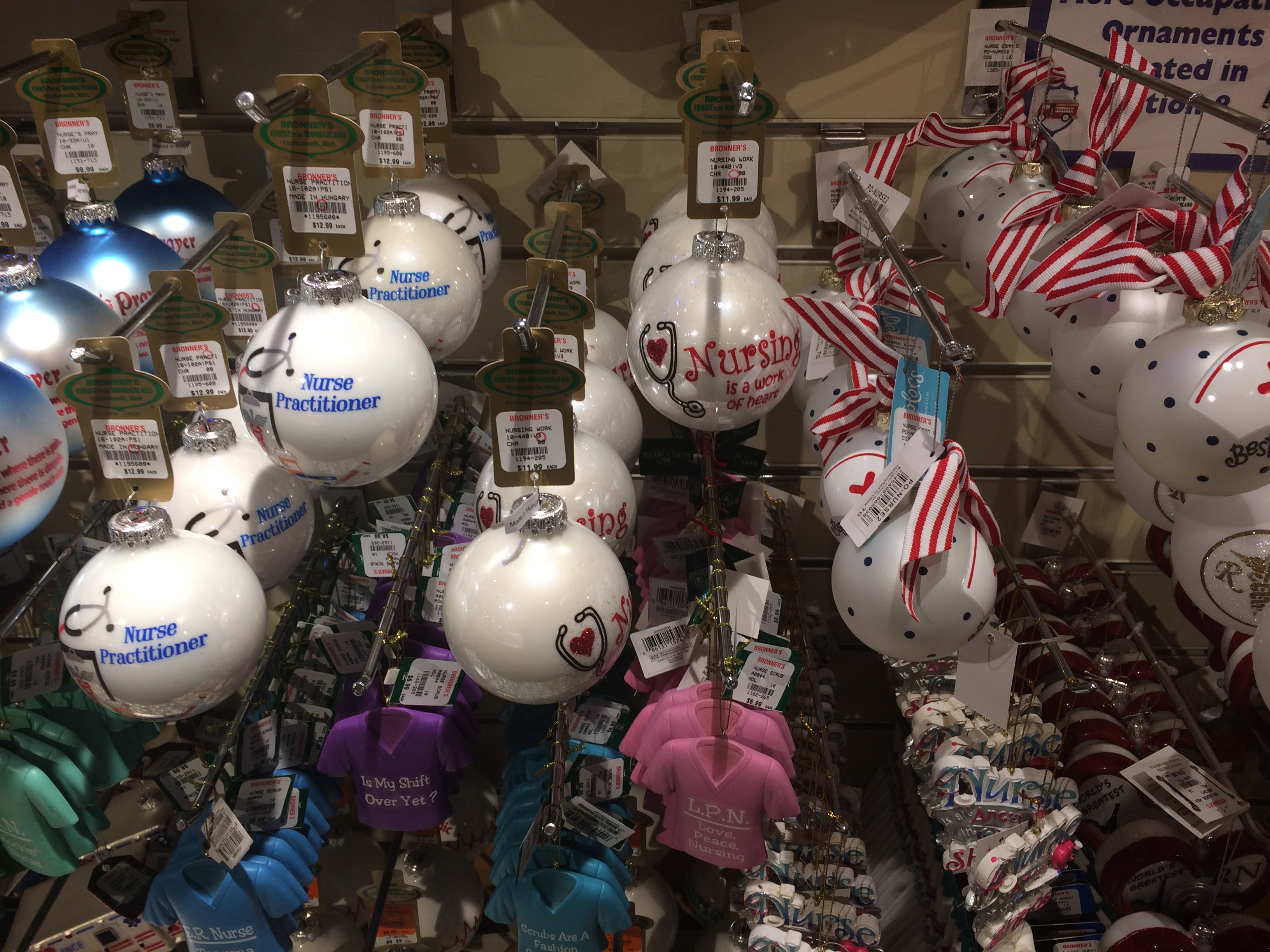
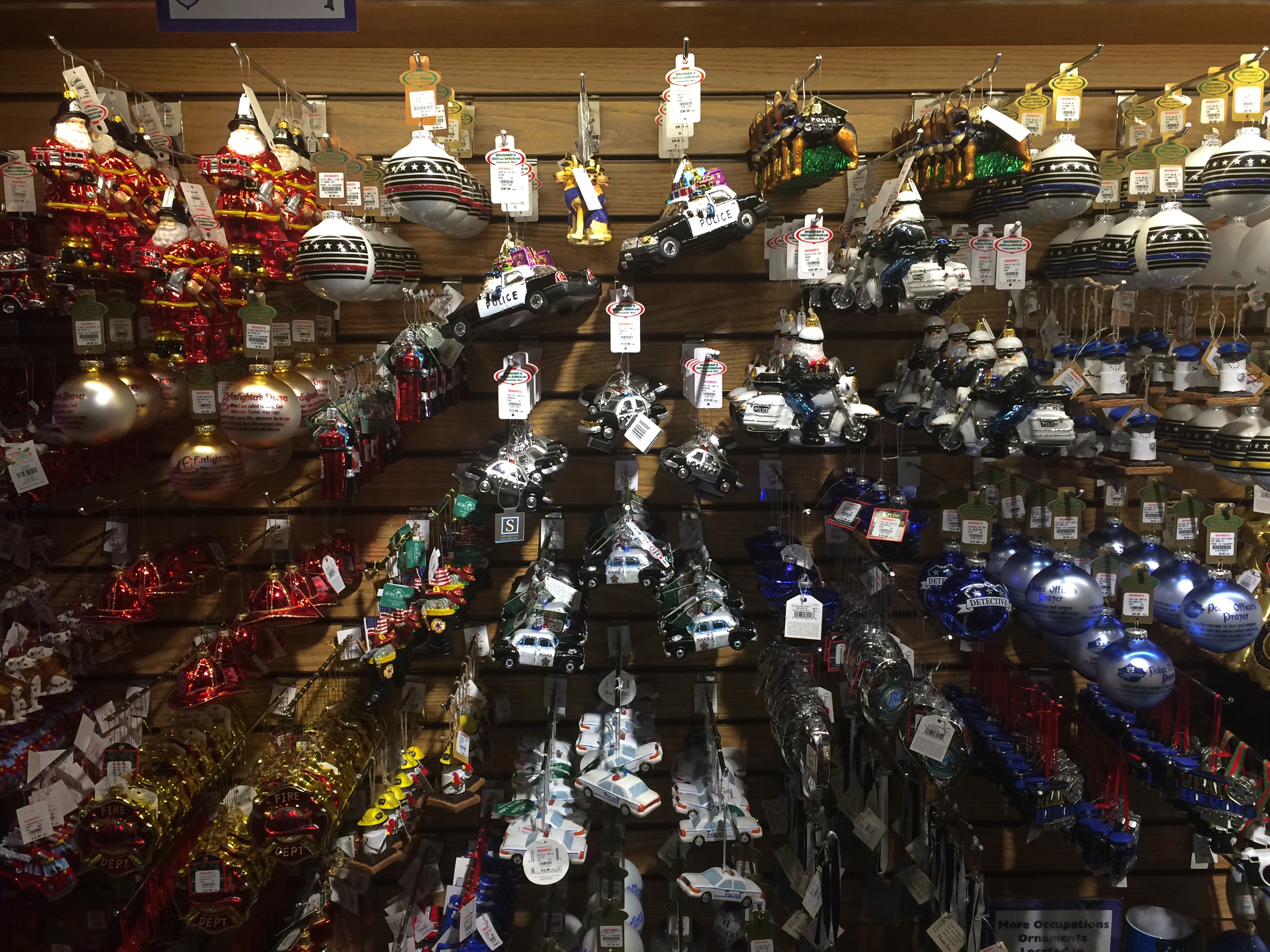
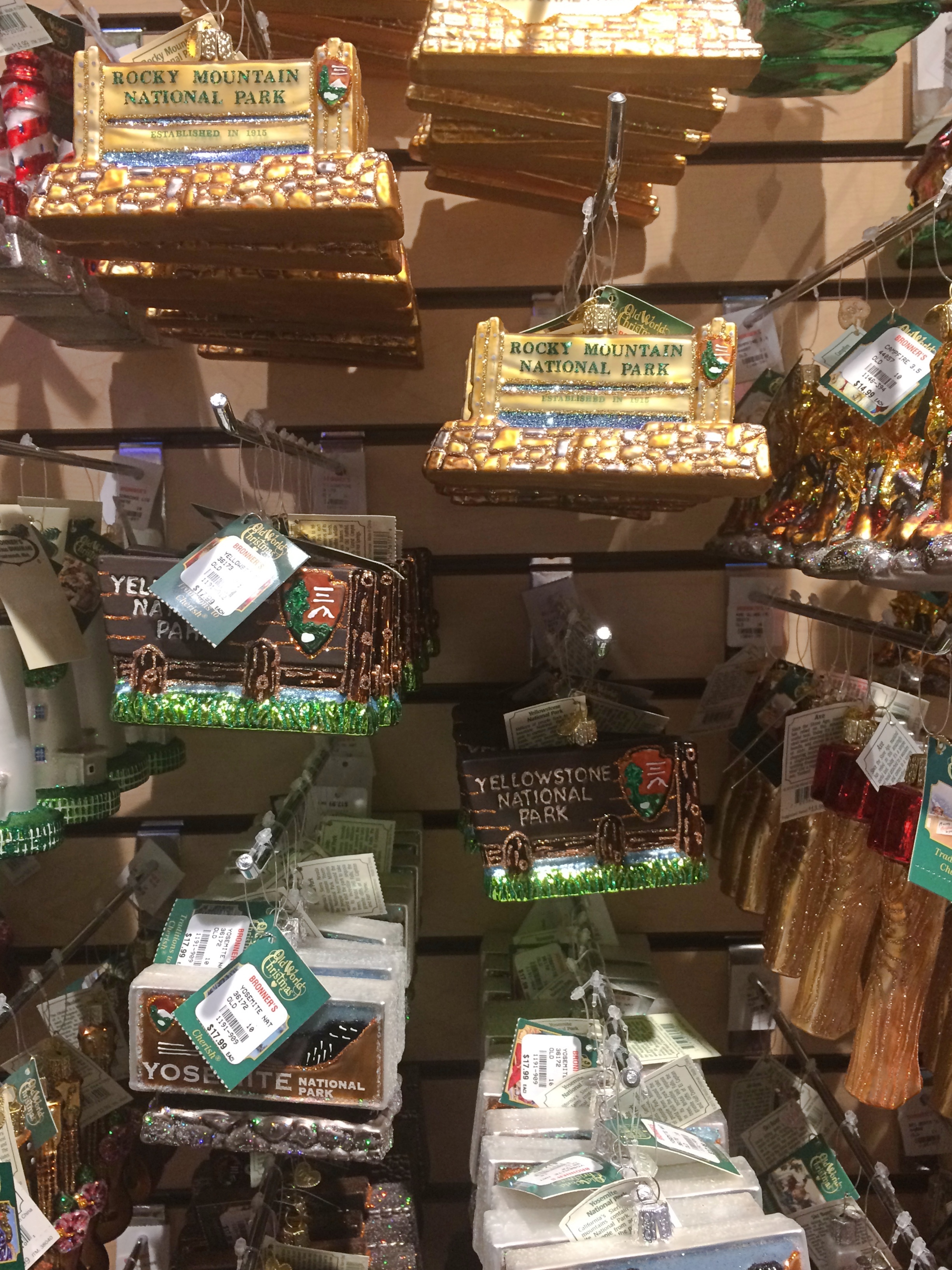
Bronner's Christmas WonderlandBronner's Christmas WonderlandThere are a lot of specialized ornaments, featuring animals, celebrities, entertainers, farm equipment, food and beverage, hobbies, hunting and fishing, music, miniatures, romantic themes, patriotism, professions, religious themes, Santas, snowmen, sports, various nationalities and much more. Something to look at everywhere you go in that store.

For nurses.
Bronner's Christmas WonderlandCops.
Bronner's Christmas WonderlandFor fans of assorted national parks.
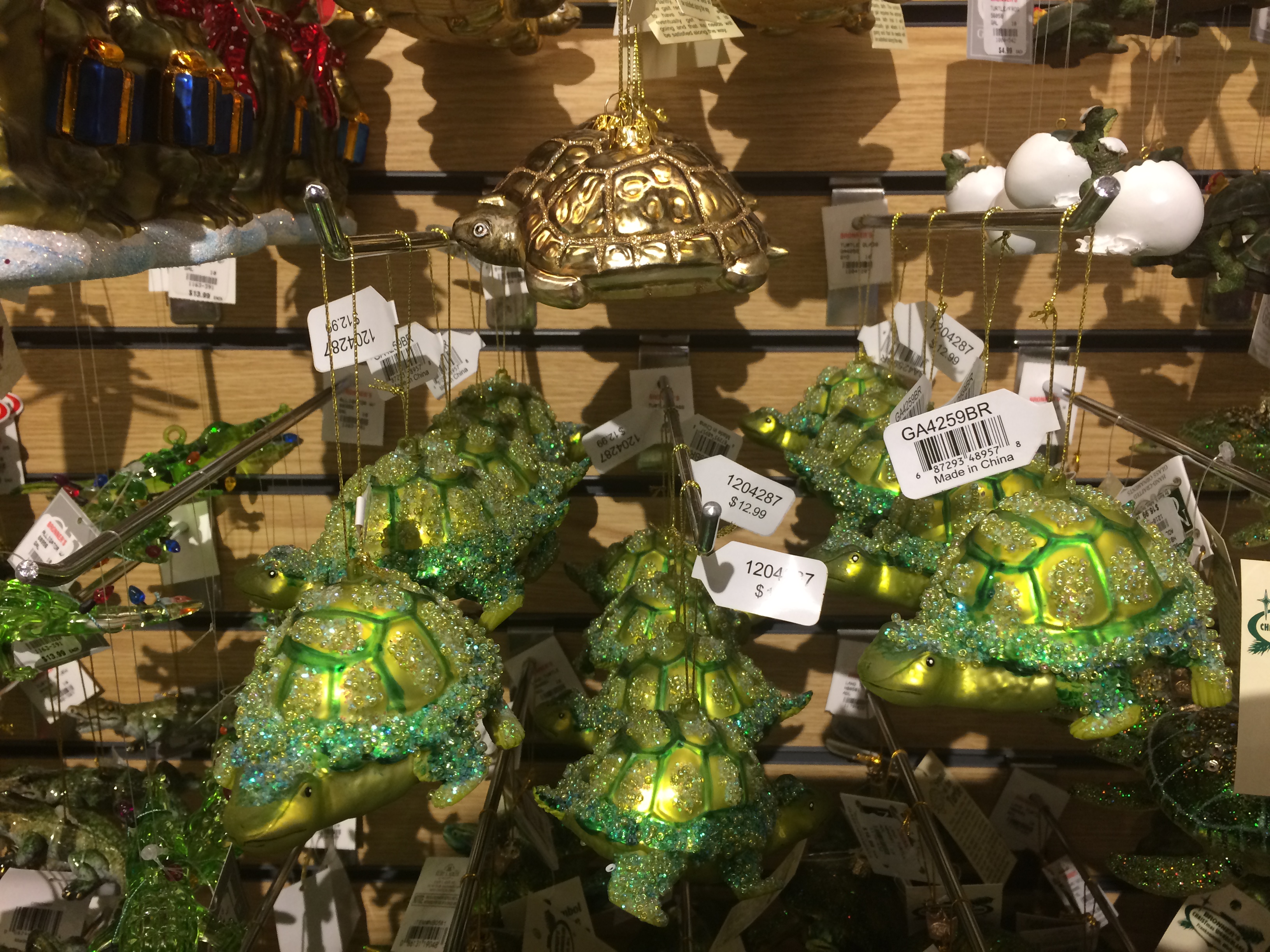
Bronner's Christmas WonderlandOr turtles.
Bronner's Christmas WonderlandWonder if the store stocks a gila monster ornament. If anywhere does, this place would.

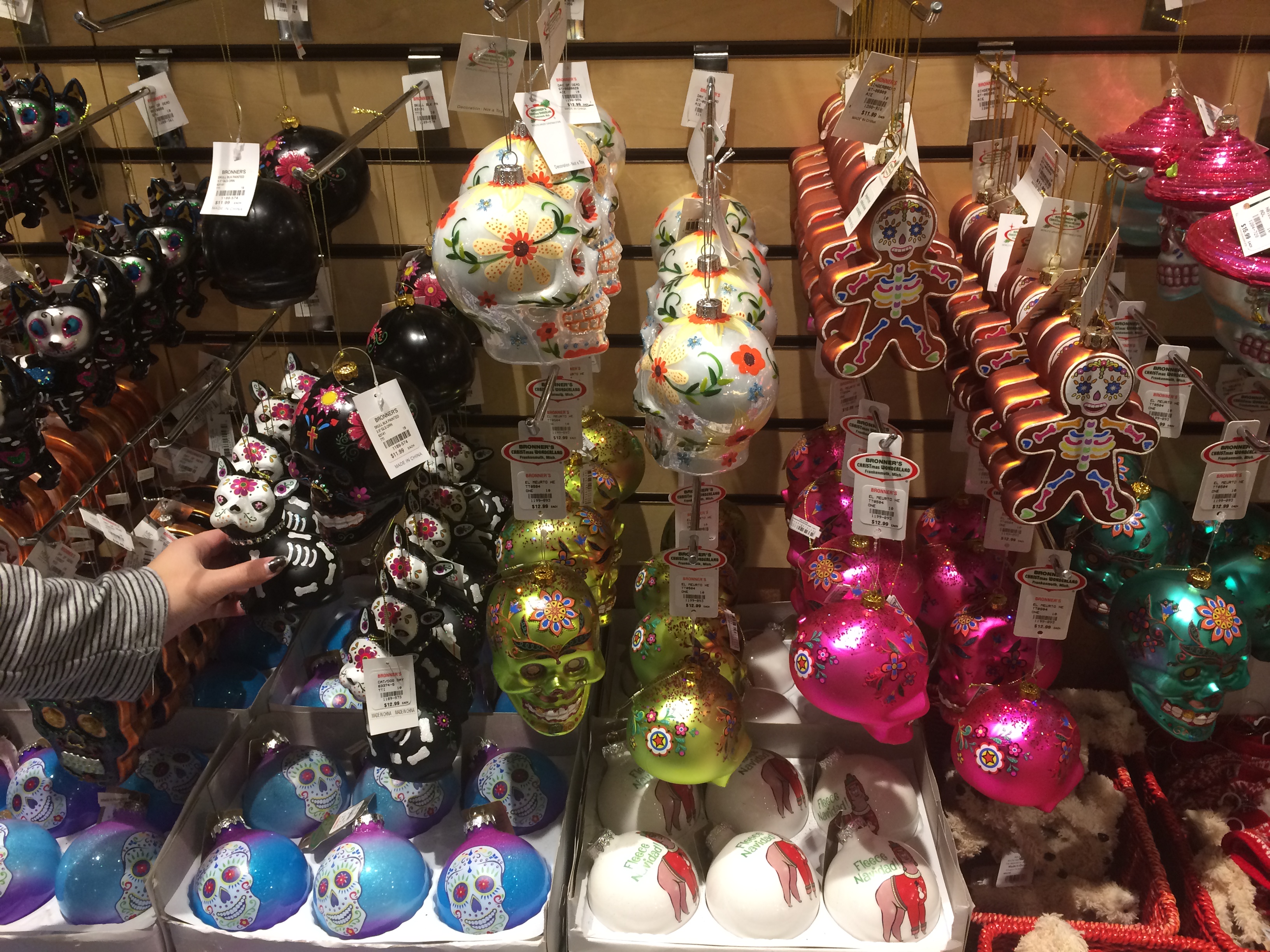
If you want to be reminded of the Day of the Dead around Christmas.
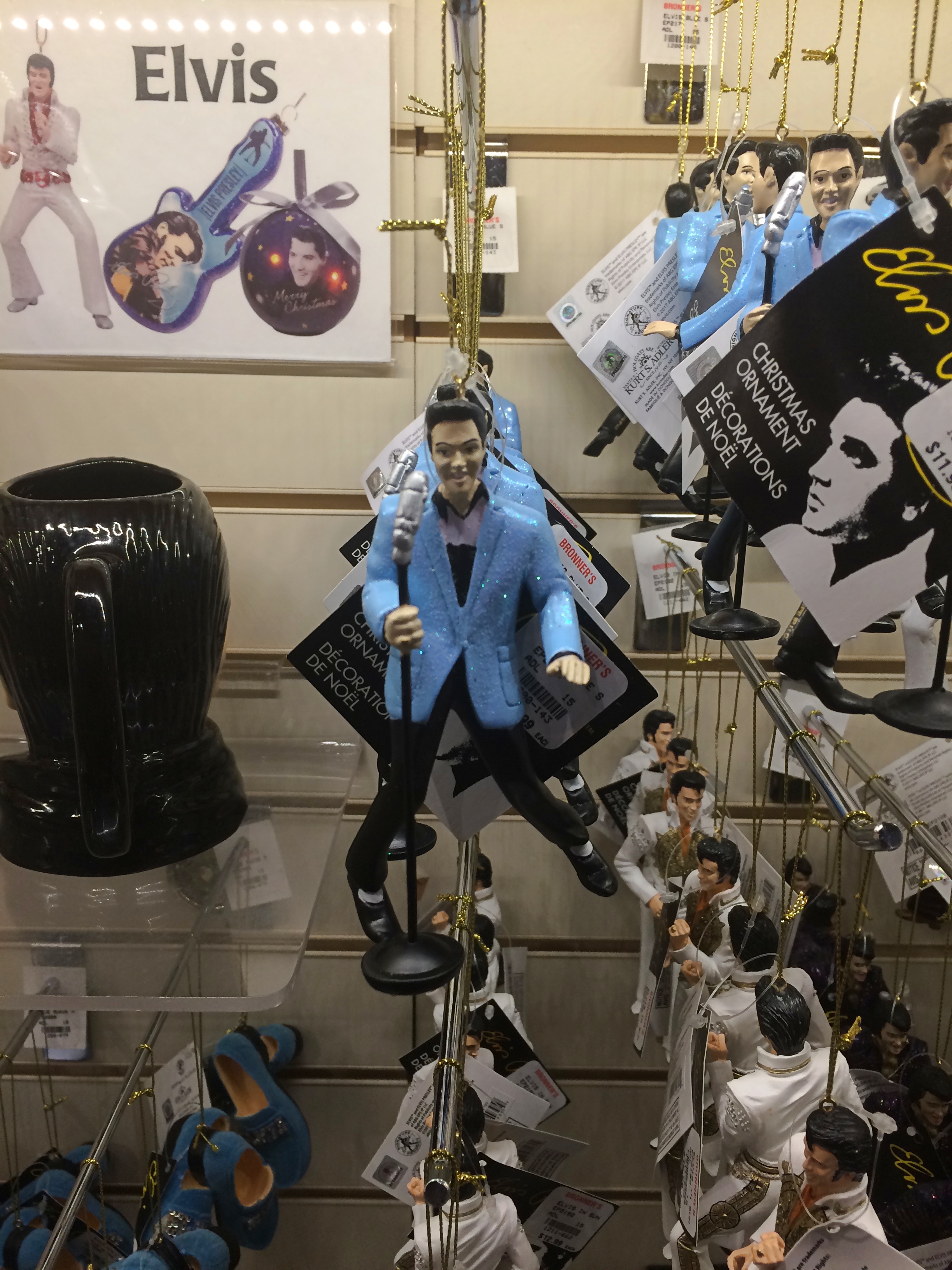
Bronner's Christmas WonderlandOr if the King has to be part of your holiday.
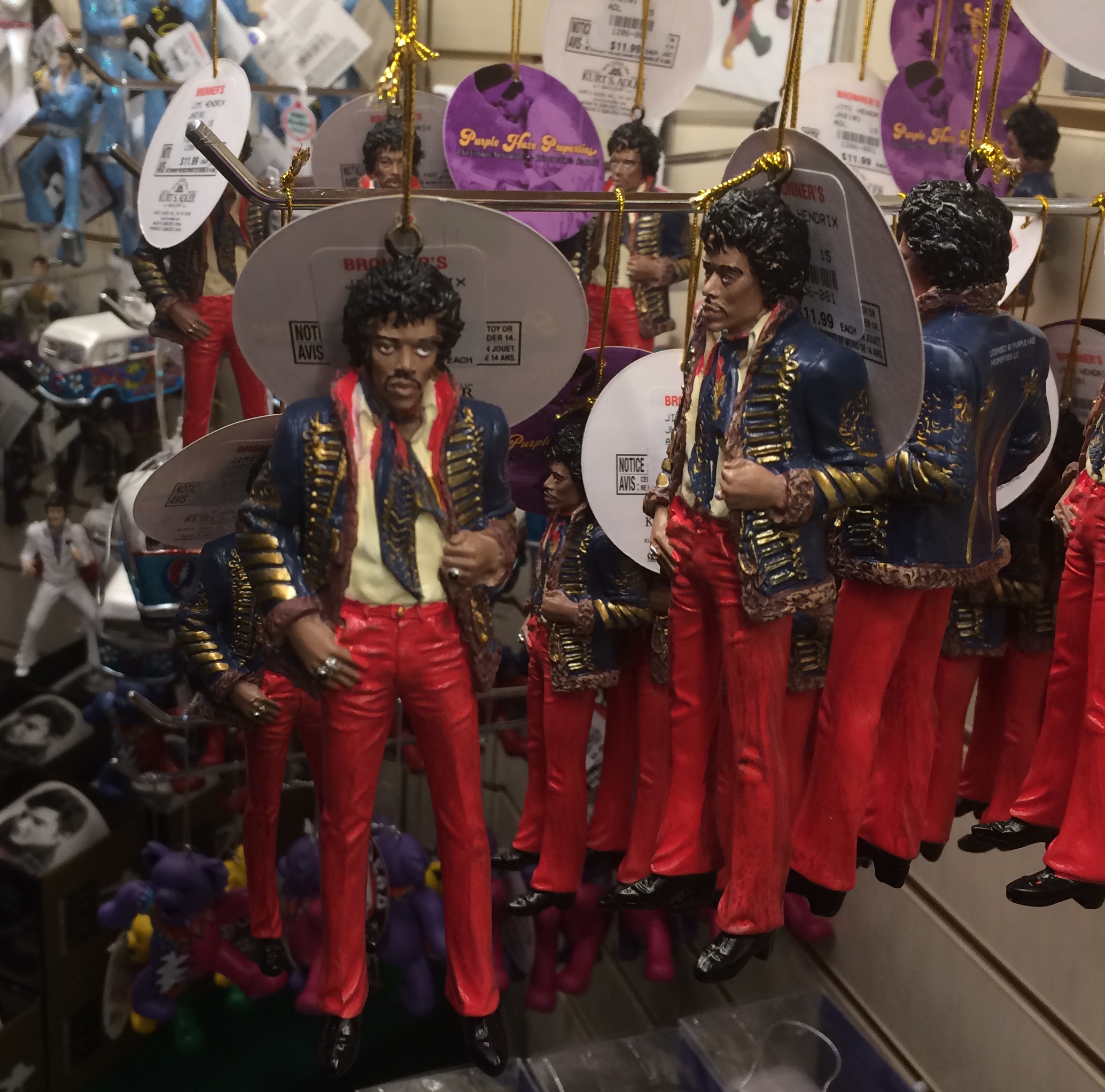
Bronner's Christmas WonderlandI wasn’t expecting Jimi Hendrix, but there he was.Bronner's Christmas Wonderland

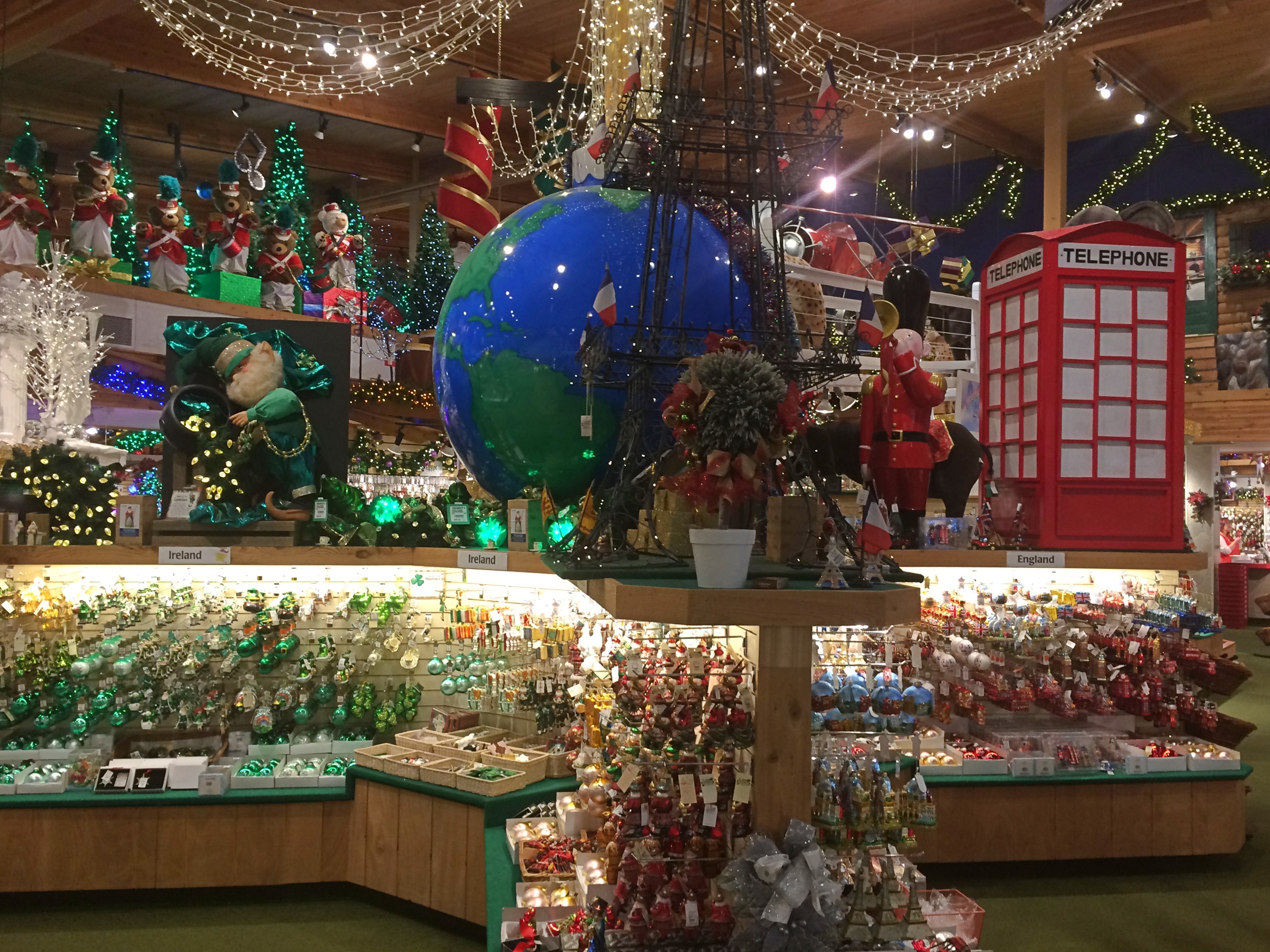
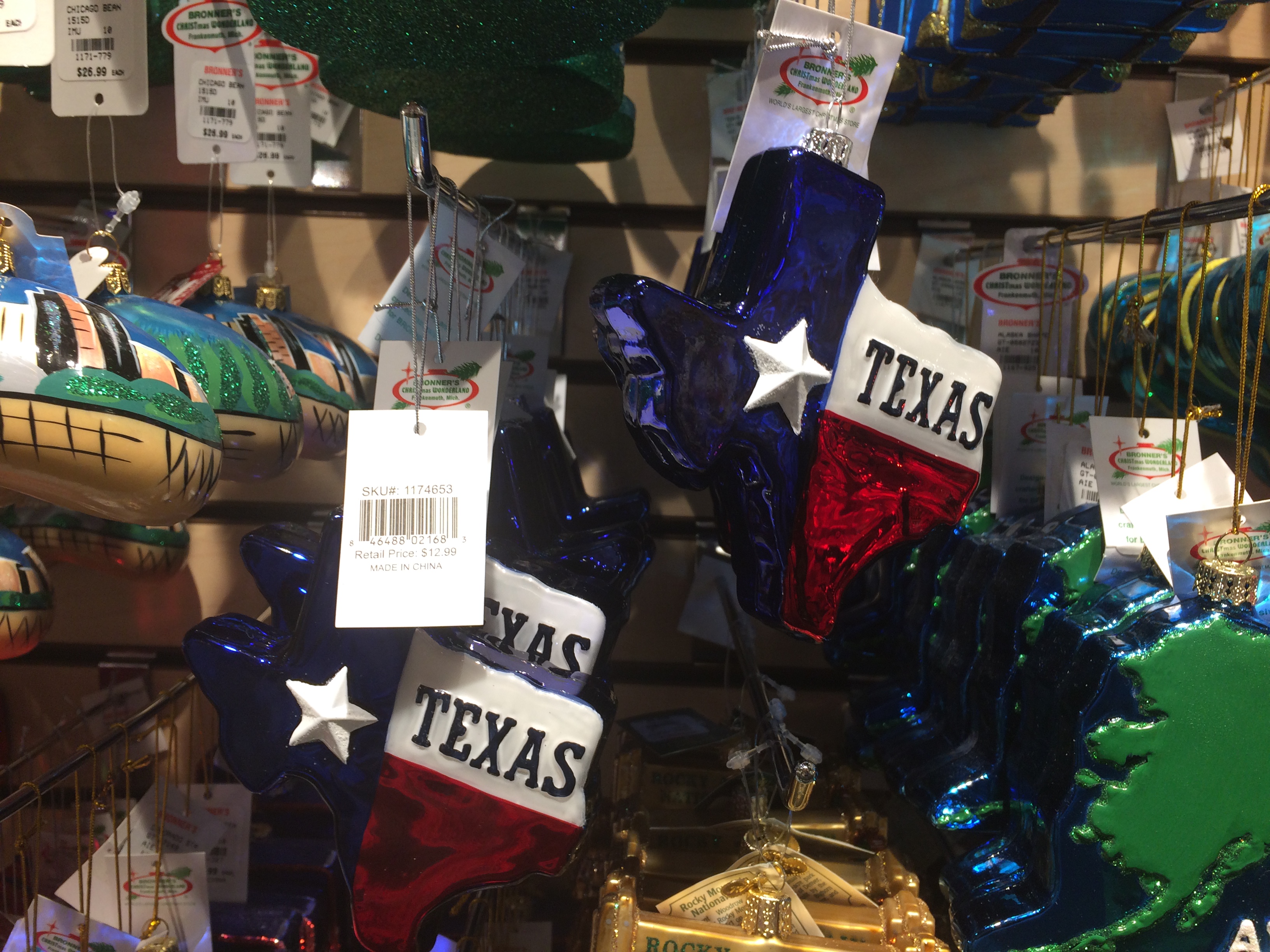
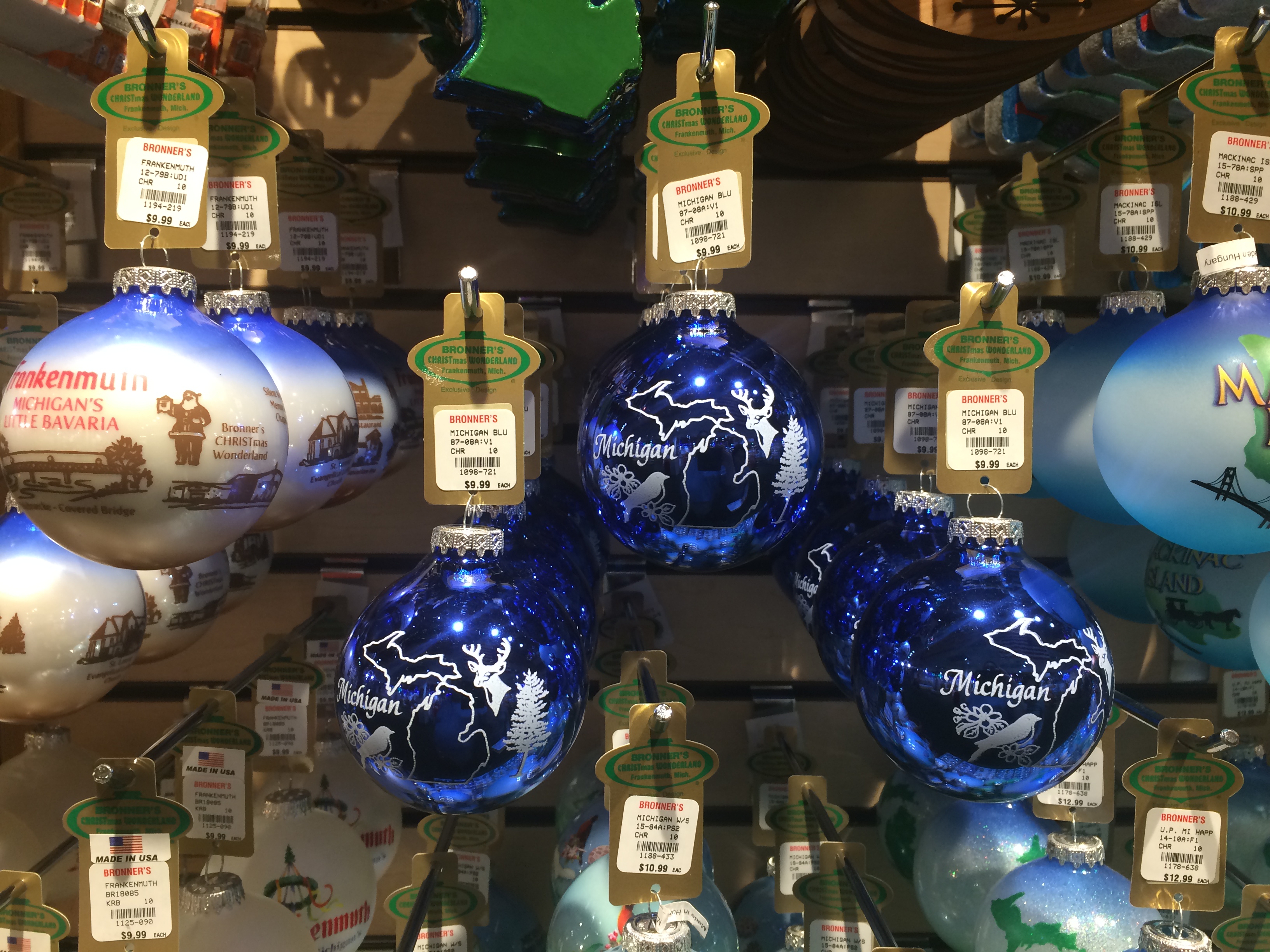
Naturally, various states and countries are represented as well.
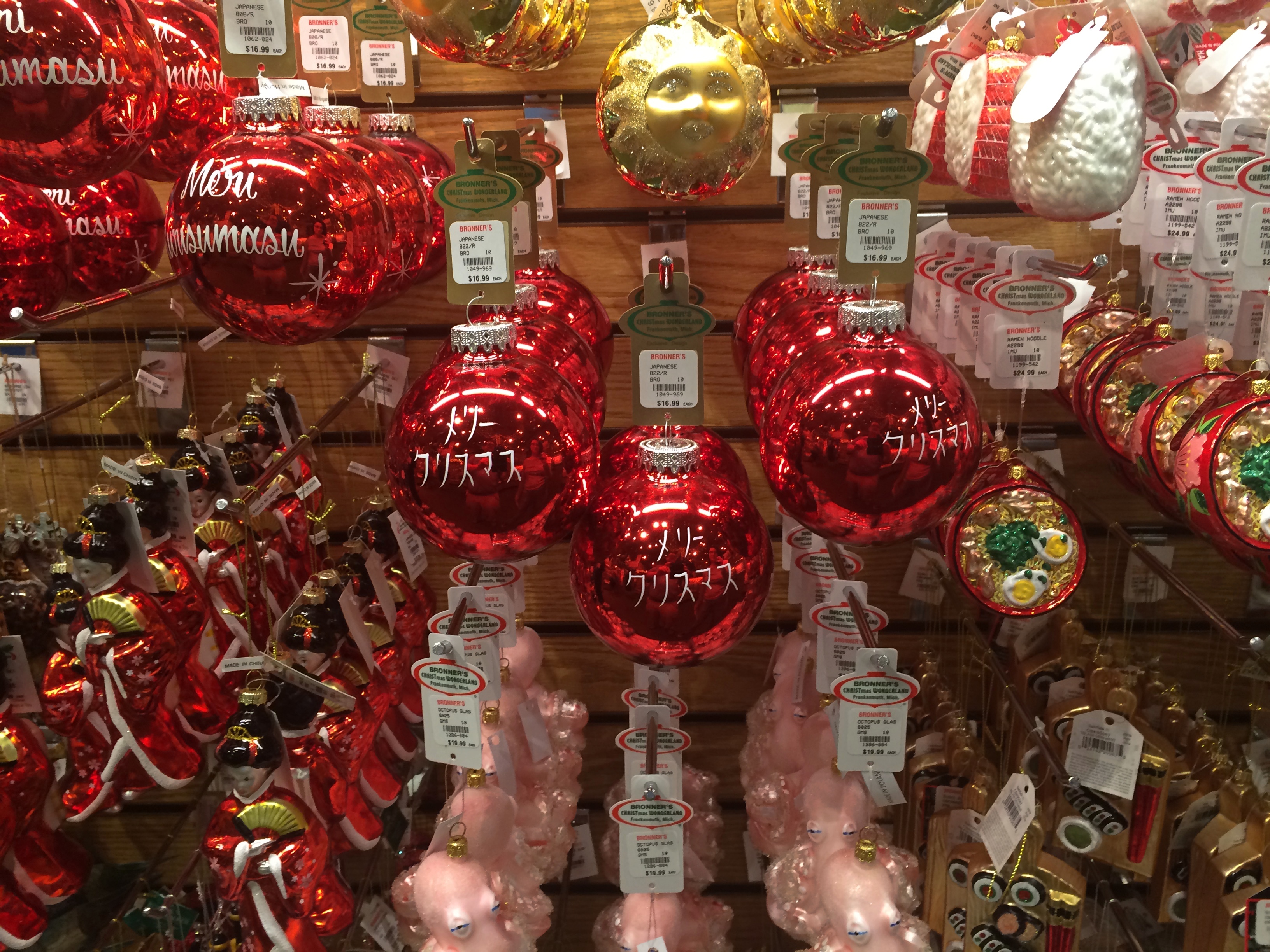
Bronner's Christmas WonderlandBronner's Christmas WonderlandBronner's Christmas WonderlandThat last one is the Japan-themed ornament section. The red balls in the middle feature a phonemic approximation of “Merry Christmas” in katakana.

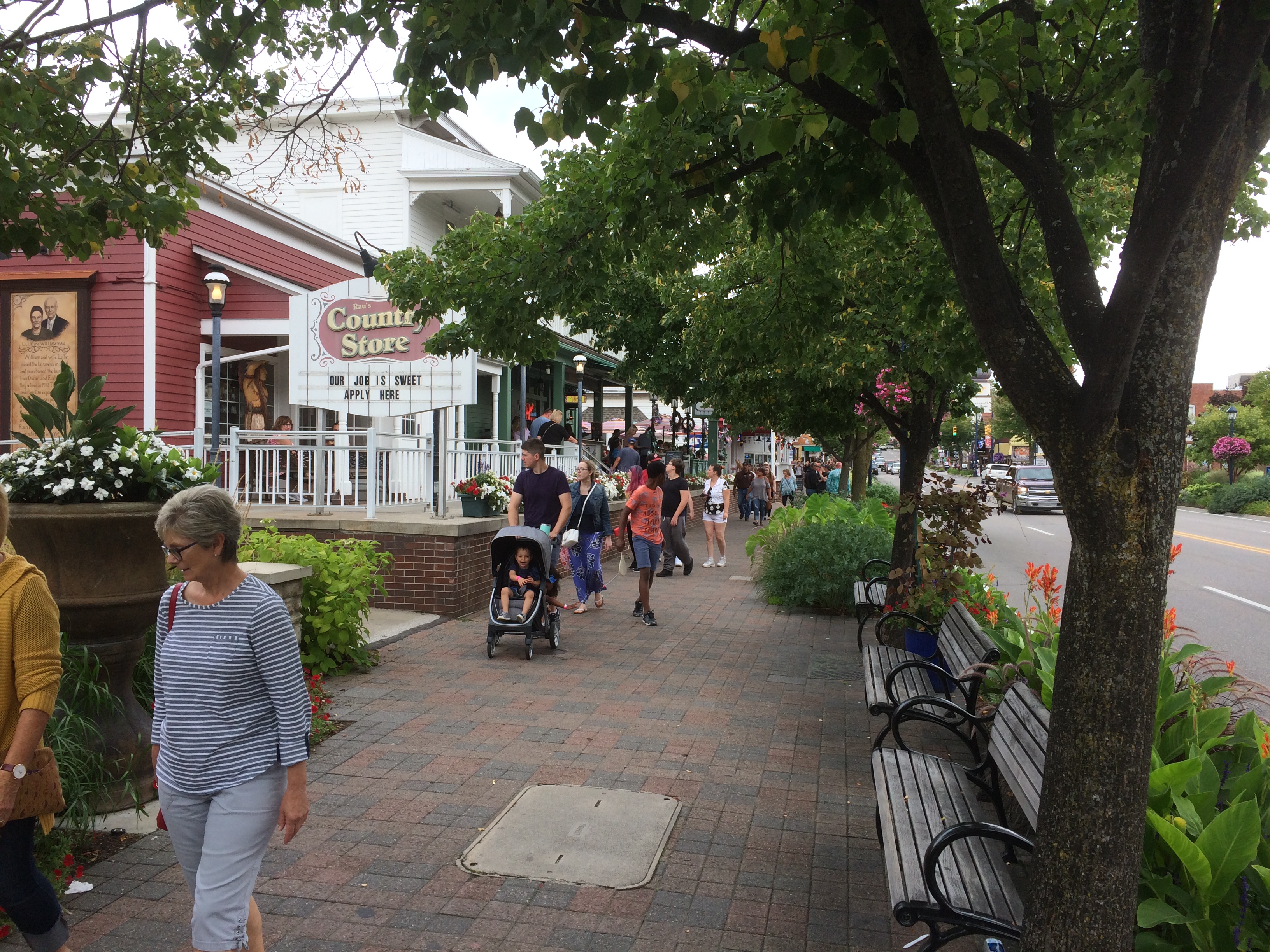
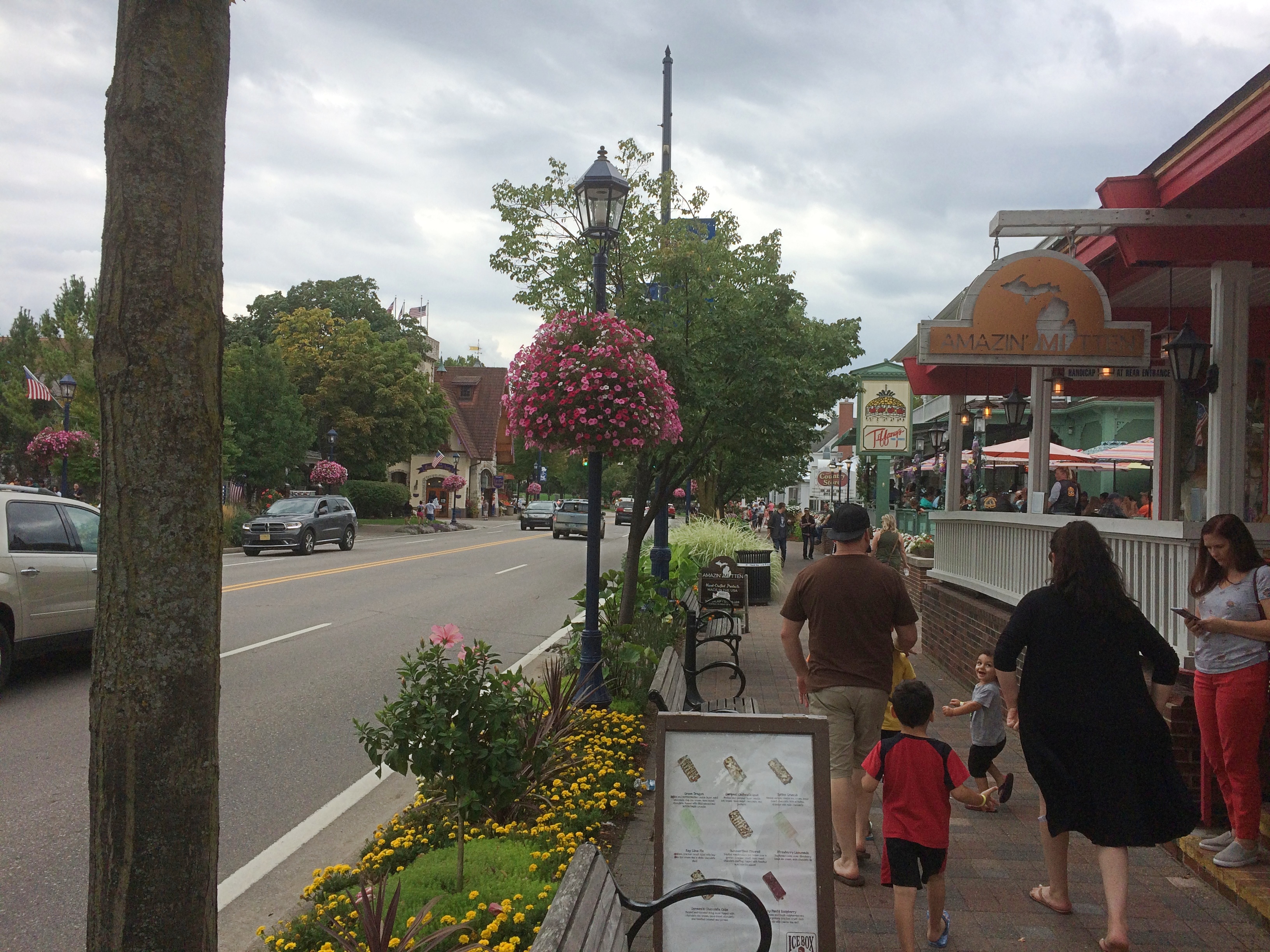
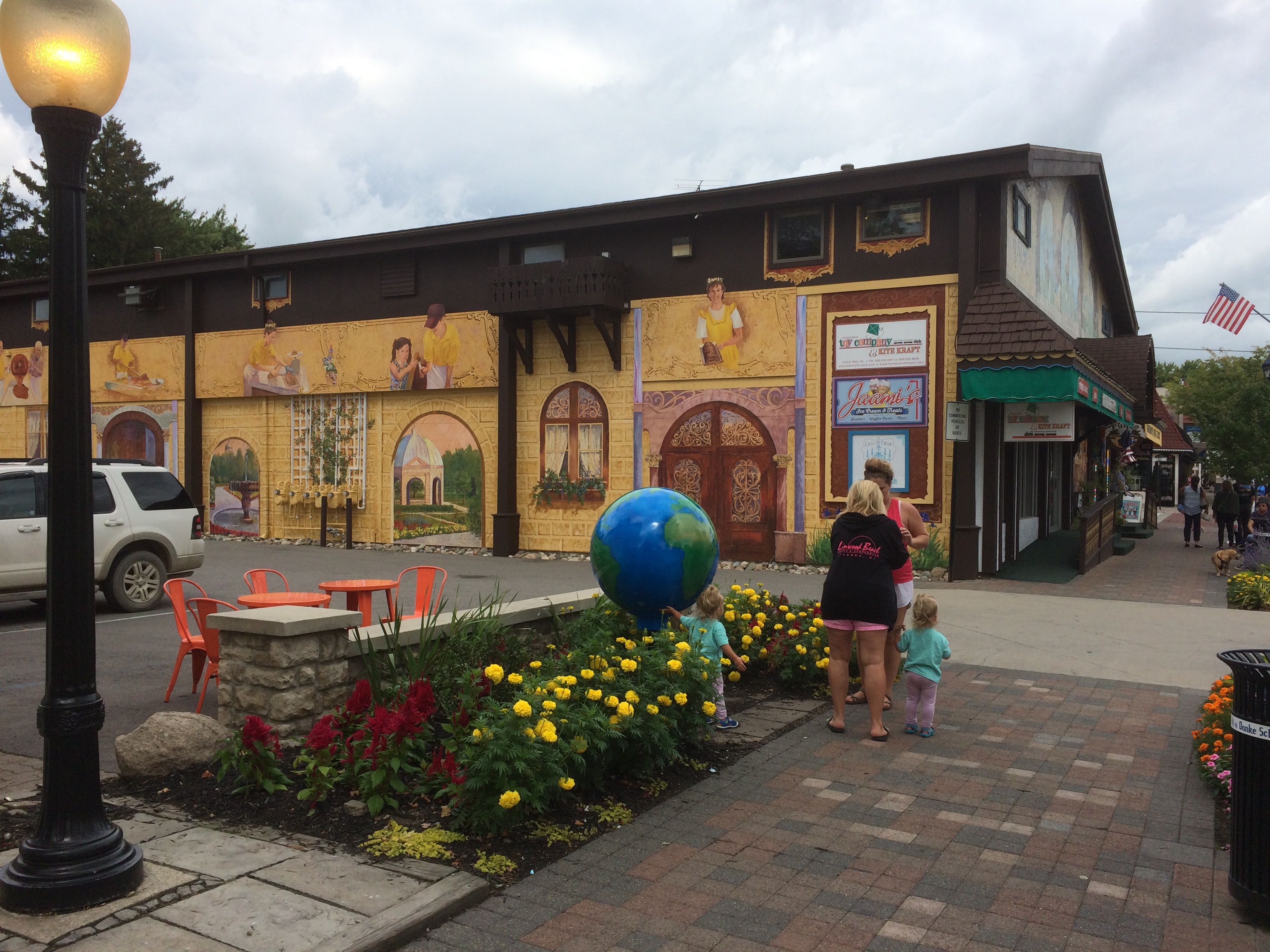
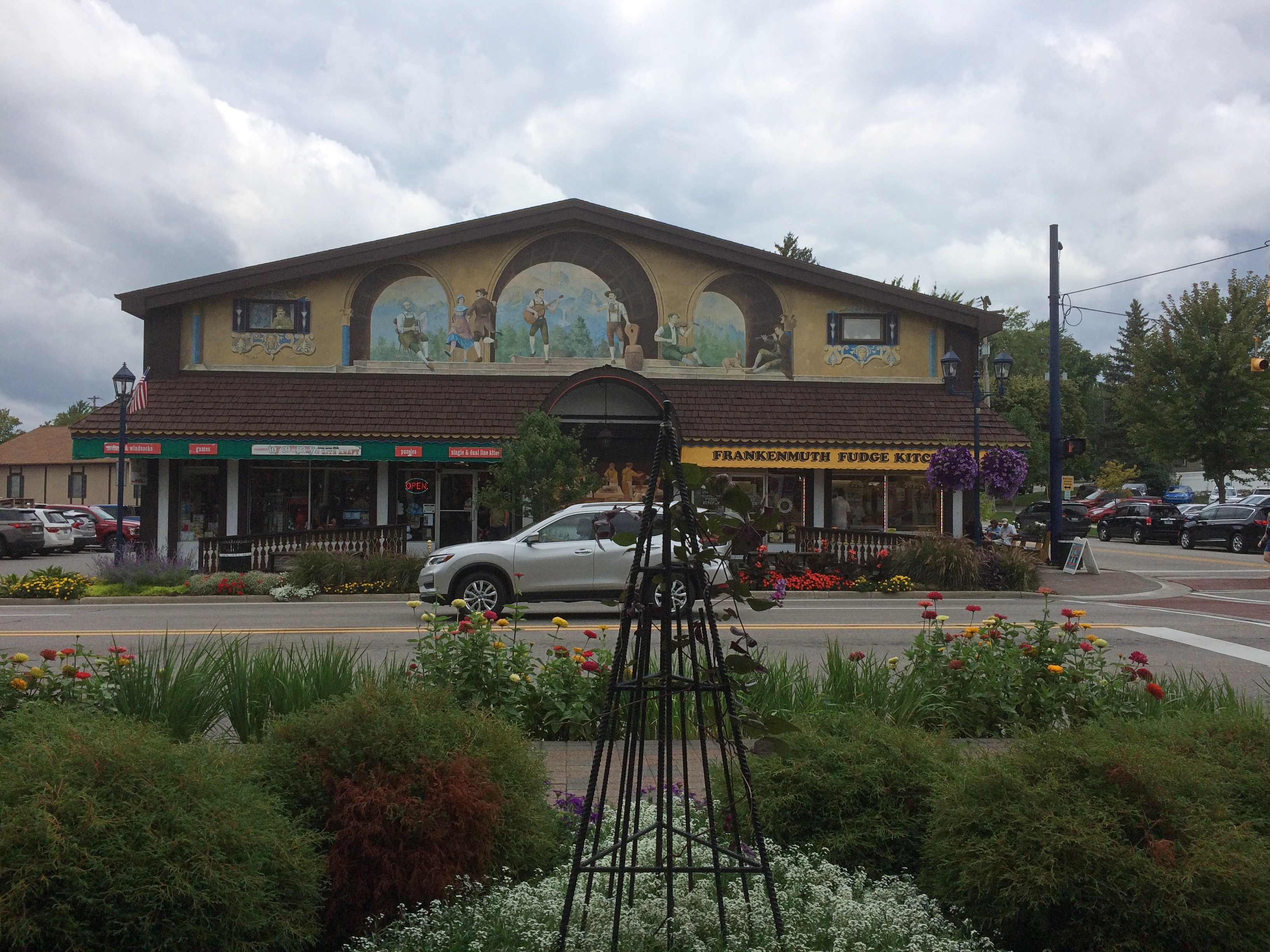
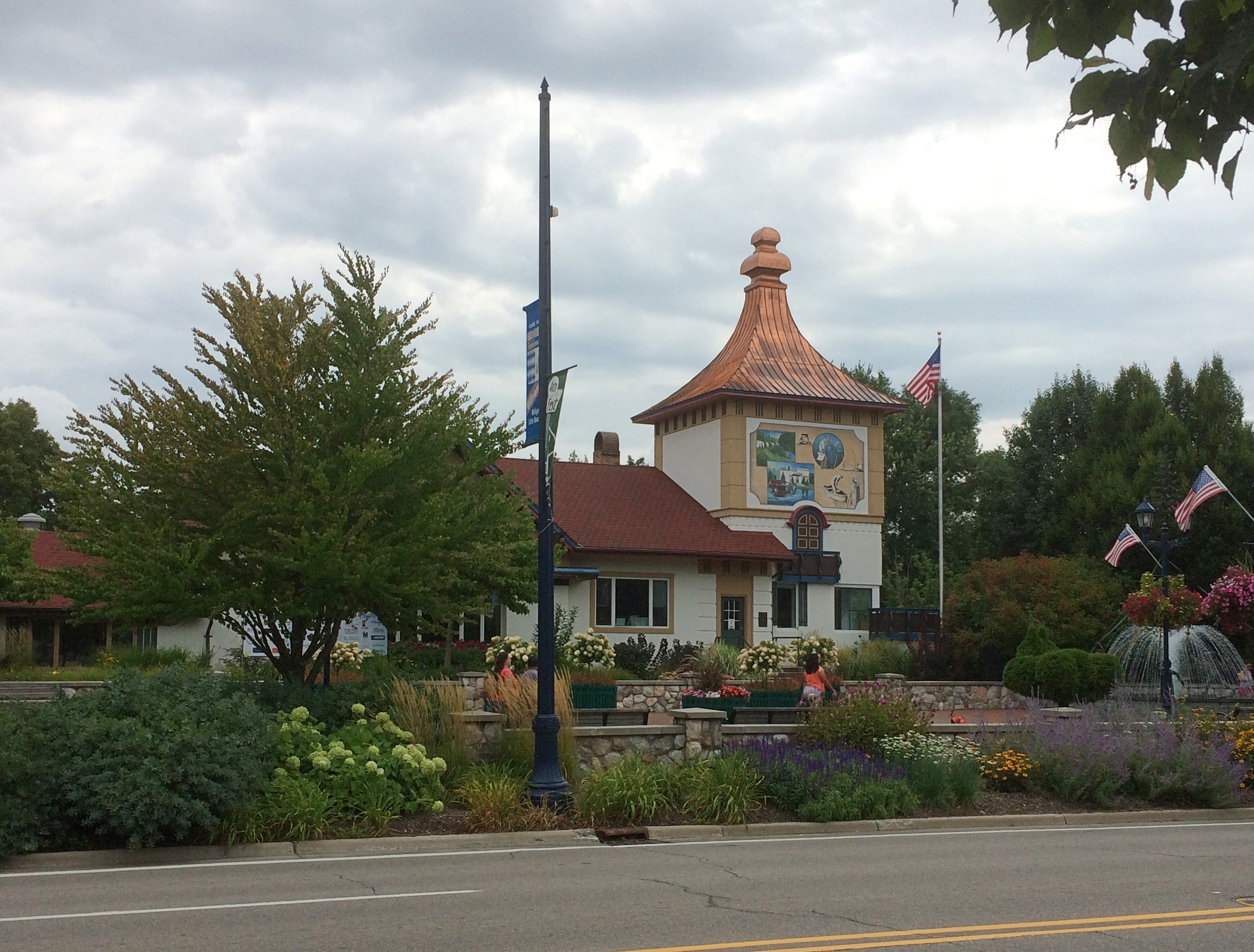
Main Street, Frankenmuth, Michigan

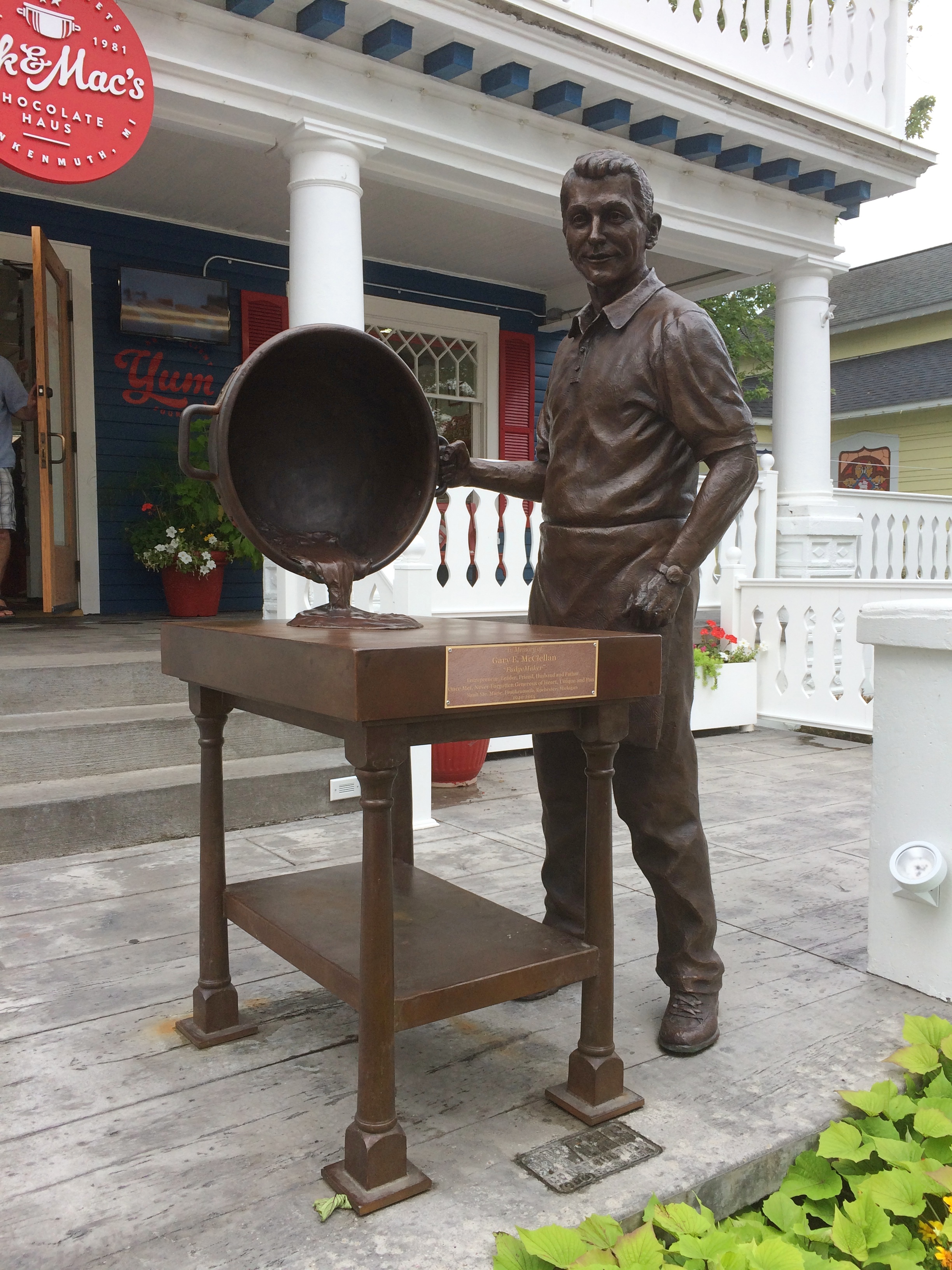
One thing I didn’t expect while we strolled along Main Street in Frankenmuth, Michigan, on Labor Day — yet another walkable main street — was a life-sized bronze of a fudge maker. Yet there he is.
Frankenmuth Main StreetAccording to the plaque, it’s Gary F. McClellan (1940-2015), “entrepreneur, leader, friend, husband and father.” He must have had something to do with Zak & Mac’s Chocolate Haus, which is behind the statue. That’s one of a string of small stores along the street whose customers are the tourists who come to Frankenmuth, a farm town settled by Bavarians in the 19th century that eventually added a tourist component.
Frankenmuth Main StreetA successful component, I’d say. Lots of people had come to town on Labor Day.
Frankenmuth Main StreetI’d read a little about the settlement of the area by Bavarians, interestingly before 1848, as an Indian mission that never really panned out because most of the Indians were already gone by then. Even so, the doughty colonists stayed. Their descendants are probably pretty thick on the ground in this part of the state.

Modern visitors come to wander through the shops, many with that Bavarian look. That’s what we did.

Frankenmuth Main Street

Frankenmuth Main StreetFrankenmuth Main StreetFrankenmuth Main StreetAlso they come to eat.
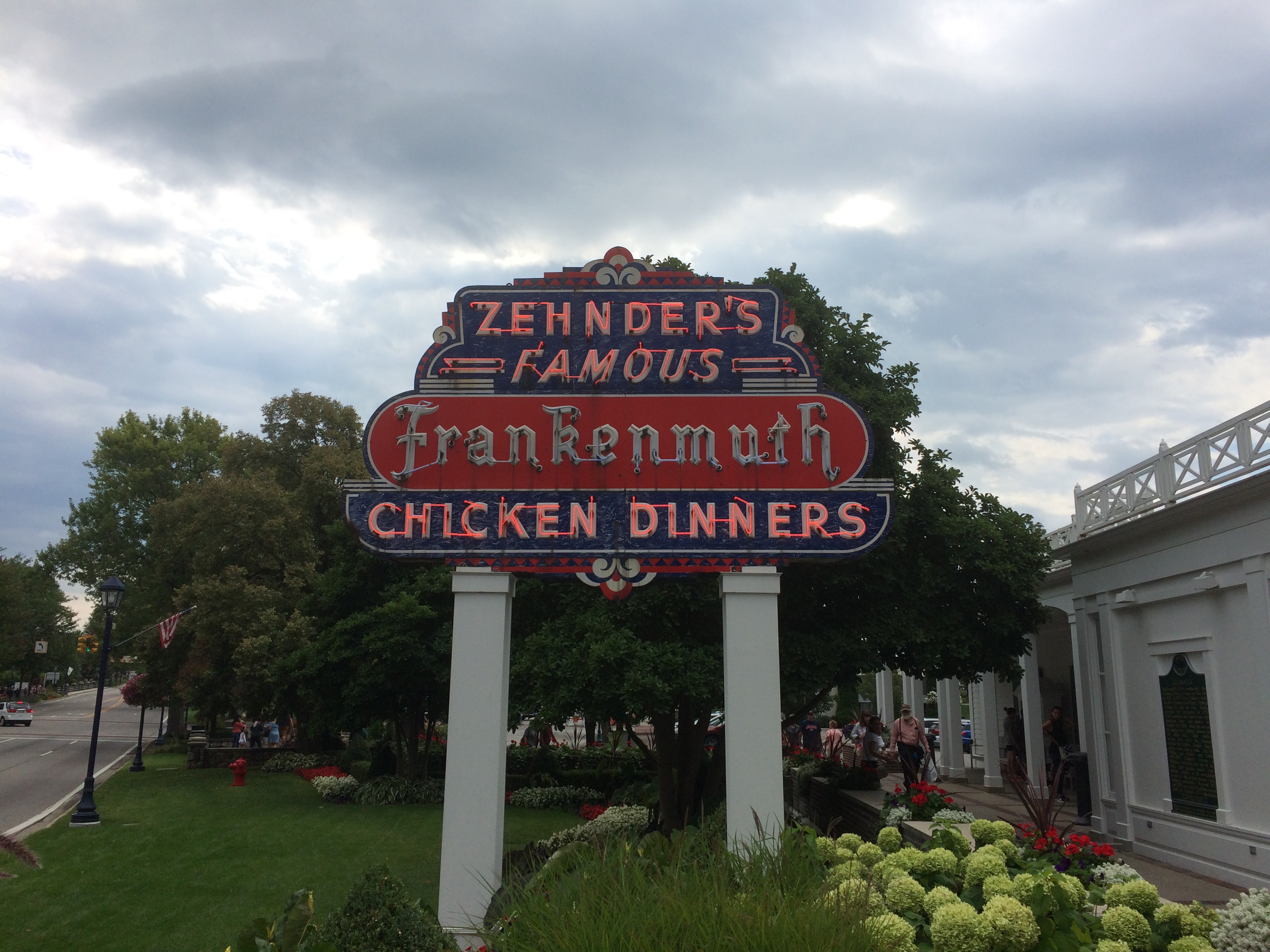
Frankenmuth Main StreetSo did we. In fact we had Zehnder’s chicken, though we took a to-go family pack to a picnic table behind the restaurant: fried chicken, beans, macaroni, potato salad, rolls. Aside from a few interrupting bees, we enjoyed it.

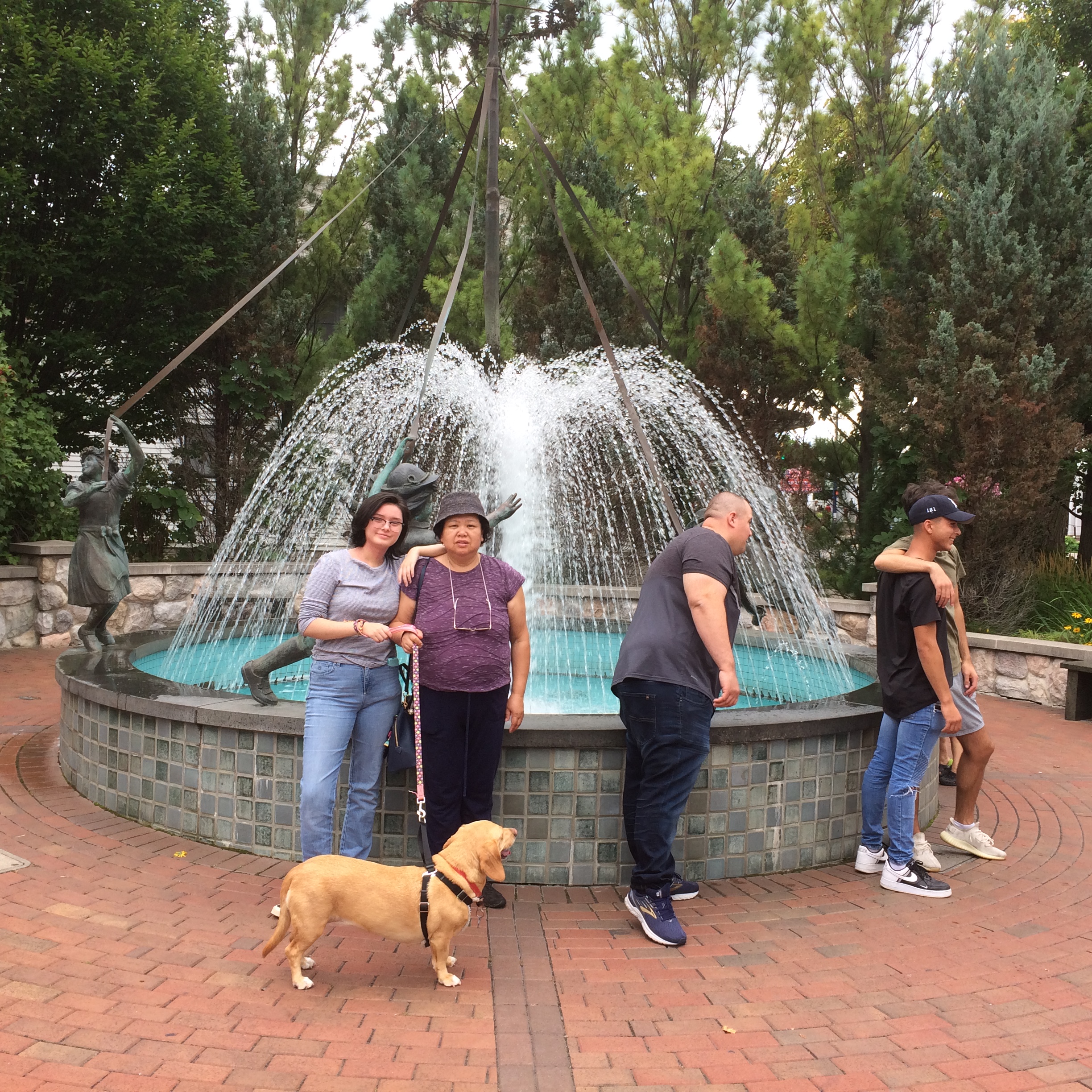
Frankenmuth also sports such sights as a maypole fountain, a popular place for posing.
Frankenmuth Main StreetLater I read a little about Bavarian maypoles. The idea is similar to English maypoles, but not quite the same. Maybe that’s the real source of dispute between the UK and the EU — the regulation of maypoles. Just a thought.

In the various sources that I’ve consulted — skimmed — the early history of Frankenmuth gets some attention, such as in this short history of the place. But modern Frankenmuth, that is, its invention as a tourist town after World War II, gets short shrift. To my way of thinking, that’s as interesting as its history as a German colony in Michigan.

There are some hints here, however, in the Frankenmuth media kit, of all places. From the “significant dates,” you learn that Zehnder’s Restaurant, which is a sprawling place with a lot of dining rooms, got its start as the Exchange Hotel in 1856. Another 19th-century hotel, Fischer House, later became the Bavarian Inn, also with a large restaurant.

When did Frankenmuth start playing up its Bavarian-ness? Looks like the 1950s.
From the timeline: 1957: Rupprecht’s Sausage was the first building decorated in the “Bavarian” architecture. 1958/59: Zehnder family… redecorates the Fischer Hotel in Bavarian architectural style. 1960 & Current: More buildings adopt “Bavarian” architecture.

A Bavarian Festival started in 1963 but the town didn’t around to an Oktoberfest until 1990. In 2001, a Bavarian-themed mall opened south of the Cass River along Main Street.

Sounds like a few places — the chicken restaurants — were long-time draws. After all, metro Detroit and the once-prosperous Flint aren’t that far. But in the postwar age of auto tourism, the town’s merchants happened on a winning formula of more than just chicken, one that dovetailed with the town’s origin: faux Bavaria.

That might sound like criticism of Frankenmuth as “inauthentic,” a vague epithet if there ever was one, but I refuse to go down that road.

Of course the place isn’t really Bavarian. No one thinks that. Visitors respond to it as a pleasant place to be. People were out and about on a summer day, having an innocuous good time, and supporting businesses that exist here and nowhere else. You could call it an homage to Bavaria, but in any case it’s an authentic American town with a popular theme.

Lansing Walkabout

On the last day of August, we arrived in Lansing, Michigan, for a look. I’d only passed through once, Labor Day 2000 as it happened, to find the state capitol closed, as you’d expect. This time I hoped it would be open on Saturday, as it usually is. It wasn’t.

Still, it’s a handsome structure with a lanky cast-iron dome.
Michigan State Capitol“In January 1872, a plan (called ‘Tuebor,’ meaning, ‘I will defend’) submitted by architect Elijah E. Myers of Springfield, Illinois, was selected,” says the capitol’s web site regarding its development, which proceeded throughout that decade. “Myers moved to Michigan to supervise construction and lived for the rest of his life in his adopted state.

“Materials for the building came from all over the country and even from abroad. Although the millions of bricks that make up its walls and ceilings were locally made in Lansing, the stone facade came from Ohio, the cast iron for the dome and floor beams from Pennsylvania, and the marble and limestone floors from Vermont.”

The interior is supposed to be ornate, but that will have to wait. Instead, we were able to look at the scattering of memorials on the grounds, including this unusual one to the First Michigan Sharpshooters Volunteer Regiment.

First Michigan Sharpshooters Memorial

Another memorial you don’t see that often — but not never — is to the men who fought in the war with Spain, but also in the Philippine Insurrection and the China Relief Expedition.
Spanish War Memorial Lansing MichiganA block east of the capitol grounds is Washington Square. At least, that’s what the map calls it. It’s a section of Washington Ave. lined with various businesses, and good for a walk on a late summer afternoon.
Washington Street LansingWashington Street LansingFormerly a theater. The Strand, opened in 1921 as one of the largest vaudeville stages in Michigan, designed by Chicago architect John Eberson.
Washington Street Lansing - StrandHe did a lot of theaters, many of which don’t exist any more. The auditorium of the Strand disappeared to make way for office and retail space in the mid-80s.

The Hollister Building, the last remaining of Lansing’s major commercial buildings developed in the early 20th century (and renovated in the early 21st century).
Hollister Building LansingBoji Tower, around the corner toward the capitol on Allegan St. and the tallest building in Lansing.
Boji Tower Lansing MichiganBoji Tower Lansing MichiganAn impressive pile of art deco bricks that got in just under the wire: construction started in 1929. The Boji family is a recent owner; earlier names are the Olds Tower (as in auto pioneer Ranson Olds), the Capital National Bank Tower and the Michigan National Bank Tower. The fairly obscure Hopkins and Dentz of New York designed it.
East of the capitol a few blocks is public art so new that it doesn’t appear on the StreetView image from the summer of 2017.
lansing "Portrait of a Dreamer" “Portrait of a Dreamer” by Ivan Iler, installed in December 2017. Naturally, Roadside America has the story: “The giant mechanical head is 15 feet high and is built out of almost two tons of aluminum and stainless steel.

“Visitors are encouraged to turn a crank at its base to move the gears, which spill out of the head toward Lansing’s cultural district. The purpose of the sculpture is to turn visitors’ heads while they turn the crank, so that they notice the science center and museums that they otherwise might miss along Michigan Ave.”

To Lake Huron and Back

On Saturday we left town remarkably early (for us) and drove across the Lower Peninsula of Michigan so that on Sunday morning, I could stick my feet in Lake Huron.Lake HuronSaginaw Bay in particular. Of course that wasn’t the entirety of the trip. But it was the inspiration. Sometime years ago, I realized that I’d never really gotten a look at Lake Huron. I’ve crossed the Mackinac Bridge a number of times, which offers a view of the lake to the east, but somehow that doesn’t count. I wanted to see Lake Huron from outside a car, moving at zero miles an hour, and hear the waves and smell the water and feel the sand and pebbles.
So Labor Day weekend was the time. We all went, including the dog. First stop on Saturday morning was at one of the Sweetwater’s Donut Mills in Kalamazoo because I hadn’t forgotten them.
Sweetwater's Donut MillNear Battle Creek, we stopped at a novel local spot: Historic Bridge Park. I’ve seen open-air museums devoted to houses and other buildings, but this is the only place I know that functions as an open-air museum featuring bridges.

Heading northeast, we arrived in Lansing in time to visit the Michigan State Capitol. Or so I thought. There are usually Saturday hours, but not on Labor Day weekend. Still, we had a good walk around the grounds and Washington Square to the east, along with an al fresco lunch of Cuban sandwiches.

Michigan State University is in East Lansing. After some wandering around the sprawling campus, we found the W.J. Beal Botanical Garden, the first of three gardens we visited.

We made it to Midland, Michigan, before dark and spent the next two nights there. On Sunday morning, we visited Bay City State Park on the lakeshore, walking on the beach and a path around a large lagoon. By lunchtime, we were back in Midland, eating al fresco again — the thing to do with a dog in tow.

Midland has a lot of large parks accessible from its small downtown, but that’s not the distinctive feature. That would be the Tridge, a three-way bridge across the confluence of the Chippewa and Tittabawassee rivers. Naturally we had to cross that.

Next we visited Midland’s Dahlia Hill, which is planted with thousands of dahlias and open to wander around. After that, Yuriko and Ann visited the much larger Dow Gardens, while I took a drive with the dog to Bay City. No dogs allowed at Dow Gardens.

During my driving look-see in Bay City, I noticed a Huron Circle Tour sign. Like Superior, that would be a drive.
Lake Huron Circle Tour signWant. To. Do. It. But not now. While everyone else rested in the room early in the evening, I visited the expansive and exhausting Dow Gardens, along with the adjacent Whiting Forest. Open till 8:30 in the evening until Labor Day, fortunately.

On Labor Day we drove home, but not the most direct way. We passed through parts of Saginaw — parts beaten down by the contraction of U.S. manufacturing, it looked like — and then on to Michigan’s faux Bavarian tourist town, Frankenmuth.

Had a good time and a chicken lunch there, but the overstimulation of it all made the dog as nervous as I’ve ever seen her, so we headed home. Riding in the back seat seems to be as calming for her as parking herself on the couch at home.

As far as I can tell, she enjoyed the trip and the many new smells.

That last one almost instantly became a favorite picture of her.

Riverside Cemetery, Montgomery

I had a little time to kill before The Comedy of Errors started in Aurora on Saturday, so I consulted Google Maps and found a nearby cemetery to visit. Riverside Cemetery, which is south of Aurora in the town of Montgomery, Illinois, and which is also on the Fox River.

Not bad. Some trees, many upright stones. Not much in the way of land contour or funerary art, though.

Riverside Cemetery, Montgomery IllinoisRiverside Cemetery, Montgomery Illinois

Riverside Cemetery, Montgomery IllinoisI found what are probably the oldest stones: 19th century.
Riverside Cemetery, Montgomery IllinoisRiverside Cemetery, Montgomery IllinoisAs far as I could see, only one obelisk of any size.
Riverside Cemetery, Montgomery IllinoisMarking the burial site of one V.A. Watkins. Big fish in this little pond.

Later I read that, according to Find A Grave, there’s one noteworthy person buried at Riverside: Bernard Cigrand (1866-1932). I didn’t happen across his stone. He rings no bells. Not even a slight tinkle. He was a dentist, but his stone also says FATHER OF FLAG DAY.