Le Corbusier & Ando

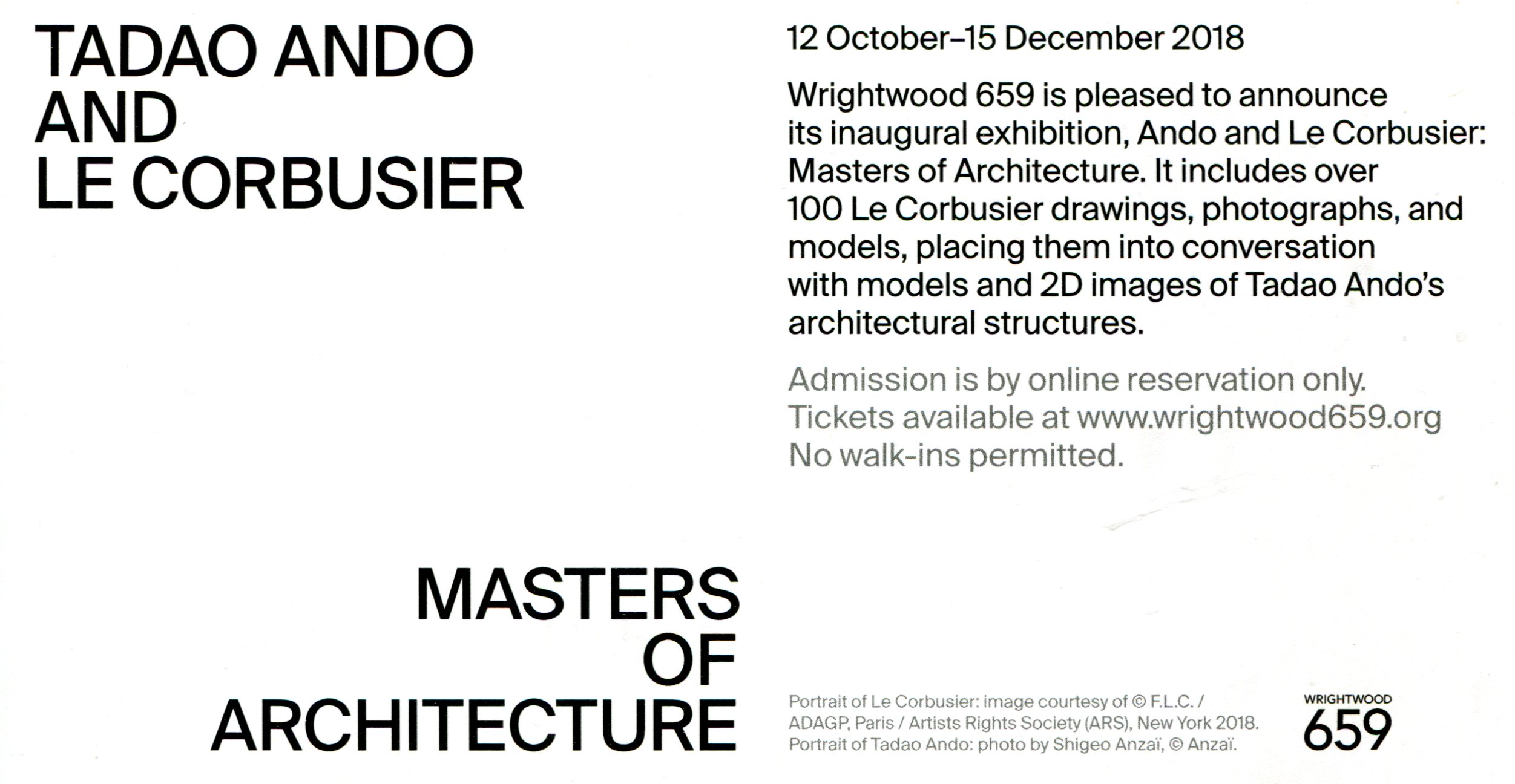
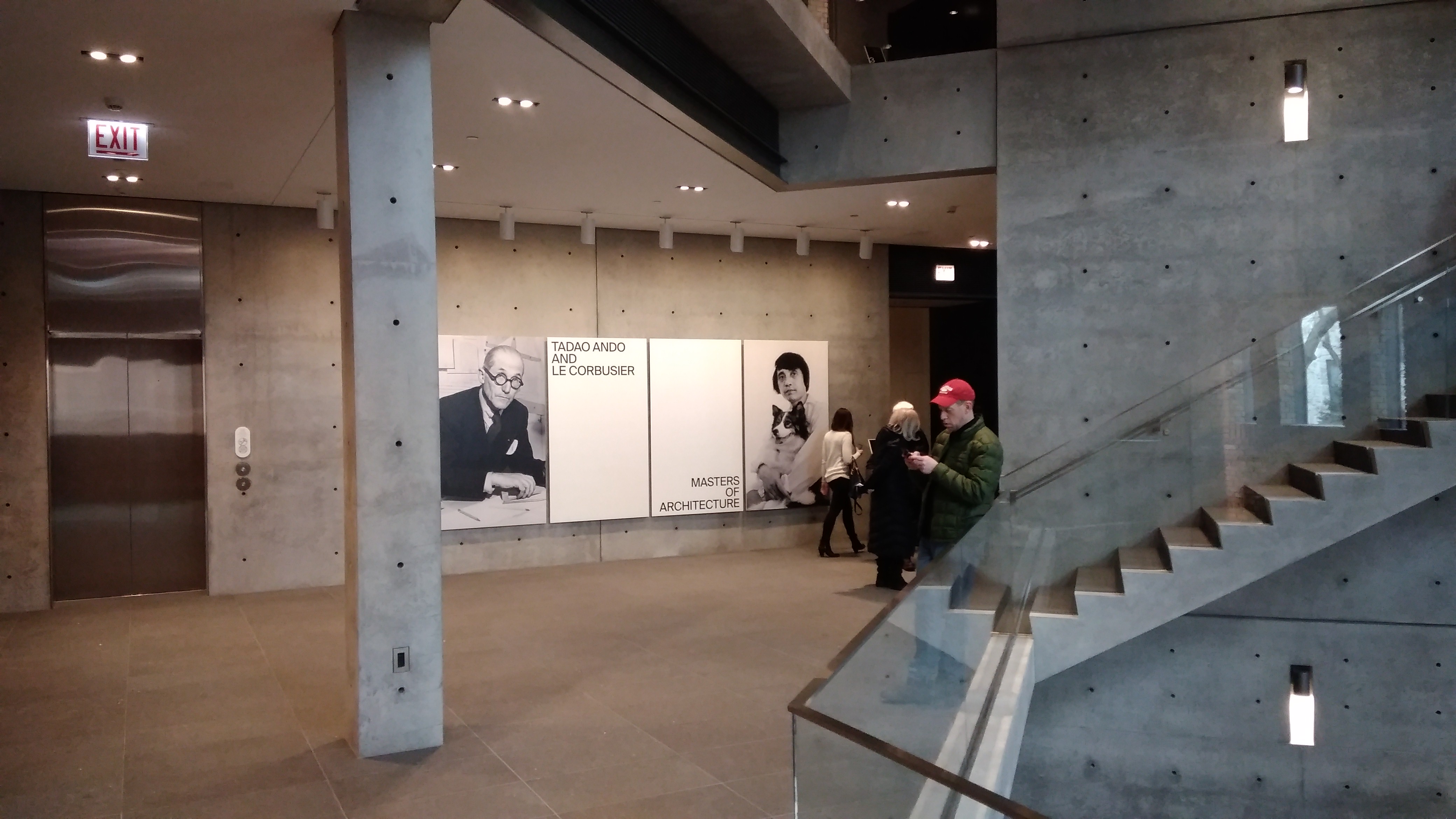
The first-ever exhibit at Wrightwood 659 is called Tadao Ando and Le Corbusier: Masters of Architecture. You’d think the more alliterative Masters of Modernism would be the thing, but probably the organizers thought that would be too narrow. And Masters of Human Creativity would be too broad.
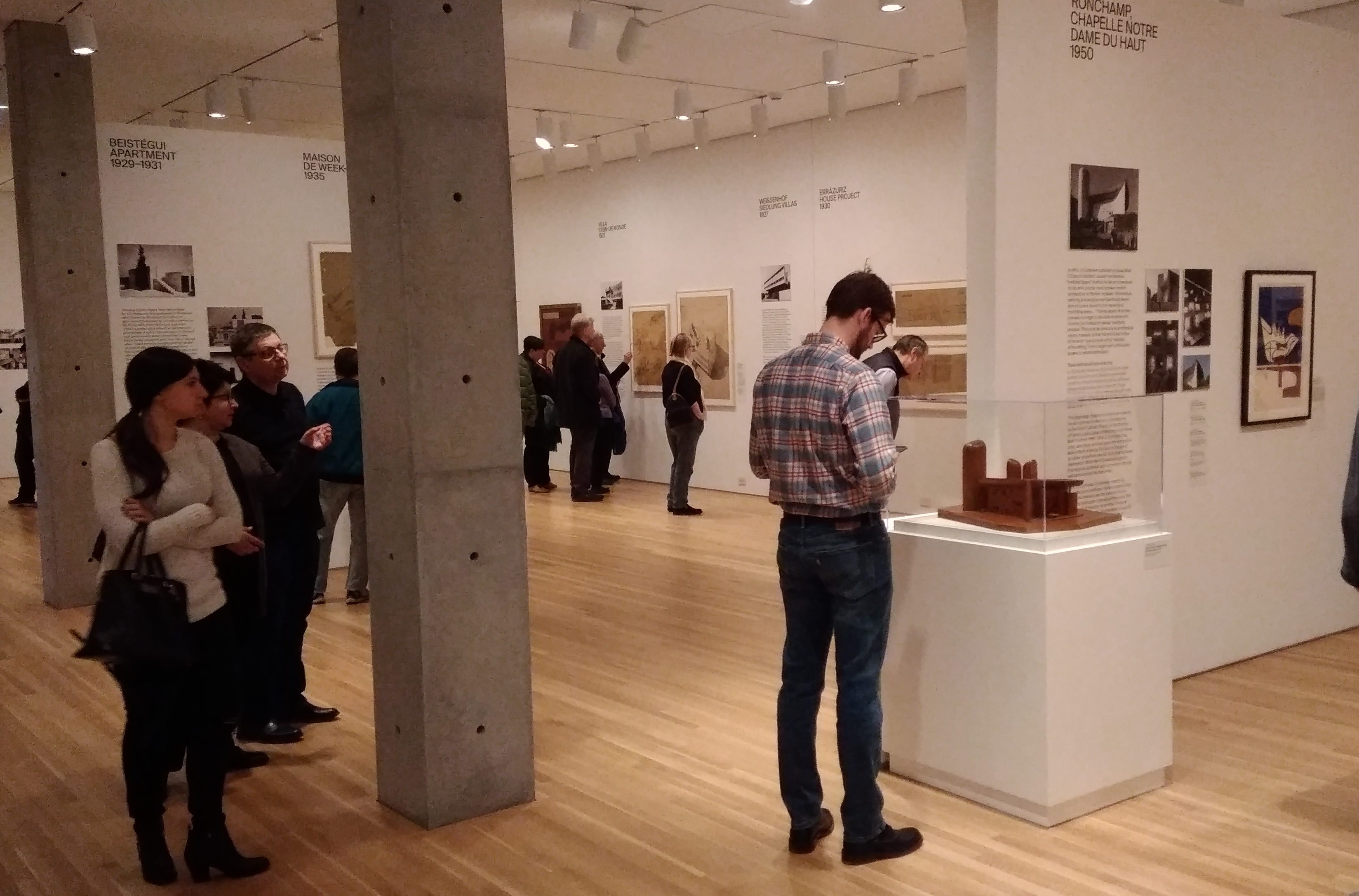
The Le Corbusier exhibit was on the second floor. Pictures and paintings and models and a lot to read.
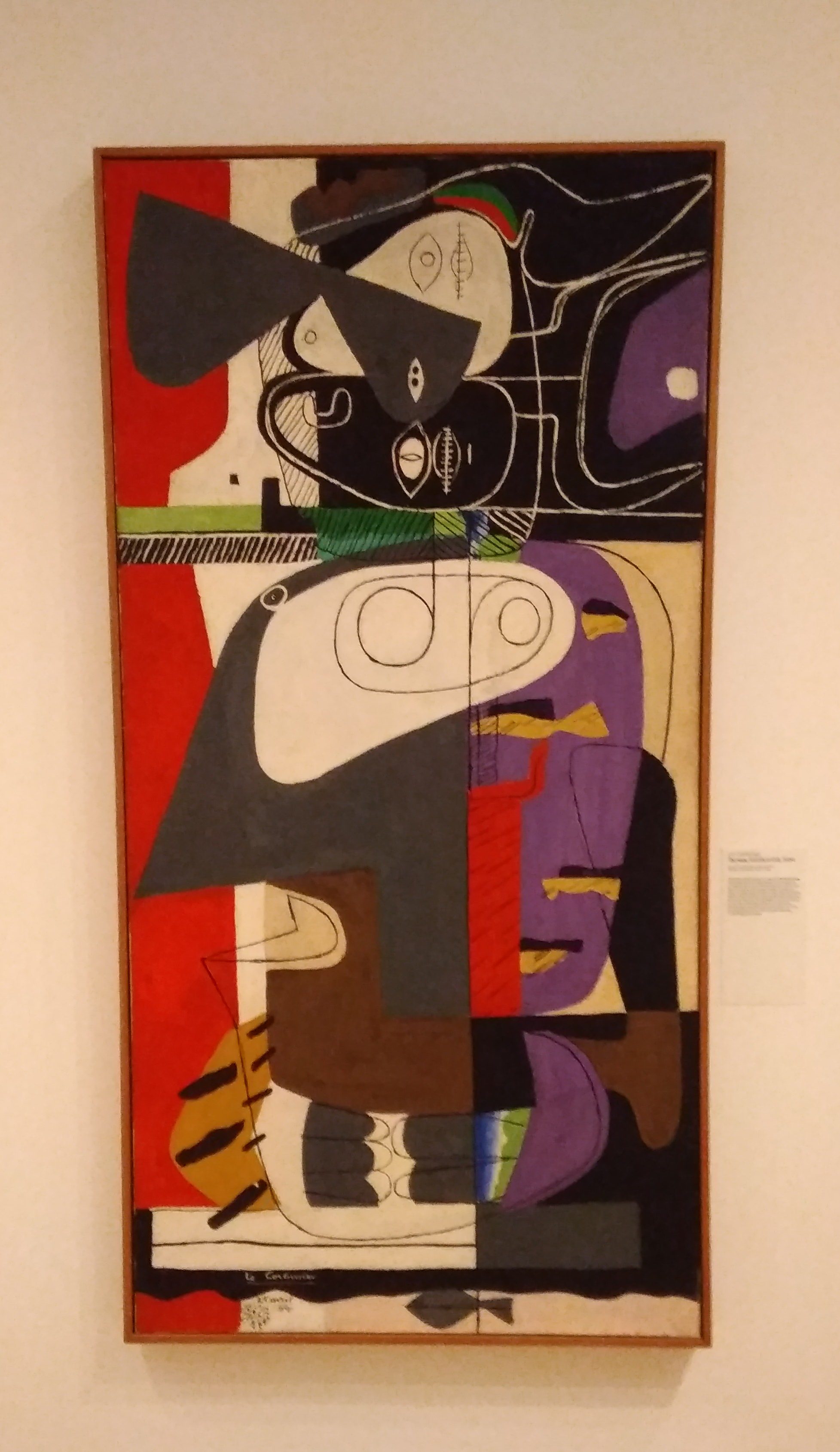
Before I’d only had a casual acquaintance with his output. I didn’t know about his paintings, for instance. Such as Taureau VIII (Bull VIII), 1954.

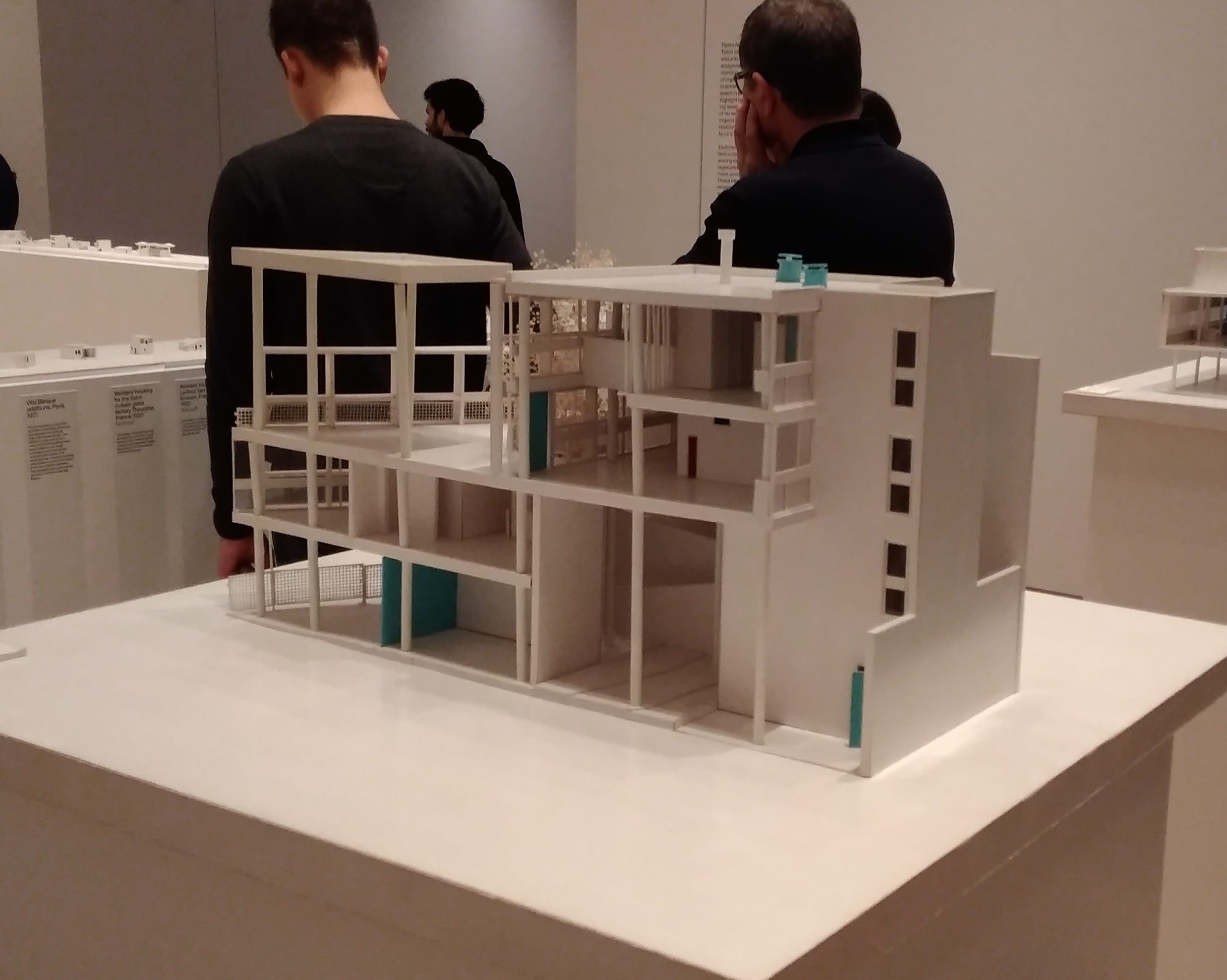
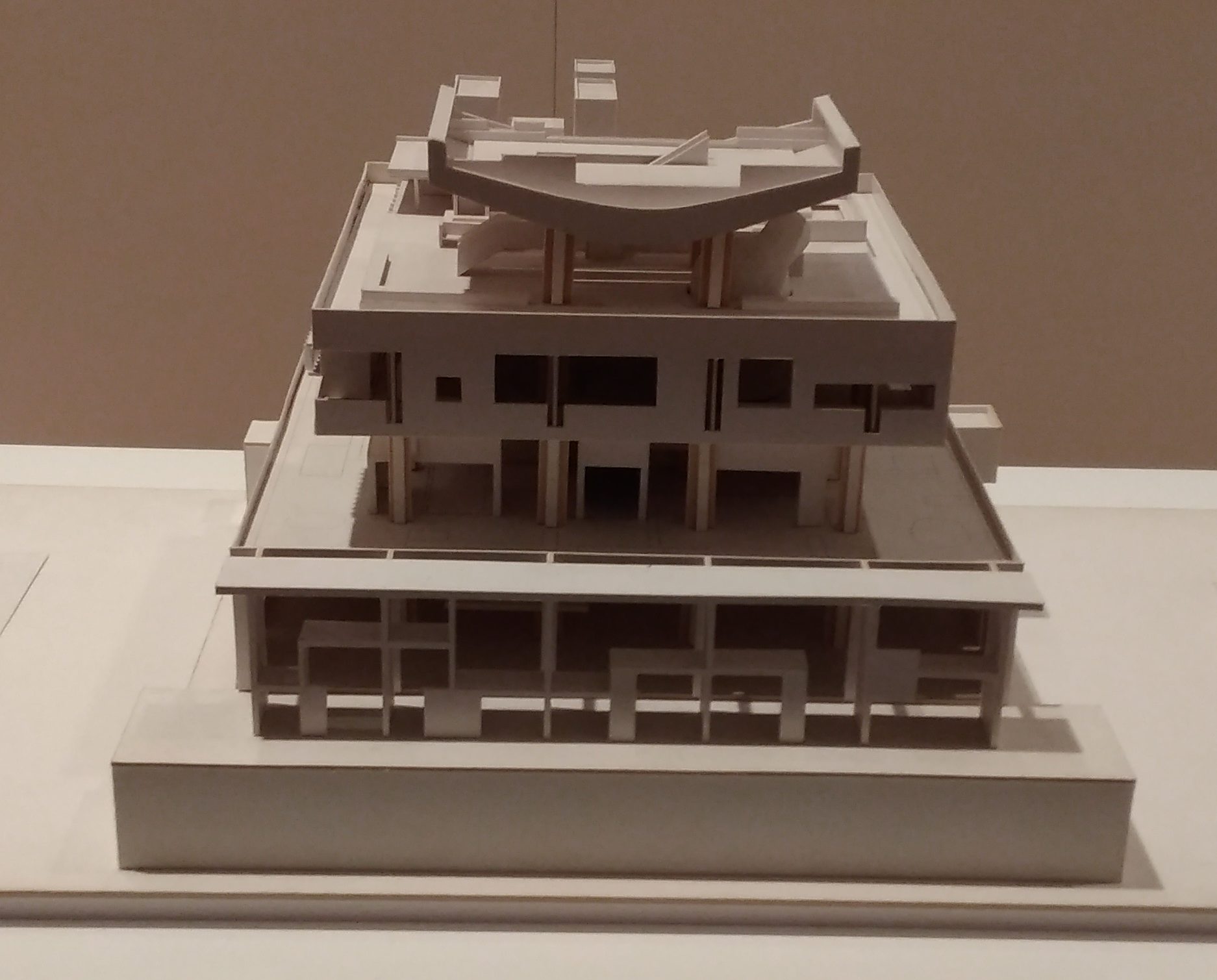
Looks suspiciously Picassoesque to my unlearned eye, but I don’t doubt Le Corbusier’s creativity. The models for some of his buildings, built and unbuilt, show that well enough.

A house he designed in Argentina, 1949.
An unbuilt governor’s palace for Punjab State in India, 1950-65.
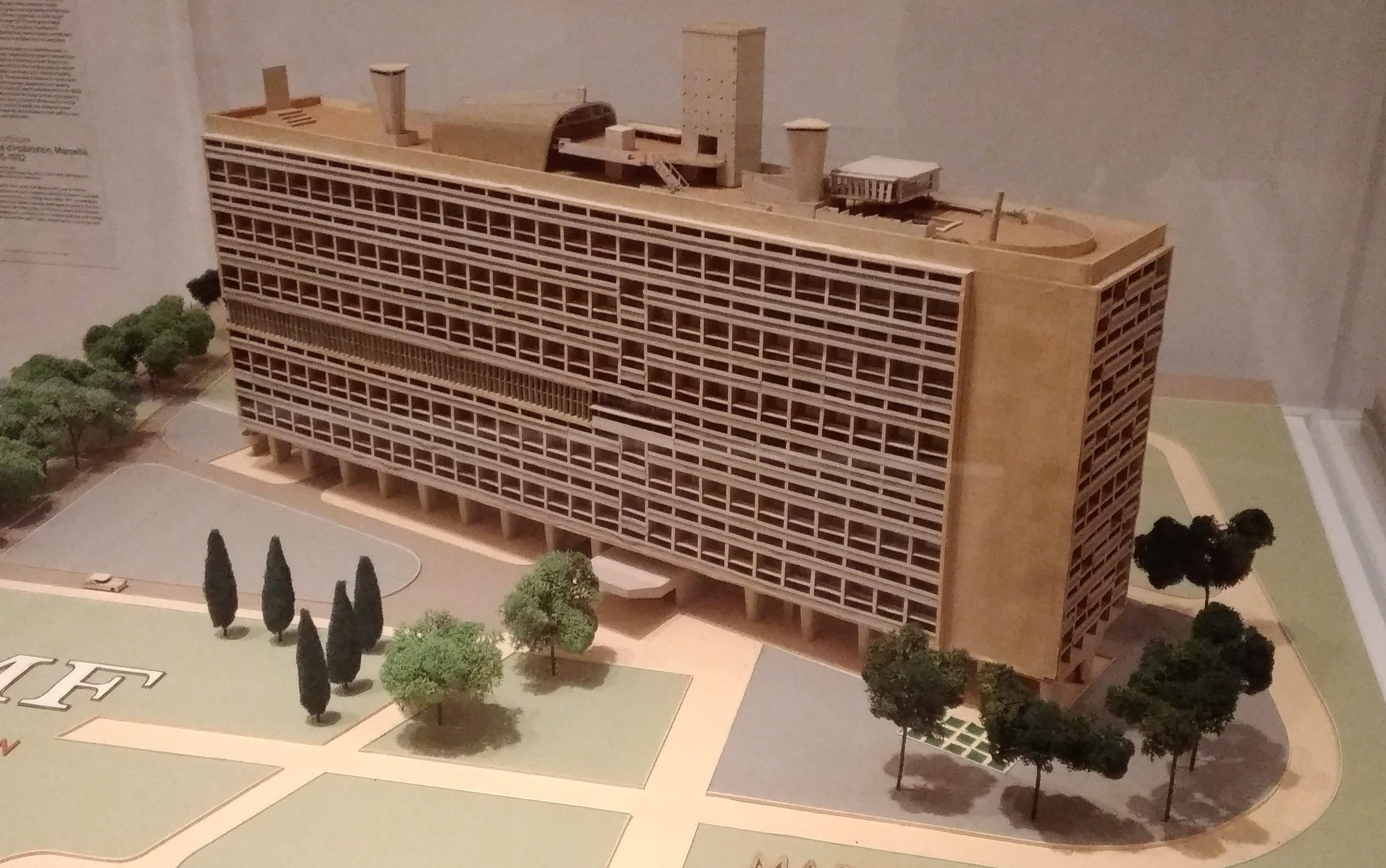
Still, when I looked at some of the models, I couldn’t help being reminded of every ugly modernist box I’ve ever seen, even if his own work — in this case Le Corbusier’s Cité Radieuse in Marseille — had a bit more style.
Remarkably, the building now includes the Hôtel Le Corbusier on two floors, and some color seems to have been added to the exterior. Even more remarkably, according to the Telegraph: “Double rooms from €79 (£67) year-round, an incredibly reasonable rate for the opportunity to sleep within an architectural icon.”

Reasonable all right. If the hotel were in this country, its owner would brag about curating Le Corbusier’s legacy, tout its upscale amenities, and charge three or four times as much.

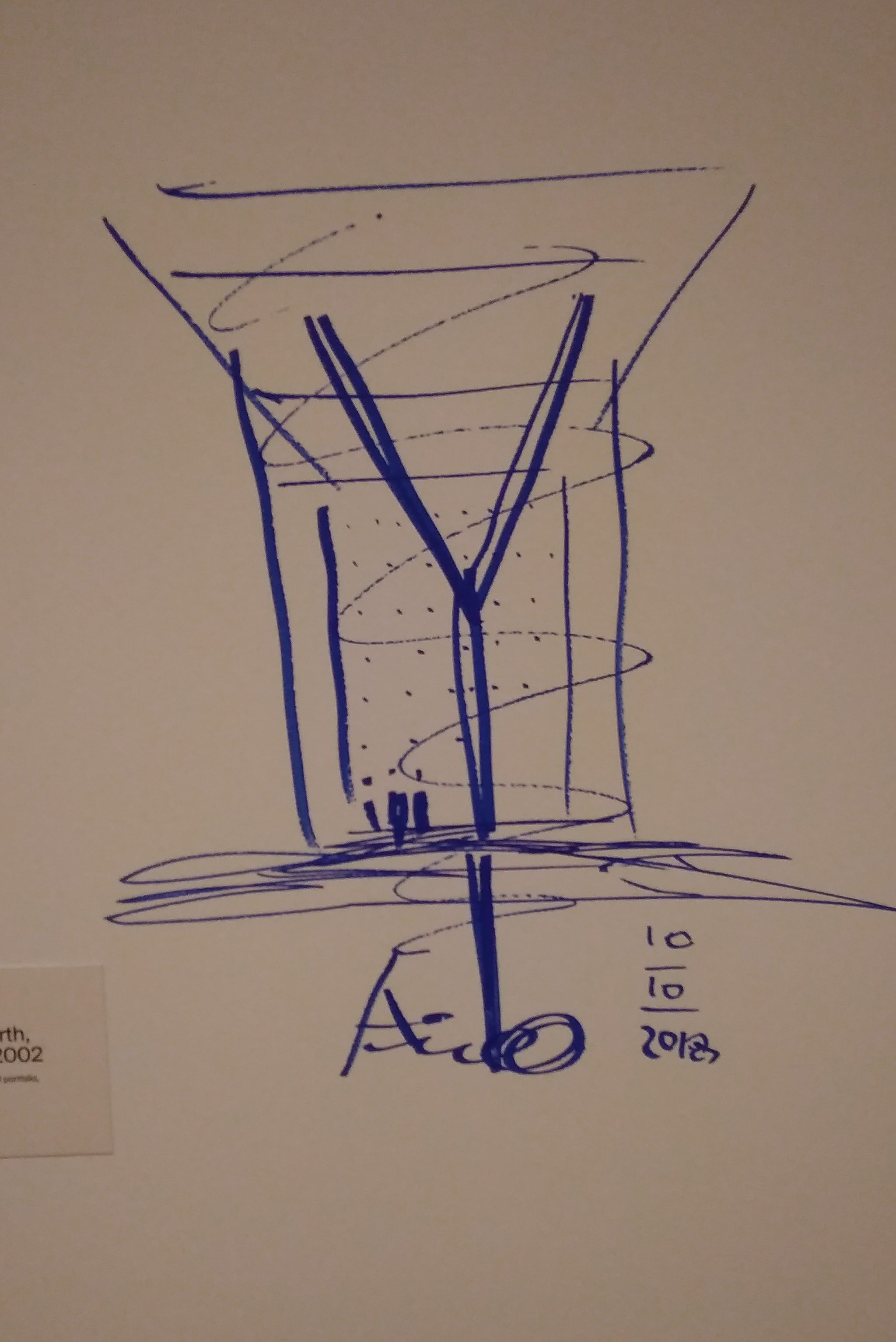
On floors three and four of Wrightwood 659 were the Ando exhibits. I believe Ando has some advantages over Le Corbusier. He’s alive, for example, and could visit the exhibit when it opened and draw on the walls. This doodle evokes the Modern Art Museum of Fort Worth, which he designed.
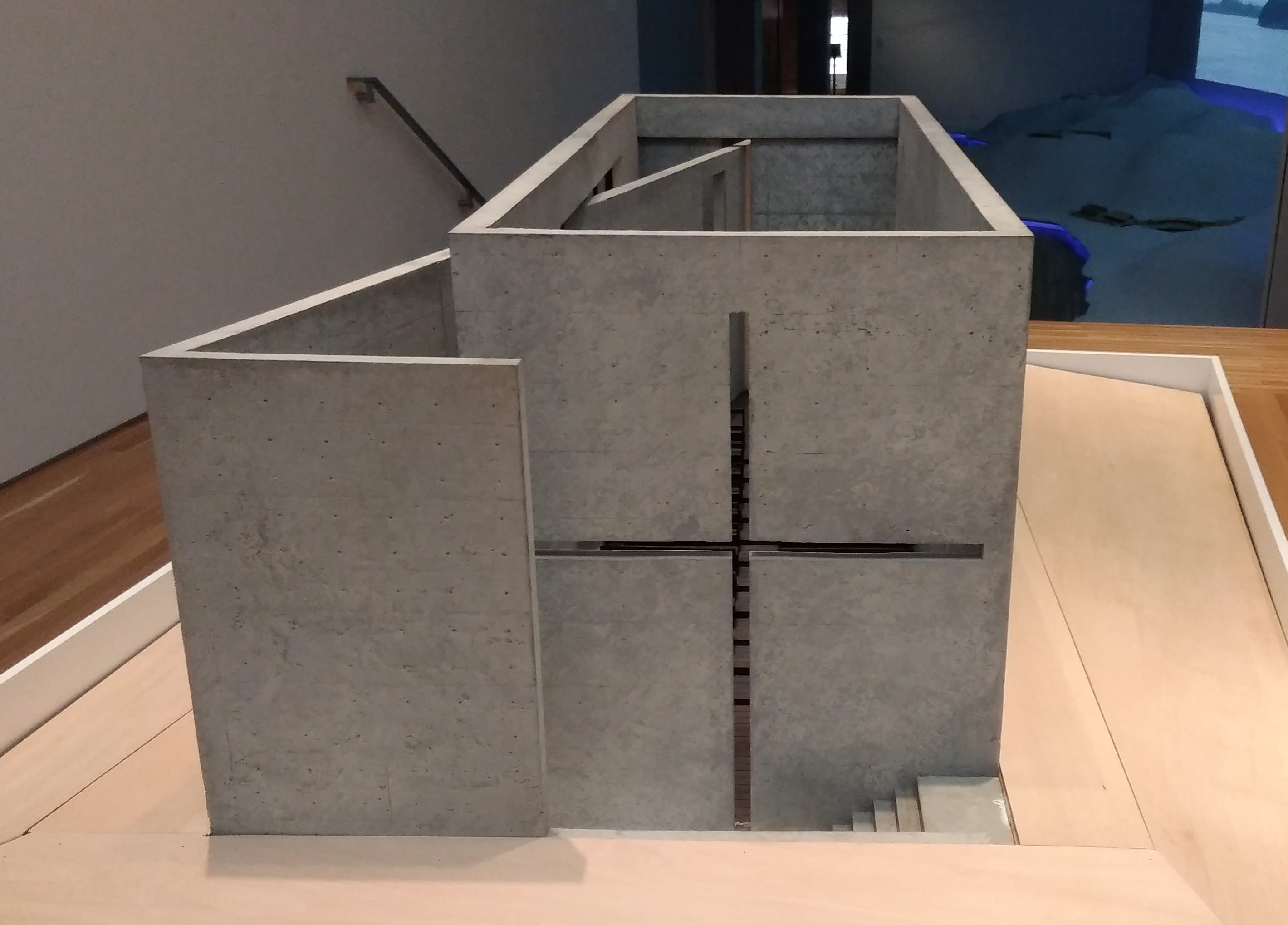
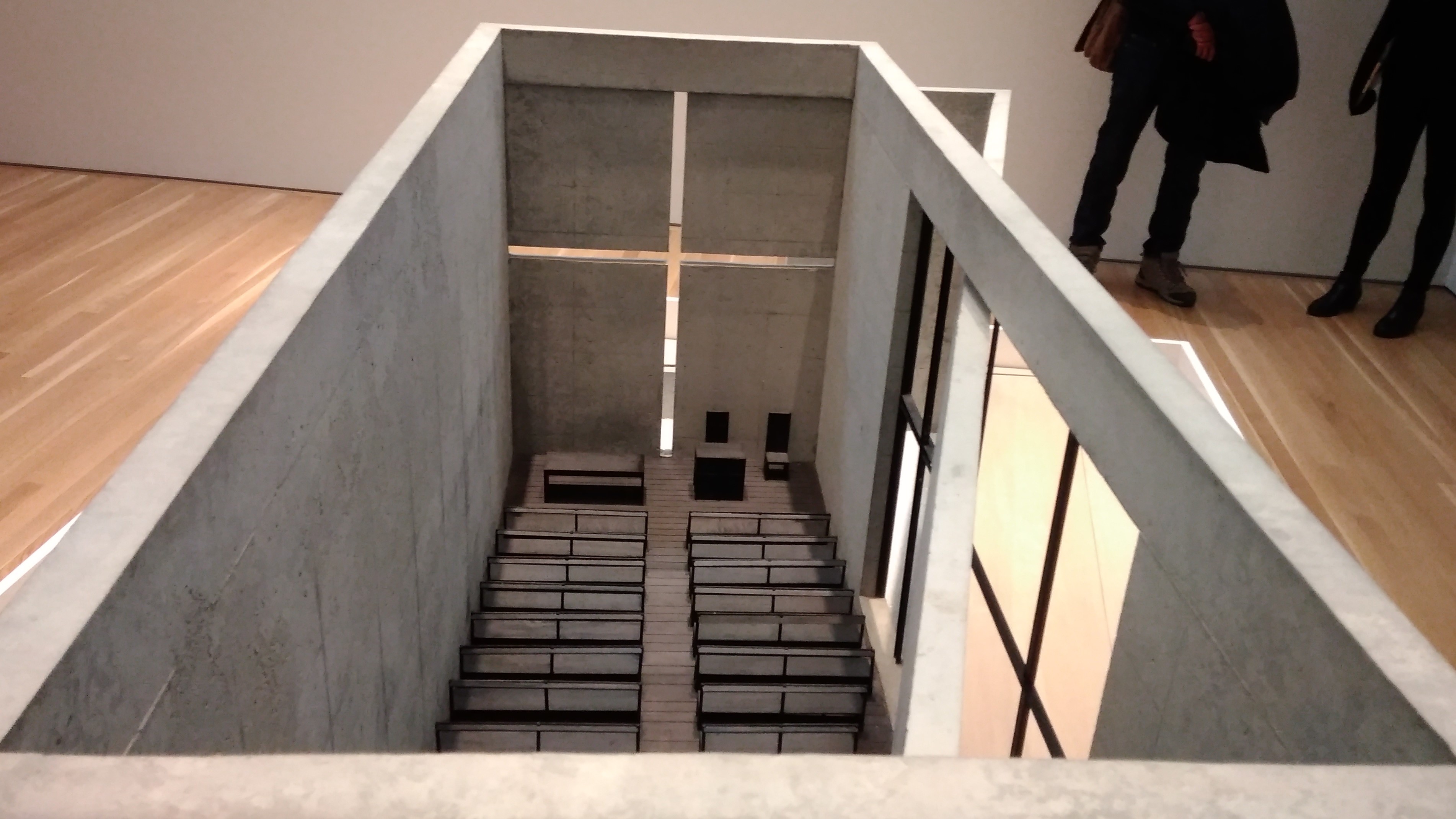
Also, Ando is a niche practitioner who does marvels in concrete, not someone inspiring a rash of urban renewal destruction and ugliness. Here’s a model of Ando’s Church of the Light near Osaka. I need to visit someday.

A lot of the third floor was taken up with a model of Naoshima, a small island in the Inland Sea that’s large enough to be home to a number of Ando-designed museums, developed over the last few decades.

Know where else I need to visit? Naoshima. There are just too many interesting places in the world.

Wrightwood 659

Saint Clement and a stroll in Chicago’s Lincoln Park neighborhood were nice, but we’d come to the city last Saturday morning to see Wrightwood 659, a new exhibition space designed by architect Tadao Ando. Yuriko has a fondness for him, and not just because he’s Japanese, or even that he’s from Osaka, though those help. A few years ago, she was impressed by the Church of the Light in Ibaraki in Osaka Prefecture, one of his works.

I have a sneaking admiration for him too. The man has a way with concrete.

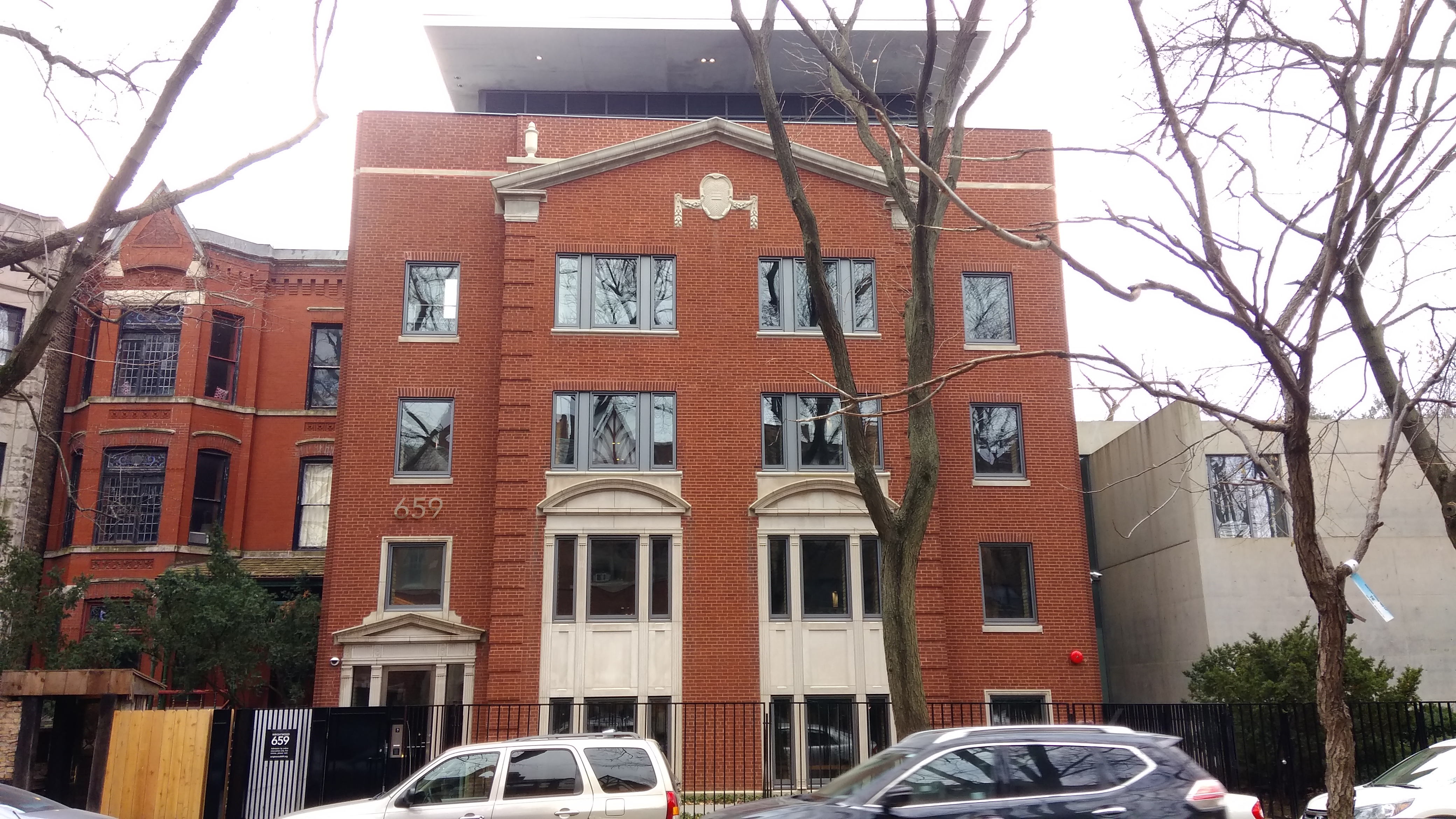
You wouldn’t know that looking at the front elevation of Wrightwood 659, which happens to be at 659 W. Wrightwood Ave.
The space, opened only in October, is the redevelopment of an ordinary Lincoln Park apartment building dating from the late 1920s.

“The building greets the visitor with a refurbished facade adorned with arches, festoons and other Beaux-Arts details,” Blair Kamin wrote in the Tribune. “But the decorous facade turns out to be a mask. Like a ship in a bottle, the project inserts a new steel and concrete frame inside the brick walls; the frame braces the old walls and turns the original four floors into three. A concrete slab that floats building’s new identity.

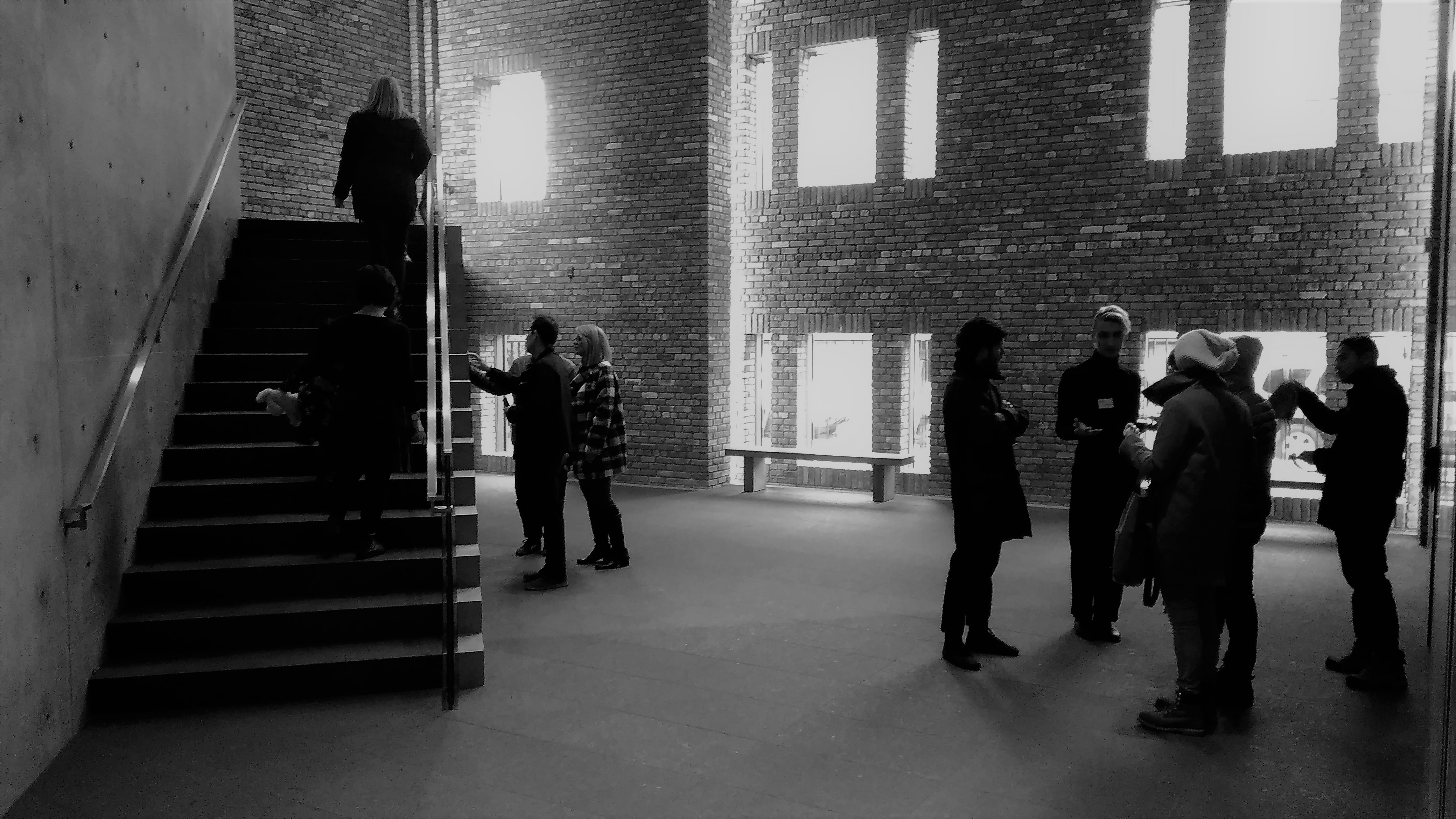
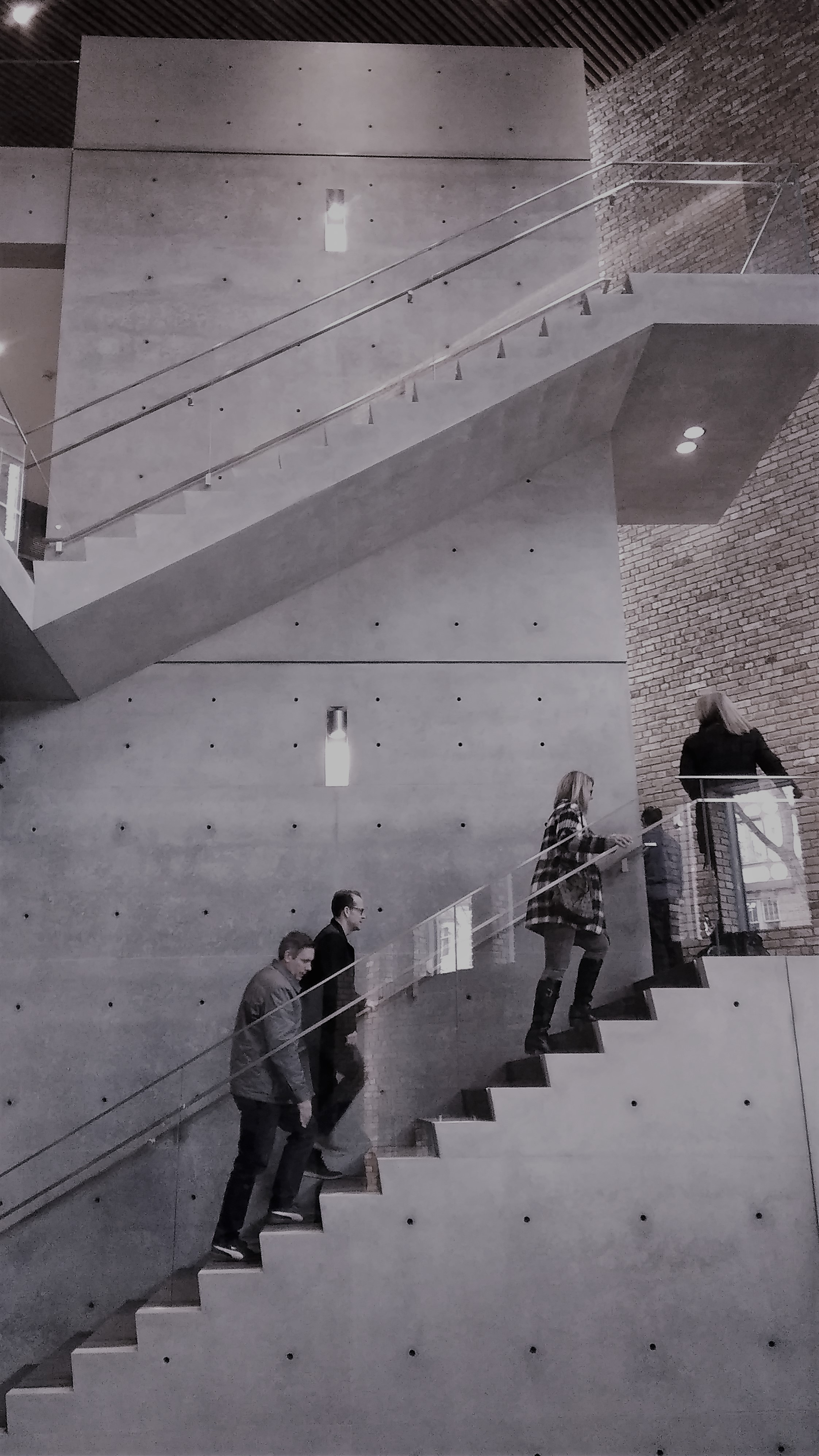
“Ando gives us that kind of space in Wrightwood 659’s lobby, an unexpected, four-story burst of space that’s energized by the rhythmic treads and risers of an exposed concrete stair that corkscrews upward. Common brick recycled from the original building’s corridor lines the walls, its mottled texture in counterpoint with finely honed stairs.”

The staircase is signature Ando.
This image is untinted, reflecting the true color of the walls.
I understand that the dog’s name was “Corbusier.”
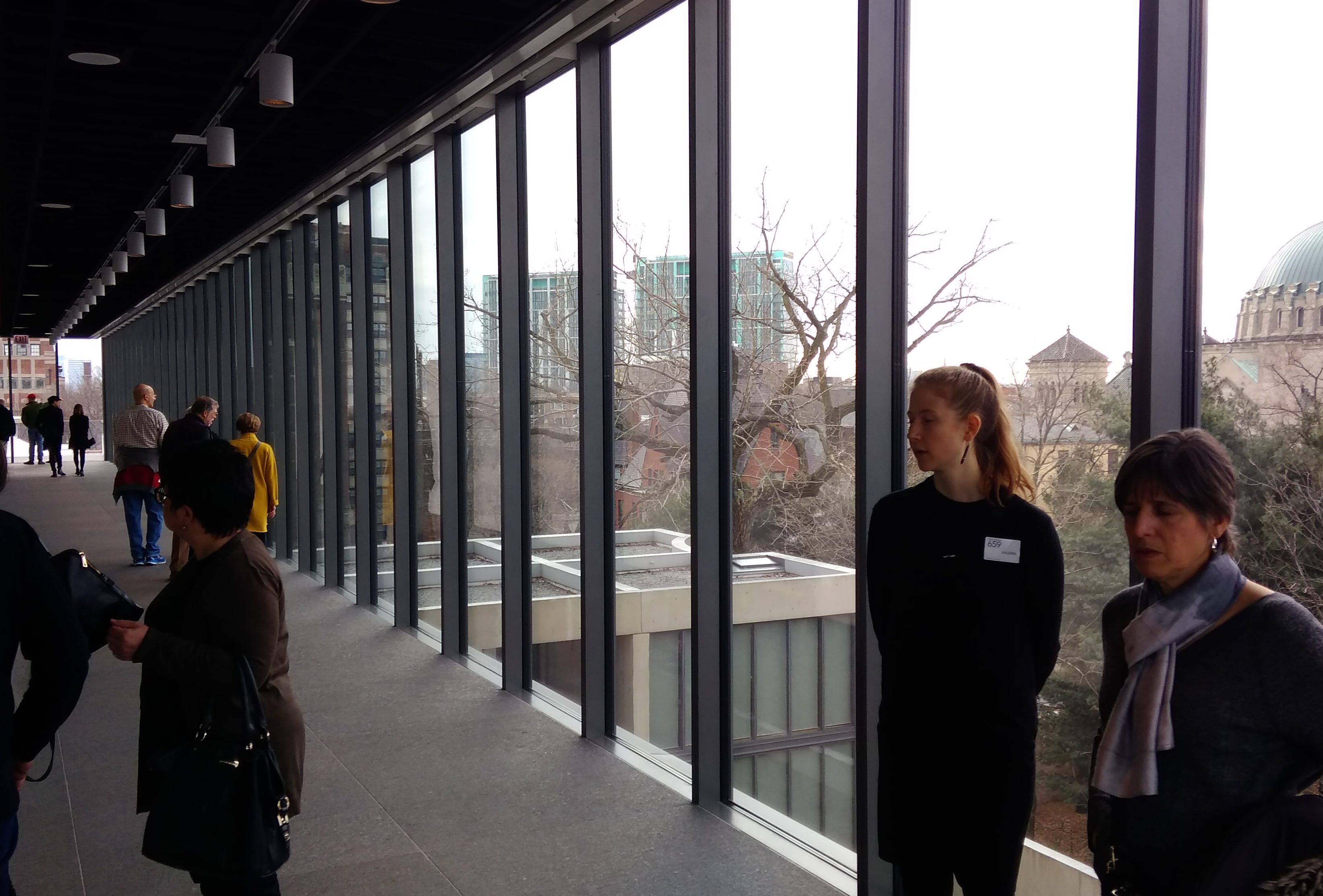
Gallery space on the second floor, at least until this Saturday, features an exhibit about Le Corbusier, and the third- and fourth-floor galleries are devoted to Ando. The fourth floor west-facing wall, which is floor-to-ceiling glass and steel, has a terrific view of the neighborhood.
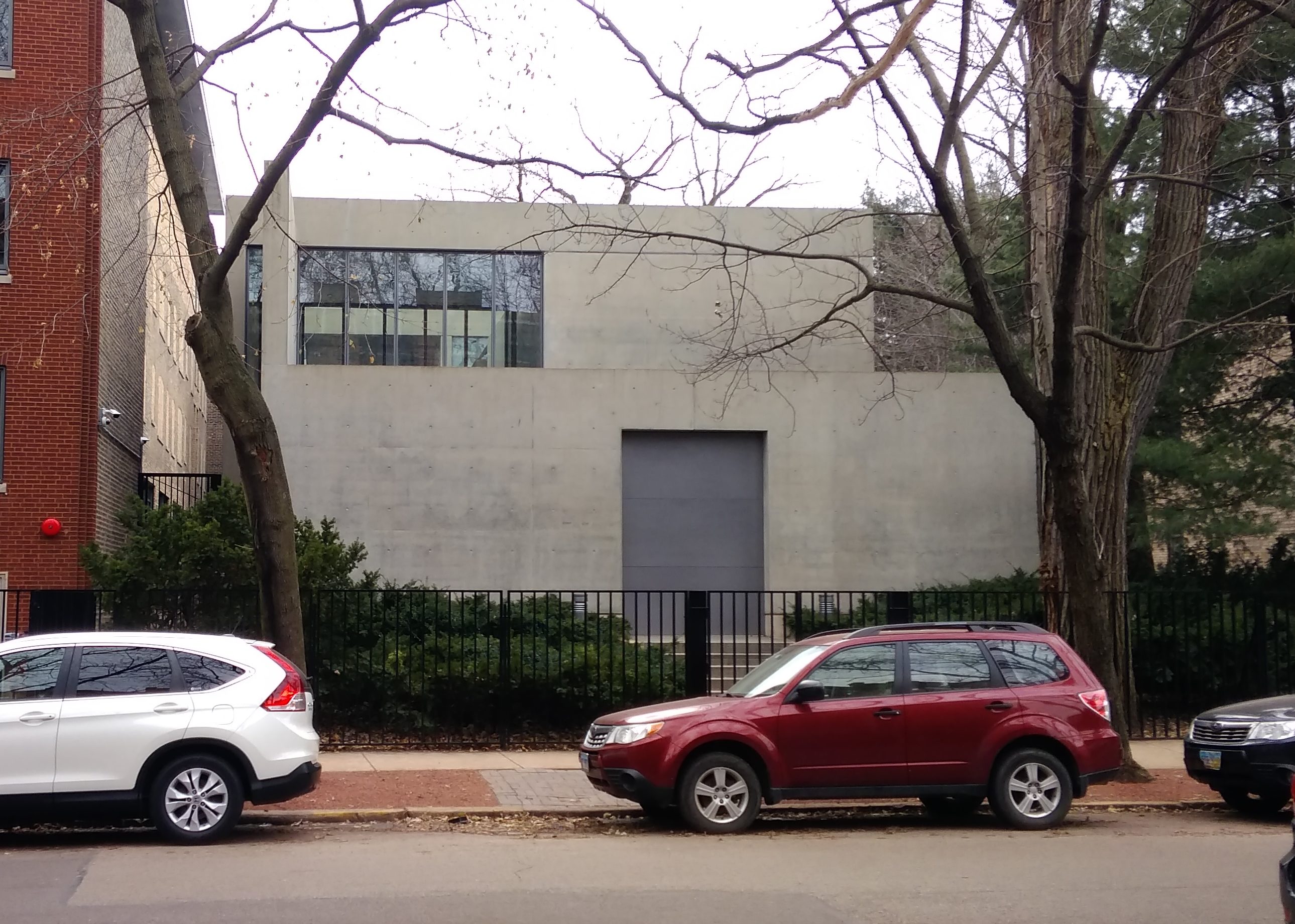
The view also looks down on the Ando-designed, 665 W. Wrightwood Ave., a 1998-vintage private house owned by Fred Eychaner, a Chicago media mogul. Eychaner must like Ando’s work, since he was the moving force — and probably most of the money — behind the establishment of Wrightwood 659.

Eychaner is inevitably described as “reclusive.” As we were leaving, I took a look at the front of 665 W. Wrightwood, nestled as it is among ’20s-vintage apartments.
Yep, that wall pretty much says, Go away, leave me alone.

Mass Entertainment

Here’s a list I spent some time with recently: Wiki’s List of highest-grossing media franchises. Being Wiki, there’s no telling how accurate it is, but I will note that there are an enormous number of notes and references. So I’ll take it as accurate enough.

The list is interesting for a number of reasons, but mainly for information on the high-grossing franchises I’ve never heard of, which are quite a few.

Most of them are Japanese: anime, manga, even franchises whose most profitable expression is pachinko machines. As far as I could tell from my years in Japan, pachinko parlors were insanely bright, intensely noisy places to throw away money. But I was just a barbarian outsider. Apparently the machines are branded, and the branding is big business.

Take Fist of the North Star which, originating way back in 1983, would have been around when I was in Japan. I’d never heard of it until today. Though starting as manga, the franchise has enjoyed nearly $16.8 billion in pachinko machine sales, plus a few billion more in manga and other games.

Pachinko, incidentally, comes up 13 times on the list. Most of those are Japanese franchises, but not all. There have been $2.85 billion in Disney Aladdin pachinko (and arcade) machines sold. Spider-Man pachinko machines are popular to the tune of $308 million in sales, and Tomb Raider has sold $300 million.

I was curious how many of the franchises I’ve supported, either for myself or my children, so I counted: more than I would have thought, about 50. That includes mostly through ticket sales, as well as small-screen viewing (at least occasionally), but also the quarters I spent on Pac-Man and Space Invaders, and things my daughters watched that I never would, such as Sailor Moon and Dora the Explorer.

Mass-market entertainment’s pervasive. Even when your tastes tend to run to less successful shows.

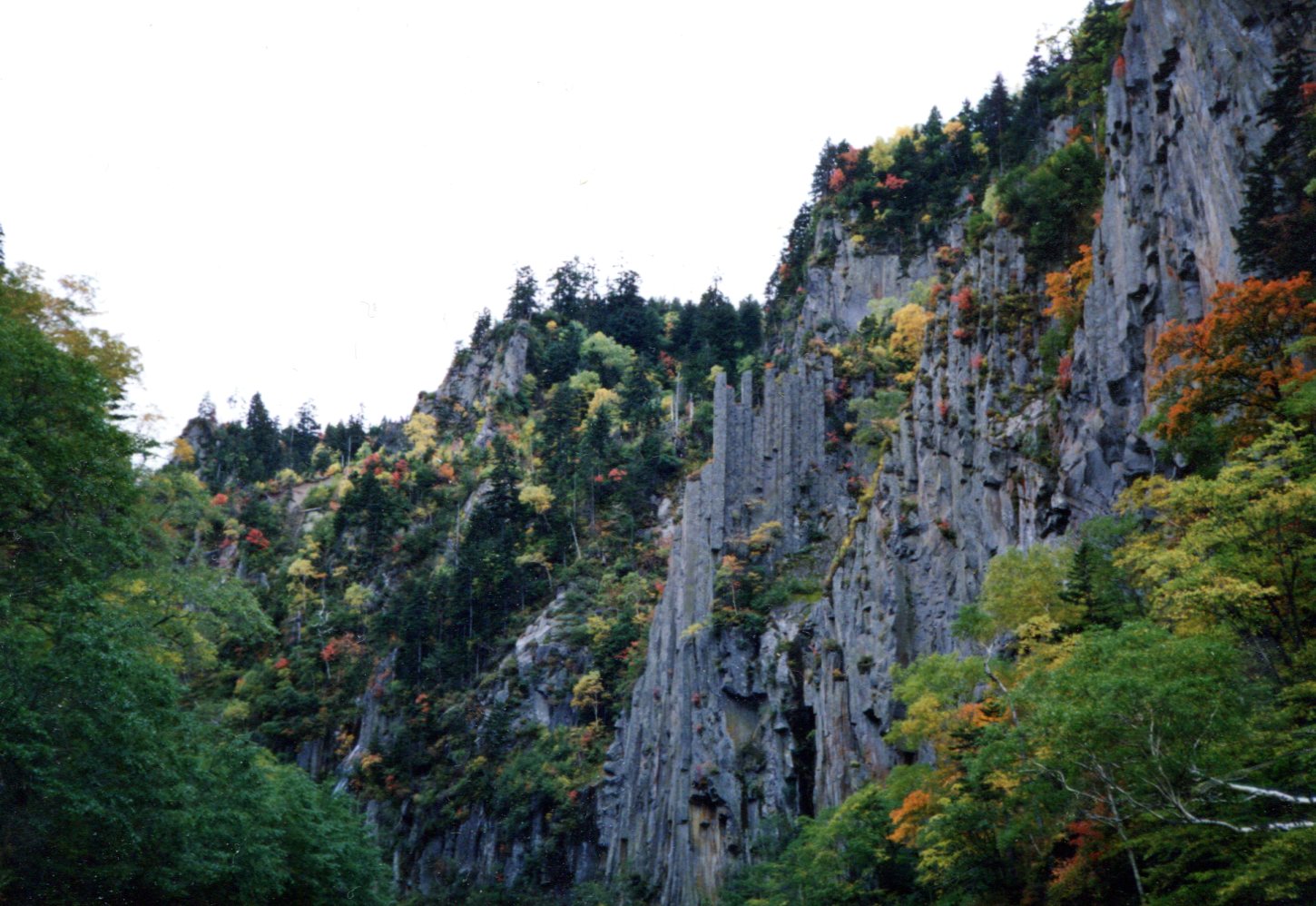
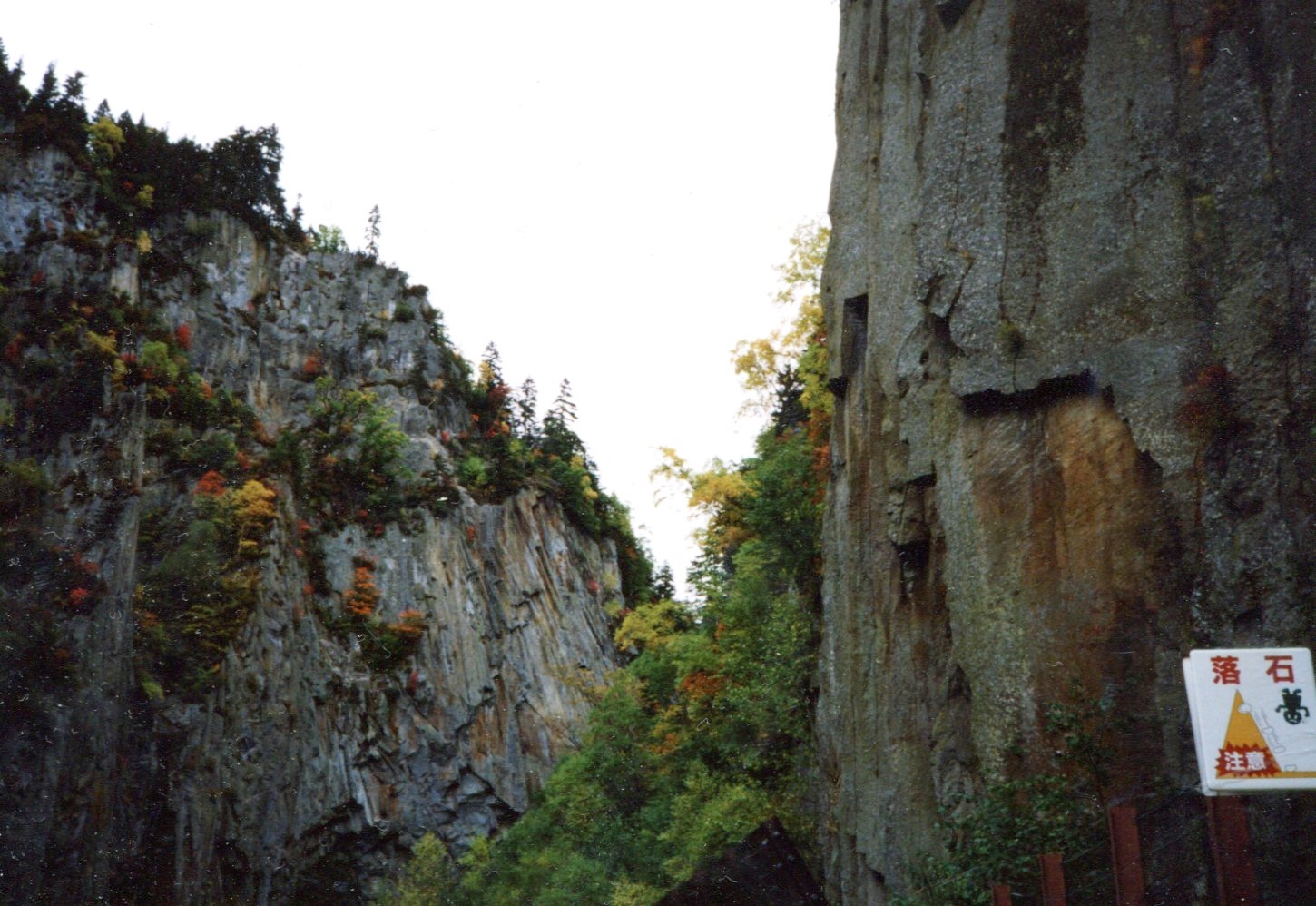
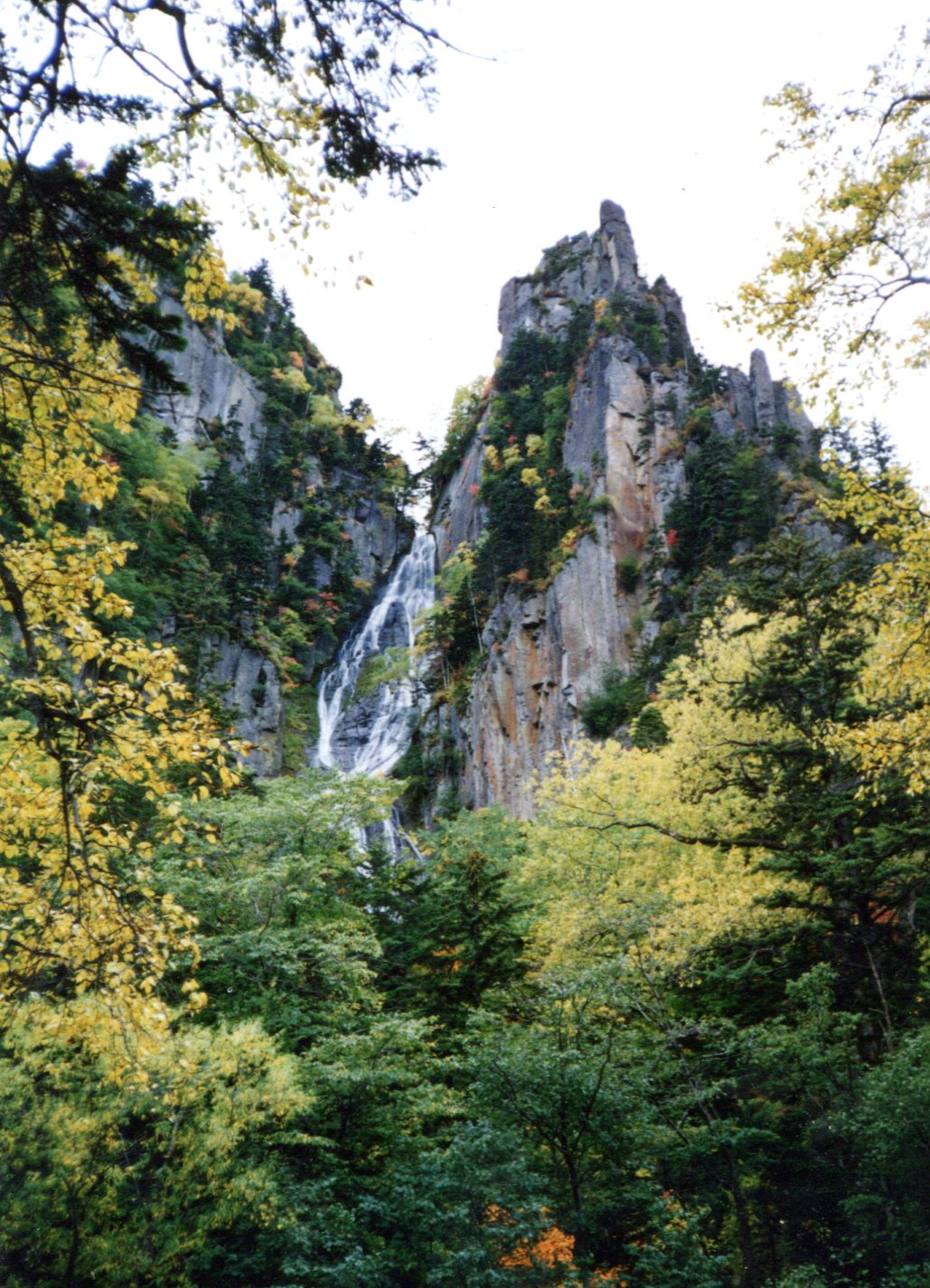
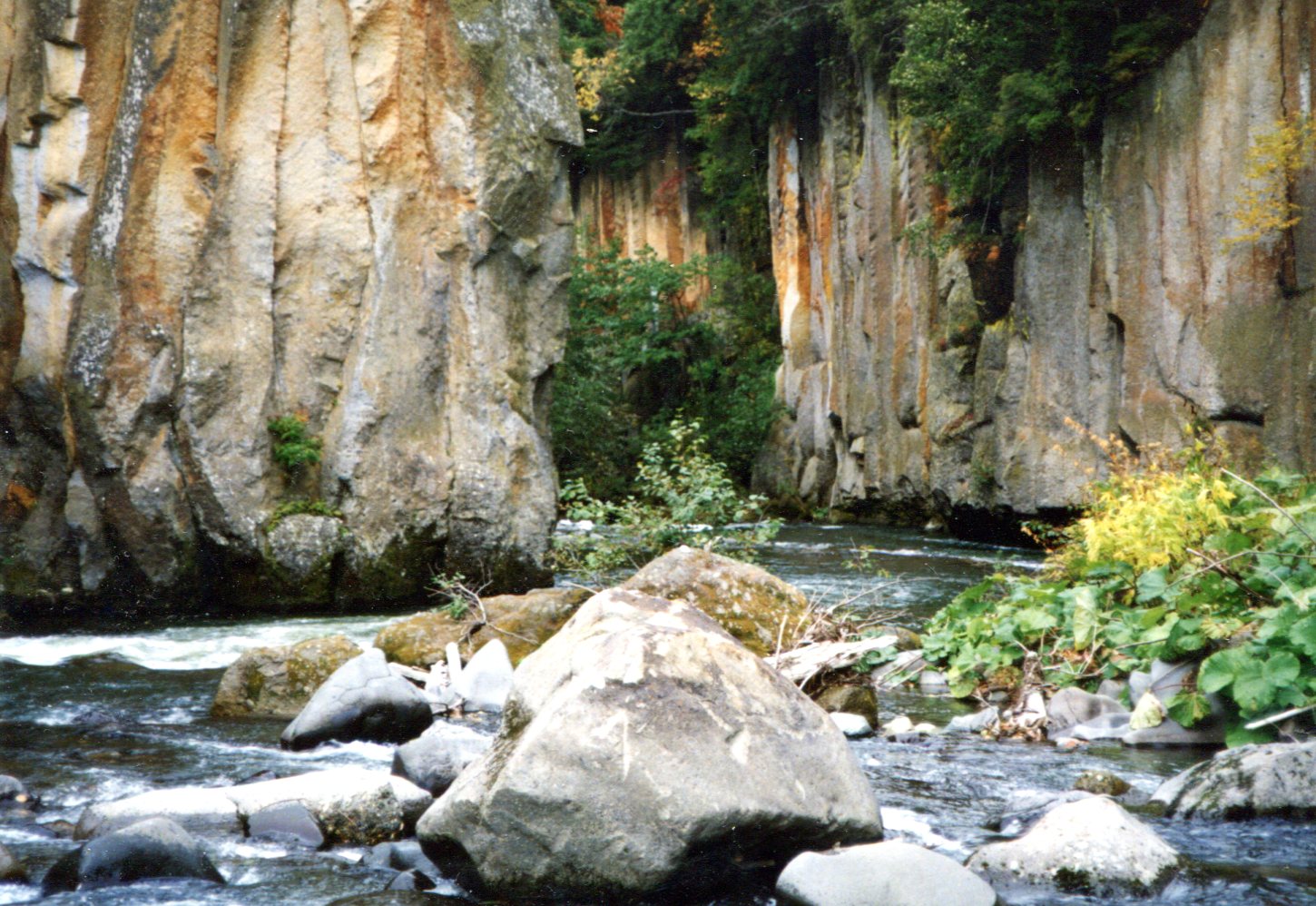
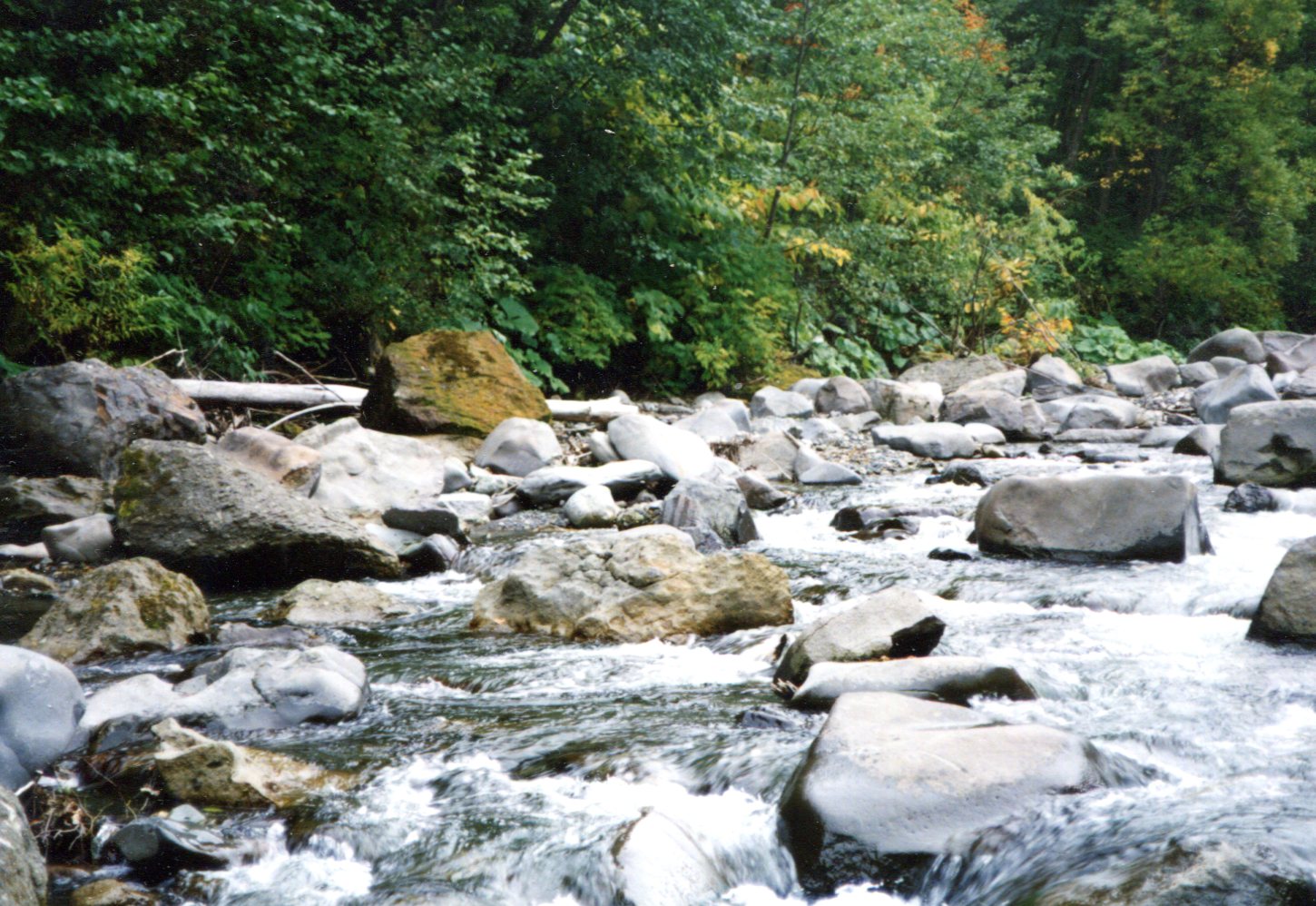
Sōunkyō (層雲峡), 1993

The usual markers of fall are here. Spots of yellow and other fall colors are appearing in the trees. Sometimes we use the heater to keep temps above 68 F during the day and 65 F at night, the non-summer settings. The days are notably shorter, but at least the Summer Triangle is still up. Orion is not. Won’t be long.

We visited Hokkaido in late September, early October of 1993, including Sōunkyō, part of Daisetsuzan National Park, and which is known for its gorges. The colors were autumnal.

October 4, 1993

Rented bicycles early and rode around most of the day. Went to O-dake and Ko-dake, two narrow gorges at some distance from the resort complex. Ko-dake was the best — a bike path runs through it, while the road, a little crowded with cars, is diverted through a tunnel.

The gorge walls are reams of gray rock, bristling with all-color foliage like wild beards. Saw an assortment of waterfalls en route, including a multi-stream cascade.

Ate roasted corn on the cob and ice cream, two regional specialties, at the wayside shacks of O-dake. 

The fall colors… throughout this part of Hokkaido equal in variety and mass anything I’ve seen in autumn excursions in East Tennessee or New England.

Thursday Crumbs

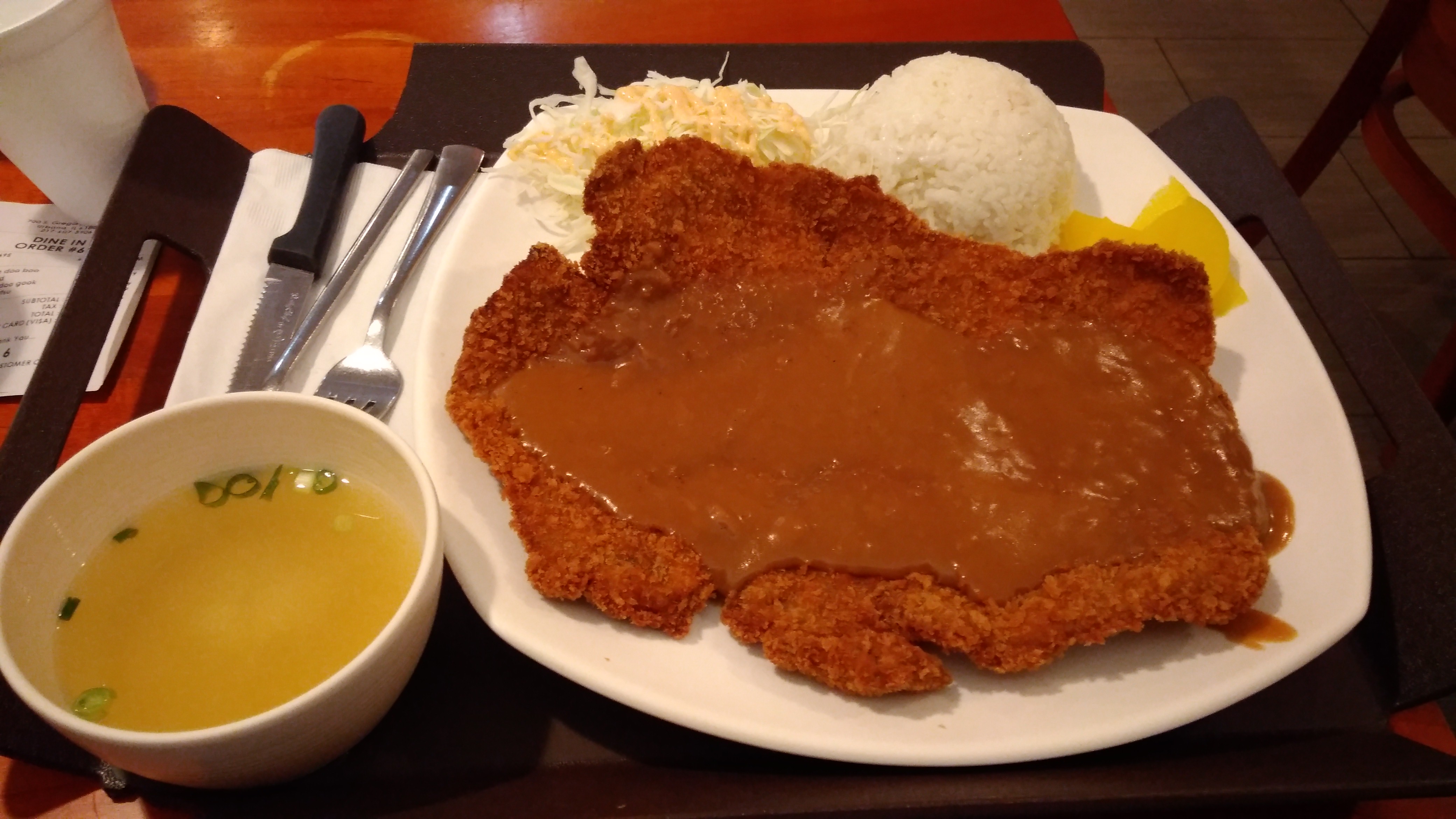
Not long ago I had a pork cutlet at a Korean restaurant, done in the katsudon style I’ve encountered in Japanese restaurants and at home. This particular cutlet was remarkably large. So much so that I was inspired to take a picture.

Large, but thin, so it wasn’t overfilling. Overall, quite good.

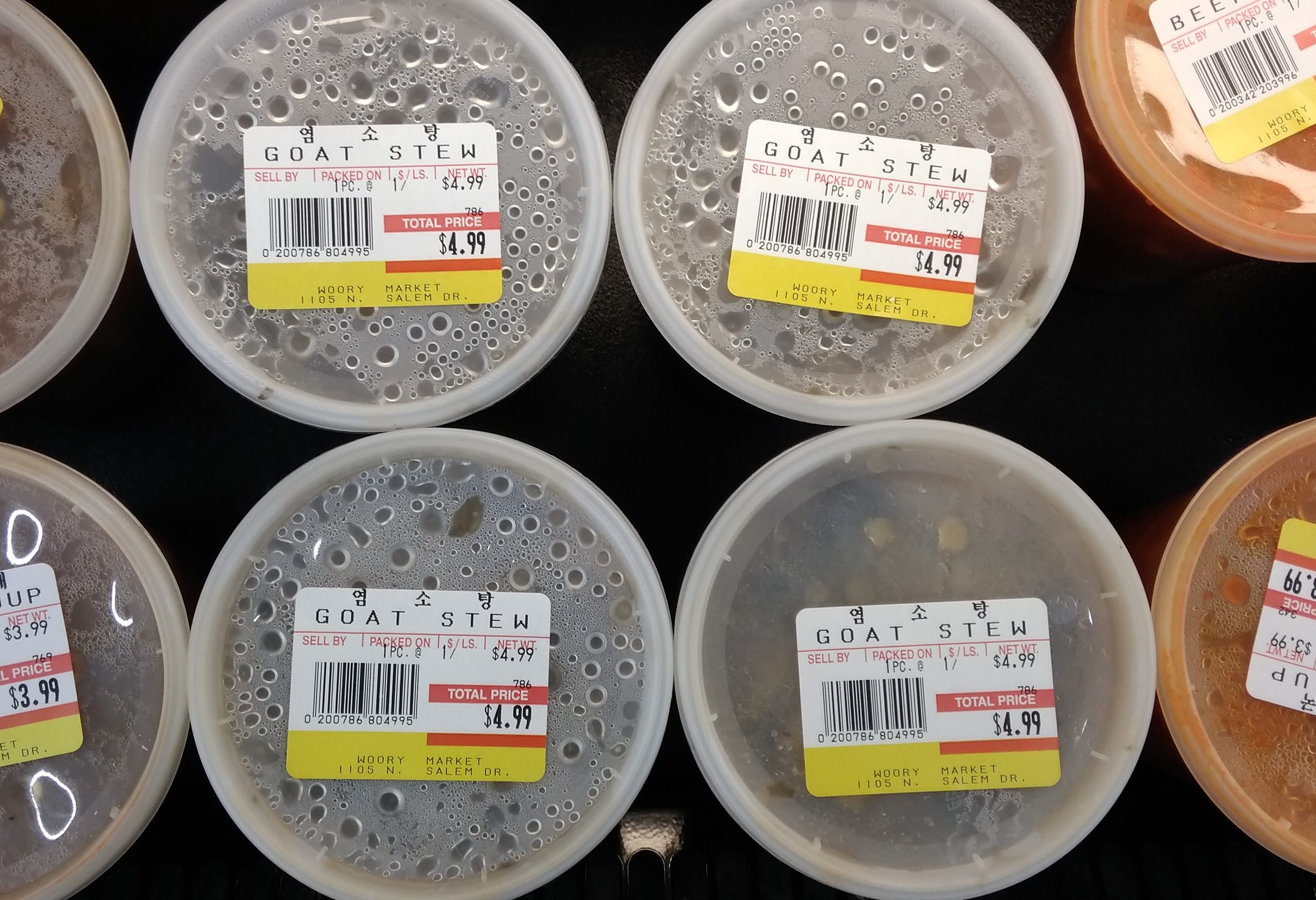
At an Asian grocery store the other day — Asian grocery stores are endlessly interesting — I saw this on offer.

I have to say I’m intrigued. People believe outdoor markets ought to be part of any visit to non-OECD cities, for that all-important authenticity and to see the locals, but if you really want authenticity, grocery stores are the place to go in any country. Ye shall know them by their grocery stores.

More debris from the Saturday grilling and gabfest.

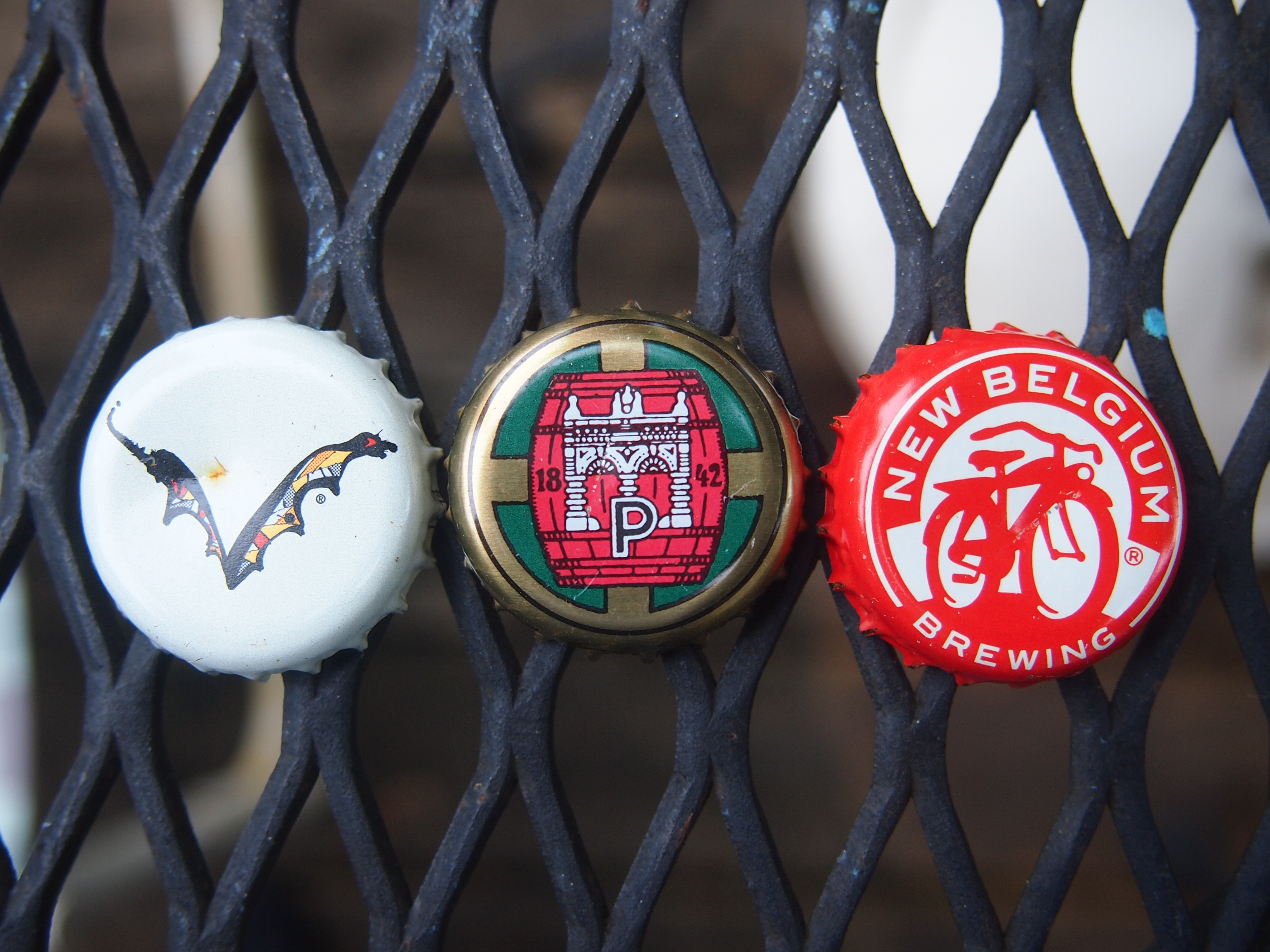
The caps to the bottles I posted the other day, arranged in the same order.

I had a shandy over the weekend and later, during a moment when I had much else to do, naturally decided to look up the word, the story of which I didn’t know. I know more now, after reading this.

Shandy, a shortening of shandygaff, origin obscure. Now that’s a fine word. If I were a brewer, I’d use it for my shandies. Radler is a good word to know too.

Had a curry doughnut today. I don’t eat that many of them, but when I do I enjoy them.

“In Japanese bakeries of virtually every stripe, you can buy a thing called a curry doughnut,” I wrote once upon a time. “What a discovery that was. No part of it is sweet. Browned by frying on the outside, it’s soft on the inside, and a spicy brown curry resides at its core. An enormous amount of fat, I’m sure, and heartburn later on, but boy they’re good going down.

“My favorite spot for curry doughnuts used to be the Cascade Bakery, near the main promenade of Hanshin Station, Umeda, in the heart of Osaka. Even now, I can get one in Arlington Heights, Illinois, if I’m so inclined. I know at least two Japanese bakeries in that town that sell them. But it’s been a while.”

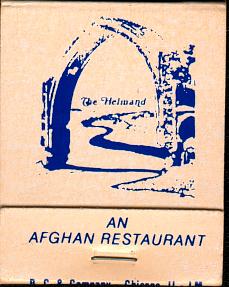
I’ve been to only two Afghan restaurants that I remember. One was in New York City in 2005. The other was ca. 1987 in Chicago: The Helmand.

Writing in 2005, I said: “I can remember visiting an Afghan restaurant only once before, about 20 years ago, a place on the North Side of Chicago near Belmont Blvd., long gone now. Much later I learned that it was owned by relatives of Mohammed [sic] Karzai. I vaguely remember it being exotically good.”

I have a matchbook from the place even now. Can you get matchbooks at restaurants any more? My experience is you can’t. In New York in March I experienced a brief and very minor moment of excitement when I picked up what I though was a small matchbox advertising a restaurant. Matches! Turned out to contain toothpicks.

Whatever happened to Hamid Karzai? Having managed to survive the Afghan presidency, no small thing, he seems to be living in comfortable semi-retirement after his career in peculation.

I Got Great Entertainment Value From My DoDeCaHORN in Early ’90s Japan

In early 1992, a curious-minded friend asked me in a letter about the cost of living in Japan. At the time the oft-used example, probably by lazy journalists, was the $10 cup of coffee (shocking in a pre-Starbucks-everywhere context, I guess). I’m sure you would have been able to find such a brew at upscale hotels in Tokyo, but it wasn’t part of my experience.

So I wrote him the following.

March 1992

Japan is justly famous for its high cost of living. But one can adapt, especially as a single person, though you never really grow fond of the system, the basis of which is to squeeze consumers as much as possible. Luckily, I’m no more a typical consumer in Japan than I was in the United States. Remarkably, my personal cost of living is roughly the same in absolute (dollar) terms, and a little less in terms of percentage of income, than in Chicago.

That might seem strange, but there are several factors to consider. Japanese income tax is a flat 10%, sales tax on everything is 3%, so neither of those is especially onerous. I have no car, which I believe would be a useless luxury in Japan, and endlessly expensive. For instance, gasoline is about four times as expensive as in the U.S. I buy few articles of clothes here. They’re expensive, but it’s also true that it’s hard to find my size anyway. I’ve supplemented my wardrobe during travels outside Japan, especially in Hong Kong, where clothes are reasonably priced (except I couldn’t find shoes there either). A spare pair of glasses was a deal in Hong Kong, too.

I’ve been slow in acquiring household appliances. Some of them I bought new — a gas cooker, about $100; a Korean-made TV, about $200; a bottom-of-the-line VCR, also about $200; a DoDeCaHORN combination CD player/double cassette deck with AM/FM band, again about $200. I’m highly satisfied with the quality of these goods, as you might expect from Japanese (and Korean) electronics.

Other items I’ve bought recently have been from departing foreigners in sayonara sales. Recently I acquired a table, microwave oven, book shelf, a number of books and other things that way, cheap. I’ve found a few things in the street for free. My Osaka Gas Fan Heater 2200 is an example, which I found the first summer I was here, before I needed it, abandoned by its owner. Such finds are called gomi, or so-dai-gomi if the items are large.

Food is a major expense. Some things are insanely expensive, such as bread, at $1.50 for four or five measly slices, or $4 or $5 for a glob of raw hamburger American stores wouldn’t package that small, or liters of milk that cost as much as a gallon in the U.S. You might think those aren’t typical Japanese foods, but they are now. Consumption of “Western foods” is so commonplace that the distinction makes little sense in most cases. Besides, rice and fish aren’t particularly cheap, either.

Properly done, eating out is little more expensive than eating at home, due to high grocery costs. I know a lot these days about (relatively) cheap Japanese eateries, including the location of a score of places that offer meals for $5-$8, most of them filling and excellent nutritionally and gastronomically: noodle soups, chicken and pork cutlet meals, Japanese-style Chinese food, rice dishes, curries and more.

Then there’s the matter of rent. I have a modest place, one-and-a-half rooms, certainly less than I had in Chicago. For it I pay slightly less rent, in dollar terms, and somewhat less as a percentage of income. Except in winter, when gas bills are high, utilities aren’t bad.

One more thing: entertainment. Fun can be dear in this country. Luckily for me, I’m seldom inclined to visit bars, no doubt the greatest black hole for yen around. I do go to an izakaya once a week with friends, but that’s as much cheap restaurant as bar. Video tape rentals are about $4 for new movies, less for others. Movies in the theater run at least $18, but I know a couple of second-run houses for less than half that. Some of the best museums and temples in the country are only a few dollars to get in and, if I really don’t want to spend much for entertainment, I take the subway to some part of town I don’t know well and walk around. That never gets old.

Gatsby Moving Rubber

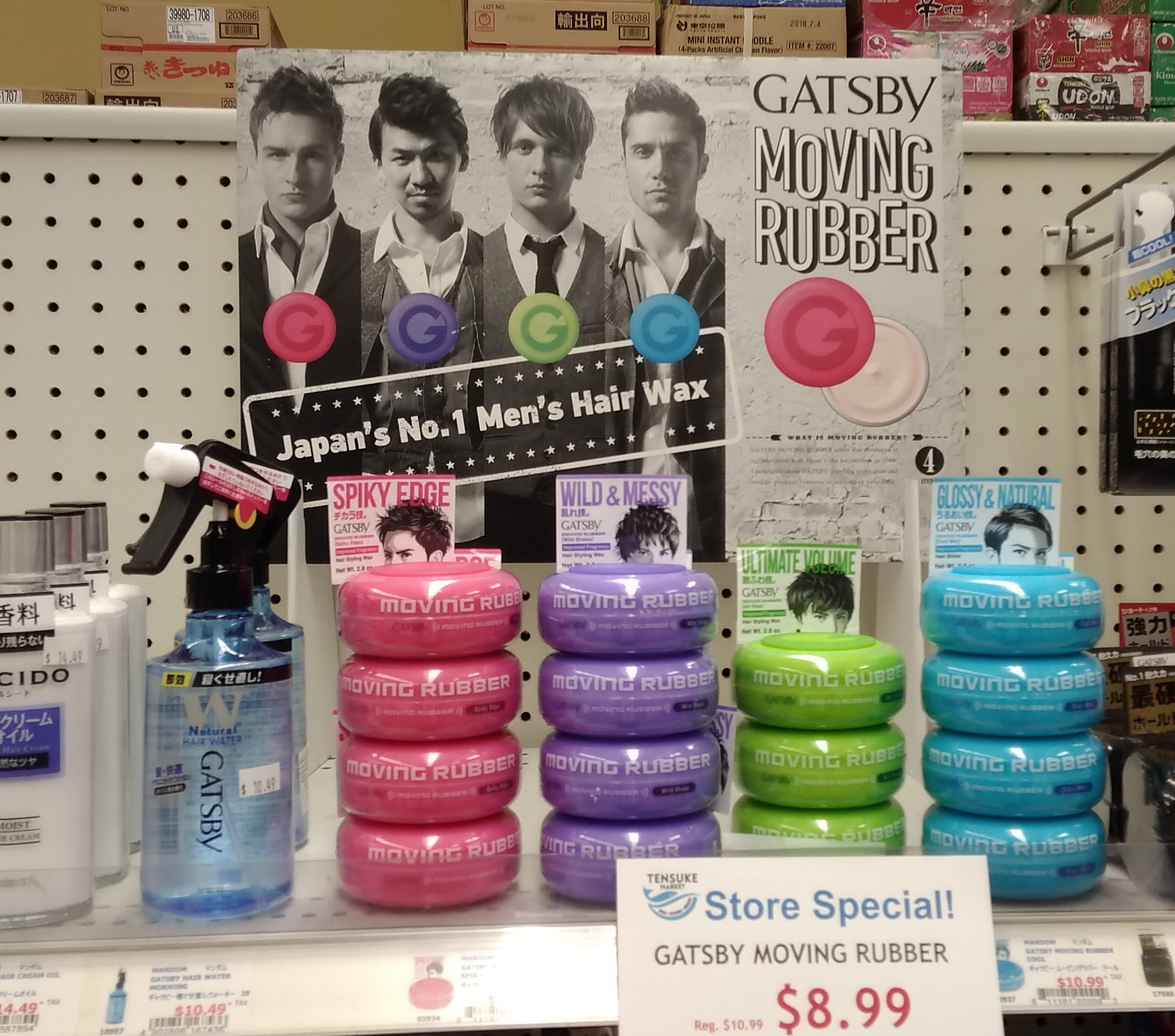
So far I haven’t bothered much with grocery store snapshots, as amusing as the labels can be. But not long ago I was in a small, mostly Japanese grocery store in the northwest suburbs of Chicago, and I saw something I’d never heard of before.

That’s a great example of a Japanese product’s English name. You think about it for a while, asking yourself, why did the makers pick that name? You think some more and ah ha! No… it made some kind of sense for a moment, and then it didn’t.

According to the product’s English-version web site, “Gatsby” is explicitly after the fictional character. Hair oil for wistfully dreaming of lost loves, I guess.

Campaign Cards Are Coming

There’s no official moment when it happens, but I think it’s happened all the same. We’ve passed into the Pit of Winter. All days in the pit are cold, as in well below freezing, but they come in varieties: cold sunny days, cold overcast days, cold snowy days. With the potential for a blizzard thrown in for grins.

We can only fondly recall High Summer days, or imagine ones to come, at the remote opposite end of the calendar. They looked like this, at least from my deck.
The first political postcard of ’18 came in the mail a few days ago, sent by a candidate for a relatively minor local office. Not particularly creative: a touch of “next to of course god america i,” a dash of tough on crime, a serving of motherhood (in this case, the candidate is a woman. For a male candidate, a serving of loving family man.)

It’s easy to be cynical about that sort of advertising, as you can see, but it’s the formula that inspires contempt. I don’t really know anything about the candidate. In any case, I expect I’ll be seeing more soon, since the primary is March 20.

YouTube ads for Illinois governor have already started appearing. But at least we won’t hear campaign trucks making noise with loudspeakers, as you do before parliamentary elections in Japan.

Hida-Takayama 1991

While my friend Steve stayed with me in Osaka in October 1991, we took a weekend trip to Takayama in Gifu Prefecture, in the Japanese Alps. (All the pictures below are dated October 26, 1991.) The small city is better known as Hida-Takayama (飛騨高山), since takayama simply means “tall mountain,” which describes a fair number of places in Japan. It used to be in Hida Province, in the pre-Meiji era way of dividing the country.

I’ve posted about the trip before. But nothing about the statues on the Kajibashi Bridge over the Miyagawa River in Takayama. Steve and I posed with different ones.

Statues on the Kajibashi Bridge over the Miyagawa River in Takayama. Statues on the Kajibashi Bridge over the Miyagawa River in Takayama. One source, clearly written in English by a Japanese writer — but not too bad a job, all sic — says: “Extremely long-arm goblin, Tenaga and long-leg goblin, Ashi-naga are displayed on the railing of Kaji-bashi bridge. Te-naga and Ashi-naga folklore is handed down in Japan, which represents the god of immortal.

“There is another folk tale about the creature. This creature was regarded as a hobgoblin, a ghostly apparition, Yokai in Japanese. The creatures with their weird long arms and long legs are said to do wrong to people.

“So, two different traditions about Te-naga and Ashi-naga. There is a shrine to dedicate the creatures in Nagano prefecture.”

We also spent some time at the Hida Folk Village (飛騨民俗村), which is an open-air museum with about 30 farmhouses from this part of Japan.

Hida Folk Village (飛騨民俗村)Hida Folk Village (飛騨民俗村)Complete with a bell to ring. Ring bells if you can.

Hida Folk Village (飛騨民俗村) bell“We saw a man and a woman fashioning hemp sandals from stacks of cord,” I wrote. Here’s the man.
Hida Folk Village (飛騨民俗村)I don’t believe this was in the Folk Village.
Cemetery, Hida-Takayama 1991Rather, it’s a good example of an urban Japanese cemetery. Since cremation is the norm in Japan, burial space isn’t necessary. Rather, the memorial stones can be fit into a tight space. In a city, even a small one like Takayama, that’s often an irregular or otherwise hard to develop plot of land.

Fish Heads, Fish Heads

The main course of this evening’s dinner, still in its packaging, before it became dinner.

Snapper Supper

We didn’t eat the fish head. I was told long ago — I think by an elementary school teacher — that fish heads were eaten in Japan. I later discovered that wasn’t universally true, just more likely than in this country.

At least one writer argues that stubborn Westerners ought to eat ’em up, yum. I’m not persuaded.