Mm, Grits

There are two kinds of grits in the house. As far as I know, people aren’t hording grits these days, but I haven’t shopped for them since before the pandemic, so who knows.

To the left, the brand I’ve eaten for years. The standard. The go-to. Often the only brand at the grocery store. Easy to make, best eaten after only a few minutes for cooling. Some add butter. I usually add honey, but not always.

To the right, a brand recently acquired. The texture is slightly different, but not enough to put me off of it. Takes longer to make. Naturally, the verbiage on the package tries to make a virtue of that necessity: “You’ll have to hesitate before you eat quick grits again,” it says. Naah.

The standard grits package tube lists the following as ingredients: degerminated white corn grits, plus iron and various vitamins, which are added in the processing. The new grits bag merely lists white corn. Made me wonder if the hull and germ have been removed, which seems essential to grits.

Note this handy definition at Culinary Lore:

Hominy: An endosperm product made from corn, made up of starch, with the hull and germ removed.

Grits: Ground hominy (usually coarse).

I checked the nutrition facts on the new grits package, and indeed it seems that whatever vitamins might have been present in the hull or germ aren’t there, so I assume they aren’t there either.

Anyway, grits and I go way back. As long as I can remember, because my mother made them and I assume her mother did too, though I don’t have any specific memory of grandma’s grits. I learned to make them myself early on.

I also learned that somehow, most restaurants that offer grits serve an inferior version to what you make at home. How is that? Occasionally, though, I find superb grits away from home. For instance, years ago in Mexico Beach, Florida, I had wonderful cheese grits — at a place probably destroyed by Hurricane Michael a year and a half ago.

When I moved to Chicago in the late ’80s, I was glad to find grits in the grocery stores, despite being well north of the Grits Line. I shouldn’t have been surprised, considering how many Southerners, black and white, have migrated to the region over the decades.

Grits aren’t available in Japan. At least they weren’t 30 years ago. We gaijin ordered it by the case from North America, which we then split up. (PopTarts were ordered the same way.) I remember serving them at my apartment in Japan to a Scotsman who also lived in Japan. He liked it well enough.

“Porridge, is it?” he said. I wasn’t sure how to answer. Can porridge be made from corn? Maize, that is. Seems yes, or maybe, since porridge can be any grain, though I think it’s usually associated with oats and not de-germed corn. Porridge isn’t part of my dialect anyway. Growing up I never heard anything outside of children’s stories called porridge, such as what the Three Bears prepared for themselves and Goldilocks pirated.

Yuriko had no notion of grits growing up and still doesn’t care for them. Lilly took to them in a big way, but Ann did not. Different children, different tastes.

Telegram From Japan

Most indoor spaces are off limits for now, but we’re free to wander around outside for the most part. So what happened today? It snowed. Still, I’m sure I’ve seen more people walk by my house than usual, some with dogs, some without.

Thirty years ago, I boarded a flight in San Francisco bound for Tokyo, with the intention of living in Japan for a while (but not Tokyo). That’s what I did. Occasionally I think for moment, did I really do that? But it doesn’t take much to remind me that I did.

Not long after arriving in Tokyo, but before I left for the Kansai, I went to the main post office in Tokyo and sent a telegram. I had never done that before, and I haven’t done it since, and never will.

A Mailgram, actually. So no uniformed representative of Western Union arrived at my mother’s door. Even by 1990, they existed only in increasingly old movies. The text went to the United States, maybe Middletown, Va., where it was printed and then mailed to her.

Christmas Cake

Christmas cake isn’t much of a holiday custom in the U.S., though it is more so in Japan, in as much as Christmas gets attention there beyond a modest amount of decoration and KFC. Actually, I don’t remember any to-do about KFC on Christmas in the early ’90s in Japan. Maybe it’s really a Tokyo thing — that’s often enough mistaken for the entirely of Japan by gaijin observers. Or maybe I wasn’t paying attention.

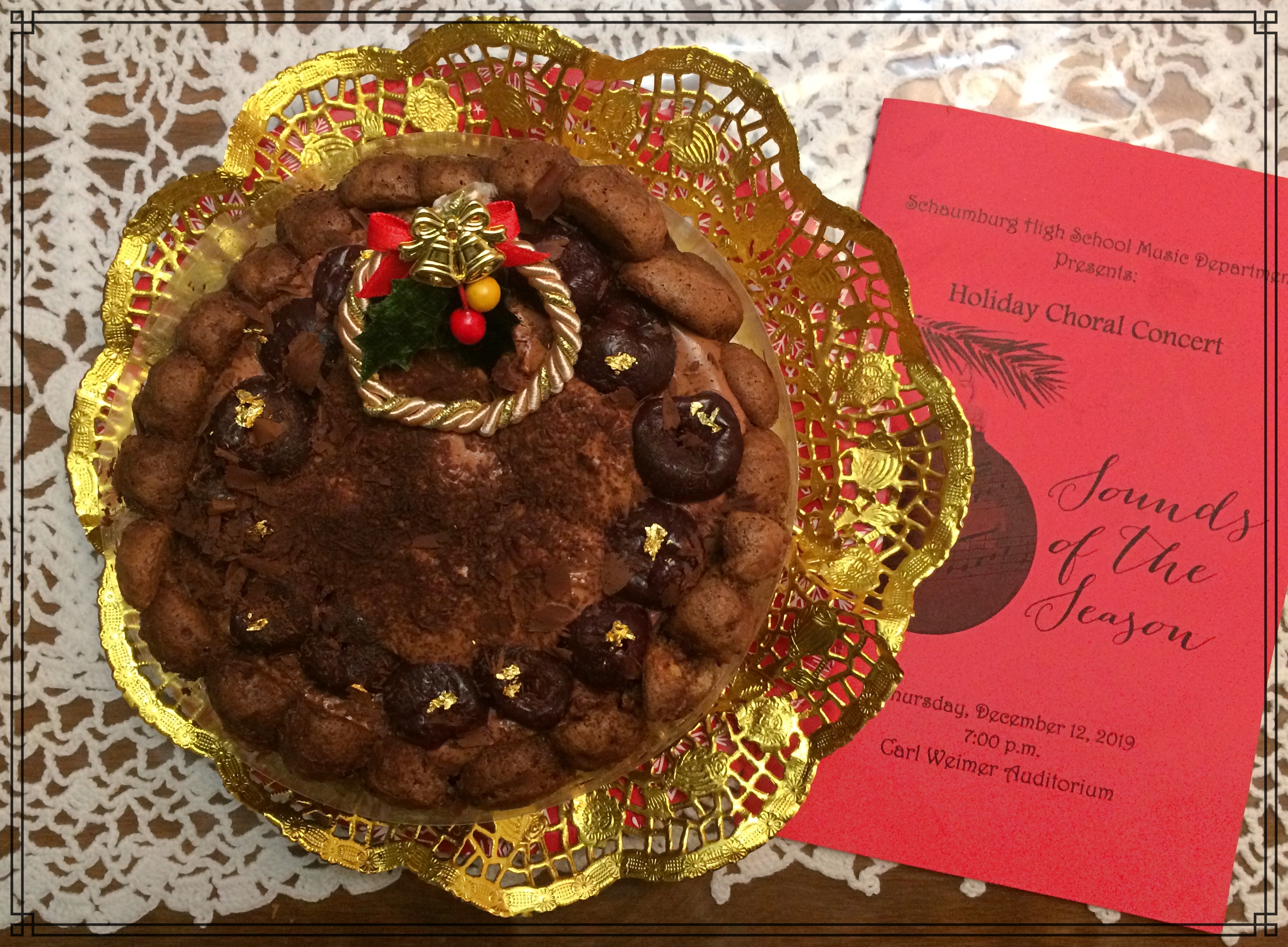
I digress. Yuriko made a Christmas cake this year.

Much chocolate, a healthy serving of cherries, and, you’ll see, a few dashes of edible gold. It’s so good it’ll hardly last until Christmas.

Space Ghost, Osaka Winter & Anticipating Australia

Not long ago, I dug up a letter I wrote in Japan, dated December 8, 1991. At the time I was preparing to travel to summertime Australia. I’m impressed by the references to obsolete things: VHS, travelers cheques, international land-line calls that need to be scheduled.

The other day, in an unusually listless moment, I decided to watch the Space Ghost tape you sent. As I mentioned, I only had the vaguest memories of that cartoon, and none at all of Dino Boy. There’s nothing especially remarkable about either… SG seems like it was a pretty minor effort, slapped together without regard to originality, a sense of humor, or more than the rudiments of the art of animation. In short, dreck. Ditto for DB.

Today I was off, and some of the time I was at home, cleaning up and re-arranging the furniture a little. I went to the grocery store early in the morning and rode my bicycle around the park late in the afternoon. The day was cool and cloudy. Almost pleasant. This time of the year in Chicago would already be down-coat weather most days, but Osaka makes up for the fierceness of its summers during its mild winters.

I can’t remember that I’ve told you about the upcoming trip. The ticket and visa are squared away, and the itinerary is as complete as I care to make it. I bought some Australian dollars the other day. Some Australian travelers cheques, actually.

I’ll call you from Australia on Saturday, Dec. 28 your time. It may be a little earlier or later than usual, owing to differences in time zones, and my location on that day. I might be on the west coast by then (Perth), or maybe not. This time of the year, the east coast (Sydney) is 17 hours ahead of U.S. Central. They have daylight savings too. I believe Western Australia doesn’t have DST, so that would put Perth only 14 hours ahead of Central. Regardless of my place, I will try to time the call to fall between 8 to 10 your time. It is possible that I will be in transit at that time, in which case I will call 24 hours later.

I’ll also try to get a letter to you in the mail, perhaps after Christmas. And a few postcards from various places. If you have anything to mail to me, remember that Dec. 20 is the last day I’ll pick it up in Osaka for three weeks.

I was pretty hard on Space Ghost. That was before his revival in Space Ghost Coast to Coast, which I’ve only heard about, never seen, but which seemed to give him a new fan base. At least, that’s what I assumed when I saw a reveler decked out as Space Ghost at the Greenwich Village Halloween Parade in 2006.

I don’t care. It was still a substandard cartoon, product of the ’60s Hanna-Barbera cartoon mill.

GeGeGe and Many Torii

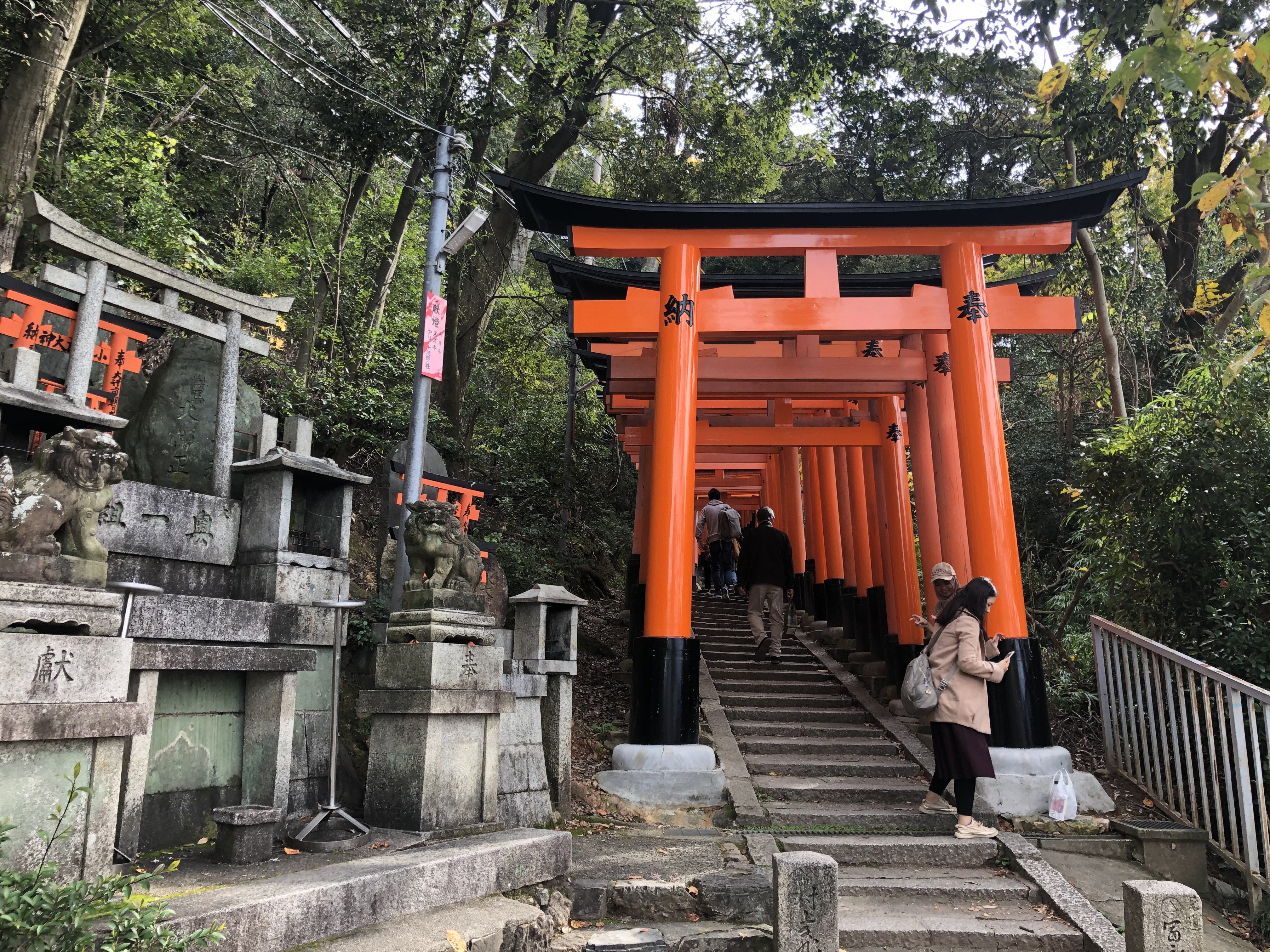
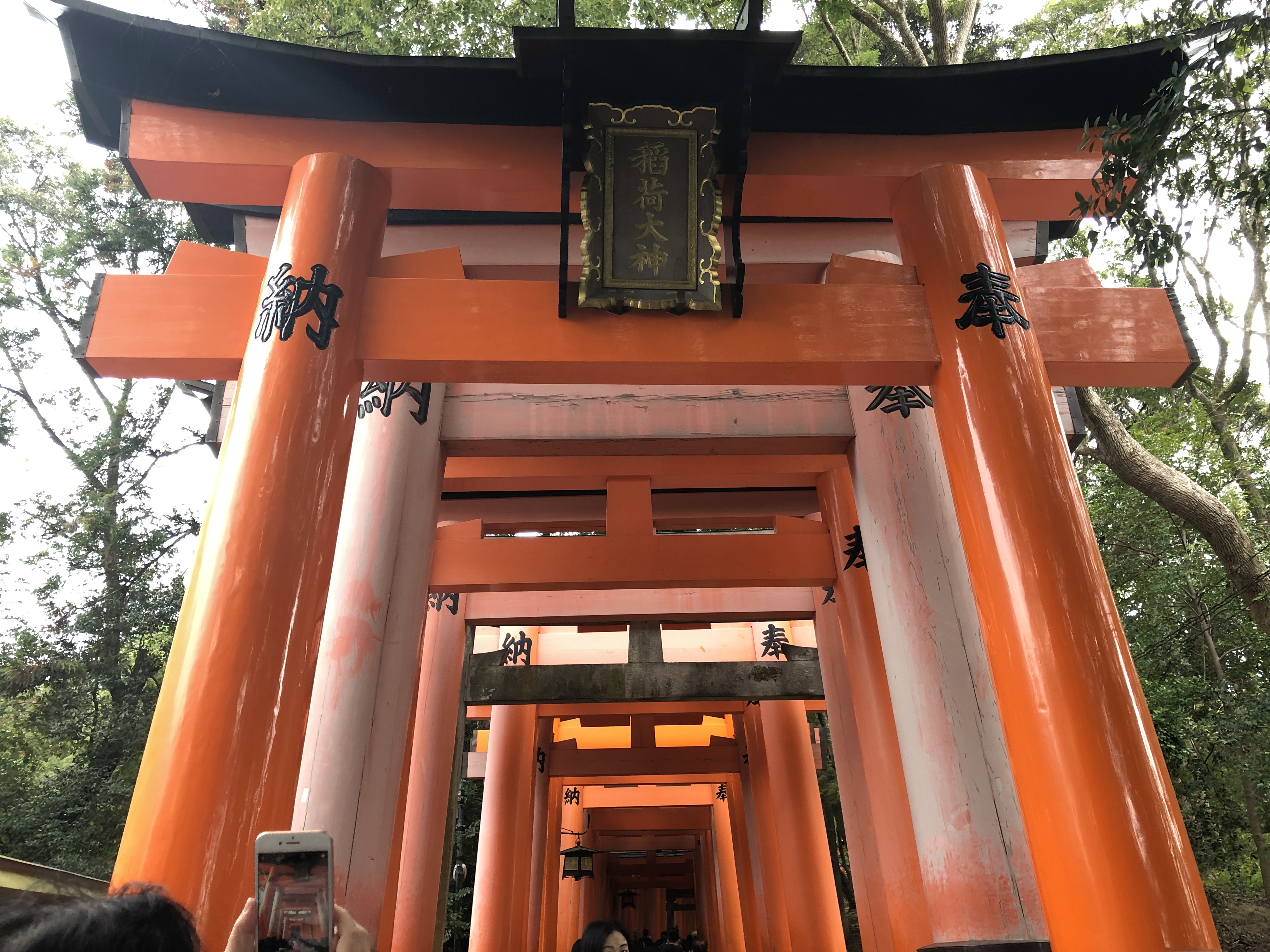
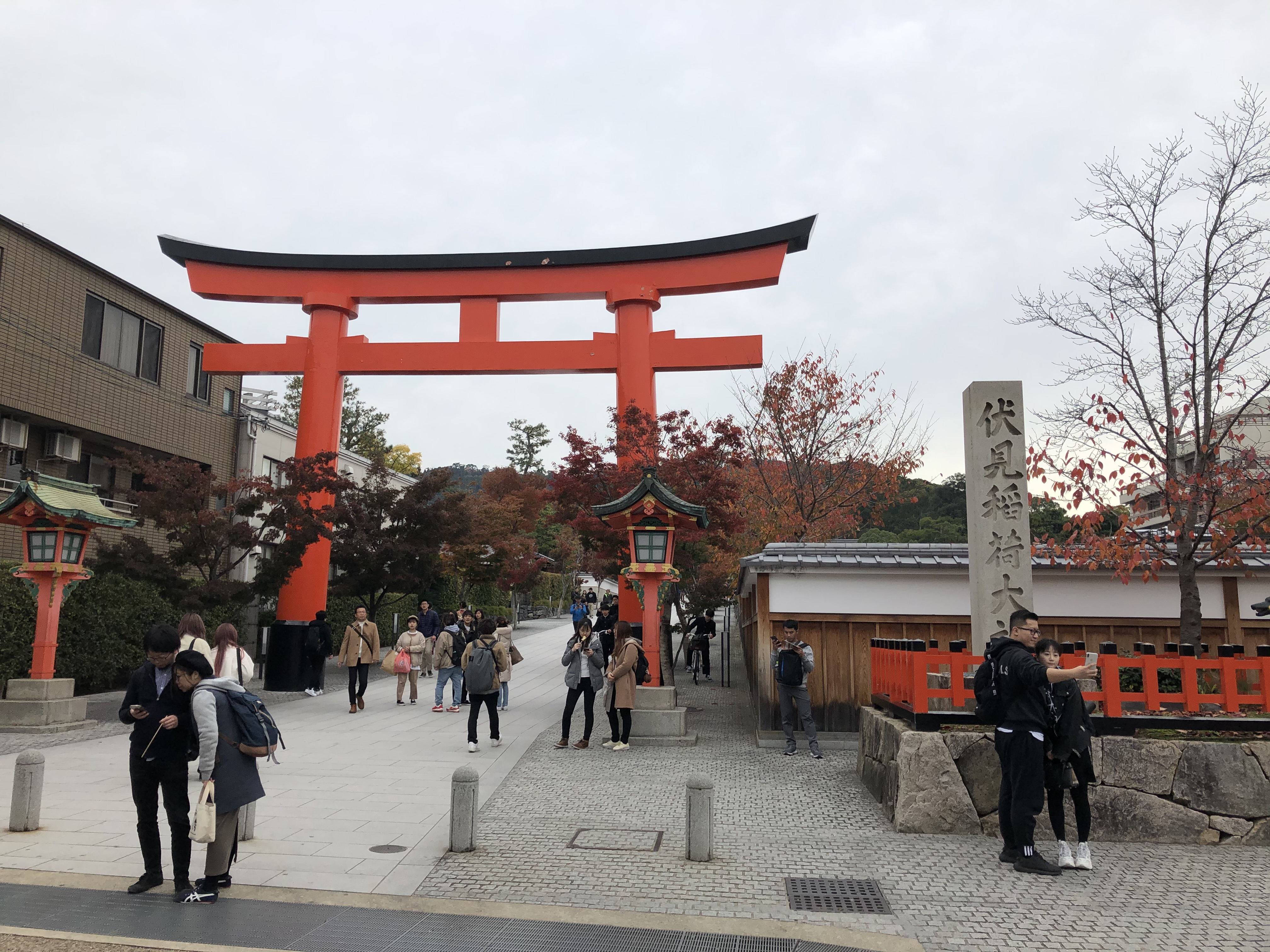
Other places that Yuriko visited during her recent stay in Japan included Mizuki Shigeru Road in Sakaiminato, Tottori Prefecture, and Fushimi Inari-taisha, a Shinto shrine in Kyoto.

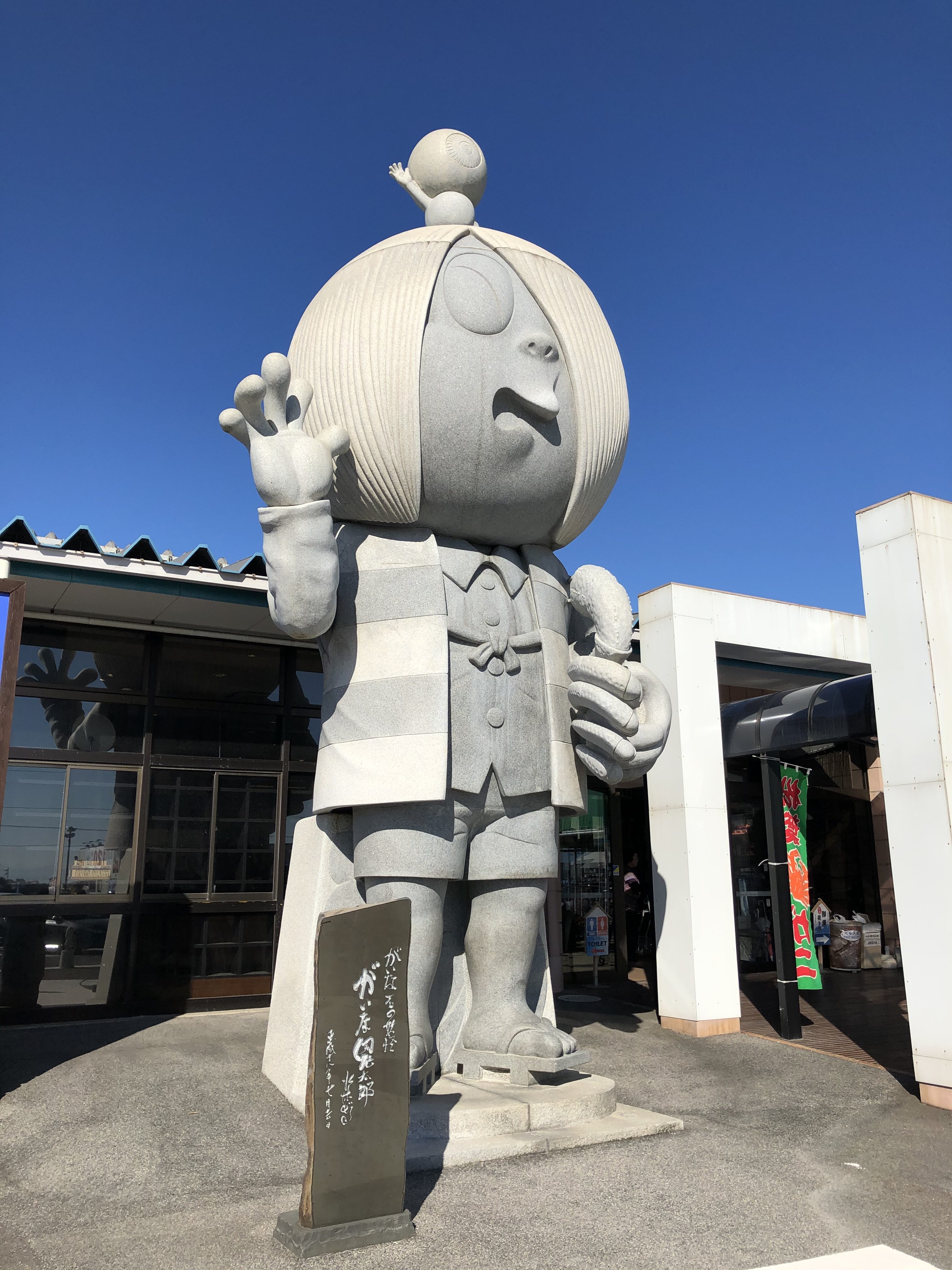
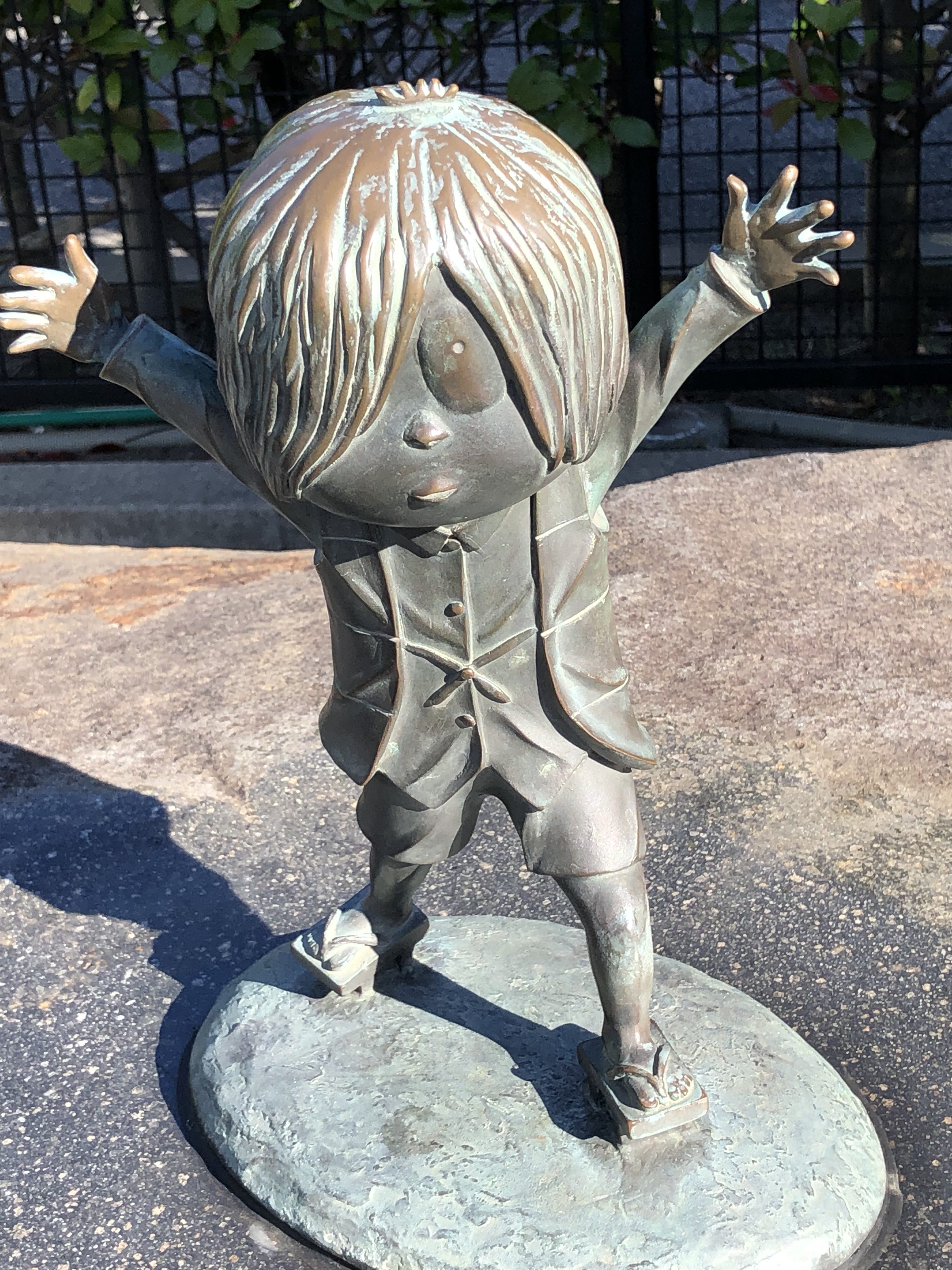
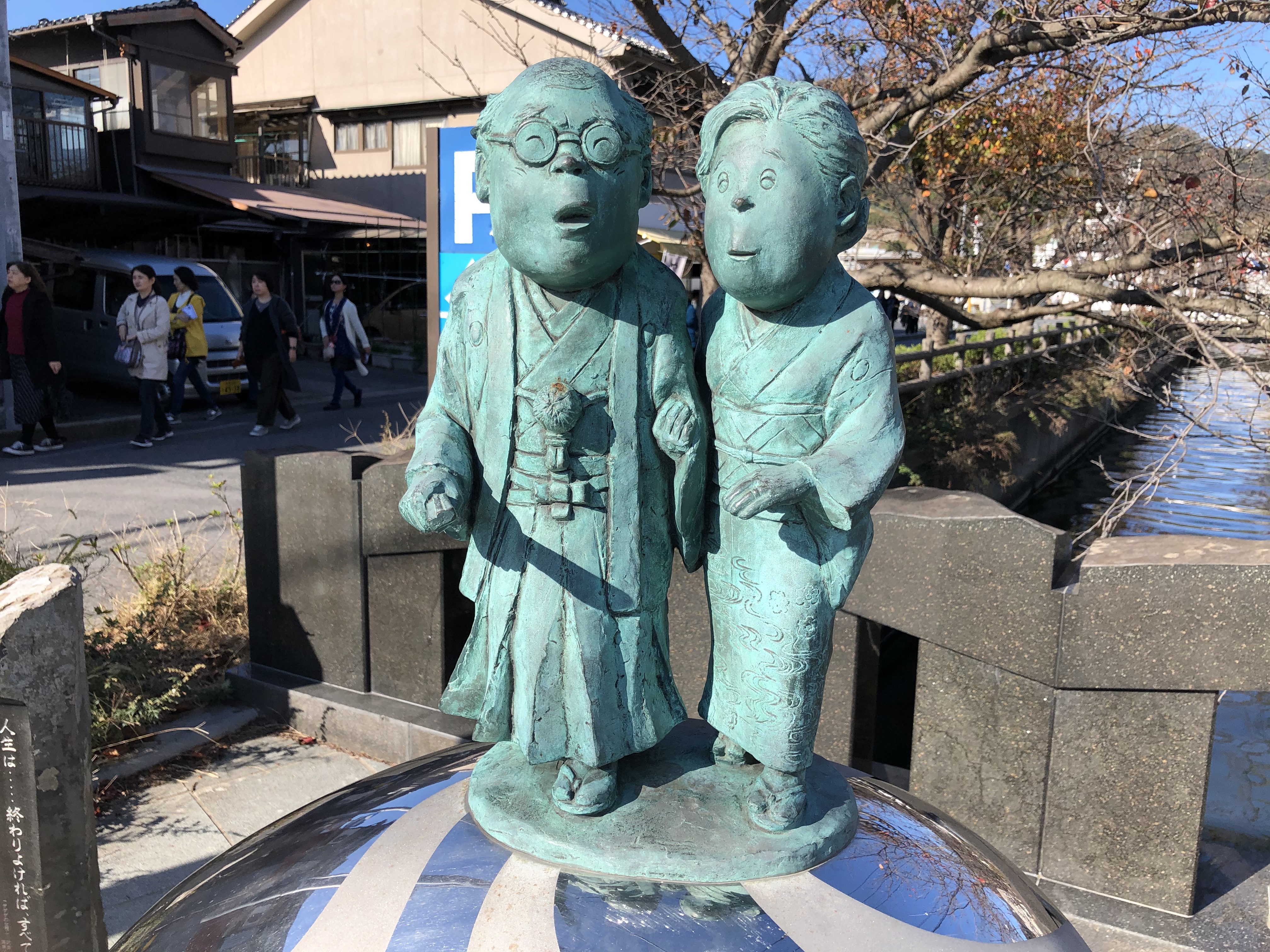
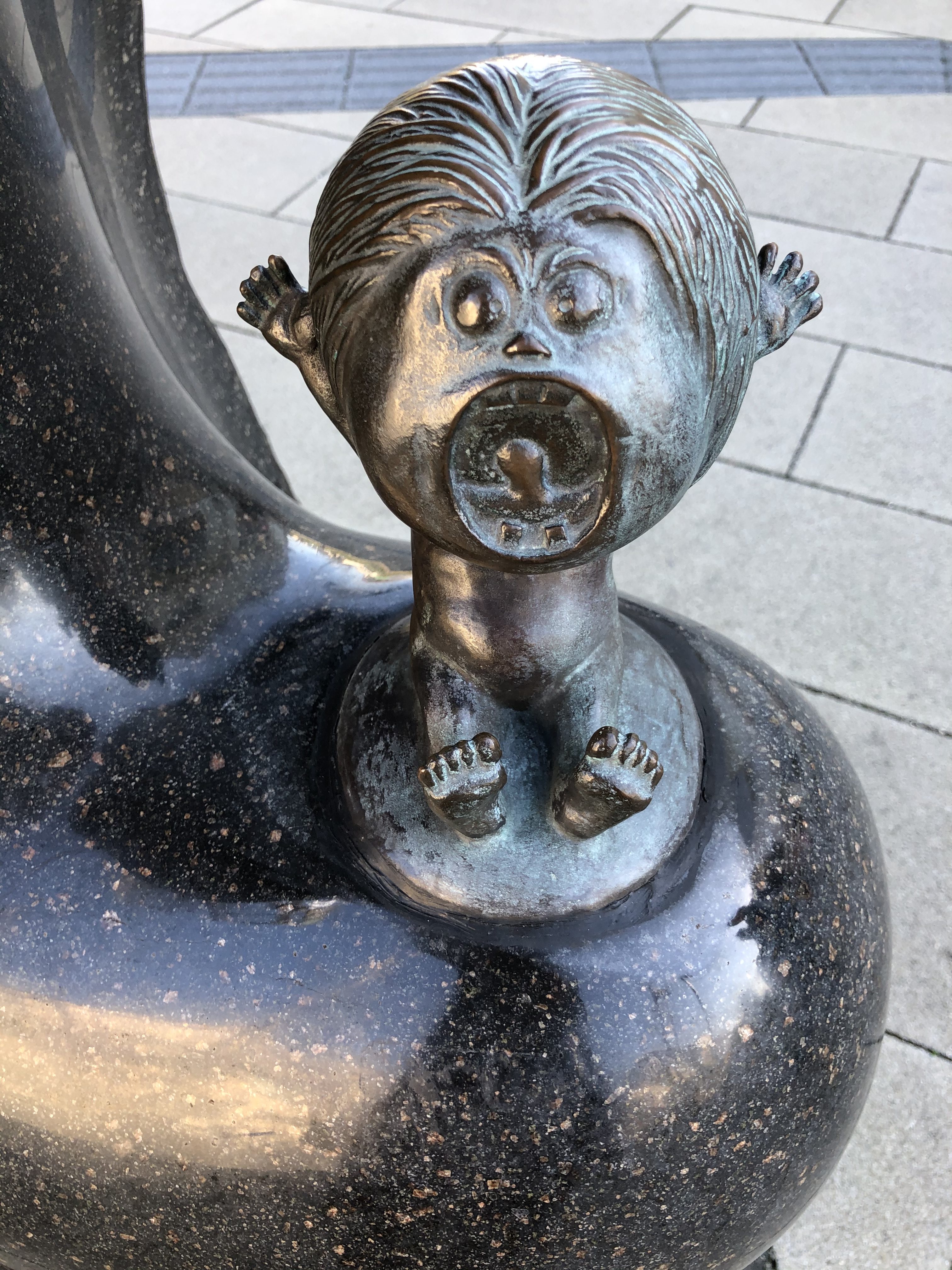
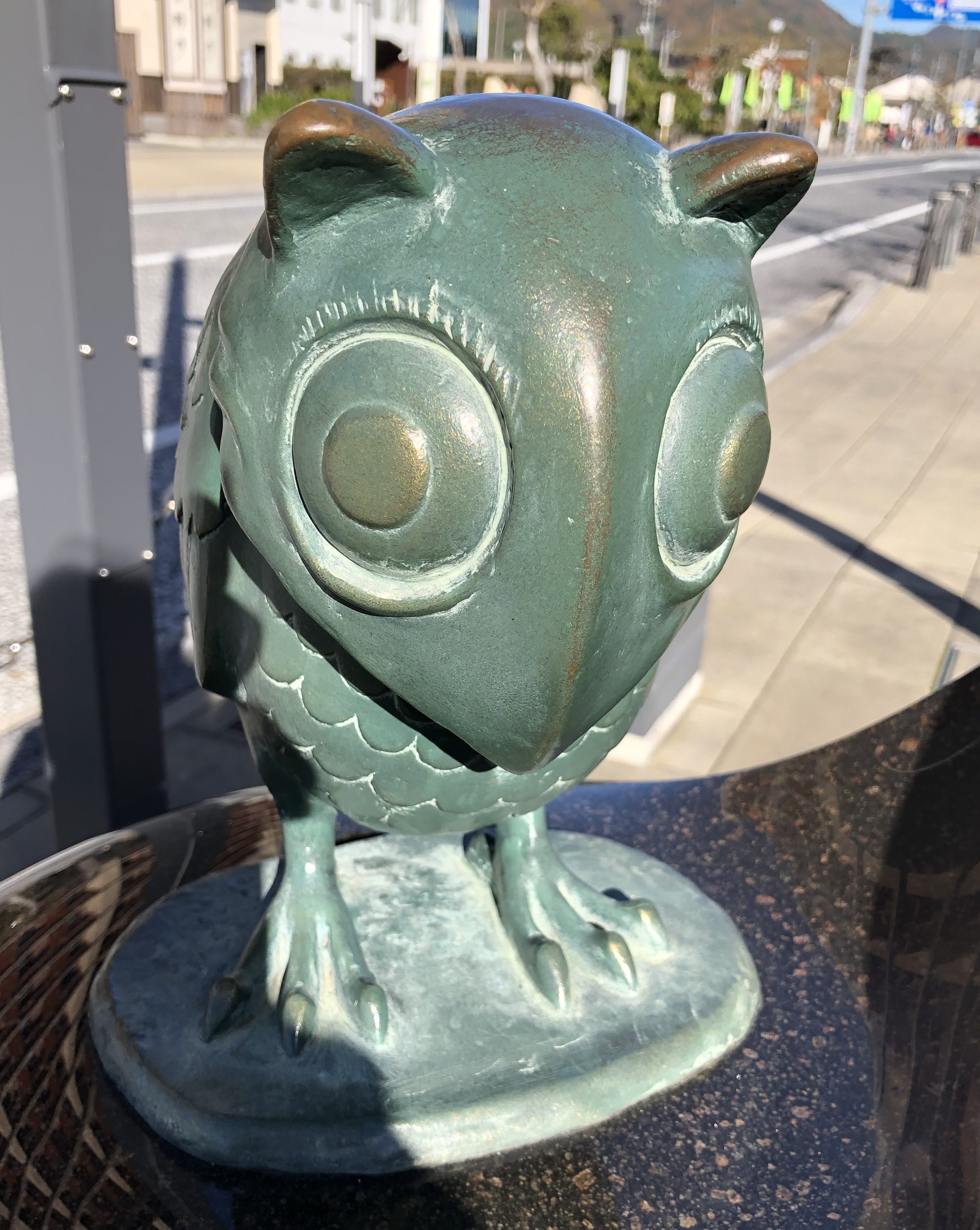
Mizuki Shigeru Road sports more than 100 statues depicting characters created by Shigeru Mizuki (1922-2015), a manga artist best known for a series called GeGeGe no Kitarō. I’m not a manga aficionado, or even very interested, but his characters are so widely known in Japan that even I recognized some of them, by sight if not by name.
Most of them I don’t recognize. But they are interesting.
I understand that Mizuki drew much of his inspiration from yōkai, a broad class of monsters, spirits and demons in Japanese folklore. I believe it.
Yuriko said that she hadn’t visited Sakaiminato before (though we did go to another part of Tottori once together) and that the statues are fairly new.

I recognized another place she visited, however: Fushimi Inari-taisha, a shrine whose precincts feature many, many torii. And almost as many steps.Fushimi Inari-taisha

Fushimi Inari-taisha

Fushimi Inari-taisha

I’m pretty sure, but not absolutely sure, that I visited Fushimi a good many years ago — nearly 30 — and climbed many steps through many orange torii.

Japan ’19

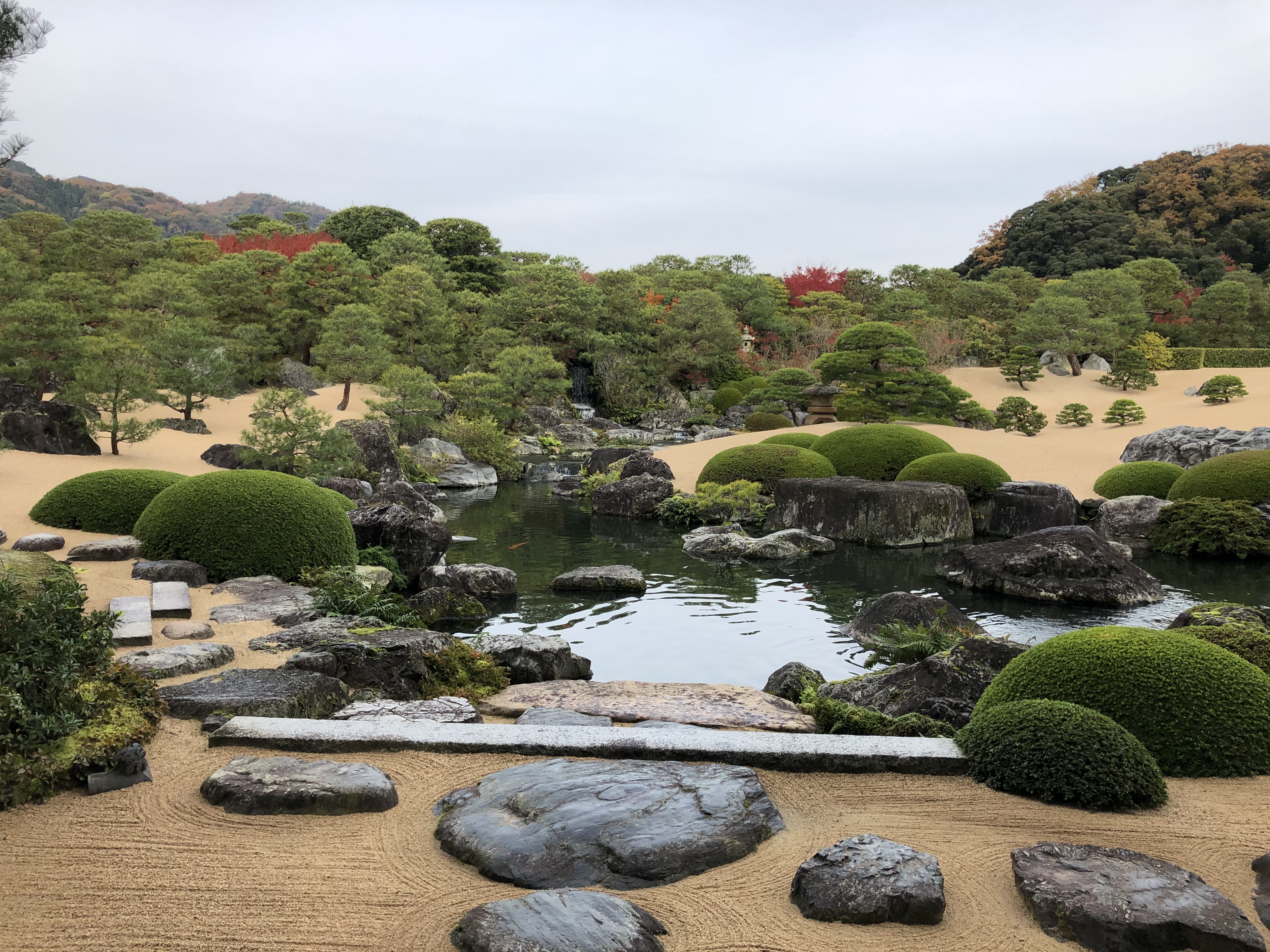
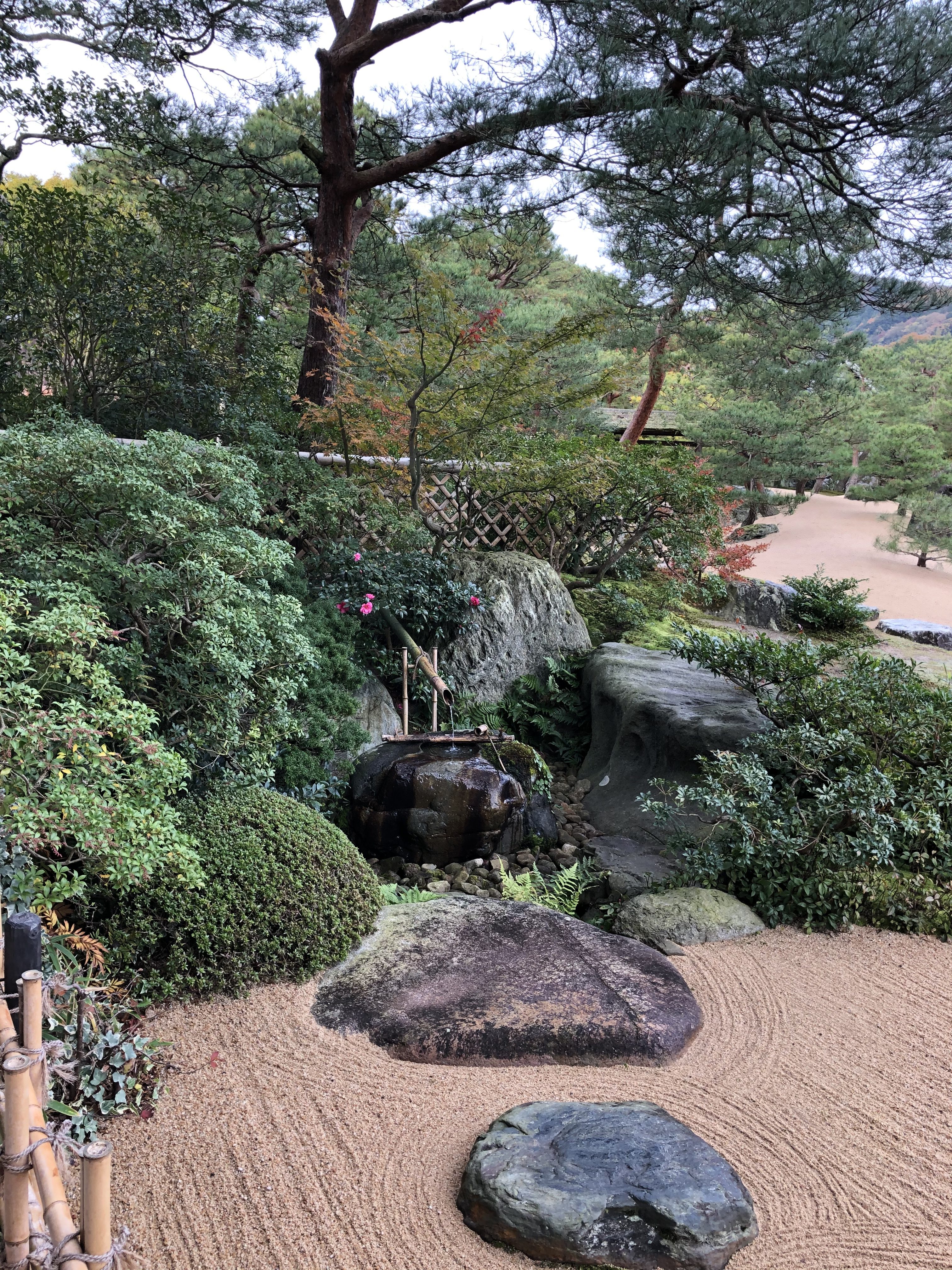
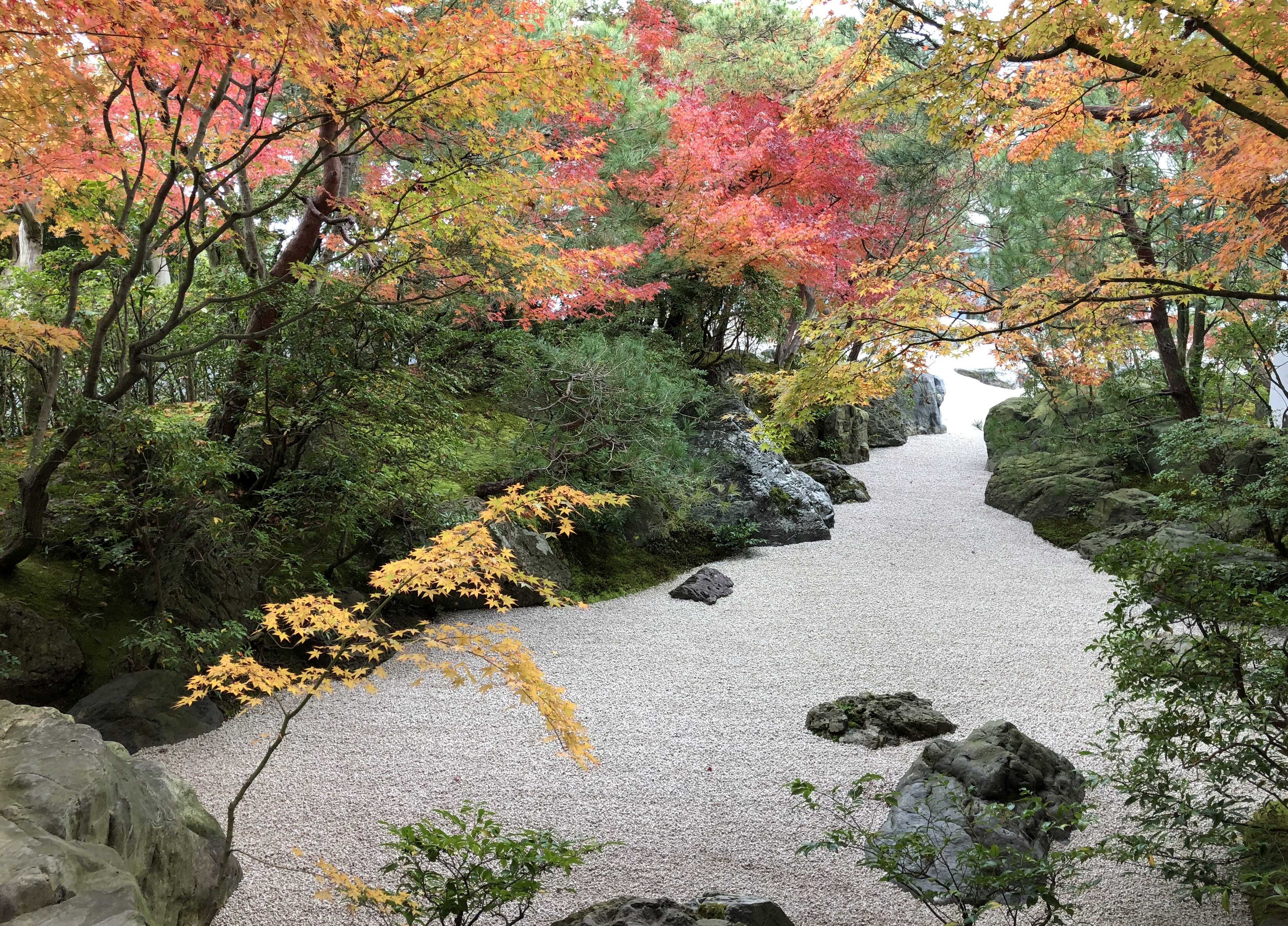
Yuriko returned recently from a couple of weeks in Japan. Besides time with family, she visited a number of interesting places in the Kansai and a little beyond, such as the Adachi Museum of Art off in Shimane Prefecture, which hugs the Sea of Japan coastline northwest of greater Osaka.

Never made it up that way myself. The museum, which features a large collection of works by Taikan Yokoyama and other artists, is also known for its garden. Looks impressive.Adachi Museum of Art

Adachi Museum of Art

I’d have to see it myself to compare it to Ritsurin Garden in Takamatsu on Shikoku — the most breathtaking Japanese garden I’ve seen. But best not to invent rankings for places like that anyway.

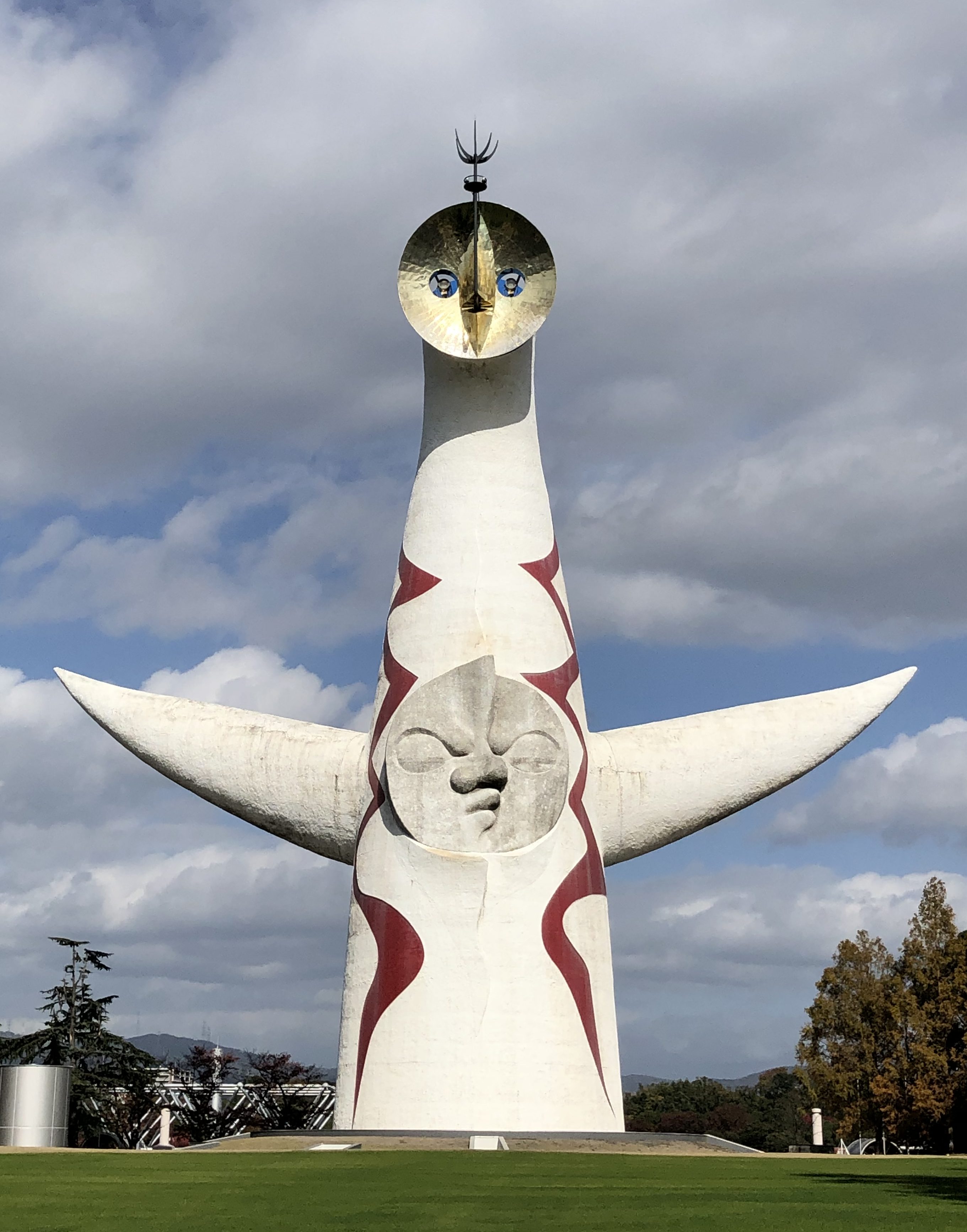
Also of interest: she visited not only the Tower of the Sun (Taiyō no Tō) on the former grounds of Expo ’70 in Osaka, she went inside.

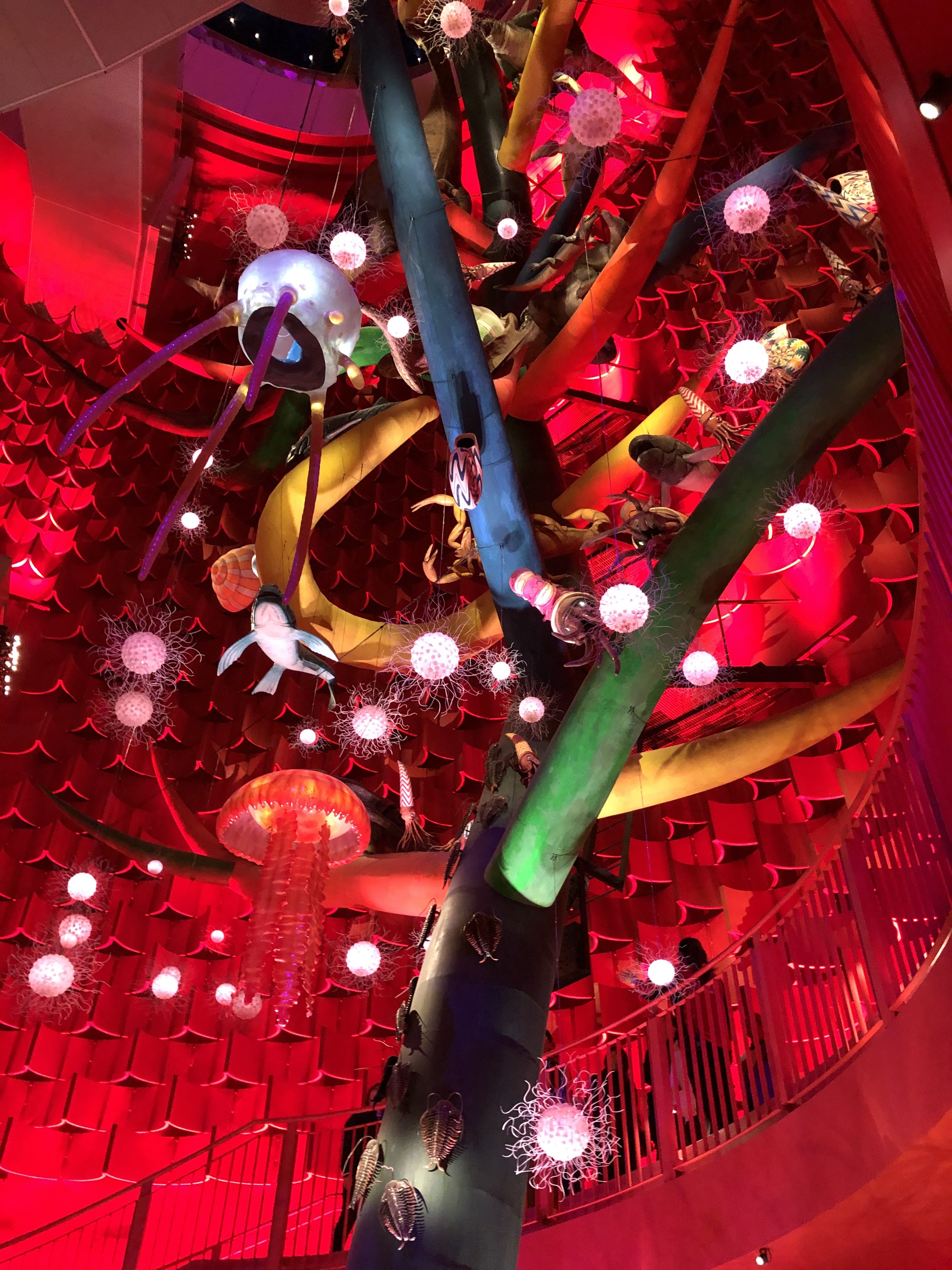
That wasn’t possible when I was in Osaka, though gazing at the exterior was something I did from time to time. I’ve read that the interior only opened permanently last year after renovations to the structure, with the artwork inside refurbished too. It’s a depiction of the Tree of Life.
tower of the sun interior osakaWow. I’d like to see that as well sometime. Along with the Maishima Incineration Plant (which Y didn’t visit this time).

The Cathedral of Learning & Its Nationality Rooms

Pittsburgh has some of the most convoluted street patterns I’ve ever driven through. It’s as if a few grids were thrown at random among the hilly terrain, sort of meeting each other in places, with additional streets — some large, some alley-like — crossing the grids at all angles, plus oddball five- and six-way intersections punctuating things. You know, like Boston, only with more hills.

But also more street signs. And fewer lunatics behind the wheel. At least that was my impression, admittedly based on a small sample, as I figured out how to get from place to place. So driving in Pittsburgh wasn’t actually that bad, certainly better than Boston, despite its initial challenges.

Our car has GPS with spoken instructions. I decided to try it on the first morning in town. Pittsburgh managed to flummox the system early in the game. That is, it was unable to give me directions that I could use in a timely manner. Maybe I misunderstood. Doesn’t matter — I found the system annoying, so I quit using it. I went back to consulting maps.

Still, the system’s misdirection, or my misunderstanding, at one point led us through the Liberty Tunnel. Earlier we’d gone through the Fort Pitt Tunnel. Pittsburgh might have some great bridges — more about which later — but it also has some really cool tunnels to drive through.

Our second major destination on the first day was the University of Pittsburgh, which is in the city’s Oakland neighborhood. Besides the Heinz Memorial Chapel, we also wanted to go there to see the Cathedral of Learning, which is a 42-story building. Despite the uncertainties of navigating through the Pittsburgh streets — the GPS voice was silenced by then — I knew I was in the right place when I saw a tall neo-Gothic building rising above everything else around it.

Not that Oakland is lacking for other large structures, just nothing else that tall. In fact the district impressed me as practically a city of its own, with its university buildings, healthcare facilities, sizable apartment buildings, a rich array of retail, some green space and a lot of people out and about. We probably could have spent an entire satisfying day in Oakland.

Even a few blocks away, the Cathedral of Learning makes an impression.
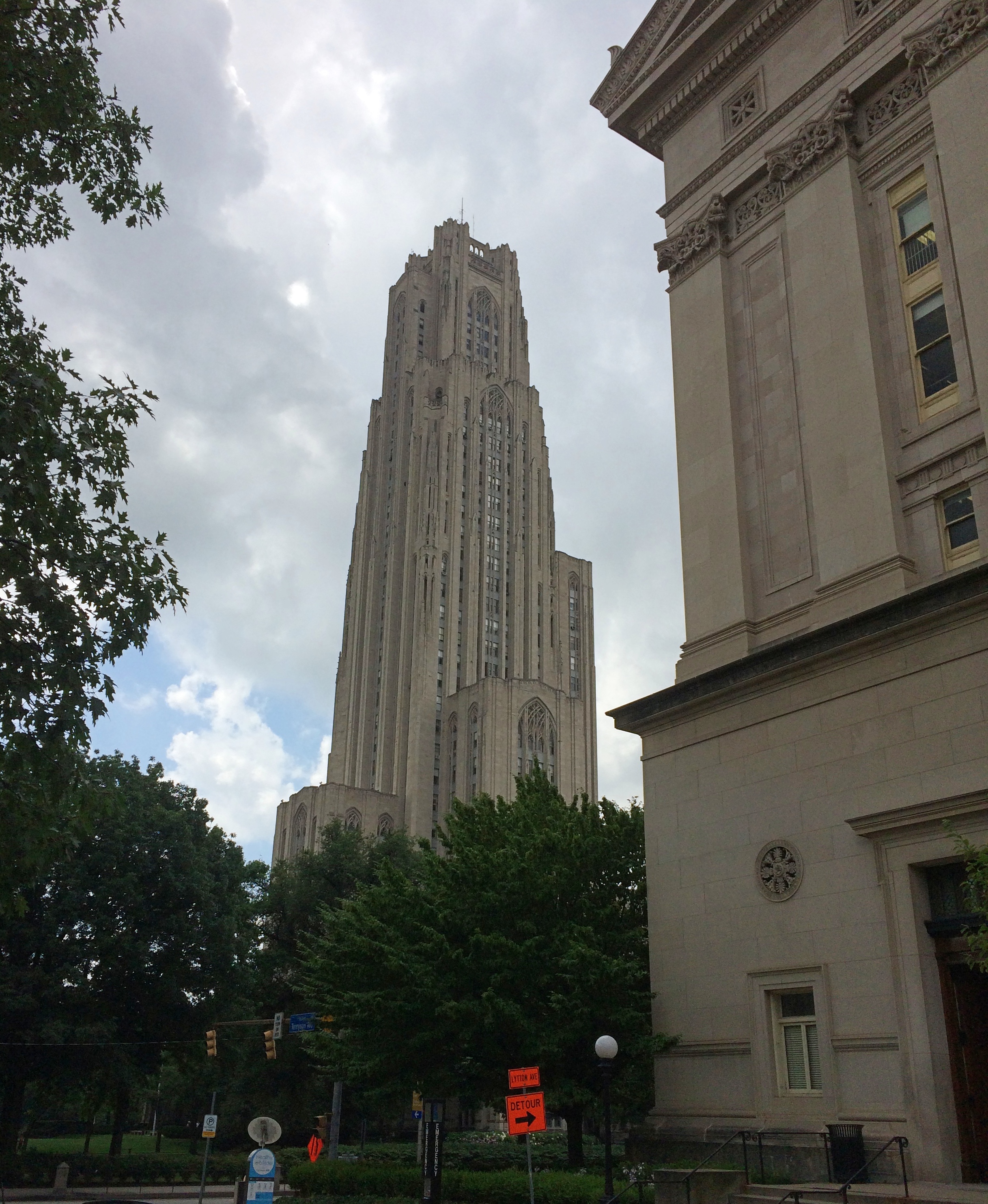
Charles Klauder, the same architect who designed the Heinz Memorial Chapel, did the considerably taller Cathedral as well. Both are Indiana limestone edifices.
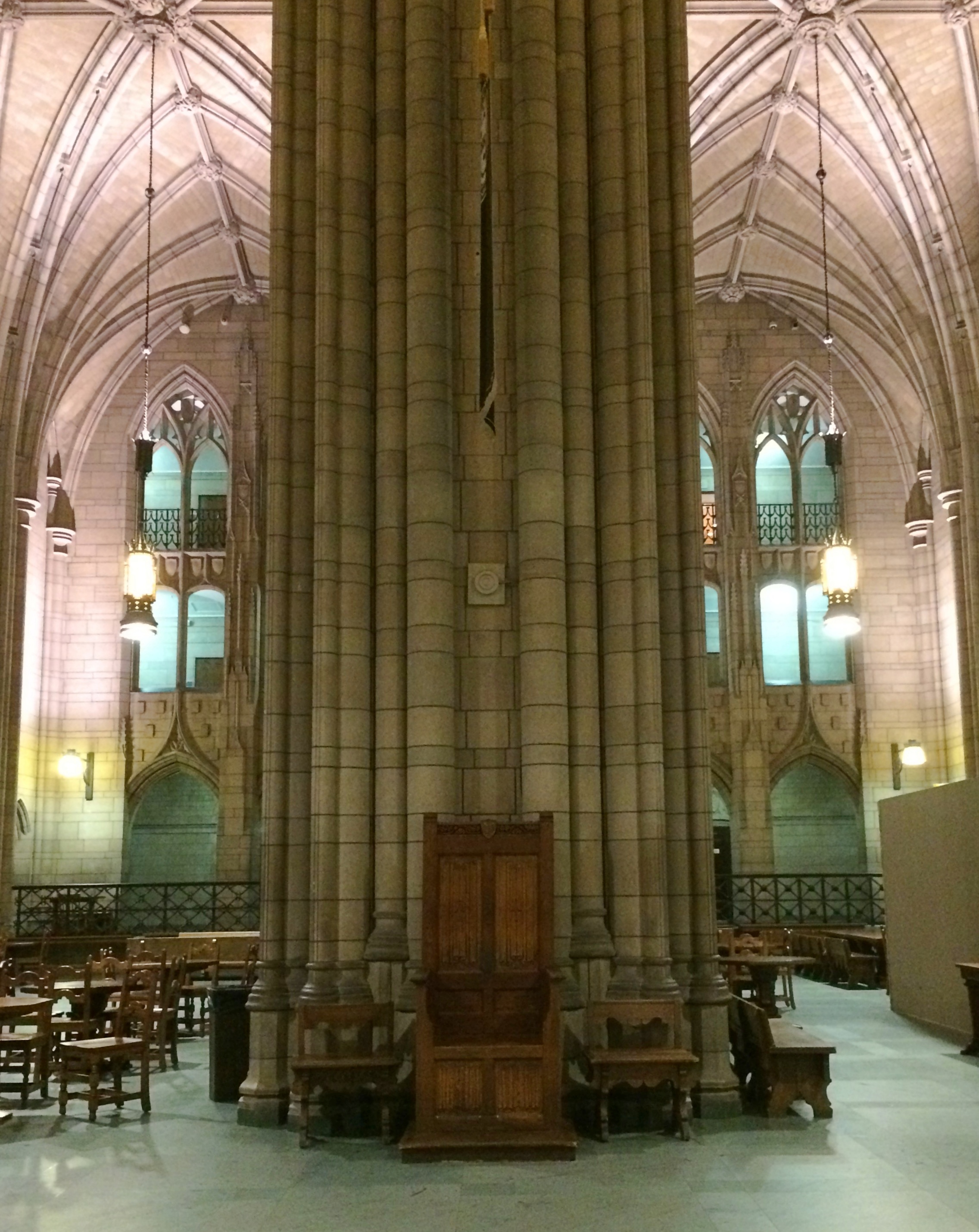
Inside are classrooms and administrative offices, but that hardly describes the place. The soaring, four-story lobby could, if anyone wanted to do it, be decked out as a neo-Gothic church.
Something like the Heinz Memorial Chapel. Since the two structures were built at about the same time and designed by the same architect, that’s not much of a surprise.

What really makes the Cathedral of Learning distinctive are its 31 Nationality Rooms, most of which are working classrooms, but each designed to reflect a nationality that had an influence on Pittsburgh’s history.

They’re on the first and third floors. We spent time on the third floor looking at such examples as the Korean Room, based on the 14th-century Myeong-nyundang (Hall of Enlightenment), the main building at the Sungkyunkwan in Seoul.
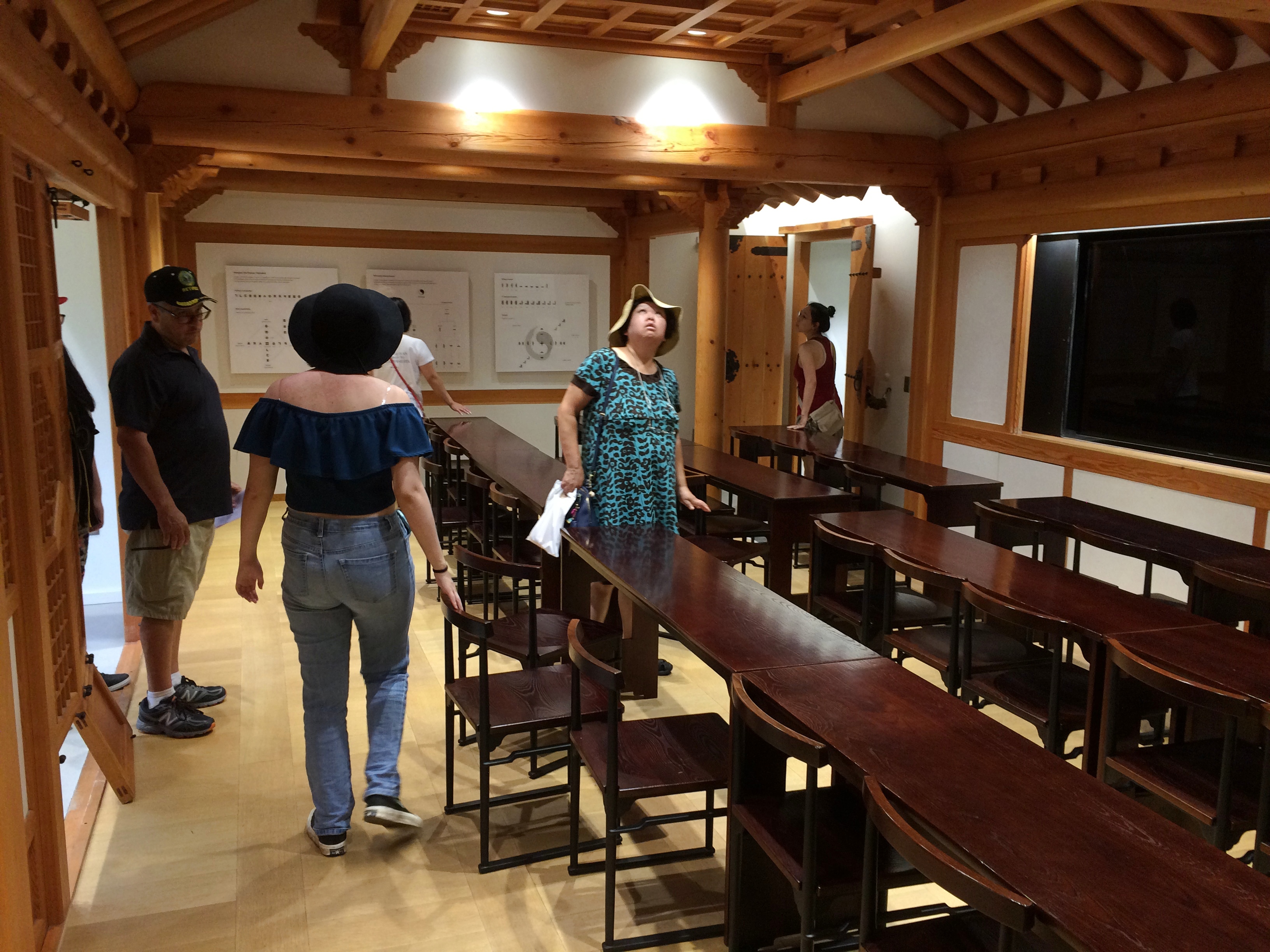
It was completed only in 2015 by Korean carpenters who built it in that country, took it apart and shipped it to the university, where it was reassembled.

The Japanese Room.
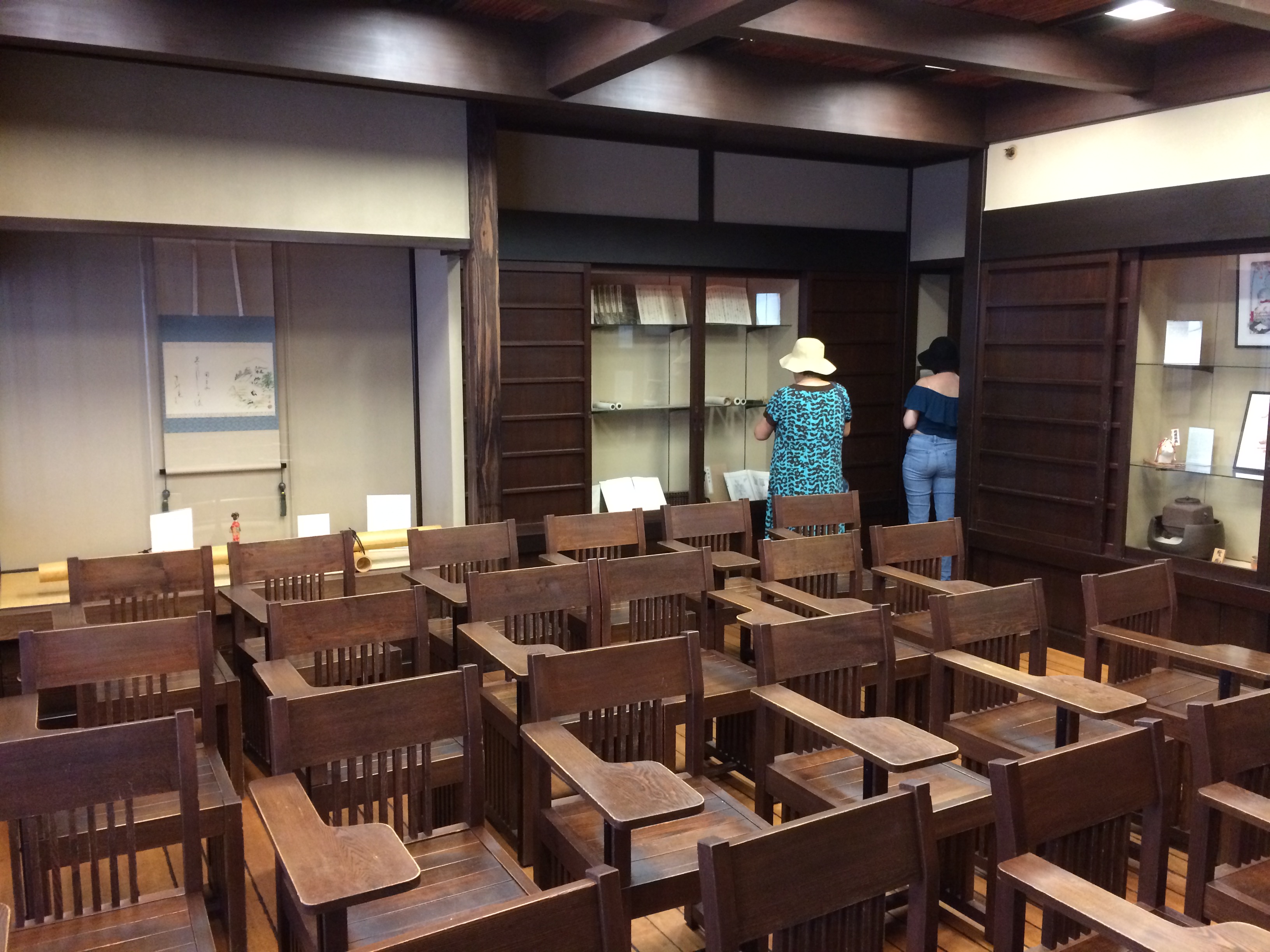
Built in 1999 to evoke residence of an important village leader in a farm village in the mid-18th century in the Kinki district.

The Armenian Room, dating from 1988. Most impressive.
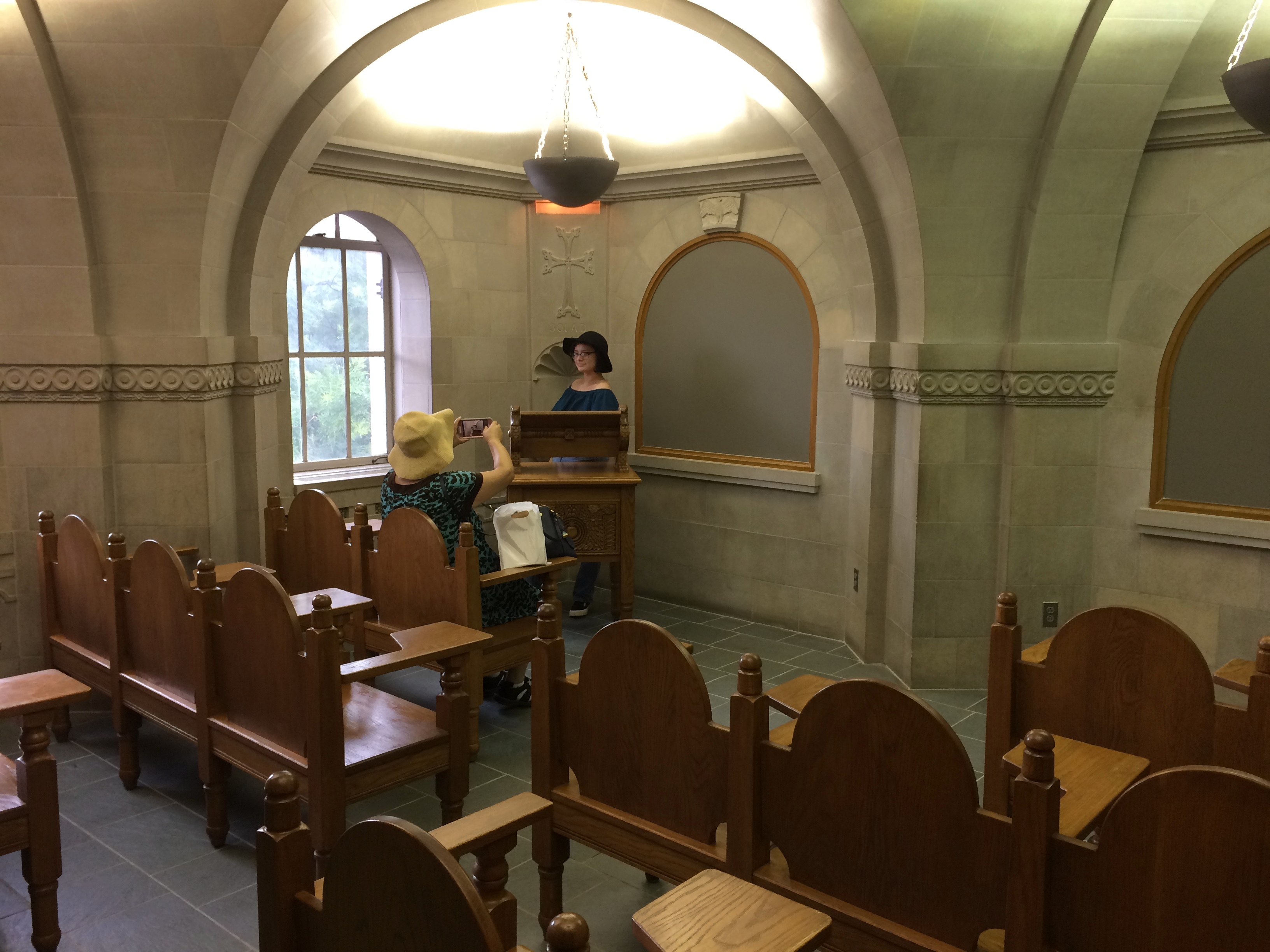
Inspired by the 10th- to 12th-century Sanahin Monastery in Aremenia, which I’d never heard of, so I looked it up.

Also impressive, and probably-not-by-accident on the other side of the building from the Armenian Room, is the Turkish Room, completed in 2012.
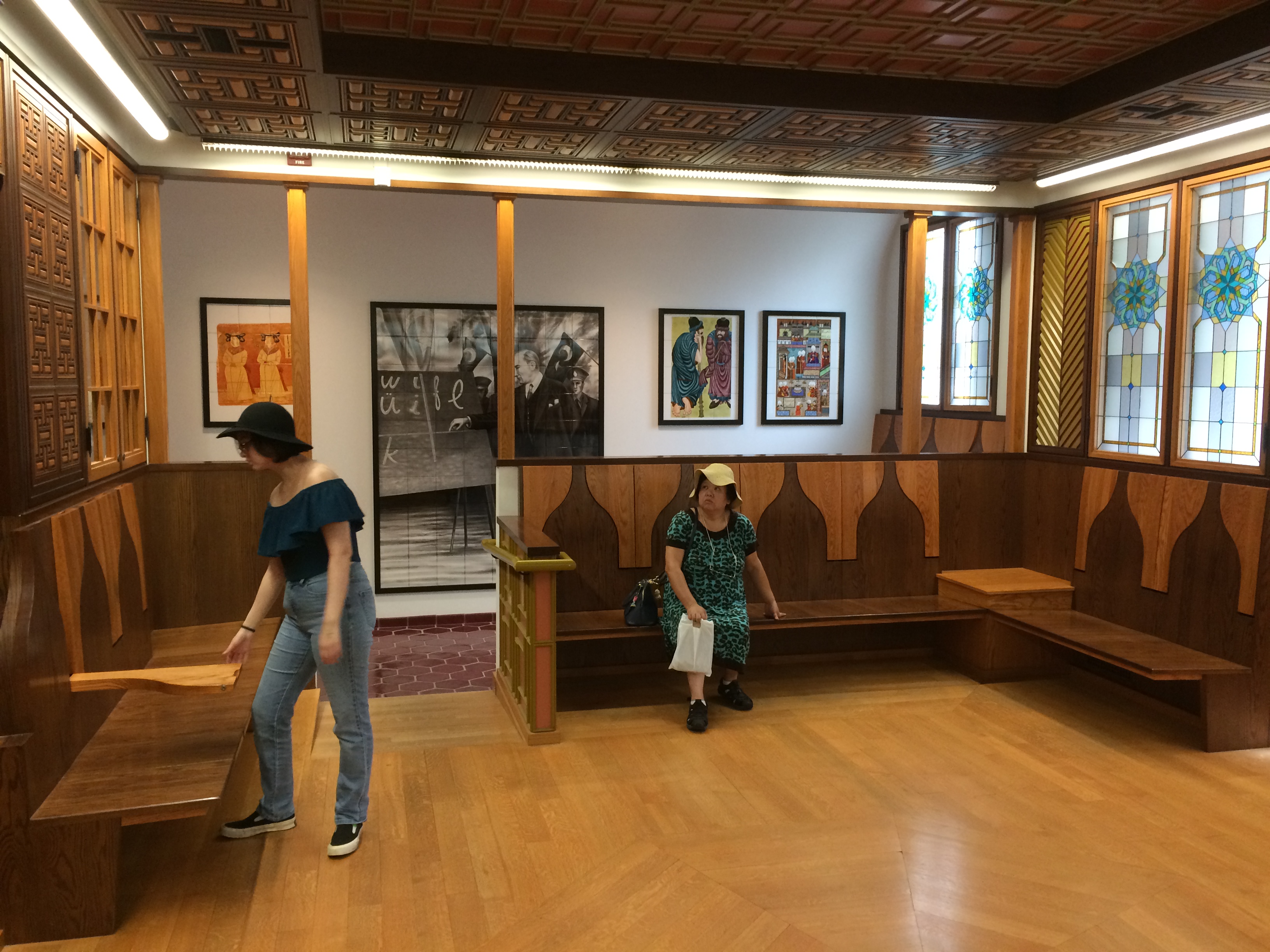
In the style of a main room of a 14th-century Turkish house, but also sporting a picture of Ataturk near the entrance (he’s teaching the Turkish nation the Latin alphabet).

My favorite, I think: the Indian Room, completed in 2000. This is the view from the lectern.
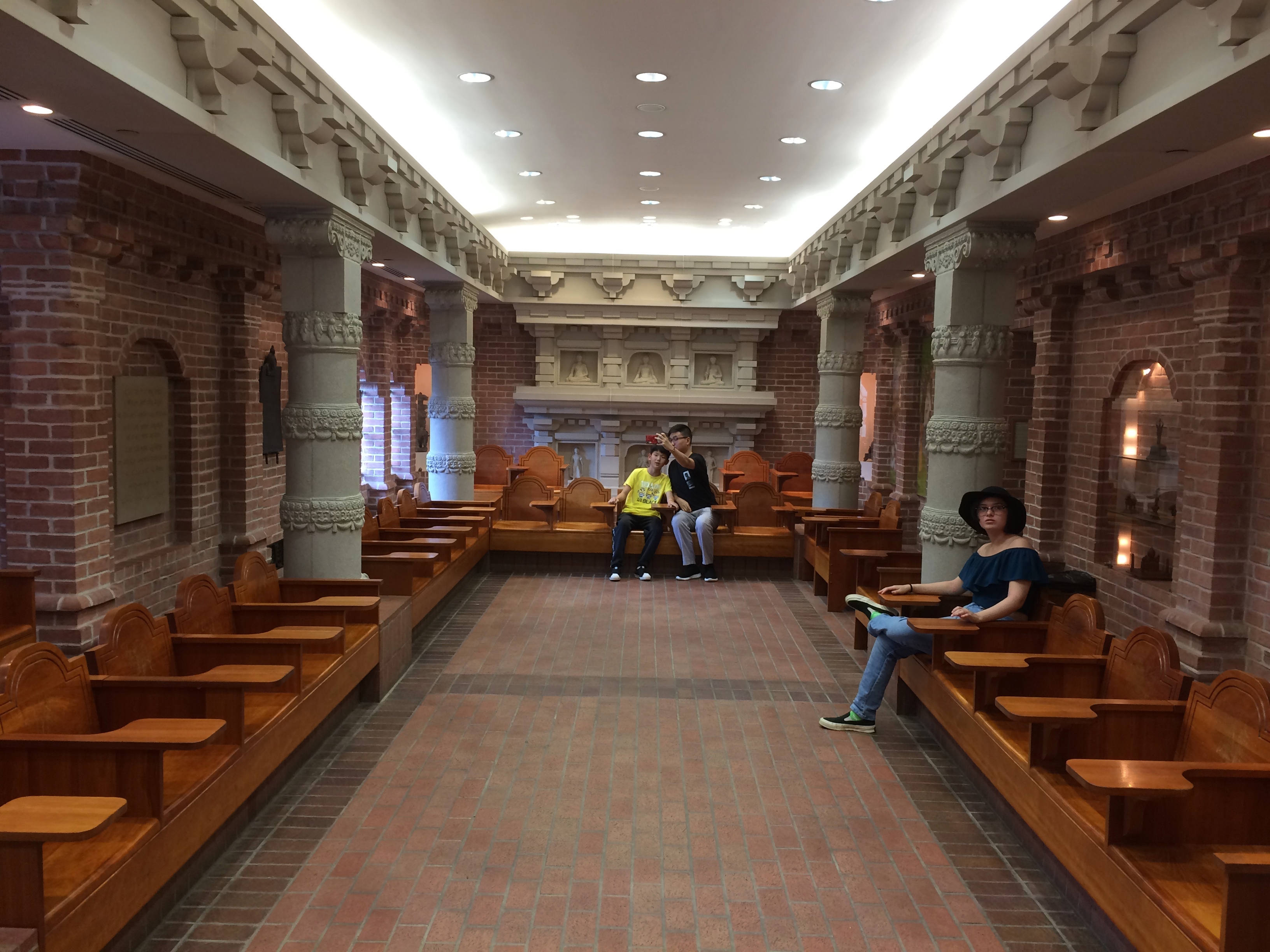
A closeup of the columns, decorated with rosettes, swags, and fruit.
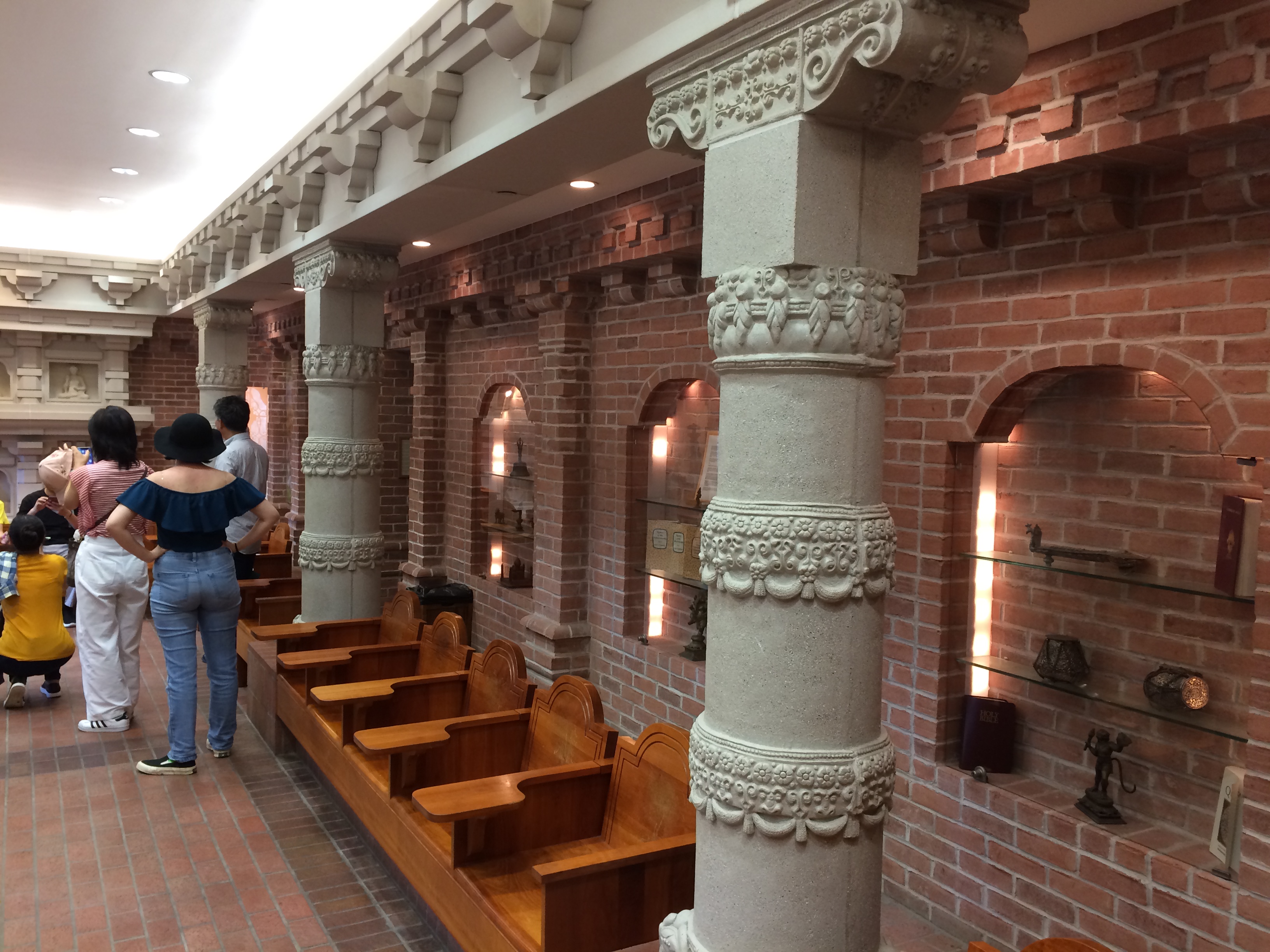
The style is a 4th- to 9th-century courtyard from Nalanda University, a Buddhist monastic university. I had to look that up as well.

There might be a lectern, but I can imagine that professors might not spend much time behind it, but rather pace up and down the rose brick floor to more closely converse with the students, who are facing each other.
University of Illinois Arboretum & Japan House

On Easter Sunday, I drove Lilly back to UIUC, and this time the rest of the family came along for the ride: Yuriko, Ann and the dog. Been awhile since we’ve been on a trip of more than a few miles with the dog, but we figured she’d enjoy it and not be too much trouble. Except for the soda spill she caused toward the end of the trip, she wasn’t.

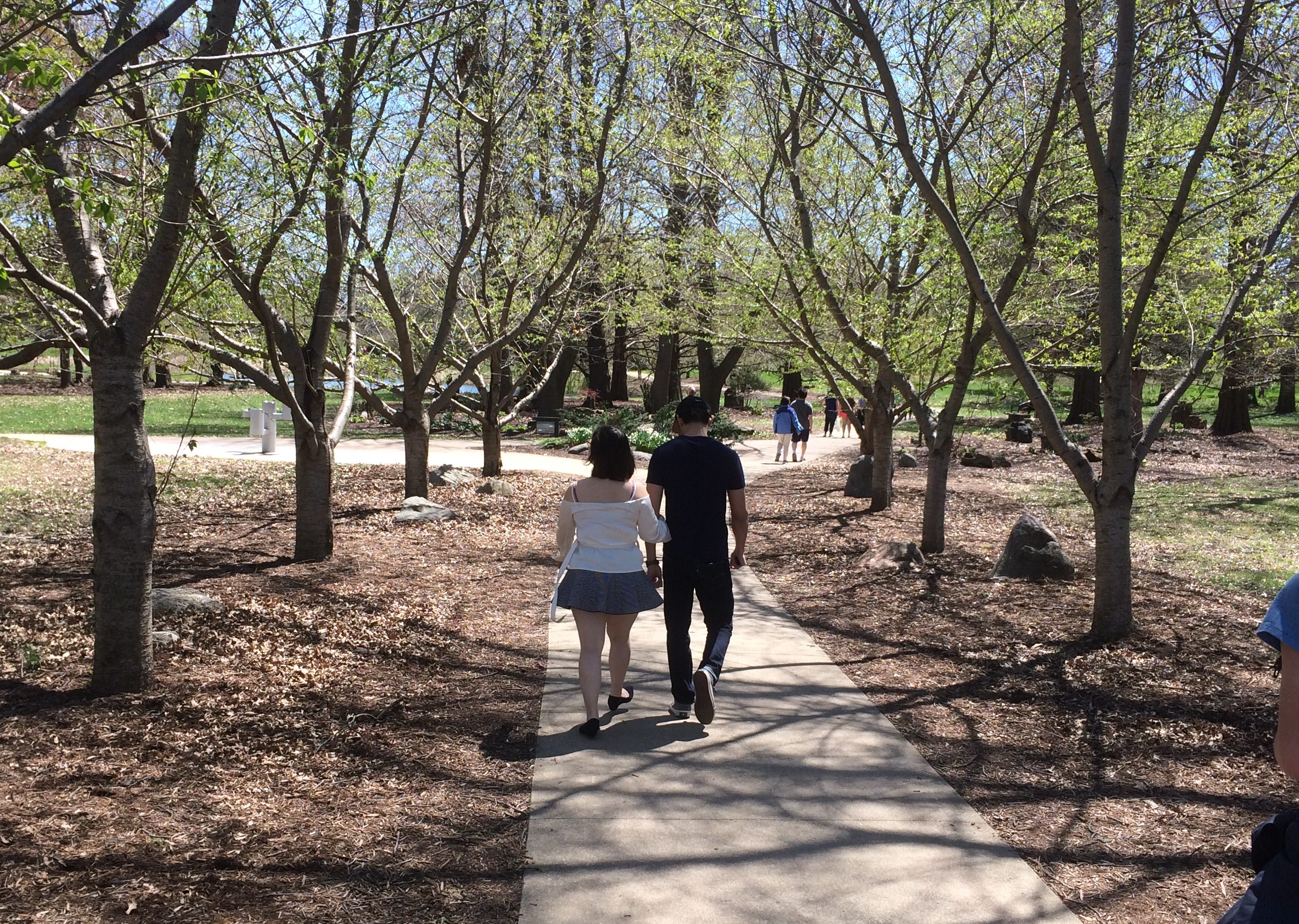
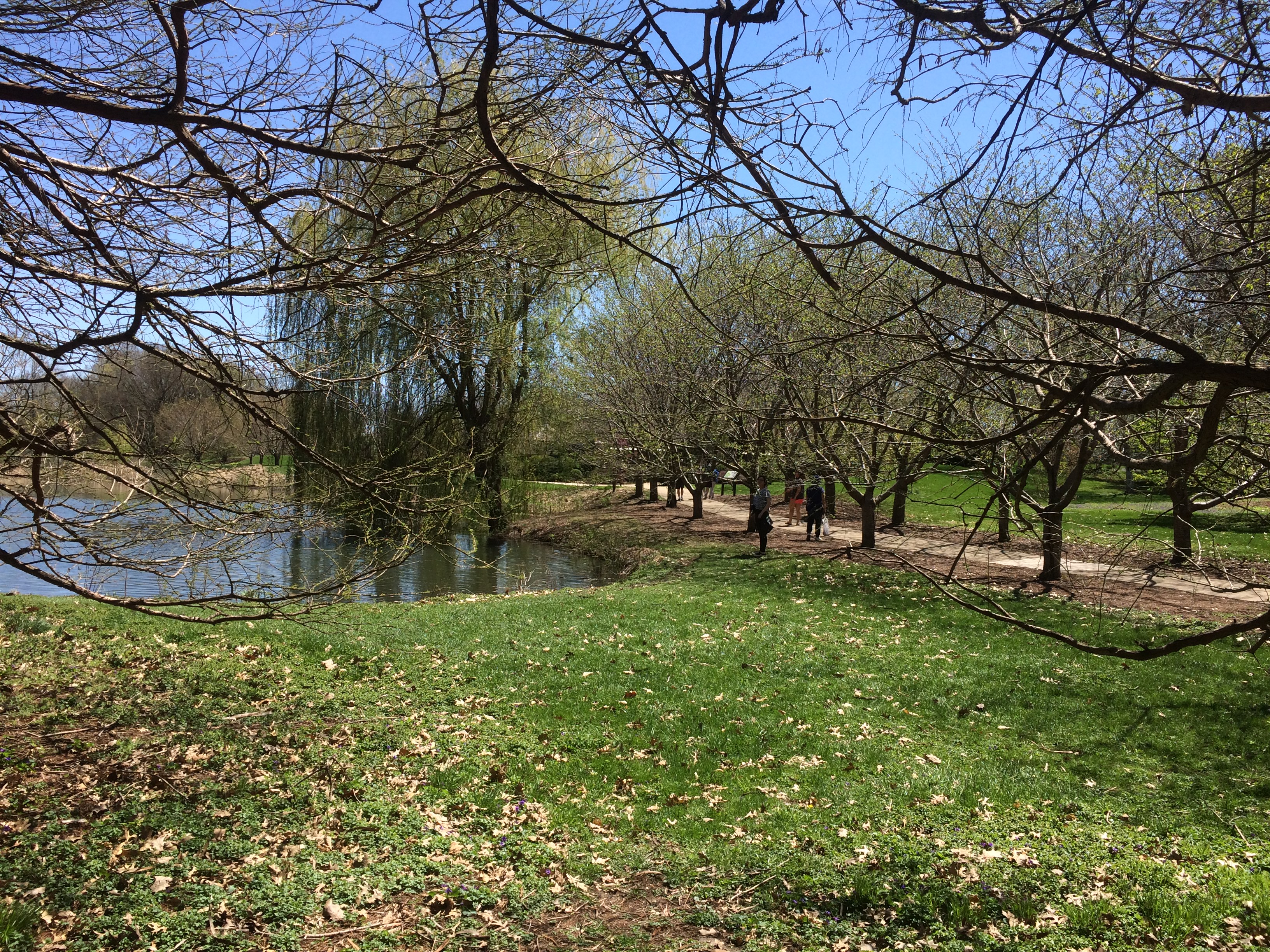
So we had a few pleasant hours in Champaign-Urbana, with temps in the 70s and greenery budding everywhere. Especially at the University of Illinois Arboretum.

“The University of Illinois Arboretum was developed in the late 1980s to early 1990s,” according to the university. “The original 1867 campus master plan placed the Arboretum north of Green Street where the College of Engineering currently exists. During the 1900s, the site moved to south campus, located near the Observatory, and Smith Music Hall.

“Now located at the intersection of South Lincoln and Florida Avenues, the Arboretum’s gardens, collections, and habitats are transforming 160 acres of the University’s south campus in Urbana-Champaign into an exceptional ‘living laboratory’ for students in plant sciences and fine and applied arts, as well as an oasis of natural beauty open to the public.”

I don’t know about natural beauty, since an arboretum, though working with living materials, is man-made. But if you called it artificial beauty, people think plastic or some other synthetic material. So let’s just say it’s a beautiful spot.

A trail leads from the small parking lot and toward the arboretum’s large pond.

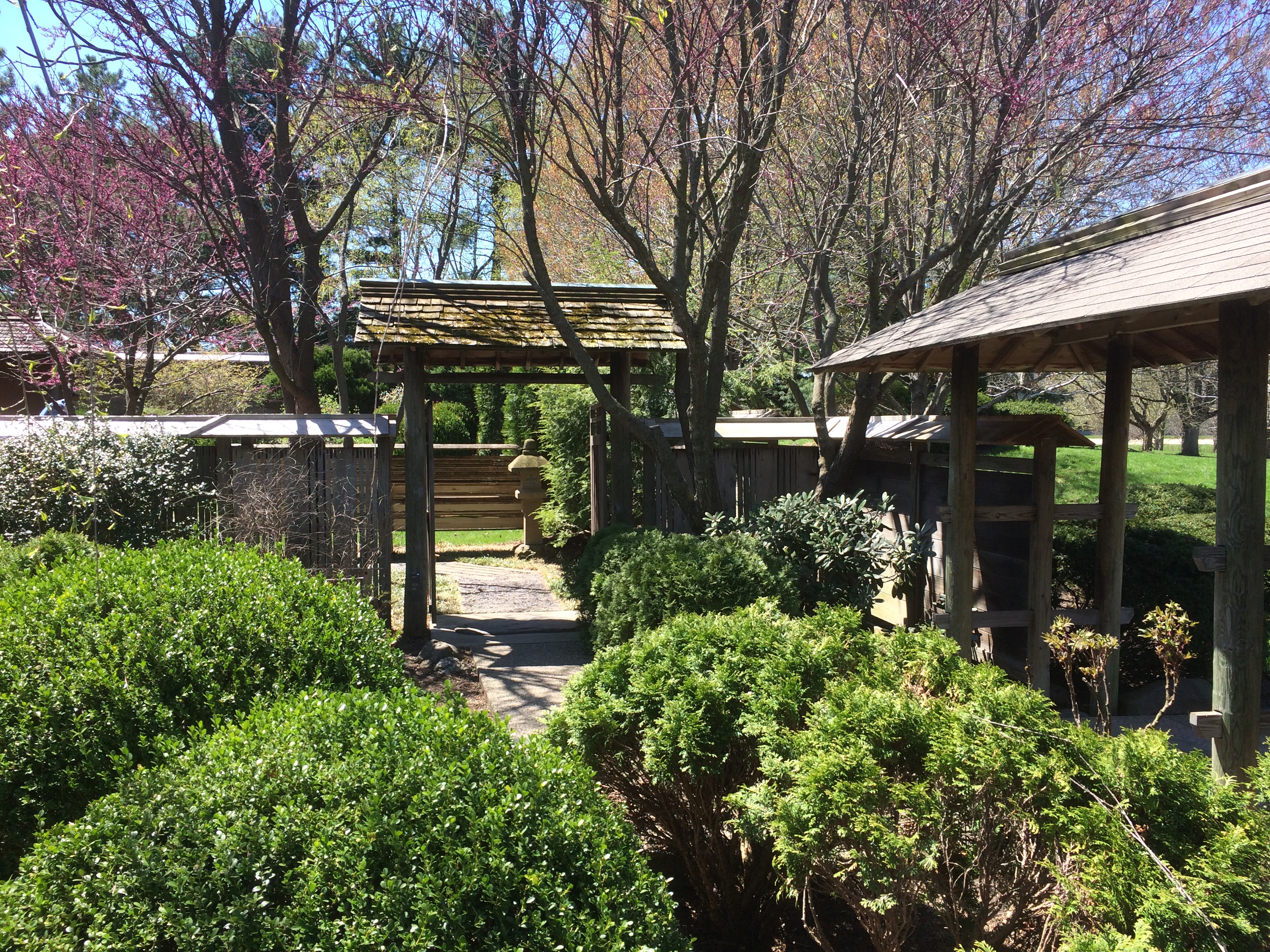
Also on the grounds of the University of Illinois Arboretum is Japan House.
Japan House is a unit of the College of Fine and Applied Arts at the UIUC, beginning when a Japanese artist-in-residence, Shozo Sato, came to the school in 1964, with the building completed in 1998. Such rarefied arts are calligraphy, tea, ikebana and sumi-e are taught there.

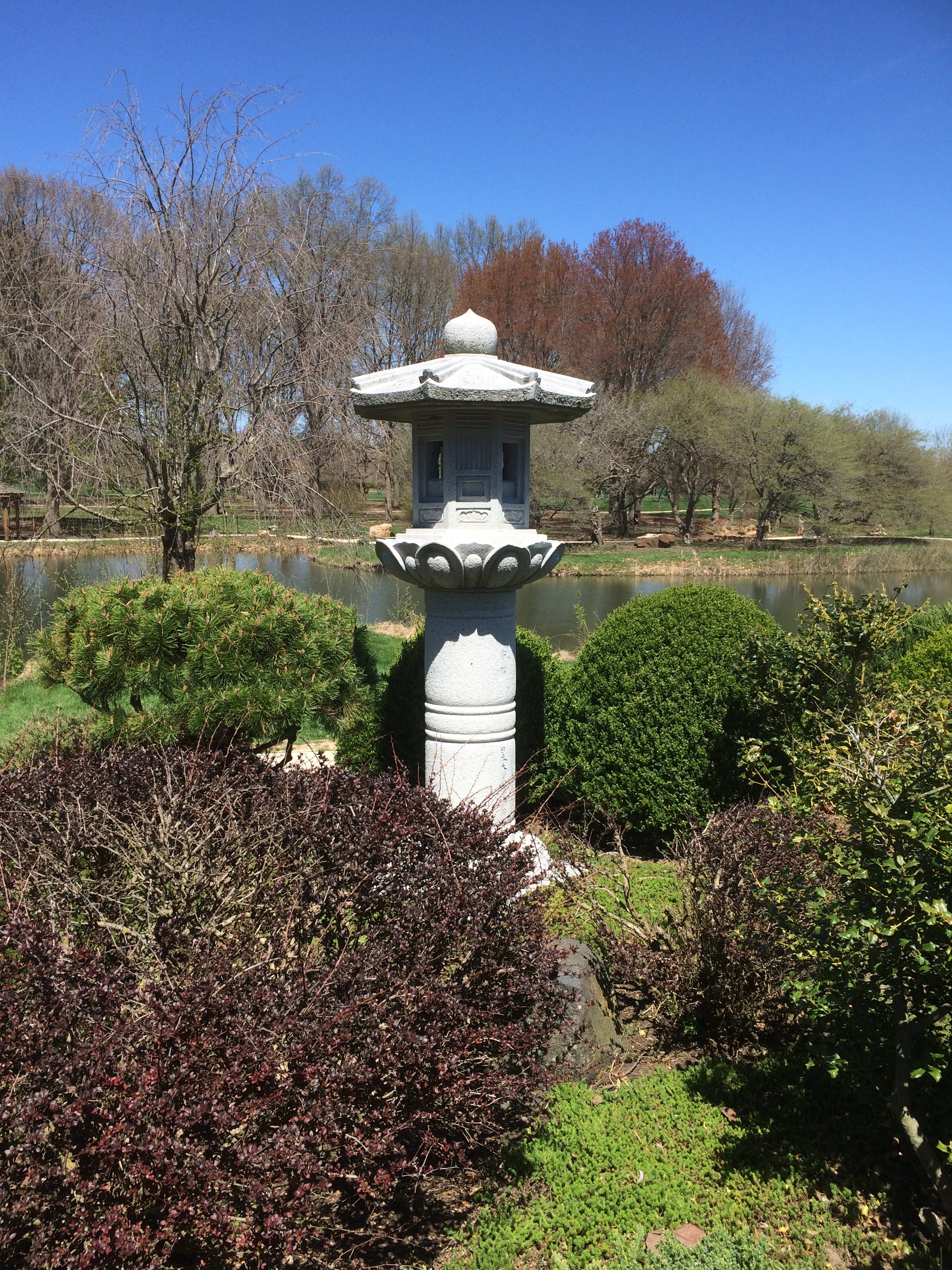
Japan House itself wasn’t open on Sunday, but the grounds were.
Including a view of the zen garden.
The grounds would be a good place for moon viewing, or tsukimi. Wonder if that’s ever happened there.

Thursday Whatnots

News I missed, and I miss a fair amount, which I figure is actually healthy: “For the second time in history, a human-made object has reached the space between the stars,” a NASA press release from December says.

“NASA’s Voyager 2 probe now has exited the heliosphere — the protective bubble of particles and magnetic fields created by the Sun…

“Its twin, Voyager 1, crossed this boundary in 2012, but Voyager 2 carries a working instrument that will provide first-of-its-kind observations of the nature of this gateway into interstellar space.”

Voyager 2 is now slightly more than 11 billion miles (18 billion kilometers) from Earth. Or 16.5 light hours. That’s still in the Solar System, though. “It will take about 300 years for Voyager 2 to reach the inner edge of the Oort Cloud and possibly 30,000 years to fly beyond it,” NASA says.

Not long ago, the original GodzillaGojira, to be pedantic — appeared on TV, in Japanese with subtitles. Not that the famed atomic beast needs any subtitles. I had my camera handy.
I didn’t watch it all, but that’s one way to approach televised movies. Not long ago, I watched the first 15 minutes or so of The Sting, a fine movie I’ve seen a few times all the way through. But other tasks were at hand, so I quit after Luther is murdered.

Later, I had the presence of mind to turn the TV back on and watch the last 10 minutes or so, when the sting is put on gangster Doyle Lonnegan. It’s a satisfying ending, but it got me to thinking.

A con with that many people would surely generate rumors. Just as surely, the rumors would make their way to the murderous Lonnegan, who wouldn’t rest until Henry Gondorff and Johnny Hooker were dead. But that’s overthinking things.

Here’s another example of a dim algorithm. Just about every time I use YouTube, I see anti-teen smoking PSAs. Or maybe they’re blanketing the medium, regardless of audience. Still, if I didn’t take up smoking 45 years ago, I’m not going to now.

That brings to mind the first time I remember seeing one of my contemporaries with a cigarette. That was about 45 years ago at a place called the Mule Stall.

The Mule Stall was a student space on the campus of my high school with a few rooms, chairs, a pool table and I don’t remember what else. It was tucked away about as far as you could get from the rest of the school, opening up to the street behind the school.

High schoolers used it, but junior high kids from the district had gatherings there occasionally as well. The event I remember might have been the wrap party for one of the plays I was in. Besides not acquiring a taste for smoking back then, I also discovered the theater wasn’t for me, except as an audience member. But ca. 1974, as a junior high school student, I did a few plays.

There we were, hanging out at the Mule Stall, when we noticed a girl named Debbie, who was in our class, pass by with a cigarette between her fingers. I didn’t know her that well, and I don’t remember much about her now, though she had curly hair, glasses and the sort of development adolescent boys pay attention to. At that moment, I guess she was on her way out to smoke the thing, though we didn’t see that.

I don’t know anything about her later life. She attended high school with us for a while, but either moved away or dropped out before the Class of ’79 graduated. I wonder if even now, she holds her cigs in yellow-stained fingers and spends part of the night coughing.

As for the Mule Stall, we had occasional high school band parties there later. One in particular involved almost everyone lining up to dance to the “Cotton-Eyed Joe.” That was fun. As Wiki accurately says, the dance was very much alive in Texas in the 1970s.

In fact, the Wiki entry has a description of the style of dance we did. Someone who did the dance seems to have written it, because this is exactly right.

“This dance was adapted into a simplified version as a nonpartner waist-hold, spoke line routine. Heel and toe polka steps were replaced with a cross-lift followed by a kick with two-steps. The lift and kick are sometimes accompanied by shouts of ‘whoops, whoops,’ or the barnyard term ‘bull s–t.’… The practice continues to this day.”

We used the barnyard term. An administration with no sense of history apparently razed the Mule Stall in the 1990s. Now the site is parking.

Thursday Bunkum

Our latest snow was less convenient than previous ones this winter, falling in mid-week. I spent a fair chunk of Wednesday shoveling more snow around, this time wetter masses than the last snowfall. Now an arctic blast is blasting its way toward northern Illinois. Subzero temps ahead.

Ah, fun. We’ve been down this road before, of course.

I just found out today that the Emperor of Japan is going to abdicate on April 30. That was news in December, but I missed it. I chanced across the information in a copy of the bilingual Chicago Shimpo, a paper Yuriko picks up for free periodically at the Mitsuwa grocery store.

The Imperial Household Agency, known for its mossback ways, is on board with that?  Yet abdication from the Chrysanthemum Throne isn’t unknown. The most recent abdication was of Kōkaku, who quit in 1817. Pretty recent, considering the longevity of the Yamato Dynasty.

In even earlier times, back when the emperor was more of a political football than in recent centuries, one emperor was sometimes forced out to make way for another.

Now that I’ve finished reading Stalin — which I read after John Wayne: The Life and Legend by Scott Eyman (2014), an excellent book — I’ve decided to read some more biographies. A biography bender. Next I want to pick one from around the house, one that I haven’t read.

My choices, at least those I’ve found so far, include works on Francis Bacon, Benedict Arnold and Babe Ruth.

Something called Indywire asserted recently that: Coen Brothers Shock With ‘Buster Scruggs’ Oscar Nomination

I’m not shocked. I’ve seen five of the six stories in the The Ballad of Buster Scuggs so far and they’re really good, especially “Meal Ticket” and “The Gal Who Got Rattled.” Not that being good necessarily gets a movie nominations, but it helps.

All the stories get the Coen Brothers treatment, so you know that something bad is going to happen to at least one of the characters. In the “The Gal Who Got Rattled,” the feeling was particularly poignant, because as the story moved along, both the man and woman evolved into remarkably sympathetic characters. Then one of the dangers of the 19th century smites them.

Parts of the movie were based on sources much closer to the 19th century than our own, such as “The Girl Who Got Rattled” by Stewart Edward White and Jack London’s “All Gold Cañon,” while other parts evoke cowboy pictures of yore.

That only goes to show that there’s a vast and largely untapped galaxy of source material for movies — books, short stories, historic events, myths, graphic novels and on and on. Do moviemakers show any interest in mining these riches? Mostly not, seems like, and if they do, commercial pressures disabuse them of the notion. The Coens are exceptions. I’m glad they’re able to make the movies they want to.