Thursday Natterings, But Not From Nabobs of Negativism

I woke the heater up yesterday from its summertime hibernation, mainly to see whether it would wake up and blow hot air, which is all I ask of it. Fortunately, the machine snapped to its single job without any complaint, such as some weird noise I don’t want to hear. The previous night had been quite cool, as they are starting to be, lowering the house temp to 69 F. My test took it up to 70 F. Normally I keep the house at 68 F. when it’s cold outside.

I saw the first Halloween decorations in the neighborhood the other day when walking the dog. It was a small faux cemetery in a front yard, featuring hand-painted sturdy cardboard (or cheap wood) tombstones. I don’t remember what any of them said.

Probably not Here Lies Les Moore. No Les, No Moore. I think I saw that in a Ripley’s Believe It Or Not collection years ago. That one I believe. Sounds like frontier humor to me.

Another remarkable collection of recent space photos from the Atlantic. As the intro notes, “We [as in, mankind] currently have spacecraft in orbit around the Sun, Venus, Earth, Mars, Ceres, a comet, Jupiter, and Saturn; two operational rovers on Mars; and a recent close flyby of Pluto.”

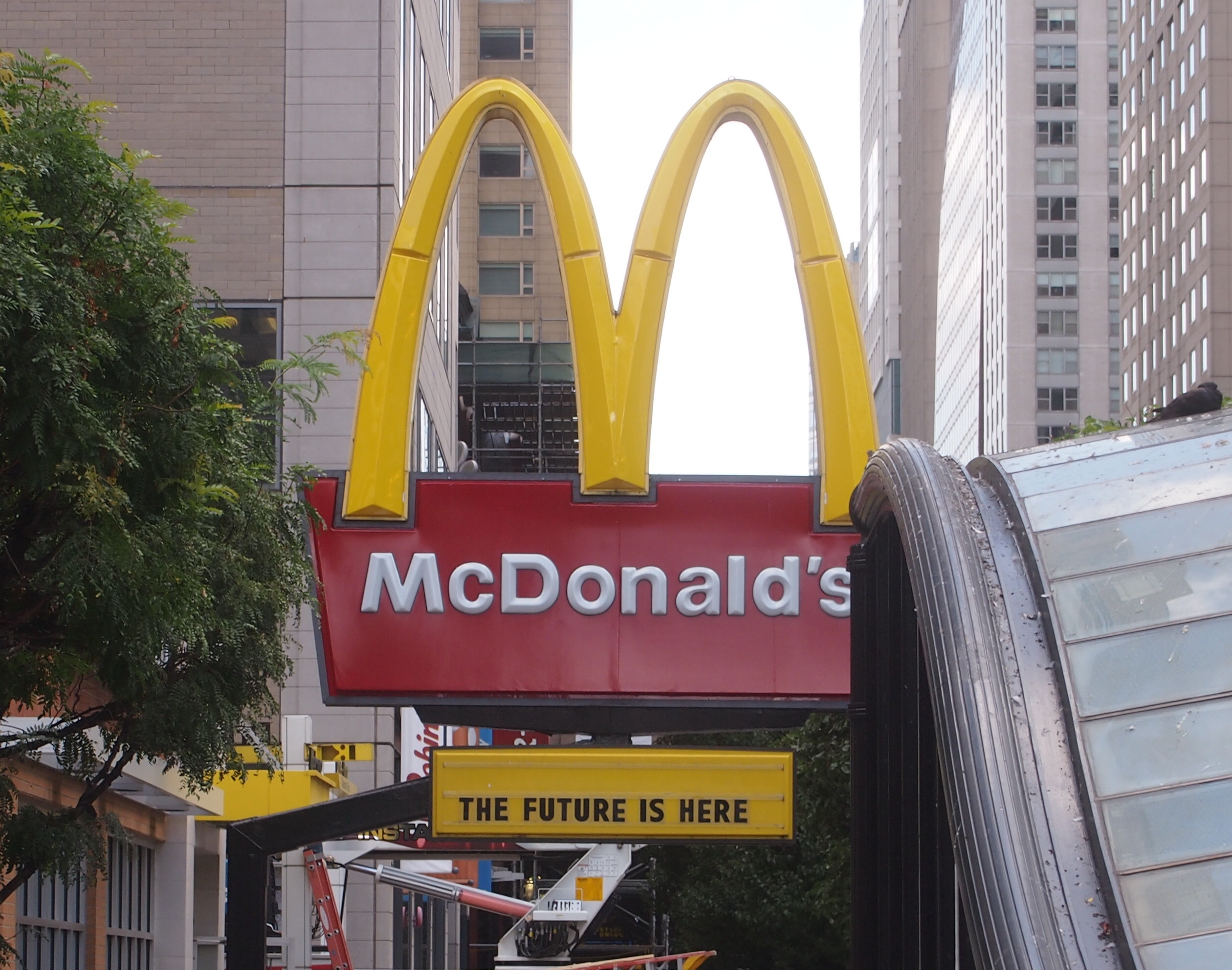
Closer to home, here are two signs I saw recently in Chicago.

That’s a little alarming. I can think of a lot better places to pass the future. The only future I want from McDougall’s are occasional breakfast sandwiches.

Dirt cheap, eh? And what do your beneficiaries get? Enough to pay for the dirt that covers you, maybe.

The last Weaver is gone. Fred Hellerman died recently, I just learned. Time then to listen to the re-union Weavers sing “Get Up and Go.”

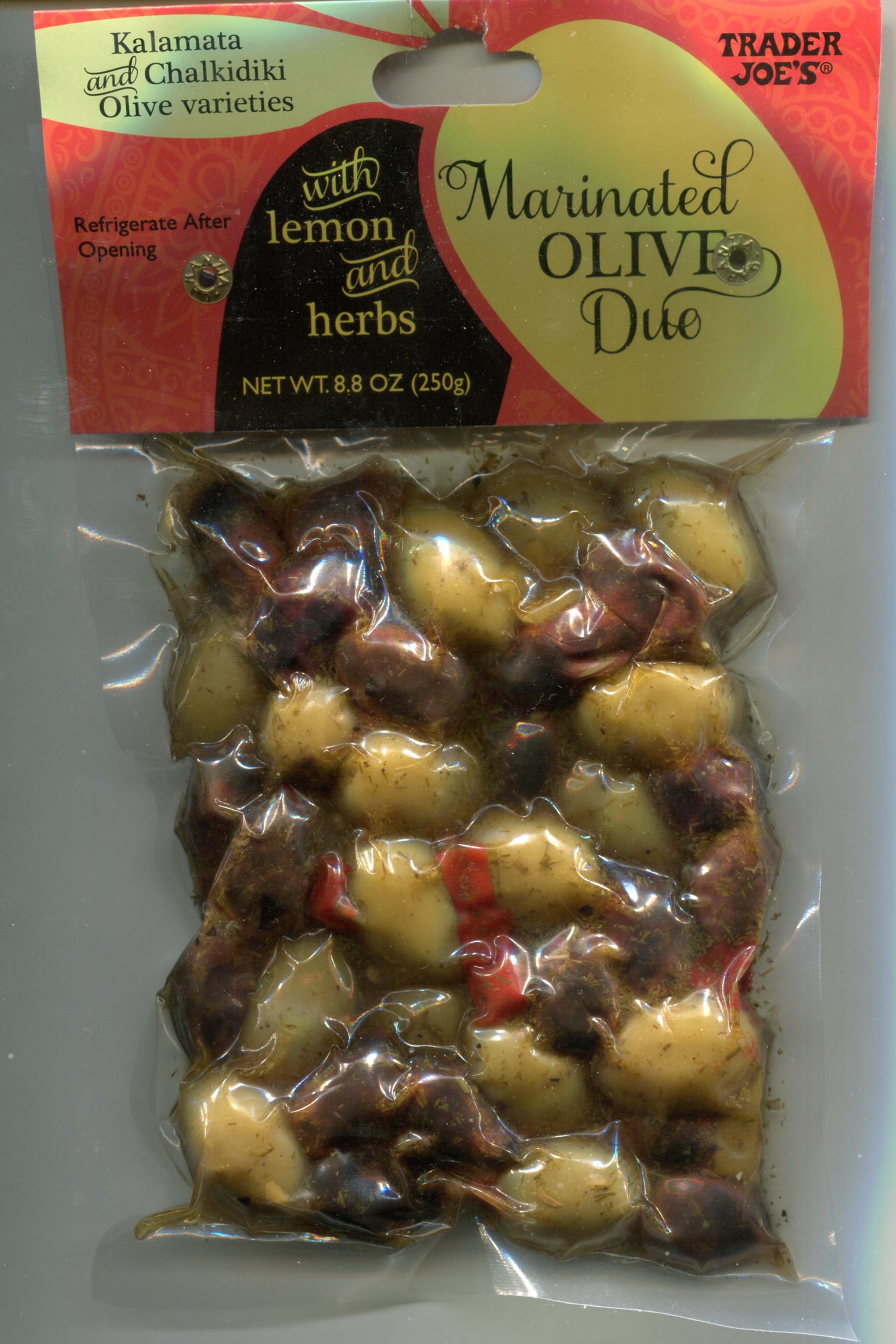
One more thing: I don’t think I’ve ever seen olives packed this way before. A Trader Jose offering, as the package tells us.

olives

I opened them today at lunchtime. Not bad at all.

The Impermanence of the Wisconsin Buddha

The Wisconsin Buddha cracked apart sometime this winter. (How many times in the history of English has that exact sentence been written?) A little background is in order. Some years ago — when we lived in the western suburbs of Chicago in the early 2000s — we visited southern Wisconsin one weekend, and chanced across a yard sale, though I forget exactly where. We acquired the Wisconsin Buddha there for a modest sum.

It’s an inexpensive ceramic yard ornament, jade green with flecks of blue. It’s also an Indian-style seated Buddha, in as much as I understand Buddhist iconography. Could be a bodhisattva for all I know. Very likely the operators of the Chinese factory that churned out thousands of them cared little about their representational meaning, though at some point, someone had to design the thing, and perhaps they had something specific in mind. Maybe it’s patterned after a sculpture I don’t know.

That reminds me of the estimable Charles Hambrick, the professor who taught my Eastern Religion class. Professor emeritus these days, but last I heard still with us. The concept of the bodhisattva came up in his class. A friend of mine was sitting next to me, and he said, “That’s what the song is talking about!” Yes, indeed.

Since we acquired it, the Wisconsin Buddha’s been for us, fittingly, a yard ornament. Does that count as doing its dharma? But it’s inanimate so — I don’t know, and will leave it at that. First the statue was in our back yard in the western suburbs, but for the last 13 years or so, it’s been perched here in the northwestern suburbs under some bushes near a fence that divides the back yard from a small bit of land that connects to the front yard. If you didn’t know it was there, it would be hard to spot.

On Sunday I was cleaning debris off our deck and noticed that the figure was face down on the ground. Looking more closely, I saw that it had cracked all the way across horizontally, a few inches from its base, and the top part had fallen over. A cycle of freezing and thawing? Wind? The dog, who sometimes goes near that fence? Something else?

I put the pieces back together again, and I may or may not glue them together. I’ll take this as a lesson in impermanence.

Pappy Lee O’Daniel

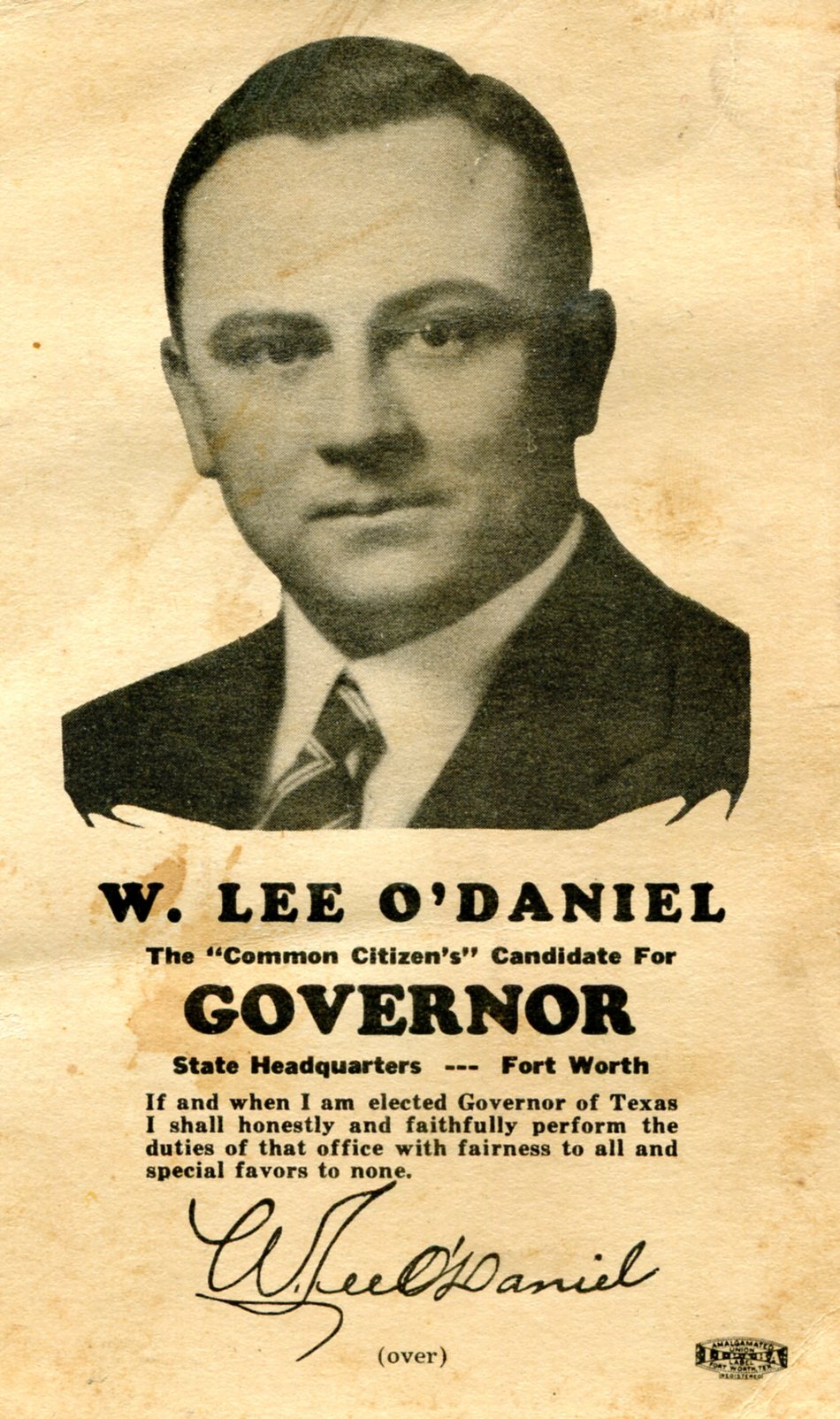
The day after I visited LBJ’s boyhood home, I discovered this tucked away at my mother’s house.

Pappy Lee O'DanielIt’s a campaign card for W. Lee O’Daniel. It’s clear that it dates from his first run for governor of Texas, which was in 1938. Why my mother kept this, I couldn’t say. I don’t remember her ever saying anything about “Pappy” Lee O’Daniel, and in any case she herself never voted for him, since she wasn’t old enough.

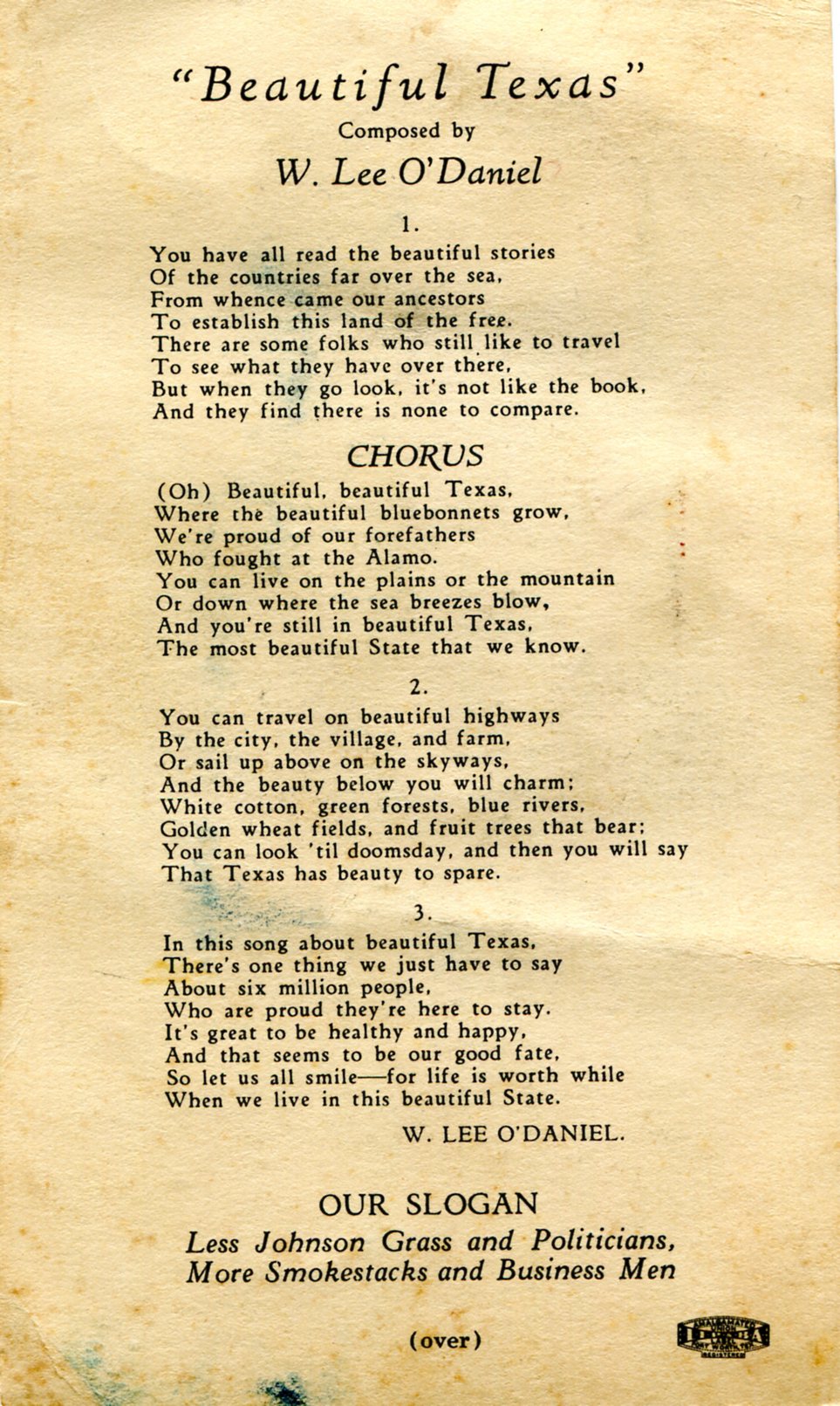
On the back are the lyrics to three stanzas of “Beautiful Texas,” a song pretty much lost to time, but written by W. Lee O’Daniel, the singing, flour-making governor of Texas from 1938 (he won the election and re-election two years later) to 1941, when he became a U.S. Senator by being the only person to best LBJ in an election (not counting 1960 primaries). All in all, one of Texas’ more interesting governors.

Beautiful Texas by Pappy Lee O'DanielIf he sounds familiar, it’s because the Coen brothers borrowed the name, an association with flour, and hillbilly music for the governor of Mississippi character played memorably by Charles Durning in O Brother Where Art Thou?

Why? Because they’re the Coen brothers. Presumably they were amused by the idea of a flour-merchant governor with hillbilly music on his side. For a couple of gentlemen from Minnesota, that shows a remarkably granular interest in Texas history, even if they put the fictional Pappy in an alt-universe, Coen brothers-flavored Mississippi.

“Moral fiber? I invented moral fiber! Pappy O’Daniel was displaying rectitude and high-mindedness when that egghead you work for was still messing his drawers!” — the fictional Pappy O’Daniel.

Another Round of Thursday Bagatelle

I saw Travels With My Aunt (1972) not long ago. Like a fair number of movies, I’d have to say that the book is better, though the movie wasn’t bad. Then again, I’ve forgotten most of the book, since I read it at least 25 years ago.

I was startled to see Cindy Williams as the young American on the Orient Express. She was merely a young actress at the time, but even so I kept expecting to see Penny Marshall show up. Such is the conditioning effect, even after 40 years, of mediocre sitcoms; you just can’t get rid of them. Yet even that show had a few charms, which are best watched in the form of a YouTube video collections of Lenny & Squiggy entrances. Or if you like, the setups and then their entrances. The two were the butt of essentially the same joke for years.

Apparently Teen Spirit deodorant is a real thing. I saw some at a dollar store a while ago. I had no idea is was an actual product. Entertainment lore has it that the product inspired the song name, not the other way around. On its label it promised a “girly” smell.

Naturally the Greek exhibit at the Field Museum ended with a gift shop. We poked around and I found a small owl statue for Yuriko, who’s fond of owls, but I didn’t find any postcards. I asked the clerk about it, and she posited that note cards, which the shop carried, would sell better. Nuts to that.

Someone will be the new President of the United States a year from now, so I took a look at the oddsmakers at Paddypower. That outfit calls itself “Ireland’s biggest, most successful, security conscious and innovative bookmaker.”

Hillary Clinton remains the favorite, according to Irish bookies: 5/6. Much more astonishingly, at least in historical terms, Donald Trump is next at 7/2. Marco Rubio and Bernie Sanders are at 6/1. Ted Cruz, 11/1. Jeb Bush’s many donors must be steamed that he’s 22/1. Chris Christie, 33/1. Somehow Mitt Romney is 100/1, same as Paul Ryan. Guess the scenario there is a brokered convention with either of those jamokes selected. In the can’t-get-anyone-to-notice them category are John Kasich, 125/1, and Martin O’Malley, 150/1.

I won’t bother with the others, except Rocky De La Fuente, at 300/1. Most Americans don’t know him, but I do, though I hadn’t realized he was in the race. He’s a real estate developer from San Diego, so I suppose that makes him the lesser-known real estate mogul running for president (the anti-Trump, and as a Democrat, in point of fact). I don’t know anything about his politics, but I will say he’s got a fun presidential name.

Hall of State, Fair Park

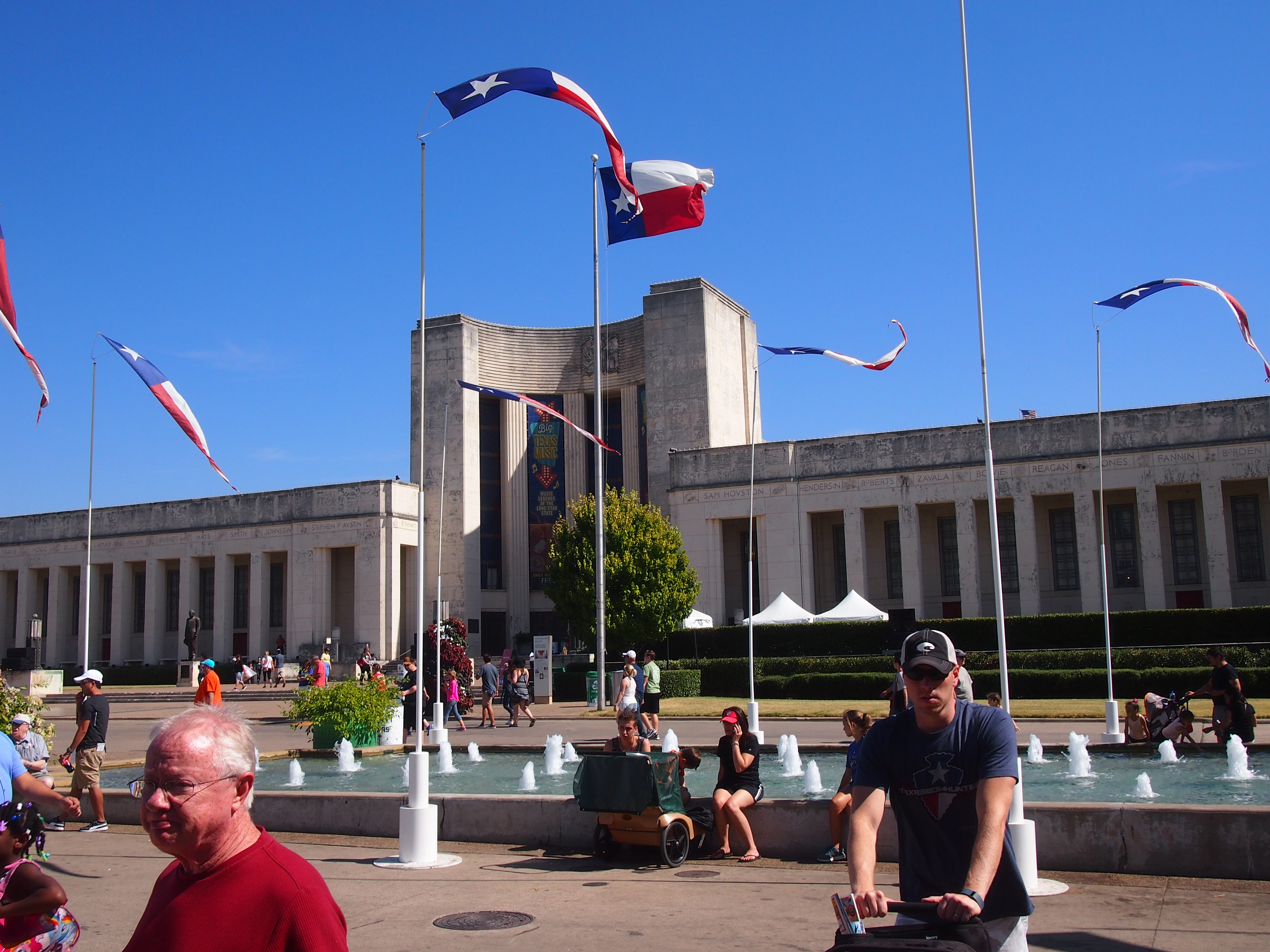
At one end of the Fair Park Esplanade is the Hall of State, a stately hall indeed. “The Hall of State, a museum, archive, and reference library, was erected in 1936 at a cost of about $1.2 million by the state of Texas at Fair Park in Dallas to house the exhibits of the Texas Centennial Exposition and the Greater Texas and Pan-American Exposition of 1937,” explains the Texas State Historical Association.
Hall of State, Fair Park“The structure, designed by eleven Texas architects, is characterized as Art Deco… The front is 360 feet long, and the rear wing extends back 180 feet… The walls are surfaced with Texas limestone. A carved frieze memorializing names of historical importance encircles the building. Carvings on the frieze display Texas flora.”

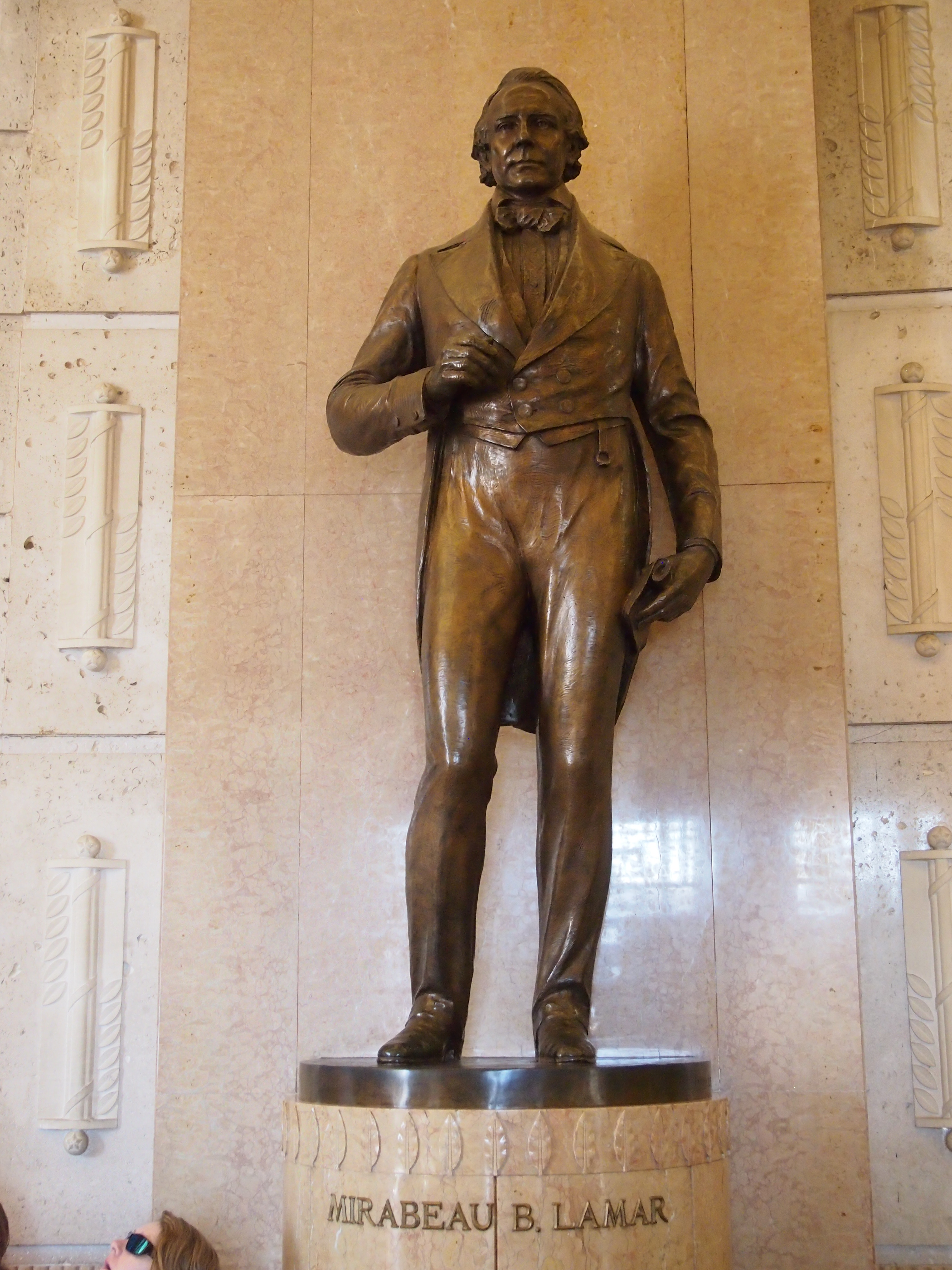
I went inside for a look, and soon was face-to-face — or maybe face-to-plinth — with six statues of early Texas luminaries: Stephen F. Austin, Sam Houston, Mirabeau B. Lamar, James Fannin, Thomas J. Rusk, and William B. Travis. Here’s Lamar (1798-1859), second president of the Republic of Texas, among other things.
MB LamarPompeo Coppini did the sculptures. I’d run across his work before at the Texas State Cemetery in Austin. If it’s a monumental sculpture in Texas done in the early to mid-20th century, odds are he did it.

Then I entered Great Hall.
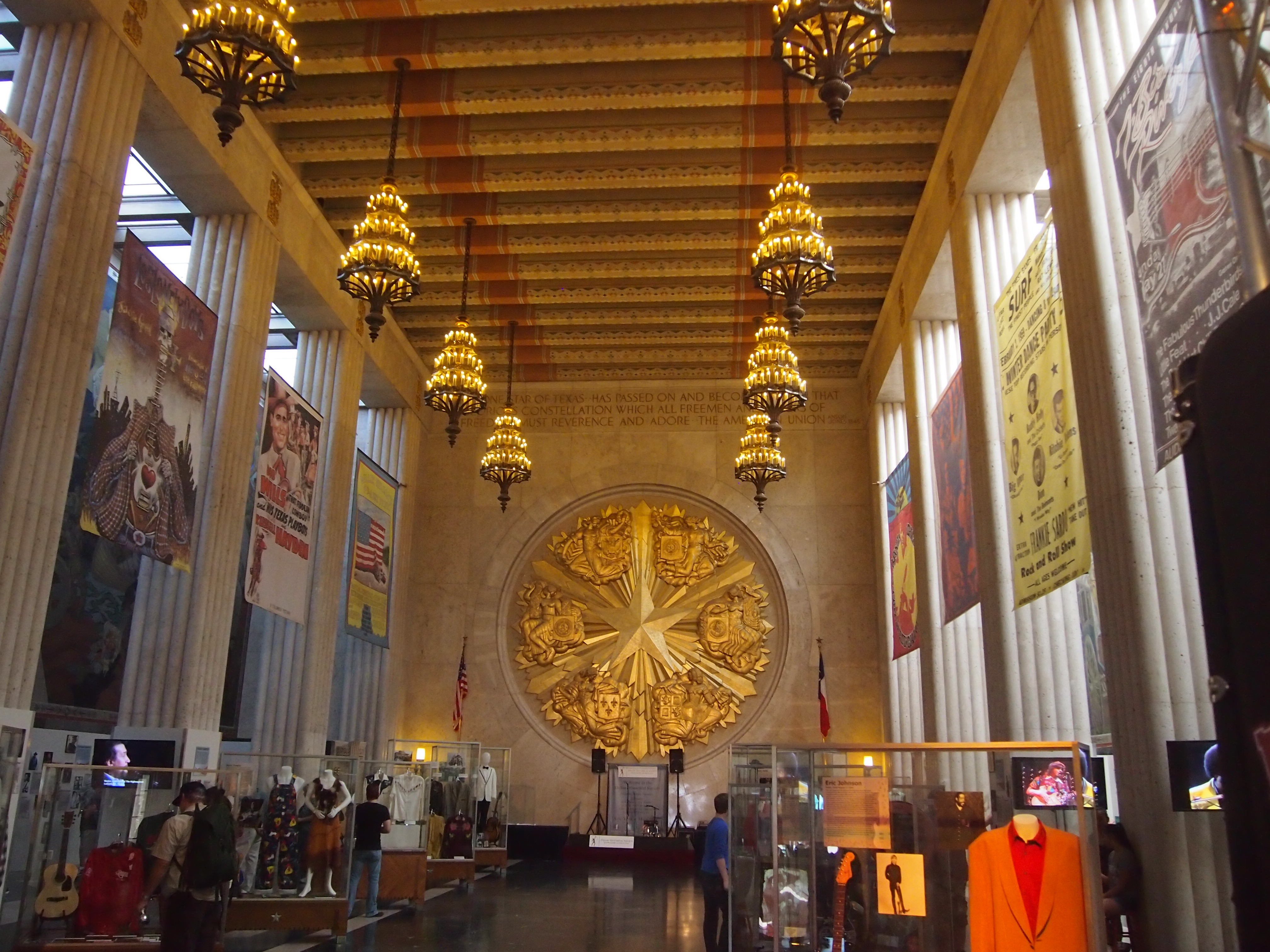
Hall of State, Great HallThe TSHA again: “The Great Hall, or the Hall of the Six Flags, in the central wing, has a forty-six-foot-high ceiling. Murals on the north and south walls depict the history of the state and its industrial, cultural, and agricultural progress. These were painted by Eugene Savage of New York.” I’d run across him before as well.

Great Hall, Hall of StateDuring my visit, the Great Hall happened to be sporting an exhibit about Texas musicians, and I will say that I learned that Meat Loaf was from Dallas, something I didn’t know. Actually I didn’t know much about many of the Texas musicians mentioned in the exhibit, such as various bluesmen and Western swing players and Tejano bands.

On the back wall of the Great Hall is a gold-leafed medallion with the Lone Star emblem of Texas surrounded by representations of the six nations whose flags have flown over the state.
Gold leaf!The United States and the Republic of Texas are at the top; the Confederacy and Mexico in the middle; and France and Spain on the bottom. The six together are a persistent theme in symbolic representations of modern Texas.

The Full Flush of Autumn

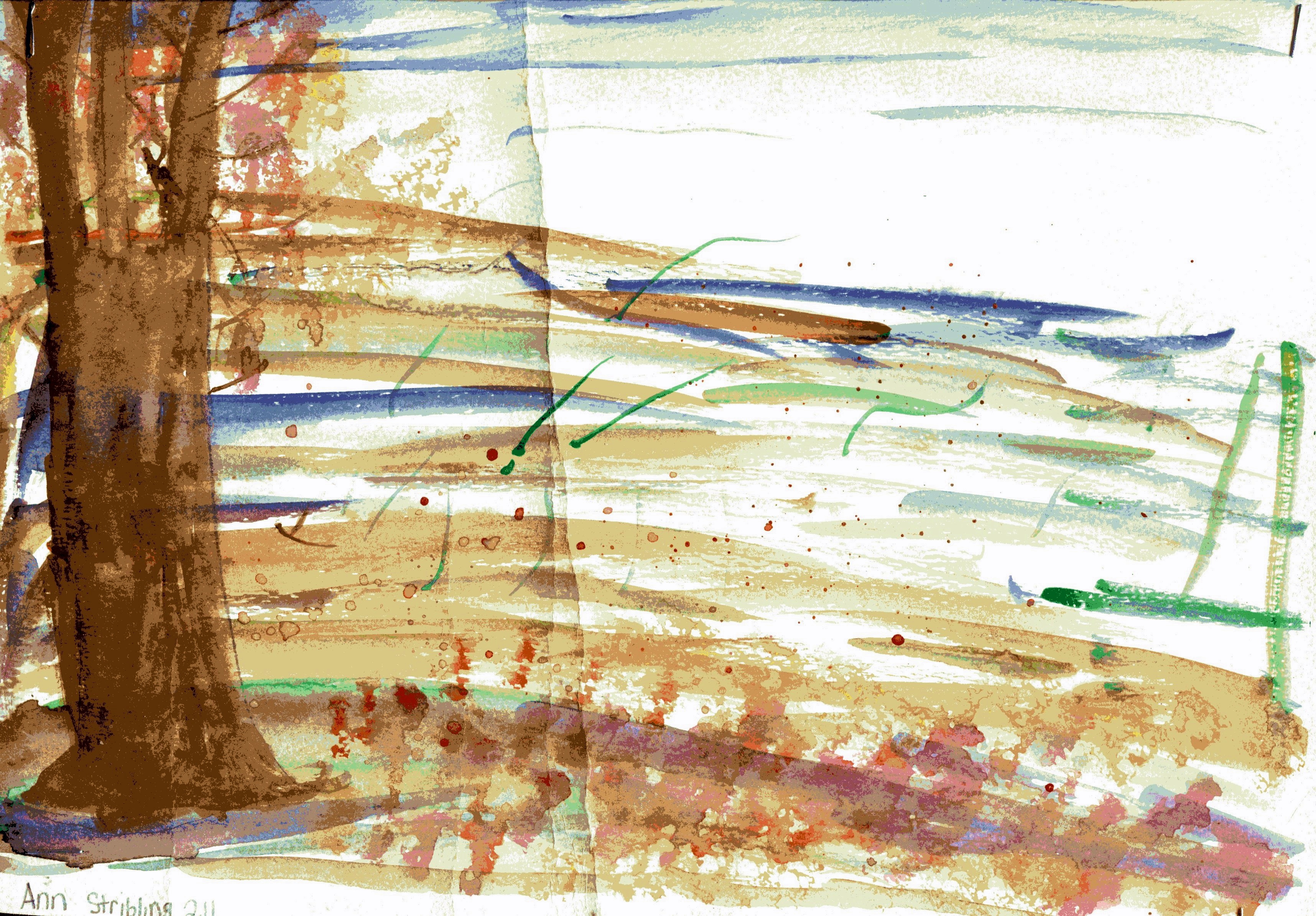
Time for a fall break, as the leaves reach for their peak and get ready to dive to the ground. Back to posting around October 25 or so.

Fall, Ann StriblingProduct recommendation: Trader Joe’s Fig Butter. In the convenient 11 oz. jar, which is careful to tell consumers — Trader Joe’s is a wordy place, anyway — that “there is no butter in it! To be a butter, a spread must have more fruit than sugar.” Yessir, fig paste is the very first ingredient, followed by water and then sugar. Goes well on toast, if you like figs or even Fig Newtons.

Speaking of products, I encountered the following at a Seattle market in August, which I drank sitting near the Fremont Cut (the canal in the background).

KonbuchaIt was OK. I’d call it Kombucha Passable Drink, but that’s just me. The Mayo Clinic notes: “Kombucha tea is a fermented drink made with tea, sugar, bacteria and yeast. Although it’s sometimes referred to as kombucha mushroom tea, kombucha is not a mushroom — it’s a colony of bacteria and yeast…

“Proponents claim kombucha tea can stimulate the immune system, prevent cancer, and improve digestion and liver function. However, there’s no scientific evidence to support these health claims.” Yep, it’s one of those things that’s good for you because a lot of web sites say that it is. Still, I can report that, anecdotally speaking, if it’s a hot day in August and you’re thirsty, you will be less thirsty after you drink it.

The other day I encountered a YouTube posting called Tim Curry Sings the Ballad of Davy Crockett. That alone was enough to get my attention, at least for a moment. Whoever uploaded it, one CBonesmith, asserts that “what you are about to hear is the single strangest musical experience you might ever have.” That’s surely an exaggeration, but it was the strangest musical experience I’ve had in recent memory. You be the judge.

Dog & Butterfly & Maybe a Squirrel

When my dog chases a butterfly, I don’t think it’s in the spirit of playfulness, however it’s characterized in the enigmatic song “Dog & Butterfly.” Not long ago I saw, for the first time, our dog chasing a butterfly, though it might have been a moth, or maybe just a small and less-than-colorful butterfly. Anyway, I’m pretty sure the dog had eating the butterfly in mind.

The dog is keen on catching insects and occasionally does. Fortunately for her, she hasn’t yet caught a bee in her mouth, even though I’ve seen her trying.

Today was warm again and the dog spent longer than usual scanning the upper reaches of the tree in the back yard.

DogI couldn’t make out what she was looking at. A squirrel would be the best guess. Or maybe a tree gnome invisible to us, but not dogs.

The EMP Museum

By chance today I saw about 10 minutes of Pompeii, a movie that apparently came out last year. The scene pitted gladiators vs. Roman soldiers, and clearly the gladiators were the put-upon salt-of-the-earth hero and his friends, while the soldiers fought for a cartoon Roman upper-class twit bad guy. I watched anyway. Nothing like a little implausible sword play to liven your afternoon. It didn’t take long to come to the conclusion that overall the movie was very stupid indeed.

But maybe I should have watched the end. According to Marc Savlov in the Austin Chronicle: “We all know what happens in the end and, to his credit, Anderson [the director] totally nails the vulcanization of Pompeii. You want it? You got it: flaming chariot melees, massive tsunamis, and a downright hellacious pyroclastic flowgasm that makes the ones in Dante’s Peak look like so many Etch-a-Sketch doodlings (all of it shot in well-above-average 3-D). Pompeii delivers the goods – well, at least during its final 20 minutes.”

It took me a while to remember what EMP stands for in the EMP Museum in Seattle, which I visited on the afternoon of August 28. That evening I said (jokingly) that I’d gone to the Electromagnetic Pulse Museum, because I’d forgotten it stands for Experience Music Project.

The EMP is at Seattle Center, just north of downtown. Seattle Center was the site of the 1962 world’s fair, interestingly known as the Century 21 Exposition. EMP didn’t come along until near the actual beginning of the 21st century, back in 2000, as the creation of Microsoft billionaire Paul Allen and right-angle averse starchitect Frank Gehry.

It’s a colorful 140,000-square foot blob of a building, roundly hated by many. I didn’t hate it, but it didn’t inspire much admiration in me either. I’ve seen plenty uglier buildings, following my own visceral and idiosyncratic standard for ugliness, which is uninformed by theory. Most parking garages are worse. So are many brutalist and otherwise concrete-based structures. EMP just seemed like Gehry being Gehry.

I understand it was a technical marvel to build, with more than 21,000 exterior aluminum and stainless steel shingles all uniquely shaped and designed to fit together like pieces of a puzzle, and an interior defined by strange irregular shapes and held up by 280 steel ribs. I found myself looking up at the interior with more admiration than the exterior. The engineers needed a terrific amount of computing power to design and put the thing together, which somehow seems fitting, considering that a software philanthropist paid for it.

Here’s an odd assertion from the museum: “If [the building’s] 400 tons of structural steel were stretched into the lightest banjo string, it would extend one-fourth of the way to Venus.” That must mean the average distance, since the true distance from the Earth to Venus changes every moment. Or maybe it means the distance between the orbits of Earth and Venus.

Wonder how many ping-pong balls it would take to fill it. Someone at the museum needs to figure that out.

Richard Seven wrote in the Seattle Times in 2010: “A smashed guitar, in honor of Seattle’s Jimi Hendrix and his rebellious style, was the inspiration and template. But the real collision was between one of the world’s most relentlessly anti-box architects, an unfathomable task of trying to freeze the rock ‘n’ roll process, and a wealthy private client who embraced the costs and advances in computing and engineering that allowed a building like that to even stand…

“When he toured the building just before it opened in the summer of 2000, Gehry told reporters, ‘It’s supposed to be unusual. Nobody has seen this before or will see it again. Nobody will build another one.’ ” Probably so.

As a museum, EMP is devoted to pop culture. Though “music” is in the name — and Jimi Hendrix and Nirvana each have their own galleries — that’s only part of the equation. One of the current exhibits, for instance, is “Star Wars and the Power of Costume,” which sounds like a display of costumes from that franchise. It cost extra, so I took a pass.

I didn’t miss “What’s Up Doc? The Animation of Chuck Jones.” That alone was almost worth the inflated price of admission to EMP. Besides original sketches and drawings, storyboards, production backgrounds, animation cels, photographs, and a fair amount to read, there was the opportunity to see cartoons on big screens, such as “What’s Opera, Doc?”, one of the Roadrunner cartoons — I forget which, not that it matters — and “One Froggy Evening,” which I probably hadn’t seen in more than 30 years, and which I didn’t fully appreciate when young. Especially the notion of a frog singing tunes from the 1890s.

The museum features some impressively large installations. One is made of guitars. A lot of guitars, arrayed upward in a kind of mass cone of guitars (and banjos and keyboards and other musical instruments) two stories high. The work is called “IF VI WAS IX,” and it was put together by a Seattle artist who goes by the single name Trimpin.

It’s more than just a cone of instruments. EMP notes that “short stretches of music were played into a computer then organized by Trimpin into a continuous electronic composition, with notes assigned to specific instruments. Customized robotic guitars play one string at a time. Six guitars work together to create the sound of one chord—a mechanical metaphor for how musical styles and traditions continue to influence one another.”

Nearby is the “Sky Church” room, whose main feature is a 33’ x 60’ HD LED screen that projects images on (from?) an enormous wall. The 65-foot ceiling is illuminated with parasols that seem to float overhead, and the space is well equipped with special-effects lighting. Technically impressive.

The perfect venue for, say, the restored color version of A Trip to the Moon. Or “Steamboat Willie.” Or “Duck Amuck.” Or the “Thriller” music video. Or any of many possibilities. All short, all worth seeing on a vast screen. Maybe shorts like these play at the Sky Church, but the day I was there, the venue seemed mostly to pump out music videos for people under 30.

I’ve read that the full name of the museum used to be the Experience Music Project and Science Fiction Museum and Hall of Fame (with the clunky initials EMP|SFM), but some years ago, the science fiction aspect was demoted. The museum still covers science fiction, as well as the horror genre, but in two galleries in the basement.

Not bad displays. I enjoyed seeing an assortment of SF movie and TV show props, such as the original Terminator’s leather jacket and I forget what else (no Lost In Space Robot, though), and playing with at least one of the interactive features: a large globe that would take on the likeness of each of the Solar System’s planets, along with the Moon (and Titan?), at the touch of a button.

Oddly enough, I got more out of the horror exhibit than the SF one. Besides static displays and props and the like, the horror gallery included a number of alcoves in which you can watch well-made short films on various renowned horror movies. These proved interesting, even though I don’t much care one way or the other about the genre.

Because of these shorts, I’m now inspired to watch two horror movies I’ve never gotten around to: The Cabinet of Dr. Caligari and The Exorcist. The former was on TCM late Sunday night, but I didn’t want to stay up late to watch it; such is middle age. I did see the haunting green credits, however, and I’ll get around to the whole thing before long.

There’s also a first-floor gallery devoted to the fantasy genre, but by the time I got there, I was a little tired of the museum. At least I happened to see the costume that Mandy Patinkin wore as Inigo Montoya.

As mentioned, two Seattle musical acts, Jimi Hindrix and Nirvana, had their own galleries. Of the two, I spent more time in the Hindrix room, despite being too young when he was alive to fully appreciate his talents, since he was common enough on the radio well into the 1970s. As for Nirvana, I was too old to appreciate them when they were around, and in fact out of the country during their heyday. I remember hearing about Kurt Cobain’s suicide right after I arrived in Hong Kong in April 1994, and my first thought was, Who?

Both galleries apparently change from time to time, rather than being generic tributes to the artists. The Hendrix exhibit I saw was  “Wild Blue Angel: Hendrix Abroad, 1966-1970.” It detailed his travels as a successful musician. As the museum explains: “At the height of his fame, Jimi Hendrix performed more than 500 times in 15 countries and recorded 130 songs in 16 studios. He was a musical nomad, his life an endless series of venues, recording sessions, flights, and hotels.”

His passport was on display. I got a kick out of that. Even better, while the original was behind glass, you could leaf through a replica, which I did. The dude got around.
Thursday Scraps

Last year my part of the suburbs was lousy with skunks. For whatever ecological reasons, the population was up — so much so that both Lilly and I saw them prowling the streets at night.

This year, not so much. This year, it’s rabbits. Yesterday I looked out my office window, which faces my front yard, and saw two, each helping to trim the lawn. I’ve seen single rabbits frequently in both yards, and in parks, but never two at the same time.

rabbits June 2015The dog would have had a barking fit if she’d seen them. But she didn’t.

Not long ago I woke up thinking, why are sidekicks just for superheroes and singing cowboys? Why not for other, less fictional occupations? Some examples:

Ben Smith, CPA, and his sidekick Tuck.
Deepak Patal, Ph.D., and his sidekick Hadji
President Clinton and her sidekick Slick (still hypothetical)

Earlier this month I was driving west on North Ave. in Glendale Heights, Ill., which is a western suburb, and decided I needed to go east, so I turned north on Glen Ellyn Rd. to find a convenient place to turn around. And then I discovered Easy Street. So I drove down Easy Street, just to get a look at the houses of the people who Live on Easy Street. More carports than usual in the Chicago suburbs, but other than that it looked fairly ordinary.

Occasionally, as in once every few years, the urge to listen to early ’80s German-language rock ‘n’ roll is just too strong to resist. We all feel that way. No? Well, I feel that way now and then, and the Spider Murphy Gang is just the thing for it. There’s always “Schickeria.” or “Skandal im Sperrbezirk.”

Waterloo and All That

Been quite a week for multi-centenary anniversaries. After Magna Carta earlier this week came Waterloo today, so famous you don’t even need to call it the Battle of Waterloo. It was the occasion for a lot of showy commemorations in the UK and Belgium (and what are they doing in France? Calling it jeudi, probably).

I guess everyone was busy with other things during the centennial, so the bicentennial got star treatment. The Daily Mail has a fine collection of photos for the commemorations. The pics made me wonder: will the fellow who’s playing Napoleon, according to the caption a French lawyer named Franck Samson, be sent to St. Helena for a while now? You know, to buttress the re-enactment’s authenticity.

The Daily Mail again (man, they know how to use the Internet): pictures of St. Helena. Apparently the island’s going to get a real airport soon, so that the not-so-frequent royal mail ship from Cape Town will be a thing of the past.

One more thing about Waterloo re-enactments: I wonder who played Gebhard Leberecht von Blücher? That’s a pretty important part, after all. An elderly German with a taste for re-enactment, no doubt, made up to look like his horse had fallen on him.

As I look around, I find more things inspired by Waterloo. That’s one of the time-eating dangers of the Internet, but also its prime joy. The song that helped propel Abba to a higher income than the GDP of Sweden (or something like that) was named “Waterloo,” of course, but there’s also a song lost to time of the same title, recorded by Stonewall Jackson in 1959, which hit the country charts just after Johnny Horton’s “The Battle of New Orleans.” It was the golden age of battle-themed honky-tonk music, clearly.

Stonewall Jackson’s song includes the following deathless lyrics. Punctuated as I hear it.

Little general, Napoleon of France
Tried to conquer, the world but lost his pants.
Met defeat, known as Bonaparte’s retreat.
And that’s when Napoleon met his Waterloo.

Incidentally, at 82, Stonewall Jackson — reportedly not a stage name, and I believe it — is still with us. That’s good to know.