My Online Encounter With Yabba

I woke up this morning wondering, is there really a statue of a baseball player in London? I dreamed about it. I made notes in my dream, so that I could write about it. I didn’t think it the least bit odd. Such are dreams.

As far as I can tell, there are no such statues, at least not in a public setting. I didn’t spend a lot of time looking into it, though. But I did come across the Sporting Statues Project, which seems to list sport-themed statues all over the world. I looked at a couple of its maps out of idle curiosity, including the World Cricket Statue Location Map. At a glance, you can see where people care about cricket: the UK, the Indian subcontinent, Australia and the Caribbean.

Look a little further and you can examine curious works like “Yabba.” The web site says: “Sydney Cricket Ground. ‘Yabba’ (Stephen Gascoigne). A tribute by the Sydney Cricket Ground Trust to every spectator who has ever come to these Grounds. Sculptor: Cathy Weiszmann. Benefactor: Basil Sellers.”

“Yabba” was one Stephen Harold Gascoigne, “remembered as a heckler at Sydney Cricket Ground cricket and rugby league games in the early part of the 20th century. Yabba was known for his knowledgeable witticisms shouted loudly from ‘The Hill’, a grassy general admissions area of the SCG.” – Wiki

Good useless fact for the day. You never know where your dreams will lead you.

Things You See in Mount Carroll

Somewhere or other at some time, I read that Mount Carroll, Illinois, had enough things to see to recommend a short visit (how’s that for source amnesia?). Wherever I got it, I can pass along that recommendation. It’s a small place, with only about 1,800 people, but it has a sizable concentration of historic structures. We took a look at a few of them on the afternoon of June 20.

That includes a fine courthouse, the Greek Revival part of which dates back to before the Civil War. Elsewhere on the courthouse grounds are a few monuments – but not quite as many as some courthouses I’ve seen – including a tall one dedicated to Union veterans. Turns out that Lorado Taft sculpted the cavalryman at the top of the monument, which is formally called the Carroll County Civil War Soldiers And Sailors Monument.
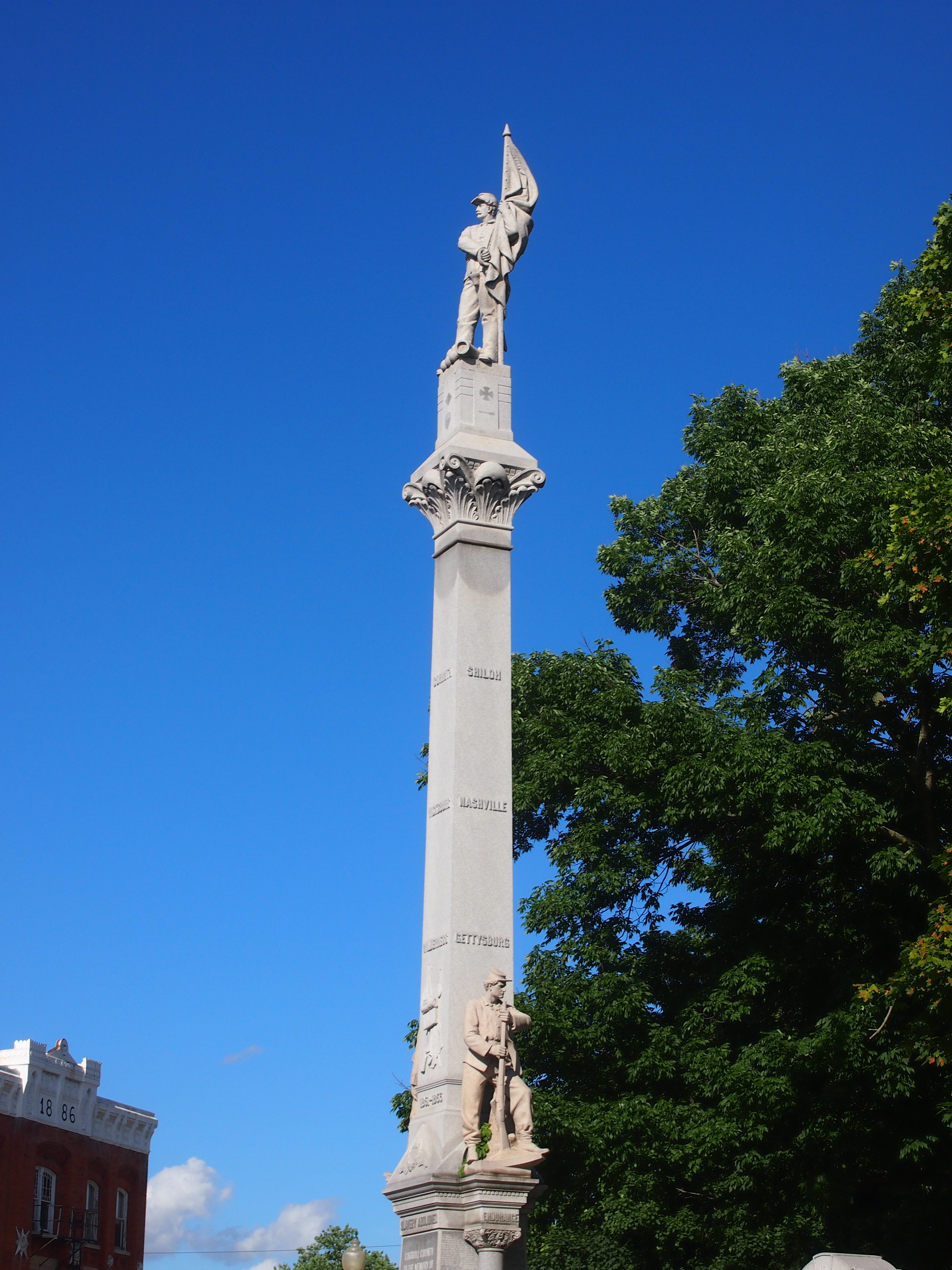
Mount Carroll, June 20, 2014

Writing in the short-lived blog Larado Taft: The Prairie State Sculptor, Carl Volkmann says, “Lorado Taft was a member of a team of artists who was commissioned to create the Carroll County Civil War Soldiers And Sailors Monument. George H. Mitchell designed the monument, and Josiah Schamel constructed the foundation. John C. Hall designed the annex that was added later when county officials determined that there were many names missing from the original honor roll list.

Mount Carroll, June 20, 2014“The monument consists of a fifty-foot vertical shaft with a Lorado Taft-sculpted soldier holding a flag at the top. Lewis H. Sprecher of Lanark posed for the statue and made several trips to Taft’s Chicago studio to model for it. Two additional statues are attached to the base of the monument, one an infantryman and the other a cavalryman.”

Not far from the town square is a genuine, honest-to-God Carnegie Library that is, in fact, still a library. We went in for a look around. It seemed like a nice facility for a town the size of Mount Carroll. We were the only ones in the library except the librarian – it was about 30 minutes ahead of closing time on a Friday afternoon – and I spoke briefly to her, telling her that I wanted to show my daughters what a Carnegie Library was. I also wanted to come in because they aren’t exactly common sites.

Later, I checked, and my feeling wasn’t quite right. At least according to this Wiki list, some 60-odd Carnegies are still functioning libraries in Illinois alone, out of more than 100 originally built. Seems like most of them are in small towns away from metro Chicago, so unless you frequent that kind of small town, you won’t see them much.

Just before we left town, we came across something that’s presumably not always near the courthouse in Mount Carroll: this unusual car.
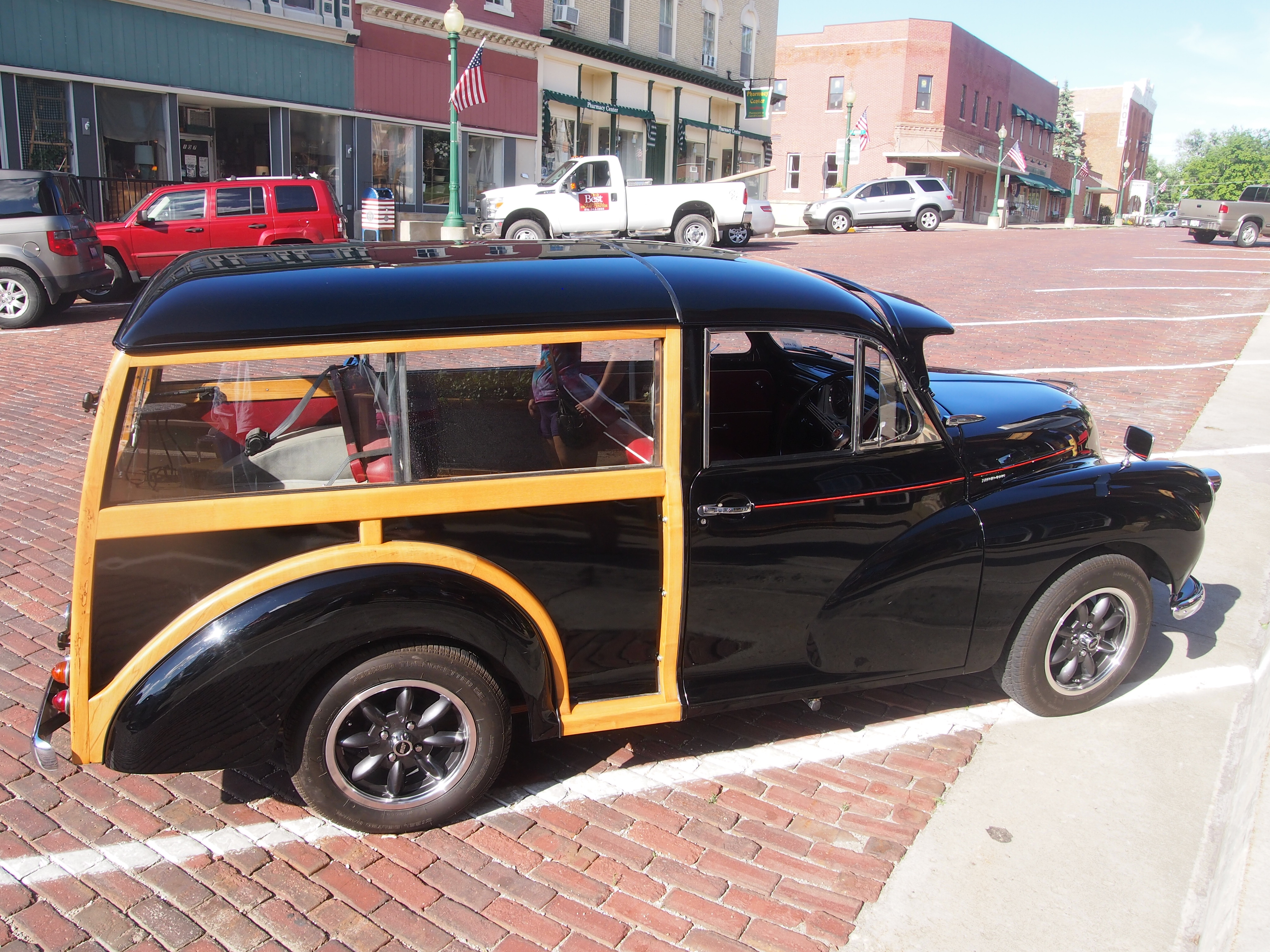
Mount Carroll, June 20, 2014Unusual for American roads, that is. I don’t think I’ve ever seen a Morris Minor in this country. It’s so unusual that besides it being a Morris, I didn’t know anything else about it.

Naturally, I had to look it up. Through the marvel of Google images, I was able to pin it down to a Morris Minor 1000 Traveller. In its pages on Morris Minor history, Charles Ware’s Morris Minor Centre Ltd. in Brislington, Bristol, says “there is only one other car on British roads today which is as familiar as the Morris Minor, and that’s the Mini. That both were designed by the same man is no coincidence, and indeed Sir Alec Issigonis is one of the very few car designers whose name is recognised by the man or woman in the street and not just by enthusiasts or fellow engineers. [This might be true in the UK, but I have no way to judge that.]

“The products of Sir Alec’s genius have had a profound and highly beneficial influence on the British motor industry, so it is hardly surprising that it is his first car, the Morris Minor of 1948, which has become the subject of this proposal for a long-life car.” Morris Minor 1000 Traveller, Mount Carroll, Illinois, June 2014

More about Sir Alec here. I’m not sure I’d want to own a Morris Minor myself, but it’s a distinctive design. Good to see one loose on the roads of North America. I’m glad there are enthusiasts in this country. Any fool with money can buy a snazzy new sports car or a Lexis or the like, but it takes some imagination to invest in a Morris Minor.
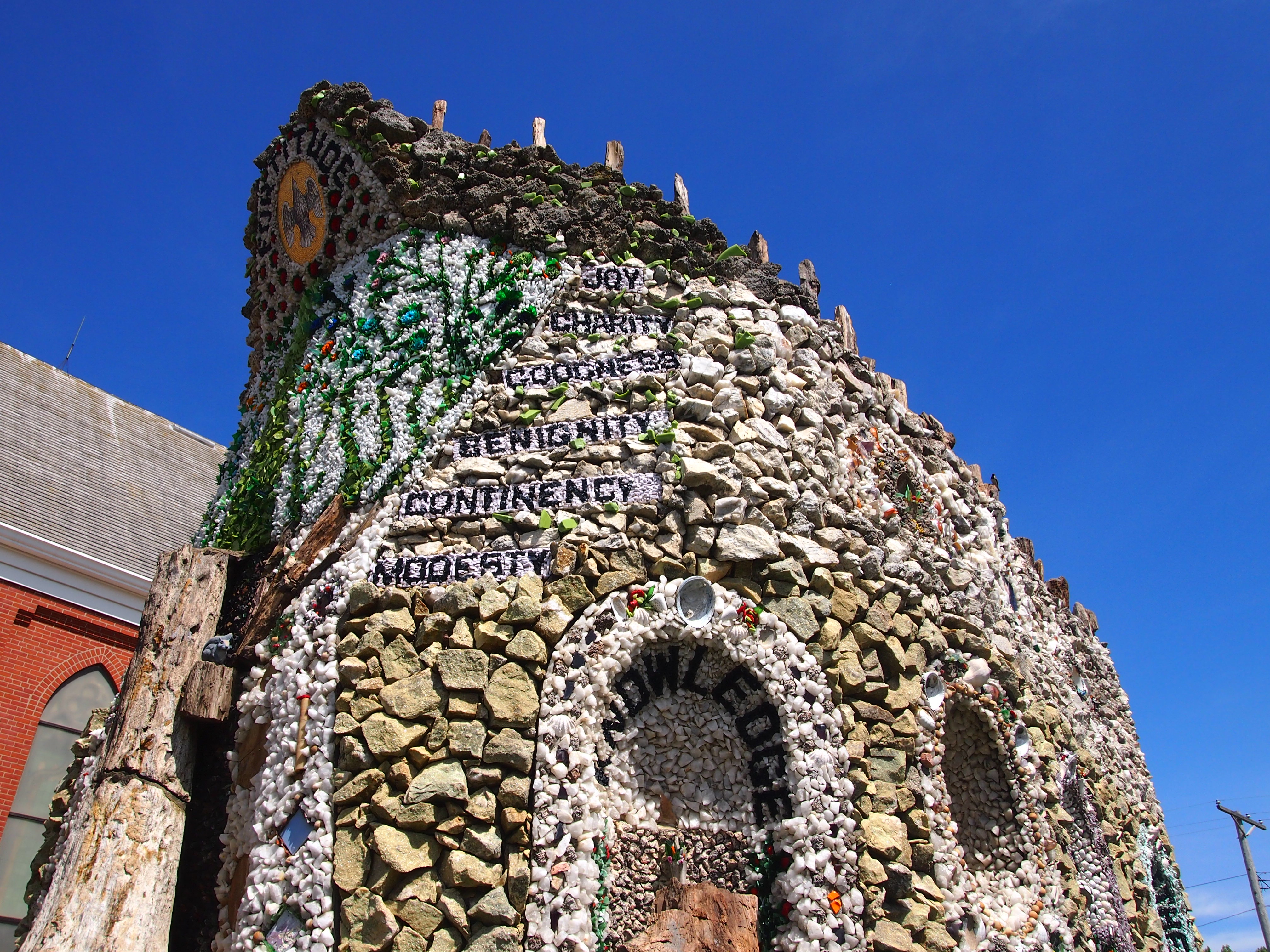
The Dickeyville Grotto

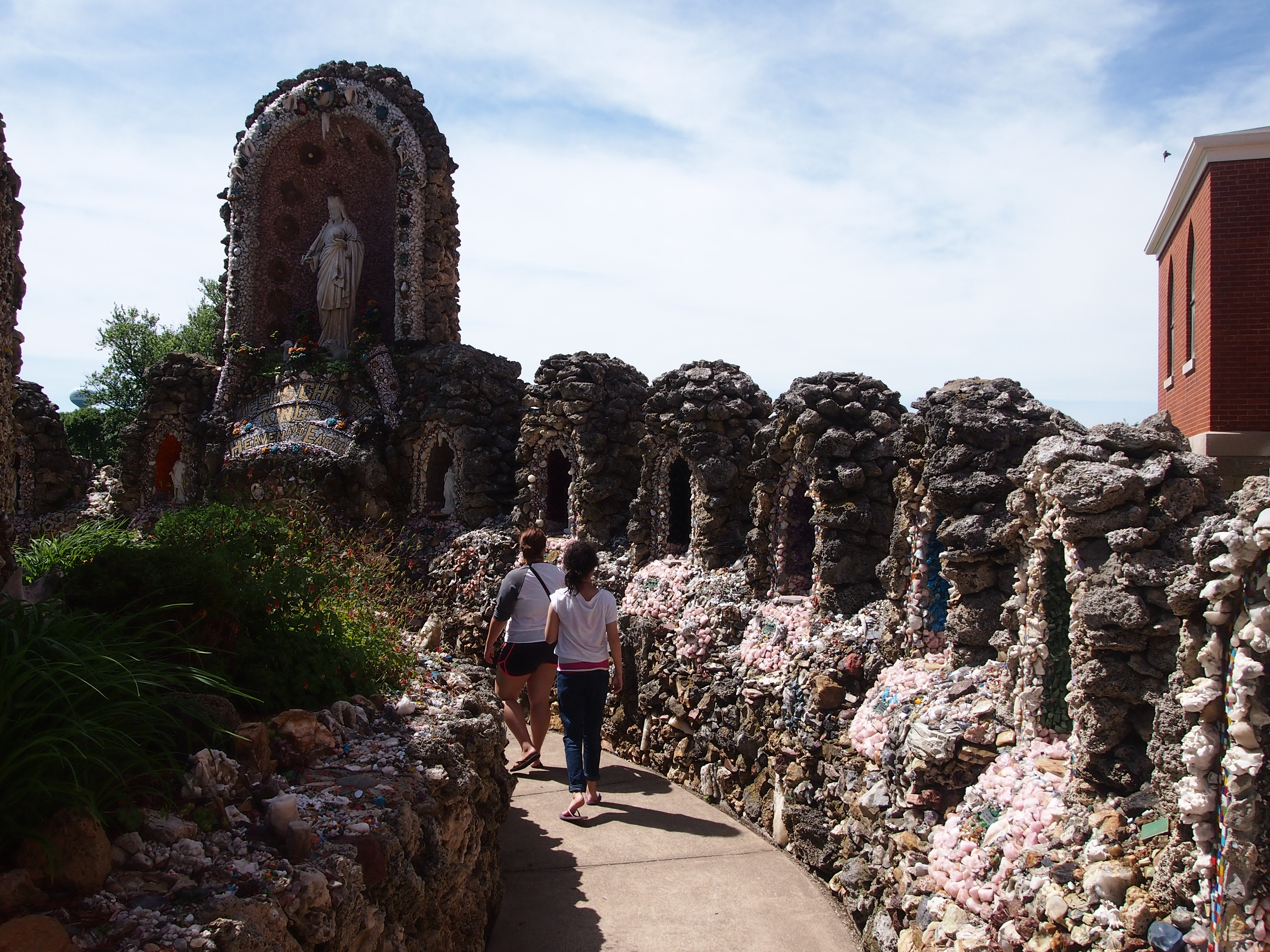
Writing for PBS, cultural anthropologist Anne Pryor says that, “In Dickeyville [Wis.], one of the area’s small towns, is Holy Ghost parish, the home of a remarkable piece of folk architecture. Situated between the rectory, church, and cemetery is the Dickeyville Grotto, a structure so amazing that I have seen unsuspecting drivers come to a full halt in the middle of the road to gape. What stops them short is a 15-foot-tall false cave, decoratively covered with colored stone and glass, dedicated to Mary the mother of Jesus, to God and country.

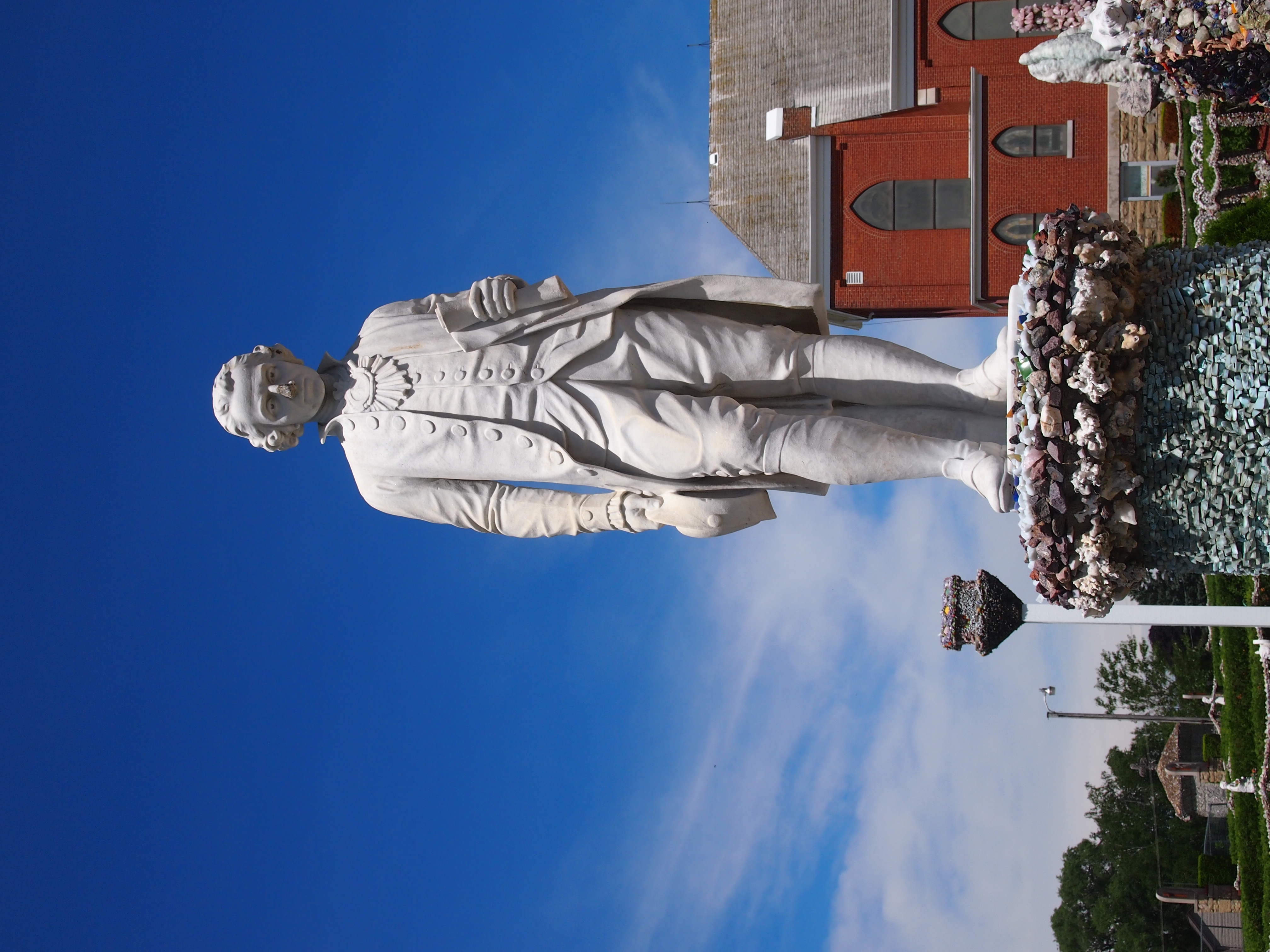
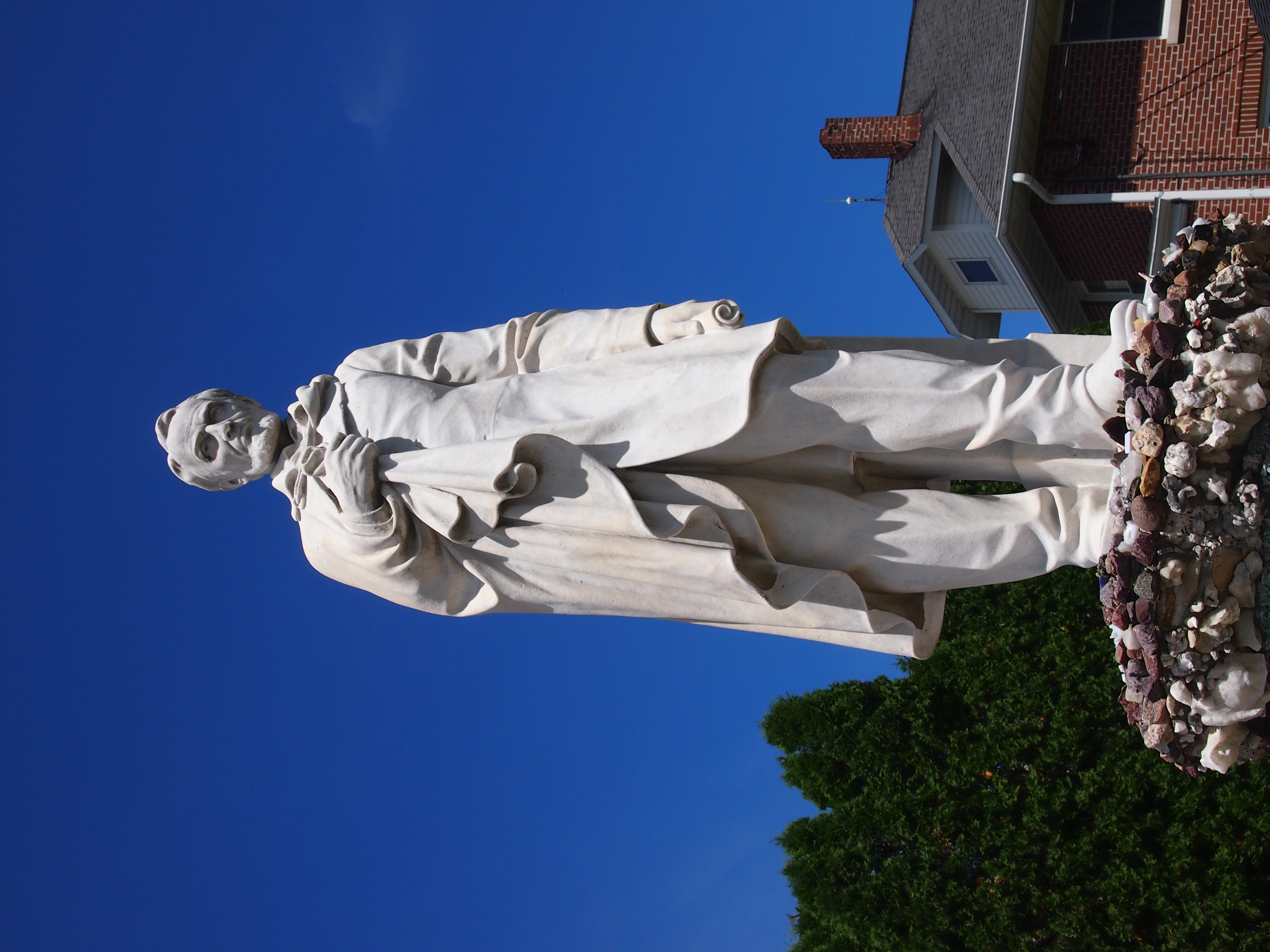
“Although the name implies a singular structure, the Dickeyville Grotto is actually a series of grottos and shrines. It includes the grotto dedicated to the Blessed Mother, the structure seen from Highway 61; a shrine dedicated to Christ the King; a shrine to the Sacred Heart of Jesus; and a Eucharistic Altar in the parish cemetery, formerly used for annual outdoor Corpus Christi processions. The large Patriotic Shrine depicts the history and love of country represented by Columbus, Washington, and Lincoln.

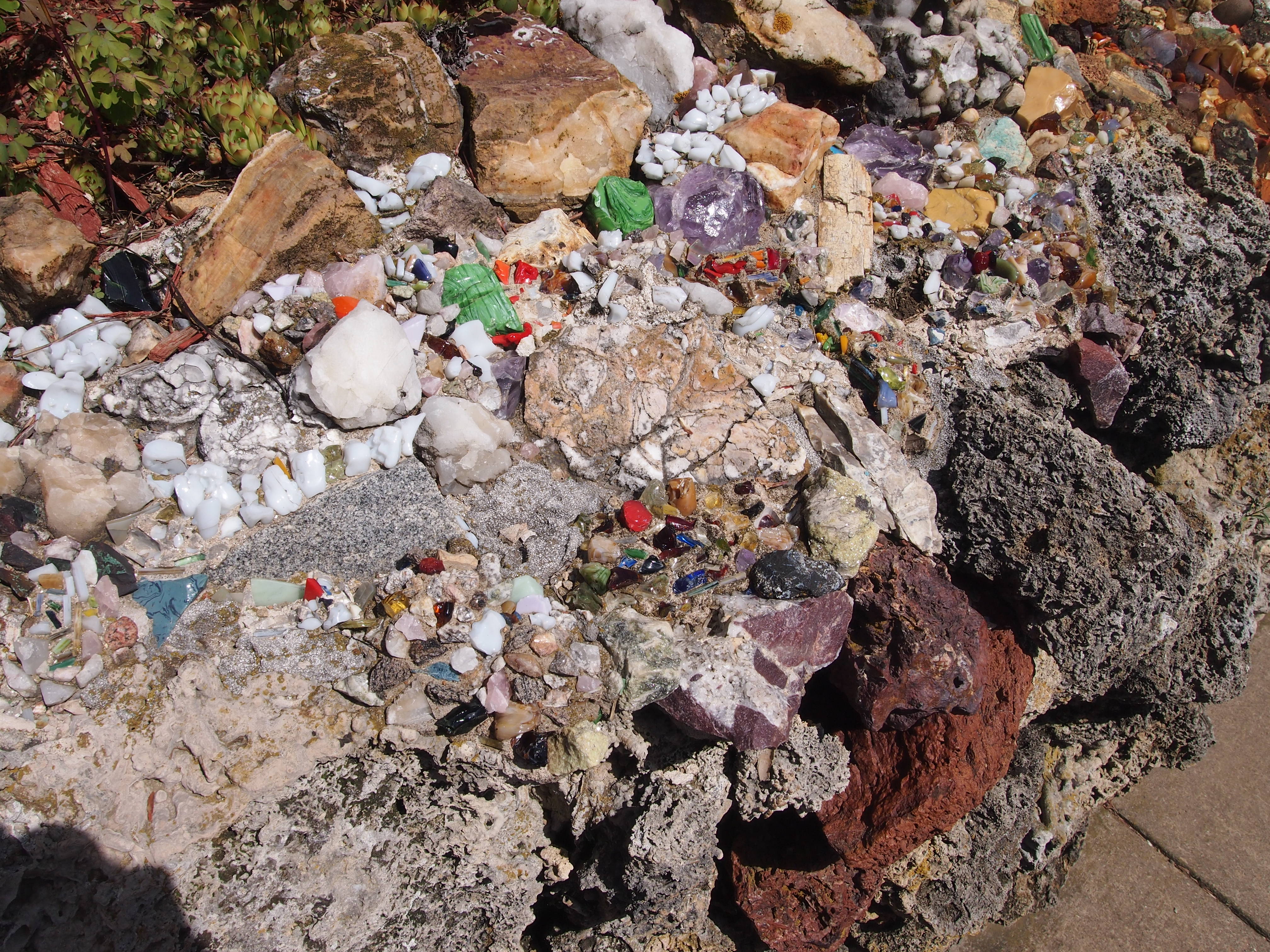
“All of these creations display decorative embellished cement ornamentation achieved by placing patterns of colorful materials in the concrete when it is still damp: shells, stones, tiles, glass, petrified moss or wood, geodes and gems. Iron railings with the same distinctive decorations border the walkways between the different shrines and grottos, unifying these separate structures.”

We arrived at the Dickeyville Grotto late in the morning on Sunday, when it was already sunny and very warm. The Blessed Mother grotto is striking indeed, and in case there’s any doubt, the site proclaims itself to be about RELIGION and PATRIOTISM. (And another sign mentions the gift shop.)Dickeyville Grotto, June 2014Dickeyville Grotto, June 22, 2014Here’s the back of the Marian grotto. Virtues are literally written in stone.

OLYMPUS DIGITAL CAMERAMost of the surfaces are as colorful as can be. Under strong sunlight’s a good way to see it.

Dickeyville Grotto, June 2014Father Mathius Wernerus, priest at Dickeyville’s Holy Ghost Parish, and his parishioners built the grotto during the late 1920s. It was renovated in the late 1990s. The timing of its origin must account for the aforementioned and odd (to us) Patriotism Shrine, with Columbus, Washington, and Lincoln. The patriotism of U.S. Catholics was widely and openly questioned at the time, so it makes sense.

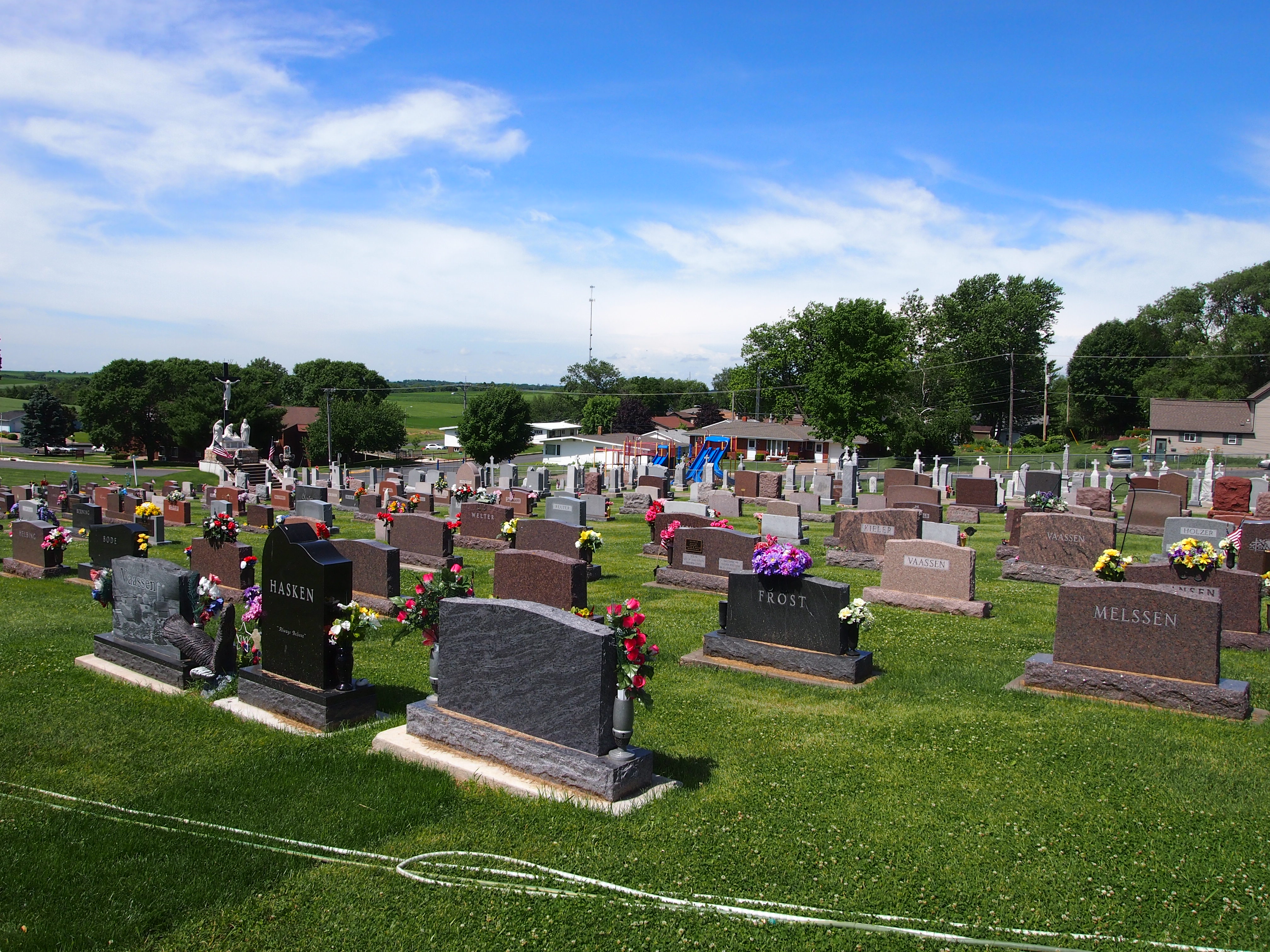
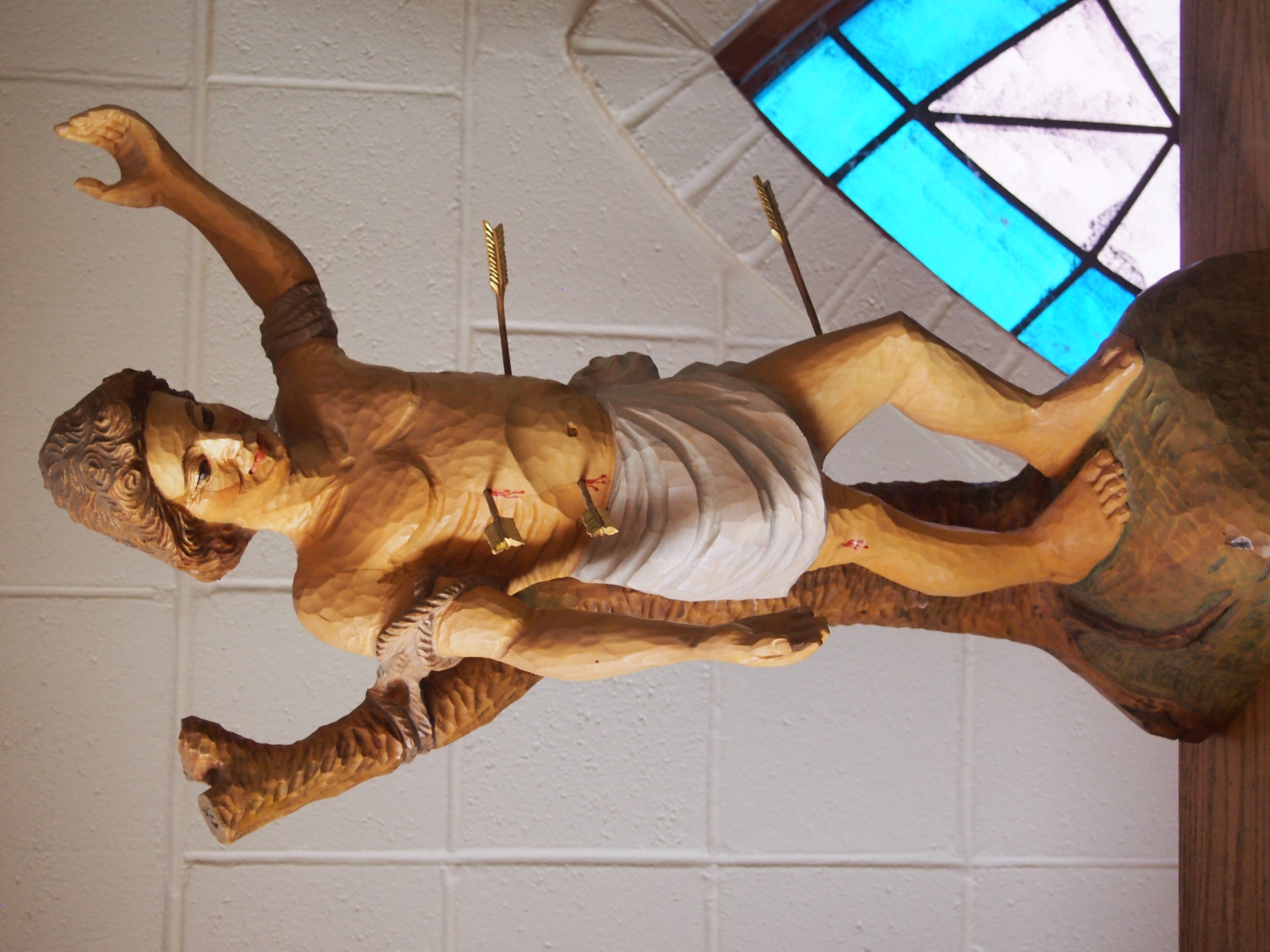
Dickeyville Grotto, June 2014Dickeyville Grotto, June 2014Also worth seeing at Holy Ghost Parish is the cemetery, which fulfilled my informal requirement of at least one cemetery visit per trip. While my family poked around the gift shop, I strolled through the cemetery. Not a lot of fancy funerary art, but still a handsome array of gravestones in a bright Midwestern setting. The most interesting stone I saw was a large one depicting a large farm, which presumably the deceased had owned and operated.Holy Ghost Parish, Dickeyville, Wisc., June 2014Also worth seeing, and not just for the air conditioning, was the church building. Its stained glass is nice, and tucked away in the landing of the stairway that connects the basement and the nave are a couple of statues with themes you don’t see that often (at least I don’t), such as St. Sebastian, whom I’ve seen depicted more often in paintings.

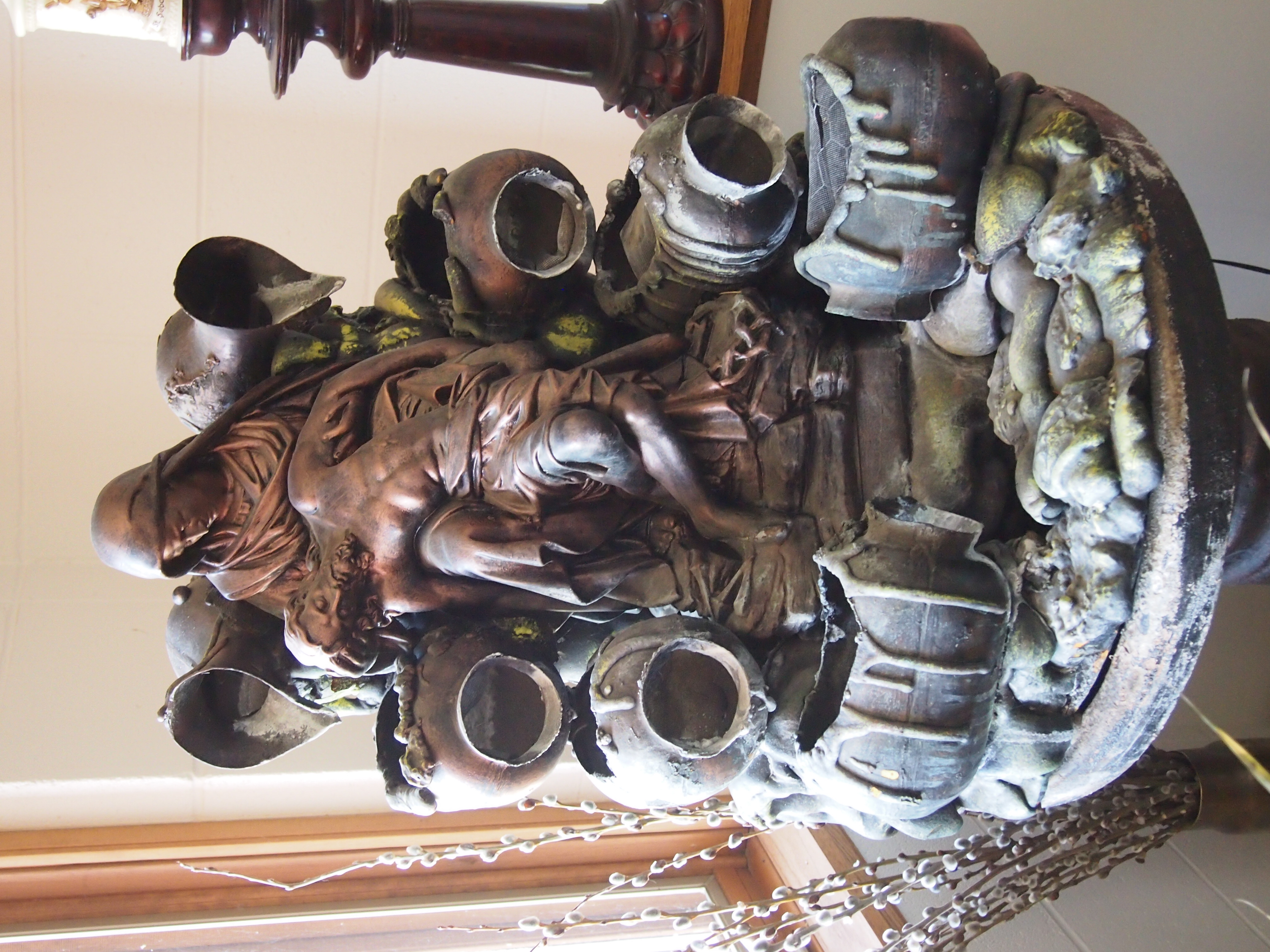
Holy Ghost Parish, Dickeyville, Wisc., June 2014 And this pietà. Maybe I’m not up on my Christian symbolism, though I have heard of broken vessels standing in for us sinners. But I’ve never seen a statue quite like this.

Holy Ghost Parish, Dickeyville, Wisc., June 2014I didn’t see anything to identify the work or the artist, so I’ll have to leave it at that. Enough to say that Holy Ghost Parish and its vernacular grotto were well worth detouring a few miles into extreme southwestern Wisconsin to see.

Big Buddhas ’94

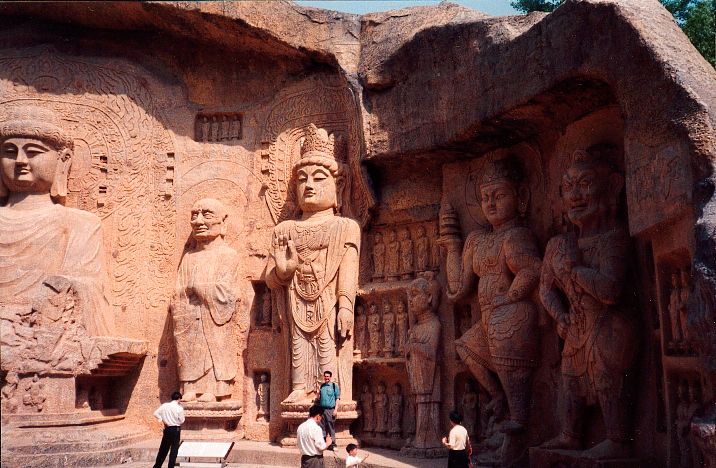
Go to Asia, see Buddhas, big and small. Or, to be more exact, Buddharūpa of various physical sizes. In early May 1994, we were in Hangzhou, China, and took a bus out to see Lingyin Temple, which I called “Lurgyin Temple” the last time I wrote about it (clearly a transcription error).

“The grounds featured a multitude of buddhas, most looking Indian in inspiration, some remarkably large, with huge feet and hands, carved into the side of a bluff,” I noted. “The place was nearly as popular as the West Lake, so the translation of the temple’s name, the Temple of Inspired Seclusion, didn’t apply any more, or at least on warm spring weekends.”

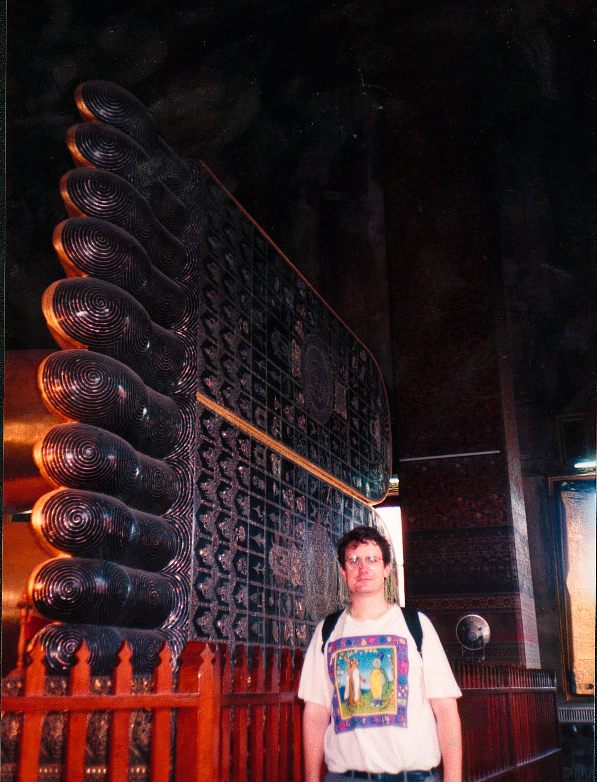
HangzhouBy early June, we were in Bangkok, where we saw more big Buddhas. Including a favorite of mine, the famed Reclining Buddha of Wat Pho. The image is about 16 feet high and 140 feet long, with the right arm supporting the head. Down at the other end, you get a good look at the enlightened one’s feet.

BuddhaToesThese are the feet and toes of Buddha. The bottom of the feet are inlaid with mother-of-pearl, as can be seen here, and supposedly there are 108 designs, though I didn’t count them. One-hundred and eight is an important number in Buddhism, but I’m a little fuzzy on the details, and explanations I’ve read and heard haven’t helped that much.

On New Year’s in Japan, Buddhist temples chime their bells 108 times; there are supposedly 108 earthly temptations to overcome to before achieving nirvana, one of which must surely be an obsession with pachinko.

Washington-on-the-Brazos State Historic Site

Not far south of College Station and Bryan is Washington, Texas, an unincorporated place with a small population. In some alternate universe, it’s a major city sprawling along the Brazos River in Washington County – and it’s the capital of Texas (the state, or an independent nation; maybe that’s two different alternatives), best known for a large public university, its tech industry, and a thriving music scene. Popularly called Brazos, to distinguish it from that other Washington on the Potomac, the city also has a countercultural streak: Keep Brazos Weird, the bumper stickers say.

For a while, little Washington on the Brazos River was the capital of the Republic of Texas – 1842 to the end of independence in 1845, but then a town further west permanently won the prize of state capital, where it remains. Along the way, the back-and-forth of the Texas capital location led to the odd incident known as the Archive War, which wasn’t really a war, and which I don’t remember being discussed in 7th grade Texas History class.

These days, Washington, Texas, is best known as the site Texas declared independence from Mexico in 1836, a fact that was taught in Texas History class. That event is memorialized at the 293-acre Washington-on-the-Brazos State Historic Site, owned and operated by the Texas Parks and Wildlife Department. More about it here.

Jay and I took a look at the site on the way from College Station to San Antonio on April 25. I’d never visited before. The site has three major components: Independence Hall, the Star of the Republic Museum, and the Barrington Living History Farm. We saw the first two, along with the visitors center, where we each bought a small Come and Take It flag in the gift shop because how many places can you do that? (Amazon doesn’t count.)

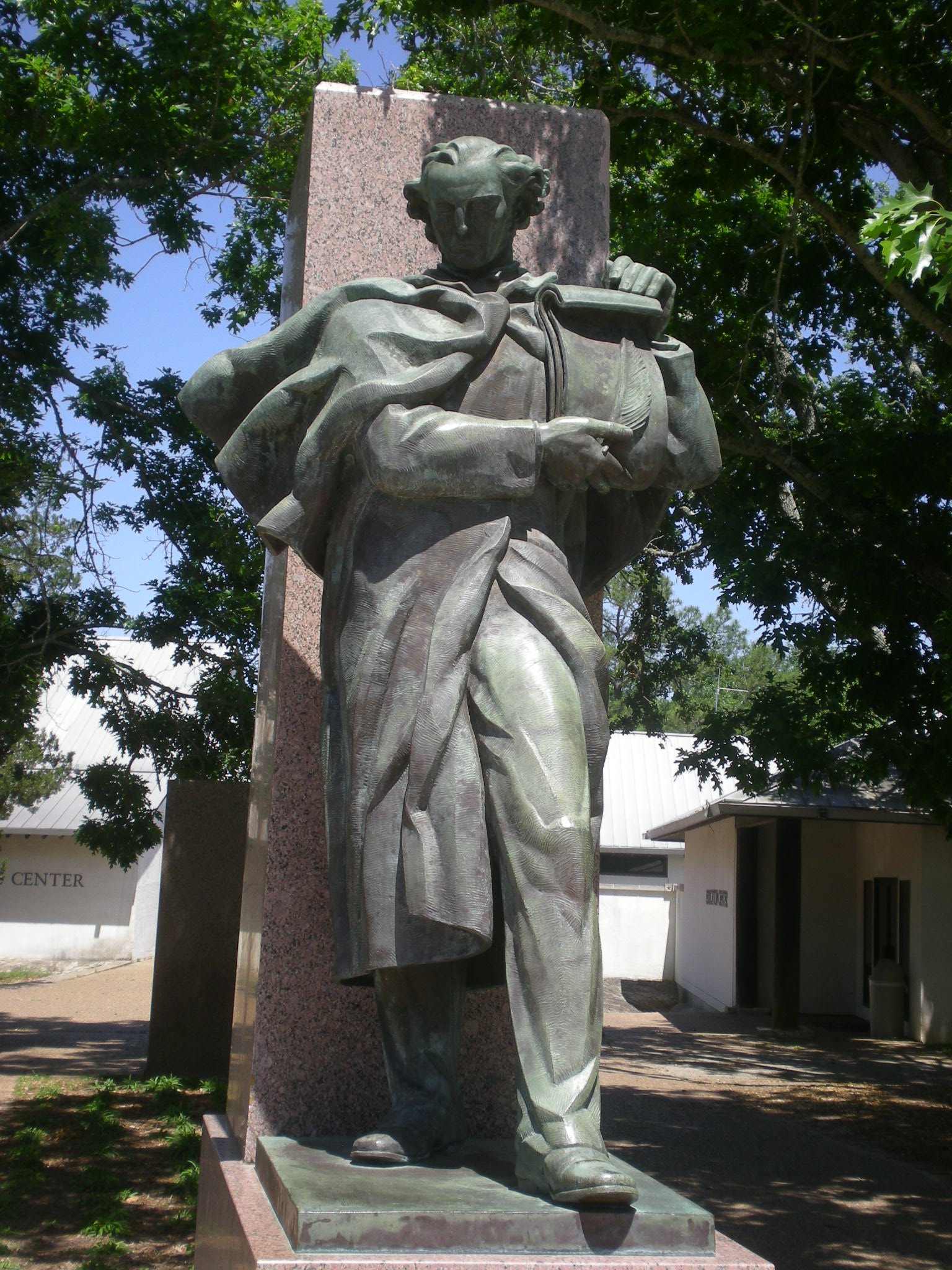
Near the visitors center is a bronze of this fellow: George Campbell Childress (1804-1841).

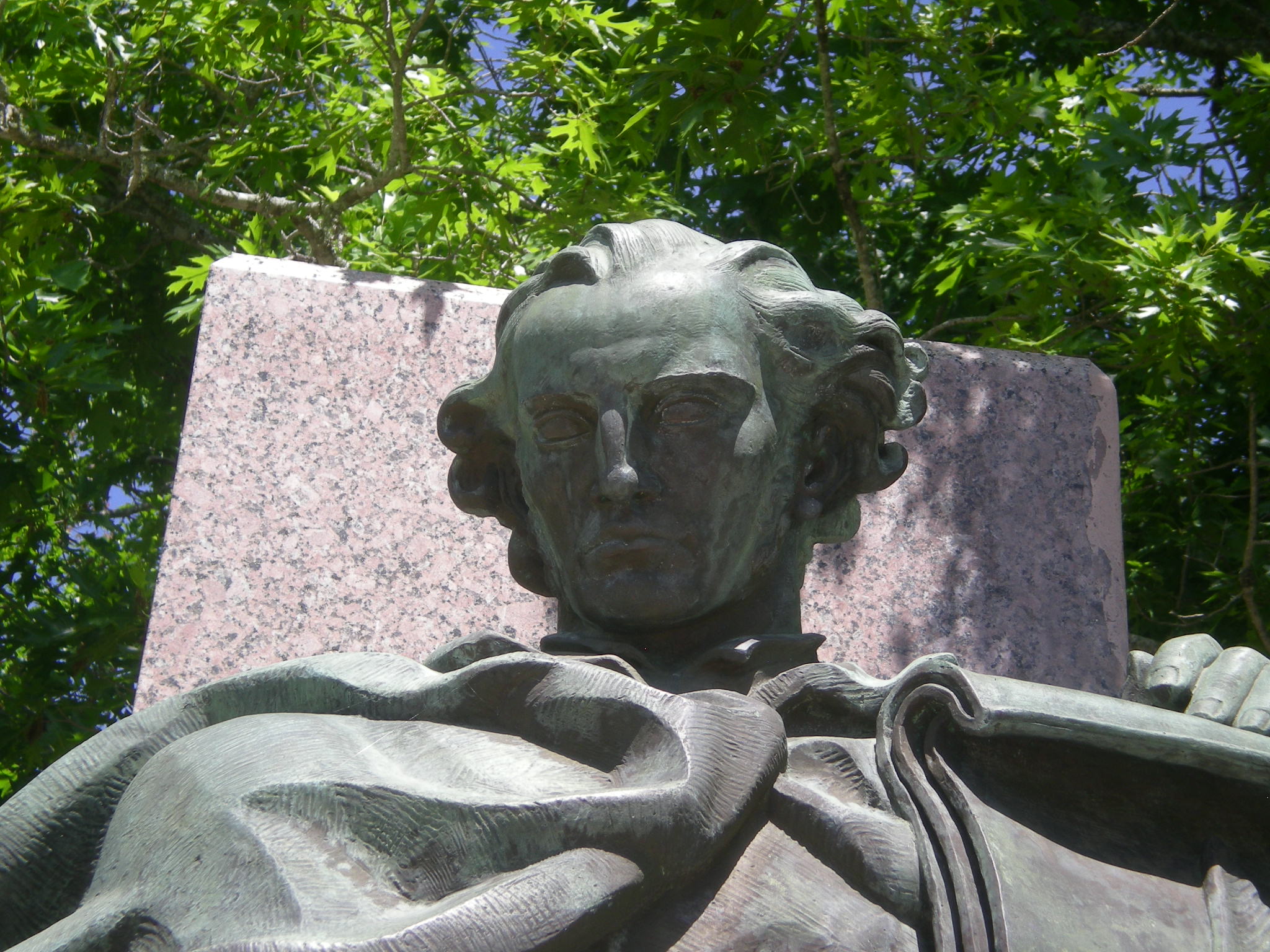
Childress, April 2014Another of the long line of Tennesseans who came to Texas early, and a brother-in-law of James K. Polk, Childress was honored with this bronze because he’s acknowledged to be author of the Texas Declaration of Independence. Note the quill and scroll. He was head of the committee tasked on March 1 to write a declaration, and it was ready the next day, so it seems likely that he’d already prepared the thing. The document clearly owes a rhetorical debt to Jefferson. The first paragraph says:

When a government has ceased to protect the lives, liberty and property of the people, from whom its legitimate powers are derived, and for the advancement of whose happiness it was instituted, and so far from being a guarantee for the enjoyment of those inestimable and inalienable rights, becomes an instrument in the hands of evil rulers for their oppression.

Even so, the list of grievances is specific to the time and place, such as abrogation of the 1824 Constitution of Mexico and the annoying union of Texas with the state of Coahulia, but mainly boiling down to the assertion that no dictator in Mexico City’s going to tell us what to do.

Texas4.25.14 052The deco-like statue itself dates from 1936 – the centennial of Texas independence – and was done by Raoul Josset, a French sculptor who immigrated to the United States in the early 1930s, and left behind a number of works, including Childress but also “The Spirit of the Centennial,” now in Fair Park in Dallas, and the Fannin Monument in Goliad, Texas. More about Josset here.

Tiananmen Square 1994

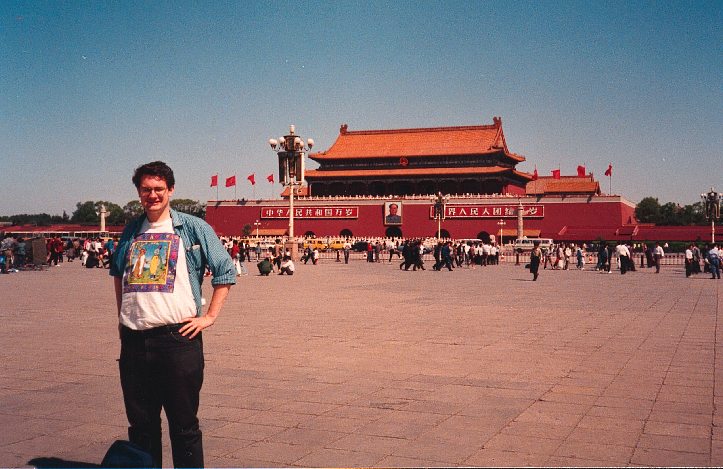
Ten years ago, I wrote about our visit to Tiananmen Square 10 years earlier, noting that “Yuriko and I got into a taxi — one of those yellow van-like vehicles that Bob said were called breadboxes — and said ‘Tiananmen.’ Said it a few times, actually, before the driver figured out where we wanted to go. Soon we were walking the cement squares that make up that vast plaza. It was a bright, windy moment.”

Naturally, we took pictures of each other. Here I am wearing the same shirt I held while posing with Mt. Fuji, this time posing with Tiananmen Gate.

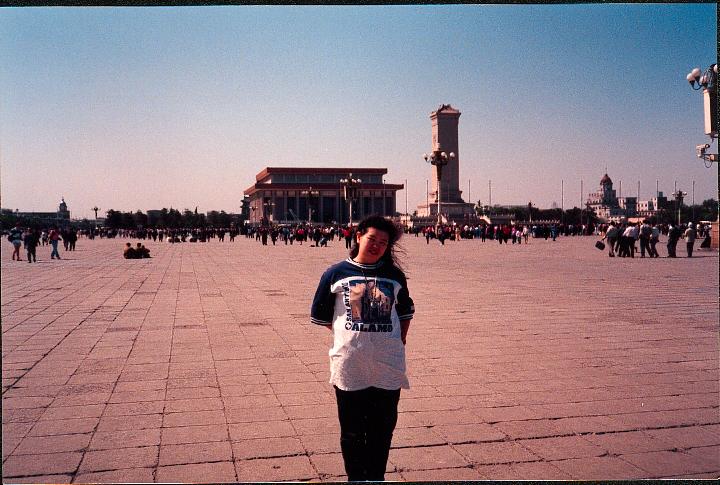
Beijing, May 1994Here’s Yuriko, posing near Mao’s tomb, or more formally the Chairman Mao Memorial Hall.

Mao's Tomb, May 1994The line wasn’t long to get into the tomb. The Great Helmsman, as I recall, was under glass, and had a Chinese flag draped from mid-chest on down. He looked a bit waxy, but I guess nearly 20 years of embalming (at the time) will do that to a fellow. Being the only exhibit, it didn’t take long to see Mao, and soon we exited – right into the gift shop, or rather the gift area outside the exit, which was marked off by partitions.

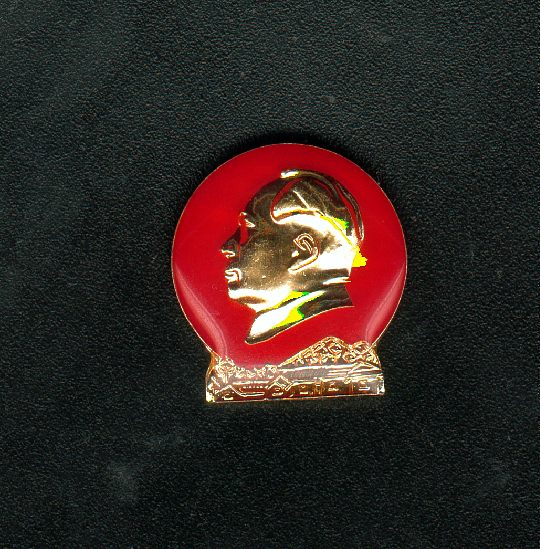
How many places can you buy Mao souvenirs? Not many, so I bought a set of Mao postcards, which I sent to Jay and Deb, and some packs of cigarettes with Mao on them, which I sent to friends who smoked. I also bought a set of lapel pins, which I still have somewhere. One has the National Emblem of the PRC; another, the Chinese flag; and then there’s Mao. I scanned it some years ago. Not the best image, but it gives a flavor of the thing, which is maybe about a half inch in diameter.

Mao pinIn September 1994, when we returned to Beijing to prepare to ride the Trans-Siberian to Moscow, Bob took us to the Hard Rock Cafe Beijing, which had opened earlier that year, and which I’ve learned closed in 2012. The place featured the usual Hard Rock collection of rock memorabilia and hagiographic images of rock stars, but particularly striking was a round painting on the ceiling. Its background was sky blue with clouds, and arrayed around the edge were portraits of early rock legends – Elvis, Chuck Berry, Buddy Holly, the Beatles, the Stones, et al. The painting also had local references: Tiananmen Gate and the Temple of Heaven.

We were seated so we could see the painting easily. Bob said, “Look closely and you’ll see a figure not usually associated with rock ’n’ roll.” And sure enough, there he was. The reproduction of Tiananmen Gate was accurate, including the painting of Mao that hangs there.

The Bonfire Memorial

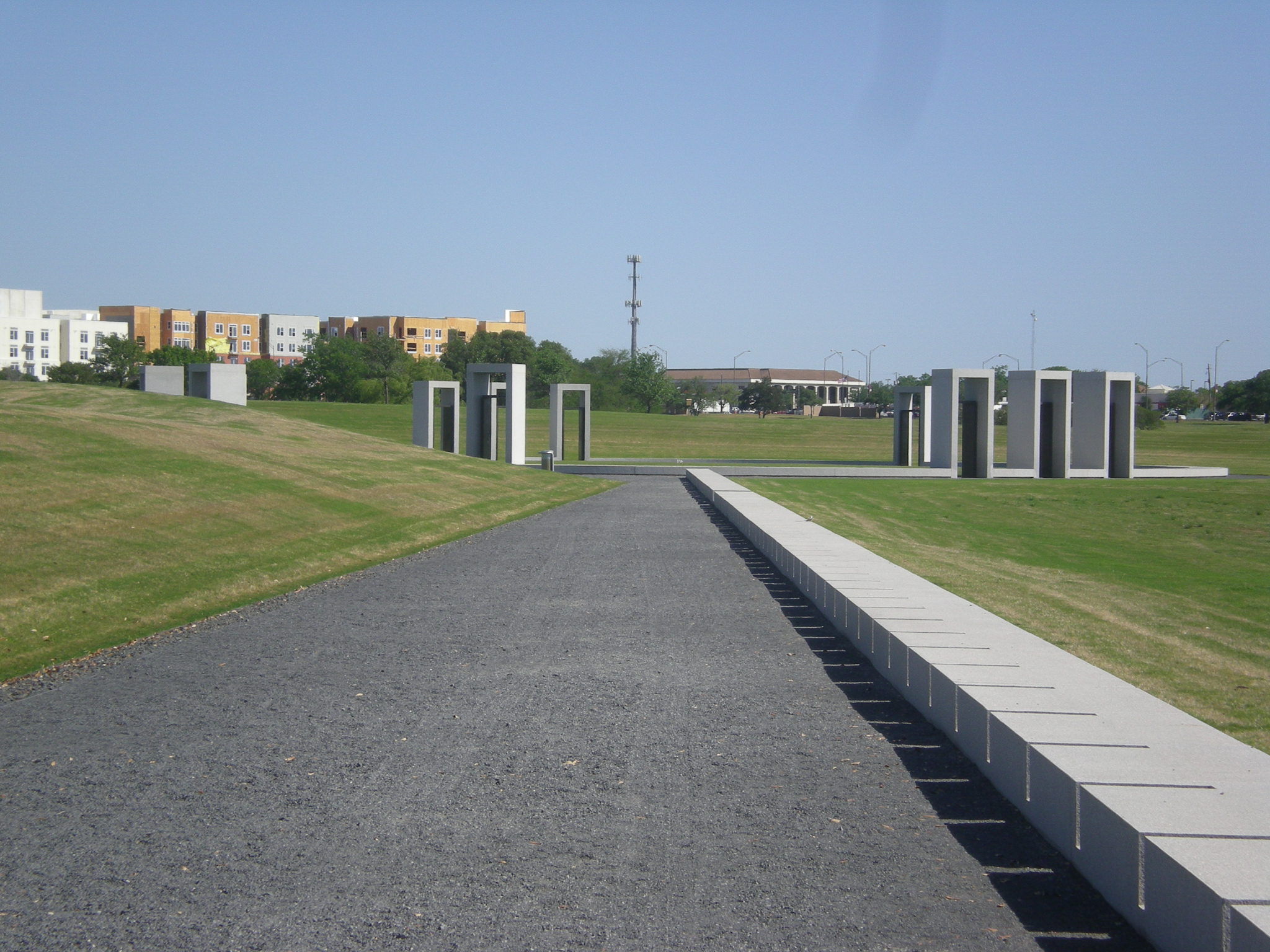
Besides a few buildings and a WWI exhibit at a campus library, Jay and I also took a look at the Bonfire Memorial on the campus of Texas A&M. It’s located on the edge of campus, on the site where 12 students and former students were killed, and 27 more were injured, when the Aggie Bonfire collapsed during construction in the wee hours of November 18, 1999.

Bonfire Memorial, April 2014Passed the entranceway to the memorial, there’s a walkway to the ring – the Spirit Ring, it’s called. To the right of the walkway is a north-south line of cut stones that represents each year that the Bonfire burned from 1909 to 1998, with a black stone marking 1963, when the event was cancelled because of the assassination of President Kennedy. The names of three students who died during their involvement with pre-1999 Bonfires are also marked, each on the stone for the year he died (in logging and traffic accidents).

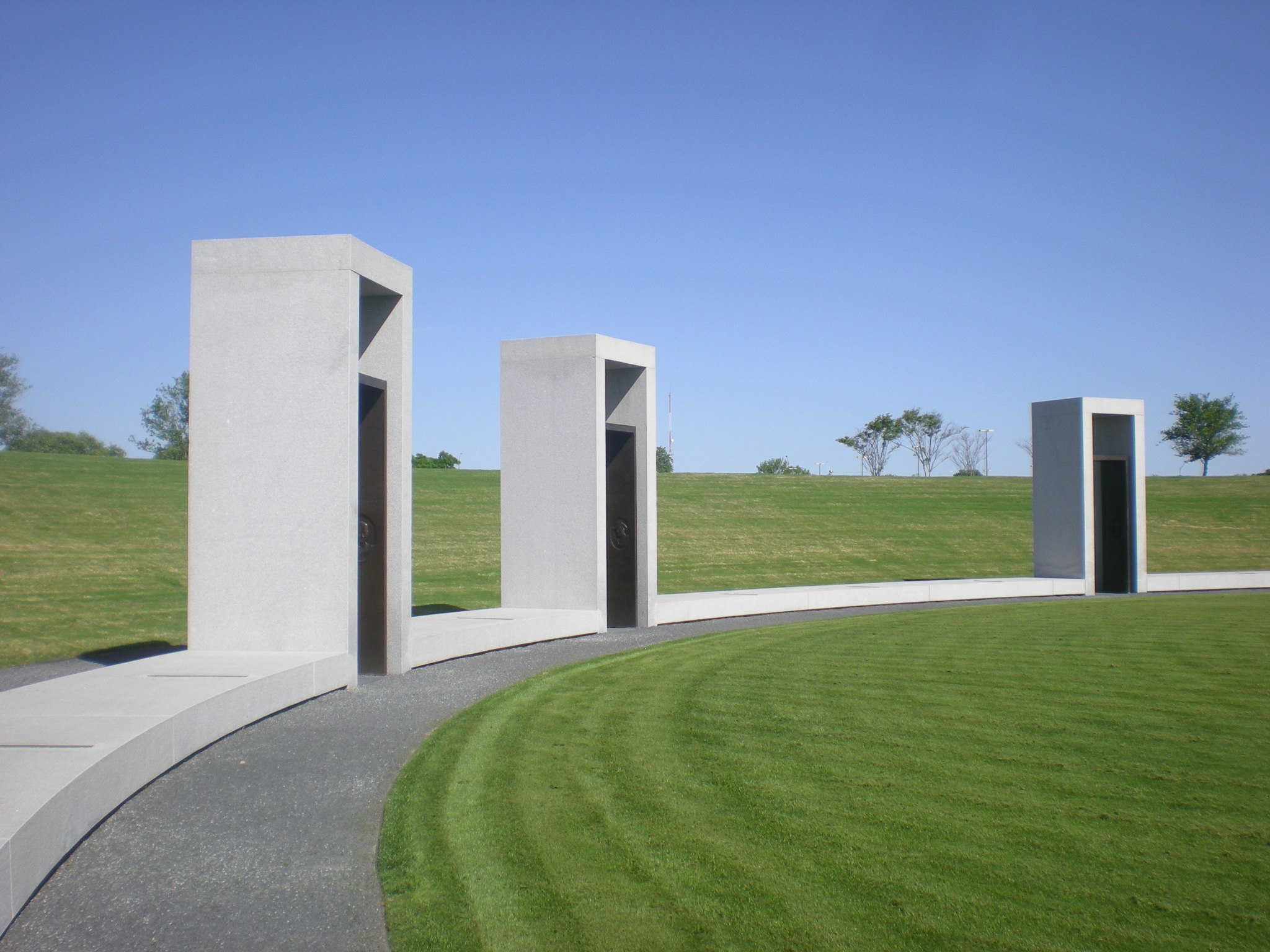
Bonfire Memorial April 2014These are three of the 12 granite “portals” of the ring, as they’re called. I wondered about their orientation on the ring; later I read that each points toward the hometown of the person they memorialize. Connecting the portals are 27 stones to represent the injured.

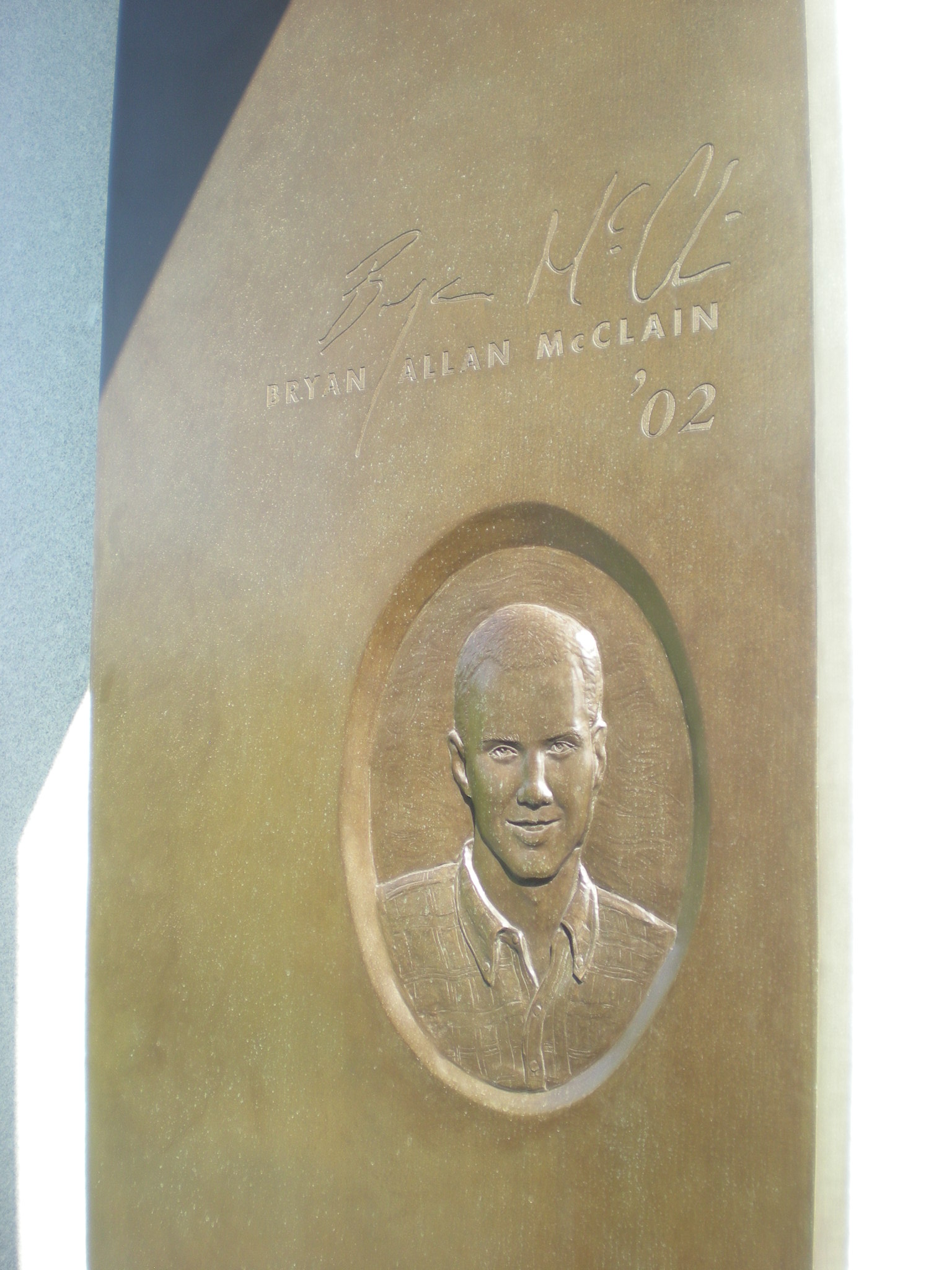
Inside each portal is a bronze interior that gives the name, likeness, and a written reflection about one of the dead.

Bonfire Memorial April 2014This one happens to be Bryan Allen McClain, Class of ’02, all of 19 years old, who happened to be from San Antonio. All of them are listed here, including their inscriptions on the bronze.

Usually when I see a new or newish memorial, I can’t help the sneaking suspicion that in a century, even half a century or less, the memorial will be disregarded, and the event hazily remembered at best. This comes from seeing too many neglected memorials of that age, though it’s just a feeling, and completely untestable.

Not the Bonfire Memorial. Texas A&M pays an unusual amount of attention to its past, mostly in the form of revered traditions. I don’t have any reason to think the 1999 Bonfire’s going to be forgotten as long as there’s an A&M.

Indianapolis ’14

On Good Friday, we loaded ourselves into my car and drove to Indianapolis by way of Lafayette, Indiana, and spent the night and much of the next day in Indy. We walked, we ate, we saw things. (There’s got to be a concise Latin translation for that: vidi would be last instead of first, though it won’t be as snappy.)

Years earlier I’d heard about the Eiteljorg Museum, which is downtown Indianapolis, and since then it had been filed in my large, rambling mental file called New Places to Go. That’s actually a large set of files, but the Eiteljorg had the advantage of being nearby. But far enough for an overnight trip.

Naturally, we hit the road later than planned, and so stopped to eat a late lunch in Lafayette, where we spent time wandering around the main street in town, which is helpfully named Main St. Later, just off I-65 in northwest Indianapolis, we rambled around Eagle Creek Park, which is one of the larger municipal parks in the nation – 3,900 acres of forest, plus some lakes.

Considering our arrival in Indy late in the afternoon, Eiteljorg had to wait until the next morning. After a few hours in the museum on Easter Saturday, we set out on foot in downtown Indianapolis, first along ordinary sidewalks, later along the canal. It was a bright spring day, a pleasantly warm, and so a lot of people were out, probably more than many Midwestern downtowns see on Saturdays. Looks like the redevelopment of the canal has been a success. After a late lunch, we headed back to metro Chicago, arriving back before dark.

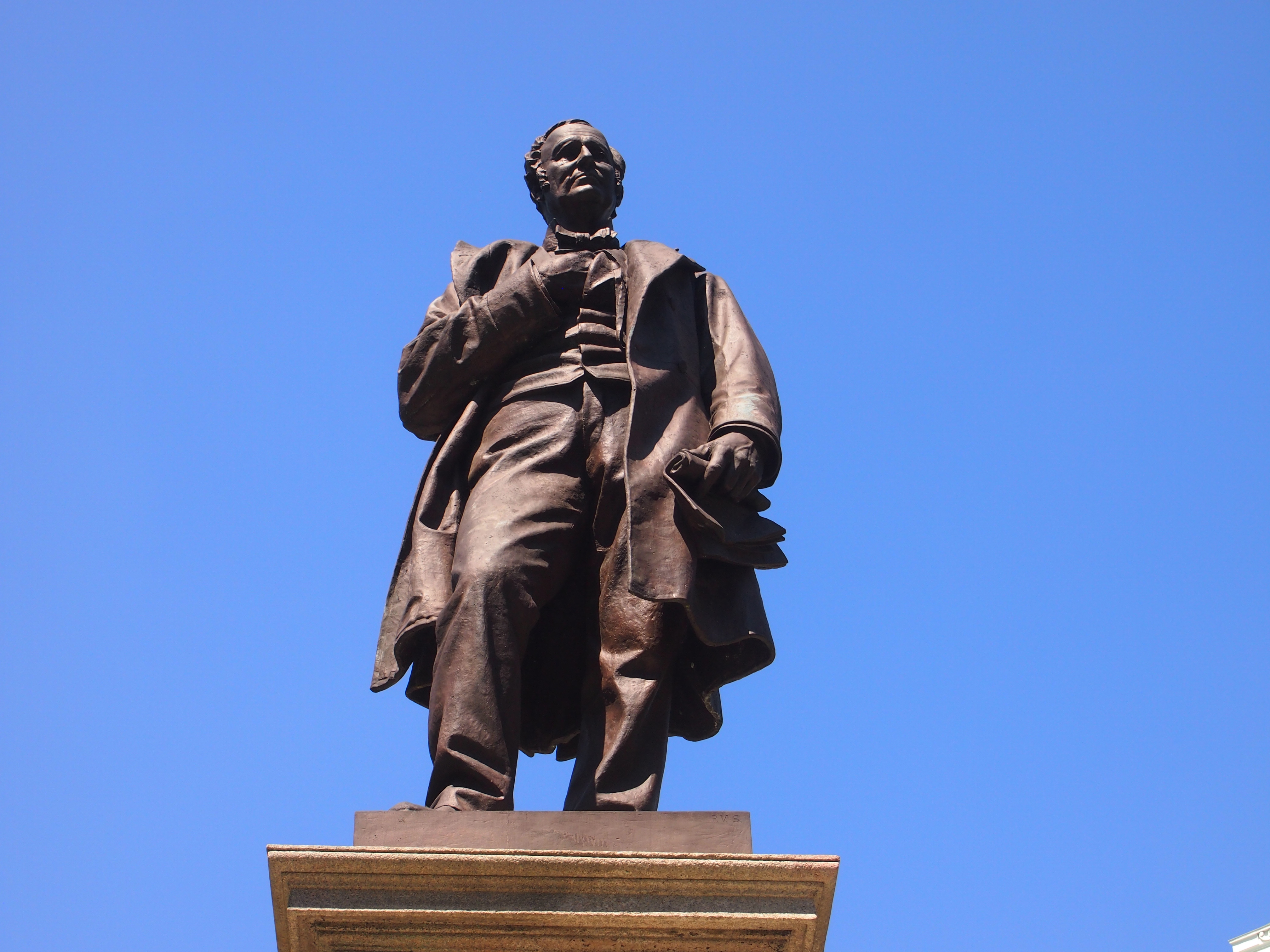
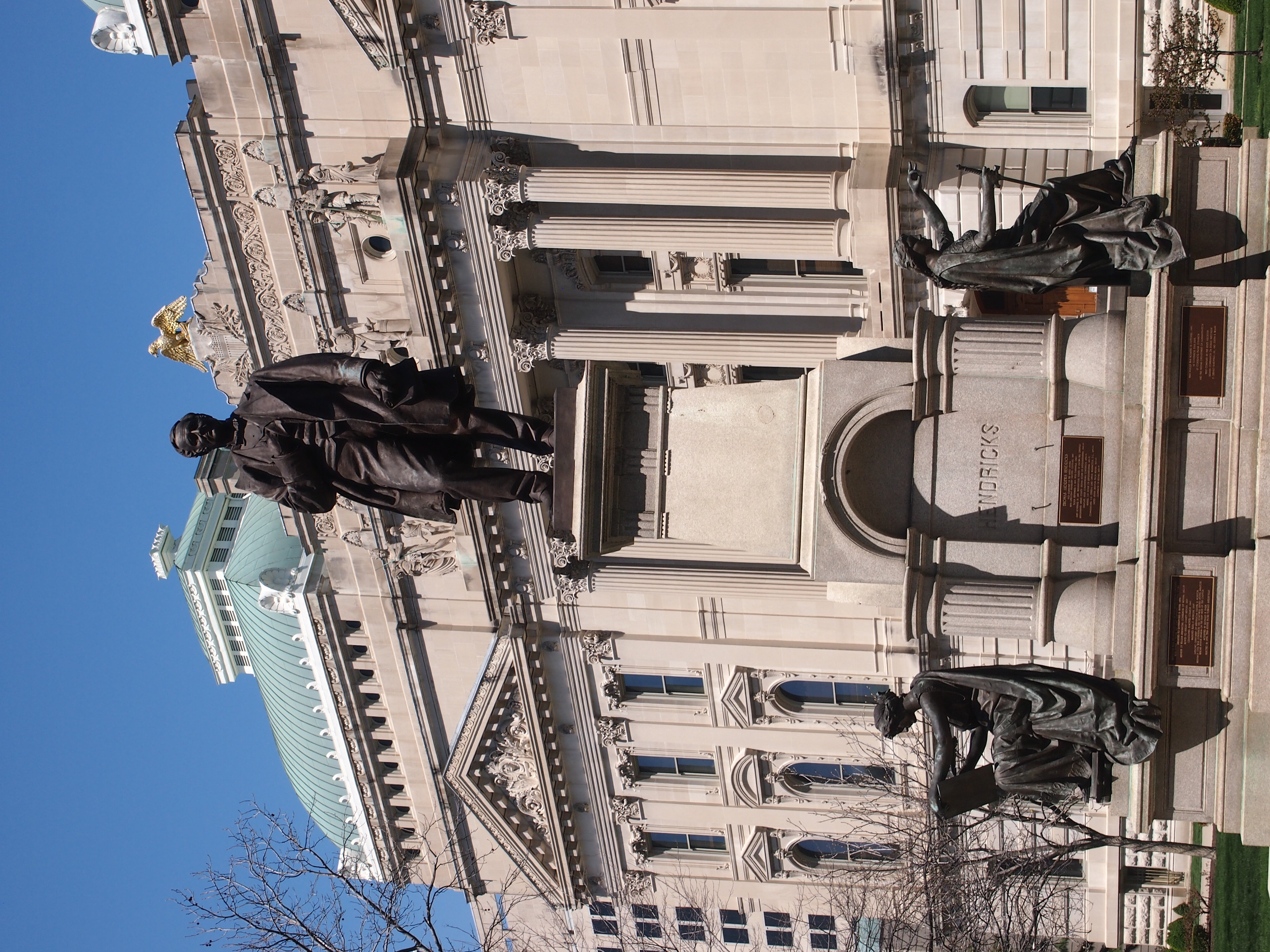
A simple but interesting trip. And I got to see a statue of a vice president.

OLYMPUS DIGITAL CAMERA Vice President Thomas Hendricks, that is, who was also a governor of Indiana. He was 21st Vice President of the United States from early 1885 to late 1885, during Cleveland’s first term. The 19th century, of course, was hard on U.S. vice presidents. Hendricks went to bed one night in November 1885 and never woke up.

Indiana CapitolHis statue is on the grounds of the Indiana State Capitol. Oddly, while I was taking these pictures, a Japanese tourist asked me to take his picture with Hendricks in the background, using his camera, so I did. Maybe he’s a U.S. vice presidential enthusiast.

Maundy Thursday ’14

Back to posting again around May 4. A pleasant Easter to all.

It’s my spring break time, now that it’s actually more-or-less spring. Not that I won’t be working during the next two weeks. It isn’t that kind of spring break. No one older than about 22 gets that kind of spring break.

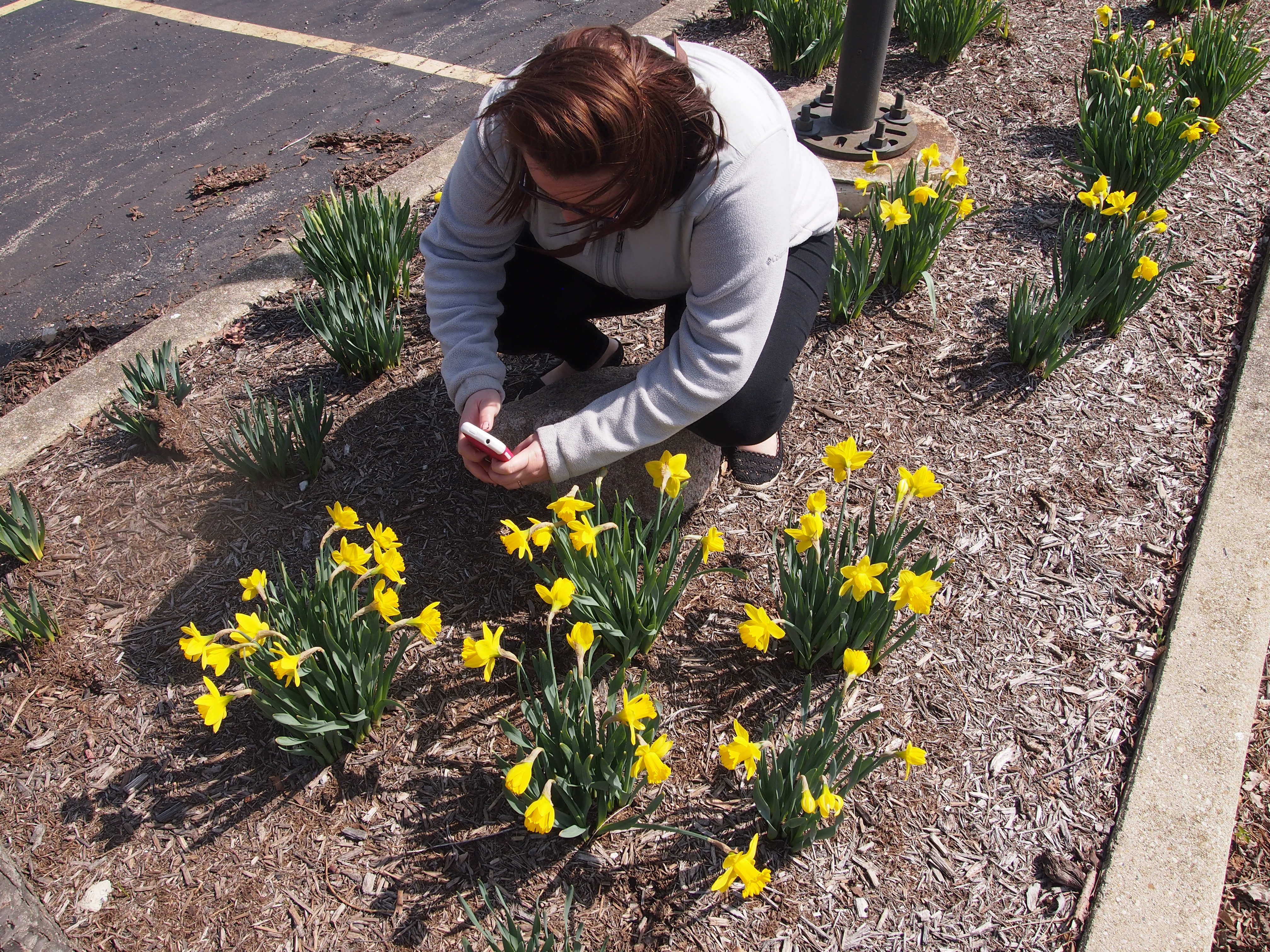
Today Lilly and I were out before noon and she wanted to take some pictures of the flowers that bloom in the spring (tra la). So I took a picture of her taking a picture. I think she sent some of her images immediately to friends, as youth does.

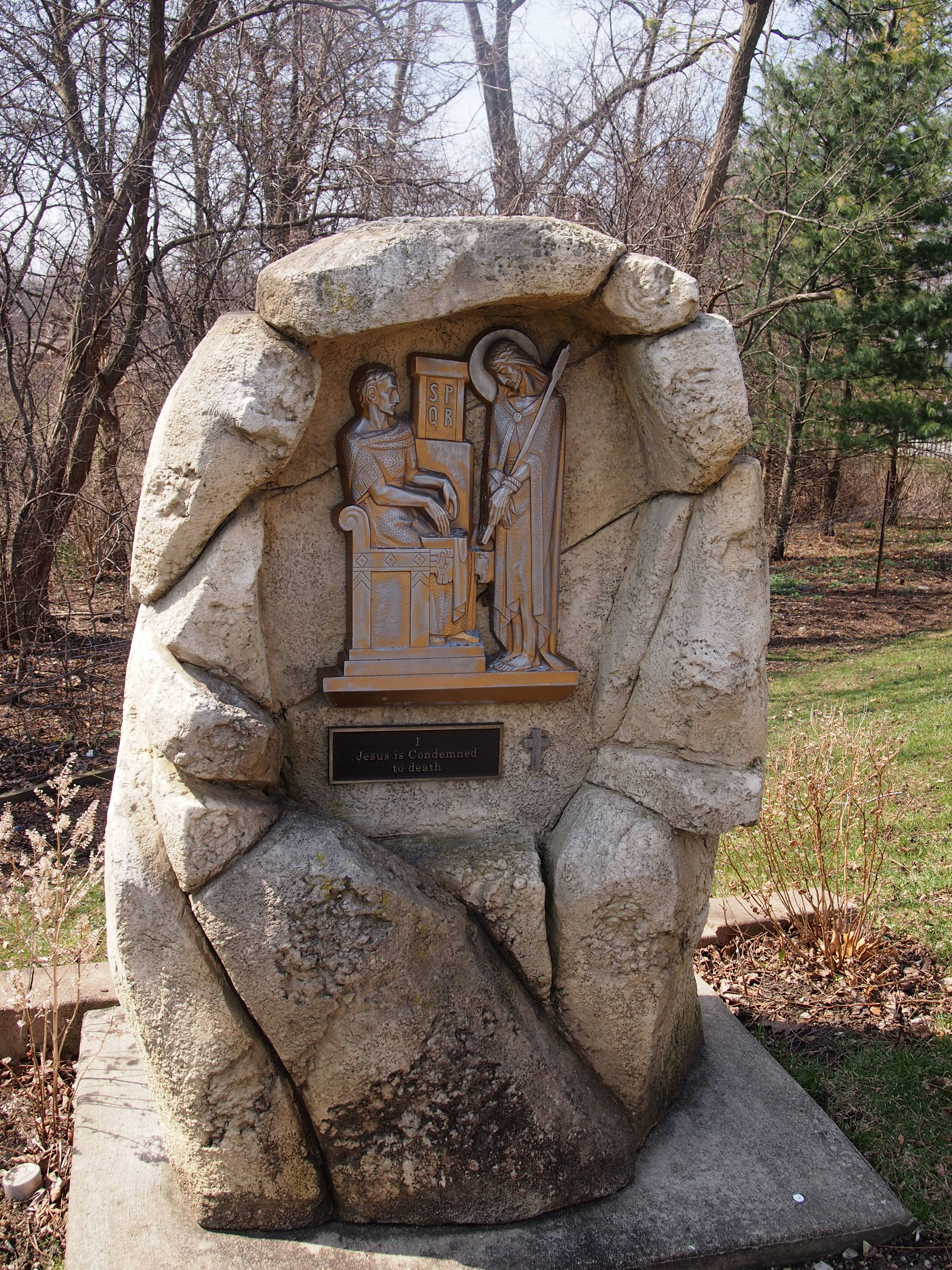
Lilly 4.17.2014They bloomed on a small island in the large parking lot at St. Matthew Parish, a Catholic church on Schaumburg Rd. in Schaumburg, Illinois. We didn’t go there to see flowers, though that was nice. Instead, I wanted to take a look at the Stations of the Cross on the grounds. Seemed like a good thing to do on Maundy Thursday, especially when it was almost warm again.

The stations form a semi-circle around a catchment, and are backed by the woods of the Spring Valley Nature Preserve.

St Matthew, Schaumburg 4.17.14 - 1Plaques fixed to a short agglomeration of stones illustrate each station. This is the first one, with Jesus and Pilate.

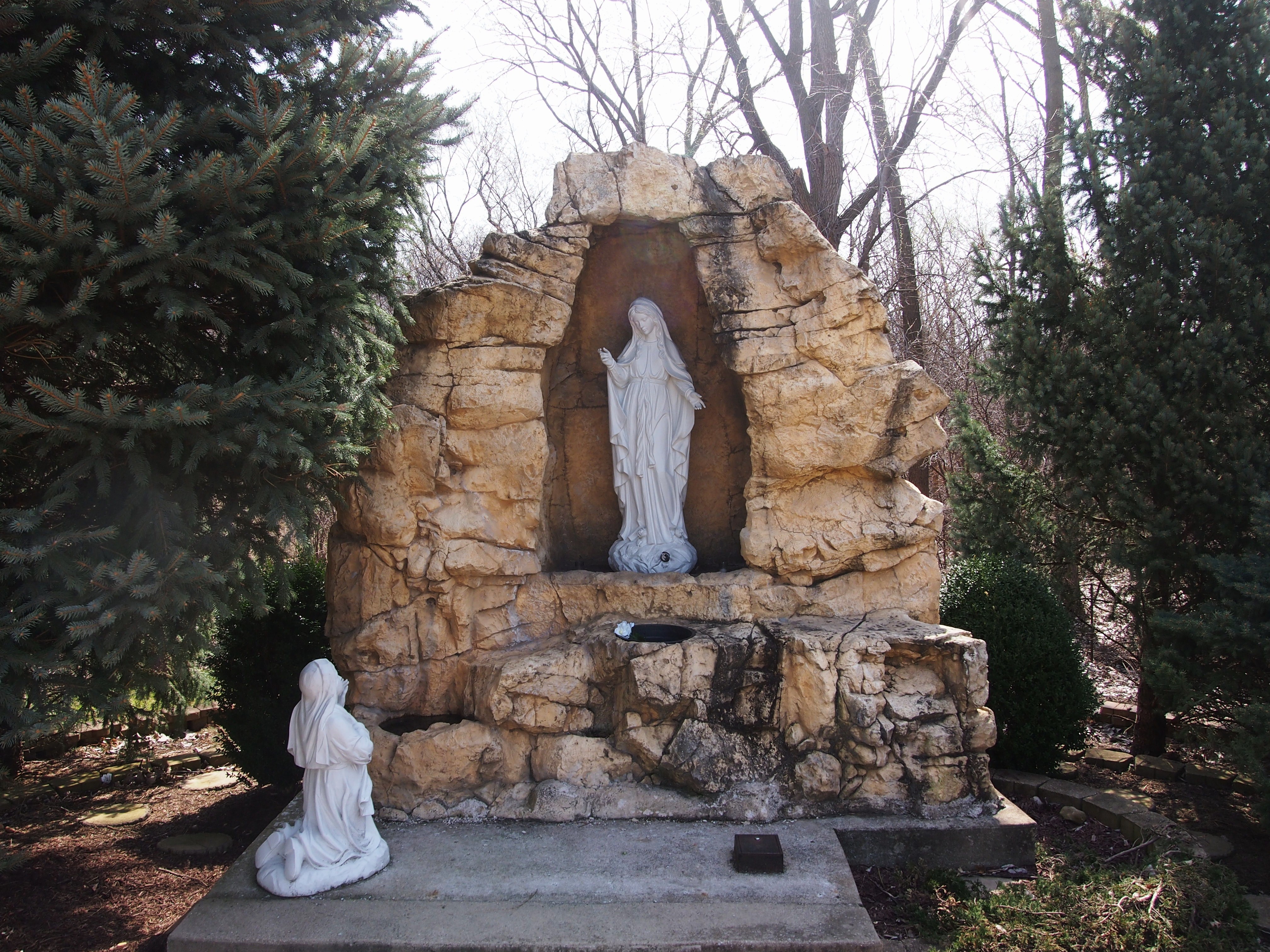
St. Matthew Schaumburg 4.17.14 - 2There isn’t much information about this particular Stations of the Cross on the St. Matthew wed site, so I don’t know if they were custom made for the parish, or you can get them ready made. Along the way, there’s also a grotto.

St Matthew Grotto, April 17, 2014Like I’ve said before, if you find a grotto, no matter how humble, take a picture. And then pause for a moment.

It’s About Time

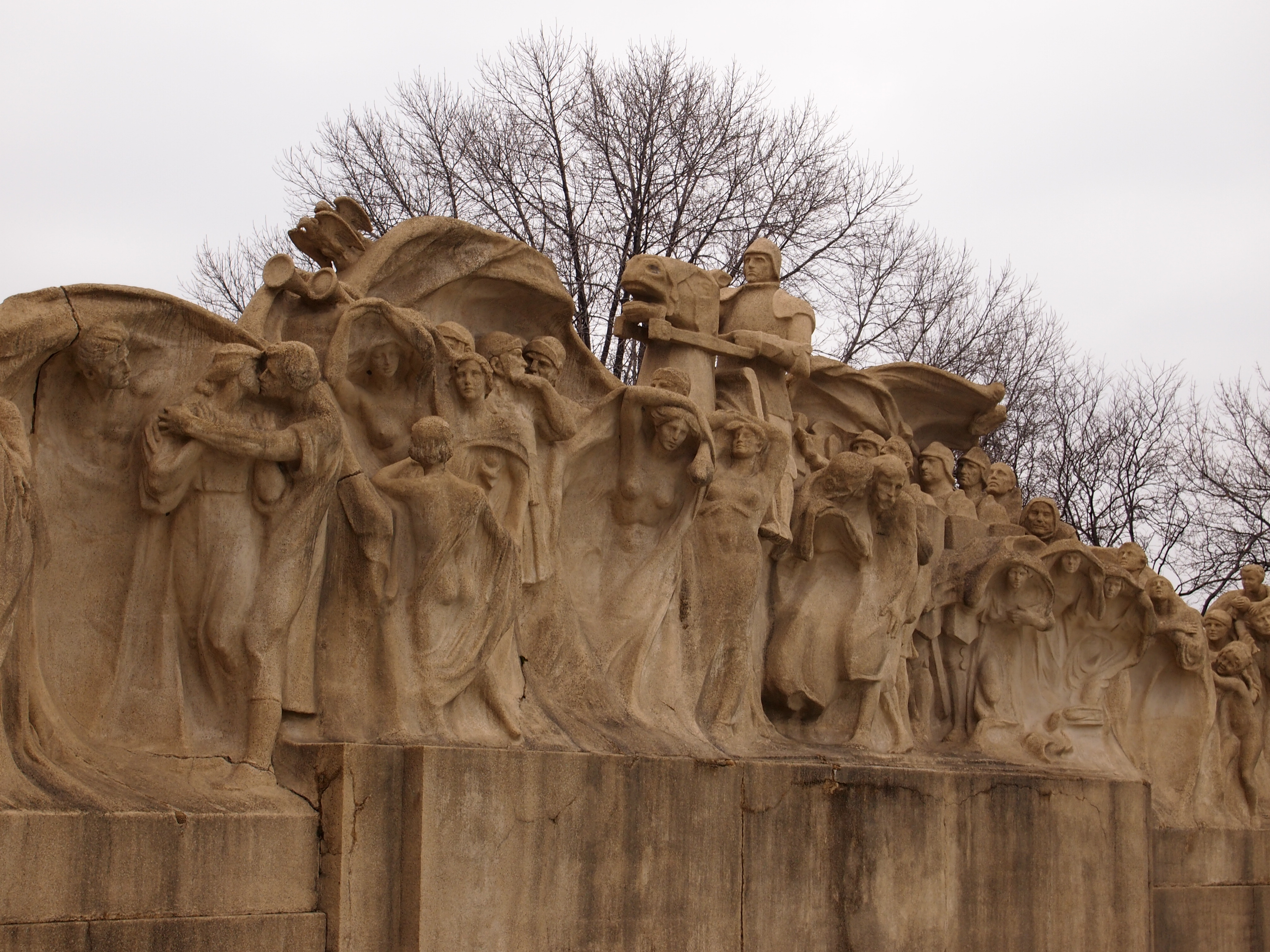
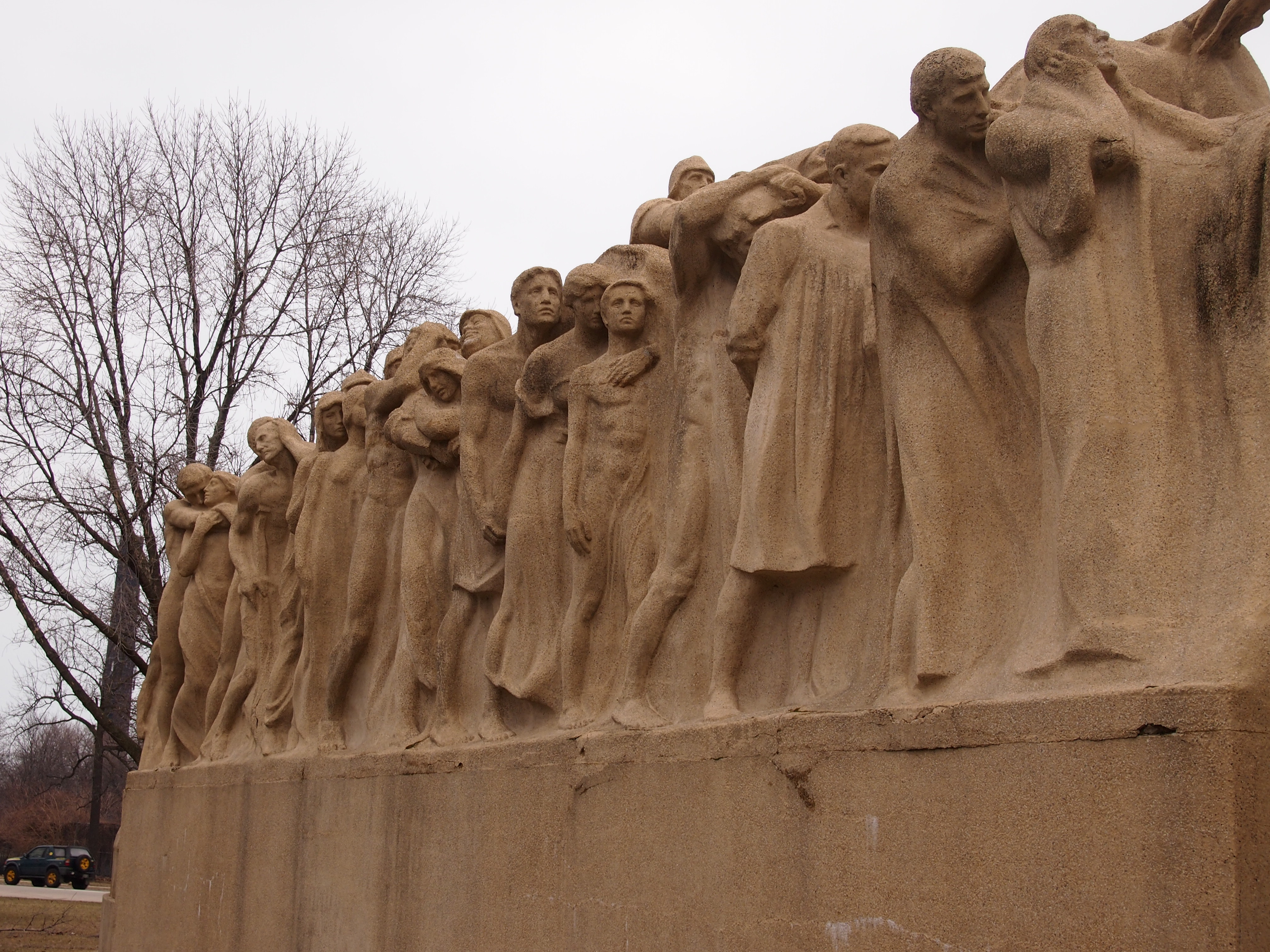
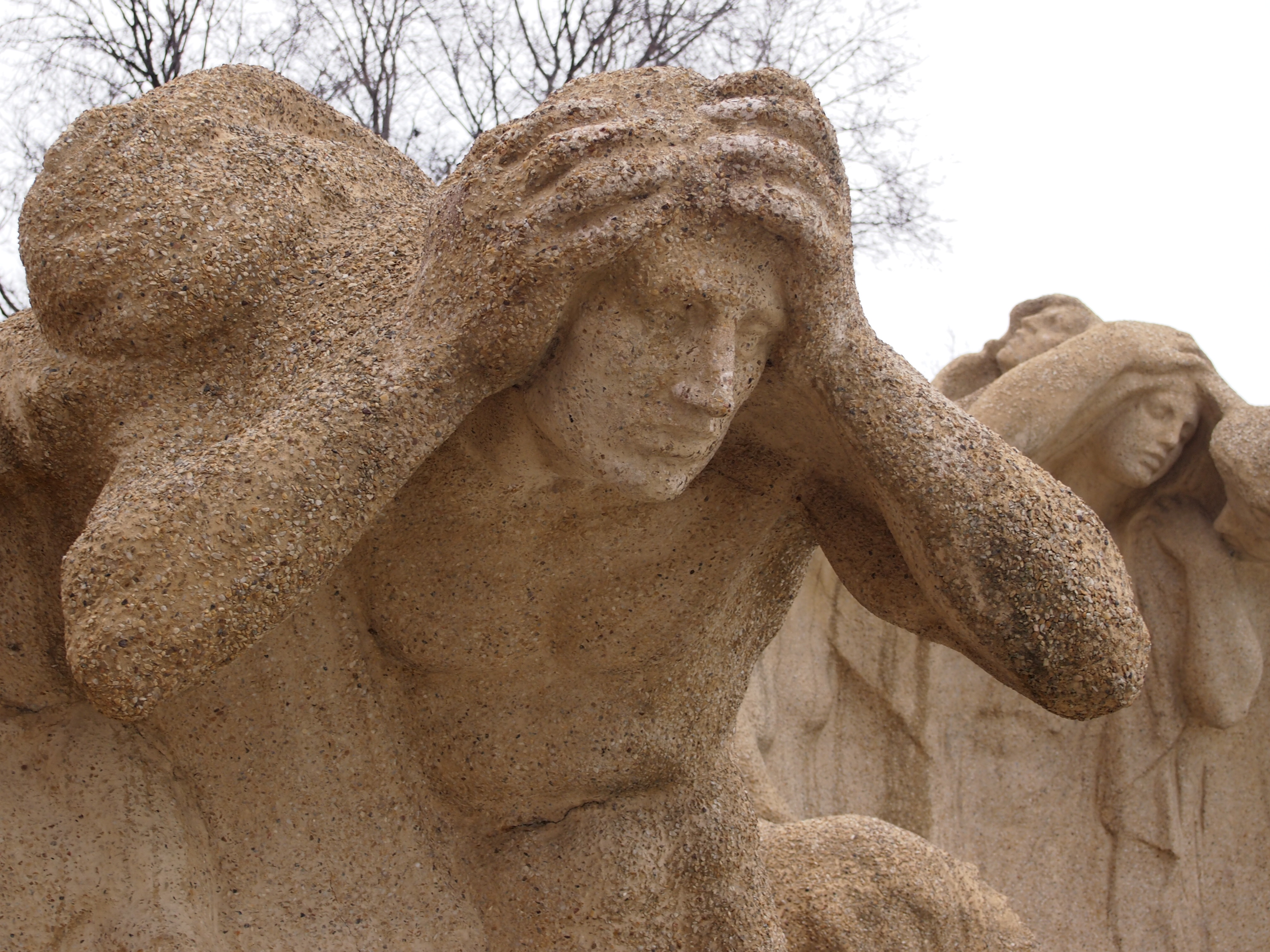
It took a long time for me to get around to Time. Or, to use its full name, Fountain of Time, a sizable sculpture by Lorado Taft at the southeast edge of Washington Park in Chicago. I’ve known about it for a long time, and have even seen Taft works in other places, some at a considerable distance from Chicago, but not Fountain of Time. So when we visited Hyde Park the week before last, I made stopping at Fountain of Time an appendix to the trip.

From the AIA Guide to Chicago: “One of Chicago’s most impressive monuments anchors the west end of the Midway, which Taft wanted balanced by a Fountain of Creation at the east end [which never happened]. Inspired by lines from an Austin Dobson poem:

Time goes, you say? Ah, no! / Alas, Time stays, we go…

“Taft depicts a hooded figure leaning on a staff and observing a panorama of humanity that rises and falls in a great wave.”

That would be this fellow. Father Time.

Father TimeDoes Father Time that have gender-neutral, 21st-century equivalent? “Temporal Being,” maybe, but that sounds like something Star Trek writers would use. Best to stick with Father Time. After all, Father Time got it on with Mother Nature, and that’s how Life was created. Of course, that’s a heteronormative metaphor, but sometimes you have to run with these things.

This is part of the east side of Fountain of Time. OLYMPUS DIGITAL CAMERAThis is a view of the west side. OLYMPUS DIGITAL CAMERATaft completed it in 1922, working with concrete engineer J.J. Earley. The deteriorated work was restored by the BauerLatoza Studio in 2002. According to the AIA, “Taft envisioned the group sculpted from marble, but the material’s high cost and vulnerability to Chicago’s weather made it impractical. Bronze, his second choice, was also prohibitively expensive, lending to a selection of a pebbly concrete aggregate. The hollow-cast concrete form reinforced with steel was cast in an enormous, 4,500-piece mold.”

Fountain of Time includes a variety of faces.

ArghI like to think of this figure as My Deadline Was Last Week.