A Handful of Pilsen Murals

Distinctly cool today. Call it fall. I’ve read the British consider that usage quaint, or maybe bumpkinish, since “fall” passed out of common usage for them in the 19th century, replaced by “autumn.” Here in North America, we kept the more Anglo-Saxon, and evocative term, though it’s roughly on par in usage with Latinate autumn.

Makes you wonder (me, anyway) why a Latinate equivalent for spring didn’t catch on – “vernam” maybe. Or “aestam” for summer and “hiemiam” for winter (I can see why that didn’t catch on. An alternative would be “brumam” for winter). That’s the kind of thing that occurs me when I see a few leaves floating by.

I need to spend a little more time in Pilsen, where St. Procopius is located. Some years ago I visited National Museum of Mexican Art, back when it was known as the Mexican Fine Arts Center Museum, which is in the neighborhood. The museum had a really good collection of Día de los Muertos-related art on exhibit, which it does every October.

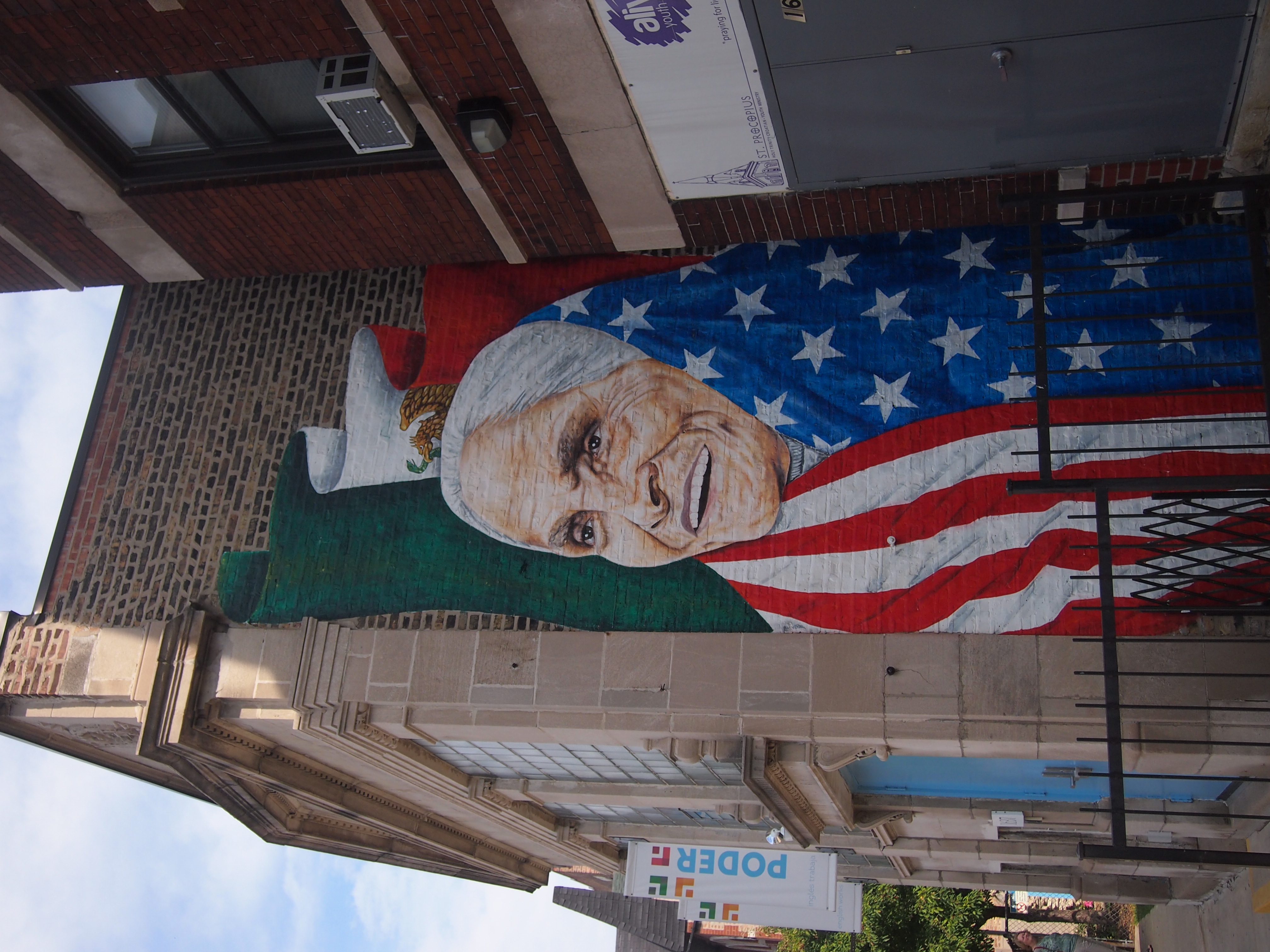
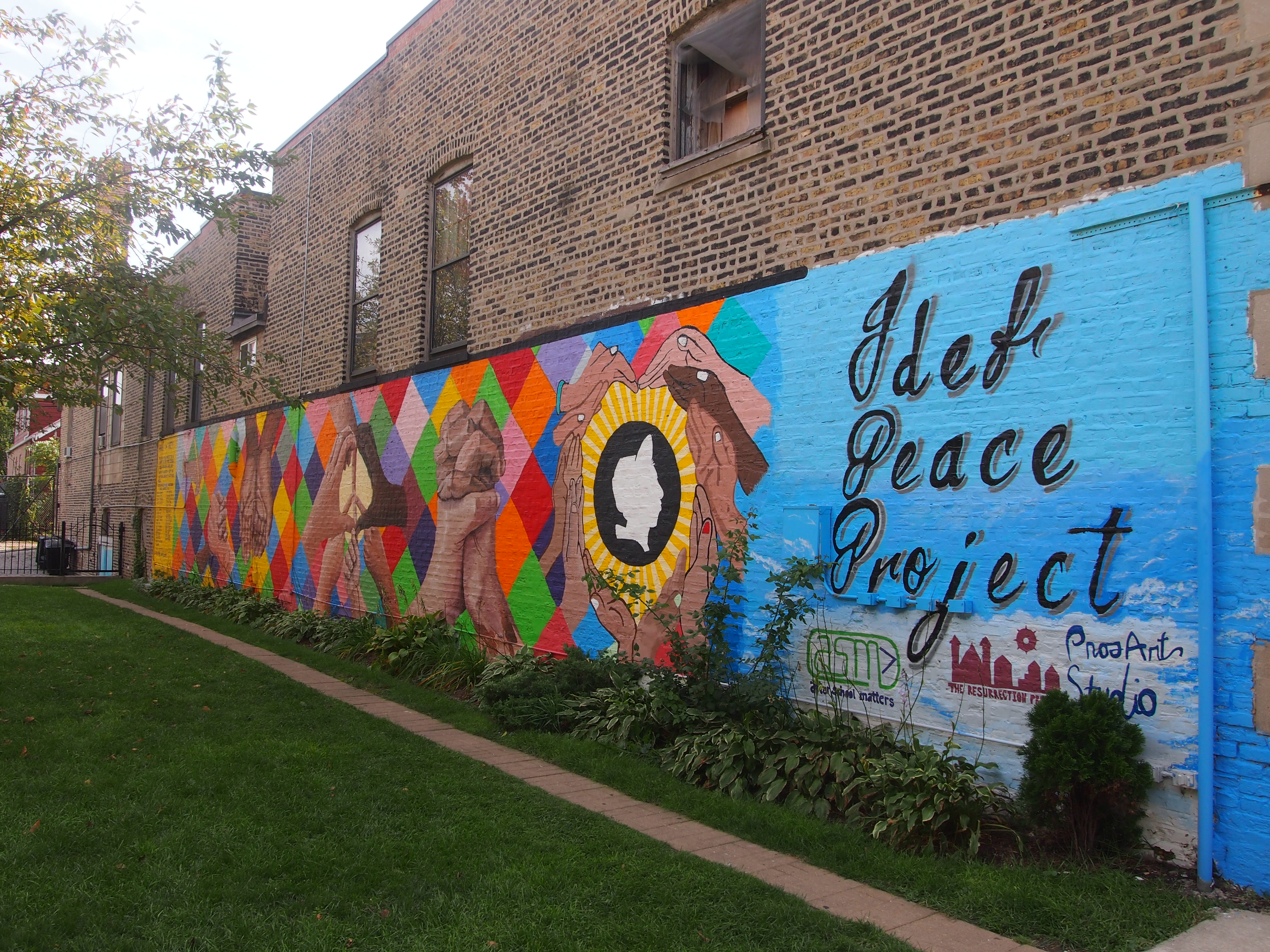
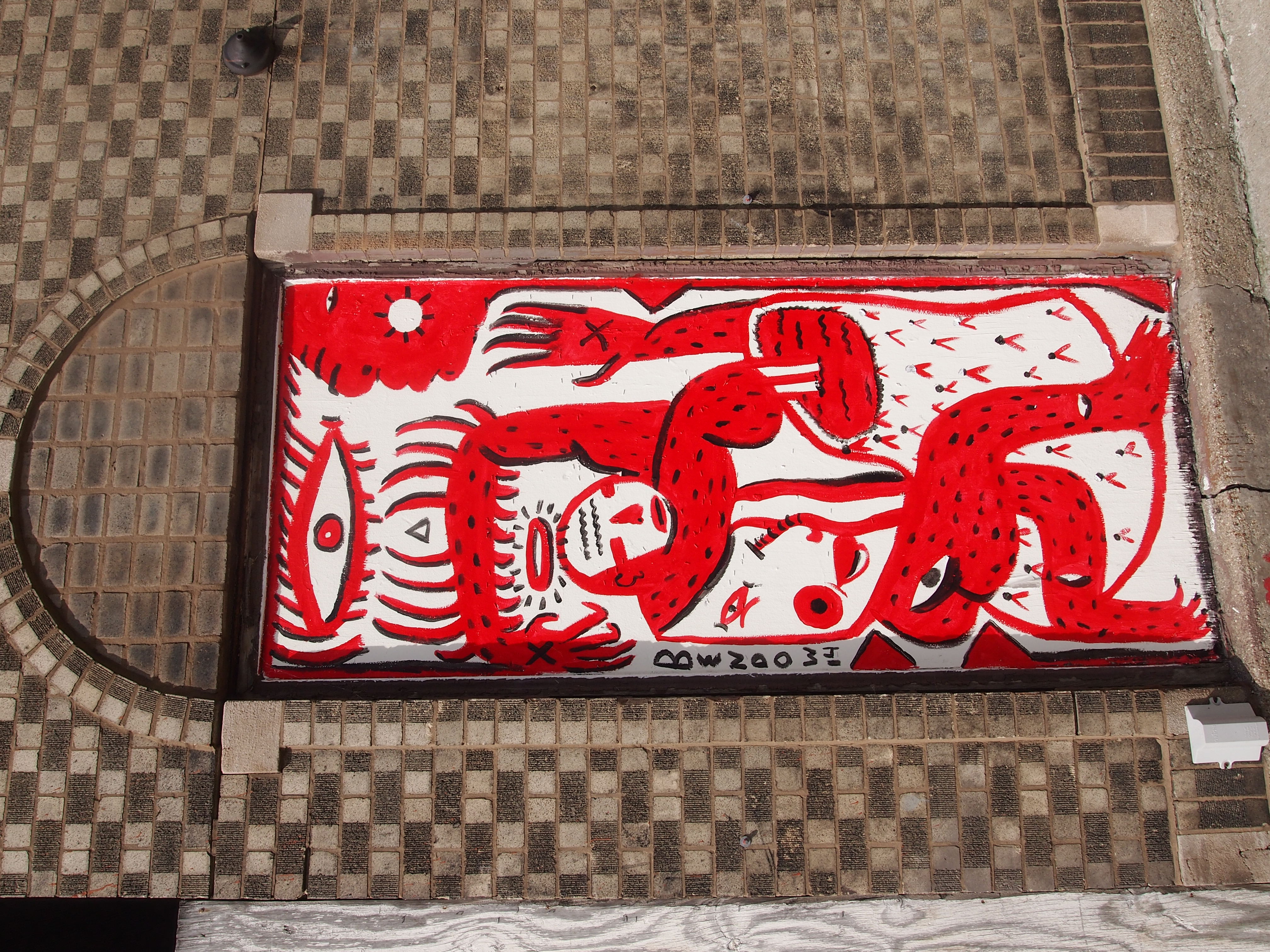
Pilsen’s also got good Mexican food and outdoor murals to look it. We didn’t have a lot of time to wander around and look at them during the bus tour, but I managed to run across a few. Such as this door-sized one, dated this year.

Pilsen mural, Sept 2014A larger one.

Pilsen muralAnd a more horizontal one.

Pilsen mural, Sept 2014I saw a few more from the window riding by. There are many more.

House Walk Oddities

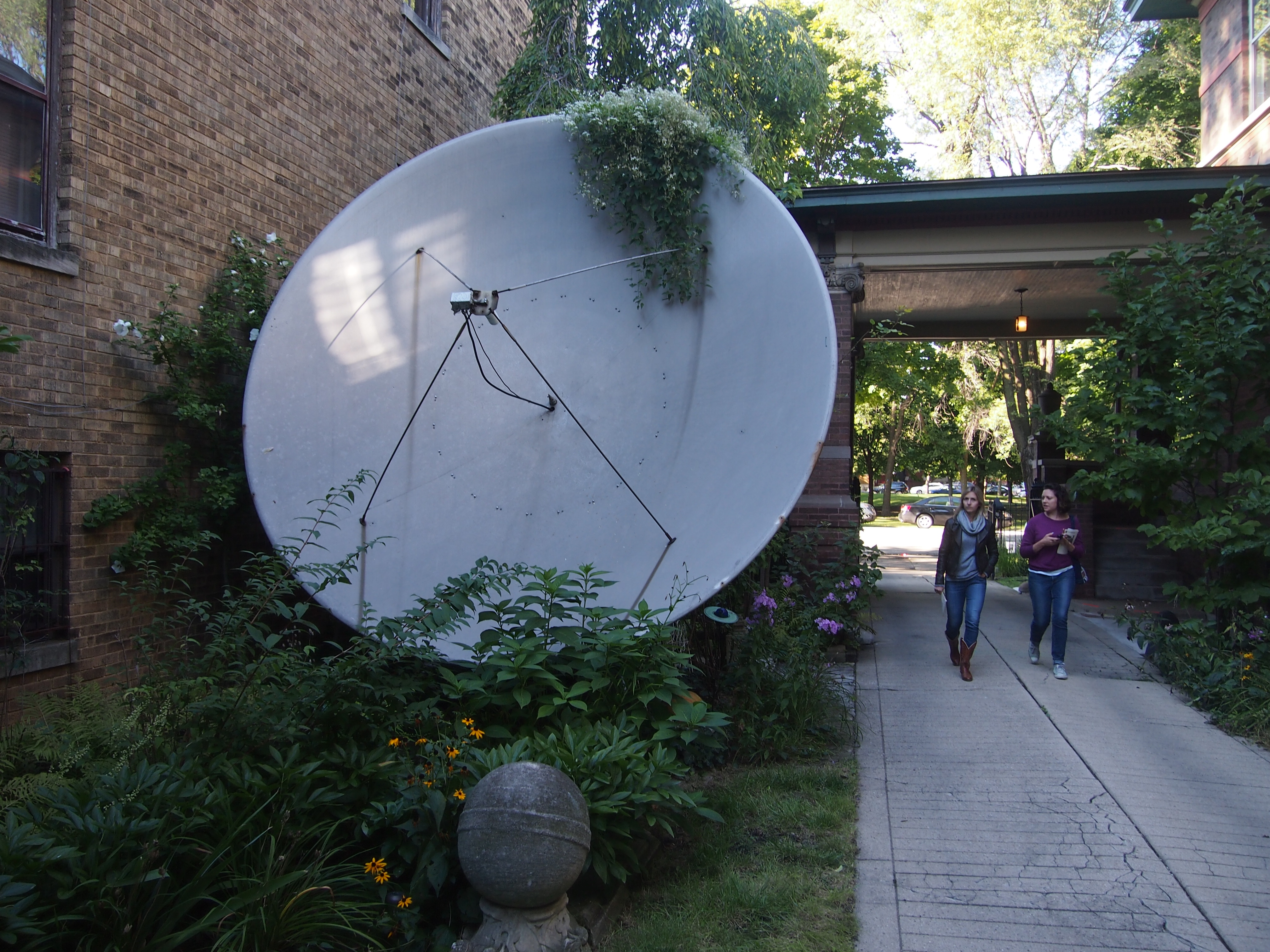
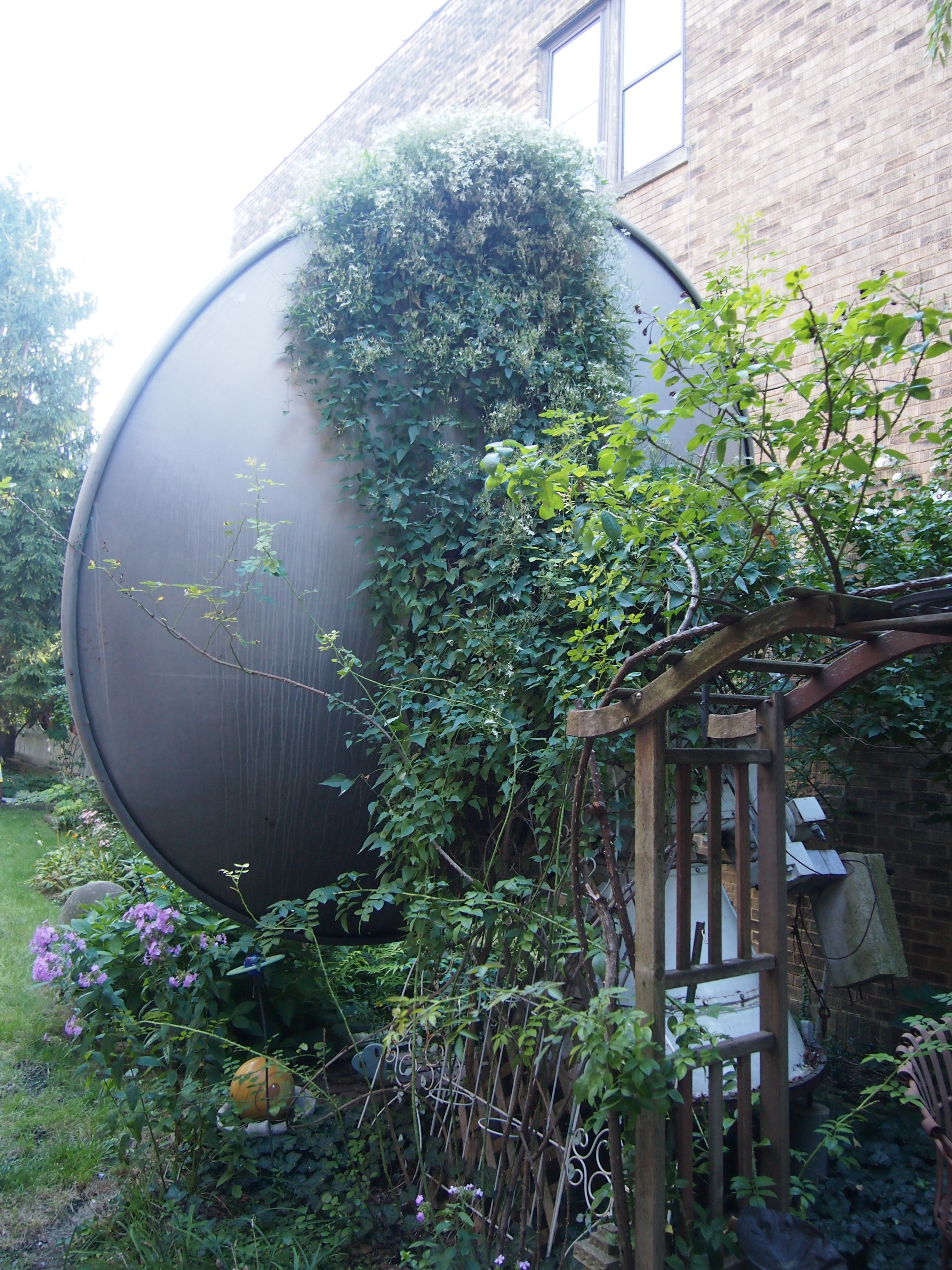
There’s a house facing Palmer Square in Chicago that sports a huge radar antenna next to its driveway.

3071 W Palmer Sq, Sept 2014The house was on the Logan Square House & Garden Walk. Everyone asked about the antenna. The docents asserted that it’s WWII vintage, and that the homeowner’s doing a bit of do-it-yourself SETI. Maybe that’s so, but I don’t think you need any reason to have something that much fun in your yard.

It also doubles as a home for plants.

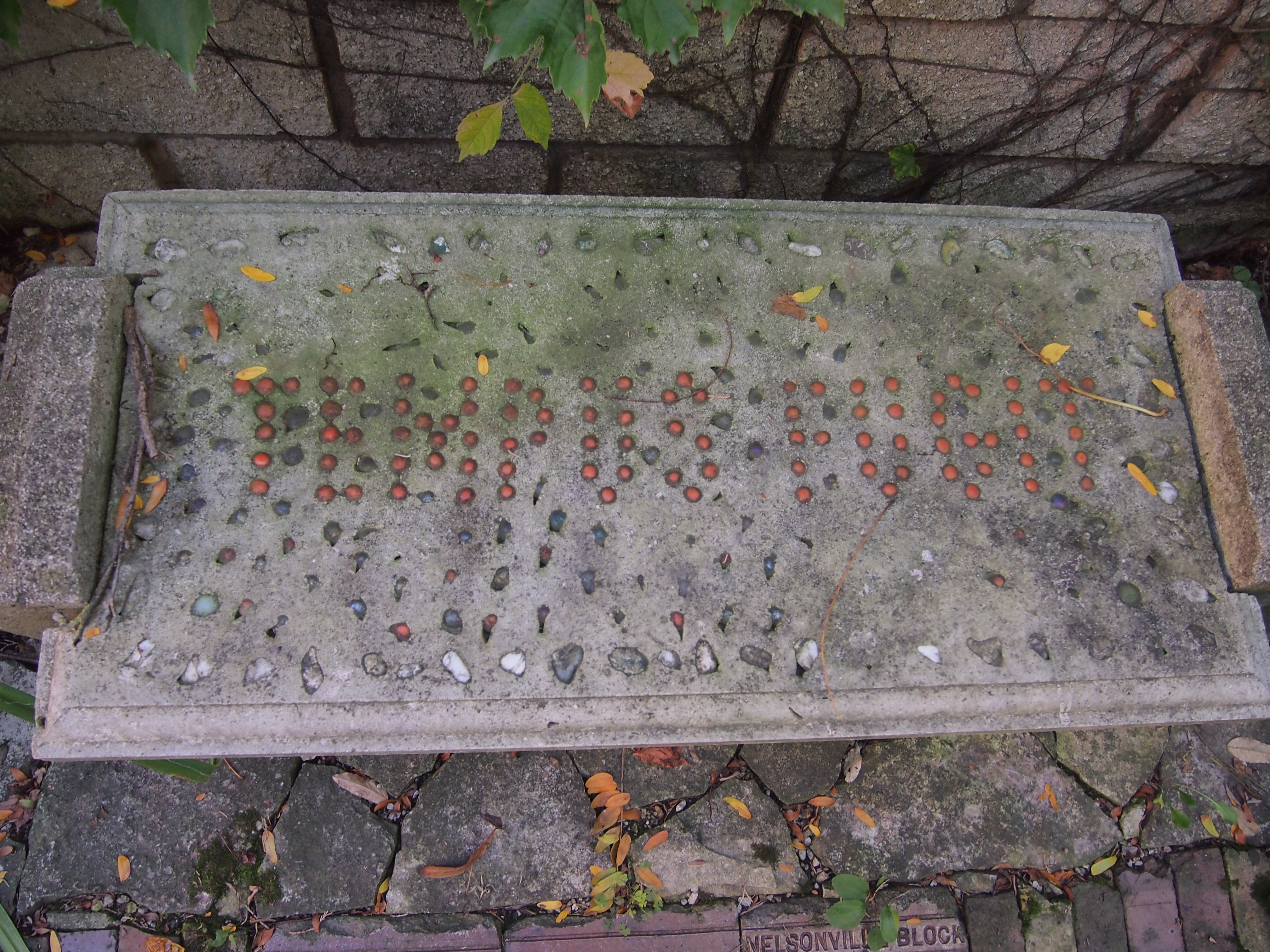
3071 W Palmer Sq, Sept 2014This back yard was my favorite spot on the walk. Besides a piece of radar equipment that’s on the lookout for Vulcans or Vogons or whatnot, a there were a lot of tall trees – more than usual for a city yard — a picturesque trellis, and a charming little garden with built-in oddities in its stonework, such as this bench.

Tempus Fugit, DudeIt took me a few moments to puzzle out what it says. Once you know it, though, you see it every time you look at it: TEMPUS FUGIT. A good thing to remember.

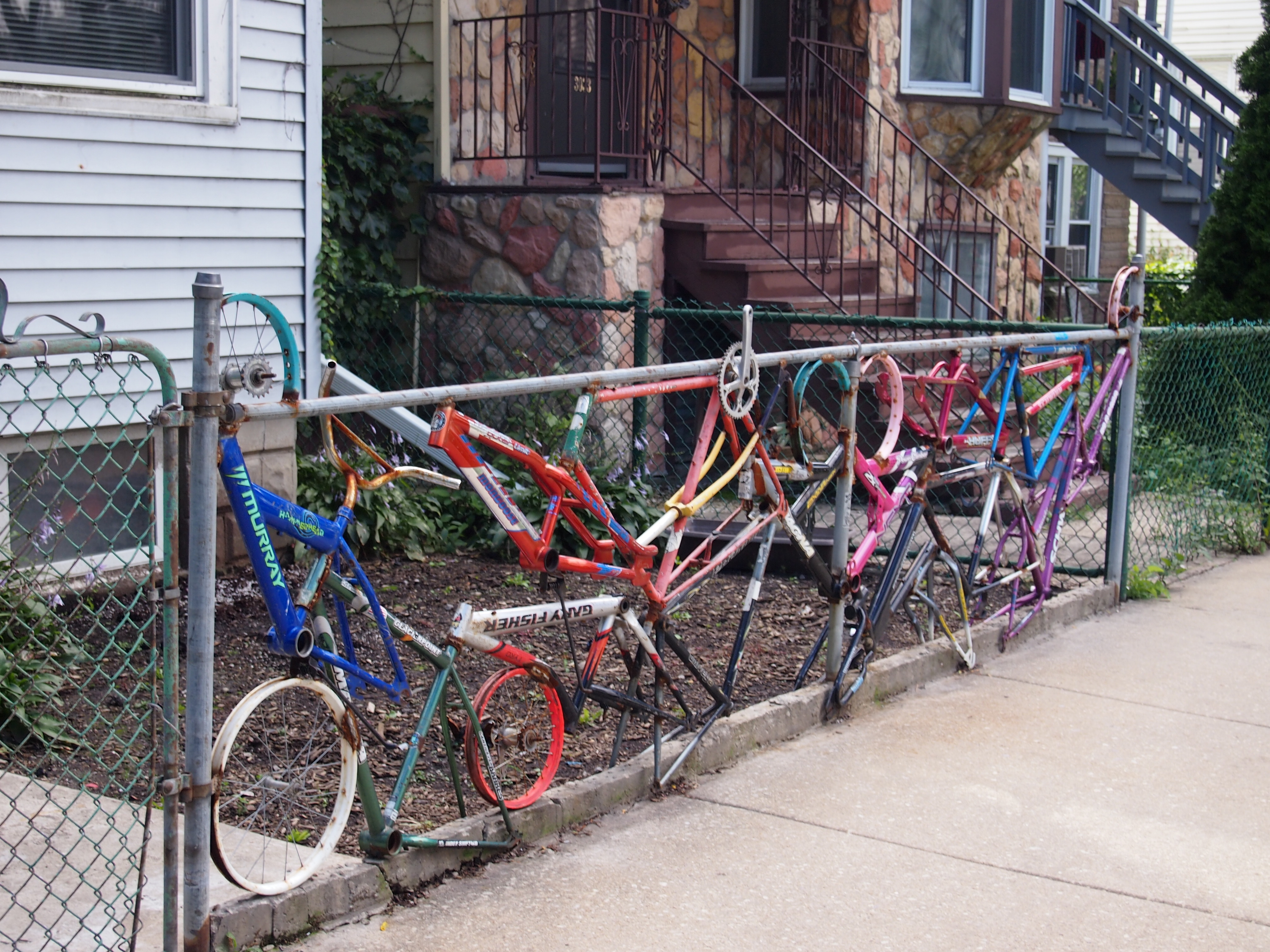
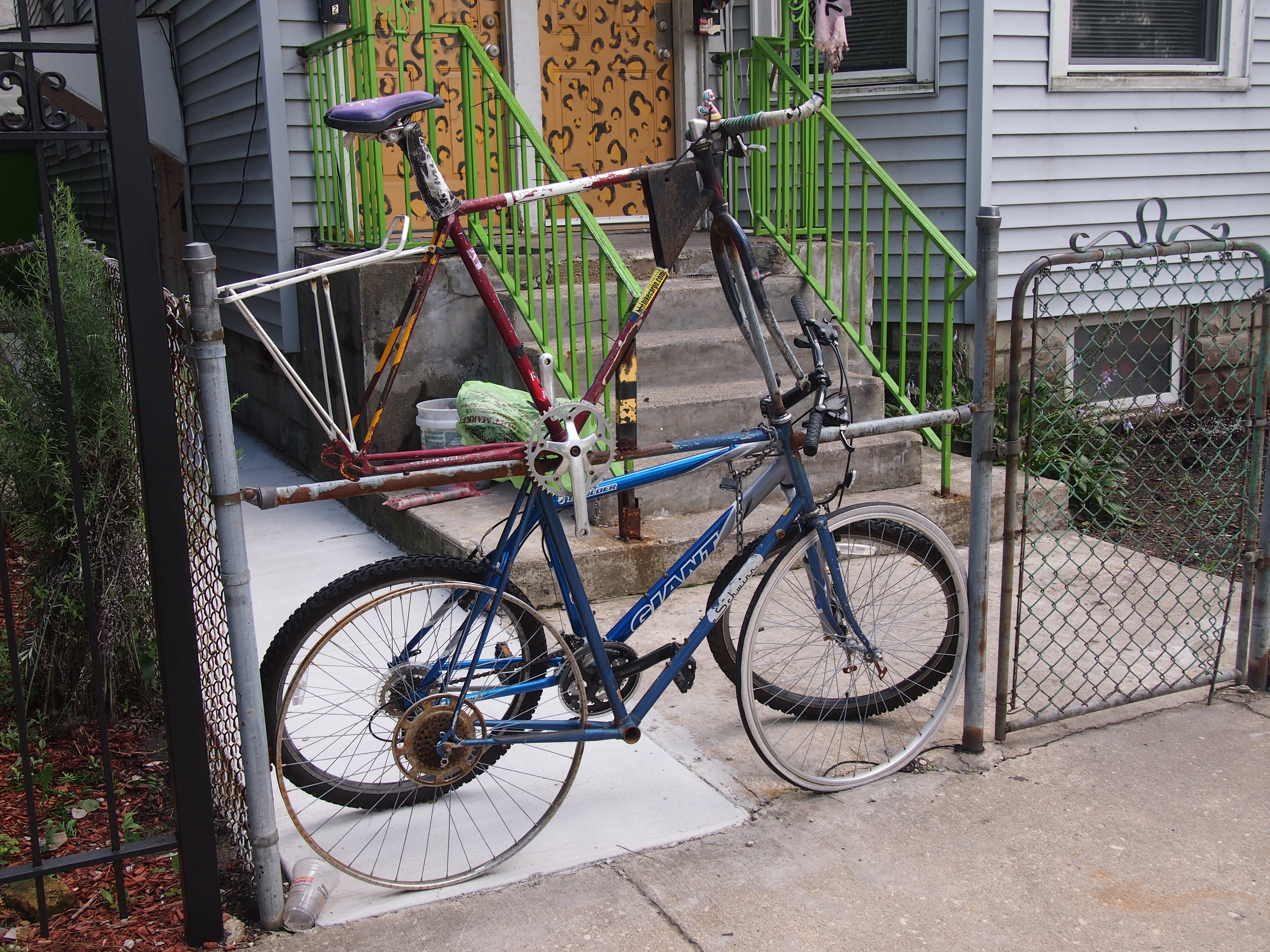
On the 3100 block of W. Lyndale Ave., a block north of Palmer Square, we happened across a fence made of old bicycle parts.

Bicycle fence, Chicago, Sept 2014Bicycle fence, Chicago, Sept 2014Maybe it’s an homage to the bicycle history of the area: Schwinn used to have a bicycle factory near Palmer Square, and in fact bicycle baron Ignaz Schwinn had his mansion at the corner of the square and Humboldt Blvd. (since torn down). Bicycle enthusiasts of the late 1800s and early 1900s held races around the square, too. And come to think of it, in our time, the Chicago Tour de Fat is held at Palmer Square.

Or maybe they just wanted to be creative with their fence. The bicycle-fence property wasn’t on the house walk, but that doesn’t mean it didn’t feature something I’d never seen before, or even conceived of. The kind of thing you’ll see if you’re paying attention.

The Illinois Centennial Monument

Rain in the morning, sun in the afternoon, drizzle in the evening. At least that’s variety. And it isn’t cold yet.

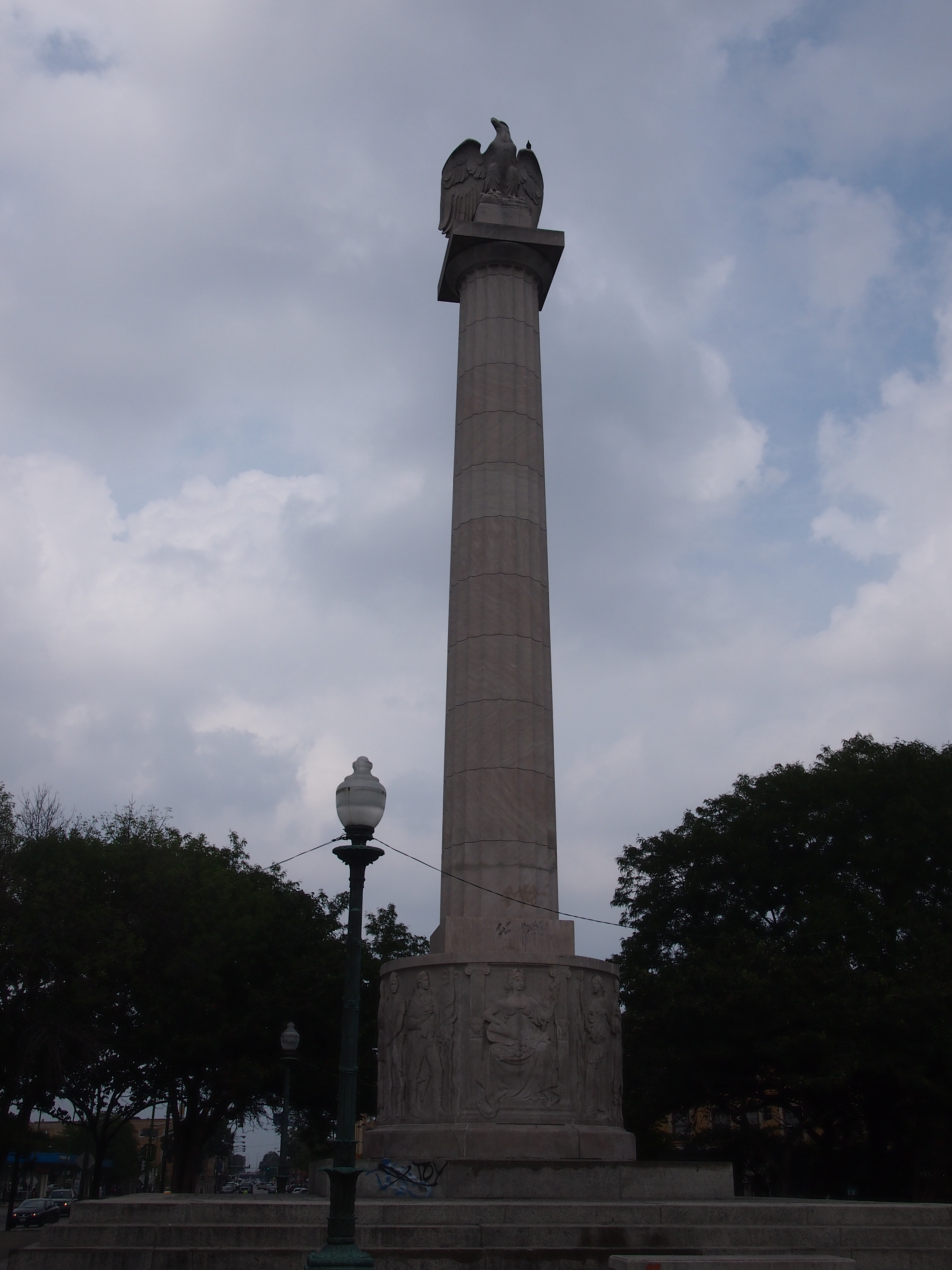
Illinois Centennial ColumnHenry Bacon’s well known for the Lincoln Memorial, as well he should be. He isn’t very known for the Illinois Centennial Memorial Column, a.k.a., the Illinois Centennial Monument, in Logan Square in Chicago, which is on the Northwest Side. I’d never taken a look at it up close until recently.

It’s a little forlorn. One of those monuments with passed by thousands daily, noticed by few if any, and marked with a little graffiti just to drive home the point. Then again, it’s been quite a while since the 100th anniversary of Illinois’ statehood, which was in 1918.

It’s a Doric column, and according to one source at least, made up of 13 solid marble segments based on the same proportions and scale as the columns of the Parthenon colonnade in Athens (or Nashville, come to think of it). The eagle on top, done by sculptor Evelyn Beatrice Longman, evokes the one on the Illinois state flag.

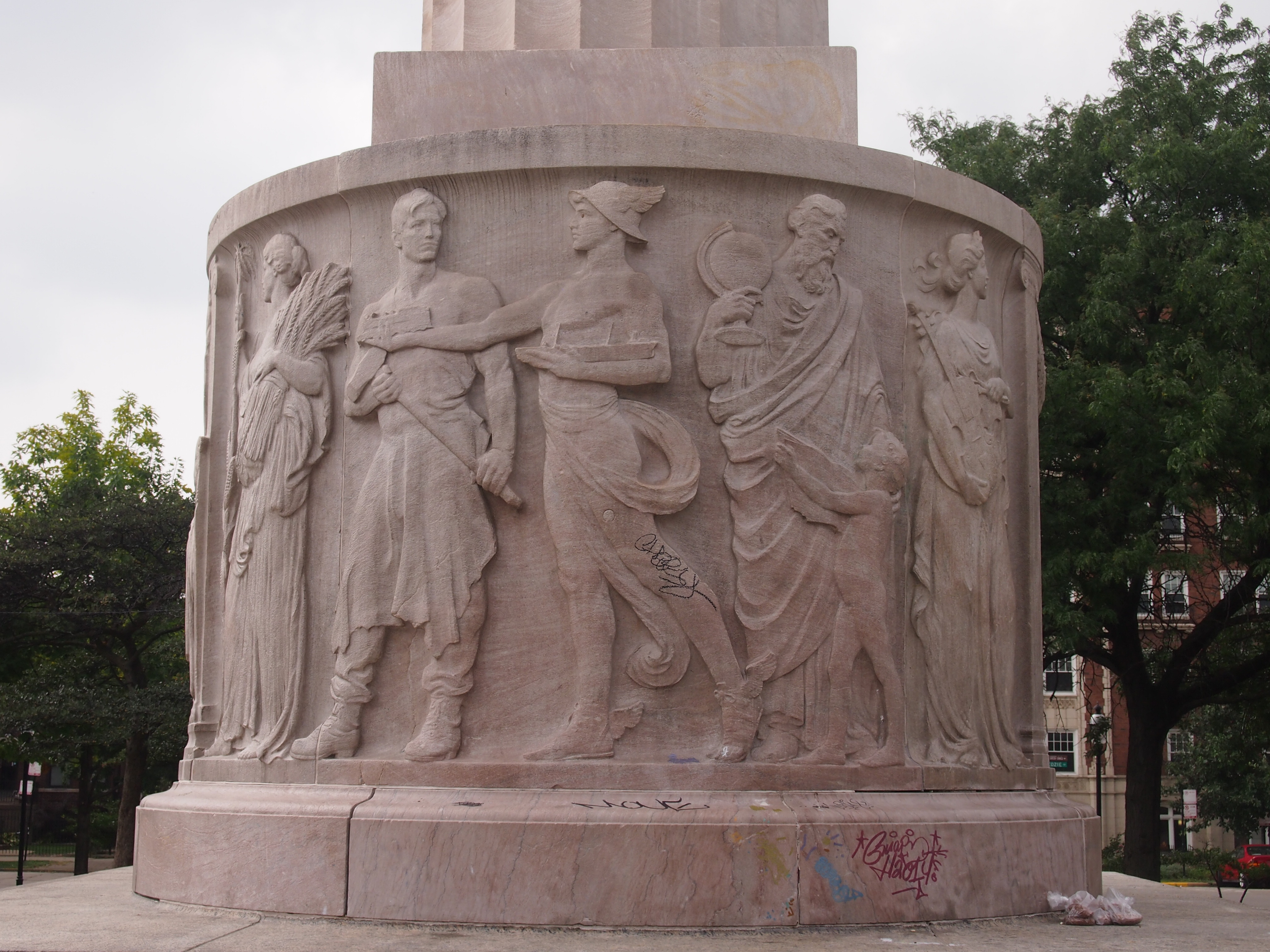
She did the reliefs along the base of the column as well, depicting Indians, explorers, farmers and laborers.

Illinois Cenntenial MemorialPlus a few figures from Antiquity. I’m pretty sure that’s Hermes holding a train and a steamship, maybe offering them to the laborer holding the hammer, and it looks like Ceres is to the workingman’s left. On Hermes’ right – is that Eratosthenes? He looks Greek enough, and he’s got a globe, fitting for the father of geography and the first person to more-or-less figure out the circumference of the Earth.

It’s too much to expect an Illinois Bicentennial Memorial in a few years, but may this one can be cleaned and restored for the occasion.

Ukrainian Village Exteriors

Cool in the evenings, warm during the day. Cicadas by day, crickets by night. We’re on the September slide. But the weather won’t be bad for two months or so, unless the Yellowstone Caldera blows or something like that.

As I mentioned yesterday, St. Stanislaus Kostka on West Side of Chicago is open all the time. Unfortunately the same can’t be said for a lot of other churches in the city. I understand the reason, of course: thieves and vandals and other miscreants. So sometimes all that’s visible to the casual visitor is an exterior, and that by itself can be a fine thing. Still, you want to go inside.

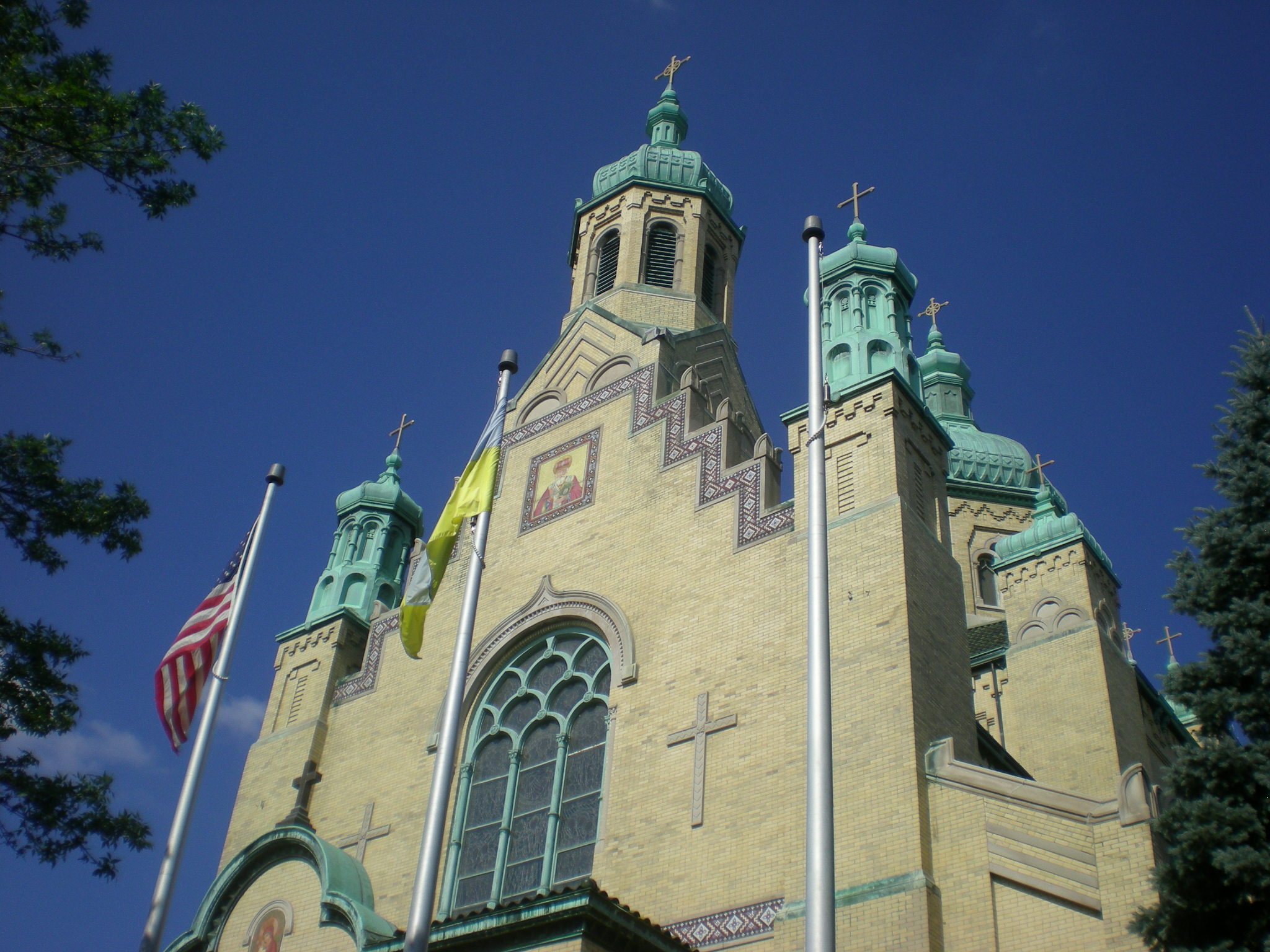
Earlier this summer we went to Ukrainian Village, a neighborhood in Chicago still populated by many Ukrainians, but arrived too late in the day to take a look inside St. Nicholas Ukrainian Catholic Cathedral. Now 100 years old, I’ve read that it was modeled after St. Sophia in Kiev, with magnificent icons, mosaics and stained glass windows inside.

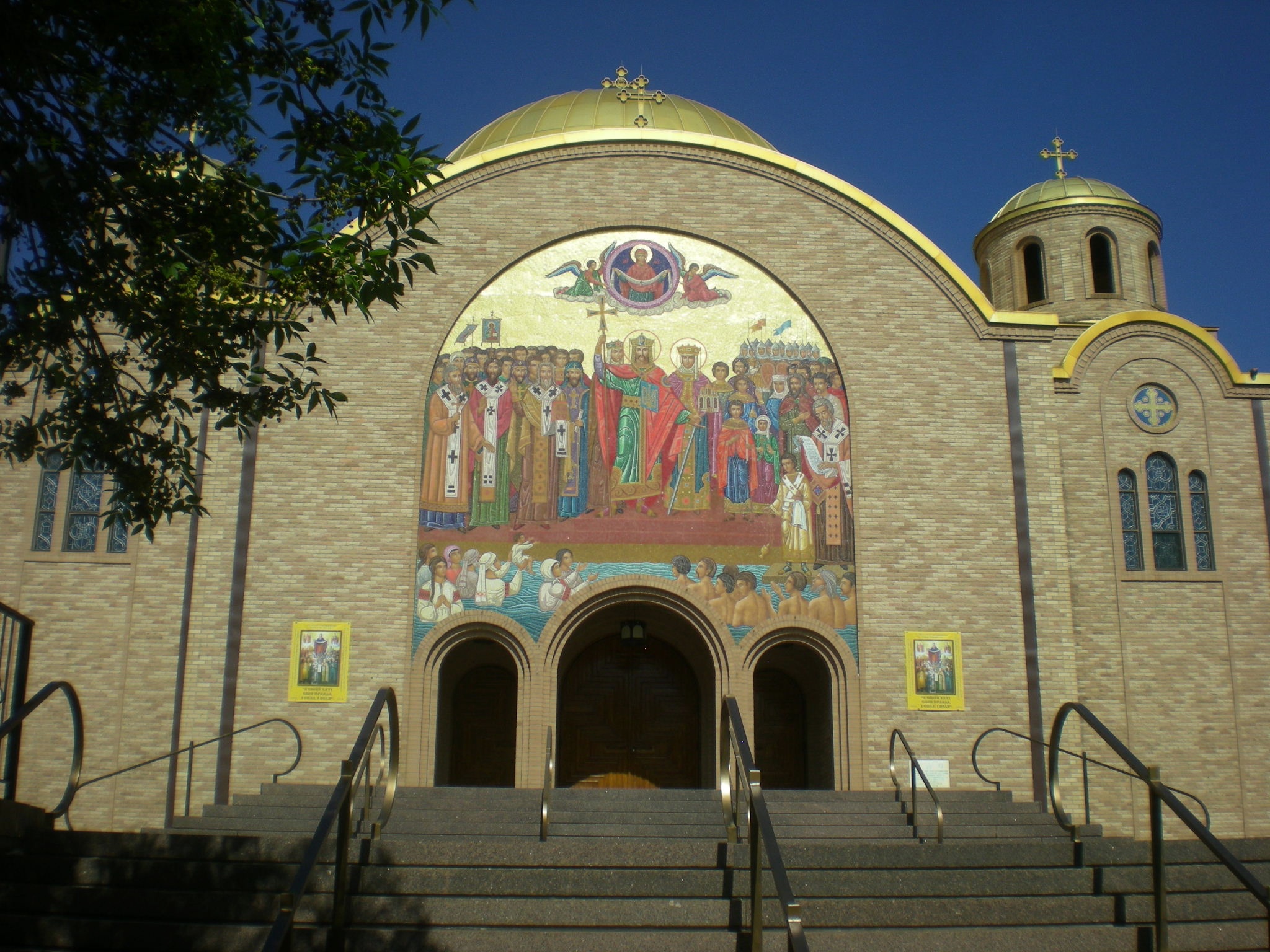
St. Nicholas Ukrainian Catholic CathedralIt has 13 domes surmounted by crosses – one for Jesus, 12 more for the Apostles, most not visible at this angle. Only a short walk from St. Nicholas is SS Volodymyr & Olha Church, a Byzantine-looking sort of place, which only dates from the early 1970s, but which harkens back a good many centuries.

June29.14 034It too was closed that afternoon.

June29.14 034But the sun was shining bright on the mosaic above the entrance, which depicts the Christianization of Ukraine. I hope it was in the summertime when that happened.

Humboldt Park Bronzes

As you’d expect, there’s a statue of Baron von Humboldt in Humboldt Park in Chicago, and it’s a good one, a ten-foot bronze by Felix Gorling. He’s standing next to a globe and an iguana. I like those details. But by the time I got there, my camera’s battery was exhausted – the modern equivalent of running out of film. Public Art in Chicago always features better pictures anyway, so here’s Humboldt.

The baron and I go back a ways. I did a report on him in the fifth or sixth grade. His science is impressive, but what I think really impressed me at the time, and still does, was how he successfully explored parts of South America without much in the way of modern equipment (though I guess what he had was state-of-the-art).

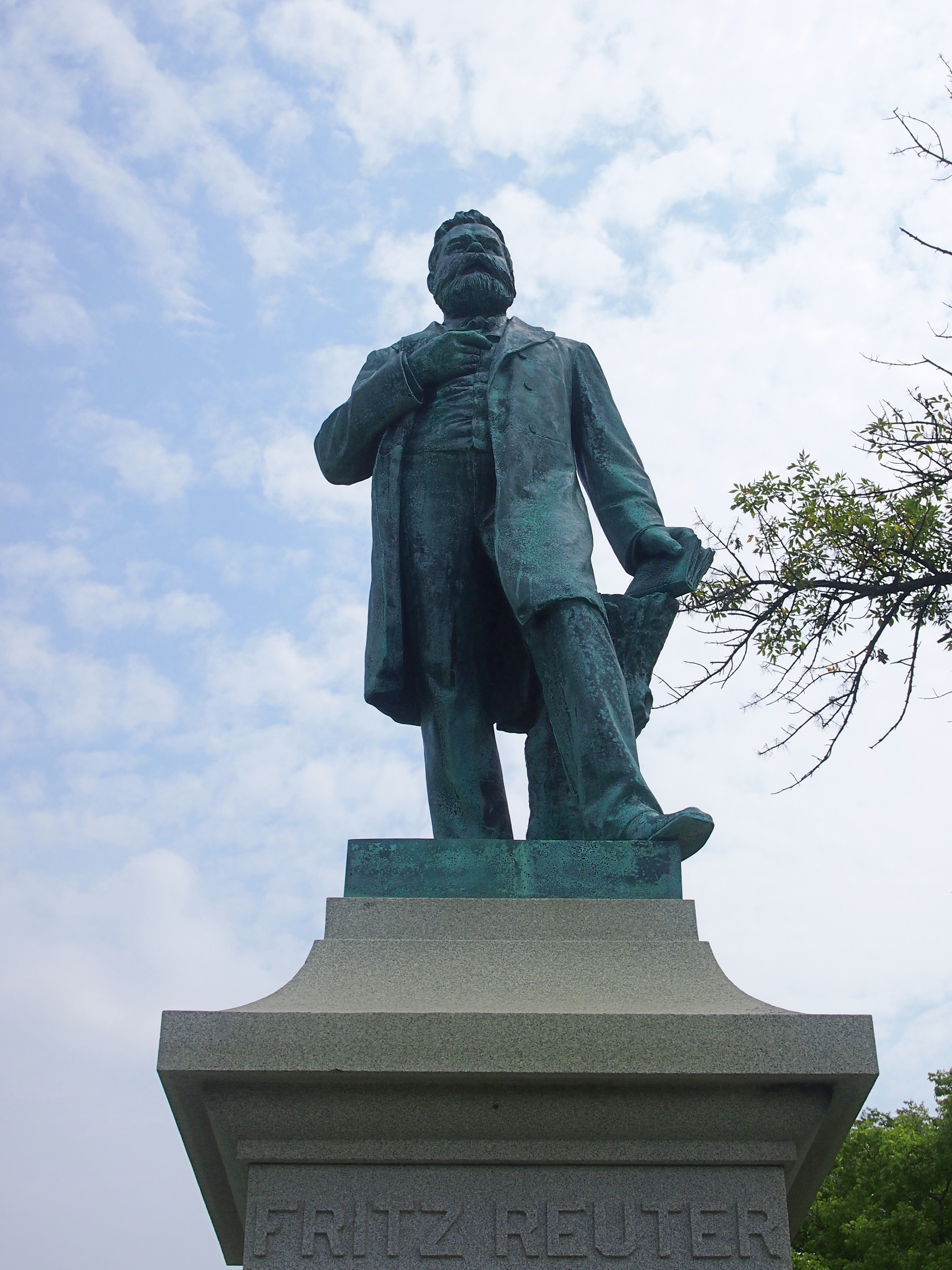
Also in Humboldt Park – another legacy statue of the long-gone German population in the area – is a bronze of Fritz Reuter by one Franz Engelsman. My knowledge of Fritz Reuter is meager, and at first I confused him with the fellow who started the news agency (Paul Reuter, as it happens).

Fritz - Humboldt ParkThe park district tells us that “Reuter is best known for Otto Kanellen, a volume of prose stories. But he is also remembered for writing against political oppression, a subject he understood first-hand. The Prussian government sentenced Reuter to death for high treason because he had participated in a student-run club promoting political activism. This was commuted to imprisonment, and despite poor health, Reuter continued to write throughout his years in prison. Reuter’s work included several comic novels that were popular with many of Chicago’s German immigrants.

“On May 14, 1893, more than 50,000 Chicagoans of German descent attended the dedication ceremonies. While Reuter is less well-known to the wider community than Goethe or Schiller—for whom monuments were also dedicated in Chicago parks—the impressive attendance at this dedication shows the great enthusiasm for Fritz Reuter within the city’s German community. Four bronze relief plaques of scenes from Reuter’s best known works originally ornamented the granite base of the monument; however, they were all stolen in the sometime in the 1930s and have never been recovered.”

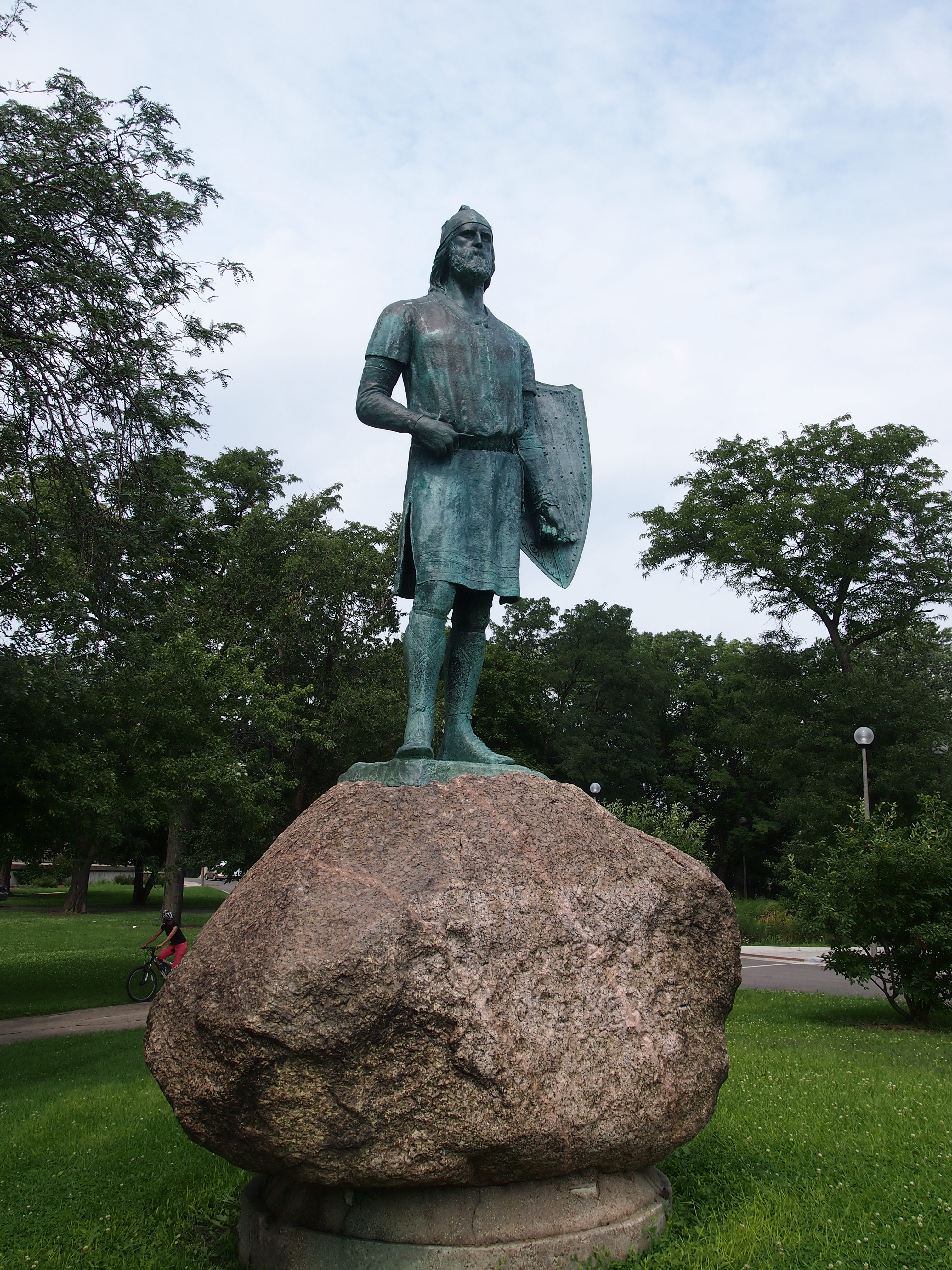
Germans weren’t the only ones living near Humboldt Park more than 100 years ago. More from the park district: “On October 12, 1901, tens of thousands of flag-waving Scandinavian-Americans participated in events to celebrate the monument’s unveiling. Despite heavy rain that day, the festivities included a parade and a two-hour ceremony in Humboldt Park.”

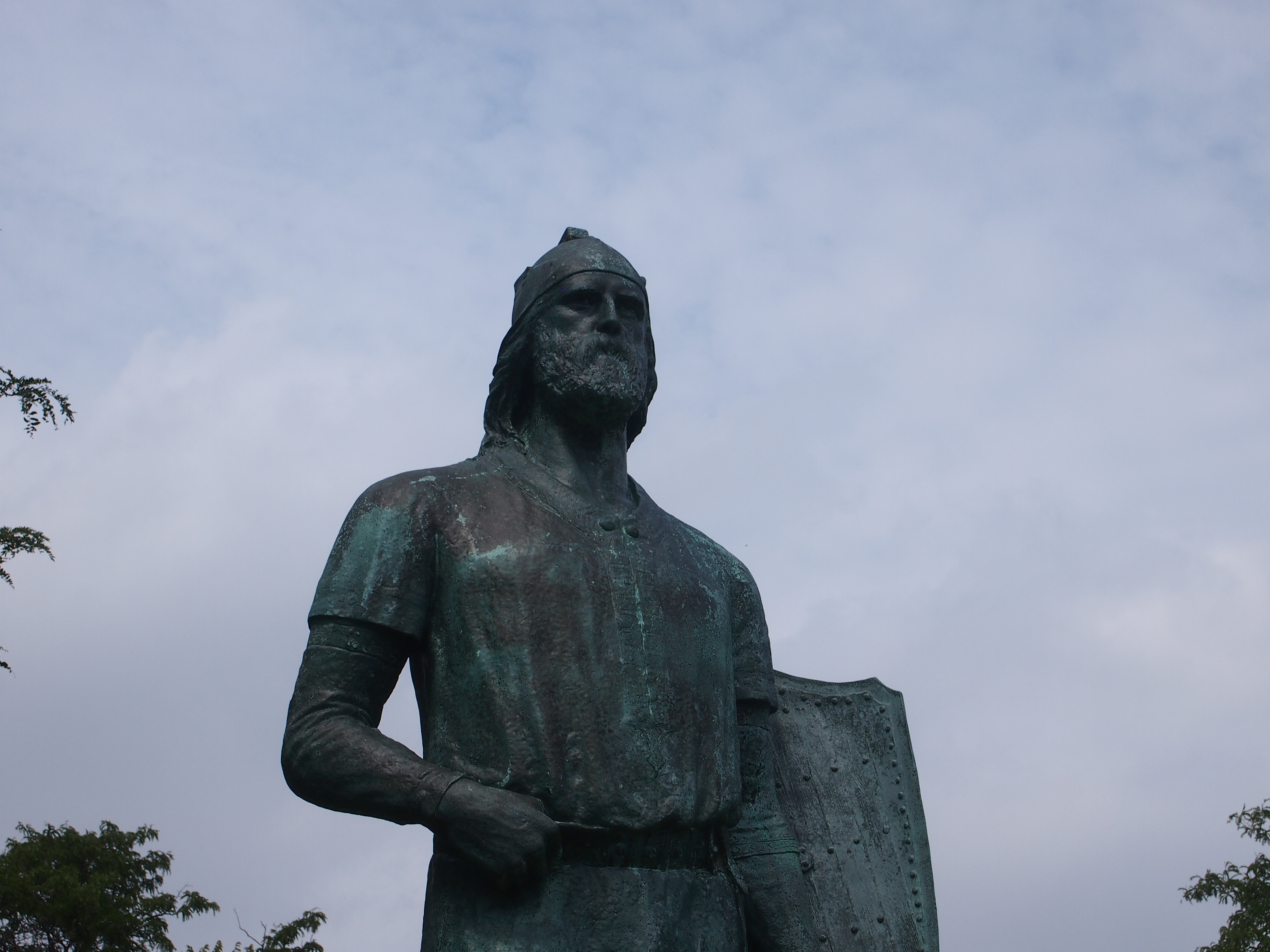
The monument this time: a bronze of Leif Ericson on a granite bolder, the work of a Norwegian come to Chicago around the time of the world’s fair, Sigvald Asbjørnsen.

Leif Ericson, Humboldt Park, August 2014

Humboldt Park, Chicago, August 2014A determined “We’re off to Vinland, men!” look on his face? Maybe. Sure, among Europeans, he got to America first, not counting nameless Vikings who may or may not have been shipwrecked there. If I’m ever out that way, I’ll definitely take a look at L’Anse Aux Meadows. But it’s a historical curiosity more than anything else, and this kind of memorial speaks more of modern ethnic pride than anything else. Even if the Vikings had told anyone else, which they didn’t, what could have 11th-century Europe done with that information?

Jazz Fest and Big New Head ’14

While I was eating lunch on my deck today — the opportunities for that will be rarer as the weeks ahead pass — the dog took a sudden interest in one of my lower pant legs, sniffing and snorting with gusto. I noticed a small black ant crawling on it. The dog had too. In a moment, she’d eaten the ant.

I’ve seen her chase flies and bees (and lucky for her, never catch any), but this was a first. It didn’t seem to be a biting kind of ant. Ants on the hoof, snack food for dogs.

Did some gadding about in Chicago over Labor Day weekend. On Saturday, Yuriko and Ann and I went to the city and met my nephew Dees, his girlfriend Eden, and an old friend of theirs, and eventually ended up at Millennium Park. Dees and Eden were visiting from Texas, staying with friends here. That reminded me a bit of the Labor Day weekends of my youth, when I usually went out of town — to Chicago (before I lived there), New York, Boston, and Washington DC — though one year (’85) my old friends came to me, and we gadded around Nashville.

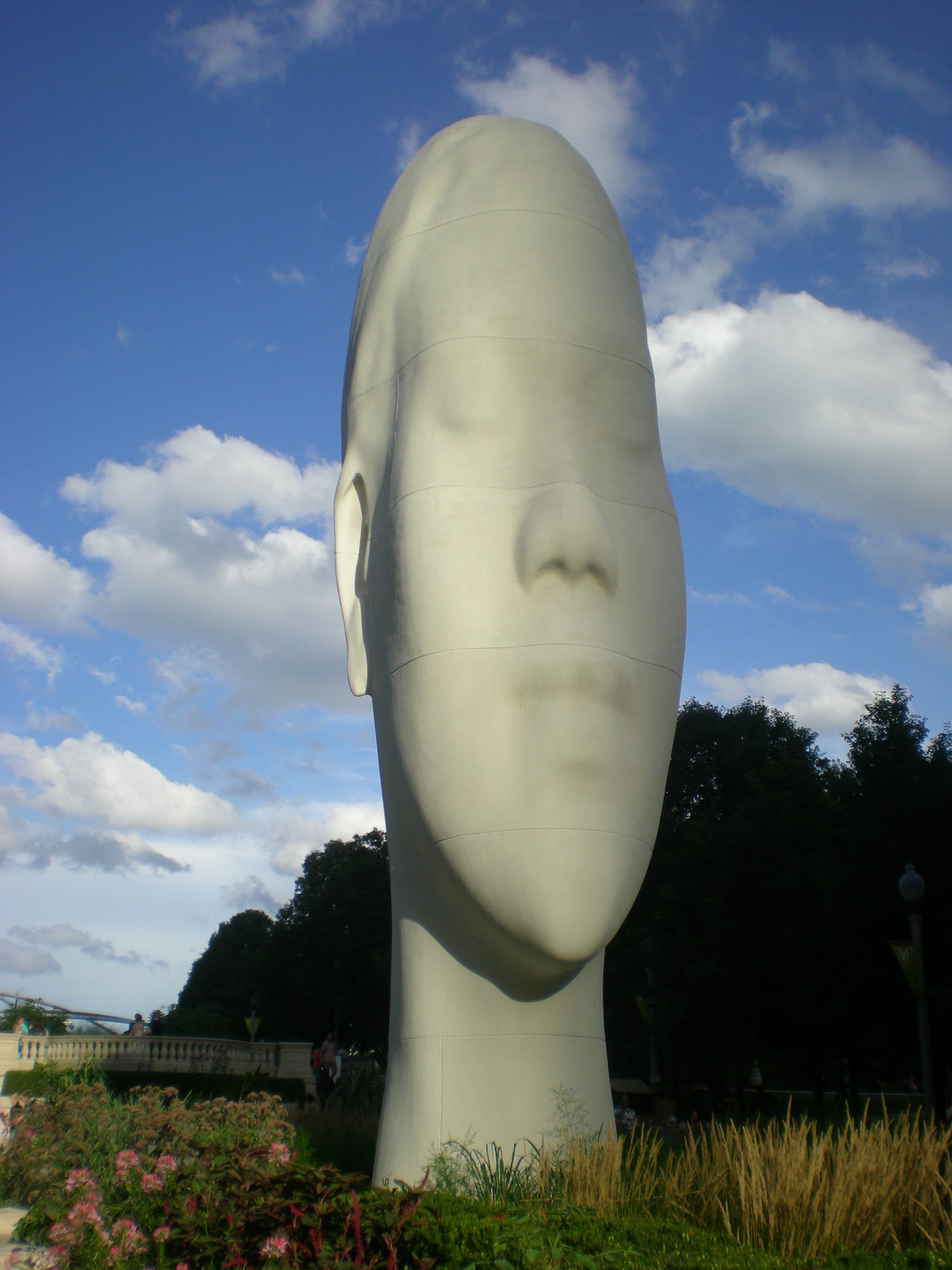
There’s a new face near Michigan Ave.

Millennium Park, Aug 2014It’s called “Looking Into My Dreams, Awilda,” by Jaume Plensa, the Spaniard who did Crown Fountain, the twin towers of alternating faces that spit water in the warm months, which isn’t far from the new sculpture. The Tribune says that “Awilda is 39 feet tall, made of marble and resin; the internal frame is fiberglass. She arrived from Spain in 15 pieces, then was bolted together.” It’ll be there until the end of 2015.

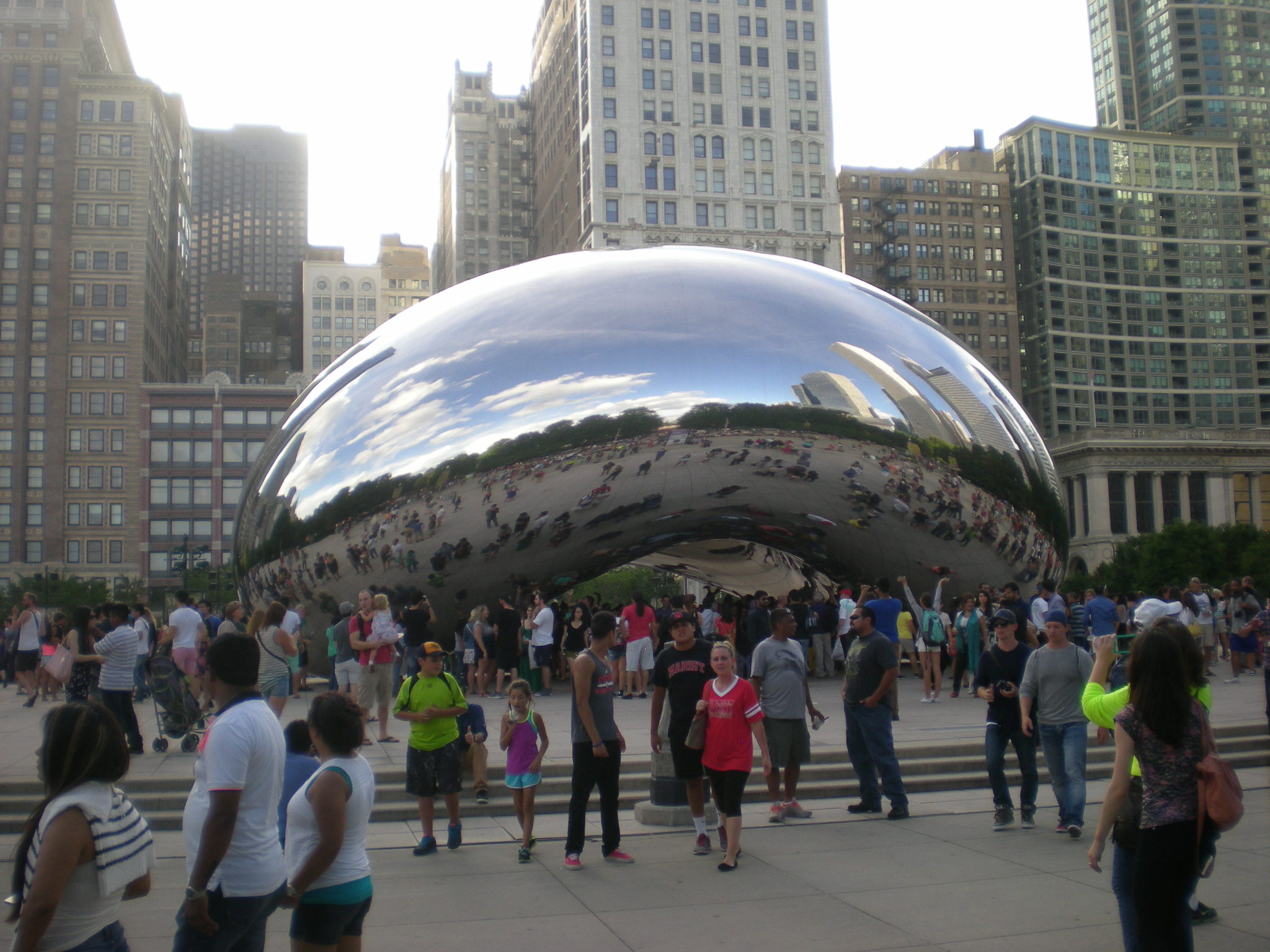
The Bean was as popular as ever.

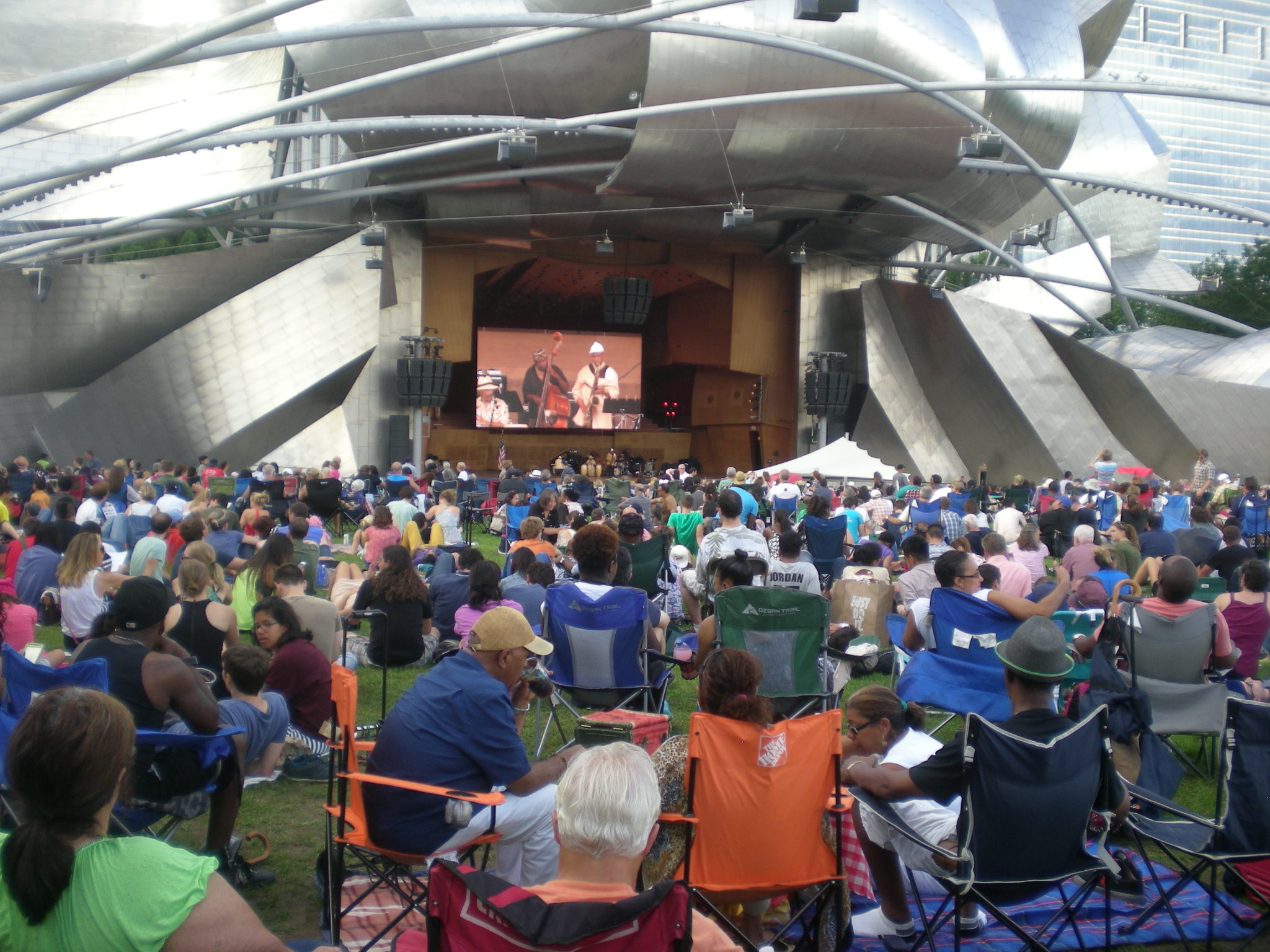
Aug30.14 035We spent a while at the Chicago Jazz Festival at Pritzker Pavilion. The last time I went to the Chicago Jazz Festival was – 1996? Maybe. This time we left fairly early, but were around long enough to hear Ari Brown, Chicago sax man of long standing. At 70, the man can blow.

Ari Brown, August 2014Still hot in the late afternoon, and a bit humid, but it was a good place to sit and listen. It helped not to get rained on, which was a distinct risk over the weekend.

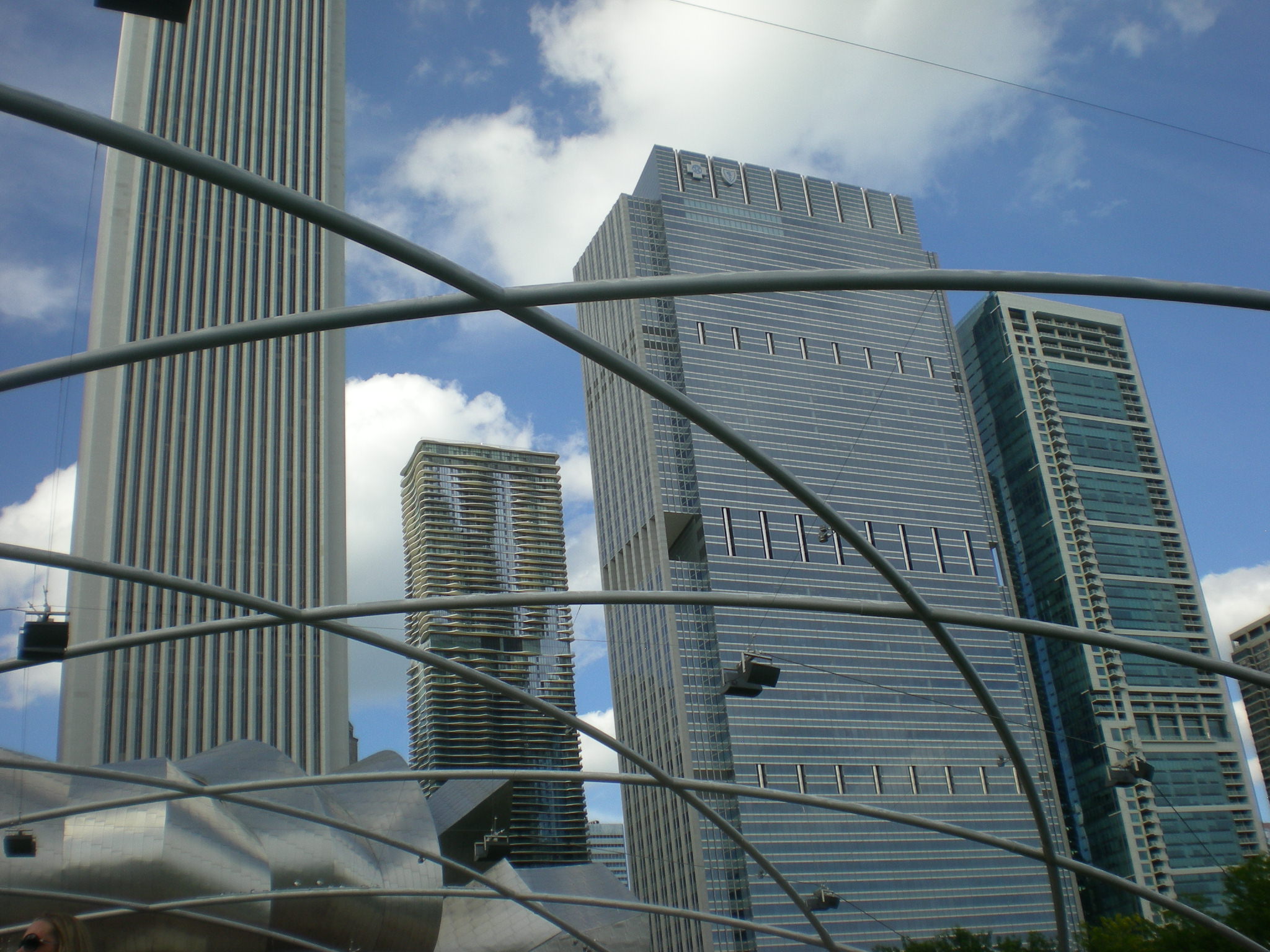
Millennium Park, Aug 2014Behind the stage rise the skyscrapers of the East Loop. I’ve always liked the view.

O-Bon 1990

Things I Did During O-Bon (August 12-19)

• Saw the Daimonji Gozan Okuribi on August 16 in Kyoto. I parked myself on the banks of the Kamogawa River among a large crowd also there to see the event. Sure enough, not long after dark, the first of the bonfires came to life, a 大 shape, “dai” or large, defying a bank of rainclouds that occasionally cut loose on the audience. It looked a little distant, but it was worth seeing once.

[The Japan National Tourist Board tells us that “although there are several interpretations as to the origins of this event, it is generally regarded as a fire set alight at the gate for seeing off the souls of ancestors after commemorating the welcoming of their souls. The character of “dai” (meaning “large”) on Mt. Daimonji, and those of “myo” and “ho,” which make up the word “Myo-ho” (wondrous teaching of Buddha) on Matsugasaki Nishiyama and Higashiyama mountains are famous.”]

• Took some long walks in Osaka and one in Kyoto, from the Kenkakuji (Golden Pavilion) to the Nijojo Castle. The latter was closed by the time I got there [I eventually visited the Nijojo.]

• Visited a few museums, including the Osaka Municipal Museum; the Kyoto National Museum; and the Museum of Oriental Ceramics. [Some years later, I told an acquaintance of mine who’s a gifted potter that I’d been there, and he was clearly envious of the experience. I liked the pottery well enough, but his instincts were right. It should have been him rather than me, in terms of who could appreciate it best.]

• Also spent time at the National Museum of Ethnology, which has all kinds of interesting artifacts, such as a yurt, Polynesian vessels, African masks, lots more. The museum is at Expo Park, site of Expo ’70, the world’s fair held in Osaka that year. That’s probably the first time I’d ever heard of the city. Other relics from the fair include the enormous outdoor sculpture called “Tower of the Sun,” looking very much like something created in the late 1960s. [By Taro Okamoto, who died in 1996. I had no idea there was anything inside the work.]

• Discovered a second-run theater in Osaka, admission only 600 yen for two movies. Good place to go for air conditioning, a traditional reason to go to the movies. This week saw Lair of the White Worm and Salome’s Last Dance, a sampler of Ken Russell’s recent twisted visions. Before seeing them, I’d mostly known his movies by reputation. Altered States, which I did see once upon a time, was much worse than either of these.

Mother Jones in Mt. Olive

Gene Autry – the singing cowboy, “Rudolph the Red-Nosed Reindeer” Gene Autry – recorded “The Death of Mother Jones” early in his career: 1931, shortly after the death of labor agitator Mother Jones (Mary Harris Jones). It’s worth a listen.

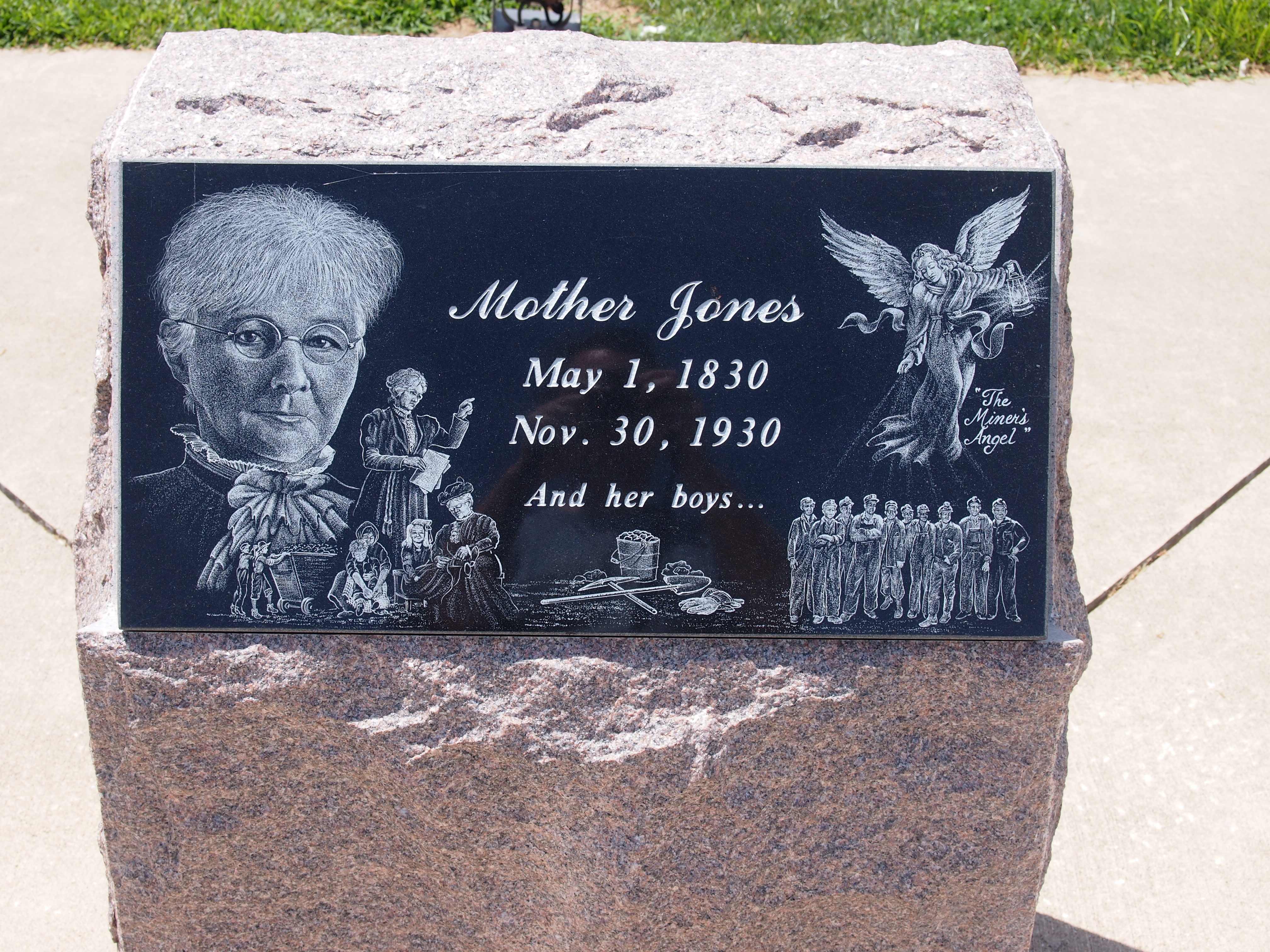
For years I’ve been seeing the sign on the Interstate advising me that Mother Jones’ memorial is off Exit 44 in Mt. Olive, Ill., not far outside greater St. Louis, but it’s been a one-of-these-days destination. The day turned out to be July 27, 2014, our last day of the trip. I’d planned to have lunch at Crown Candy Kitchen in St. Louis, and remarkably enough, I didn’t have any trouble finding that establishment. But at about 1 on that Sunday afternoon, a line was out the door. Crown Candy might be good, but not that good.

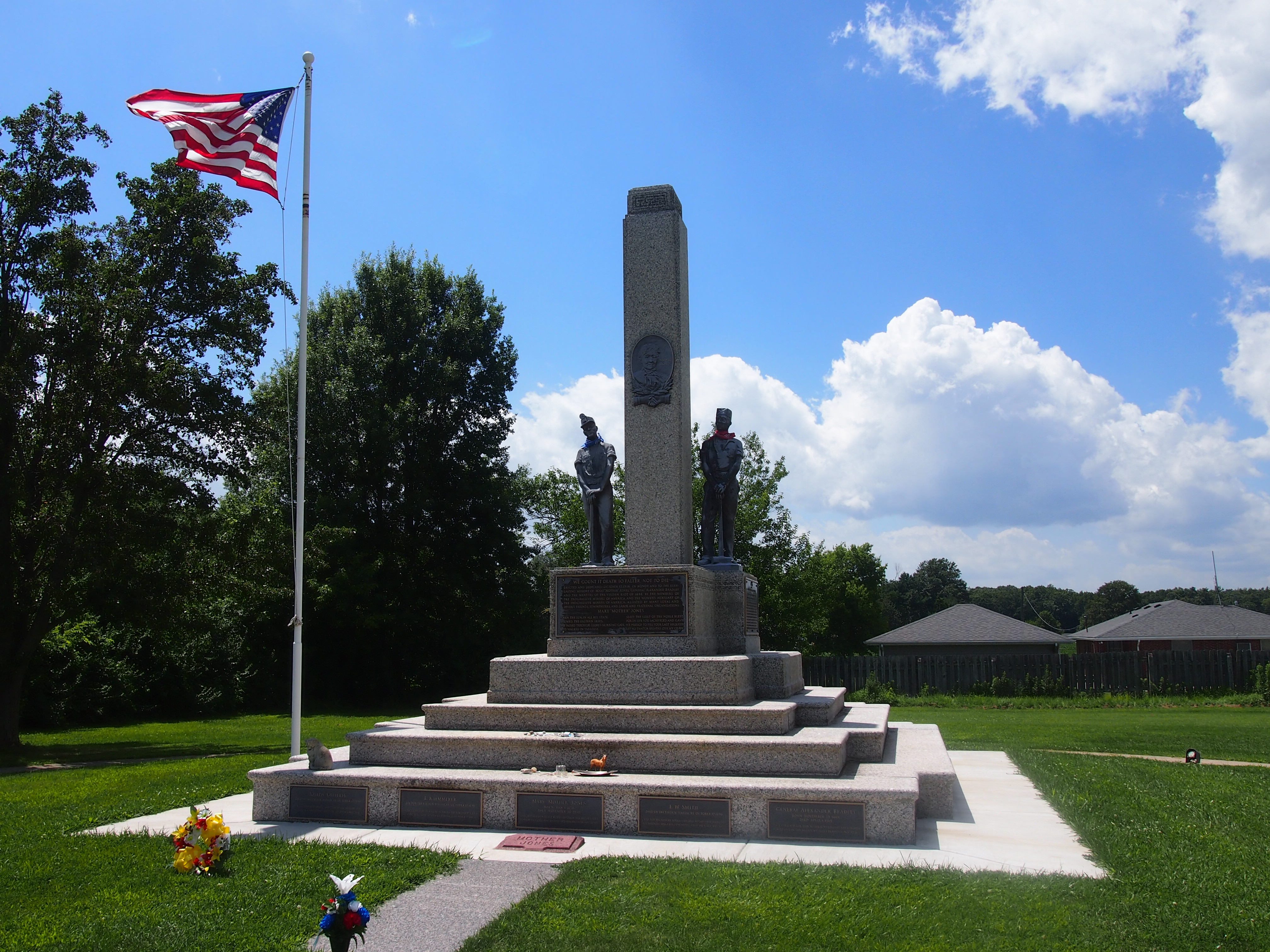
So we pressed on into Illinois. I’d stopped for lunch in Litchfield some years ago, and had a good enough memory of that, so that was the target. But then I saw the Mother Jones sign, and a billboard for a diner in Mt. Olive, pop. 2,000-plus. A winning combo. We got off at Exit 44 and followed the signs to the Union Miners Cemetery, final resting place of Mother Jones and presumably a lot of mining men. This is the view from her memorial.
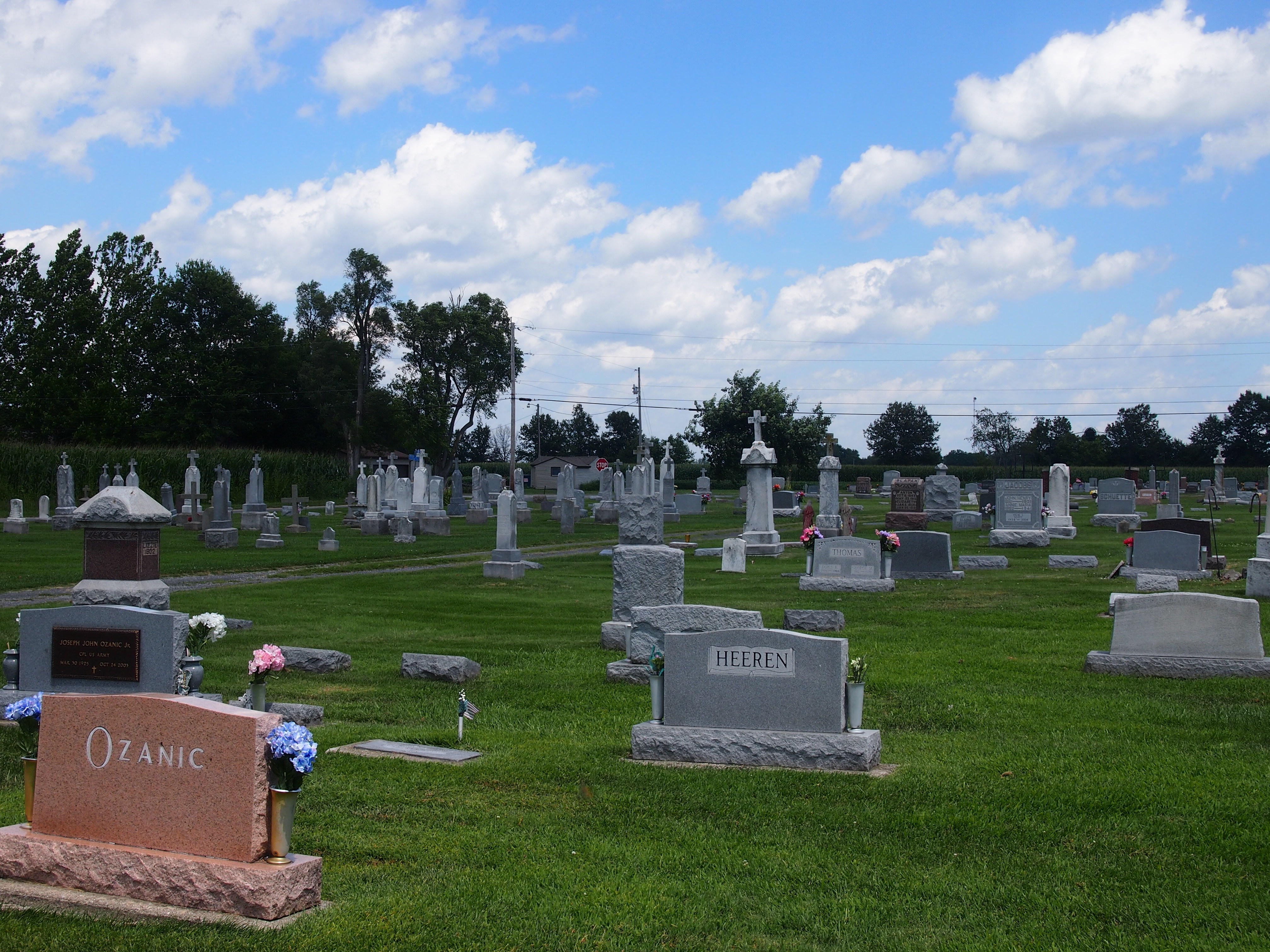
Union Miners CemeteryThe view of her memorial.

Mother Jones Memorial, July 2014Why Mt. Olive? The Illinois Labor History Society tells us that Mother Jones herself made the request a few years before her death.

A Special Request to the Miners of Mt. Olive, Illinois:

When the last call comes for me to take my final rest, will the miners see that I get a resting place in the same clay that shelters the miners who gave up their lives of the hills of Virden, Illinois on the morning of October 12, 1897 [sic], for their heroic sacrifice of [sic] their fellow men. They are responsible for Illinois being the best organized labor state in America. I hope it will be my consolation when I pass away to feel I sleep under the clay with those brave boys.

— Mother Jones
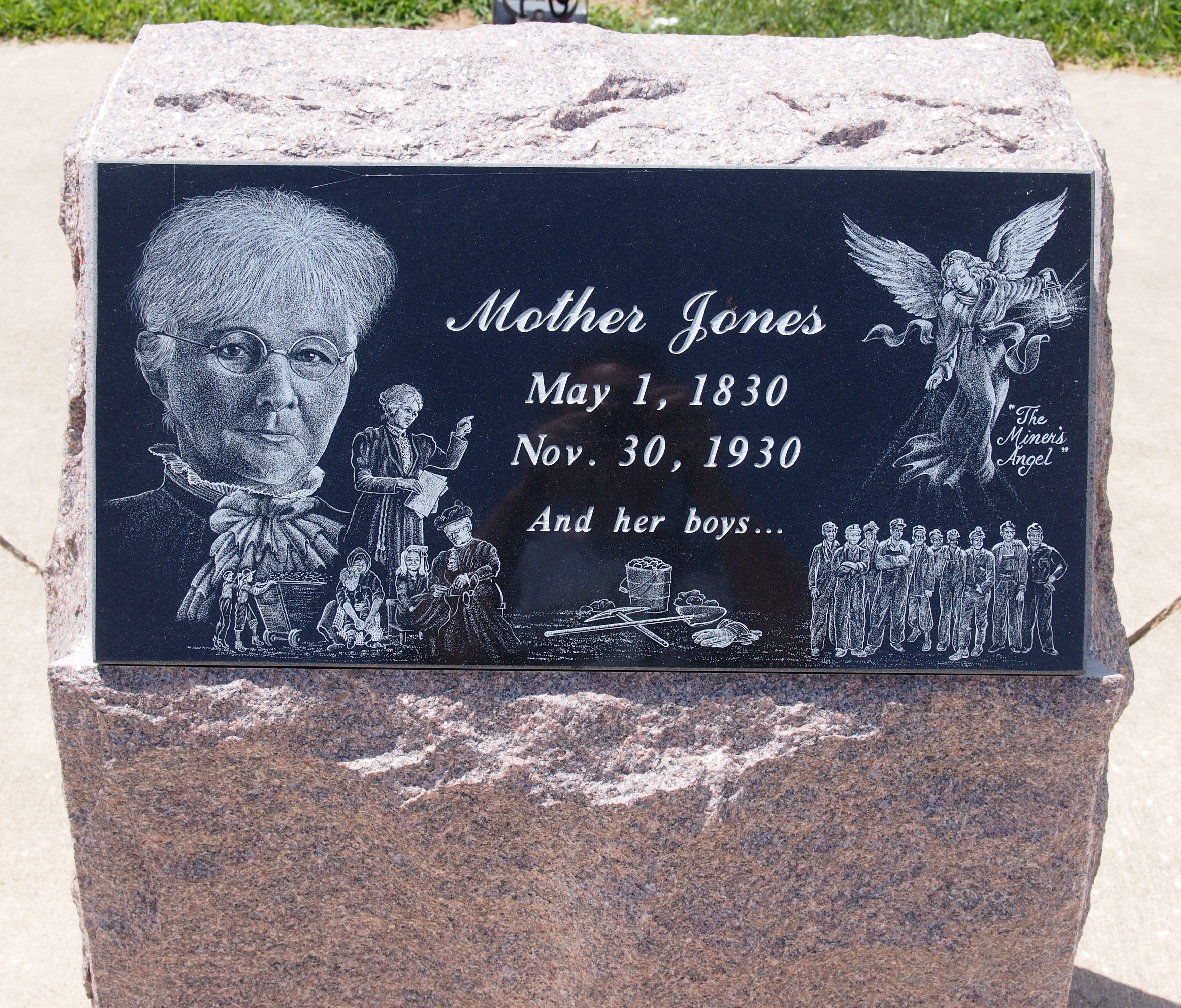
Mother Jones Memorial, July 2014The monument was dedicated in 1936, and according to the society, “The cash raised for the monument was $16,393.25. All of the labor involved was donated. It stands 22 ft. high on a 20 x 18 ft. base. It is built of 80 tons of pink Minnesota granite. The name of the sculptor is lost from the record.

“The dedication was, itself, a monumental event. Five special trains and 25 Greyhound buses brought celebrants to Mt. Olive. Others came in private cars or hitch-hiked to the town. The crowd was estimated at 50,000. There were 32,000 in the line of march.”

The memorial also includes plaques to men killed in the Virden Massacre, which Jones mentioned, a gun battle in 1898 between union men and company guards over whether strikebreakers were going to detrain at a major mine in Virden. The miners prevailed, in that no one got off the train, but a number of them died. The names of the dead I saw included E.W. Smith, E. Kraemmerer and Joseph Gitterle. “General” Alexander Bradley has a plaque too, though he died in 1918.

“Who were the miners who led this fight? The best known was Alexander Bradley, a 32-year-old mule driver who worked in the Mt. Olive mines,” says Illinois Labor History… By the mid-1890s, Bradley had traveled widely throughout the Midwest, tramping with other unemployed miners to Chicago and taking part in the famous march to Washington DC of Coxey’s Army of the unemployed of 1894.

“In the course of the strike, ‘General’ Bradley, as he became known, developed a well-earned reputation as a colorful and charismatic figure. Arriving with his ‘troops’ in Collinsville, for instance, Bradley sported ‘corduroy trousers, a light blue coat, white shirt, brown straw hat, toothpick (narrow and pointed) shoes, at least three emblems of secret societies and several rings on his fingers…[as well as] a light cane or a furled umbrella.’ ”

More about Virden – “Hotter than San Juan Hill” — is here.
The Duke in Winterset

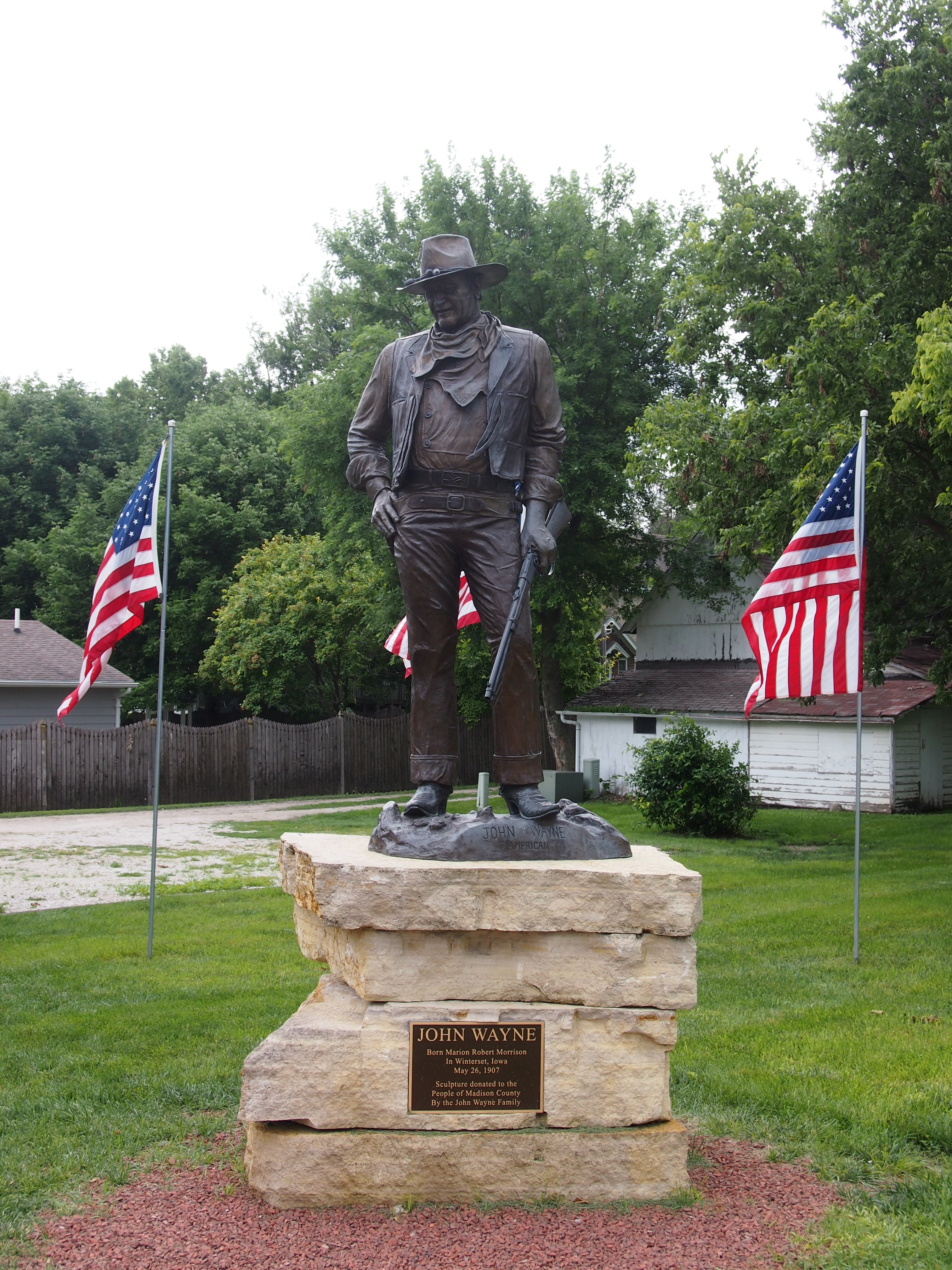
The thing to do when heading out of Des Moines in a southerly direction is to detour into rural Madison County, southwest of the capital, whose county seat is Winterset. If you have time. I decided we had time, since how could I pass up a look at a bronze of Winterset’s favorite son, Marion Robert Morrison?

John Wayne, Winterset, Iowa 2014JOHN WAYNE

Born Marion Robert Morrison

In Winterset, Iowa

May 26, 1907

Sculpture donated to the

People of Madison County

By the John Wayne Family

The statue of John Wayne is a short block from his birthplace house, now a museum that (like the capitol) happened to be closed when we arrived. No matter. A good look at the bronze was enough for now, and we weren’t the only ones doing so. A few other families pulled up for a look-see while we were there. Wayne’s fame has some staying power.

Next to the statue is a Chevy van, detailed to honor Wayne. According to the birth site museum web site, “Several years ago, an anonymous person from Arizona donated a full-size 1980 Chevy van that has been extensively customized for the true John Wayne fan….

“This one-of-a-kind vehicle is covered with $50,000 of artwork from John Wayne movies—even the windows are etched to continue the design! The interior boasts hardwood floors, carpeted walls, a wet bar, TV and VCR (this was 1980, remember?), a souped-up sound system, and saloon-style swinging doors that lead to the queen-sized bedroom [sic] in the back.”

I didn’t realize it when we were there, but the statue usually resides at a corner of Washington St. and John Wayne Dr. – one of the main drags through town – but has been moved a block away, so it won’t be damaged during construction of the John Wayne Birthplace Museum. Work started in 2013 on the new museum, which is slated for completion for the 2015 John Wayne Birthday Celebration (and it’s convenient that baby Marion was born pretty close to Memorial Day). Last year my old friend Kevin, quite the fan of the Duke, went to the birthday fest. He said he had a large time.

One more thing: there are other John Wayne bronzes out in the wider world. You have to go to California to see these two.

In the Midst of the Corn, the Middle of the USA

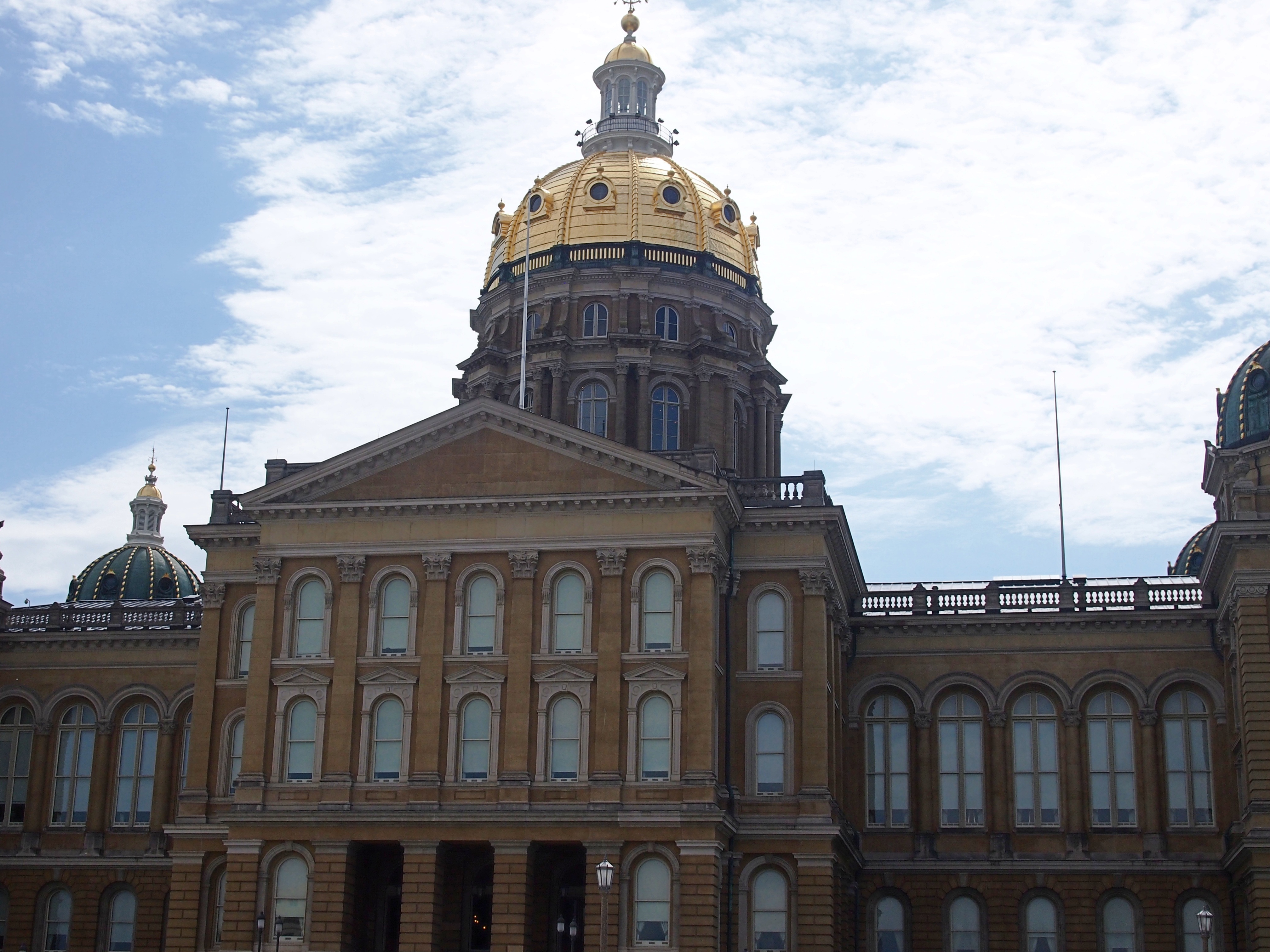
In early August 1978, I took a bus from San Antonio to Stevens Point, Wisconsin, and back again, along with a busload of other high school students to attend the Mu Alpha Theta national meeting in that (seemingly) remote Wisconsin outpost. The route took us through Des Moines, which I only knew as the capital of Iowa from maps. We didn’t stop, but one of the teachers on the expedition, the admirable Paul Foerster, pointed out the Iowa state capitol as we went by – and noted the gilding on the dome, which he said was a very thin layer of gold. Indeed it is.

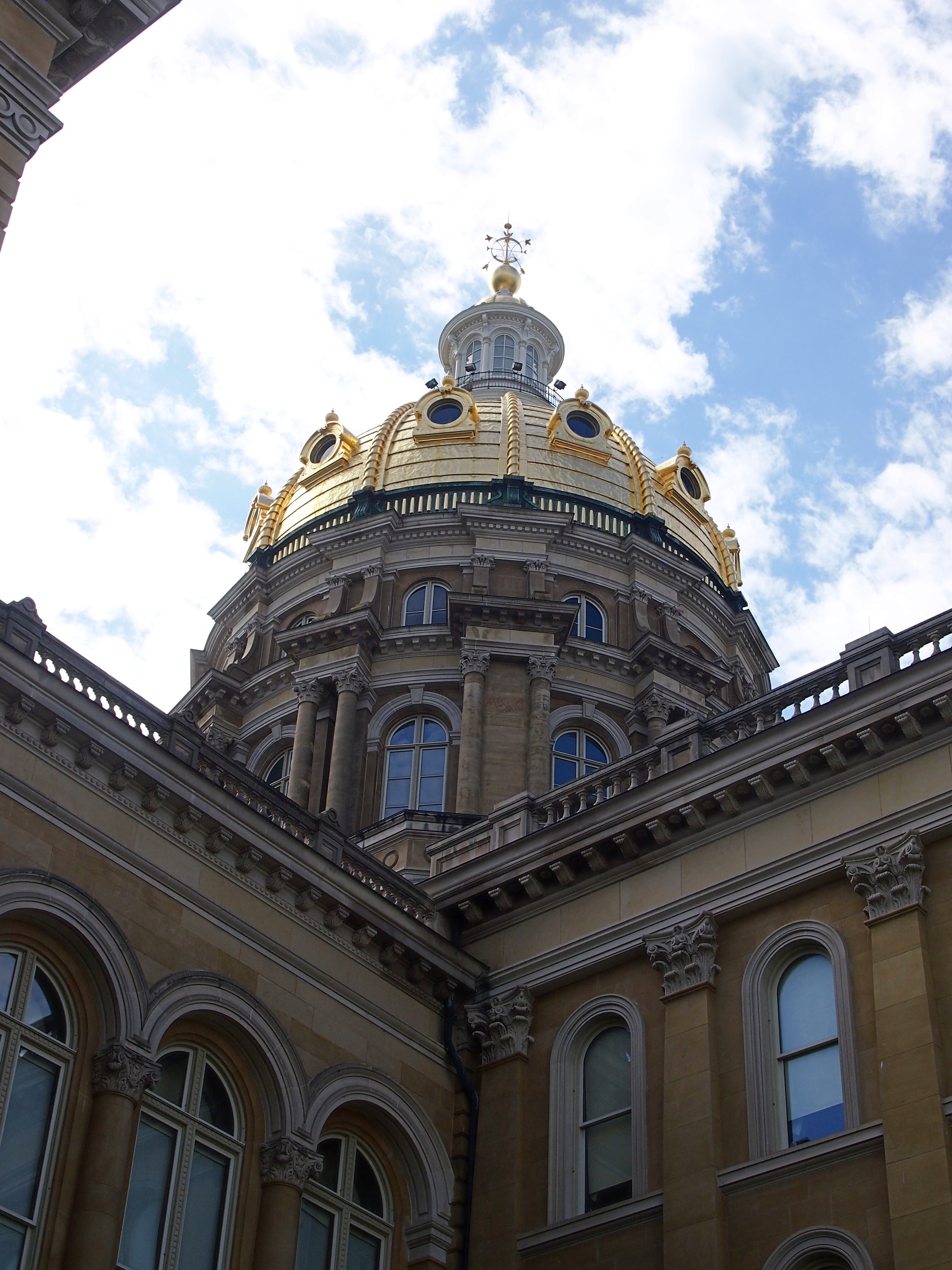
In later years, I figured I’d go back someday and take a look at the capitol more closely. Somehow, I never got around to it until July 12, 2014, our first day of driving, when I made a point of stopping there. We arrived just after 4 on that Saturday afternoon, right after the building closed (that’s what we get for having a leisurely lunch in Coralville). Ah, well. I had to make do with looking around the grounds, and seeing the magnificent gold dome up close from the outside.Iowa State Capitol 2014

The building was completed in 1884, repaired after a major fire in 1904, and exterior refurbishment was done in the last years of the 20th century. “The commanding feature is the central towering dome,” according to the State of Iowa (whose text, I note, was copied directly to Wiki). “This is constructed of steel and stone and covered with 23 carat gold. The gold leafing was replaced in 1964-1965 at a cost of $79,938.”Iowa State Capitol 2014

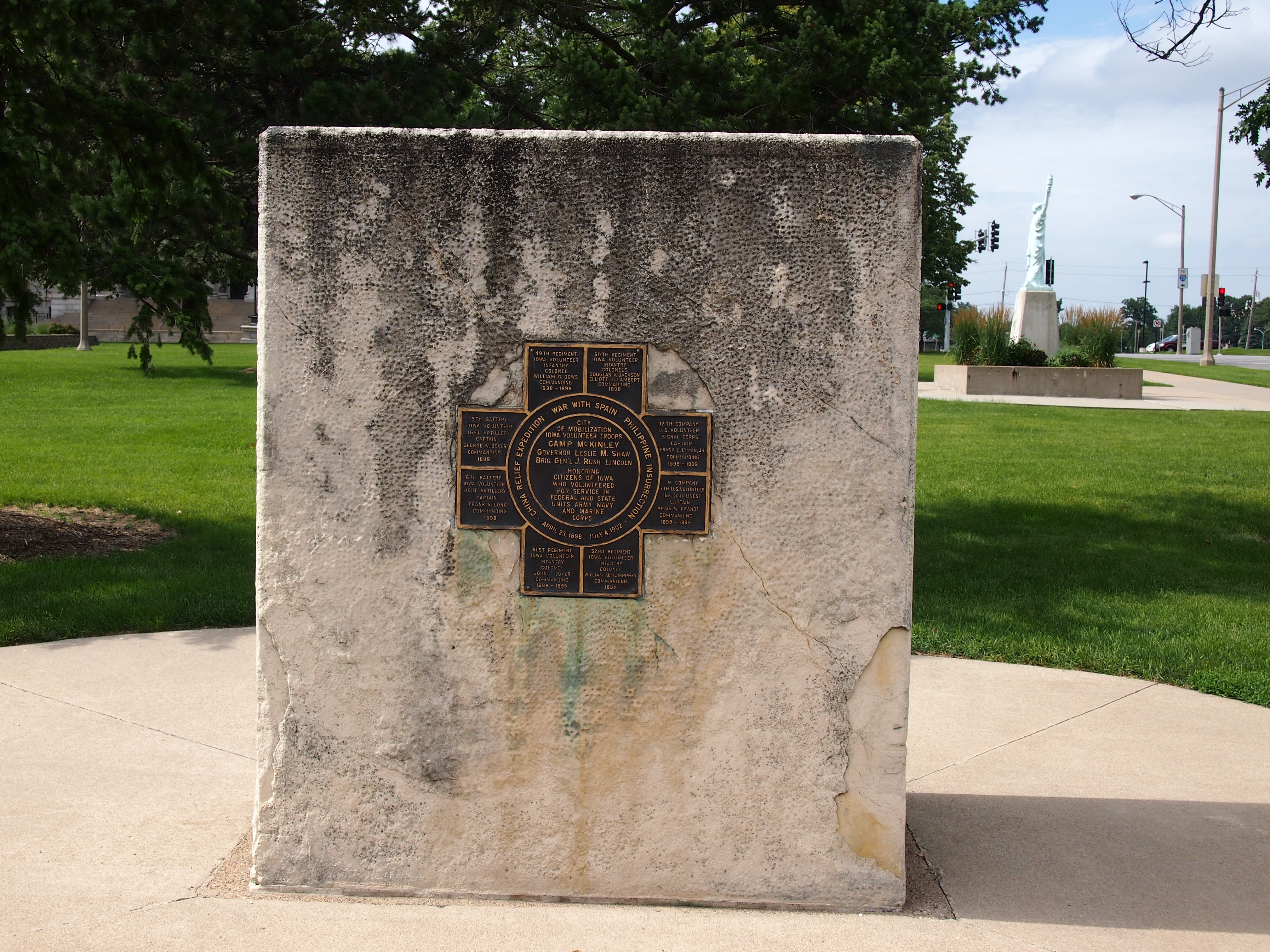
Since the capitol itself was closed, we took a look around the immediate vicinity. We would have done that anyway. The grounds sported a good number of memorials, as capitol grounds usually do. Including the modest and not-very-picturesque, such as this homely slab.

Spanish War memorial, IowaIt memorializes the Iowa men of the China Relief Expedition (you know, 55 Days in Peking), the War with Spain, and the Philippine Insurrection, and is dated April 23, 1898, to July 4, 1902.

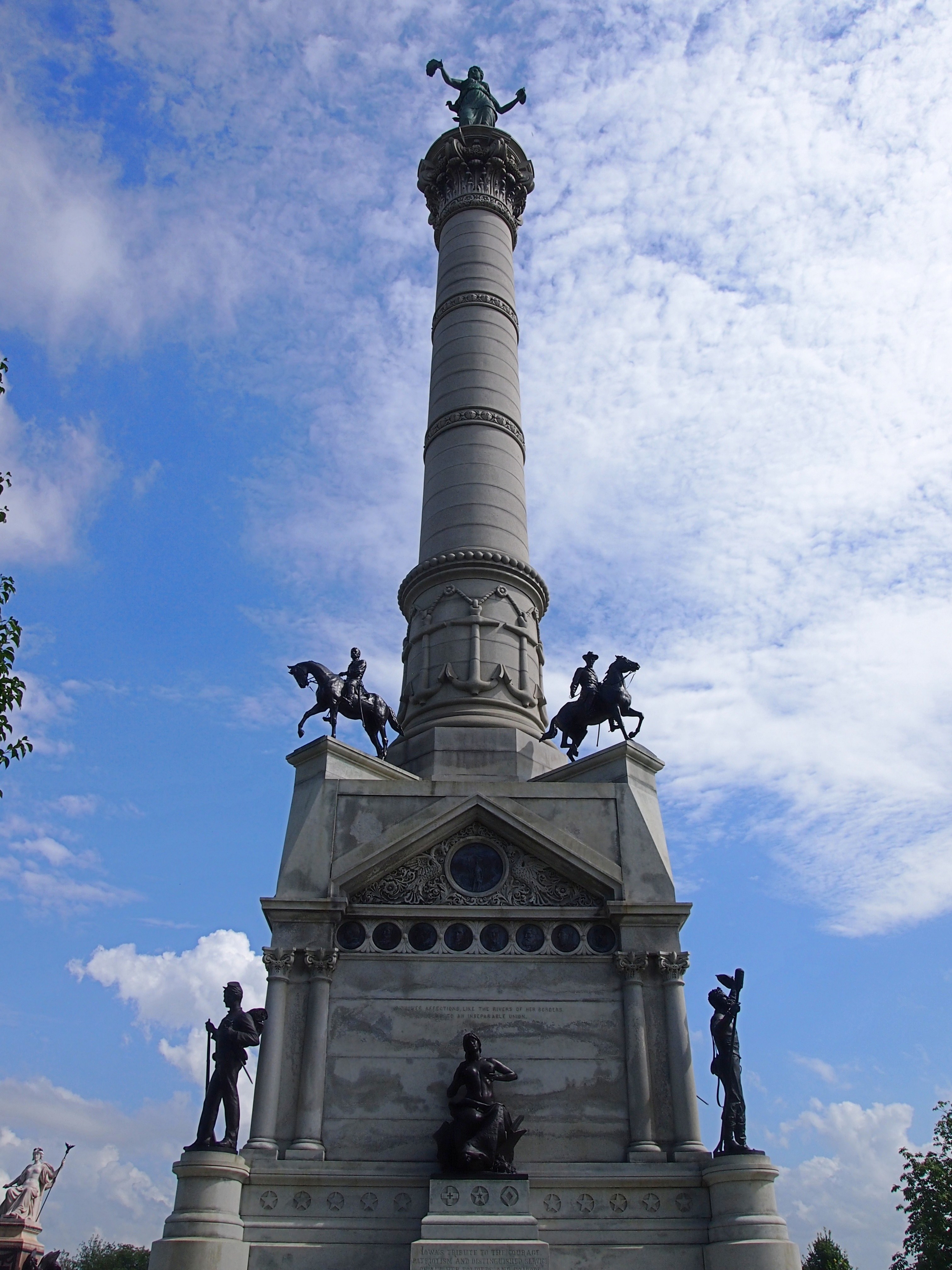
This is a much larger memorial. It is, of course, the state Civil War memorial, or to use its correct title, the Iowa Soldiers and Sailors Monument.Iowa State Capitol soldier's memorial

The Iowa Department of Administrative Services tells us that “the State of Iowa erected this monument, funded partially by refunded war taxes, to commemorate Iowans who fought during the Civil War. The monument was approved in 1888, the cornerstone was laid in 1894, and the structure was completed two years later. Because formal controversy developed over the location and artistic details of the monument, nearly 50 years passed before its dedication in 1945.”

I didn’t realize it looking at the thing, but the equestrian statues – two of the four are visible in my picture – represent actual individuals: Marcellus M. Crocker, who led troops at Shiloh, Corinth, and Vicksburg; John M. Corse, who joined Grant at the siege of Vicksburg; Grenville M. Dodge, who built railroads to support Grant and accompanied Sherman on the March to the Sea, and Samuel R. Curtis, commander of the Union Army at Pea Ridge.

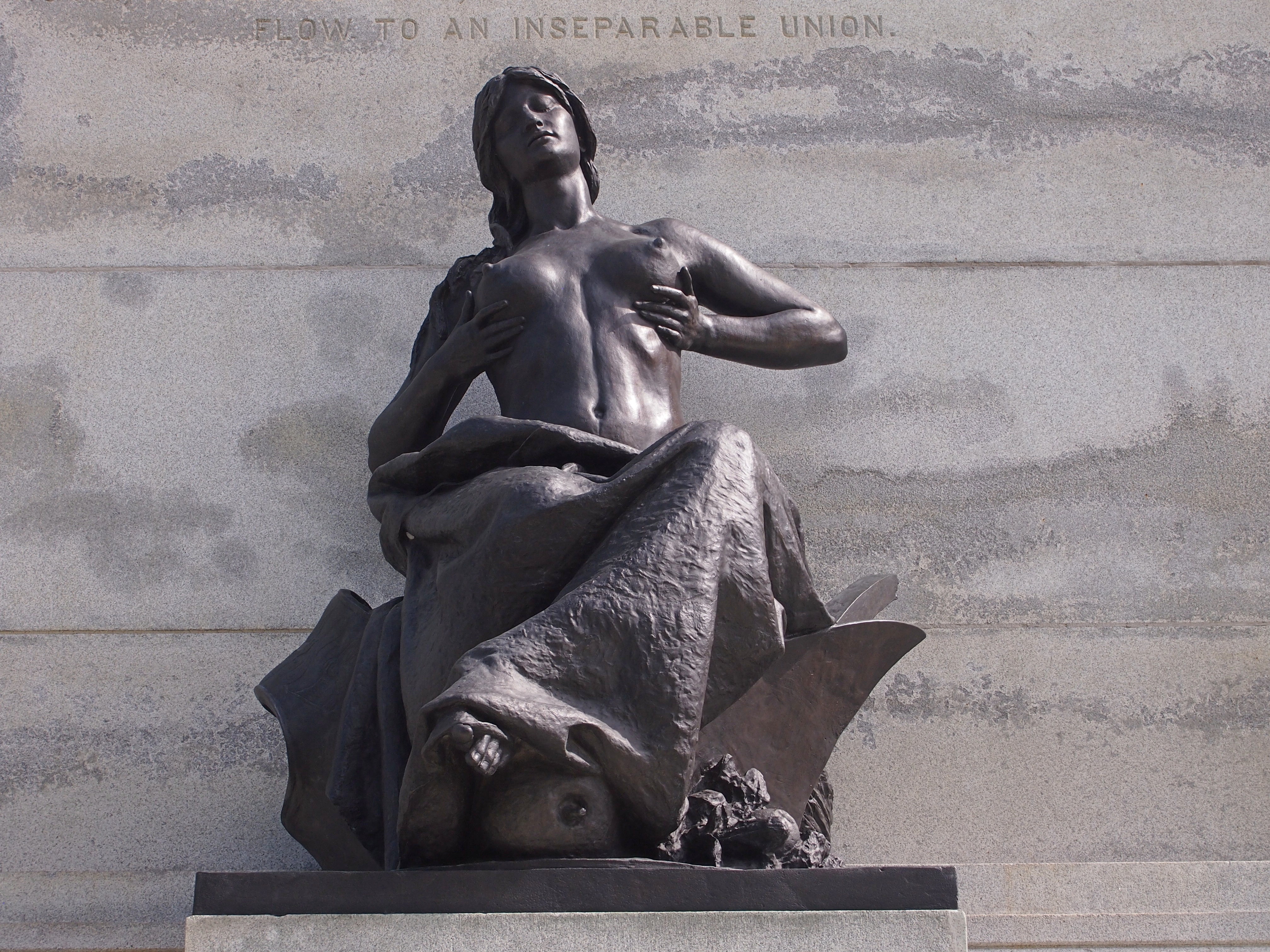
The other figures are allegorical, such as Victory at the top, common soldiers and sailors nearer to the base, and Mother Iowa.Mother Iowa 2014

Let’s just say that Mother Iowa, offering nourishment to Iowans in a way that only a mother can, looks a little odd to modern eyes.