An Eastern Church With Pews, A Western Church Without

Buildings, including churches, defy expectations at times. Often enough that expectations really shouldn’t be expected, but we do that anyway.

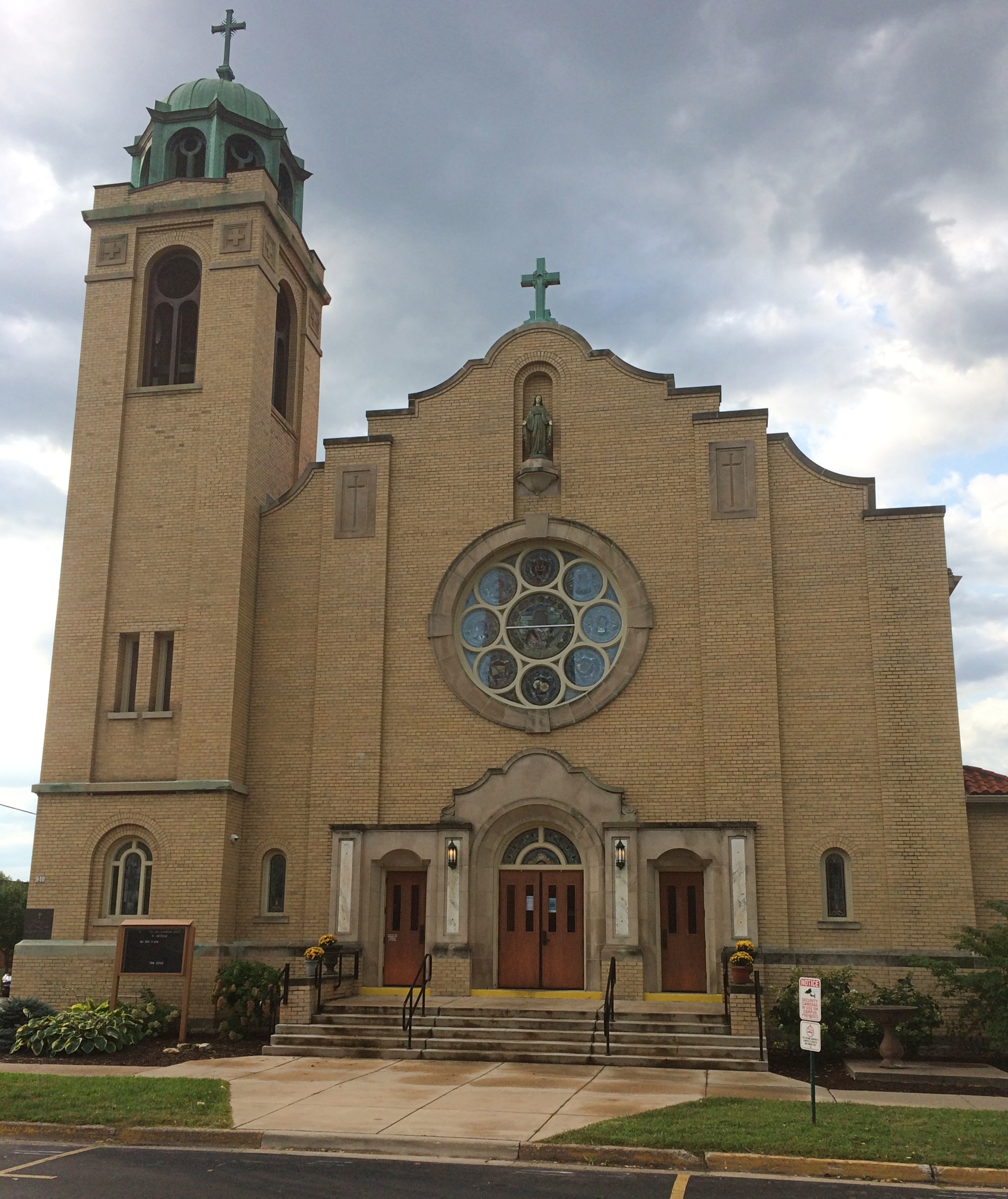
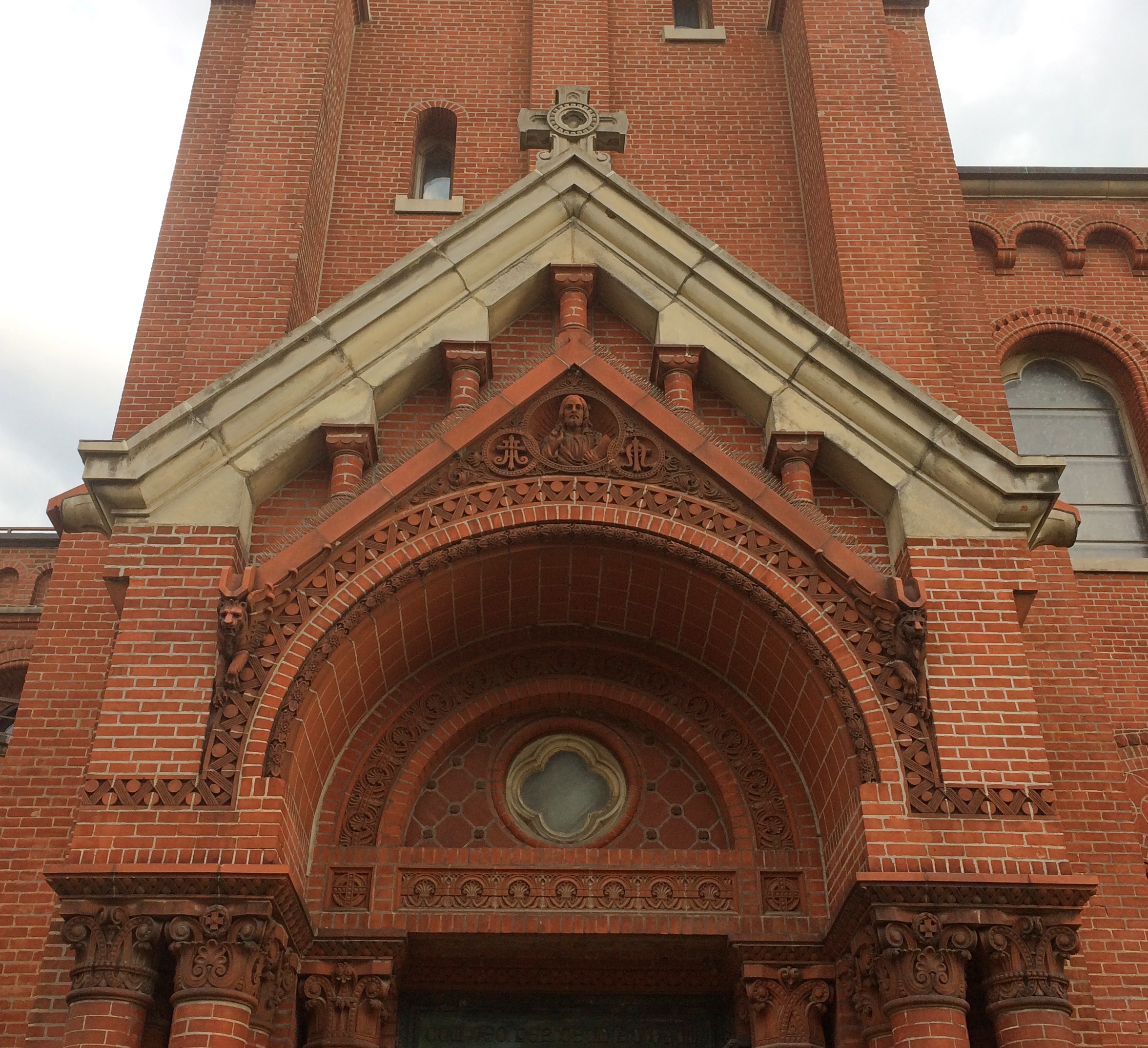
Take St. George Melkite Greek Catholic Church, which we visited on Saturday as part of Doors Open Milwaukee. It was built in 1917.
St. George Melkite Greek Catholic Church, MilwaukeeThough the Melkites are in communion with Rome, I was expecting an Eastern-style church inside. Mostly, it is, with icons and an iconostasis and Christ on the ceiling. But it also includes pews.
St. George Melkite Greek Catholic Church, MilwaukeeOne of the congregation was on hand to tell us about the church, and his idea was that the pews were a bit of syncretism on the part of the Lebanese and Syrian founding families of the church, or maybe the architect, one Erhard Brielmaier. Also, the church didn’t have icons in its early days, those being added in more recent decades, which might explain why their language is English.
St. George Melkite Greek Catholic Church, MilwaukeeSt. George Melkite Greek Catholic Church, MilwaukeeChrist on the ceiling is a particular admirable work.
St. George Melkite Greek Catholic Church, MilwaukeeI was astonished to learn that it isn’t a painting, which it very much looks like, but a printed image made using a highly sophisticated machine and fixed in place.

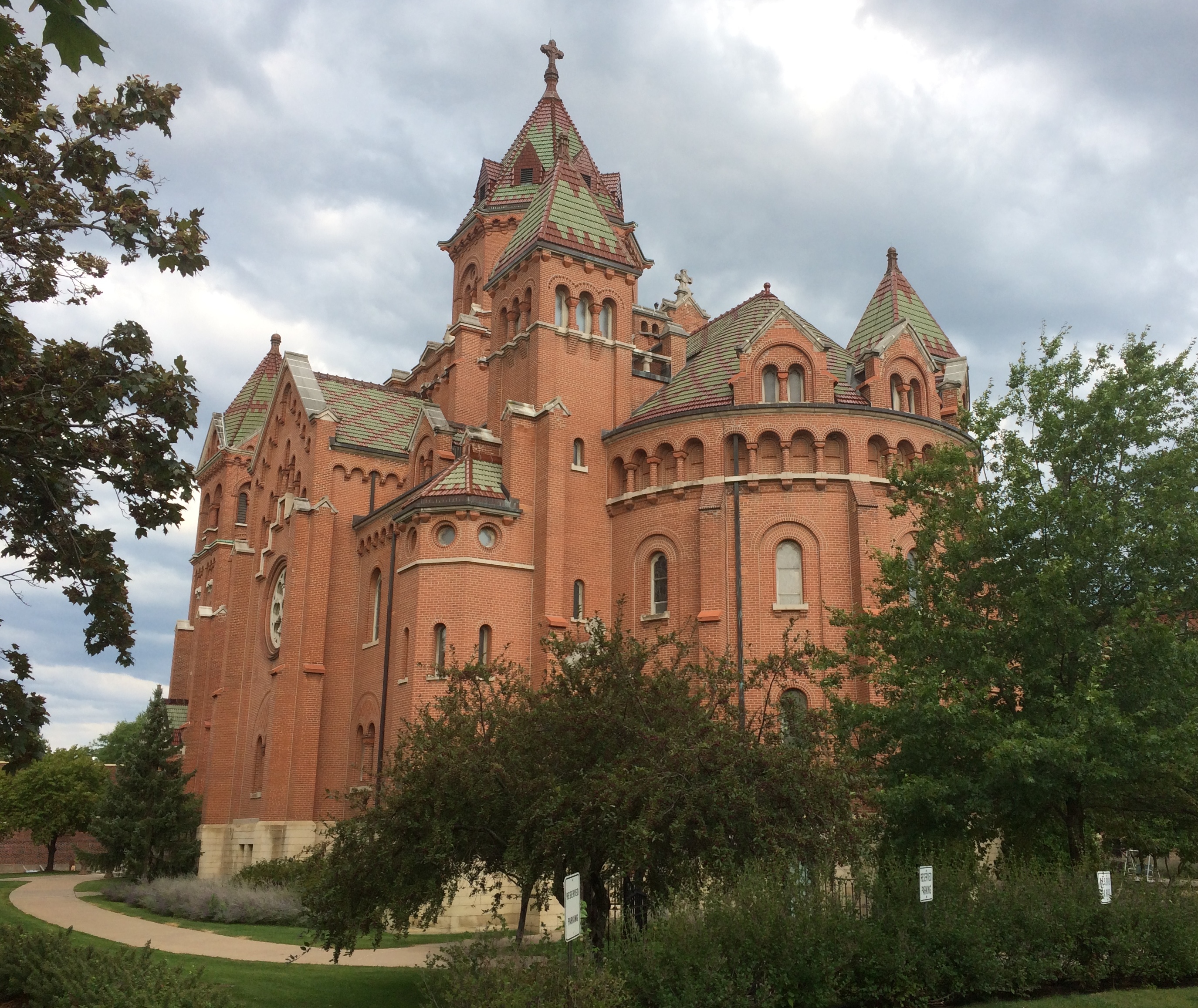
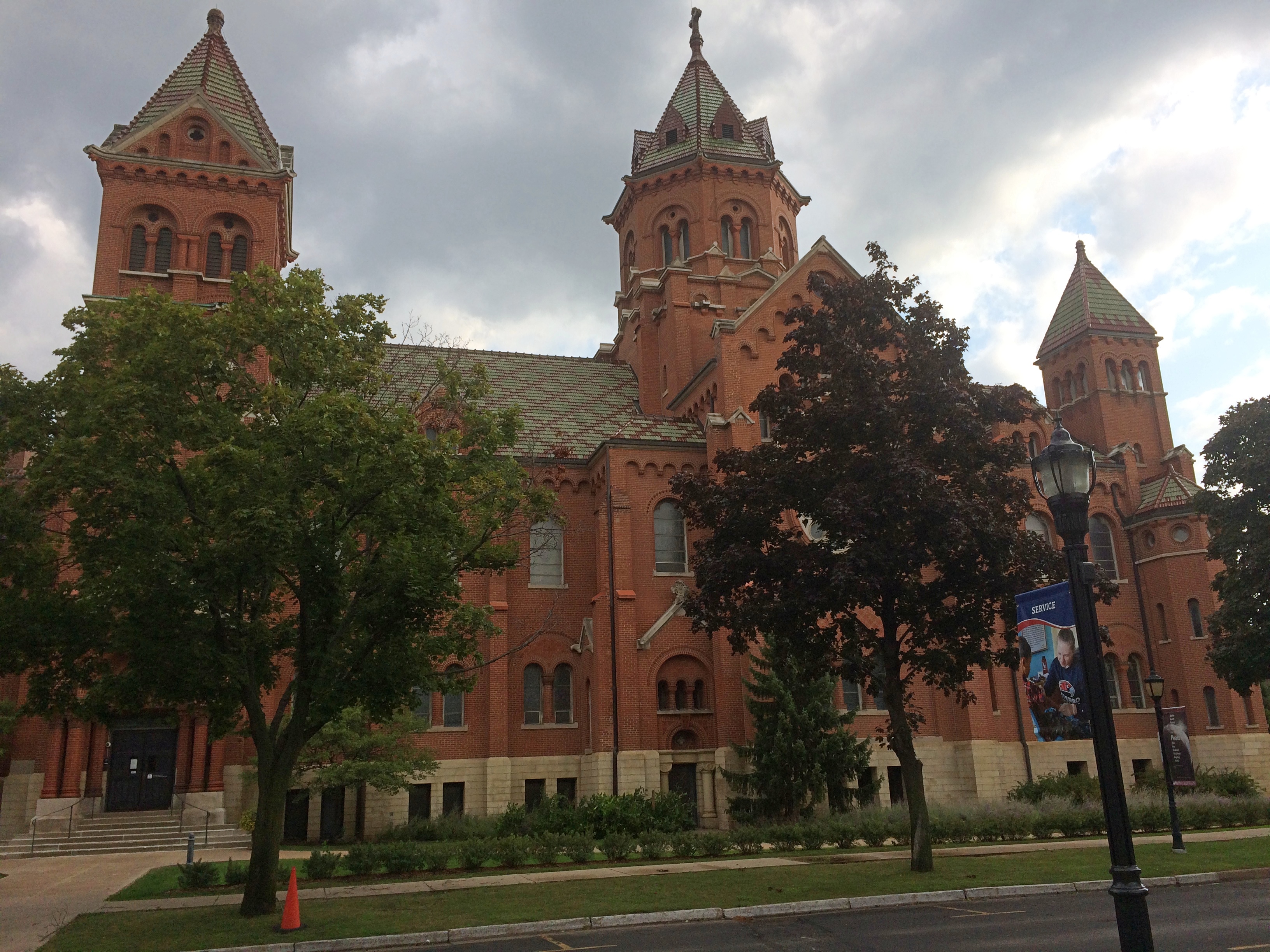
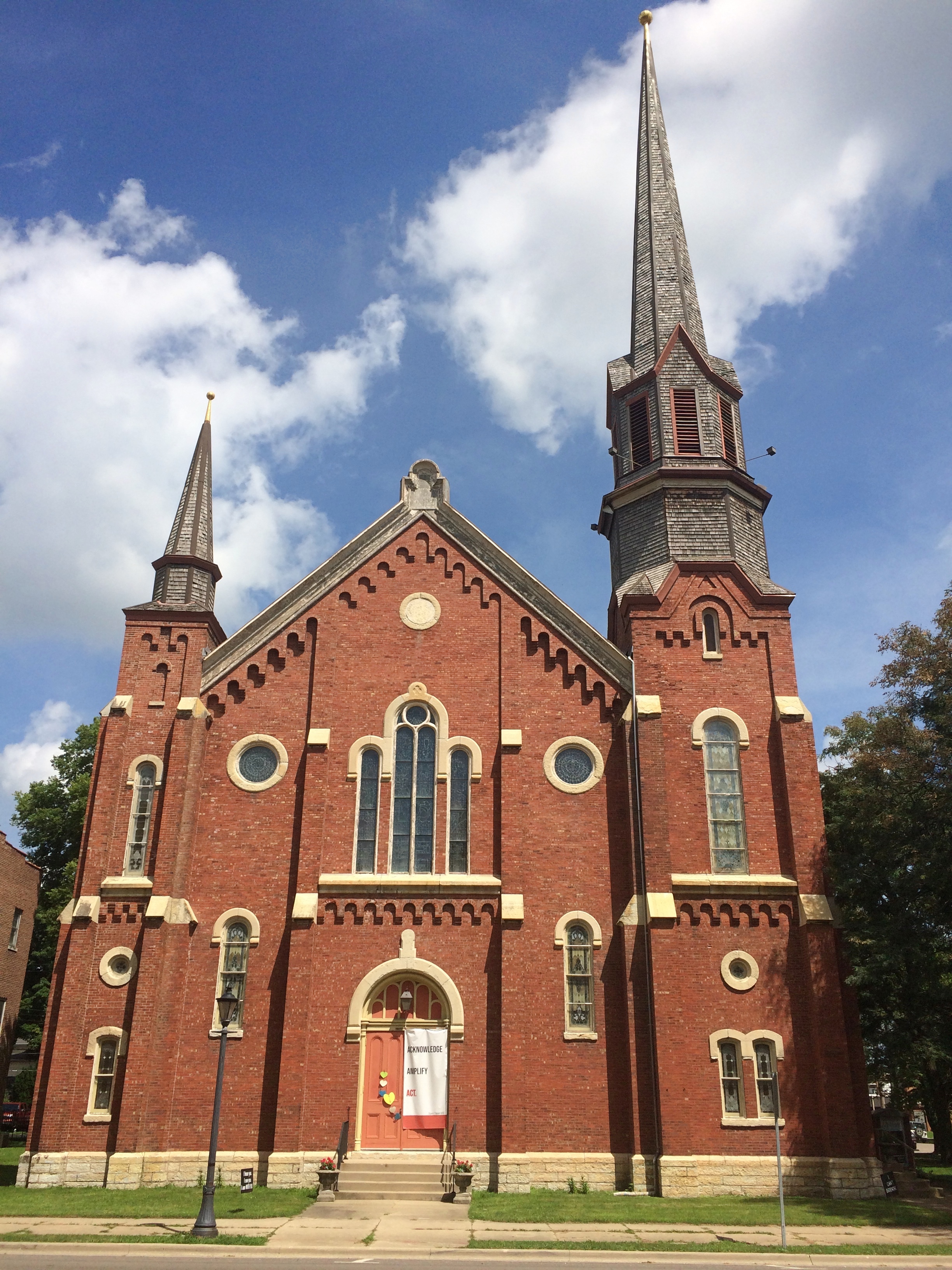
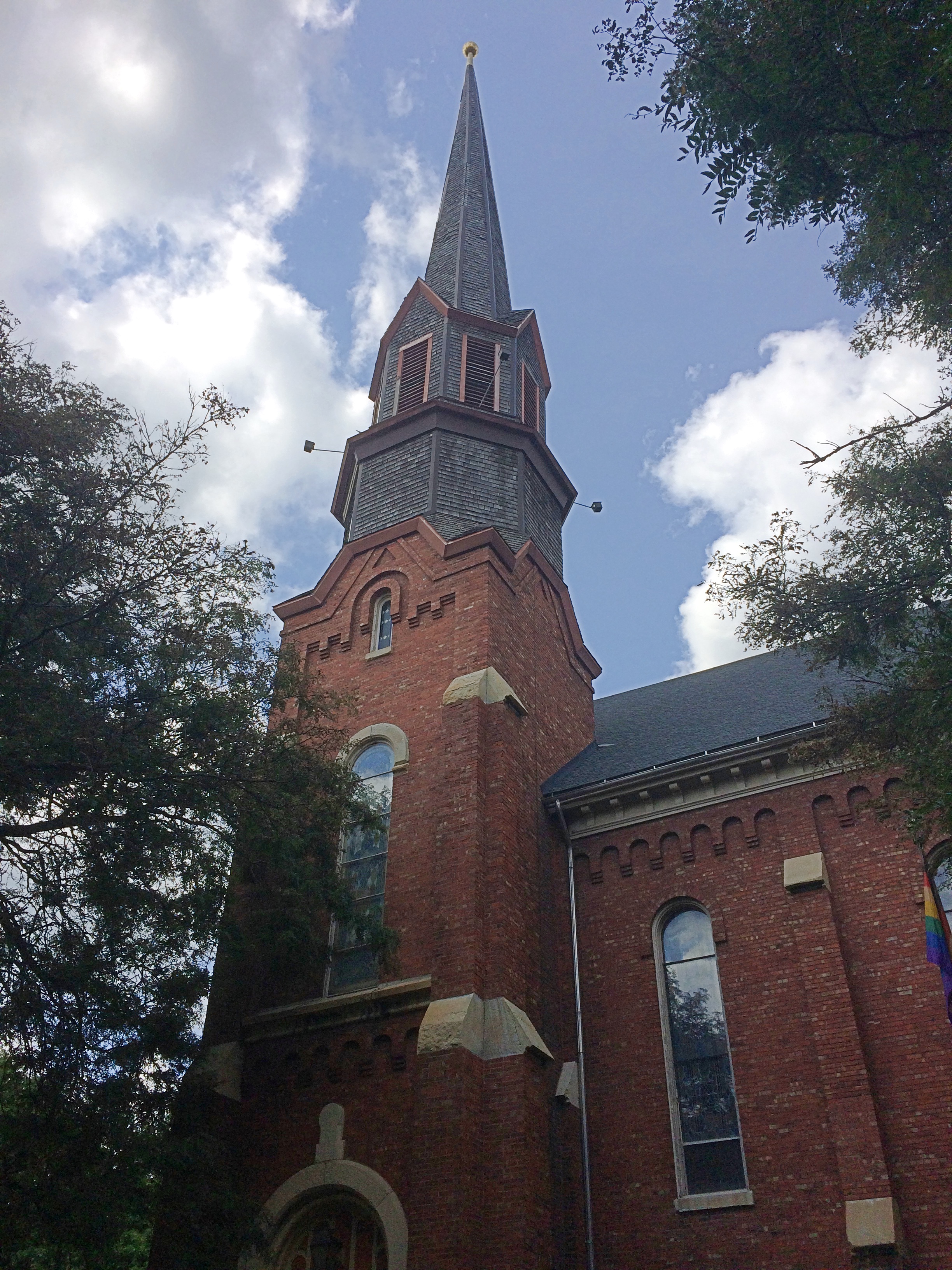
Back on Wisconsin Ave. (for St. George is a few blocks to the north), we visited one more church on Saturday: Calvary Presbyterian, a soaring Victorian Gothic structure dating from the early 1870s, designed by architects Koch & Hess.

Calvary Presbyterian MilwaukeeThat was a long time before the highway, unfortunately next to the church, was built.
Calvary Presbyterian MilwaukeeNickname: the Big Red Church.
Calvary Presbyterian MilwaukeeInside, I was surprised again.
Calvary Presbyterian Milwaukee“Not what you expected, is it?” said one of the congregation. He explained that with pews, the church would be used once a week for a few hours — unsustainable for a small membership. Twenty years ago, they decided to remove the pews. When the congregation meets now, it’s on temporary chairs under a multi-petal canopy. Other groups also meet for other purposes in the now-open space, making the place an active one.

Three Wisconsin Avenue Lutheran Churches & One Beer Palace

We kicked off our time on Wisconsin Ave. in Milwaukee on Saturday at St. Paul’s Lutheran Church, which has been on this site since 1917, though the congregation has been around since 1841, before there was a Milwaukee or even a state of Wisconsin.
St Paul's Lutheran MilwaukeeGeorge Bowman Ferry designed the structure. It must have been one of his last, since he died in 1918. In partnership with another Milwaukee architect, Alfred C. Clas, he’s better known for doing the Pabst Mansion, which isn’t far to the east of St. Paul’s.St Paul's Lutheran Milwaukee St Paul's Lutheran MilwaukeeJust a few blocks from St. Paul’s — 2812 W. Wisconsin vs. 3022 W. Wisconsin — is another Lutheran congregation, which meets at Our Savior’s Lutheran Church. I gazed at the structure for a while before I noticed the solar panels. It probably took so long because that’s still an unexpected feature in ecclesiastical architecture.Our Saviors Lutheran Church, MilwaukeeOur Saviors Lutheran Church, Milwaukee

Why so close to another Lutheran church? I don’t have a definite answer. They both seem to be part of the Evangelical Lutheran Church in America, but that’s a fairly recent combination, so perhaps they were different kinds of Lutherans in the early days. Also possible: Our Savior’s was founded by Norwegians, who maybe didn’t want to share a church with Germans or others in the 19th century.

The church is tall and the interior walls are spare.Our Savior Lutheran MilwaukeeOur Savior Lutheran MilwaukeeA reflection of its midcentury design, I believe, since the building was completed only in 1954 for a much older congregation. A detail I find interesting from the church web site, after mentioning the 1951 groundbreaking and 1952 cornerstone laying: “Work slowed in 1951-1953 due to the steel shortage caused by the Korean conflict.”

Also: “The original architect, H.C. Haeuser, passed away in 1951 before work on the church could begin. The firm of Grassold and Johnson was hired to replace him and that firm finalized the design.”

The walls may be mostly plain, but the stained glass isn’t.
Our Savior Lutheran Milwaukee“The stained glass windows were designed by Karl Friedlemeier, a native of Munich, Germany and manufactured by Gavin Glass and Mirror Company of Milwaukee from imported antique glass,” the church says. “Upper windows on the west wall depict Old Testament stories; New Testament stories are shown on the upper east walls.”

To east of these two Lutheran churches, again not far (1905 W. Wisconsin Ave.), is another church of that denomination, Reedemer Lutheran Church. It too is ELCA.
Redeemer Lutheran Church MilwaukeeA fine brick Gothic structure completed in 1915, designed by William Schuchardt, who worked at Ferry & Clas early in this career.
Redeemer Lutheran Church MilwaukeeRedeemer Lutheran Church MilwaukeeWhile on the way to Reedemer, we passed by the Pabst Mansion.
Pabst Mansion MilwaukeeLooks as palatial as it did in 2010. No reason it shouldn’t. It wasn’t part of Doors Open and so not open at no charge for the weekend. We walked by.

Across the street, an event called Beer Baron’s Bash was going on in the mansion’s parking lot, featuring food trucks and booths serving beer. Interesting, but not what we had come for either, so we walked by that too.

Milwaukee Doors Open ’19

Large amounts of rain fell on northern Illinois and southern Wisconsin on Friday, and more again on Sunday morning. In between, Saturday turned out to be a brilliant early fall day, clear and cool but not cold, and with touches of brown and gold on the still-green trees.

Milwaukee Doors OpenA good day to go to the latest Milwaukee Doors Open, driving up in mid-morning and returning just after dark.

This year — see 2017 and 2018 — we spent most of our time along or near Wisconsin Ave., a major east-west thoroughfare from the edge of Lake Michigan, just in front of the Milwaukee Art Museum, to near the Milwaukee County Zoo in the western reaches of the county.

At 2812 W. Wisconsin Ave. is St. Paul’s Lutheran Church, our first stop along the avenue, west of downtown and not too far from Marquette University. A few blocks to the west of that church is a vastly ornate Moorish Revival structure, the Tripoli Shrine Temple. “Is this a mosque?” Yuriko asked. No. “A church?” Well, no. It’s the Shriners.

Next to the temple — on an adjoining lot — is Our Savior’s Lutheran Church. From there, we headed a bit to the north, off Wisconsin Ave. but not far, to see the splendid Gilded Age Schuster Mansion, now a bed and breakfast.

Returning to Wisconsin Ave., we visited the Ambassador Hotel, whose handsome lobby is as Deco a design as any I’ve ever seen, and then went to the third and fourth (but not last) churches of the day: Redeemer Lutheran Church and, after lunch at a Malaysian Chinese storefront on the avenue, St. George Melkite Greek Catholic Church.

The end of the day found us closer to downtown Milwaukee, where we visited one more church on Wisconsin Ave., Calvary Presbyterian, with its surprising interior, and then we saw the inside of two massive edifices of the state: the Milwaukee County Courthouse and the Federal Building and U.S. Courthouse, the latter also on Wisconsin Ave.

The only Milwaukee building we visited this year not on or near Wisconsin Ave. was about five miles to the south, and the first place we saw in the morning, because it isn’t far from I-94, the highway into Milwaukee from the south.

Namely, Lake Tower.
Lake Water Tower, MilwaukeeAlso called the Lake Water Tower, or the Anderson Municipal Building. It goes back to the Federal Works Agency, completed with a worn plaque just inside the entrance, dated 1938-39.
Lake Water Tower, MilwaukeeDon’t see Federal Works Agency plaques too often, but I’ve run across them occasionally.

At the time, this part of Milwaukee was an independent municipality: the Town of Lake. In fact, Lake, Wisconsin lasted from 1838 to 1954, when Milwaukee was able to annex it. In the late 1930s, the Town of Lake had municipal offices on the lower floors, and a million-gallon tank of water up top.

There are still municipal offices in the building, albeit Milwaukee’s, but the water tank has been empty for nearly 40 years, its function made unnecessary by new facilities, including the water reclamation plant in the vicinity, whose distinct odor pervaded the area around the tower. Milwaukee Doors Open visitors can go to the fourth floor of the tower, through a heavy door and into the dry bottom of the tank, with a view of the metalwork and convex roof (or is it concave? never can remember) and other features above (see these pictures).

The place had a nice echo. I asked the person on duty at the site — a tedious assignment, up there in the tank — whether small acoustic concerts were ever held there. No, afraid not. Something about the ADA, but I think it’s really a lack of municipal imagination.

St. Lorenz Lutheran Church, Frankenmuth

For all its faux Bavarian tourist appeal, Frankenmuth, Michigan has an actual Bavarian history, beginning with St. Lorenz Lutheran Church, about a half a mile from crowded Main Street.

We were the only ones there for about half an hour around noon on Labor Day.
St Lorenz Lutheran Church FrankenmuthSt Lorenz Lutheran Church FrankenmuthThe church was founded at the same time as the town. “Pastor Wilhelm Loehe of Neuendettelsau, Bavaria, was inspired to establish a German Lutheran colony by Michigan circuit riders who requested aid in bringing the Gospel of Christ to Saginaw Valley Chippewa Indians,” the site’s historic plaque says, as reproduced here.

“Directed by Loehe in 1845, Pastor August Craemer and fourteen other immigrants began clearing forests in this area south to the Cass River. They built log houses and dedicated a log church on Christmas Day 1846. The second church, a frame structure, was erected in 1852 and enlarged in 1864, serving until the completion of the present church in 1880.”

A Cleveland architect named C.H. Griese designed the current Gothic Revival church. Traces of him are online, such as in the context of another Lutheran church.

We were glad to find out that the building was open. That’s not always the case, often for good reason. The interior’s handsome indeed.
St Lorenz Lutheran Church FrankenmuthSt Lorenz Lutheran Church Frankenmuth

St Lorenz Lutheran Church Frankenmuth

Excellent stained glass as well, signed by Hollman City Glass of Fort Wayne, Indiana.
St Lorenz Lutheran Church FrankenmuthPastor Loehe makes an appearance in glass.
St Lorenz Lutheran Church FrankenmuthI suspect this depiction of him is unique in all the world.

C.F.W. Walther, first president of the Missouri Synod, is also in glass. He’s probably englassed in other Lutheran churches.
St Lorenz Lutheran Church FrankenmuthThe settlers came to the Saginaw Valley, built their homes, farmed the land, attended St. Lorenz, and when the time came, were buried in its churchyard.

St Lorenz Lutheran Church Frankenmuth cemetery

St Lorenz Lutheran Church Frankenmuth cemeterySt Lorenz Lutheran Church Frankenmuth cemeteryThose are almost all 19th-century stones, near the site of the first two church buildings, and across the street from the current church. A larger cemetery with newer stones is on the same side of the street as the current church.
St Lorenz Lutheran Church Frankenmuth cemeterySt Lorenz Lutheran Church Frankenmuth cemeterySt Lorenz Lutheran Church Frankenmuth cemeteryThe permanent residents are every bit as German as you’d expect: Bauer, Bicker, Fischer, Herzog, Hochthanner, Hubinger, Kern, Roth, Reinert, Weiss, usw. Loehe and Craemer aren’t among them, Find a Grave tells me. Loehe is in Bavaria and Craemer is in St. Louis.

Woodstock Walkabout

At noon on Saturday, the sun was high and mighty and toasting northern Illinois well into the 90s F. Later in the afternoon, an unexpected storm blew through. Unexpected because I hadn’t looked at any weather reports. By late afternoon, the storm was over and temps were in the pleasant 70s.

A good time to take a short walk in Woodstock, Illinois, which might be one of the state’s most pleasant towns. A good place to start was Woodstock Square. At the very center of the square is a GAR memorial to Union soldiers and sailors from Woodstock, which was founded in 1852.
What’s a town square without a gazebo?
Woodstock Square IllinoisStrolling south from Woodstock Square, I passed by the Blue Lotus Buddhist Temple. I noticed it on a previous visit to Woodstock.

Blue Lotus Temple Woodstock Illinois

I don’t believe these statues were there the last time. It’s been seven or so years, after all. Plenty of time to add a few depictions of Buddha.
Blue Lotus Temple Woodstock IllinoisBlue Lotus Temple Woodstock IllinoisThe temple isn’t the only religious site in the vicinity. Cater-cornered across the street is Woodstock’s First Church of Christ, Scientist. Not far away are the First United Methodist Church and the Unity Spiritual Center of Woodstock.

I’d come to Woodstock to see Greg Brown at the handsome Woodstock Opera House. He’s a vastly underappreciated singer-songwriter-story teller from Iowa.

It was dark after the show, but I didn’t want to hurry away from Woodstock. Besides, I’d read that there was a new(ish) mural just north of Woodstock Square. So it is, in an alley — which the town calls a “pedway” — off Main Street next to Classic Cinemas Woodstock Theatre.

The mural honors the likes of Groundhog Day, filmed locally and remembered elsewhere in town.

Woodstock Illinois Movie and Stage Mural

Orson Welles, who spent part of his youth in Woodstock.

Woodstock Illinois Movie and Stage MuralThe town also remembers Chester Gould, though the Dick Tracy Museum in Woodstock closed a number of years ago.
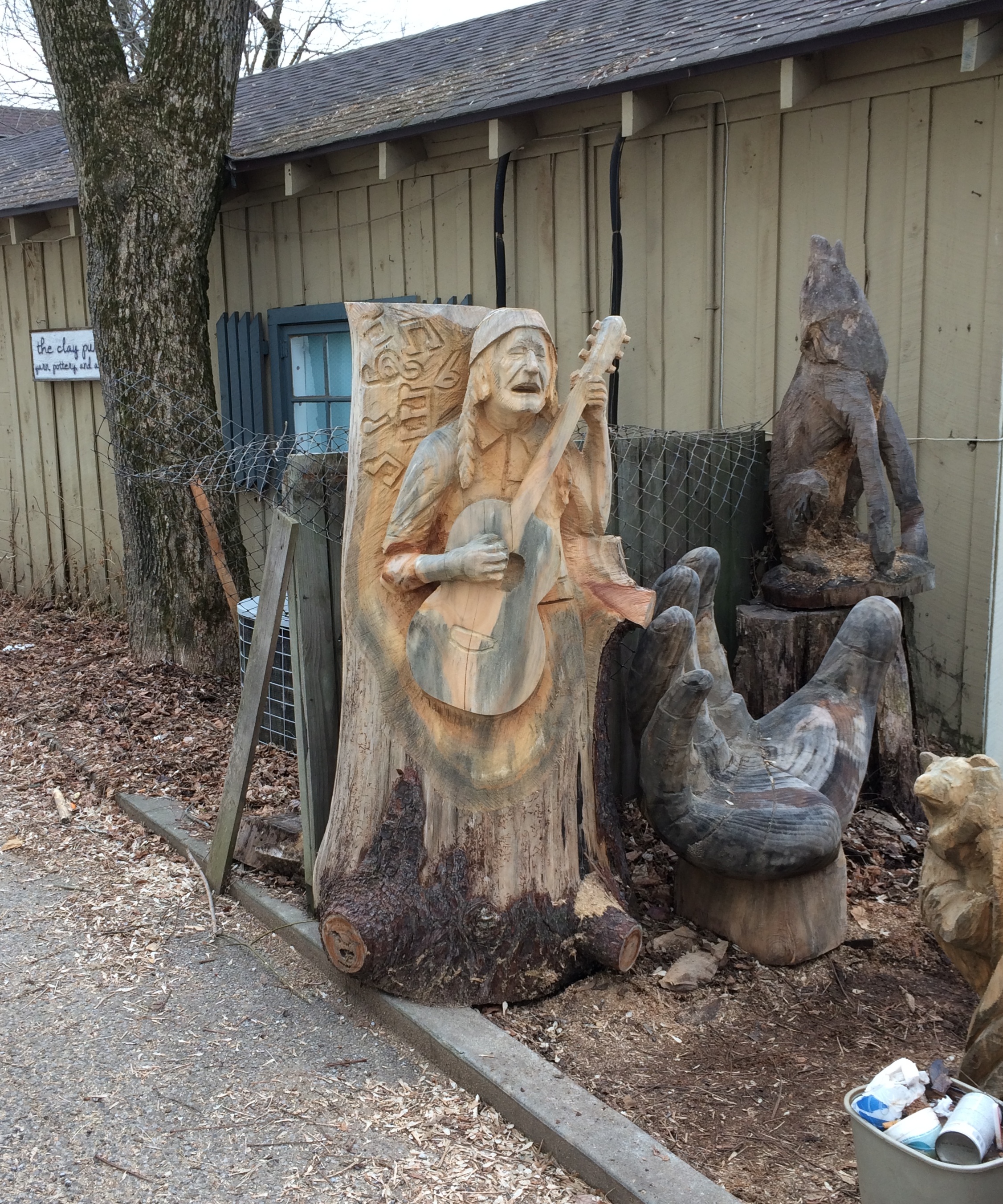
Woodstock Illinois Movie and Stage MuralThe alley features two statues as well. One is a wood carving of Woodstock Willie, presumably the town’s answer to Punxsutawney Phil, created by carver Michael Bihlmaier.
Woodstock WillieOddly enough, also near the mural is a small bronze of Welles by a local artist, Bobby Joe Scribner.
Woodstock Orson Welles statueAccording to the information sign near the work, it’s the only statue of Welles on public display in the United States. Interesting that it depicts an older Welles. His Paul Masson period, you might say.

The Heinz Memorial Chapel

Chapel has a cozy connotation: little chapel in the woods, wayside chapel, goin’ to the chapel and we’re gonna get married, etc. That doesn’t mean you can’t find some sizable edifices that are chapels all the same, such as the Rockefeller Memorial Chapel at the University of Chicago, or the Heinz Memorial Chapel at the University of Pittsburgh.

Late on Friday morning we arrived on campus to see the sizable chapel, funded by condiment money in the 1930s.
More specifically, the will of ketchup baron Henry Heinz (d. 1919) vaguely provided for the development of a building for religious training and social events at the university. His children and the university administration ultimately decided on a soaring neo-Gothic structure, designed by Philadelphia architect Charles Klauder, who was known for his university work. Apparently the chapel was nondenominational from the get-go.

Looking toward the sanctuary.
Toward the back of the nave. The organ has 4,272 pipes, and when we were in the chapel, an organist was filling the space with soft practice notes.
Both transepts feature dual banks of some astonishingly tall stained glass windows: 73 feet tall, designed by Charles J. Connick’s Boston studio.
I found a pamphlet that tells me that the four tall windows each have a theme: Temperance, Truth, Tolerance and Courage. Some of the characters depicted in those windows are religious figures, as you’d expect, such as the Virgin Mary, Moses, King David, St. Francis, St. George and Joan of Arc.

Others are less expected, such as Sir Isaac Newton. With Edmund Halley down in the corner, helping prove Newton’s laws of motion.
Or President Lincoln.
Or Dorethea Dix.
That’s just a small sample. “The windows, which highlight an equal number of women and men, contain sacred and secular figures from history, literature, and science,” the chapel web site says. There are 391 figures in all.

Pittsburgh ’19

Independence Day fell on a Thursday this year, creating a four-day window of opportunity to go somewhere. So late on the afternoon of July 3 we headed east, spending the night near Toledo, Ohio. On the 4th, we drove on to Pittsburgh, where we spent three nights and two full days, returning after an all-day drive today.

We stayed at a hotel in the pleasant Moon Township, Pa., not far from Pittsburgh International Airport. The days were hot and steamy and punctuated by vigorous rainfall in the afternoons — supposedly typical for western Pennsylvania in July, though it was a lot like home this summer. Anyway, even occasional heavy downpours didn’t slow us down much.

The road from metro Chicago to Pittsburgh, if you take the Indiana East-West Toll Road and then the Ohio Turnpike, takes you smack through the Cuyahoga Valley National Park. We spend a few hours walking its trails on July 4 as a stopover on the way to Pittsburgh.

Getting up early(ish) on July 5, we first went to the Duquesne Incline, one of Pittsburgh’s two funiculars, and rode it up and down. At the top we took in the hazy morning view of the city and the meeting of the Allegheny and Monongahela rivers. My thinking about funiculars: when you find one, ride it. My thinking about the Monongahela: that’s just a damned fun name to say.

Next we drove to the Oakland neighborhood and spent time at the University of Pittsburgh. Specifically, the Heinz Memorial Chapel — the church that ketchup built — and the Cathedral of Learning and some of its highly artful, internationally themed rooms, unlike anything I’ve seen before.

Lunch on the first day was at the the Original Oyster House on Market Square, which is known as Pittsburgh’s oldest bar and restaurant, and which serves up a mighty fine array of seafood. From there we repaired to Point State Park at the meeting of the rivers, site of a French and then British fort in the days before American independence, and the seed of modern Pittsburgh. That’s also where our lengthy guided walking tour of downtown Pittsburgh began, which took up the rest of the afternoon.

That should have been enough for the first day, but our momentum carried us on to the Andy Warhol Museum for a few hours in the early evening, taking advantage of its longer hours on Fridays. A suburban location of Primanti Bros., a local chain, provided a hearty dinner that night.

The second day, July 6, wasn’t quite as busy, but we got around. Late in the morning, we took an extensive tour of Carrie Furnace, a hulk of a former blast furnace complex on the Monongahela. It reminded me greatly of the Sloss Furnaces in Birmingham, Alabama, though the scale was even larger. After all, Birmingham was the Pittsburgh of the South, not the other way around.

After lunch in a nondescript but decent Chinese restaurant, we visited the Frick Pittsburgh, whose grounds include his mansion, a museum with his art, a greenhouse, and a carriage and antique auto exhibit. We saw the greenhouse and the auto exhibit.

After treating ourselves to some hipster ice cream late in the afternoon, we went to one more place, despite thunder and rain: Randyland.
Randyland

It’s the kind of outsider art phantasmagoria beloved by the likes of Roadside America or the Atlas Obscura. For good reason. As Roadside America puts it, the place is a “circus-colored oasis of sunny vibes on Pittsburgh’s formerly grim North Side.”

Ave Maria Grotto

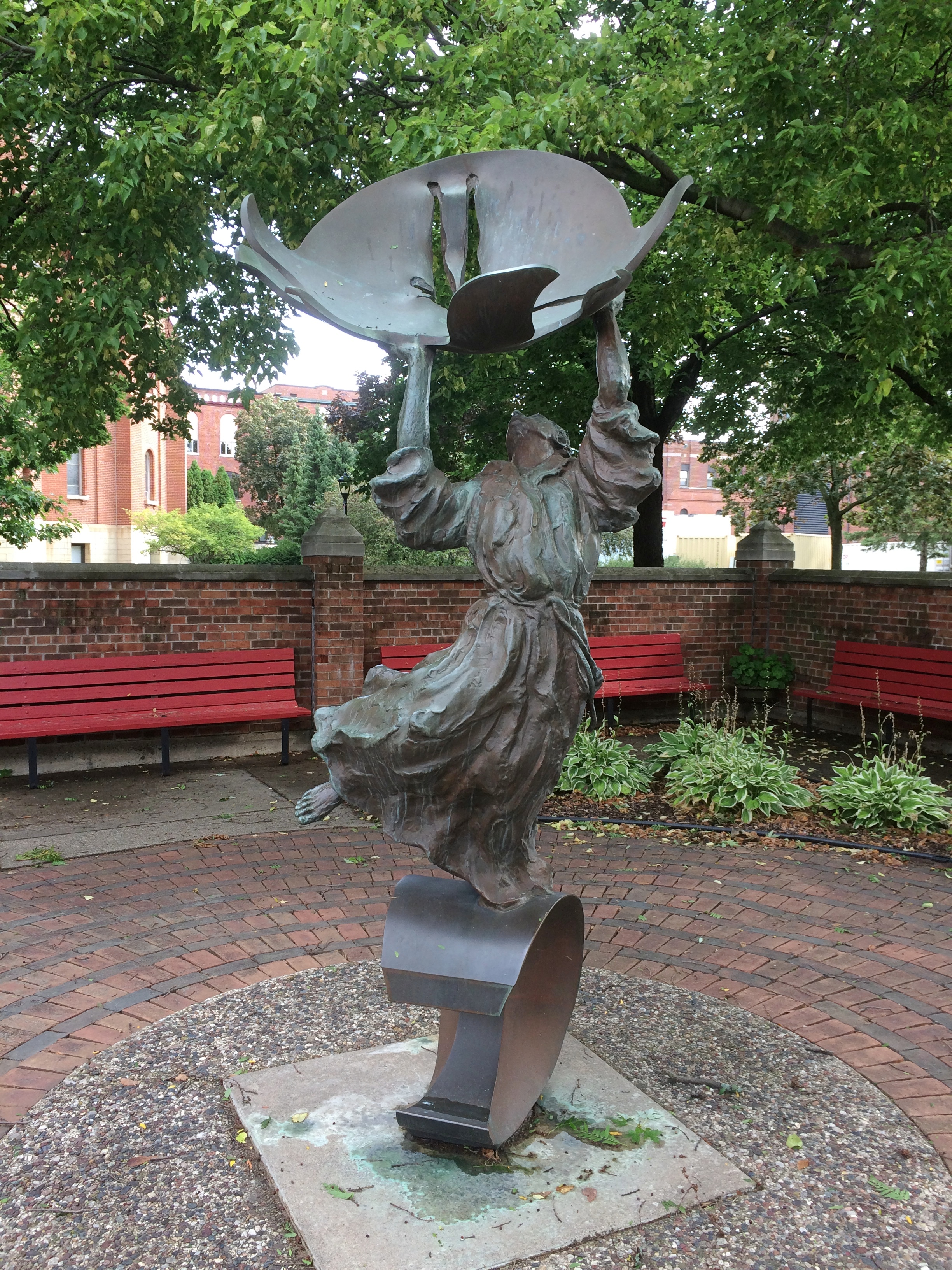
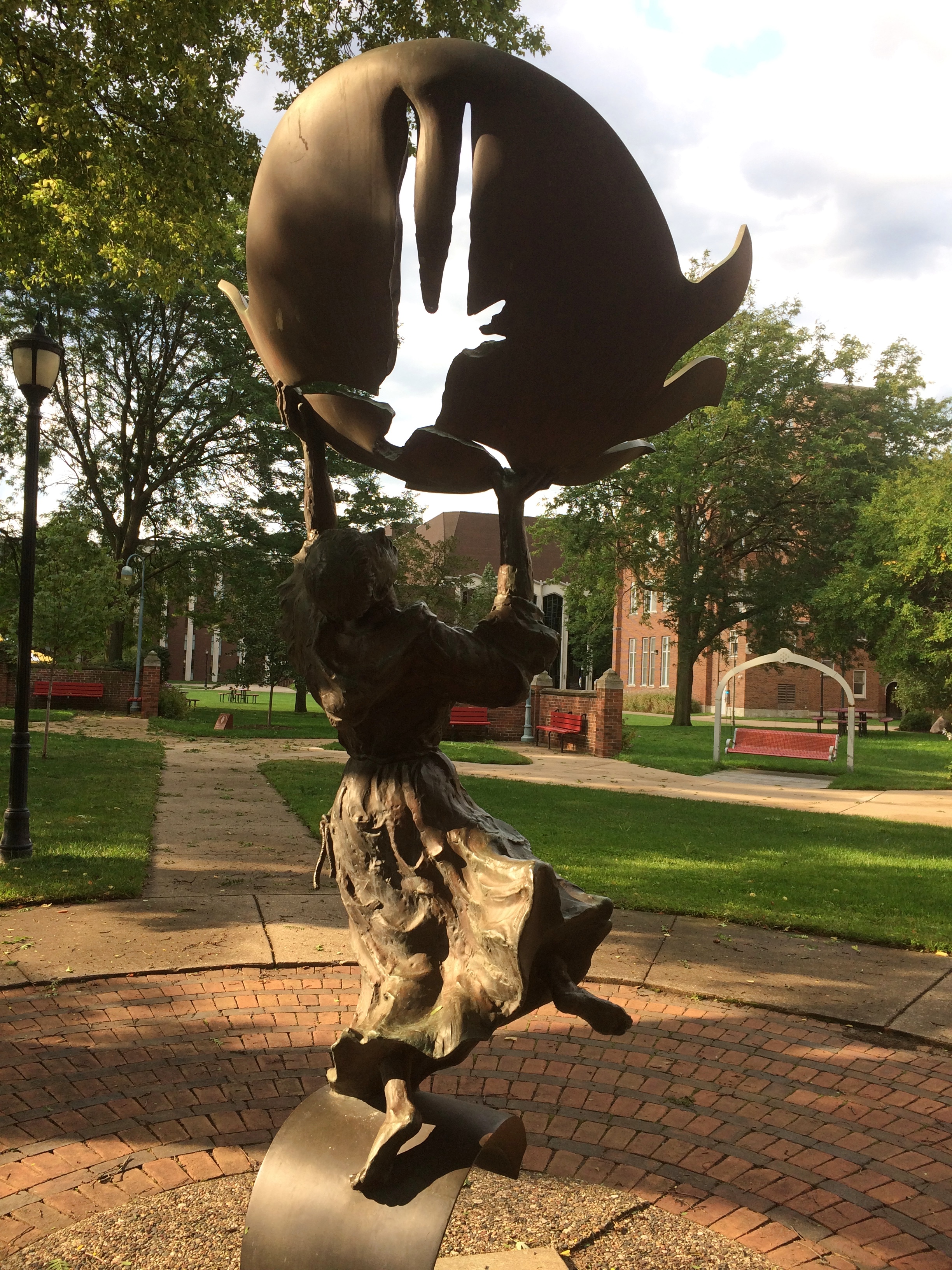
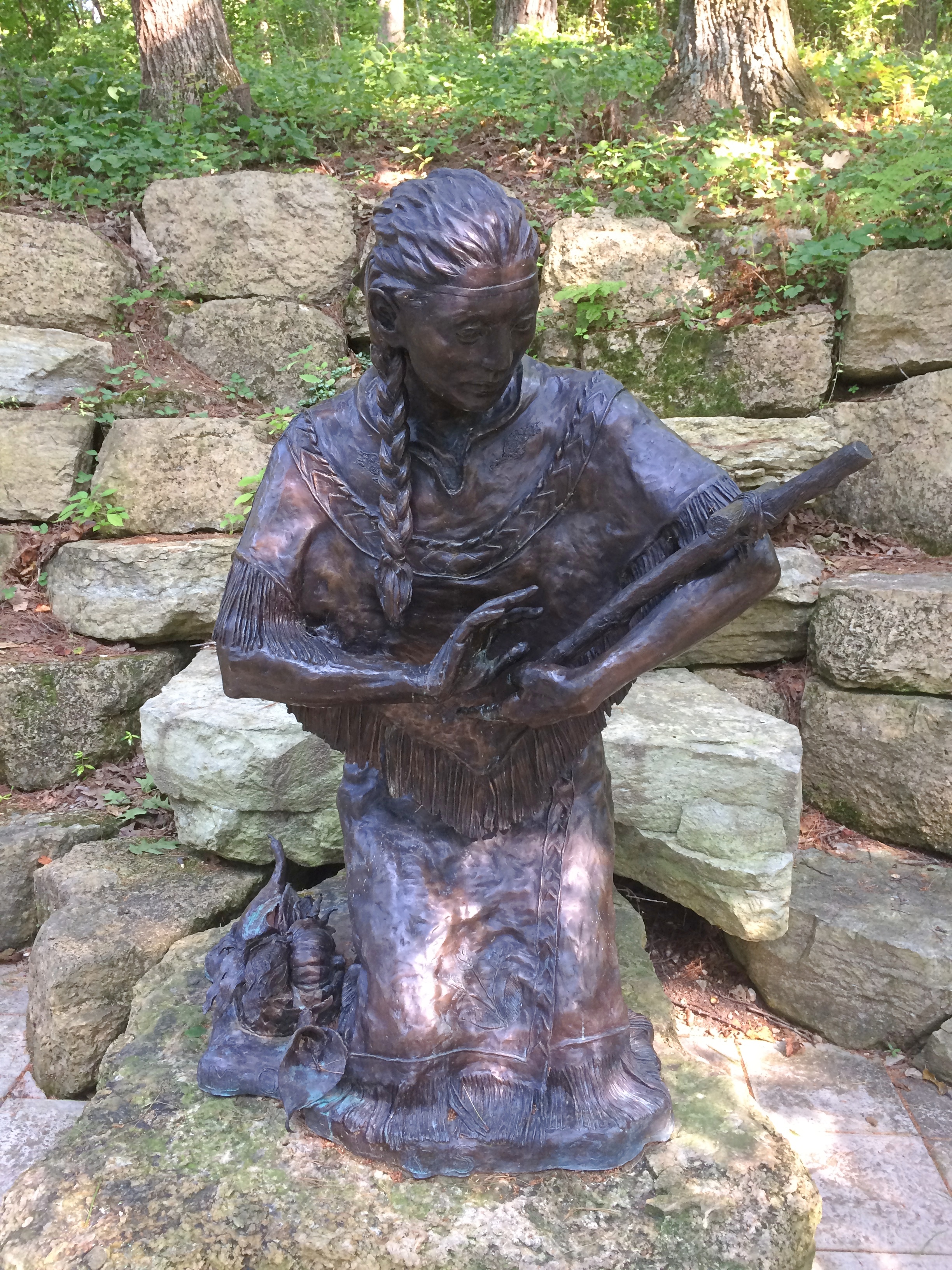
From what I’ve read about Brother Joseph Zoettl, O.S.B. (1878-1961), he wouldn’t have cared whether he was depicted in bronze or not. Be that as it may, many years after his death, Br. Joseph stands facing his creation, the Ave Maria Grotto, on the grounds of St. Bernard Abbey near Cullman, Alabama.

Driving north from Montgomery toward Decatur on the afternoon of May 17, we weren’t about to miss the grotto. It features 150 or so miniature replicas of famous buildings, almost all created by Br. Joseph over three decades, out of found materials.

“Originally from Landschutt, Bavaria-Germany, a young Br. Joseph found himself headed to America to pursue monastic life at Alabama’s only Benedictine Abbey,” the abbey web site says.

“Little did anyone know that this young Bavarian would end up leaving the abbey its greatest legacy and in an incredibly humble way. Since 1934, people from around the world visit the Ave Maria Grotto to see famous parts of the world in miniature. The former abbey quarry is now the four-acre park that the Grotto and surrounding miniatures rest upon.”

Many of the structures are perched on the side of a slope, with a path winding down below for a look at them.

As you’d expect, most of the structures replicate Christian churches or shrines or scenes, such as the First Christmas.
A wayside shrine, modeled after those popular in Latin America.
Lourdes Basilica and Grotto.
St. Martin’s in Landshut, Bavaria. This was one of the few structures that Br. Joseph had actually seen. The rest he did working off photos — postcards especially.
Sometimes, Br. Joseph decided to build something a little less religious. Such as the Hanging Gardens of Babylon.
Or “Hansel and Gretel Visit the Castle of the Fairies.” I don’t remember that part of the story. Maybe it was part of the sequel: Hansel and Gretel vs. the Fairies of Doom.
Roadside America: “The Grotto is not some holy shrine that got out of control. From the start, it was conceived as an over-the-top public attraction.

“Using only basic hand tools, Brother Joseph would shape cement into a replica building, then give it some zing with marbles, seashells, cracked dinner plates, or bicycle reflectors. Tiny-but-majestic domes were fashioned from old birdcages and toilet tank floats.”

The abbey includes a good deal more than the grotto.
There’s a church and school, and a few minute’s walk from the grotto, a cemetery for the monks. Br. Joe’s cross is in there somewhere.

The Cathedral-Basilica of Saint Louis, King of France

We couldn’t very well wander by St. Louis Cathedral in the French Quarter without stopping for a closer look. In full, the Cathedral-Basilica of Saint Louis, King of France. The structure took its current form in 1850.
Facing toward the altar.

Looking back.
A most handsome interior, with stained glass depicting the life Louis IX, and paintings and statuary, including Joan of Arc. I was especially intrigued by the flags. More than you usually see in a church.

Hanging on the right, as you face the altar, are flags that have flown over New Orleans, and it looks like a completist assemblage: Castile and León, Bourbon France, Bourbon Spain, the Union Jack, the Republic of France, the flag of the United States in 1803, the Republic of West Florida, the state of Louisiana, the state flag of Confederate Louisiana, and the Stars and Bars.

On the left side are a modern U.S. flag, the Vatican flag, and flags of the dioceses of the metropolitan province of New Orleans. That includes the suffragan dioceses of Alexandria, Baton Rouge, Houma-Thibodaux, Lafayette, Lake Charles, and Shreveport, but I couldn’t say which are which.

The altar and above.
I visit a lot of churches these days. If a church building is unlocked, I’ll go in for a look. But that wasn’t a habit I had when I was young. Certainly not much before 1981, when I visited the cathedral for the first time. Wish I could remember the tinge of awe that I must have felt then.

No matter. St. Louis Cathedral impresses even in my church-visiting middle age.

A Few New Orleans Statues, With Some Opinions

As of May 2019, Gen. Andrew Jackson still rides his steed at Jackson Square in New Orleans, the dramatic centerpiece of a handsome public space.
The equestrian bronze, by notable 19th-century sculptor Clark Mills, has been there since 1856, when the Battle of New Orleans was still in living memory, at least among the old timers. I understand the monument is a target of removalists, so there might come a day when Jackson Square loses its man on horseback and becomes Something Else Square.

That’s New Orleans’ decision. Yet I’m not persuaded Jackson should go, for all his retroactively understood flaws. It’s one thing to remove monuments to those who actively sought disunion because they feared to lose their human property. Jackson and his men defeated an invading army on American soil near New Orleans. As president, he had no use for disunion, either. Just ask John C. Calhoun.

During our last day in New Orleans, Lilly and I visited the National WW II Museum, and to do so we got off the St. Charles streetcar at Lee Circle (as Google Maps calls it). Looking back at the circle, we saw an empty pedestal.

That’s odd, I said to Lilly. But I must have known at some time — I’d ridden on the St. Charles line decades earlier — that a statue of Robert E. Lee used to stand atop the pedestal. I’d forgotten. I don’t ever remember taking a close look at the Lee statue, since I haven’t always watched for monuments as much as I do now.

Just yesterday, it occurred to me to look up Lee Circle, and was reminded that removal activists were able to persuade New Orleans to take down Lee and three other monuments in 2017. Sic transit gloria mundi, Gen. Lee.
Of course, there are many ideas about a new statue to put on Lee’s former spot. Among this selection, the one I like best on prima facie examination is the relatively unknown J. Lawton Collins, a New Orleans native and important commander during WWII. He’s also appropriate because the museum devoted to that war is mere blocks away. Or if a strictly military option is out, Andrew Higgins, of Higgins boat fame, seems reasonable.
Here’s another statue that has gained the ire of removalists: Chief Justice of the United States Edward Douglass White Jr., who had a long and varied career but sided with the majority on the notorious Plessy v. Ferguson decision. (Most sources double that s in his middle name, but the statue does not.)

The chief justice stands on Royal St. in front of the major edifice housing the Louisiana Supreme Court, a building whose reputation has varied across the decades. We just happened to walk by.

Later I wondered, what’s the state supreme court doing in New Orleans and not Baton Rouge? Guess as far as the court is concerned, Baton Rouge is a johnny-come-lately capital, having that title only since 1846.

Chief Justice White would be a harder nut to crack for the removalists than Lee, simply because among the generally ahistoric American people, whipping up righteous outrage about someone as obscure as White would be a tall order. But it might happen.

In Louis Armstrong Park, where we had a pleasant stroll despite the increasing heat, there are plenty of statues that will probably last a good long time. Satchmo himself certainly deserves to.
Elizabeth Catlett did the bronze, which was dedicated in 1980.

Other metal jazzmen grace the park, such as a marching brass band by sculptor and New Orleans native Sheleen Jones-Adenle, erected in 2010.
Here’s a tripartite statue of foundational jazzman Charles ‘Buddy’ Bolden created by sculptor Kimberly Dummons, also from 2010. Such triple figures aren’t common, but not unknown.

In Congo Square, there’s a vivid sculptural relief by Nigerian-born artist Adéwálé Adénlé fittingly called “Congo Square,” another of the 2010 class of works in the park.

That hardly covers everything in Louis Armstrong Park. Whoever Mike is, he made good images of these and other sculptures there.

Next to the French Market, at St. Philip and Decatur Sts., is Maid of Orleans, a gift from France to New Orleans and erected in 1972.
A replica of the 1880 Emmanuel Frémiet equestrian statue of Joan of Arc in Place des Pyramids in Paris, the Maid used to be at the foot of Canal St., but when a casino was developed there, she moved to her present location in the Quarter.

One more: A seated statue of Francis Xavier Seelos.
Francis Xavier Seelos statueHow we came see that statue, during our walkabout in the Garden District, is slightly convoluted. But that’s never stopped me from pursuing a destination.

While relaxing at the Chateau Hotel during the second evening, I queued up “Pearl of the Quarter,” a dulcet song about a New Orleans long gone and which never quite was. One of its lines: “I met my baby by the shrine of the martyr.”

A flight of Steely Dan fancy, I’m sure, but if you Google around using that term and “New Orleans,” pretty soon you come across the National Shrine of Blessed Francis Xavier Seelos at St. Mary’s Assumption Church in New Orleans. Which just happened to be not too far from where we were going to go the next day.

So we visited the shrine and its reliquary, which are separated from the nave of the church by a wall and a door — locked. We didn’t get to see the interior of the church as a result, which I understand is well worth seeing.

The seated statue is in the hallway outside the shrine itself, which includes a number of exhibits about Fr. Seelos, a Redemptorist from Bavaria, along with many relics and a more conventional standing statue of him at the end of the hall.

Fr. Seelos, for his part, was beatified by the church in 2000. He came to New Orleans as a missionary in the 1866.

“As pastor of the Church of St. Mary of the Assumption, he was… joyously available to his faithful and singularly concerned for the poorest and the most abandoned,” Seelos.org says.

“In God’s plan, however, his ministry in New Orleans was destined to be brief. In the month of September, exhausted from visiting and caring for the victims of yellow fever, he contracted the dreaded disease. After several weeks of patiently enduring his illness, he passed on to eternal life on October 4, 1867.”