Two Texas Churches

Just before getting back on the train and leaving downtown Dallas, I took a look at the Cathedral Shrine of the Virgin of Guadalupe — Cathedral Santuario de Guadalupe.

The cathedral’s web site tells me that “the Cathedral is the mother church of the 630,000 Roman Catholics in the nine-county Diocese of Dallas. Today, the Cathedral serves the largest cathedral congregation in the United States — as well as the largest Latino parish congregation — with 25,000 registered households.”
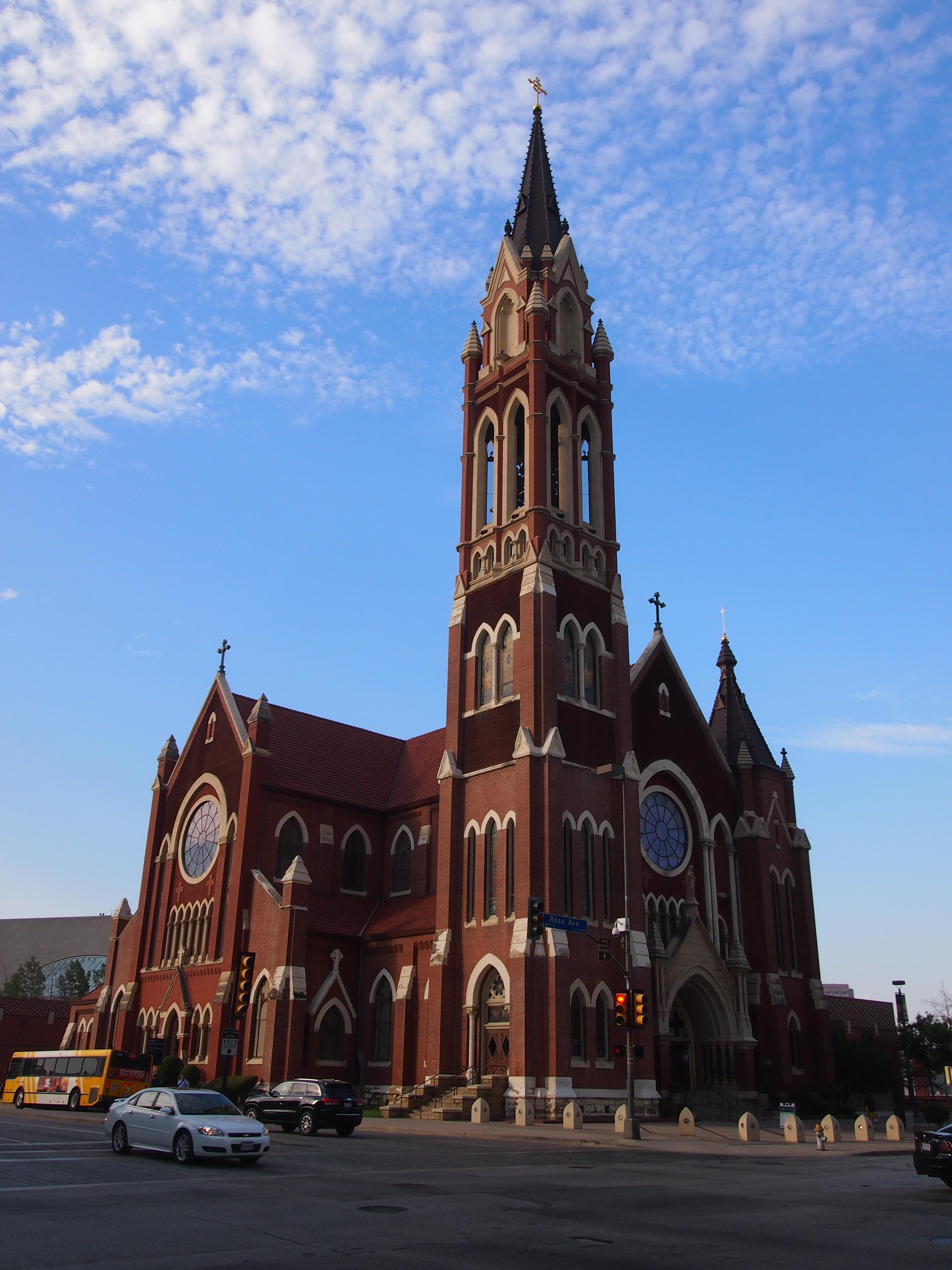
I had the place all to myself, as far as other human beings were concerned, for a few minutes on that Wednesday afternoon. Light was pouring in through the stained-glass windows on the west side of the church. It’s a lovely church inside, an example of High Victorian Gothic Architecture, finished in 1902.

Nicholas J. Clayton designed it. He’s another bit of Texas history – a prolific Irish-born architect who seems to have designed everything important in Galveston before the Hurricane of 1900 – that I had to look up (but not the hurricane; I read about that as a lad, and remained fascinated by it). One of these days, I need to go back to Galveston and look around, since I can’t remember much from my last visit, 40-odd years ago.

Not far from the cathedral are these small brick constructions.
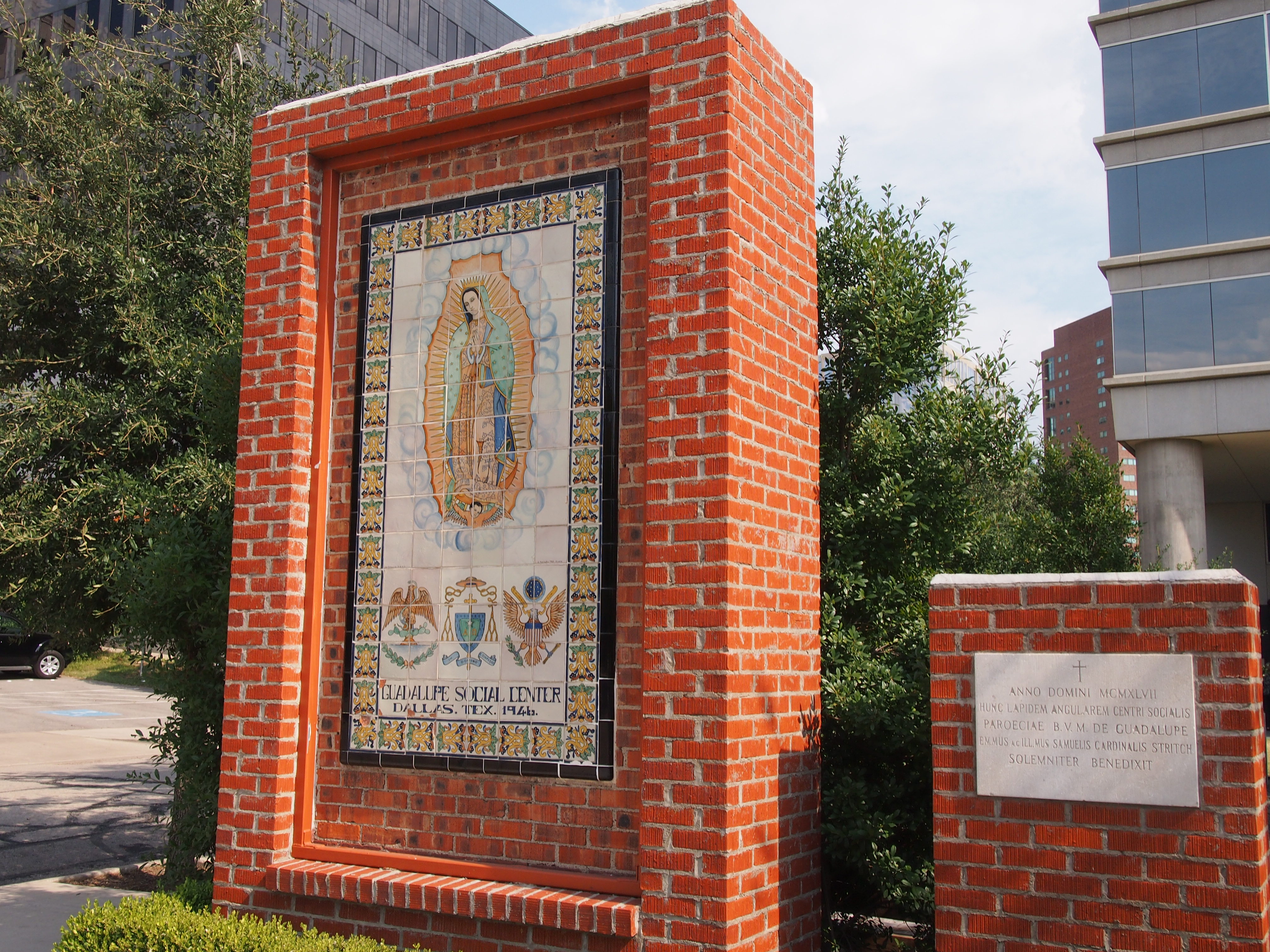
As near as I can tell, they mark the site of the social center for a neighboring parish, Our Lady of Guadalupe, which eventually merged into Cathedral of the Sacred Heart – the former name for the cathedral pictured above, which was then renamed to honor Our Lady of Guadalupe. Whatever the case, below Mary are the words “Guadalupe Social Center, Dallas, Tex. 1946.”

On the smaller plaque is an inscription in Latin. I have to like that. How much more public Latin is there in downtown Dallas?

ANNO DOMINI MCMXLVII HUNC LAPIDEM ANGULAREM CENTRI SOCIALIS PAROECIAE B.V.M. DE GUADALUPE EM. MUS ac ILL.MUS SAMUELIS CARDINALIS STRITCH SOLEMNITER BENEDIXIT.

Not too hard to figure out. Samuel Cardinal Stritch blessed the social center’s cornerstone on this site in 1947. At the time he was the Archbishop of Chicago.

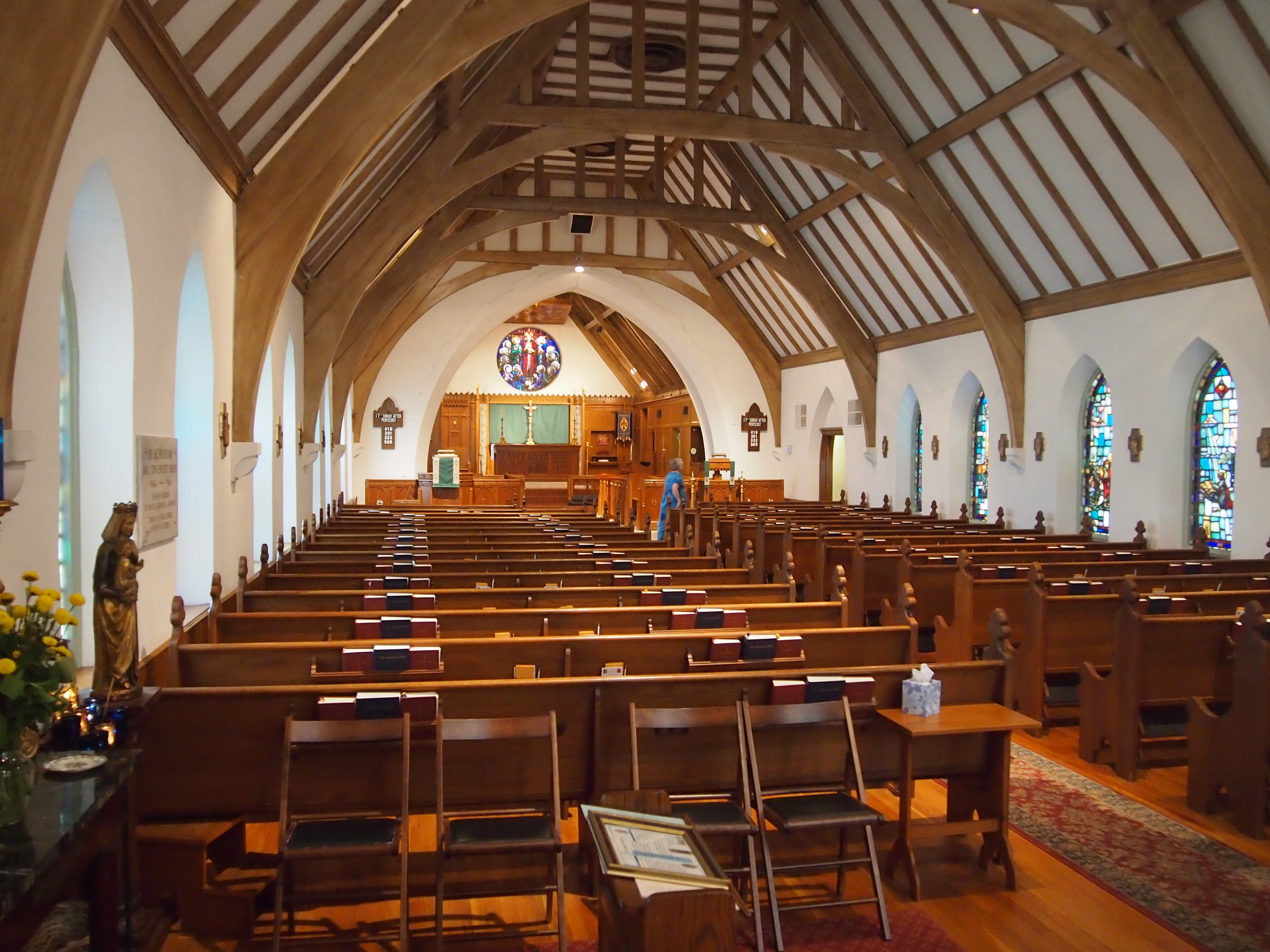
During this visit to Texas, but in San Antonio, I also visited St. Paul’s Episcopal Church, a much smaller house of worship near Ft. Sam Houston. Once upon a time, in the misty lost past, ordinary civilians could drive right through Ft. Sam – as everyone called it – no stops, no questions asked. Now all the entrances are barricaded. So you have to drive a long way around the fort to get to St. Paul’s.

I mention the fort because the church was originally established in the late 19th century to serve Episcopalians posted at Ft. Sam. It’s a church of beautiful simplicity inside, with some fine pews and stained glass.
There are also a few plaques on the wall that harken back to other times. Such as this dark one.
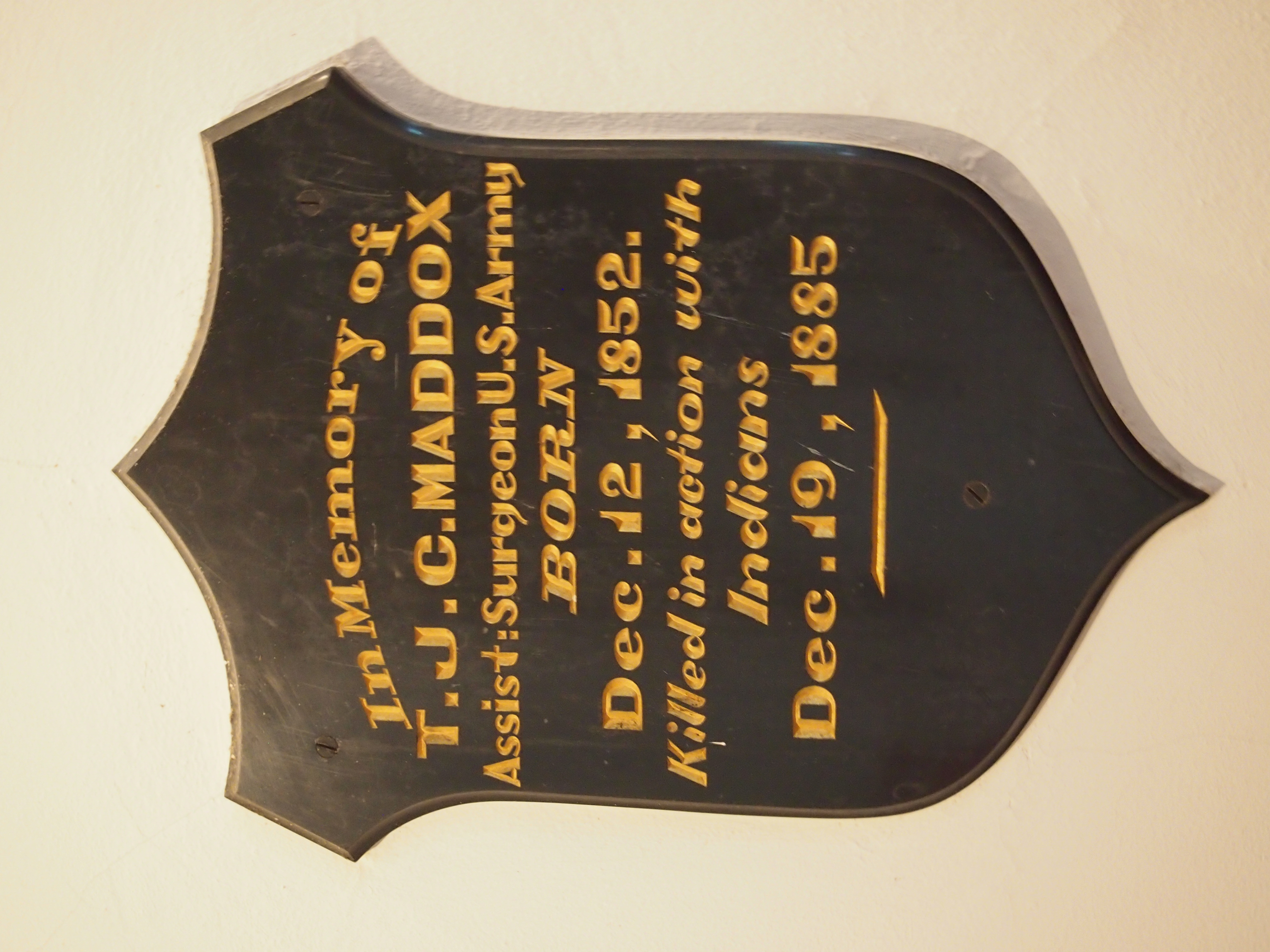
In Memory of T.J.C. MADDOX Assist: Surgeon U.S. Army BORN Dec. 12, 1852 Killed in action with Indians Dec. 19, 1885.

TJC Maddox seems to be this fellow. Remarkably, I’ve found found the story of his death on line, which was around the time the U.S. Army was busy chasing down Geronimo.

It’s possible, though I don’t know this for a fact, that relatives of Dr. Maddox who were members of St. Paul’s in its early years memorialized him with this plaque on the wall at the back of the church, where it remains into the 21st century.
Downtown Dallas ’13

Saturday was warm and partly cloudy, with gusts of wind all day but nothing strong enough to do damage. Lately it’s been cooling off dramatically at night, but that didn’t happen on Saturday. At around 10 pm, I sat on my deck and took in these vestiges of summer. At about 11, it started to rain.

On Wednesday the 18th, I squeezed enough time out of my schedule to drive from my brother’s house to the White Rock Station on the Blue Line of the Dallas Area Rapid Transit (DART) system, to catch a train to downtown Dallas. The station opened in 2001 as the light rail line system expanded, and I remember catching a train there in November 2002 with Jay and Yuriko and Lilly (who was just four at the time) to go downtown and catch a Red Line train to the Dallas Zoo. Riding a train in Dallas was a novel experience at the time, like riding one in LA was in 2001.

Whenever I can, I ride urban rails – light, heavy, commuter, subway, elevated, monorail, trolley, you name it. All-day passes are sold at vending machines at DART stations, and I bought one for $5. The ticketing system is the same as I remember some German transit systems being – roving ticket inspectors check tickets randomly, and the punishment for free riding is being thrown in front of the train. That or a fine.

The DART Blue Line proved an efficient way of getting downtown and back again late in the afternoon, and as it happened no one checked my ticket. Had I got it into my head to free ride, no doubt an inspector would have shown up.

As many times as I’ve been to Dallas – I started my visits as a very tiny baby and they’ve continued in each decade since then – I don’t quite know the place. Not like San Antonio or Nashville or Chicago or even Austin or Osaka. Or at least not downtown. Been years since I spent much time in that part of the city. The last time might have been when we visited the Dallas Heritage Museum some years ago, though that has more of a view of downtown than actually being in it. There was also the time when Yuriko and I dropped by the Sixth Floor Museum in the early ’90s, and another time I went to Deep Ellum, whenever that was.

A good thing to do when you only have a few hours in a particular place is to focus on one thing, and see what else you see along the way. I decided to visit the Ann & Gabriel Barbier-Mueller Museum: The Samurai Collection, a museum on the second floor of a building in Uptown, which is in walking distance from the downtown Blue Line St. Paul station. It was a hot walk – it’s still essentially summer – but not that far.

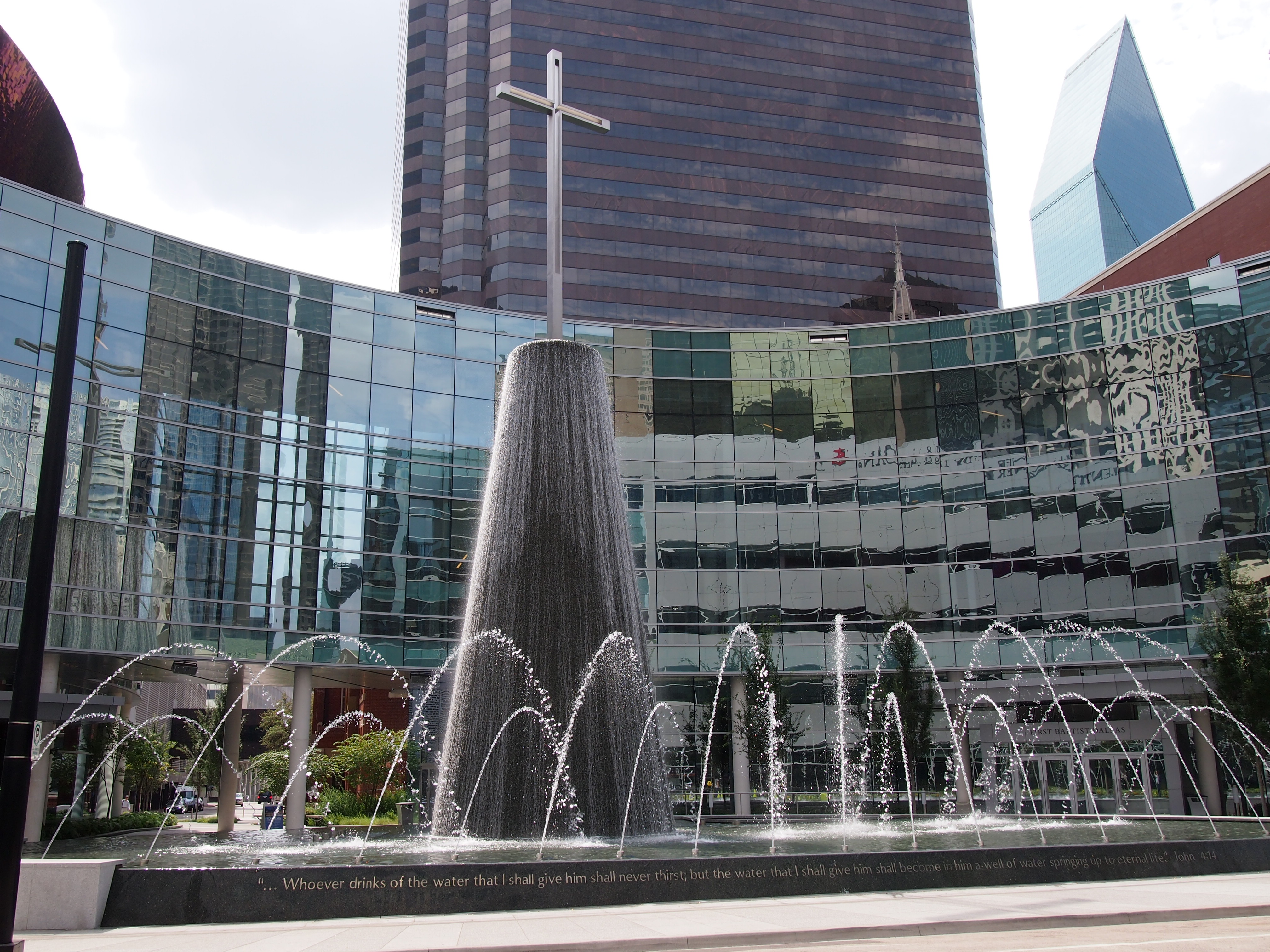
Along the way, I happened across the Jeffress Fountain Plaza, which is merely one of the more visible parts of the spanking-new First Baptist Church campus. I hadn’t seen it before because it was completed just this year.

“First Baptist Church of Dallas, led by nationally known pastor Dr. Robert Jeffress, has completed the largest Protestant church building campaign in modern history, opening its new state-of-the-art $130 million campus on Easter Sunday, March 31,” Charisma News tells us.

The article’s worth quoting at some length, if only to show that the urge to build big, expensive churches isn’t a Catholic monopoly. “The new facilities feature the newest technological advances for any church, providing a unique worship experience,” Charisma News continues. “A new 3,000-seat Worship Center, located next to the historic landmark 122-year-old sanctuary, includes a 150-foot-wide IMAX-quality video wall stretching more than two-thirds the width of the auditorium. It incorporates seven high-definition projectors blended together, making it one of the largest viewing screens in any church in the world. Additionally, wood bands along the walls surrounding the Worship Center contain LED strips that can be programmed to millions of different colors, creating dramatic ambient lighting to supplement and enhance any platform program.

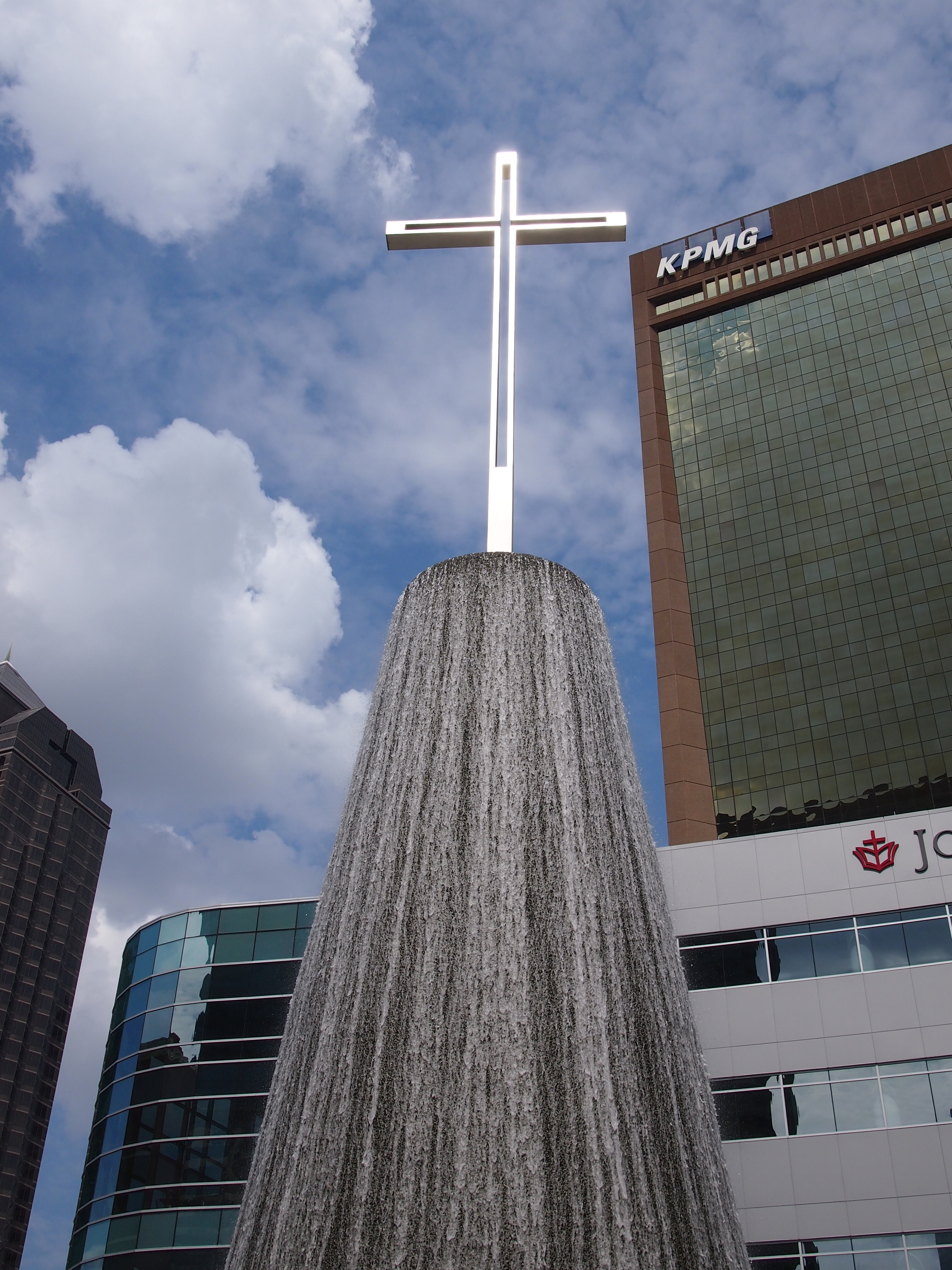
“The fountain serves as the grand entrance to the new campus, featuring a stainless steel cross atop a pedestal rising 68 feet high. Surrounding the tower is a shallow water pool containing a heated baptistery as well as eight water canons [is that supposed to be a pun, or did they just misspell cannon?] and 21 undulating titan water jets. Inscribed along the edge of the fountain’s pool is a Scripture text from John 4:14, stating, ‘Whoever drinks of the water that I will give him shall never thirst; but the water that I will give him will become in him a well of water springing up to eternal life.’ Several custom orchestral scores of anthems and spiritual songs accompany the programmed flow of the cascading water.”

A Short Visit to Brussels

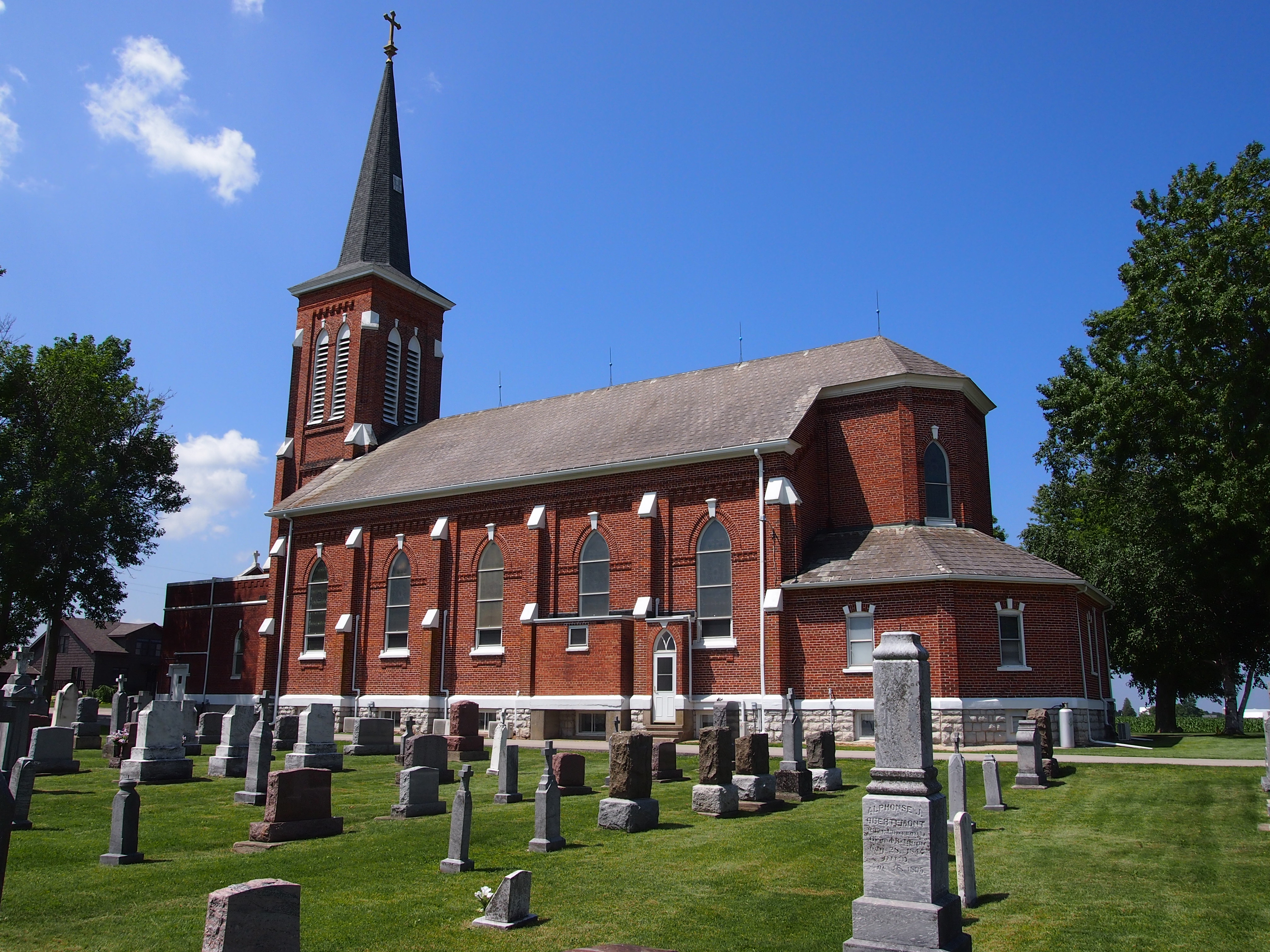
Southern Door County, the part below the Sturgeon Bay Ship Canal, isn’t the Door of tourist lore. But we discovered one of its charms all the same. Wisconsin 57 is the main road from the city of Green Bay to the town of Sturgeon Bay, and consulting the invaluable guidebook Moon Wisconsin, I noticed a town called Brussels just off the highway. “Brussels and surrounding towns… constitute the country’s largest Belgian-American settlement,” Moon asserts. “The architecture of the region is so well preserved that 100 buildings make up Wisconsin’s first rural National Historic Landmark.”

I had to take a look at that. We headed from 57 up County Highway C, and from that vantage, I have to say, it’s easy to miss most of those historic structures. Until you get to the junction of Highway C and Cemetery Road, that is, where you’ll find the St. Francis and St. Mary Parish Church. The setting is distinctly rural, complete with the odor of cow manure.

ST FRANCIS CHURCH is carved over the main entrance, but I understand that another congregation, St. Mary’s, joined St. Francis at one time. Not surprising, considering the way rural populations have dwindled in recent decades. My family thought I was stopping to see the adjacent cemetery, which looked interesting enough, but I really wanted to see whether the church was open. To my surprise, it was. I had to pry everyone else out of the car to come see the interior, which has some nice stained glass.

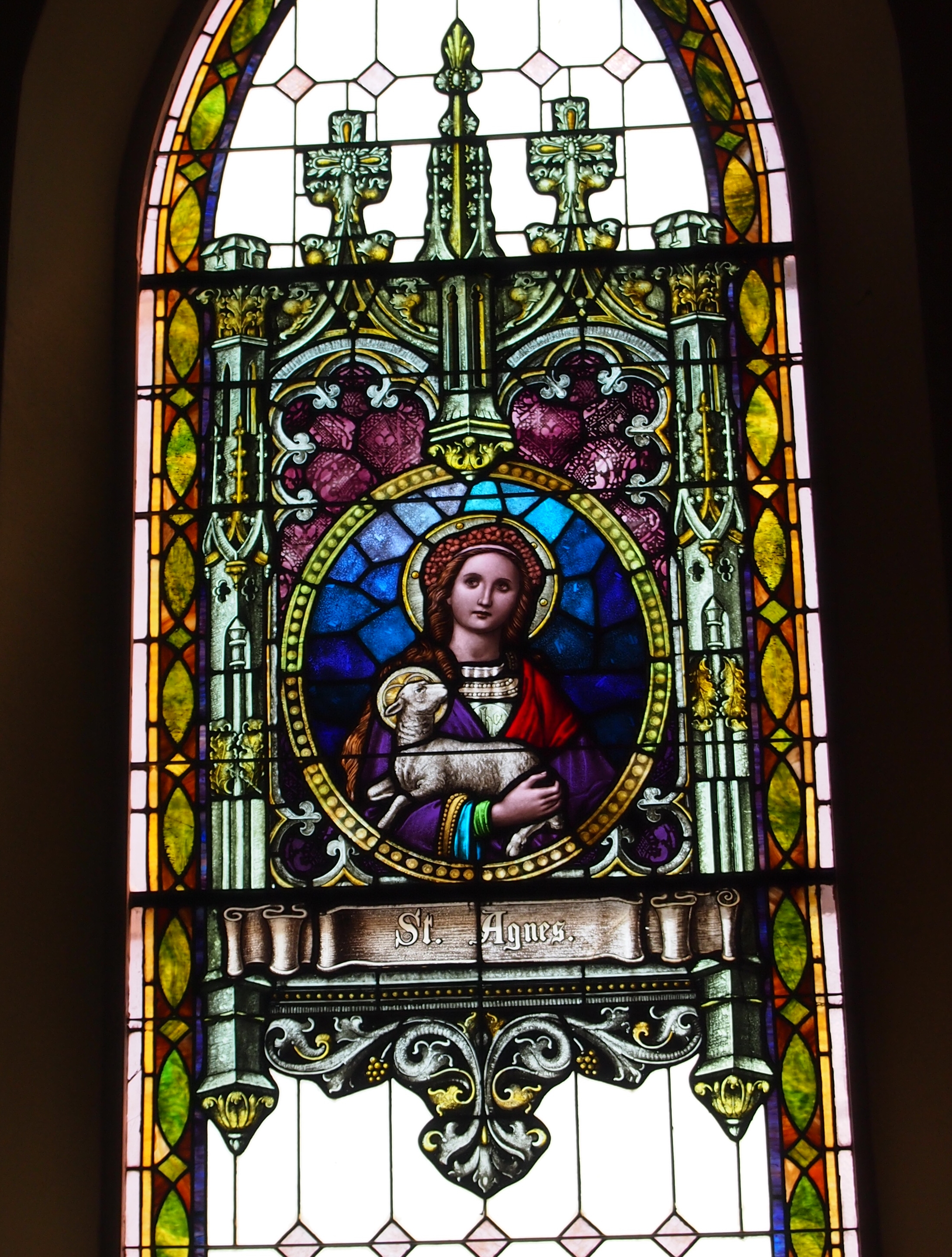
One side was well-lit by the sun, so I took some pics of saints. Because who doesn’t like stained-glass saints? Such as Agnes, patron of chastity, gardeners (?), girls, engaged couples, rape victims, and virgins.

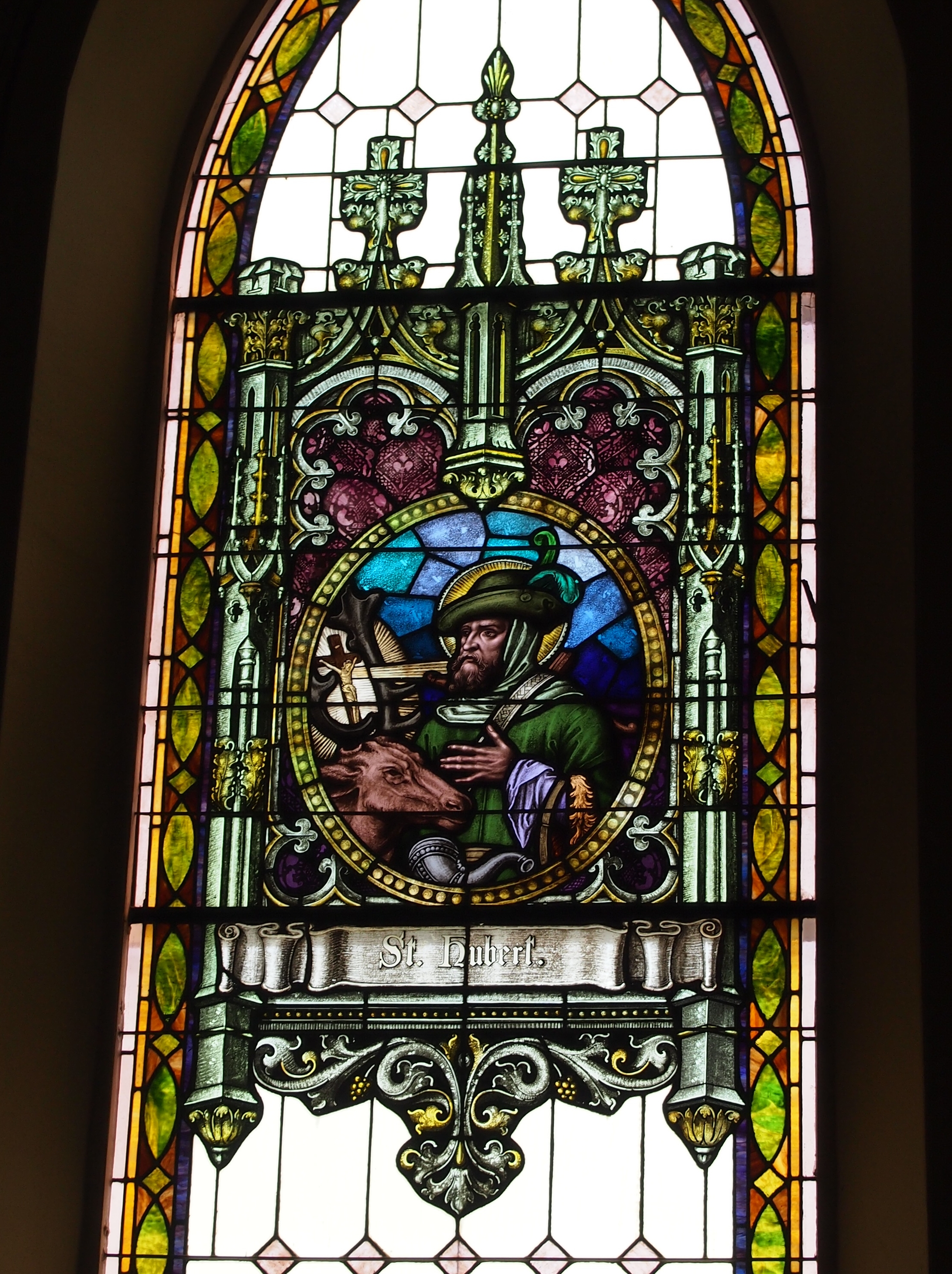
Or Hubert, patron of hunters, mathematicians, opticians, and metalworkers.

I also discovered, on further inspection, that the Francis of the church name is Francis Xavier, missionary to Asia, though why the Belgians who built the church chose him, I couldn’t say.

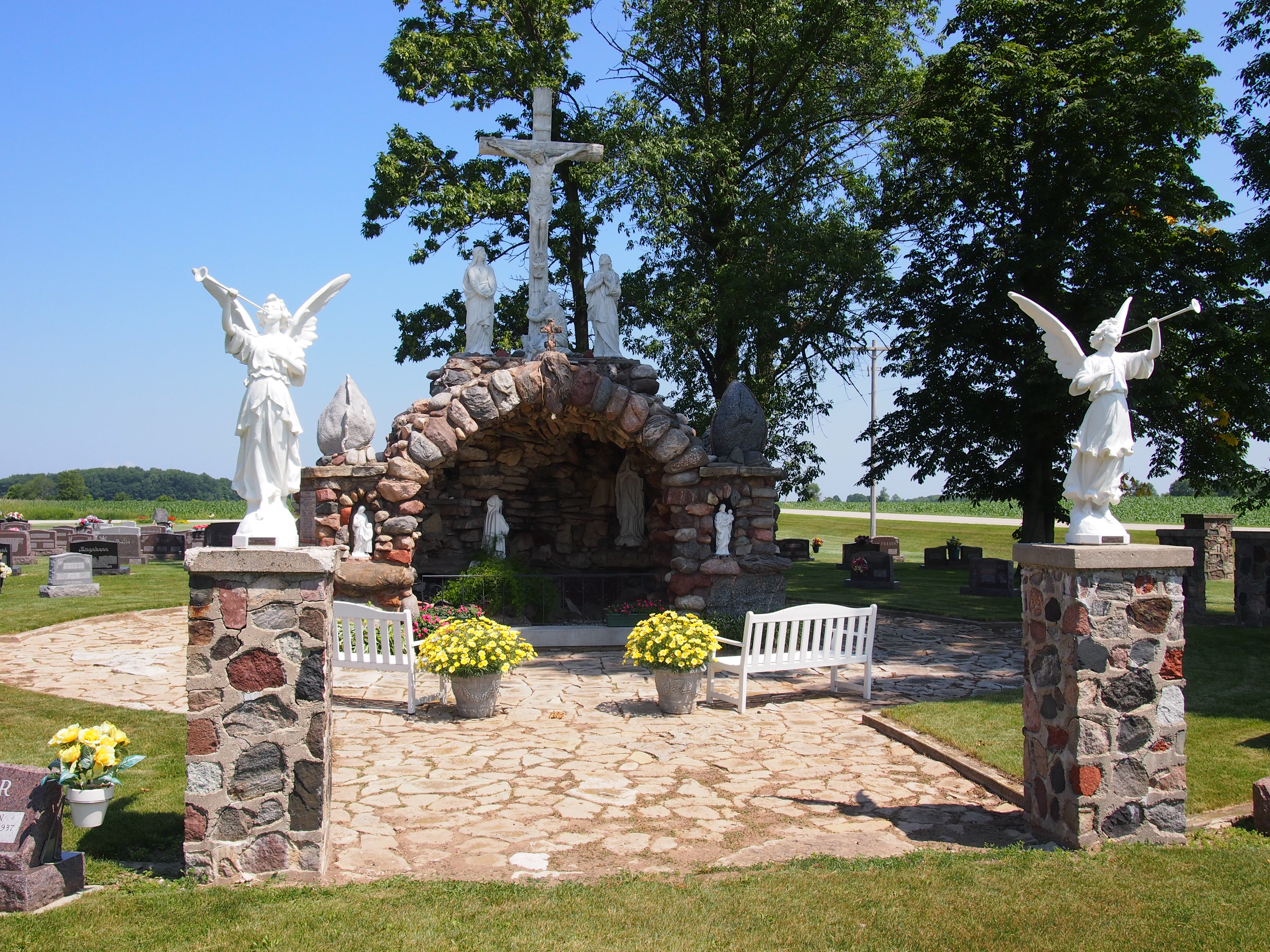
Everyone was waiting for me in the car as I looked around the cemetery, so I didn’t have long. Besides gravestones, it also featured a small grotto.

The light wasn’t quite right, but I say when you run across a grotto, take a picture if you can.