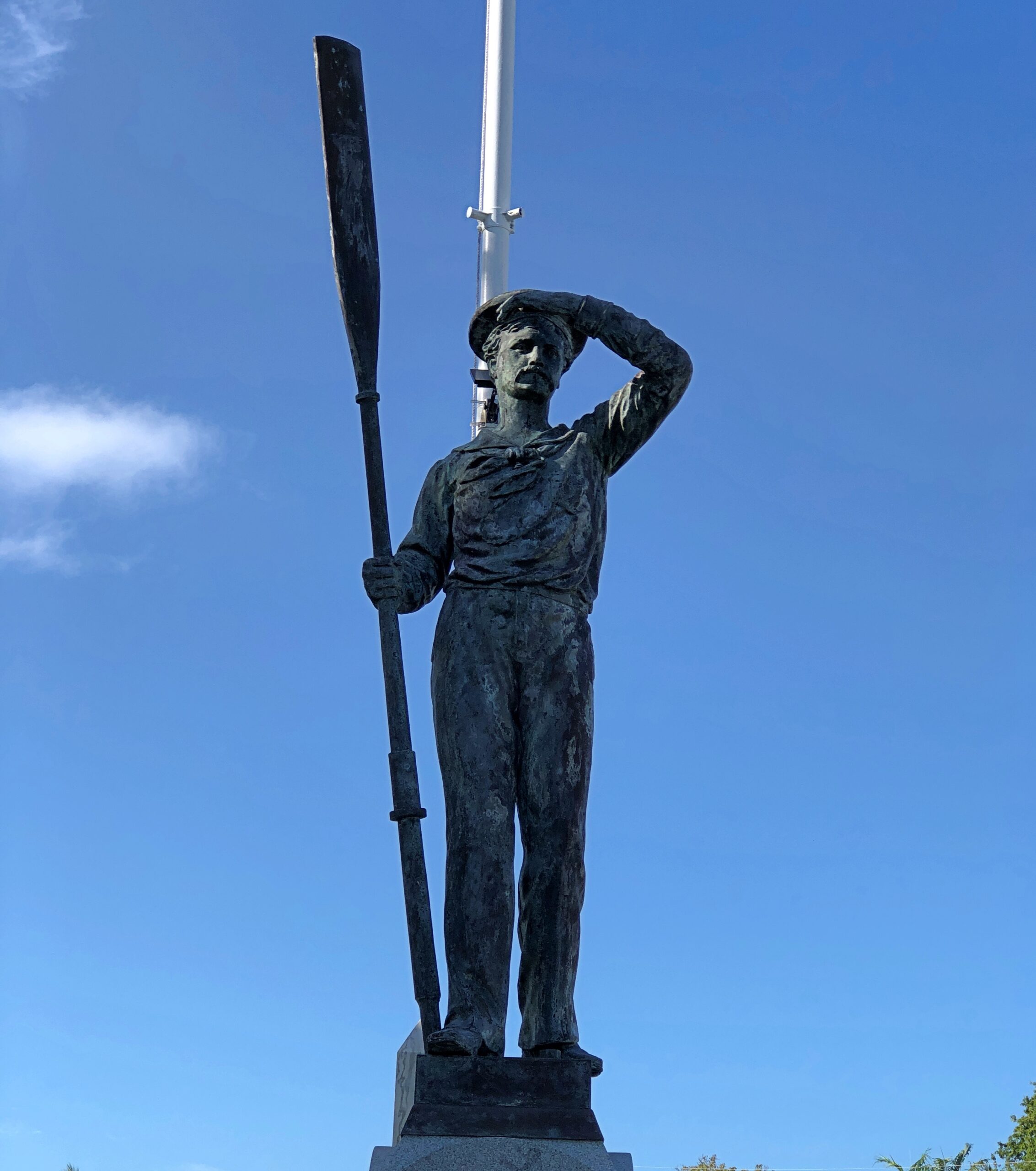
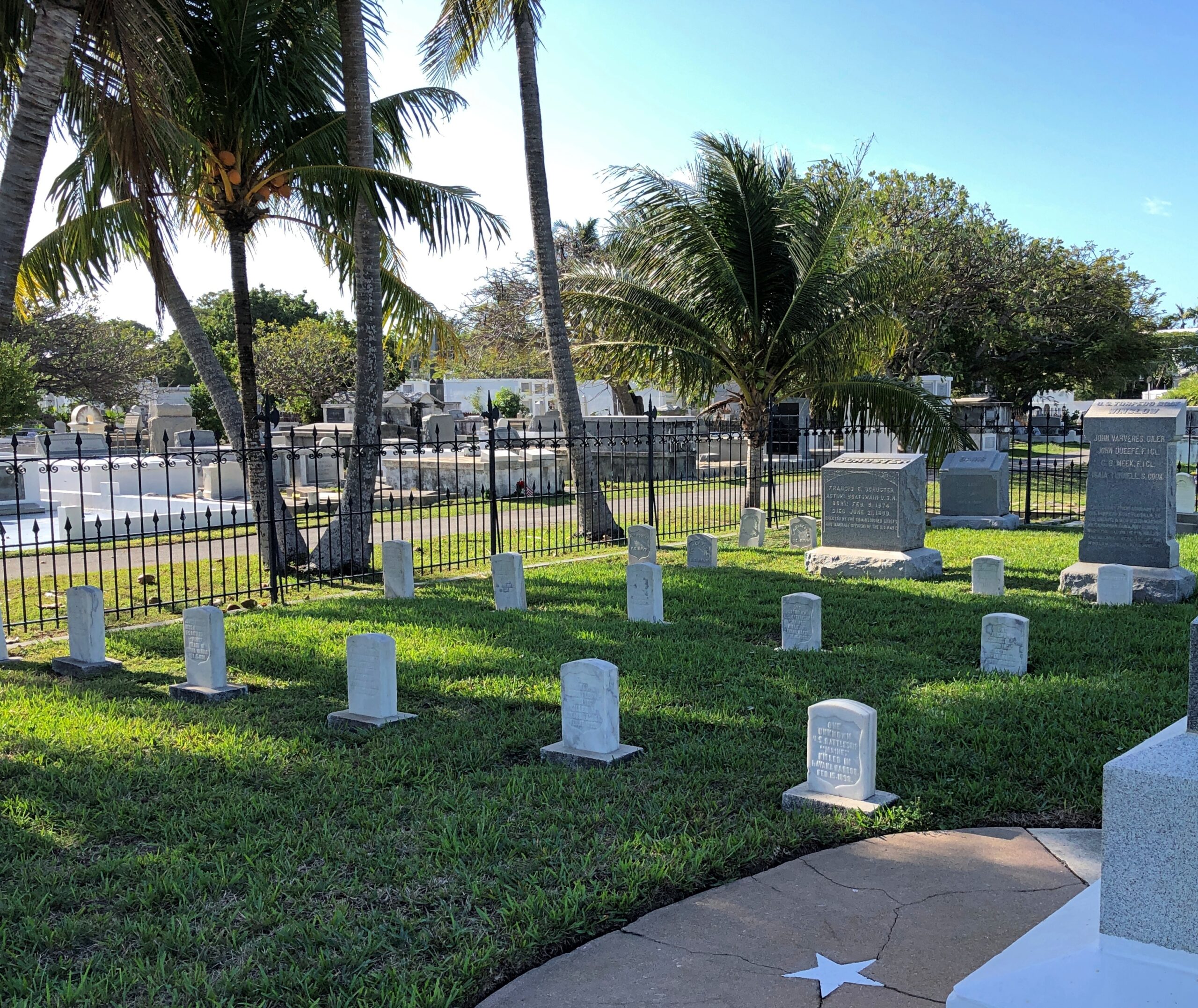
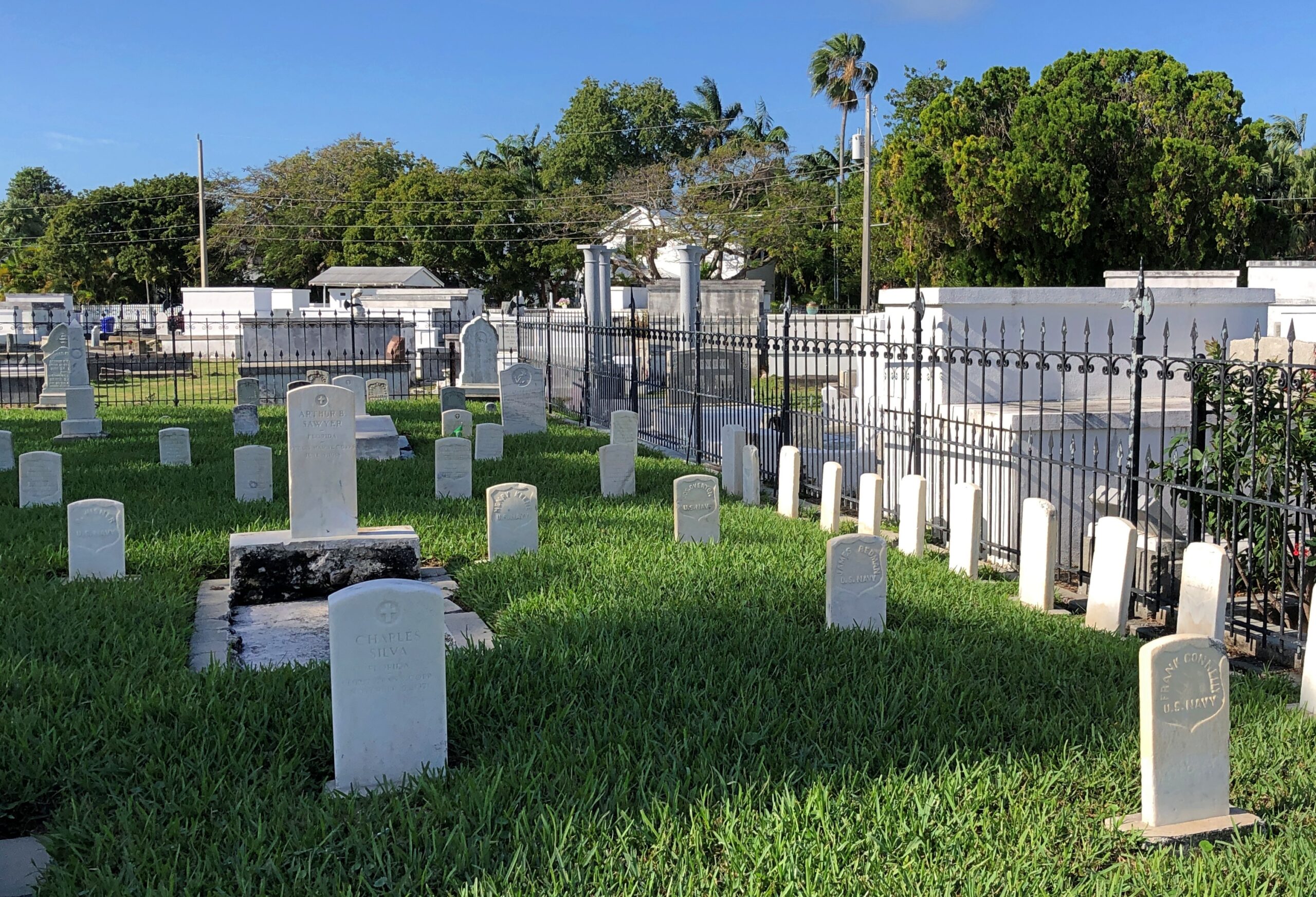
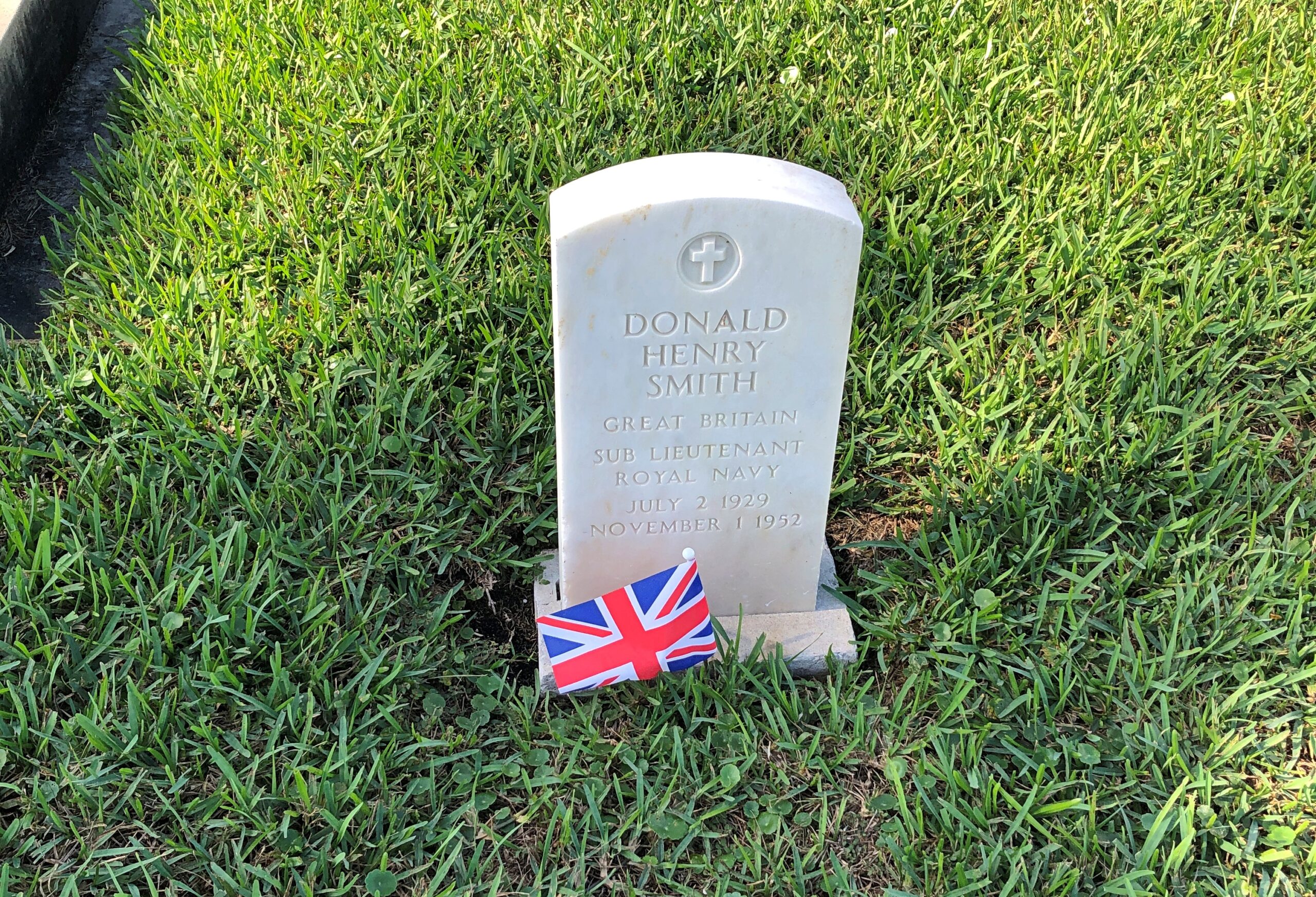
Sleepy Hollow Cemetery, Concord

Concord naturally follows Lexington. That’s just the way it is. I made the short hop between Lexington and Concord on the morning of October 23, ahead of the day’s ultimate destination in Rhode Island. The first thing I needed to know was the status of the men’s room at the Concord Visitor Center, there on Main Street. I’m glad to report I didn’t run into any “closed for the season” nonsense.

I can also report that the South Burying Place is half a block away, an irregular slice of land wedged between Main, a side street, and some basic apartments.

South Burying Place
South Burying Place

Notably similar in style to Lexington, and why would they be any different?

South Burying Place
South Burying Place

One detail on the latter stone caught my attention. It took me a few minutes to work it out.

South Burying Place

Deacon Joseph Dakin happened to depart this life on March 13, 1744/3. Ahead of the British switch to the Gregorian calendar in 1752, there were competing ideas of when New Year’s Day should be: January 1 or March 25. Most of the rest of Europe had gone to January by the 1740s, but England clung to its traditional date. He died March 13, 1743 by the the traditional reckoning; March 13, 1744 if January 1 is the first day of the year. Besides switching to Gregorian, the ’52 change fixed January 1 as New Year’s Day in the English-speaking world.

That’s the kind of detail that can make my day. A lagniappe of the visit. South Burying Place itself was a lagniappe to my travels that day. The cemetery I had in mind to see was Sleepy Hollow Cemetery, a short drive from Concord’s main retail street. Not to be confused with the one of the same name in New York state, though I have to say that one looks like it would be worth a visit.

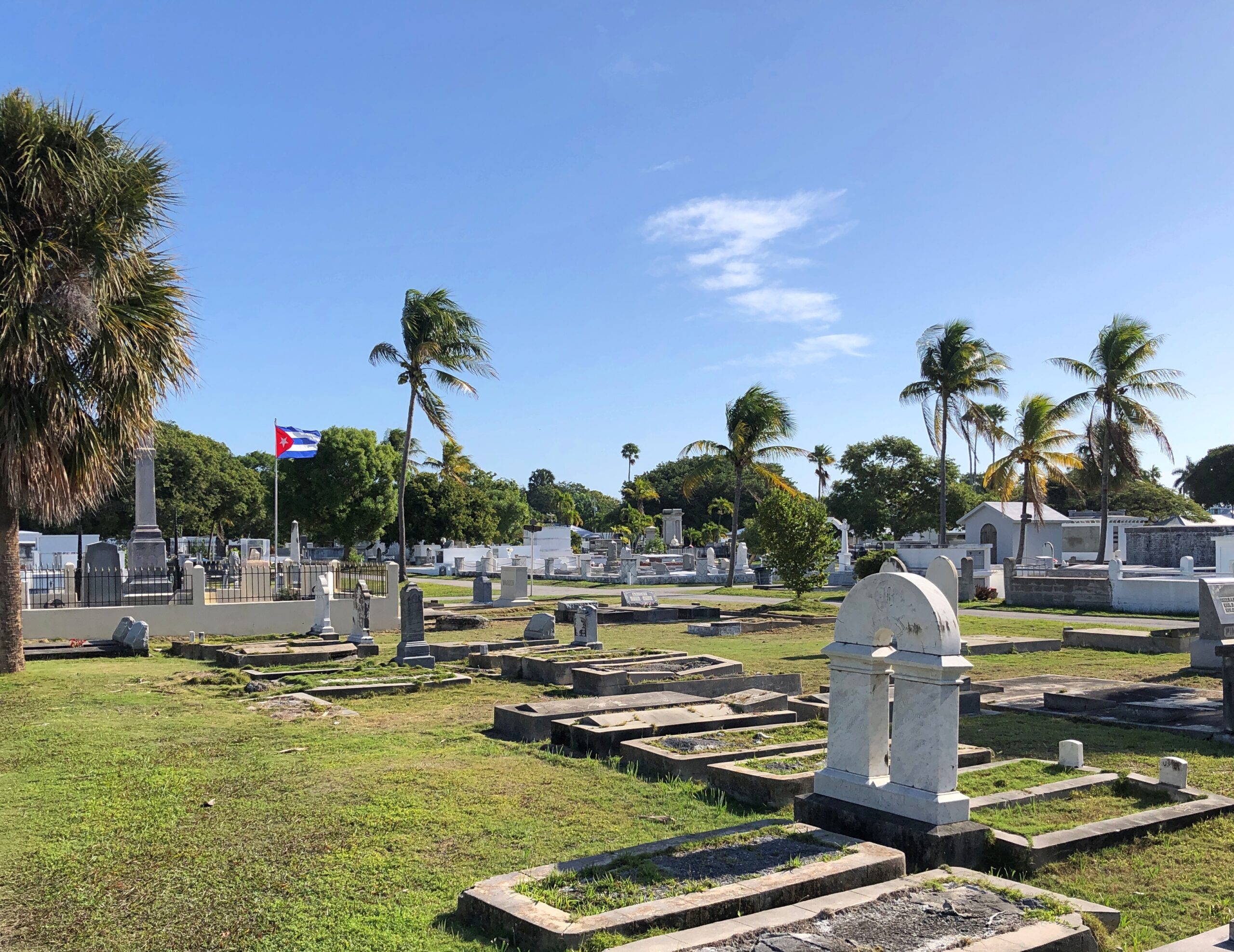
Sleepy Hollow in Massachusetts is in a wooded hollow.

Sleepy Hollow Cemetery

A wooded hollow. That’s a good place for a cemetery. Better yet, Sleepy Hollow is a cemetery of some age, by North American standards. Even better yet, autumn colors.

Sleepy Hollow Cemetery

When I got there, I found I wasn’t alone among the living. A rare thing at a cemetery. A trickle of people came and went to pay their respects to a clutch of famed authors who are buried at Sleepy Hollow. They’re up on Authors Ridge. The cemetery thoughtfully built a small parking lot at the base of the ridge, to facilitate that trickle of literary pilgrims.

Sleepy Hollow Cemetery

A path from the lot leads upward. At the crest of the ridge, the authors are found with other family members. In alphabetical order:

Louisa May Alcott.

Sleepy Hollow Cemetery

Here visitors don’t leave stones or small coins, but pencils, pens and paper. She wasn’t the only one to attract writing instruments.
Ralph Waldo Emerson.

Sleepy Hollow Cemetery

Where’s Waldo? Right there. Interesting that his memory attracted pine cones.

Nathaniel Hawthorne.

Sleepy Hollow Cemetery

Henry David Thoreau.

Sleepy Hollow Cemetery

When I parked at the small lot, I noticed a group of four girls, college students would be my guess, heading up the path to Authors Ridge. I waited a few minutes in my car, since I didn’t want to interrupt their pilgrimage. Also, I wanted the ridge to myself, if possible. I guessed they wouldn’t be long, and soon they came down the path, got in their car and left.

About an hour later, when I had finished my own cemetery stroll, I was checking my maps in the car, when a middle-woman pulled up, parked, and headed up Authors Ridge, walking her small dog. The trickle was continuing.

I preferred a more leisurely inspection of the authors’ stones, and the rest of the cemetery, for that matter. Such excellent contour.
Sleepy Hollow Cemetery

There’s also a large selection of stones for non-famous residents of this part of the world.

Sleepy Hollow Cemetery

Besides, the authors aren’t the only notable burials. Here’s Daniel Chester French, sculptor of renown.

Sleepy Hollow Cemetery

If the seated Lincoln at the Lincoln Memorial was the only thing he ever did, he’d still be remembered. But of course he did a lot more. The smaller version of “The Republic,” bright gold in color and standing even now in Chicago, is one that comes to mind. So do the allegories at the Alexander Hamilton U.S. Customs House at the southern tip of Manhattan. And Gen. Oglethorpe in Savannah.

But you don’t have to go so far to find one of French’s works. Elsewhere in Sleepy Hollow is the Melvin Memorial, honoring three Concord brothers named Melvin (Asa, John and Samuel), who each gave their last full measure of devotion for the Union in ways that represent the spectrum of soldier death in that war: died in combat, of disease, and in a prison camp.

Melvin Memorial

The figure is known as Mourning Victory, a version of which is held by the Met.

Melvin Memorial

Another famed work of French’s is in Concord: namely, “The Minute Man” at Minute Man National Historical Park.

I didn’t bother with that historical park this time, since I knew it would be closed. But I did see it 30 years ago, and it’s stuck with me. Just example of French’s work standing the test — and literally standing the test — of time.

Battle Green, Lexington

Too bad about iconic. If there ever were a time to use iconic to describe sometime distinctive and revered, John Parker in bronze would be it.

Lexington Battle Green

Icons are no accidents. The pose captures the Battle of Lexington as we, Americans, want to remember it: the resoluteness of an ordinary man in the face of the enemy. What the militiamen experienced that morning is partly enshrouded in mystery like a battlefield of the time might be with gun smoke. No one knows who fired the first shot, for instance, but that doesn’t keep the Shot Heard Around the World from having its own name during later generations — a remarkable thing for a simple firearm discharge to have.

Lore has encrusted the story. Even so, the Patriot soldiers in the Revolution, collectively, can’t be said to have lacked resoluteness over the long years of conflict.

The Parker bronze stands on the edge of Battle Green in Lexington, Massachusetts, and across the street from Buckman Tavern, where the militiamen of the town waited the night before the battle. Among their number on April 19, 1775, was a young man named Jonathan Harrington, a fifer in the militia. About 75 years later, he’s thought to have posed for a photograph, now on display at Buckman Tavern.

Jonathan Harrington, Lexington

Said to be the last survivor of the battle, and the only one to be photographed. The American Battlefield Trust cites a Harrington family history: He said he was aroused early that morning by a cry from his mother, who said: ‘Jonathan, get up, the regulars are coming, and something must be done.’ Jonathan was a fifer. He arose, went to the place where the patriots were gathering, and was with the company on the approach of the British. 

It had rained during the early hours of October 22, 2025 in Lexington, but by late morning the sun was out and only a scattering of puddles remained. Battle Green stretched out behind the bronze John Parker. For a time, I was the only person on the green, though a steady stream of car traffic was the be seen on the roads edging the grounds.

Battle Green,
Lexington
Battle Green, Lexington

John Parker, originally “Minuteman Statue” by the prolific sculptor and public monument specialist Henry Hudson Kitson, is a latecomer to the green, erected in 1900.

Battle Green, Lexington

The Battle Green flagpole is newest of all, erected only in 1962. Even so, the pole is on the National Register of Historic Places, and an act of Congress specifies that a flag will always be flown there.

Battle Green, Lexington

Well within living memory of the battle itself (1799), the town – fully aware of its role as spark of the Revolution – erected a memorial, and relocated the bones of the militiamen killed in the battle to a spot in front of it.

Battle Green, Lexington

Though not formally part of the green, First Parish Unitarian-Universalist is distinctly part of the place, and looks about as New England as a church can.

Battle Green, Lexington

It might as well be part of the green, considering the history of the congregation. The present church is a 19th-century structure near the site of Lexington’s only church in 1775, which was a hotbed of Revolutionary sentiment at the time.

Catskills ’25

The highway New York 30 winds along the northwestern edge of Catskill Park because it follows the winding East Branch of the Delaware River, which would picturesquely come in and out of view as I drove that highway on the crisp late morning of October 16. I stopped at a place called Downsville. Wiki calls it “census-designated place, and former village in the town of Colchester, Delaware County, New York.”

This raises some questions. How is a village part of a town? (Colchester is marked on maps as not far away, but not on NY 30.) How does a place become a “former” village? People still clearly live there. Maybe I’ll investigate these questions sometime. Maybe not.

Village or former village, it’s at a pleasant spot on the East Branch.

East Branch of the Delaware River

I stopped because a sign directed me to a covered wooden bridge, one that crosses the East Branch about a block away from NY 30.

Downsville, NY covered bridge

“The Downsville Covered Bridge is one of six covered bridges still standing in Delaware County…” explains the New York State Covered Bridge Society. “Built by Robert Murray in 1854, this 174-foot-long, single span structure incorporates the Long truss design patented on March 6, 1830 by Lieutenant Colonel Stephen H. Long of Hopkinton, New Hampshire, with an added Queenpost truss. This truss design is rare to Northeastern covered bridges.” 

Nice work, Mr. Murray, and the workers who have maintained it as a vehicular bridge down to the present day.

There’s a small park on the river next to the bridge, and a parking lot. Soon after I arrived for a look-see, a large van pulled up to the lot and about a half-dozen Plain People got out. They were there for a look-see too. So we were all on the bridge together.

Downsville NY covered bridge

I try not to do ethnic profiling, but I couldn’t help thinking that a top tourist sight for Plain People might well be a covered wooden bridge. Then I wondered, how is it they came in a van? As I was leaving, I noticed a non-Plain man waiting for them in the drivers seat. The Plain People equivalent of a Shabbos goy, I suppose. Except maybe that he can work any day except the Sabbath?

Not far away in Downsville is the Paige Cemetery. I had that to myself, as usual.

Paige Cemetery, Downsville, NY

New York 30 continues a long way on the shores of the Pepacton Reservoir. Still car commercial driving.

NY 30
NY 30

The Pepacton Reservoir, seemingly so peaceful on a brilliant autumn day, has a hell of a back story.

“It is formed by the damming of the East Branch of the Delaware River, which continues west and joins the lower Delaware River,” says NYC Environmental Protection. “It consists of one basin, approximately 15 miles in length [that] holds 140.2 billion gallons at full capacity, making it the largest reservoir in the city system by volume. It was placed into service in 1955.

“Pepacton Reservoir is one of four reservoirs in the City’s Delaware Water Supply System. As the reservoir with the largest capacity, it normally contributes more than 25% of the total daily water flow into New York City.

Italics added, because they needed adding.

Once I left NY 30 and headed east on NY 28, which put me on a path toward the Hudson River Valley and NYC and Long Island, traffic kicked up several notches. It was still mostly a pleasant drive.

Most of the traffic was headed west into the park, opposite of the way I was going; as only to be expected on a Thursday ahead of a colorful fall weekend. The Catskills are still a destination, if not quite the Catskills of yore. Some of the old story was told to the rest of the country through TV shows in previous decades, or even more recently: namely, The Marvelous Mrs. Maisel.

Metal spaceship and robot sculptures haven’t been part of the Catskills narrative that I know of. But there they were, right off NY 28.

Fabulous Furniture, Catskills

As part of this place of business.

Fabulous Furniture, Catskills

Some artful metal for sure.

Fabulous Furniture, Catskills

More.

Fabulous Furniture, Catskills

Fabulous work, Mr. Heller, but those Space Age artifacts are of a Space Age that never quite was. Too bad.

The Basilica of St. Fidelis, Cathedral of the Plains

Today I let Google finish “Cathedral of the…” and got the following responses, top to bottom (capitalization sic): Sea, deep, Holy Angels, holy angels photos, forsaken, immaculate conception, incarnation, Madeleine, deep ds3, pines.

Cathedral of the Sea is La catedral del mar, a “Spanish drama series” that I’d never heard of, though I have been to Santa Maria del Mar. The Cathedral of the Deep and of the Forsaken appear to be aspects of electronic games, and the others are churches in various places.

Not on the list is the Cathedral of the Plains. But it’s out there, in central Kansas.

Cathedral of the Plains

That’s a nickname, since the church isn’t actually a cathedral, but the wording does appear on its point-of-interest spot on road maps – and naturally that got my attention. Formally, the church is the Basilica of St. Fidelis, said to be the largest church west of the Mississippi by seating capacity (1,100) upon completion in 1911 in Victoria, Kansas. Conveniently (for me), some decades later I-70 was built not far away.

John T. Comès (d. 1922), a Pittsburgh architect, designed the church for a congregation of Volga German immigrants. Who had come to greater Victoria starting in the 1870s. Why Victoria? Why not? No doubt they looking for flat farmland.

Comès, an incredibly prolific specialist in Catholic churches, did a fine job.

Cathedral of the Plains

Nice.

Cathedral of the Plains

The Volga Germans aren’t forgotten. No doubt their descendants are all around this part of Kansas. In 1976, the townspeople erected a memorial to their immigrant ancestors, across the street from St. Fidelis. A work by Pete Felton, a “Kansan limestone carver,” according to this posting, which also mentions limestone fenceposts as important in Kansas — something else to look into sometime.

After nearly 50 years, the statues are looking a little weatherworn, but they abide.

Victoria, KS

The woman and daughters caught the light at that time of day, the afternoon of September 23.

Victoria, KS

The man and sons did not. Would sunlight have made him less – Stalinesque?

Victoria, KS

Never mind. St. Fidelis Cemetery isn’t far to the north of the basilica, and I stopped by.

St Fidelis Cemetery

A good variety of memorials in a nice setting, even if the land lacks contour and there’s no flora beyond grass and cut flowers.

St Fidelis Cemetery
St Fidelis Cemetery
St Fidelis Cemetery

Then I started to notice iron crosses.

St Fidelis Cemetery
St Fidelis Cemetery
St Fidelis Cemetery

A lot of them. That called for further investigation, and it wasn’t long before I found out that Volga Germans were known for their wrought-iron crosses.

“German-Russian blacksmiths began making wrought-iron crosses in North Dakota as early as 1884,” says an article posted by North Dakota State University. “The hand-made crosses were most prevalent in central North Dakota from the late 1880s to about 1925, when marble and granite became more popular for grave marking. Most wrought-iron crosses appear in Catholic graveyards, although a few of these markers are also found in German-Russian Lutheran graveyards.”

The article talks of their crosses in North Dakota, but notes that they are also found in the “Northern Plains.” Such as Kansas, apparently.

Sacred Heart Cathedral, Salina, Kansas

The in-motel breakfast on September 24 in Salina, Kansas (pop. 46,800 or so) had been less than satisfactory, so Google Maps guided me to a doughnut shop on one of the wide, lightly traveled streets of downtown Salina. I ate in the car parked on just such a street, and soon started out for the highway (I-70) to head east.

Then I noticed Sacred Heart Cathedral.

Sacred Heart Cathedral, Salina, Kansas

I had to take a closer look.

Sacred Heart Cathedral, Salina, Kansas

If that structure doesn’t say midcentury, I don’t know what would. Indeed, the cathedral was built in the 1950s. But it isn’t quite like any other church building I’ve seen, even of that period. Also, it isn’t mid-century concrete, which it looked like from a distance, but limestone.

Sacred Heart Cathedral, Salina, Kansas

Note the Kansas elements.

The cathedral’s web site says: Sacred Heart Cathedral is a distinctive building that draws upon rural Kansas imagery and uses it in the service of Christian mythology. It is a noteworthy example of the work of Edward J. Schulte [d. 1975], a prolific designer of Catholic facilities across the Midwest through the greater part of the twentieth century.

Its most striking features are what appear to be a row of cylinders thirty feet in circumference extending the full height of the eastern and western facades, which resemble the grain elevators that dominate the skyline of most towns in western Kansas.

The allusion to grain elevators helps to link the church to its place in Kansas. It can also be seen as a symbol — the Cathedral is a place where the faithful come to receive the sustenance of the Eucharist.

It was open. That was unexpected, but I didn’t let the opportunity pass.

The baptismal font in the narthex.

Sacred Heart Cathedral, Salina, Kansas

The nave.

Sacred Heart Cathedral, Salina, Kansas

That part of downtown Salina was thick with churches. Another is First United Methodist, across the street from Sacred Heart.

First Methodist, Salina, KS

About a half block away, Christ Cathedral Episcopal. The other churches weren’t open.

Christ Cathedral Episcopal, Salina, KS

Later that day, at an exit just east of Abilene, I went looking for one more church — a kind of church I’d only ever driven by before.

Cowboy Church, Abilene, KS
Cowboy Church, Abilene, Kansas

Google Maps told me that this Cowboy Church was open for a few hours that day. I was skeptical, but went anyway, on the off chance that I’d get to see the inside of a Cowboy Church. As expected, it wasn’t open. Still, I got to look around in all directions.

Cowboy Church, Abilene, KS

Informality, I’ve read, is important to the nondenominational Cowboy Churches, whose number seems to be large, but without an exact count. (And some individual churches are pretty large.) I can only hope that at one or more of them, somewhere and at sometime, Yippee-Ki-Yay, Lord! is part of their prayer.

Walworth County Tin Man

It may be September, but it’s still warm. Time to take advantage of the second shoulder season of the year in my own slightly demented way. Back to posting around September 28.

Last month I’d gotten a tip from one of the usual sources detailing roadside oddities, so there I was, tooling down a road in rural Walworth County, Wisconsin. The sun was hot and the corn was high. My tip was solid. I pulled off the road and walked a little ways for a good look at the oddity. It is larger than most.

Tin Man, Wisconsin
Tin Man, Wisconsin

It’s called “Tin Man,” according to published sources, rising 45 feet and weighing in at 20 tons. The creators were two local men entertaining themselves. Looks are free from the road. If that’s not an authentic roadside attraction, I don’t know what is. I was careful to stay off the property, however.

“That statue stands tall in Robert Stewart’s home near Lake Geneva. In fact, it can be seen from about a mile away. It took him and his friend Shane Pope two years to make it,” WTMJ-TV reported in early 2021.

“The statue was built primarily out of scrap metal that Robert was able to collect, which includes the legs, the arms, and body of the statue. The torso is an old water tank that was used in the Pabst Brewery. However, the most iconic piece of the statue might be its Officer Big Mac head.” (I can add that its legs are hay conveyors.)

I’d taken the head for Mayor McCheese – that would make sense in Wisconsin – but actually it’s the lesser-known Officer Big Mac, whom I suppose worked for McCheese until a falling out in the 1980s. Or actually did he answer to Ronald McDonald? Though Ronald had no official title, it was clear he was calling the shots in McDonaldland. Anyway, there the officer is, atop a scrap-metal creation.

Tin Man had been visible from a distance. That raised arm looks a little — odd. Let’s just say he’s waving at the occasional passersby on the road.

When I say rural, I mean rural.

Closer to Lake Geneva, in fact in Fontana, Wisconsin, is the Fontana Frog. I saw it the same warm summer day as the Tin Man.

Fontana Frog

Part of the long defunct Frog Hollow miniature golf course, according to Roadside America. Looks the part.

Not to be confused with another model frog to be seen in Fontana. Two giant frogs in one town. The world’s a peculiar place.

Two Southern Wisconsin Cemeteries

Something I’d never seen on a gravestone: a truck. I’ll bet most people can say that.

St Mary's Cemetery, Burlington, Wis

My best guess when I saw it was that Kenneth C. Remer was a trucking man who, among other things, lived through the short romanticization of trucking men in the mid-1970s. Something I’m sure is lost on later generations, as if that matters. If I were silly enough to say “That’s a big 10-4” to either of my daughters, I wouldn’t expect comprehension. That bit of code wasn’t invented by truckers, but even so.

I looked him up, as one can in our time. His obit says he was a “partner in Remer Milk Service.” So could be he drove a milk truck, at least sometimes. That is a liquid-hauling truck depicted on the stone. Not something celebrated in song and story, but useful work all the same.

Further down the rabbit hole, I came across this: “The 1970s Trucking Craze Can Be Traced Back to a Regional TV Commercial for Bread.” I never knew that, or if I did, I forgot it in the 50 years since then, because I’ve devoted very little thought to the subject over that time. Just another thing invented by ad men.

Another thought on that: though “Convoy” was much more popular, C.W. McCall’s “Wolf Creek Pass” is by far the more entertaining song. (And it’s a real place.) A better song about driving a truck is “Willin’,” originally by Little Feat. Of all people, the inestimable Linda Ronstadt did a remarkable cover of it.

I encountered Mr. and Mrs. Remer at St. Mary’s Cemetery in Burlington, Wisconsin last month. A Catholic cemetery with a nice assortment of stones.

St Mary's Cemetery, Burlington, Wis

Unusual: two Air Force (I assume originally Army Air Corps) Master Sergeants, married to each other.

St Mary's Cemetery, Burlington, Wis

During my recent visit to Elkhorn, Wisconsin, I did no more than look for an “historic cemetery” on Google Maps to find Hazel Ridge Cemetery. Historic for sure, founded more than 150 years ago.

Hazel Ridge Cemetery

It too has a fine collection of memorials. The cemetery is also an arboretum, with more than 25 native species and ornamental varieties.

Hazel Ridge Cemetery

Hazel Ridge has a clutch of war dead memorials, including an 8-inch siege Howitzer as the centerpiece of a Grand Army of Republic memorial.

This particular cannon, according to a nearby sign, was made in 1862 at the Fort Pitt Foundry in Pittsburgh. I assume it did its part for the Union. Nearby are soldiers who did likewise.

And those who died in later wars.

The single word “Carpetbagger” on the stone tells quite a story. Operation Carpetbagger involved black-painted B-24s flying low and slow by night, dropping supplies and agents to the resistance in France before and after the Normandy invasion. Clearly dangerous work. RIP, Bud.

Elkhorn, Wisconsin

Labor Day weekend again? How does summer vanish so quickly? Back to posting on September 2.

Once upon a time, one of the many First National Banks of the world stood in downtown Elkhorn, Wisconsin, complete with a sturdy bank interior common at the time. As seen in a postcard from the early 20th century.

Go looking for the bank these days, and this is what you find.

Elkhorn, Wisconsin
Elkhorn, Wisconsin

Once a bank, now a pocket park. The view from the inside, looking back at the facade.

Elkhorn, Wisconsin

There were no signs to indicate how the park came to be. A less imaginative act would simply have been to raze the old building in its entirety and leave a weedy gap in the downtown streetscape, hoping for redevelopment that might never come.

Inside the park is a sundial, dedicated to the memory of one Eidola Renner (d. 1983) of the Elkhorn Garden Club. Ah, garden clubs. The term makes me think of Khigh Dhiegh.

Elkhorn, Wisconsin

This must be her. The sundial – whose gnomon is missing, so it can’t function for telling time – has been there since 1987, so I assume the park has been there at least that long, if not longer.

I arrived in Elkhorn on a warm day in early August, traveling by myself in southeastern Wisconsin. It wasn’t too hot for a stroll around the town’s municipal square, home to a “government center,” a mid-century box, but not the storied old courthouse that should be there.

There was a tank. How many tanks are loose in Wisconsin?

Well-tended buildings near the square.

Elkhorn, Wisconsin
Elkhorn, Wisconsin

Every town has one of these, it seems.

What is that?

Elkhorn, Wisconsin

Public notice of an antique alarm system, that’s what.

Not the first one I’ve seen. This one was made by the O.B. McClintock Co. of Minneapolis. “In 1901 O.B. McClintock came to Minneapolis and founded the American Bank Protection Company, which produced burglar alarm systems,” explains a site called Lavilo. “After his resignation in 1908, he opened the O.B. McClintock Company to ‘manufacture electrical chime and clock systems,’ which he sold to financial institutions all across the United States.”

Banks began telling the public the time quite a while ago (McClintock surely wasn’t the first). I’m of course old enough to remember dialing time and temperature, though I can’t remember which financial institution sponsored the service in ’70s San Antonio.

Elkhorn has a fine selection of downtown churches as well. Such as the First Congregational United Church of Christ.

Elkhorn, Wisconsin
Elkhorn, Wisconsin

St. Patrick’s Catholic Church.

Elkhorn, Wisconsin
Elkhorn, Wisconsin

St. John in the Wilderness Episcopal Church.

Elkhorn, Wisconsin

Founded in 1841, back in Wisconsin Territory days, so “wilderness” was probably apt at the time.

More Waukesha

Something I didn’t know about Waukesha, Wisconsin, before we went there last month: that Les Paul (b. 1915) grew up around there. Waukesha certainly hasn’t forgotten.

Waukesha, Wisconsin

A recent sign, since his birthday is in early June. Waukesha is a “GuitarTown,” because of its association with the famed musician and music technologist. Apparently there is more than one GuitarTown, since Gibson Guitars doles out the moniker, or at least used to.

“Waukesha was named a Gibson GuitarTown in 2012 and 2013, two years in a row, to honor the birth and resting place of electric guitar legend Les Paul,” The Freeman reports. “Other GuitarTowns include Austin, Nashville and London.”

As GuitarTown, Waukesha has 15 guitar statues in public places, each 10 feet tall and designed by local artists. Elsewhere in town, you can find Les Paul Middle School, Les Paul Parkway, the Les Paul Performance Center, and the Les Paul gravesite monument. Missed that, alas. Maybe some other time. But we did drive on his parkway. And see a few of the giant guitars.

Waukesha, Wisconsin
Waukesha, Wisconsin

Next to that particular guitar, a small garden is wedged between the sidewalk and a parking lot. The PEOPLE’S PARK Garden, says the sign.

Waukesha, Wisconsin

The Wall Dogs also came to town and painted 13 murals. I assume this is one of them.

Across a parking lot from that mural rises Waukesha’s impressive stone clocktower.

clock tower waukesha

On Main Street, a memorial.

Waukesha, Wisconsin

Outrages by homicidal wankers are so common that I had to refresh my memory about that particular one, in late 2021. Then I remembered. The only good thing I can report is that the wanker, who went double wanker at his trial by asserting sovereign citizen nonsense, is now a permanent resident of a tightly locked state facility.

Upriver a half mile or so from downtown is the sizable riverside Frame Park.

Including the Frame Park Formal Gardens.

Waukesha, Wisconsin
Waukesha, Wisconsin
Waukesha, Wisconsin
Waukesha, Wisconsin

I hope the park and its garden weren’t damaged too much by the raging Fox, since it is flat most of the way from the garden to the river.

Waukesha, Wisconsin

The Fox is large at this point. Not something you want to see described as “angry.”

Fox River, Waukesha

After being relatively wet, August in northern Illinois has turned relatively cool to end its days. A few days ago, we took a walk at the unusually green (for August) Spring Valley here in the northwest suburbs.

Spring Valley

August flowers, Illinois edition.

Spring Valley
Spring Valley

Earlier this month, an enormous rainstorm blew through southern Wisconsin, doing damage in Milwaukee and elsewhere, including Waukesha County. Too much water too fast, and not nearly enough space in the Fox River channel that runs through the city and county of Waukesha. In the city, the river made a raging, dangerous rise not far from the picturesque downtown. If that area had flooded, that would have been in the news cycle for a little while anyway, but it looks like most of the damage was in more rural parts of the county. Regardless, it represents a lot of property damage.

“In Menomonee Falls, a crew was spotted pulling a car out of a massive sinkhole,” local TV News reported. “The once-raging waters this weekend washed away the road in an industrial area on Campbell Drive, leaving just a cliff. In the crater, the car had been trapped. The driver was fine. Inside the sinkhole, drainage pipes seemed to be tossed around like Lincoln Logs.”

About two weeks earlier, on a nearly hot, clear day, we took a walk along the Fox, accessed a block or so away from downtown’s main streets. The river was flowing vigorously, but without a hint of the rampage to come (and why would there be?). This is the same Fox River that runs west of metro Chicago and to the Illinois River, and not the one that runs into Green Bay. Just to keep things interesting, there are apparently two other Fox Rivers in Illinois as well.

Across the way, a gazebo.

Fox River, Waukesha

Every town over 5,000 has to have a gazebo, according to Wisconsin law. Wisconsin is almost alone in its gazebo mandates, with most other states having repealed theirs in the 1960s and ’70s – though some counties in other states still mandate the structures.

An artful pedestrian bridge.

Fox River, Waukesha
Fox River, Waukesha

More river, and also bears. Bronze bears.

Fox River, Waukesha

Hope the river didn’t take them away, but I’d think the figures would be anchored pretty well.