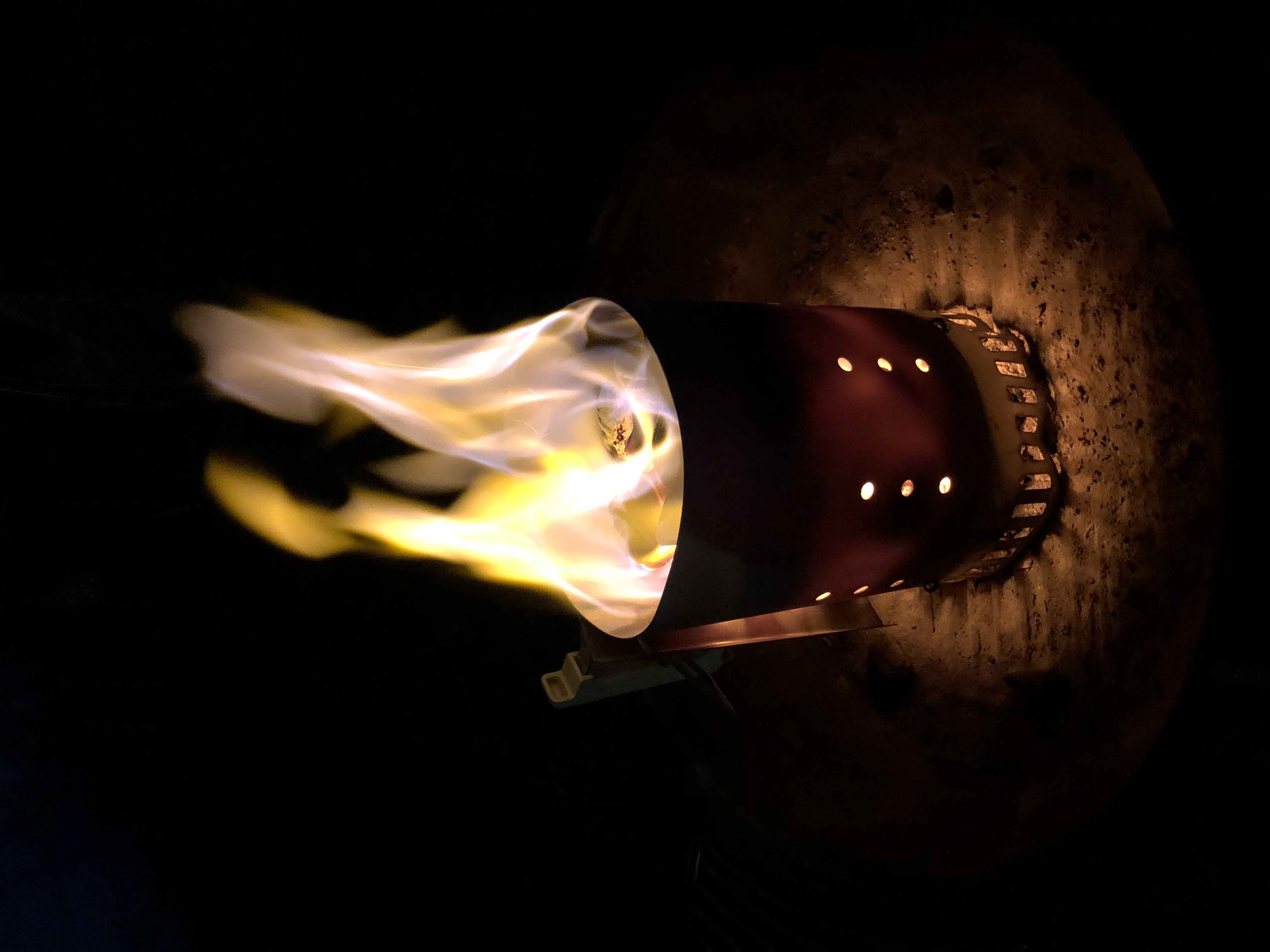
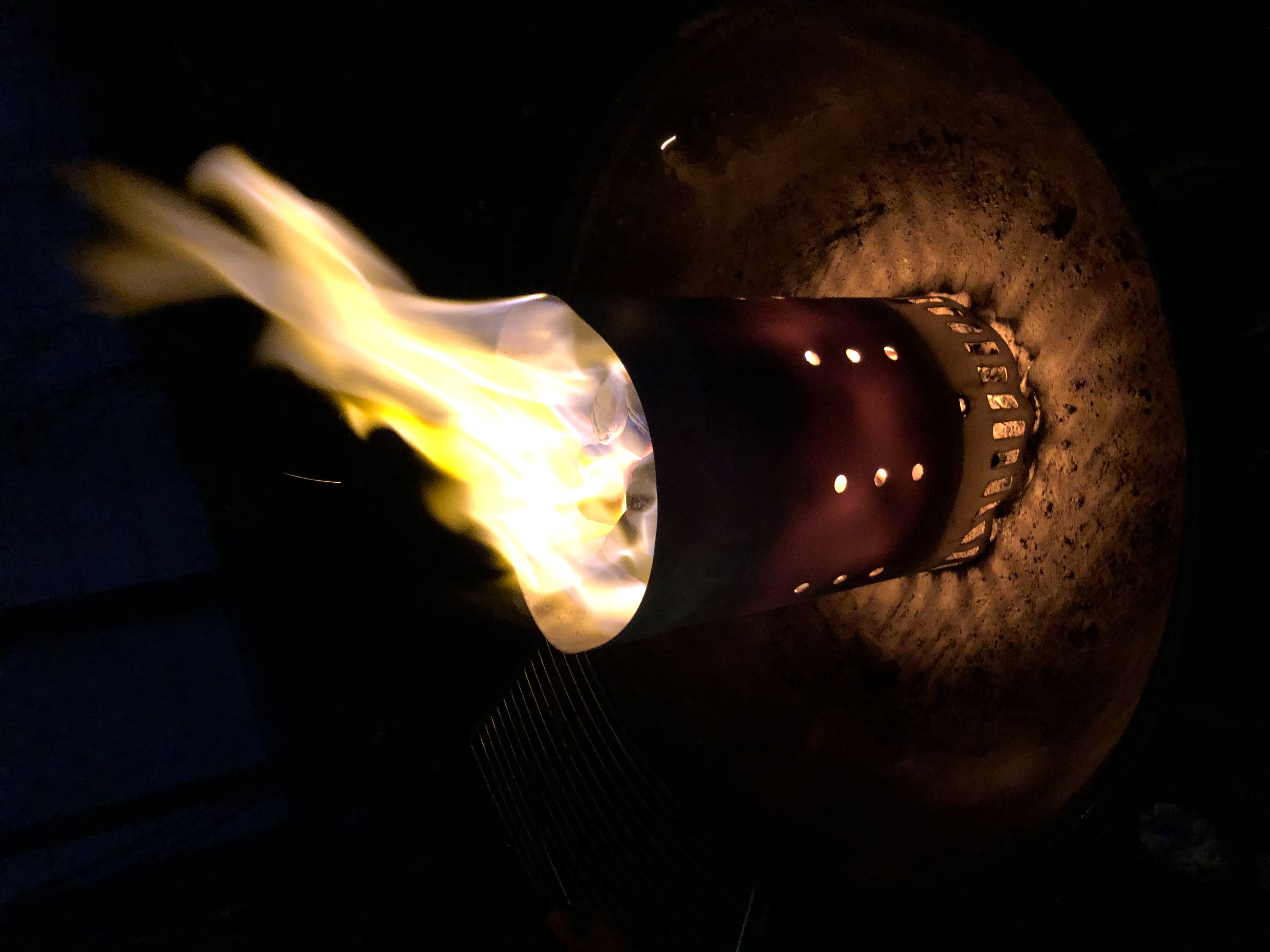
Rubble on Lunt Avenue

Less than two weeks ago, we got word of a fire in Schaumburg, in a part of the village populated mostly by light industrial, vehicle repair shops and the like. This nondescript building, seen in 2019 by a Google imaging vehicle, had burned.

This weekend, just out of idle curiosity, we drove by to take a look at the site.Lunt Avenue Rubble Lunt Avenue Rubble

I don’t want to be pessimistic about this, but it looks like a total loss to me.

Ty Warner Park

As Januaries go, this one has been fairly mild so far. Some days of rain, though we got a little snow early this morning that partly melted during the day. No blast of cold air is predicted for tomorrow, but there will be a deeper chill soon enough.

Two years ago, we took a walk in Bemis Woods, which displayed more snow then than it would this year. On the way home, we stopped at Ty Warner Park in Westmont. I can’t remember why. Just feeling nostalgic, I guess, since we used to take small children to play there, and in more recent years, return for the July 4 fireworks.Ty Warner Park

Ty Warner, as in the Beanie Baby billionaire, who once had his HQ in Westmont and who made a sizable donation to help create the park.Ty Warner Park Ty Warner Park

Our personal nostalgia really kicked in at the spray park and the play trains. The girls enjoyed both, though typically in the summer.Ty Warner Park Ty Warner Park

I’d forgotten the gazebo.Ty Warner Park

Shows you how old I’m getting. How could I forget the gazebo?

The National Shrine of St. Thérèse

Well over a decade ago, during a summertime visit to San Antonio, I drove to the west side of the city to see the Basilica of the National Shrine of the Little Flower, which I’d never seen or even heard of before, despite growing up in that city. It was very hot that day, as it tends to be that time of the year, so I didn’t linger outside to take many pictures, though I snapped a few marginal ones.Basilica of the National Shrine of the Little Flower

This is a better image. I’m not sure at what point I realized that the basilica in San Antonio and the National Shrine of St. Thérèse in Darien, Illinois, were dedicated to the same person, Thérèse de Lisieux, but I know now. And whatever else I know about St. Thérèse, I also have some sense of her immense popularity as a saint, inspiring edifices around the world in her honor.

We arrived at the Darien shrine just before noon on December 29, an overcast but not especially cold day. Above freezing, anyway. There it is, I told Yuriko.Shrine of St. Thérèse Museum

So we went in. A few minutes passed before I realized that we not in the shrine, but in the nearby museum building, which I believe was the shrine before a new one was completed a few years ago. The sign on this building makes me think that. If so, there needs to be a signage update.

This is the current shrine.Shrine of St. Thérèse, Darien

In effect, this is the fourth shrine to her that has existed in the Chicago area. The first two were in the city, a larger one succeeding the original as her popularity grew in the 1920s.

The church that housed the second shrine burned down nearly 50 years ago, but by the 1980s the Carmelites were able to find the scratch the build a third shrine out in the suburbs. The demographics were going that way anyway.

The Carmelites tasked Charles Vincent George Architects, based in nearby Naperville, to design the fourth and latest shrine, which was completed in 2018.Shrine of St. Thérèse, Darien Shrine of St. Thérèse, Darien

Behind the altar is St. Thérèse in glass.Shrine of St. Thérèse, Darien

“The architectural solution pays homage to St. Therese throughout, from the main building’s shape, inspired by the unfolding petals of a flower, a nod to St. Therese’s nickname ‘Little Flower,’ to key structures, such as the plaza clock tower, reminding us of her clockmaker father, and the 24-column colonnade, serving as a symbol of St. Therese’s 24 years of life,” CVG notes.

“As St. Therese had humble beginnings, special attention was taken to provide simple building materials using stone, brick and the limited use of wood for construction materials. The entire building layout focuses on the center altar and image of St. Therese etched in the chancel glass wall, through which there are views of her statue built out into the lake behind the chapel.”

In December, St. Thérèse is the star of Christmas trees in the shrine.National Shrine of St. Thérèse

I don’t think I’ve ever seen a tree decorated with prayers before, but there it was. All of them to the saint.National Shrine of St. Thérèse

The museum included some seasonal features as well, such as a nativity under a more permanent woodwork depicting the saint.National Shrine of St. Thérèse (museum)

Just in case anyone is uncertain, labels come with the nativity scene. Guess that’s helpful for kids who have just learned to read, but I as far as can remember as a kid, the figures were something that everyone knew. Essential Christmas lore, even for public school children. Maybe that’s not true anymore.National Shrine of St. Thérèse (museum)

Modern stained glass. Some nice abstractions plus holy figures.National Shrine of St. Thérèse (museum) National Shrine of St. Thérèse (museum) National Shrine of St. Thérèse (museum)

What would a saint’s shrine complex be without some relics?National Shrine of St. Thérèse (museum) National Shrine of St. Thérèse (museum)

I didn’t know dust could count as a relic, but I’m not up on what can and can not constitute a relic. The museum also has a few relics of Thérèse’s parents, Louis and Zélie Martin, who happen to be saints as well.

“Louis had tried to become a monk, but was rejected because he could not master Latin,” a sign in the museum says. “Zélie Guérin tried to become a Sister of Charity, but was rejected due to poor health.”

They couldn’t take vows, but apparently did the next best thing: produce five daughters (the survivors of nine children), all of whom became nuns.

Plan B Travels at the End of ’22

Since Tucson was a no go, we decided to spend the same three days, December 29 to 31, visiting new sights close enough to home to be at home, come bedtime. A suite of day trips, that is. If you can’t go far, go near.

On the first day, we drove southward to near our old west suburban haunts, stopping first in Darien, Illinois, which is home to the National Shrine of St. Thérèse. I’d visited the shrine by myself at some point ca. 1999, but took no notes and made no photos, so I didn’t remember much. Besides, I’d read that a new shrine building was completed only in 2018, so it counted as a new place for me.

I’d also forgotten that Thérèse of Lisieux is also known as the Little Flower of Jesus. The entrance of the new shrine announces that, silently, as you enter.Little Flower of Jesus

Later that day, we made our way further south to the Midewin National Tallgrass Prairie. Strictly speaking, we’d been there before as well, all the way back in the summer of ’04. I told Yuriko we’d been there, but she didn’t remember. Maybe I remember because I spent a lot of time that day pushing Ann’s stroller along an uneven grass path under a hot sun. I seem to have left that part out of my posting about it, however.

On the other hand, Midewin is large, with about 13,000 acres and 30 miles of trails open to the public, so I’m sure we walked through an entirely different part this time – one with visible reminders of the area’s time as the site of an ammunition plant.

The sun wasn’t an issue this time.Midewin National Tallgrass Prairie

On December 30, we made our way to a different sort of human environment: downtown Chicago, by way of driving to near O’Hare, parking the car, and riding the El into town. Without planning to, we found something downtown we’d never seen before, an art exhibit in the underground Pedway.Chicago Pedway Dec 30, 2022

The Art of American Victorian Stained Glass, featuring well over a dozen windows from the late 19th century and early 20th. Wow. Well hidden and remarkable.

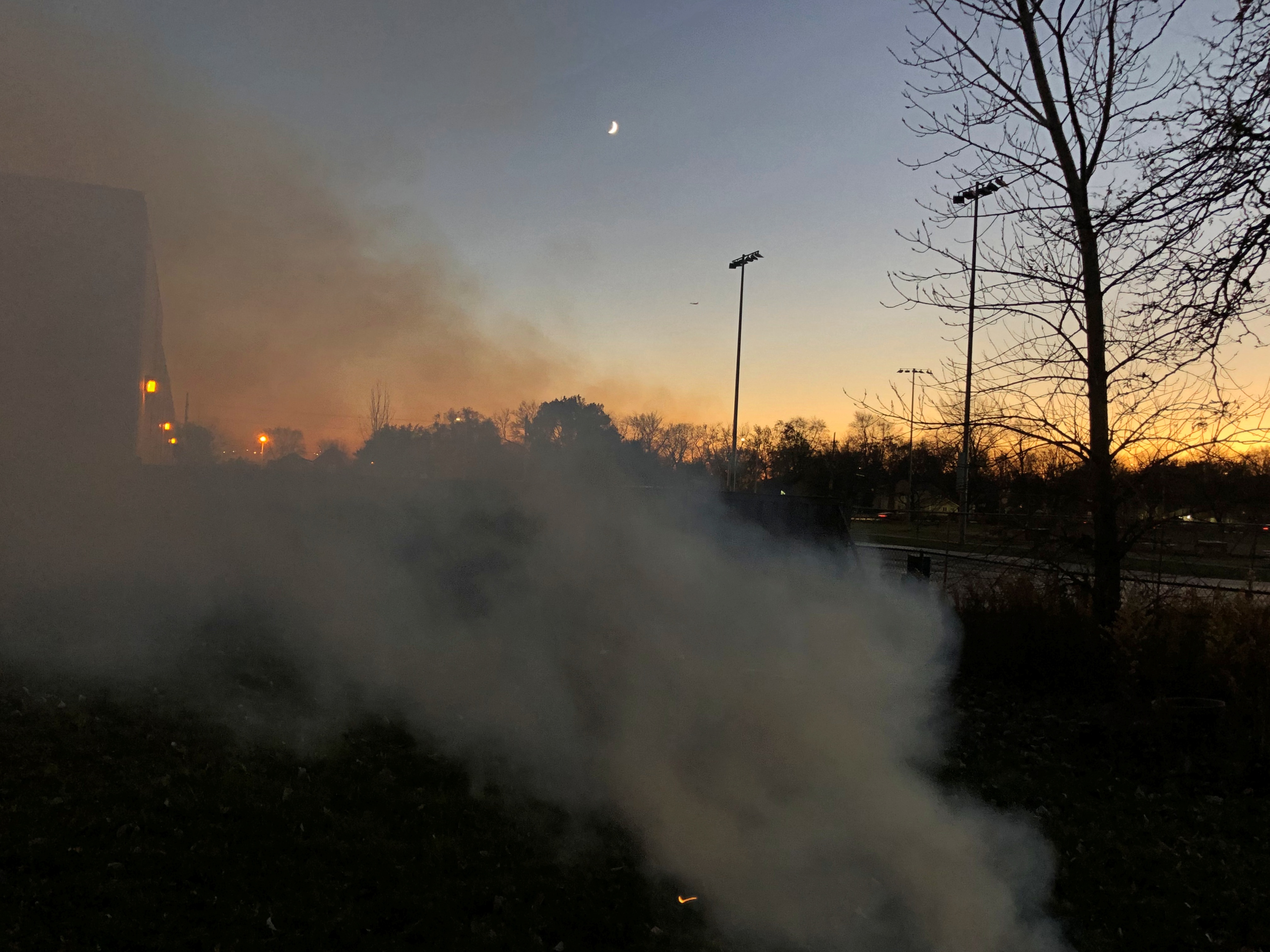
We also spent time in other parts of downtown, including a walkabout inside holiday- season Macy’s. I’ve been there any number of times, of course, but this time I appreciated the place with new eyes. One conclusion: it ain’t no Marshall Field.

Well, some things are the same. Macy’s still has the holiday horns hanging on State Street.State Street Dec 30, 2022

One of these days, I ought to give State Street the Wall Street or William Street treatment, but I’d have to be by myself to do so. State Street might not exactly be a great street, but it still has character.State Street Dec 30, 2022
State Street

By that, I mean skyscrapers from the early days of steel-reinforced buildings. Also, astonishingly intricate ironwork from a time when a department store (the vanished Carson Pirie Scott) could afford such things.Carson Pirie Scott Chicago ironwork
Carson Pirie Scott Chicago ironwork

Actually, the Louis Sullivan building at State and Madison — the (0 0) of the street numbering system in Chicago — was built in 1899 for the retail firm Schlesinger & Mayer; Carson Pirie Scott was a Johnny-come-lately when it bought Schlesinger in 1904. These days there’s a Target in the lower floor. Sic transit gloria tabernae, I guess.

On the last day of 2022, we headed away from metro Chicago again. We’d considered Starved Rock State Park as a destination, but I wanted something new, so we went to Buffalo Rock State Park, which is more-or-less across the Illinois River from Starved Rock. Nice little park.

Afterward, the weather was good enough, and the temps just warm enough, to allow us to eat Chinese takeout at a picnic table in Washington Park in Ottawa, Illinois, in our coats. The last time we were there, it was hot as blazes.

Didn’t look around too much this time, though someday I want a good look at the many churches along Lafayette St. in Ottawa. I did take a look at LaSalle County’s Civil War memorial.LaSalle County Illinois Civil War memorial

A closer look at the base –LaSalle County Illinois Civil War memorial

– reveals that even the names of the Honored Dead are no match for Time.

American Science & Surplus

Regards to all for Christmas and the New Year. Back to posting around January 3, when I will wonder, as usual, how we could possibly be so far into the 21st century. Which still seems like a new century to me.

On Sunday, I bought a rubber chicken from this plentiful stock, at a retailer I know. I got the regular one for $10.95, not the more expensive, fancy-pants glow-in-the-dark model. Bet a regular one cost $9.95 a year ago, but such is the retail economy in our time.American Science & Surplus

Why a chicken? (Why a no duck?) My old one must have worn out. Not because I used it for anything, just that rubber doesn’t last forever. Anyway, no household is complete without a rubber chicken. Words to live by.

Where? The truly wonderful American Science & Surplus, which has three stores, two in Illinois — Park Ridge and Geneva — and one in Milwaukee. None of them are particularly close to where we live, so we don’t go often. In fact, I think it’s been about 10 years. We ought to go more often.

This is the AS&S in far west suburban Geneva, which we patronized just around sunset.American Science & Surplus American Science & Surplus

As you can see, the store promises rubber chickens.American Science & Surplus

But that’s only the beginning. AS&S has a retail selection unlike any other in my experience. Toys and toy-like items, but also electronic parts, lab equipment, optical gear, craft items, camping equipment, tools and hardware, militaria, office goods, novelties and more. Much, much more.American Science & Surplus American Science & Surplus

The place was fairly busy, with people probably doing what we were doing. Looking for oddities for presents.American Science & Surplus American Science & Surplus American Science & Surplus American Science & Surplus

You can also buy Teslas there.American Science & Surplus

Affordable Teslas, that is, though at $20, I took a pass.

I Found a Time Capsule

Thinking more about Kong Dog, it occurs to me that maybe somewhere in the hip little eateries of still-under-the-radar foodie towns (Des Moines? Incheon? Windhoek?), culinary innovators are working on artisanal beanie-weenies.

Gray, drizzly days recently, but at least above freezing, barely, so no underfoot ice. A few days ago, before the drizzle set in, we visited the lights at Schaumburg Town Square, which is a pleasure when it isn’t too cold.

The clocktower, which is at a spot called Veterans Gateway Park. Nice.Schaumburg Clock Tower

While visiting the tower, I noticed a time capsule under the nearby bricks.

How had I never noticed this before? I don’t visit the clocktower a lot, but I have been  there over the years.

Sealed herein is a time capsule, its contents gathered to honor and remember the arrival of the new millennium in Schaumburg.

Sealed the 16th day of September, 2001 at 12:30 p.m. by the Village of Schaumburg Millennium Committee.

This capsule is to be opened 25 years hence, its contents enjoyed and added to, and the capsule resealed to be opened in another 25 years.

That’s getting pretty close. I checked and September 16, 2026 is going to be a Wednesday. Will it be opened then or a near weekend? Or just approximately then? Will a new committee be formed? Or will the village forget?

As for the contents, I have to think they made some reference to the recent events of that September, as if they would be forgotten in 25 years. Mostly forgotten in 100 years, that I can see, even with whatever advanced information tech happens to exist in 2101. As the Internet has taught our generation, quick access to information hasn’t made much of a dint in ignorance.

Kong Dog

When you see something like this, you may ask yourself, how did that get here? (Not how did I get here?)

How it got here: worldwide cultural diffusion. Considering the near-ubiquity of electronic communications and physical travel in out time, the world’s many, many kinds of human expression are essentially in the same pot now. Let it boil.

To be more specific, culinarily inventive people in South Korea encountered the corn dog at some point. Corn dogs are the kind of folk-food attributed to various inventors, but in any case they originated in the South, as in the southern United States.

The Koreans tinkered with the formula, adding flavors and modifying the texture, but not too much, and pretty soon Korean corn dogs were sold from stands and small chains in that country. Like the dried cuttlefish on a stick that I saw for sale in Japan, and sometimes bought, corn dogs are a natural for the take-away trade on streets dominated by pedestrians, as many are.

An idea like that, it turns out, is too good not to be exported. Korean corn dogs have arrived in the North America. Maybe not always as street food, but instead adapted to the American suburbs as take-out joints in strip centers.

I know all this because we visited a small storefront called Kong Dog on Saturday after our walk. It appeared at that site a little while ago, a month or two maybe, selling Korean corn dogs from a shop in a large strip center a few miles from our house.

We were intrigued. We already knew that Korean-style fried chicken is good eating, something I’m sure even my hillbilly ancestors would have appreciated, if they’d had it. So Korean-style corn dogs were worth a try.Kong Dog Schaumburg

I’m happy to report that they are delicious. As usual, I’m not an early adopter. Google Image turns up a lot. But I guess I’m not too far behind the curve on this one: “Korean corn dog is the latest K-food craze to hit London, and they’re making waves among the foodies of this city,” Honest Food Talks reported breathlessly only in September.

You could call them a kind of gourmet corn dog, a concept that exists here but doesn’t seem to have a lot of traction, since corn dogs are largely still considered children’s food. (And that creation pictured at the Honest Cooking page I’ve linked to are hush puppies, not corn dogs.)

It took me a moment to work out the name. Kong, as in large. Talk about the lasting influence of a movie that’s nearly 90 years old.

Flavor options: original, potato, sweet potato, churro, rainbow, ramen, hot Cheeto, sweet chili Doritos (Yuriko had that), and injeolmi, a “roast yellow bean powder.” The Kong Dog web site says there are 11 sites open, many in metro Chicago but also in some northeastern states (NY, PA), with 23 more locations in the works, in roughly the same parts of the country.

For extra atmosphere, K-pop fills the room. K-pop idols make their moves on video. At least, I assume all that is K-pop. It wasn’t J-pop. Maybe there should be a genre of music for each letter of the Roman alphabet; that’s two right there. A-pop to Z-pop, and the world could not agree on whether that last one is “zee pop or zed pop.”

I digress. They each come in their own little box.Kong Dog Kong Dog

That’s an original. When I try a new place, that’s usually what I get. With all sausage, since you can opt for all sausage inside, or mozzarella, or half-and-half. It was distinctly crisp, and tasted like a corn dog.

A really good corn dog, that is, anchored by high-quality sausage and clothed in a batter tastier than the frozen dreck that’s fobbed off on kids. Guess that’s a low bar. But anyway, it’s good eating, even if a little expensive for a single item ($6). Hillbillies would approve, once they’d scraped up the price.

Beaver Pond

Chilly outside today but no wind at all, so stepping outside is like entering a really large walk-in refrigerator. Temps were a little warmer on Saturday, when I used Google Maps to scout out someplace to walk. Someplace neither near nor far, and new. I have my standards.

By mid-afternoon, we were at Beaver Pond, a unit of the Bartlett Park District.Beaver Pond, Bartlett, Illinois

About a mile around and flat.

Good spot for an easy walk. The trail doesn’t actually dip into the pond, as on the map. I think that’s where a small fishing platform juts into the water, accessible by the trail.Beaver Pond, Bartlett, Illinois Beaver Pond, Bartlett, Illinois Beaver Pond, Bartlett, Illinois

“Water collects here from a 1.5 sq. mile area of streets, residential properties and undeveloped areas,” says the only sign along the trail. So the place might be named for river-dwelling rodents — none of whom were in evidence on Saturday — but it’s really a detention pond.

Still, a nice trail. Sports spots of grassland.Beaver Pond, Bartlett, Illinois Beaver Pond, Bartlett, Illinois Beaver Pond, Bartlett, Illinois

Houses ring the park, with non-marked lot lines, though I’m sure the property owners and park district know where they are. Some homeowners decorated their patch for Christmas. Such as with an epic-sized snowman.

Sure, top hats are the custom among the snowfolk. But wouldn’t it be interesting to see a snowman wearing something else occasionally? Bowlers can have as much magic in them as top hots, Frosty.Beaver Pond, Bartlett, Illinois

Santa says, Ho ho ho. What, I wonder, do snowmen say for the holidays? Nothing. Climate change got ’em.

Thursday Debris (Electronic and Paper)

As expected, full winter is here. Not much more to say about that till a blizzard comes. We’re overdue one, at least when it comes to my completely nonscientific feelings on the matter. Not that I want one, just that it’s been a while, and the Old Man might want to let us have it this year.

Christmas lights are up around the neighborhood and beyond. Have been, mostly since last week. So are ours, but I don’t light them. Soon. I haven’t even gotten around to replacing the white overhead front door light with a green bulb. Soon.

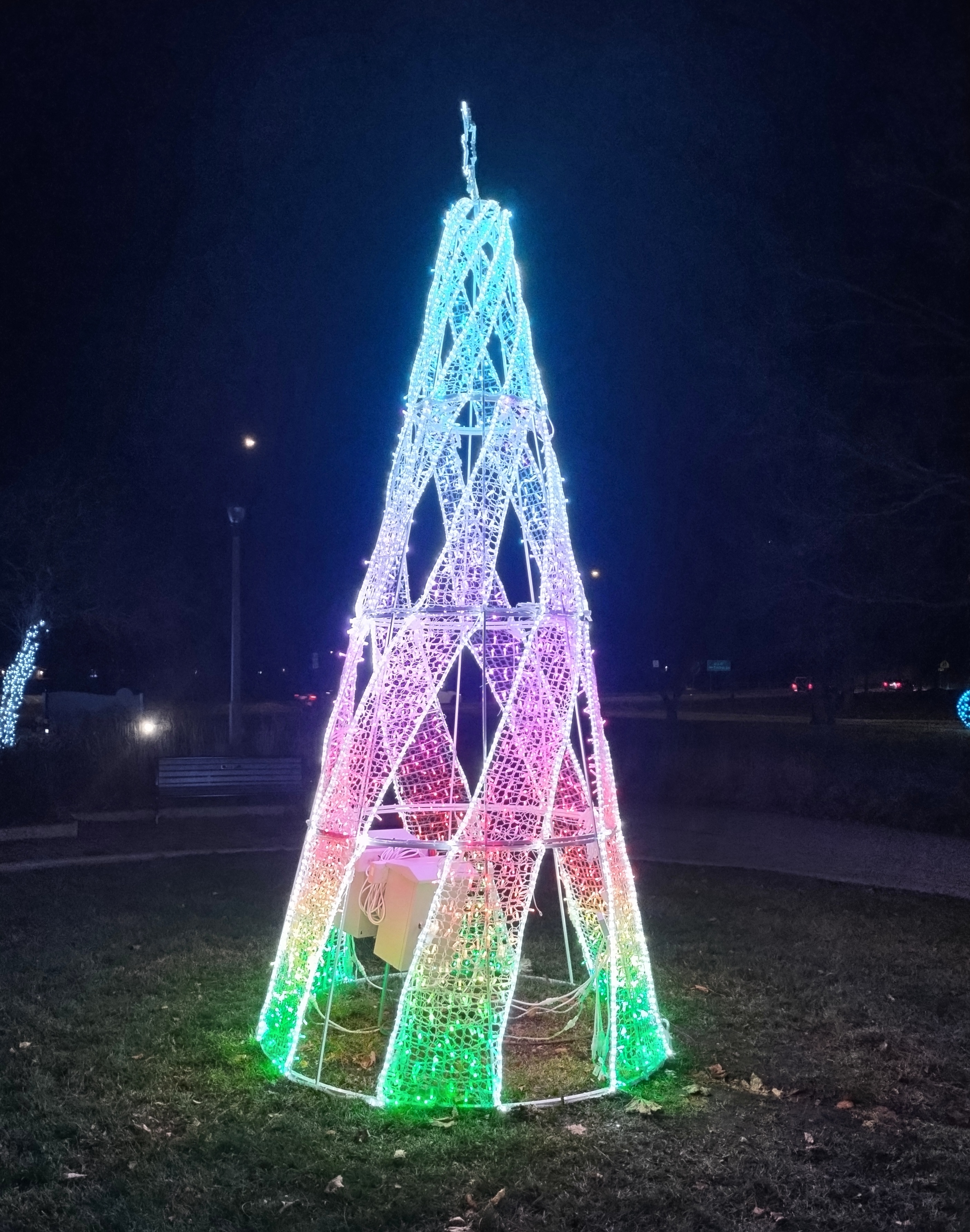
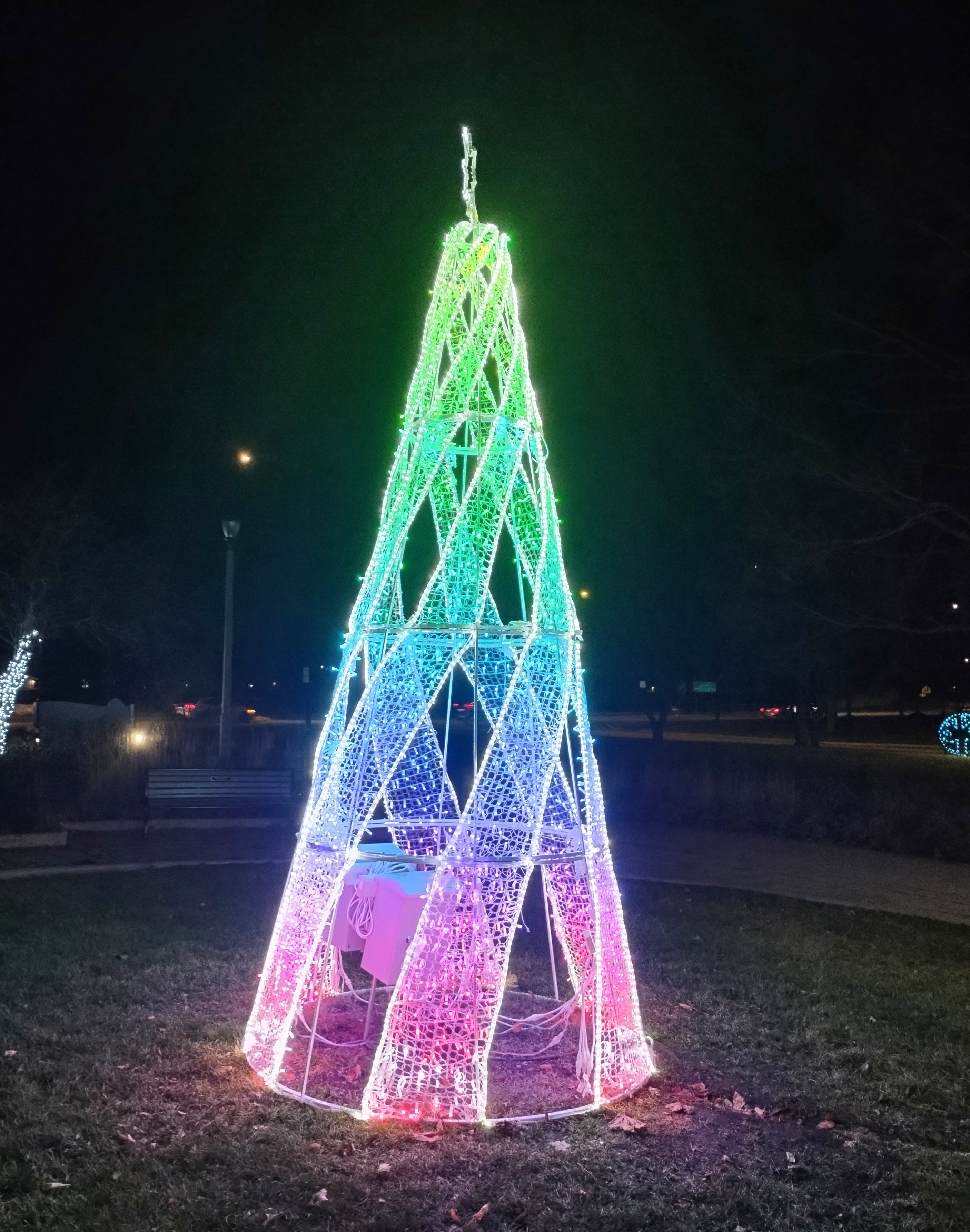
We visited the Elk Grove Village lights recently, which includes a glowing ball you can walk into. Elk Grove Village Christmas Lights
Elk Grove Village Christmas Lights

How could I not open an email with a subject line like this?

SAVE at our annual Holiday Open House! Details inside

Easy not to open, actually, and usually I wouldn’t, but since I did know the sender — a dermatologist we’ve visited — I took a look:

Don’t miss our biggest savings of 2022 on skin treatment packages and in-clinic products at our Wheaton/Naperville location. Oh, what fun!

Oh, what fun? Like riding in a one-horse open sleigh?

Ridding the house of excess paper is an ongoing task. Digital age, my foot. Today I found a form letter, undated, from the Schleswig-Holstein Park District. The head:

PARENTAL GUIDELINES

Followed by a lot of verbiage, but I didn’t need to read any more. Those days are over. Out to the blue bin with it.

Before I tossed, in the same blue bin, one of those cardboard triangles that Toblerone comes in, I noticed that the brand is owned by Mondelēz International, complete with macron. Wait, isn’t that the name of the president of France? How is it that the Fifth Republic has a diacritical mark as its supreme magistrate?

Never mind. When did the essential Swiss triangle chocolate fall under the sway of Mondelēz? Back in 1990, when predecessor Kraft bought Toblerone. Shows you what I know. Then again, that would account for Toblerone’s wider appearance in North America since about 1990. Back in the 1980s, the chocolate wasn’t just Swiss made, that’s where you found most of it.

Despite its Euro-sounding name — Iberian-sounding — Mondelēz is actually headquartered in the far-off, exotic city of Chicago.

Victory Over Moths

Is it too soon to declare victory over moths? I have a superstitious feeling that after I do so, I’ll see a moth flit by here inside our house, as soon as a day or two later. Our victory will prove to be illusory.

Never mind all that. I’m declaring victory over moths — noiseless, shadowy, harmless moths that still represented an insect invasion of my dwelling space. One to be suppressed, which was the consensus of everyone here. Harmless, but annoying all the same.

At no point in your ownership of a house have you seen it all, since there’s always the possibility of another novel expense or pain-in-the-ass nuisance you haven’t experienced before, lurking in unexpected places. In the case of the moths, lurking on walls, if moths can rightly be said to lurk.

That implies a presence of mind I’m not sure moths actually have, but anyway there they were, clinging to higher parts of living room and kitchen walls. Small gray moths had starting making their appearance sometime in the summer. Originally we took them for outdoor moths accidently in the house, but pretty soon their increasing numbers made us re-think that assumption. They were setting up colonies. That meant we had to start some aggressive measures.

I became the main moth assassin. Yuriko swatted some, and so did Ann when she was here, but mostly it fell to me, fly swatter or thick paper weapon in hand (we still have a few paper magazines around, ready to roll). There’s one! Twack! Wait, another — thup! Damn, missed that last one.

Sometimes it would take a few moments to identify them; there are spots on the walls I took for moths and vice versa, especially in the early days of moth suppression.

An aside: our fly swatter goes back to 2008, a souvenir of the Bluegrass Inn in Frankfort, Kentucky. Sturdy blue plastic, it had seen only intermittent use since then, but now its hour had come, and soon started collecting faint grey stains.

I hadn’t swatted so many insects since that day in Ulaanbaatar when I cleared our hotel room of a rich bounty of flies, or the (seemingly) all-night mosquito hunt in my low-rent digs in Pusan.

As house-invading insects go, individual moths are fairly easy to kill. Mosquitoes, and flies that aren’t in their terminal moments bumping up against window glass, are much faster and seem to be paying attention. Moths wait obligingly as you spy their position and prepare the swat. As long as you aim correctly that first time — because if you miss, it will take flight — the moth will immediately become an ex-moth.

Of course, containing an insect infestation with a swatter is a fool’s errand. I soon advanced to a chemical weapon. Raid, in this case, applied to what I believed were strategic locations, and away from where the dog might go. The moth population dropped for a while, and we experienced optimism that the bugs would be vanquished.

The moths had other ideas. Localized infestations were discovered in boxes of dry cereal and one particularly vile node was in a bag of dry dog food. These packages were tossed, contents and all, and replacement boxes and bags were more carefully re-sealed. For a while, fewer moths were seen. But they returned.

With the help of my research assistant Google, I looked into moth infestations. I determined that we had pantry moths, not closet moths. Our bugs didn’t seem interested in our clothes. Naturally, there were suggestions of products to try to deal with them.

So soon I turned to a biological weapon. A successful, inexpensive and easy-to-use biological weapon, one I am happy to mention by name, so successful was it: Maxguard Pantry Moth Traps. Put one together and you’re got a tent-shaped bit of thick paper. On the inside surface, Maxguard provides a sticky surface infused with “extra strength pheromones,” the box promises.

A glue trap for male moths, other words. Or rather (projecting a little more), honey traps. They come, attracted at the prospect of moth nooky, stick and die, forever unable to do their biologic jobs when it comes to reproduction, thus setting the stage for a localized population collapse. That was my hope, anyway, when I set up the four traps that came in the box at various parts of the house in late September, before my latest trip.

Since I’ve been back, a month now, I haven’t seen any moths — except for those many stuck to the glue traps. Dozens of them. Snuffed out of whatever it means to be a moth, by human trickery. We’re pretty good at that. So long, moths. You are not missed.