Late Bloomers

Summer is ebbing away, but it’s still warm. Looks to be for a little while longer.

Took a photographic survey of our back yard flowers this afternoon. The hibiscus are mostly gone, but other blooms whose names I don’t know carry on during the declining summertime.

Such as this blood-red bloom.back yard flower

Less intense, but still a vivid color.back yard flower

On to pink.back yard flower back yard flower

White.back yard flower

One more — vivid red again, but this one was worth a look not only because it’s striking, but because its a bloom on what many people would probably disdain as a weed (before it flowered, that is).back yard flower

back yard flower

The term weed ought to be specifically plants that interfere with agriculture, as well as old slang for cannabis. Mostly it just means plants people don’t like. There are plants I don’t like, and sometimes — when I have the energy — I uproot them. But usually I think of plants such as the one above as volunteers, whether they produce vivid flowers or not.

Budget Buster

I’ve been seeing items in various stores advertised as “inflation busters,” which is vacuous as most other ad-speak, and not very original. But it did seem to inspire this variation, found on a circular for a local pizza joint.

Made me smile. Budget buster, eh? What was the thought process that went into that choice of words, which ended up meaning the exact opposite of what was probably intended?

Unless, of course, they meant to say that the place is expensive, so it’s got to be good. Somehow, I doubt it. If you really can feed 20 people — let’s take the low-end estimate — then $8.25 each isn’t bad.

Bob Chinn’s Crab House

Sunday did not, it turned out, represent the top of a long steady slide into the miseries of winter. Still too early for that. Monday was cool, today warmer, and 80s are predicted for the coming days. Many of our meals are still being taken on the deck.

Except for the late lunch-early dinner (linner?) we had recently in honor of Yuriko’s birthday. We went to Bob Chinn’s Crab House in Wheeling and had delightful plates of fish, but no crab.

This is just one room of the enormous Chinn’s, which has 736 seats and claims to feed a million patrons a year. We arrived before it got too busy, which I hear is often.Bob Chinn's

Volume, for sure, but high-quality food as well, and a solicitous wait staff. That will keep you in business for 40 years.

I had the opakapaka, an Hawaiian snapper. Those are potatoes, not apples, on the side.Bob Chinn's

Yuriko had the macadamia sauteed basa, a fish native to Southeast Asia. We opted for a dessert that the menu called “Bob’s Slice of Heaven,” made from purple Okinawan sweet potatoes. Oh, yes.Bob Chinn'sI learned while at the restaurant that old Bob Chinn died in April at 99. Born in 1923 in Duluth to Chinese immigrants, he’d been in the restaurant business since he was a teenager, founding Bob Chinn’s in 1982. A daughter and granddaughter run it now.

“The Crab House was modeled, according to various sources, either after fresh seafood restaurants in Hong Kong or Joe’s Stone Crab in Miami, which Chinn had long admired,” the Chicago Eater says.

“But unlike Hong Kong or Miami, Chicago had no access to fresh seafood. Chinn solved that problem by getting up early every morning and driving to O’Hare to pick up shipments that had been flown in from the coasts, some of which were still alive. (He invested in special tanks in the restaurant basement to hold the crabs and lobsters.)

“He kept costs low by buying in volume from wholesalers — he had a separate business in Honolulu to scout the fish markets — and by using only the cheapest dishes and silverware.”

Bob Chinn’s isn’t precisely cheap, but I did get the sense that we would have paid more for the same in other high-end fish houses. Good for you, Bob. RIP.

Wood Dale-Itasca Flood Control Reservoir

Heavy rains started around daybreak on Sunday, continuing through until mid-afternoon, at least around here. Some parts of Chicago suffered flooding.

Just before sunset the same day, we walked the dog and noticed very little in the way of puddles, even in the low ground of the park behind our house. Odd, I thought, considering the heavy volume of water, but then it occurred to me that it’s been a warm two weeks since the last rain. The ground just soaked it up.

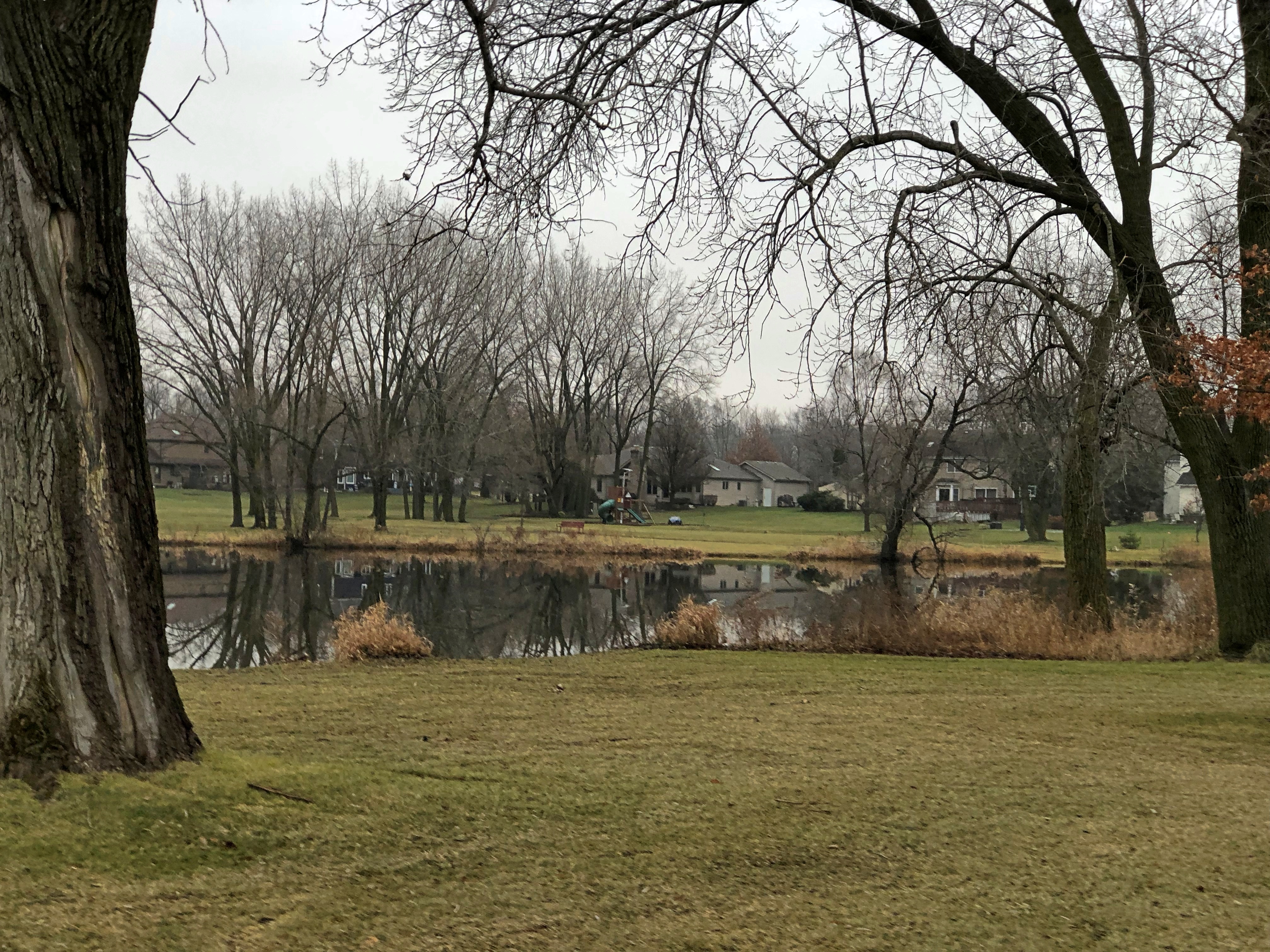
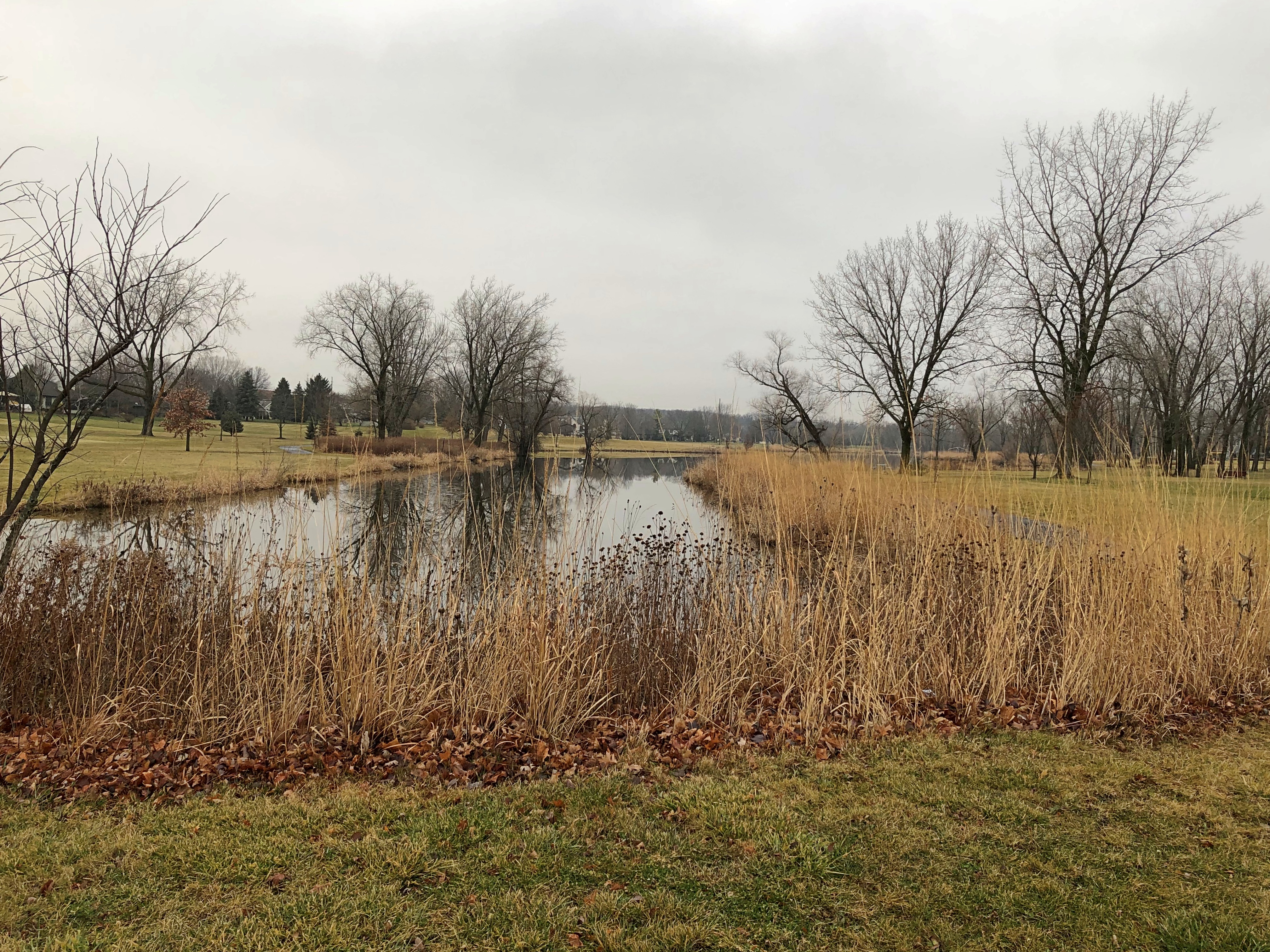
Saturday was one of those warm, sunny days. About an hour before sunset that day, we went back to Wood Dale, but this time walked around Wood Dale-Itasca Flood Control Reservoir.Wood Dale-Itasca Flood Control Reservoir Wood Dale-Itasca Flood Control Reservoir

The water is visibly the haunt of birds, including some herons, and probably fish that can’t be seen. The level looked low, which is reasonable, considering there hadn’t been any rain lately.

The trail goes more than a mile all the way around, not always with views of the water.Wood Dale-Itasca Flood Control Reservoir

O’Hare isn’t that far away.Wood Dale-Itasca Flood Control Reservoir Wood Dale-Itasca Flood Control Reservoir

As the name says, the point of the basin is to catch floodwater, rather than have it damage the surrounding suburbs. The facility was completed in 2002.

“Floodwater enters the pump evacuated reservoir through a diversion weir made up of series of four sluice gates located at the end of School Street in Wood Dale,” says Du Page County.

“During flood events the sluice gates are opened, allowing stormwater to flow down the spillway into the reservoir. The stormwater is temporarily stored until flood levels along Salt Creek have receded. Stormwater is then pumped back to Salt Creek through a pump station and discharge channel.”

There’s a short bridge over the spillway.Wood Dale-Itasca Flood Control Reservoir

That got me thinking about the origin of “sluice,” which I didn’t know. So I looked it up later. Mirriam Webster: “Middle English sluse, alteration of scluse, from Anglo-French escluse, from Late Latin exclusa, from Latin, feminine of exclusus, past participle of excludere to exclude.”

Palatine Prairie Nature Preserve, Again

On Monday, which was like a Sunday in terms of work schedules, we took a walk at the Palatine Prairie Nature Preserve in Palatine, a not-too-far-away suburb.

We’ve been here before, I told Yuriko.

We have?

I couldn’t remember exactly when (till I looked it up), but I knew that we had — and we’d seen guys playing Frisbee golf there. Besides a walking trail, the preserve includes a disc golf course. It still does.Palatine Prairie Nature Preserve

Something I noticed this time that I never did before: the players were all carrying bags with more than one disc inside. Maybe a half dozen discs. Like a golfer has different clubs, a — disc-er? — has different discs for different shots? Must be.

We didn’t go to toss discs, but just to walk.Palatine Prairie Nature Preserve Palatine Prairie Nature Preserve

And read a bit.Palatine Prairie Nature Preserve

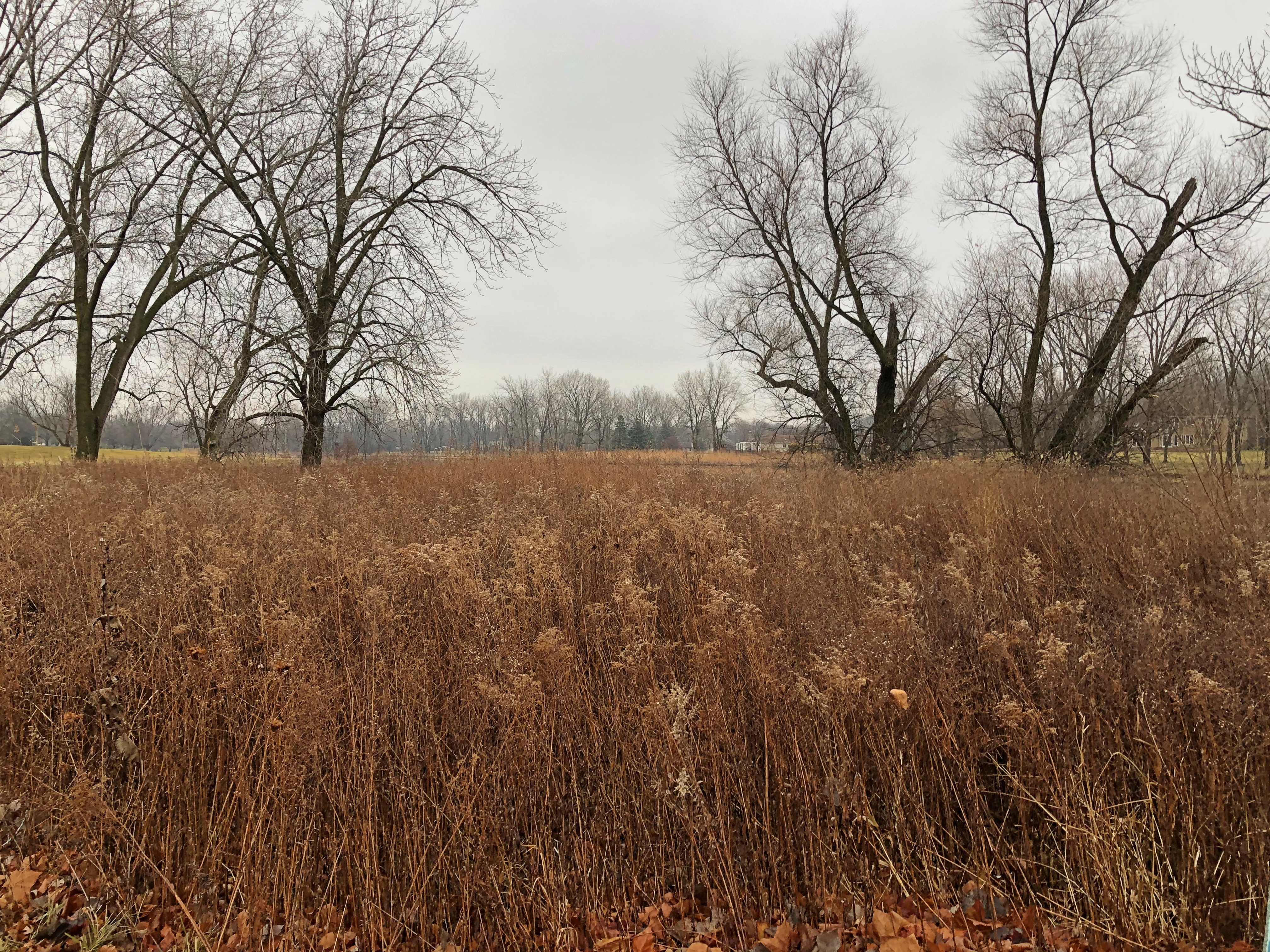
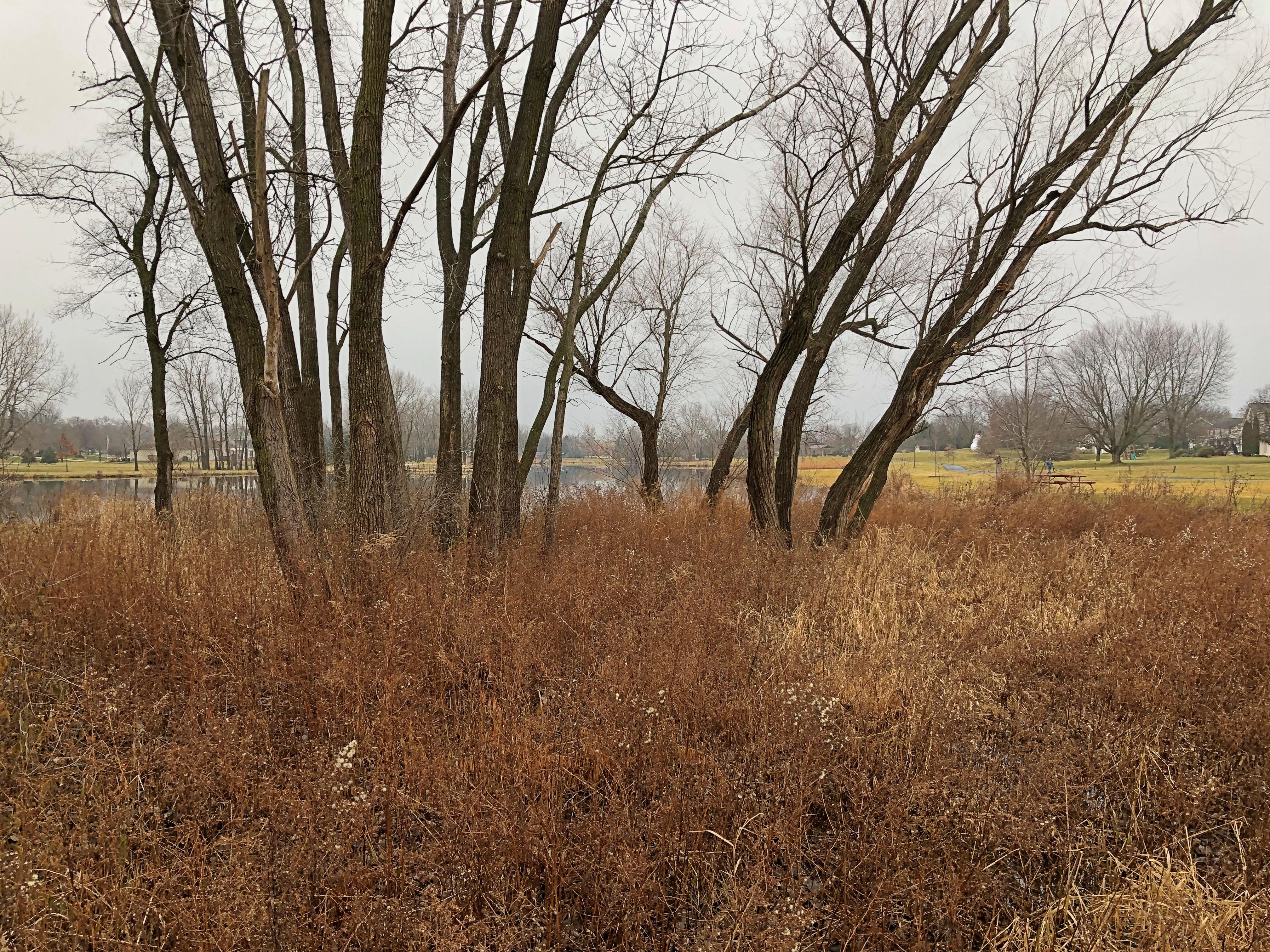
Gold is a prime color of late summer.Palatine Prairie Nature Preserve Palatine Prairie Nature Preserve

This little memorial, under a tree, looked fairly new.Tony Esposito memorial Palatine

This Tony Esposito? Probably so, considering his long tenure with the Chicago Blackhawks.

Salt Creek Greenway, Wood Dale

What’s our idea of a good way to spend a few hours on a long weekend at home? A long walk between a small creek and a large electric substation.

After a fairly inert Saturday, on Sunday we walked a section of the Salt Creek Greenway, which runs 25 miles or so from Busse Woods in Elk Grove Village to the Brookfield Zoo. The part we walked was in Wood Dale, Illinois.

We started at an empty parking lot. Signs call it a bike trail, but the entire time we were there — on a pleasant, cloudy weekend afternoon — we saw exactly one bicyclist, along with a handful of walkers, including one other family with a dog.Salt Creek Greenway 2022

The trail is decidedly obscure, at least to judge by its emptiness on Sunday, and we liked it that way. No dodging bicycles, for one thing. We walked a total of two miles or so, one there and one back, since the trail doesn’t loop.

Early September is still a lush season along the trail.Salt Creek Greenway 2022 Salt Creek Greenway 2022 Salt Creek Greenway 2022

Salt Creek. The trail crosses it at one point, but mostly runs at some distance from the creek along this section.Salt Creek Greenway 2022 Salt Creek Greenway 2022

Maybe people are put off by the ComEd substation on one side of the trail. It’s impressively large. I get a kick out of getting a good look at important infrastructure, but that’s just me.Salt Creek Greenway 2022 Salt Creek Greenway 2022 Salt Creek Greenway 2022

Part of Illinois 390 is also visible from a short section of the trail.Illinois 360 sign Wood Dale

Note the birds. For a moment, especially when they took flight, you could imagine you were in a Hitchcock movie.

Dimming Summer Light

Goldenrod has started to turn golden out toward the back yard fence. I noticed that as the sun was going down for the last time in August 2022. It’s been an eventful month.

The dog was patrolling the yard at that moment.

Her patrols know no season, but various creatures to spy — including dogs beyond the fence — are more likely in the warmer months

Temporary Saw Horse Installation

A thunderstorm rolled through yesterday around 6 pm, and today again around noon. Each was followed by slightly cooler air and clear skies. Summer’s in decline, but not gone. Ragweed has started pumping out its pollen.

The repaving of our street is done, leaving behind asphalt smooth as Tennessee whiskey, but dark as a claims adjuster’s heart. Will genetically modified moss or some such — smooth and hard, but green and alive — one day in some future decade be the surface of choice for transportation infrastructure?

Meanwhile, the paving contractor recently gathered all of the lighted saw horses from the street, and lined them up for removal. It was a few days (and nights) before they got around to picking them up.

Nice effect after dark. We’ve walked the dog that way a few times, and while it might impress us a little, the dog doesn’t seem interested in such items. Can’t eat it, or smell it, or exchange growls or whines with it, so who cares?

Around Lake Michigan ’22

A little more than a week ago, I took a pretty good picture of three dear friends, two of whom I’ve known for over 45 years. From left to right, Tom, Catherine and Jae.

We were on the second day of our drive around Lake Michigan, counterclockwise, which took us from metro Chicago through northern Indiana, Grand Rapids and parts of western Michigan, Petoskey and environs, Mackinac Island, both Sault Ste. Maries, parts of the eastern Upper Peninsula, greater Green Bay and other parts of eastern Wisconsin, and back to metro Chicago.

Leaving on July 30 from our starting point at my house, we drove my car on crowded and less crowded Interstates, state and county highways, and a host of smaller roads, including National Forest roads cutting through lush boreal territory. Returning yesterday to my house, my friends flew back to Austin today; they had arrived from Austin two days ahead of the trip.

We’d planned the trip via email and Zoom, beginning back in early spring. I was the informal guide, making suggestions and offering bits of information I knew from previous visits to Michigan, upper and lower. But my friends were hardly passive in the course of our travels, digging up information via cell and making their own suggestions based on their own familiarity with some of the territory. Catherine had overseen arranging our accommodations, and everybody drove at one time or another.

We stayed in five different peer-to-peer rental accommodations along way, all entire houses that could provide us enough bedrooms, bathrooms, food prep and dining areas, and, in most cases, space to sit outdoors, once with a view of the waters of Green Bay.

Enjoying the outdoors was one of the main goals of the trip. For me, certainly, but especially for them, escaping the high heat of central Texas. They often remarked on the cool air and reveled in it, checking periodically to learn the temps at home. Three digits in Austin wasn’t usual. I don’t think got higher than 85 F. where we were. Standard night temps in both Michigans generally came in the 60s F.

Two meals a day was the norm: a mid- to late-morning breakfast and a late afternoon dinner, or a very late breakfast and a late dinner, at least as these things are reckoned in North America. So on many days, our meal schedule was more like that of Mexico City.

Food variety has trickled down to the lakeside and inland burgs of the upper Upper Midwest, though perhaps not quite as much as in large metros. Whitefish, the star of a lot of UP menus, had top billing in some of our meals, but we also enjoyed hamburgers and other meat — including one tasty UP pasty — pizza, pasta, breakfast fare, bar food, Italian and Asian, plus chocolates and fruit, such as Michigan cherries and UP jam. We prepared our own meals sometimes, did takeout a few times.

Coffee by morning, wine by night, though I only participated in the latter. Familiar wines were available in every grocery store we visited, and my friends sought out coffee ground as locally as possible: one bag from Sault Ste. Marie, for instance.

Meals and wine drinking were a source of convivial times, but hardly the only one. We talked and conversed and bantered at the table, as we headed along roads and as we walked trails. Shared personal histories were revisited, stories of our long periods apart were relayed, and opinions shared. Odd facts were floated. There was punnery, especially on the part of Tom, a born punster.

We visited one city of any size, Grand Rapids, and many smaller places, a few museums, a sculpture garden, some riverfronts, shopping streets and resort areas, a grand hotel, an historic fort, churches, a Hindu temple, a wooded cemetery, two lighthouses, forests, clearings and beaches, a massive sand dune, waterfalls, rapids and the clearest pond I’ve ever seen. The three Great Lakes we saw stretched to empty horizons — except when Canada or the opposite shore of Green Bay were visible. We crossed the Mackinac Bridge once and the international bridge between the Sault Ste Maries twice.

We walked near the shores of Lakes Superior, Huron and Michigan. The northern woods and the beach ecosystems were fully flush here in late summer. Jae, who knows a good deal about flora, shared some knowledge about the flowers, trees and fungi we saw in profusion.

Though we caught a few showers in daytime, and the last day was mostly rainy, most of the storms rumbled through at night, adding to the restfulness of whatever sleep we each had. None of the storms were lightning-and-thunder dramas, but some were impressive in their downpour. My friends expressed their satisfaction with the cool light winds that often blow in corners of the UP.

There were a number of travel firsts, mostly for my friends. This was the first time any of them had been to the UP, and the first time they had seen Lake Superior, whose aspect I’m so fond of, and their first visit to the northern part of the Lower Peninsula. The trip included Tom’s first known visit to a national park, though later we determined that it was probably his second park. Also, it was the first time two of them had ever been to Canada, since we popped across the border for one night in Sault Ste. Marie, Ontario.

For me, a mix of new and places I saw long enough ago that they were almost like new.

When I dropped off my friends at O’Hare earlier today, we agreed that they trip had met expectations. And more.

Apron Replacement

Not long ago, the village sent me a note — a low-tech, paper note, stuck in the door — that soon my “apron” would be replaced. It took me a moment to figure out that meant the section of my driveway that’s between the street and the sidewalk. Turns out the village meant not only that, but the sidewalk next to it as well.

Technically, the apron isn’t part of my driveway, since the it’s beyond my lot line. But I use it all the time as if I owned it because it leads to my driveway. The advantage to it belonging to the village is, of course, no fee for the replacement above the taxes I already pay.

We had time to move the cars to the street where, we were assured, they wouldn’t be ticketed for overnight parking. And they haven’t been. Soon workmen and big machines came along.Apron replacement

Wooden boards were erected to contain the concrete in its liquid-ish moments.Apron replacement

Pouring concrete.

I don’t have an image of the finished apron and sidewalk, but it’s a bright white hard surface. I didn’t sign my name or initials on it, or let the dog paw it. Also, there’s no imprint by the contractor, or a date, as you see elsewhere sometimes — and for a long time.

Such as the sidewalk in Milwaukee’s Walker’s Point neighborhood earlier this month.Sidewalk, Walker's Point

Not the contractor, but the city’s imprint. It was an old slab of concrete, but it’s held up fairly well for more than 80 years in the chilly Wisconsin climate. Will my new apron hold up so long? Till the turn of the 22nd century?