The American Toby Jug Museum

Yesterday I spent some time looking into the origin of the word flabbergasted. It’s a fun word, and sometime it fits just so. I would have guessed that it’s an Americanism, and a fairly new one at that, but no. Origin obscure. First attested usage: 1773.

According to World Wide Words, “… flabbergasted could have been an existing dialect word, as one early nineteenth-century writer claimed to have found it in Suffolk dialect and another — in the form flabrigast — in Perthshire. Further than this, nobody can go with any certainty.”

That word came to mind after I visited the American Toby Jug Museum in Evanston on Saturday. The museum, which happily doesn’t charge admission, is in the basement  of an office building near the corner of Chicago Ave. and Main St.
American Toby Jug MuseumI’d known about the place for years, but not much about it. I didn’t do any reading before I went. Sometimes it’s better that way, because the element of surprise can still be in play. I vaguely expected a few cabinets, sporting mugs with faces.

There were cabinets all right.
American Toby Jug MuseumAnd more.
American Toby Jug MuseumAnd even more.
American Toby Jug MuseumI was flabbergasted. I was also the only person in the museum during my visit, except for the woman managing the place. When the extent of the displays sank in, I asked her how many items the museum had. About 8,400, she said.

Toby jugs, it turns out — according to people who collect them — depict a full human figure. Head-and-shoulder or head depictions are “character jugs” or “face jugs.” Though decorative, the original toby jugs were also used as jugs, with their tricorner hats convenient for pouring.

The museum is organized chronologically, so near the entrance are the oldest toby jugs, those of the 18th and early 19th centuries.
American Toby Jug MuseumStaffordshire Potters, who had easy access to clay, coal and other raw materials, apparently developed the toby jug in the 1760s, as part of the area’s overall ceramic industry.

The form caught on in England and then other parts of the world. Soon character mugs were being produced along with the traditional tobies. They took on an astonishing (flabbergasting) variety of forms, including standard drinking characters, perhaps inspired by Falstaff or local barflies, but also occupational figures (soldier, sailors, bandits), faces from history, literature, myths, the Bible, and folk stories, along with  animal figures, fanciful or stereotypical notions of peoples of the world, and — especially in the 20th century — lots of Santa Clauses, musicians, entertainers, sports stars, and more.

fanciful notions of peoples of the world,

fanciful notions of peoples of the world,

American Toby Jug Museum, EvanstonAmerican Toby Jug Museum, EvanstonEarly 20th-century UK prime ministers, made in Czechoslovakia, no less.
American Toby Jug Museum, EvanstonThere were a lot of Winston Churchills besides these two.
American Toby Jug Museum, EvanstonU.S. presidents, too.
American Toby Jug Museum, EvanstonMusicians and entertainers of various periods.
American Toby Jug Museum, EvanstonAmerican Toby Jug Museum, EvanstonAnd so much more.
American Toby Jug Museum, EvanstonAmerican Toby Jug Museum, EvanstonAmerican Toby Jug Museum, EvanstonThough I didn’t take its picture, I got the biggest kick out of the Col. Sanders mug, which didn’t seem to be any kind of advertisement. Someone simply considered him, as a chicken mogul, worthy of tobyfication.

Why is this collection in Evanston? Like many good small museums, it was the work of one obsessive man. Namely, Stephen Mullins of Evanston, who died only in June at 86, after a lifetime of collecting toby and character mugs. “He built his collection through dealers, private aficionados and eBay,” the Chicago Sun-Times said.

Mullins also had some tobies commissioned, including what the museum says is the world’s largest one, “Toby Philpot,” created in 1998.

American Toby Jug Museum, Evanston

Time for Pixar to get to work on a new franchise, Toby Story.

The Chicago Main Newsstand

Early on Saturday afternoon, I saw that the Chicago Main Newsstand is open for business at the intersection of Chicago Ave. and Main St. in north suburban Evanston. (Various sources style it Chicago-Main, but not the wall outside the store.) I hadn’t been that way in a long time, or thought about the place. So if I’d had to guess beforehand, I would have said wrongly that the Internet killed it off.

The business originally dated from the 1930s. In the early ’90s, the CTA, which owned the property at the time, jacked up the rent so much that the newsstand closed. Later I read, or maybe heard, that the agency believed it could find a tenant to pay more. That was a public-be-damned sort of move, since the newsstand was popular in pre-Internet days as a source of national and international newspapers and a vast number of magazines.

Also, not only that, the move was a blunder, since for eight years, no one else wanted to be at that location at the rent the agency wanted to charge. The City of Evanston eventually bought the site and the owner of a different newsstand in Chicago had the place renovated and re-opened as a newsstand. A 2001 article in the Tribune tells the story.

I remember patronizing the former iteration occasionally in the late 1980s, when I visited Evanston often. In those days, the newsstand featured a mix of out-of-town newspapers and many, many magazines. These days I can report fewer newspapers — an effect of the Internet, certainly — but the same inexhaustible variety of magazines. The market for paper magazines is still alive.

Summer Sky ’19

No chance of seeing the Perseids this year from northern Illinois: overcast skies for the last few days. Not that seeing the light streaks is that impressive here in the light-washed suburbs, anyway.

But some days, the summer sky at dusk makes up for all that. Such as a few weeks ago.

Not all the glory of seeing with your eyes, but some of it. The glow was exceptionally ephemeral. I walked outside and noticed the color. I happened to have a camera in my pocket. About five minutes later, after I finished my outside business — taking out the trash —  the glow was almost gone.

Chicagoland’s Most Obscure Statue

Just south of I-90 in the major Chicago suburb of Schaumburg is a district populated almost completely by small- and mid-sized businesses that don’t have any consumer-facing operations, or if they do, they’re elsewhere. It’s a district of single-story office properties ringed by parking lots and connected by streets that are only busy early in the morning or late in the afternoon.

Since this is a reasonably prosperous suburb, some attention has been paid to landscaping, with trees, bushes and grass growing between the buildings and among the lots. But there’s no escaping the fact that the area is an office space equivalent of the 20th-century residential areas of the village, which are spread out. Fashionably dense, the area is not. You need a car around here.

Not long ago I had some business to attend to in the area, and I happened upon a small street named Penny Lane. If you’re the right age, that’s going to make you smile a little, though on this Penny Lane there’s no barber showing photographs or banker with a motorcar or fireman with an hourglass.

But this is on Penny Lane.
American Foundry Society's statueI had to stop for a minute and look at that. Luckily, Penny Lane doesn’t have much traffic. None besides me at that moment, in fact. The plaque on the plinth says:

Presented to
THE AMERICAN FOUNDRYMEN’S SOCIETY
by
THE INTERNATIONAL HARVESTER COMPANY
Designed and sculpted by patternmaker Bob Jones
and cast by the employees of the Louisville Foundry Div.
December 3, 1984

On the statue itself, on the receptacle receiving the molten iron, is the following:

FIRST IRON POURED
JAN 17 1949
LOUISVILLE FOUNDRY

The iron statue is on the grounds of the American Foundry Society’s headquarters on Penny Lane. Formerly it was the American Foundrymen’s Society, which sounds like a workers’ organization, but it is (and always has been, I think), an industry trade organization for metalcasting.

The statue was among the last items cast in the Louisville foundry, which IH closed in 1983. Iron’s a little unusual for such a work, but it looks painted and well-tended by the organization. Even better, it has to be the most obscure statue, at least among those on public view, in the Chicago area.

Riverside Cemetery, Montgomery

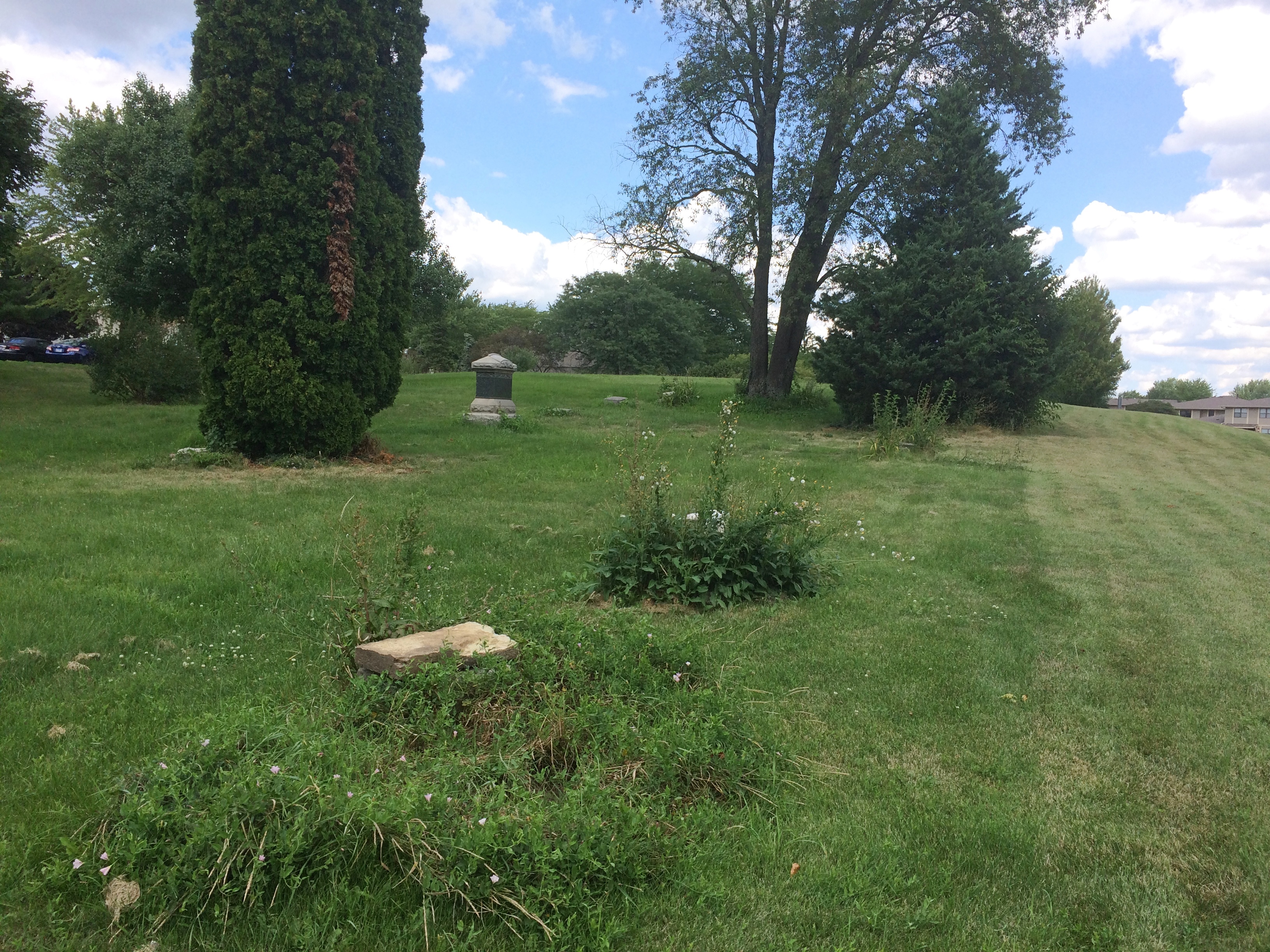
I had a little time to kill before The Comedy of Errors started in Aurora on Saturday, so I consulted Google Maps and found a nearby cemetery to visit. Riverside Cemetery, which is south of Aurora in the town of Montgomery, Illinois, and which is also on the Fox River.

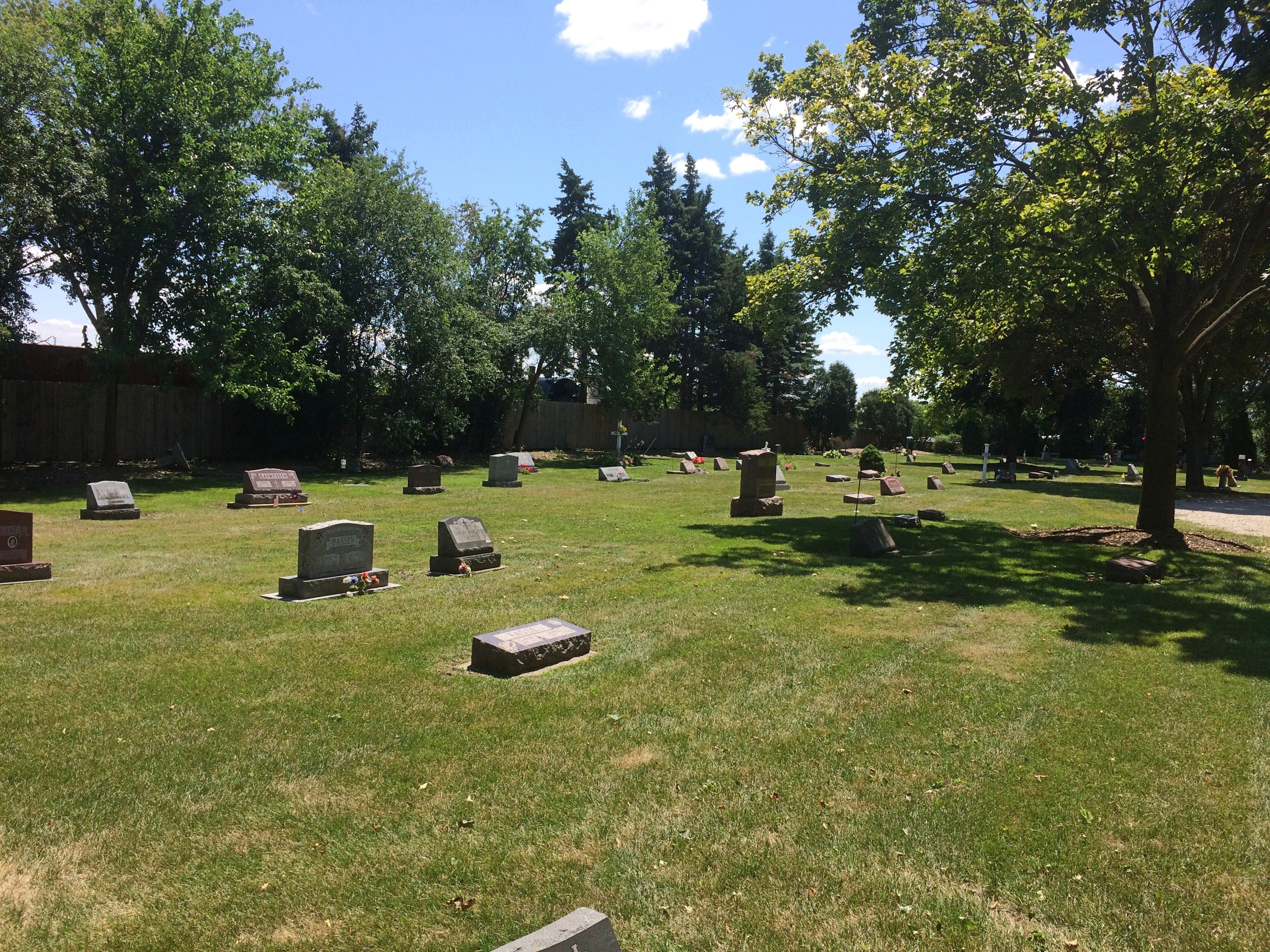
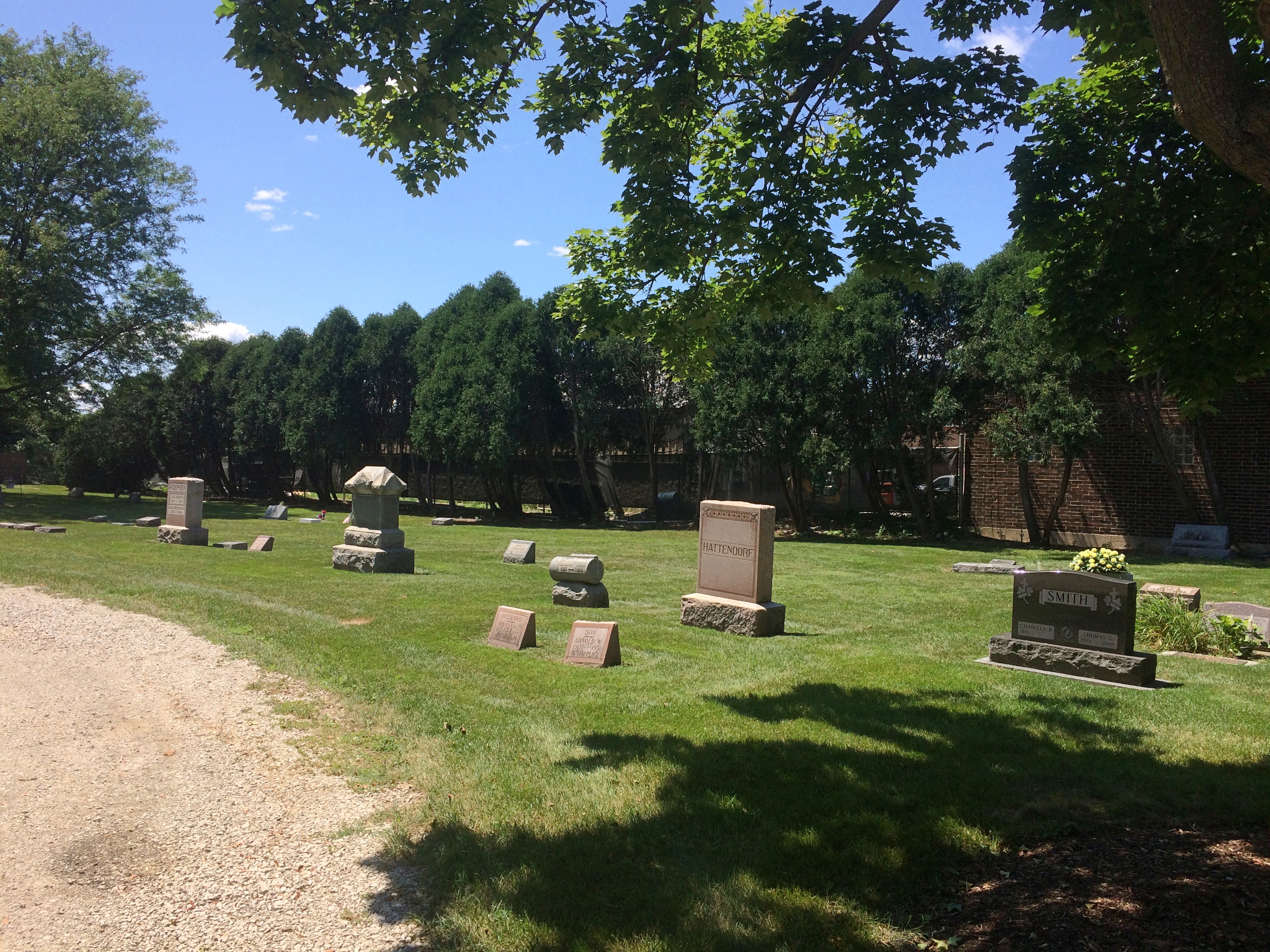
Not bad. Some trees, many upright stones. Not much in the way of land contour or funerary art, though.

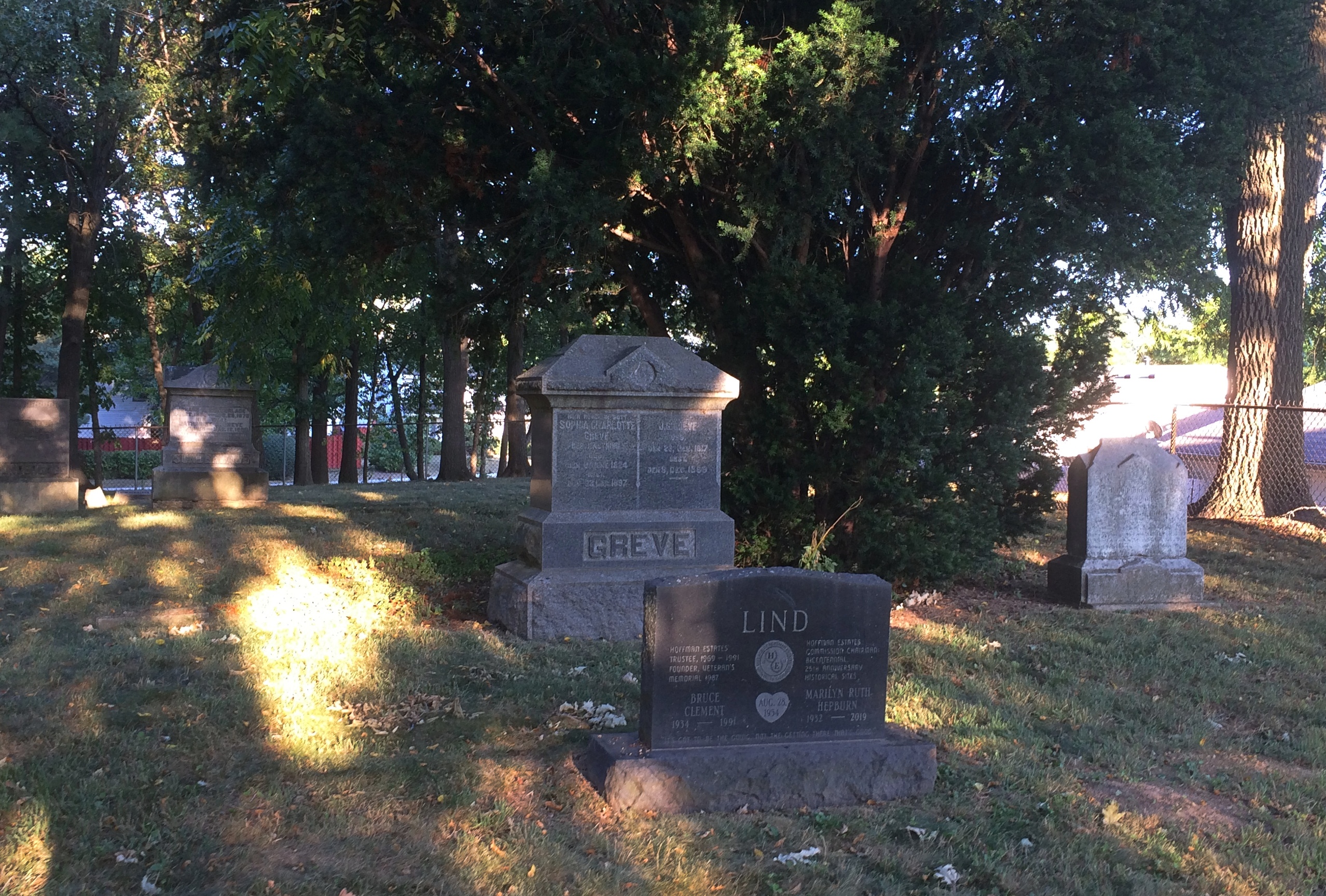
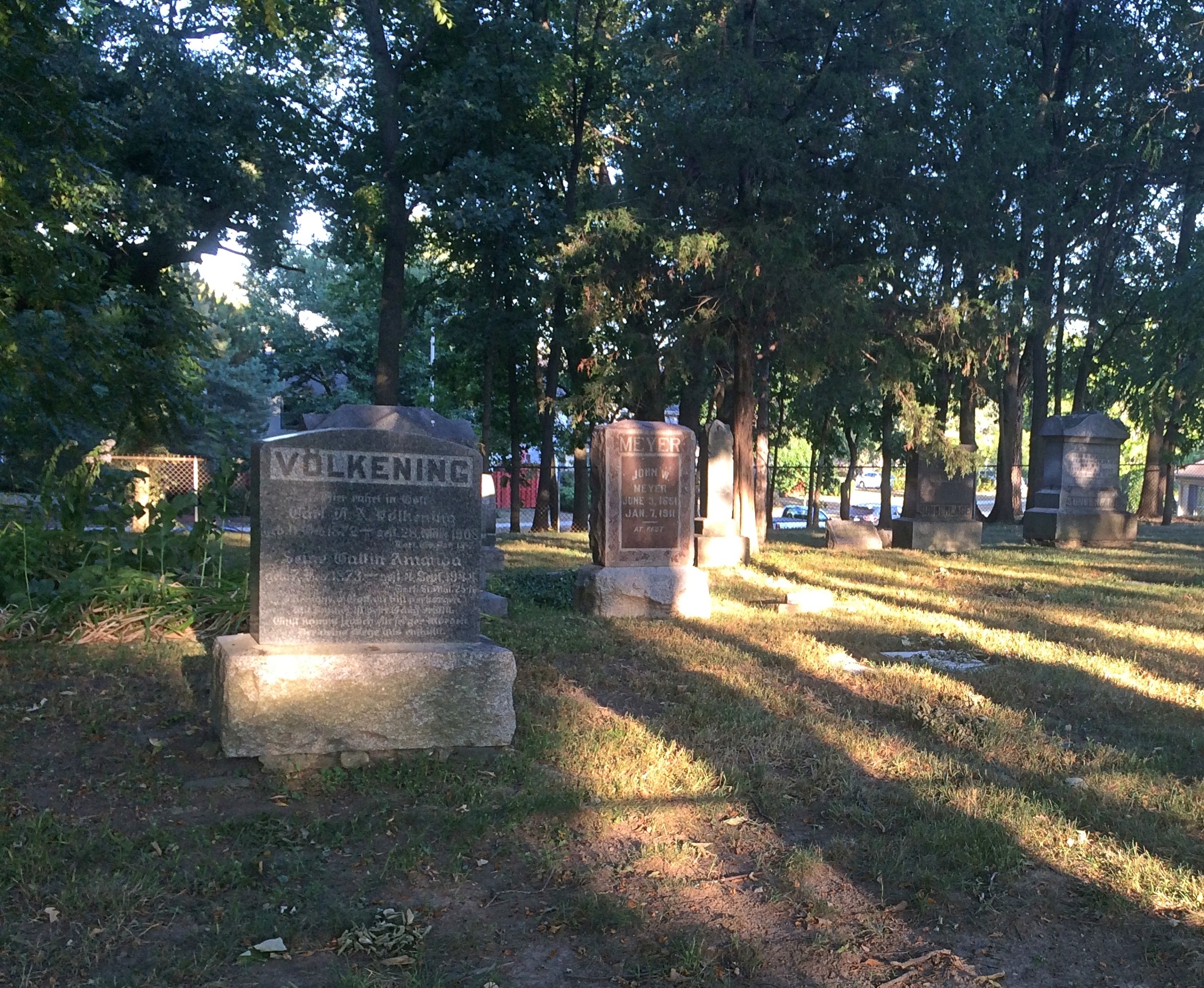
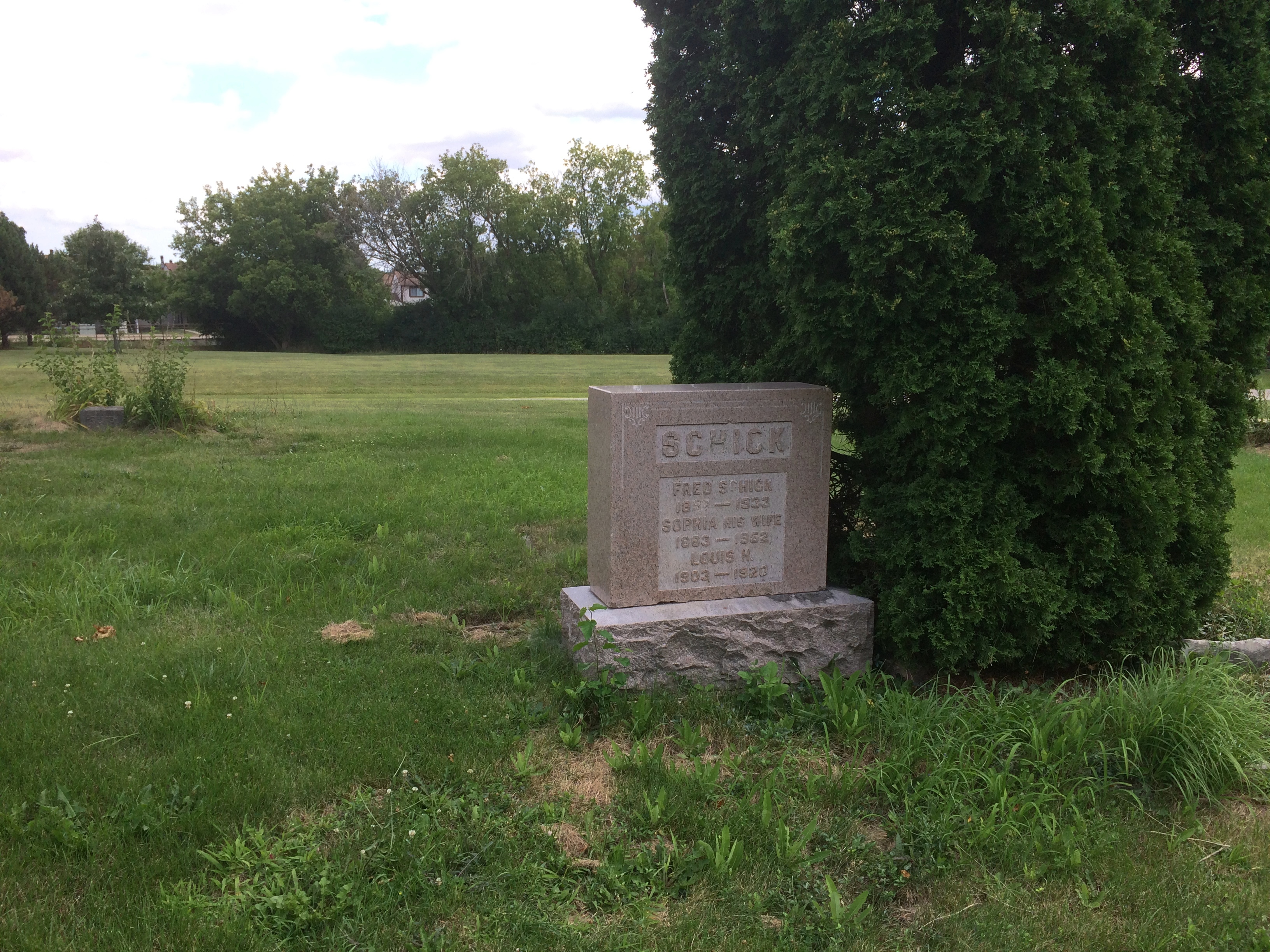
Riverside Cemetery, Montgomery IllinoisRiverside Cemetery, Montgomery Illinois

Riverside Cemetery, Montgomery IllinoisI found what are probably the oldest stones: 19th century.
Riverside Cemetery, Montgomery IllinoisRiverside Cemetery, Montgomery IllinoisAs far as I could see, only one obelisk of any size.
Riverside Cemetery, Montgomery IllinoisMarking the burial site of one V.A. Watkins. Big fish in this little pond.

Later I read that, according to Find A Grave, there’s one noteworthy person buried at Riverside: Bernard Cigrand (1866-1932). I didn’t happen across his stone. He rings no bells. Not even a slight tinkle. He was a dentist, but his stone also says FATHER OF FLAG DAY.

GAR Memorial Hall, Aurora

There are a lot of statues memorializing Union veterans, but the Grand Army of the Republic, Post 20, which was in Aurora, Illinois, decided that a building would be a better way to honor the fallen, since it would also be useful for the living. Reportedly the post got the idea from a similar building in Foxborough, Mass.

Completed in 1878, the GAR Memorial Hall still stands on Stolp Island in Aurora.
The octagonal structure is of local limestone and designed by one Joseph Mulvey, who is fairly obscure. Not this fellow (probably), but someone who did other (razed) work in this part of the country. The GAR had meetings there and for a while it housed Aurora’s public library.

These days GAR Memorial Hall is a small museum with limited hours — namely Saturdays from noon to 4 p.m. I arrived at about 3, in time to look inside, and get out of the heat besides. Inside, you can see the tall stained-glass windows.

Plus a few artifacts of the war, such as these medicine bottles. The dark one was specifically for quinine.
GAR artifacts.
A number of exhibits were devoted to the 36th Illinois Volunteer Infantry and the 8th Illinois Cavalry, both largely composed of men from the Aurora area. The 36th fought at Pea Ridge, Murfreesboro, Missionary Ridge, Chickamauga and in the siege of Atlanta, among other places. The 8th was at Williamsburg, Seven Pines, Brandy Station, Gettysburg and Monocacy, among others.

An amusing aside, according to the museum: “The 8th Illinois Cavalry’s first fight was not against people but alcohol. At their first encampment in St. Charles, Illinois, some of the citizens of the town brought liquor to the young soldiers, and this threatened the discipline of the regiment [I’ll bet it did]. Without orders, a group of soldiers from the 8th marched into town and smashed the windows of the offending shops, pouring the liquor into the street.”

The Comedy of Errors

Went to Aurora, Illinois, on Saturday evening for a performance of The Comedy of Errors, the only one in the suburbs this year by Chicago Shakespeare in the Parks.
The play’s the trope-namer, though I expect the idea is much older even than Plautus, and in fact Errors owes a lot to Plautus. It’s a trope big enough to include comic high points like Fawlty Towers (also a comedy of manners) as well as such excrescences as Three’s Company.

Free Shakespeare in the 21st century packs ’em, I’m glad to report.
The Chicago Shakespeare Company, full of talented young actors, handled the material well, including lots of slapstick and wordplay. I suspect some of the more obscure jokes were removed and other points smoothed out, though I’m not an expert on the play. No matter. It was funny.

The show began when the sun was still hot, so Shakespeare-shaped hand fans were available. By the time Errors ended, it was dusk and pretty comfortable there at RiverEdge Park.

Acrobatics and juggling punctuated the play, which I figure is true to the spirit of the earliest performances. And to the staging by the Flying Karamazov Brothers, for that matter. The goal was (is) to entertain, after all. So it does, in competent hands, 400+ years later.

The biggest laughs came when one of the Dromios described being pursued by the other Dromio’s girlfriend, a kitchen wench.

Dromio: Marry, sir, she’s the kitchen wench, and all grease, and I know not what use to put her to but to make a lamp of her and run from her by her own light. If she lives till doomsday, she’ll burn a week longer than the whole world.

Antipholus: What complexion is she of?

Dromio: Swart like my shoe, but her face nothing like so clean kept. For why? She sweats. A man may go overshoes in the grime of it.

Antipholus: That’s a fault that water will mend.

Dromio: No, sir, ’tis in grain; Noah’s flood could not do it.

Antipholus: What’s her name?

Dromio: Nell, sir, but her name and three quarters — that’s an ell and three quarters — will not measure her from hip to hip.

Antipholus: Then she bears some breadth?

Dromio: No longer from head to foot than from hip to hip. She is spherical, like a globe. I could find out countries in her.

The Danish Cemetery, Lemont

En route back from Joliet on Sunday, there was one more sight to see, just off I-355 in southeast suburban Lemont: The Danish Cemetery. It’s a small patch of land, sparsely populated by the dead — or at least their stones — and it hasn’t seen a burial in more than 50 years.
Danish Cemetery, Lemont

As far as I know, ghost stories aren’t told about this place, especially compared with boneyards that are more remote. The only story I know about the Danish Cemetery involves this memorial off to one edge of the grounds.

Danish Cemetery, Lemont

UNKNOWN SOLDIER
Served the U.S. in time of need
Found dead July 1, 1919
Buried by Legion Post 243

“The body of the unknown soldier was taken out of the Sag Canal at Sag Bridge on July 9 [sic], 1919,” Patch says. “He was found by bargemen working on the Chicago Sanitary and Ship Canal… the funeral home believed the body had been in the water for about 10 days. The remains were brought to Lemont, and they tried to identify the body. Besides the uniform, there were no identifying papers on the body.

“The Lemont Historical Society said no one came forward in Lemont to identify the body and the Lemont American Legion buried him with full honors in the Danish Cemetery.”

The Old Joliet Prison, Interrupted

Though it’s interesting, we didn’t go to Joliet on Sunday just to see the Joliet Area Historical Museum. The drive’s a bit far for that. About a year ago, I read that the museum had started offering tours of the former Joliet Correctional Center, which closed in 2002. I knew I wanted to do that, and so Ann and I went.

These days the site is called the Old Joliet Prison — a much better name. As you look at the massive stone walls and guard towers and the barb-wire residuum, no weasel word like “correctional” will do. It was a prison.

The tour groups meet in front of the former prison’s administrative building. Convict labor built the prison in the 1850s, with a design by W.W. Boyington, who also designed the Chicago Water Tower.
It’s also the site of the 1915 murder of Odette Allen, wife of the prison’s warden, a story that the guide told us almost at once. Blunt force to her head, body set on fire in her room, a young black inmate fingered for the crime but not executed because there was too much doubt about his guilt, though he spent the rest of his life in the prison. Later I read about the incident, as relayed here.

One curious detail to the story (I thought): “That afternoon, [Warden Edmund] Allen bought his wife a $3,000 diamond ring. He was going to present it to her that evening at dinner.”

That’s an insanely expensive ring, about $76,000 in current money. Allen was independently wealthy? Maybe running a large state prison had its graft opportunities in the early 20th century. This is Illinois we’re talking about, after all. But enough to buy that kind of rock for his wife?

Anyway, the former administrative building hasn’t been stabilized yet, so we had to enter the grounds through one of the prison’s sally ports.
Old Joliet Prison 2019Almost immediately after our entrance, heavy rain started to fall. The tour leader took us into some of the few structures open to visitors, in hopes that the rain would slack off.

So we got to see some solitary confinement cells, with the only light from windows and cell phones.
Along with the former prison hospital and its abandoned equipment.
The prison has been closed for 17 years. In the early years of its abandonment, the place was pretty much no man’s land, prone to looting, arson and vandalism. Graffiti relics of those days are still visible.
The rain kept coming.

Soon thunder and lightning started. Since much of the tour is outdoors — most of the buildings are still unsafe — that meant the tour had to be cancelled. In a few moments of lighter rain, we all left the way we had come. I got a few pictures of the wet grounds as we exited.

We can re-schedule at no extra charge at a later time. I figure that might be October, when it certainly won’t be hot, and the risk of thunderstorms is a little less.

The Joliet Area Historical Museum

RIP, Debbie DeWolf. One Monday morning in 1988, when I was working at the Law Bulletin Publishing Co. in Chicago, the company receptionist — whose name I forget — reportedly called the company long distance from Kansas or Nebraska or the like and said she wasn’t coming to work that day. Or ever again.

Shortly thereafter, a young woman named Debbie DeWolf took her place. She was one of the more effervescent people I’d ever met and she ultimately make a career at the LBPC well beyond answering phones. I hadn’t spoken with her for many years before her death, but it was sad news.

On Sunday, Ann and I spent some time in Joliet. We noticed that the Blues Brothers pop up in odd places around town, such as on the wall of an auto parts business and at the main entrance to the Joliet Area Historical Museum.

The Joliet Area Historical Museum

That’s pretty remarkable traction for not only fictional characters, but for characters created more than 40 years ago. Then again, Jake’s nickname was “Joliet,” and he was seen being released from the Joliet Correctional Center when The Blue Brothers opened (and come to think of it, he was back in the jug at the end of the movie), so I guess Joliet can claim him.

Better than the city being associated forever with the prison. The museum doesn’t particularly downplay the long history of the prison, but it isn’t exactly celebrated either. In any case, it will probably be a few more decades before “prison” stops being the first answer in a word association game with “Joliet.”

It’s a longstanding tie. In 1972, Chicago songwriter Steve Goodman recorded a song called “The Lincoln Park Pirates,” about an aggressive Chicago-based towing service that regularly ransomed cars. It included the following lines:

All my drivers are friendly and courteous
Their good manners you always will get
‘Cause they all are recent graduates
Of the charm school in Joliet

The Joliet Area Historical Museum is a well-organized example of a mid-sized local history museum, with thematically grouped artifacts and reading material. In its main exhibition hall, the centerpiece re-creates a section of the Illinois and Michigan Canal, which passed through Joliet. The view from the first floor.
The Joliet Area Historical MuseumThe view from the second floor, with stained glass from a demolished local church in the background.
The Joliet Area Historical MuseumAnother transportation-related artifact: a Lincoln Highway signpost.
The Joliet Area Historical MuseumAs it happens, the Lincoln Highway still runs through Joliet, half a block south of the museum, as U.S. 30. There’s also a sign in downtown Joliet marking the intersection of the Lincoln Highway and a branch of the former U.S. 66.

The museum does acknowledge the prison. In fact, there’s an entire gallery devoted to artwork made from material and debris and found objects from the former pen, or paintings inspired by it.

Even here, there’s no getting away from Jake Blues.
The Joliet Area Historical Museum“Fight Girl,” “Caught” and “Jake” by Dante DiBartolo. Interestingly, the images are painted on metal shelving scavenged from the prison.

Part of the former prison burned in 2013 — arson — and some of the burned items were later used for art as well. Such as a scorched TV set for “Ren-ais-sance Man” by Terry M. Eastham.
Joliet Area Historical MuseumI didn’t see a title for this one.
Joliet Area Historical MuseumRemarkably, the work is by a 7th grader named Sophia Benedick. The words on the work are, “It’s Never Too Late to Mend.”

There is also a room in the museum devoted to John Houbolt. He was the NASA aerospace engineer who pushed successfully for lunar orbit rendezvous for Apollo, a concept that made the landing possible by 1969. I’d read about him before (and seen him depicted in the superb miniseries From the Earth to the Moon), but missed the detail that he went to high school in Joliet.

Besides the museum, we spent a short time in downtown Joliet. One of these days, I want to attend a show at the Rialto Square Theatre. Supposed to be pretty nice on the inside. The outside’s not too bad either.
Rialto Square Theater JolietOn the grounds of the Joliet Public Library downtown is Louis Joliet himself.
Louis Joliet statue Joliet Public LibraryUnlike Jebediah Springfield, he didn’t purportedly found the town or anything. Joliet just passed this way.