I’m glad for a lot of reasons that I lived in Japan in the early ’90s and not later. One reason: pre-Google and (more importantly) pre-Google Maps, you navigated by your own wits, aided by not-always-detailed paper maps, wayfaring signs in Japanese and sometimes English, directions from other foreigners – part of the mass of gaijin lore we all tapped into – and helpful Osakans.
It was doable. One time I bought a used bicycle from a colleague who lived in a fairly far corner of metro Osaka, far from me anyway, on the condition that I come take it away. Meaning about a 20-mile ride through the heart of greater Osaka, a ride I broke into two segments by locking the bike after the first day’s pedaling at a subway station and going home that way. Good thing Japanese streets are more or less suitable for bicycling, but less so for wayfinding, since the urban texture tended to be a rinse-and-repeat cycle of narrows streets, concrete apartment blocks, and small shops shoehorned into even narrower lanes.
Six- or eight-lane boulevards crisscrossed the region, and so did small and larger rivers. One time a helpful Osakan directed me to an elevator door tucked away in a grey wall of odd shapes and angles – a door that had been accidentally camouflaged by its utilitarian surroundings. The unmarked elevator took pedestrians and bicyclists down to the entrance of a spare, well-lit underground tunnel under a major river at a spot that had no bridge.
But I need to say that the rinse-and-repeat was only superficial. Like other places, most other places I’d say, with a little time and observation, details come into focus. In the case of Osaka, a shrine tucked into wall or a weedy embankment near a canalized creek that was home to a couple of gnarled, flowering trees, or sometime as incongruous as a speedboat parked in a spot for a car. Or an unusual handmade retail sign, clearly made by pop for the front of a mom-and-pop (or maybe by mom, who wouldn’t be accorded credit for it, and maybe not inclined to take credit).
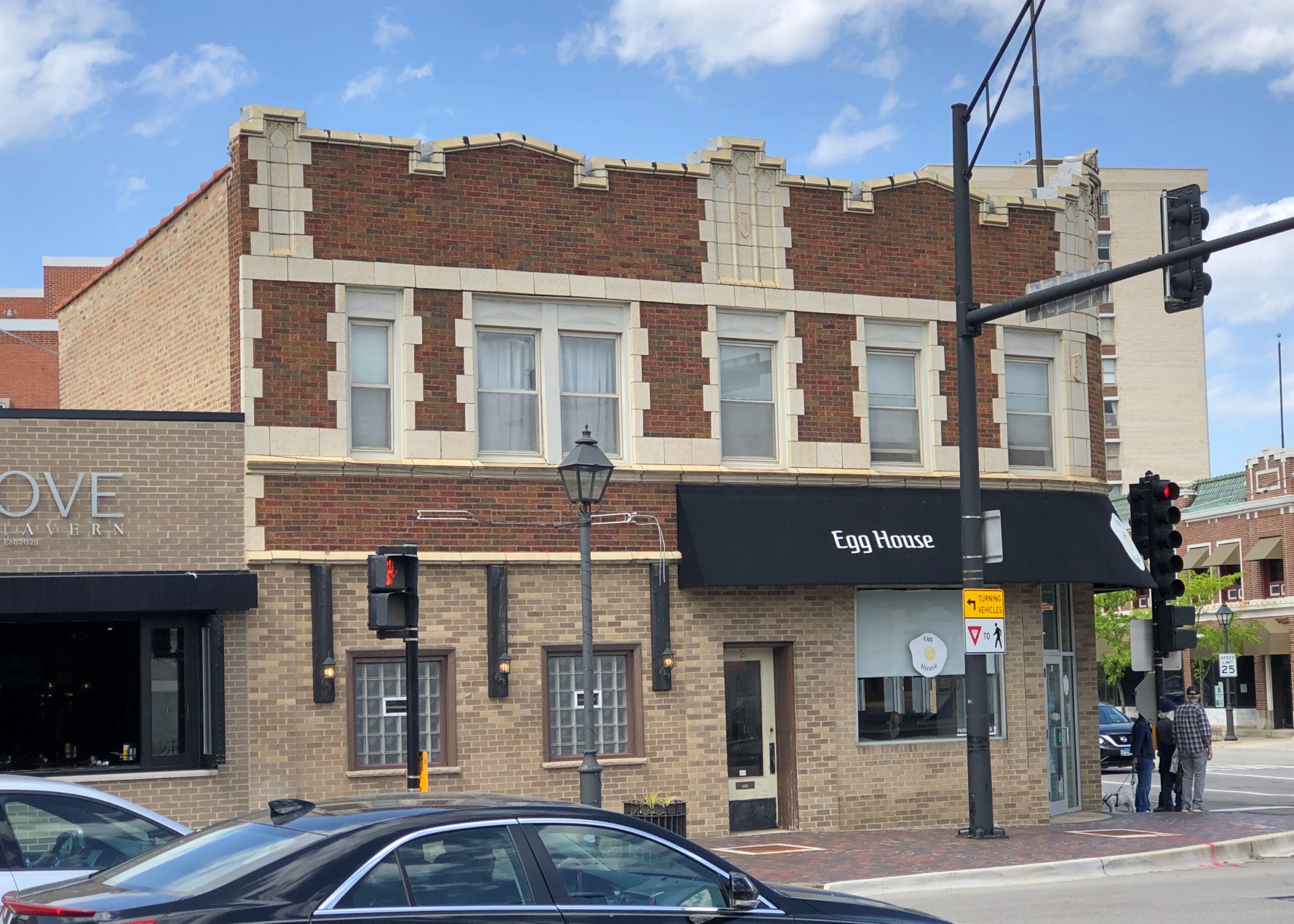
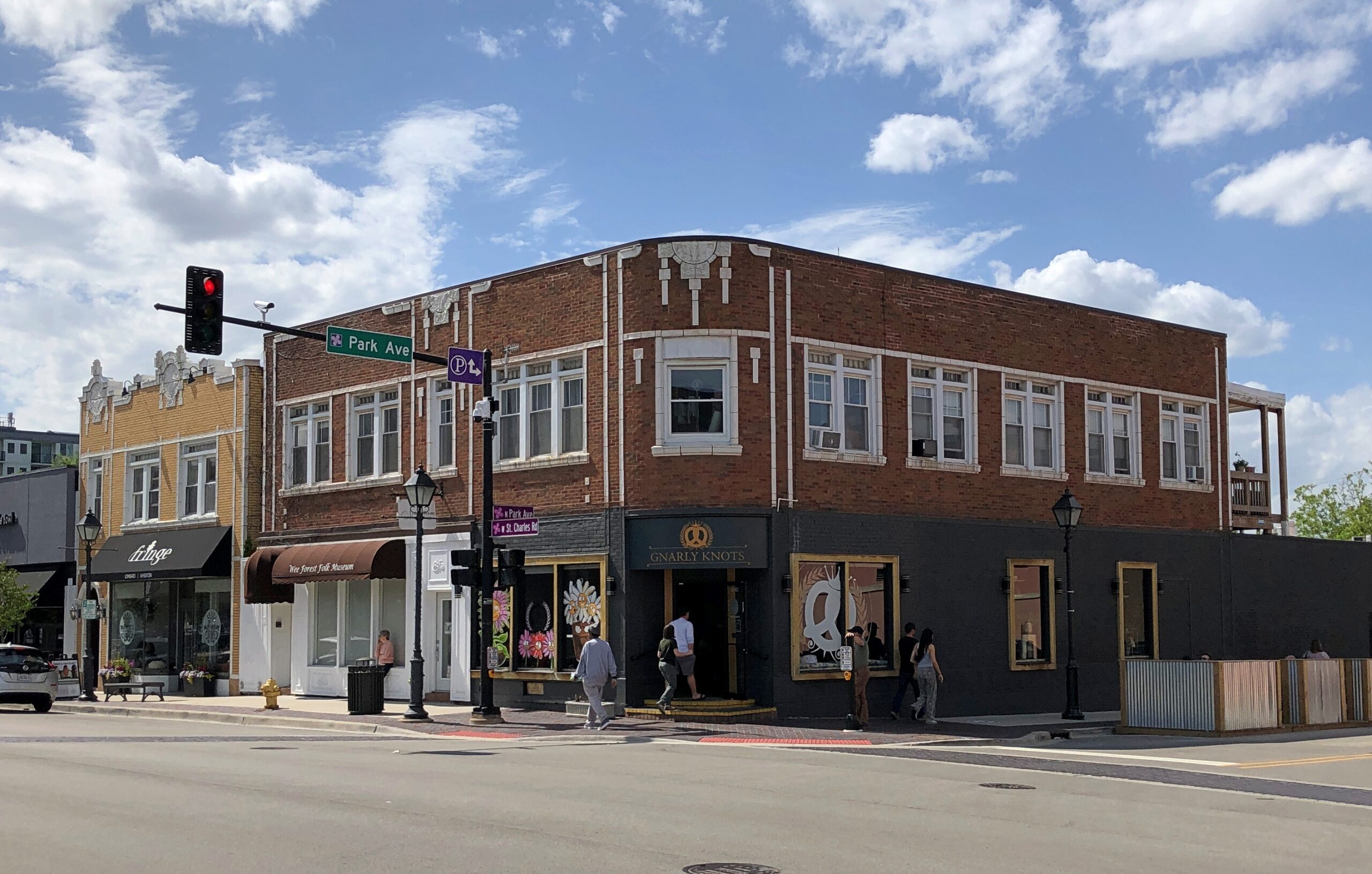
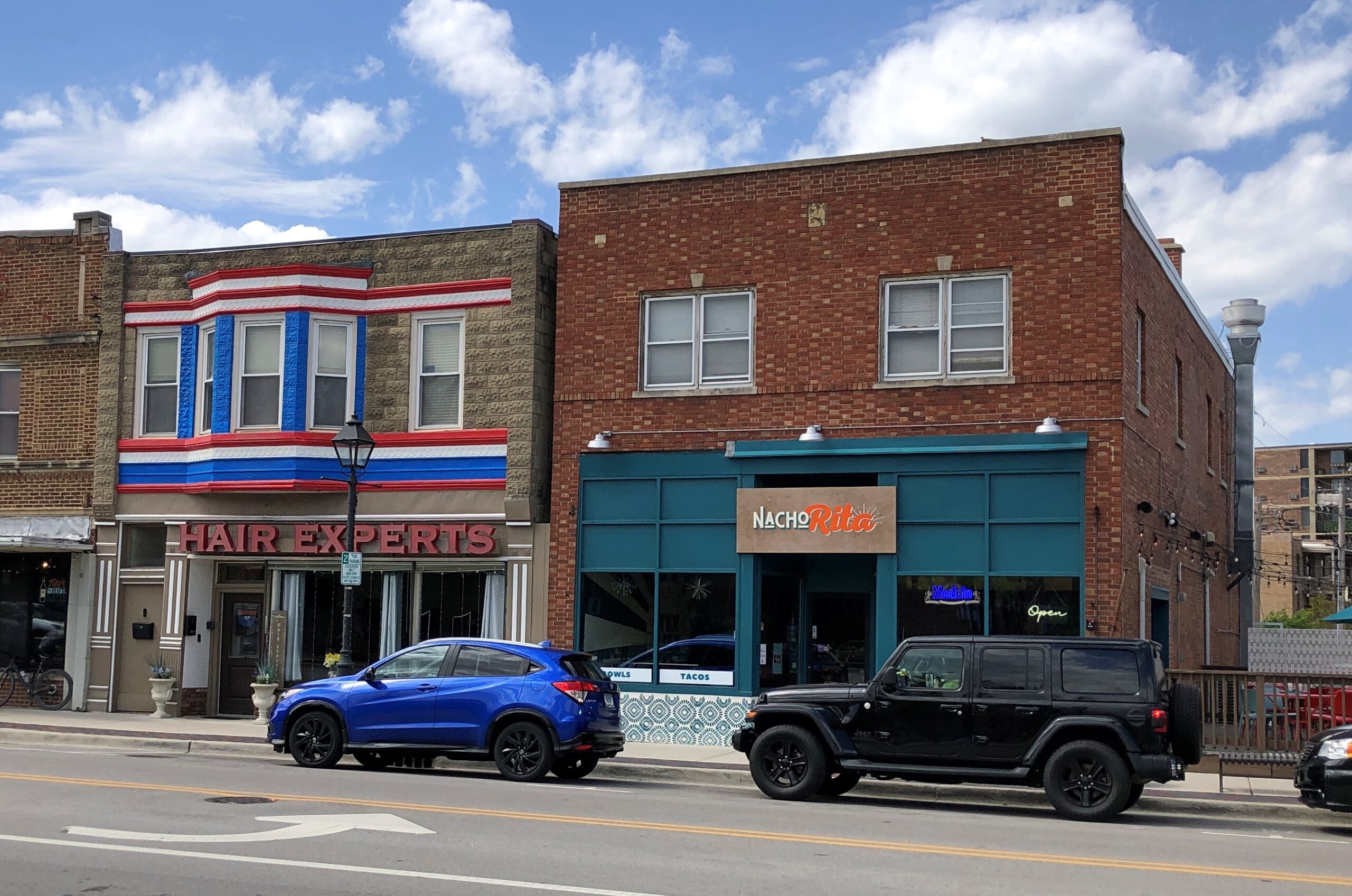
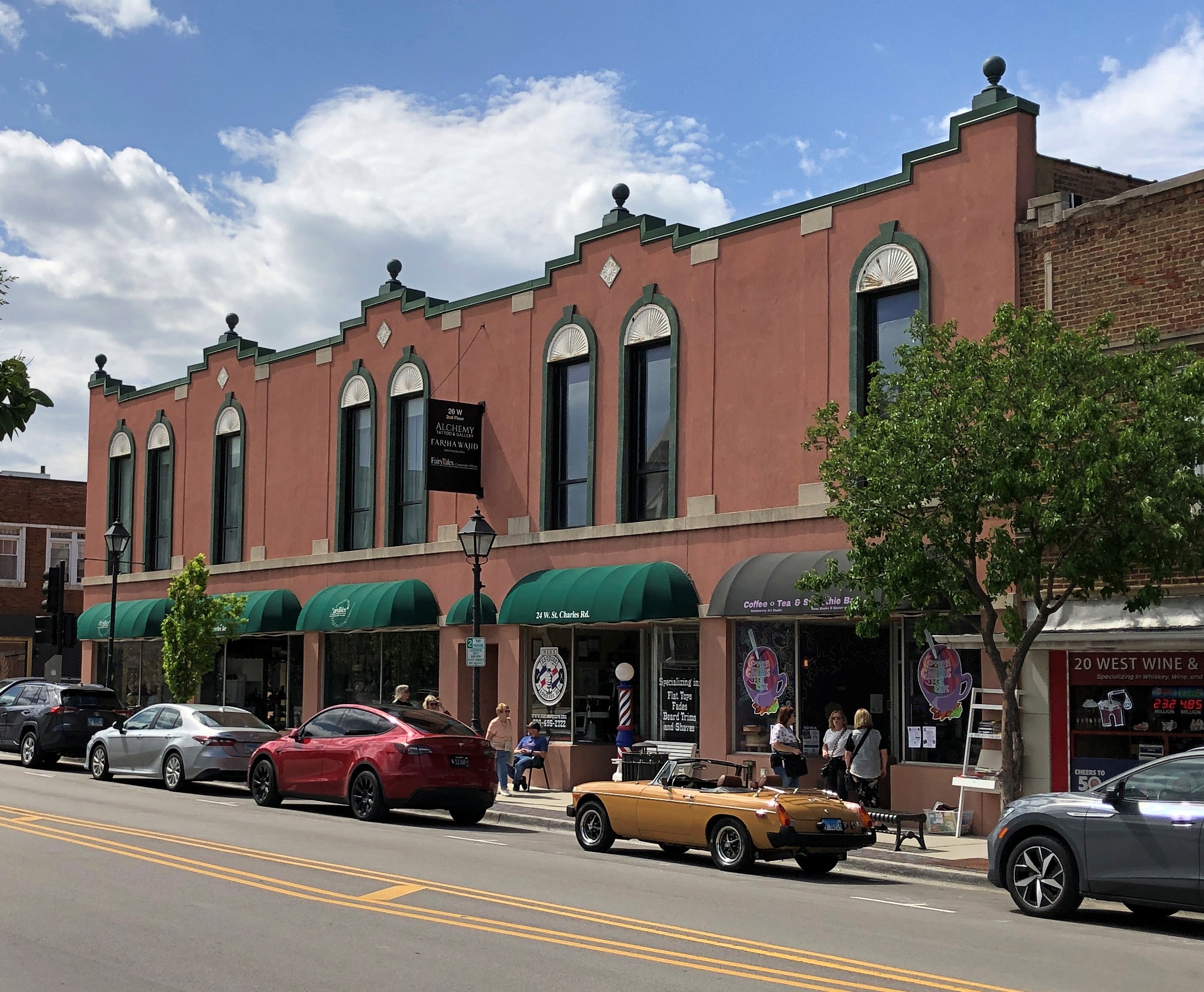
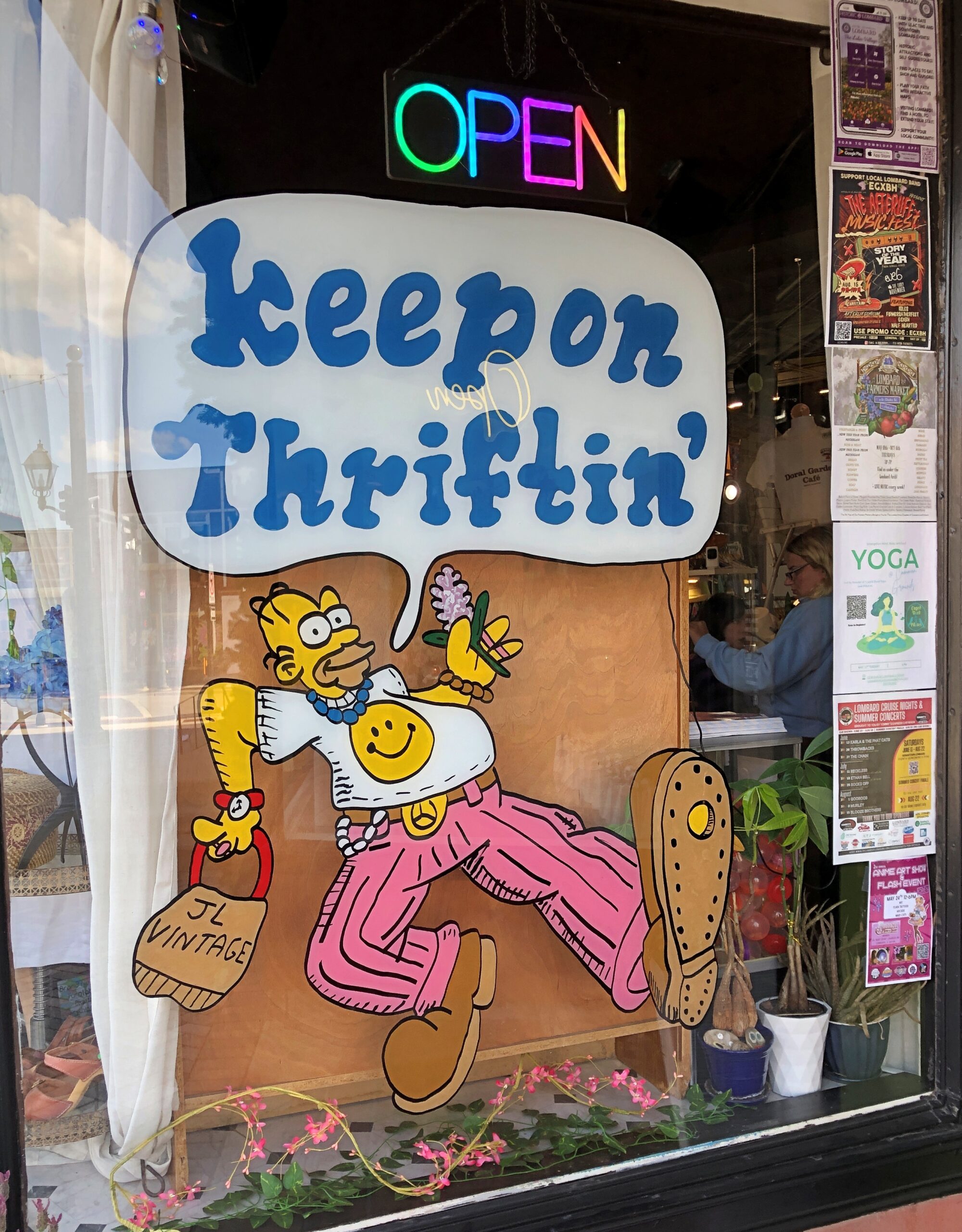
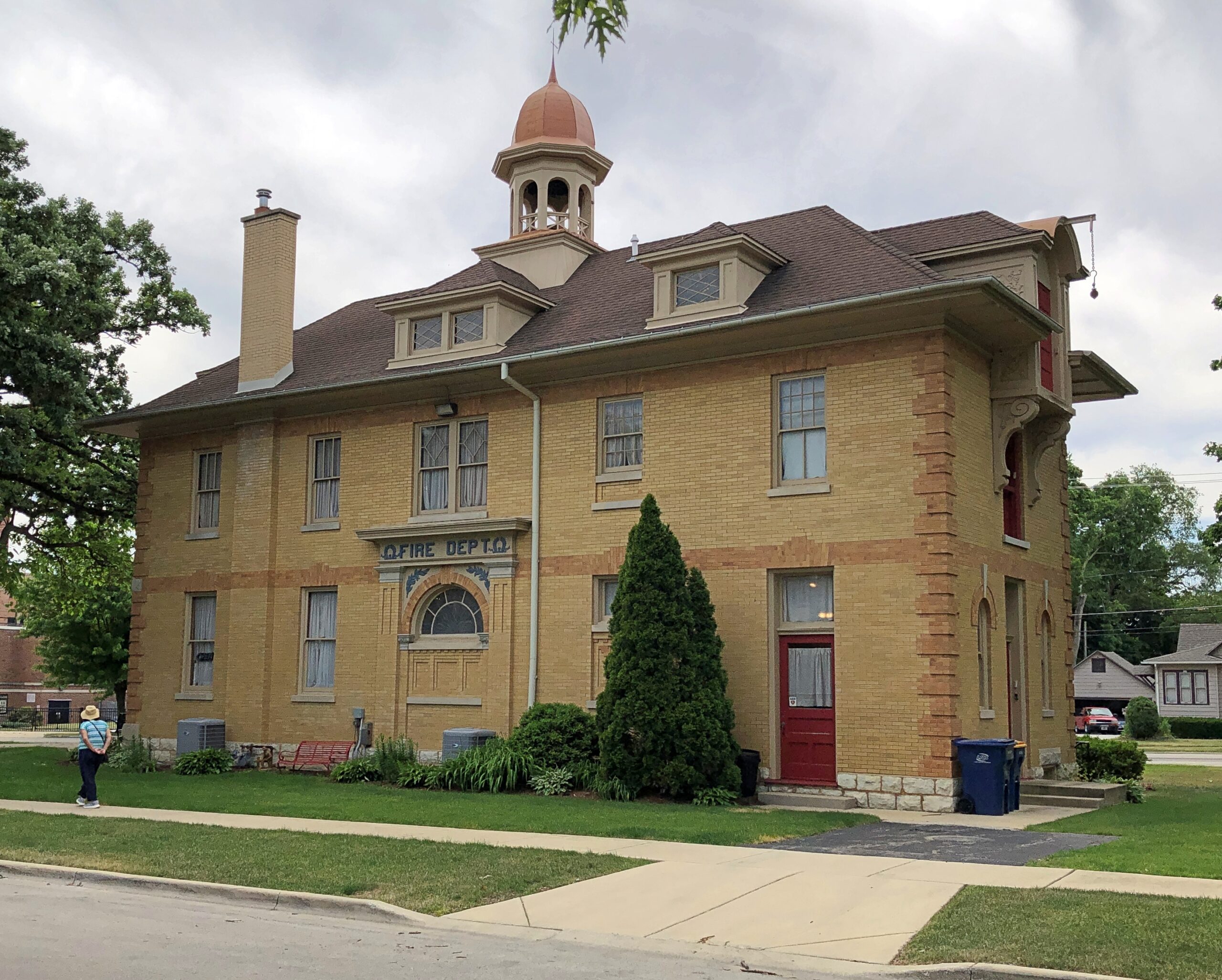
There’s a Flickr collection, or even a coffee table book, in the unlimited variety of limited-edition retail signs, handmade or made by advertisers. A worldwide selection. They’re more sporadic in the Chicago suburbs, generally clustering on main shopping streets – of which there are a fair number, tucked away and locally focused. So far this summer we’ve made our way to a handful of suburban shopping streets.
Starting with the imprimatur of Tito, Alamo Heights High School Class of ’79.
Straightforward, gets the signing job done.
For those who aren’t into that whole neurotoxin thing.
“We need something out there now, we’re about to open.”
How could this not be a favorite?
True, not brown and soggy. Brown and crumbly, with enough time.
Among the the wide galaxy of public policy, infrastructure maintenance is famously unsexy, at least here in North America. Probably most other places, too, though I can imagine Cultural Revolution China intensely focusing on the Seven Paths to Glorious Infrastructure or some such, with college professors and students hustled out for months at a time to pave roads and lay pipe for projects that never quite got finished.
So most infrastructure projects proceed unnoticed, unless they happen to impede one’s routines. Early in the road construction season this year here in northern Illinois, that is, after the last of the dirty snow piles had melted, work started on a nearby road that’s more than a side street but less than a major arterial – and one that I use a lot.
Took a stroll along the street late one afternoon recently.
Near the rubble and the dislocation.
Idle heavy equipment.
Major digging is under way. From the looks of it, the project involves not so much the surface of the street – though I suspect that will be repaved as well – as replacing major underground structures.
Ones that, I hope, continue to direct surges of water away from certain places. Such as my house.
It occurred to me over the Independence Day weekend that I’ve experienced roughly a quarter – 25% – of the entire history of the United States, accepting the commonly held age for the nation of 250 years. Anyone my age or older has, that is. One-quarter of a 250-year span is 62.5 years. At the age of 65, I can’t really claim to remember those first two and a half years, but the furthest reaches of my memory run back to the mid-1960s, so close enough.
And I have to add that if you’re Mel Brooks, you’ve lived 40% of the nation’s history.
Fifty years ago, on the much ballyhooed Bicentennial, it rained in San Antonio, where I was. We stayed home. On Saturday, on the much less ballyhooed 250th, it rained in metro Chicago, where I was. We stayed home. Coincidence? Well, yes.
Been home for a few months now, witnessing a wet and cool spring edge into a wet and warm summer in northern Illinois, and temps finally popped up into the 90s ahead of July 3. The heat was ended by rain and more rain. A pretty typical Northern summertime pattern.
Fireflies have made their appearance, though a meager number, and just today, this afternoon, I heard cicadas bleating ahead of dusk, though no cricketsong came afterward. Could be the Brotherhood of Orthopteran Insects is still negotiating a new contract for this year, and I won’t pretend I didn’t have to look up orthopteran. Mosquitoes are out looking for mammal blood, though considering the temporary wetlands that are our suburban lawns, not as many as you’d expect. Lit up the mosquito coils on my deck table this evening, and it seemed to work.
Old friends Neal and Michele visited from Chicago for the Fourth – a smaller version of the Gabfest, and indoors because of the rain. A delight all the same. They left before dark, after the rain had stopped. A little wet ground wasn’t going to keep the suburban populace from flouting Illinois’ nanny-state fireworks ban, one of the two nights of the year when the pop-pop-BOOM-pop-boom-fssst goes on for a few hours (the other is New Year’s Eve). In recent years I’ve repaired to the garage to listen to the July 4 explosions. The explosion acoustics are good in that cluttered enclosure.
I’ll be home for a few more months. 2026: Summer of Here. People pay money – I’ve paid money – to enjoy warm weather like this, but we’re getting it no extra charge. Also, even I’ve gotten a little tired of the pace of my driving lately.
No long drives this summer. But that doesn’t mean no drives. Back during the pandemic, my thinking was, if you can’t go far, go near, and that kind of thinking took us to new parts of Wisconsin and Illinois. No pandemic this year, fortunately, but the idea is a good one anyway.
Every year since 2014 (except for 2020) old Chicago-area friends have come to my house on the second Saturday of June for conversation and grilled meat, and so it was yesterday. The Gabfest, we call it. Twice over the years the weather has driven us inside for the event, but usually it’s on my deck, and so it was yesterday. Always a delight. This year two out-of-town old friends were able to join us for the first time, for an extra measure of delight.
A few years ago, I started decorating the yard with flags for the Gabfest, and so it was yesterday. As it happens, Flag Day, “the runty stepchild among American national holidays,” is around this time of year, and of course happens to be today. So I left the flags up after the event. Also, just after we finished last night, it rained pretty hard, and I left the flags out to dry today.
These four represent places I’ve lived, left to right: Texas, Tennessee, Chicago (and its suburbs) and Osaka.
Also a few years ago, I acquired small flags from each country I’ve visited, including the U.S. and the DDR, which was most certainly a country in 1983, but not such subnational entities as Hong Kong and Macao. The small flags go in the pot plants lining the edge of the deck.
At first 31, but adding others as necessary to make the current total of 36. So 40 flags in all. Guess you could call it Flags Day around here.
Consistent spring-like weather has arrived at last here in northern Illinois. So we took the opportunity late this afternoon to visit Volkening Heritage Farm, an open-air museum with structures dating from the 1880s. It’s part of the larger (135-acre) Spring Valley.
Spin the wheel of time back – not that long, really – and German immigrant farmers put this part of Illinois, the future northwestern suburbs, to prosperous use. The open-air museum of our time echoes that previous time. Not in each detail, but the facsimile is pretty good. There’s a vegetable and flower garden —
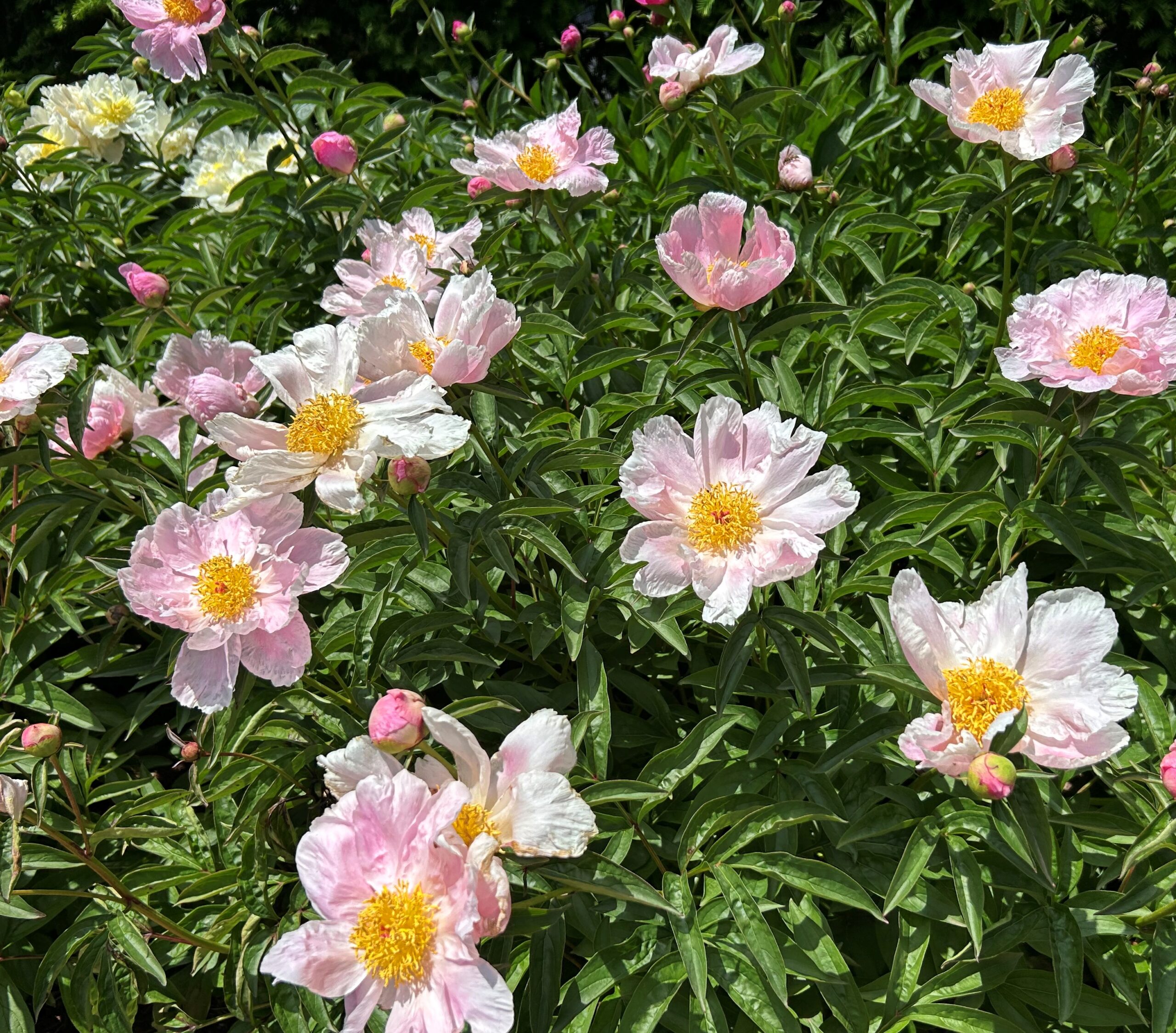
That meant that Spring Valley’s former peony farm, about a 10-minute walk from the former German farm, was abloom with peonies. Like cherry blossoms in other places and other contexts, they don’t last long. Some years we miss them all together, partly because the blooming isn’t quite fixed. One year, for instance, I visited on my early June birthday once and found an embarrassment of peonies. Other years, they are earlier. This is an early year.
So we walked some of Spring Valley’s various trails, themselves flush with spring green, toward the peony field.
Across one of Spring Valley’s creeks, still vigorous from the heavy late-night rain a few days ago.
The peony field.
The blooms.
Digital cameras make astonishing images sometimes, but still pale compared to an eye view.
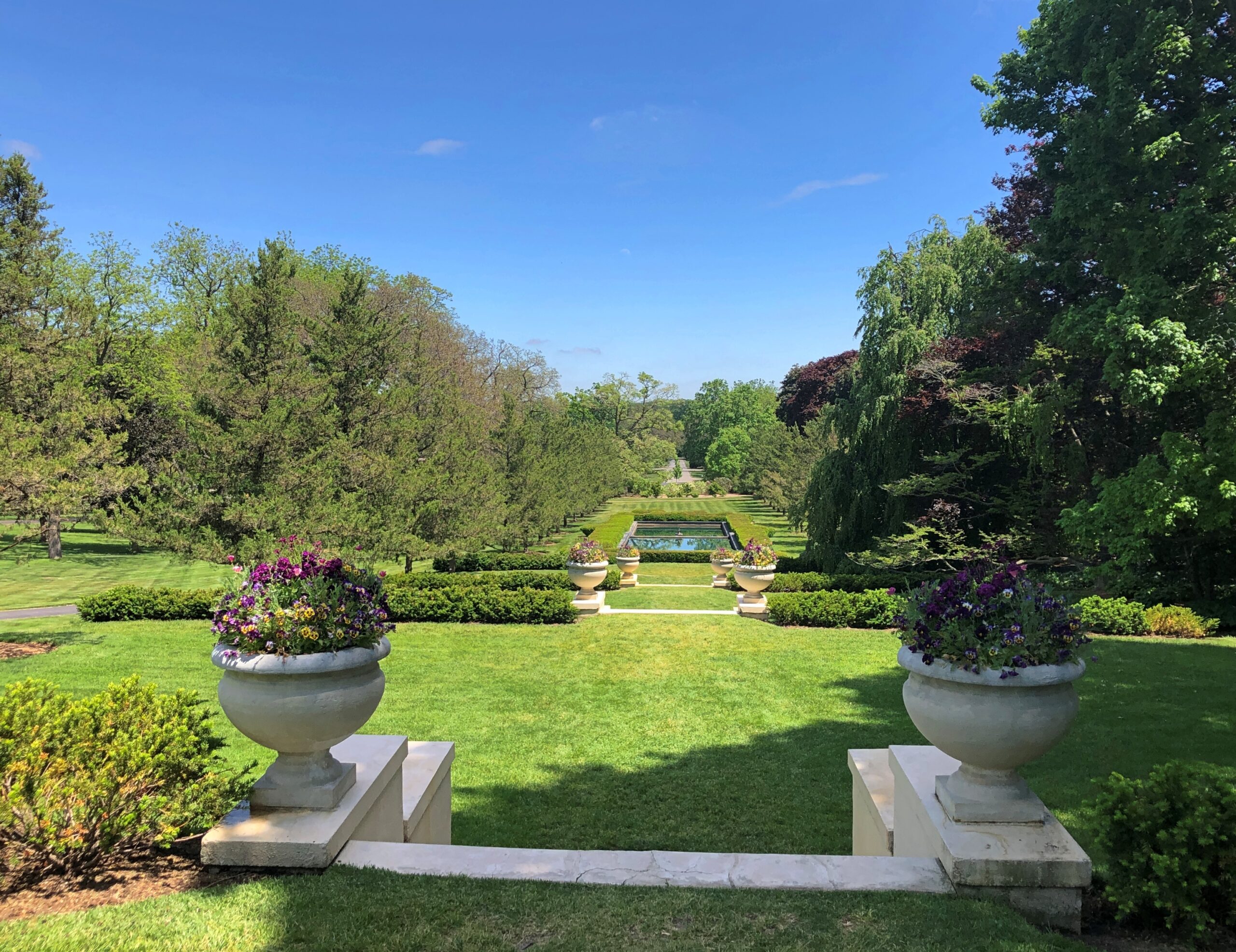
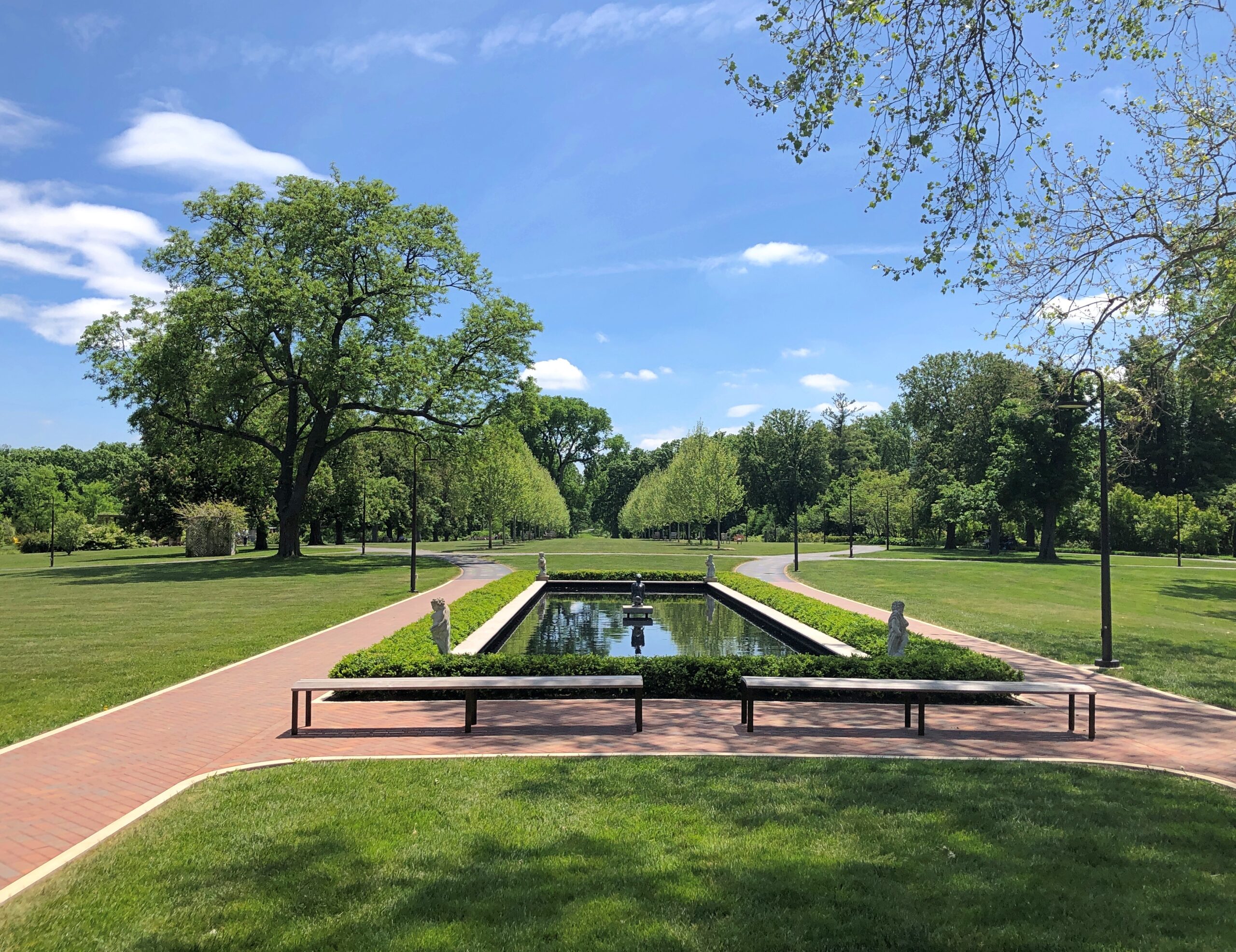
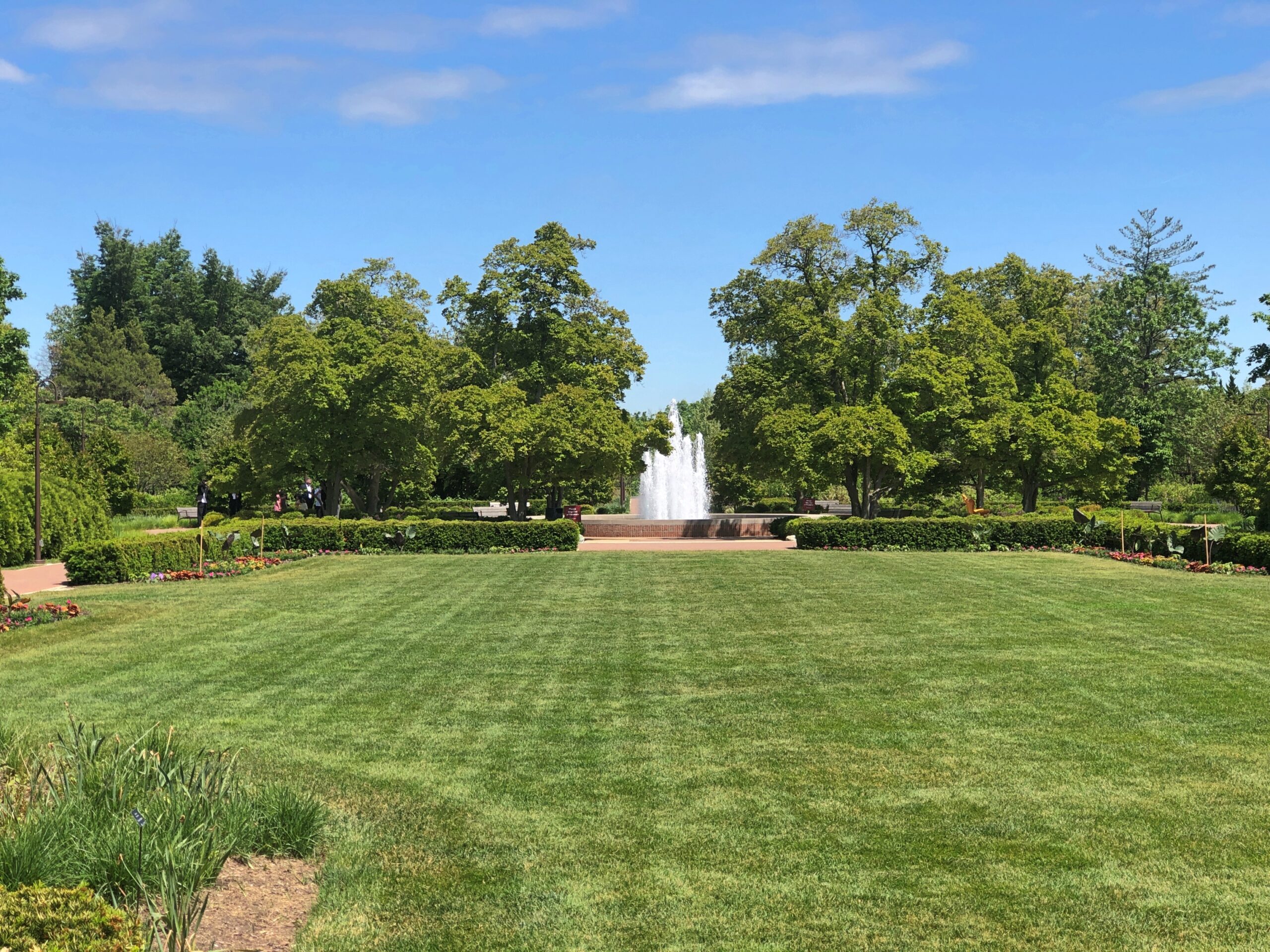
Finally a warm Saturday. Finally a warm day of any position on the calendar. They’ve been spotty lately. Warned that the day would be warm, we went to Lilacia Park in Lombard early in the afternoon, something we do every few years in mid-May, for nearly 20 years now.
Most of the tulips were gone, but true to the park name, lilacs are in bloom in profusion. Not just colorful to see, but put your nose close for a fragrant moment.
Lilaicia Park is a crown jewel of suburban parks, and yet not overcrowded on a pleasant Saturday during peak lilac bloom. Just busy.
One of these years, some fool influencer or two might make Lilacia an It Spot, and the crowds will show up in ridiculous numbers. Or considering its location in the thick of the suburbs – the sort of place where influencers might grow up, but never consider interesting enough to point their cameras – that isn’t very likely? I couldn’t say.
Good to make it back. We met Kevin there this time around, at our suggestion, who came from the fairly close other western suburb of Downers Grove. He’d never heard of the park, and so I was glad to introduce him to it.
Terrific lightning storm rolled by to the south last night at about 11. Little rain but a prodigious amount of cloud-to-cloud lightning, unlike anything I’ve seen in years. The last time might have been when we were under such a near-rainless storm in North Dakota nearly 20 years ago. After watching in fascination from the back door, I got my phone and recorded about 30 seconds of the spectacle.
As usual, video only conveys a fraction of the visual power of the moment. But, in spite of the channel it’s on, it isn’t AI.
I was curious today which volume of the Encyclopedia Brown books — whose protagonist is a sharp grade-school boy who solves crimes and mysteries — mentioned the town of Palestine, Texas. Even though I grew up in Texas, I’d never heard of the place until I read an EB story in the early ’70s that mentioned a string of places that some international jewel thief was traveling to: Moscow, Odessa, London, Paris, Palestine and Athens. The boy detective determined that the criminal would be in Texas, since those are all places in that state, and especially because “Palestine” is called “Israel” now, as he said.
You might wonder (I do now, anyway) what business an international jewel thief would have in a place like Moscow, Texas (pop. 170) or London, Texas (pop. 180), but never mind. It didn’t take long for me to find a YouTube review of Encyclopedia Brown Keeps the Peace (Book 6, originally published 1969), including the case that mentions the Texas towns. The reviewer takes the book to task, asking “can grade-schoolers be expected to know this information?” No, of course not. They can be expected to learn it, however.
Now I know exactly where I learned about Palestine (Pal-es-TEEN) more than 50 years ago. I didn’t arrive in Palestine in person until this February, on my way to Dallas from Nacogdoches. During my visit, I made the acquaintance of this fellow.
The sculpture is called “Chuggin’ ” (2020), created by Dewane Hughes, a sculpture professor at the University of Texas in Tyler. Railroads are important in the history of Palestine, so much so that one terminus of the Texas State Railroad – a linear state park along a former short line RR – is in the town. The other terminus is in Rusk, about 25 miles away. Not running in February, unfortunately.
“Chuggin’ is near the town’s visitor center, a former RR depot.
Also nearby is “Forging History” (2014) by Dale Montagne, with the base made of three actual rail car wheels.
Parking was easy to find in downtown Palestine, traffic light. Parallel parking was available right across from the splendid Sacred Heart Catholic Church, as it happened, an 1890s creation by Nicholas Clayton, who was most active in Galveston before the hurricane. Originally many of the congregation were workers on the International-Great Northern Railroad Co., which had a major presence in Palestine.
Palestine still has a sizable rail yard south of downtown.
Took a walk around downtown. Like most large towns, or small cities, there is a mixture of ongoing businesses –
— with vacancies.
Got some buildings with really good bones, as it’s been said in the real estate biz.
The Palestine City Cemetery is to the east of downtown, but not very far. Nowhere is that far in town.
The crumble is on.
Something you don’t see that often. Not just the Stars and Bars, but the very first version with seven stars. In the fullness of not much time, six more stars were added.
Unknown CSA soldiers.
I assume United Confederate Veterans, the Southern equivalent of the GAR, placed this stone and those like it.
The cemetery has an impressive number of worn, broken stones, soldiering on through the elements.
Victorian sentiment in stone, said with due respect.
Would that kind of soft decay, the romanticism of stones worn by time and the elements, have appealed to Victorian sensibilities? Could be.
Yesterday, behemoth retailer Amazon announced that its Amazon Fresh grocery stores are closing. All of them, about 70 locations, and closing soon, as in Sunday. I read about that this morning, and happened to mention the fact to Yuriko early this afternoon, so we decided to mosey over to the closest Amazon Fresh, about a 10-minute drive from our home here in the northwest suburbs.
We’d been there. In the store’s early days especially, a few years ago, weekly fliers came in the mail offering coupons that could, if used right, mean 40 percent or even 50 percent discounts. That was worth some visits. After a few months, however, the coupons got progressively more miserly or disappeared all together.
That was no surprise. The coupons’ main function was to get you in the door, and acquainted with the store, and ideally form a good opinion that inspires return visits. A good marketing plan, even if it relies on something as analog as paper coupons, and it might have worked but for one thing: there was very little distinctive, to an ordinary shopper, about Amazon Fresh.
The store promised to be something of a discounter, and sometimes it was. Until recently, for example, it sold sizable and reasonably good pizzas for $9 a pie or less than $2 a slice – entirely competitive. Other items were sometimes discounted as well, but in that the store was no different from any other store in the area.
Even that might not been a discouragement, if the store had competed on selection. By current standards, the NW suburban Amazon Fresh is mid-sized, so isn’t going to be able to offer everything under the sun. But even smaller stores can pull off a remarkable selection, if they try. Such as Trader Joe’s. Or even Aldi, whose more recent iterations are about the same size as the Amazon experiment in grocery stores.
But no. The Amazon Fresh selection is good enough, and certainly would be a boon in a food desert, or even at the edge of one. But the NW suburbs are the opposite of a food desert: we have hyperstores, warehouse stores, standard supermarkets of considerable size, discount grocers, and plenty of ethnic specialty grocery stores of varying sizes, all within a fairly reasonable driving radius. There are even dollar and convenience stores thrown into the mix, and every variety of take-out food that you can imagine. These parts are a highly competitive retail grocery and food & beverage environment, is what I’m saying.
And what did Amazon Fresh bring to the table in such an environment? A lot of meh.
Then there was this business of “Dash Cart.” Amazon Fresh made a big deal about how technically advanced the stores were, because you could “Skip the checkout line. Scan, bag and pay – right from your cart.” Well, OK. Some of the carts had consoles for self-scanning.
Did Amazon actually want its customers to adopt Dash Cart, or was it just showing off? I ask because any hint of any instruction about how to use the thing was lacking. Call it an engineers fallacy: this tech is so cutting-edge, so impressive, so neat that people will be eager to learn it. People will not. Maybe had there been an employee whose job it was to school us old timers, we might have been interested, but of course that costs money, and just wait until customers don’t even have to deal with checkout clerks, how much that will cut labor costs!
Besides, you still have to do the work the store should be doing – scanning your items – for free. That is the essential irritation of any self-scanning scheme. Turns out self-scanning isn’t going to completely replace clerks anyway, for various reasons, and I’m glad.
How could Dash Cart and its ilk actually work? One: activate the cart with a debit or credit card. No messing around with some app, no inputting some code that comes to your phone, or any of that nonsense. Two: the cart itself automatically scans items as you put them in, and shows in a highly visible way how much you’re paying, so that the price jibes with the price on the shelf. Three: That’s it, you leave. You are charged a total – again, a highly visible total – as you leave, just as you would be otherwise.
Is all that technically possible? How should I know, but I’m leaning toward yes. Or it could be.
Never mind all that, we figured the store might be knocking off 10 or 20 percent in the face of its demise. The first indication that we were wrong was the store parking lot, which was as crowded with cars as I’d ever seen it. The second clue was the lack of shopping carts outside — at all, including in corrals in the parking lot or next to the entrance. No shopping carts inside the door, either.
Hand baskets were available, and Yuriko started with that, her initial goal being vegetables. I waited inside the door (since it was about 15 F outside) and after a few minutes, got a cart that was being returned. While I was waiting, a store employee announced at the front of the store that checking out, even self-check, would involve and hour or hour-and-a-half wait. It was a thing that makes you go hmmmm.
Shopping cart delivered to Yuriko, I set out to investigate. The first thing I found out: the place was crowded. An entire large cross-section of the population of the nearby Chicago suburbs was loose in the store, younger and older, families with little kids, single shoppers, people whose ancestors (sometimes pretty recently) had come from Central Europe, East Asia, the Indian subcontinent, Latin America and more. Put them all in the store and it was Supermarket Sweep time. I’ve never seen a grocery store so crowded or so many carts piled so high.
That resulted in some empty shelves, especially in the meat aisle and paper goods.
Sorry to say, the kitchen had already been closed permanently, its ovens cold and its workers presumably left to take their talents elsewhere, if possible. I’d wanted a slice of pizza at less than $2 just one more time, but no go.
But I’d misrepresent things if I left it at that. Many of the aisle and shelves still held the bounty of American agriculture and the never-ending efforts of food technologists.
What brought the crowd? Deep discounts, of course. It didn’t take long to work that out. Later I did some back-of-the-envelope calculations and determined that nominal prices were back to late 1990s levels. Thirty years of inflation, slow and then fast, poof. That’ll pack ’em in. We joined the fun.
But the woman wasn’t kidding about the wait. The checkout line went back along the right-side aisle to the back of the store, turned a corner and went along the back aisle (dairy and such), and then turned a corner again at the left-side aisle, and ended about halfway back to the front of the store. Later, the line grew to go all the way around the store, back to the checkout area.
Before that happened, I got in line with the cart and Yuriko went out scouting for items, and later sometimes I did. This was a strategy employed by a number of couples in line. A view from the line:
I also went out to the car and re-arranged the items in the back, in anticipation of a large influx. Which happened, eventually, once we filled our cart – to the top – and got through checkout.
Checkout, which indeed had taken more than an hour to reach, was an anticlimax. It was just like any checkout, except more stuff than usual. Still, this is worth noting: We spent a shade over $250 on items that listed a few days ago for around $500. Definitely a deal, whatever you think of the behemoth retailer or its failed experiment in Amazon-branded supermarkets.
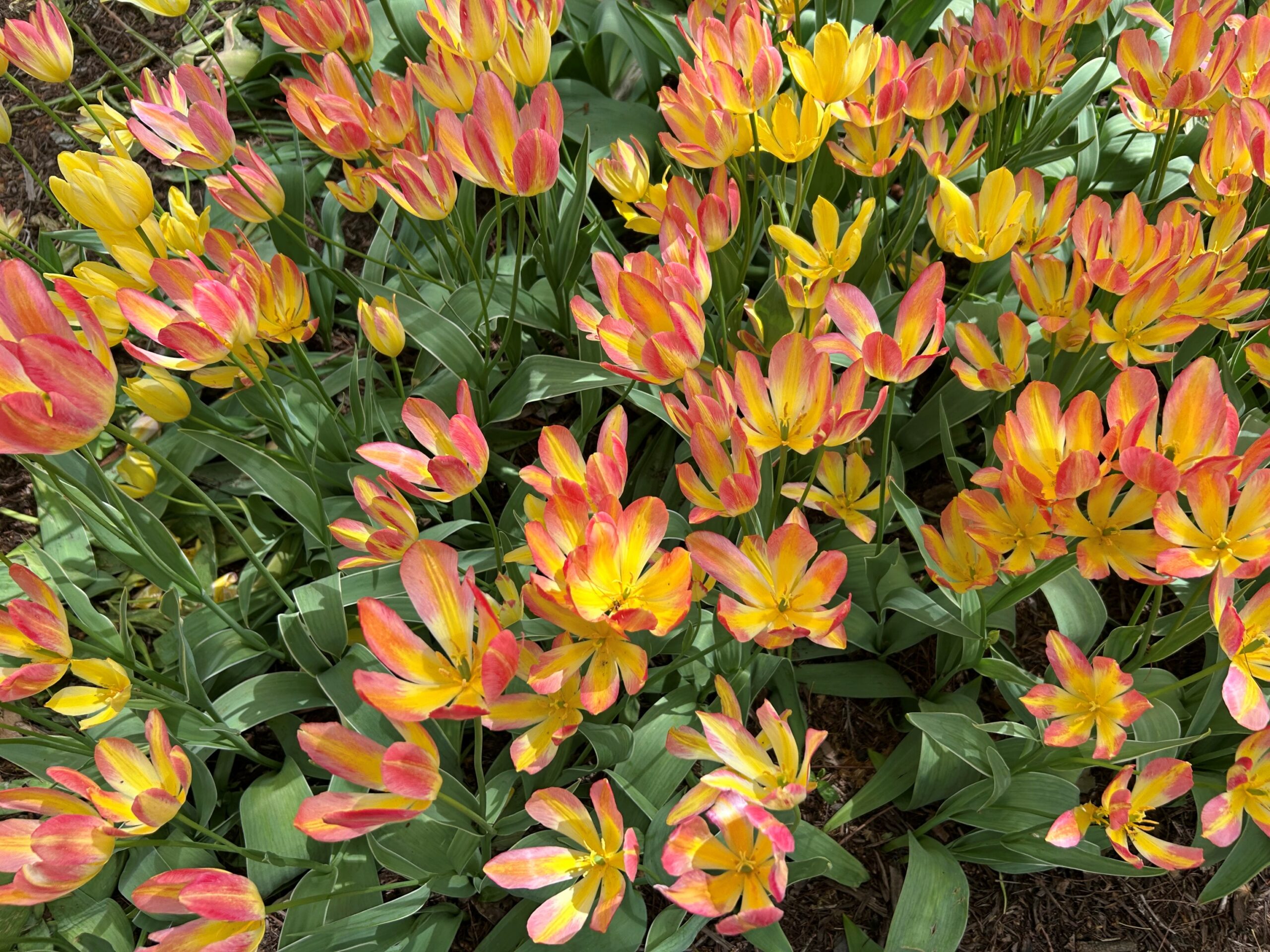
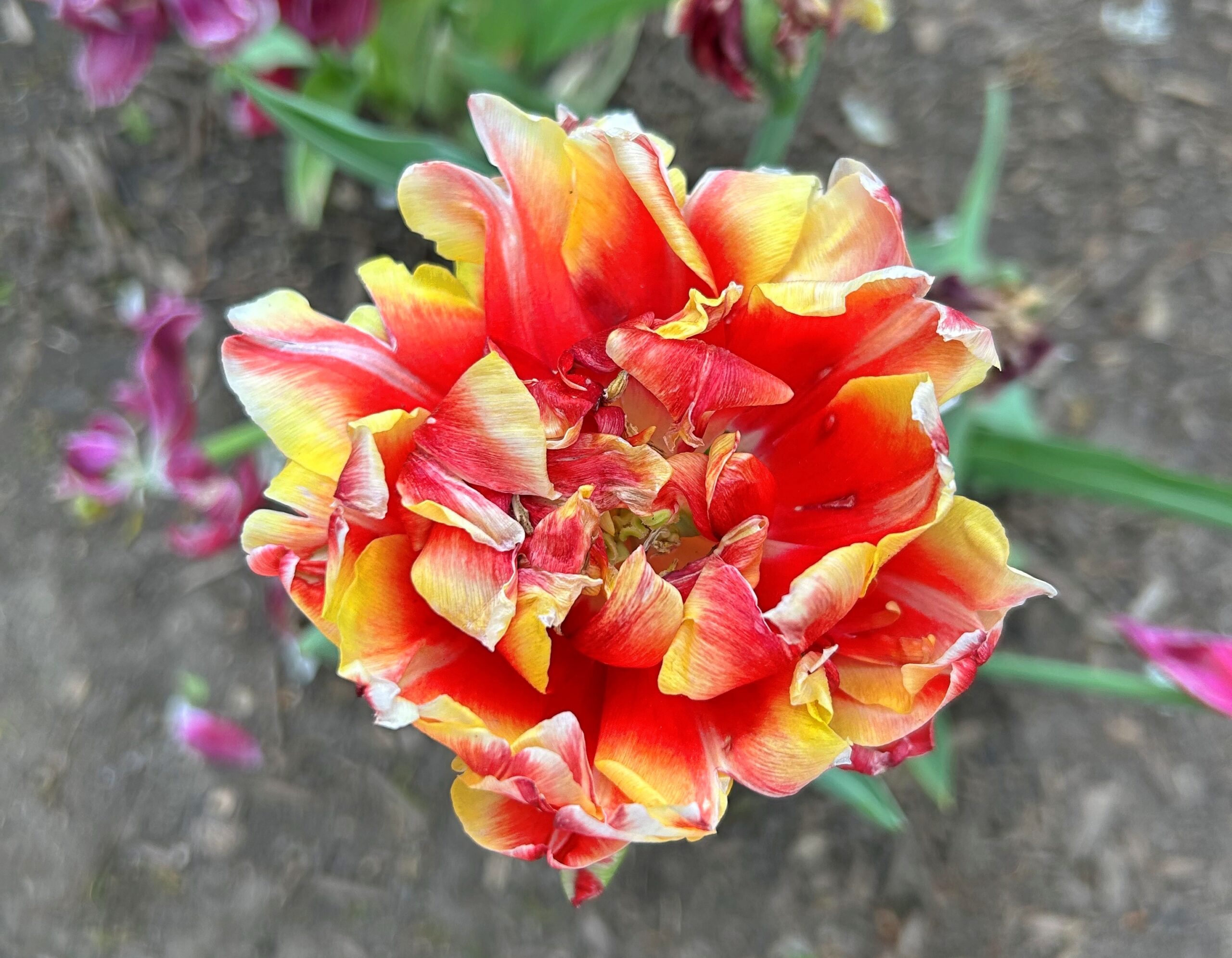
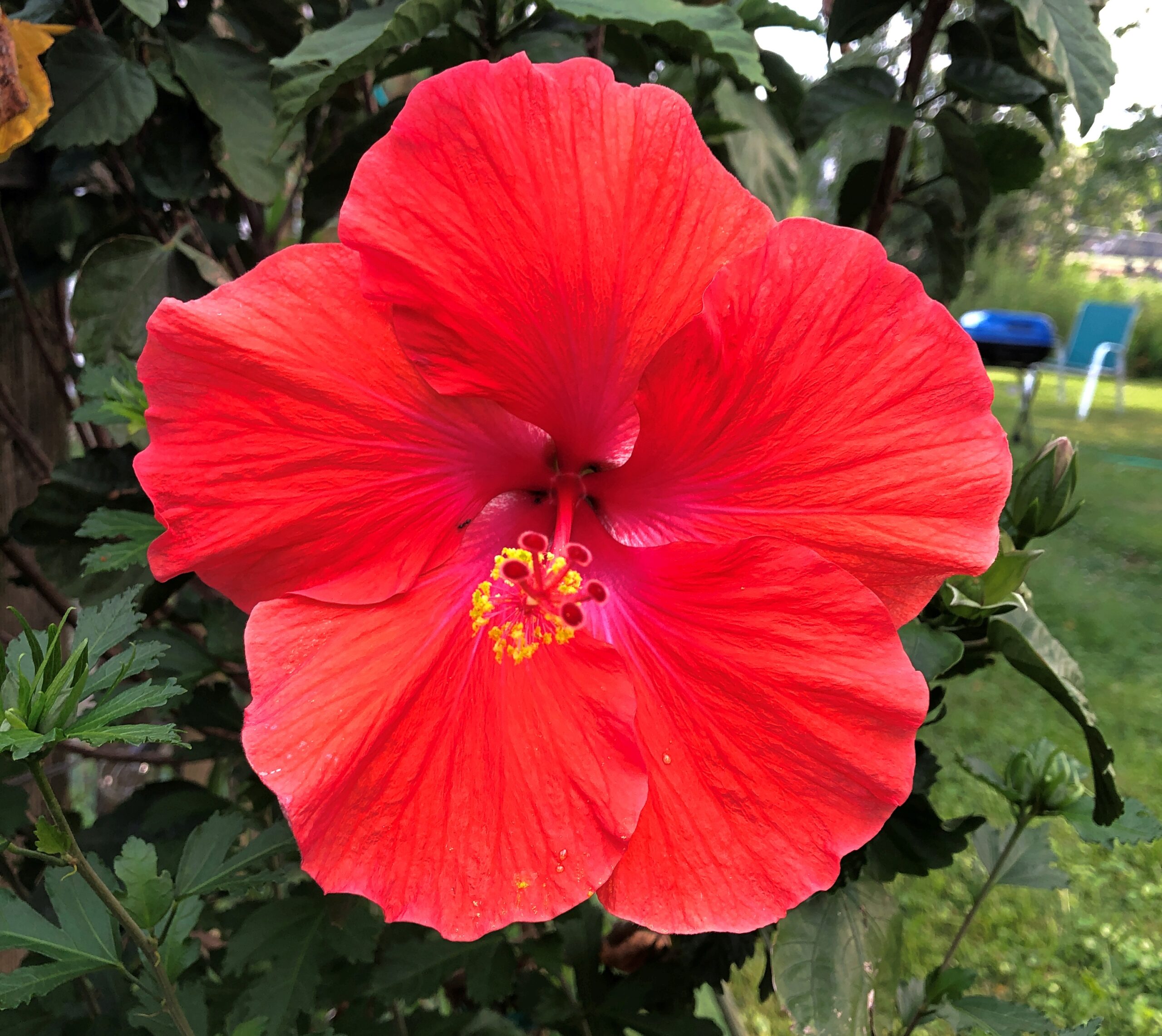
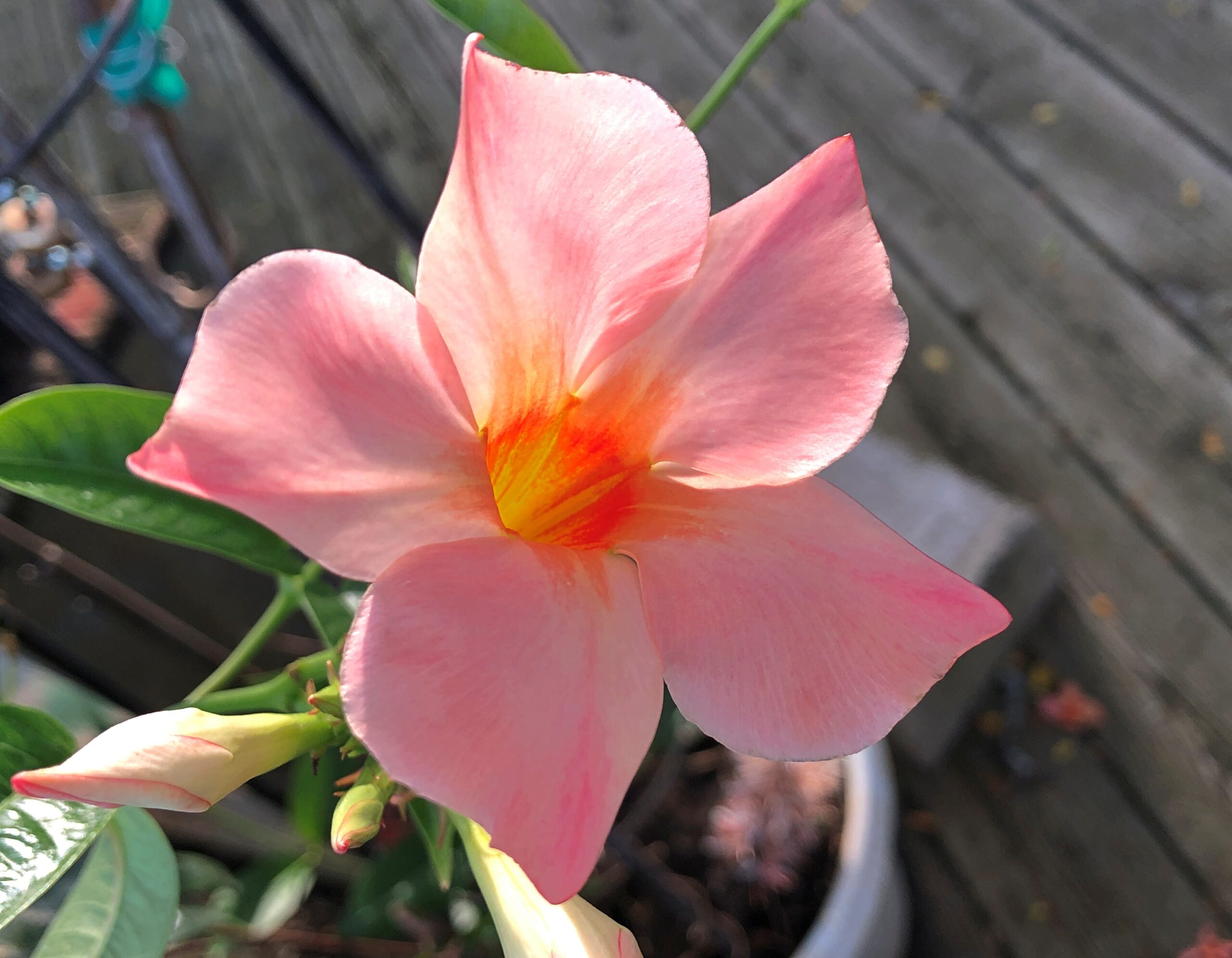
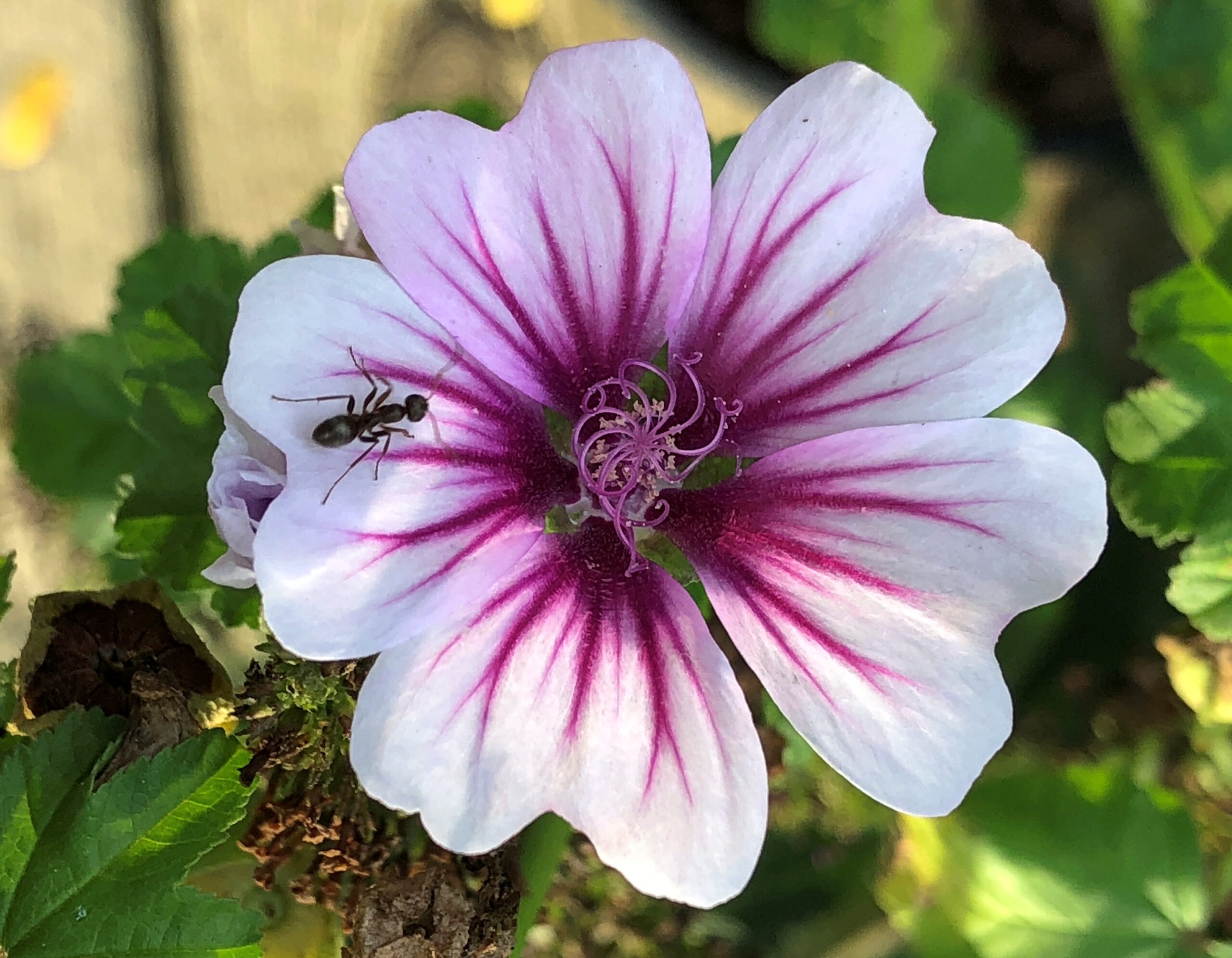
Summer moves forward. Some flora from around the time of the solstice this year, all found on public land hereabouts in the Northwest Suburbs.
It was a rainy summer as of June, and it has been in July. When I got home today, I found driveway and deck puddles and damp bushes. Lush, flowery bushes.
Sad news over the radio: Tom Lehrer, 97, died. All the cool kids in the ’70s had your records in high school, Mr. Lehrer. Not really. But I did, and so did my friends, and we’re better for it even now.
Retail comes and goes. After we visited Jo-Ann’s – where I bought a single item, an olive-theme doormat for our deck – we went a short distance to something new. Newish, that is, to North America, but well-established in Japan: Daiso.
We hadn’t noticed this particular northwest suburban location before. Back in February, we visited one in Tokyo, which was my first time at the chain, though I’d written about it before. Worldwide, there are about 6,000 Daiso locations, with only 150 in the U.S., and even those are fairly recent arrivals.
The store has an impressive amount of inexpensive goods, and a more imaginative selection that you’d find in a dollar store. Better designed, too. Things cost money in Japan, naturally, and sometimes quite a lot, but that country doesn’t share the notion, common here in America, that if you don’t pay a lot, you deserve crappy design.
Socks and clocks, among many other items.
Also, an unusual pricing structure.
I didn’t buy one of these, because we have one – an odd souvenir from the Bluegrass Inn during a stay in ’08. More recently I used it to swat moths.
Mangled English, no extra charge. An authentic Japanese touch.