The National Museum of the Pacific War

The National Museum of the Pacific War is a complex of structures at a short distance from each other in Fredericksburg, including the restored Nimitz Hotel, which now houses a museum about Adm. Nimitz; the George H.W. Bush Gallery, which focuses on the war in the Pacific; and more: the Veterans’ Memorial Walk, the Plaza of Presidents, the Japanese Garden of Peace, the Pacific War Combat Zone, and the Center for Pacific War Studies.

The Nimitz Hotel building used to include the war exhibits, but now they’re in the much larger (32,500 square feet) Bush Gallery, open since the 1990s, and expanded in 2009. Outside its entrance is the conning tower of the USS Pintado, a submarine that conducted a number of a patrols against the Japanese.
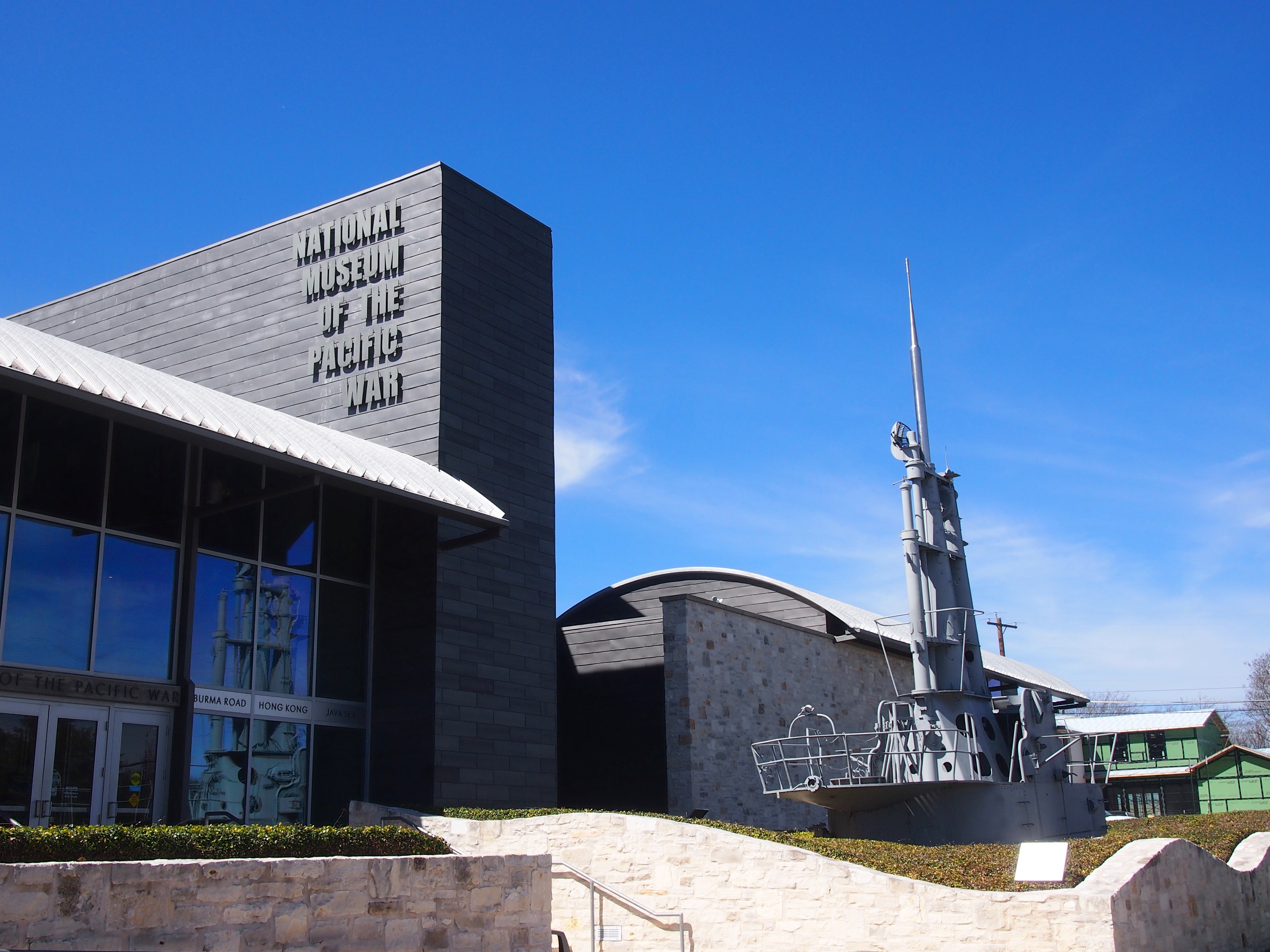
National Museum of the Pacific WarThe museum, organized chronologically beginning before the war and ending at the USS Missouri, is incredibly detailed, and home to a large array of impressive artifacts. That includes some impressively large artifacts, such as a Ko-hyoteki-class midget submarine that participated on the attack on Pearl Harbor, which actually seems pretty large when you stand next to it.
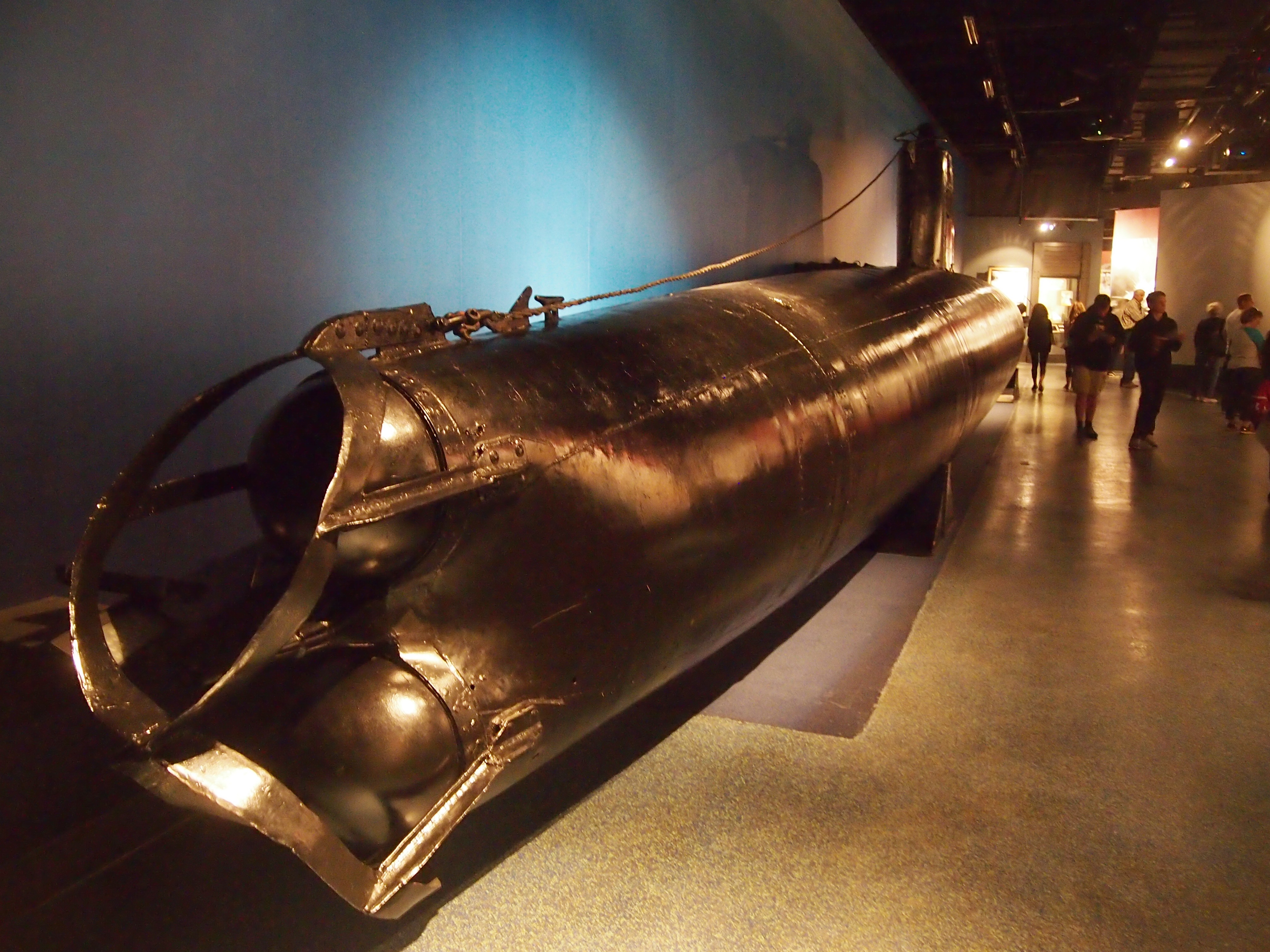
National Museum of the Pacific WarThe pilot of this particular vessel, Ensign Kazuo Sakamaki, survived its beaching and became the war’s first Japanese POW, having failed at suicide. According to the Honolulu Star-Bulletin in 2002, “When the war ended, he returned to Japan deeply committed to pacifism. There, Sakamaki was not warmly received. He wrote an account of his experience, titled The First Prisoner in Japan and I Attacked Pearl Harbor in the United States, and thereafter refused to speak about the war.” (He died in 1999.)

Also on display were a B-25 — as part of a exhibit about the Doolittle Raid — a Japanese N1K “Rex” floatplane, an F4F Wildcat fighter, and a replica of Fat Man, just to name some of the larger items.
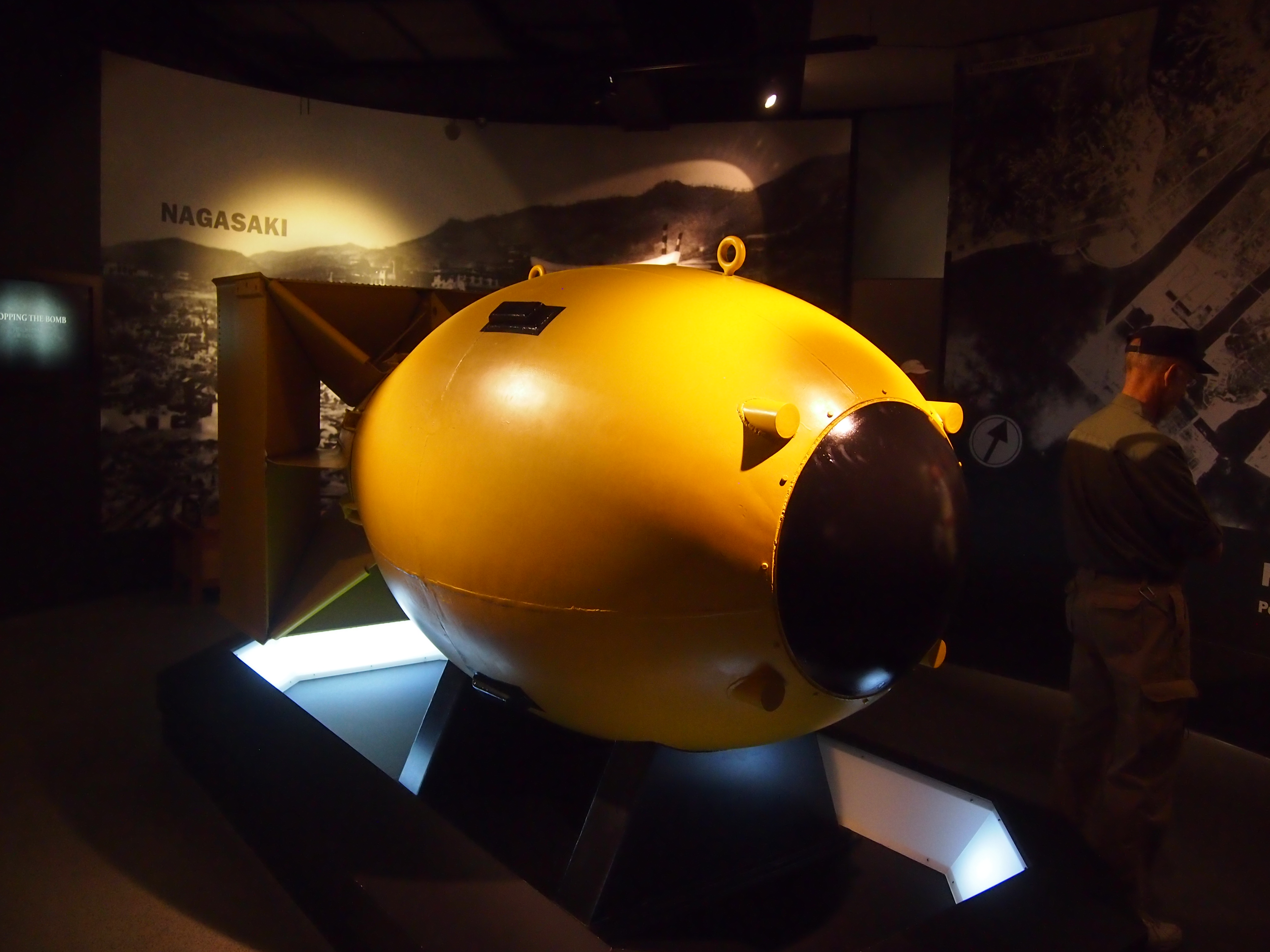
Fat ManThe exhibits also included a lot of smaller weapons, tools, posters, uniforms, model ships and airplanes, military equipment, and sundry gear and items associated with the fighting and the people who were behind the front. Plus a lot to read. Campaigns and incidents both well known and obscure were detailed, such as the effort to salvage the ships in Pearl Harbor in the months after the attack, which was often dangerous work. Other Allied efforts weren’t ignored, such as the Australian advance on Buna-Gona, a campaign that incurred a higher rate of casualties than for the Americans at Guadalcanal.

All in all, a splendid museum. But exhausting. If I’d had time on Sunday as I went from Austin to San Antonio, I would have gone back (the tickets are good for 48 hours). It’ll be worth a return someday.
Fredericksburg Stroll & Der Stadt Friedhof

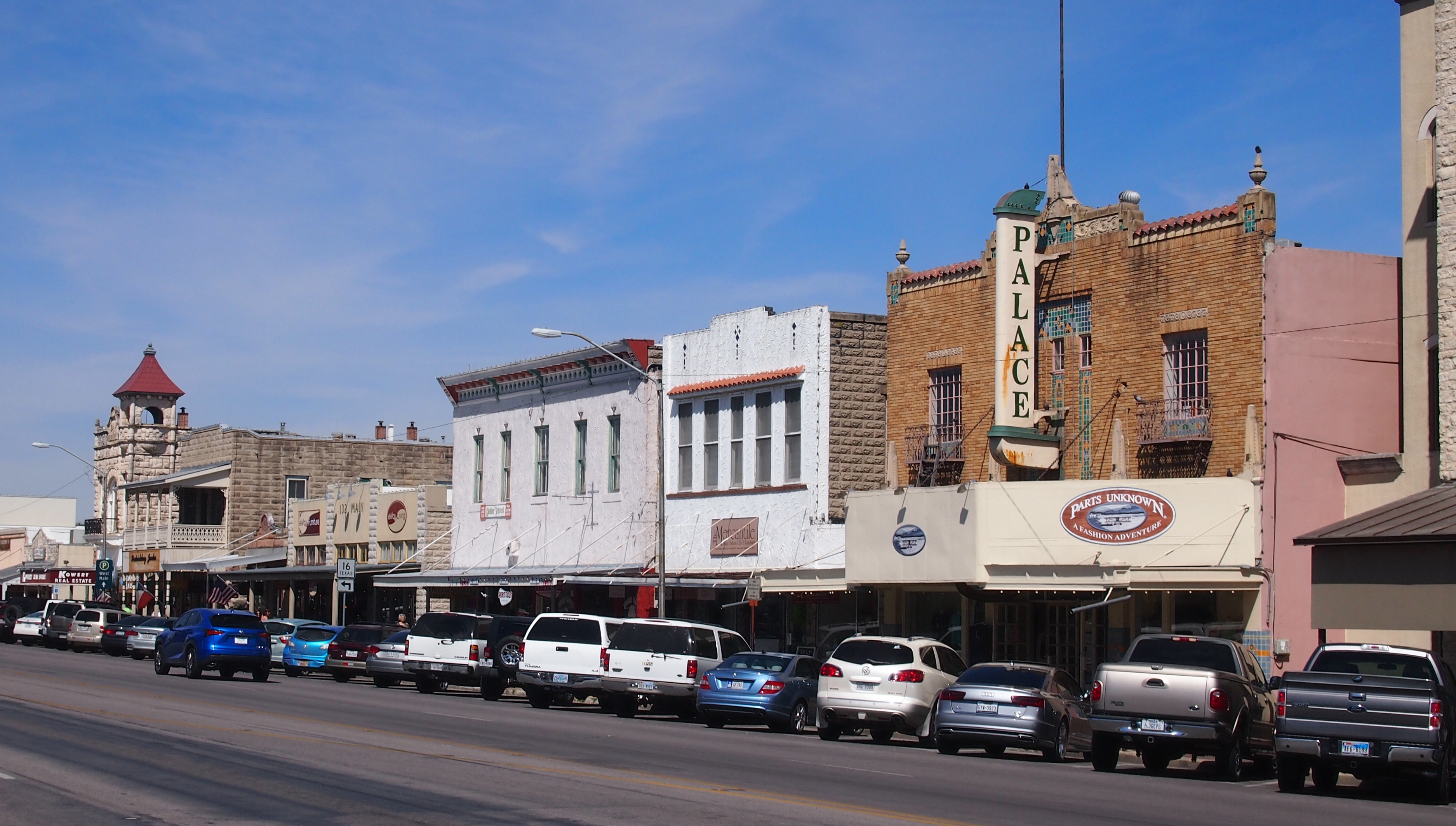
March 4 was sunny and pleasant in Fredericksburg, a settlement dating back to the efforts of German immigrants to Central Texas before the Civil War. A good day for a small town walkabout. As I walked, looking into the Main Street boutiques and wine shops and jewelers (James Avery has a shop there) and bistros and art galleries, it occurred to me that there needs to be a term for a town that partly or mostly lives off of upper middle-class day-tripers, retirees many of them, from near but not-too-near major metros.

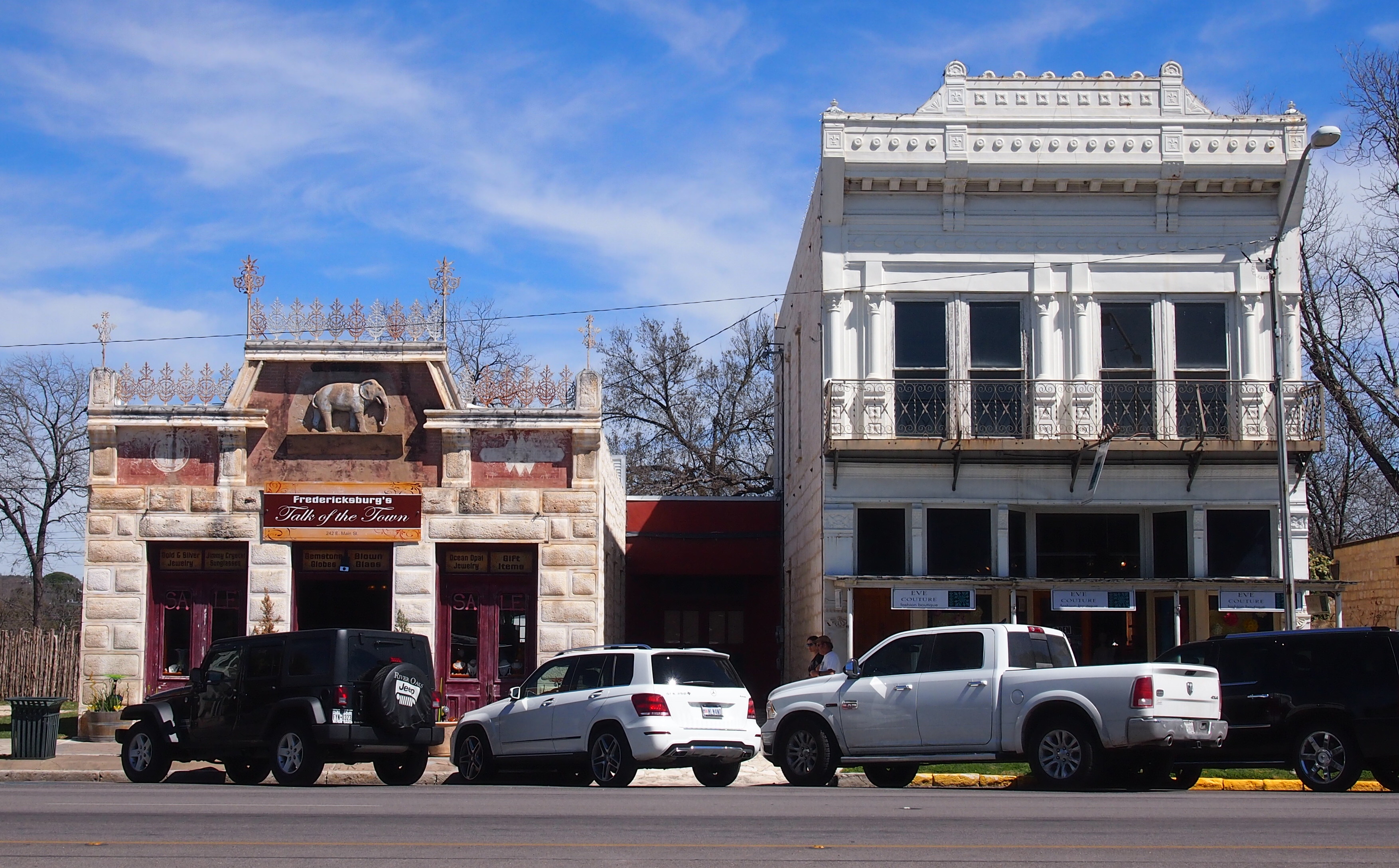
Not tourist traps exactly, though there’s an element of that. I’ve been to a few of these towns, such as Galveston and Galena, Ill., and Sturgeon Bay, Wis., and Portsmouth, NH, and now Fredericksburg. Its locational advantage is proximity to Austin and San Antonio, and the town has a pleasant Main Street, a.k.a. Hauptstrasse, sporting a lot of repurposed 19th-century structures, many of historic or architectural interest.

Fredericksburg 2016The building on the left below was once the White Elephant Saloon, dating from 1888, featuring a whitish elephant above the entrance for reasons probably lost to time.
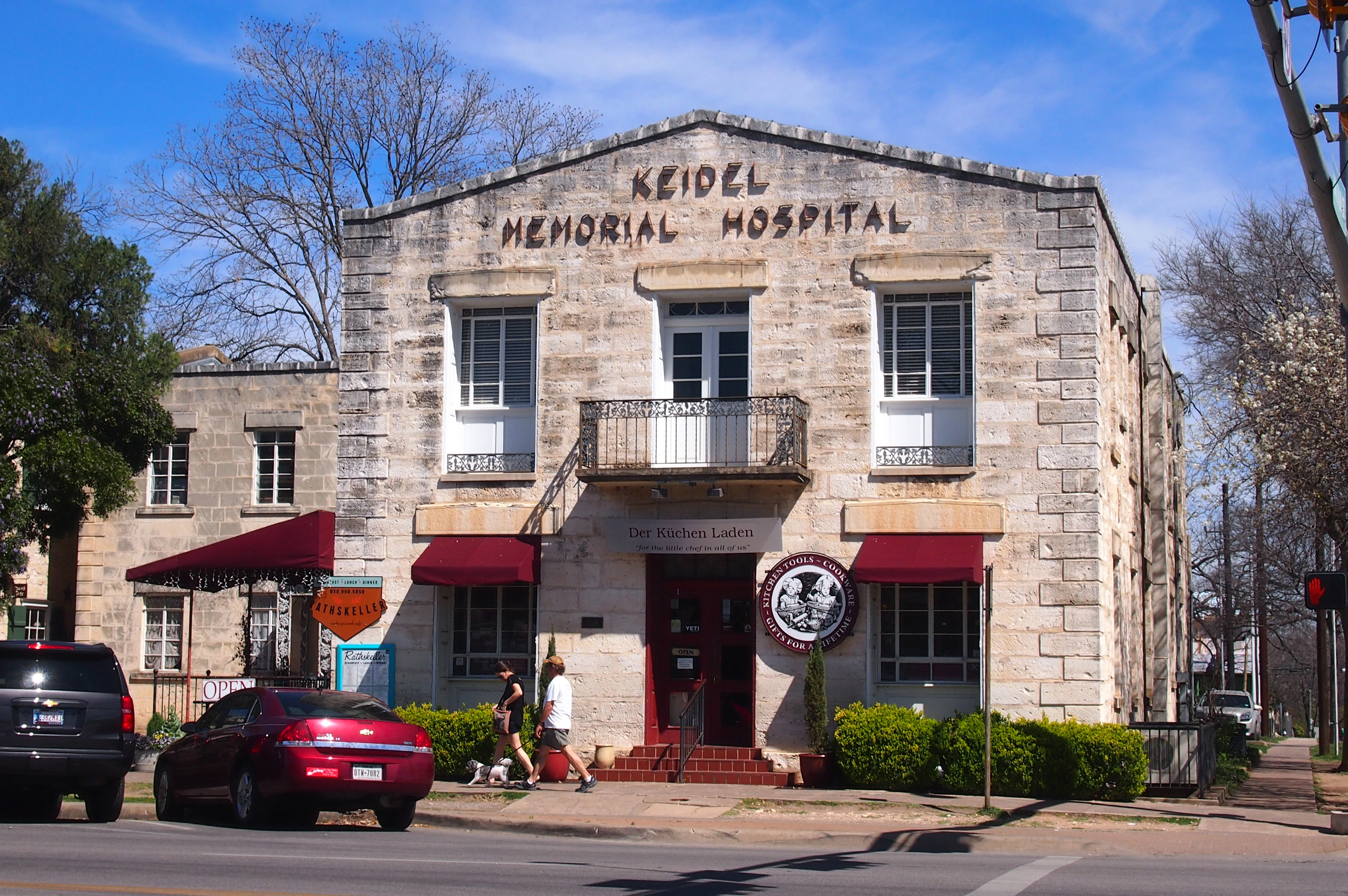
Fredericksburg 2016This was once a hospital.
Fredericksburg 2016I didn’t try for an exhaustive photo record of the many fine buildings in Fredericksburg. These visitors did a much better job of it, including many things I missed.

According to one source at least, St. Mary’s Catholic Church — which is off Fredericksburg’s Main Street by a block — counts as one of Texas’ Painted Churches, most of which are east of San Antonio. Some kind of adoration was ongoing at St. Mary’s, so I was able to drop in to see the lovely interior. Painted, yes, but also featuring stained glass and other objects of beauty.

“Still known as ‘new’ St. Mary’s, the church provides a classic example of Gothic architecture and was consecrated on November 24, 1908,” KLRU tells us. “Its principal architect was Leo Dielmann of San Antonio, with the contractor and builder, Jacob Wagner of Fredericksburg. Built of native stone quarried near the city, the total cost of building and furnishing the church was around $40,000.

“Still fully functional is the original pipe organ built by George Kilgen & Son of St. Louis, Missouri. It was installed in 1906 as a pump organ and has been completely electrified. The beautiful stained glass windows were added around 1914 and 1915.”

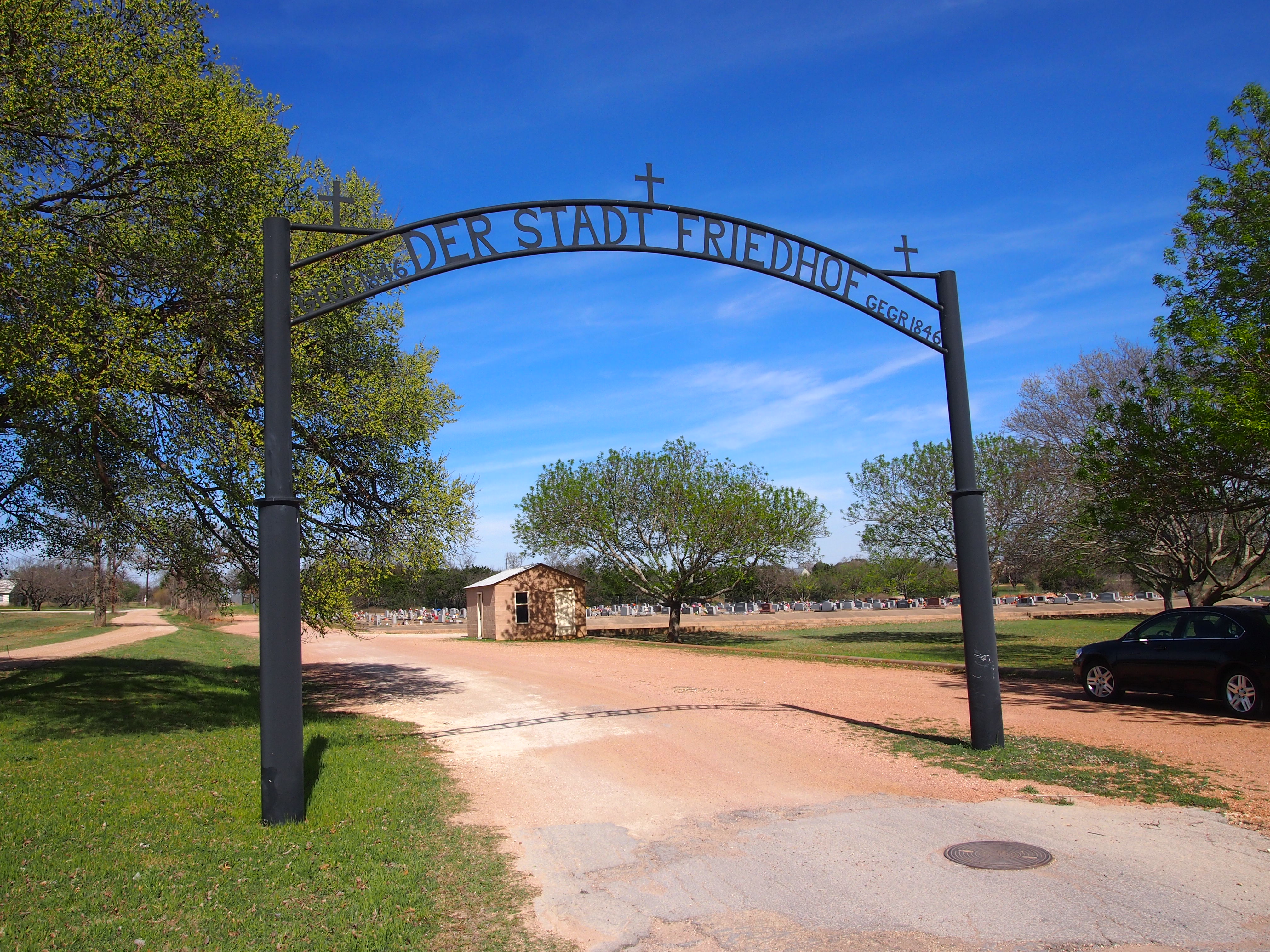
Further away from Main Street — and with absolutely no day-trippers or anyone else (alive) around — was the Der Stadt Friedhof, a cemetery established in 1846.
Der Stadt Fredhof Gate, FredericksburgIt’s more interesting than picturesque. For one thing, there are no trees or other large plants to speak of on the grounds, except out at the periphery. There’s a little funerary art, but its presence is fairly muted.

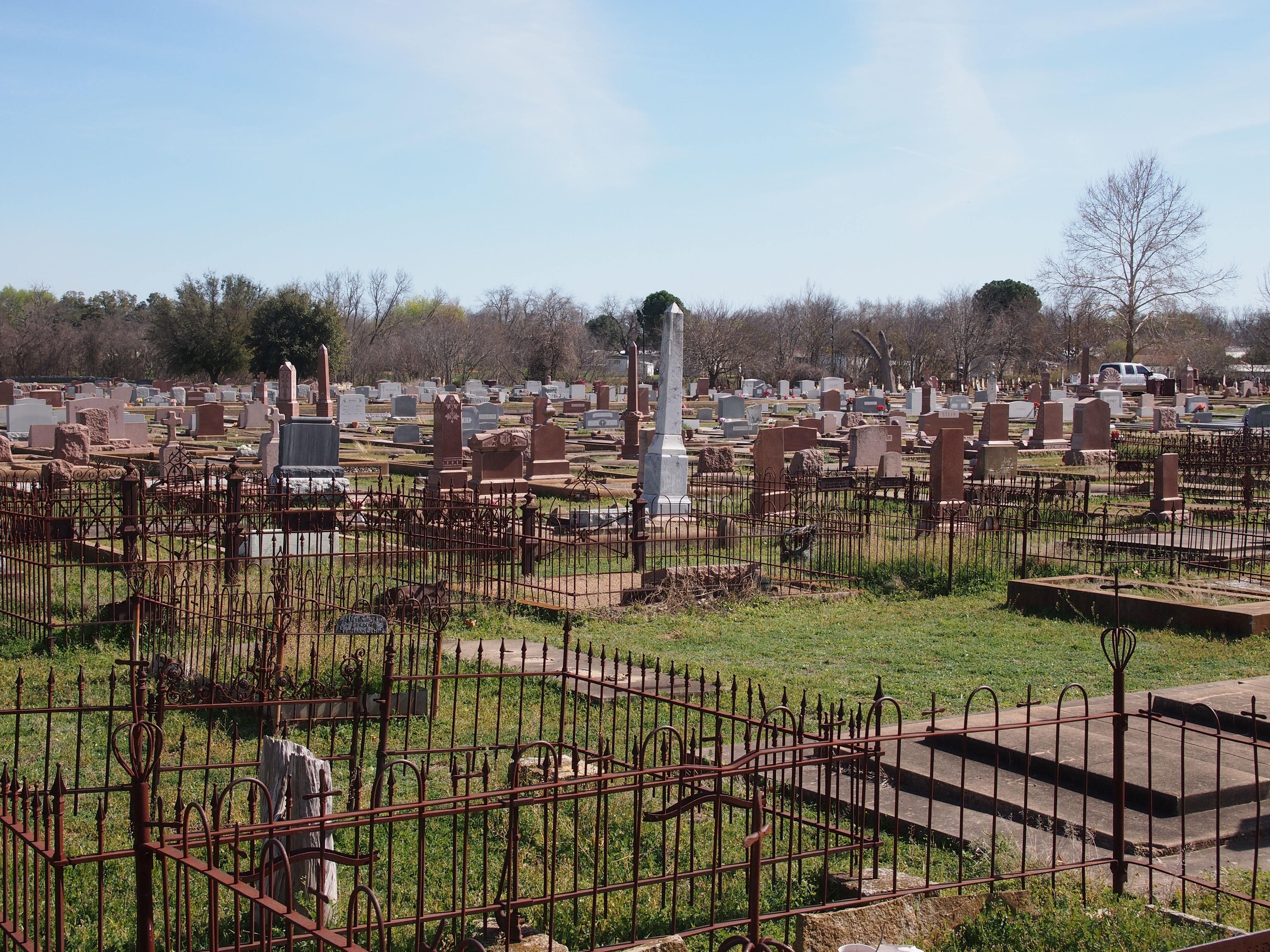
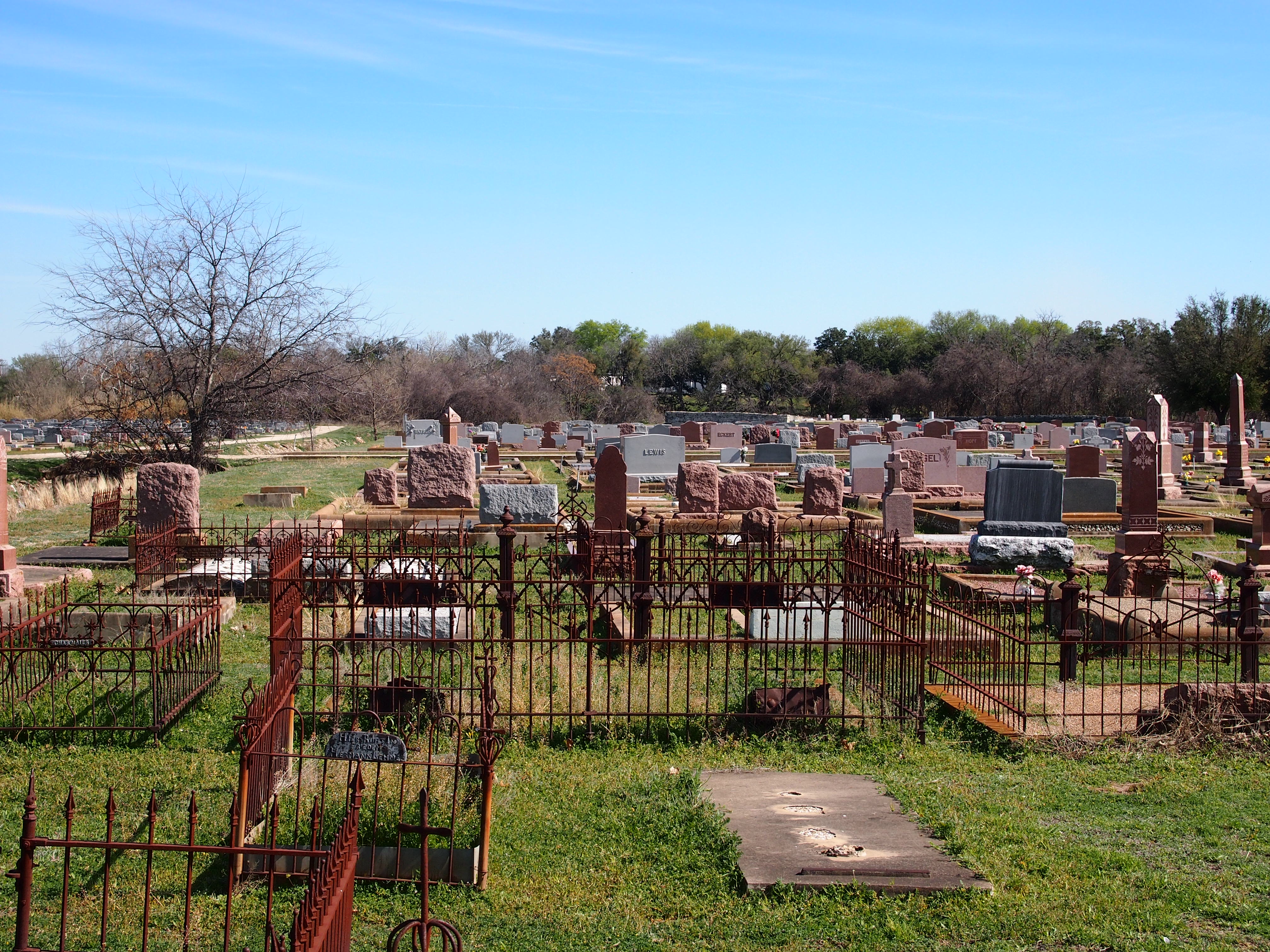
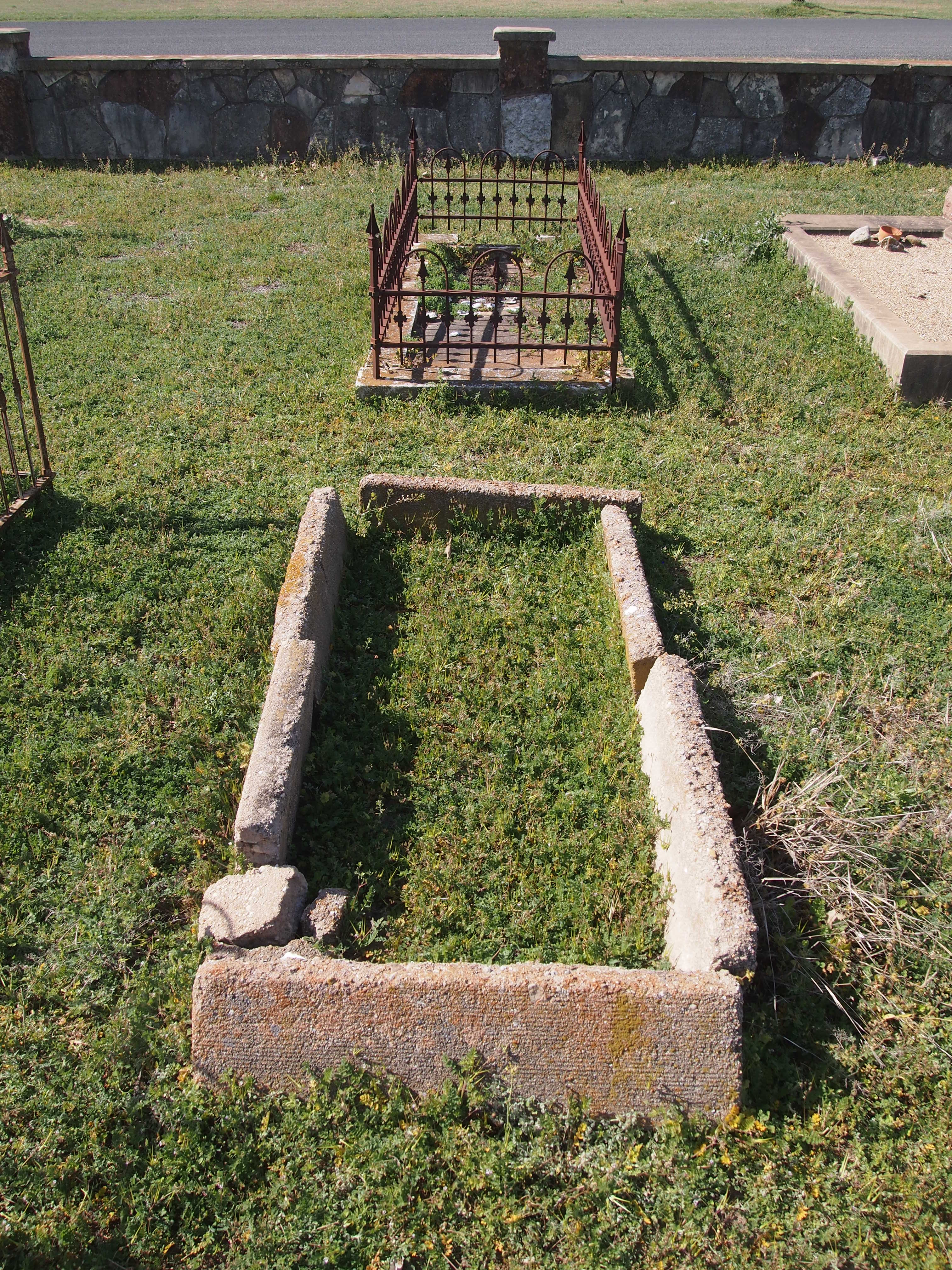
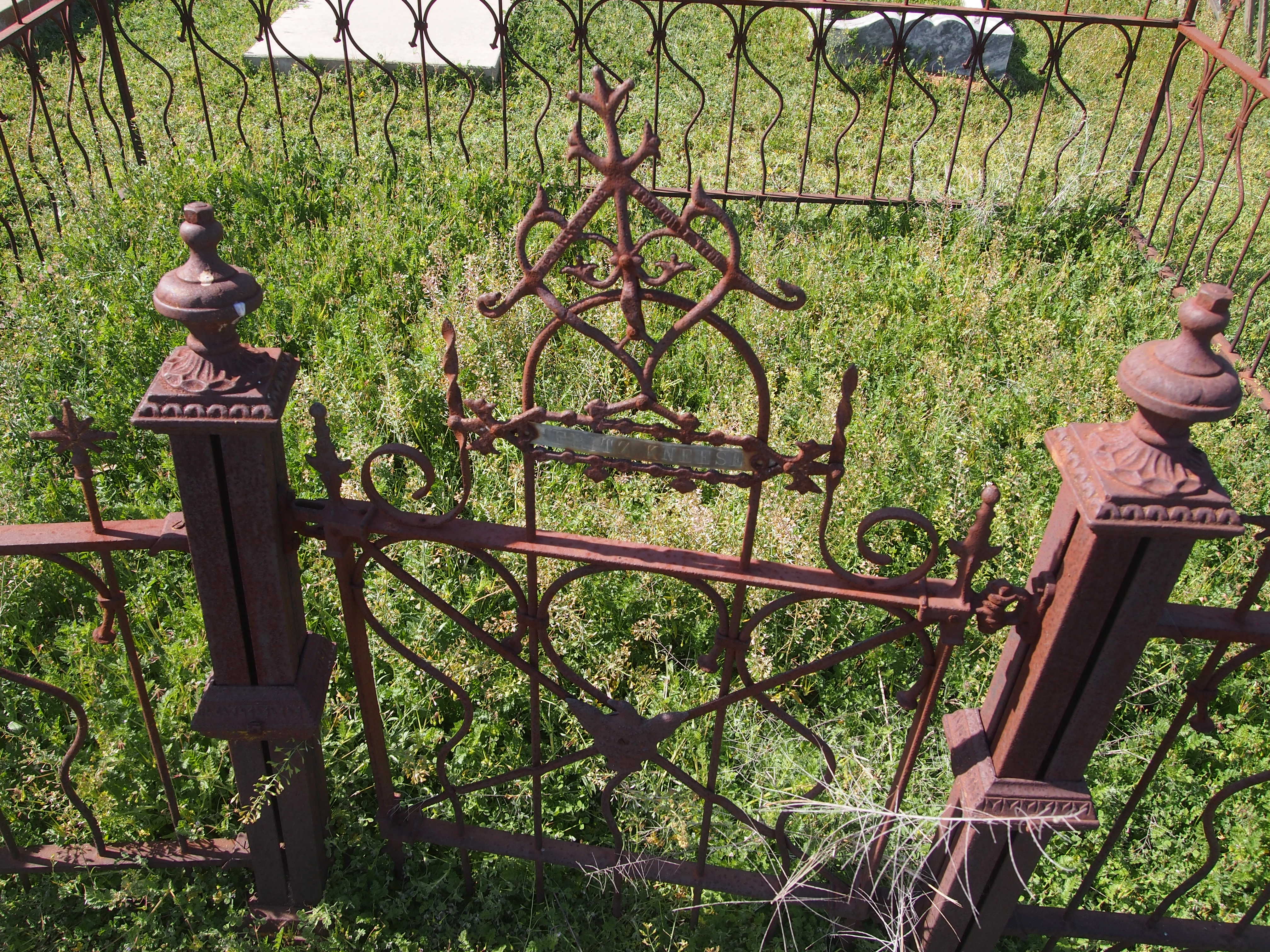
Still, I enjoyed looking around. The further you get from the boundary roads, the newer the stones become. Among the older stones at the edge of the cemetery are a number of graves surrounded by iron fences.
Der Stadt FriedhofDer Stadt FriedhofMany of which are neglected.
Der Stadt FriedhofDer Stadt FriedhofAlmost all of the oldest stones are German, with ethnically appropriate names, such as Durst, Kallenberg, Keidel, Kramer, Lochte, Schmidt, Schuchard, Stein, Weiss, Zincke, usw. Adm. Nimitz’s parents are somewhere in the cemetery, though I didn’t look for them, and the admiral himself is buried at Golden Gate National Cemetery in San Fransisco.

South Texas Flora, Early March

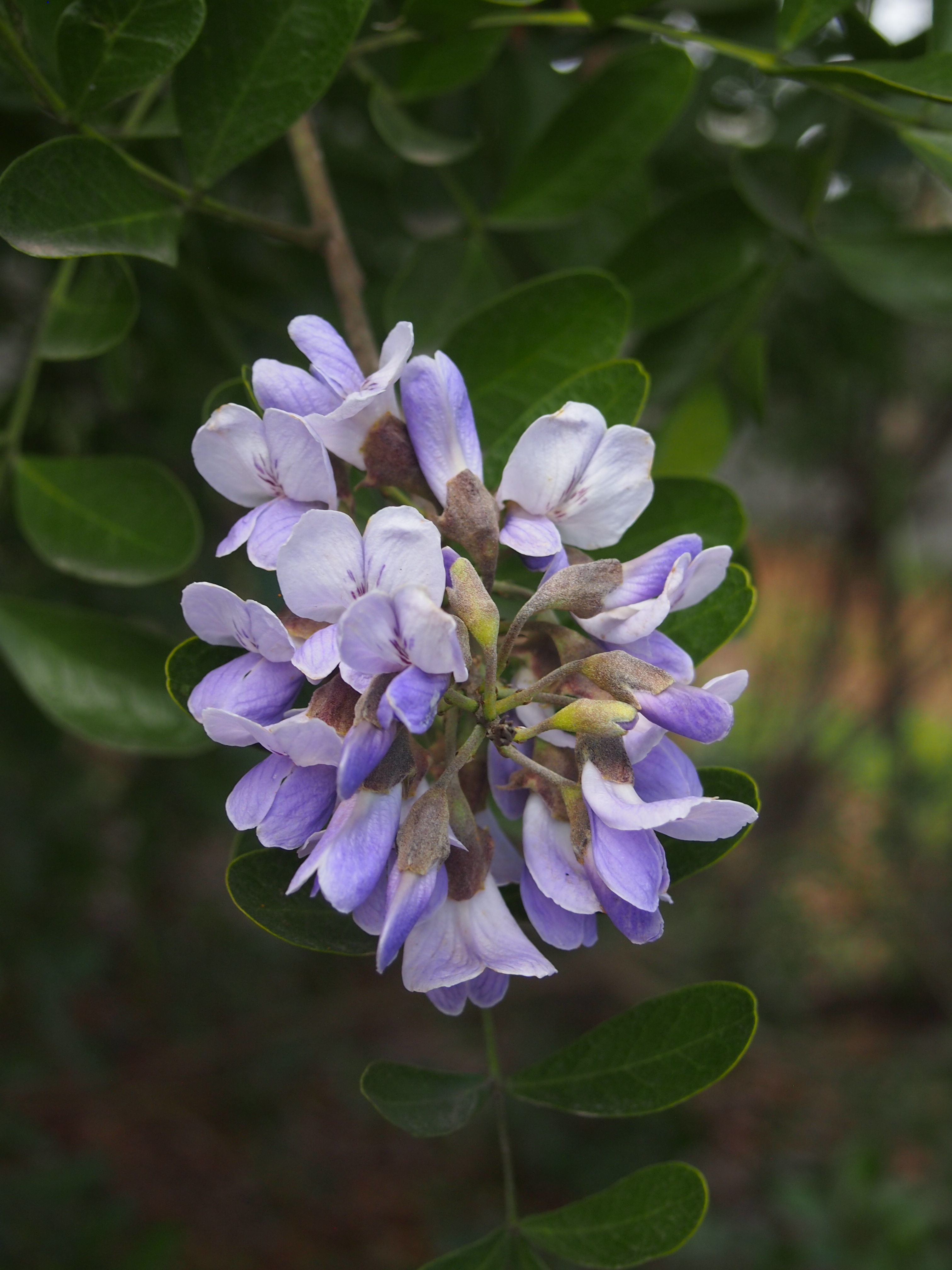
While walking along in Fredricksburg, Texas, on March 4, 2016, I noticed bluebonnets beginning to bloom. Not a sweeping field of bluebonnets, as you see in Hill Country paintings, or occasionally in person, but those emerging from a small green patch ‘tween concrete and asphalt. It was a pleasure to see them all the same.

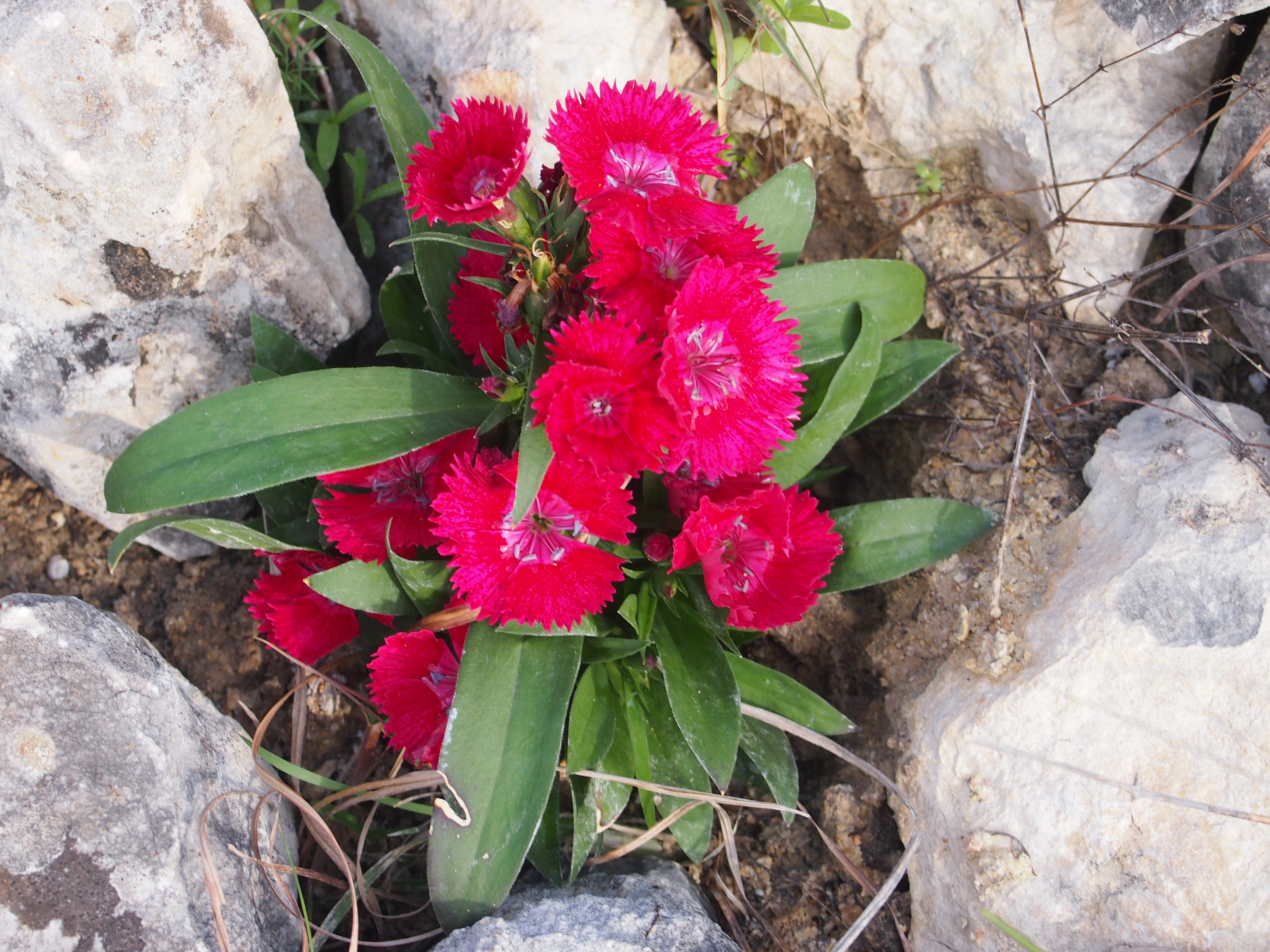
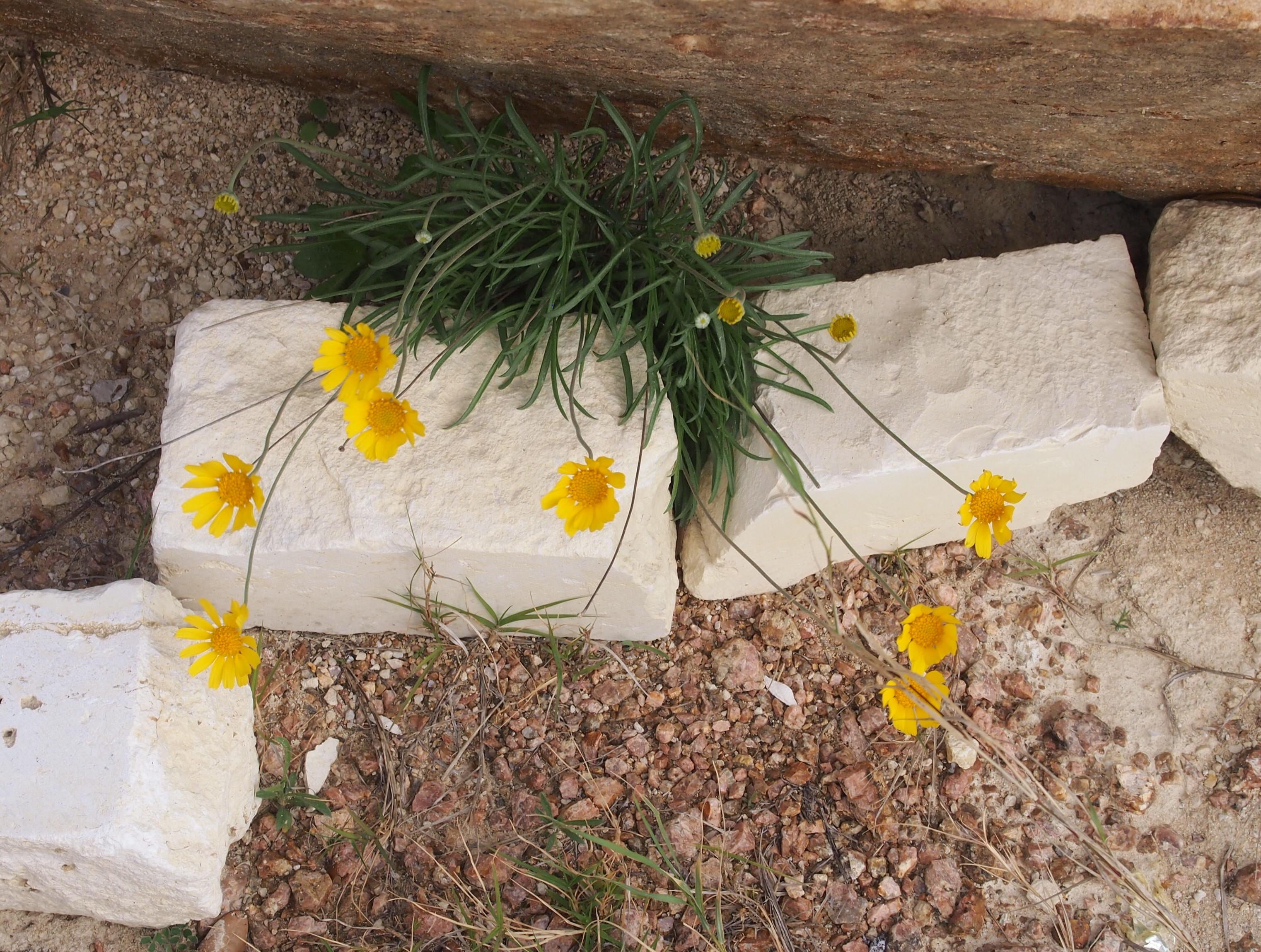
Up in Illinois, I did see a handful of croci beginning to push out of the earth before I left. But nothing like the early spring flowers of Texas. Such as those emerging from rocky ground.

Or on bushes.

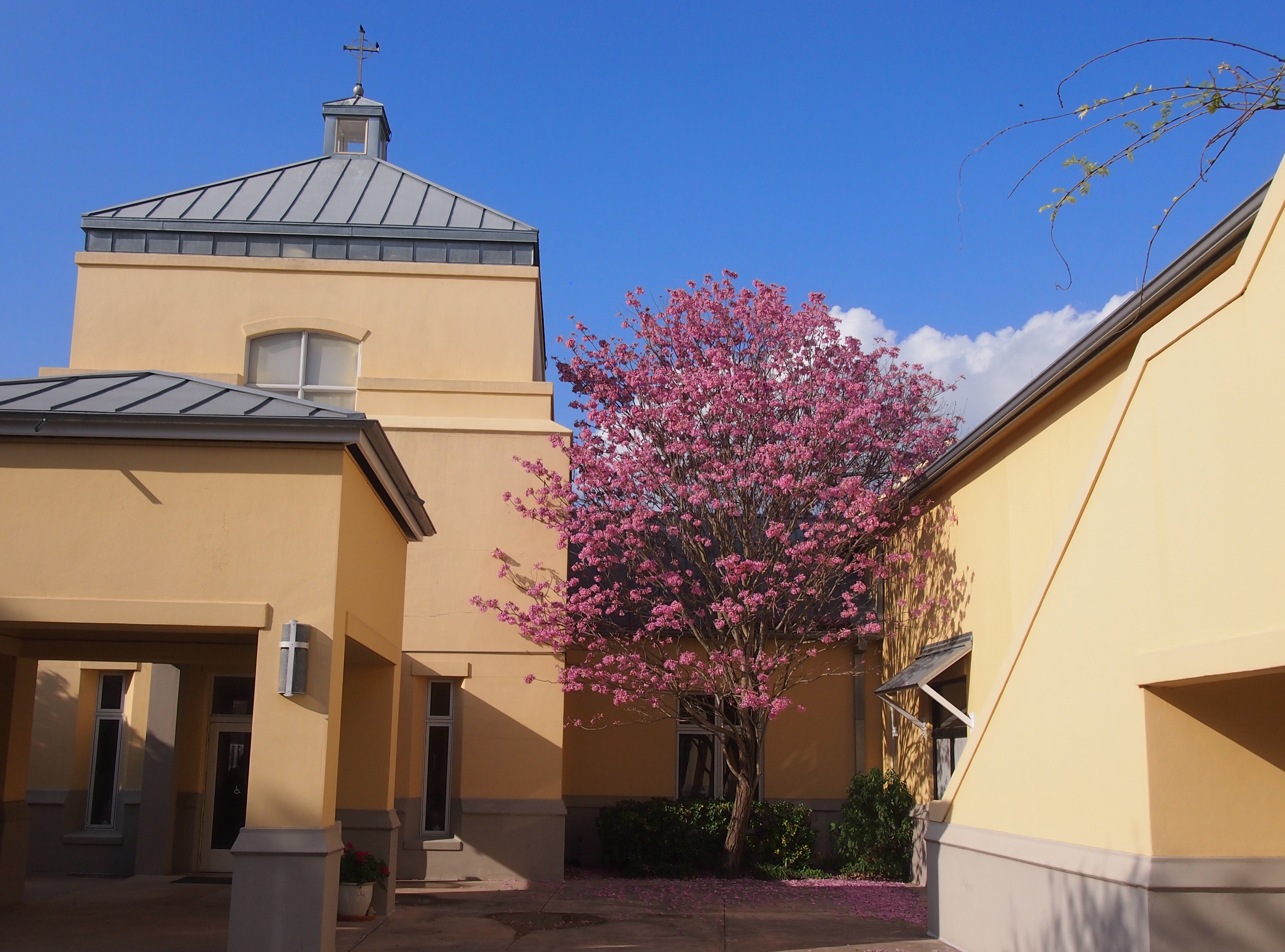
And trees.

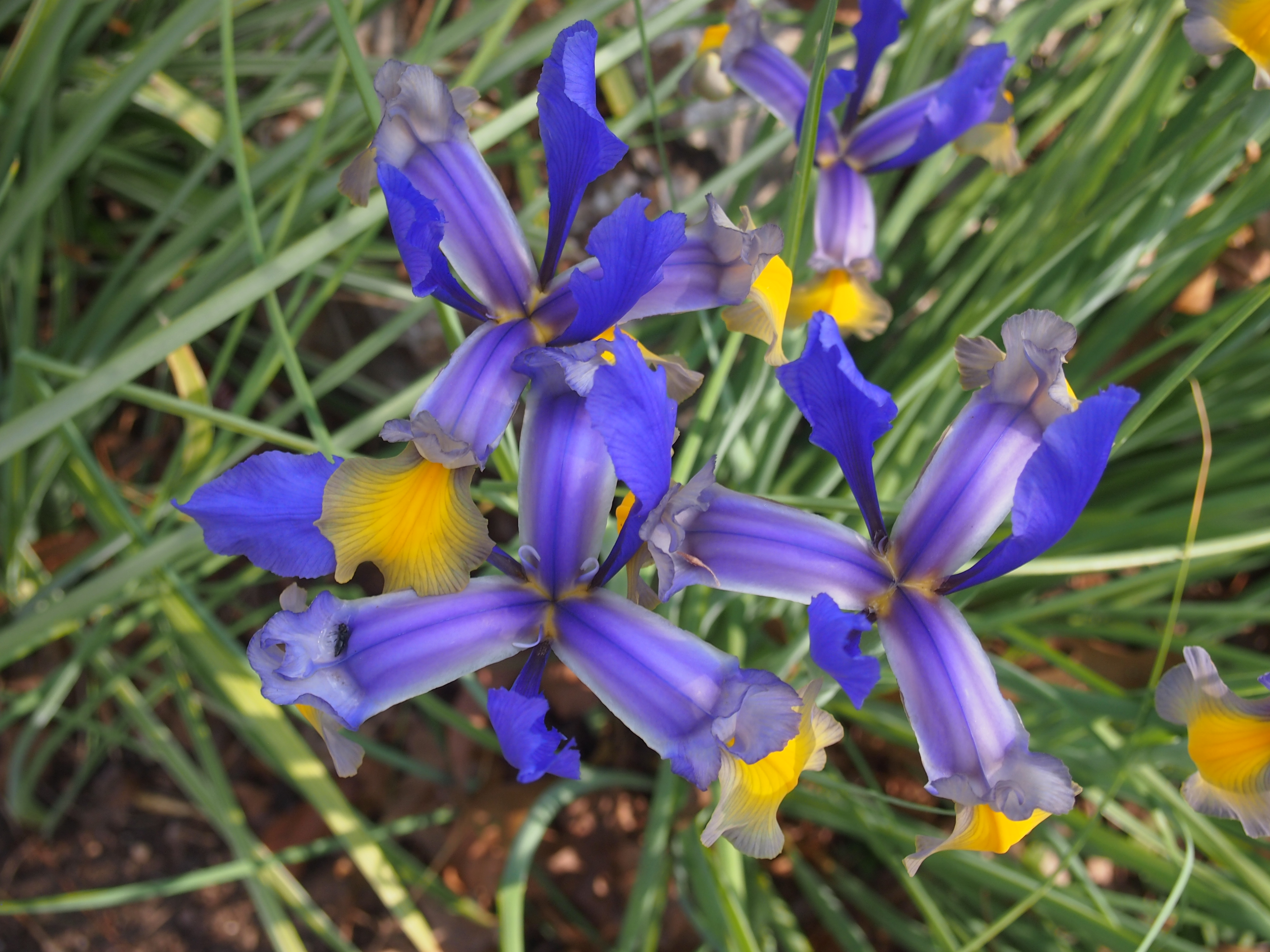
Plus the glories of irises, always a favorite, wherever they grow.

What’s the matter,
That this distemper’d messenger of wet,
The many-colour’d Iris, rounds thine eye?

GTT Spring ’16

I left for my first 2016 visit to Texas on March 3. It was a big wheel, little wheel trip: a few days in Austin and the Hill Country, a week in San Antonio. When I left Illinois, there were patches of snow on the ground; in South Texas in early March, the grass is green and a few trees and leafing, and there are a handful of flowers and other buds. Heavy rain is always a distinct likelihood in early spring down there, and sure enough we had a couple of thunderstorms.

I visited my mother, both brothers and a nephew and his girlfriend. I spent time with a few old friends — in one case, someone I’ve known since 1973, Tom, a longtime resident of Austin. Our friendship might make the 50-year mark with both of us still alive. I think the actuaries would be with us on that, but who knows?

Out in the Hill Country, which is hardly remote and the opposite of sparsely populated in our time, I wandered around a main street designed to please day trippers, took in one of the most detailed war museums I’ve ever seen, visited the boyhood home of a certain president from Texas, pondered a cemetery full of Germans, saw an elegant Gothic church, happened upon a hilltop vista, and ate beans and jalapeño-cheese cornbread at a storefront restaurant.

In Austin, I saw a city that isn’t what it used to be. The thing about Austin, though, is that it’s always been a city that isn’t what it used to be. That doesn’t bother me particularly. I mainly go to visit old friends, such as the aforementioned Tom, who aren’t who they used to be — and yet who are in some ways. Such is the paradox of knowing people for decades. I also saw Blue Healer at Stubb’s Bar-B-Q. My nephew’s in the band. They’re really talented.

Each time I visit San Antonio, I try to spend a few hours outside of the familiar grooves laid down decades ago. I was able to this time. When I started to do so consciously, back around 2009, I thought it would be hard to find interesting things outside those grooves. I was wrong. In a city this size, with a history this deep, it isn’t hard at all. Such places includes tumbledown cemeteries and new green spaces and milestones of another era and the Blue Hole and China Grove, Texas, and a big basilica.

20,000 Days

Texas Independence Day. As good a reason as any to knock off for a while, till about March 13. Don’t forget to Remember the Alamo on the 6th.

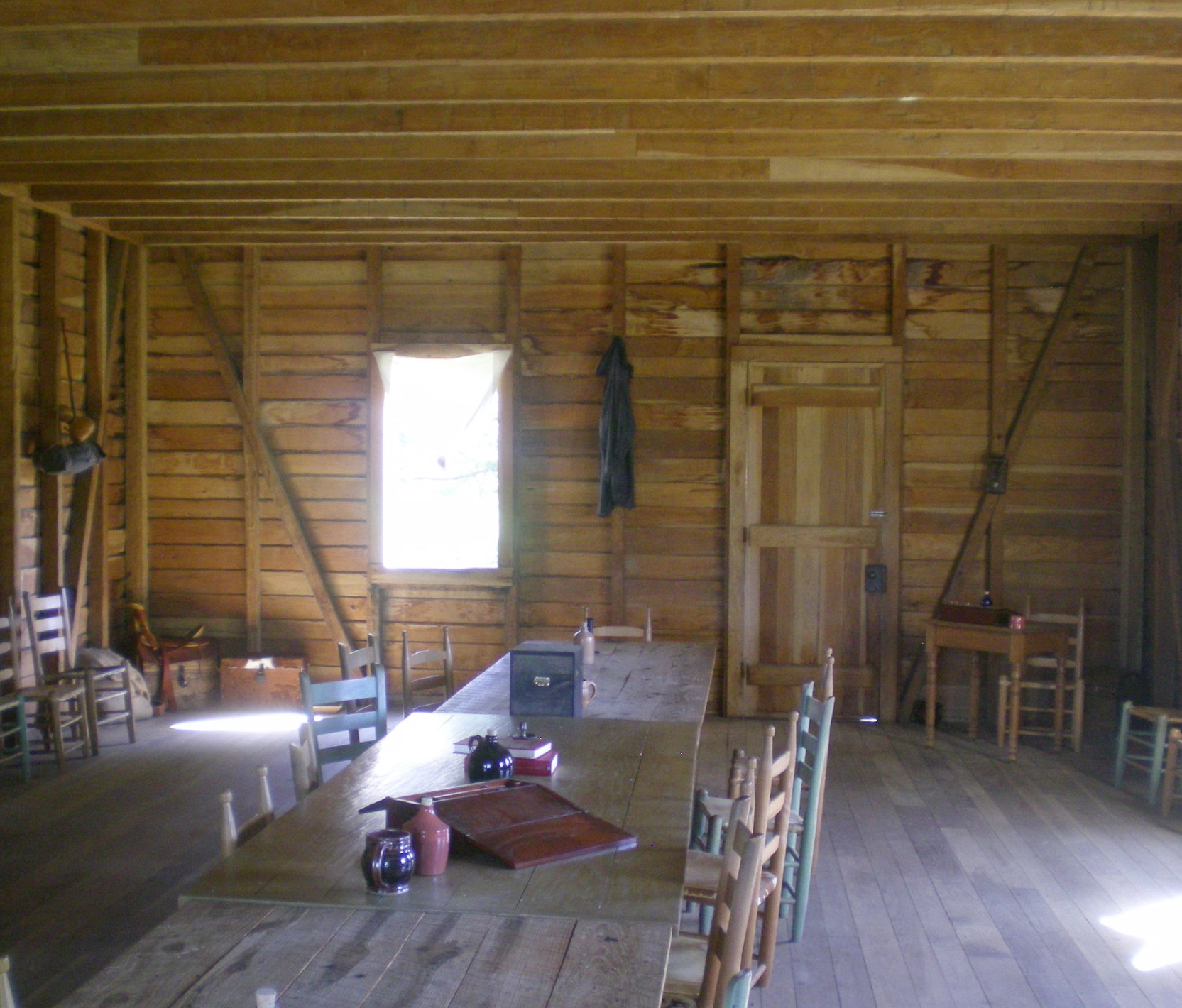
Here’s the interior of the Texas Hall of Independence in Washington-on-the-Brazos, as seen a couple of years ago. Everything’s a replica, including the building, but never mind.

Texas Hall of IndependenceThe handy timeanddate.com tells me I’m about to be 20,000 days old. Not bad.

The motivational poster notion of “living every day fully” is malarkey, and not just because that’s awfully vague. People can’t live like that. Most of my 20,000 days have been nondescript, though sprinkled with good and bad moments, either forgotten or remembered, while some days have been very good indeed, and none (so far) have been really horrible. Not everyone gets to be that lucky.

Michelin’s Central Texas

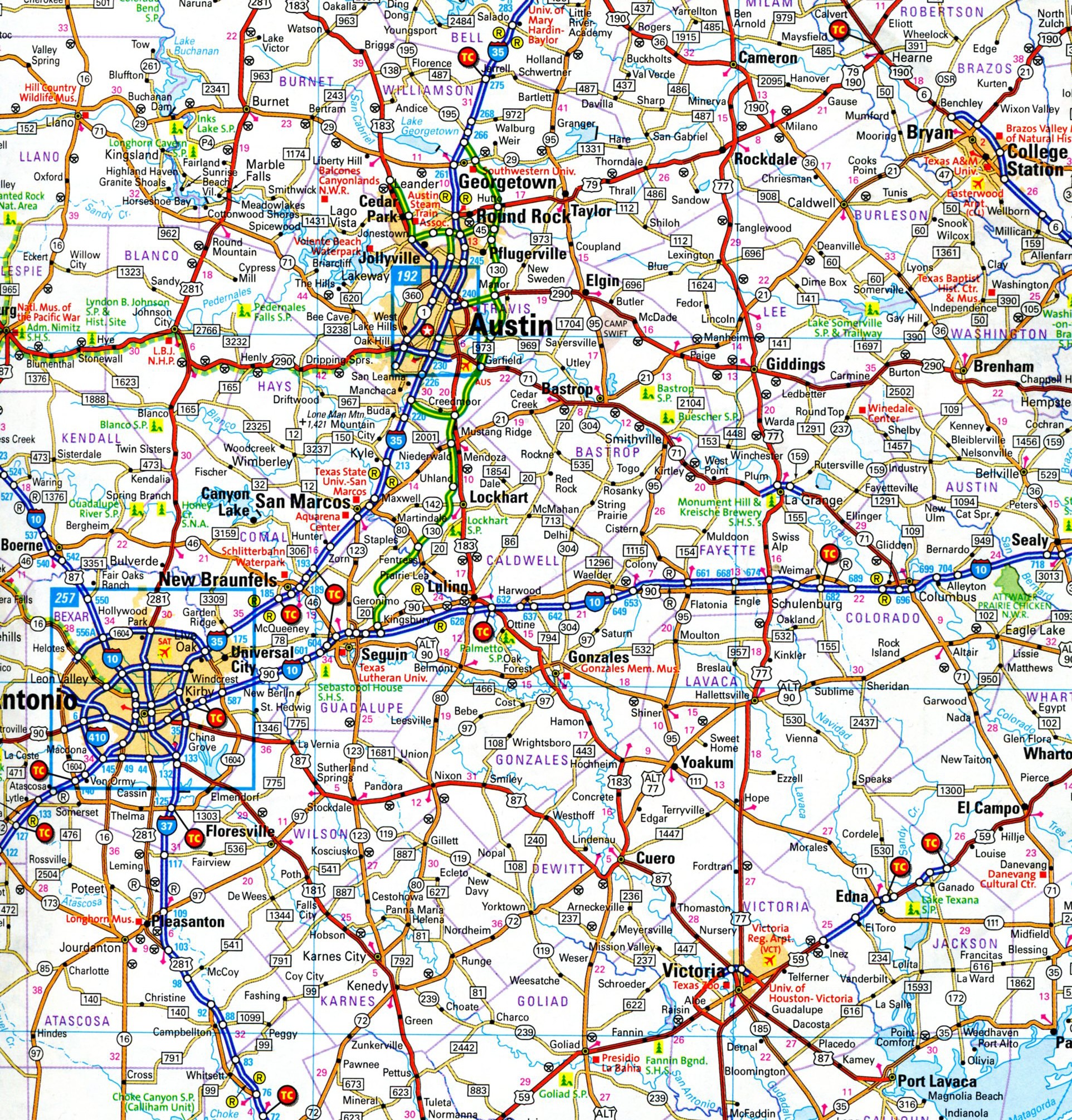
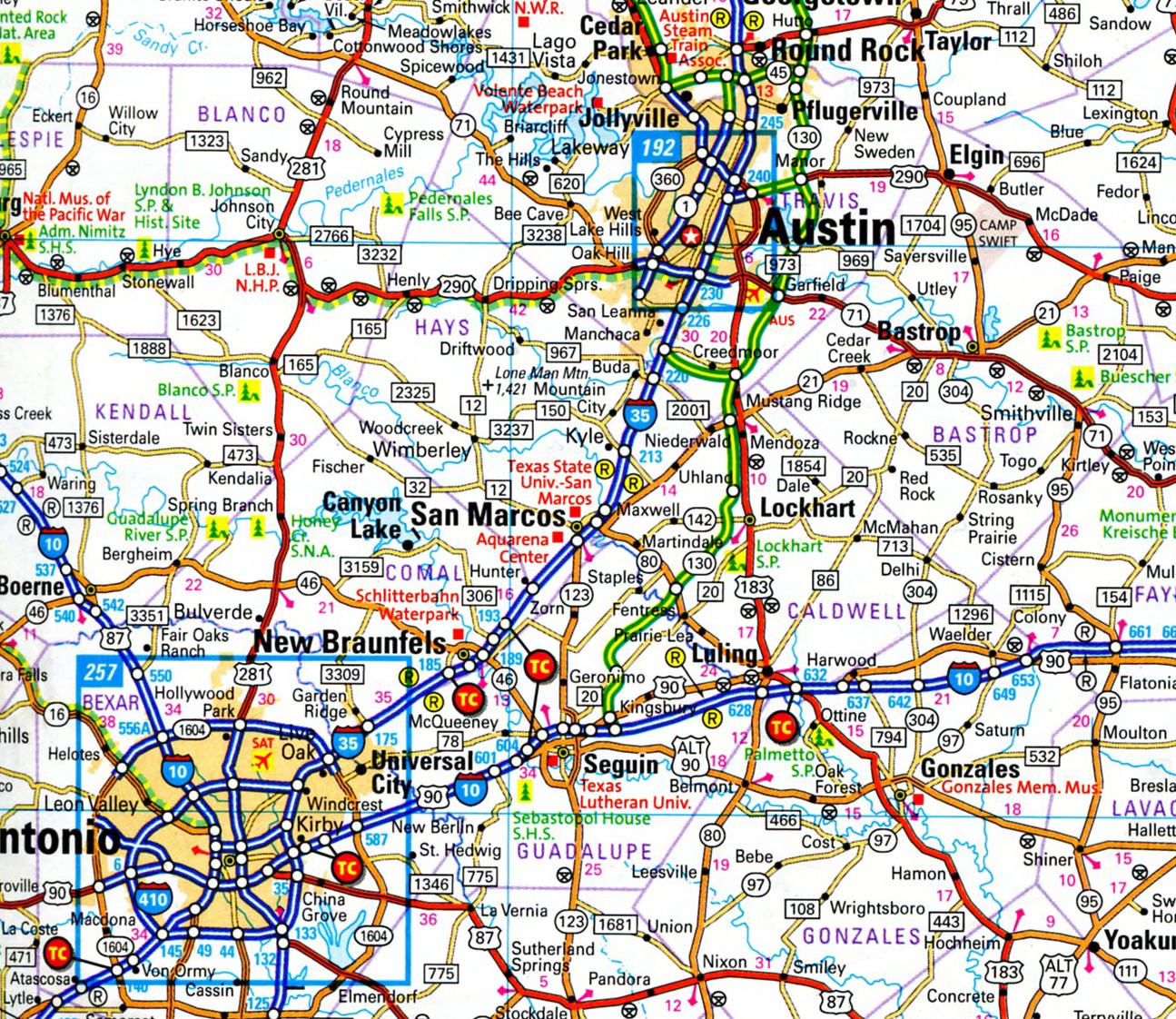
Here’s another map of considerable usefulness and aesthetic value. This is a detail from the Michelin 2015 North America Road Atlas.

CentralTexasI bought the 2003 edition back when it was new, but by last year it was worn out, so I replaced it. Instead of providing a map or two for each state, as the larger Rand McNally does, Michelin divides North America into a grid of squares. Central Texas above happens to be on square 61. The system takes some getting used to, but on the whole it works.

I also still buy Rand McNally most years. Some things on those maps won’t be on Michelin and vice-versa, though since Rand McNally is 15¼ inches x 10¾ inches, and Michelin is 8 x 11, the former has more room for detail. Yet Michelin packs an amazing amount of detail, as good maps should.

CentralTexasThen there are state highway maps. In whatever state I pass through, I try to pick up one. They were always easy to find in Texas — every rest stop with bathrooms used to have them, and maybe still do. The lesson is, you can’t have too many maps.

Without maps around the house, how could you browse? Looking at the Texas 61 map just now, I notice towns I’ve never heard of — at some distance from San Antonio, where I know most of the surrounding burgs — including the likes of Bleiblerville, Blue, Concrete, Ding Dong, Gay Hill, North Zulch, Oxford, Snook, and Sublime. All real Texas town names, according to Michelin.

The Waxahachie City Cemetery

Jay and I passed through Waxahachie in Ellis County, Texas, on October 22, and besides visiting the handsome Nicholas P. Sims Library for a little while, we also spent a few minutes at the Waxahachie City Cemetery a short distance away.

According to a Texas Historical Commission marker on site, “the first burial here occurred on Jan. 1, 1852, after the death of pioneer merchant Silas Killough (b. 1805), one of the founders of this community. The original 4.16 acre tract was given in 1858 to trustees of the Methodist church by Emory W. Rogers (d. 1874), who was Waxahachie’s first settler (1846) and donor of land for the townsite. About 1900, the cemetery was transferred from church to municipal jurisdiction. By gifts and purchases of additional land, the site has grown to 65 acres and contains about 10,000 graves.”
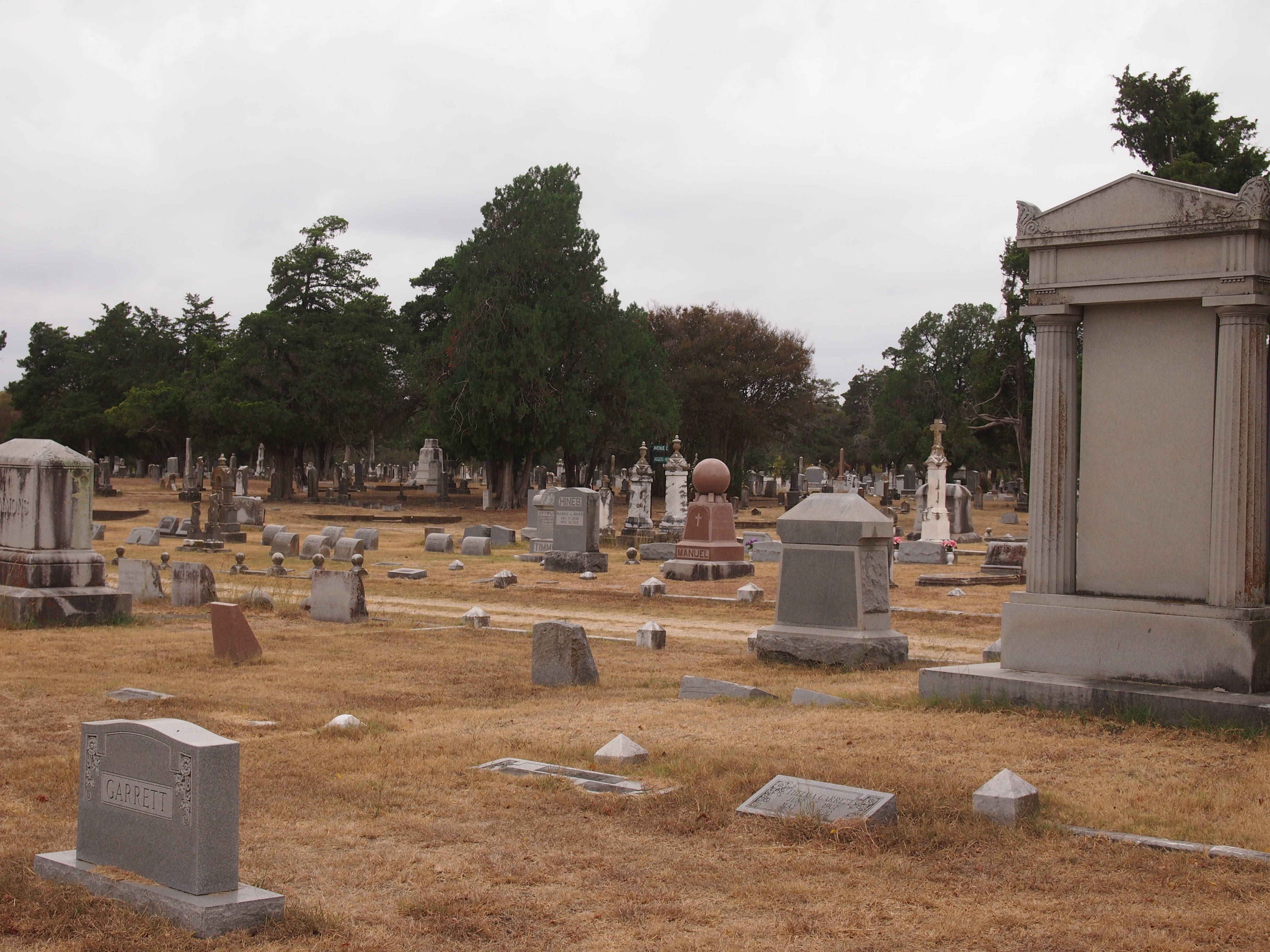
WaxahachieIt had been dry in this part of Texas since a wet early summer, so the cemetery was rich in earth tones in October ahead of the massive rains that fell over the next few days.

Et In Waxahachie EgoNot the most ornate cemetery or the shadiest one, but a nice small-town Texas boneyard, something like the one I saw in Flatonia, Texas a half-dozen years ago, and not as tumbledown as the old San Antonio cemeteries I saw earlier this year.

Waco Mammoth National Monument

In July, using his authority under the Antiquities Act of 1906, President Obama created three new national monuments on the same day, including ones in California and Nevada, but also Texas. In a place I pass through sometimes: Waco. The new Texas monument is the five-acre Waco Mammoth National Monument, though it’s been open to visitors since 2009.

The Washington Post notes that the “Waco Mammoth in Texas ranks as a major paleontological site, featuring well-preserved remains of 24 Columbian Mammoths. The mammoths date back more than 65,000 years, and the site includes the nation’s first and only recorded discovery of a nursery herd of mammoths.

“Rep. Bill Flores (R-Tex.) has sought to make the area a national monument through legislation, and the site has been developed and protected by the National Park Service, the City of Waco, Baylor University, and the Waco Mammoth Foundation.”

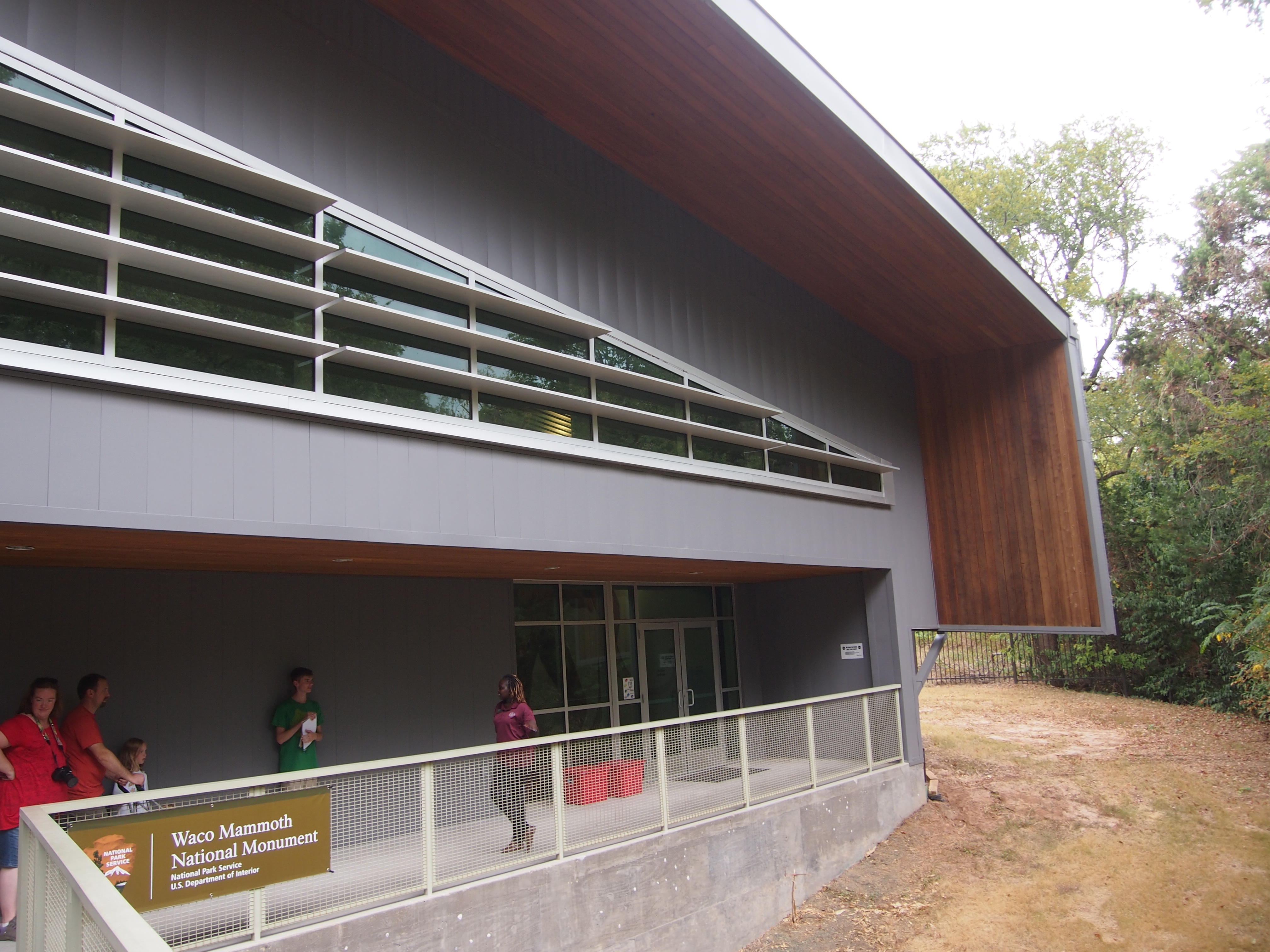
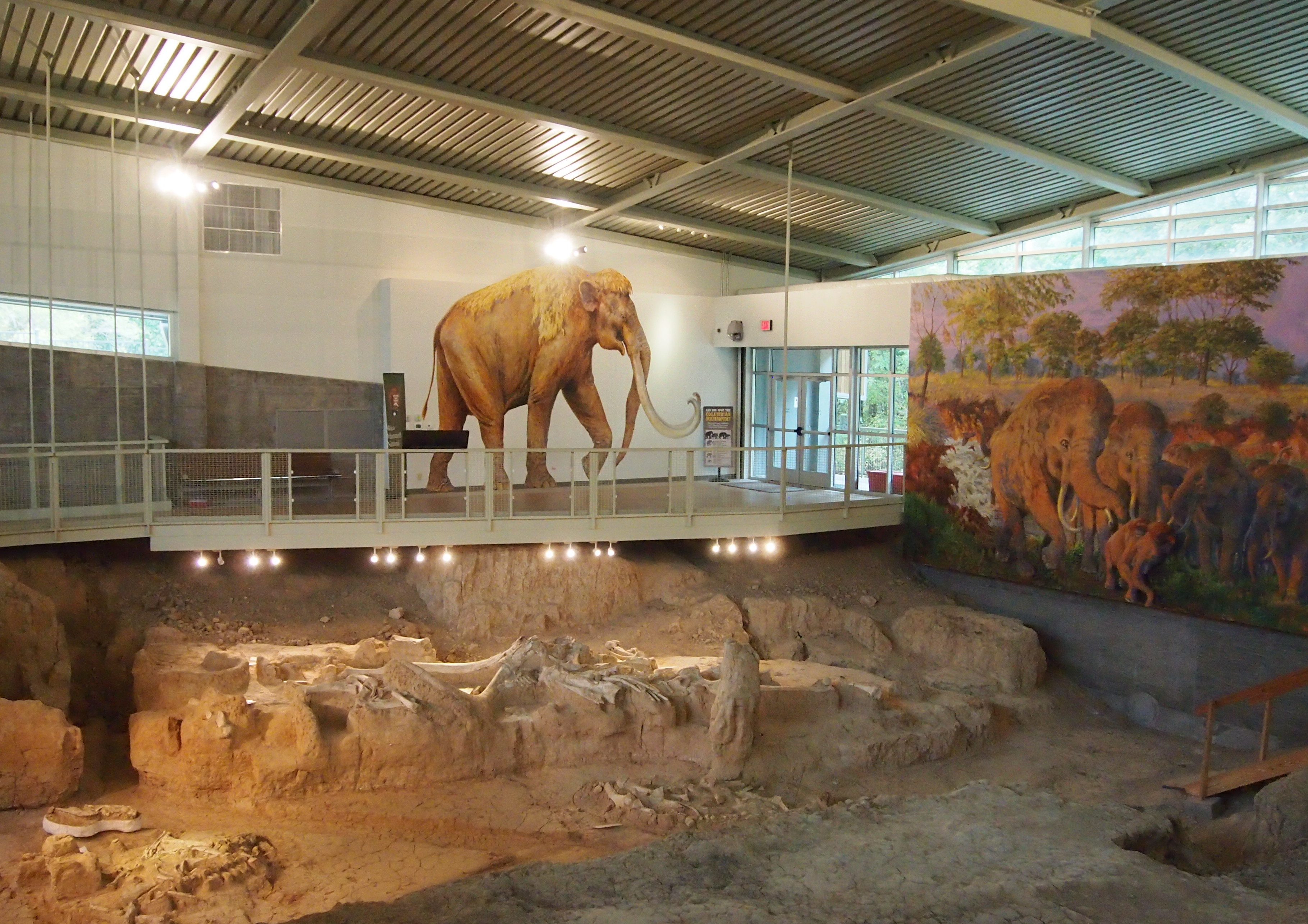
Jay and I arrived on the afternoon of the October 22, just in time to catch up with a tour of site — which is the only way to get into the locked building built over the diggings. The structure protects the fragile relics from the elements and wankers who would steal them.
Waco Mammoth NMInside the building is a wide walkway overlooking the diggings, with a few paintings to illustrate Columbian mammoths, who were not the better known cold-habitat woolly mammoths. Columbians were better suited to warmer weather, and Texas had a warmer climate even then.
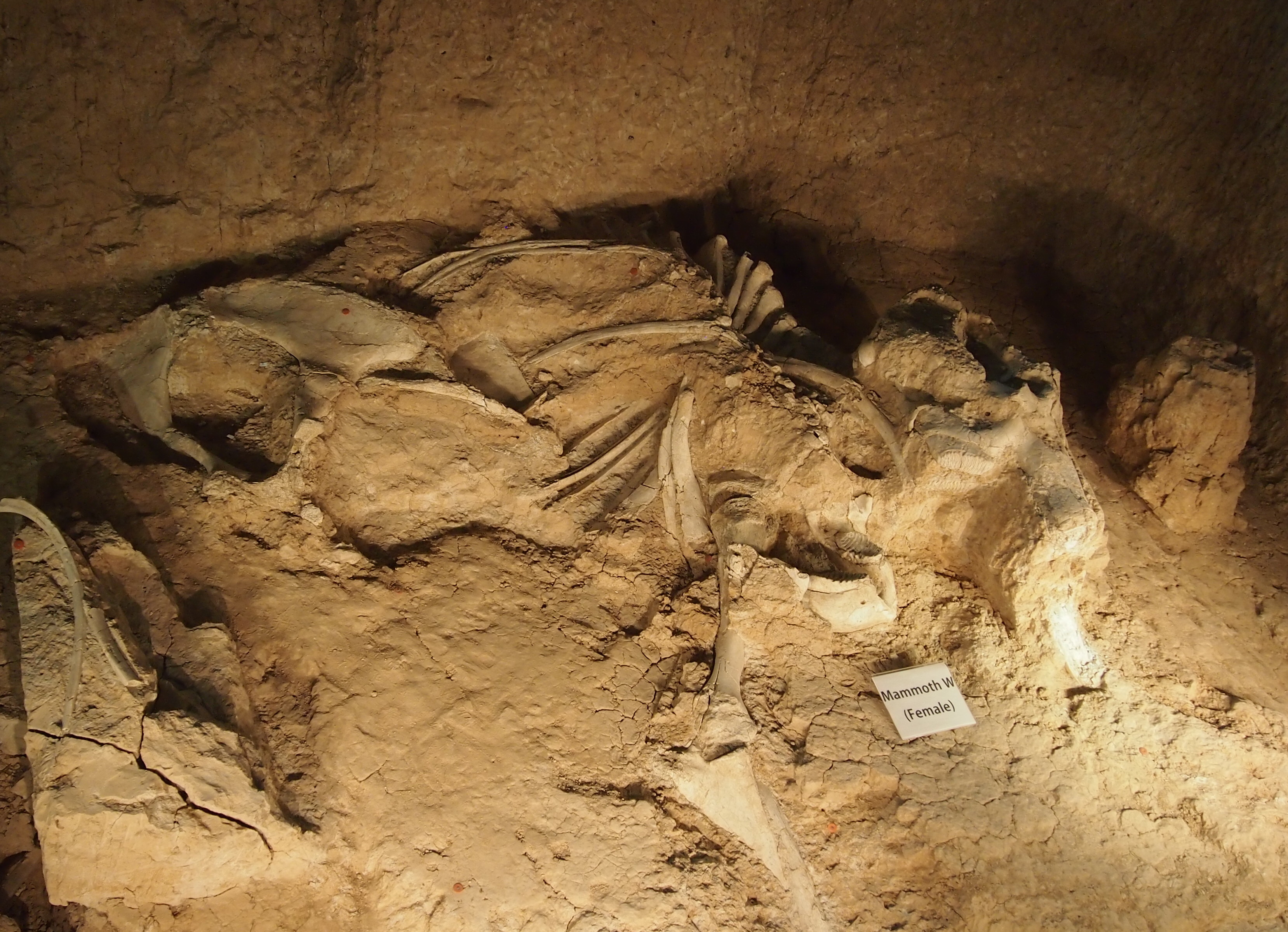
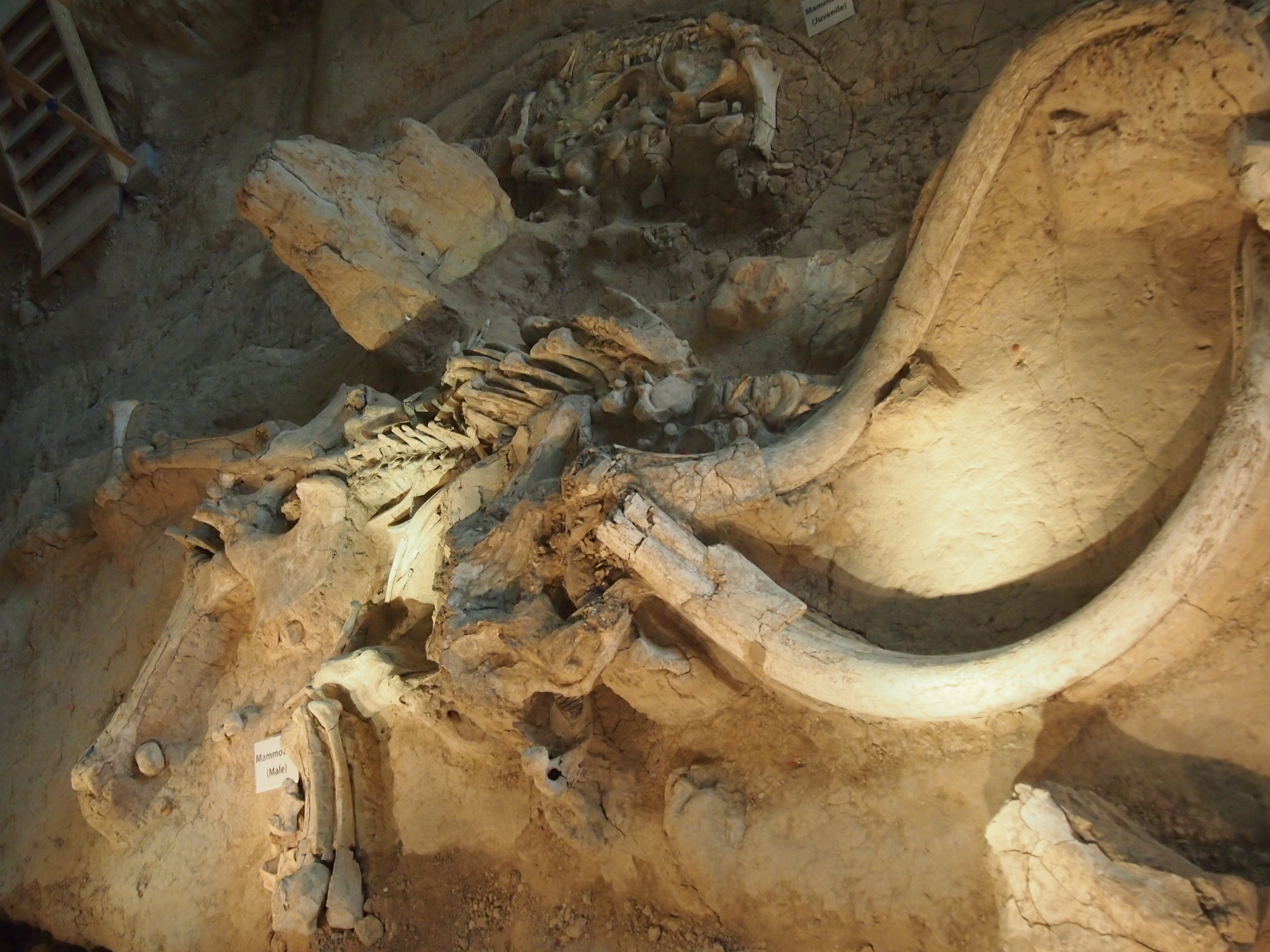
Waco Mammoth NMOur guide, an affable young woman, told us about the diggings and the bones, using a laser pointer. The archaeological consensus is that floods trapped and drowned the luckless beasts. On view in situ are whole or nearly whole skeletons, including skulls, tusks, teeth, vertebrae, ribs, femurs and more.
Waco Mammoth NMWaco Mammoth NMIn our time, the first of the bones were only discovered in 1978, having been in the ground for between 65,000 and 72,000 years. A lot of the bones are now stored at the Mayborn Museum Complex in Waco, which is part of Baylor University. Other animals uncovered in the area included a Western camel (Camelops hesternus), dwarf antelope, American alligator, giant tortoise, and the tooth of a juvenile saber-toothed cat.

La Coquette, 1957

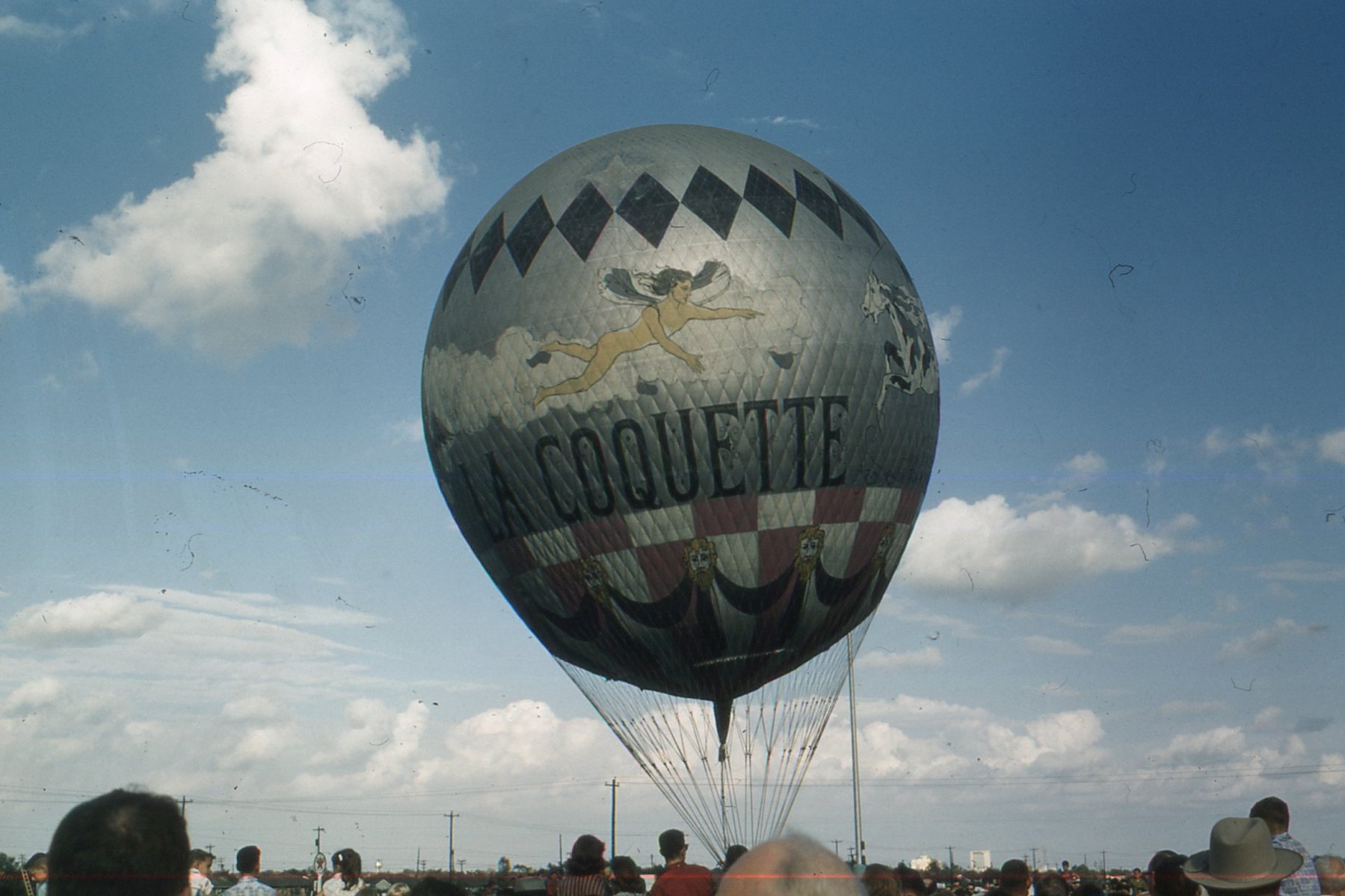
I’m able to pinpoint this image taken by my father with some certainty, because it’s the La Coquette balloon. That’s the balloon featured in the 1950s film adaptation of Around the World in 80 Days, as this site explains in considerable detail. Apparently the balloon did no actual flying in the movie. It was a set, essentially. But it could and did fly for various events.

La CoquetteSo I’m fairly certain this is La Coquette at the grand opening of the Meyerland Plaza mall in Houston on October 31, 1957. The balloon was there, and my family, who lived in Houston at the time, made it to the event as well. I can’t imagine my father would have gone by himself, anyway.

According to the web site of the mall: “Meyerland Plaza Shopping Center opened in October of 1957 with a celebration of ‘Around the Shopping World in 80 Acres.’ There was a hot air balloon that took riders to the Shamrock Hotel.” Meyerland, since redeveloped, is still around and traded hands as recently as 2013, when the Houston Chronicle did an article about the deal that featured the balloon as a bit of background detail. The balloon also did a stint at Disneyland in the early 1960s, it seems.

White Rock Lake, Dallas

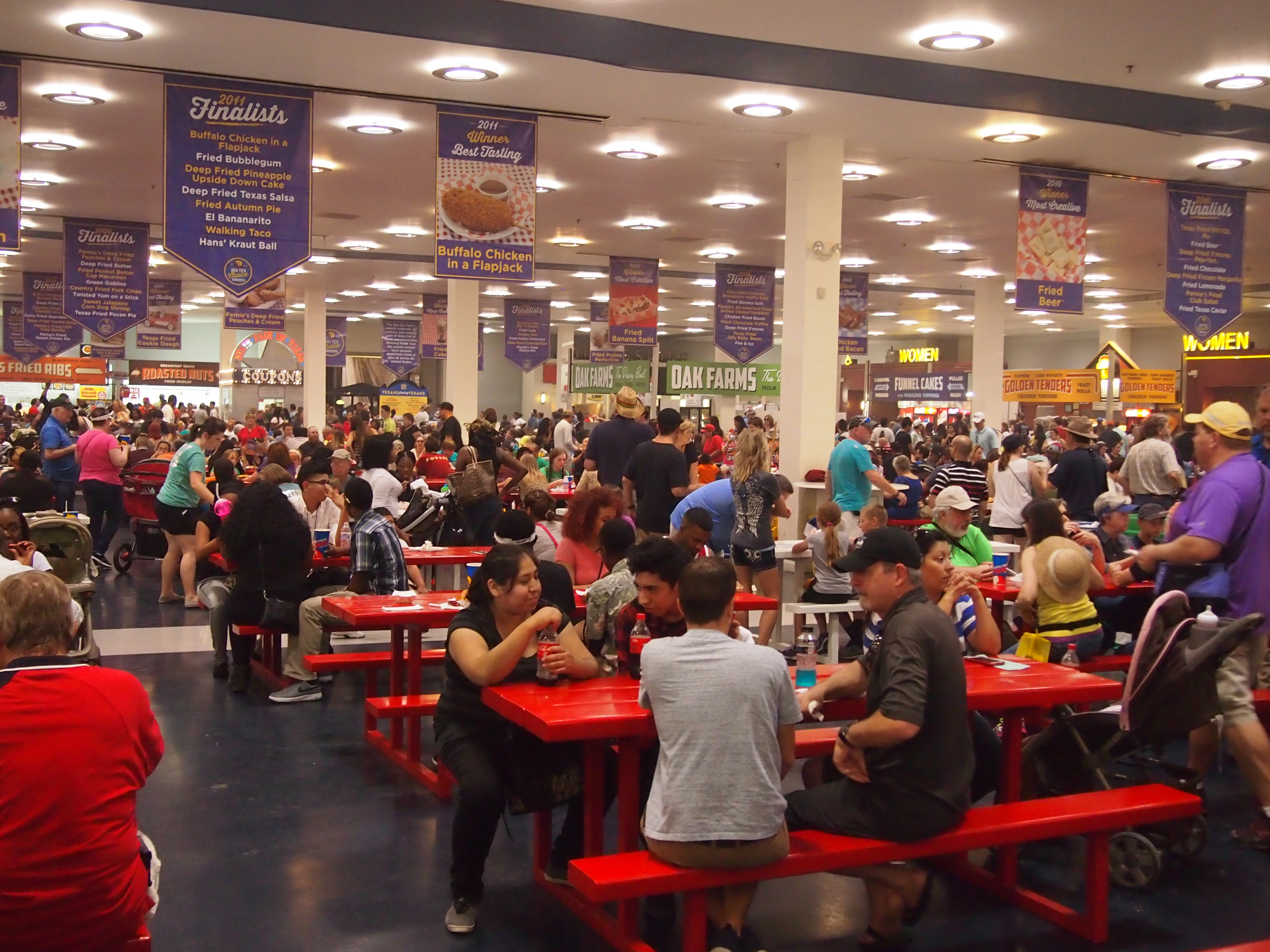
The State Fair of Texas was interesting, but before long you get tired of crowds. Such as in the main indoor food court of the fair.

State Fair place to feed your faceOn October 19, a very warm afternoon, I sought out someplace a little less crowded: White Rock Lake.

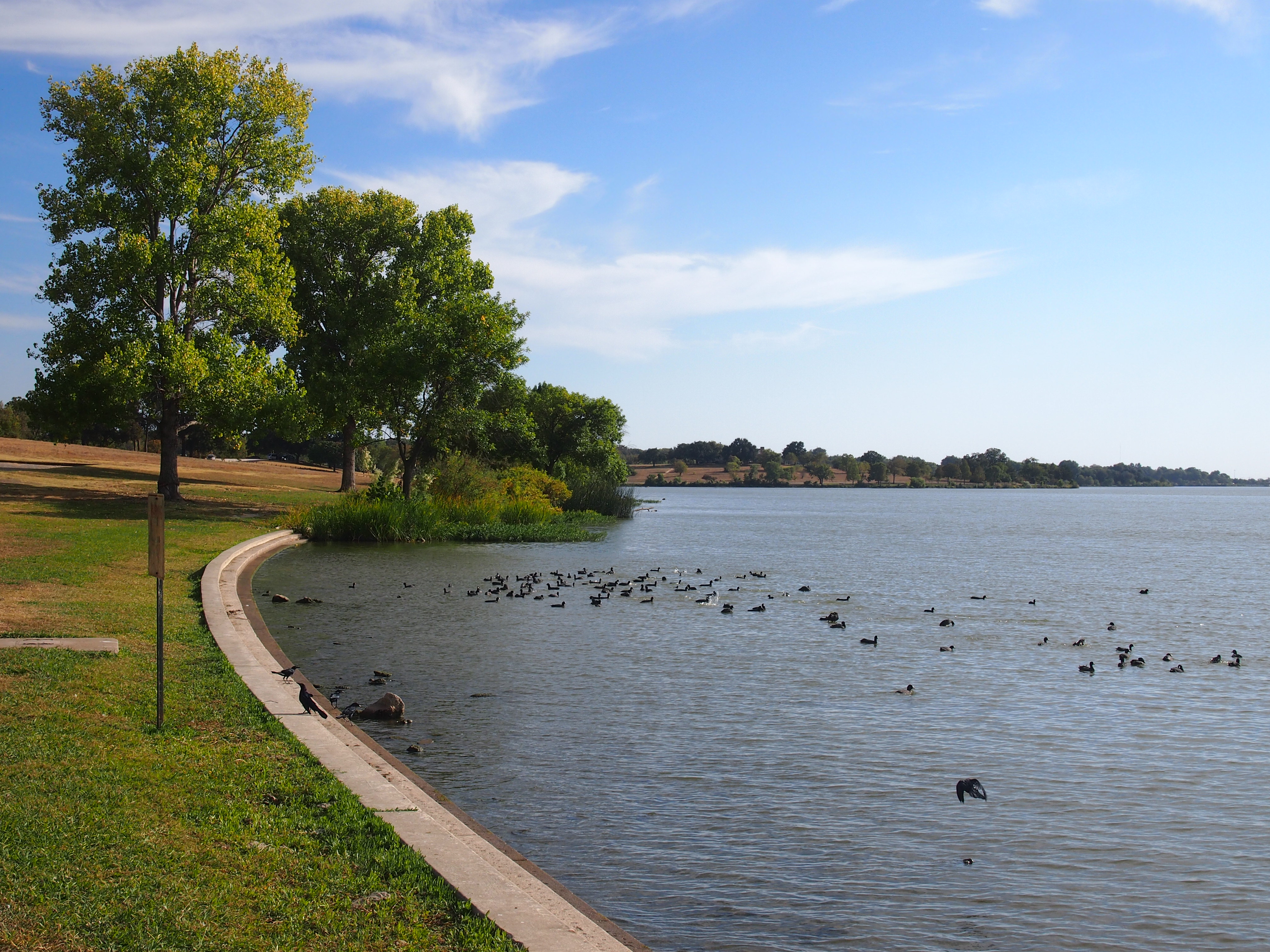
White Rock LakeLess crowded with humans, that is. There were plenty of birds and some insects, too. The manmade White Rock Lake in northeastern Dallas, created by damming White Rock Creek in the early 1910s to supply water to the city, covers 1,015 acres. These days it’s for recreation. All around the lake is a city park, White Rock Lake Park, which includes a nine-plus mile track around the water, boating ramps, a dog park, picnic areas, and the Bath House Cultural Center.

Bath House Cultural CenterThis is the back of the Bath House, facing the lake. As the name implies, it used to be a bath house that served a beach on White Rock Lake, but swimming has been prohibited on the lake for decades. The building, originally built in 1930, was renovated in 1980 and now offers exhibits by artists and holds various concerts, workshops, lectures and other events. Since I visited on a Monday, it was closed.

White Rock Lake has a long and varied history. For instance, I’ve heard that the lake, and the White Rock Lake Pumphouse, were featured in the low-budget Mars Needs Women (1967), which was shot in Dallas. I’m not sure I’ll ever be in the right frame of mind to watch that movie, but who knows.

I’ve seen the pumphouse before, but I wasn’t close by this time. Mainly I walked on the walking-jogging-cycling path near the edge of the water.

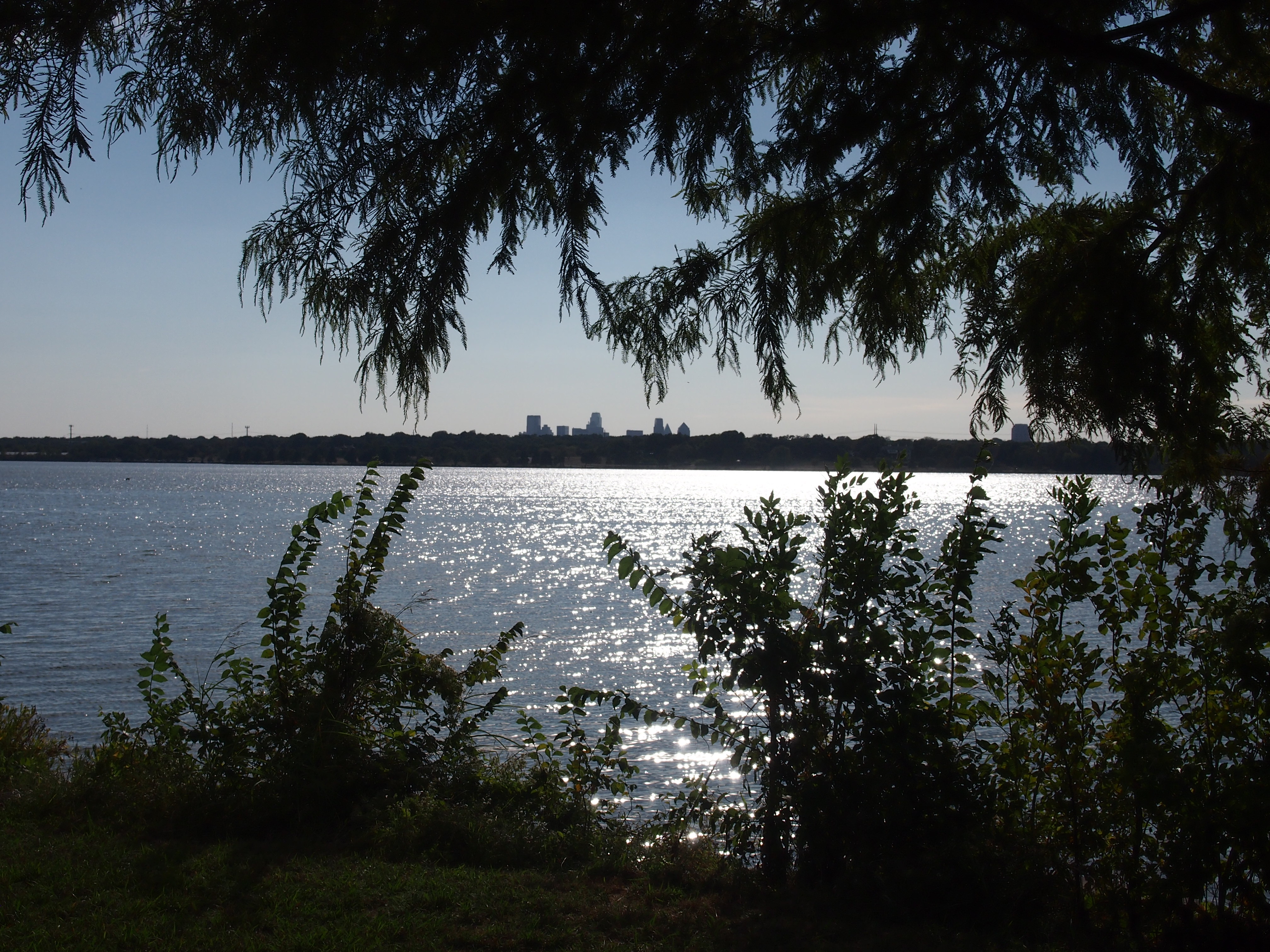
White Rock LakeOn October 12, somewhere along the path around White Rock Lake, a jogger named Dave Stevens was murdered, apparently at random, by a lunatic armed with a machete. Seems that the perpetrator was known to be mentally ill, but not violent. While walking on the same path a week later, you try to puzzle that one out, but of course it can’t be puzzled out. Death just shows up. The crime had a sad coda a few days ago: the victim’s wife seems to have committed suicide.

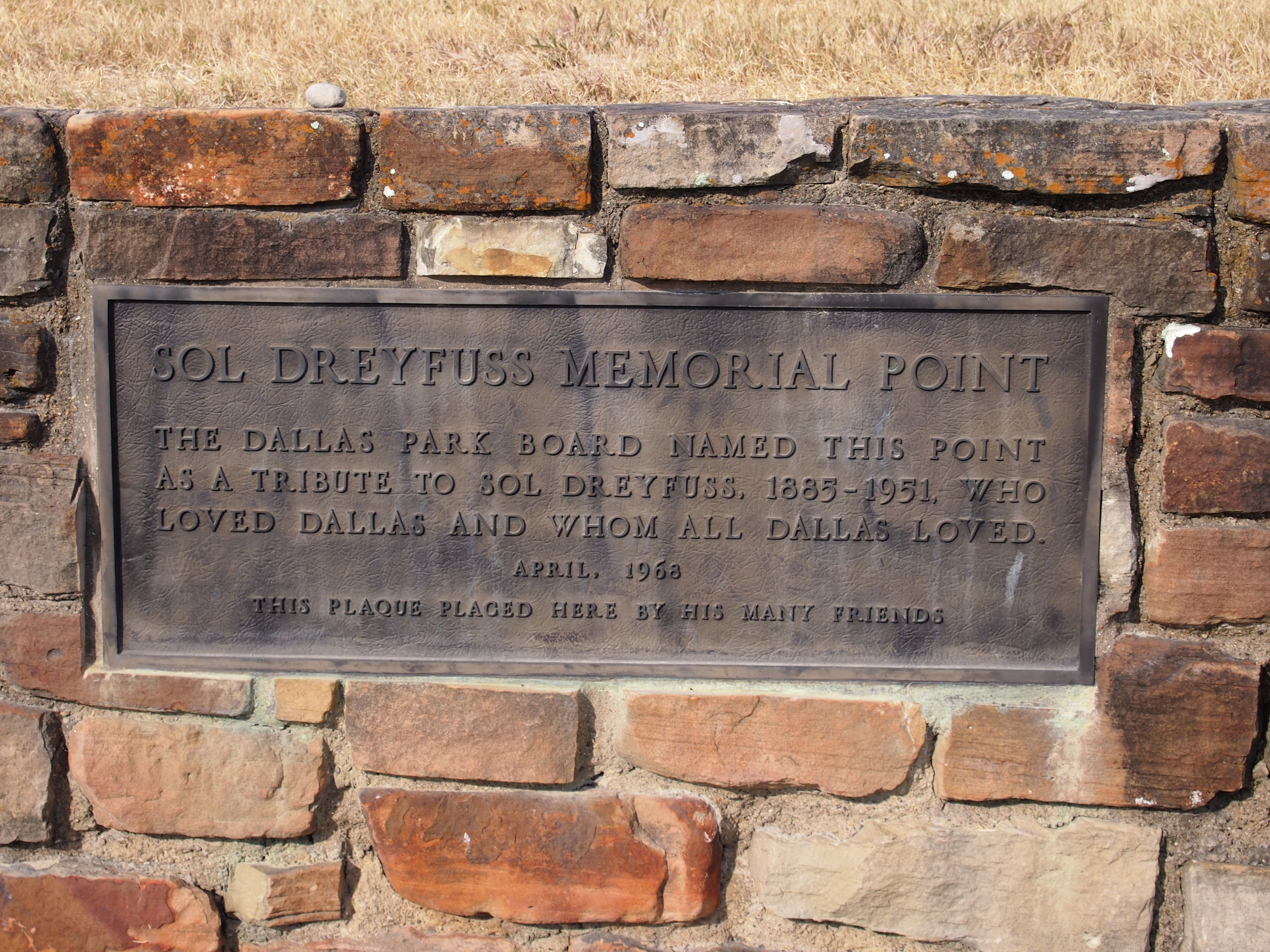
White Rock LakeTo avoid ending with a sad story, I turn to Sol Dreyfuss Memorial Point, a small rise near the lake. At the foot of the rise is a short wall, and on the wall is a plaque. That was my cue to stop and read it, take a picture, and later find out about it.

Sol DreyfussAccording to the Texas State Historical Association: “Sol Dreyfuss, merchant, was born on August 12, 1885, in Dallas, the son of Gerard and Julia (Hurst) Dreyfuss. His father, a native of France, owned several chains of stores before Sol’s birth, including one with his wife’s father founded in 1879 and called Hurst and Dreyfuss… On August 11, 1910, the doors opened to the first Dreyfuss and Son clothing store, a one-story building on Main Street. By 1950, at the time of Dreyfuss’s death, the store was a six-story building at Main and Ervay streets.”

Besides being a merchant, “Dreyfuss owned the Dallas Baseball Club from 1928 to 1938, when the team was known as the Steers. He was a director of Hope Cottage. He was active in the Community Chest and Red Cross and was a member of the Salesmanship Club, the Citizens Charter Association, the Lakewood Country Club, the Columbian Club, and B’nai B’rith. He was also on the board of directors of both the Republic National Bank and the Pollock Paper Company.” No wonder he had a lot of friends.