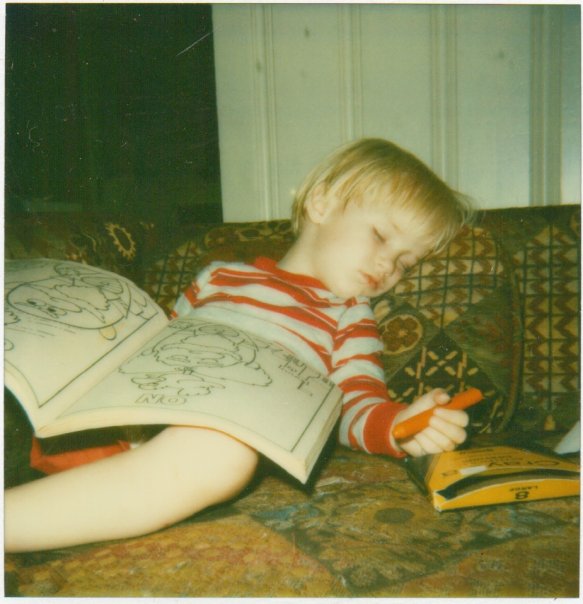
The Astrodome Still Stands

When I was small, maybe six or seven, I saw the Astrodome. Even better, I went inside the Astrodome on a tour. We were visiting Houston in the late ’60s and in those days the domed stadium was a wonder of the world, or so it was called. Arguably so, since represented a modern innovation on an ancient structure.

I was especially impressed by how high the highest seats seemed to be. The stadium was empty during our tour, and I imagined that the people in the highest seats would need to hold on to their arm rests or they’d tumble out toward the field below. That’s the kind of thing a six-year-old might imagine, but my brother Jay, who was in his teens at the time, says the sheer size of the place was impressive even if you weren’t small.

For the record: The Astrodome stands 18 stories tall, covering 9.5 acres. The dome is 710 feet in diameter and the ceiling is 208 feet above the playing surface, which itself sits 25 feet below street level.

Flying into Houston’s Hobby Airport earlier this month, I looked down and saw NRG Stadium. I knew it was NRG Stadium because those three letters, which belong to a three-initial energy company, are emblazoned on the structure in a very visible way. It has a blocky shape. Then I noticed another, rounded stadium not far away.

Could it be — ? Yes, it was the Astrodome. Not used for anything now, but still standing after 50 years. Wankers may yet destroy it, as wankers are known to do (e.g., Penn Station), but I hope it’ll be repurposed here in the 21st century.

The East End Historic District, Galveston

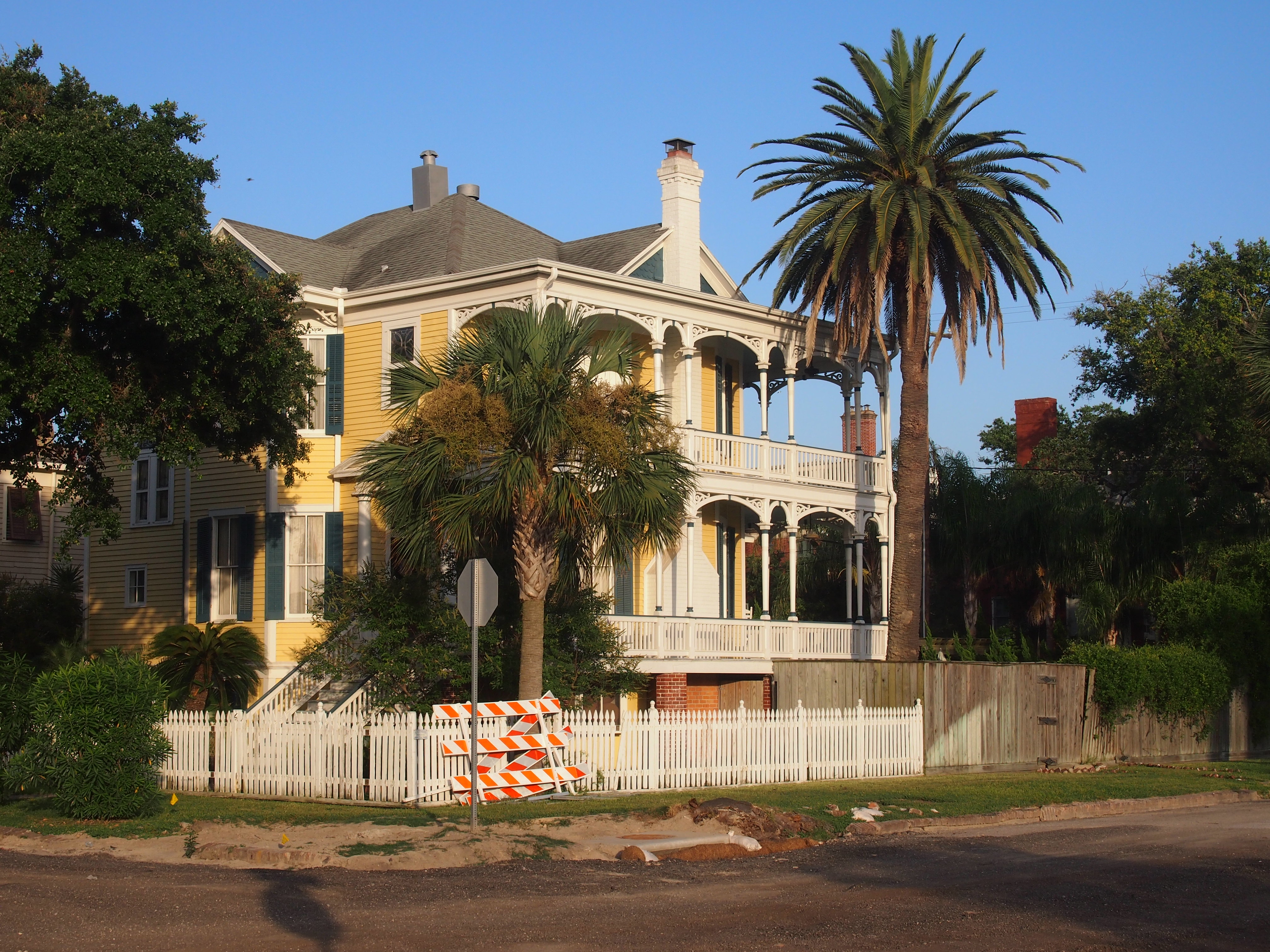
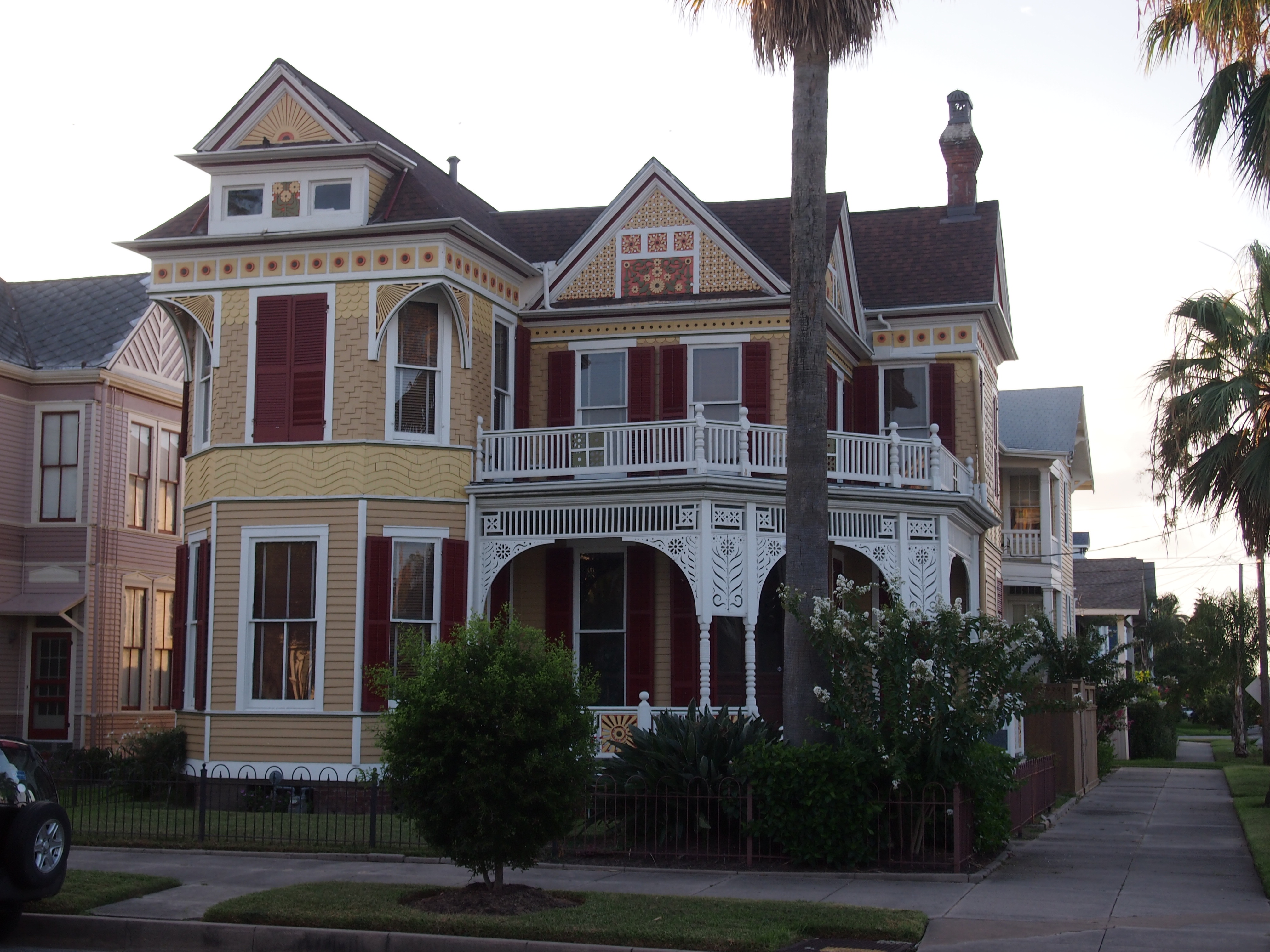
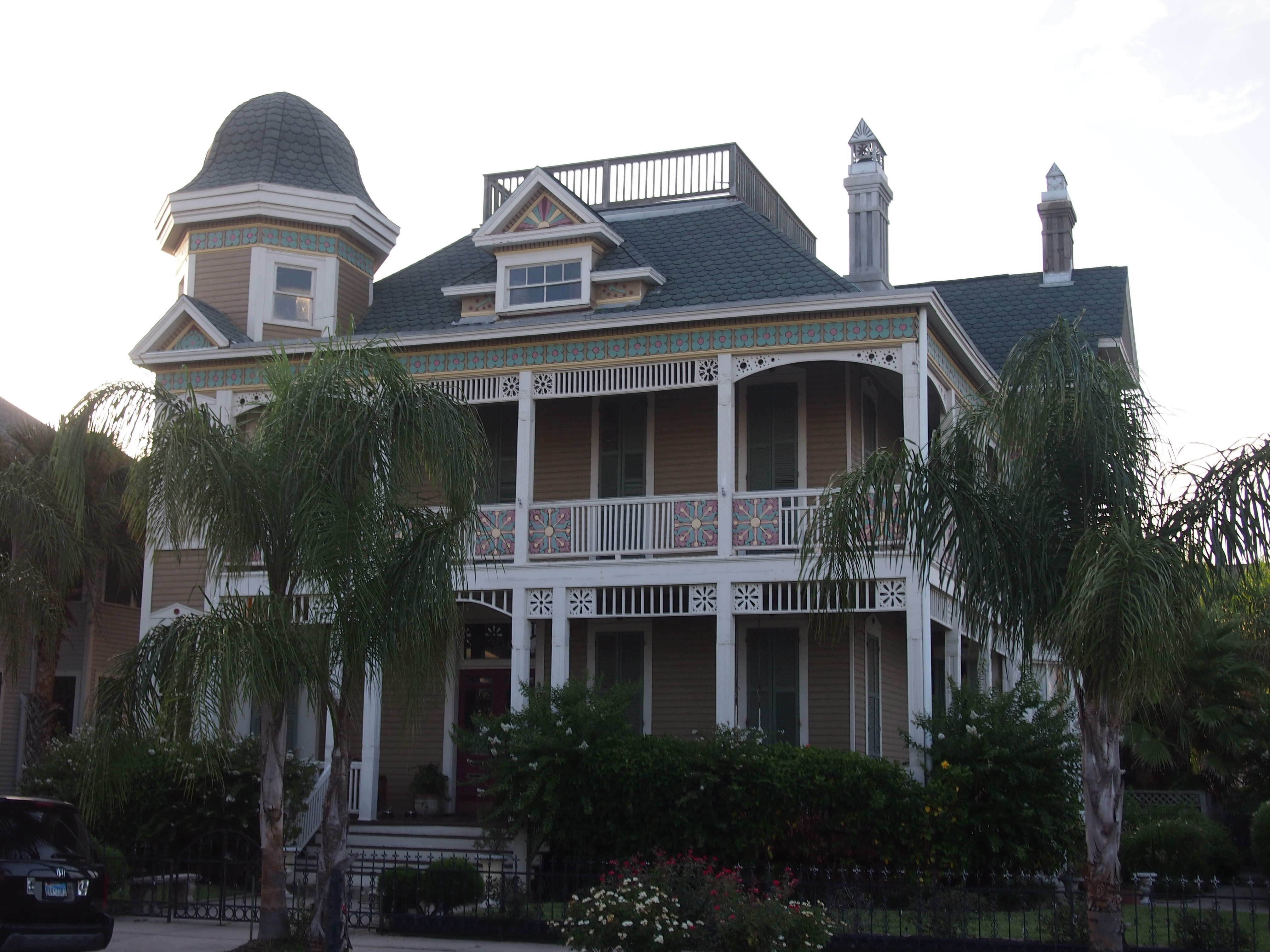
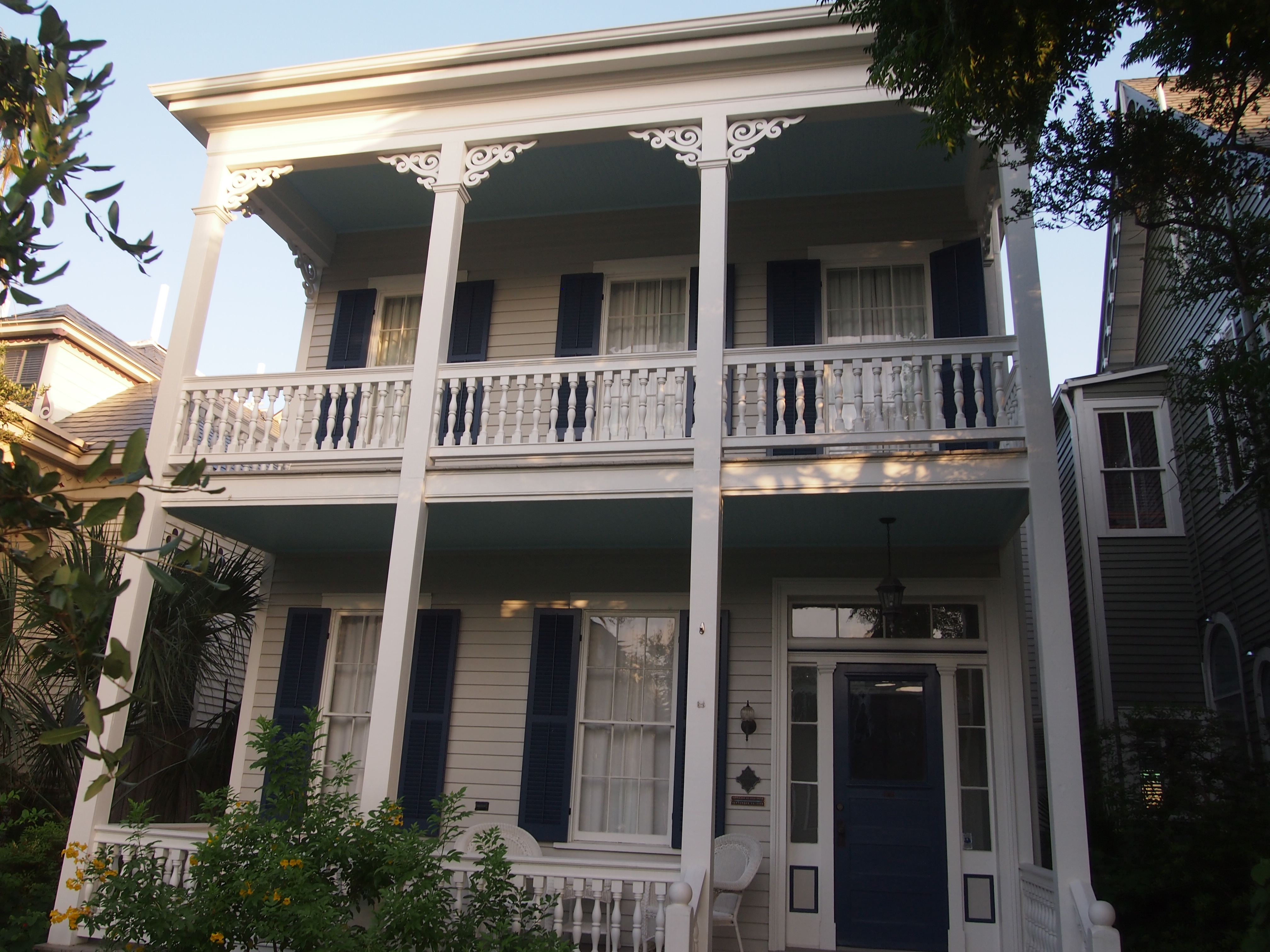
The East End Historic District covers over 50 city blocks in Galveston. In July the time to take a stroll in such a place is early in the morning — not something we did — or late in the afternoon, which we did. It’s a delightful mix of housing styles, or as the East End Historic District Association puts it, offers views of “a towering pillar, shadowed silhouettes of ornate carvings, a splash of stained glass in a window, welcoming porches or a bit of wrought iron fencing.”

It also has trees large enough to move the sidewalks from underneath with their roots. Ann asked about the malformed sidewalks, and I explained that the roots did it slowly over the years.

The Julius Ruhl Residence, at the corner of Sealy and 15th and dating from the 1870s, has a widow’s walk. That’s just not something you see in suburban Chicago.
Galveston, July 2015Many houses sport fine porches. A good thing to have in pre-air conditioned times. Or even after air conditioning was invented.
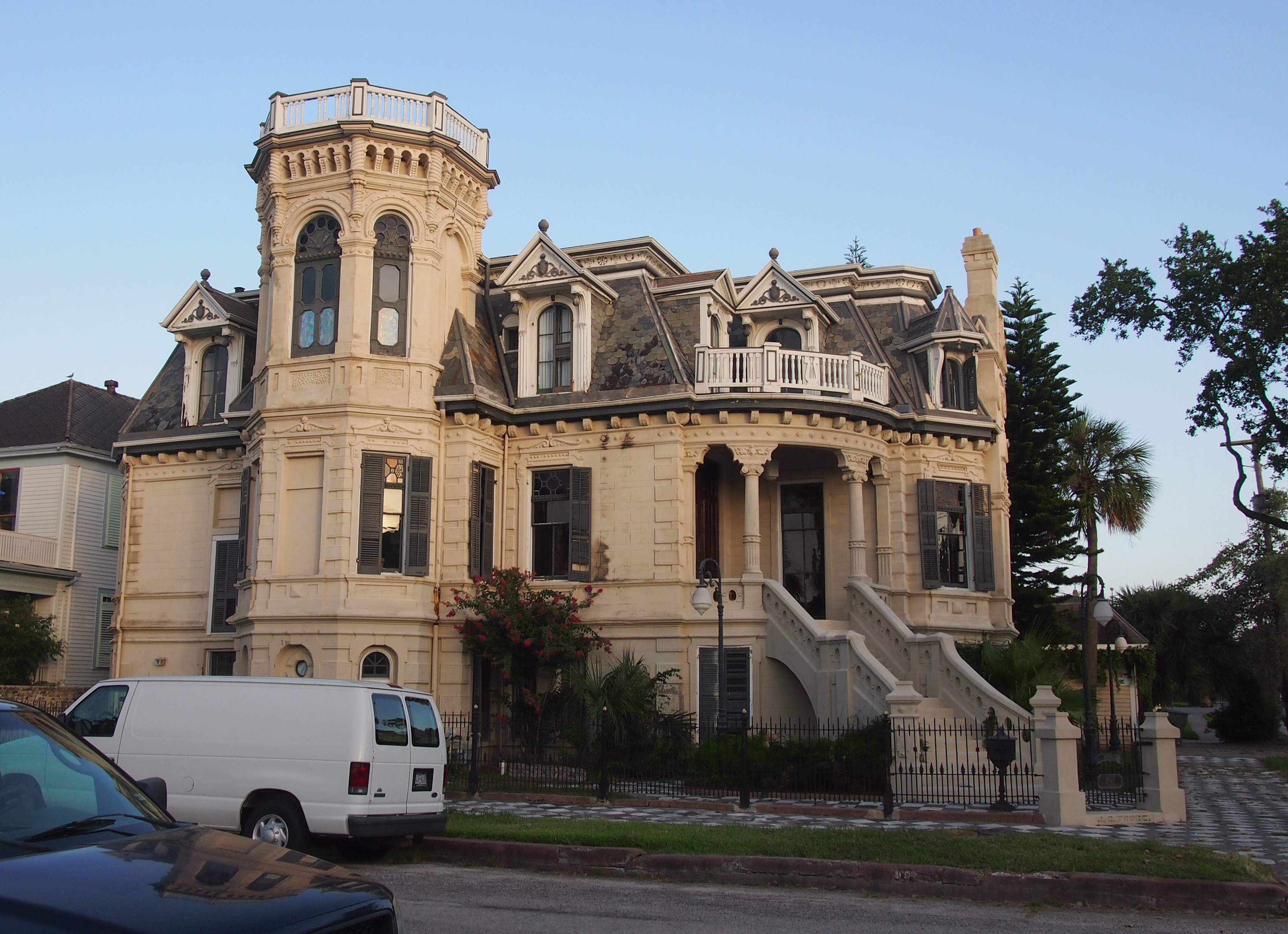
Galveston, July 2015This is the J.C. Trube Castle.
Galveston, July 2015It dates from the 1890s. Its web site — the place is a commercial enterprise now, available for weddings and other events — says the building is “constructed of bricks covered by stucco mixed with Belgium cement creating a rusticated stone effect. The mansard slate roof with seven gables and the battlement tower give the historic home a castle distinction. The observation deck on the top of the tower offers a view of both the gulf and the harbor.”

The building is also one of the few remaining designs of architect Alfred Muller.  Nicholas J. Clayton didn’t design everything in 19th-century Galveston. The Prussian-born Muller also had the relative good fortune to die a few years before the 1900 hurricane.

More pretty houses.
Galveston July 2015Galveston July 2015Note the plaques to the left of the door on this house.
Galveston July 2015Galveston July 2015The upper one’s a little hard to read, but it says 1900 Storm Survivor. Hurricanes are serious business around here. Lest we forget, Ike slapped Galveston as furiously as Katrina hit New Orleans.

The Strand, Galveston

I can’t pin down the last time I went to Galveston. It was sometime in the early 1970s, probably as an appendix to a visit to Houston from San Antonio. Little memory remains, and for whatever reason we didn’t return when I was older. My brothers remember visits in the 1950s, during the time when my parents lived in Houston, but that’s before my time.

I suspect we never went to the Strand on any family visits to the city, because the area, which is a part of the city near Galveston Bay, didn’t begin its revival until the 1970s. The always-informative Handbook of Texas Online tells me that the Strand — formally called Avenue B in Galveston — was included in the original plat of the city in the late 1830s, with the origins of Avenue B’s nickname unknown.

“While the avenue extends throughout Galveston, the Strand has usually referred to the five-block business district situated between Twentieth and Twenty-fifth streets,” it says. “Throughout the nineteenth century, the area was known as the ‘Wall Street of the Southwest,’ serving as a major commercial center for the region.”

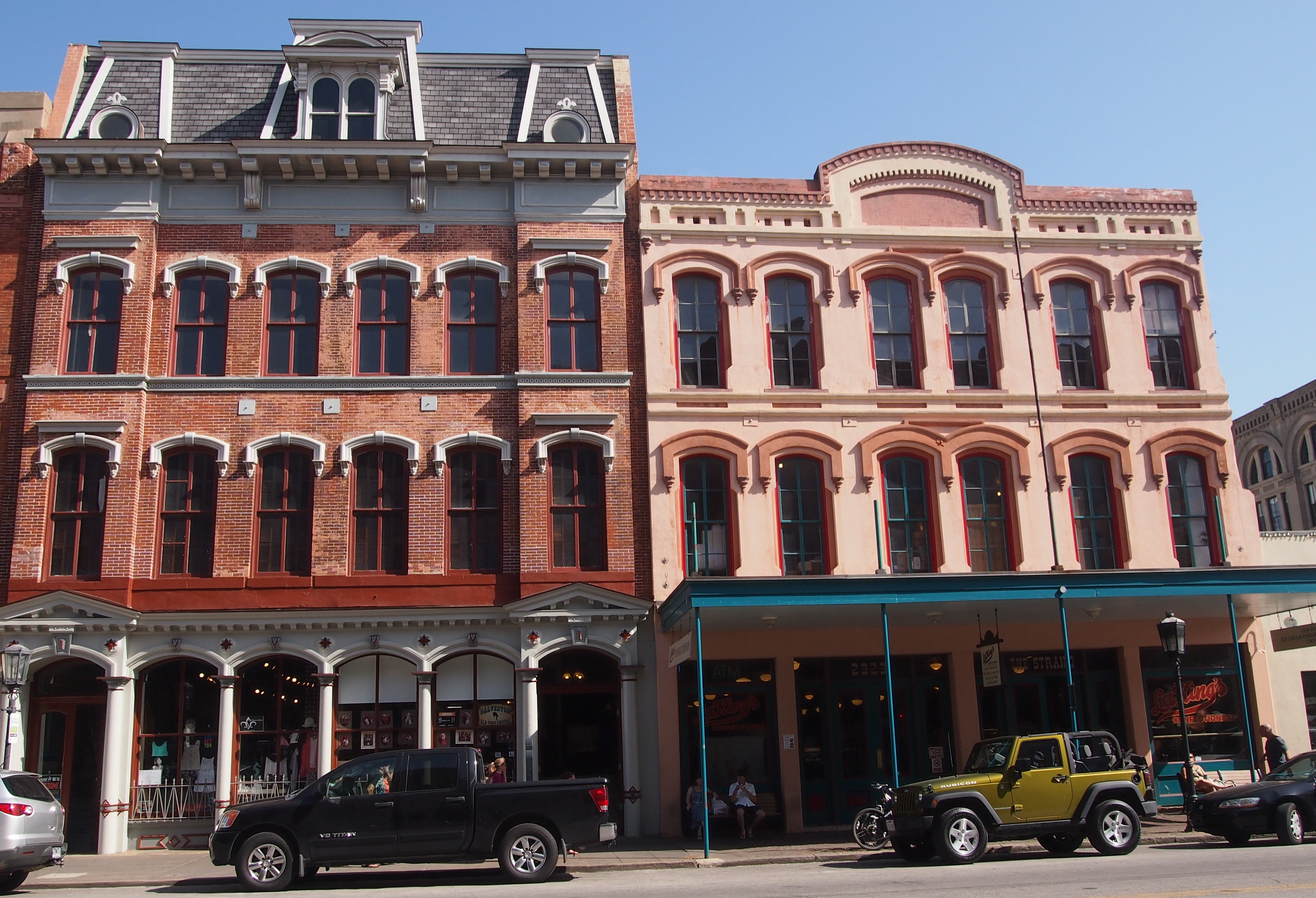
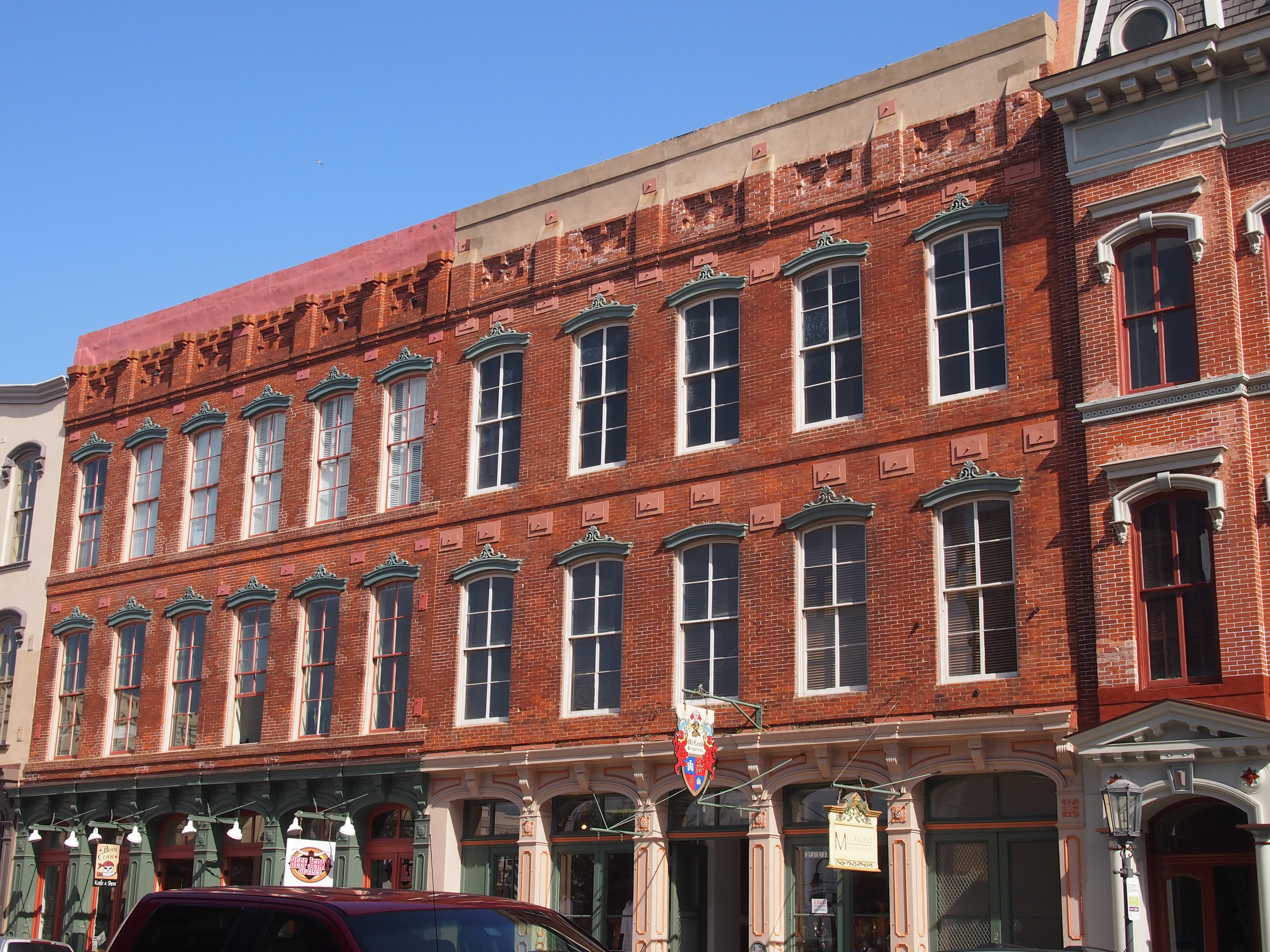
Some of the 19th-century buildings still stand on Avenue B, the Strand. With a 20th-century tower to the south.
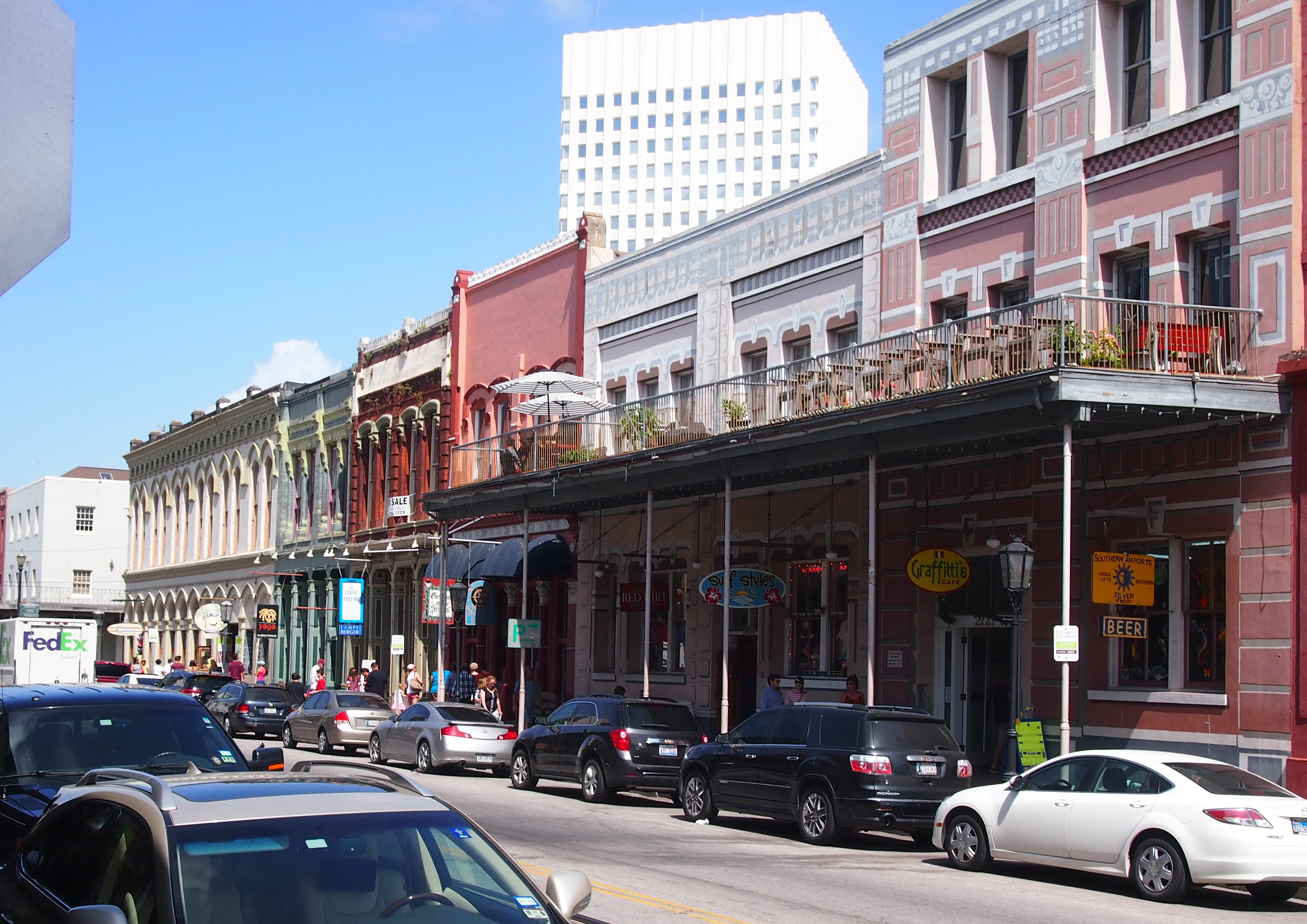
The Strand, GalvestonThe Strand, GalvestonThe Strand, GalvestonNaturally, the Hurricane of 1900 put the kibosh on the Strand’s career as the Wall Street of the Southwest. I’ll bet after the storm a common enough sentiment among businessmen was, To hell with this, we’re going to Houston. Galveston didn’t have the space to grow into a megalopolis anyway.

“In the rebuilding process, businesses moved off the Strand and away from the wharfs,” the Handbook continues. “The area became a warehouse district. In the 1960s amidst widespread deterioration of the Strand, the Junior League of Galveston County restored two buildings sparking interest in the area. In 1973 the Galveston Historical Foundation initiated the Strand Revolving Fund, a catalyst in subsequent years for dramatic restoration and adaptive use in the Strand Historic District.”

These days, the Strand is a Galveston tourist zone, populated by ordinary visitors, and when a cruise ship’s docked near the zone, probably even more people, though I didn’t see any ships nearby when we were there. As a tourist zone, it has two distinct advantages. One, the sidewalks are covered, so that strolling along in mid-summer doesn’t mean walking under a hot and copper sky. Also, the clothiers, geegaw shops and other venues are universally air conditioned.

Ann and I did our share of ducking in and out of shops, eventually buying a single key ring and a few postcards. I can report as a matter of historical interest — that is, for future historians of 21st-century minutiae — that Confederate battle flag-themed merchandise hasn’t died out in the souvenir shops of Galveston as of the summer of 2015, though I can’t say its presence was overpowering.

Sad to say, the eccentric Col. Bubbie’s Strand Surplus Senter has closed. The sign is still there.
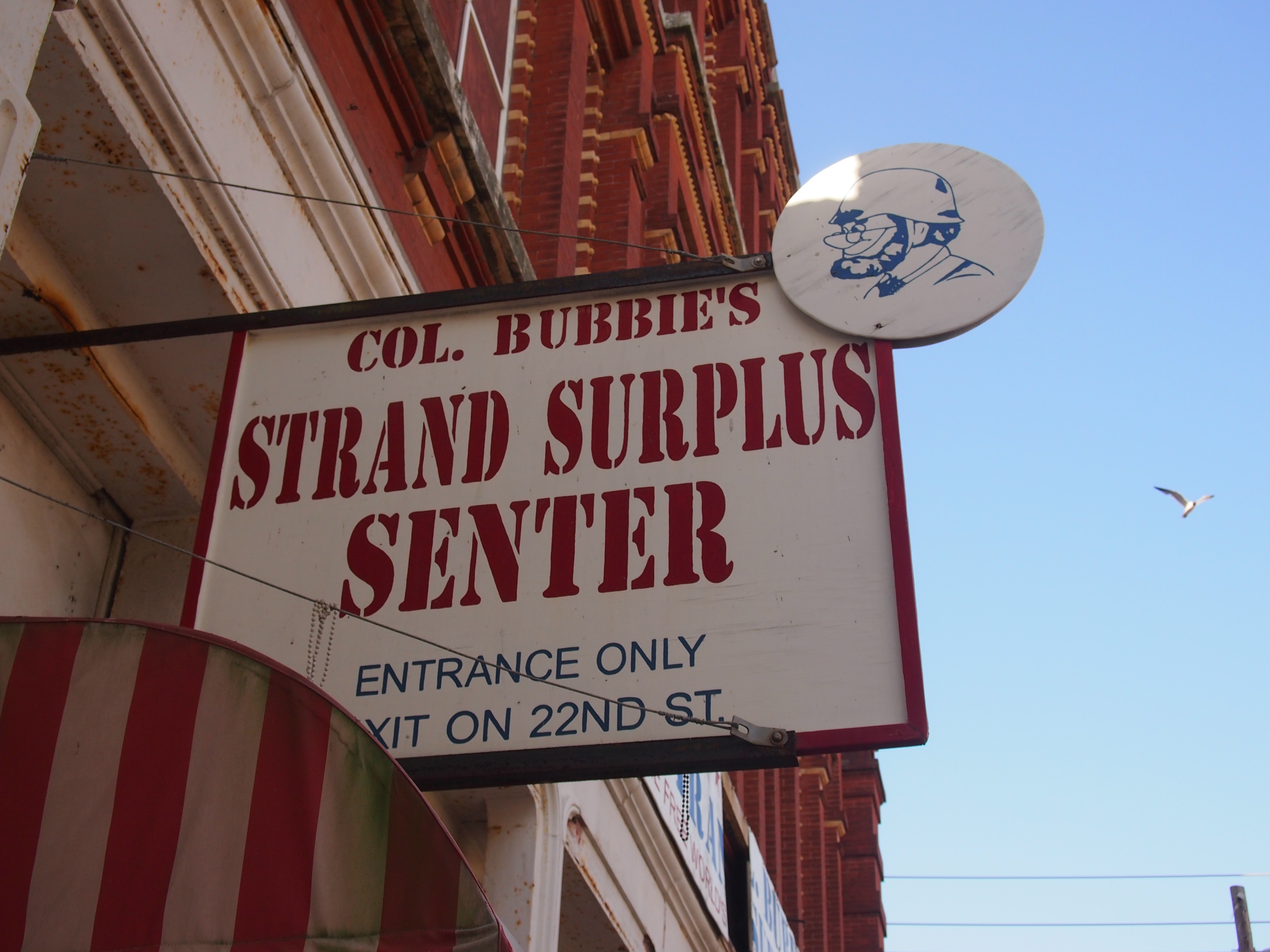
The Strand“Col. Bubbie’s was the longest-running, single-owner business on the Strand,” the Houston Chronicle reported last December after the shop closed. “Since 1972, it sold military equipment — gas masks, camouflage pants, canteens, mess kits, medals and insignias, you name it — encompassing 60 countries and conflicts from the Civil War to Iraq.

“The shop helped outfit the TV show MASH and war films as diverse as Saving Private Ryan and 1941, among others. Until a few months ago it was the go-to spot for local theater productions to get period uniforms, but that stock has dwindled.”

We also stopped in at La King’s Confectionery on Avenue B. We were glad we did. The place makes excellent ice cream. Ann’s pistachio was particularly good. Ice cream jockeys and soda jerks in white were on hand to serve whatever you wanted.
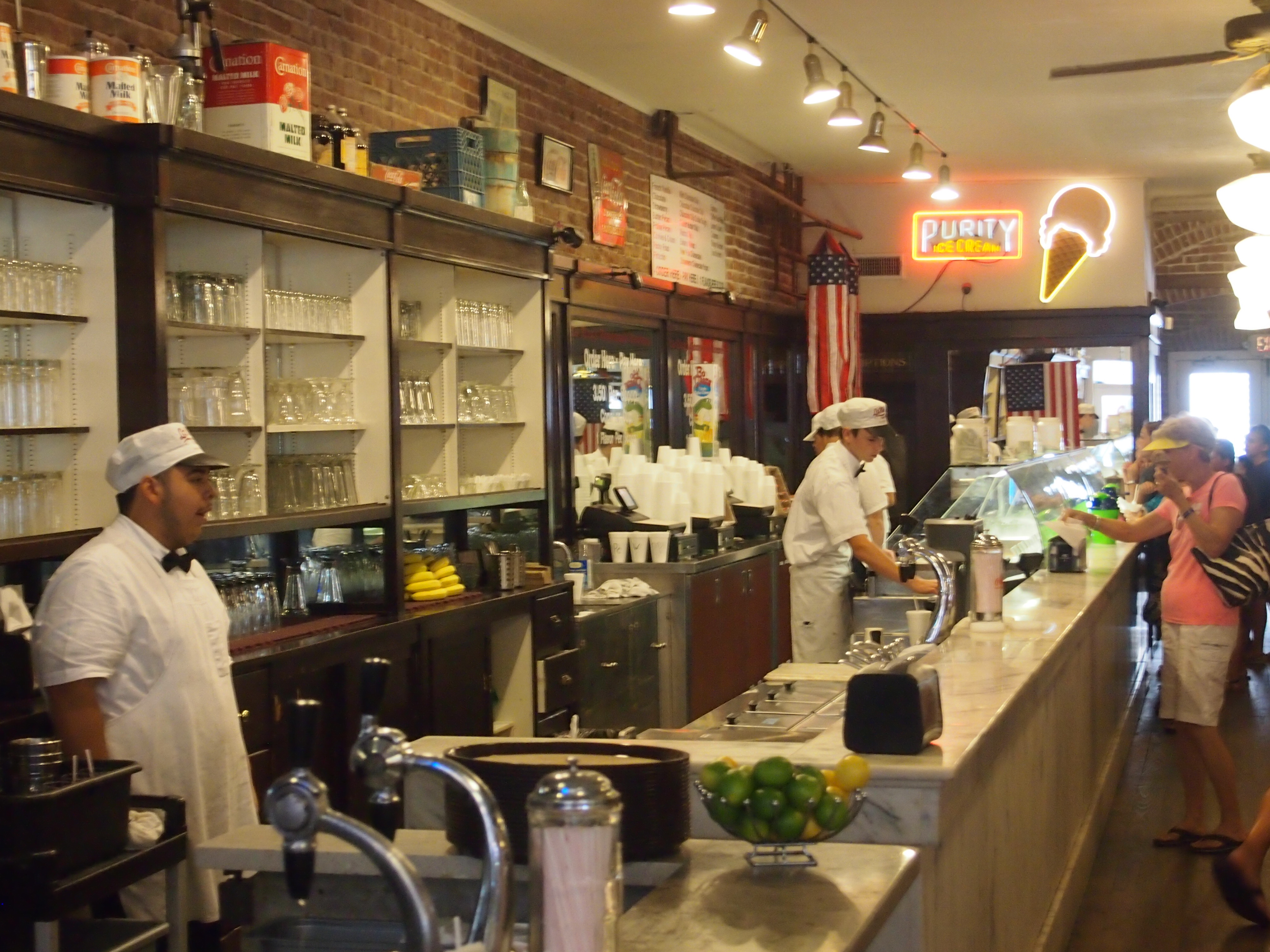
La King'sA neon sign says Purity Ice Cream, and I thought that meant a product of Tennessee’s Purity Dairies, but no. According to the Austin Chronicle, “Ice cream on an industrial scale arrived in Texas in 1889 when the Purity Ice Cream Company opened in Galveston.” The ice cream that La King’s serves is a direct culinary descendant of that ice cream, and La King’s is the only place it’s served.

In the back, you can watch a fellow making taffy, which the store also sells.
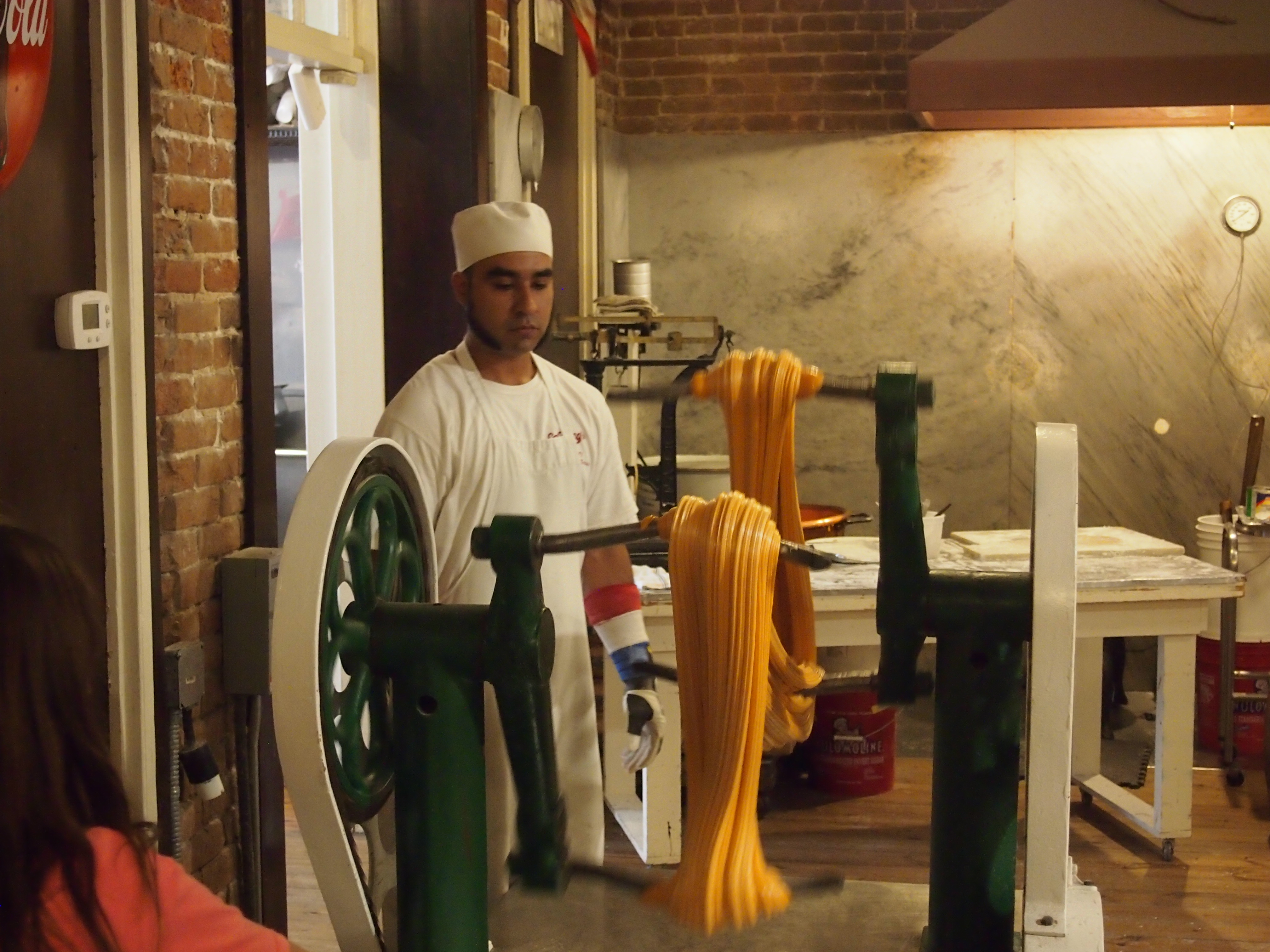
La King'sOne other thing I spied on the Strand: a public chess set.
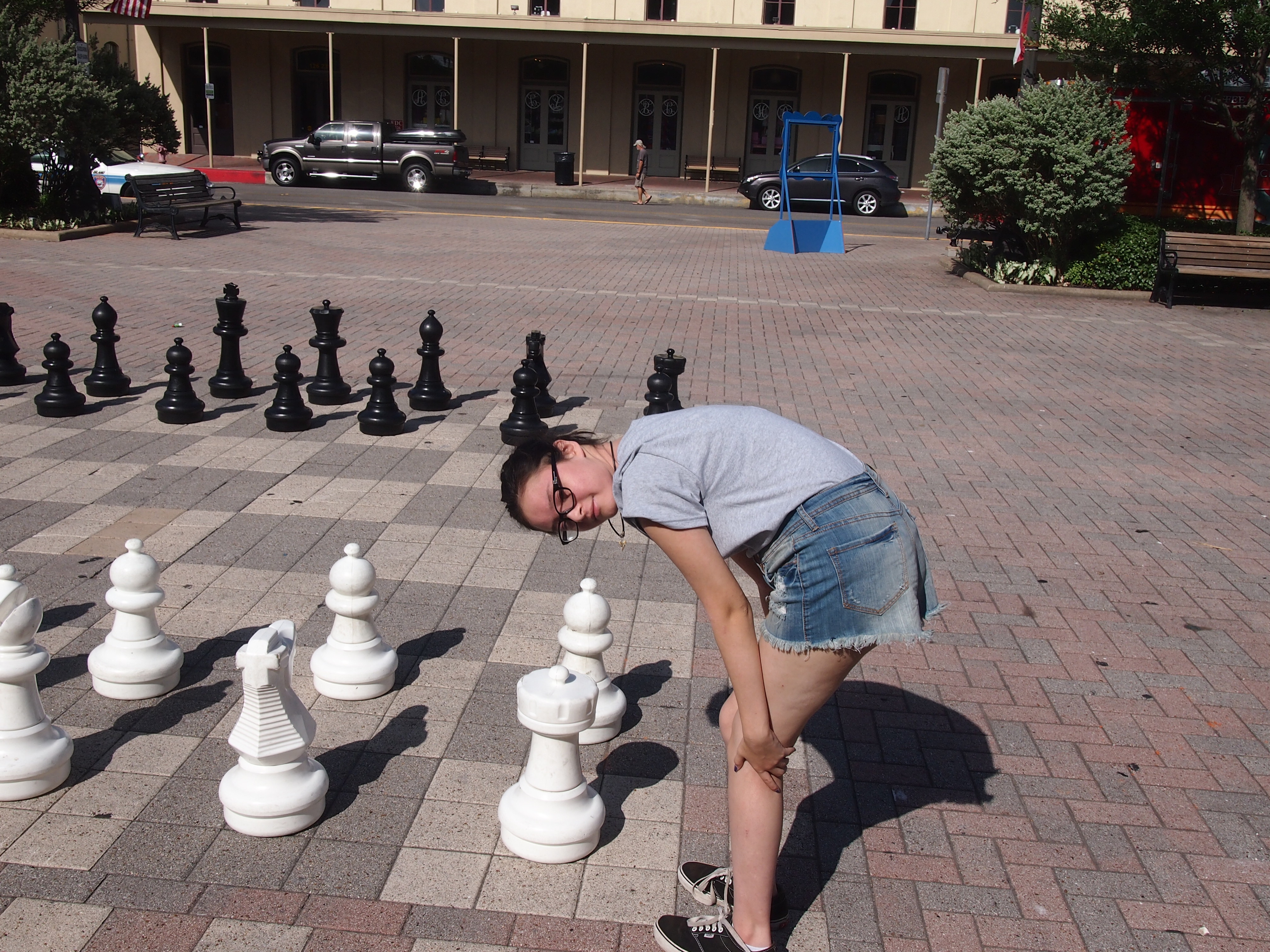
Ann on the StrandIt was a little too hot to play, but still. That’s what parks need more of, public chess sets.
The Bishop’s Palace, Galveston

Late last year, Congress passed a joint resolution along these lines: “Whereas the United States has conferred honorary citizenship on 7 other occasions during its history, and honorary citizenship is and should remain an extraordinary honor not lightly conferred nor frequently granted;

[In case you’re wondering, I’ll save you a trip to Wiki. The others are Winston Churchill, Raoul Wallenberg, William and Hannah Penn, Mother Teresa, Casimir Pulaski and Lafayette.]

“Whereas Bernardo de Gaalvez y Madrid, Viscount of Galveston and Count of Gaalvez, was a hero of the Revolutionary War who risked his life for the freedom of the United States people and provided supplies, intelligence, and strong military support to the war effort…

“Resolved by the Senate and House of Representatives of the United States of America in Congress assembled, That Bernardo de Gaalvez y Madrid, Viscount of Galveston and Count of Gaalvez, is proclaimed posthumously to be an honorary citizen of the United States.”

I didn’t know about that resolution until after Ann and I went to Galveston earlier this month, and I looked up Bernardo de Gaalvez y Madrid, Viceroy of New Spain, to add to my vague knowledge of the man for whom Galveston is named.

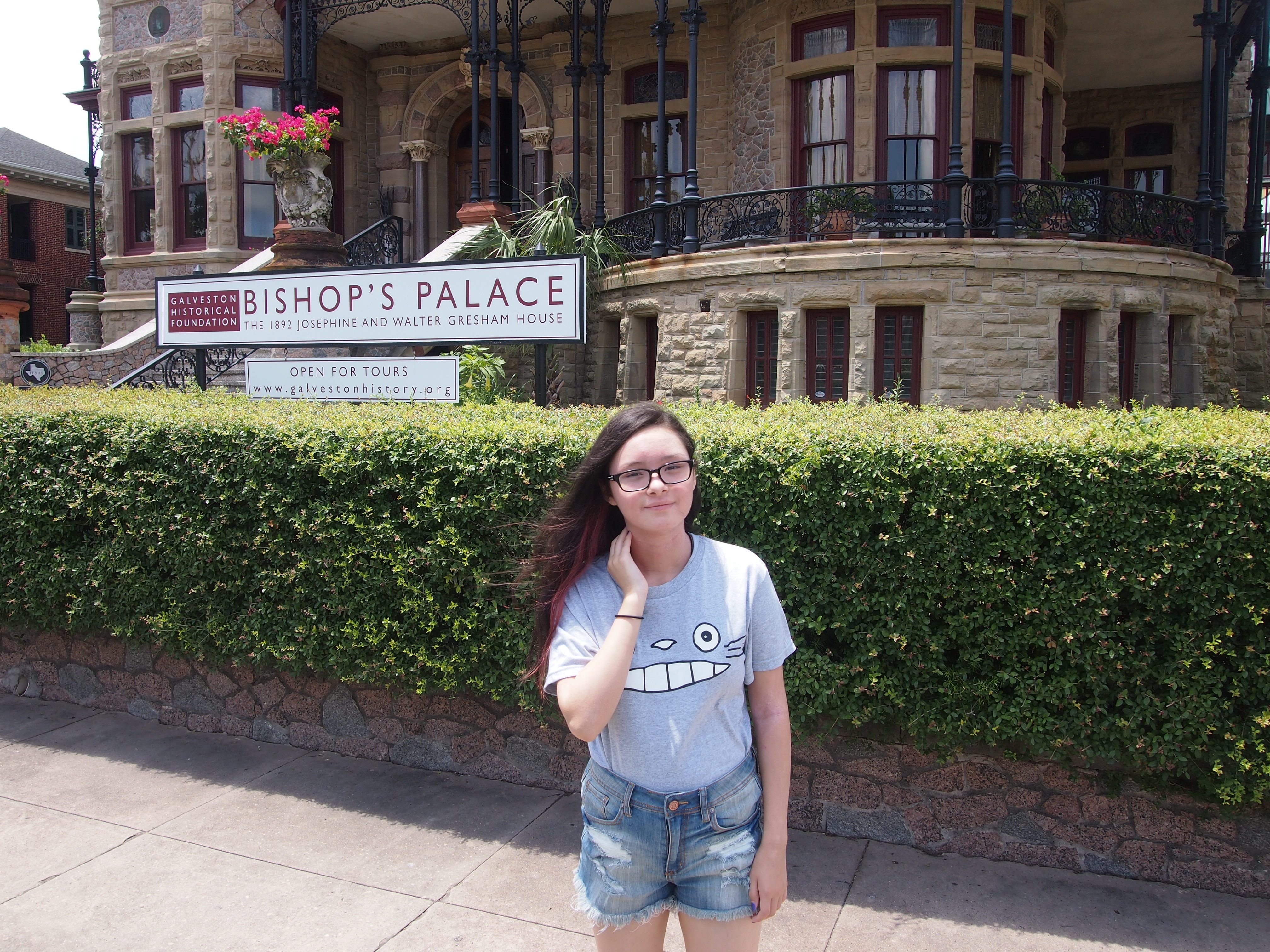
To my way of thinking, the first place to go in Galveston (after lunch, if you happen to arrive at lunchtime), is the Bishop’s Palace. That’s just what we did.

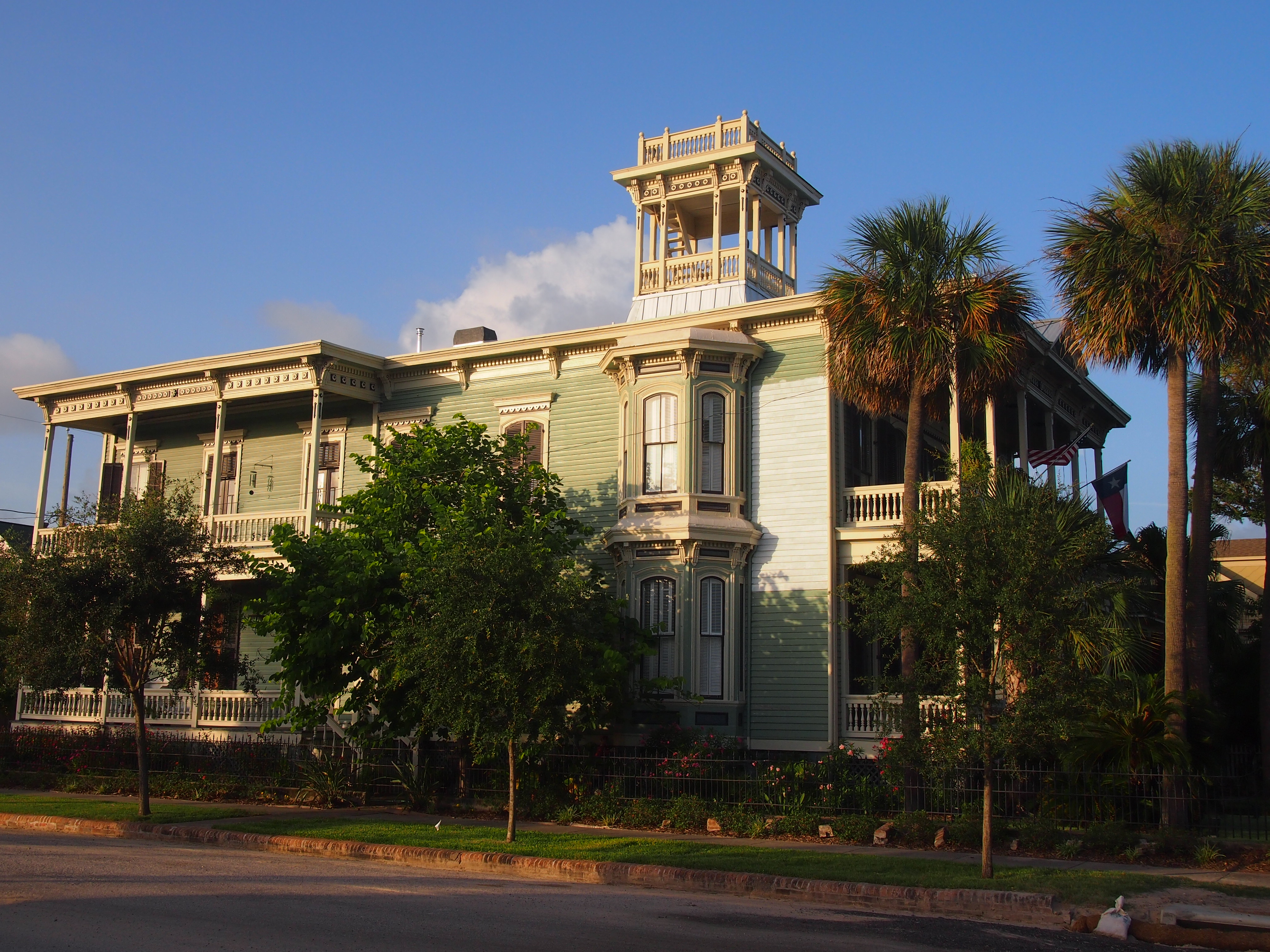
Ann, Galveston, July 10, 2015The name is a spot of Texas hyperbole. Palace, it isn’t. But it is a excellent example of a large (19,000 SF) Victorian mansion, built in the 1890s for a successful attorney and his wife, Walter and Josephine Gresham, who tapped local architect Nicholas J. Clayton to design it. (Clayton seems to have been very busy in the pre-1900 heyday of Galveston, but things were never the same after that.)
Bishop's Palace July 2015The Handbook of Texas Online describes Clayton’s work as “exuberant in shape, color, texture, and detail. He excelled at decorative brick and iron work… What made Clayton’s architecture so distinctive in late nineteenth-century Texas was the underlying compositional and proportional order with which he structured the display of picturesque shapes and rich ornament.”

That’s a fitting description for the Bishop’s Palace, which was a sturdy mansion too. It survived the Hurricane of 1900, one of the few structures in the area to do so, and sheltered a lot of survivors. The bishop in the name is Bishop Christopher E. Byrne, who lived there in 20th century, after the Roman Catholic Diocese of Galveston bought the mansion in 1923. Only in 2013 did the Church sell the structure to the Galveston Historical Foundation.

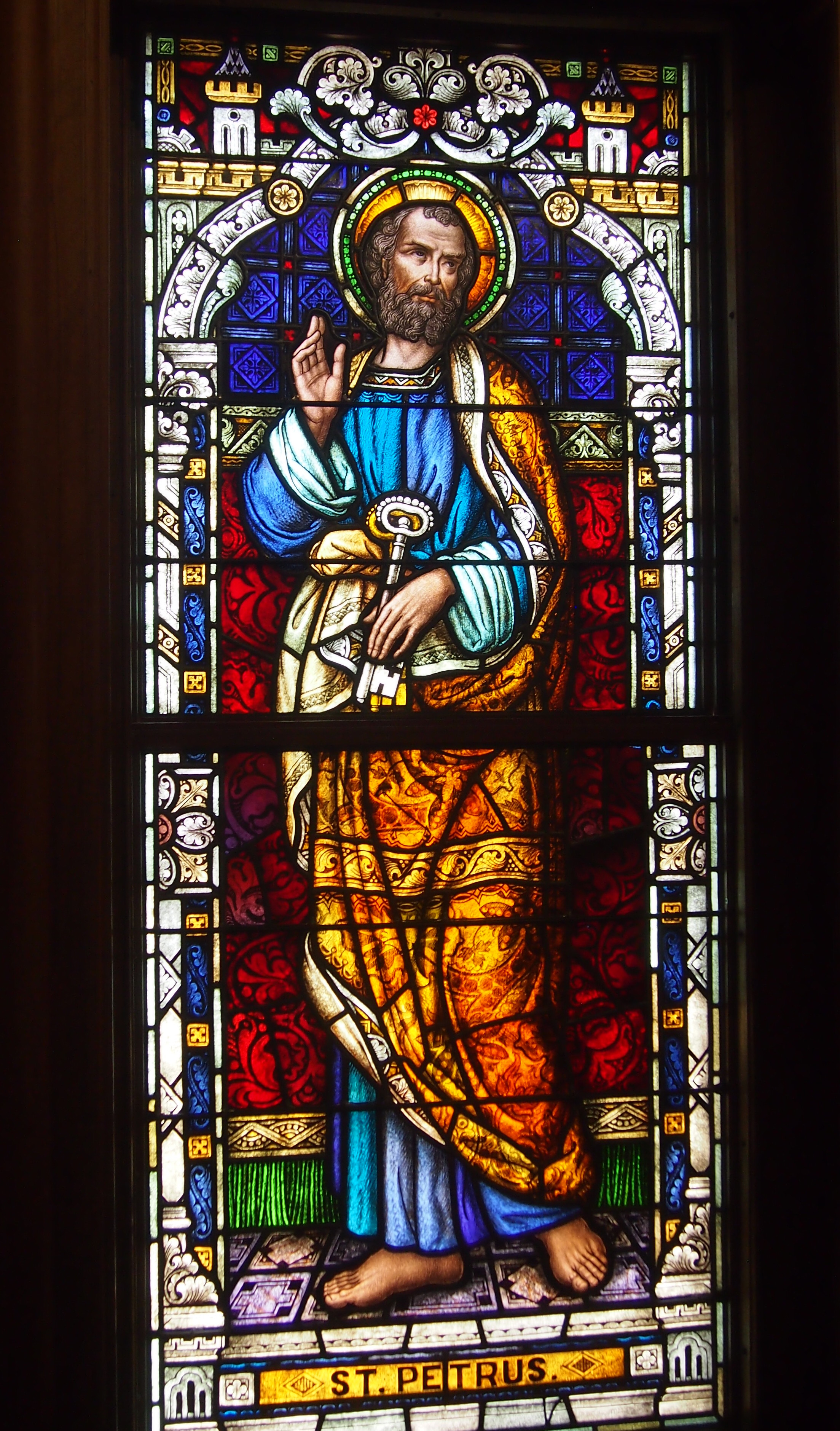
The interior has more stained glass than most Victorian mansions I’ve seen. Many of those were added by the bishop, who insisted that one of the rooms be converted into a chapel, which it remains. For instance, a stained-glass St. Peter’s there to greet you.

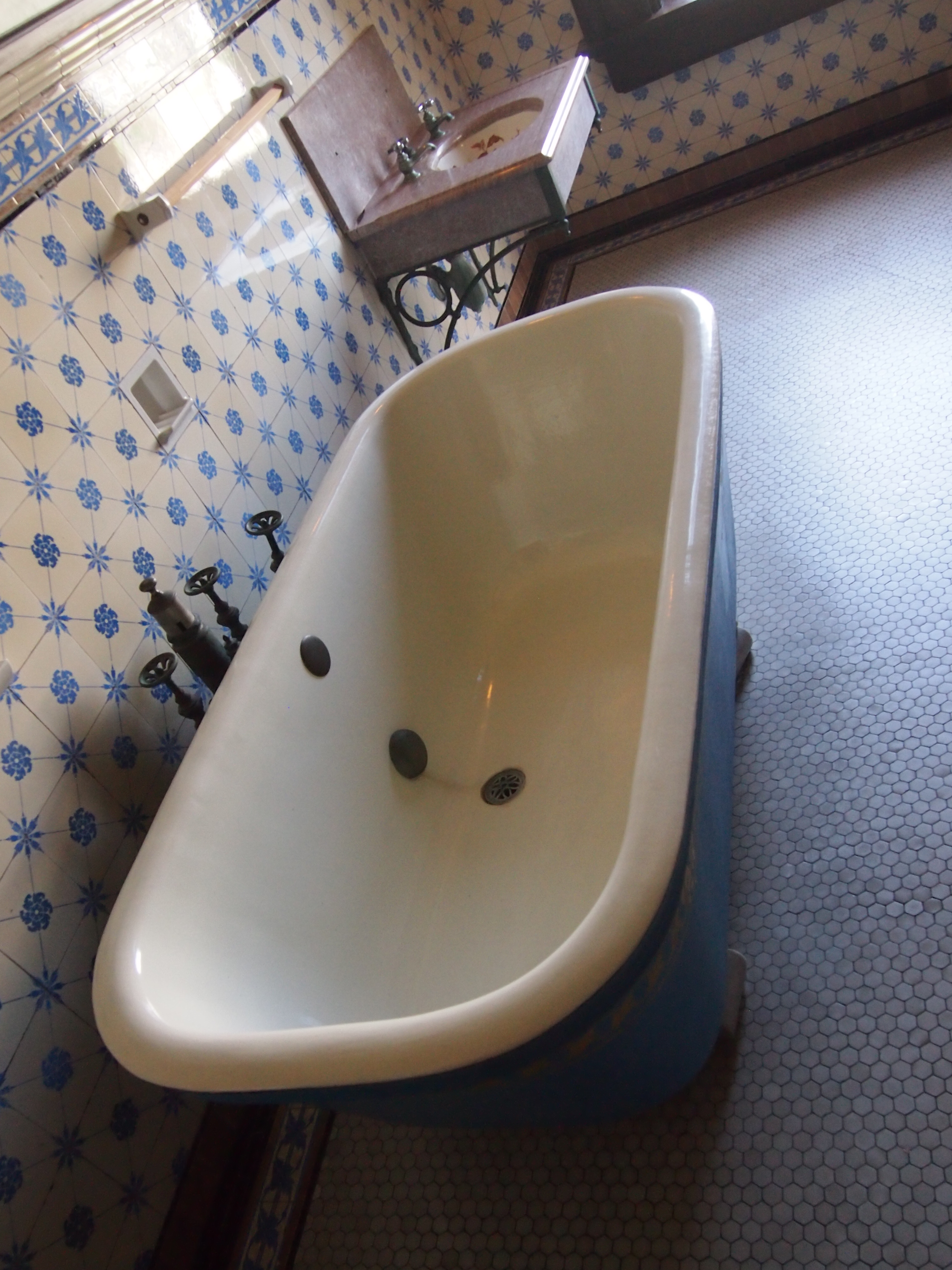
Bishop's PalaceAs usual, a house like this has some interesting period detail, such as the fact that the lights were built for gas as well as for that new light source, electricity, in case it worked out. Or the bathtub in the main second-floor bathroom.
Bishop's PalaceNote the three faucets. Our guide, an informative woman whose main job is teaching Texas History — everyone in the state takes it in 7th grade, or at least used to — told us that one was for hot water, one for cold, and one for rainwater from a cistern. It was thought to be good for one’s hair.

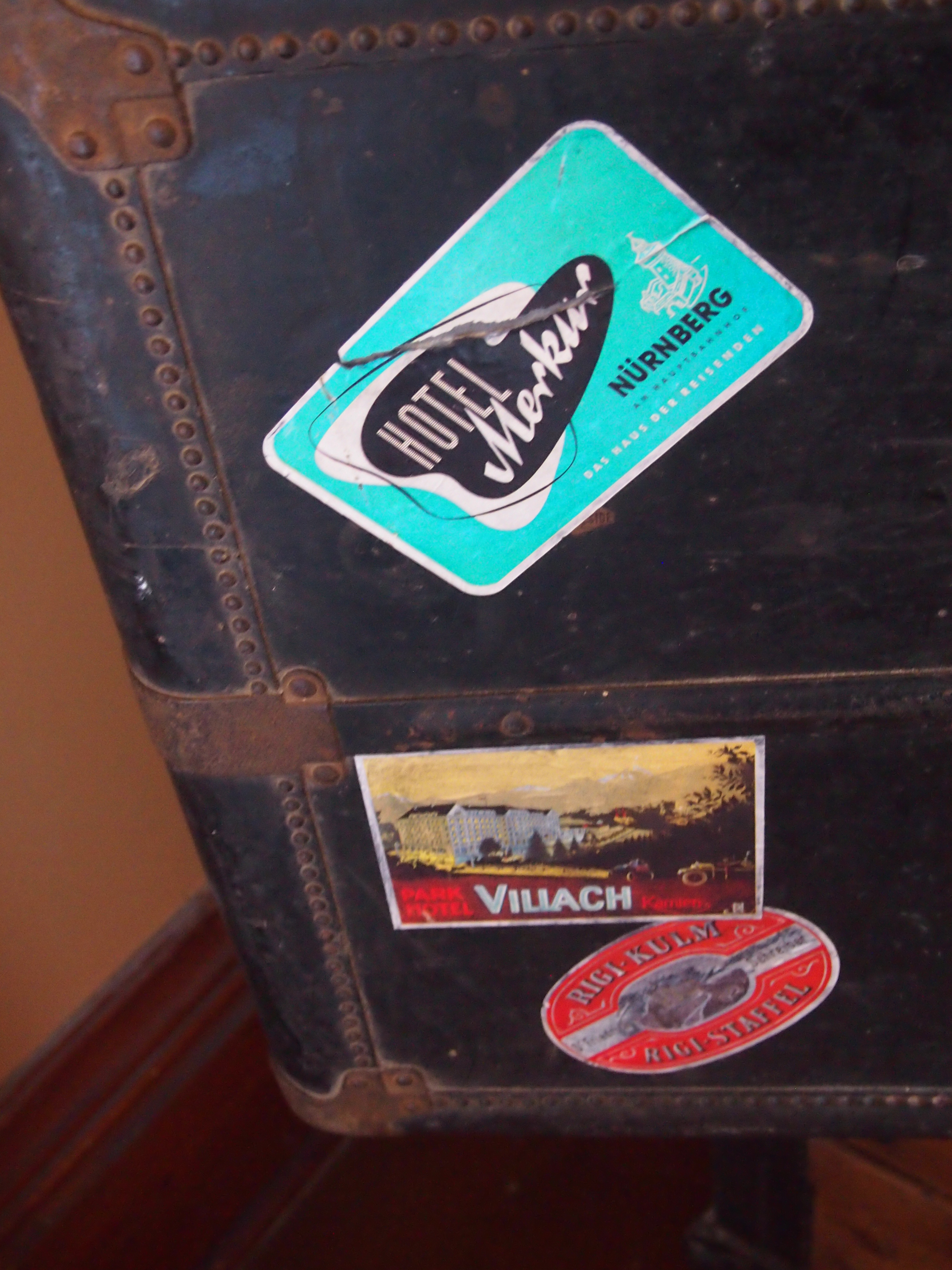
The Greshams had the means to be international travelers in the days before Europe on $5 a Day, and that meant steamer trunks. I don’t think I’d ever seen trunks of the time plastered with luggage labels, but Bishop’s Palace had some on display.
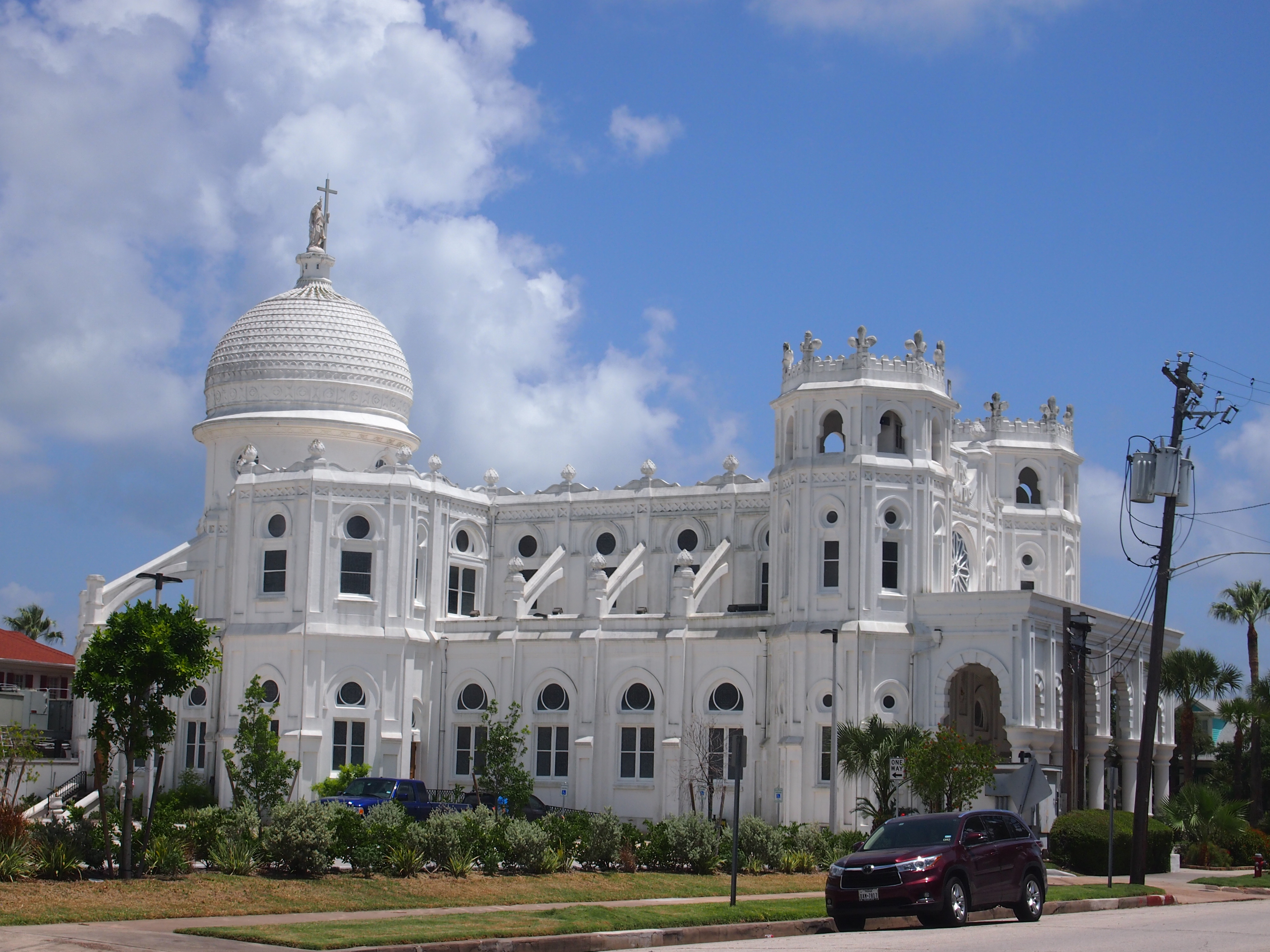
Bishop's PalaceNext door to the Bishop’s Palace is Sacred Heart Catholic Church. This building dates from the early 1900s, because the 1900 hurricane knocked down the original.

Sacred Heart, GalvestonThe church wasn’t open for a look inside. But the next-door location must have been convenient for the bishop. You know, in case he ever needed to tune up his crosier or something.

GTT Summer ’15

July isn’t really the best time to visit South Texas, or the Texas Gulf coast for that matter, but no matter — off we went on July 9, returning earlier today. It was a two-pronged trip: first for a few days to Galveston and slices of the vastness that’s Houston, then San Antonio for the balance of the time.

I don’t know anyone in Galveston, or Houston, unless you count people I long ago lost touch with. Even so, I wanted to go. Earlier this year, I read Isaac’s Storm, a fine book about the 1900 hurricane that laid waste to bustling, prosperous Galveston. After that, most of the local bustle went to Houston. But it also occurred to me that I hadn’t been to Galveston in more than 40 years. As the Wolf Brand chili man says, that’s too long.

Ann came with me for the trip, arriving on Thursday the 9th and repairing to lodging near Hobby Airport. We spent most of the next day in Galveston, seeing things and dodging the heat, then returning to our motel in the evening. On Saturday the 11th, we drove from Houston to San Antonio, but not the most direct and least interesting way, which would have been I-10.

First, we plowed our way into Houston to see the Menil Collection, a mid-sized museum near the University of St. Thomas that sports (among other things), a sizable surrealist collection. Nearby is the Rothko Chapel, as well as the Byzantine Fresco Chapel. Unfortunately, the Byzantine fresco went back to Cyprus a few years ago, but the building does now house a work called the Infinity Machine — rotating array of suspended antique mirrors, which is more effective than it sounds.

Leaving Houston, we followed I-69 and then U.S. 59, through such towns as Sugar Land, Wharton, El Campo, Ganado, Edna and the outskits of Victoria, which would be worth a look at some point. Southwest of Victoria is Fannin, and near that small town is the Fannin Battleground State Historic Site, which we visited.

Down the road a little further is Goliad, where you can see the Mission Espiritu Santo and Presidio La Bahia. We arrived after closing time, but the exteriors were impressive. So was Goliad County’s courthouse; Texas has a lot of fine courthouses.

Ann pointed out to me after a visit to an HEB, which is a major regional grocery chain, that Texas, as a name and a concept, is involved in a lot of marketing in Texas. I probably knew that, but never gave it much thought. For one thing, she’d noticed a selection of cookie cutters in the shape of Texas. Other products available in the store, such as Texas Dipper brand corn chips and many, many others, carried on the theme, as do other ads and products in other places.

At the motel, you could make yourself waffles in the shape of Texas.

Houston, July 2015Ann noted that we probably wouldn’t be able to make an Illinois-shaped waffled at an Illinois motel. I’ll go along with that.

Arnn Pictures, 1973

In June 1973, we had an unusually large number of relatives visit for an afternoon — 13 are in a picture I took, but I know that’s missing a few. I’m not sure how it was all arranged, only that hadn’t happened before, and it never did again. Mostly people came over in small groups.

One of the visitors was my uncle Kenneth Arnn, down from Oklahoma with my aunt Sue and cousin Ralph. I knew them better than any of the others, since we’d see them every year or every other year, and of course I still visit Sue and Ralph.

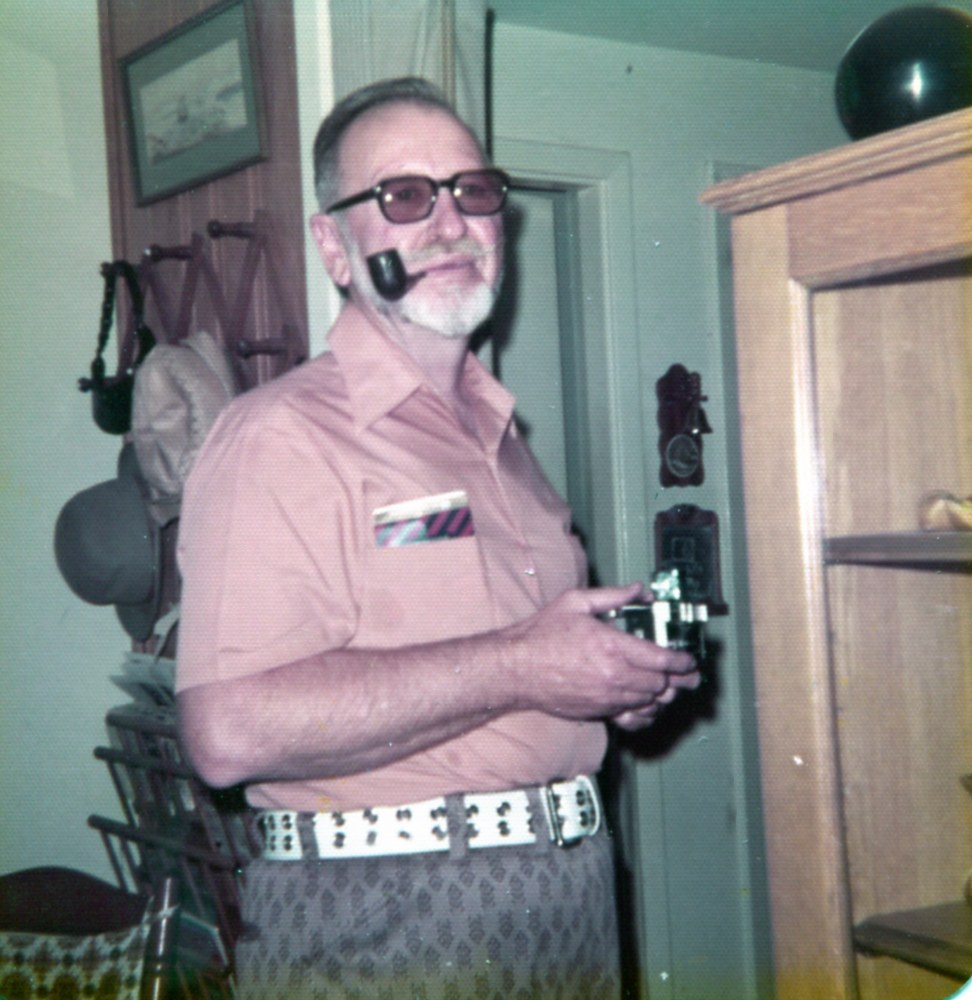
I took a picture of Ken standing near one of the kitchen doorways at my mother’s house.

KenJune1973He was impressed enough with the quality of the shot to ask for a copy sometime later. I look at it now and think, even my cheap Coolpix could take a better picture than that. But all I had then was a Kodak Instamatic 104, and I was 12, so I suppose that’s a pretty good image for all that. Also, if you took a shot from the same position now, most of the background would be the same, except for the arrangement of hats and the Magic 8 Ball.

Here’s the startling thing: in 1973, he was the same age as I am now. Chronologically, I understand. He was born in 1919. But it’s still hard to wrap my mind around that.

A few basic facts about Uncle Ken (unless I’m misremembering, which is entirely possible): he hailed from Childress, Texas; was a U.S. Army staff sergeant in the European theater in WWII — a cook in Patton’s army; did a stint as a teacher in Barrow, Alaska, in the 1950s with my aunt, whose older sister is my mother; and for most of his career he worked for the Bureau of Indian Affairs in South Dakota and later Oklahoma.

The last time I saw him was in Ardmore, Okla., in late 2001. He’d suffered a stroke by then, and so was frail, but still mentally lively, as always. We were on our way back home from Thanksgiving in Dallas, and I’m glad we stopped in (he got to meet Lilly, among other things). He died a few days before Christmas in 2002.

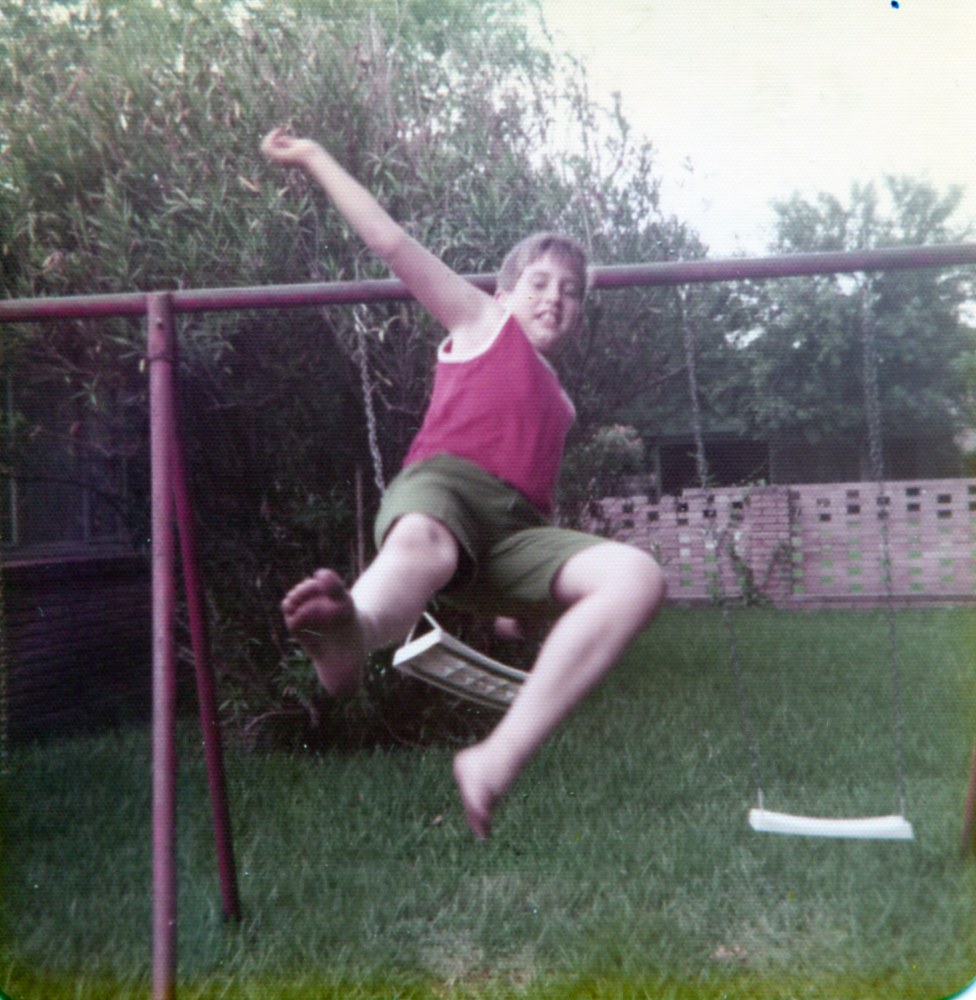
Here’s another picture I took during that visit in 1973: cousin Ralph, age 10, jumping off the swing set we had in the back yard at the time.

RalphJune1973Ralph’s a sales executive these days, a resident of San Antonio with a wife, grown stepdaughter and two teenaged daughters. I’ve always liked this kinetic picture of him.

The Flight of Excalibur IX, 1975

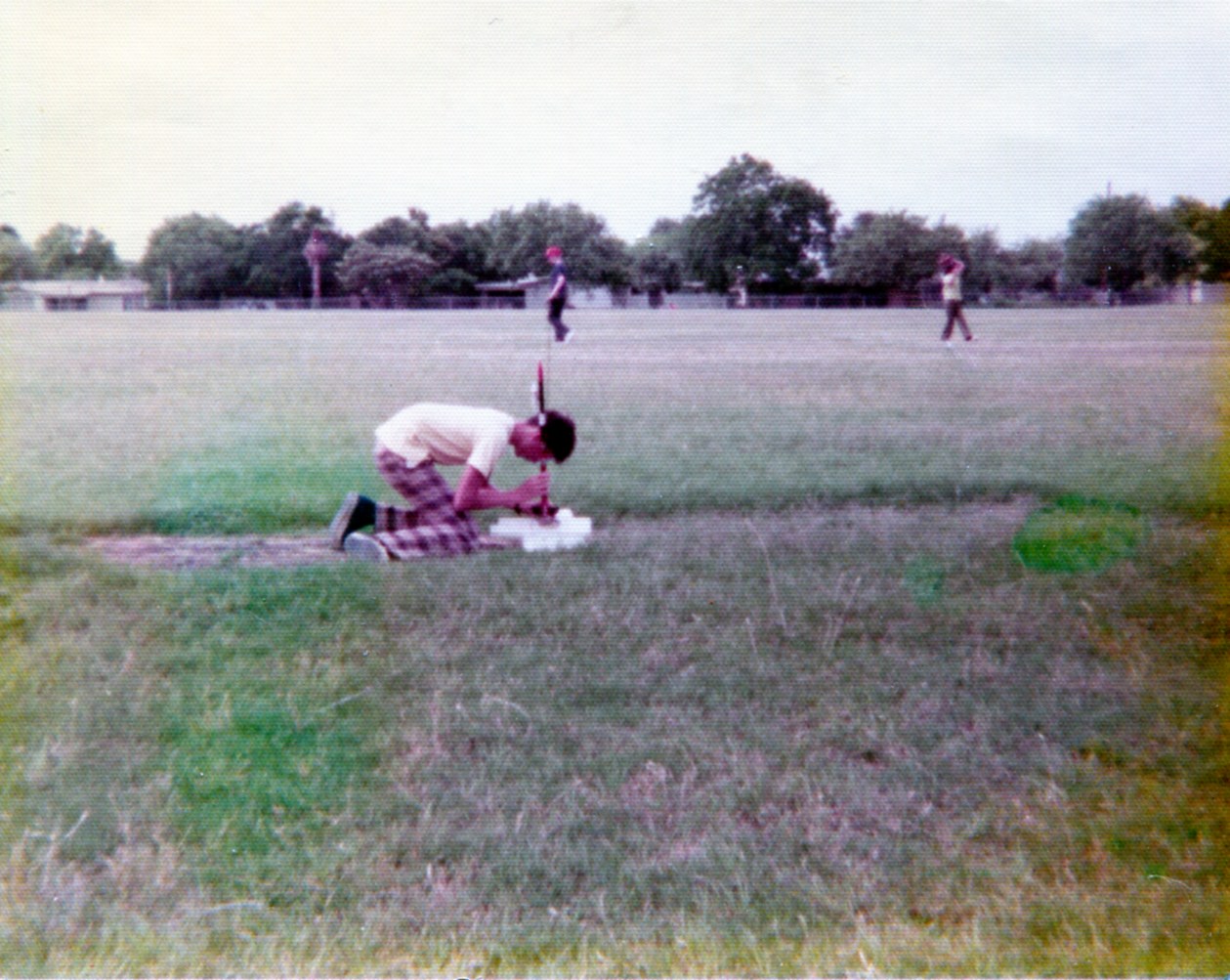
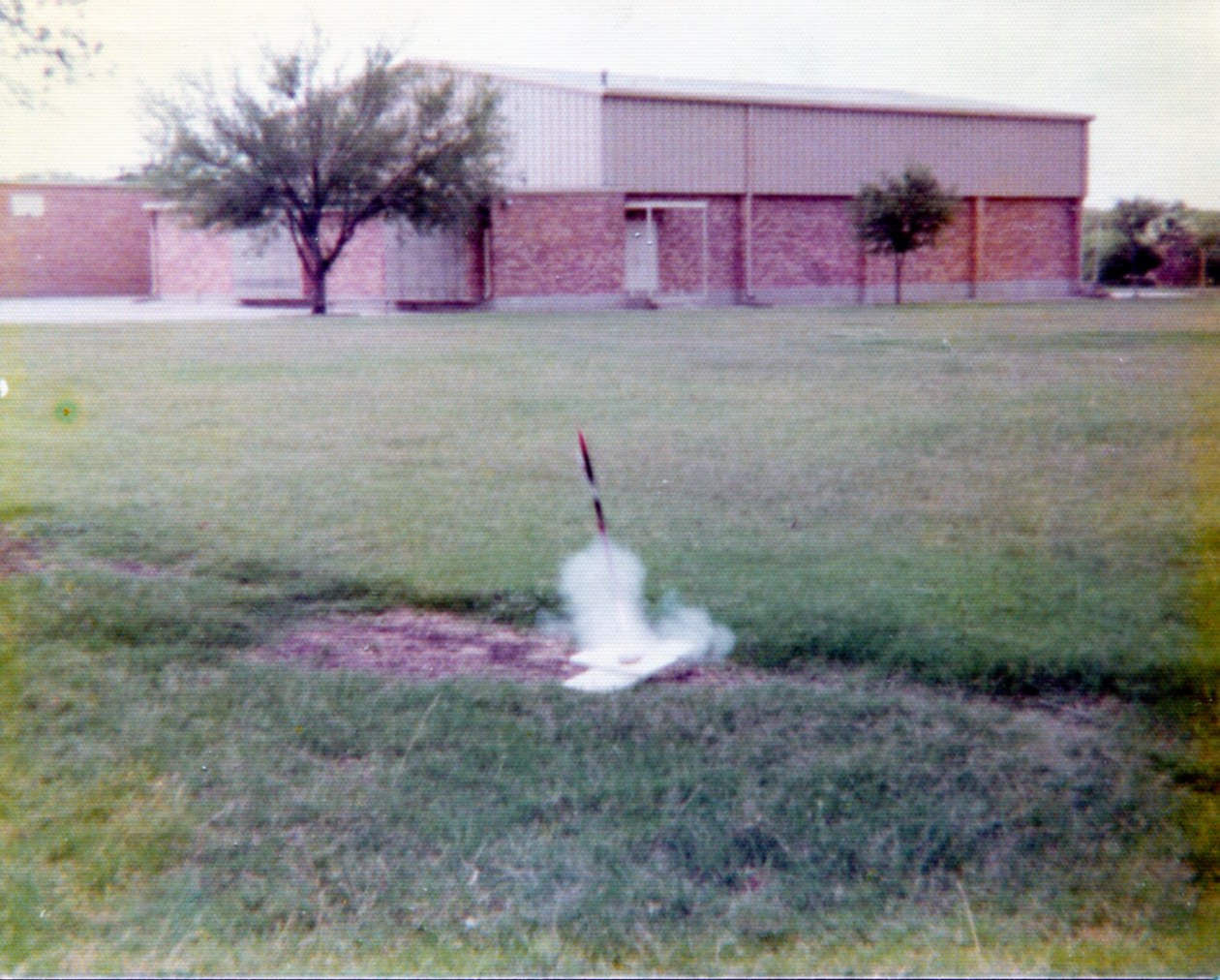
Pictured: Bill and his little brother Dick on the grounds of Woodridge Elementary School in San Antonio on May 22, 1975. I hung out with Bill mostly during our junior high years, which were about to come to an end when I took this picture. For a few months, I helped Bill launch his model rockets, such as the one he’s setting up here: an Excalibur brand rocket.5.22.75ExcaliburIX-1Next, he’s doing final preparations on the launching pad, which was made of wood planks nailed together, fitted with a guide wire for the rocket, sticking up like a spindle. We called it Excalibur IX because this was the ninth time we’d launched this particular rocket.ExcaliburIX-2

That was a lot of launches for a rocket like this, because there was always the risk of never seeing it again. One time I remember the wind catching one of the rockets after its parachute deployed and taking it far into the neighborhood around the school; we jumped on our bicycles to chase it, and found it at the edge of a street somewhere. Another time we set out to look for a rocket we never found. And yet another time, the parachute failed and the rocket came crashing to the ground, wrecking it.

Off it goes. I don’t remember if this was a successful flight. I kept detailed notes on all the flights, but I don’t have them handy — I think they’re on some closet shelf somewhere at my mother’s house even now. In this case, I decided to take pictures too.

ExcaliburIX-3I do remember that the last of these flights — an attempt, because the engine fizzled on the pad — was on July 4, 1975. For whatever reason, I didn’t participate in rocket launches with Bill after that.

Grandpa 1963

I don’t have that many images of my maternal grandfather — most of them are at my mother’s house — but there are a few kicking around here.

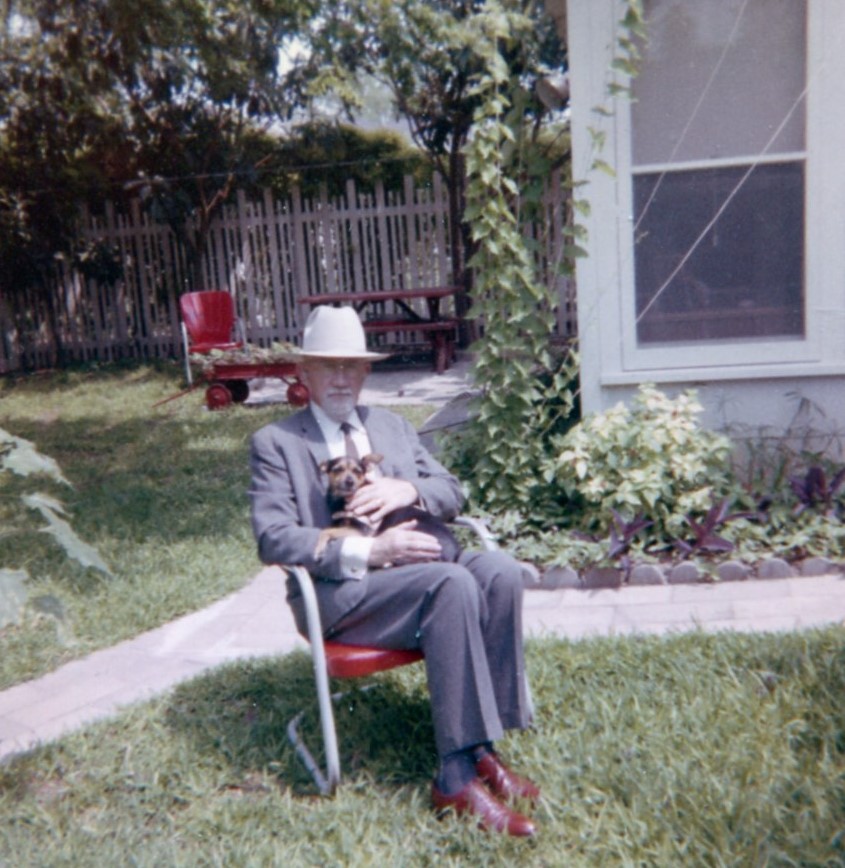
Grandpa 5.12.63The picture is dated “Mother’s Day 1963,” which was May 12, 1963, a Sunday. Grandpa — even at this late date, I can’t call him “James” or anything else — aged nearly 70, is sitting in his back yard in Alamo Heights with his dog Georgette. I remember Georgette better than Grandpa, since he died in 1966, when I was five; the dog lived until sometime in the late ’60s.

I remember the back yard pretty well from visits later than 1963. Behind him to the right is the detached office-laundry room-garage behind his house. The office even had a nickname: the Pout House, which seems to speak to some long-ago family joke. Even further back is a fence lined with bamboo, which I believe he planted.

As I mentioned before, he was Texas A&M Class of 1916 and member of the U.S. Army Corps of Engineers during and after the Great War. He was a civil engineer by profession during the great age of 20th-century road building in Texas, and aspired to work on building the Alaska Highway, but that didn’t happen. He and Grandma (Edna, 1894-1971) currently have 13 living descendants, age 12 to age 89.

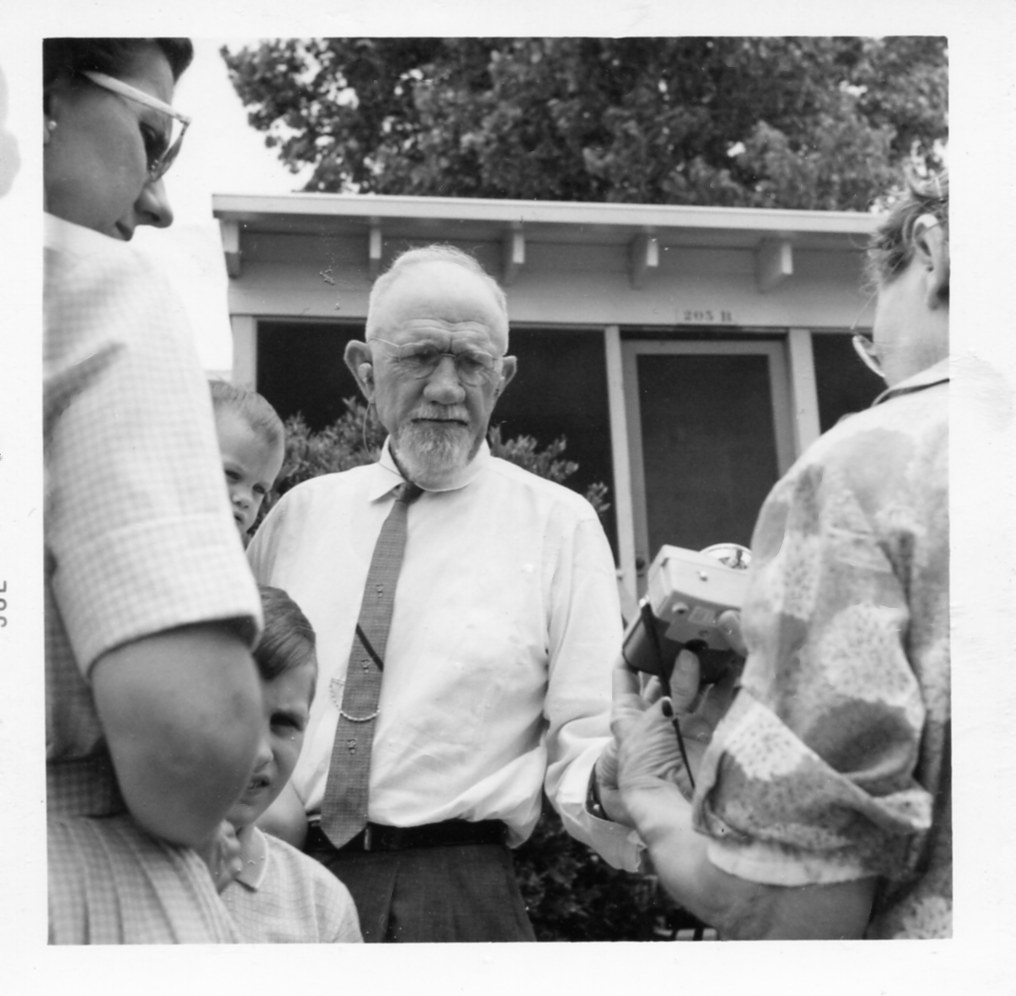
Grandpa May 1963This is in McKinney, Texas. The pic manages to capture my mother on the left, me (the small face under hers), Jim (under me), Grandpa and Grandma (holding another camera?). Grandpa’s hearing aid is clearly visible. One thing I know: by this time, he was quite hard of hearing.

It’s dated Spring 1963, at some time when Grandpa and Grandma were up for a visit from San Antonio. I feel certain they would have driven up, and I hope used the parts of I-35 that were finished at the time, which would have been spanking new. As a civil engineer, I’m sure Grandpa would have appreciated it more than most (and it wouldn’t have been the crowded mess it is in the 21st century in some places).

Jay tells me, about that picture, that Grandpa grew the beard about the time Ralph was born (our cousin, born April 1963) with the idea that it would make him look more familiar to Ralph, whose father wore whiskers. “Dr. Colvin [a psychiatrist we knew] happened to see a picture of Grandpa with the beard and asked if he had been a psychiatrist. (There is, I suppose, something Viennese about it.)”

“Agora”

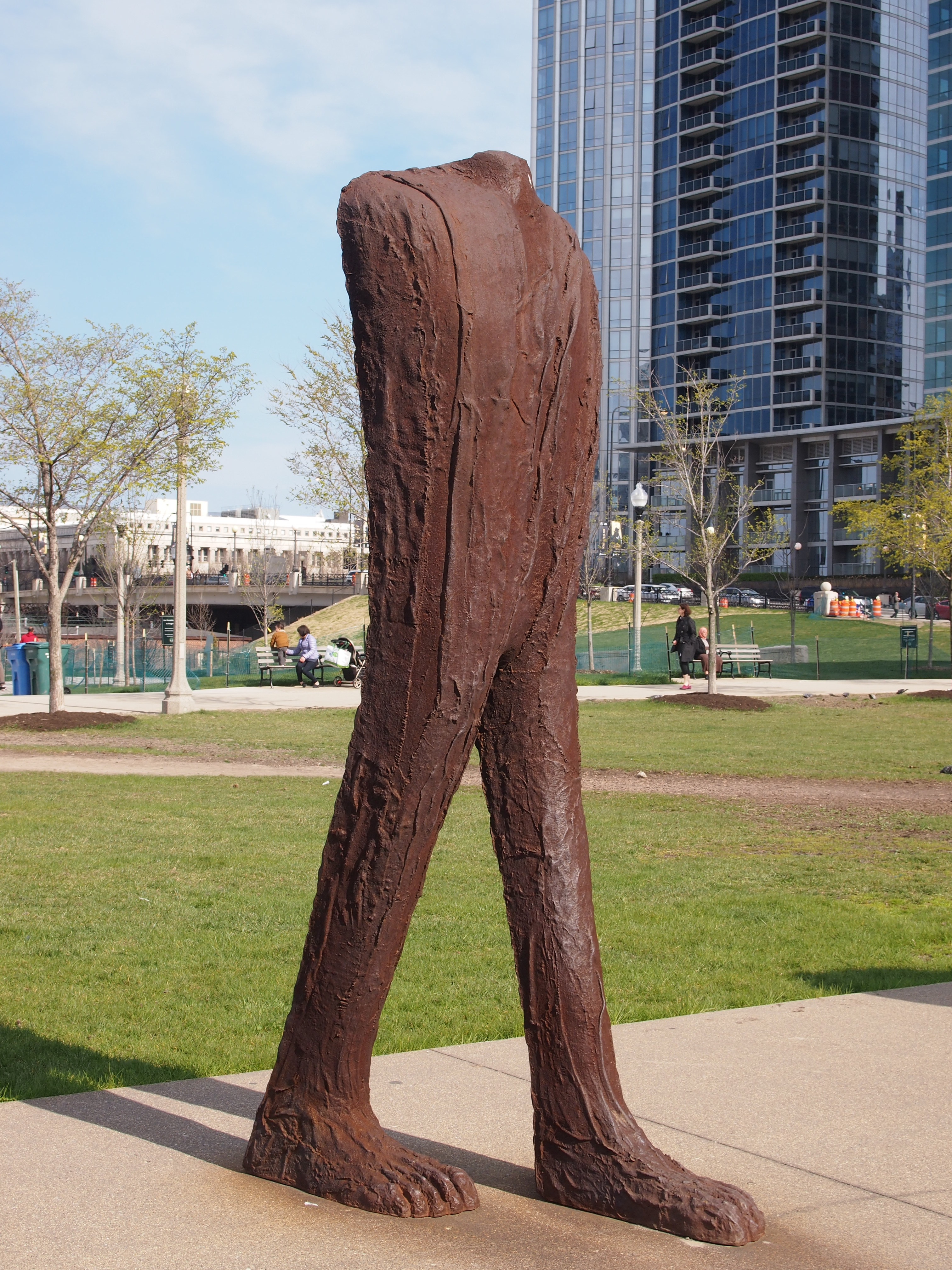
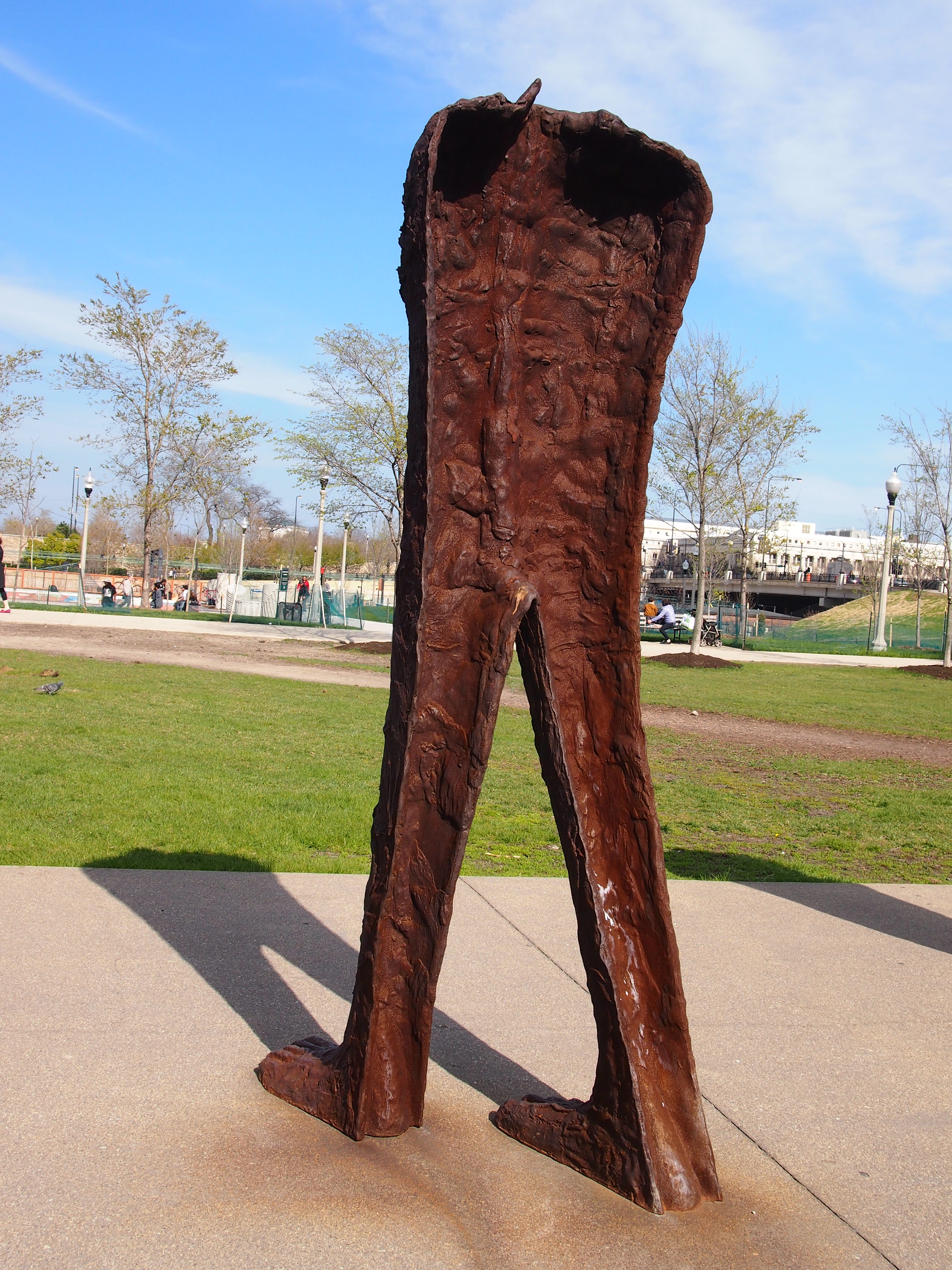
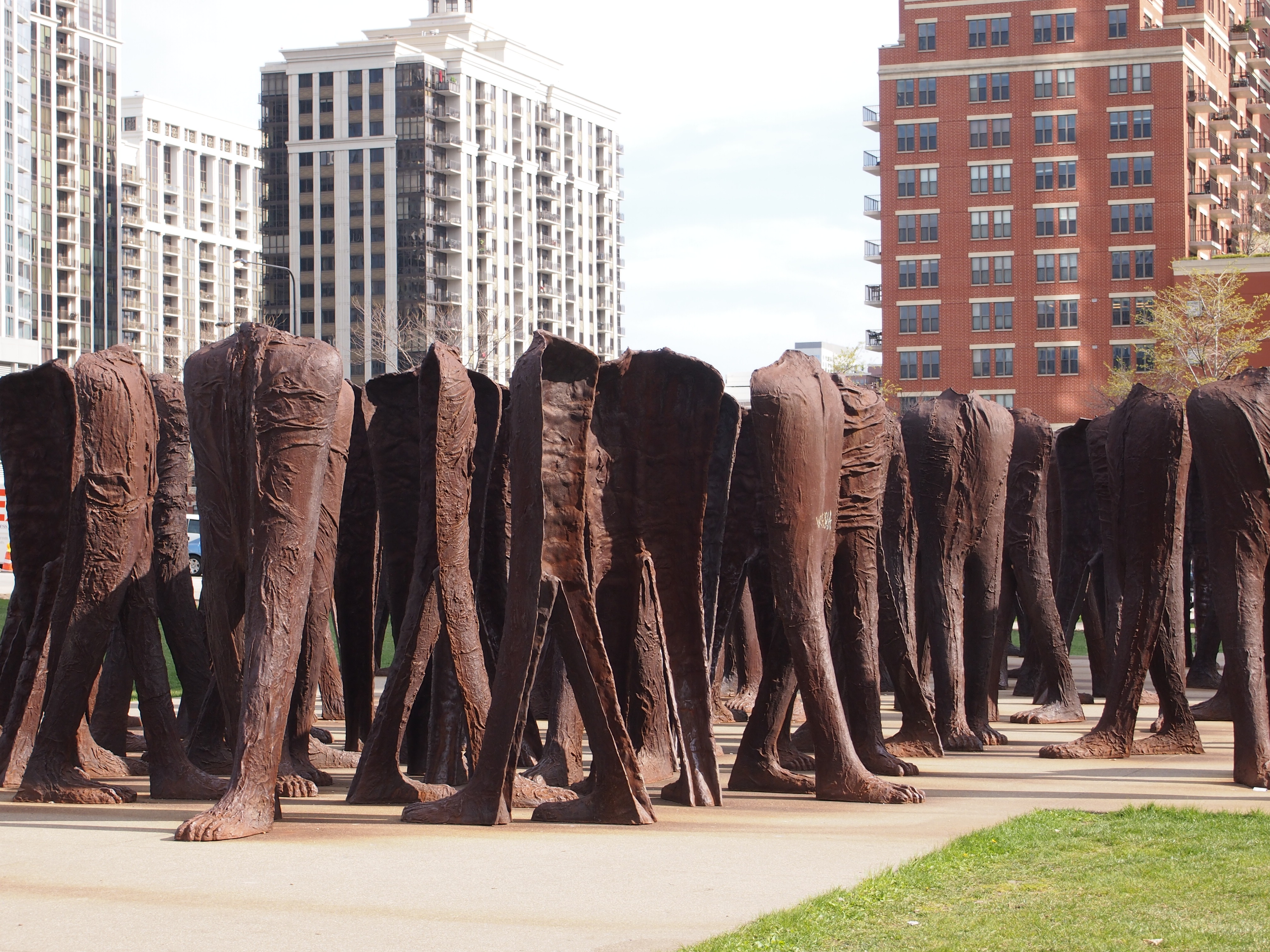
As far south as you can go in Grant Park, near the corner of Michigan Ave. and Roosevelt Rd., there’s a permanent sculpture installation called “Agora,” by the Polish sculptor Magdalena Abakanowicz.

“Agora” includes iron figures that look like this from one angle.

Agora, May 1, 2015And like this from another.

Agora, May 1, 2015They look alike at first glance, but actually the texture of the iron is different on each one. There are 106 of them.

Yeah, it's a little creepyThey’re roughly in two groups, but some of them are at a distance from the rest. Abakanowicz cast them at the Srem Foundry in Poland from 2003 to ’06.
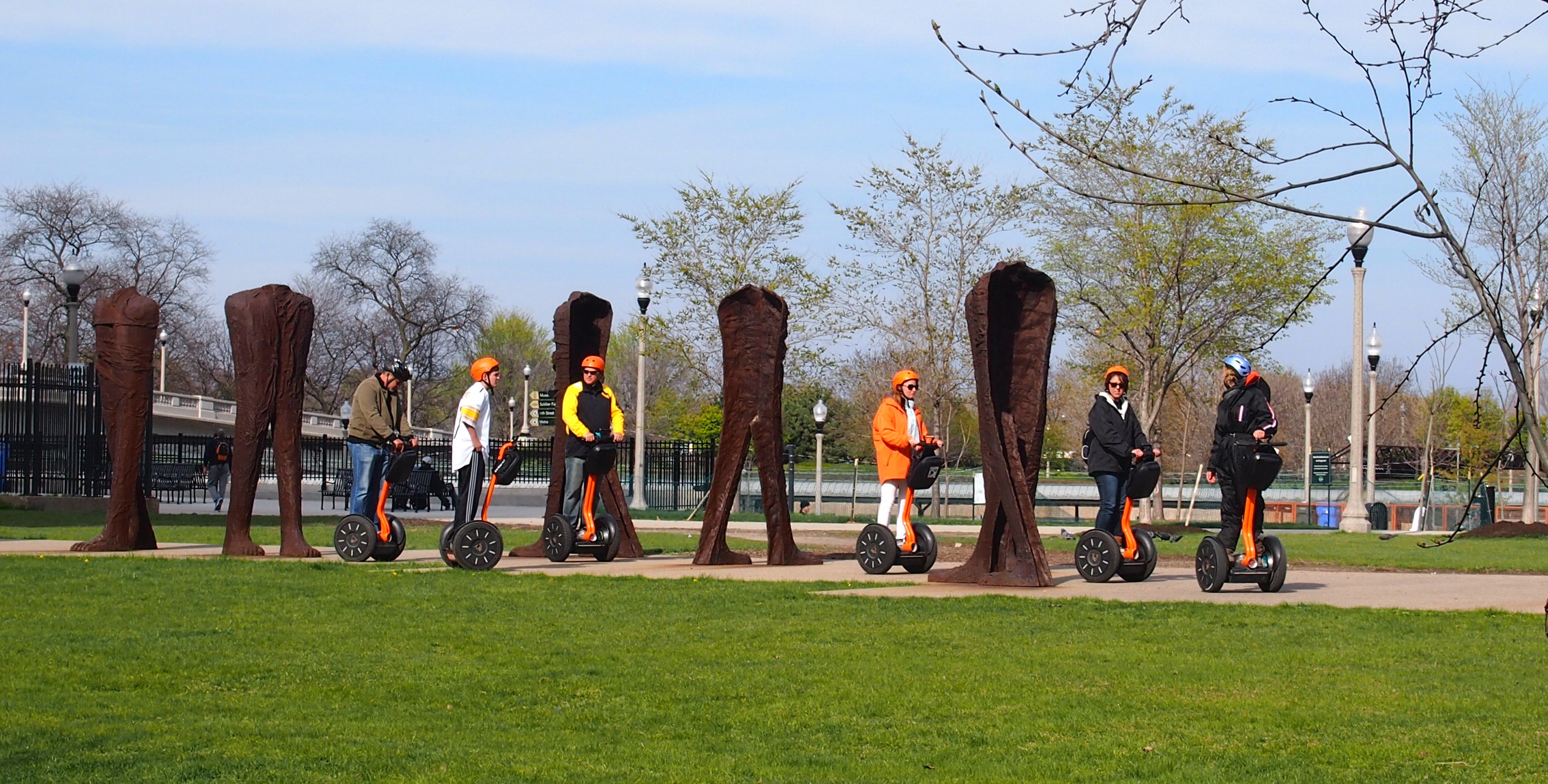
The work also seems to attract the attention of roving bands of Segwayers.

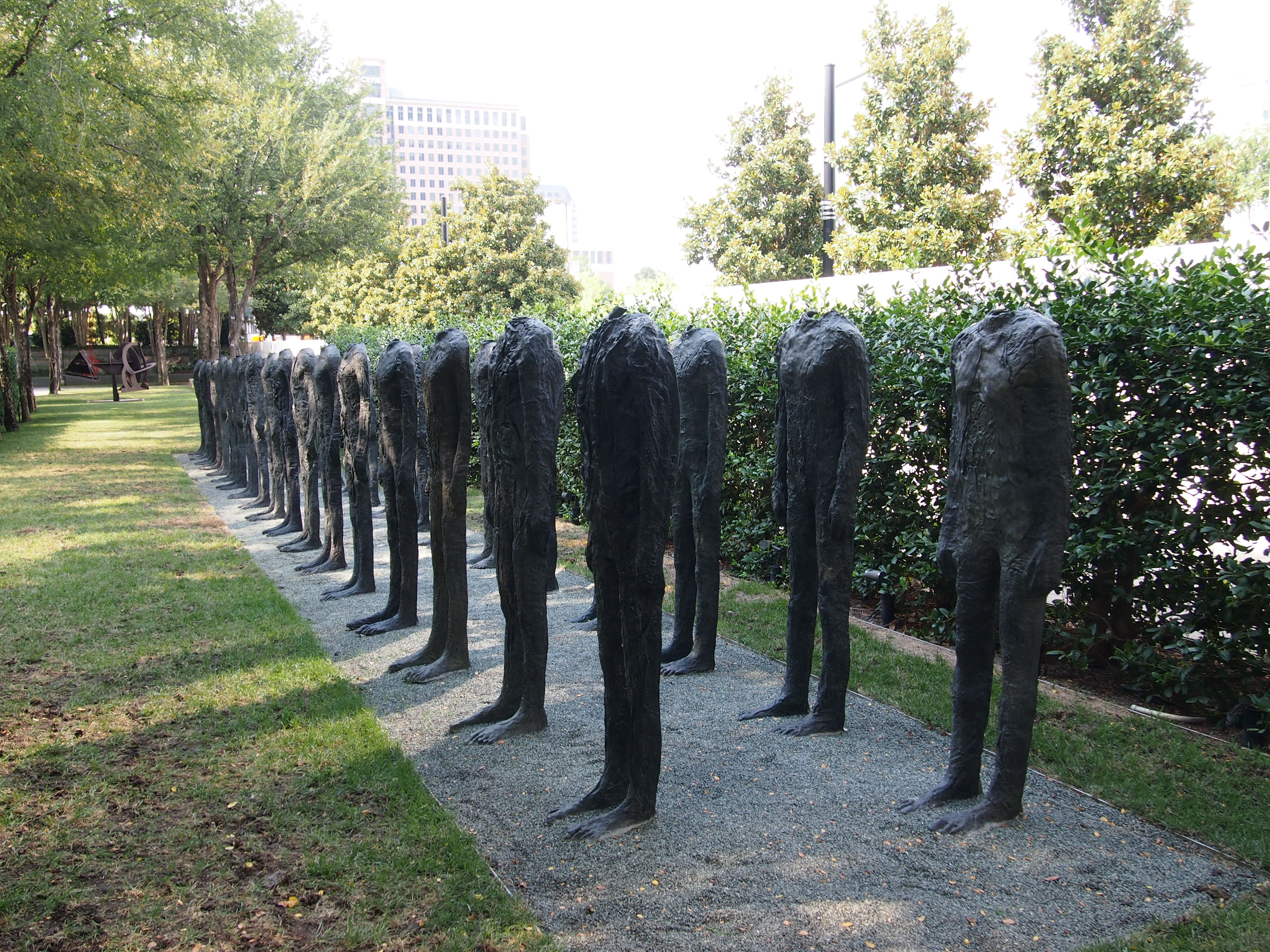
Grant Park, May 1, 2015As I looked at the half-figures, I thought, they seem really familiar. Where have I seen them before, or at least something similar?

Nasher Museum, 2013The Nasher Sculpture Center in Dallas in ’13, that’s where, which has another grouping of cast-iron figures by Abakanowicz. The headless halves were in long lines instead of milling around like at an agora.

Naptimes, 30 Years Apart

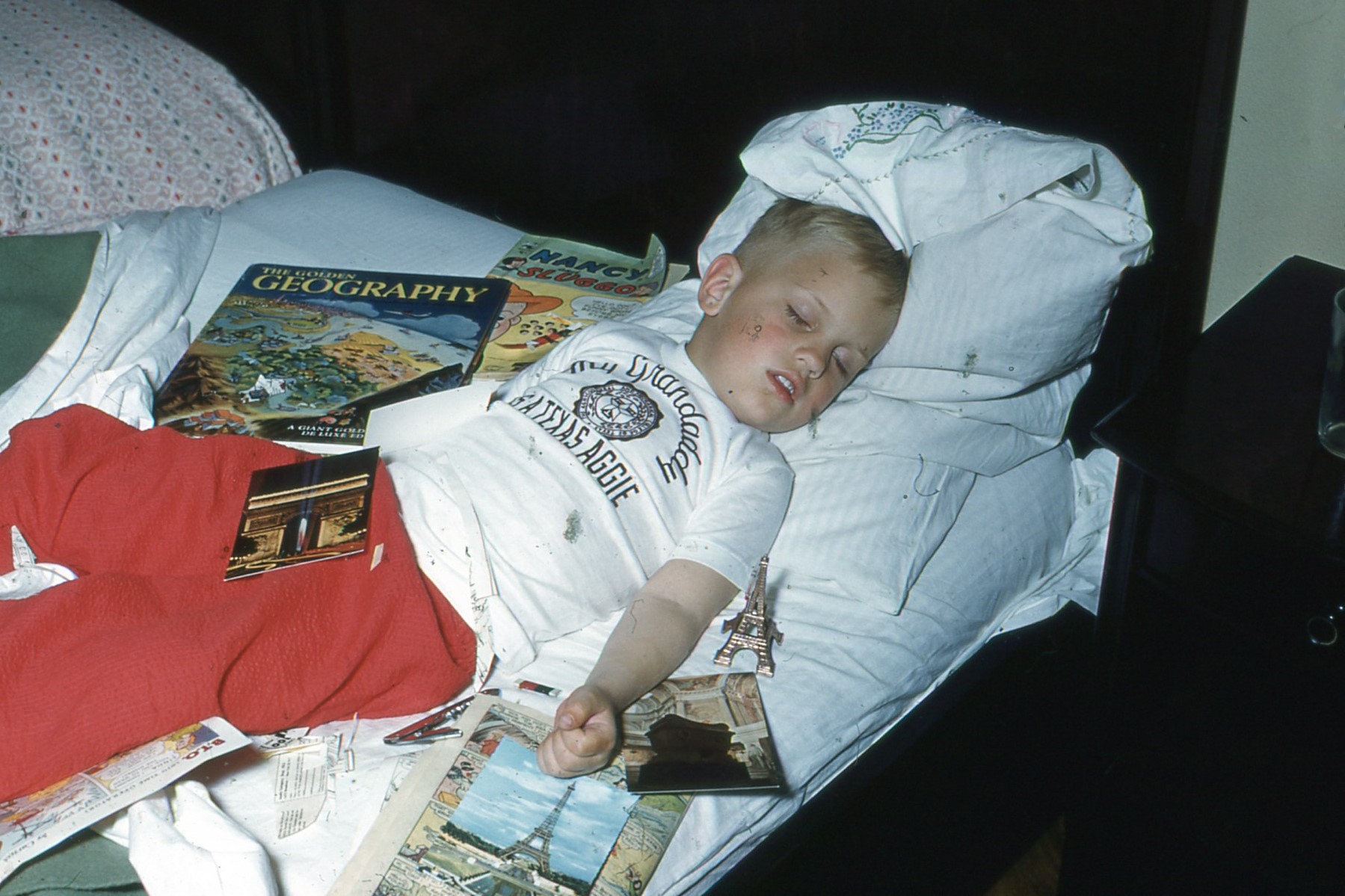
Last time I was in San Antonio, I dipped into my father’s collection of slides, mostly unexamined for at least 50 years, and pulled out a handful for scanning. The handwriting on the following slide said: “Jay Stribling sleeping, May 1956.” My brother that is, when he was four. No place is noted, but I suppose it was in Germany.

JayMay1956I looked up The Golden Geography. It’s by Elsa Jane Werner, illustrated by Cornelius De Witt, and originally published 1952. A lot of them must have been printed, since they seem easily available now online. I don’t remember it around the house in later years, which can mean only one thing. The only reason a book ever left our house is that it fell apart completely.

A casual Google search doesn’t uncover a scan of that Nancy & Sluggo comic, and it isn’t worth pursuing very far. The Eiffel Tower was a souvenir from my parents’ trip to Paris. I’m told they went without their small children, my brothers, which is what I would have done. They bought one for Jay and one for Jim, and the towers are still in my mother’s house, though not so shiny these days.

When I sent the image to Jay, he shared it with his sons. The eldest, my nephew Sam, sent us a picture of him at a similar age (in the 1980s) and in similar repose.

1936928_237230045005_6188398_nTime flies, things don’t change.