Corsicana, Texas

Everything about this picture says Texas: the Collin Street Bakery sign, marking a famed Texas bakery; the Texas flags; the HEB grocery store; the pickup truck driving by; the onion domes off in the distance. Onion domes?
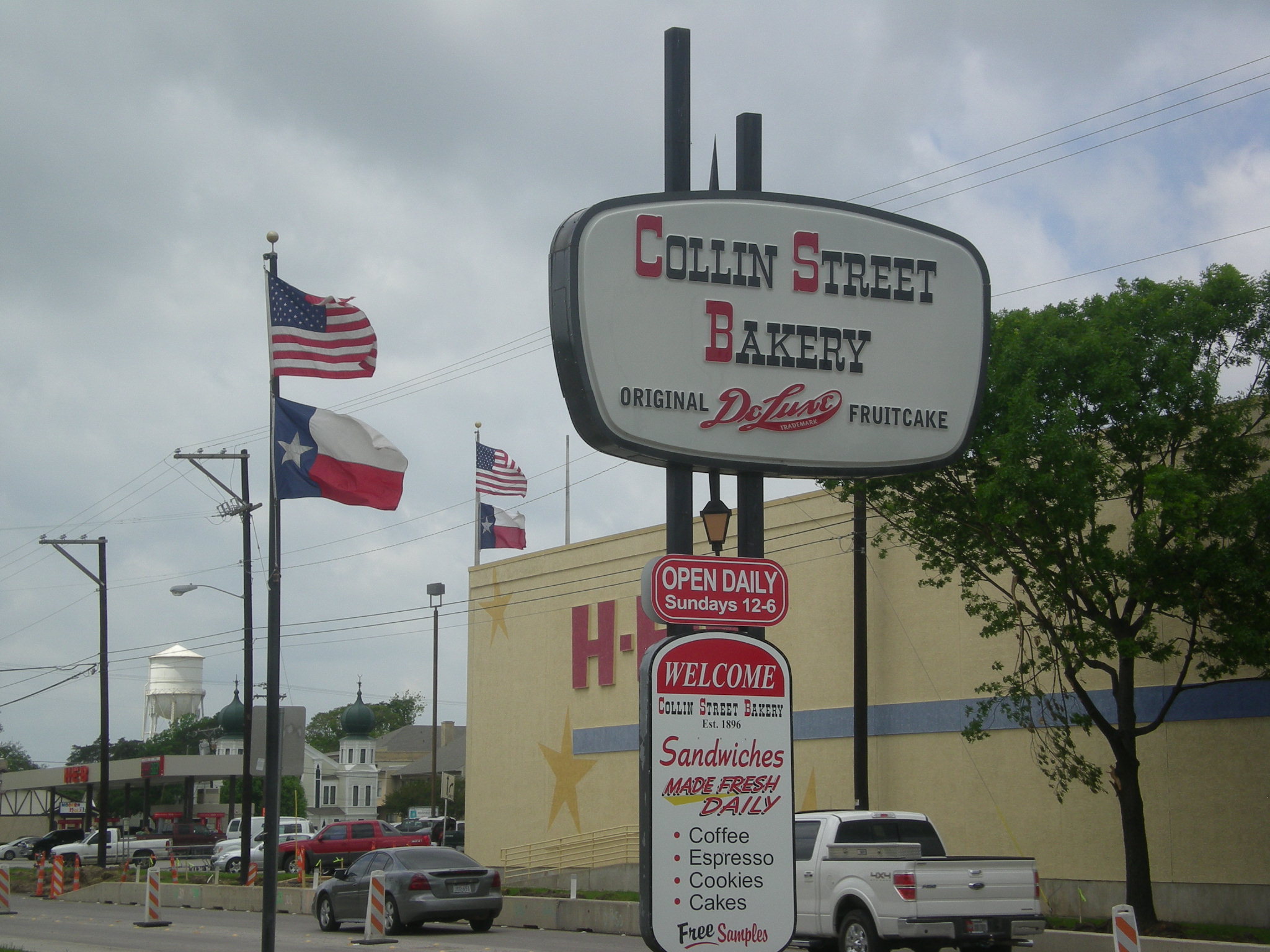
Texas4.25.14 001First a little background. On April 24, 2014, Jay and I drove south on I-45, the main road from Dallas to Houston. About 50 miles south of Dallas is Corsicana, seat of Navarro County, and home of the Collin Street Bakery. I’ve been eating its fruitcakes on and off for years, mostly by mail order, but in 1996 (I think) I passed through town and visited the bakery store.

As the web site notes: “The DeLuxe Texas Fruitcake or Pecan Cake you order today is still baked true to the old-world recipe brought to Corsicana, Texas from Wiesbaden, Germany in 1896 by master baker Gus Weidmann. He and his partner, Tom McElwee, built a lively business in turn-of-the-century Corsicana which included an elegant hotel on the top floor of the bakery.”

The hotel is gone, but you can still buy baked goods at the bakery store, including the signature fruitcake. We bought one to take to our mother, plus some smaller items for more immediate snacking. From the parking lot, we noticed those nearby onion domes, and being curious about onion domes in small-town Texas, we went over for a look. After all, how often do you see Moorish Revival buildings in small-town Texas? Probably more often than I’d think, but anywhere there one was.
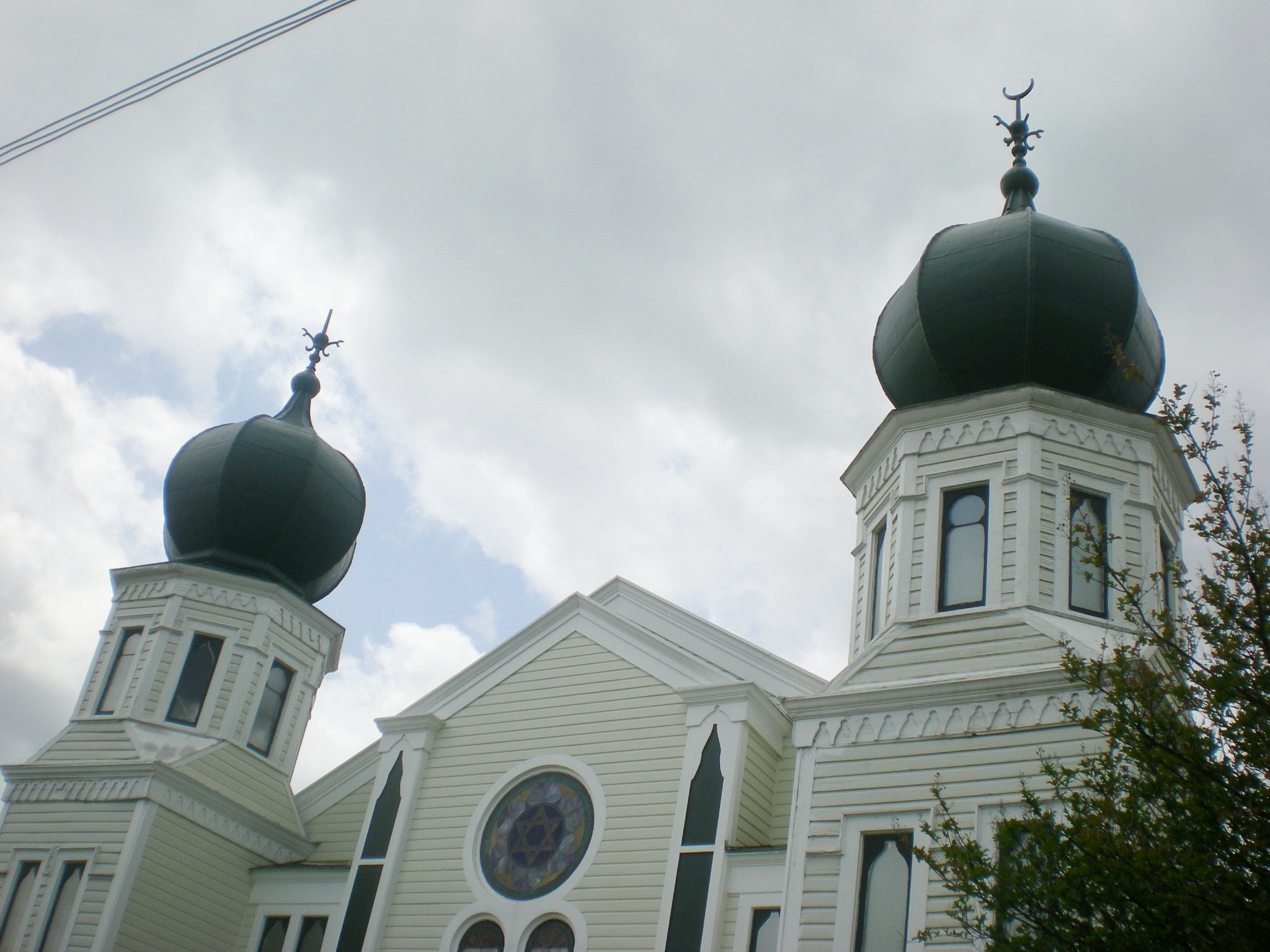
It’s the Temple Beth-El, a former synagogue on 15th St. in Corsicana.  A shot from across the street is here; it’s a handsome building.

Like the Collin Street Bakery, Temple Beth-El too dates from the late 19th century. The Jewish community of Corsicana isn’t what it used to be – they probably went to Dallas, like everyone else – so in more recent years, the building’s been a community center overseen by the Navarro County Historical Society.

Now fully in a look-see mood, Jay and I went over to the Navarro County Courthouse grounds. Navarro himself was there. A statue of Jose Antonio Navarro, that is.
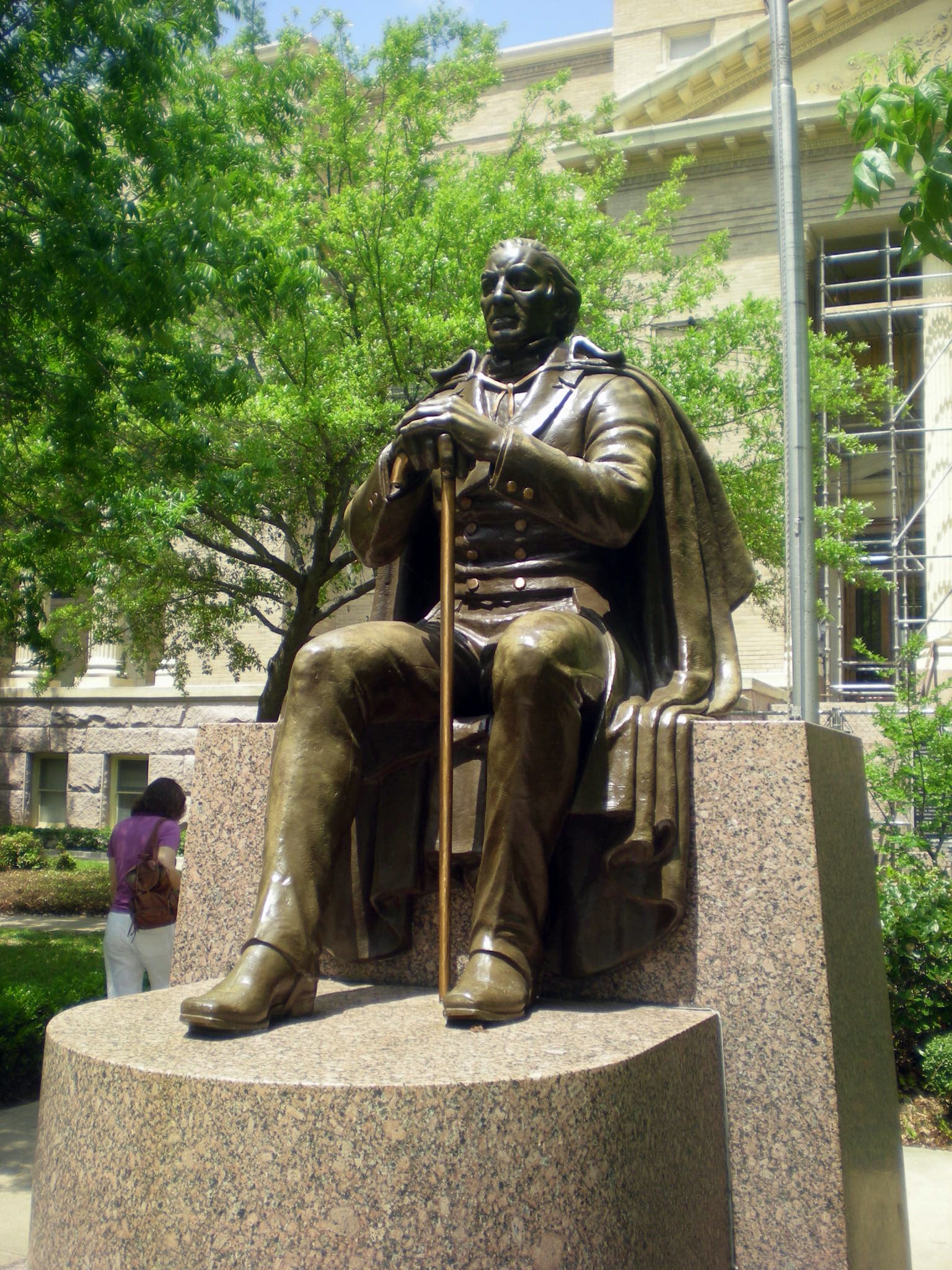
The Smithsonian tells us that “the sculpture was commissioned by the Texas Centennial Commission to honor Jose Antonio Navarro (1795-1871), a native Texan lawyer, merchant, and rancher who founded Navarro County and co-created the Republic of Texas. Navarro named the County seat Corsicana after his father’s birthplace, Corsica. While on an expedition to Sante Fe, Navarro was captured by Mexican soldiers and given a life sentence for treason. He escaped in 1845 and upon his return to Texas was elected as a delegate to the Convention which approved the annexation of Texas and drafted the Constitution.”

Nearby Navarro stands “The Call to Arms,” a Confederate memorial. It’s a little unusual, not being a soldier standing at attention or the like.
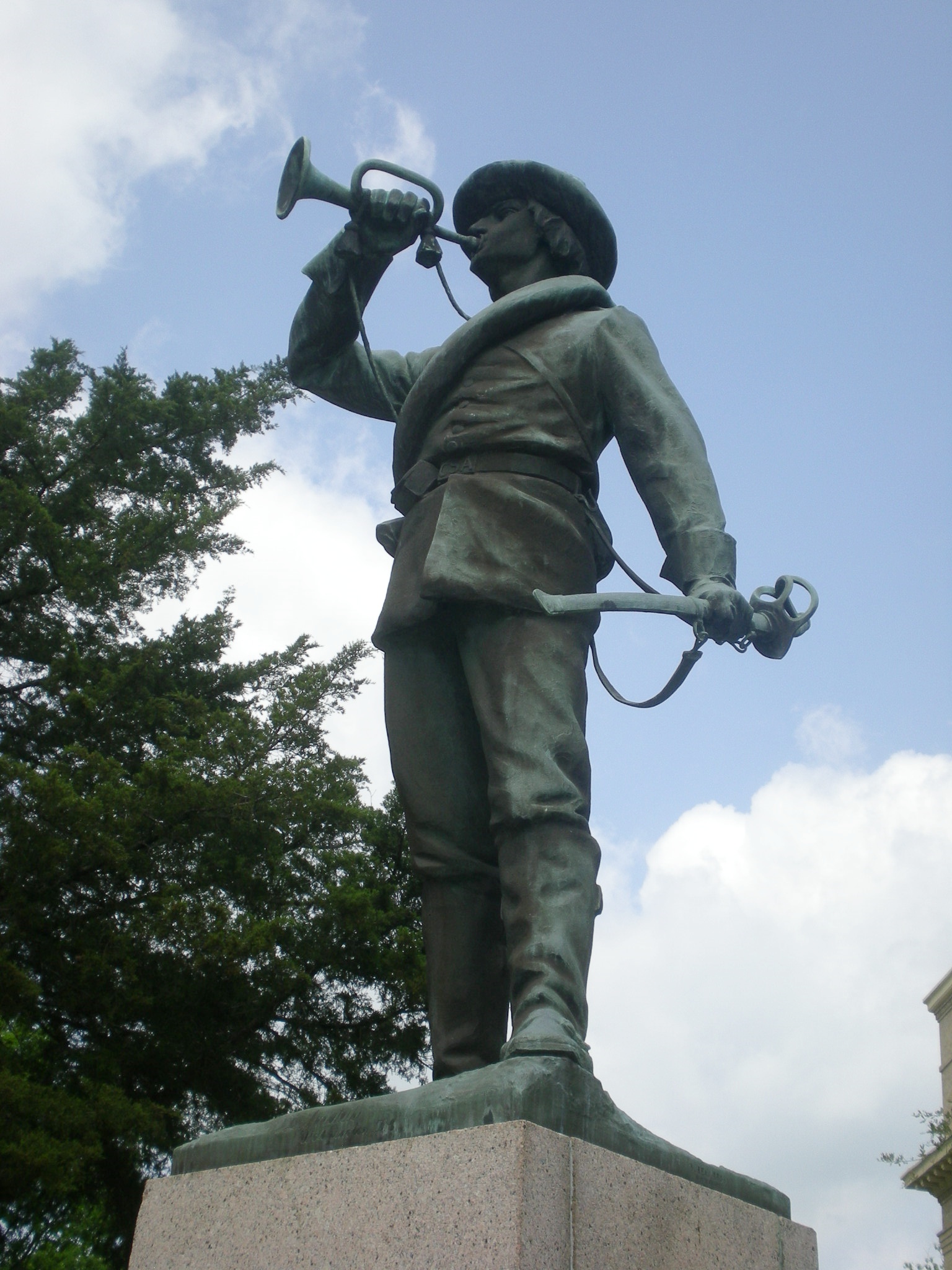
The statue’s plaque says that it was erected in 1907 by the Navarro Chapter of the United Daughters of the Confederacy “to commemorate the valor and heroism of our Confederate soldiers. It is not in the power of mortals to command success. The Confederate soldier did more – he deserved it.”

History’s written by the victors, indeed.
Central Texas ’14

Not long after Easter, I flew to Texas to visit members of my family. First to Dallas, then a drive to San Antonio, then back to Dallas. I also wanted to squeeze in a couple of days in Central Texas, visiting a few places I’d never been. My brother Jay came with me on the excursion, focusing on College Station, Texas, home of the enormous Texas A&M University, which also happens to be my maternal grandfather’s alma mater: Class of 1916.

In all the time I’ve spent in Texas, I’d never made it there. That’s probably because College Station isn’t on the way anywhere, especially if you spend most of your time on the San Antonio-Austin-Dallas axis. But A&M looms large in Texas lore, so I’d have been interested in visiting even if my grandfather hadn’t started his career as a civil engineer there.

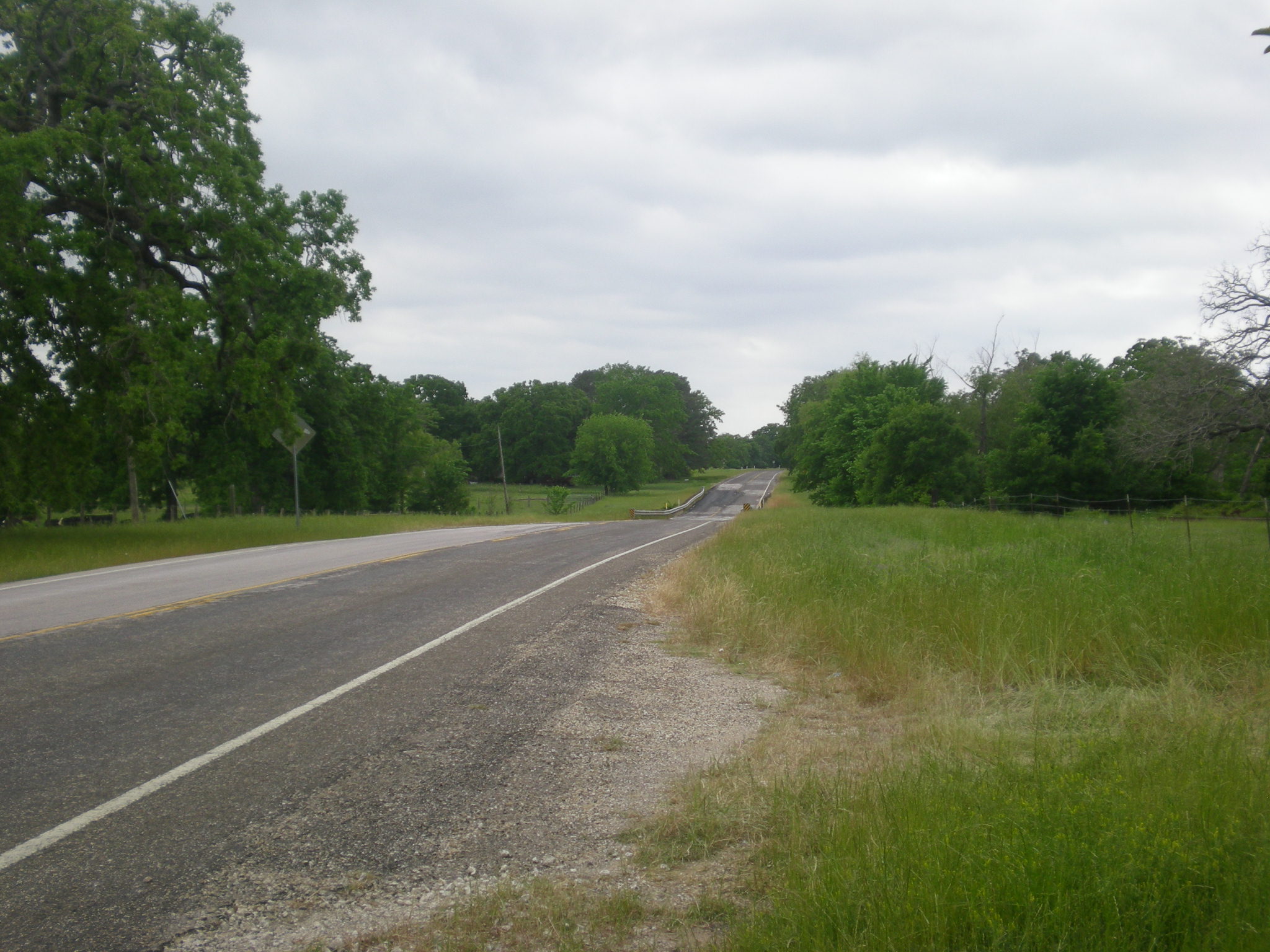
We drove on large roads and small. We made a point of driving on a highway called Texas OSR between I-45 and Texas 6. It was a short stretch of road through springtime green, and green is no sure thing even this time of the year; it means there’s been rain recently.

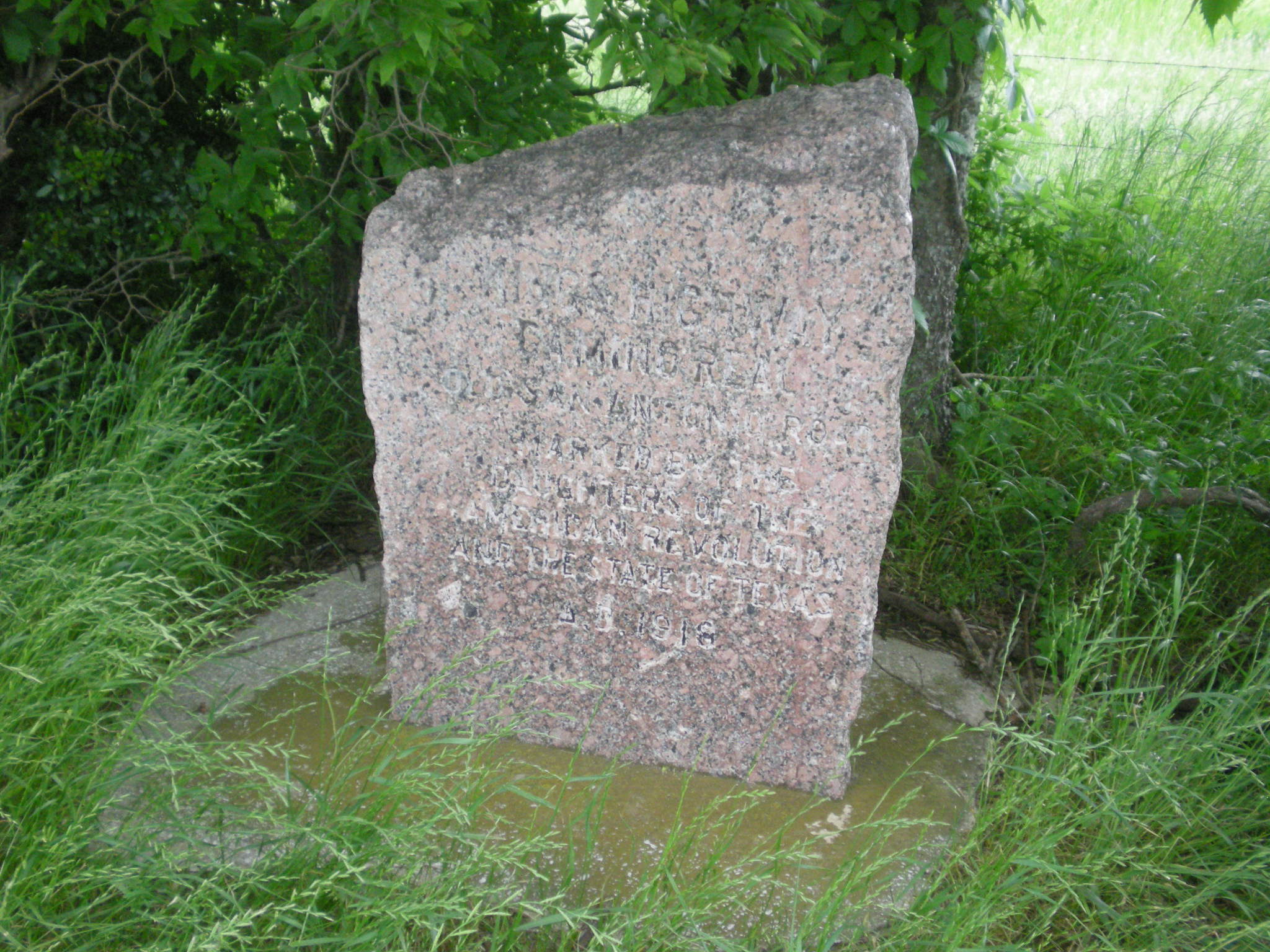
Texas OSR April 2014What’s so special about Texas OSR, besides the fact that it’s the only state highway in the enormous highway system of an enormous state to not include any numbers in its name? It’s a stretch of the Old San Antonio Road, also known as the Camino Real, the King’s Highway. The modern OSR is a fragment of the bygone route from Louisiana to Coahuila, by way of San Antonio. Still trod, maybe, by the shades of Spaniards and their horses.

Texas OSR marker 4.14A number of weather-worn markers on the side of the road explain the road’s historic significance. Though hard to read – even if this image were full size, it would be next to impossible to make out — the markers themselves are historic, put there by the Daughters of the American Revolution and the state of Texas in 1918.

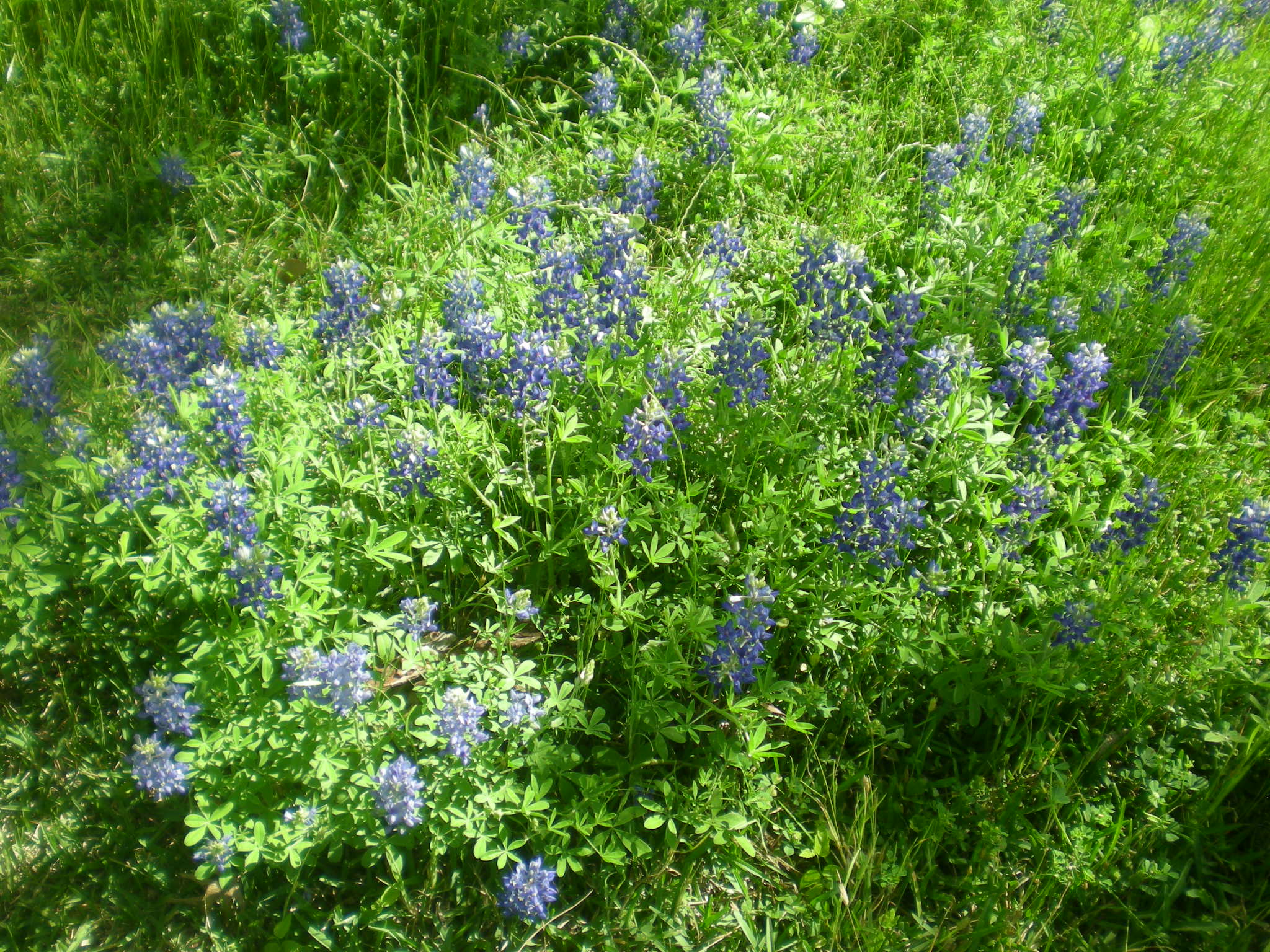
Central Texas in the spring also luxuriates in wildflowers, along the side of the roads, stretching off into vast fields, in random colorful spots. You can see the famed bluebonnets and other blue blossoms…

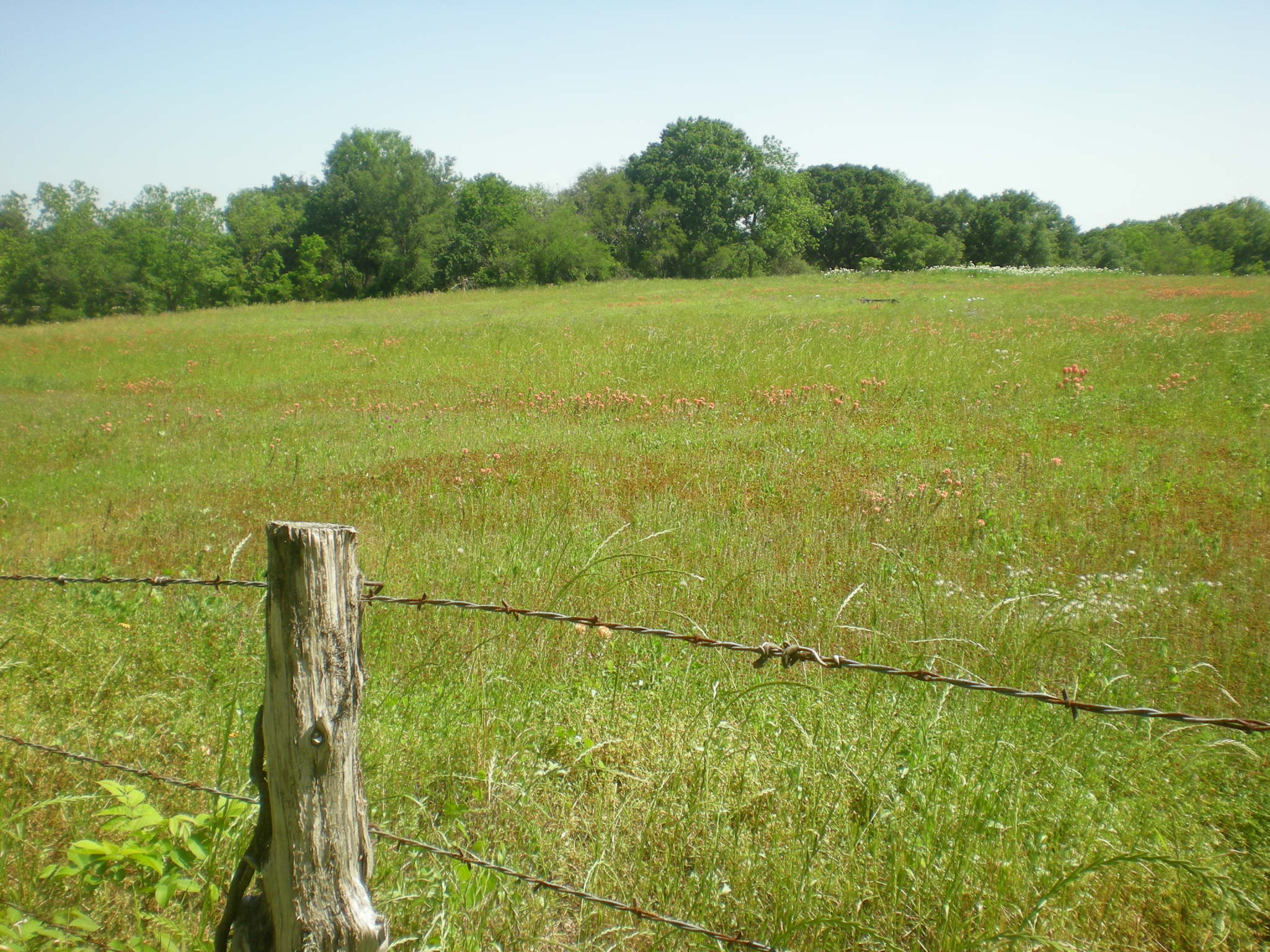
Texas4.25.14 055… but also a sea of others: red, white, orange, yellow, pink. Add a windmill to this scene and you have something landscape painters have been focusing on for more than a century.

Wildflowers, Central Texas, April 2014For true wildflower enthusiasts, there’s this index. It’s an astonishing variety.

Subtropical March ’13

Slowly warming over the weekend, but not enough to call spring. It’s this time of year especially when I miss the springs of South Texas and Middle Tennessee, or even the Kansai, which are already under way. This time last year, San Antonio was greening up nicely.

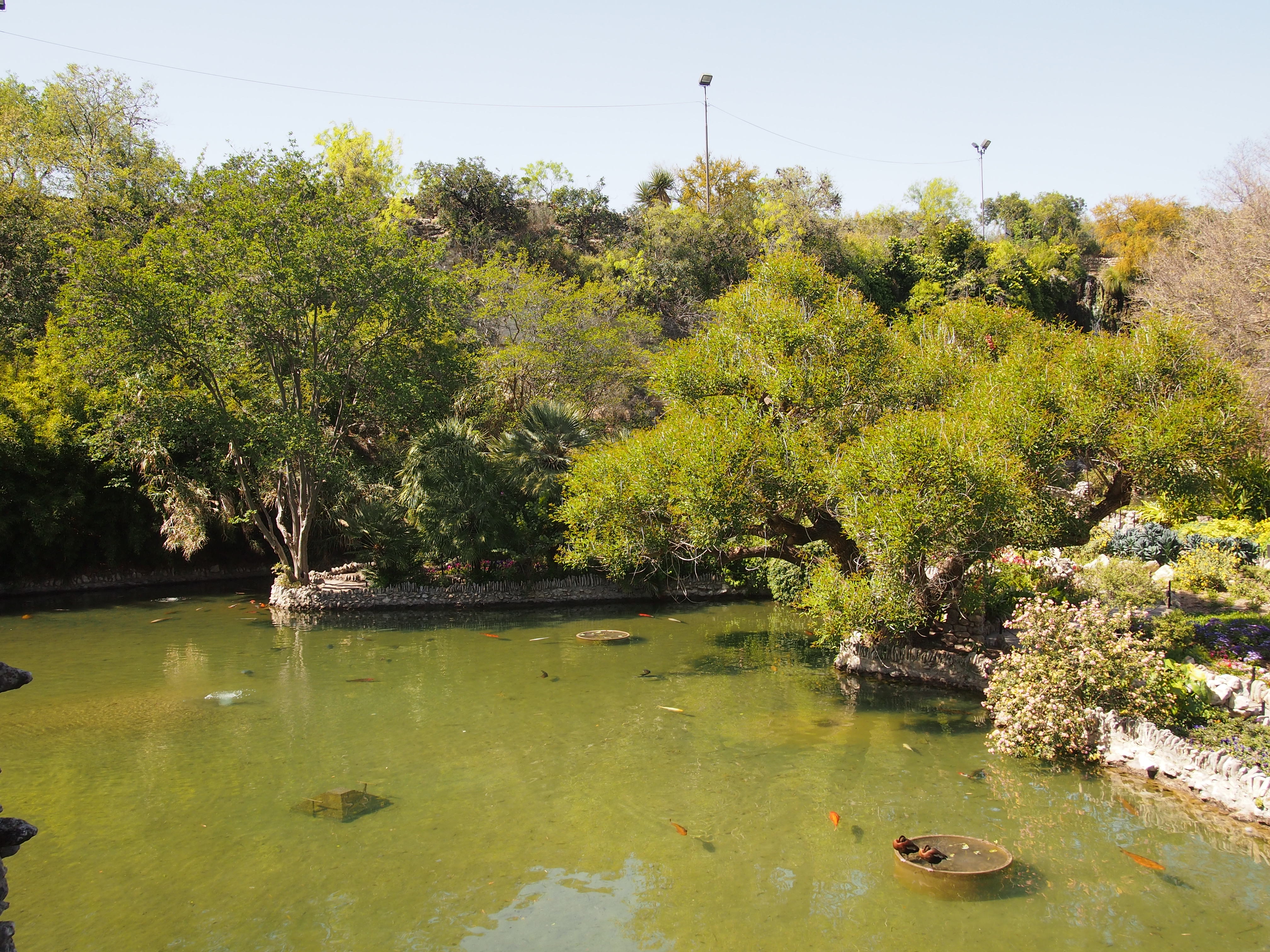
Such as at the Sunken Gardens, officially the Japanese Tea Gardens, when we visited last year. I expect it looks this way again about now, complete with greenery along with edge of expansive koi ponds.

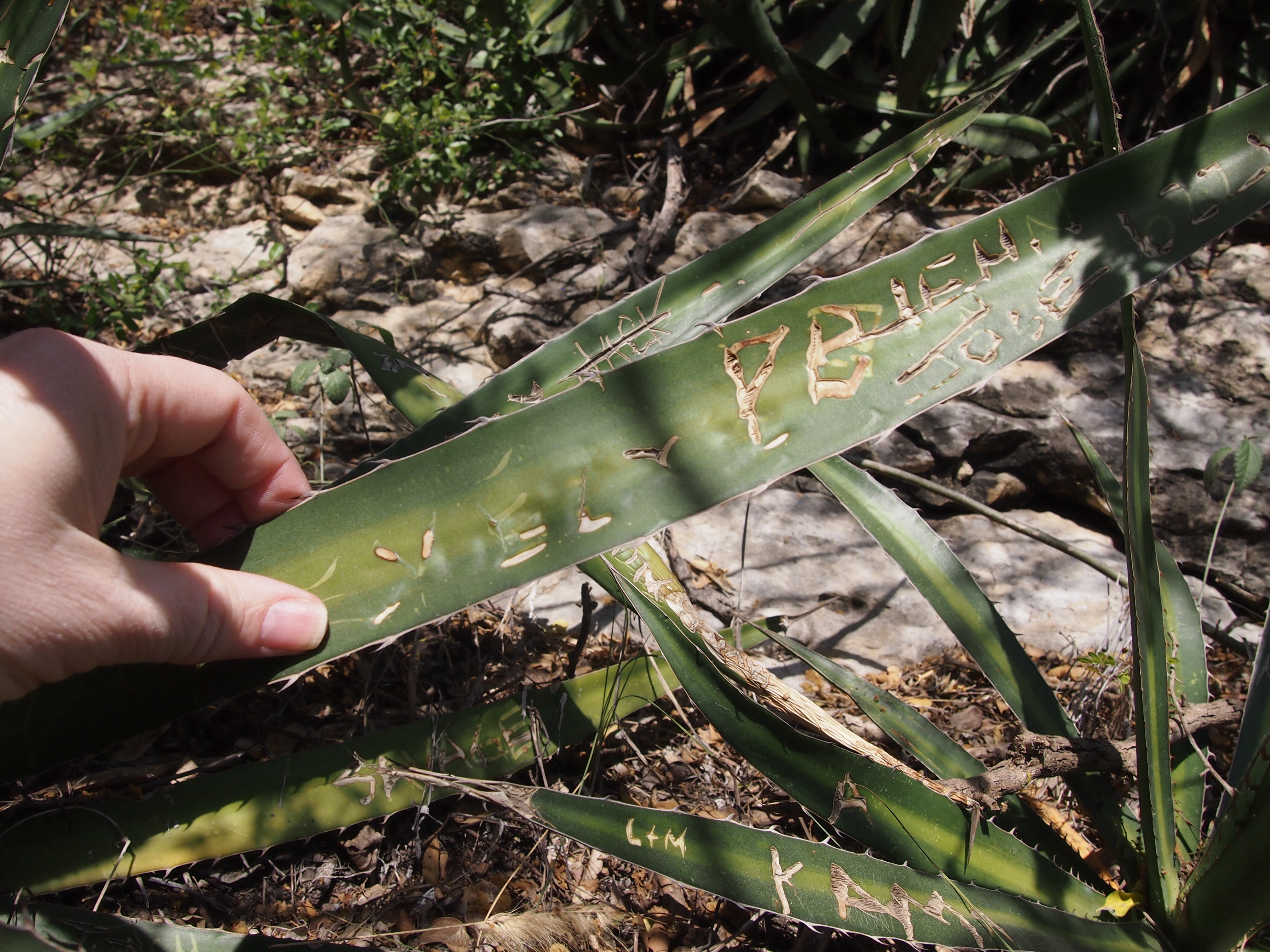
OLYMPUS DIGITAL CAMERAWe discovered that the garden also sports some plant graffiti. Floroffiti, maybe?

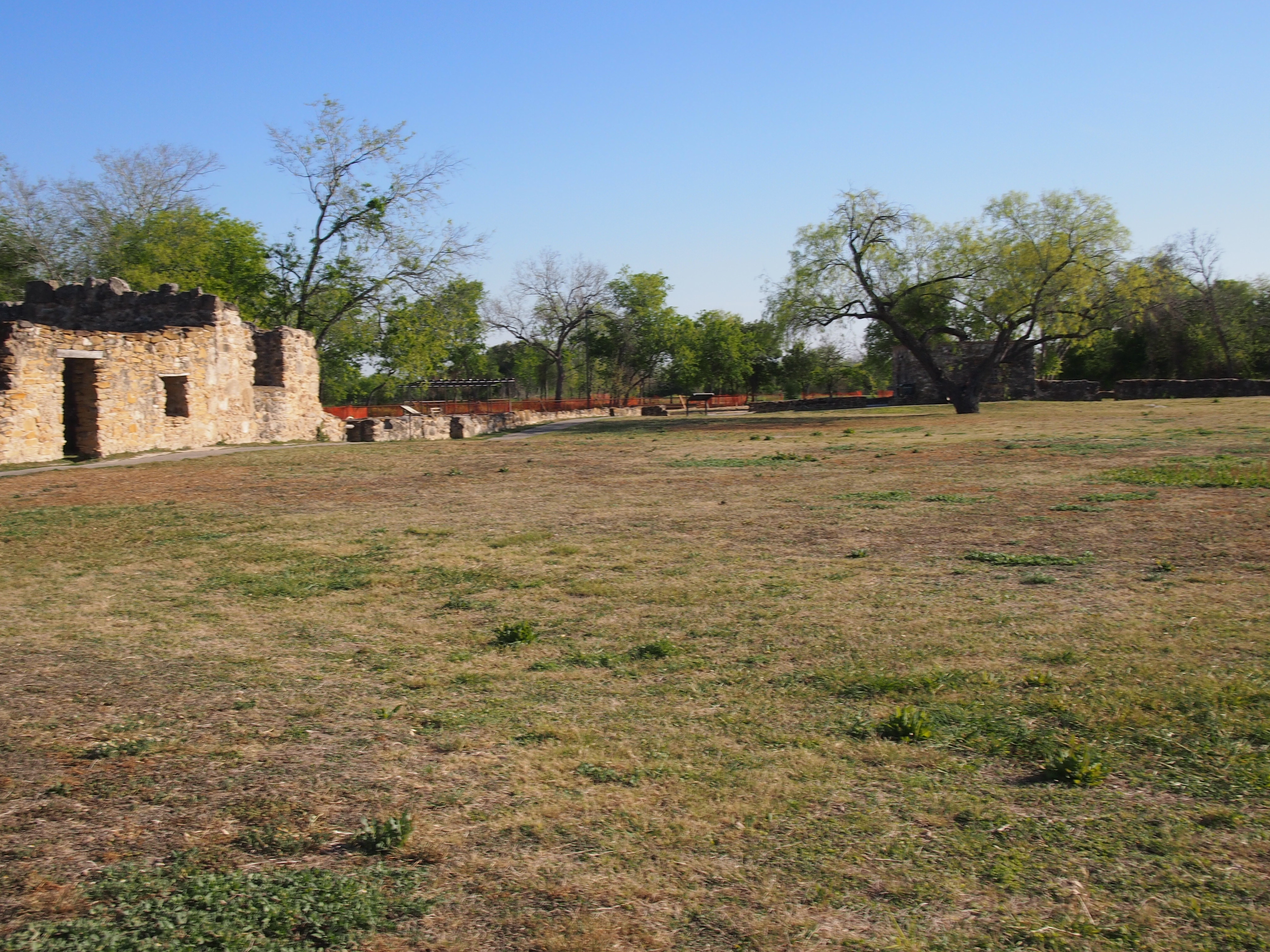
OLYMPUS DIGITAL CAMERAOLYMPUS DIGITAL CAMERAOther places were greening, too. But not that green. At Mission San Juan, the grass was still its usual winter brown.

OLYMPUS DIGITAL CAMERAGrass also gets brown under the heat of summer, which can last a long time. So it’s better to say that the predominant color of South Texas grass is brown, with interludes of green at certain times of the year.

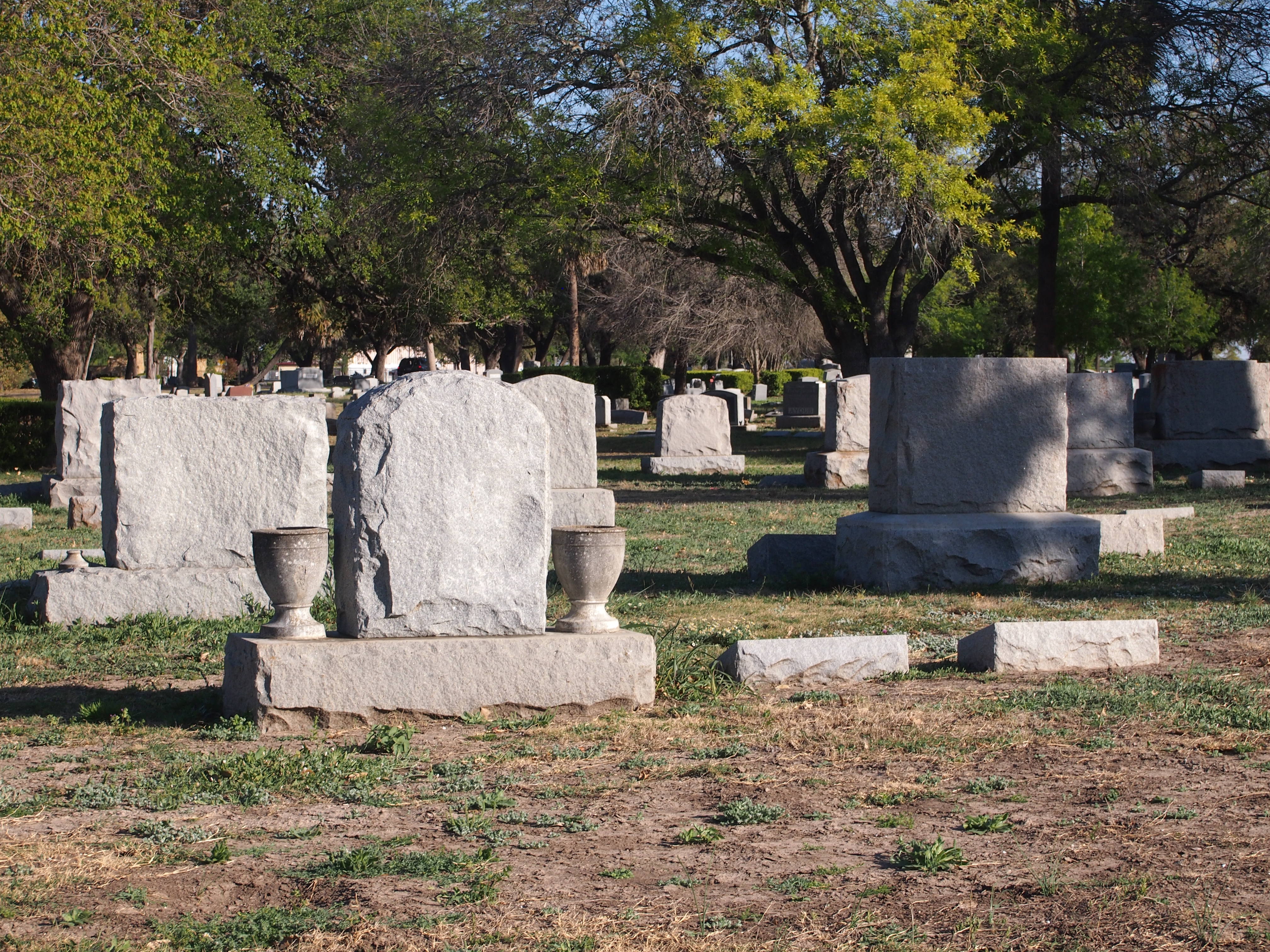
This was the San Jose Burial Park, which isn’t far from Mission San Juan.

San Jose Burial ParkWe didn’t spend much time there, but it looked like a peaceful burial ground, not much known expect by people who live nearby.

Pizza & Doughnut Run ’84

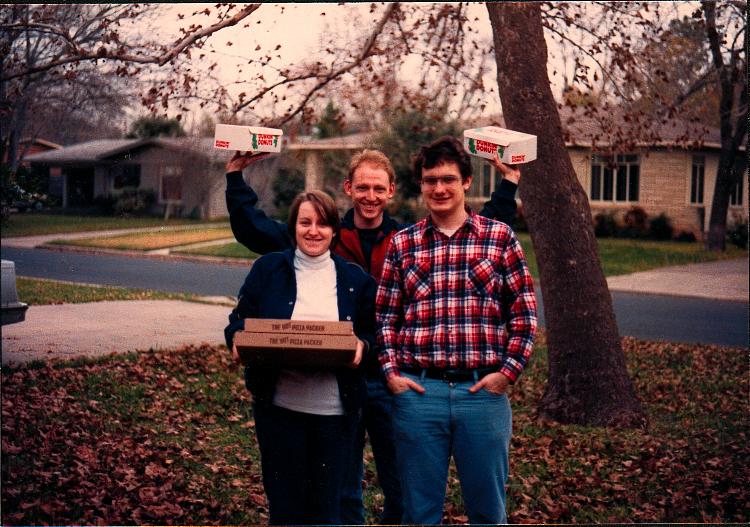
Nothing says holiday cheer like pizza and doughnuts. At least, we’re looking pretty cheerful in this picture, preparing to feast on those victuals on a cool December day in San Antonio in 1984. They weren’t just for us, of course. I think.

PizzaDonutDec84High school friends (five years out of high school) Nancy, Tom, and me. My brother Jay might have taken the picture, but I’m not sure.

Two Texas Churches

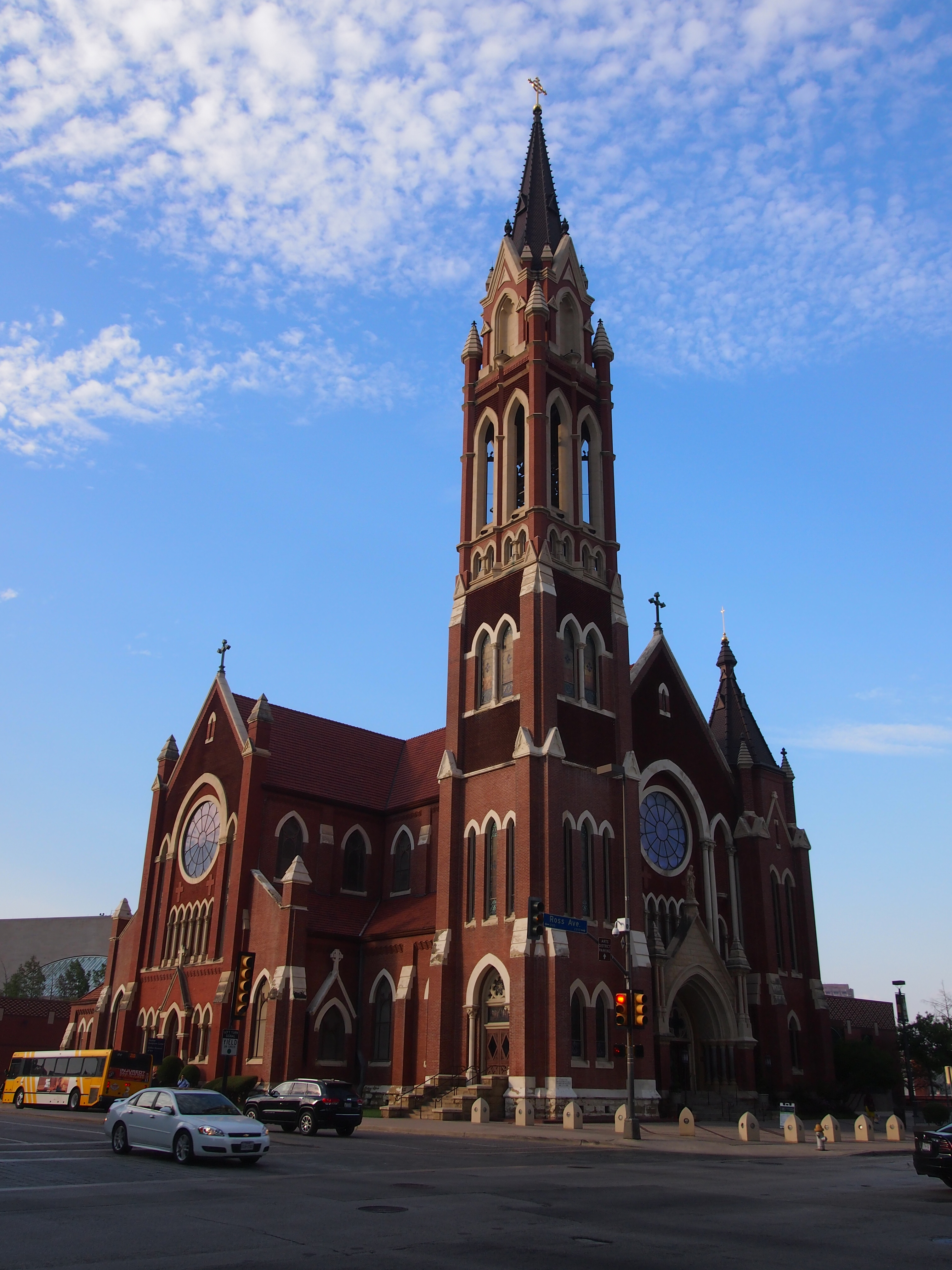
Just before getting back on the train and leaving downtown Dallas, I took a look at the Cathedral Shrine of the Virgin of Guadalupe — Cathedral Santuario de Guadalupe.

The cathedral’s web site tells me that “the Cathedral is the mother church of the 630,000 Roman Catholics in the nine-county Diocese of Dallas. Today, the Cathedral serves the largest cathedral congregation in the United States — as well as the largest Latino parish congregation — with 25,000 registered households.”

I had the place all to myself, as far as other human beings were concerned, for a few minutes on that Wednesday afternoon. Light was pouring in through the stained-glass windows on the west side of the church. It’s a lovely church inside, an example of High Victorian Gothic Architecture, finished in 1902.

Nicholas J. Clayton designed it. He’s another bit of Texas history – a prolific Irish-born architect who seems to have designed everything important in Galveston before the Hurricane of 1900 – that I had to look up (but not the hurricane; I read about that as a lad, and remained fascinated by it). One of these days, I need to go back to Galveston and look around, since I can’t remember much from my last visit, 40-odd years ago.

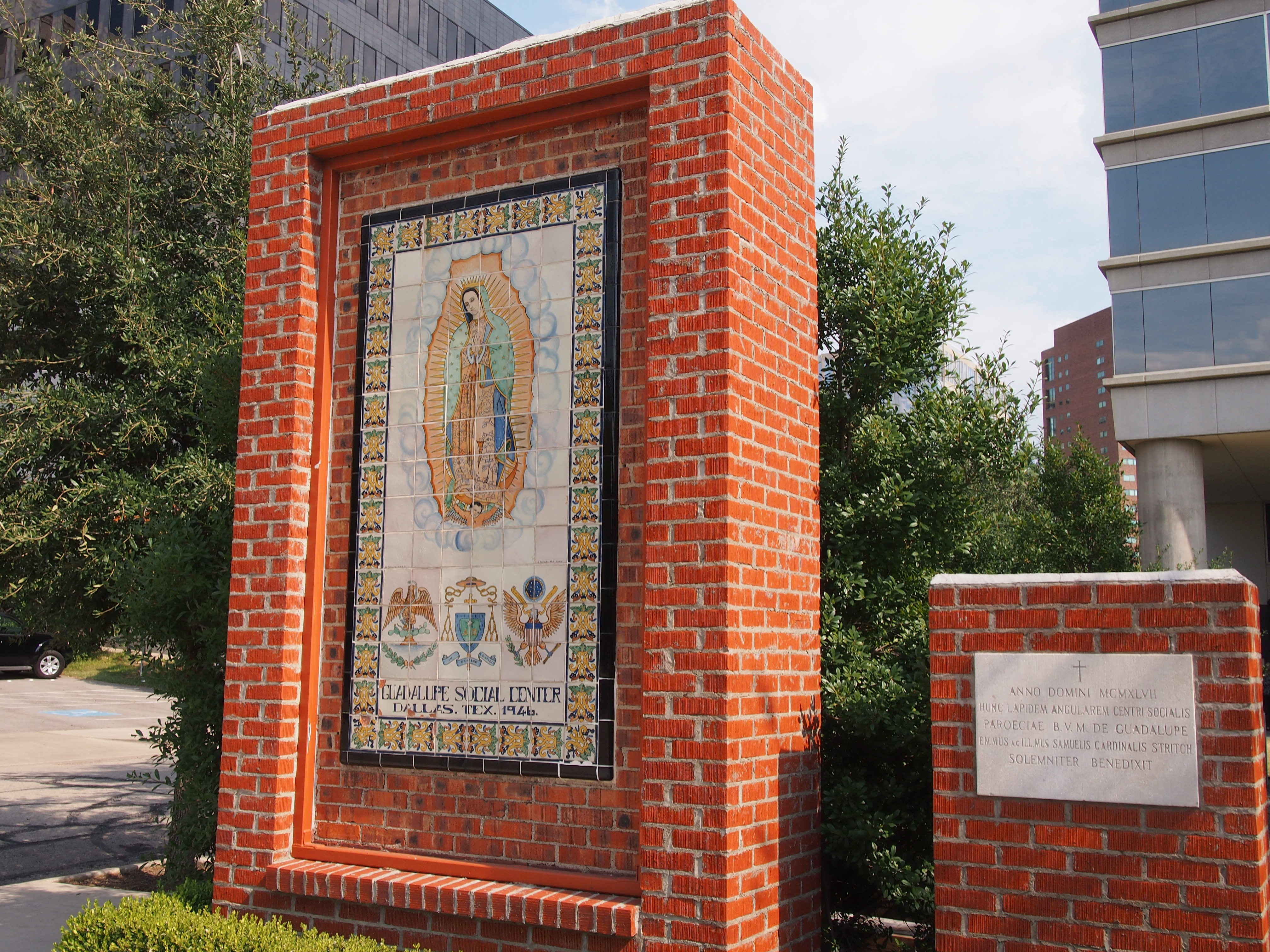
Not far from the cathedral are these small brick constructions.

As near as I can tell, they mark the site of the social center for a neighboring parish, Our Lady of Guadalupe, which eventually merged into Cathedral of the Sacred Heart – the former name for the cathedral pictured above, which was then renamed to honor Our Lady of Guadalupe. Whatever the case, below Mary are the words “Guadalupe Social Center, Dallas, Tex. 1946.”

On the smaller plaque is an inscription in Latin. I have to like that. How much more public Latin is there in downtown Dallas?

ANNO DOMINI MCMXLVII HUNC LAPIDEM ANGULAREM CENTRI SOCIALIS PAROECIAE B.V.M. DE GUADALUPE EM. MUS ac ILL.MUS SAMUELIS CARDINALIS STRITCH SOLEMNITER BENEDIXIT.

Not too hard to figure out. Samuel Cardinal Stritch blessed the social center’s cornerstone on this site in 1947. At the time he was the Archbishop of Chicago.

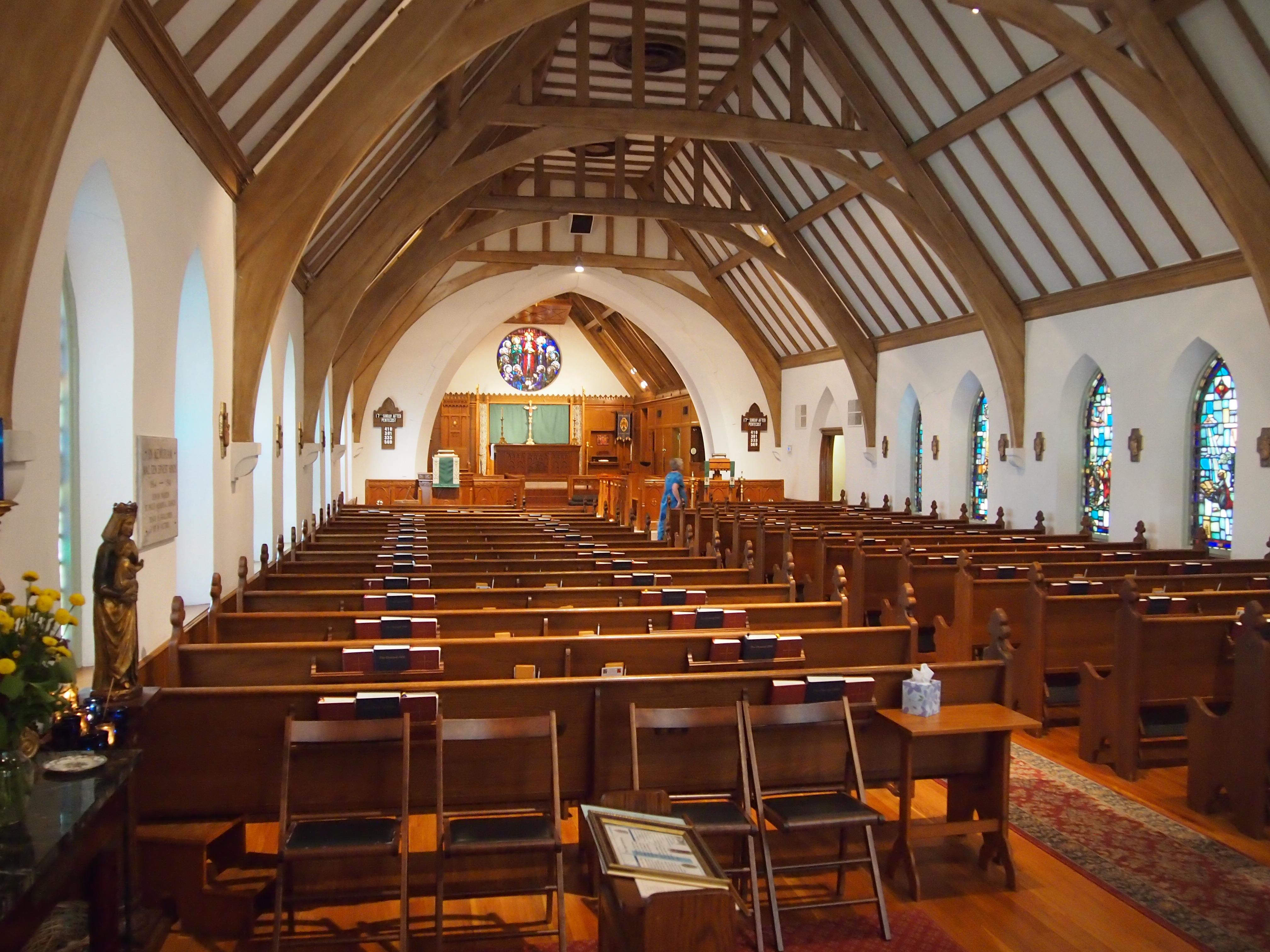
During this visit to Texas, but in San Antonio, I also visited St. Paul’s Episcopal Church, a much smaller house of worship near Ft. Sam Houston. Once upon a time, in the misty lost past, ordinary civilians could drive right through Ft. Sam – as everyone called it – no stops, no questions asked. Now all the entrances are barricaded. So you have to drive a long way around the fort to get to St. Paul’s.

I mention the fort because the church was originally established in the late 19th century to serve Episcopalians posted at Ft. Sam. It’s a church of beautiful simplicity inside, with some fine pews and stained glass.

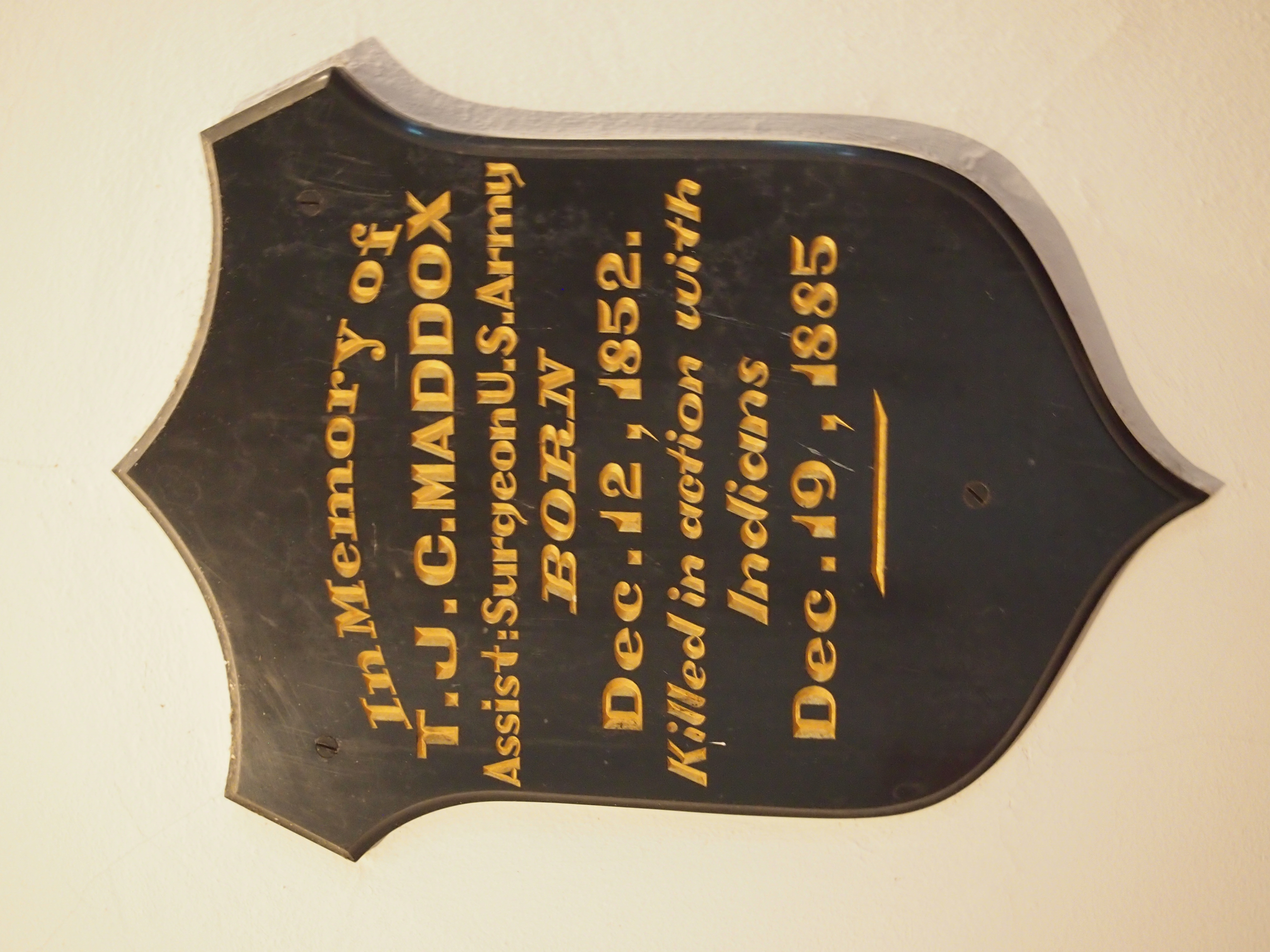
There are also a few plaques on the wall that harken back to other times. Such as this dark one.

In Memory of T.J.C. MADDOX Assist: Surgeon U.S. Army BORN Dec. 12, 1852 Killed in action with Indians Dec. 19, 1885.

TJC Maddox seems to be this fellow. Remarkably, I’ve found found the story of his death on line, which was around the time the U.S. Army was busy chasing down Geronimo.

It’s possible, though I don’t know this for a fact, that relatives of Dr. Maddox who were members of St. Paul’s in its early years memorialized him with this plaque on the wall at the back of the church, where it remains into the 21st century.

Klyde Warren Park

Among the things I did today, I mowed the lawn. It’s still green and was getting long. But with any luck that might be the last time until April.

Also, I visited HealthCare.gov to look around. No time for real shopping today, but I wanted to see whether there were any connectivity issues. I didn’t encounter any problems.

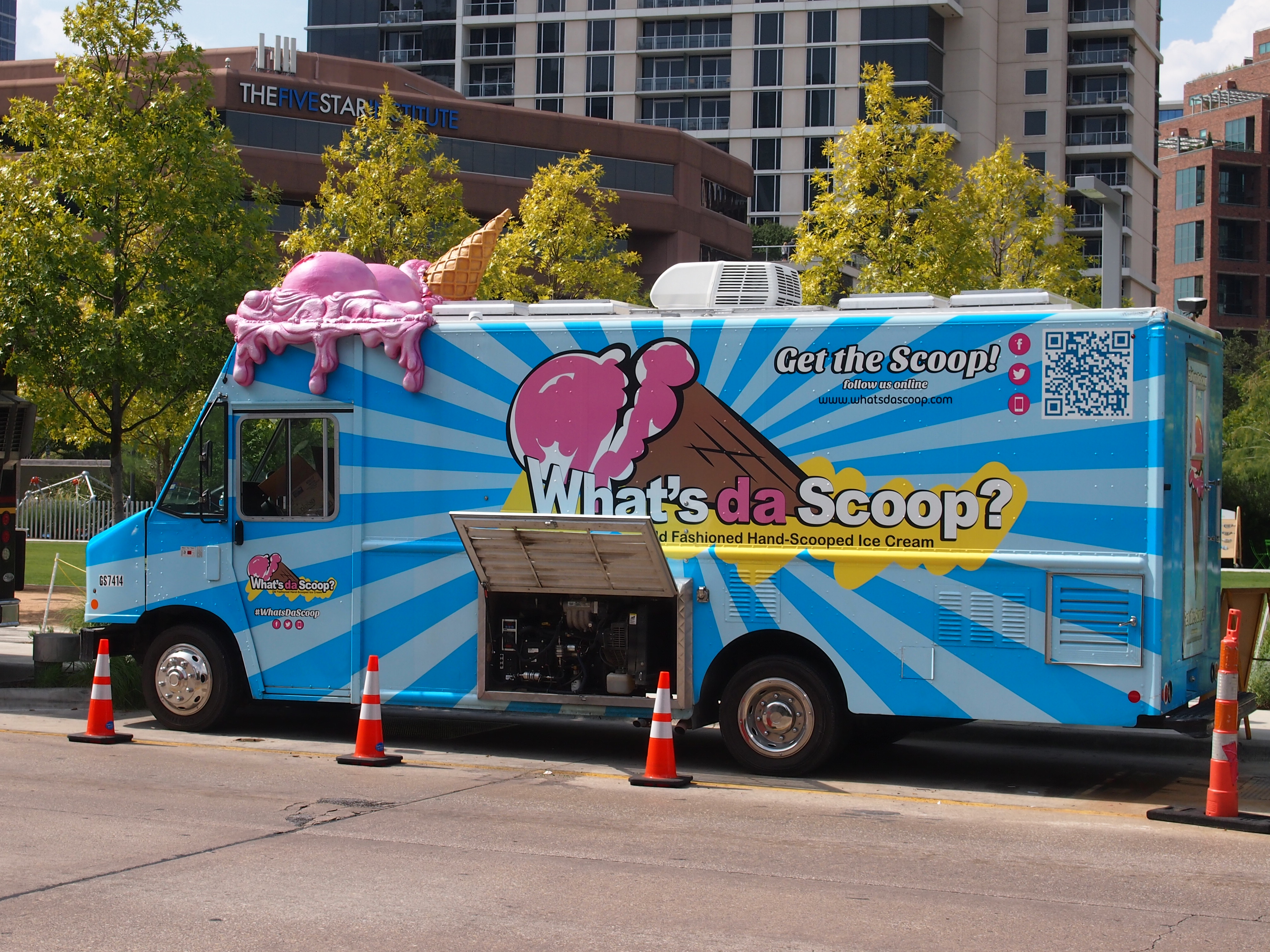
Various works of art weren’t the only thing I saw in Dallas. There was also the following. Call it a work of commercial art.

No ordinary ice cream truck, from the looks of it, but part of the food truck revolution. Or maybe “revolution” is too strong a word. Anyway, there seem to be more food trucks in cities than there used to be, and I suspect their offerings are a cut above what trucks used to serve — and they charge accordingly. What’s da Scoop? doesn’t look like the kind of operation that’s trolling for dollars from kids. It probably wants adult lunchtime business.

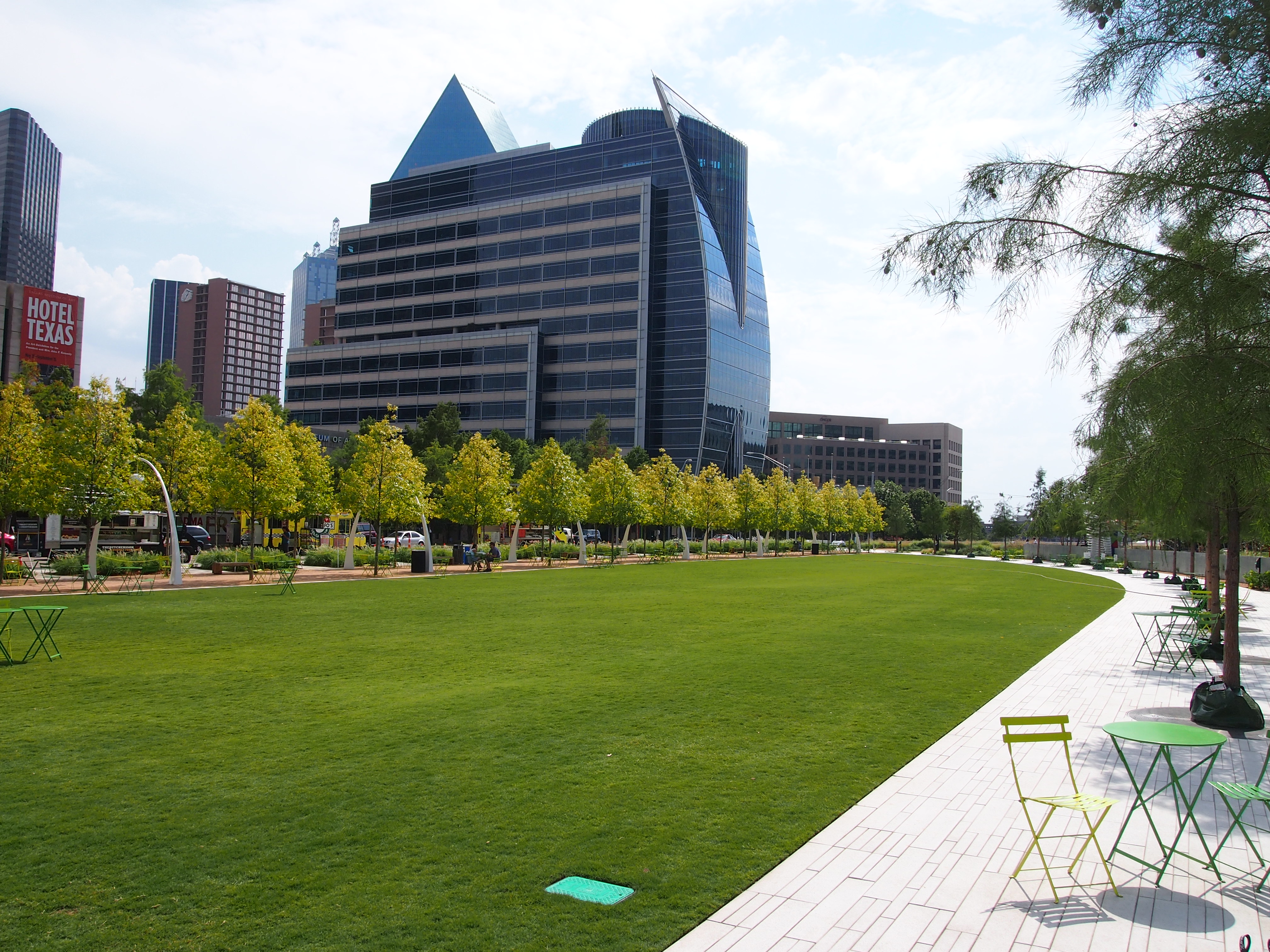
I didn’t find out. I would have considered it — ice cream would have been refreshing on that hot afternoon — but they were closing by the time I wandered by. So were the other food trucks parked in a line next to them. All of them were facing one of Dallas’ spanking new parks, which until recently was air space over a highway.  Now it’s Klyde Warren Park, a strip of greenery and other park amenities built over the Woodall Rodgers Freeway, a recessed road that now goes through a three-block-long tunnel underneath the park.

Some years ago, I interviewed Milwaukee Mayor John Norquist, near the end of his term, and he spoke at some length about how highways don’t belong in CBDs. He felt so strongly about this that as mayor, he oversaw the demolition of a short freeway in Milwaukee. I sympathize with the idea. They get in the way of walking around. If you can’t get rid of the thing, building on top of it seems like a good idea.

The park, which opened only last year, also features an incredibly detailed sign about how it was paid for: a public-private partnership that spent $110 million building it. Private contributions were about $52 million. Other funding sources were from bond sales, various state agencies, and $16.7 million from the American Recovery and Reinvestment Act of 2009.

Oh, really? Texas took some ’09 stimulus money? Well, money’s money and I say for their part, the taxpayers of the entire United States – or Treasury bond buyers worldwide, if you want to think of it that way – did a nice turn for the people of Dallas and visitors who happen by, of which I was one.

The Nasher Sculpture Center

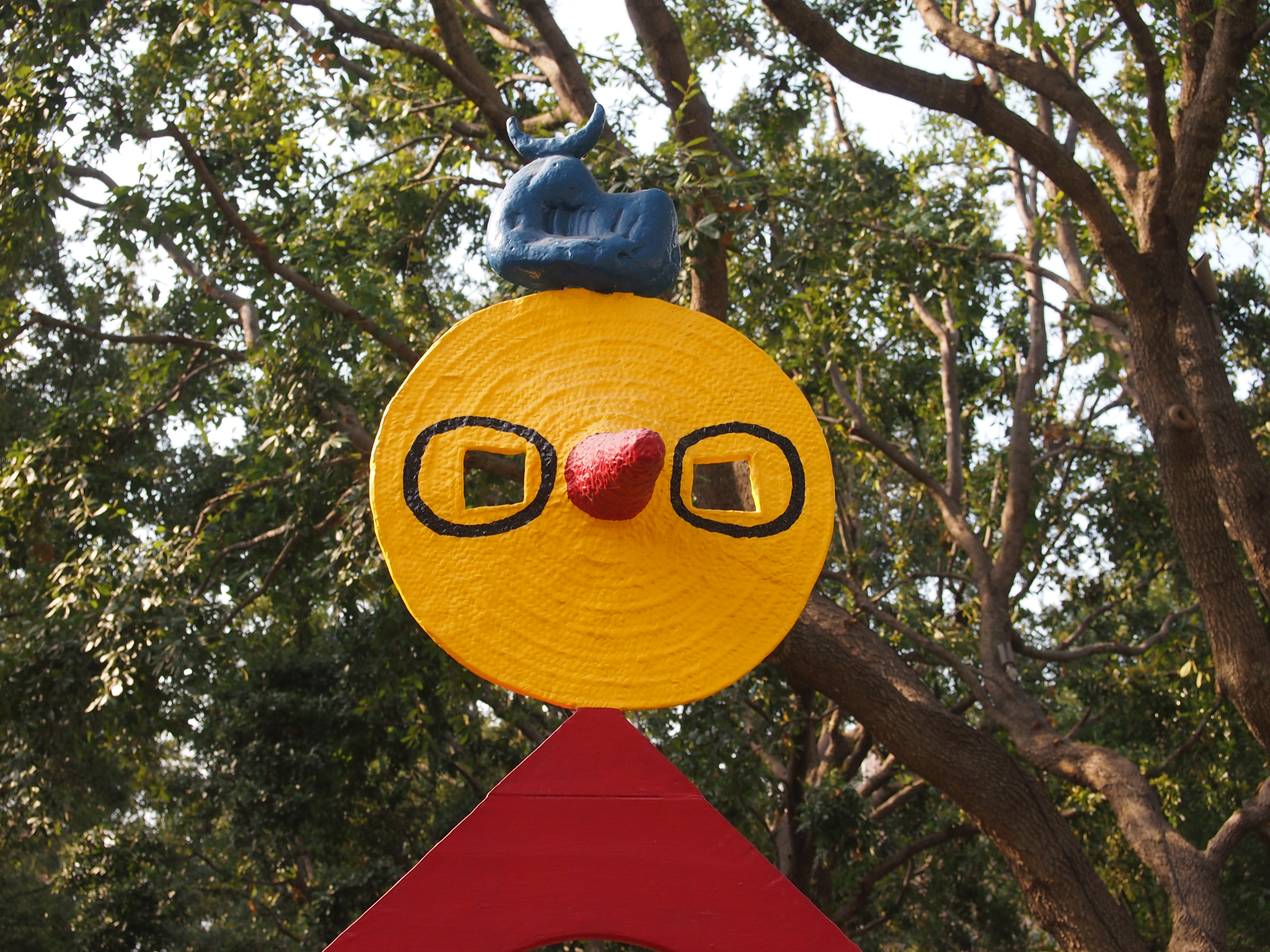
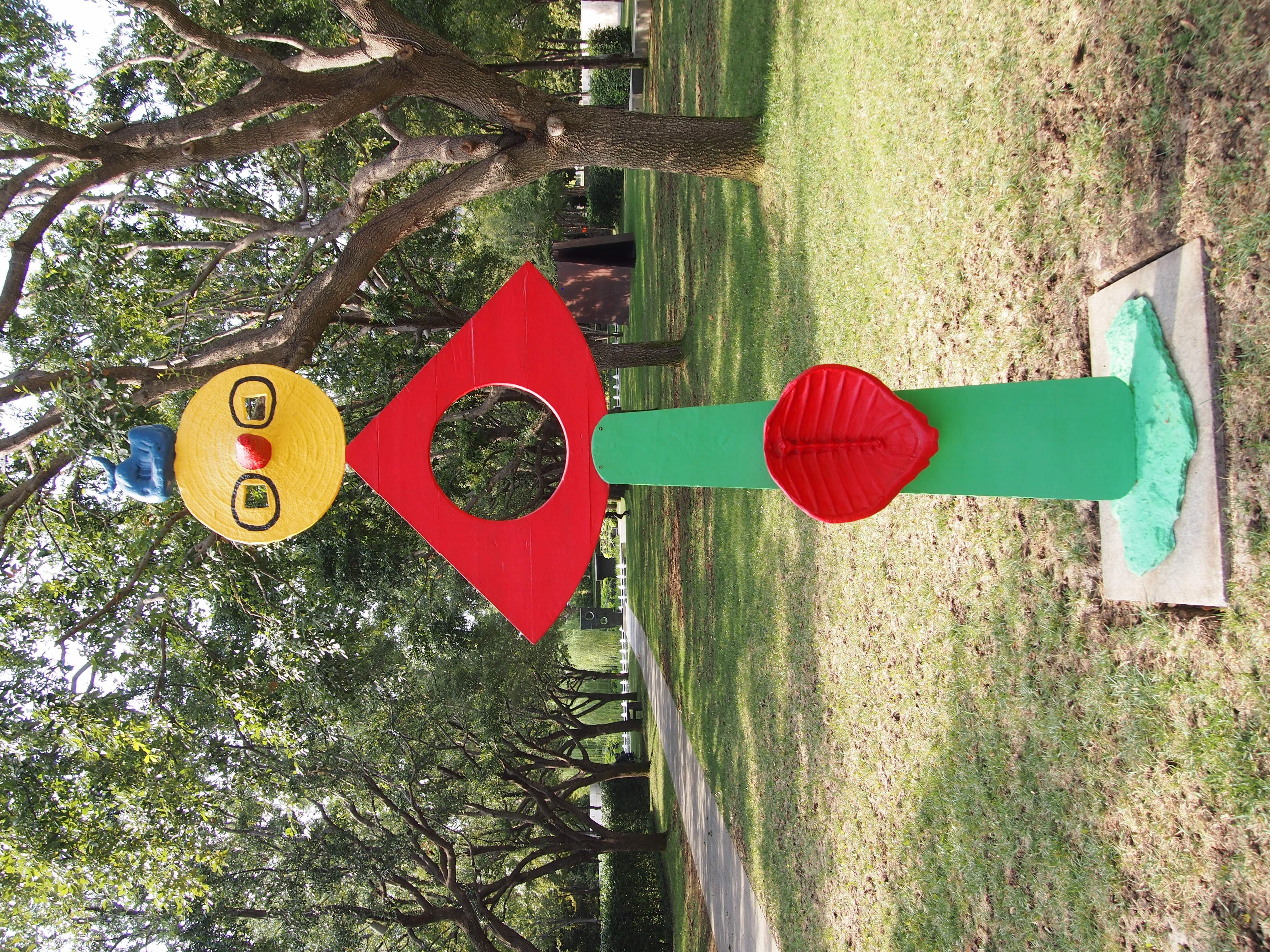
I don’t know a lot about sculpture, but I did recognize this face.

Or at least the artist, Joan Miró. His work’s pretty hard to mistake for anyone else’s. After visiting the Samurai Collection in Dallas, I headed back toward downtown proper, and the choice of two museums presented itself: the Dallas Museum of Art or the Nasher Sculpture Center, which are across the street from each other. Yuriko and I went to the DMA back in ’02, before the Nasher was even open, and while it would certainly be worth another look after over 10 years, I picked the Nasher. I make that kind of choice by going to the one I’ve never been to before.

During our 2007 visit to Dallas, we went to NorthPark Center, the mall the late Raymond Nasher developed. It has an unusually large and visible collection of sculpture and other art, so I knew about his affinity for collecting. Nasher’s museum, designed by Renzo Piano, doesn’t disappoint. There are plenty of fine items to take a look at, both inside and out in the sculpture garden, where the Miró stands. (“Caress of a Bird” (“La Caresse d’un oiseau”), 1967.)

The museum says of its collection: “Surveyed as a whole, the Nasher Collection demonstrates considerable balance between early modern works and art of the postwar period, abstraction and figuration, monumental outdoor and more intimately scaled indoor works, and the many different materials used in the production of modern art.  Perhaps its single most distinguishing feature, however, is the depth with which it represents certain key artists, including Matisse (with eleven sculptures), Picasso (seven), Smith (eight), Raymond Duchamp-Villon (seven), Moore (eight), Miró (four), and Giacometti (thirteen).”

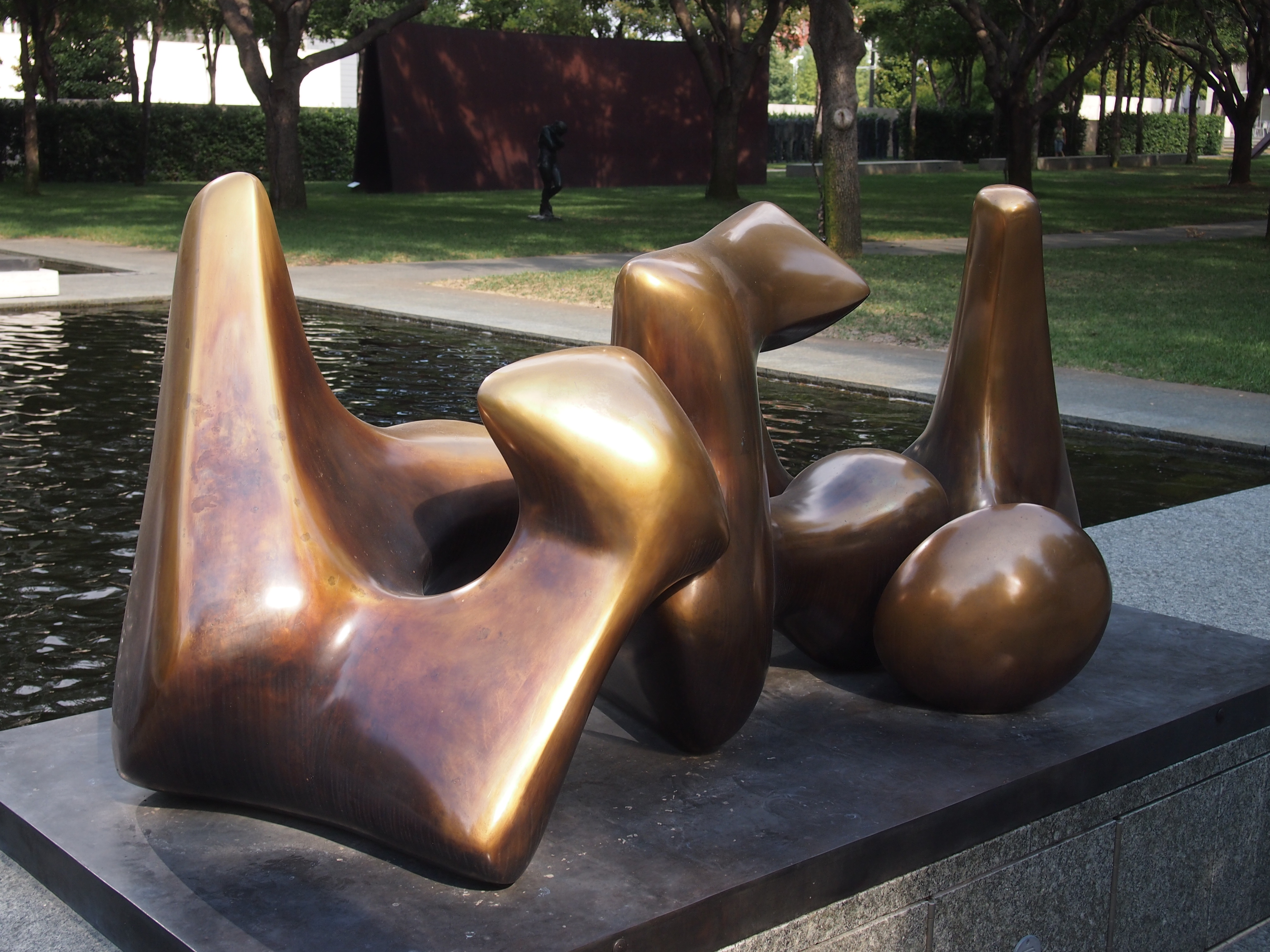
Here’s one of the Moores. Can’t mistake his blobs for anyone else, either.

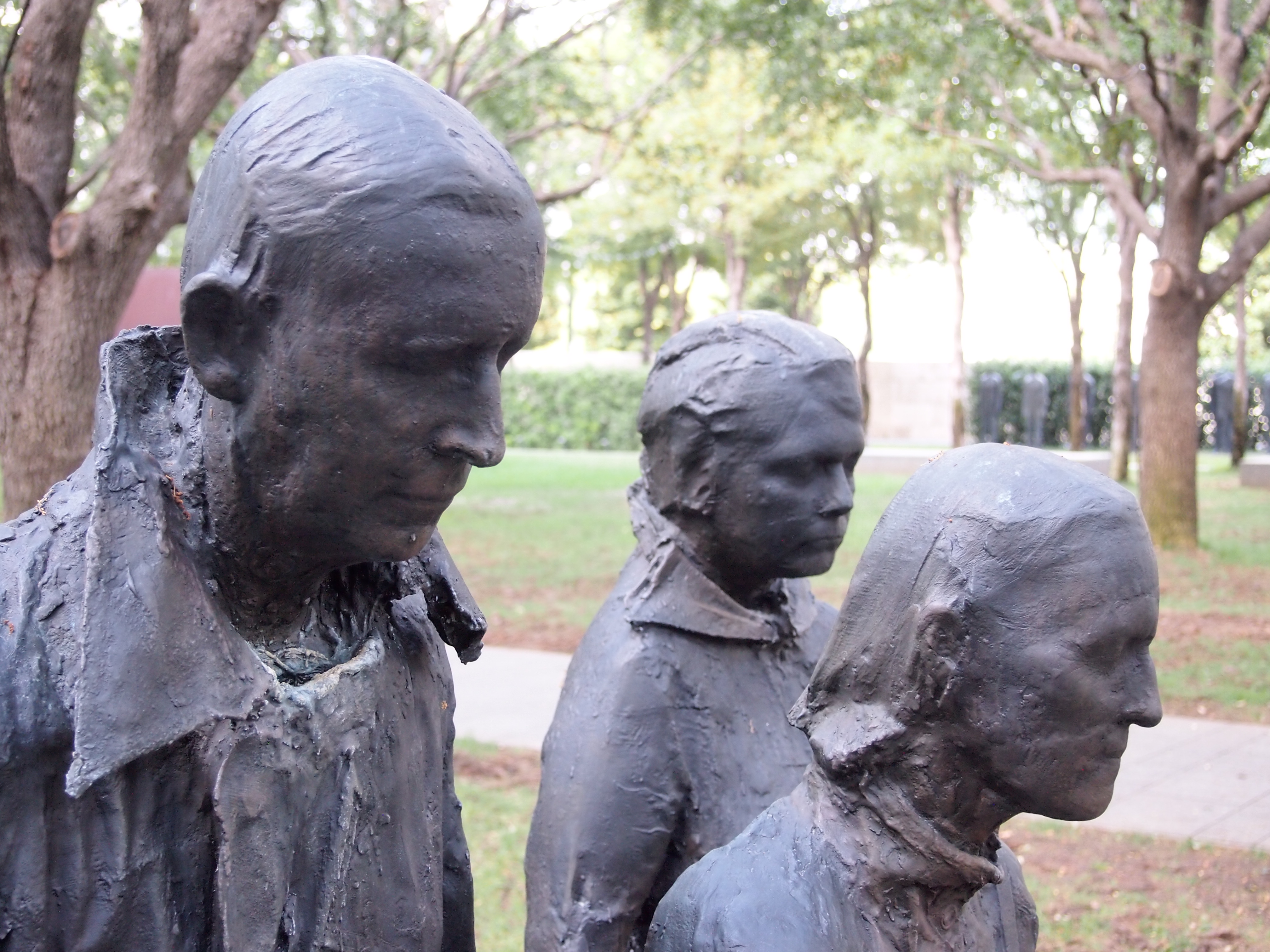
The Nasher’s definitely worth wandering through, inside and out. One irritation, though. Only some of the outside sculptures had signs. Maybe the information can be accessed in the self-guided audio tour, but even so every work ought to be accompanied by a written description, or at least a small sign with title, artist and year. Take this unlabeled example:

I thought, that looks familiar. Seen something like it – where? Then I remembered some of the works at the FDR memorial in DC. Sure enough, same artist, George Segal. Fittingly enough, the Nasher one is called “Rush Hour” (1983).

Or maybe “Sad People Walking Through the Cold” would be more fitting. Seems to have been a motif of Segal’s.

The Samurai Collection

The Ann & Gabriel Barbier-Mueller Museum: The Samurai Collection takes up the second floor of the St. Ann Building in Dallas’ Uptown district, which is a walkable distance from downtown, even in the late-summer heat. The museum is another new attraction for the city, open only since March.

To reach it, you enter a first-floor restaurant, pass its reception desk, and then go up some stairs. It’s a small museum with a single focus: samurai armor, weapons, masks, and related items. The museum asserts that its “collection of samurai objects is one of the largest of its type in the world and is displayed in the only museum outside Japan whose focus is samurai armor.”

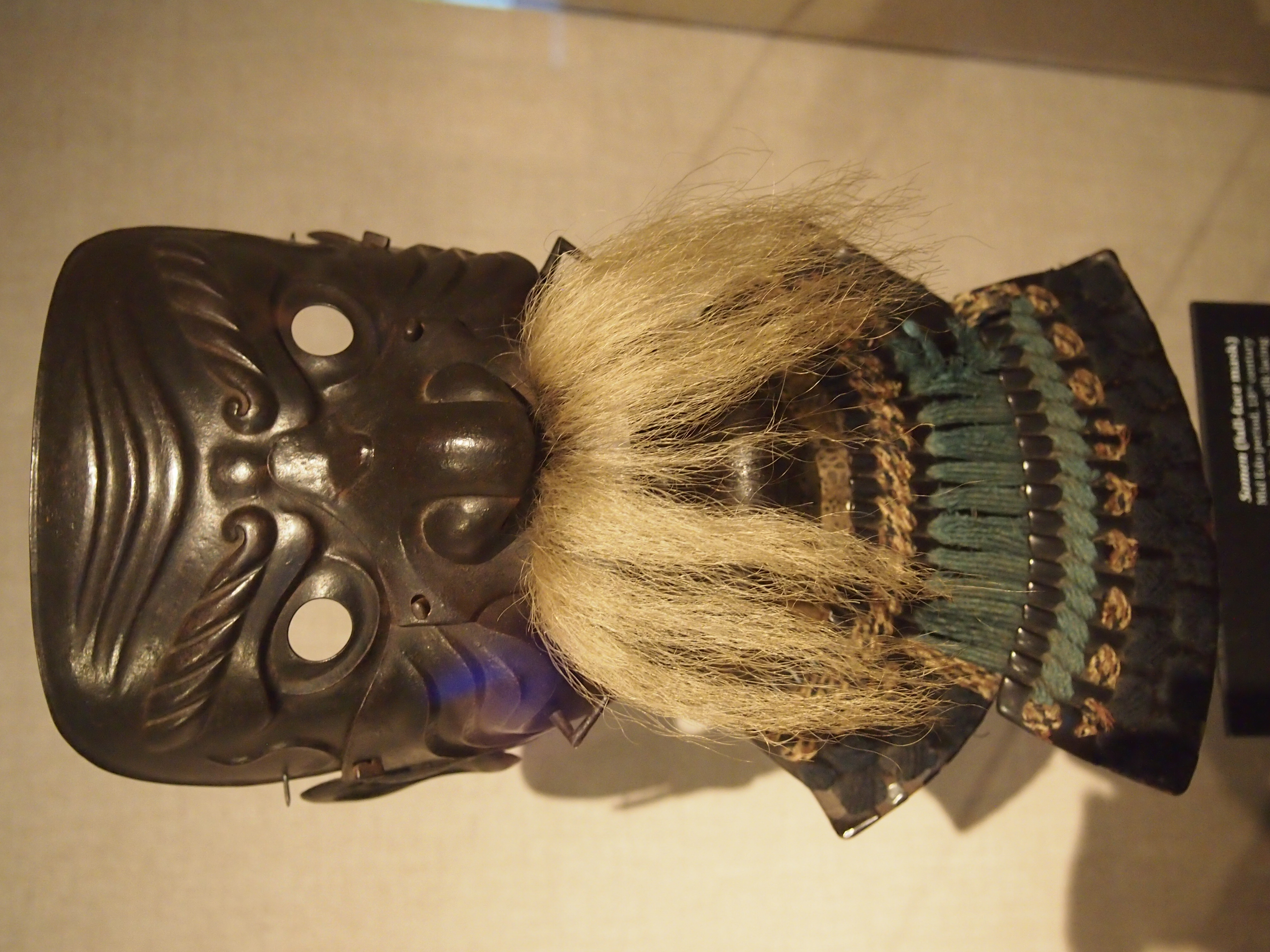
Go up to the cool, quiet reaches of the museum, and pretty soon you’re face-to-face with the likes of him:

It’s a somen (full-face mask), made of iron, leather, horsehair, lacquer and silk lacing, dating from mid-Edo – the 18th century. During earlier periods, when a samurai might actually have to do battle, somen weren’t that popular, since a mask like that can obscure your vision. In the more peaceful Edo era, that wasn’t such a concern, and the masks had a revival among samurai (at least those who could afford them).

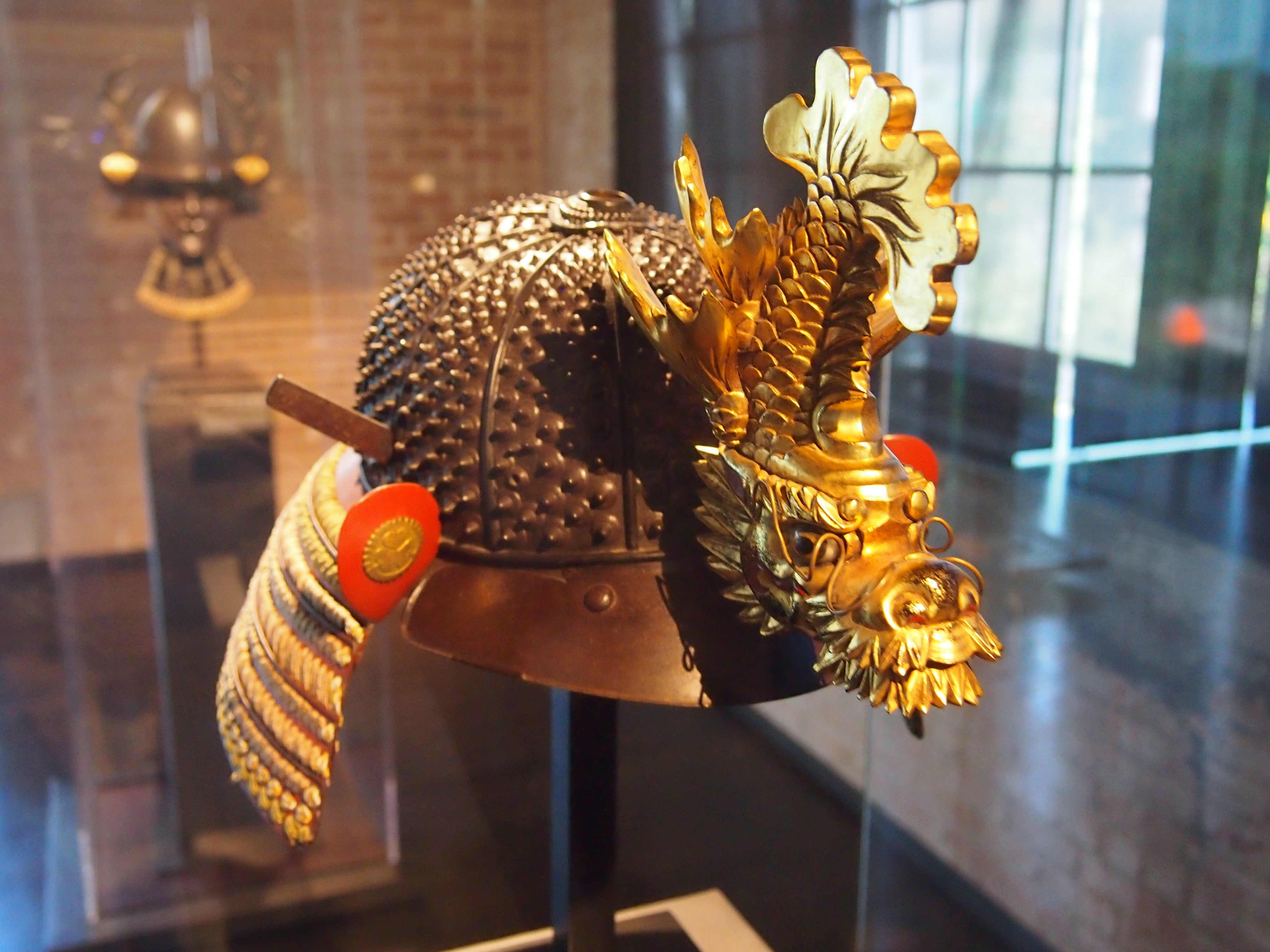
Another cool item at the Samurai Collection is this helmet.

It’s an akodanari kabuto, a melon-shaped helmet of iron and lacquer and dating from the Muromachi period, or the late 15th to early 16th centuries, when it was entirely likely that a samurai would be fighting someone. The museum says that “the construction of this kabuto, with twelve plates covered in protruding rivet comprising the helmet bowl, is unique. There is no other known example.”

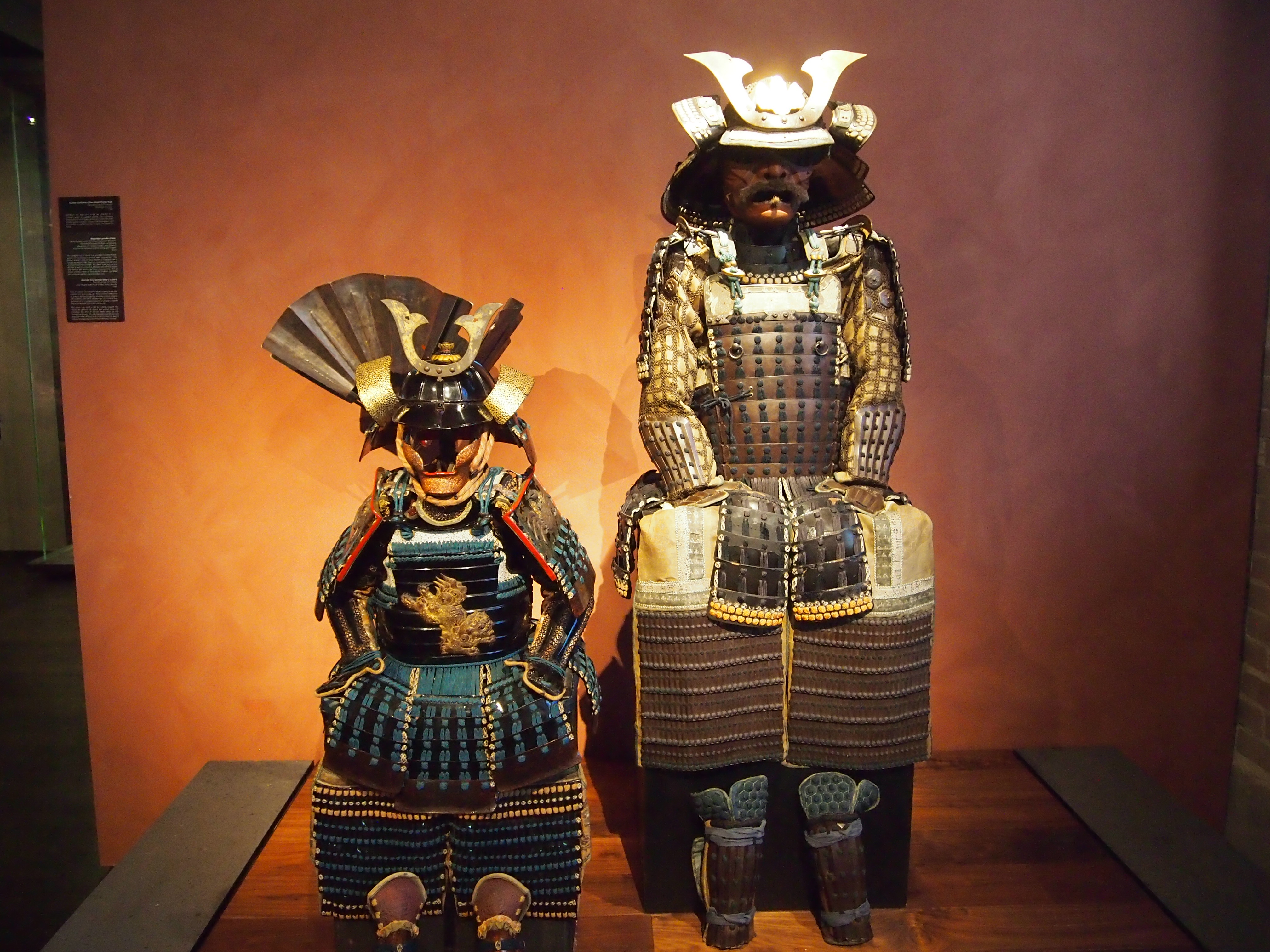
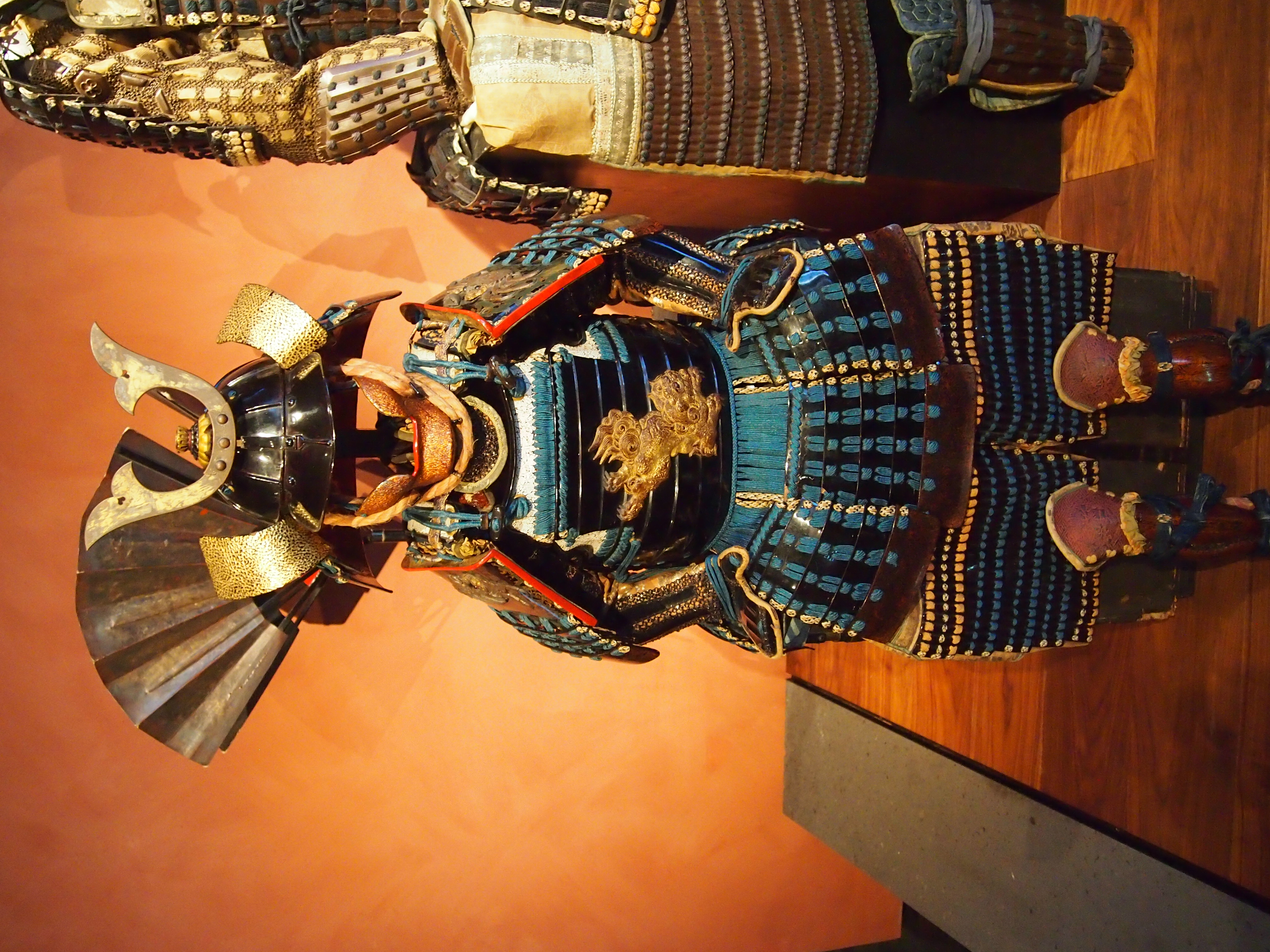
These are fine artifacts, but they aren’t as grand as some full armor that the Barbier-Mueller has. In this case, one for a man, another for a boy.

The larger suit, the museum notes, “was assembled during the Edo period and incorporates several older components. The helmet displays stylized horns known as kuwagata and a frontal ornament in the shape of a paulownia leaf, the crest of several important families…” As for the smaller suit, it’s late Edo. “Boys of samurai class families began training to become warriors at a very young age… at around age 12, samurai boys participated in a ceremony known as genpuku, wherein they received their first armor and sword.”

All in all, a high-quality collection, and not such a large display that you can’t leisurely take in most of it in one visit. It’s as if a single room of some vast, first-water museum – the British Museum, the Met, the Art Institute – had detached itself and landed in Dallas. So why Dallas? The museum’s name says it all: Dallas real estate mogul Gabriel Barbier-Mueller and his wife Ann, long-time collectors of this kind of art and artifact, wanted it to be there.

Here’s a 2006 D article about Barbier-Mueller, scion of the Swiss family of that name who decided to live in Dallas, in as much as anyone with four houses lives in a particular place. It begins with the amusing line:Gabriel Barbier-Mueller owns a lot of stuff.” Well, so do I. It’s just that a lot of his stuff is more expensive.

Downtown Dallas ’13

Saturday was warm and partly cloudy, with gusts of wind all day but nothing strong enough to do damage. Lately it’s been cooling off dramatically at night, but that didn’t happen on Saturday. At around 10 pm, I sat on my deck and took in these vestiges of summer. At about 11, it started to rain.

On Wednesday the 18th, I squeezed enough time out of my schedule to drive from my brother’s house to the White Rock Station on the Blue Line of the Dallas Area Rapid Transit (DART) system, to catch a train to downtown Dallas. The station opened in 2001 as the light rail line system expanded, and I remember catching a train there in November 2002 with Jay and Yuriko and Lilly (who was just four at the time) to go downtown and catch a Red Line train to the Dallas Zoo. Riding a train in Dallas was a novel experience at the time, like riding one in LA was in 2001.

Whenever I can, I ride urban rails – light, heavy, commuter, subway, elevated, monorail, trolley, you name it. All-day passes are sold at vending machines at DART stations, and I bought one for $5. The ticketing system is the same as I remember some German transit systems being – roving ticket inspectors check tickets randomly, and the punishment for free riding is being thrown in front of the train. That or a fine.

The DART Blue Line proved an efficient way of getting downtown and back again late in the afternoon, and as it happened no one checked my ticket. Had I got it into my head to free ride, no doubt an inspector would have shown up.

As many times as I’ve been to Dallas – I started my visits as a very tiny baby and they’ve continued in each decade since then – I don’t quite know the place. Not like San Antonio or Nashville or Chicago or even Austin or Osaka. Or at least not downtown. Been years since I spent much time in that part of the city. The last time might have been when we visited the Dallas Heritage Museum some years ago, though that has more of a view of downtown than actually being in it. There was also the time when Yuriko and I dropped by the Sixth Floor Museum in the early ’90s, and another time I went to Deep Ellum, whenever that was.

A good thing to do when you only have a few hours in a particular place is to focus on one thing, and see what else you see along the way. I decided to visit the Ann & Gabriel Barbier-Mueller Museum: The Samurai Collection, a museum on the second floor of a building in Uptown, which is in walking distance from the downtown Blue Line St. Paul station. It was a hot walk – it’s still essentially summer – but not that far.

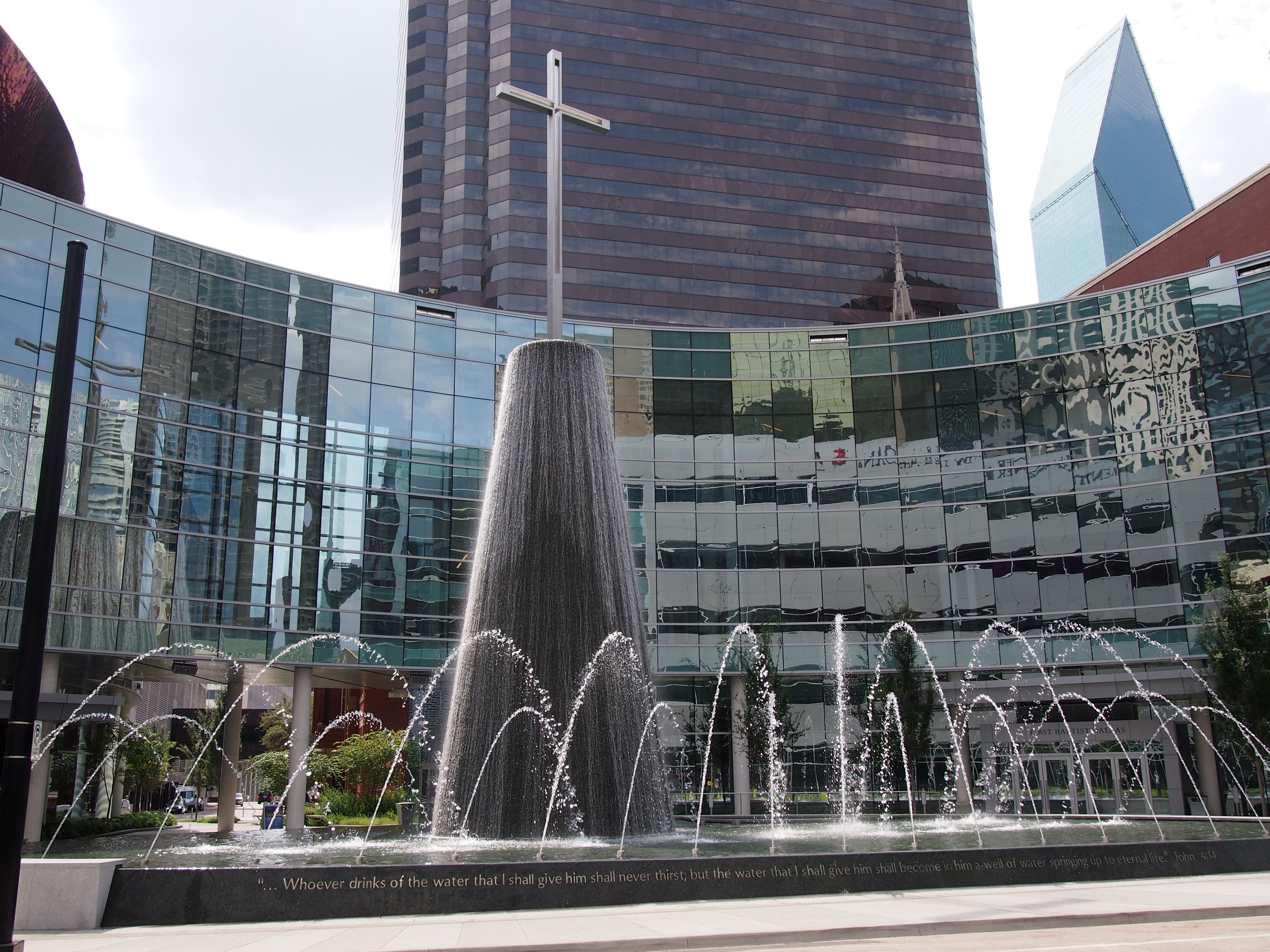
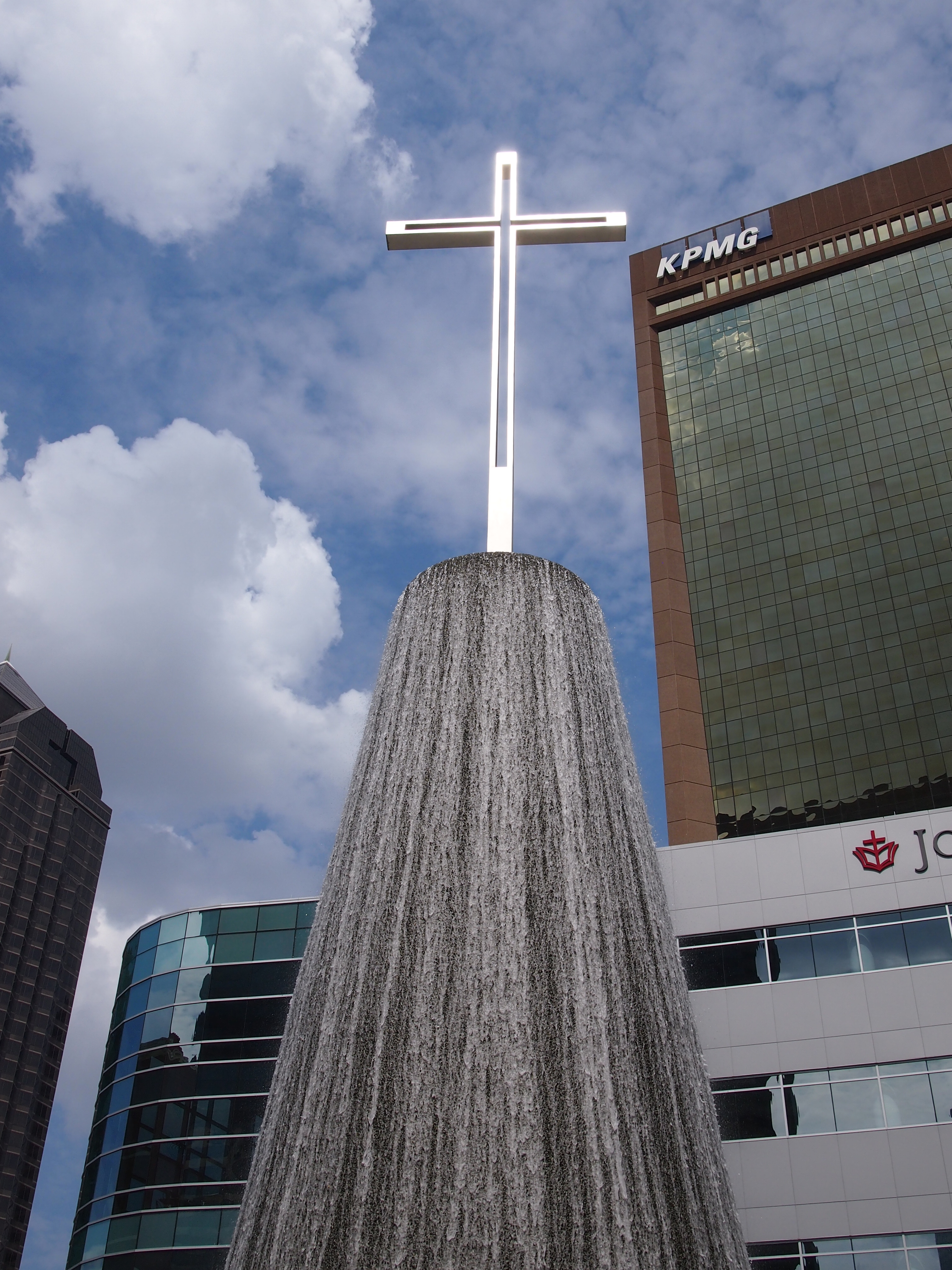
Along the way, I happened across the Jeffress Fountain Plaza, which is merely one of the more visible parts of the spanking-new First Baptist Church campus. I hadn’t seen it before because it was completed just this year.

“First Baptist Church of Dallas, led by nationally known pastor Dr. Robert Jeffress, has completed the largest Protestant church building campaign in modern history, opening its new state-of-the-art $130 million campus on Easter Sunday, March 31,” Charisma News tells us.

The article’s worth quoting at some length, if only to show that the urge to build big, expensive churches isn’t a Catholic monopoly. “The new facilities feature the newest technological advances for any church, providing a unique worship experience,” Charisma News continues. “A new 3,000-seat Worship Center, located next to the historic landmark 122-year-old sanctuary, includes a 150-foot-wide IMAX-quality video wall stretching more than two-thirds the width of the auditorium. It incorporates seven high-definition projectors blended together, making it one of the largest viewing screens in any church in the world. Additionally, wood bands along the walls surrounding the Worship Center contain LED strips that can be programmed to millions of different colors, creating dramatic ambient lighting to supplement and enhance any platform program.

“The fountain serves as the grand entrance to the new campus, featuring a stainless steel cross atop a pedestal rising 68 feet high. Surrounding the tower is a shallow water pool containing a heated baptistery as well as eight water canons [is that supposed to be a pun, or did they just misspell cannon?] and 21 undulating titan water jets. Inscribed along the edge of the fountain’s pool is a Scripture text from John 4:14, stating, ‘Whoever drinks of the water that I will give him shall never thirst; but the water that I will give him will become in him a well of water springing up to eternal life.’ Several custom orchestral scores of anthems and spiritual songs accompany the programmed flow of the cascading water.”