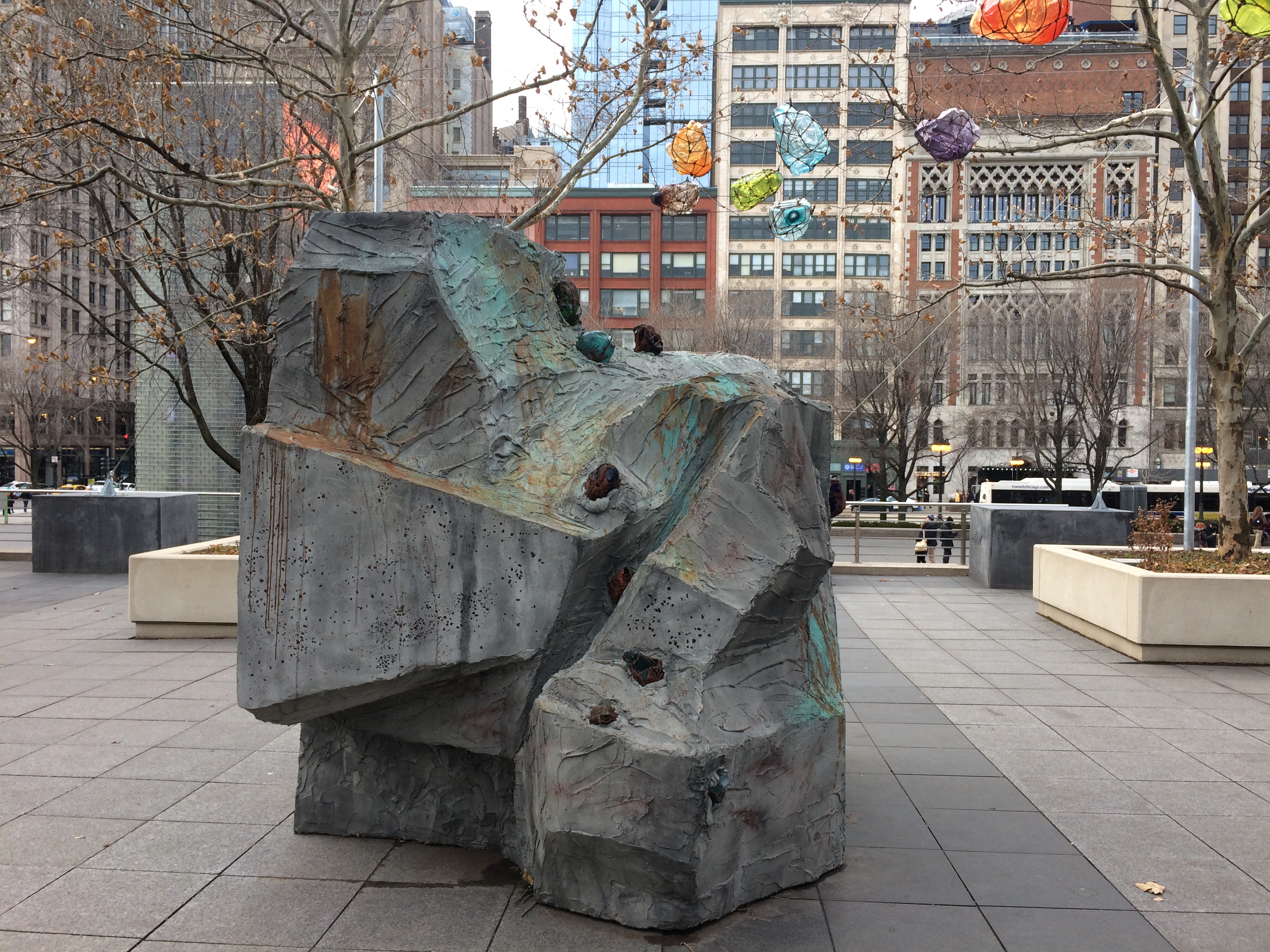
Cadillac Ranch Update &c.

How about that. I assume the top picture is more current than the bottom one, but not by much, despite the posting dates.


This is what the Cadillac Ranch looked like about two years ago.

As long as I’m posting tweets, which I might never do again, I might as well post this one.

Cleese continues to amuse.

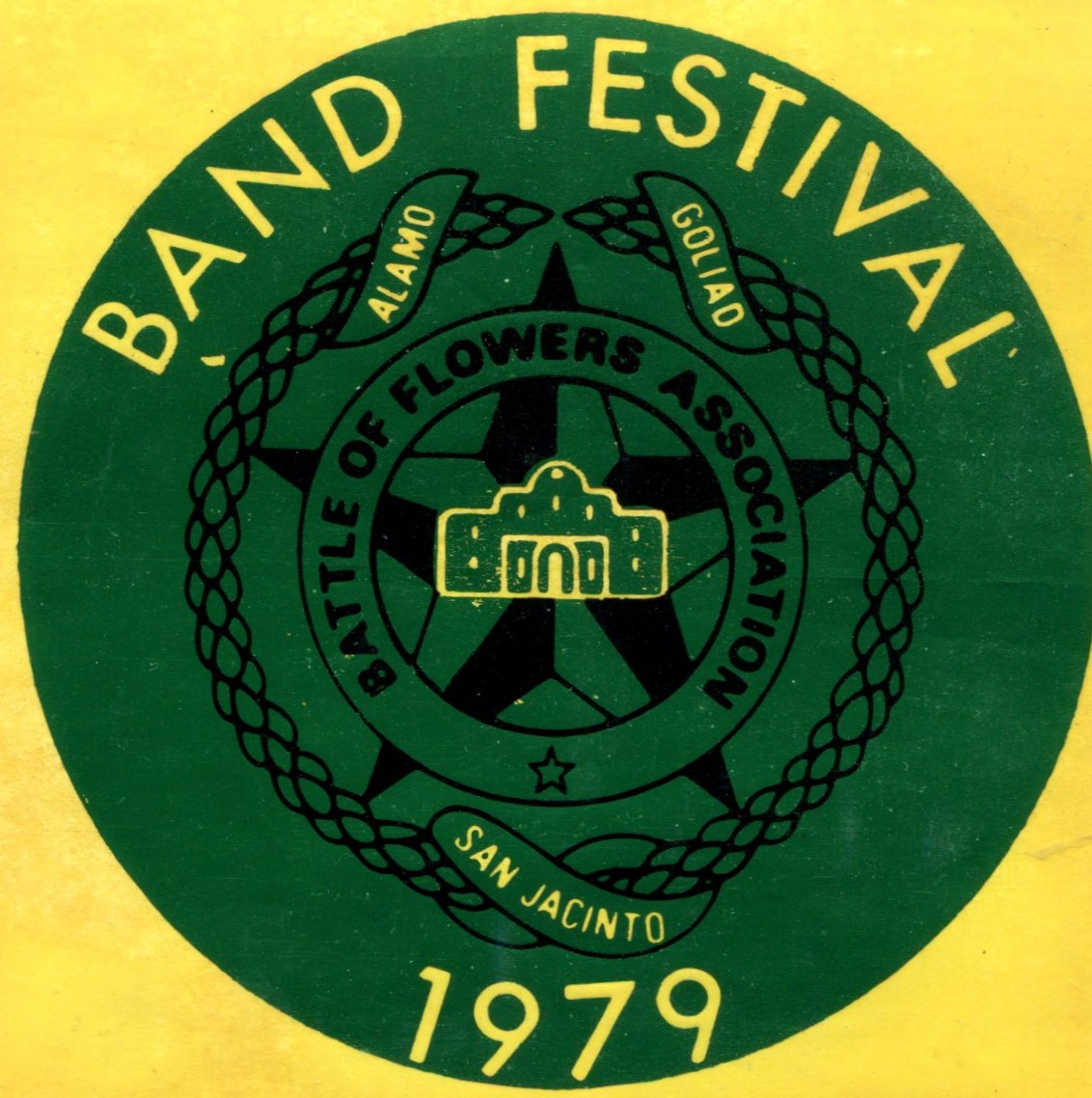
Battle of the Bands, 1979

I see that Fiesta San Antonio is now scheduled for November this year. The first time in its century-plus-decades history it hasn’t been in April, but such is our time. Social distancing isn’t the norm for Fiesta.

Yuriko and I went to a few Fiesta events in 2000, parking toddler Lilly with her grandmother for a few hours, but I remember my high school Fiestas better. Each year from 1976 to ’79, I was with the Alamo Heights HS marching band in the Battle of the Bands at Alamo Stadium and then — with one exception — the Battle of the Flowers parade downtown a few days later.

It’s officially called the Battle of Flowers Association Band Festival, but no one I knew called it that. It was the Battle of the Bands. High school bands from all over the metro area came to compete.

The best a band could do was score a 1 in music and 1 in marching. For decades, Alamo Heights had always scored two 1s — until sometime in the early ’70s, before I was in high school.

Since then, including my freshman, sophomore and junior years, the band had gotten a 1 and a 2. Very good, but not top.

So we were keen to score two 1s in the 1979 Battle of the Bands. I don’t remember what music we played or what steps we marched. All I remember was the announcement afterward: two 1s! The band exploded with joy.

I can remember only one other exuberant moment like that for the band: early junior year when, after two years of losses, the AHHS football team actually won a game, narrowly. The Battle of the Bands moment was better, though — we’d won that for ourselves.

That was a day or two before the ’79 Battle of Flowers parade — April 26, 1979 — that didn’t happen because of a wanker with a gun. Fortunately for us, at our staging area the band wasn’t close to the shooting. I didn’t even hear any shots, though at one moment heard the roar of a suddenly panicked crowd at a distance.

Even that day had its lighter moments. The parade cancelled, we in the band got back on our buses to leave. Just before we left, a non-band senior got on as well, someone most of us knew. Our band director asked him to leave, and the boy, who was chemically enhanced, got the opposite of belligerent.

“All right, all right,” he said in an almost sing-song voice, smiling and giggling. “I’m getting off now. Don’t worry, I getting off now!” (I’m re-constructing those words; but that was the gist.) It was a little puzzling then, but looking back on it, I think he’d done more to prepare for the parade than drink a little beer or smoke a joint. At that dour moment, he was having a good trip.

Adios, Gabuttø Burger

Update: Gabuttø Burger is closed. At least the one in Rolling Meadows is, which used to be the only location. Maybe I should have mentioned that before, since we found that out one day in November (I think) when we dropped by for its fine sort-of-Japanese burgers and found it locked.

So the Yelpers are right. The place wasn’t a victim of the pandemic, though at times I wonder which of our favorite non-chain restaurants will not emerge from their current retail comas. On the other hand, a restaurant is always a high-wire act. No matter how good a joint is, it can still be the victim of regular retail churn.

Gone from Rolling Meadows, but Gabuttø Burger was planning to re-open in Elgin. Not as convenient for us, but we still would have gone occasionally. Unfortunately, word was it was supposed to open in March. I suspect that didn’t go too well.

I never did take a picture of one of its burgers. One time, however, I did take a picture at the Rolling Meadows Gabuttø Burger — of something arrayed like I’d never seen before.
More valuable than the restaurant or I realized at the time. I hope the proprietors remembered to take the supply of paper with them when they left.

Speaking of retail in peril, what about the fate of Buc-ee’s? If there ever was a place that encouraged the opposite of social distancing — that would be social cramming? — it would be Buc-ee’s, with its mass crowds in its massive stores.
Then again, such is the pull of Buc-ee’s that maybe it’s been deemed an essential operation in Texas.

The Former Rex Theatre, Amarillo

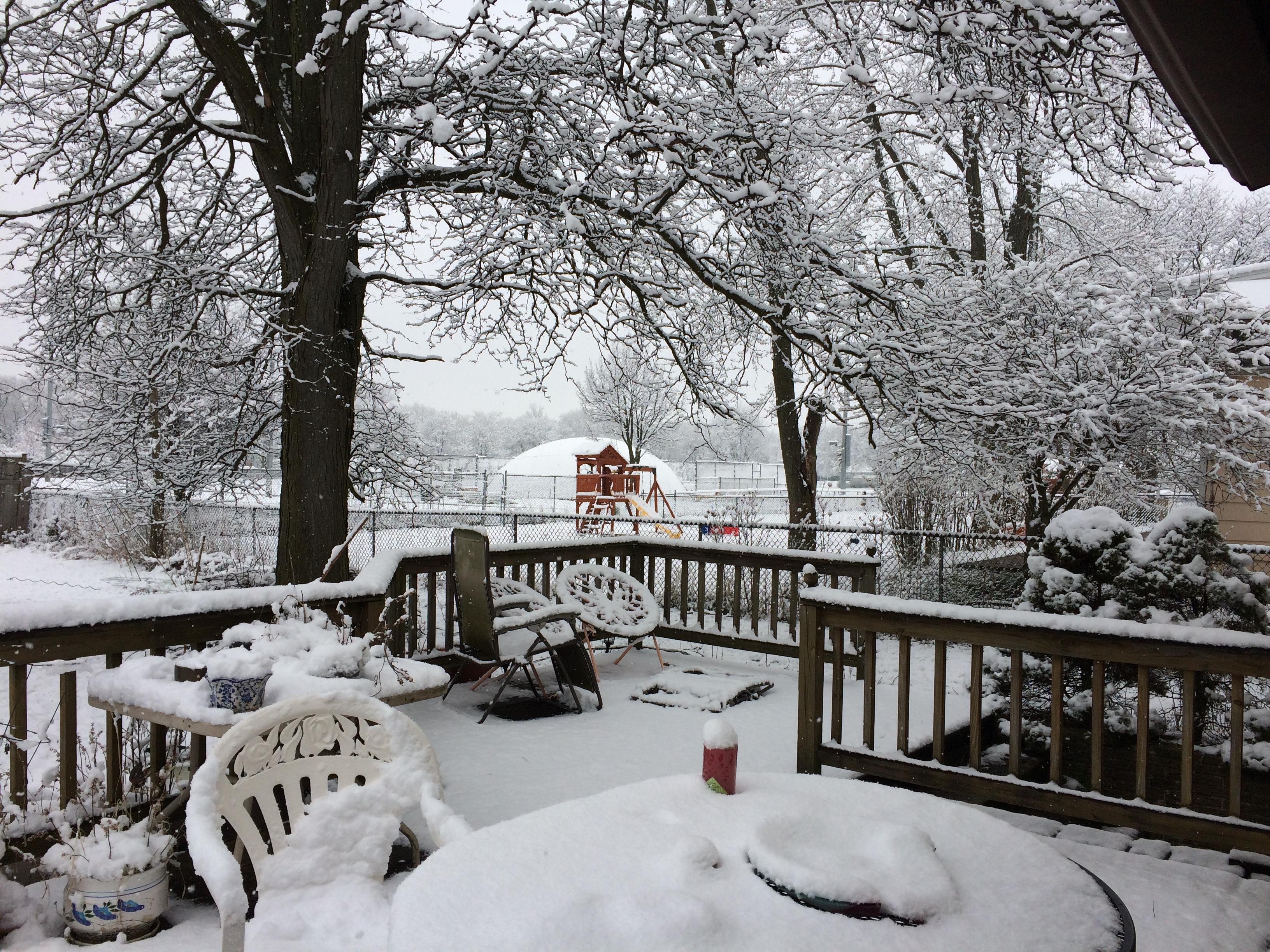
Our back yard view, Friday morning.

Enough already, I cried to the heavens. Not really. It was more of a mutter. Yet I seemed to get an answer, because the snow melted by Saturday and today we enjoyed a fine spring day.

I even heard people out mowing their grass this morning. The flush of spring hasn’t quite inspired me to yard work, however.

Two years ago, when I spent about a day and a half in Amarillo, I took a walk along Sixth Ave. the evening I arrived. It has the distinction of being part of U.S. 66 at one time.

“The U.S. Route 66-Sixth Street Historic District comprises 13 blocks of commercial development in the San Jacinto Heights Addition west of Amarillo’s central business district,” the NPS says. ” Developed as an early 20th-century streetcar suburb, the district was transformed by the establishment of a national transportation artery running through its center.

“The U.S. Route 66-Sixth Street Historic District is Amarillo’s most intact collection of commercial buildings that possess significant associations with the highway. Featuring elements of Spanish Revival, Art Deco, and Art Moderne design, these buildings represent the historic development phases of this early 20th century suburb and the evolving tastes and sensibilities of American culture.”

I’d read about the street, but more importantly at that moment, I was looking for something to eat. I didn’t find anyplace I wanted to eat, but I did see some of the historic buildings on the street. I was inspired to take a picture of only one of them. A detail of one of them.Sixth Street Haunted House AmarilloSkulls. They’re on a wall of the 6th Street Massacre Haunted House. Note also the plaque. It says that the building is on the National Registry of Historic Places. This is a wider view.

It was once the Rex Theatre, which opened in 1935 and lasted until 1956 as a movie venue. It’s a little hard to see it as a theater building from Sixth Ave. The view around the corner shows it better.

A movie palace, it probably wasn’t. Just a neighborhood picture show. I think that makes it just as interesting, historically speaking, as one of the palaces, but not as nice to look at.

Piggly Wiggly Sewing Kit

Something new on the Weather Underground forecast page for my area this Maundy Thursday morning. A screen shot:

Obviously a day to stay in if you can, for a number of reasons. Back to posting on Easter Monday. A good Easter to all.

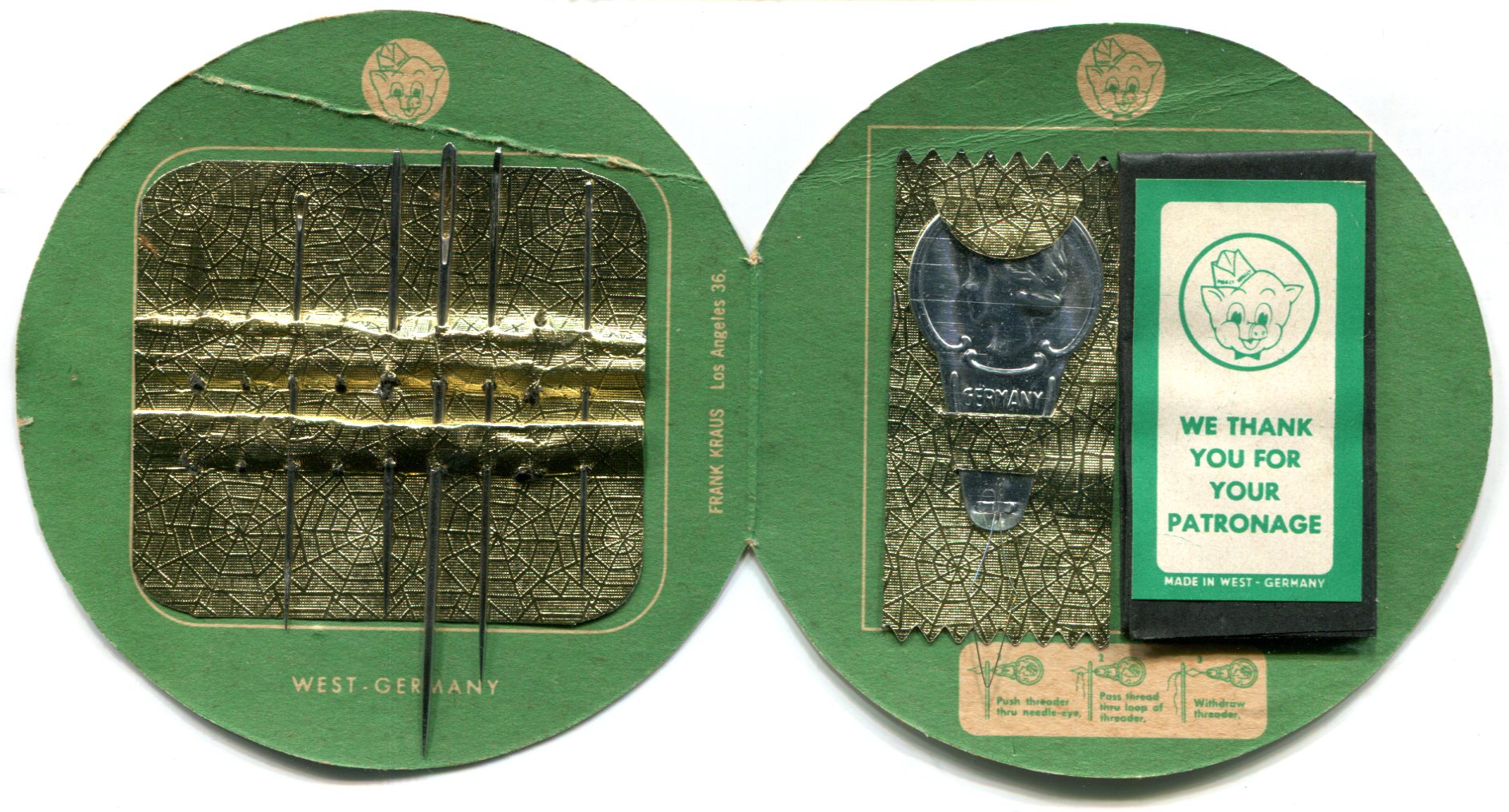
There are many oddities around the house. Why have it any other way? Such as a Piggly Wiggly sewing kit, or you could call it a needle kit. Scanned here open, with the back on the left and the front on the right. Or reverse and observe.

Inside the kit. Some needles still in place. A threader, too.My guess is that my grandmother picked it up at a San Antonio Piggly Wiggly in the 1950s, early ’60s at the latest. Most of the time I believe she shopped at the nearby Handy-Andy in Alamo Heights, but she must have occasionally patronized Piggly Wiggly, which existed in South Texas at the time (but no more: HEB is king in that part of the country).

At some point, maybe after grandma died, my mother removed it to her house; and now that’s what I’ve done. I can date it with some certainty to that decade because of a few details. Green Stamps don’t narrow it down that much, since they were around from the 1930s to the ’80s, but I smile at the mention of them anyway.

On the inside it says: Frank Kraus, Los Angeles 36, which puts it before zip codes and during postal zones (1943-63). Since the kit was made in West Germany, that puts it after the war, in fact after the formation of the BRD in 1949. Must have been a product of the postwar recovery, when West German industry was making whatever they could for whomever they could, just as Japanese industry did at the time.

As for Frank Kraus, I’d guess he was the importer. Possibly, but only possibly, this fellow. Or him, though he left California at some point. A little looking around, such as at Esty, reveals that Frank Kraus, whoever he was and wherever he rests now, had his name on other small sewing kits from West Germany.

Hail!

Yesterday evening, rain was forecast possible and clouds rolled along.

Temps were a pleasant 70 F. or so. I sat on the deck and waited for the rain. Mostly I saw cloud-to-cloud lightning a few miles away to the south, which has a fascination all its own. It was never near enough to drive me inside, and not much rain came either by dark.

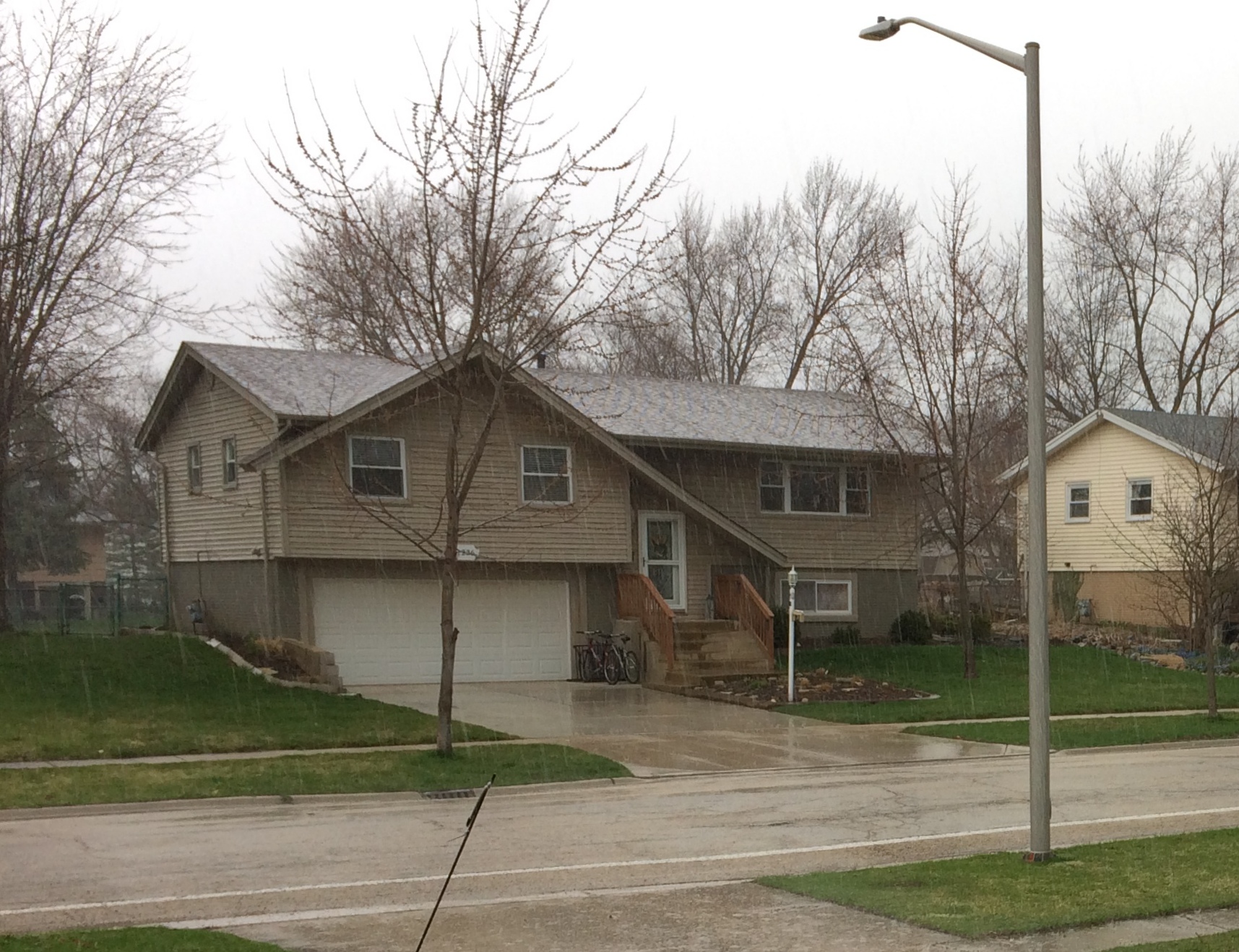
Today was a different story. Just before 5 p.m., heavy rain started to fall. With some hail. Luckily not too large, but enough to make a tink! sound when it hit a metal yard ornament in our front yard. Hail, or at least its streaks, is visible against the backdrop of a neighbor’s house.

When I was 11 or 12, golfball-sized hail fell as I watched from our kitchen window. The ice slammed into the yard and bounced every which way. It was over in two minutes. A minute? Not long, but impressive. I collected a few and kept them in the freezer until they merged with the other frost. It was Texas hail. You know, bigger like everything else.

Mm, Grits

There are two kinds of grits in the house. As far as I know, people aren’t hording grits these days, but I haven’t shopped for them since before the pandemic, so who knows.

To the left, the brand I’ve eaten for years. The standard. The go-to. Often the only brand at the grocery store. Easy to make, best eaten after only a few minutes for cooling. Some add butter. I usually add honey, but not always.

To the right, a brand recently acquired. The texture is slightly different, but not enough to put me off of it. Takes longer to make. Naturally, the verbiage on the package tries to make a virtue of that necessity: “You’ll have to hesitate before you eat quick grits again,” it says. Naah.

The standard grits package tube lists the following as ingredients: degerminated white corn grits, plus iron and various vitamins, which are added in the processing. The new grits bag merely lists white corn. Made me wonder if the hull and germ have been removed, which seems essential to grits.

Note this handy definition at Culinary Lore:

Hominy: An endosperm product made from corn, made up of starch, with the hull and germ removed.

Grits: Ground hominy (usually coarse).

I checked the nutrition facts on the new grits package, and indeed it seems that whatever vitamins might have been present in the hull or germ aren’t there, so I assume they aren’t there either.

Anyway, grits and I go way back. As long as I can remember, because my mother made them and I assume her mother did too, though I don’t have any specific memory of grandma’s grits. I learned to make them myself early on.

I also learned that somehow, most restaurants that offer grits serve an inferior version to what you make at home. How is that? Occasionally, though, I find superb grits away from home. For instance, years ago in Mexico Beach, Florida, I had wonderful cheese grits — at a place probably destroyed by Hurricane Michael a year and a half ago.

When I moved to Chicago in the late ’80s, I was glad to find grits in the grocery stores, despite being well north of the Grits Line. I shouldn’t have been surprised, considering how many Southerners, black and white, have migrated to the region over the decades.

Grits aren’t available in Japan. At least they weren’t 30 years ago. We gaijin ordered it by the case from North America, which we then split up. (PopTarts were ordered the same way.) I remember serving them at my apartment in Japan to a Scotsman who also lived in Japan. He liked it well enough.

“Porridge, is it?” he said. I wasn’t sure how to answer. Can porridge be made from corn? Maize, that is. Seems yes, or maybe, since porridge can be any grain, though I think it’s usually associated with oats and not de-germed corn. Porridge isn’t part of my dialect anyway. Growing up I never heard anything outside of children’s stories called porridge, such as what the Three Bears prepared for themselves and Goldilocks pirated.

Yuriko had no notion of grits growing up and still doesn’t care for them. Lilly took to them in a big way, but Ann did not. Different children, different tastes.

Salado Creek Greenway, February 2015

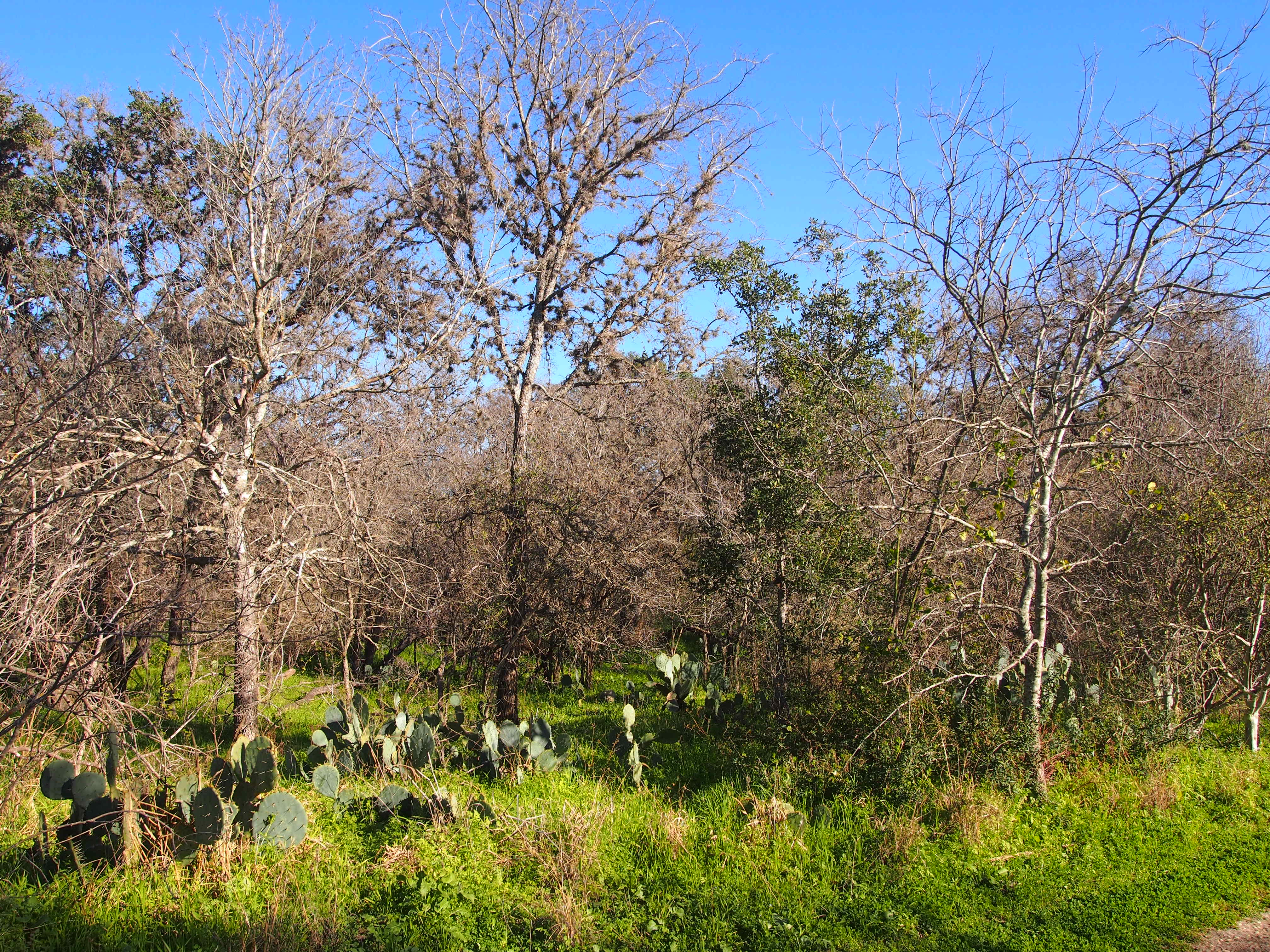
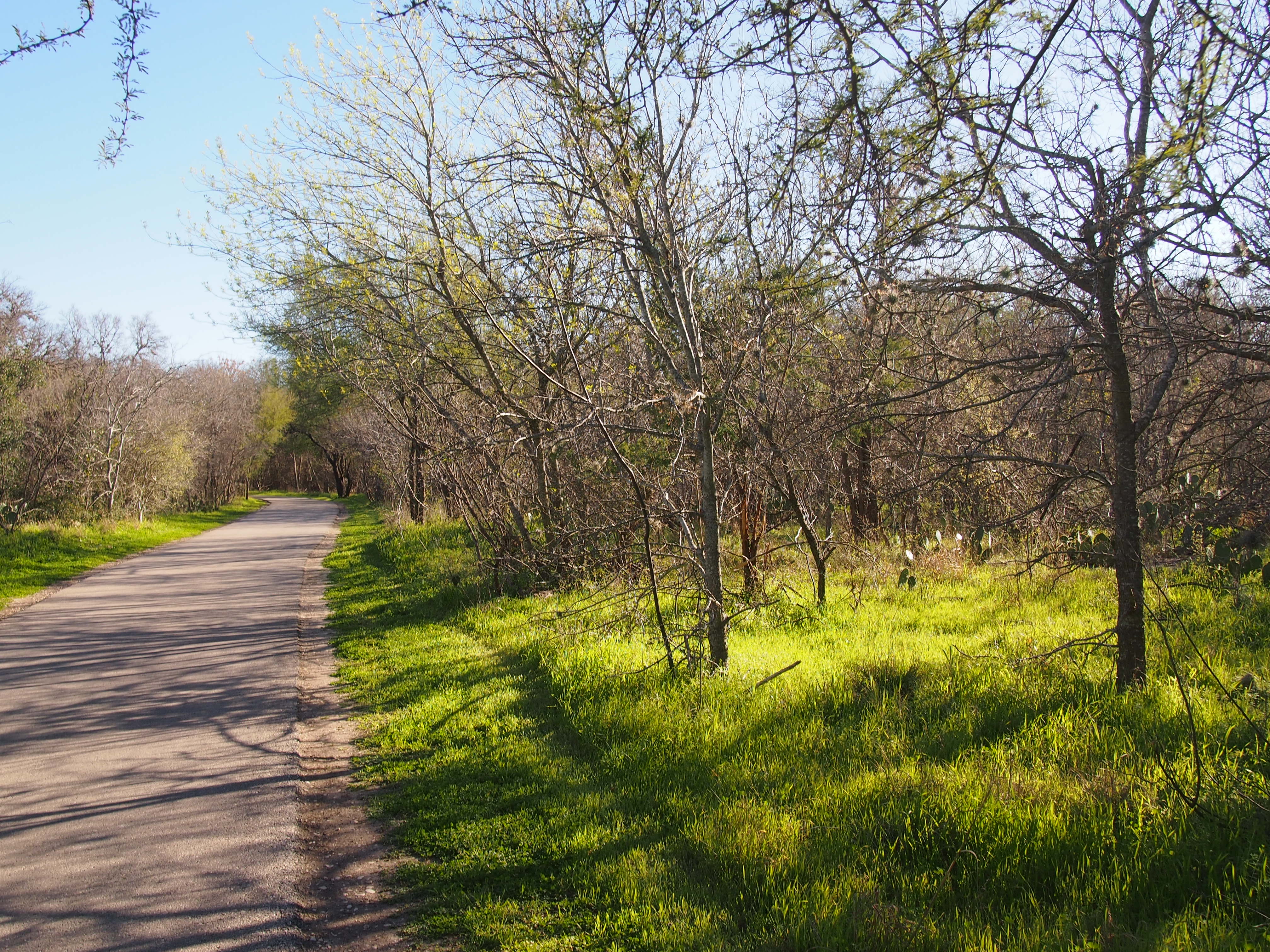
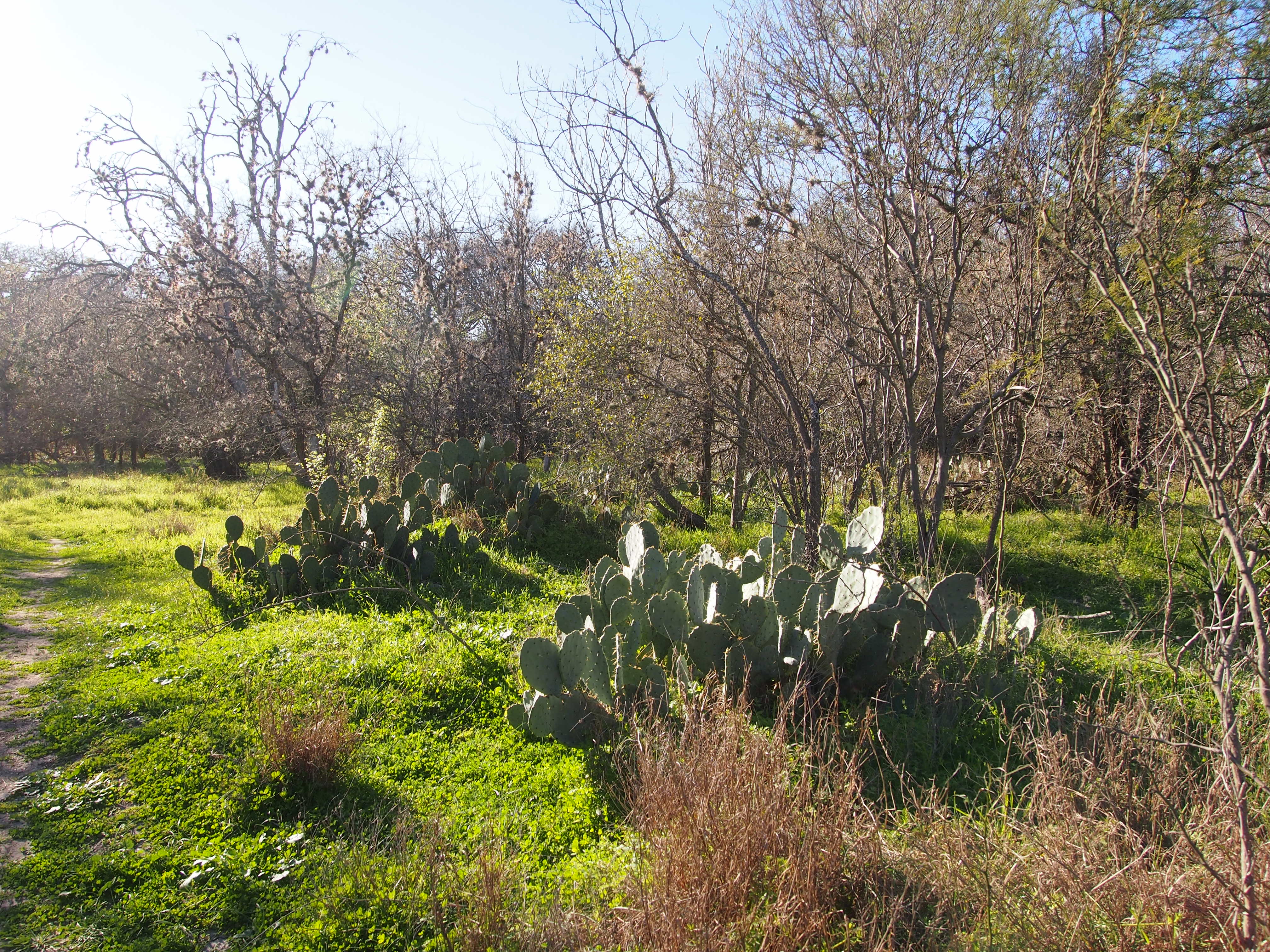
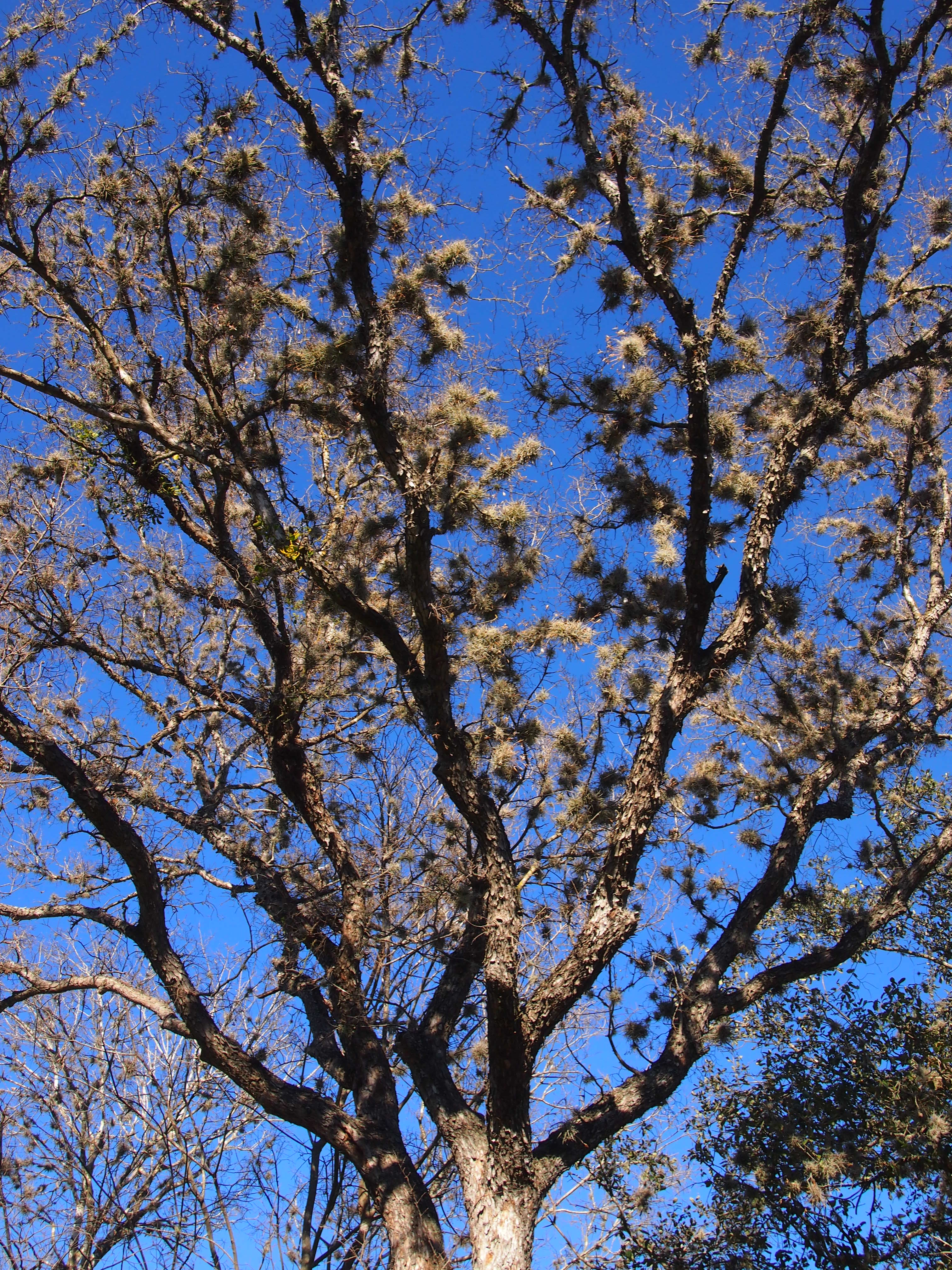
Late February’s a good time to visit South Texas. Five years ago, during a trip to San Antonio, I was even able to enjoy some outdoor greenery. Just budding, but there.

I took a walk along part of the Salado Creek Greenway.

Salado Creek Greenway San Antonio

Any day in February when you can wander out in the non-freezing air is a good one. At least for us Northern Hemisphere, Temperate Zone dwellers. Roughly above the 40th parallel, that is. How’s that for overqualifying? Never mind, it was a good walk.

Salado Creek Greenway San AntonioSalado Creek Greenway San Antonio

Salado Creek Greenway San Antonio

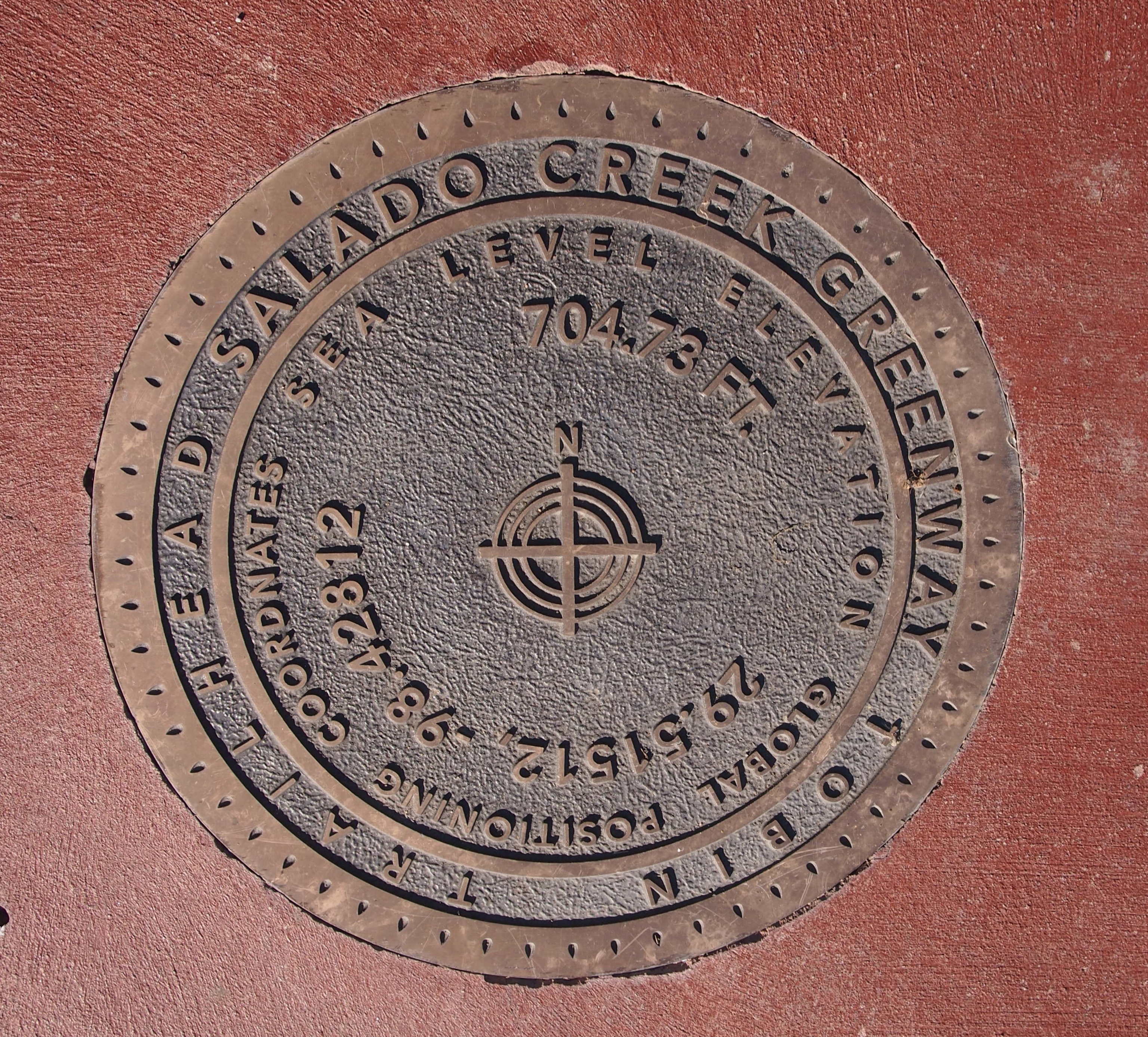
Speaking of latitude, the Tobin Trailhead of the Salado Creek Greenway is —

Salado Creek Greenway San Antonio

— at exactly 29.51512 N (and 98.42812 W).

Twelve Pictures ’19

I always take many more pictures than I post in any given year. Here are some from this year to close out the decade. Back to posting around January 5, 2020. That year sounds so far in the future, at least for those of us who vaguely remember Sealab 2020 — and yet here it is.

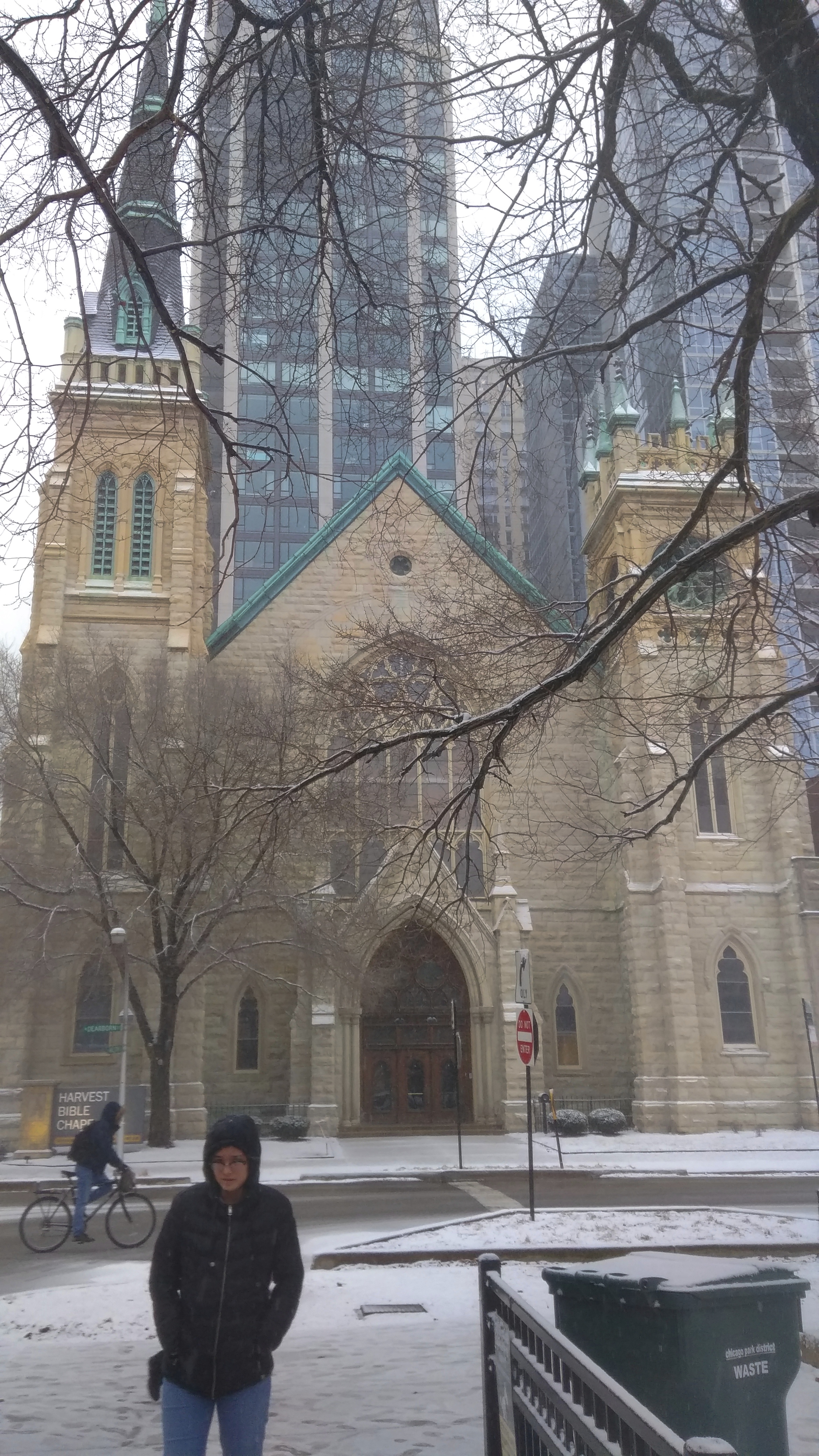
Near North Side Chicago, January 2019

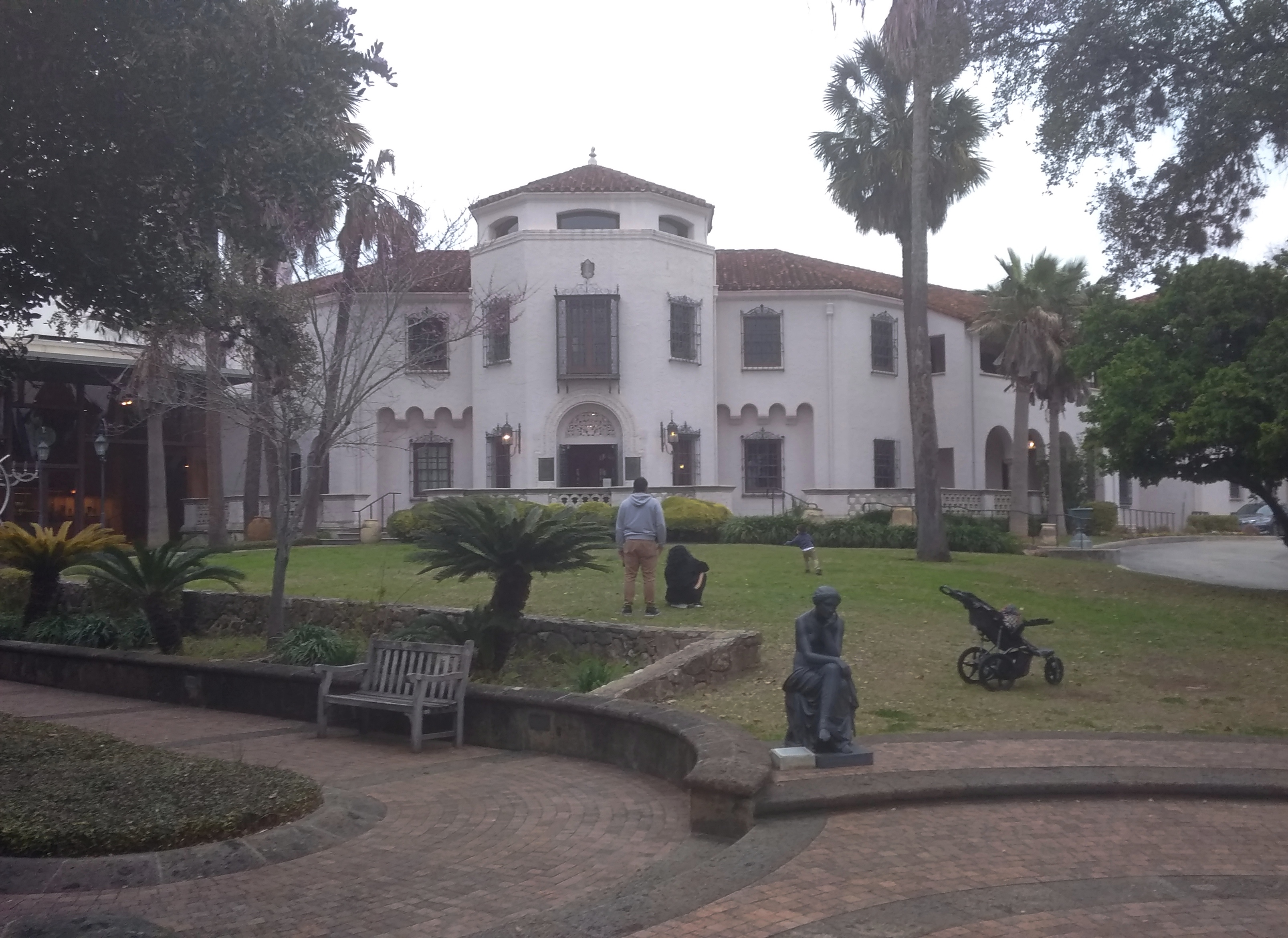
San Antonio, February 2019

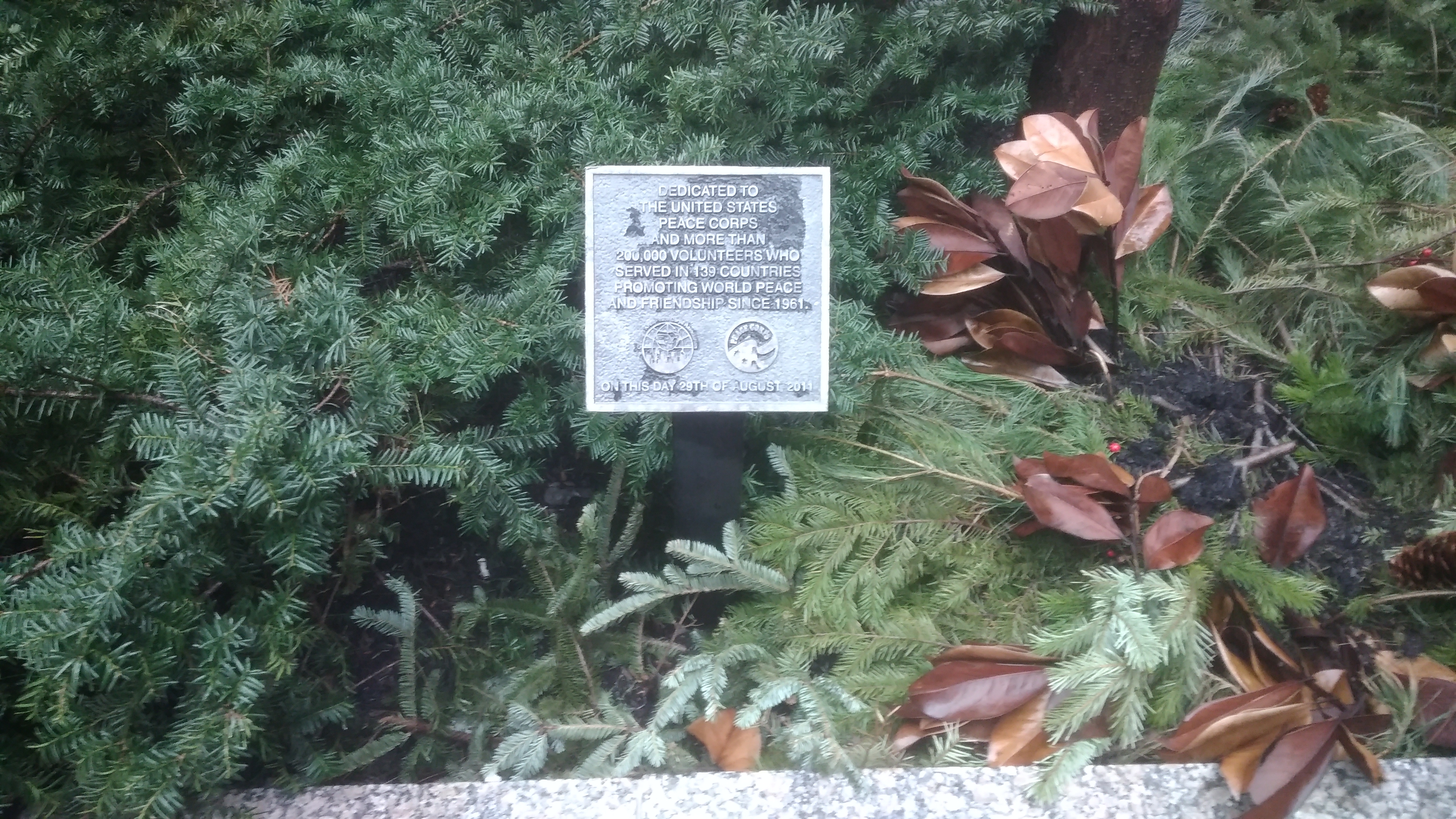
Downtown Chicago, March 2019

Elmhurst, Illinois, April 2019

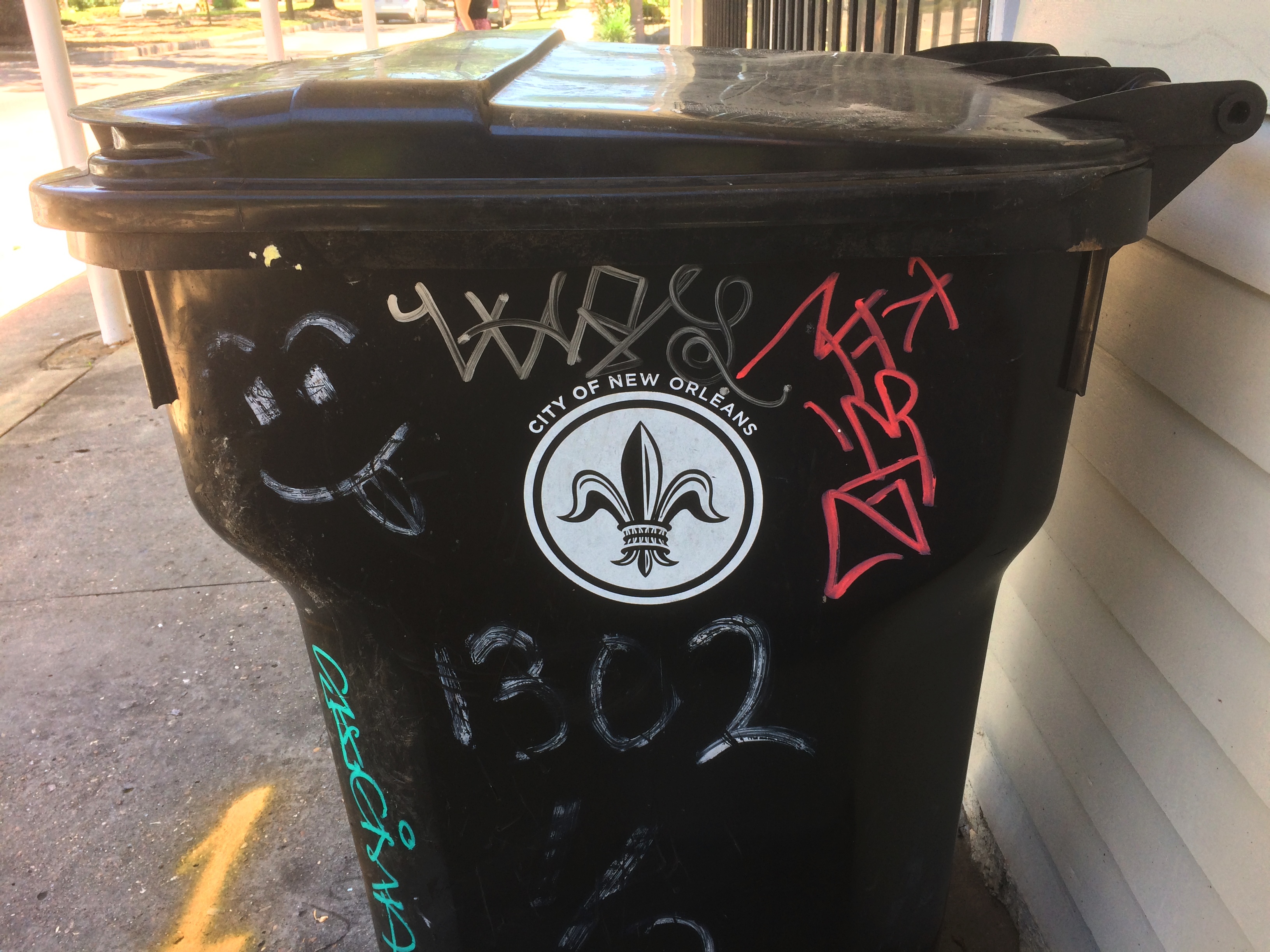
New Orleans, May 2019

Arcola, Illinois, June 2019

Pittsburgh, July 2019

Oak Park, Illinois, August 2019

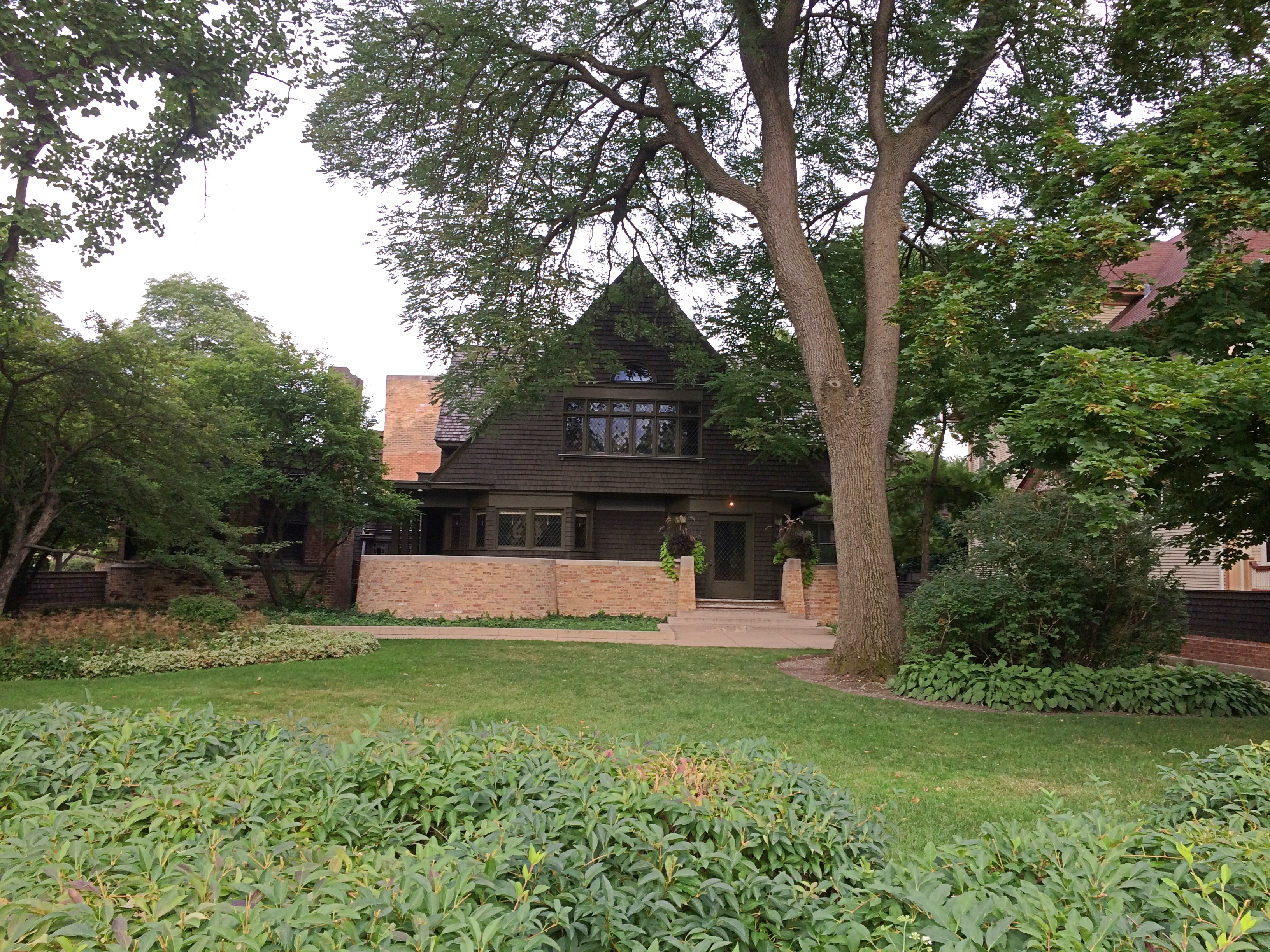
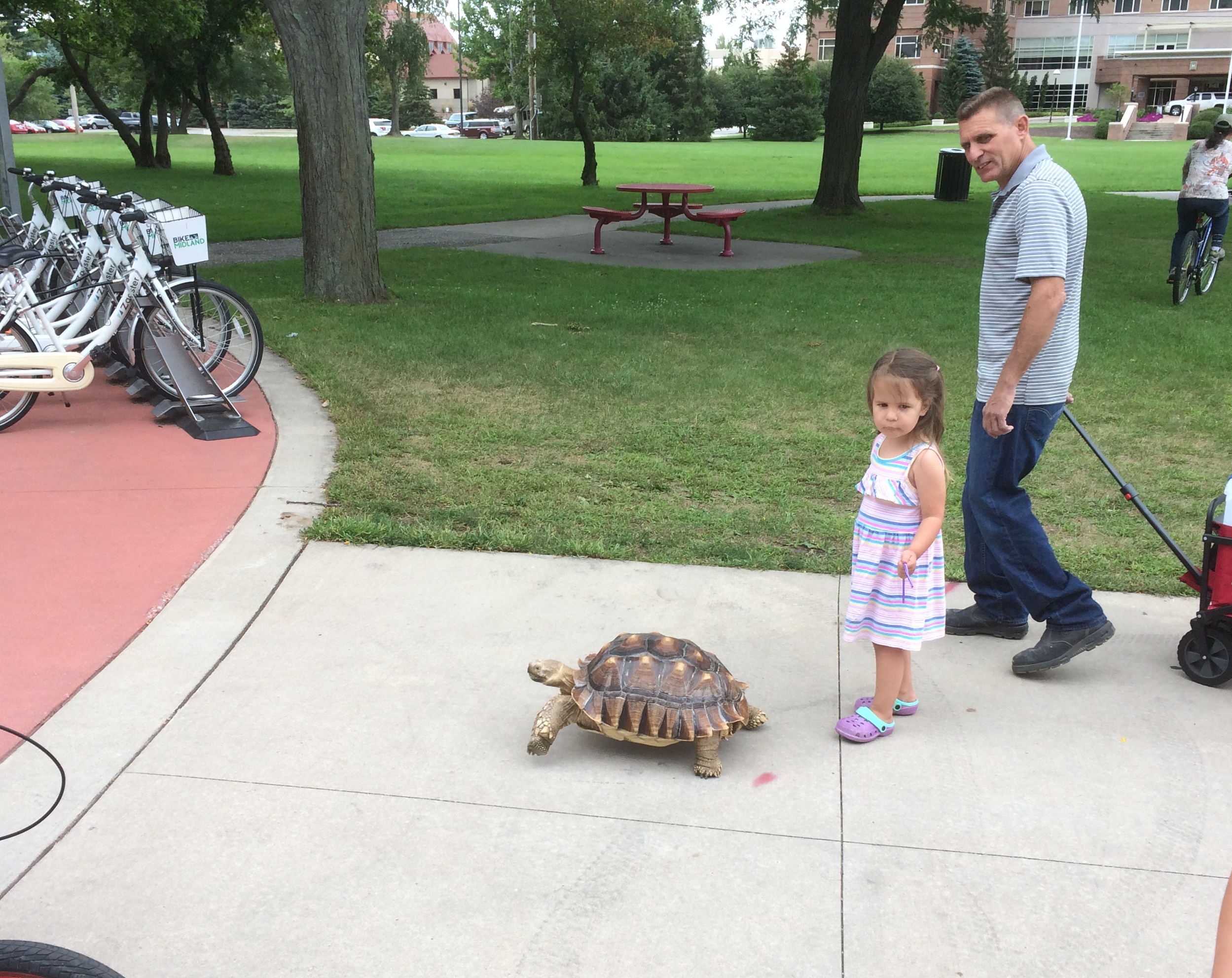
Midland, Michigan, September 2019

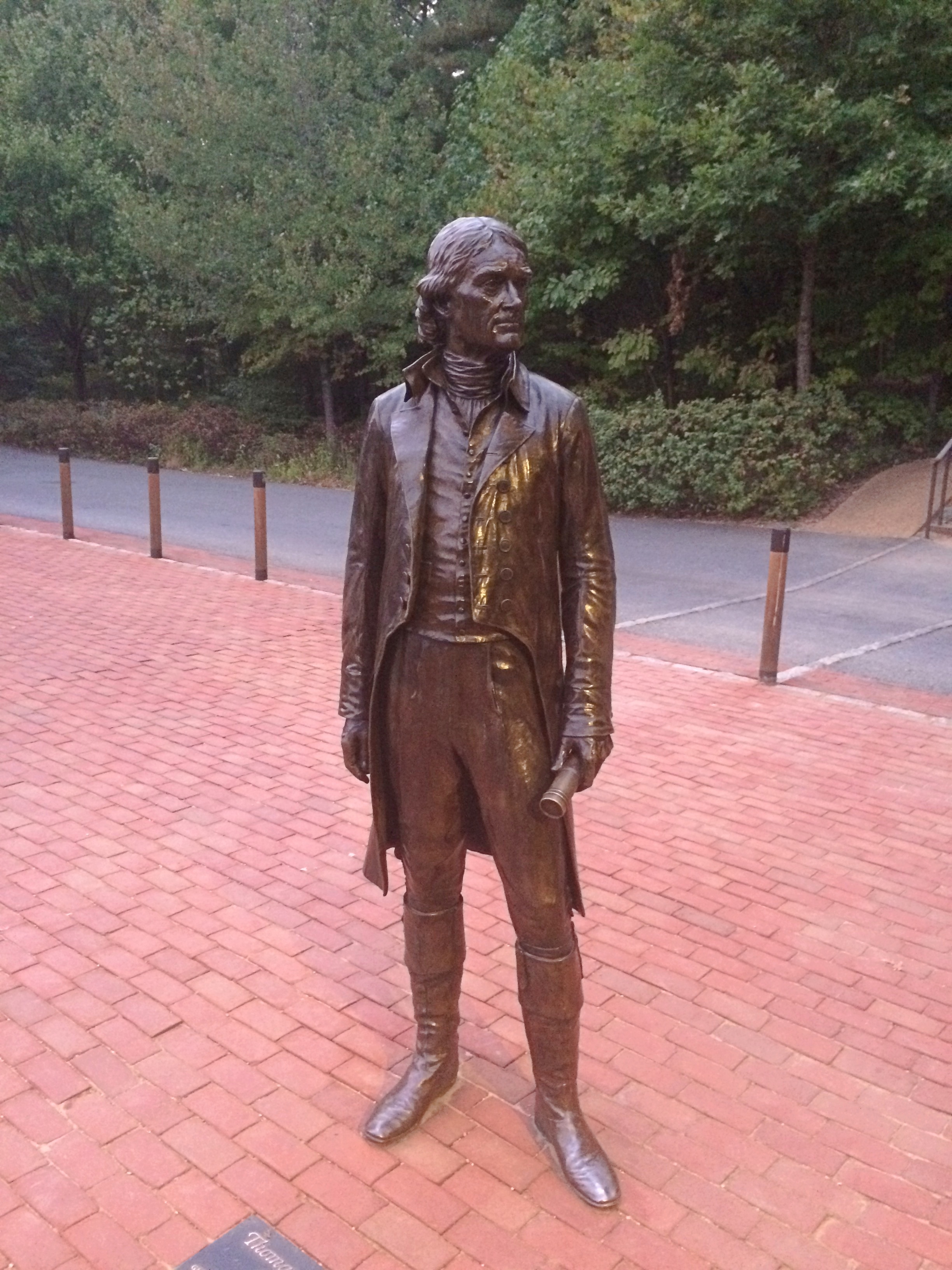
Charlottesville, Virginia, October 2019

Schaumburg, Illinois, November 2019

Millennium Park, Chicago, December 2019Good Christmas and New Year to all.

No Fond Memories of Record Hole

I pinned this to the wall behind the front door today. It’ll be there until I will be obliged to take it down. Why there? Just a passing whim. I was tired of it lying around my office.
Record Hole bagIt’s a plastic bag and a relic of the 1970s or the ’80s at the latest. Not only that, a souvenir from San Antonio. At one time, Record Hole was a local chain of record stores in that city. Or so I believe.

The brand is long gone, and so far I’ve found only one trace of it online — a passing mention in an article about a different and surviving record store, as of 2016. Not that I’ve looked very hard. But Record Hole is so obscure that it didn’t even make in on this list of defunct retailers, which includes Record Bar, Record Town and Record World.

Some time ago, I picked up the bag at my mother’s house — again on a whim — and brought it back home. She’d been using it to store odds and ends. I might well have bought a record at a Record Hole and left it with her 40-odd years ago. I didn’t buy many records, but I did buy a few. Or maybe my brother Jim bought something there.

At one time, Record Hole was established enough to air local TV ads. I vaguely remember them, because they featured a primitive animated version of ’70s-record-listening dude.

record hole bagWho was sitting on a record on a turntable. Trippy, man. The store’s motto, which is also on the bag but upsidedown and backwards in my picture: Whatever music plays in your head, we can put in your hand.

Plastic bags, though they may last for centuries in landfills, are notoriously ephemeral when it comes to being saved elsewhere. Sure, it’s still worthless now, but some happy descendant of mine might make a fortune off the bag in, say, the 23rd century, when the notion of plastic bags and records are historic curiosities that excite collector interest.