Art Institute Spaces, Small and Large

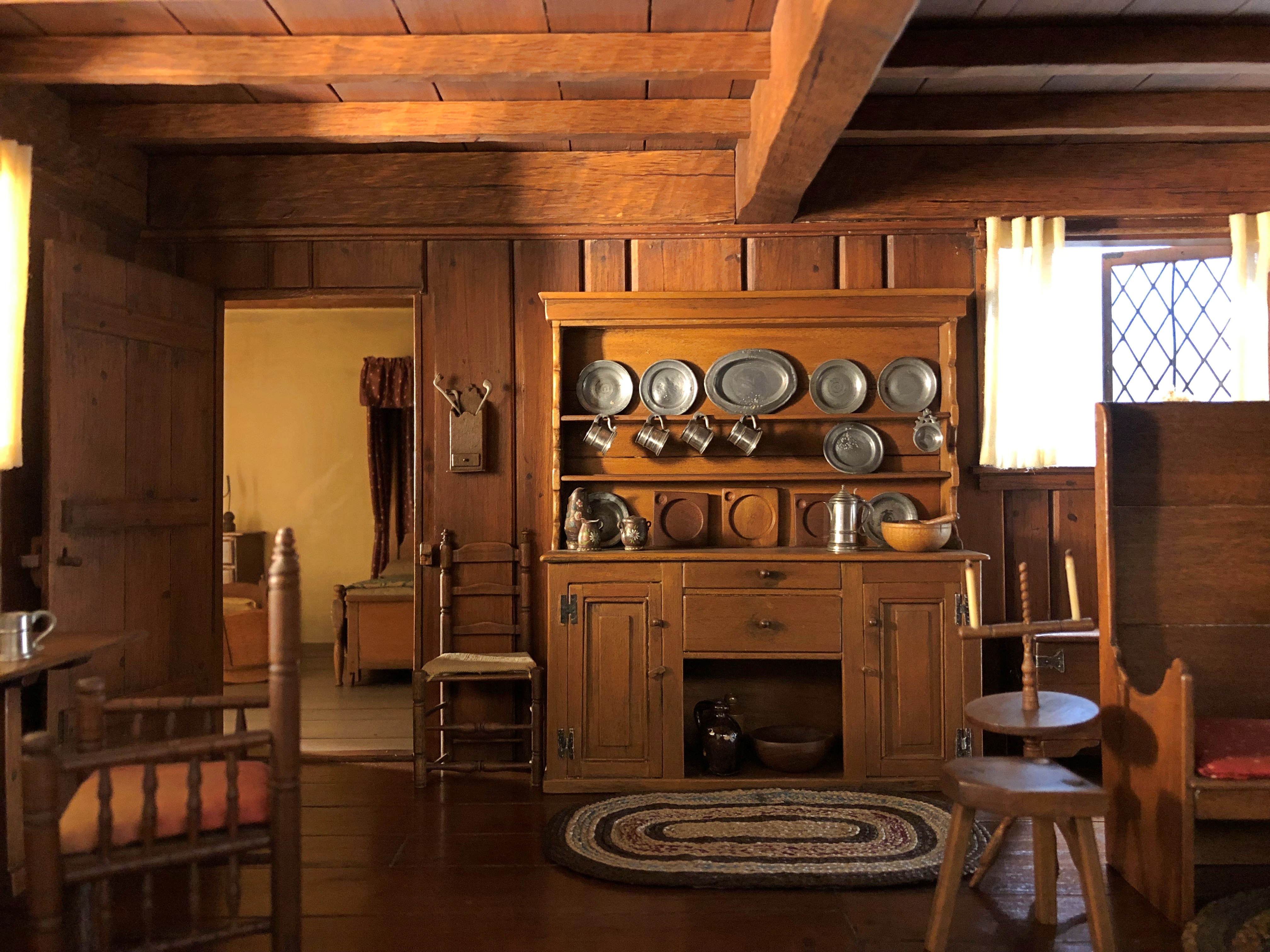
I’d like to say I visited this room recently — looks interesting, doesn’t it? — but I only looked into the room.Thorne Rooms
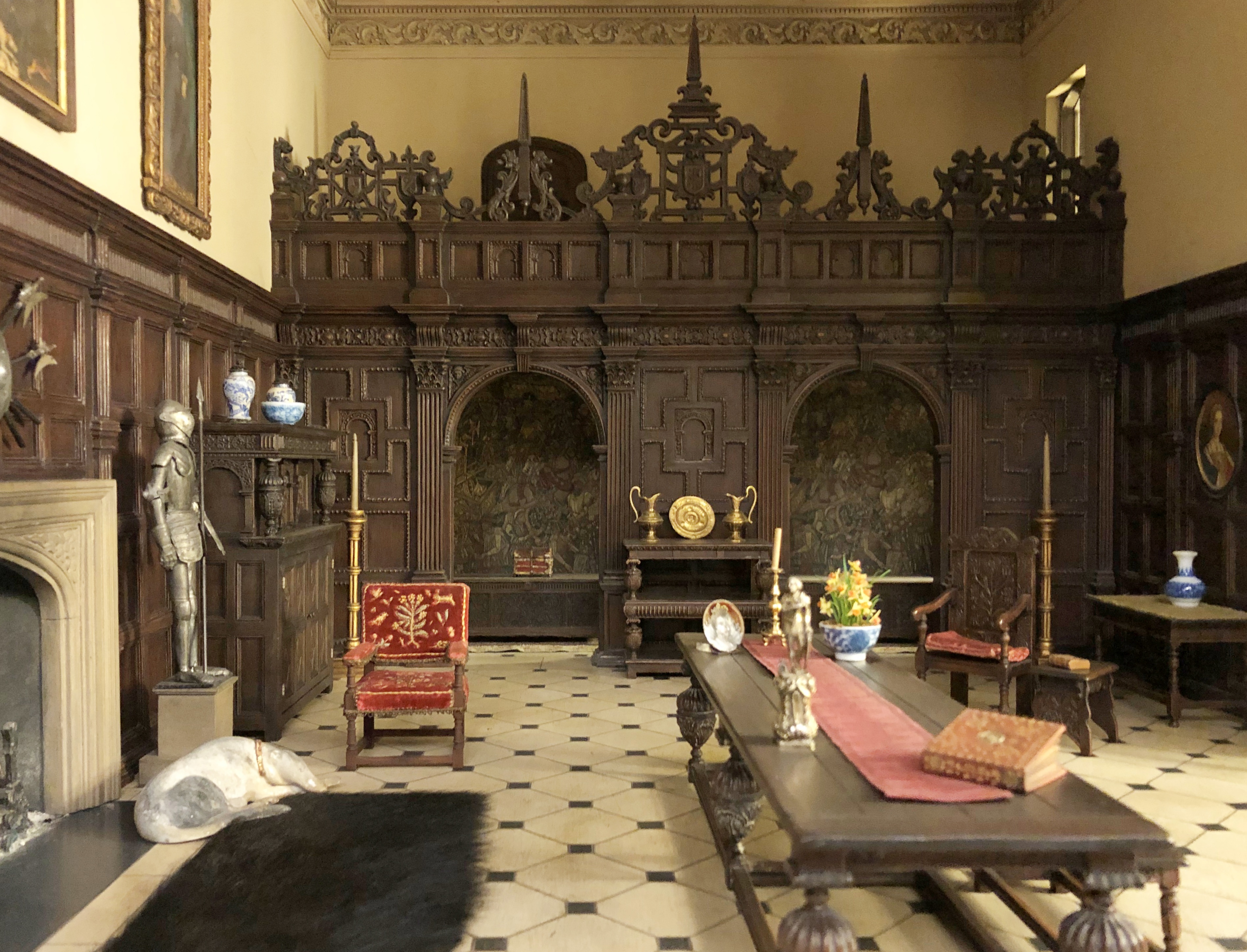
An English great room of the late Tudor period, 1550-1603, according to a nearby sign. I couldn’t get in because one inch within this room equals one foot in an actual room of that kind, so at best I could get a hand in.

The Art Institute doesn’t want anyone to do that, and for good reason, since random hands would completely wreck any of the Thorne Miniature Rooms. So they are behind glass in walled-in spaces, and not at eye level for someone as tall as I am.

Still, I leaned over to look in. The fascination is there. Not just for me, but for the many other people looking at the rooms on Saturday. Each room evokes a different place or time, heavily but not exclusively American or European settings.

English drawing room, ca. 1800.Thorne Rooms
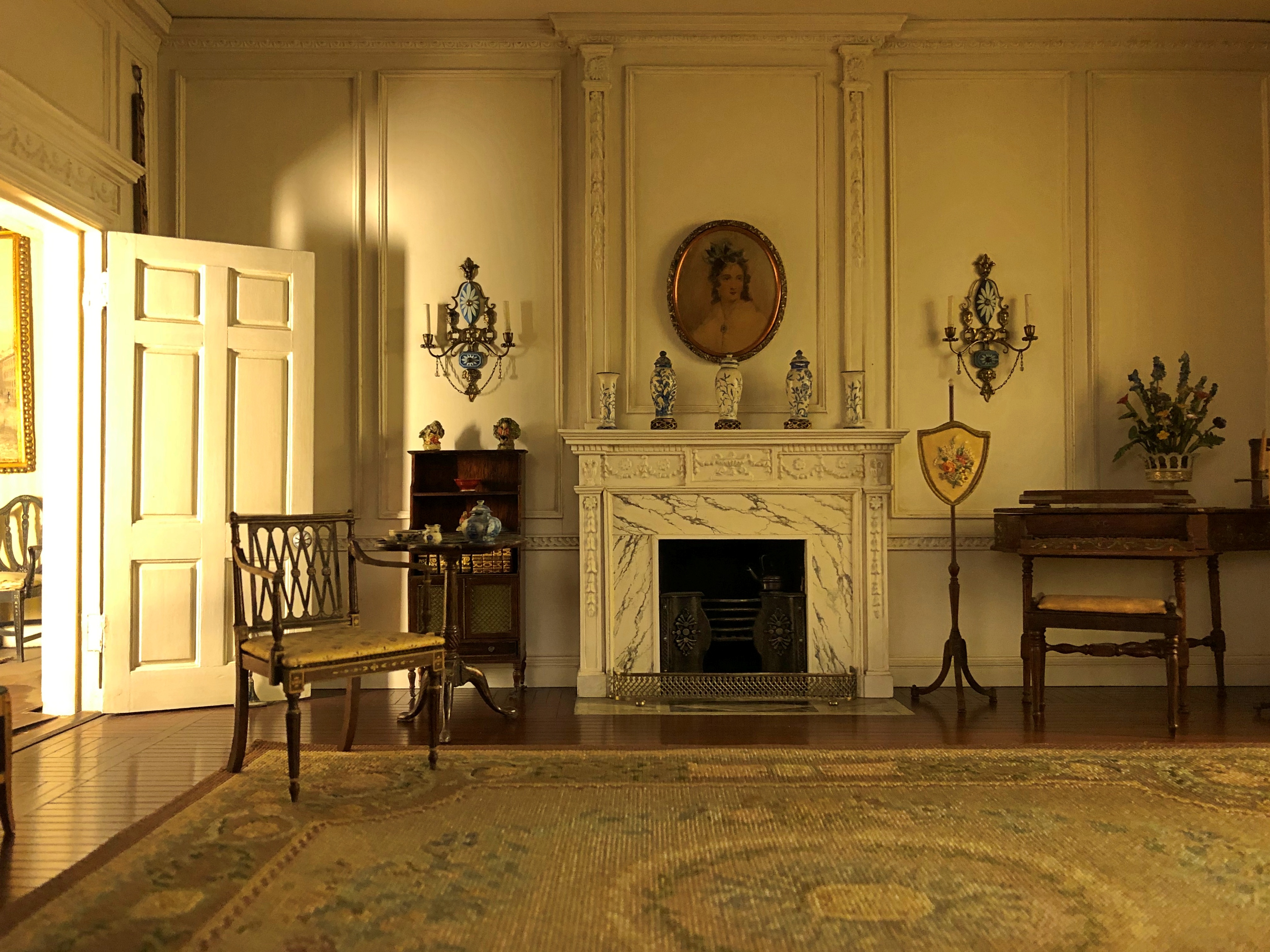
French library, ca. 1720.Thorne Rooms

Across the Atlantic. Pennsylvania drawing room, 1830s.Thorne Rooms

Massachusetts living room, 1675-1700.Thorne Rooms

The fascination isn’t just with the astonishing intricacy of the work, which it certainly has, but also the artful lighting. Artful as the light-play on a Kubrick set. I know those are electric lights in the background, but it looks like the rooms are lighted the way they would have been during those periods. With sunlight, that is.

“Narcissa Niblack Thorne, the creator of the Thorne Rooms, herself had a vivid imagination,” says the Art Institute. “In the 1930s, she assembled a group of skilled artisans in Chicago to create a series of intricate rooms on the minute scale of 1:12.

“With these interiors, she wanted to present a visual history of interior design that was both accurate and inspiring. The result is two parts fantasy, one part history — each room a shoe box–sized stage set awaiting viewers’ characters and plots.” (More microwave oven–sized, I’d say.)

Thorne (d. 1966) had the wherewithal to hire artisans during the Depression by being married to James Ward Thorne, an heir to the Montgomery Ward department store fortune, back when department stores generated fortunes. Bet the artisans were glad to have the work.

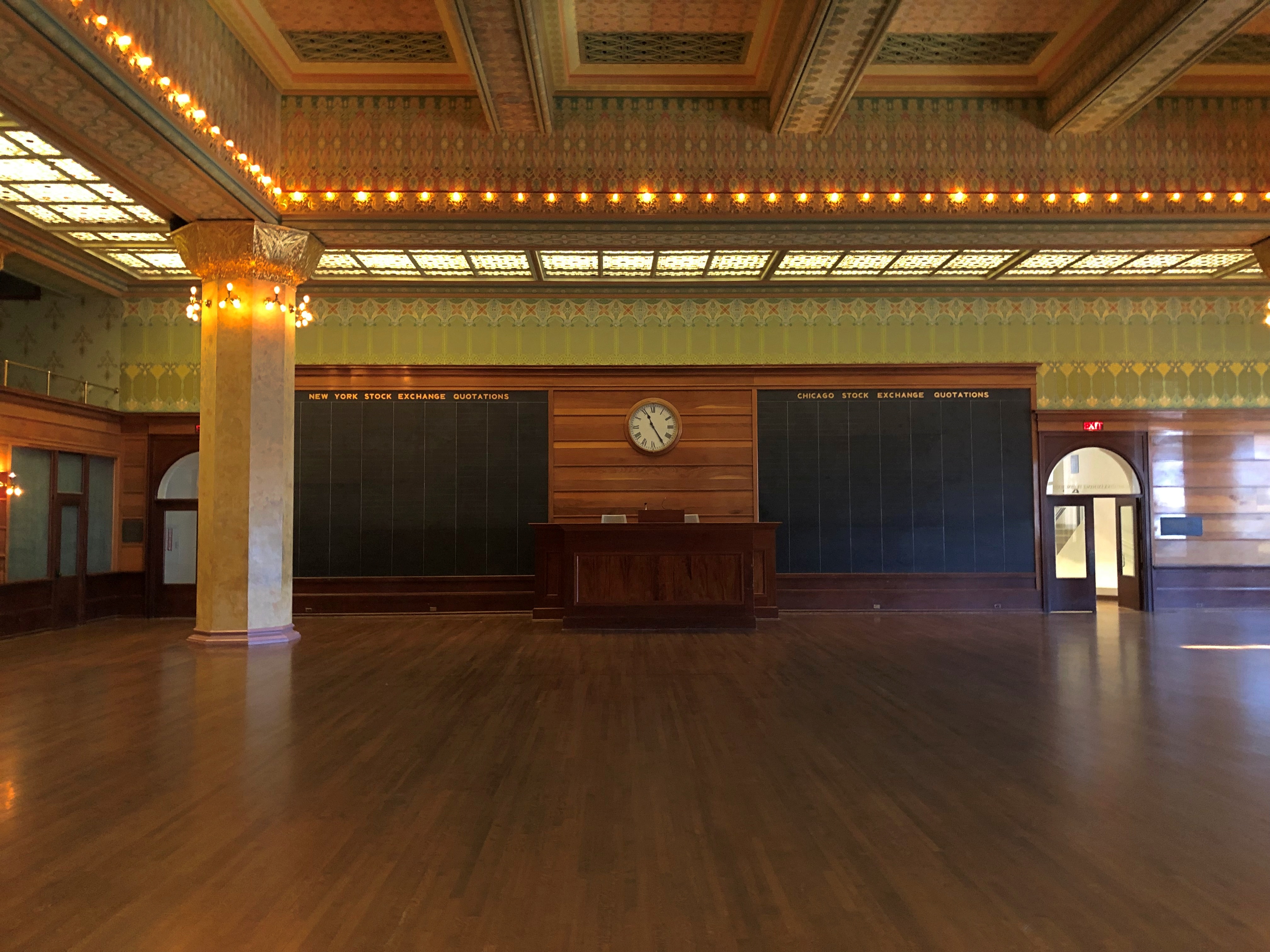
It wasn’t my first visit to the Thorne Rooms, but I believe I appreciate it a little more each time. I know I feel that way about the Chicago Stock Exchange Trading Room, which I also visited on Saturday.

The Thorne Rooms are an exercise in constrained space. The Trading Room is one of expansive space. So much so that my basic lens really isn’t up to capturing the whole. Still, I try.Chicago Stock Exchange Trading Room, 2022 Chicago Stock Exchange Trading Room, 2022
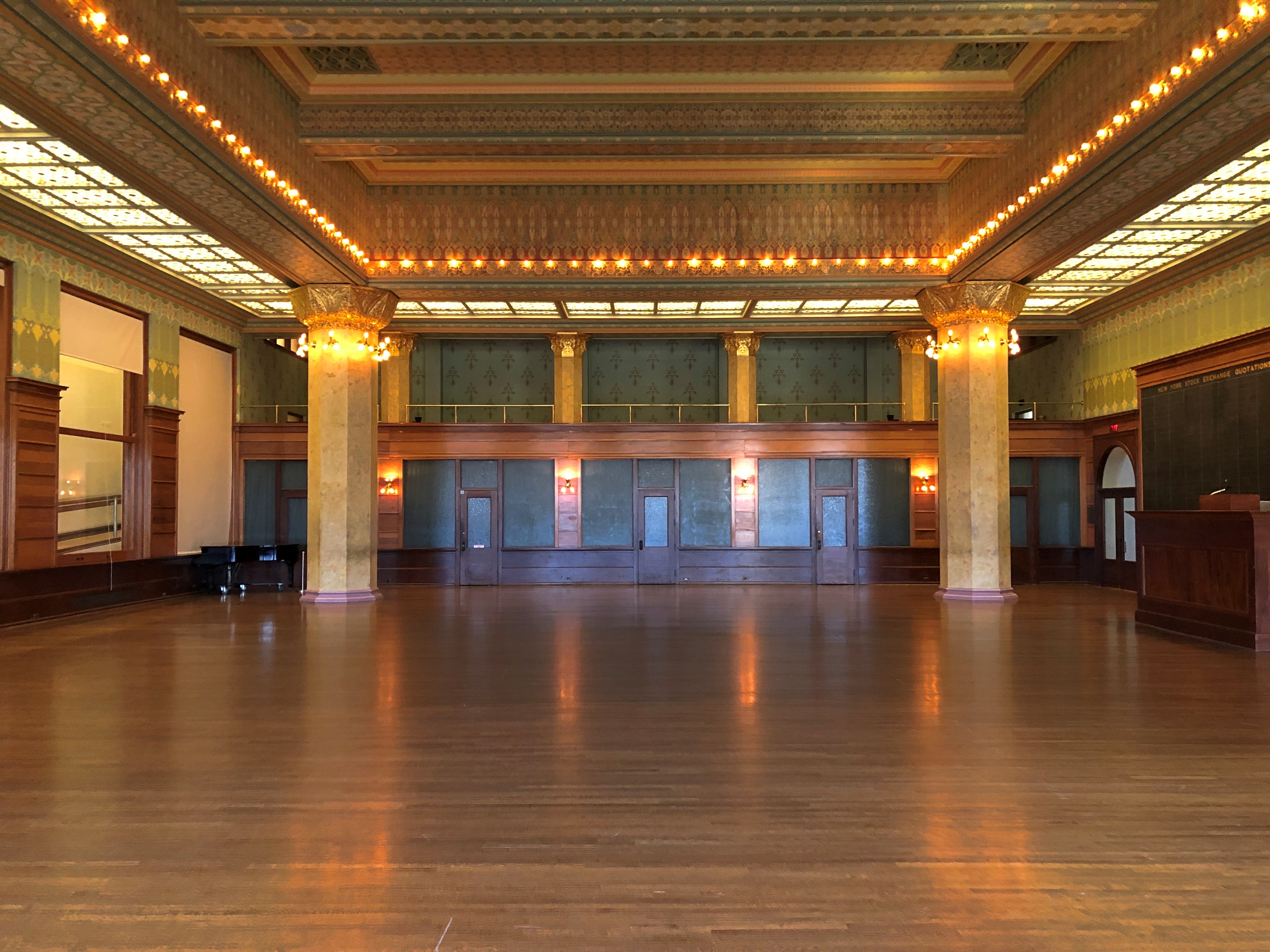
No one else was in the room with me. It is a little out of the way, in museum wayfinding terms, and it is the artwork, rather than being mere protective walls and climate control, so maybe people pass it by.

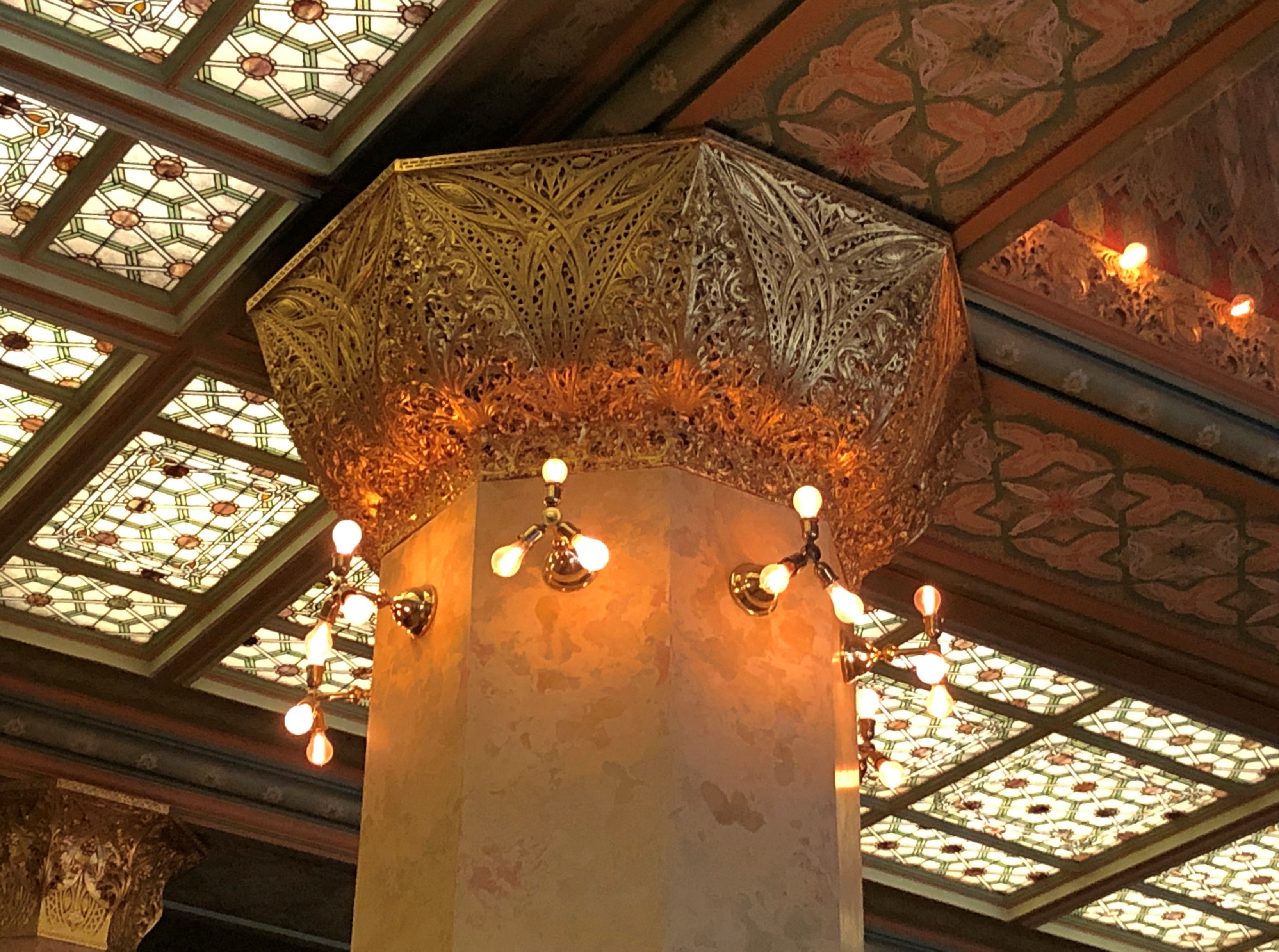
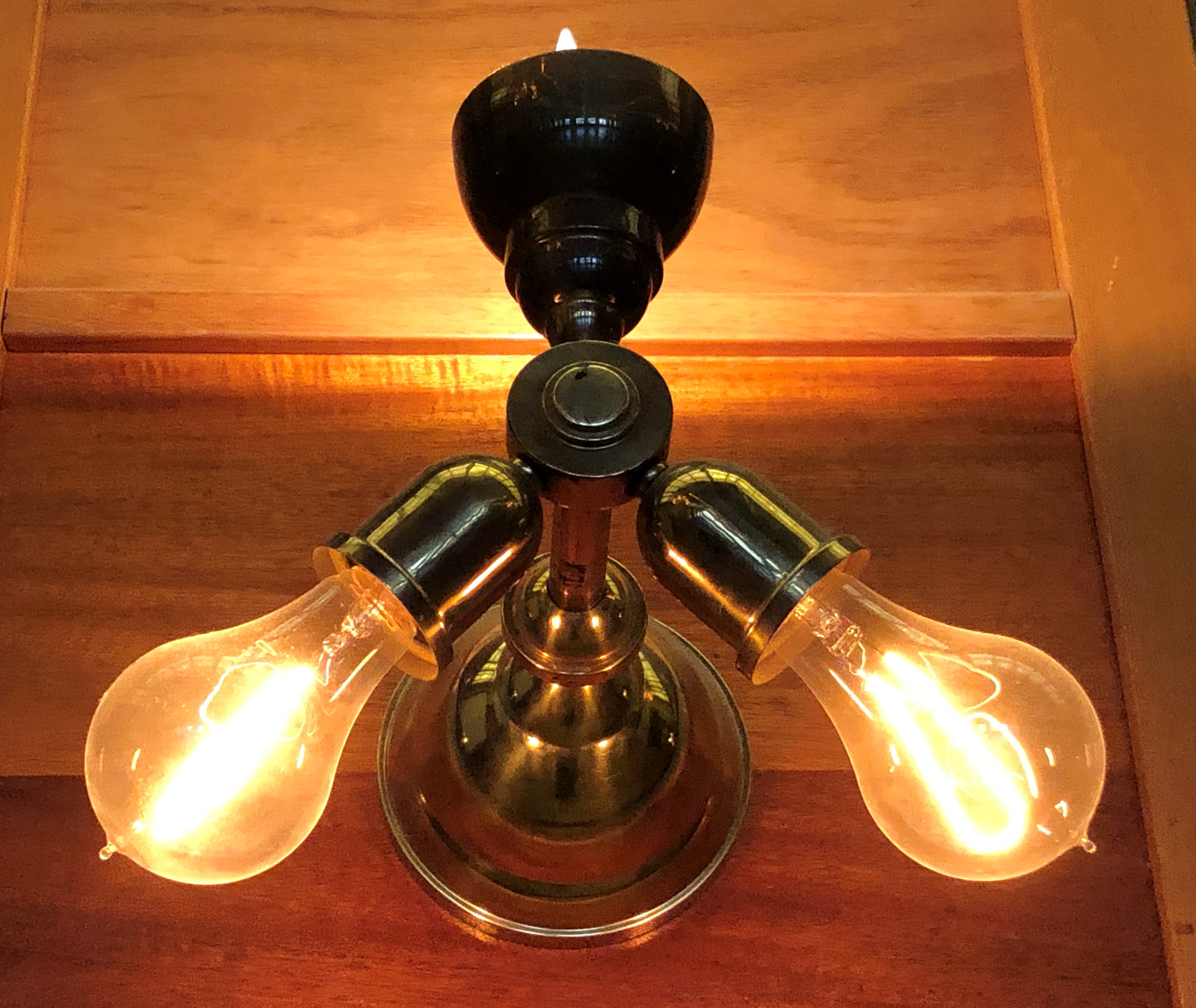
Not me. I spent a while looking at details.Chicago Stock Exchange Trading Room, 2022 Chicago Stock Exchange Trading Room, 2022 Chicago Stock Exchange Trading Room, 2022
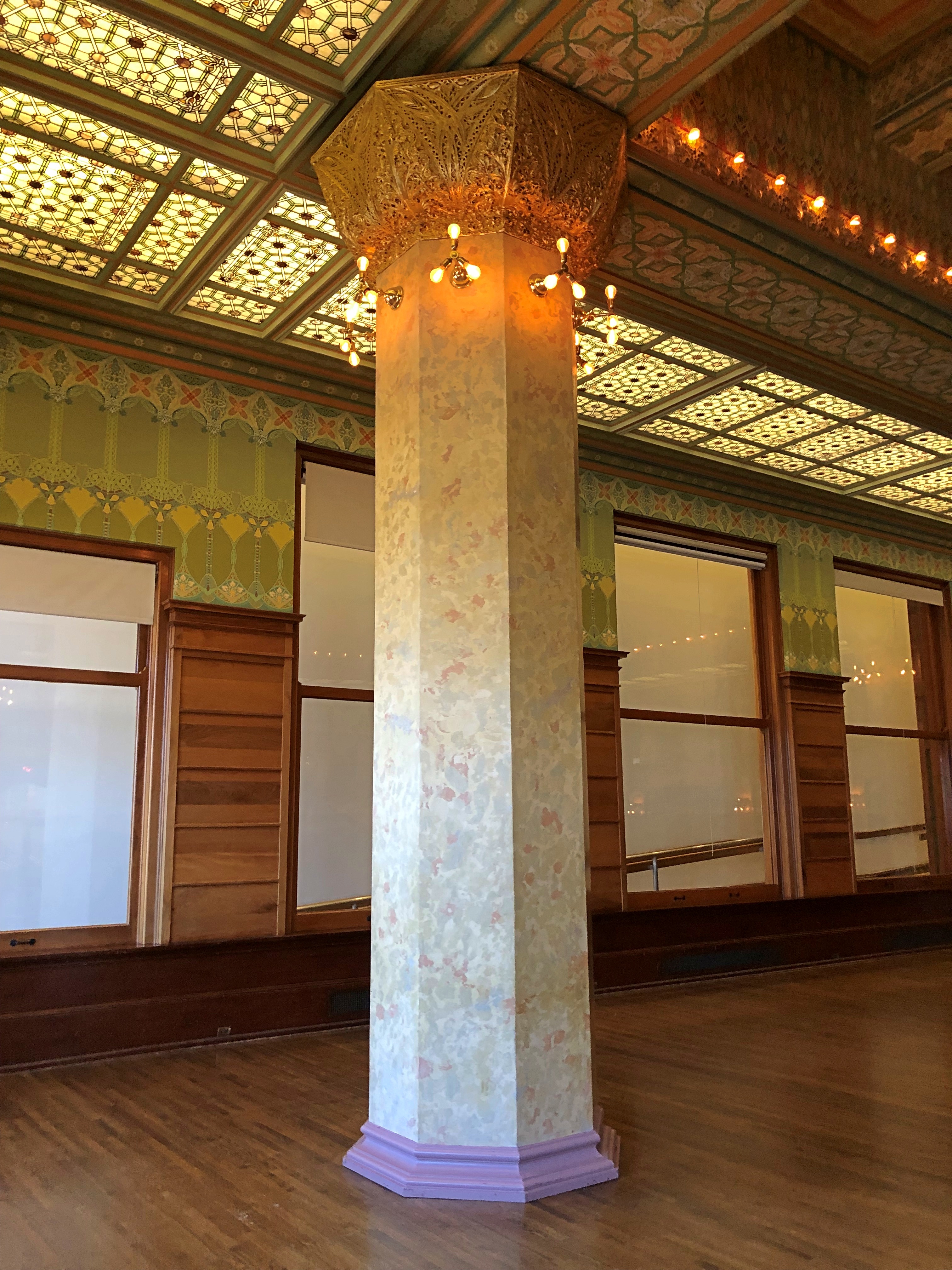
Overhead.
Chicago Stock Exchange Trading Room, 2022

Such a grand room. Victorian ideas at work, striving to add uplift to a space devoted to grubby commerce. I’d say they succeeded.Chicago Stock Exchange Trading Room, 2022
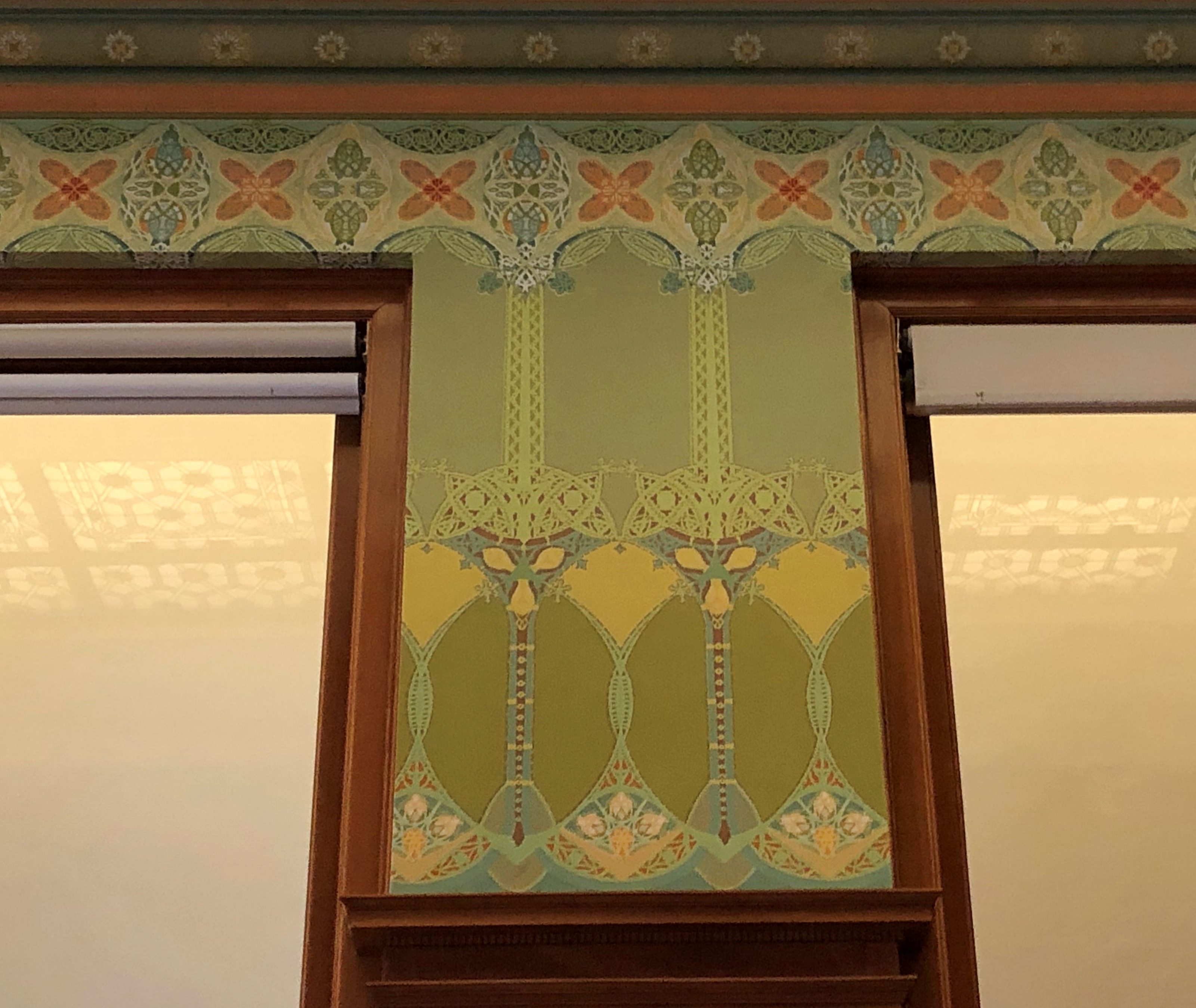
“Designed by Chicago architects Louis Sullivan and his partner, Dankmar Adler, the original Chicago Stock Exchange was completed in 1894,” the museum notes on a page that also extols the room as a place where as many as 300 people can meet.

“When it was demolished in 1972, sections of the Trading Room, including Sullivan’s elaborate stenciled decorations, molded plaster capitals, and art glass, were preserved and used in the 1976–77 reconstruction of the room here at the Art Institute.”

I attended an event there myself for some forgotten reason about 20 years ago. Suits and ties (a while ago, as I said), dresses, and drinks in hand, the room hosted such a crowd with ease.  If I had 300 people to entertain, I’d certainly consider renting the place.

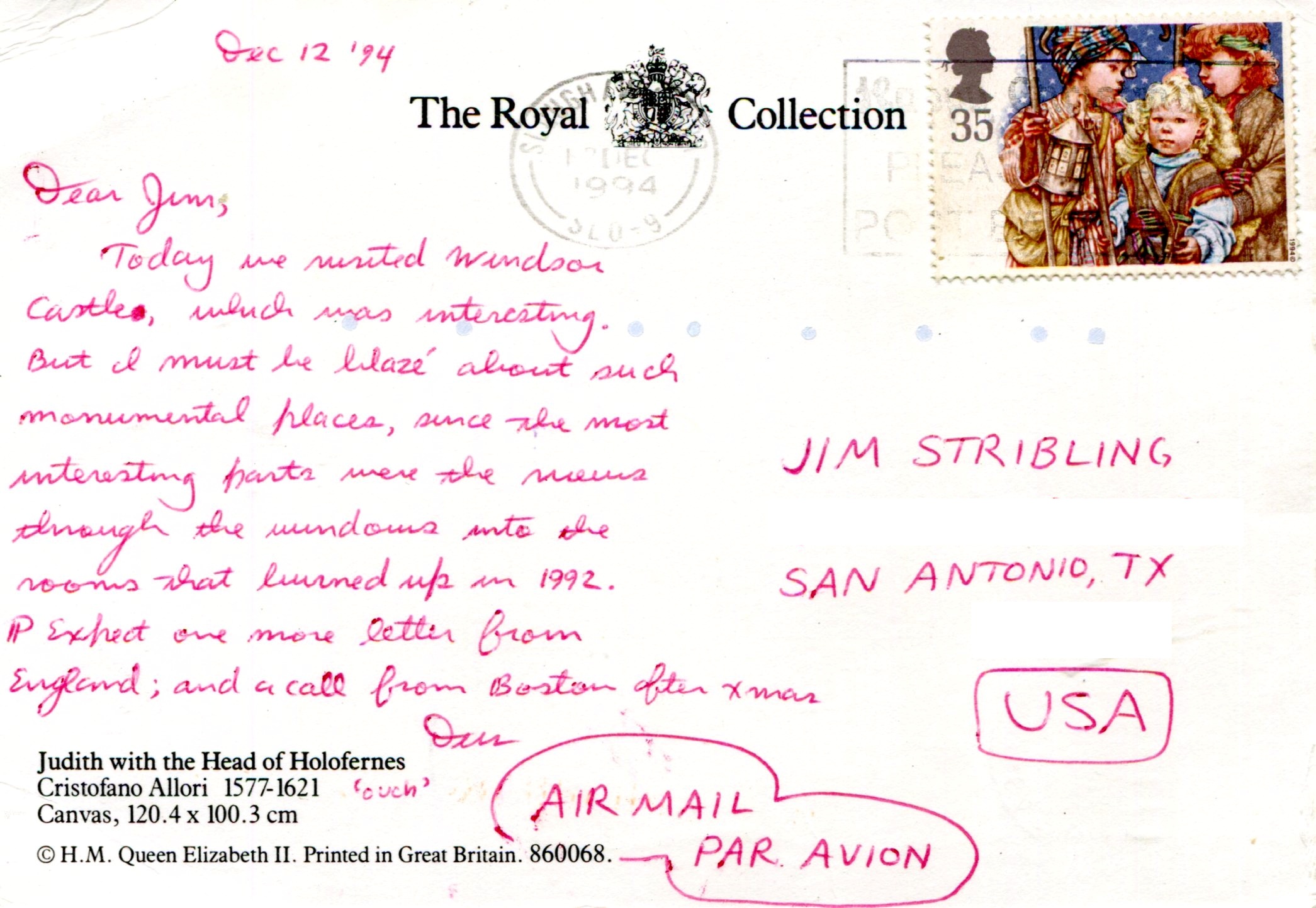
Judith with the Head of Holofernes, Postcard Version

I sent this card to my brother Jim in December 1994, on the day that we visited Windsor Castle.

The British postmark is where it should be. The USPS thoughtlessly postmarked the image. Nice going, USPS. Just another example of disrespecting postcards.

As this account of the 1992 Windsor Castle fire says, only two of the castle’s artworks were destroyed by the fire, not including the one depicted on the card, “Judith with the Head of Holofernes” (Cristofano Allori, 1613) which was part of the Royal Collection at Windsor. It still is.

At the time, I didn’t know anything about Allori or the painting. The Royal Collection Trust notes: “According to his biographer Baldinucci, Allori painted this work in part as an autobiographical account of his love affair with Maria de Giovanni Mazzafirri, which ended badly. The figure of Judith, Baldinucci claimed, resembles ‘La Mazzafirra,’ the servant in the background her mother, and the severed head of Holofernes is a portrait of the artist himself.”

I had seen “Judith I” (Gustav Klimt, 1901) in Vienna earlier that year, and of course the story of Judith came up in my studies, but I also didn’t really know how popular Judith was in artistic depictions. This I found out later. Nothing like a story of deception, a fetching feme, a drunken fool and a beheading to inspire art, I guess.

As for the work at Windsor, most recently — as in, last week — I read how it came to be in the Royal Collection. Acquired by Charles I, probably from the Gonzaga collection, Mantua, the trust says, which lead me to read further about the Gonzaga collection. If I had heard about it before, and I might had, I’d forgotten.

The long and short of it is that the House of Gonzaga, after much effort, put together a splendid art collection, only to sell it when they needed cash — to King Charles in the late 1620s, well before that monarch’s grim fate, in a deal facilitated by one Daniel Nijs.

The lesson here? Postcards are educational.

Windy Chill

As forecast, full-throated winter came barreling into northern Illinois last night as erratic gusts. The edge of same system that spawned tornadoes in the South? Our wind was brisk but, I’m glad to say, not deadly, unless you passed out naked and drunk outside in some hard-to-spot location, as visiting Florida Man might.

At least it will be a dry cold for the next week or more, weather scientists predict. Any winter day without ice underfoot isn’t half bad.

Late November dusk in these climes.

RIP, Christine McVie. I was much surprised to learn that her maiden name was actually Perfect. I heard years ago that that was her name before marrying John McVie but, in as much as I gave it any thought, believed it was a stage name. Dropping a stage name upon marriage might be a little unusual, but not inconceivable.

Who’s named Perfect? Christine’s father, Cyril Percy Absell Perfect, a concert violinist and music lecturer from near Birmingham, UK, for one. And I assume some generations of his paternal ancestors before him.

“This… name is an example of the common medieval practice of creating a surname from a nickname, in this instance one that originally denoted an apprentice who had completed his period of training,” notes the Internet Surname Database.

“The derivation is from the Middle English ‘parfit,’ meaning ‘fully trained’ or ‘well versed’, from the Old French ‘parfit(e),’ meaning ‘completed,’ ‘perfect,’ ultimately from the Latin ‘perfectus,’ a derivative of ‘perficere’ to finish, accomplish.”

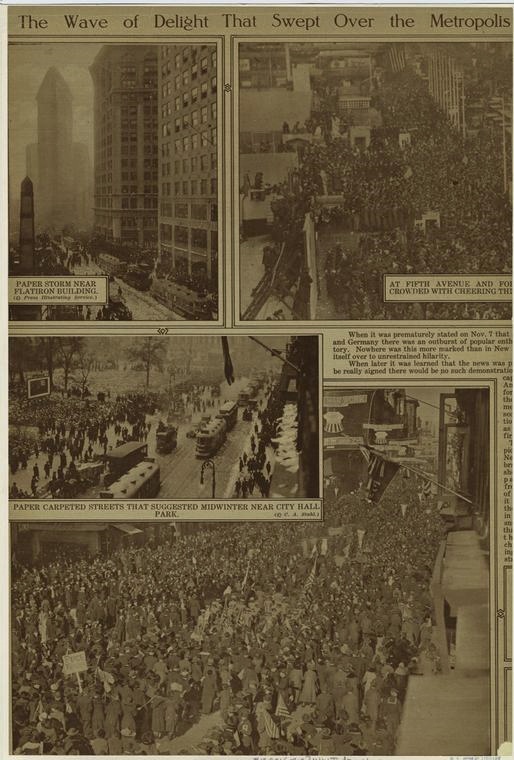
Armistice Day 2022

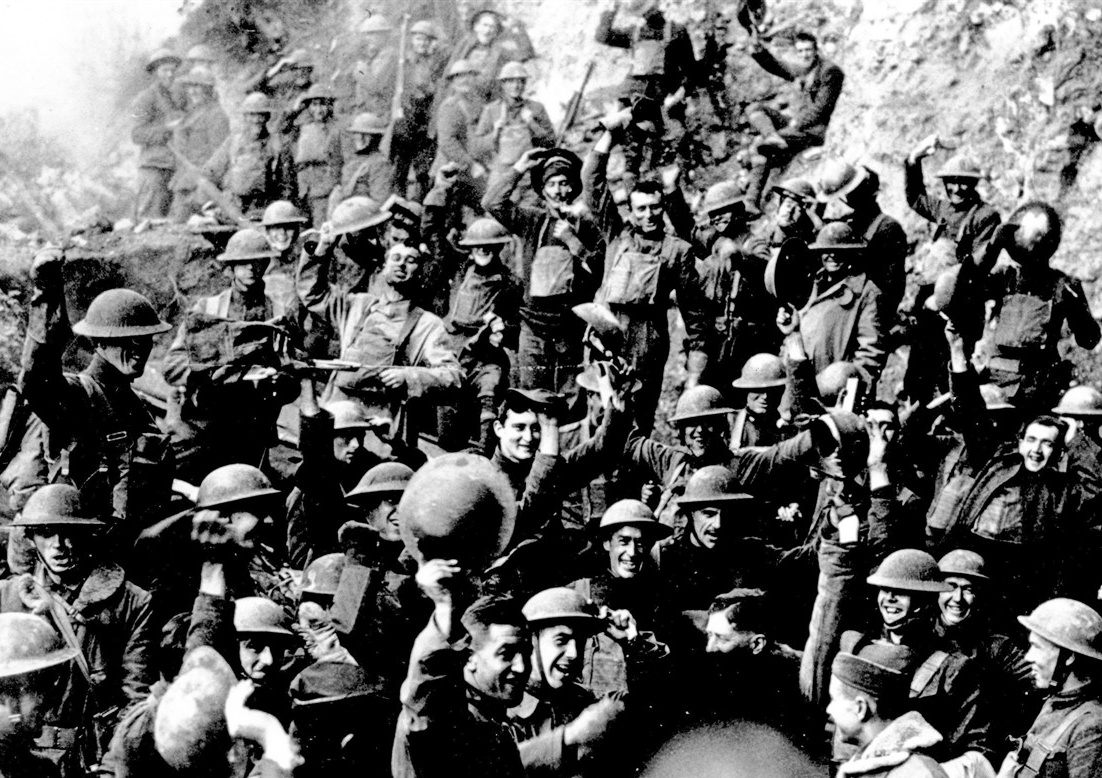
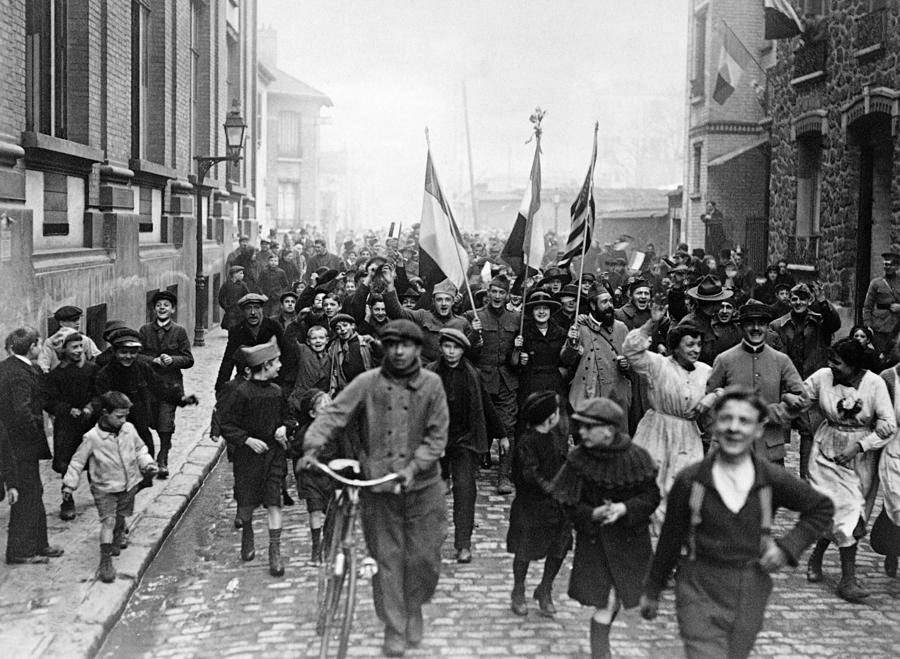
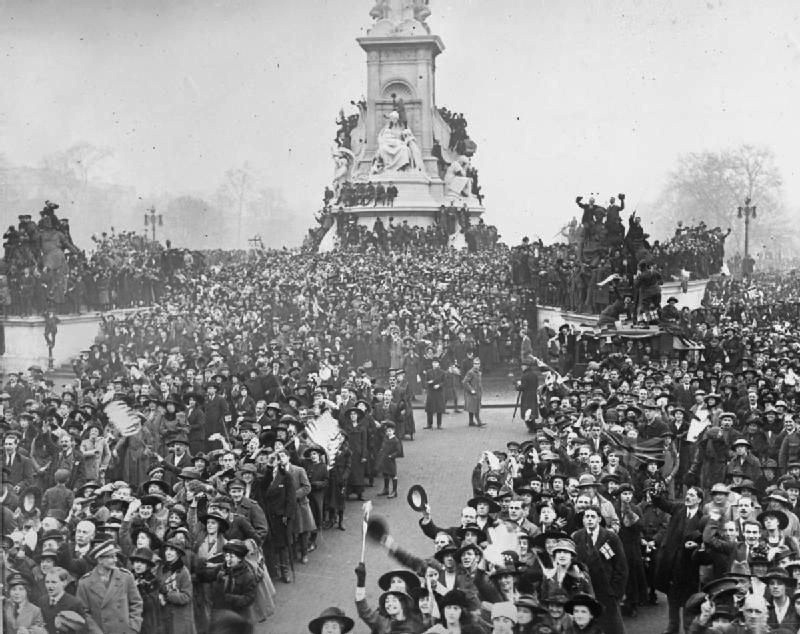
It occurred to me not long ago, though it’s been true for a good many years, that every bit of writing, photography, film and other work created during the Great War is in the public domain. So I went looking for images of the first Armistice Day or thereabouts.

At the front. Really something to celebrate.

Paris.

London.

New York.

Actually, there’s some hint that the NYC pics are from November 7, when the AP erroneously reported that an armistice had been signed. No matter. The celebratory spirit is there.

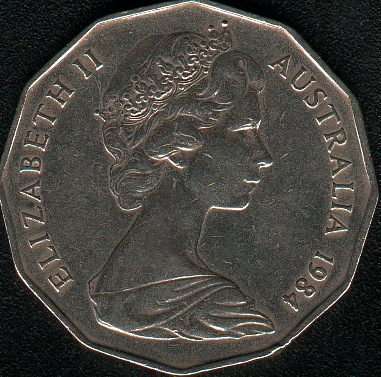
RIP, Your Majesty

On occasions like this, it’s fitting even for citizens of a republic to say, Long Live the King!

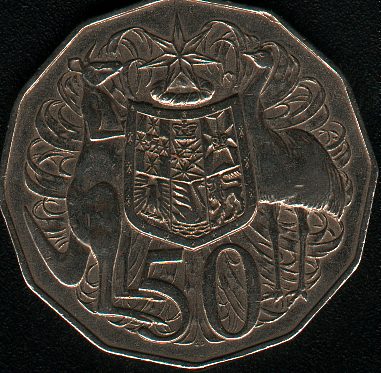
Here’s the image of Elizabeth II that I like best.

That’s for strictly personal reasons: I picked the coin up in change in Australia over 30 years ago.

I was glad to see 50-cent pieces in circulation somewhere.

Fort Mackinac

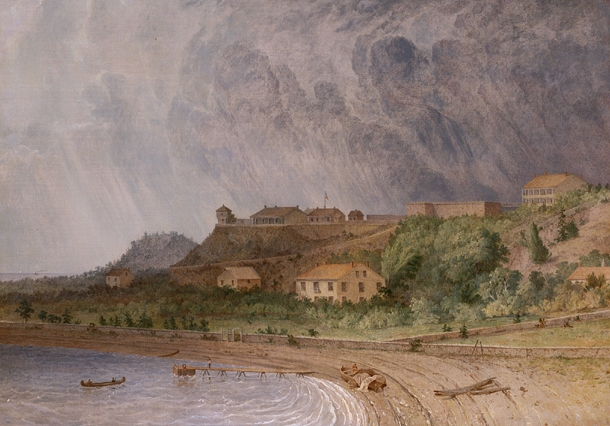
In 1780, the British commander at Fort Michilimackinac, which had been a French post on the mainland south shore of the Straits of Mackinac until the British had won it in the Seven Years’ War, decided to build a more defensible fort on Mackinac Island (and perhaps, one with a shorter name). He picked a bluff overlooking the lakeshore.

Fort Mackinac, Michigan by Seth Eastman

“Fort Mackinac, Michigan” by Seth Eastman (1872)

The fort stands there to this day, though in somewhat different form: a tourist attraction. As a tourist, I was duly attracted.Fort Mackinac

Note the Boy Scout. Turns out in visiting Mackinac Island, we were visiting a presidential site. It’s a slightly convoluted story, but well relayed by the island’s web site.

These days, a group of Boy and Girl Scouts raises and lowers about two dozen American flags across Mackinac Island each day during the summer. They also act as guides at the fort. The fellow at the entrance wasn’t the only one we saw.

He was the only one I talked to, however. Tried to, that is. I asked him why Boy Scouts were at the fort, and perhaps a career involving public interaction isn’t in his future, because he sputtered a few unintelligible words and looked at me as if I’d tried to talk to the guards at Buckingham Palace.

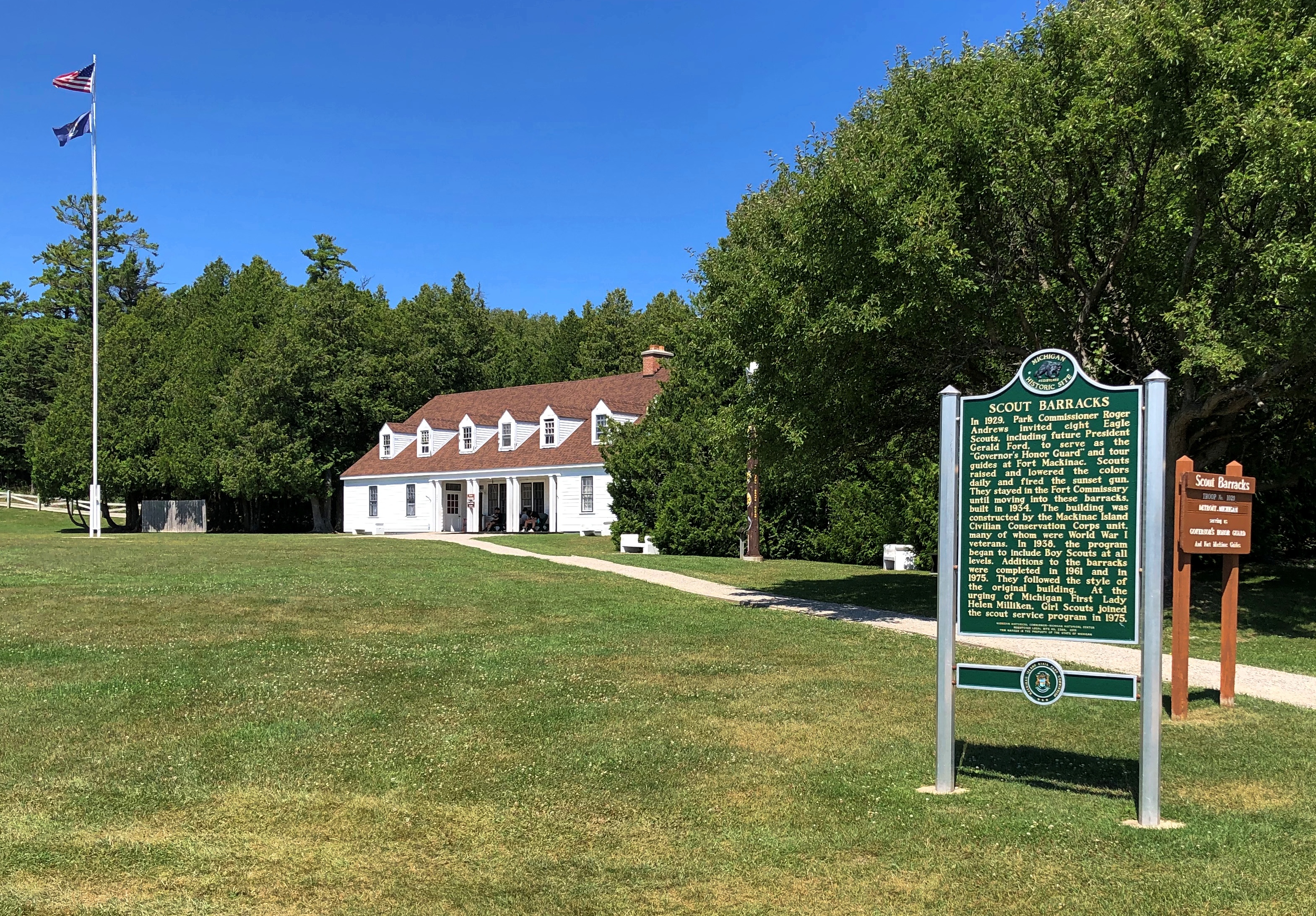
So I had to learn later that the flag-raising and other duties started “in 1929 when then-Michigan Gov. Fred Green commissioned eight Eagle Scouts from around the state as honor guardsman on Mackinac Island,” the island’s web site says.

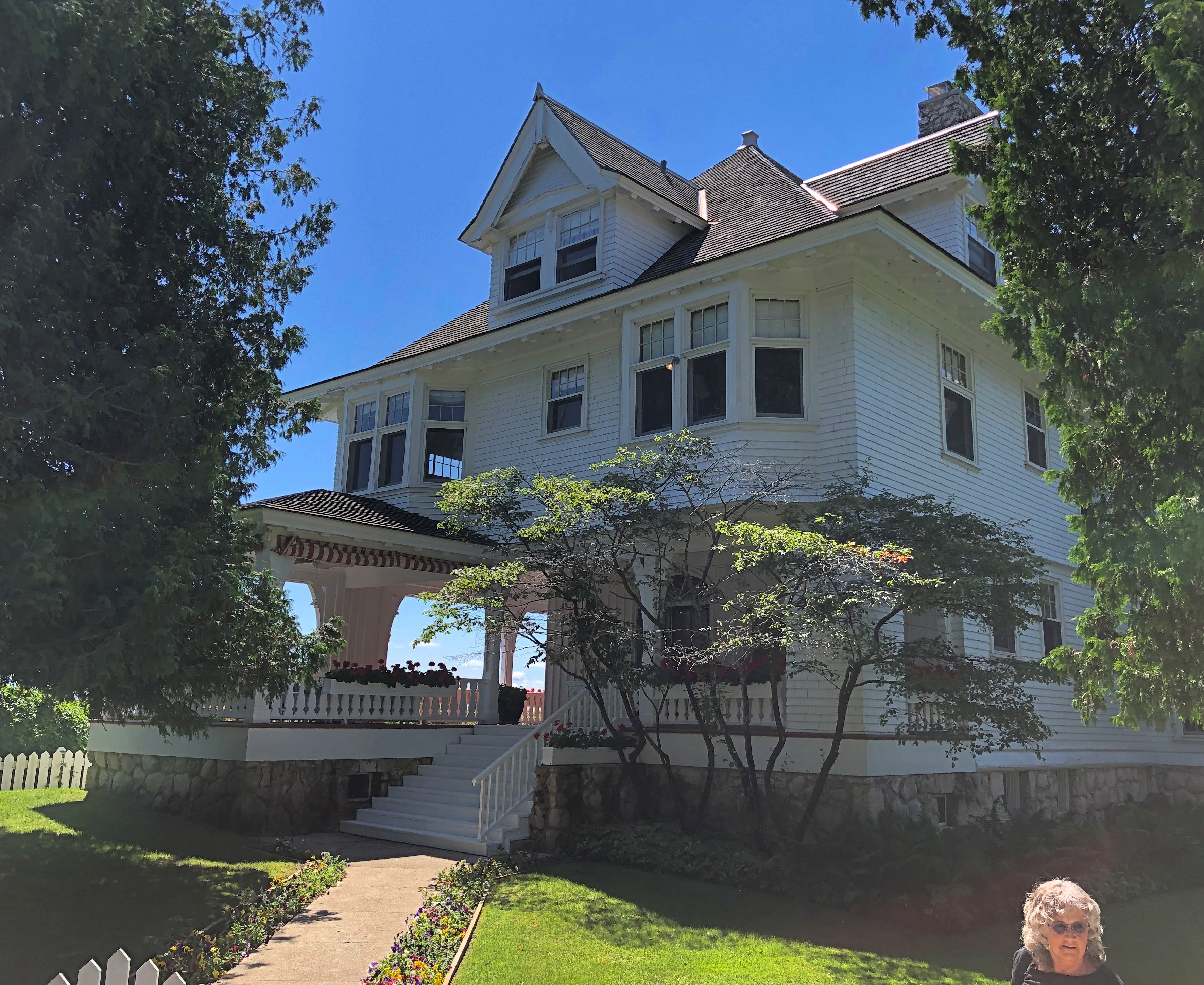
The governor’s summer residence, by the way, is on Mackinac Island, very near the fort, though the house didn’t begin that function until 1944. We walked past it on the way to the fort.

Its formal name is the Lawrence A. Young Cottage, dating from 1902. Young was a successful Chicago attorney who had it built as his summer home.

The presidential connection? In 1929, one of the charter group of scouts tapped by Gov. Green was none other than Gerald R. Ford.

The scout barracks aren’t far from the fort, either. We passed those after we left the fort.

Inside the fort.Fort Mackinac Fort Mackinac

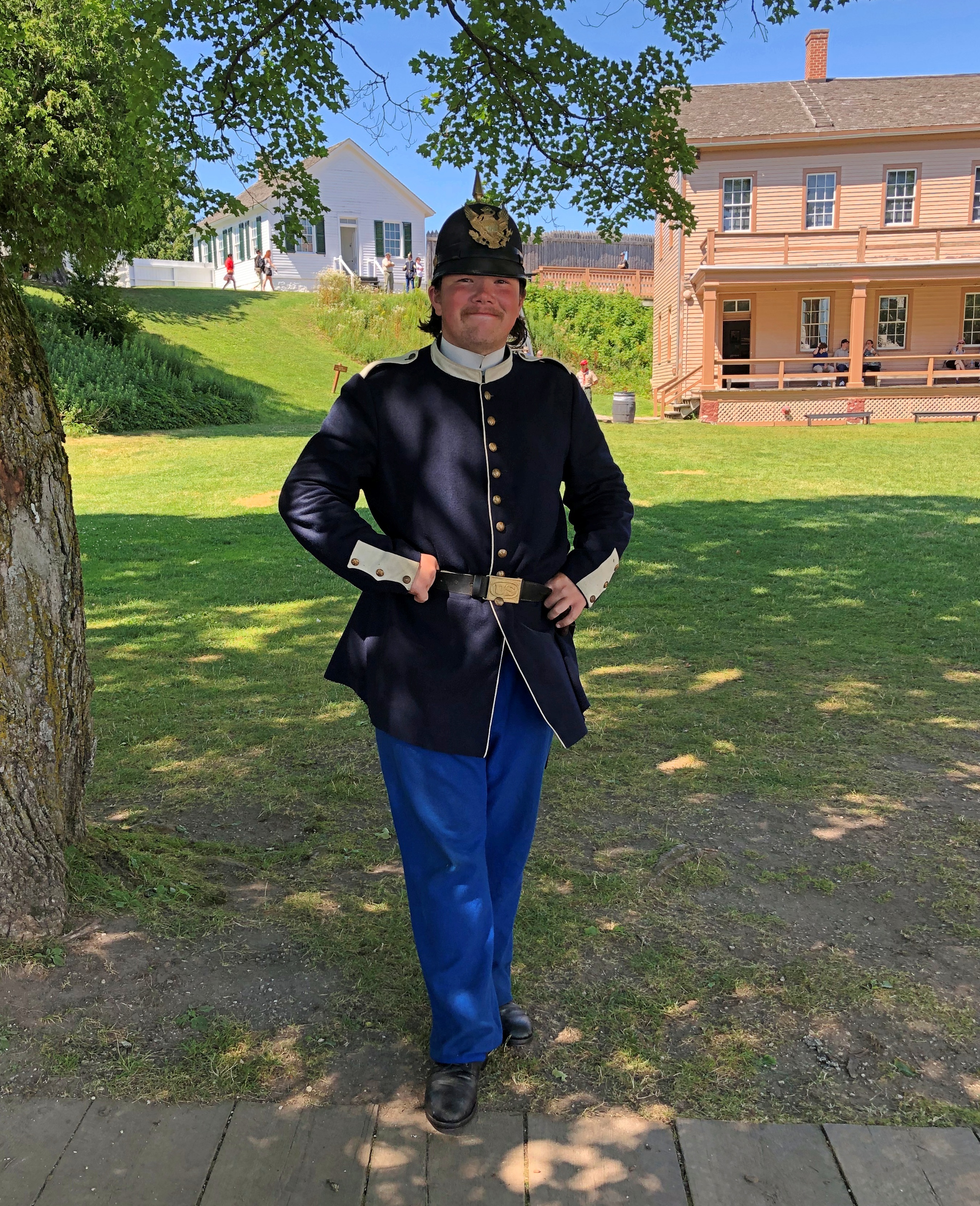
Besides the scouts, there were a handful of somewhat older folk in costume. I told this fellow he was wearing a capital uniform.Fort Mackinac

Unlike the scout, he was talkative, and able to tell us in some detail about the uniform, though I think he was a little confused about my use of the term “capital” to mean “fine” or “excellent.” An apt term for a spiffy 19th-century uniform, if you asked me.

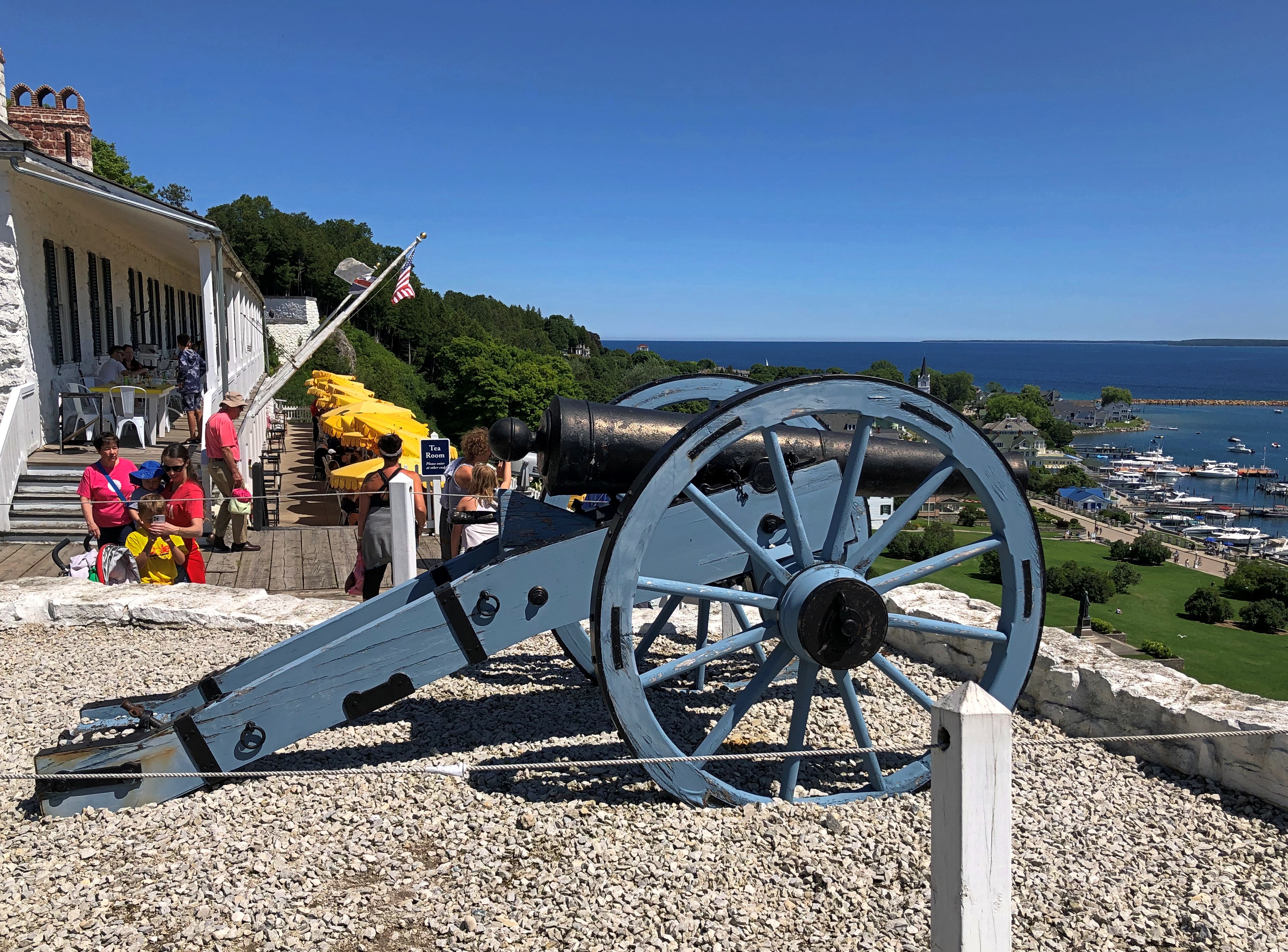
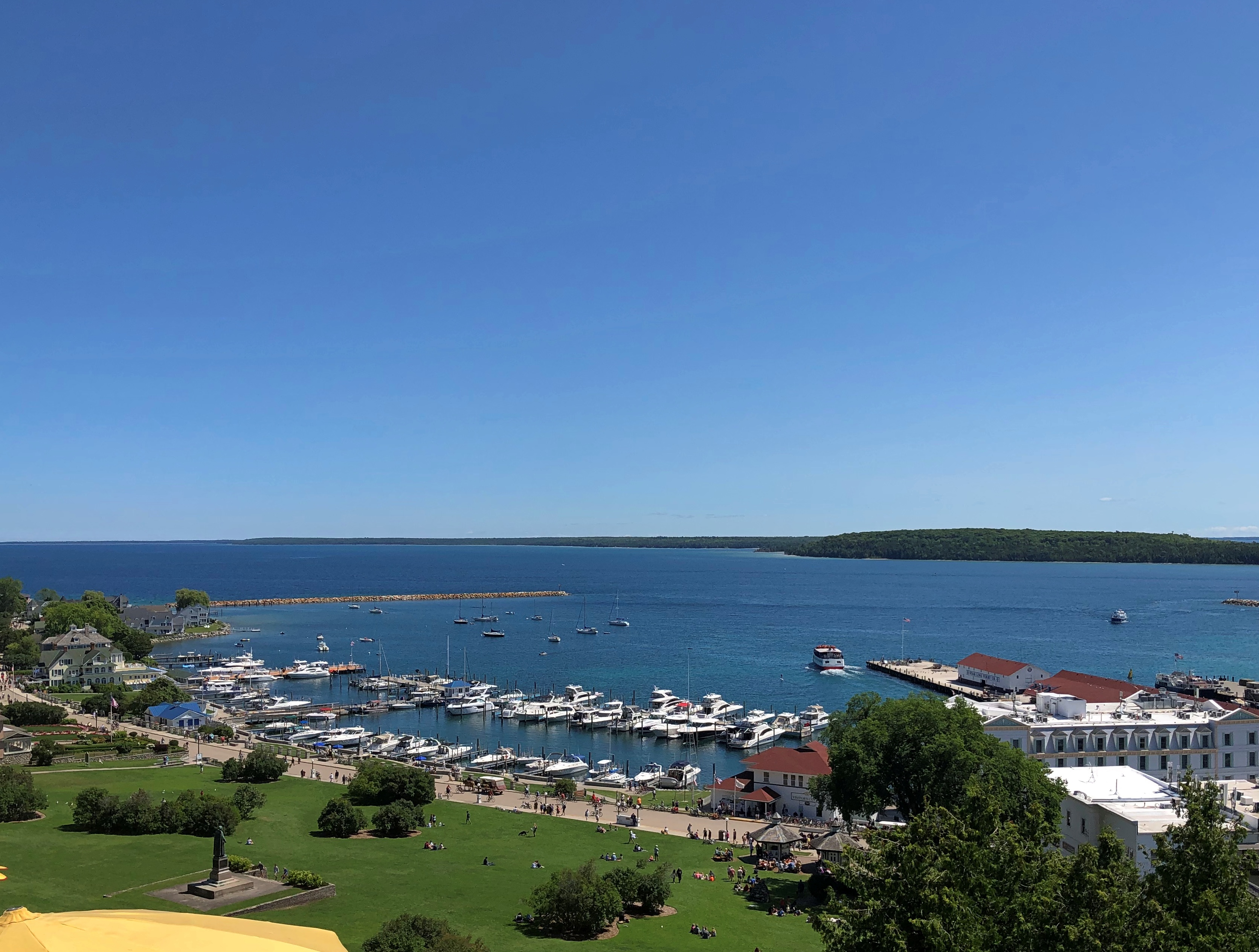
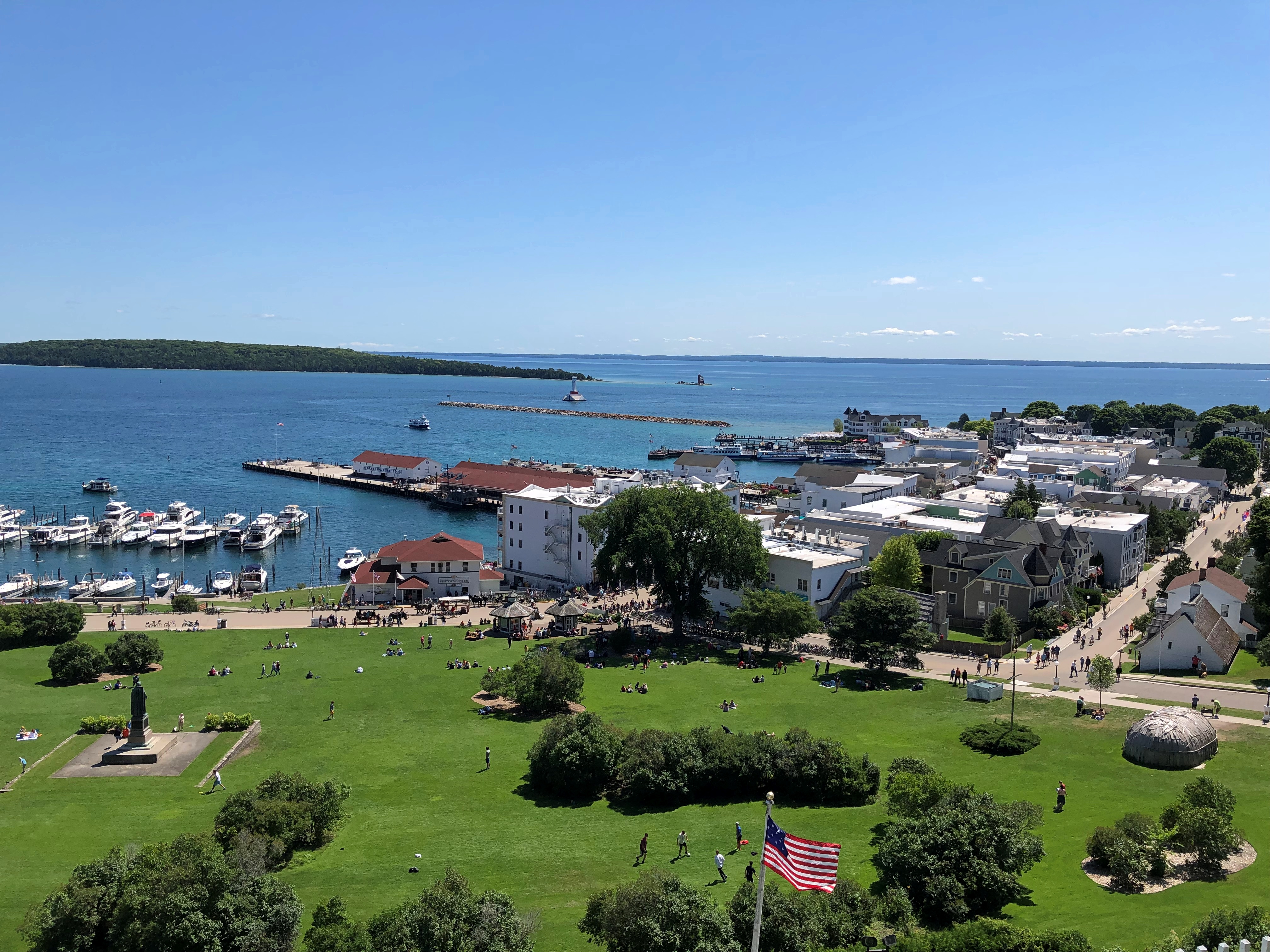
There are some terrific views from the fort, as a pre-modern fort would have.Fort Mackinac Fort Mackinac Fort Mackinac

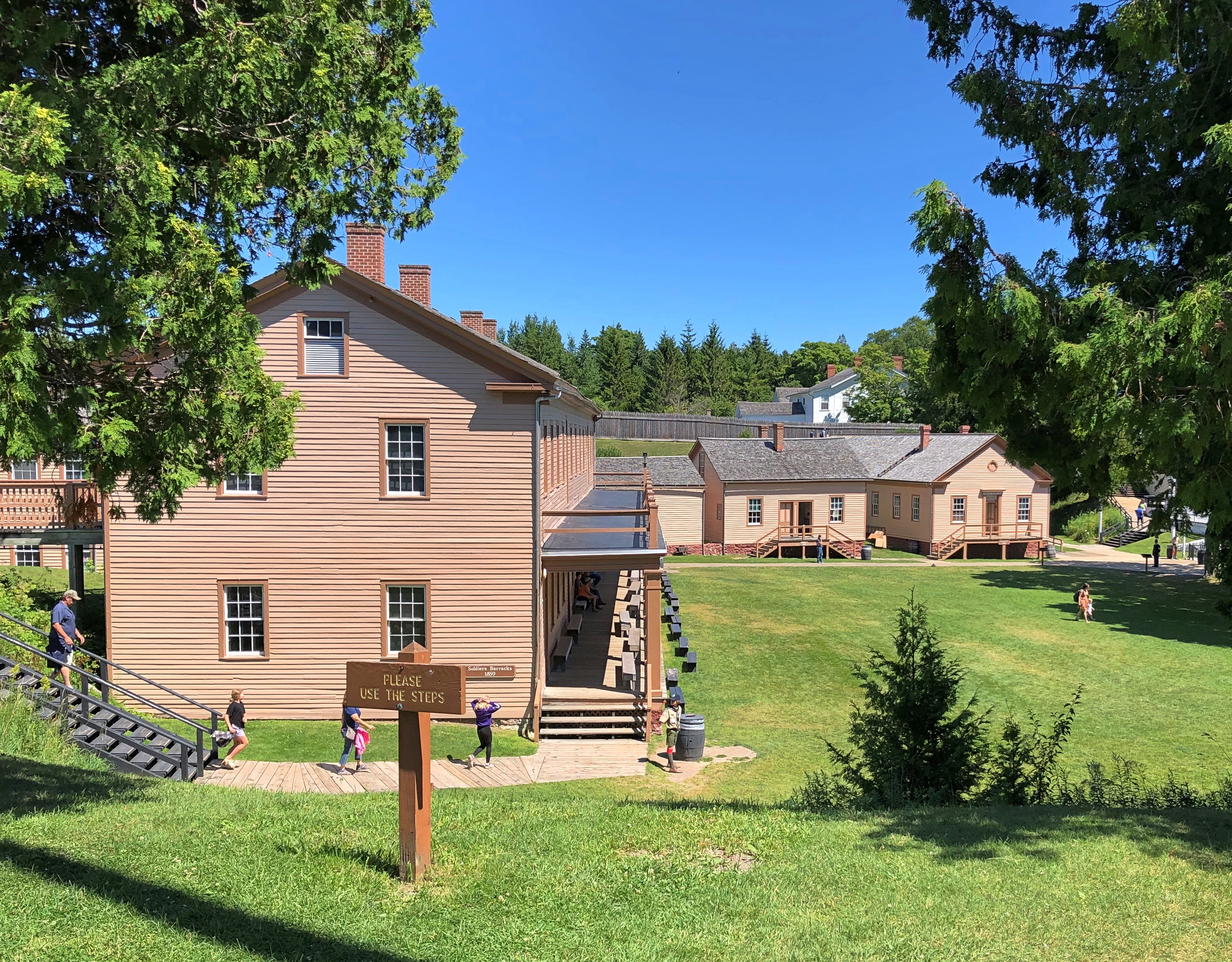
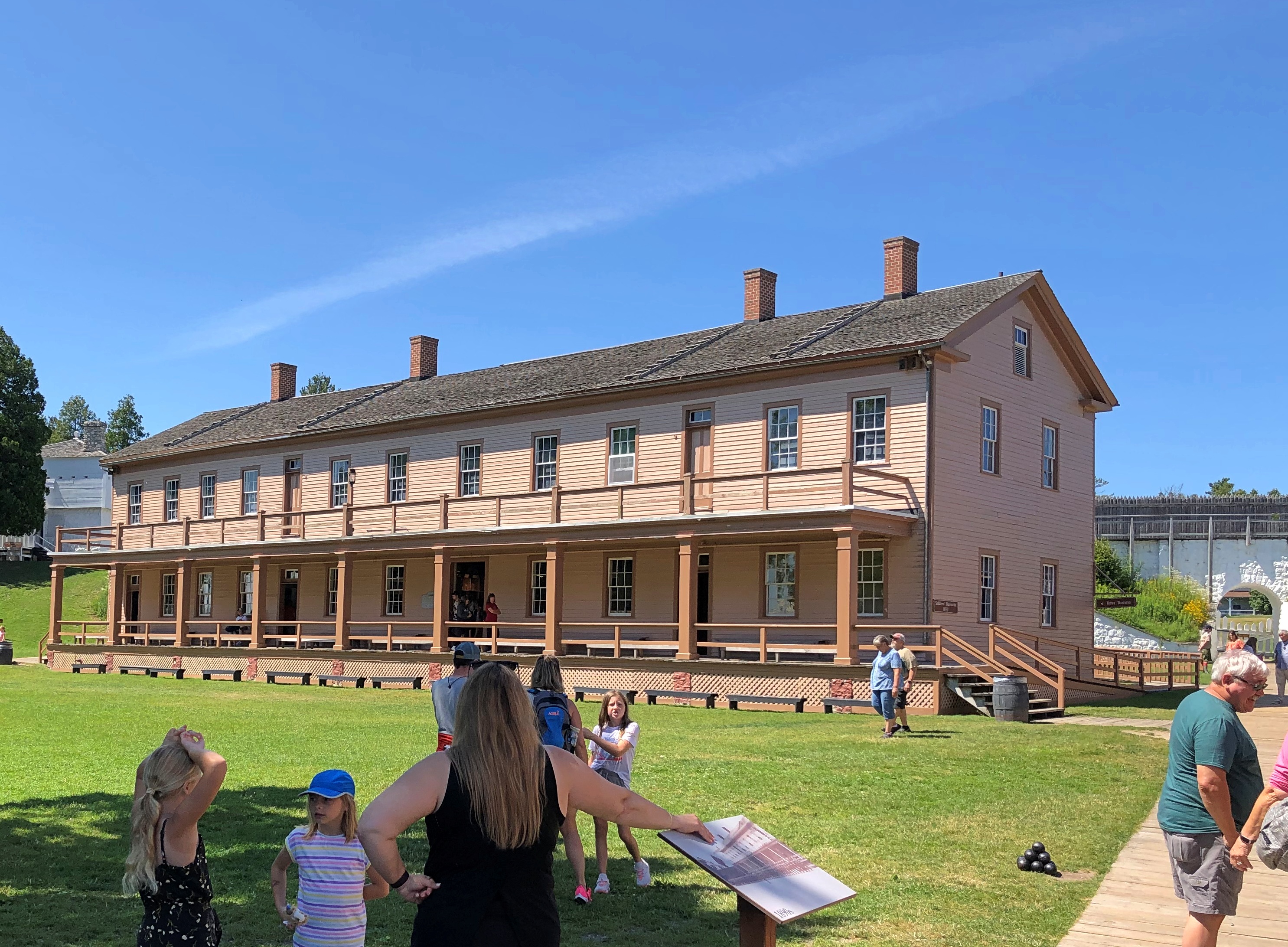
The historic buildings include the post HQ, bathhouse, soldiers barracks, officers quarters, post hospital, a storehouse, guardhouse and more. The rooms were stocked with artifacts and expository signage. More modern spaces included a light-meal restaurant taking advantage of those terrific views, a gift shop and bathrooms (authentic 19th-century Army latrines wouldn’t go down well with the museum-going public, I figure).

The fort is, I’ve read, one of the few surviving more-or-less intact from the Revolution and War of 1812, when it saw action. Later, as British Canada receded as any kind of threat, Mackinac’s usefulness as a military post did as well, but it lingered as U.S. Army property until 1895.

By that time, much of Mackinac Island had been designated as Mackinac National Park. Astute NPS observers might object that no such park exists, and they’d be right. Created in 1875 as the second national park, Congress dissolved it in 1895 and turned it over to the state of Michigan, which created its first state park that same year out of the same territory, including the now-decommissioned fort.

After I saw the fort, I read the story of its U.S. commander in 1812, one Porter Hanks. Lt. Hanks surrendered the fort without a fight, as he was hopelessly outnumbered. He and his men were paroled by the British forces. Wiki, which seems to be reasonably sourced, picks up the story:

“Lieutenant Hanks made his way to Detroit and the American military post there. Upon his arrival, superiors charged him with cowardice in the surrender of Fort Mackinac. Before the court martial of Lieutenant Hanks could begin, British forces attacked Fort Detroit. A British cannonball ripped through the room where Hanks was standing, cutting him in half and killing the officer next to him as well.”

That’s one way to get out of a court martial, but surely not how Lt. Hanks would have wanted.

Noises Off ’99 & ’20

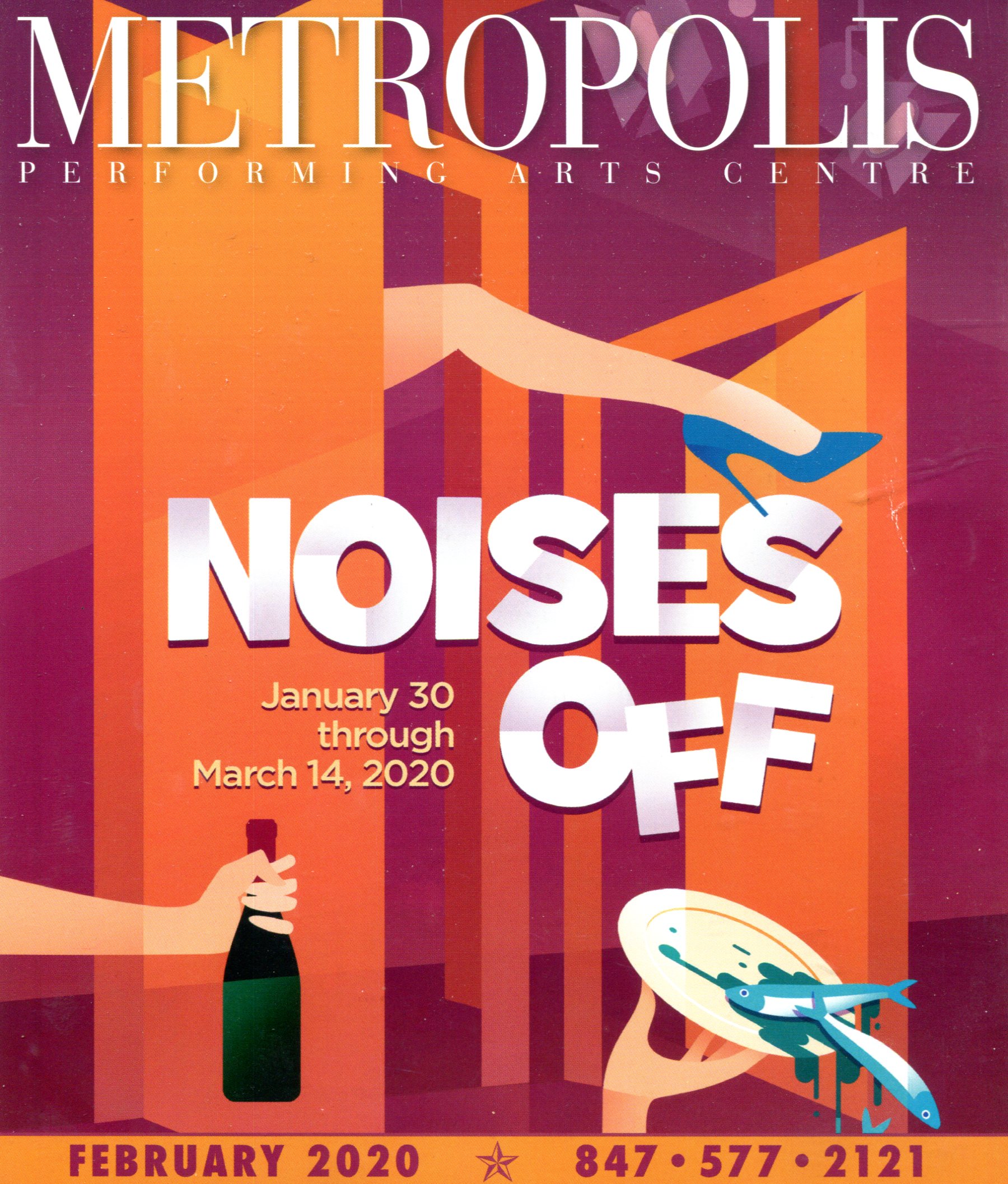
It’s been two years since I’ve been to the theater. In February 2020, just before I went to California late that month, I took Ann to see Noises Off at the Metropolis Performing Arts Centre in Arlington Heights, where we go periodically. Logistically, it’s more convenient than theaters in Chicago, though of course that didn’t stop us from going into the city in ’19 a number of times.

Noises Off is a British farce first staged in London in 1982. It was at the Savoy until 1987, but I wasn’t fortunate enough to see it during my ’83 visit. Rather, my friends and I went to see The Real Thing at the Strand, a Tom Stoppard play also from 1982, which I remember being amusing.

Noises Off is really amusing. I didn’t see it until ca. 1999 in Chicago, and it was the funniest thing I’d ever seen on stage. Actually, it still is. Laugh out loud funny, along with the rest of the audience.

The 2020 staging was also funny, but not quite as much as the first time around. Maybe because I was older; or the cast wasn’t quite as good (though they were good); or that I knew what to expect. Still, Ann seemed to enjoy it, and I certainly did, even if it didn’t quite have the same punch as my memory of it.

It occurs to me now that I need to start going to the theater again. Health concerns haven’t been stopping me for a while now. It’s just that I got out of the habit. So I’ll soon do my bit to support regional theater, as part of that pent-up demand.

First Thursday of the Year Musings

Little wind today, which made the outdoors marginally better to experience. But not much. Tonight will be really cold, an illustration of the superiority of the Fahrenheit scale for everyday use, with 0 degrees being really cold and 100 degrees really hot.

I can’t remember exactly when I read it, but years ago there was an item in Mad magazine lampooning the midcentury notion — the quaint notion, as it turned out — that Americans were going to have a surfeit of leisure time in the future, including a vast expansion of the number of holidays. Millard Fillmore’s birthday was a suggested holiday.

Well, that’s tomorrow, and I have to work. That idea about leisure time didn’t pan out anyway. But I will acknowledge the 13th president’s birthday, because why not. Besides, I paid my respects to President Fillmore in person recently.

Today’s also a good day to acknowledge the expansion, ever so slow, of the public domain, eking out growth despite the rapacious efforts of certain media oligopolists whose mascot is a rodent. Works published in 1926 are now in the public domain.

I’m happy to report that The Sun Also Rises is one of those works, to cite one of the better-known novels of 1926. I could have quoted it previously, and in fact I have, relying on notions of fair use. Now all the words are freely available, no questions asked.

“Here’s a taxidermist’s,” Bill said. “Want to buy anything? Nice stuffed dog?”

“Come on,” I said. “You’re pie-eyed.”

“Pretty nice stuffed dogs,” Bill said. “Certainly brighten up your flat.”

“Come on.”

“Just one stuffed dog. I can take ’em or leave ’em alone. But listen, Jake. Just one stuffed dog.”

“Come on.”

“Mean everything in the world to you after you bought it. Simple exchange of values. You give them money. They give you a stuffed dog.”

“We’ll get one on the way back.”

“All right. Have it your own way. Road to hell paved with unbought stuffed dogs. Not my fault.”

Speaking of life between the wars…

If that song doesn’t make you smile, what will?

Miscellany Thursday

Been a cold November so far, especially late last week, except for a few hours on Saturday afternoon. So I took a walk at the Chicago Athenaeum International Sculpture Park that day. It’s pretty much the same as ever, though of course a sculpture was added in 2019.

There’s still a side path through the woods.Schaumburg or bust

As well as along water destined for the Mississippi.Schaumburg or bust

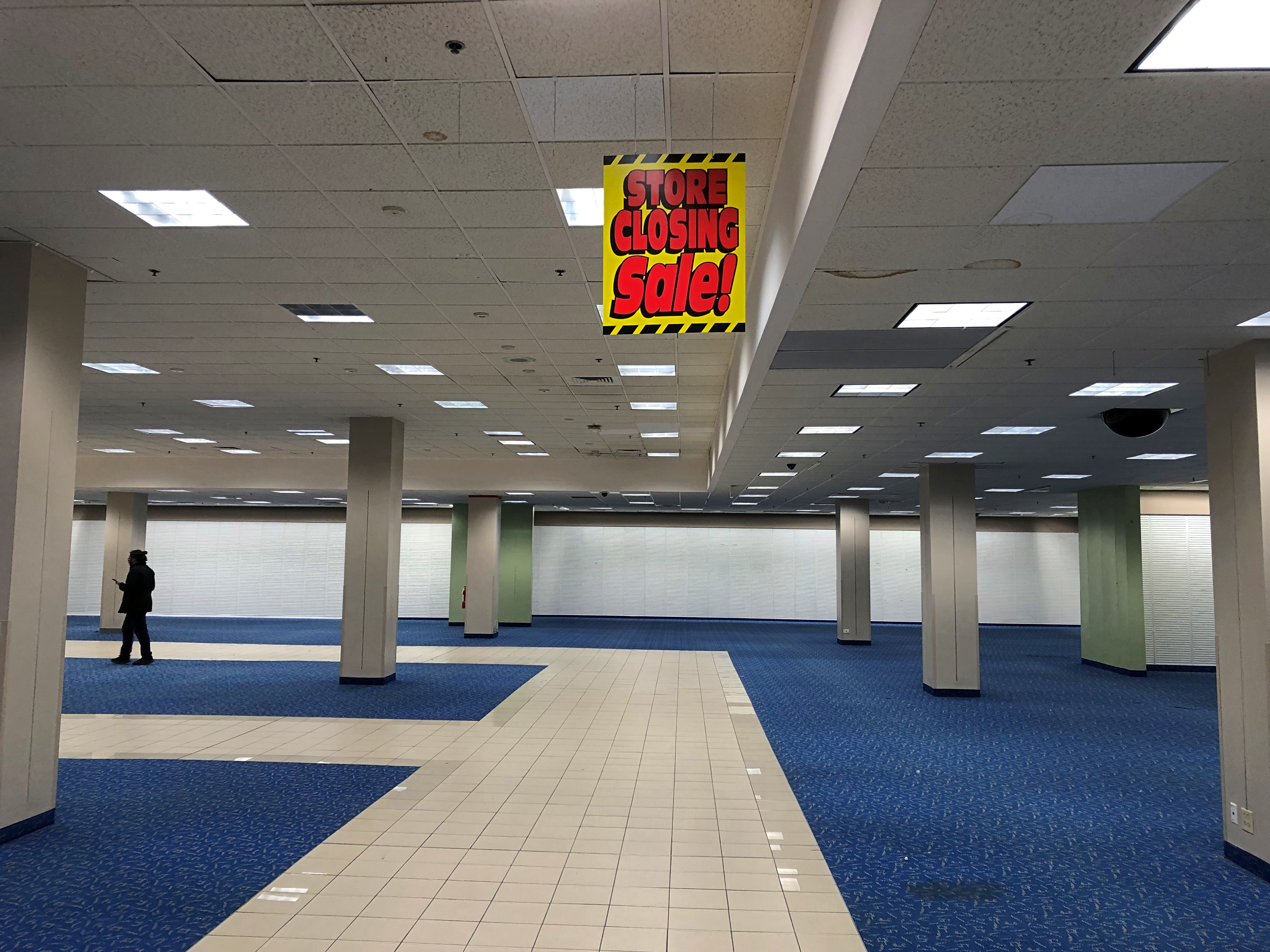
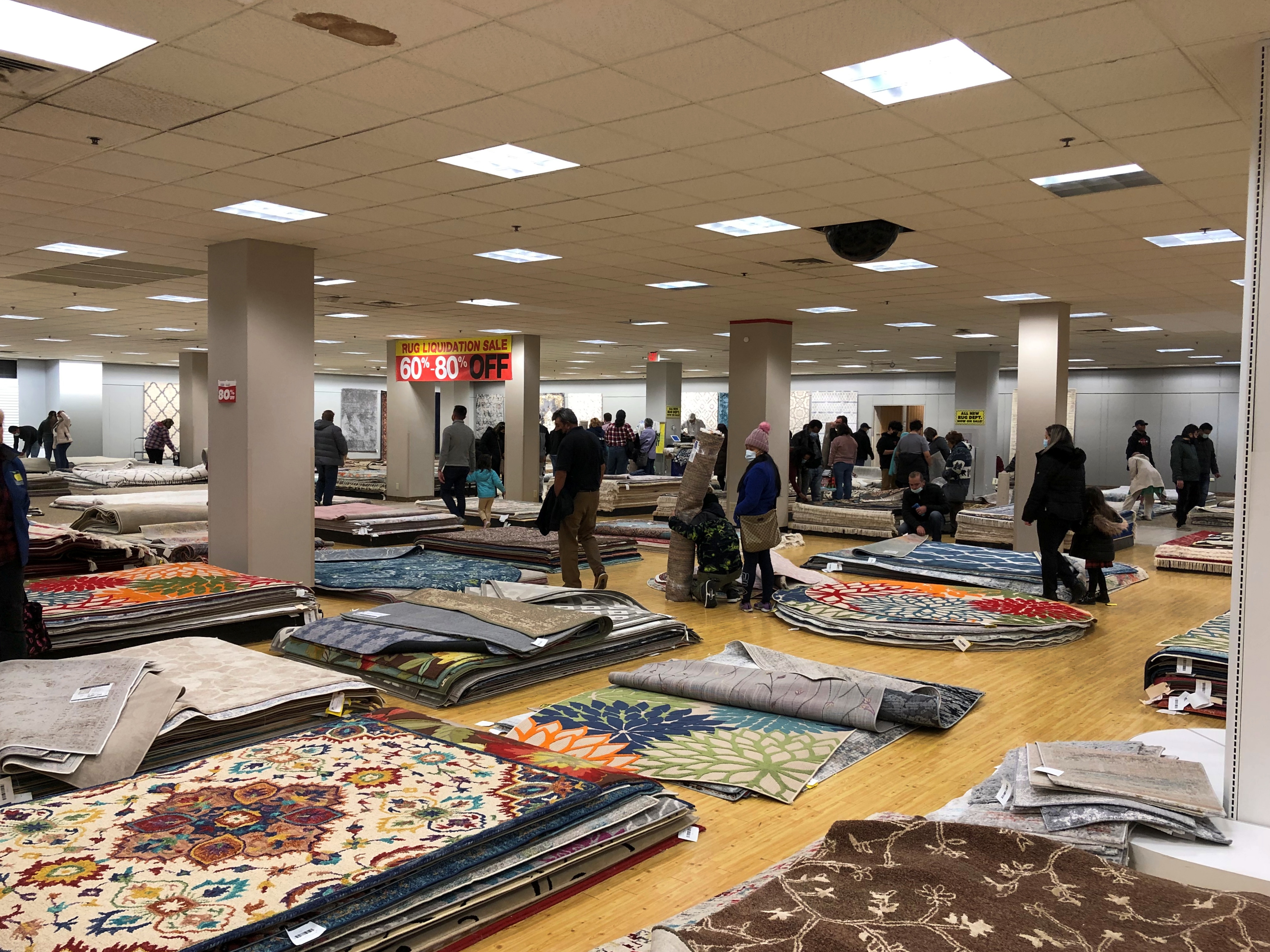
That same day, I went to the Sears at the Woodfield Mall. It was about to close for good; it did so a few days later. So my stroll was through mostly vacant retail space, the ghost of a once-vast enterprise.The last Illinois Sears

But not quite empty.
The last Illinois Sears

It was the last Sears in Illinois, the state formerly home to the Sears Tower. A retailer ending with a whimper.

I didn’t buy a rug. I will say that my lawn mower before the current one, a Craftsman, was a Sears acquisition.

Even further back is the cast iron table on our deck, purchased ca. 2003 at a Sears. Looks as solid as the day we got it, so like my cast-iron frying pan — bought ca. 1983 at a Nashville grocery store, not a Sears purchase — the table will certainly outlast me.

I was glad to see that Barbara’s Bookstore, a metro Chicago chain, has opened in the mall. I don’t go to the mall a lot, so I’m not sure when. The Barbara’s branch I remember best was the store in the lower level of the Sears Tower, which I visited sometimes ca. 2000-05 (gone now).

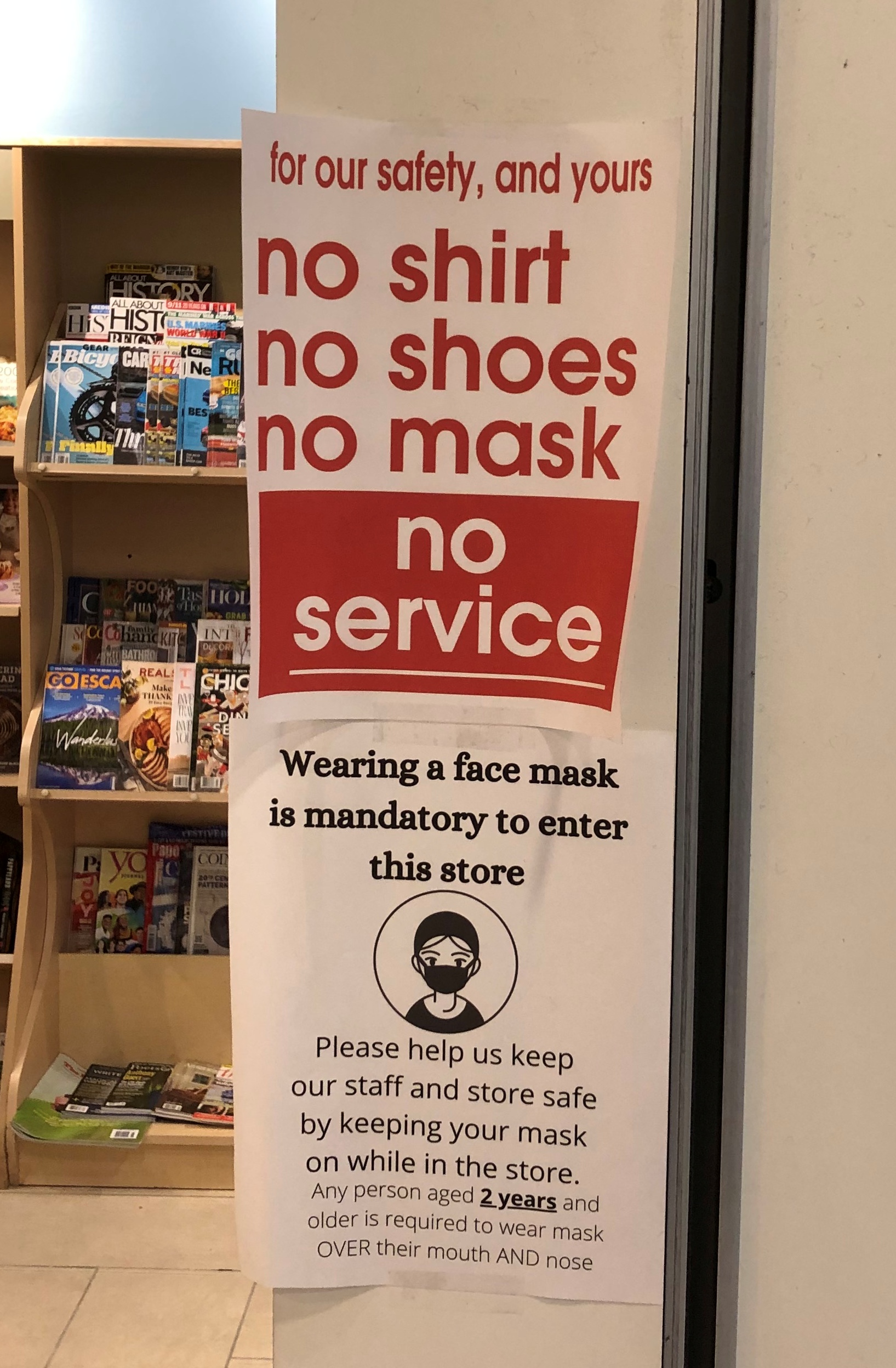
no shirt no shoes no maskUp with the times, Barbara is, with a twist on the old retail warning.

Most everyone in the mall was masked. Otherwise, everything was about the same as any recent year. The crowds were thick, and I’m sure they’ll get thicker still as the days progress toward Christmas.

I interviewed a British retail expert not long ago, and she happened to mention the prospects of Black Friday retail sales this year in the UK. I’d heard before that is now part of British retailing, and I told her I thought that was funny.

“What’s the special occasion?” I said. “The fourth Friday in November?”

She chuckled. Like Japanese merchants importing Valentine’s Day, their British counterparts have imported Black Friday — and come to think of it, American merchants are doing their best to expand Día de Muertos in the United States. About a month ago, I saw a Día de Muertos-themed box of Pop-Tarts in a mainstream grocery store.

We also discussed American Halloween, which she said the British have taken to as well. I hope not to the detriment of Guy Fawkes Day, I said. Some customs have faded, she answered, such as a penny for the guy, but there are still bonfires.

Good. We see no reason/ why gunpowder treason/ should ever be forgot….

Bundaberg Ginger Beer

Last day of August, spent some time on the deck. A workday, so not a lot of time out there, but I did take the opportunity to finish the last of a six-pack curiosity we acquired from somewhere or other early in the summer.Bundaberg ginger beer

Ginger beer. Bundaberg brand non-alcoholic diet ginger beer, whose bottle says twice — front and back — that it’s brewed in Australia. That fits. The only place I remember having ginger beer before was in that country, where I found it interesting, though not especially tasty. For its part, Bundaberg isn’t bad, but I’m not going to be a regular consumer.

Or be a drinker of the company’s rum, which it is better known for, at least in Australia. Rum production began there in Queensland in the late 19th century to take advantage of the local sugar industry to produce something Australians really wanted.

Odd thing about the bottle: though the ginger beer is brewed in Australia, and presumably in Bundaberg itself, another bit of text says: Bottled in the UK.

What’s that about? Vats of ginger beer go by container ship from Australia to the UK because… bottles are cheaper in the UK? Most of the export market is there, with a trifle making its way here? Something about EU regs, pre-Brexit? The ways of international logistics, now so tied in knots, are strange even in normal times.