Nori

Usually I do my own scanning, but in this case, I figured — what’s the point? A fellow named John Lodder posted this image on Flickr under a Creative Commons 2.0 license, meaning I need to give him credit and link to the original site — which I just did. It’s a close-up of nori.We always have nori around the house. It’s used for wrapping edibles, especially to make homemade sushi, which we do fairly often. Not as artful as prepared sushi, but a lot cheaper and just about as good. More finely shredded nori is a garnish.

Nori is seaweed pressed into sheets. That much I’ve long known. I decided to look into it a little further, and discovered something I never knew, which always makes my day: the story of the reinvention of nori and, indirectly, sushi.

Seaweed has been harvested and processed into nori in Japan for centuries, but right after WWII, the industry was in dire straits.

“Despite becoming a staple food of the Japanese, the basic biology of edible seaweed species remained almost completely unknown until [the late 1940s], when pioneering British scientist Kathleen Drew-Baker saved the country’s nori farming industry,” Gastropod says.

“In 1948, a series of typhoons combined with increased pollution in coastal waters had led to a complete collapse in Japanese nori production. And because almost nothing was known about its life cycle, no one could figure out how to grow new plants from scratch to repopulate the depleted seaweed beds. The country’s nori industry ground to a halt, and many farmers lost their livelihoods.

“Meanwhile, back in Manchester, Dr. Drew-Baker was studying laver, the Welsh equivalent to nori. In 1949, she published a paper in Nature outlining her discovery that a tiny algae known as Conchocelis was actually a baby nori or laver, rather than an entirely separate species, as had previously been thought.

“After reading her research, Japanese scientists quickly developed methods to artificially seed these tiny spores onto strings, and they rebuilt the entire nori industry along the lines under which it still operates today. Although she’s almost unknown in the UK, Dr. Drew-Baker is known as the ‘Mother of the Sea’ in Japan, and a special ‘Drew’ festival is still held in her honor in Osaka every April 14.”

I’m not so sure about that last line. I might have missed such a festival when I lived there — Osaka’s a large place — but other sources, such as a longer University of Manchester article about about Dr. Drew-Baker and nori, tell me the festival is in Uto, Kumamoto.

There’s a memorial to her in Uto, seemingly at a place called Konose Sumiyoshi shrine, which could be confused with Sumiyoshi Taisha (Grand Shrine) in Osaka — within walking distance of where I used to live.

One more thing about nori, at least around here. Our dog likes it. Loves it. One of her favorite things to eat. That has some practical uses, too: any pills the vet prescribes go down a lot easier when wrapped in wet nori.

Thursday Tidbits, Including Doggerel

Usually it’s bad to brag about your ignorance, but there are exceptions. I didn’t know this until recently and I’m not sorry. It’s an example of the ridiculousness I miss by not paying attention to social media memes. That is, by not being one of the callow youth who use social media as the thin straw through which they obtain all their information, a practice that surely stunts their brains.

Speaking of callow youth, when I was a child I thought the prestigious journalism award was the Pulit Surprise. When I typed that out, I laughed at the thought of it. Then again, it might be a surprise to some of the recipients.

As mentioned yesterday, we’re watching more movies than before. Toward the end of March, I discovered an bunch of pre-WWII Universal horror pics on demand, and we watched those first. In order: Frankenstein, Dracula, The Mummy, The Wolf Man and The Invisible Man. All first times for Ann, but not me, except I couldn’t remember whether I’d seen The Invisible Man, though I read the book years ago.

Ann said she enjoyed all of them, but The Invisible Man most. The main character wasn’t just a murderous psycho, he was also positively playful while committing less-harmful pranks, she noted, which humanized him a bit.

Since then, our viewing has been less thematic. Along with the aforementioned Groundhog Day, we’ve watched Intolerable Cruelty (a lesser Coen Bros. effort, but not bad), The Terminator, Space Jam and The Death of Stalin.

We also watched an oddity called John Mulaney and the Sack Lunch Bunch, which is as long as a short movie, but more like a TV special, which I believe it was. As a pseudo-kids show, it had many entertaining moments, and on the whole was slightly demented, like Mulaney’s comedy.

Some silly verse I wrote last year. My entire output of verse of any kind for the year. I’d forgotten about it until the other day.

Blake was a flake, and
Shelley ended up in a lake.
Byron was mad, bad and a cheater, while
Coleridge was a lotus-eater.
Wordsworth really liked his abbey, and
Keats’ odes were none too shabby.
In doggerel about poets Romantic,
Best not to wax too pedantic.

See also “The Krystal Cabinet.”

British Air ’88

In early April 1988, I visited London for a week, which included laughs in the basement of a pub and time at the British Museum and the Imperial War Museum and a lot more. A good trip.

To make the trip a reality, some time earlier I called a travel agent. The agent who also booked tickets for my company, whose office (I think) was somewhere on Michigan Ave. For me, the ticket buyer, her services cost nothing. Hard to imagine now. I’d call her even for ordinary domestic tickets. The last time was to book passage to Japan in 1990.

I told her where and when I wanted to go, fully expecting to pass through New York to get to London. That’s what you did to get across the Atlantic. Get to New York first, as surely as Lindbergh did.

I reconstruct the conversation:

Agent: We have a flight leaving at x, arriving at Heathrow at y.
Me: Leaving New York?
Agent: No, it’s direct from Chicago.
Me (a touch astonished): Really?
Agent: Oh, yes. So is the return.

A pleasant surprise. I bought a package: RT air tickets, a week’s accommodation at a middling hotel — but very well located near Paddington Station — and a week’s pass on the Underground. Good value.

British Air was the carrier. That too was a first for me. In fact, still the only time I’ve flown that airline. Flew across on a charter in ’83 and on the upstart Virgin in ’94.

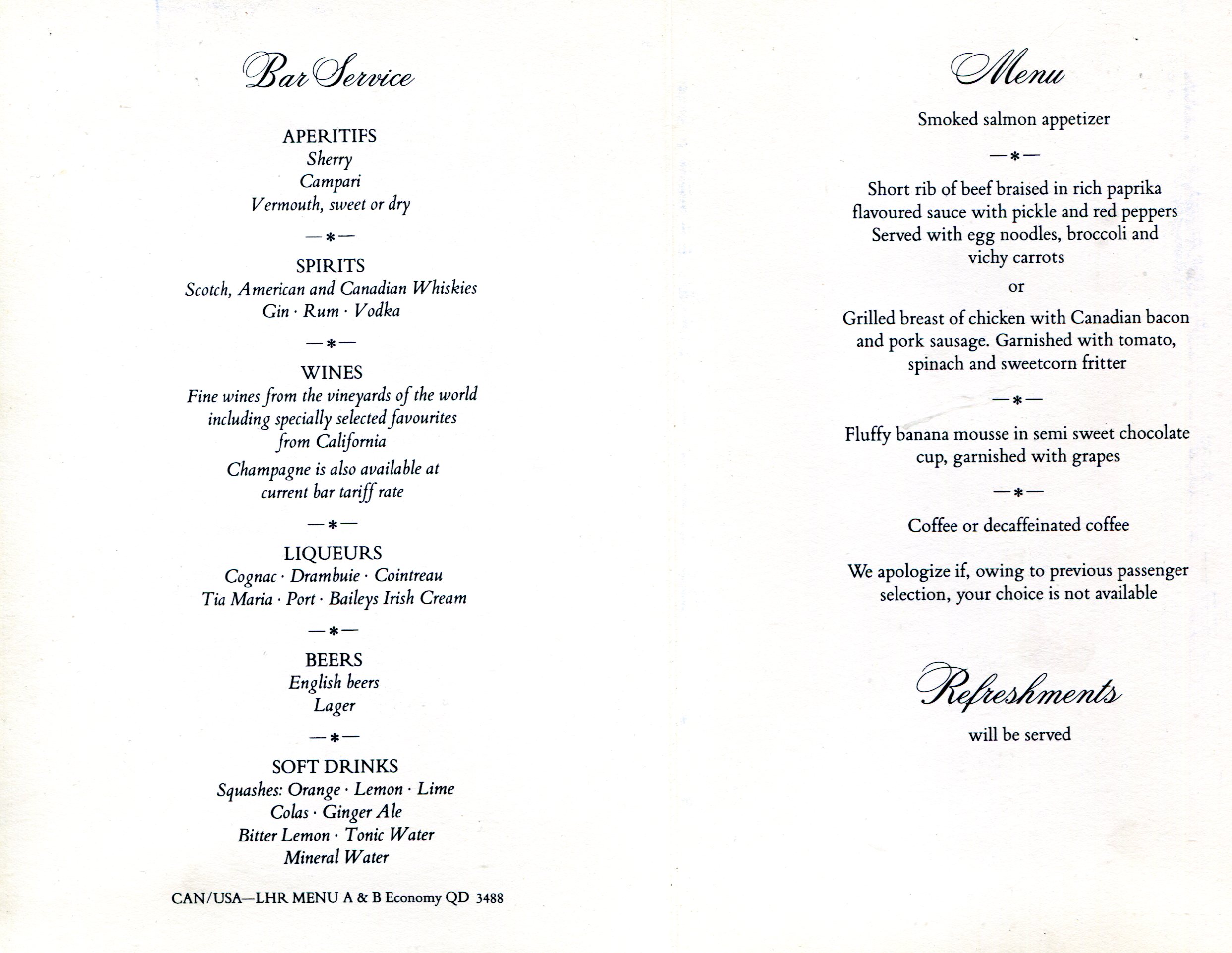
A souvenir of the flight. A menu.
BA menu 1988British Air menu 1988I don’t remember what I had, and I’m not going to bellyache about how much better flying was then compared with more recent times. On the whole, that might be true, but I suspect the differences are exaggerated. Jumbo jets have always been pressurized cattle cars. You put up with it, enjoy the view if you can, and get where you’re going in hours. Worth a little discomfort. Now that air travel is mostly gone, maybe it will better appreciated when it comes back.

The Location of Wales

I have two desks in my office, both of which have drawers that are full of the debris of a home office. That includes a drawer with a lot of business cards in it. Sometimes I throw some of them out, since they date back to the early 2000s, an eon ago in the business world.

Jobs change, titles change, phone numbers change, email addresses change: all the ingredients of bum information in data bases. In some theoretical sense, my drawer of cards is an ancient analog database, but really it’s just a pile of cards. Including one with this back:

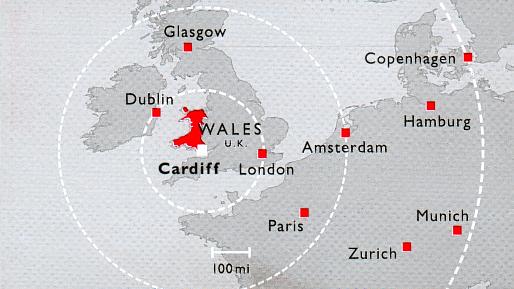
Unusual to find a map on a business card. It came with some material from the Chicago office of an organization promoting business development in Wales. It’s graphically interesting and it conveys some possibly useful information, namely that Wales isn’t that far from London or Dublin or various well-known European cities. Then again, it’s Western Europe. Nothing is that far apart in modern terms anyway.

Maybe the main reason the organization included a map is that they were tired of people saying, “Wales, huh? Don’t you guys have a Prince? Now, let’s see — I’m not sure where that is.”

Winterlude ’20

Though it hasn’t been a harsh winter, it has been winter, so time for a short hiatus. Back posting around March 1.

It turned out to be a good idea to know as little as possible about Parasite before seeing that movie, which we did last weekend, weeks after we’d originally considered going. All that time, I did my best not to read about it. Not knowing the arc of the story helped maintain the suspense, which was as riveting as anything Hitchcock did, especially after the midway twist.

I did know that the movie came highly recommended, and by sources I respect more than the Academy of Motion Picture Arts and Sciences. Could it, I wondered, be better than 1917? It was. That’s a remarkable achievement all by itself. One of those rare movies that is as good as people say.

I’ve updated my vanity North American map again.
The key to the colors is here. The color scheme is wholly idiosyncratic, so I do have certain ideas about certain places. For instance, if I spent some time in following places, I’d color the respective states blue: the Northwoods of Minnesota; Norfolk and vicinity in Virginia; Mobile, Alabama; and Tuscon, Arizona. If I spent a night in West Virginia or Delaware or Rhode Island or Manitoba, they’d be orange. Just means I need to get out more.

Though cold today, the sun was out. Time to take my new garden gnome outside.

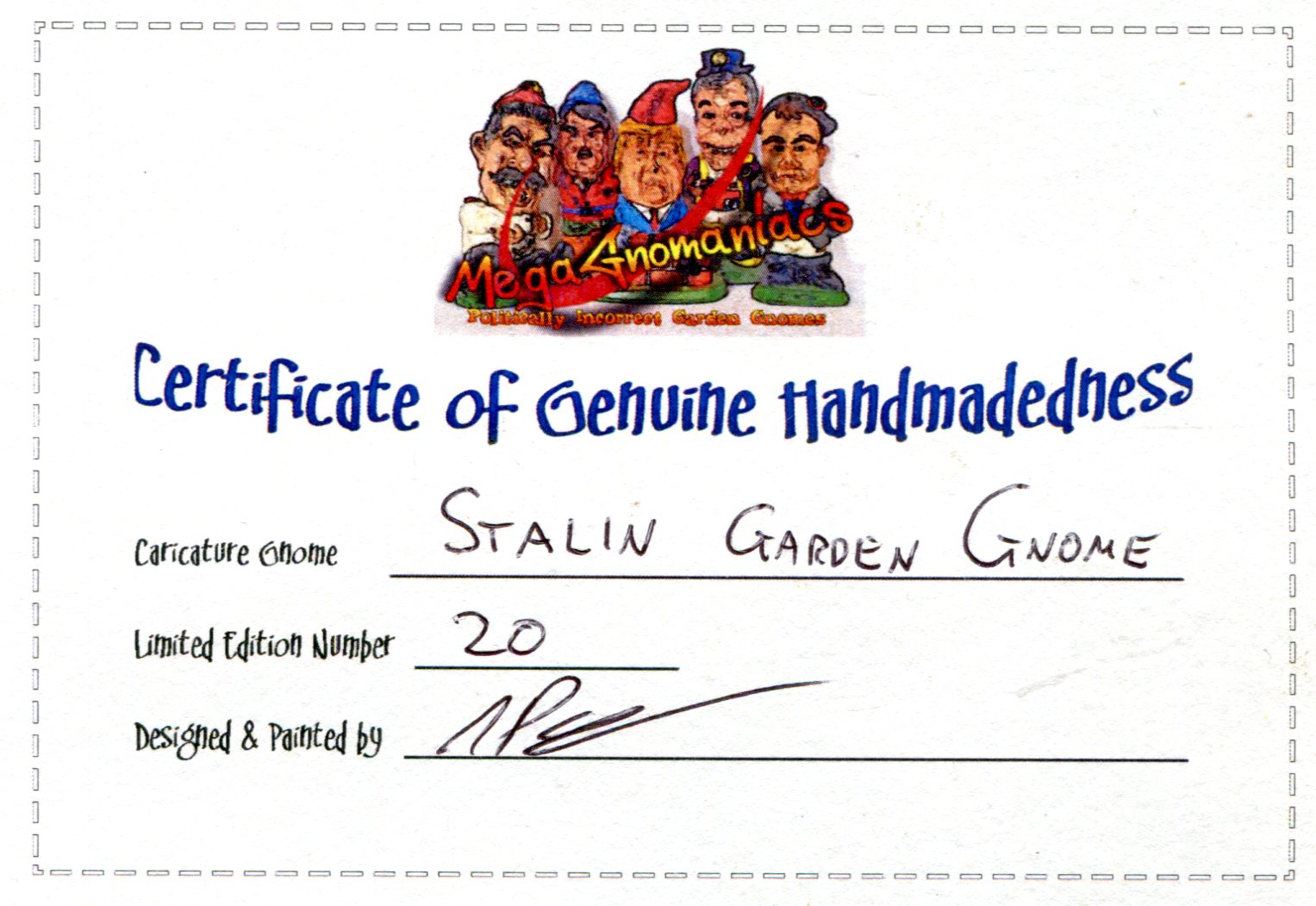
Gnomish Stalin was a Christmas president from my brother Jay, shipped to me from the UK. Cornwall, specifically. For all I know, Cornwall might be the world hub of eccentric garden gnomes.
This year, I got Jay a Russian nesting doll — a political matryoshka doll, made in Russia. He sent me a picture. Nice set, though you’d think there would be room for Khrushchev at least, whom I’d pick for inclusion over Yeltsin.
Coincidence that we both sent Russian gifts — political Russian-themed gifts, no less? Or synchronicity? Who knows, I’m just glad to have a new conversation piece for my summertime visitors.

1917

A while ago I saw the trailer for 1917, before I knew anything about the movie, or even that such a movie was in the works. Often enough you can judge a movie by its trailer. You know full well that it would be a waste of time. The 1917 trailer didn’t inspire any confidence in me that I wanted to see it. Hell’s bells, World War I is getting the Pearl Harbor treatment, I thought. Lots of brainless CGI.

I was completely wrong. We saw the movie over the weekend and I was astonished by how good it was. Much has been made about how the action seems to happen in real time, in one movie-long shot (117 minutes), though of course the cuts are hidden. In that sense, the film is a technical tour de force, but it’s much more than that.

It’s an Iliad and an Odyssey, following two tommies from their own trenches, across no man’s land, into abandoned German trenches, and into places previously behind the lines, all the while facing the strong likelihood of injury or death. It’s one damn thing after another. It’s suspenseful, since there’s a clear objective whose resolution is always in doubt until the end.

It’s also a work of high verisimilitude, including the maze-like aspects of the trench systems, the danger and gore and misery of WWI battlefields, and the ruins of French villages, but also the pleasant springtime countryside beyond the immediate fighting. The cinematography of some of the scenes, especially the bombed out, smoldering ruins, dazzles the eye.

The back stories of the main characters aren’t fleshed out in much detail, though there is a brief but remarkable discussion of cherry trees as part of one soldier’s personal history — the symbolism of which I did not miss — and a few other intimations of a life outside the war zone. I understand that bothered some critics, but it doesn’t bother me.

This isn’t a Hallmark movie. I don’t want them to sit around discussing their feelings — as if two Great War soldiers on a harrowing mission through some hellish landscapes would do that. You don’t need their details. They’re Everymen, and they’re fully human without the exposition, focused as they are on their own situation. The lead actors conveyed all they needed to about their characters through some dialogue, but mostly their reactions to all that they encounter, not quite all of it the horrors of war.

So 1917 is a remarkable movie in many ways, but not without flaws. I wasn’t sure, for instance, that the central conceit of the mission was even plausible. The two tommies were sent to relay a vitally important order countermanding an attack by an out-of-communication British regiment that had followed the Germans after they had made a tactical retreat to the Hindenburg Line in the spring of the title year.

That two men and two men alone would have been sent on such an incredibly dangerous mission, if it were so important, seems a little strange. Some redundancy would have been called for, to help ensure the message got through. Besides — couldn’t the mission have been accomplished by delivering a message by airplane? Even if a plane couldn’t land in such a forward area, it certainly would have been able to communicate with the ground.

“These early aircraft were not fitted with radio sets, but messages about enemy troop movements needed to be communicated quickly,” the Imperial War Museum explains. “Pilots could either drop messages in weighted bags or use message streamers to drop messages to forces on the ground.”

Never mind. 1917 is an epic story, well worth watching on a big screen. Good work, Mr. Mendes.

Richard III

In our lifetime, only five years ago, Richard III got a spiffy tomb at Leicester Cathedral, after centuries in an anonymous grave not far away. That came to mind when Ann and I went into the city on Saturday to see a reading of Richard III at the Newberry Library.

It was the same setup as last year, when we saw Titus Andronicus: actors reading their parts, holding scripts, while moving around one of the library’s large rooms, in front of and to the side of the audience. Outside wind blew and rain fell, just above freezing, so that might account for the slightly smaller crowd than last year, but even so a lot of people came out for the tale of murder, intrigue, more murder, double-dealing and a violent denouement. Everything you need in an Elizabethan history play.

Very talented actors, so the lack of any set or costumes didn’t matter. Christopher Prentice, who played Richard, did the demented villain to just the right pitch, and moved himself in ways that didn’t exactly suggest a hunchback, but weren’t quite normal either, and strangely menacing.

One more thing. Here’s the mission statement of the Richard III Society, which was instrumental in finding the king’s bones in our time: “In the belief that many features of the traditional accounts of the character and career of Richard III are neither supported by sufficient evidence nor reasonably tenable, the Society aims to promote, in every possible way, research into the life and times of Richard III, and to secure a reassessment of the material relating to this period, and of the role of this monarch in English history.”

I’m all for historical inquiry, but even so — Richard III gets to be a villain. The literary Richard III is more robust than any historic portrait of him is ever likely to be.

Armistice Day 2019

Not quite a year ago — after November 11 last year — we saw They Shall Not Grow Old in a movie theater. I was skeptical about the colorization of WWI, but came away convinced that Peter Jackson and his talented technical team had done a superb job of it. More than colorizing, but also adding appropriate sound and making the speed of the film more natural to our eyes.

They shall grow not old, as we that are left grow old:
Age shall not weary them, nor the years condemn.
At the going down of the sun and in the morning
We will remember them.

— Laurence Binyon (1914)

The American Toby Jug Museum

Yesterday I spent some time looking into the origin of the word flabbergasted. It’s a fun word, and sometime it fits just so. I would have guessed that it’s an Americanism, and a fairly new one at that, but no. Origin obscure. First attested usage: 1773.

According to World Wide Words, “… flabbergasted could have been an existing dialect word, as one early nineteenth-century writer claimed to have found it in Suffolk dialect and another — in the form flabrigast — in Perthshire. Further than this, nobody can go with any certainty.”

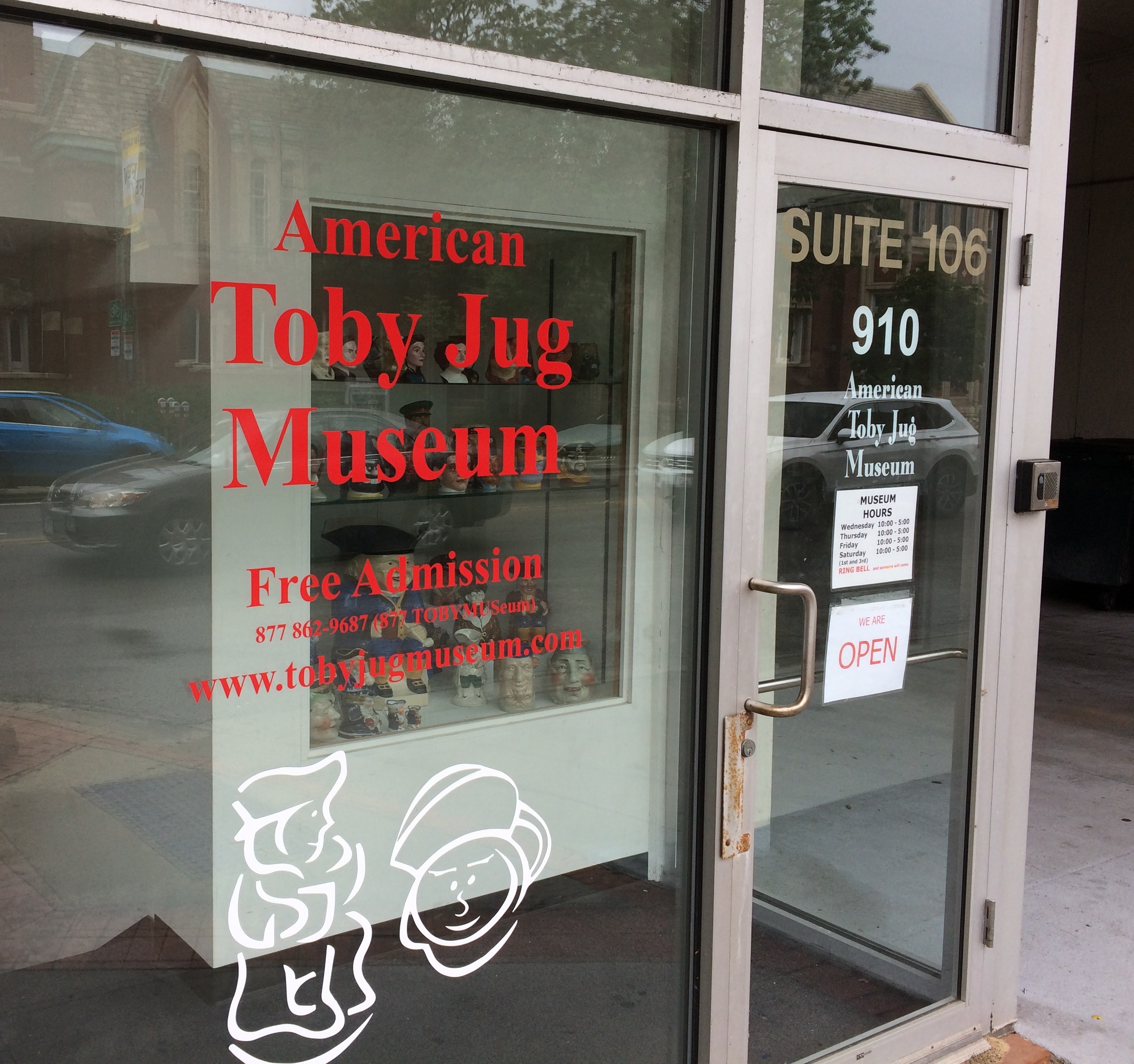
That word came to mind after I visited the American Toby Jug Museum in Evanston on Saturday. The museum, which happily doesn’t charge admission, is in the basement  of an office building near the corner of Chicago Ave. and Main St.
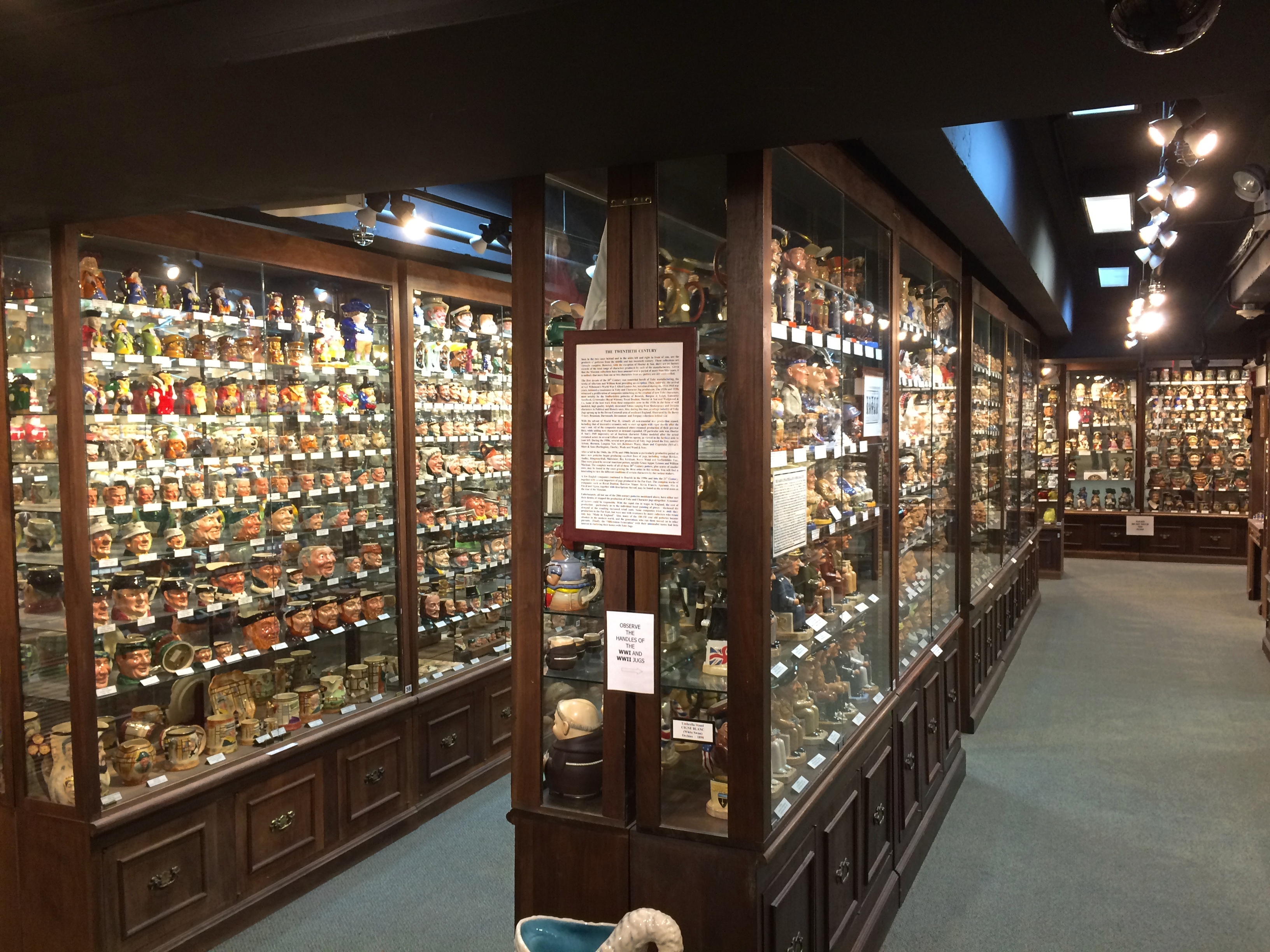
American Toby Jug MuseumI’d known about the place for years, but not much about it. I didn’t do any reading before I went. Sometimes it’s better that way, because the element of surprise can still be in play. I vaguely expected a few cabinets, sporting mugs with faces.

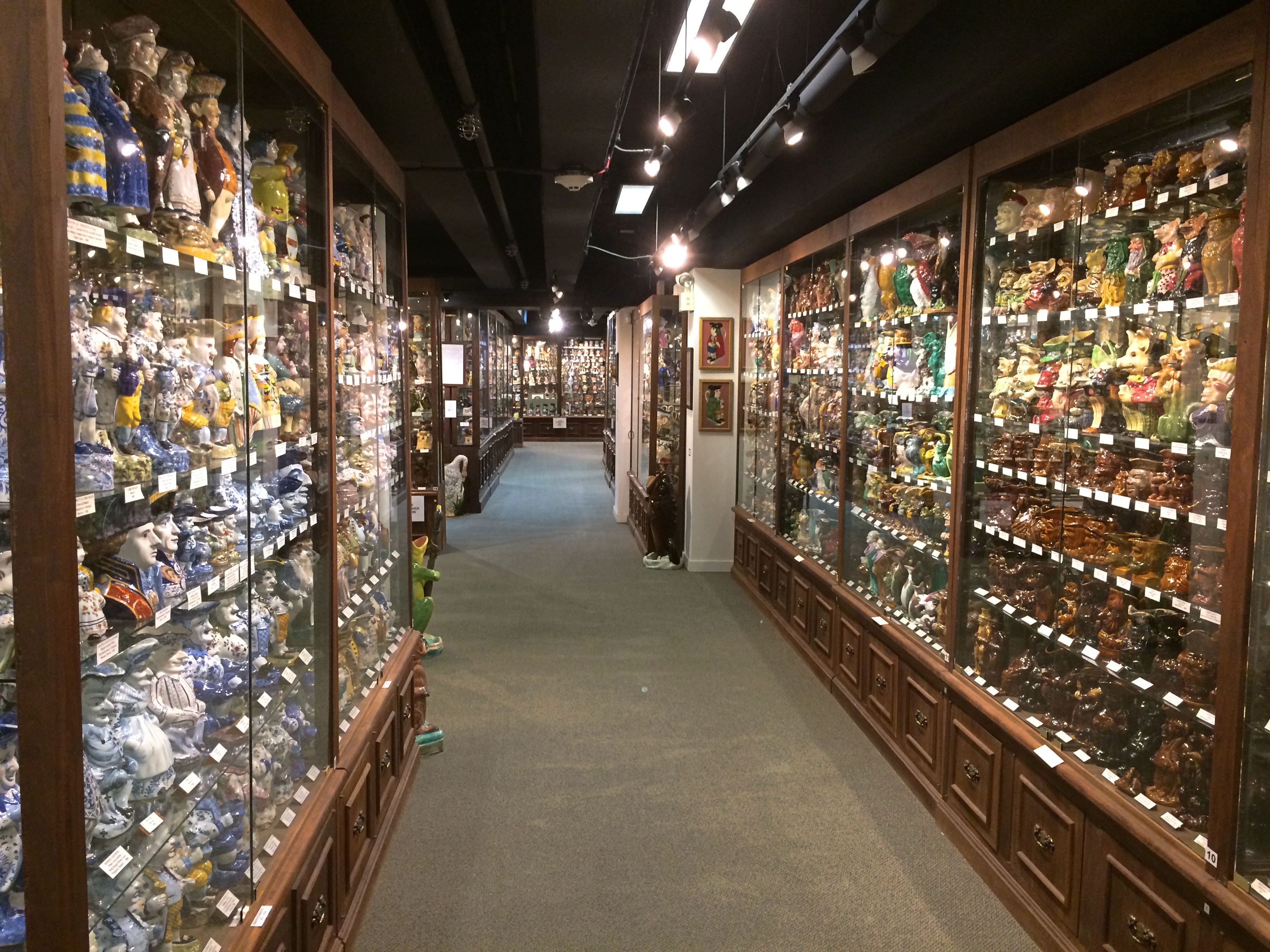
There were cabinets all right.
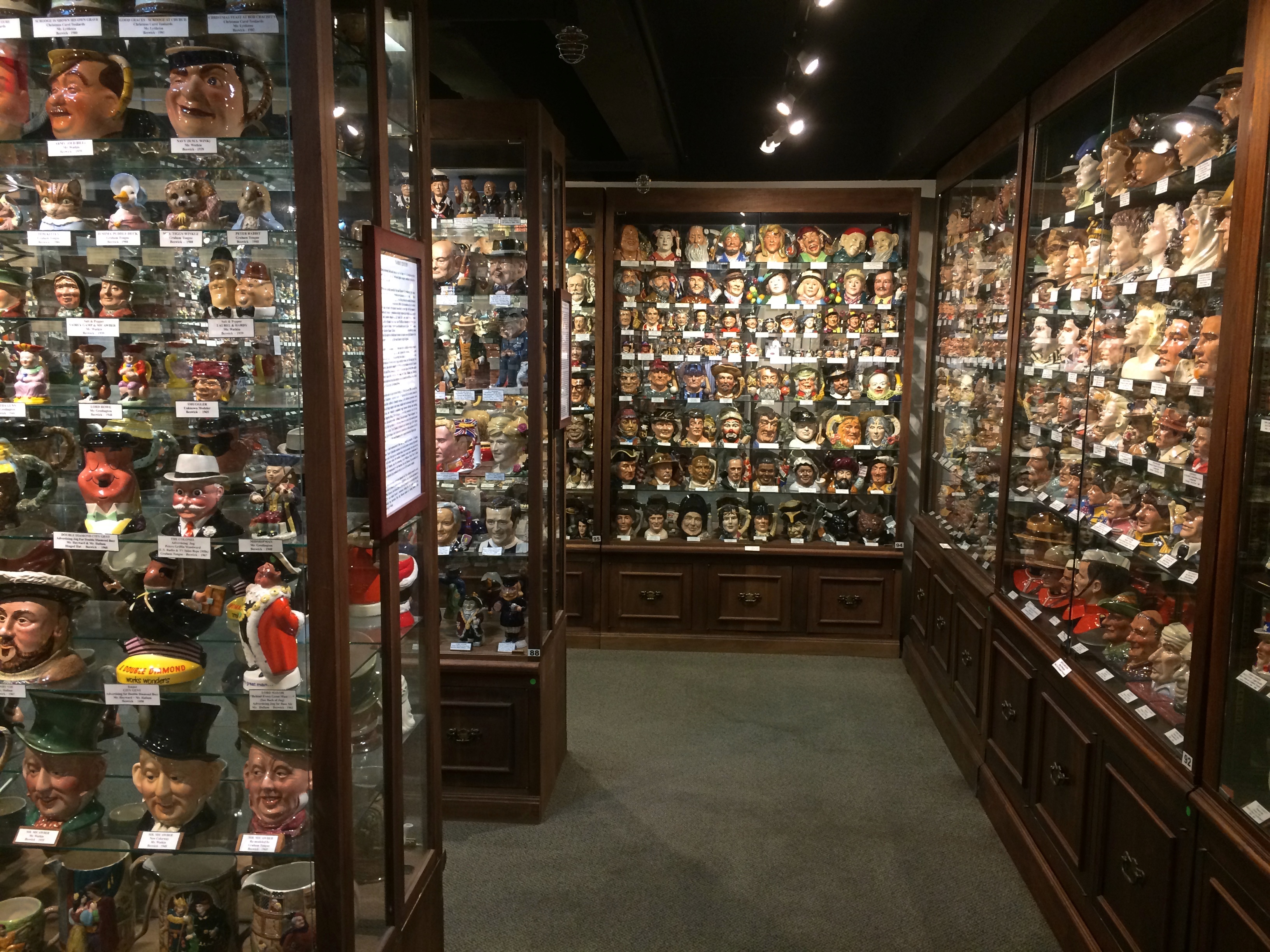
American Toby Jug MuseumAnd more.
American Toby Jug MuseumAnd even more.
American Toby Jug MuseumI was flabbergasted. I was also the only person in the museum during my visit, except for the woman managing the place. When the extent of the displays sank in, I asked her how many items the museum had. About 8,400, she said.

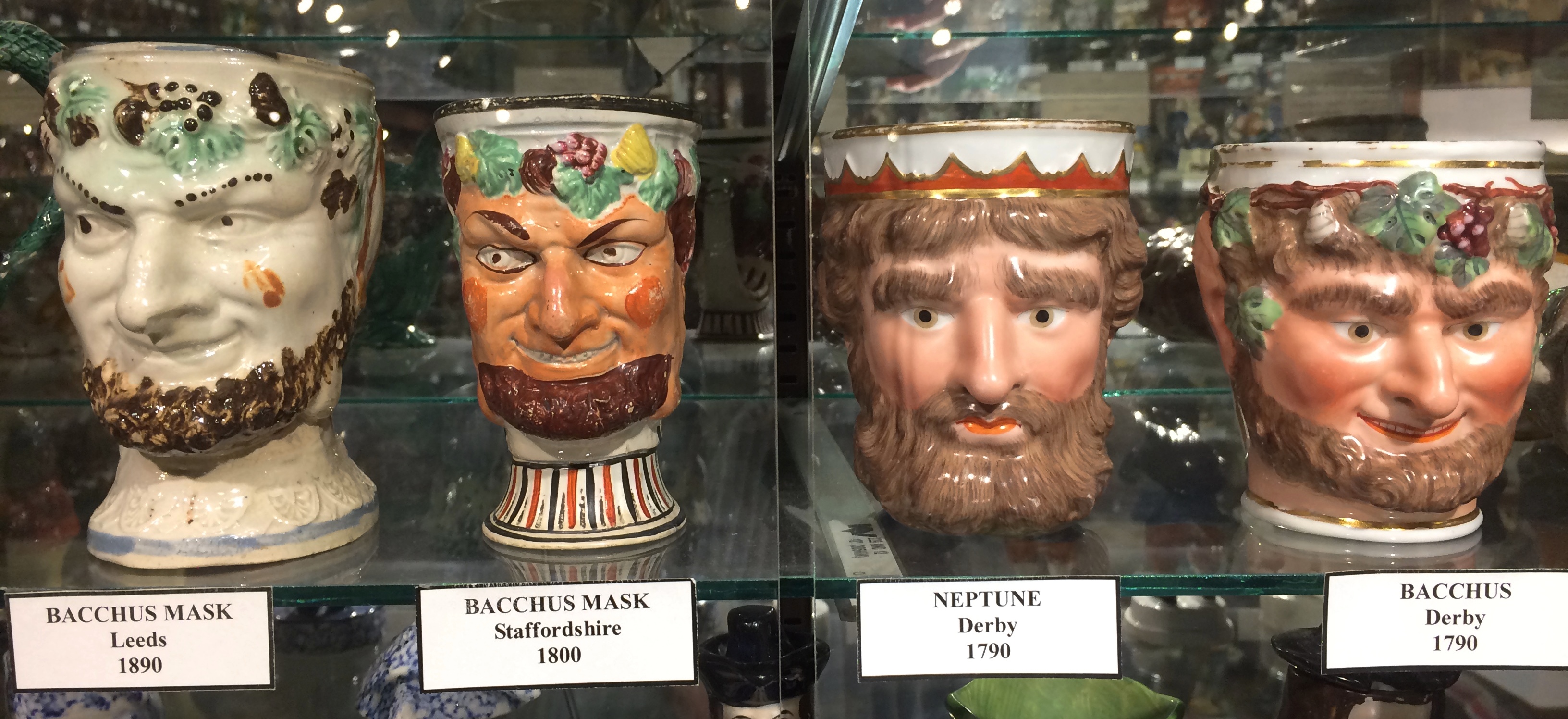
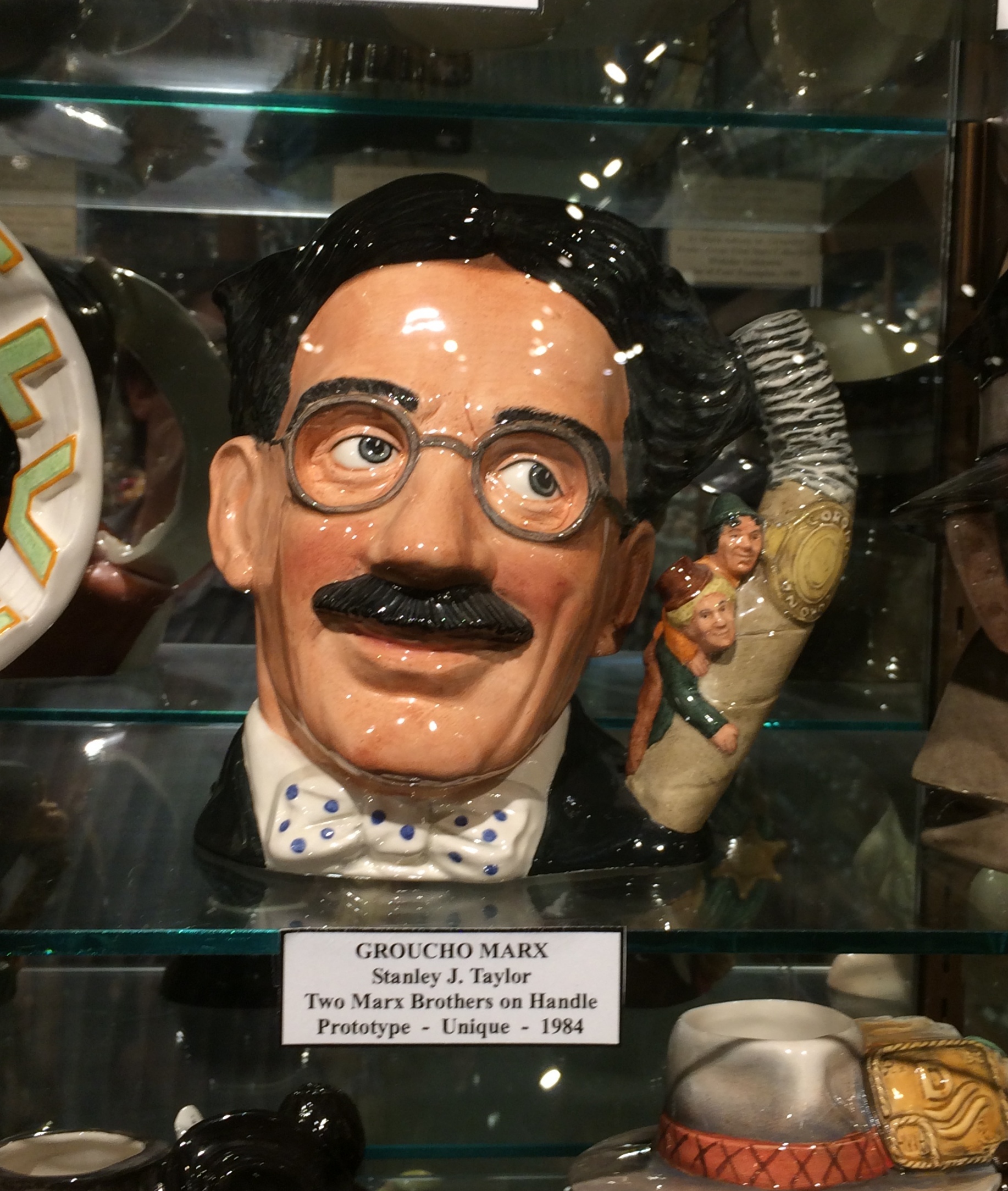
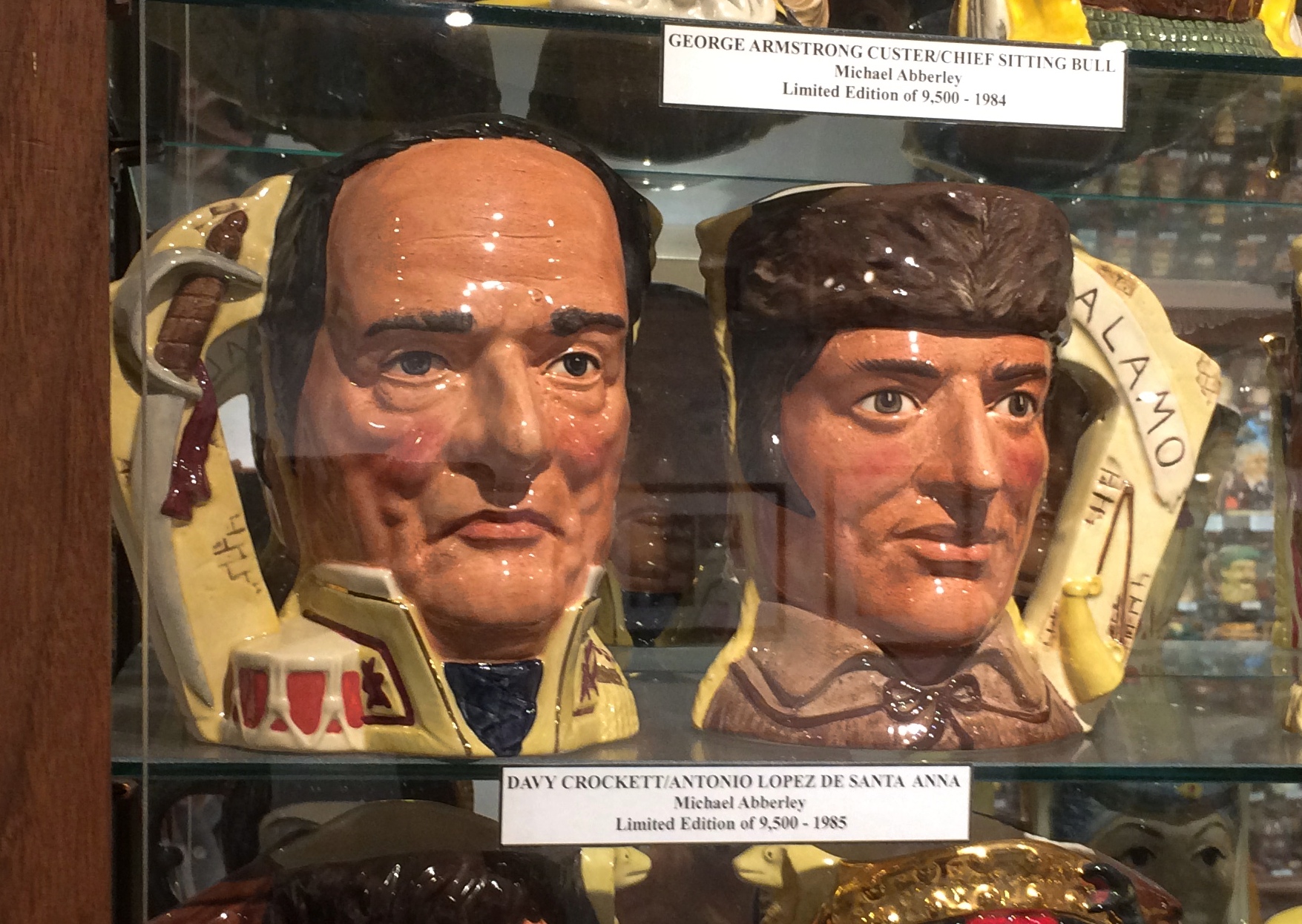
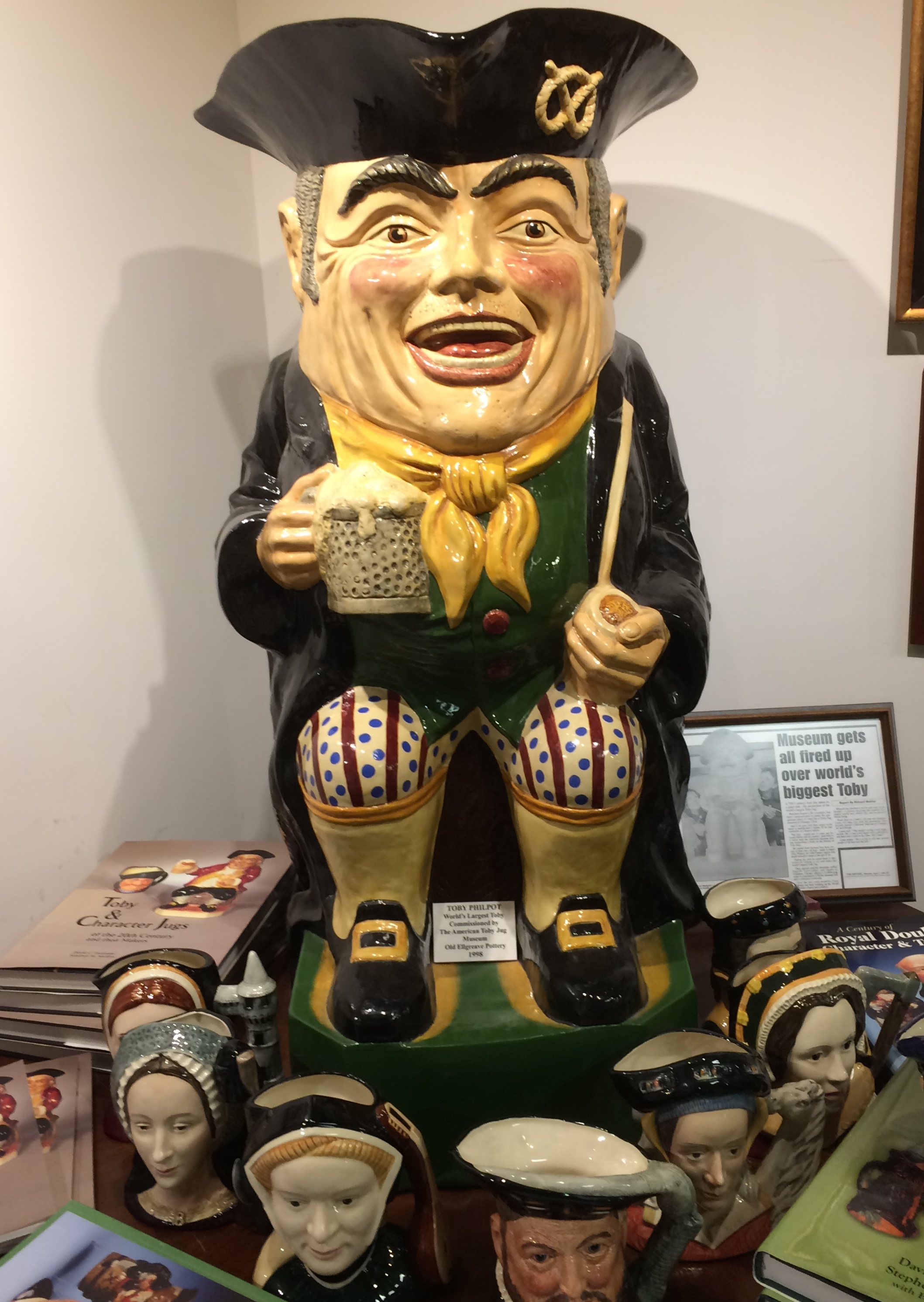
Toby jugs, it turns out — according to people who collect them — depict a full human figure. Head-and-shoulder or head depictions are “character jugs” or “face jugs.” Though decorative, the original toby jugs were also used as jugs, with their tricorner hats convenient for pouring.

The museum is organized chronologically, so near the entrance are the oldest toby jugs, those of the 18th and early 19th centuries.
American Toby Jug MuseumStaffordshire Potters, who had easy access to clay, coal and other raw materials, apparently developed the toby jug in the 1760s, as part of the area’s overall ceramic industry.

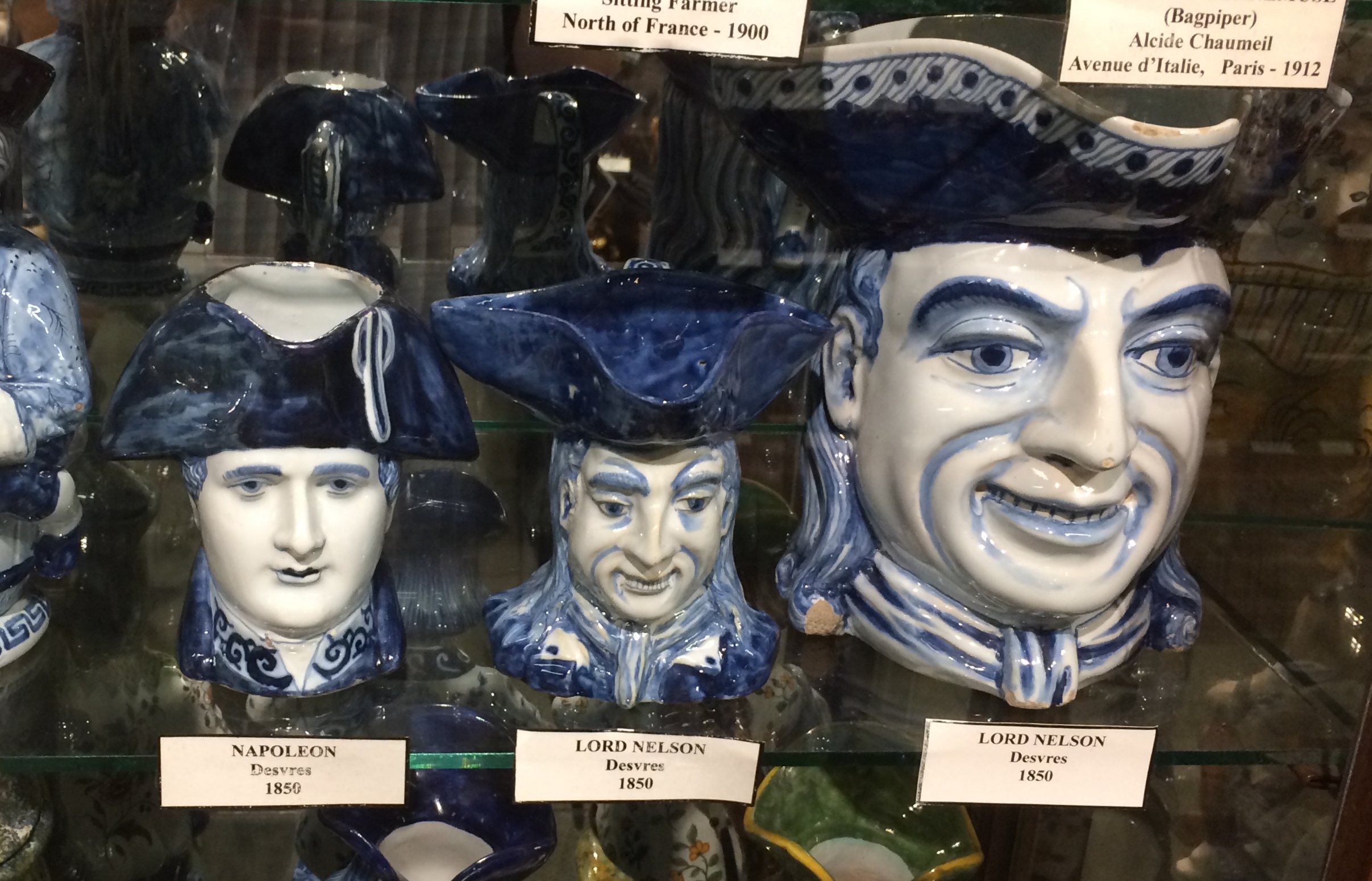
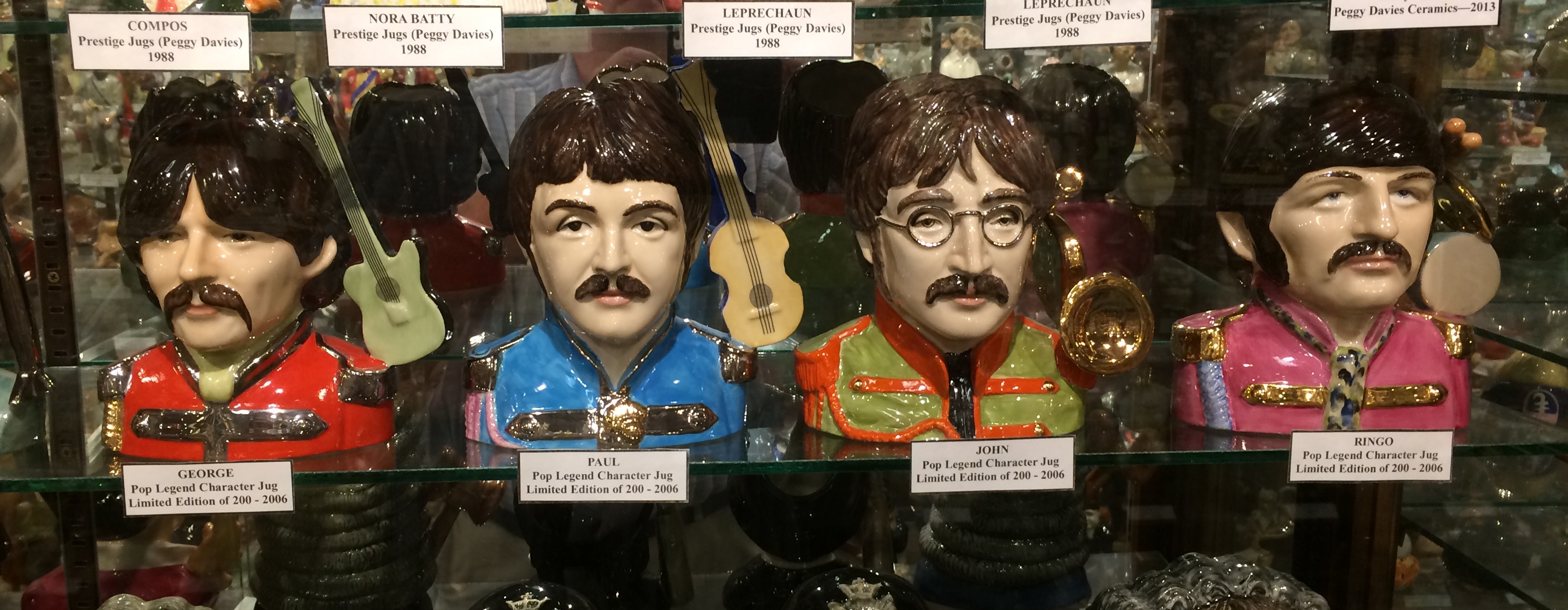
The form caught on in England and then other parts of the world. Soon character mugs were being produced along with the traditional tobies. They took on an astonishing (flabbergasting) variety of forms, including standard drinking characters, perhaps inspired by Falstaff or local barflies, but also occupational figures (soldier, sailors, bandits), faces from history, literature, myths, the Bible, and folk stories, along with  animal figures, fanciful or stereotypical notions of peoples of the world, and — especially in the 20th century — lots of Santa Clauses, musicians, entertainers, sports stars, and more.

fanciful notions of peoples of the world,

fanciful notions of peoples of the world,

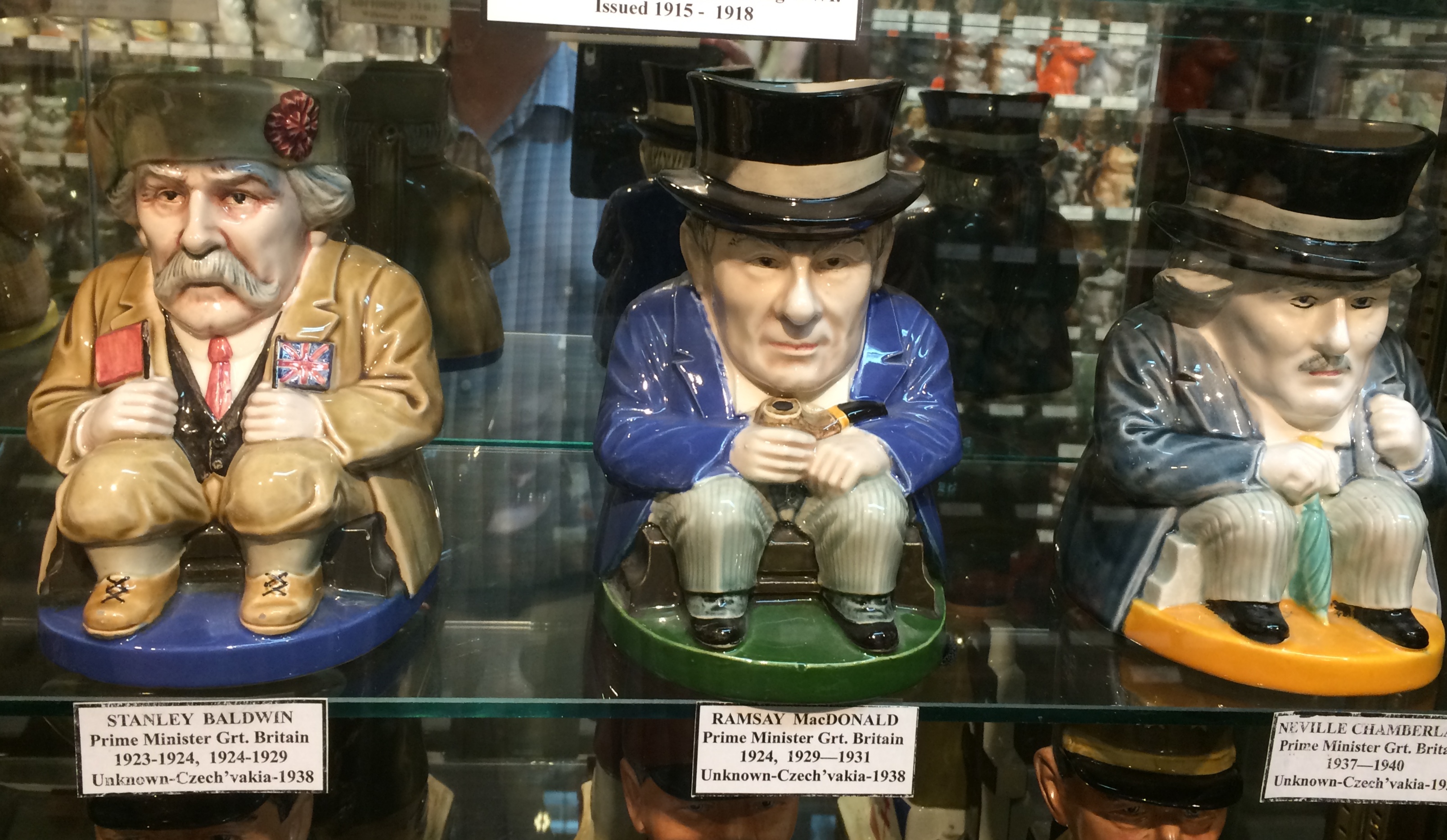
American Toby Jug Museum, EvanstonAmerican Toby Jug Museum, EvanstonEarly 20th-century UK prime ministers, made in Czechoslovakia, no less.
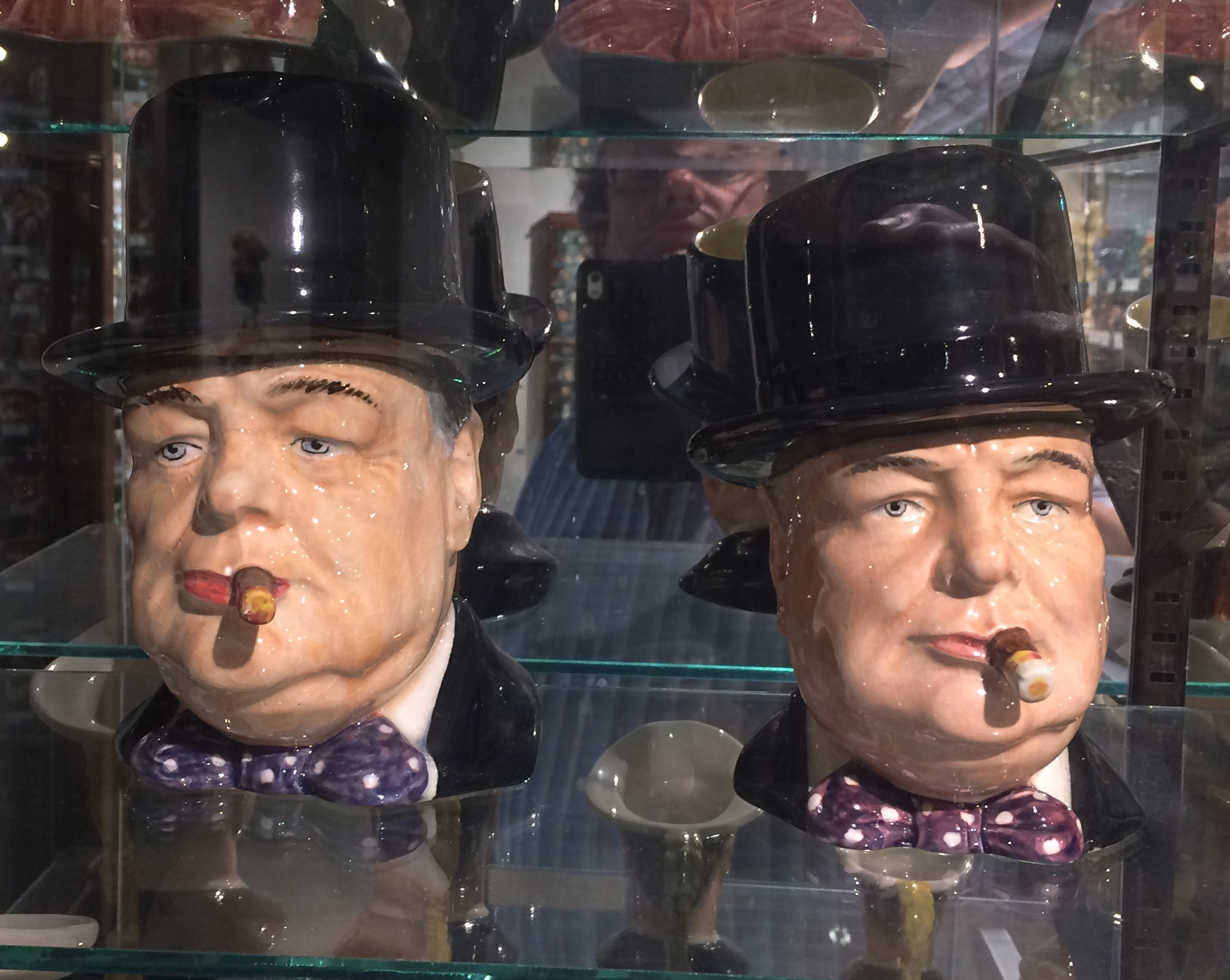
American Toby Jug Museum, EvanstonThere were a lot of Winston Churchills besides these two.
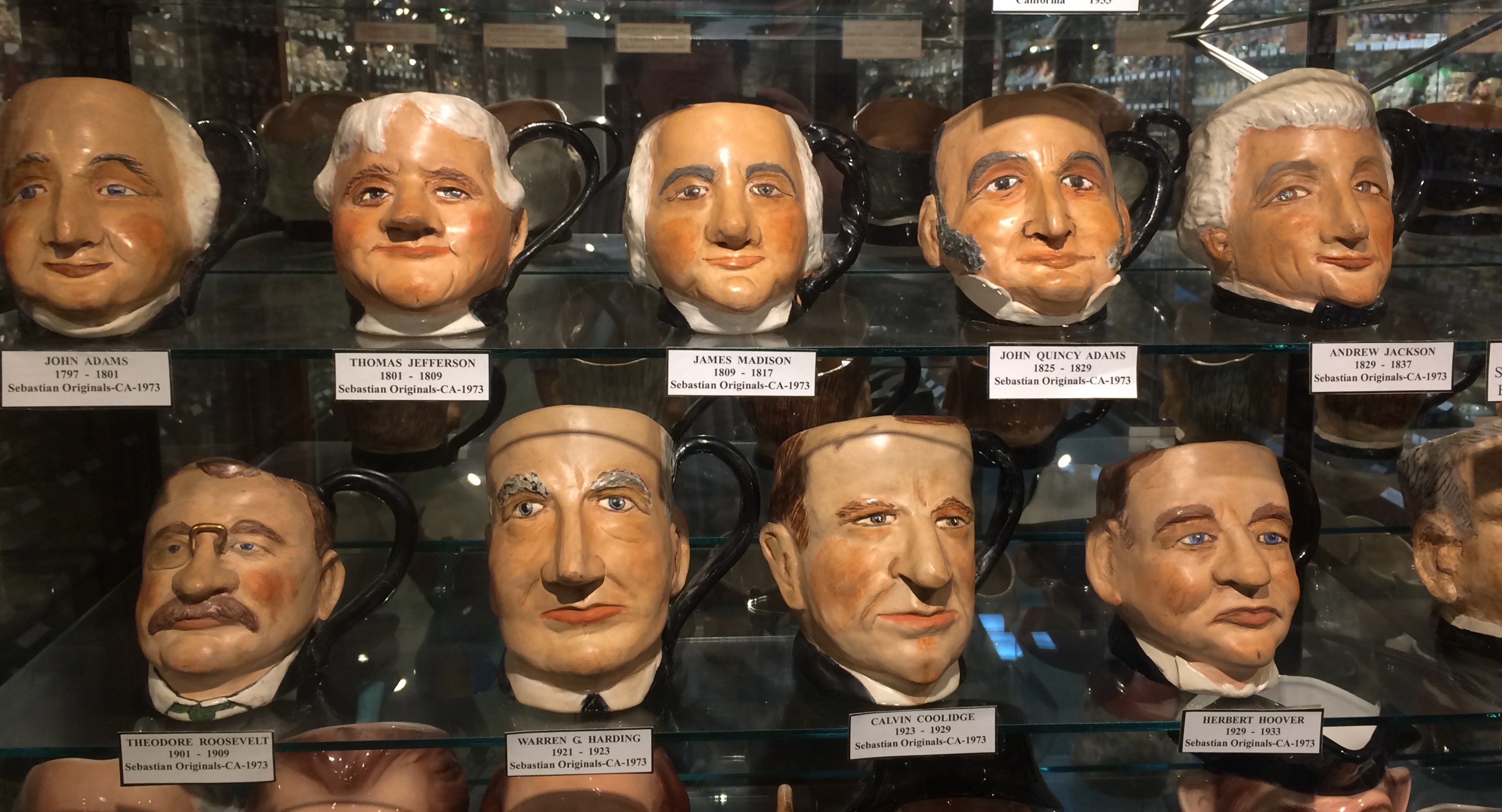
American Toby Jug Museum, EvanstonU.S. presidents, too.
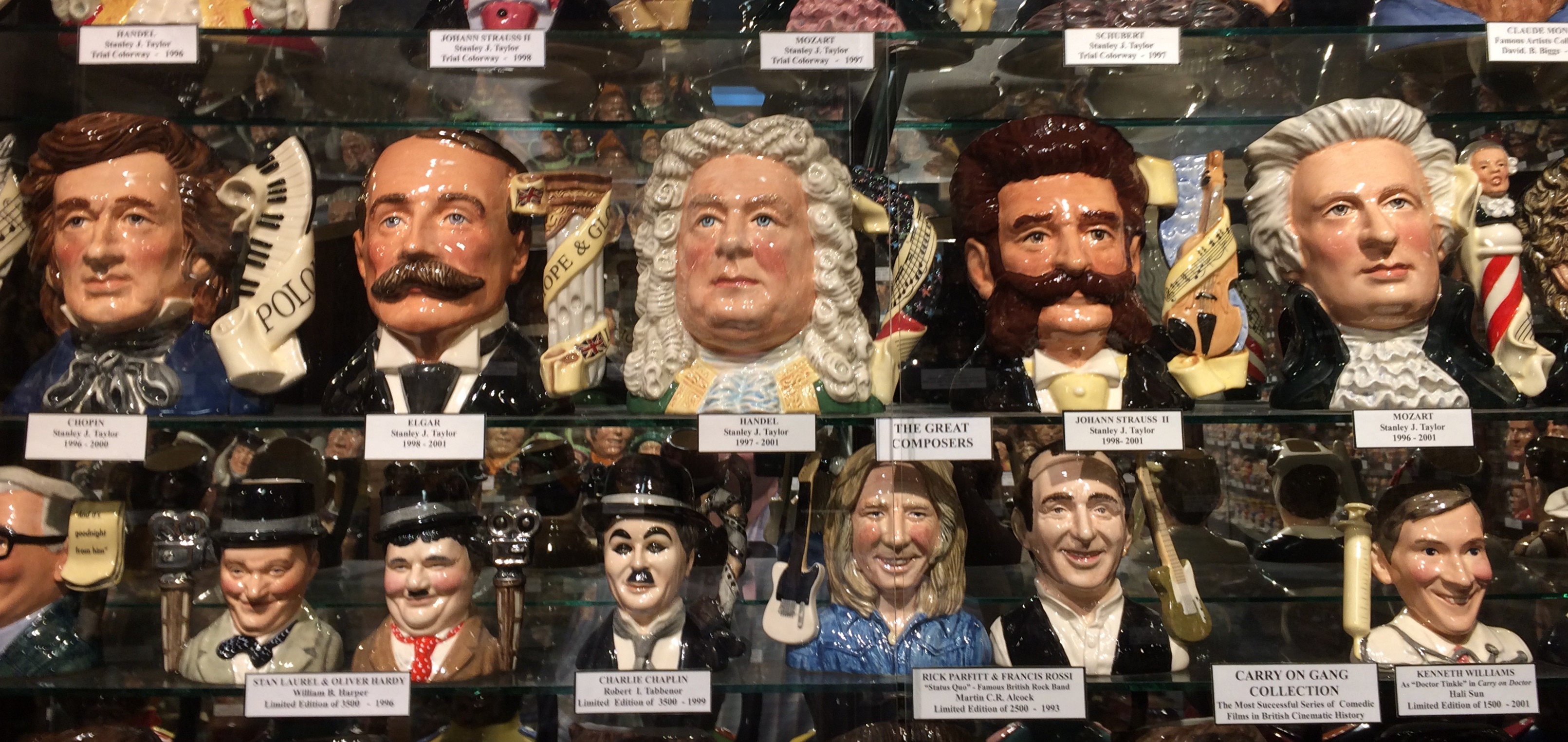
American Toby Jug Museum, EvanstonMusicians and entertainers of various periods.
American Toby Jug Museum, EvanstonAmerican Toby Jug Museum, EvanstonAnd so much more.
American Toby Jug Museum, EvanstonAmerican Toby Jug Museum, EvanstonAmerican Toby Jug Museum, EvanstonThough I didn’t take its picture, I got the biggest kick out of the Col. Sanders mug, which didn’t seem to be any kind of advertisement. Someone simply considered him, as a chicken mogul, worthy of tobyfication.

Why is this collection in Evanston? Like many good small museums, it was the work of one obsessive man. Namely, Stephen Mullins of Evanston, who died only in June at 86, after a lifetime of collecting toby and character mugs. “He built his collection through dealers, private aficionados and eBay,” the Chicago Sun-Times said.

Mullins also had some tobies commissioned, including what the museum says is the world’s largest one, “Toby Philpot,” created in 1998.

American Toby Jug Museum, Evanston

Time for Pixar to get to work on a new franchise, Toby Story.

Getting Around Europe, Summer 1983

June 3, English Channel

Woke and had a good breakfast at our Harvich [England] B&B. After some confusion caught a bus to the Parkeston Quay, where we had no trouble boarding a huge ferry, the Prinz Oberon. It had five decks, with shops and restaurants for the elite, a cafeteria for the everyone else. We ate in the cafeteria — I had some industrial white fish — and then watched a sweet and sour Bert Reynolds movie, Best Friends, in the ship’s tiny movie house. As usual, Bert Reynolds can’t act.

Afterward Rich and I had a talk with a 10-year-old English boy named John, who knew all sorts of dirty jokes, and told us them. He had his Dutch mother with him, who habitually closed one eye when she talked, which was mostly about the perils of Amsterdam. Things aren’t what they used to be, everybody’s nasty now, etc.

June 16, Lüneburg, West Germany, to Copenhagen

At 12:30, Rich, Steve and I went to the youth travel agency and they told us, and we somehow understood, that the next train to Copenhagen was in 50 minutes or so. We bought tickets and dashed off to the bahnhof. And I mean dashed — Rich was worried about getting lost on the way and Steve had to meet us there, because he had to meet French Girl for a moment about something or other. I wonder that we ever got on the train, but we did.

For a while we were on the wrong car. Only some of the cars are put on the ferry, like a snake swallowing mice. One of the conductors told us that, and we went to the right car with a few minutes to spare. The crossing was brief, but we didn’t know that, so we ordered lunch. We had to eat fast.

Arrived in Copenhagen, spent some time figuring the subway out, then rode to part way toward a hostel we knew to be nearly out of town. Then we walked the rest of the way, only to find they had no space. But the kindly clerk at the hostel recommended another place that did have room — near the main train station we had just come from. We took a bus back into the city. Beds were available at the close-in hostel.

July 1, Lüneburg to Bremen

Rode a morning train from Lüneburg to Hamburg-Harburg. Some punkish fellows sat across from me: colorful pants & leather jackets with steel studs & short, almost crewcut hair with a mandatory earring each. One wore a digital watch.

At Hamburg-Harburg, I had 40 minutes to wait. I met a fellow, more conventionally dressed and only a little older than I am, who spoke British English so well I wasn’t sure whether he was British or German for a few minutes. Turned out he was from near Lübeck. His book for the ride was an English-language edition of The Lord of the Rings. The German translation, he told me, is “rubbish.” We talked about a number of other things as well. He told me he didn’t like the prospect of Pershing IIs stationed in West Germany, but he thought they were necessary.

July 14, Vienna to Rome

In the afternoon, we boarded our train. In my compartment was a family of four Hungarians and an Italian. Slept on a top bunk from 10 to 7 or so. Sometime in the night we crossed the border and so I woke in Italy. By that point no one had asked for a passport or a ticket. Arrived Rome at about 2. No one ever did ask for a passport, but the conductor eventually got around to checking my ticket.

July 22, Campania, Italy

Steve and I boarded the bus to Avellino in mid-morning yesterday and I remember having a fine ride – no hint of things to come. The Campanian scenery was pleasant, a lot of rolling countryside, though the air was more polluted than I would have expected. We got to Avellino, expecting to find a station, but instead a large parking lot full of buses functioning as the station. We asked a driver which bus connected with our destination, Mirabella, the small town where Steve has relatives, and he told us where to wait for it.

I felt nauseated in the hot sun waiting for the connecting bus. That bus wasn’t especially late — a notable thing in Italy — and my condition got worse during the bouncing, twist-and-turn ride deeper into the country (for Mirabella is a very small town). We arrived at a street corner in Mirabella, and immediately after unloading our packs from under the bus, I said to Steve, “I think I’m going to throw up.” Which I did right away. First on the sidewalk, then another wave in the gutter.

July 30, Florence to Innsbruck

The midnight train out of Italy was, of course, crowded, but at least we found seats. We had to disturb a mother and daughter already asleep to get those seats, and then more people boarded the car. After Bologna, the rest of the night passed more quickly than I expected in a fitful sleep sitting up, and by daylight I woke up tired in the Italian Alps. It was a good sight after the flatter, dustier parts of Italy we’d passed through earlier. Arrived Innsbruck about 9. Mucked around the station a while and then walked no short distance to a hostel run by a small church.

Aug 7, Down The Rhine

Today we took a slow boat down the Rhine. As good as it sounds. We started out this morning on the train to Mainz. Unfortunately, we forgot to change trains, and so ended up in Frankfort. But no problem. A friendly Ⓘ staffer helped us find a train to Rüdesheim, where we waited for the boat to Koblenz.

At this point, the Rhine cuts through steep hills, all very green and many overgrown with grapes. Castles stand on a few of the hills. We sat on the pea-green deck under a warm afternoon sun, watching the hills and castles pass by and listening to the other passengers, mostly children at play on the deck. Now that was an afternoon.