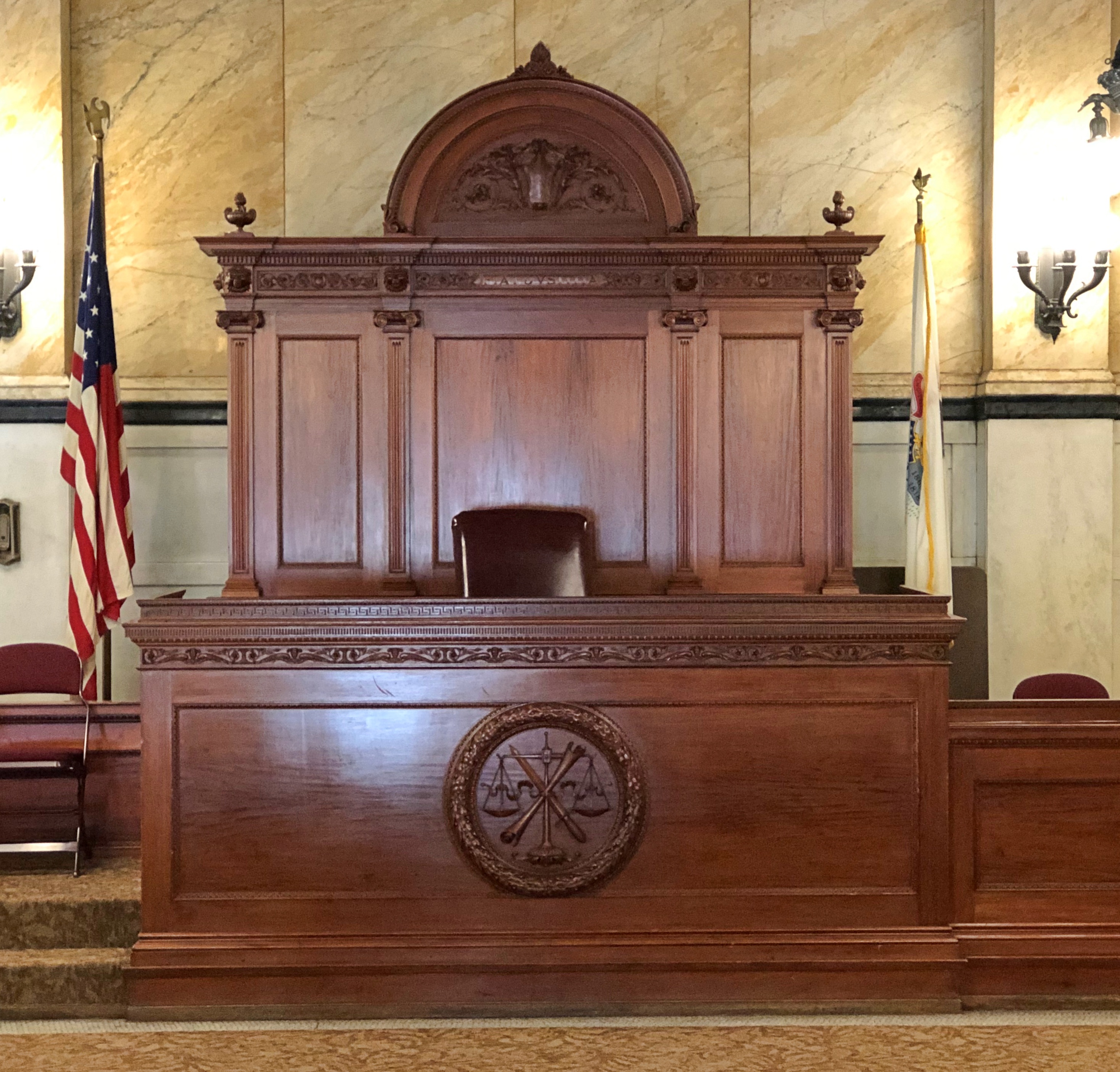
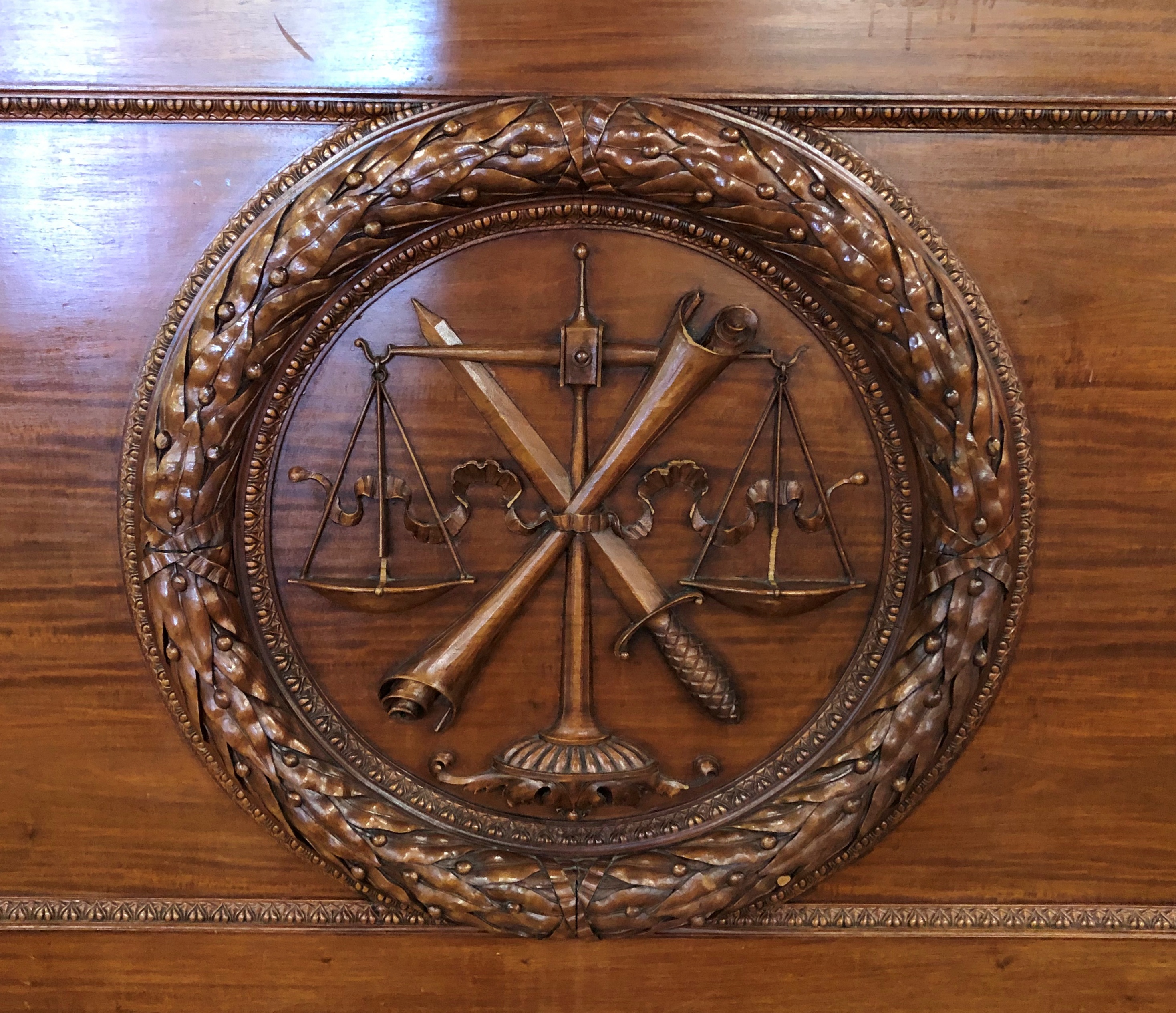
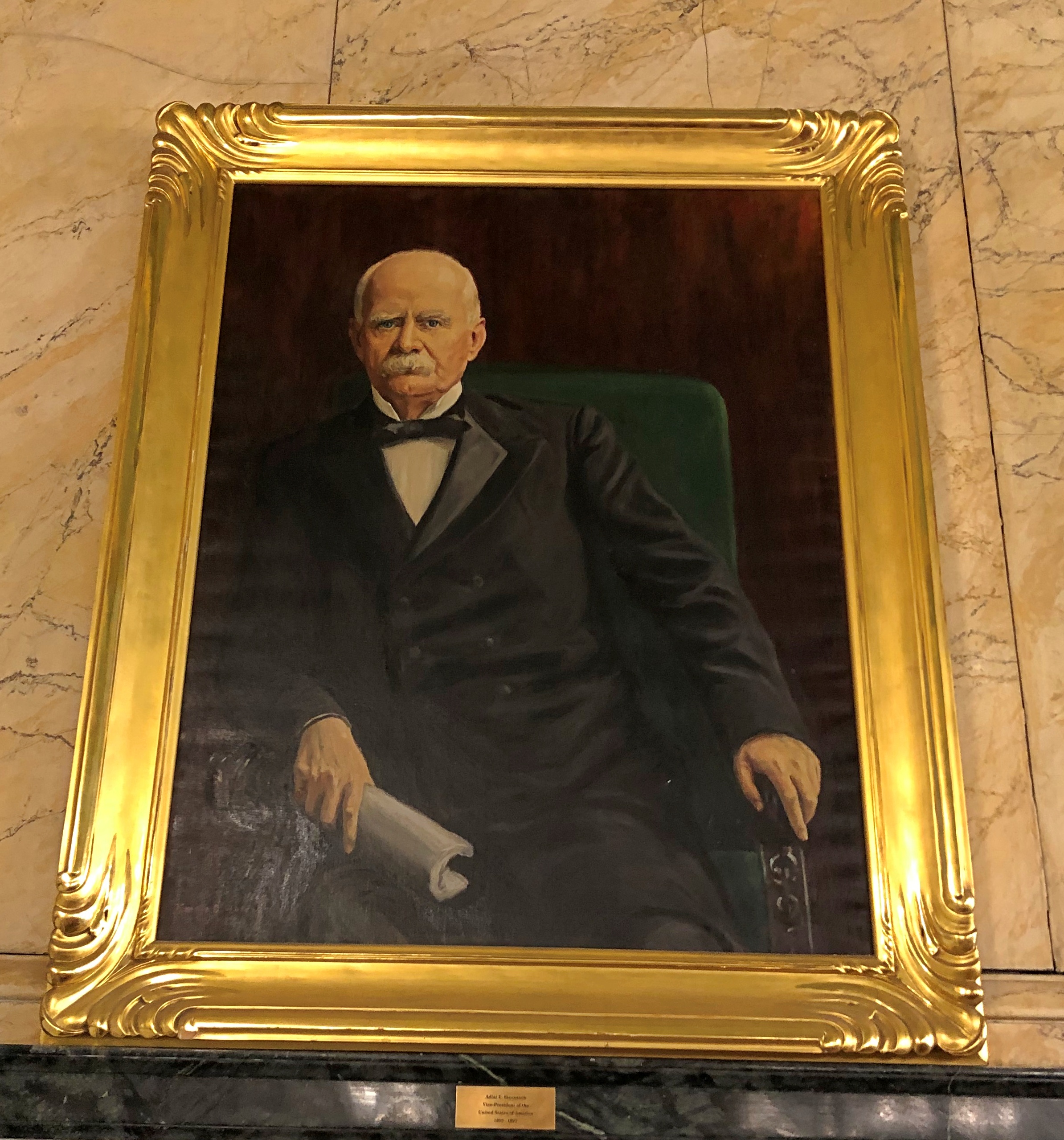
Plymouth Church, Milwaukee

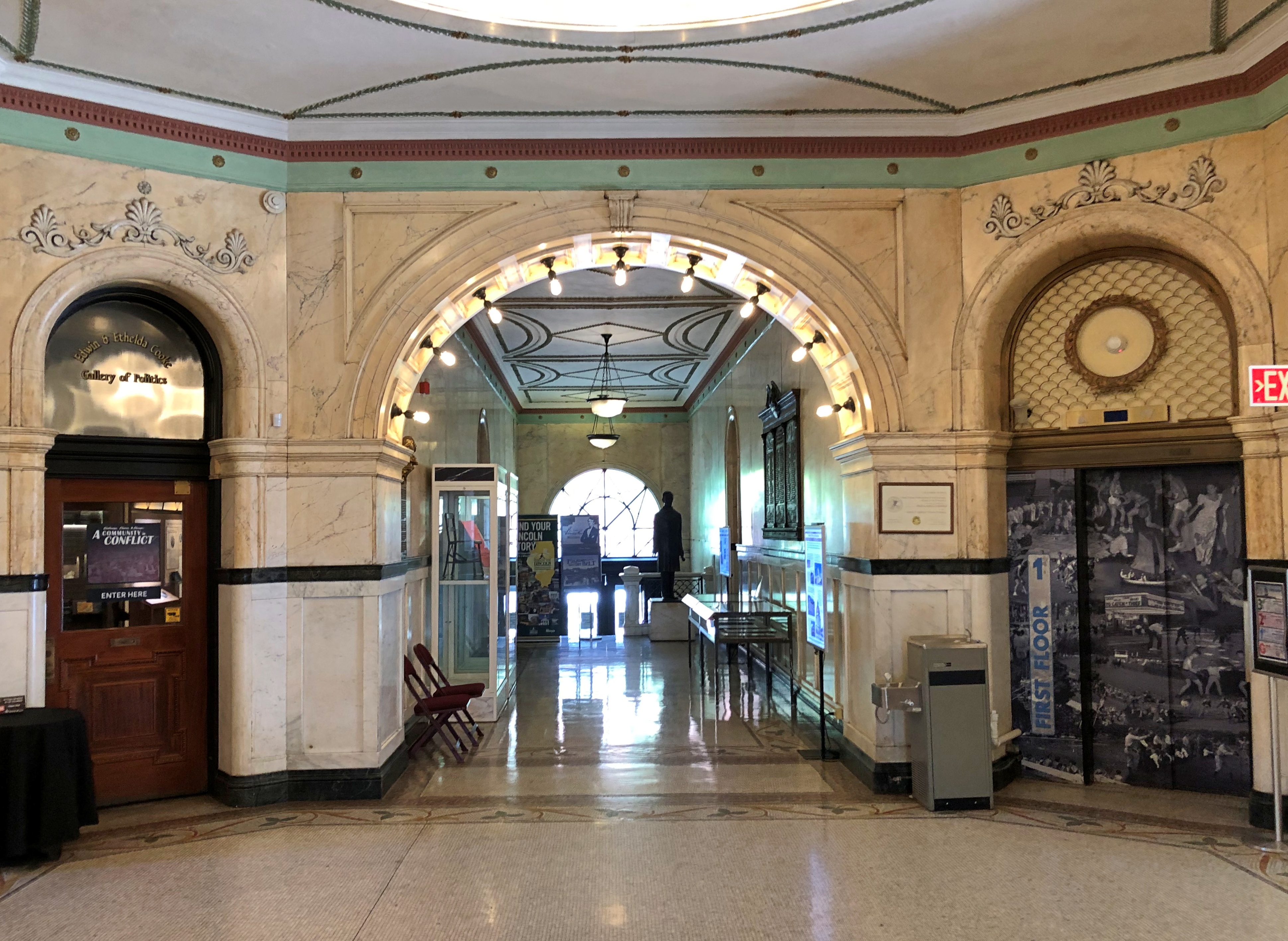
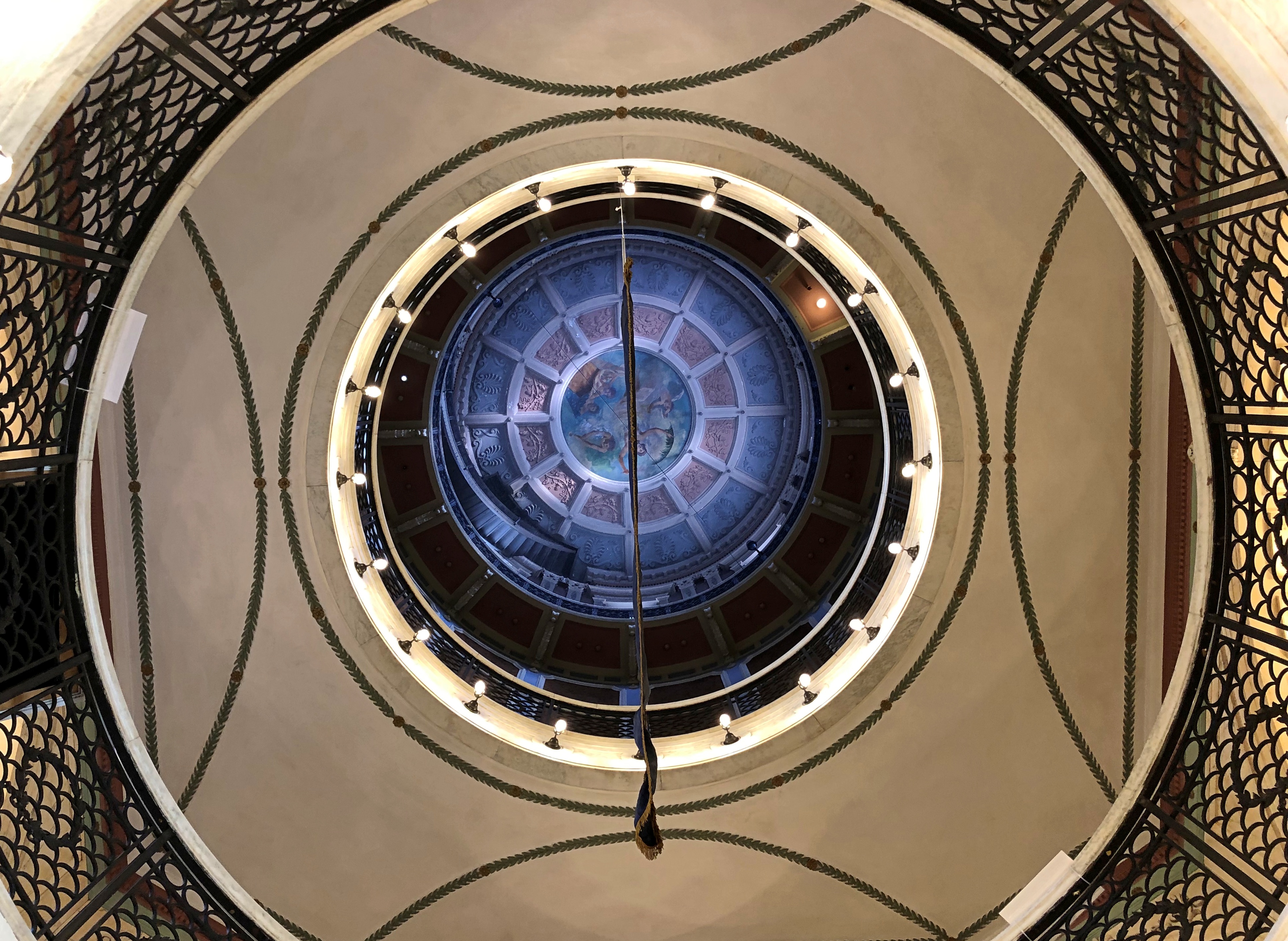
Tucked away on a side street northeast of downtown Milwaukee, and not far from Lake Michigan to the east and the University of Wisconsin-Milwaukee to the west, is Plymouth Church. I arrived there on Saturday afternoon as the last place on my Doors Open visit.Plymouth Church, Milwaukee Plymouth Church, Milwaukee

It is United Church of Christ, one of whose confessional predecessors were New England Congregationalists. Puritans and Separatists, if you go back far enough.

“Alexander Eschweiler, who designed many prominent houses and buildings throughout Milwaukee, served as the architect of the original building,” notes Historic Milwaukee. “His design harkened back to an older pastoral age, replicating the image of an old English church. The beautiful sanctuary is notable for its nine Tiffany windows.”

Plymouth Church, Milwaukee Plymouth Church, Milwaukee

Maybe eight. A volunteer at the church entrance – a little old church lady (really) – told me that one of the windows was unsigned. It sure enough looks like a Tiffany, but without the lettering, you can only be 99.44% or some other high percentage sure of its pedigree.Plymouth Church, Milwaukee

I spent a good while looking at the windows, dedicated more than a century ago to a number of early congregants.Plymouth Church, Milwaukee Plymouth Church, Milwaukee

Long looks are highly recommended.Plymouth Church, Milwaukee Plymouth Church, Milwaukee

Toward the front entrance. At that moment, the afternoon sun obscured the church’s rose window, which rises over the choir balcony.Plymouth Church, Milwaukee

Obscured unless you got up close. Then it is a thing of wonder.Plymouth Church, Milwaukee Plymouth Church, Milwaukee Plymouth Church, Milwaukee

The window was installed in 1917. Let Bobby Tanzilo, writing in OnMilwaukee, take it from here: “ ‘The window, a large Tiffany art glass, was presented to the church by Mrs. C. W. Noyes in honor of her mother, Marcia Wells, wife of Daniel Wells, who built the Wells Building and for whom Wells Street was named,’ wrote the Sentinel in June 1917.

“The window represents an angel figure bestowing the benediction of peace. This is the seventh memorial window in Plymouth Church.”

1917. How many of the congregation prayed ardently for Peace that upheaval year? For the American men headed for war? For Victory? All in a single breath?

Tanzilo also discusses the artist who did the rose window, and quite possibly the other windows, while working for Tiffany: Clara Burd (d. 1933). That despite the fact that Tiffany didn’t name the artists that worked on its projects.

“Clara Burd was – along with others including Agnes Northrop who designed the 1917 Hartwell Memorial Window that’s at Art Institute of Chicago, Clara Driscoll and others – one of the so-called ‘Tiffany Girls,’ talented women responsible for designing stunning works of art in glass (not only windows, but also lamps and other objects),” Tanzilo wrote.

She did a lot else besides. Such as book illustrations. “The Returning Prodigal” (1911).

The full article is worth a read, and has a full set of pictures of the windows of the church.

Calvary Cemetery, Milwaukee

Head west on Bluemound Road in Milwaukee – once an Indian trace, later an early paved road – and before long you arrive at Calvary Cemetery. The entrance is easy to spot, though my shot is from inside.Calvary Cemetery, Milwaukee

It’s Milwaukee’s oldest Catholic cemetery, counting as a rural cemetery, as it was outside the young city in the 1850s. About 80,000 people repose there these days, including the first mayor of Milwaukee, Solomon Juneau.

I didn’t see his grave. But there were a lot of others, varying in style, age, condition and carved sentiment. The ground has contour and the trees are mature. Everything you need for a picturesque cemetery.Calvary Cemetery, Milwaukee Calvary Cemetery, Milwaukee Calvary Cemetery, Milwaukee

Including some sizable art and a handful of mausoleums.Calvary Cemetery, Milwaukee Calvary Cemetery, Milwaukee

That’s the stone of the Jung family, early Milwaukee brewers. What was it Jung said about beer being the royal road to the unconscious? No, that was that other Milwaukee brewer, Ziggy Freud. I believe they were rivals.Calvary Cemetery, Milwaukee Calvary Cemetery, Milwaukee

A good number of priests are buried at Calvary, including some fairly recent internments, such as this long row of Jesuits.Calvary Cemetery, Milwaukee Calvary Cemetery, Milwaukee

More Jesuits. A wall of Jesuits, with room for a few more.Calvary Cemetery, Milwaukee

The cemetery was unusually busy for a cemetery, because it was on the Doors Open Milwaukee list. Not for the grounds or stones, but for the chapel atop the fittingly named Chapel Hill.Calvary Cemetery, Milwaukee Calvary Cemetery, Milwaukee Calvary Cemetery, Milwaukee

“This cream brick Romanesque style chapel was designed by architect Erhard Brielmaier and built in 1899,” says Historic Milwaukee. “A noted designer of Catholic churches around the country, Brielmaier also designed the famous St. Josaphat on the city’s south side, under construction at the same time. The chapel is located on one of the highest elevations in the city with impressive views of Story Hill, Miller Park and the downtown skyline.”

A nonprofit, the Friends of Calvary Cemetery, is overseeing the long and expensive restoration of the chapel. Some decades ago, the Archdiocese had planned to tear it down, but fortunately preservationists prevailed. Members of the Friends showed visitors around the inside on Saturday. We had to sign a waver in case a piece of it fell on us.Calvary Cemetery, Milwaukee Calvary Cemetery, Milwaukee

The crypt was dark and crypt-like.Calvary Cemetery, Milwaukee Calvary Cemetery, Milwaukee

“Originally built intended for services, prayers, private contemplation, and as a mausoleum for clergy, only one clergy member was ever buried at the site,” Historic Milwaukee continues. “The structure has two levels: the upper level features the chapel, with its raised sanctuary and high altar, side altars recessed in twin apses, lofty vaulted ceilings, soaring arches and central dome; the lower level is the bi-level mausoleum containing 45 crypts. Reposing directly beneath the main altar is the body of Reverend Idziego Tarasiewicza, interred in 1903.”

Why just him? The authoritative answer seems to be, dunno. Go figure.

Ollie & Whitman

Just ahead of Labor Day weekend, an ad for Ollie’s popped into my YouTube feed. Ollie’s? Then on Sunday, as I was driving along near home, I spotted an Ollie’s where vacant retail had been until recently. Coincidence? No, not at all.

“Ollie’s is now America’s largest retailer of closeout merchandise and excess inventory,” the retailer’s web site says. “The chain currently operates 492 stores in 29 states.”

I stopped by for a look. “How long has the store been open?” I asked an employee. Four days was the answer. A new Ollie’s for Labor Day weekend, it seems.
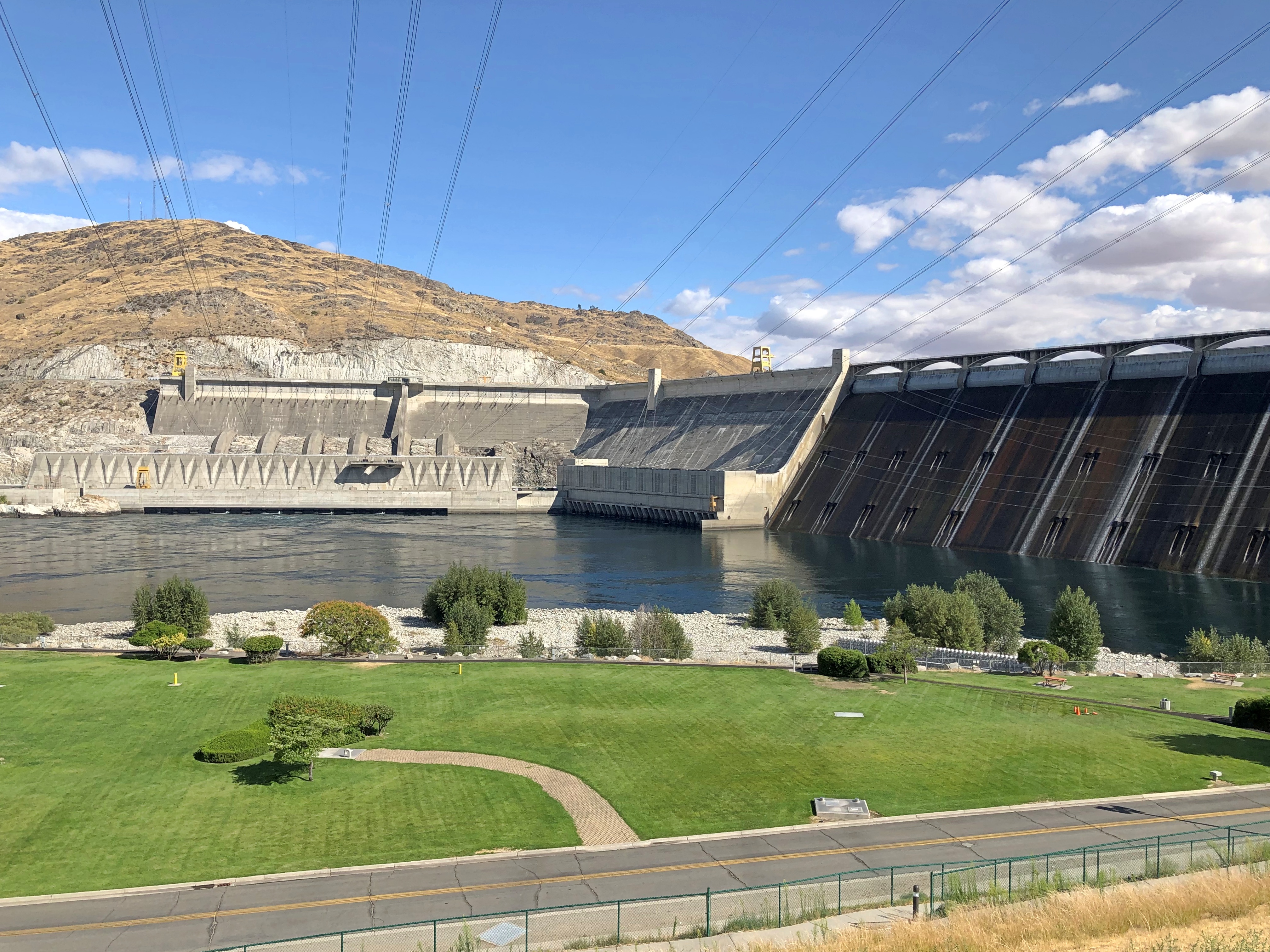
As you’d expect from that description, it’s a hodgepodge of a place: canned and boxed food, books, personal care products, cheap furniture, clothes, toys, pet supplies, mattresses and on and on. I found a few items to buy, mostly food, but also a book: the 2023 edition of A Guide Book of United States Coins, the Red Book published for a long time (since 1946) by Whitman. Remaindered: the 2024 edition is out now.

Still, ’23 is mostly current, and it’s packed with information. The Red Book an almanac for U.S. coinage. Moreover, it’s a sturdy volume, with strong binding, meant to be opened an closed a lot. List price: $19.95. Ollie’s price: $2.99. Nice, Ollie, nice.

The recto-verso of a real book makes it easier to thumb through, I believe, than a similarly informative web site, and chance on interesting things. Or look them up. I already had the vague idea that I’m unlikely ever to own a Brasher Doubloon, for instance. Whitman quantifies that for me. One sold for about $9.36 million at auction in 2021. Other examples have sold in the millions as well, and one version is so rare that the Smithsonian has the only one.

The doubloon counts as a post-colonial issue, but before the U.S. mint was established in 1792. Since I bought the book, I’ve been thumbing through the entries on colonial and post-colonial coins. A fascinating array I didn’t know much about: Willow Tree and Oak Tree and Pine Tree coinage, Lord Baltimore coinage, American Plantation coins, Rosa Americana coins, Carolina Elephant tokens, Gloucester tokens, Higley coppers, Nova Constellatio coppers and the mysterious Bar coppers, among many others.

“The Bar copper is undated and of uncertain origin,” the Red Book says.

The Peshtigo Fire Museum & Fire Cemetery

You can drive from Sault Ste. Marie to metro Chicago in a day. It would be a long day, maybe eight or nine hours depending on traffic, construction, etc., but you can do it. I decided against such a long day, breaking the trip roughly in half by spending the last night of the drive around Lake Superior – which I was leaving far behind by this point – in Marinette, Wisconsin.

One reason: so I could enjoy a leisurely drive through the UP, including westward on Michigan 28 and then south on National Forest 13 through Hiawatha National Forest.

These are roads unlikely to make it on conventional best-drive lists, except for one that I might compile myself according to idiosyncratic lights, which might also include the Icefields Parkway, Lake Shore Drive, Alamo Heights Blvd., North Carolina 12 on Hatteras and Ocracoke islands, among others that come to mind. That the UP has two such favorite roads says something about the car-commercial driving to be had in the mostly forested UP.

Light enough traffic, at least on National Forest 13, that you can stand on the center line and take pictures at your leisure.

Another thing about NF 13: It took me to Pete’s Lake once upon a few times, and again on August 5, though I didn’t camp this time or experience a thunderstorm or yahoos yelling in the distance. It remains a sentimental favorite spot.National Forest 13

On the morning of August 6, I finally headed home, with one more stop in mind: Peshtigo, Wisconsin, a place that demonstrates, if nothing else, that the human mind is a creature of habit.

That includes me. I only mentioned the town in passing in 2006, when we stopped at the Peshtigo Fire Museum.Peshtigo Fire Museum Peshtigo Fire Museum

The building is a former Congregational church, on the site of a Catholic church that burned down in the firestorm of 1871 – which remains the deadliest wildfire in U.S. history, according to the National Fire Protection Association. Remarkably, the Maui wildfire is, for now, placed at fifth; modernity can’t protect us from everything.

“On the night of October 8, 1871, in Peshtigo, a lumber town about seven miles southwest of the Michigan-Wisconsin border, hundreds of people died: burned by fire, suffocating from smoke, or drowning or succumbing to hypothermia while trying to shelter in the Peshtigo River,” notes USA Today.

“But the fire also raged across Oconto and Marinette counties into Michigan’s Upper Peninsula, while another blaze burned across the bay of Green Bay in Brown, Door, and Kewaunee counties.”

No one knows exactly how many people perished in the Peshtigo fire — I’ve seen varying estimates, all in the low thousands — but it was certainly more than in the Great Chicago Fire, which happened the same day. Which one is mostly remembered? Chicago, of course, thus illustrating a habit of mind. Once a thing enters the tapestry of the popular imagination, it can crowd out similar events.

Peshtigo isn’t a large museum, but it is full of stuff.Peshtigo Fire Museum

The museum includes much information and a few artifacts from the fire, though naturally not much survived. The fire itself is illustrated not by photography, but artwork.Peshtigo Fire Museum

Two volunteer docents were on hand to spread the word about the fire. It’s the only distinction for modern Peshtigo, pop. 3,400 or so. One was a woman about my age, the other a woman about Ann’s age. Again, good to see young’ins up on their local history.

Speaking of that, the museum is actually more local history than the single incident of the fire, as important as that is. As such, there are many artifacts from the entire spectrum of the town’s history (including in the basement).Peshtigo Fire Museum Peshtigo Fire Museum Peshtigo Fire Museum Peshtigo Fire Museum

Next to the museum is the Peshtigo Fire Cemetery.Peshtigo Fire Cemetery Peshtigo Fire Cemetery Peshtigo Fire Cemetery

Including survivors of the fire.Peshtigo Fire Cemetery

Along with many who did not.Peshtigo Fire Cemetery Peshtigo Fire Cemetery

Too grim a note to end on. Not far south of Peshtigo is a roadside plaque I’d seen before, but not photographed.45th parallel Wisconsin 45th parallel Wisconsin

“The most obsessive of all of 45th Parallel markers are the plaque-on-rocks sponsored by Frank E. Noyes,” says Roadside America. “We know that he sponsored them because he put his name on every one.

“Frank was 82 years old, a faithful Episcopalian and 32nd degree Mason, and president, general manager, and editor of The Daily Eagle, a Wisconsin newspaper founded by his dad. For reasons lost to time, he became fixated on the intangible world of latitude in 1938 and put up plaques around his home town of Marinette to mark the halfway line.”

There are other such signs, of course, not of Frank Noyes origin, such as at the Montana-Wyoming border, as seen in 2005.

Except for bathroom and gas breaks, the Wisconsin 45th parallel proved to be the last stop of the nearly 2,000 miles around the lake.

Grand Portage National Monument

So far since taking office, President Biden has proclaimed five new national monuments under the authority granted him by the Antiquities Act of 1906, including one only last week, with the lengthy name of Baaj Nwaavjo I’tah Kukveni – Ancestral Footprints of the Grand Canyon National Monument, which is in Arizona near the Grand Canyon. (For those keeping score, his immediate predecessor proclaimed five over four years.)

How can we keep up with all the new ones? For now, there are 133 national monuments, with more coming, I’ve read.

Grand Portage National Monument has been around a little longer. Longer than me, but not much, being one declared by President Eisenhower. It occupies land very near the tip of the arrowhead region of Minnesota, within a few miles of the Canadian border, which happens to the Pigeon River at that point.
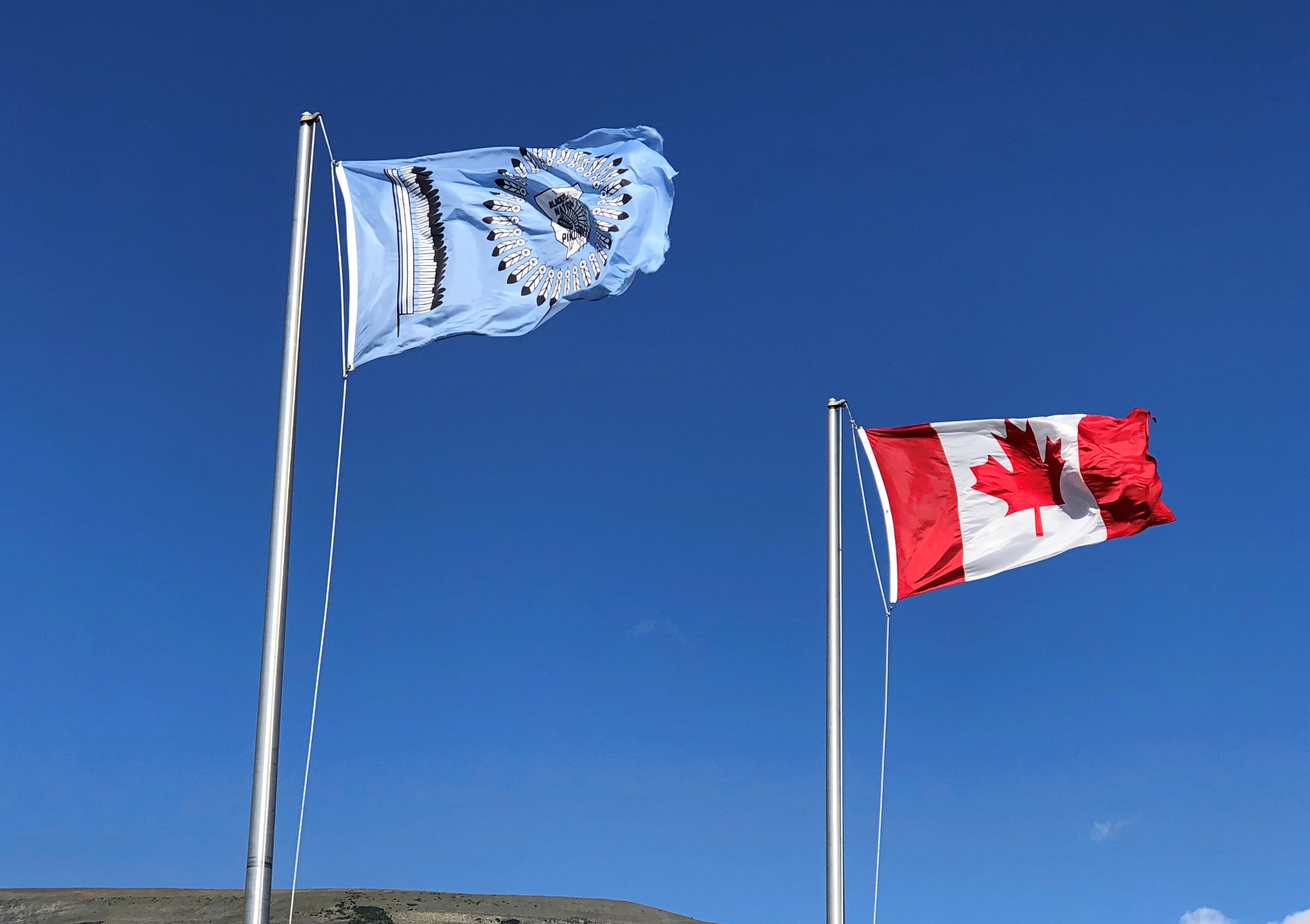
I arrived fairly late in the afternoon of July 30. The U.S. flag, Minnesota and – what’s the other one?Grand Portage National Monument

The flag of the Grand Portage Band of Chippewa; the national monument is entirely within their reservation. More about them is hereGichi Onigaming = The Great Carrying Place.

“Grand Portage was a fur-trade depot and route of the voyageurs at the western extremity [sic] of Lake Superior,” says the Canadian Encyclopedia. “It was the first and most strenuous of the 29 portages from Lake Superior west to Lac La Croix, requiring that each voyageur carry four loads of 80 kg over some 14 km of rocky trails around the cascades of the Pigeon River.
“The North West Co. (NWC) established an extensive post at the mouth of the river, which by 1784 was the wilderness capital of the fur trade, providing a meeting place for the voyageurs bringing supplies from Montréal (porkeaters) and the traders bringing furs from the North West (winterers). Within the post, which was protected by a 5-m high palisade, reinforced with a bastion and a heavy gate, were the Great Hall, living quarters, shops, warehouses and a stone powder magazine.”

The NWC packed up and left after it was finally determined that, according to the Jay Treaty of 1794, the site was in the United States rather than British North America, though it took some time for the company to actually leave (1802). In more recent times, the United States reconstructed the Grand Hall and the wooden palisades.Gichi Onigaming: The Great Carrying Place

Along with Native structures of the period outside the palisade.Gichi Onigaming: The Great Carrying Place

Inside the palisade, work still seems to be under way, or at least renovation. The Great Hall wasn’t open.Gichi Onigaming: The Great Carrying Place Gichi Onigaming: The Great Carrying Place

The North West Co. flag still flies. Gichi Onigaming: The Great Carrying Place

As you’d expect, the Great Hall faces Grand Portage Bay. Once upon a time, it was a busy place in the short northern summers. Now, not so much.Gichi Onigaming: The Great Carrying Place Gichi Onigaming: The Great Carrying Place Gichi Onigaming: The Great Carrying Place

Another view of Grand Portage Bay from the edge of the national monument.Gichi Onigaming: The Great Carrying Place

Way off in the distance – though not really that far, about 20 miles – is Isle Royale National Park, a large island in Lake Superior, which was more distinct with the naked eye than in the digital image.

Still, I was a little surprised that it is visible at all. Except for some of the Alaskan properties, it’s pretty much the definition of remote among national parks, with only a few more than 25,400 visitors in 2022, according to the NPS. The fifth-least visited park in the system.Gichi Onigaming: The Great Carrying Place

Since getting there and staying there is an involved process, I couldn’t make Isle Royale work logistically as a destination. This time.

The Wisconsin State Capitol

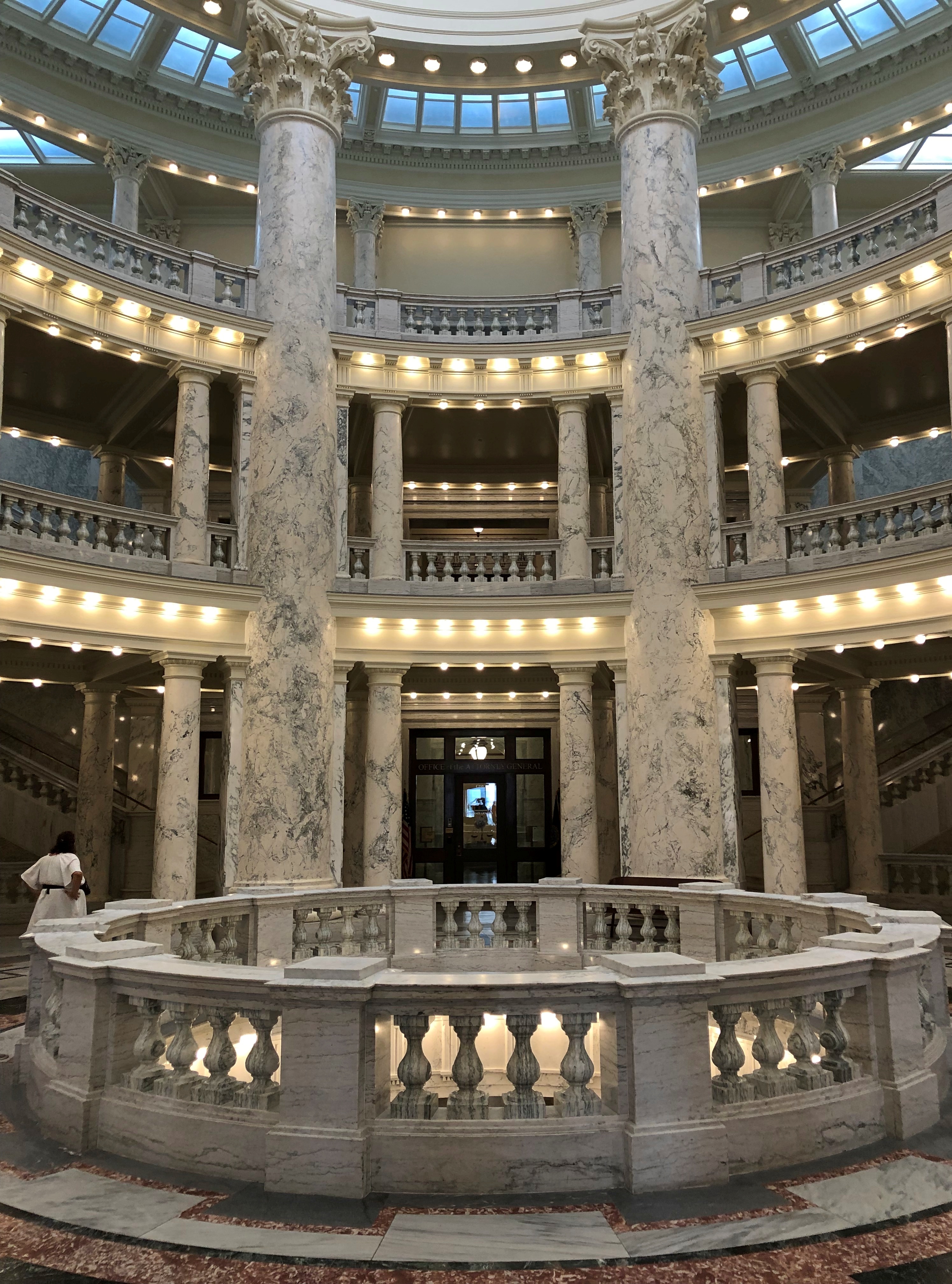
When I visited the Wisconsin State Capitol in Madison in late July, I didn’t see this building.Third Wisconsin State Capitol 1887

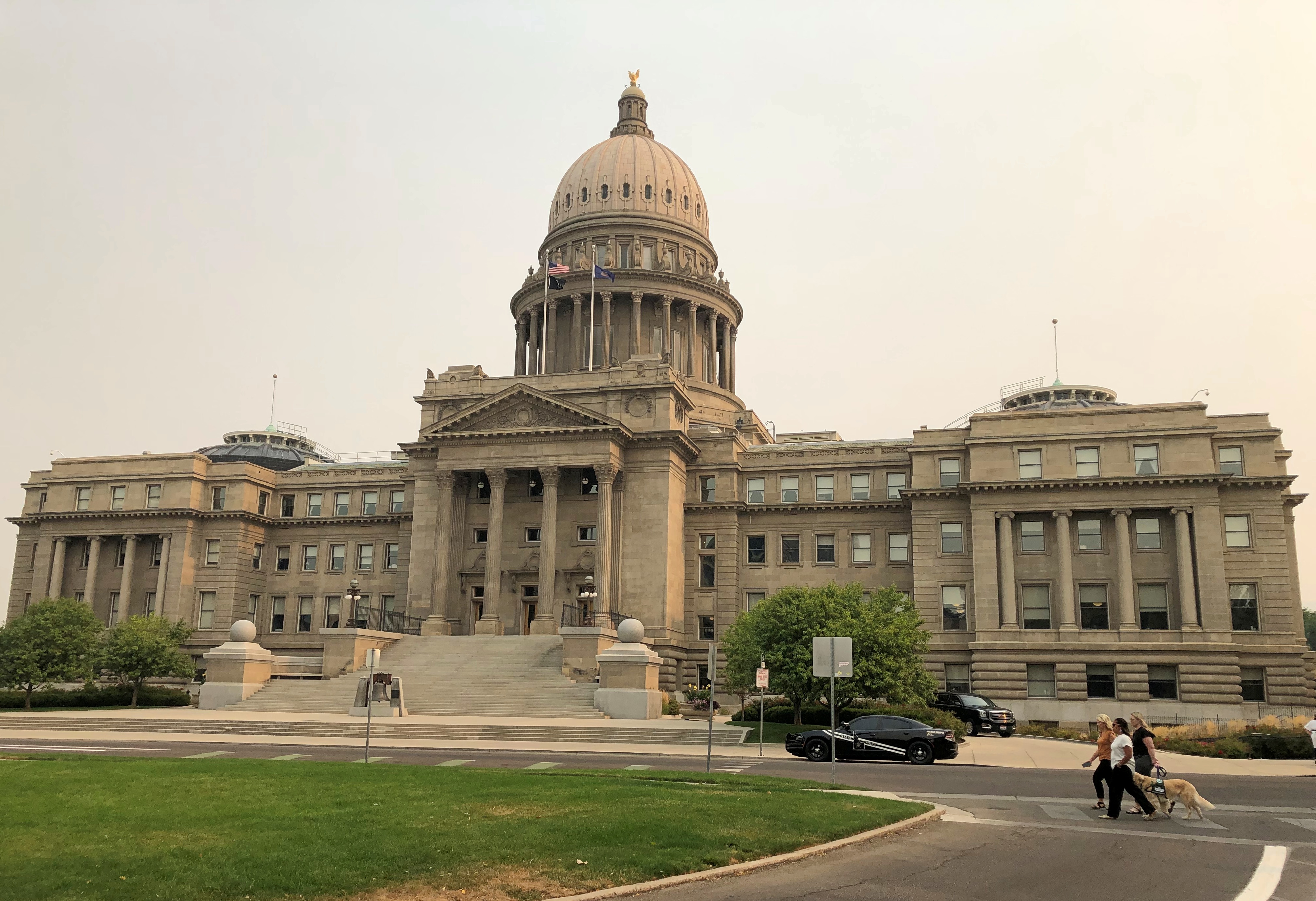
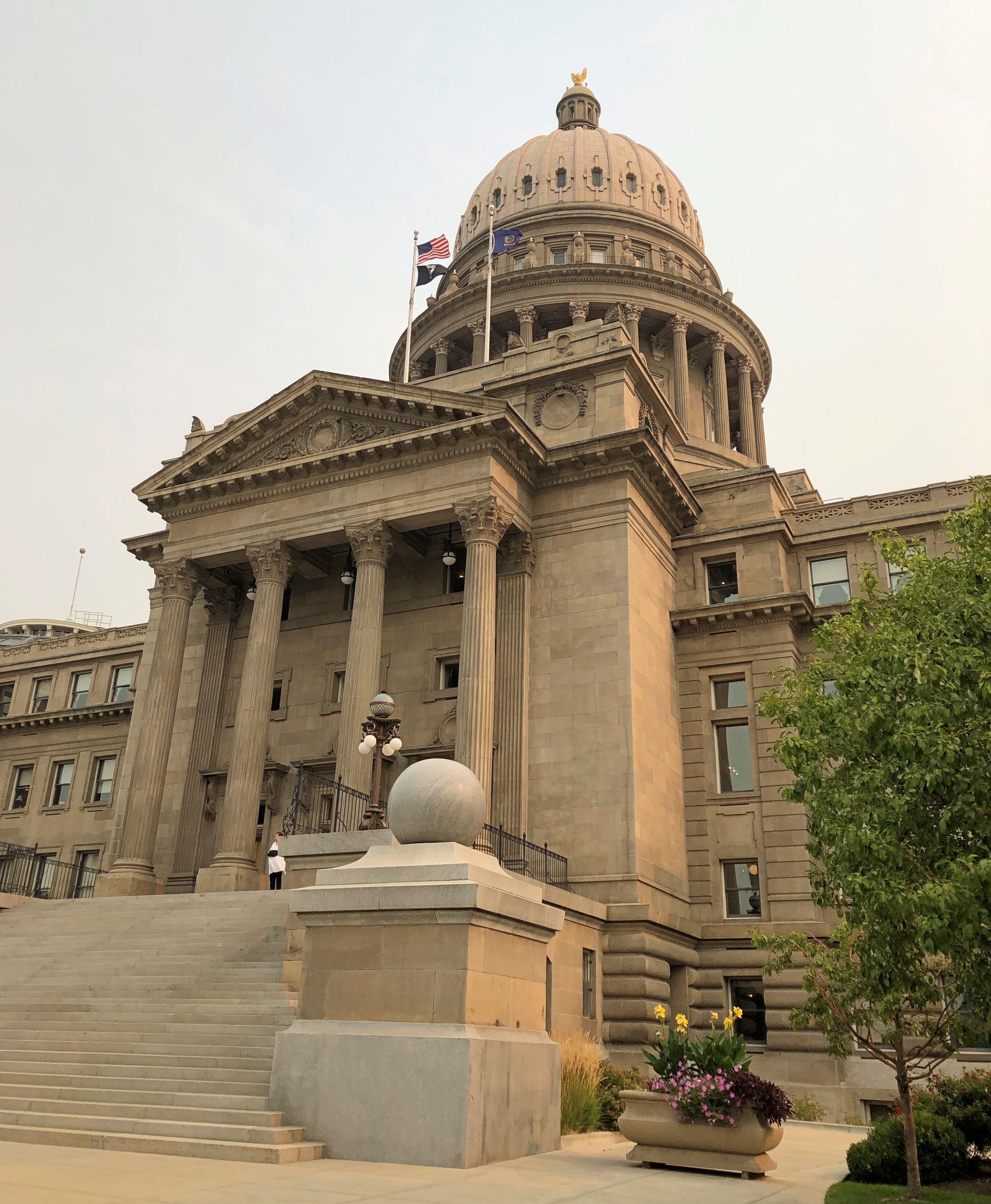
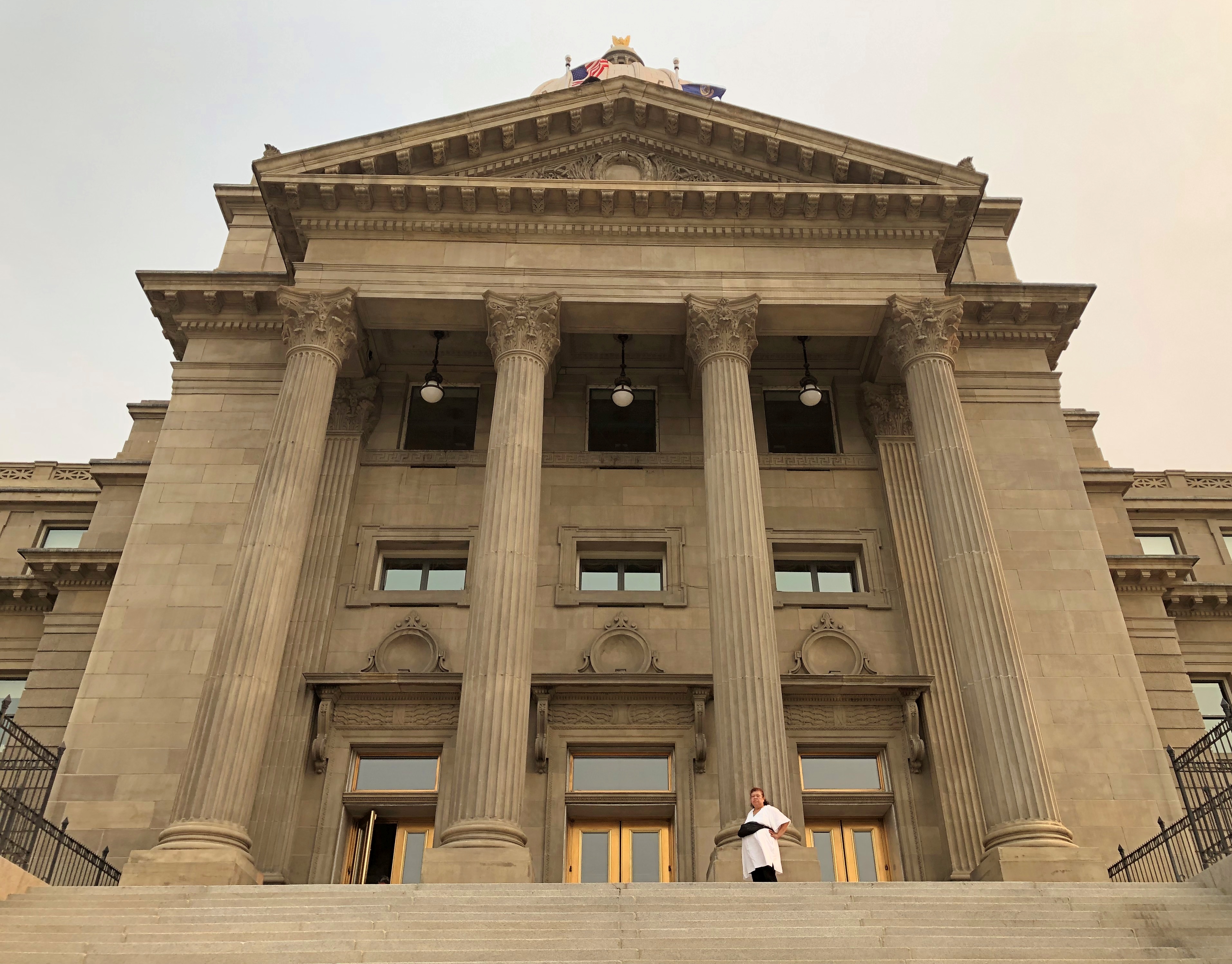
Rather, I saw this one, late in the afternoon of the first day of my drive.Wisconsin State Capitol Wisconsin State Capitol Wisconsin State Capitol

The beaux-arts capitol is actually Wisconsin’s fourth, replacing the one pictured in the postcard, which burned down in early 1904. The state tasked George B. Post to design a new structure, which took a while to complete, finally being finished in 1917. Post was known for late 19th-century mansions – paid for by robber barons who wanted to show off – but he also did other elaborate buildings, such as the New York Stock Exchange.

The gilded bronze on the top of the dome is yet another Daniel Chester French work, “Wisconsin.” French was a prolific fellow.

Like the Tiffany Bridge, this wasn’t my first visit to the capitol. That would have been sometime in the late 1980s. Wisconsin is, however, one of the few capitols, along with Texas and Illinois, that I’ve visited more than once.

So this visit didn’t change my vanity map of capitols, but I thought I’d update it anyway (green for interior visits, orange-pink for exteriors only, Hawaii gold because I don’t remember, but I might have seen it).

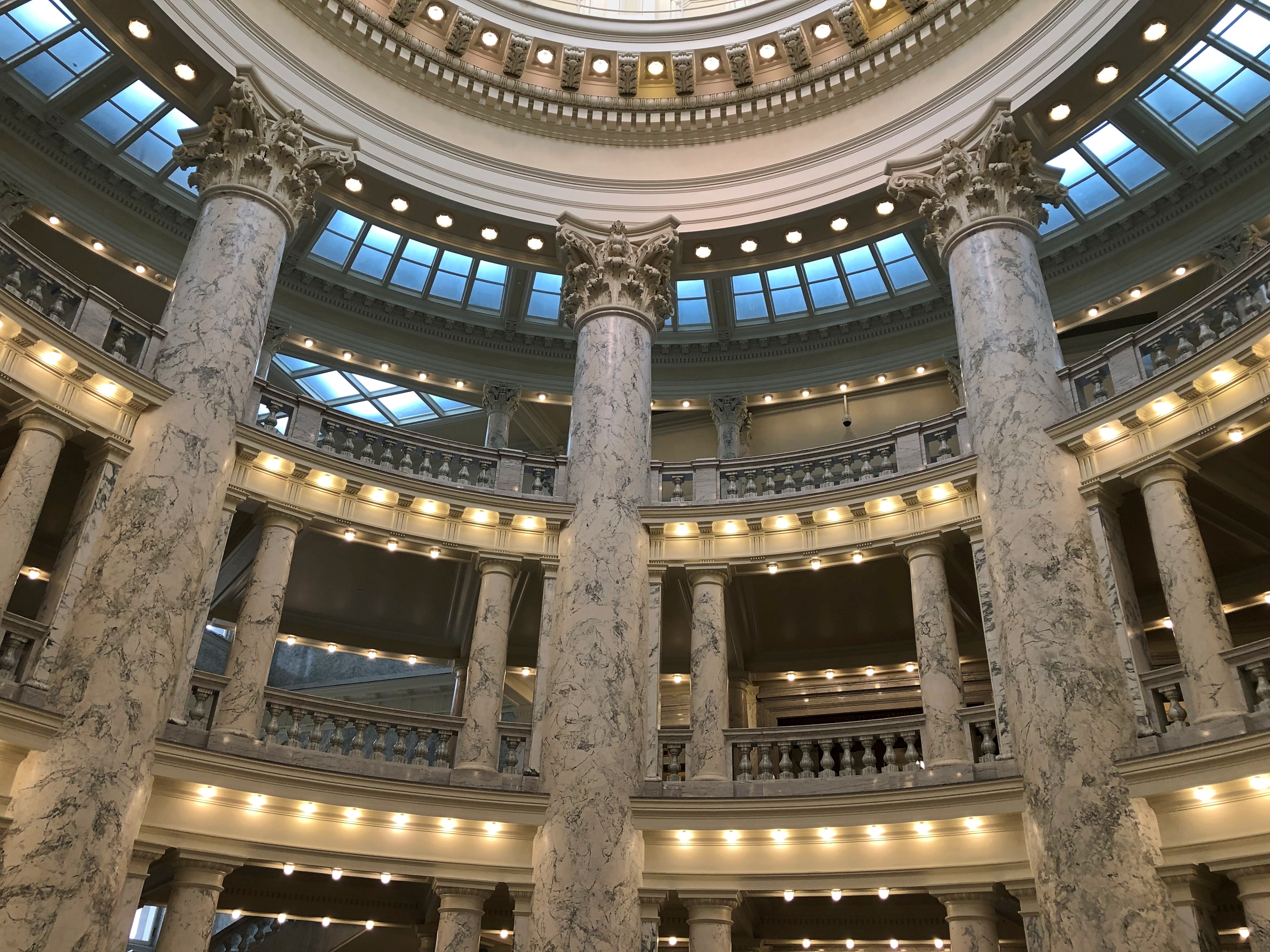
Lilly and I spent some time in the Wisconsin capitol during a December 2016 visit to Madison. It was cold that day, naturally, and visiting was a relief from the chilly air. This time the building interior was a relief because the day was hot and sticky. Besides, who doesn’t enjoy a view inside the dome?Wisconsin State Capitol
The interior is as resplendent as the exterior. Badgers were in a few prominent places.Wisconsin State Capitol Wisconsin State Capitol Wisconsin State Capitol

Those paintings are allegories. Liberty in this case, but also Justice, Government and Legislation, on the other three corners.Wisconsin State Capitol

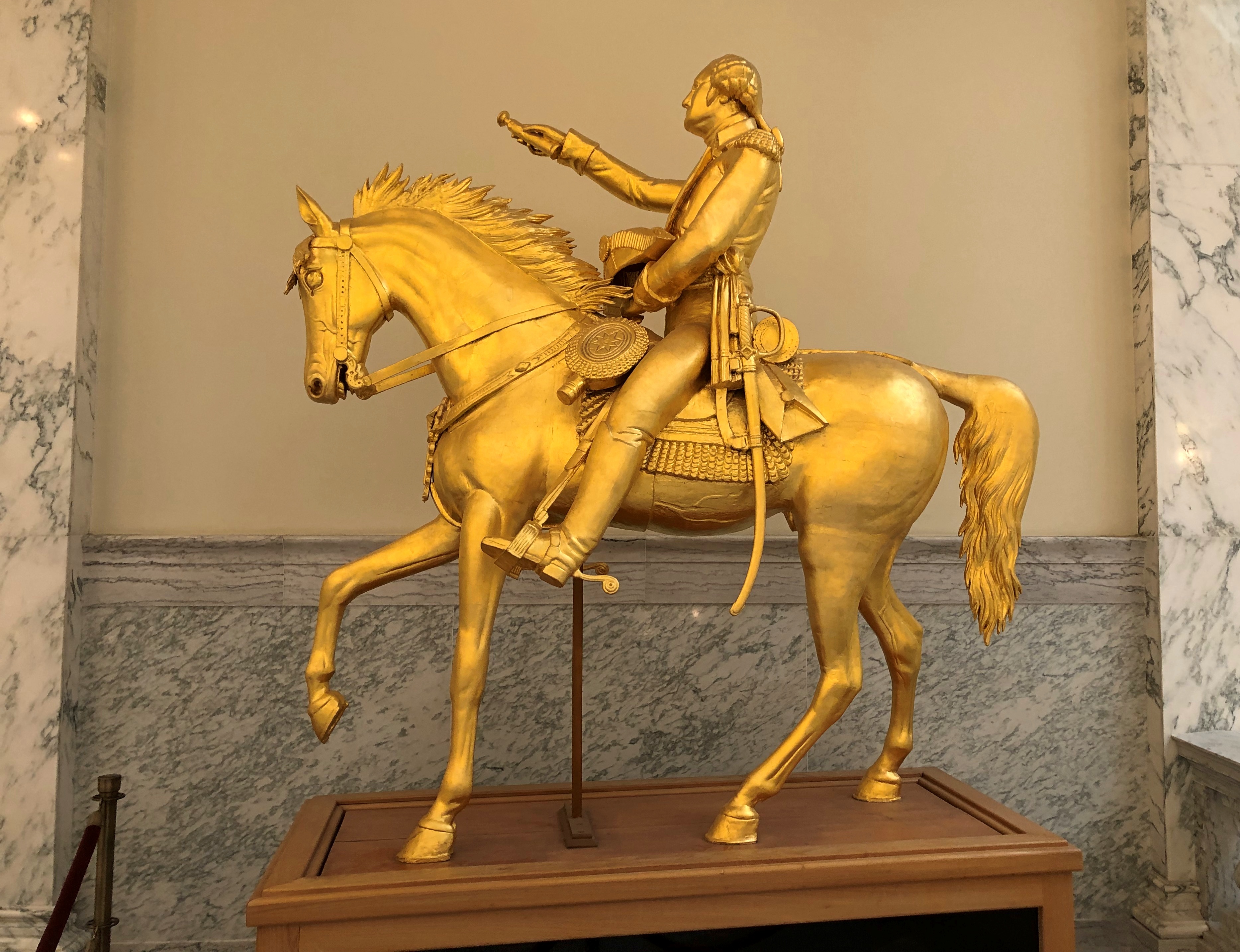
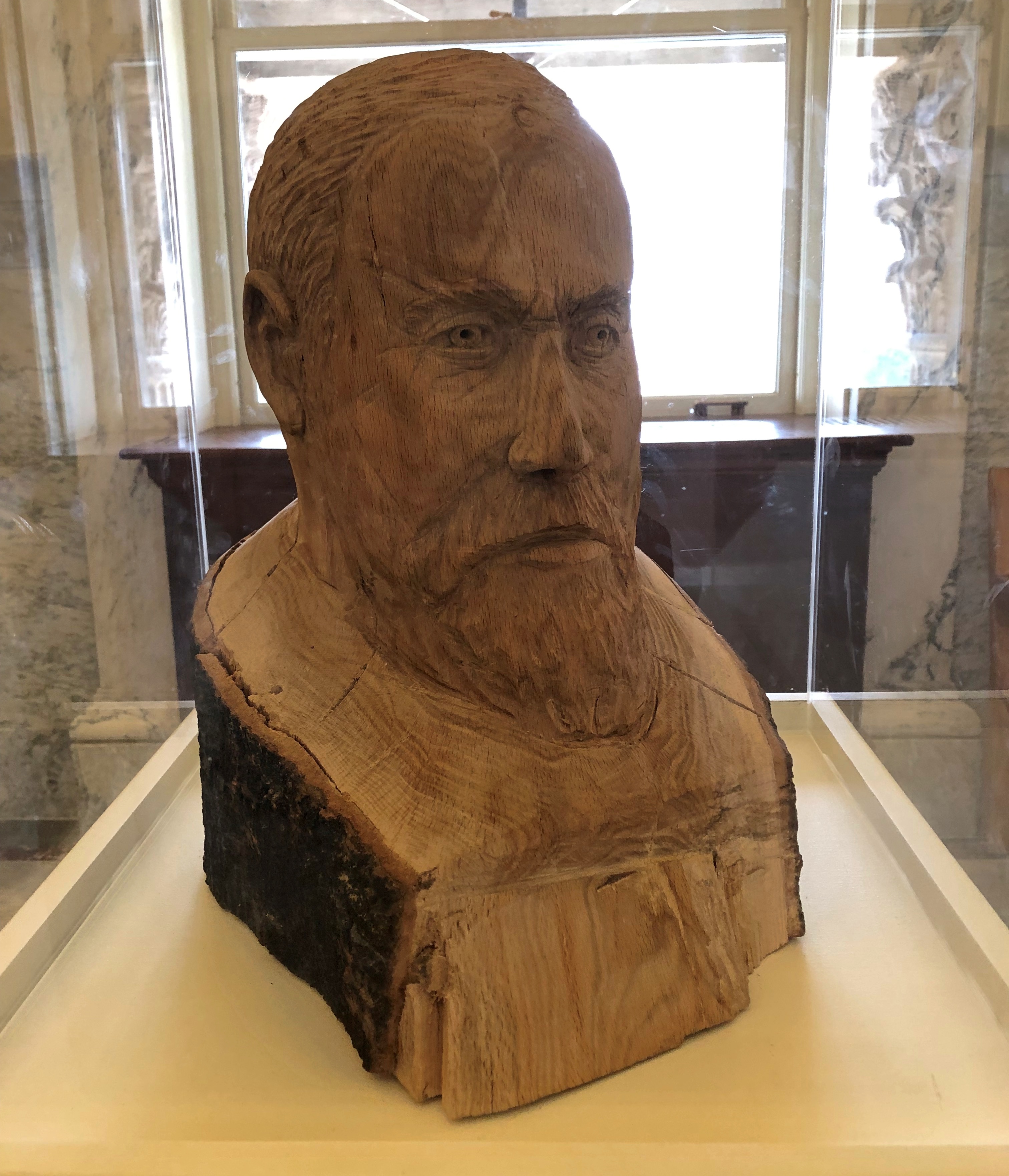
This capitol doesn’t feature a lot of statuary, unlike some, but there is a bust of Robert M. La Follette, no doubt considered a Wisconsinite among Wisconsinites.Wisconsin State Capitol

I like these pics of him, lifted from Wikipedia. Fighting Bob all right.

The Assembly chamber was closed, but I could still see Old Abe through the window. He looks down on the legislators, presumably reminding them to do their duty.Wisconsin State Capitol

I’ve seen Old Abe depicted before: on a tractor and a memorial at Vicksburg. Another Wisconsinite among Wisconsinites: He was the mascot of the 8th Wisconsin Volunteer Infantry Regiment from 1861 to ’64.

“The regiment procured a large, shield-shaped mount and perch to carry the eagle,” says Atlas Obscura. “Old Abe witnessed all of the regiment’s battles. He was taken into combat with the regimental colors… Old Abe participated in 37 battles and skirmishes. The regiment mustered out of service in 1864. On September 26, 1864, his army comrades returned Old Abe to Wisconsin and gifted him to the people of the state.”

When the bird died in 1881, he was stuffed and put on display at the capitol – the one that burned down in 1904, reducing Old Abe to ashes. The one you can see now is another stuffed eagle, doing homage to the mascot. I didn’t remember seeing him on previous visits, but now I have. Huzzah for Old Abe.

Old World Wisconsin

On Canada Day this year, we were in Wisconsin. If we’d been in Canada, our Jasper Johns moment probably wouldn’t have happened.Old World Wisconsin

Back up for a little context.Old World Wisconsin

I looked him up, and remarkably, Jasper Johns is still alive at 93, and doing art as of only a few years ago.

We saw the patched 48-star flag on a clothesline of a re-created farm yard at Old World Wisconsin, our main destination during our early July southern Wisconsin dash (a one-day out, one-day back trip, according to my idiosyncratic definition).

Old World is a large open-air museum near Eagle, Wisconsin and Kettle Moraine State Forest. I’ve known about the place for years, probably since camping at Kettle Moraine in the late ’80s, but had never gotten around to a visit, not even with small children in tow. My Wisconsin completist impulses kicked in during the dash, so Yuriko and I went to Old World.

A unit of the Wisconsin Historical Society, the place is large: about 480 acres, with about 60 antique buildings from across the state, and a new brewpub, which I suppose counts as a welcome revenue stream for the nonprofit. Some are town buildings, others farm structures. Many immigrant styles are represented: Danish, Finnish, German, Norwegian, and Polish, and well as in-nation New England and African-American settlers in Wisconsin.

Among the town buildings is St. Peter’s (1839), the first Catholic church building in Milwaukee.Old World Wisconsin Old World Wisconsin

That wouldn’t be the last prominently placed stove we’d see. These were pre-HVAC buildings, after all. Makes me glad for the luxury of central heating, as much as I complain about winter.

More town structures.Old World Wisconsin Old World Wisconsin Old World Wisconsin

The red one is an 1880s wagon shop from Whitewater, Wisconsin.Old World Wisconsin

An 1880s blacksmith shop, with a smithy re-enactor.Old World Wisconsin Old World Wisconsin

And the band played on.Old World Wisconsin

Among the farm structures, you can find this Norwegian schoolhouse.Old World Wisconsin

With a spelling bee ongoing when we dropped in. Old World Wisconsin

Antidisestablishmentarianism wasn’t a word in the bee, though it really isn’t that hard, come to think of it. Scherenschnitte: now there’s a tough one. Unless you’re German.

More farm structures.Old World Wisconsin Old World Wisconsin Old World Wisconsin

More all-important stoves for those long winters. And cooking.Old World Wisconsin Old World Wisconsin Old World Wisconsin

There were a few farm inhabitants, such as chickens and cows. We were able to sample some wonderful ice cream made from fresh milk. Also, we encountered an animal I called Future Bacon.Old World Wisconsin

Yuriko chided me for that, but I’ve seen her eat bacon.

Along the Rock River, Janesville

On the first two days of July, we spent some time in southern Wisconsin, staying the night at a hotel near the Rock River in Janesville, a burg of about 65,000 and seat of Rock County.

Late on the afternoon of the 1st, I took a stroll along the river in downtown Janesville. As urban riversides go, it’s drab, an echo of a time when cities generally ignored their rivers, except for purposes of commerce.Janesville, Wisconsin Janesville, Wisconsin Janesville, Wisconsin

Even Rockford, Illinois, downriver from Janesville on the Rock, has a more pleasant downtown riverside, so small industrial-decline Midwestern cities can refurbish their riverwalks. So can the likes of Waco, Texas. The Rock, incidentally, is a direct tributary of the Mississippi, meeting that river at Rock Island, Illinois.

Still, the riverside isn’t completely without its interests. A fairly new pedestrian-bicycle bridge crosses near an equally newish riverside plaza, or at least an open space.Janesville, Wisconsin

The bridge sports a boulder, too. It’s hard to see, but there’s an inscription on it: The Mick & Jane Blain Gilbertson Family Heritage Bridge. Janesville, Wisconsin

Jane Blain Gilbertson is CEO of Blain’s Farm & Fleet, a big box chain with 44 stores in the upper Midwest and headquartered in Janesville. The stores carry, among many other things, agricultural supplies and equipment. I remember visiting the one in Montgomery, Illinois, years ago to see what there was to see inside.

Downtown Janesville was eerily empty that late Saturday afternoon. There were a few kids – and I mean junior high or high school kids – hanging out near the bridge, making giggly noises. A small party of adults was having a cookout in the yard of one of the apartment buildings near the river. A few cars passed through the area, but not many. Then there was me.

Every town has one of these. Oddly, it was tucked away in a cul-de-sac.Janesville, Wisconsin

Why visit Janesville? Why stay there? I’d passed by many times, but not spent any time in the town. I guess when it comes to Wisconsin, I’m something of a completist.

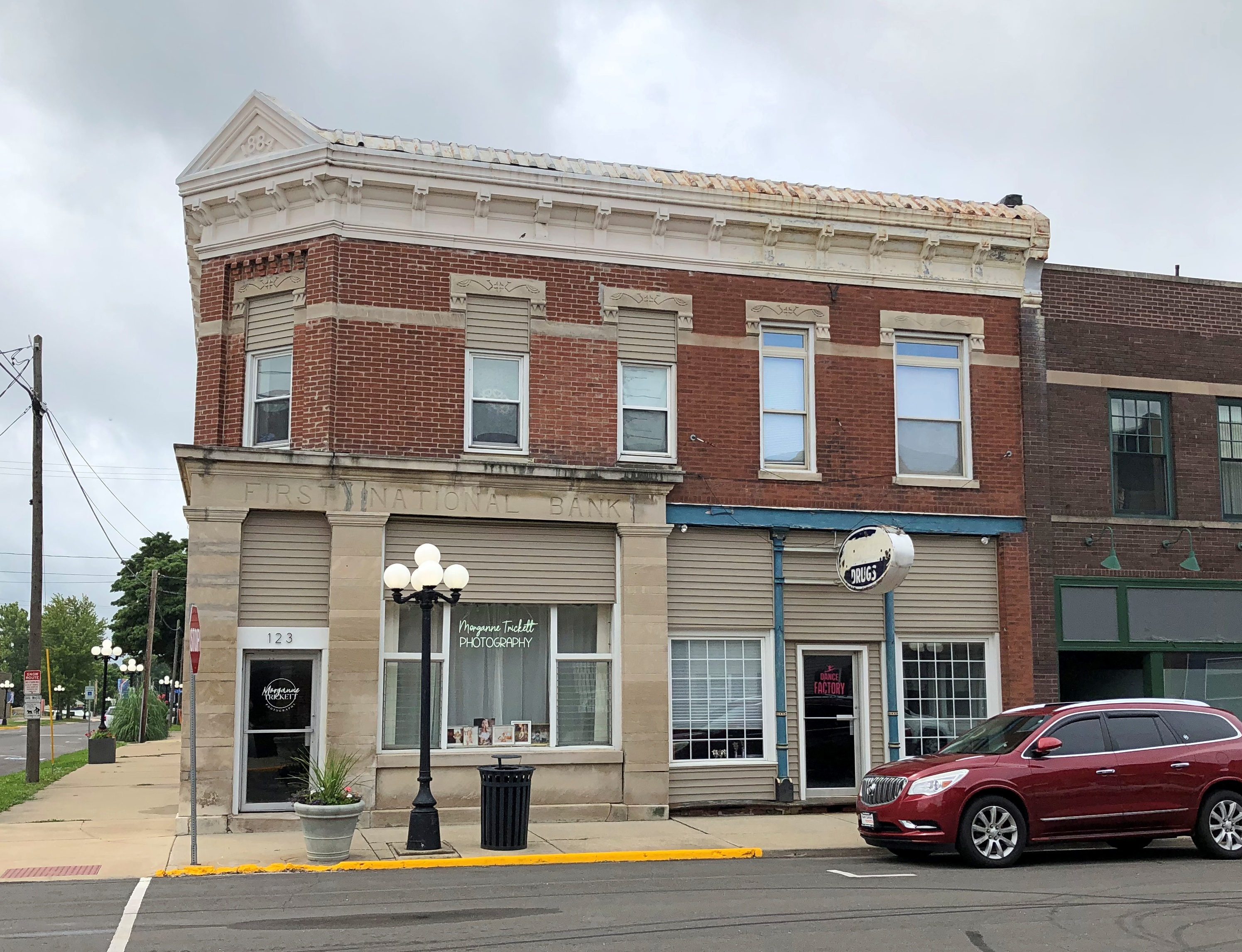
Janesville has some handsome older buildings within a few blocks of the river, most still occupied, but some not, such as a one-time First National Bank.Janesville, Wisconsin

The McVicar Bros. and Helms buildings. Part of a larger block.Janesville, Wisconsin Janesville, Wisconsin

Other buildings.Janesville, Wisconsin Janesville, Wisconsin Janesville, Wisconsin

Evidence of a more robust downtown life in the past: an old Kresge building. Kresge, of course, was the ancestor of Kmart, and a mighty retail chain. Once upon a time.Janesville, Wisconsin
Janesville, Wisconsin

I had to check: As of more than a year ago, there were only three U.S. Kmarts still open.

That means that this 1987 reference in Calvin & Hobbes will be lost to time. Is already lost to time. I’m sure if I mentioned “blue light special” to either of my daughters, it wouldn’t register.

Calvin: Dad, how do people make babies?

Calvin’s Dad: Most people just go to Sears, buy the kit, and follow the assembly instructions.

Calvin: I came from Sears??

Calvin’s Dad: No, you were a blue light special at Kmart. Almost as good, and a lot cheaper.

I never went to Kmart much, but I did go occasionally, and I remember being in one once, probably in Nashville in the mid-80s, during a blue light special. I heard “Attention, Kmart shoppers!” They did say that. I didn’t buy whatever it was.

That’s the kind of thing that came to mind wandering the empty streets of Janesville.

Delavan, Wisconsin

On Friday, a week after the Bastille Day Lightning Strike — certain things in one’s life just need their own names, such as that or the long-ago Mirabella Incident, when I was the focus of an Italian town’s attention for a few minutes — I opened the deck umbrella to shield myself from the noonday sun, which is pretty much the only thing the umbrella is good for.

I have a conversation piece for anyone who visits my deck in the summer.

Early in July, we passed through Delevan, Wisconsin, pop. 8,500.

“During the second half of the 1800s, as many as two dozen circuses flocked to the Walworth County town of Delavan to winter their horses, elephants and other big tent critters,” said the Milwaukee Journal Sentinel in a 2011 article.

“The famed P.T. Barnum Circus was organized in Delavan in 1871… The Mabie brothers, who ran the U.S. Olympic Circus — during its time the largest traveling show in the country — quartered their animals during the off-season at the site of the Lake Lawn Resort on Delavan Lake because of its abundant pastures and water.

“Alas, the last circus closed its winter digs in 1894, and within 25 years, the huge ring barns and other landmarks were gone.”

So Baraboo isn’t Wisconsin’s only circus town, though it is the one with the Circus World circus museum. Baraboo claims the Ringling Bros. circus. Delevan, which is in southeastern Wisconsin only a few miles northwest of Lake Geneva, claims P.T. Barnum’s circus, as this Walldogs mural attests.Delavan, Wisconsin

Barnum’s circus – mainly, he lent his name and financial backing – later merged with Bailey’s circus, and that entity was eventually bought by Ringling Bros. So I suppose Baraboo prevailed in that sense, though the combined circus skedaddled to Florida in the early 20th century anyway.

We stopped for a look around and possibly lunch, which we ended up eating in Elkhorn, a few miles away. Delevan has a pleasant main street, Walworth Ave., marked by century-old (at least) buildings.Delavan, Wisconsin Delavan, Wisconsin

Note the street bricks. They are apparently distinctive enough to be on the National Register of Historic Places as Delavan’s Vitrified Brick Street. So we trod on historic ground, very literally.

The mural isn’t the only reminder of the town’s circus past.Delavan, Wisconsin Delavan, Wisconsin

Those figures are in the aptly named Tower Park. A water tower emblazoned with the town name dwarfs them.Delavan, Wisconsin

Unlike many water towers, you can stand right under the one in Delevan. Delavan, Wisconsin Delavan, Wisconsin Delavan, Wisconsin

Maybe I should take more pictures of water towers, though of course I’ve taken a few other images over the years.

Kansasville Wisconsin Veterans Memorial Wayside Park

A run of sunny days lately. The early cicadas are bleating and the early crickets are singing, and while the firefly population has been slender this year, they’ve made their high-summer presence known at dusk recently. Much of the nation is hot, we are warm by day, cool at night.

Kansasville, Wisconsin is an unincorporated community in the Town of Dover, in the southeast part of the state, not to be confused with the Village of Dover, which is not too far away, but still in a different county.

Along the highway Wisconsin 11 a few miles east of Burlington is the Kansasville Wisconsin Veterans Memorial Wayside Park. A nearby VFW post, Gifford-Larsen Post No. 7924, maintains the park.Kansasville Wisconsin Veterans Memorial Wayside Park

“Post 7924 is named in honor of Master Sergeant Elmer (Bill) Gifford who was killed in action on 19 February 1944 and Sergeant Einar Larson Jr. who was killed in action on 15 January 1945 at Halten, France,” says the post’s minimal Facebook page.

A tank astride the corn.Kansasville Wisconsin Veterans Memorial Wayside Park Kansasville Wisconsin Veterans Memorial Wayside Park Kansasville Wisconsin Veterans Memorial Wayside Park

“Initially produced in 1960, over 15,000 M60s were built by Chrysler and first saw service in 1961,” says the Federation of American Scientists Military Analysis Network. “Production ended in 1983, but 5,400 older models were converted to the M60A3 variant ending in 1990.”

Looks like this particular tank’s last stop before resting on wayside park concrete was the Wisconsin National Guard, once upon a time.

Chrysler, incidentally, sold sold Chrysler Defense to General Dynamics over 40 years ago, and as General Dynamics Land Systems, the entity makes tanks even now in Ohio.

40 mm anti-aircraft guns.Kansasville Wisconsin Veterans Memorial Wayside Park

I’m not as keen to look up its details, but I will say that it is pointing the wrong direction if there’s an attack from Illinois, whose border is only a few miles to the south.

A bit of rust, a hint of impermanence.Kansasville Wisconsin Veterans Memorial Wayside Park Kansasville Wisconsin Veterans Memorial Wayside Park

A handsome piece of mobile artillery.Kansasville Wisconsin Veterans Memorial Wayside Park Kansasville Wisconsin Veterans Memorial Wayside Park

“To be prepared for war is one of the most effectual means of preserving peace.” — President George Washington, First Address to a Joint Session of Congress (State of the Union), 1790.