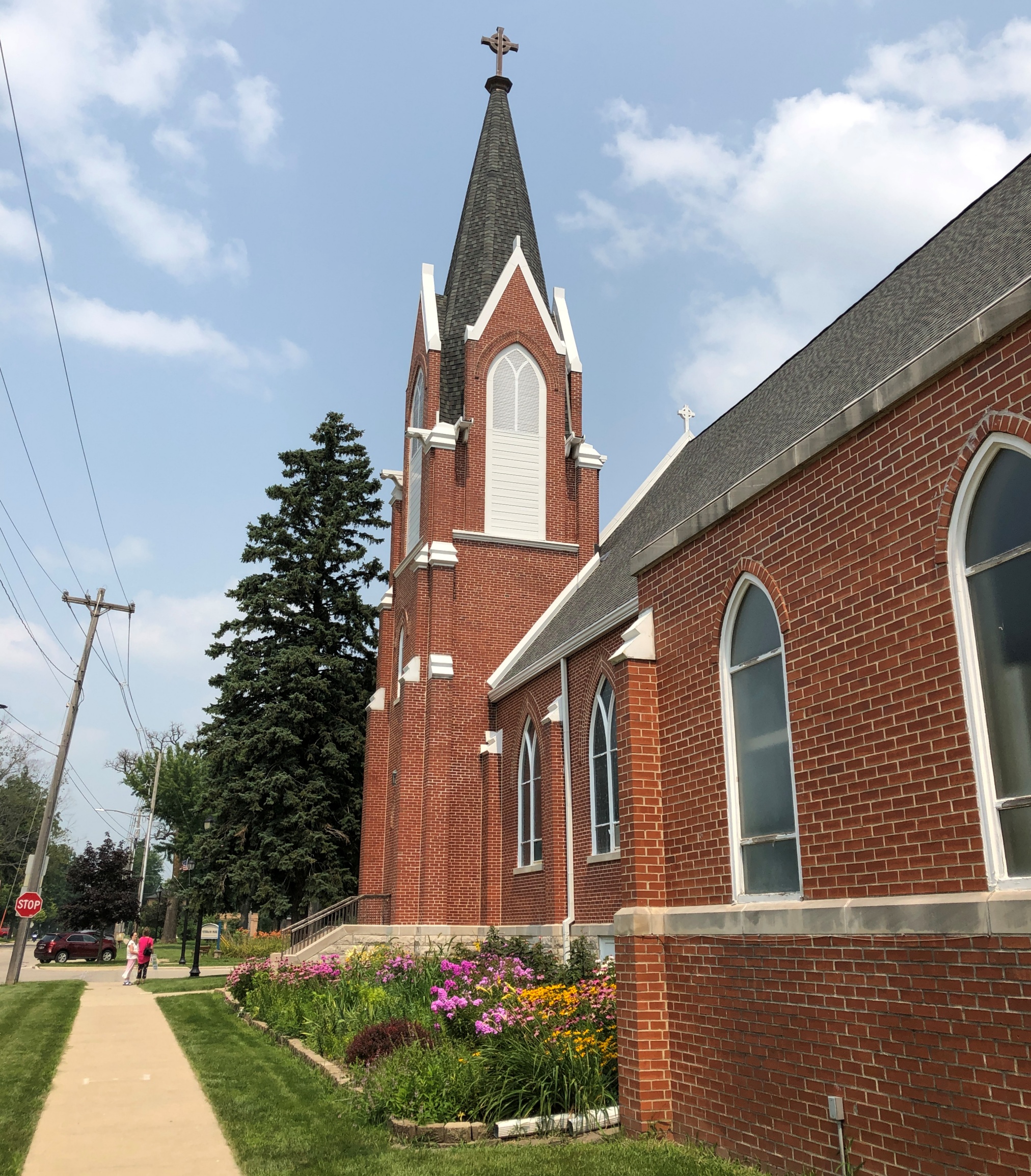
Today I let Google finish “Cathedral of the…” and got the following responses, top to bottom (capitalization sic): Sea, deep, Holy Angels, holy angels photos, forsaken, immaculate conception, incarnation, Madeleine, deep ds3, pines.
Cathedral of the Sea is La catedral del mar, a “Spanish drama series” that I’d never heard of, though I have been to Santa Maria del Mar. The Cathedral of the Deep and of the Forsaken appear to be aspects of electronic games, and the others are churches in various places.
Not on the list is the Cathedral of the Plains. But it’s out there, in central Kansas.
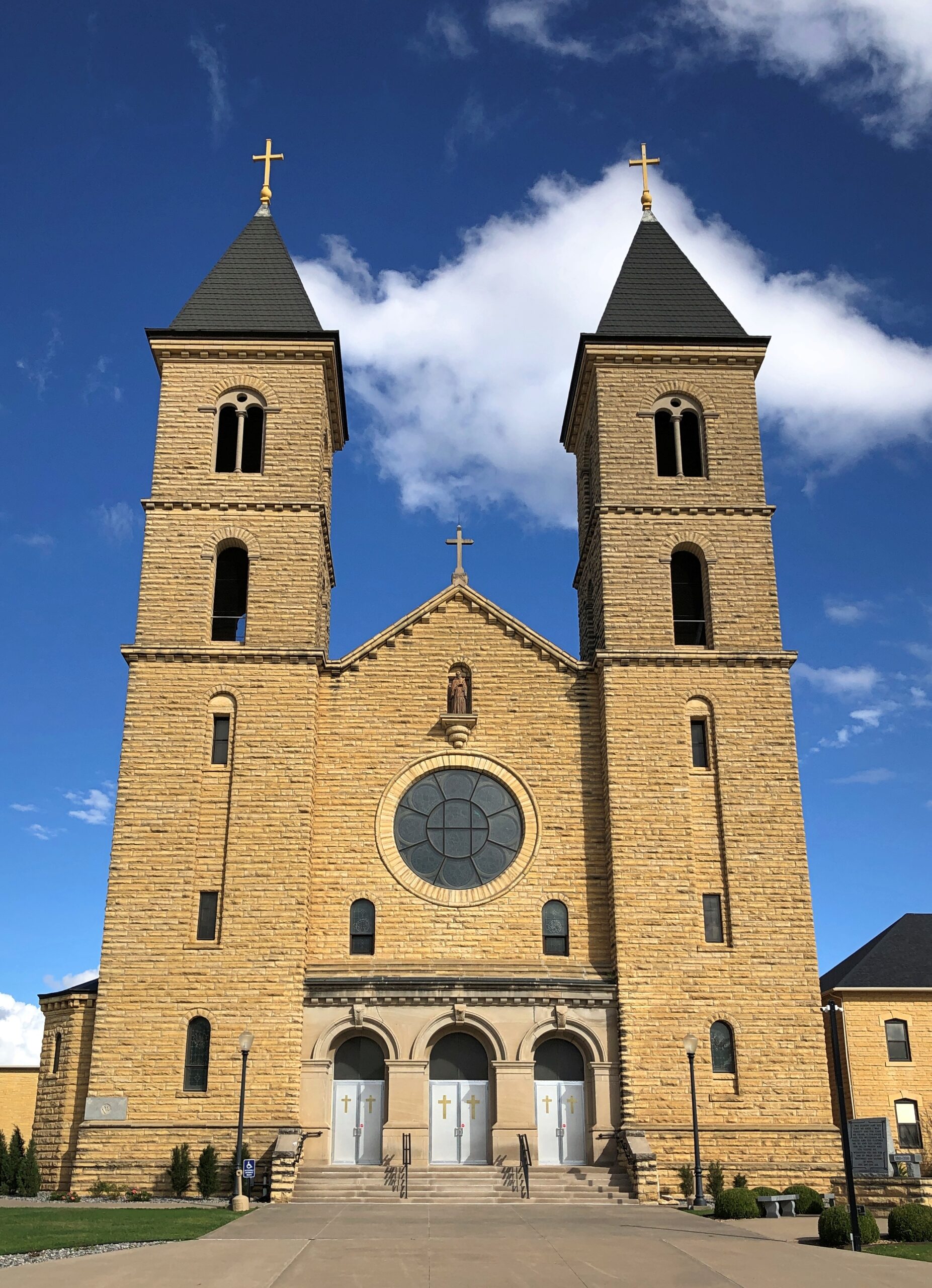
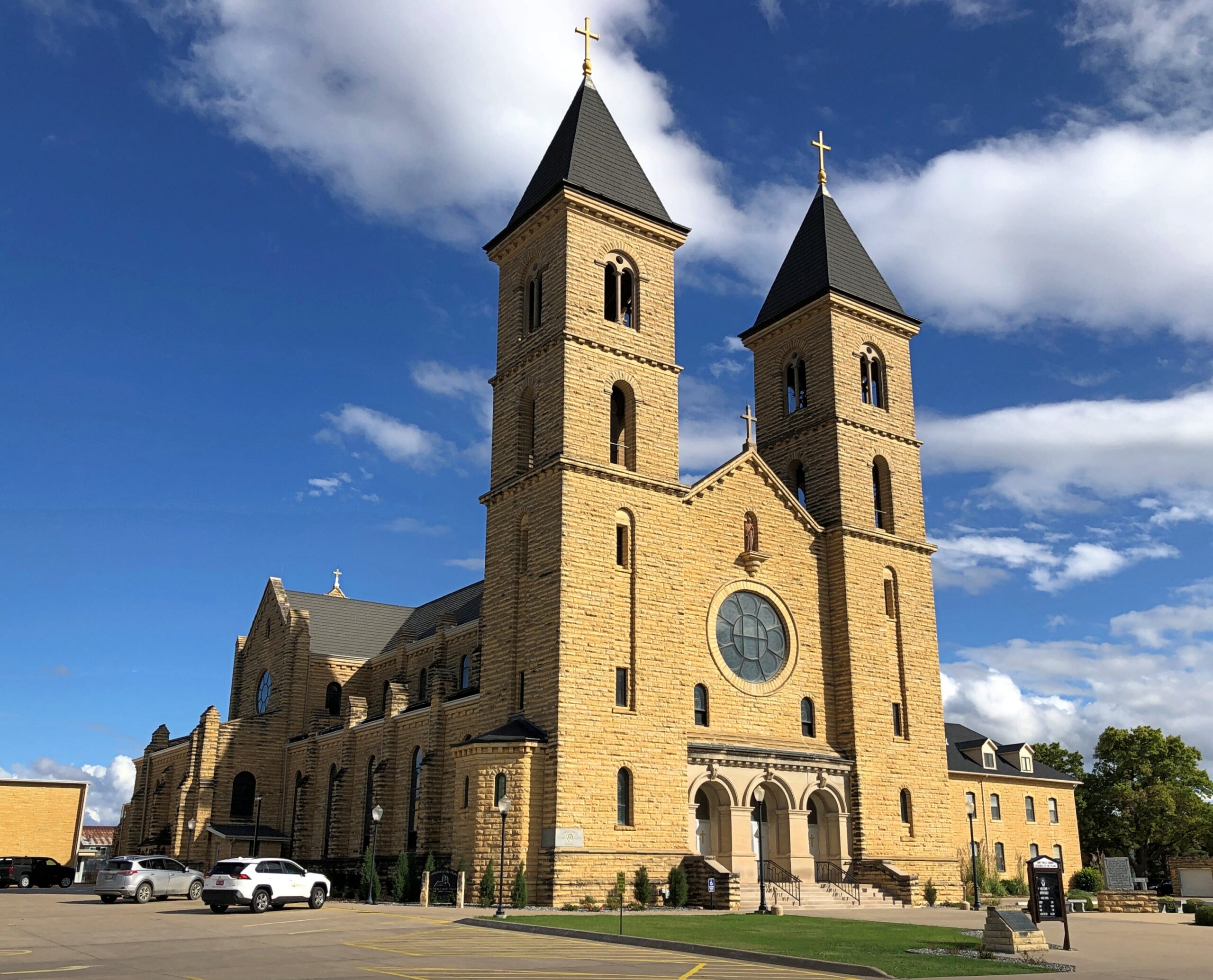
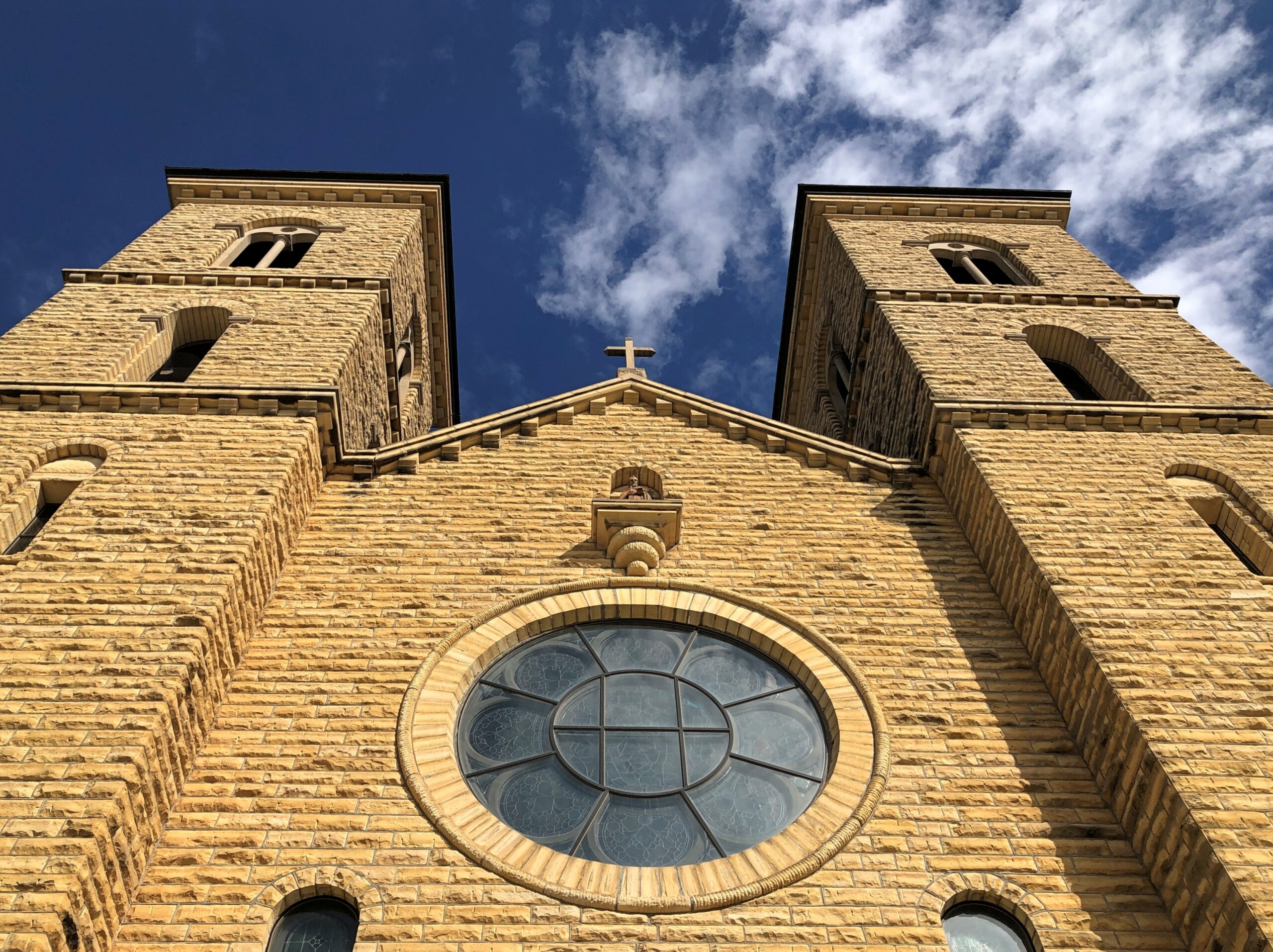
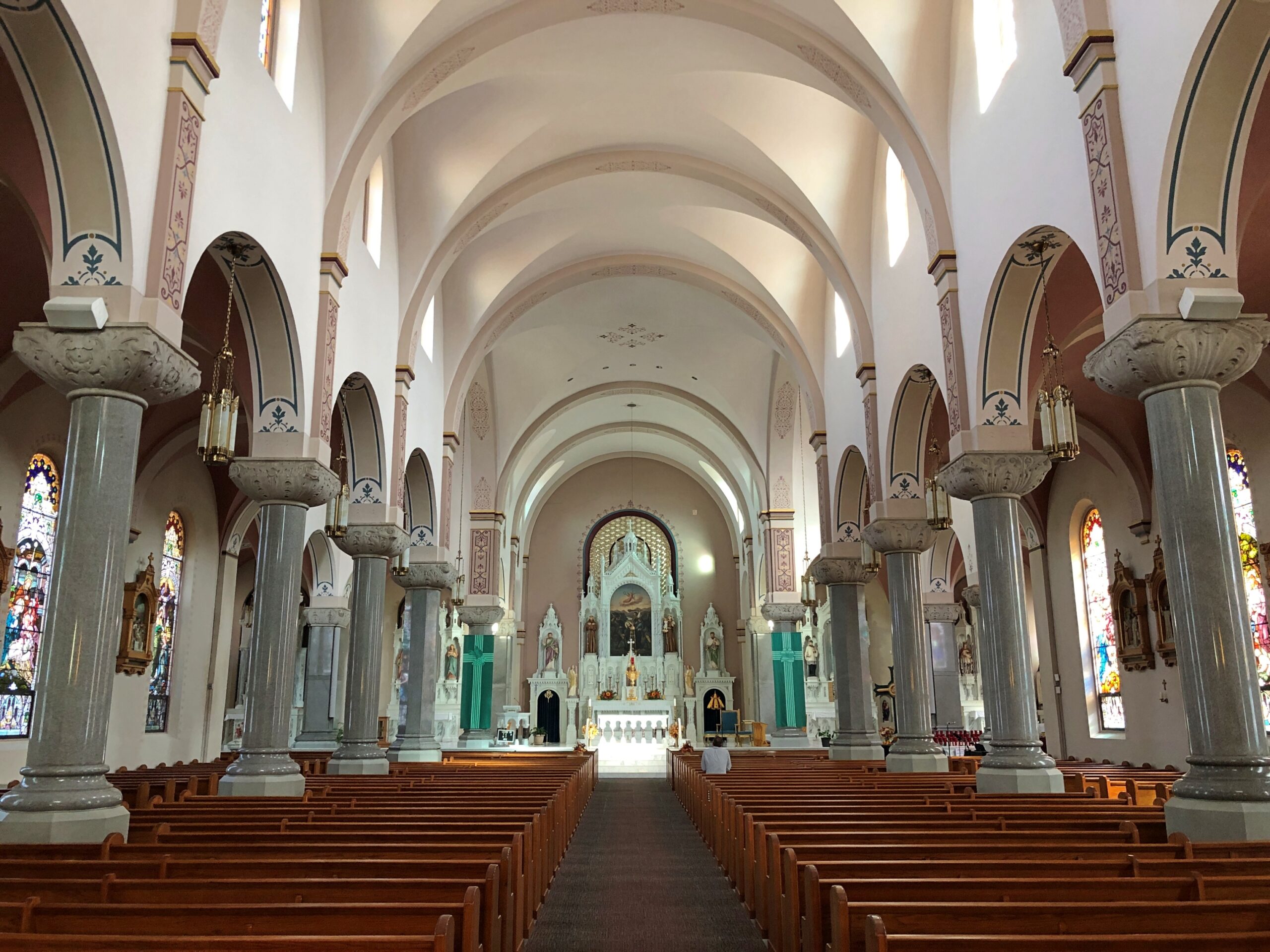
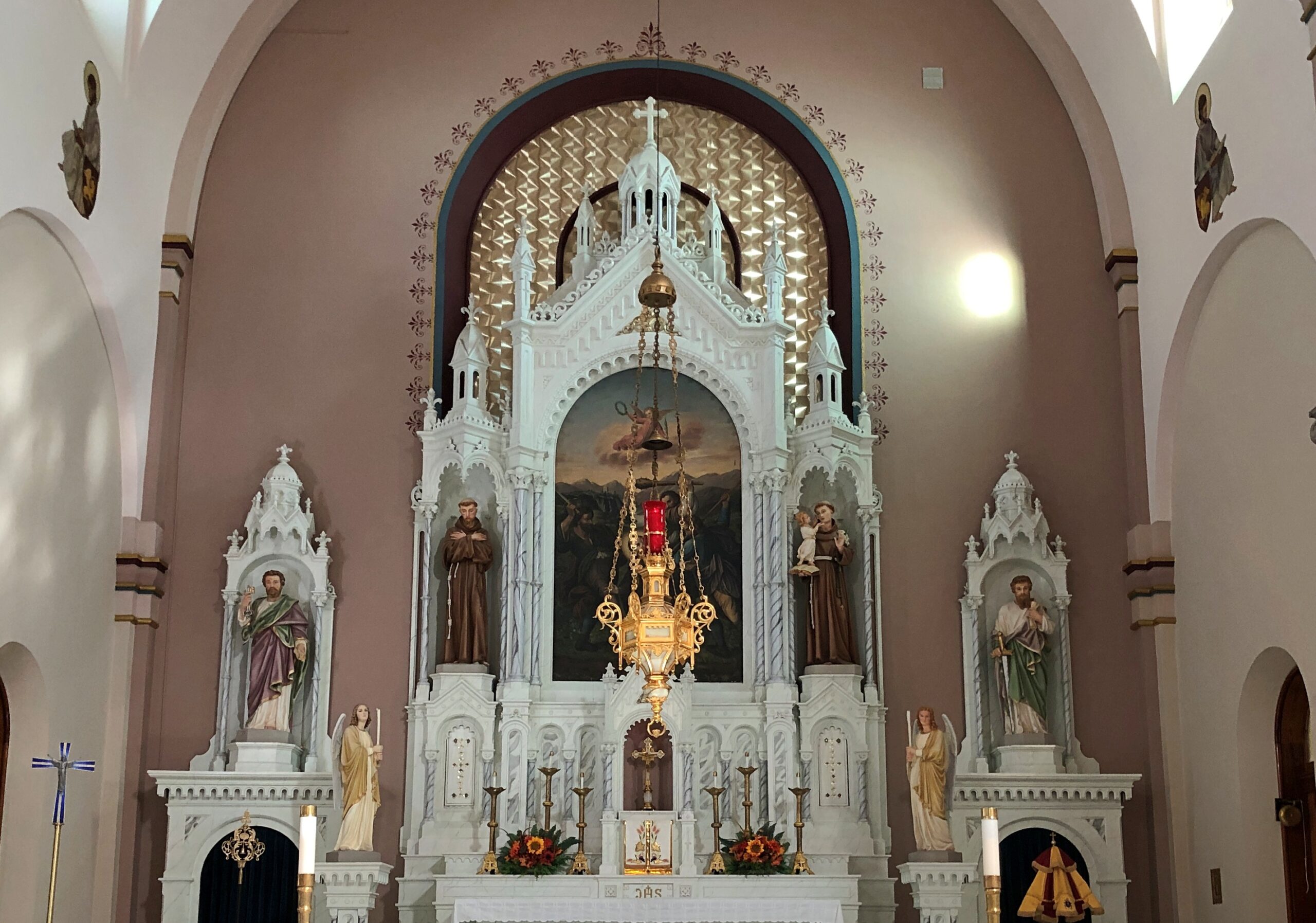
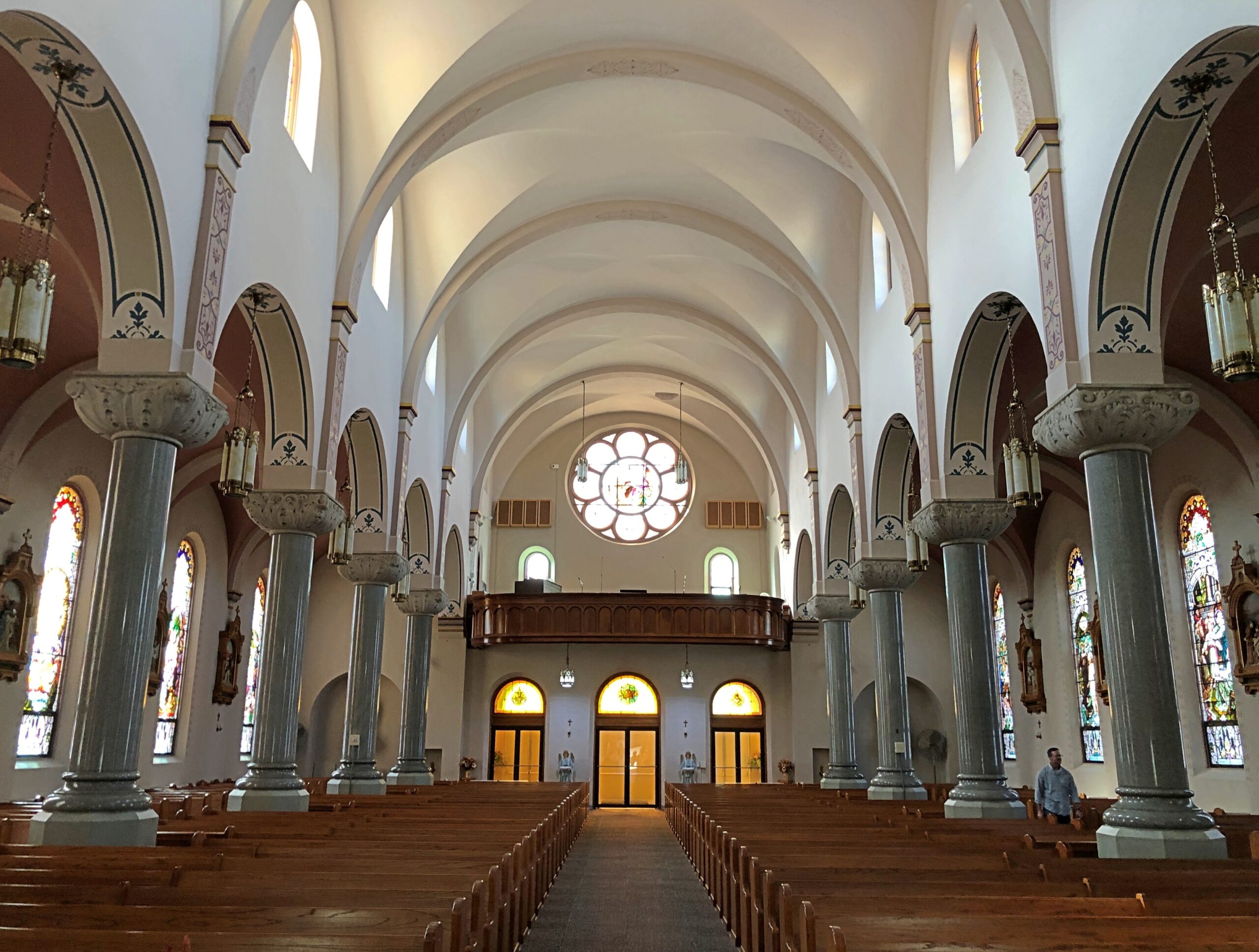
That’s a nickname, since the church isn’t actually a cathedral, but the wording does appear on its point-of-interest spot on road maps – and naturally that got my attention. Formally, the church is the Basilica of St. Fidelis, said to be the largest church west of the Mississippi by seating capacity (1,100) upon completion in 1911 in Victoria, Kansas. Conveniently (for me), some decades later I-70 was built not far away.
John T. Comès (d. 1922), a Pittsburgh architect, designed the church for a congregation of Volga German immigrants. Who had come to greater Victoria starting in the 1870s. Why Victoria? Why not? No doubt they looking for flat farmland.
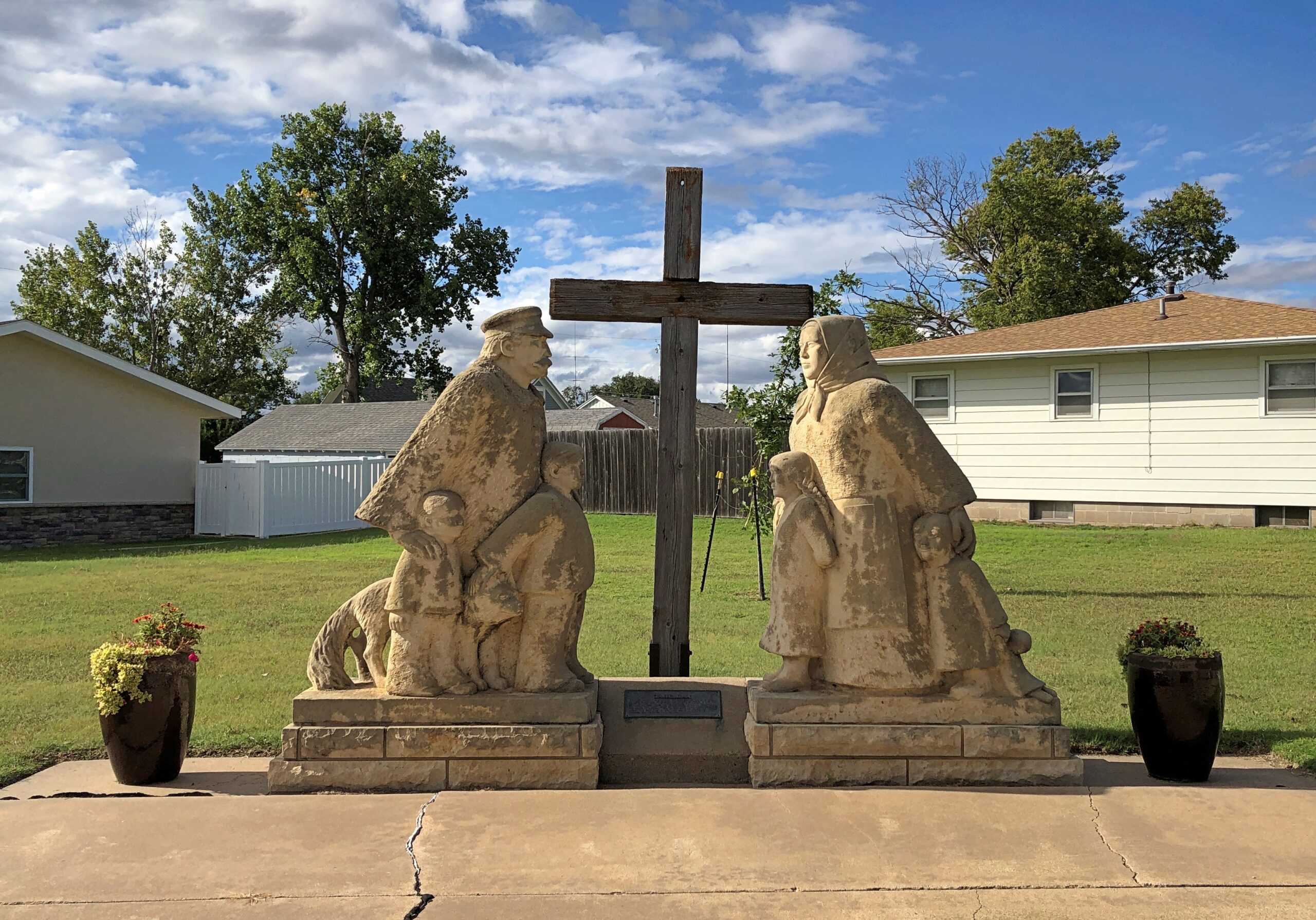
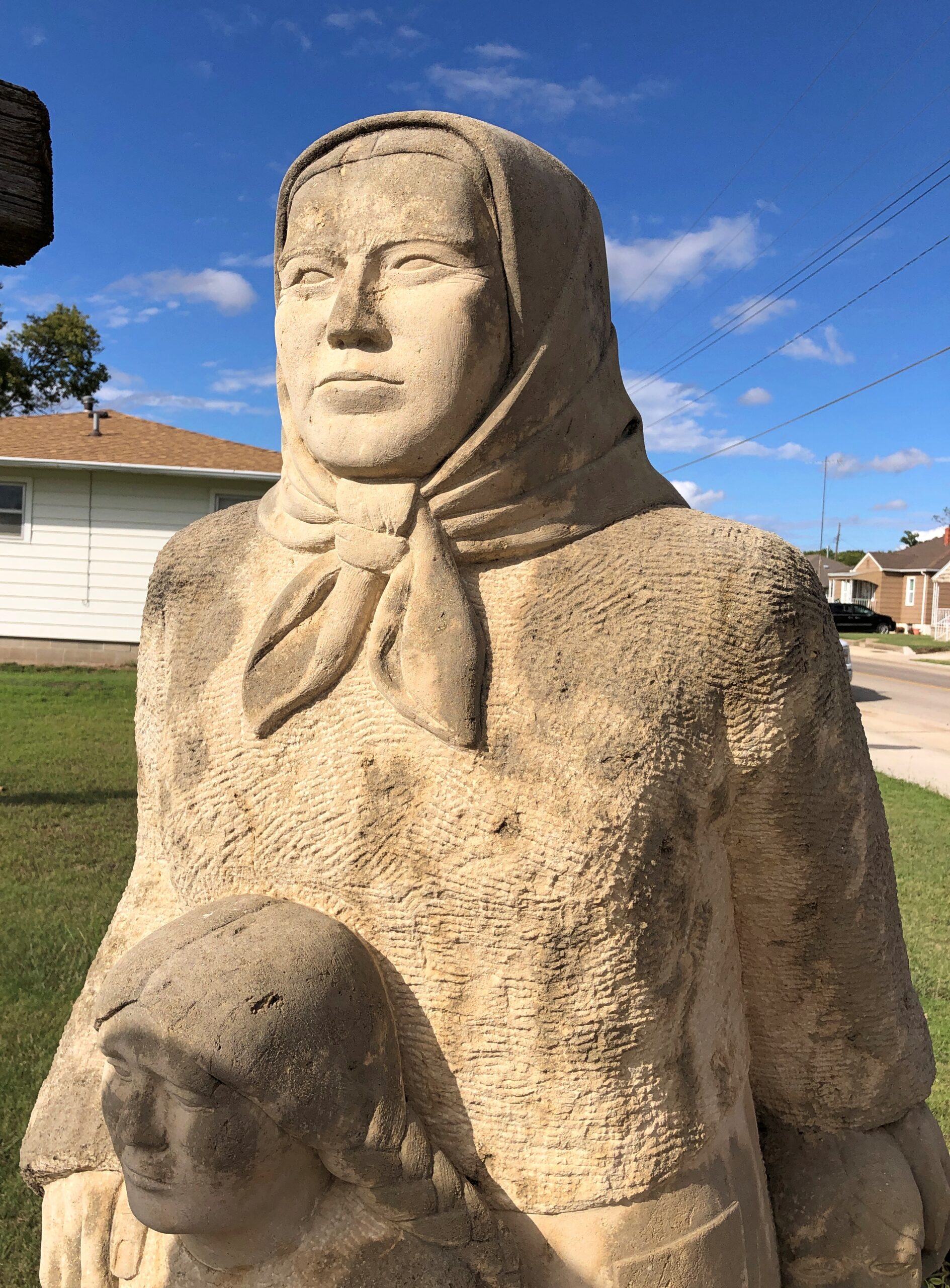
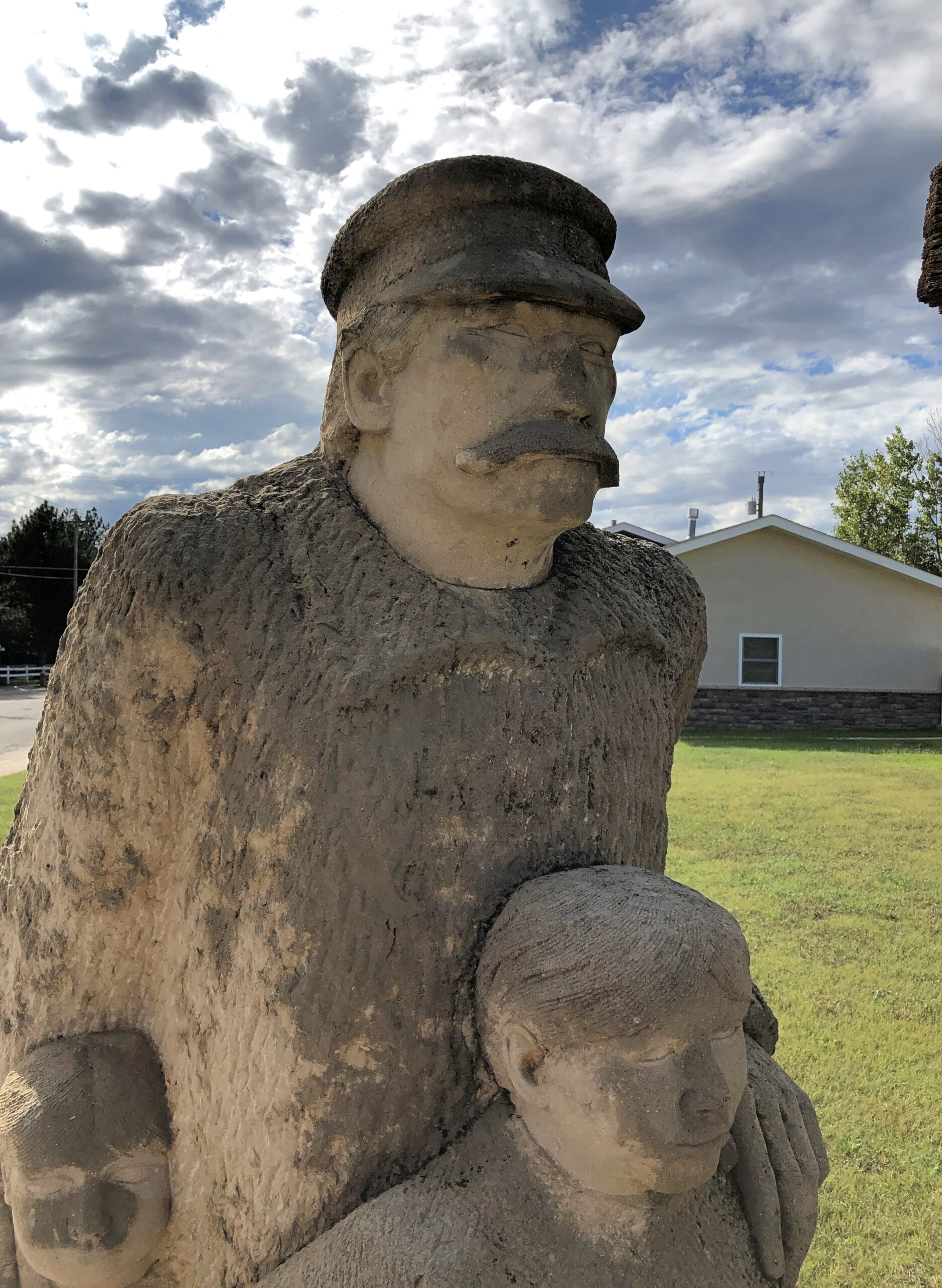
The Volga Germans aren’t forgotten. No doubt their descendants are all around this part of Kansas. In 1976, the townspeople erected a memorial to their immigrant ancestors, across the street from St. Fidelis. A work by Pete Felton, a “Kansan limestone carver,” according to this posting, which also mentions limestone fenceposts as important in Kansas — something else to look into sometime.
After nearly 50 years, the statues are looking a little weatherworn, but they abide.
The woman and daughters caught the light at that time of day, the afternoon of September 23.
The man and sons did not. Would sunlight have made him less – Stalinesque?
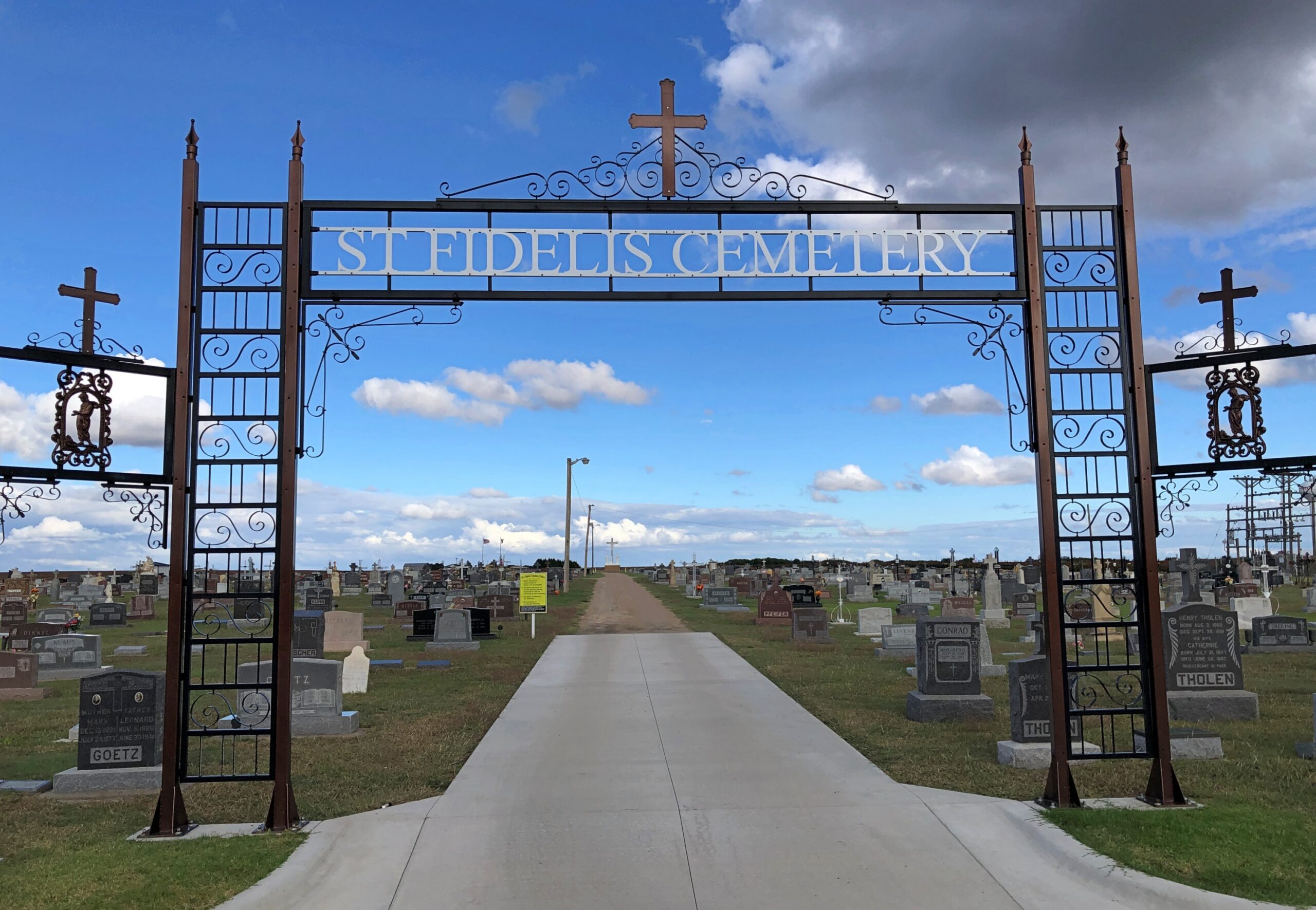
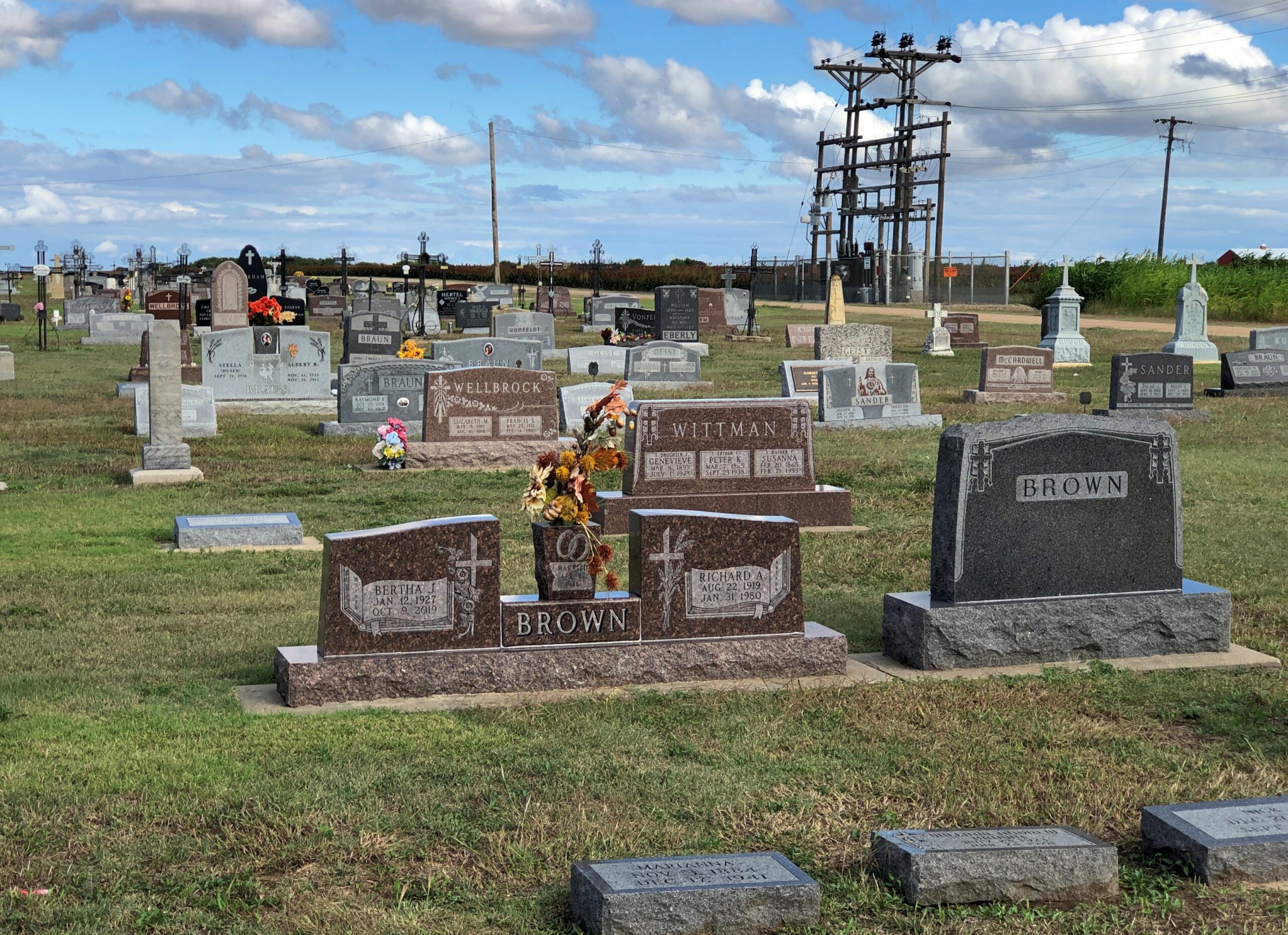
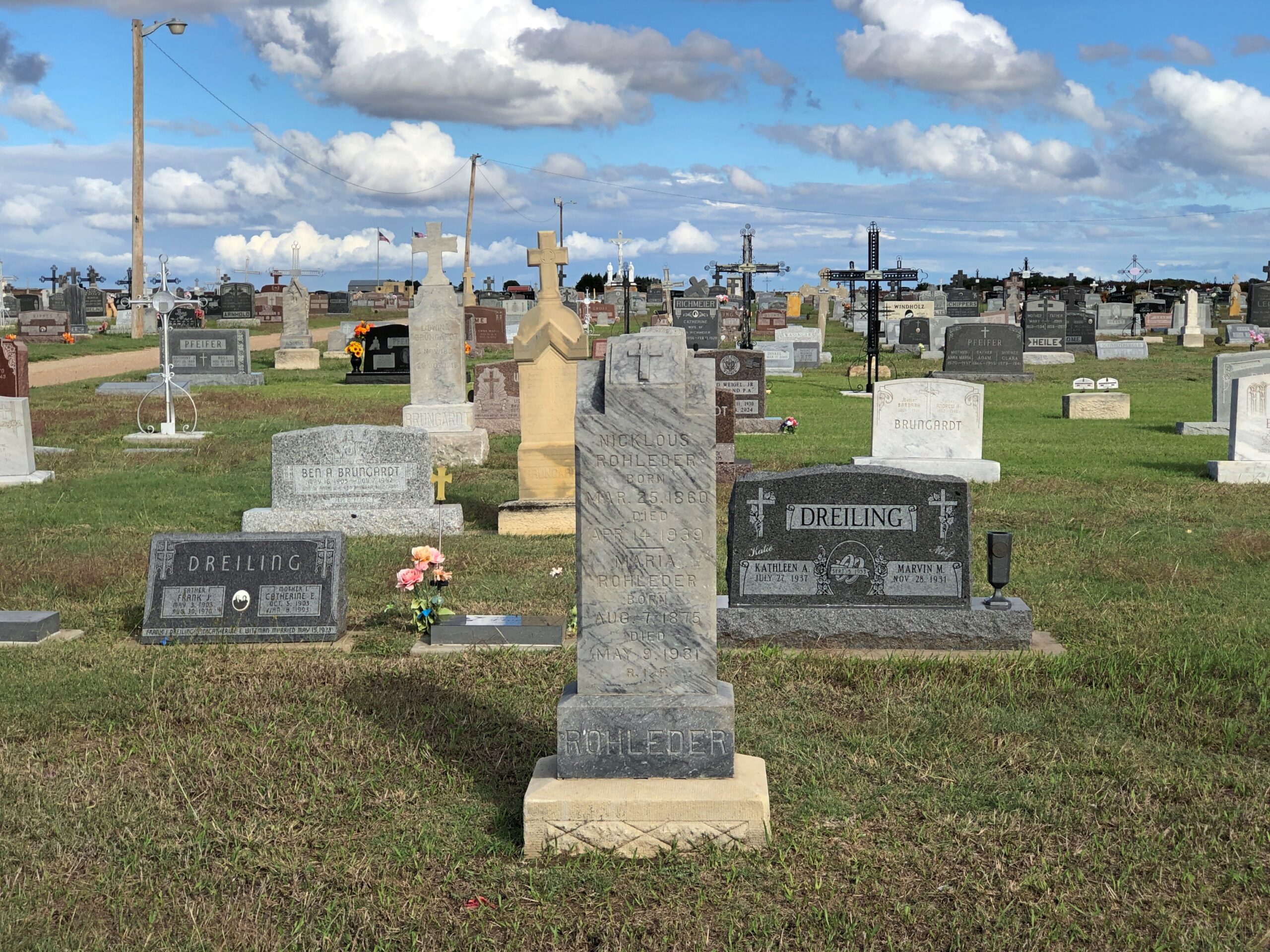
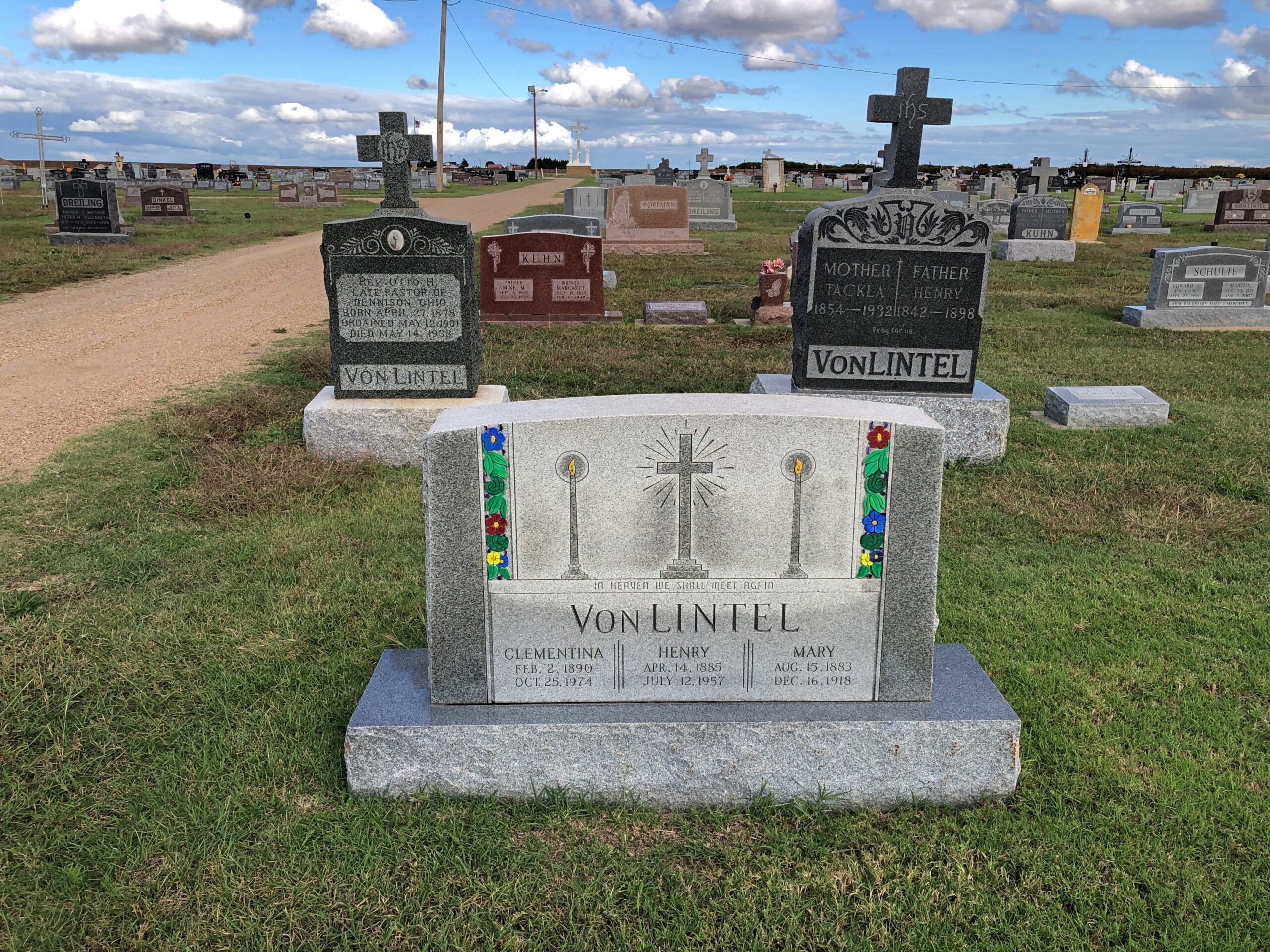
Never mind. St. Fidelis Cemetery isn’t far to the north of the basilica, and I stopped by.
A good variety of memorials in a nice setting, even if the land lacks contour and there’s no flora beyond grass and cut flowers.
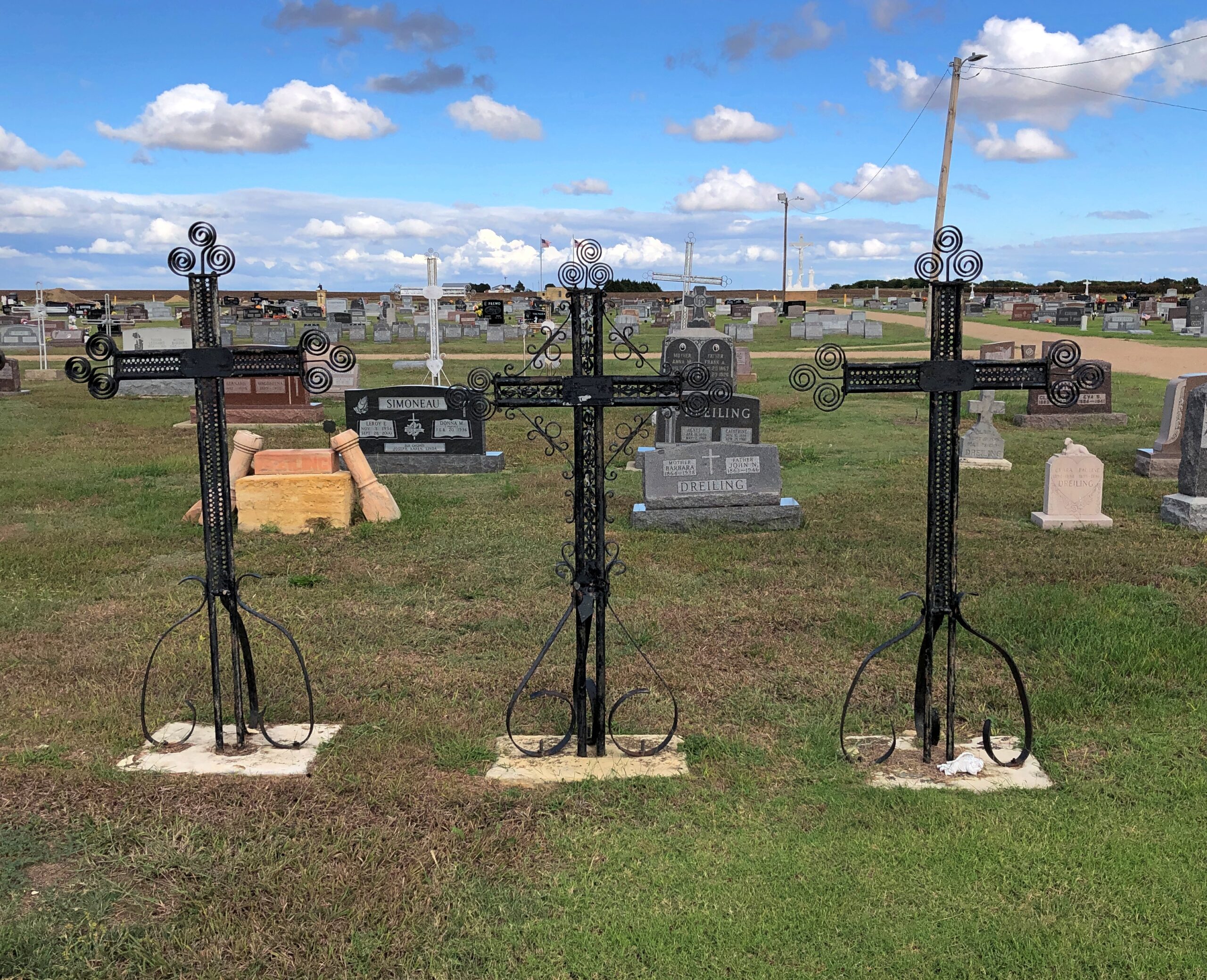
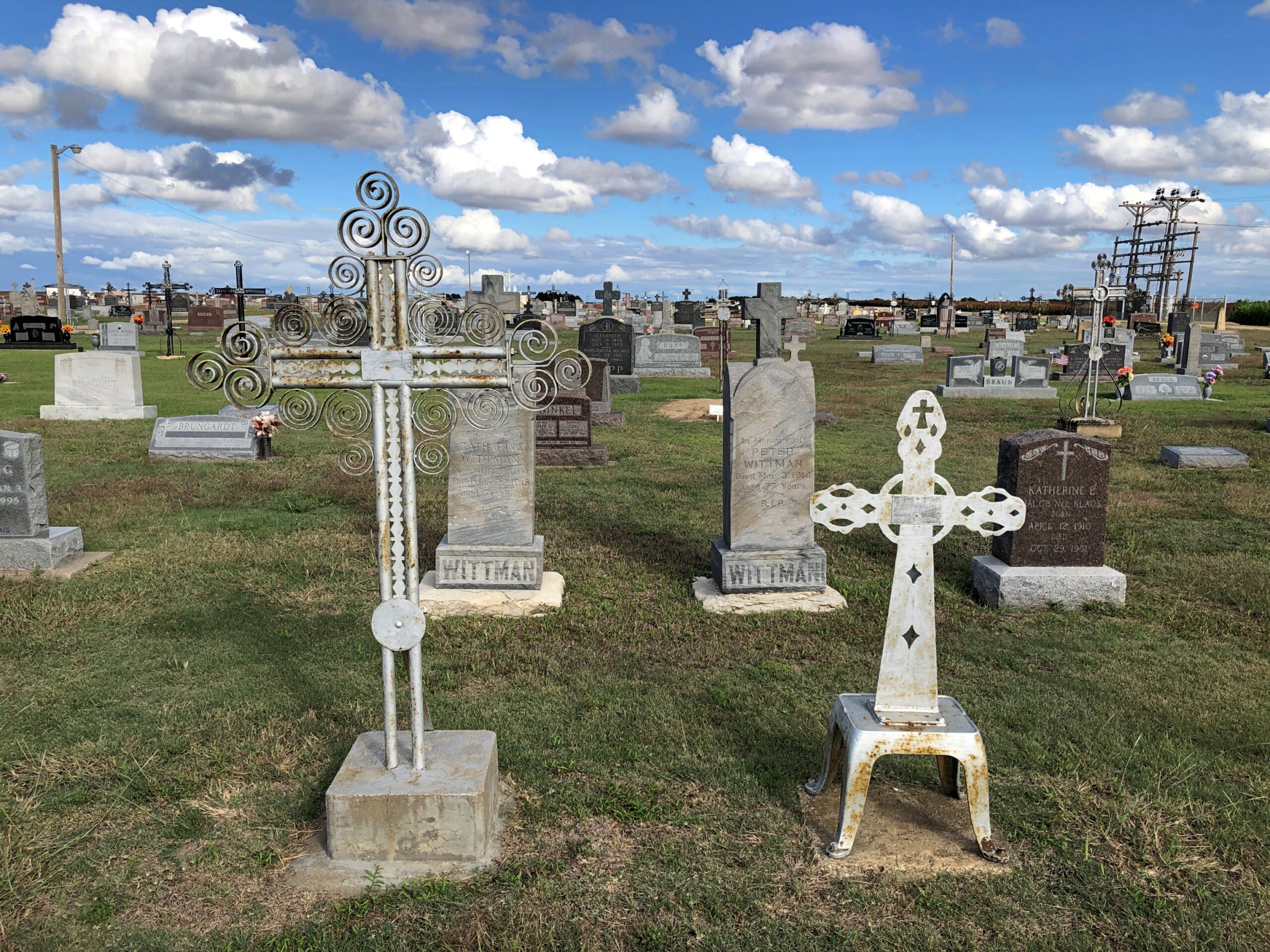
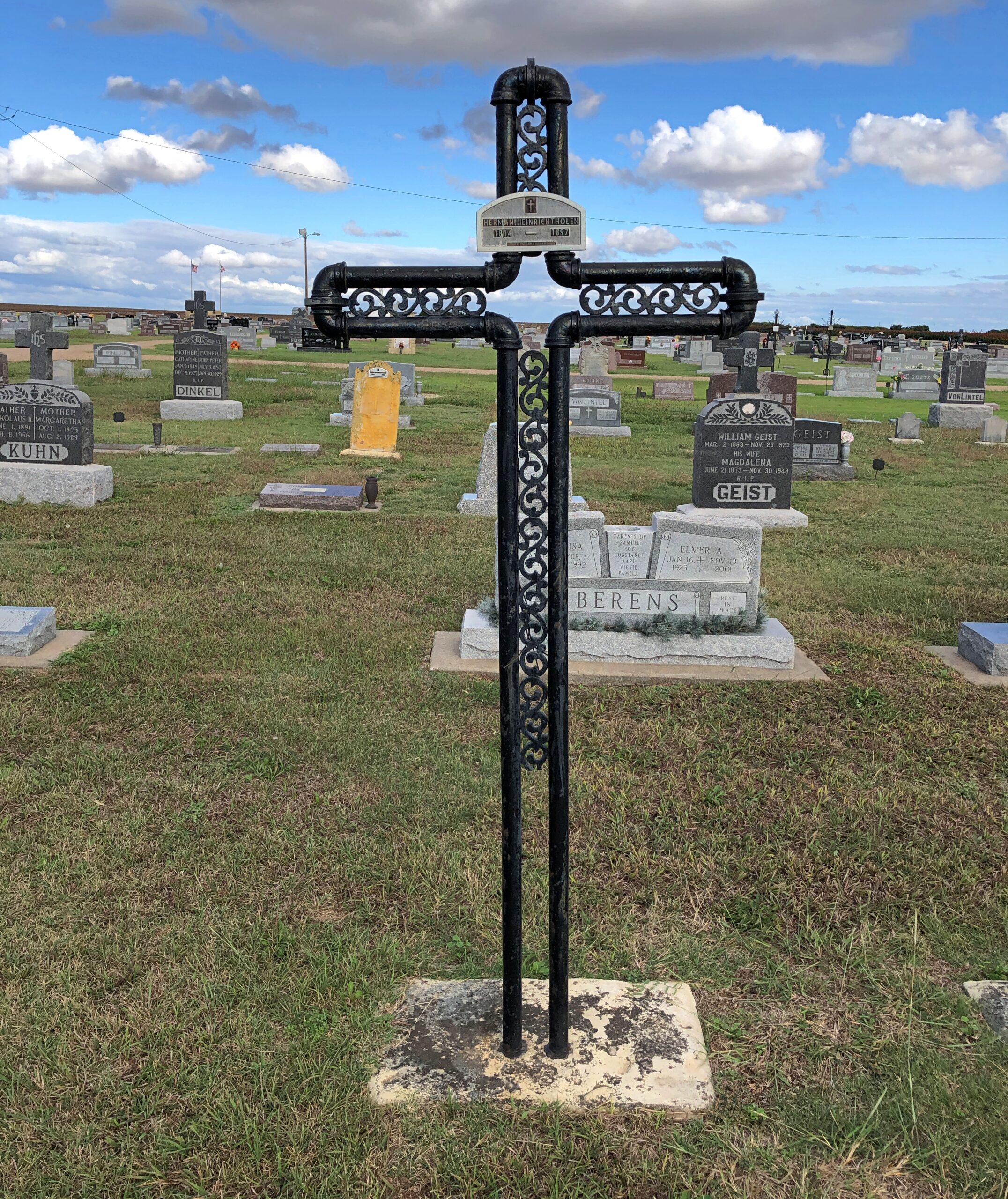
Then I started to notice iron crosses.
A lot of them. That called for further investigation, and it wasn’t long before I found out that Volga Germans were known for their wrought-iron crosses.
“German-Russian blacksmiths began making wrought-iron crosses in North Dakota as early as 1884,” says an article posted by North Dakota State University. “The hand-made crosses were most prevalent in central North Dakota from the late 1880s to about 1925, when marble and granite became more popular for grave marking. Most wrought-iron crosses appear in Catholic graveyards, although a few of these markers are also found in German-Russian Lutheran graveyards.”
The article talks of their crosses in North Dakota, but notes that they are also found in the “Northern Plains.” Such as Kansas, apparently.
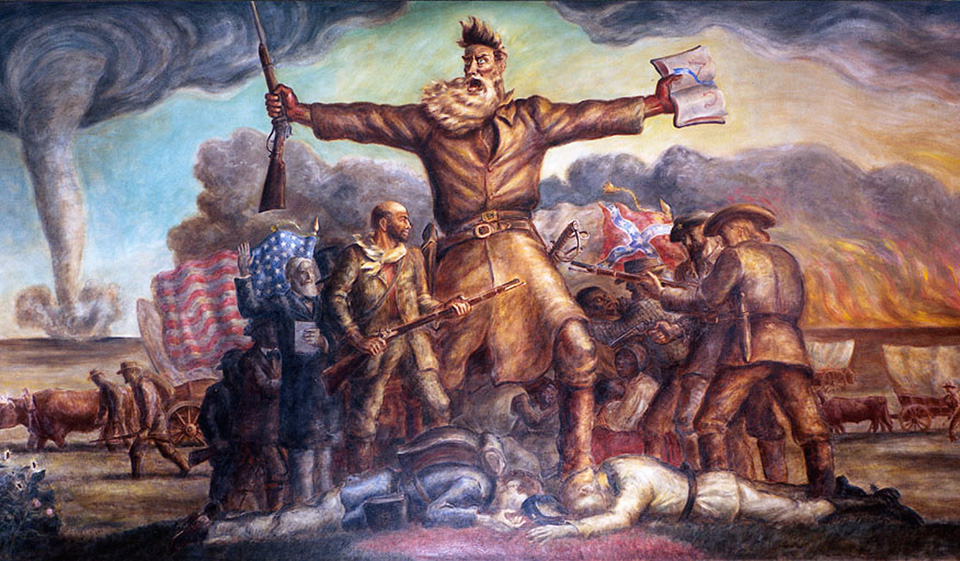
One fine day in the Kansas State Capitol last month, I turned a corner and found myself looking up at Old Testament John Brown. Larger than life, as he has loomed these 160+ years.
The mural, actually called “Tragic Prelude,” is more than 11 feet tall and 31 feet long, taking up an entire wall in the capitol. The lighting isn’t particularly good for taking images of the whole work – a ceiling light in particular washes out much of John Brown’s (let’s say) emphatic expression. Luckily, the image seems to be in the public domain.
A plaque under the mural says:
Sponsored by Kansas Press Association, aided by Kansas school children, these murals were painted in 1940-41 by John Steuart Curry, who was born near Dunavent, Kansas. In John Brown’s outstretched left hand is the word of God. In his right, a “Beecher’s Bible.” Beside him, facing each other, are contending Free Soil and Pro-Slavery forces.
The plaque does not say that the many members of Kansas legislature hated the painting at first, and refused to hang it in Curry’s lifetime (he died in 1946). Curry had had the temerity to depict Bleeding Kansas, by far the most interesting period in the history of the territory and state; the interesting times no one wants to live through. Maybe they thought it glorified John Brown — which it half way does, but with more than a tinge of madness in him as well. Bottom line, the work apparently didn’t sit well with those who might have wanted a Kansas of doughty farmers and hardy pioneers and fertile landscapes.
Eventually, to its credit, the legislature did have the work installed. Whatever you think of John Brown, it’s a striking piece. I’d seen depictions of it, but either never knew or had forgotten that it hangs in the Kansas State Capitol, which made coming across it all the more memorable.
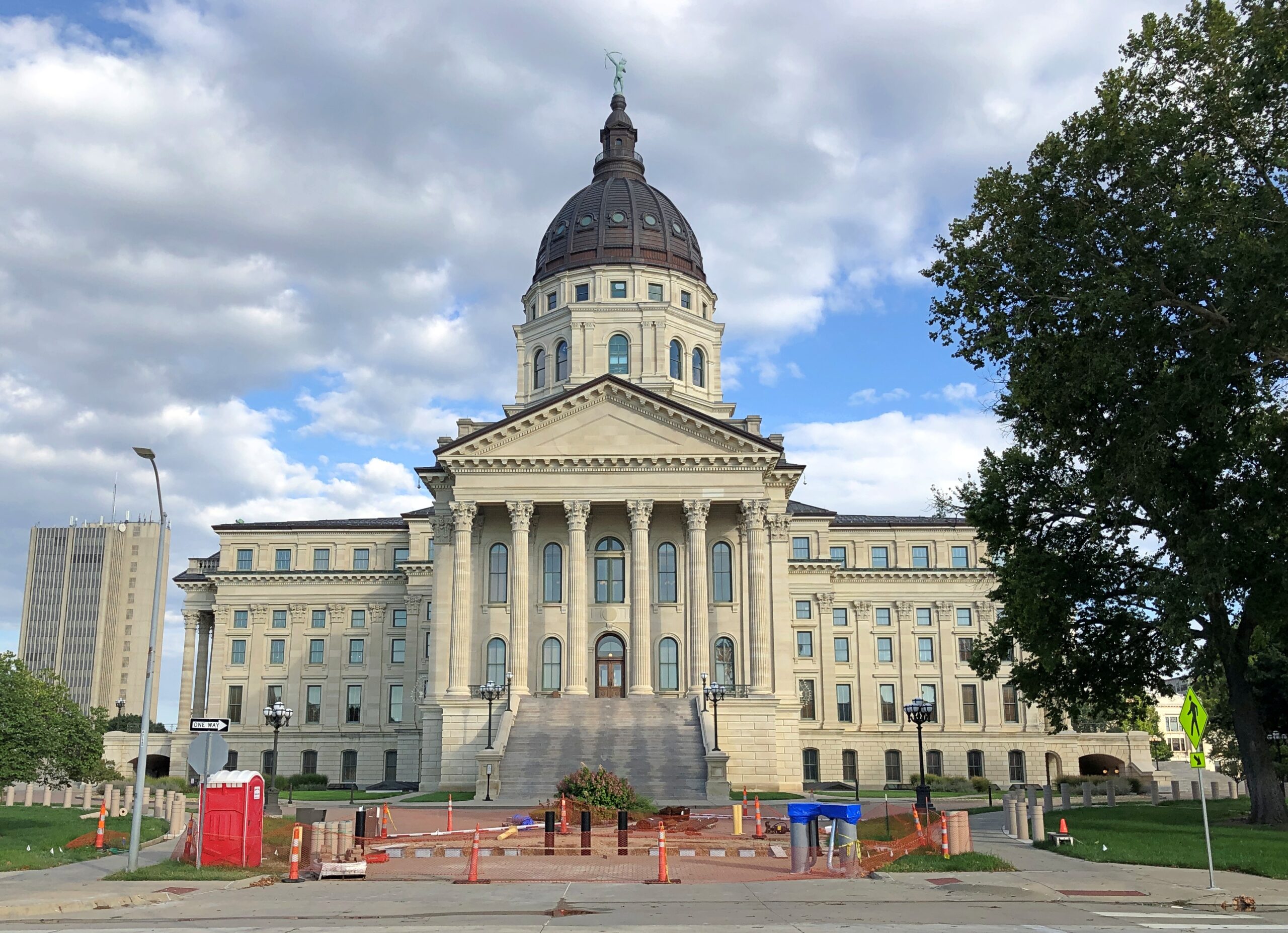
I almost missed it, having dawdled in Salina and Abilene for most of that day (September 24), but I made it to Topeka and the capitol about 30 minutes before it closed.
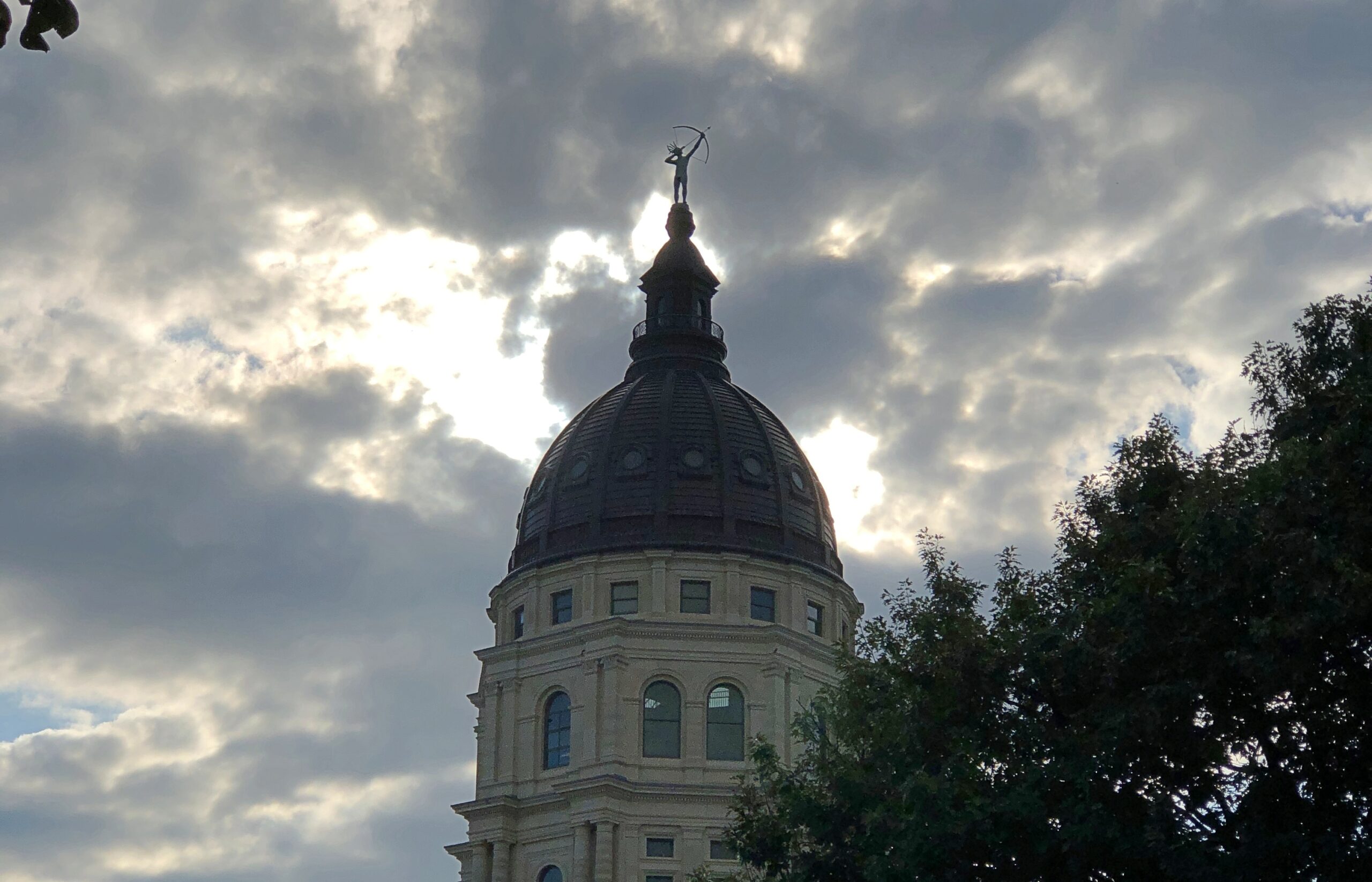
Like any number of monumental edifices, this one took time: construction finished in 1903 after 37 years in the works, not counting renovations or the comparatively recent addition of the 4,420-pound, 22-foot tall bronze “Ad Astra” on top of the dome, which was in 2002. The figure is an acknowledgment of the Kaw Nation (Kansa), who lent their name to the state.
Architect E. Townsend Mix (d. 1890) designed the capitol, though he didn’t live to see its completion. Most of his work is in Milwaukee, where he lived the longest, including St. Paul’s Episcopal in that city.
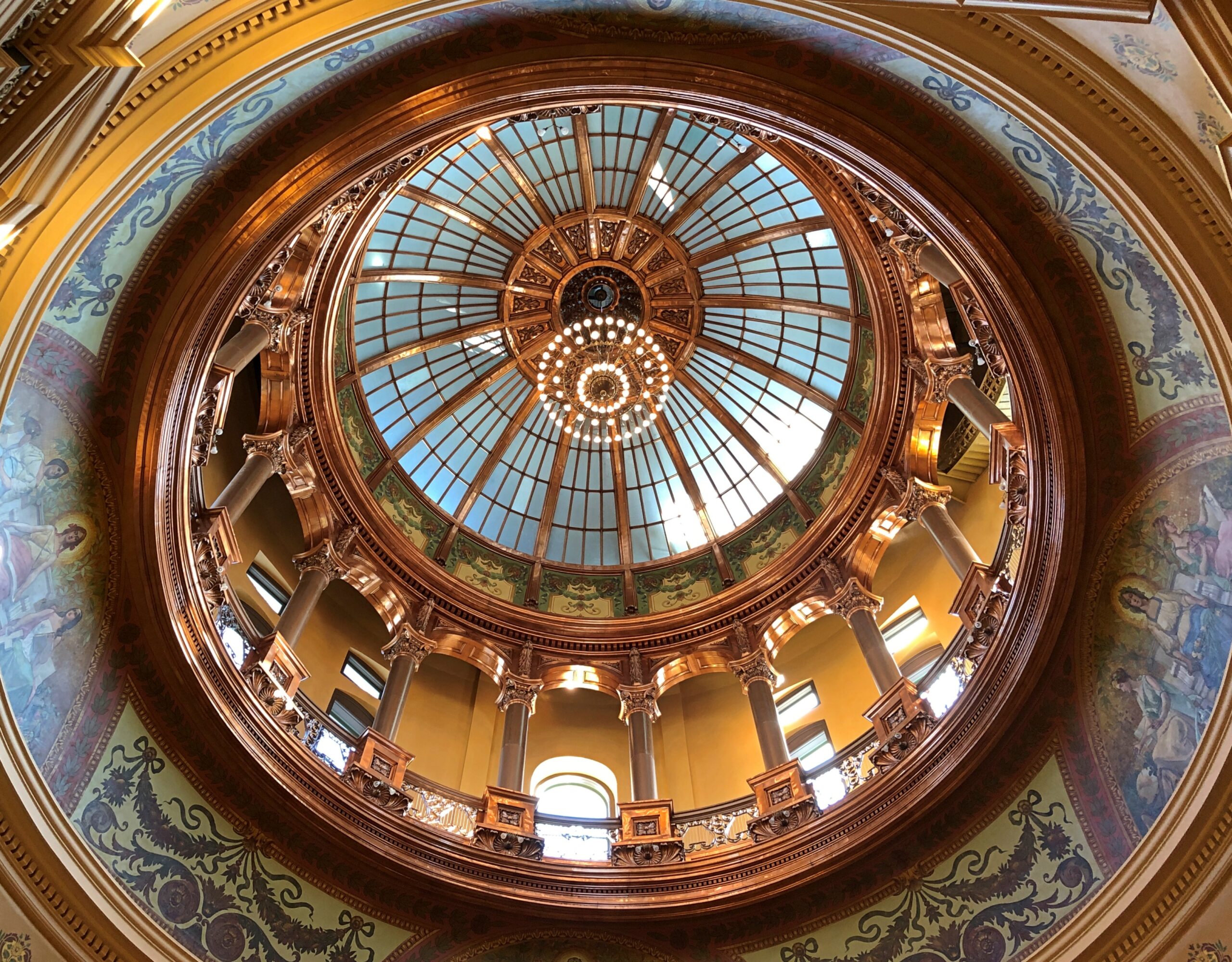
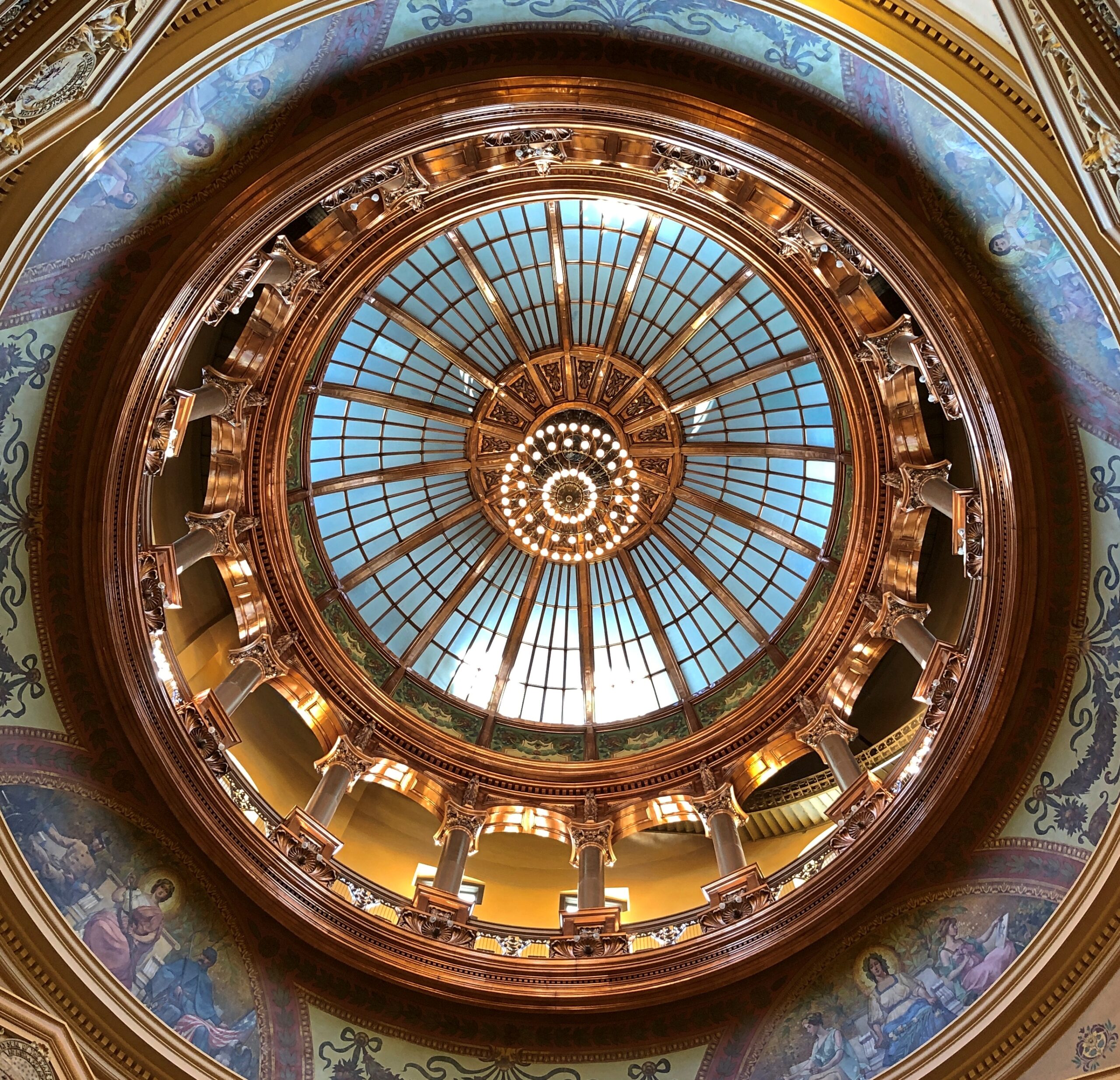
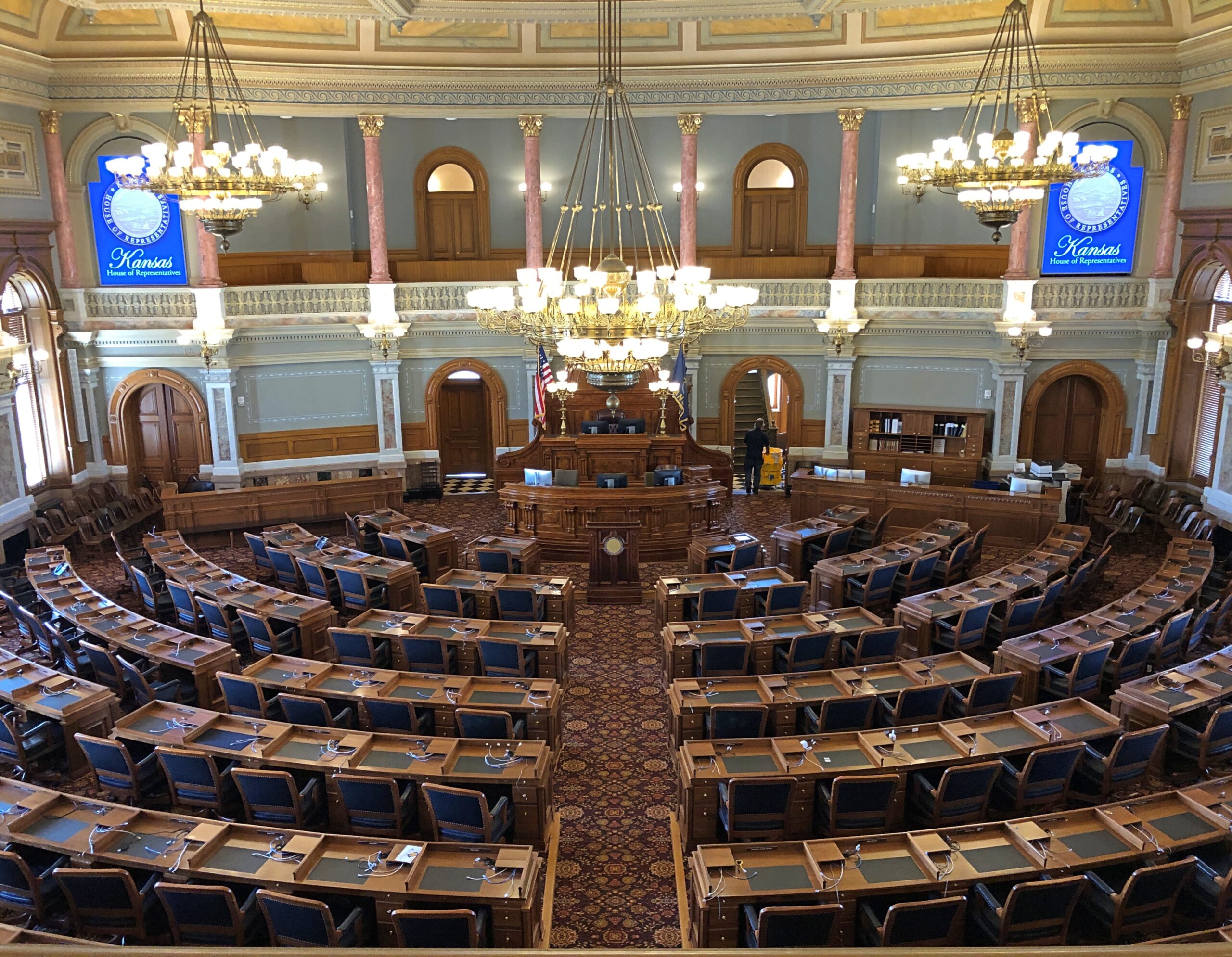
A fine dome.
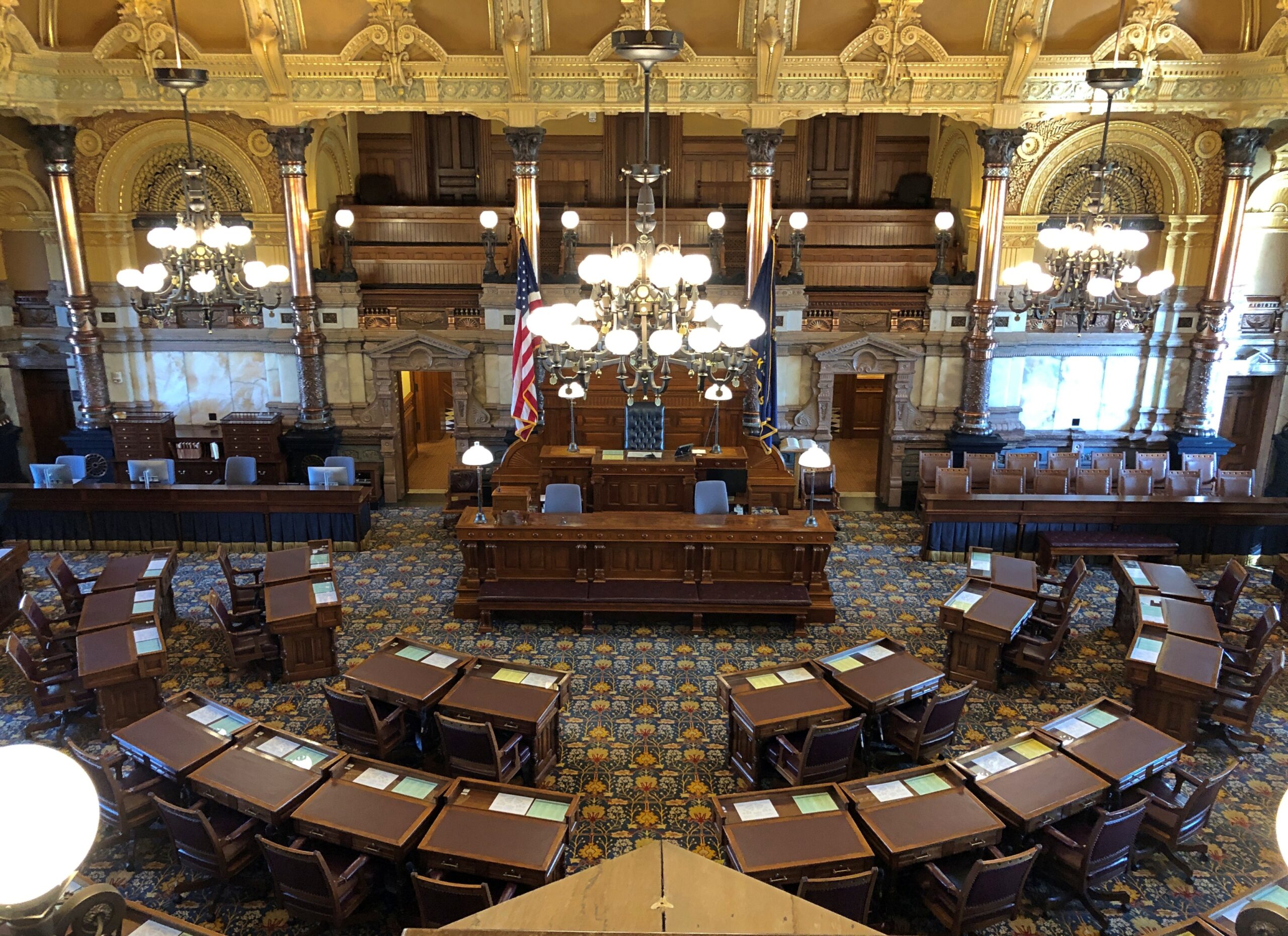
Well-appointed chambers.
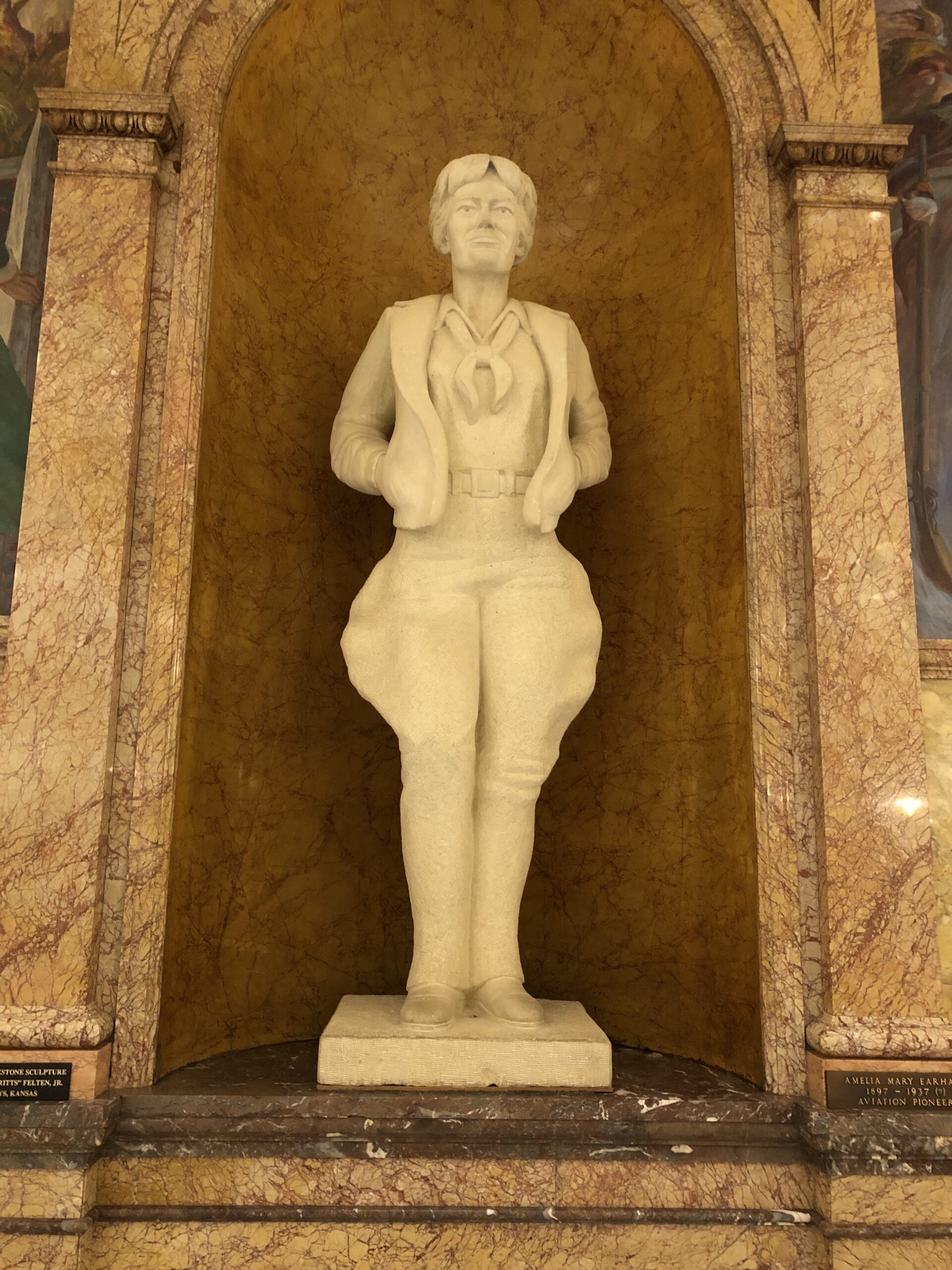
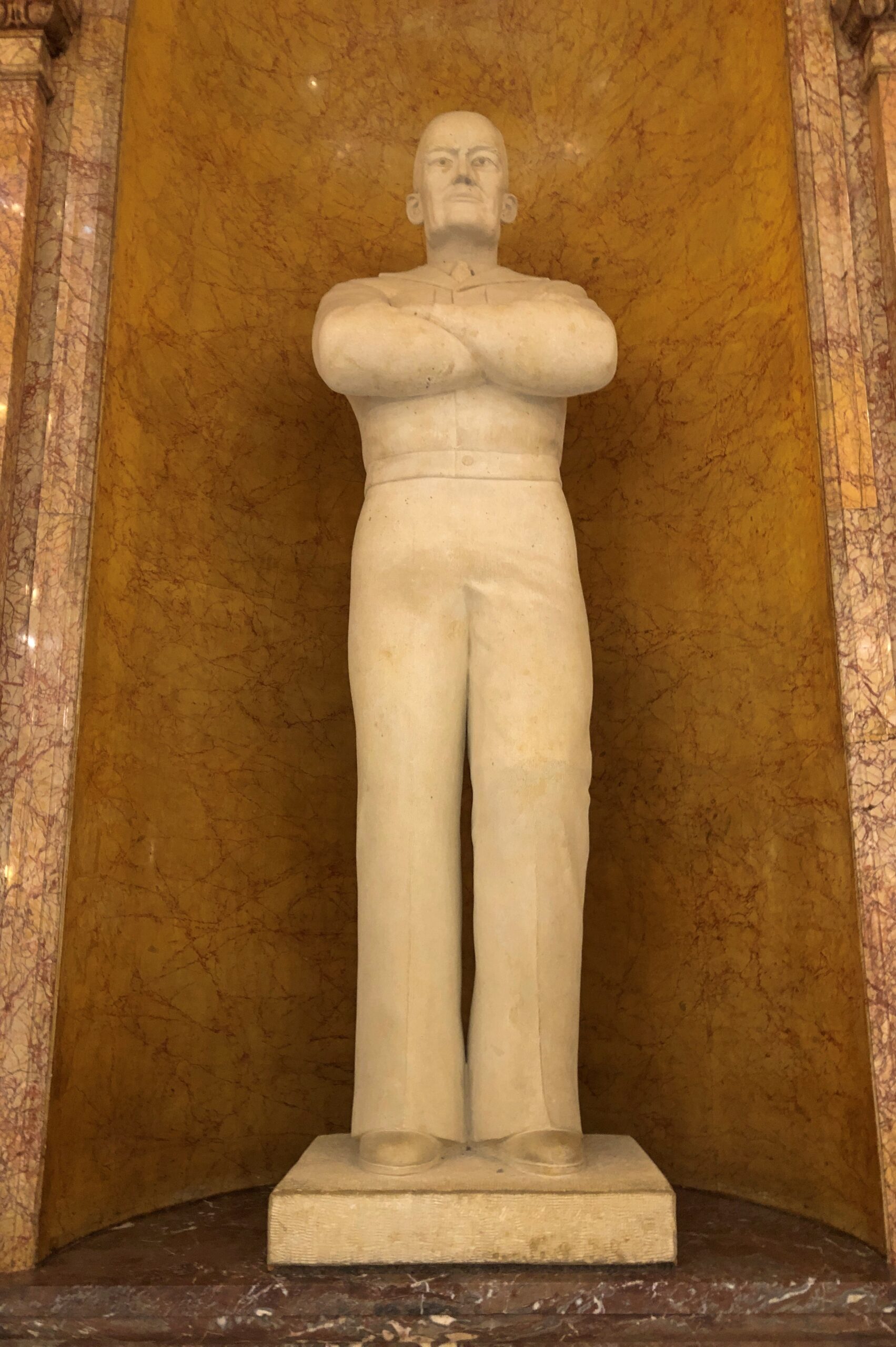
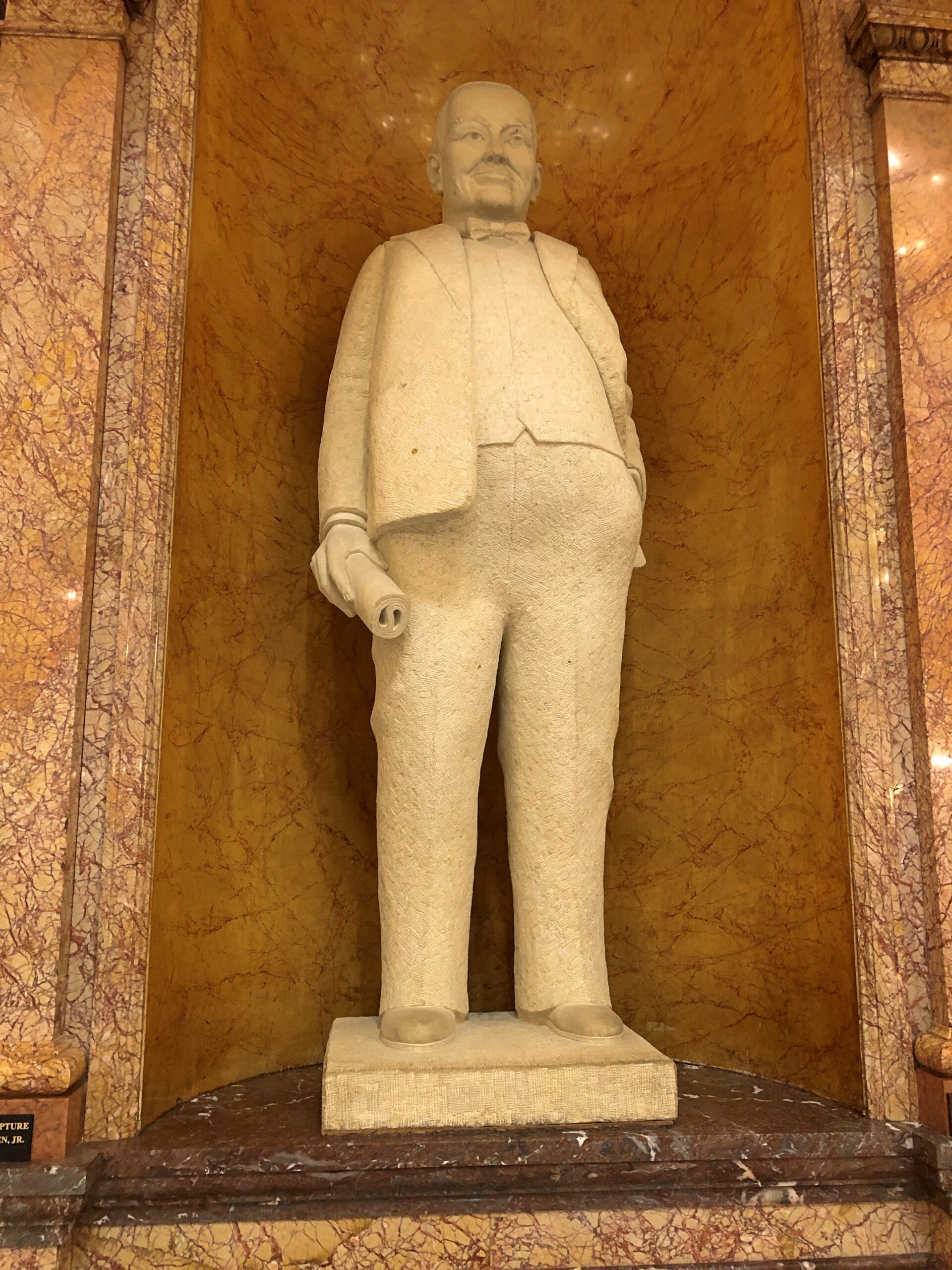
The capitol interior is fairly art-intensive. Not all capitols are. For instance, there are limestone statues in large niches — native limestone, a sign says — of famed Kansans, by Peter “Fritts” Felten Jr. of Hays, Kansas. Such as one of the aviatrix from Atchison.
Amelia Earhart is immediately recognizable, which is no mean feat for someone who is (very likely) been dead for nearly 90 years.
This figure is also more-or-less recognizable – though a depiction of him that’s a little strange, looking for all the world like Mr. Clean. Only a little like that Ike fellow on an Eisenhower dollar.
The fellow below’s fame has, I’m afraid, shriveled up like a balloon that lost its helium: William Allen White (d. 1944) Probably not even known in Kansas any more, since he was a noted journalist, a profession whose posthumous fame tends to be brief. Editor, Pulitzer Prizewinner, his plaque says. A Progressive Through-and-Through, it does not say. That might not play in Kansas at the moment.
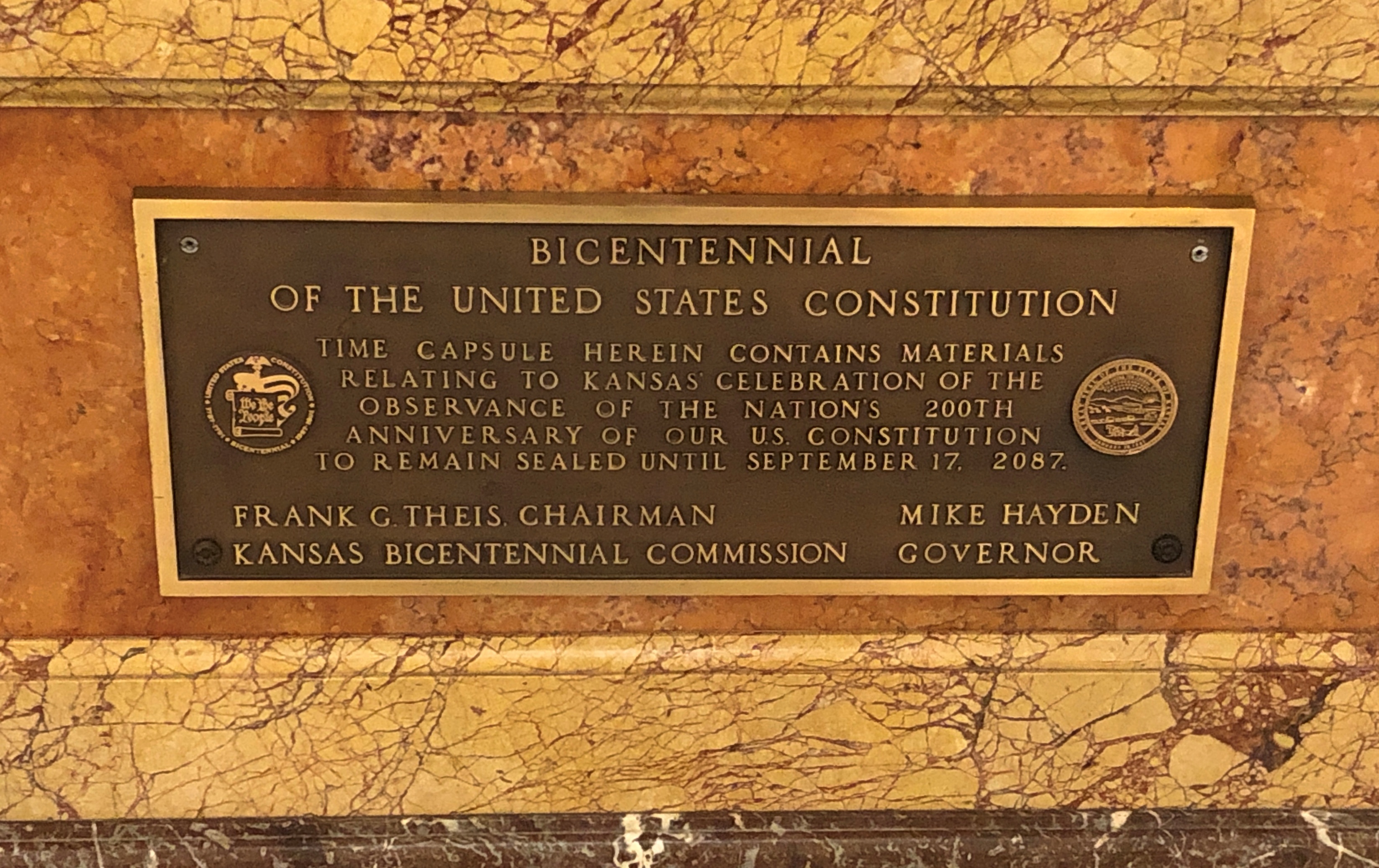
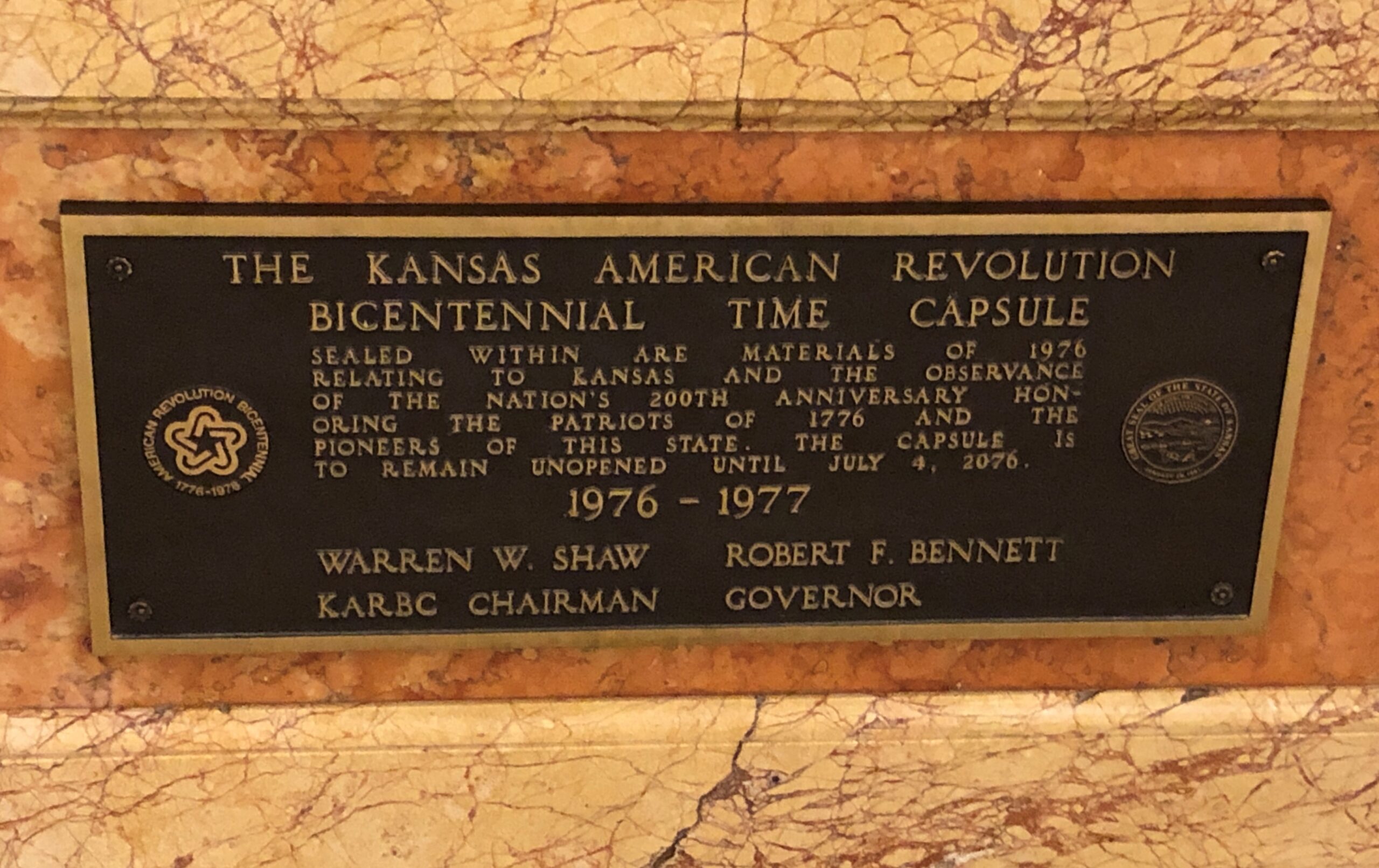
Not one, but two time capsules reside with the capitol walls. At least two that I saw.
This is a digression, but one thing still leads to another on line, and I came across a list published in 1991 by the International Time Capsule Society: “10 Most Wanted Time Capsules.” That is, a list of time capsules whose location had been lost and thus were (up till then) unrecoverable. The page notes that two have been found over the last 30+ years, but eight are still beyond the ken of man. Such as:
MIT Cyclotron Time Capsule.
In 1939 a group of MIT engineers placed a brass capsule beneath an 18-ton-magnet used in a brand new, state-of-the-art cyclotron. The capsule was to be opened in 50 years but was not. No one remembered the time capsule was there (the cyclotron had long since been deactivated). But when reminded of its existence, MIT was faced with another problem: how do you get a time capsule out from under a 36,000-pound lid?
Bicentennial Wagon Train Time Capsule.
This capsule was supposed to hold the signatures of 22 million Americans. But on July 4, 1976, when President Gerald Ford arrived for the sealing ceremony in Valley Forge, Pennsylvania, someone stole the capsule from an unattended van in the bicentennial wagon train. The capsule’s maker, the Reynolds Company, had broken the mold. The thief’s identity and the whereabouts of the capsule are unsolved mysteries.
Further investigation reveals that the whereabouts of the papers that Americans signed in 1976 – a good many pounds of it – mysteriously disappeared, and that theft from a van was one idea, though organizational misdirection sounds more plausible to me. To the same warehouse as the Ark of the Covenant, in other words. Anyway, there’s a 12-episode streaming service comedy in that incident.
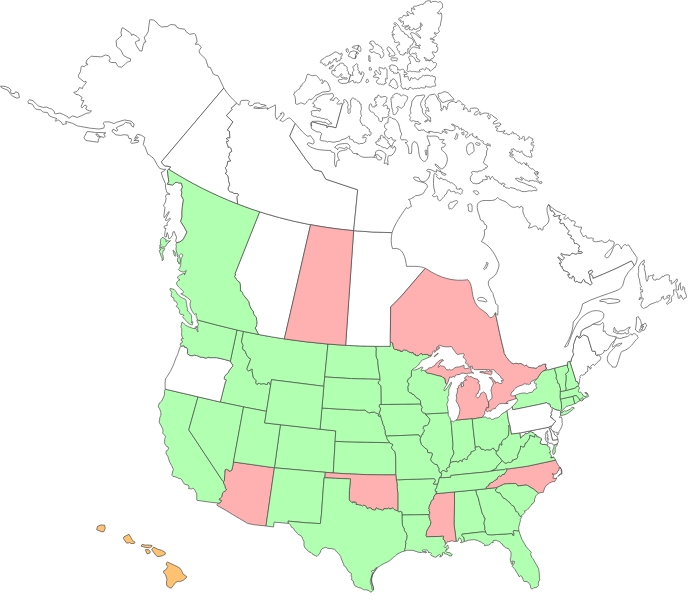
Back to capitols. It’s now easier to keep track of the ones I haven’t seen than otherwise.
Green for an interior visit, orange for exterior only, gold representing uncertainty, and white no visit.
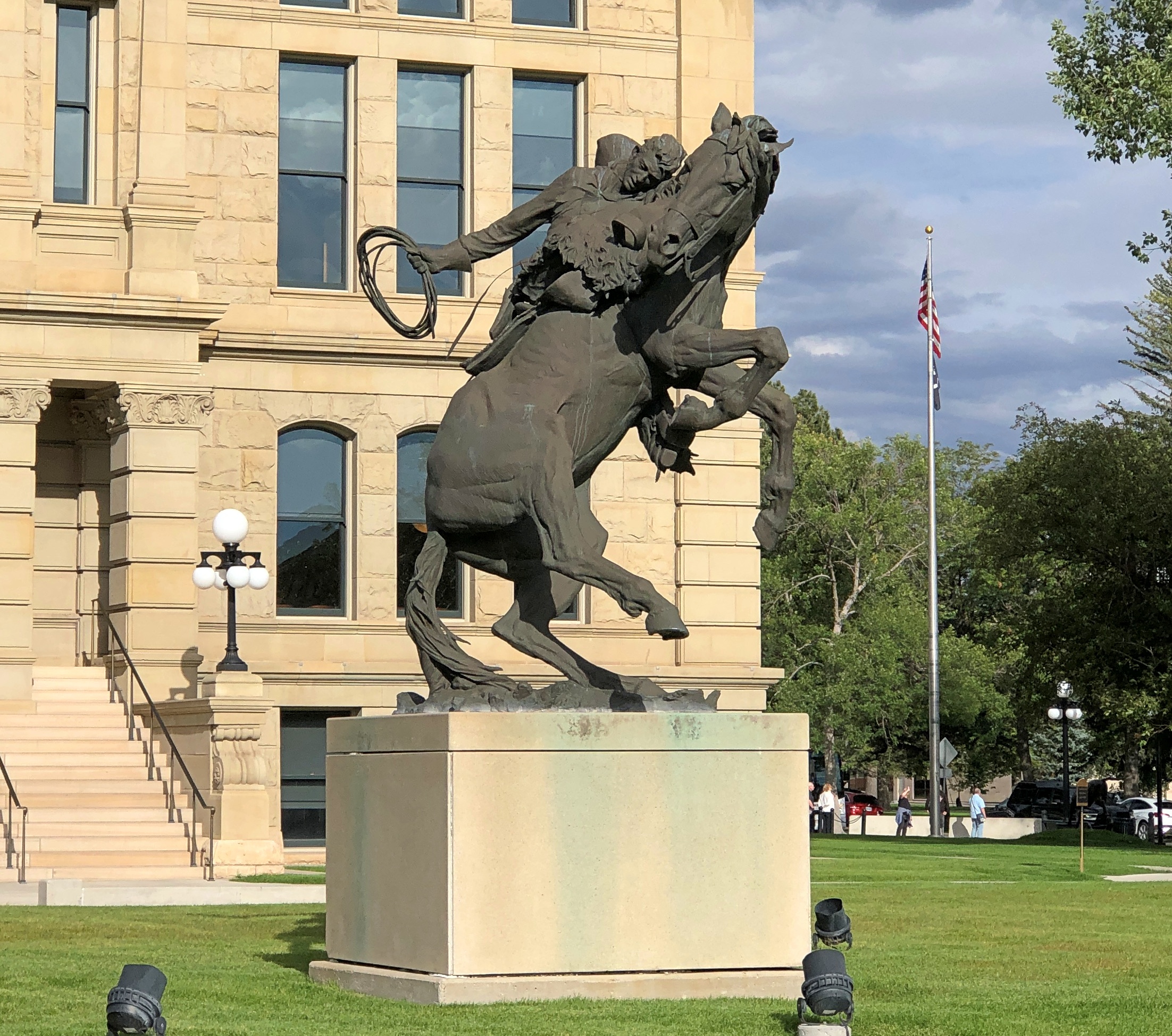
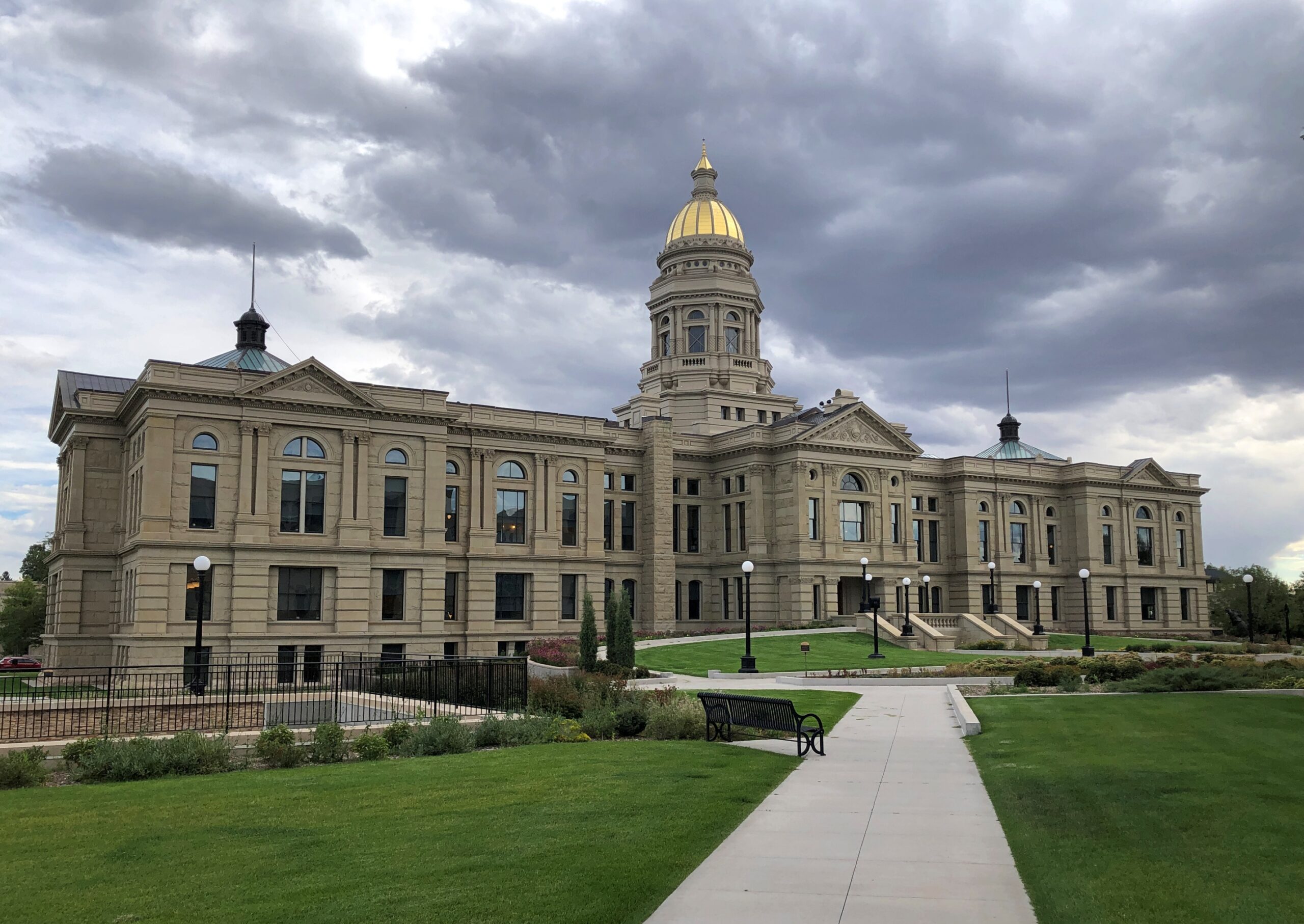
No skeletons were to be found at the Wyoming State Capitol last month, but you can hardly expect too many bone collections on display at state houses. The state of Wyoming does, however, want to remind visitors that they are in Wyoming.
The work is called “Spirit of Wyoming,” and it stands on the capitol grounds, created by artist Edward J. Fraughton (d. 2024). The more I look at it, the more there is to think about. Which I suppose is at least one indication of a good work of art. So the Spirit of Wyoming involves the immediate risk of catastrophic injury by being thrown from a horse? Probably not what the legislature had in mind.
Rather, it might be the determination to hang on, no matter how much or madly the horse bucks. Especially in territorial and early statehood days, that sort of determination applied to a lot of Wyomingites, whether they were cowboys or not.
I had the opportunity to walk all the way around the capitol after arriving on the cloudy but warm afternoon of September 8.
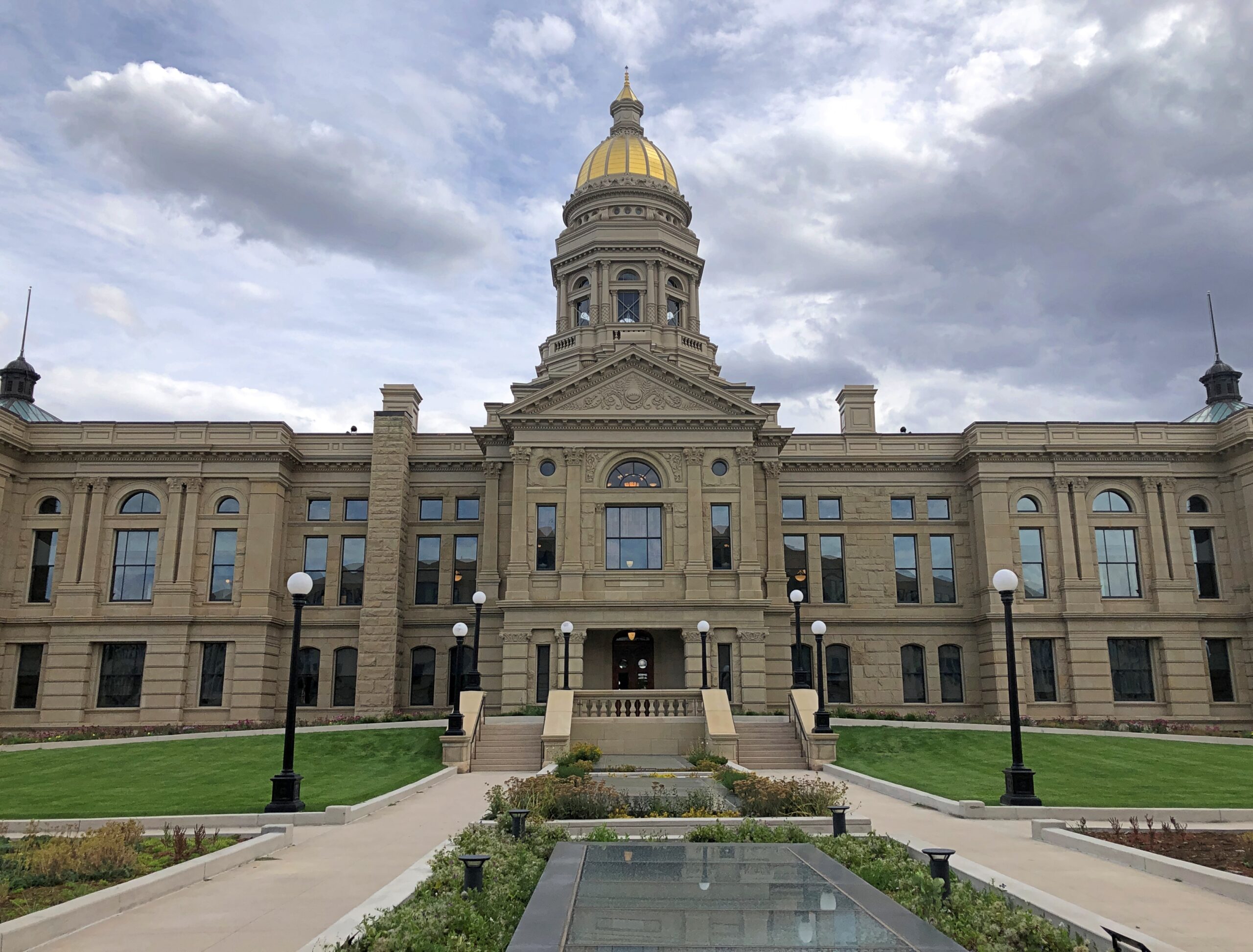
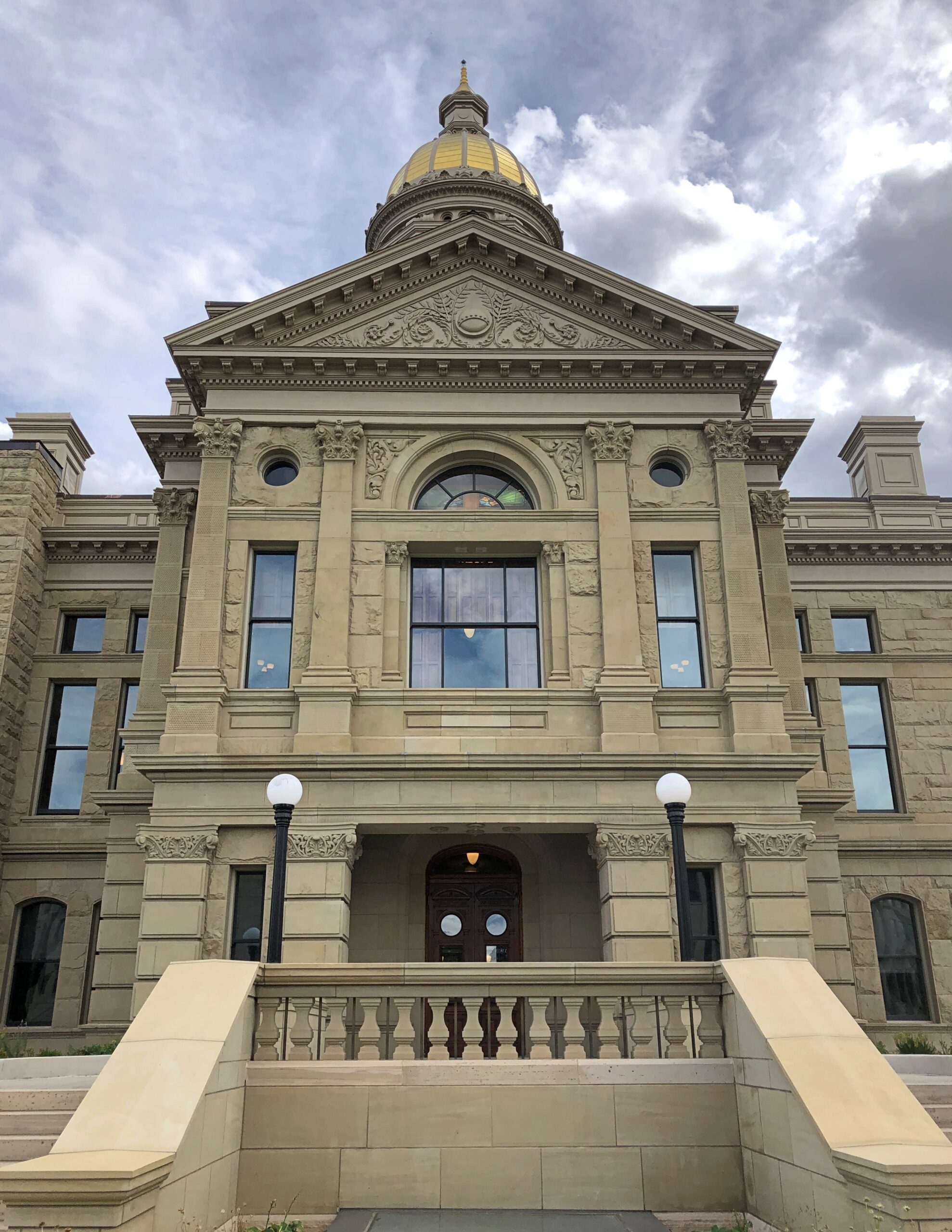
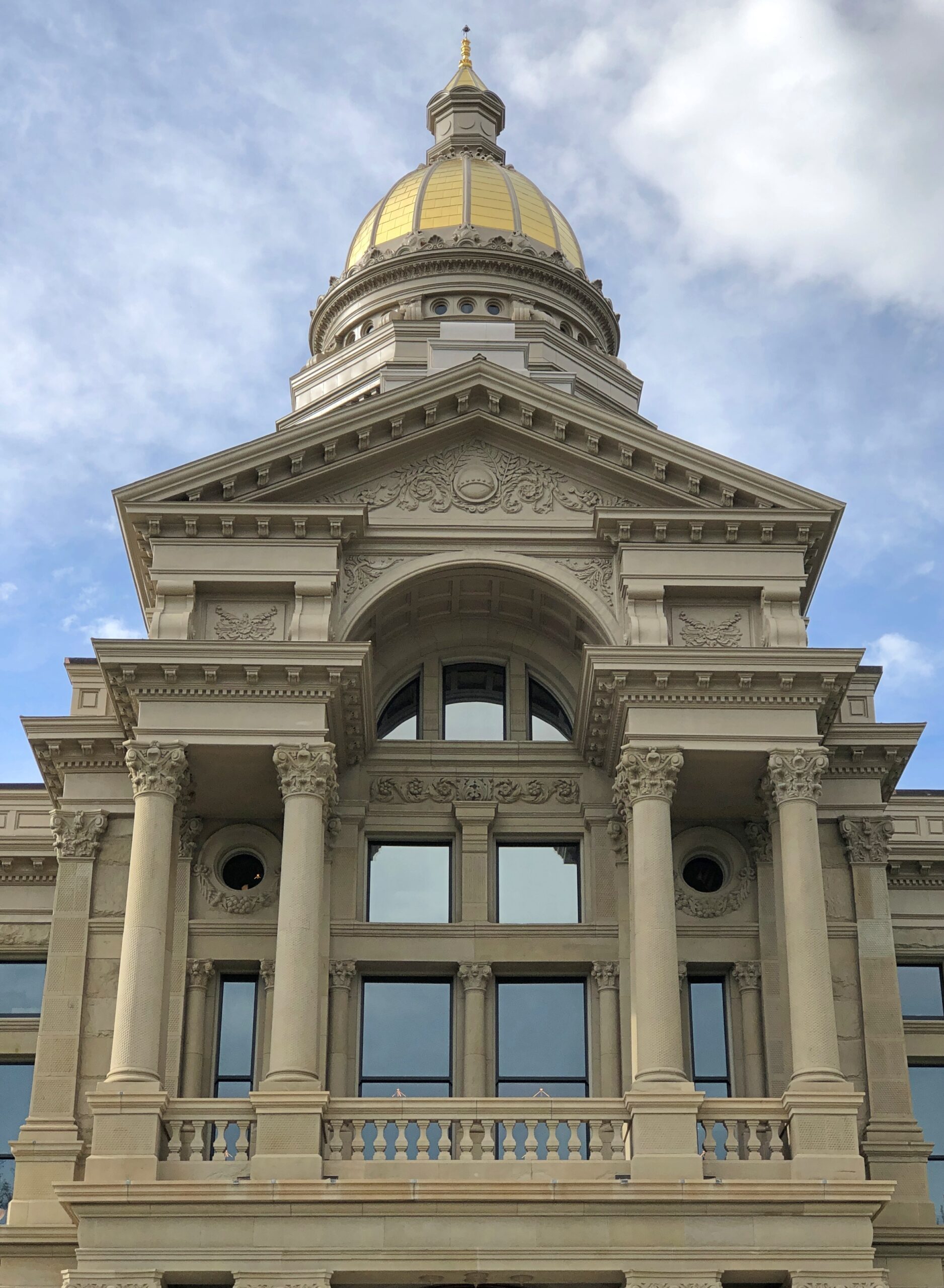
Golf leaf on a copper dome. Gold probably because it’s gold, not because Wyoming has ever produced that much. As of 2025, the state isn’t even among the top 10 all-time U.S. state producers.
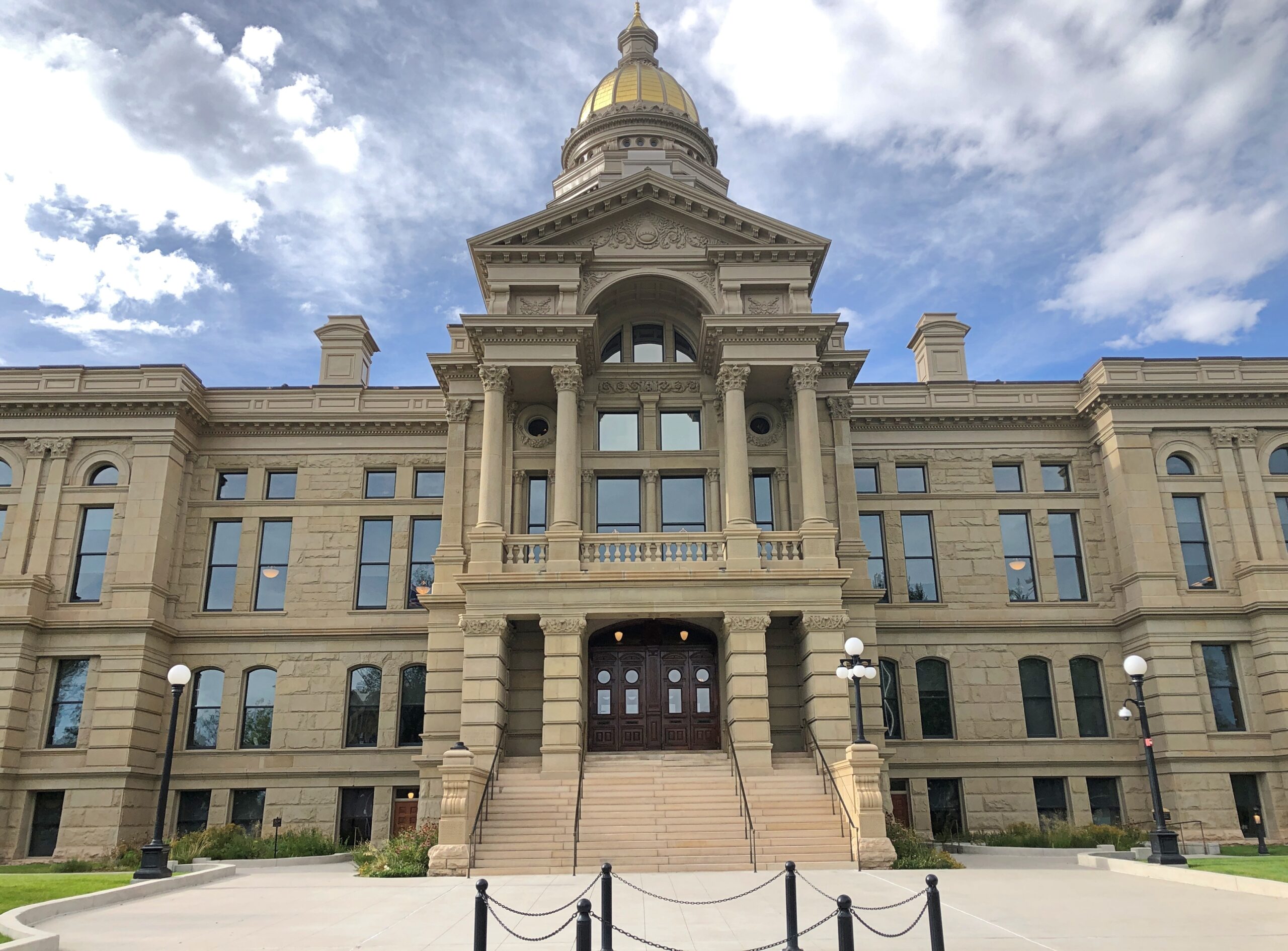
I think this was the front.
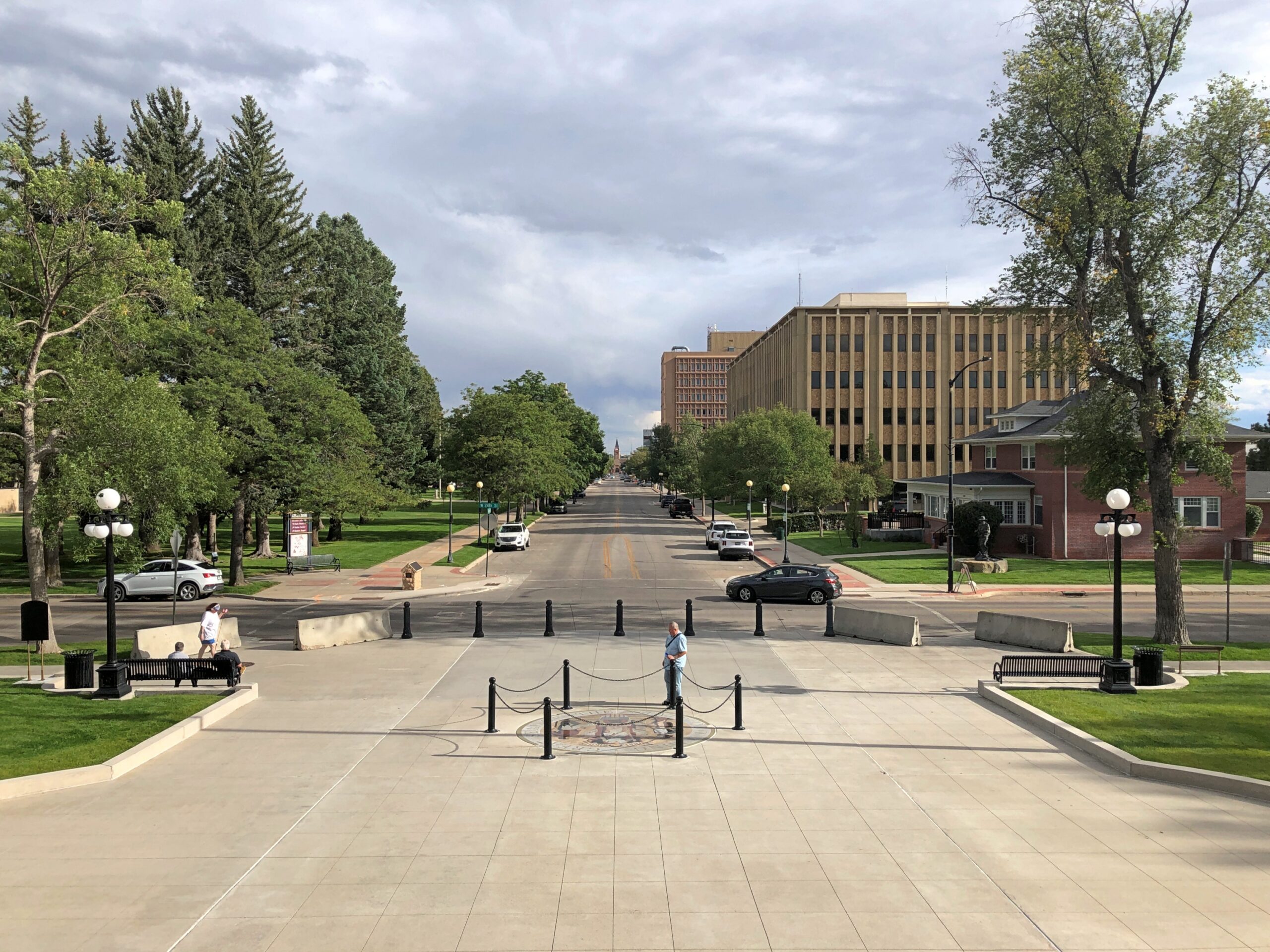
It faces a long avenue. It was a Monday. Cheyenne isn’t, just yet, cursed with heavy traffic.
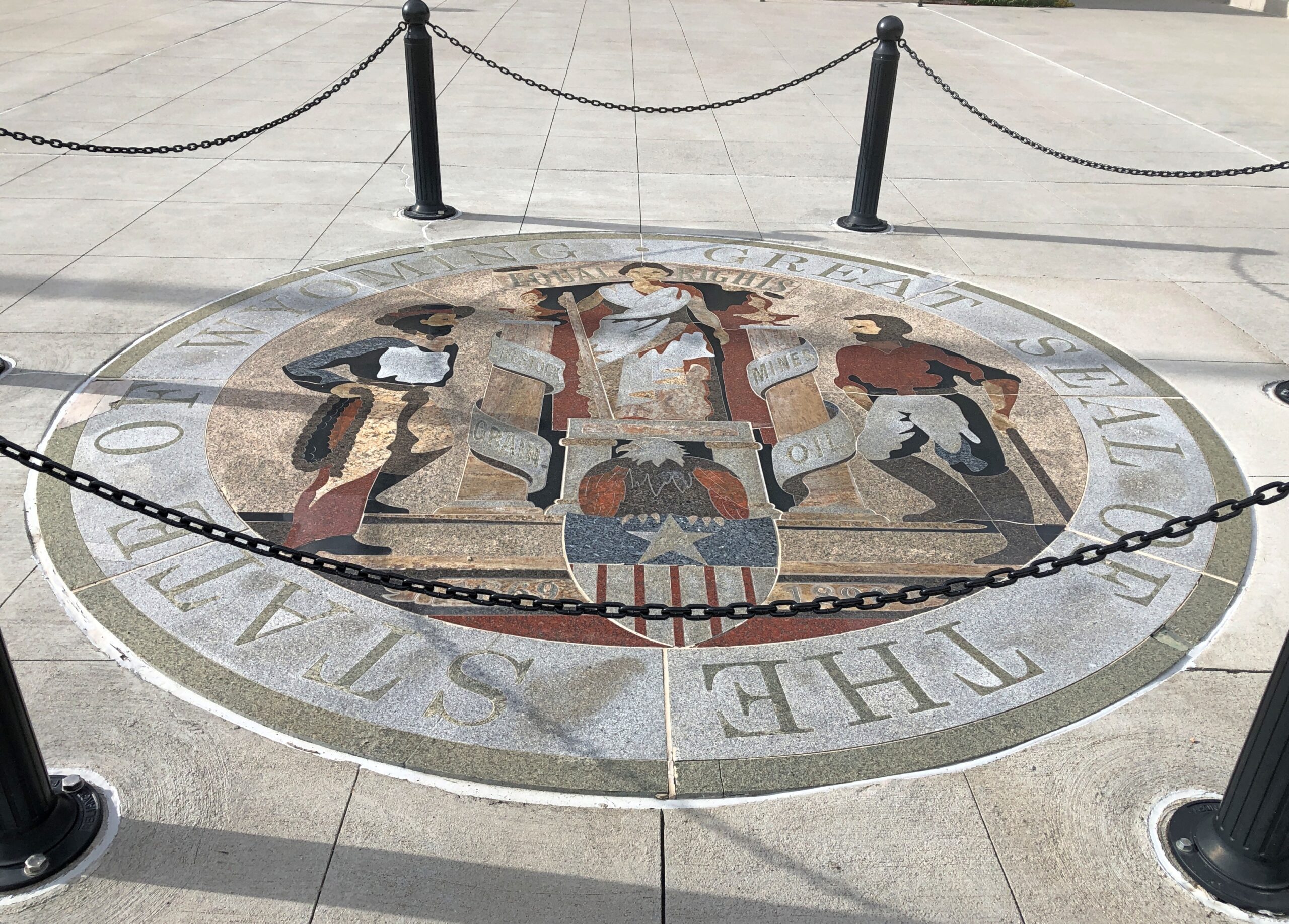
Also, the Wyoming state seal was to be found on that side of the building, in the sidewalk. Like in Virginia, except that you can walk on that one, like the slain tyrant it depicts. No treading on Wyoming.
Adopted in 1893, not long after statehood, and revised in 1921, the seal lists four sources of wealth and livelihoods, unusually (I think) for a state seal. They go with the cowboy and miner figures: livestock, grain, mines and oil. In our time, farming and mineral extraction, at least in terms of employment, are declining industries in Wyoming. Maybe the seal will be revised someday to include data centers, as they sprout in the Equality State.
On the other hand, Wyoming is still a major energy producer among the several states, especially when it comes to coal: 41.1 percent of the total nationwide (EIA stats), though national coal output is a much smaller pie – a dirty pie, to be sure – than it used to be. Also worth mentioning: a quarter of net electricity generation in the state is by renewables, roughly the same percentage as nationally. There is no nuclear power generation in Wyoming. When those data centers eventually get small modular reactors, that would change.
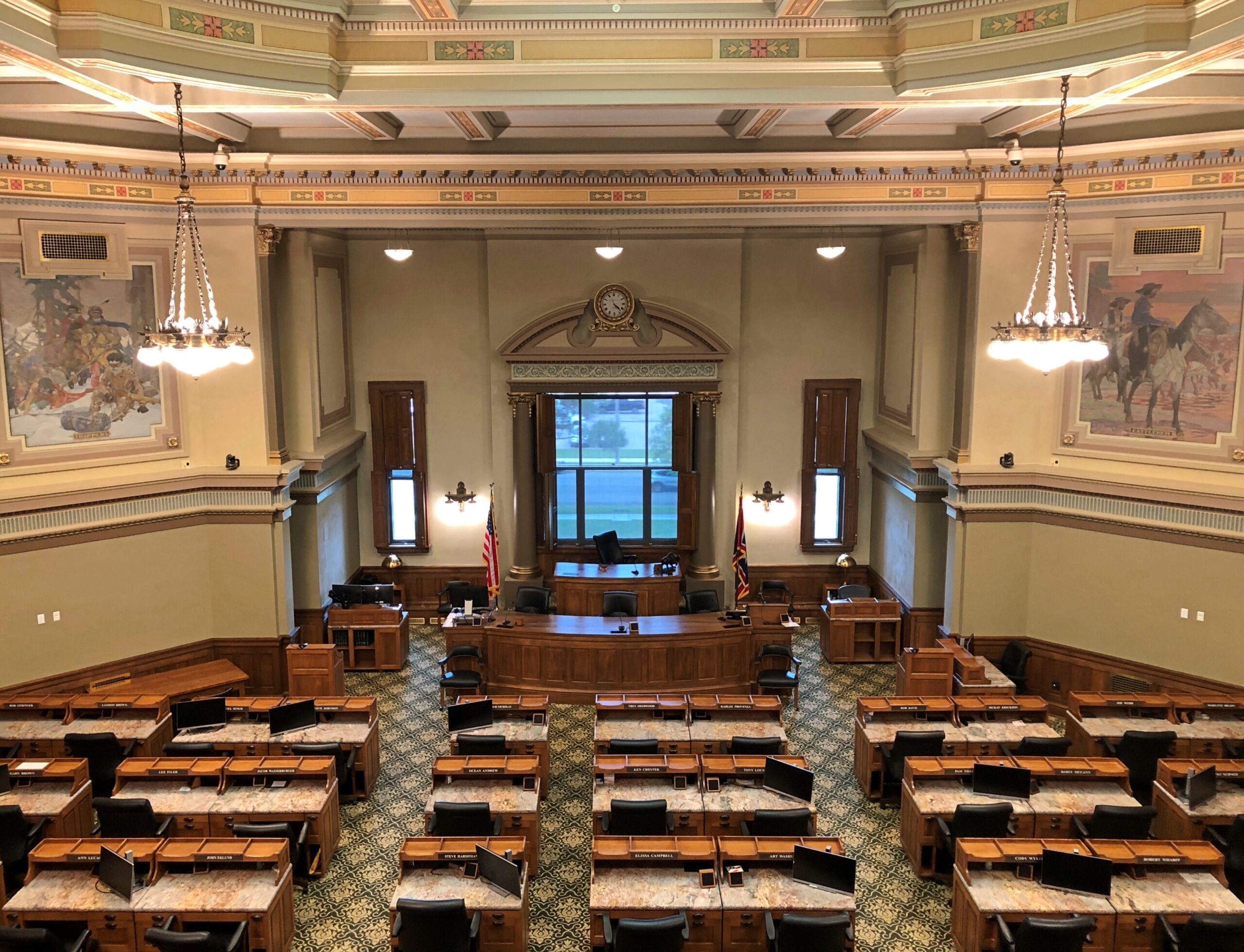
Another distinction of the Wyoming capitol is that work started on it before statehood, with ground broken in 1886. David Gibbs – later mayor of Oklahoma City, of all things – and the prolific William DuBois (a Chicago trained architect) did the design, one of restrained elegance.
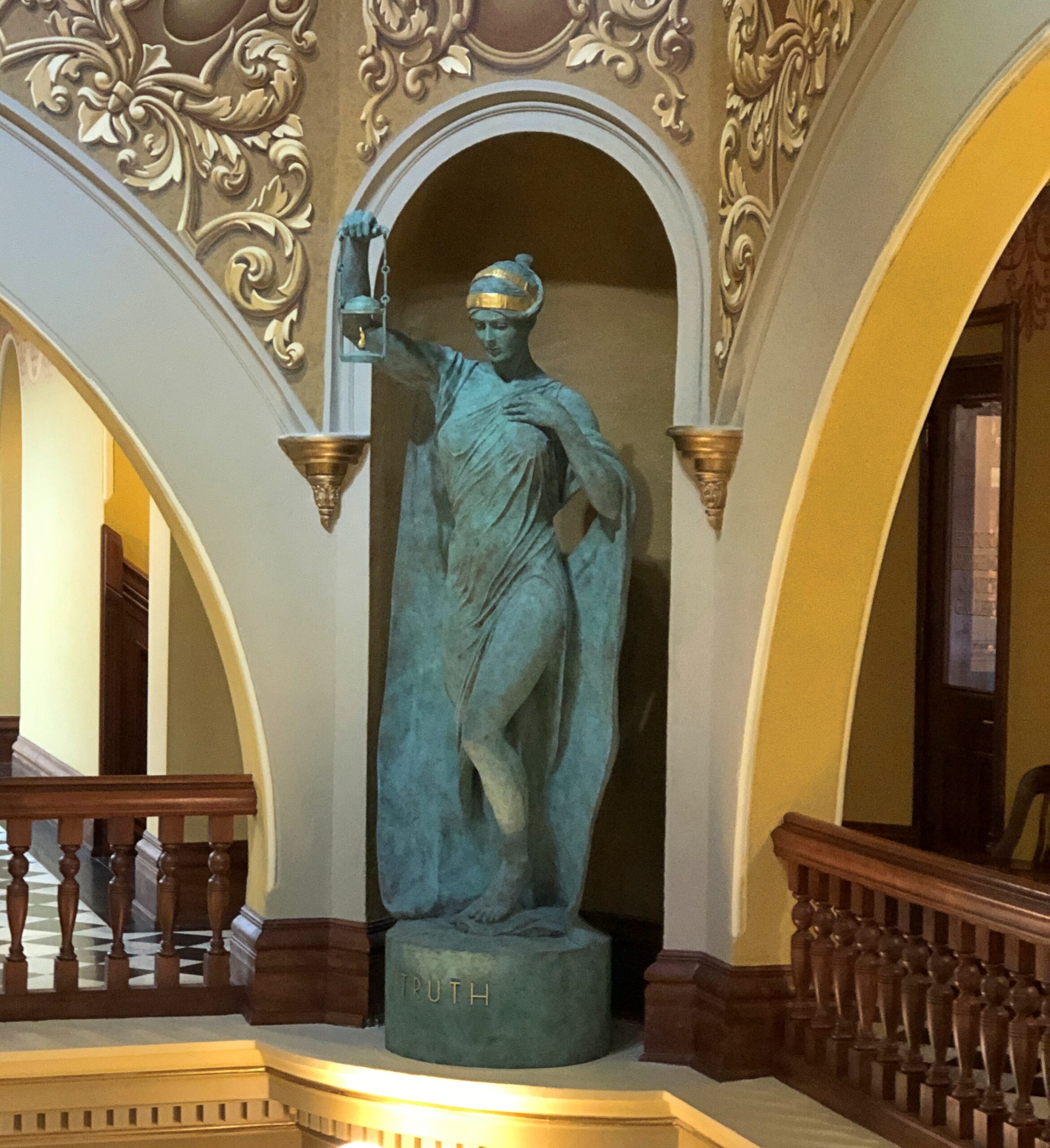
This is one of the four statues at the capitol known as the Four Sisters: Truth. The others are Justice, Courage and Hope.
Though they look vintage, their niches remained empty for 131 years “for reasons that remain unclear,” according to a sign in the capitol. In more recent times, the state tapped the mononymoussculptor Delissalde to fill the niches, and the works were unveiled only in 2019.
They’re way up there.
One more thing to note: a display in the capitol lauds the state – actually the territory – for its enfranchisement of women in 1869, the first place anywhere to do so. Why Wyoming? You could chalk it up to the toughness of frontier women, but certainly women in all the other 19th-century territories were plenty tough. The broader movement to expand the franchise was already underway, though early in the game – and from the sound of things in this article at least, the territory’s move was something of a retroactively happy result “for a large, strange mix of reasons.”
Think of the 50 state capitols as, collectively, a giant free museum of U.S. history, complete with grand buildings and a collection of artifacts with some consistent themes, such as images of elected officials, relics of war, and memorials to officially worthwhile individuals or causes. Some capitols explicitly have museum cases or whole museum floors, with a wide variety of stories and items from a state’s early years.
The collections can be a little staid. But sometimes, oddities are tucked away. Not too often, but there was that time I saw a two-headed calf at the Georgia State Capitol, or the miniature Western movie set at the Utah State Capitol. Or a bust of President Benjamin Harrison, carved from a tree stump. In Idaho. Then, at the Iowa State Capitol last month, this fellow.
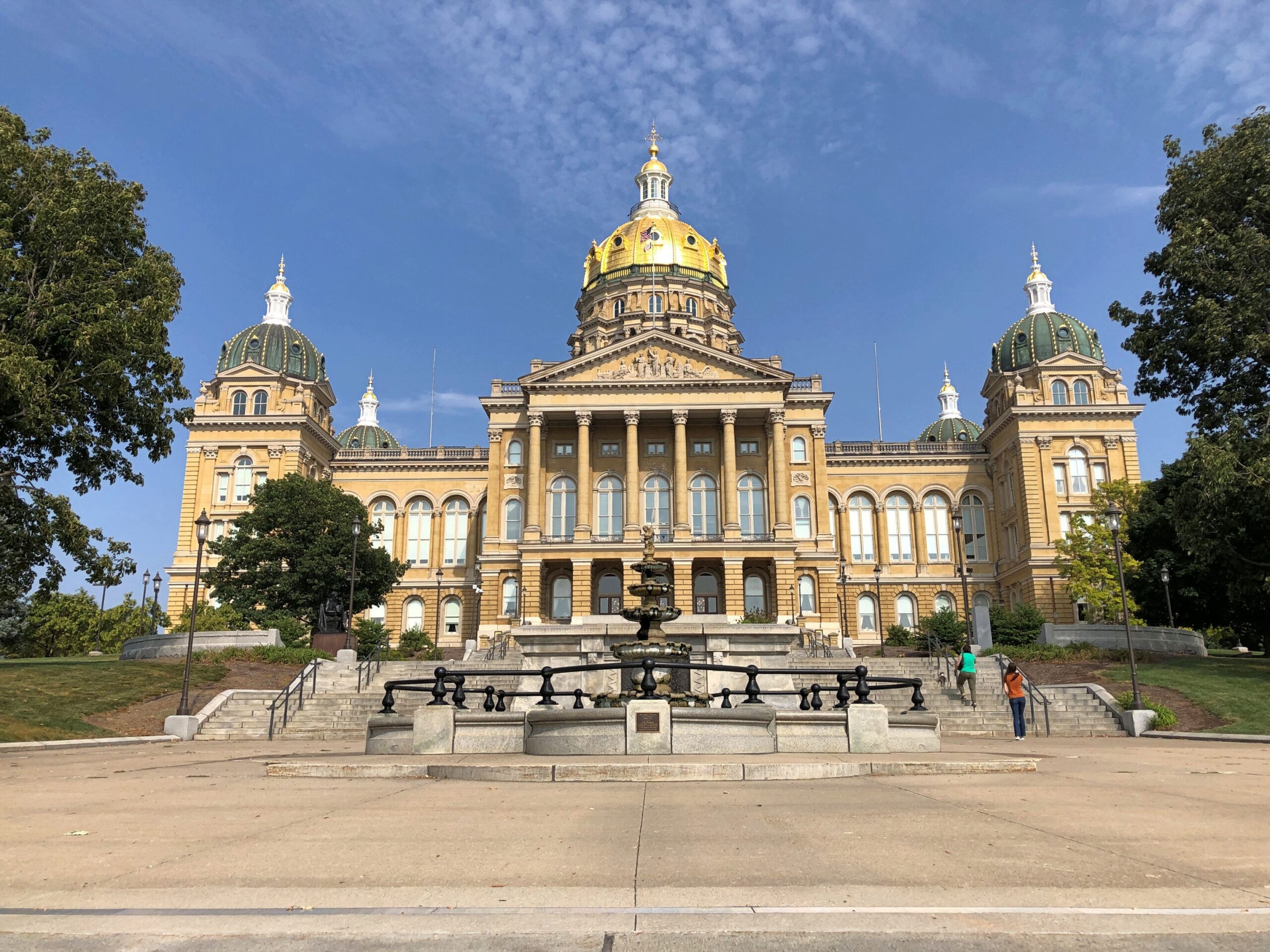
Last time I visited the Iowa State Capitol, I arrived about 10 minutes after it closed. So I — we, Ann was with me – looked at an assortment bronzes on the grounds, including the memorable (and mammary) Mother Iowa, and admired the gold-leaf dome. This time around, Des Moines was the destination for my first day of driving, September 4, and I was determined to see the interior.
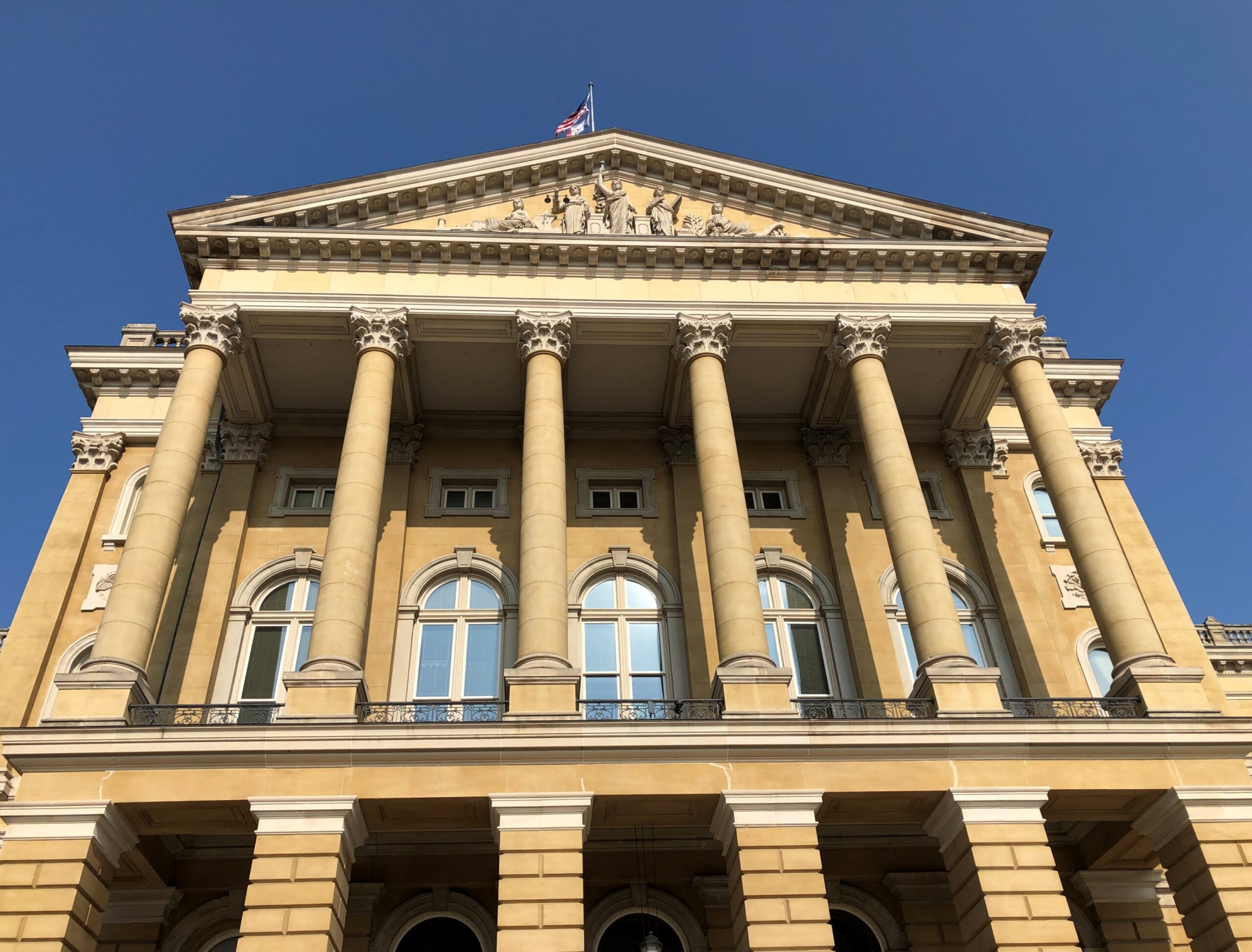
It’s a grand edifice, as capitols usually are.
A series of architects oversaw the design, including Chicagoan John C. Cochrane, who also designed the Illinois State Capitol and, less well known, the handsome stick-style All Saints Episcopal in Chicago.
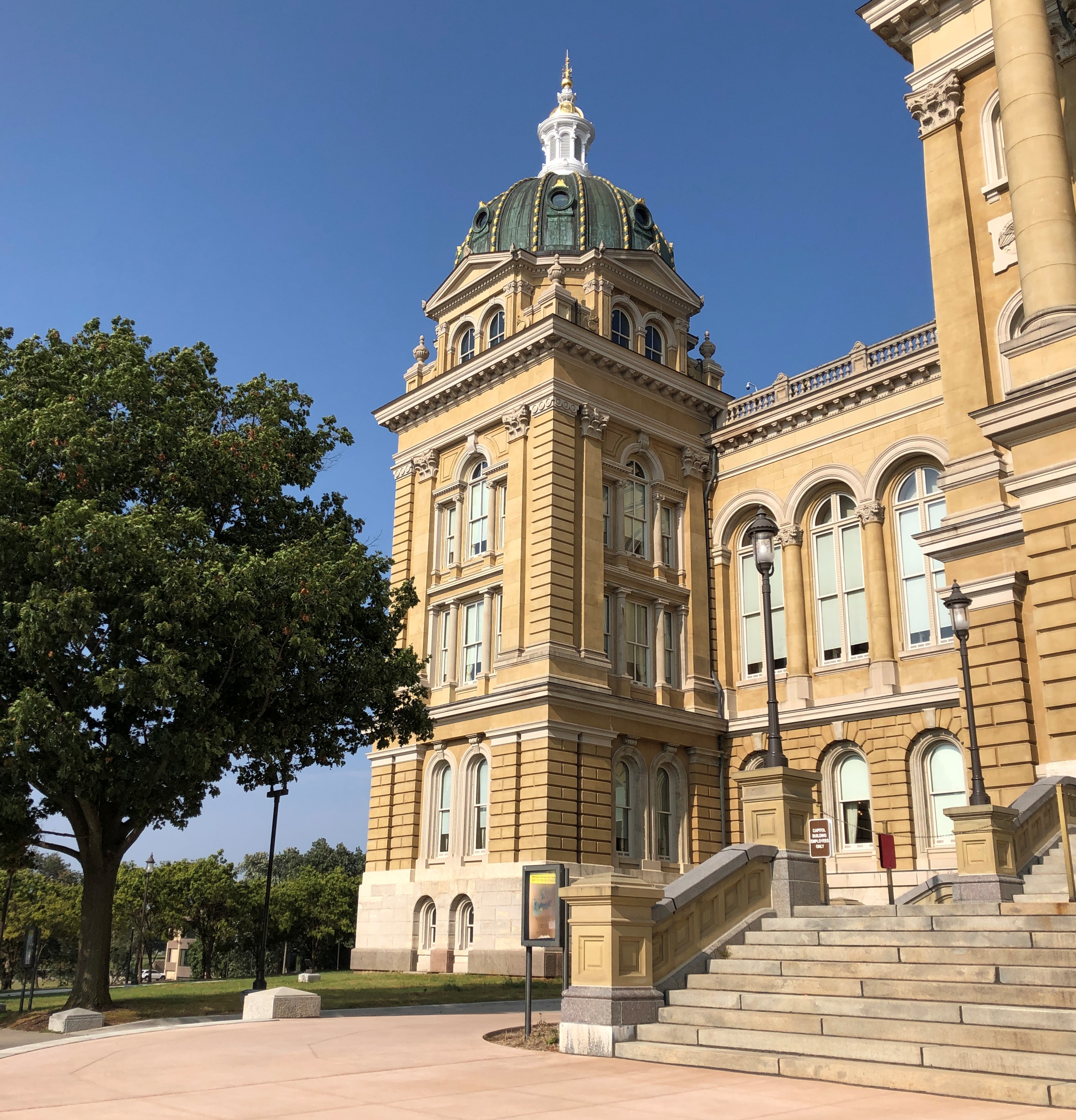
I’d forgotten that four smaller domes flank the main dome, forming in quincunx of domes. I understand that Iowa is the only such five-domed state capitol in the nation. I’m not sure how important that distinction is, but it is a distinction.
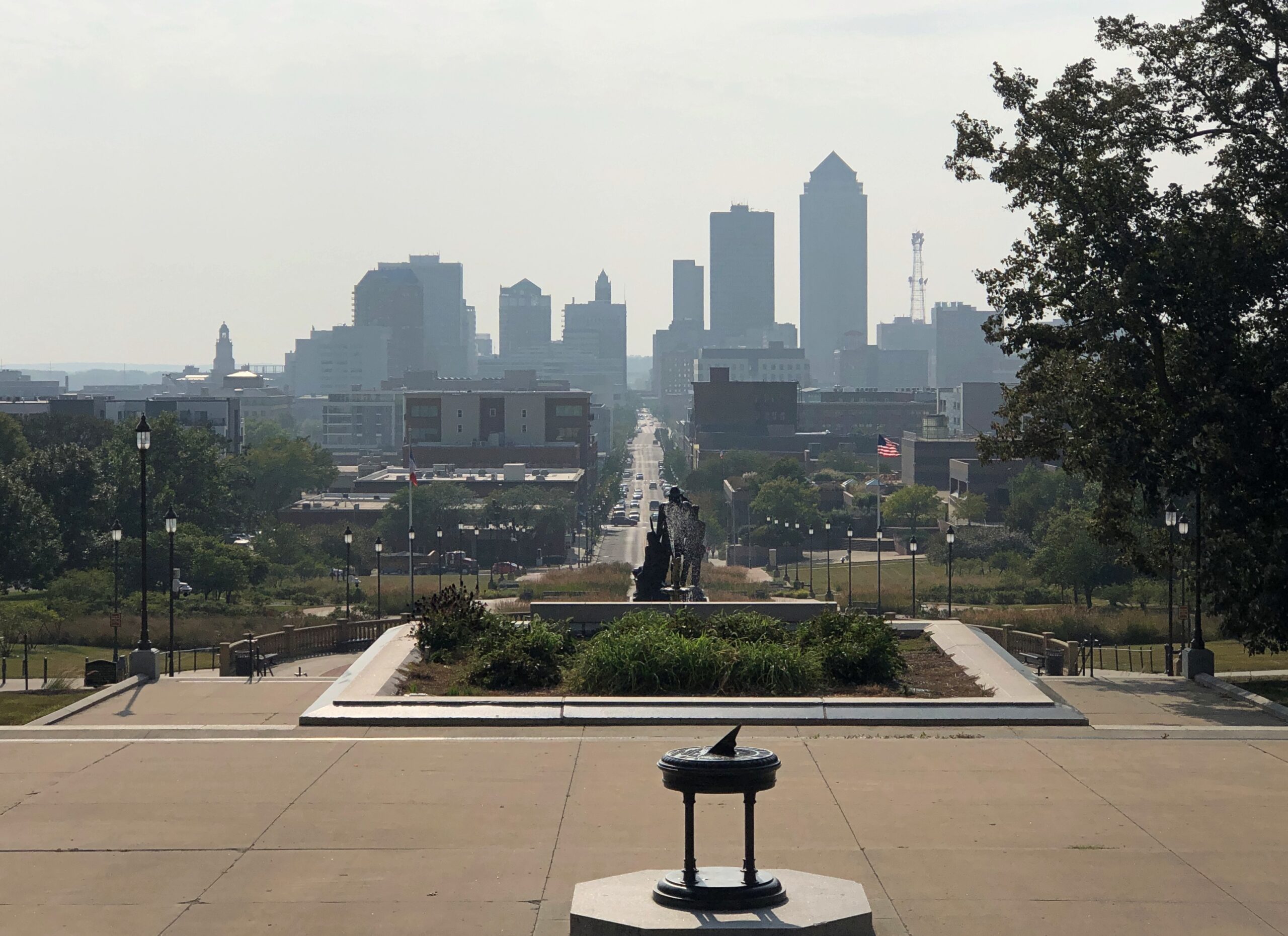
On a clear day, there’s a good view of downtown Des Moines from the capitol steps (and sundial). It was a hazy day, the result of Canadian wildfires.
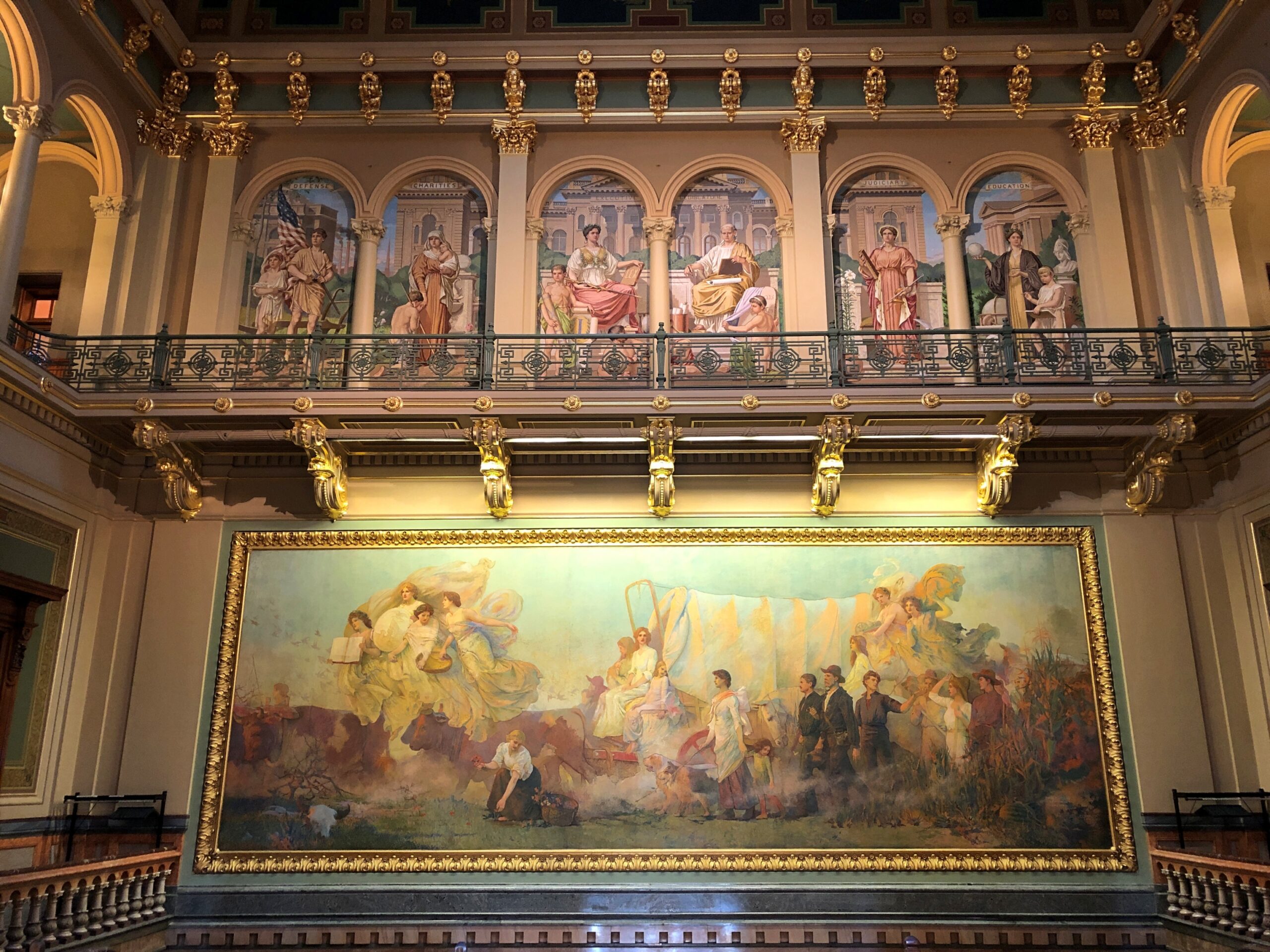
I arrived before closing, and experienced the grandness of the inside. Such as murals.
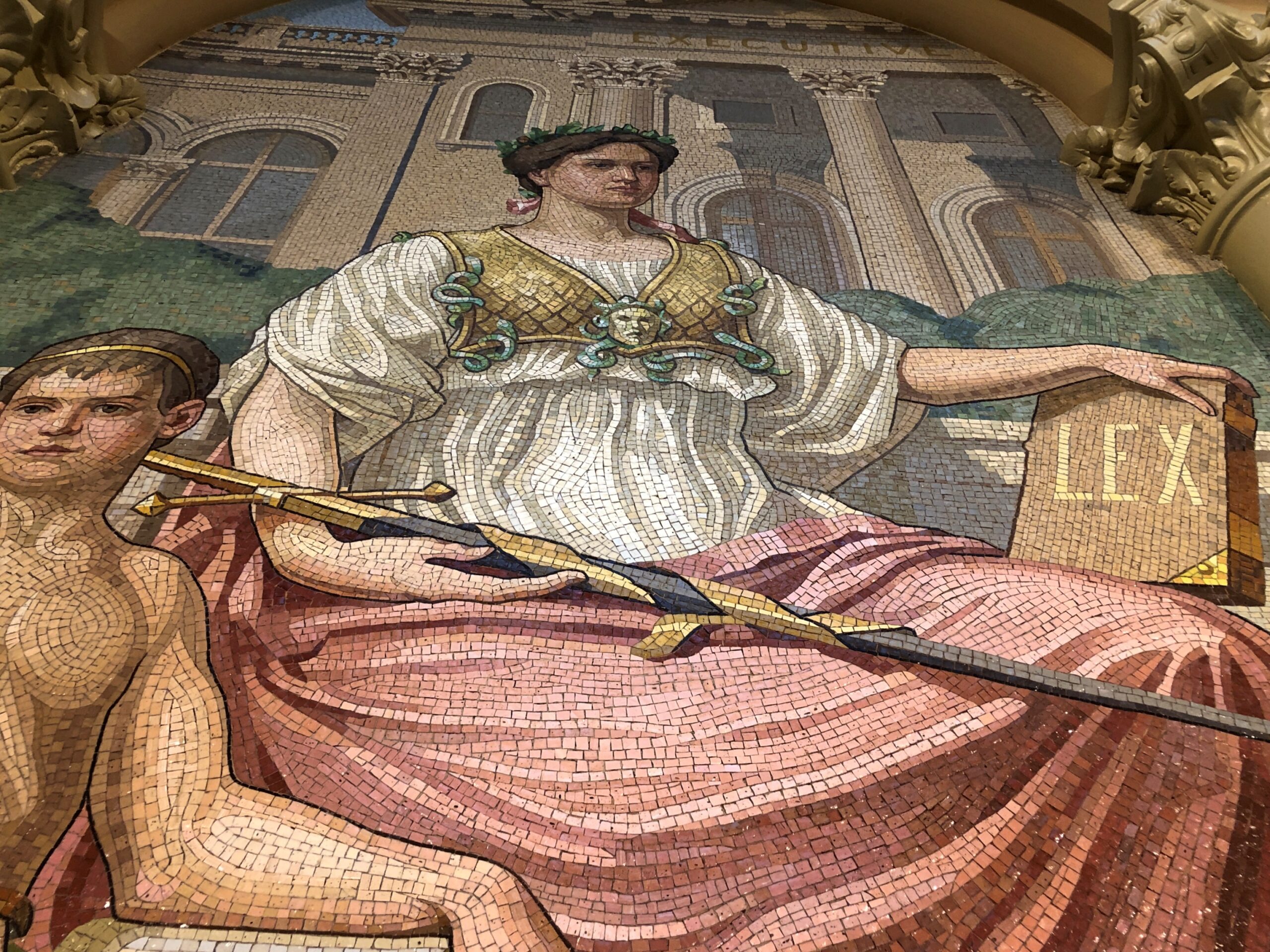
Allegories done in mosaic. Law, for instance. There was no backing up further to get a fuller image of Lex, since that would be over the edge of a balcony.
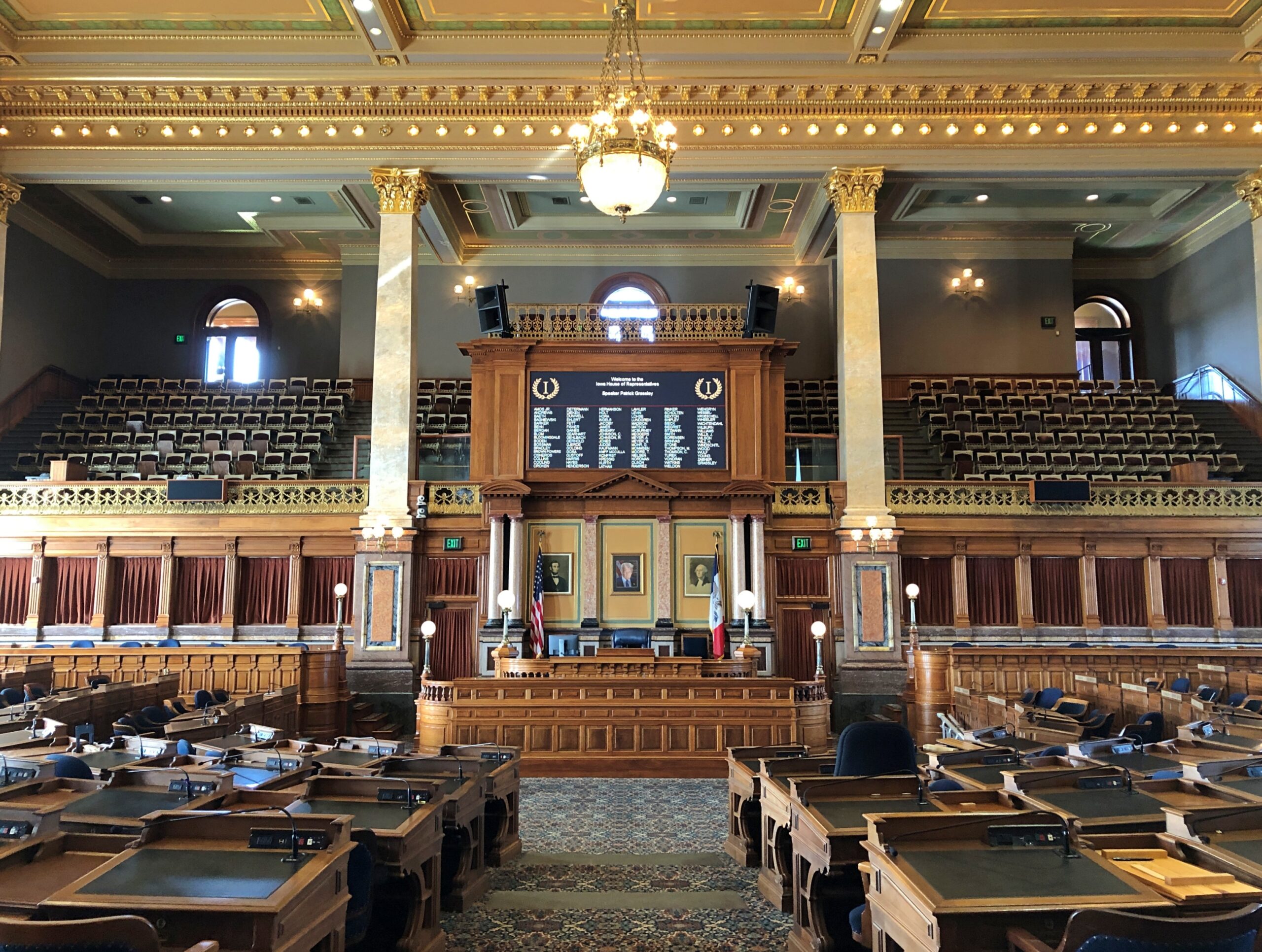
The House of Representatives.
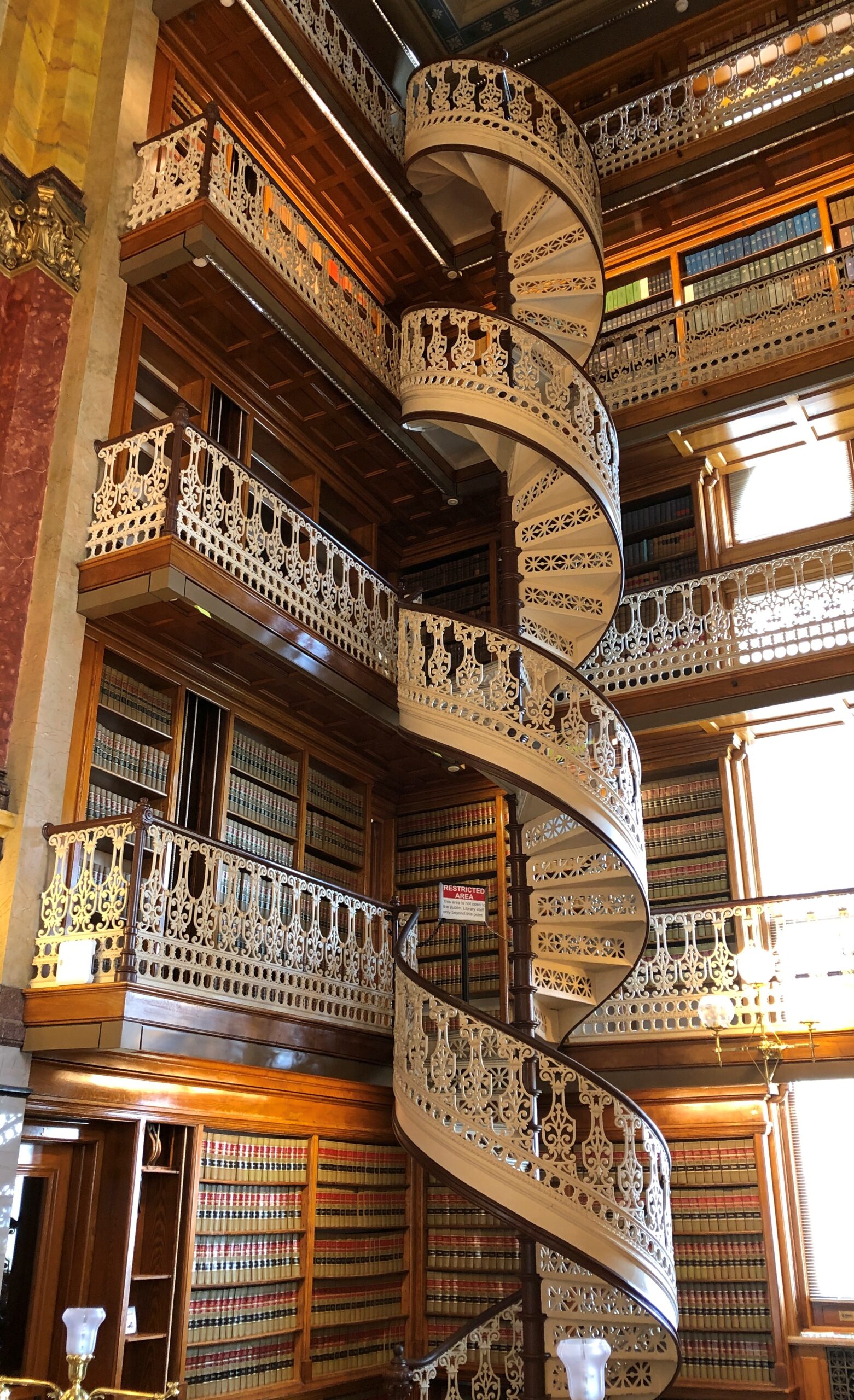
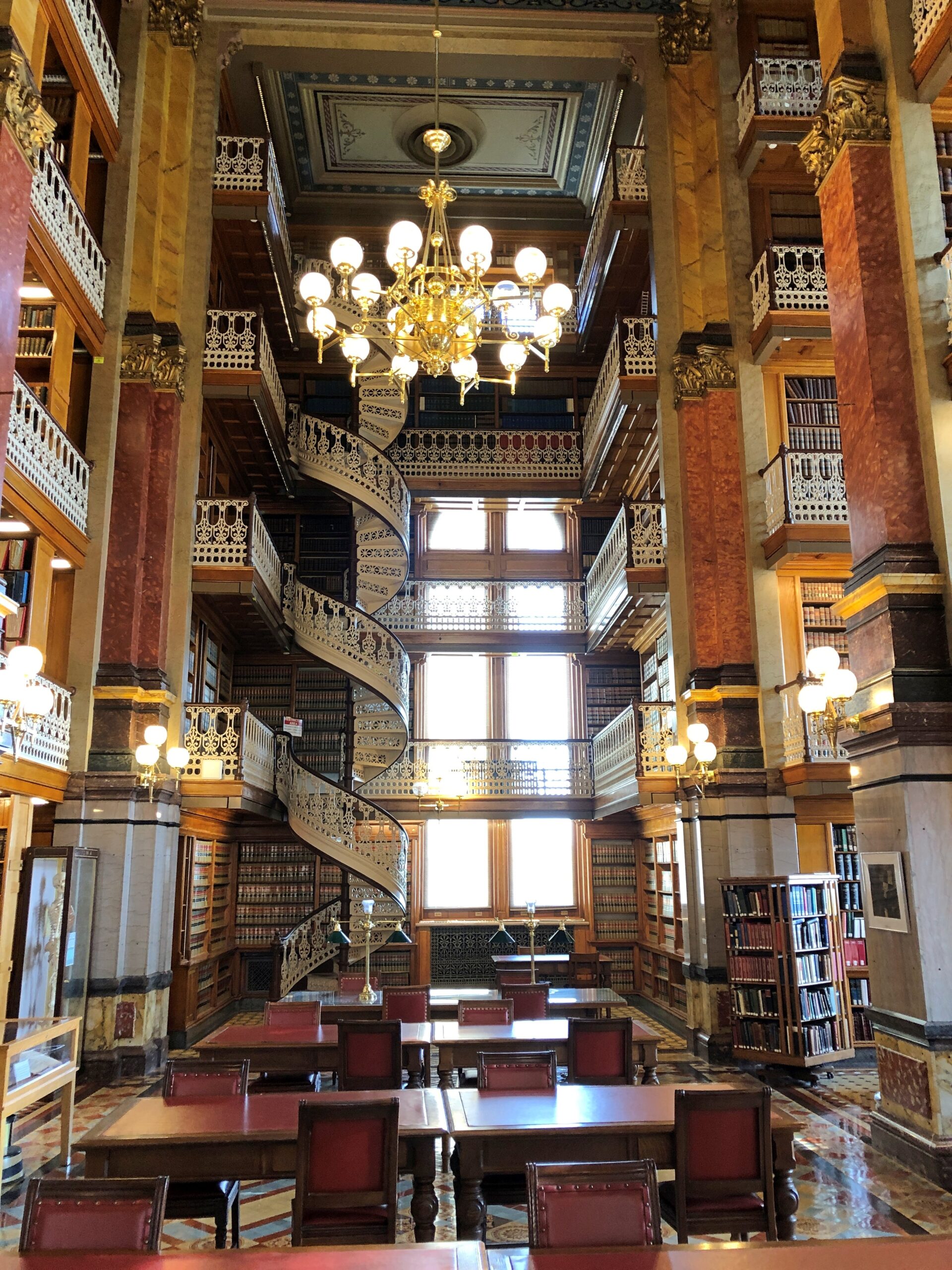
The Iowa State Law Library. The most gorgeous of the spaces, I thought. Just like canyon pictures, an image does no justice to the brilliance of the place itself.
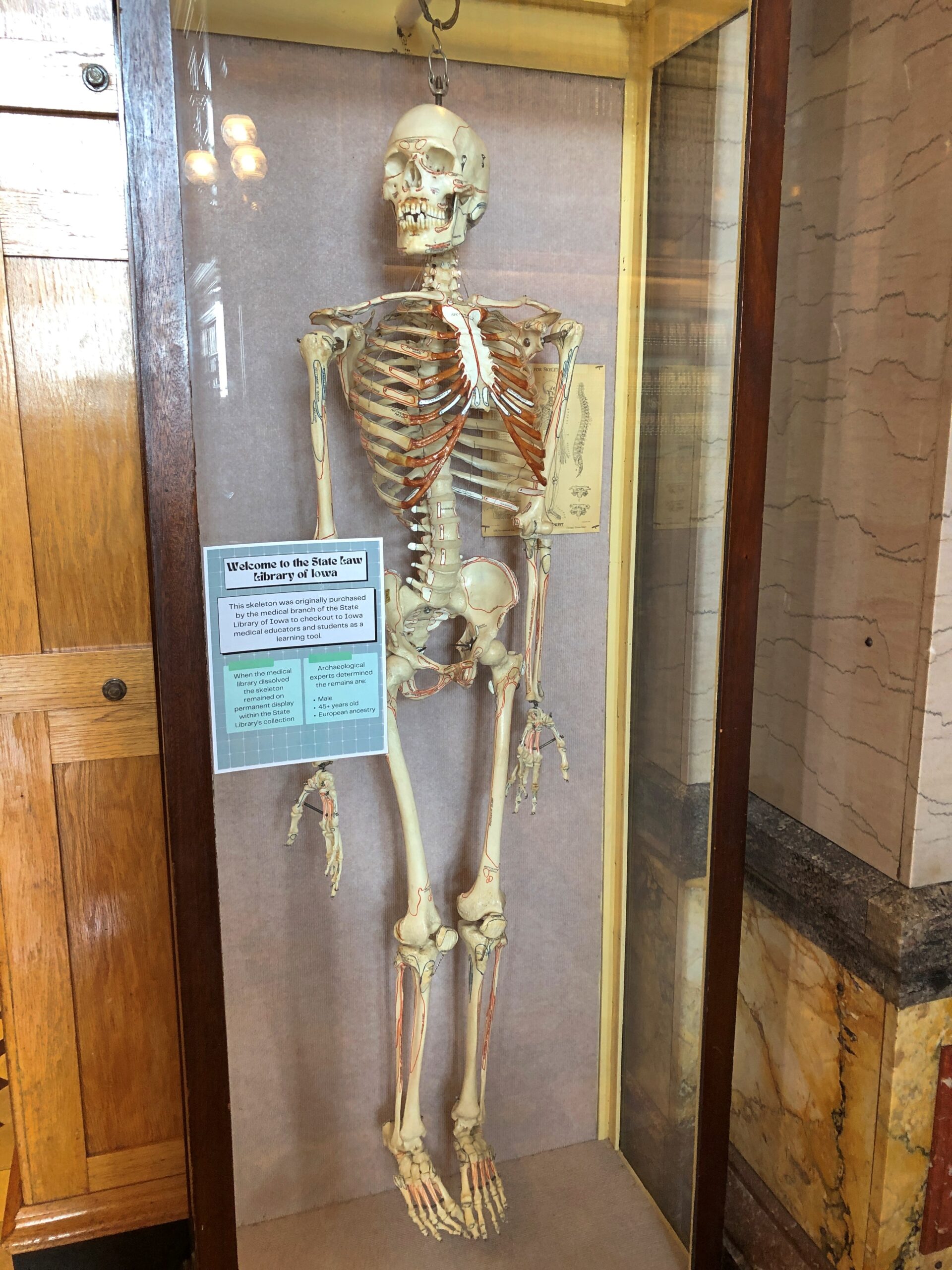
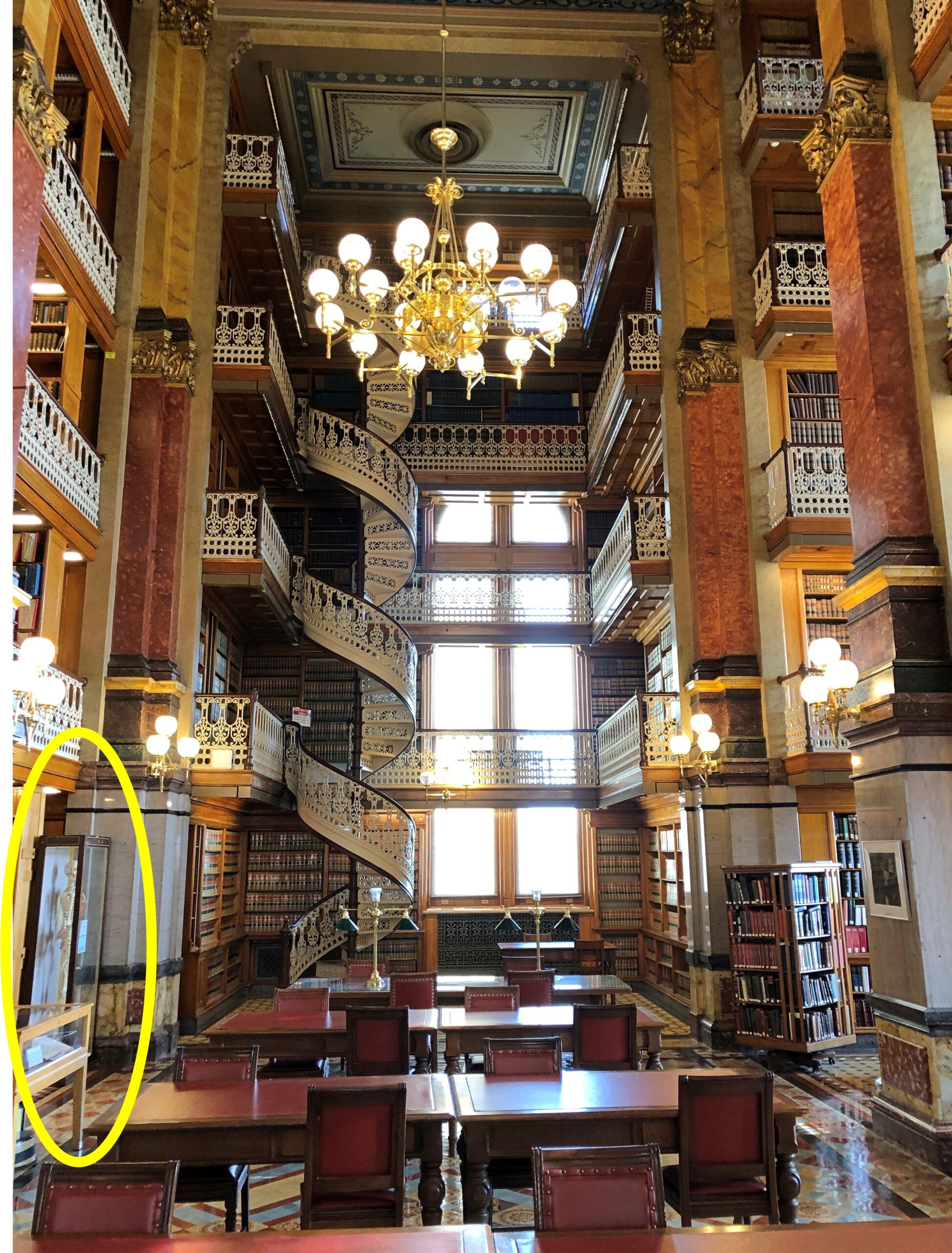
Note that the skeleton is behind glass in the Law Library.
What’s he doing in the Law Library? Showing how strict the library used to be about returning materials late? (Or the smartass answer: “Nothing, really.”)
The sign on the case says, This skeleton was originally purchased by the medical branch of the State Library of Iowa to checkout [sic] to Iowa medical educators and students as a learning tool. When the medical library dissolved, the skeleton remained on permanent display with the State Library’s collection. Archaeological experts determined the remains are male, 45+ years old, European ancestry.
Check out a skeleton from a library? Learning that such a thing ever happened was worth the effort, all by itself, to get to the capitol.
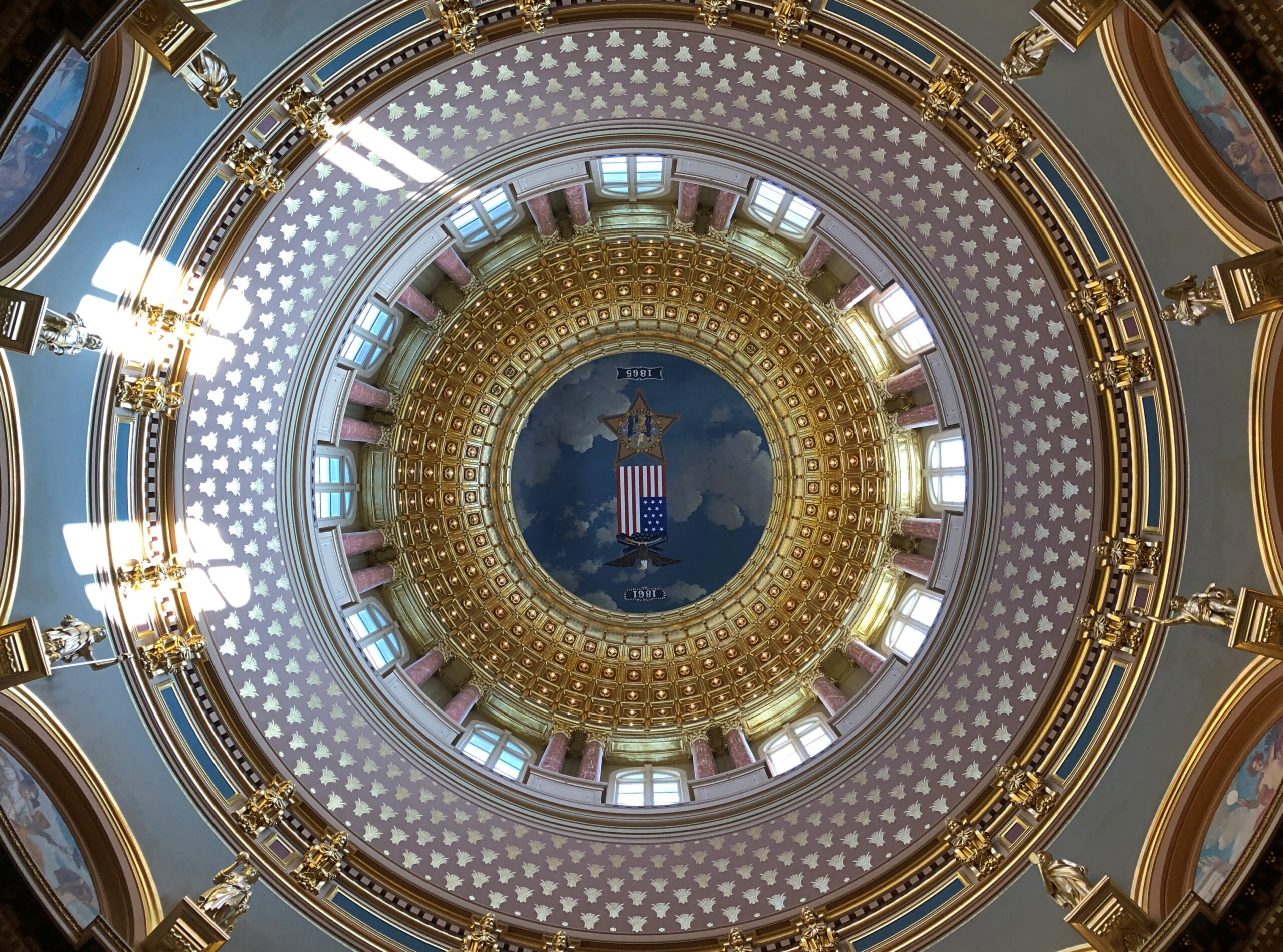
The dome is a little unusual, too, a little more representational that you usually see.
It features a memorial – in this case to the Grand Army of the Republic, with the name of the organization, a 13-star flag, and the dates 1861 and 1865. Considering that the development of the current capitol happened between 1871 and 1886, a GAR memorial of some kind isn’t a surprise, and I suppose the organization had the political heft at the time to get such a prominent spot.
Wiki tells me that more than 76,200 Iowa men fought for the Union out of a population of nearly 675,000 (in 1860), and about 13,000 died for it, two-thirds of whom by disease. Iowans supported the Union by about as lopsided a margin as imaginable. Seventy-six residents of Iowa are known to have served the Confederacy, and very likely most of those had recently moved to Iowa from the South.
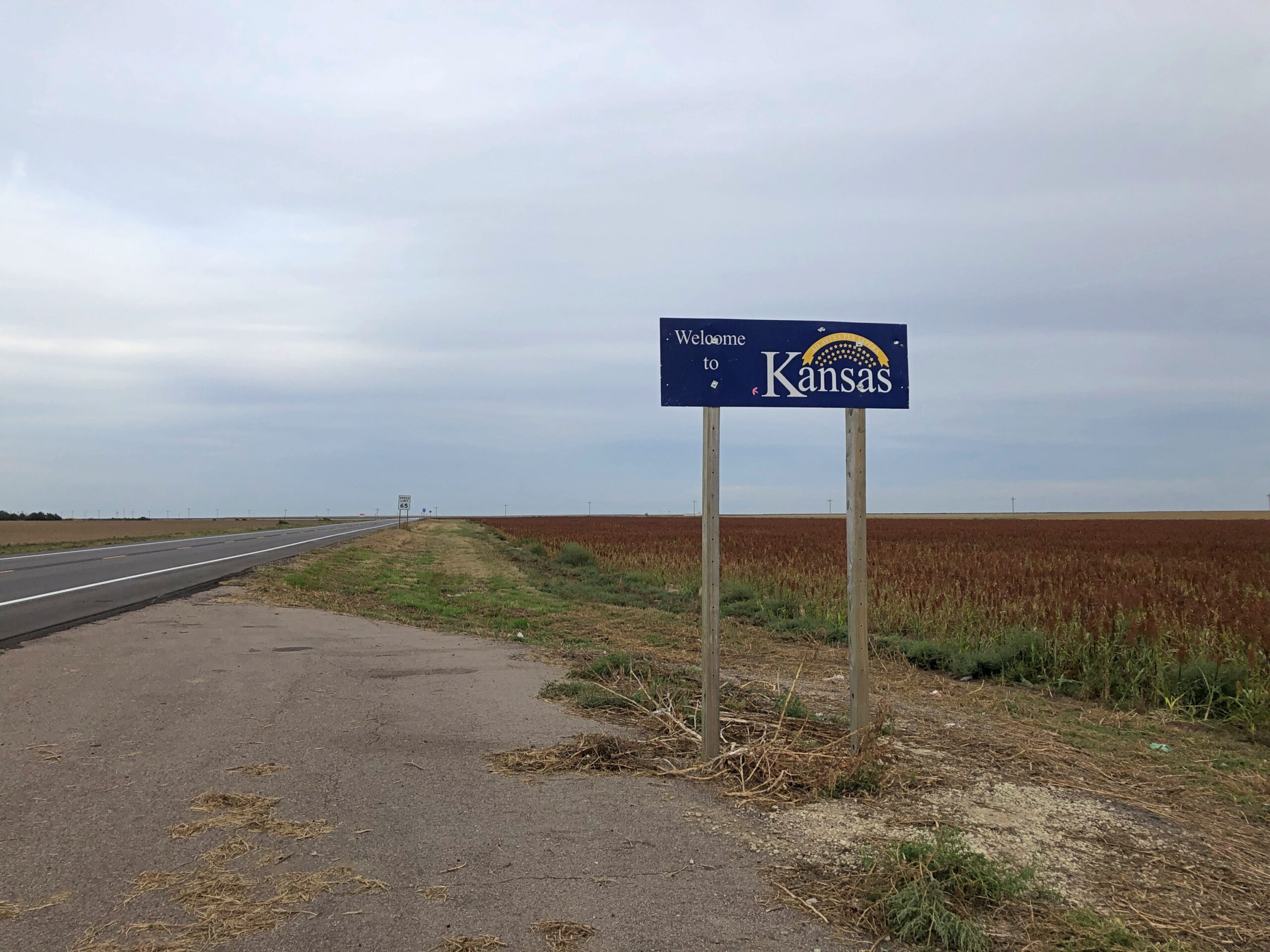
I returned home from Colorado via Kansas, heading eastward from Colorado Springs on September 22. I took this is a sign that day that I had, in fact, reached the western border of Kansas, created at the time of statehood in 1861.
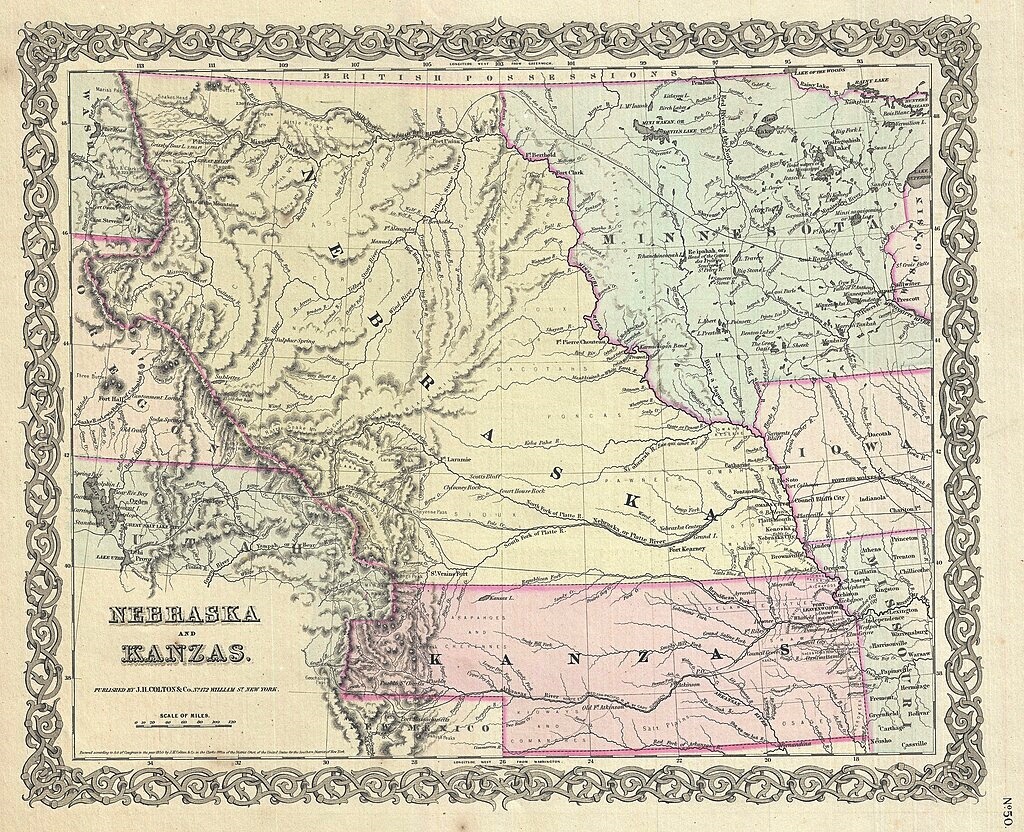
An 1855 map of “Kanzas” and Nebraska.
It would be cool if the spelling Kanzas had caught on. As it stands, “z” is used only once in all the state names, in Arizona.
The current Colorado-Kansas border is fairly close to 102 degrees West of the prime meridian, but actually follows 25 degrees West of the meridian that once cut through the Old Naval Observatory in Washington, DC, as fixed in 1850, assuming the initial surveys out in remote Kansas-Nebraska were accurate. Until later in the 19th century, and not officially until 1912, it seems the U.S. wasn’t having that limey prime meridian; or the froggy one through Paris. (And I was amused to read that for a long time the French referred to Greenwich Mean Time as “Paris mean time, retarded by 9 minutes and 21 seconds.”)
I spent my first full day in Kansas seeking out obscure sights. In western Kansas, there really aren’t any other kind.
Site of theBattle of Punished Woman’s Fork (Battle Canyon)
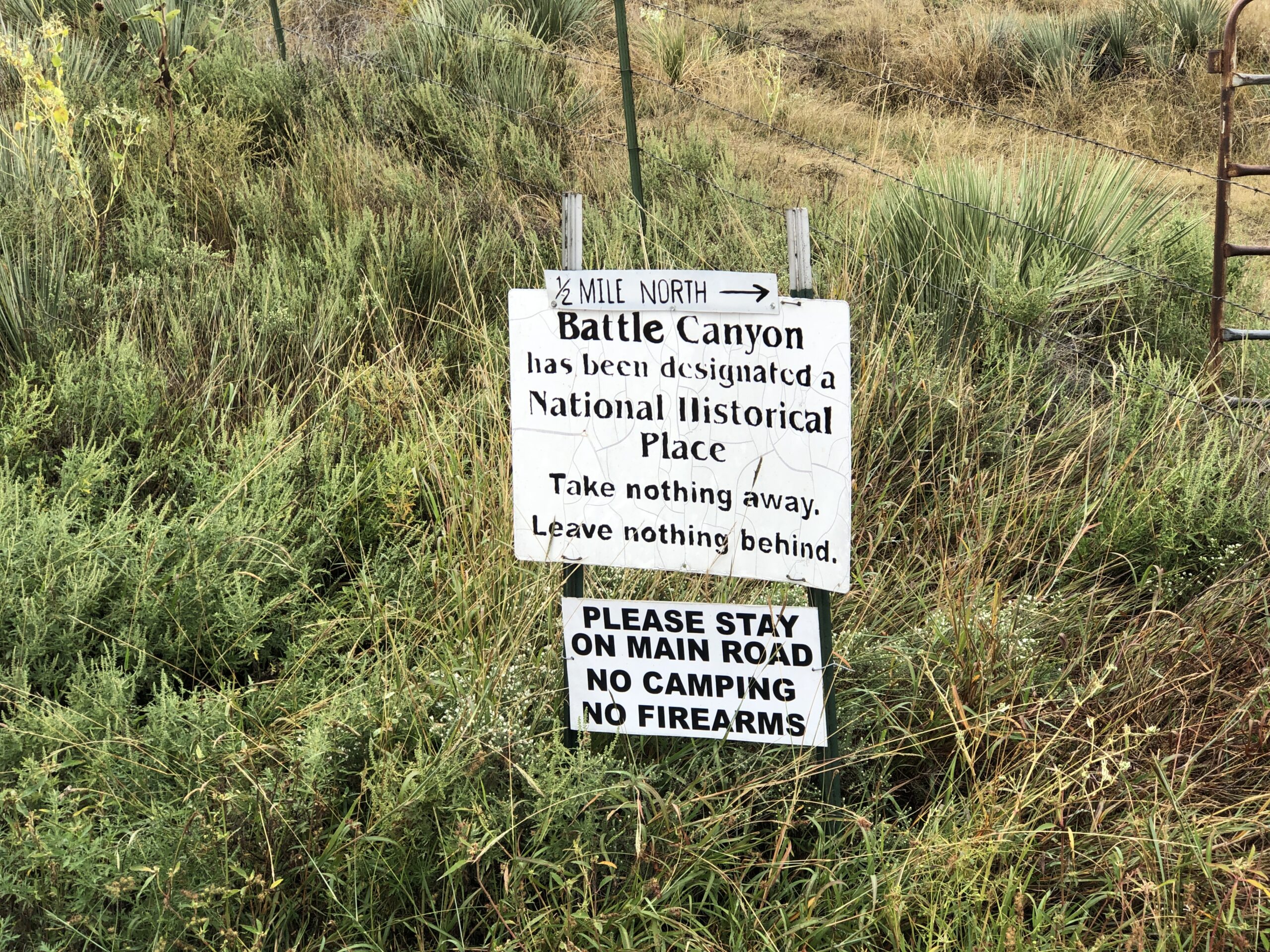
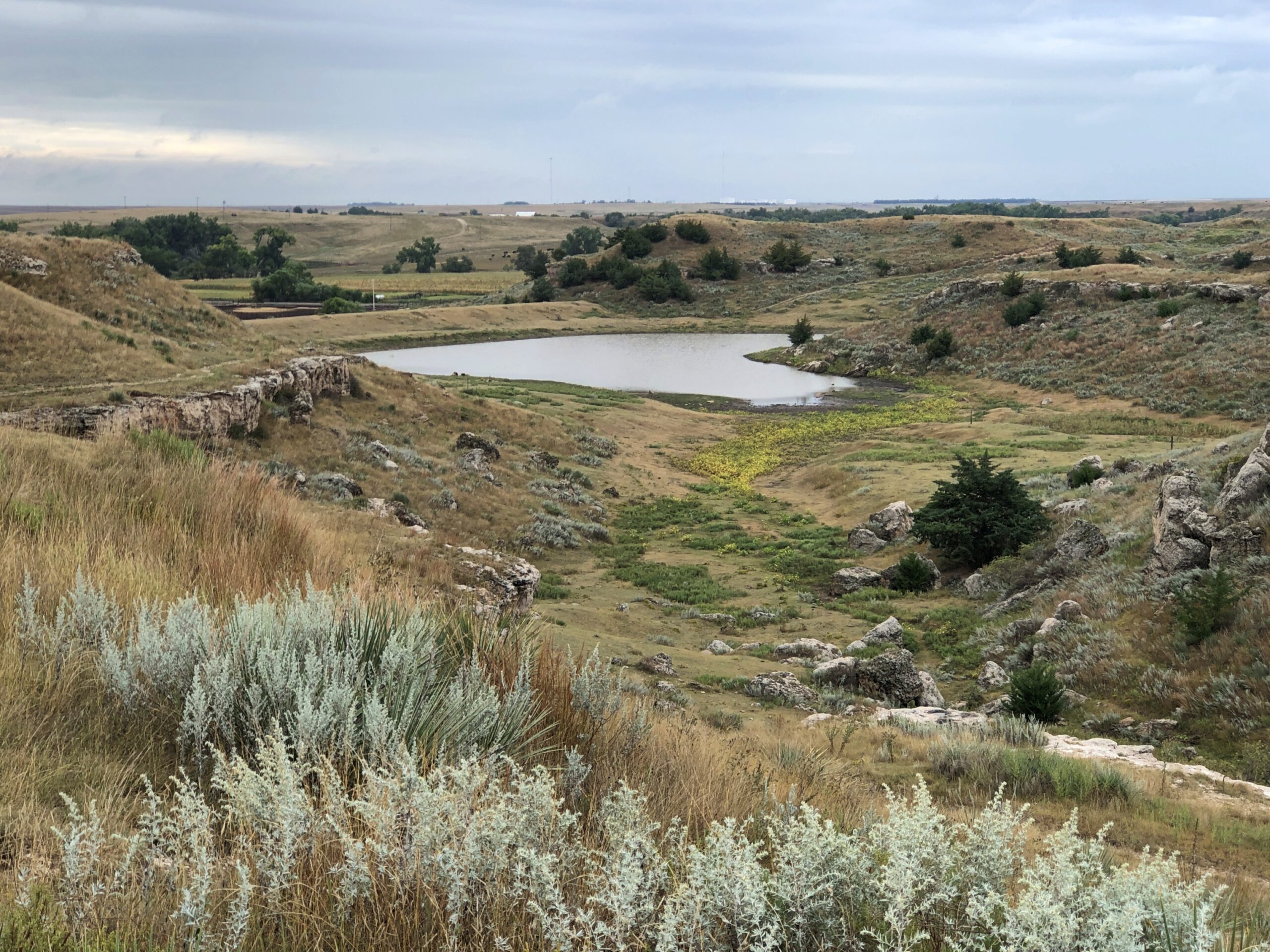
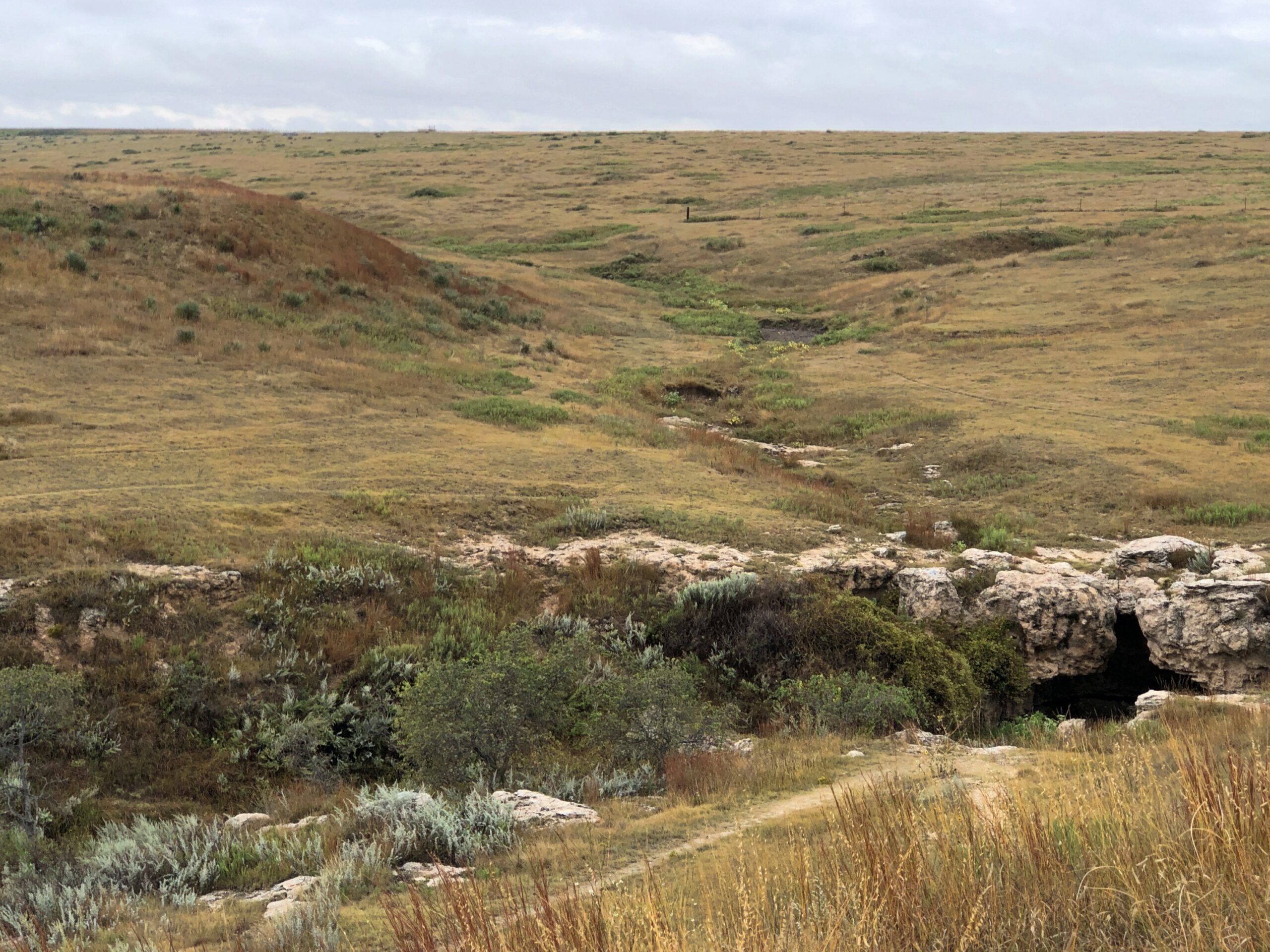
Serendipity on the road is your friend, if you let it be. That is, pay attention to signs. Driving north on the 23rd from Scott City, Kansas, on the highway US 83 – on which you could drive to Brownsville, Texas, if you had a mind to – I saw a small sign directing me to a battlefield of the Indian Wars, in this case the last skirmish between Natives and the U.S. Army within the borders of Kansas: the Battle of Punished Woman’s Fork.
This isn’t the sign I saw, but rather another one at a fork in the road, pointing the way to the battlefield, down an unpaved road.
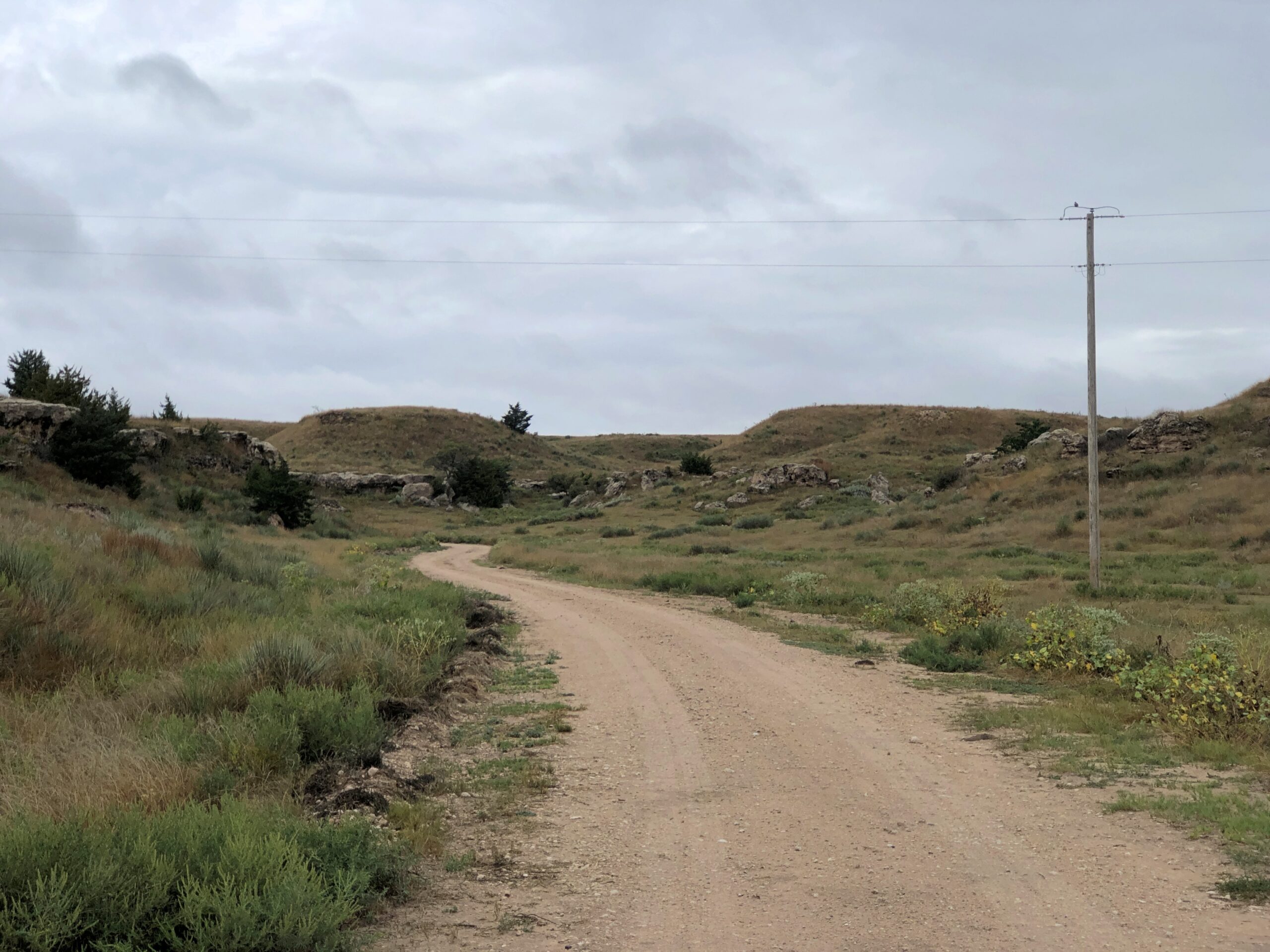
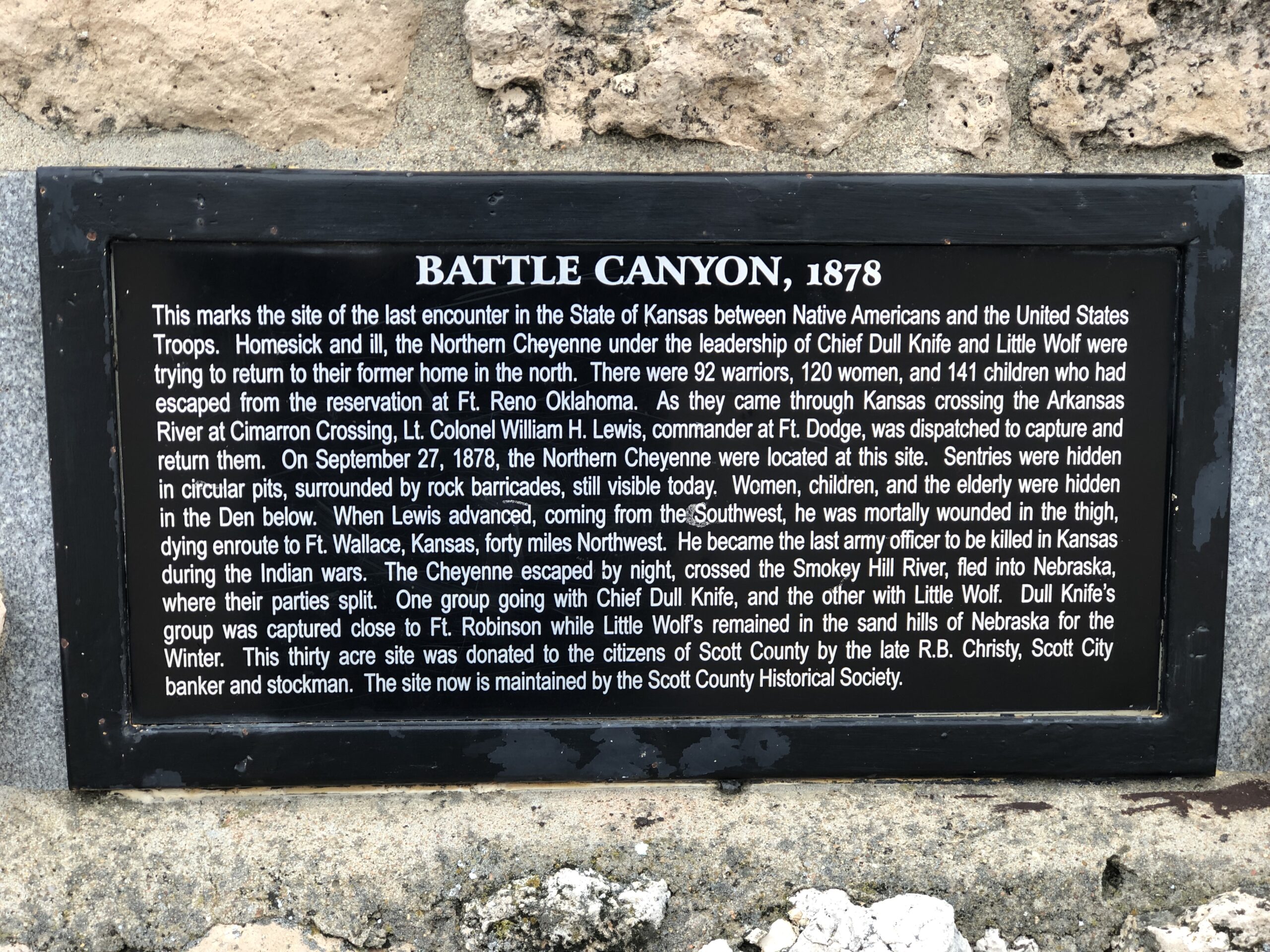
Unhappy at being forced to live in Oklahoma, 350 or so Cheyenne headed north toward Montana in 1878. The U.S. Army gave pursuit and the two sides fought inconclusively at a lonely spot in Scott County. Lonely then, lonely now.
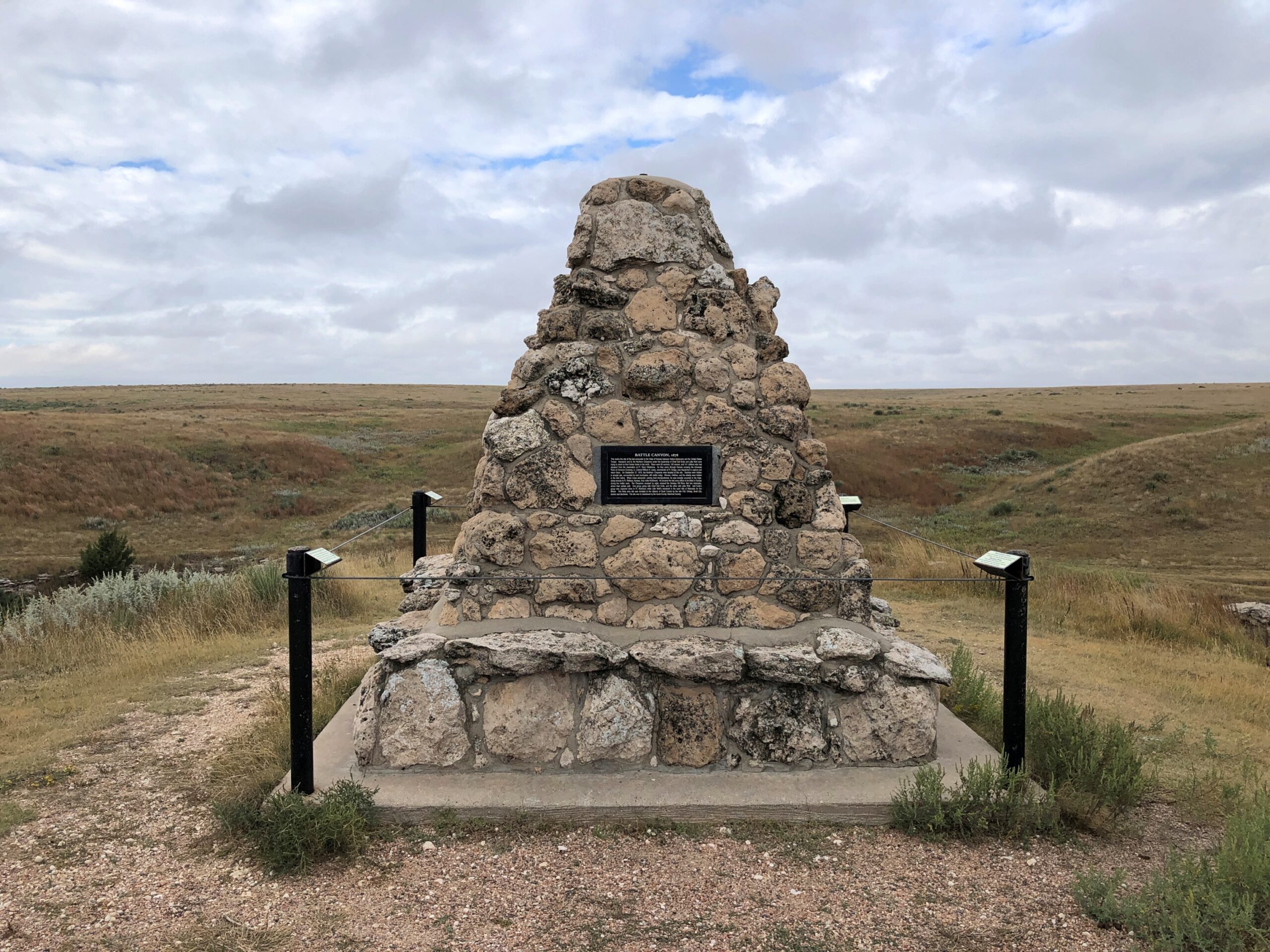
But not so remote that there isn’t a monument, with exposition.
The Cheyenne acquitted themselves well in the skirmish, and while they lost horses and food, were able to escape northward. Eventually some of the group – but not all – did indeed make it to Montana, and were able to stay. The incident is known as the Northern Cheyenne Exodus.
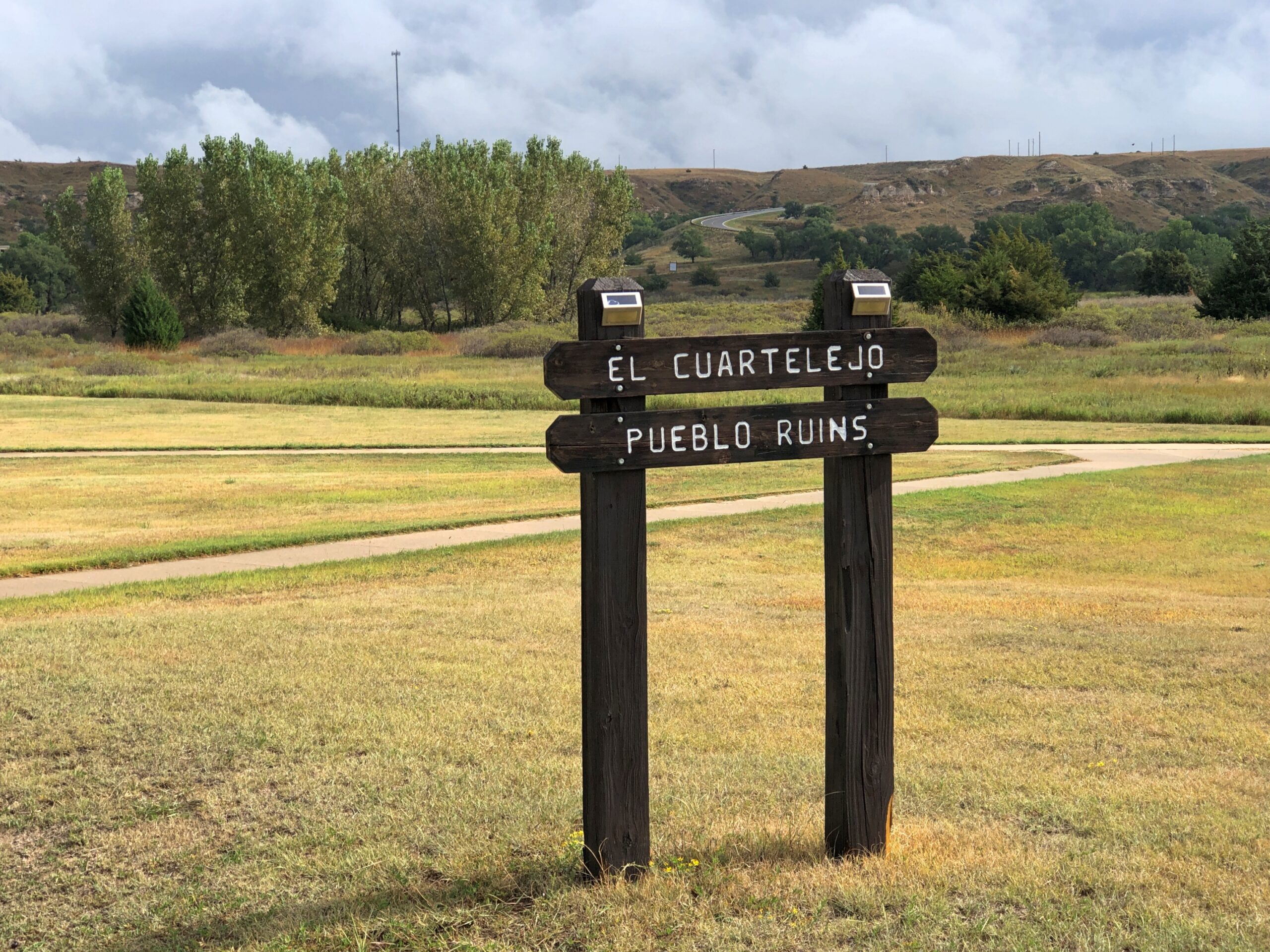
El Cuartelejo
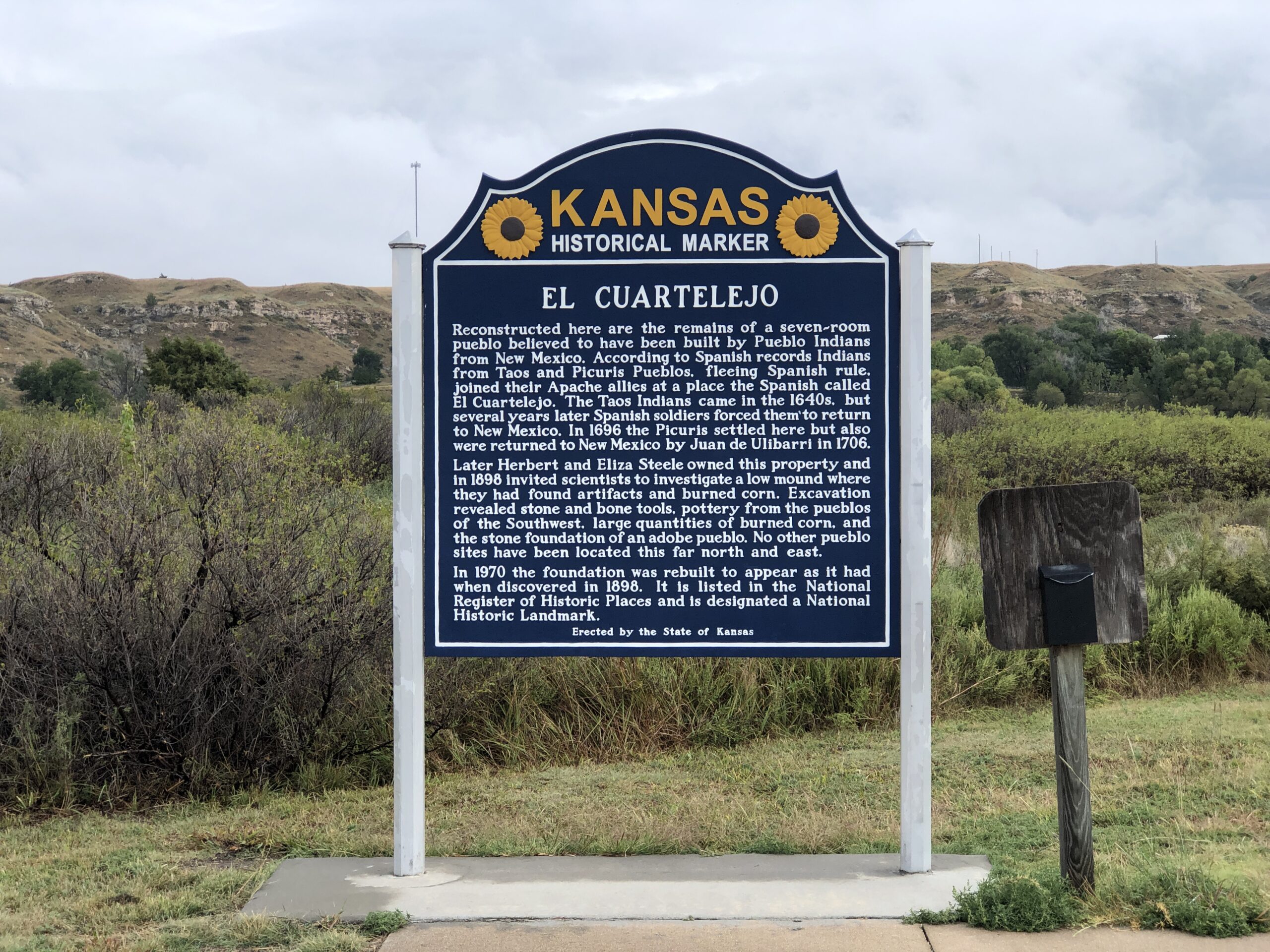
I quote the following at length, because it’s well written, and also happens to be public domain material, published by the National Park Service. Read it while it’s still posted.
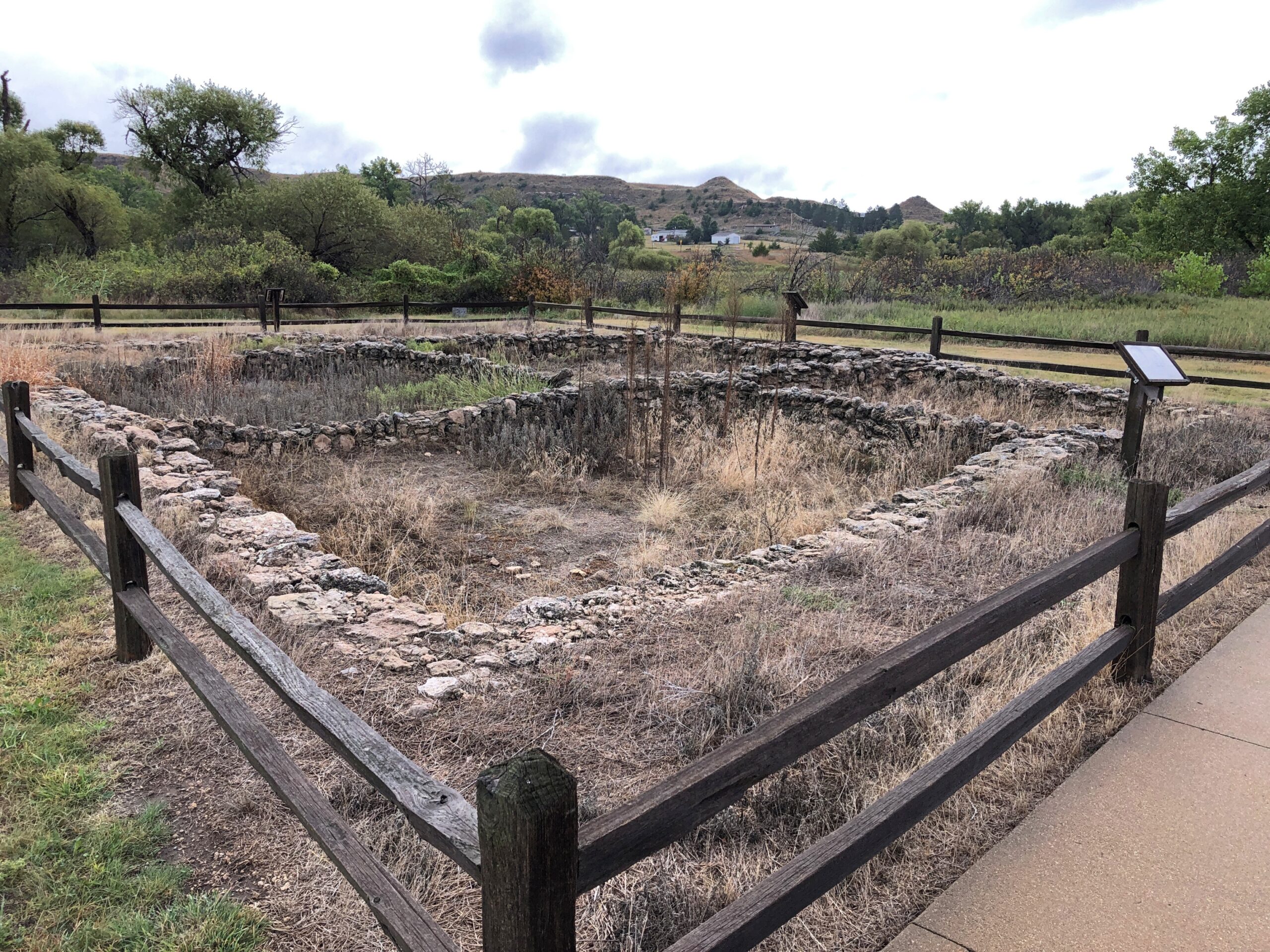
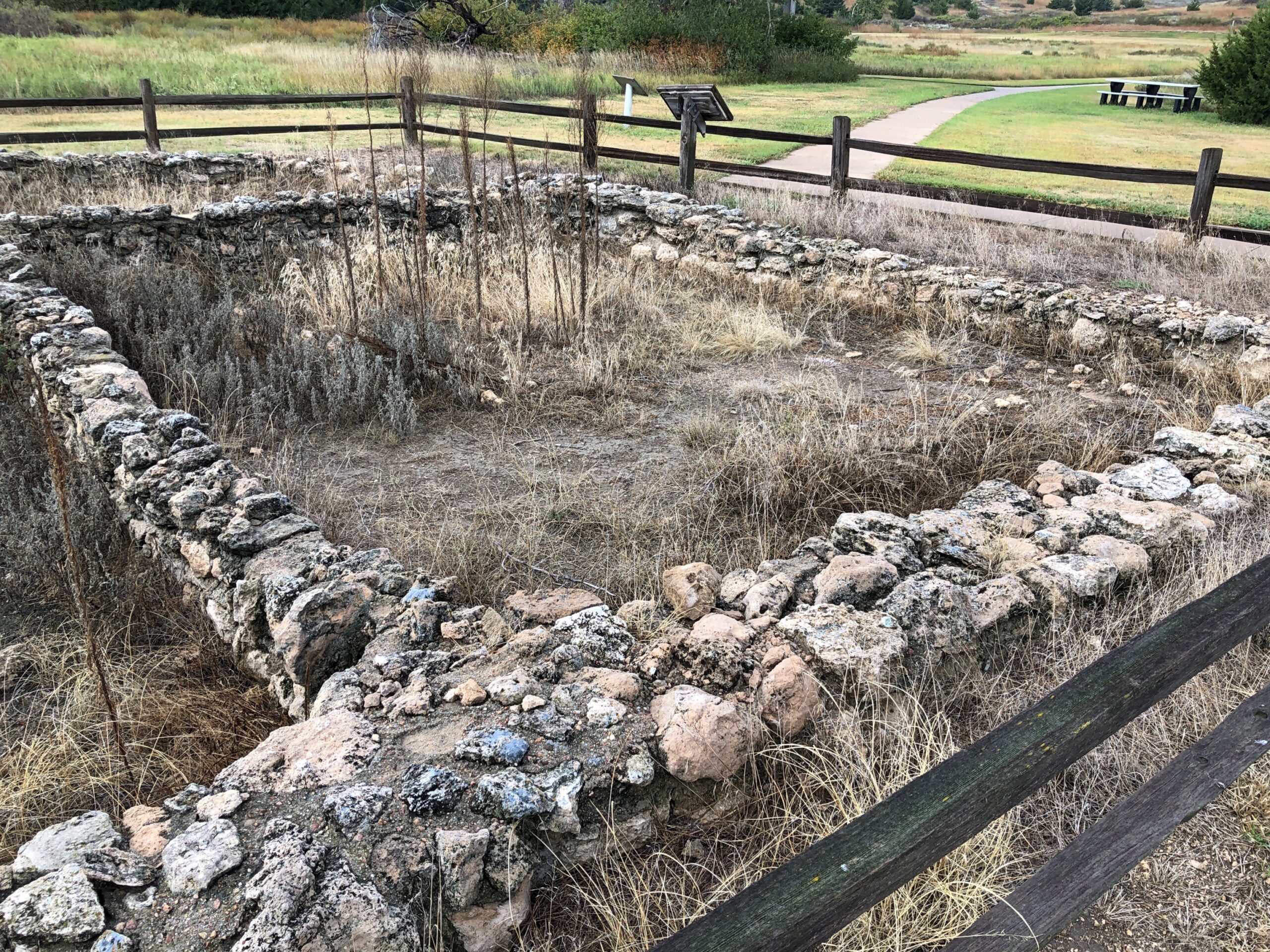
[El Cuartelejo] is one of the key sites indicating the far-reaching expansion of Spain beyond New Mexico and her interest in the Great Plains. It consists of the ruins of a seven-room, stone Puebloan structure, probably built by a group of Picuris Indians who in 1696 emigrated from New Mexico to live with the Cuartelejo Apaches. As early as the 1660s, friction between the Pueblo Indians of New Mexico and the Spanish rulers and priests had caused groups of Indians to migrate to El Cuartelejo.
Spanish expeditions under Archuleta (pre-1680 Pueblo Revolt) and Ulibarri (1706) probably came to El Cuartelejo to return groups of Indians to New Mexico. In 1719, Governor Valverde led an expedition northeast from Santa Fe, visited the Cuartelejo Apaches, and learned from them of French penetration into the Plains. As a result, in 1720, the Spanish sent out the Villasur expedition, which passed through El Cuartelejo but was destroyed later by the Pawnees in Nebraska.
Archeological excavation of the site has produced only a few artifacts of Southwestern origin. The pueblo ruin and its typically Southwestern appurtenances — slab-lined hearths, grinding trough, oven, and the like — were directly associated with a material culture complex that was almost entirely Plains Apache. Either the Puebloans stayed in the area only a short time, or they readily adapted themselves to the everyday implements and utensils of the local residents.
I didn’t know all that detail when I decided to go to El Cuartelego. Just that it was the northern- and eastern-most pueblo, which was enough.
The site is within Lake Scott State Park, where I had considered camping the night before. My earlier camping experience on the trip, in Nebraska, while not terrible, was exhausting enough to put me off the idea. No more camping, I think, where I have to do absolutely everything myself. In any case, it was a good decision, since on the night of the 22nd, a sizable rainstorm blew through Scott County. I listened to the storm with some satisfaction in my rented room in Scott City.
The ruins.
More exposition.
Like at the battlefield, I had the place to myself.
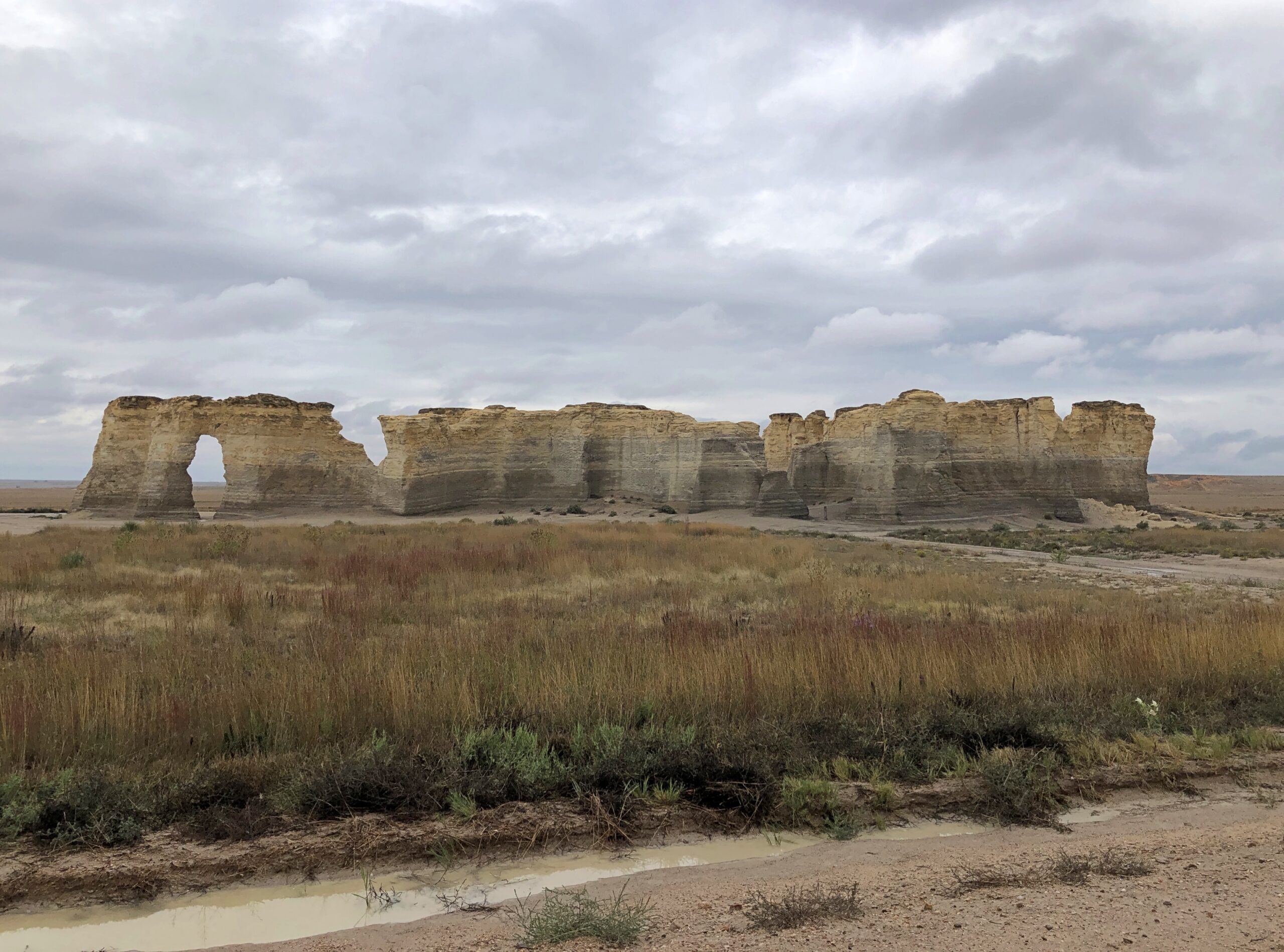
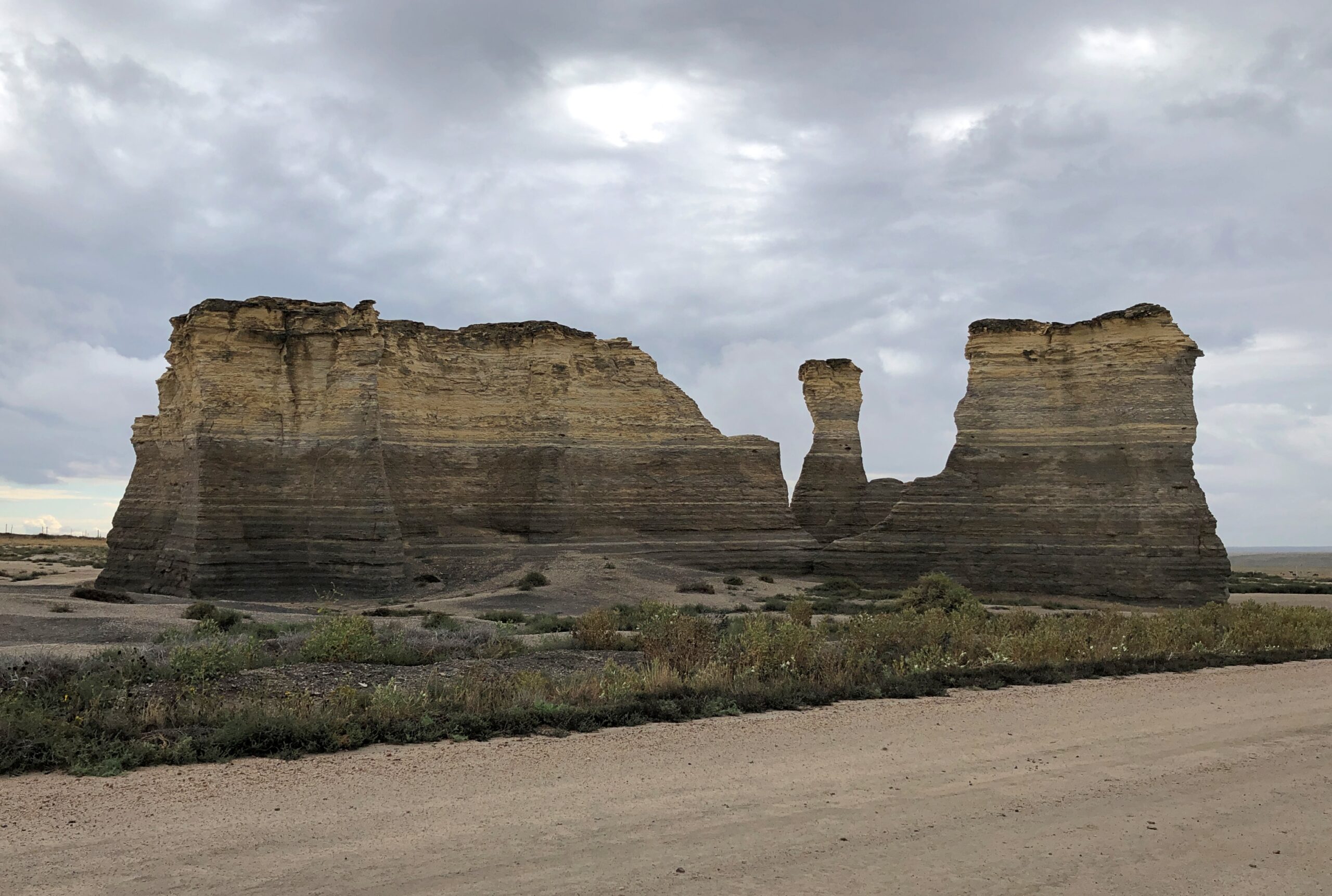
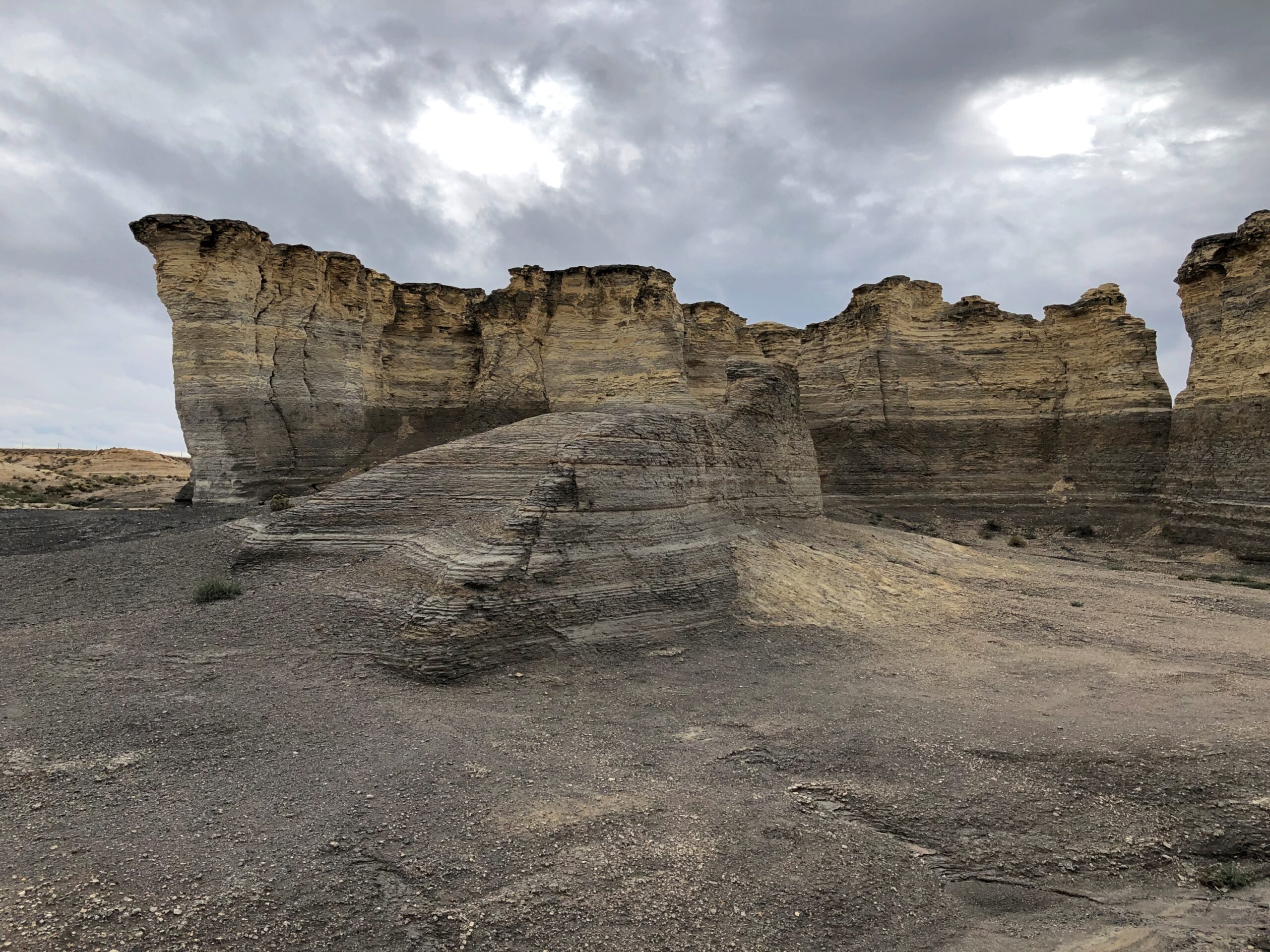
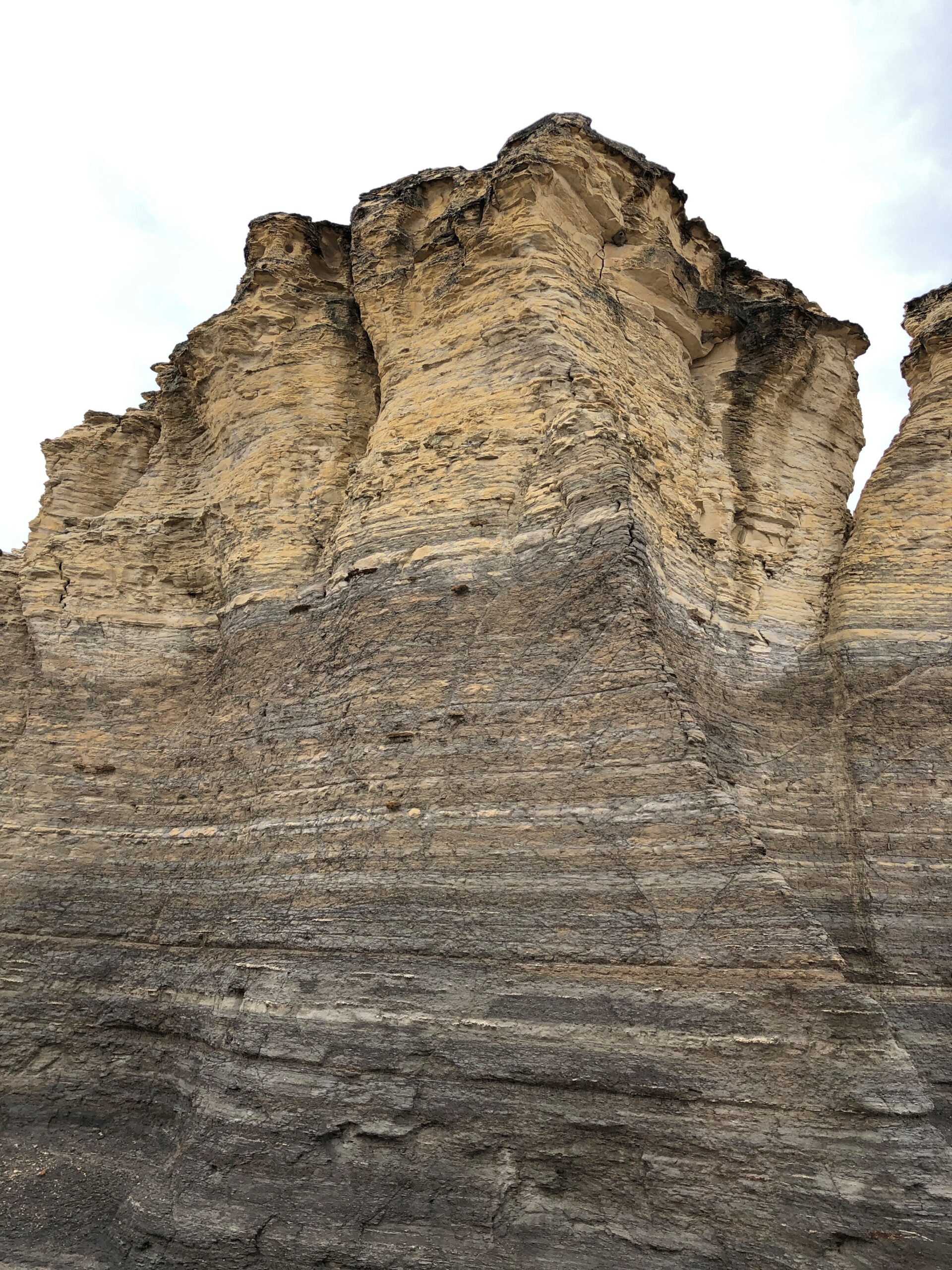
Monument Rocks
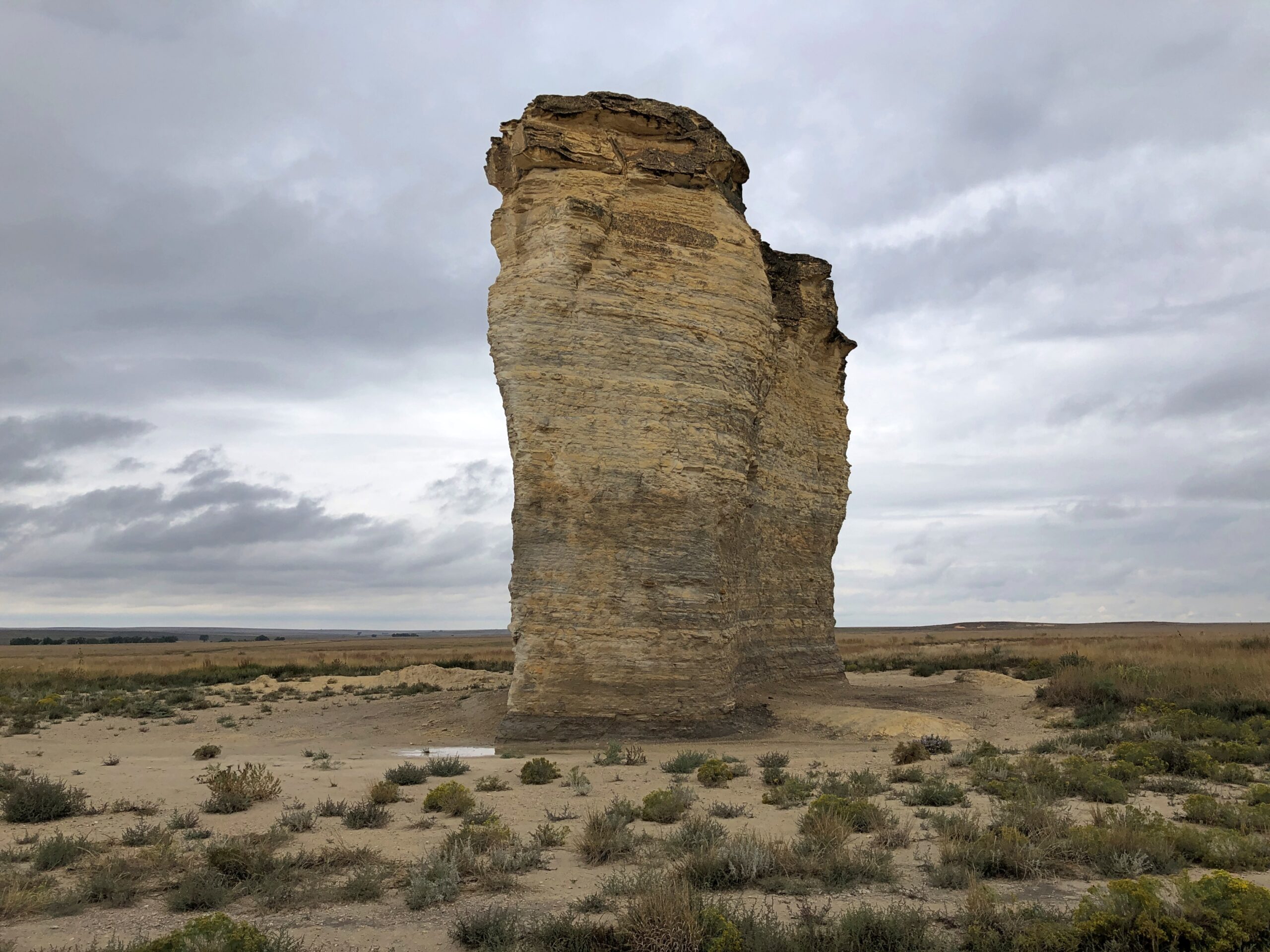
During the planning for the trip, which naturally meant quality time with maps, I spotted a point-of-interest for Monument Rocks in western Kansas. Sounded interesting, and on September 23 I made the trip, again on unpaved roads. The rain the night before made the driving surface a little dodgy, but the roads, layered with gravel, were generally up to the task. I was rewarded with the sight of rocks that are, in fact, pretty monumental.
I didn’t quite have the place to myself. When I arrived, another car was there, occupied by an older couple. They left, and soon after that, two young men appeared in an SUV. But that was all.
Washburn U. in Topeka tells us:West of Castle Rock area in Gove County, Kansas, erosion has carved these chalk pyramids from what was once the floor of a vast inland sea. Also called Monument Rocks, this site is the first natural landmark chosen by the US Dept. of the Interior as a National Natural Landmark. This landmark in on private land. The owners are generous to share this site with the public. Treat it with respect.
This limestone was once the floor of a great inland sea, existing some 80 million years ago. The sea dried away over time and the rock was carved by elements of nature to create these formations, which now stretch up to 70 feet in height.
The rain the night before had also made mud all around the rocks. I should have taken the time to put on my better shoes for a walk near the rocks, but no. While making my way through the muck, I lost traction, and down I went, on my butt. Luckily, the soft mud cushioned the fall, which was more of a slide anyway, so I wasn’t even bruised.
The back of my pants were, however, coated with sticky, yellowish Kansas mud. So standing outside my car, I changed my pants. The two other visitors were in another part of the site by that time, so no one was around for the unwelcome spectacle. My shoes were covered with mud too, so much so that even a good soaking when I got home didn’t get it all off. When I wear those shoes now, I take a bit of Kansas with me.
Pity the people whose job it is to promote tourism in Nebraska. Set ideas are notoriously resistant to change, at least over periods less than a generation, so I expect the idea “nothing to see there” is a constant battle for those who know otherwise.
I didn’t need to be persuaded. A drive across the state – a reward in itself, more about which later – takes you Carhenge (see yesterday) but also to terrain not generally associated with Nebraska.
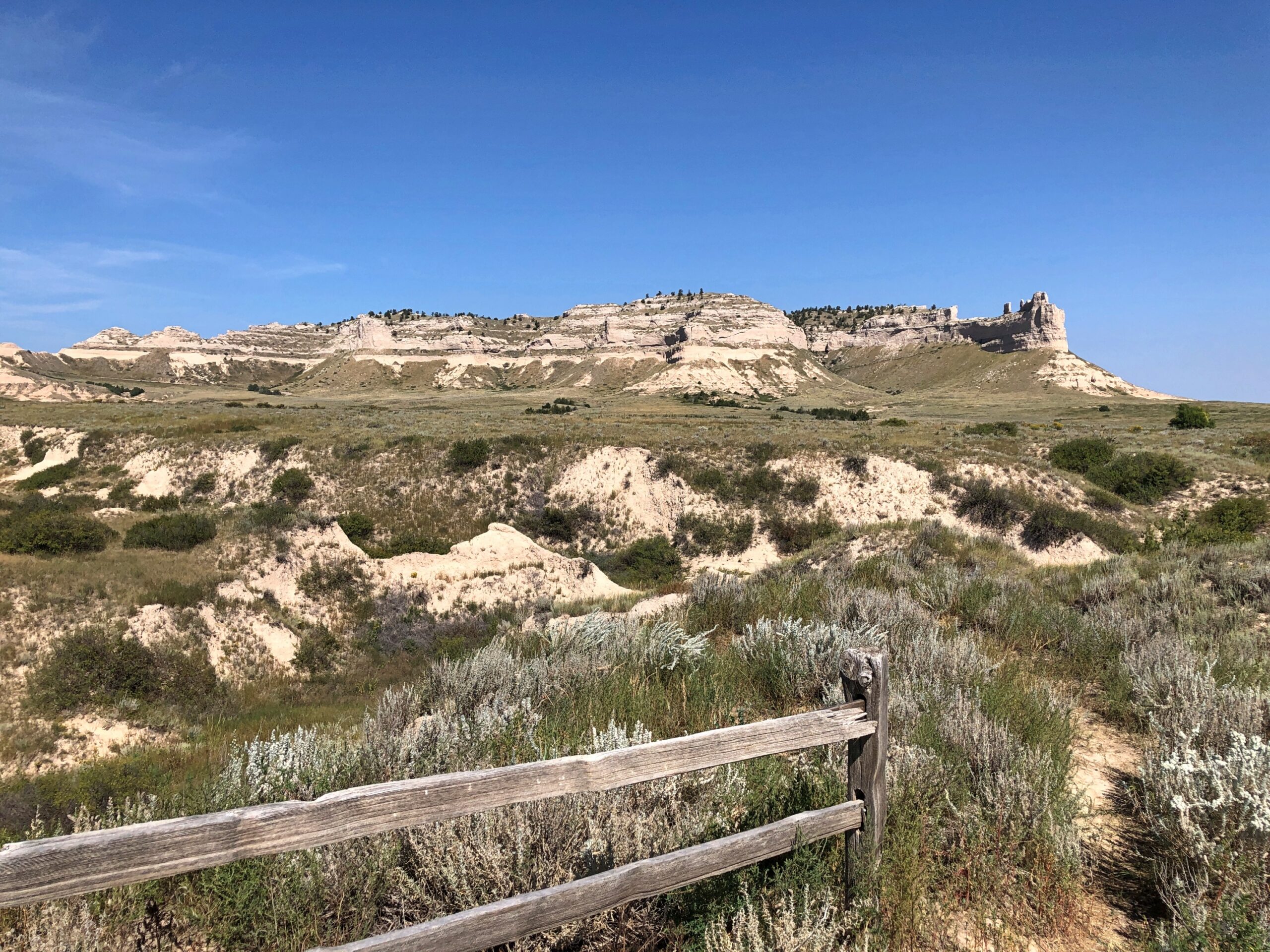
At the western edge of the state, rocks. Big, impressive rocks that poke out of the still-flat ground, stubborn geological leftovers that refuse to erode as fast as the surrounding terrain. Natives, mountain men, trappers, and wagon trains across the prairie all knew about these rocks, knew that they marked a certain point in their journeys. I’m sure they were hard to miss.
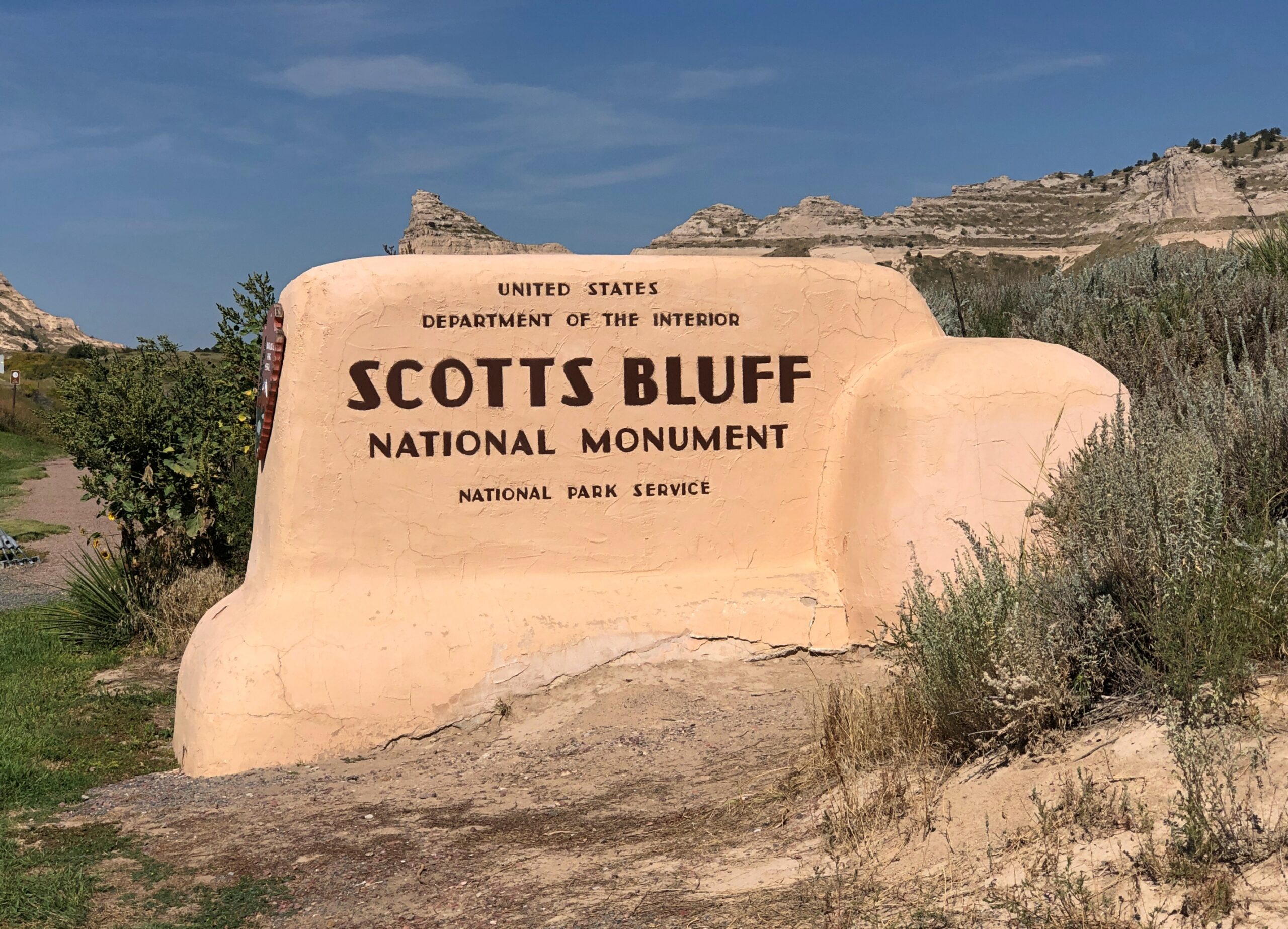
Since 1919, the rocks a few miles from Gering, Nebraska have been known as Scotts Bluff National Monument. I arrived on the morning of September 8.
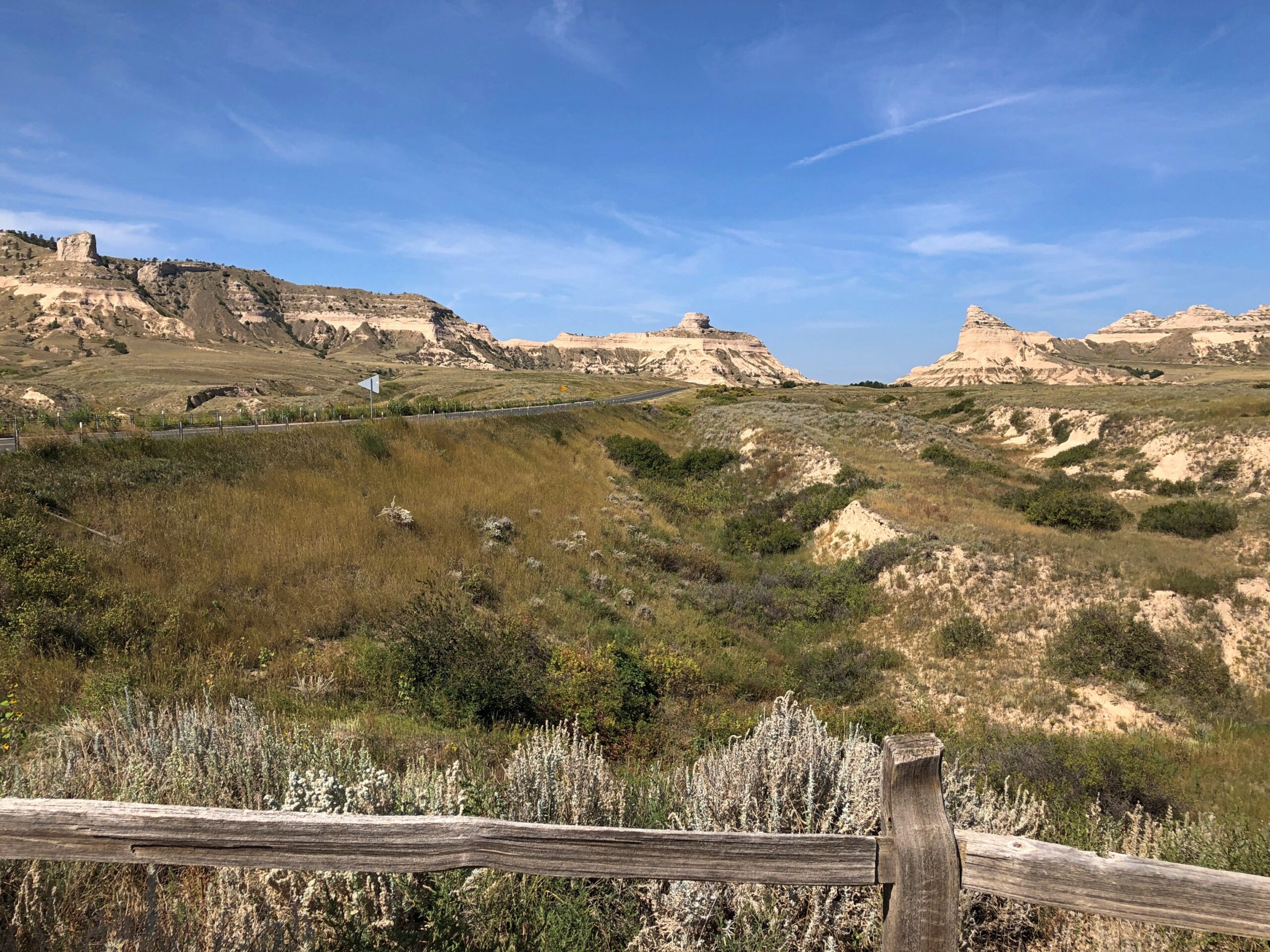
On this particular trip, the monument was an appetizer, ahead of the main course in Colorado. The Sandhills of Nebraska, which I’d just driven through, aren’t pancake flat, but waves of grassy hills with scattered outcropings of rock. After a drive like that, the Scotts Bluff seemed to appear suddenly, rising in your field of vision to take over half the sky.
I exaggerate, but only because that’s how I seem to remember it. An outcropping like that in the Rockies would be lost in the crowd, but here in western Nebraska it’s the star of the show.
The road leading to the monument, the highway Nebraska 92, follows the Oregon Trail at his point.
Scotts Bluff isn’t just a single bluff. A set of them, you might say. A road (yes, CCC built) provides access to the top. From there, any number of fine vistas ring the area. A fair number of people took the drive the same day as I did, but in no way did they amount to a crowd.
Scotts Bluff is no solitary outpost. Turning to the 1911 Enclopdaedia Britannica’s entry on Nebraska: “In the fork of the North and South Platte are the Wild Cat Mountains, with contours rising to 5300 ft., in which Wild Cat Mountain, long reported as the highest point in the state, attains 5038 ft., Hogback Mountain 5082 ft., and various other hills — Gabe Rock (5006), Big Horn Mountain (4718), Coliseum Rock (5050), Scotts Bluff (4662) &c. — rise to heights of 4500 to 5000 ft.
“In the extreme N.W. the White river and Hat Creek have carved canyons in deep lacustrine deposits, creating fantastic cliffs and buttes, bare of vegetation, gashed with drainage channels, and baked by the sun.”
East of Scotts Bluff not far from highway US 26 is a set of rocks known as Courthouse and Jail. There’s something to that name.
If Scotts Bluff was lightly visited, these two were almost completely empty. I stopped by on the afternoon of the 7th, and the only other people in the parking lot were sitting next to their RV, under a tarp, probably shooting the breeze over beer. So I had the trail to myself, though I didn’t go that far under the hot and copper sky.
Offering some views of its own.
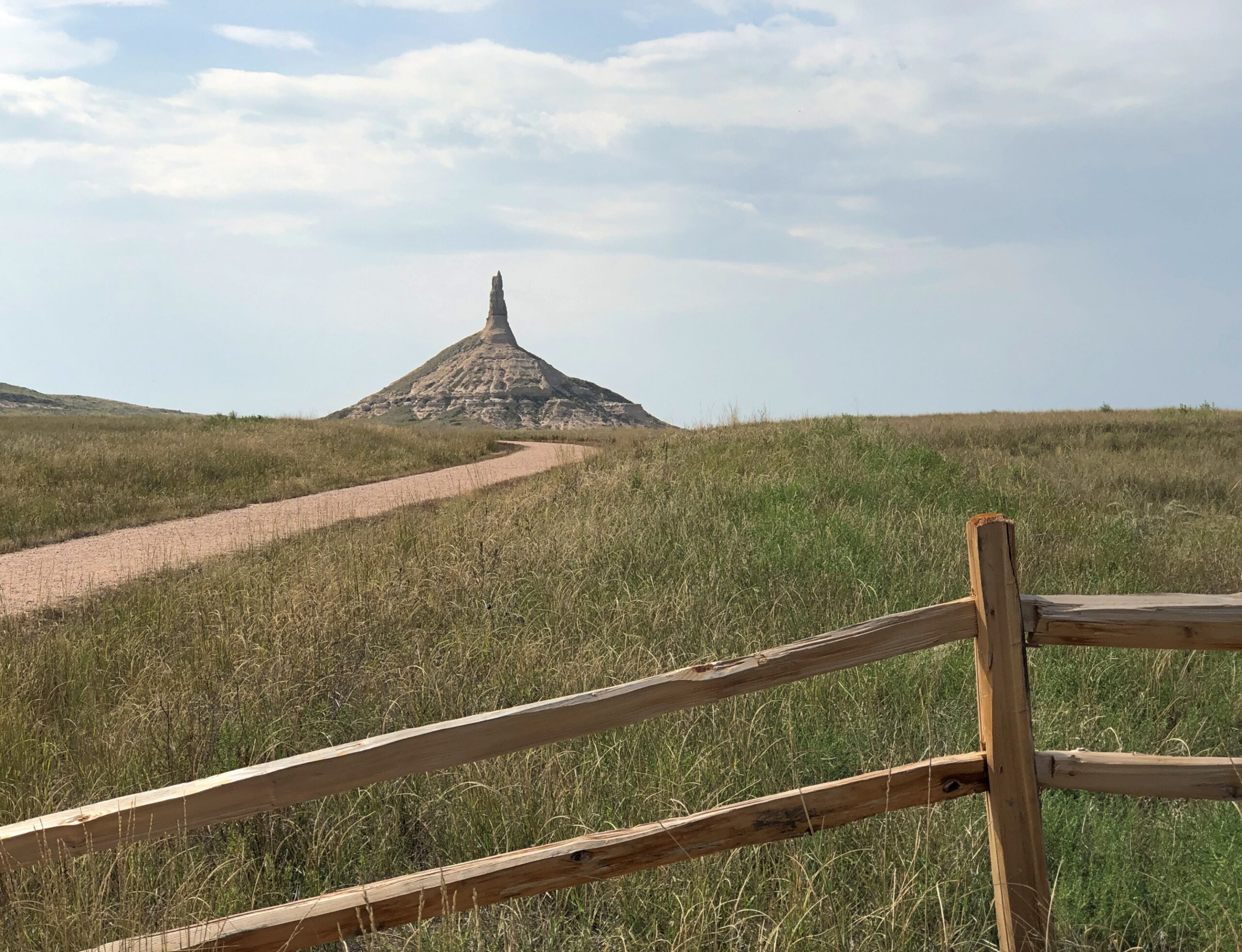
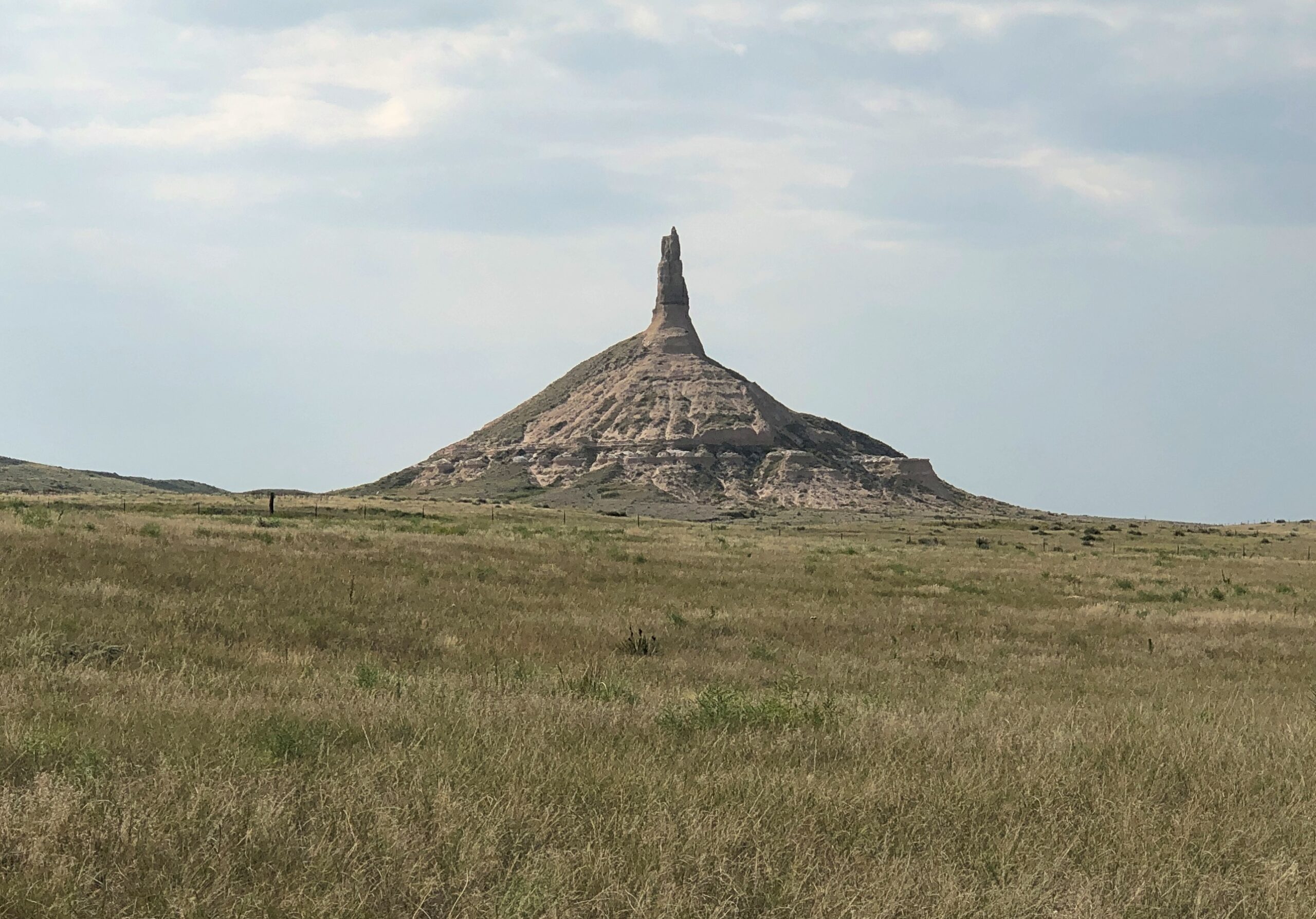
Not far away in this part of Nebraska (at least by horseless carriage) is the better known Chimney RockNational Historic Site.
It was later on same day as Courthouse and Jail, and the heat was still on. Again, I didn’t want a personal heat event to interrupt my trip, so I didn’t go as close as the trails would have allowed.
I sent an image of Chimney Rock and a text message to old friend Tom J.:
The aliens decided that Devil’s Tower was a better site.
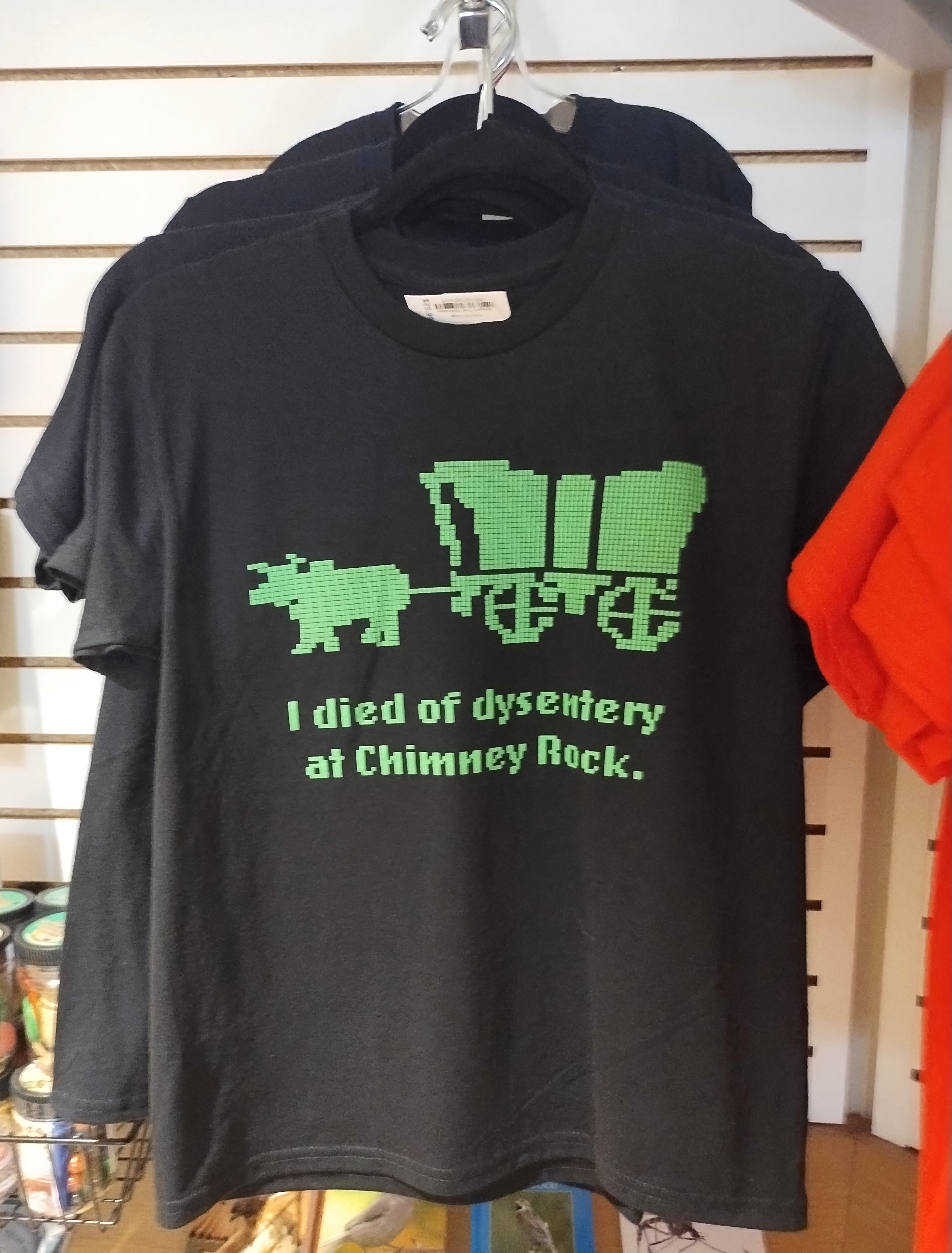
Then I sent this image from the Chimney Rock gift shop.
Tom answered:
lol. We never even played Oregon Trail and that’s still funny.
A vast stretch of mountains majesty well over the tree line, a complex mass of sand piled at the edge of rugged mountains, and the well-hewn cliffside relics of a people remote in time but whose presence endures – the first three national parks we visited in Colorado in September all rated as exceptional destinations. But I’m glad, simply because it was last on the clockwise loop I’d planned through the state, that Black Canyon of the Gunnison National Park came last. It would have been a hard act to follow.
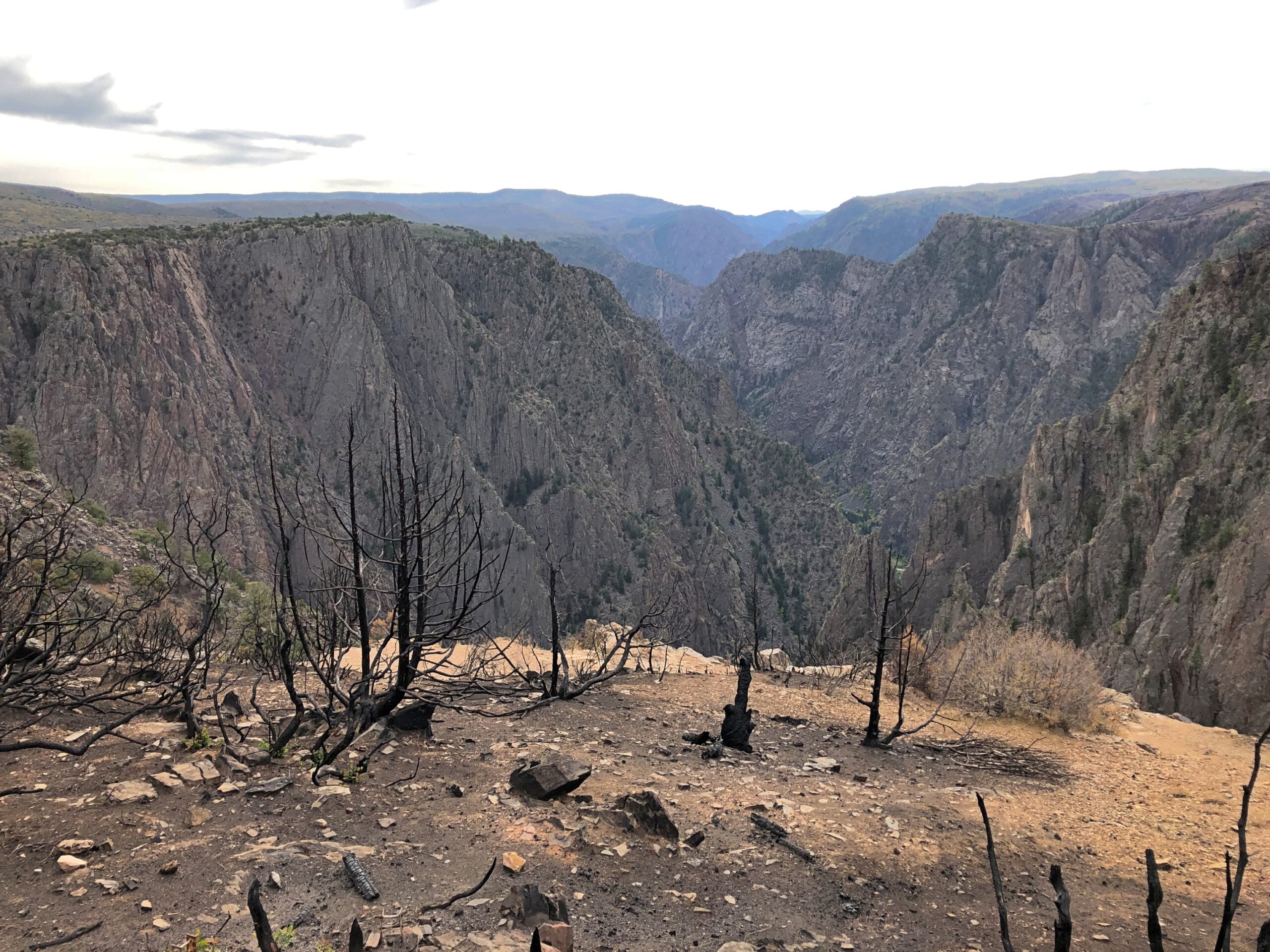
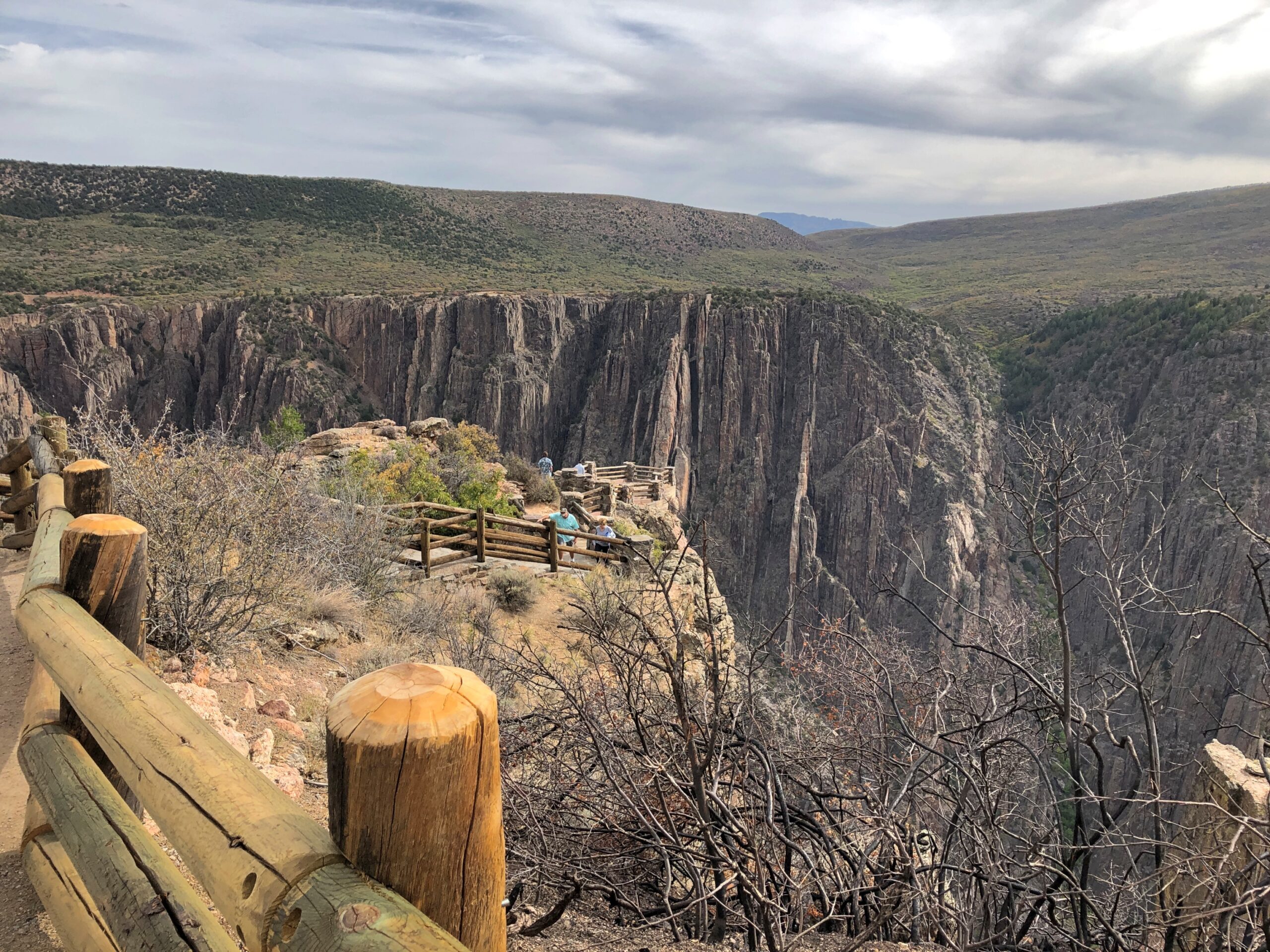
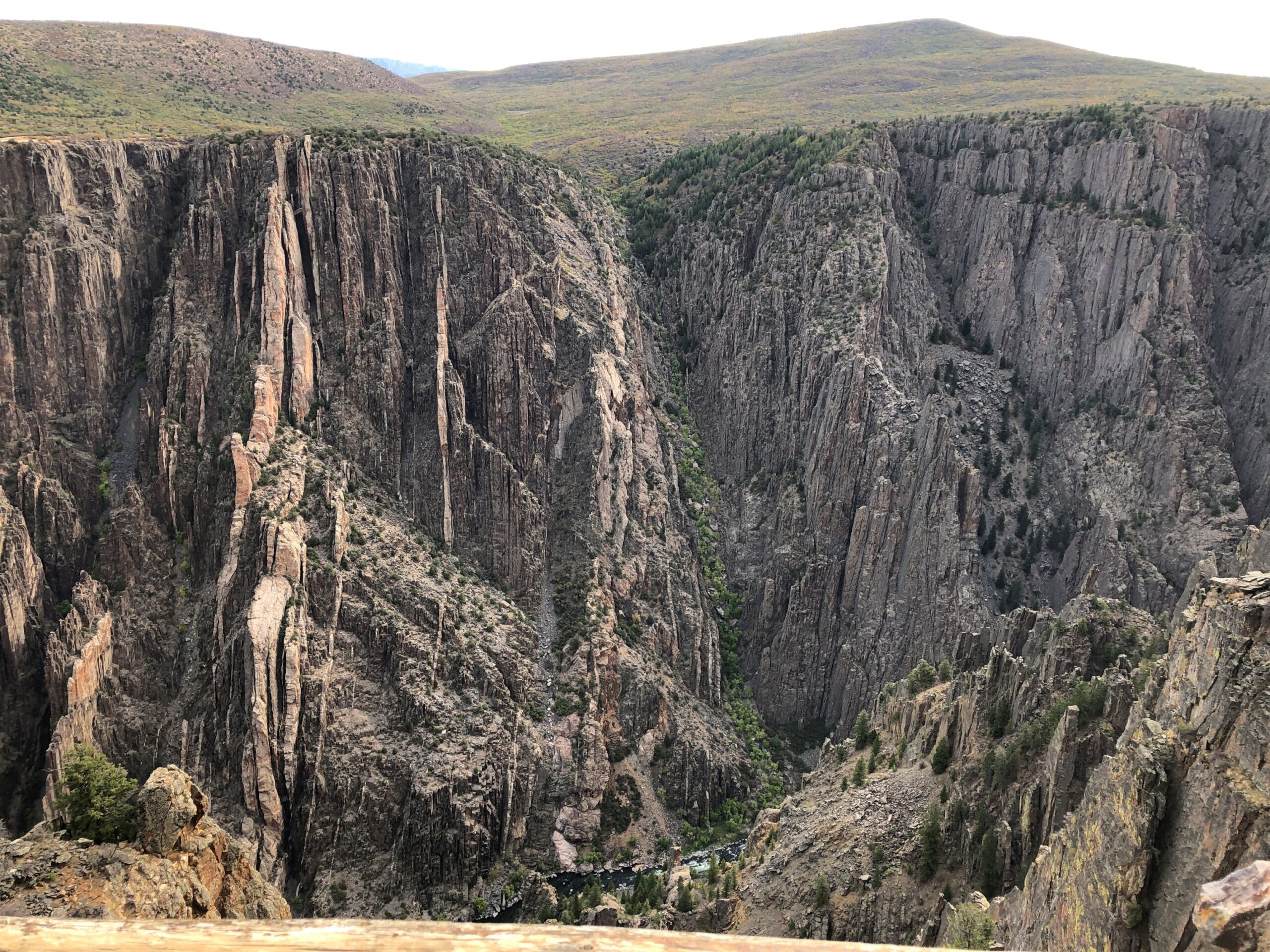
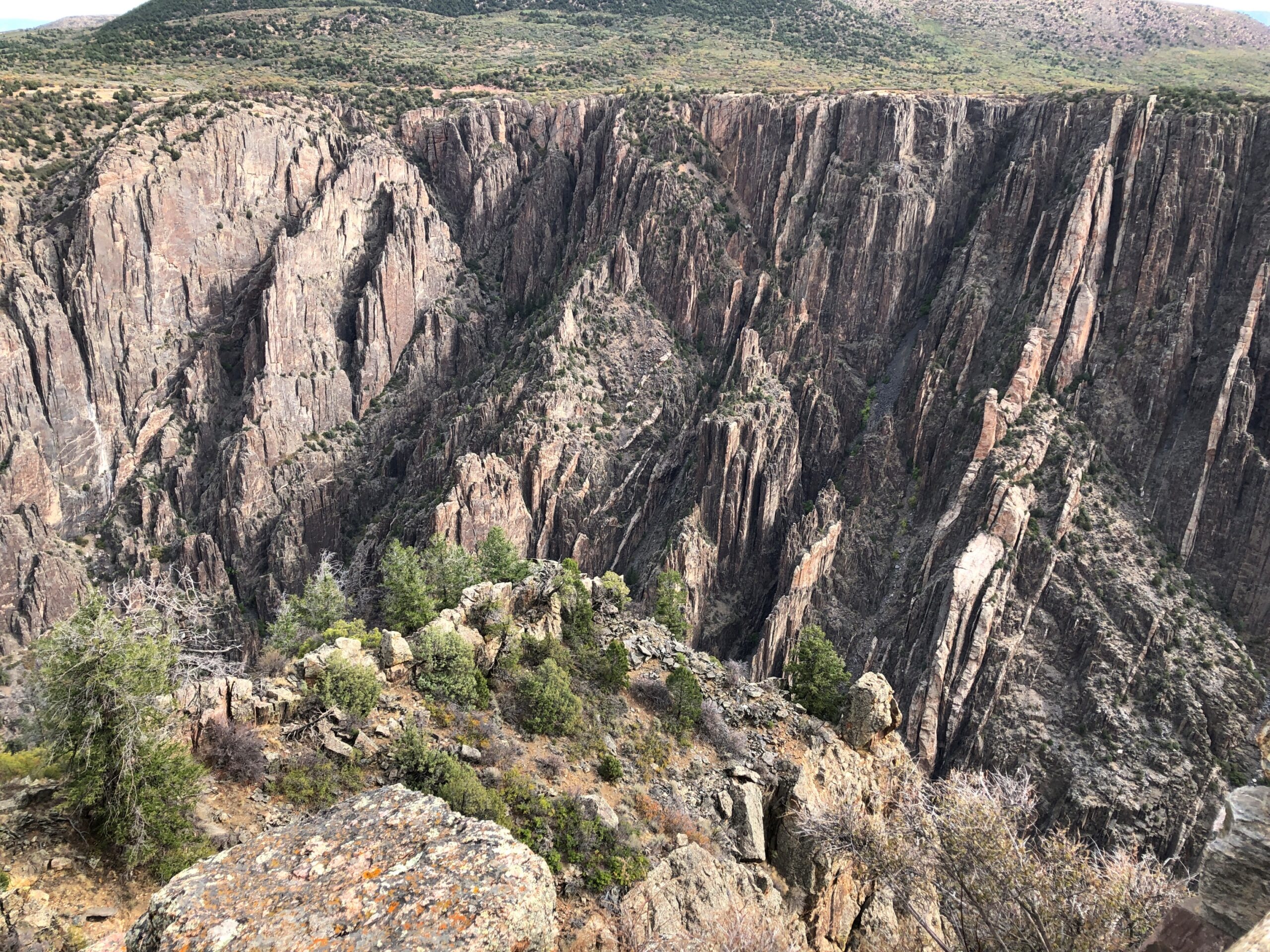
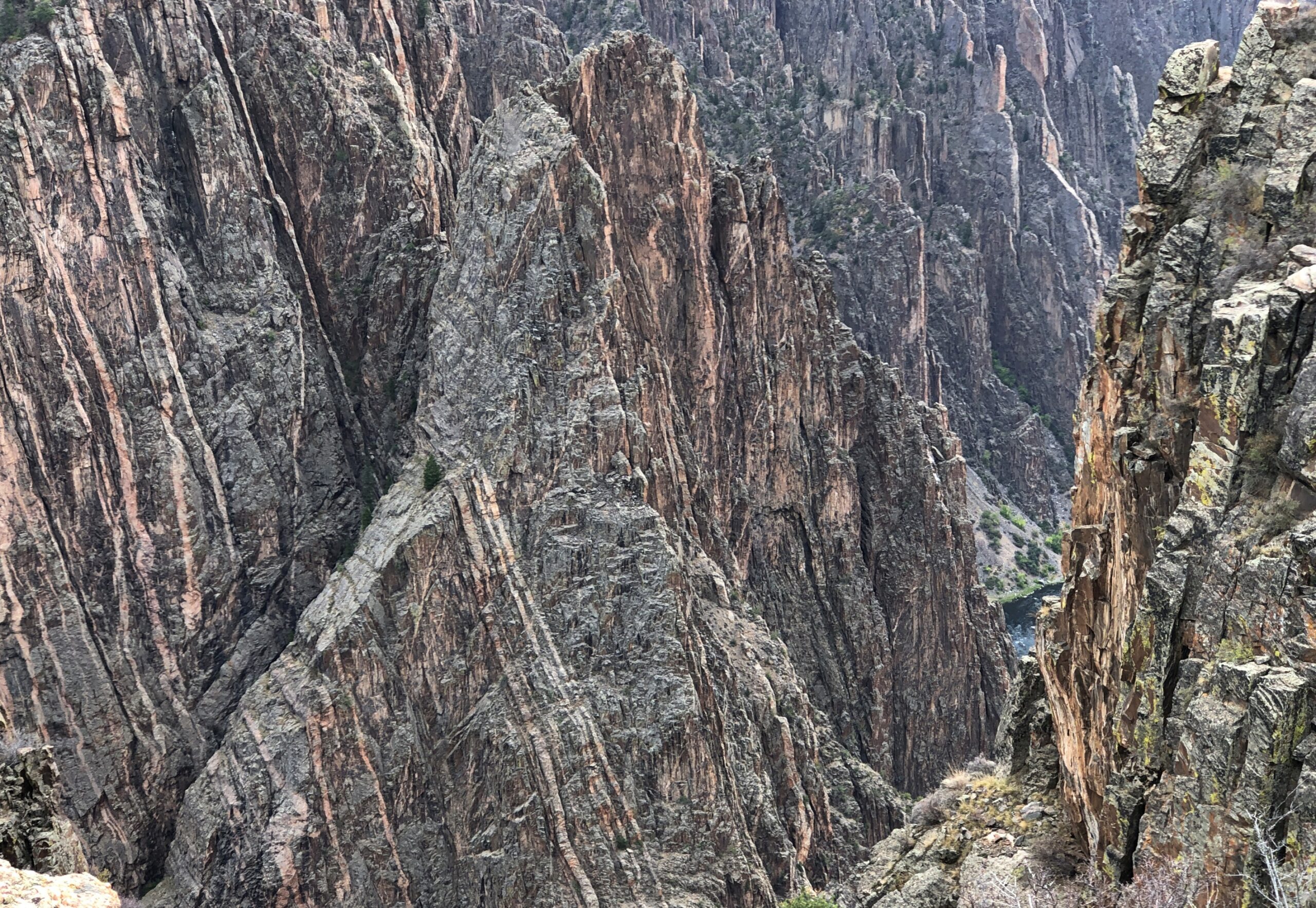
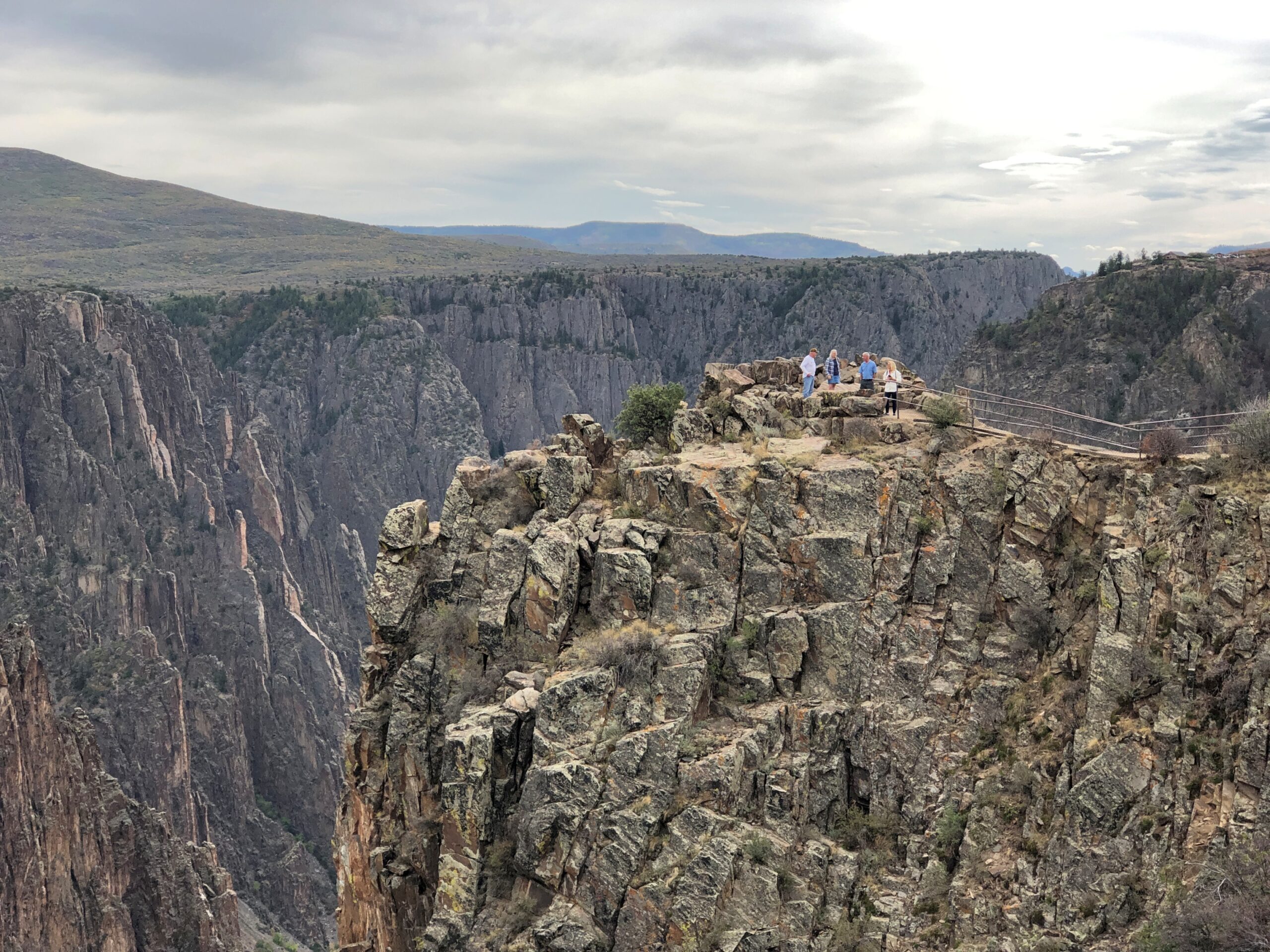
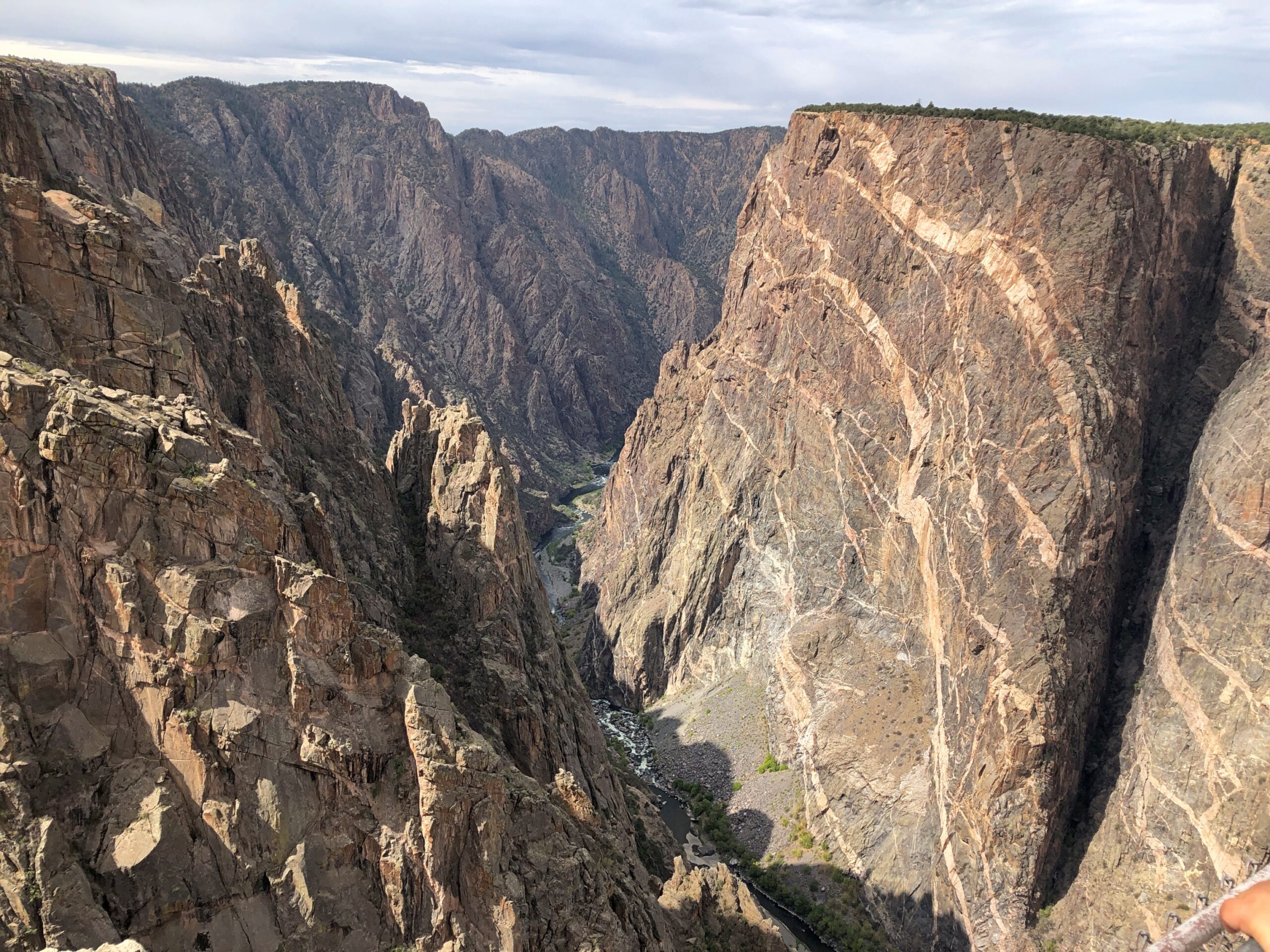
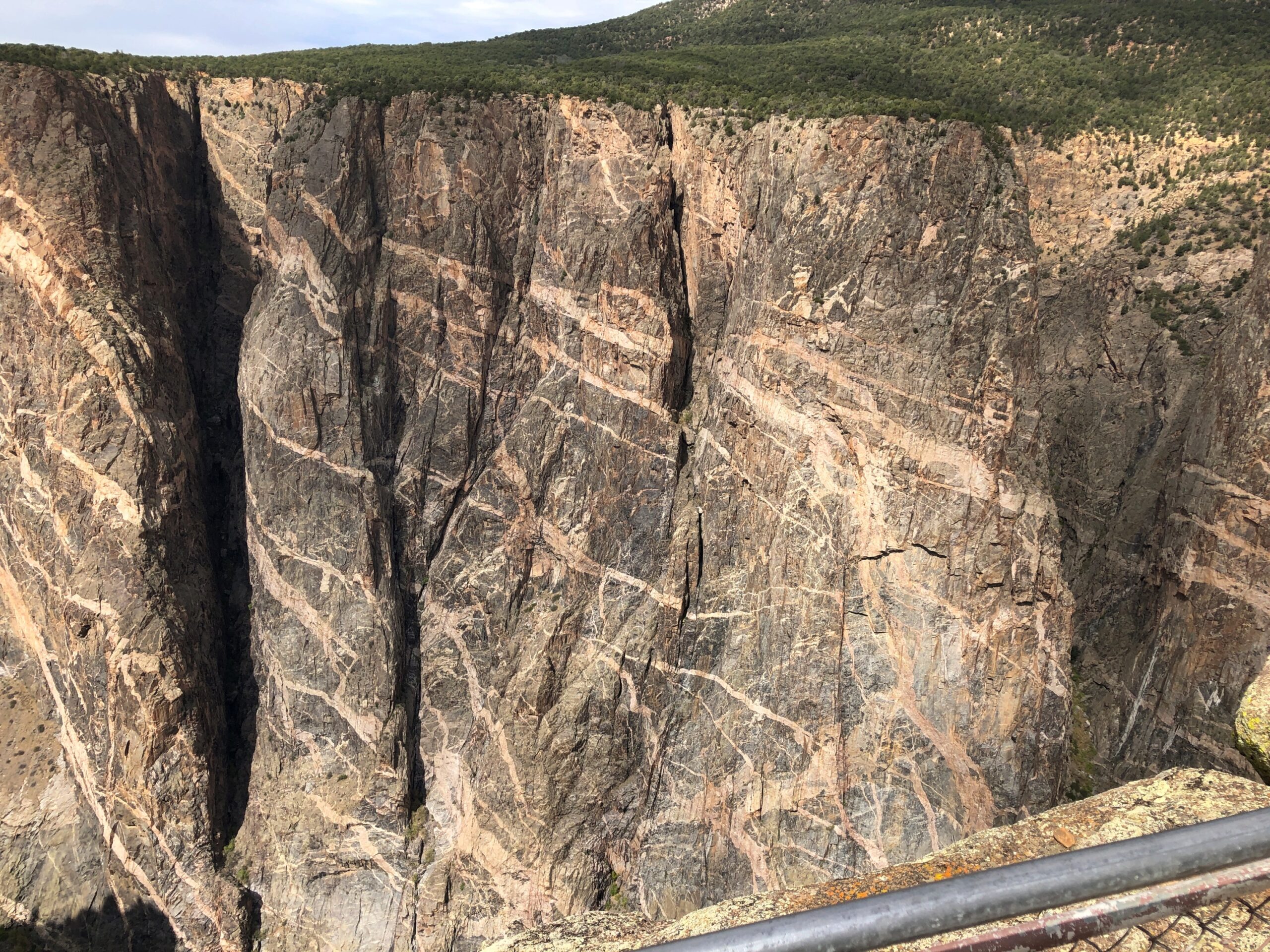
As a steep – and really deep – crack in the earth, the Black Canyon lives up its name, with most of the canyon cast in shadow most of the time, striking in its seeming darkness. But not pitch black all the way down its 2,000-foot cliffs. Far away, a whitish irregular ribbon runs through the gray bottom of the canyon, quickly recognizable as a river in quicksilver motion. The Gunnison, that is.
If there were no other people around, which happened sometimes at this park, you could hear the roar of the river. Faint, but distinct in its power. Mass snow melts and rushing tributary creeks enable the Gunnison to act (on a geological time scale) like a high-powered saw cutting through rocks that are unimaginably ancient. Before long, that is 2 million years, the river gouged the crack you see, exposing rocks 1,000 times older than the time it took to cut the canyon.
A single two-lane road snakes about seven miles along the south rim of the canyon (should I even have to say it? By the CCC), offering a string of overlooks. Not far from the park entrance, an overlook gives a taste of vistas to come. I might have named the place Gray Canyon, but that isn’t quite as poetic, is it?
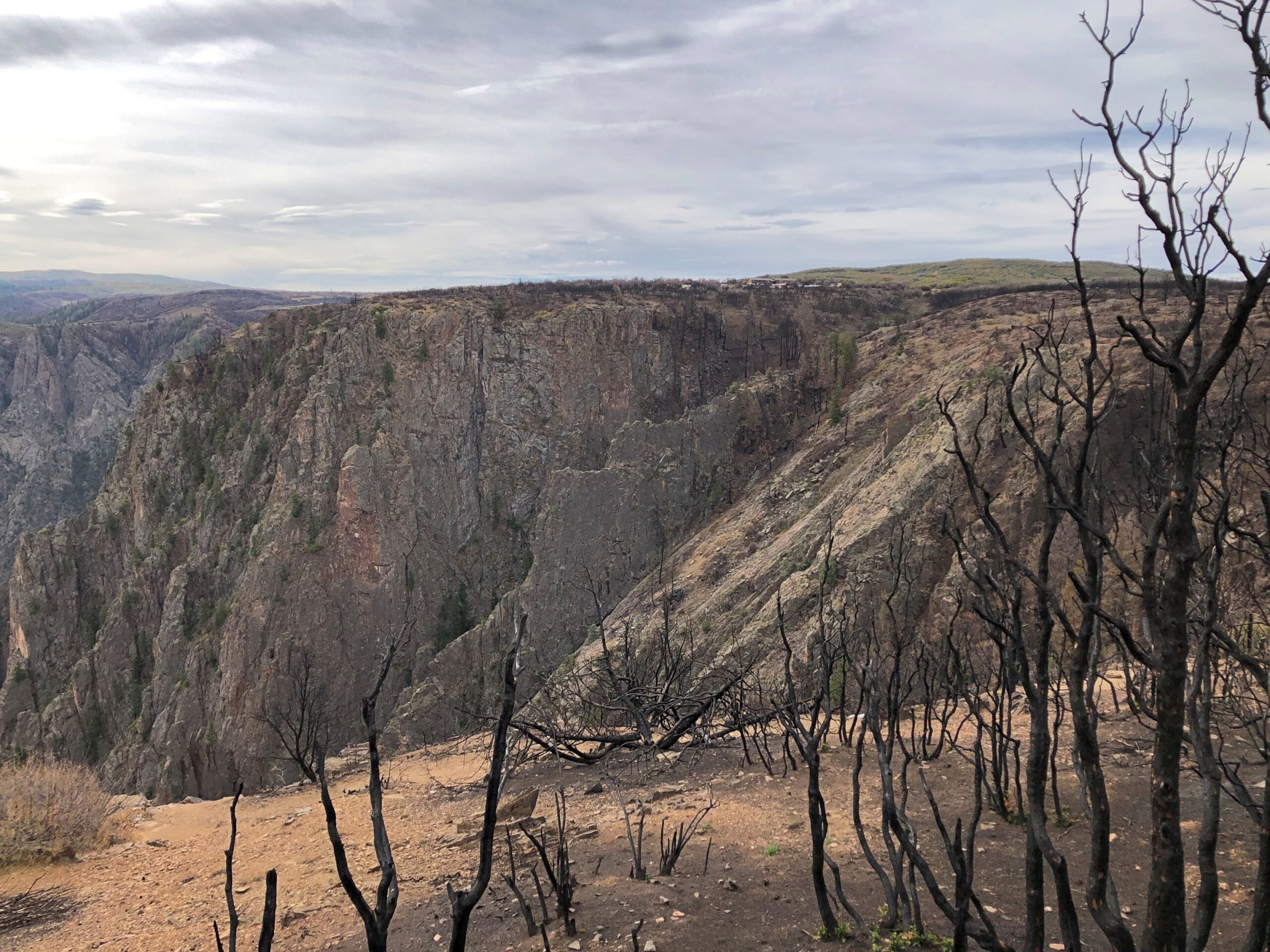
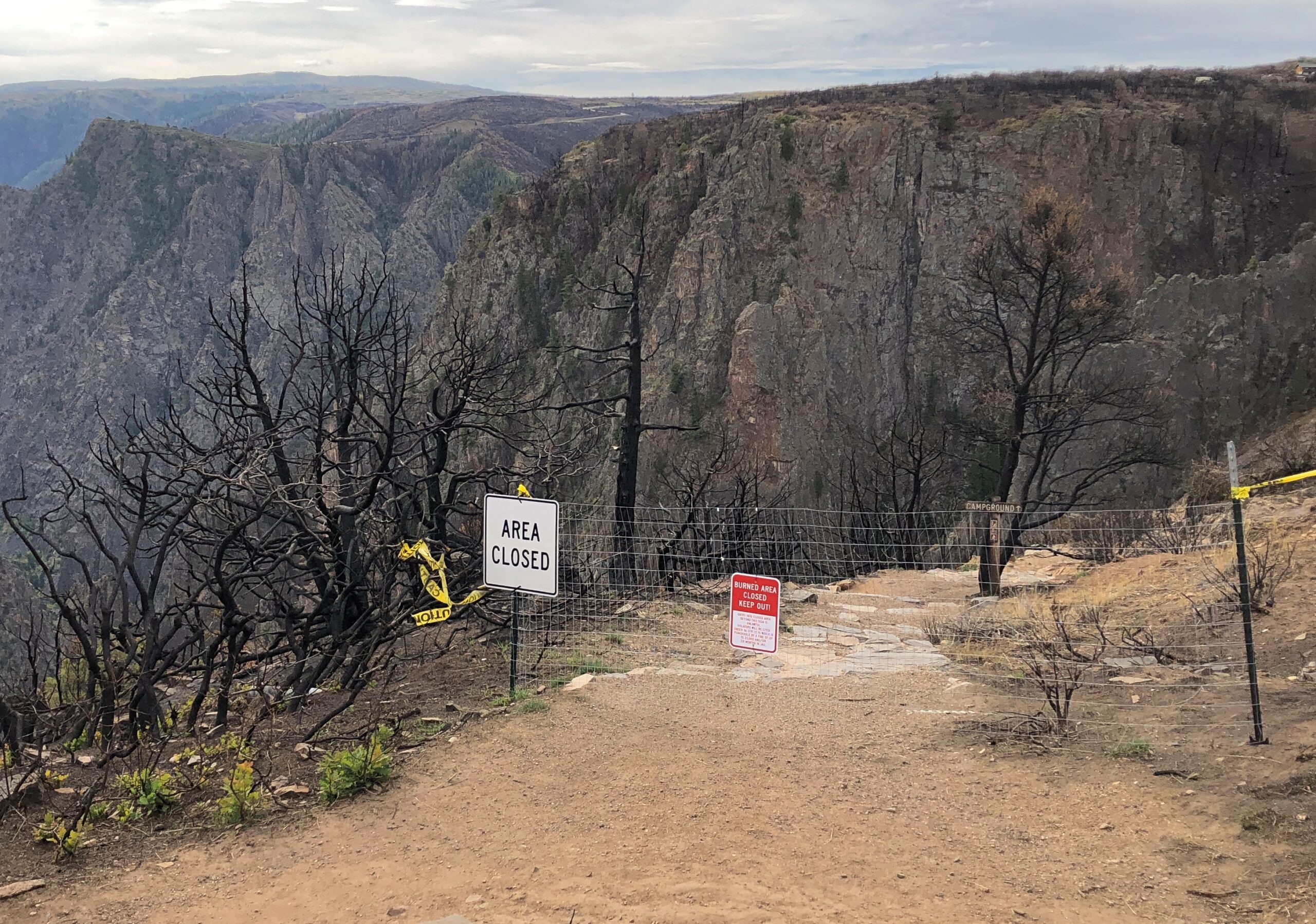
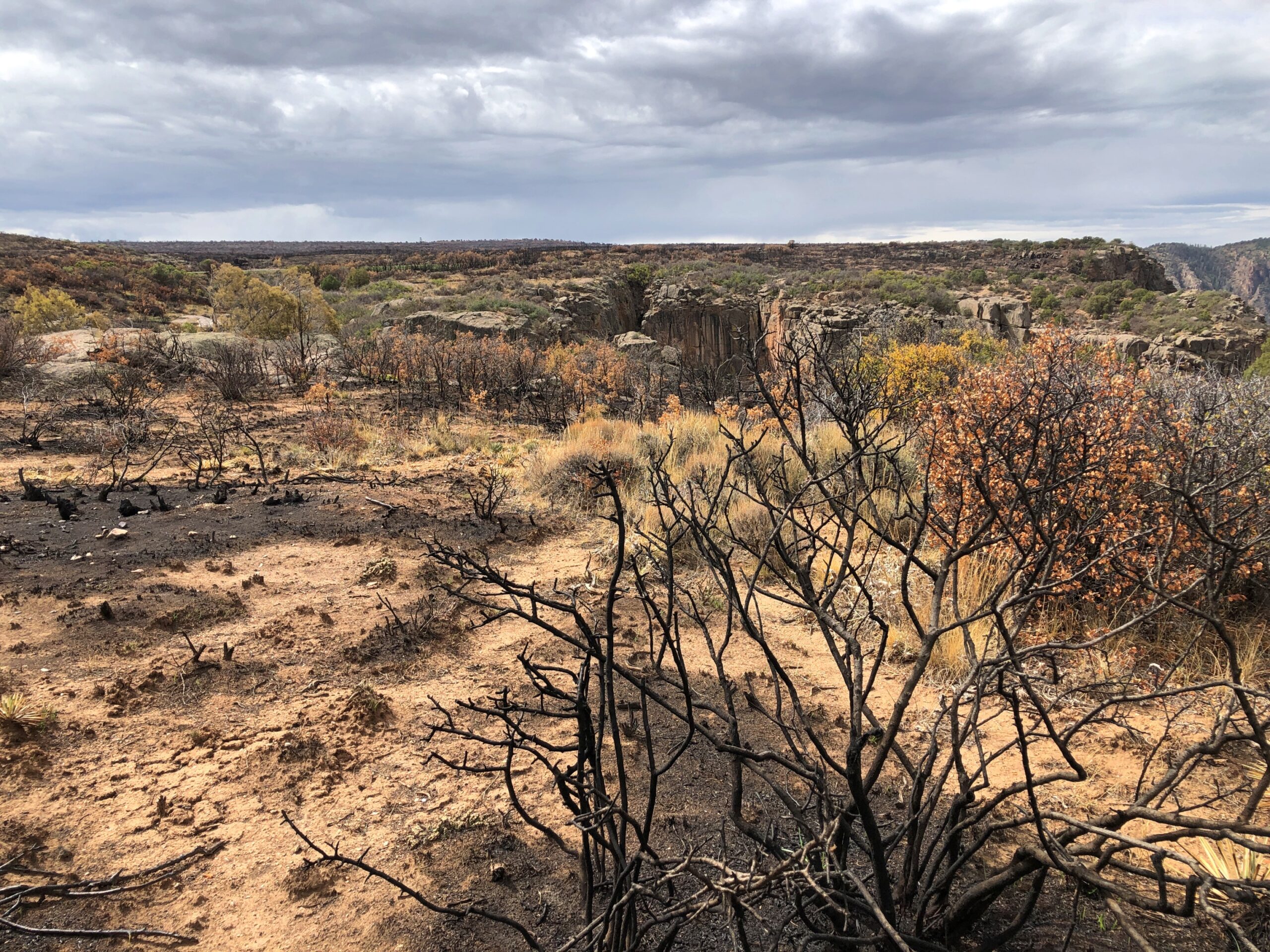
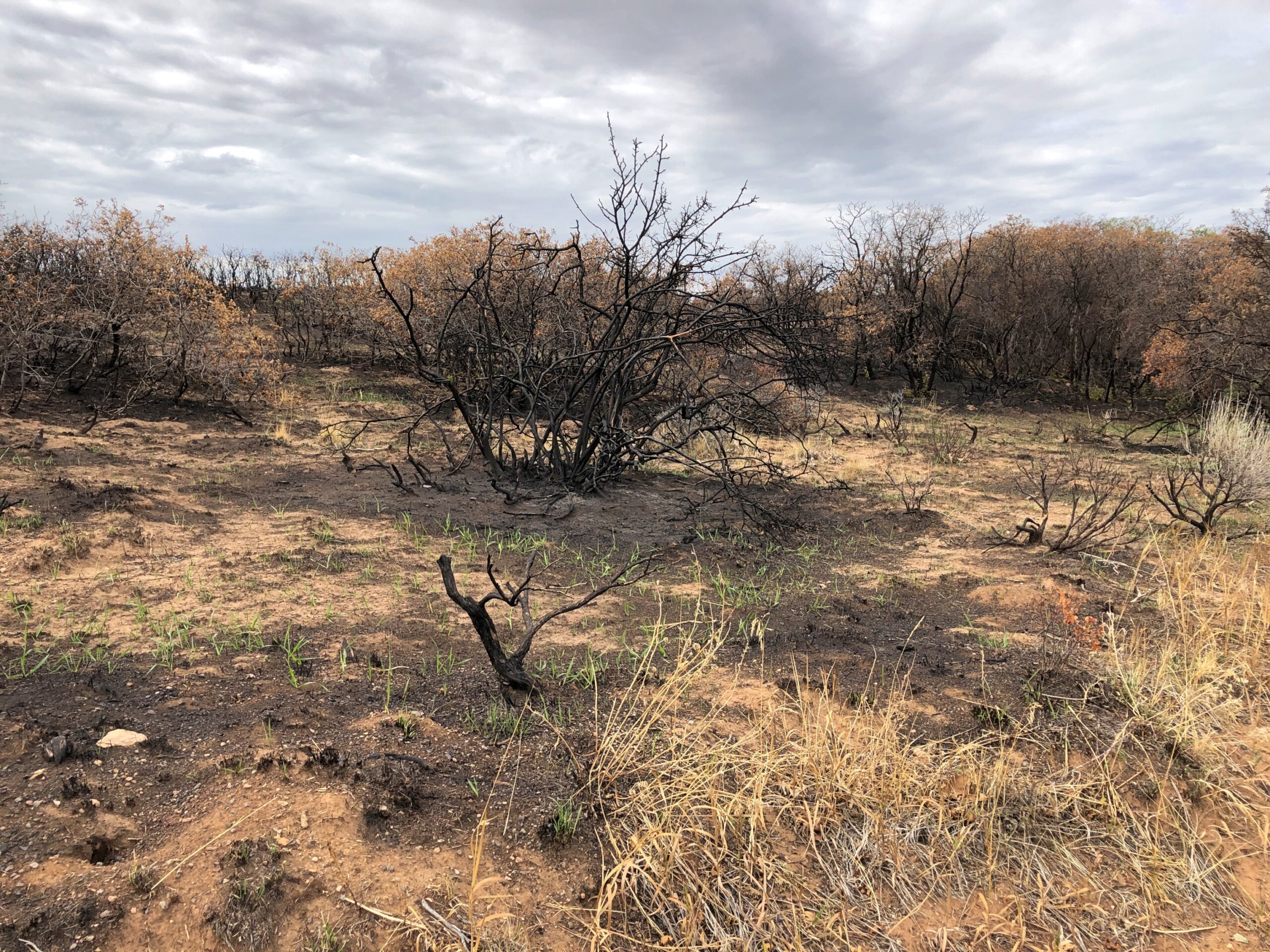
Also, evidence of the fire that swept through the park in July, burning about a total of about 4,000 acres on both the south and north rims, along with some Park Service infrastructure. A number of trails leading away from the south rim overlooks were still closed when we visited the park on September 19, with signs disallowing access to charred grounds and slopes.
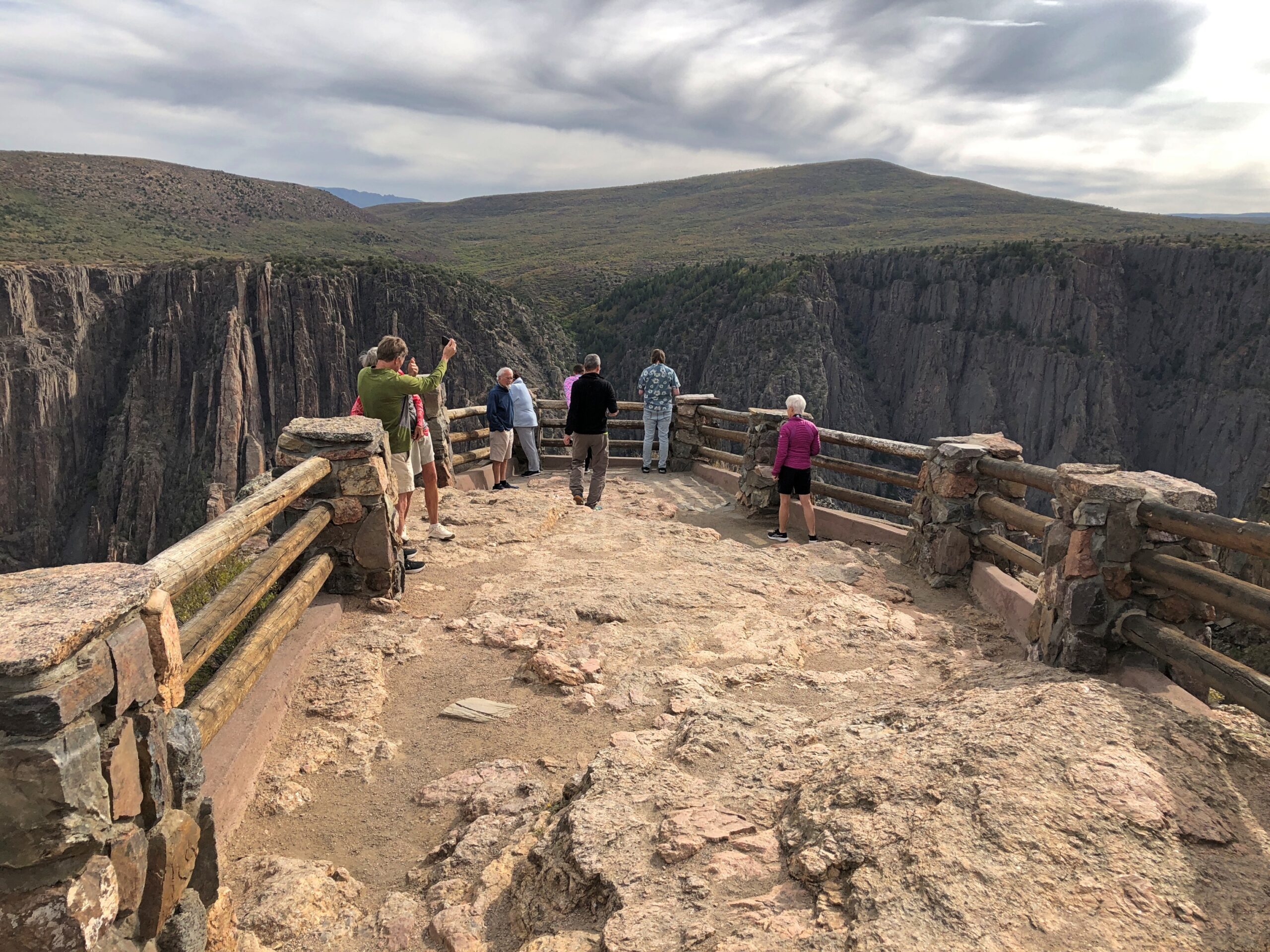
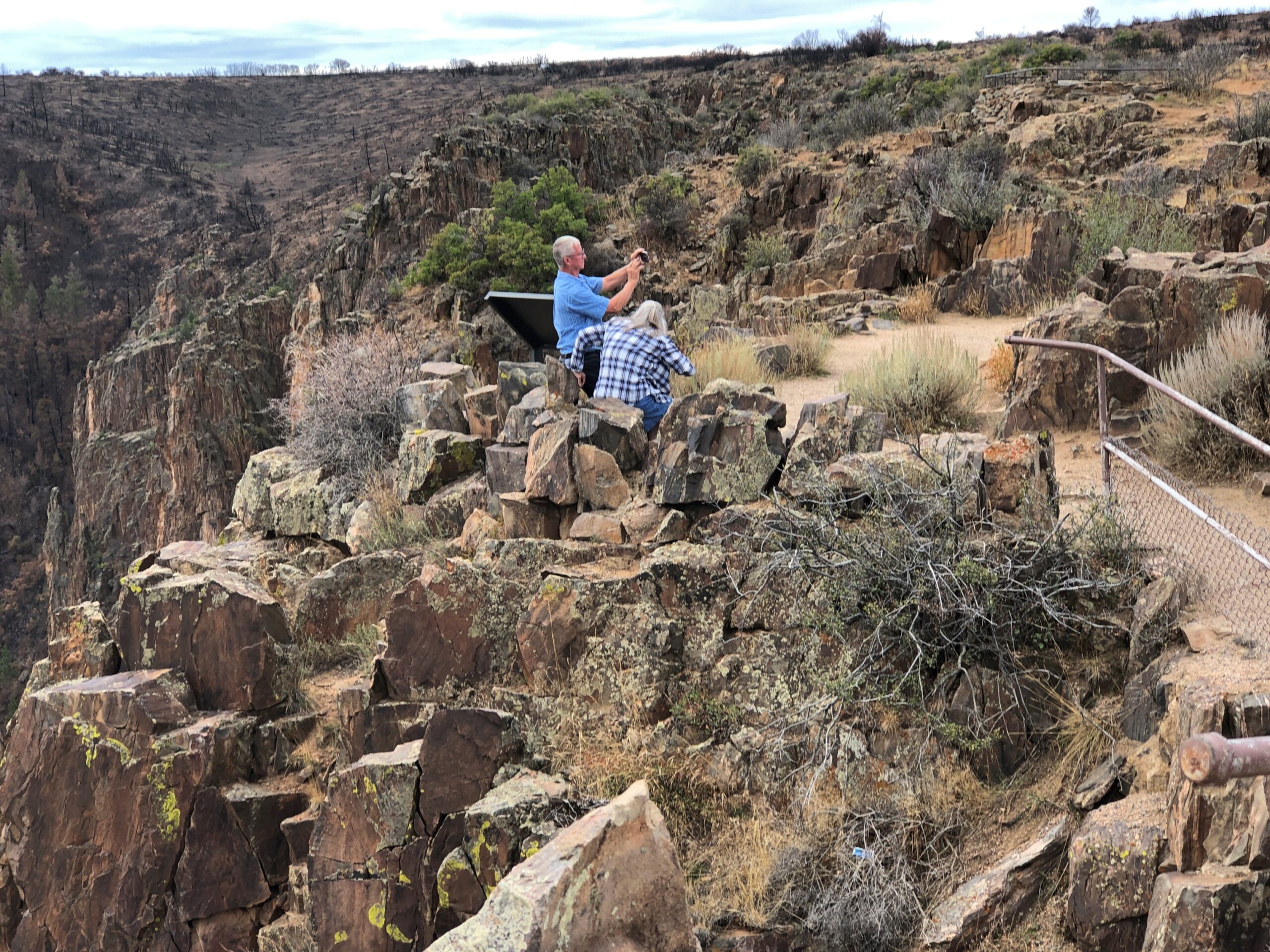
Fortunately for us, we were able to drive the South Rim Road and see what we could see at some of the overlooks. Unless you’re keen on some kind of lunatic climb into the canyon, that seems like a perfectly reasonable ambition. At the main visitor center on the road – which a ranger told us had barely escaped intact, through the efforts of hotshot crews – a path leads to scenic perch, built to accommodate casual visitors. It survived the fire as well.
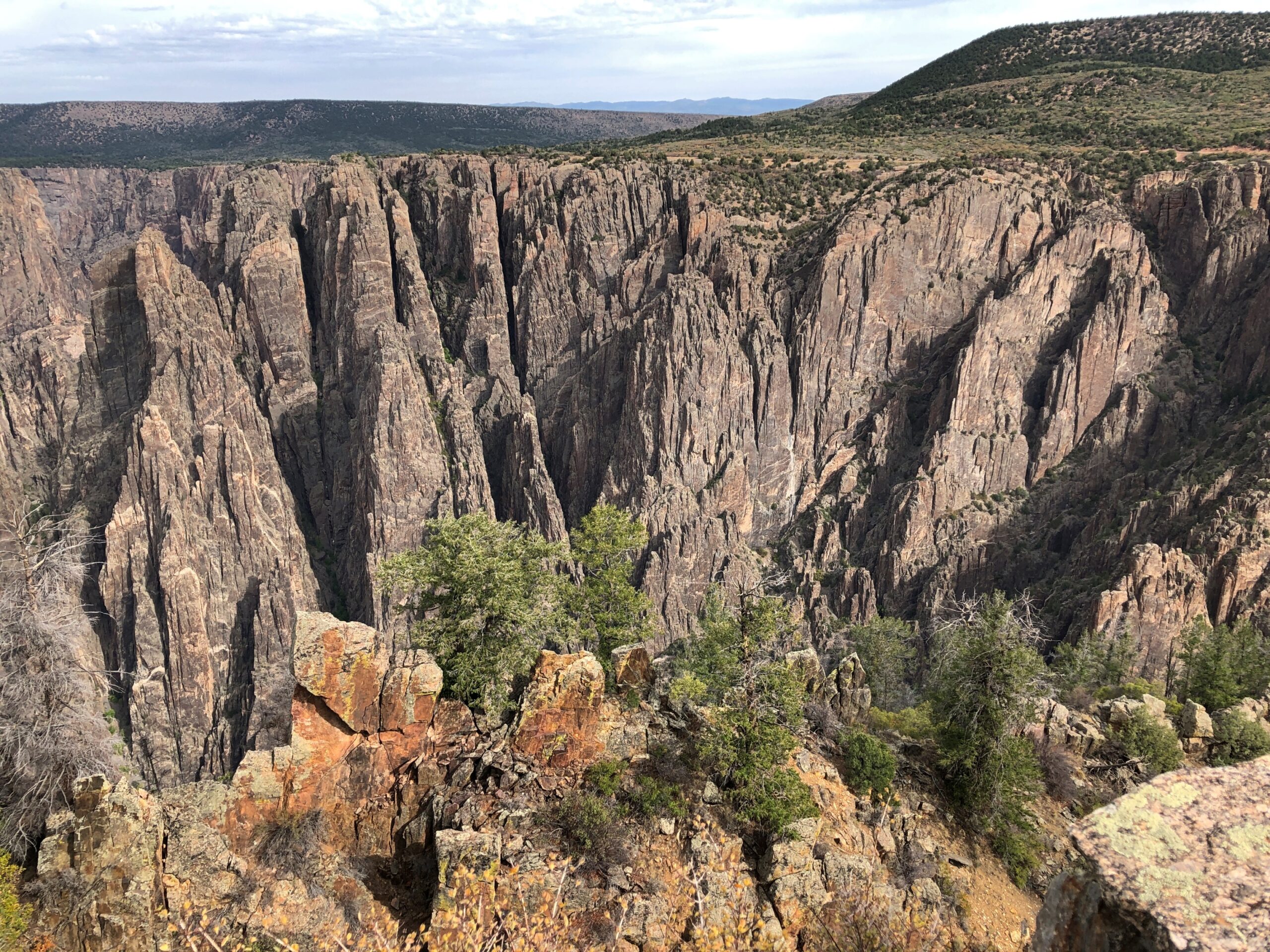
Any photo’s going to be a pale image of this vista, but they will have to do. Believe me, it was a place to drop everything and gawk. And, even while safe behind rails, to experience a touch of vertigo. Nothing incapacitating, just an unsettling mental comparison between little you and the huge yawning drop.
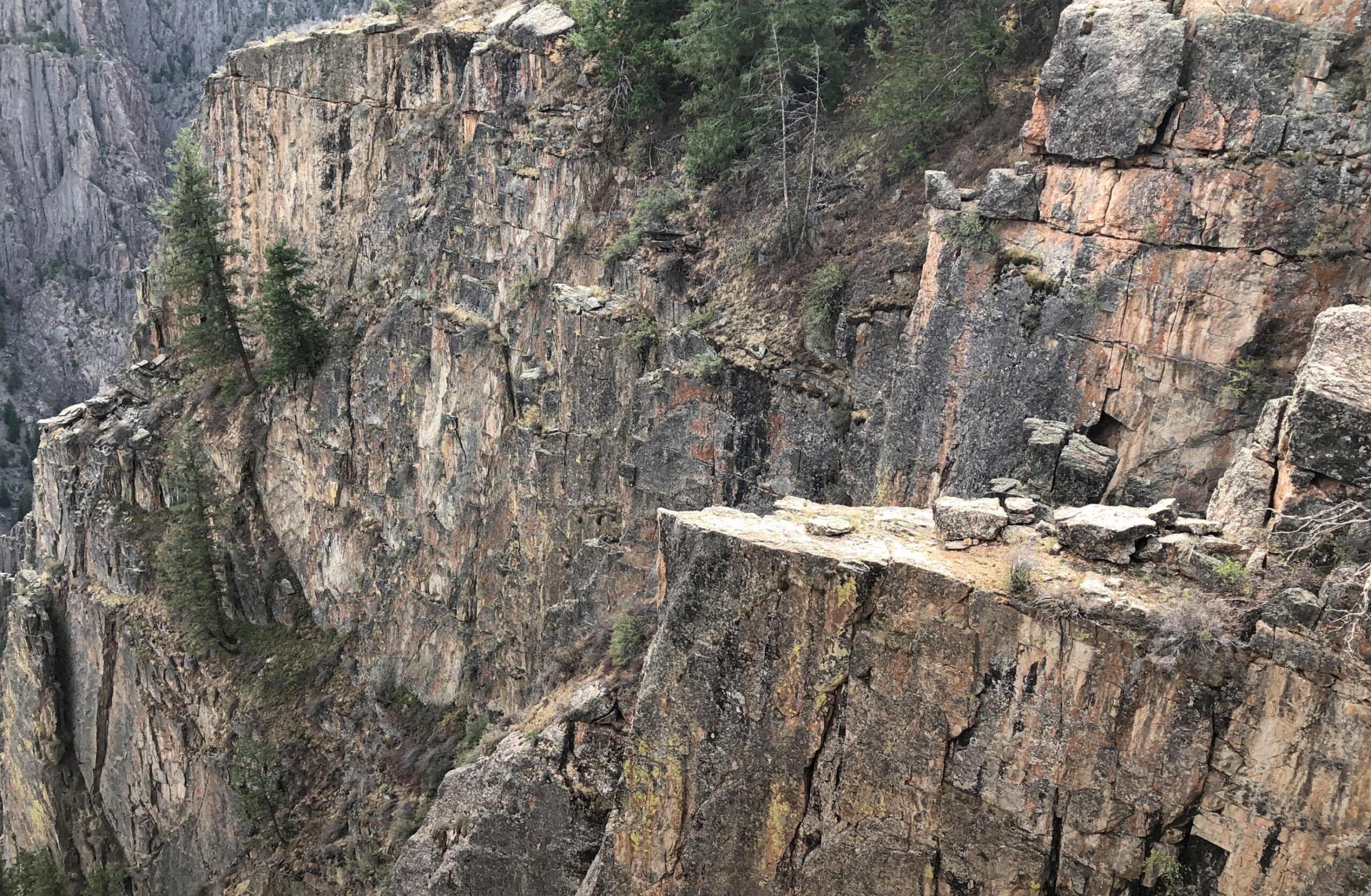
A pointy ledge below. An opportunity for an Instagram death. It was hardly the only one.
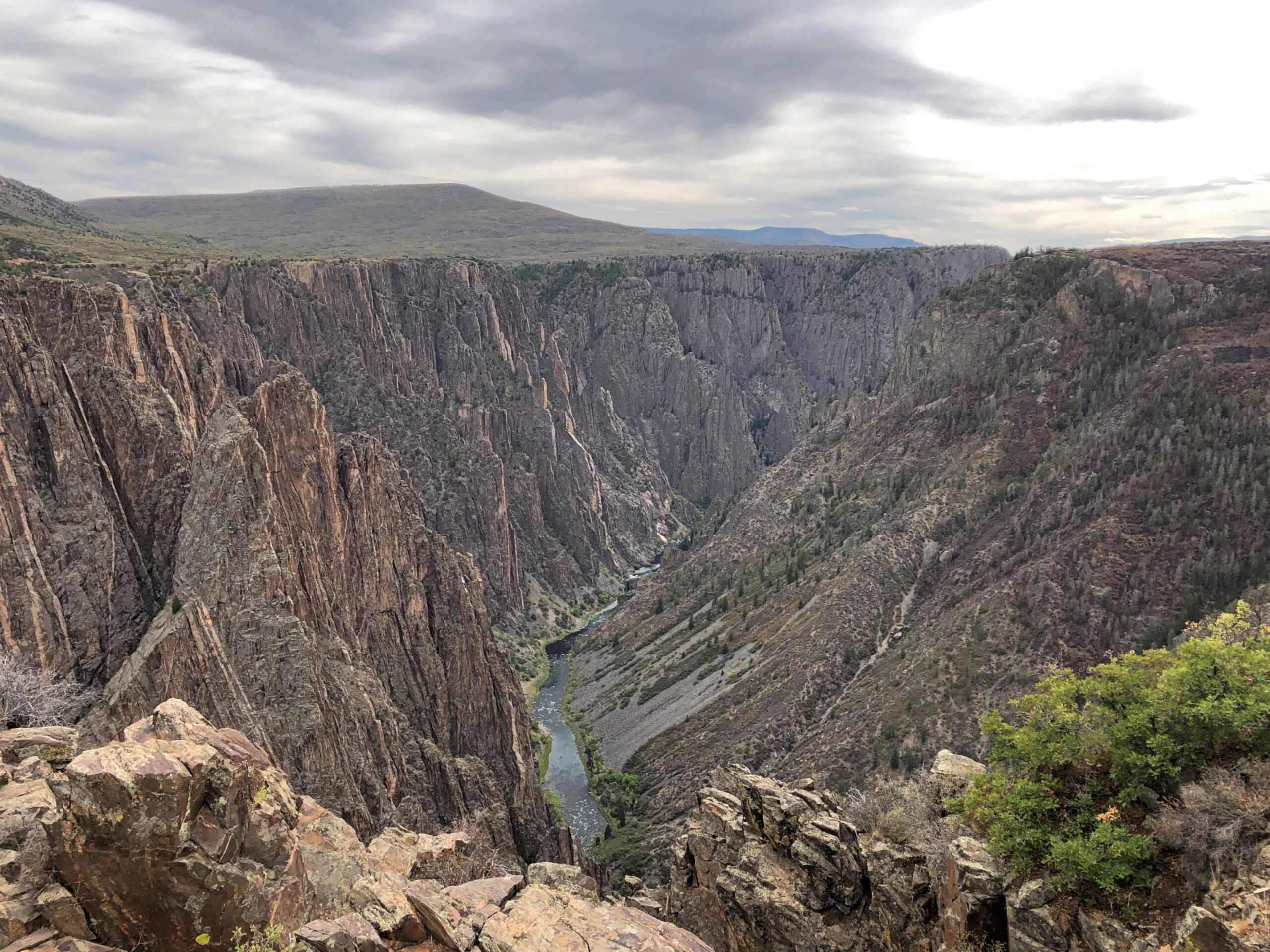
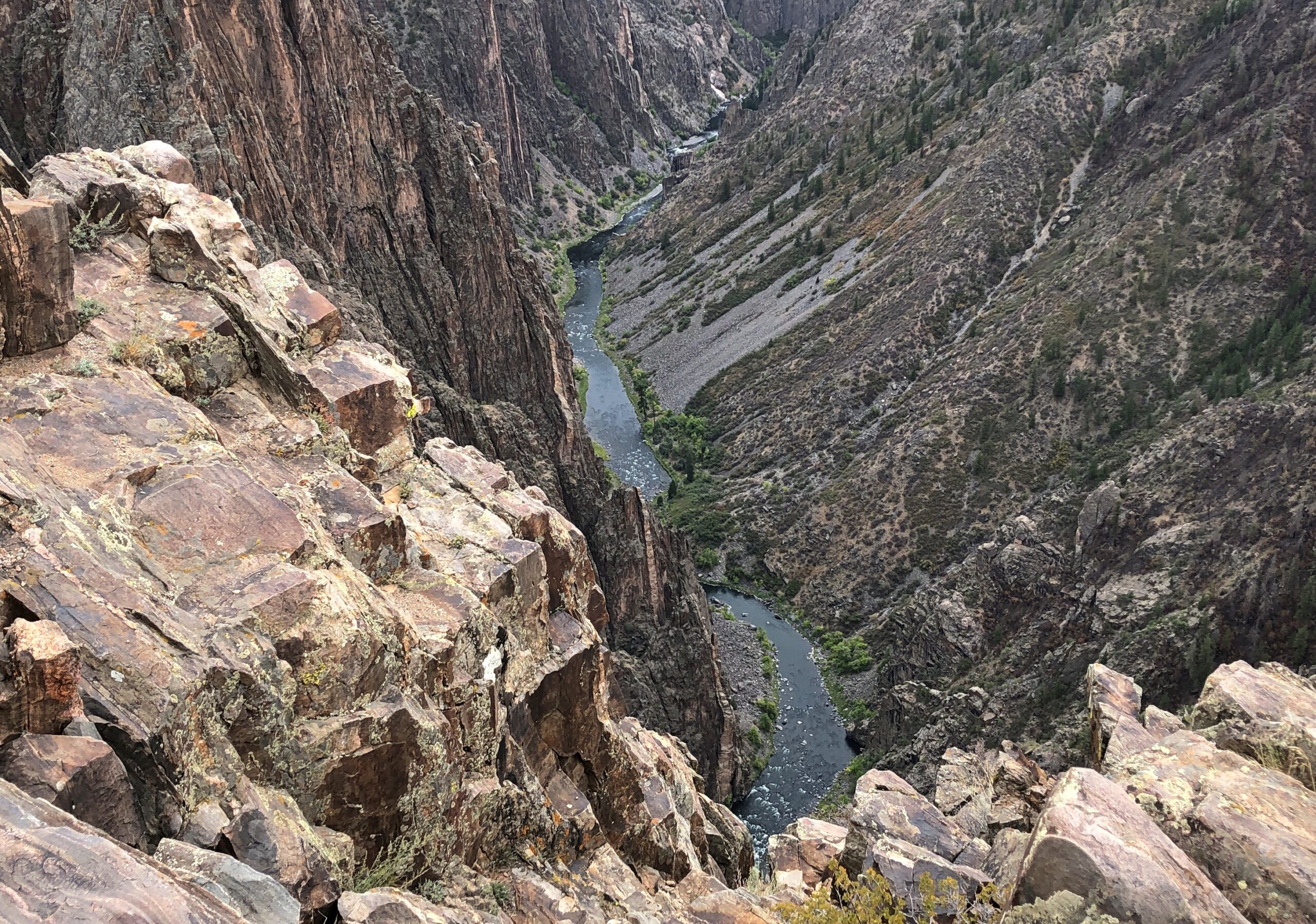
Further down the road, a good view of the Gunnison. It’s hard to tell just by the images, but that’s around 2,000 feet down. Eventually, the water goes into the Colorado River.
Capt. John Gunnison is the U.S. Army officer and explorer who came to the canyon in 1853 as part of the effort to find a route for the transcontinental railroad. To sum up his conclusion, in terms he would have never used: Not through the Black Canyon, Secretary Davis. Are you kidding me? Later that year, Gunnison and most of his men got the worst of an encounter with some Ute warriors and, among other places, the river acquired his name as a posthumous honor.
I also have to say that Gunnison’s career also included surveying in the Upper Midwest, such as the Green Bay area, and that he surveyed the border between Wisconsin and Michigan. An underappreciated kind of achievement, I’d say.
None of the viewpoints were crowded. The Grand Canyon, this isn’t. The more accessible south rim of the Black Canyon isn’t crowded, even on a warm Friday afternoon, unlike the more accessible south rim of the Grand Canyon.
Near the end of the road is a view of the Painted Wall.
The stripes are not paint, of course, but pegmatite, an igneous rock that solidified after the surrounding rock did, for reasons that a geologist, which would not be me, might be able to explain. A sign at the viewpoint helpfully compares the height of the cliff (2,250 feet) to various manmade structures. The only one that would rise higher than the wall is Burj Khalifa, and that not by much. Note also that the top of the cliff, across on the remote north rim of the canyon, has absolutely nothing in the way of safety infrastructure. The cliff is a cliff, with gravity ready 24/7 to whisk the careless or suicidal to their doom.
I’d be remiss if I didn’t include a few more post-char landscapes: the sort that spread out from South Rim Road for long stretches. It would be a thrill of a road anyway — a little more thrill than I need, actually — with its sporadic few spots where the separation between the road’s edge and an enormous cliff was a single white line.
At the end of the road is the trailhead of Warner Point Trail. From the parking lot, according to a sign, the walk is 1,373 yards to the overlook at Warner Point. Near the sign, I heard a couple of young German men obviously working out the distance in meters (you don’t need much German to understand that). No matter how few people are at a U.S. national park, some are going to be Germans.
I preferred to work out the distances in miles. That would be nearly eight-tenths of a mile, so roughly a 1.6 miles there and back. Or 2.5 km for Euro-types. Better shoes on, poles in hands, hats on heads and water in a small backpacks, we set off on the trail. Yuriko and a few other people (including the Germans) got to Warner Point before I did , but get there I did.
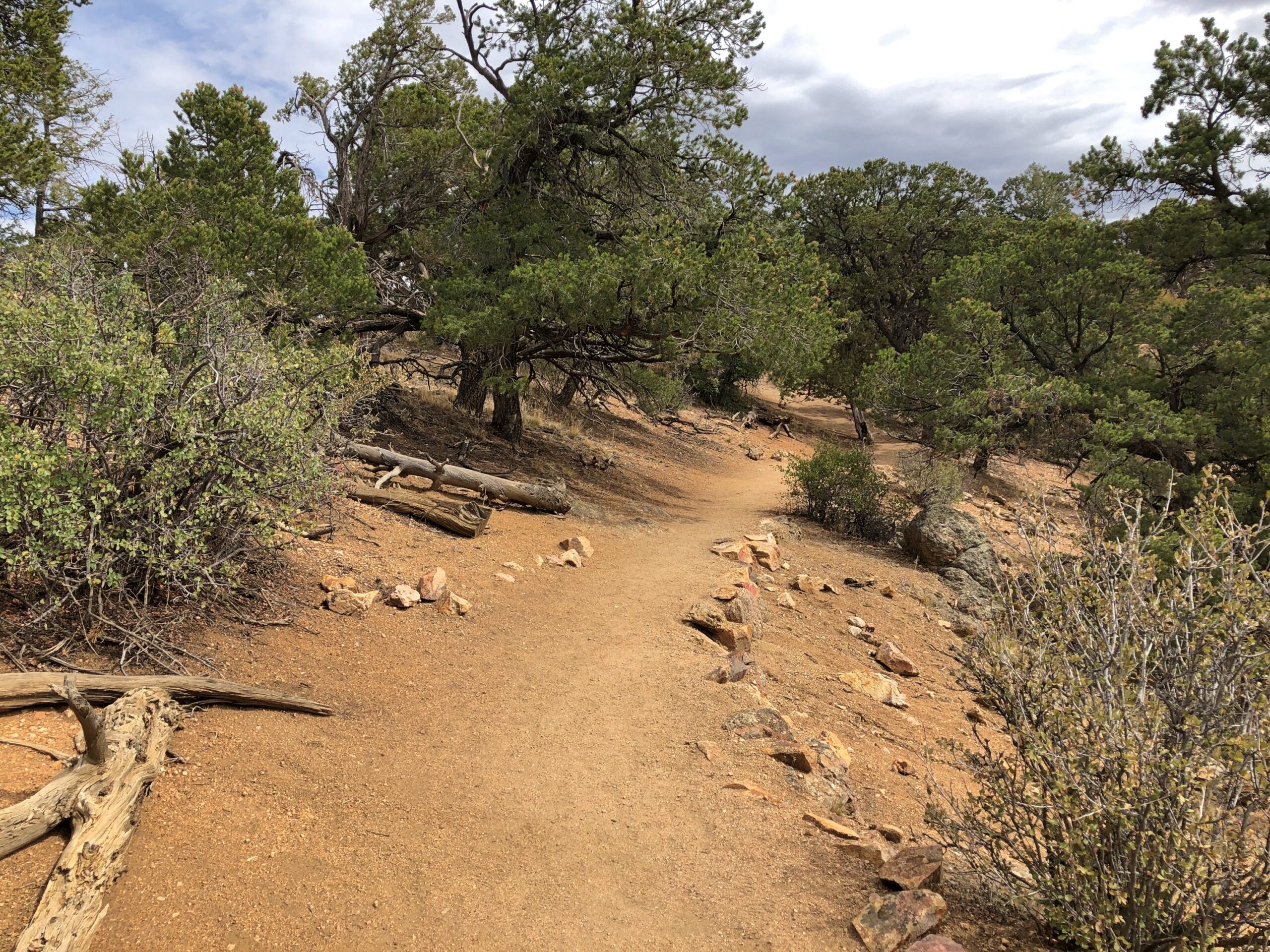
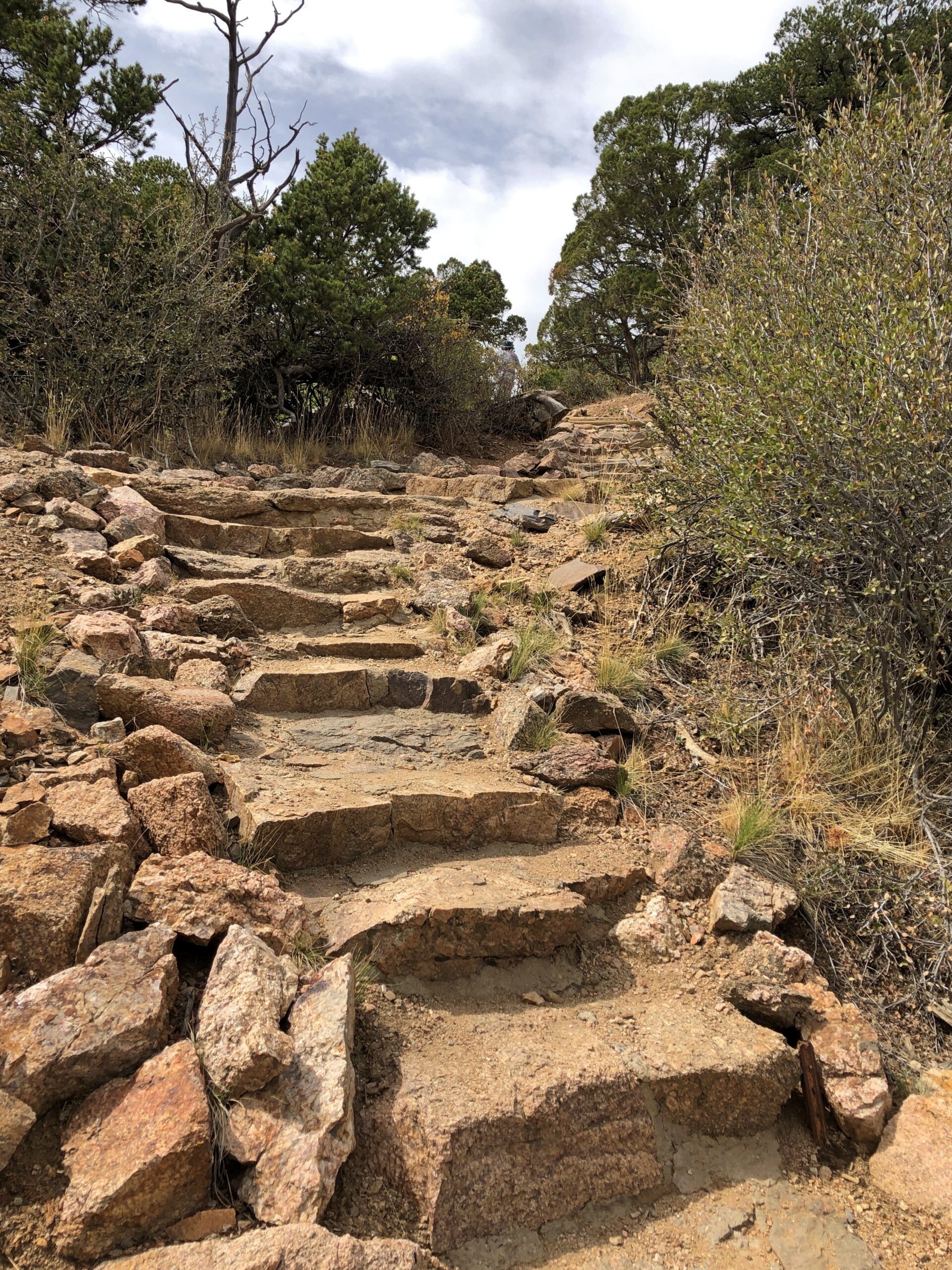
The walk was partly on this kind of trail.
With a fair amount of this kind of thing.
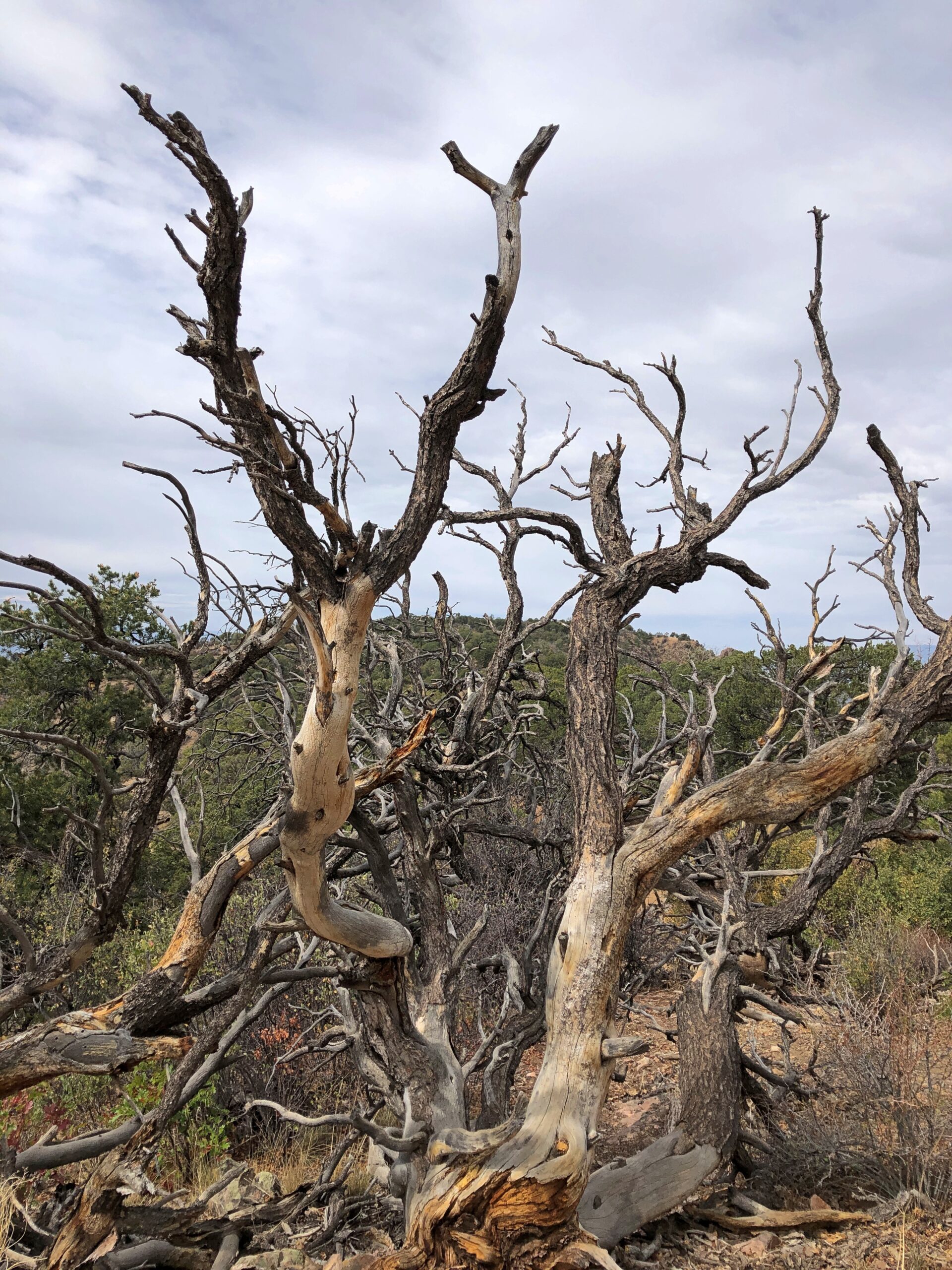
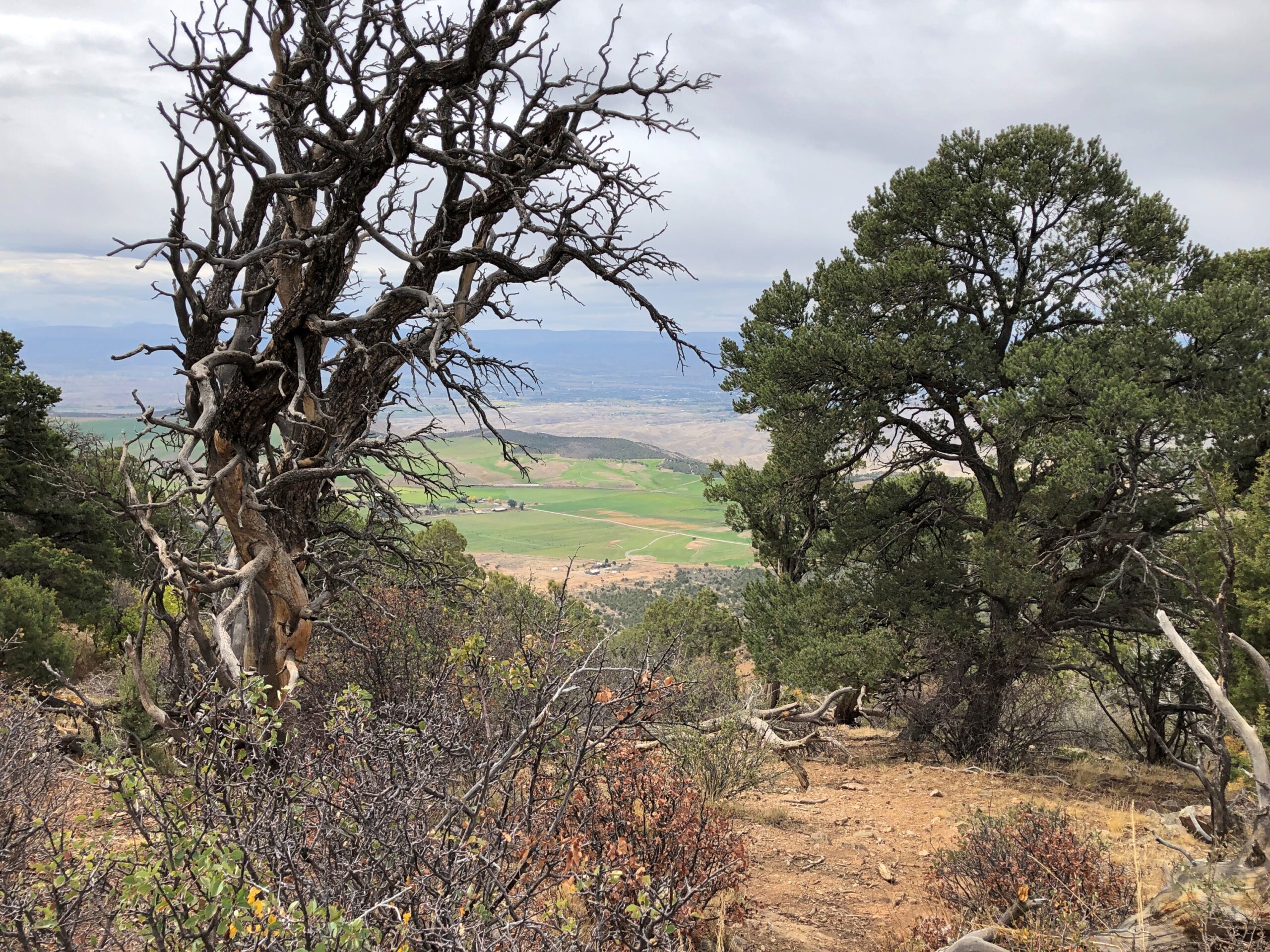
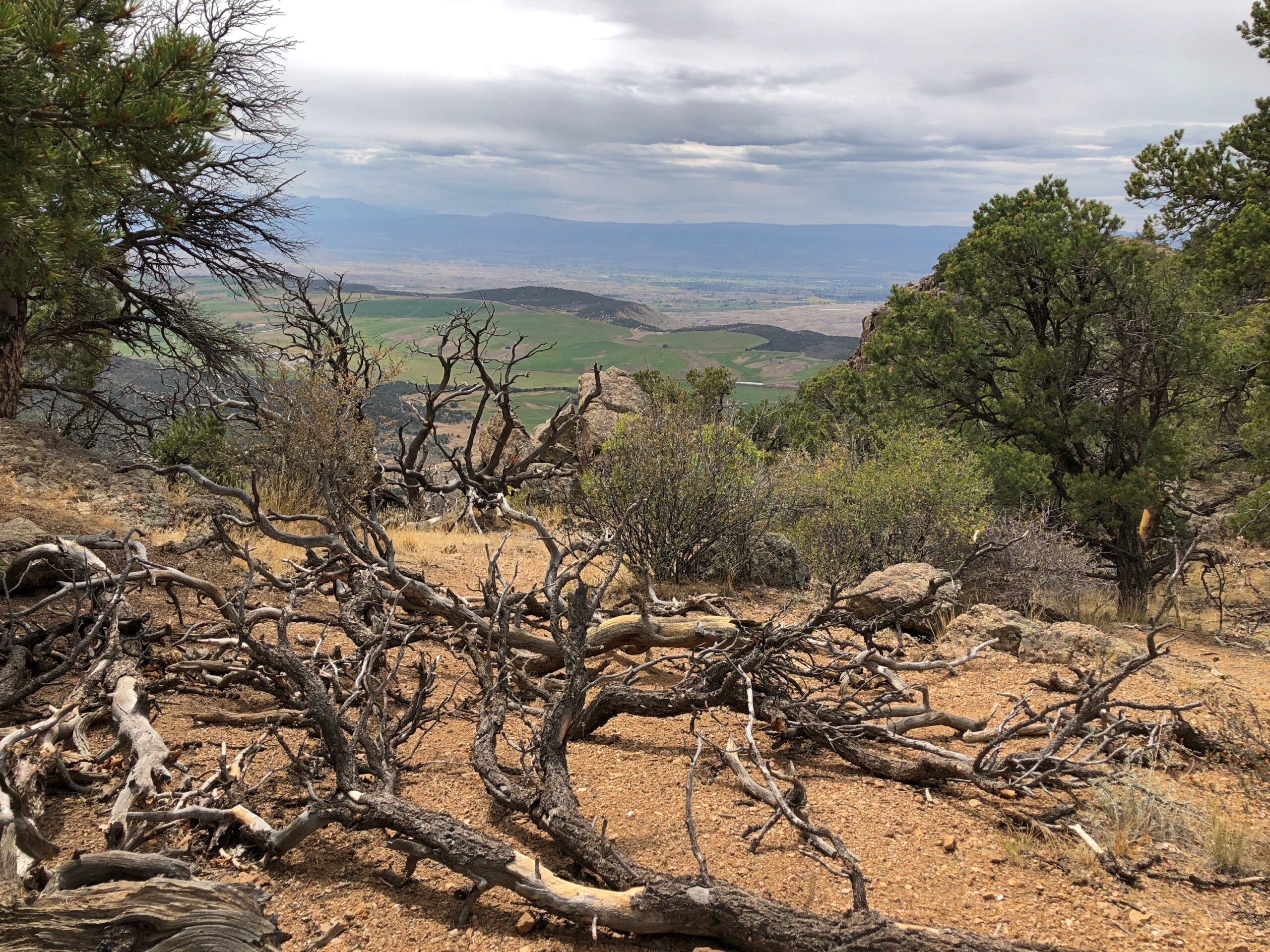
Along the way, an impressive collection of deadwood that the recent fires missed.
With views of the agricultural valley outside the park..
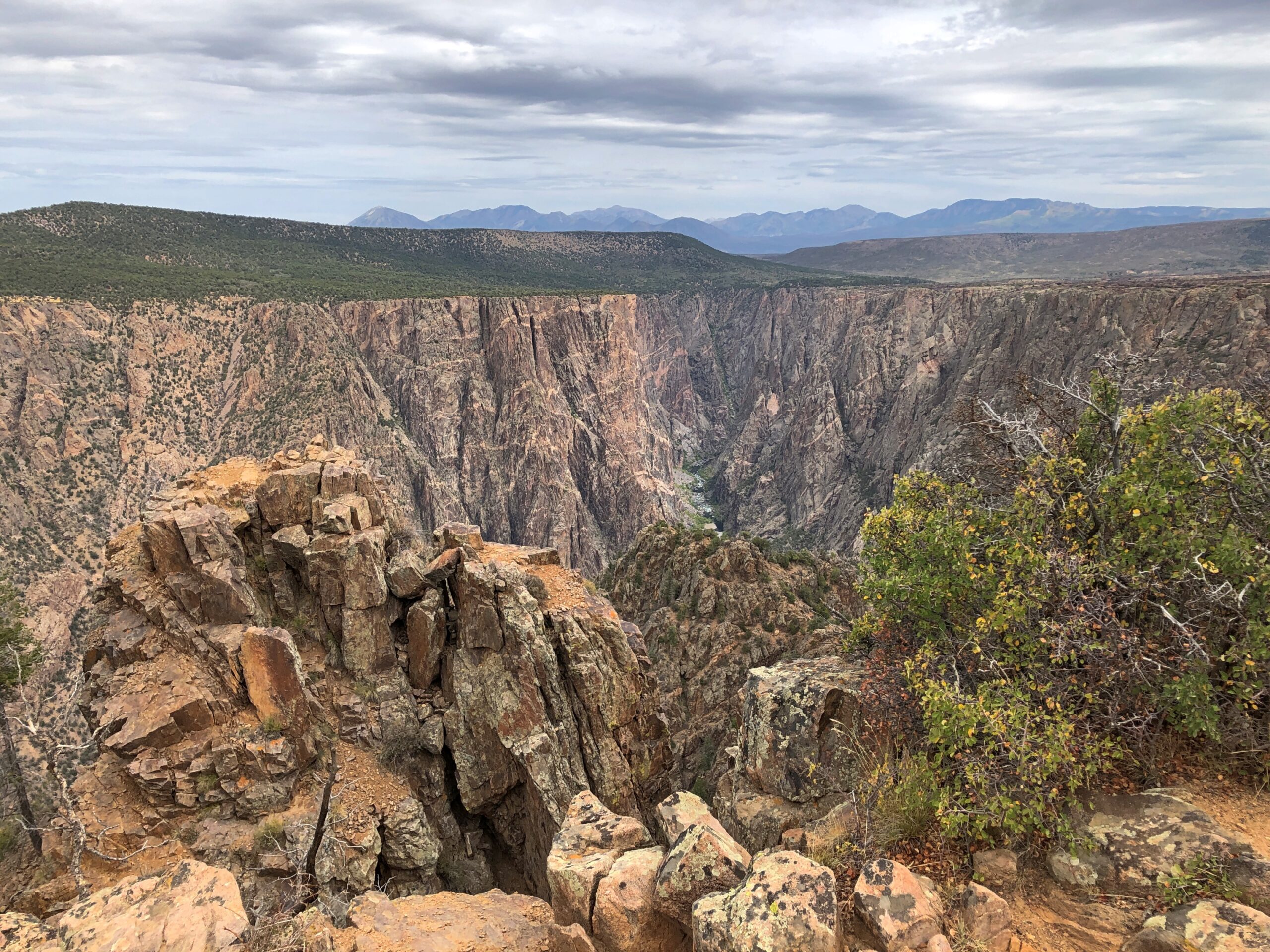
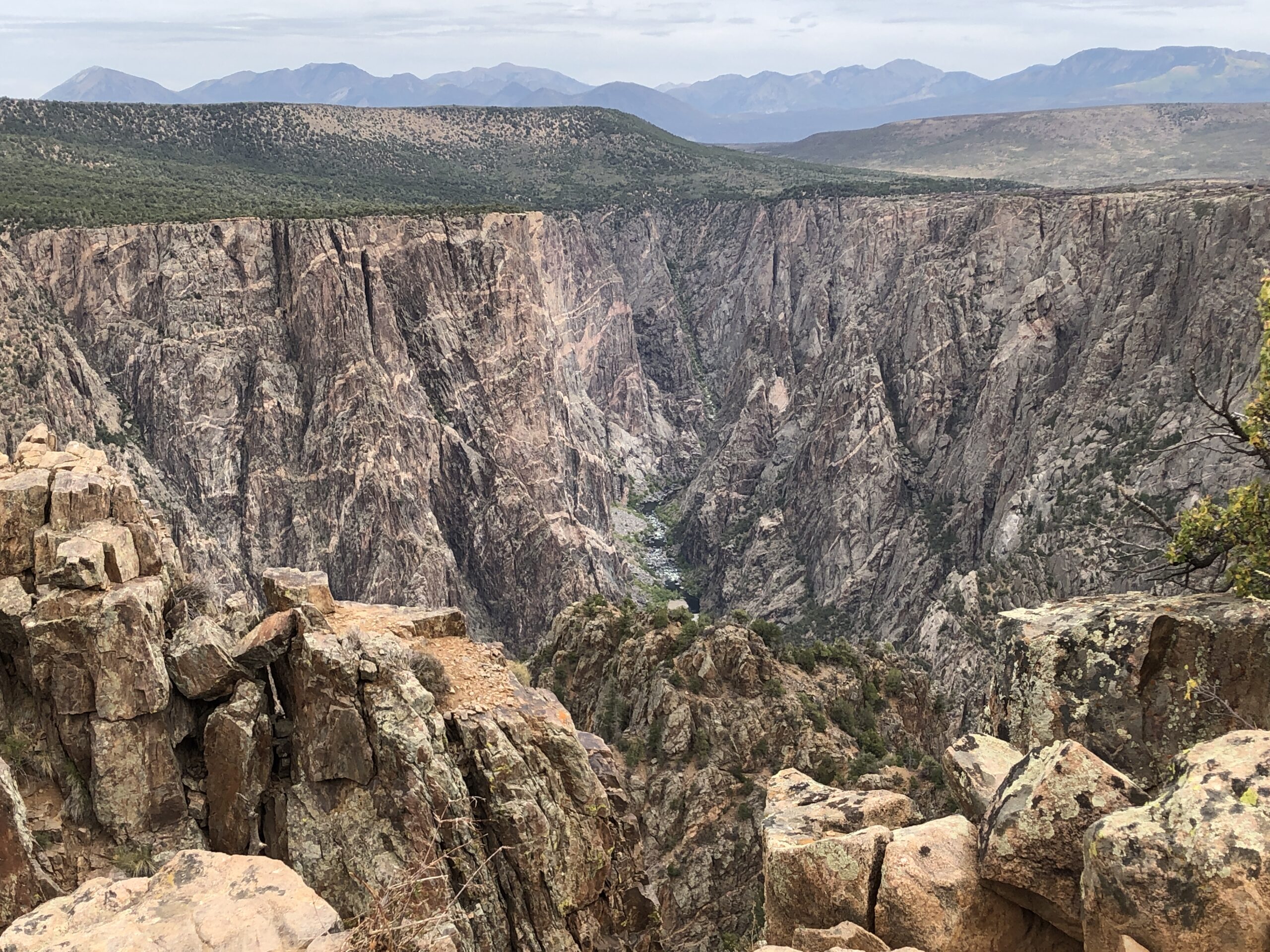
Finally, the end of the trail at Warner Point.
When I got there, Yuriko was waiting. Two other people were there (not the Germans; as athletic sorts, they’d come and gone). Soon they left. So we had the vista to ourselves for about 10 minutes, until another couple came along and we left. When we were quiet, the only sound was the Gunnison far below.
In 800 years or so, will people come from significant distances to look at the ruins of my mid-century neighborhood? That doesn’t seem likely for any number of reasons. I’d be surprised if my own house survives until the next century, considering how good people are now at razing and rebuilding. But considering such a long span of time, there’s no way to know.
That’s the kind of thing I wonder about when facing structures of that age, especially those whose inhabitants are known mainly by the structures and other items they long ago cast off.
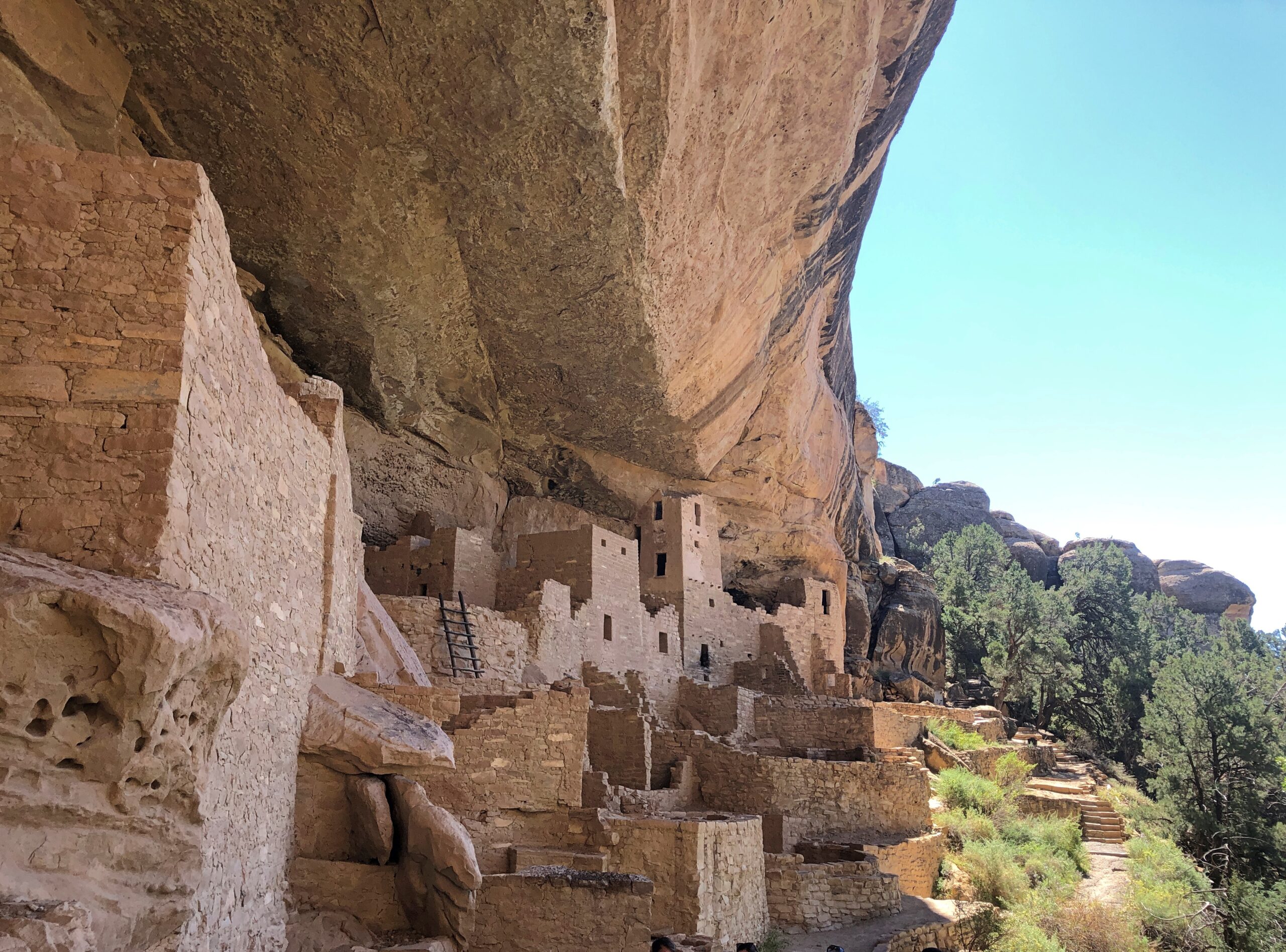
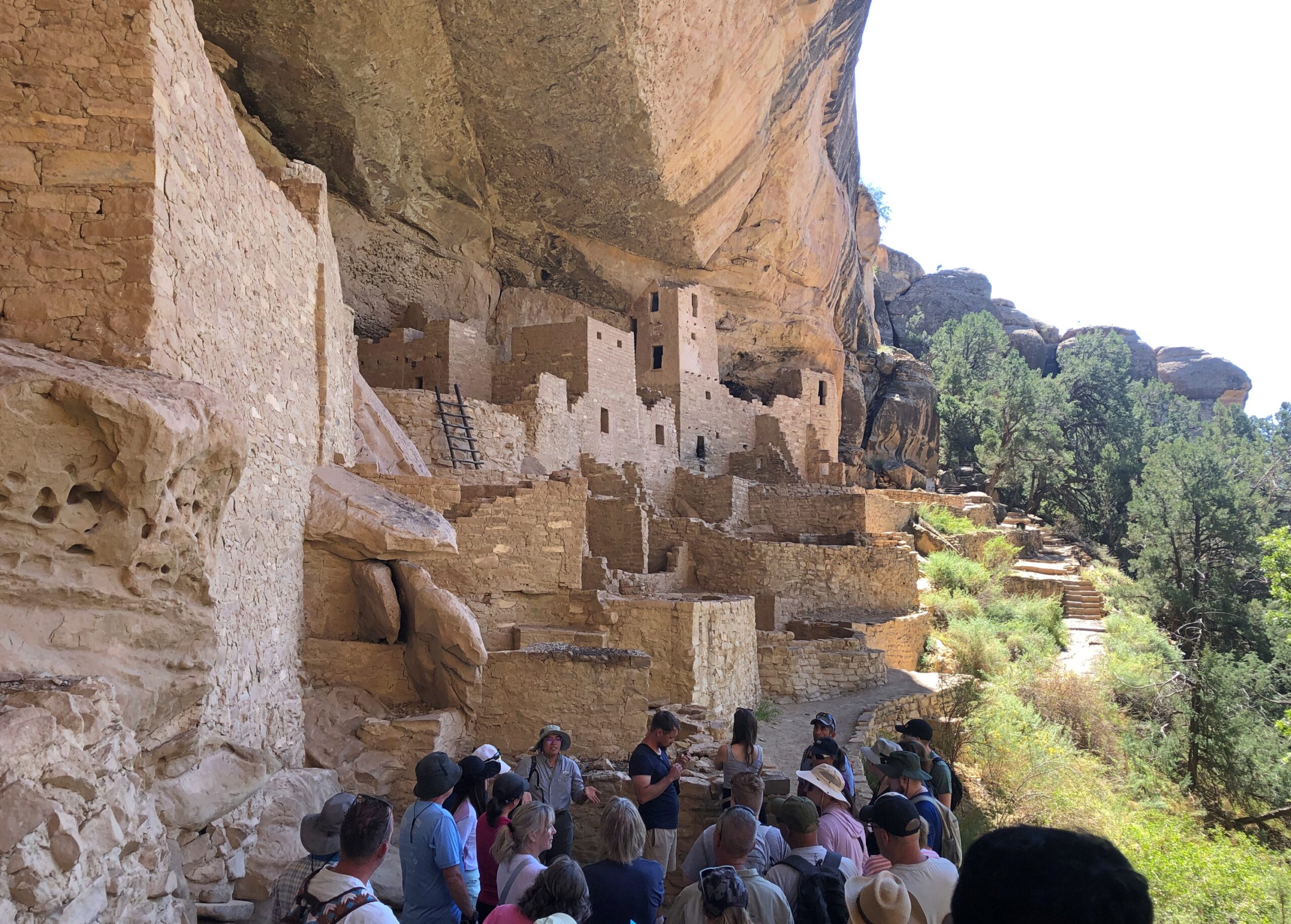
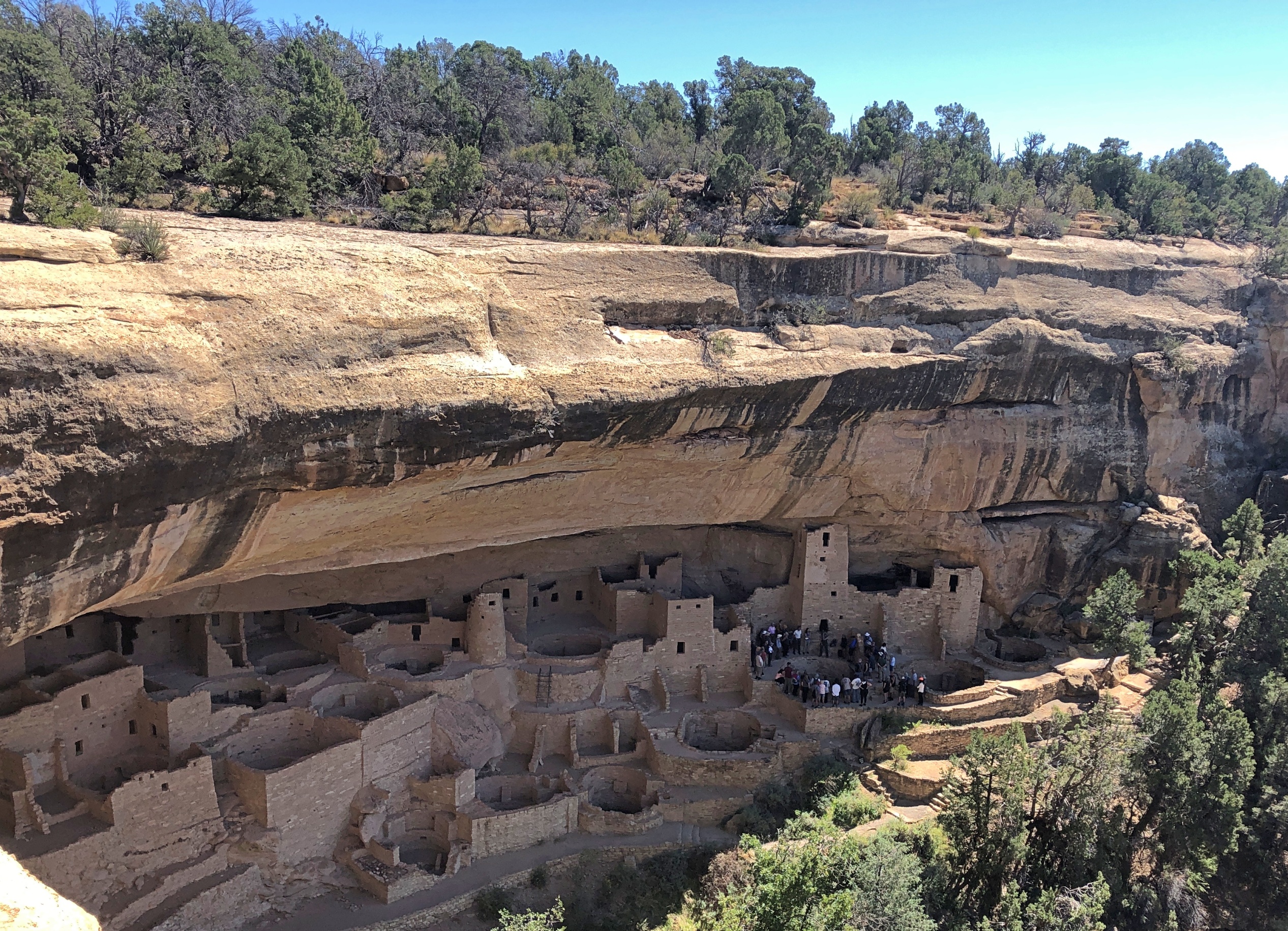
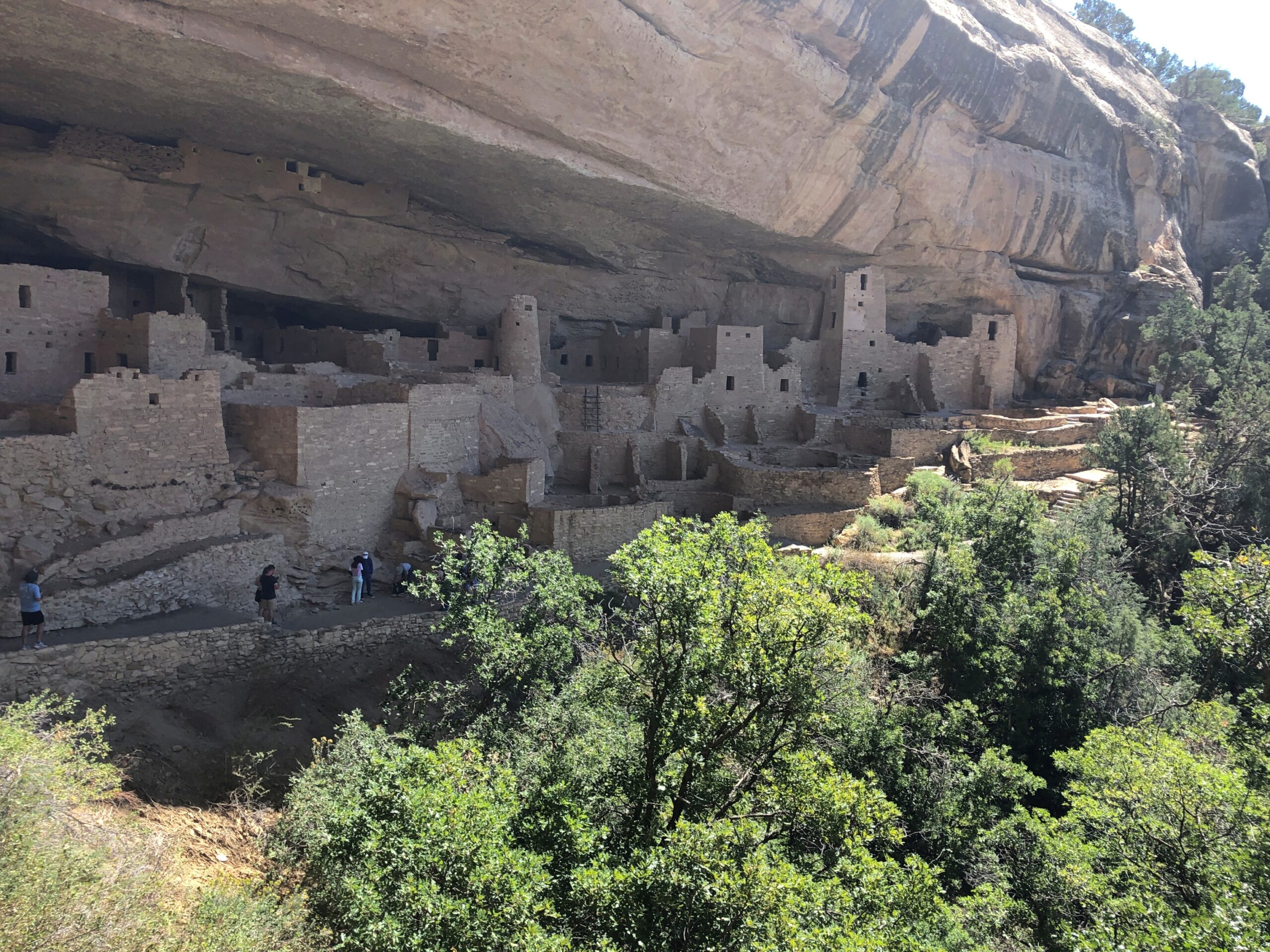
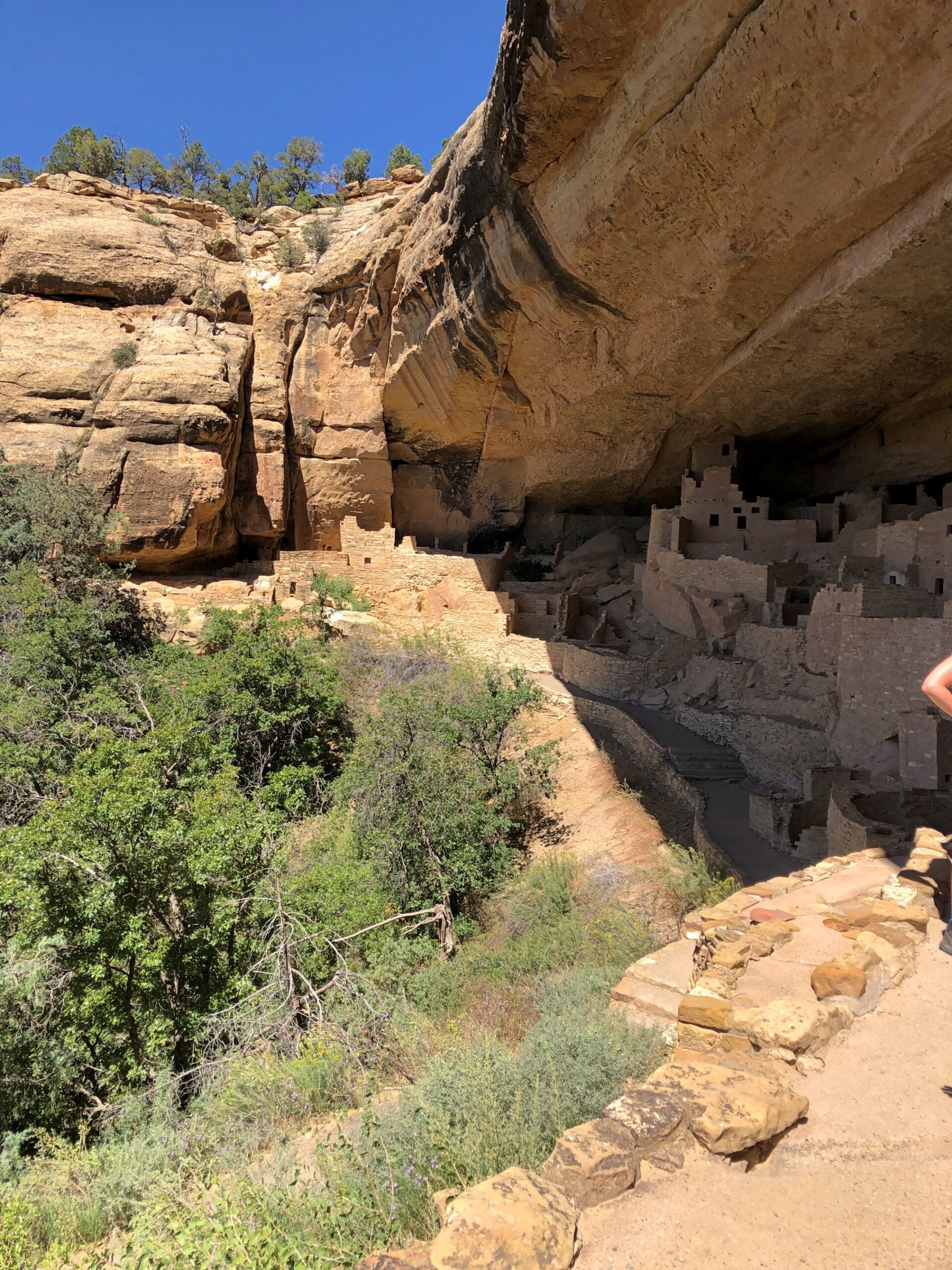
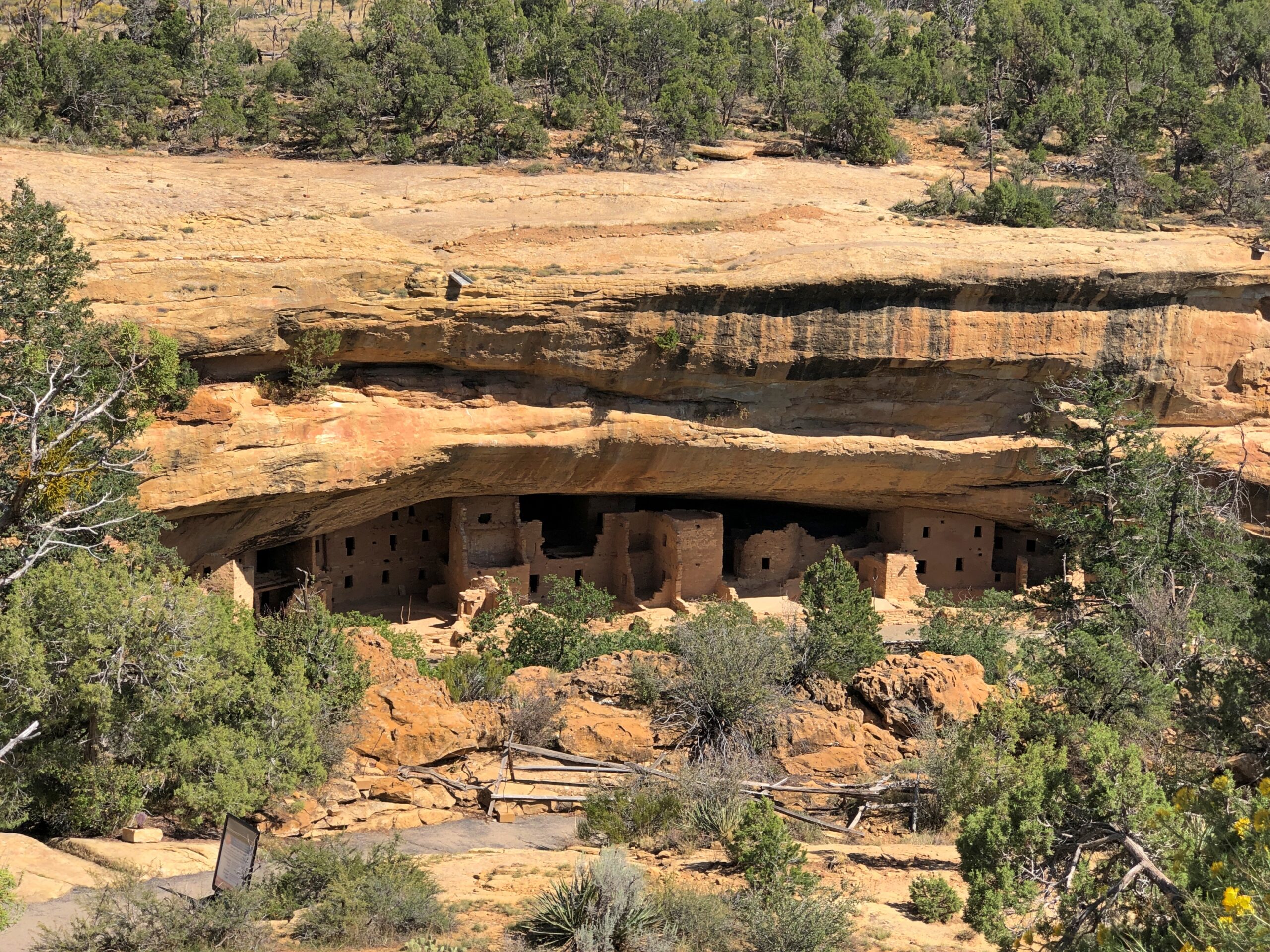
On September 17, we’d come to the Cliff Palace at Mesa Verde National Park. To get close, you sign up and pay for a ranger-guided tour, which goes down stone stairs, along the edge of the cliff near the dwellings, and then back up some stone stairs (built by the CCC; does that even need to be said?). The elevation is 7,500 feet or so, but that didn’t cool things down that day. It was hot and sweaty.
A shot like that took some effort. We were hardly alone at Cliff Palace.
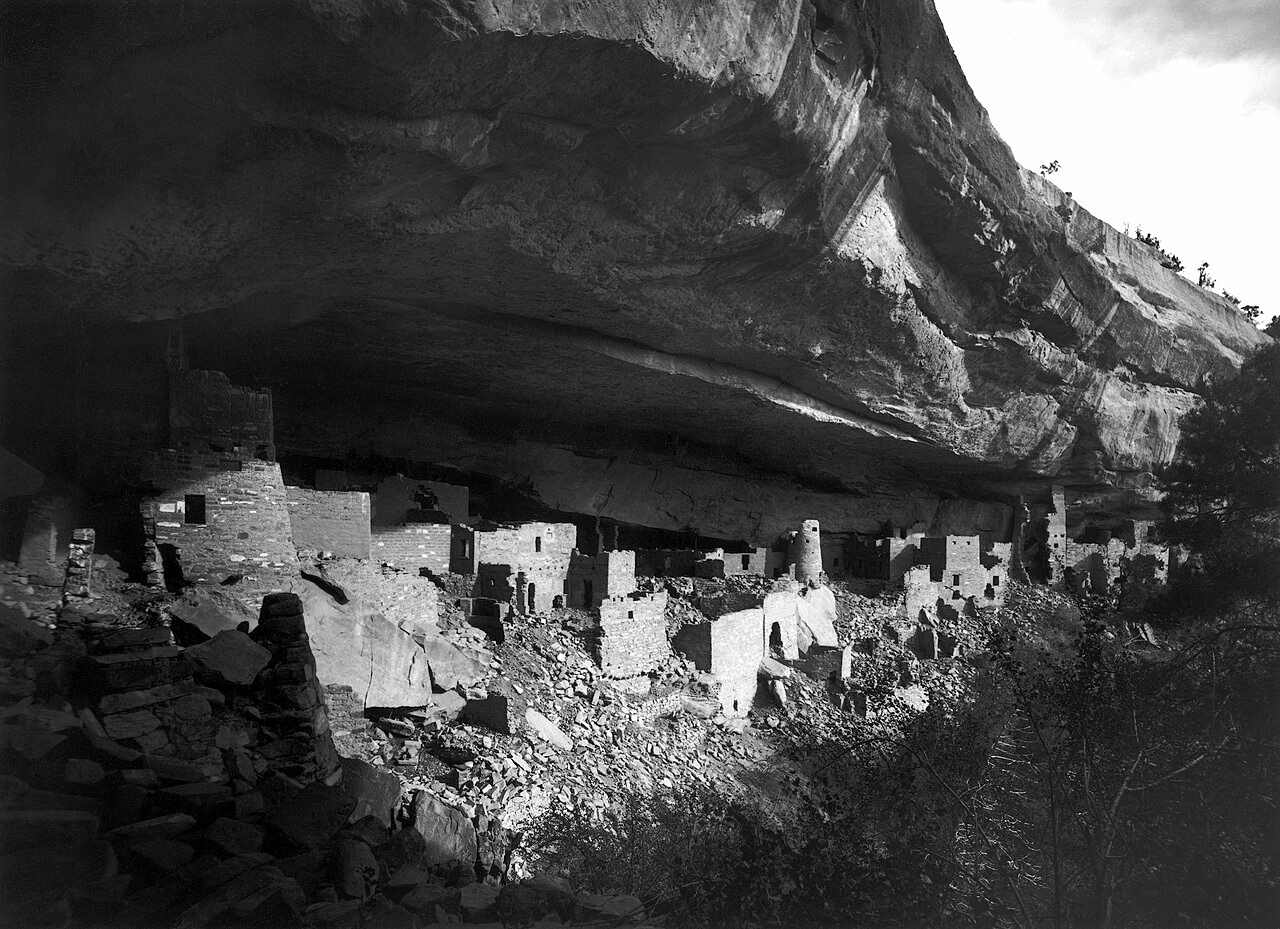
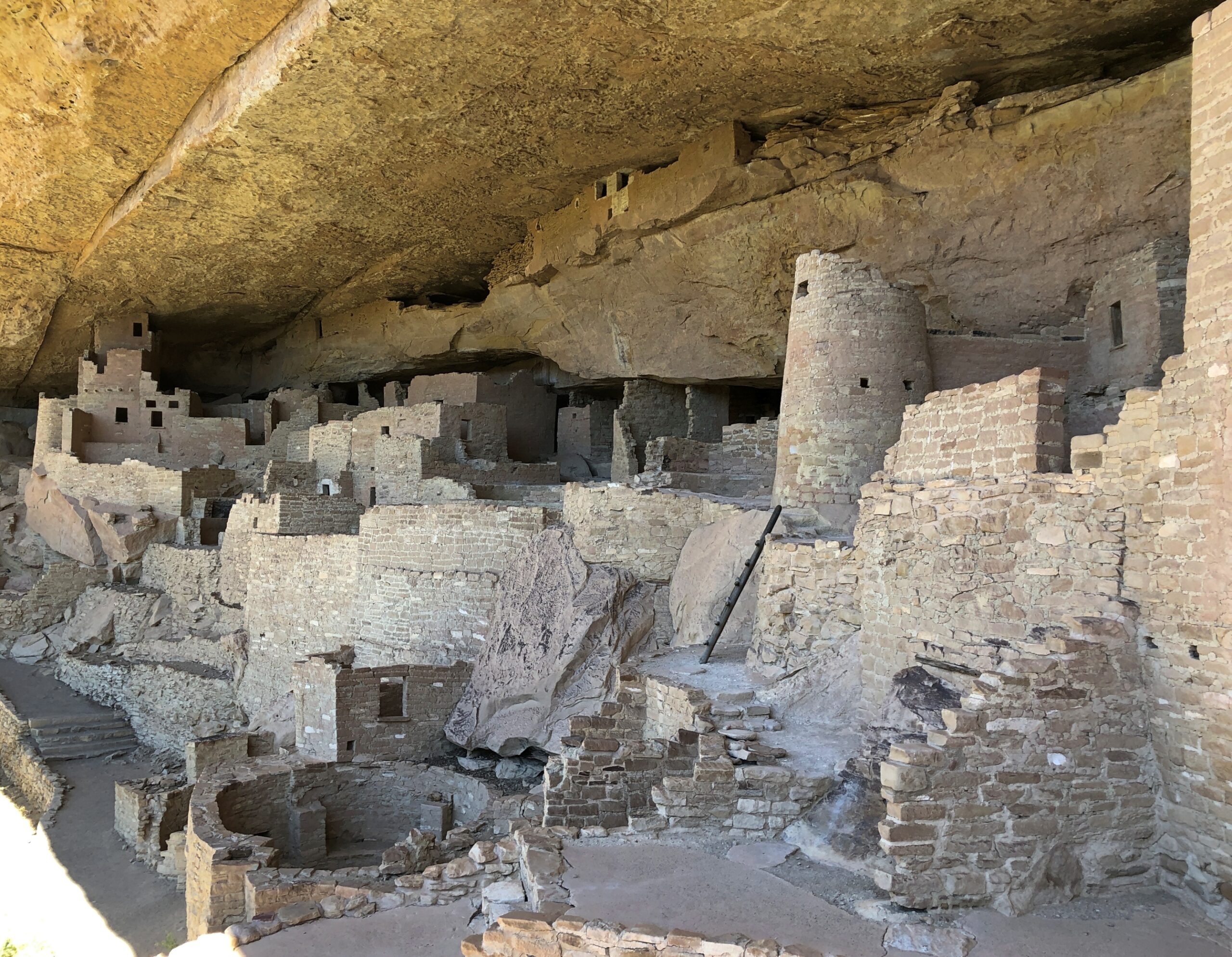
The ruins, which are most certainly near a cliff, are probably not a palace in the grand sense of a royal residence. More of a neighborhood, one of many in the vicinity, though the largest. Also, not quite as much of a ruin as it used to be. This is an image of the Cliff Palace from 1891, taken by Gustaf Nordenskiöld.
Not as long ago as all that, considering the age of the structures, but before TR inked the bill creating the national park, and back when you could help yourself to whatever was lying around, as the explorer (and photographer) Nordenskiöld apparently did, taking many items back home to Sweden. Eventually, the items made their way to Finland. A few were returned recently.
The ruins aren’t quite as ruined these days. The 20th century was a period of stabilization. Not as many artifacts got nicked either.
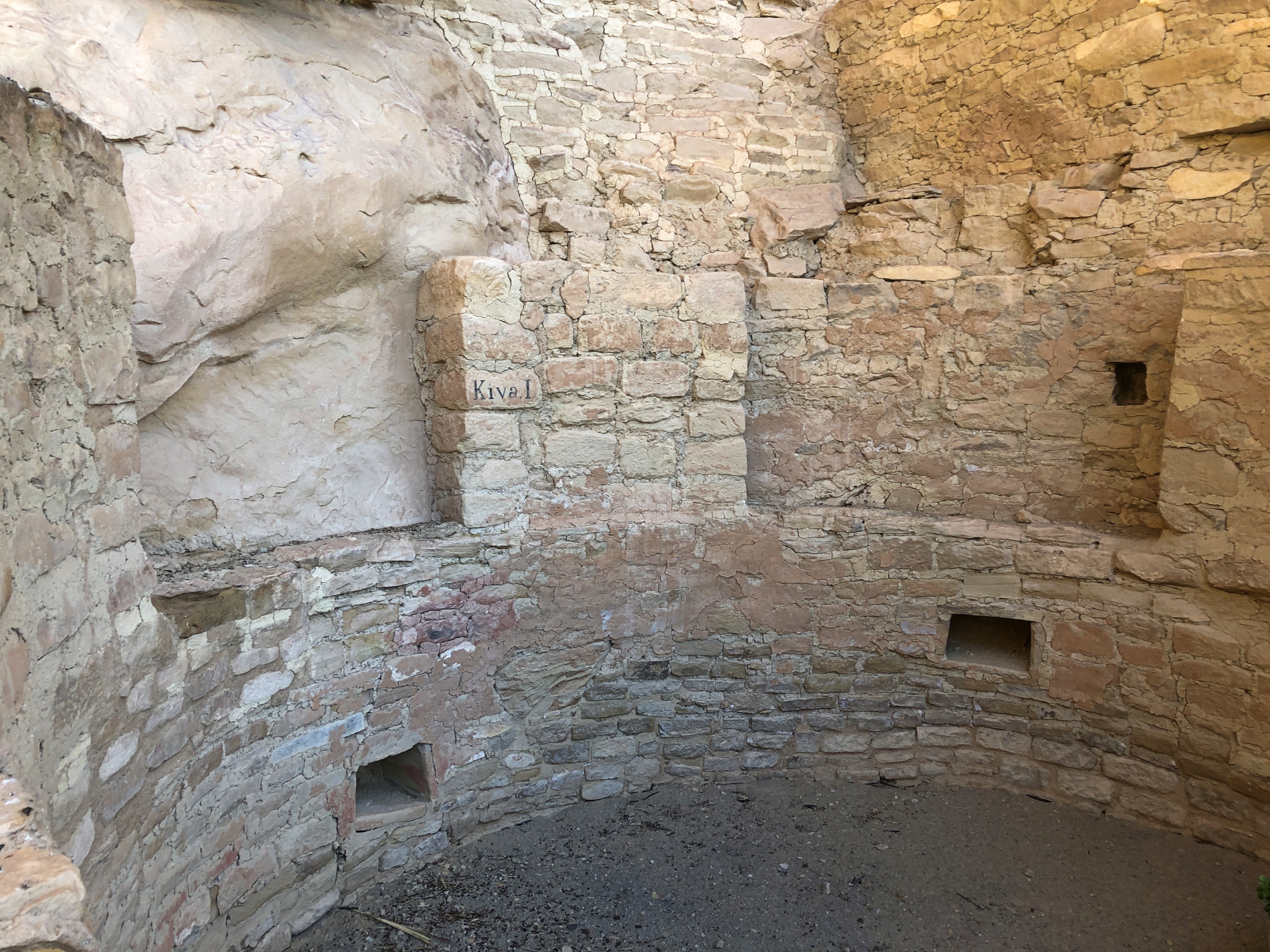
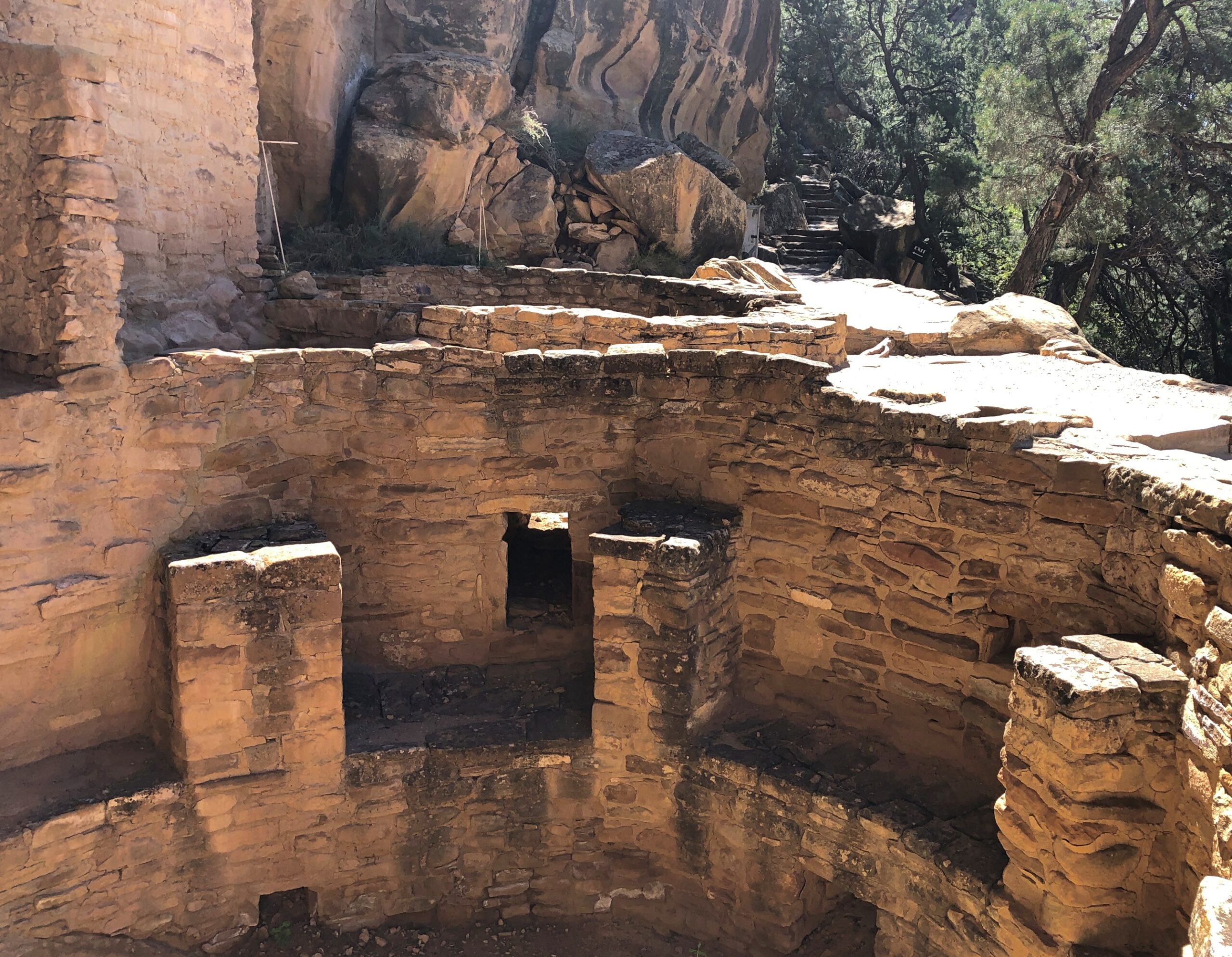
A kiva. The largest one at the Cliff Palace, I think. A religious site similar to others in the Southwest, such as at Bandelier National Monument (and now I know that was a kiva).
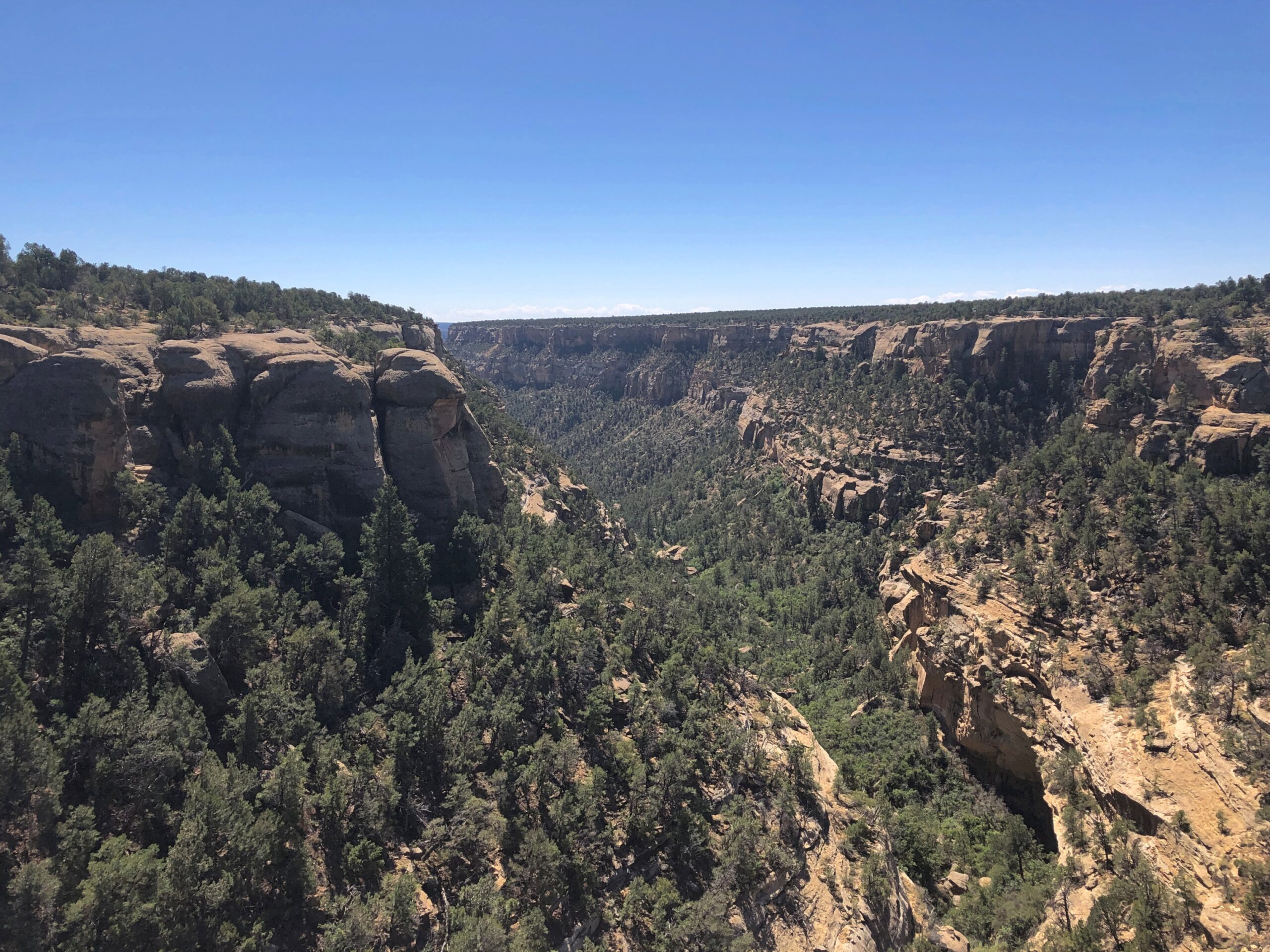
The canyon below the Cliff Palace. Imagine having to scramble up and down the walls regularly, to tend to fields or fetch water or escape from marauders.
Mesa Verde is of course much more than the Cliff Palace, since the park protects an estimated 5,000 archaeological sites, including 600 cliff dwellings. The main road through the park (built by the CCC, naturally) takes visitors to other overlooks. The dwellings of Spruce Tree House are sizable and also off limits these days, until the overhead rocks are stabilized.
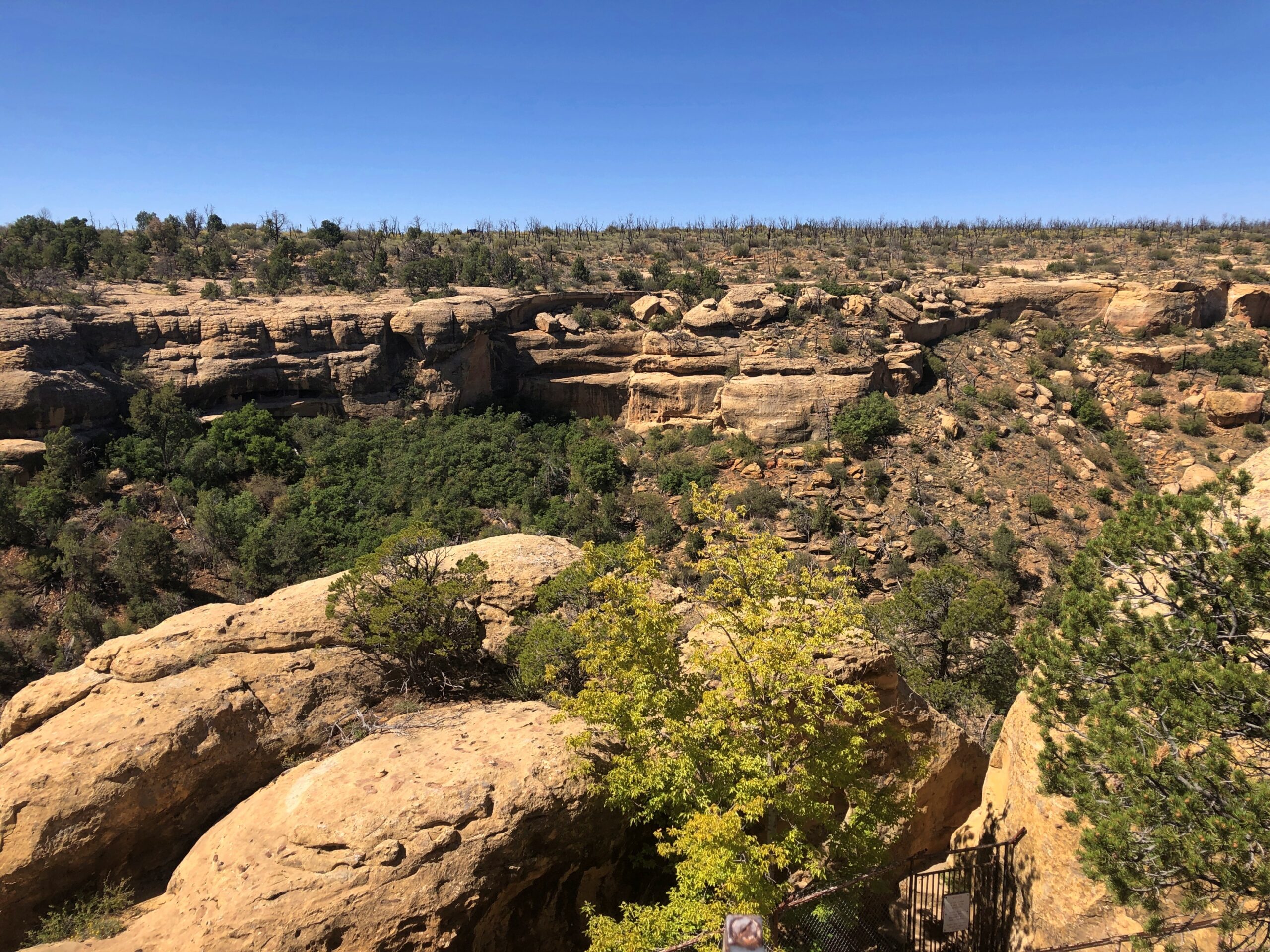
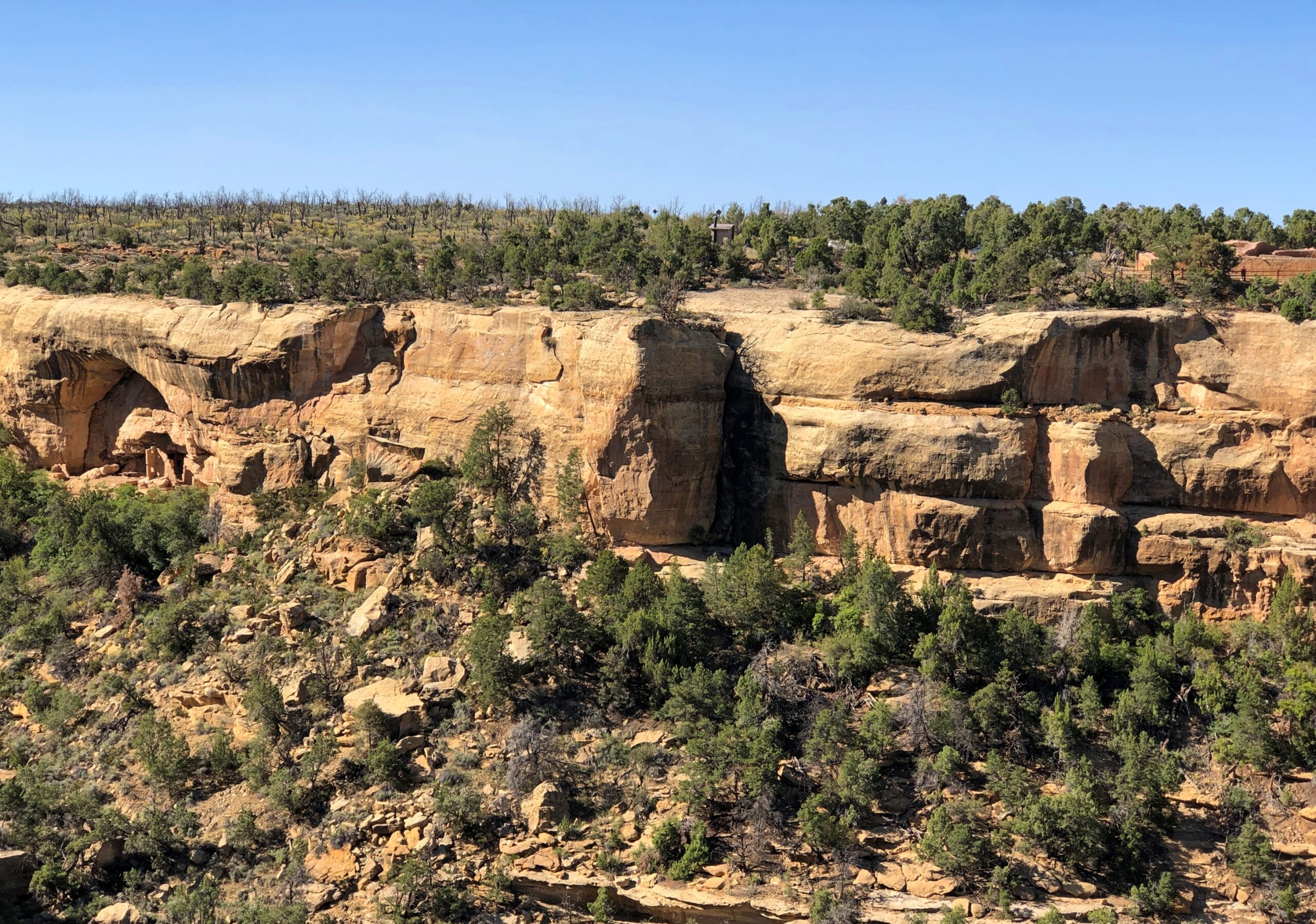
More cliff dwellings. They are a little hard to see, but they are there.
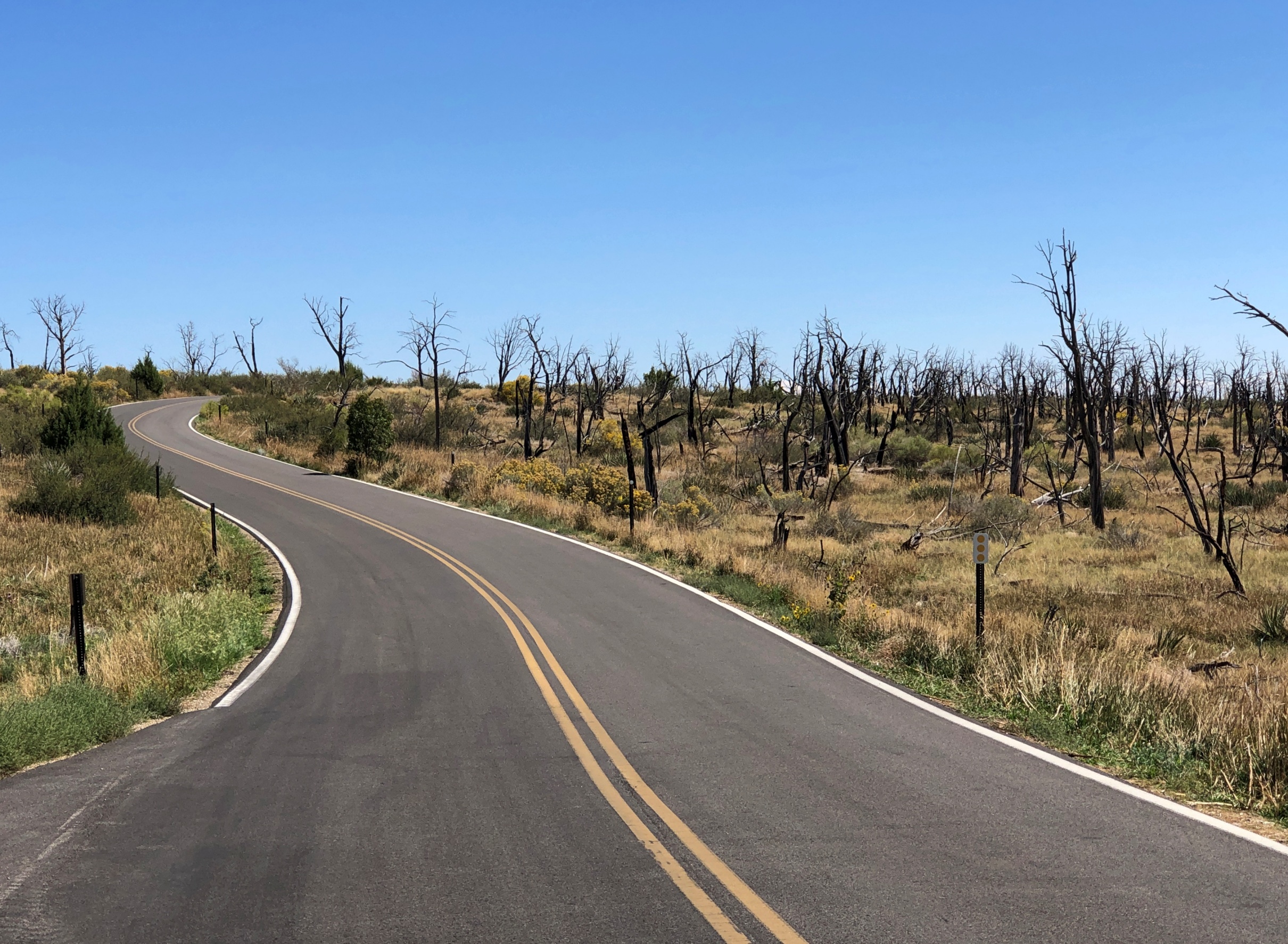
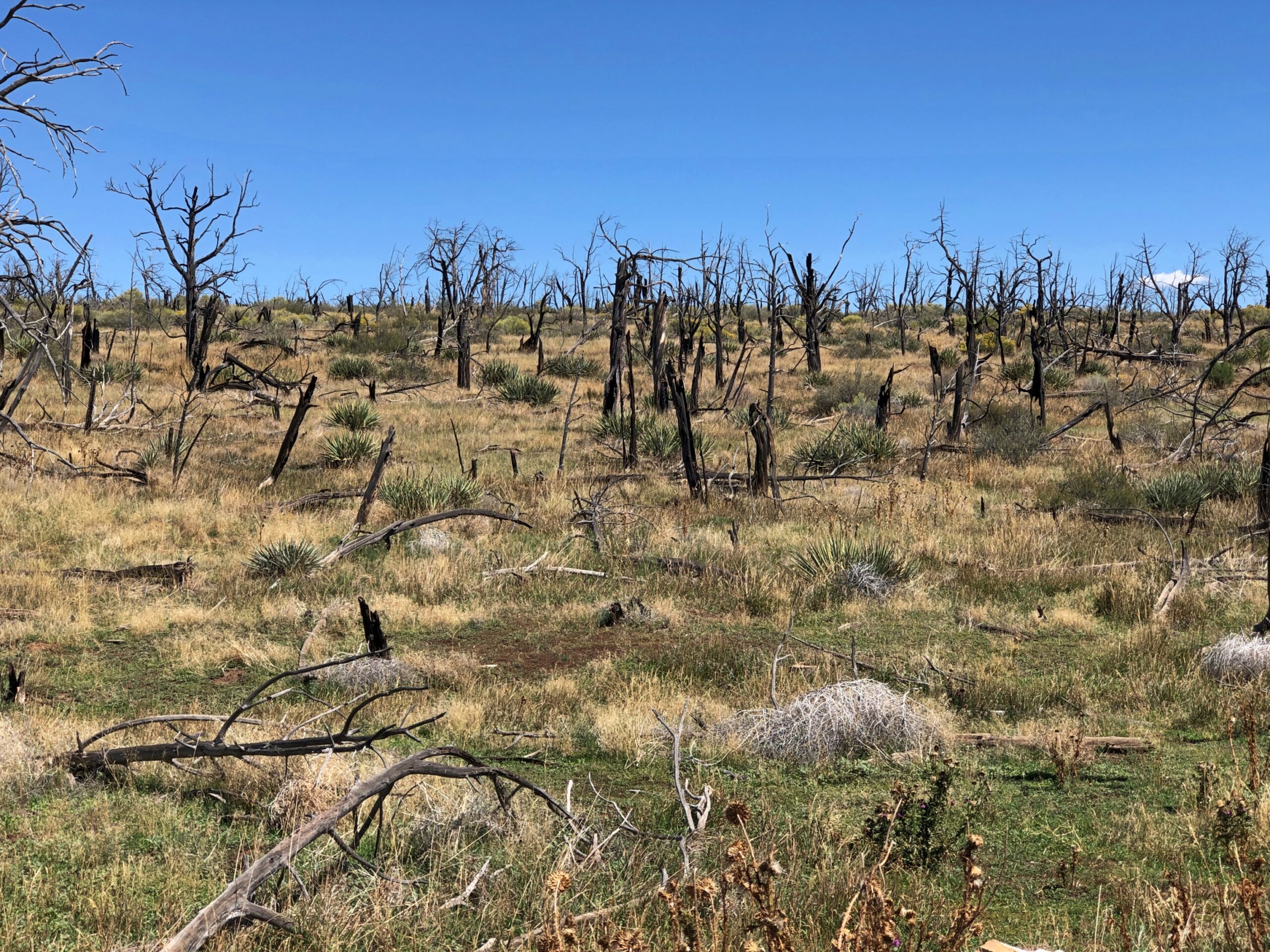
On top of the main mesa, the road also goes through areas burned by wildfire at one time or another.
Flora always bounces back.
I had the vague idea that the inhabitants of the cliff dwellings disappeared mysteriously after about 1300, but visiting the park schooled me on more current thinking. They left, but there was nothing mysterious about it. Drought hit them, and hit them hard, so they migrated to find water and other sustenance. Persistent violence was probably a factor, too, as tends to happen in periods of strained resources. So it’s pretty clear that Ancestral Puebloans’ descendants even now live among the tribes along the Rio Grande, not too far away.
I also didn’t realize that the well-known cliff dwellings were only occupied for a relatively short time, in the grand scheme of native inhabitation: only about a century. Before that, most of the inhabitants lived atop the mesas. One such ruin is called Far View, which isn’t far from the road.
I heeded this signs and didn’t enter. But you can walk around the perimeter and imagine the passing centuries.
On September 15, KKTV in Colorado reported that Trail Ridge Road through Rocky Mountain National Park was “briefly closed Sunday [the 14th] due to the wintry weather. This was first time snow and ice shut down the road since it reopened in May.”
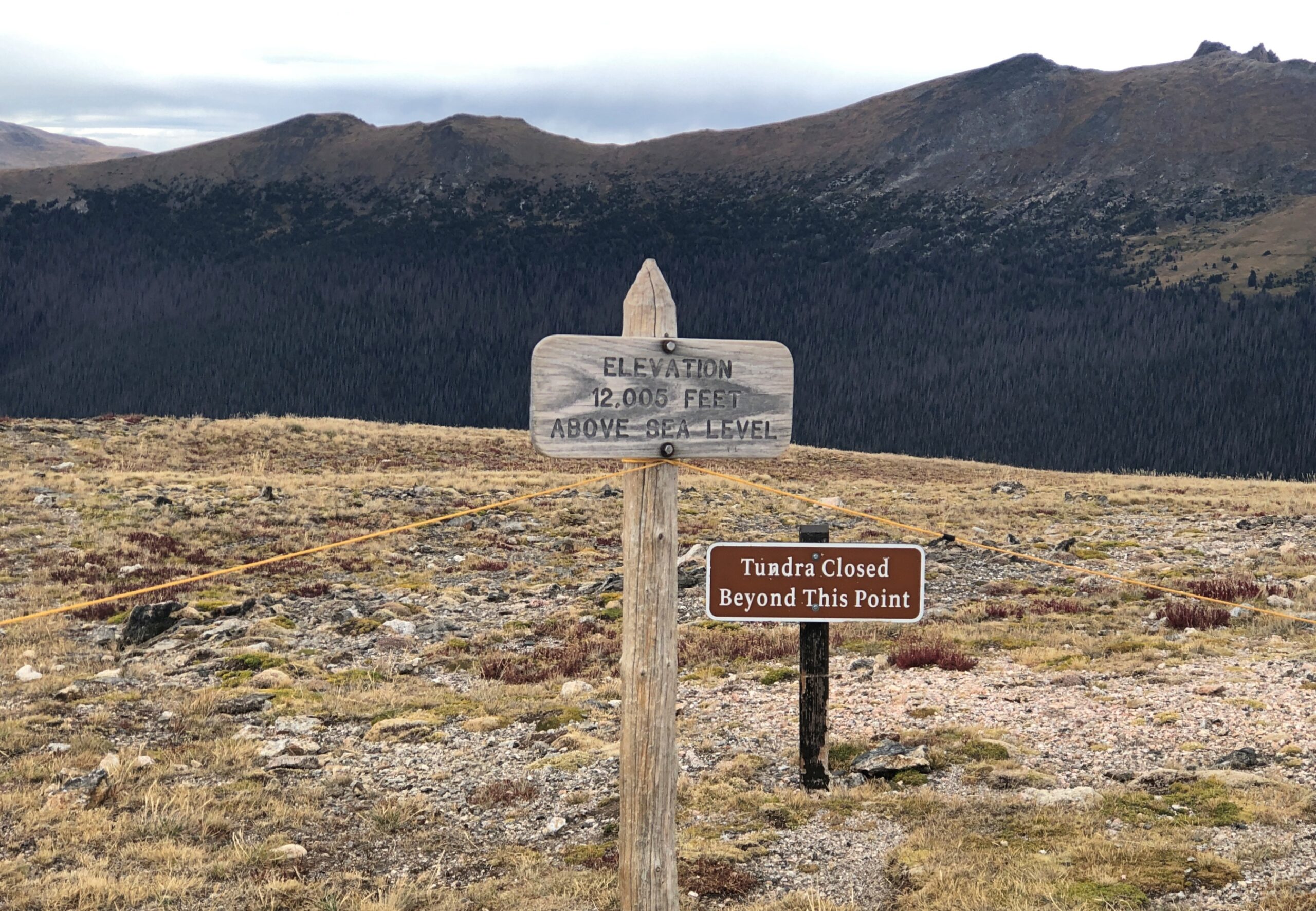
We drove that road two days before, on the 12th. As the article notes, the “48-mile highway through the park is North America’s highest continuous paved road and connects the east and west sides of the park… [it] reaches 12,180 feet at its highest point. Alpine Visitor Center, where snowfall was caught on webcam, is located at about 11,796 feet.”
We’d spent the night before in Granby, Colorado, from the looks of it a growing town – complete with large rows of spanking-new townhouses – and from there entered the park from the western, or less crowded side. The eastern entrance near Estes Park, Colorado, has a more direct connection to the mobs coming from greater Denver.
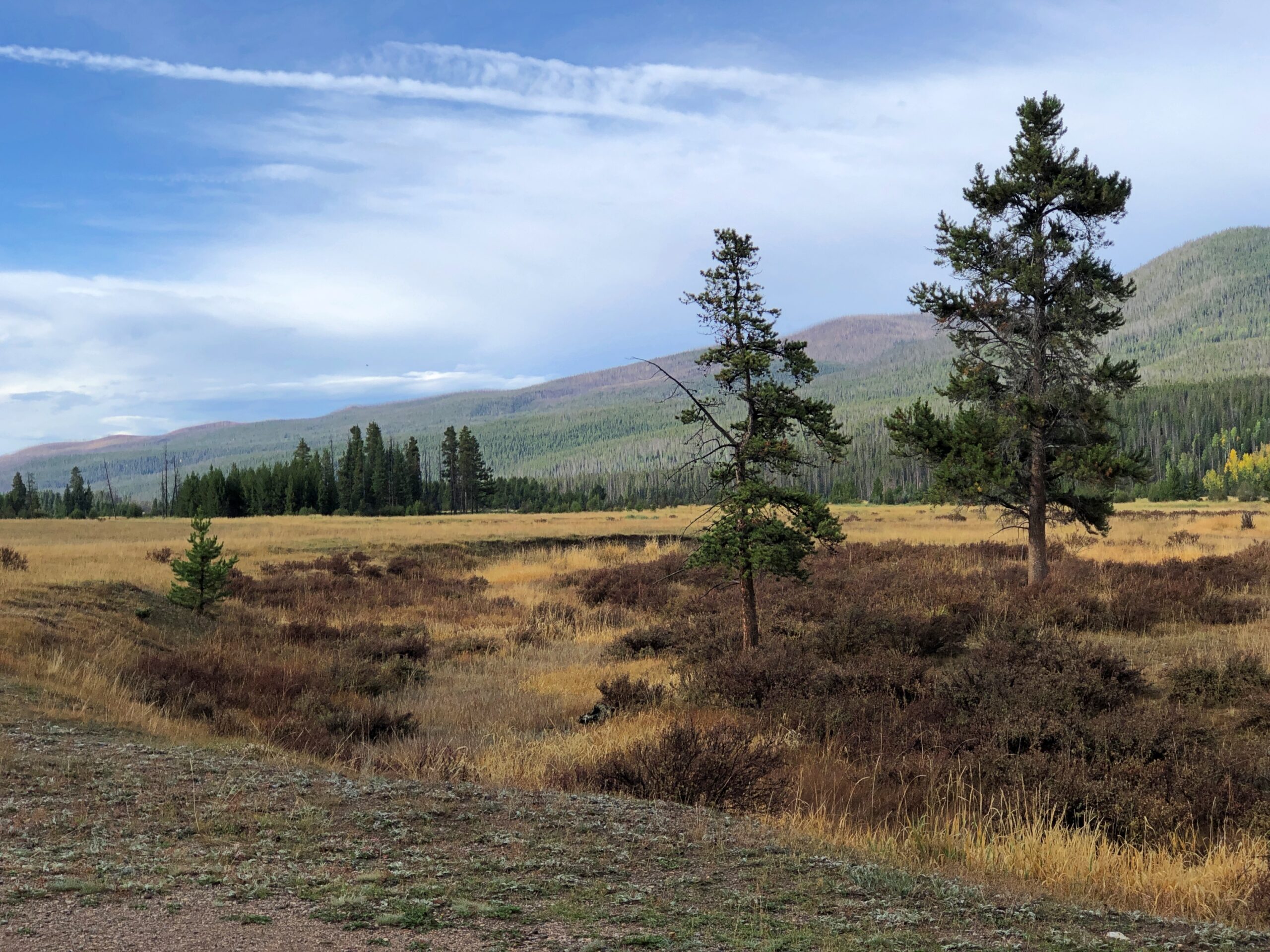
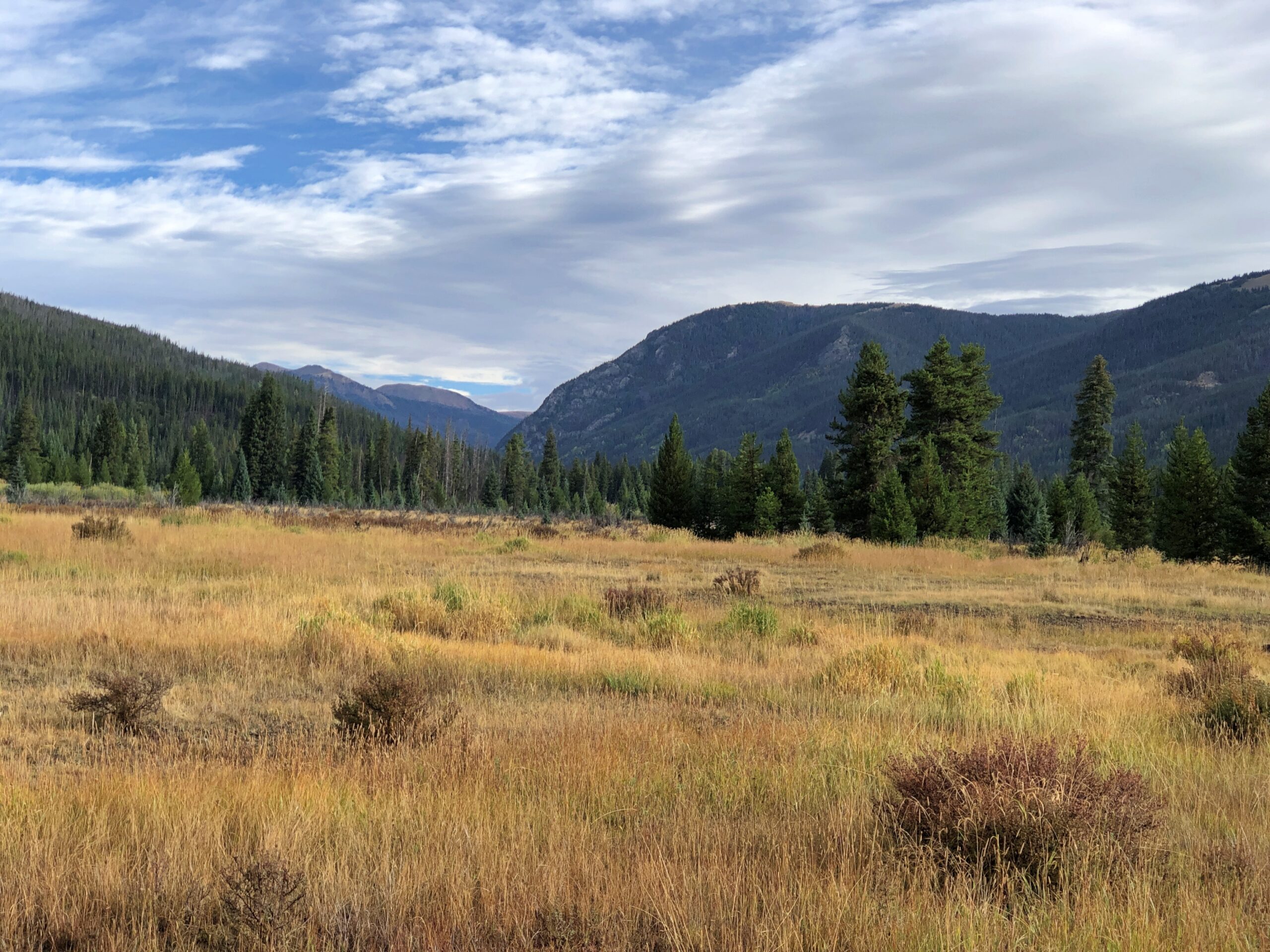
RMNP is a place of majestic vistas. We came for that, and were not disappointed. But I was just as impressed by something we saw near the western entrance at a place called Holzwarth Historic Site, in the Kawuneeche Valley. A picturesque place.
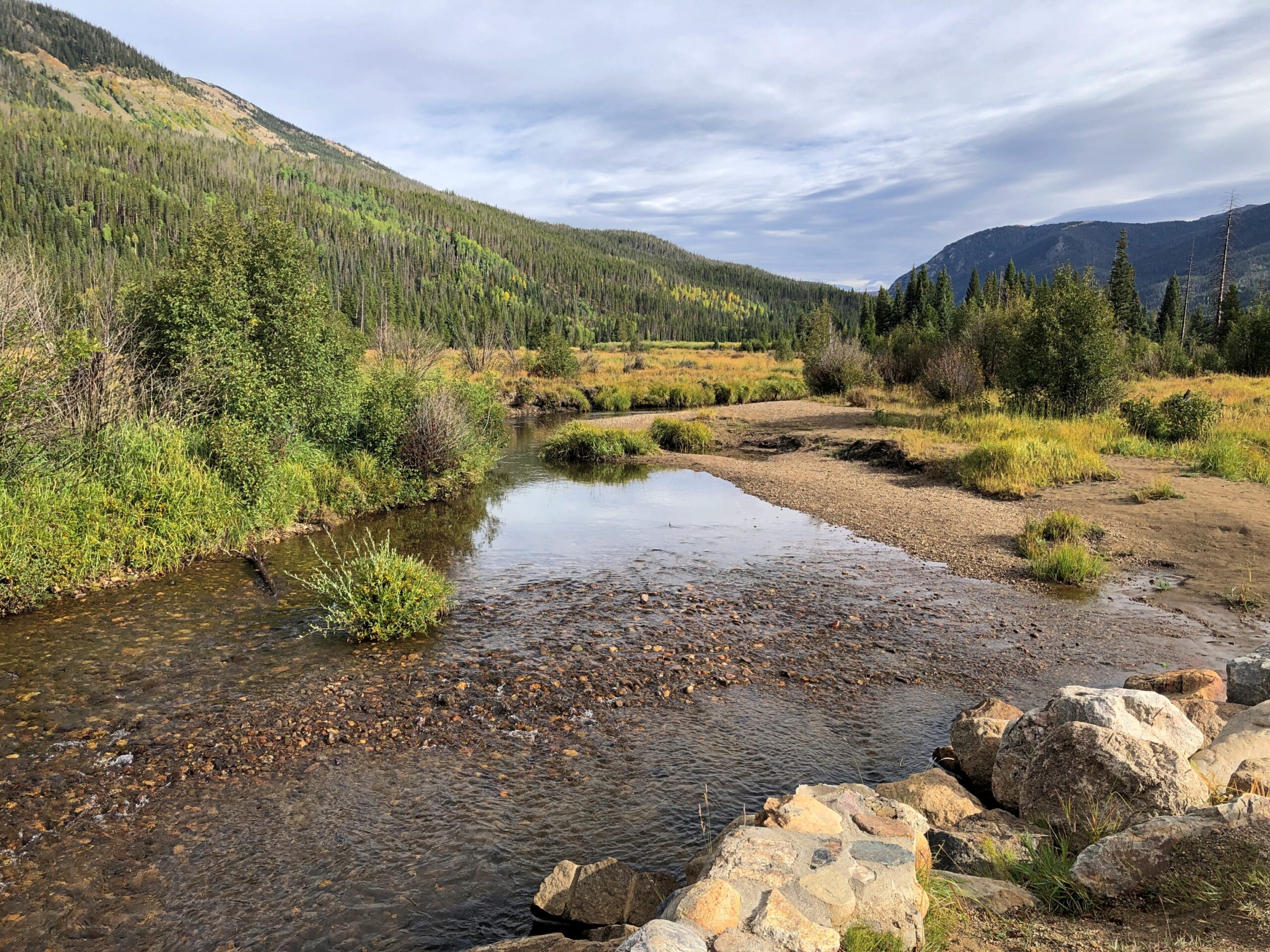
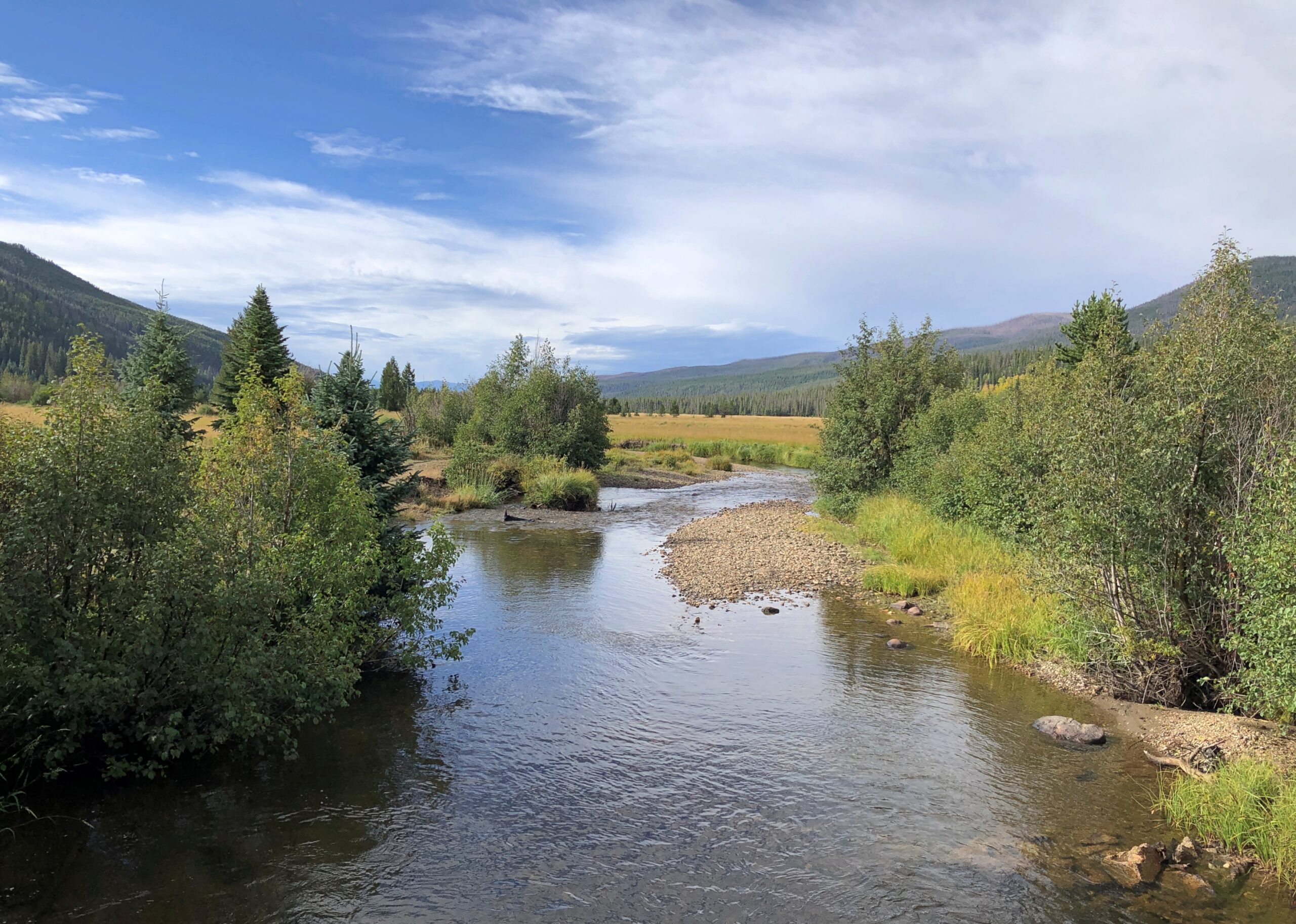
It was the first place we stopped in the park, walking on a path through part of the valley. A small bridge crossed what looked like a creek.
A sign on the bridge informed us, however, that this was the Colorado River. A flabbergasting moment. I’d known that the Colorado rises in one of the remote parts of the park, but I didn’t know we were going to encounter the river – whose downstream will carve epic canyons and be dammed to the hilt for the water and power needs of millions of people – by crossing it on foot in a few seconds.
The Holzwarths ran a dude ranch on the site for much of the 20th century, before selling it to the Nature Conservancy, which eventually resulted in the area being added to the national park. A number of the dude ranch buildings still exist not far from the baby Colorado River.
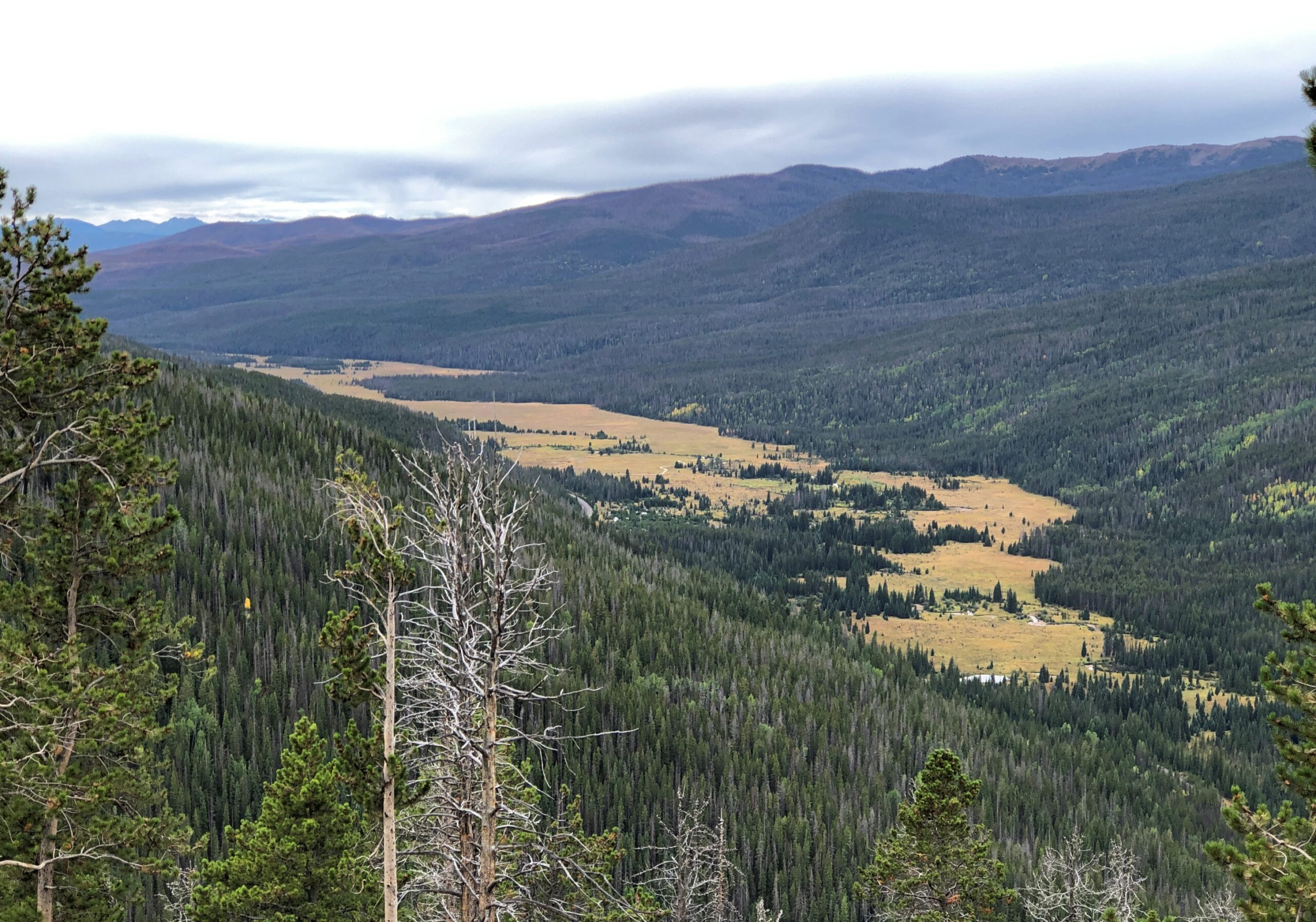
From the valley Trail Ridge Road, which is also US 34, heads upward. A look back at the valley.
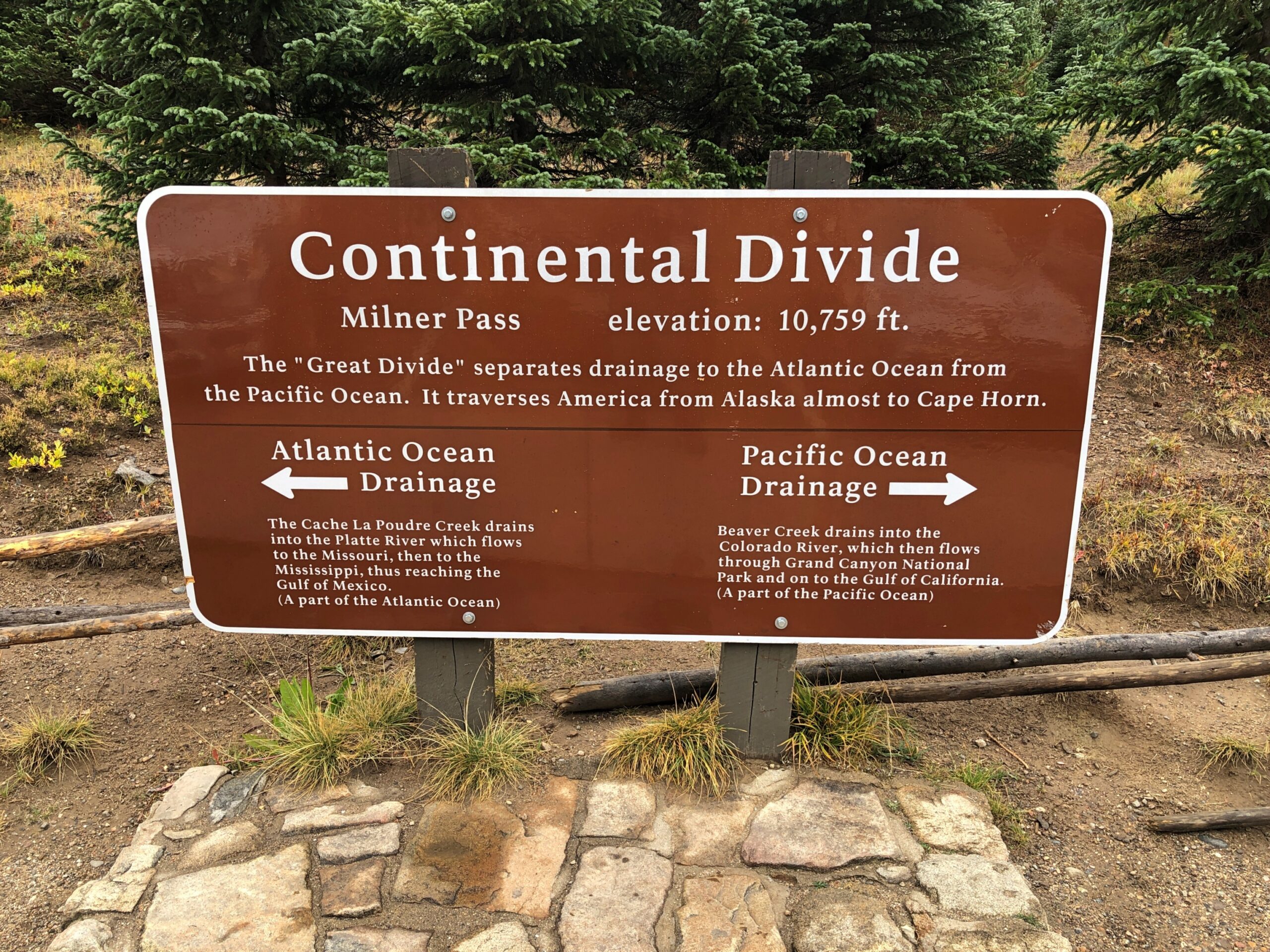
Soon you reach Milner Pass on the Continental Divide, crossing back to the Atlantic side; we’d crossed to the Pacific side at Berthoud Pass the day before outside the park, on the way to Granby.
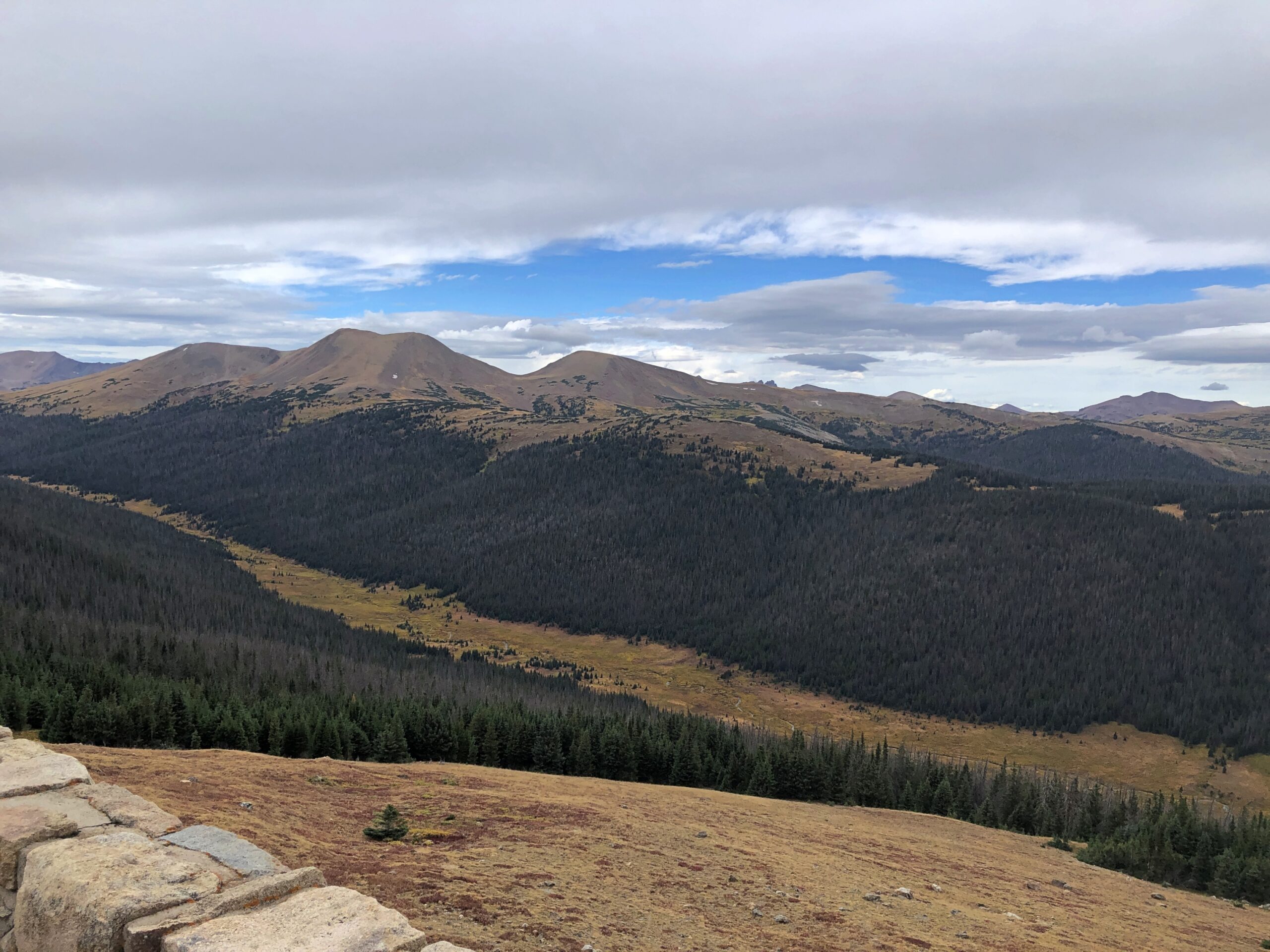
From there, the road takes you above the tree line. By that elevation, the warmth down in the valley is just a memory, as brisk chilly winds blow. The air was still above freezing that day, but not by much.
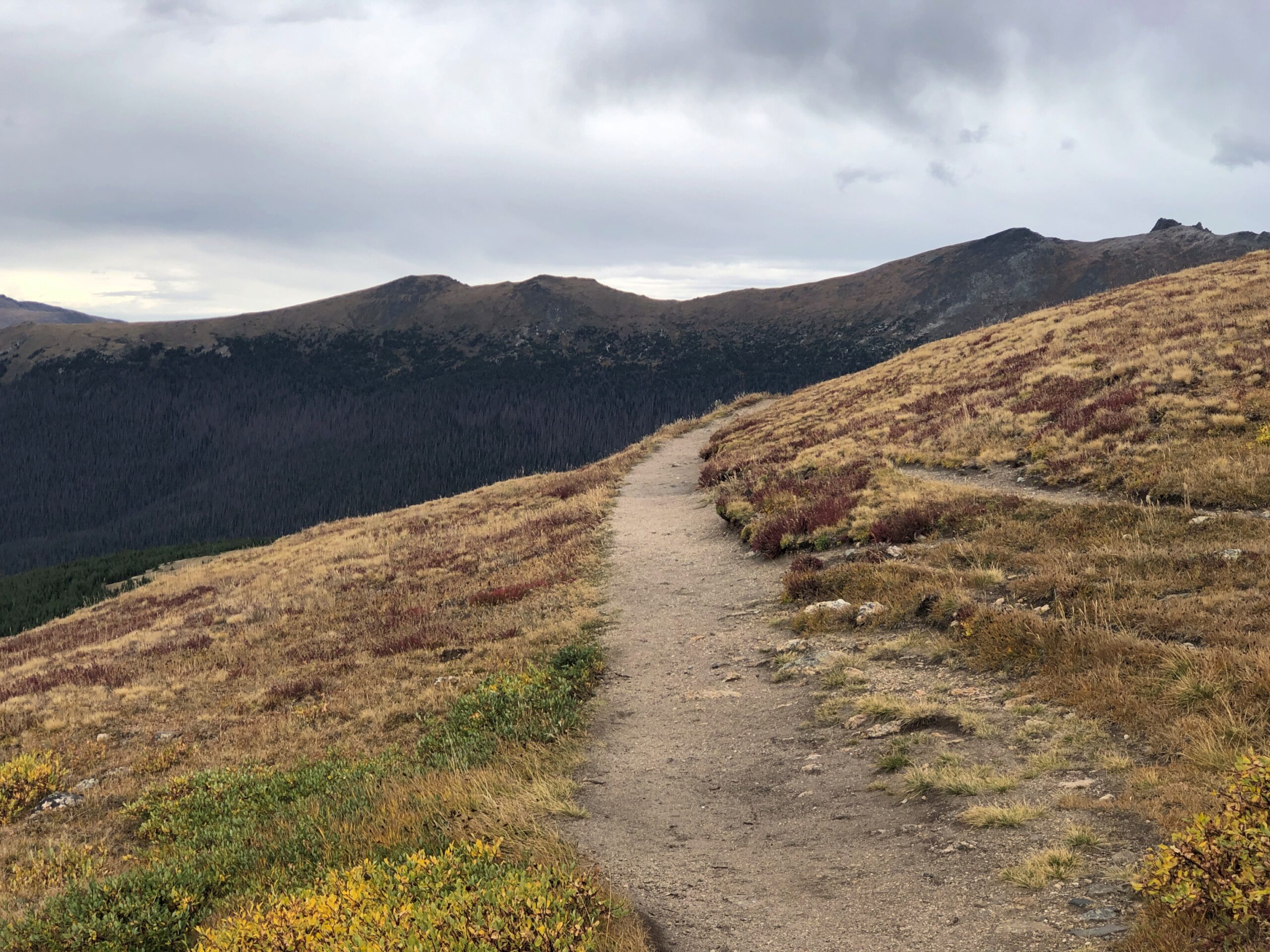
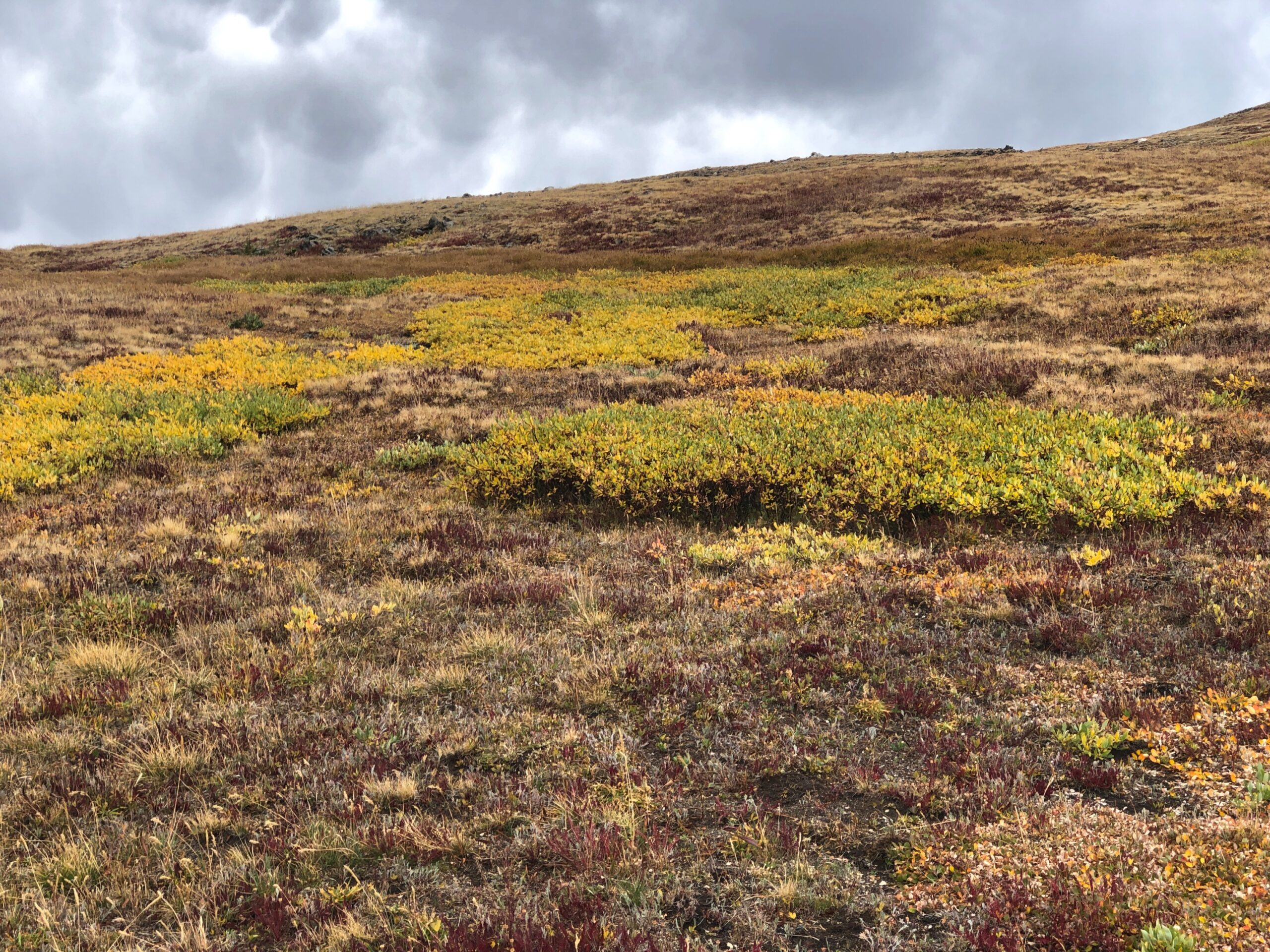
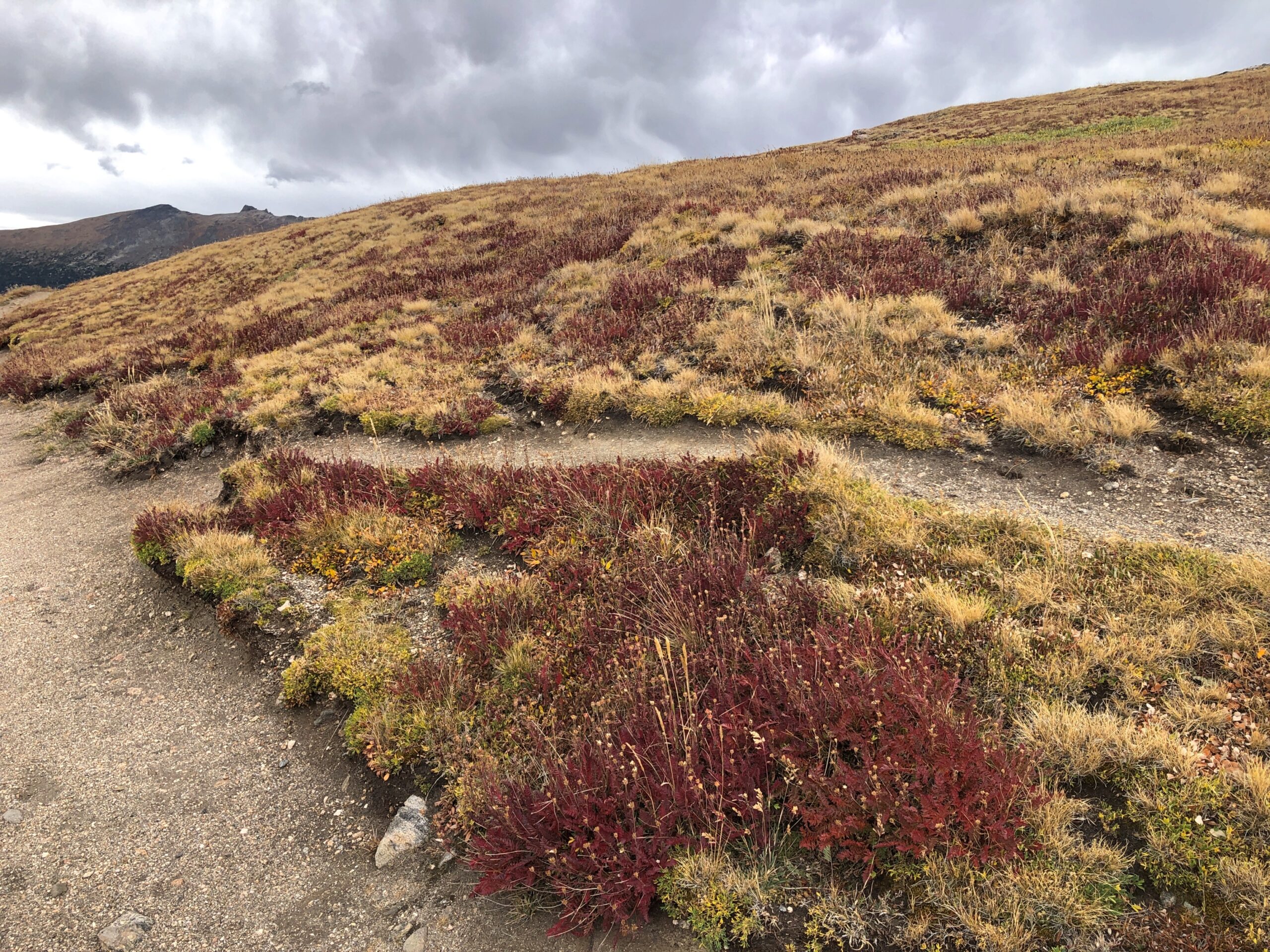
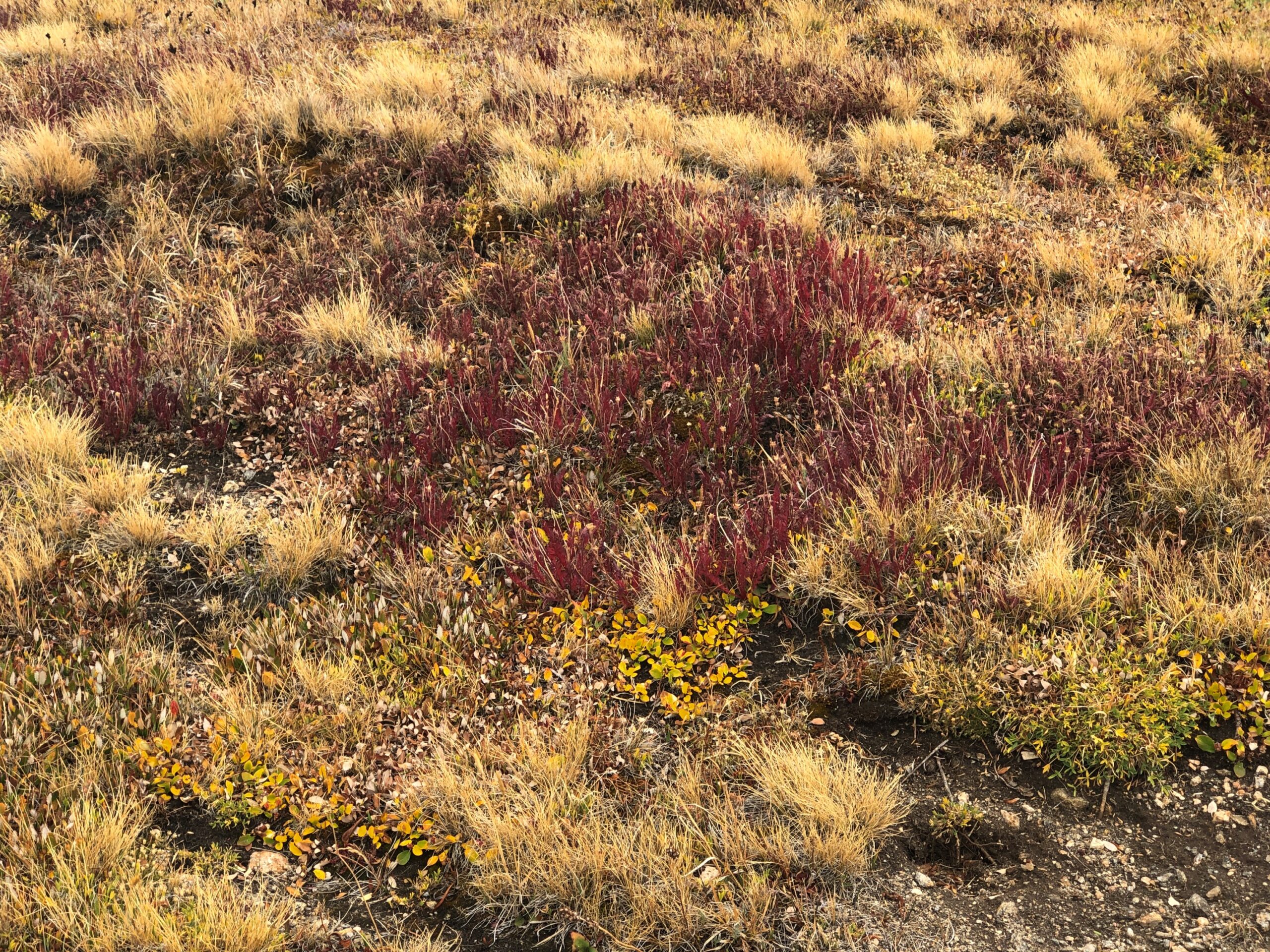
From one of the several pullouts on the road, a path through fields of alpine tundra.
Been a long time since I’d seen any. Back in the Canadian Rockies? No, Alaska. Still, a while ago. We’d reached autumn above the tree line, with the tundra turning.
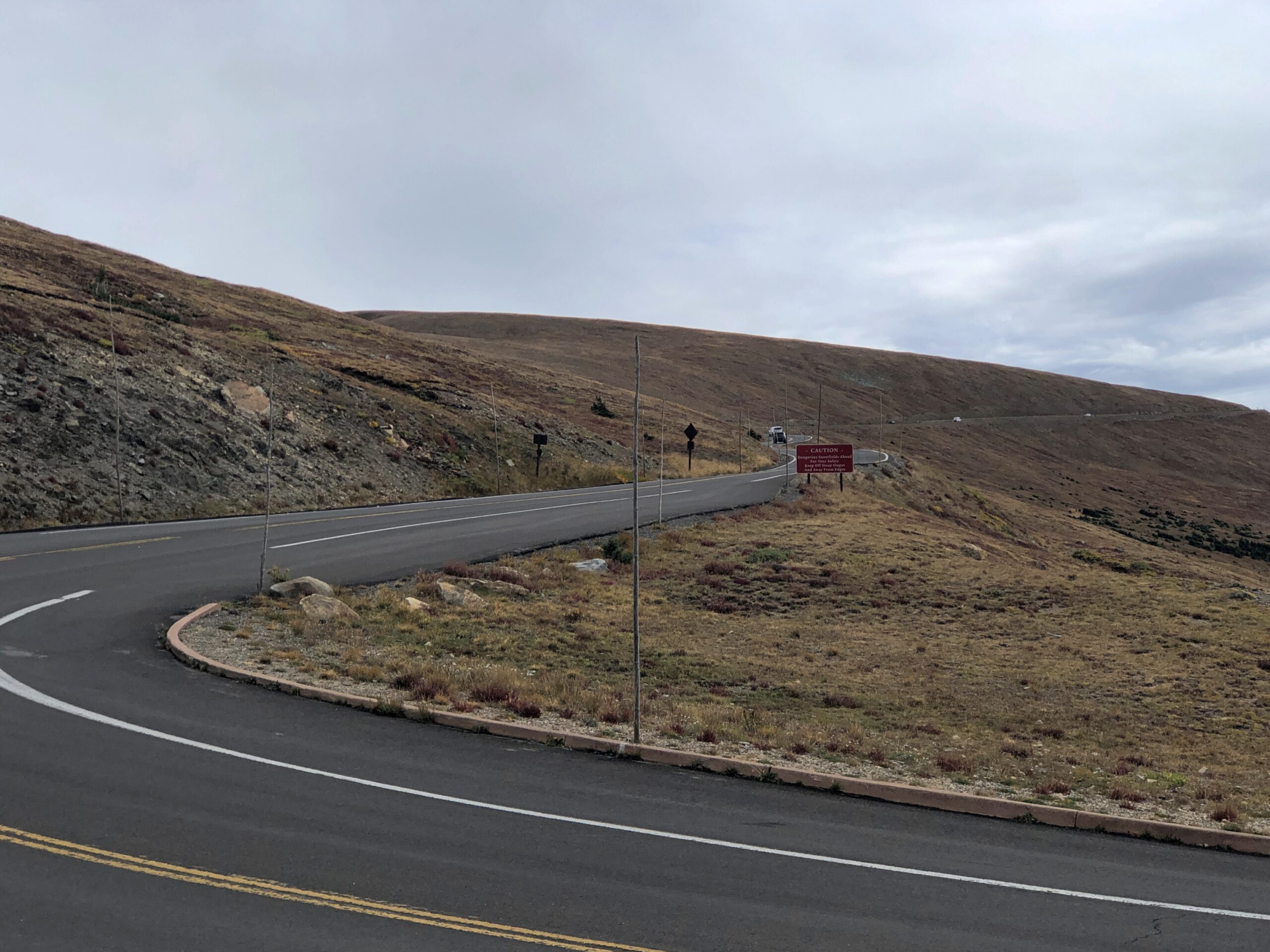
The road goes on.
Who first built the road? There was none when Rocky Mountain NP became a national park, with President Wilson’s signature on the bill. Improvements came later, and of course they were by the CCC.
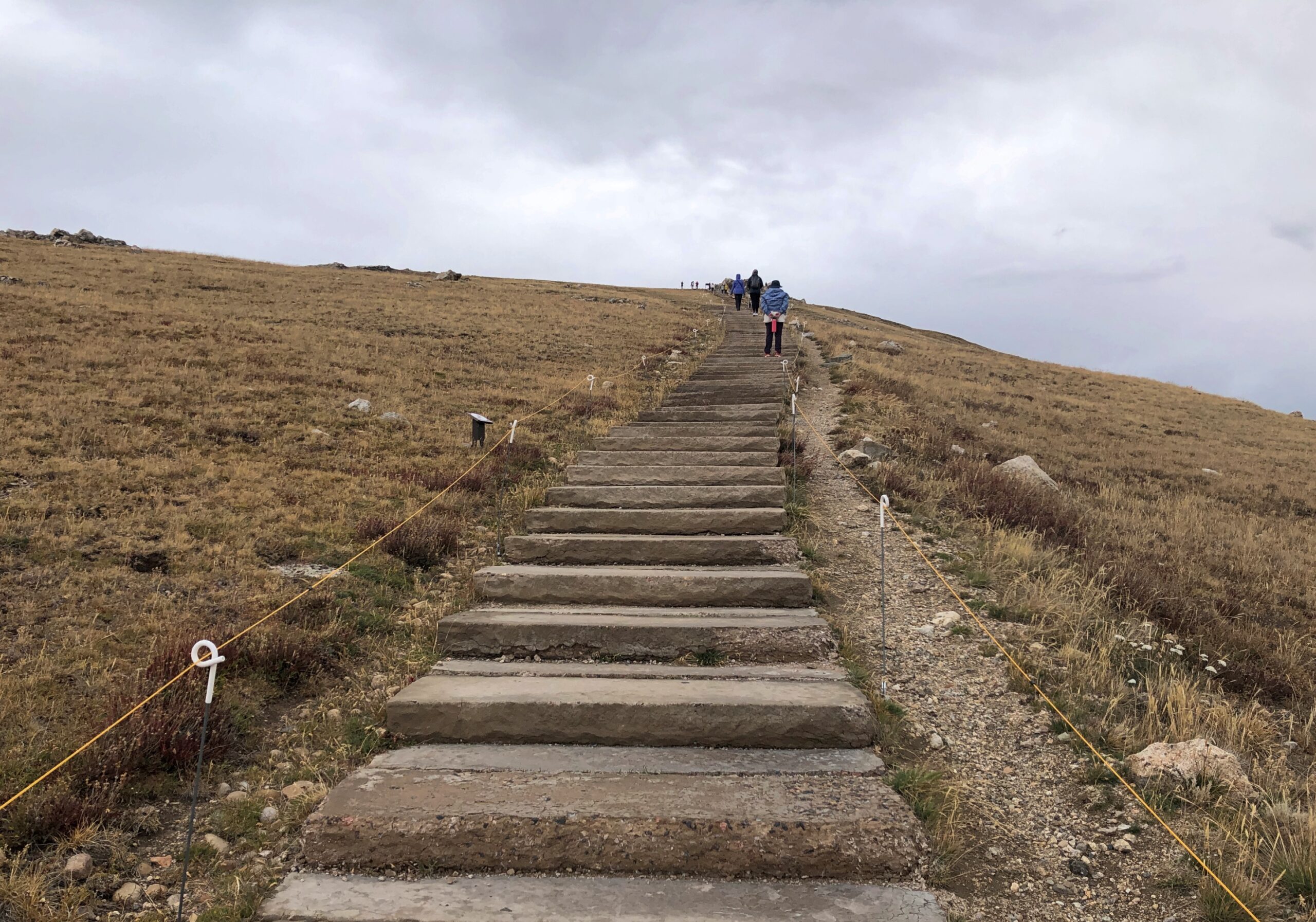
At the Alpine Visitor Center, parking was hard but not impossible to find. The views are good from there, but if you want the better vistas, you climb some outdoor stairs. Roughly 200 feet of them.
The air was cold and there wasn’t enough of it. Or so it seemed. I took my hiking pole, put on a sweater and cap and started up. I could have bought a small can of oxygen at the gift shop, had I known about it. I saw a woman, clearly older than me, coming up the stairs as I was headed down, pausing to inhale vigorously from such a can.
Yuriko and Emi made it to the top before I did, but by taking a number of breaks, I managed to get to there myself. Just another thing I should have done 30 (40) years ago. But even then, I’d have been tired at the top.
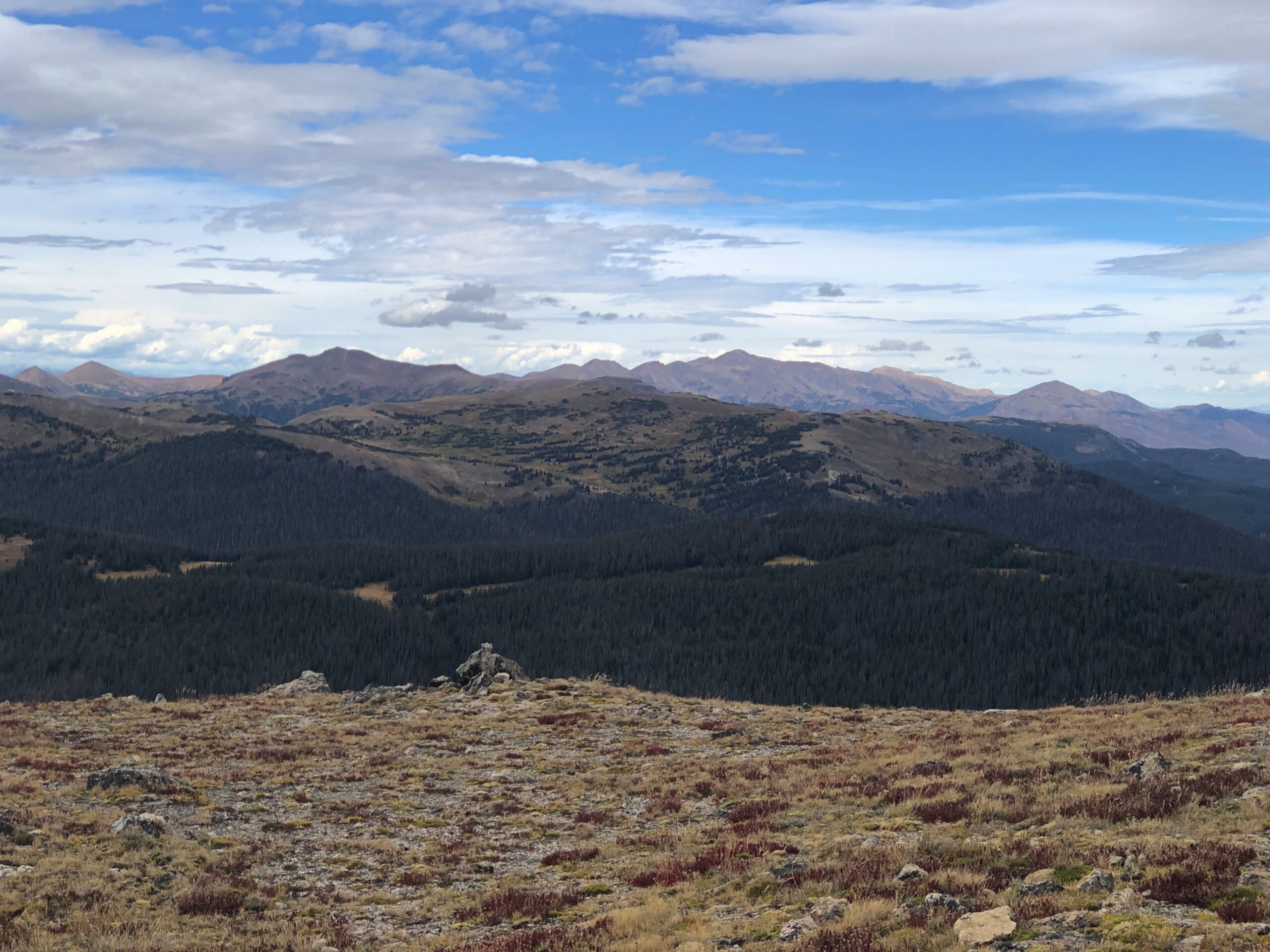
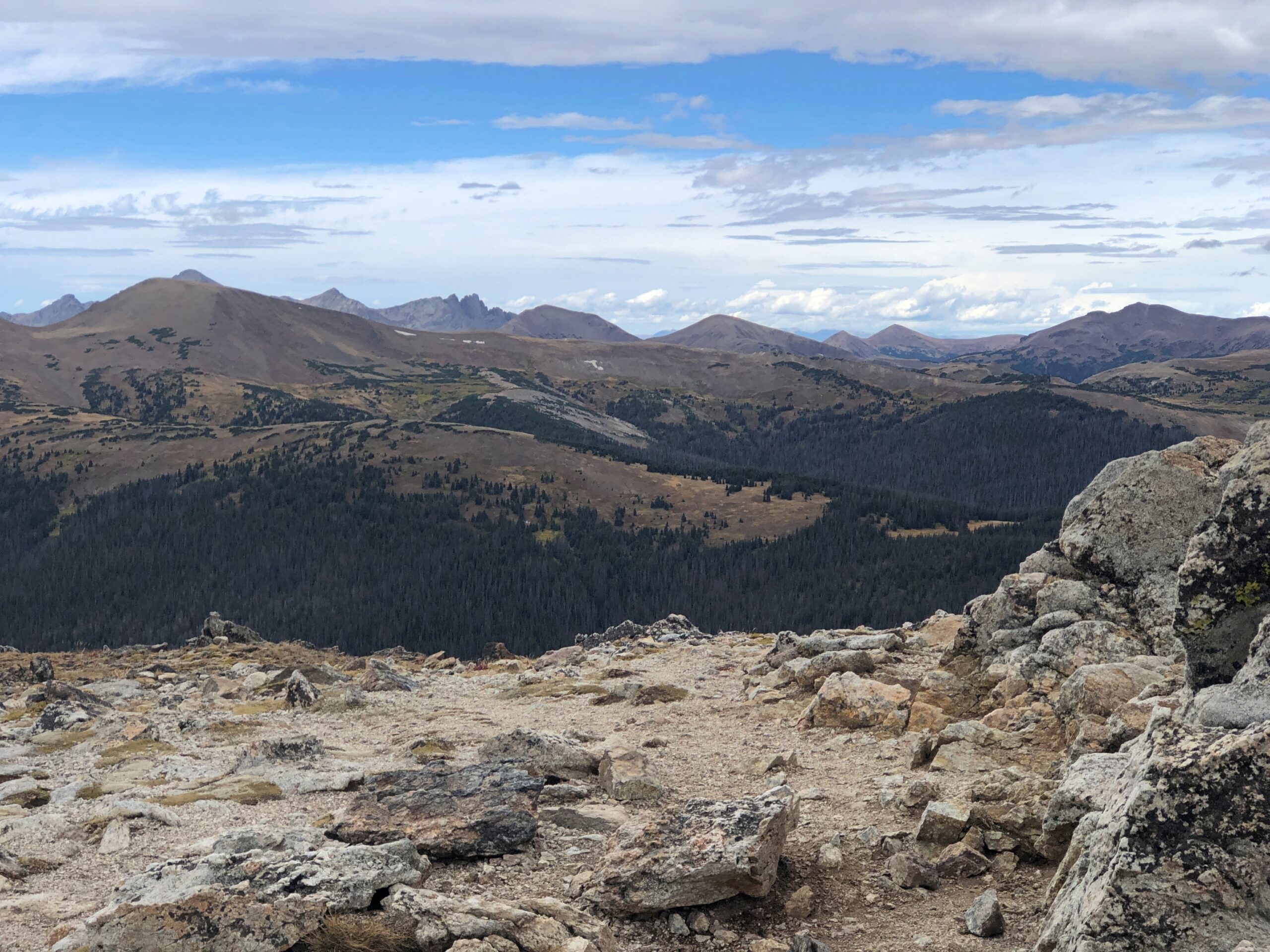
It’s that extra five feet that leaves you gasping, I think. No matter, the view was worth the gasps. Entirely. The images, as usual for this kind of vista, barely convey the scene in its glory. This is going to be a persistent reality over the next few days’ posts.
Enough to make you burst out with a rendition of “Rocky Mountain High.” If you had the oxygen. I have to say I was glad to repair soon to a lower altitude, one below the tree line. From the Alpine Visitor Center, the road heads toward the eastern entrance to the park, a good many miles away and several thousand feet closer to sea level.
Before we left the parking lot, we saw a fox — guess that would be an alpine fox, pointy snout, pointy ears, billowing with orange and white fur — trot onto the parking lot, as if it had a car parked there. A young ranger, presumably used to the elevation, took chase. Not to catch the fox, which would have been impossible, but probably to prevent the animal from getting run over. Roadkill is one thing, but parking lot kill would have put a small dint in the scenic wonder all around. Anyway, the fox headed for the slopes.
Not only was the air better below tree line, fall foliage was well under way, something we haven’t gotten much of even now here in northern Illinois, though it won’t be long.
One down, three to go. One of the marvels of Colorado’s four national parks is how different each of them are from the others, as we would soon see for ourselves.
Labor Day weekend again? How does summer vanish so quickly? Back to posting on September 2.
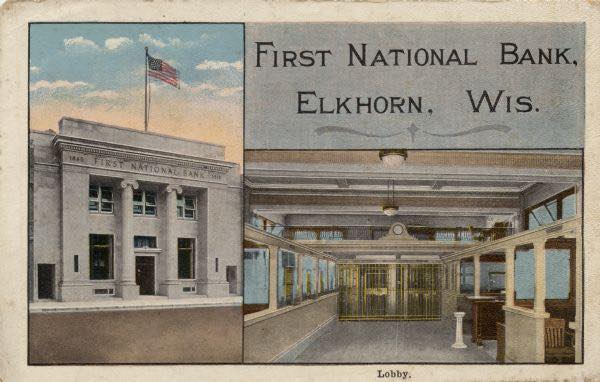
Once upon a time, one of the many First National Banks of the world stood in downtown Elkhorn, Wisconsin, complete with a sturdy bank interior common at the time. As seen in a postcard from the early 20th century.
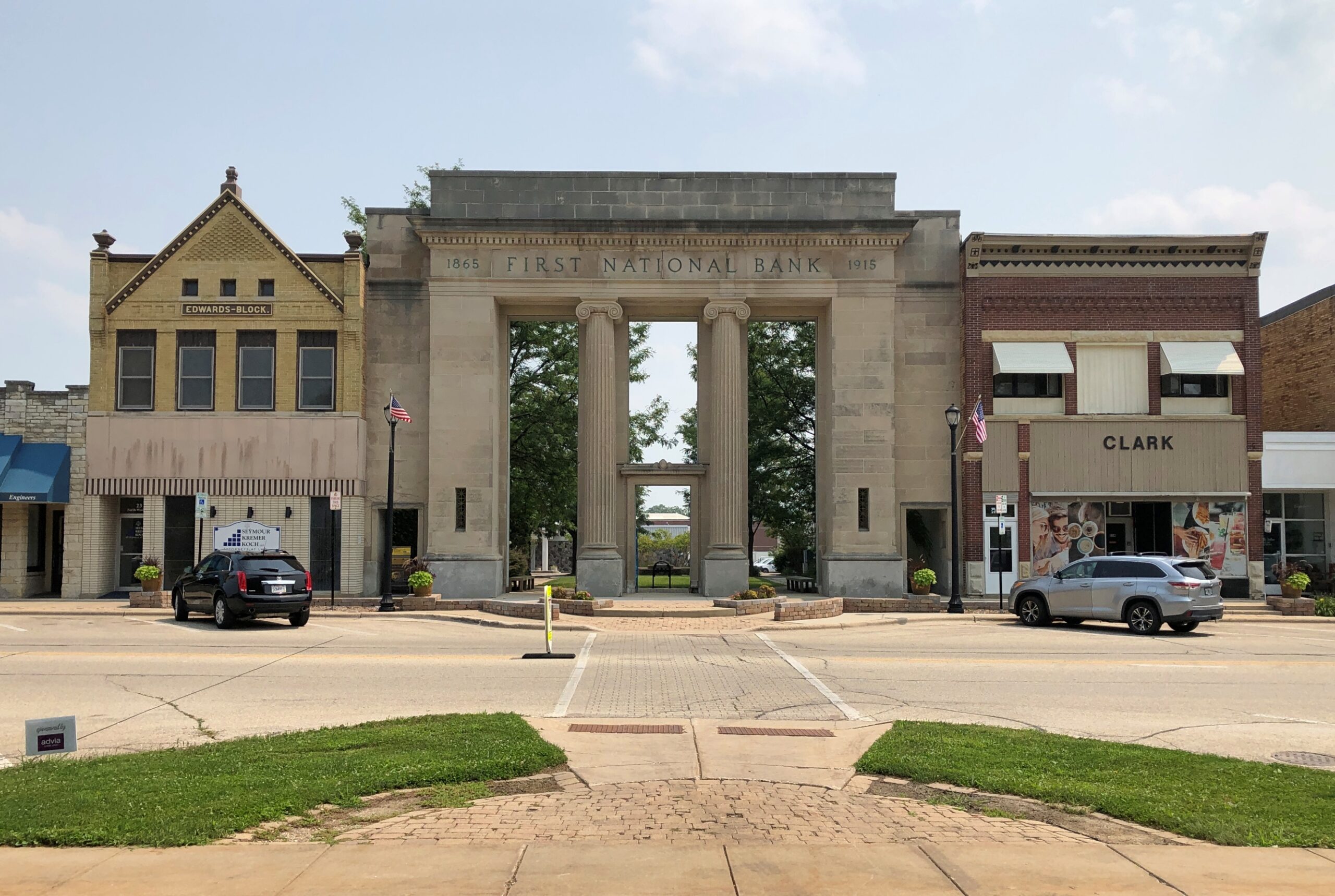
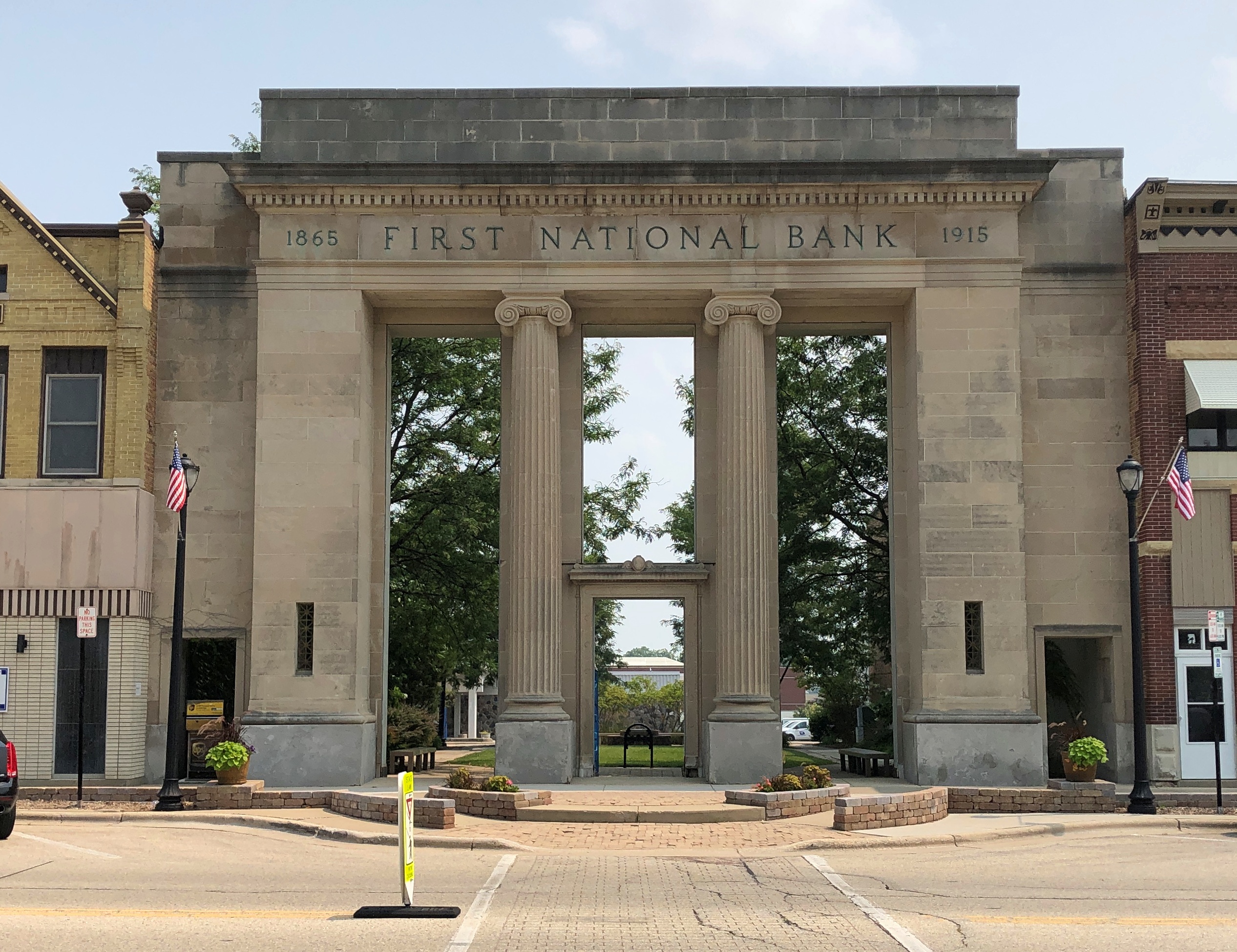
Go looking for the bank these days, and this is what you find.
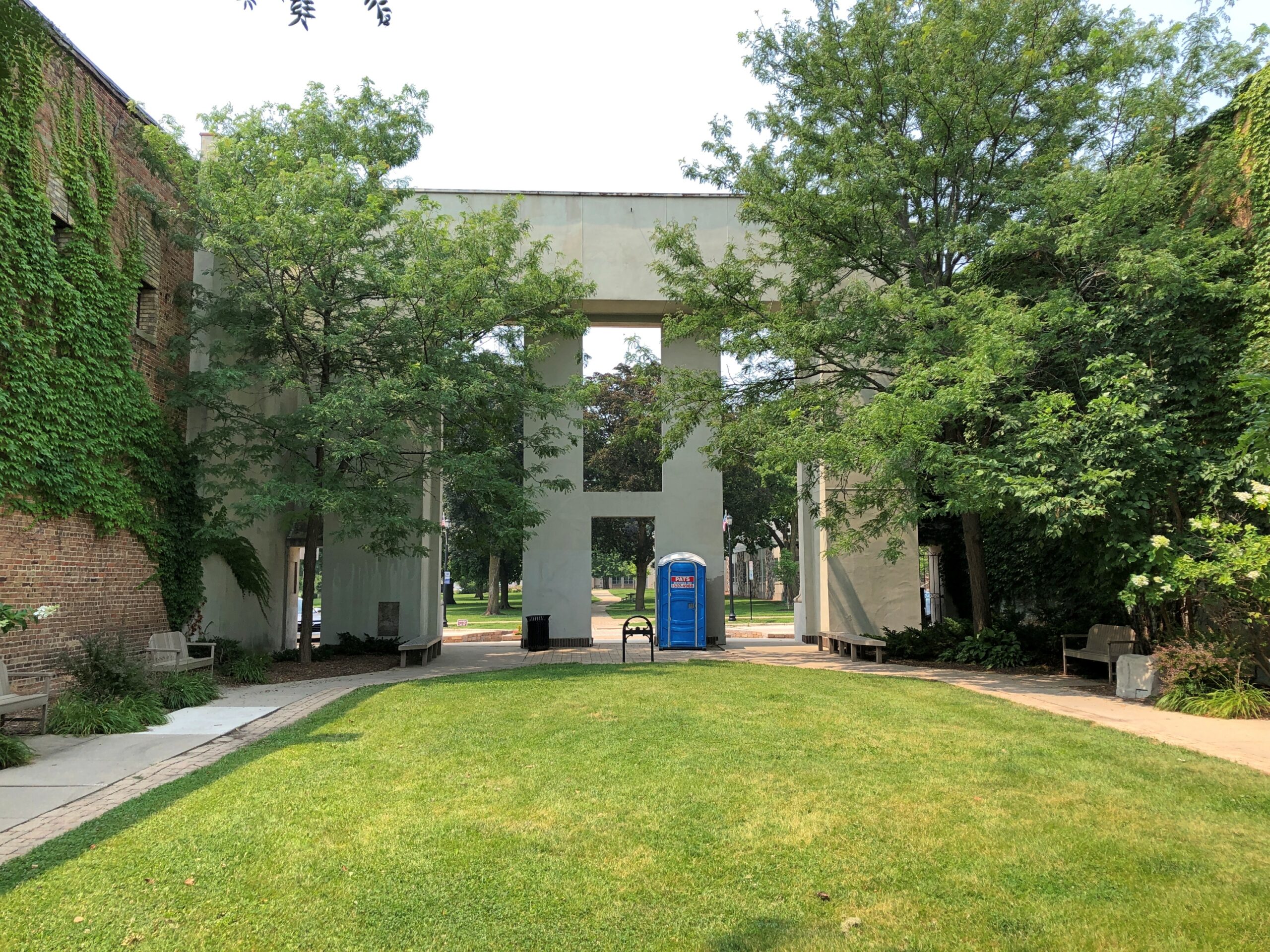
Once a bank, now a pocket park. The view from the inside, looking back at the facade.
There were no signs to indicate how the park came to be. A less imaginative act would simply have been to raze the old building in its entirety and leave a weedy gap in the downtown streetscape, hoping for redevelopment that might never come.
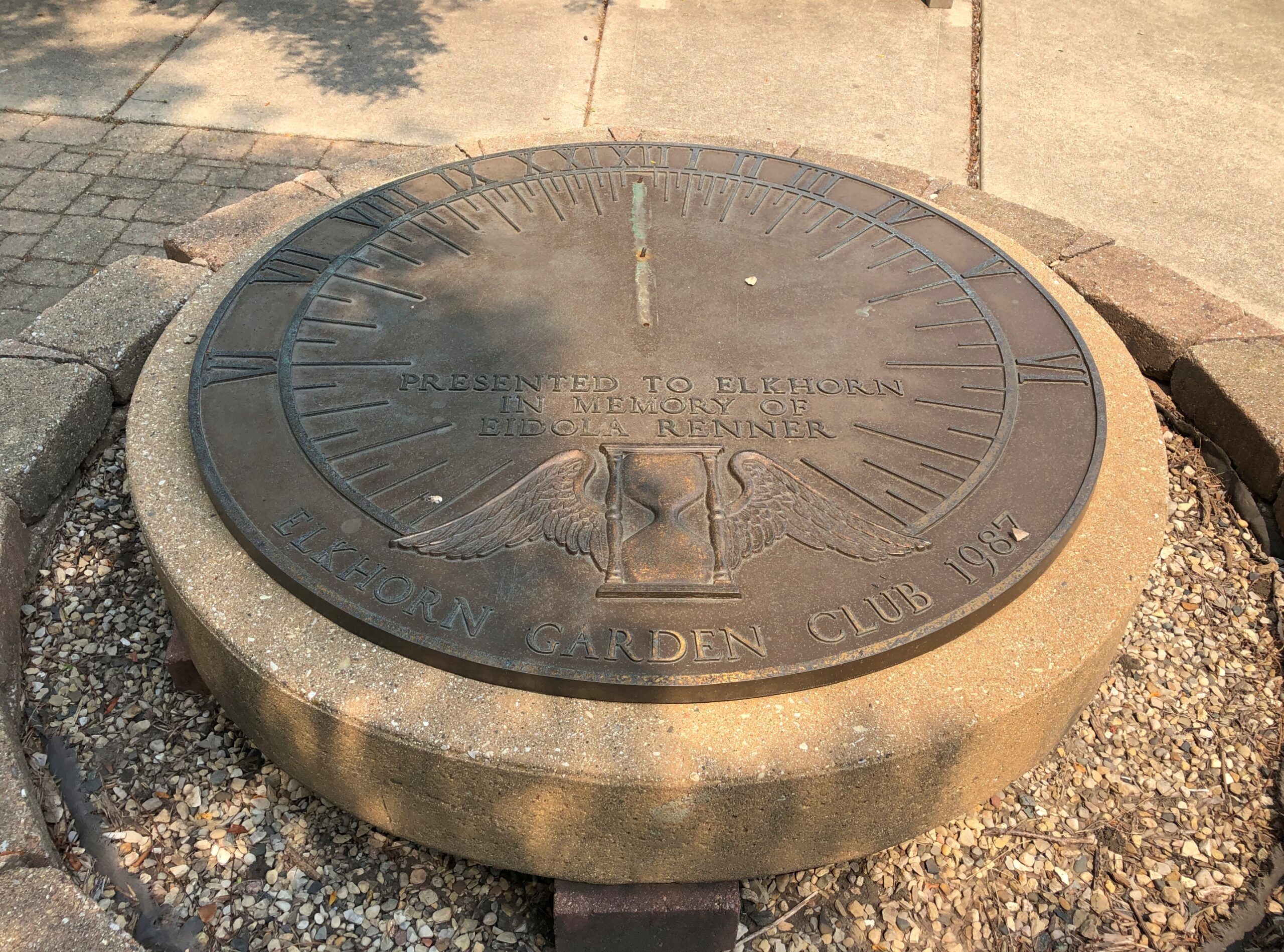
Inside the park is a sundial, dedicated to the memory of one Eidola Renner (d. 1983) of the Elkhorn Garden Club. Ah, garden clubs. The term makes me think of Khigh Dhiegh.
This must be her. The sundial – whose gnomon is missing, so it can’t function for telling time – has been there since 1987, so I assume the park has been there at least that long, if not longer.
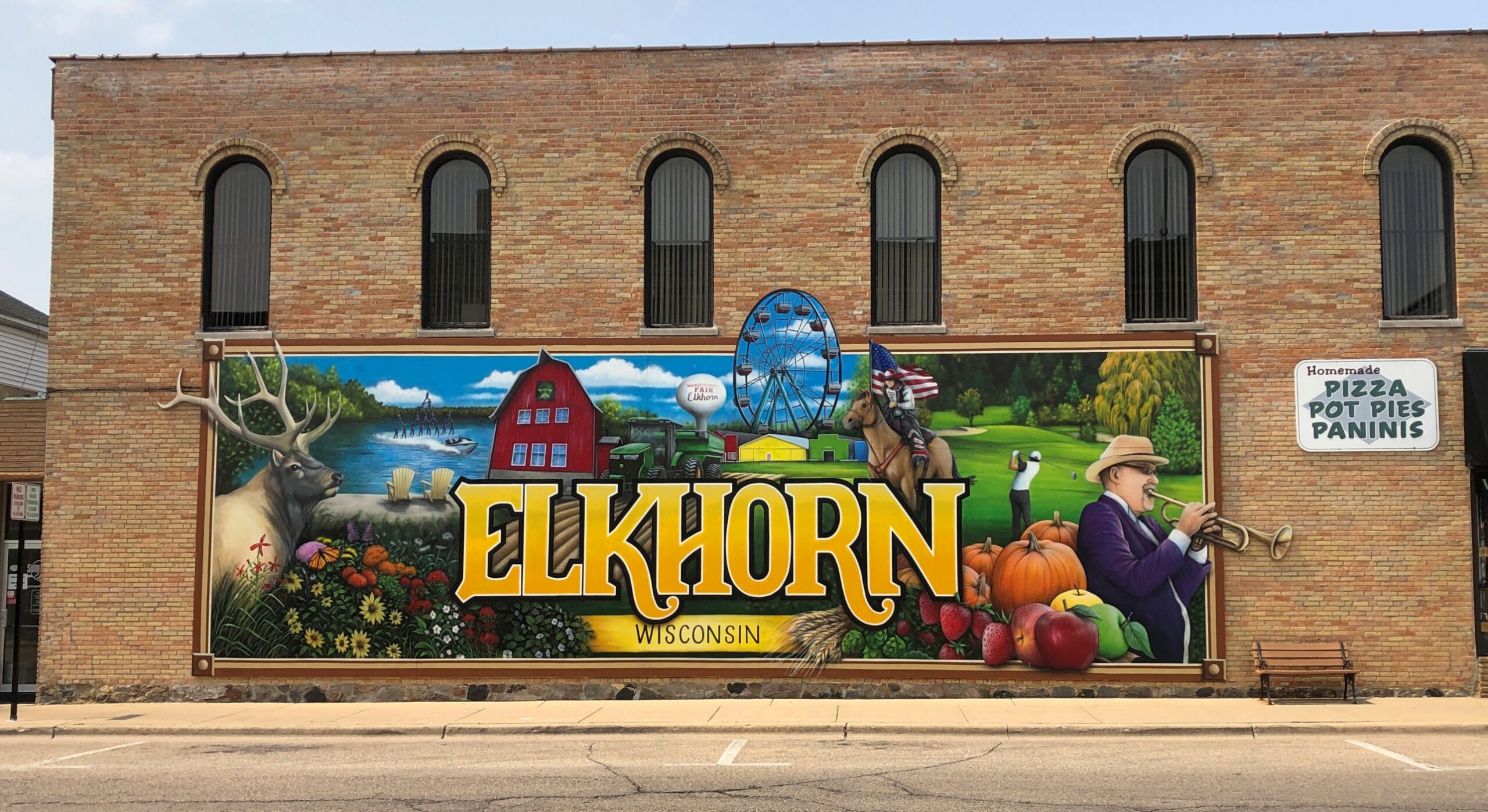
I arrived in Elkhorn on a warm day in early August, traveling by myself in southeastern Wisconsin. It wasn’t too hot for a stroll around the town’s municipal square, home to a “government center,” a mid-century box, but not the storied old courthouse that should be there.
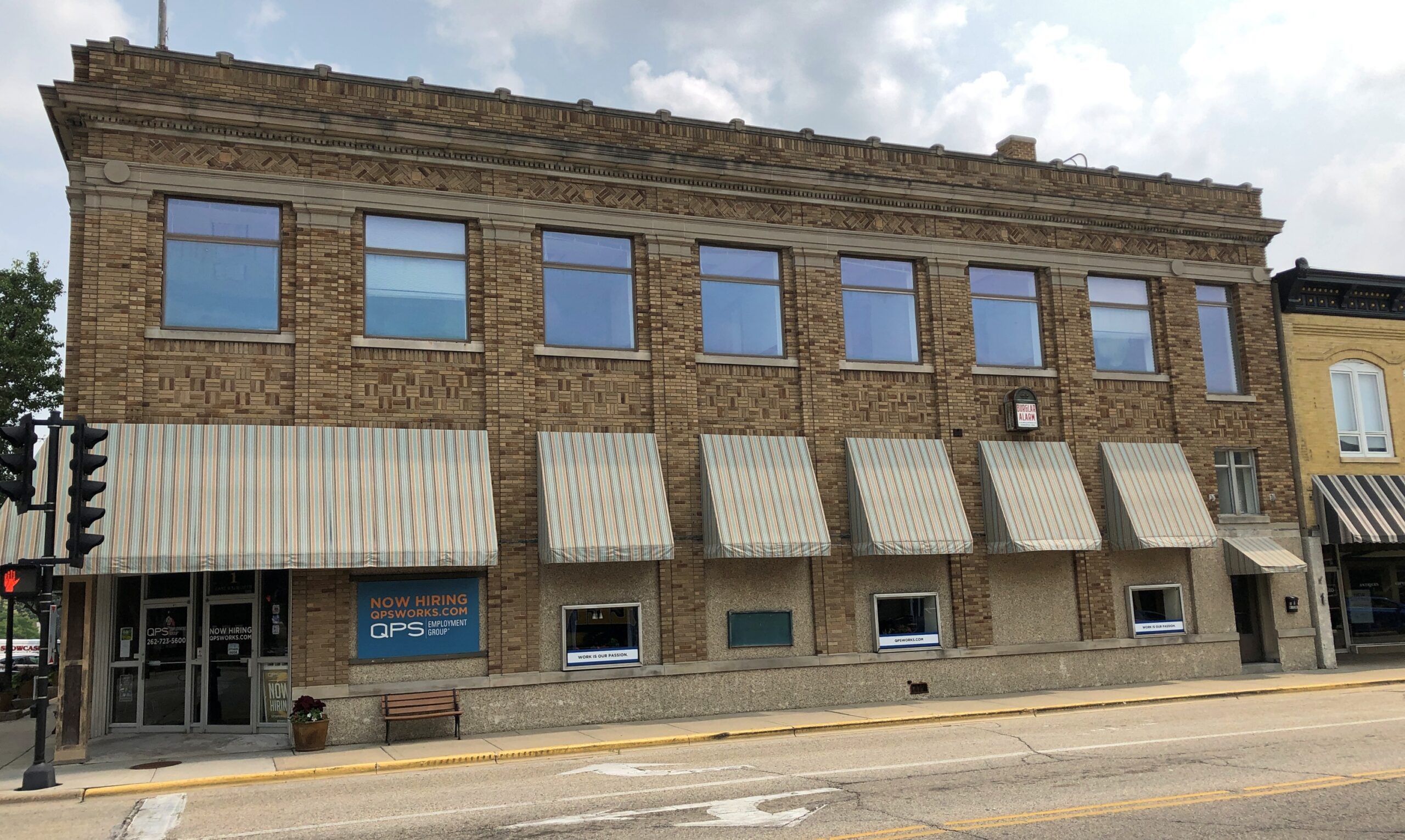
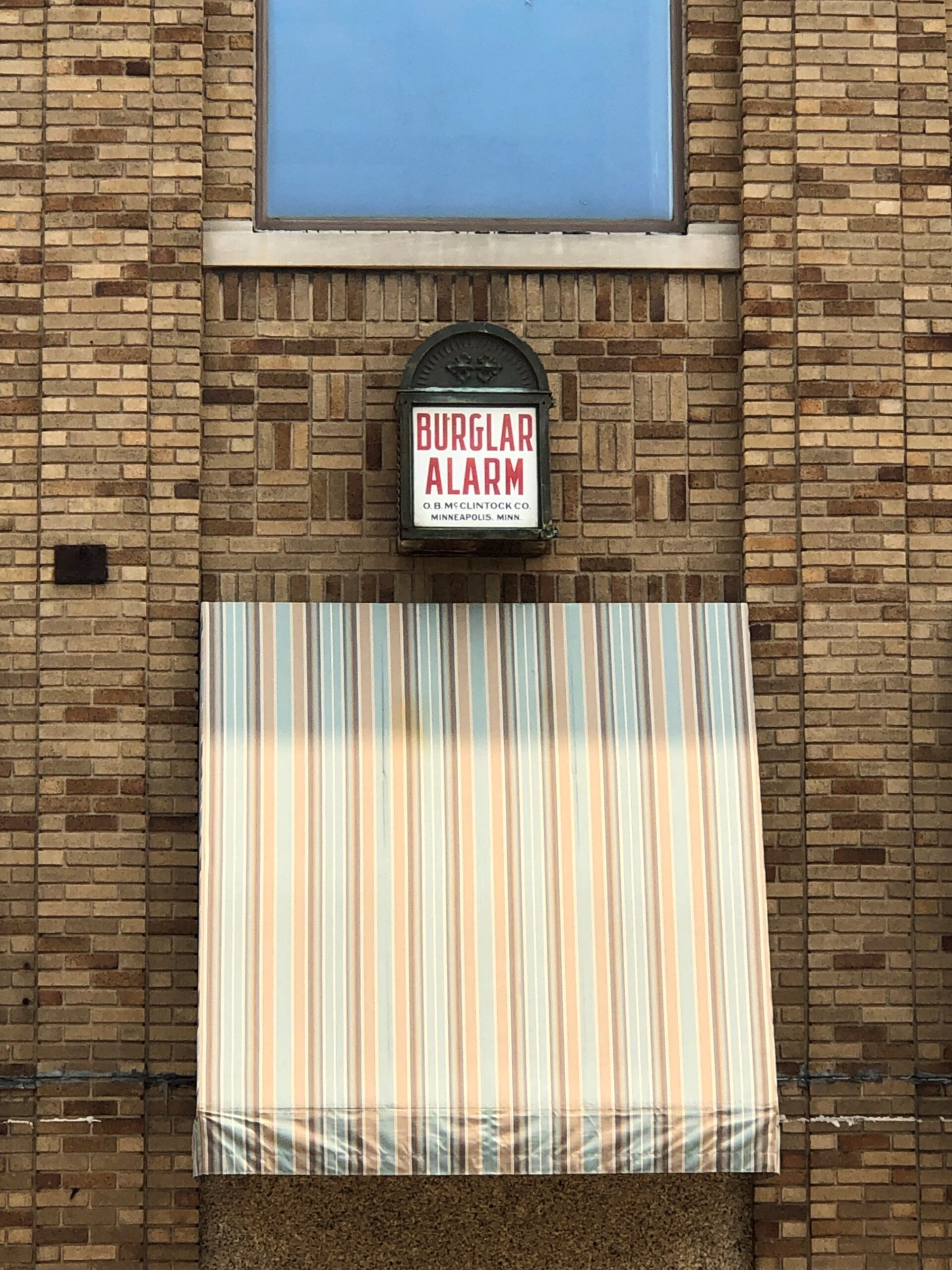
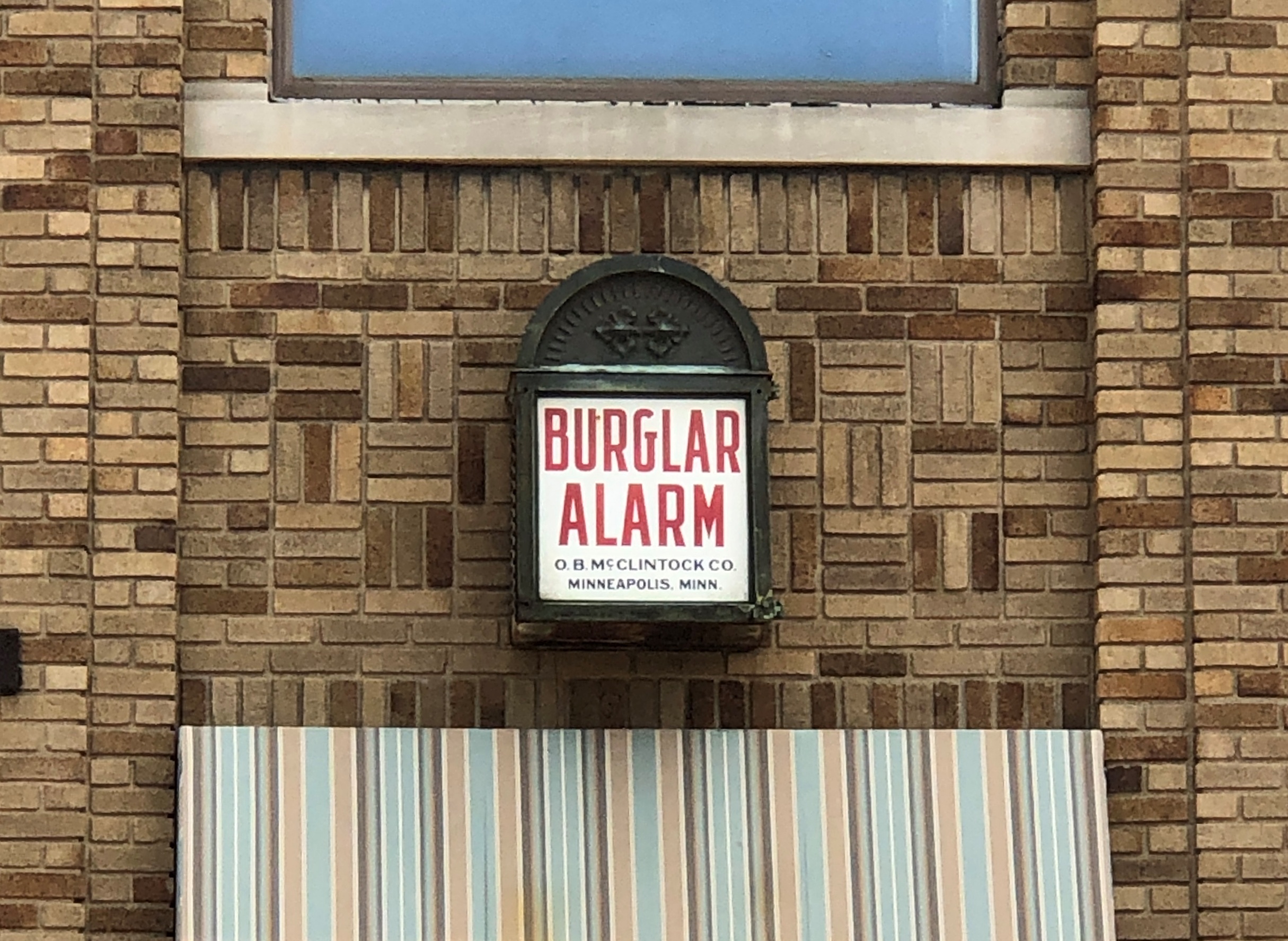
Public notice of an antique alarm system, that’s what.
Not the first one I’ve seen. This one was made by the O.B. McClintock Co. of Minneapolis. “In 1901 O.B. McClintock came to Minneapolis and founded the American Bank Protection Company, which produced burglar alarm systems,” explains a site called Lavilo. “After his resignation in 1908, he opened the O.B. McClintock Company to ‘manufacture electrical chime and clock systems,’ which he sold to financial institutions all across the United States.”
Banks began telling the public the time quite a while ago (McClintock surely wasn’t the first). I’m of course old enough to remember dialing time and temperature, though I can’t remember which financial institution sponsored the service in ’70s San Antonio.
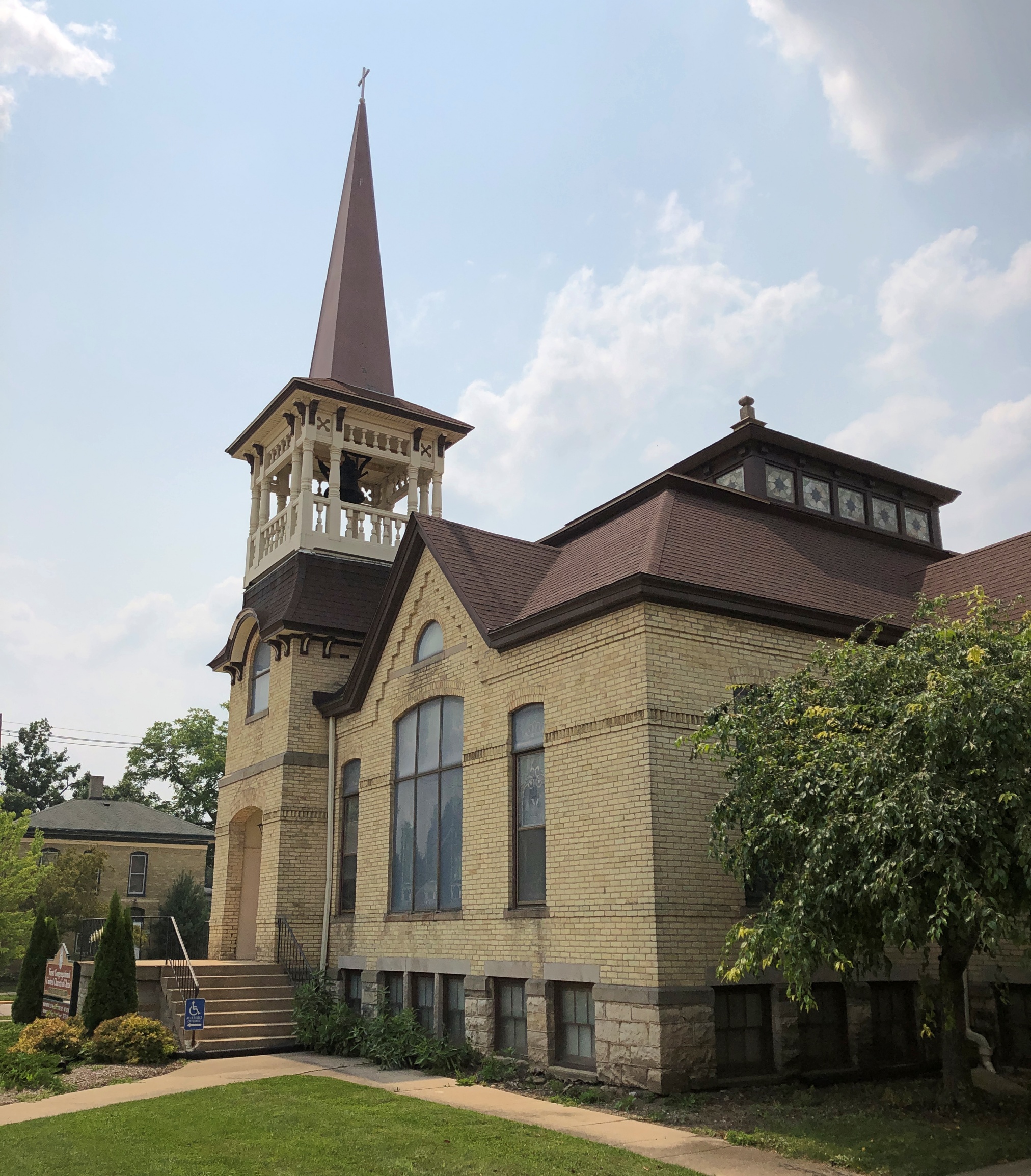
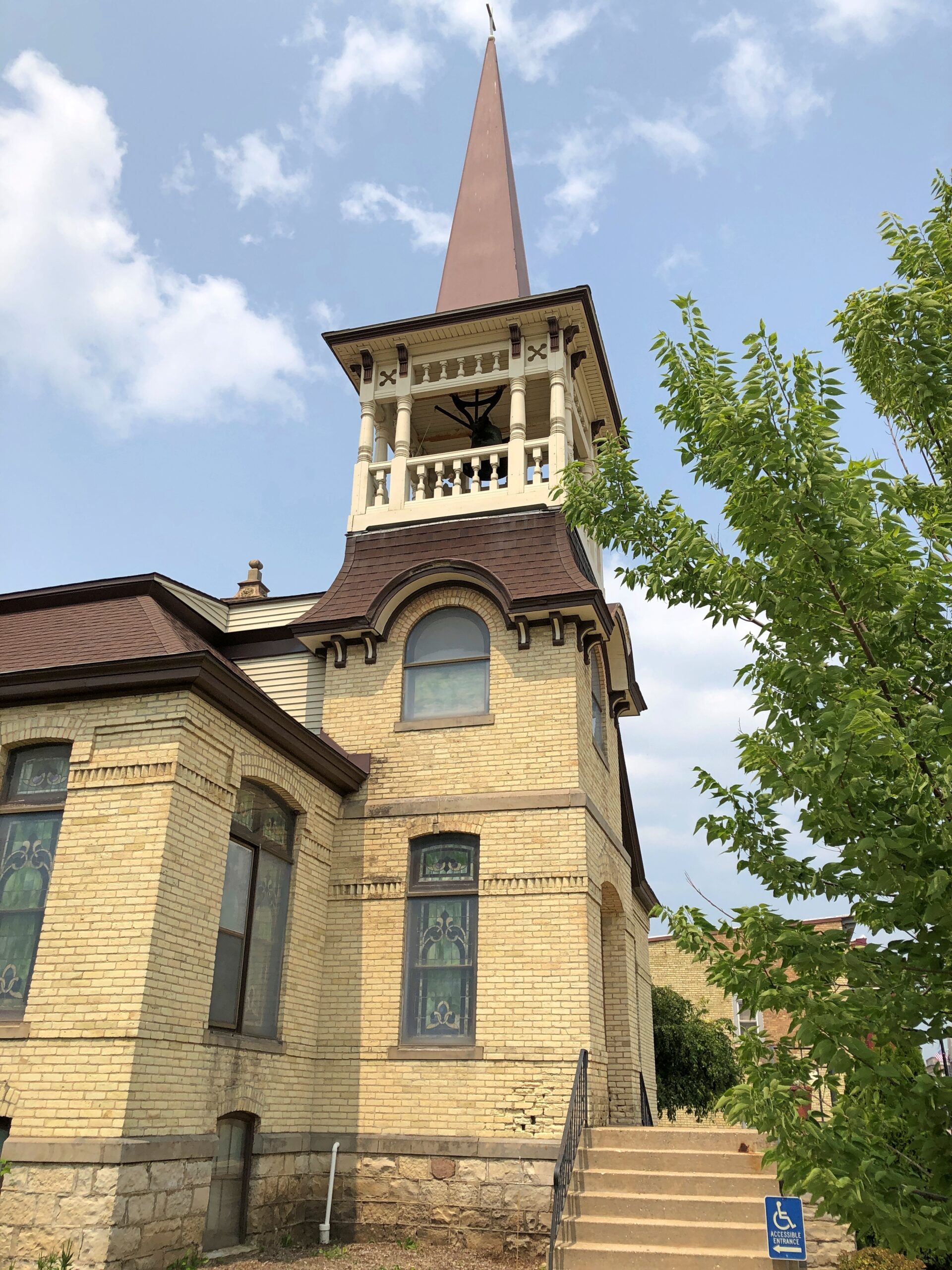
Elkhorn has a fine selection of downtown churches as well. Such as the First Congregational United Church of Christ.
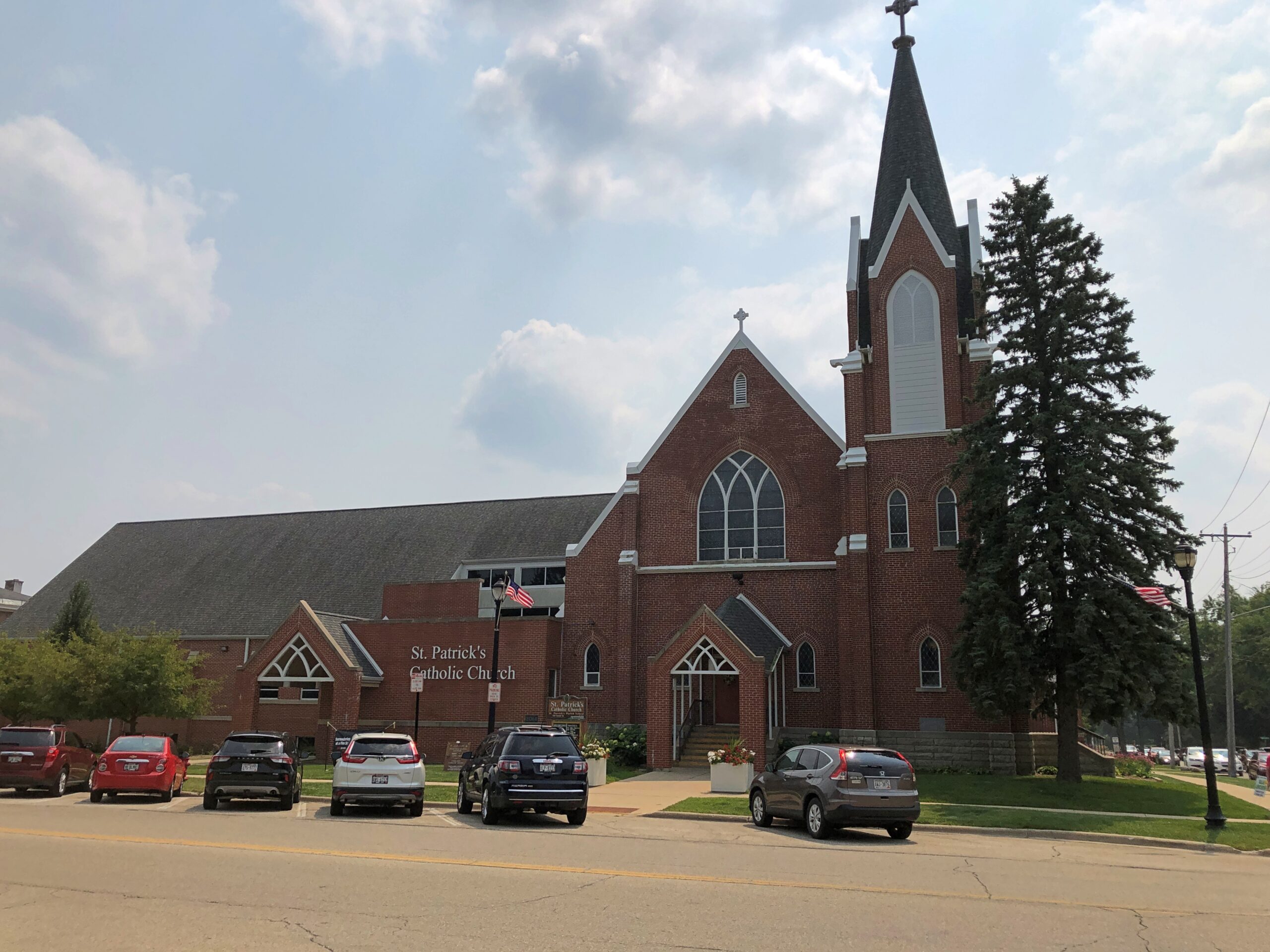
St. Patrick’s Catholic Church.
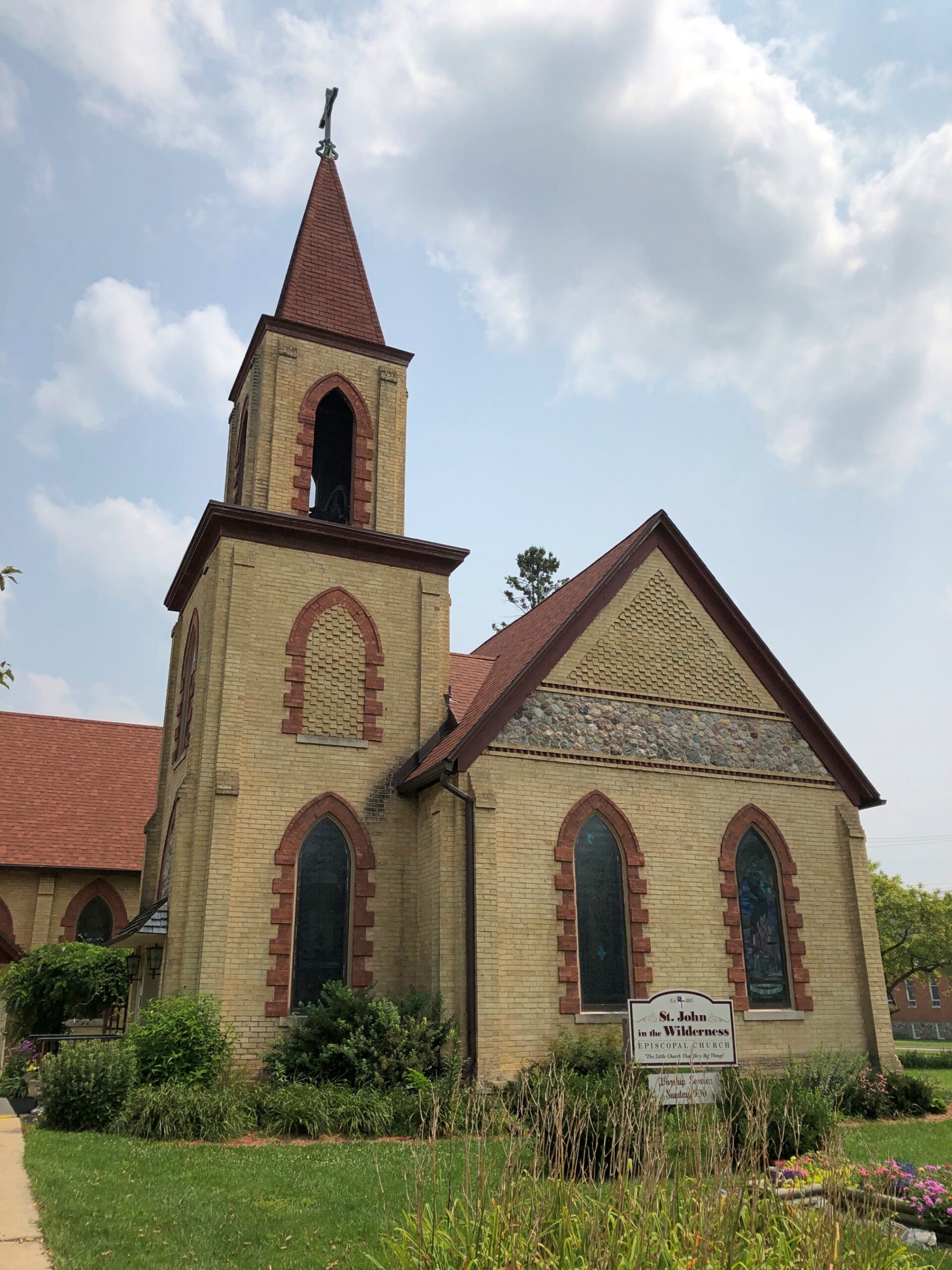
St. John in the Wilderness Episcopal Church.
Founded in 1841, back in Wisconsin Territory days, so “wilderness” was probably apt at the time.