More Charleston Scenes

The Nathaniel Russell House on Meeting St. in Charleston, SC, completed in 1808, was originally home of one of the wealthiest men in the city at the time, Nathaniel Russell. In our time, it’s an historic property open for tours.

I didn’t have time to take a tour. I did have time to wander around its picturesque garden, which is open to the public. More remarkably, in mid-February this year, the garden looked like spring already.

Nathaniel Russell House gardenNathaniel Russell House gardenLocal sources told me that the weather lately had been unusually warm, even for Charleston. Flowers and other plants responded to the warmth in the only way they know how.
Nathaniel Russell House gardenSignage sometimes has its charms in Charleston.
Tellis Pharmacy, Charleston SC 2017That’s what more drug stores need, mortar-and-pestle symbology. Alas, it’s only a relic now, since the drug store on this site apparently closed a few years ago. Looks like an antique shop occupies the building, which is on King St. At least the new owners decided to keep the sign; or maybe it’s protected.

Unlike St. Philip’s graveyards, which were locked away behind imposing iron fences (though I could see the stone of Vice President Calhoun in the distance), the Circular Congregational Church’s graveyard is open to all during the day.

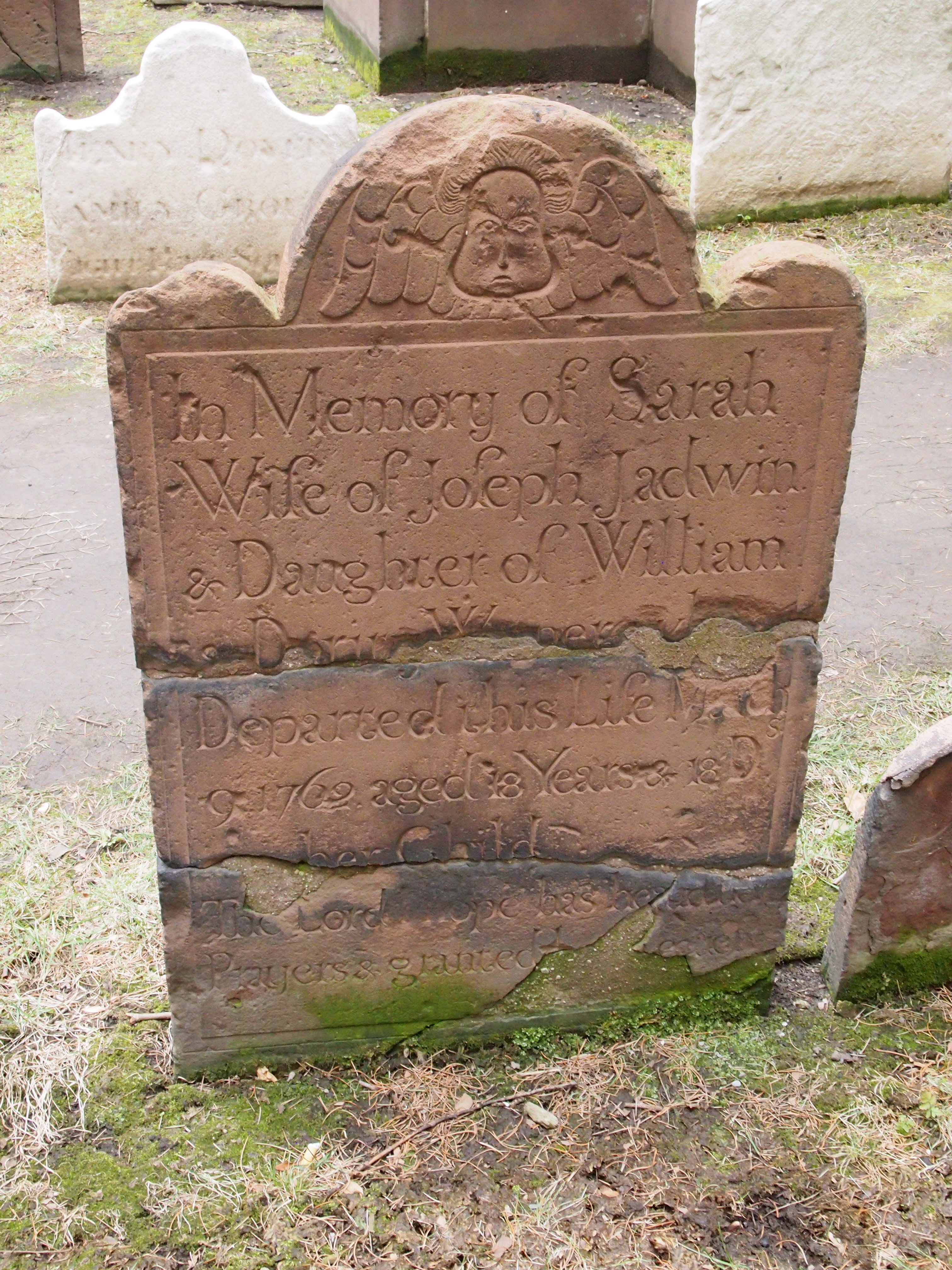
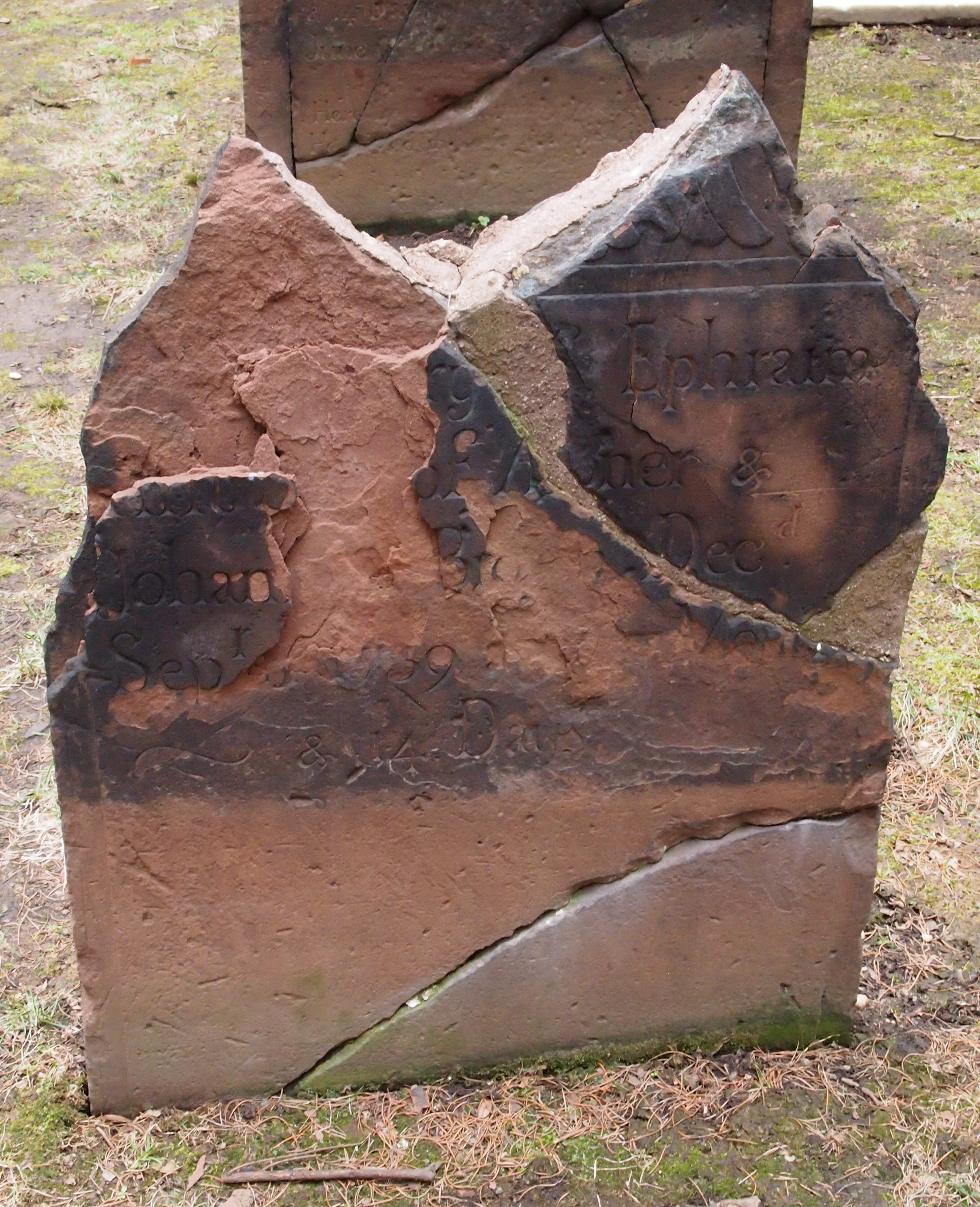
 Circular Congregational ChurchThe cemetery included some stones, pre-Revolution in vintage, that reminded me very much of the old stones in Boston’s downtown graveyards.
 Circular Congregational Church cemeteryPlus plenty of later 18th- and 19th-century stones.
 Circular Congregational Church cemeteryAnd some nice views of the back of Circular Church.
 Circular Congregational Church cemeteryOne of the best known tourist attractions in Charleston is City Market, which has been the site of a public market for more than two centuries. I’ve never been one to eschew tourist destinations just because they’re popular among tourists, so I popped it for a look. Not bad, but not nearly as interesting as the Pike Place Market in Seattle.
City Market, Charleston 2017One more structure: Charleston City Hall.
Charleston City HallDiscover South Carolina says: “On the site of a Colonial marketplace, this handsomely proportioned 1801 building first housed the Bank of the United States and then became Charleston’s City Hall in 1818. The design is attributed to Charlestonian Gabriel Manigault, a gentleman architect credited with introducing the Adamesque style to the city after studying in Europe.”

Also worth knowing: the building has some of the few public restrooms in downtown Charleston that are open on the weekend.

Charleston Walkabout

Here’s something I learned about the oldest part of Charleston, SC, when I visited recently: good to walk through, not so much to drive through. I could have guessed that anyway. Small streets, many cars, extremely restricted parking.

But early Saturday morning, when the cars roaming the streets were still few, wasn’t a bad time to come to town by car. I arrived and found a parking garage as soon as I could. On foot from there, on Cumberland St., I encountered traces of historic Charleston almost immediately in the form of the city’s most obscure plaque (maybe), fixed to the ground just north of the sidewalk on the north side of that street, between Meeting St. and Church St.

This Oak Was Planted In Celebration Of

ARBOR DAY 1984

It stands above a portion of the fortification wall that once protected the early Charleston settlement. The wall has been destroyed through time as the city spread beyond it’s [sic] original boundaries. The only visibly [sic] portion of the original fortification is the half moon battery, located in the basement of the Exchange Building.

Dedicated by the City of Charleston
Joseph B. Riley Jr., Mayor

Mr. Mayor, you could have ponied up a bit for a proofreader, considering that the text is in bronze. Anyway, the tree isn’t in the most picturesque part of Charleston.

Soon I moved on to better-looking urban core scenes. The city even has aesthetic water meter covers.
Charleston SC water meterThe palmetto is easy enough to figure out, but the cannons? According to one source (which says it’s “probably true”), the cannons refer to Col. William Moultrie’s victory over the British attack on Sullivan’s Island in 1776. Palmetto logs, which had some ability to absorb cannon fire, were used to reinforce the earthenwork defense.

St. Philip’s, an Episcopal church, stands fittingly on Church St. between Cumberland St. and Queen St.
St Philip's Episcopal Church, Charleston SCThe church, the third for this congregation and the second on this site, dates from 1838. The early history of the church, and Charles Towne for that matter, was one damn thing after another. From a short history of St. Philip’s on its web site:

1728-40: Fires, hurricane, epidemics of smallpox, yellow fever, slave uprisings, Indian attacks, threats of war from the Spanish occurred.

Ah, but Charleston flourished. Slave-cultivated rice, indigo and then cotton from the Carolinas did the trick (part of the bondsman’s two hundred and fifty years of unrequited toil). Highly skilled slaves, I understand, were involved in the wrought iron gates around St. Philip’s, which are a marvel by themselves.
St Philip's Episcopal Church, Charleston, SC iron gateNearby is the light pink Huguenot Church, dating from 1844, at the corner of Church and Queen. It was the first independent Huguenot congregation in America (more-or-less Calvinist, starting in the 1680s) and now the last one.
Huguenot Church, Charleston SCRainbow Row, the nickname for a stretch of East Bay St., features colorful row houses, 13 in all, mostly dating from the late 18th century.
Rainbow Row, Charleston SC 2017They’re in a tightly controlled historic preservation district, except for one thing: the owners get to choose the colors. The pastels were originally put on in the 1920s and occasionally change.
Rainbow Row Charleston SC 2017There are plenty of other handsome houses in that part of Charleston as well. Reminded me a bit of the East End of Galveston.

Charleston, SC 2017Charleston, SCCharleston, SC 2017All in all, a good place to see on foot, provided it isn’t summer.

Char-Tex ’17

Recently, before I went to Texas for a week, I had a day to spend in Charleston, SC, a city I’ve wanted to visit for many years. Just a day, so I packed in the sights. It wasn’t an example of slow travel. Sometimes, you’ve got to hit the ground and go.

I saw the oldest part of Charleston — the site of Charles Towne — on foot for a few hours, took the boat out to Fort Sumter, which took a few more hours, visited Magnolia Cemetery, and saw the H.L. Hunley later in the afternoon.

The old part of Charleston is very handsome, replete with structures surviving from the Antebellum period squeezed into tight city blocks along such streets as Calhoun, Cumberland, Meeting, and at the intersection of King St. and Queen St. A fine thing to do on a February morning that’s warmer than it should be, even in the South: wander past the elegant or curious buildings, admire the churches, take in the details of the streetscapes and sidewalks.

The War Between the States and Reconstruction crushed the local economy. Bad for the people who lived then, good for historic preservation in the late 20th and early 21st centuries, when considerable prosperity has returned to Charleston. Had prosperity continued in the 19th and early 20th centuries, the city might sport handsome Victorian architecture, or might have been Eisenhowered into something less pleasing.

Fort Sumter National Monument is about a 30-minute boat ride away from the city. The fort is as historic as can be, but apparently doesn’t look much like it did in 1861. The war flattened it, the post-war U.S. Army rebuilt and redesigned it until the place was turned over to the Park Service after WWII.

The Confederate submarine H.L. Hunley, whose insufficient design killed more men than the vessel did as a weapon of war, now rests in a tank of water at the Warren Lasch Conservation Center, an industrial structure north of the good-looking parts of town, near other industrial facilities. Eventually, the Hunley will be the star of its own museum, but for now conservation efforts are ongoing.

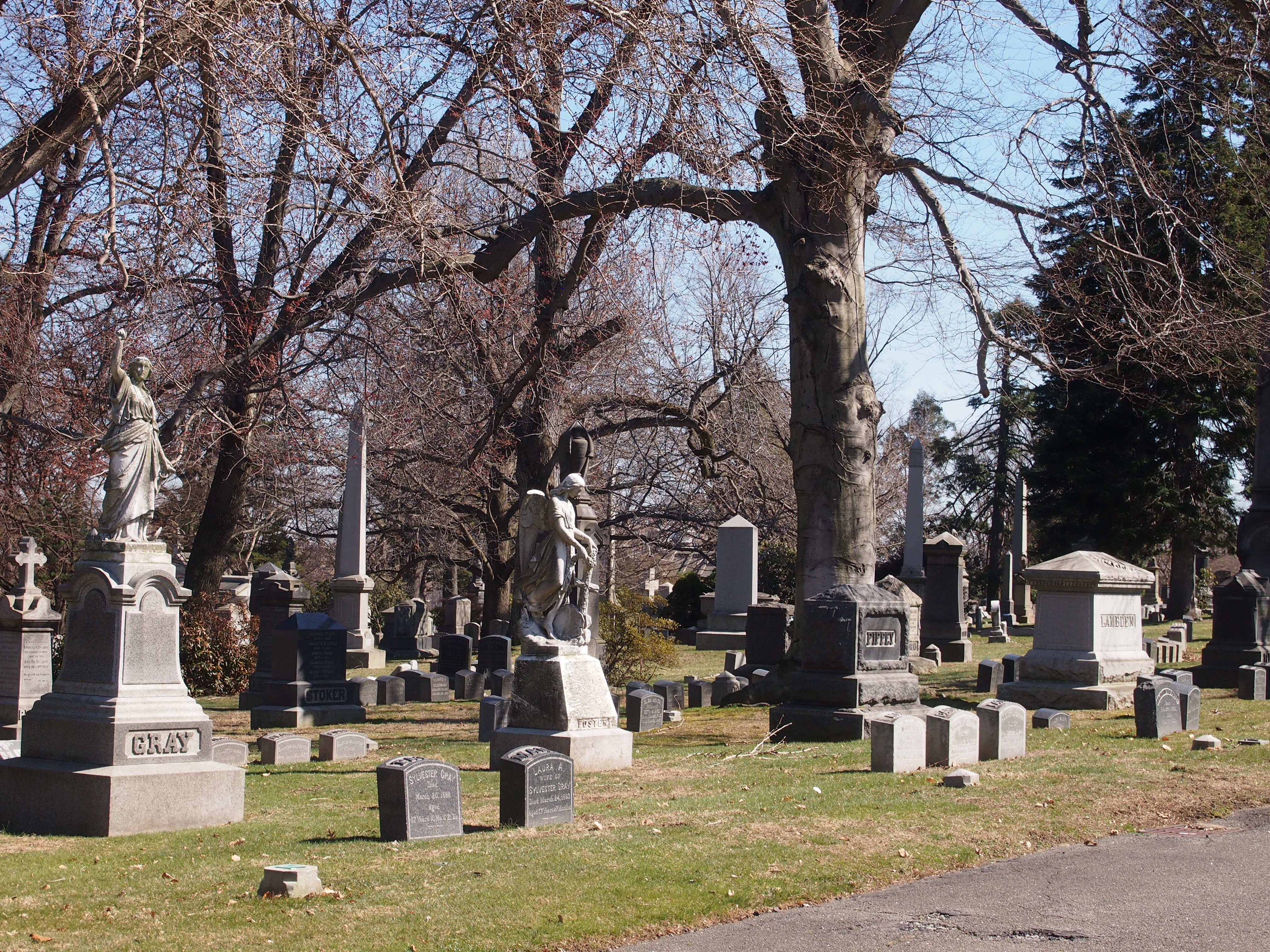
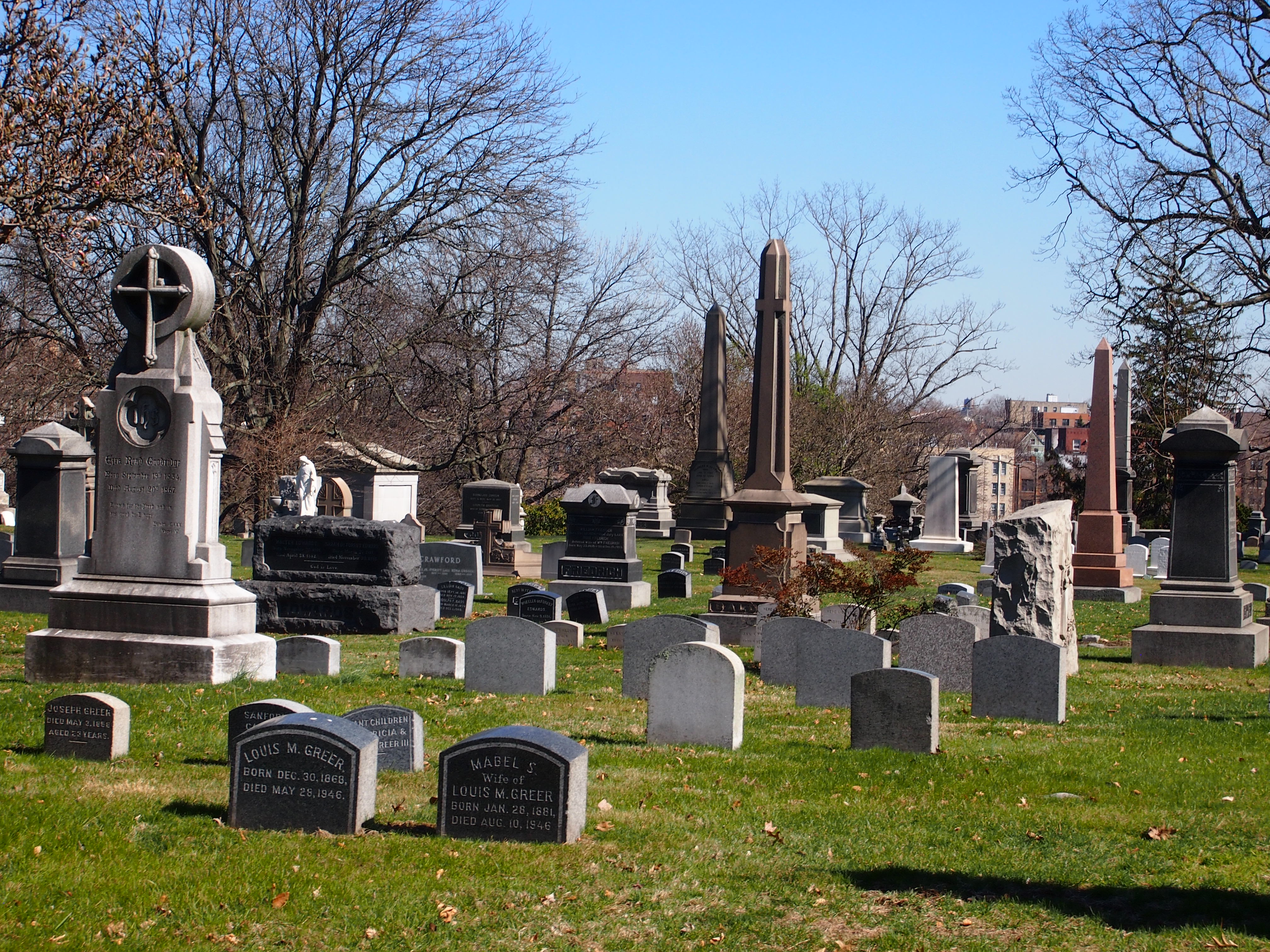
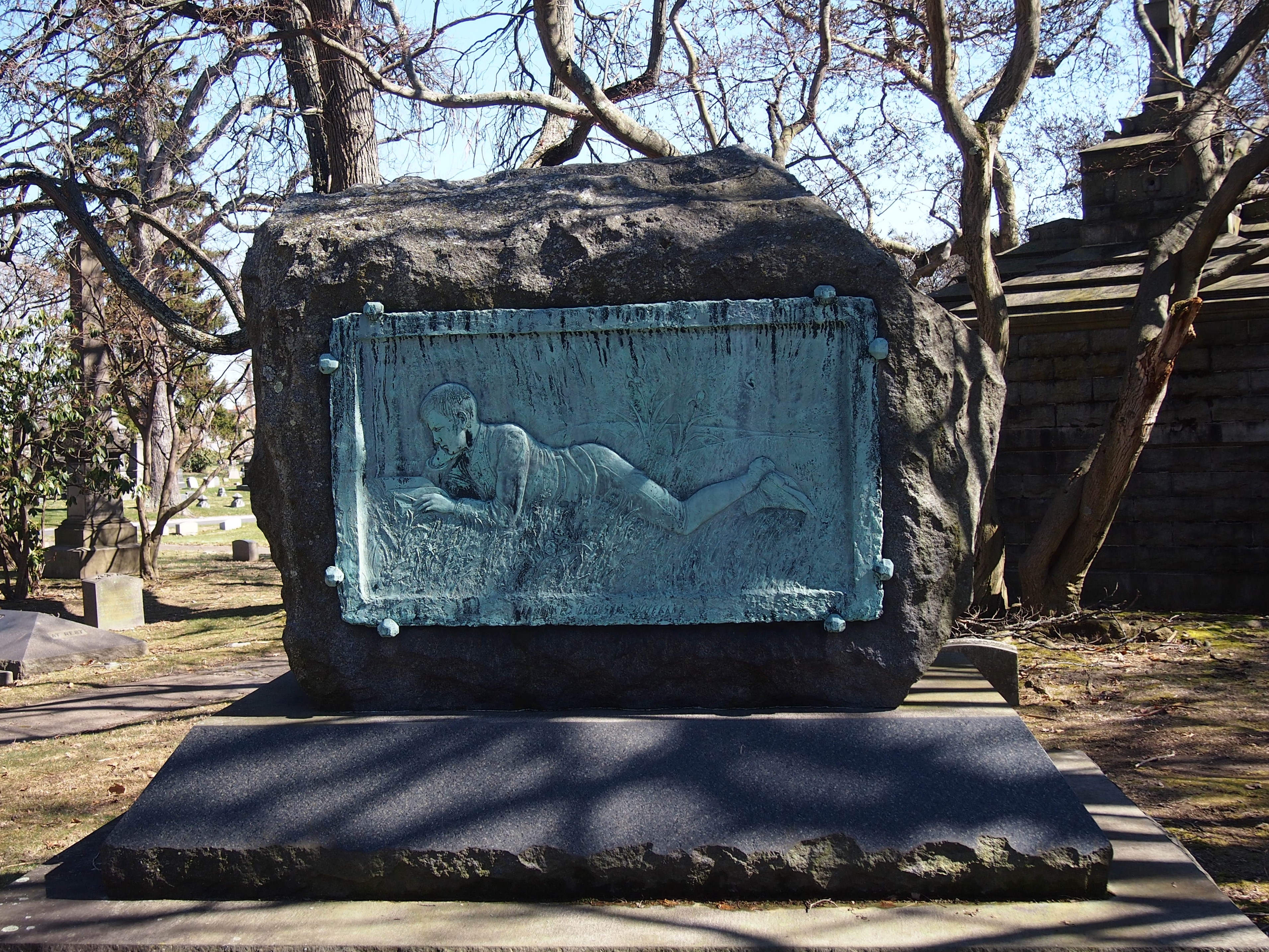
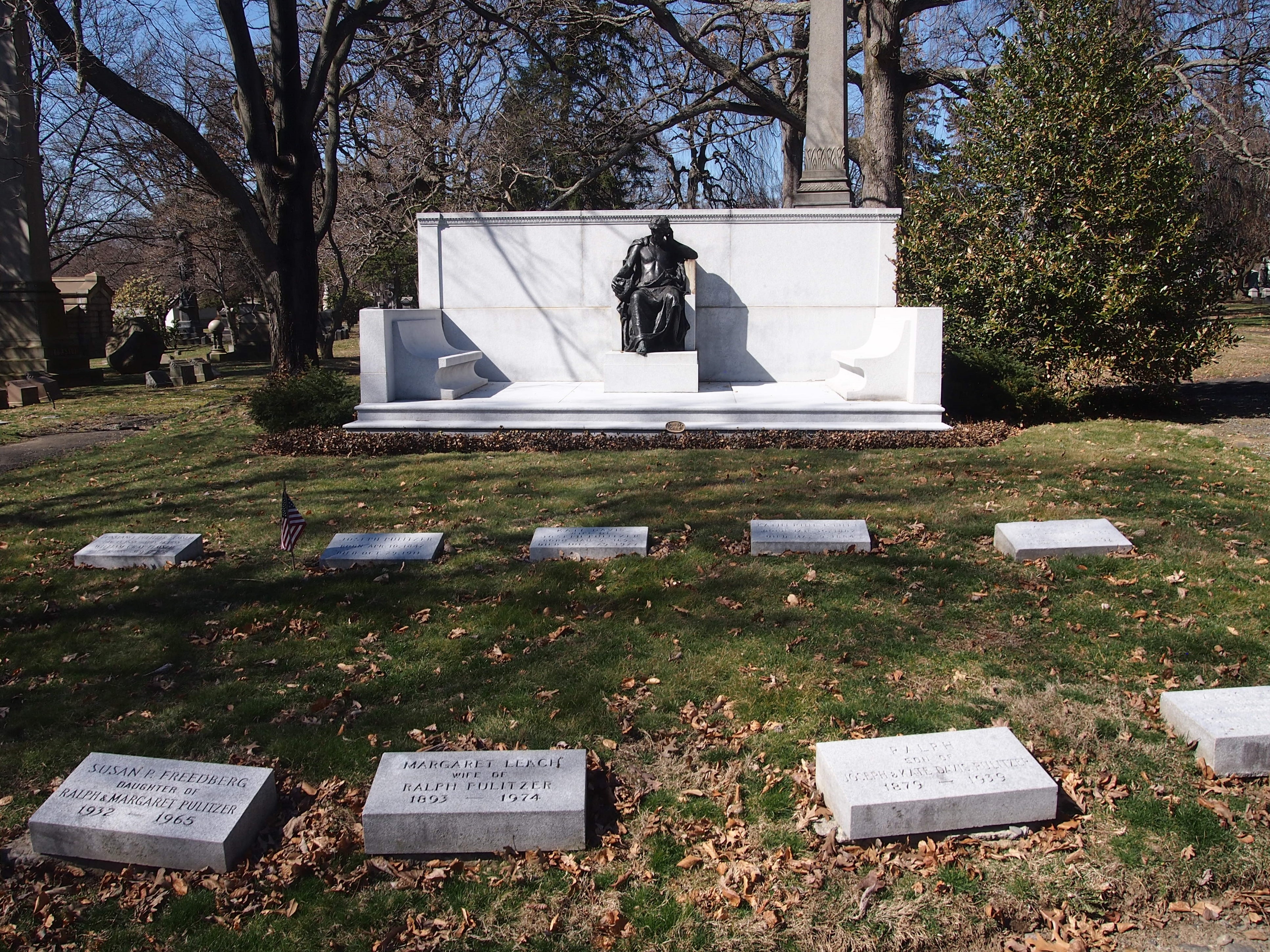
The Magnolia Cemetery is also north of the old part of town. An old cemetery, it’s rich with old stones, funerary art, monuments to the Lost Cause, and trees festooned with Spanish moss. Also, a warning about not violating South Carolina law.

Magnolia Cemetery, CharlestonWho sees an alligator and thinks, I want to feed it.

The Flight 191 Memorial, Des Plaines

After lunch on Friday, I realized I was fairly close to the Flight 191 Memorial, so I went to take a look. It might be February, and it definitely was cold, but the sky was sunny and the ground without any ice or slush to wade through.

I remember hearing about the crash, which happened the week before I graduated from high school. Probably most people old enough to understand what had happened remember hearing about it, so terrible was the accident. Almost 38 years later, it’s still the worst U.S. aviation accident in terms of fatalities, 273, unless you count all the crashes on Sept. 11, 2001 together, but those were no accidents.

The memorial is tucked away in a park in the large suburb of Des Plaines. From a distance, the site is unassuming, between the road and a jogging path.

Flight 191 Memorial, Lake Park, Des Plaines 2017

I imagine that most people driving by on Touhy Ave. just to the south of the site don’t know it’s there. Closer up, the memorial reveals itself. It’s a low wall with names of the victims inscribed, one to each brick.

Flight 191 Memorial, Des Plaines ILFlight 191 Memorial, Des Plaines ILFor a long time, more than 30 years, there was no memorial to AA 191 anywhere. In 2011, the Chicago Tribune reported that the effort to build a memorial “started with [Kim] Jockl, an assistant principal at Decatur Classical School in Chicago’s West Rogers Park neighborhood whose former students learned she had lost her parents on the Los Angeles-bound flight.

“The group pushed for two years to build the memorial. Finally, American Airlines agreed to foot the $21,500 cost, according to officials at the ceremony, and a location for the memorial was found inside Lake Park in Des Plaines.”

A plaque mounted on a short pole behind the wall says:

WE REMEMBER FLIGHT 191

Let us not forget the victims of May 25, 1979, who helped assure the safety of all who have boarded an airliner since that tragic event.

“When someone you love becomes a memory, the memory becomes a treasure.” — Author Unknown

A special thanks to all who helped make this memorial possible, especially: Decatur Classical School, Chicago Public Schools; US Representative Jan Schakowsky; IL State Sentator Dan Kotowski; the Des Plaines Park District; American Airlines; Project Citizen; Thomas A.Demetrio; Constitutional Rights Foundation Chicago; Center for Civic Education; and Nilco, Inc.

Captain Canuck & President Polk for Christmas

My last Christmas present came via UPS today. Lilly ordered it not long ago, some time after I assured her that a little while after Christmas is close enough. It’s an attitude that makes the holidays less stressful; more people should consider it.

I’d suggested the item almost off-handedly. In our time, such whims are easily gratified online. It’s alarmingly easy. Here’s a closeup.

Captain Canuck!

It’s a Captain Canuck t-shirt, 100 percent cotton, made in Nicaragua. Accept no less.

Also for Christmas this year, but some time earlier, Jay got me a t-shirt with another larger-than-life figure, though from the annals of U.S. history.

James K. Polk, Napoleon of the Stump

None other than James K. Polk, Napoleon of the Stump. Also all cotton, but made in Haiti. On the back it says POLK 11.

The Air Zoo of Kalamazoo

Mid-week between Christmas and New Year’s, I popped off by myself to Michigan, more specifically to Kalamazoo, the city with the most fun name in the whole state — just repeat it a few times and see — for a look around. One of its main attractions is the Air Zoo. I’ve heard about that place for years, but an air (and space) museum is a moderately hard sell for the family. Not for me. Spacecraft especially, but also aircraft.

The Air Zoo is relatively small, at least with the Museum of the U.S. Air Force still fairly fresh in mind, but it offers an excellent collection, including early airplanes, a lot of WWII aircraft, examples from the age of jet fighters, and a number of space-related objects. The museum is also in the major leagues of aircraft restoration efforts. A number of items that it had restored were on display, and later I read about a WWII dive bomber, a Douglas SBD-2P Dauntless, that was pulled from Lake Michigan recently and which will be restored by the museum.

Here’s a WACO VPF-7, something I’d never heard of, probably because it was only one of six ever built.

According to the museum, the ’30s-vintage aircraft “was designed as a trainer/combat aircraft for the Guatemalan Air Force. As an attack aircraft, the front cockpit would be covered and .30-caliber machine gun pods would be placed under the wings. However, this particular aircraft has no indication of machine guns ever having been attached.”

A Ford Tri-Motor. Also known as a Tin Goose, produced from 1925 to 1933. Indiana Jones got around in these sometimes, I believe.
Air Zoo“The Air Zoo’s 5-AT Ford Tri-Motor (N4819) came off the assembly line in 1929 with serial number 58 and was delivered to National Air Transport, where it probably delivered freight and mail,” the museum says. “It quickly went to Ford Motor Company for modifications and then was sold to Northwest Airways, flying the Minneapolis-St Paul-to-Chicago run. It was one of five Tri-Motors bought by [the company that] would become Northwest Airlines.”

Maybe so, but as a display item, the plane is painted as if it were in service of the U.S. Army. I’ve read that until last year, this very plane was airworthy, and the museum gave rides.

Here’s a B-25, one of almost 10,000 produced during the war.
Air ZooThis particular one made strafing runs with the 489th Bomb Squadron, 345th Bomb Group, according to the museum. I like that paint job.

Modern wars aren’t won just with fighting machines, but by getting materiel here and there as fast as possible. Enter the DC-3.

Air ZooTime flies, there are more wars. Jets do the fighting, such as this F-8 Crusader.
Air ZooThe sign said: “Photo reconnaissance variants of the Crusader flew several dangerous missions during the Cuban Missile Crisis. Then… the F-8 became the first U.S. Navy aircraft to routinely battle North Vietnamese MiGs.”

A small but distinctive collection of space artifacts is on display at the Air Zoo. I take ’em where I can get ’em. Such as this J-2 engine, famed for its attachment to the second and third stages of the Saturn V.

J-2 Air ZooThere aren’t many machines that have to be just so or they’ll blow up. Kudos to the engineers.

Here’s something I’d never seen before: a Gemini boilerplate.
El Kabong, Air ZooEl Kabong I is its whimsical nickname. I’d forgotten that, “as El Kabong, Quick Draw would attack his foes by swooping down on a rope with the war cry “OLÉ!” and hitting them on the head with an acoustic guitar …” (Wikipedia). Quick Draw McGraw made a fairly faint impression on me, even at an impressionable age.

Anyway, the boilerplate’s main job was to test the feasibility of recovering spacecraft on land using extendable skid-type landing gear, a steerable gliding parachute (para-sail), and solid-fuel retrorockets to help slow the spacecraft for landing, says the Air Zoo. I don’t think Gemini landed that way, but it sounds pretty cool.

The concept of the boilerplate spacecraft might be an obscure one to the public at large, but I like coming across them.

Lull-Time Reading

The lull time between Christmas and New Year’s is also a good time for reading, so I alternatively read Between the Woods and the Water, the second part of Patrick Leigh Fermor’s remarkable travels on foot in Europe in 1934, and American Mirror: The Life and Art of Norman Rockwell (2013) by Deborah Solomon.

I picked up the latter at Half-Price Books not long ago after reading a bit of it in the store, and realizing that I knew next to nothing about Rockwell, besides what his paintings look like, and that he’s been the subject of revisionism lately. Maybe more than one cycle of scorn and then revision have come and gone, for all I know.

Solomon skillfully makes the case that Rockwell’s work is well worth thoughtful attention. “Each of his Post covers amounts to a one-frame story complete with a protagonist and a plot…” she writes. “In some ways, Rockwell’s paintings, which are grounded in the rendering of the particulars, demand to be ‘read’ like a story. The experience they offer is literary as much as visual, in the sense that he cared less about the sensual dazzle of oil paint than the construction of a seamless narrative. The public that saw and appreciated his paintings walked away from them thinking not about the dominance of cerulean blue or cadmium yellow but about the kid on the twenty-foot-high diving board up in the sky, terrified as he peers over the edge and realizes there is only one way down.”

As for Rockwell the man, he comes off as a decidedly odd duck. An enormously talented odd duck. While perhaps not the most colorful of personalities — which is often just a way of denoting a jerk, anyway — he’s worth reading about too. (Then again, his family might have had some thoughts on Rockwell as a jerk.)

“On most days, he felt lonesome and loveless,” notes Solomon. “His relationships with his parents, wives, and three sons were uneasy, sometimes to the point of estrangement. He eschewed organized activity. He declined to go to church. For decades he had a lucrative gig providing an annual painting for the Boy Scouts calendar, but he didn’t serve as a troop leader or have his own children join the Scouts.

“He was more than a bit obsessive. A finicky eater whose preferred dessert was vanilla ice cream, he once made headlines by decrying the culinary fashion for parsley. He wore his shoes too small. Phobic about dirt and germs, he cleaned his studio several times a day. He washed his brushes and even the surfaces of his paintings with Irovy soap.”

Naturally the book is well illustrated with his work, though only a fraction of (say) his Saturday Evening Post covers, since he did so many (323 from 1916 to 1963). That made me look up more images posted by the Rockwell museums, one in western Massachusetts, another in Vermont (seemingly more of a store for Rockwelliana), both places that he lived. Just more things to see if I ever make it back that way.

Lull-Time Entertainment

We opened our presents early on the morning of December 22, since Yuriko and Ann were off to Japan later that day. Christmas itself passed quietly, though we did prepare a nice dinner. As for New Year’s Eve, Lilly went out with friends — as you should do at 19 — while I stayed home with the dog, a more fitting evening for middle age.

In between those moments, work slacked off, and I enjoyed the lull. Among other things, Lilly and I watched various TV shows when she was home, such as episodes of Frasier (it holds up well) and the newer and considerably different, but also very funny Louie. I also had her watch the “Turkeys Away” episode of WKRP in Cincinnati.

We saw an episode of Bob’s Burgers that involved a gingerbread house contest. Could those really exist? I asked myself later. Yes indeed. Just Google “gingerbread contest” or the like and you get many hits about various events, such as the 2016 National Gingerbread House Competition at the Omni Grove Park Inn in Asheville, NC, held just before Thanksgiving.

“It all began with a small group of gingerbread houses built by community members in 1992 as another way to celebrate the holiday season with no plans to continue the following year,” says the competition’s web site. “There was no possible way to know that more than two decades later The Omni Grove Park Inn National Gingerbread House Competition™ would be one of the nation’s most celebrated and competitive holiday events.”

We’ve tried to build those things before. We aren’t dedicated much to the task, so it usually ends up more like a gingerbread trailer park after a tornado.

On the evening before New Year’s Eve, Lilly and I went into the city to see The Christmas Schooner on stage at the Mercury Theater, a mid-sized Chicago venue on the North Side not affiliated with Orson Welles that I know of.

The play is a musical set in the 1880s, involving a German-immigrant ship captain in Manistique, Mich., who hits on the idea of shipping Christmas trees to Germans in Chicago. The trouble is, sailing on Lake Michigan in late November/early December is dangerous, especially in the days of small wooden vessels and no weather reports. Eventually the captain goes down with his ship but his widow and son figure out a way to keep the trade going. The story is a fictionalized account of the real Christmas tree trade between the UP and Chicago in the late 19th and early 20th centuries, which claimed a number of ships and men, notably the Rouse Simmons, which went down with all hands in Lake Michigan in late 1912.

I’ve long been impressed by the level of talent involved in the Chicago theater, and The Christmas Schooner was no exception. The acting, singing and dancing — or rather, motions on the stage, not a lot of formal dancing — were all first rate. It reminded me that I need to see more live theater in the city, now that the logistics of parenthood isn’t quite as complicated as it used to be.

Xmas Oddities

From the December 21, 1976 episode of Laverne & Shirley, “Christmas at the Booby Hatch” or “Oh Hear the Angels’ Voices.”

Featuring Michael McKean (Lenny) and David L. Lander (Squiggy). I don’t think I saw it 40 years ago — I only watched the show intermittently — but nothing every really goes away on the Internet.

Next, “Ríu Ríu Chíu,” as sung by the Monkees on their show on Christmas Day 1967.

I’m pretty sure I didn’t see that when originally shown either. But it was an inspired choice for the Prefab Four.

Finally, something not about Christmas: “Sailing to Philadelphia” (2000), sung by Mark Knopfler and James Taylor. It’s about Jeremiah Dixon and Charles Mason.

We are sailing to Philadelphia
A world away from the coaly Tyne
Sailing to Philadelphia
To draw the line
The Mason-Dixon Line

Just how many songs are there about the Mason-Dixon Line? One, anyway. I happened across it not long ago. A delightful discovery.

Godspeed, John Glenn

project_mercury_astronauts_-_gpn-2000-000651Occasionally, a public domain picture from NASA is just the thing. I opened up Google News at about 3 this afternoon to take a look at the latest outrages worldwide, and the page informed me of John Glenn’s passing. I knew he was still alive, but I wasn’t sure whether any of the other Mercury 7 astronauts were, so I checked.

The answer is no. He was the last one.

I don’t remember any of their flights, of course. I barely remember any of the Gemini missions. It wasn’t until Apollo that I started paying attention, but when I did, I made a point of learning about Mercury and Gemini too. I well remember my excitement at finding the July 1962 edition of National Geographic, which covered Glenn’s flight, about 10 years after it came out (because we saved them, like everyone). I read every word of the article. Early space flight was covered in other editions, too, and I read them as well.

Like all editions of NG, it was well illustrated. One in particular stuck with me: how John Glenn might have died in 1962 and not 2016. Reading that also meant that I knew how the dramatization of his flight in The Right Stuff movie would turn out (also, I’d read the book). Astronaut not incinerated.

The news set me wondering about how many of the Moon walkers are still around. Seven of 12, as it turns out, but every jack man of them are in their 80s. Buzz Aldrin’s the oldest, nearly 87, while Charles Duke is the youngest, at 81. Wonder if Aldrin would even have the energy these days to offer up a punch to a Moon landing denier who clearly deserved one (officialdom agreed; Aldrin wasn’t charged).