July Idles

This year was a stay-close-to-home Fourth of July. That is, metro Chicago. Some are, some aren’t. We returned to our old haunts in the western suburbs on Saturday night to see the Westmont fireworks, from the vantage of Ty Warner Park. It’s always a good show.

That was a high point of the weekend. So was taking my daughters to Half Price Books, at their request, on the evening of the 3rd.

The low point of the weekend was walking the dog on the 4th, not long before we left for the fireworks show. Late afternoon, that is. Part of our usual route takes us along a path between a dense row of bushes and a small patch of land sporting enough trees to block the sky, when they have leaves. Pretty soon I re-discovered its mid-summer nature as Mosquito Alley. The mossies were especially forceful when I was cleaning up after the dog.

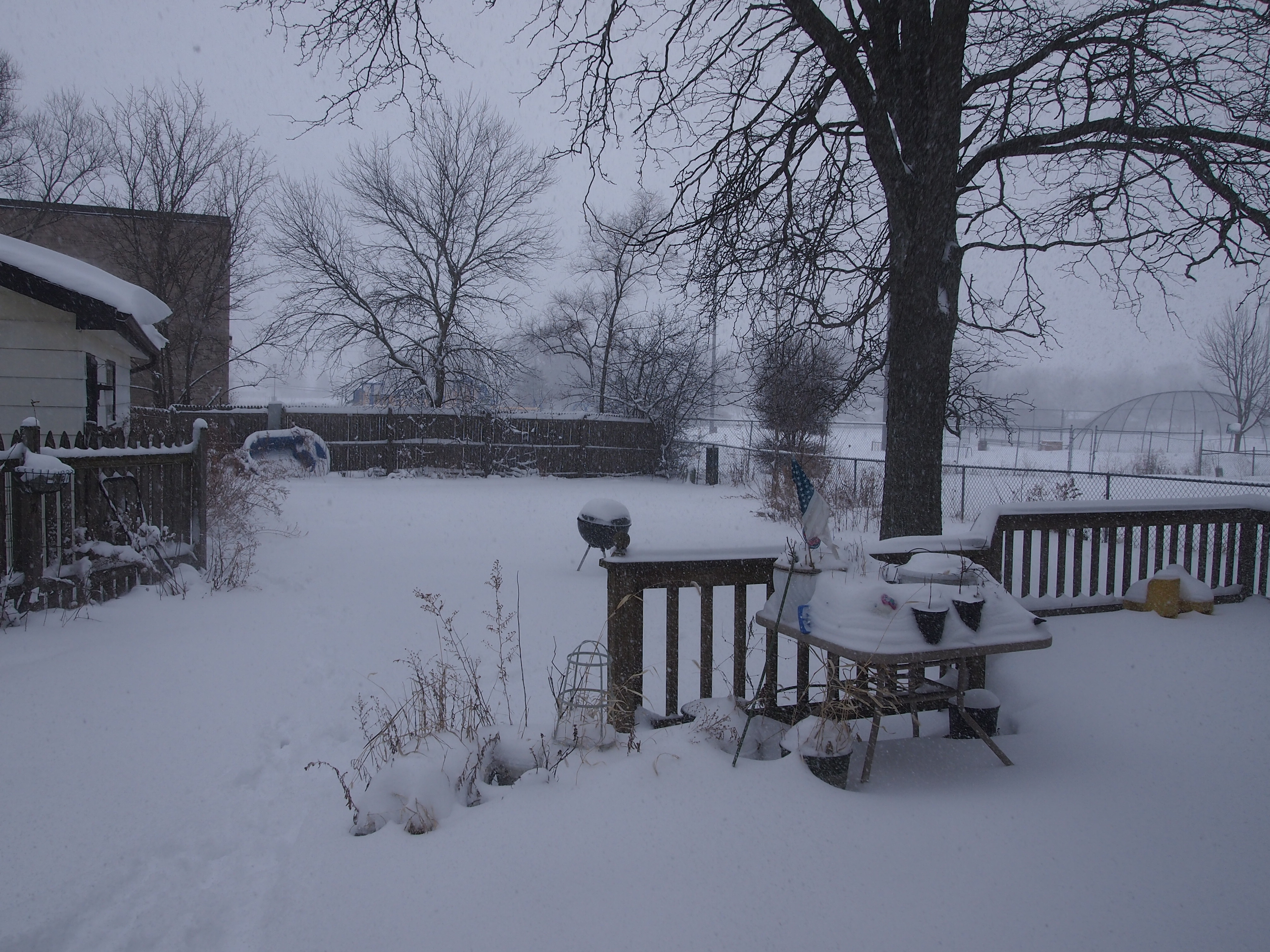
Complaining about mosquitoes, though, is just carping. I’d rather look out of my back door and see this (an early July shot).

Schaumburg, July 2015Than this (an early January shot).

Schaumburg, Jan 2015Bugs aside, I spent a fair amount of time over the weekend on the deck reading The H.L. Hunley by Tom Chaffin (2008), a fine book about the submarine of that name, along with its predecessor vessels (the Pioneer and the American Diver). Or, as I learned reading the book, the “submarine boat,” which is a 19th-century usage. The Confederates gave underwater warfare a shot, but it turned out Age of Steam technology — as inventive as it clearly was — wasn’t quite up to the task. Not without killing more submarine boat crew than Union sailors.

Also, it’s another reason to visit Charleston, to see the vessel, now an artifact on display at the Warren Lasch Conservation Center. Not that I’d need any more reasons for a visit.

Black Hawk & John Deere 2003

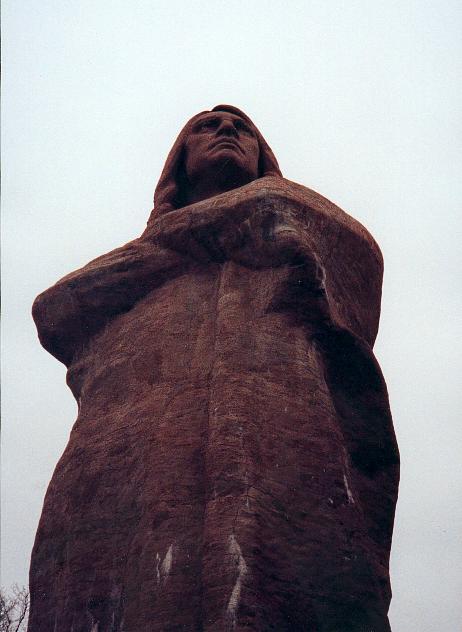
In April 2003, we took a short trip to north-central Illinois. We made a stop at the Black Hawk statue, whose formal name is “The Eternal Indian,” by Lorado Taft in Lowden State Park in Ogle County.

As I wrote then, “the statue, made of concrete, is about 50 feet high and stands on a bluff overlooking the Rock River and some of the town of Oregon. The head and neck represent an Indian, looking pensively off into the distance. His arms are folded in front of his chest, and from there on down the statue is less representational, but is clearly a human form.”

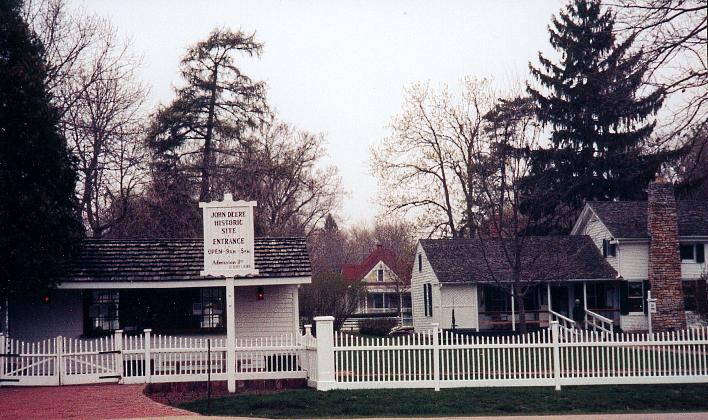
BlackHawkWe also took a look at the John Deere Historic Site in Grand Detour, featuring a blacksmith demonstration.

Deere“The re-created smithy was… the exact size of John Deere’s original Grand Detour shop, not including a latter addition, and presumably the original didn’t devote about a fifth of its space to a railed-in section where tourists stood. Otherwise, it was an evocative re-creation. A lot of iron & steel tools and implements on shelves, hanging on pegs, scattered around on various tables and benches. A bellows and a coal-burning furnace, which was glowing. A real anvil and some mean-looking, anvil-beating tools at hand.”

Tom Dewey at the Resale Shop

A curious thing: I’ve been self-employed for 10 years as of today. When I got to my office on the morning of April 14, 2005, I found that the company’s HR woman had come in from New York — and so had the publisher. I didn’t appreciate it at that moment, but I’m glad they had the good graces to fire me in person.

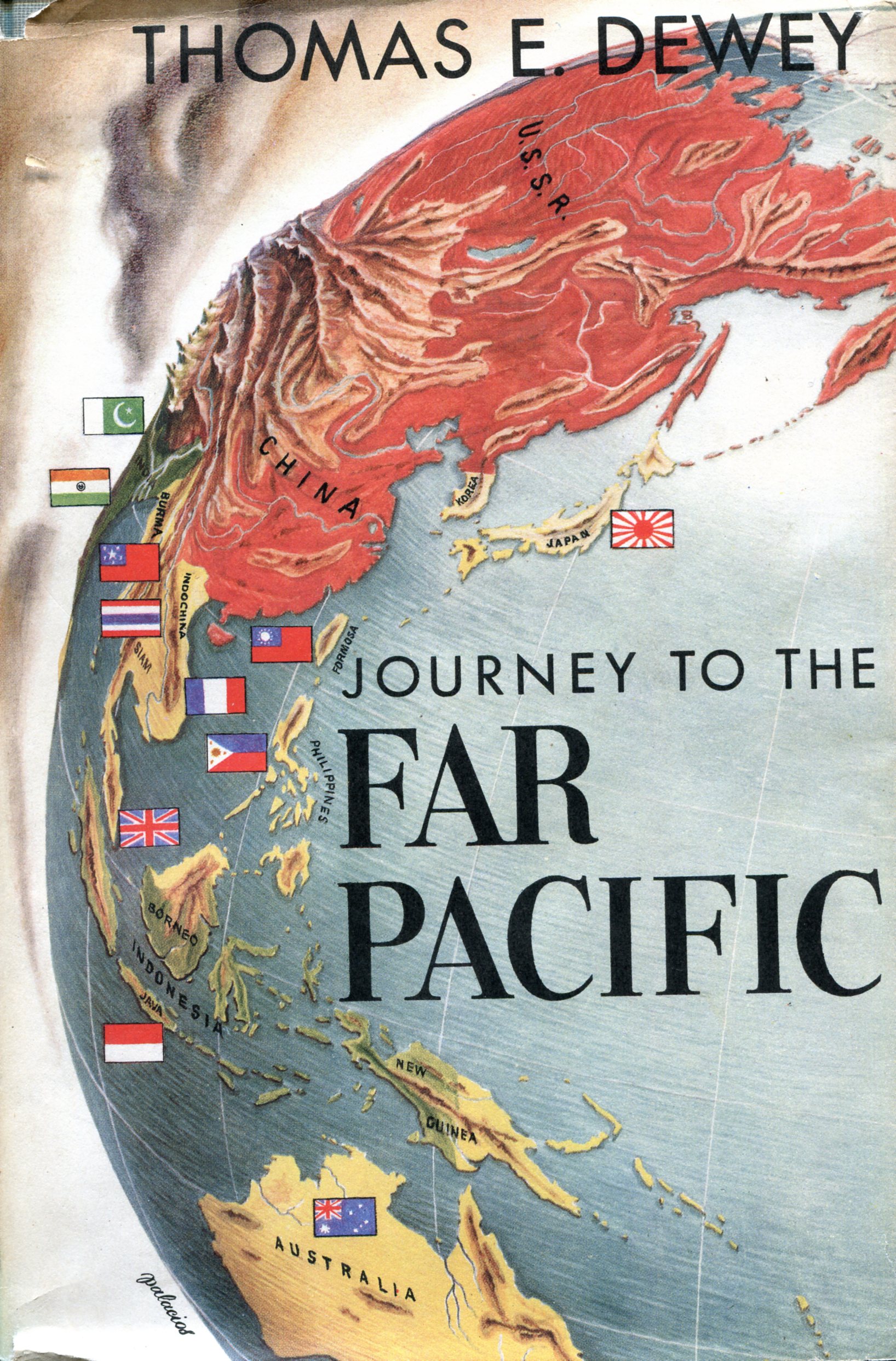
Journey to the Far PacificHere’s something I found in a resale shop the other day. Odd what you can get for $1.

Published by Doubleday & Co. in 1952, Journey to the Far Pacific is a forgotten tome by Republican politico Thomas E. Dewey, who (considering the country’s disregard of its own history) is at some risk of being forgotten himself. Then again, he’s probably one of the better-known presidential election losers. If you’re going to lose, do it in a surprising, spectacular way.

The book’s blurb notes: “A few months ago New York’s Governor Thomas E. Dewey set out on an extensive tour of the Orient to view conditions at first hand and to form for himself impressions of the peoples and nations who stand between Communism and the California coast. During his trip he traveled forty-one thousand miles, visiting seventeen republics, kingdoms, territories, and colonies.”

The book’s maps are interesting. Of course they are. Note that on the cover, communist-controlled territory is red-orange, including half of the Korean peninsula but not Taiwan, which naturally is called Formosa.

The map that illustrates the main title page shows the “Chinese Republic” as including all of the modern PRC except Manchuria — which is separated as if it were independent — as well as Mongolia, which is merged into China as if it weren’t independent (it was a Soviet satellite, but still technically independent in the early 1950s). Ulaanbaatar is called “Urga.” It’s easier to spell, anyway.

Thomas Dewey 1952Unfortunately, there’s no index to look things up conveniently. Not sure when I’ll get around to actually reading the thing, but for now owning it’s enough.

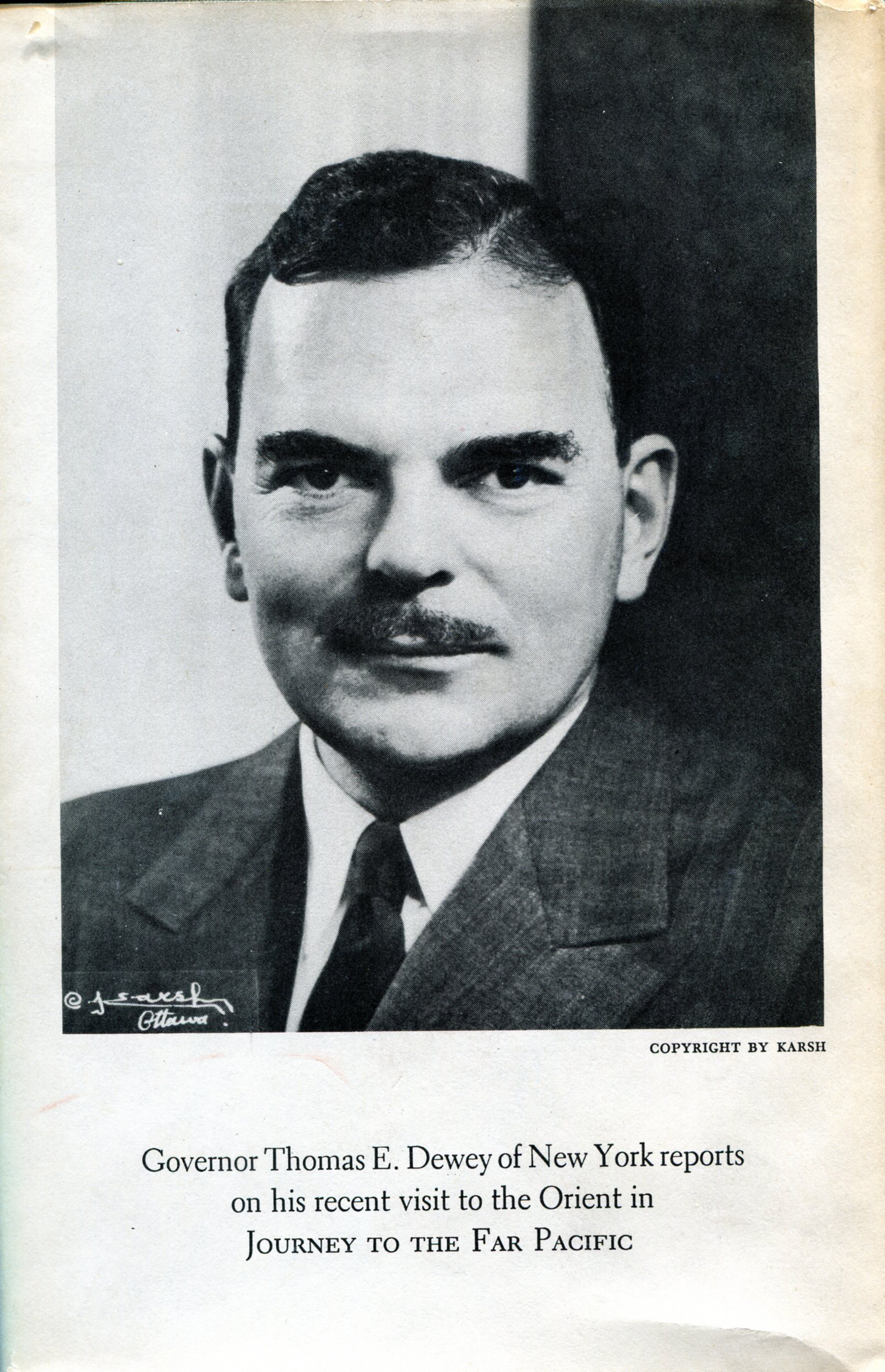
Dewey’s on the back cover. I never appreciated how oval his head was. There’s a monograph in that somewhere: head shapes of the men who ran for president. Maybe one shape or another tends to win.

That’s a Yousuf Karsh photograph of Dewey. Not one of his better-known images. Not bad, but it doesn’t have the luster of some of his more famed shots. Then again, maybe it was hard to make Dewey look like he had even an ounce of charisma.

The Rock Island National Cemetery & Confederate Cemetery

These days, visiting the Rock Island National Cemetery means crossing over to Arsenal Island (formerly Rock Island) in the Mississippi River, which is located smack in between all four of the Quad Cities. The island is occupied by a U.S. Army facility, and has been the site of one kind of military installation or another for about two centuries. You pass through a checkpoint where a soldier looks at your driver’s license and asks your business, and then it’s a short drive the cemetery.

It was a quiet place on the morning of March 28, a Saturday. It’s probably quiet most of the time.

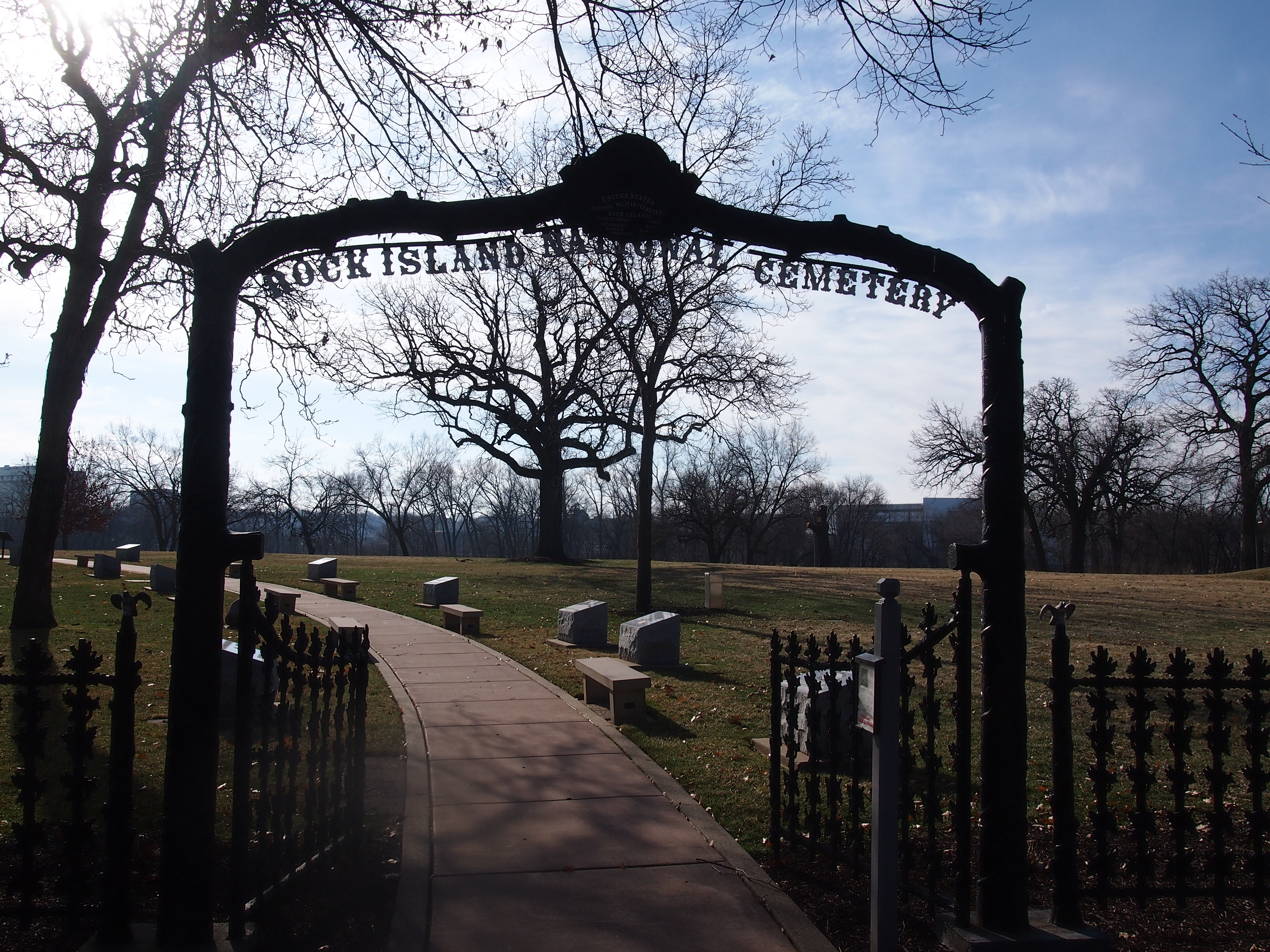
Rock Island Nat'l Cemetery March 2015The entrance to the Rock Island National Cemetery used to be marked by this piece of ironwork.

Rock Island Nat'l CemeteryThese days, the historic gate marks the entrance to the cemetery’s Memorial Walkway, which features about 30 memorials to various branches of the armed forces, or groups related to them, such as Pearl Harbor survivors, Mexican War veterans, female veterans, Gold Star Mothers, and local veterans organizations. I was glad to see that the Seabees have a stone there.

Not that I have a special connection to the Seabees, though I used to work with a fellow who said that his brother, who had died in Vietnam, had been a Seabee. It’s nice to see lesser-known battalions get their due.

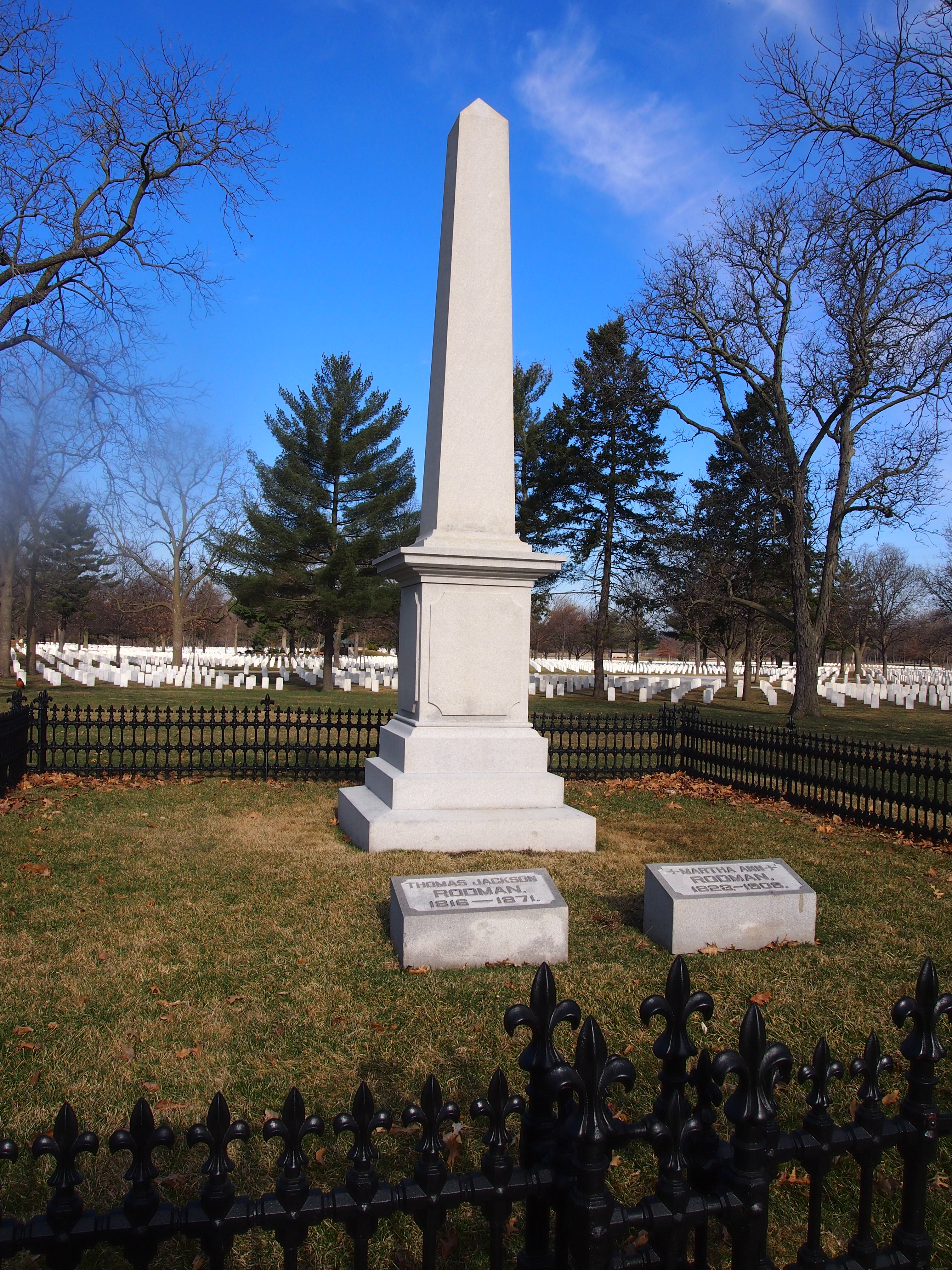
The walkway leads to the grave of Thomas J. Rodman and his wife, Martha Ann. The NPS says that “Brigadier General Rodman, the ‘Father of Rock Island Arsenal,’ was an officer during the Civil War and was the arsenal’s commanding officer from 1865 to 1871…

Gen. Rodman's grave“Rodman invented the construction method used in producing [Rodman guns], which involved casting the cannon barrels around an air- or water-cooled core, ensuring that the barrel cooled and hardened first. This allowed the cannon to withstand higher pressures, making them stronger, safer, and more reliable, while also greatly increasing the lifespan of the cannon.”

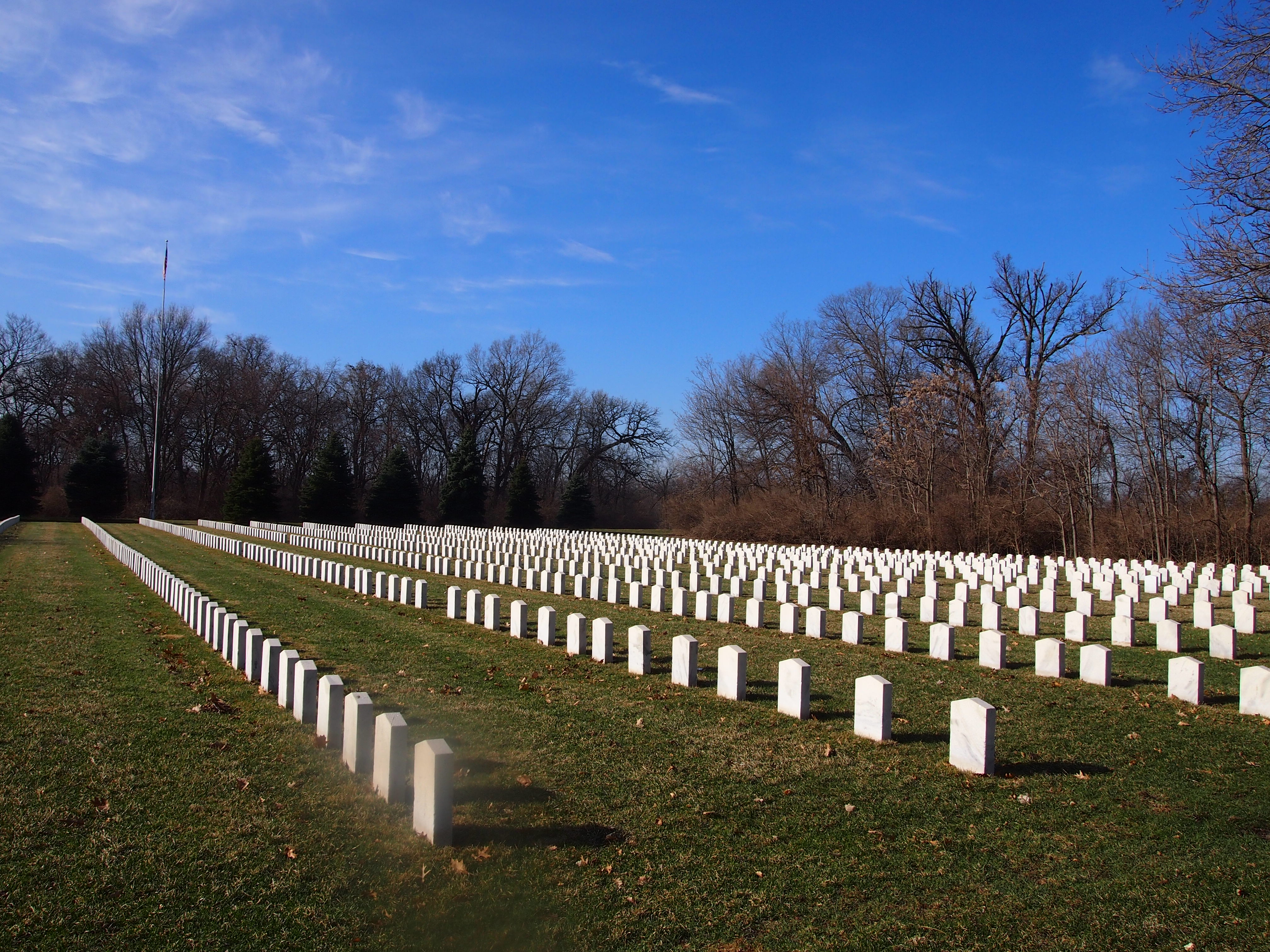
Not far from the Rock Island National Cemetery is the Rock Island Confederate Cemetery, “final resting place for nearly 2,000 prisoners of war who died in captivity from disease and the poor living conditions of the camp,” the NPS says.

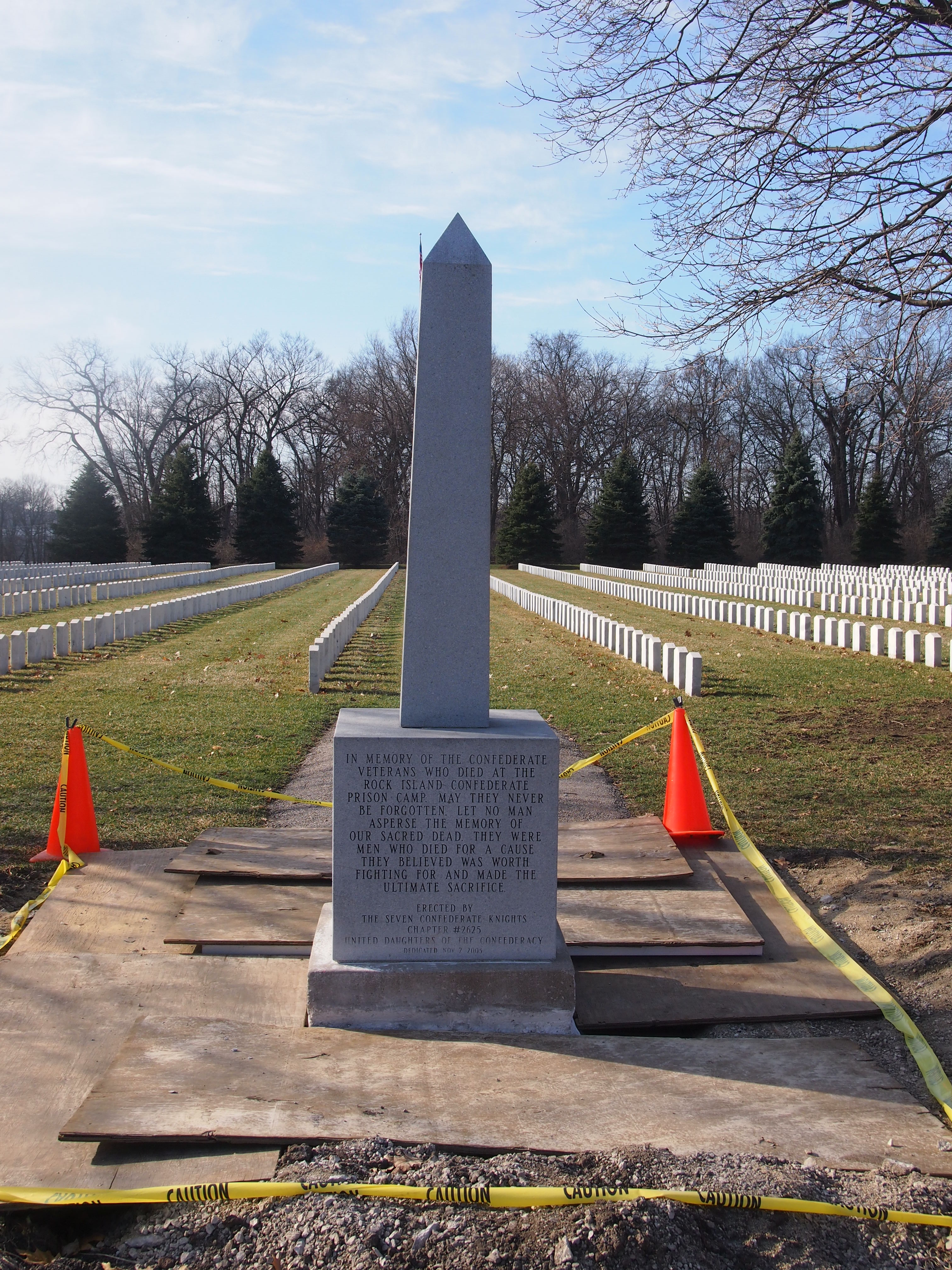
Confederate Cemetery, Rock Island, Ill.It’s a much simpler cemetery, with only one memorial besides the gravestones, a six-foot obelisk erected only in 2003. (Some work around it seems to be under way now.) It says:

Confederate memorialIn memory of the Confederate veterans who died at the Rock Island Confederate Prison Camp. May they never be forgotten. Let no man asperse the memory of our sacred dead. They were men who died for a cause they believed was worth fighting for, and made the ultimate sacrifice.

Erected by the Seven Confederate Knights Chapter #2625 and the Daughters of the Confederacy.

The Rock Island prison camp, incidentally, is where Margaret Mitchell put character Ashley Wilkes after his capture in the service of the CSA. So by a peculiar circumstance, he’s better known for being there than any of the actual prisoners.

Don’t Call It a Hooverville

Just off of I-80 in east-central Iowa is the town of West Branch, hometown of Herbert Clark Hoover. These days, you can visit the Herbert Hoover National Historic Site there, as we did on March 27.

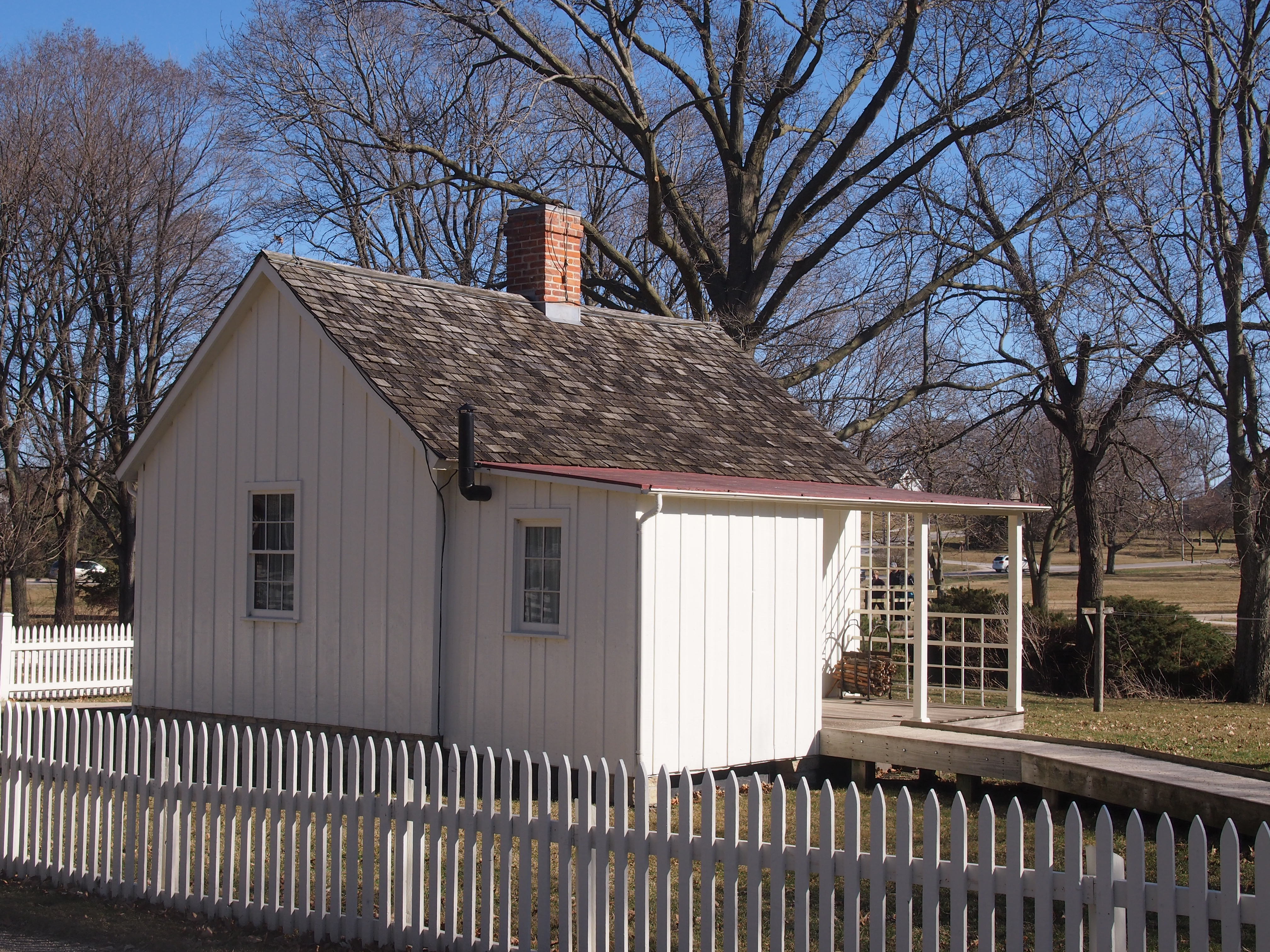
Besides the museum and library, and the graves of President and Mrs. Hoover, the site includes a collection of 19th-century buildings moved from other parts of town to form a sort of young Hoover-era village: a half-dozen houses, a schoolhouse, Jesse Hoover’s smithy, a Friends Meeting House, and a barn. All of these were put in the vicinity of Hoover’s birthplace cottage, a two-room structure in which HH came into the world on August 10, 1874. It’s the only thing in the area that hadn’t been moved.

It’s a small place. Really small: 280 square feet.

Herbert Hoover birthplace March 2015“Like any couple just starting out, 21-year old Hulda Minthorn and 23-year old Jesse Hoover were eager to have a place to call their own,” the NPS says about the cottage. “Shortly after their first wedding anniversary, and with the help of his father Eli, Jesse built this simple, but sturdy two-room cottage in the spring of 1871 on the corner of Downey and Penn streets.

“Looking around this house, you may think the Hoover family was poor. But their prudent spending, strong work ethic, and resourceful ways were actually a reflection of their Quaker beliefs.” More about the cottage is here.

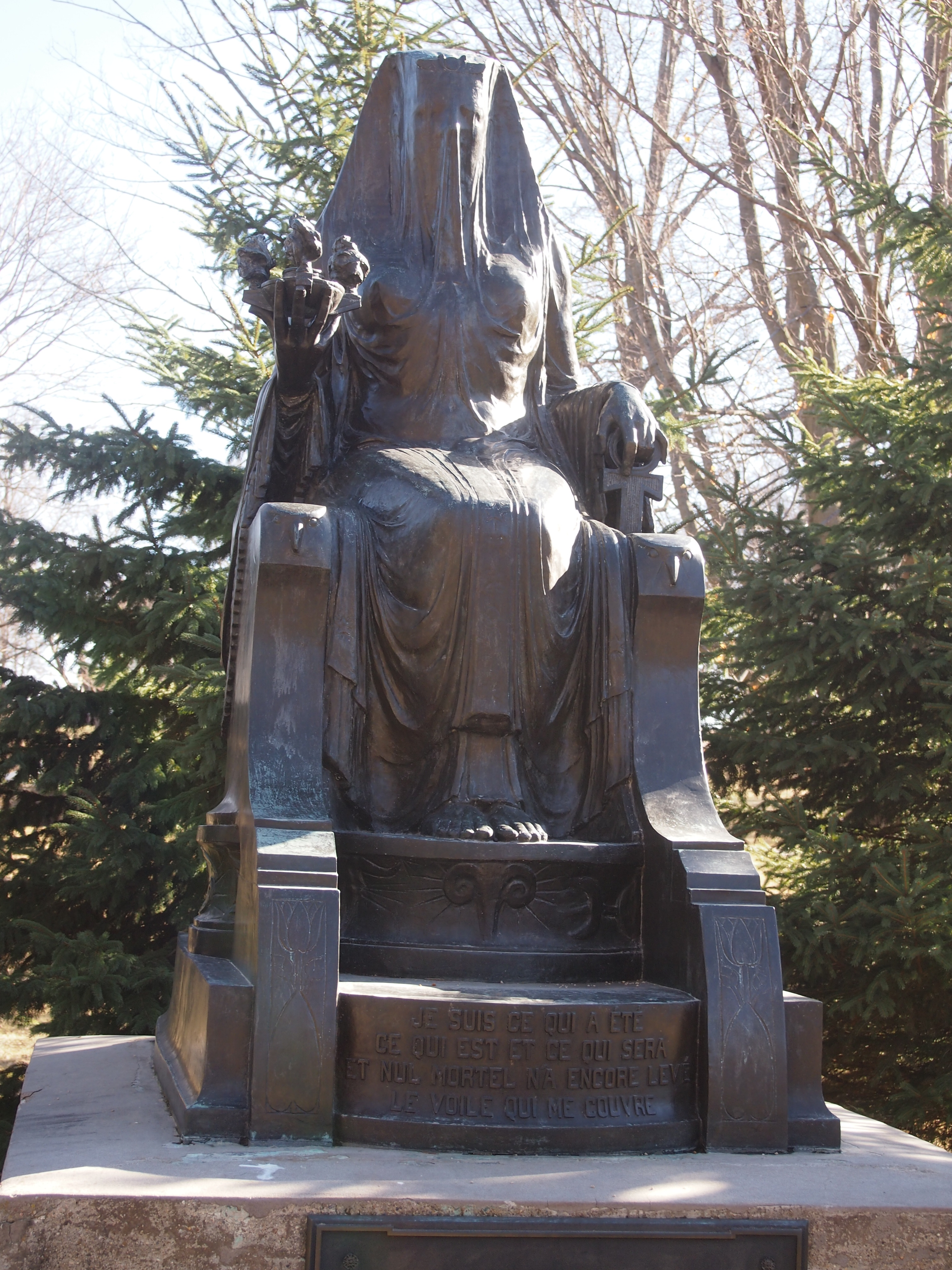
Across Hoover Creek from the cottage is a curious thing. A statue of Isis — the ancient Egyptian deity, that is. How many monumental statues of Isis are there in Iowa? Maybe just this one. How many anywhere? I couldn’t say, but I do know there’s one at the Herbert Hoover National Historic Site.
Isis in Iowa, 2015“Considering Herbert Hoover’s Quaker upbringing, you might be wondering why there is a statue of Isis, ‘the Egyptian goddess of Life,’ sitting on the grounds of his birthplace,” says the NPS. “This bronze, seven-and-a-half-foot tall statue is the work of Belgian sculptor Auguste Puttemans [apparently his last work] and was a gift from the children, refugees, and soldiers of Belgium in gratitude for Hoover’s famine relief efforts on their behalf during the First World War.”

The Old Capitol, Iowa City

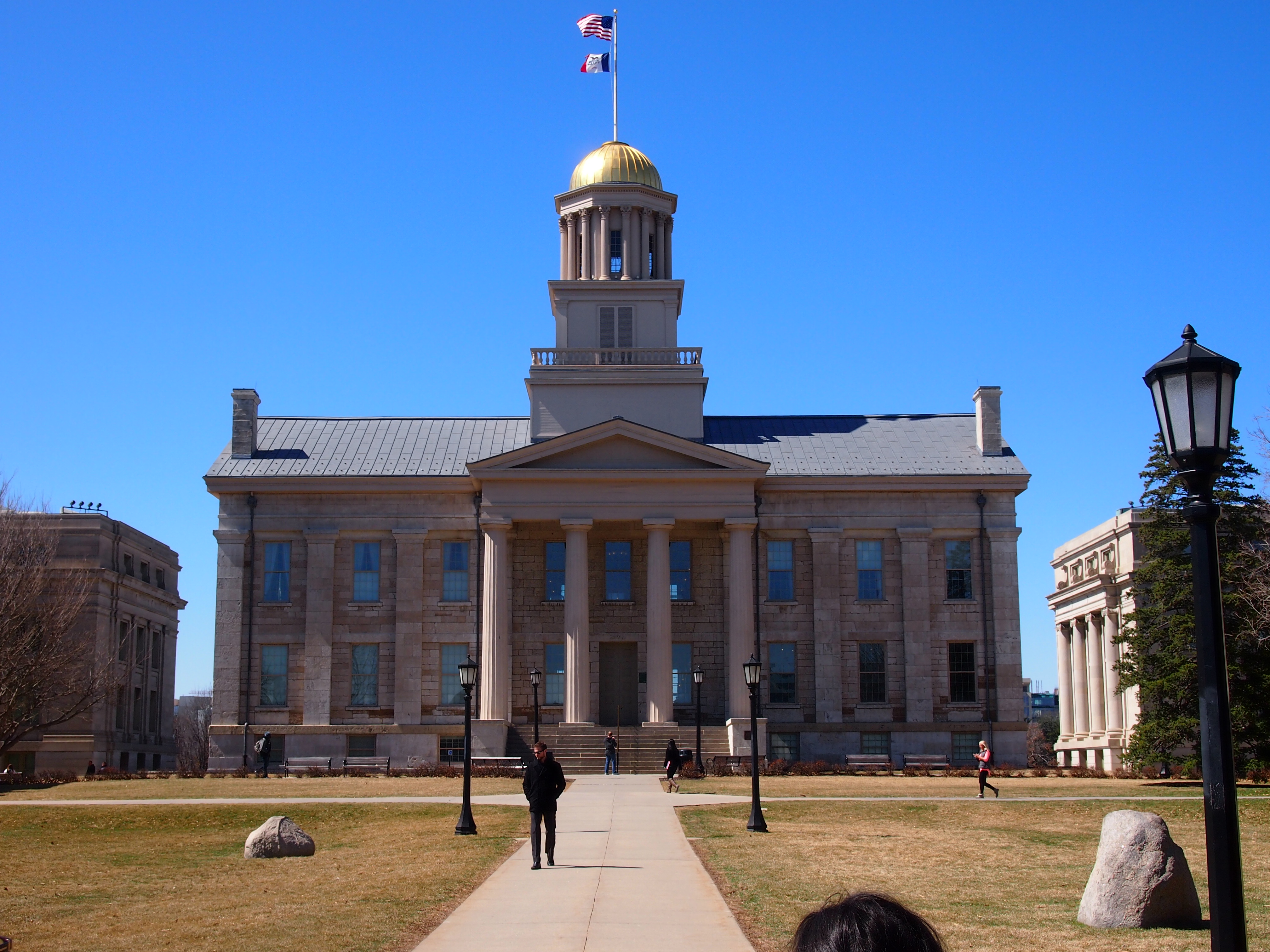
I’m glad to report that the Old Capitol in Iowa City, now part of the University of Iowa but formerly the territorial capitol and then the first Iowa state capitol, has recovered from the fire of 2001. It’s in fine shape these days.
Old Capitol, Iowa City, March 27, 2015When we visited town that year, before the fire, the building was closed for renovations. A workman accidentally set its dome on fire that November, and so the building was closed much longer than planned, until 2006. As a fan of capitols, both former and present (an example of each: Florida and Louisiana), I was happy to get a look inside this time around, in the old House and Senate chambers, the Iowa Supreme Court’s former chamber, the old state library, the spiral central stairs, and more. All well-appointed with period artifacts.

Old Capitol interiorAs usual with this kind of museum, I wondered, where’s the clutter? Pictured above is a tidy, nearly empty desk. An actual desk of an actual 19th-century government official would have had more papers and other debris. Maybe all kinds of clutter — documents, newspapers, books, a half-eaten lunch, the works. The quill pens wouldn’t be arrayed upright, ready to write. They’d be scattered around the desk, or maybe left in other parts of the room, leading the user to scrounge around and mutter, “Where in the blazes is that pen?”

Which leads to another question: weren’t quills old hat by the 1840s and ’50s, when this was a government building? I know nub pens were being manufactured in quantity by then, but maybe they were still scarce in the Iowa Territory.

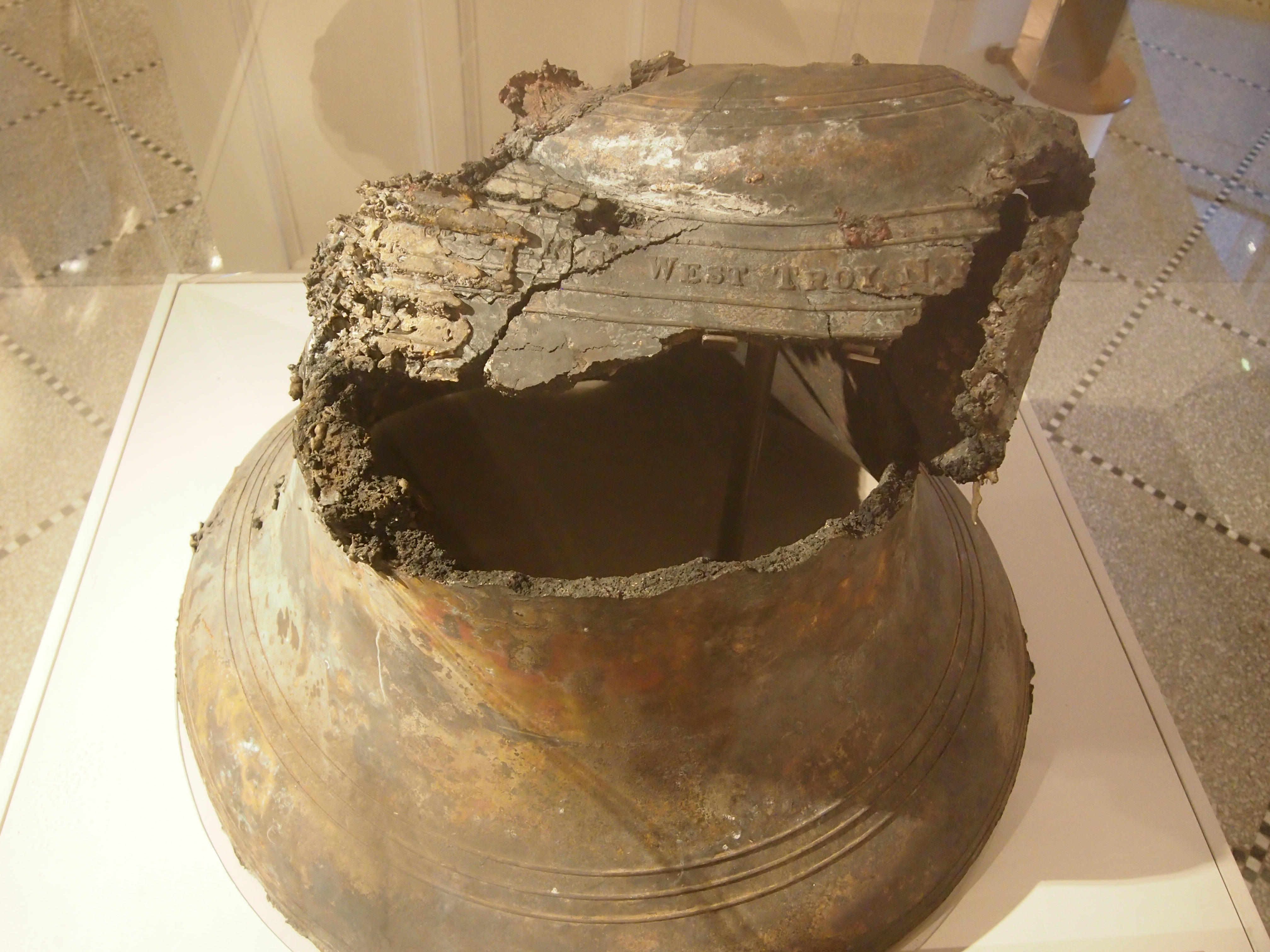
In the lower level of the Old Capitol is the what’s left of the old bell, a victim of the 2001 fire.
Old Capitol BellThe sign next to the ruined bell tells us, “Housed inside the tower was Old Capitol’s third bell, which fell when its wooden yoke burned. The bell broke around the neck and landed on its side in the tower debris.

“The mass of mangled metal shown here is all that remains of the 1864 bell — the only casualty from more than 750 artifacts. Twists and turns in the metal reveal nails, pieces of copper and gold leaf from the building’s original construction.”

The university managed to acquire a replacement bell much like this one, only in better shape. The sign continues: “During the tower reconstruction, Old Capitol staff located a similar antique bell from the Verdin Bell Company in Cincinnati… this bell was cast by the same foundry as the burned bell, is approximately the same age, and, at 1500 pounds and 42 inches in diameter, is slightly heavier and wider than the 1864 bell.”

San Antonio Debris

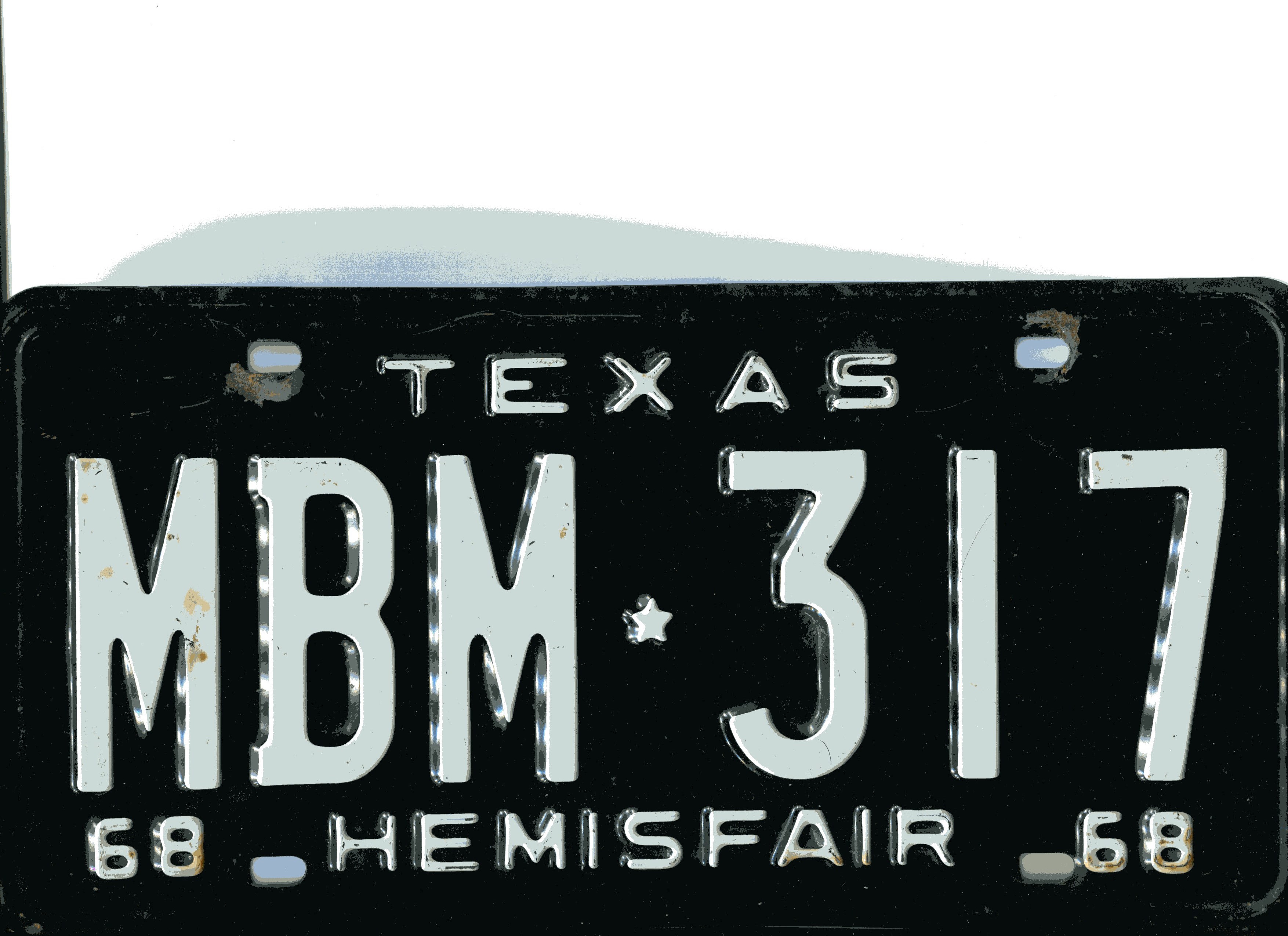
I come by my packrat nature honestly. While at my mother’s house last month, I found a number of things tucked away, all of them stashed for decades. Such as some old license plates in the garage.

HemisfairPlate68That comes from the former practice by the state of issuing new plates every year, rather than the cheapo modern practice of issuing stickers. Once upon a time, I guess, the state had to keep its prisoners busy. Or at least I always heard that prisoners were the ones making the plates.

For the above plate, the year is special: 1968. Texas hosted a world’s fair that year, the punning HemisFair by name, which I was fortunate enough to attend. So the plates boasted of the fair.

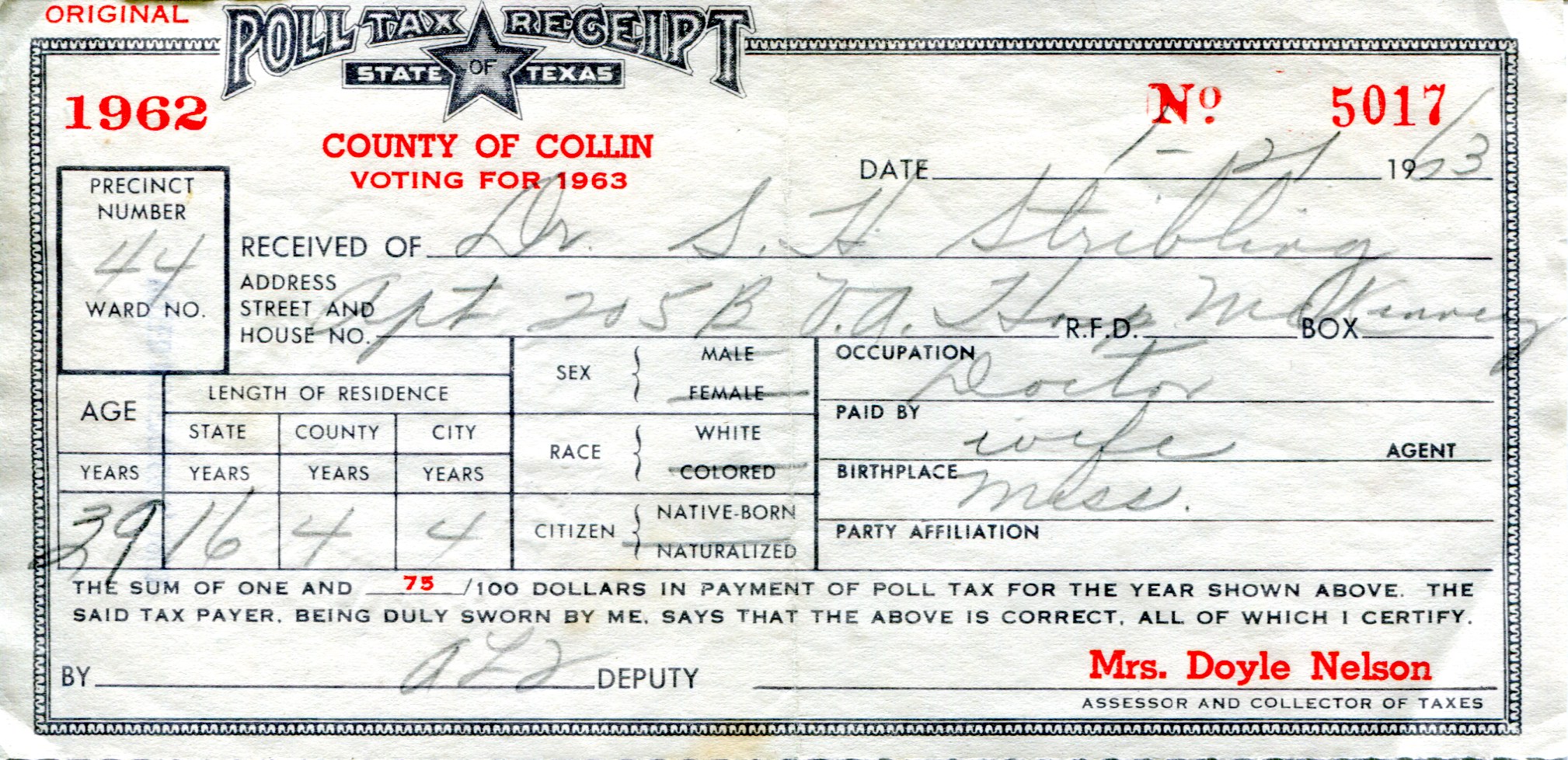
I was astonished to find this tucked away among some papers in a cabinet.

poll tax receiptA poll tax receipt from 1963 for my father’s payment of the tax. Fortunately, that execrable practice was well on its way toward ending by then, but it was still hanging on in Texas and a few other states. The nails in the coffin were the ratification of the 24th Amendment the next year, and the Supreme Court decision in 1966 that the amendment applied to all elections, not just federal. Interestingly, the Texas legislature got around to ratifying the amendment in 2009, no doubt as some kind of symbolic gesture.

I also spent some time in our library. When my mother bought the house, it was a porch covered by the roof, but open to the elements. About 40 years ago, she hired a contractor — who did a terrific job — to add a wall and put bookshelves on every wall, with some cabinets on the lower levels. It’s full of books, as a library should be, though in some disarray.

Library 2015Many are the SF titles that my father and brothers amassed. In high school, I alphabetized most of them, and so they remain. Here’s a row of Poul Anderson novels. The only one I’ve ever read was The High Crusade, during my bus trip to Utah in 1980, though I also read the story “The Man Who Came Early” at one time or other.

Poul Anderson paperbacksElsewhere on the shelves, I found three books I decided to bring home to read eventually. The Man in the High Castle, because I’ve never read any Phillip K. Dick, and I want to read at least one; Metropolis, because I didn’t know it was a book before becoming the famed silent movie; and a collection containing “The Marching Morons,” whose notoriety I’m curious about. All of the editions are 50 years old or more. Cheap to begin with, they’re yellow and falling apart now. I might be the last person to read these particular editions.

The Old Spanish Trail Zero Milestone (One of Them, Anyway)

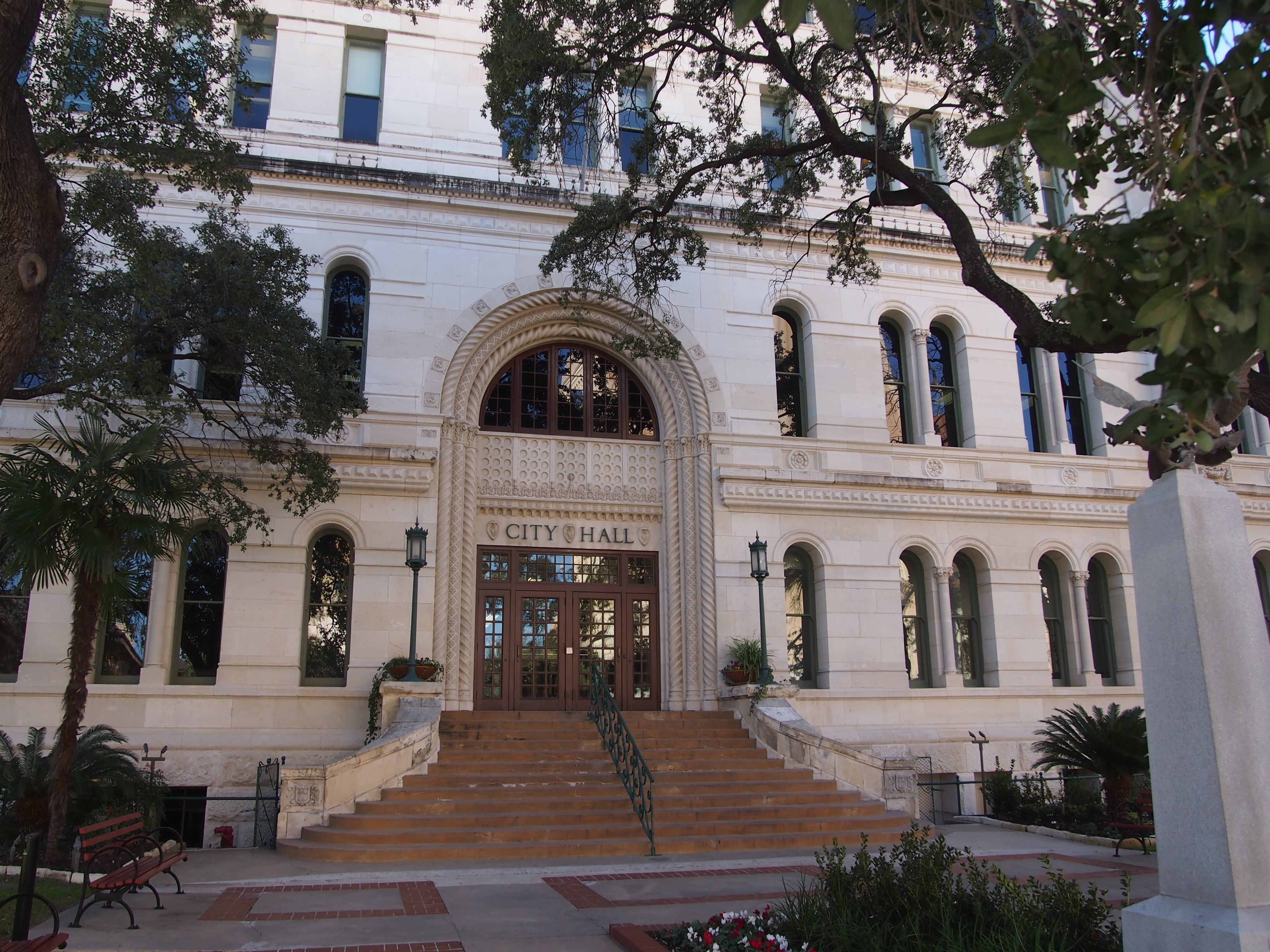
From San Fernando Cathedral, I made my way past San Antonio City Hall, which is a handsome Italian Renaissance Revival structure dating from the 1880s.
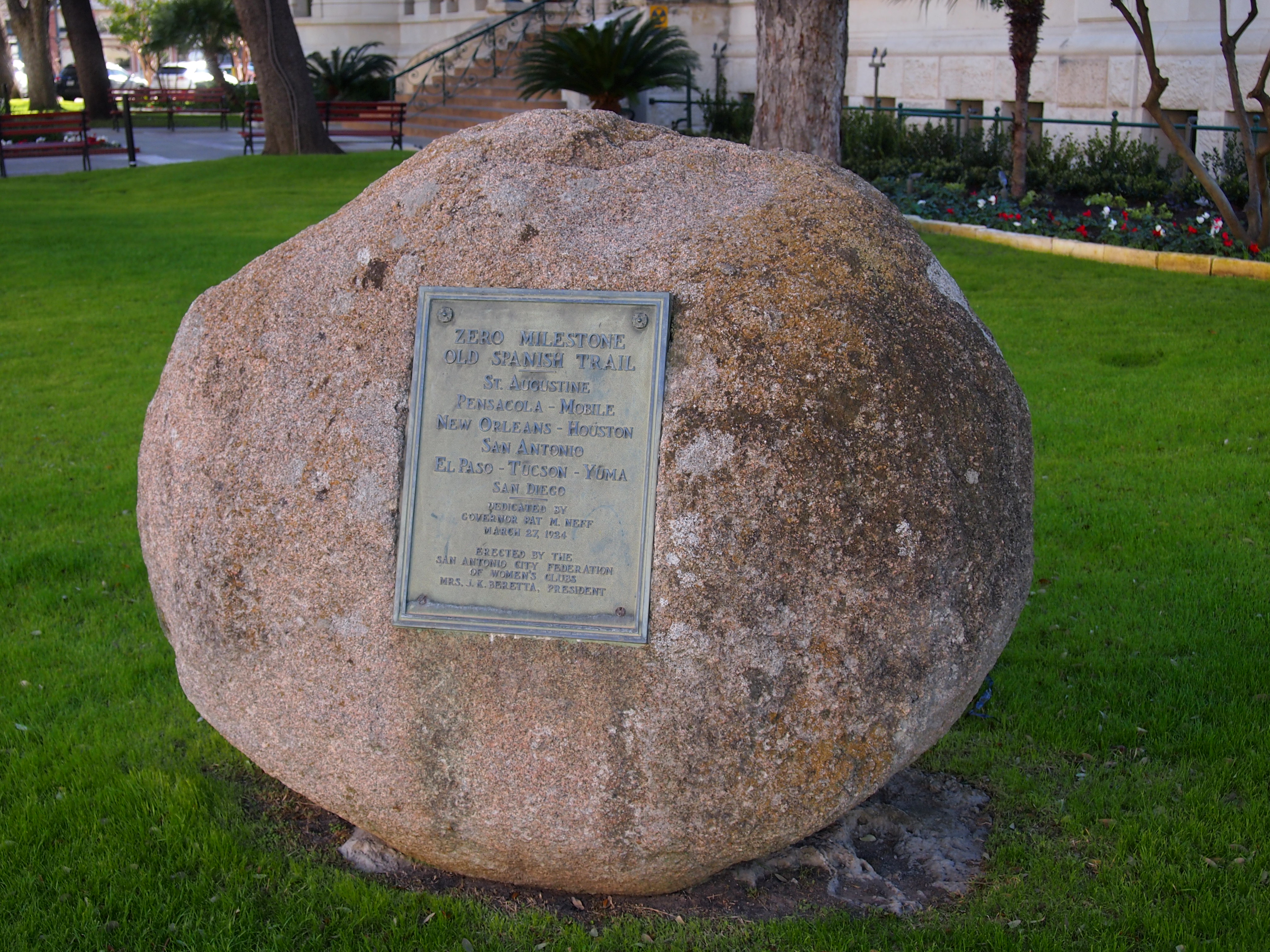
San Antonio City Hall Feb 2015Among the other monuments and markers on the grounds is a boulder with a plaque stuck to it. I have to say I’m a sucker for boulders with plaques stuck to them. This one’s apparently been there over 90 years.

San Antonio City Hall Feb 2015ZERO MILESTONE
OLD SPANISH TRAIL

St. Augustine – Pensacola – Mobile – New Orleans – Houston – San Antonio – El Paso – Tucson – Yuma – San Diego

Dedicated by Governor Pat M. Neff
March 27, 1924

Erected by the San Antonio City Federation of Women’s Clubs
Mrs. J.K. Beretta, President

Zero milestone, eh? Odd, considering that San Antonio is roughly in the middle of the route described by the cities on the plaque. This Old Spanish Trail, incidentally, has nothing to do with Spanish colonialism in North America, except that it passed through territories that were at one time or another part of the Spanish Empire. The OST was a 20th-century invention. (Confusingly, OST also refers to an earlier, non-motorized trail between Santa Fe and Los Angeles that did involve actual Spaniards.)

As this excellent article published by the Texas Transportation Museum notes, “…a very grand vision arose for a continuous highway from the Atlantic at St. Augustine in Florida to the Pacific in San Diego California, a distance of 2,817 miles…. The route was given a picturesque name, “The Old Spanish Trail,” as a marketing tool, much as naming the first Northern transcontinental route from New York to San Francisco, “The Lincoln Highway,” first proposed in 1912. The names were designed to capture the imagination of cities and counties along the proposed routes and encourage participation in the construction of the route, as the OST organization could not even begin to pay for all the roads and bridges that would be required.”

But why is there a zero milestone in San Antonio? Google “zero milestone Old Spanish Trail” and you’ll also find information about a plaque on a sphere in St. Augustine — dating from 1928.

Back to the Texas Transportation Museum article: “Governor Neff dedicated an OST zero milestone outside San Antonio city hall in March 1924. It is still there today… The first ceremonial drive across the 2,817 miles of continuously improved road, lined with signs put up by each state, began in San Diego, California on April 4 1929. Their arrival in San Antonio was ceremoniously greeted with a dinner at, of course, the Gunter Hotel.”

That doesn’t really answer the question. Maybe the San Diego-San Antonio stretch was finished first. Or more likely, the San Antonio City Federation of Women’s Clubs really wanted a marker.

A Few San Antonio Statues

I didn’t specifically seek out statues while visiting San Antonio, but sometimes I would be wandering along and there was another one. Such as this fellow, important enough to get a life-sized bronze downtown, on Houston St.
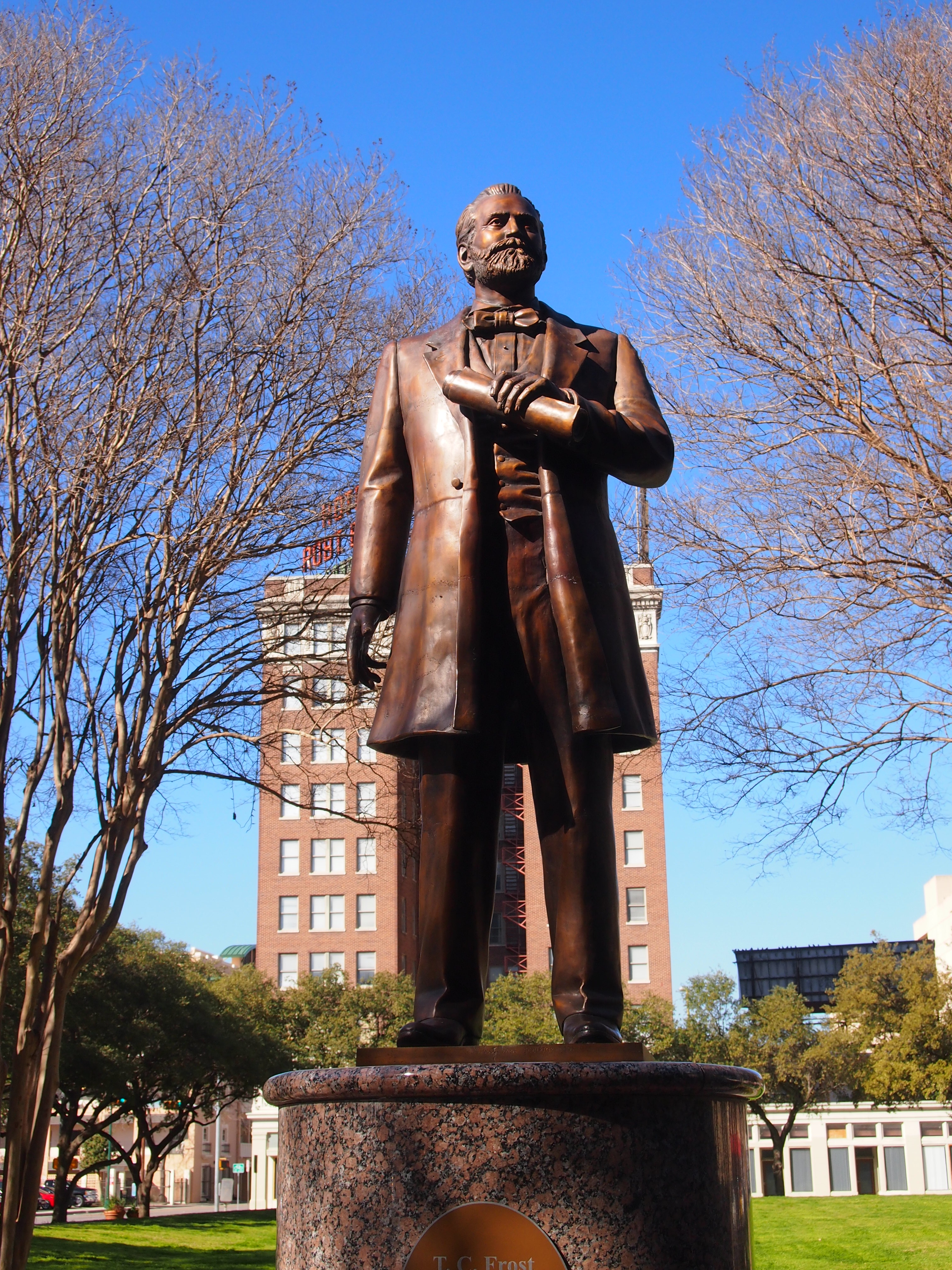
TC Frost San Antonio Feb 2015It’s Thomas Claiborne Frost (1833-1903): frontier lawyer, Confederate commander, wool merchant, and eventually banker. Frost Bank exists to this day as a major regional bank focusing only on Texas markets, and most recently it had the distinction of not being caught with exposure to the bum mortgages of the 2000s, and so turned down TARP money.

Sculptor Robert L. Dean Jr. did the Frost statue. He’s better known for a number of Eisenhower statues, including ones in Denison, Texas; West Point; Ike’s presidential library; and in London and Normandy. He also did Patton, Bradley, DeGaulle, and Eddie Rickenbacker, among others. I’d never seen the Frost bronze because it’s fairly new, put there only in 2001.

Here’s a person I didn’t know had a bust in San Antonio.
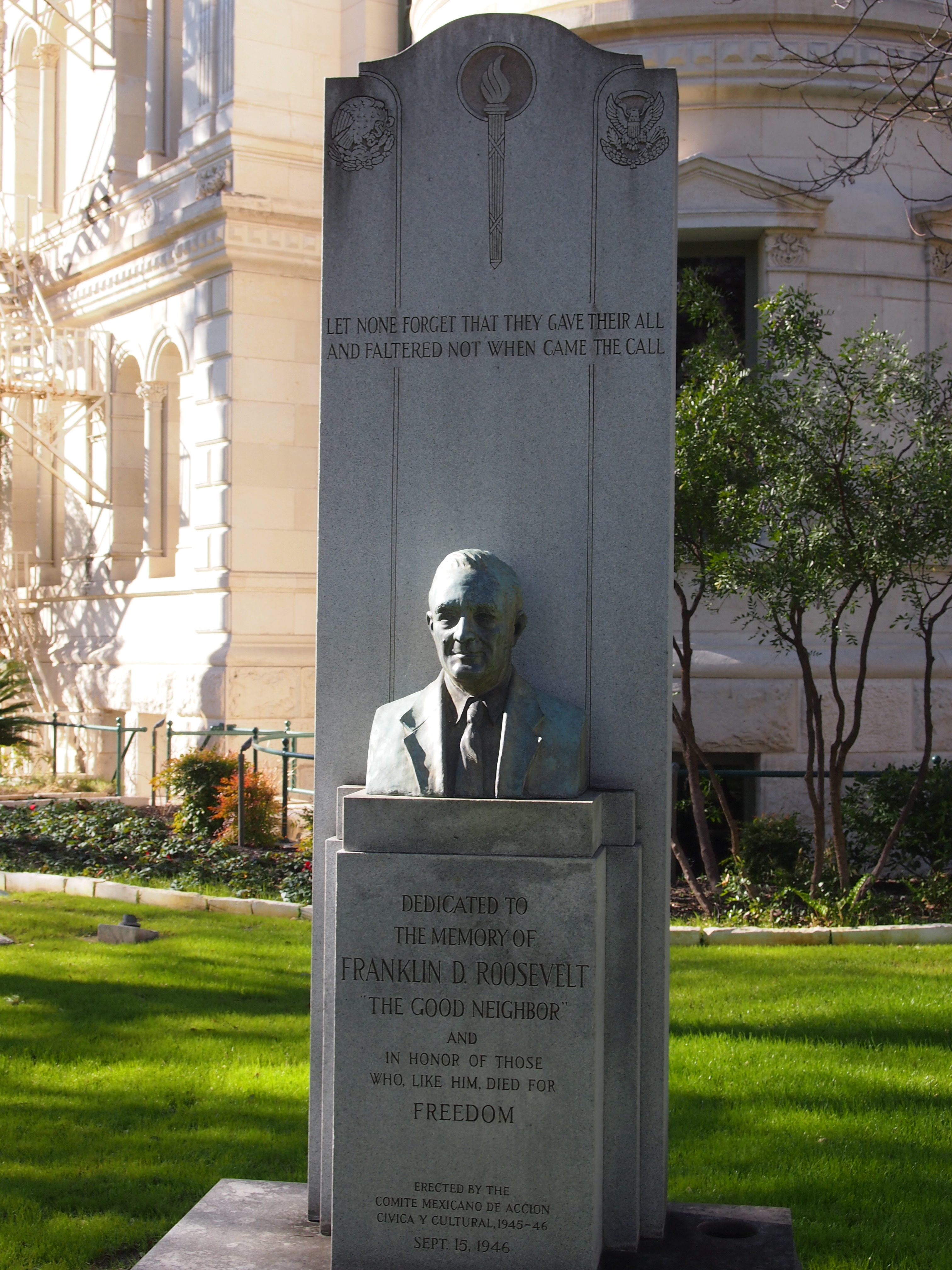
FDR San Antonio Feb 2015President Roosevelt, looking not quite like the FDR we know from photos and movies, but never mind. The memorial is on the grounds of San Antonio City Hall, a 1946 gift from Mexico — specifically, the Comite Mexicano de Accion Civica y Cultural. The sculptor was from San Antonio, however: Louis Rodriguez, a member of a family that still carves memorials and gravestones. Louis and his brother James best-known work is the Alamo Cenotaph.

Not far away is “The Conquistador,” a bronze outside the Spanish Governor’s Palace.
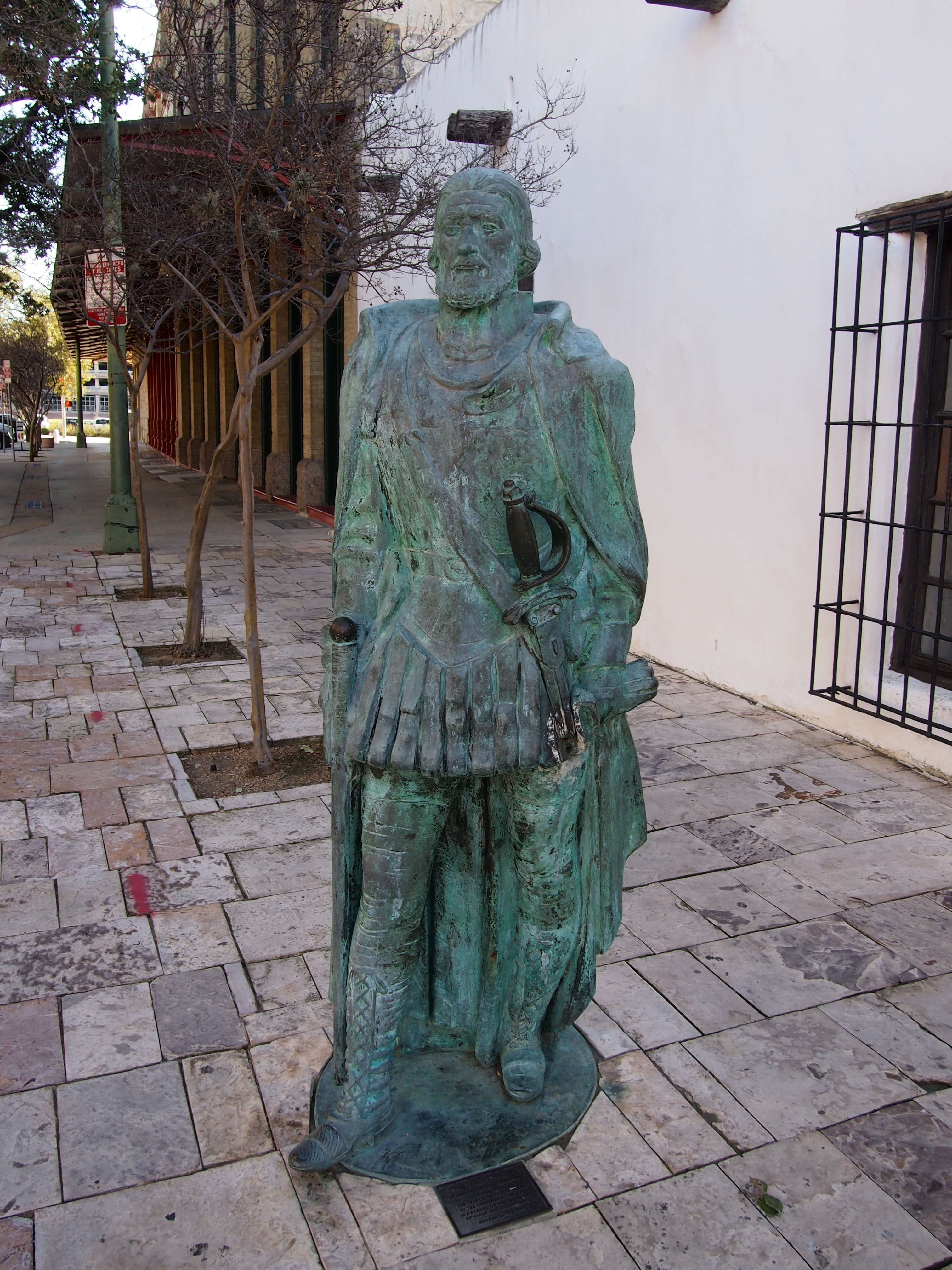
Conquistador, San Antonio Feb 2015It too was a gift to the city — by the government of Spain in 1977, “as a symbol of the close ties of Spain and San Antonio,” according to the plaque at the foot of the work. The sculptor was Enrique Monjo, who also did work at the National Cathedral.
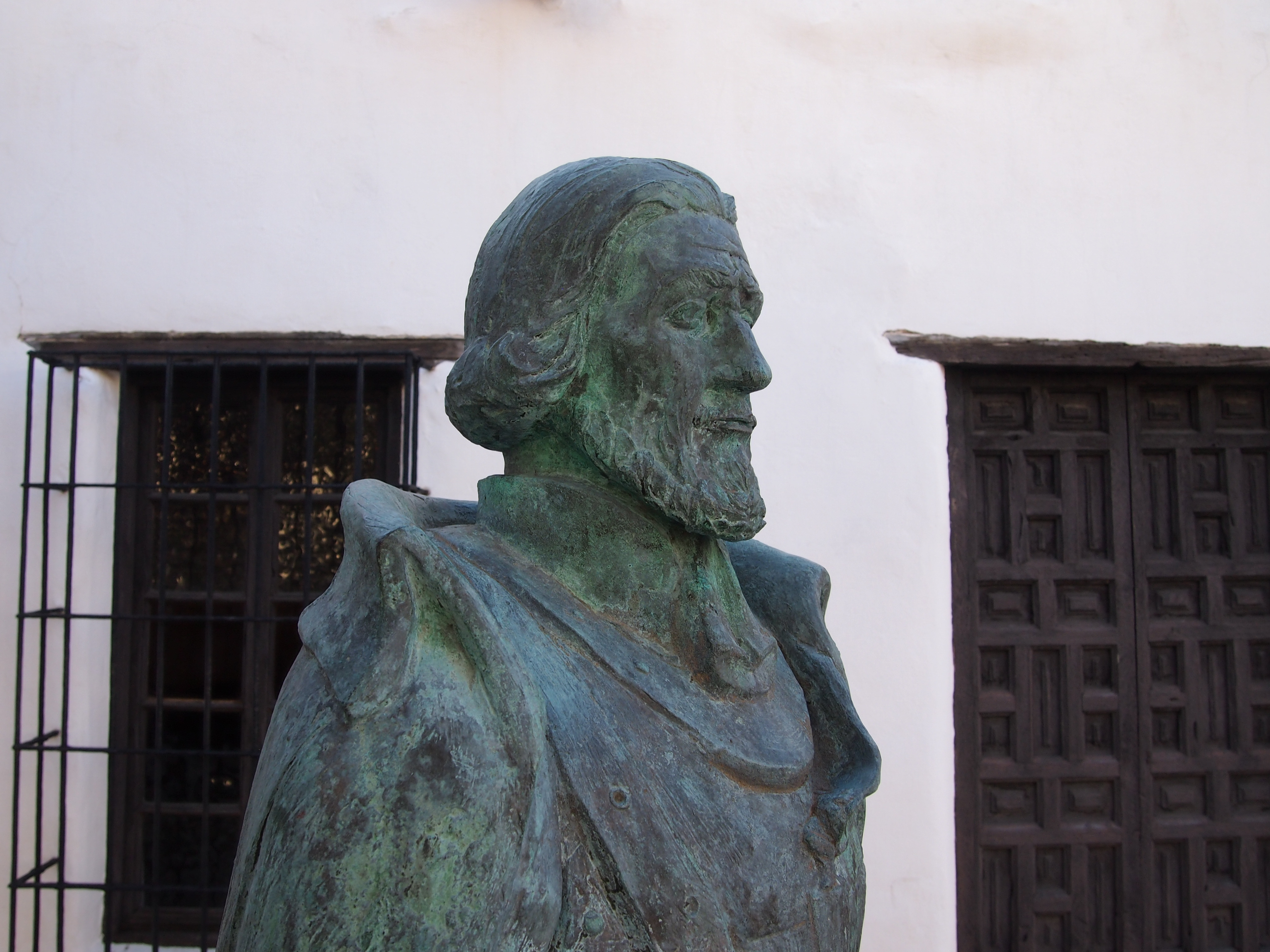
Conquistador San Antonio Feb 2015Here’s a fellow in a Texas pose.

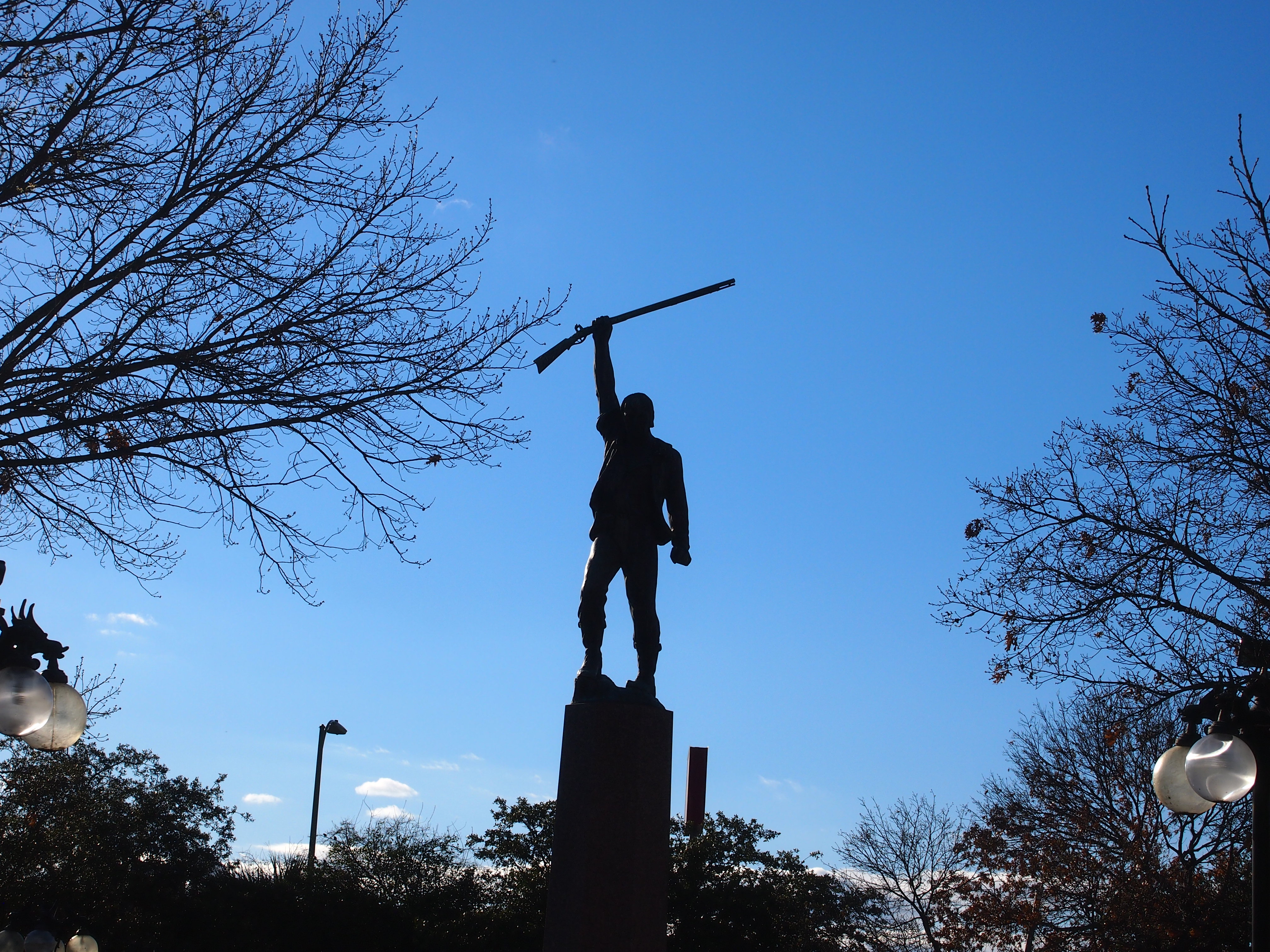
Miram Park San Antonio Feb 2015Who holds his weapon so defiantly? Texian Ben Milam, in Milam Park downtown. He was one of the leaders of the Texian forces in the Siege of Bexar in late 1835, which resulted in the capture of San Antonio from Mexican forces under Gen. Martin Perfecto de Cos, an incident that precipitated the better-known Battle of the Alamo a few months later. Milam didn’t live to participate in that, or even the conclusion of the Siege of Bexar, since a Mexican bullet hit him in the head on December 7, 1835, two days ahead of Cos’ surrender. Besides Milam Park, a scattering of other places in the state are named for him, such as Milam County, northeast of Austin. But the Ben Milam Hotel in Houston is no more.

One Bonnie McLeary did the statue, which was commissioned for the Texas Centennial in 1936, along with a number of other statues around the state. She’s better known, according to A Comprehensive Guide to Outdoor Sculpture in Texas (1996), for her “garden sculptures and her portrayal of children.”

Then there’s Jolly Jack.
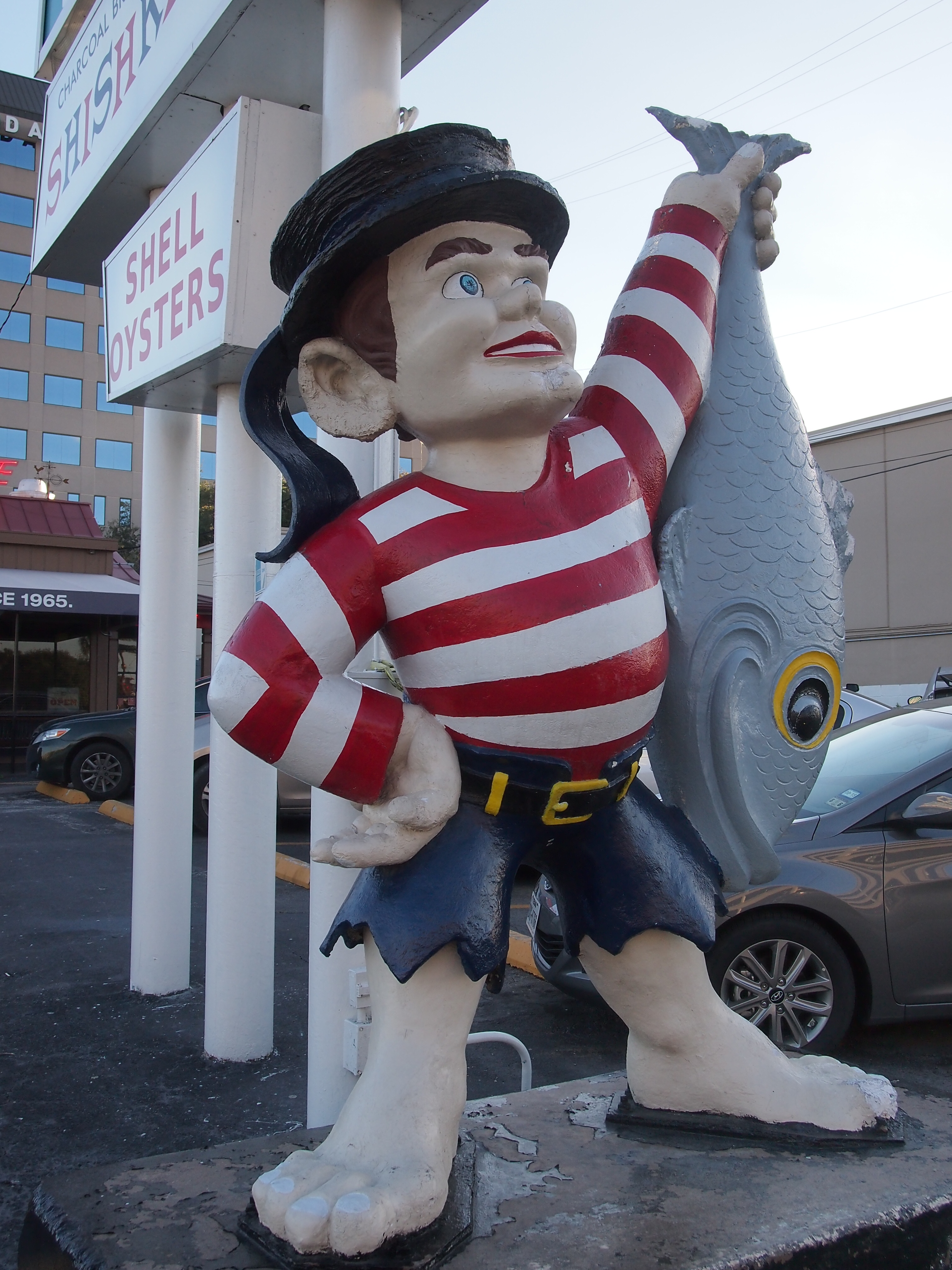
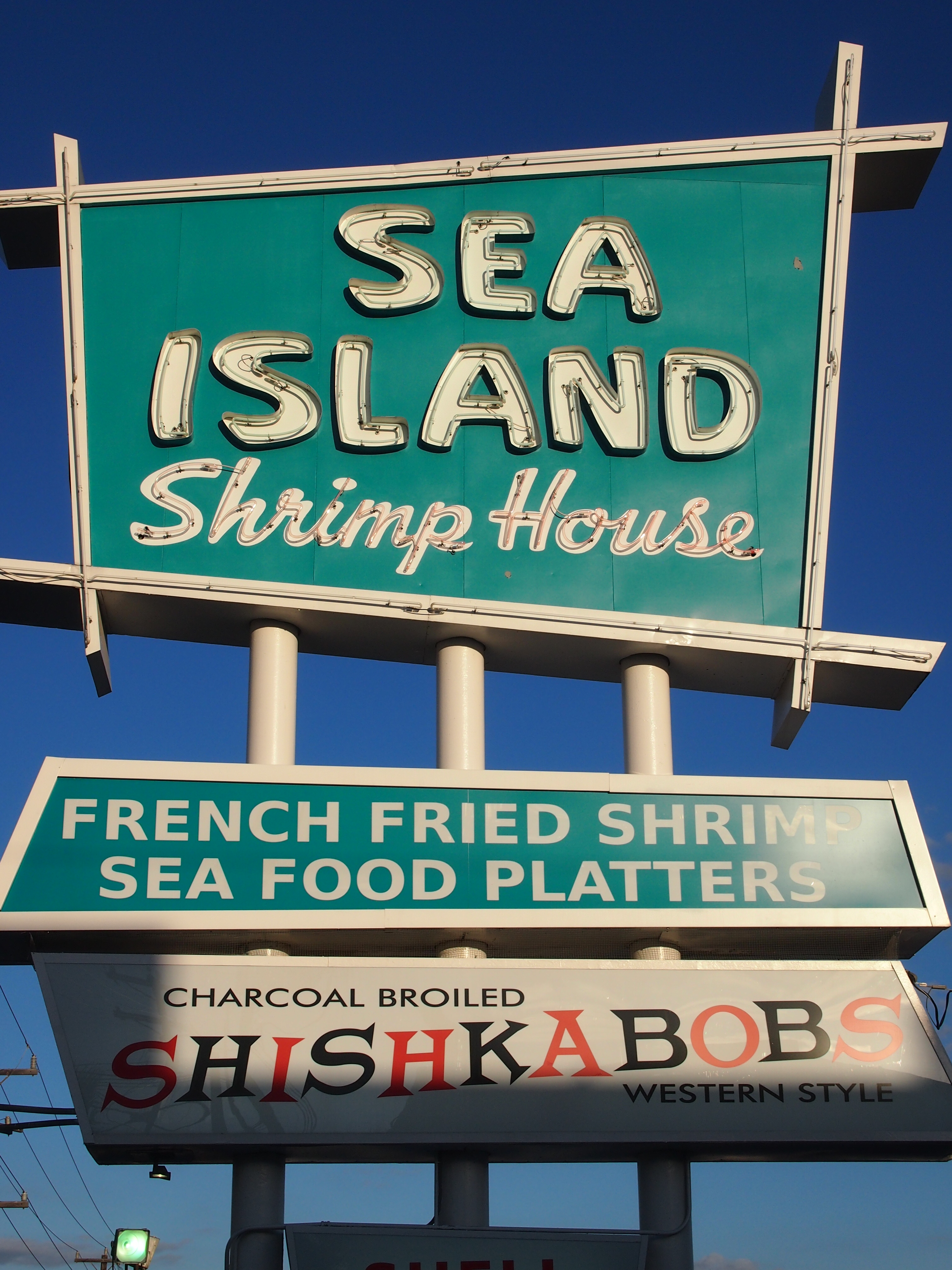
Jolly Jack San Antonio Feb 2015Sea Island San Antonio Feb 2015He stands outside of Sea Island, a restaurant on the North Side of San Antonio, near North Star Mall. Remarkably, I’ve been able to find mention of its creators, two Austin artists named Dana Younger and Kevin Collins, at least in this 1998 Austin Chronicle article: “In August, the area was dominated by Jolly Jack, a 10-foot-tall statue commissioned by Sea Island Shrimp House. Jack is the regional seafood chain’s answer to the classic Bob’s Big Boy, an oversized cartoon fat kid [looks like an old-time jack fisherman to me, not a fat kid] in cut-off blue jeans and bare feet, with a red-and-white striped shirt and a black top hat. He proudly holds a five-foot-long fish up in his left hand to entice potential diners. Collins and Younger were paid $9,000 to make the mold and will get $3,000 for each of three more Jolly Jacks.”

Treue der Union

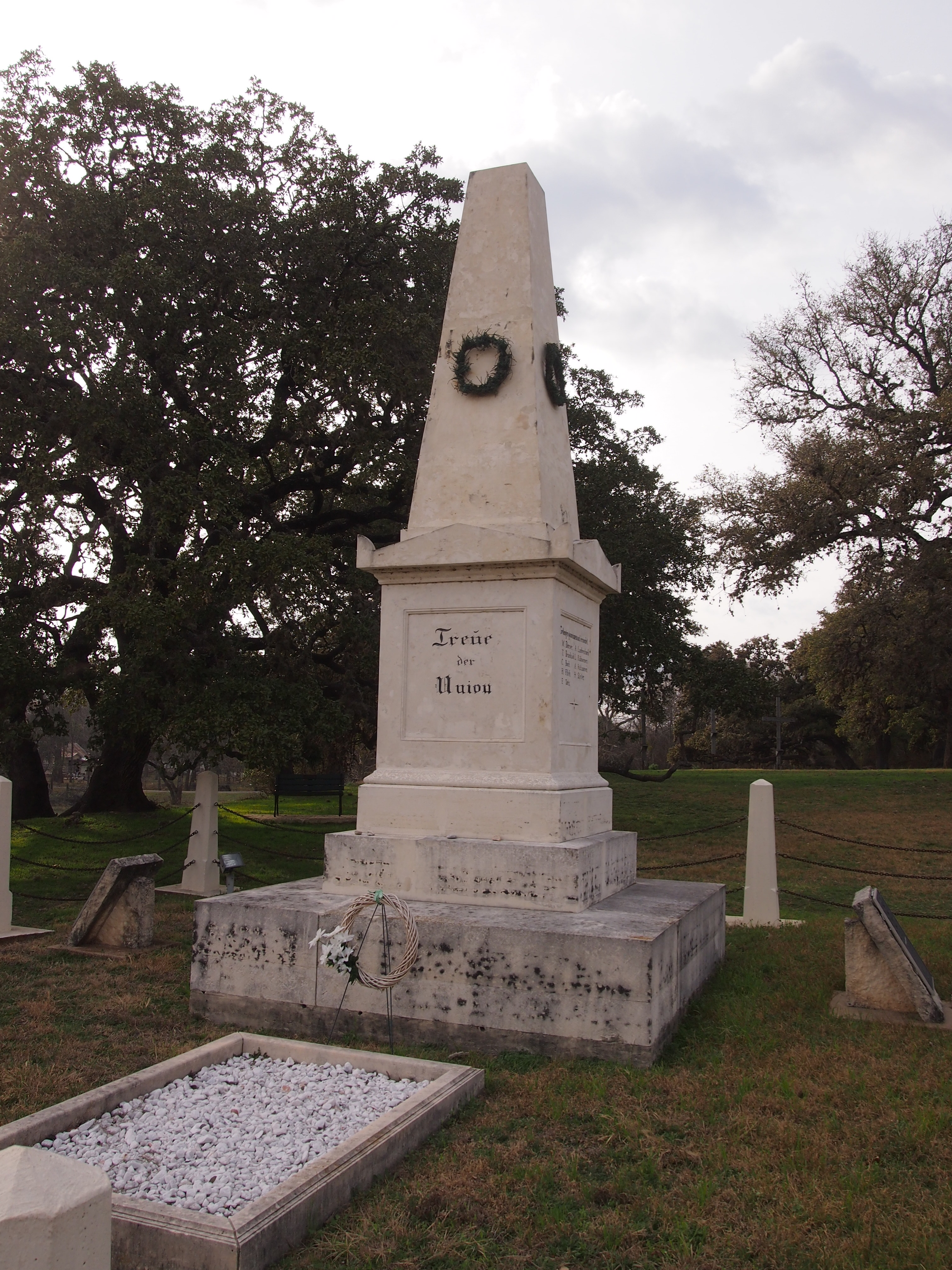
The Texas State Historical Association says that “the Civil War skirmish known as the battle of the Nueces took place on the morning of August 10, 1862, when a force of Hill Country Unionists, encamped en route to Mexico on the west bank of the Nueces River about twenty miles from Fort Clark in present-day Kinney County, were attacked by mounted Confederate soldiers… Contentions over the event remained on both sides, with Confederates regarding it as a military action against insurrectionists while many German Hill Country residents viewed the event as a massacre.

“After the war the remains of the Unionists killed at the battle site were gathered and interred at Comfort, where a monument commemorates the Germans and one Hispanic killed in the battle and subsequent actions. The dedication of the Treue der Union monument occurred on August 10, 1866. To commemorate the 130th anniversary of the memorial, the monument was rededicated on August 10, 1996. It is the only German-language monument to the Union in the South where the remains of those killed in battle are buried, and where an 1866 thirty-six star American flag flies at half-staff.”

The memorial stands on High Street in Comfort, Texas, between 3rd and 4th Sts., next to a piece of undeveloped land and across the street from a church and a school.
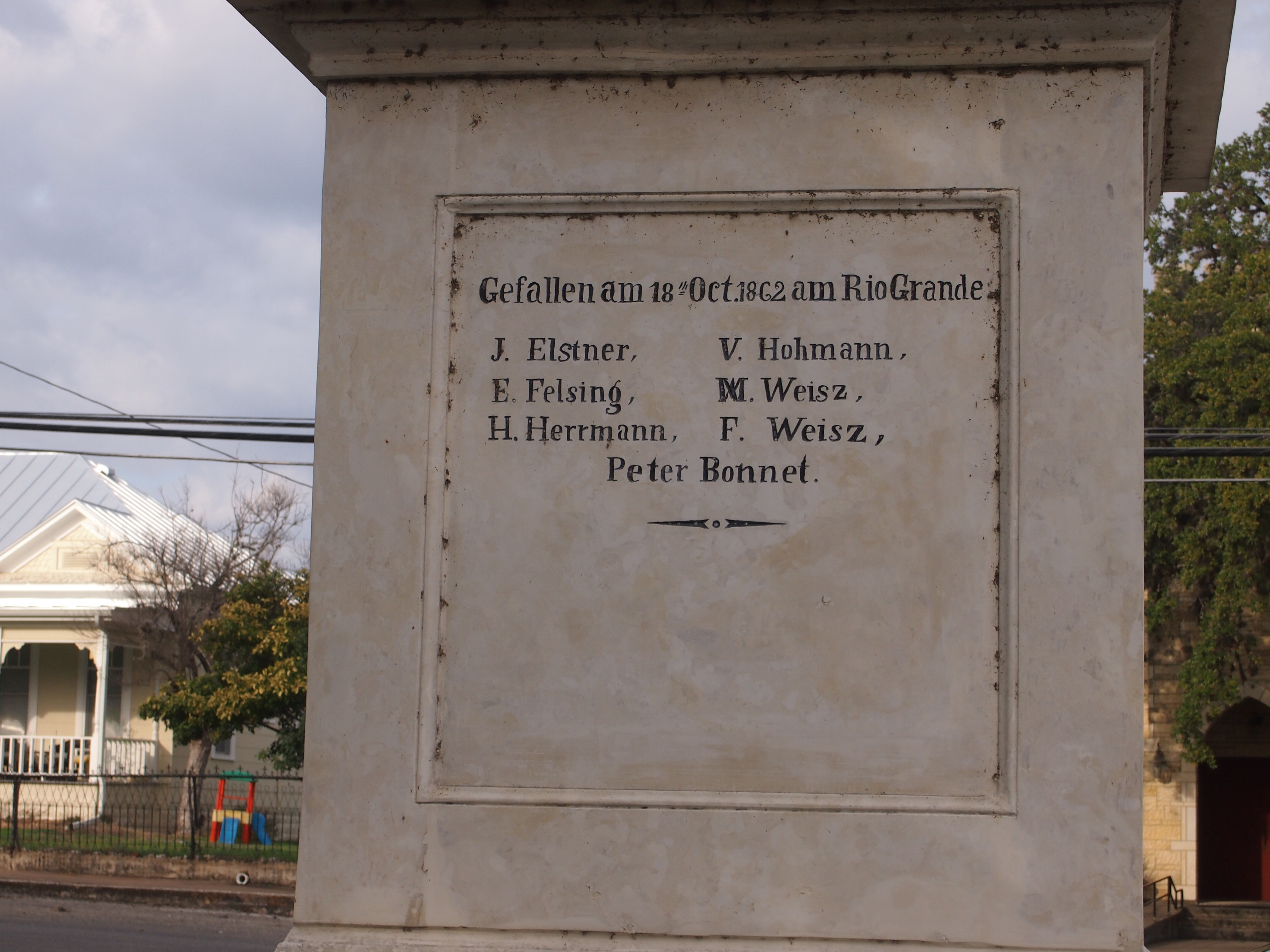
Comfort, Texas Feb 2105With the names of the dead on the sides. These fell in a later event in October 1862, on the Rio Grande.

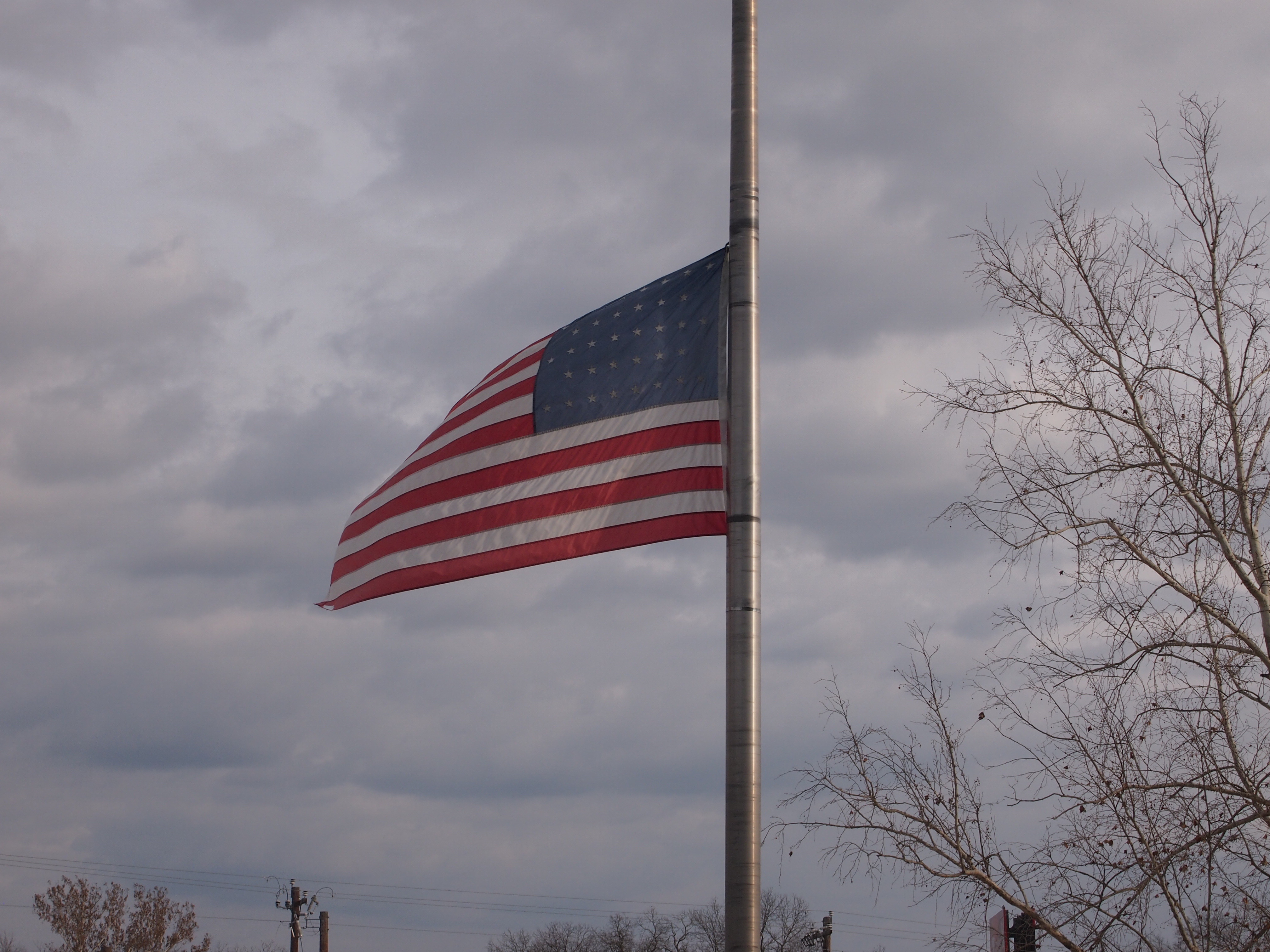
Comfort, Texas Feb 2015And a 36-star flag does indeed fly there.

Comfort, Texas Feb 2015Not something you see too often. That flag was only current for two years, between 1865 and 1867, or rather between the admission of Nevada and Nebraska.