Ann Goes to New Places in Greater DC

I spoke more with Ann about her trip to DC, especially about some of the places that they visited that I never got around to for one reason or other, despite a number of trips to Reagan-era Washington, one visit in the mid-90s, and our week in the city in 2011. The kids had the advantage of someone else handling all the logistics, with buses to take them around, so they got around.

For instance, last Saturday morning they went as far afield as Annapolis, where the place to go is the U.S. Naval Academy. Ann says she was particularly impressed with the tomb of John Paul Jones. I asked her about the Stribling Walk and her eyes got a little wide, remembering that she’d seen that too.

I told her about Rear Admiral Cornelius Kinchiloe Stribling, who had a long career in the antebellum U.S. Navy, and when the war came, sided with the Union, despite being a native of South Carolina. His son John, however, joined the Confederate Navy and died in its service. At one point in his career, he was superintendent of the Naval Academy, and apparently was well regarded.

Also, the kids made it to Mount Vernon. So did I, once upon a time. When I got there, the place was closed — by the shutdown of the federal government in early 1995. Ann got to see George Washington’s teeth, among other things. Looks painful to wear.

Washington's teeth, Mount Vernon

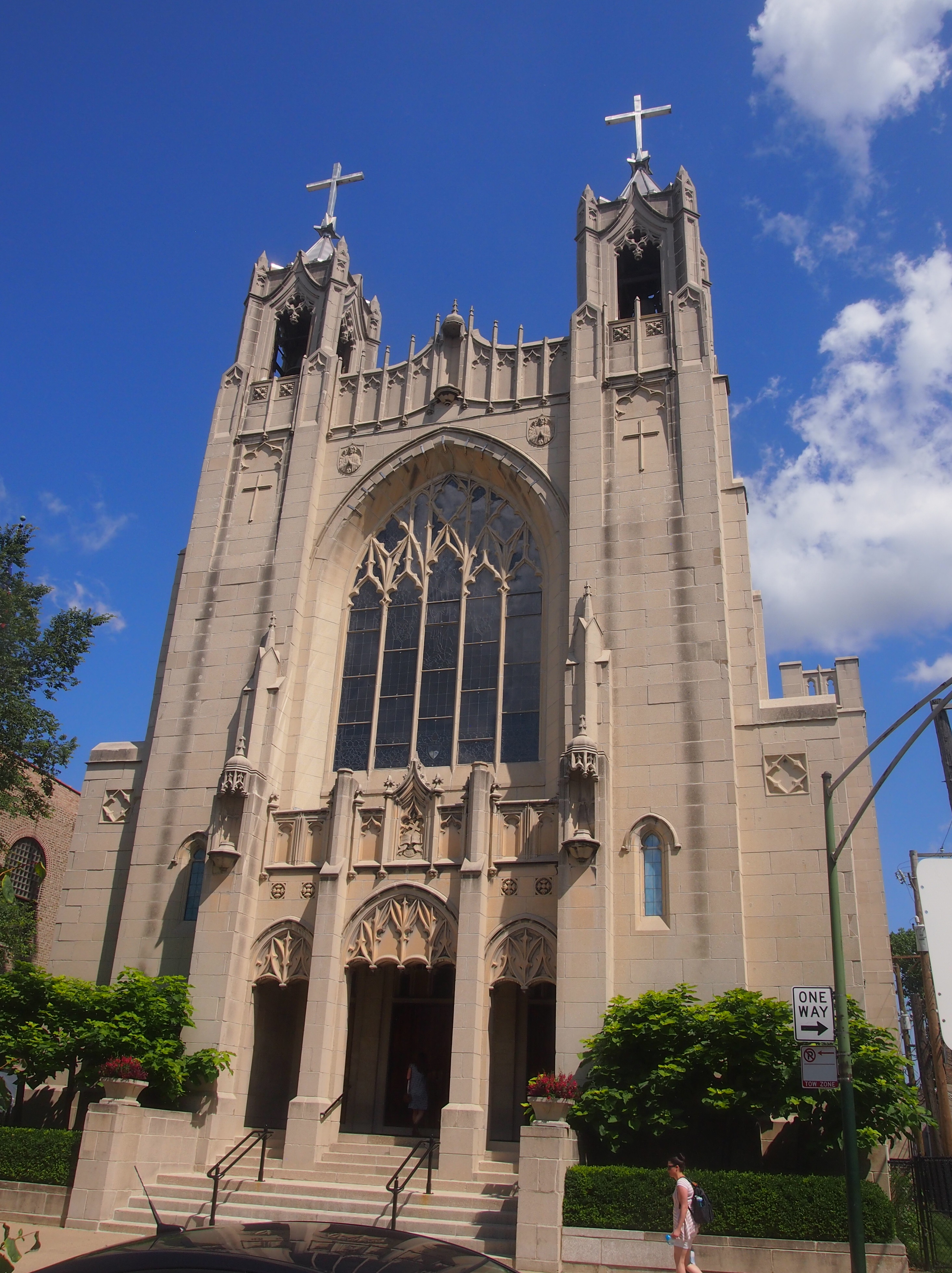
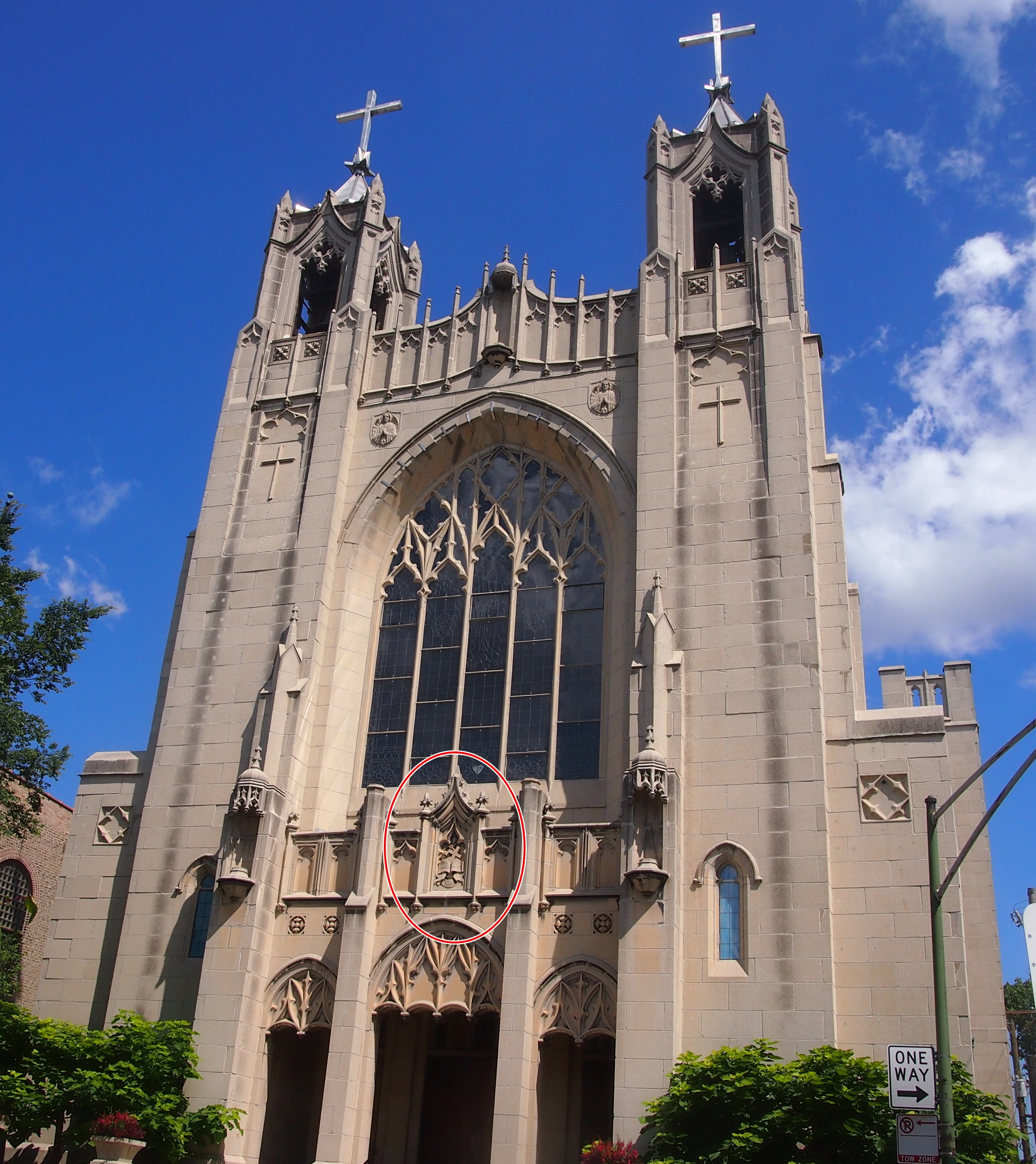
They also went to the Washington National Cathedral, formally the Cathedral Church of Saint Peter and Saint Paul in the City and Diocese of Washington. In 2011, we opted to go to the Basilica of the National Shrine of the Immaculate Conception instead, because the basilica is within walking distance of a Metro station, while the cathedral is not.

Ann said she admired the design, both interior, for its intricate carving, and vaulting exterior.

National Cathedral 2016

The tour group also hit all of the major war memorials on the National Mall: WWII, Korea and Vietnam. By the time we got around to that part of the Mall in 2011, it was dark, so we really didn’t see Korea or Vietnam, though I remember seeing the Vietnam memorial in the mid-80s, when it was new and remarkably striking; the Korean memorial wasn’t finished until the mid-90s.

This is part of the Korean War Veterans Memorial, as Ann saw it in the morning.

Korean Veterans memorial Dc 2016

Each of the stainless steel soldiers, I’ve read, weighs about 1,000 lbs., and include members of each service, though are mostly Army. Sculptor Frank Gaylord did them.

The Pigeons of ’48

Missed the big-hairy-deal debate last night. Nothing either of them could say at this point is going to change my mind. This election has gone on long enough already.

Instead I worked, as I usually do on Monday nights, and late in the evening read for pleasure, as I often do. Currently I’m working my way through 1948 by David Pietrusza (2011), which is about (as the subtitle says), “Harry Truman’s Improbable Victory,” or the story of an election that didn’t go on quite so long, and had its share of surprises. I read Pietrusza’s book about presidential politics in 1920 some time ago, and it was fairly good. So is 1948.

I haven’t been in a hurry to get through 1948, diverting into other books as well, such as a second reading of The Right Stuff (first time was in the early ’90s, and well worth the re-read), and first readings of The Basketball Diaries and Death Comes for the Archbishop. It’s a rare time when I just read one thing all the way through to the exclusion of others. I might even take up News from Tartary soon, since it’s been much too long since I read any Peter Fleming.

1948’s got some interesting detail. Here’s an anecdote about the Democratic National Convention that year that I like: “With the convention running three hours and forty-three minutes behind schedule, [Sam] Rayburn nevertheless undertook one last chore before introducing the exceedingly patient Truman: ‘I want to introduce Mrs. Emma Guffey Miller, Pennsylvania delegate-at-large. She has a surprise for us which I hope the convention will enjoy.’

“The plump, white-frocked, seventy-three-year-old Mrs. Miller, younger sister of former Pennsylvania senator Joseph Guffey, had prepared an elaborate, six-foot-high floral display composed of red and while carnations, in the shape of the Liberty Bell. Imprisoned inside it for several hours were forty-eight caged white pigeons, officially and symbolically designated ‘doves of peace.’ In the horrible heat, a couple had already expired. The band stoked up ‘Hail to the Chief,’ and the surviving birds — crazed by the noise, lights, and the heat — exploded out of the opened ‘Liberty Bell.’

“Pigeons flew into the rafters. They dive-bombed delegates. Men and women shouted, ‘Watch your clothes!’

” ‘Though the press delicately did not mention it,’ noted Clark Clifford (who did), the ‘doves of peace began, not surprisingly, to drop the inevitable product of their hours of imprisonment on any delegate who had the bad luck to be underneath them.’

“Some birds landed on the platform. Rayburn frantically shushed them away. One nearly landed on his glistening, bald head… ‘Get those damned pigeons out of here!’ he screamed over live radio and TV.

” ‘As [Truman] spoke,’ Time reported, ‘pigeons teetered on the balconies, on folds of the draperies, on overhead lights, occasionally launched on a quick flight to a more pigeonly position.’

“Thus, Harry Truman’s choice of a crisp, double-breasted white suit that evening may not have been the wisest choice of the campaign…”

Nevertheless, Truman’s ’48 Democratic Convention acceptance speech famously turned out to be a barnburner: “Senator Barkley and I will win this election and make these Republicans like it — don’t you forget that!”

A Fashion Wagon Party Card

One more recently acquired postcard for the week. This one’s in James Lileks territory, I think, not only because of the mid-century commercial artwork, but also because the entity behind it was from Minnesota.
FashionWagonIf that card doesn’t scream late ’60s, I don’t know what does. Indeed, it’s postmarked February 16, 1968. It’s an invitation for a neighbor to a “Fashion Wagon Style Show” at a house in Hoffman Estates, Ill., scheduled for February 23.
FashionWagonRevAn event to brighten up what must have been a dreary February in metro Chicago (they’re all dreary). And to sell a few dresses. Interesting detail: the RSVP phone number uses two letters to begin with. That pretty much disappeared in the ’70s, but I remember learning the telephone exchange letters for our home phone number as a child.  It began with TA (Taylor).

Apparently TW was “Twinbrook.” That took a little digging to find, but strangely enough I found it referenced in Jack Hoffman’s obit in the Chicago Tribune in 2008. Hoffman was the homebuilder who developed Hoffman Estates.

“Eventually, Mr. Hoffman’s company would build some 5,000 homes in the town incorporated in 1959 as Hoffman Estates. Residents that year voted to name the new city Twinbrook, after the local telephone exchange,” the paper noted. “But Mr. Hoffman’s influence led the homeowners association’s board of directors to dismiss the popular vote.”

So much for the vox populi, but there’s still a Twinbrook Elementary School in the village. Note that the editor didn’t see fit to explain the term “telephone exchange” in 2008. Few readers younger than me would understand the reference, but then again, how many people younger than me read newspapers?

Back to the card: it was produced by the Minnesota Woolen Co. to promote its fashion parties. A little digging and you find information from the University of Minnesota Duluth that tells you that “the Minnesota Woolen Company was founded in Duluth in 1916 by Nat G. and Abraham B. Polinsky. The company sold clothing throughout the United States through door-to-door sales. The company was the largest in the nation in sales of clothing on a direct to consumer basis…

“The Mendenhall, Graham Company was purchased in 1946 by Minnesota Woolen Company, which operated it as Minnesota Manufacturing Company with a plant at 514 West 1st Street. The company distributed clothing designed and manufactured in part at 131 West 1st Street through the national Fashion Wagon Party Plan introduced in 1962….

The last major expansion occurred in 1972 when the company moved the Fashion Wagon sample warehouse and shipping facility into a new building at 42nd Avenue West and Superior Street. The retail store closed in 1976, the manufacturing outlet in 1977.”

By the time alphanumeric telephone exchanges were gone, so were Fashion Wagon Parties.

(Speaking of telephones, out of idle curiosity I looked up those two dates in 1968, and found, according to Wiki anyway, that “…on February 16, 1968, the first-ever 9-1-1 call was placed by Alabama Speaker of the House Rankin Fite, from Haleyville City Hall, to U.S. Rep. Tom Bevill, at the city’s police station.”)

A McGovern Postcard

Here’s another recently acquired postcard, one from a very specific moment in U.S. history, a good many elections ago.

McGovernObvMcGovernRevIt was never used for its intended purpose, namely being put in the mail in the service of the McGovern campaign. Not that it would have made any difference to the outcome; not that a million such cards, all mailed, would have made any difference.

I don’t think I’ve seen any presidential campaign cards in recent years, or ever, come to think of it, but more local races still use them. I’m already getting postcard-based claims and counterclaims from candidates for the Illinois State House. I expect more in the coming months.

A particularly memorable example of postcard campaigning was in 2004. As I wrote then, “[Phil Crane] was also the subject of one of the most brilliant direct-mail campaigns I’ve ever seen in politics. Almost every day for about 10 days before the election, we received a large postcard, paid for by the state Democratic Party, all featuring the same picture of Rep. Crane photoshopped onto a variety of backgrounds.

“Each card had a different headline, and backgrounds to match, along with Phil in the foreground in a different outfit: GREETINGS FROM COSTA RICA (tropics, him in a floral t-shirt)… SCOTLAND (golf course, him with clubs)… ROME (Coliseum, him with a camera around his neck)… etc. The point being that Rep. Crane was fond of junkets at lobbyists’ expense. ‘Junket King’ was on several of the cards, too.”

Former Rep. Crane died in 2014. One thing I didn’t know about him was his role in Singapore easing its ban on chewing gum, which was in effect when we were there.

Zap ’06

Ten years ago this month, we took an epic drive to the Canadian Rockies, seeing vistas the likes of which are hard to match. Also, we went to Zap.

Zap, North Dakota, that is.

DSCN0590A good confluence of obscure history and a fun name, if you asked me. I suspect Lilly, then eight, had no clear idea of why her father stopped at this place and wanted to take pictures. He’s just that way sometimes.

Mount Holly Cemetery, Little Rock

In pricing rooms in Little Rock, I discovered that a downtown room provided by a limited service hospitality chain (as they say in the biz) wasn’t much more expensive than one out on the highway. I opted for the downtown property.

You get what you pay for at that kind of place: the ice machines were all broken, and so was our room’s landline, though I except few guests would notice that any more. I only noticed because I wanted to call the front desk to ask if any of the ice machines were working. The answer to that, which I got at the front desk in person: no. Something about the filters breaking at the same time.

The front desk clerk helpfully got some ice from the restaurant for me, however. He also told me the location of a nearby grocery store, since one thing to do when you’re on the road is enjoy a grocery store-based meal in your room, the contents of which depend on whether you have a refrigerator or microwave in the room.

As I drove to the grocery store, I noticed an old Little Rock cemetery. The Mount Holly Cemetery. The next morning, before the day’s heat kicked in on June 27, I walked to the cemetery from the hotel while Ann still slept. A sign in front says the cemetery was founded in 1843 — part of the first wave of park-like burial grounds — and is the burial places of six U.S. Senators, 11 Arkansas governors, four Confederate generals, 15 state Supreme Court justices, 21 mayors of Little Rock and “others prominent in the history of Arkansas.”

Sad to say, I’m not up on Arkansas history. I have a list of the prominent burials in front of me and I don’t recognize any of the names. Still, that isn’t why I went to the cemetery. This one was for aesthetic reasons.

Mount Holly Cemetery, Little RockMount Holly Cemetery, Little RockMount Holly Cemetery, Little RockNot bad. Not as fine as Woodland Cemetery and Arboretum in Dayton, but few burial grounds are. Mount Holly has a lot of weathered old stones (which for some reason, bastards vandalized recently). The plots are organized in rows and columns, like city blocks. Necropolis blocks, I guess.

There’s some funerary art, such as an angel over GOOD DOCTOR Craven Payton.

Mount Holly Cemetery, Little RockOr this one, whose name I cannot read.

Mount Holly Cemetery, Little RockThis one’s definitely for a child. I think the dates are 1919-1926.

Mount Holly Cemetery, Little RockA new historical marker (dated 2015) at one edge of the cemetery told me that three cadets who fought at New Market, all natives of Little Rock, are buried at Mount Holly: Samuel B. Adams, Chester G. Ashley and Francis S. Johnson.

Also in the necropolis: David O. Dodd, “Boy Martyr of the Confederacy,” whose story I didn’t know until I read about it. I didn’t see his grave. Casualties of the “Brooks-Baxter War” are also in Mount Holly, I read. It’s another story from Arkansas history I didn’t know, and a fairly remarkable one at that — an armed quarrel over who would be governor of the state in 1874.

One unusual feature was a small bell house deep in the cemetery.

Mount Holly Cemetery, Bell House, Little RockA sign inside the structure says, “Ring Bell For Sexton. These streets were designed for carriages. Please be cautious with your automobile!”

The National Civil Rights Museum

The plan was to spend a few hours in Memphis on June 25 on the way to Little Rock, where we’d overnight. The question then became, was Graceland worth visiting? The least expensive adult ticket, just for getting into the house and grounds to look around, is $42.50. For $80, you can also see a whole lot of stuff that isn’t the house and grounds, such as Elvis airplanes and cars and whatnot (“Experience Graceland like you are a VIP plus see Elvis’ custom jets!”)

Two strikes. I understand how it works. The prices are whatever the market bears. I don’t care, I still think they’re insane. Maybe temporary insanity, fading as the generation that originally adored Elvis passes from the Earth. Who knows?

The third strike was Graceland’s distance south of I-40, the road from Nashville to Little Rock. Elvis very nearly lived in Mississippi.

So I turned my attention to the National Civil Rights Museum, which is practically in downtown Memphis, not far at all from the highway. Adult admission, $15. After lunch that day, we repaired to the museum, which is behind the facade of the former Lorraine Motel, site of MLK’s assassination. Under Jim Crow, the Lorraine was a place where black people could stay.
The motel sign is still in place, though the marque message isn’t original. Wonder what it said in 1968.

National Civil Rights Museum, MemphispA wreath hangs at the site of Dr. King’s death. I’ve seen photos of the place for years, so it was quite a thing to see it in person.

National Civil Rights Museum, MemphisThe plaque says:
MARTIN LUTHER KING JR
Jan 15, 1929 – Apr 4, 1968
Founding President
Southern Christian Leadership Conference
“They said one to another
Behold here, cometh the dreamer.
Let us slay him
And we shall see what will become of his dreams.”
Genesis 37:19-20
Ralph David Abernathy, President

The museum, which opened in 1991, isn’t strictly devoted to MLK, however. It’s considerably broader than that, with the two-story building behind the Lorraine facade focusing on the years of the civil rights struggle between 1954 to 1968, though there are exhibits that the set the stage, so to speak — about slavery and then Jim Crow — and exhibits covering more recent years. The exhibits are organized chronologically through those years.

Like any good history museum, the displays are a mix of images, reading materials, interactive features, and artifacts, some quite large. As the NYT described it in 2003 (before a 2014 renovation, which apparently added more interactive features): “Rather than simply displaying photos and documents about the Montgomery bus boycott, for example, there is an actual bus like those that were used in Montgomery in the 1950s. Visitors may climb aboard, and after they sit down, a recorded voice begins by asking them politely to move to the back and then, if they refuse, rises to angry commands.”

Here’s the bus.

National Civil Rights Museum Montgomerty Bus BoycottInside is a statue of Rosa Parks.
National Civil Rights Museum Montgomerty Bus Boycott - Rosa ParksI was glad to see that the museum explained Parks’ action was carefully planned to achieve certain goals, with Parks fully part of that plan, and not some spontaneous act by a tired woman, which is the impression you sometimes get hearing about the Montgomery Bus Boycott.

“Nearby is a reconstruction of a lunch counter like the ones where protesters sat as they tried to break the color barrier that was an almost unquestioned part of Southern life until 50 years ago,” the NYT continues. “Life-size figures sit at the counter, and a video shows how the protesters prepared for the ordeal of insults, condiments poured on their heads and other humiliations.”
National Civil Rights Museum - lunch counter sit inPlenty of other ground is covered, including the March on Washington — Dr. King’s entire speech is played, not just the usual highlights — Freedom Summer, Freedom Rides, Birmingham, Selma, Albany, Ga., the murders in Philadelphia, Miss., the Voting Rights Act of 1965, and more. I grew up hearing about the tail end of this period, and learning about it later, but even so, some of the detail was new to me. I expect most of it was new to Ann.

Here’s another bus, a replica of a torched Freedom Riders bus.

National Civil Rights Museum - Freedom RidersEventually you reach reach the two preserved motel rooms (306 and 307), the one MLK stayed in and the one next to it, that are designed to look like they did the day he died. Visitors are able to peer into them but not go in.

Across Mulberry St. are the Young & Morrow Building and the Main Street Boarding House, now forming an annex to the museum. The annex is more closely focused on the assassination of Dr. King, and includes a reconstruction of the room from which James Earl Ray squeezed off the fatal shot, including artifacts — evidence — of the crime. It reminded me of the Sixth Floor in that way. And while there’s a also display called “Lingering Questions,” I don’t doubt that Ray, like Oswald before him, was guilty as hell, as my Uncle Ken would have put it.

Finally, I’d be remiss if I didn’t mention Jacqueline Smith. For some years after MLK’s death, the Lorraine operated as an SRO, and she was a resident — the last one kicked out to make way for the museum. Since then, she’s parked herself across the street in protest (though perhaps she finds substitutes sometimes).

National Civil Rights Museum, Jacqueline SmithSomeone was there, barely visible under an umbrella and behind the signs. Twenty-eight years and 150 days of protest as of June 25, according to one of the signs. Whatever else you can say about her, she’s stuck to her cause.

The Nashville Parthenon

Here’s my thought about Prime Day, which I’d never heard of before: I have enough stuff. I don’t need more stuff, certainly not from Amazon, unless the nonstore retail behemoth is willing to sell me (say) $20 gold pieces at face value.

On the other hand, I haven’t seen enough things, so Lincoln’s birthplace wasn’t enough in the way of monumental structures on the our trip, GTT 2016. Not at all. The very next day, we went to see the Parthenon in Nashville’s Centennial Park, after I queried Ann to make sure that she didn’t remember our visit eight years ago. This time, she will.

Nashville Parthenon Centennial Park 2016The Parthenon was as crowded on a Saturday morning in the summer, as you’d expect. It’s also the sort of place that inspires picture-taking.

Nashville Parthenon Centennial Park 2016Nashville Parthenon Centennial Park 2016Since it’s well known, there’s little point in detailing the history of Nashville Parthenon — its origin as a temporary plaster building at the Tennessee Centennial Expo in 1897; the permanent sandstone replacement in the 1920s; and the addition of the monumental statue of Athena inside in 1990. But I will add something the late Dr. Ned Nabors told me — told the class I was in — about the columns.

Each of the columns in the original Parthenon leans slightly inward, to give the appearance of being straight. That too is a well-known feature. If the columns were magically extended upward, they would converge about a mile and a half in the sky. Thus each column in the original was slightly different; each was carved to be unique.

In modern times, such uniqueness would be painfully expensive, so the columns of the Nashville Parthenon are exactly alike. To achieve the lean, the floor under part of each column is raised slightly. But enough to be apparent if you look down at the bases of the columns. Besides the building material, that’s one of the main differences between the original and the one in Nashville. (And that no one’s used Nashville’s to store gunpowder yet.)

Alan LeQuire’s Athena Parthenos, 42 feet tall and brightly painted, as the Greeks no doubt did saw her, commands the temple’s naos.

Athena Parthenos Nashville 2016She inspires poses.

Parthenon Nashville 2016Parthenon Nashville 2016Parthenon Nashville 2016We also spent some time in the Parthenon’s lower level, looking at its collection of paintings, and the exhibit about the Tennessee Centennial Exposition. The expo celebrated the centenary of Tennessee’s 1796 statehood, though held in 1897 (like the Columbian Exposition of 1893, a year after the anniversary). Fittingly, the site of the expo later became Centennial Park.
Ilene Jones Cornwell writes: “The Centennial Exposition, held May 1 through October 30, 1897, was ‘essentially a fair on a grand scale,’ wrote A. W. Crouch and H. D. Claybrook in Our Ancestors Were Engineers. Attractions included 12 large buildings featuring exhibits on the commercial, industrial, agricultural, and educational interests of the state; a ‘midway’ including Egyptian, Cuban, and Chinese villages; a ‘Giant See-saw’ designed by local engineer and steel fabricator Arthur J. Dyer; Venetian gondoliers on newly created Lake Watauga; a Venetian Rialto bridge designed by local architect C. A. Asmus; parades and ‘sham battles’ by the Tennessee Militia; fireworks and other entertainment; and a 250-foot flag staff designed by E. C. Lewis. Major Lewis also had conceived the idea to create a replica of the 5th century B. C. Athenian Parthenon to house the art exhibit, then commissioned local architect W. C. Smith to make the needed drawings….

“After the Exposition closed, all buildings except the Parthenon were torn down and removed. The success of the Exposition, as well as the progressive movement of the late 19th century to establish public parks, planted the seed for Nashville’s park system. In 1901 Mayor James Head appointed five men, one of whom was Major E. C. Lewis, to the new Board of Park Commissioners. Negotiations were begun by the city in early 1902 with the owners of the 72-acre Centennial Park to purchase the land for a permanent city park. After months of complicated offers and counter-offers, described in The Parks of Nashville, Nashville Railway and Light Company purchased Centennial Park and its title was presented to the city park board on December 22, 1902.”

Even by about 11 that morning, it was too hot to spend much time wandering around Centennial Park, which was too bad, since there are a variety of other things there besides the Parthenon.

Such as a large locomotive that the park has — and how many locomotives are there in public parks? Must be a web site or guide book about that, but I’m too lazy to find it. But not too lazy to look up the Centennial Park locomotive: a Nashville, Chattanooga & St. Louis 4-8-4.

Also, I either never noticed, or had forgotten, the Robertson monument, which is a freestanding column. It isn’t far from the Parthenon, so we walked by it.
Robertson Monument, Centennial Park, NashvilleCornwell again: “When negotiations had begun to purchase the Centennial land, [Major Lewis] purchased the 50-foot granite shaft for $200, then his fellow-commissioner Samuel A. Champion ‘resolved that it be erected in the park as a monument to the memory of James Robertson.’ Lewis also purchased the flat-stone base for $10 in 1903 to remain beside Lake Watauga as a memorial to the Centennial Exposition. A new granite base was needed to support the heavy shaft after its relocation, but no record has yet been found of the base’s creator or its procurement. Wherever the massive base originated, Johnson described the monument’s creation in The Parks of Nashville: ‘With a tripod made of three large oak logs and block and tackle, Major Lewis raised the shaft into position and then constructed the foundation beneath it.’ The granite shaft and its base weigh a total of 52.5 tons.”
Robertson, the “Father of Tennessee,” co-founded Nashville with John Donelson in 1779. For a moment I thought he and his wife might be buried there in the park, but then I remembered seeing his grave some years ago at the Nashville City Cemetery, where many early Tennesseans not named Andrew Jackson repose (he’s at the Hermitage).

The Abraham Lincoln Birthplace National Historical Park

“Where are we going?”

“Lincoln’s birthplace,” I told Ann on the morning of June 24 as we left Elizabethtown, Ky. “It’s about 10 miles off the Interstate. Bet his parents were glad to have a place near the highway.”

Ha, ha, Dad, was the reaction.
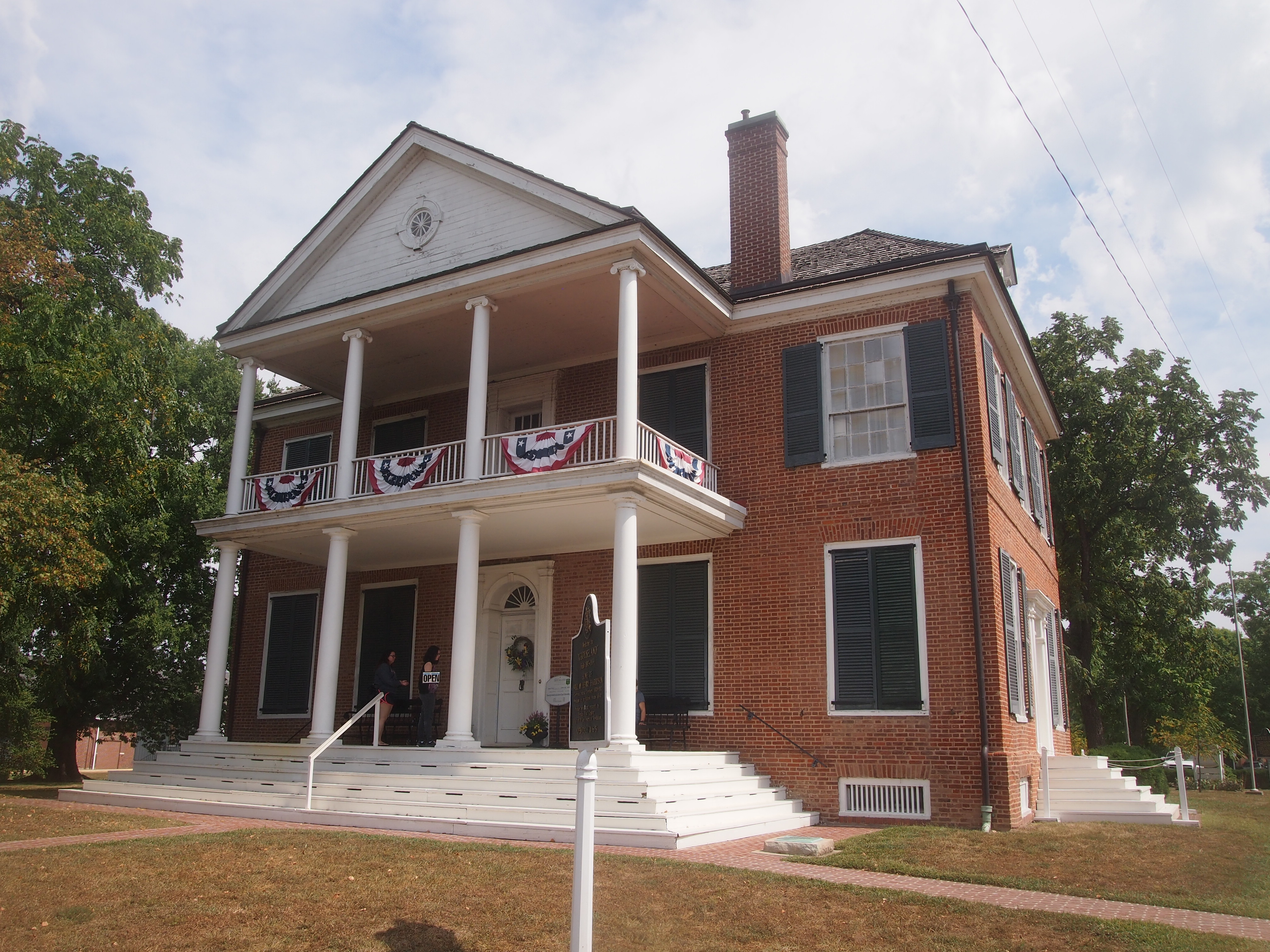
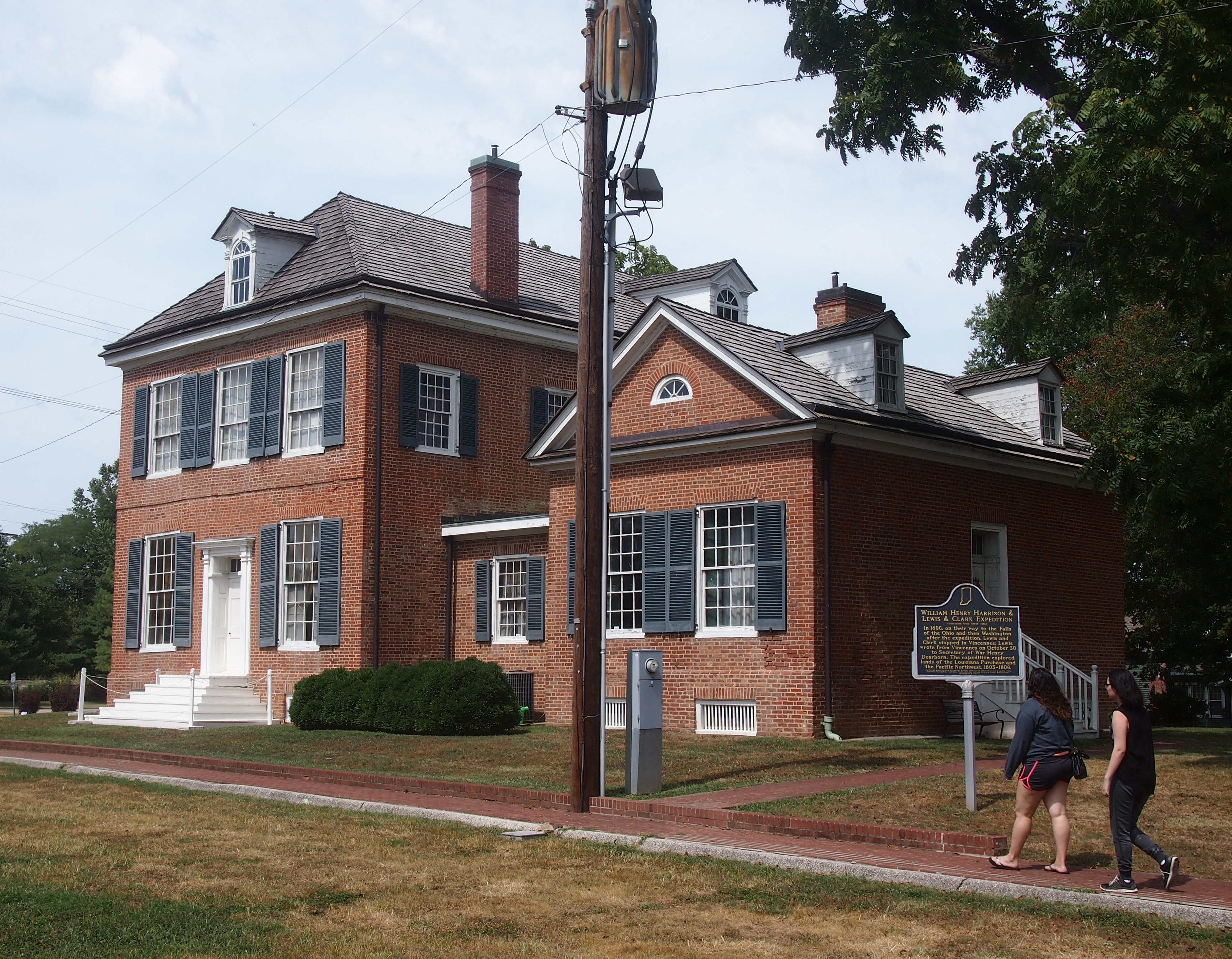
The Abraham Lincoln Birthplace National Historical Park is in fact about 10 miles east of I-65, a roadway built much later than the Lincolns’ cabin or even the monumental building erected on the site 100 years later, with its groundbreaking on February 12, 1909. TR was there that day to wield the ceremonial trowel, which is now on exhibit at the visitors center.

So is a statue of the Lincoln family. It includes the only depiction that I’ve seen of toddler Abraham Lincoln, with his parents and older sister Sarah. Lincoln Birthplace Lincoln Family StatueJohn Russell Pope, who also lived long enough to do the Jefferson Memorial in Washington, DC, and a good many other things, designed the birthplace memorial.
Lincoln BirthplaceLincoln Birthplace 2016“Built on the knoll above the sinking spring where many believe the Lincoln cabin originally stood, the Memorial Building at Abraham Lincoln Birthplace National Historical Park was constructed between 1909 and 1911 in an effort by the Lincoln Farm Association to commemorate the life and accomplishments of the sixteenth President of the United States and to protect his ‘birth cabin,’ ” notes the NPS.

“Pope’s design of the building included many symbolisms related to Abraham Lincoln, including fifty-six steps leading up to the building to represent the fifty-six years of Lincoln’s life. Sixteen windows in the building and sixteen rosettes on the interior ceiling are there to remind visitors that Lincoln was the sixteenth president.”

Inside is the fake Lincoln cabin.
Fake Lincoln Birth CabinHaven’t got an historic relic? Make one that looks right, especially during the late 19th century, when touring exhibits were a way to make money. (Read about promoter Alfred Dennett and the fake cabin here.) According to the NPS, the structure now characterized as a cabin that “honors” the original. Sure, why not – and besides, the faking of the cabin was so long ago (1890s) that it too is of historic interest.

Up the road (US 31E) from the monument a bit is Lincoln Boyhood Home, which is only a few structures, all re-creations, but none made of marble or granite. From there, of course, the Lincolns moved to Mississippi and Abraham grew up to be a leader of the Confederacy… no, that was Jefferson Davis, also a Kentucky boy born in the early 1800s. Geography is destiny? I’m not smart enough to know.

Hodgenville, Ky., which is between the birthplace and boyhood home, does what it can to make passersby stop for a little Lincoln at the local “museum,” which mostly seemed like a gift shop. Also, the town traffic circle has a statue of an adult Lincoln and a boy Lincoln.

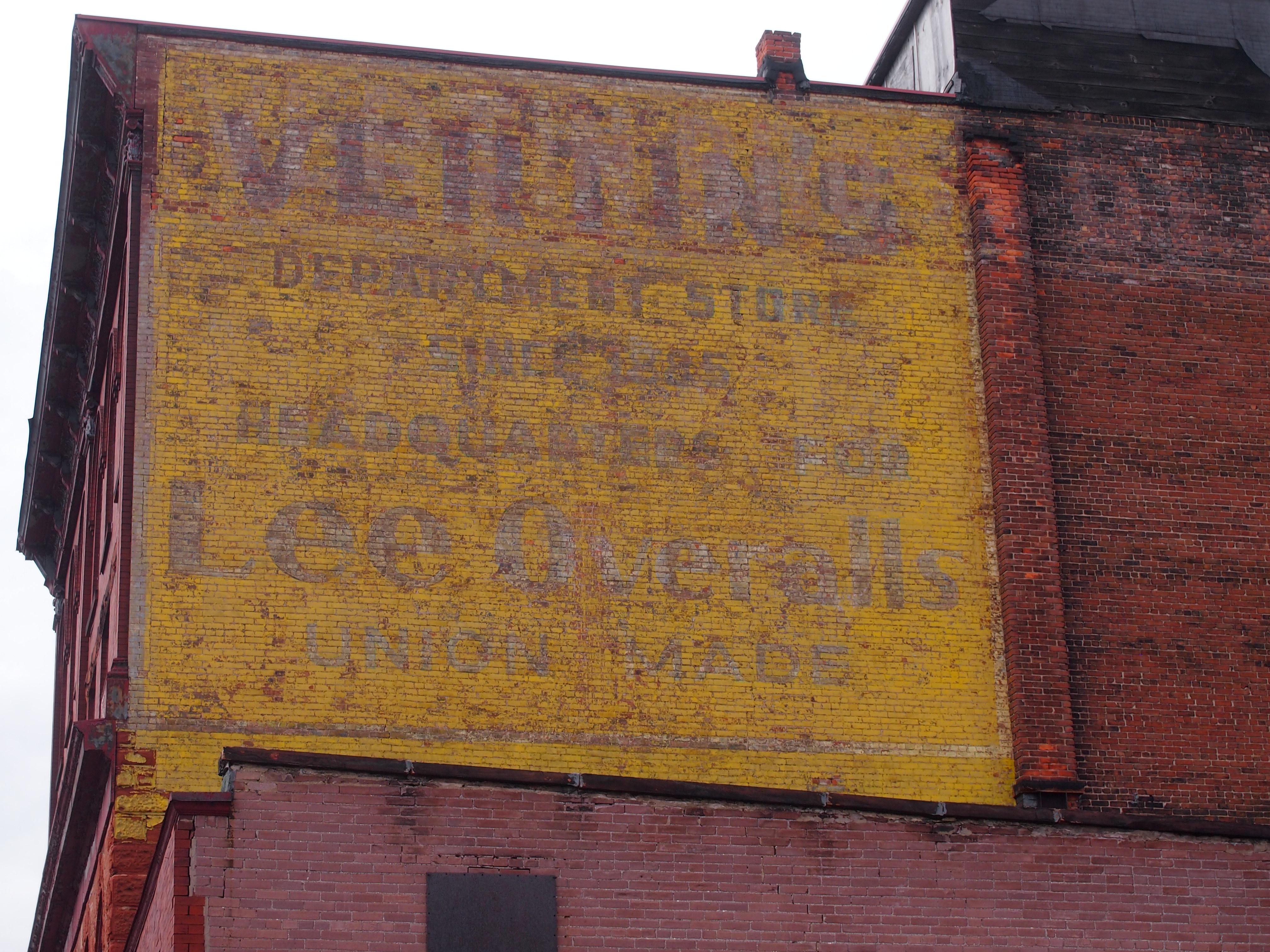
One more thing I saw on US 31E, south of the birthplace: a ghost sign on the side of a barn that said SEE ROCK CITY. If I’d been able to pull off to the side of the road at that moment, I would have, to take a picture (and baffle Ann). It was not to be. But it was there.

GTT 2016

On June 23, Ann and I left the Chicago area and headed south, returning earlier today. I’m calling the trip GTT 2016, as in Gone to Texas, but also Gone to Tennessee, another destination. Our route took us south to through Indiana and Kentucky and then to Nasvhille; west through West Tennessee and Arkansas and on to Dallas; and south again to Austin and San Antonio. The return was via Dallas and through Oklahoma and Missouri. All together, from backing out of my driveway to coming back to it, I put exactly 3,005 miles on my car, mostly on Interstates and US routes, but also a fair amount on the streets of Nashville, Austin and San Antonio.

None of the routes or places were new to me, except maybe Texarkana, where I’d never stopped before, and it’s been a long time since I’d traveled US 281 north of Johnson City, Texas, or on US 67 on to Dallas. But no matter how familiar the place or the route, you can always find new things.

In central Kentucky, near Elizabethtown, we visited Abraham Lincoln Birthplace National Historical Park, which features a granite and marble monumental building with a not-really-Lincoln’s log cabin inside. Near Mammoth Cave NP, we walked through Diamond Caverns, an unrelated show cave.

By the time we got to Nashville, the heat was on — in the 90s at least every day, which made stomping around outside less pleasant, especially for Ann, but I did manage to take her to the Nashville Parthenon, which she didn’t remember seeing in 2008. The more important thing we did in Nashville was spend time with old friends Stephanie and Wendall, and pay a visit to Mike Johnson’s widow, Betra.

In Memphis, we saw the Peabody Hotel ducks and the National Civil Rights Museum. In Texarkana, we drove down State Line Road and stopped at the only post office in the nation in two states. In Little Rock, I visited Mt. Holly Cemetery in the morning just before the heat of the day and then the Clinton Library (in full, the William J. Clinton Presidential Center and Park) and, just before we left town, the Arkansas State Capitol.

Dallas was mostly given over to visiting my brother Jay and working. Jay joined us for our few days in Austin, including the Fourth of July, and for a few more days in San Antonio. In Austin on July 2, Ann went to RTX 2016 at the Austin Convention Center, a sizable event held by the media company called Rooster Teeth; I was her chaperon. We visited my old friend Tom Jones the next day, and on Independence Day, saw both the Baylor Street Art Wall and municipal fireworks over Lady Bird Lake. San Antonio was mostly about visiting my mother and brother Jim, and (for me) holing up in a cool place with Wifi and doing more work.

Naturally, the trip involved long stretches of driving. I want to do that while I still want to do that. Because of my obstinance in not getting Sirius or the like, terrestrial radio helps fill the yawning spaces between destinations. The trip was bookended by two news events whose coverage was limitless, even when there was no new information beyond speculation: Brexit near the beginning, and the murder of Dallas policemen toward the end. I also listened to more religious radio more than usual, mostly only minutes at a time, except for the erudite Alistair Begg, whom I will listen to until his show’s over or the signal fades.

The selection of music was mostly what you’d expect, drawn from the rigid genres created by the radio business, though there were a few oddities, such as the Mesquite Independent School District radio station (KEOM) in metro Dallas that played teacher and student shows, besides a selection of completely conventional ’70s music. On I-40 between Nashville and Memphis — the Music Highway, according to official signs along the way — I picked up an oldies station whose playlist was a little older and odder than usual. I heard it play “Waterloo” (Stonewall Jackson), “Ahab the Arab,” “and “Running Bear and Little White Dove,” the last two I haven’t heard in years.

We stayed in a nondescript chain motel in Elizabethtown; in Stephanie and Wendall’s fine guest rooms in Nashville; in another, less nondescript motel in Little Rock; with Jay in Dallas; in the Austin Motel on South Congress in Austin, an updated version of a tourist court that’s been there since 1938; and in an updated former company hotel (vintage 1914) in San Antonio, the Havana Hotel, since there were too many of us to be comfortable at my mother’s house.

During the return home, we stayed at the Munger Moss Motel in Lebanon, Mo., last night, because of course we did.

Munger Moss Motel 2016It’s the same as it was in 2009 and two years ago. Except (maybe) a couple of signs like this were added to the grounds.

Munger Moss Motel 2016Motel co-owner Ramona Lehman was selling Gasconade River Bridge postcards, sales of which help support the restoration of the bridge, a structure about 15 miles east of Munger Moss on the former US 66. I bought one. I didn’t stop to look at the bridge — this time — but it’s visible from I-44 if you know when to look, and I did.