Western Ohio &c

We arrived in downtown Dayton late on a Friday afternoon, May 27, and from the look of things, Dayton isn’t an 18-hour city just yet. Municipal planners probably aspire to that: there’s been some nice infrastructure work at Riverscape Metro Park and Five Rivers Metro Park downtown, including walkways, an elegant garden, a pavilion and other public spaces that look fairly new. As for the private sector, I also spotted a few new apartment projects downtown.

But as a tertiary market, Dayton’s downtown still seems to close up at 5 pm. That’s almost old fashioned now, as the way things were in most smaller downtowns in the last third of the 20th century. Only a handful of people were out and about in the late afternoon/early evening of a warm late spring/early summer day in downtown Dayton, some at the riverfront, others outside the Schuster Center, an event venue.

The main river along downtown is the Great Miami River, which eventually flows into the Ohio. A tributary that meets the Great Miami near downtown Dayton is the Mad River. I like that name. Later, I drove by Mad River Junior High. Now that’s a name for your school.

Less amusing to learn about was the Great Dayton Flood of 1913 (part of the Great Flood of 1913), which is memorialized along the Great Miami. The Dayton flood spurred the creation of the Miami Conservancy District, established in Ohio by the Vonderheide Conservancy Act of 1914, which authorized levees and dams and such to prevent another monster flood. It was a great age of civil engineering, after all. So far, it seems to have worked.

Of course, no matter how obvious the public good, someone’s going to be against it.

Also downtown: Fifth Third Field, where the Dayton Dragons minor league team plays. In the plaza near field are large concrete baseballs. On these Ann proved herself to be more limber than the rest of us.

Fifth Third Park, Dayton 2016At the Woodland Cemetery and Arboretum, I happened across Lookout Point, the highest elevation in Dayton. This is the view from there.
Dayton - View from Woodland Cemetery and Arboretum In 2010, the cemetery completed a tower and columbarium on the hill, along with landscaping all around. It’s a lovely spot.

Woodland Cemetery and ArboretumLookout Point, Woodland Cemetery, DaytonThe cemetery also put in a time capsule at Lookout Point, to be opened in 2141, the year of the cemetery’s tricentennial. Guess 2041 wasn’t far enough in the future.

One famed burial I didn’t see at Woodland: copperhead Clement Vallandigham. In reading a bit about him, I found out about his death in 1871, when he was working as a defense attorney after unsuccessful attempts to return to office.

“Vallandigham’s political career ended with his untimely death on June 17, 1871,” notes Ohio History Central. “While preparing the defense of an accused murderer, Vallandigham enacted his view of what occurred at the crime scene. Thinking that a pistol that he was using as a prop was unloaded, Vallandigham pointed it at himself and pulled the trigger. The gun discharged, and Vallandigham was mortally wounded.”
At least his client was acquitted. That’s further even than Perry Mason would go to get a not guilty verdict.

On the way home, we stopped in Wapakoneta, Ohio, a town south of Lima and hometown of moonwalker Neil Armstrong. Just off I-75 is the Armstrong Air and Space Museum. I’ve read the design is supposed to evoke a future Moon base. Maybe the sort of Moon base Chesley Bonestell would put in the background of a lunar landscape.

Armstrong Air and Space MuseumThe museum’s probably interesting enough, with Armstrong artifacts and other items related to space exploration. The Gemini VIII capsule is there, in which Armstrong and Scott almost bought the farm. But Ann wasn’t particularly enthusiastic about the place, and we wanted to press on to Ft. Wayne for lunch, so ultimately the admission fee we didn’t spend went toward that lunch. I did buy some postcards at the museum.

The Armstrong Air and Space Museum’s web site stresses: “The museum is owned by the State of Ohio, is part of the Ohio History Connection’s statewide system of historic sites and museums, and is operated by the local Armstrong Air and Space Museum Association. Neil Armstrong was never involved in the management of the museum nor benefited from it in any way.”

Before leaving Wapakoneta, I wanted to find Armstrong’s boyhood home. It wasn’t hard; the town is small. The house is privately owned by non-Armstrongs, so the thing not to do is venture too close. No doubt occasional oafs do just that, though probably fewer as time passes and fewer oafs remember his achievements.

Another good-looking small town in western Ohio is Troy. We stopped there to obtain doughnuts at the local Tim Hortons. That part of Ohio is within the Tim Hortons realm; our part of Illinois is not. Troy has a handsome main street and a fine courthouse.

Finally, with this trip, I’m glad to report that I’ve been to Neptune. Neptune, Ohio, that is, an insubstantial burg in Mercer County along US 33. Far from the ocean, and far from the planet of that name, though no further (roughly) than anywhere else on Earth.

Curiosity made me waste spend a little time at the USGC Geographic Names Information System, and I discovered that there are five populated U.S. places called “Neptune,” not counting variants like Neptune Beach, Fla. Besides Ohio, they are in Iowa, Tennessee, West Virginia and Wisconsin. Someday maybe I’ll look up the other planets.

The Dayton Aviation Heritage National Historical Park

In 2003, close to the occasion of the 100th anniversary of the Wrights’ first flight at Kitty Hawk, NC, Patrick Jonsson noted in the Christian Science Monitor that “the choice of location unwittingly sparked a quarrel over the genesis of manned flight: Was this barrier island near the town of Kitty Hawk merely a stepping-off point for an idea hatched in Ohio — or part of the very inspiration of flight?

“For its part, North Carolina boldly stated its claim a few years ago with license plates that boasted ‘First in Flight.’ It was followed by Ohio’s ‘Birthplace of Aviation’ claim a few years later. And in the late 1990s, North Carolina again moved first to put the flyer on its state quarter, taking a lot of oomph out of Ohio’s ‘Pioneers of Flight’ motto.

“But in the 100th year of flight both states have put rivalry aside, realizing the skies could not have been cleaved without the benefits of both locales.

” ‘In Dayton, they proved that powered flight was practical; at Kitty Hawk, they proved that it was possible,’ says Bob Petersen, a park ranger at the Dayton Aviation Heritage National Historical Park.”

The national historical park is scattered around greater Dayton, including a Wright Brothers-Paul Dunbar museum (pictured below) along with one of the brothers’ bicycle shops; the Huffman Prairie Flying Field; an aviation exhibit at a open air museum in Dayton; Paul Laurence Dunbar’s house; and Orville’s mansion after aviation made him wealthy. We only had time and energy for the Wright-Dunbar museum and the Wright bicycle shop, which are on Williams St. west of downtown Dayton.
Dayton Aviation Heritage National Historic ParkThe focus of the museum, at least when it comes to the Wrights, is less about them as aviators, and more about their pre-Flyer lives growing up in Dayton, including other members of their family that aren’t well known, such as sister Katharine and brother Lorin.

Paul Laurence Dunbar’s exhibits were interesting mainly because I didn’t know much about him. Seems like he had a fine ear for verse, and literary success in spite of the misery of being a black man in the 1890s. He’s also called an influence on Langston Hughes. I’m no expert, but after reading some of Dunbar’s poems, I can see the point.

This is the debt I pay
Just for one riotous day,
Years of regret and grief,
Sorrow without relief.

Pay it I will to the end 
Until the grave, my friend,
Gives me a true release 
Gives me the clasp of peace.

Slight was the thing I bought,
Small was the debt I thought,
Poor was the loan at best 
God! but the interest!

— “The Debt,” by Paul Laurence Dunbar

The museum also features exhibits about the Wright printing business and then their bicycle shops. Lest we forget, the nation was in the grip of a bicycle craze in the 1890s, and for good reason: in a world of horse-drawn vehicles, it was a great new way to get around.

The re-created bicycle shop is next to the Wright-Dunbar museum, in the original building, which just barely escaped demolition.
Wright Cycle Co, Dayton OhioIt’s the only Wright bicycle shop location left in Dayton. Another one — they operated more than one over their career in bicycles — is now at Greenfield Village in Michigan, and the sites of one or two more have been demolished in the last 100-plus years.

Inside are artifacts such as bicycles and a lot of bicycle parts, photos, and more. Remarkable how familiar an early safety bicycle looks. Basic bike design hasn’t changed that much.

The Woodland Cemetery and Arboretum, Dayton

In the Spring/Summer 2014 edition of American Forests magazine, Tate Williams wrote, “In the early 19th century, as cities like Boston grew, inner-city burials were no longer cutting it. Land prices were rising and the small church burial grounds were overcrowding. Storms would flood the grounds with gruesome results. Outbreaks of diseases like cholera and typhoid fever had communities fearing urban burials.

“In response, the Massachusetts Horticultural Society presented a vision that would solve the city planning problem, while carving out a piece of land they would turn into a horticultural wonder to rival the gardens popular in Europe at the time. It was dubbed a ‘garden of graves’ or a serene ‘city of the dead.’ Mount Auburn Cemetery grew into a feat of landscape design, sculpture and meticulously manicured Victorian-style gardens.

“The rural cemetery movement spread as other cities established their own garden cemeteries, from Green-Wood in Brooklyn to Laurel Hill in Philadelphia. They were extremely popular among locals and visitors alike, becoming regular gathering places for strolling and picnicking. ‘In a country sorely lacking in public green spaces, these cemeteries provided these graceful, elegant places,’ says Keith Eggener, architectural historian and author of the book Cemeteries. ‘They were all around recreational and artistic centers for people. They became seen as major urban amenities.’ ”

So they still should be, but mine is a minority opinion. In 1841 — ten years after the founding of Mount Auburn — the growing manufacturing town of Dayton founded its own garden of graves, which in our time is called the Woodland Cemetery and Arboretum. Cemetery because about 107,000 souls repose there; arboretum because about 3,000 trees grow on its 200 acres.

It’s a hilly, gorgeous place. I spent about an hour and a half there on the morning of May 29.

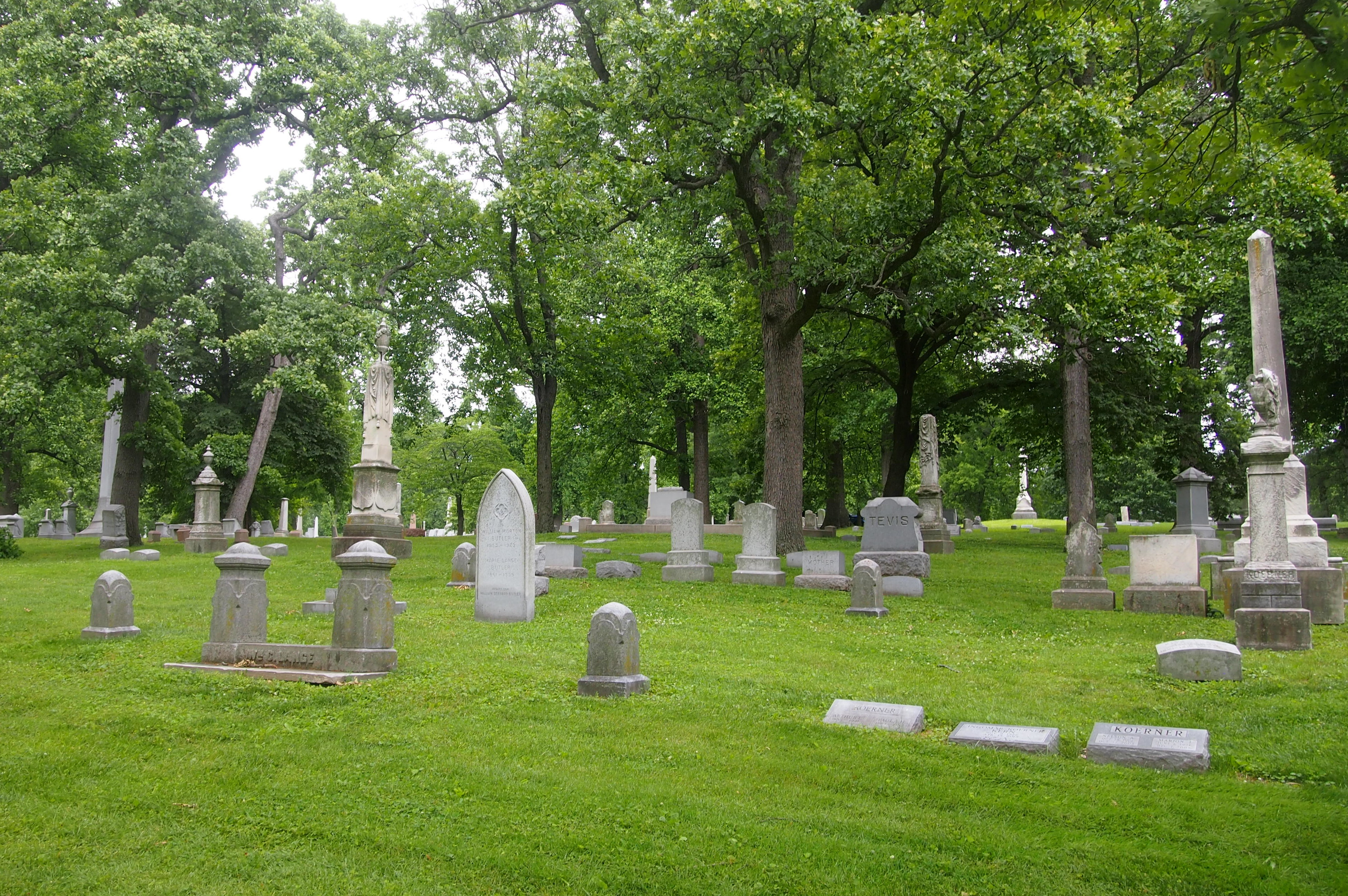
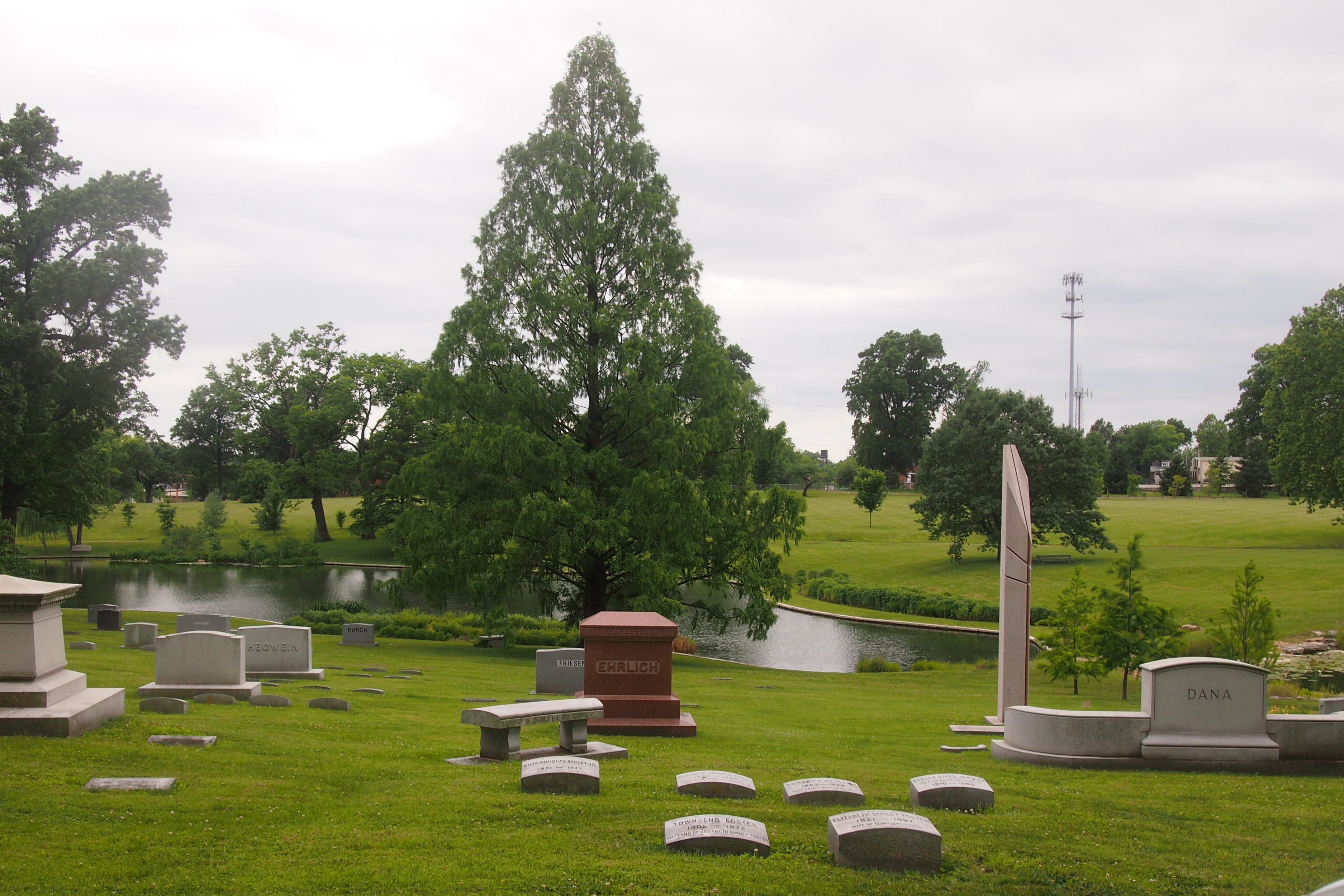
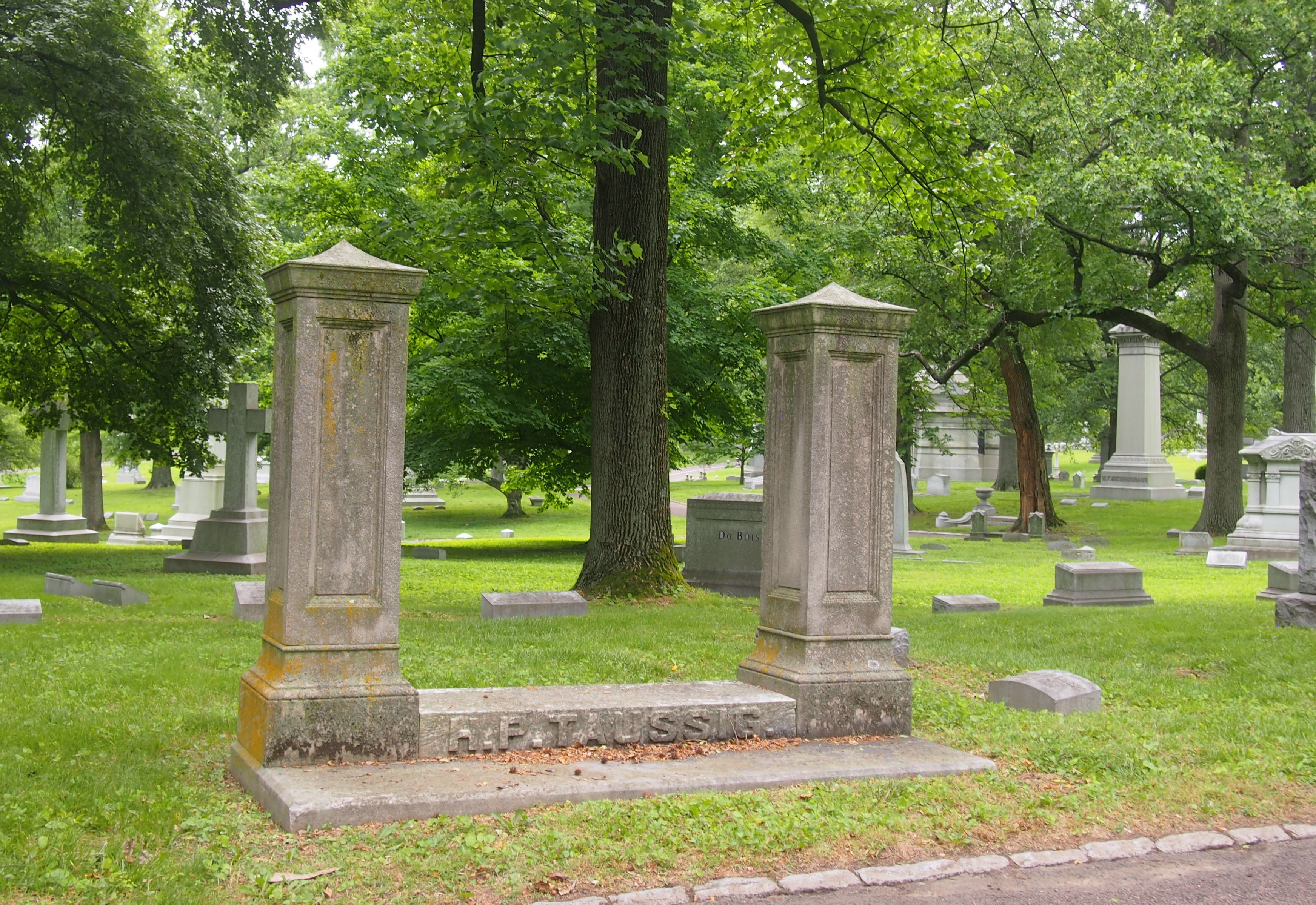
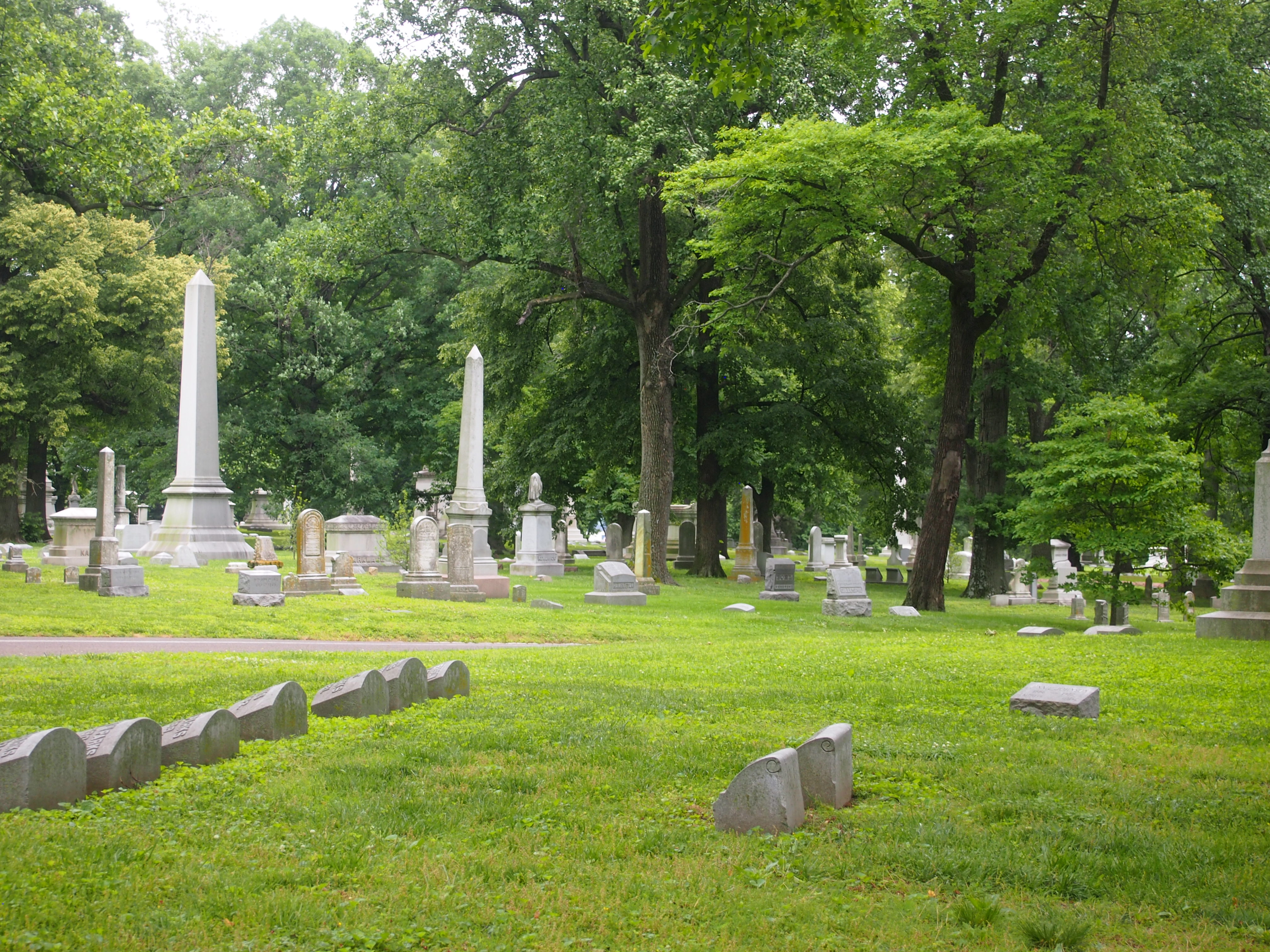
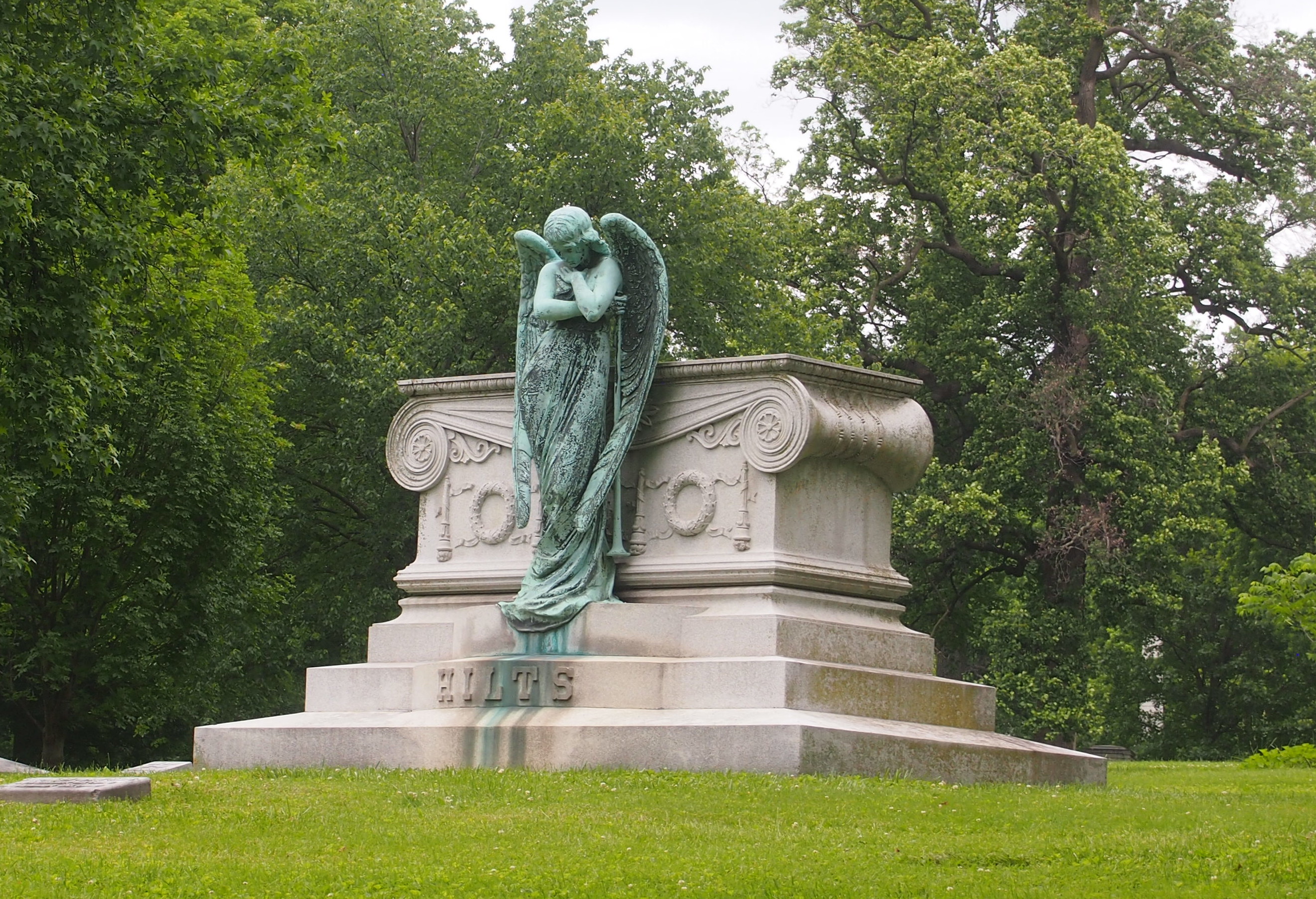
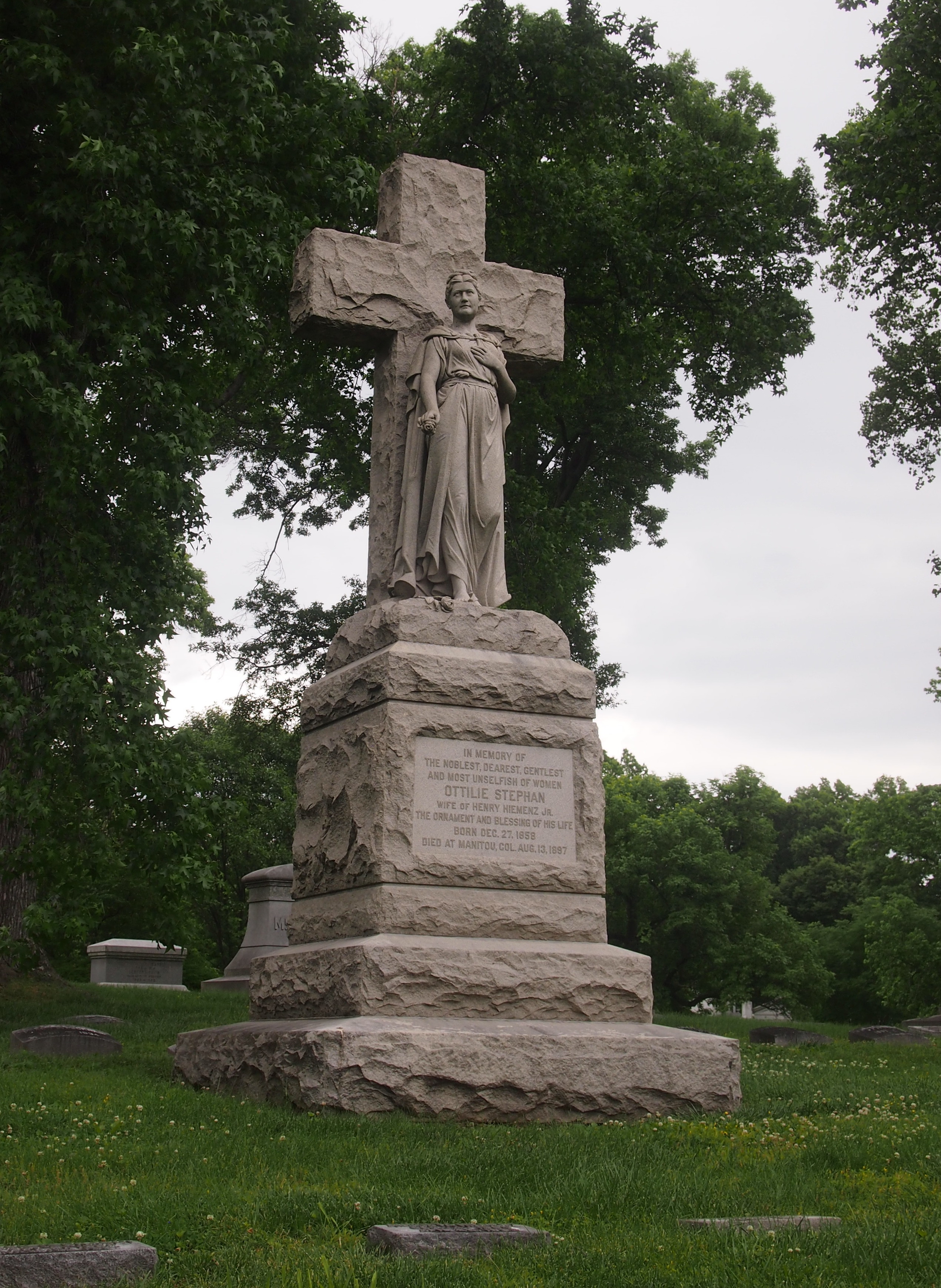
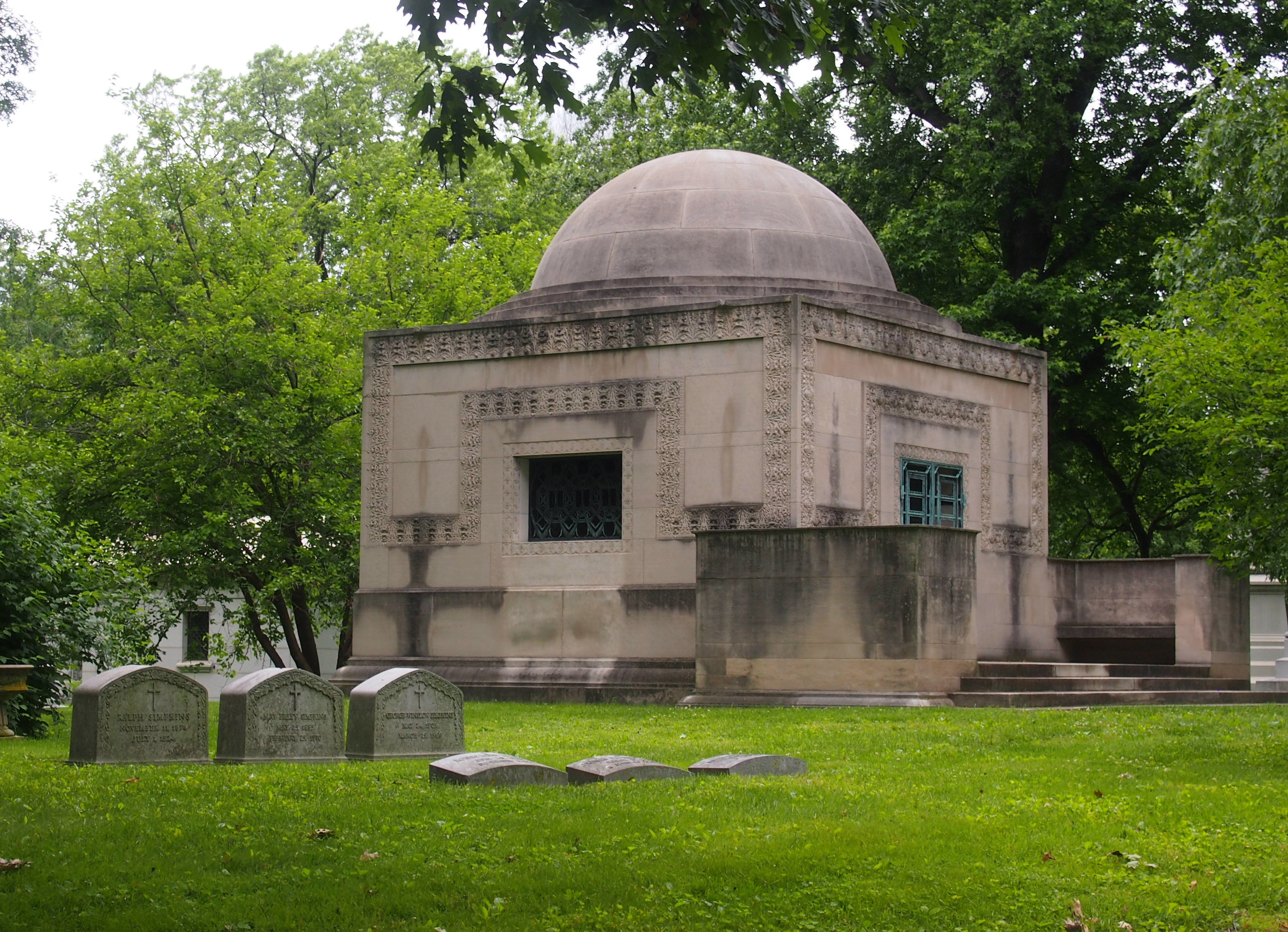
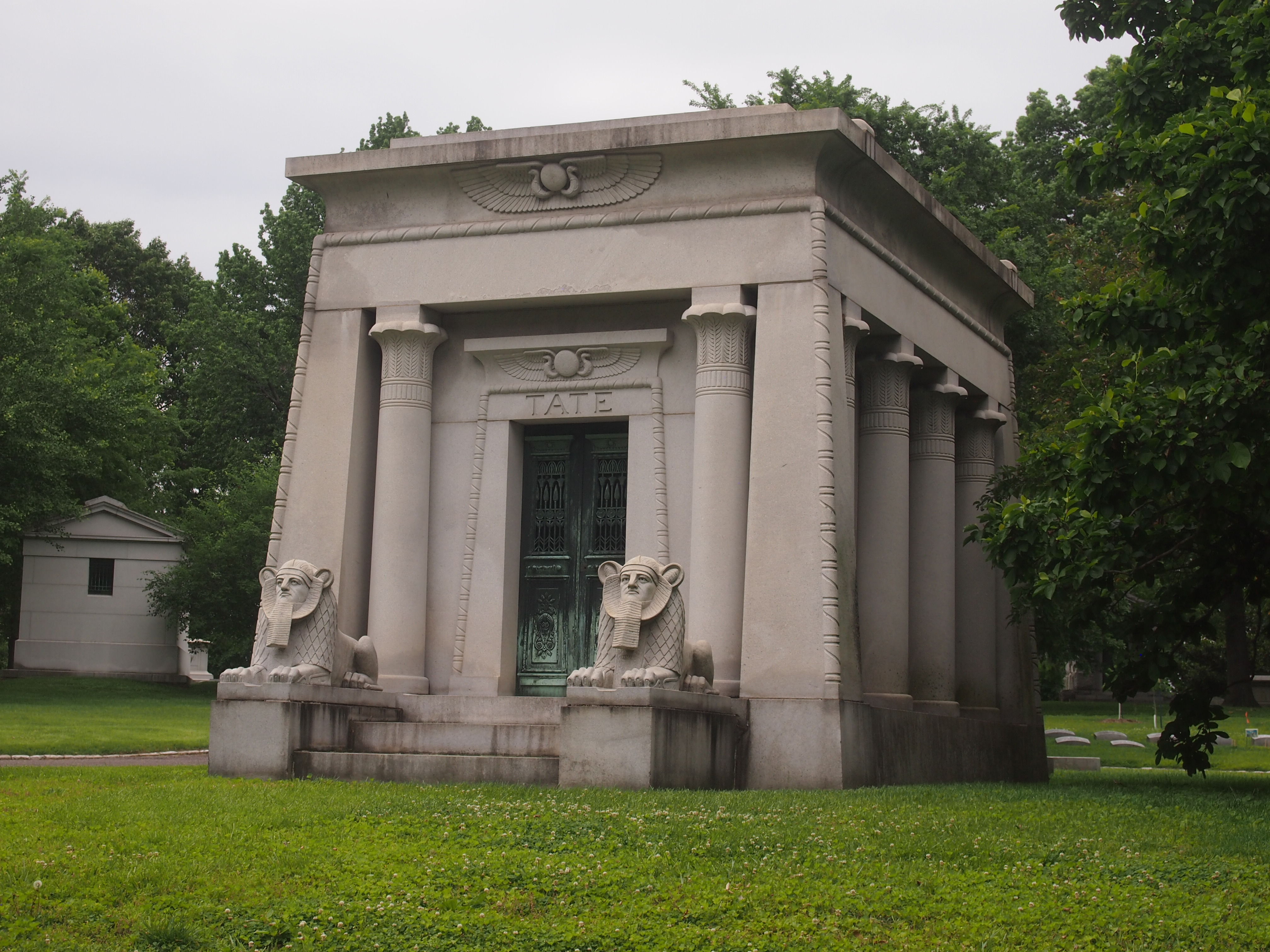
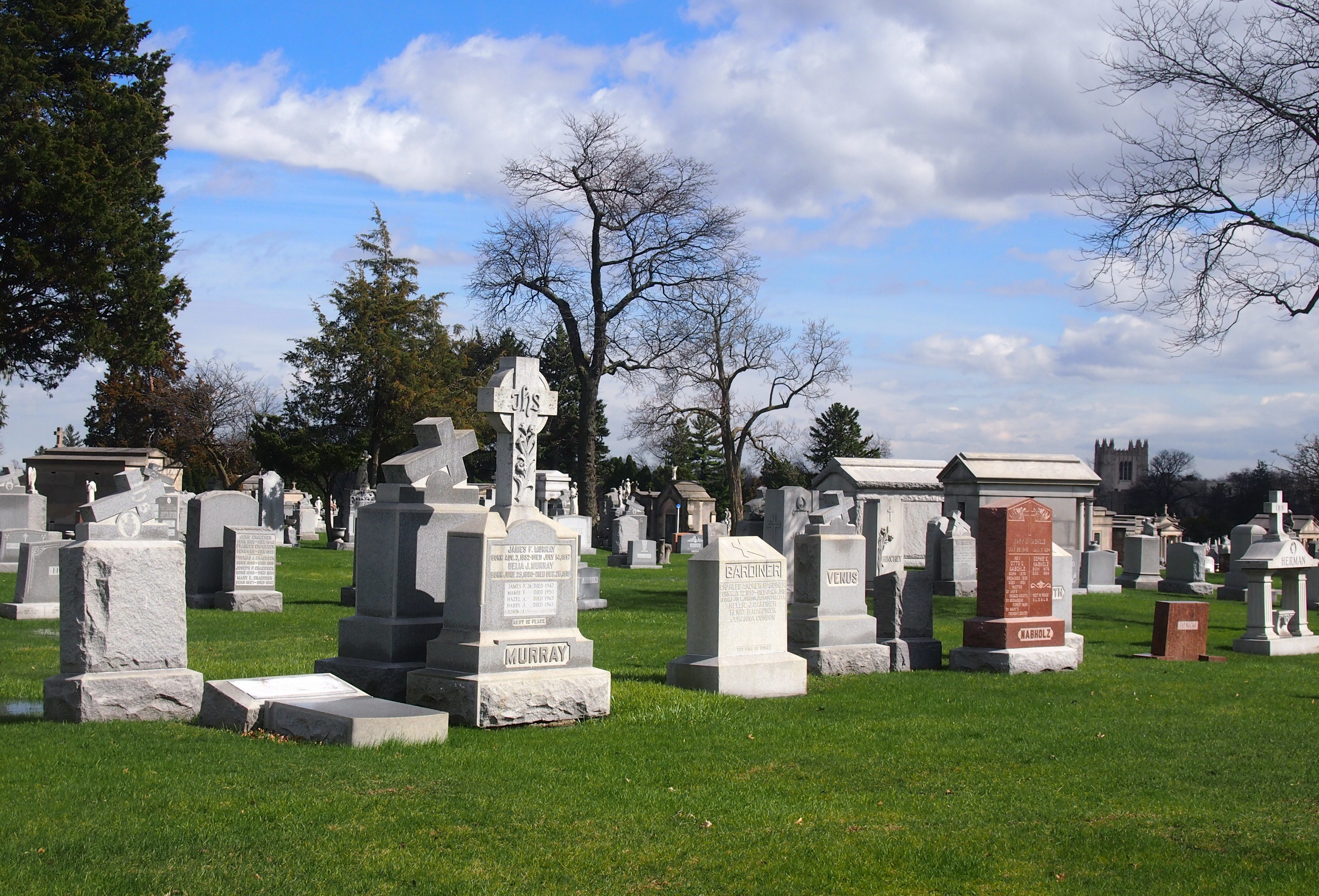
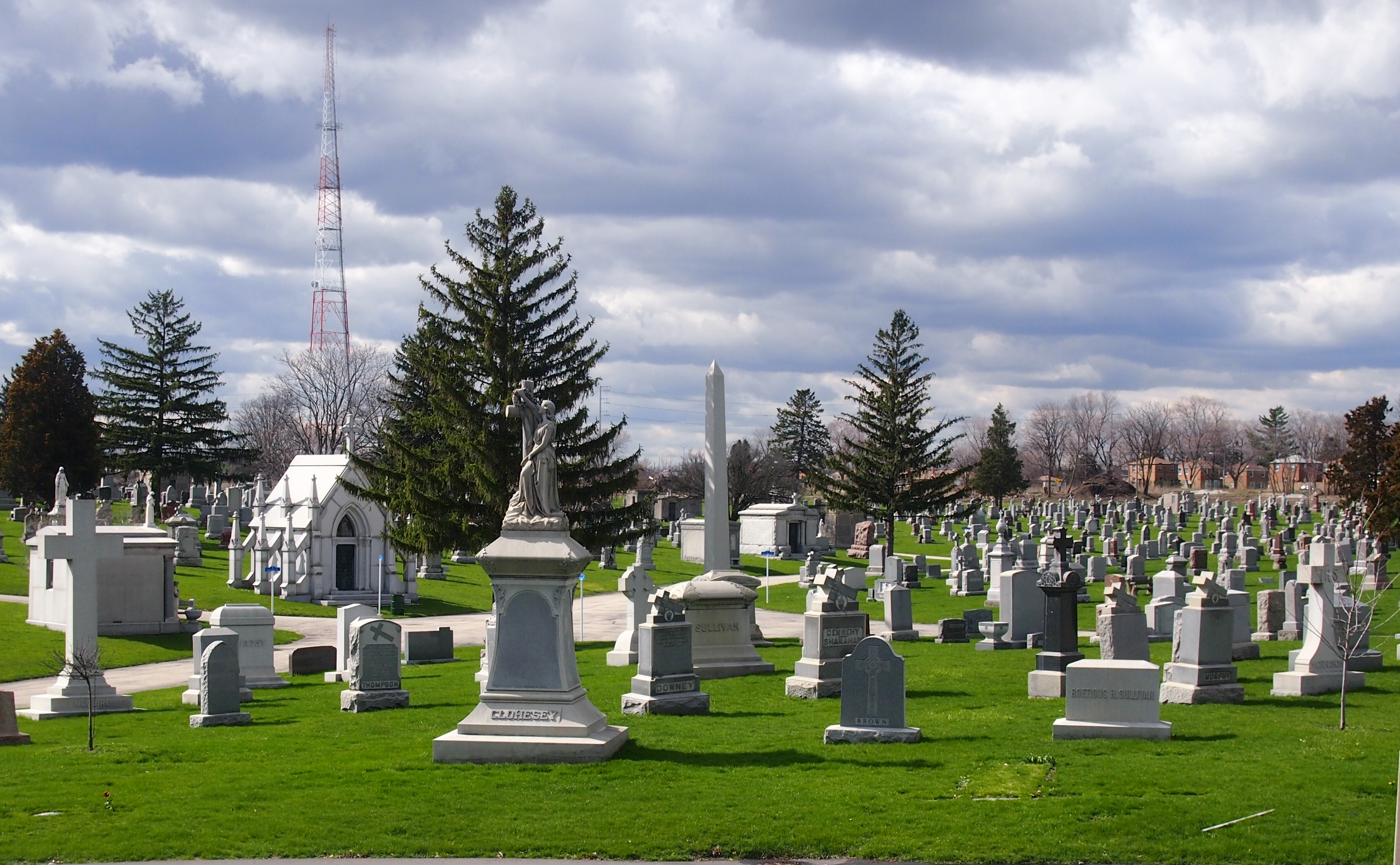
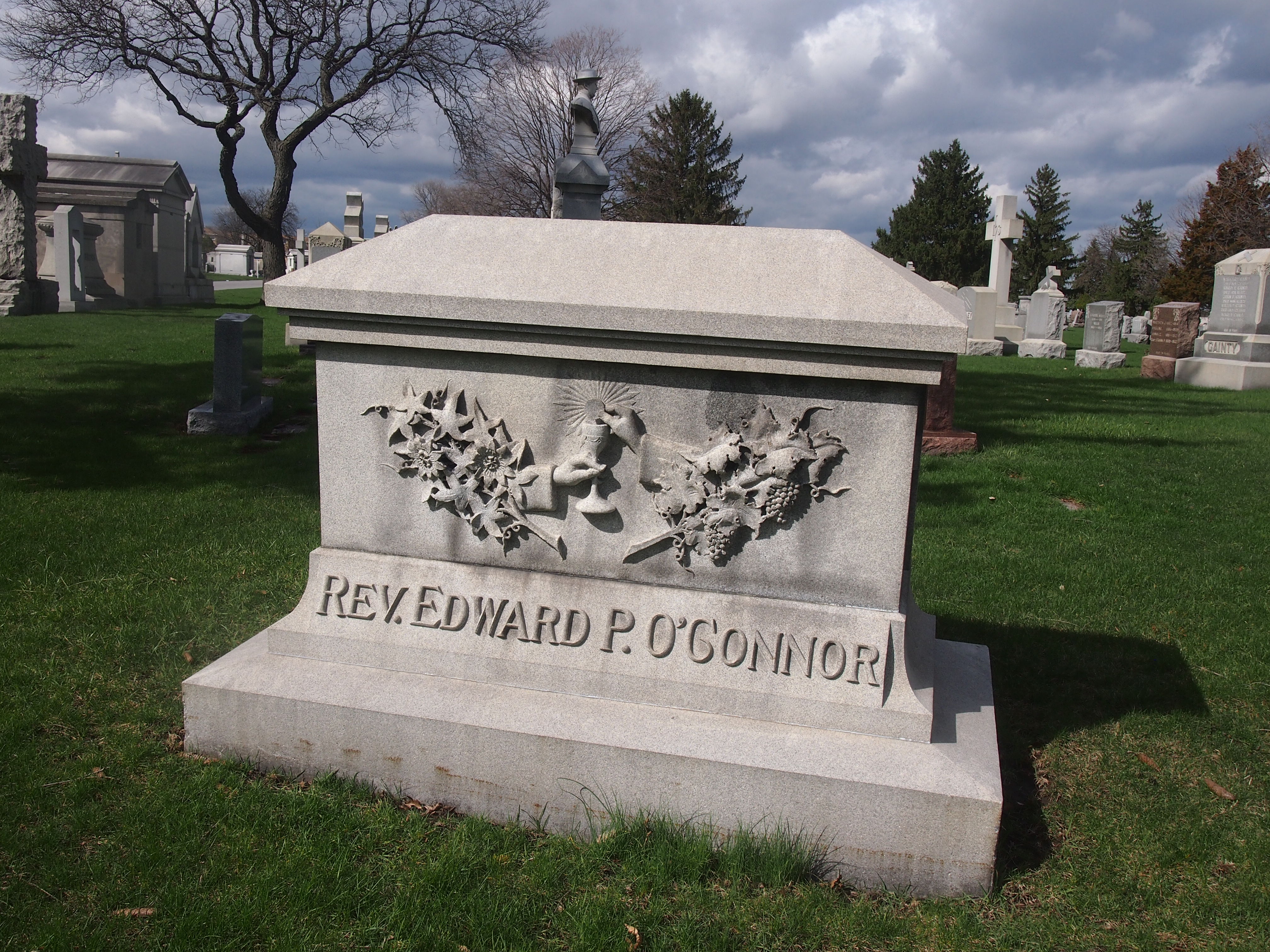
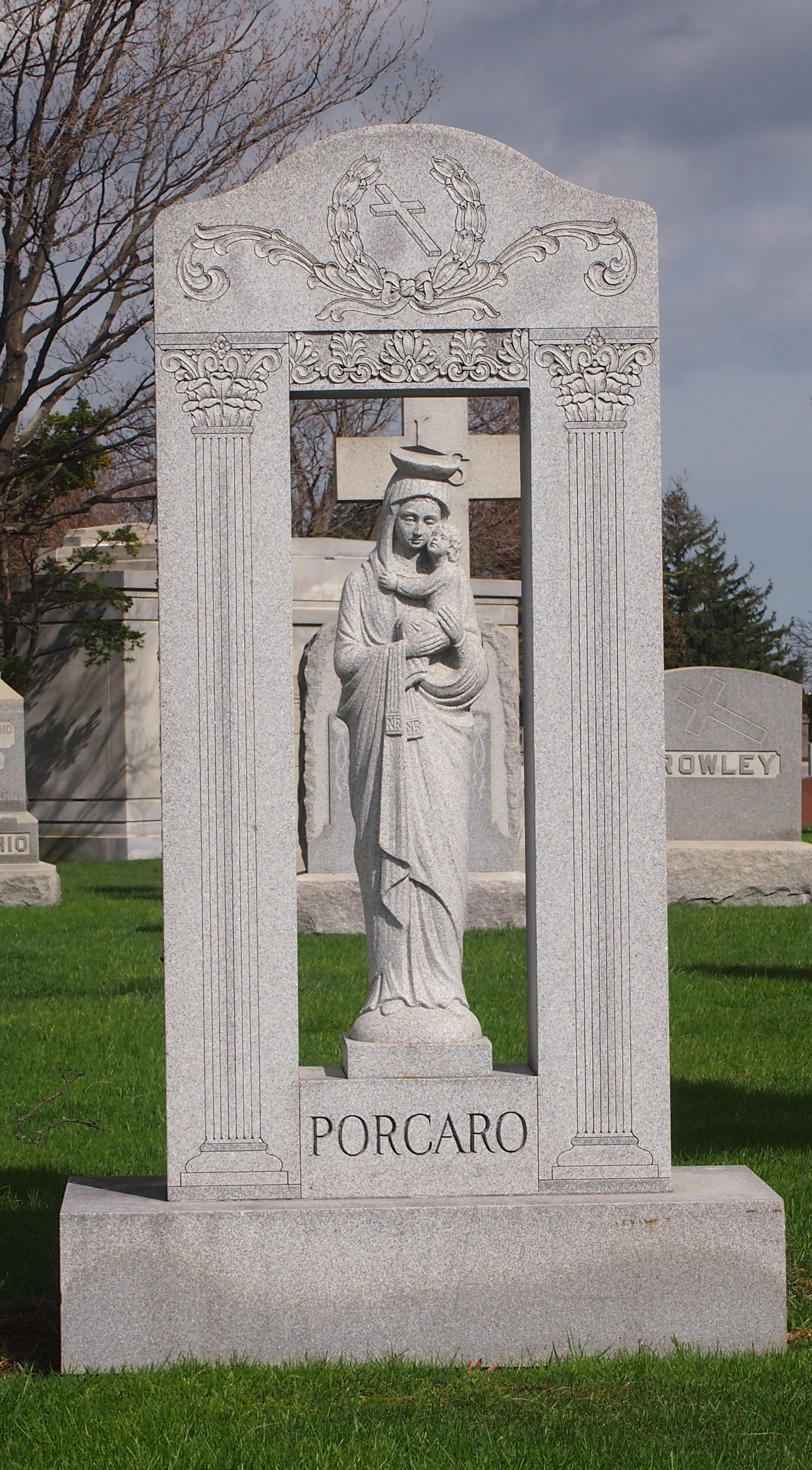
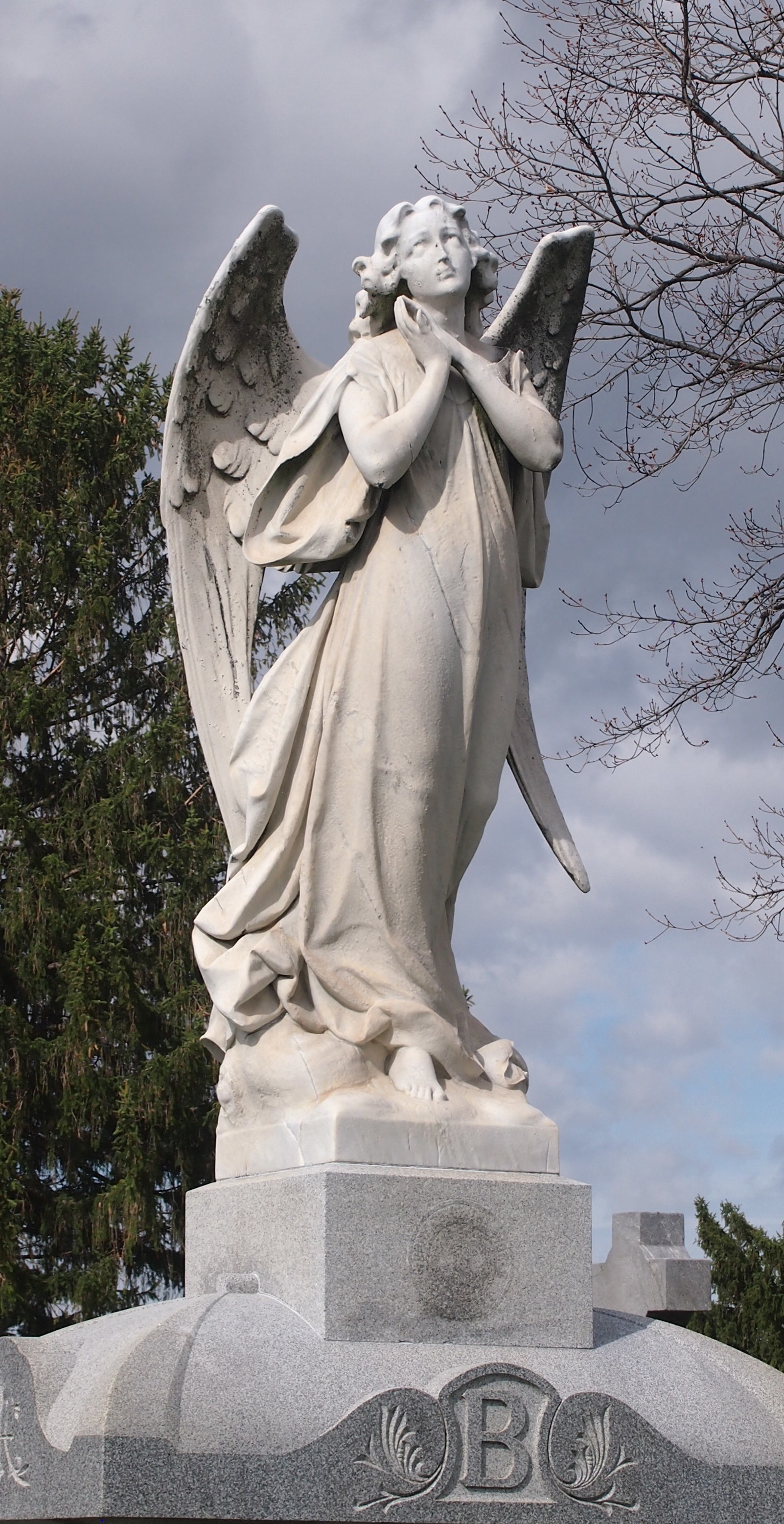
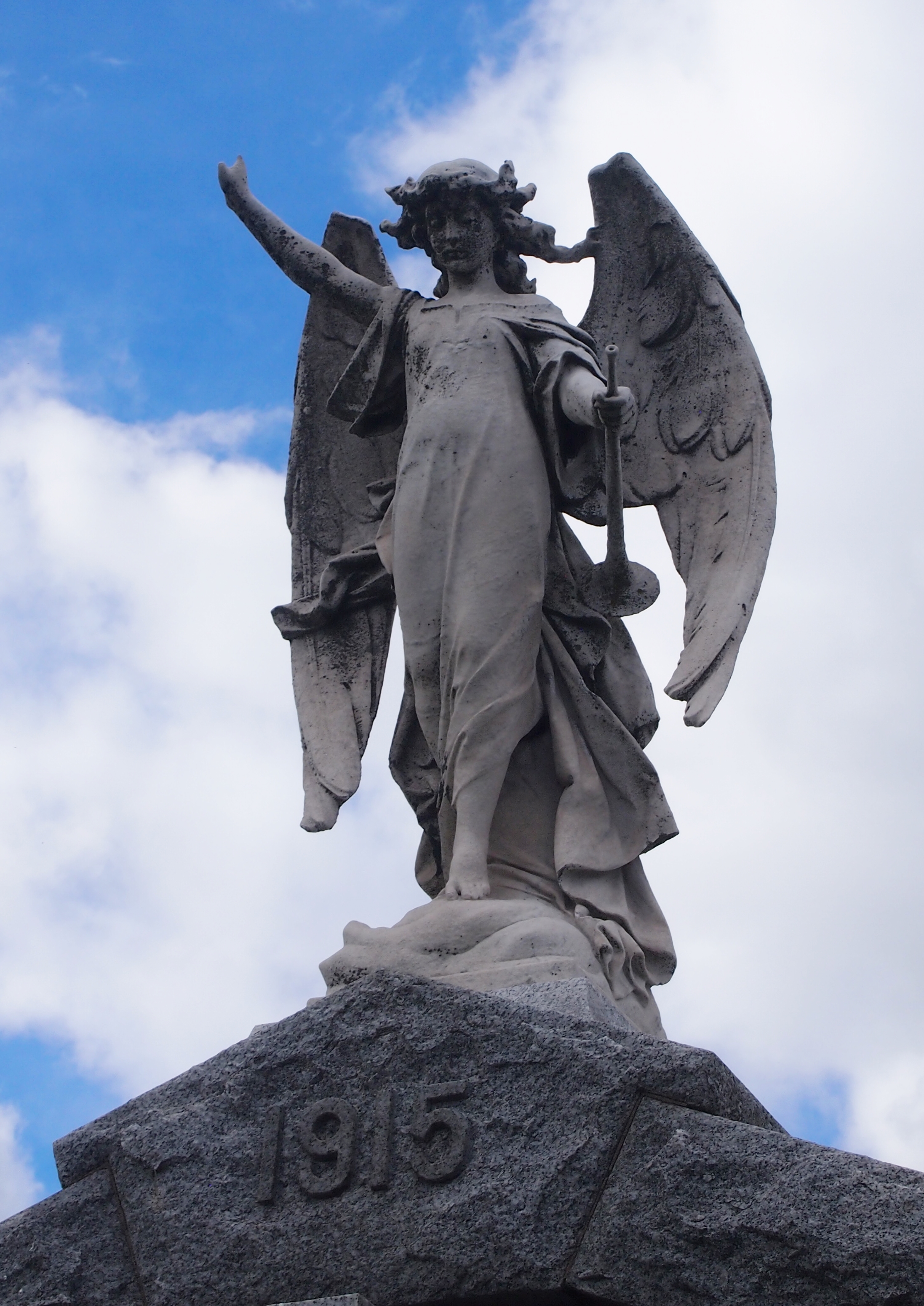
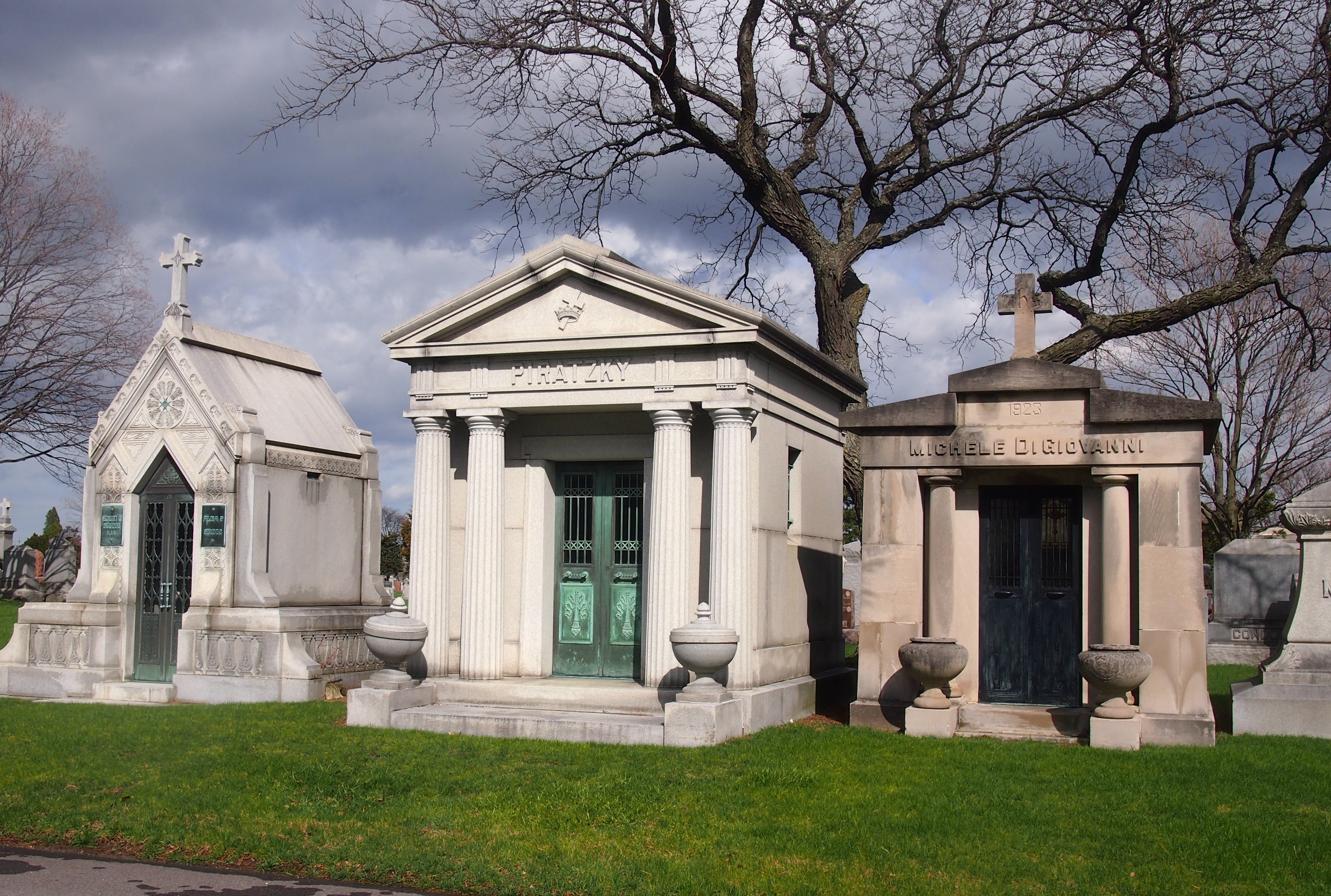
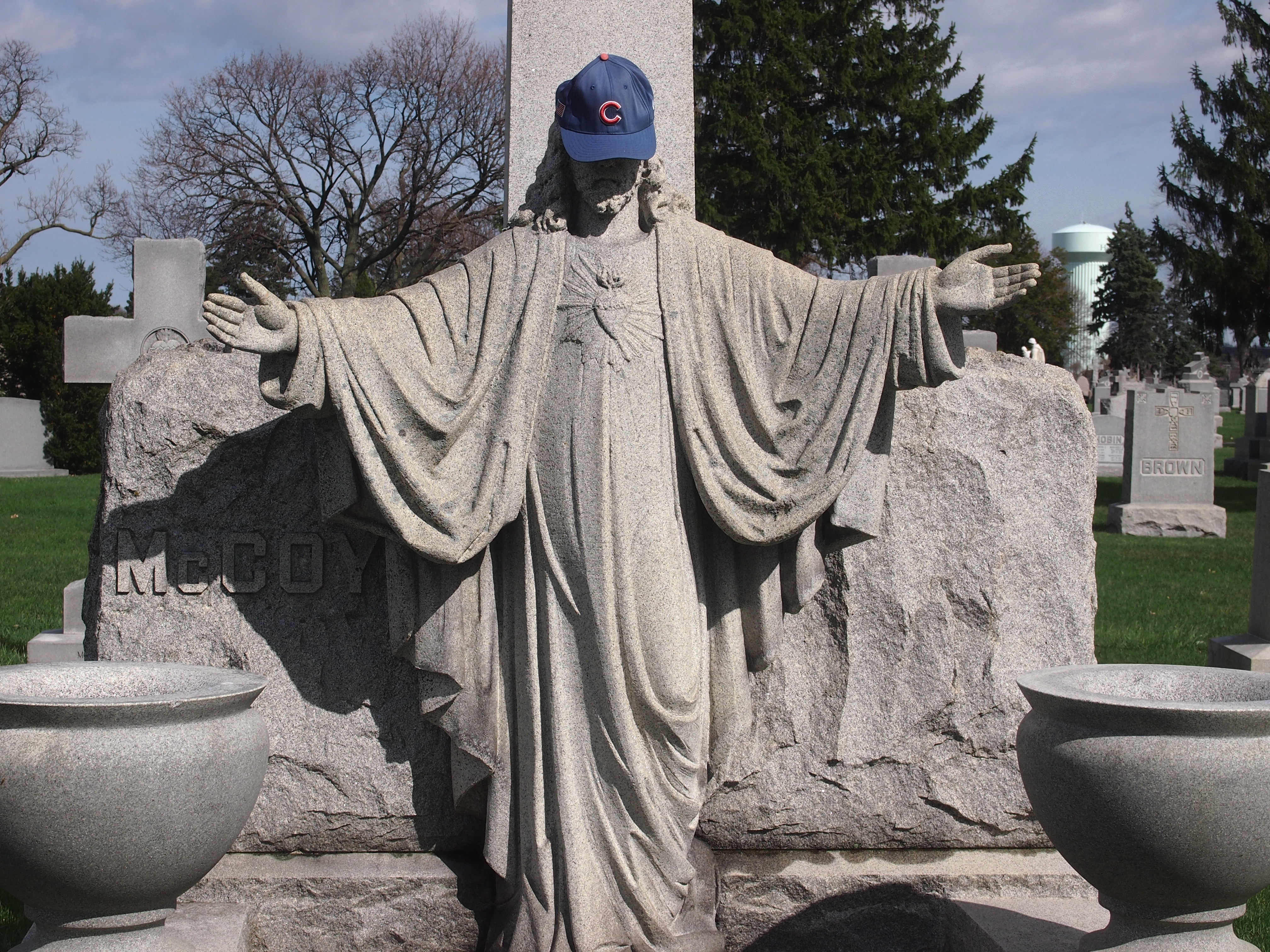
Woodland Cemetery, DaytonWoodland Cemetery, DaytonWoodland Cemetery, DaytonWoodland Cemetery, Dayton

Some cemeteries make it a chore to find the noteworthy burials, such as way that St. Mary’s Cemetery in Appleton, Wis., doesn’t seem all that eager for you to find Joe McCarthy. Woodland helpfully provides signs to famed permanent residents, and it wasn’t five minutes before I spotted the one that pointed to the Wright family plot — including Wilbur and Orville, their sister Katharine, the two children who died as infants (Otis and Ida), and their parents (Milton and Susan).

Woodland Cemetery, Dayton - Wirght Brothers graveI spared a penny each for the Wrights.

Woodland Cemetery, Dayton - Wirght Brothers graveWoodland Cemetery, Dayton - Wirght Brothers graveWonder who left the shells. Not far away is the poet Paul Laurence Dunbar, who also happened to know the Wrights.

Woodland Cemetery, Dayton - Paul Laurence Dunbar graveNear the entrance is a sign that says that Dayton native Erma Bombeck’s grave is nearby. So I went looking for it. My mother read some of her books, presumably because they amused her. I remember seeing them around the house. I never had much interest in her writing until I read an article of hers in the early 1990s, in Outside magazine (I think), of all places. It was remarkably good article about her and her husband’s visit to Papua New Guinea. One of her main points: if you’ve got the time and means, but don’t ever go anywhere interesting, you’re a dullard.

I couldn’t find anything with her name on it in that section. I did notice a large orange-ish boulder in the section, and it had a few withered flowers nearby, but no plaque or carving that I could see. Was that her monument?

Yes. I read later at Find-a-Grave: “A 29,000-pound rock has become a monument for her grave. It was brought by flat-bed truck from her home in Arizona. It reflects the empathy she had for the Southwest desert and to her years of residency.” That Erma. What a card, even in death.

In keeping with my idea that it’s important to note the obscure as well as the famed, here’s one near Erma Bombeck’s boulder. An interesting one, at least in a place like western Ohio.
Woodland Cemetery DaytonIt’s a bilingual stone: the other side is in English, informing me that Peter and Anastacia Piatnicia, along with (I assume) their daughter Ludmila de Ybarra, repose there.

Woodland Cemetery May 29 2016The stone also says “Cossack” in Roman letters, as opposed to the more complicated designation in Cyrillic. Cossacks in Ohio. People get around.

Things That Go Boom (Or, Nookular Combat Toe-to-Toe With the Rooskies)

As previously mentioned, models of Little Boy and Fat Man were nestled under one of the wings of the B-29 Bockscar at the National Museum of the U.S. Air Force near Dayton.

Fat Man, NMUSAFLittle Boy, NMUSAFI guess Little Boy was there for the sake of comparison. I’ve known about the difference for the a long time. When I was young, maybe even in junior high, I picked up a paperback copy of The Rising Sun: The Decline and Fall of the Japanese Empire, 1936-1945 (1970), by John Toland, and read the chapter about Hiroshima and Nagasaki with considerable interest.

In the museum’s post-WWII galleries, I started noticing the nuclear weapons casings. Some of them were hard to miss, such as this Mark 41, with a helpful illustration behind it.

Mark 41 NMUSAFDesigned to be carried by B-47s, B-52s, or B-70s, it was in the megaton range. Or about five times as powerful as Fat Man.

Most of the bomb casings were tucked away under the wings of some of the aircraft that carried them. Such as this sizable Mark 17.

Mark 17 NMUSAFA Mark 6 on the right (not sure what the other one is).

Mark 6 NMUSAFA Mark 7.

Mark 7 NMUSAFAnd some Mark 28s, also known as B28s.
Mark 28 NMUSAFA cul-de-sac off of the Cold War gallery, a silo-like structure 140 feet high, houses the museum’s missile collection. It’s a dandy collection, too, with Jupiter, Minuteman, Thor, Atlas, Titan and Peacekeeper missiles.
Missile gallery NMUSAFAlso included are more warhead casings, such as the W53, a version of B53 that the Titan II ICBM could carry. At nine megatons, it was a monster among monsters, now gone.
W53 - B53 NMUSAFRemember MIRV? All the rage in arms control discussions in the 1970s and ’80s.
MIRV NMUSAFTen warheads, count ’em, designed to be loaded on Peacekeeper missiles, all with different targets.

The National Museum of the U.S. Air Force

Before we went, I was sure the National Museum of the U.S. Air Force would be packed with other visitors. After all, more than a million people visit every year, according to the Air Force; airplanes are popular. The museum is free. Or at least, no extra charge beyond taxation. And while Dayton isn’t the largest of places, it isn’t in the middle of nowhere either.

So I’ll bet attendance was high on Memorial Day weekend Saturday. But the place didn’t feel crowded, except maybe in the gift shop. The museum soaks up people like the best of sponges. Its current three buildings — enormous hangers — total about 750,000 square feet and house more than 360 aerospace vehicles and missiles.

The exhibits are organized chronologically, beginning with the first aeroplane that the Wrights sold to the U.S. Army, the Wright 1909 Flyer, and ending in a hall of ballistic missiles. Not all of the aircraft are American made or were even in the service of the United States. Among the early airplanes are those from all the nations that fielded warplanes in WWI, such as a Sopwith Camel, Nieuport 28, Curtiss Jenny, Caproni, and a Fokker Dr. I triplane, which the museum is careful to point out is associated with Rittmeister Manfred von Richthofen, though the one on display is a replica, since none survive.

I’d never seen most of those planes before. Or a Caquot observation balloon. The museum has the only one in existence. “The hydrogen-filled balloon could lift two passengers in its basket, along with charting and communications equipment, plus the weight of its mooring cable, to a height of about 4,000 feet in good weather,” notes the museum.

Caquot observation balloonHydrogen filled. The Western Front Association says of the balloons: “That the jobs of the balloon commander and observer were hazardous in the extreme is self-evident, and casualties were correspondingly high.” I believe it. The picture above doesn’t show the open gondola hanging from the balloon. The gondola of death, it was.

Not all of the artifacts are aircraft. Equipment associated with airplanes, and the wars they fought in, is also plentiful at the museum. One particularly amusing item in the early aircraft gallery was a Model T ambulance.

Model T ambulanceNot because ambulances are funny, but because of the “Gunga Din” parody about the vehicle, which is quoted on a sign near the artifact. The full poem is here.

Yes, Tin, Tin, Tin!
You exasperating puzzle, Hunka Tin!
I’ve abused you and I’ve flayed you
But by Henry Ford who made you,
You are better than a Packard, Hunka Tin!

The difference between the WWI-era (and interwar) aircraft and WWII-era aircraft is astounding. That isn’t a revelation, but when you walk from one display to the other, the difference strikes you. The 1909 Flyer evolved into the likes of a B-29 Superfortress in only about 35 years. Think of the ingenuity.

The WWII gallery includes all kinds of interesting planes. Nothing like a modern war to spur the creation of weapons. Such as a Curtiss P-40, this one painted to represent one of the Flying Tigers that fought in China.

Flying Tiger NMUSAFA B17-G, the Shoo Shoo Baby, which I understand will eventually be moved to the Smithsonian. The famed Memphis Belle, currently under restoration, will take its place as the museum’s prime B-17.

Shoo Shoo Baby NMUSAFA B-24D Liberator, the Strawberry Bitch. The same kind of plane as Lady Be Good, which vanished in 1943 only to be found as wreckage in 1958 in the Libyan Desert.
Strawberry Bitch MNUSAFAnd of course, Bockscar. The Smithsonian got Enola Gay, the NMUSAF got Bockscar. Nearby were models of Little Boy and Fat Man, sitting beside each other. The nicknames were apt.
Bockscar NMUSAFThose are only some of the larger WWII planes. Also on exhibit were plenty of others, such as more bombers and fighters, transports, trainers, and so on, including some enemy aircraft, notably a Zero and a Nazi jet fighter, built by Messerschmitt too late in the war to do the Germans much good. I’m pretty sure I saw a Zero at the Yasukuni Shrine in Tokyo, but the jet was a new one for me.

Ann was interested to learn about the artwork on the aircraft and the squadron patches. These were ways of individualizing something mass produced, I told her. Besides the Strawberry Bitch — which has a painting of a redheaded woman on one side — many of the other airplanes sported drawings for her to inspect. There was also a display case devoted to squadron patches, including many designed by the animators at Disney, who were doing their bit for the war effort, along with sending Mickey Mouse, Donald Duck et al. off in cartoons to flight the Axis.

Apparently the patches were quite popular among airmen. Then again, I suppose most of them had grown up during the heyday of Disney cartoon shorts. My own favorite patch shows Donald Duck hoisting a cartoon bomb, the round sort with a fuse that cartoon anarchists used to hoist.

The next hangers featured aircraft and other items from the Korean War, Vietnam, and the Cold War. We went through these a little more quickly than WWI or WWII, since the vastness of it all was beginning to wear us down. Even so, these galleries had a lot to recommend them, such as in the Korean collection: a vast Douglas C-124 cargo plane; a B-29 (“Command Decision”) that you can walk through; and a MiG.
MiG NMUSAFI don’t think I’ve ever seen a MiG, so famed in air-combat lore. A North Korean pilot took this one out on a mission and used it as a handy way to defect.

One hallway featured an exhibit about the Berlin Airlift. I was amused to see this.
Jake Schuffert, Airlift TimesIt’s the work of TS Jake Schuffert, who did cartooning for the Airlift Times. I didn’t know the airlift had its own paper, but apparently so. Noted as niche cartoonist, he died in 1998.

The DuPage County Historical Museum

The DuPage County Historical Museum is housed in the former Adams Memorial Library at the corner of Main St. and Wesley St. in Wheaton, Ill. It’s a handsome structure, done in what’s known as the Richardsonian Romanesque style, and easy to admire on a clear day, though we didn’t have that luxury on Saturday.

The library was named in honor of Marilla Phipps Adams, the wife of John Quincy Adams, a New Englander who prospered in 19th-century DuPage County. Apparently he was a somewhat distant cousin of the president of the same name, but in any case he gave the money to build the library.

Charles Sumner Frost (1856-1931) designed the building, which was completed in 1891. Frost is better known for designing Navy Pier in Chicago, but also did a lot of railroad stations and terminals and depots, including the old Chicago and North Western Terminal (1911), which didn’t survive the 20th century. More about his work on the Adams Library is here.

The library went to a new building in the mid-1960s, and its old building became a museum in 1967. It isn’t a particularly large museum, but it has a nice collection, with rooms for a permanent display and a temporary display on the first floor, plus more in the basement and two items on the second floor.

The first-floor rooms covered DuPage County history (in the permanent gallery) and a history of wedding gowns and other traditions (temporary gallery). I enjoy local history displays of this kind, with their photos and documents and household items and ephemera of various sorts. I was particularly taken by some of the photos in the permanent exhibit, such as members of the Wheaton High School basketball team posed for a portrait taken in 1907.

Though it’s not a favorite movie of mine, the faces in the photo reminded me of lines from Dead Poets Society, as the teacher ruminates to his class on a similarly old portrait picture.

“They’re not that different from you, are they? Full of hormones, just like you. Invincible, just like you feel. The world is their oyster. They believe they’re destined for great things, just like many of you, their eyes are full of hope, just like you.

“Did they wait until it was too late to make from their lives even one iota of what they were capable? Because, you see gentlemen, these boys are now fertilizing daffodils. But if you listen real close, you can hear them whisper their legacy to you.”

The second floor of museum is a large, well-appointed room with a small stage. There are only two artifacts on that floor, but they’re good ones. Hanging high on the wall is the 36th Illinois Infantry Regiment National Colors, which was taken with the boys in blue to Pea Ridge, Perryville, Stone River, Chickamauga, Mission Ridge, Resaca, Kennesaw Mountain, Atlanta, Franklin and Nashville, among other places.

“Made of painted silk, this flag was brought back to Springfield after the war,” the museum’s web site says. “Recently professionally conserved with intensive cleaning and precise repair of the fabric, the restoration of the flag has ensured that it will be an educational tool for generations to come… The National Colors will remain at the DuPage County Historical Museum through July 2018, on loan from the Illinois State Military Museum.”

Also on loan from the Illinois State Military Museum is the 8th Illinois Cavalry Guidon. The museum notes that, “beginning in early 1862, the 8th Illinois was stationed in Washington D.C. and attached to the Army of the Potomac, fighting in their first battle at Williamsburg. The unit also fought in a number of engagements, including Mechanicsville (Seven Days Battle), Hanover Court House, Seven Pines, Brandy Station, Middleburg, Upperville, and Gettysburg.” More on the flags, along with pictures of them, is here.

The Ulysses S. Grant Memorial Highway & Lundy Lundgren

If you have time, US 20 is the best way between metro Chicago and Rockford. I-90 is faster but not as interesting, and a toll road besides. We went to Rockford on the Interstate for speed, but returned at our leisure on the US highway, which is sometimes four lanes, sometimes two, along that stretch.

US 20 is also known as the Ulysses S. Grant Memorial Highway in Illinois, honoring Gen. Grant, who spent some time in western Illinois. In fact, the highway runs by his house in Galena. (US 20 itself runs cross-country, from Boston to Newport, Ore., or vice versa.)

The honorary designation has been in place since 1955, but most of the original signs were lost or fell apart. In 2007, the Illinois DOT started replacing them with brown-lettered signs that include a portrait of Grant. The route passes very close to where I live in the northwest suburbs, and I remember starting to see the signs appear nearly 10 years ago. I thought the designation was new as well, but now I know better.

One of the places on US 20 between Rockford and the northwestern suburbs is Marengo, a burg of about 7,500 in McHenry County. Oddly, it seems to be named after the battle of that name, which did so much to solidify Napoleon’s top-dog status, at least until Waterloo. Maybe some of the town founders included Bonapartist sympathizers, but well after the fact, since it was established in the 1840s.

For years, I’ve been driving by a sign that points to a historical marker just off US 20 in Marengo. High time I took a look, I thought this time. The marker is a few blocks north of US 20 on N. East St. This is what I saw.

Lundy Lundgren, Marengo, ILCarl Leonard Lundgren (1880-1934) hailed from Marengo, and behind the sign is the very field where he perfected his pitching skills, at least according to the sign. As a young man, Lundy Lundgren pitched for the Cubs from 1902 to ’09, and in fact pitched for the team during its most recent appearances in the World Series — 1907 and ’08.

He’s buried in the Marengo City Cemetery across the street from the plaque.

Marengo City Cemetery April 2016I took a look at the place from the street, but didn’t venture in. Most of it’s modern-looking, or at least 20th century, but there’s a small section whose stones look very old, older even than Lundgren’s, wherever it is. That bears further investigation someday.

GTT Spring ’16 Leftovers

A good Easter to all. I’ll post again on Easter Monday.

Not long after posting about the moon tower at 41st and Speedway on Monday, I happened across this vintage image of that tower. The handwriting on the photo asserts that it was the first of the Austin moonlight towers.

Tom and I had occasion to visit a trendy, non-chain coffee house in Austin. Tom said it was trendy, anyway. I noticed the quiet. Everyone was focused on a laptop or hand-held device. No one was talking, even though the joint was full. That’s not an exaggeration.

Did Samuel Pepys and John Dryden keep to themselves at the coffee houses they frequented? Did Washington, Jefferson, or Hamilton stay mum at Merchants Coffee House in Philadelphia? Didn’t the beats yak it up at Greenwich Village coffee houses? There ought to be talk at a coffee house, regardless of how advanced communication tech becomes.

As long as I’m in a judgmental mood, the fellow in the seat next to me on my return flight from Texas was using his iPad during most of the trip to watch golf. The very picture of a Millennial, with the full beard and flannel shirt, he sat there and watched people play golf. Playing golf is one thing, but what’s interesting about watching people play golf on an itty-bitty screen for two hours? My judgmental mood recedes with a shrug; it takes all kinds.

On a hill off US 281 not far from Johnson City, Texas, is the Arc de Texas.
Arc de TexasThe structure offers lodging — with a patio and pool in back — and a room to taste local wines, as well as Hill Country views from the roof, available to any passerby during normal business hours.
Arc de Texas viewArc de Texas is part of a larger entity called Lighthouse Hill Ranch, whose acreage offers a number of posh places to stay for the night.

Walking along Main Street in Fredericksburg near the former Nimitz Hotel, you’ll find Fleet Admiral Chester W. Nimitz (1885-1966) in bronze. You have to look on YouTube to find the “Chester Nimitz Oriental Garden Waltz” by the Austin Lounge Lizards.

Adm. Nimitz bronze, Fredericksburg TexasIn the George H.W. Bush gallery of the National Museum of Pacific War, you’ll find a painting of a less-expected figure from the history of naval conflict, though completely fitting, in one of the rooms about the buildup to the war: Marshal-Admiral Marquis Tōgō Heihachirō (1848-1934).
Marshal-Admiral Marquis Tōgō Heihachirō painting National Museum of the Pacific WarAs noted before, Texas is important in marketing goods in Texas. Need more evidence?
Texas eggsThese eggs were obtained at a San Antonio HEB grocery store.

The Moon Tower at Speedway and 41st, Austin

The Cathedral of Junk in Austin isn’t the easiest tourist attraction to see. For completely understandable reasons, since it’s in someone’s back yard, and the householder and creator of the pile, one Vince Hannemann, doesn’t want people just showing up. You have to call first, and hope he picks up to let you make a reservation, which he does only when he feels like it.

How do I know that? When I called, I heard the message on his answering machine, which said all that the likelihood of him answering in person was a “lottery” — and not to bother leaving a message about visiting, since he would not reply. He didn’t say it, but I also got the sense that he really was trying to avoid having the thing take over his life.

So Tom and I didn’t see the Cathedral of Junk on March 5. We did other things, such as walk along Lady Bird Lake. After dinner that night, I expressed my desire to see an Austin moon tower, also known as a moonlight tower. See one again, since I’d seen one at least 30 years ago during a visit. I don’t remember which tower that was, but it might have been the very one he took me to this time around, at the corner of Speedway and 41st in the Hyde Park neighborhood of Austin, to look up at the lighted hexagon in the night sky.

A couple of the six lights were out. What’s up with that, Austin Energy?
Austin Moon Tower, Speedway and 41stThe moon towers have a long and well-known history, at least to Austinites and non-Austinites who care about such oddities. Before modern street lights were developed, there was a late 19th-century vogue for tall towers that illuminated their surroundings at night via carbon arc lights: moonlight towers, or moon towers. When there was no natural moonlight, the hand of man could provide it.

A Machine Age notion if there ever was one. A number of municipalities had them; Detroit reportedly had a lot. The only survivors now are in Austin, which acquired its towers in the 1890s.

Apparently carbon arc lights are very bright, but also high maintenance, so the moon tower lights were replaced with incandescent lights in the early 20th century. Currently there are 17 Austin moon towers, each 165 feet tall. The towers were restored in the early 1990s and a simulation of one figures in Dazed and Confused, a movie I’ve never gotten around to. In this image, a barely visible bilingual sign warns one and all not to be a tower-climbing moron.
Austin Moon Tower, Speedway and 41stI don’t think the towers count as Austin weird, but they are odd. That might make a better slogan: Keep Austin Odd. Just the kind of thing I like to see anyway: unusual, unpretentious, with an interesting back story, and easy to see. Here’s an excellent podcast at the usually excellent 99% Invisible series about the Austin moon towers.

The National Museum of the Pacific War

The National Museum of the Pacific War is a complex of structures at a short distance from each other in Fredericksburg, including the restored Nimitz Hotel, which now houses a museum about Adm. Nimitz; the George H.W. Bush Gallery, which focuses on the war in the Pacific; and more: the Veterans’ Memorial Walk, the Plaza of Presidents, the Japanese Garden of Peace, the Pacific War Combat Zone, and the Center for Pacific War Studies.

The Nimitz Hotel building used to include the war exhibits, but now they’re in the much larger (32,500 square feet) Bush Gallery, open since the 1990s, and expanded in 2009. Outside its entrance is the conning tower of the USS Pintado, a submarine that conducted a number of a patrols against the Japanese.
National Museum of the Pacific WarThe museum, organized chronologically beginning before the war and ending at the USS Missouri, is incredibly detailed, and home to a large array of impressive artifacts. That includes some impressively large artifacts, such as a Ko-hyoteki-class midget submarine that participated on the attack on Pearl Harbor, which actually seems pretty large when you stand next to it.
National Museum of the Pacific WarThe pilot of this particular vessel, Ensign Kazuo Sakamaki, survived its beaching and became the war’s first Japanese POW, having failed at suicide. According to the Honolulu Star-Bulletin in 2002, “When the war ended, he returned to Japan deeply committed to pacifism. There, Sakamaki was not warmly received. He wrote an account of his experience, titled The First Prisoner in Japan and I Attacked Pearl Harbor in the United States, and thereafter refused to speak about the war.” (He died in 1999.)

Also on display were a B-25 — as part of a exhibit about the Doolittle Raid — a Japanese N1K “Rex” floatplane, an F4F Wildcat fighter, and a replica of Fat Man, just to name some of the larger items.
Fat ManThe exhibits also included a lot of smaller weapons, tools, posters, uniforms, model ships and airplanes, military equipment, and sundry gear and items associated with the fighting and the people who were behind the front. Plus a lot to read. Campaigns and incidents both well known and obscure were detailed, such as the effort to salvage the ships in Pearl Harbor in the months after the attack, which was often dangerous work. Other Allied efforts weren’t ignored, such as the Australian advance on Buna-Gona, a campaign that incurred a higher rate of casualties than for the Americans at Guadalcanal.

All in all, a splendid museum. But exhausting. If I’d had time on Sunday as I went from Austin to San Antonio, I would have gone back (the tickets are good for 48 hours). It’ll be worth a return someday.