Late Summer Thursday Stew

A package arrived in the mail for Lilly today from UIUC.

“Your high GPA has earned you the privilege of graduating Cum Laude…. This accomplishment, which is referred to as Latin Honors, is also recognized by a special bronze cord,” the enclosed letter said. “Because we were unable to have an on campus commencement ceremony in May, we will be mailing cords to the mailing address you have on file with campus.”

Sure enough, the package also included a bronze cord, looking something like a curtain accessory. Lilly’s already in the Pacific Northwest, so she’ll have to wait for one of us to deliver it in person, since I’m not planning on re-mailing it.

Never got a Latin Honor myself. Missed it by a whisker of GPA, I think. But I don’t really remember, and in nearly 40 years, that fact has never come up at any time for any reason.

I’m surprised some of these TV shows count as public domain. Then again, under the copyright rules before Disney put its imprint on the law, copyright holders had to renew after a certain number of years, and I expect many producers didn’t bother. The other day I watched the first episode of Car 54, Where Are You? It had its amusing moments.

Summer is ebbing away. I’m trying to spend as much time on my deck as possible. A refuge from work and word of the troubled world beyond my little spot.

A few days ago, after work but before dinner, I parked myself on the reclining deck chair on the deck and managed to take a nap. My family marveled at that, considering the heat and noise of the cicadas. But it wasn’t that hot that late in the day, and the sound of cicadas is something to drift off to sleep to, though not as soothing as cricketsong.

I’m about half way through The Unredeemed Captive by John Demos (1994), which Lilly and Ann gave to me last Christmas, on a tip (I believe) from one of Ann’s teachers.

“The setting for this haunting and encyclopedically researched work of history is colonial Massachusetts,” Penguin Random House says. “There, in February 1704, a French and Indian war party descended on the village of Deerfield, abducting a Puritan minister and his children. Although John Williams was eventually released, his daughter horrified the family by staying with her captors and marrying a Mohawk husband.”

It’s a good read about a time and place I’m not especially familiar with, early 18th-century New England. Interesting how in only 50 years or so, that place evolved into the more familiar (to me) mid-century and Revolutionary New England.

Wait, when did Random House and Penguin merge? In 2013, it turns out. I wasn’t paying attention because book publishing isn’t my sort of publishing. I’m used to thinking of Penguin as a solidly British operation, but these days it’s owned by shadowy German billionaires.

404 Fehler

The other day I was nosing around a web site of a German company — though the part of the site I visited was in English — and came across a 404, which I guess has the same meaning in every language now.

404 FEHLER
Seite konnte nicht gefunden werden
Die von Ihnen gewünschte Seite ist leider nicht verfügbar.
Möglicherweise ist die angeforderte URL falsch oder veraltet beziehungsweise wurde die betreffende Seite von uns archiviert oder umbenannt.
Gehen Sie zurück zur Startseite, um Ihren gewünschten Inhalt zu finden.

Lots of fun words in that text, such as verfügbar, umbenannt und möglicherweise.

Aurora West Forest Preserve

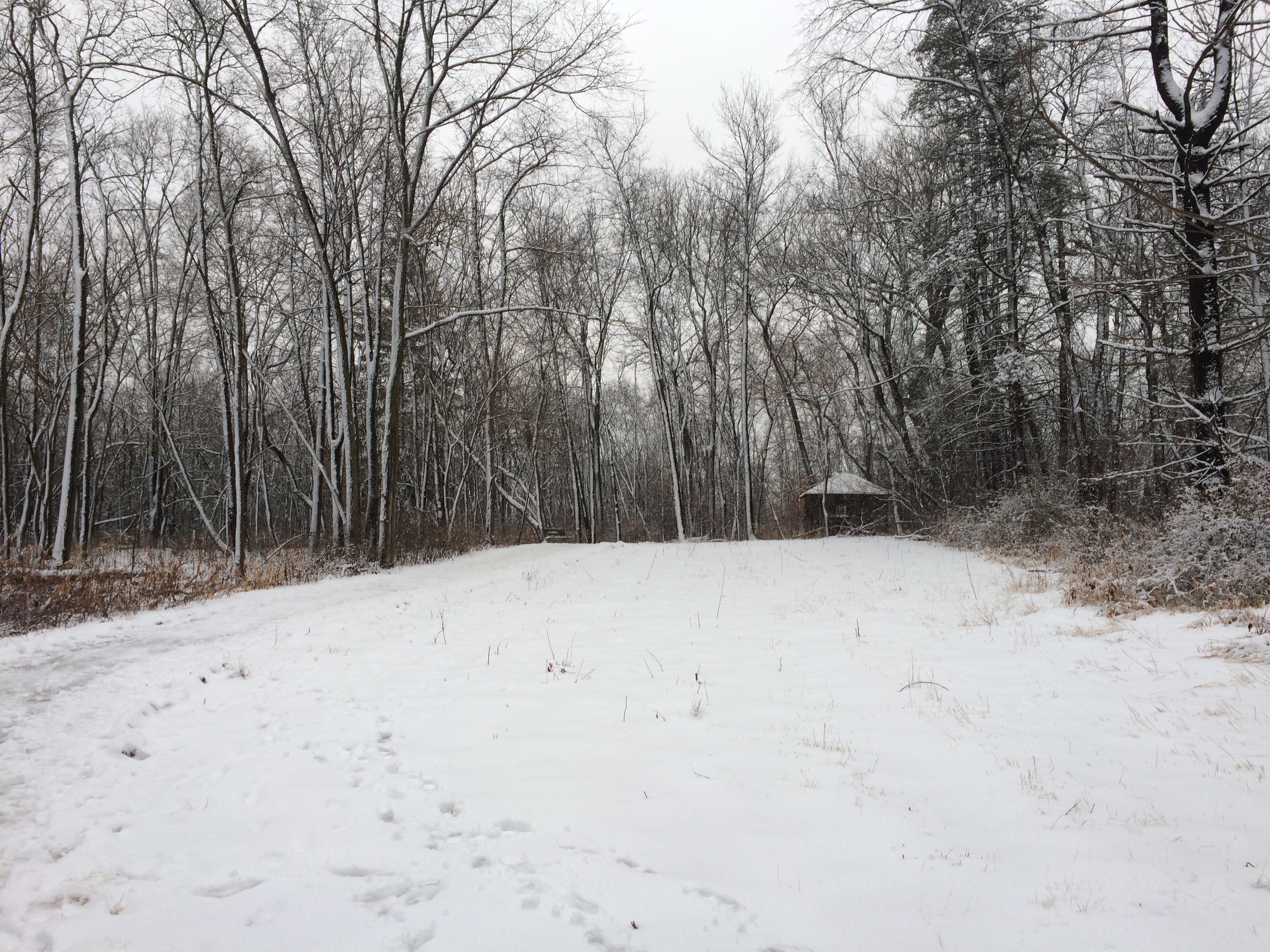
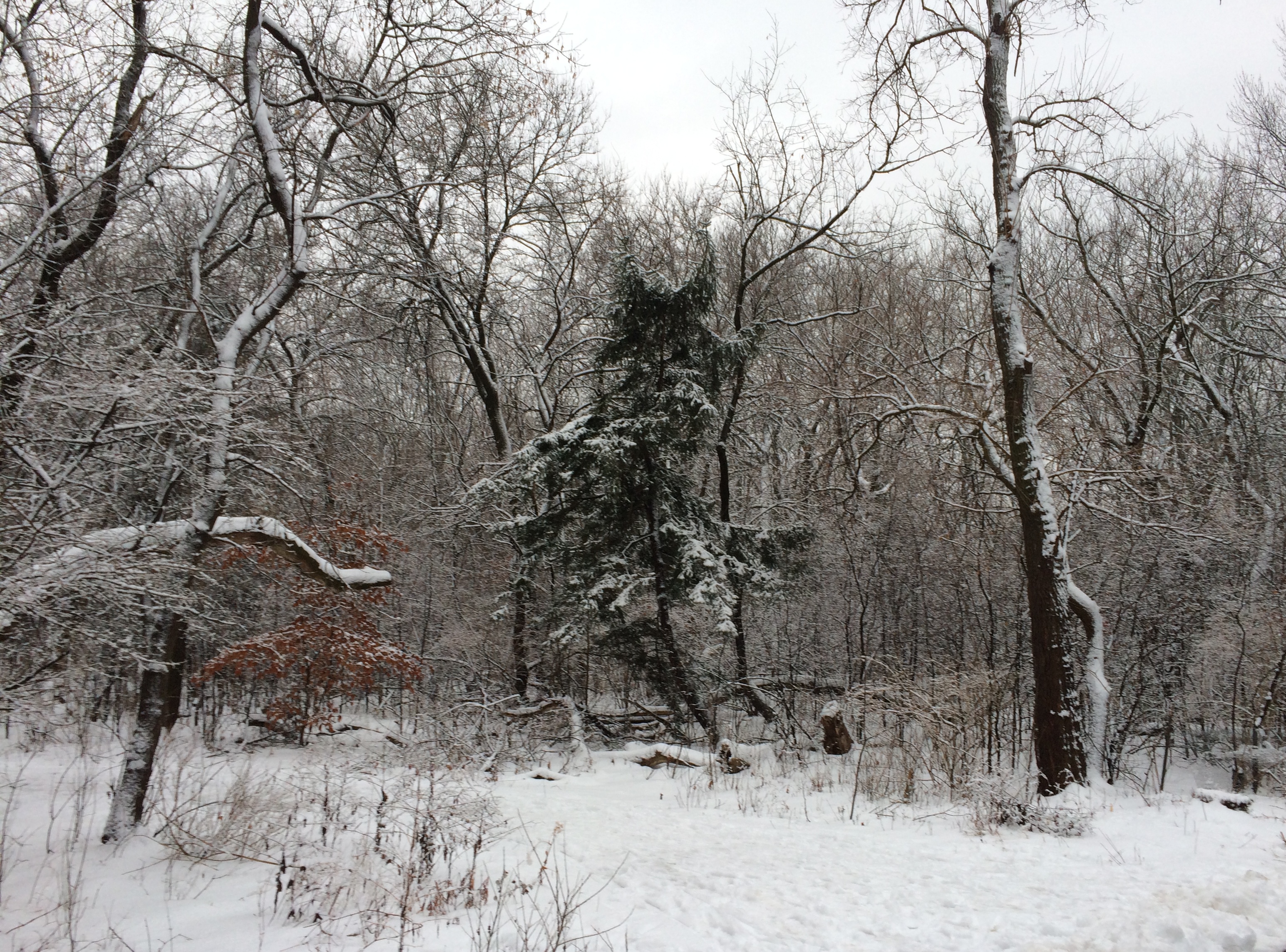
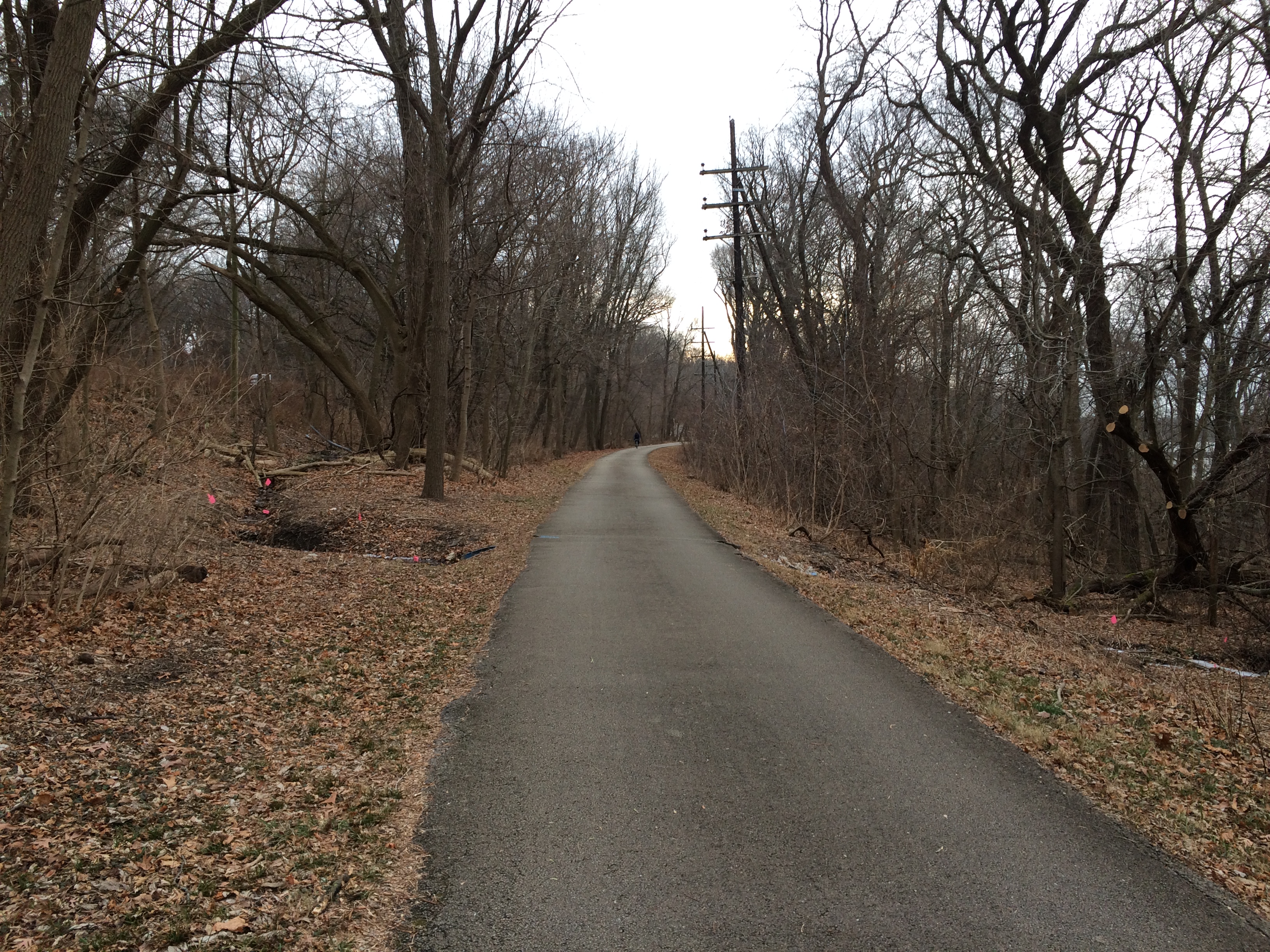
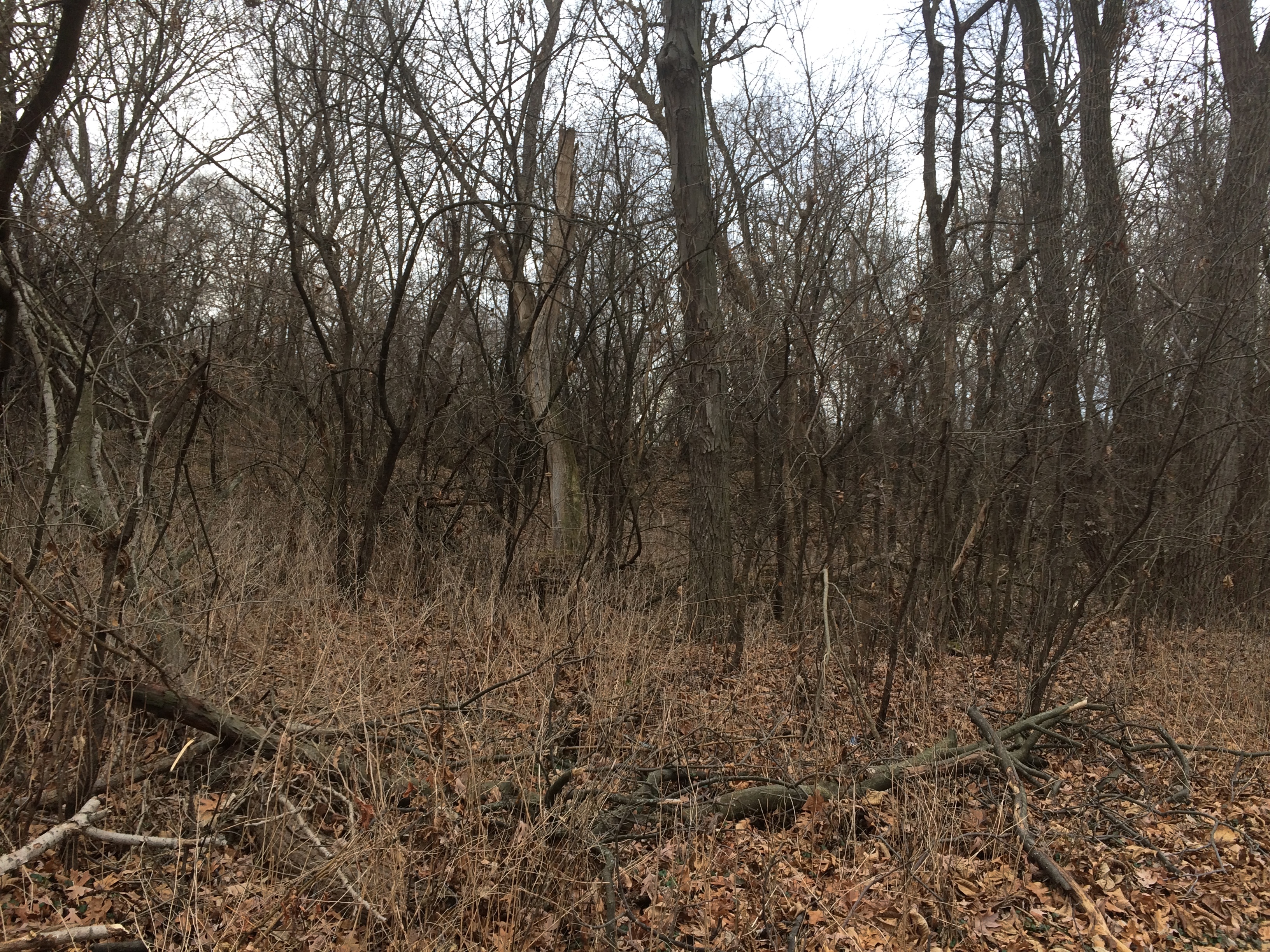
Sometimes forest preserves include more prairie than forest here in the Prairie State, but not so for the Aurora West Forest Preserve in Kane County.
Aurora West Forest PreserveForest means forest, once you walk a short way along a wide path.
Aurora West Forest PreserveAurora West Forest PreserveSupposedly it’s a path for unleashed dogs, but we didn’t have our dog, and we didn’t see anyone else’s either. Or anyone else at all.

Aurora West Forest Preserve

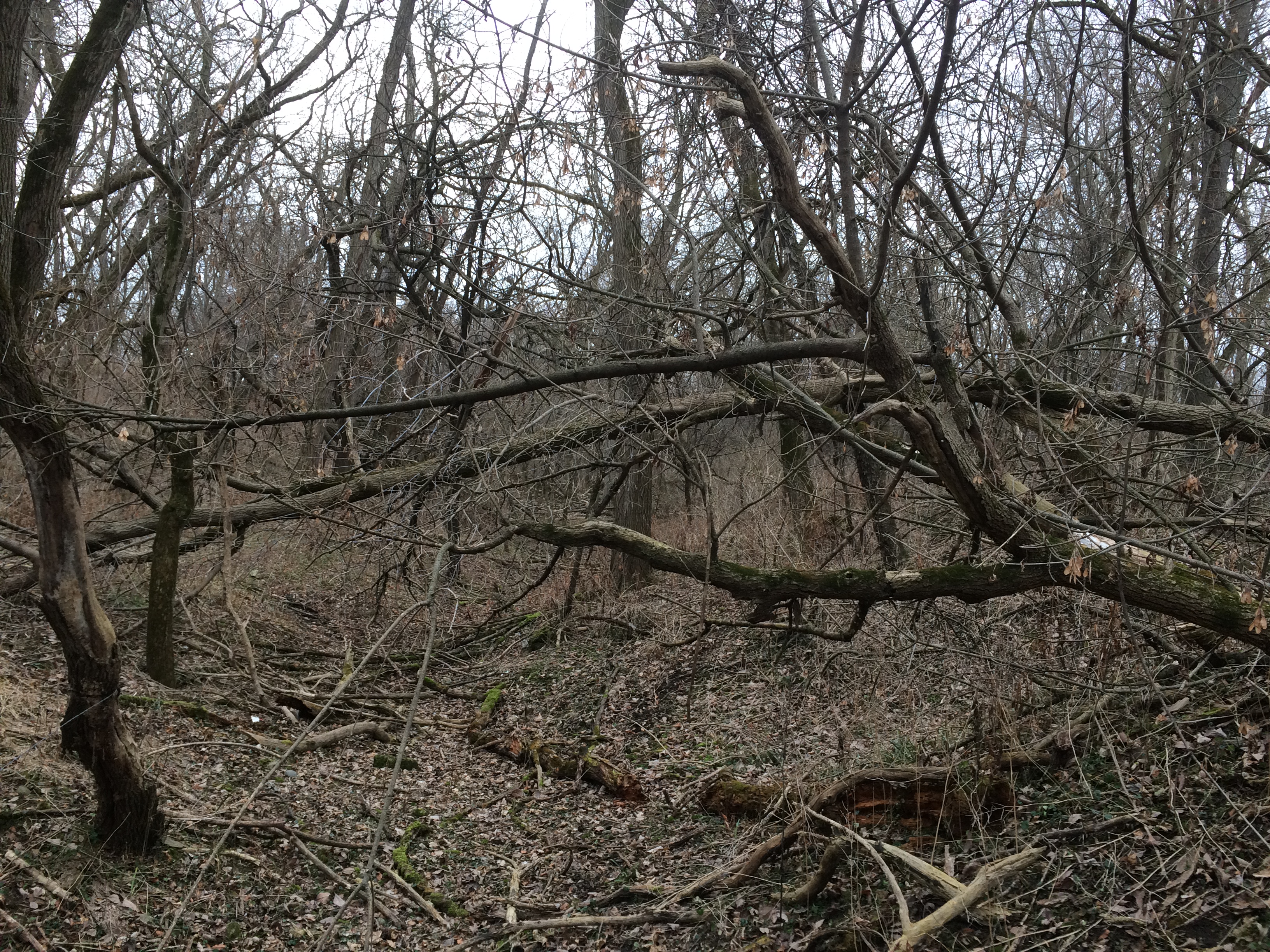
Aurora West Forest PreserveA good place to imagine you’re far from the works of man.
Aurora West Forest PreserveMostly.

Make Victory Funds Great Again

These two return envelopes arrived in the mail recently as part of two gimme letters. Direct mail marketing, at least for political campaigns, seems a bit scattershot in this case.

The three one-cent stamps are particularly odd. The letter that came with it is emphatic that the return envelope is TRIPLE-STAMPED, using all caps and mentioning it three times.

Dinosaurs of New York

Back in the days of paper letters and postcards, not every correspondence I started ended up in the mail. I have an entire file of letters and a few postcards that I didn’t finish and didn’t mail.

Usually that was for ordinary reasons, such as forgetting to complete it for months, by which time the news was stale. Only on rare occasions did I write a letter and think better of sending it because of its content, though I have a few insolent work memos of that kind.

I wrote a large postcard to a friend of mine in Illinois on August 27, 1983, while I was still in New York City. I think it got lost among the papers I had with me a few days later when I went to Nashville, and all these years later, I still have it.

Note the missing piece. I got as far as stamping the thing, but later removed it for re-use.

The printed text of the card says:

ALLOSAURUS (foreground) was a large, meateating dinosaur that lived during the Jurassic period of earth history, about 140 million years ago. This aggressive reptile, which preyed upon other dinosaurs, was about 30 feet long and probably weighed several tons when it was alive. Several individuals of CAMPTOSAURUS, a small, inoffensive, plant-eating dinosaur, are shown in the background.

Painting on Display
THE AMERICAN MUSEUM OF NATURAL HISTORY
NEW YORK, U.S.A.

I wrote, in part:

Dear R—

I have come to New York to learn such oddities as “August is Bondage Month,” which a simple advertisement in the window of the Pink Pussycat Boutique told me. [Remarkably, the shop is still there; give the people what they want, I guess.]

Since the long line to pass through customs at JFK [returning from Europe], I’ve shuffled first to the P’s house in New Rochelle, then S’s house in Stamford, Conn. Since last Friday (the 19th), I have been at D’s apartment while she is on the Jersey shore with her parents. This is a good arrangement. I’ve become acquainted with the Village and various other parts of the city.

This card, for instance, is an accurate portrait of Brooklyn, by the East River.

Greve Cemetery

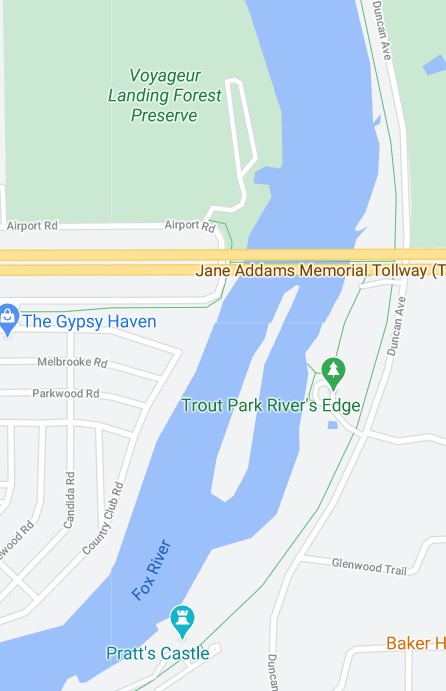
Tucked away north of Higgins Road but south of I-90 (the Jane Addams Memorial Tollway) in Hoffman Estates, Illinois, is Greve Cemetery. It’s about a half a mile to the west of Fabbrini Park as the crow flies, which I guess would be a fitting bird to seek out an obscure burying ground.
For a suburban development, the streets of the surrounding neighborhood of Barrington Square are fairly dense, with houses and townhouses of various configurations lining the way. A lot of people were out and about on those streets and yards late in the afternoon when I parked on Abbey Wood Drive to look for the cemetery, but no one else was interested in it.

It wasn’t hard to find.

Greve Cemetery Hoffman EstatesGreve Cemetery
In 1827 was called “Wild Cat Grove”
Johann Gerhard Greve settled here from
Hanover, Germany, in 1838
Purchased land from government in 1842
Property was first used as a family and
Community cemetery in the 1840s
Sold to Cook County in 1899
Acquired by the village of Hoffman Estates in 1989

Ah, those plucky German settlers. The cemetery is atop a small hill — pretty much the only kind in Illinois — and thick with oaks and other tall trees.
Greve Cemetery Hoffman EstatesFenced in completely. I assume because of a history of wanker vandals beginning with the surrounding development in the late 20th century.
Greve Cemetery Hoffman EstatesStill, most of the stones are visible. Including the Greves.
Greve Cemetery Hoffman EstatesAnd the Völkenings, complete with umlaut.

Greve CemeteryStones without much left to tell their tales.
Greve CemeteryA short history of the cemetery is here, and another article about it is here.

Handy Map of London

I have in my possession a Handy Map of London. This is supposedly a German version of similar vintage; mine is in English, but it looks just the same. Mine is dated 1986, so I’m certain I picked it up in 1988.

It isn’t my favorite map of London — that would be that marvel of aesthetic mapmaking, the Bensons MapGuide.

Still, the multi-page, folding Handy Map, published by John Bartholomew & Son Ltd. of Edinburgh, was indeed handy. That company, long since a unit of Harper Collins, is one of the storied Scottish mapmakers, as detailed here.

Interesting material in the Wiki description, though without citation: “John Bartholomew Junior was credited with having pioneered the use of hypsometric tints or layer colouring on maps in which low ground is shown in shades of green and higher ground in shades of brown, then eventually purple and finally white.

“It is his son John George who is attributed with being the first to bring the name ‘Antarctica’ into popular use as the name for the Southern Continent, and for the adoption of red or pink as the colour for the British Empire.”

By gar, someone invented those conventions. But they’re such strong conventions that you hardly think of a time when maps didn’t feature them.

The Handy Map folds out to reveal ten separate maps, nine of which are parts of Greater London, and all of which are color- and number-coded. Want to look for a particular place? The map makes that pretty easy. Even more so than Benson, I have to say.

The tenth map is a view of all of Greater London. As you’d imagine, it can’t be overly detailed, but it is good for orientation. I was looking at it the other day (for now the Handy Map is in the downstairs bathroom) and noticed an oddity on the Greater London map.

Toward the eastern edge of the map, just north of the Thames near a place called Purfleet, is a pink, long oval shape (like a race track) simply marked DANGER AREA.

What? It took me a few days to remember to check it out on Google Maps. In 1986, a danger area. In 2020, it’s the RSPB Rainham Marshes, also known as the Rainham Marshes Nature Reserve.
That would be, according to Google: “Bird-rich former marshland firing range with accessible boardwalks and a modern visitor centre.”

RSPB? The Royal Society for the Protection of Birds. The organization bought the land from the UK Ministry of Defence in 2000, opening it to the public in 2006. So danger area no more, unless you’re attacked by cetti’s warblers, little egrets or peregrine falcons. More about the marshes is here.

More about the organization is here.

“The RSPB was formed to counter the barbarous trade in plumes for women’s hats, a fashion responsible for the destruction of many thousands of egrets, birds of paradise and other species whose plumes had become fashionable in the late Victorian era,” its web site says.

“The organisation started life as the Society for the Protection of Birds (SPB), founded by Emily Williamson at her home in Manchester in 1889. The group quickly gained popularity and in 1891 it merged with the Fur, Fin and Feather Folk, to form a larger and stronger SPB, based in London.

“In its earliest days, the society consisted entirely of women and membership cost twopence. The rules of the society were:

“That members shall discourage the wanton destruction of birds and interest themselves generally in their protection

“That lady-members shall refrain from wearing the feathers of any bird not killed for purposes of food, the ostrich only excepted.”

Interesting that ostrich feathers were OK. If I felt like it, I could investigate why that was, but I have a hunch that ostrich farming was entirely too valuable before WWI to discourage, especially in South Africa. These days, leather is the main thing, with feathers just a sideline.

NW Suburban Tree in Motion

Occasionally I wake up in the wee hours and have trouble falling asleep again, which I figure must be true for a lot of people. That happened this morning at around 4. One strategy to deal with that is to put a very familiar album on the CD player/tape deck on the night table. Familiar and not too loud. I listen to the first song or two and then realize I’m listening to the last, or one of the later songs on the album, having slept through the rest.

That didn’t work this morning, so I just waited for sleep to return as the morning light began to creep into the room. Then I remembered I needed to put gas in my motorcycle, so I put the nozzle in the right place, and sat down at a small cafe table under an umbrella for a cold drink, trusting the pump to shut off automatically. Mm. I’ve never owned a motorcycle, I thought. Ah, I’m dreaming.

Later in the morning, when I was fully awake, I was in the back yard for a few minutes, enjoying a pleasant breeze.

I’m fairly sure that’s an aspen in my back yard, just on my side of the fence. I’ve seen it grow quite tall over the years. It will be one of the first to turn color for the fall — a few leaves are already yellow, I see.

I’ve read that they’re sometimes called quaking aspens. Or trembling aspens. The names certainly fit today.

Temporarily Mediterranean

For a few weeks now, we’ve enjoyed a Mediterranean-like climate here in northern Illinois, at least the warm and dry summers. Sometimes hot, but usually just warm, and usually dry, though we’ve had occasional showers.

We’ve had more at-home meals al fresco this year than any time I can remember. It can’t last. But at least it will for the next week or so.
Till then, it’s a mild balm for the worldwide pervasive melancholy, if you happen to be around here.

Kinkaku-ji 1990

Thirty years ago, I spent much of my first summer in Japan wandering around the Kansai, the part of the country focused on the Osaka-Kyoto-Nara-Kobe megalopolis. On August 18, 1990, I sent a postcard featuring the Kinkaku-ji to San Antonio. This is the card. I never made such a good image of the place. Or any image that I remember. For much of the time I lived in Japan, I had no camera.
Dear Jim,

My latest trip to Kyoto took me here… It’s a Zen temple. The gold color is gold leaf. The only thing the postcard doesn’t depict are the swarms of tourists behind the pavilion, each with a camera….

Dees

This is actually the Kinkaku, the Golden Pavilion (kin means gold), which is a major part of the large Kinkaku-ji temple complex (ji being a suffix meaning temple), which is formally known as Rokuon-ji.

Everyone sees the Kinkaku-ji. It’s like taking a look at Big Ben or the Eiffel Tower. That happened to be the first of a number of times I went there on a day trip, usually in the company of a visitor from the U.S.

The Golden Pavilion is often mentioned in the same breath as the Silver Pavilion, Ginkaku-ji, gin meaning silver, also in Kyoto. That too was a place to take out-of-towners.