500 Dong

Tag line of recent email: Your Perfect Christmas Starts NOW! I object. Christmas doesn’t start now, and to quote W.C. Fields, “There’s nothing in this world that is perfect.”

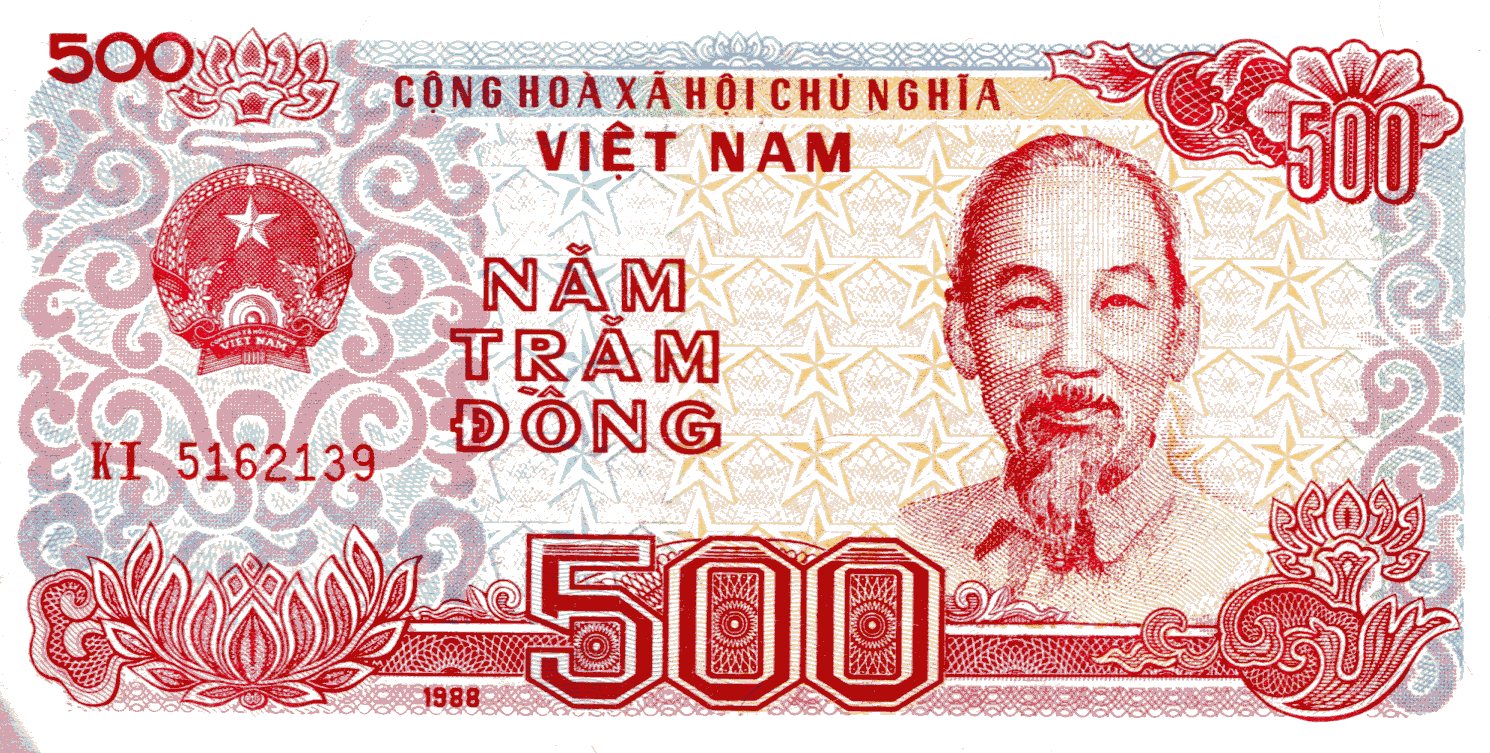
Here is 500 dong, a bit of the currency of the Socialist Republic of Vietnam, that nation’s official name even now, despite decades of various kinds of capitalist enterprise blooming there. I wonder if slightly brighter than average, but still adolescent Vietnamese boys ever jest among themselves, “Hey! Know what that means in English?”

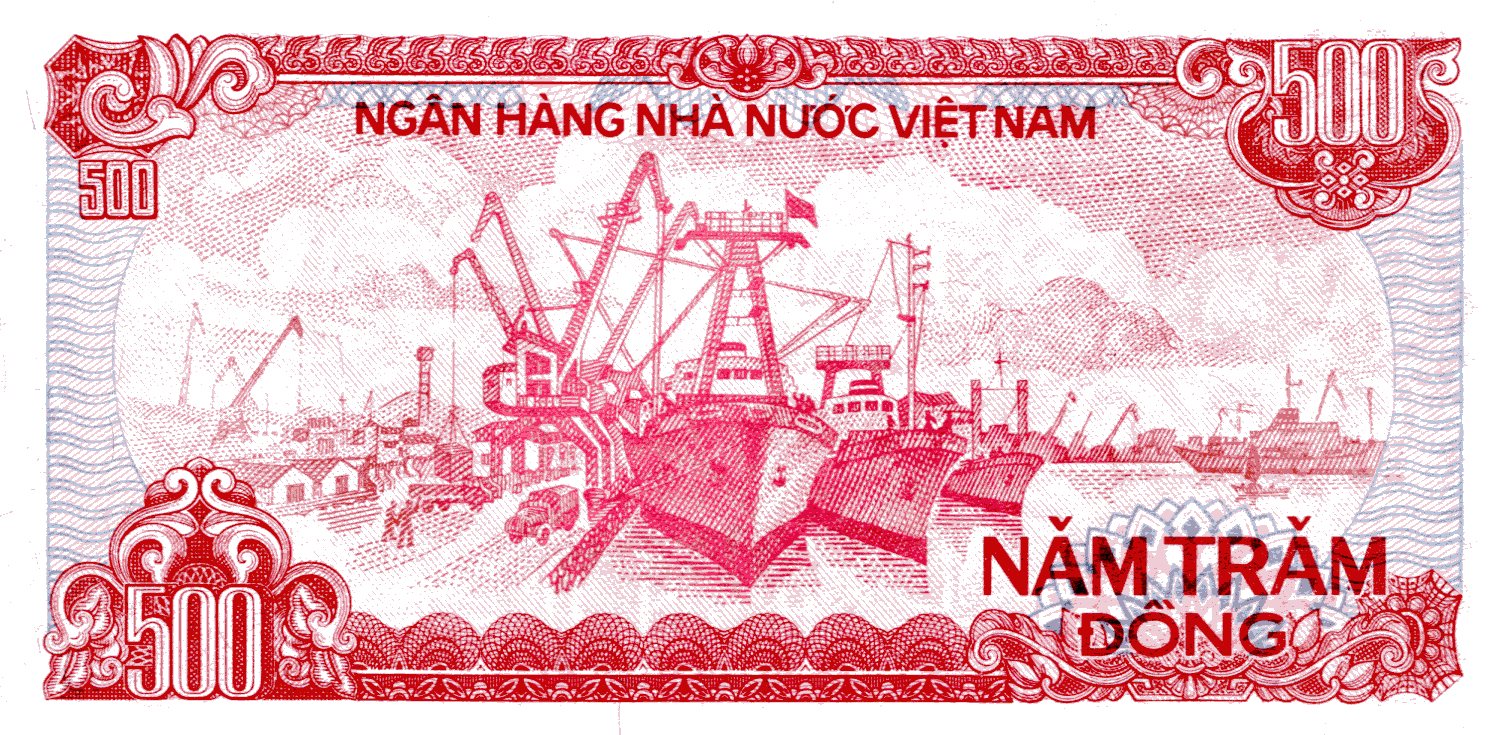
500dongOBV500dong REVThe 500-dong note hasn’t been made since 2003, so little are they worth (500 dong = 0.022295 U.S. dollars). This one is dated 1988, so it’s the kind we might have handled in Saigon in 1994. Ho Chi Minh got to be on the obverse of all of the old notes, and gets to be on all of the post-2003 notes as well.

That’s when Vietnam switched to polymer banknotes, as some countries have. Canada and Australia also come to mind; I picked up a $5 Canadian polymer note in August, and among other things, it resists tearing. The new Vietnamese notes begin at 10,000 dong and go up to 500,000, or nearly $22.30, which probably still has considerable purchasing power in the Socialist Republic. Two hundred to 5,000 dong have been relegated to coins.

On the reserve is the port of Haiphong. I’m pretty sure I first heard of the place in the context of the mining of Haiphong Harbor, which I just learned the U.S. Navy called Operation Pocket Money.

20 Kyats

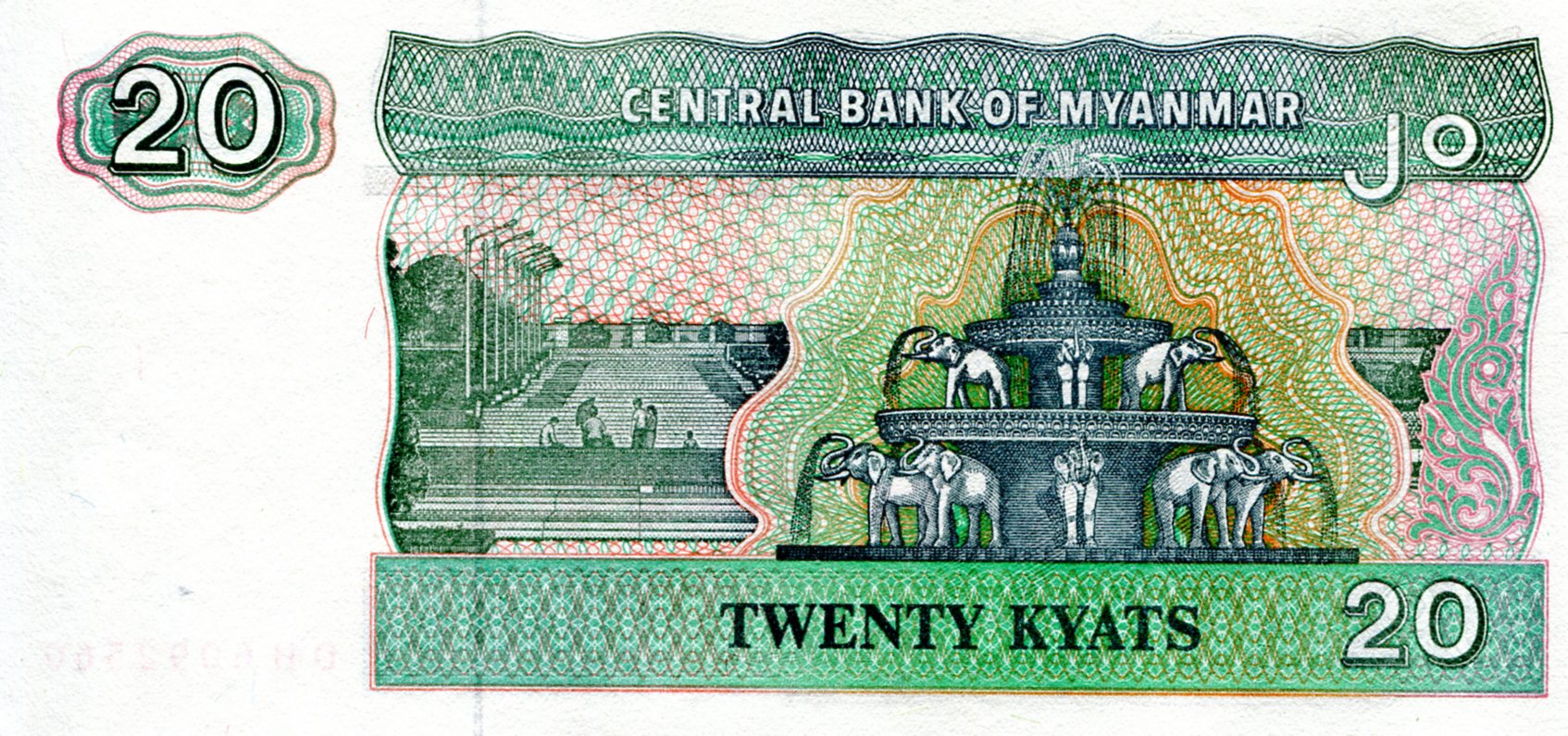
I’ll bet the Burmese kyat isn’t one of the world’s better-known currencies. Until lately I didn’t know much more than the name myself, but this 20-kyat note inspired me to look into the currency a bit more. K20, to use the abbreviation.
20KyatsBurmaOBV20KyatBurmaREVFor a very modest amount of U.S. currency, you can buy a number of crisp banknotes from the developing world, to use the euphemism of choice these days among us First World inhabitants. One thing the euphemism can’t hide is how little the notes are worth in terms of hard currency. For example, Google readily tells me that 20 Myanmar Kyats = 0.01552 U.S. Dollars as of today.

Still, some of the notes are pretty, and most of the them are interesting, and that’s what you get for your hard currency.

On the obverse is a Chinthe, a creature apparently beloved by the Burmese and a common feature on most modern Burmese banknotes. In statue form they’re usually depicted in pairs in front of Burmese temples and pagodas, guarding the place (and in Sri Lanka, I understand).

The reverse depicts a fountain in People’s Square and Park in Rangoon, which can be seen in this video, toward the end. Elephants supporting the world or just the fountain?

Prague 1994

Earlier this year, when I read about Prague in Patrick Leigh Fermor‘s A Time of Gifts, I found myself wondering, did I really visit the same city as he did? The answer is yes and no. He was there in 1934. I was there in 1994. That makes a considerable difference. But more importantly, he had a sharper eye for detail than I did, than I ever could hope to, and was informed by a better education and an all-around aptitude for the road.

GolemBut at least I’d heard of the Second Defenestration of Prague, which made it a really cool moment when we saw the window from which it happened.

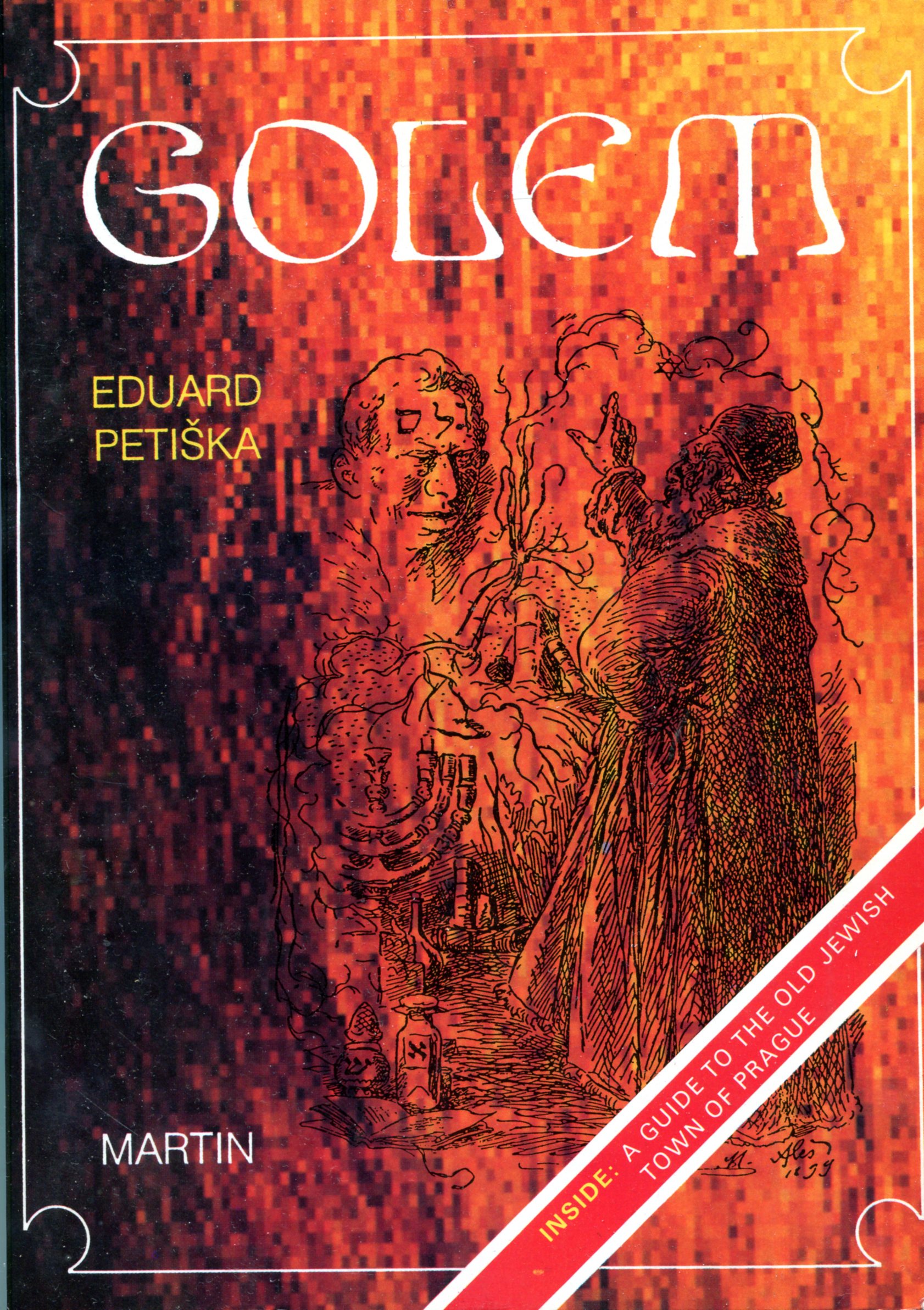
And I knew about the Golem. Or at least the concept. So I was interested in Prague to pick up Golem by Eduard Petiška, a Czech author and poet in a country that seems to take its poets seriously (and who managed to have an asteroid named after him). The book is his own telling of the various stories about Rabbi Loew of Prague and the creature he created to protect the Jewish population of the city. What is it about the Czechs and automatons? After all, another Czech author, Karel Čapek, gave the world the word robot.

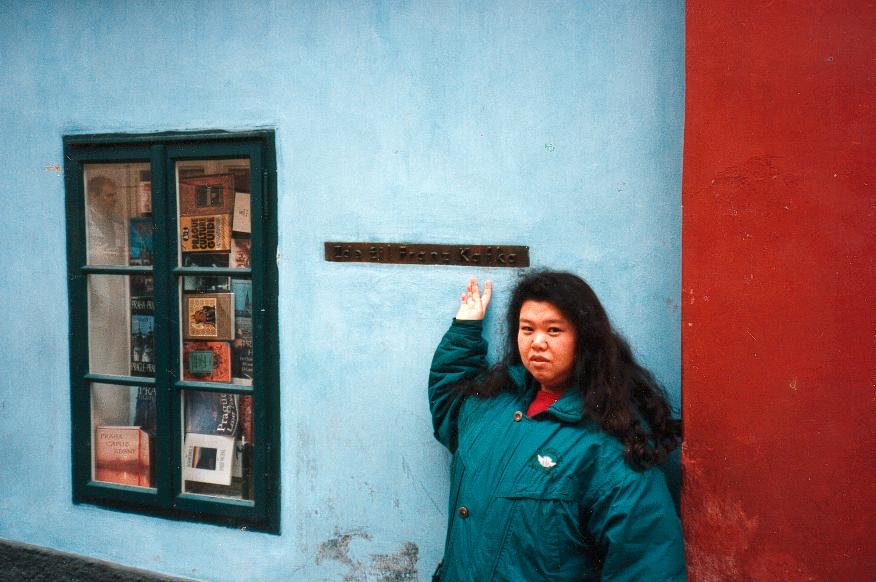
Speaking of authors from Prague, we also made our way to one of the places where Kafka lived. It’s the little blue-hued structure on this pedestrian street. At the time you could buy his works inside. Probably that’s still true.

ZlataUlickaKafkaKafka seems to be fairly well known in Japan, which might be something of a surprise, except when you consider the Kafkaesque elements of a salaryman’s life. Anyway, Yuriko was familiar with him.

And why is it always Kafkaesque? Guess Kafka-ish or Kafka-like or Kafka-oid don’t convey that sense of dread in the face of anonymous, malevolent functionaries.

Guy Fawkes & Martians &c

One more warm day. Then no more. Unless the forecasts about next week are right. What kind of November is this?

It’s Guy Fawkes Day again, and not a burning effigy in sight. It’s really something we should import. Lately I’ve been reading What If? 2, a collection of counterfactual history essays that I picked up used for 50 cents, but “What If Guy Fawkes Had Succeeded?” isn’t one of the subjects. Naturally that question’s been taken up elsewhere.

All of us went to see The Martian on Sunday. All in all, a well done bit of hard SF. Titanium hard, though considering the story, the focus on the technology of space travel and survival in a hostile environment isn’t misplaced. The movie also managed to present its exposition — and there was a lot of it — in a way that didn’t goo up the narrative, which is no small trick.

One thing (which the author of the book has acknowledged): the Martian atmosphere is so thin that a raging storm of the sort that got the hero in his jam would be impossible. The planet does have dust storms, of course, but not hurricanes of dust. Never mind.

There’s no overt indication of when the story takes place, so I figured it was either 20 years or so from now — very optimistic indeed, considering the sluggish pace U.S. manned space exploration these days — or in a present-day world in which a program to send people to Mars got started in earnest in the 1990s (it was, after all, something the elder Bush proposed). The flags on the spaceships and shoulder patches, I noticed, had 50 stars. A nice detail would have been to use the 51- or 52-star designs.

I suspect the only way U.S. astronauts are getting to Mars in a few decades is if the Chinese decide to attempt it.

From a web site I’d never heard of before but happened across recently, purporting to cover real estate news (all sic): “According to Investor Daily, TIAA-CREF’s Phil McAndrews has recently stated that the United States economy is under fairly good state that tantamounts to the continuing optimistic forecasts for the commercial property segment.”

That’s a sample from an item laid out like a real article, but clearly not written by a native speaker of English. The item, in fact, is a little hard to read, and larded with advertising links and other annoyances. And then it crashed my browser with an irritating “Unresponsive Script” message. I’m not overly worried about competition from such Mickey Mouse efforts as this.

Does anyone use “Mickey Mouse,” as in amateurish, any more? I had a teacher in junior high, our band director Mr. Fields, who was fond of the term. Now it sounds like it belongs to an earlier generation — Mr. Fields’ generation, or about the same age as Mickey himself. Maybe in more recent years, Disney minions have made trouble for anyone who uses Mickey like that. I’d better watch out.

When It Comes to Birthdays, Cake is the Thing

We’ve had a run of warm days since Monday. Warm for November, that is, about 70 F for a few hours around mid-day. For three days now I’ve made a point of eating lunch outside on my deck, because it’ll be months before I’ll want to do that again.

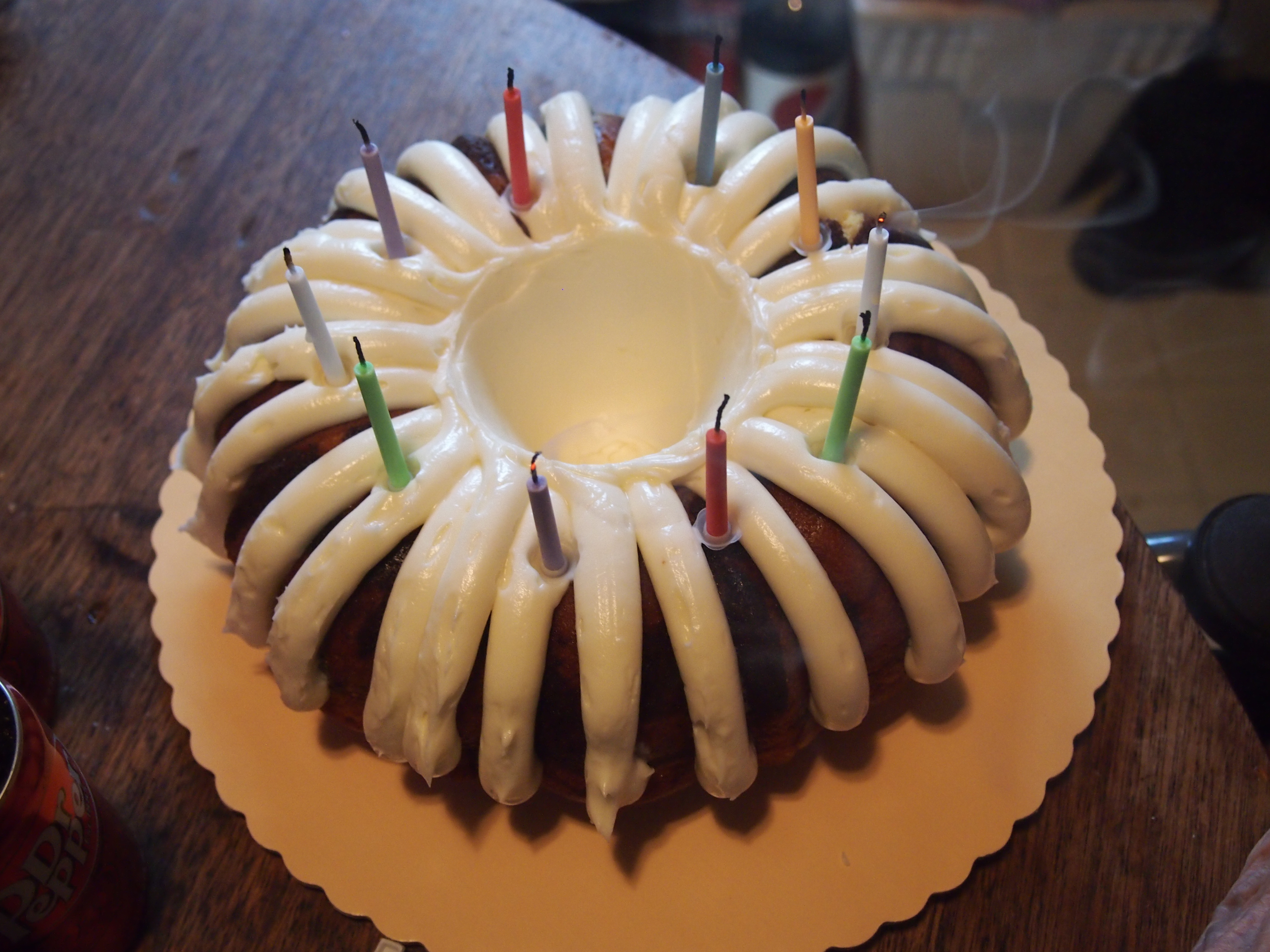
One more thing from my recent visit to Texas: my mother’s birthday cake, ringed with nine candles, one for each decade since 1925.

Mama's BD CakeMy nephew Sam and his wife Emily bought the cake at the too-cute named Nothing Bundt Cakes, a chain of bakeries that I’d never heard of before, but which are widespread. I can understand its success, though: the place makes high-quality bundt cakes.

The Waxahachie City Cemetery

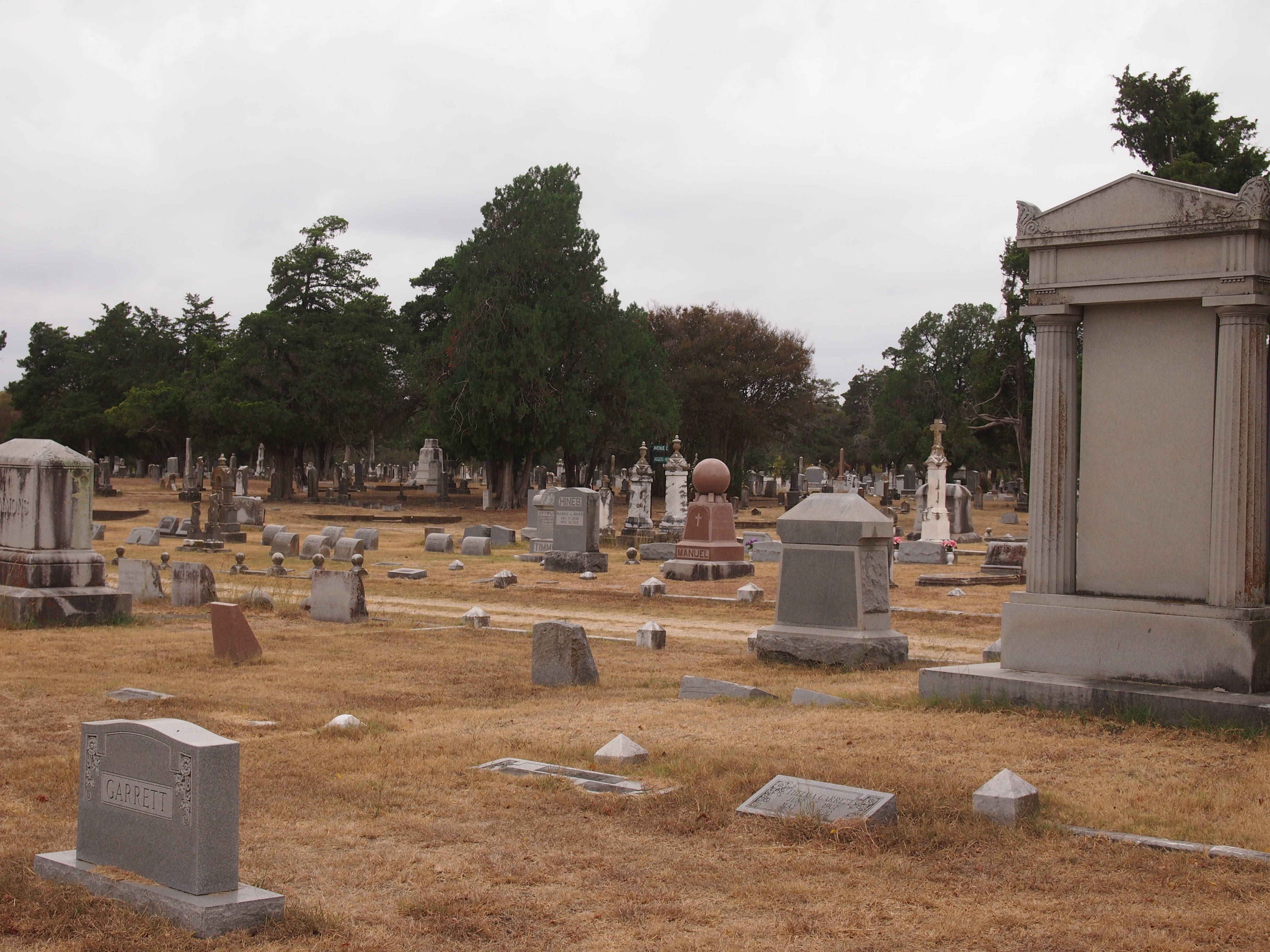
Jay and I passed through Waxahachie in Ellis County, Texas, on October 22, and besides visiting the handsome Nicholas P. Sims Library for a little while, we also spent a few minutes at the Waxahachie City Cemetery a short distance away.

According to a Texas Historical Commission marker on site, “the first burial here occurred on Jan. 1, 1852, after the death of pioneer merchant Silas Killough (b. 1805), one of the founders of this community. The original 4.16 acre tract was given in 1858 to trustees of the Methodist church by Emory W. Rogers (d. 1874), who was Waxahachie’s first settler (1846) and donor of land for the townsite. About 1900, the cemetery was transferred from church to municipal jurisdiction. By gifts and purchases of additional land, the site has grown to 65 acres and contains about 10,000 graves.”
WaxahachieIt had been dry in this part of Texas since a wet early summer, so the cemetery was rich in earth tones in October ahead of the massive rains that fell over the next few days.

Et In Waxahachie EgoNot the most ornate cemetery or the shadiest one, but a nice small-town Texas boneyard, something like the one I saw in Flatonia, Texas a half-dozen years ago, and not as tumbledown as the old San Antonio cemeteries I saw earlier this year.

Waco Mammoth National Monument

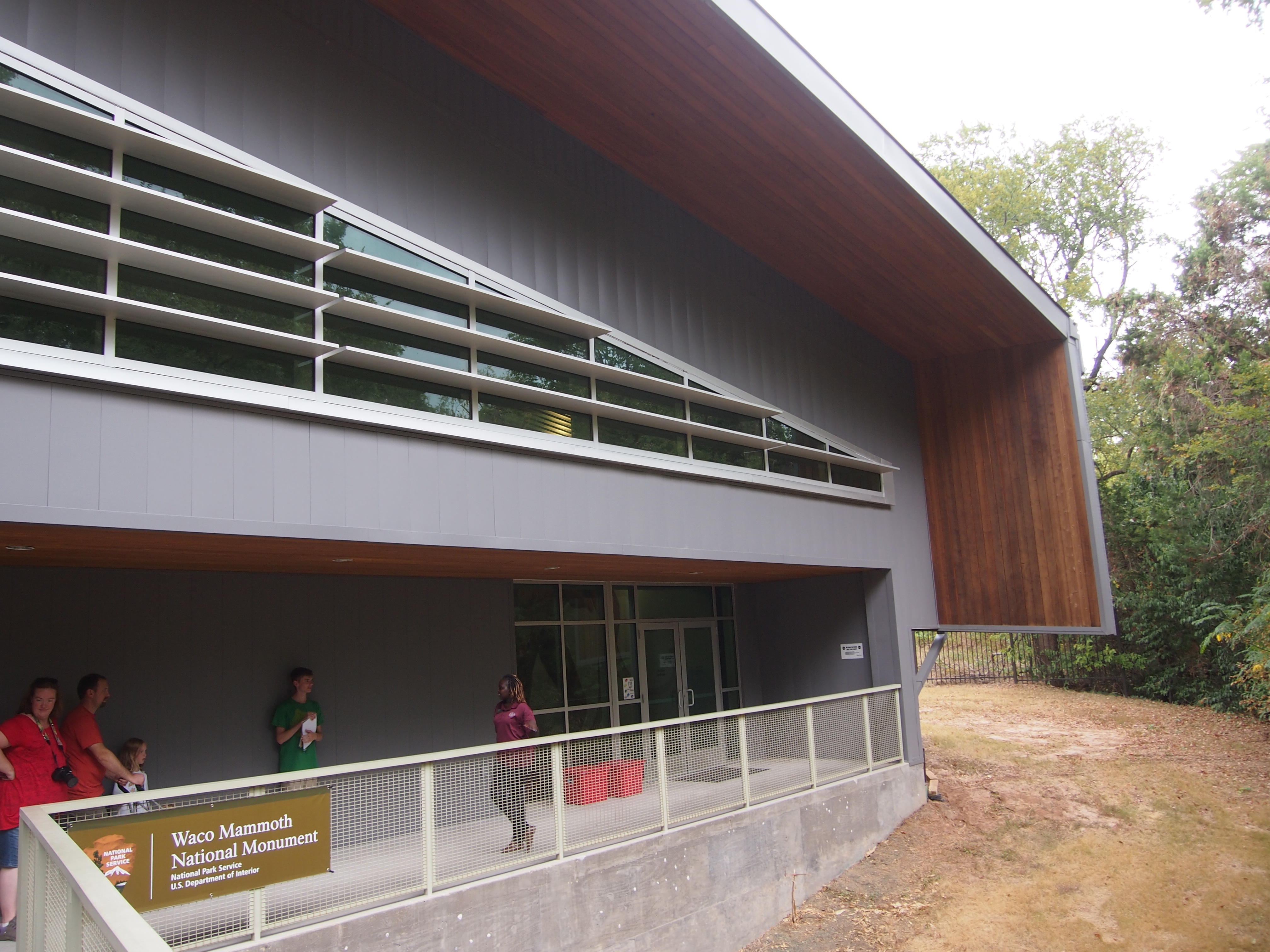
In July, using his authority under the Antiquities Act of 1906, President Obama created three new national monuments on the same day, including ones in California and Nevada, but also Texas. In a place I pass through sometimes: Waco. The new Texas monument is the five-acre Waco Mammoth National Monument, though it’s been open to visitors since 2009.

The Washington Post notes that the “Waco Mammoth in Texas ranks as a major paleontological site, featuring well-preserved remains of 24 Columbian Mammoths. The mammoths date back more than 65,000 years, and the site includes the nation’s first and only recorded discovery of a nursery herd of mammoths.

“Rep. Bill Flores (R-Tex.) has sought to make the area a national monument through legislation, and the site has been developed and protected by the National Park Service, the City of Waco, Baylor University, and the Waco Mammoth Foundation.”

Jay and I arrived on the afternoon of the October 22, just in time to catch up with a tour of site — which is the only way to get into the locked building built over the diggings. The structure protects the fragile relics from the elements and wankers who would steal them.
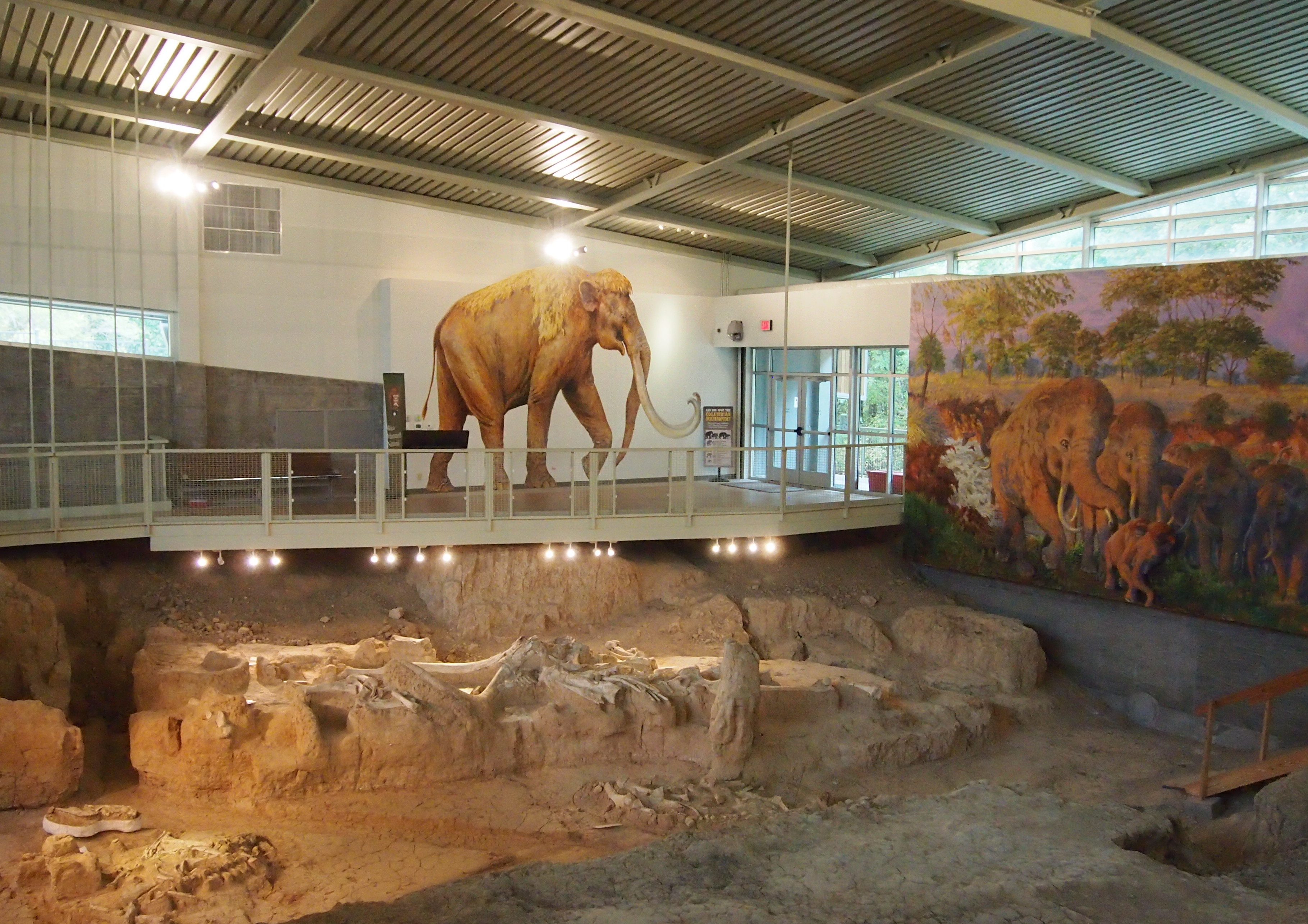
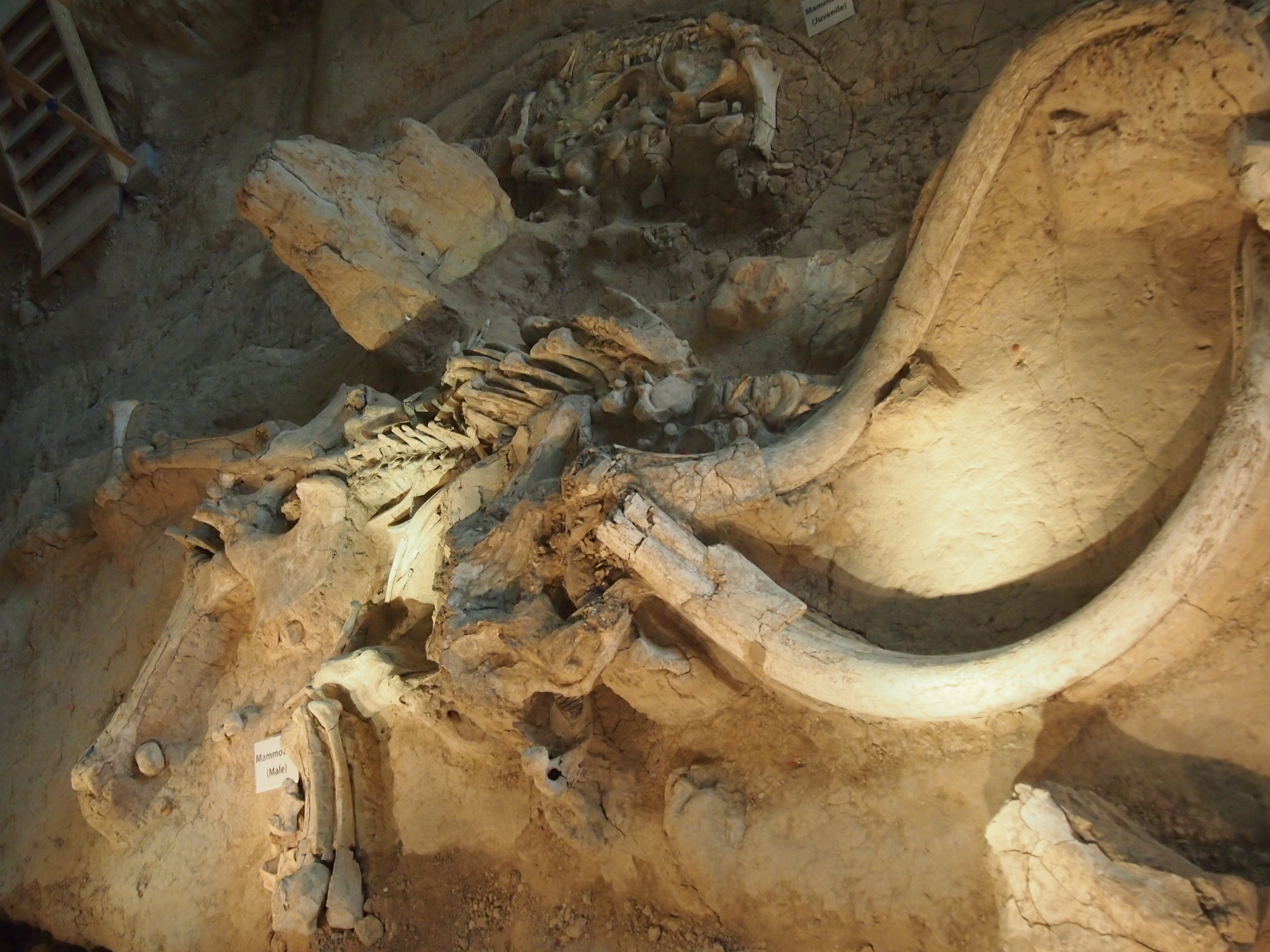
Waco Mammoth NMInside the building is a wide walkway overlooking the diggings, with a few paintings to illustrate Columbian mammoths, who were not the better known cold-habitat woolly mammoths. Columbians were better suited to warmer weather, and Texas had a warmer climate even then.
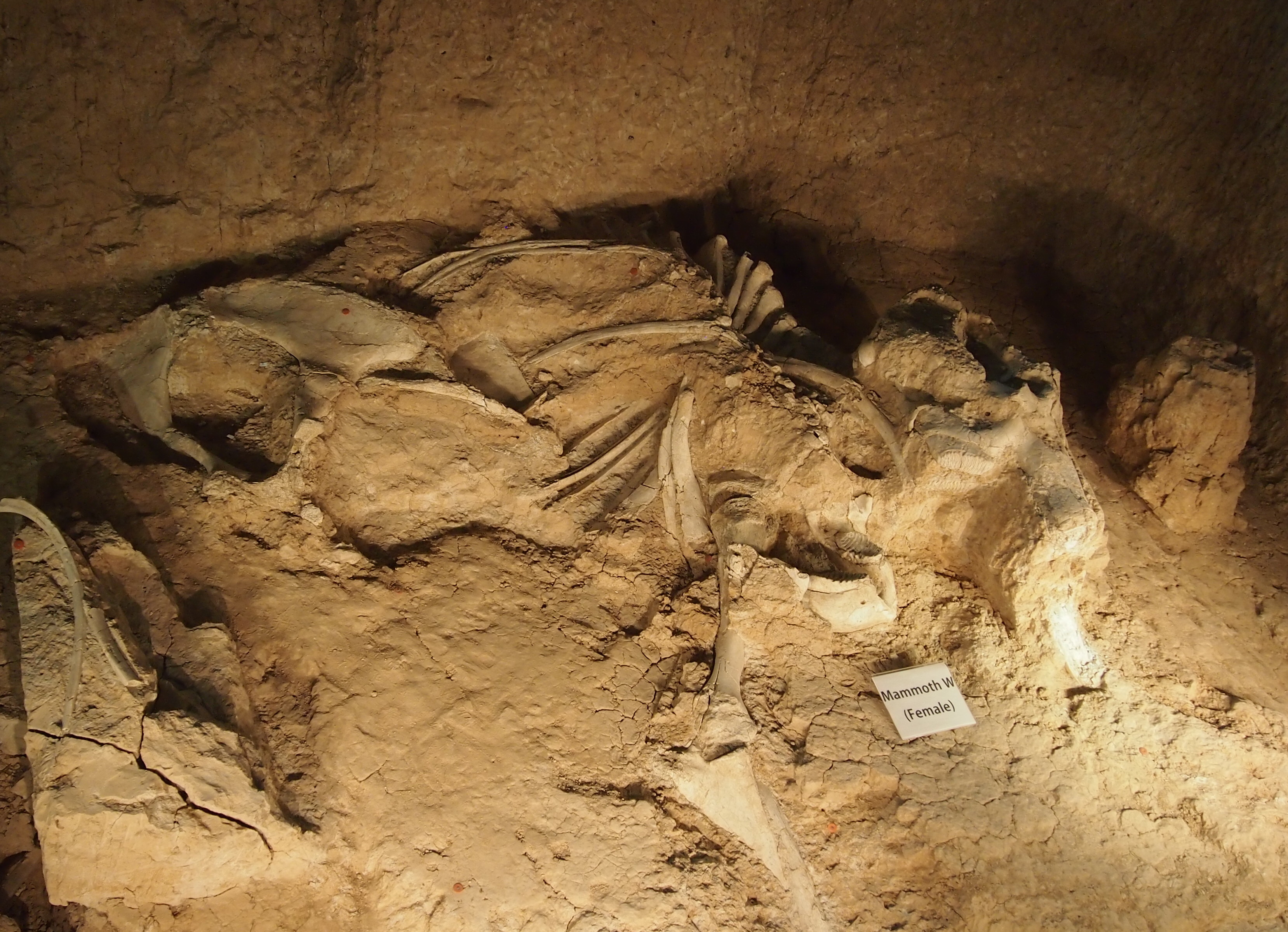
Waco Mammoth NMOur guide, an affable young woman, told us about the diggings and the bones, using a laser pointer. The archaeological consensus is that floods trapped and drowned the luckless beasts. On view in situ are whole or nearly whole skeletons, including skulls, tusks, teeth, vertebrae, ribs, femurs and more.
Waco Mammoth NMWaco Mammoth NMIn our time, the first of the bones were only discovered in 1978, having been in the ground for between 65,000 and 72,000 years. A lot of the bones are now stored at the Mayborn Museum Complex in Waco, which is part of Baylor University. Other animals uncovered in the area included a Western camel (Camelops hesternus), dwarf antelope, American alligator, giant tortoise, and the tooth of a juvenile saber-toothed cat.

La Coquette, 1957

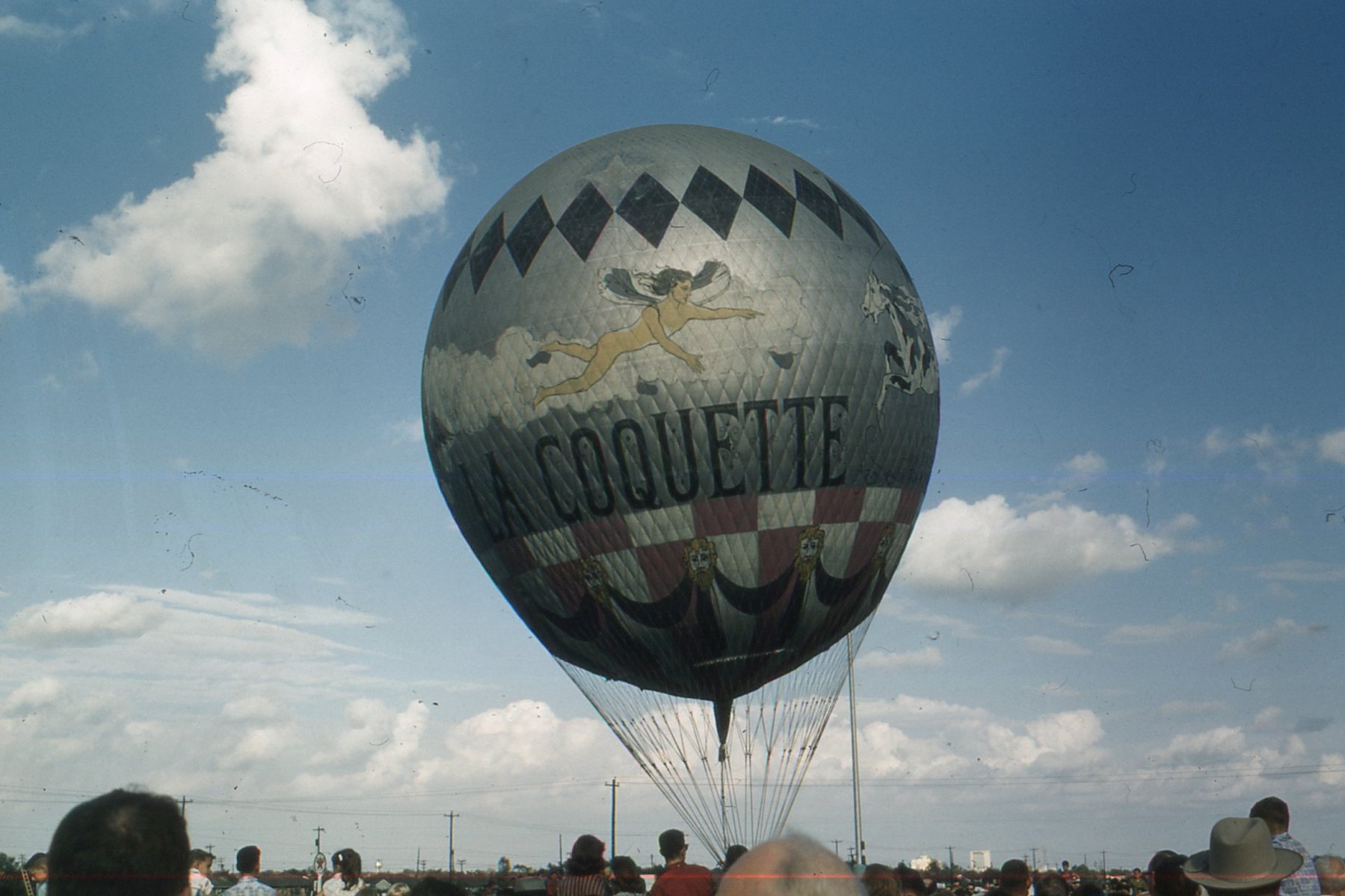
I’m able to pinpoint this image taken by my father with some certainty, because it’s the La Coquette balloon. That’s the balloon featured in the 1950s film adaptation of Around the World in 80 Days, as this site explains in considerable detail. Apparently the balloon did no actual flying in the movie. It was a set, essentially. But it could and did fly for various events.

La CoquetteSo I’m fairly certain this is La Coquette at the grand opening of the Meyerland Plaza mall in Houston on October 31, 1957. The balloon was there, and my family, who lived in Houston at the time, made it to the event as well. I can’t imagine my father would have gone by himself, anyway.

According to the web site of the mall: “Meyerland Plaza Shopping Center opened in October of 1957 with a celebration of ‘Around the Shopping World in 80 Acres.’ There was a hot air balloon that took riders to the Shamrock Hotel.” Meyerland, since redeveloped, is still around and traded hands as recently as 2013, when the Houston Chronicle did an article about the deal that featured the balloon as a bit of background detail. The balloon also did a stint at Disneyland in the early 1960s, it seems.

White Rock Lake, Dallas

The State Fair of Texas was interesting, but before long you get tired of crowds. Such as in the main indoor food court of the fair.
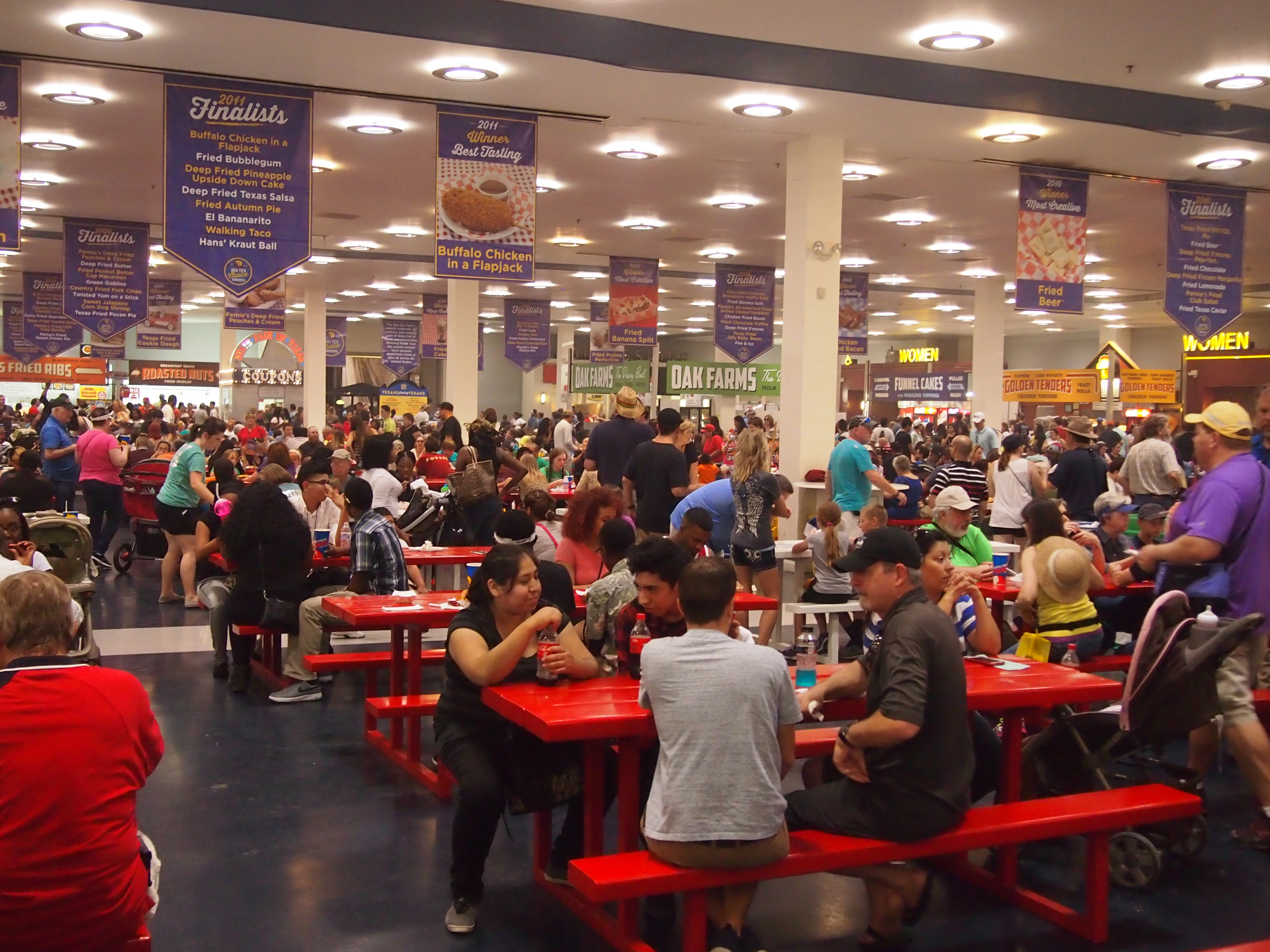
State Fair place to feed your faceOn October 19, a very warm afternoon, I sought out someplace a little less crowded: White Rock Lake.
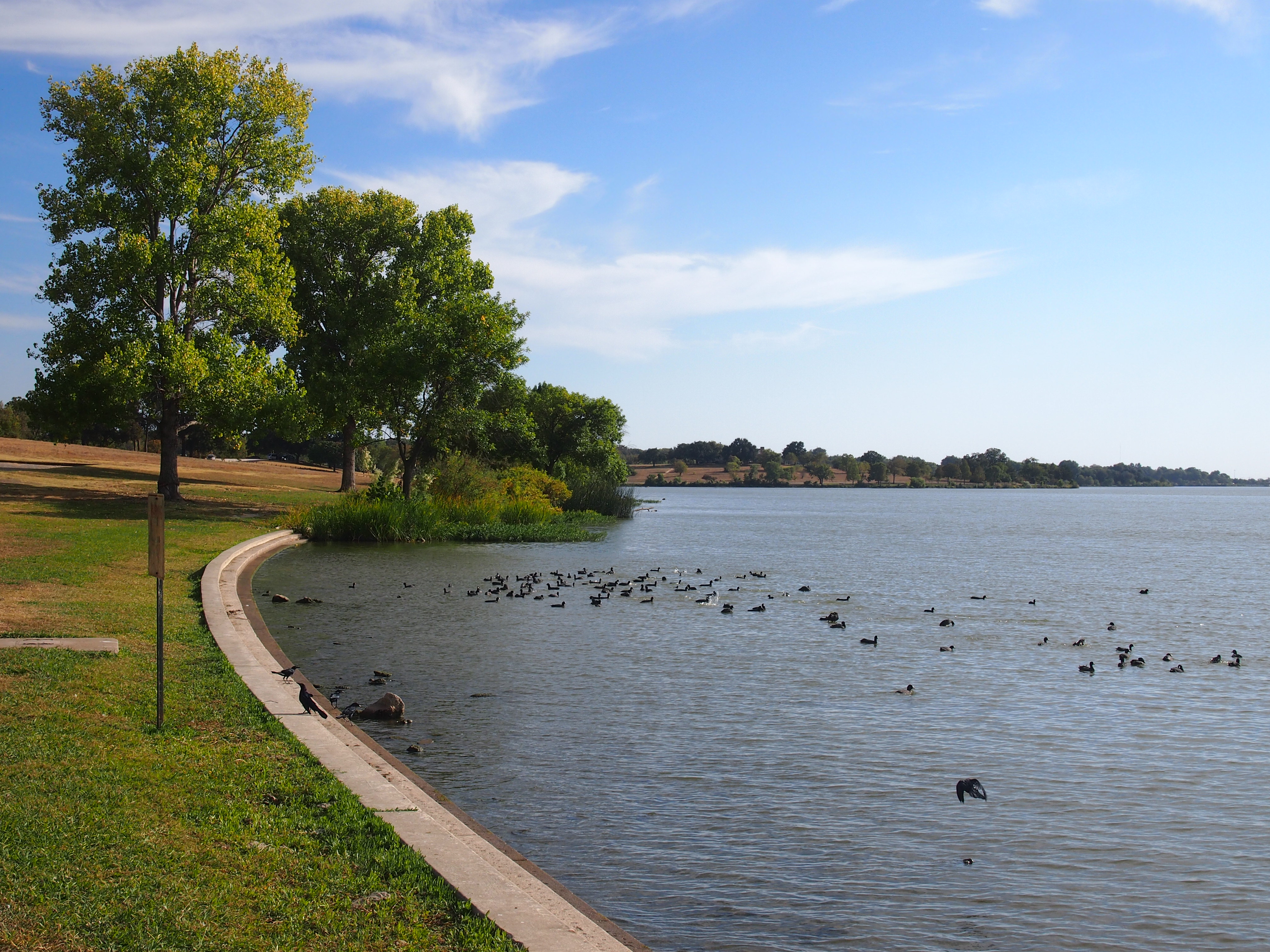
White Rock LakeLess crowded with humans, that is. There were plenty of birds and some insects, too. The manmade White Rock Lake in northeastern Dallas, created by damming White Rock Creek in the early 1910s to supply water to the city, covers 1,015 acres. These days it’s for recreation. All around the lake is a city park, White Rock Lake Park, which includes a nine-plus mile track around the water, boating ramps, a dog park, picnic areas, and the Bath House Cultural Center.

Bath House Cultural CenterThis is the back of the Bath House, facing the lake. As the name implies, it used to be a bath house that served a beach on White Rock Lake, but swimming has been prohibited on the lake for decades. The building, originally built in 1930, was renovated in 1980 and now offers exhibits by artists and holds various concerts, workshops, lectures and other events. Since I visited on a Monday, it was closed.

White Rock Lake has a long and varied history. For instance, I’ve heard that the lake, and the White Rock Lake Pumphouse, were featured in the low-budget Mars Needs Women (1967), which was shot in Dallas. I’m not sure I’ll ever be in the right frame of mind to watch that movie, but who knows.

I’ve seen the pumphouse before, but I wasn’t close by this time. Mainly I walked on the walking-jogging-cycling path near the edge of the water.

White Rock LakeOn October 12, somewhere along the path around White Rock Lake, a jogger named Dave Stevens was murdered, apparently at random, by a lunatic armed with a machete. Seems that the perpetrator was known to be mentally ill, but not violent. While walking on the same path a week later, you try to puzzle that one out, but of course it can’t be puzzled out. Death just shows up. The crime had a sad coda a few days ago: the victim’s wife seems to have committed suicide.
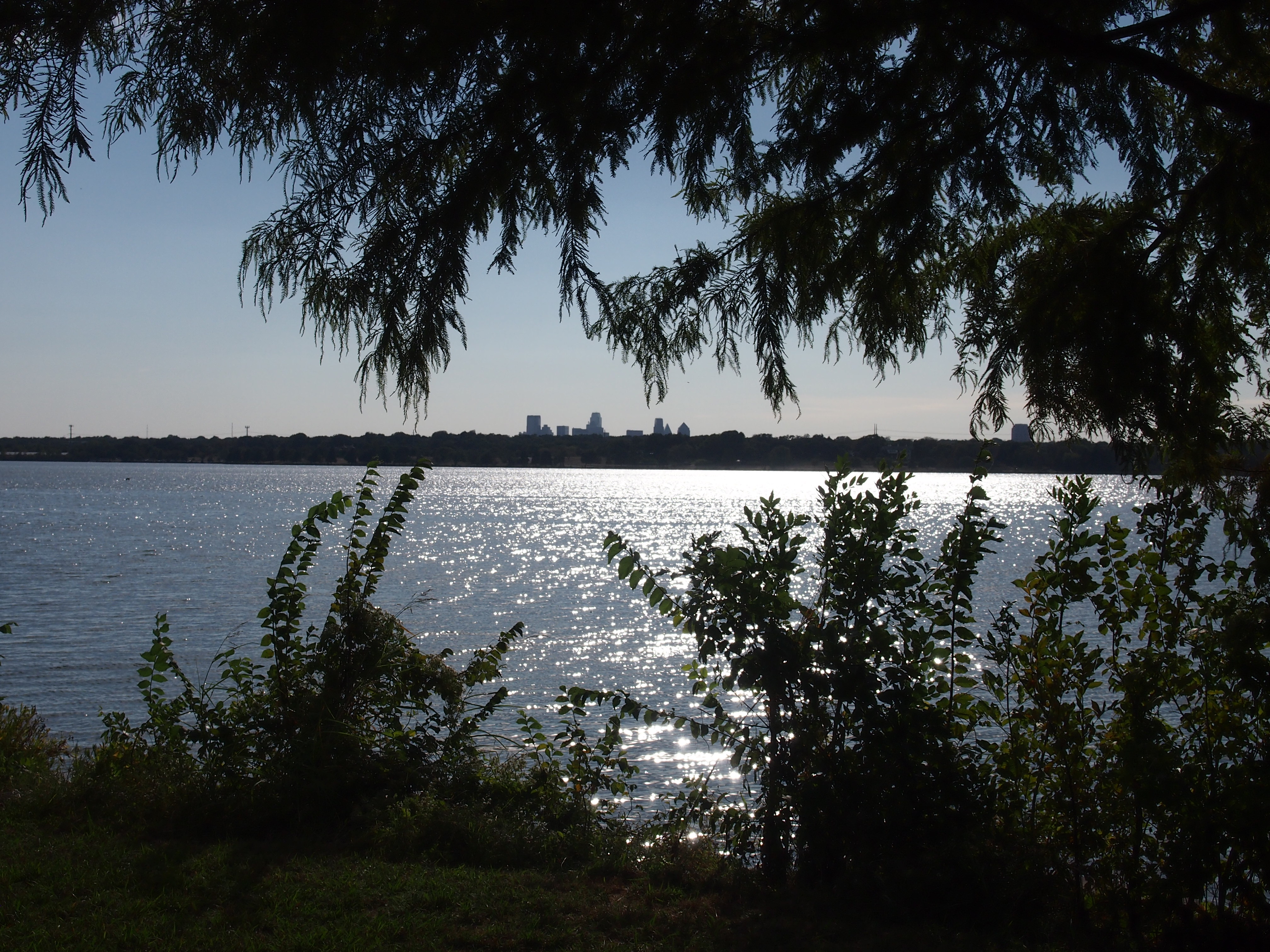
White Rock LakeTo avoid ending with a sad story, I turn to Sol Dreyfuss Memorial Point, a small rise near the lake. At the foot of the rise is a short wall, and on the wall is a plaque. That was my cue to stop and read it, take a picture, and later find out about it.
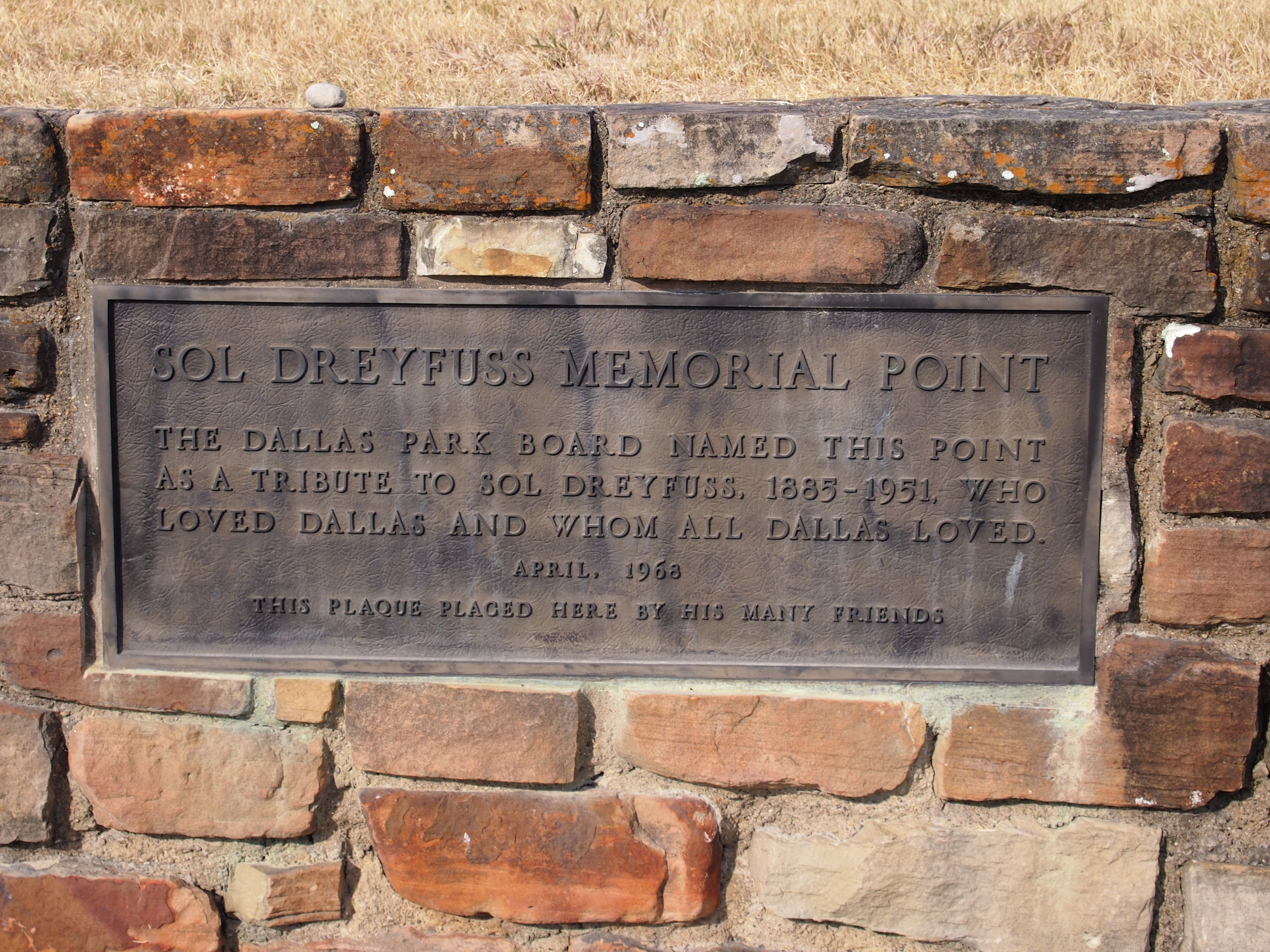
Sol DreyfussAccording to the Texas State Historical Association: “Sol Dreyfuss, merchant, was born on August 12, 1885, in Dallas, the son of Gerard and Julia (Hurst) Dreyfuss. His father, a native of France, owned several chains of stores before Sol’s birth, including one with his wife’s father founded in 1879 and called Hurst and Dreyfuss… On August 11, 1910, the doors opened to the first Dreyfuss and Son clothing store, a one-story building on Main Street. By 1950, at the time of Dreyfuss’s death, the store was a six-story building at Main and Ervay streets.”

Besides being a merchant, “Dreyfuss owned the Dallas Baseball Club from 1928 to 1938, when the team was known as the Steers. He was a director of Hope Cottage. He was active in the Community Chest and Red Cross and was a member of the Salesmanship Club, the Citizens Charter Association, the Lakewood Country Club, the Columbian Club, and B’nai B’rith. He was also on the board of directors of both the Republic National Bank and the Pollock Paper Company.” No wonder he had a lot of friends.
Hall of State, Fair Park

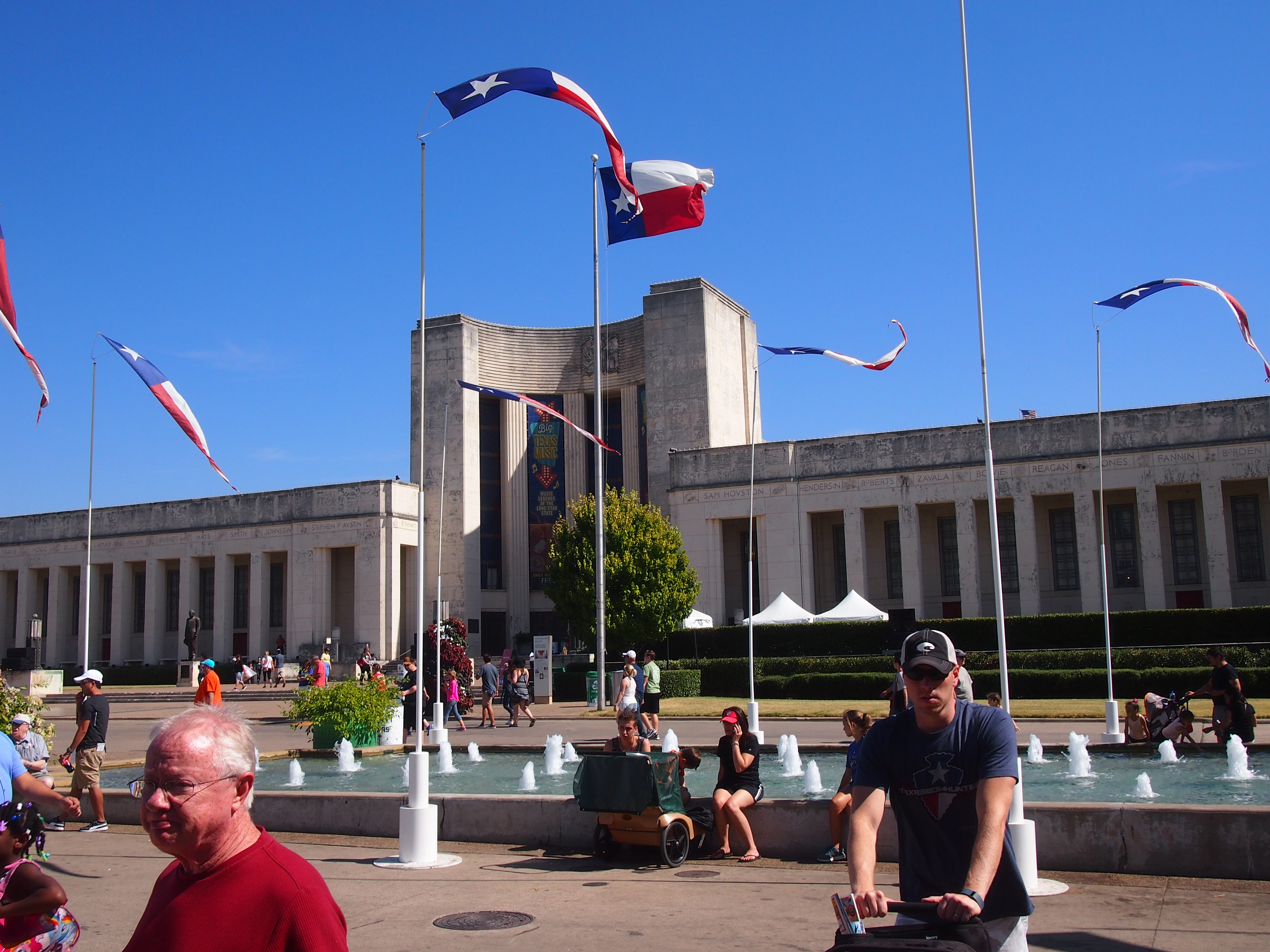
At one end of the Fair Park Esplanade is the Hall of State, a stately hall indeed. “The Hall of State, a museum, archive, and reference library, was erected in 1936 at a cost of about $1.2 million by the state of Texas at Fair Park in Dallas to house the exhibits of the Texas Centennial Exposition and the Greater Texas and Pan-American Exposition of 1937,” explains the Texas State Historical Association.
Hall of State, Fair Park“The structure, designed by eleven Texas architects, is characterized as Art Deco… The front is 360 feet long, and the rear wing extends back 180 feet… The walls are surfaced with Texas limestone. A carved frieze memorializing names of historical importance encircles the building. Carvings on the frieze display Texas flora.”

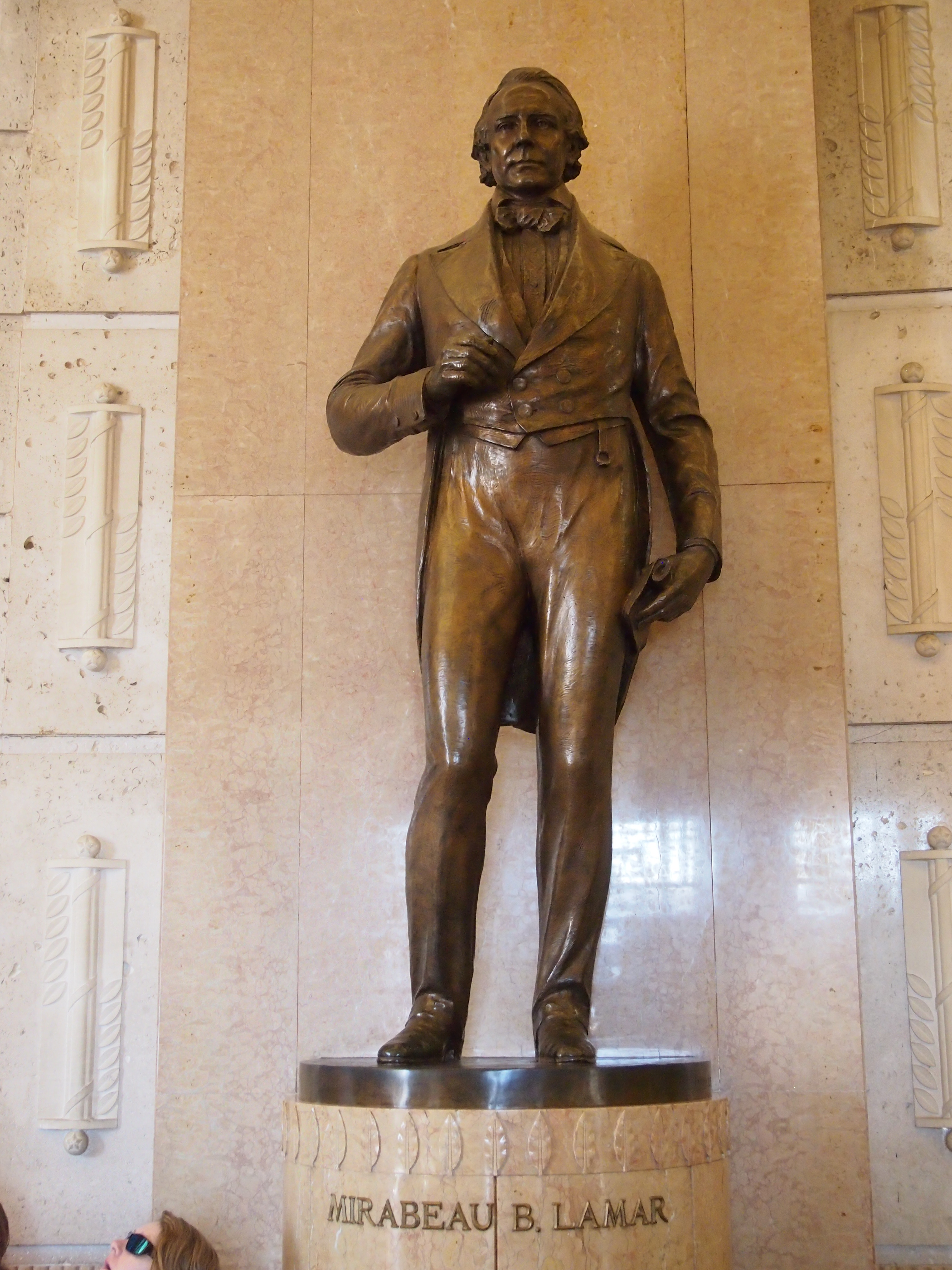
I went inside for a look, and soon was face-to-face — or maybe face-to-plinth — with six statues of early Texas luminaries: Stephen F. Austin, Sam Houston, Mirabeau B. Lamar, James Fannin, Thomas J. Rusk, and William B. Travis. Here’s Lamar (1798-1859), second president of the Republic of Texas, among other things.
MB LamarPompeo Coppini did the sculptures. I’d run across his work before at the Texas State Cemetery in Austin. If it’s a monumental sculpture in Texas done in the early to mid-20th century, odds are he did it.

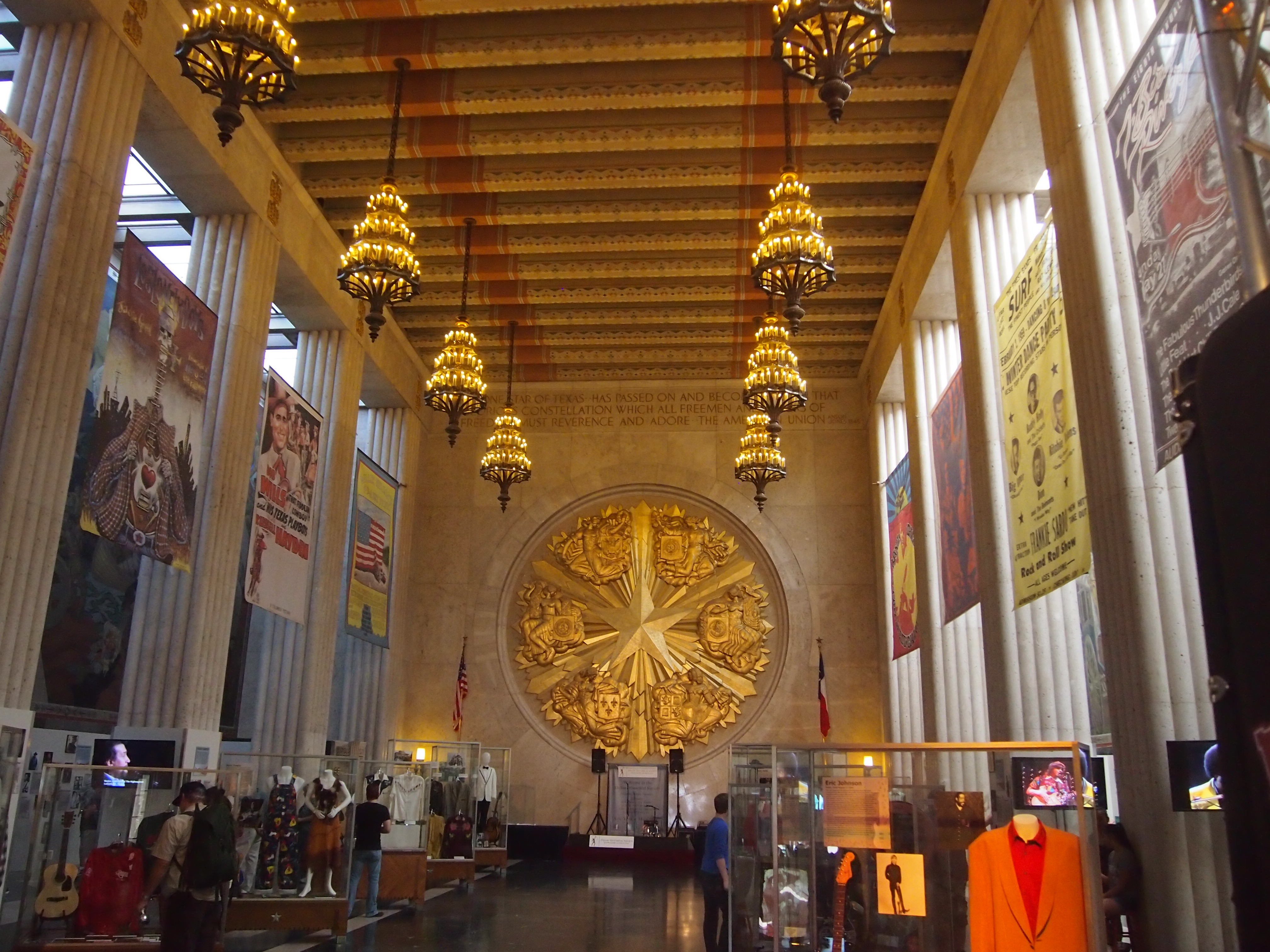
Then I entered Great Hall.
Hall of State, Great HallThe TSHA again: “The Great Hall, or the Hall of the Six Flags, in the central wing, has a forty-six-foot-high ceiling. Murals on the north and south walls depict the history of the state and its industrial, cultural, and agricultural progress. These were painted by Eugene Savage of New York.” I’d run across him before as well.

Great Hall, Hall of StateDuring my visit, the Great Hall happened to be sporting an exhibit about Texas musicians, and I will say that I learned that Meat Loaf was from Dallas, something I didn’t know. Actually I didn’t know much about many of the Texas musicians mentioned in the exhibit, such as various bluesmen and Western swing players and Tejano bands.

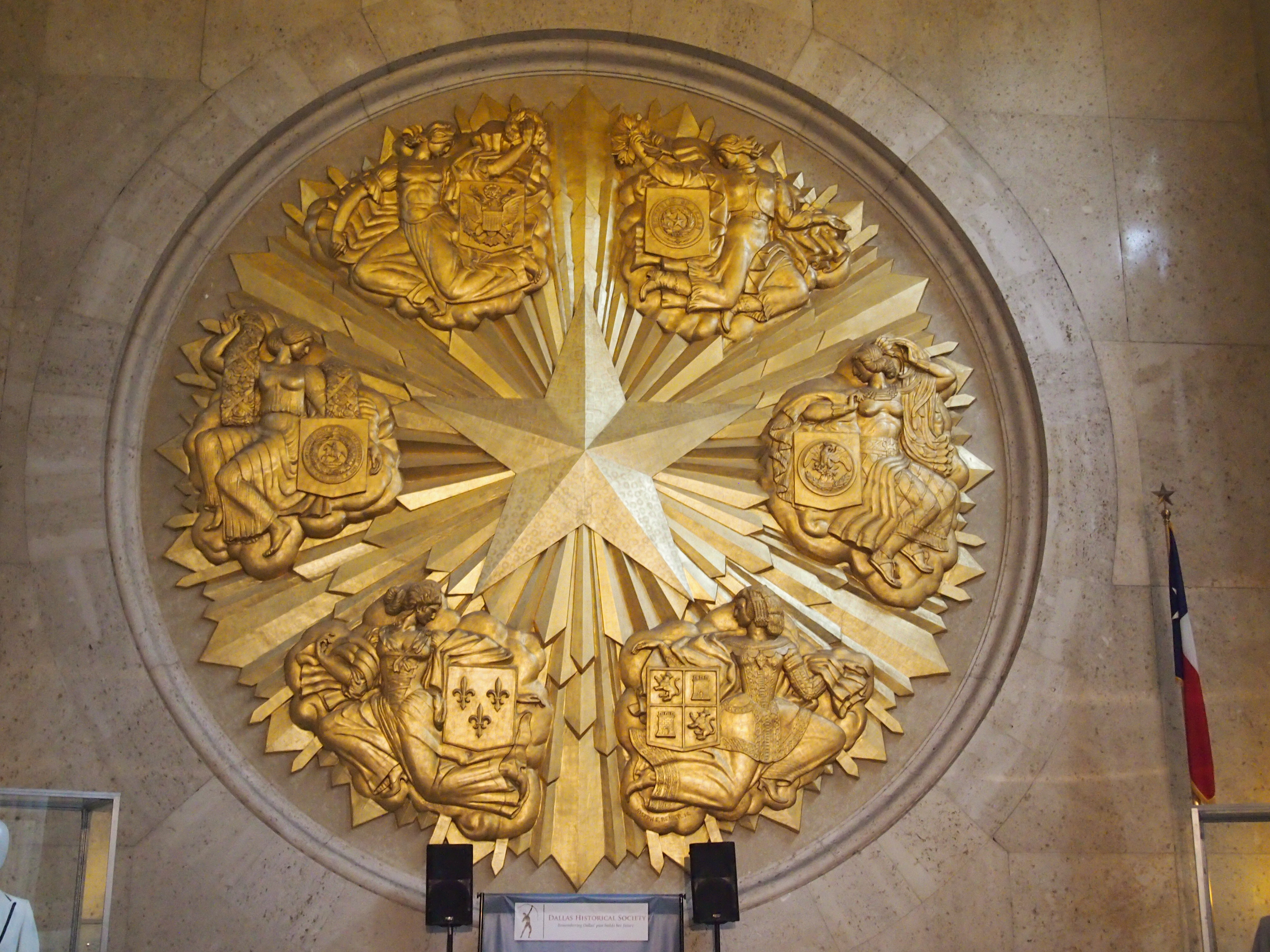
On the back wall of the Great Hall is a gold-leafed medallion with the Lone Star emblem of Texas surrounded by representations of the six nations whose flags have flown over the state.
Gold leaf!The United States and the Republic of Texas are at the top; the Confederacy and Mexico in the middle; and France and Spain on the bottom. The six together are a persistent theme in symbolic representations of modern Texas.