Etymology for the Day

December has started off cold, which isn’t unusual, but dry, which is. A little. No predictions of much snow in the week ahead, either. I remember a lot of early Decembers around here with heavy snow to kick things off, a few times on December 1 exactly.

The subject of the mint julep came up today. The drink’s mentioned in The Great Gatsby, which Lilly is reading, and she asked me what it was in it. Besides the mint, I forgot for a moment, but then I remembered: bourbon. At least that’s what I sampled at the Kentucky Derby those many years ago, as one does. I didn’t cotton to it particularly.

Naturally, that led me to various web sites, mainly because I didn’t know the origin of the word julep. Bon Appétit tells me – and I’ll assume they do their food and beverage word homework – that “in the beginning (and likely a very early beginning, at that), the word was gul-ab, and the drink was Persian rosewater (gul = rose, ab = water). Gul-ab then moved through the normal channels (Arabic>Italian>French), until finally ‘julep’ shows up in English, around 1400, in a surgical textbook called Lanfranc’s Chirurgie (the old-timey word for ‘surgery’).

“There, it’s described as a ‘sirup maad oonly of water & of sugre,’ mixed with more medicinal ingredients to make them easier to swallow. So by the 15th century, ‘julep’ had lost its floral notes, and had moved into meaning any kind of soothing, sweet drink.

“By the late 1700s, though, the Atlantic seems to have split the julep into two camps. In Europe, it was still a general term for a sweet drink, including something with medicinal properties, but hard-drinking Americans had codified it into a cold cocktail, served with sugar, ice, and some kind of aromatic herb. Speed up to 1804, when an American writer credited his love of whiskey to ‘mixing and tasting my young master’s juleps.’ So we know that whiskey was a major component, but in the 19th century, juleps were also made with brandy and (surprisingly) gin.”

One more thing about the julep, from Wiki. No footnote, but I believe it: “Since 2006, Churchill Downs has also served extra-premium custom-made mint juleps at a cost of $1000 each at the Kentucky Derby. These mint juleps were served in gold-plated cups with silver straws, and were made from Woodford Reserve bourbon, mint imported from Ireland, spring water ice cubes from the Bavarian Alps, and sugar from Australia. [Why Australia?] The proceeds were used to support charitable causes dedicated to retired race horses.”

Orion Rising

Am I going to get up early on Thursday to watch the Orion launch? The launch window opens up at 6 am Central. So probably not. I can watch a replay a few hours later. Hope it goes well.

The Weather Channel – which seemed very interested in the launch, which I suppose depends on the weather – called Orion the “first deep space mission” since Apollo 17, and I wondered about that. What about all of the missions to various planets? Turns out they were abbreviating things to the point of inaccuracy, as TV often does.

This from Jason Davis at the Planetary Society (italics added): “Exploration Flight Test 1 (EFT-1) is a two-orbit shakedown cruise designed to test out Orion’s critical components — specifically, how the vehicle responds to radiation in the Van Allen belts, and how the heat shield fares under a fast reentry from beyond low-Earth orbit. While Orion’s eventual ride to space is the Space Launch System, EFT-1 will use a United Launch Alliance Delta IV Heavy rocket. The Delta IV Heavy will fly out of Launch Complex 37 at the Cape Canaveral Air Force Station.

“Orion will be dropped into a preliminary, 185 by 888 kilometer orbit for a lap around the Earth. Then, the Delta IV’s second stage will re-ignite, kicking the spacecraft up to an altitude of 5,800 kilometers—higher than any human-rated spacecraft has been in more than 40 years. The unusual orbit will send Orion hurtling back into Earth’s atmosphere at speeds up to 32,000 kilometers per hour. Splashdown will take place off the coast of Baja California in the Pacific Ocean, where NASA and the US Navy will haul the capsule into the flooded well deck of the USS Anchorage.”

Early Winter Sky

After a brief not-cold spell on Saturday and Sunday – I can’t call it warm, but still not bad – it’s winter cold again. Diligent neighbors used the interlude to sting lights on their houses or finishing removing leaves from their lawns. I did no such things.

The sunset on Saturday was shot with pink and gold.

Northern Illinois, Nov 29, 2014

I did manage to read Fahrenheit 451 over the long weekend. Or rather re-read, because I read it when – 40 years ago? Does that even count as re-reading? I picked it up because Lilly read it for school not long ago, and asked me about the story sometimes, but I had to confess to remembering very little about it, besides colorful scenes of book burning and the idea of becoming a living book.

I understand that it’s an important work. But I’m not particularly taken with Bradbury’s writing style. Not sure what it is. Also, Bradbury was clearly afraid of the pernicious effects of dumbing down society, especially as expedited by television, and I’m not entirely persuaded. Maybe the level of stupidity is always about constant, just manifesting itself in different ways across the decades.

Thanksgiving ’14

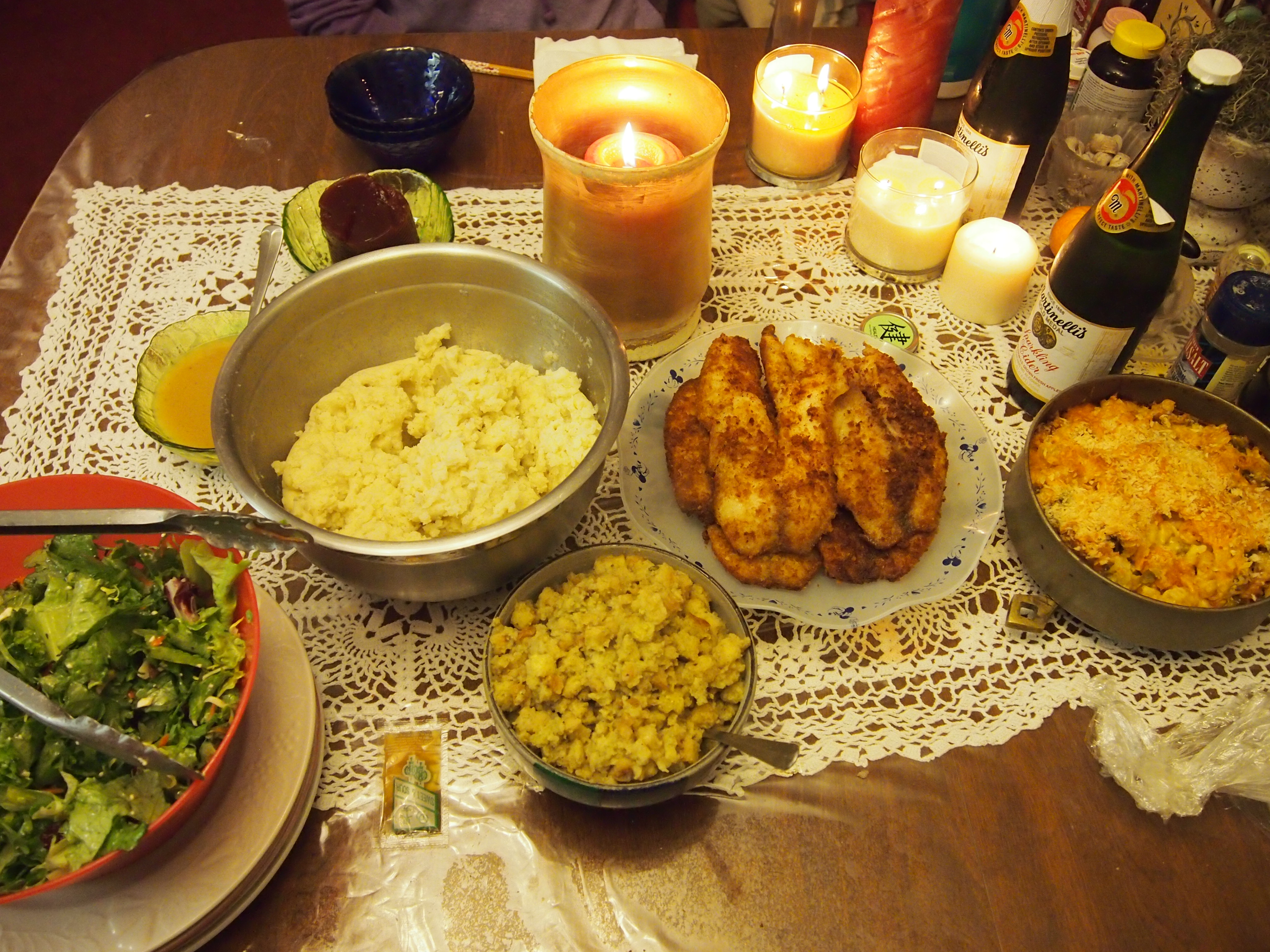
The Thanksgiving meal, served at about 5 pm on Thursday, minus the rolls and olives.

Thanksgiving dinner 2014

Lilly insisted on making all the starches: from left to right, genuine mashed potatoes, boxed stuffing, and her own mac & cheese creation. The meat – between the potatoes and m&c – was tilapia, though roast beef was available as well. Non-alcoholic cider came in wine-style bottles: once again, Martinelli’s Gold Medal Sparkling Cider.

The meal was good, so was the time we spend preparing and consuming it. Even better, the holiday represented three whole days when I didn’t have to pay attention to my laptop or email or or clients’ web sites or Google News or any of it. Some of Wednesday and Sunday, too, so you could call it four.

Mighty Toba

I don’t ever remember getting off from school on the Wednesday before Thanksgiving, but this year both girls are off tomorrow. Yuriko has to work, and I have things to do too. But it seems like a good day to knock off posting. Back on November 30 or so.

The ground is frozen and ice has already almost slipped me up. Last winter started like this, and about at the same time, and we all know how that turned out. Harsh enough to contribute to a temporary contraction of the US economy. But at least we didn’t have a Year Without a Summer to follow it up.

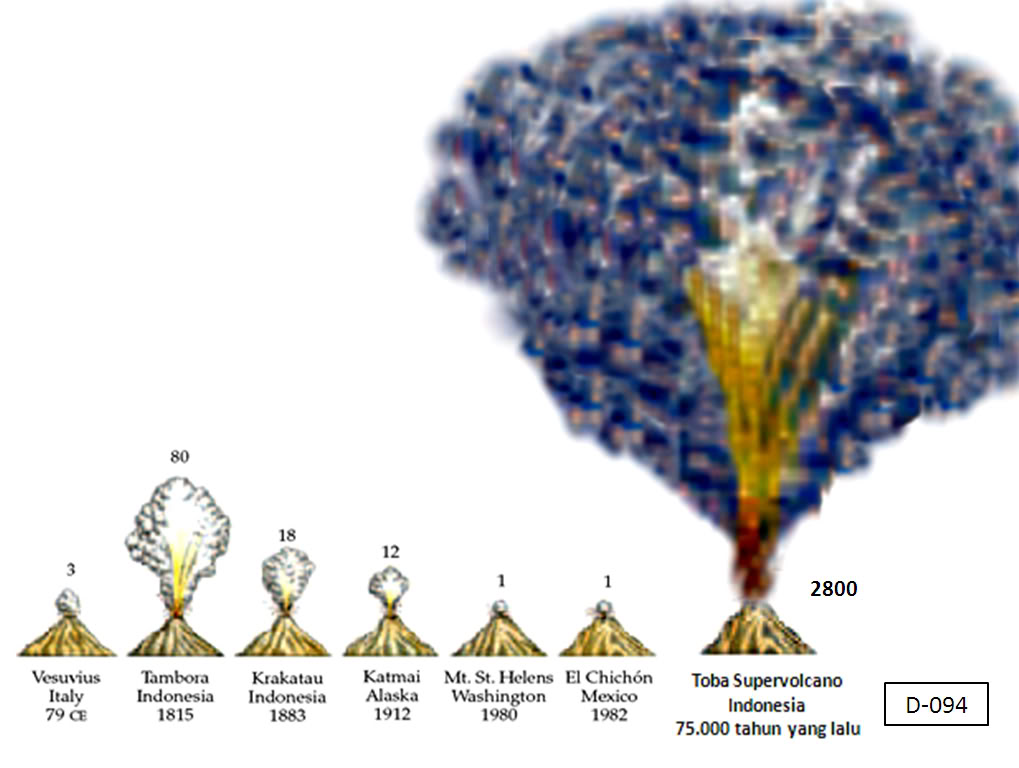
The eruption of Mt. Tambora’s credited with making 1816 so cold, or at least contributing mightily to the condition. Which reminds me of a book I saw in my elementary school library that had a graphic illustration of volcanic eruptions. The larger the drawing of the volcano and its plume of gas, the bigger the eruption.

Various famous eruptions were charted, including Vesuvius (Pompeii fascinated me in the fifth or sixth grade) and Krakatoa, which I heard of because of bad TV. Tambora was bigger than all of those, but Mt. Toba was the enormous monster of the page. Something like this illustration.

Nobody had ever heard Tambora or Toba, and information about them was hard to come by, at least in a pre-Internet elementary school library. That only added to the allure of the events: that much bigger than Krakatoa? Wow.

Two Demonitized European Coins

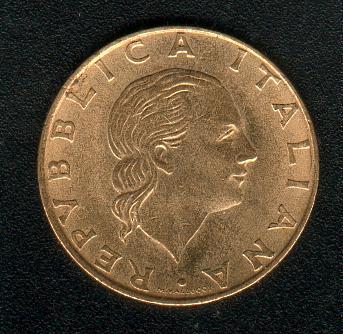
Here’s another interesting disk from my bag o’ cheapies: 200 Italian lira. Pre-euro, of course, and in this case 1993, and a special commemorative. Or not so special, considering that 170 million of them were made, and that they’re a aluminum-bronze combination. I’ve seen the obverse bust simply referred to as an “allegory,” so presumably that’s Italia personified.

L200ObvThe one to have would be the proof version, of which only 6,500 were made. In any case, the coin commemorates the 70th anniversary of the Italian Air Force (since 1946, the Aeronautica Militare Italiana, but before that the Regia Aeronautica Italiana), or maybe just military aviation in that country.

L200RevAll kinds of interesting detail. But when I think of Italian military aviation, I think of Italo Balbo, who didn’t found the independent Italian Air Force, but built it up as an instrument of fascist power. Even so, he has a street named after him in downtown Chicago to this day.

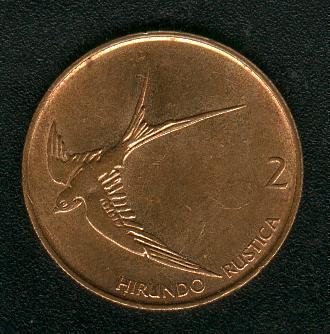
Next, another sort of flying: the common swallow, or hirundo rustica. Who would put a swallow on their coins?

Slov2The newly independent Slovenia, that’s who. This is a 2 tolarja piece, and during the pre-euro period that country was fond of animals on its small coins. I see a fish, a fly, an owl, and others, all helpfully with their scientific names.

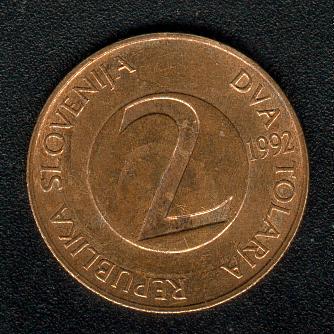
Slov1During its first year of issue,1992, the 2-tolarja piece was a brass coin with a non-proof mintage of over 5 million. The tolar used to be the country’s base unit, with tolarja as a plural. Clearly a cognate with dollar, a word that gets around.

Stray Dominican Coins

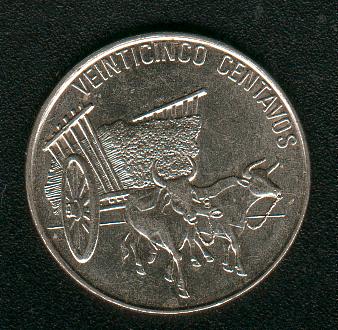
My latest acquisition of cheap foreign coins included some Dominican pieces, such as a nickel-clad steel 25 centavo coin, featuring an ox-drawn cart. A little investigation reveals that 25 Dominican centavos isn’t much money at all — the equivalent of a little more than half a U.S. cent. Even in the Dominican Republic, I can’t believe that buys very much.

DomRep2RevSo they probably don’t circulate much any more.  Presumably 25 centavos had a more purchasing power in 1991, though sometimes coins linger well beyond their strict usefulness (e.g., the U.S. cent). Some 38 million of them were minted in 1991. On the reverse — I think it’s the reverse — is the Escudo de armas de la República Dominicana, which, in case it’s hard to read, proclaims Dios, Patria, Libertad.

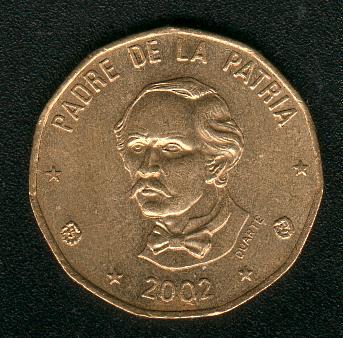
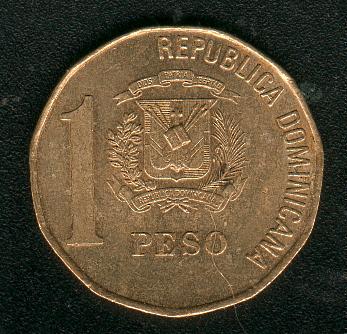
DomRep2ObvAlso in the lot: a Dominican peso. The portrait is of Juan Pablo Duarte y Diez (1813-1876), one of the founding fathers of the Dominican Republic. DomRepObvIt’s brass, and apparently about 80 million of them were minted in 2002, so it’s a very common coin.

DomRepRevAgain with the escudo. A quick look at images of Dominican coins shows it to be a common feature, maybe even one mandated by law.

A Simple Cake for 17

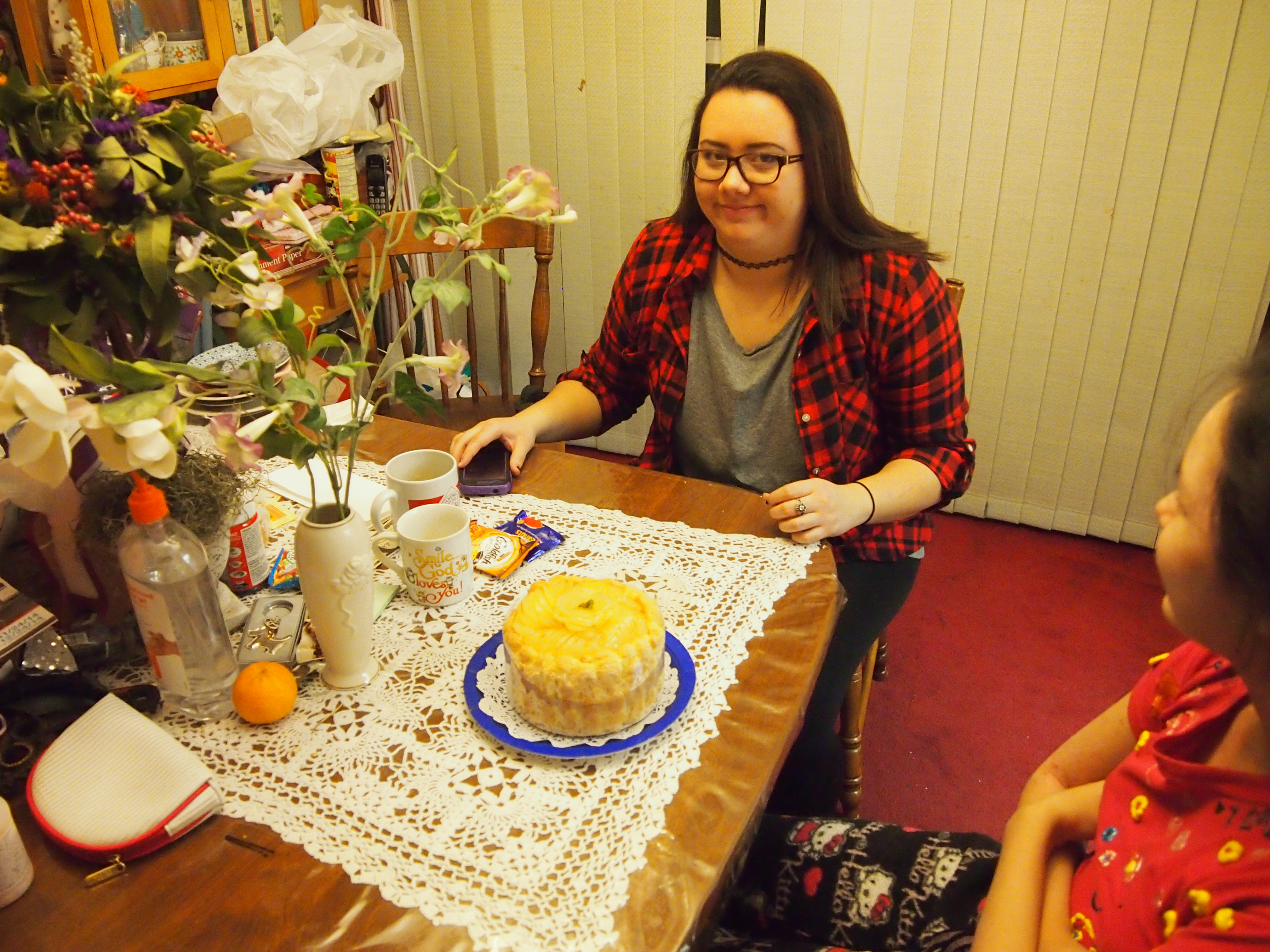
This year for Lilly’s recent birthday, we didn’t buy her a cake. Her mother made her one. OLYMPUS DIGITAL CAMERAPear slices on top, creme inside. Most delicious. Want candles, or at least a candle? I asked. The answer: No, that would just be birthday frippery. But she didn’t use that word; she might not know it. Would be good to know for the ACT and its ilk, so I’ll ask her about it.

Goya at the Meadows Museum

Last Saturday, Jay and I visited the Meadows Museum on the SMU campus. We got in for free because it was homecoming weekend. Even though Jay had no interest in attending any official reunion events – he’s SMU Class of ’74 – he got one of the benefits of being an alum on this occasion: two free admissions to his particular museum.

Meadows specializes in Spanish art. I borrow from Wiki because I’m lazy: “[The museum] houses one of the largest and most comprehensive collections of Spanish art outside of Spain, with works dating from the 10th to the 20th century. It includes masterpieces by El Greco, Velazquez, Ribera, Murillo, Goya, Miro, Sorolla, and Picasso. Highlights of the Meadows Collection include Renaissance altarpieces, monumental Baroque canvases, rococo oil sketches, polychrome wood sculptures, Impressionist landscapes, modernist abstractions, a comprehensive collection of the graphic works of Goya, and a select group of sculptures by major twentieth-century masters…”

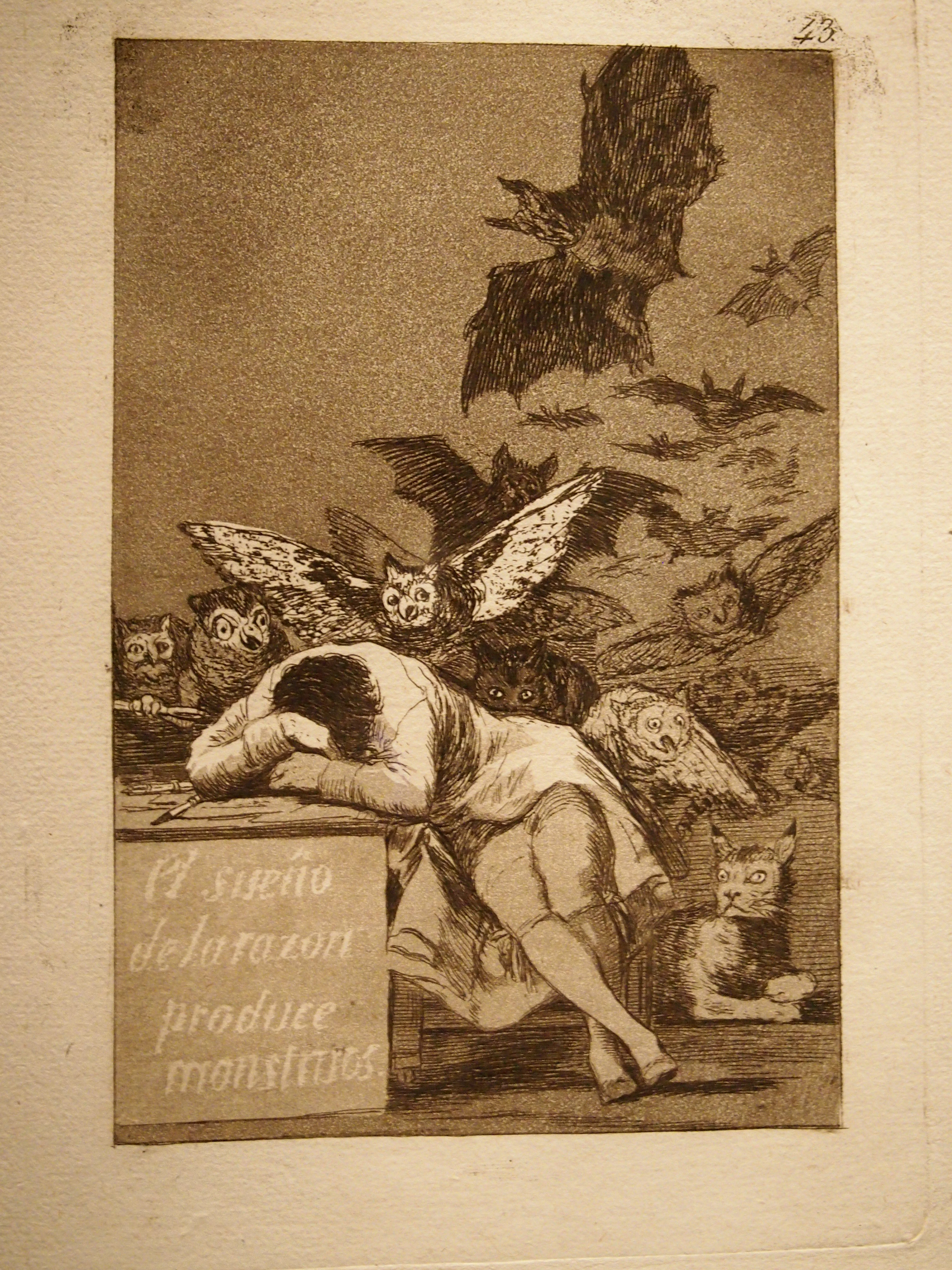
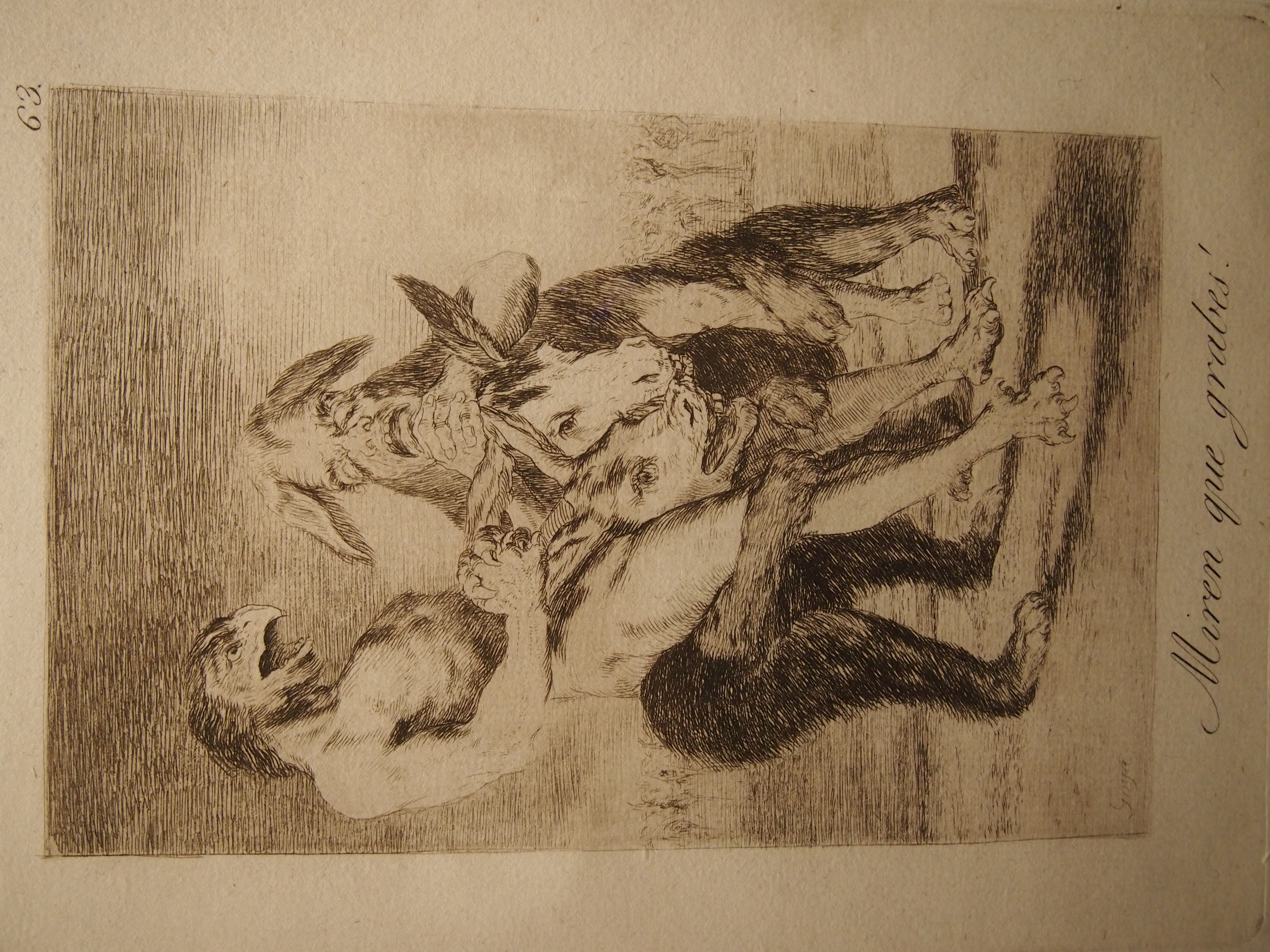
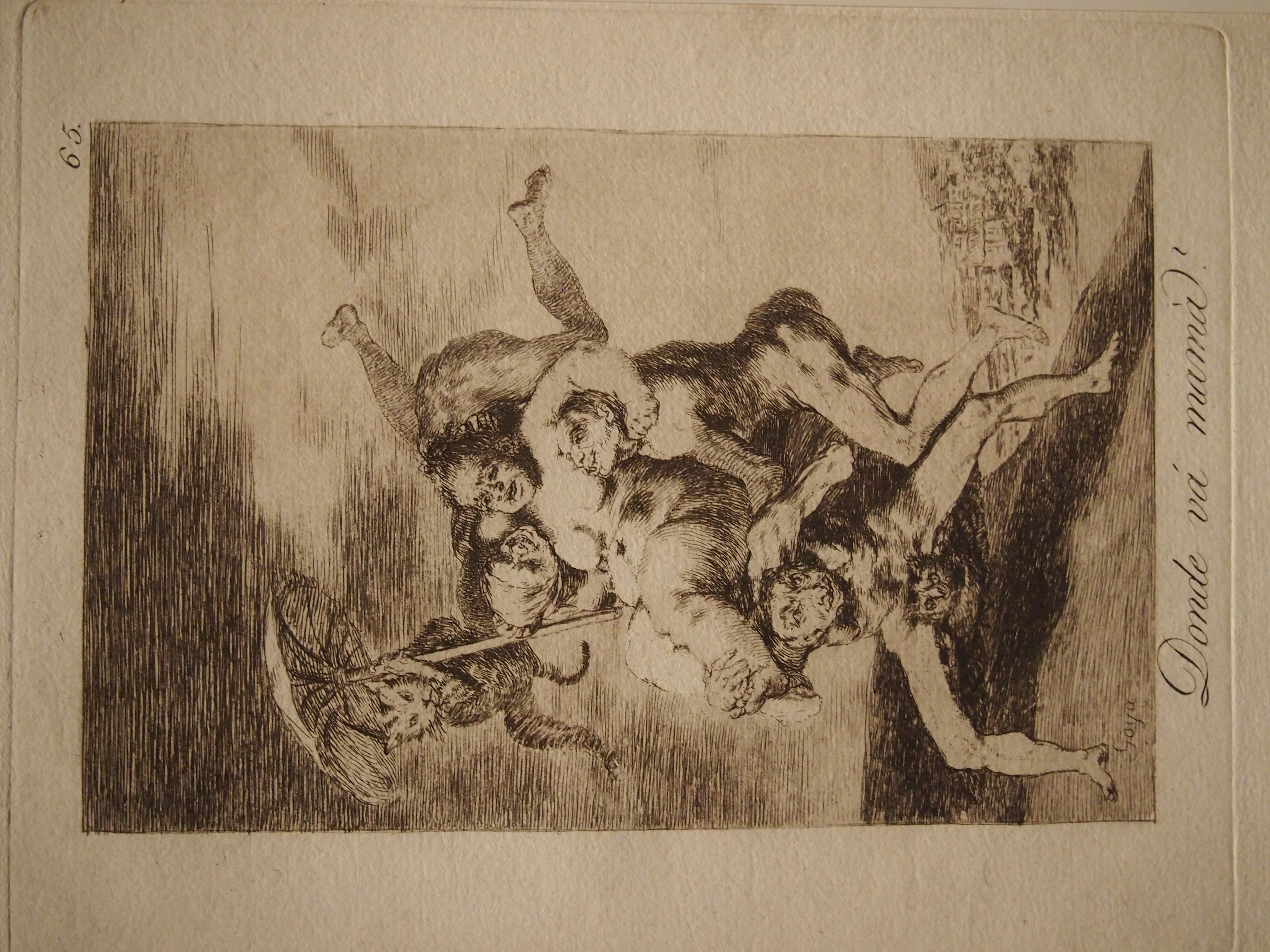
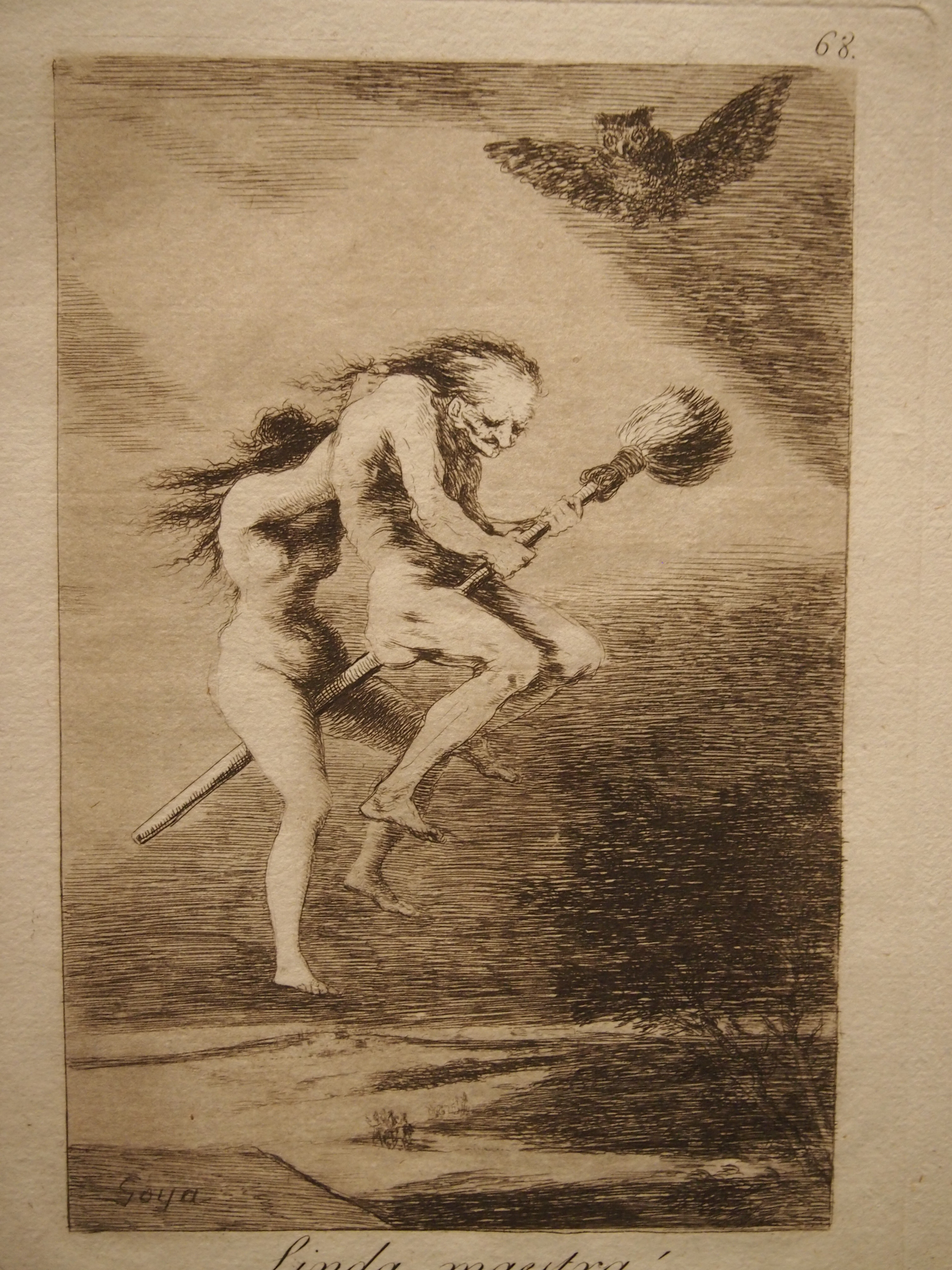
The graphic works of Goya. Such as the famed “The Sleep of Reason Brings Monsters.”

Meadows Museum, Nov 2014

Along with some truly weird images as well.

Meadows Museum, Nov 2014Meadows Museum, Nov 2014Meadows Museum, Nov 2014

I was glad to see them. Austin shouldn’t have all the weird. Dallas needs a little too.

Hi, How Are You

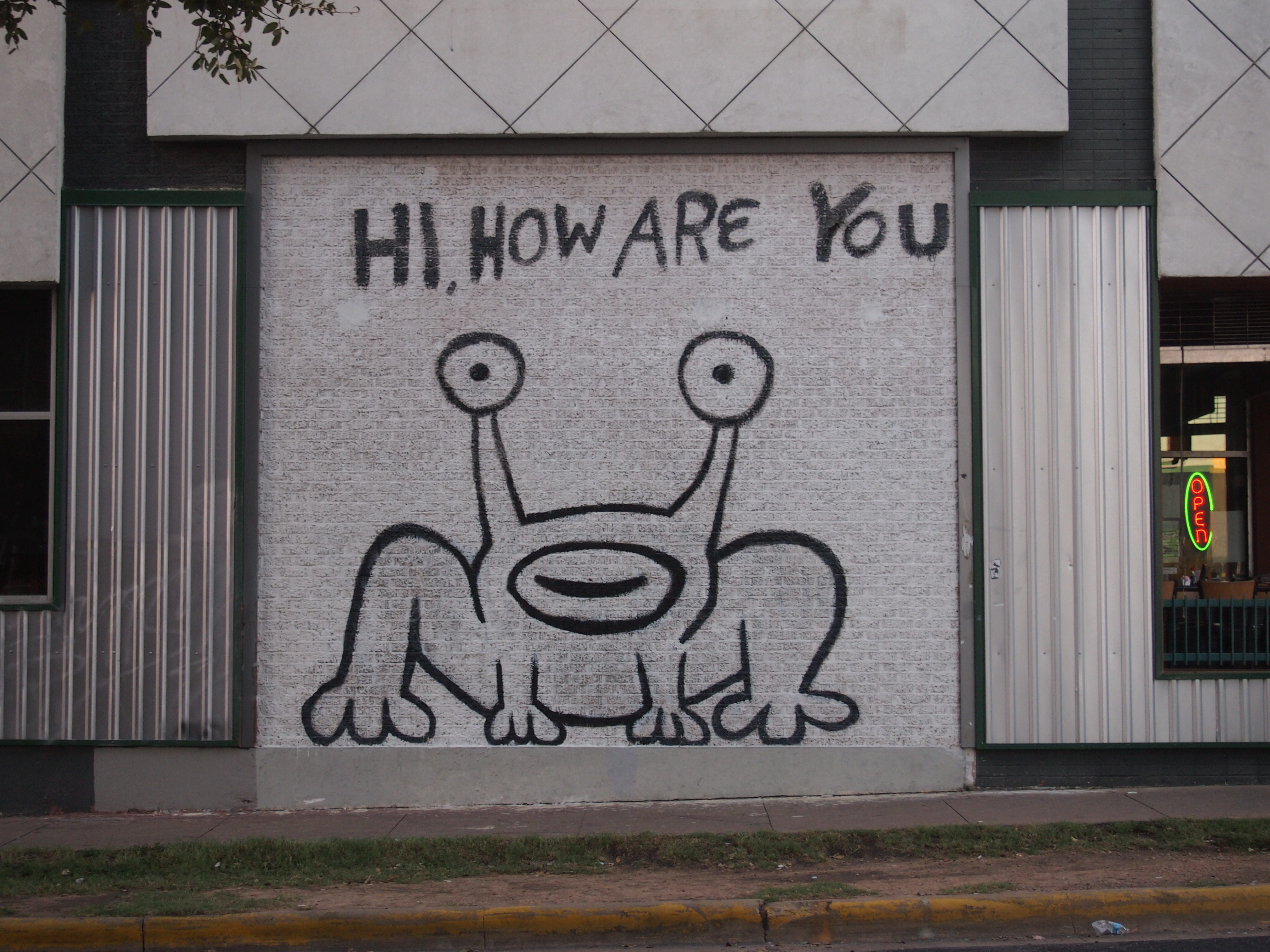
Just before dark on November 8, Tom took us to the corner of Guadalupe and 21st. That’s the location of the “Hi, How Are You” mural, also known as “Jeremiah the Innocent.”

Austin, Nov 8, 2014It was the first I’d heard of it, but I haven’t spent that much time in Austin in the last 20 years. A record store that used to be on the site hired musician and artist Daniel Johnston, who has some renown in Austin, to paint the mural in 1993. Popular demand kept it intact when the location became a Baja Fresh in 2004, and now the restaurant on the other side of the wall is called Thai, How Are You?

Thai sounded just like the thing for dinner, especially since we hadn’t taken the time to have much lunch, so we went. I’m glad to report that the Thai, How Are You? serves good food.