One of the larger neighborhoods in Brooklyn is a necropolis, with about 560,000 permanent residents: Green-Wood Cemetery. Take the R line subway to either 25th St. or 34th St. station, and you’re there. Fairly early in the morning of October 14, I went to 34th St. station, got a map from the guard at the entrance, and walked right in.
“Founded in 1838 as one of America’s first rural cemeteries, the Green-Wood Cemetery soon developed an international reputation for its magnificent beauty and became the fashionable place to be buried,” the map tells me “By 1860, Green-Wood was attracting 500,000 visitors a year, rivaling Niagara Falls as the country’s greatest tourist attraction…”
Besides groundsmen and other obvious cemetery employees — including one driving a garbage truck — I noticed exactly three other people visiting Green-Wood that morning. It was a weekday, but even so cemetery tourism isn’t what it used to be.
I didn’t have all day – or even all morning – to explore the vastness of Green-Wood, so I cut a path from the 34th St. entrance to the 25th St. entrance, spending about an hour. The better way to see the place would be the trolley tours that the cemetery gives, but I couldn’t fit that into my schedule. Still, I managed to wander some of the paths.
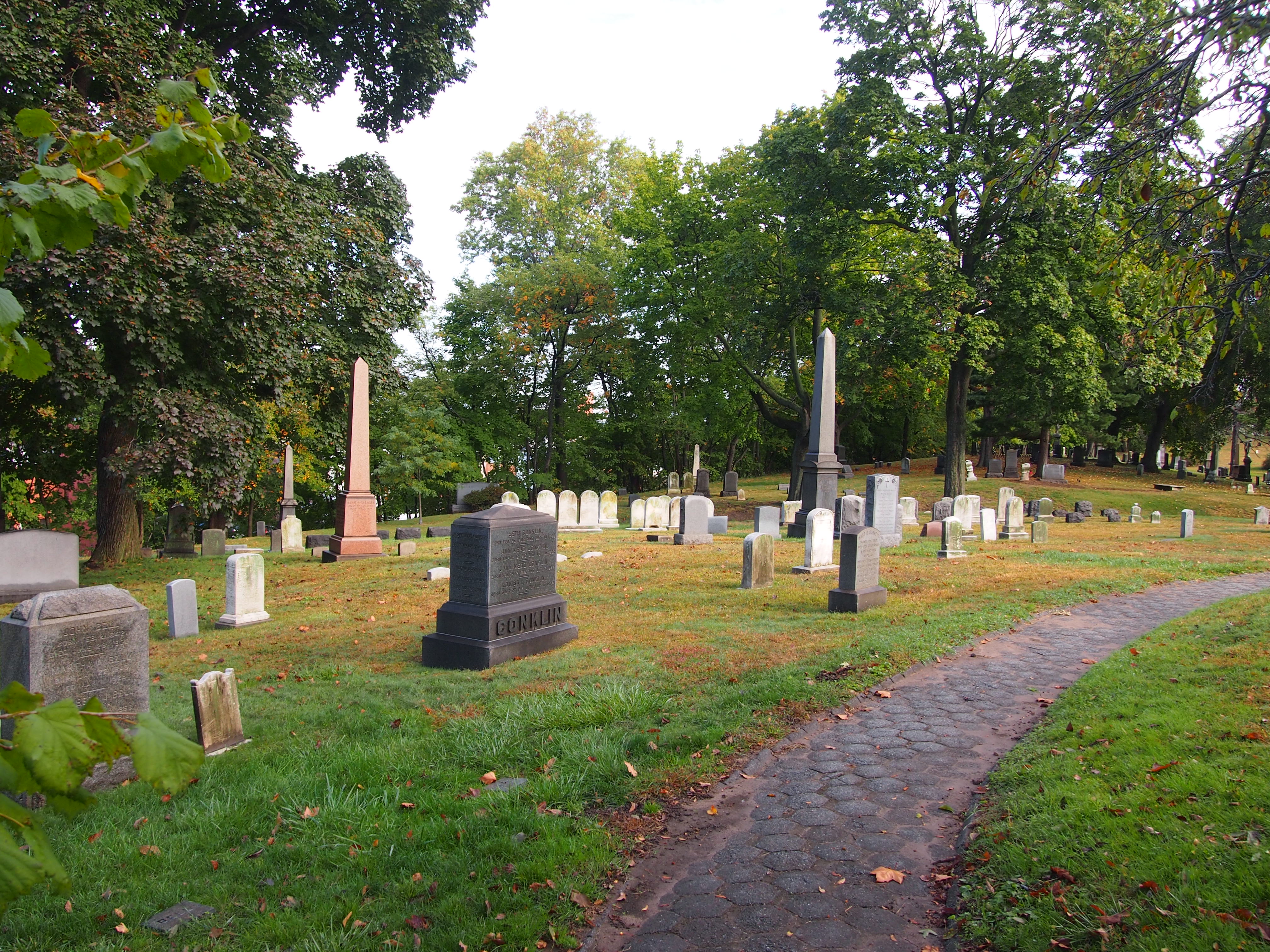 And marvel that the cemetery has hills. A lot of hills. Since when does Brooklyn have hills? Turns out Brooklyn has glacial moraine hills in spots, especially the cemetery, which in fact includes the highest point in the borough (about 200 feet above sea level).
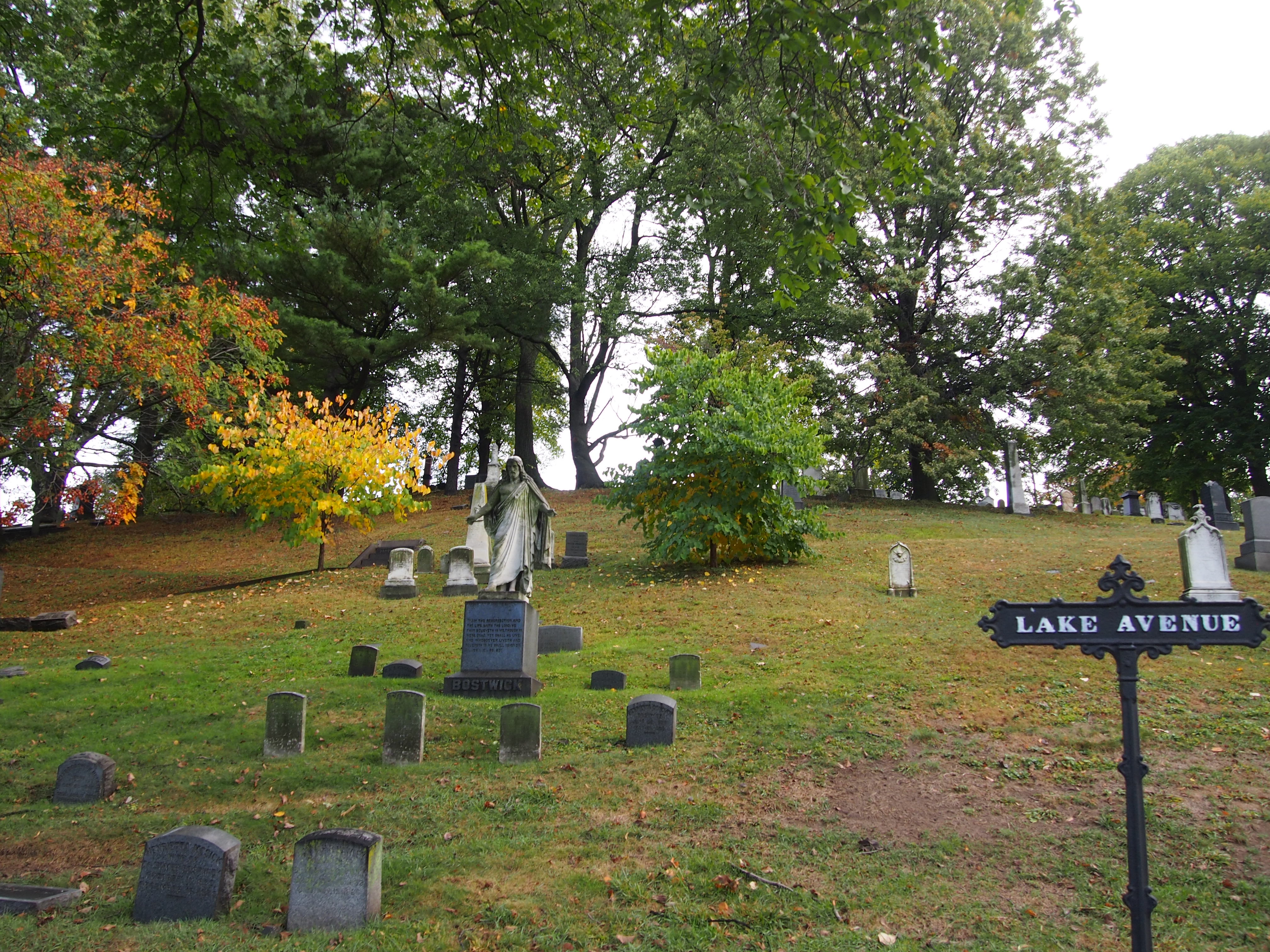 Note the street sign. There are many streets and paths in Green-Wood and, unlike some other parts of the borough, they’re all well marked.
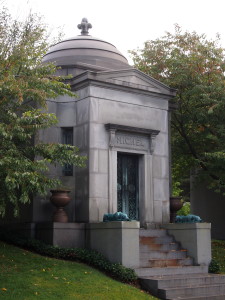 “Today Green-Wood is 478 spectacular acres of hills, valleys, glacial ponds and winding paths, throughout which exists one of the largest outdoor collections of 19th- and 20th-century statuary and mausoleums,” the map continues. It also points out that there are also 7,000 trees, though I’ve read that some of them were knocked down by Hurricane Sandy. I didn’t see any lingering damage from the storm, but I didn’t really see that much of the place, either.
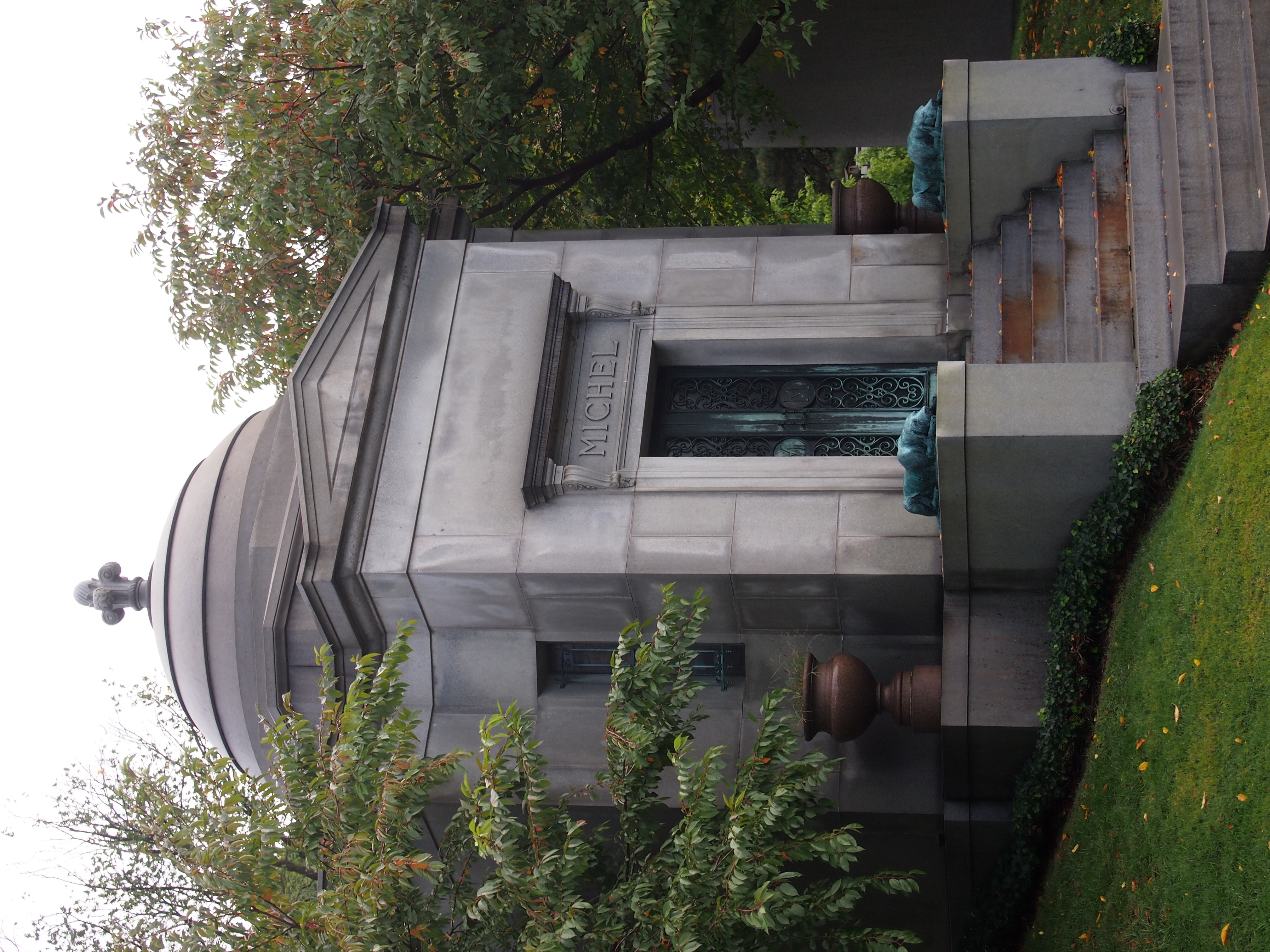
I did see some funerary art. At the Michel mausoleum, for instance, a pair of dogs waits patiently for their masters – the Michels would be my guess. It’s pretty clear they aren’t guarding the place.
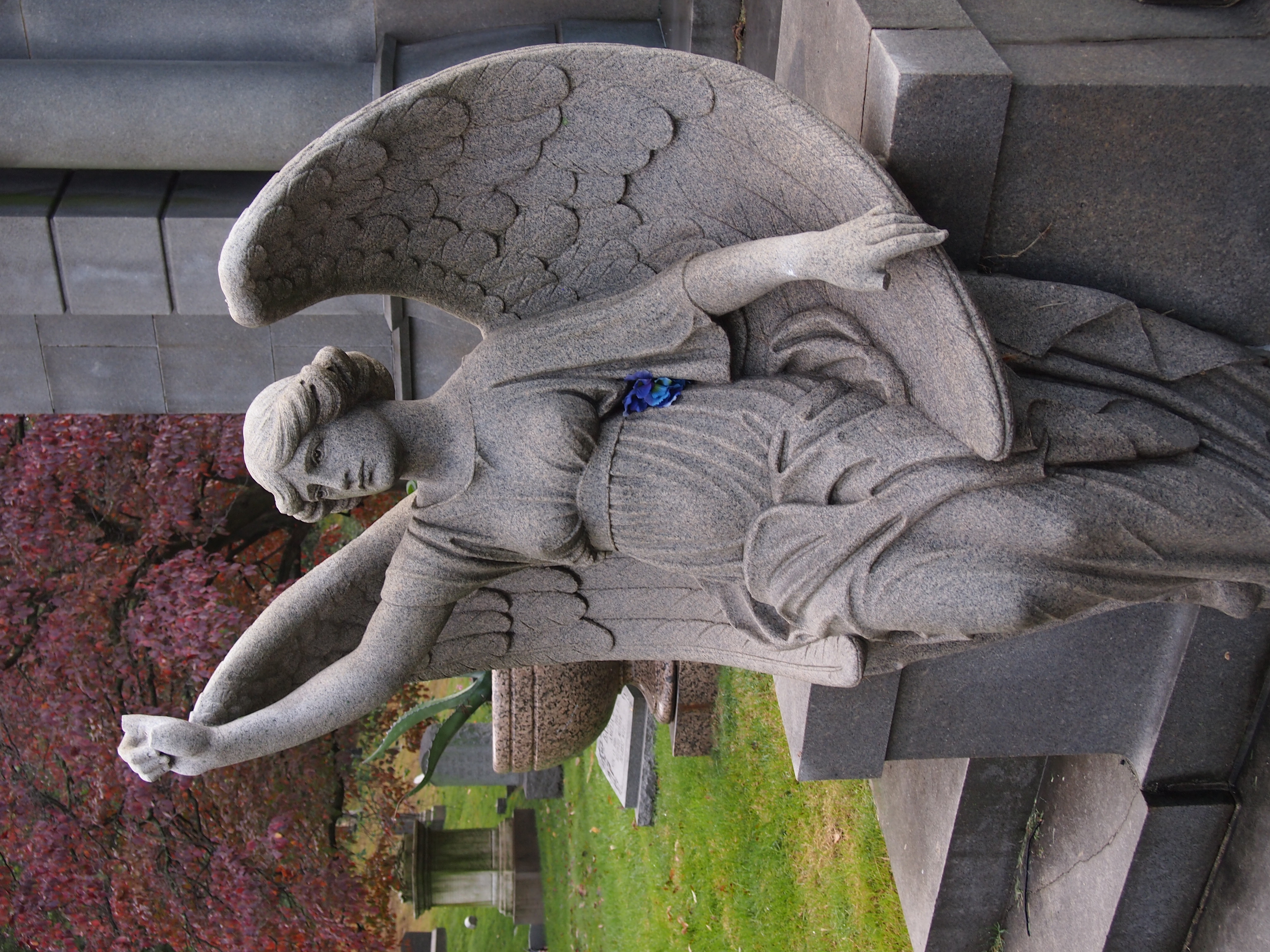
 Other mausoleums sported angels.
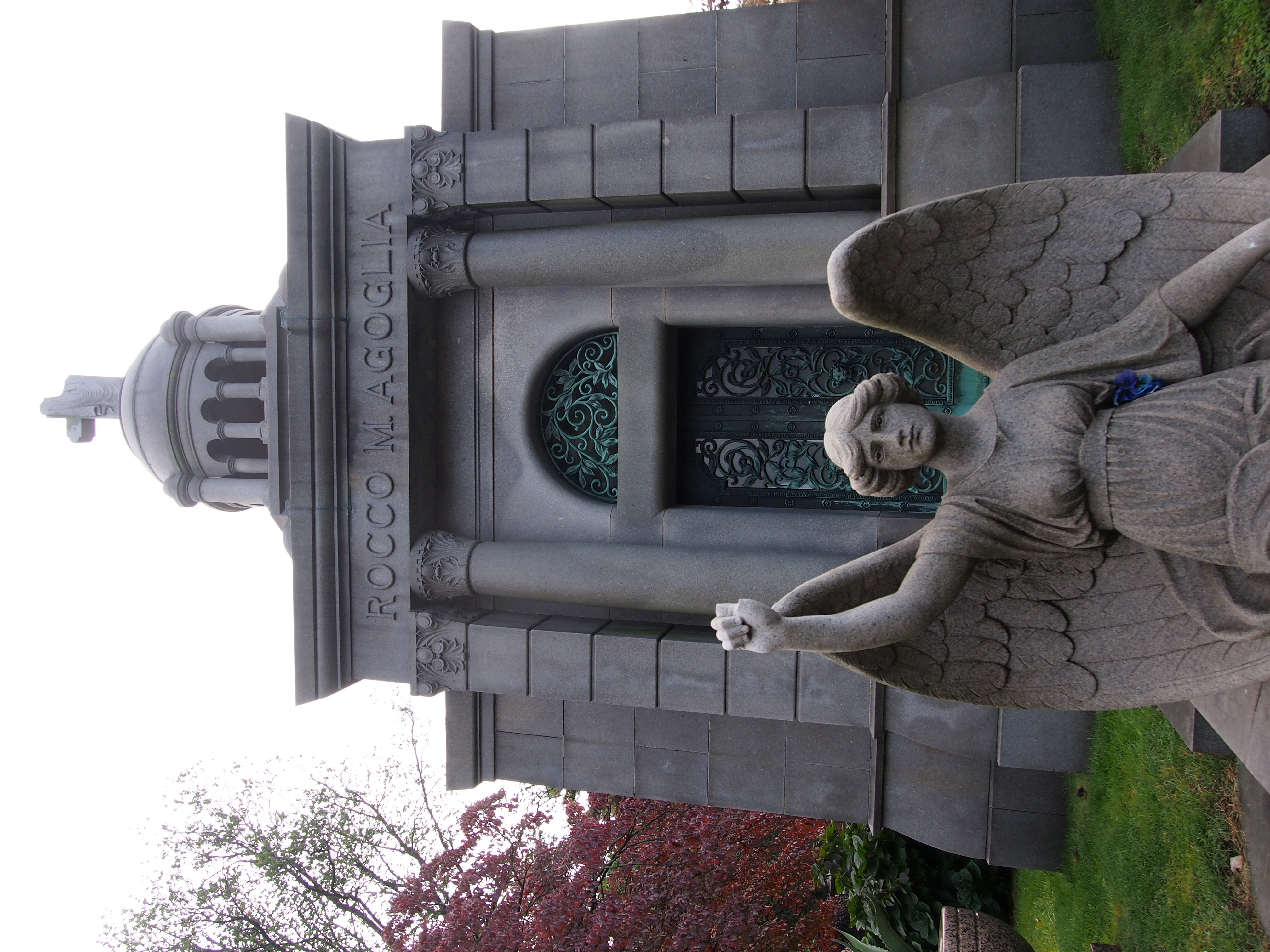
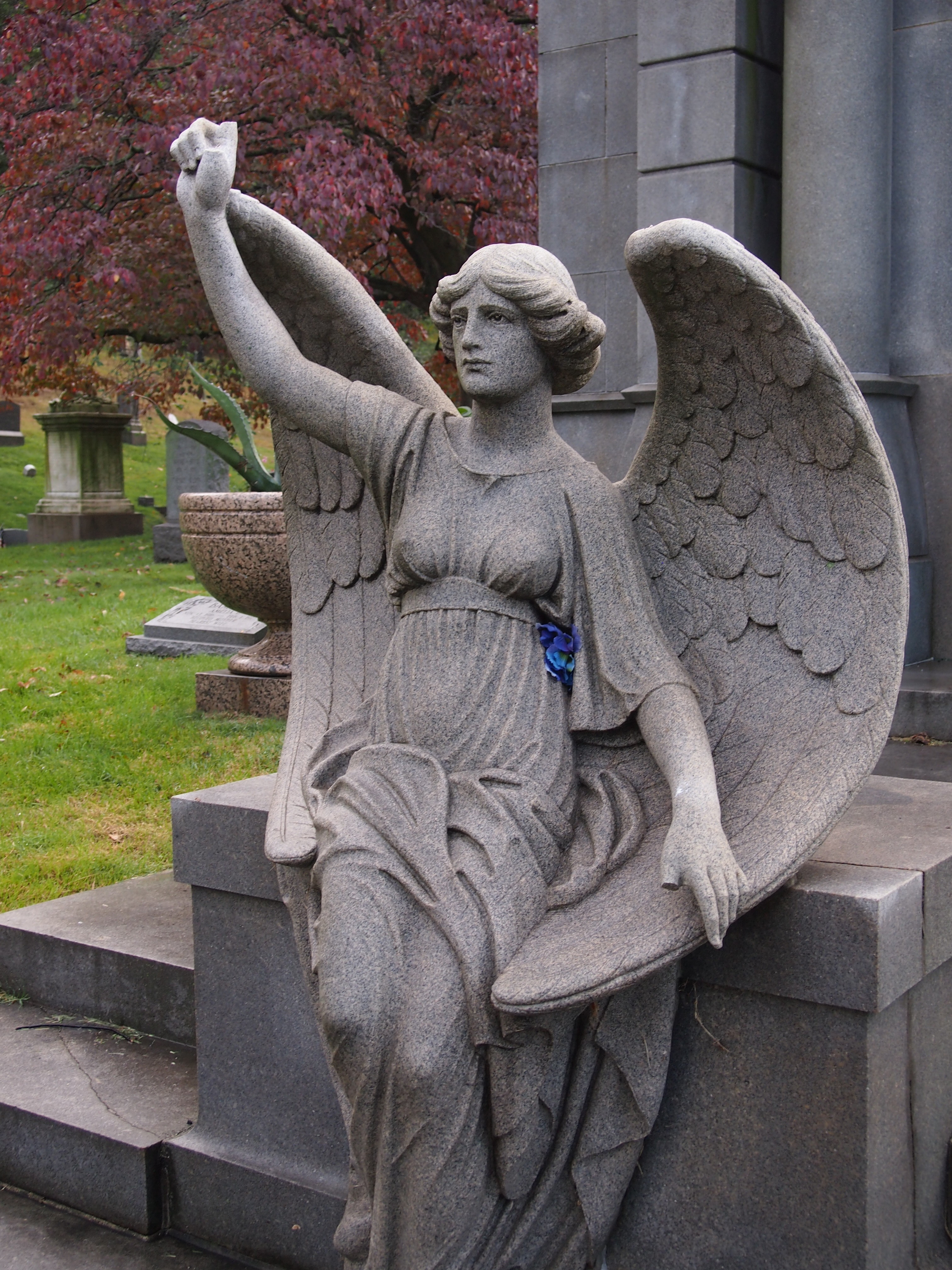 An awfully female-looking being, considering that angels are thought to have no gender. This particular angel is associated with the mausoleum of Rocco M. Agoglia. You have to like a name like that.
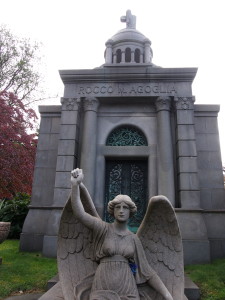 Find A Grave, for what it’s worth, tells me that “Rocco M. Agoglia of 7717 Narrows Avenue, Brooklyn, New York, died suddenly at Amityville, Long Island, on July 1, 1931. He was 69 years old. He is survived by eight sons, John, Fury, Sylvester, Arthur, Joseph[,] Rocco Jr., Herman and George, and one daughter, Mrs. Ida Carey.”
Fury? At least his many children (presumably) still had the scratch during the Depression to commission a nice mausoleum for their father in Green-Wood, which causal passersby can still see here in the early 21st century. Or maybe they couldn’t pay for it until a lot later. Or maybe Rocco himself paid for it before he needed it. Anyway, there it is.
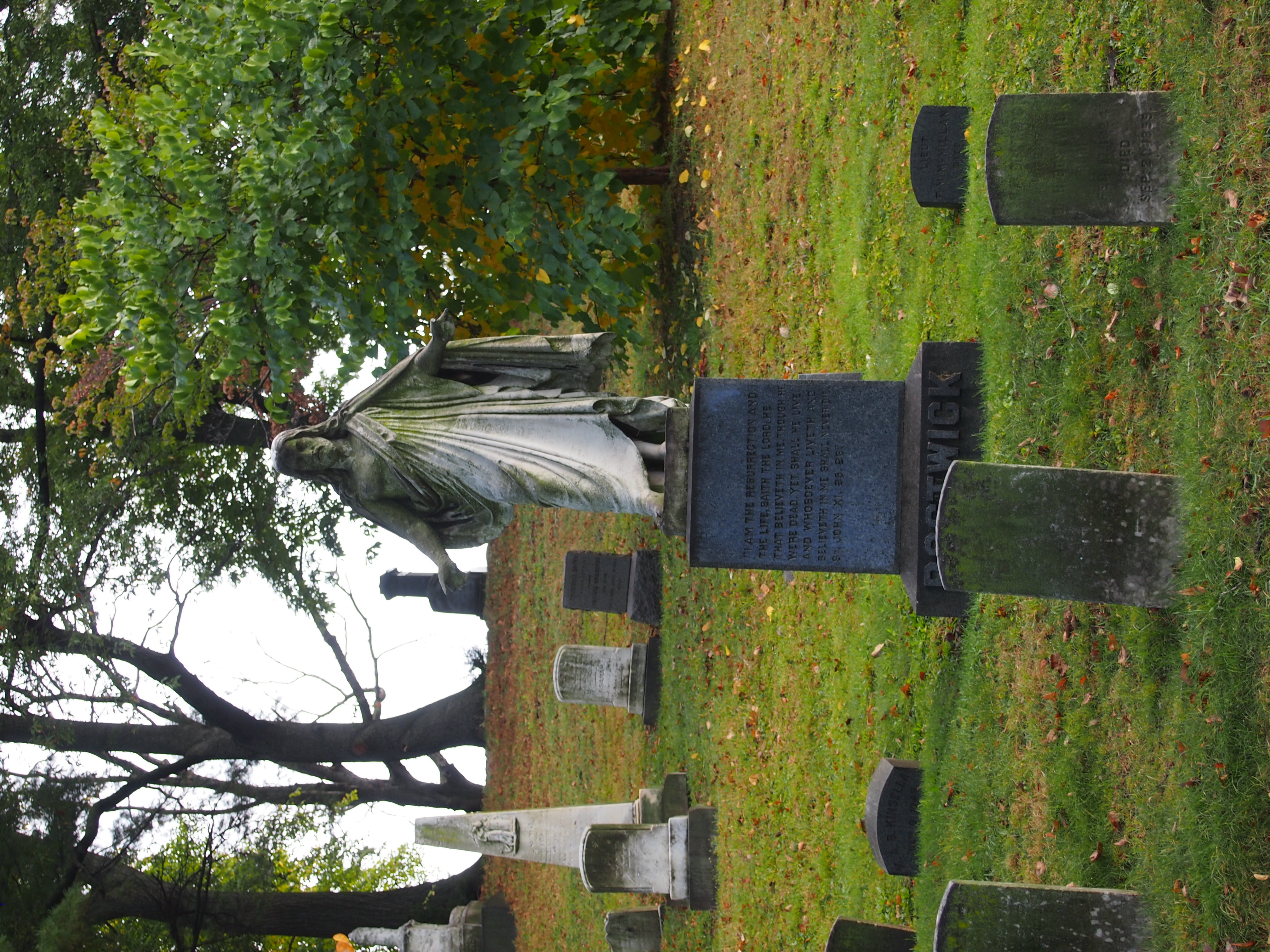
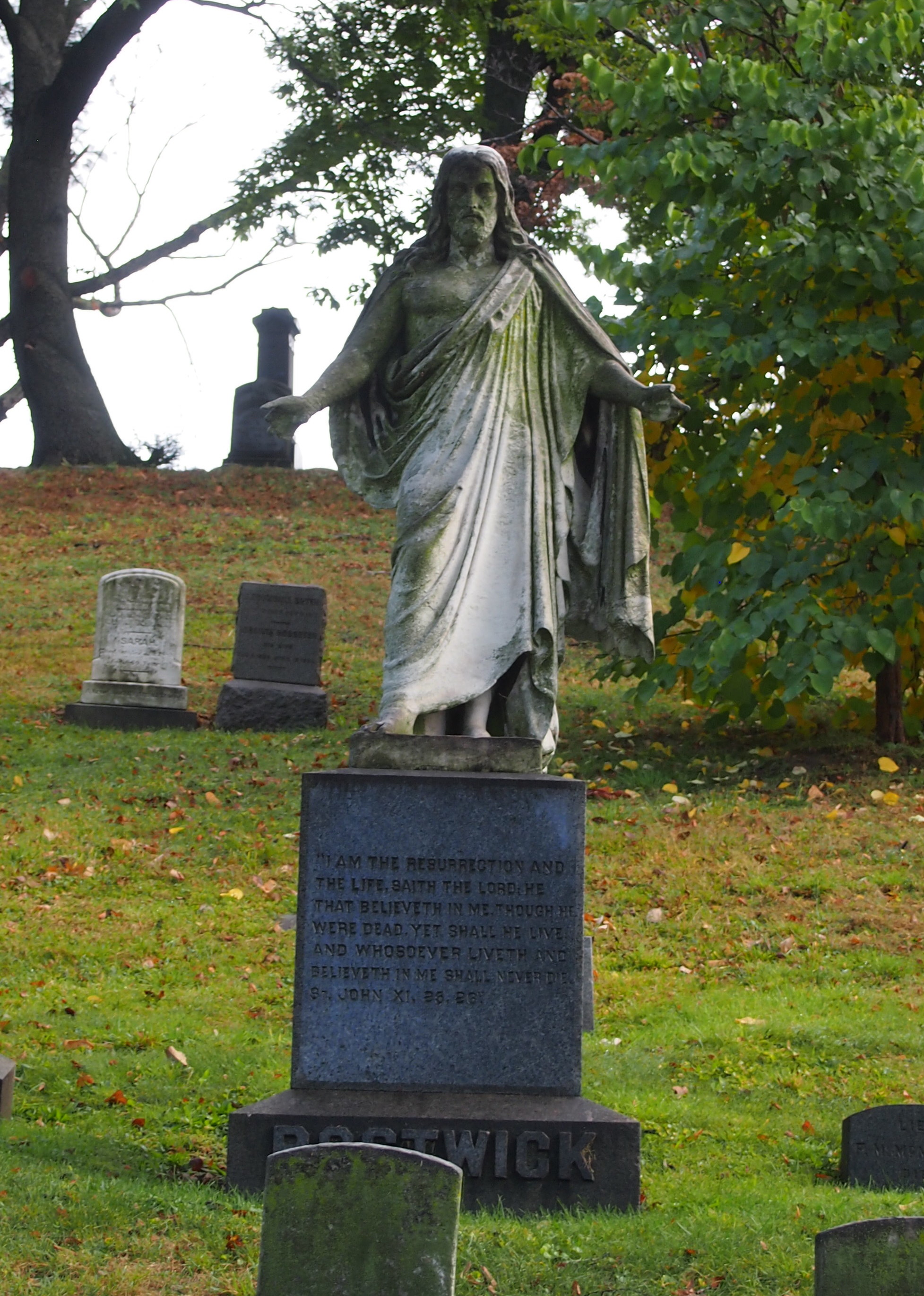
Jesus Himself makes an appearance above this stone.
 Being such a fashionable cemetery at one time, Green-Wood sports a good many notable dead people, especially but not exclusively from the 19th century. The map notes some that are instantly recognizable, such as Henry Ward Beecher, Leonard Bernstein, DeWitt Clinton, Henry Halleck, Samuel Morse, Boss Tweed, Horace Greeley, and Louis Comfort Tiffany. Others noted include Cooper Union founder Peter Cooper, “Father of Baseball” Henry Chadwick, silent movie star William S. Hart, actress Laura Keene, artist Jean-Michel Basquiat, “dancer, adventuress” Lola Montez, Broadway lyricist Fred Ebb, and “Steeplechase founder” George Tilyou.
I really wanted to visit Boss Tweed, but he was pretty deep into the cemetery, so I had to settle for a handful of other notables. Such as D.M. Bennett.
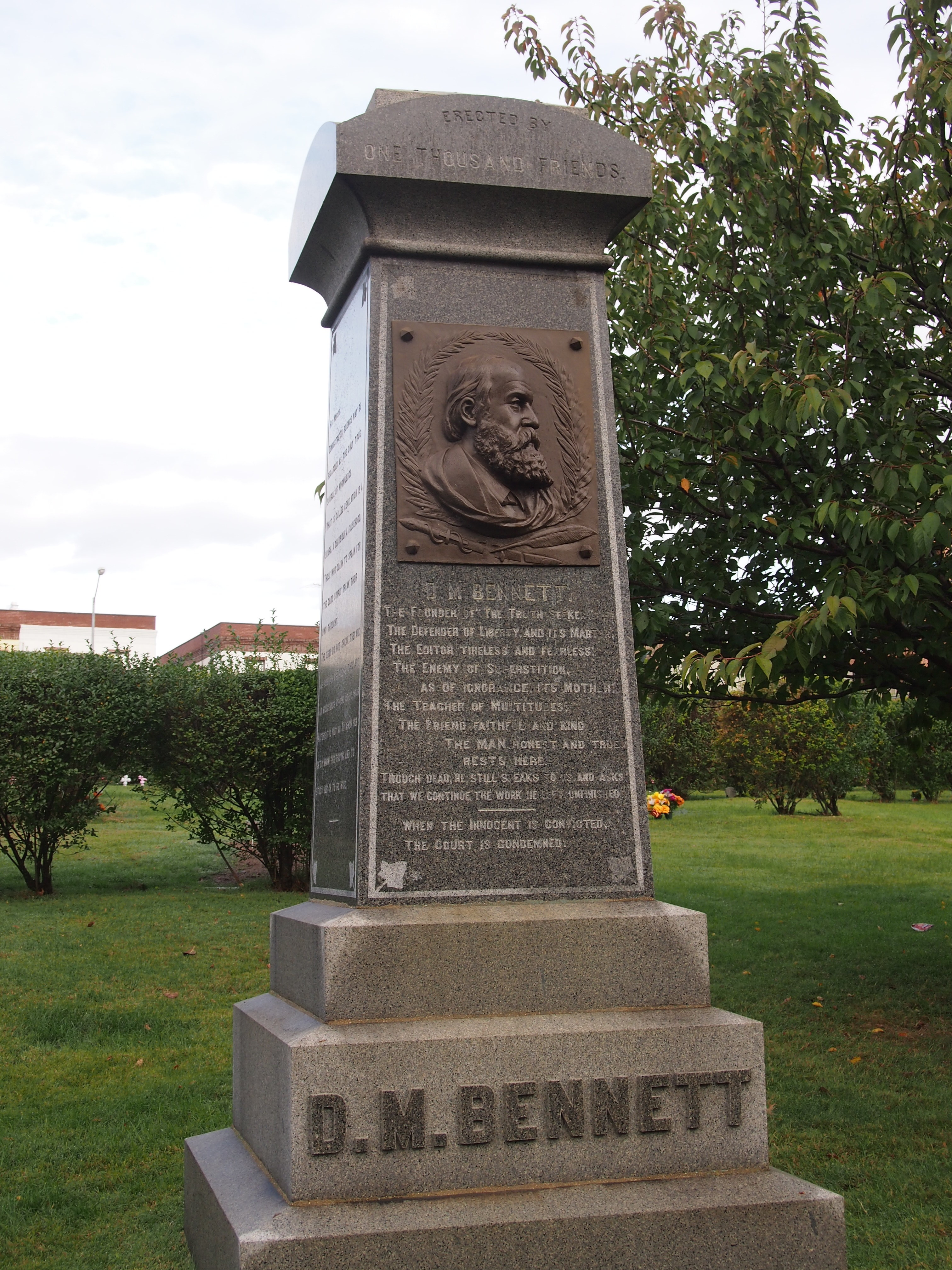 D.M. Bennett? I’d never heard of him, either. But DeRobigne Mortimer Bennett (1818-1882), his stone says, was “the founder of The Truth Seeker, the defender of liberty and its martyr, the editor tireless and fearless, the enemy of superstition, as of ignorance, its mother, the teacher of multitudes… though dead, he still speaks to us and asks that we continue the work he left unfinished.” Though it’s arrant reductionism, I’m going to characterize him as a free-love advocate. At least, Comstock busted him for sending free-love pamphlets through the mail.
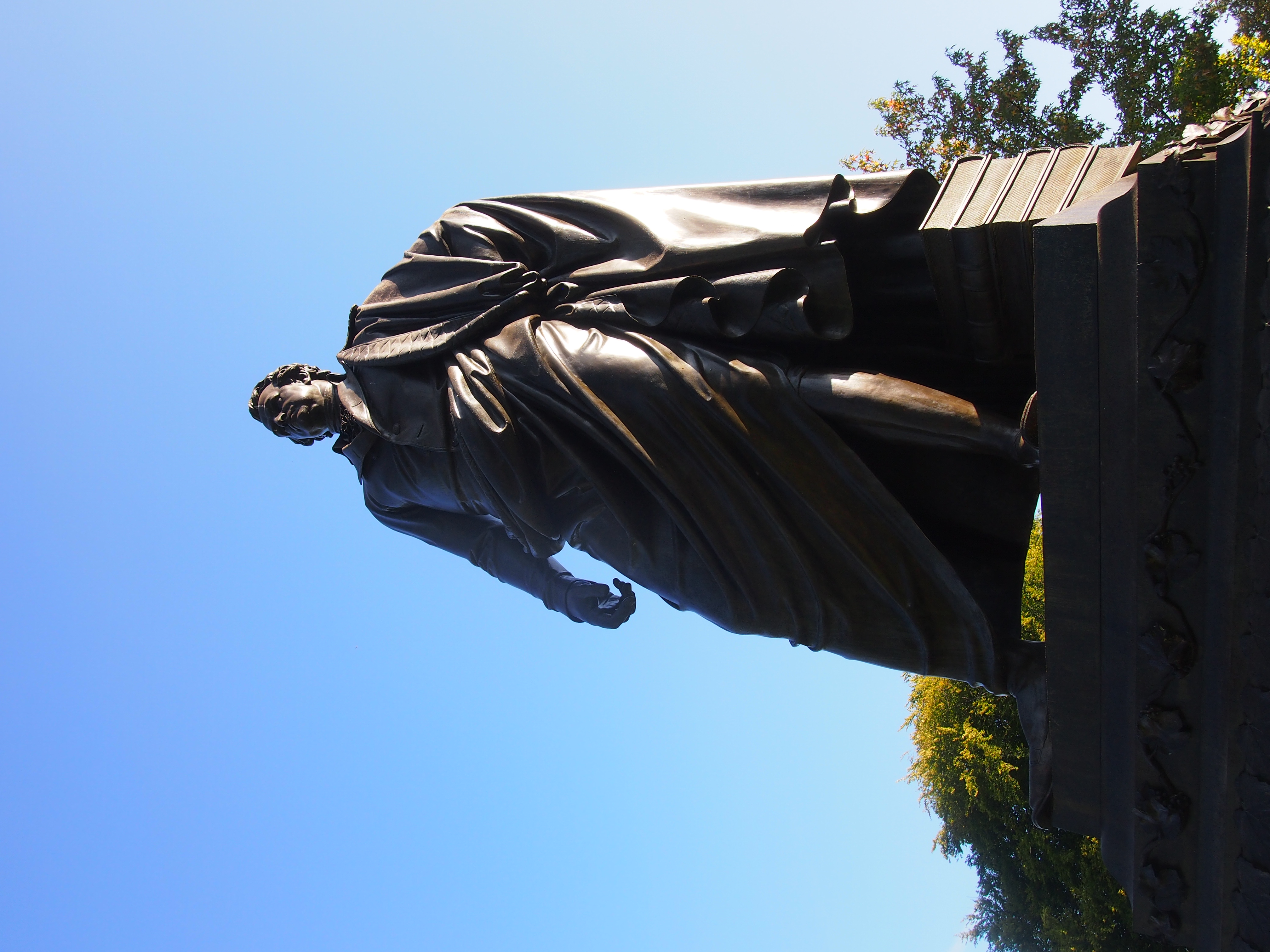
Later I found my way to the large memorial of DeWitt Clinton (1769-1828), sixth governor of New York and main impetus behind the Eire Canal (“DeWitt’s Ditch”) – which, if you think about it, makes him an indirect founder of Chicago. He has a statue atop his grave, with the plinth memorializing the building of the canal.
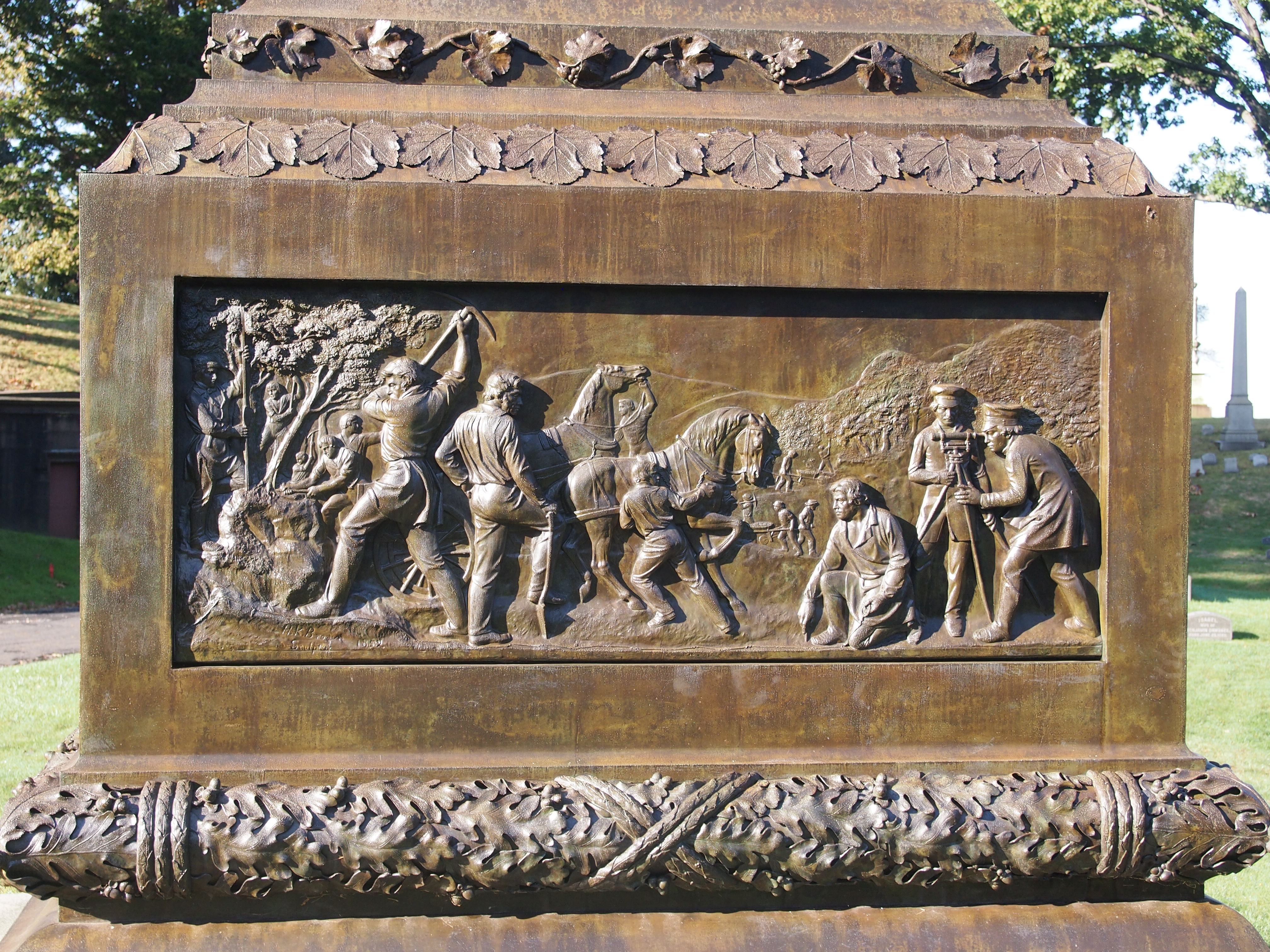 The sun wasn’t in the best position for a good shot of Gov. Clinton, but I gave it a go.
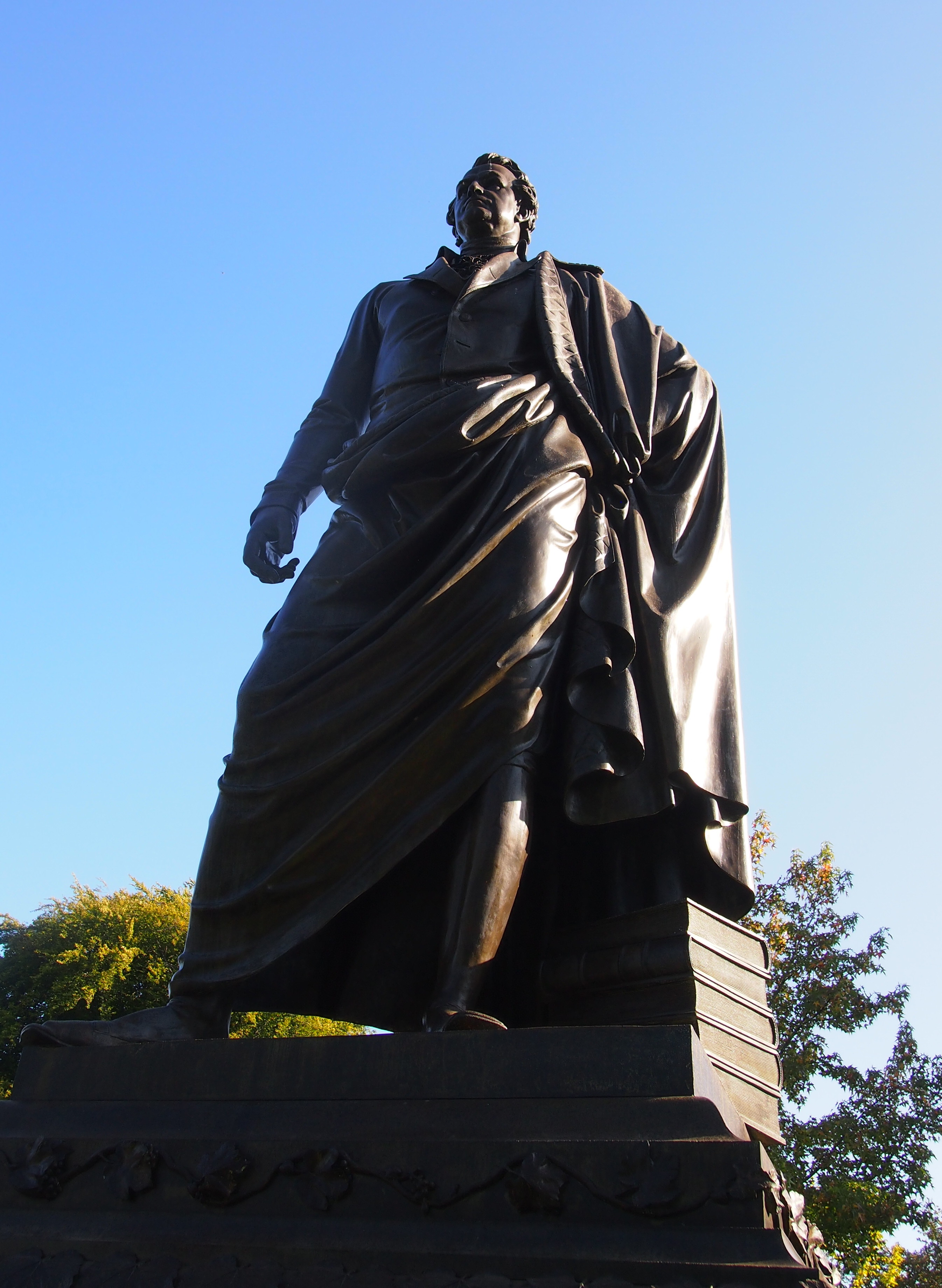 Note that good republican that he was, the governor’s wearing a toga. He is not, however, bare-chested, unlike a certain noteworthy statue of George Washington. The Clinton statue is by Henry Kirke Brown, better known for equestrian statues in New York.
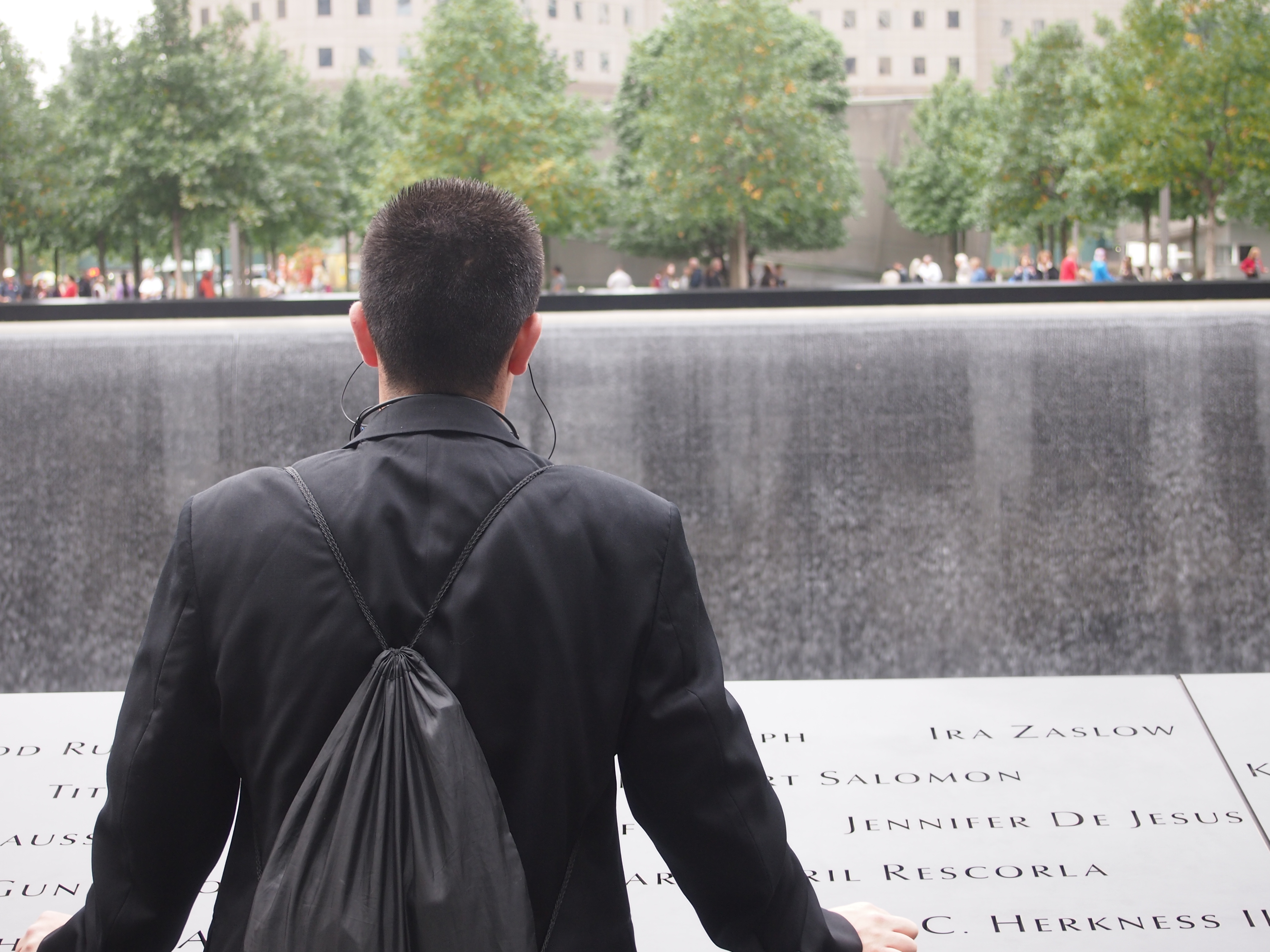
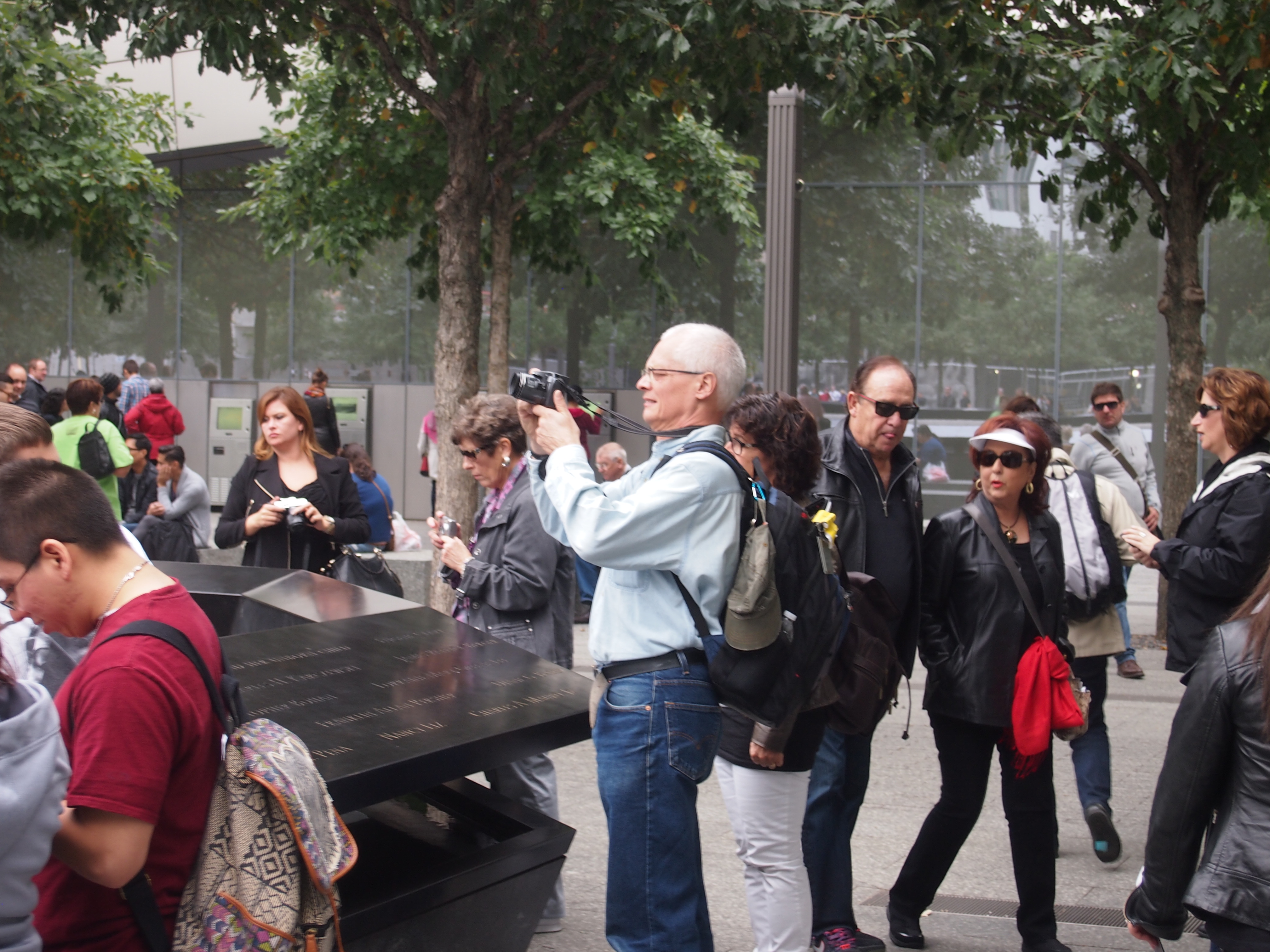
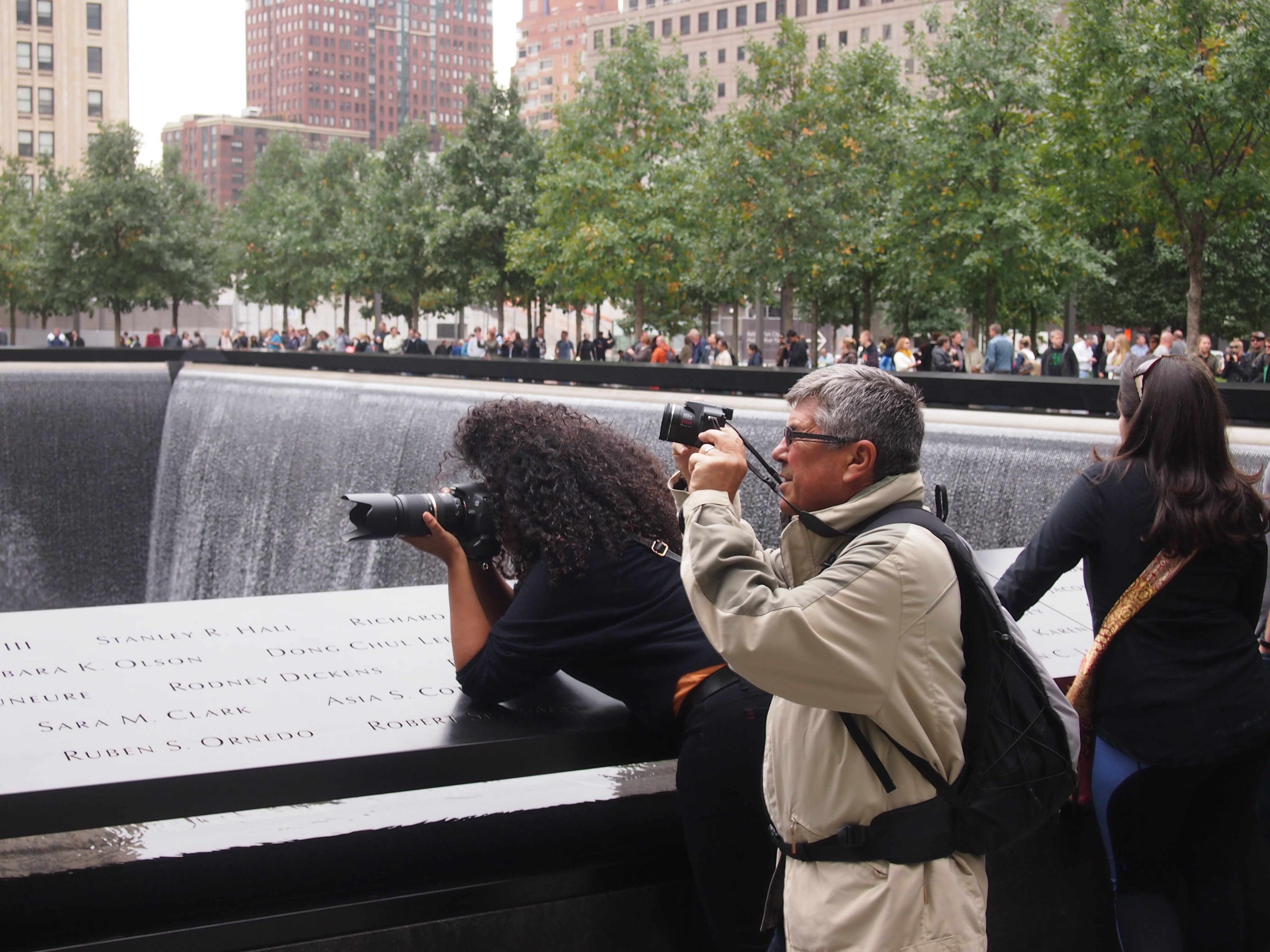
 And take photographs.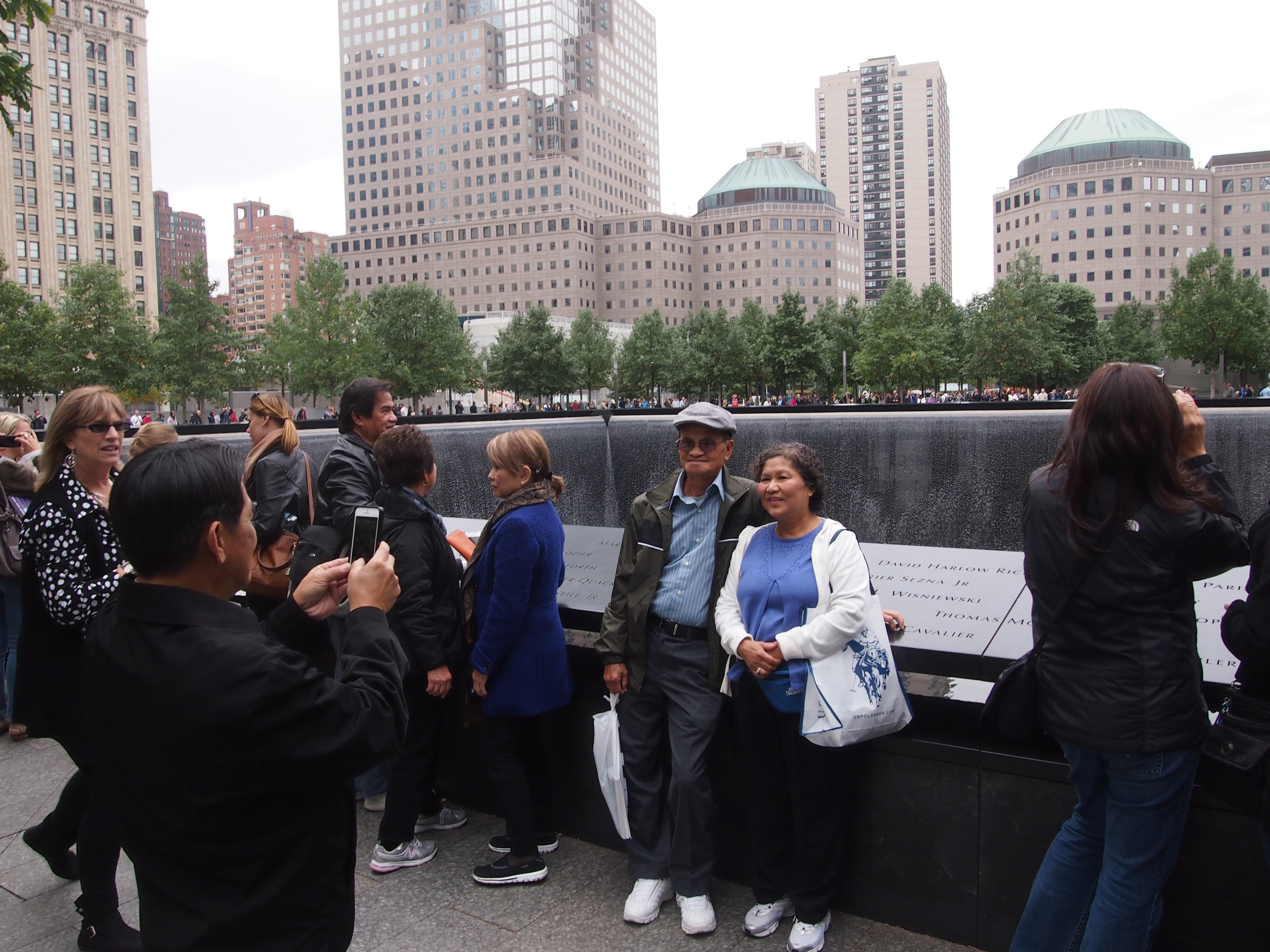
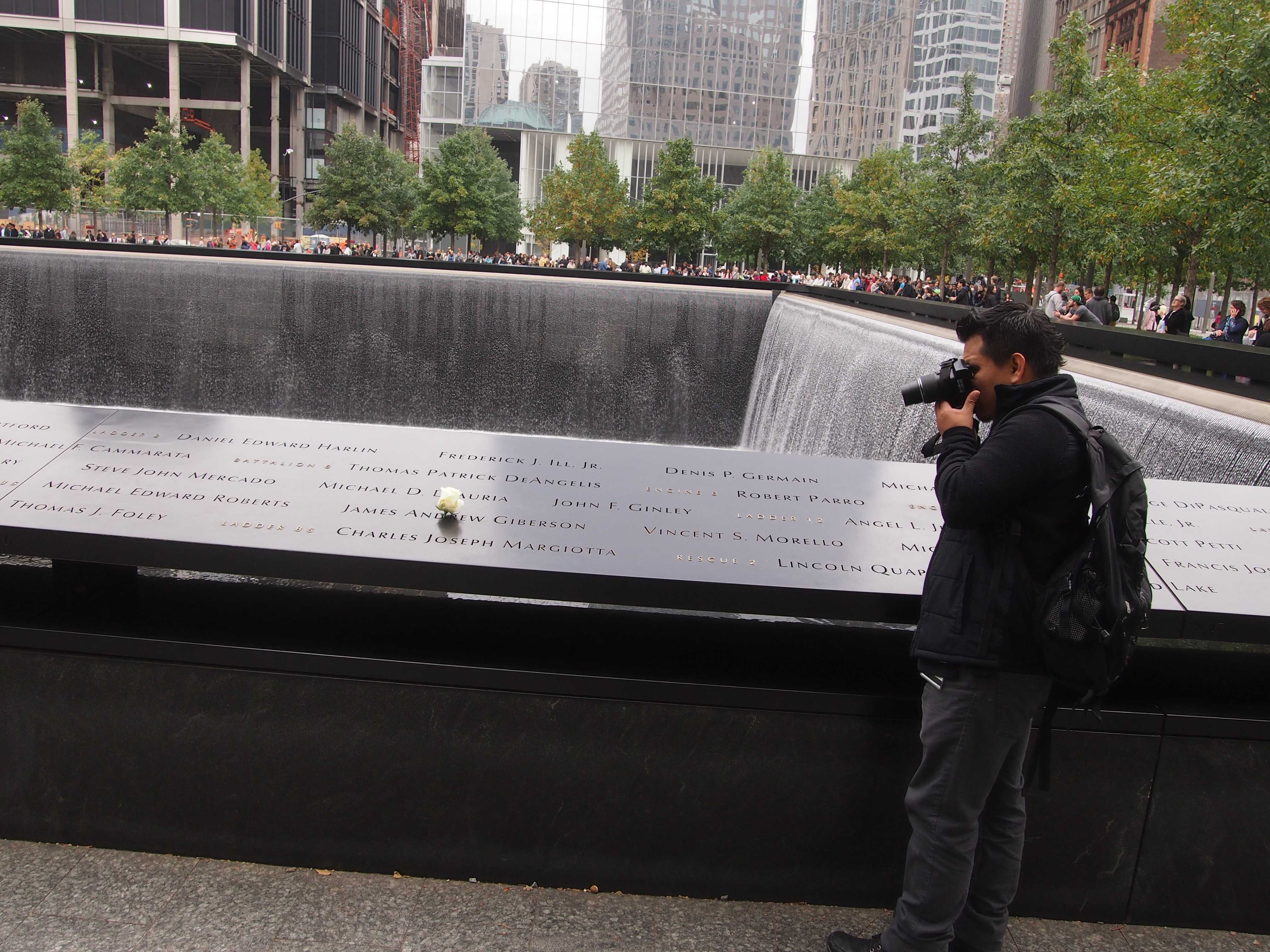 I understand that an organization puts flowers on the names of victims on their birthdays. So October 10 was James Andrew Giberson’s birthday. He was a fireman who lived on Staten Island, belonging to Ladder 35 in Manhattan, and last seen entering Tower 2.